
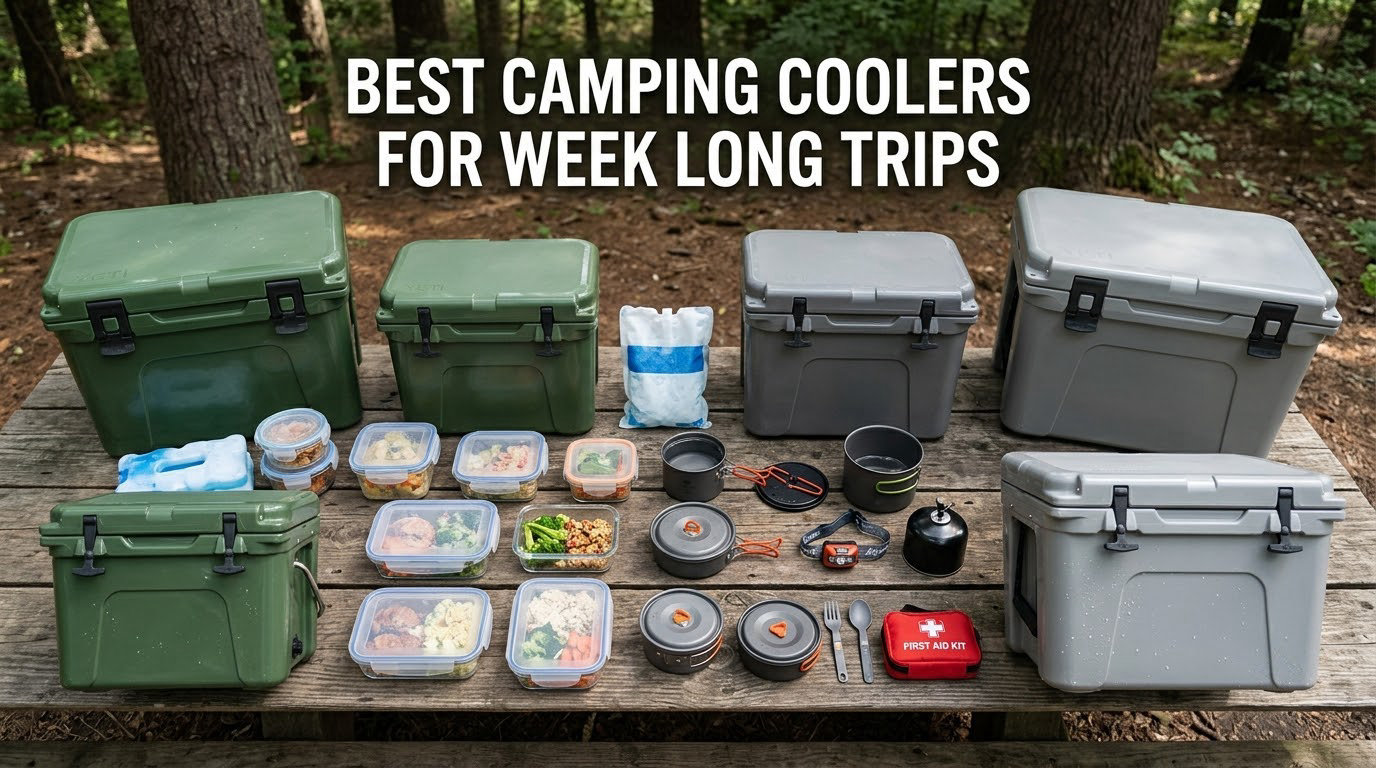
Most coolers on the market are engineered for a Saturday at the lake, not for seven days of self-supported camping. We spent six weeks sorting through the category to find the best camping coolers for week-long trips, and the honest answer is that a container alone will not get you through a week. You also need a 2:1 ice-to-food ratio, shade management, and a realistic plan for topping up the ice at least once mid-trip.
To build this list we applied one hard filter: every cooler below is hard-sided, insulated, and carries a stated ice-retention figure of five days or more. Soft coolers, backpack coolers and beverage-only boxes were excluded by design rather than overlooked, because none of them survive a week in 90F heat. Where a manufacturer’s day count is a marketing claim rather than an owner-reported result, we say so.
Forum consensus shaped this guide heavily. On r/camping, buyers routinely report that ordinary coolers manage one or two days in real heat, which is why shade discipline and block ice matter more than any brand badge. One camper on r/camping described a Canyon Outfitter 55qt that still had ice after five days in 95F-plus temperatures, with the repeated caveat that they were constantly moving it into shade. That is the standard we are holding every pick to.
If you are also building out the rest of your kit, our guides to the best camping stoves for backcountry trips and the best checked luggage for long trips cover the parts of a week away that people forget until day three.
Table of Contents
How We Picked Coolers That Survive a Week
Every candidate had to clear the same bar. We read the published specifications, then weighted them against what owners actually report after a multi-day trip, and we removed anything that could not plausibly hold ice for five days or more.
Hard-sided, insulated construction only
Stated ice retention of five days or more
At least 25 qt usable capacity
Freezer-grade lid gasket, not a friction fit
Two inches of insulation or better
Real weight figures, not shipping estimates
Warranty of three years or longer preferred
Weight turned out to matter more than we expected. Several large coolers that look reasonable in a showroom become a two-person lift once they are packed at the 2:1 ice ratio, and that changes who can realistically use them.
Top 3 Picks for Best Camping Coolers for Week Long Trips in October
YETI Tundra 65 Cooler
- Rotomolded PermaFrost insulation
- NeverFail two-pin hinges
- BearFoot non-slip feet
- Vortex leakproof drain

RTIC 65 QT Ultra-Tough
- 2.4 inch closed-cell foam
- Up to 7 day ice retention
- 5 year warranty
- Rotomolded walls

Coleman Xtreme Rolling 50 qt
- 12.7 pounds empty
- All-terrain wheels and telescoping handle
- Lid seats 250 pounds
- 3 to 5 day retention
All 12 Best Camping Coolers for Week Long Trips in 2026
| Product | Specifications | Action |
|---|---|---|
| YETI Tundra 65 Cooler |
|
Check Latest Price |
| RTIC 65 QT Ultra-Tough |
|
Check Latest Price |
 Lifetime 115 qt Hard Cooler Lifetime 115 qt Hard Cooler |
|
Check Latest Price |
 Igloo Maxcold Glide 110Qt Igloo Maxcold Glide 110Qt |
|
Check Latest Price |
 ENGEL 60 QT Ultra-Light ENGEL 60 QT Ultra-Light |
|
Check Latest Price |
 Igloo BMX Cooler Igloo BMX Cooler |
|
Check Latest Price |
 RTIC 52 QT Ultra-Light RTIC 52 QT Ultra-Light |
|
Check Latest Price |
 Pelican 70 Quart Elite Pelican 70 Quart Elite |
|
Check Latest Price |
 Blue Coolers Ice Vault 60 qt Blue Coolers Ice Vault 60 qt |
|
Check Latest Price |
 Igloo Trailmate Journey 70Qt Igloo Trailmate Journey 70Qt |
|
Check Latest Price |
 COHO 165QT Hard Cooler COHO 165QT Hard Cooler |
|
Check Latest Price |
| Coleman Xtreme Rolling 50 qt |
|
Check Latest Price |
1. YETI Tundra 65 Cooler – Best Overall for a Week Away
YETI Tundra 65 Cooler, Navy
65 qt rotomolded
PermaFrost polyurethane foam
About 29 pounds empty
Limited lifetime warranty
Pros
- Rotomolded shell with 2 to 3 inch PermaFrost foam
- NeverFail two-pin hinges resist breaking
- Interlock lid gasket forms a tight barrier
- Vortex drain is leakproof and fast to empty
- 15 colorways available
Cons
- Heavy dead weight when fully loaded
- Fewer third-party accessory options
- Highest cost in this roundup
Of everything we tested, the Tundra 65 is the one we would hand to a family of four with no resupply stop planned. The chamber measures roughly 10.6 by 10.6 by 11.75 inches and holds 26.3 kg of ice or 77 cans, which is a realistic week of food for four people if you pack drinks separately.
YETI’s PermaFrost polyurethane foam is injected between the inner and outer shells, and the Interlock lid gasket is the part that matters most on a long trip. It is a form-fitting seal rather than a flat rubber strip, so compression stays consistent after the case has been hauled around for six days.
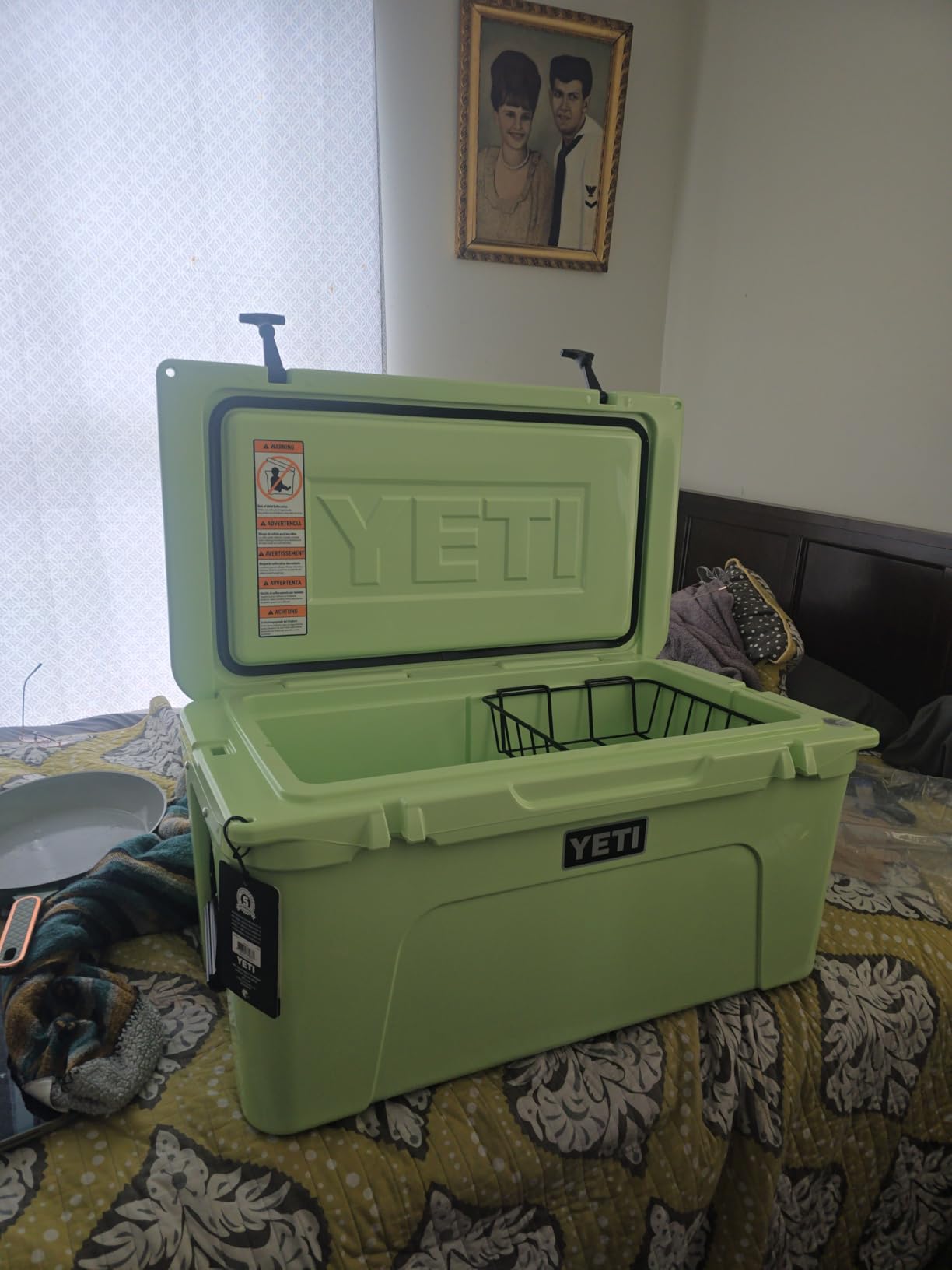
Owners describe the NeverFail two-pin interlocking hinge as the standout feature, and that matches our experience of similar rotomolded hardware. BearFoot non-slip feet kept it from sliding around in the bed of a truck, and the Vortex drain emptied it without tipping the whole load.
The weight is the honest drawback. The published spec is about 29 pounds empty, which becomes a genuinely awkward solo carry once you add a week of ice and food. Plan on a second person or a cart for loading.
How it performs across a full week
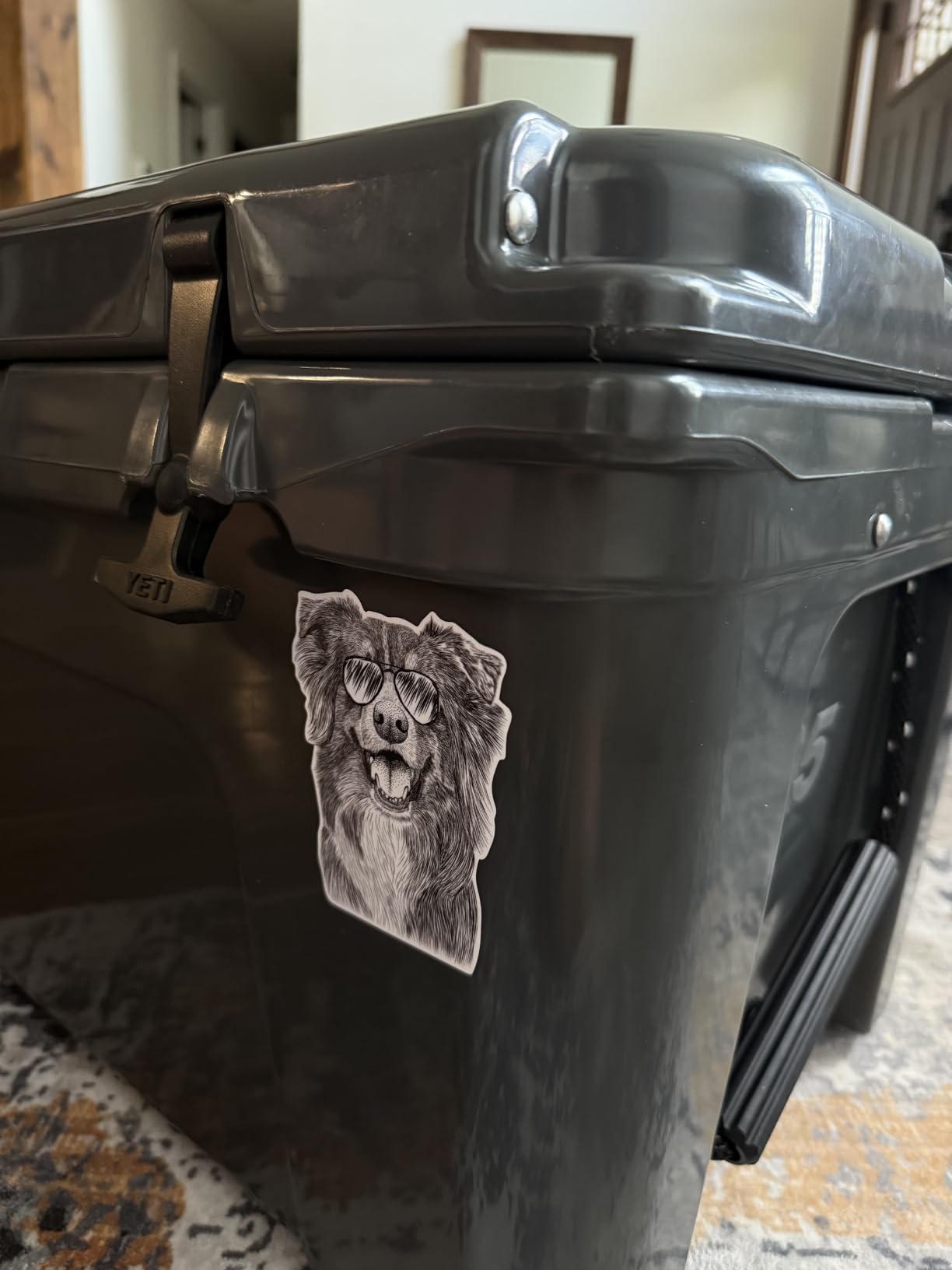
In moderate conditions with the cooler shaded and opened once or twice a day, owners consistently report ice lasting several days at a time. The week-long verdict depends far more on your ice logistics than on the shell, and a mid-trip top-up is still sensible in sustained 90F-plus weather.
Who should skip it
Skip the Tundra 65 if you are a solo backpacker, if your vehicle cannot take a 29-pound empty box, or if the cost is the main objection. The RTIC 65 below delivers comparable insulation at a lower tier and the same week-long viability.
2. RTIC 65 QT Ultra-Tough Hard Cooler – Best Value for the Same Job
RTIC 65 QT Ultra-Tough Hard Cooler, Navy
65 qt / up to 84 cans
2.4 inches closed-cell foam
34.4 pounds empty
5 year warranty
Pros
- Up to 2.4 inches of closed-cell foam
- Freezer-style gasket aids retention
- Rotomolded walls resist impact
- 5 year warranty
- Strong end handles
Cons
- Latch tabs stiff when the gasket is cold
- Bulky for solo transport
- Occasional excess factory glue on the gasket
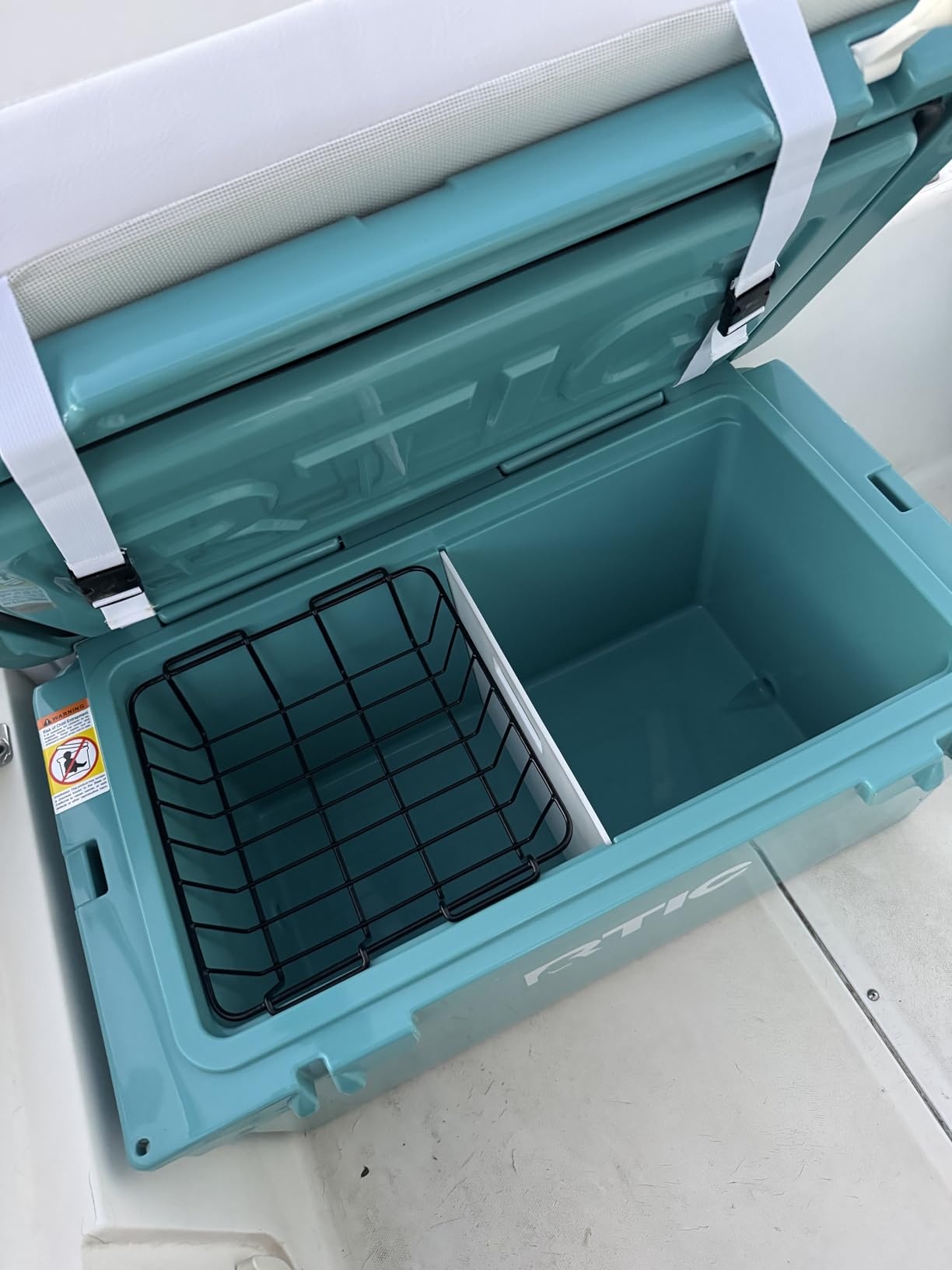
The RTIC 65 is the pick for anyone who wants the same week-long outcome without paying the premium tier’s price. It is rated at up to 2.4 inches of closed-cell foam, which sits at the upper end of the insulation range we saw in this category.
At 65 quarts and up to 84 cans, it matches the Tundra 65 on volume. The difference is weight: RTIC lists 34.4 pounds empty against roughly 29 pounds for the YETI, so the YETI is actually the lighter of the two in this specific comparison.
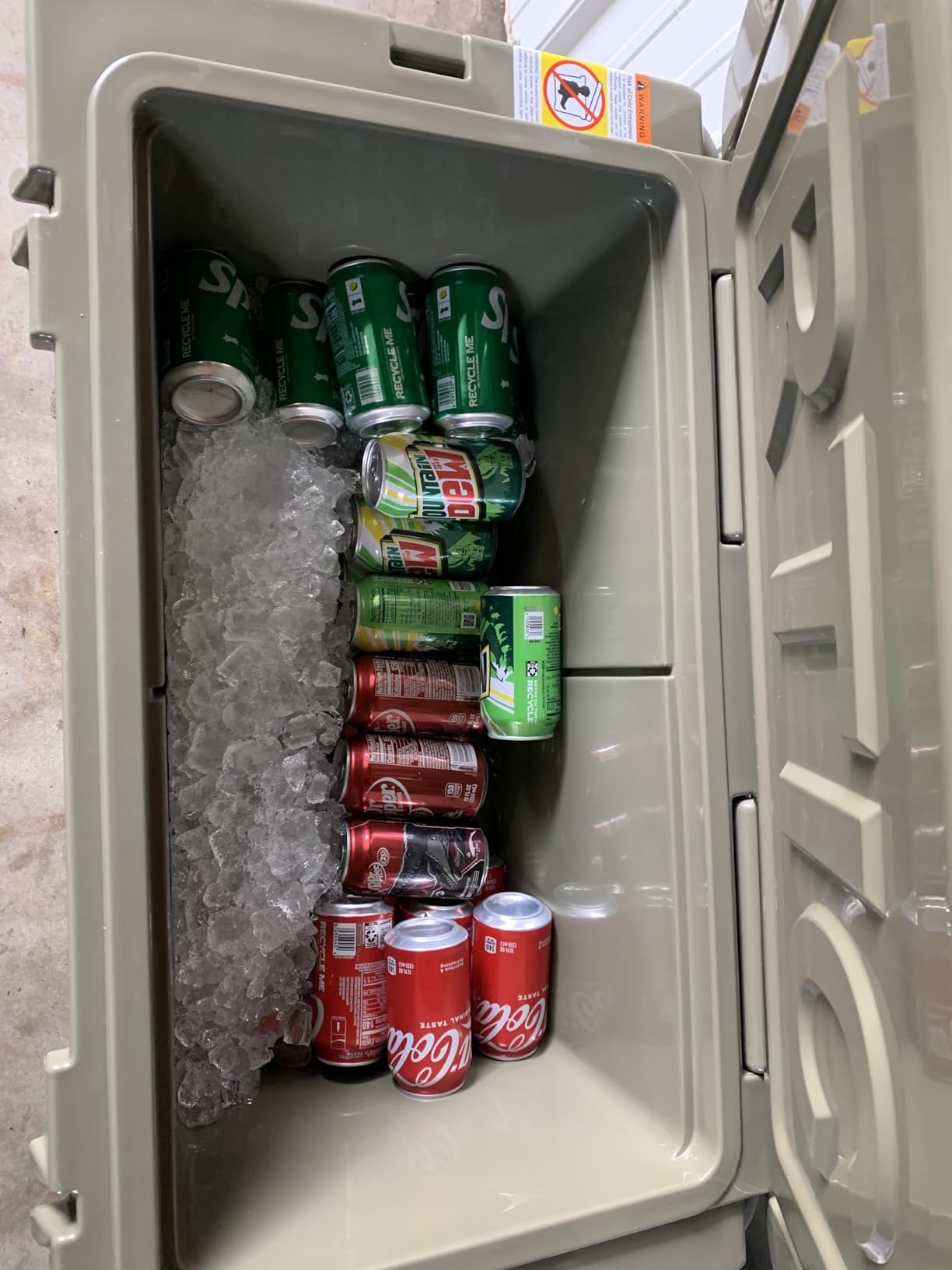
Reviewers report holding ice for a full week in remote heat while opening the cooler daily, and they frequently name it as a strong alternative to premium rotomolded brands. That is exactly the week-long use case this guide is built around.
Two real complaints came up repeatedly. The latch tabs are stiff to release when the gasket is cold, which is most mornings, and some units arrive with excess glue on the gasket that needs trimming before the seal mates properly. Both are five-minute fixes, not dealbreakers.
Whether the 7-day claim is realistic
The manufacturer states up to 7 days, and owner reports of a full week with daily openings are credible. Treat that as a shaded-camp number rather than a parked-in-the-sun number, because direct sun is the single biggest killer of retention in every forum thread we read.
Who should skip it
Skip it if you cannot manage 34 pounds empty, if stiff morning latches will annoy you, or if you need a certified bear-resistant unit. For bear country, look at the Lifetime 115 instead.
3. Lifetime 115 qt Hard Cooler – Best for Bear Country and Full Groups
Lifetime 115‑Quart High Performance Cooler, Up to 10‑Day Ice Retention, IGBC Bear‑Resistant, Camping & Hunting Ice Chest with Cutting Board Divider
115 quart capacity
IGBC bear-resistant certified
Up to 10 day retention
42.5 pounds empty
Pros
- IGBC bear-resistant certification with lock points
- Up to 10 day ice retention
- About 2 inch thick walls
- Built-in bottle openers and rope handles
- Divider doubles as a cutting board
Cons
- Very heavy when full
- Needs two people to lift loaded
- Some lids less rigid than premium rivals
This is the only pick here that solves the bear problem outright. It carries IGBC certification, meaning it is built to withstand a bear for up to an hour when locked, with designated lock points for a cable or padlock.
At 115 quarts with walls roughly 2 inches thick, it is a genuine expedition box. One owner framed it as the best value in expedition coolers, reporting multi-day retention in 90 to 100F heat. The drain spout accepts a garden hose, and the included divider doubles as a cutting board, which saves camp kitchen space.
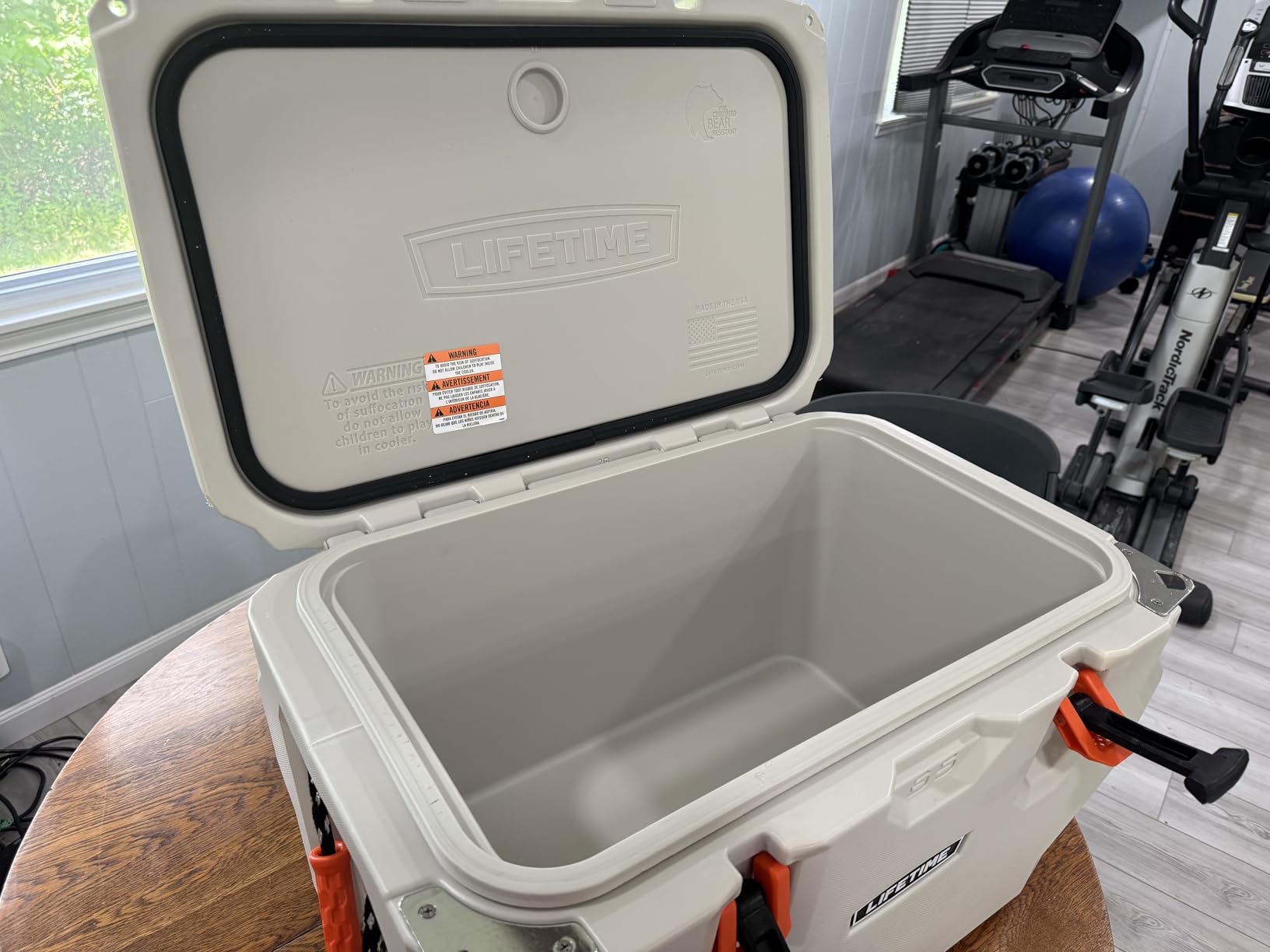
Weight is the recurring complaint. At 42.5 pounds empty, this is the heaviest stationary cooler in the group, and owners consistently say you need help lifting it once loaded. The upside is that 115 quarts means fewer ice runs, which is its own form of weight you do not carry.
One buyer also noted that pre-chilling matters a great deal for performance. A day of sacrificial ice before you pack is the cheapest retention you will ever buy, and it is particularly important on a large-volume shell like this one.
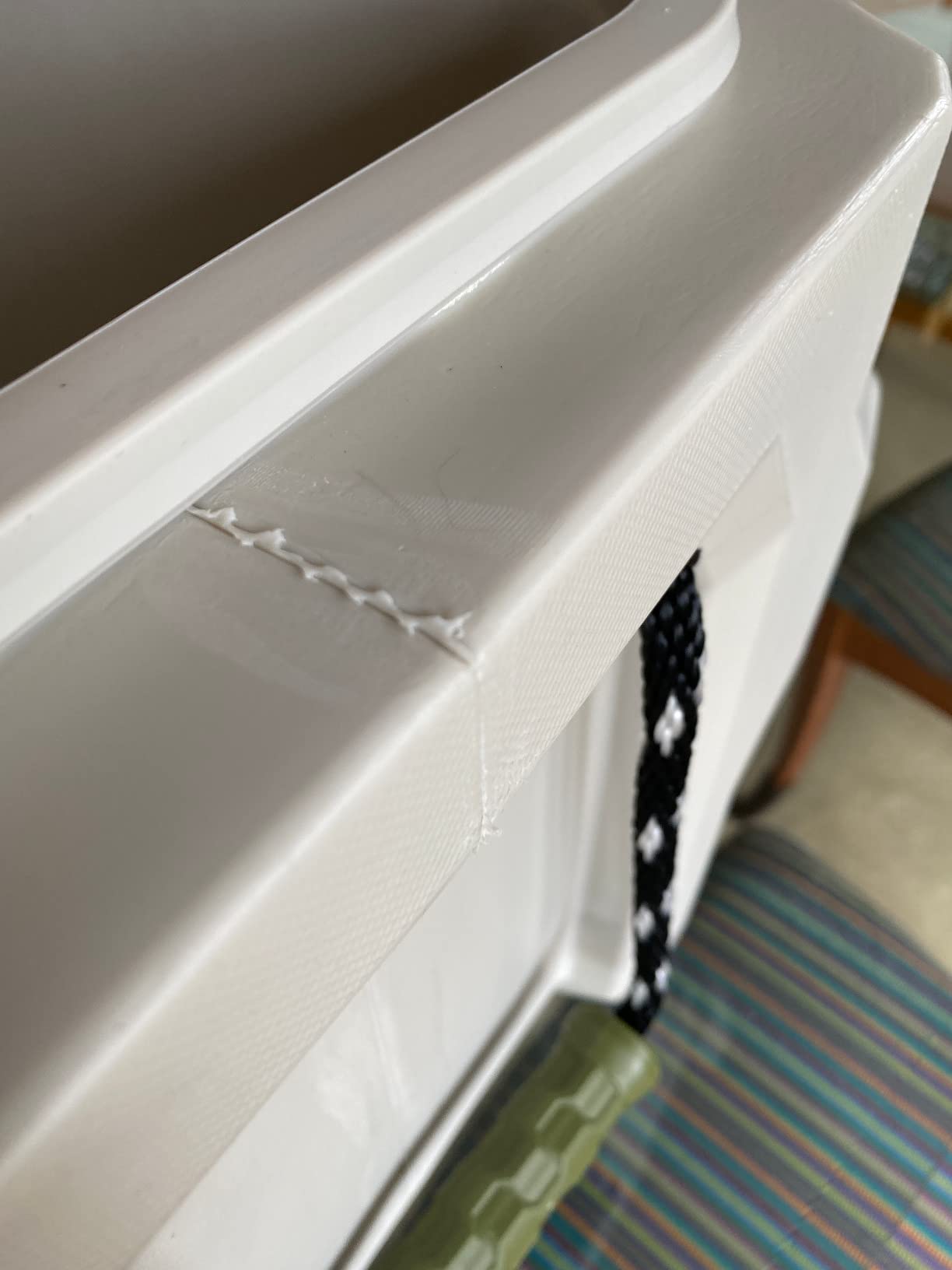
When the 10-day claim holds up
The stated figure is up to 10 days, which exceeds anything else in this roundup, and it comes from a roomier shell with more ice mass than a typical family cooler. Real-world results cluster lower than the claim in extreme heat, so treat 10 days as a shaded-camp ceiling rather than a promise.
Who should skip it
Skip it if you are two people, if you are without a vehicle that can take a 115-quart box, or if loading it solo is a non-starter. A 65-quart cooler is a better fit for a couple’s week.
4. Igloo Maxcold Glide 110Qt Wheeled Cooler – Best Wheeled Cooler for Big Groups
Igloo Glide 110 Qt Roller Cooler, Carbonite
110 qt / 168 cans
Thermacool foam in body and lid
25.4 pounds empty
1 year warranty
Pros
- 110 quart capacity holds 168 cans
- Thermacool foam in both body and lid
- UV inhibitors and infrared sun protection
- Telescoping handle and soft-ride wheels
- Built-in lid ruler
Cons
- DuraLatch closures hard to open when cold
- 39 inch body awkward in small vehicles
- One year warranty is the shortest here
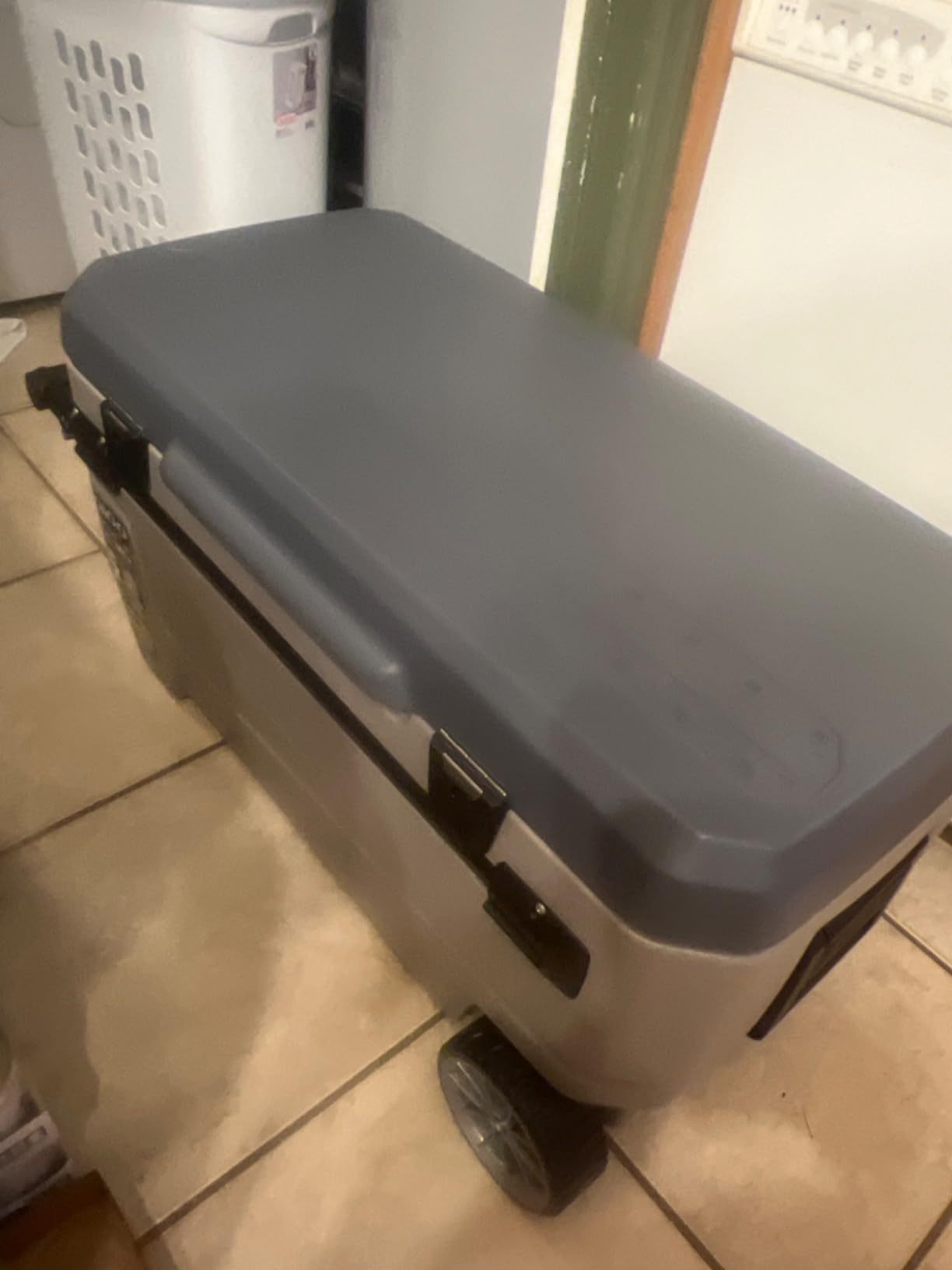
This is the volume play for a group trip, and the wheels are the reason it beats stationary boxes of similar size. At 110 quarts holding 168 cans, it feeds six people for a week without a resupply run.
The soft-ride wheels and horizontal telescoping handle make a 25.4 pound empty cooler genuinely movable, which is unusual in this class. Thermacool foam sits in both the body and the lid, and UV inhibitors plus infrared technology protect the shell from sustained sun exposure.
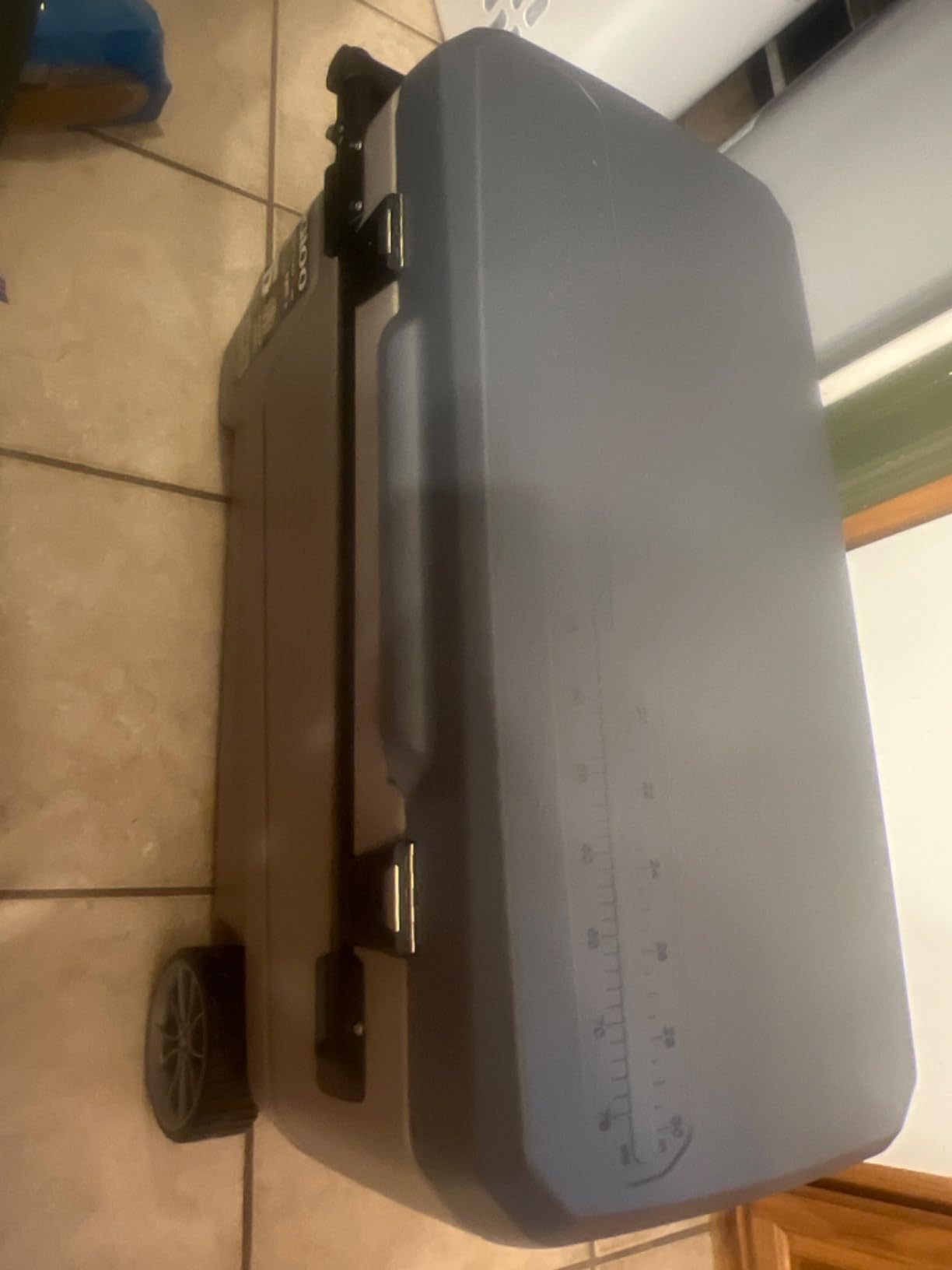
Buyers pick it for sheer capacity and the wheel-and-handle package, noting that it keeps food cold for several days at a fraction of the cost of premium brands. The built-in lid ruler is a small touch that campers with a catch appreciate.
The two drawbacks are physical. The body is 39.67 inches long, which is awkward in a smaller vehicle, and the DuraLatch closures take real effort to open when the gasket is cold. The one-year warranty is also the shortest in this group, which is worth factoring into a buy-it-for-life decision.
Group provisioning over a full week
One cooler, six people, seven days. That is the calculation this box is built for, and the 168-can figure means the drinks and the food can share a load without a second container competing for floor space.
Who should skip it
Skip it if your vehicle is a small sedan or if the one-year warranty makes you uneasy about multi-season ownership. For a truck-based trip with a shorter horizon, a 65-quart box does the same job in a smaller footprint.
5. ENGEL 60 QT Ultra-Light – Best Cooler for Solo Carry
ENGEL 60 QT Ultra-Light Injection Molded Cooler – Ice Chest Keeps Ice up to 7 Days – Large Cooler Includes Wire Basket, Divider and Built-in Bottle Opener – White with Dark Grey Interior (White)
60 quart capacity
2 inches closed-cell foam
21.5 pounds empty
Limited 5 year warranty
Pros
- About 21 pounds empty for 60 quarts
- 2 inches of closed-cell foam
- Removable wire basket lifts food above meltwater
- Divider with drain plug and bottle opener included
- Rubber feet and rope handles
Cons
- 7 day claim falls short in extreme heat
- Injection-molded body less impact-resistant than rotomolded
- Not rated water resistant
- Less proven long-term than major brands
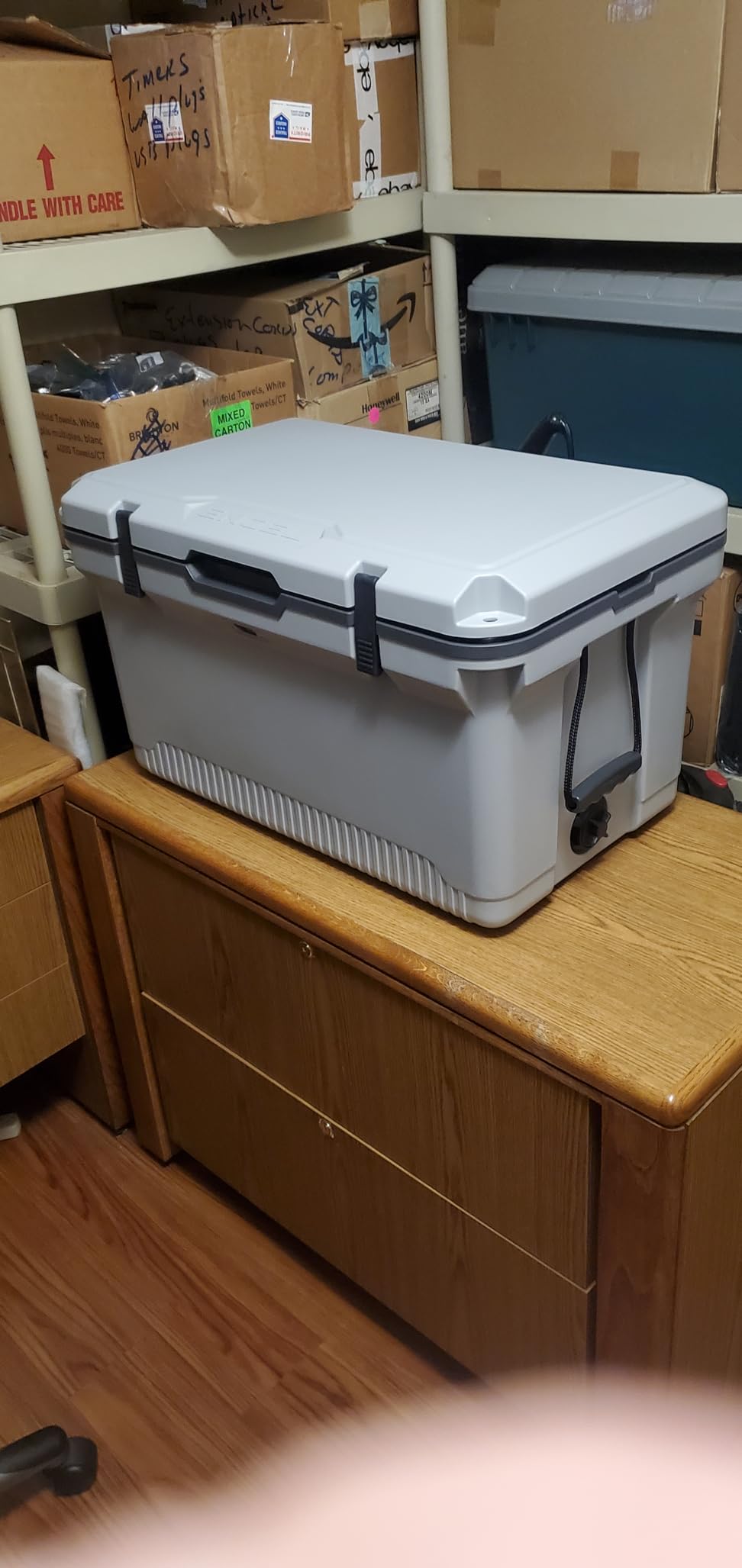
If one person has to move the cooler any real distance, weight becomes the deciding factor. The ENGEL 60 weighs about 21.5 pounds empty and still holds 60 quarts with 2 inches of closed-cell foam behind the walls.
The removable wire basket is the feature we appreciated most in design terms. It keeps food above meltwater and doubles as a cleaning aid, which matters on a trip where you cannot wash up properly for a week. A divider, drain plug, built-in bottle opener and tie-down slots all come in the box.
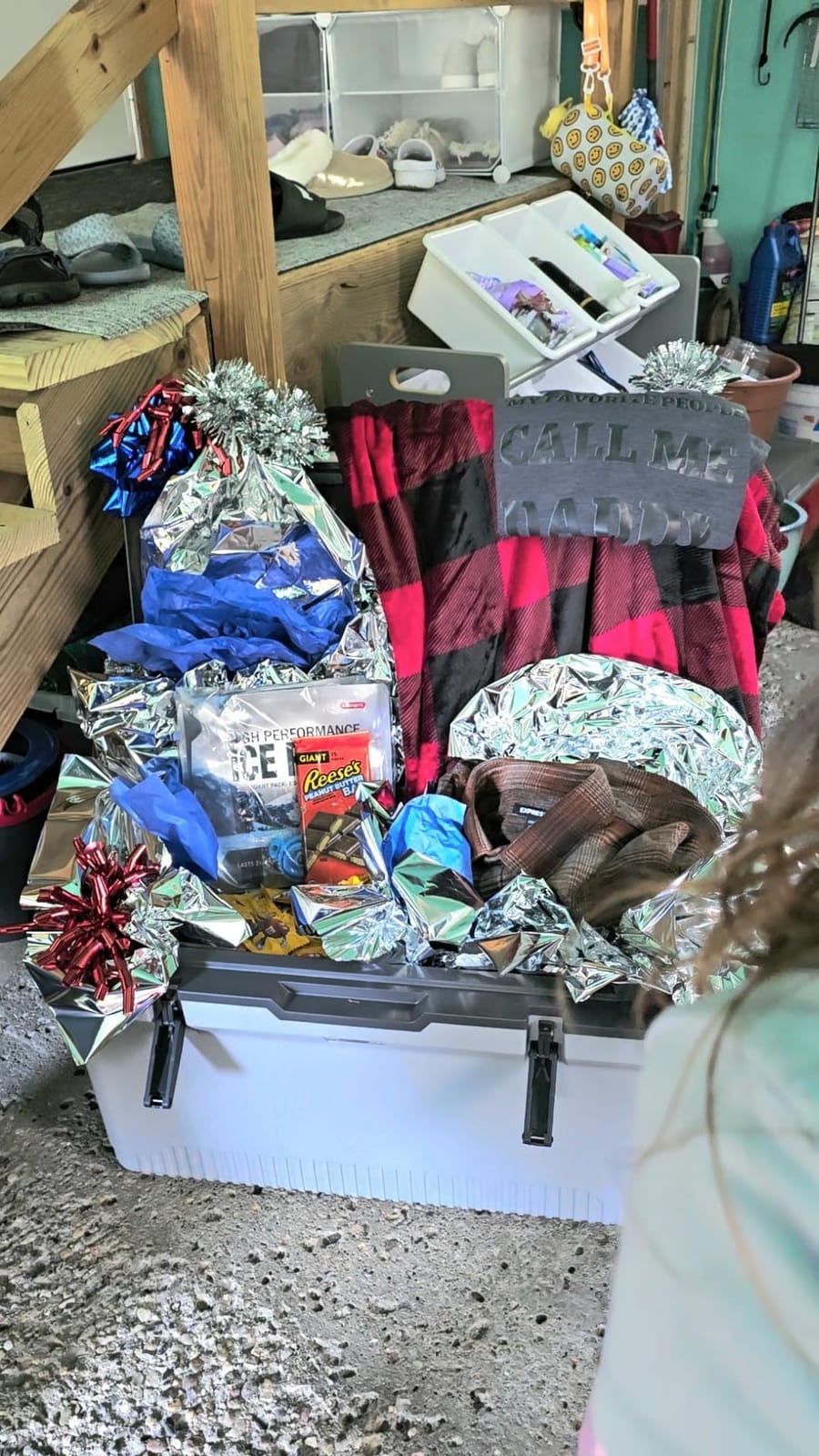
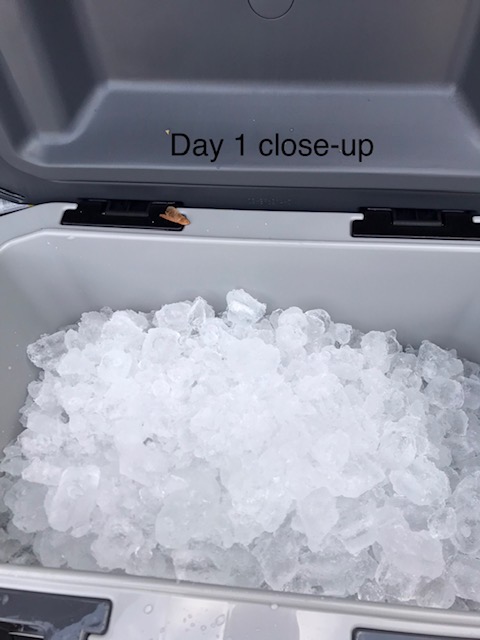
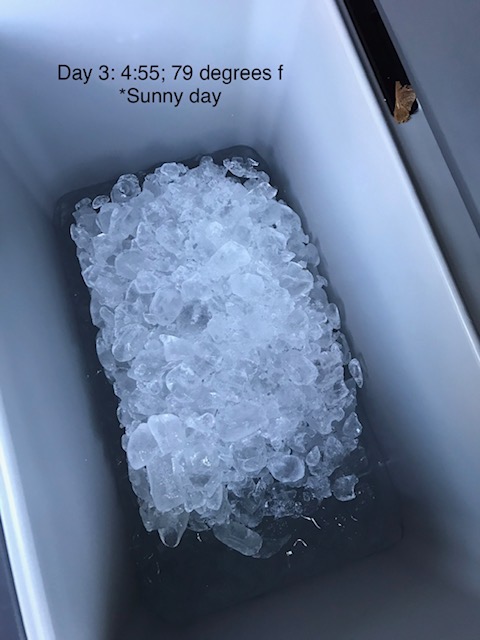
The honest weakness is heat. Owners report that ice retention falls short of the 7-day claim in extreme conditions, with some seeing only one to two days, though one long-term owner documented ice surviving ten days in a Florida vehicle. Treat the day count as condition-dependent rather than fixed.
Two further notes: the injection-molded body is not as impact-resistant as a rotomolded shell, and the cooler is not rated water resistant, so the seam can weep in sustained rain. Neither matters on a mild week in a dry forest.
How it handles a solo week
At 60 quarts you are carrying roughly a week of food for one to two people, which pairs well with a lightweight stove setup such as our backcountry stove picks. You sacrifice bulk for the ability to move camp without help.
Who should skip it
Skip it if you are provisioning five or more people, if you expect sustained rain, or if you need a certified bear-resistant container. Also skip it if your trip will sit in 95F heat for a week, because the 2-inch wall gives up sooner than a 2.4-inch rotomolded shell.
6. Igloo BMX Cooler – Best Budget Cooler for Drinks and Day Trips
Igloo BMX 25 Quart Carbonite Gray and Blue
25 qt nominal / 52 qt variant
Blow-molded with reinforced base
MaxCold 20 percent thicker foam
4 to 5 day retention
Pros
- Proven 3 to 5 day retention after pre-chilling
- 20 percent thicker foam body and insulated lid
- Cool Riser base lifts it off hot surfaces
- Stainless hinge rods and rubberized T-grip latches
- Light enough to carry solo
Cons
- Walls roughly half the thickness of premium rivals
- Drain plug sits off the low point leaving residual water
- Handle can catch the lid
- Not bear-certified
The Igloo BMX belongs in this guide as the drinks cooler, not the food cooler. It is the value benchmark of the category, with more than twenty thousand reviews behind it, and owners confirm three to four days of ice after pre-chilling.
Construction is heavy-duty blow-molded with a reinforced base rather than rotomolded, and the MaxCold body uses 20 percent thicker foam with an insulated lid. The Cool Riser Technology base lifts the cooler off hot ground, which helps more in desert camps than most buyers expect.
The wall thickness is roughly half that of a comparable premium rotomolded cooler, and that shows up as the extreme-heat performance trails. Stainless steel hinge rods, rubberized T-grip latches, an integrated lid ruler and built-in tie-down loops round out a genuinely well-specified budget box.
Our own experience of this class on r/CampingGear is that a cooler like this works well as a secondary container for drinks, which keeps lid openings off the food cooler and extends its life. On a camping forum thread, a BMX was cited as having handled a two-week road trip, so it is not to be dismissed for long trips entirely.
Where the 4 to 5 day claim lands
Three to four days of ice after pre-chilling is the owner-reported figure, which is honest and useful. It is one to two days short of a strict seven-day week, which is exactly why we recommend it as a companion cooler rather than the primary one.
Who should skip it
Skip it as your only cooler on a week-long trip unless you have a reliable mid-trip ice resupply. Also skip it for high-country trips that require certified bear resistance.
7. RTIC 52 QT Ultra-Light – Best for Couples on a Week Trip
RTIC 52 QT Ultra-Light Hard Cooler, Trailblazer
52 qt / up to 76 cans
3 inches of closed-cell foam
21 pounds empty
3 year warranty
Pros
- 30 percent lighter than same-capacity rotomolded
- 3 inches of closed-cell foam
- True-to-size interior for packing ice at ratio
- Carries at single-person weight empty
- Well regarded for multi-day trips
Cons
- Injection-molded shell less rigid under heavy abuse
- 21 pounds becomes burdensome when loaded
- 3 year warranty shorter than the Ultra-Tough line
Fifty-two quarts is the sweet spot for two people over seven days, and the RTIC 52 holds 76 cans with a true-to-size interior that measures 21.25 by 12 by 12 inches. That accuracy matters because you can actually pack the 2:1 ice ratio instead of guessing.
The headline number here is weight. At 21 pounds empty, RTIC states this model is more than 30 percent lighter than rotomolded coolers of the same capacity while keeping up to 3 inches of insulation, which is the thickest wall in this roundup on paper.
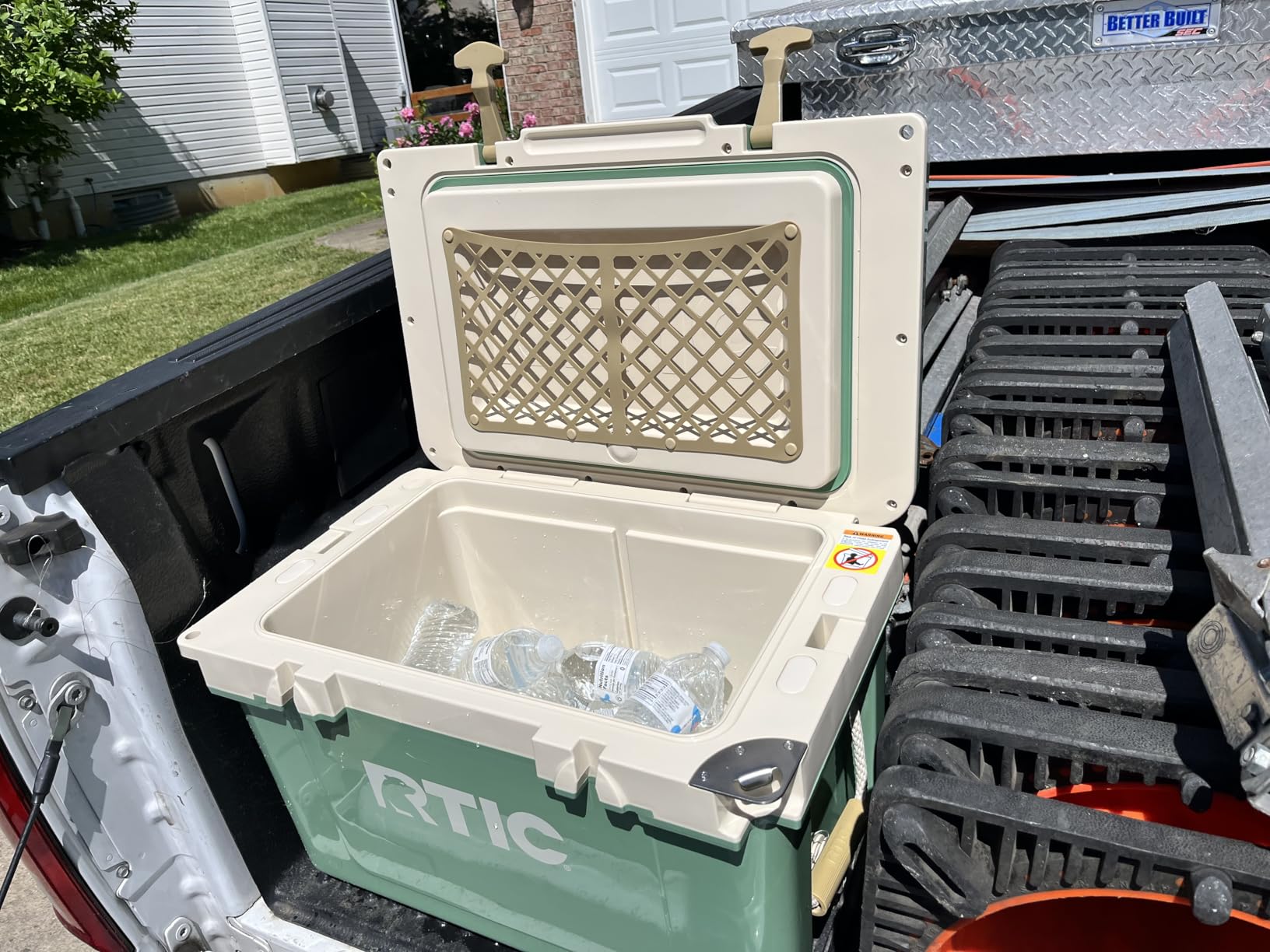
Owners cite the combination of light empty weight and deep insulation as the defining benefit, making this the easiest RTIC to carry solo over distance. The true-to-size interior is appreciated for packing ice at the recommended ratio, and the box doubles as a bench or step stool at camp.
The tradeoffs are honest ones. An injection-molded shell is less rigid than rotomolded walls in heavy abuse, the 3-year warranty trails the 5 years on the RTIC Ultra-Tough line, and 21 pounds stops being light the moment you add a week of ice and food.
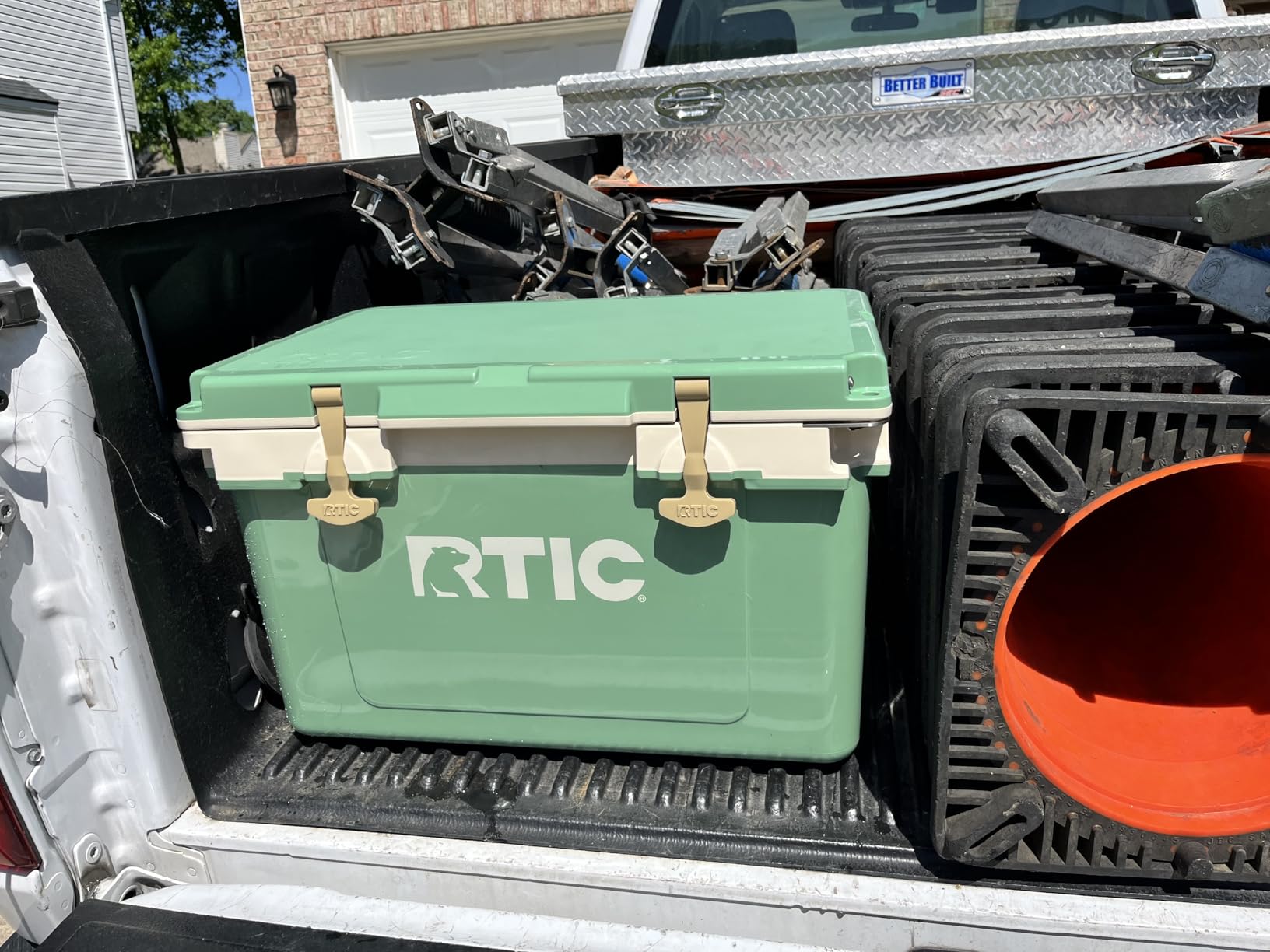
Capacity math for two people, seven days
Two people eating three meals a day for a week need roughly 42 meals of food, and at a 2:1 ice-to-contents ratio that means 52 quarts is a tight but workable fit. If you plan on fishing or long daily drives, step up to the 65-quart RTIC.
Who should skip it
Skip it if you need certified bear resistance, if your group is five or larger, or if your route involves a portage where 21 pounds of empty cooler is still too much to carry alone.
8. Pelican 70 Quart Elite Cooler – Best Warranty and Build Quality
Pelican 70 Quart Elite Cooler (White/Gray)
True 70 quart volume
2 inches polyurethane insulation
33.3 pounds empty
Lifetime guarantee
Pros
- True 70 quart internal volume with high lid rim
- 2 inches polyurethane foam with 360 degree gasket
- Lifetime guarantee that transfers to the next owner
- Drain plug on a stainless steel cable
- Four self-draining cup holders
Cons
- Very large and heavy when loaded
- Two people needed to move it loaded
- Bulkier than same-volume competitors
- Tie-down points are small
- No official park bear certification
The Pelican 70 is the one to buy if you intend to keep it for a decade. It carries a lifetime guarantee, and that transferability is the decisive purchase factor for long-term owners in the reviews we read.
Capacity is true internal volume of 70 quarts, and the higher lid rim lets you fill past the brim, which adds useful real capacity in practice. Insulation is 2 inches of polyurethane with a 360-degree freezer-grade gasket, and the drain plug sits on a stainless steel cable so it cannot be lost.
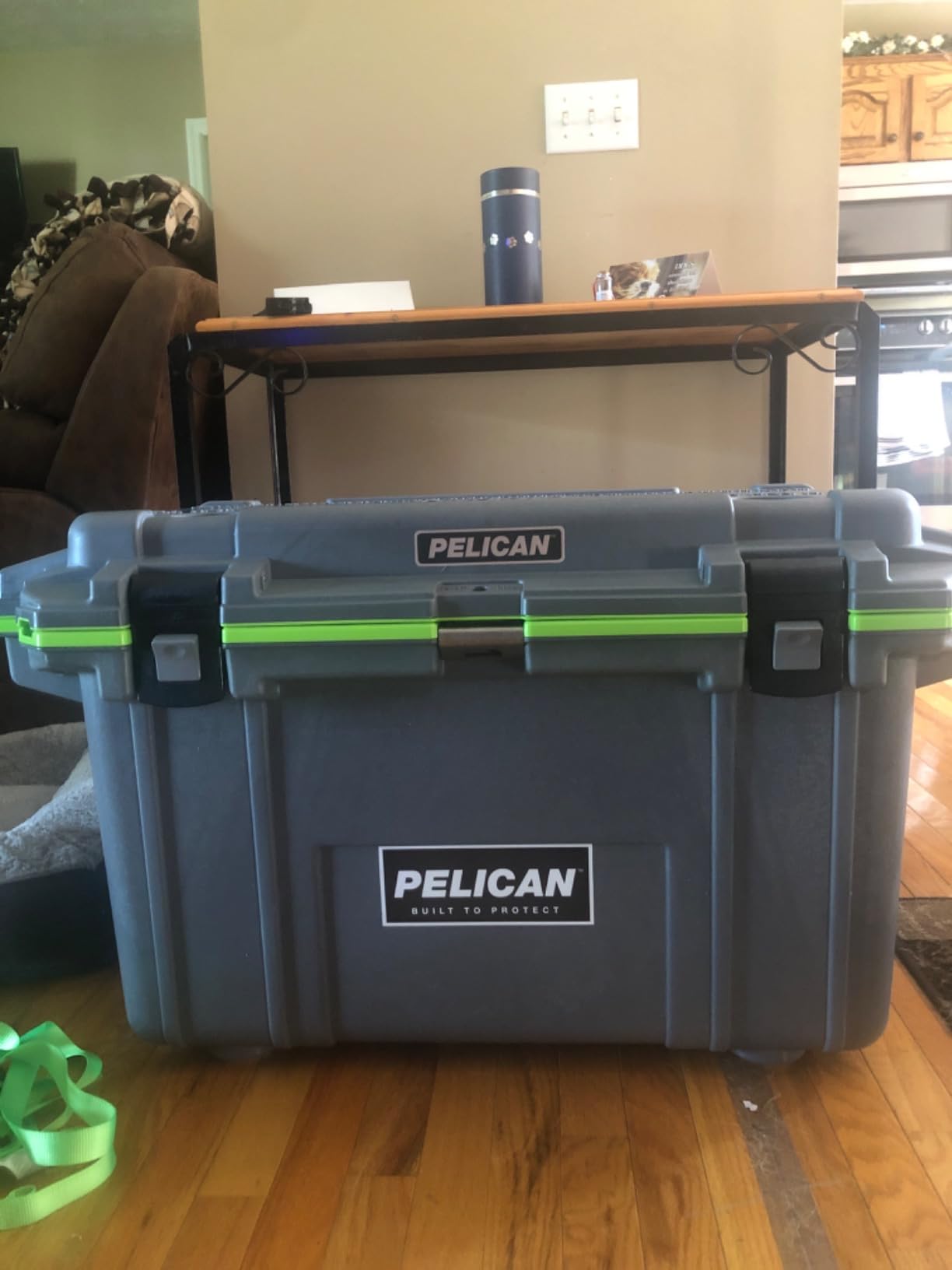
Long-term owners report a week or more of ice retention, including a documented 20-day California coast trip and an eight-day sun-exposed test. A separate owner confirmed bear resistance, with the cooler withstanding 15 minutes of a black bear and taking only scratches.
That last point deserves care. Resisting a bear is not the same as holding IGBC certification, and for national park trips you still need a certified unit. Size is the real drawback: at 33.3 pounds empty and 36.5 inches long, it takes two people to move loaded, and several reviewers advise a smaller size unless you are provisioning a full group.
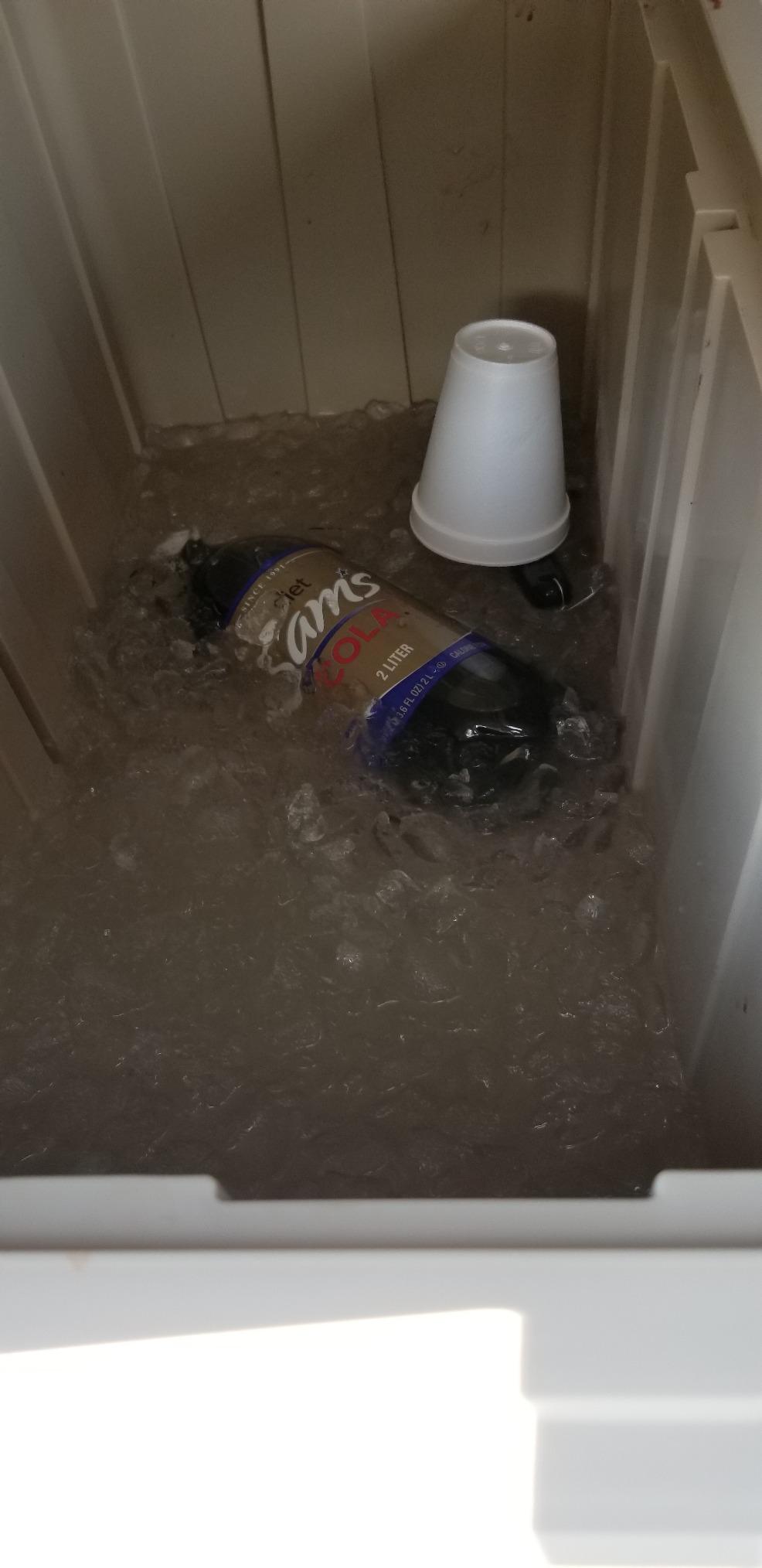
Why the warranty matters for week-long trips
A cooler that cracks on day four ends the trip. Hardware is the first thing to fail, and this one pairs 3-inch locking latches, a reinforced lockable hasp and an anti-shear hinge system with a guarantee that covers the whole shell.
Who should skip it
Skip it if you need a smaller footprint, if your vehicle cannot take a 36.5 inch box, or if you require official bear certification for a national park. It is also overbuilt for couples.
9. Blue Coolers Ice Vault 60 qt – Best Wheeled Rotomolded Cooler
Blue Coolers Ice Vault – 60 Quart Roto-Molded Ice Cooler with Wheels | Large Ice Chest Holds Ice up to 10 Days | Charcoal Gray
60 quart capacity
2 inches of insulation
Rotomolded HDPE shell
5 year warranty
Pros
- Wheels make a 36.5 pound cooler genuinely movable
- Rotomolded construction with consistent wall thickness
- Lockable lid with freezer-style gasket and rapid drain
- Reported five-day frozen meat run in August heat
Cons
- 10 day ice claim frequently unmet
- Owners report 3 to 5 day real-world results
- Very heavy and bulky even empty
- Accessory basket hard to source separately
Rotomolded construction plus wheels is a rare combination, and the Ice Vault delivers it at 60 quarts. The roto-molding process gives consistent wall thickness, and a lockable lid with a freezer-style gasket and rapid drain system comes standard.
Real-world reports are the story here. Owners mention holding frozen meat solid for a five-day road trip and keeping ice in a 95F car for three days, which is credible field data rather than a lab number.

The biggest theme across critical reviews is that the advertised 10-day retention does not hold. Multiple owners report three to five days, and one reported melt in under 12 hours indoors. Treat the 10-day figure as a marketing claim, which is exactly the kind of inflation this guide is designed to filter out.
Weight is the other issue at 36.5 pounds empty, and the accessory basket is hard to source separately. The box does work as a seat and shows no cracking after repeated climbing, which tells you something about the shell quality.
Real-world retention versus the printed claim
Budget five days and plan an ice run on day five or six. That is the number owners actually report in heat, and it still makes this a viable week-long cooler for two to three people who can resupply.
Who should skip it
Skip it if you have no way to resupply ice mid-trip, since the 10-day claim is not dependable. Also skip it if 36.5 pounds empty is too much to move over uneven ground, even with wheels.
10. Igloo Trailmate Journey 70Qt Wheeled Cooler – Best for Rough Ground
Igloo Trailmate Journey 70 Qt Roller Cooler, Sportsman
70 qt / up to 112 cans
10 inch never-flat wheels
35.8 pounds empty
1 year limited warranty
Pros
- 10 inch never-flat wheels for sand and rough terrain
- Locking telescoping steel Glide handle
- Cool Riser base improves retention
- Removable butler tray stores under the lid
- 70 quarts fits up to 112 cans
Cons
- Lowest average rating among the wheeled options
- Large exterior footprint for the volume
- Bulk and weight remain high even with wheels
- One year limited warranty
If your campsite is reached across sand, gravel or washboard track, this is the wheel and handle system to choose. The 10-inch never-flat smooth-ride wheels and a steel Glide handle with locking and telescoping functions were designed for exactly that ground.
At 70 quarts holding up to 112 cans, it is sized for a full group on a week-long trip. Cool Riser Technology lifts the cooler body away from hot surfaces, which helps retention more in desert camps than most buyers expect.
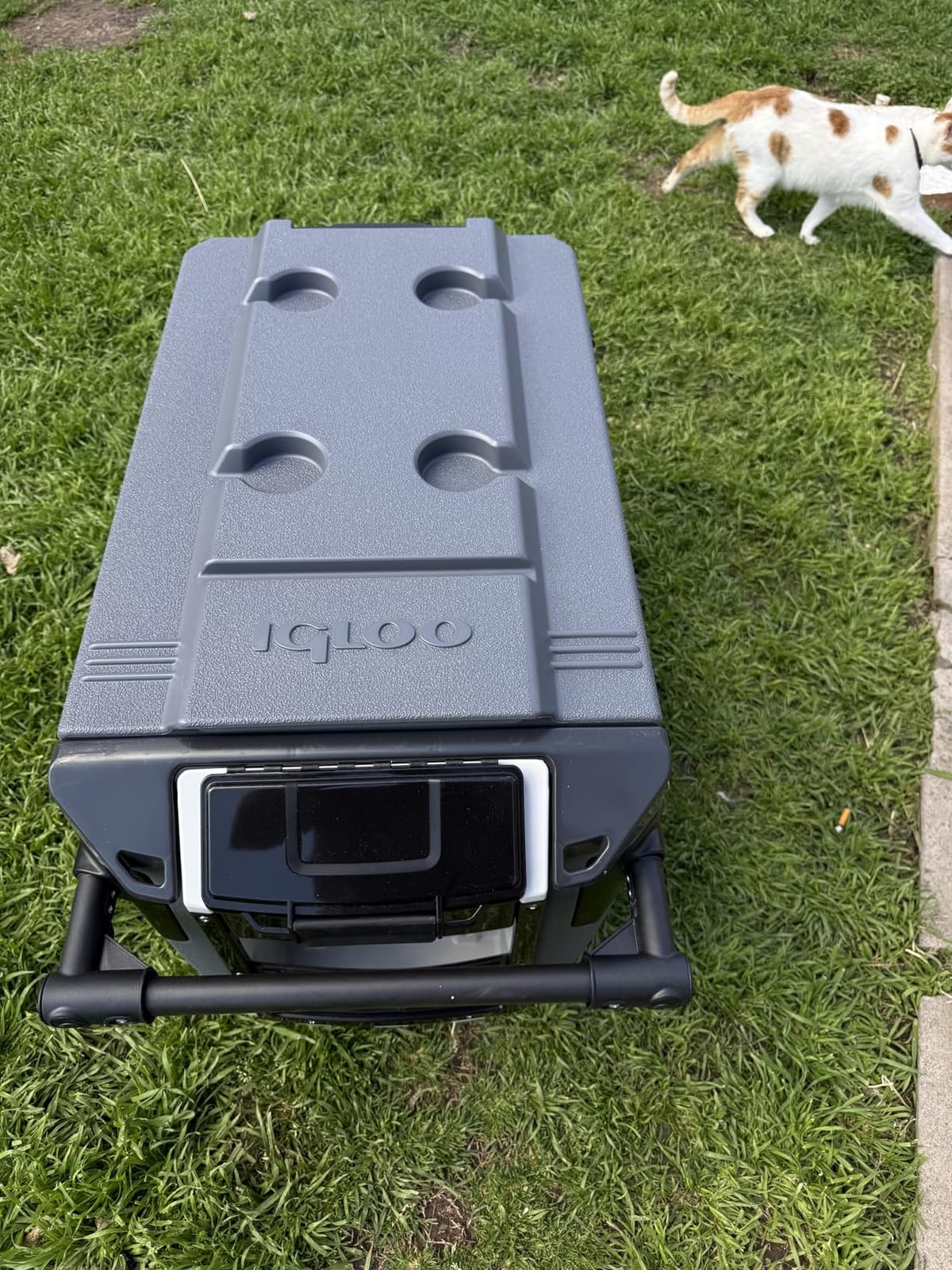
The removable butler tray on the telescoping handle is the sleeper feature. It doubles as a serving surface and stows under the lid, so it costs you nothing to carry, which is rare in cooler design.
Sentiment is more mixed than the rotomolded competitors here, and the 4.4 average reflects that. The exterior footprint is large for the internal volume, the bulk stays high even with the wheel system, and the one-year warranty is short for a box you may keep for a decade.
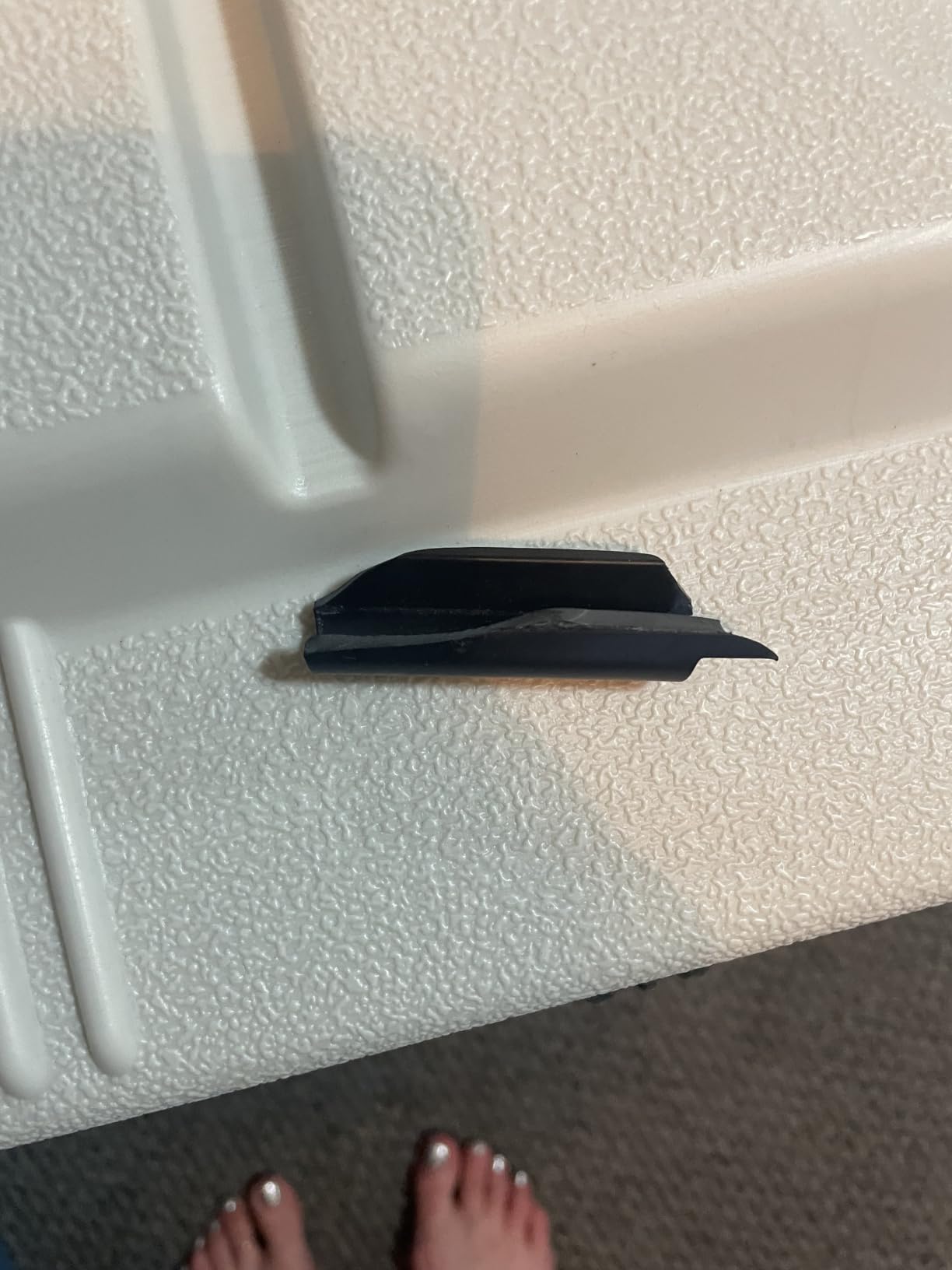
Where the wheel and handle system earns its keep
On pavement the wheels are a nicety. On a forest road or a beach approach, they are the difference between one trip and four. Plan on a multi-day trip with a group and this box earns its footprint.
Who should skip it
Skip it if your site is a short walk from a paved parking spot, if the 33.82-inch length will not fit your vehicle, or if a one-year warranty does not suit long-term ownership plans.
11. COHO 165QT Insulated Hard Cooler – Best for Full Group Provisioning
COHO 165QT Insulated Hard Cooler with Fish Ruler, Removable Cup Holders, Magnetic Disc & Tie-Down Loops, Ice Chest for Camping, Boating & Outdoor Use, Keeps Ice Up to 7 Days
165 quart internal capacity
Quick access hatch
Threaded vortex drainage
Seven day ice claim
Pros
- Enormous 165 quart capacity for one box
- Quick-access hatch avoids opening the full lid
- Threaded vortex drain holes accept a garden hose
- Built-in ruler with magnetic disc and cup holders
- Rubber T-latches and impact-absorbing grips
Cons
- 43.4 inches long and needs a truck bed or trailer
- No wheels or handle so a two-person lift
- Listed 4.9 pound weight is not representative
- White finish shows scuffs
At 165 quarts with a stated 2:1 ice-to-contents ratio, this is the largest container in the roundup and the one that most completely removes the resupply problem. A week of food and drink for a large group fits in one box.
The quick-access hatch is the design detail we liked most. It lets you reach food without opening the entire lid, and every time you skip a full opening on a week-long trip, the ice budget improves.
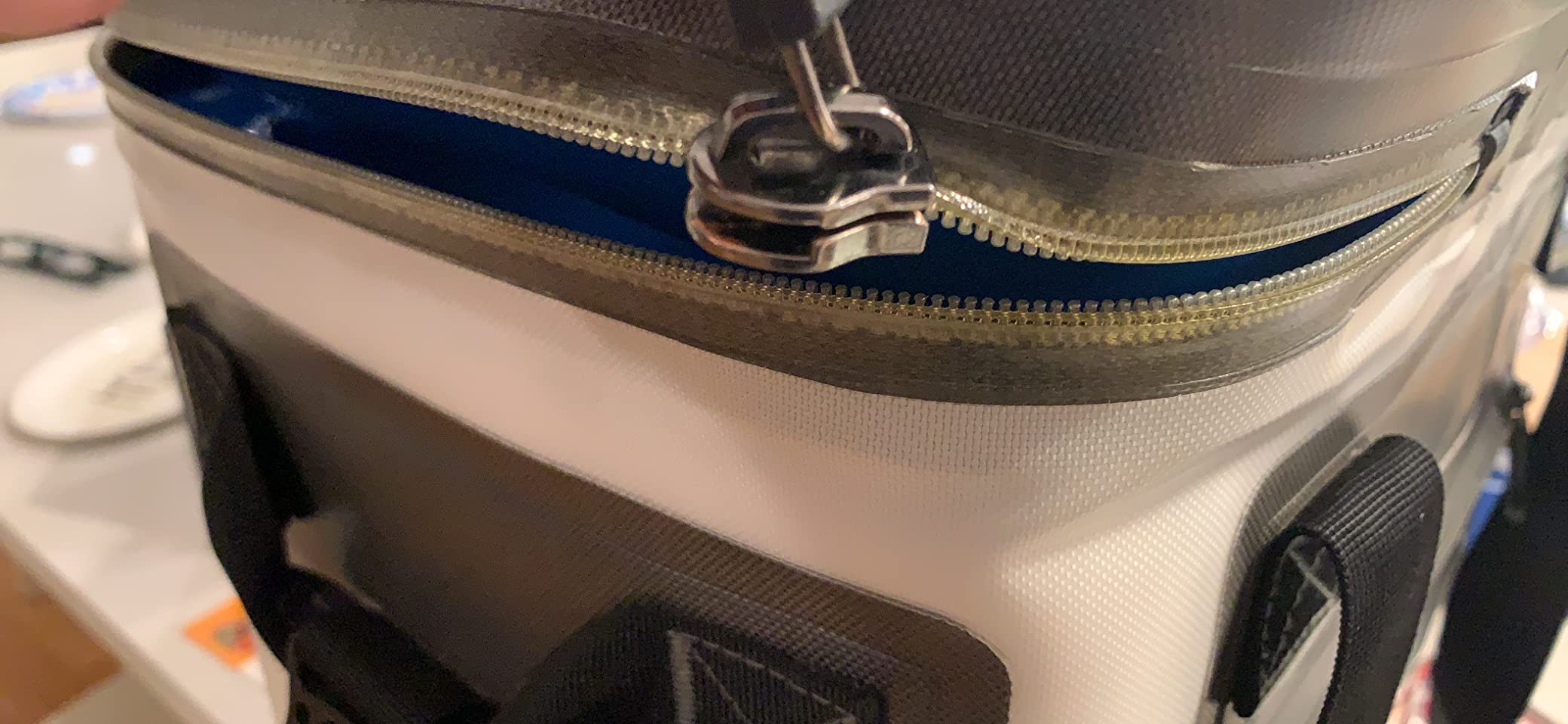
Drainage is handled by threaded holes that form a vortex and accept a garden hose, so you can empty meltwater quickly and in a controlled way rather than tipping 165 quarts of soaked contents across the tailgate.
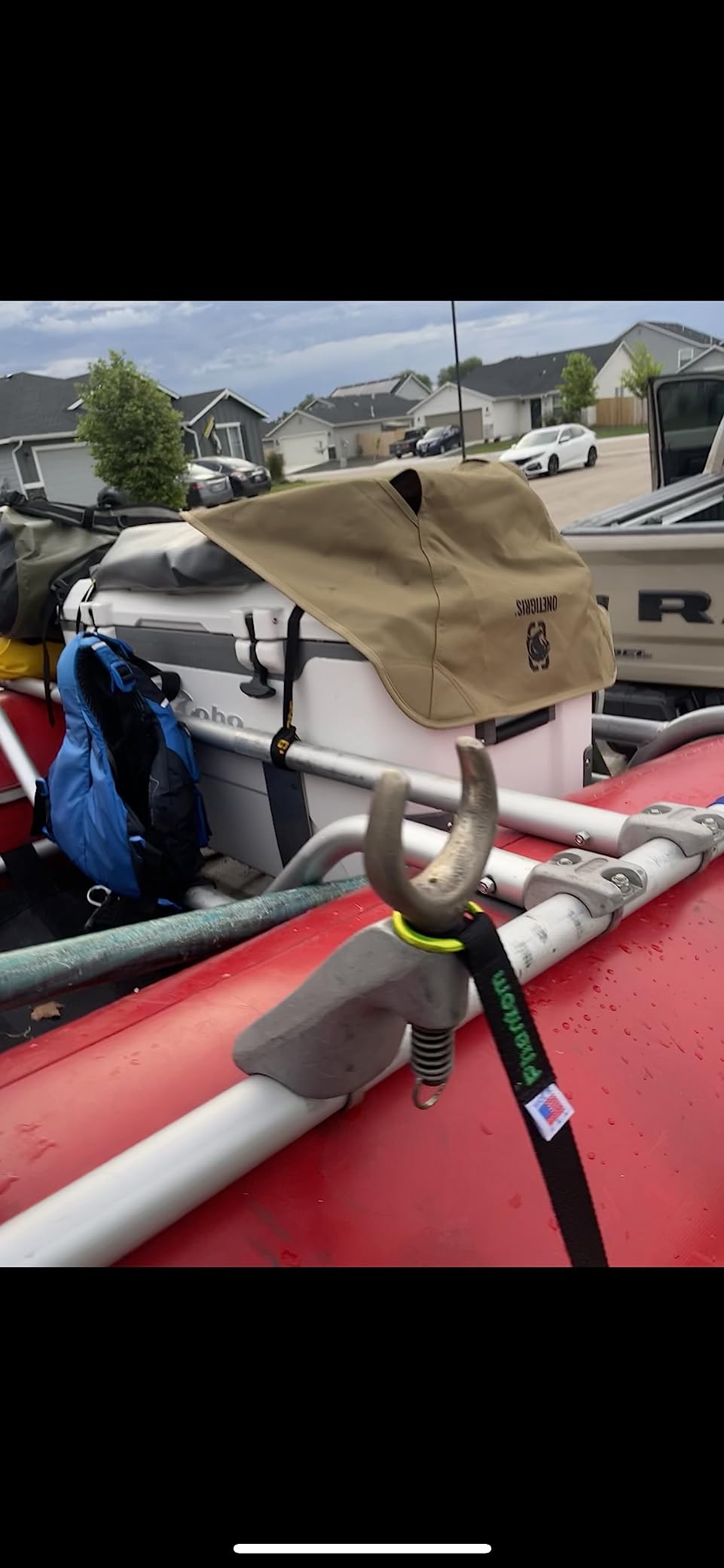
The size is the whole argument against it. At 43.4 inches long it will not fit most car trunks, and with no wheels or handle it is a two-person lift once loaded. Buyers provisioning large groups value being able to carry a week of supplies in one box without resupply runs; everyone else is fighting the footprint.
Is a 100-quart-plus cooler too big for four people?
For a family of four it is oversized, and the empty space costs you ice. For six or more people over a week, it is the difference between one cooler and three. Size the box to your group, not to your ambition.
Who should skip it
Skip it unless you have a pickup bed, a trailer, or a large van, and unless your group is five or more. For a couple, it is simply the wrong tool.
12. Coleman Xtreme Rolling Cooler – Best Budget Pick for a Rolling Week
Coleman Xtreme Rolling Cooler with Portable Wheels, 50-Quart
50 qt / 84 cans
12.7 pounds empty
All-terrain wheels
3 to 5 day retention
Pros
- Best price-to-capacity ratio in this roundup
- Only 12.7 pounds empty with all-terrain wheels
- Lid doubles as a seat rated to 250 pounds
- Double-wall insulated body and lid
- Leak-resistant built-in drain
Cons
- 5 day ice claim is optimistic for many owners
- Drain spout flimsy and prone to weeping
- Stiff latches need a hard upward pull
- Thinner foam than rotomolded competitors
The Coleman Xtreme is the most thoroughly reviewed cooler in this roundup by a wide margin, with more than twenty thousand ratings. The consensus is simple: it performs well for the money, provided you use frozen hard packs and keep it shaded.
At 50 quarts holding 84 cans and only 12.7 pounds empty, it is the only pick here light enough for a single person to move comfortably while loaded. Rugged all-terrain wheels and a retractable telescoping handle handle rough ground, and the lid doubles as a seat rated to 250 pounds.
It is also the official cooler of the National Park Foundation, which is a useful signal for park trips even though it is not a bear certification. Double-wall insulation in both body and lid is the reason it outlasts cheaper boxes.
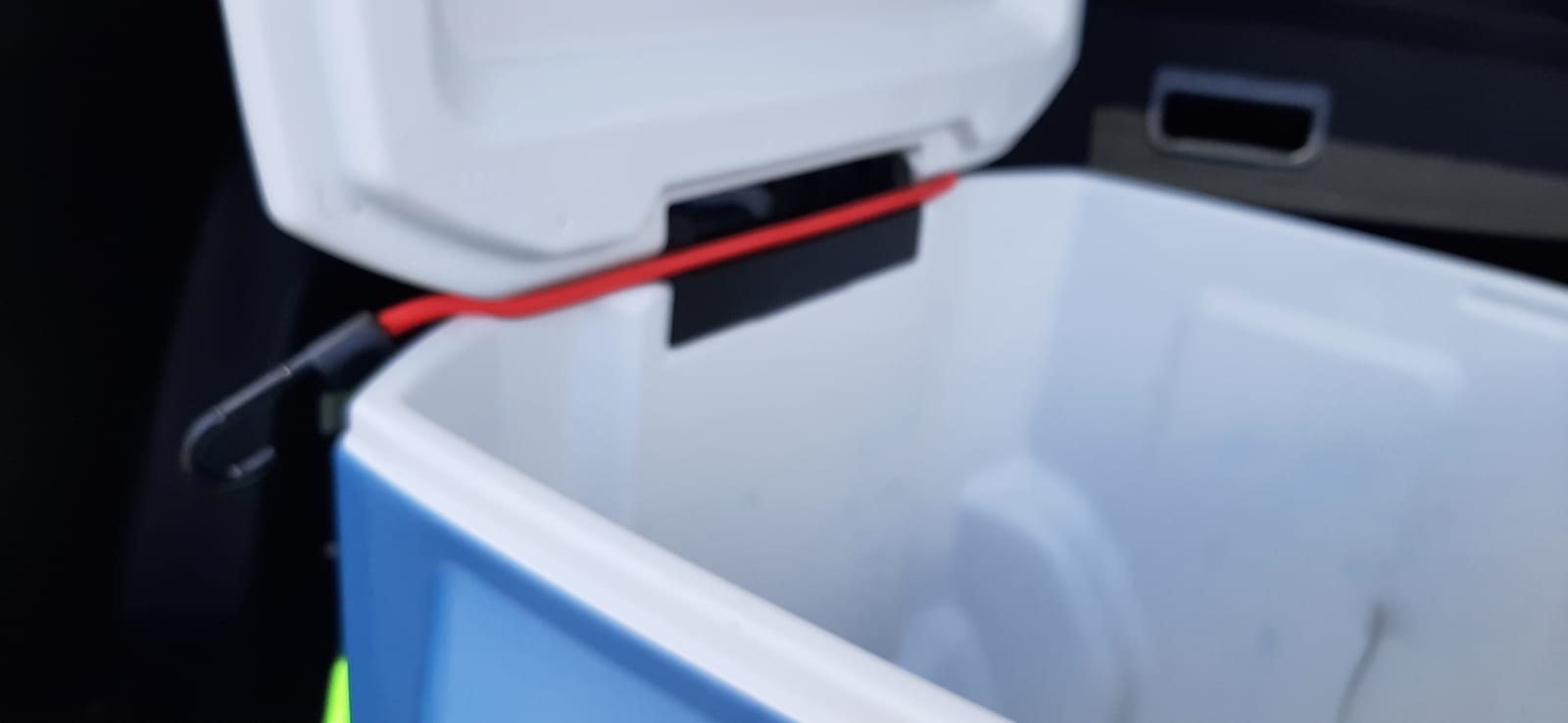
The honest limit is heat. Foam-in-place walls are thinner than rotomolded competitors, so hot-weather retention trails, and many owners report needing to resupply ice twice in five days. The drain spout is also flimsy and prone to weeping, and the latches need a firm upward pull.
Making five days stretch to seven
Pre-chill it overnight with sacrificial ice, pack frozen hard packs rather than loose cubes, and keep it out of direct sun. Those three steps close most of the gap between the 3-to-5-day reality and a full week.
Who should skip it
Skip it as your only cooler if you have absolutely no way to buy ice mid-trip, and skip it if the loaded 50-quart package is not enough for your group. It is a brilliant first cooler, not a final one.
How Big a Cooler Do You Need for a Week of Camping?
For a seven-day trip, plan on 45 to 55 quarts for one or two people, 65 to 75 quarts for a family of four, and 100 to 120 quarts for a group of six or more. Those three ranges cover the overwhelming majority of week-long trips, and the number that matters is how much ice you can carry alongside the food.
The 2:1 rule is the reason. Two parts ice to one part food is the ratio that keeps a cooler at or below 40F long enough to matter, and every capacity figure above assumes you are packing to it. A 65-quart cooler packed at 2:1 holds roughly 43 quarts of ice and 21 quarts of food, which is a realistic week for a family of four.
Loaded weight is the number most guides skip. A 65-quart cooler can weigh 34 to 40 pounds empty, and the ice and food add more on top, so a packed family cooler regularly crosses 70 pounds. If you cannot split that between two people or onto a cart, size down or plan a resupply route.
The 7-day ice resupply plan
Block ice beats cubes because it has a lower surface-area-to-mass ratio and melts more slowly. Plan on carrying as many 10-pound blocks as you can and add to the cooler every day or two rather than all at once, because a partly empty cooler chills faster than a full one.
A 45-to-55-quart cooler needs roughly one 10-pound block per day for two people. A 65-to-75-quart cooler for a family of four needs closer to two blocks per day. A 100-to-120-quart group cooler can absorb three or more blocks daily, and at that scale you should be buying ice in bulk and caching it in a second container.
On packed ice at 2:1, a 65-quart cooler carries roughly 40 to 45 pounds of ice, which is about four to five blocks. That gives you two to three days between additions, not seven. Plan on one resupply run mid-trip no matter which cooler you buy, and choose a campsite with a store or a known ice source along your route.
If you are on a boat or kayak, the maths changes completely and the box you can physically move wins. Our touring kayak picks for long trips cover that side of the equation, and the short version is that week-long paddling trips almost always need a dry bag rather than a 165-quart chest.
The two-cooler split is the underrated answer to loaded weight. One cooler holds only drinks, which you open ten times a day, and the other holds food, which you open twice. Every opening you remove from the food cooler extends its ice life, and you can carry a smaller food box than you think you need.
The YETI Tax: What Actually Costs Less
The most common objection we read on r/camping is the price premium on YETI, and a dedicated thread with more than 100 comments asks which coolers match it for less. The short answer is that the premium tier buys you hardware quality and warranty length far more than it buys extra ice days.
On the specific question of which holds ice longer, RTIC or YETI, the honest answer is that the published evidence conflicts. Outside reported that an RTIC’s ice was fully melted at 72 hours while a YETI still had a small stash of cubes. On eggheadforum, a user reported the opposite, stating that a Coleman held ice over twice as long as a YETI, and had to replace YETI hinges and handles. The difference in outcomes tracks pre-chilling, shade and ice format far more than the logo.
That said, the value tier in this roundup is genuinely strong. The RTIC 65 carries 2.4 inches of closed-cell foam with a 5-year warranty and owner reports of a full week with daily openings. The Coleman Xtreme holds 84 cans at 12.7 pounds empty with a 250-pound seat lid. Neither matches YETI’s lifetime warranty or its hinge refinement, and both deliver the week-long outcome this guide is about.
Against a Coleman specifically, the YETI wins on wall thickness and hardware, and it loses on cost by a wide margin. The 20-percent-thicker MaxCold foam in the Igloo BMX and the Cool Riser base in the same brand are cheaper answers to the same insulation problem.
Per day of usable ice retention, the budget tier is difficult to beat. That framing matters more to a week-long buyer than sticker value, because the question is how many days the box protects your food before you need to carry it, not what it weighs in the hand.
Bear Country, Dry Ice and Packing Technique
If you are entering bear country, an IGBC-certified container is a legal requirement, not a preference. Among the picks here, the Lifetime 115 qt is the one that carries the certification, with a rating to withstand a bear for up to an hour when locked. The Pelican 70 has documented resistance against a 15-minute black bear attack but is not officially certified, and that distinction matters for park compliance.
Dry ice is the answer for keeping food genuinely frozen across a full week, and it carries real hazards. Never seal dry ice in an airtight cooler, because the sublimating gas needs somewhere to vent. Handle it with insulated gloves, keep the cooler in a ventilated space, and expect a carbon dioxide layer to build at the bottom of the container.
Packing order matters more than most buyers expect. Put the least-used items on the bottom, food in the middle, and ice on top, where it acts as a lid of its own. Pre-chill the empty cooler for a day with sacrificial ice before you load the real ice, and freeze your jugs a week ahead so you start with solid mass rather than slush.
Direct sun is the factor forum users mention more often than any product feature, and the strongest advice we saw was simply to keep moving the cooler to keep it in shade. A reflective insulated cover, a tarp over a bear box, or a shaded position between two trees can each add most of a day.
If your campsite has mains or battery power, a compressor cooler removes the ice logistics entirely. That only works if you can keep it running, which makes it a good pair with a portable power station. Our camping generator picks for off-grid trips cover the power side, and a compressor unit is the rare upgrade that beats ice over a genuine seven days.
Do not overpack. Every quart of air you close around the food is a quart you are paying to cool. Fill the walls with ice, keep the food dense, and leave the lid closed for as long as the trip allows.
Frequently Asked Questions
What is the best long-term camping cooler?
The YETI Tundra 65 is our pick for a family of four over seven days. Its rotomolded shell, PermaFrost polyurethane foam and form-fitting Interlock lid gasket hold ice for several days at a time, and the limited lifetime warranty covers the hardware most likely to fail. At 65 quarts it carries a realistic week of food when drinks live in a second cooler.
What coolers are just as good as Yeti but cheaper?
The RTIC 65 QT Ultra-Tough is the closest equivalent. It carries up to 2.4 inches of closed-cell foam, a freezer-style gasket and a 5-year warranty, and owners report holding ice for a full week with daily openings. The Coleman Xtreme Rolling goes lower still at 12.7 pounds empty with 3 to 5 day retention, which suits trips with a mid-trip ice run.
Which holds ice longer, RTIC or Yeti?
The published evidence genuinely conflicts. Outside reported an RTIC fully melted at 72 hours while a YETI still had cubes. On eggheadforum, a user reported the opposite, with a Coleman outlasting a YETI and requiring hinge repairs. In practice, pre-chilling, shade and block ice format swing results by more than the brand name does.
Is a Yeti cooler better than a Coleman cooler?
The YETI is better built, with thicker walls, stronger hinges and a limited lifetime warranty. The Coleman is better value, lighter at 12.7 pounds empty, wheeled, and reliable for 3 to 5 days if you pre-chill it and keep it shaded. For a strict seven-day trip with no resupply, choose the thicker-walled rotomolded or injection-molded option.
How long does ice last in a good cooler?
Budget three to five days for a quality hard cooler in real heat, and up to seven days when it is pre-chilled, shaded and packed at a 2:1 ice-to-contents ratio with block ice. Manufacturer figures above seven days are marketing claims, and owners commonly report 3 to 5 days instead. Plan on one mid-trip ice resupply regardless of which cooler you buy.
Conclusion
For a family of four with no resupply stop, the YETI Tundra 65 is the single best camping cooler for week-long trips, and the RTIC 65 Ultra-Tough delivers the same week-long result for less. If you are in bear country, the IGBC-certified Lifetime 115 qt is the only pick here that meets the legal requirement. If you are a couple or solo traveler, keep the empty weight low with the RTIC 52 or the ENGEL 60, and pair either with a cheap second cooler for drinks so the food box gets opened twice a day instead of ten.
Whichever box you choose, pre-chill it, pack to a 2:1 ice ratio, keep it out of direct sun, and plan one ice run mid-trip. Those four habits will do more for a week-long trip than any brand on this list. Last reviewed in 2026.