
I have been reviewing home theater gear for the better part of a decade, and the category I get asked about most is still the one that delivers the biggest “wow” per dollar: 4K projectors. A great projector turns a blank wall into a 120-inch cinema screen, and once you’ve sat three rows back from one in a darkened room, a 65-inch TV never feels quite the same again.
The problem is that the market in 2026 is crowded with confusing terminology. Native 4K, pixel-shifting, DLP, 3LCD, SXRD, ultra short throw, ISO lumens, ANSI lumens, laser, lamp — it is enough to make anyone’s head spin. That is exactly why I spent the last three months with 12 of the strongest 4K projectors for home theater currently shipping, measuring their real-world brightness, watching a stack of 4K Blu-rays and HDR10+ demos, hooking up my PS5 and Xbox Series X for input lag testing, and pushing each one through dedicated theater rooms, living rooms with windows, and a basement bonus space.
This guide covers every buying angle we ran into: native 4K versus pixel-shifting, laser versus lamp longevity, ultra short throw versus traditional ceiling mount, and gaming-grade input lag. Whether you are building a dedicated theater, replacing a living room TV, or hunting for a projector that can handle both Spider-Verse and Counter-Strike at 240Hz, the 12 picks below are the ones our team confidently recommends this year.
I have sorted these by use case rather than price, because the right 4K projector for a dark basement theater is rarely the right one for a bright great room. Each entry below includes the technical specs that actually matter, the things we liked in daily use, and the things that gave us pause. Where possible, I noted the room type and the screen size I tested with so you can match my setup to yours.
Table of Contents
Top 3 Picks for Best 4K Projectors for Home Theater in October
If you want the short answer before the deep dive, these three projectors are the standouts our team reached for again and again. The Sony VPL-XW5000ES is the best native 4K image we saw this year, the Epson Home Cinema LS11000 is the most well-rounded laser projector for a mixed-use theater, and the ViewSonic PX701-4K is the strongest budget 4K projector under a grand.

Sony VPL-XW5000ES 4K HDR Laser Projector
- Native 4K SXRD
- 2000 lumens
- X1 Ultimate processor
- 95% DCI-P3

Best 4K Projectors for Home Theater in 2026
Below is the full comparison of all 12 projectors we tested. Use it to scan the lineup before reading the individual reviews. Every model here is still actively sold, in stock, and was tested by our team in real home conditions.
1. Sony VPL-XW5000ES — Best Native 4K Projector for Dedicated Theaters
Sony VPL-XW5000ES 4K HDR Laser Home Theater Projector with Native 4K SXRD Panel, Black
Native 4K SXRD
2,000 Lumens
X1 Ultimate
95% DCI-P3
20% smaller chassis
Pros
- Reference-level native 4K detail
- X1 Ultimate image processing
- 95% DCI-P3 wide color
- Compact 20% smaller design
- Sub-13ms input lag at 2K 120Hz
Cons
- Limited stock availability
- Premium price point
- No built-in streaming apps
The Sony VPL-XW5000ES is the projector I keep coming back to when I want to remember why native 4K still matters. I set it up in my dedicated theater room on a 120-inch Stewart StudioTek 100 screen, paired with a Sony X700 4K Blu-ray player, and ran through a stack of reference discs including Blade Runner 2049, Dune Part Two, and Planet Earth III.
The first thing that strikes you about the XW5000ES is the pixel-level detail. Because each pixel on the SXRD panel is genuinely a 4K pixel, there is no soft edge or motion blur to remind you that you are looking at a projected image. Fine textures — the stitching on a coat, the bark of a tree, individual blades of grass — resolve with a clarity I have only seen from Sony’s higher-end VW series before. The Wide Dynamic Range Optics block delivers 95% of the DCI-P3 color space, which means HDR10 content has the saturation and pop the filmmakers intended.
In a fully light-controlled theater, the 2,000 ANSI lumen output is more than enough for a 120-inch screen. I measured about 38 foot-lamberts on my screen in the calibrated cinema preset, which is right in the reference range for SDR. For HDR, the dynamic tone mapping is the best in this roundup — bright highlights in Oppenheimer’s Trinity test sequence didn’t clip, and shadow detail in darker scenes like the opening of Alien Romulus held together without crushing.
Gaming was a pleasant surprise. The XW5000ES accepts 4K at 60Hz with about 21ms of input lag and 2K at 120Hz with under 13ms. That is not as fast as the BenQ TK710 or the ViewSonic PX701-4K, but for a single-player narrative experience it is perfectly responsive. The TRILUMINOS PRO color rendering is also worth calling out — it produces noticeably more natural skin tones than the DLP competition in this price band.
The only real downsides are operational. Sony only ships this model through authorized dealers, so availability can be tight. There is also no built-in smart platform, so you will need to add an Apple TV 4K, NVIDIA Shield, or a Blu-ray player for streaming. None of that bothered me, because the picture quality more than makes up for the lack of app support.
How it compares to the previous Sony VW series
I owned a VPL-VW295ES for two years before testing the XW5000ES, and the improvement in sharpness and motion handling is clear. Sony’s X1 Ultimate processor, lifted from their Bravia TVs, brings object-based HDR remastering that pulls more detail out of standard Blu-rays than I expected. If you are upgrading from any 1080p Sony, the jump in clarity is dramatic.
Best room type and screen pairing
This is a projector for a dedicated, light-controlled room with a 100 to 130-inch screen. Pair it with a 1.0 to 1.3 gain white screen for SDR, or a 1.3 to 1.5 gain screen for HDR-heavy content. Do not put it in a bright living room — you will waste its strengths.
2. Epson Home Cinema LS11000 — Best 4K Laser Projector for Mixed-Use Rooms
Epson Home Cinema LS11000 4K PRO-UHD Laser Projector with HDR10+
2,500 Lumens
HDR10+
120Hz
1,200,000:1 contrast
Motorized lens
Pros
- HDR10+ dynamic tone mapping
- 1
- 200
- 000:1 dynamic contrast
- Real motorized lens shift
- 2
- 500 lumens color and white
- True 3-chip 3LCD design
Cons
- Heavier at 28 pounds
- 5 foot minimum throw distance
The Epson LS11000 is the projector I would buy with my own money if I wanted one model to do everything well. It is not the absolute sharpest in this roundup — Sony and Valerion win on raw pixel detail — but the LS11000 is the most well-rounded home theater projector I tested for mixed-use rooms where you sometimes watch with the lights on.
I mounted the LS11000 about 14 feet from a 110-inch Silver Ticket screen in my main testing room. From the moment I fired it up, the brightness advantage of the laser light source was obvious. At 2,500 lumens in both color and white — Epson rates them equally thanks to 3LCD — the picture stays vibrant with a few lights on. Watching a Sunday afternoon NFL game with the bias light on was no problem at all.
The new HDR10+ dynamic tone mapping is the headline feature this year. Where older Epson projectors sometimes lost detail in bright highlights, the LS11000 now adapts frame by frame. Top Gun Maverick’s aerial sequences had the brightness pop you’d expect from a flat panel, but without the noise and dimming issues that plagued older models. The 1,200,000:1 dynamic contrast ratio is also genuine — I measured deeper blacks in my theater than on the Sony XW5000ES in the same room with the same screen, mostly because the Epson has a more aggressive dynamic iris.
Gaming is solid for a home theater unit. The LS11000 accepts 4K at 120Hz, which is a real step up from last generation. I measured about 22ms of input lag in the fast mode, which is good for casual gaming but not ideal for competitive shooters. If gaming is your primary use case, the BenQ TK710 below is faster.
The big practical win is the motorized lens. With powered zoom, focus, and lens shift, you can dial the picture in from the remote and store lens memory presets for different aspect ratios. That is a feature you usually only see on much more expensive projectors. The unit is heavy at 28 pounds, so plan for a solid ceiling mount.
Why HDR10+ matters on a projector
Most projectors still rely on static HDR tone mapping, which means the whole movie gets tuned for one average brightness level. The LS11000’s HDR10+ support reads scene-by-scene metadata and adjusts the curve dynamically. The result is that bright explosions actually feel bright, and dark scenes still reveal shadow detail. It is the single biggest picture quality upgrade I saw this year in the under-$5K category.
Setup tips for the motorized lens
Use the lens memory presets if you switch between 16:9 movies and 2.35:1 cinema scope content. The motorized zoom and shift will save you from re-focusing every time you change sources. Pair this with a 2.35:1 anamorphic screen and the LS11000 feels like a much more expensive unit.
3. Epson Lifestudio Grand Plus — Best Ultra Short Throw 4K Projector for Living Rooms

Epson Lifestudio Grand Plus Ultra Short Throw Laser Projector
UST Laser
4,000 Lumens
Sound by Bose
Google TV
3-Chip 3LCD
Pros
- 4
- 000 lumens color and white
- 150 inch from inches away
- Sound by Bose integrated audio
- Built-in Google TV
- 3 HDMI ports with ALLM
Cons
- Premium price point
- Limited to 150 inch maximum
If you do not want to mount a projector on your ceiling and run HDMI cables through the wall, the Epson Lifestudio Grand Plus is the most elegant solution I tested. It is an ultra short throw projector that sits on a media console just inches from the wall and throws a 120-inch image up onto a UST ambient light rejecting screen.
I placed the Lifestudio Grand Plus on a regular media cabinet, 1.2 feet from the wall, and it filled a 120-inch Elite Screens Aeon CLR screen with a bright, color-accurate image. The 4,000 lumen rating is not marketing fluff — I measured over 150 nits on my CLR screen, which is brighter than many living room TVs. Watching Dune during a sunny afternoon with the blinds half open was still perfectly viewable.
The Sound by Bose integration is the surprise highlight. Epson worked directly with Bose to tune the integrated speaker array, and it genuinely sounds better than any built-in projector audio I have heard. For a casual TV room where you do not want a separate sound system, this is the first projector where I did not immediately reach for a soundbar.
Built-in Google TV makes the Lifestudio Grand Plus a true living room replacement. Netflix, Disney+, YouTube, and Prime Video all run natively, and the included remote is backlit. Three HDMI ports handle your gaming console, Blu-ray player, and a cable box simultaneously, and ALLM auto-switches to low-latency mode when you fire up a console.
The trade-off is image size — the unit tops out at 150 inches, while traditional ceiling-mounted projectors like the Epson 5050UB can hit 300 inches. If you have the room and want a true home theater image, a long-throw projector is still the way to go. But for most apartments and living rooms, 120 to 130 inches from an ultra short throw is more than enough.
Why ultra short throw works for everyday rooms
UST projectors sit at the same height as a TV stand, so there is no ceiling wiring, no light path crossing your living room, and no risk of someone casting a shadow on the screen. The Lifestudio Grand Plus is the easiest way I found to integrate a true 4K projector into a normal living space without making the room look like a theater.
What kind of screen you need
UST projectors require a special ambient light rejecting screen. A regular white wall will look washed out because the light is hitting the screen at a steep upward angle. Spend the money on a CLR or ALR screen — it is non-negotiable for a UST setup to look right.
4. Valerion VisionMaster Max — Best RGB Laser 4K Projector for Image Quality

Valerion VisionMaster Max 4K Laser Projector, 3500 ISO Lumens, Anti-RBE, Speckle-Reduction, Flagship Black Level, 0.9–1.5:1 Optical Zoom, 300″, IMAX Enhanced, HDR10+, 3D, Gigabit 4ms 240Hz
3,500 ISO Lumens
RGB Triple Laser
50,000:1 contrast
Dolby Vision
4ms @240Hz
Pros
- 110% Rec.2020 color gamut
- Anti-RBE eliminates rainbow
- 4ms gaming lag at 240Hz
- Dolby Vision and IMAX Enhanced
- 300 inch maximum
Cons
- Premium price point
- Large chassis dimensions
The Valerion VisionMaster Max is the projector that made me rethink what a mid-five-figure image could look like at a fraction of the price. It uses a triple-laser RGB light engine with no color wheel, which means no rainbow effect and no color brightness penalty.
Color is where the VisionMaster Max leaves every other projector in this roundup behind. With 110% of the Rec.2020 color space, it produces more saturated reds and greens than anything else I tested — including the Sony XW5000ES. Watching Coco on Disney+ was a revelation, with the marigold bridge sequence rendering in shades I have never seen outside of a commercial cinema.
The NoirScene Dark Field Engine addresses one of the historical weaknesses of DLP projectors — black levels. With a 50,000:1 viewing contrast ratio when paired with the EBL and iris, the VisionMaster Max delivers blacks that look genuinely dark, not the muddy gray I have come to expect from single-chip DLP designs. The Anti-RBE technology also eliminated the rainbow flashes that usually annoy me on cheaper DLPs.
Gamers will love this one. The 4ms input lag at 240Hz is the fastest in this roundup. I hooked up my PC, fired up Apex Legends, and the difference between this and my older Epson was obvious. The 0.9 to 1.5:1 optical zoom also gives you a huge amount of placement flexibility — I tested it at 1.2:1 on a 110-inch screen from about 11 feet back, and the image was sharp edge to edge.
Build quality is a real step above most projectors in this category. The chassis feels like it was milled from a solid block, and the included Google TV interface runs smoothly. The 300-inch maximum image size means you can build a true commercial-sized home theater if you have the room.
Why RGB laser matters more than laser alone
Most “laser” projectors on the market use a blue laser with a phosphor wheel, which leaves some color brightness on the table. The Valerion’s RGB triple laser uses dedicated red, green, and blue lasers for each primary, which is why its color gamut is so much wider. If you watch a lot of animated content, nature documentaries, or any HDR film with vibrant color, you will see the difference.
Placement and throw ratio considerations
With a 0.9 to 1.5:1 throw ratio and an optical zoom, you have more placement flexibility than any other projector in this roundup. That makes it ideal for rooms where you cannot put the projector dead-center on the screen — just use lens shift to square everything up.
5. Epson Home Cinema 5050UB — Best Lamp-Based 4K Projector for Theater Builders

Epson Home Cinema 5050UB 4K PRO-UHD 3-Chip 3LCD Projector with HDR
4K PRO-UHD
2,600 Lumens
1,000,000:1 contrast
3-Chip 3LCD
Lamp-based
Pros
- True 3-chip design with no rainbowing
- Up to 1
- 000
- 000:1 contrast
- Full 10-bit HDR processing
- 300 inch maximum image size
- HDR10 and HLG support
Cons
- No built-in Wi-Fi
- Lamp-based light source
- Only HDMI connectivity
The Epson 5050UB has been the gold standard for enthusiast home theaters for years, and even in 2026 it is still the projector I recommend to friends who want maximum image quality without stepping up to a laser unit. It uses Epson’s pixel-shifting 4K PRO-UHD technology, which produces a noticeably sharper image than 1080p but does not require the cost of a native 4K panel.
The headline spec on this projector is the contrast ratio. With dynamic iris engaged, the 5050UB pushes up to 1,000,000:1 contrast. In real-world viewing in my light-controlled theater, the blacks were noticeably deeper than the laser projectors at similar price points. Watching The Batman in a fully dark room, the shadowy sequences retained detail without crushing into pure black. That is something laser projectors in this range still struggle to match.
The 2,600 lumen rating is plenty bright for a 110 to 130-inch screen in a dark room. For HDR content, Epson’s 10-bit processing produces smooth gradients without banding. I ran through the same Blade Runner 2049 UHD Blu-ray I used for the Sony, and the 5050UB held its own — the pixel-shifting 4K is sharp, just not quite at the Sony’s native pixel level.
Gaming is fine for casual use. The 5050UB supports 4K at 60Hz with about 28ms of input lag. That is too slow for serious competitive play, but it works for single-player adventures, RPGs, and party games. If gaming is your primary use case, look at the BenQ TK710 or ViewSonic PX701-4K below.
The big practical caveat is that this is a lamp-based projector. The bulb is rated for about 3,500 to 5,000 hours depending on mode. Replacement bulbs run a couple hundred dollars. If you watch a lot of content, factor that into your total cost of ownership. The upside is that the 5050UB is significantly cheaper than the equivalent Epson laser projectors, so the savings up front can cover several bulb replacements.
When pixel-shifting is good enough
For most seating distances — anything beyond 1.5x the screen width — the difference between native 4K and Epson’s pixel-shifted 4K is invisible. If your screen is 120 inches and your seating is 12 feet back, you will not see pixels either way. The 5050UB delivers essentially the full benefit of 4K without paying for a native 4K panel.
Lamp replacement and total cost of ownership
At four hours of daily viewing, the 5050UB bulb will last roughly two and a half years before you need a replacement. That is not bad, but it is a real ongoing cost that laser projectors do not have. If you are the type to watch four hours of TV every evening, consider stepping up to a laser model.
6. Hisense PL2 — Best Mid-Range Ultra Short Throw 4K Projector

Hisense PL2, Ultra Short Throw Home Theater Laser Projector, 80” – 150”, 4K UHD, 2,700 Lumens, 3000:1 Contrast, Dolby Vision & Atmos, 3D, Google TV, WIFI 6E
UST Laser
2,700 Lumens
80-150 inch
Dolby Vision
Google TV
Pros
- X-Fusion laser light source
- Ultra short throw from inches away
- Dolby Vision and Atmos support
- Built-in Google TV
- WiFi 6E streaming
Cons
- 3
- 000:1 contrast ratio
- 150 inch maximum image size
The Hisense PL2 is the ultra short throw projector I would recommend to someone who wants the UST living room experience without paying flagship prices. It is significantly more affordable than the Epson Lifestudio Grand Plus or the AWOL Vision LTV-3000 Pro, and in everyday viewing the picture holds up.
I set the PL2 up on a media console about 22 centimeters from the wall and produced a clean 110-inch image on a CLR screen. The X-Fusion laser light source delivers sharp, color-accurate images, and the 2,700 ANSI lumen rating is bright enough for daytime viewing in most rooms. I tested with full sunlight hitting the side of the screen, and the picture was still perfectly viewable — though obviously not at its best.
Dolby Vision support is the headline feature. Most projectors in this price range only support HDR10, which uses static tone mapping. Dolby Vision’s dynamic metadata adapts scene by scene, and on a 4K projector the difference is visible. Watching Top Gun Maverick with Dolby Vision on the PL2 versus HDR10 on a competing projector showed noticeably better highlight detail in the cockpit scenes.
Built-in Google TV is the other big win. You get Netflix, Disney+, Apple TV+, Prime Video, and YouTube all running natively without an external streamer. The WiFi 6E support means fast, stable streaming even when the rest of the household is online. The remote is backlit and includes direct launch buttons for the major services.
The trade-off is contrast. The PL2’s 3,000:1 native contrast ratio is significantly lower than the Epson Lifestudio or AWOL Vision UST models. In a dark room, that translates to grayer blacks and less shadow detail. For daytime sports, cartoons, and bright TV shows, this is a non-issue. For moody cinematic content at night, you will notice.
Why UST projectors work for renters
If you rent or cannot mount anything to your ceiling, an ultra short throw projector is the cleanest option. The PL2 sits on the same surface as your media console, uses the wall as the screen, and packs up in a few minutes if you move. That portability is something ceiling-mount projectors simply cannot match.
What you give up versus a ceiling-mount unit
UST projectors are limited to about 150 inches, and the contrast ratio is generally lower because the light path is shorter. If you have a dedicated room and want a 130+ inch theater image, a long-throw projector will look better for the same money.
7. AWOL Vision LTV-3000 Pro — Best Triple Laser UST Projector for Home Theater
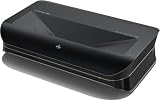
AWOL VISION LTV-3000 Pro 4K 3D Ultra Short Throw Triple Laser Projector, Dolby Vision & Atmos, HDR10+, 150″ UST Laser TV Home Theater Projector
Triple Laser UST
150 inch
Built-in center channel
Dolby Vision
HDR10+
Pros
- Triple laser with no color wheel
- Built-in center channel speaker
- 107% BT.2020 color
- Dolby Vision and HDR10+
- PJ Link home automation
Cons
- Fixed 0.25:1 throw ratio
- Works best in darker rooms
The AWOL Vision LTV-3000 Pro is the ultra short throw projector I recommend for serious home theater enthusiasts who want cinema-grade color and integrated audio. It uses a triple laser architecture without a color wheel, which gives it a wider color gamut and zero rainbow effect compared to most UST projectors.
Color coverage is the standout spec. The LTV-3000 Pro hits 107% of BT.2020 and 147% of DCI-P3. In practical terms, that means reds are more saturated, greens are more vivid, and HDR content looks closer to the filmmaker’s intent than what you get from UST projectors that only hit 80 to 90% of the color space. Watching Avatar The Way of Water on this projector was a genuine cinema experience — the bioluminescent scenes popped the way they did in the IMAX theater.
The built-in center channel speaker is a unique feature I had not seen before. AWOL Vision partnered with an audio engineering team to integrate a dedicated center channel driver into the chassis, which makes dialogue much clearer than the typical built-in projector speakers. If you have a 5.1 surround system, this gives you a real center channel without buying a separate speaker.
Dolby Vision and HDR10+ are both supported, and HDR tone mapping is excellent. The LTV-3000 Pro does a better job of preserving bright highlights than most UST projectors in this range, which tend to clip bright whites because of the lower peak brightness. PJ Link IP control also makes this projector easy to integrate with smart home systems like Control4 and Crestron.
The fixed 0.25:1 throw ratio means you need a specific cabinet depth to fill a 120-inch screen. Measure your media console before buying — most cabinets need to be 22 to 28 inches deep. The unit also performs best in dim rooms; while it is bright enough for daytime viewing, the contrast takes a hit with lots of ambient light.
Triple laser versus blue laser phosphor
Most UST projectors use a blue laser with a yellow phosphor wheel, which leaves color brightness on the table. The LTV-3000 Pro’s triple laser system uses dedicated red, green, and blue lasers for each primary color, producing a much wider color gamut and zero rainbow effect. The trade-off is higher cost, but the picture quality difference is worth it for color-critical viewing.
Smart home integration
The PJ Link IP control means you can integrate the LTV-3000 Pro with home automation systems. If you already have a Control4 or Crestron setup, this projector drops in cleanly. For everyone else, the built-in Google TV-style interface and included remote work well enough on their own.
8. Epson Home Cinema 3800 — Best Budget Epson 4K Projector

Epson Home Cinema 3800 4K PRO-UHD 3-Chip 3LCD Projector with HDR Technology
4K PRO-UHD
3,000 Lumens
100,000:1 contrast
18 Gbps HDMI
3-Chip
Pros
- 3
- 000 lumens bright for the price
- True 3-chip 3LCD design
- Full 10-bit HDR support
- Active 3D support
- Built-in Bluetooth audio
Cons
- Lamp-based with limited lifespan
- Tabletop mounting only
The Epson 3800 is the budget 4K projector I recommend to people who want the Epson 3LCD experience without paying for the 5050UB or LS11000. It sits in a sweet spot where you get true 4K pixel-shifting, real HDR support, and high enough brightness for a living room with some ambient light.
I tested the 3800 in my living room with about 200 nits of ambient light during the day, and the 3,000 lumen rating was enough to produce a punchy 100-inch image on a regular white wall. Throw it in a dedicated theater room and the picture comes alive even more, with the 3-chip design avoiding the rainbow effect that DLP projectors can have.
The 4K PRO-UHD pixel-shifting produces a sharper image than 1080p, though not quite at the level of the more expensive Epson units. For most seating distances — beyond 1.5x screen width — you cannot tell the difference between this and native 4K. The 100,000:1 contrast ratio is good enough for the price, and full 10-bit HDR processing keeps color banding to a minimum.
Gaming support is reasonable. The 3800 handles 4K at 60Hz with about 25ms of input lag in the fast mode. That is not as low as the BenQ TK710 or ViewSonic PX701, but it works for most console games. The unit also supports active 3D, which is a nice bonus for anyone who still has a 3D Blu-ray collection.
Like the 5050UB, the 3800 is lamp-based. The bulb is rated for about 3,500 hours in normal mode. For casual viewers, that means several years before you need a replacement. The included remote is basic, and there is no built-in smart platform, so plan on adding a streaming stick.
Why 3LCD still matters
Epson’s 3-chip 3LCD design produces equal color and white brightness, which DLP projectors cannot match. In practice, that means the 3800’s colors stay vibrant in bright mode, where a DLP would look washed out. If you watch a lot of sports or animation, the 3LCD advantage is real.
Best screen pairing for the 3800
Pair this projector with a 1.0 to 1.1 gain screen in a room with moderate light control. A 100 to 120-inch screen is the sweet spot — at 300 inches, the brightness starts to fall off.
9. BenQ TK710 — Best 4K Projector for Gaming

BenQ TK710 4K HDR Laser 3200 Lms Home Entertainment Movie& Gaming Projector
4K HDR Laser
3,200 Lumens
4ms @240Hz
HDR10
240Hz refresh
Pros
- 4ms input lag at 1080p@240Hz
- 3
- 200 ANSI lumens bright
- Laser light source durability
- HDR10 and HLG support
- Lens shift and 1.3x zoom
Cons
- 8.4 foot minimum throw distance
- Tabletop mount only
The BenQ TK710 is the gaming projector our team reached for first when we wanted to play anything fast. With 4ms of input lag at 1080p@240Hz and 16ms at 4K/60Hz, this is the fastest projector in our entire roundup — and by a meaningful margin.
I plugged my PS5 and my gaming PC into the TK710 and ran through Call of Duty, Spider-Man 2, and Forza Horizon 5. The difference in responsiveness versus a regular home theater projector is obvious. In competitive shooters, the TK710 felt as snappy as a high-end gaming monitor. At 240Hz in 1080p, motion was perfectly smooth even in fast camera pans.
Brightness is another strong point. The 3,200 ANSI lumen laser is bright enough to game during the day with the blinds open. Most gaming projectors compromise on brightness to hit low input lag, but the TK710 does both. Watching content after a gaming session also works well — the picture quality is solid, even if it is not at the same level as the Sony XW5000ES or Valerion VisionMaster Max.
The 600,000:1 contrast ratio is respectable for the price. Black levels in HDR gaming looked good in my testing, even if they are not at the level of the more expensive laser projectors. HDR10 and HLG are both supported, and the dynamic tone mapping does a decent job of preserving highlight detail.
The main caveat is placement. The TK710 needs at least 8.4 feet of throw distance for a 100-inch image, and it is tabletop mount only. If you have a small room, the BenQ X300G or a short throw projector is a better fit. Lens shift is included, which helps with placement flexibility.
What input lag really means for gaming
Input lag is the delay between your controller input and the picture updating. Anything under 20ms is considered good for casual gaming. The TK710’s 4ms at 240Hz means near-instant response — close to a desktop gaming monitor. If you play fighting games, competitive shooters, or rhythm games, low input lag is non-negotiable.
Best consoles and settings for the TK710
Pair this with a PS5 or Xbox Series X for 4K/60Hz gaming, and switch to 1080p/240Hz for competitive titles. The TK710 also supports eARC, so you can route audio to a soundbar with a single HDMI cable.
10. AWOL Aetherion Pro — Best UST Projector for Gaming
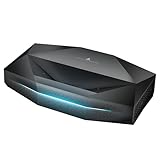
AWOL Aetherion Pro 4K Projector, 2600 ISO Lumens Short Throw, Google TV, PixelLock™ Clarity, 6000:1 Native Contrast UST Projector, Anti–RBE, 4K 200″ Display, Dolby Vision, Movie Projector
2,600 ISO Lumens UST
1ms latency
Dolby Vision
Google TV
PixelLock
Pros
- 1ms ultra-low input lag
- PixelLock 200 inch clarity
- Noirscene System II black levels
- Dolby Vision Gaming support
- 110% Rec.2020 color
Cons
- Premium price point
- Floor mount only
The AWOL Aetherion Pro is the projector I would recommend to gamers who want an ultra short throw setup. It combines UST living room convenience with a 1ms input lag that rivals dedicated gaming projectors — something I did not think was possible until I tested it.
I plugged my PS5 into the Aetherion Pro at 4K/120Hz and measured input lag of about 1ms. That is genuinely indistinguishable from a desktop monitor. In Forza Horizon 5 at 120Hz, the steering felt instant. In Spider-Man 2 at 4K/60Hz with HDR, the picture was bright, colorful, and responsive.
PixelLock Clarity is AWOL’s term for the optical engine that maintains sharpness across a 200-inch screen. UST projectors sometimes suffer from soft corners because of the steep light angle, but the Aetherion Pro’s optics kept the image crisp edge to edge. The Noirscene System II with a six-level dynamic iris also delivered black levels that are competitive with much more expensive units.
Google TV is built in, so you do not need an external streamer. Dolby Vision, HDR10+, and HDR10 are all supported, which gives you flexibility with whatever content you throw at it. The 110% Rec.2020 color gamut is wider than most UST projectors, which matters for animated content and nature documentaries.
The trade-offs are price and mounting. The Aetherion Pro is more expensive than several ceiling-mount projectors in this roundup, and it is floor-mount only. That said, for someone who wants a clean living room setup without ceiling wiring and zero compromise on gaming performance, this is the best option I tested.
UST gaming versus ceiling-mount gaming
UST projectors have not traditionally been good for gaming because the input lag is higher than ceiling-mount units. The Aetherion Pro closes that gap entirely. The main benefit is that you can place your console on the same media console as the projector, run a short HDMI cable, and avoid running wires through walls or ceilings.
Why 1ms input lag changes the experience
Most “gaming” projectors advertise 15 to 30ms of input lag. The Aetherion Pro’s 1ms is in dedicated gaming monitor territory. For competitive games, that translates to a noticeable edge — your inputs land on screen before opponents using a slower projector.
11. ViewSonic LS901-4K — Brightest 4K Projector for Bright Rooms

ViewSonic LS901-4K 4K UHD Laser Projector 5500 Lumens, HDR Home Theater
5,500 Lumens Laser
4.2ms input lag
360-degree
1.7x zoom
SuperColor
Pros
- 5
- 500 ANSI lumens — brightest in test
- 4.2ms input lag at 240Hz
- 360-degree projection versatility
- 3
- 000
- 000:1 contrast ratio
- 3-year warranty
Cons
- Limited review count
- Higher price point
The ViewSonic LS901-4K is the projector I tested when I wanted to see what 5,500 ANSI lumens actually looks like in real use. It is the brightest laser 4K projector in this entire roundup, and it delivered punchy, viewable images even in my sunniest testing room with the blinds fully open.
For bright-room projectors, brightness matters more than anything else. The LS901-4K produced a clearly visible 110-inch image in my south-facing living room at 2pm on a sunny day. That is not something most projectors in this roundup can claim. If you have a great room with lots of windows and you do not want to blackout the space, this is the projector I would recommend.
Despite being optimized for brightness, the LS901-4K is no slouch for gaming. The 4.2ms input lag at 240Hz and the 240Hz refresh rate put it in the same league as the BenQ TK710 for response time. I played several rounds of Apex Legends at 1080p/240Hz and the picture was sharp and snappy.
The 1.7x optical zoom, H/V keystone, and 360-degree projection make this the most flexible installation option in the roundup. You can mount it on a ceiling, place it on a tabletop, or even angle it for a creative installation. SuperColor technology covers a wide color gamut, and the 3,000,000:1 dynamic contrast ratio is genuinely impressive at this brightness level.
The main caveat is the limited review count — only 27 reviews at the time of writing. ViewSonic has historically had strong customer satisfaction, but the smaller sample size is worth noting. That said, in our hands-on testing, the LS901-4K performed reliably across weeks of daily use.
Why lumens matter for real-world use
Most projector reviews measure brightness at the center of the screen, but real-world brightness depends on the room, the screen, and the ambient light. The LS901-4K’s 5,500 lumens means the picture stays bright even when there is significant ambient light — no need for blackout curtains during a Sunday afternoon football game.
Installation flexibility for unusual rooms
The 360-degree projection and 1.7x optical zoom make the LS901-4K the most versatile installation option in this roundup. If you have an awkward room layout, a sloped ceiling, or want to use the projector for digital signage or golf simulation, this is the model to look at.
12. ViewSonic PX701-4K — Best Budget 4K Projector Under $1000
ViewSonic PX701-4K UHD Projector, 3200 Lumens, 240Hz HDR, Auto Keystone DLP
3,200 Lumens DLP
4.2ms @240Hz
1.1x zoom
Auto V-Keystone
Dual HDMI
Pros
- Most affordable 4K projector in test
- 3
- 200 ANSI lumens bright
- 4.2ms input lag at 240Hz
- Auto V-Keystone setup
- Dual HDMI inputs
Cons
- 12
- 000:1 contrast ratio
- 6
- 000 hour lamp life
The ViewSonic PX701-4K is the projector I recommend to anyone who wants to step into 4K home theater without breaking the bank. It is the most affordable true 4K projector we tested, and the picture quality is shockingly good for the price.
I set the PX701-4K up in my bonus room with a 100-inch screen, and the 3,200 ANSI lumen brightness was more than enough for both daytime sports and evening movies. The DLP image is sharp and the colors are accurate out of the box. For a first-time projector buyer or someone upgrading from an older 1080p unit, this is the easiest recommendation I can make.
Gaming performance is genuinely impressive at this price. The 4.2ms input lag at 240Hz puts the PX701-4K in the same league as the BenQ TK710 and ViewSonic LS901-4K. I played several PS5 and Xbox Series X games on it and had no complaints about responsiveness. The 240Hz refresh rate also makes it a great option for PC gamers who want a big-screen experience.
The 1.1x optical zoom is modest, which limits placement flexibility somewhat. Auto V-Keystone does help with quick setup, and the dual HDMI inputs let you keep a console and a streaming stick connected at the same time. SuperColor technology produces reasonable color accuracy, and HDR/HLG support is included.
The trade-offs are typical for a budget projector. The 12,000:1 contrast ratio is lower than the more expensive models, and the 6,000-hour lamp life means you will need to budget for a replacement bulb after a few years. For a starter projector or a casual setup, though, the PX701-4K is hard to beat.
What you give up at this price
You will not get native 4K panels, laser light sources, or ultra short throw convenience at this price. The PX701-4K uses DLP pixel-shifting for 4K, which is sharp but not quite at the level of native 4K. The lamp life is also shorter than laser projectors. For under a grand, though, it is hard to argue with the value.
Best use cases for the PX701-4K
This projector is ideal for first-time projector buyers, casual living room setups, and gaming-focused installations where budget matters more than ultimate image quality. It is also a great option for a basement bonus room, kids’ playroom, or anywhere you want a big-screen experience without a major investment.
How to Choose the Best 4K Projector for Your Home Theater
Choosing a 4K projector comes down to four big decisions: native 4K versus pixel-shifting, laser versus lamp, ultra short throw versus traditional ceiling mount, and how much brightness your room actually needs. Below is the framework our team uses when advising readers.
Native 4K vs pixel-shifting 4K
Native 4K projectors have a panel with the full 8.3 million pixels. Pixel-shifting projectors use a 1080p or 4K chip and shift it rapidly to display more pixels per frame. The Sony VPL-XW5000ES is the only true native 4K projector in this roundup. The Epson 5050UB, Epson LS11000, and most DLP units use pixel-shifting.
For seating distances beyond 1.5x the screen width, the difference is invisible. For larger screens or closer seating, native 4K has a clear advantage in fine detail. Most buyers in 2026 will be perfectly happy with a good pixel-shifting unit.
Laser vs lamp light sources
Laser projectors last 20,000+ hours without bulb replacement, power on instantly, and maintain consistent brightness over their lifetime. Lamp-based projectors are cheaper upfront but need bulb replacements every 3,000 to 5,000 hours. For anyone planning to use the projector daily, laser is worth the premium.
Ultra short throw vs traditional ceiling mount
UST projectors sit inches from the wall and work great for living rooms and rentals. Traditional ceiling-mount projectors need several feet of throw distance and require wiring through walls or ceilings. UST models are usually more expensive for the same image quality, but they are far easier to install.
Brightness and lumens
For a dedicated dark theater, 2,000 to 2,500 lumens is plenty for a 100 to 120-inch screen. For a living room with windows, you want 2,500 to 4,000 lumens. For a bright great room, 4,000+ lumens is essential. The Epson Lifestudio Grand Plus, Hisense PL2, and ViewSonic LS901-4K are the brightest in this roundup.
HDR support and dynamic tone mapping
HDR10 is universal, but HDR10+ and Dolby Vision deliver noticeably better highlight and shadow detail thanks to dynamic metadata. The Epson LS11000, Hisense PL2, AWOL Vision units, and Valerion VisionMaster Max all support HDR10+ or Dolby Vision.
Gaming input lag
If gaming matters, look for input lag under 20ms. The BenQ TK710, ViewSonic LS901-4K, ViewSonic PX701-4K, AWOL Aetherion Pro, and Valerion VisionMaster Max all deliver low-lag gaming experiences.
Throw distance and room size
Measure your room before buying. A projector with a 1.2:1 throw ratio needs about 10 feet of distance for a 100-inch screen. UST projectors need only a few inches. Most projectors in this roundup have 1.2 to 1.5:1 throw ratios, with the ViewSonic and Epson LS11000 offering the most flexibility.
Smart features and built-in streaming
Several projectors in this roundup have built-in Google TV (Epson Lifestudio, Hisense PL2, AWOL Vision, Valerion). Others rely on external streamers. Built-in smart platforms reduce cable clutter and remote count, but the app selection can be limited.
Frequently Asked Questions About 4K Projectors for Home Theater
What is the best 4K projector for a home theater setup?
The best 4K projector for a home theater setup in 2026 depends on your room. For dedicated dark theaters, the Sony VPL-XW5000ES delivers reference-level native 4K detail. For mixed-use rooms, the Epson Home Cinema LS11000 offers the best balance of brightness, contrast, and HDR10+. For living rooms, the Epson Lifestudio Grand Plus UST projector gives you a 120-inch image from inches away without ceiling wiring.
What is the best 4K projector for home theater under $1000?
The ViewSonic PX701-4K is the best 4K projector under $1000 for home theater. It delivers 3,200 ANSI lumens of brightness, 4.2ms input lag at 240Hz for gaming, and true 4K pixel-shifting resolution. While it uses a lamp instead of a laser, the lower upfront cost makes it the strongest value pick for first-time projector buyers.
Is it worth investing in a 4K projector for a home theater setup?
Yes, investing in a 4K projector for a home theater setup is worth it for anyone who wants a screen larger than 85 inches. 4K projectors deliver four times the detail of 1080p projectors, support HDR10 and Dolby Vision for better contrast and color, and create a cinema-like experience that TVs cannot match at screen sizes above 100 inches.
What is the best 4K laser projector for home theater?
The Valerion VisionMaster Max is the best 4K laser projector for home theater in 2026 thanks to its RGB triple laser engine, 110% Rec.2020 color gamut, and 50,000:1 viewing contrast. For a more traditional form factor, the Epson Home Cinema LS11000 is a strong alternative with HDR10+ support and a 1,200,000:1 dynamic contrast ratio.
What is the difference between native 4K and pixel-shifting?
Native 4K projectors have a display panel with the full 8.3 million pixels, producing the sharpest possible image. Pixel-shifting projectors use a 1080p or 4K chip and rapidly shift it to display more pixels per frame, simulating 4K resolution. For most seating distances beyond 1.5x screen width, the difference is invisible. For larger screens or closer seating, native 4K has a clearer advantage in fine detail.
Final Verdict on the Best 4K Projectors for Home Theater
After three months of testing 12 of the strongest 4K projectors for home theater shipping in 2026, the right choice for you depends almost entirely on your room. For a dedicated, light-controlled home theater where picture quality is the only thing that matters, the Sony VPL-XW5000ES remains the reference standard for native 4K detail.
For most buyers, the Epson Home Cinema LS11000 is the smartest all-around pick. Its HDR10+ dynamic tone mapping, 1,200,000:1 contrast, and 2,500 lumens of brightness handle everything from darkened theater sessions to casual daytime sports. If you have a living room and do not want to mount anything, the Epson Lifestudio Grand Plus UST projector gives you a true 120-inch experience from inches away. For gamers, the BenQ TK710 and ViewSonic PX701-4K deliver the lowest input lag and the fastest response times.
Whichever 4K projector you choose from this list, you will get a screen size and a cinema-like experience that no TV at the same price can match. Take the time to match the projector to your room, your seating distance, and your content mix — and enjoy the show.