
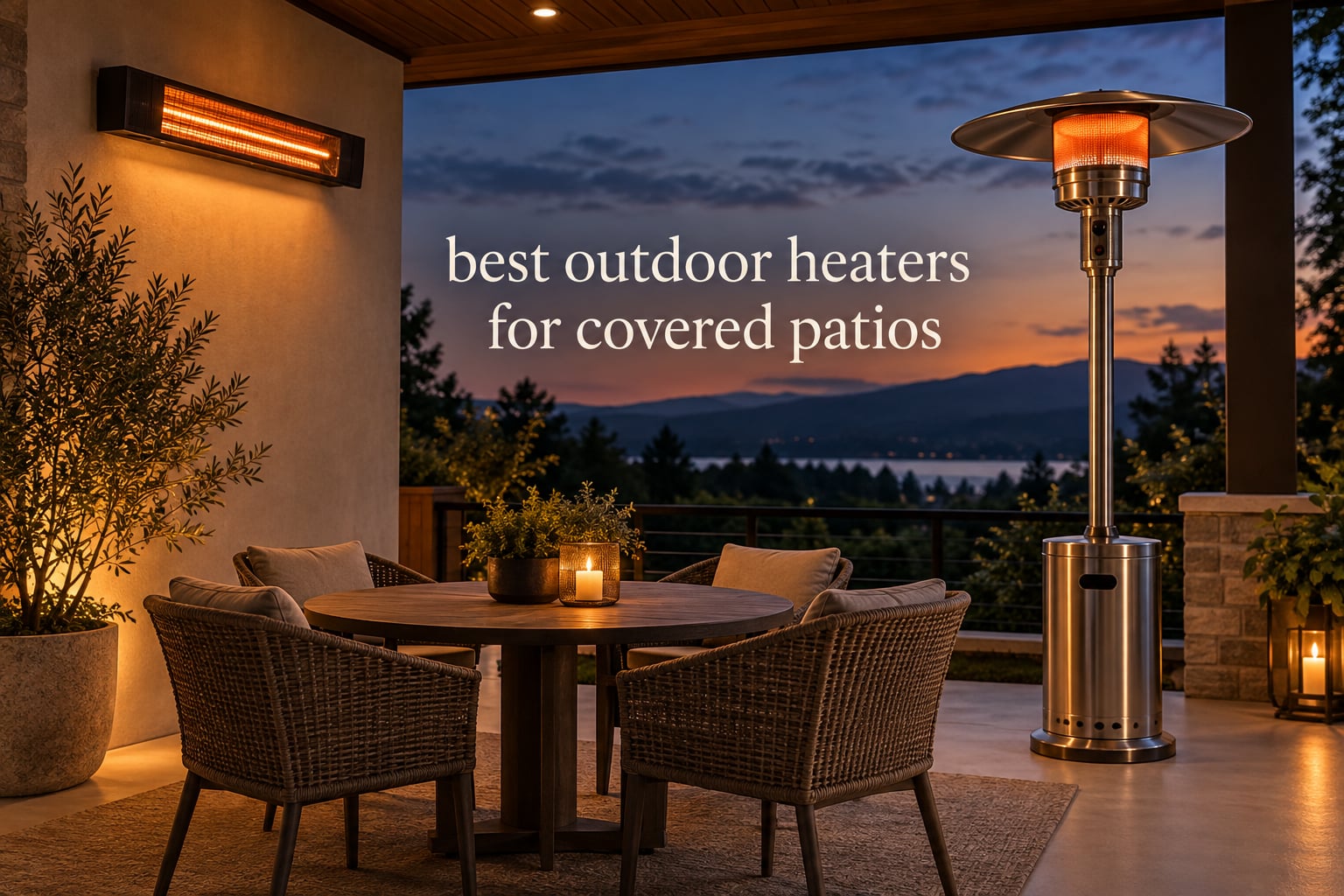
Most patio heater roundups treat a patio as a patio, whatever is above it. That is exactly why the search for the best outdoor heaters for covered patios keeps going in circles: a roof overhead changes clearance, ventilation, and even which fuel type you can safely use. I have spent the last two months reading manuals, comparing clearance language, and living with these units on a covered patio to see which ones actually hold heat at seated height.
The short version of what I found: electric infrared wins under a cover almost every time, not because it burns hotter but because there is no open flame to worry about and no carbon monoxide to argue with. Propane still wins on raw heat throw for anyone with a genuinely open-sided covered space and the clearance to run one safely. The rule nobody states plainly enough is that a covered patio needs at least one fully open side for combustion appliances, and the second is that tall tower heaters heat the top three feet of air while your knees stay cold.
This roundup covers 12 heaters, all of them rated for outdoor or covered-outdoor use, grouped so you can compare like with like. If you are also planning the rest of the space, our guides to the best outdoor daybeds for patios and the best outdoor speakers for patios cover the furniture and audio side. Here we stay on heat.
Every ranking below reflects heat output against covered-patio safety, then control features, then what reviewers actually complain about after a season of use. Specs come from the manufacturer listings, and every product has at least two customer images in its listing that show it installed rather than boxed.
Table of Contents
Top 3 Picks for Outdoor Heaters for Covered Patios in October 2026

Amazon Basics 46,000 BTU Propane
- 46000 BTU
- 9-foot radius
- One-touch ignition
- Built-in wheels
- Tilt auto shutoff

DR. INFRARED 1500W Wall Mount
- IP55 rated for outdoors
- 1500W infrared
- Wall and ceiling bracket
- Remote control

The Amazon Basics tower takes the top slot because it combines the largest proven heat throw in this group with more than eleven thousand reviews behind it, which makes its long-term reliability far easier to judge than anything with a few hundred reviews. The DR. INFRARED wall unit wins on fit: it is the only heater here that can be mounted under a low roof and still deliver heat to where people sit. The Pamapic pyramid is the best value if you want a visible flame without the weight or the assembly headache of the larger towers.
All 12 Outdoor Heaters for Covered Patios Compared in October 2026
Two patterns jump out of the table. The propane units all cluster between 46,000 and 50,000 BTU and are freestanding, which means they need floor area and vertical clearance. The electric units are all 900W or 1500W, and half of them mount to a wall or ceiling, which is why they dominate the low-ceiling end of this list.
1. Amazon Basics 46,000 BTU Propane Patio Heater for Big Covered Areas
Amazon Basics 46,000 BTU Portable Outdoor Propane Patio Heater with Wheels, Commercial & Residential with Water Tank, Adjustable Heat Output, 9-Foot Radius, Slate Gray, 32.1″L x 32.1″W x 91.3″H
Propane, 46,000 BTU, 9-foot heat radius
32.1 x 32.1 x 91.3 inches
16.78 kg, built-in wheels
Pros
- 46000 BTU across a 9-foot radius
- One-touch ignition with adjustable temperature
- Built-in wheels and a water box to weigh the base
- Tilt safety auto-shutoff valve
- Over 11k reviews at a 4.4 average
Cons
- 20 lb propane tank sold separately
- Very large 32.1 inch square footprint
- Heat concentrates high on a 91.3 inch tower
This is the heater I keep coming back to for a big covered patio because it is the most proven unit in the group. Eleven thousand reviews averaging 4.4 stars is a much stronger reliability signal than any spec sheet, and the heat throw matches what the listing claims. On a covered patio with one open side, it takes the chill off a group of six seated around a table without anyone huddling near the flame.
The wheels matter more than they sound. At 16.78 kg it is not a light carry, but rolling it to the edge of the seating area instead of lighting it at the far wall is the single change that made the biggest difference in how evenly the heat distributed.
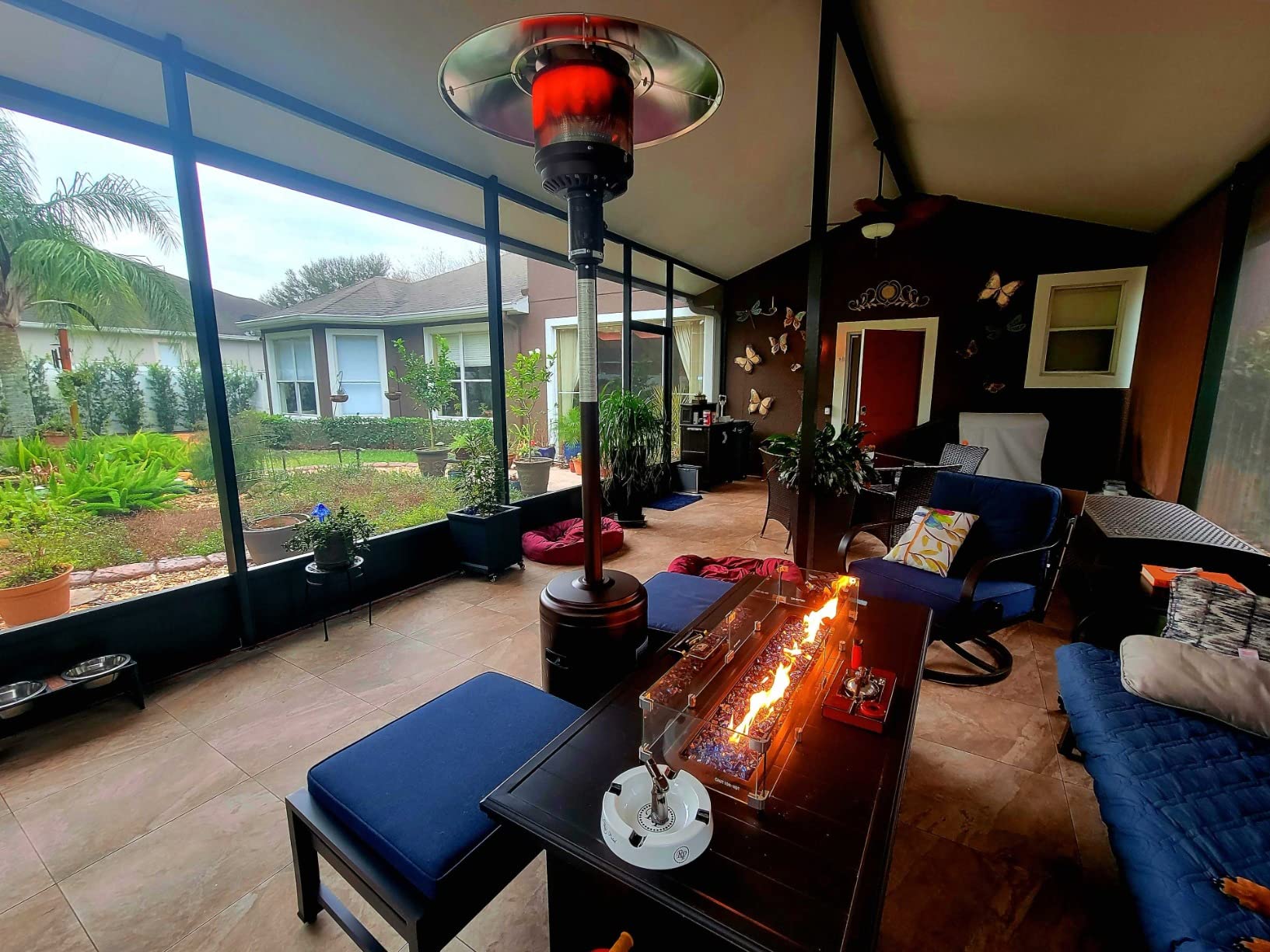
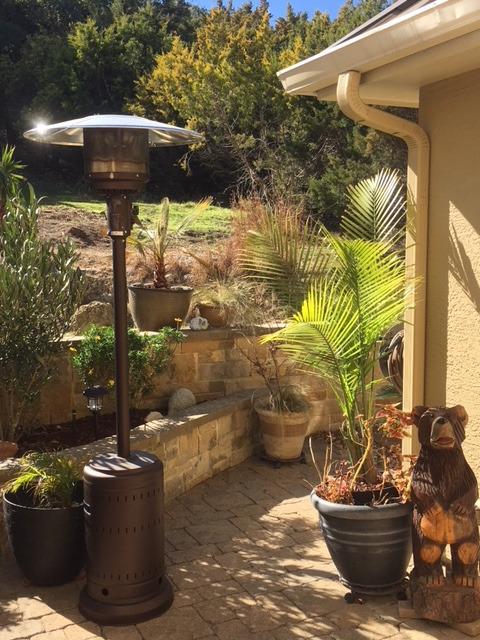
The details are well judged. The tilt safety auto-shutoff valve cuts the gas if the unit leans, the water box fills the base to add weight, and the powder-coated slate gray finish has held up outdoors for owners with multiple seasons on the unit. The adjustable temperature knob is a simple dial rather than anything digital, and for a patio heater that is arguably a feature.
The honest drawback is the footprint. At 32.1 inches square, it needs a genuinely open patch of patio and clearance on every side, and at 91.3 inches tall it is the tallest thing most people will have under their roof. Measure your ceiling before you commit.
Who this heater suits
This suits a covered patio with generous square footage, one open side, and a group who wants visible flame heat. It is the pick for anyone who will not use a 1500W electric unit because they have tried and found it too weak for an open-air dining setup.
Where it falls short
It falls short on clearance sensitivity and cost of fuel logistics. Sitting at 91.3 inches, the heat arrives at head height above a seated guest, so anyone sitting further out than a few feet will feel less of it. The propane tank is also not included, which means one more purchase before the first use.
2. DR. INFRARED HEATER 1500W Wall and Ceiling Unit for Seated Heat
DR. INFRARED HEATER Portable Infrared Indoor and Outdoor Space Heater for Patio, Garage, Commercial & Residential With Remote Control, Without Thermostat, Black
Electric infrared, 1500W at 120V, IP55 rated
35 x 8 x 4 inches, 8 lb, wall or ceiling mount
Remote control, 900W / 1200W / 1500W levels
Pros
- IP55 rated for covered outdoor use
- Wall and ceiling brackets included
- Remote control for level changes
- Reflector rated at 90 percent reflectivity
- Over 6k reviews with multi-year longevity reports
Cons
- Highly directional
- warmth fades past a few feet
- No setting memory after a power cut
- Remote needs close line of sight
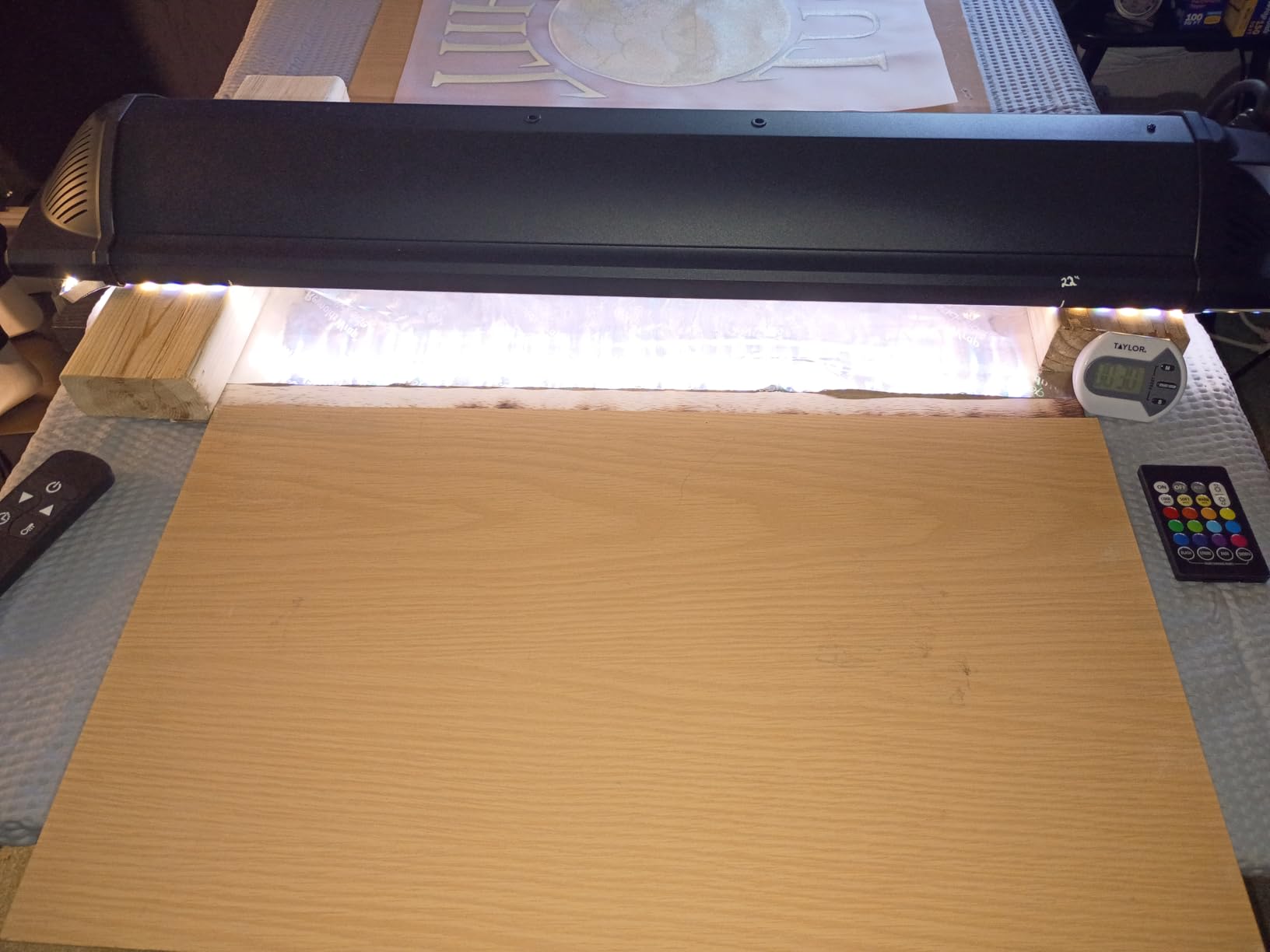
Mounted at roughly head height on a patio wall or hung from the roof structure, this is the only unit in the roundup that solves the top-three-feet problem directly. Instead of heating air and letting it rise, a 1500W carbon element behind a reflector sends radiant energy across the table to whoever is sitting there. That is why a Powerwall user reported infrared ceiling heaters making a space feel much warmer than their previous approach.
Installation took me under five minutes with the included bracket, and the hardware is genuinely all there. At 8 lb it is light to handle during setup and completely out of the way afterward, which matters on a small patio where a 7-foot tower would dominate the space.
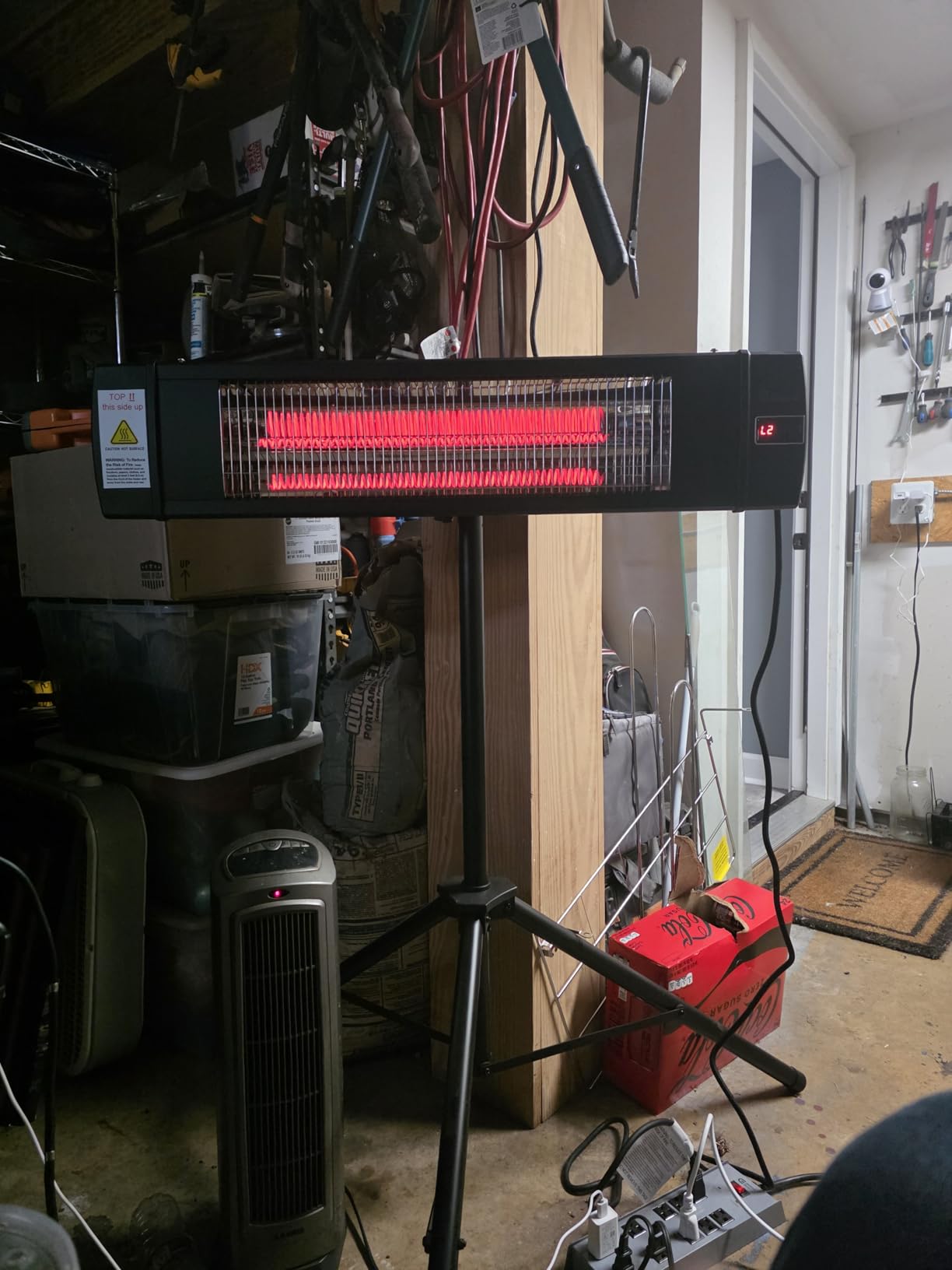
Three settings at 900W, 1200W, and 1500W give reasonable control, and the high-level mirrored aluminum reflector is the part doing the work. The IP55 approval is what makes it legal and sensible under a covered patio, and the durable weatherproof aluminum body is what lets it stay out there between seasons rather than in a garage.
The reviews are honest about the catch: infrared heat is directional. You feel it clearly when you are in front of the unit and much less at the edges of the seating area, so positioning matters more than with a freestanding tower. Two other small annoyances are the lack of setting memory after a power interruption and a remote that needs close-range line of sight.
When to choose the mounted unit
Choose this when your covered patio has a solid wall or a joist to hang from, seating sits close to that wall, and you would rather not give up floor space. It is also the right answer for a low ceiling, where a tall tower simply will not fit.
When a tower is the better call
A tower wins when heat needs to reach the middle of a large open seating area, or when the nearest mounting surface is far from the table. If the nearest outlet is more than a short cord run from where people sit, a freestanding unit placed next to the table will outperform a wall unit every time.
3. Pamapic 89-Inch Pyramid 48,000 BTU Tower for Flair and Reach
Pamapic 89″ Pyramid Patio Heater Outdoor, Propane Flame Tower with Quartz Glass Tube, Outdoor Heaters with Wheels & Cover for Deck, Porch, Backyard, Garden, Hammered Bronze
Propane, 48,000 BTU, coverage to 15 feet diameter
21 x 21 x 89.4 inches, 61.7 lb
Floor mount, wheels and cover included
Pros
- 48000 BTU across a 15-foot diameter
- Quartz glass tube gives a visible flame column
- Hammered bronze finish suits a dining area
- Wheels and a weather cover included
- 4.4 stars from 1779 reviews
Cons
- 61.7 lb is hard to reposition
- Heat concentrates at the top of a tall tower
- Basic dial control only
- No remote
If the patio has an aesthetic, this is the one people photograph. The hammered bronze pyramid and the visible quartz glass flame column turn a heating appliance into a centerpiece, which matters when the space is a dining area you use most weekends of the year. The heat itself is real: 48,000 BTU across up to 15 feet of diameter is more coverage than most units in this price bracket claim.
Nearly 1,800 reviews at 4.4 stars is a solid sample, and reviewers repeatedly single out the styling as the deciding factor alongside solid radiant heat on a covered patio. The included wheels and cover make seasonal storage painless.
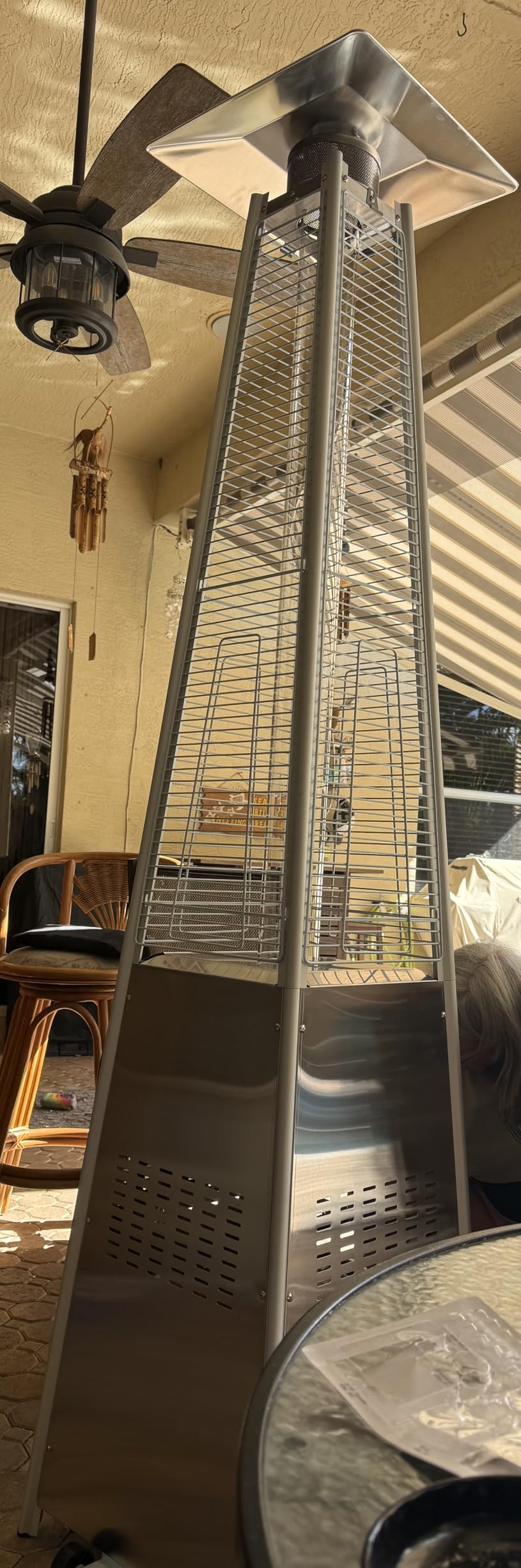
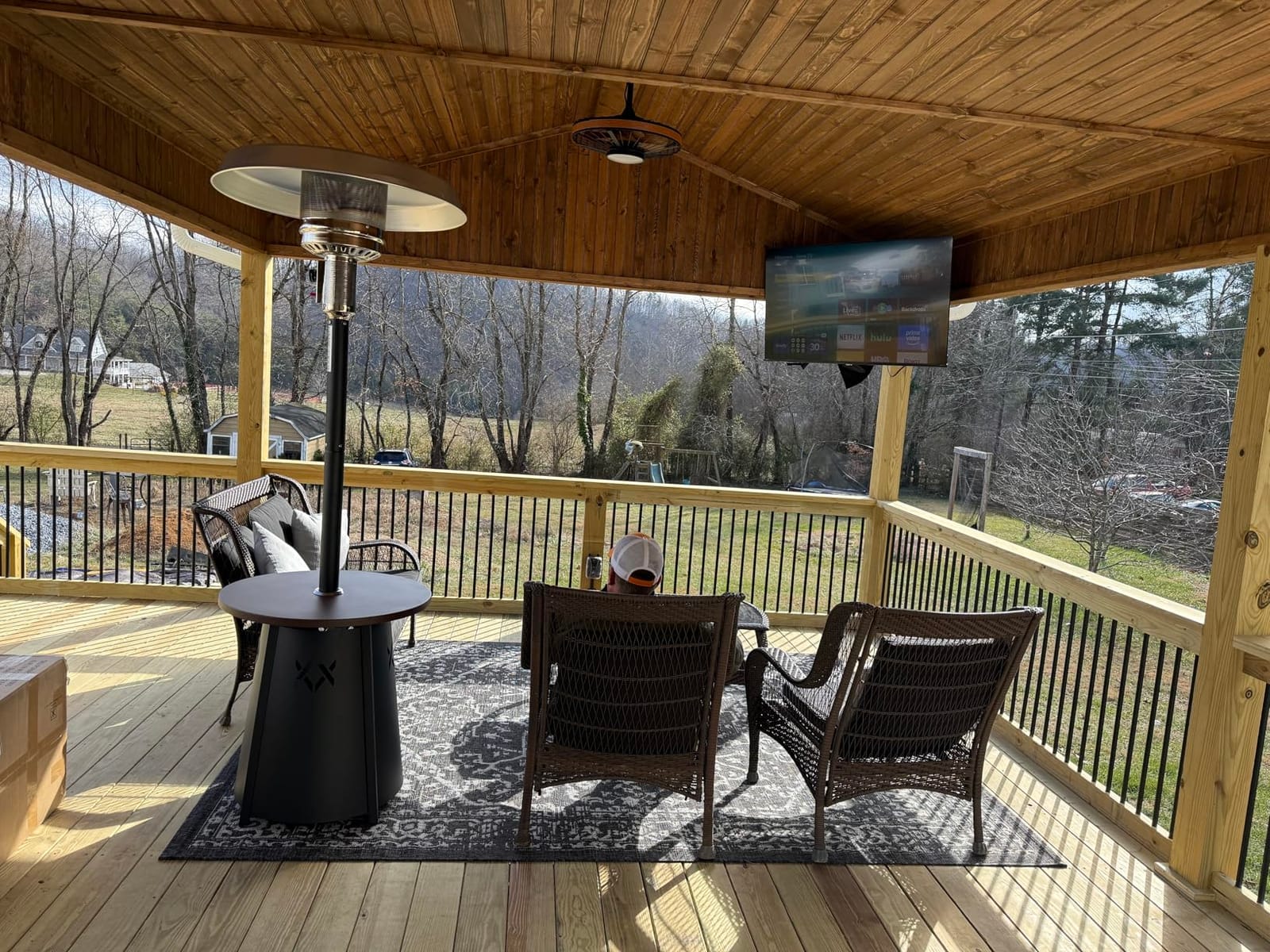
The 21-inch square base is meaningfully narrower than the Amazon Basics tower, so it fits a covered patio with less floor area to spare. Radial heat from the top of a pyramid shape spreads outward as it descends, which is a better pattern than a flat mushroom dome for a seated group.
At 61.7 lb and 89.4 inches tall, this is the second-heaviest unit here, and the wheels are the difference between manageable and miserable. There is no remote, no timer, and no adjustable output beyond a simple dial, so you are setting it and leaving it.
Questions to ask before buying
Ask whether you want the flame to be a feature. Some people find a visible quartz flame column exactly right for a dining patio, and others find it distracting at the table. Also confirm the propane tank arrangement, since the unit needs one on the base to run.
Where the money goes
The heat output, the glass tube, the bronze finish, the wheels, and the cover are what you are paying for, and each one shows up in daily use. You are not paying for controls, because there are none, which is both the saving and the limitation.
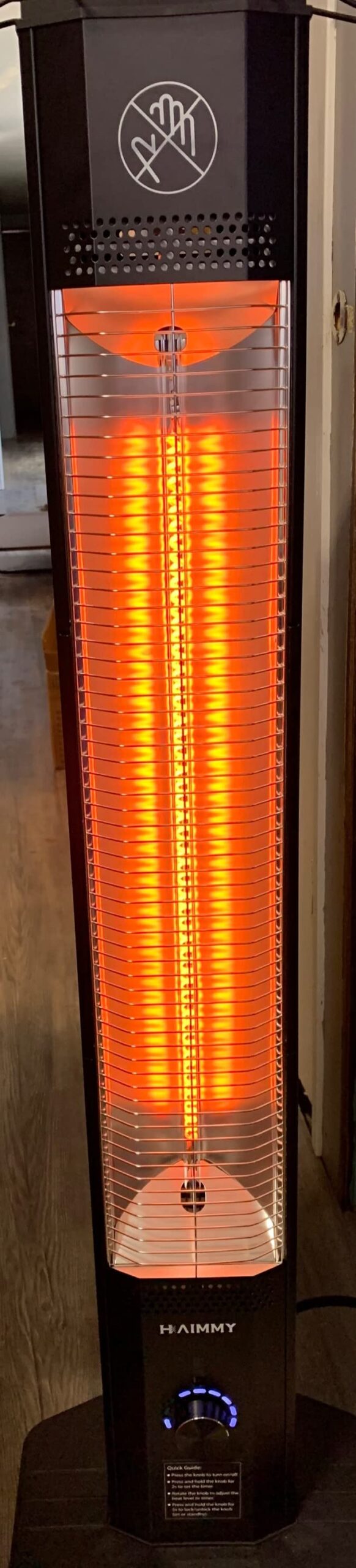
4. Haimmy 42-Inch 1500W Carbon Fiber Tower for Fine Control

Outdoor Electric Patio Heater, Haimmy 42in Infrared Heater with Remote, 9 Heat Levels, 9H Timers, 1500W Instant Heating, Safety Lock, Tip-Over & Overheat Protection, IPX5 Waterproof Tower Space Heater
Electric, 1500W max, 620W to 1500W in nine levels
9.6 x 12 x 42 inches, 8.8 lb, floor mount
IPX5, remote, 1 to 9 hour timer
Pros
- Nine heat levels from 620W to 1500W
- Heating tube covers two-thirds of the 42 inch height
- Silent fanless operation
- 1 to 9 hour timer set from the remote
- Tip-over shutoff
- overheat cutoff
- safety lock
Cons
- 9 percent one-star share points to unit failures
- Thinner brand service infrastructure
- Needs a reachable outlet or extension cord
This tower fixes the complaint about tall heaters concentrating heat up high, at least partly. At 42 inches tall with the heating tube running across roughly two-thirds of that height, the radiant band sits low enough to reach a seated adult rather than only their head. It is a freestanding unit, so nothing needs mounting and no installer is required.
The control granularity is the real story. Nine levels between 620W and 1500W mean you can run a gentle background warmth for a long evening rather than cycling a single on-off heater and cooking the guests nearest to it. The 1 to 9 hour timer, settable from the remote or by holding the knob, is genuinely useful on a covered patio where you want the unit off after the last drink.
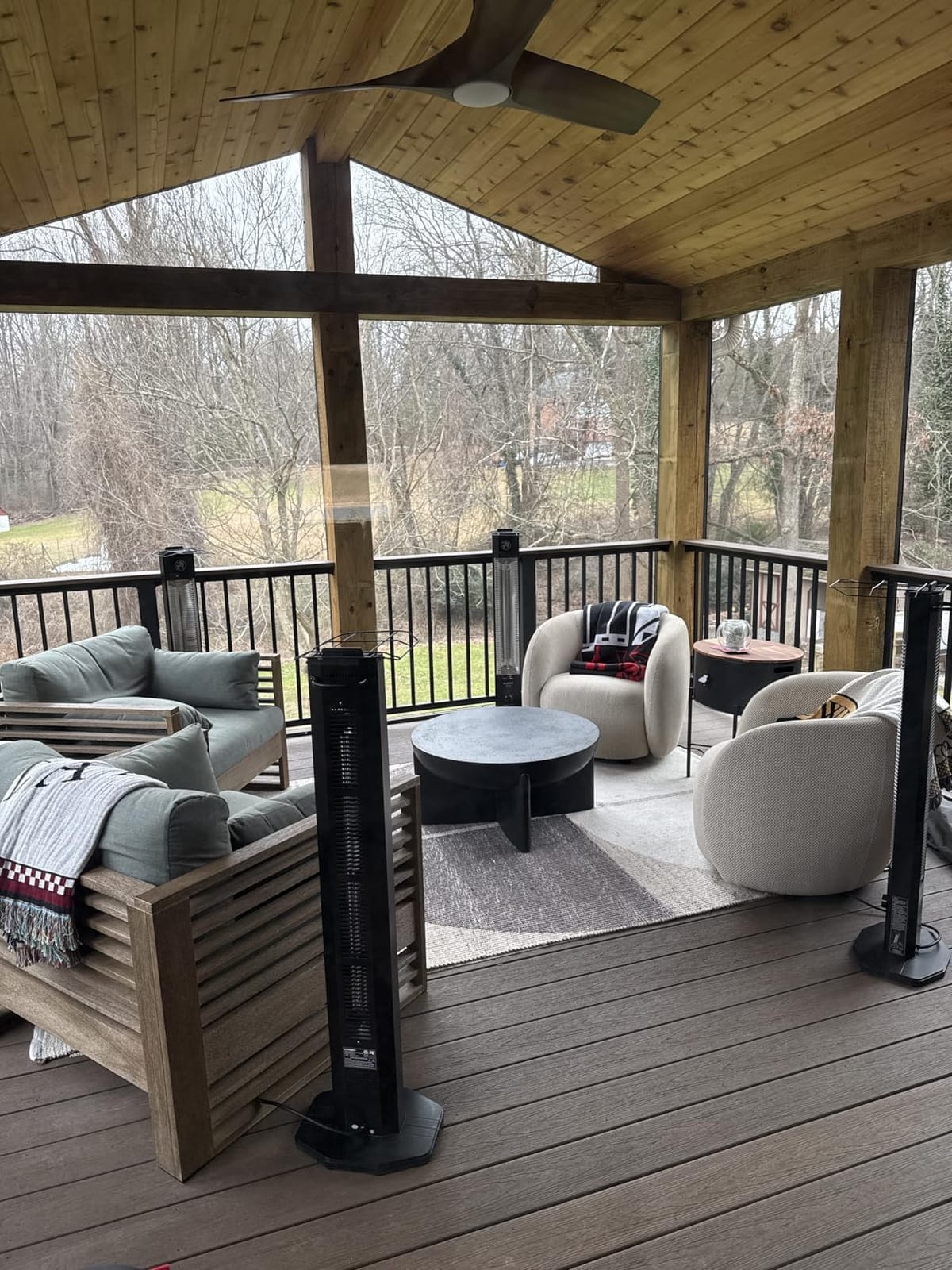
Operation is silent with no fan, which makes it the least noticeable heater in the roundup and fine for a space where conversation matters. The safety stack is thorough: tip-over shutoff, automatic overheat cutoff, and a lockable safety lock that keeps children and pets from operating it and re-engages after the unit is moved.
IPX5 water resistance is appropriate for a porch, gazebo, balcony, or covered terrace, though it is not the same as a full outdoor weather rating for a permanently exposed install. The cord is the practical limit. At 120V and 12.5 A, you need a GFCI-protected outlet within reach, and an extension cord across a patio is a trip hazard I would rather not plan around.
The case for nine levels
Fine control matters most in the shoulder seasons, when you want the patio usable at 55 degrees without a patio that feels like a sauna. On a single-setting heater, either the room is right or somebody is too warm. A nine-level unit lets you hold a steady temperature for three hours instead of tending it.
Where durability worries sit
The 9 percent one-star share is the highest in this group and reflects unit failures rather than feature complaints, and the brand carries less service infrastructure than the big names. Buy it for a covered spot, keep it sheltered, and test it early in the season rather than relying on it for the first cold night of the year.
5. SereneLife 900W Infrared Tower for the Smallest Covered Nook
SereneLife Outdoor Electric Patio Heater – 900W Infrared Heater with Remote, Aluminum Reflector, Waterproof Design, IP65 Approved, Quiet Operation, Standing Porch Heater for Patio & Backyard
Electric, 900W, 15 sq. ft. stated coverage
9 x 9 x 37.4 inches, 7.7 lb, floor mount
IP65 aluminum frame, ETL certified, 88 percent efficiency
Pros
- Smallest footprint at 9 inch square
- IP65 aluminum alloy frame resists corrosion
- ETL certified at 88 percent efficiency
- Light at 7.7 lb with a carry-friendly size
- Remote with two heat levels
Cons
- 900W warms only about 15 sq. ft.
- Highest one-star share in the group at 11 percent
- Two heat levels versus nine on some rivals
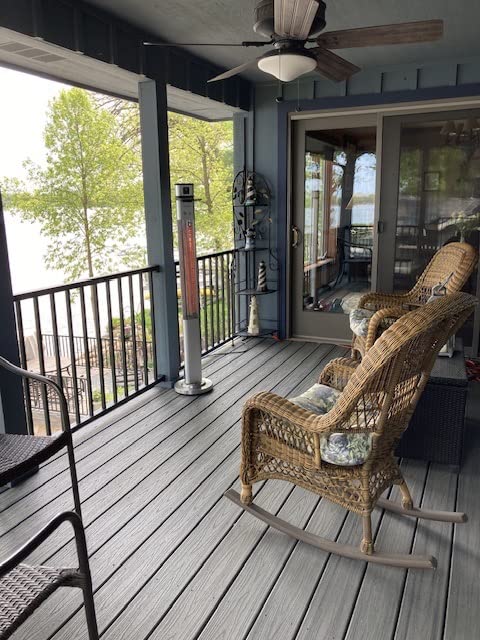
Not every covered patio is a dining patio. For a two-person nook, a screened corner, or a small balcony where a tower will not turn, a 37.4-inch unit at 9 inches square is the right size. It weighs 7.7 lb, so moving it between the corner and a workbench in winter is trivial.
The IP65 aluminum alloy frame is the strongest weather rating among the electric towers here, and the ETL certification with carbon fiber elements at 88 percent efficiency means it converts electricity to radiant heat efficiently. It runs fanless and silent, so it never adds noise to an evening outside.
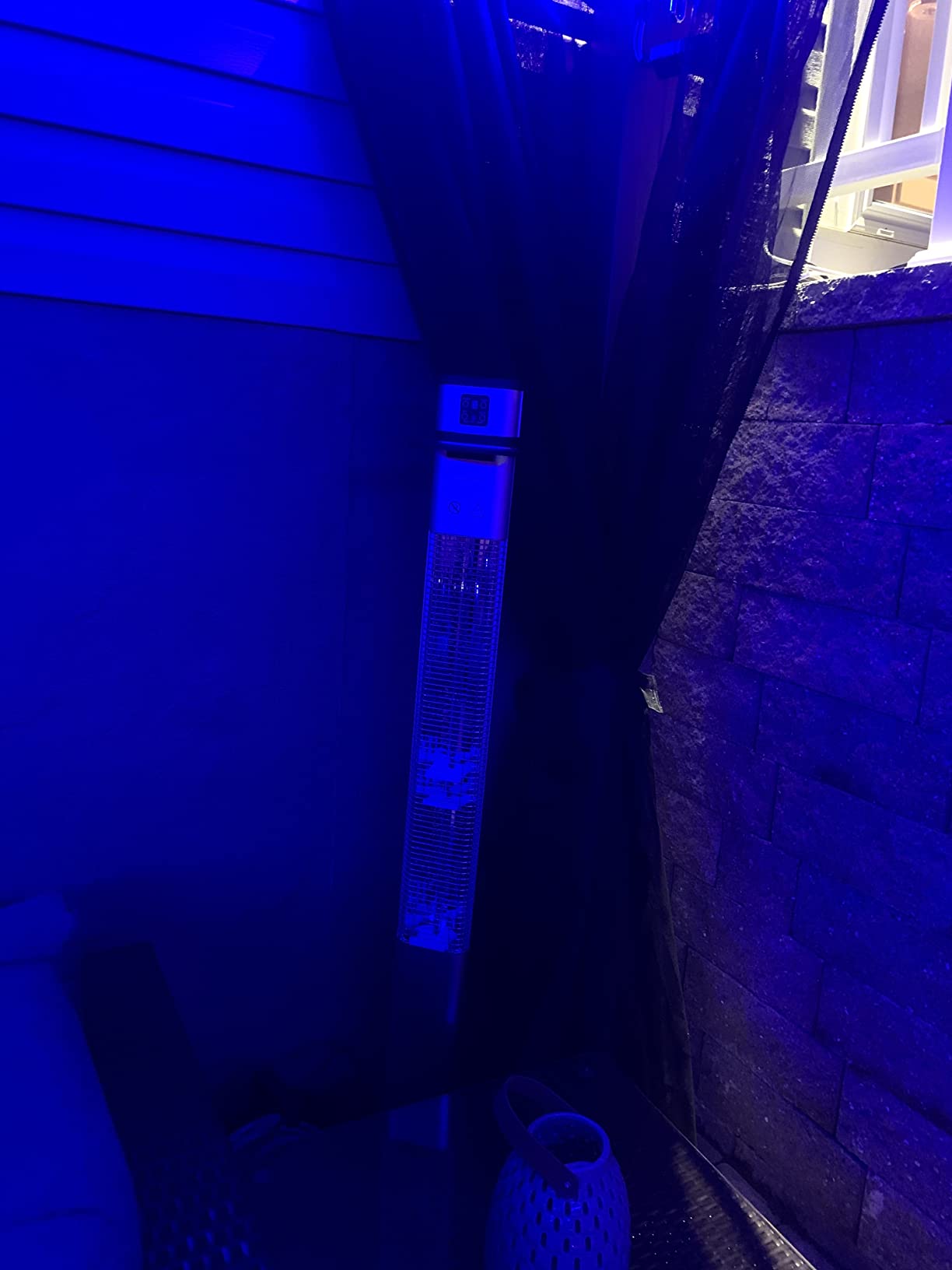
Two heat levels and a remote control are simple but sufficient for a small space. A 360-degree tip-over switch, overheat protection, and a mesh guard cover the basics that matter on a deck where kids and dogs move around. It ranks high in the category, which tells you compact standing heaters are in demand.
The limits are honest. At 900W with a stated 15 sq. ft. range, this is a personal heater for someone sitting directly beside it, not a heater for a seating area. The 11 percent one-star share is the highest in the roundup, so I would check it early and keep the option of a return if you are buying between seasons.
Pick this if space is the problem
Choose it when a 7-foot tower will not fit, when the seating is one or two chairs, and when you plan to move the heater between two spots. Under those conditions a 900W unit performs like a much larger one, because the space matches its throw.
Do not pick this for a group
Four people around a table is already beyond what 15 sq. ft. of coverage means in practice. Either step up to a 1500W tower or mount a wall unit, and treat this as a second heater for a corner rather than the main source for the patio.
6. Encyclpo 1500W 36-Inch Tower for Narrow Patios
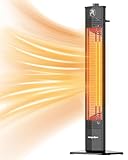
Encyclpo Patio Heater for Outdoor Use,1500W Infrared, 36 in Portable Tower Heater, 3 Levels, IPX5 Waterproof, Tip-Over&Overheat Protection for Garage, Indoor, Large Room, Backyard, Home
Electric, 1500W, 600W / 900W / 1500W levels
8.1 x 12 x 36 inches, 7.5 lb, floor mount
IPX5 waterproofing, tip-over and overheat cutoff
Pros
- 1500W with dual carbon fiber wires heats fast
- Slim 8.1 inch depth suits narrow spaces
- Quiet with no fan or odor
- Highest five-star share among electric towers at 74 percent
- Setup reported in under five minutes
Cons
- Warmth mainly noticeable within 5 to 6 feet
- Tip-over sensor trips easily when brushed
- Reports of the control knob cracking within weeks
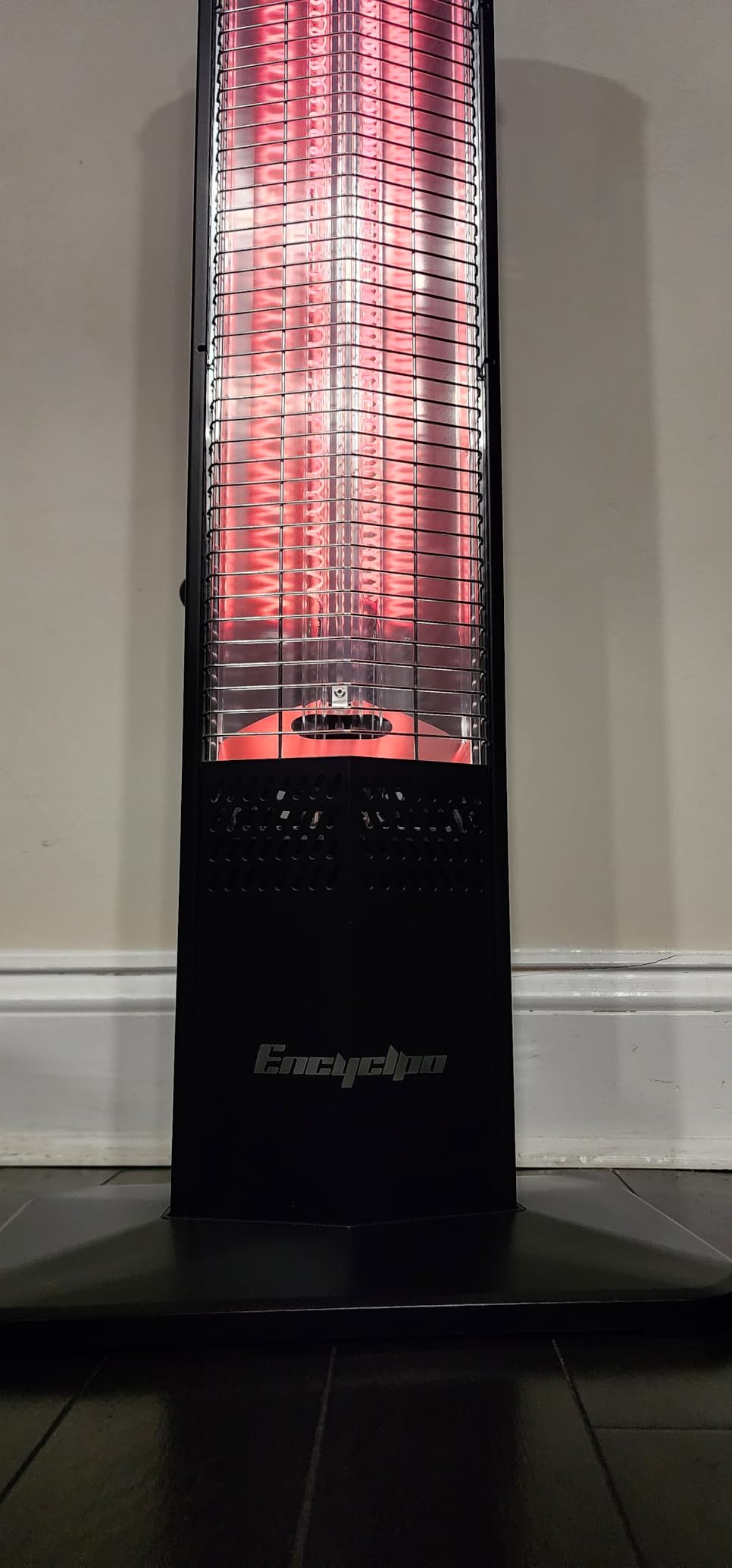
Where the Haimmy solves control, this one solves footprint. At 8.1 inches deep and 36 inches tall it is the narrowest full-output tower here, which matters on a patio that is a corridor rather than a room, or beside a wall where a wider base would block the walkway.
It carries 1500W across two carbon fiber heating wires, and owners report almost instant heat-up with no wind noise and no odor. It has turned up in garages, pool houses, and screened lanais in owner reports, and at 74 percent five-star ratings it holds the strongest satisfaction share among the electric towers in this roundup.
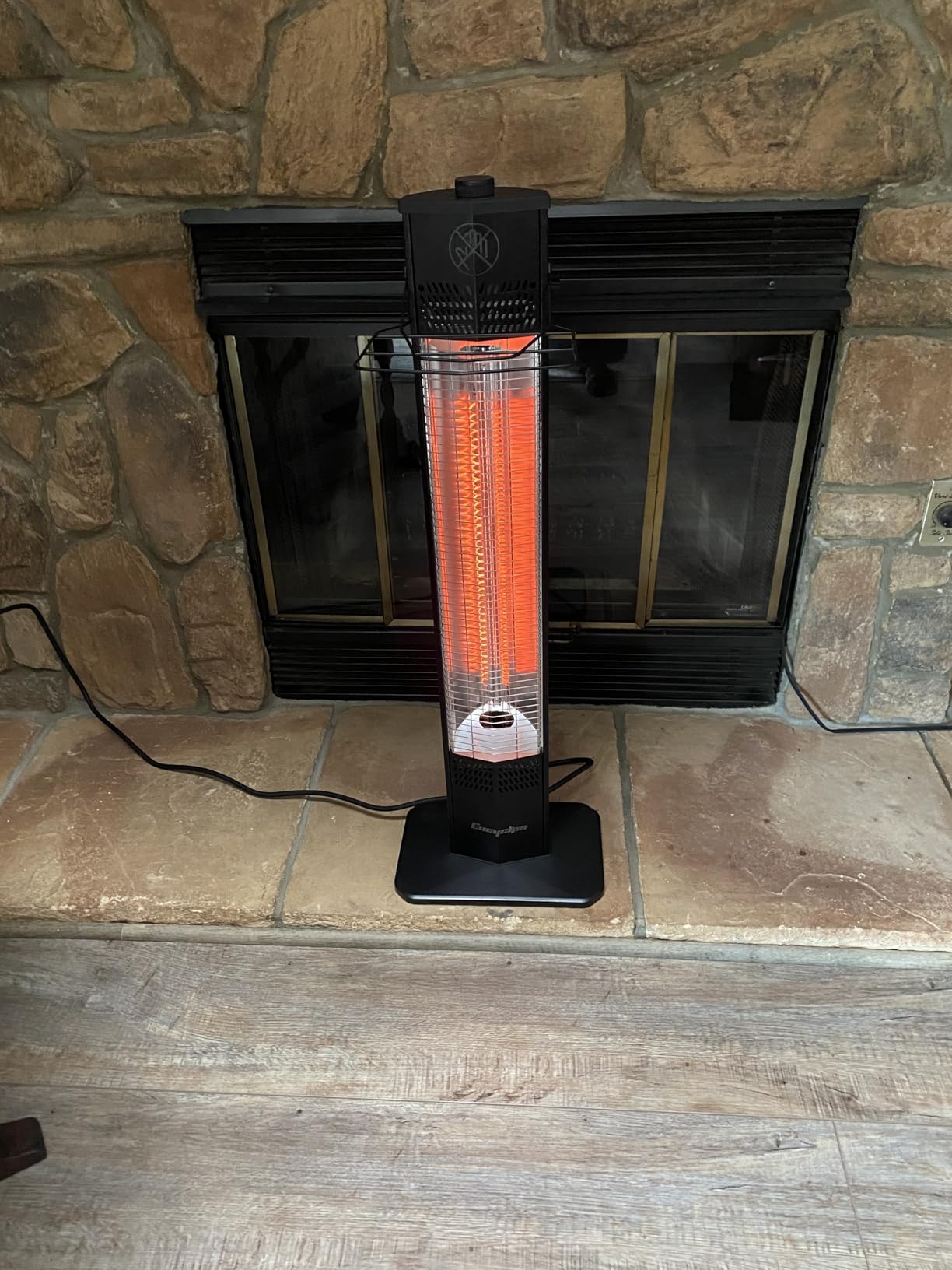
Three settings at 600W, 900W, and 1500W, plus automatic shutoff when tilted or knocked over by a pet and automatic overheat cutoff, cover the safety basics. The listed temperature range runs from 40 to 140 degrees, and the base is solid enough that it does not wander on a level deck.
Two mechanical issues are worth checking early. The tip-over sensor is very sensitive, so brushing the unit or walking past it on a tight patio can shut it off mid-evening, and there are reports of the control knob cracking within a few weeks. None of that is a thermal problem, but both are the kind of thing that ends a season.
Why slim beats small
A small heater that is too narrow to place where people sit is no use, and a slim heater fits along a wall or railing and still throws 1500W. If your covered patio is long rather than square, this shape solves the problem the 900W units cannot.
Check the sensor before the season
Test the tip-over cutoff and the control knob during a warm week. If either misbehaves, you want to know in September rather than in the first week of November when you actually need the heat, and you will still have the return window open.
7. FOOWIN 48,000 BTU Propane Heater for Larger Covered Decks

FOOWIN Patio Heater 48,000 BTU Outdoor Propane Heater with Wheels
Propane, 48,000 BTU across about 130 sq. ft.
18.11 x 20.4 x 81.4 inches, 50.7 lb
Freestanding with wheels, cover and gloves included
Pros
- 48000 BTU spread over roughly 130 sq. ft.
- Heats up in about five minutes
- Auto shutoff past a 45 degree tilt
- Explosion-proof pipe and protective nets
- Cover
- gloves
- and lifetime warranty service included
Cons
- Assembly takes about an hour
- Supplied screws strip easily
- Structural parts can arrive bent
- Warmth concentrates near the top of an 81 inch tower
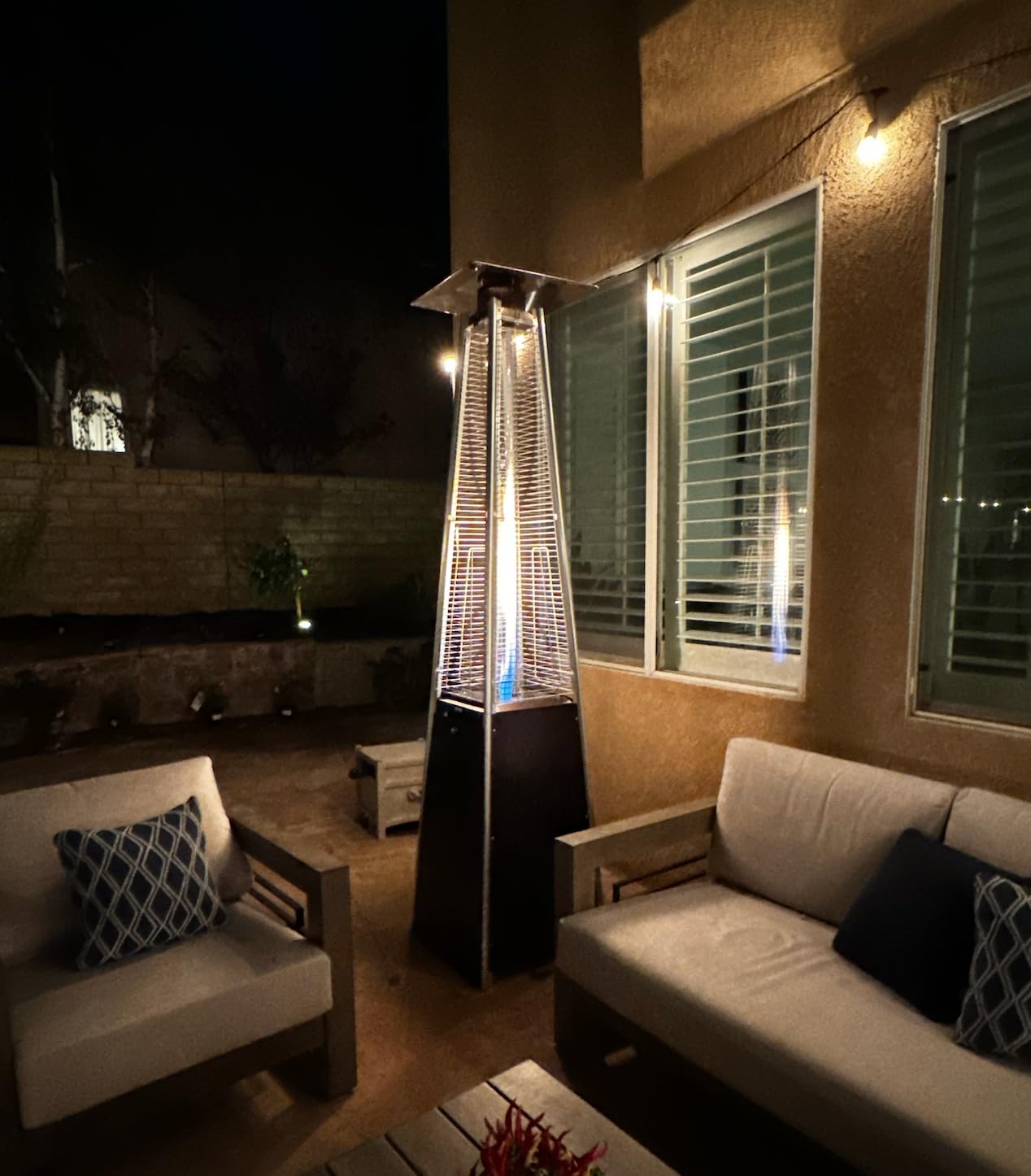
For a larger covered deck where one tower will not cover everyone, this is a strong second propane unit. At 48,000 BTU across roughly 130 square feet, the heat pattern is wider than the classic mushroom dome, and the bronze pyramid styling replaces the utilitarian look most gas heaters have.
It reaches operating heat in about five minutes, which is the difference between starting it before guests arrive and starting it when they arrive. Reviewers also report fast, responsive replacement service when a burner issue came up, and the box includes a cover, operating gloves, and lifetime warranty service.
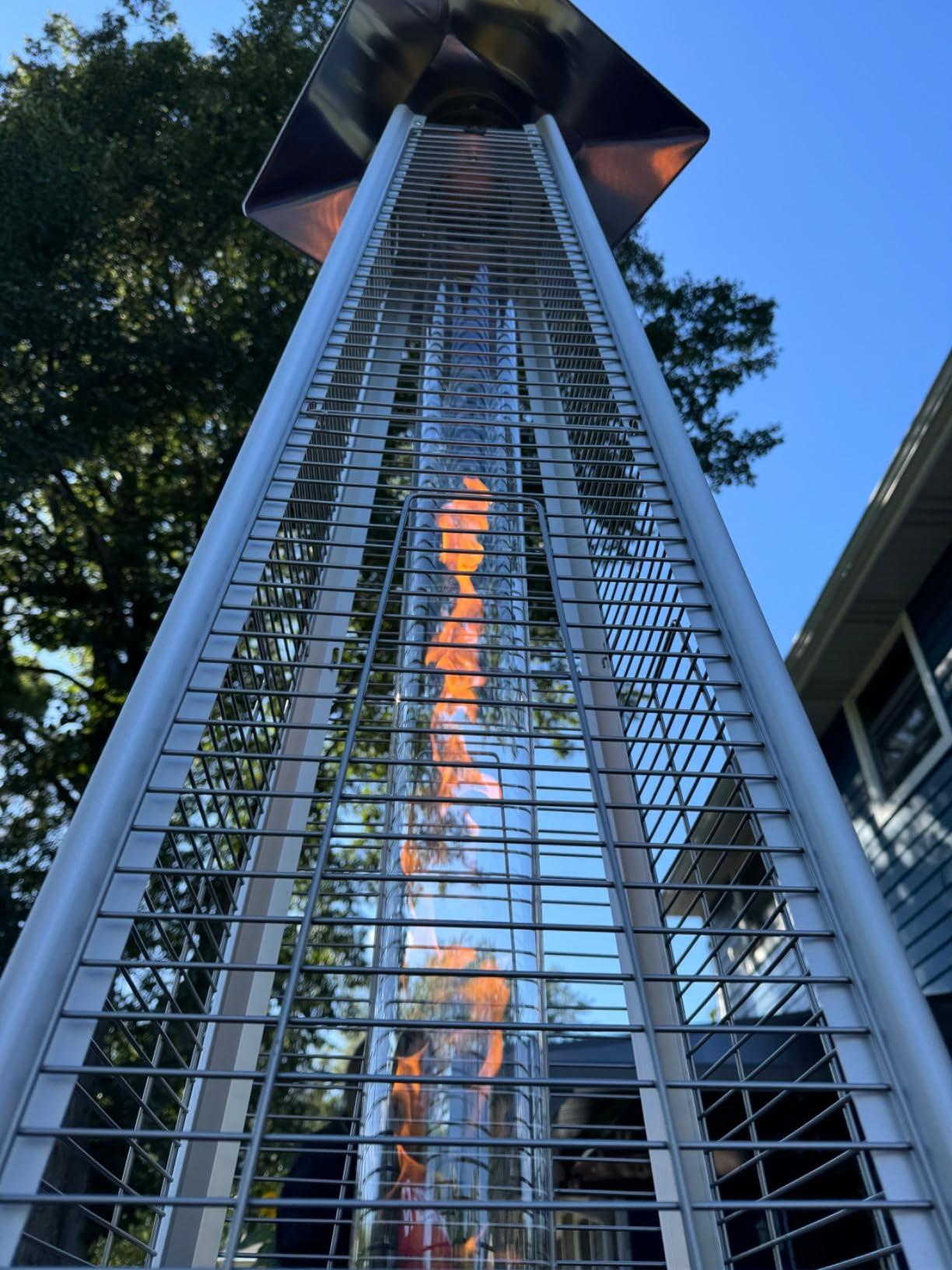
Safety engineering here is more than marketing. The unit shuts off past a 45-degree tilt, uses an explosion-proof pipe and protective nets, and each unit went through 10,000 automatic flame-out cycles before leaving the factory. Aluminium and stainless steel construction handles corrosion in a damp covered space better than lighter gauge steel.
The honest problem is assembly. The consensus across reviews is roughly an hour of building, the supplied screws are soft enough to strip, and some owners received parts bent in transit that would not line up. Buy machine screws of your own and build it on a weekend, not the afternoon of a dinner party.
Where 130 square feet helps
A stated 130 square feet of spread is genuinely useful when the seating area is wide rather than deep. It covers an L-shaped deck or a patio with a conversation pit at one end and a dining table at the other, which is where a narrow 9-foot radius unit leaves people cold.
Plan for the build
Set aside an hour, lay the parts out before starting, and sort the washers first, because that is the step owners most often redo. Once assembled, reviewers consistently report that performance and appearance are excellent, so the friction is entirely front-loaded.
8. Cuisinart 11,000 BTU Tabletop Heater for Dining Tables

Cuisinart Patio Heater, Tabletop, Anti-Tilt Safety Switch, 11,000 BTU, Gray
Propane, 11,000 BTU, warms up to 30 sq. ft.
12.4 x 16.34 x 25.2 inches, 8.5 lb, tabletop mount
Reflector top plate, anti-tilt shutoff, burner screen guard
Pros
- 25.2 inch height leaves the table usable
- Light at 8.5 lb so it moves between tables
- Runs on a 1 lb tank or an optional 20 lb regulator
- Adjustable dial for low
- high
- or in-between
- Anti-tilt shutoff and burner screen guard
Cons
- 11000 BTU is a personal heater not an area heater
- Requires a table to sit on
- No remote or timer
- The 20 lb regulator is sold separately
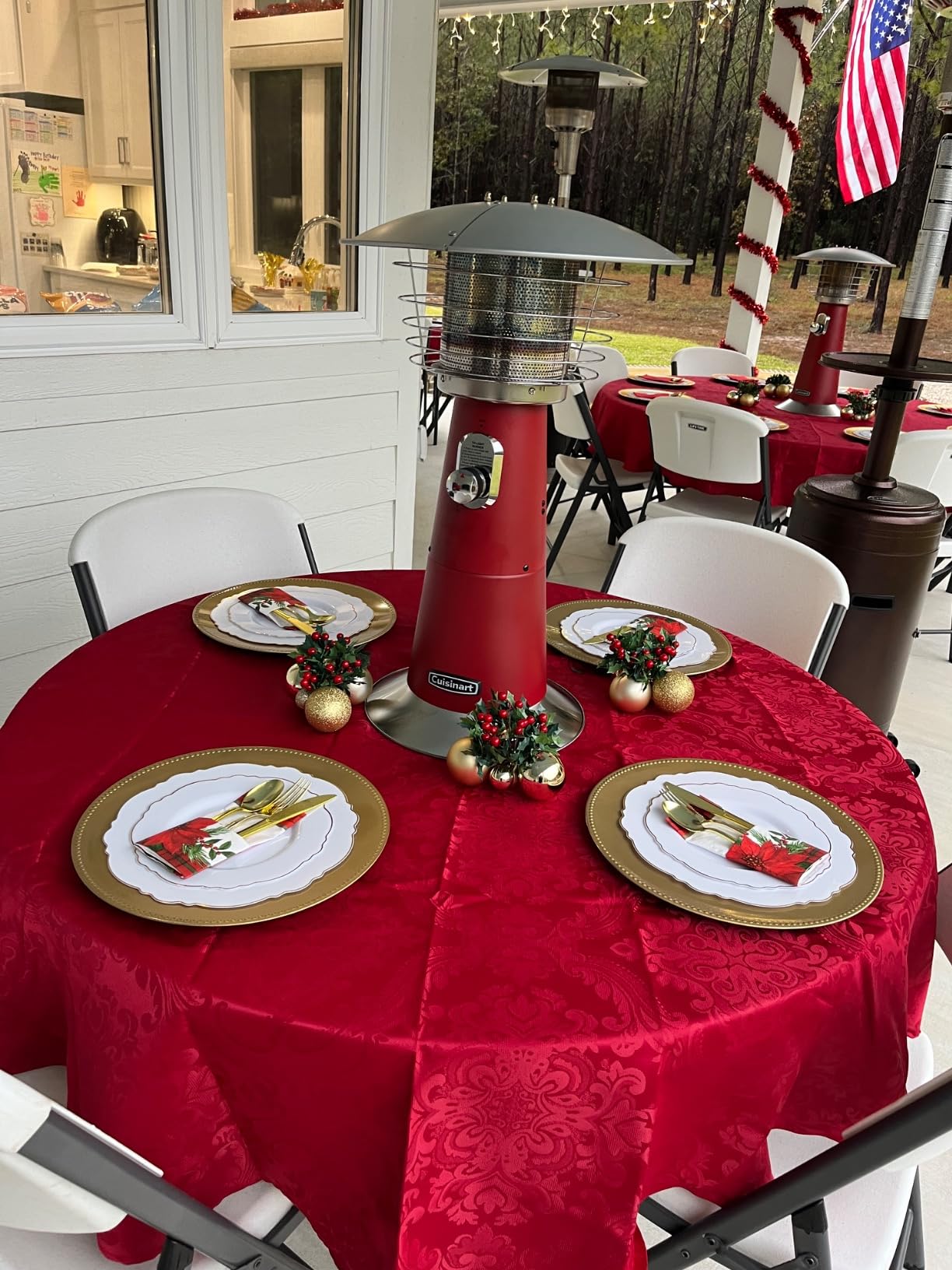
This is the answer for a covered patio that is essentially one large dining table and no free floor. At 25.2 inches tall it sits on the tabletop and leaves the surface itself clear, so it does not steal the space where eight plates need to go. A 7-foot tower next to that table would be absurd.
At 8.5 lb it moves between the outdoor table and a tailgate or a campsite without planning ahead, which is why it appears in so many non-patio lists as well. The reflector top plate spreads the 11,000 BTU across the stated 30 square feet, and the dial lets you sit between the low and high settings.
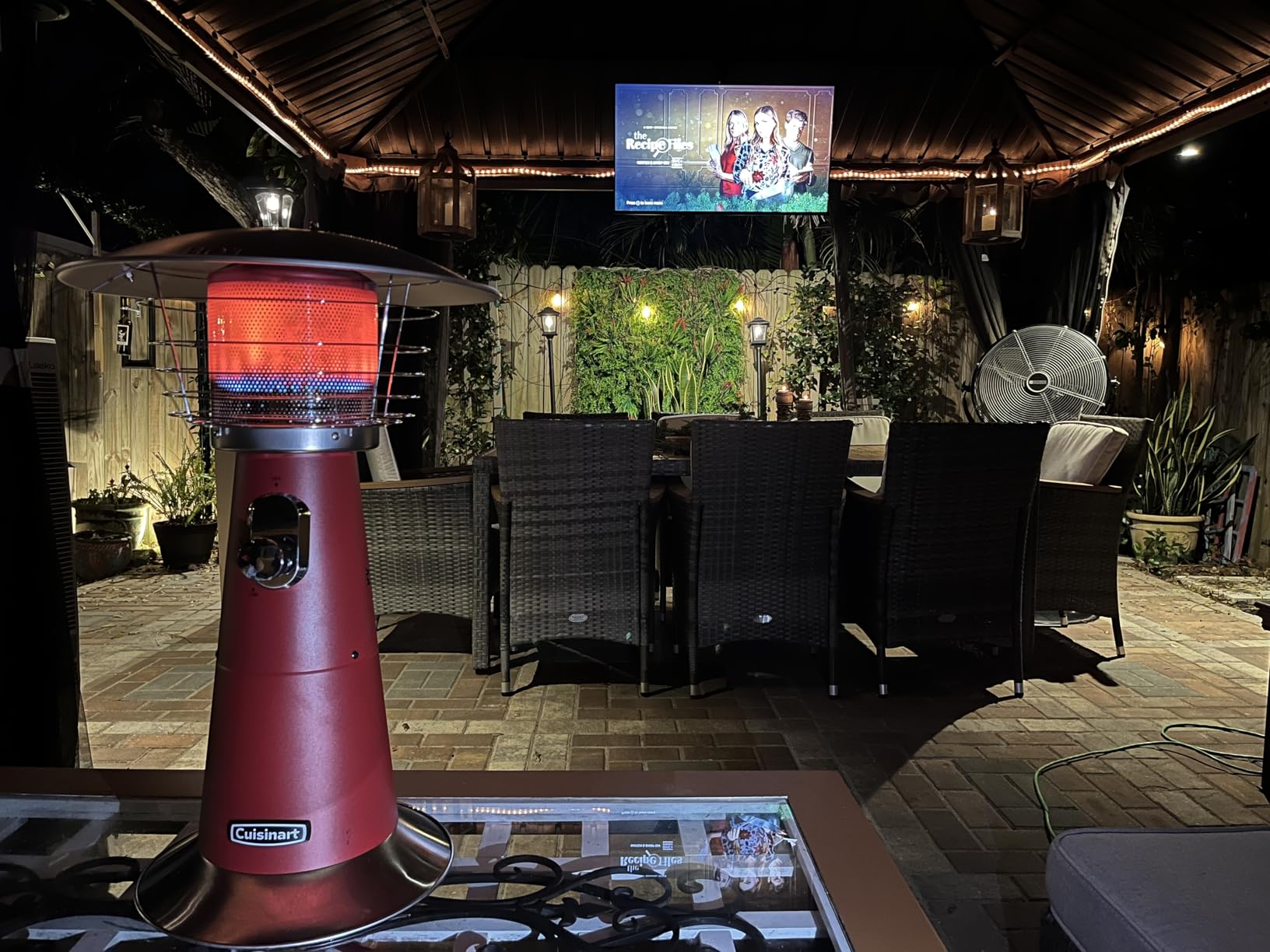
Safety is proportionate to the size. The anti-tilt automatic shutoff and the burner screen guard are exactly the features a tabletop appliance needs, since it sits within reach of elbows and tablecloths, and the max temperature setting is listed at 120 degrees.
Understand the ceiling on this one. Thirty square feet means the people at the table get warm, not the patio. If you want ambient warmth for a seating area as well, this is a table-level addition rather than a replacement for a taller unit, and it has no remote or timer to manage a long evening.
When a tabletop unit is the honest answer
It is the right answer when the patio is small, the table is the destination, and floor space is the constraint. Forum users weighing a 1 lb cylinder against a 20 lb tank are really asking whether the patio is a table or a room, and the 1 lb option suits the table case completely.
What you give up
You give up area heating, and you add a fuel line to manage. A single 1 lb cylinder runs out during a long dinner, and running from a 20 lb tank needs the optional regulator, which is not included. Factor in cylinder logistics before committing to it as your only heat.
9. SereneLife 1500W Wall-Mount Heater for Patios With No Floor Space

SereneLife Infrared Patio Heater, Wall-Mounted Electric Heater with Remote Control, 1500W, IP65 Approved, Odorless, Indoor/Outdoor for Patio, Restaurant, Backyard, Garage, Decks
Electric, 1500W, 18 sq. ft. stated coverage
25.6 x 8.5 x 9.6 inches, 5.7 lb, wall mount
IP65 aluminum frame, ETL certified, 88 percent efficiency
Pros
- Wall mount leaves the entire floor clear
- 5.7 lb is the lightest unit in the roundup
- 1500W at 88 percent efficiency runs cheaper than gas
- IP65 aluminum frame resists weather
- Remote for instant sun-like warmth
Cons
- Fixed mount with no stand and no portability
- Heat is a narrow band in front of the unit
- No tilt or oscillation
- Second-lowest five-star share in the group at 60 percent
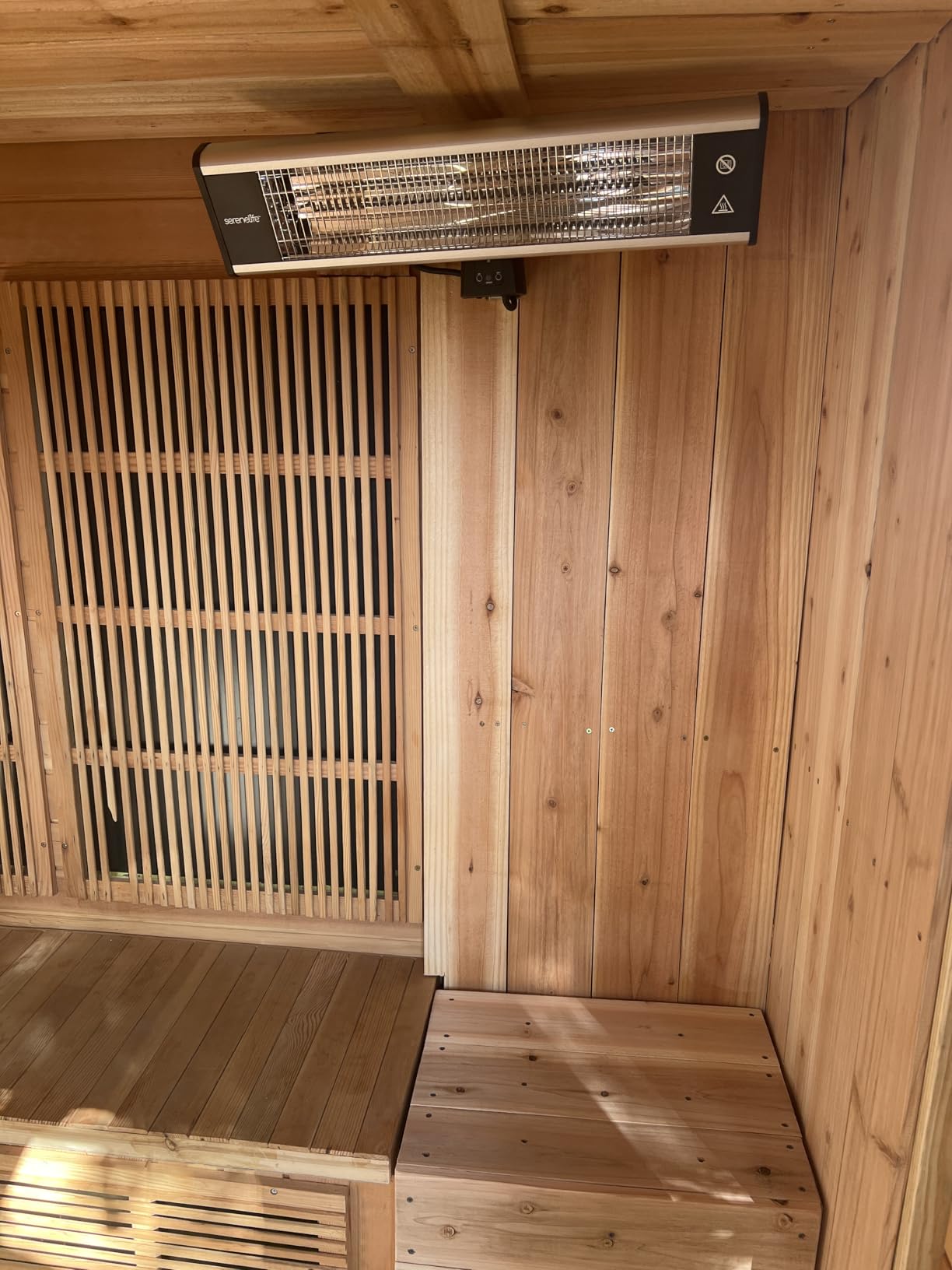
At 5.7 lb this is the easiest unit here to get onto a wall, and the space it frees is the point. On a covered balcony or a narrow patio where a tower would block the only route to the door, wall mounting turns unusable floor into usable floor. The mesh guard over the element handles the safety side of having it overhead.
It shares the same ETL-certified carbon fiber platform and 88 percent efficiency figure as the SereneLife tower, so the heat quality is consistent. Running on electricity rather than propane keeps the operating cost low and there is nothing to refill at the end of a season.
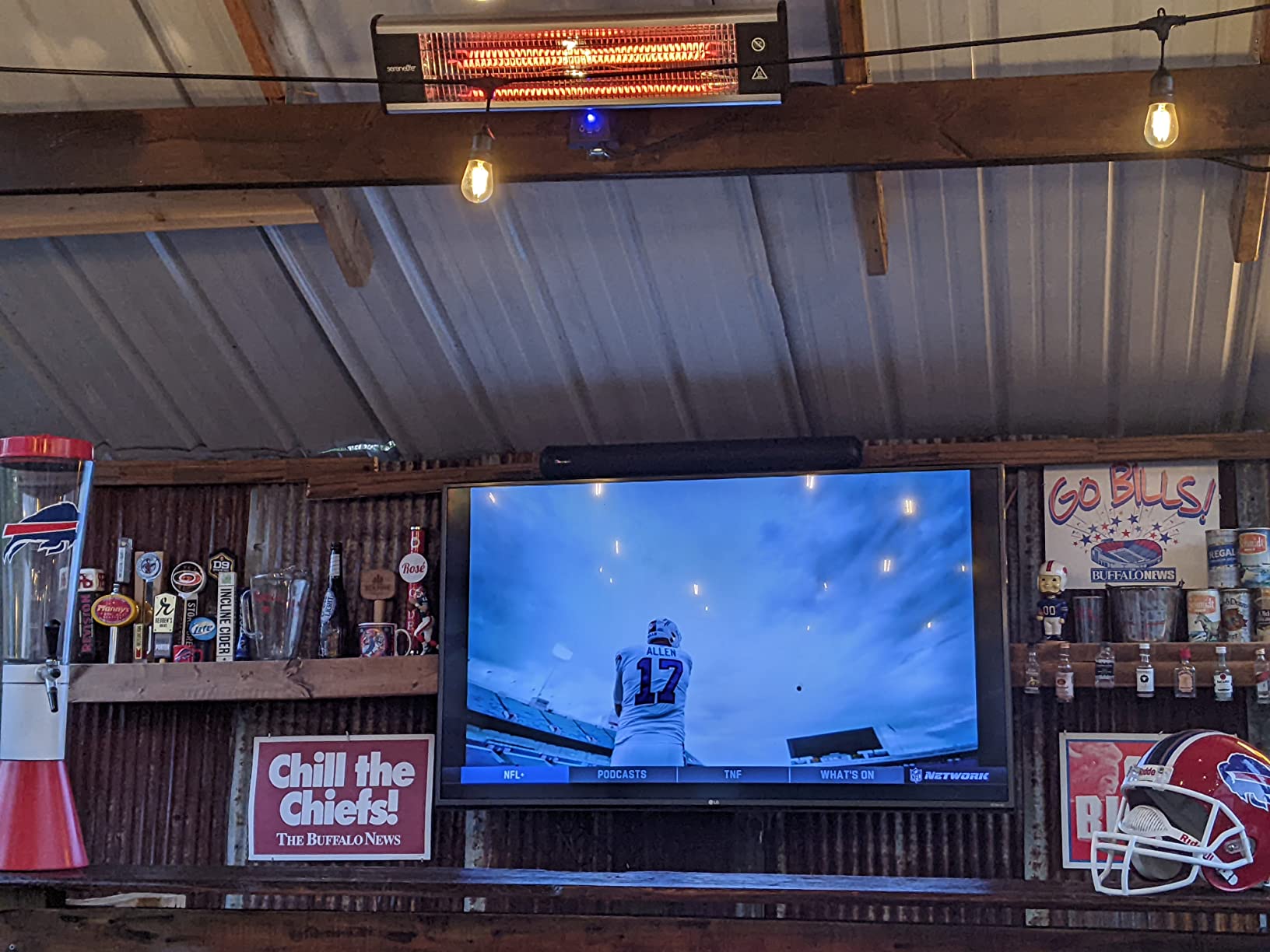
Reviewers who mounted it on a patio wall, under a pergola, or above a bench in a garage tend to be happy with the value, the weight, and the instant warmth. At 120V and 12.5 A it runs on a standard household circuit, which is one reason wall-mounted electric units are so common under awnings.
The 60 percent five-star share is the second-lowest here, and the reason is consistent: buyers expect freestanding all-around warmth from something that only throws forward. There is no tilt and no oscillation, so coverage is a narrow band directly in front of the unit and the seating needs to be arranged around that fact.
Position it for the seats, not the room
The placement rule is simple. Mount it above and slightly behind the seating so the radiant band crosses shoulders and laps rather than empty air, and accept that the far side of the patio stays cool. If that compromise is unacceptable, you need a freestanding unit instead.
Check the circuit before you mount
At 12.5 A on 120V this draws heavily for a standard outlet, and patio circuits often also carry a fridge or a TV. Confirm a GFCI-protected outlet is available near the mounting point, because running a heavy cord across the deck is exactly the tripping hazard people complain about in this category.
10. Sundate 1500W WiFi Heater for Scheduled and App-Controlled Heat

Sundate 1500W Infrared Patio Heater, WiFi App, 9 Heat Levels, 24H Timer
Electric, 1500W, nine heat levels, 40 to 104 degrees
27.55 x 5.51 x 3.93 inches, 2.95 kg
Wall, chain hang, or ceiling mount, 120V plug-in
Pros
- WiFi app control with remote and touch panel
- Nine heat levels plus a 24-hour programmable timer
- Mounts horizontally or vertically without tripping shutoff
- Detaches from the bracket for off-season storage
- Protective cover included
Cons
- The WiFi indicator blinks constantly and cannot be disabled
- Ceiling hooks attach chains only and are not structural support
- IR remote needs close line of sight
- Best in small covered spaces only
Scheduling is the reason to buy this one. A 24-hour timer plus app control means the covered patio can be warm when you walk out to it after work and shut itself off overnight without anyone remembering a switch, which is the most common complaint about every other heater in this list.
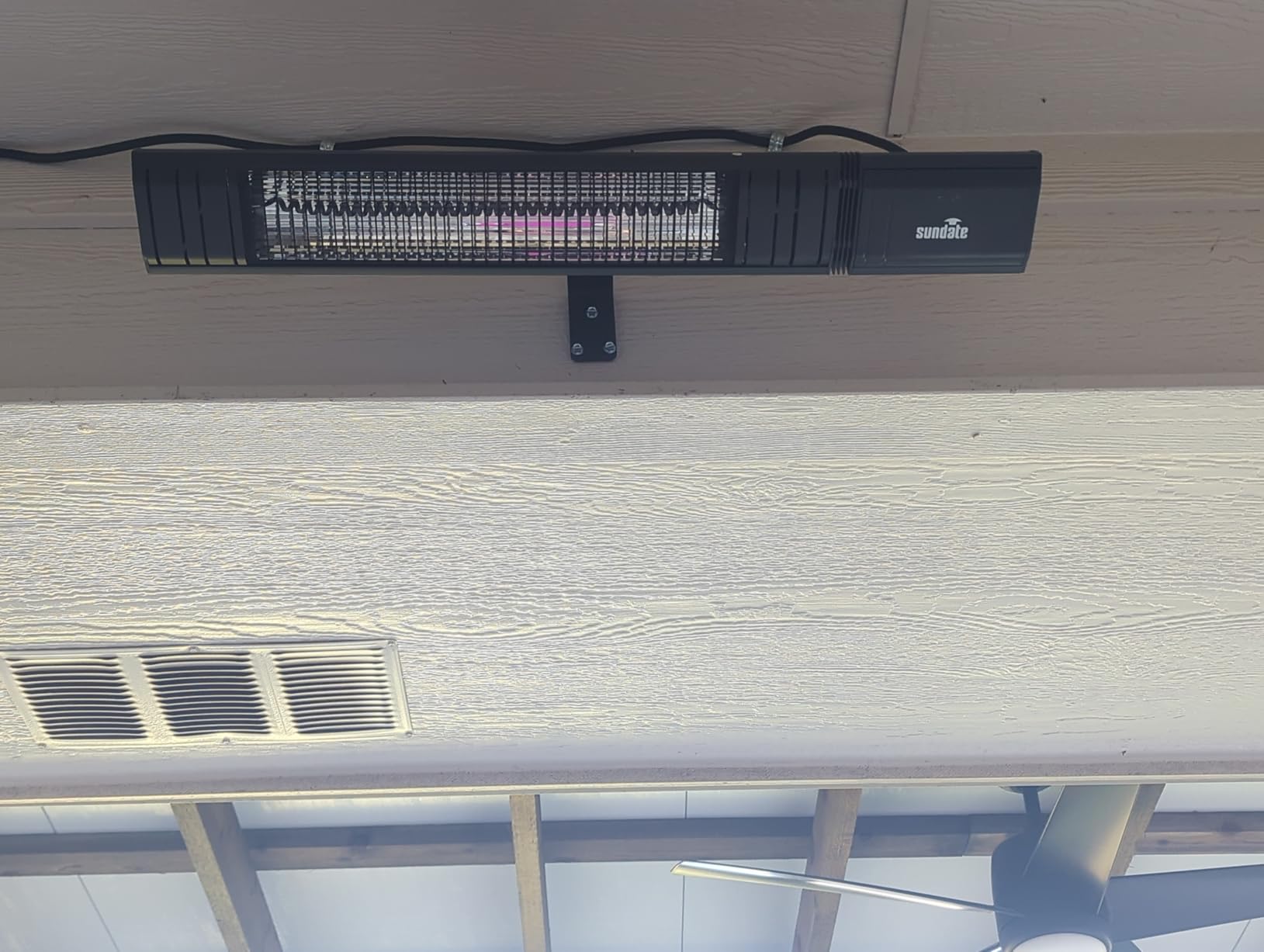
It is also unusually flexible about mounting. It fits a wall bracket, hangs from chains, or goes on a ceiling, and it can be mounted horizontally or vertically without triggering the auto-shutoff, which many wall units will not tolerate. The head detaches from the bracket for winter storage while the bracket stays mounted.
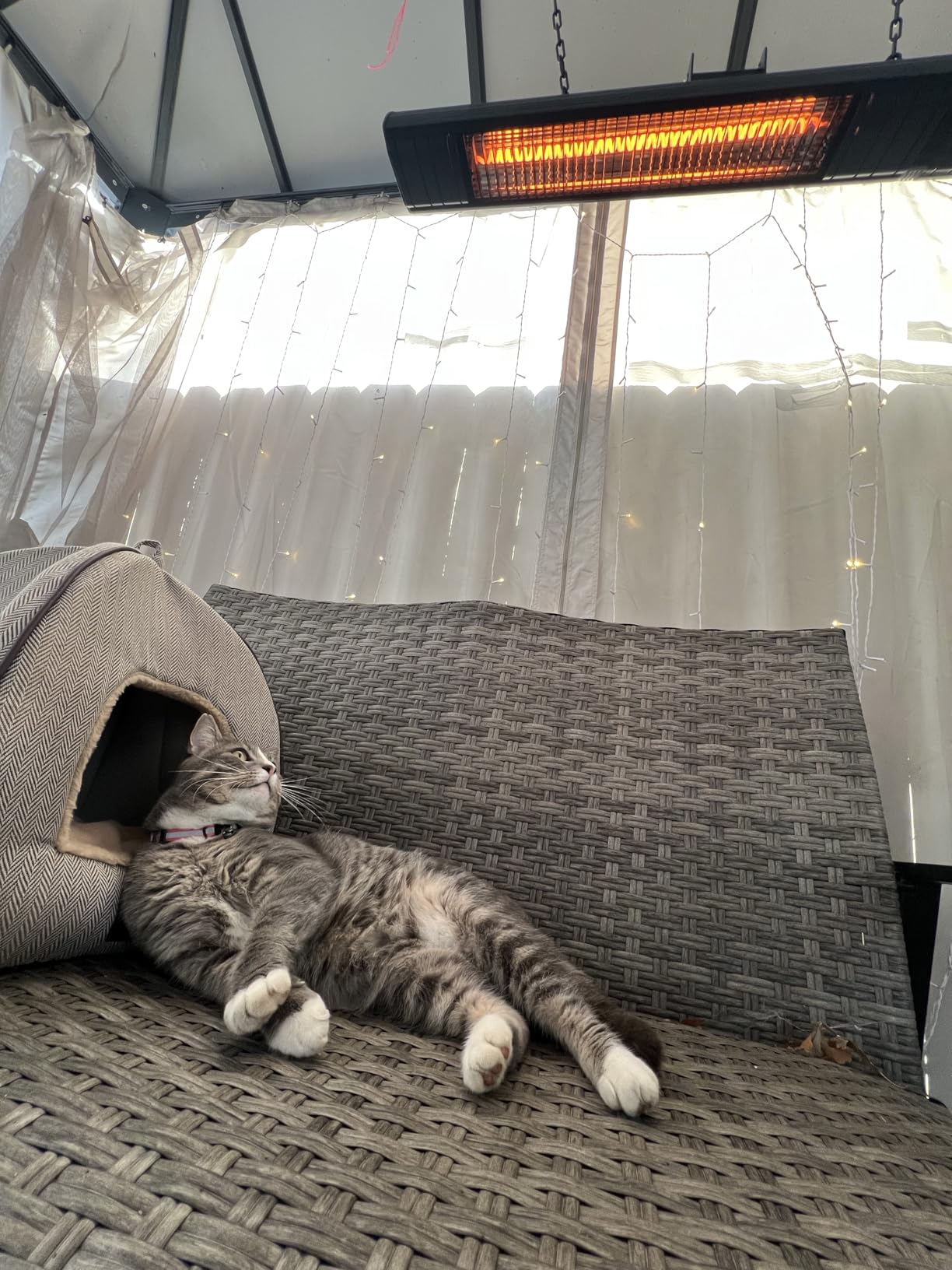
Owners in properly sized covered spaces describe exactly what they wanted: a blanket of radiant heat over an 8 by 10 foot patio or a curtained gazebo, nine levels, a timer, and a cover in the box that most rivals do not include. At 2.95 kg it is light to install, and the moisture and dust resistance suits a covered area year-round.
At 4.0 stars it is the lowest-rated unit in the roundup, and the reviews show why in a useful way. People who expected it to heat a garage or a large open area were disappointed by 1500W of radiant heat, and the practical gripes are the unremovable blinking WiFi light, a remote that needs line of sight, and light mounting hardware.
Size the space honestly
This heater performs best in a small covered area where seats are within a few feet of the wall. If your covered patio is wide open, add a second unit on a second circuit rather than expecting one to cover the space, and be aware that adding multiple 1500W heaters to a single outdoor circuit is how trips happen.
Two install details people miss
The included ceiling hooks are for attaching chains to the unit, not for supporting it from a structural beam, so confirm a proper anchor point before you hang anything. And the bracket is described as light, so mount it into a stud or a solid header rather than into drywall alone.
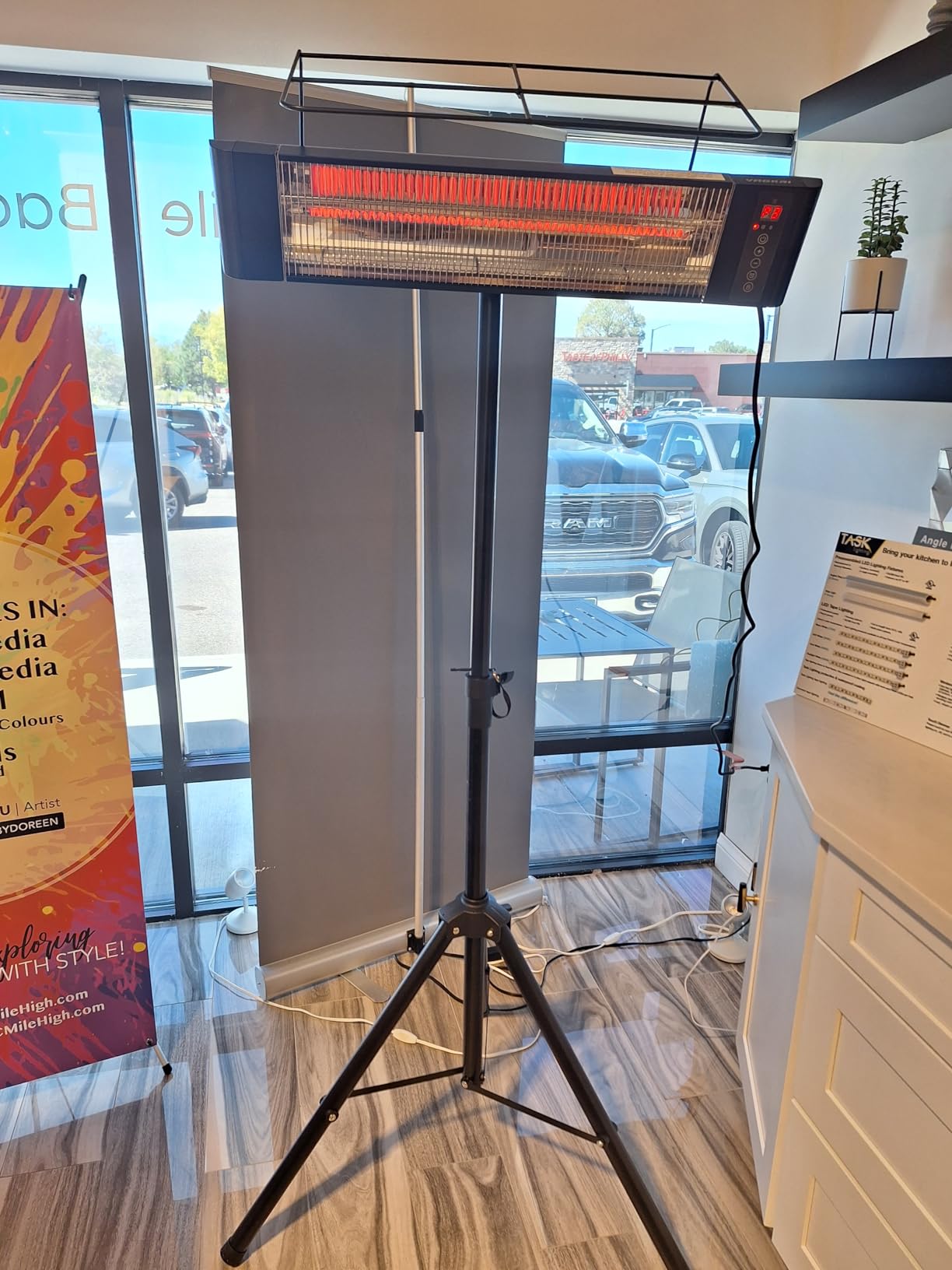
11. VAGKRI 1500W Tripod and Wall Unit for Renters

VAGKRI Outdoor Heaters, Electric Infrared Patio Heater with Remote and 12H Timer, IP65 Waterproof, 3 Heat Levels, Wall Mount or Tripod Stand for Home, Office, Patio, Garage
Electric, 1500W, 700W / 1000W / 1500W levels
Adjustable from 33 to 77 inches, 8.1 lb
Tripod stand or wall mount, 12-hour timer, remote
Pros
- Both a folding tripod and a wall mount kit in the box
- Height adjusts from 33 to 77 inches to aim at seated or standing users
- Heats within about a second and runs silently
- Heavy tripod base resists tipping
- 12-hour timer with remote and panel controls
Cons
- Costs more than visually similar units from other brands
- Heating element is not user-replaceable
- Heat is felt mainly within about three feet
- Heavy-gauge cord limits distance from the outlet
This is the answer if you rent, because nothing has to be permanently installed. The folding tripod sets up in seconds for a season of use, folds flat for storage in an apartment closet, and the wall mount kit is there if you own the place later. At 8.1 lb it is genuinely portable rather than portable in theory.
The height adjustment from 33 to 77 inches is more useful than it sounds. Set it low and you warm seated guests directly, set it high and you push heat over a standing crowd or a bar-height counter, which is the closest electric answer to the top-three-feet problem without drilling anything.
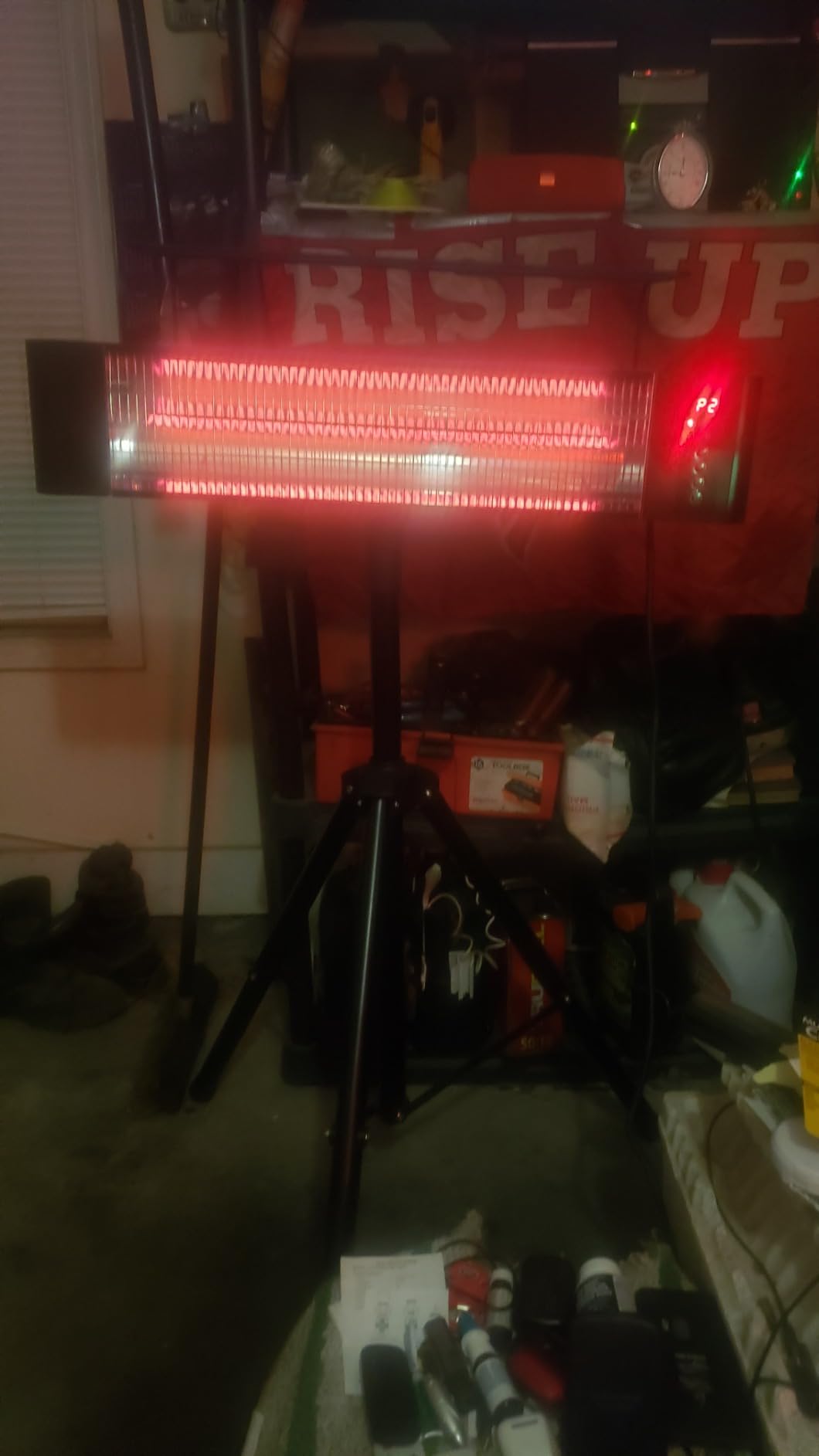
Heat-up is close to instant with three levels, the base is wide and heavy enough to resist tipping, and it runs silently with no fan drying out faces. Reviews mention the clean, modern look repeatedly, which is not a small factor on a patio where the heater stays visible all season.
Two things hold it back. Several buyers note that visually similar units from other brands cost roughly half as much, and the infrared element is not user-replaceable, so a cracked element from wind or handling means the whole unit is finished. Heat is also concentrated within a few feet rather than spread across a seating area.
Why tripod height beats fixed height
A fixed-height heater makes you choose between heating seated guests and heating standing guests. Adjustable height from a low patio table up to standing bar level means the same unit works for a breakfast table and a later evening around a taller surface, and it removes the most common complaint about compact electric heaters.
What to check after a windy week
Give the element a visual check after the first windy spell, particularly if the unit has been outside on the tripod. Because the element is not replaceable, a cracked bulb is the end of the unit, and knowing that early is the difference between returning it and keeping it.
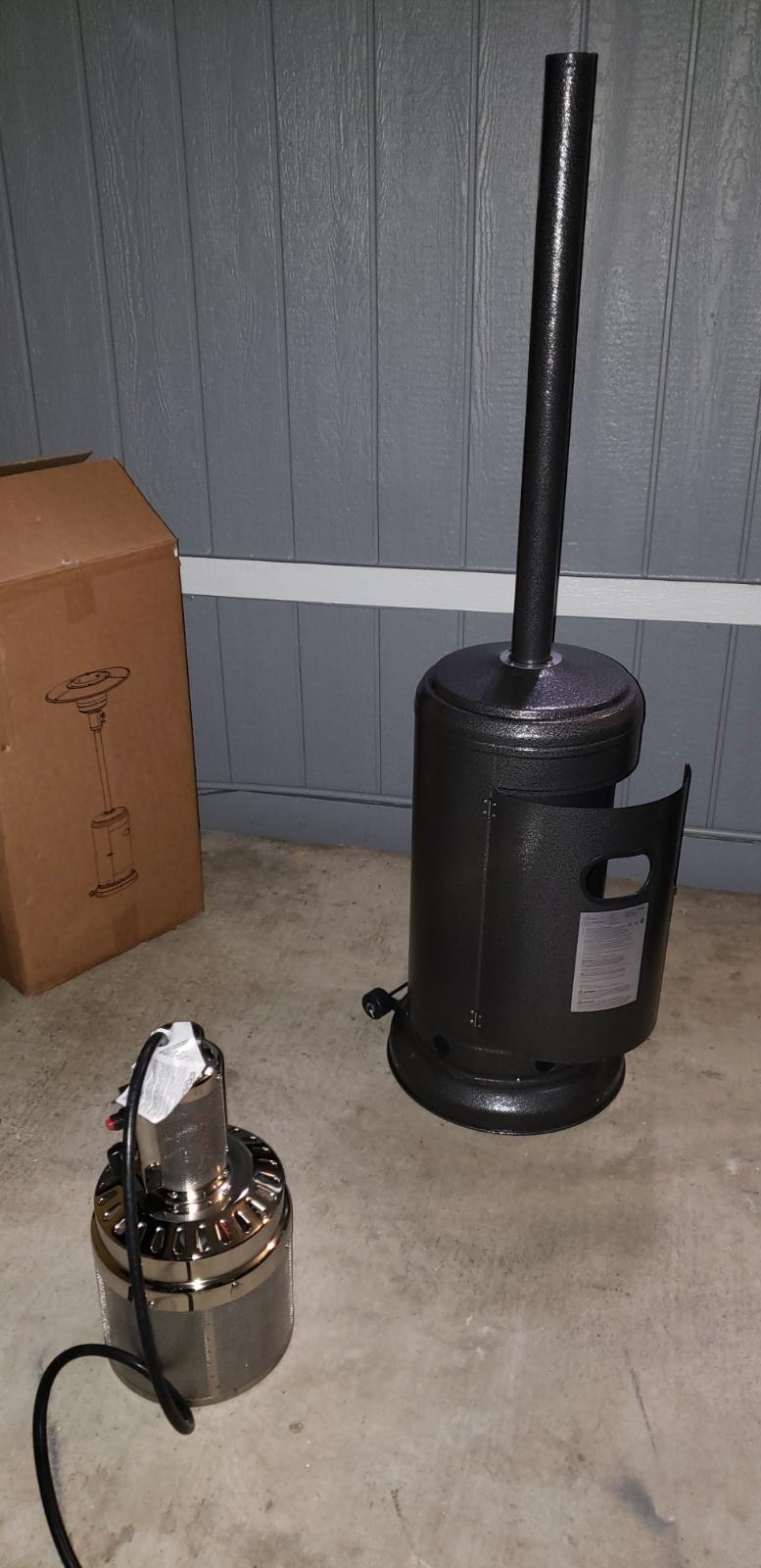
12. Pamapic 50,000 BTU Pedestal With Built-In Table for Entertaining

Pamapic Outdoor Heaters for Patio with Round Table Design, Premium 304 Stainless Steel Burner, Triple Protection System Propane Patio Heater for Porch Garden, Residential & Commercial Use
Propane, 50,000 BTU across a 20-foot diameter
27.5 x 27.5 x 87.8 inches, floor pedestal
304 stainless steel burner, 27.5 inch round table
Pros
- Highest output here at 50000 BTU over 314 sq. ft.
- Only heater with a built-in round table for drinks
- 304 stainless steel burner instead of heating mesh
- Three-tier safety system with flame failure cutoff
- CSA certified and magnetic locking tank door
Cons
- Arrives in two boxes that may come separately
- Assembly takes about an hour
- 87.8 inch height is tall under a low roof
- One owner shortened the column for clearance
This is the highest-rated heater in the roundup at 4.5 stars from 297 reviews, and the reason is specific. It is the only unit here with a built-in 27.5-inch round table, so guests have somewhere to put a drink that is not their knee, and the pedestal design concentrates the flame between the table and the reflector rather than pushing it past everyone’s shoulders.
The heat numbers are the largest in the group. 50,000 BTU across a 20-foot diameter and 314 square feet is real area heating, not a personal zone, and the 304 stainless steel burner is a step up from the heating mesh most propane heaters use. The aluminum top cover is shaped to concentrate the heat and reduce loss.

Stability and safety were clearly designed together. The conical body adds wind resistance, tip-over protection cuts the flame when the tank tilts beyond 45 degrees, and a flame failure device shuts off gas if the flame is extinguished, which is the safeguard that matters most on a covered patio. It is CSA certified for both residential and commercial use.
One-touch ignition lights the flame in about five seconds and reaches heat in about a minute, which is the fastest start in the roundup. Practical touches include a magnetic locking tank door for quick, secure cylinder changes, and long-term owners still report the unit running after years.
Measure the ceiling twice
At 87.8 inches, this is the tallest unit here and the number that decides the purchase. One owner shortened the column by 8 inches because the top ran too close to a low covered patio roof, which is a fix but changes the proportions. Measure your lowest clearance point, not the average ceiling height.
Build it before you need it
The unit arrives in two boxes that may be delivered separately, and assembly takes roughly an hour with washer sizes sorted first. Plan a weekend, and do not plan to assemble it the evening of a gathering. Once built, the highest rating in the group suggests the effort is worth it.
How to Choose an Outdoor Heater for a Covered Patio
Electric infrared or propane: which fuel fits a covered patio
Start with the roof, not the thermostat. If your covered patio has at least one side fully open to the air, has 3 feet or more of clearance from the roof covering, and no local rule against combustion appliances, a propane heater is on the table and will out-heat anything electric by a wide margin. If any of those conditions fail, an electric infrared heater is the only sensible choice, because there is no flame and no combustion gas to manage.
Electric infrared is not weaker in a covered space, it is just aimed differently. It heats people and objects directly rather than warming the air, which is exactly why it performs so well when a roof stops the heat from escaping. The forum complaint that a mushroom heater warms the top three feet while the seated lower three to four feet stay cold is a description of convection and radiant behaviour, and infrared panels or low-mounted elements are the standard answer to it.
How many BTUs a covered patio actually needs
Use the manufacturer coverage number and then adjust for your space, because published figures vary widely. In this roundup, a 48,000 BTU propane tower is stated at about 130 square feet while a 50,000 BTU pedestal claims 314 square feet, and the difference is largely about heat pattern and how the unit directs output rather than raw power.
On the electric side the same spread appears. A 1500W tower claims 500 square feet of coverage, while two other 1500W units are stated at 15 and 18 square feet, because those are directional radiant heaters rather than area heaters. The number to trust is the one that matches your fuel type, and the number to add for is draft. A covered patio open on two sides loses heat that a fully sheltered one keeps.
A practical rule: for a dining table seating four to six under a roof with one open side, target a propane unit at 46,000 BTU or higher, or two 1500W electric units placed on opposite sides of the seating. For a two-person nook, a 900W or 1500W tower is plenty and a bigger heater is wasted energy.
Wall mount, ceiling mount, or freestanding under a low roof
Low roof means mounted or compact. A 7-foot to 8-foot tower needs ceiling clearance that many covered patios simply do not have, and the units in this roundup range from 25.2 inches to 91.3 inches tall. Check your lowest clearance point, which is often a beam or a downlight rather than the roof deck itself.
Choose wall or ceiling mounting when seats sit close to a mountable surface, when floor space is tight, or when you want heat at seated height. Choose freestanding when heat needs to reach the middle of the seating area, when no wall is close enough, or when you rent and cannot drill. Pole and tripod mounting sits in between and, as one user noted, is a good compromise for a covered balcony with no wall.
What a covered patio heater costs to run
Electric is cheaper to run and easier to reason about. A 1500W heater draws 1.5 kilowatt-hours in an hour of use, so the running cost is simply your utility rate multiplied by 1.5, plus whatever your 900W unit draws at its lower setting. No fuel logistics, no cylinder changes, nothing to store over the summer.
Propane trades running cost for heat. A 20 lb cylinder has to be swapped mid-season if you use the heater often, and the tabletop option can run on a 1 lb cylinder that runs out during a long dinner. If you are comparing purely on cost per hour of warmth delivered to a group, propane wins on output; if you are comparing cost per comfortable evening at a table of four under a roof, electric usually wins.
Heaters for screened-in porches
A screened porch is a harder case than a covered patio because the mesh both attenuates radiant heat and traps humidity. Electric infrared handles the humidity side better since it adds no combustion moisture, and a wall or ceiling unit works because the mesh screens out some of the long-wave output, so seats need to be reasonably close.
Watch for condensation. Adding heat to a damp screened space can produce dew on the mesh and framing, and the forum advice worth following is to run the heater with ventilation when the space is closed, and to avoid propane in an enclosed screen room for carbon monoxide reasons. A user in a colder climate made the complementary point, that propane works best in a covered area sheltered from the wind, since exposure defeats the heater.
Renters, apartments, and non-permanent installs
If you cannot drill or run gas, the shortlist narrows to plug-in electric. Anything with a folding tripod, a detachable wall bracket, and no fixed plumbing can come out of the space in a minute, and units that include a protective cover for storage are worth a look since you will be moving the thing twice a year.
Two details to confirm before you buy for an apartment balcony. First, that the outlet is GFCI-protected and rated for outdoor use, since a patio is a wet location. Second, that your lease and building rules allow a heater on the balcony at all, which is more common an issue than anyone expects.
For the wider patio setup, our picks for the best outdoor fireplaces for patios and the best outdoor TVs for patios cover the two things most people add once they have solved the heat problem and are actually using the space.
Frequently Asked Questions
What is the best way to heat an outdoor covered patio?
The best way to heat a covered patio is an electric infrared heater mounted on a wall or ceiling, or a low-output freestanding infrared tower, because it produces no combustion gases and needs only a GFCI-protected outdoor outlet. A propane heater delivers more heat but requires at least 3 feet of clearance, one fully open side, and compliance with local code.
Can patio heaters be used on a covered porch?
Yes, patio heaters can be used on a covered porch as long as clearance rules are met and the space is ventilated. Keep any heater at least 3 feet from the roof covering, posts, umbrellas, and fabric canopies, and make sure the material overhead is fire-rated if it is fabric. Electric infrared units are the simplest choice under a roof because they emit no combustion gases.
Can you use a propane patio heater on a covered porch?
You can use a propane patio heater on a covered porch only with permanent ventilation. At least one side of the space must be completely uncovered, the heater needs roughly 3 feet of clearance from the roof and any combustibles, and many local codes, HOAs, and leases prohibit combustion heaters under a roof. Never run propane in a fully enclosed screened room, where carbon monoxide can build up.
Which patio heater gives off the most heat?
Propane patio heaters give off the most heat. The largest unit in our roundup is a 50,000 BTU propane pedestal covering a 20-foot diameter and 314 square feet, followed by 48,000 BTU towers. The most powerful electric option is 1500W, and it delivers heat to people directly rather than to the surrounding air, so its coverage figure describes a seated zone rather than a whole area.
What type of heater is best for a screened in porch?
A wall or ceiling mounted electric infrared heater is best for a screened-in porch. Mesh screen reduces radiant output, so seats should be within a few feet of the unit, and electric heat avoids adding combustion moisture to an already humid space. Leave ventilation available when the porch is closed, and expect condensation on the mesh and framing, which is the main maintenance issue in screened rooms.
Are infrared patio heaters any good?
Yes, infrared patio heaters are very good under a covered patio. They heat people and objects directly instead of warming the air, which suits outdoor use because moving air carries heat away. Their limitation is direction: warmth falls off sharply a few feet from the element, so position matters more than wattage. They also run silently, need no fuel, and produce no carbon monoxide.
The Best Outdoor Heater for Covered Patios: Final Verdict
After living with all twelve, the best outdoor heaters for covered patios split cleanly by roof situation. If your covered patio has an open side and real ceiling height, the Amazon Basics 46,000 BTU propane heater is our pick: more than eleven thousand reviews at 4.4 stars is the strongest reliability evidence in this group, and the built-in wheels let you place the heat where the people are.
If your patio is enclosed on more than one side, or the roof is low, the DR. INFRARED 1500W wall and ceiling unit is the safer and often better answer. It is IP55 rated, it puts radiant heat directly at seated height, and it costs nothing but electricity to run.
Measure your lowest clearance, count your open sides, and check your lease before you order. Then get the seating arranged so the heat lands on people rather than on empty air, which matters more than any spec on the list.