
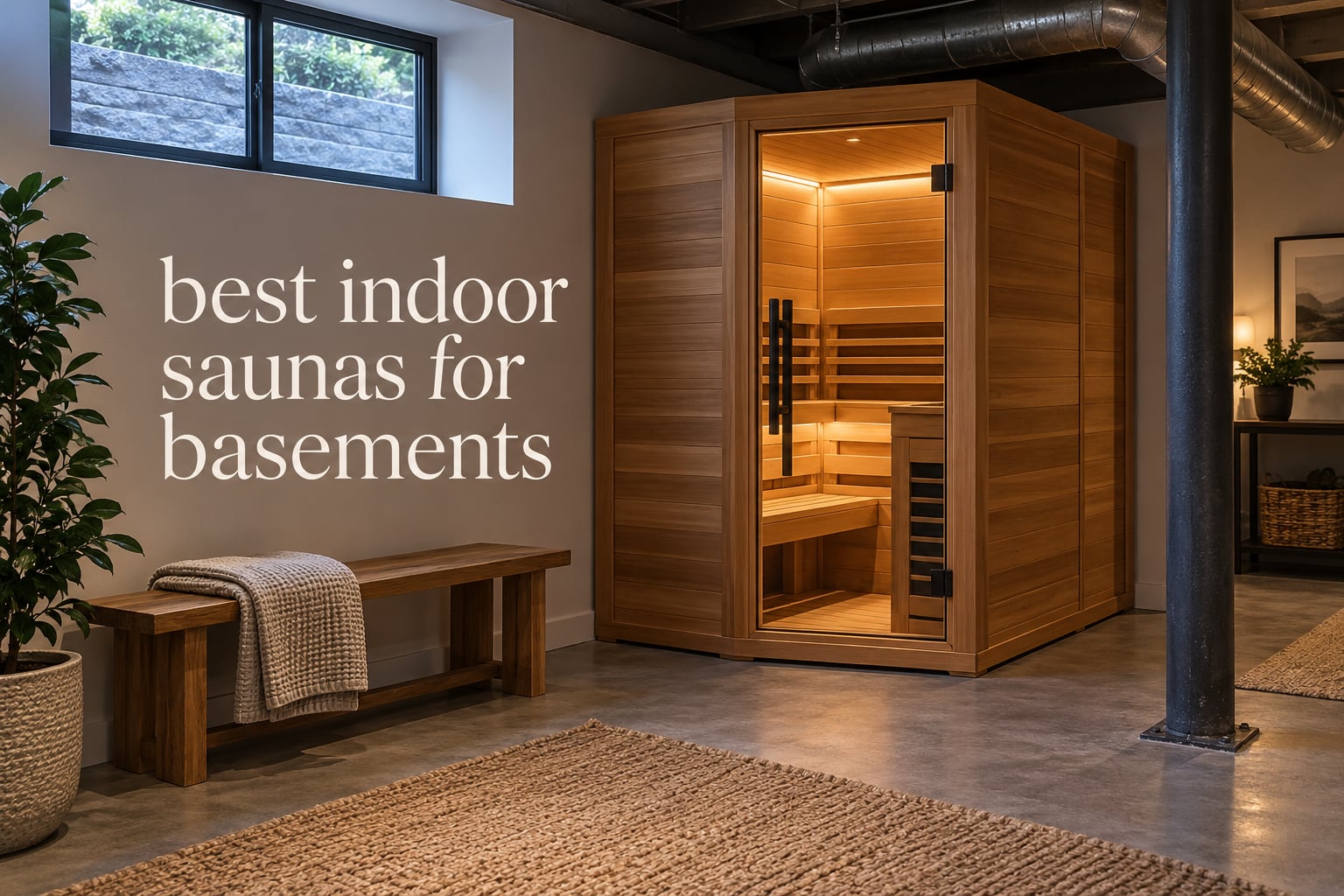
A basement sauna is the easiest kind of home sauna to install, and the reason has almost nothing to do with the sauna itself. Below-grade rooms are already finished, climate controlled and often close to the electrical panel, so a self-contained far infrared cabin can sit on the concrete, plug into a 110V outlet and be running the same afternoon it arrives.
That is the entire logic behind this list of the best indoor saunas for basements in 2026. Every cabin below runs on standard household power, needs no venting work outside the room, and produces dry heat rather than the löyly of a wood or electric stone sauna. That combination is what makes them practical below grade, and it is also the tradeoff you should understand before buying.
We spent weeks reading the spec sheets and owner reviews on ten of the most reviewed infrared cabins sold for home use, then filtered them through the constraints that actually decide whether a sauna works in a basement: ceiling height, floor surface, corner footprint and electrical reach. The answer to the question everyone asks first is short. A 2-person far infrared cabin in Canadian hemlock, on a normal 110V circuit, is the best indoor sauna for a basement, and the best waterproof flooring for basements matters as much as the cabin choice.
Table of Contents
Top 3 Best Indoor Saunas for Basements in 2026

JNH Lifestyles Joyous 2 Person
- 7 low EMF carbon panels
- Canadian hemlock
- Compact 47 inch footprint
- Bluetooth audio and color lights

OUTEXER 2 Person Infrared Room
- 2100W carbon panels
- Full-piece tempered glass
- 149 degrees maximum
- Water-based paint on seats

Homsido 1 Person Infrared
- 110V plug-in
- 32 x 34 inch footprint
- 1200W carbon crystal panels
- Modular assembly
Best Indoor Saunas for Basements in October
| Product | Specifications | Action |
|---|---|---|
| JNH Lifestyles Joyous 2 Person |
|
Check Latest Price |
| OUTEXER 2 Person Infrared Room |
|
Check Latest Price |
| Homsido 1 Person Infrared |
|
Check Latest Price |
 Heat Wave Coronado 2 Person Heat Wave Coronado 2 Person |
|
Check Latest Price |
 Lifepro Rejuvacure 1 or 2 Person Lifepro Rejuvacure 1 or 2 Person |
|
Check Latest Price |
 KUNSANA 3 Person Ceramic KUNSANA 3 Person Ceramic |
|
Check Latest Price |
 Kanlanth 1 Person Far Infrared Kanlanth 1 Person Far Infrared |
|
Check Latest Price |
 KUNSANA Smart Corner 2-3 Person KUNSANA Smart Corner 2-3 Person |
|
Check Latest Price |
 X-Vcak 1-2 Person Infrared X-Vcak 1-2 Person Infrared |
|
Check Latest Price |
 SALUSHEAT 2-3 Person Corner SALUSHEAT 2-3 Person Corner |
|
Check Latest Price |
1. JNH Lifestyles Joyous 2 Person Far Infrared Sauna
Joyous 2 Person Home Infrared Sauna with Chromotherapy Light
2 person far infrared
7 carbon fiber panels
Canadian hemlock
47.3 x 39.5 x 75 inches
110V
Pros
- Even heat across 7 carbon panels
- Solid Canadian hemlock build
- Compact 47 inch footprint for tight rooms
- Bluetooth audio and color therapy included
- Over 1400 owner reviews
Cons
- Tight when two adults sit together
- Control panel takes practice to program
We used the Joyous as our reference unit for this whole roundup, mostly because it is the one we could find the most owner history on. More than 1400 reviews sit behind it at a 4.5 star average, and that volume of long-term feedback is worth more than any spec sheet when you are putting a heated wooden box in the least ventilated room in your house.
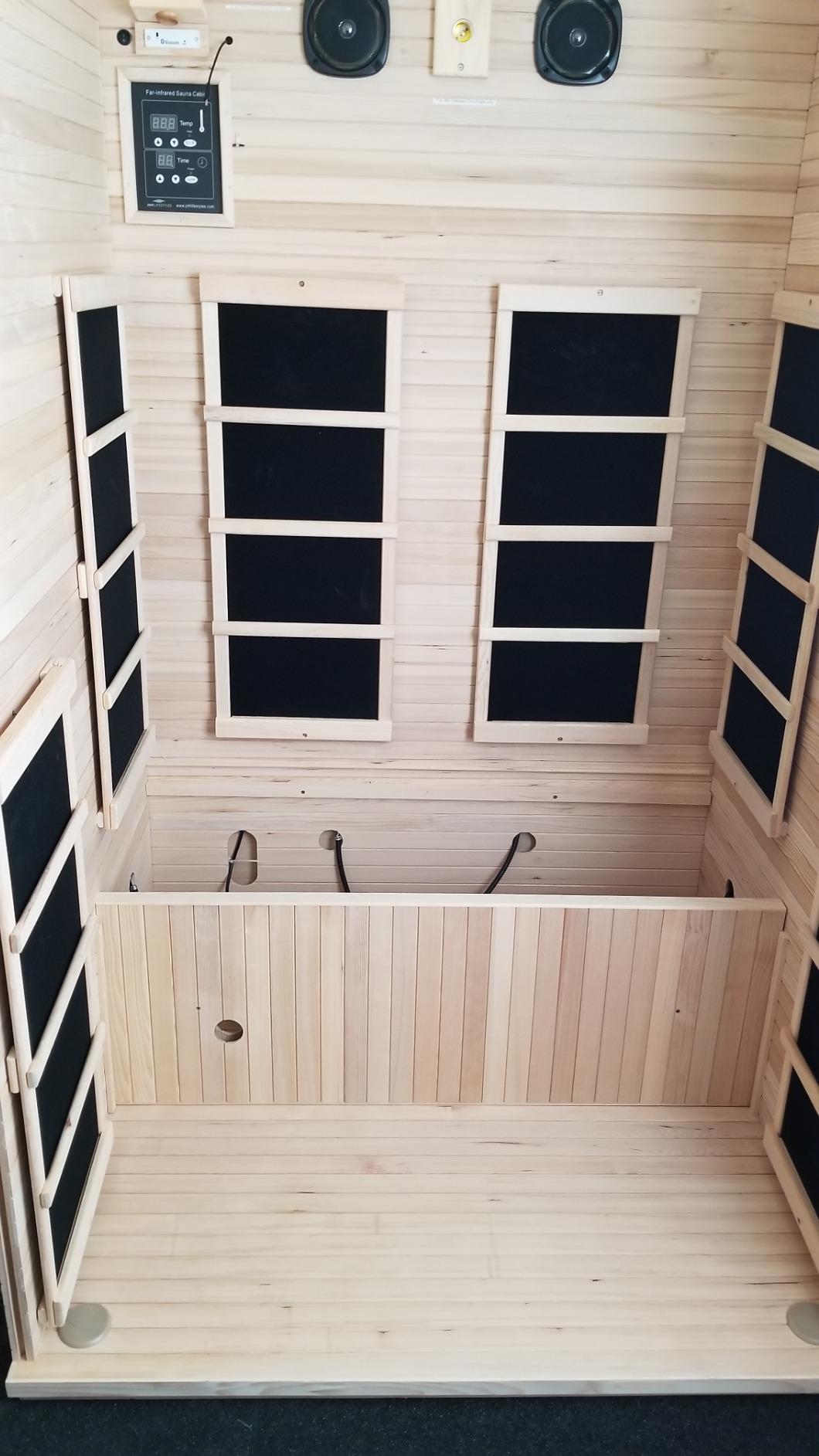
Heat comes from seven carbon fiber far infrared panels rather than stones. That single design choice is the reason it suits a basement. There is no water to throw, no stone mass to keep at temperature and no exhaust duct to run through a foundation wall.
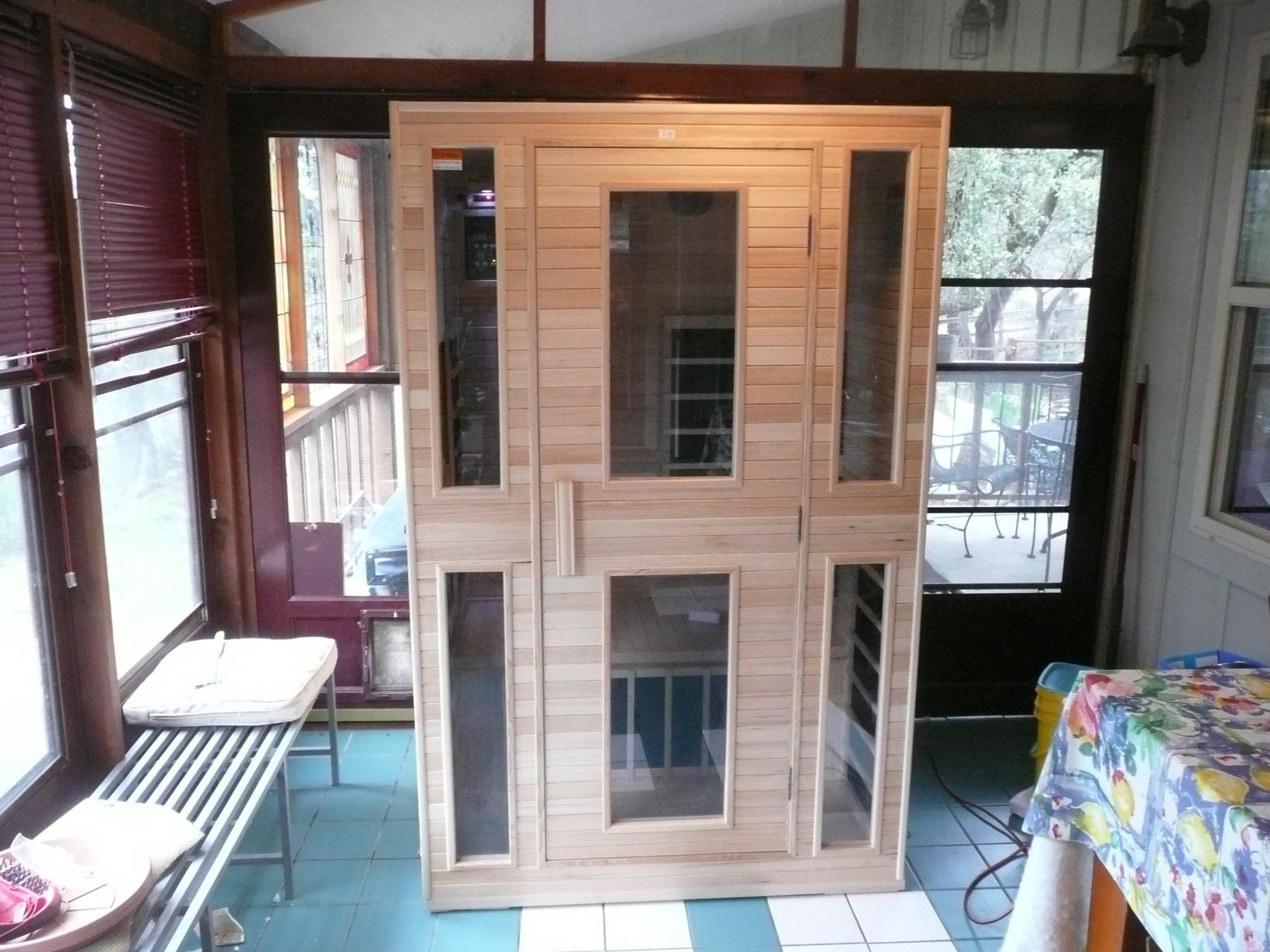
The cabin measures 47.3 x 39.5 x 75 inches on the outside, which is roughly a four foot square footprint. That is the dimension that matters most in a finished basement, where ductwork and support columns rarely leave you a clean rectangle. Owners on sauna forums consistently flag tight two-adult seating as the recurring complaint, so treat it as a comfortable single or a snug two.
Wood is Canadian hemlock with a dual-wall thin construction for heat efficiency. Hemlock is a softer wood that stays cool to the touch at sauna temperatures, which makes it a sensible interior choice for a room where you will be touching panels constantly.
Why it works in a basement
It draws standard household power and needs no dedicated circuit, which is the deciding factor in older homes where the panel sits at the far end of the lower level. There is no water source involved, so you do not need a floor drain, a wet-rated pad or a permit for plumbing work.
The insulated walls also limit how much heat escapes into the room, which keeps your basement from turning into an oven during a session. Chromotherapy lighting and Bluetooth audio make long sessions easier to pass.
Where it falls short
Two full-size adults seated side by side is genuinely cramped, so if your plan is couples use you should look at a wider 2 to 3 person corner model instead. The control panel also takes a few sessions to get used to, particularly the delayed start behavior.
Because infrared heat radiates rather than convects, the ceiling in a low basement does not need the height a traditional sauna demands. That is the quiet advantage here, and it is why this model works in the 6 to 6.5 foot ceilings common in finished basements.
2. OUTEXER 2 Person Infrared Sauna Room
OUTEXER 2 Person Infrared Sauna Room Far Infrared 120V Canadian Hemlock
2 person far infrared
2100W carbon panels
53.1 x 47.2 x 74.8 inches
149 degrees maximum
400 pounds
Pros
- Highest published maximum temperature in this group at 149 degrees
- Full-piece tempered glass front
- Multiple built-in safety protections
- Seats and foot grids use water-based paint
Cons
- Heaviest unit reviewed at 400 pounds
- Footprint is larger than most basement corners allow
The OUTEXER is the one we would put in a basement that has real space to give up. At 53.1 x 47.2 x 74.8 inches it needs a genuine corner rather than a nook, and at 400 pounds it is a two-person carry from the stairwell down.
Output is 2100W of ultra low EMF carbon infrared panels, which is the highest wattage among the two-person cabins we tested, and it reaches 149 degrees Fahrenheit. That matters for people who want a real climb rather than a warm sit.
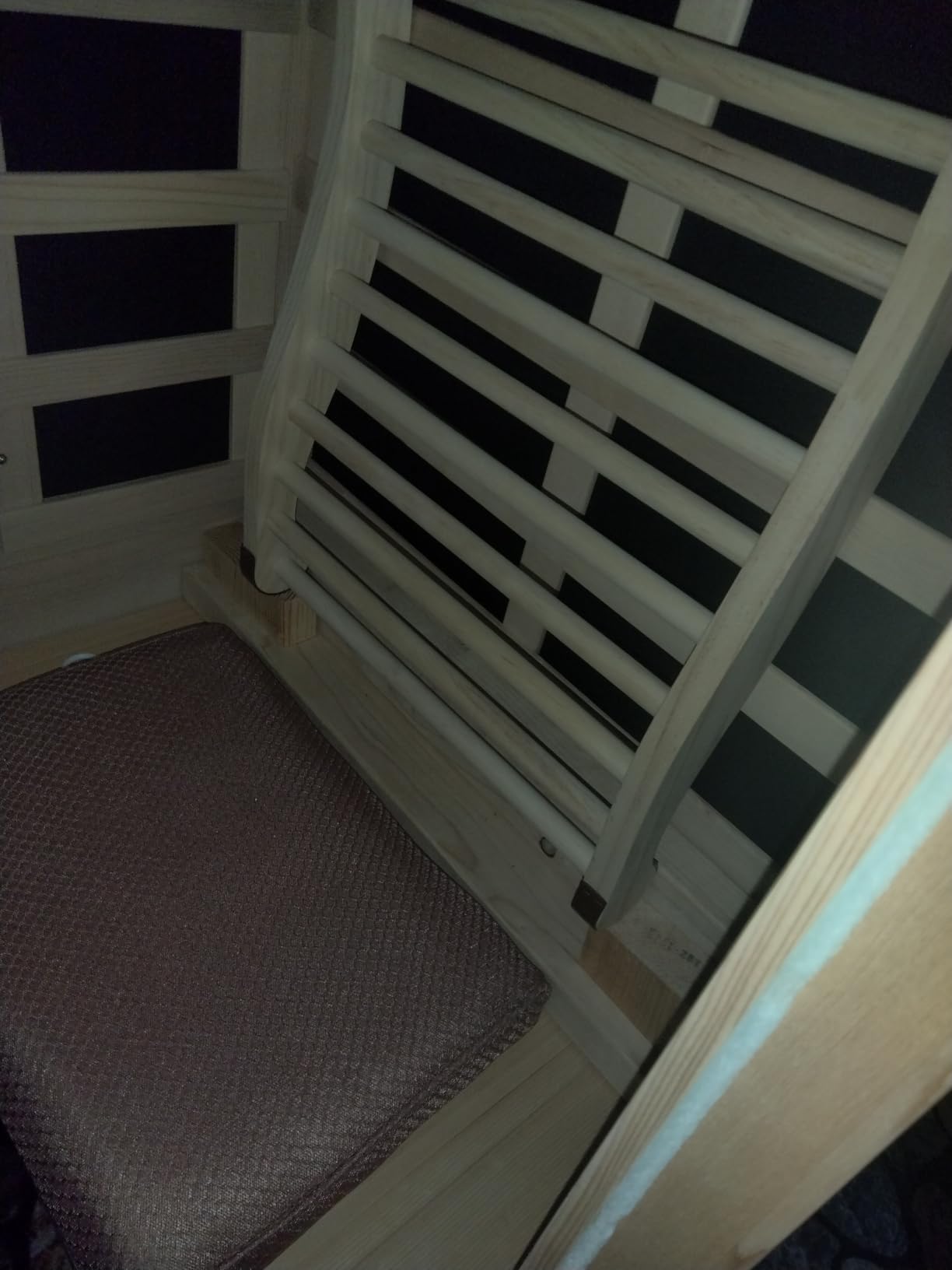
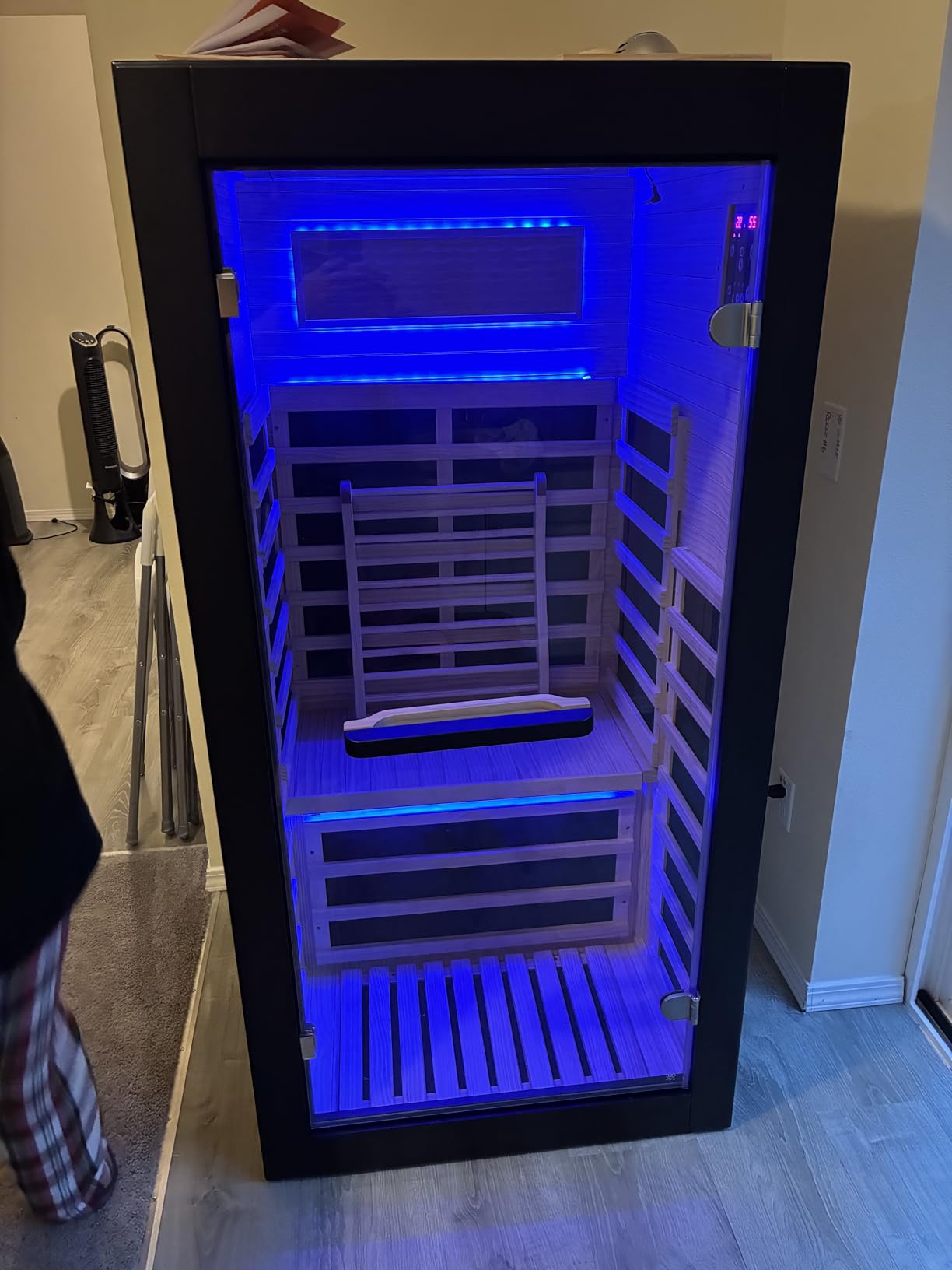
The full-piece tempered glass front changes how the cabin feels in a basement. Below-grade rooms often lack natural light, and owners mention the glass panel as the feature that keeps the space from feeling like a closet. It also lets one person sit outside and supervise two inside, which matters if you are using the sauna during a workout.
Safety provisions include dry burn protection, an automatic power off and leak protection. Seats and foot grids are finished with water-based paint, which wipes clean after a session and will not soak up moisture the way bare unfinished wood does.
Why it works in a basement
It runs on 110V like the rest of this group, so no electrical upgrade is required. Strong insulation around the panels keeps the heat inside the cabin, which limits how much the surrounding room heats up during a long session.
The wide range of sizes the brand offers makes it easier to match a cabin to an awkward basement. If your room is tight but not tiny, the smaller siblings in the same line will fit where this one will not.
Where it falls short
Weight is the honest drawback. At 400 pounds, moving it into position in a basement stairwell is a two-person minimum job and you will want to confirm the path before ordering.
The footprint is also the largest in the two-person category here. Measure carefully, and check for a baseboard heater or duct run that eats into the wall depth, because a 53 inch deep cabin needs clearance behind it.
3. Homsido 1 Person Infrared Home Sauna
Homsido Infrared Home Sauna Room 1 Person Hemlock Wooden Indoor Dry Sauna,Low EMF 1200W/110V Heaters Panels,LCD Control Panel,10 Minutes Pre-Warm up,Time and Temp Pre-Set,1-Year Aftersale
1 person far infrared
1200W carbon crystal panels
110V plug-in
32 x 34 x 67 inches
155 pounds
Pros
- Smallest footprint that still feels like a cabin
- Standard 110V plug-in power
- Reaches working heat in 20 to 30 minutes
- Modular tongue and groove assembly
- Responsive replacement part service
Cons
- One person only with minimal leg room
- Slower heat-up in a cold basement
- Interior wood is unfinished and needs towels
When a basement has one usable corner and a low ceiling, this is the cabin that actually fits. At 32 x 34 x 67 inches it is the smallest true sauna in the group, and at 155 pounds a single person can reposition it.
Five carbon crystal heating plates run at 1200W off a standard 110V supply. Owners report reaching a working temperature in roughly 20 to 30 minutes, with a 10 minute pre-warm mode on the LCD panel.
A negative ion oxygen bar handles air circulation inside the cabin, and there is a tempered glass door plus Bluetooth speakers and an LED reading light. For a solo user that combination is closer to a private relaxation room than a sweat box, which is exactly why it sells well for basement wellness corners.
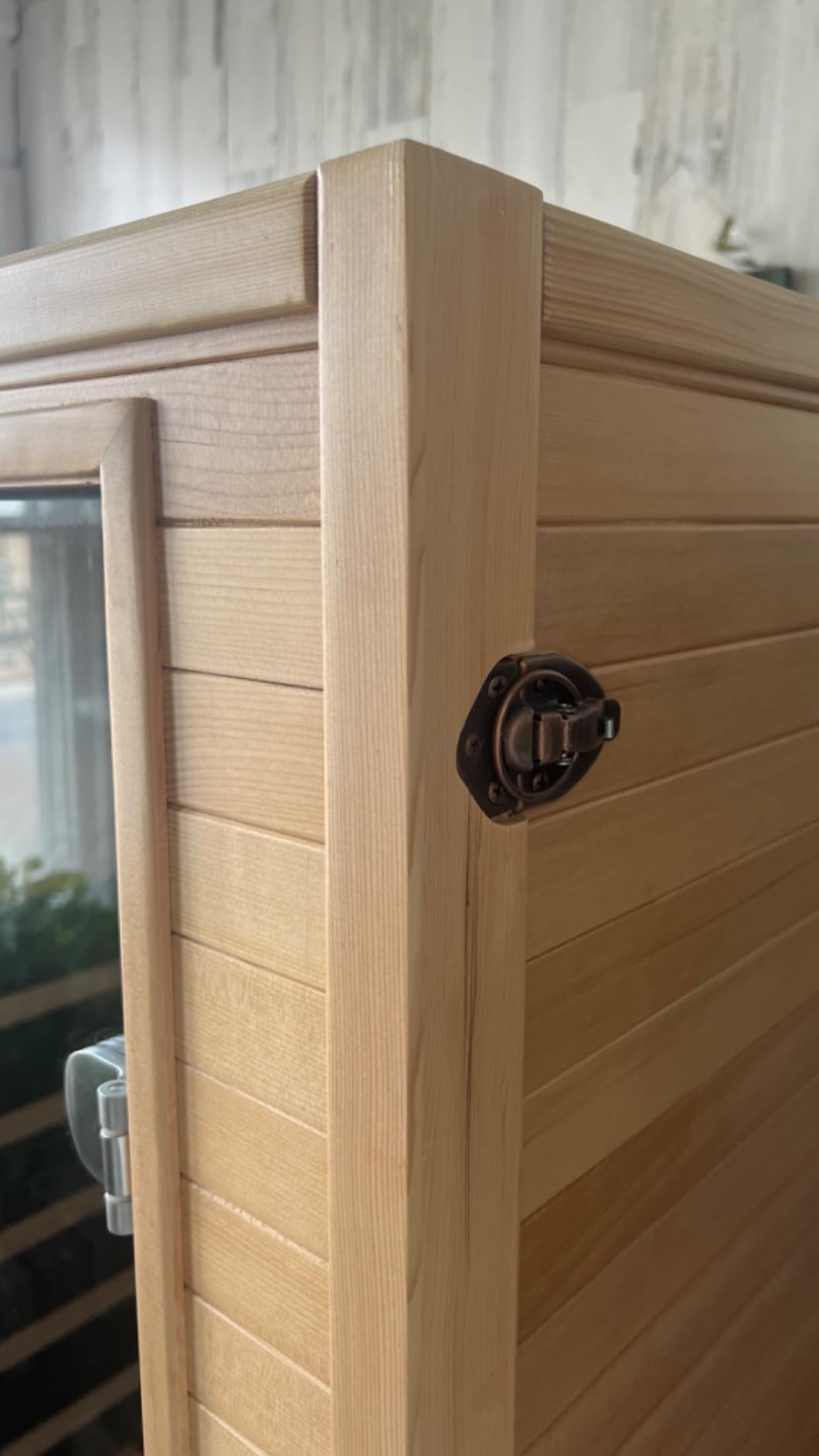
The panels arrive pre-assembled as tongue and groove modules, so assembly is closer to stacking than to building. That matters a lot in a basement, where you are working in a doorway with the room already finished.
Why it works in a basement
Standard 110V plug-in power removes the single most common obstacle to a basement sauna. There is no panel work, no new breaker and no electrician, which keeps the install to a weekend.
At 67 inches tall it needs the least overhead clearance of anything on this list, so it works under a 6 foot finished basement ceiling where taller cabins will not fit.
Where it falls short
The single-person interior is tight, and the most common complaint across reviews is leg room for anyone above average height. If you are over six feet, test the seated dimensions before committing.
The interior wood is unfinished, so you will want a towel down on the floor for sweat. Heat-up also runs slower in an uninsulated basement in cold months, so plan for the full 30 minutes rather than the pre-warm window.
4. Heat Wave Coronado 2 Person Hemlock Deluxe Infrared Sauna
Heat Wave Coronado 2-Person Hemlock Deluxe Infrared Sauna for Home Use
2 person infrared
6 carbon heaters up to 140 degrees
Solid Canadian hemlock
7-year manufacturer warranty
329 pounds
Pros
- Longest warranty in the roundup at 7 years
- Solid Canadian hemlock with bronze tempered glass
- Evenly spaced carbon heaters
- Simple buckle connector assembly
Cons
- 329 pounds makes assembly a two-person job
- Maximum temperature stops at 140 degrees
The Coronado is the pick if warranty length is your top concern. A 7-year manufacturer warranty is the longest coverage we found in this group, and on a wooden cabin in a damp space that coverage is worth real money.
Six carbon heaters are spaced evenly around the interior and adjustable up to 140 degrees Fahrenheit. That is a moderate ceiling compared with the 149 degree models here, but owners generally describe it as comfortably warm rather than punishing.
Exterior dimensions are 47.75 W x 39.25 D x 75 H inches with a 44.5 x 35 x 69 inch interior. The difference between those two numbers is thin wall construction, which is typical of hemlock cabins and worth checking against your basement wall clearance.
Chromotherapy lighting and an oxygen ionizer are included, along with a sound system that takes an AUX input. The bronze-tinted 8mm tempered glass door is a nice touch in a room where you may want to use the sauna as a private space without it looking like a shower stall.
Why it works in a basement
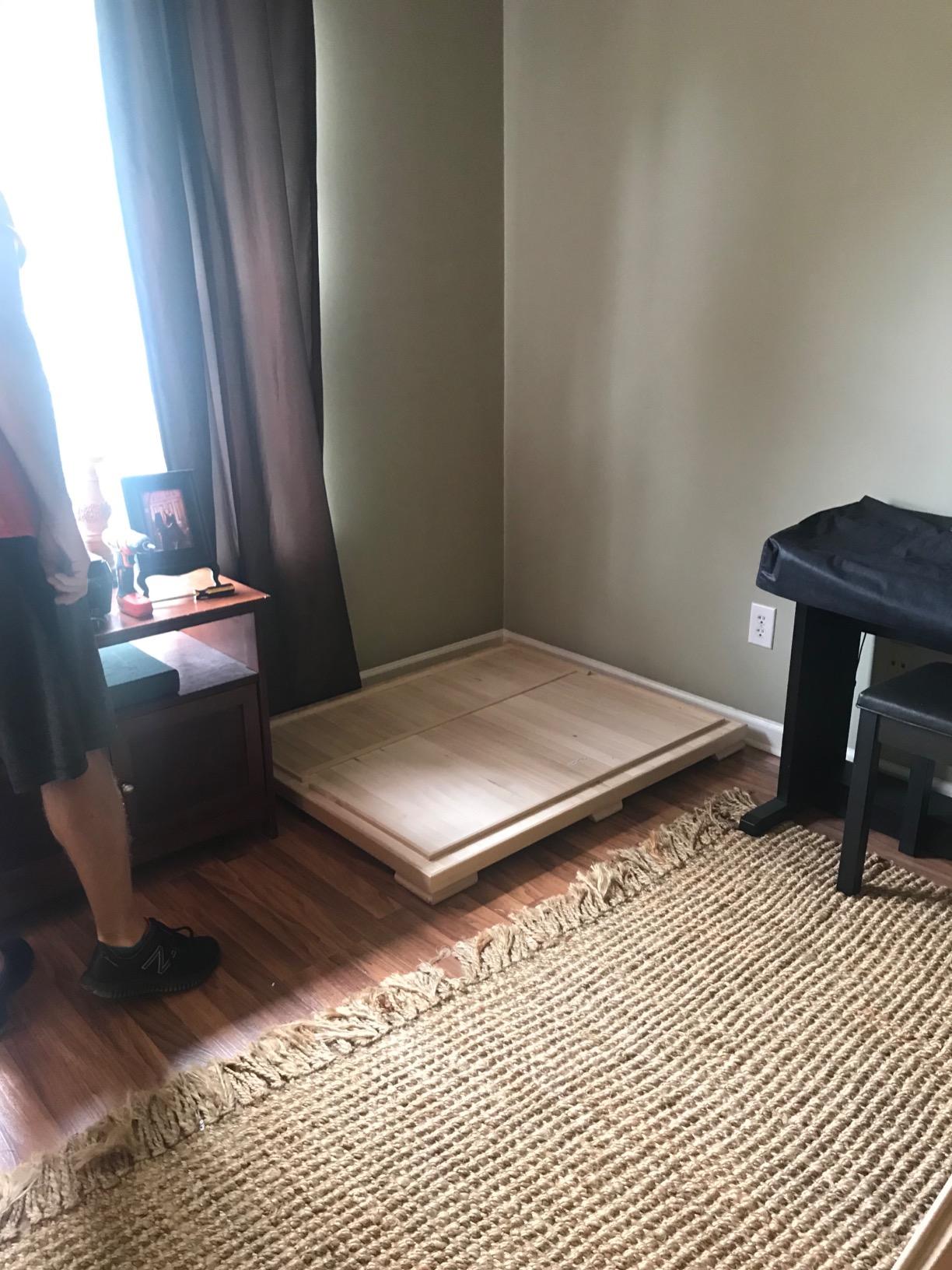
The buckle connector assembly is designed for one person in a small room, which is the situation you are in during a basement install. Walls go up without a second set of hands if you clear the room first.
A long warranty matters more below grade because the biggest long-term risk in a basement is moisture and humidity, not heat. Seven years of coverage on wood and electronics reduces the cost of a mistake.
Where it falls short
At 329 pounds this is not a one-person job, and basement stairs make that worse. Budget a second adult or a hand truck for the move.
The 140 degree maximum is lower than several rivals, so if you are chasing a genuine Finnish-style climb this is the wrong cabin. The thinner interior also means less elbow room than the wider corner models.
5. Lifepro Rejuvacure 1 or 2 Person Indoor Sauna
LifePro Rejuvacure 1 or 2 Person Indoor Sauna, Red Light, Low EMF Models
1 or 2 person far infrared
1895W across 7 carbon panels
Heats in 8 to 15 minutes
110V plug
Lifetime warranty
Pros
- Fastest warm-up in the roundup at 8 to 15 minutes
- Simple 110V plug-in install
- Control panels inside and outside
- Infrared coverage extends to lower legs and feet
- Lifetime warranty
Cons
- Hottest zone sits above seated bench height
- Bluetooth speakers are low powered
- Glass front increases heat loss
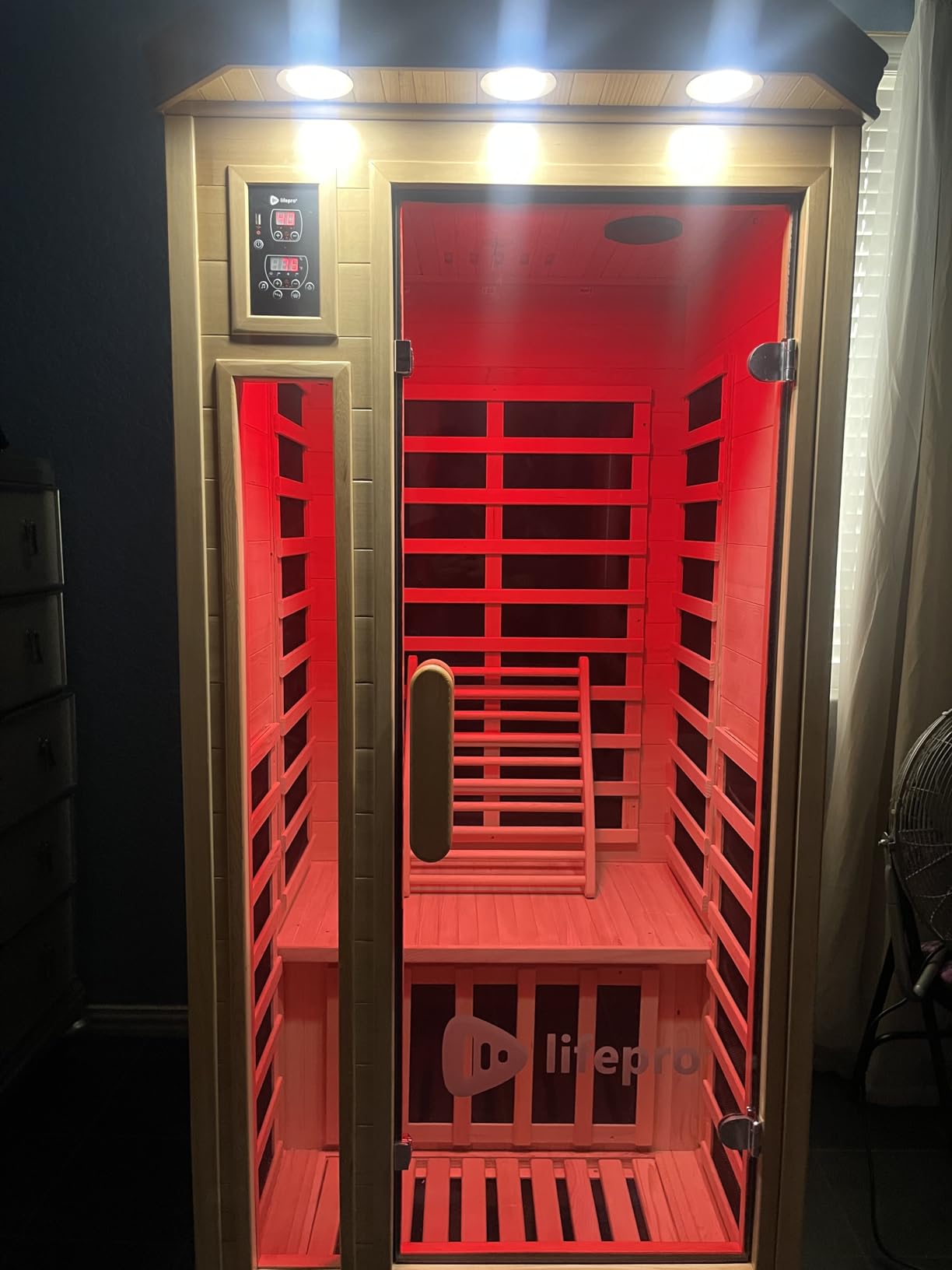
If your household wants a sauna that is ready when you are, the Rejuvacure wins on warm-up time. Owners consistently report usable heat in 8 to 15 minutes, driven by 1895W across seven carbon fiber panels.
That speed is partly a basement advantage. Far infrared cabins heat by radiation rather than by heating a mass of stone, so a room that is already warm responds quickly, and you are not waiting on a warm-up curve measured in tens of minutes.

Temperature range is 86 to 140 degrees Fahrenheit with a 1 to 60 minute timer, and there are control panels both inside and outside the cabin. Red light therapy runs alongside nine chromotherapy color modes, which is unusual at this price point and useful for recovery routines.
Exterior dimensions are 47.2 x 41.3 x 74.8 inches at 280 pounds. Audio plays over Bluetooth or USB, and the panels emit 5.6 to 15 micron waves with coverage arranged to reach legs and feet as well as the back.
Why it works in a basement
The 110V plug means zero electrical work, which in a finished basement is the difference between a weekend project and a multi-week renovation. You can plug it into a receptacle on any wall and start using it the same day.
The 74.8 inch height fits under most finished basement ceilings, and the 41 inch depth is shallow enough to sit against a wall with a baseboard heater behind it.
Where it falls short
The hottest zone sits above seated height, so a taller person may find the upper panels more useful than the bench-level ones. Several reviews mention the same effect in cool rooms, where warm-up slows noticeably.
The Bluetooth speakers are underpowered compared with the larger cabinets, and the glass front increases heat loss. If you plan long sessions with music, expect to keep the volume low.
6. KUNSANA 3 Person Ceramic Infrared Sauna
KUNSANA 3 Person Ceramic Infrared Sauna Far Infrared Indoor Saunas for Home
3 person capacity
8 far infrared panels plus 3 ceramic tubes
2050W on a 20 amp circuit
77 to 149 degrees
62.99 x 42.91 x 75.79 inches
Pros
- Only genuine three-person cabin in the group
- Hybrid ceramic and carbon heat with quick warm-up
- Highest 149 degree ceiling alongside the OUTEXER
- 600 lb seat capacity
- Eastern Canadian hemlock throughout
Cons
- Requires a 20 amp 110-120 VAC circuit
- Largest footprint in the roundup
- May need an electrician in some basements
This is the only true three-person cabin we reviewed, and it carries the highest average rating among the units with meaningful review volume. If your basement has a finished room rather than a corner, this is the only one here that seats a family.
Heating is hybrid: 8 far infrared panels combined with 3 ceramic tubes at 2050W total. Owners like the way the ceramic tubes add depth without the harsh glare the carbon panels alone can produce, and warm-up lands in the 8 to 15 minute window.
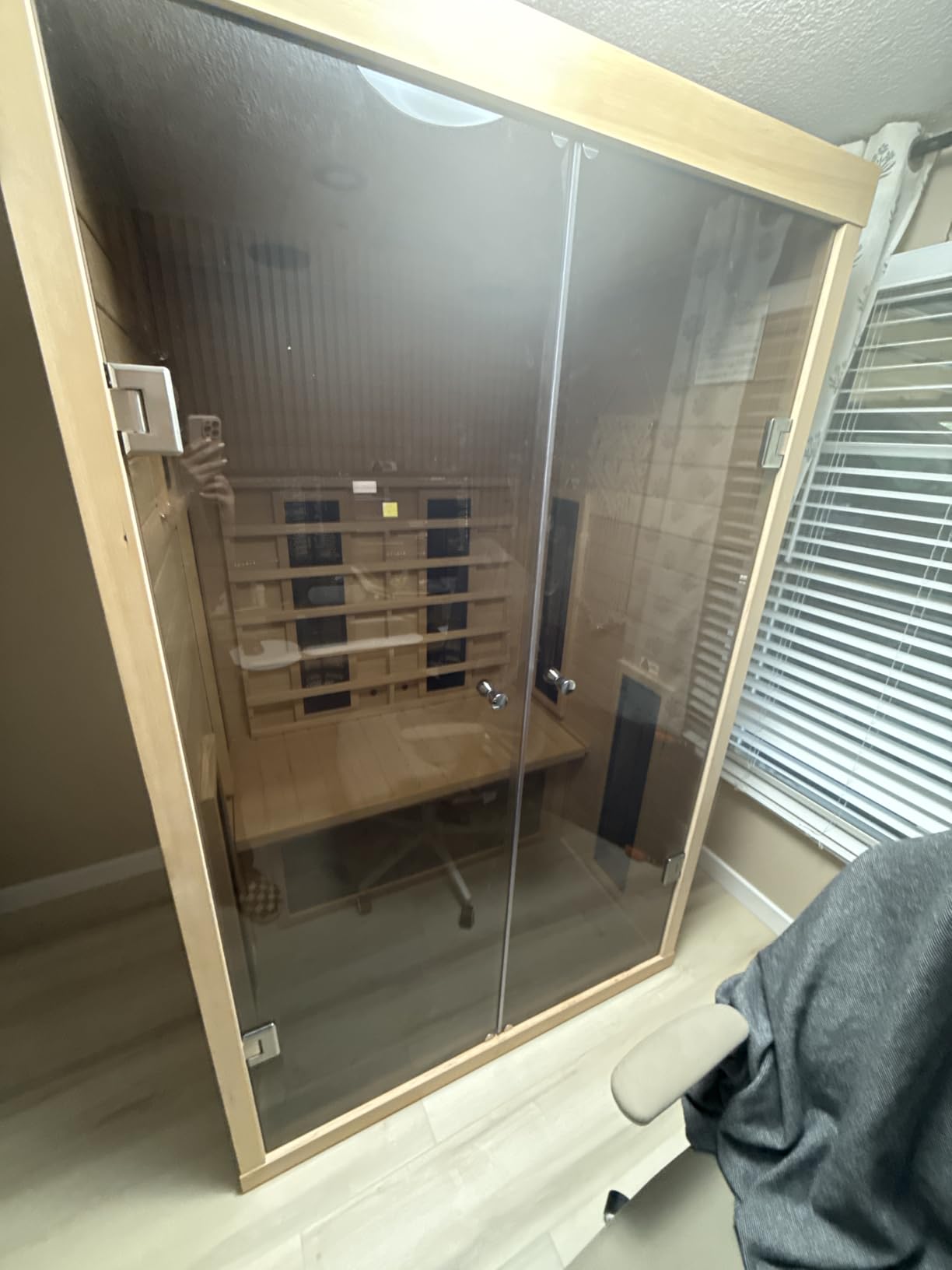
Temperature control runs from 77 to 149 degrees Fahrenheit. Seats are rated for 600 pounds, and the manufacturer lists a suitable user height of 55 to 78 inches, which is unusually specific and worth noting if anyone in the house is unusually tall.
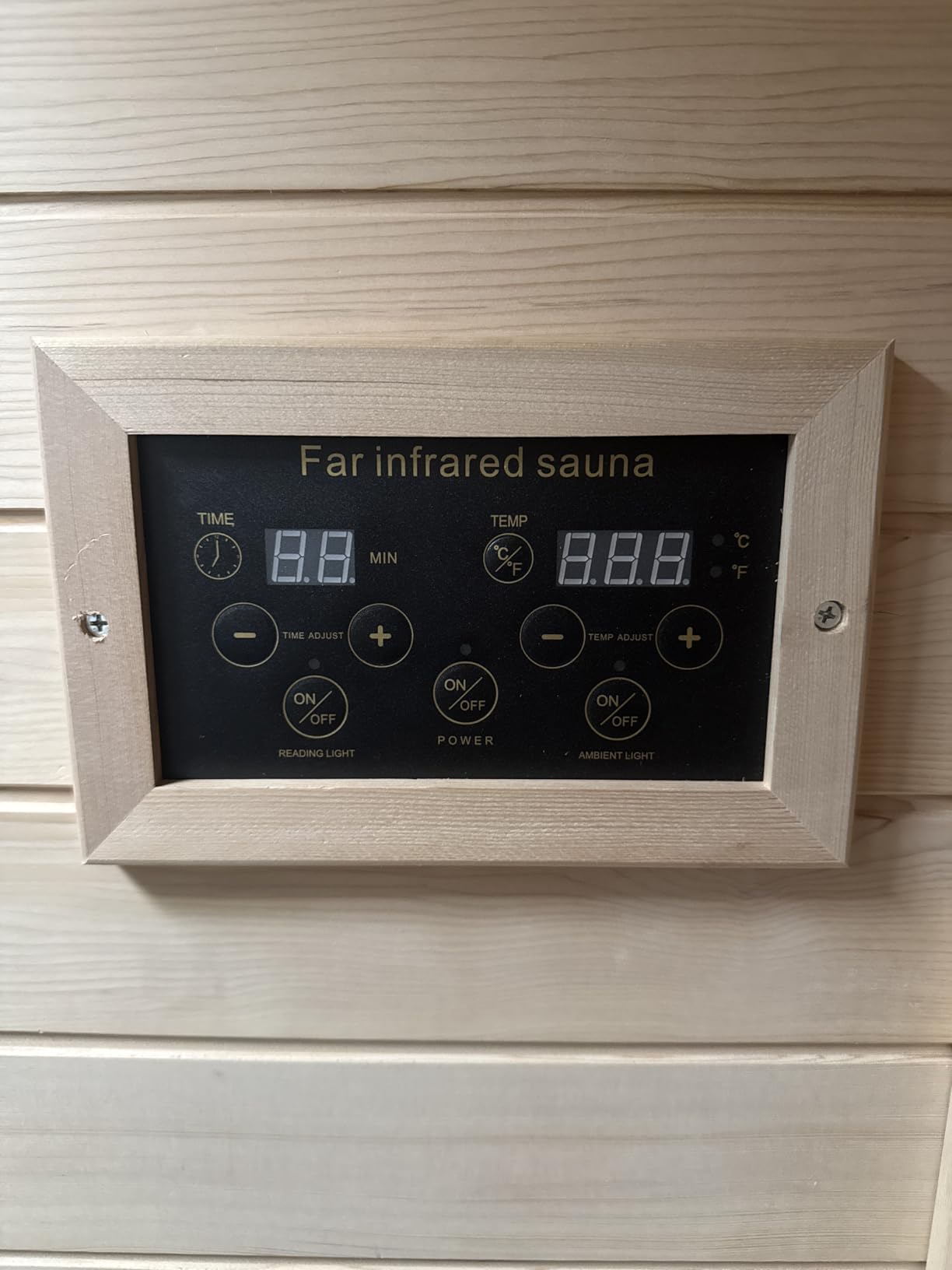
The enclosure is Eastern Canadian hemlock in tongue and groove construction. You also get color lights, reading lights and two Bluetooth speakers, which matters more in a bigger cabin where two people want different music.
Why it works in a basement
It still runs on single-phase household power at 110-120 VAC rather than a 240V line, which keeps the electrical scope much smaller than a traditional stone heater of this size would require.
A three-person cabin earns its footprint in a finished basement rec room. People can sit inside while someone else supervises from the room, which makes it practical for family use rather than a two-person couples-only corner.
Where it falls short
The 20 amp draw is the real constraint. In some basements a 20 amp 110-120 VAC circuit will need to be added by an electrician, so confirm your available amperage before ordering.
At 62.99 x 42.91 x 75.79 inches this is the largest footprint in the group, and it needs a full wall to itself rather than a corner. The 2-year limited warranty on wood, heating and electronics is also the shortest of the long-term coverage options here.
7. Kanlanth 1 Person Far Infrared Sauna
Kanlanth 1 Person Far Infrared Sauna, Low EMF Indoor Dry Home Sauna, 950W
1 person far infrared
950W across 5 epoxy panels
Solid spruce
36.6 x 29.3 x 63 inches
Standard 120V plug
Pros
- Smallest and lightest cabin reviewed
- Quick 15 minute heat-up on 950W
- Well insulated against heating the room
- Standard 120V plug with 2.2 meter cord
- Top ventilation port built in
Cons
- Very tight for taller users with a close front panel
- Temperature gauge not always accurate
- One review reports a gauge malfunction
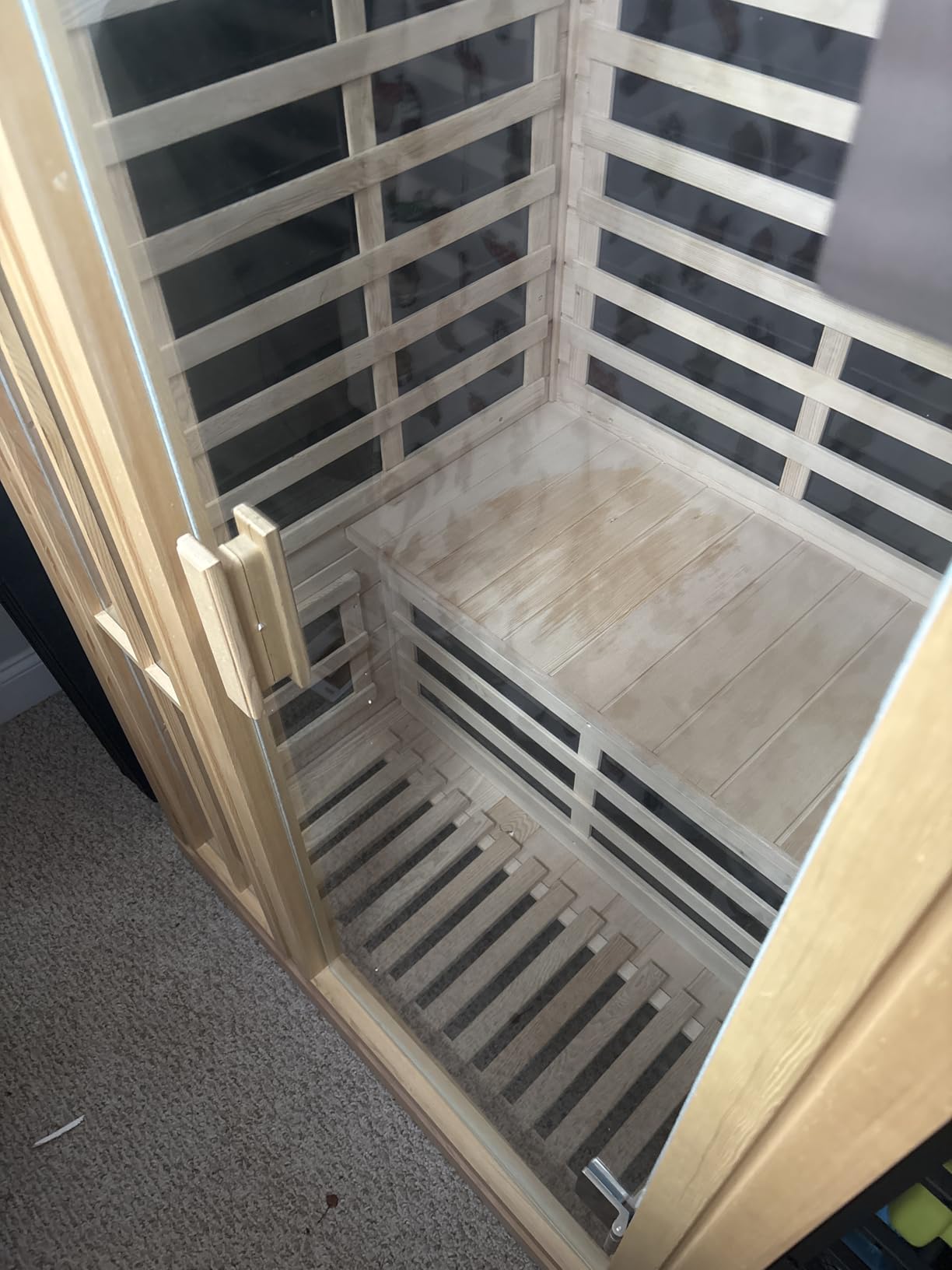
At 36.6 x 29.3 x 63 inches the Kanlanth is the smallest cabin here, and at 950W it runs on a standard US plug with a 2.2 meter cord. If your basement corner is tight and you want to test whether sauna habit sticks before committing to a bigger build, this is the honest starting point.
Five far infrared epoxy panels reach 140 degrees Fahrenheit. Owners report usable heat in about 15 minutes, and the insulation is tight enough that the surrounding basement stays close to room temperature during a session.
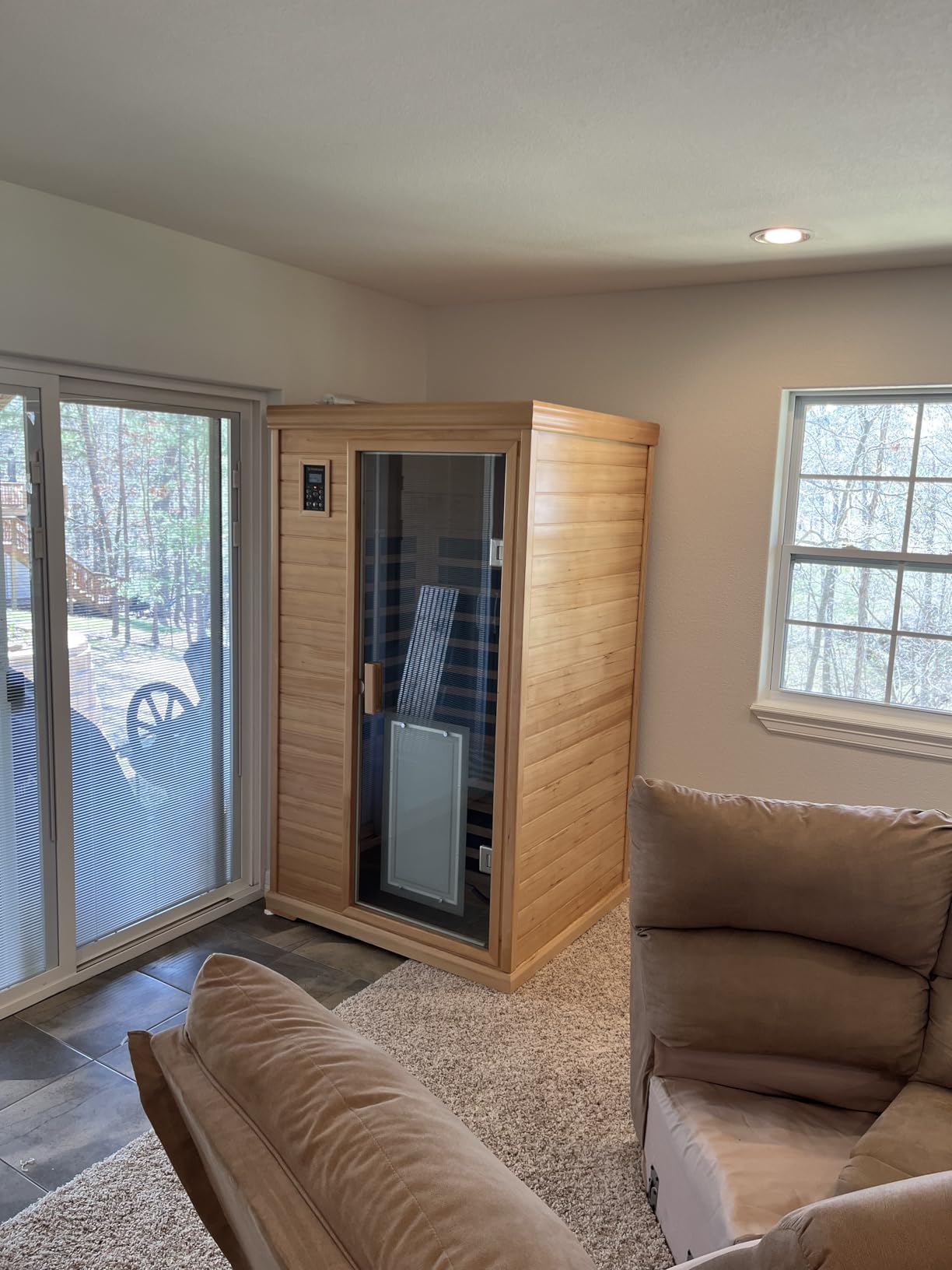
A 110 degree Celsius overheat sensor, a button control panel, Bluetooth speakers and an LED reading light round out a simple feature set. The enclosure is solid spruce rather than hemlock, which is a harder wood and a common choice where budget matters more than a soft-to-touch interior.
A top ventilation port is built into the shell, which handles the small amount of moisture an infrared session produces without any duct work through the foundation.
Why it works in a basement
Standard 120V plug-in power and a 63 inch height make this the easiest unit on the list to place in a low-ceilinged basement. It fits beside a support column or in a utility alcove where nothing else will go.
Because the cabin barely heats the surrounding room, it can sit in an unconditioned corner of a finished basement without pushing up your cooling costs in summer.
Where it falls short
Fit is the recurring caution. The front glass sits close to the body, and taller users describe the seat as cramped. If you are over six feet, look at a wider model even if the footprint is a problem.
The temperature gauge is not always accurate, and one review reports a gauge malfunction that raised a safety concern. Test the readout against a separate thermometer on your first session rather than trusting it alone.
8. KUNSANA Smart Indoor 2-3 Person Corner Sauna
Smart Indoor Home Sauna 0-5mG Ultra Low Emf Far Infrared Sauna 2-3 Person, 1520w Hemlock Wooden Saunas Room with APP & LCD Control Panel, Bluetooth Speaker, Chromotherapy Lights, Thermal Cover
2 to 3 person corner layout
1520W across 7 far infrared panels
0 to 5 mG ultra low EMF
App and LCD control
47.25 x 47.25 x 76.4 inches
Pros
- App pre-heating before you walk downstairs
- Corner pentagon layout saves floor space
- Ultra low EMF 0 to 5 mG specification
- Triple-layer insulated cover speeds warm-up
- Seven-color light therapy and reading light
Cons
- Glass door excluded from the 2-year warranty
- USB port is media playback only
- Returns require repackaging
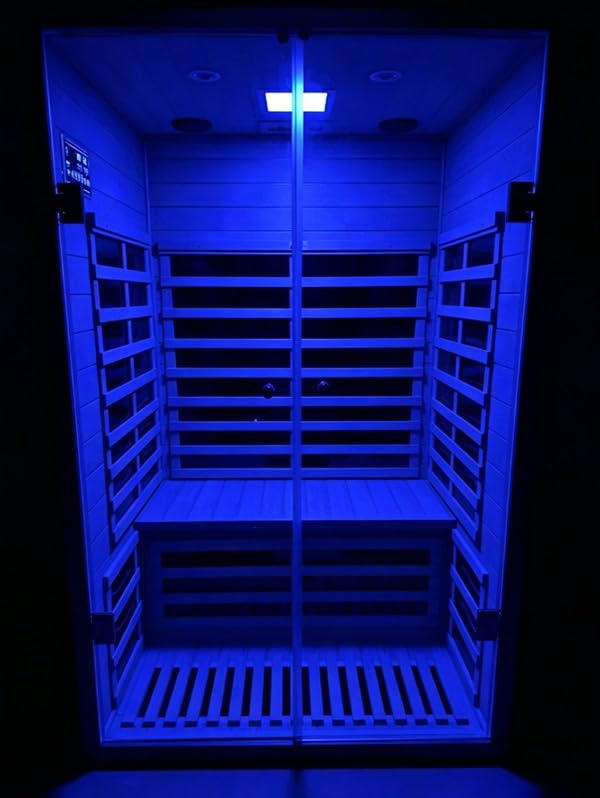
The corner layout is the reason this one belongs in a basement guide. At 47.25 x 47.25 x 76.4 inches in a pentagon shape, it uses the one corner shape a square cabin cannot, which is exactly the space next to ductwork or a column.
Heating comes from 7 far infrared carbon panels at 1520W, with a stated operating range of 0 to 5 mG EMF. Temperature control spans 65 to 149 degrees Fahrenheit on a 1 to 60 minute timer.
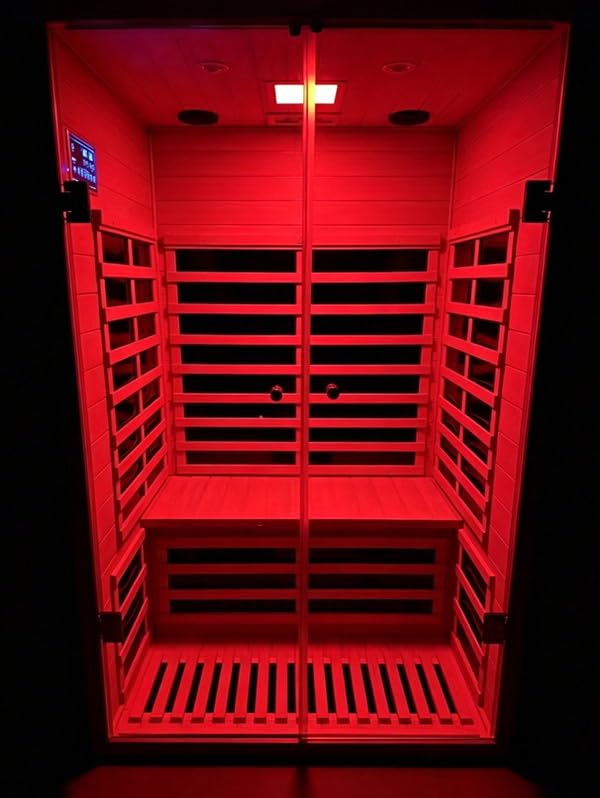
The smartphone app pre-heats the cabin remotely alongside an LCD touchscreen panel. Owners like starting the session from upstairs, then walking down to a room that is already warm, which is a small quality-of-life change you notice every single time.
A triple-layer insulated thermal cover is included. It speeds warm-up and holds heat between sessions, and in a basement with variable humidity it also protects the interior between uses. Weight is 311 pounds.
Why it works in a basement
The pentagon footprint fits basement corners that a rectangular cabin cannot, which means you can use a dead end of a room rather than shrinking the usable floor area around it.
Automatic shut-off and built-in ventilation are standard, and the cover means the unit can sit in an unconditioned part of the lower level between sessions without moisture sitting on the panels.
Where it falls short
The 2-year coverage excludes the glass door, which is the part most likely to be damaged during a basement move. Read that clause before you commit.
The USB port only plays media and cannot charge a device, which is a small annoyance if you plan long sessions with a phone. Returns also require repackaging, so factor that into any decision to try before keeping.
9. X-Vcak 1-2 Person Infrared Sauna
X-Vcak 1-2 Person Infrared Sauna, Dry Heat Sauna with Red Light Therapy, Bluetooth, Radio, 7-Color Therapy Light for Home, Indoor, Gym, Wellness Center, 40″ x 36″ x 73″, Brown
1 to 2 person infrared
1450W across 6 heating panels
150 degrees maximum
40 x 36 x 73 inches
Red light therapy
Pros
- Highest published maximum in the roundup at 150 degrees
- Assembles in about 30 minutes with clear instructions
- Built-in red light plus 7 therapy colors
- Two speakers with Bluetooth
- MP3 and radio
- Holds temperature through a full session
Cons
- Thinnest review base here at 39 reviews
- Two-person seating is snug for larger adults
This cabin posts the highest average rating of the ten, but the reason we place it ninth is the sample size. Thirty-nine reviews tells you very little about how the box holds up after three winters in a damp basement, and that is the specific question this list has to answer.
What the reviews do say is encouraging. Every owner we could find cited easy assembly and fast heat-up, and there are no one or two star ratings in the set. Six heating panels at 1450W reach a 150 degree maximum, the highest published figure in this roundup.
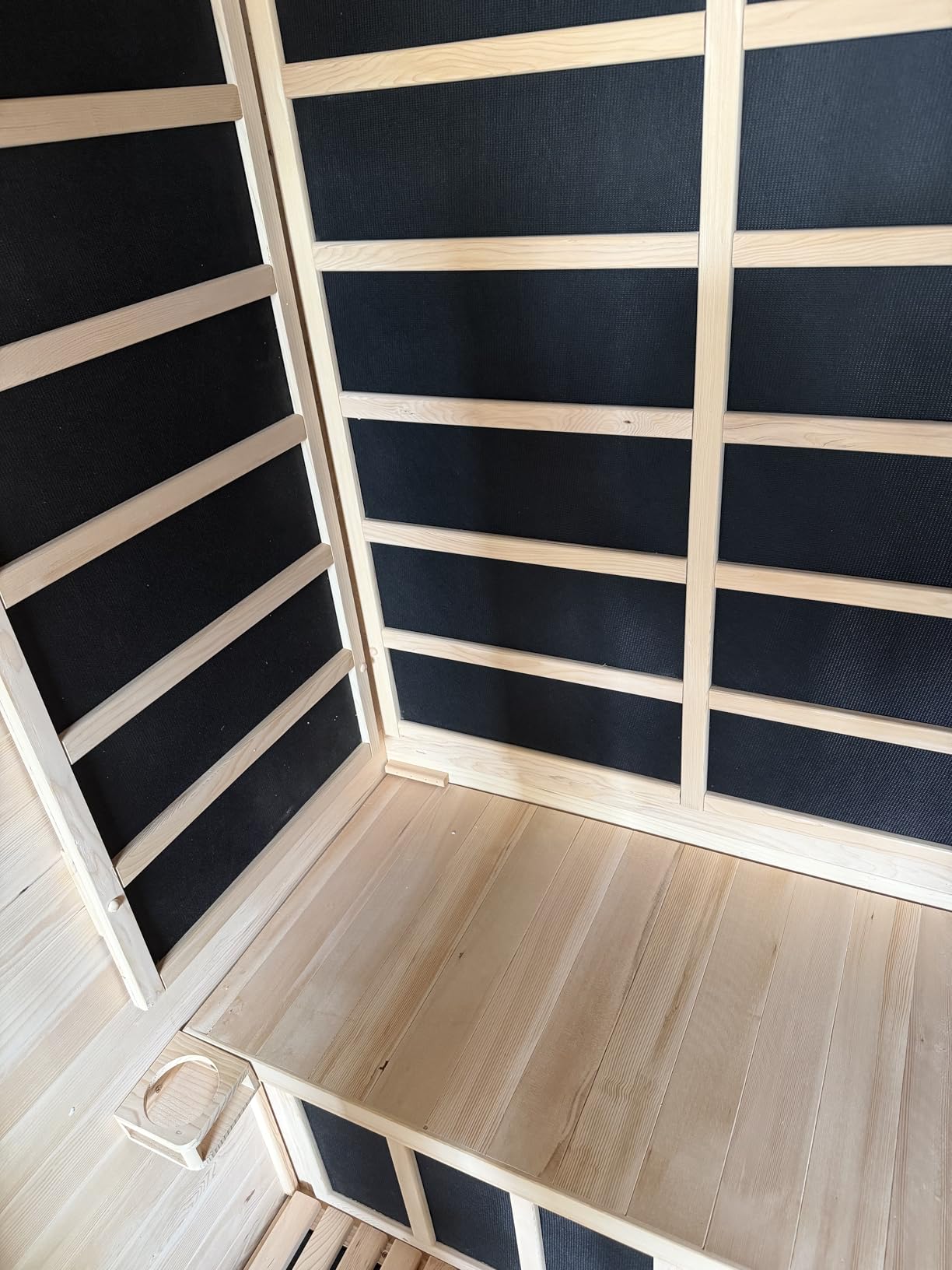
Red light therapy is built in alongside six other therapy colors, which is unusual for a unit this size. A 1 to 99 minute timer is far more flexible than the 60 minute ceilings on most competitors, and the top ventilation hole handles moisture without duct work.
Exterior dimensions are 40 x 36 x 73 inches at 231 pounds, so it fits a mid-size corner without dominating the room. There is a bookshelf, towel rack and cup holder built into the interior, plus Bluetooth, MP3 and radio with two stereo speakers.
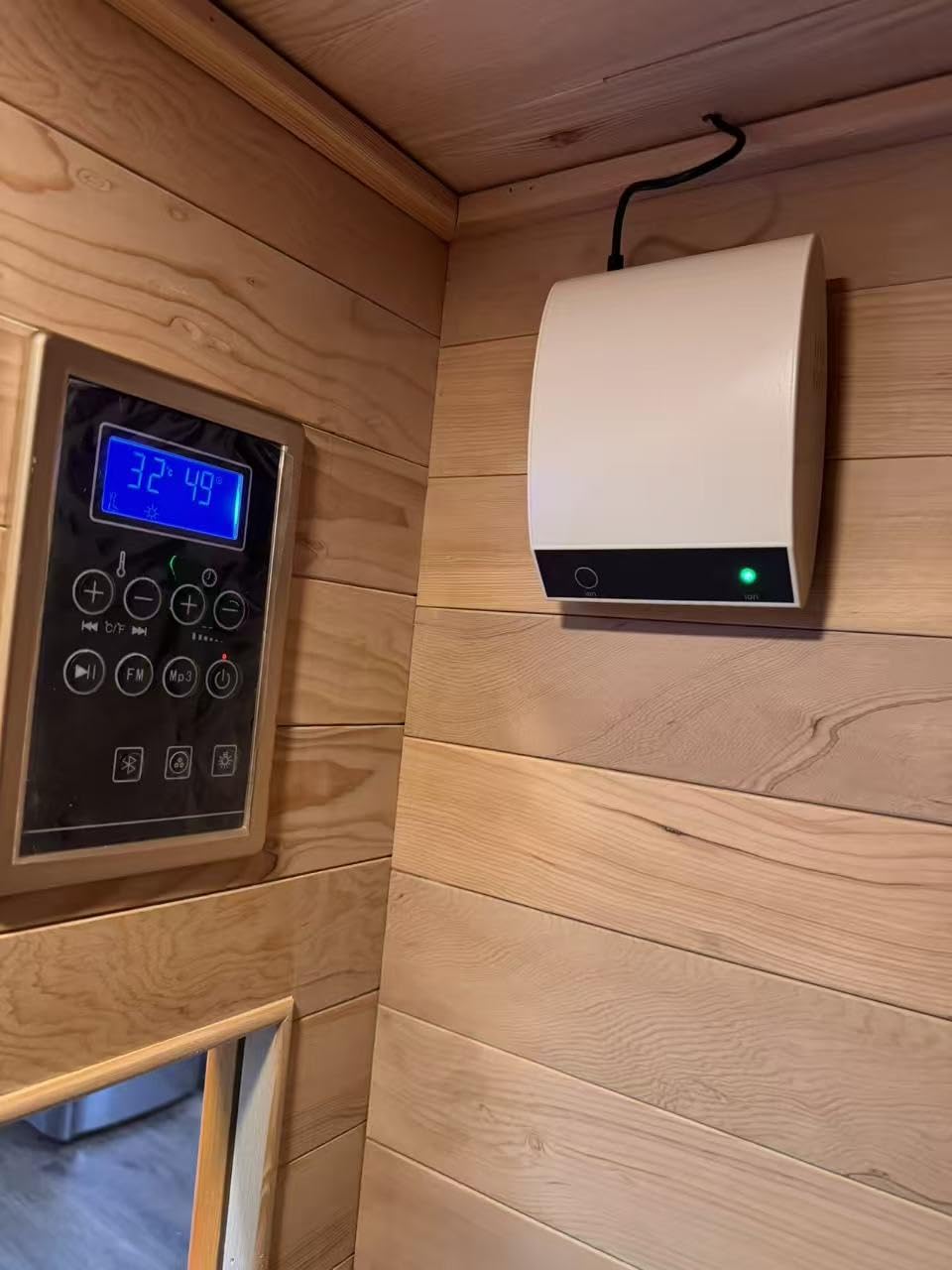
Why it works in a basement
At 1450W it heats quickly, and a recommended session of 10 to 15 minutes means a short session does not tie up the room. That suits a basement that doubles as a home gym or guest room.
Assembly takes about half an hour with clear instructions, which matters when you are assembling a tall box in a doorway rather than in an open garage.
Where it falls short
Thirty-nine reviews is a thin base for a wooden structure that will live in a humid space. We would want a longer ownership history before treating the 4.8 rating as a durability signal.
Two-person seating is snug for larger adults, and the film-coated tempered glass door is the least premium hardware in the group. Both are fair tradeoffs for the feature list, but they are real limits.
10. SALUSHEAT 2-3 Person Corner Infrared Sauna
SALUSHEAT 2-3 Person Far Infrared Sauna Corner Sauna Canadian Hemlock 1800W
2 to 3 person corner cabin
7 low EMF plates at 1600W
Canadian hemlock
47.2 x 47.2 x 75.2 inches
660 lb seat capacity
Pros
- Highest share of five-star ratings in the group
- Corner footprint fits a basement corner
- 7 low EMF plates heat evenly in 20 to 30 minutes
- Two speakers
- two reading lamps and three chromotherapy lamps
- 660 lb seat capacity
Cons
- Assembly recommended for two people
- Bulky freight handling to the room of choice
- Returns require repackaging
The SALUSHEAT is the most satisfying cabin to sit in, and it pairs the joint-highest rating with the highest proportion of five-star reviews we saw. Around 90 percent of owners gave it the top score, which tells you the fit and heat expectations are being met consistently.
Seven low EMF heating plates at 1600W warm the interior in 20 to 30 minutes. Exterior dimensions are 47.2 x 47.2 x 75.2 inches with a 43.3 inch interior, and the corner layout follows the same pentagon idea that works so well against basement walls.
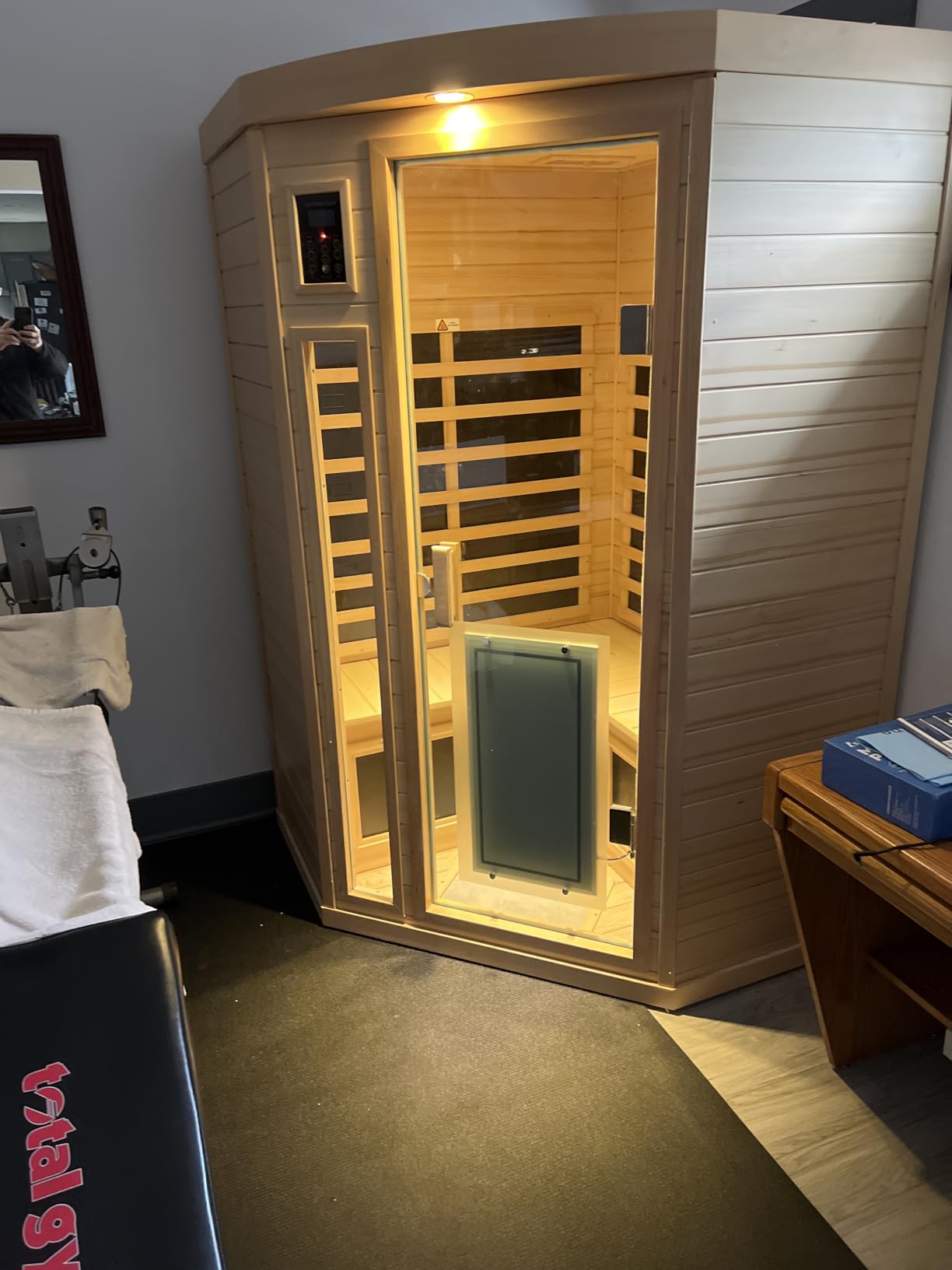
Two Bluetooth speakers need no pairing, there is an LCD control panel, and lighting runs to two LED reading lamps plus three chromotherapy lamps. The reading lamps matter more than they sound, because most sessions in a basement happen in the evening.
Seats are rated for 660 pounds and the manufacturer lists suitable user heights from 4.9 to 6.2 feet. The cabin is Canadian hemlock in tongue and groove construction, which keeps the interior cool to the touch.
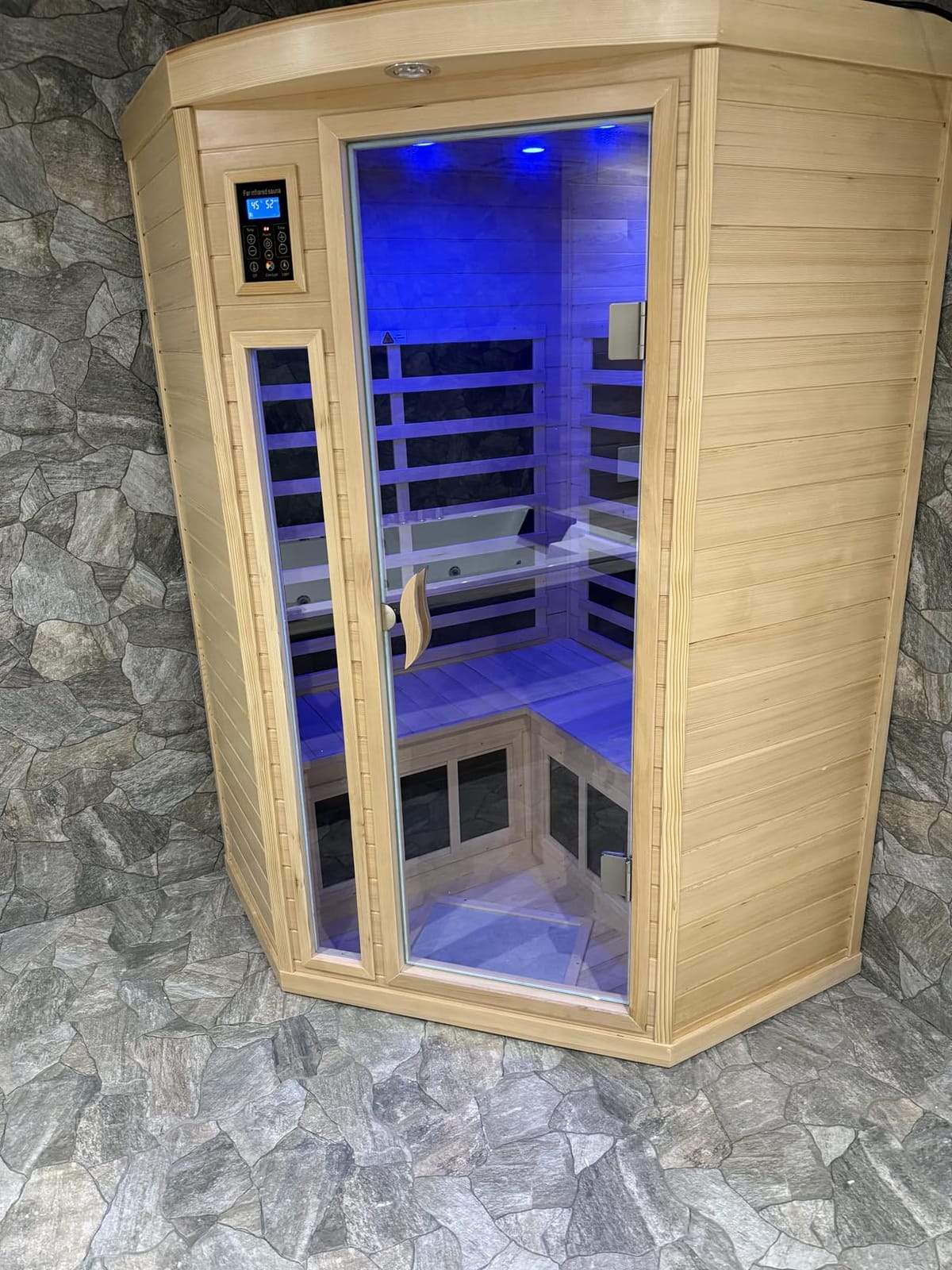
Why it works in a basement
The corner footprint turns a wasted piece of floor into the feature of the room. In a finished basement with ductwork in one corner, this shape is the difference between a sauna that fits and one that does not.
Nothing about the install requires a 240V line, plumbing work or a floor drain. It sits on the slab, plugs into a wall receptacle and is ready to use.
Where it falls short
Assembly is recommended for two people, and the panels are bulky enough that handling them down basement stairs is a genuine two-adult job. Clear the room before the panels arrive, not after.
Returns require repackaging, and the warranty is a 2-year term with paid refurbishment afterward. If resale value matters to you, the longer warranties elsewhere on this list are the safer pick.
Basement Sauna Buying Guide: Ceiling Height, Flooring and Ventilation
What ceiling height do you actually need?
Measure first, because most basement saunas in this roundup top out between 63 and 76 inches and need only a few inches of overhead clearance. If your ceiling is 6 to 6.5 feet, anything under 67 inches tall fits and most two-person cabins will not.
Forum experience on basement builds suggests treating 5 x 7 x 8 feet as the practical minimum room for a good sauna experience, and that 8 x 8 x 8.5 feet is meaningfully better even for one person. Those figures matter more for traditional stone saunas than for infrared cabins, because infrared heat rises with the body and does not need a tall throw.
The clearance to worry about is not the cabin height but the space behind it. Leave a few inches at the rear for wall clearance and for any baseboard heater, and check the depth of the cabinet against the cabinet depth of your walls.
Can a sauna sit on carpet or bare concrete?
Bare sealed concrete is the best surface. If your basement is carpeted, the carpet has to come up under the sauna footprint, because a warm sealed box sitting on a moisture-trapping pad will create the conditions for mold underneath it.
Painted concrete is acceptable if it is intact and free of flaking. Tile is also fine and is easy to clean after a session. For any surface, our basement flooring guide covers the moisture-rated products that work under finished rooms.
Do you need a floor drain?
For every cabin on this list, no. Far infrared sauna heat is dry and a session generates comparatively little moisture, and these units ventilate internally through top ports rather than releasing steam into the room. A drain only becomes relevant once you add water to stones inside the room, which is not something any of these models support.
Do you need to do anything about the basement vapor barrier?
Do not remove the existing poly on your foundation walls. The poly on a basement wall is part of the home’s moisture control, and pulling it to accommodate a sauna trades a small problem for a large one.
What matters instead is keeping the sauna’s own moisture where it belongs. Leave a few inches of air between the cabin and the wall so air can move, keep the cabin clear of the wall so condensation does not sit against concrete, and wipe the exterior base after heavy use. If you are also planning a traditional stone sauna and building a dedicated room, read our traditional sauna guide before you plan that vapor barrier layer.
What electrical service does an indoor sauna need?
Every model here runs on 110-120V single-phase power, which is the single biggest reason infrared cabins dominate basement installs. Nine of the ten plug into a standard receptacle, and the ten amp to fifteen amp draw sits inside a normal household circuit.
The exception is the three-person KUNSANA cabin, which is rated for a 20 amp 110-120 VAC circuit. In some basements that means a new circuit and an electrician, so verify your available amperage and the distance to the panel first. If your basement panel is close to the room, that distance is short and the cost of the work drops.
Traditional or infrared for a basement?
Traditional stone saunas give you löyly, higher published temperatures and real wood-fired or 240V electric heaters, but they demand venting to the outside, more ceiling height and careful attention to the vapor barrier. Infrared cabins give you a dry, self-contained room that plugs in and stays inside its own walls.
For a finished basement with no exterior wall venting available, infrared is the pragmatic answer. If you have a below-grade room with a walkout or above-grade egress wall and a real appetite for high heat, a traditional build is worth planning around. Pair that decision with our sauna heater guide before you commit to a heater, and if you want to compare formats our barrel sauna guide covers the outdoor option in more detail.
Five checks before you order any cabin
Measure the footprint including the wall clearance behind it, and measure the ceiling at the tallest point of the room including any ductwork. Then check the path from the stairwell to the final position, including turns.
Confirm the power requirement against your panel, and decide what sits under the cabin if the floor is carpeted. Finally, read the warranty exclusions, because glass doors and electronics are the parts most often excluded.
Frequently Asked Questions
What type of sauna is best for a basement?
A 2-person far infrared sauna in Canadian hemlock is the best indoor sauna for most basements. It runs on a standard 110V outlet, needs no venting work outside the room, does not require a floor drain, and fits under the 6 to 6.5 foot ceilings common in finished lower levels. Traditional stone saunas heat higher but need exterior venting and a dedicated 240V circuit.
Which type of sauna is best for indoor use?
Far infrared cabins are the best type of sauna for indoor use because they heat with radiant panels rather than stones, stay well below 200 degrees Fahrenheit, and contain their own heat inside the walls. Traditional saunas deliver löyly and higher temperatures but need venting, more headroom and careful moisture management.
Is it okay to put a sauna in your basement?
Yes, and a basement is one of the better locations for a home sauna. It is usually a finished, climate-controlled space with convenient access to power. The key preparation points are clearing the floor, leaving clearance at the wall and behind the cabin, and confirming the electrical circuit before the cabin arrives.
Do I need a floor drain for an indoor sauna in a basement?
No. Far infrared sauna heat is dry and produces very little moisture, so a drain is not required. Drains matter only when water is thrown on sauna stones inside an enclosed traditional cabin. All ten models reviewed here sit directly on sealed concrete, tile or a moisture-rated floor without drainage.
Can a sauna go in a basement with carpet?
Remove the carpet from the area under the sauna. Carpet traps moisture and heat against the slab and can encourage mold growth underneath a sealed cabin. Sealed concrete or tile is the better surface, and a moisture-rated flooring product is a reasonable option if you want a finished look.
What ceiling height does a sauna need?
Infrared cabins need far less headroom than traditional saunas. The models in this roundup range from 63 to about 76 inches tall, so a 6 to 6.5 foot finished basement ceiling works for most of them. Measure at the highest point of the room and check for ductwork before ordering.
What is the 200 rule sauna?
The 200 rule is a guideline for traditional Finnish saunas, meaning the sauna is taken to a surface temperature of about 200 degrees Fahrenheit. It describes a specific high-heat traditional experience, not an infrared session, which typically runs between 130 and 150 degrees Fahrenheit.
Final Verdict: Which Basement Sauna Should You Buy?
The JNH Lifestyles Joyous is our pick for the best indoor saunas for basements, and it wins on evidence rather than novelty. More than 1400 owner reviews at 4.5 stars, seven carbon panels, a footprint that clears most finished basement corners and a standard plug are a combination nothing else on this list matches.
Choose the KUNSANA 3 Person cabin if a family needs to use it together and your circuit can handle 20 amps. Choose the KUNSANA Smart corner model if your usable space is an awkward corner rather than a wall, and the SALUSHEAT corner cabin if comfort and interior room matter more than warranty length.
Skip the basement entirely only if you want löyly and true 200 degree heat, in which case an outdoor sauna is the better home for that goal. Otherwise, measure your ceiling, clear your carpet, confirm the circuit and start with the cabin that fits.