
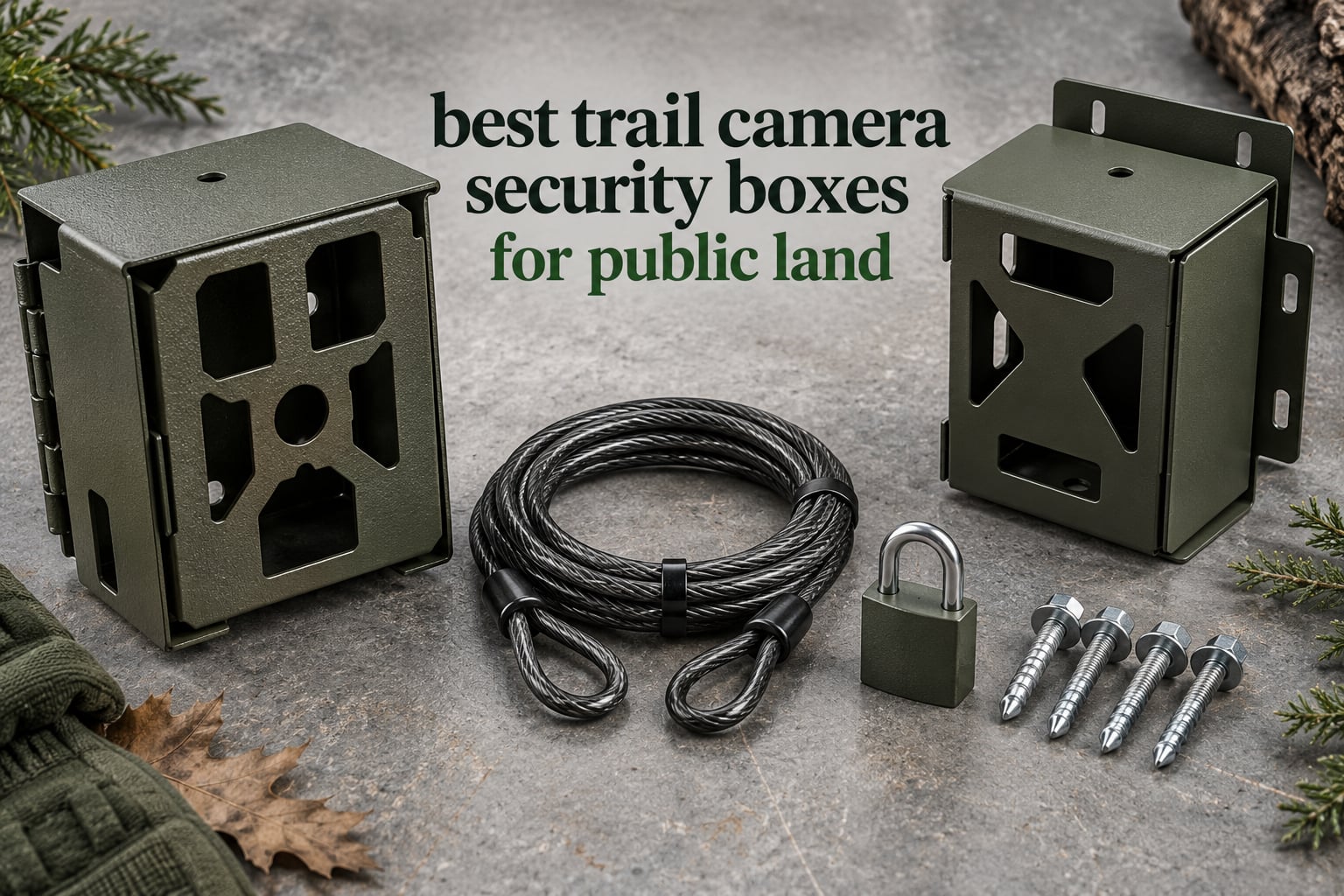
Every trail camera on public land is an unattended invitation. It hangs in a known hunting area for weeks, it has no fence around it, and it costs several hundred dollars, so the only real question is whether a determined person can carry it off in under a minute. A trail camera security box turns that minute into a five-minute job, and in a lot of cases it stops the attempt before it starts.
I went through the full category for 2026 and pulled apart twelve steel housings that wrap game and cellular cameras, checking the actual steel gauge, the lock geometry, the chamber dimensions and the mounting holes rather than trusting the marketing language. The short version: the boxes worth owning all share three things, and none of them is a brand name. They use 16-gauge or heavier steel with a real coating, they accept a cable lock rather than only a padlock, and the chamber is cut for your specific camera model so the camera stays pointed where you left it.
This is a box roundup, not a camera roundup. If you are still picking the camera itself, start with our picks for [wired](https://battleofsoho.com/best-wired-security-camera-systems-for-homes/) and [wireless](https://battleofsoho.com/best-wireless-security-camera-systems-for-homes/) home systems, then come back here once you know which body you need to protect. Every box below works on a tree, a post, or a lease boundary that you are not allowed to nail into.
Table of Contents
Top 3 Best Boxes for Public-Land Cameras in October

CAMLOCKbox Stealth Cam G Series Box
- 16-gauge all-steel body
- Camo Break-up powder coat
- 5/16 inch Python cable and padlock
- exact camera fit

CAMLOCKbox Wildgame Terra Box
- 16-gauge camo steel
- exact fit for Terra cameras
- double lock points
- camo break-up coat

Moultrie Edge Series Security Box
- 16-gauge steel
- 2.2 pound build
- mounting hardware included
- tree or wall mount
The pick that covers the most ground is the CAMLOCKbox for Stealth Cam G Series cameras. Its 16-gauge all-steel shell, camo break-up powder coat and 5/16-inch cable channel are the combination I kept coming back to while reading reviews, and owners repeatedly describe how well the camo coat blends once it has weathered a season.
If your camera is a Wildgame Innovations Terra, the matching CAMLOCKbox uses the same shell and coating and is the one to pair with a Python cable in places where bears are the main risk. Moultrie Edge owners get the benefit of mounting hardware in the box itself, which matters when you are driving in to install once and leaving it for the season.
All 12 Trail Camera Security Boxes at a Glance in 2026
| Product | Specifications | Action |
|---|---|---|
| CAMLOCKbox Stealth Cam G Series Box |
|
Check Latest Price |
| CAMLOCKbox Wildgame Terra Box |
|
Check Latest Price |
| Moultrie Edge Series Security Box |
|
Check Latest Price |
 SPYPOINT SB-500S Steel Box SPYPOINT SB-500S Steel Box |
|
Check Latest Price |
 TACTACAM Reveal Security Box TACTACAM Reveal Security Box |
|
Check Latest Price |
 Browning Trail Camera Security Box Browning Trail Camera Security Box |
|
Check Latest Price |
 SPYPOINT SB-200 Steel Box SPYPOINT SB-200 Steel Box |
|
Check Latest Price |
 Stealth CAM Bear Box Stealth CAM Bear Box |
|
Check Latest Price |
 CAMLOCKbox Browning Sub Micro Box CAMLOCKbox Browning Sub Micro Box |
|
Check Latest Price |
 Hiweld Moultrie Edge Metal Box Hiweld Moultrie Edge Metal Box |
|
Check Latest Price |
 BLAZEVIDEO Trail and Game Camera Box BLAZEVIDEO Trail and Game Camera Box |
|
Check Latest Price |
 Cuddeback CuddeSafe Size L Cuddeback CuddeSafe Size L |
|
Check Latest Price |
1. CAMLOCKbox Stealth Cam G Series Box – Best Overall for Public Land
CAMLOCKBOX Theft-Deterrent Powder-Coated Steel Security Box Compatible with Stealth Cam G Series Trail Cameras (17700)
16-gauge all-steel
Camo Break-up powder coat
0.85 kg
Fits 5/16 inch Python cable and padlocks
Pros
- Exact-fit chamber keeps camera aim after removal
- Camo break-up powder coat blends on a tree
- Accepts both a padlock and a 5/16 inch Python cable
- Powder coat resists weather over multiple seasons
Cons
- Tight fit makes SD card changes slow in the field
- Some tree mounts need the bottom hole widened
- Front face can be tricky to seat
This is the box I would put on a tree in a state wildlife area with no fence and no line of sight. The chamber is cut to the Stealth Cam G Series body, so the camera goes back in pointing the same direction it pointed on the way out, and that single feature removes the most common complaint I found in the whole category.
The build is 16-gauge all-steel with a camo break-up powder coat. A CAMLOCKbox customer on National Forest land reports running this style of box for more than eight years between May and January without losing a camera, and still getting clean bear photos with no damage to the camera or the box.
What stands out for public land specifically is the locking geometry. The box takes a standard padlock and it takes a 5/16-inch Python cable, and a CAMLOCKbox reviewer describes running a Master Lock Python cable through the camera, the box and the front access door together. That double-lock arrangement is the strongest configuration I found for a tree you cannot screw into.
The honest downside is field service. The fit is tight by design, and reviewers consistently call out that swapping the memory card takes longer than it does in a loose-fitting box. Some users also report needing to widen the bottom hole for screw-in tree mounts. Plan your card swaps around a visit you are already making, and this friction mostly disappears.
What to check before you commit
Confirm the box is built for the G Series body and not the F Series, because the two shapes are close and the mistake is common. The 0.85 kg weight is meaningful: it is heavy enough that a belt or bungee alone will not hold it in a crosswind, so use a two-point strap or a cable around the trunk.
Buy the cable at the same time as the box. The box is useless on public land without a lock, and no lock is included with any of the twelve boxes in this roundup. A 5/16-inch Python cable plus a small padlock through the corner is the combination I would run.
Where it falls short
If you own a third-party camera, this box does nothing for you. The fit is model-specific, and forcing a different body into a chamber cut for another model is how you end up re-aiming your camera in the snow.
It is also not the fastest box to service. Users who pull cards every few days will feel the tight fit more than users who check once a season, and the front face can need coaxing into position when the powder coat is cold.
2. CAMLOCKbox Wildgame Terra Box – Best for Bear Country
CAMLOCKBOX Steel Security Box for Wildgame Innovations Terra Trail Cameras – Durable 16-Gauge Camo Case with Lockable Theft Protection (19150)
16-gauge all-steel
Camo Break-up powder coat
Exact-fit Terra chamber
Padlock and 5/16 inch Python cable
Pros
- Tight accurate fit for Wildgame Terra cameras
- Does not block the sensor or IR array
- Two independent ways to secure the box
- Reported to outlast cameras by decades
Cons
- SD card removal is a multi-step process
- A determined thief with power tools can still defeat it
If your problem is a bear rather than a person, this is the box to look at first. The shell, the gauge and the finish are the same family as our top pick, and the Wildgame Terra chamber sits the camera close enough to the walls that a porcupine or a squirrel has nothing to grip and nothing to chew.
Reviewers report that the box does not block the sensor or the infrared array, which is the failure mode with oversized universal boxes where the camera ends up recessed in a dark cavity. The single biggest recurring theme across the reviews for this model is that it stops bears, squirrels and casual theft, with essentially no damage reported after seasons of use.
For an elk migration corridor or a high-traffic access point, the double locking matters. You can run a padlock through the front face and a 5/16-inch Python cable around the trunk at the same time, so the box has to be pried, unscrewed and unwound to get anywhere. A Saddlehunter user recommends exactly this pairing, with camo tape over the box, for a public-land install that blends in.
The box is powder-coated, and one reviewer notes the steel construction has outlasted cameras they owned. I would still treat it as a multi-season investment rather than a permanent one, since the coating eventually weathers at the strap contact points.
Two things to plan for. First, this box is not quick-service: getting the camera out to swap SD cards is a multi-step process, and that is the most common complaint in the reviews. Second, the fit is exact, so if you ever move to a different Terra variant, check the chamber size before you buy rather than after.
Do not skip the cable. The padlock hole handles a casual lift, but on public land a Python cable is what makes the whole assembly immovable, and this box is built for a 5/16-inch cable specifically rather than as an afterthought.
Why bear country changes the math
Bears chew antennas even when the camera body is sealed inside a box, because the antenna is the part that sticks out first. Reviewers describe bears working at protruding antennas while ignoring the steel, which is the argument for a chamber that positions the antenna inside the shell rather than leaving it exposed.
One forum reviewer put it plainly: in his hunting area he does not hang a camera without a bear box. If your area has resident bear pressure, buy the box for that reason and treat theft deterrence as the bonus, not the reverse.
Where it falls short
None of these boxes stops a determined thief with power tools, and owners say so. In a place where cameras are being taken deliberately rather than opportunistically, a box raises the cost of the theft without preventing it, and you may need a different answer such as a monitored camera.
The multi-step card retrieval is the other real cost. If you are running a high-traffic public-land spot and pulling cards every week, look at a box with a removable front panel instead.
3. Moultrie Edge Series Security Box – Top Rated with Hardware Included
Moultrie Security Box for Edge Series Trail Cameras
16-gauge steel construction
2.2 pounds
Custom fit for Edge cameras
Mounting hardware included
Pros
- 16-gauge steel shows no rust after two winters
- Precise fit for Moultrie Edge cameras
- Includes heavy-duty lag bolts for tree mounting
- Built for indoor and outdoor mounting
Cons
- Lock hole spacing may need the outer flaps bent for some padlocks
- Only fits the Moultrie Edge series
The distinguishing practical advantage here is that the box ships with the mounting hardware. That is not a small thing when you are standing at a tree on a lease boundary with a pack of gear and a limited daylight window. The package covers both wall and tree mounting, and the listing notes US-based customer support seven days a week.
The steel is 16-gauge, and owners report no rust after two winters in the field, which tracks with the indoor and outdoor mounting rating on the listing. The fit is custom for the Moultrie Edge cellular body, and at 2.2 pounds the box has enough mass to stay put against wind without needing a second anchor point.
Users of this box report it deterring camera and SIM card theft on private ground, which is a useful data point if you are moving to a lease edge where the camera is more visible than it would be in timber. The same mass that stops a lift also makes the box harder to ignore when you walk the line.
The one recurring complaint is lock geometry rather than build. Several owners note the lock hole spacing can require bending the outer flaps slightly for certain padlock sizes, so buy the padlock first and check it against the hole pattern if you have a specific one in mind.
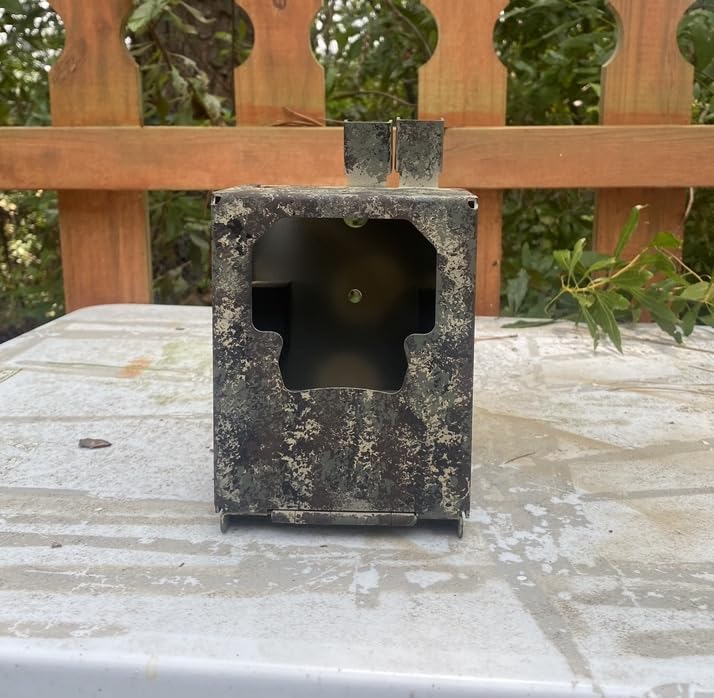
For a public-land install, the included lag bolts only work on private timber or a post you are allowed to use. On ground where you cannot put a fastener into the tree, pair this box with a Python cable through the box and around the trunk, and use the included screws on a post or a stand instead.
Moultrie also offers a lower-cost alternative box for the same camera body. Compare the two on chamber size and finish before you settle, since they are not built identically.
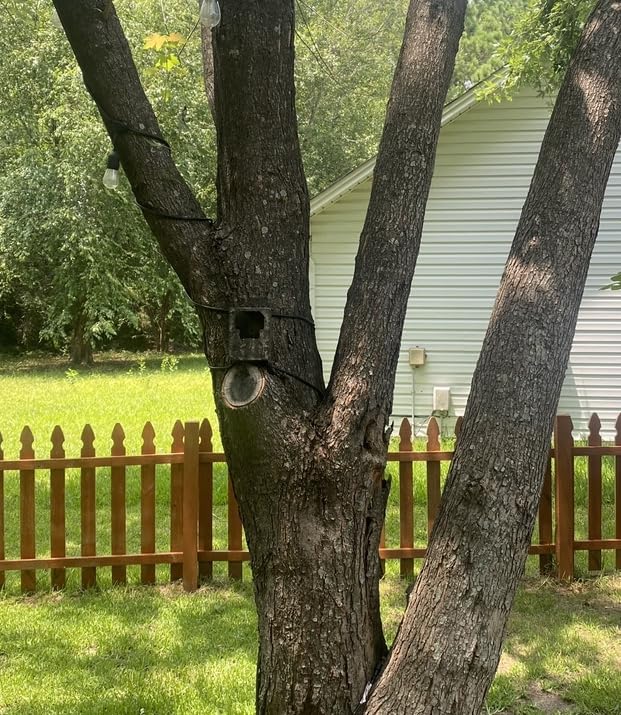
What this box is best at
It wins on installation logistics. If your plan is to cover two or three spots and do the driving once, hardware in the box means fewer trips and fewer forgotten pieces.
It also wins for Edge owners who want a stainless-looking finish that does not read as a box from twenty yards out. The silver tone is louder than camo in elk country, so pair it with a camo strap or tape if visibility is a concern.
Where it falls short
Brand lock-in is absolute. This chamber does not fit anything but the Edge series, and no amount of padding changes that. If you swap cameras often, a cross-brand box is the cheaper path.
Owners of certain padlock styles report needing to flex the outer flaps, which is a permanent change to the box and can weaken the seal around the lock area. If you are picky about hardware, take a tape measure to the padlock first.
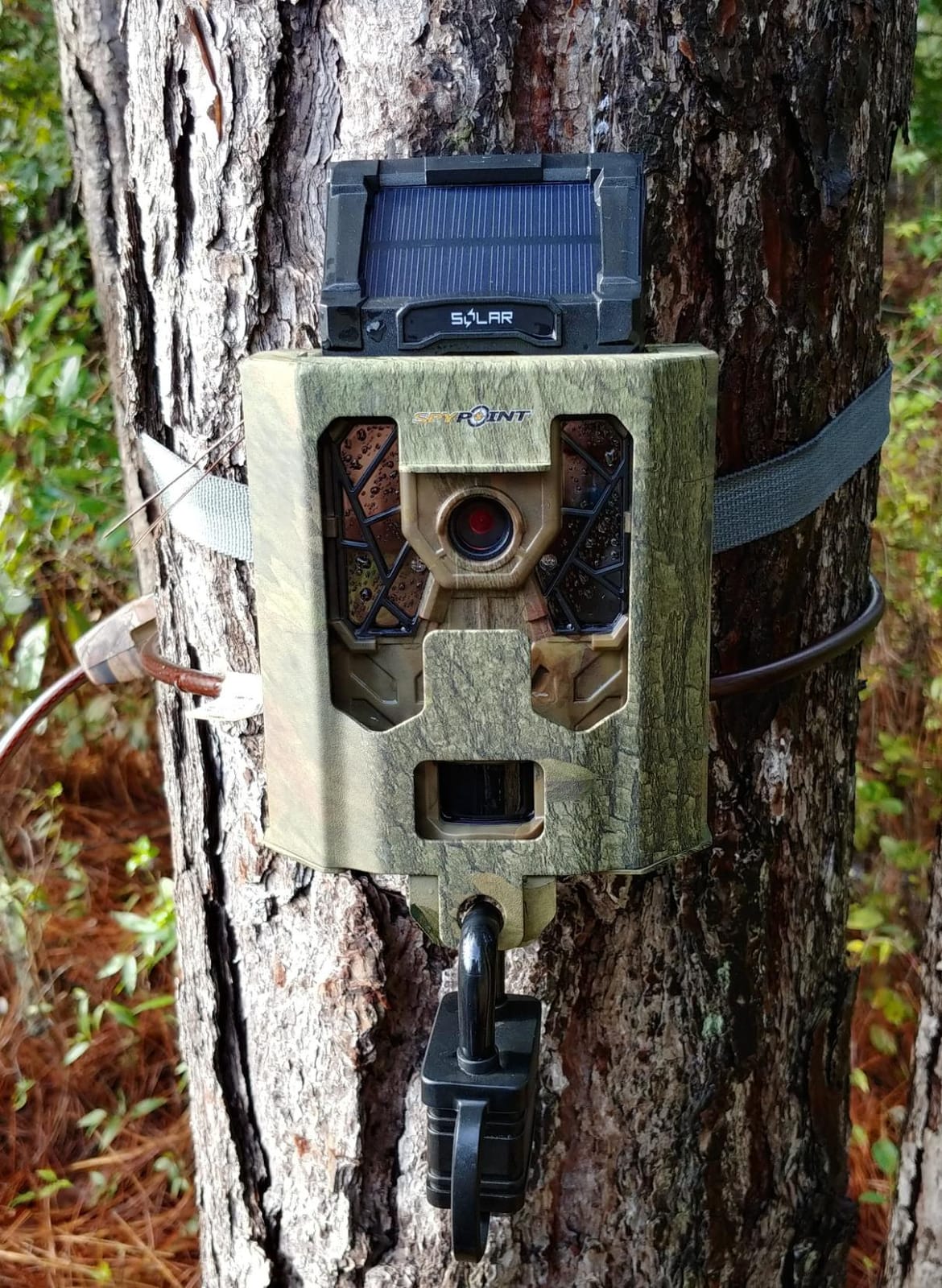
4. SPYPOINT SB-500S Steel Box – Best for SPYPOINT FLEX Owners
SPYPOINT SB-500S Steel Security Box | Cellular Trail Cameras | 16-Gauge Steel | Solar Compatible | Fits Flex-M | G-36 | Flex-S Cameras | Outdoor Usage
16-gauge zinc-coated steel
14.24 ounces
Front padlock hole and side cable holes
Solar panel clearance
Pros
- Zinc-coated 16-gauge tolerates bear and weather abuse
- Front padlock hole plus side cable-lock holes
- Rear holes allow direct lag-bolt mounting
- Sized for the widely used FLEX line
Cons
- Will not fit FLEX-M2 or FLEX-PLUS cameras
- Some third-party bodies need minor bending to clear the lens and antenna
This box is built around the SPYPOINT FLEX family, and it is worth knowing exactly which models count before you order. The SB-500S fits the FLEX-M, the FLEX-G36 and the FLEX-S, and the listing is explicit that it does not fit the FLEX-M2 or the FLEX-PLUS.
The construction is 16-gauge zinc-coated steel, and the weight is listed at 14.24 ounces, which makes it the lightest of the boxes in this group that publish a weight. That is a genuine advantage when you are walking a mile into timber to place it, and a genuine disadvantage in sustained wind, where a light box needs a solid two-point strap rather than a single bungee.
Locking is the strongest part of the design. There is a front padlock hole and side holes sized for a SPYPOINT steel cable lock, plus rear mounting holes for screws or lag bolts. Multiple lock points mean you can secure the front and the back at once, which is the arrangement you want on a tree you cannot deface.
Owners of FLEX-series cameras report solid, accurate fits and good deterrence against bears and thieves, with compatibility limits as the main caveat. The box is listed as solar compatible, which matters if you run a panel above the camera and need the clearance the shell provides.
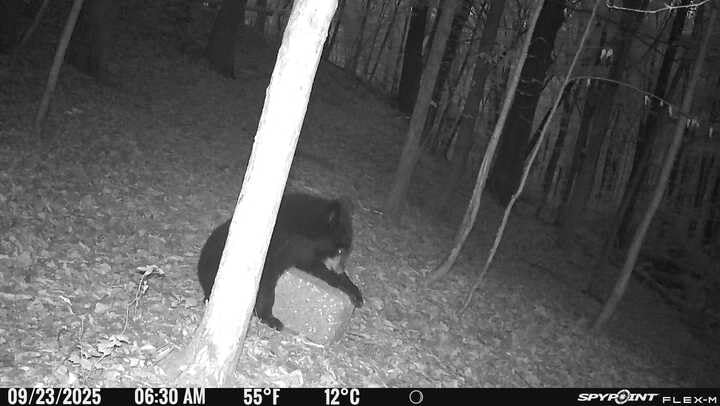
The zinc coating is the detail to appreciate here. It is a different corrosion strategy from powder coat, and it holds up well in wet winter ground and snow, which is where powder-coated boxes start to bloom around the strap contact points first.
If you are running an antenna-heavy setup, check the clearance. Some third-party bodies need minor bending at the mount to clear the lens and antenna, so measure before you force it.
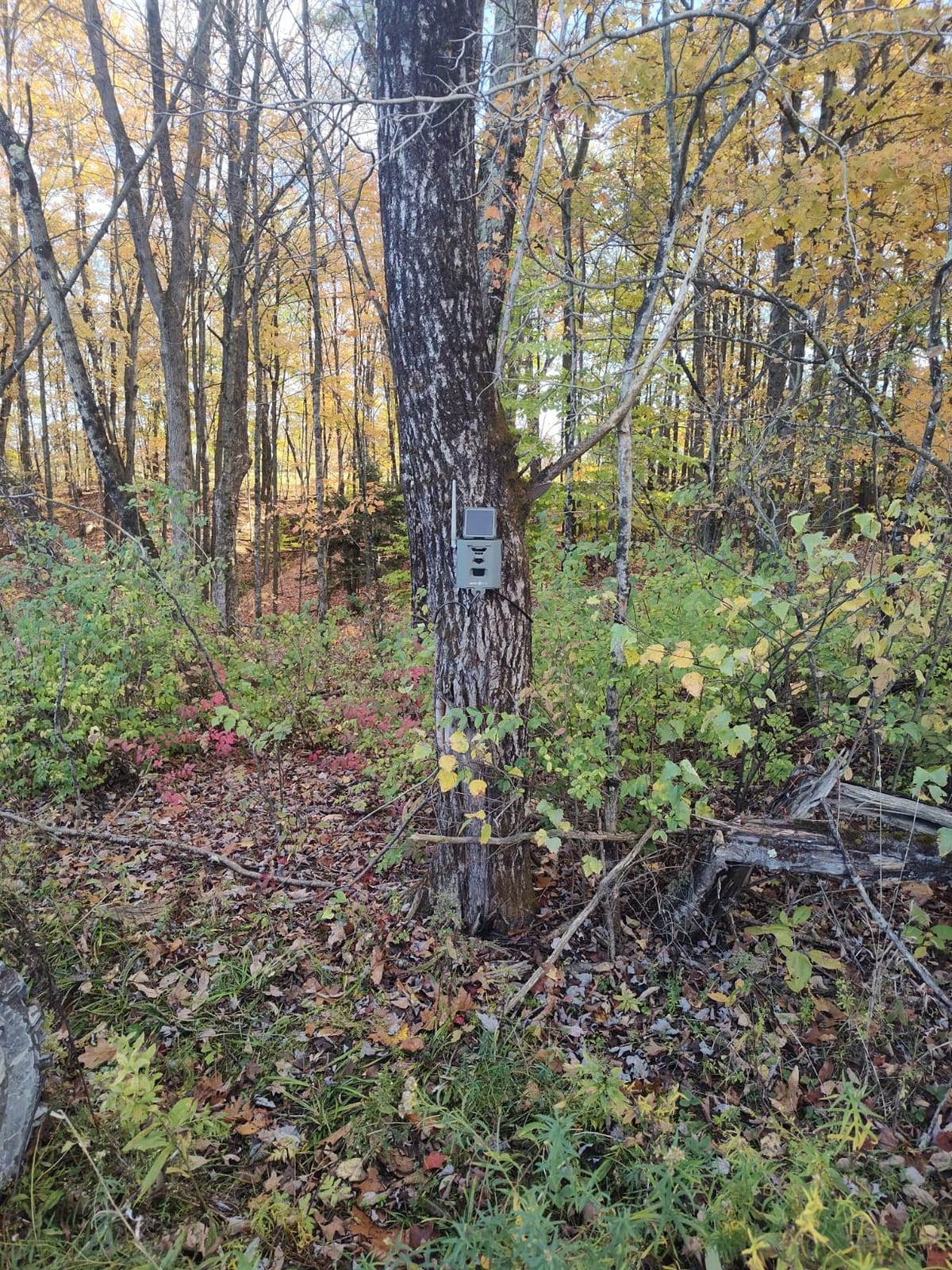
Where this box earns its place
It is the right pick for anyone who has standardized on the FLEX line and is running more than one camera, because the fit logic is identical across the three compatible models. That consistency makes multi-point deployments simpler to service.
It is also a good pick for high-traffic access points where a visible, heavy-looking box is a feature. A box that announces itself discourages the opportunistic lift that a hidden camera attracts.
Where it falls short
The light weight is the main complaint area, along with the explicit exclusions. A 14.24-ounce shell in an exposed elk corridor will move in wind unless it is strapped at two points or lagged to a post.
Because it is a recent generation of the FLEX line, older bodies are excluded outright. Confirm your exact model number before ordering, and treat the M2 and PLUS exclusions as absolute.
5. TACTACAM Reveal Security Box – Best for TACTACAM REVEAL Owners
TACTACAM Reveal Security Box, Steel Trail Camera Lock Box
Powder-coated steel construction
Fits seven REVEAL models
Front padlock hole and Python cable
One year warranty
Pros
- OEM precision fit with no gaps or re-aiming
- Powder-coated steel resists rust and corrosion
- Padlock hole plus Python cable for public-land installs
- Broad compatibility across seven REVEAL models
Cons
- Only compatible with TACTACAM REVEAL cameras
- Cable lock and padlock not included
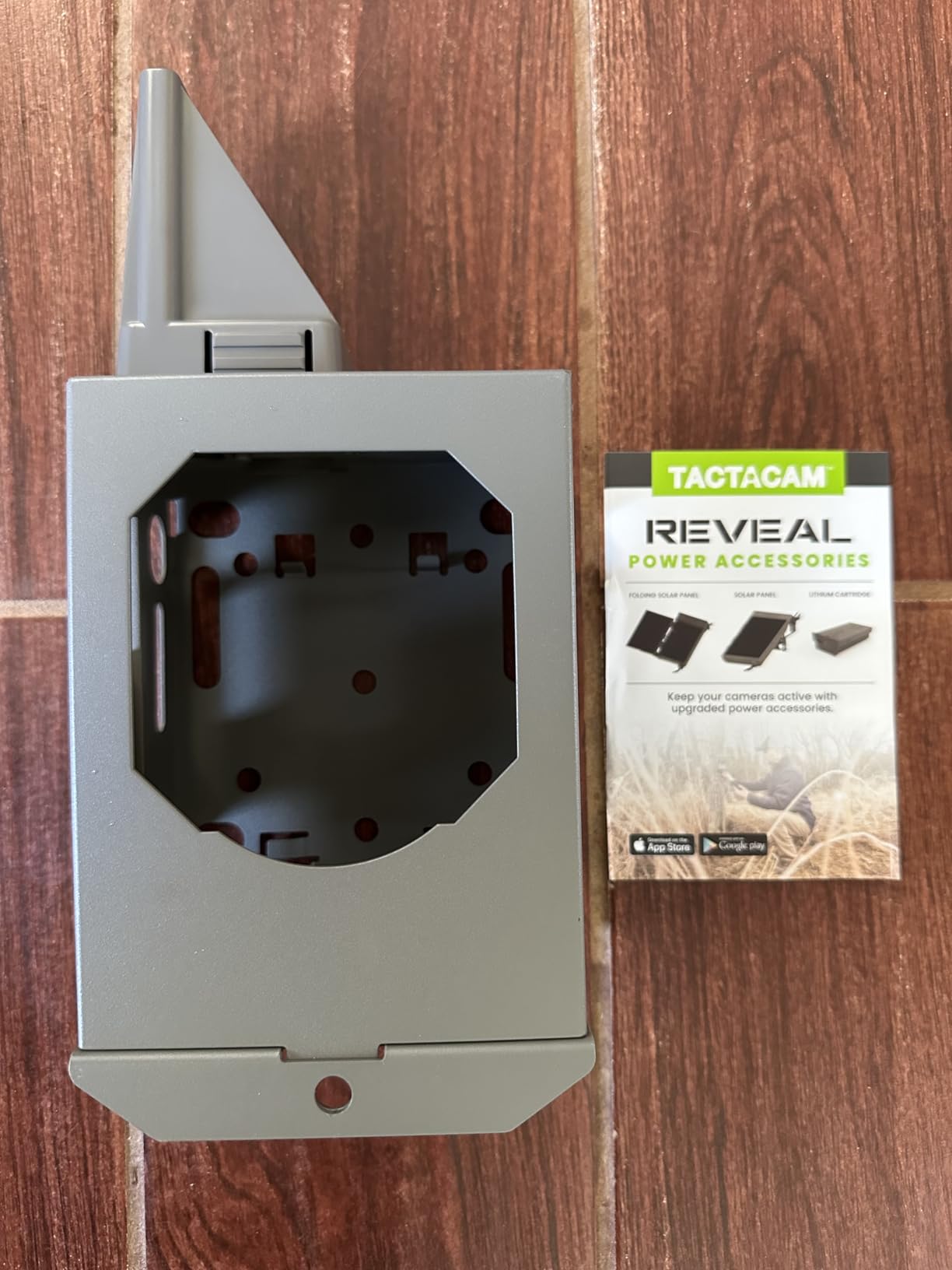
Hunttalk users single out the metal security boxes TACTACAM sells, and the reason is the fit. This is an OEM box designed for the REVEAL body, and owners describe no gaps, no rattling and no re-aiming after the camera goes back in.
The model coverage is broader than most OEM boxes manage. It fits the REVEAL X, X 2.0, X 3.0, X-Pro, Pro 3.0, XB and Ultra, and the listing calls out updated antenna support for the X 3.0, Pro 3.0 and Ultra. That last detail matters because antenna clearance is where a lot of generic boxes fail on newer cellular bodies.
For a cellular camera on public land, the front padlock hole and Python cable compatibility are the two features that matter. A REVEAL is a valuable target in a cellular range, and locking both the front face and the box to the trunk is the difference between a camera that survives the season and one that does not.
The steel is powder-coated and described as resisting rust, corrosion and outdoor exposure, and the box is warranted for one year by the manufacturer. Locks are not included with any of these boxes, so budget for a cable and a padlock separately.
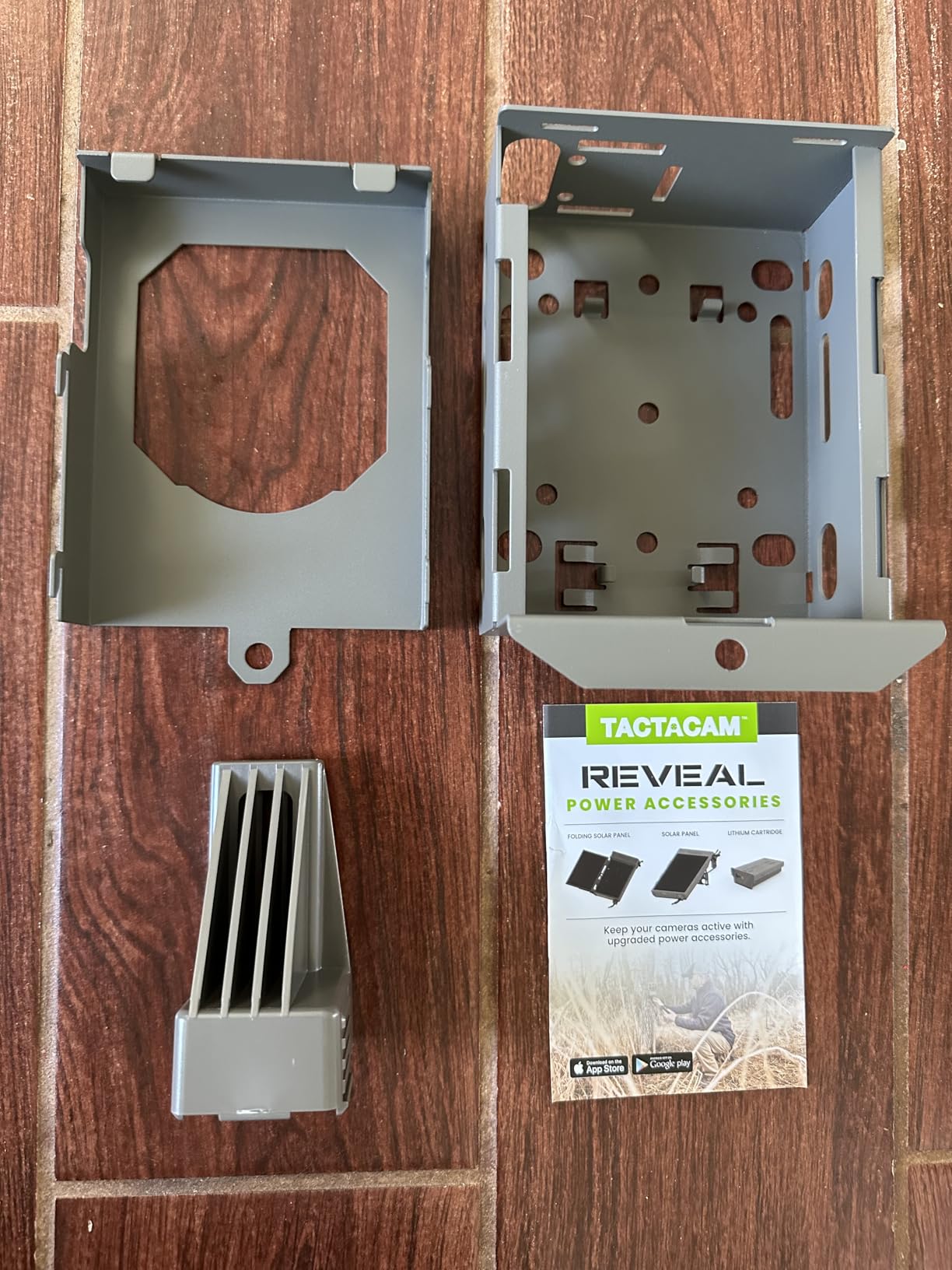
Mounting options cover lag bolt, strap or bungee, which is the full range you need across different public-land ground. On land where nothing can be fastened to the tree, the Python cable through the box and around the trunk is the whole install.
If you are moving from an older REVEAL to a newer one, check which antenna your body uses. The box covers the current antenna support, but an older body with a different antenna profile is worth verifying before you commit.
What makes an OEM box worth it
An OEM box is cut from the camera’s own body dimensions rather than a rounded guess, so the camera sits at the designed height and angle. For a cellular camera that sends photos, that stability is the feature you actually feel every week.
It also means the box ages with the camera. When TACTACAM updates the antenna, the box is updated too, which is not something a third-party universal box can promise.
Where it falls short
Compatibility is one-directional. If you ever leave the REVEAL ecosystem, this box is dead weight, and that is the trade for a fit no generic box can match.
No locks are included, and the box is powder-coated rather than zinc-coated, so in persistently wet ground you may want to check the strap contact points each season for early coating wear.
6. Browning Trail Camera Security Box – Most Versatile with Two Cable Channels
Browning Trail Camera Security Box
16 gauge steel
Powder coated
2 pounds
Accepts a 3/8 inch padlock and two cable channels
Pros
- Heavy-duty 16-gauge steel construction
- Powder-coated for long service life
- Two cable locking channels for Python cables
- Most reviewed box in this group
Cons
- Model-specific fit limits camera compatibility
- Lightweight build compared with heavier steel boxes
This box has the largest review base of anything in the roundup, with more than 300 ratings, and that matters when you are buying something to leave in a tree for a season without supervision. A deep review history usually means the odd failure modes have already surfaced and been talked about.
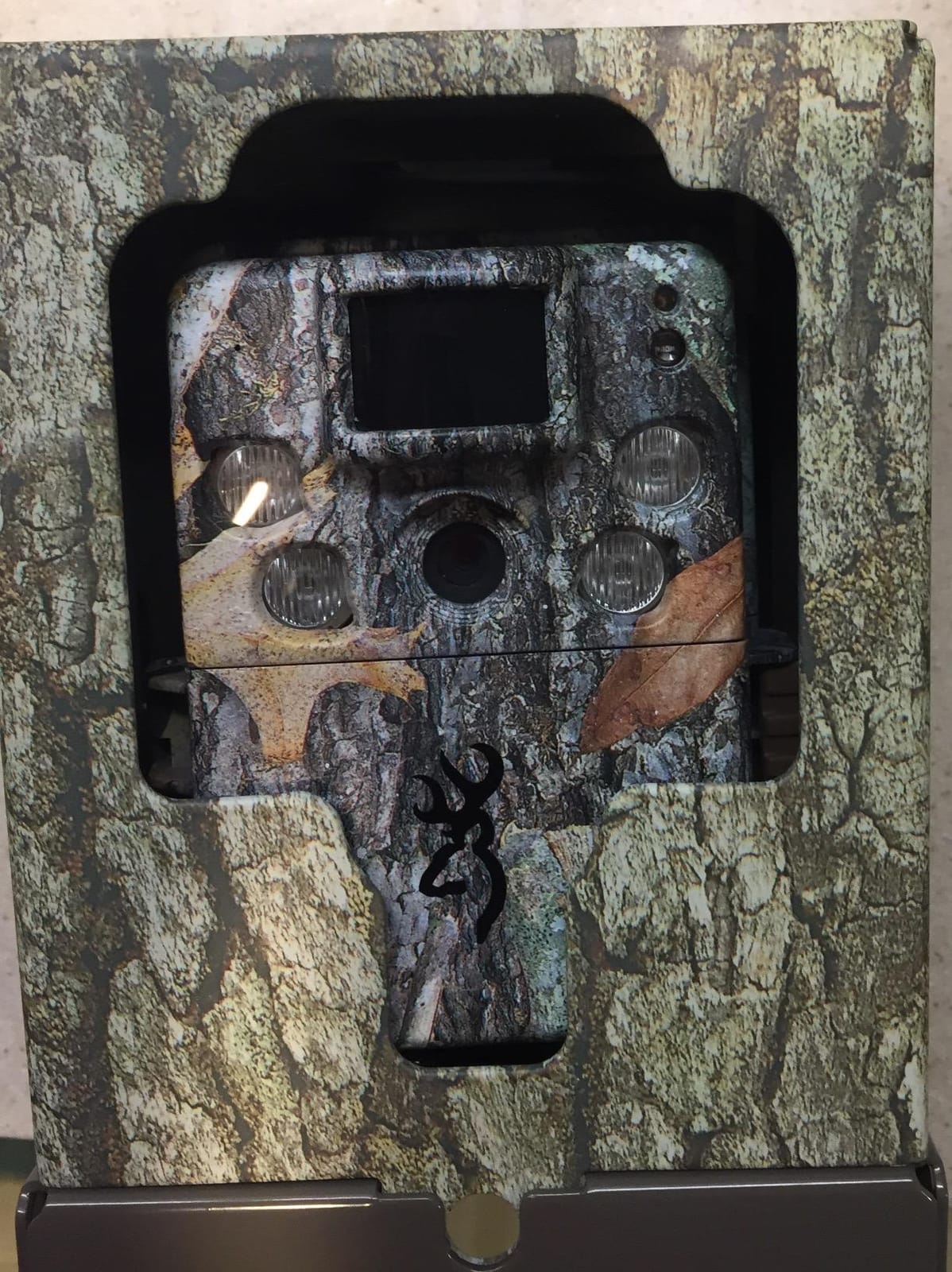
The build is heavy duty 16-gauge steel, powder coated for long life, in brown. At two pounds it is heavier than the SPYPOINT SB-500S and light enough to carry on a long walk, which is a reasonable middle ground for most public-land installs.
The feature that sets it apart is the two locking channels for Python cables, plus a padlock hole that accepts up to a 3/8-inch padlock. Two cable channels is the configuration you want for a tree you cannot screw into, because the cable can run in opposite directions around the trunk and resist being lifted off.
Buyers consistently cite the sturdy steel, the powder coating and the two cable channels as the strengths. The camera fit is limited to Browning trail cameras, so this is a box to buy when you already own the camera, not to plan a brand around.
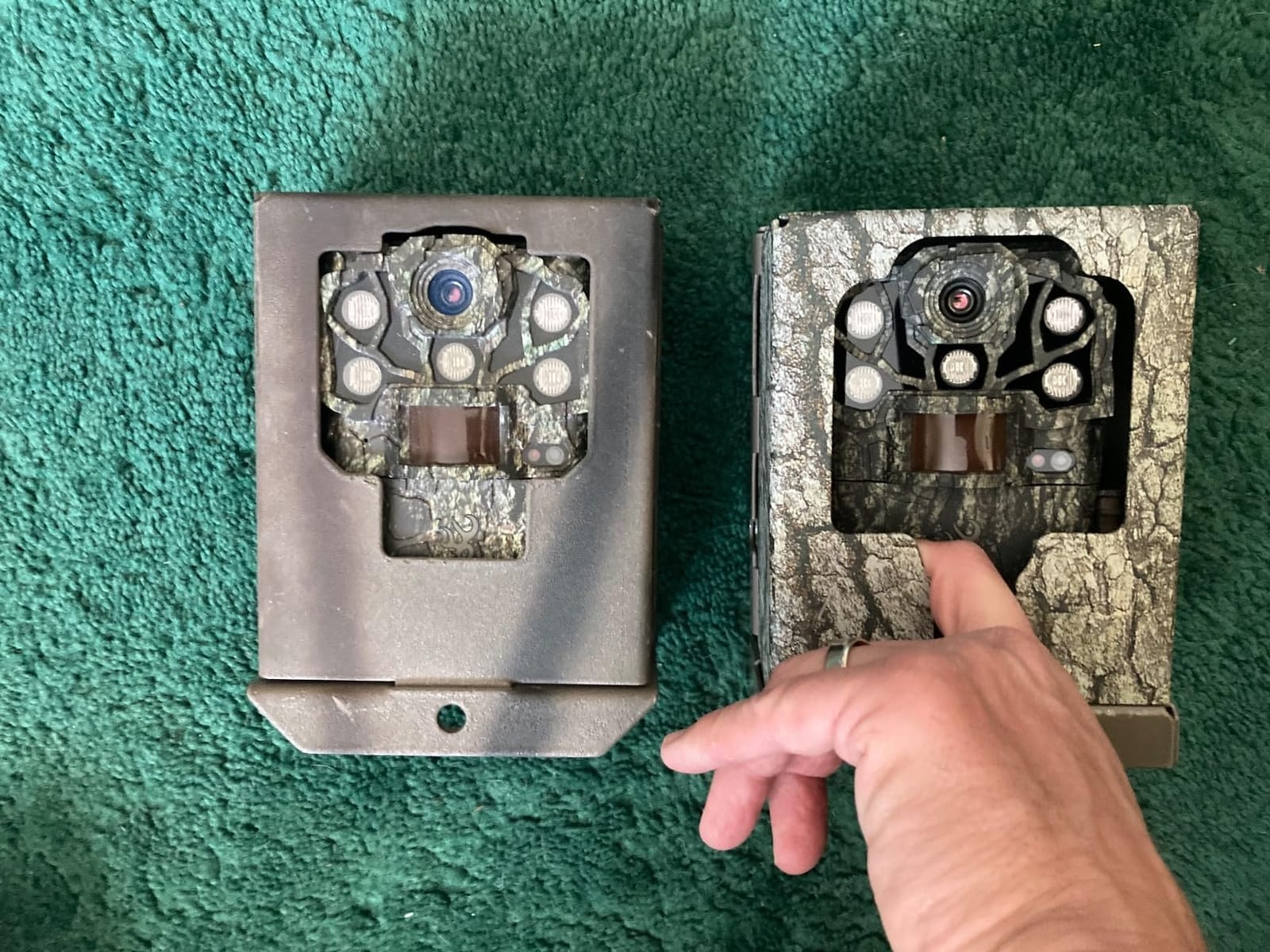
Reviewers note the powder coat holds up over multiple seasons outdoors, which is the part that fails first on cheaper boxes. The brown finish also blends better than a bare metal shell when you are working in mixed timber.
The lighter build is the tradeoff. Two pounds is enough mass to discourage a lift but not enough to ignore a determined pull on a strap-mounted install, so use a two-point mount.
Why review count changes the decision
A box with hundreds of ratings has been carried into the field and put through wet seasons, then reported on by people who had to describe what failed. That gives you the maintenance schedule before you own the box rather than after.
It also means the fit complaints are already documented, and the model-specific limitation is not a surprise. If you own a Browning camera, that is a constraint you have already accepted by choosing the brand.
Where it falls short
Model-specific fit is the hard limit. It is built for Browning trail cameras and is not a universal shell, so a generic brand swap makes the box useless.
At two pounds it is the lighter end of the steel boxes in this group, and owners comparing it against thicker builds describe it as light. In exposed ridgelines, that matters more than it does in sheltered timber.
7. SPYPOINT SB-200 Steel Box – Best for Quick SD Card Access
SPYPOINT Cellular Trail Cameras Security Box – SB-200 Steel Security Box fits 42 LED Cellular Game Camera | Protective Heavy Duty Steel Case fit on Cell Cameras for hunting, Trail Camera Lock Box
Zinc-coated 16-gauge steel
0.77 kg
Removable front panel
Side and front lock holes
Pros
- Zinc-coated 16-gauge steel holds up to bears and weather
- Side and front holes accept cable and padlocks
- Removable front panel for SD and battery swaps
- Back holes allow lag-bolt attachment
Cons
- Lock hole is oversized and can let the front pull open when locked
- Thinner steel than some competing boxes
- Top and front stay partially open so the camera is still visible
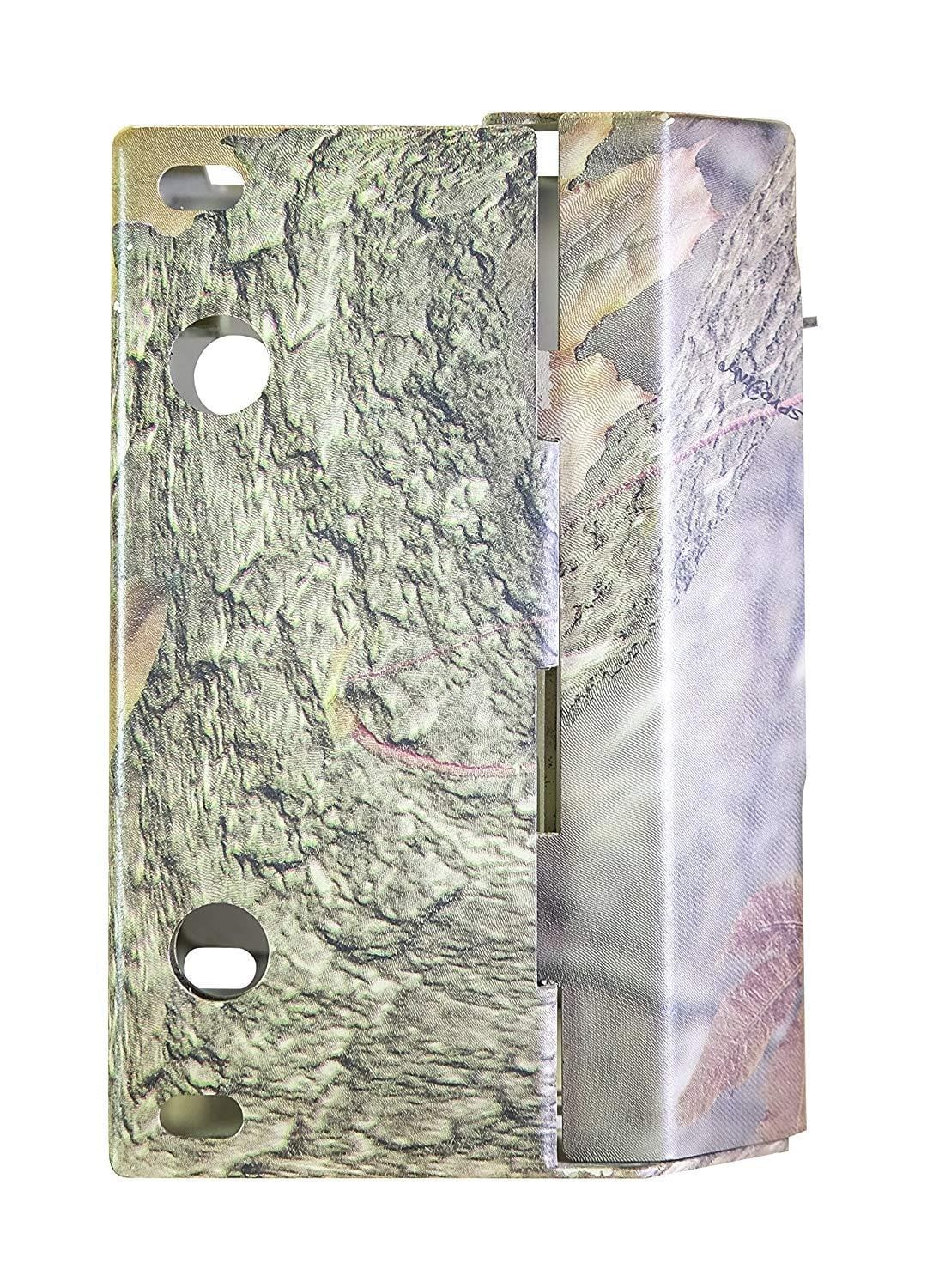
Most of the friction in this category comes from reaching the memory card. The SB-200 solves that with a removable front section, so you can get to the batteries and the SD card without pulling the camera out of its mount and re-aiming it afterward. If you run a high-traffic spot and pull cards often, that alone justifies the box.
Construction is zinc-coated 16-gauge steel at 0.77 kg, with screw-in installation. Owners of SPYPOINT cellular cameras report a snug fit and effective theft and bear deterrence, and the coating is a good match for wet winter ground.
Mounting and locking are both well covered. Side cable holes and front padlock or key lock holes give you a choice of lock type, and rear mounting holes let you screw the box to a surface, a pole or an access point when you have the option.
The weakness is the lock hole size. A minority of owners flag the large front lock hole as allowing the front to be pulled open even when locked, which is a geometry problem rather than a quality problem. If your tree is in a high-traffic spot, add a Python cable through the side holes as a second layer rather than relying on the padlock alone.
Owners also note the steel is thinner than some competing boxes and easier to bend, and that the top and front remain partially open, so the camera is still visible to vandals who know what they are looking at. Camo tape over the shell is a cheap improvement in that scenario.
One forum user abandoned boxes and cables entirely because the bulk made the camera too visible. That reaction is fair in a heavily trafficked trailhead, and in that situation camouflage matters more than steel.
When fast card access changes the math
On a public-land lease with a high-traffic access point, you are likely to check cameras weekly. A removable front panel turns a five-minute reassembly into a thirty-second swap, and that is the difference between checking every camera on a route and skipping the ones that are a nuisance to reach.
It is also the better box for a camera you own rather than rent, because you are the one paying the time cost on every visit.
Where it falls short
The oversized lock hole is the real one. Pair the padlock with a cable through the side holes or accept that this box is a deterrent against opportunistic lifts rather than a serious theft barrier.
Visibility is the second problem. The top and front stay partly open, so a passerby can see what is inside. If your spot is exposed, wrap the shell in camo tape and set it lower in cover.
8. Stealth CAM Bear Box – Best as a Bear Box
Stealth Cam unisex adult SPORTS Stealth Cam Universal Box Small Qs Qv Px , Multi, Small
Powder-coated all-steel
3 pounds
9.25 by 6.5 by 3.75 inches
One year limited warranty
Pros
- Powder-coated steel resists rust over multiple winters
- Slide-in backing bar and overlapping front plate add security
- Mounts with lag bolts
- bungees or belts
- Large size fits some third-party bodies with padding
Cons
- Not universal despite the marketing
- Large size leaves loose space around smaller cameras
- Front opening is not angle-adjustable
At three pounds this is the heaviest box in the group, and the weight is the point. In bear country and in exposed ground, a box with real mass is harder to bend, harder to claw and harder to ignore. The steel is powder-coated all-steel, and owners report no rust across multiple winters.
The Small size is listed for the Fusion-X Pro, Fusion-X, Connect, Fusion, QS, QV, PXP and FP series, and a Large size is also available. The listed inner chamber on the Small is roughly 6-2/16 inches high by 4-9/16 inches wide by 3-8/16 inches deep, which is the number to measure your body against before ordering.
Security comes from the overlapping front plate and the slide-in backing bar, so the front cannot simply be lifted straight off. Owners call the front access difficult for thieves and bears, and they rate the box highly as bear and theft protection.
Reviewers praise the sturdiness and the value, and the most common complaint is fit. The marketing reads as more universal than it is, and several Stealth Cam models do not fit. The Large size also leaves loose space around smaller cameras, which sometimes needs padding to hold the aim.
What to measure before you buy
Measure the camera body in three directions and compare against the published inner chamber, not the outer dimensions. The outer footprint on this box is 9.25 by 6.5 by 3.75 inches, and the usable space inside is meaningfully smaller.
Check whether your body sits at an angle when it is on the strap. The front opening is not angle-adjustable, so a camera that needs a downward tilt may need a wedge or a shim under the mounting tab.
Where it falls short
The marketing overstates universality. Buyers report several Stealth Cam models that do not fit, and the Large size is loose around smaller bodies, which is exactly the problem this roundup is trying to avoid.
At three pounds, this box is a two-person-carry object in deep timber. If the walk in is long, weigh the mass against the security before you commit.
9. CAMLOCKbox Browning Sub Micro Box – Best for Micro-Series Browning Cameras
CAMLOCKBOX Steel Security Box for Browning Sub Micro Strike Force Trail Cameras – Durable 16-Gauge Camo Case with Lockable Theft Deterrent (200)
16-gauge all-steel
1.7 pounds
3.2 by 5 by 5 inches
Camo Break-up powder coat
Pros
- Solid 16-gauge steel that resists pry attempts
- Close fit for Browning micro-series cameras
- Works with a bottom padlock and a rear cable
- Easy to screw to a tree or post
Cons
- Does not fit the Browning APEX external battery position
- SD card access requires partly disassembling the mount
- Cable holes are narrower than a standard 5/16 inch cable
Micro-series Browning cameras are small, and small cameras get stolen quietly because the whole unit weighs almost nothing. This box is the smallest steel enclosure here at 3.2 by 5 by 5 inches and 1.7 pounds, sized for the Strike Force and Dark Ops micro bodies, and the compact footprint is genuinely useful in a spot where a large box would advertise itself.
Owners of Browning Sub Micro cameras call the box very secure and well made, and cite solid 16-gauge steel that resists pry attempts plus a close fit. The camo break-up powder coat keeps it from reading as a metal rectangle in the forest, and it works with both a bottom padlock and a rear cable.
Two compatibility points are worth checking carefully. The box does not fit the Browning APEX, where the external battery sits in a different position, and the top and bottom cable holes are narrower than a standard 5/16-inch cable, so test the cable before you rely on it.
For those who own the right body, the SD card access is the main complaint: it requires partly disassembling the mount, which reviewers describe as difficult in snow. Plan your card swaps for a trip where you are already inspecting the tree.
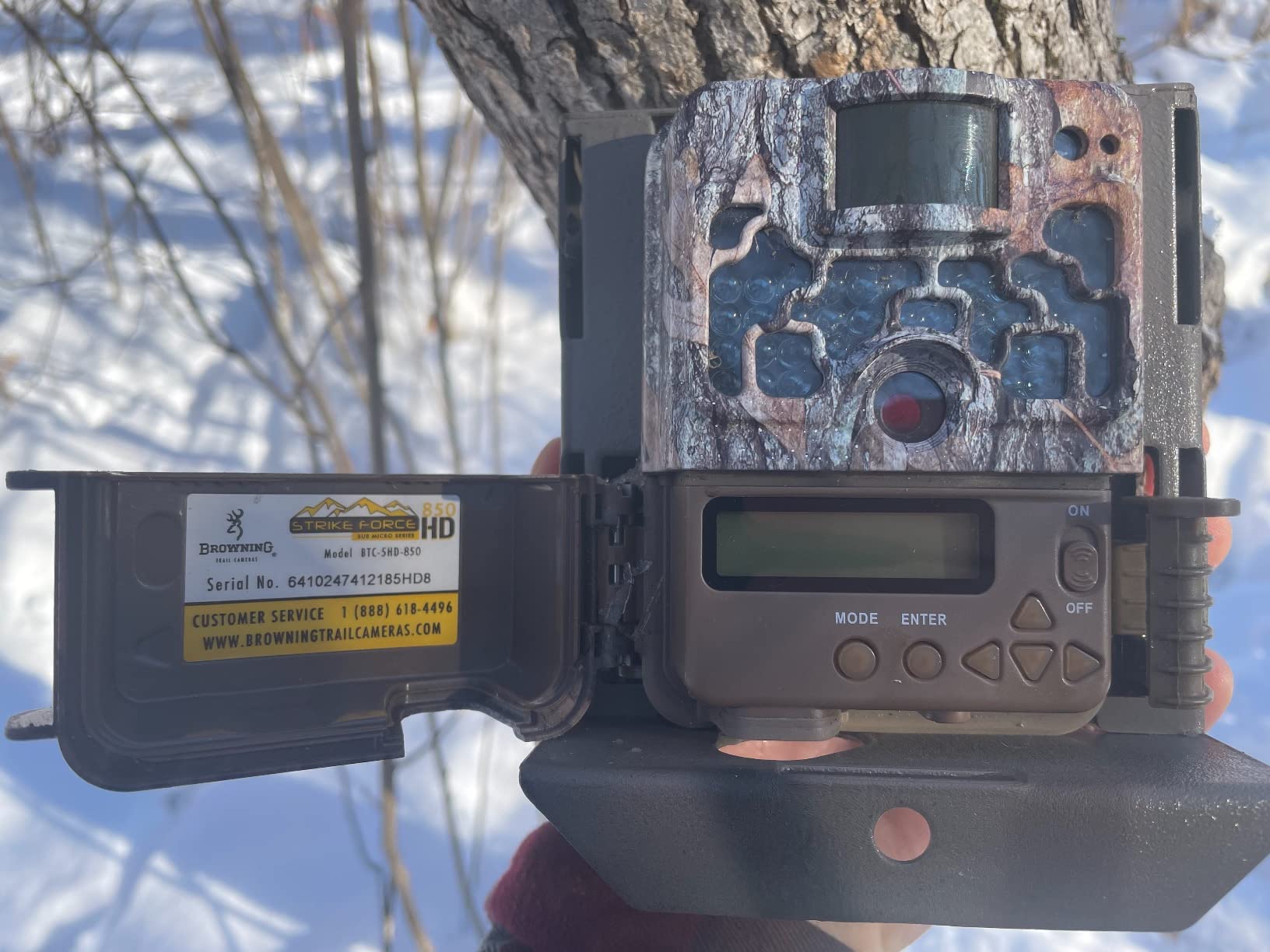
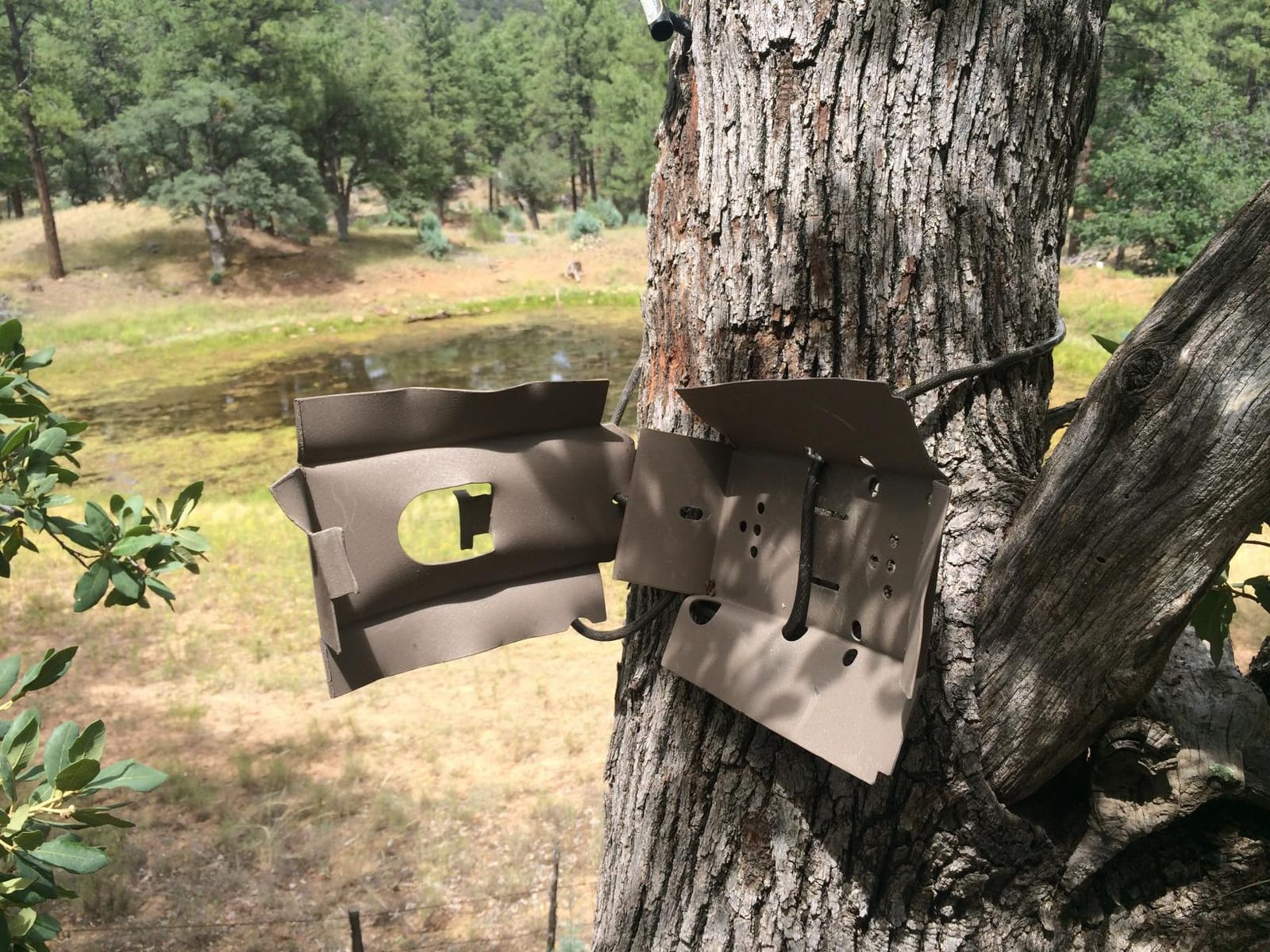
The rear cable point is the feature that makes this usable on public land. Combined with the bottom padlock, you can secure the box in two directions without putting a single fastener into the bark.
Because the box is compact, it also works well on a fence post or a lease stake rather than a tree, which is a common workaround on ground where you cannot fasten to timber at all.
Why compact boxes earn their place
A smaller box is a smaller target. The visibility objection raised in forums is real, and a 3.2 by 5 by 5 inch shell is far less noticeable on a tree than a box twice its volume, which matters at a trailhead or a road crossing.
It is also easier to move when you relocate a camera between spots, and easier to carry in on a long walk into a lease.
Where it falls short
The APEX exclusion is absolute, and the narrower cable holes mean some standard cables will not pass. Check both before ordering rather than after the box is on the tree.
SD card access that requires partly disassembling the mount is genuinely awkward in winter conditions. If you check cards weekly, this is the wrong box for your workflow.
10. Hiweld Moultrie Edge Metal Box – Best Low-Cost Option
Hiweld Metal Security Box for Moultrie Edge Cellular Trail Camera – 16-Gauge Steel, Weatherproof, Anti-Theft Design(Camera Not Included)
16-gauge powder-coated steel
4 by 3.98 by 9 inches
Drainage holes for rain and snow
Mounting hardware included
Pros
- Lowest cost in the set with 16-gauge steel
- Drainage holes and protective edges for rain and snow
- Pre-drilled holes and included hardware
- Camera serviced without removing the box
Cons
- Only fits Moultrie Edge cellular cameras
- Padlocks and security cables sold separately
- Lower-cost construction is less resistant to determined tampering
This is the cheapest way I found to put 16-gauge steel around a Moultrie Edge cellular camera, and if you are outfitting several spots at once the arithmetic is hard to argue with. The construction is powder-coated steel with drainage holes and protective edges for the weather side of the equation.
Two details make it easier to install than its cost suggests. The mounting holes are pre-drilled and the hardware is included, so there is no measuring or cutting in the field, and the camera can be serviced without removing the whole box.
Reviewers highlight the value, the powder-coated steel and the weatherproofing for the Moultrie Edge, with drainage holes doing real work in wet ground where a sealed box traps condensation against the lens.
Be clear-eyed about what you are saving on. The lower-cost construction is less resistant to determined tampering than the heavier steel boxes in this roundup, and this is a camera-specific fit with no cross-brand flexibility. It also sells without a lock, so the total cost lands higher than the box alone suggests.
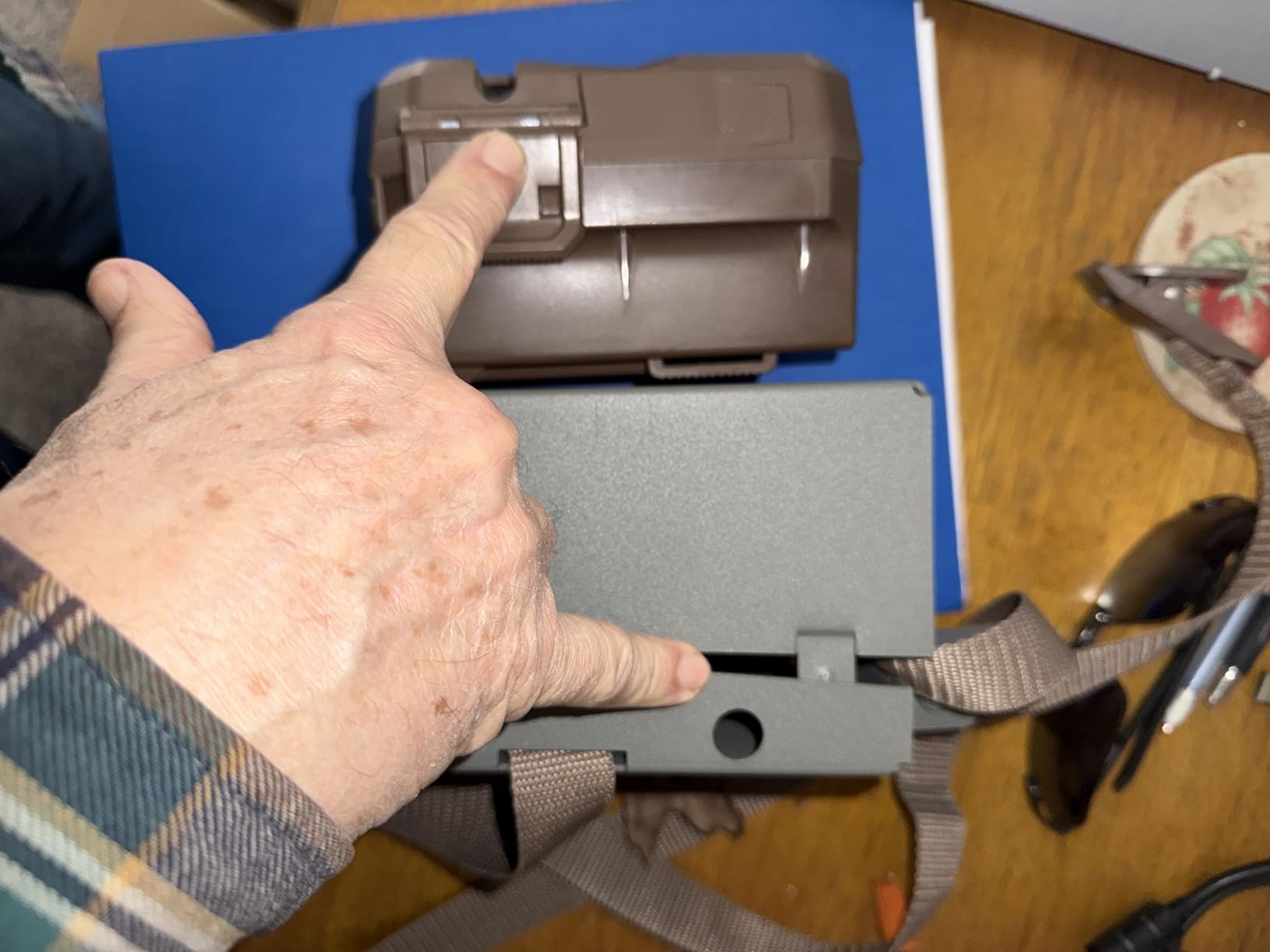
Compare it directly with the Moultrie-branded Edge box before you buy, since both cover the same body. The Hiweld wins on cost and included hardware; the Moultrie box wins on finish and lock hole geometry that some padlocks fit without modification.
The wall mounting designation is worth noting. It means the box works on a post or a stand as well as a tree, which is useful where you cannot fasten into timber.
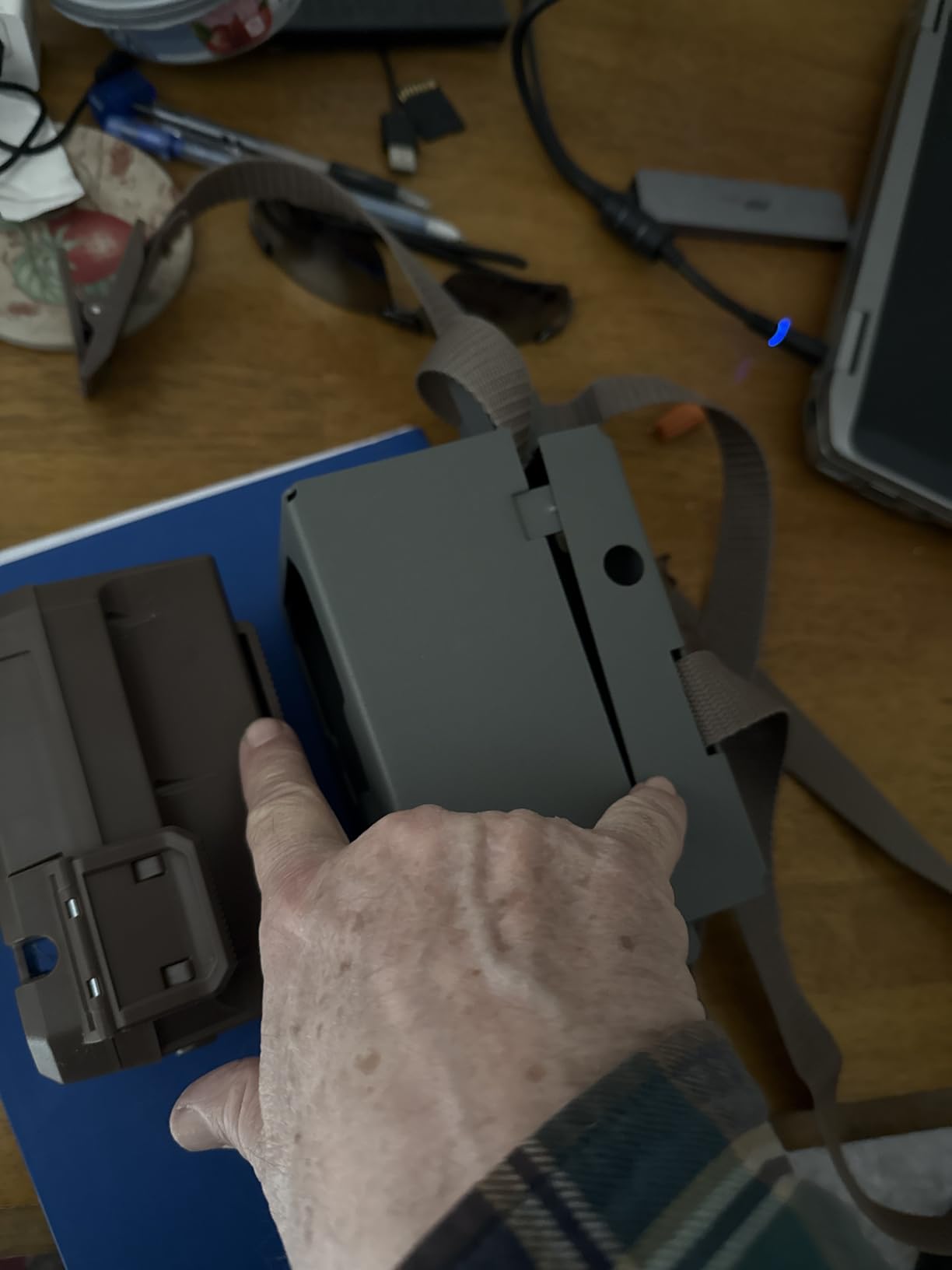
Where value actually comes from
The value here is the coating and the drainage, not the steel alone. Powder-coated 16-gauge with drainage holes handles a wet winter better than a bare shell of the same gauge, and drainage is what keeps fogging off the lens.
For a first-time buyer protecting one camera, this is a defensible entry point. It covers theft opportunism, weather and the small-animal damage that shows up in most of the review narratives.
Where it falls short
It fits only Moultrie Edge cellular cameras, and the lock is not included. Buyers who want a stronger barrier should plan a cable rather than relying on a padlock alone.
Tamper resistance is lower than the heavier boxes here. In a place where cameras are being taken deliberately, this stops the opportunistic lift and little beyond that.
11. BLAZEVIDEO Trail and Game Camera Box – Best for Third-Party Cameras
BLAZEVIDEO Trail & Game Camera Security Box
3mm steel with camo powder coat
7.5 by 4.8 by 2.45 inches
Fits bodies to 5.8 by 4.2 inches
Ventilation ports
Pros
- Held up against bear attacks with no damage
- Lightweight and easy to carry into the woods
- Pre-drilled holes
- strap slots and cable port
- Bottom ventilation ports reduce lens fogging
Cons
- Some users report the body is aluminum and bends if only one corner is locked
- Fit is model-specific within the listed brands
- Front pieces can be tough to separate
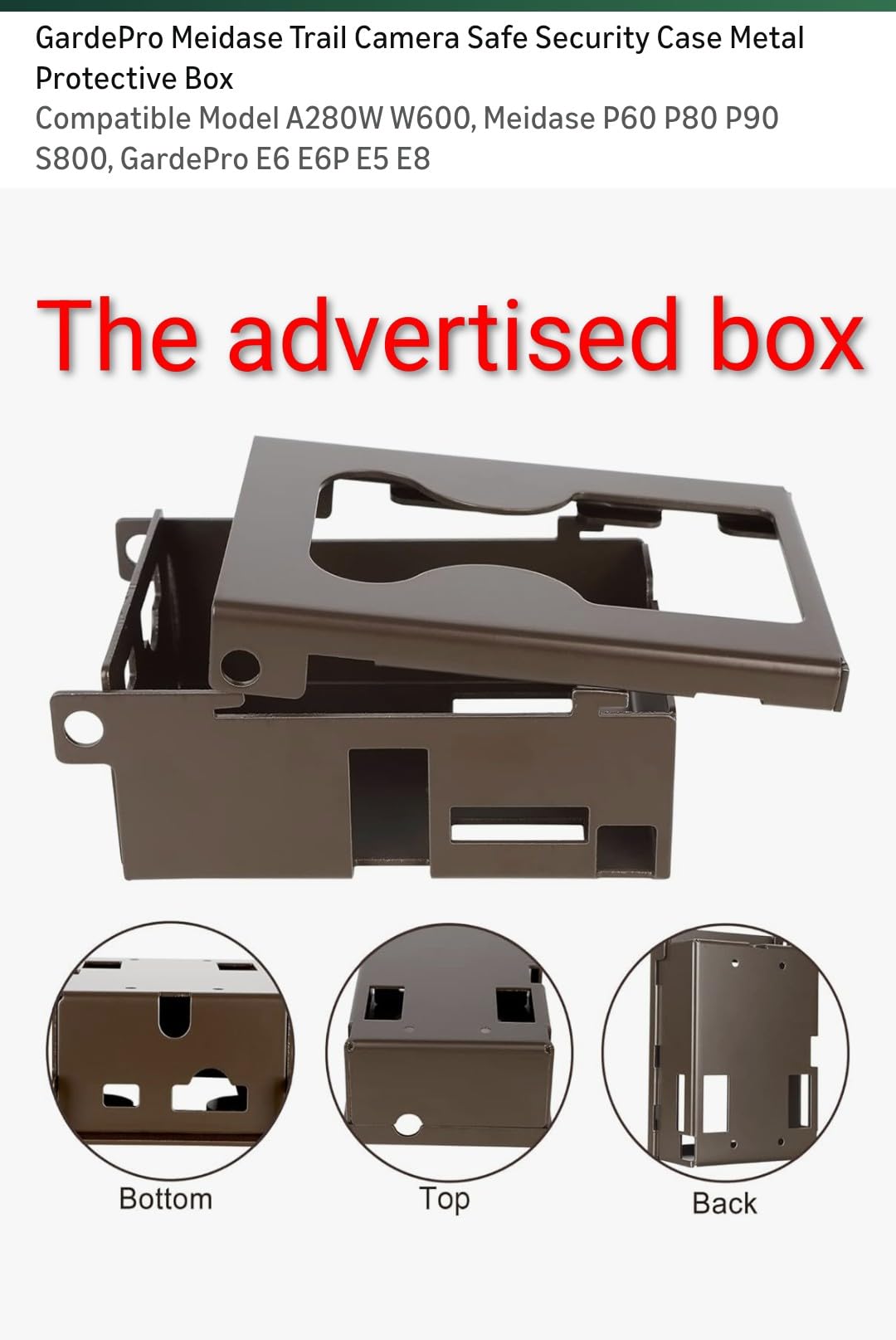
Almost every other box here is welded to a single camera model. This one is built around a size, not a brand, with an interior that accommodates cameras up to 5.8 by 4.2 inches and compatibility listed for BlazeVideo A252, A262 and A323, GardePro A3 and A3S, and Meidase P40, P50, S3 and S3 Pro.
If you run a mixed brand setup, or you are not sure which camera you will end up owning, a size-based chamber is more flexible than anything else in this roundup. It is also the box to consider if you are moving between leased spots with different camera bodies.
Owners praise the bear protection, with reports of the box and camera surviving attacks with no damage, and they like that the camera slides out and back in without re-aiming. Bottom ventilation ports reduce condensation fogging, and pre-drilled bolt holes, strap slots and a rear cable port give you a wide range of mounting options.
It is also one of the easier boxes to carry into the woods, which matters on a long walk. The steel is listed at 3mm with a rust-resistant camo powder coat, and the camo pattern reads well at distance.
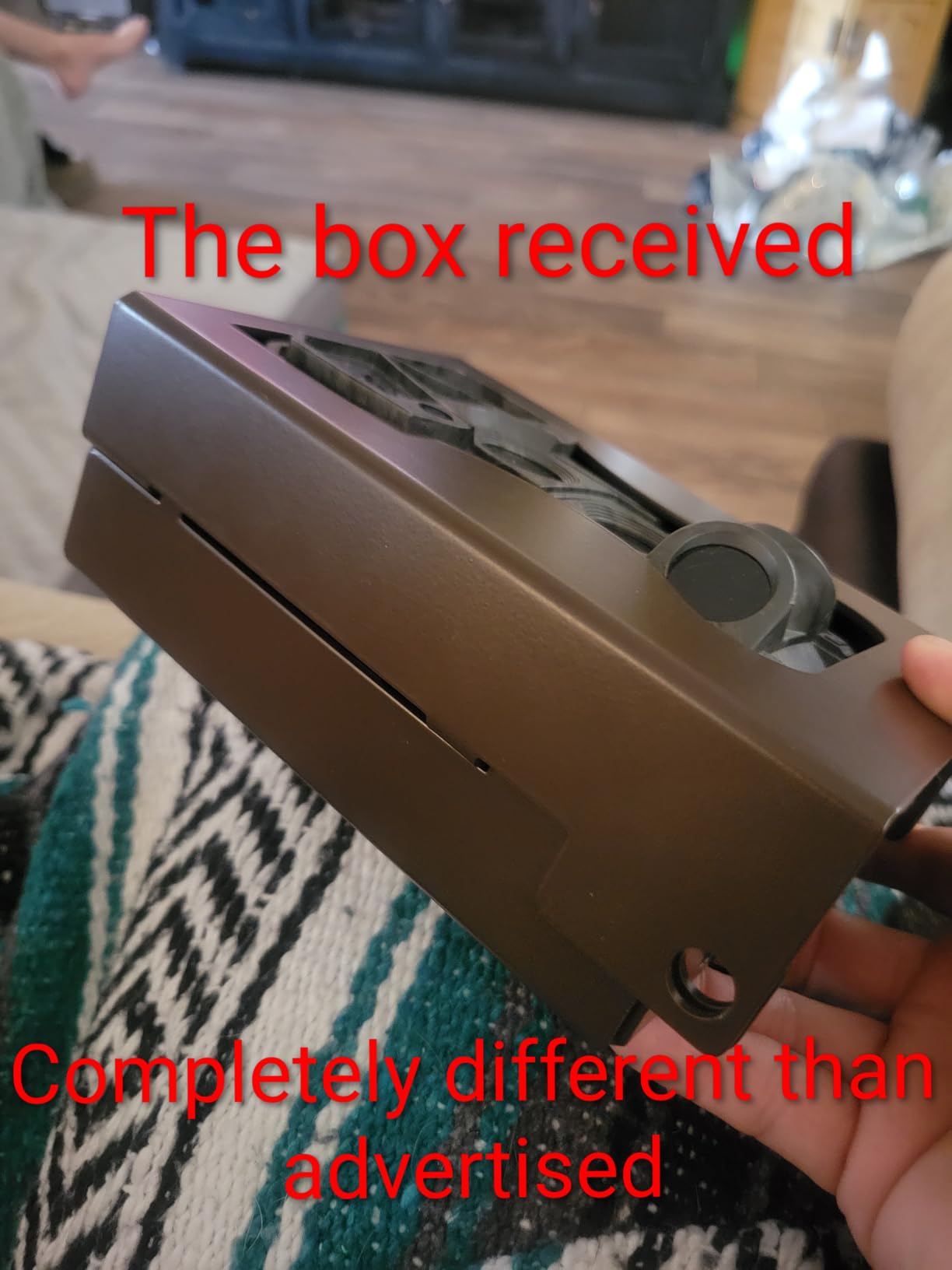
The lowest rating in the group comes from one specific complaint: some users report the body is aluminum rather than steel, and that it can be bent open if only one corner is locked. The remedy is mechanical and simple, which is to lock more than one corner every time.
Fit is still model-specific within the listed brands. Measure your body and compare against the 5.8 by 4.2 inch interior before ordering, especially for larger Meidase or GardePro bodies.
When cross-brand flexibility is worth it
If you run cameras from more than one manufacturer, a size-based box removes the worst failure mode in this category, which is owning a box that fits nothing you actually use. The interior size is the spec to check, not the brand list.
It is also a sensible choice for a first box, since you can move it between cameras as your kit evolves instead of buying a new shell each time you change body.
Where it falls short
The material question is unresolved across reviews, and it is the reason this box sits at the bottom of the rating scale here. If you suspect the body is aluminum where you expected steel, treat it as a theft deterrent and a weather shell rather than a barrier.
The front pieces can be tough to separate, and the fit is strict enough that some same-brand cameras do not fit at all. Measure first.
12. Cuddeback CuddeSafe Size L – Best for Cuddeback Owners
Cuddeback CuddeLink CuddeSafe for L Series and Tracks, Size L, Brown
Aluminum construction
2.7 pounds
4.5 by 4.25 by 8 inches
Screws included, one year warranty
Pros
- Strong well-made construction that withstands outdoor exposure
- Tight precise fit for Cuddeback cameras
- Works with timber screws and a disc lock for high-security installs
- Highest average rating in this group
Cons
- Padlock and Python cable not included
- Aluminum rather than steel so it is lighter than steel alternatives
- Only fits CuddeLink L Series and TRACKS cameras
The highest average rating in this roundup belongs to the smallest review base, and I want to be honest about that rather than let the number do all the work. Thirty-three reviews at a 4.9 average tells you owners are happy; it does not tell you about long-term coating failure the way a few hundred reviews would.
What owners do describe is a strong, well-made enclosure that is easy to use, with a tight and precise fit for the CuddeLink L Series and the Cuddeback TRACKS cellular cameras. One reviewer pairs it with timber screws and a disc lock for a high-security install, which is a sensible combination on private ground.
The construction is aluminum at 2.7 pounds, in brown, with dimensions of 4.5 by 4.25 by 8 inches. Screws are included and straps are not, so you can screw it to a post or a stand immediately and buy a strap only if you need one.
Padlock and Python cable compatibility is there, but locks are not included. The one year manufacturer warranty is standard for the category and is shorter than the field life you will probably get from it.
What the rating does and does not tell you
A 4.9 average across thirty-three reviews is a strong signal about build quality and fit accuracy for the cameras it covers. It is not evidence about a five-year coating life, and aluminum is a different corrosion story than the zinc and powder coats used elsewhere in this list.
One owner calls it inexpensive insurance for a camera in a remote location, and that framing is fair. It is a box you fit once and forget.
Where it falls short
It fits only CuddeLink L Series and TRACKS cameras, and no other brand. Locks are not included, so the working total is higher than the box alone.
Aluminum is lighter than steel and will not stand up to the same abuse. In bear country or a high-traffic spot, one of the 16-gauge steel boxes is the safer buy.
How to Choose a Trail Camera Security Box
Start with the camera, not the box. Every box in this roundup is model-specific except one. Check the compatibility list against your exact model number before anything else, because a box that does not fit is dead money and a poor fit is the complaint that appears most often across the reviews here.
Then check the chamber, not the outside. The listed inner chamber is the number that matters. Measure your camera body in three directions, then measure the antenna position, because a camera that fits the width can still foul on the antenna when the door closes.
Decide how you will lock it before you pick the steel. On private ground where you can lag into the tree, a rear mounting hole plus a padlock is enough. On public land, you need a box with a dedicated cable channel that accepts a 5/16-inch Python cable, because the cable is the only fastener that works without touching the tree.
Think about how often you will open it. Boxes with a removable front panel or slide-in door make weekly card swaps quick. Boxes with a tight exact-fit chamber make them a project. Match the box to your service interval, not just to your camera.
Weight is a mounting decision. Anything well under two pounds needs a two-point strap or a solid anchor, and anything over three pounds becomes a carry problem on a long walk in. For most public-land work, somewhere between two and three pounds is the workable range.
Coating beats gauge in wet ground. Most of the boxes here run 16-gauge steel, with a few heavier. The differentiator is what sits on top of the steel, and in persistently wet or snowy ground a zinc coating or a quality powder coat decides whether the box still looks good in year three.
Budget for the lock separately. Not one of these twelve boxes includes a padlock or a cable. A Python cable plus a small padlock through the corner is the configuration I would run, and it is what forum users recommend for public-land installs.
How to mount on public land without defacing a tree
You cannot nail, screw or lag into a tree on most public ground, so the box has to be held by something that touches only bark. The Python cable is the answer, and the routing order matters more than most people expect.
First, thread the cable through the camera’s own strap or mounting loop, so the camera is captive inside the box rather than sitting loose in the chamber. Second, run the cable through the box’s cable channel or rear cable port. Third, wrap the cable around the tree trunk. Fourth, loop it back through the box channel and secure it with a padlock, which creates two independent wrap points.
Add a second cable point in a second direction, roughly ninety degrees from the first, if the trunk is thin. A single vertical wrap can be lifted over the top of a pole; a crossed pair cannot. For a post rather than a tree, a single wrap plus a strap around the post is usually enough.
Do not rely on bungees alone in a crosswind. A light box on a bungee will swing, and a swinging box announces itself to anyone walking the line. If you must use elastic, use two of them in opposing directions.
Padlock versus Python cable
A padlock through a front hole is fast and cheap, and it stops the opportunistic lift. It does nothing if the box is on a strap, because the whole unit lifts off with the strap still attached. A Python cable that passes through the camera, the box and the trunk stops that, which is why the retailers position these boxes for public land in the first place.
Use both where the box allows it. The two-channel design on the Browning box and the double cable and padlock arrangement on the CAMLOCKbox models exist for exactly this reason.
Public Land Rules: Where Cameras Are Allowed and Where They Are Not
Yes, you can put a trail camera on public land in most places, but you are a guest on someone else’s ground and the rules come from the land manager, not from you. The federal baseline is 43 CFR 8365.1-2, which is the BLM regulation covering use of public lands, and it is the reference most worth reading before you drive in.
Several states restrict trail cameras specifically. Arizona Administrative Code R12-4-303 and Nevada Administrative Code 503.1485 are the two most commonly cited examples, and both were drafted around wildlife monitoring rather than around hunters. State wildlife agencies can also impose their own conditions, including limits on where a camera may be placed relative to a road, a trail or another user.
National Park Service land is stricter than National Forest land in most cases, and some parks require a permit for any camera that could capture visitors or structures. If your target is a park, contact the specific park before you deploy rather than assuming forest rules apply.
Two practical points close this out. First, do not publish the coordinates of a camera that photographs a sensitive species den or a calving area, and do not sell access to that location. That behaviour is what state bans were written to stop, and it is the fastest way to get a camera removed and yourself escorted off the property.
Second, aim away from campsites, trailheads and any structure. A camera pointed at a public facility is a privacy complaint waiting to happen, regardless of what the rules technically allow.
It is worth remembering that public-land hunting usually supports a broader land-management picture, including the kind of habitat work people do on their own ground with tools like our picks for [land levelers for food plots](https://battleofsoho.com/best-land-levelers-for-food-plots/). The same cameras that monitor a corridor on BLM ground often inform those decisions, which is the argument the states made when they wrote their rules.
Beyond the box itself, a layered setup makes sense on larger ground. If you want to see a remote gate or a long access road, a monitored camera with live alerts covers a different job than a steel box on a tree, and the two work well together.
Frequently Asked Questions
How do you secure a trail camera on public land when you cannot nail into a tree?
Use a steel security box with a dedicated Python cable channel. Thread a 5/16-inch Python cable through the camera strap, then through the box cable port, then around the trunk, then back through the box and lock it with a padlock. Add a second cable point roughly ninety degrees away so the unit cannot be lifted over the top of the trunk. A strap or bungee alone is not enough in a crosswind.
Are you allowed to put trail cameras on public land?
Usually yes, but the land manager sets the terms. The federal baseline is 43 CFR 8365.1-2 for BLM land, and National Forest rules are set by the individual forest. National Park Service land is stricter and often requires a permit. Always check with the specific agency, and keep the camera aimed away from campsites, trails and structures.
What states restrict trail cameras?
Arizona Administrative Code R12-4-303 and Nevada Administrative Code 503.1485 are the two most commonly cited state restrictions, both written around wildlife monitoring. Individual state wildlife agencies can add their own conditions, including placement limits near roads and trails. Rules change, so verify with the agency that manages your target ground before deploying.
Are trail camera locks worth it if a thief takes the whole thing?
They are worth it in the specific case where the whole unit is carried off. A Python cable through the camera, the box and the trunk stops a lift that a padlock on the box alone would not, because the box is anchored rather than just locked. They also block bear and rodent damage, and weather protection is a common unmentioned benefit even where theft is not a concern.
What size security box do I need for my trail camera?
Match the inner chamber, not the outer dimensions. Measure the camera body in width, height and depth, then add the antenna position, since a camera that clears the walls can still foul on the antenna when the door closes. Model-specific boxes list the exact compatible cameras and are the safest choice if you own one brand.
Will a bear still chew my camera antenna inside a box?
Bears often work at protruding antennas even when the body is sealed in steel, because the antenna is the first exposed part. That is why chamber design matters: a box that positions the antenna inside the shell gives a bear nothing to grip. Owners running these boxes in bear country report no damage to either camera or box after multiple seasons.
Do trail camera security boxes make the camera more visible?
A steel box is larger than a bare camera, so on a busy trailhead it can read as a metal rectangle. Camo break-up powder coat or camo tape over the shell reduces that a lot, and forum users report that taped boxes blend in well. If visibility matters more than security at a heavily trafficked spot, a smaller micro-camera box is the better trade.
Do I need a padlock or a Python cable for my camera box?
On private ground where you can lag into the tree, a padlock through the front hole is enough. On public ground you need a Python cable, because the cable passes through the camera and the box and around the trunk, which a padlock on the box alone cannot do. Many boxes accept both, and using both is the strongest configuration.
The Final Verdict
For most people running a camera on public land in 2026, the CAMLOCKbox Stealth Cam G Series box is the one to buy. The 16-gauge all-steel shell, the camo break-up powder coat and the combination of a 5/16-inch Python cable channel with a padlock hole is the most complete public-land package I found, and its review history is deep enough to trust.
Match the box to the camera first, because that decision is not negotiable. Stealth Cam G Series owners take the CAMLOCKbox, Wildgame Terra owners take the matching CAMLOCKbox, Moultrie Edge owners have two credible options depending on whether hardware in the box matters more to them, SPYPOINT FLEX-M, FLEX-G36 and FLEX-S owners take the SB-500S, and REVEAL owners should take the OEM TACTACAM box for the antenna clearance on the newest models.
Then buy a lock, because none of these boxes includes one. A 5/16-inch Python cable through the camera, the box and the trunk, plus a padlock, is the configuration that actually protects a camera on ground you cannot fasten into. And before you drive out, check the rules for the specific parcel, because the land manager decides that part, not the retailer.