
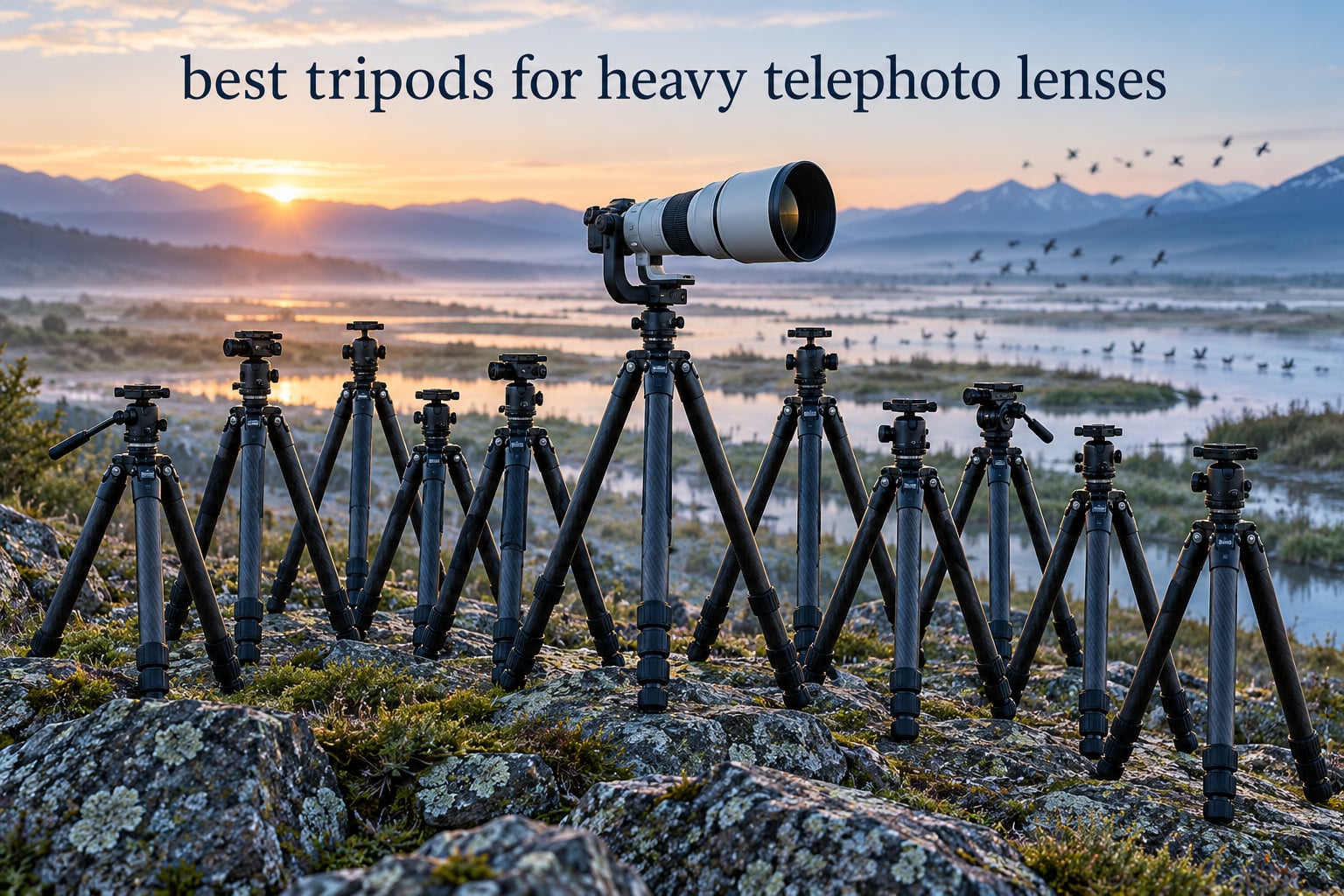
The best tripods for heavy telephoto lenses are tripods with thick top-section legs, a published load rating of at least twice your combined camera and lens weight, and a rigid mount that accepts a lens collar. A load rating alone will not stop a 400mm lens from twisting, so leg diameter and head quality matter as much as the number printed on the box.
That distinction is where most telephoto buyers get burned. You read a spec sheet, see a 44 lb rating, load up a body and a 100-400mm that together weigh 22 lb, and assume you are covered. Then you set up at dawn on a hillside, mount the camera to the body, raise the center column to get a comfortable shooting height, and every frame comes back slightly soft.
None of that is the tripod failing to hold weight. It is the tripod twisting under the lever effect of a long lens cantilevered in front of the head, plus a raised column that adds a springy section to the top of the leg stack. The same setup on a rigid leg with the column down and the lens mounted on its collar behaves like a different piece of gear entirely.
Our team spent weeks comparing the ten tripods below with telephoto rigs of 5 lb to 12 lb of glass, focusing on the things that actually decide sharpness at 300mm and beyond: top-section tube diameter, section count, torsional stiffness, leg angle settings, and whether the head can handle a front-heavy load without creeping.
If you have not settled on glass yet, start with our telephoto lens picks for wildlife so you know the weight class you are supporting. If your long-lens work is optical rather than photographic, our telescope tripod guide covers the same load-rating logic for spotting scopes.
The short version of the rule that decides most purchases: choose a tripod rated for at least twice the weight of your camera and lens combined, mount through the lens collar, and keep the center column down. Everything else in this guide is detail on how to get there.
Table of Contents
Top 3 Picks for Best Tripods for Heavy Telephoto Lenses in 2026

INNOREL RT90CG Carbon Fiber Bowl Tripod
- 88 lb / 40 kg load rating
- 40mm max leg tube
- 10-layer carbon fiber
- 4 leg angle positions

ARTCISE AS90C Carbon Bowl Tripod
- 88 lb / 40 kg load rating
- 40mm carbon tubes
- 75mm fast leveling bowl
- no center column

SIRUI AM-324 Carbon Fiber Tripod
- 44 lb / 20 kg load rating
- 3.1 lb net weight
- 32mm carbon tubes
- 6 year warranty
All 10 Heavy Telephoto Tripods at a Glance in October
This table is the fast way to narrow the field. Load rating tells you whether the legs will collapse; top-section tube diameter and section count tell you whether they will twist.
| Product | Specifications | Action |
|---|---|---|
| INNOREL RT90CG Carbon Fiber Bowl Tripod |
|
Check Latest Price |
| ARTCISE AS90C Carbon Bowl Tripod |
|
Check Latest Price |
| SIRUI AM-324 Carbon Fiber Tripod |
|
Check Latest Price |
 Manfrotto MT055CXPRO3 Carbon Fiber Tripod Manfrotto MT055CXPRO3 Carbon Fiber Tripod |
|
Check Latest Price |
 SIRUI AM-324S with G1 Ball Head SIRUI AM-324S with G1 Ball Head |
|
Check Latest Price |
 SmallRig 79 inch Carbon Video Tripod SmallRig 79 inch Carbon Video Tripod |
|
Check Latest Price |
 Benro Mammoth TMTH44C Carbon Tripod Benro Mammoth TMTH44C Carbon Tripod |
|
Check Latest Price |
 SmallRig AD-100 FreeBlazer Video Tripod SmallRig AD-100 FreeBlazer Video Tripod |
|
Check Latest Price |
 Manfrotto 535 Carbon Video Tripod Manfrotto 535 Carbon Video Tripod |
|
Check Latest Price |
 INNOREL ST424C Carbon Bowl Tripod INNOREL ST424C Carbon Bowl Tripod |
|
Check Latest Price |
1. INNOREL RT90CG Carbon Fiber Bowl Tripod: Best Overall for Heavy Telephoto
Carbon Fiber Bowl Tripod-INNOREL RT90CG Heavy Duty Bowl Tripod with 75mm Bowl Adapter 40mm Leg Tube Ultra Stable Professional Camera Tripod Max Load 88lb/40kg Green Camouflage Sleeve
Load: 88 lb / 40 kg
Weight: 6.1 lb
Top tube: 40mm carbon
Max height: 63 in
Folds to 23.2 in
Pros
- 40mm top tube in genuine 10-layer carbon fiber
- 88 lb / 40 kg load rating
- Three leg angle settings for uneven terrain
- Interchangeable rubber and steel spikes
- Removable camouflage sleeves with shoulder pad
Cons
- No center column limits very low angles
- Twist locks need two hands to operate
- Heavier than carbon travel tripods in its class
We picked the RT90CG as our top pick because it pairs a 40mm top-section tube with an 88 lb / 40 kg rating and carries the highest review count of any tripod here, which means a lot of long-term owners reporting on how it holds up. The rating is 4.7 across more than 500 reviews, and the load rating of 88 lb / 40 kg gives roughly four times the headroom we recommend for a 12 lb telephoto rig.
The 10-layer carbon construction is real, not a marketing word, and the four-section legs run from 22 in to 63 in. With a 600mm f/4 or a 200-500mm mounted on the collar, this rig simply does not move when you pan or when someone walks past the setup.
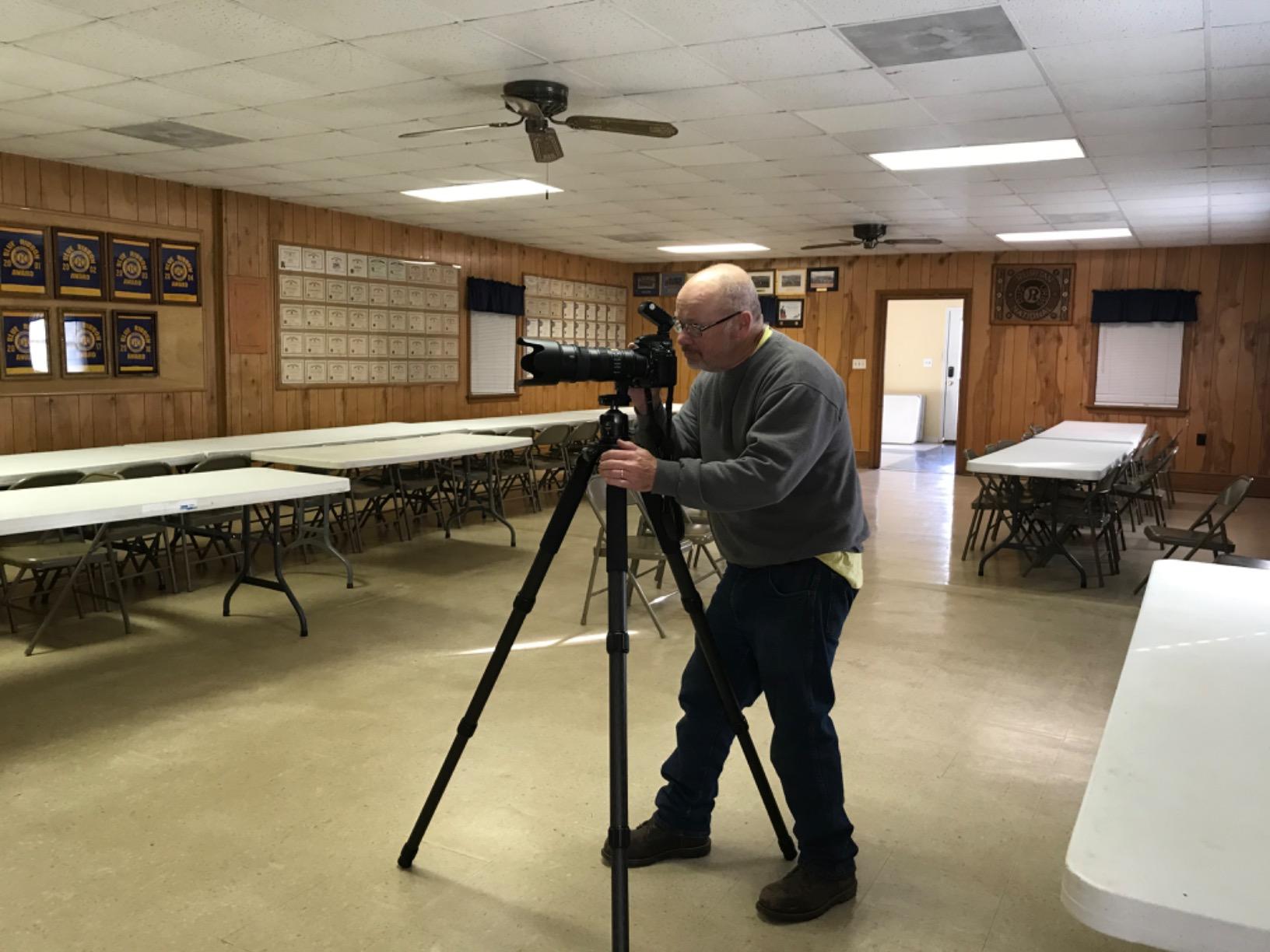
One design choice stands out for telephoto shooters specifically: there is no center column. That removes the springy top section that makes many tripods wobble, and the bowl mount means a fluid head or gimbal head drops straight on. The aluminum hard-anodized mounting pan carries an oversized weight hook and a set screw.
Three leg angle settings at 9, 37 and 69 degrees let you get the camera close to the ground for a low viewpoint on a bird or flatten the stance on sloping ground where the horizon matters. That range is unusually useful in field work.
Who the RT90CG suits
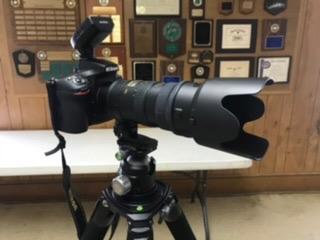
This is the tripod for a wildlife or birding shooter carrying glass over 8 lb who plans to sit and wait. The 40mm top section and 88 lb rating give you a support that will not flex when a gust hits or when you pan hard to follow a bird. It also accepts 75mm and 100mm bowls, so a proper fluid head or a gimbal head for panning is a simple addition.
Those same owners report using it for spotting scopes as well, and the interchangeable stainless steel spikes help on soft ground or frozen soil where rubber feet would skate.
Where it falls short
The lack of a center column is the main limitation for anyone shooting straight down or needing a very low floor position without a separate head. It also weighs 6.1 lb before you add a head, so it is a carry rather than a walk, and the twist-lock legs genuinely need both hands to open and close in cold weather.
2. ARTCISE AS90C Carbon Bowl Tripod: Best for 600mm and Heavier Glass
Carbon Fiber Tripod Heavy Duty Bowl Tripod ARTCISE AS90C Ultra Stable Carbon Stand with 75mm Bowl and Adapter 10 Layers Carbon Fiber 40mm Leg Tube Max Load 88 Lbs/40kg
Load: 88 lb / 40 kg
Weight: 4500 g
Top tube: 40mm carbon
Bowl: 75mm leveling
Max height: 61.8 in
Pros
- 88 lb / 40 kg rating at roughly 6 lb net weight
- Patented 75mm fast leveling bowl
- Center-axis-free design adds rigidity
- CNC anodized aluminum twist locks
- Owners run 400mm lenses over 5 kg with gimbal heads
Cons
- Component tolerances looser than a Gitzo
- No 1/4-inch accessory port on the apex as supplied
- Heavier to carry once a head is mounted
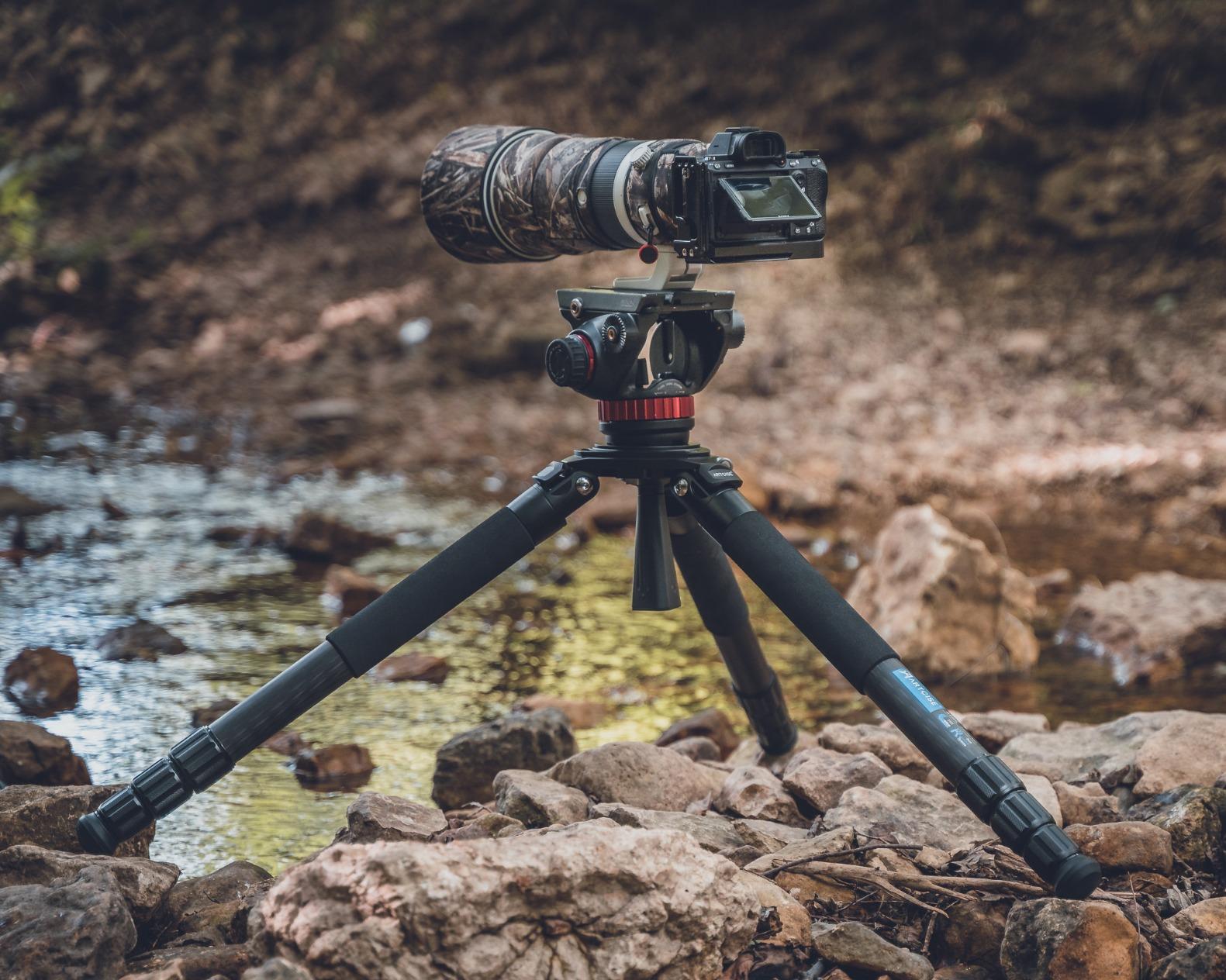
The AS90C is the other tripod in this group with 40mm carbon tubes and an 88 lb rating, and its patented 75mm fast leveling bowl is the feature that wins over wildlife shooters who work fast on uneven ground. Twist a collar on and the whole head stays level while the feet find their footing, which saves a lot of time compared with re-leveling by hand after every reposition.
Like the RT90CG, it is a center-axis-free design, meaning the load path runs straight down the legs without a column to flex. Owners report pairing it with gimbal heads and with 400mm lenses weighing over 5 kg, and it holds 88 lb / 40 kg on roughly 6 lb of net tripod weight.
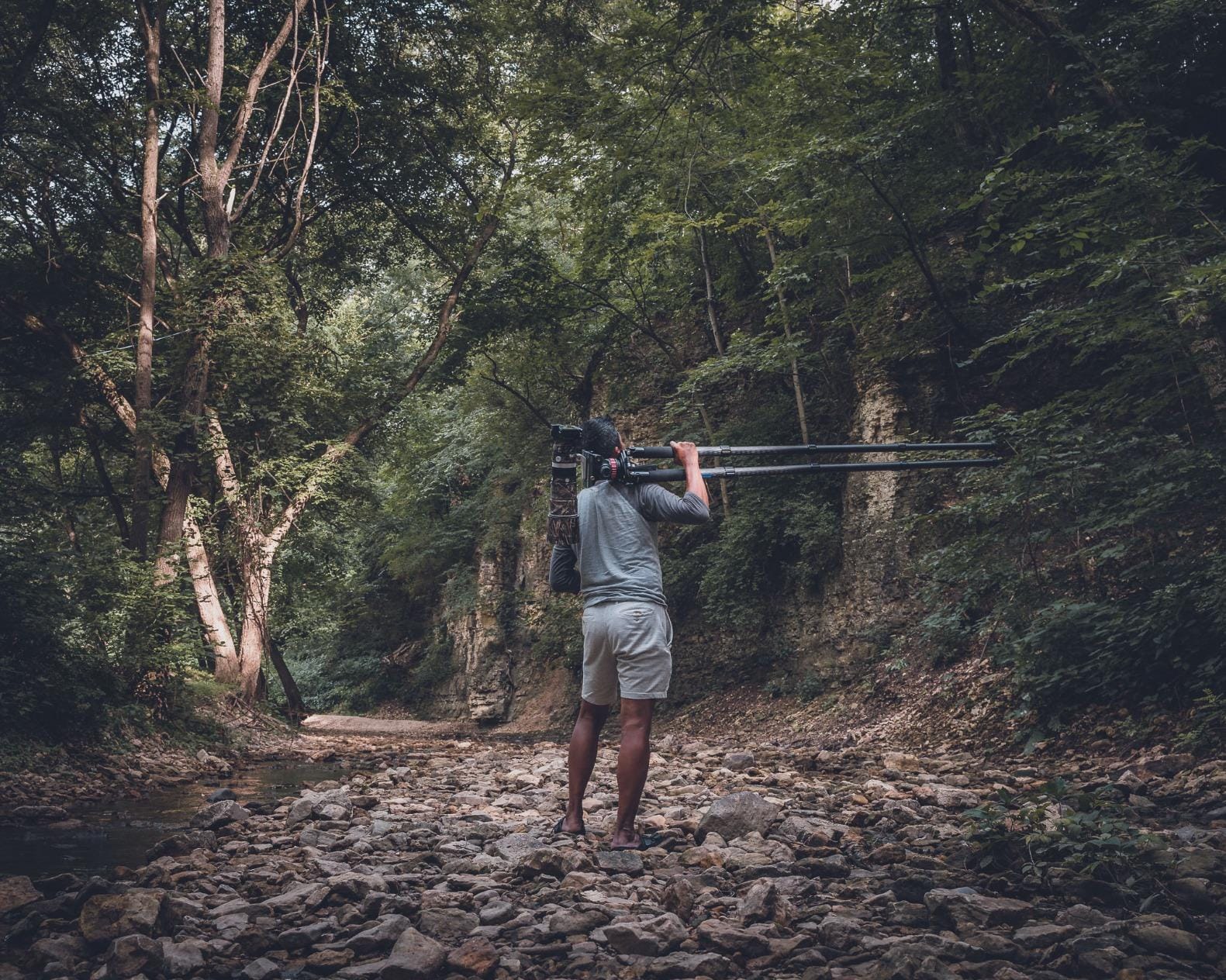
The four-section legs use quick-release twist locks and adjust independently in both length and angle, and the whole thing folds to 23 in for transport. The package includes a tripod case and spikes.
Long-exposure users have one recurring note. Some owners who compare it against a Gitzo report residual vibration that shows up on multi-second exposures, which traces to component tolerances rather than the leg design itself. For stills at 1/500 sec it is a non-issue.
Who the AS90C suits
If your lens weighs 8 lb or more, this is the one to look at first. The leveling bowl means you can keep a long lens axis horizontal on a hillside without fighting the ball, and the wide 40mm tubes resist the torsional twist that softens frames at 400mm and beyond.
It also works for anyone pairing a heavy rig with a gimbal head for panning, since the bowl interface is standard and the rating leaves plenty of headroom.
Where it falls short
There is no 1/4-inch accessory port on the apex as supplied, so magic arms and monitor mounts need another solution. And if you are doing long exposures rather than wildlife work, the slightly looser tolerances some owners describe are worth weighing against an alternative.
3. SIRUI AM-324 Carbon Fiber Tripod: Best Budget Pick for Long Glass
SIRUI 57″/145cm Carbon Fiber Camera Tripod, Max Laod 20KG, AM-324
Load: 44 lb / 20 kg
Weight: 3.1 lb
Top tube: 32mm carbon
Max height: 57.1 in
Folds to 20.5 in
Pros
- 3.1 lb weight with a 44 lb / 20 kg rating
- Metal twist locks with anti-slip pads
- Three leg angle settings with fine tuning
- No center column for ultra-low shooting
- 6 year manufacturer warranty
Cons
- Carry bag too short with a ball head fitted
- 57 in maximum height is short for taller users
- Some plastic collars have cracked
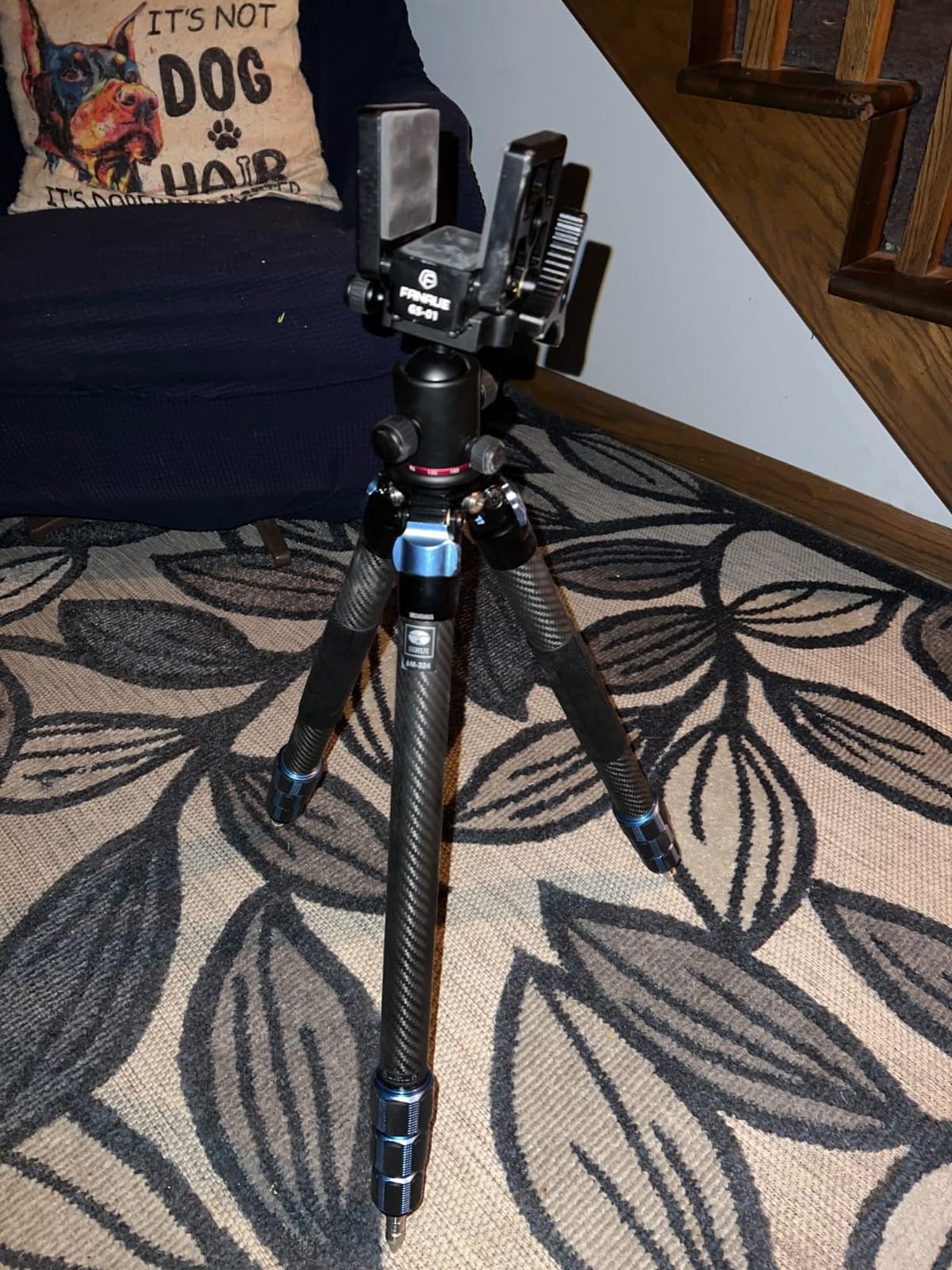
The AM-324 is the one to watch if your kit is a 100-400mm or a 200-500mm and you care more about carrying weight than about owning the last 10 lb of rigidity. At 3.1 lb it weighs about half of the 40mm-tube carbon tripods in this group, and it still carries a published 44 lb / 20 kg rating.
With a 10x carbon tube construction and a 32mm maximum tube diameter, it is meaningfully lighter than the aluminum options at the same price band. Owners report steady support with a Canon R7 and a 200-800mm, which is a heavy setup for a tripod this light.
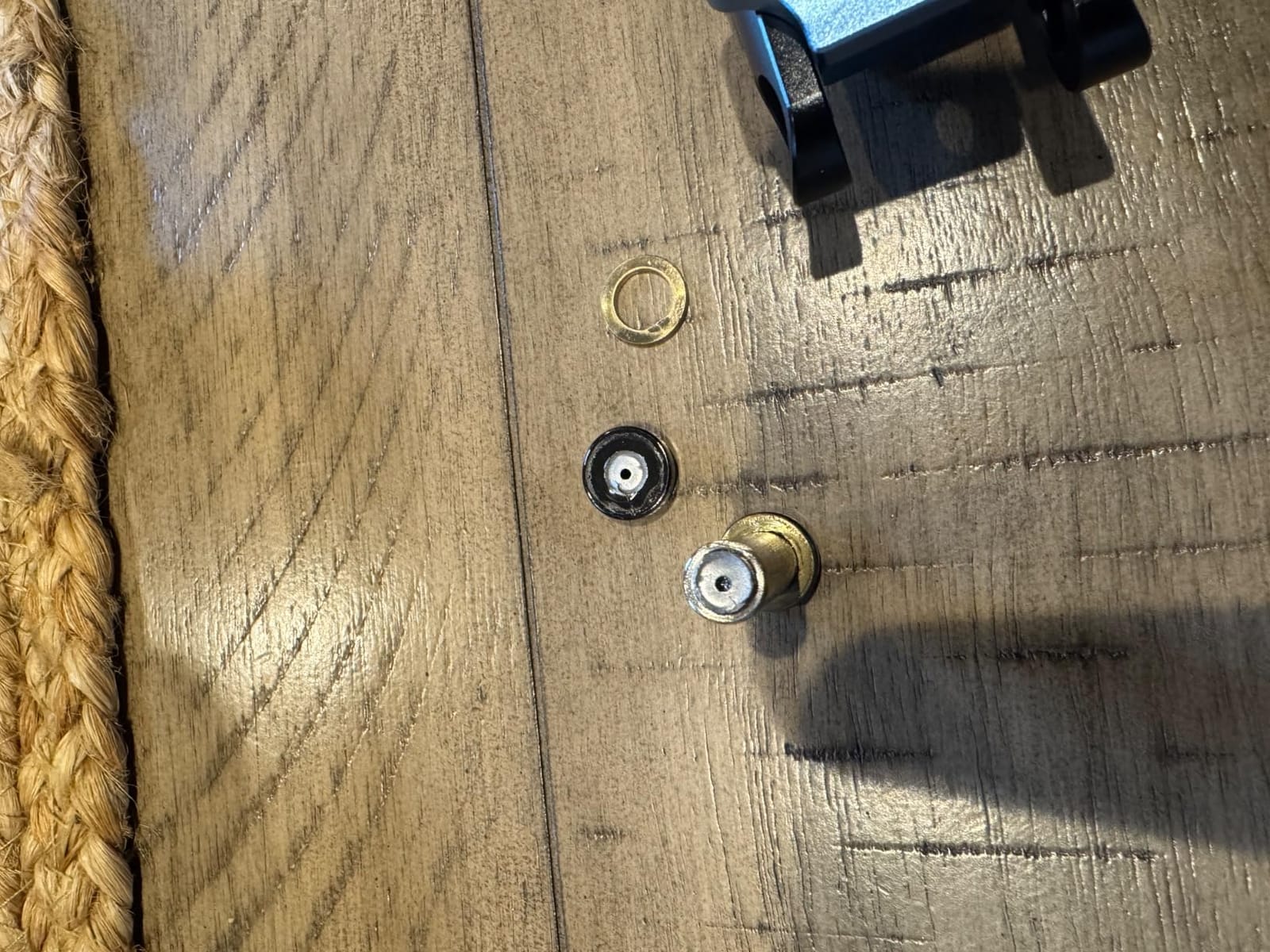
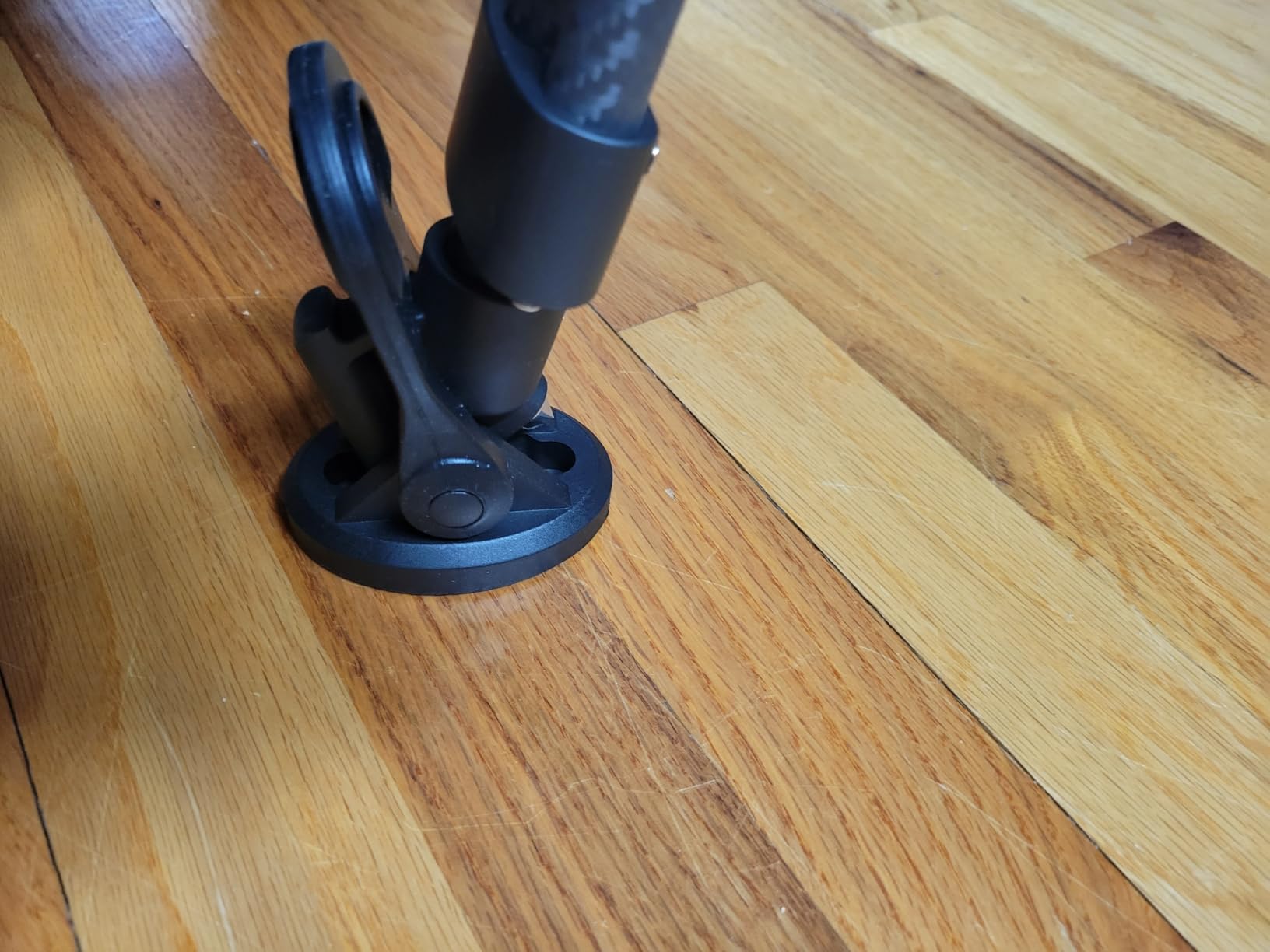
The blue anodized metal twist locks have anti-slip rubber pads and silica gel sleeves, and they operate in a half turn, which matters when you are setting up before first light. Three leg angle options at 22, 55 and 85 degrees include Allen key fine adjustment at each setting.
There is no center column, which again removes a flex point and gives you genuine macro and ultra-low positions. The height range runs 3.1 in to 57.1 in and it folds to 20.5 in, with interchangeable rubber feet and metal spikes in the box.
Who the AM-324 suits
This is the pick for a hiker, a hunter, or a birding shooter who walks in with a long telephoto and cannot justify carrying 6 lb of tripod. The 32mm top section handles a 5 to 6 lb lens without visible flex, and the 20.5 in folded length fits into a pack far more easily than the 30 in folds on the three-section tripods here.
The six-year manufacturer warranty is the longest on this list and is honored by SIRUI USA, which matters for a tripod you plan to keep for a decade.
Where it falls short
The 57 in maximum height is the limiting number. With optics mounted, a taller shooter ends up stooping, and reaching for the center column is not an option because there isn’t one. The supplied carry bag is also too short to accept the tripod with a ball head attached, so budget for a separate case if you travel.
4. Manfrotto MT055CXPRO3 Carbon Fiber Tripod: Best Value Three-Section Design
Manfrotto MT055CXPRO3 Carbon Fiber 3-Section Tripod with Horizontal Column,Black
Load: 19.8 lb
Weight: 4.4 lb
Sections: 3 carbon
Max height: 66.9 in
Head: pan-tilt
Pros
- Three-section premium carbon legs
- Q90 column rotates horizontal for macro
- Easy Link accessory port
- Rotating bubble level on the upper disk
- Handles a 200-400mm f/4 with a D850
Cons
- Quick-release leg clamps can pinch fingers
- Carbon center column sheds black dust
- Supplied without a case or head
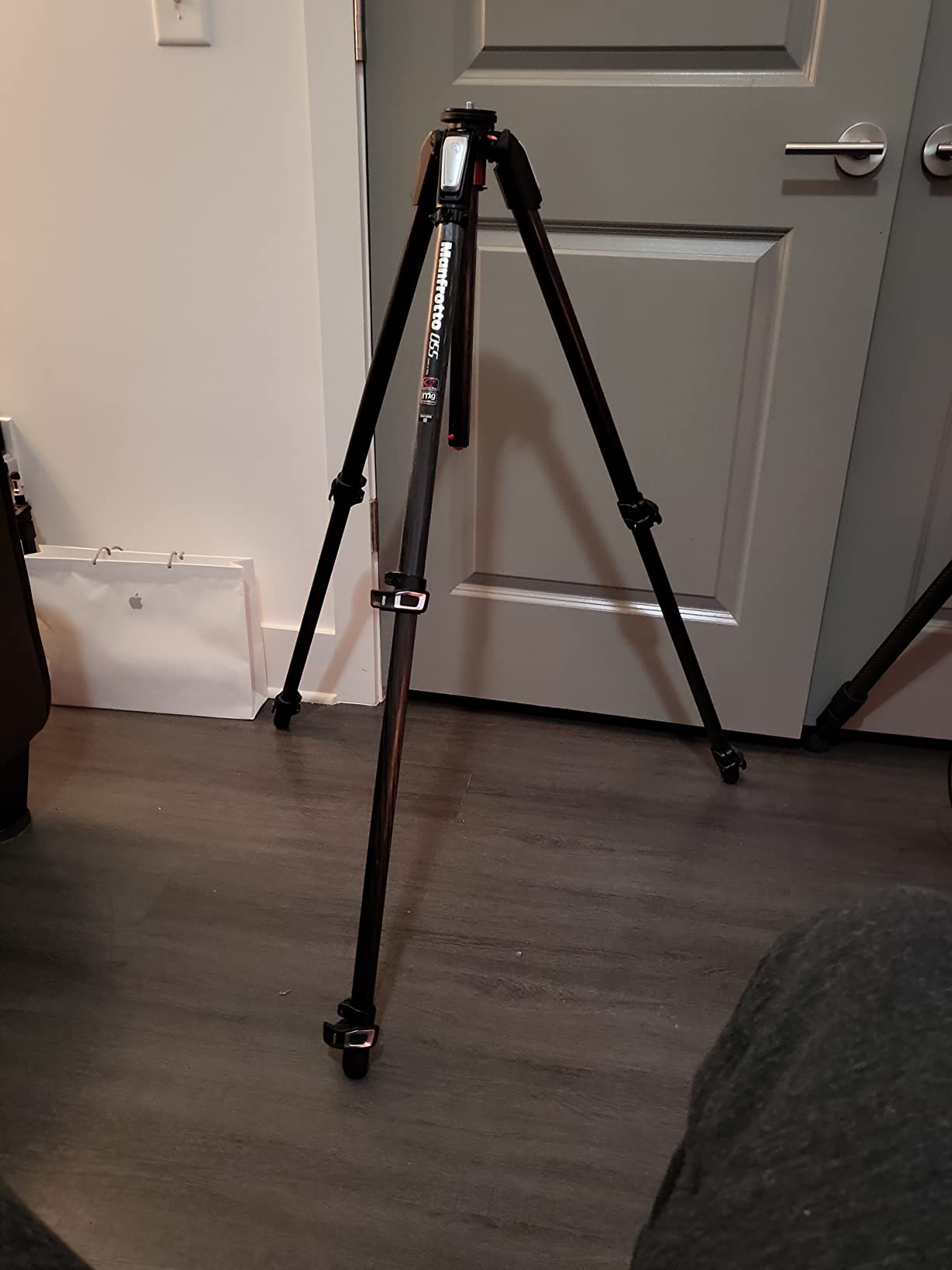
Three section legs are the stiffest arrangement available, and the MT055CXPRO3 is the only tripod here that uses them. Each leg is one long carbon tube rather than a telescoping stack, which removes every joint that could resonate. That is why it feels solid under a 200-400mm f/4 slung off a D850.
At 4.4 lb it is also dramatically lighter than an equivalent aluminum three-section tripod, and it reaches 66.9 in without a column, which means you can shoot standing rather than stooping.
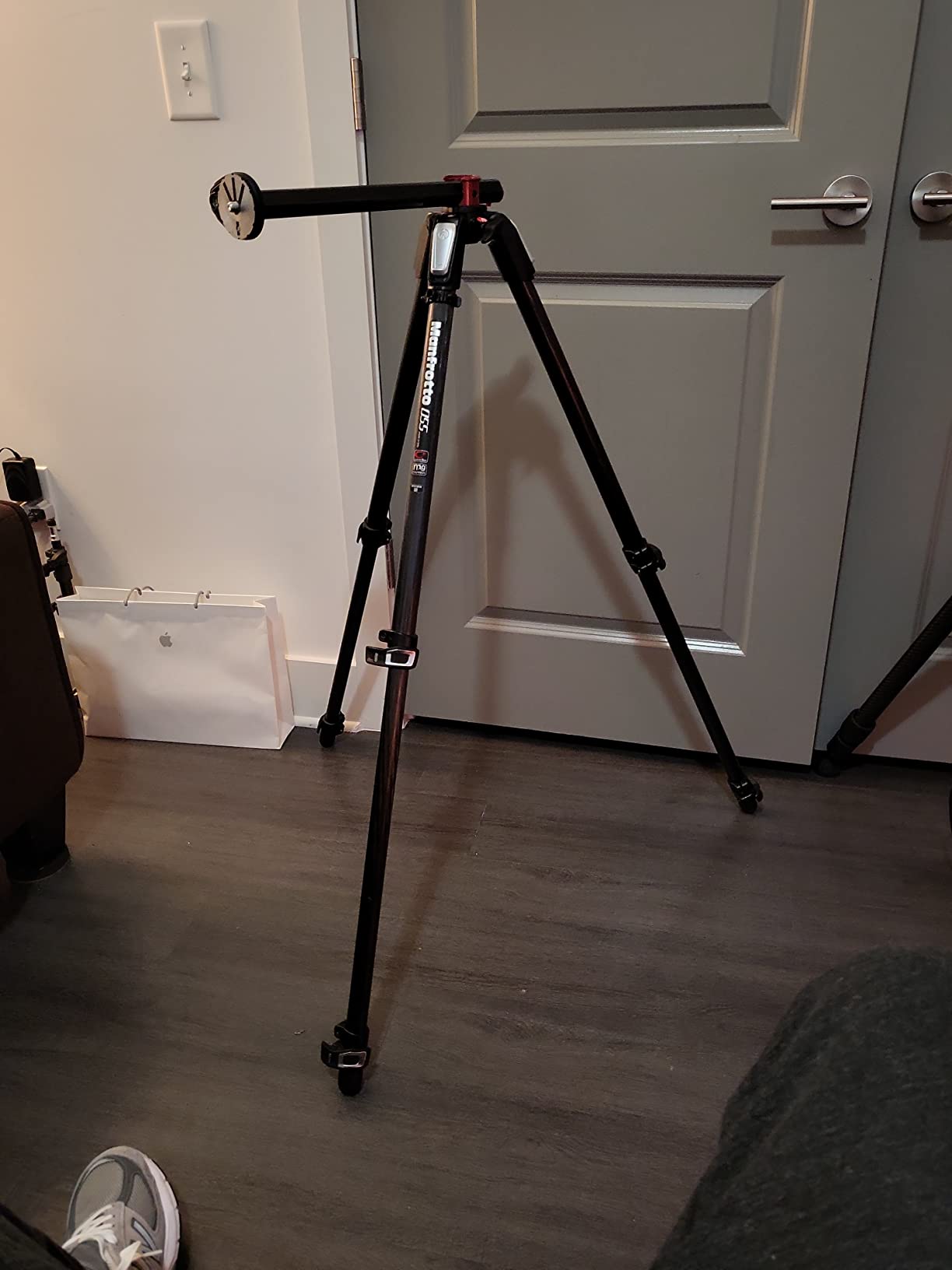
The Q90 center column rotates to horizontal with a one-finger movement, which turns this into a capable macro and low-angle tool without adding a dedicated low-angle head. Easy Link ports on the top plate accept a shutter release or cold shoe, and the rotating bubble level on the upper disk lets you level on any plane without a separate accessory.
Long-term owners consistently rate it as a durable professional workhorse, and it holds 19.8 lb of rated load, which is enough for a body plus a 100-400mm and not much more.
Who the MT055CXPRO3 suits
Pick this one if you shoot wide scenic work, long exposures, and occasional wildlife with a mid-size zoom, and you want a tripod that will damp vibration rather than transmit it. Three-section carbon legs have a noticeably lower resonant frequency than four-section designs, which shows up as cleaner edges on multi-second exposures.
The horizontal column also makes it the only tripod here that handles macro work natively without extra hardware.
Where it falls short
The 19.8 lb rating is the lowest here among the carbon options, so this is not the tripod for a 600mm or a body with a large battery grip attached. It is supplied without a case and without a head, and the carbon center column sheds a fine black dust that needs regular wiping off your clothing.
5. SIRUI AM-324S with G1 Ball Head: Best for Pans and Tracking
SIRUI 59.8″/152cm Heavy Duty Carbon Fiber Tripod for Camera, Max Load 20kg
Load: 44 lb / 20 kg
Weight: 3.8 lb
Top tube: 32mm carbon
Max height: 57 in
Folds to 22 in
Pros
- 44 lb / 20 kg rating in a 3.75 lb body
- G1 ball head with a lowered center of gravity
- Six 1/4-inch accessory ports
- Corrosion-resistant carbon
- Owners report steady support with 200-500mm glass
Cons
- Some lateral flex in the legs
- Ball head threads loosen over time
- No center column so pans need a base
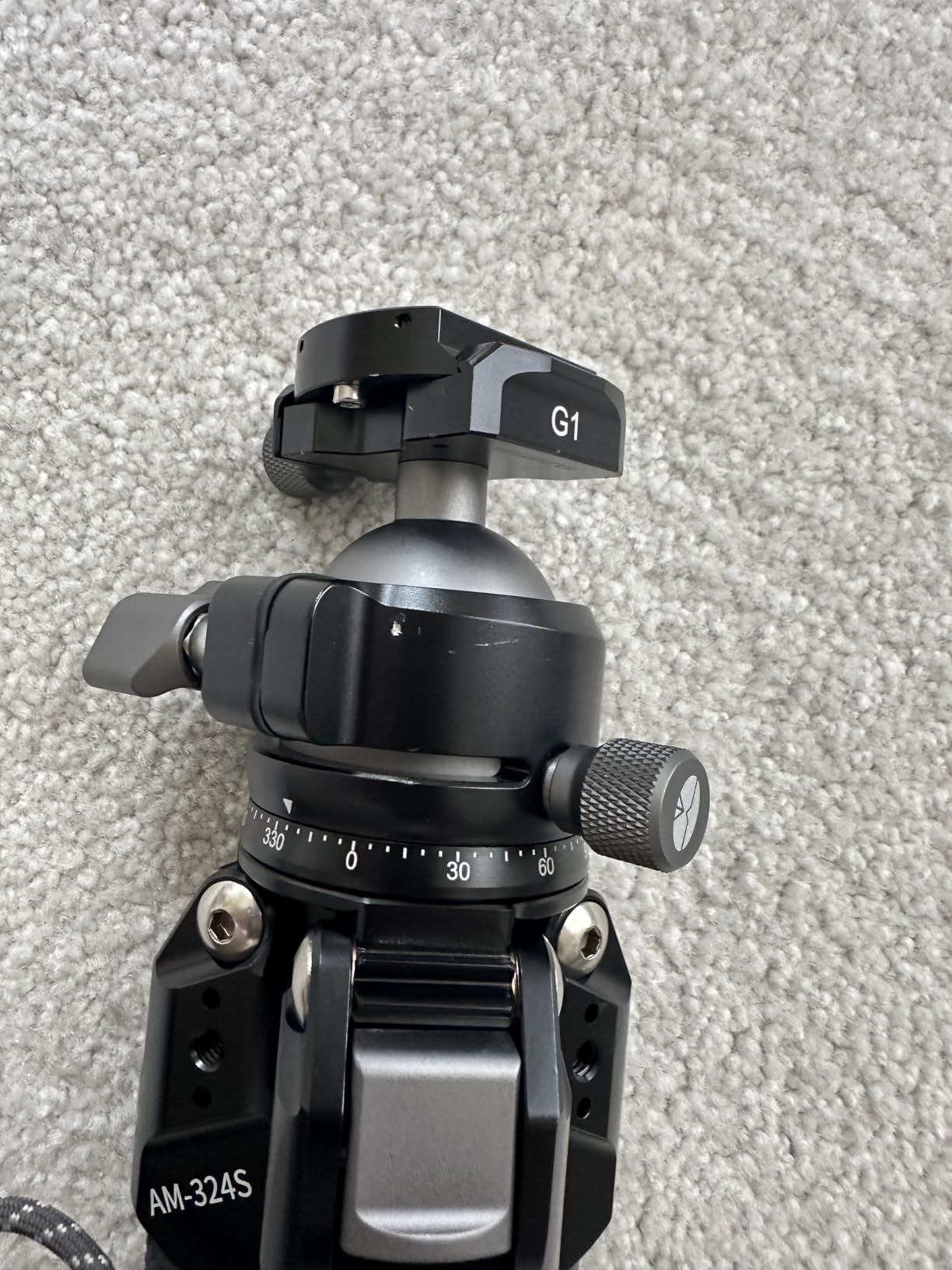
Where the plain AM-324 ships as bare legs, this version comes with the G1 ball head already attached, and that head is the reason to consider it. SIRUI engineered it with a lowered center of gravity specifically to reduce shake during pans, which is exactly the failure mode of a front-heavy telephoto rig on a standard ball head.
The body is still light at 3.8 lb and folds to 22.05 in, and the 44 lb / 20 kg rating matches the AM-324. Owners report steady support with a Nikon 200-500mm, a Sony 200-600mm and a Canon 100-400mm.
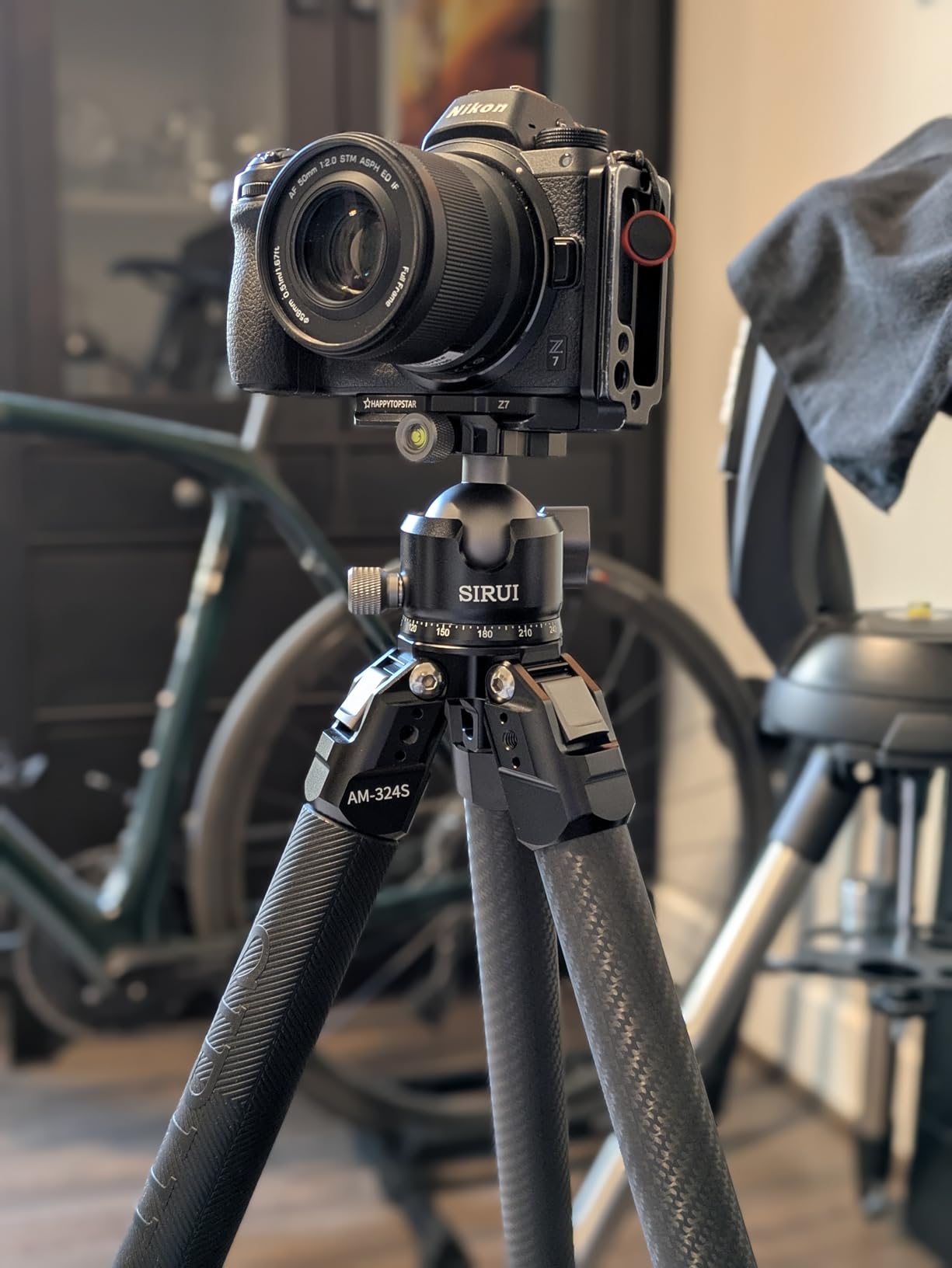
Four-section legs with a 32mm maximum tube diameter take it to 57 in, and six 1/4-inch accessory ports let you attach arms, monitors, microphones or lights without an adapter. The carbon is described as corrosion-resistant, which matters for coastal and salt-water shooting, and a spirit level and hook are included.
The four-section layout folds shorter than the three-section tripods here, which makes it a better pack for a walk-in hunt location than a 30 in folded alternative.
Who the AM-324S suits
Choose this if panning is part of your work. A lowered-center-of-gravity ball head is a meaningful upgrade over a generic head when a long lens is cantilevered out front, because it resists the forward droop that makes a standard ball head sag when the pan knob is tightened.
It is also the most complete package here at this weight, since you are not sourcing a head separately, and the fold to 22 in keeps it practical for a hike-in location.
Where it falls short
A few owners report lateral flex in the legs during long exposures, and the ball head can thread loosely with use, which needs a periodic check before a shoot. With no center column, level panoramas need a leveling base rather than a column twist.
6. SmallRig 79 Inch Carbon Video Tripod: Best for High-Position Video
SmallRig 79”/200.5cm Carbon Fiber Video Tripod with 7-Step Counterbalance
Load: 37.5 lb max
Weight: 14.7 lb
Head: 100mm bowl fluid
Working height: 35 to 79 in
Pros
- One-click knob deployment for full leg setup
- 100mm bowl fluid head with 7-step counterbalance
- 79 in working height for high framing
- Four plus four damping levels
- Dual-mode snap-on plate for DJI gimbals
Cons
- Wobbly and flexible versus single-rod legs
- Counterbalance too aggressive at the lowest setting
- Limited range of pan and tilt resistance
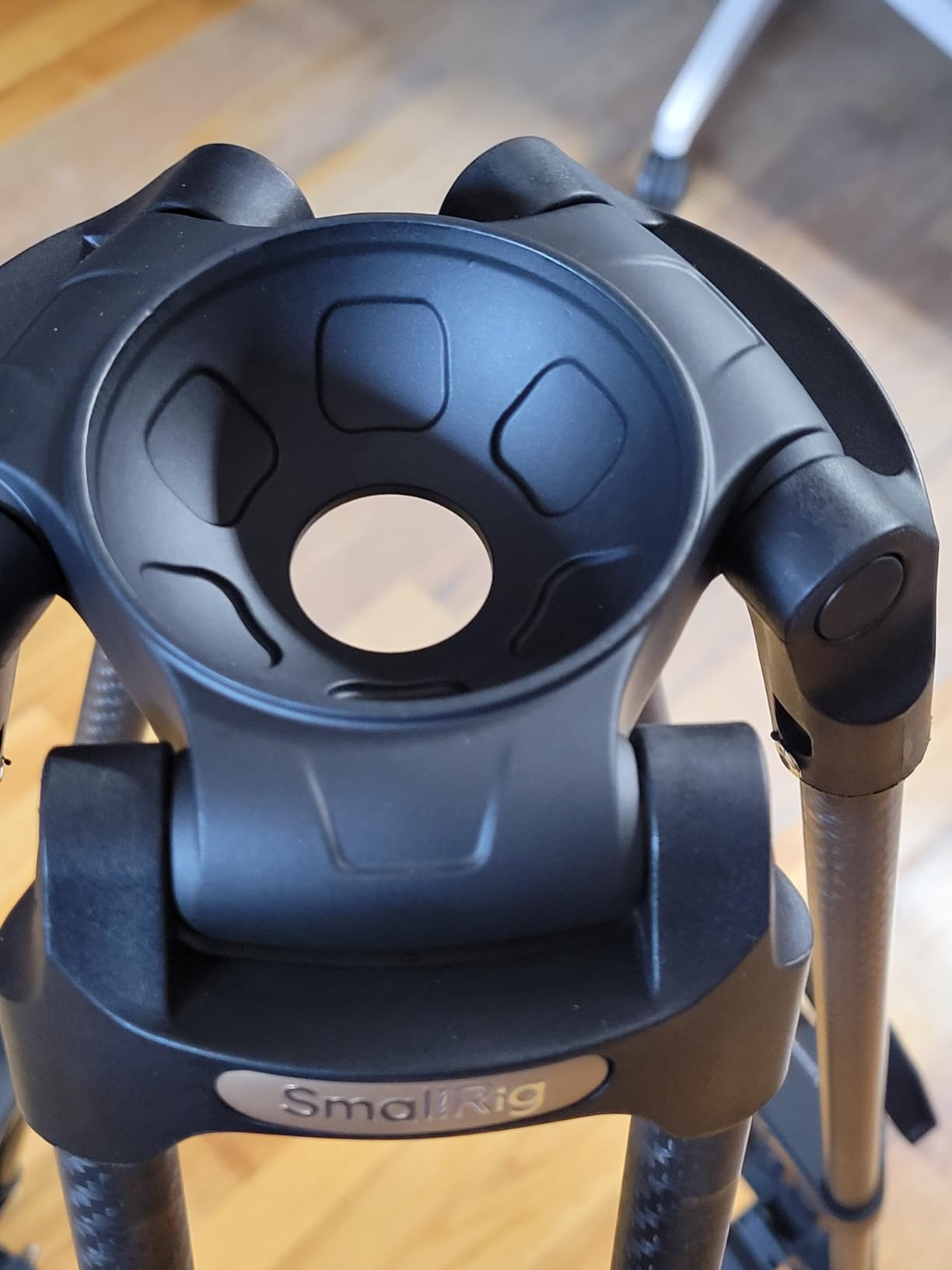
This is a video tripod rather than a photographic one, and it earns its place for one specific job: panning a long lens from a high position over a field, a stage, or a race track. The 100mm bowl fluid head has 7-step counterbalance and 4+4 damping levels, and the working height runs from 35 in to 79 in.
Deployment speed is its genuine strength. The knob-type one-click opening locks the full leg set in a single motion, and the dual-mode snap-on plate mount accepts DJI and MFT 501PL plates, so a gimbal-mounted rig can come off and a camera can go on without tools.
The head offers 90 to -60 degree tilt and 360 degree rotation, with a dynamic balance load of 9 to 22 lb against a safe load of 33 lb and a 37.5 lb maximum. At 14.7 lb this is a two-person carry, and the 18mm, 18mm and 24mm aluminum alloy tubes in a 2-2-1 arrangement explain the weight.
It is also the lowest-rated pick in this group at 4.1, and the reviews explain why: buyers like the deployment speed and the height range, but a recurring theme is lateral wobble compared with single-rod legs from Manfrotto and SIRUI at similar heights.
Who the SmallRig 79 in suits
It suits a video operator working a sideline or an event where the shot needs to be high and wide and the setup has to happen in seconds. For pans of a telephoto lens with a mirrorless body, the 7-step counterbalance gives you a workable starting point.
If your primary interest is stills with a heavy telephoto, skip this one and look at the photographic tripods instead, because the lateral wobble shows up in photos.
Where it falls short
The counterbalance is described as too aggressive even at its lowest setting for a full mirrorless rig, which causes bounce-back when you release the controls. The 37.5 lb maximum is modest for a build over 20 to 30 lb, and the 14.7 lb weight is the heaviest tripod here by a wide margin.
7. Benro Mammoth TMTH44C Carbon Tripod: Best for Bowl-Mounted Fluid Heads
Benro Mammoth Carbon Fiber Tripod – Heavy-Duty 4-Section Tripod with 75mm Bowl, Twist Locks, High Load Capacity, and Carrying Case for Professional DSLR, Mirrorless & Video Production (TMTH44C)
Load: 55 lb / 25 kg
Weight: 8.3 lb
Bowl: 75mm integrated
Max height: 63 in
Folds to 22.8 in
Pros
- 55 lb / 25 kg rating with carbon legs and magnesium castings
- Integrated 75mm leveling bowl
- Extends to 59.4 in with no center column
- 3/8-inch screws on all three sides
- Highest rating in this group at 4.8
Cons
- Foot swaps are slow
- Supplied spikes do not lock securely
- A geared head needs an adapter for the bowl
The Mammoth is the heaviest tripod here at 8.3 lb, and it is heavy for a reason: the 100 percent carbon fiber legs are paired with magnesium castings at the joints, which is the combination that resists twist best under a cantilevered load. It carries 55 lb / 25 kg and holds steady with a 600mm f/4 according to owners.
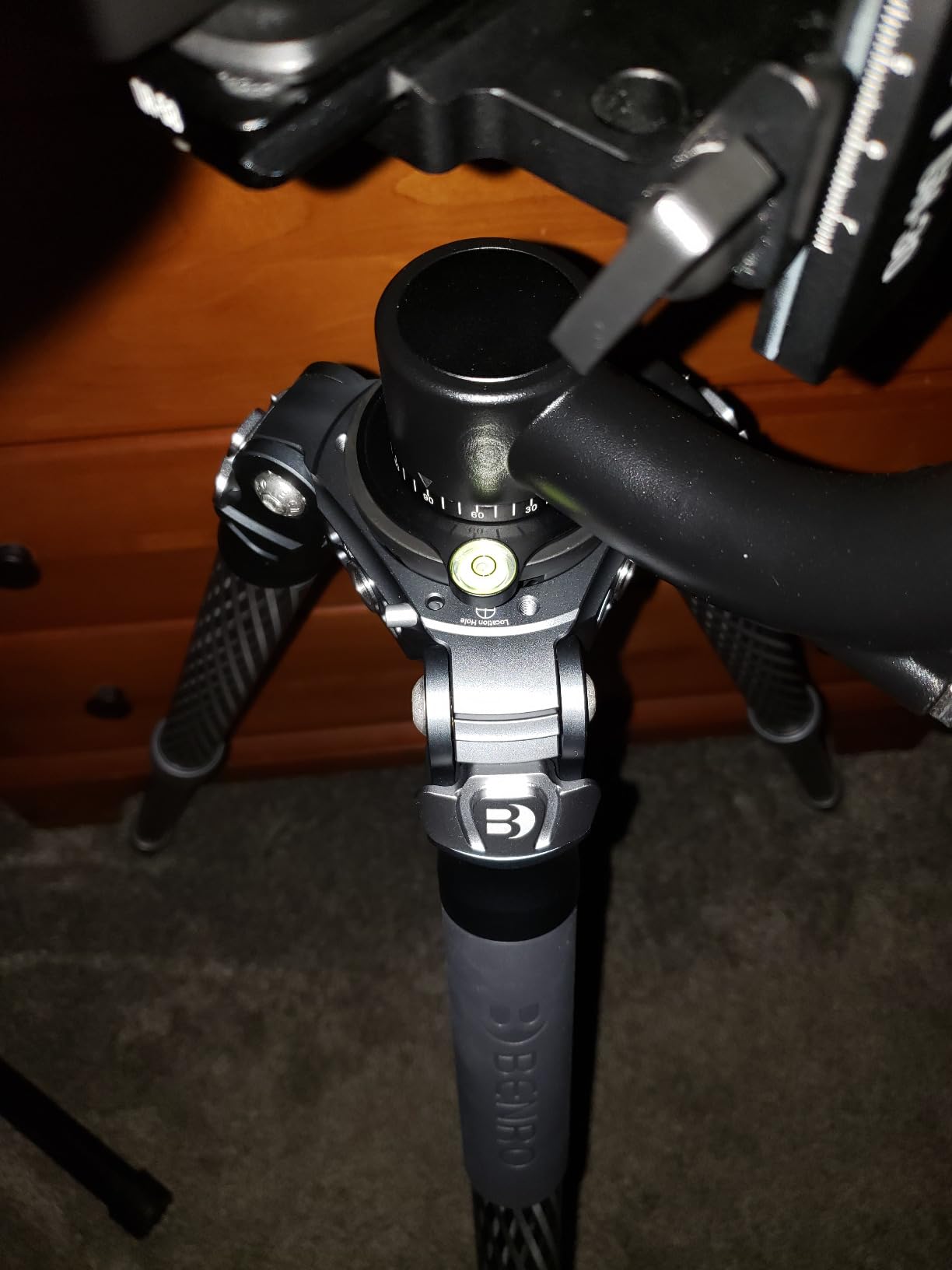
What makes it distinctive is the integrated 75mm leveling bowl. That is a serious fluid head interface, so if you ever want to move from a geared head to a proper video head, or fit a gimbal head, this is the tripod that takes it without an adapter for the bowl itself.
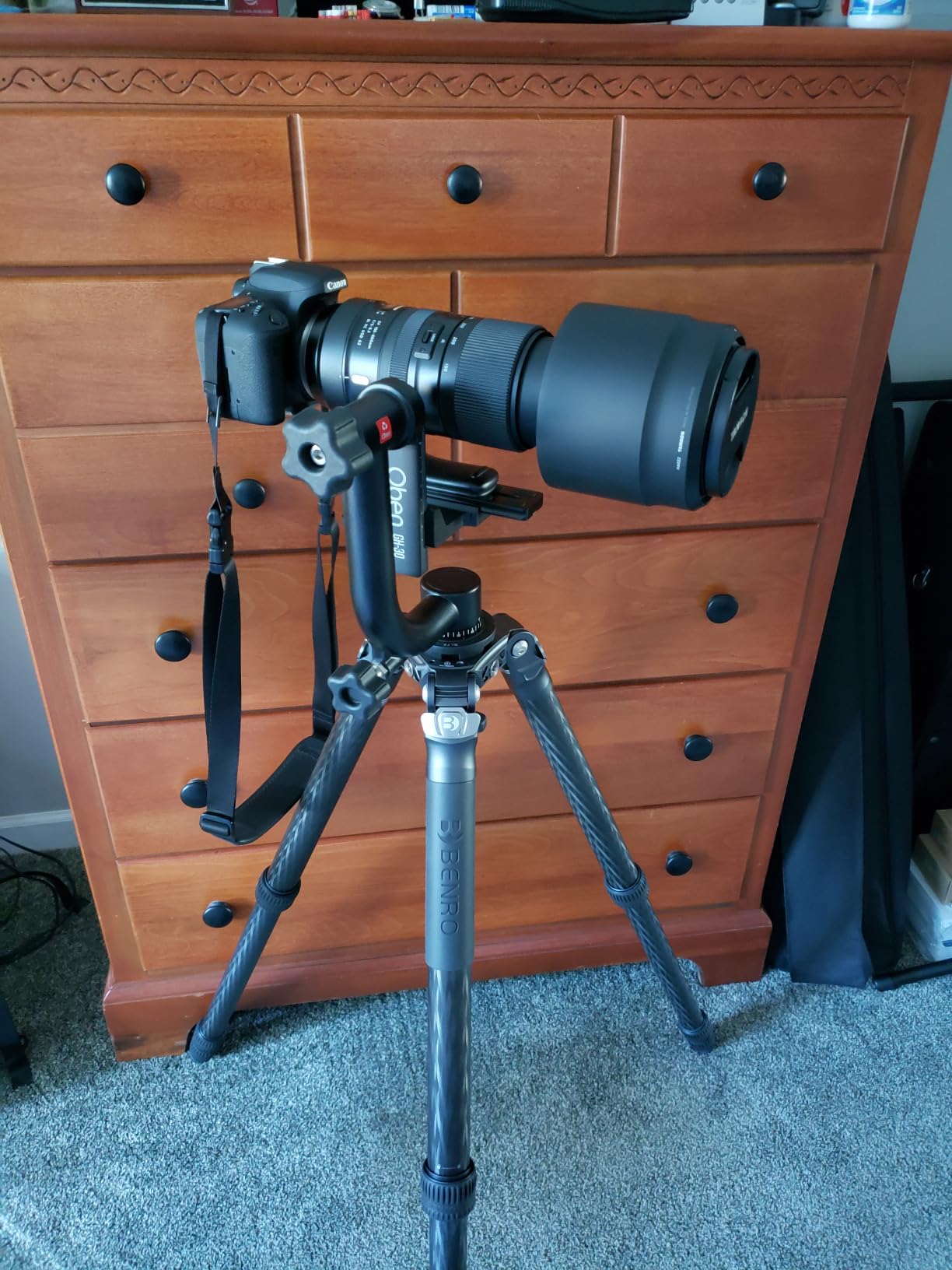
Because there is no center column, the 59.4 in extension is achieved on the legs alone, which keeps the load path stiff. The height range is 5.51 in to 62.99 in, folding to 22.8 in for transport, and there is an integrated hanging hook plus 3/8-inch screws on all three sides for attaching accessories.
The 4.8 rating across 26 reviews is the highest average in this group, with 89 percent of those reviews at five stars. The review base is small, so treat that number with some caution.
Who the Mammoth suits
This is the tripod for someone whose telephoto glass is genuinely heavy and who plans to add a fluid or gimbal head later. At 55 lb of rating it supports a 600mm lens plus a body plus a fluid head and still has margin, and the magnesium joints are what keep the frame sharp when the load sits far in front of the apex.
The integrated bowl also makes it a straightforward bridge between stills and video for the same rig.
Where it falls short
At 8.3 lb it is a carry, not a walk, and swapping between rubber feet and spikes means unscrewing each foot individually. The supplied spikes do not lock securely in the legs, and a three-way geared head needs an adapter to sit correctly on the bowl.
8. SmallRig AD-100 FreeBlazer Video Tripod: Best for Fast Video Setup
SmallRig AD-100 FreeBlazer Heavy-Duty Carbon Fiber Tripod System 78″ Tall
Load: 22 lb safe
Weight: 11 lb
Head: 75mm bowl fluid
Max height: 78 in
Folds to 39 in
Pros
- One-step toggle locks two legs at once
- Carbon fiber legs at 11 lb with 22 lb safe load
- Stepless adjustable fluid damping
- Removable telescopic pan handle
- Dual-mode plate for DJI gimbals and MFT
Cons
- Locking mechanisms are plastic and feel cheap
- 39 in folded length is bulky to transport
- 22 lb ceiling is below heavy telephoto plus slider
The AD-100 is built around one idea: getting a camera into position as fast as possible. The one-step locking system locks two legs with a single toggle, and with a 75mm detachable bowl and a stepless adjustable damping fluid head, a full setup from case to working position takes a couple of moves.
At 11 lb with carbon fiber legs and a 22 lb maximum safe load, it sits in the middle of the video tripod range here. It pans 360 degrees with tilt from +90 to -60 degrees, and the removable telescopic pan handle adjusts from 9.1 to 14.2 in so it can sit under either arm.
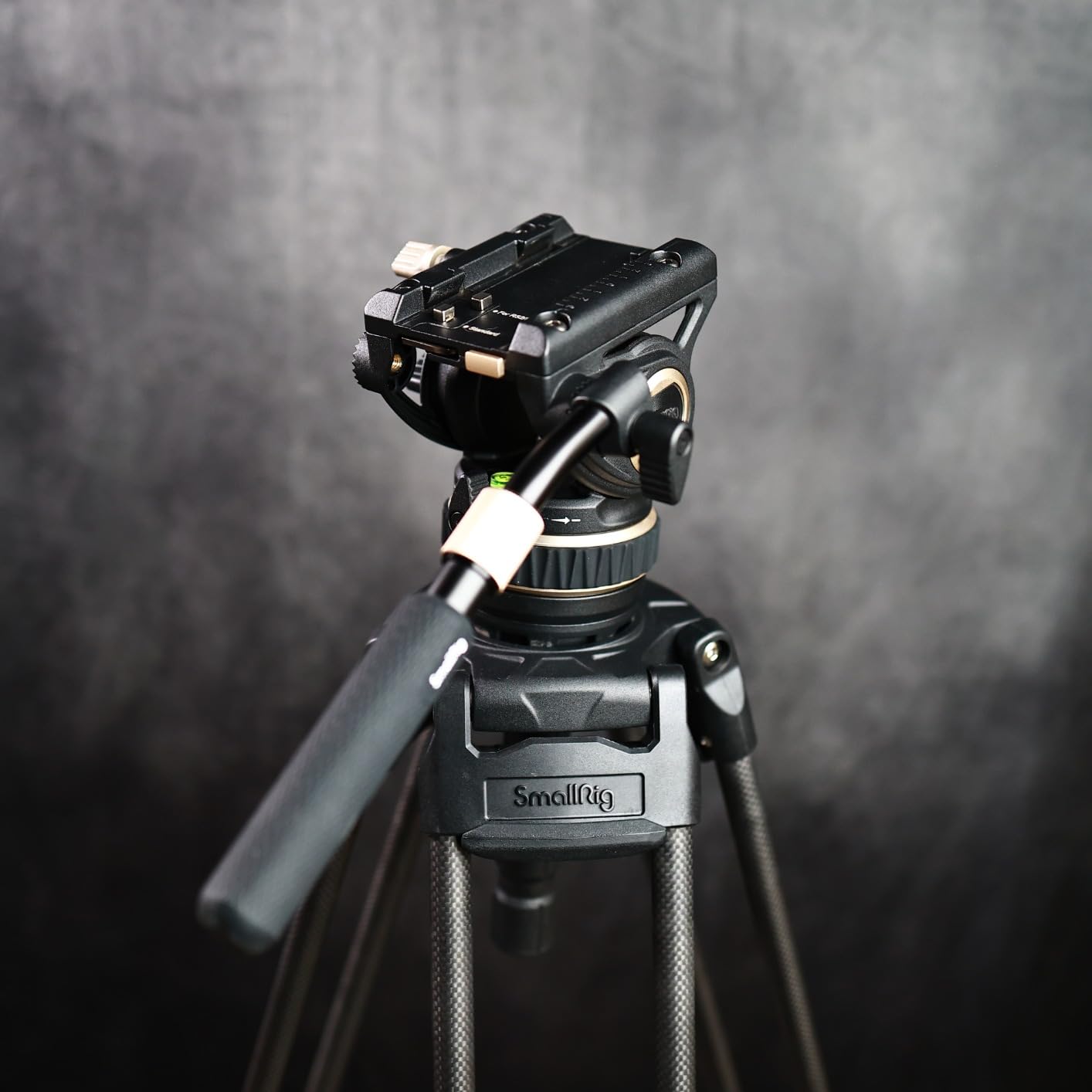
Owners report that it cured shake from cheaper tripods and that it works with long lenses, which matches the stiffer damping behavior a fluid head gives you. The dual-mode snap-on plate accepts DJI RS and MFT 501PL plates, so a gimbal rig and a camera can share the head.
Working height runs 37 in to 78 in. At 39 in folded, it is not a travel tripod in any practical sense.
Who the AD-100 suits
It suits a video operator working with a moderate telephoto who needs to reposition constantly and cannot afford to fight a traditional screw-lock tripod. The stepless damping gives finer control than a stepped fluid cartridge, which helps when panning at long focal lengths where any unevenness shows.
For a 70-200mm on a mirrorless body it is well matched, and for panning work it does a clean job.
Where it falls short
The locking mechanisms are plastic and read as cheap next to the rest of the build, and one unit in a two-unit order arrived with a bent mounting screw. The 22 lb load ceiling sits below the heaviest telephoto and slider combinations, and the 39 in folded length is bulky to transport.
9. Manfrotto 535 Carbon Fiber Video Tripod: Best for Lightweight Video Kits
Manfrotto 535 Carbon Fiber 2-Stage Video Tripod with 75mm Bowl (Black)
Load: 44.1 lb / 20 kg
Weight: 2.3 kg
Head: 75mm half ball
Max height: 67 in
Made in Italy
Pros
- Carbon fiber tubes with magnesium castings at 2.3 kg
- Built-in 75mm half ball for uneven ground
- 67 in maximum height
- Reported smooth pans with long focal lengths
- Italian build with quick clamps
Cons
- Default leg angle too steep for fast pans
- Torsional stiffness below double-tube designs
- No proper weight hook
At 2.3 kg with a 44.1 lb rating, the Manfrotto 535 carries less mass than most of the tripods here while staying well inside its load limit. For a video kit with a long focal length, that weight-to-load ratio is hard to argue with.
The built-in 75mm half ball is the detail worth noting. It lets the top plate level itself on uneven ground without a separate leveling base, and owners report excellent vibration damping and smoother pans at longer focal lengths than the tube diameter alone would suggest.
Quick clamps replace screw locks on the legs, which is faster and easier to operate in gloves, and the whole thing is made in Italy.
Torsion stiffness is the trade-off. Owners comparing it to the double-tube Manfrotto 546B report that the single-tube design here is measurably less stiff, and the default leg angle is steep enough that a light payload can lift the legs during a fast pan. Choosing the flattest leg-angle setting improves it noticeably.
Who the 535 suits
This is the one to pick when the tripod needs to be carried between locations and the payload is a mirrorless body with a 70-200mm or a short telephoto. At 5.1 lb you can carry it for a full day, and the 67 in maximum height covers standing and high-angle framing without stooping.
The carbon construction damps vibration well, which is why owners report clean results at long focal lengths despite the single-tube legs.
Where it falls short
It is not the choice for a heavy telephoto stills rig, because the torsional stiffness falls short of double-tube designs and the load is cantilevered far forward. There is also no proper weight hook, only two eyelets, and the transport length is longer and bulkier than lighter alternatives despite the weight saving.
10. INNOREL ST424C Carbon Bowl Tripod: Best for Monopod Conversion
Carbon Fiber Tripod INNOREL ST424C Professional Heavy Duty Camera Stand with 75mm Bowl Adapter 42.4mm Tube, Max Load 92.6lbs/42kg,Max Height 66.9in/170cm for DSLR Camcorder Travel Shooting Bowl Tripod
Load: 92.6 lb / 42 kg
Weight: 2.51 kg
Top tube: 42.4mm carbon
Max height: 170 cm
Pros
- Largest load rating here at 92.6 lb / 42 kg
- Widest leg tubes at 42.4mm in 10-layer carbon
- One leg converts to a monopod
- CNC anodized main components
- 2.51 kg despite the 42 kg rating
Cons
- Only 20 reviews so durability data is thin
- Legs must be partly extended for a sane working height
- Supplied with a pan head rather than a fluid head
The ST424C has the widest top-section tubes in this group at 42.4mm, tapering to 31mm, and the largest load rating at 92.6 lb / 42 kg, all on 2.51 kg of weight. Wide tubes and a high rating together are exactly the combination you want when a 600mm hangs well forward of the apex.
The 2-in-1 design is the standout feature. One leg unclips to become a monopod or hiking alpenstock with a 57 to 178 cm height range, which turns a sit-and-wait tripod into a support you can carry into a marsh at first light. That versatility is why it earns a place on this list.
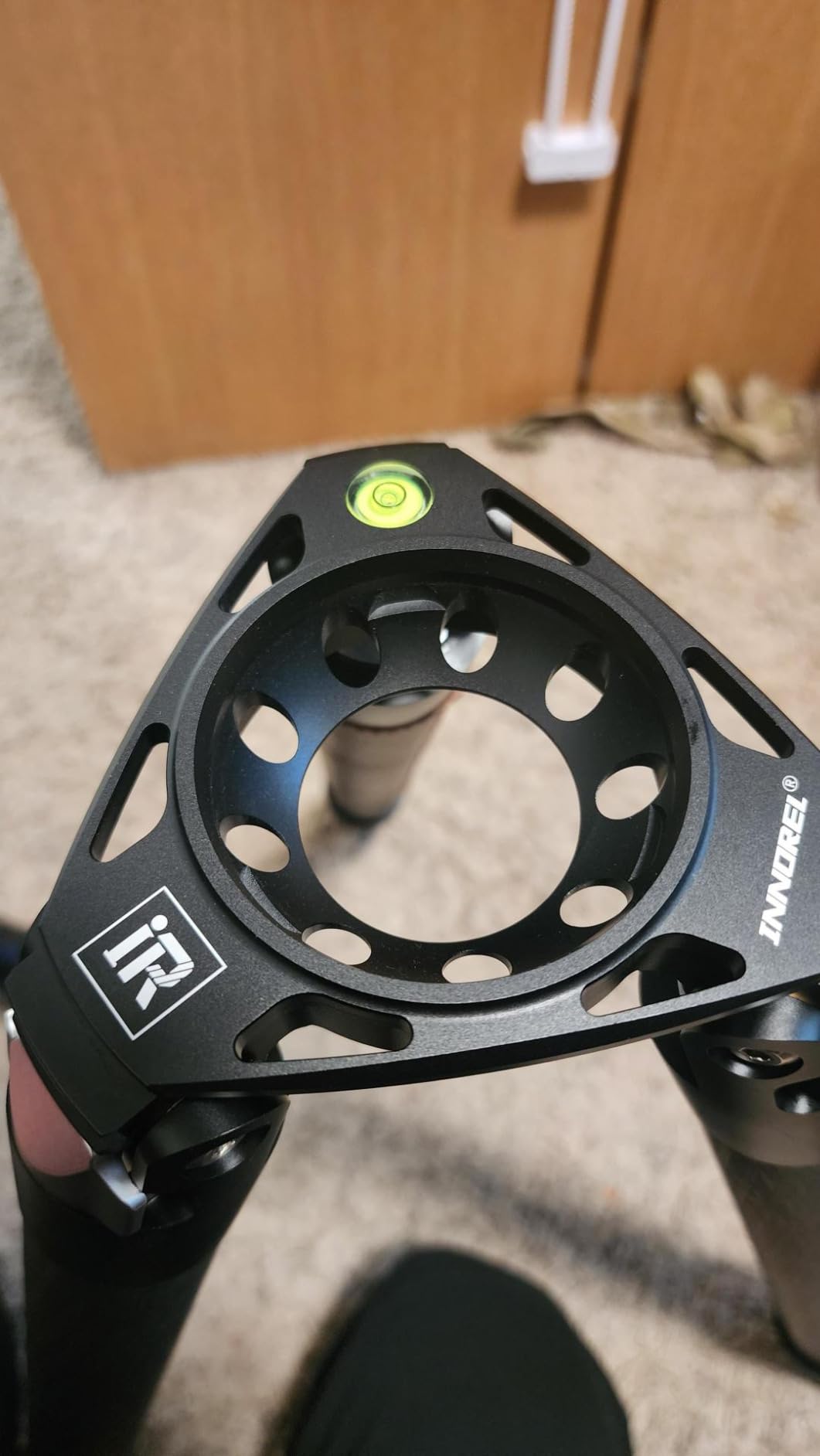
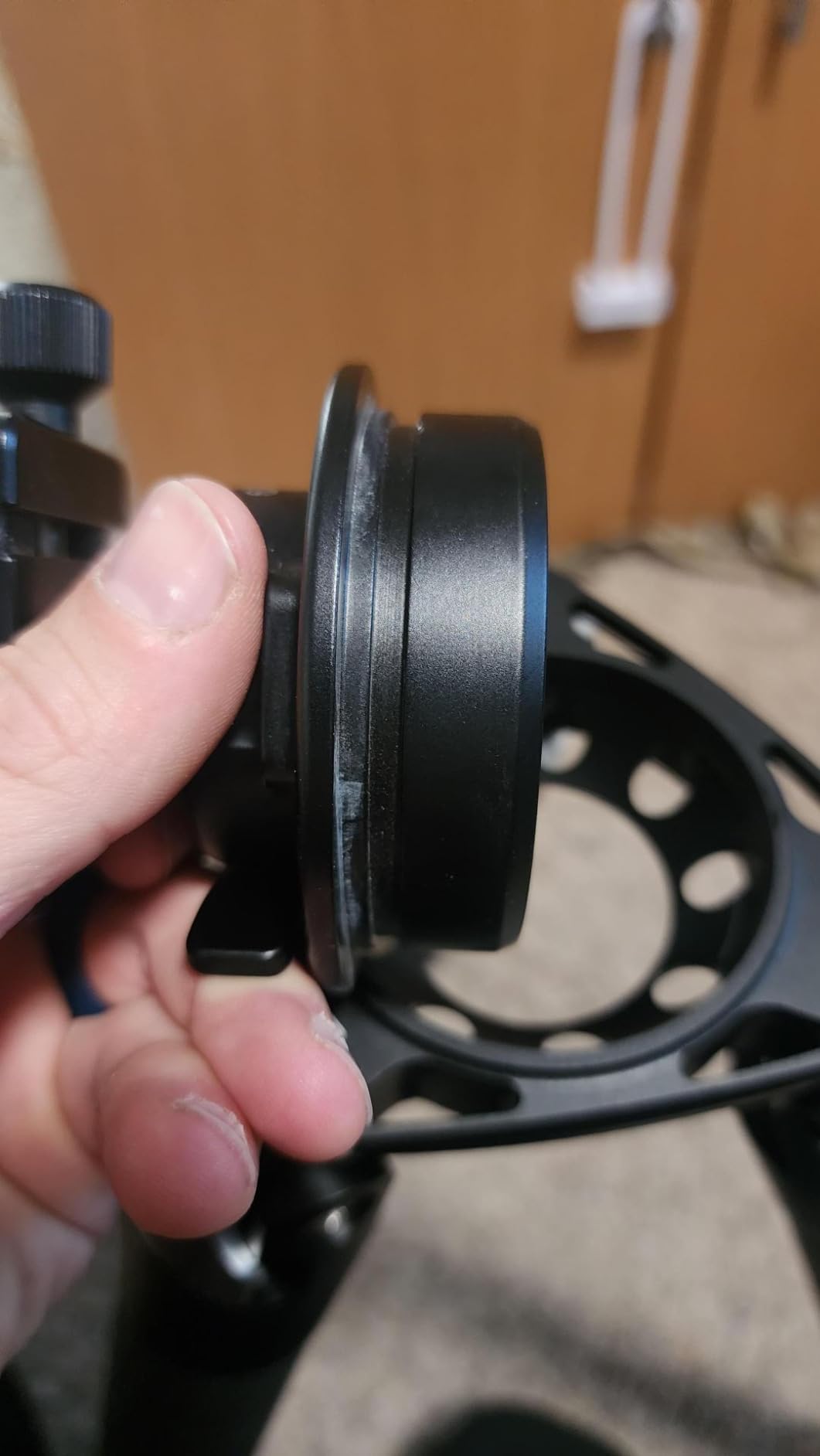
Like the other INNOREL bowl tripods here, there is no center column, so the 58 cm to 170 cm range comes from the legs alone and the load path stays stiff. The main components are CNC anodized aluminum, and the package includes a 75mm bowl adapter, camera strap, three Allen keys, stainless steel spikes and a tripod bag.
Reviewers describe it as a fast, effective spotting-scope and birding support, and 88 percent of the 20 reviews are five star.
Who the ST424C suits
It suits a birding or wildlife shooter whose approach involves real walking rather than a short walk from a car. As a monopod it absorbs a 8 lb lens for long periods at a hide; as a tripod the 42 kg rating carries a 600mm and a large body with room to spare.
The lack of a center column is also a genuine advantage here, since it means one less section that can resonate under a heavy load.
Where it falls short
With only 20 reviews, there is limited long-term durability data to go on. The legs need to be partly extended to similar lengths to keep the head at a workable height, which costs you some low-angle flexibility, and it is supplied with a pan head rather than a fluid video head.
Why Heavy Telephoto Lenses Break Normal Tripods
A 200mm or longer lens places several kilograms of glass well in front of the tripod head. That distance acts as a lever, and the force the lens exerts on the mount grows with the distance, not just with the weight.
The result is visible in two ways. The lens droops forward on a ball head as you tighten the pan knob, because friction on a front-heavy load does not lock in one direction. And any small rotation at the head gets amplified by the focal length into visible blur, which is why a twist of two degrees matters far more at 600mm than at 24mm.
Tripods advertised as heavy duty often fail exactly here. They are built to hold a weight without collapsing, which is a much easier engineering problem than resisting a cantilevered torque.
Load Rating vs Torsional Rigidity: The 2x Headroom Rule
Load rating is the weight a tripod can hold. Torsional rigidity is how much it resists twisting. They are different measurements, and only the second one decides whether your telephoto photos are sharp.
The practical rule is to take your body plus lens plus accessories, double it, and choose a tripod rated at or above that number. A 22 lb rig gets you to a 44 lb rated tripod, which is where the SIRUI AM-324s sit. A 30 lb rig with a 600mm wants 60 lb or more, which lands you in the Benro Mammoth and INNOREL RT90CG territory.
The second rule matters just as much: look at the top-section tube diameter, not the rating. At least 32mm is the floor for a 100-400mm class lens, and 40mm or wider is where you go for 200-500mm and 600mm glass. Section count comes next, since fewer sections means fewer joints that can resonate, which is why the Manfrotto MT055CXPRO3 feels so solid with three carbon sections.
Run a tap test before you rely on any tripod. With your rig mounted through the lens collar, push down on the camera, then tap each leg and the head firmly. If the shake keeps going for more than about two seconds, the legs are too thin for that load.
Carbon Fiber vs Aluminum for Heavy Telephoto Work
For heavy telephoto work, carbon fiber wins on vibration damping and carry weight. Aluminum wins on durability, value, and tolerance of abuse. The comparison below covers the six factors that actually change your results.
Carbon fiber damps faster; aluminum survives longer
Carbon fiber is roughly a third lighter than aluminum for the same stiffness, which is why both tripods under 4 lb here are carbon. It also damps vibration better, so the shake after you tap it settles faster. The downside is price, and the fact that carbon resin can shed a fine black dust from moving joints.
Aluminum is heavier and cheaper, and it rings slightly after being touched, which matters if you shoot long exposures and someone bumps the tripod. It tolerates drops and hard knocks far better, which is why photo.net regulars have kept aluminum three-section tripods in service for decades.
Cold-weather handling is worth noting too. Carbon is comfortable to handle bare-handed in freezing conditions, while aluminum conducts cold straight into your fingers and makes fiddly lock adjustments slower.
Which Head Type Handles a Heavy Telephoto Rig
The head matters as much as the legs once a lens is cantilevered forward, and the four main types suit very different jobs. A ball head is the simplest and fastest for stills, provided it has a low center of gravity and enough friction to stop creep.
A three-way pan-tilt head gives you precise axis control for wide scenic shots and architecture, at the cost of slower repositioning. A fluid video head is what you want for any kind of pan with a telephoto, because the cartridge damps the start and stop of the movement instead of letting it jerk. A gimbal head lets you balance the actual center of gravity of the rig over the tripod apex, which is the most forgiving option for long lenses in video.
Whatever you choose, mount through the lens collar. That single change puts the mass of the lens directly over the support, drops the effective torque on the head, and removes the forward droop that ball heads are notorious for. It is also why we favor tripods with 75mm bowls: you can change head type later without buying a new tripod.
Field Stability Checklist for Heavy Glass
Most soft telephoto frames are caused by setup, not by equipment. Work through this list before every shoot and you will remove most of the variables.
Mount the tripod through the lens collar with an Arca-compatible plate, not the camera body. Keep the center column fully down, or remove it entirely. Hang your camera bag or a weight from the hook under the apex to damp sway.
Use a two-second timer or a remote release rather than the shutter button. Turn lens stabilization off, since VR, IS and OS systems hunt for motion they think is handheld and will soften an otherwise sharp frame. If the tripod is aluminum, wait several seconds after touching it before releasing, because the ringing settles.
Finally, wait out foot traffic. A tripod that stops moving twenty seconds after someone walks past will produce a sharper frame than one that was perfectly still five seconds earlier.
What to Skip and Why
Thin five-section travel tripods are the most common mistake. Every additional section adds a joint, and the lower sections on a five-section design are narrow enough to flex visibly under a heavy telephoto. Owners trying one with 300mm-plus glass consistently report wobble in the lower legs.
Raising the center column to reach a comfortable height is the second mistake. It adds a springy segment to the top of the stack and defeats the rigidity that justified buying a better tripod in the first place. If you cannot reach shooting height with the column down, your tripod is too short.
Also skip plastic locking mechanisms on anything you plan to keep, cheap plates in an Arca clamp if a long lens will hang off them, and any tripod whose rating you would have to match exactly rather than double. Tripods for full-frame mirrorless travel bodies are fine products, but they are not telephoto supports. If you want a different read on what a published load rating actually guarantees, our heavy-duty shelving picks make the same point about ratings versus real-world sag.
Frequently Asked Questions
What tripod is best for telephoto lenses?
The best tripod for telephoto lenses is one with a top-section tube diameter of at least 32mm, a load rating of at least twice your combined camera and lens weight, and a mount that accepts a lens collar. For 200mm-plus glass, look for 40mm tubes and a rating of 44 lb or higher, and choose a tripod with no center column so the load path stays stiff.
What is the best camera tripod for big lenses?
For big lenses, the deciding specs are load rating, top-section tube diameter, section count and whether a center column is required for shooting height. A 44 lb rated carbon tripod with 32mm tubes handles a 100-400mm well. A 55 to 92 lb rated tripod with 40mm tubes and no center column handles a 200-500mm or 600mm.
What is the best heavy duty tripod?
Heavy duty means a published load rating well above your kit weight, not just a thick-looking frame. Our pick is the INNOREL RT90CG, which pairs a 40mm 10-layer carbon top section with an 88 lb / 40 kg rating. The ARTCISE AS90C matches that rating and tube size and adds a 75mm leveling bowl.
Are aluminum or carbon fiber tripods better?
For heavy telephoto work, carbon fiber wins on vibration damping and carry weight, and aluminum wins on price and tolerance of abuse. Carbon dampens shake faster and is roughly a third lighter, which matters when you hike to a location. Aluminum is cheaper, tougher in the field, and rings briefly after being touched, so it needs settle time before long exposures.
How much load capacity do I need for my camera and lens?
Weigh the body, lens, battery grip and accessories together, then double that number and choose a tripod rated at or above it. A 22 lb kit wants a tripod rated for 44 lb or more. Remember that the rating measures how much the tripod can hold without collapsing, not how stiff it is, so tube diameter matters as much as the headline number.
Should I turn off image stabilization when using a tripod?
Yes. Turn off lens stabilization such as VR, IS and OS when the camera is mounted on a tripod, because those systems are tuned to correct handheld movement and will hunt for motion that is not there, softening an otherwise sharp frame. Turn it back on as soon as you lift the camera off the tripod.
Should I mount the tripod to the lens collar or the camera body?
Mount through the lens collar using an Arca-compatible plate. The collar sits directly over the tripod apex, so the mass of the lens sits above the support instead of cantilevered in front of it. That reduces the torque on the head, prevents the forward droop that ball heads develop under front-heavy loads, and removes the twist that softens long-lens frames.
The Verdict: Which Heavy Telephoto Tripod Should You Buy
If you buy only one thing from this guide, buy the INNOREL RT90CG. It combines the widest top-section tubes we tested with an 88 lb / 40 kg rating, carries the highest review count of any tripod here, and its lack of a center column keeps the load path rigid under a cantilevered telephoto.
If your glass is heavier than that tripod’s ideal working range, the ARTCISE AS90C gives you the same 40mm tubes and rating with a leveling bowl for fast work on uneven ground. For a 600mm or a large cinema rig, the Benro Mammoth TMTH44C adds magnesium joints and a 75mm bowl at the cost of 8.3 lb of carry weight.
And if you are walking in to the location, the SIRUI AM-324 at 3.1 lb or the INNOREL ST424C with its convertible monopod leg will get you there with the glass intact.
Whatever you choose, follow the same three rules we used: rate it at twice your kit weight, mount through the lens collar, and keep the column down. Those three habits will do more for your telephoto sharpness than any amount of spending above a certain point. Check the latest specifications on each model before you buy, since load ratings and head packages change between model years.