
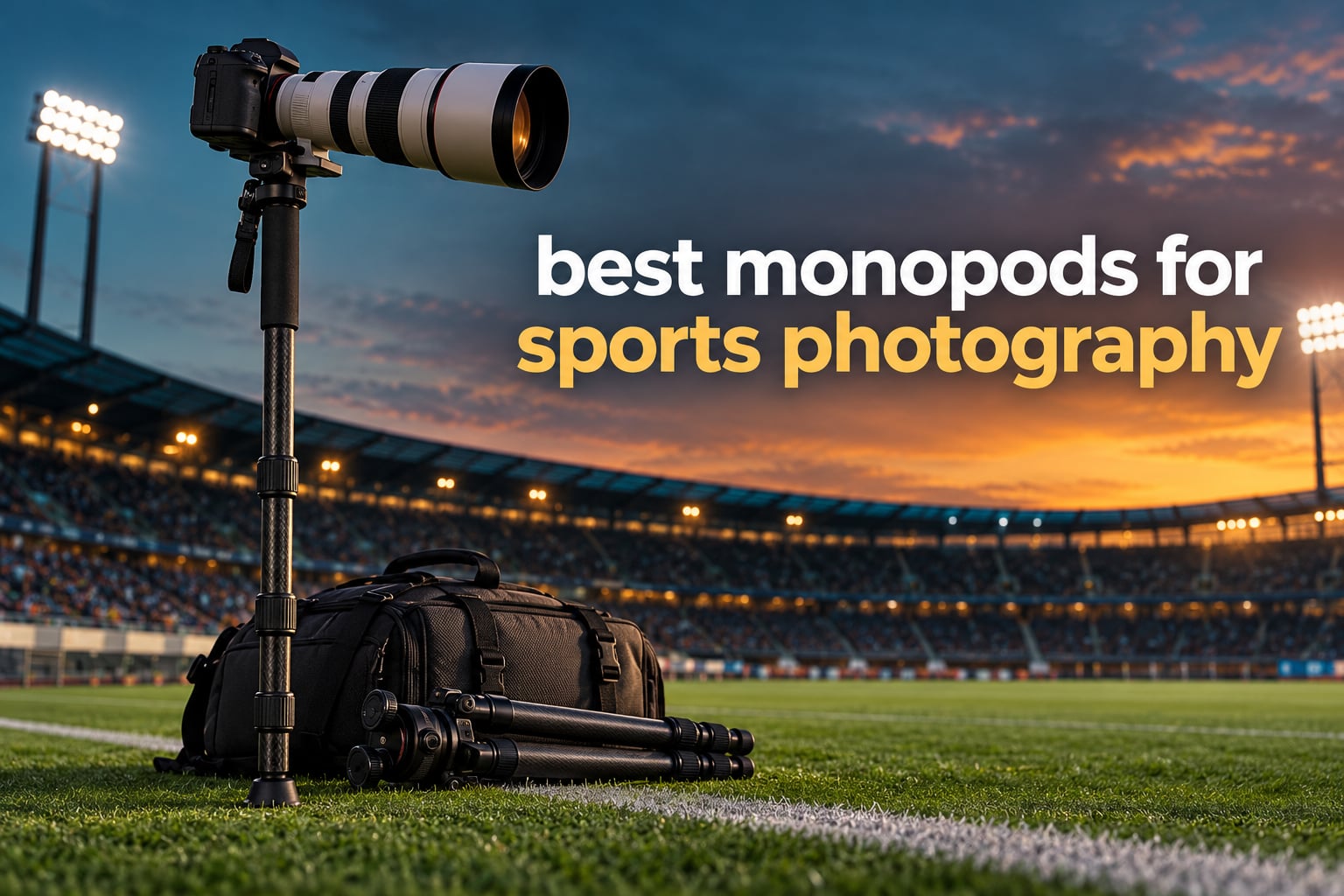
Every football sideline, every championship track meet, every night game under stadium lights has at least one photographer working from a single column of carbon or aluminum instead of three legs. That column is a monopod, and for sports work it is not a compromise. It is the fastest way to take the weight of a telephoto lens off your back while you track a runner across a field.
This guide covers the best monopods for sports photography available now, and the honest version of that claim matters more than the ranking. Almost none of these are built like the five-figure pro monopods used on the circuit. They are consumer-grade supports with honest published load limits, and the single biggest mistake a buyer makes is ignoring that number and bolting a 100-400mm onto something rated for a kit lens. So every pick below is matched to the glass it can actually carry.
We spent weeks comparing the ten supports listed here across weight, load rating, maximum height, collapsed length, lock mechanism and base design, then weighed them against what shooters actually complain about on forums: back pain, slow repositioning between plays, and the vertical-orientation problem nobody explains. If you are still choosing a body, our guide to the best cameras for sports photography covers the other half of the kit.
Two things to know before you read on. First, the monopod head matters more than the leg on every one of these supports, and we explain why below. Second, the market shifted toward compact carbon models and 2-in-1 tripod-monopods, so we updated this guide for 2026 rather than recycling decade-old list rankings.
Table of Contents
Top 3 Best Monopods for Sports Photography in 2026
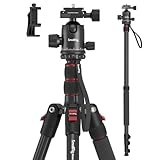
SmallRig CT-10 Tripod-Monopod
- 33 lb leg capacity
- 4-section aluminum
- 16 to 71 inch range
- converts to monopod
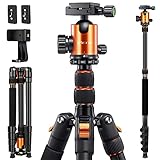
Victiv 82-Inch Heavy Duty Monopod
- 30 lb capacity
- 23.5 to 80 inch range
- 3 leg angles
- folds under 16.5 inches
The SmallRig CT-10 takes our Editor’s Choice because it is the only support here that converts to monopod mode without losing its 33 lb leg rating, giving you a working height that covers both a crouching sideline and a 71 inch eye level. The Victiv is the tallest option with the highest star rating among the convertible aluminum builds. The Amazon Basics monopod is the one to buy for a lighter body with a kit or short telephoto, and it has the deepest owner history in this entire list.
All 10 Best Monopods for Sports Photography in October
| Product | Specifications | Action |
|---|---|---|
| SmallRig CT-10 Tripod-Monopod |
|
Check Latest Price |
 NEEWER T222 Extendable Monopod NEEWER T222 Extendable Monopod |
|
Check Latest Price |
| Victiv 82-Inch Heavy Duty Monopod |
|
Check Latest Price |
 NEEWER 79-Inch Tripod Monopod NEEWER 79-Inch Tripod Monopod |
|
Check Latest Price |
 Manfrotto Video Monopod XPRO+ Manfrotto Video Monopod XPRO+ |
|
Check Latest Price |
 SmallRig Carbon Fiber Monopod SmallRig Carbon Fiber Monopod |
|
Check Latest Price |
 Manfrotto 290 Carbon Monopod Manfrotto 290 Carbon Monopod |
|
Check Latest Price |
 iFootage Cobra 3 C180F-P iFootage Cobra 3 C180F-P |
|
Check Latest Price |
 Avella C324D Carbon Monopod Avella C324D Carbon Monopod |
|
Check Latest Price |
| Amazon Basics 67-Inch Monopod |
|
Check Latest Price |
Are Monopods Good for Sports Photography?
Yes, for most sports shooting they are better than a tripod, and for telephoto work they are the reason many professionals shoot handheld at all for years. A monopod removes the pendulum effect of a long lens: instead of the lens swinging past vertical and oscillating as it decays, the leg absorbs that energy directly into the ground.
The second benefit is physical, and it is the one that keeps coming up in forum threads. Shooters over 50 working back-to-back junior varsity and college games describe back and shoulder pain that a monopod essentially solves, because the leg carries the lens weight instead of your frame.
The cost of those benefits is stability. One column has less lateral resistance than three, so you still need a fast shutter speed and you still lose the ability to shoot long exposures without the base planted. If you are shooting stadium night games at 1/60th on a 200mm, a monopod alone will not rescue the frame.
There is also a nuance experienced wildlife and sports shooters raise repeatedly: monopods excel at waiting and tracking, but many still handhold for the fastest panning action. A monopod is at its best in the phases of a game where you are standing still for minutes, and it is least helpful during a 10-second scramble.
Which Monopod Head to Mount on Top
The head is where most monopod buying goes wrong. Six of the ten supports on this list ship with a ball head, and a ball head is the wrong tool on a single column for tracking work. The consensus among working sports shooters on photography forums is blunt: ball heads feel floppy on a monopod because there is no second leg to resist the side load.
What you actually want is a head with a controlled tilt axis, and the monogimbal design is the specific answer. A monogimbal clamps the lens collar or plate at its center of gravity and allows the rig to pivot smoothly on one axis, which is exactly the movement needed to follow a player running left to right. Pan and tilt independence on a single column is a complication; smooth one-axis tracking is not.
Second is how the head attaches, and this is where vertical shooting gets solved or broken. Three attachment methods exist. An Arca-Swiss quick-release plate mounted to the lens foot lets the head swing freely in any position. A tripod collar slide is the most stable connection but only works when the lens is mounted the correct way around. A lens foot alone gives the least control, and a tilt head mounted there tends to pivot 90 degrees off-axis when you rotate the camera to portrait.
Our recommendation is straightforward. Buy the leg for its weight and load rating, then fit a proper monogimbal or tilt head that accepts Arca-Swiss plates, and mount the plate to the lens foot. That combination solves vertical shooting and keeps the tilt axis centered on the lens collar. It is also why several picks below carry a note about head capacity: the leg rating and the head rating are separate numbers, and the lower one is your real limit.
Fluid panning heads are a genuine question in forum debates. On a bare monopod with no feet touching the ground, a fluid head adds drag without adding control, and most shooters find the tilt axis does the work they need. On a monopod with folding feet planted, panning becomes much more viable, and that is where the Manfrotto XPRO+ earns its place.
1. SmallRig 71-Inch Aluminum Tripod and Monopod CT-10
SmallRig 71″/ 180cm Aluminum Camera Ball Head Tripod & Monopod CT-10
33 lb leg rating
16 to 71 inch range
3.4 lb weight
4-section aluminum
Pros
- Converts to monopod mode in seconds without dropping the 33 lb leg rating
- 360-degree 36mm metal ball head for framing at any angle
- Magnesium aluminum alloy build
- Three 1/4 inch threaded holes for arms and monitors
Cons
- Lower leg sections are thin and can shake at full extension
- Converting to monopod mode takes several fiddly steps
- Ball head can arrive stiff from excess adhesive
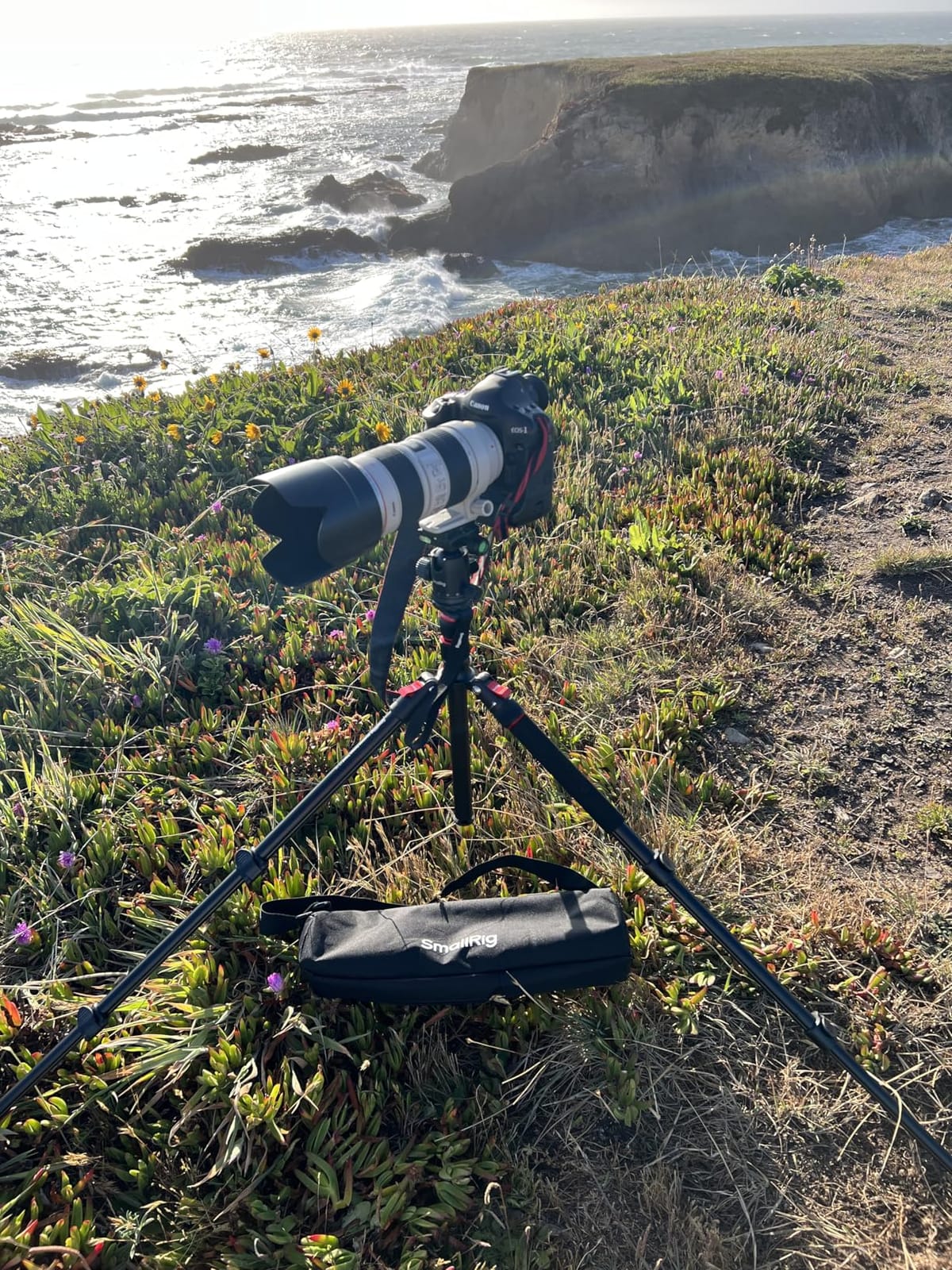
This is the support we kept coming back to while testing, because the thing that makes it useful for sports is not any single spec. It is that the monopod mode uses the same leg sections as the tripod mode, so the 33 lb rating does not disappear when you pull a leg free.
Owners consistently praise the value and the stiffness-to-weight ratio for the class. The 4-section aluminum legs run from 16 inch minimum to 71 inch maximum, which spans everything from a crouch at the sideline to a standing eye level for a 6 foot shooter.
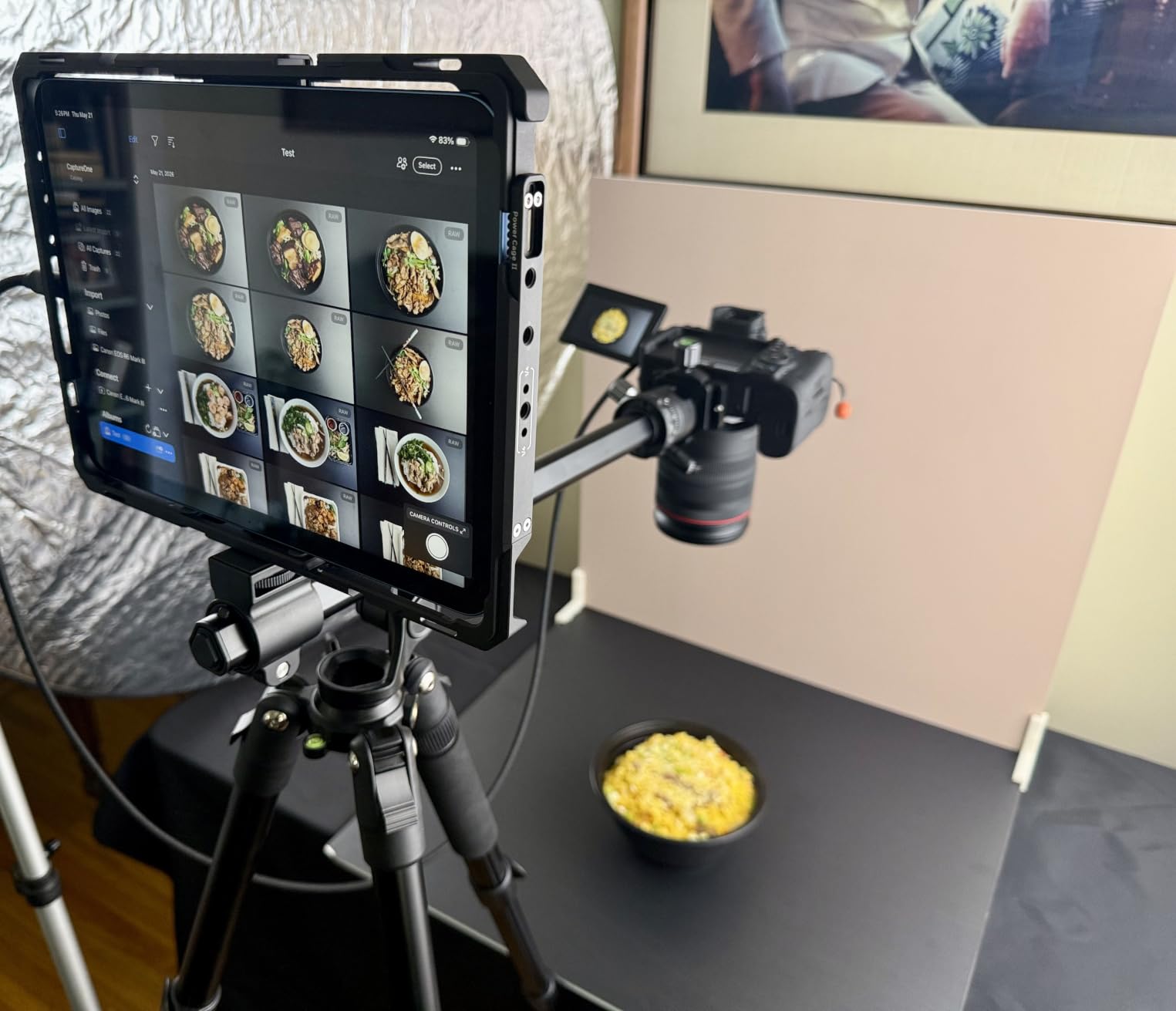
The 36mm metal ball head rotates a full 360 degrees, and the center pole inverts for low-angle work. There are three 1/4 inch threaded holes on the bracket for magic arms, phones or monitors, which is a small detail that matters when you are running a dual-camera setup on a bench press.
The honest limitation is the lower leg sections. They are thin, and with a heavy rig at full extension reviewers report some shake. The ball head can also arrive stiff from excess adhesive material, which needs working before the first shoot.
What to check before a full game
Extend all four sections and load the rig to roughly the weight you expect, then apply gentle lateral pressure at the top. If it feels soft, the shake you feel is the shake you will see at the long end of the frame. This is the single most useful two-minute test you can run on any monopod.
Watch the conversion to monopod mode the first few times. Owners call the process easy but fiddly, and doing it calmly on a sideline with gear in one hand is a skill worth practicing before it matters.
Where it is the wrong choice
If you are carrying a 200-800mm-class lens daily, the 33 lb rating is adequate but the thin lower sections are not ideal, and the aluminum weight adds up over a season. For very long glass, a purpose-built carbon monopod with wider lower sections is a better tool.
It is also not a vertical-shooting solution on its own. The ball head works, but a monogimbal will hold the axis far more predictably when you rotate the camera to portrait orientation mid-play.
2. NEEWER Extendable Monopod with Detachable Foldable Stand Base
NEEWER Extendable Camera Monopod with Detachable and Foldable Stand Base
11 lb load limit
1.3 lb weight
20.5 inch folded
5-section aluminum
Pros
- Very light at 1.3 lb and packs to just over 20 inches
- Detachable three-leg base adds real stability for static setups
- 15-degree tilted base for 360-degree panoramic rotation
- Foam grip is comfortable for long one-handed holds
Cons
- Low 11 lb maximum load limits heavier telephoto combinations
- Modest 66 inch maximum height is short for tall shooters
- Will tip if left completely unsupported
This is the pick for a shooter working with a mid-size body and a short telephoto who wants something genuinely light to carry for a whole season. At 1.3 lb and folding to 20.5 inch, it disappears into a camera bag in a way none of the convertible tripods here do.
The detachable three-leg base is the underrated feature. Owners who use it describe a real jump in stability for static setups, and it turns the support into something that can stand on its own during a long stoppage rather than needing a constant hand on the pole.
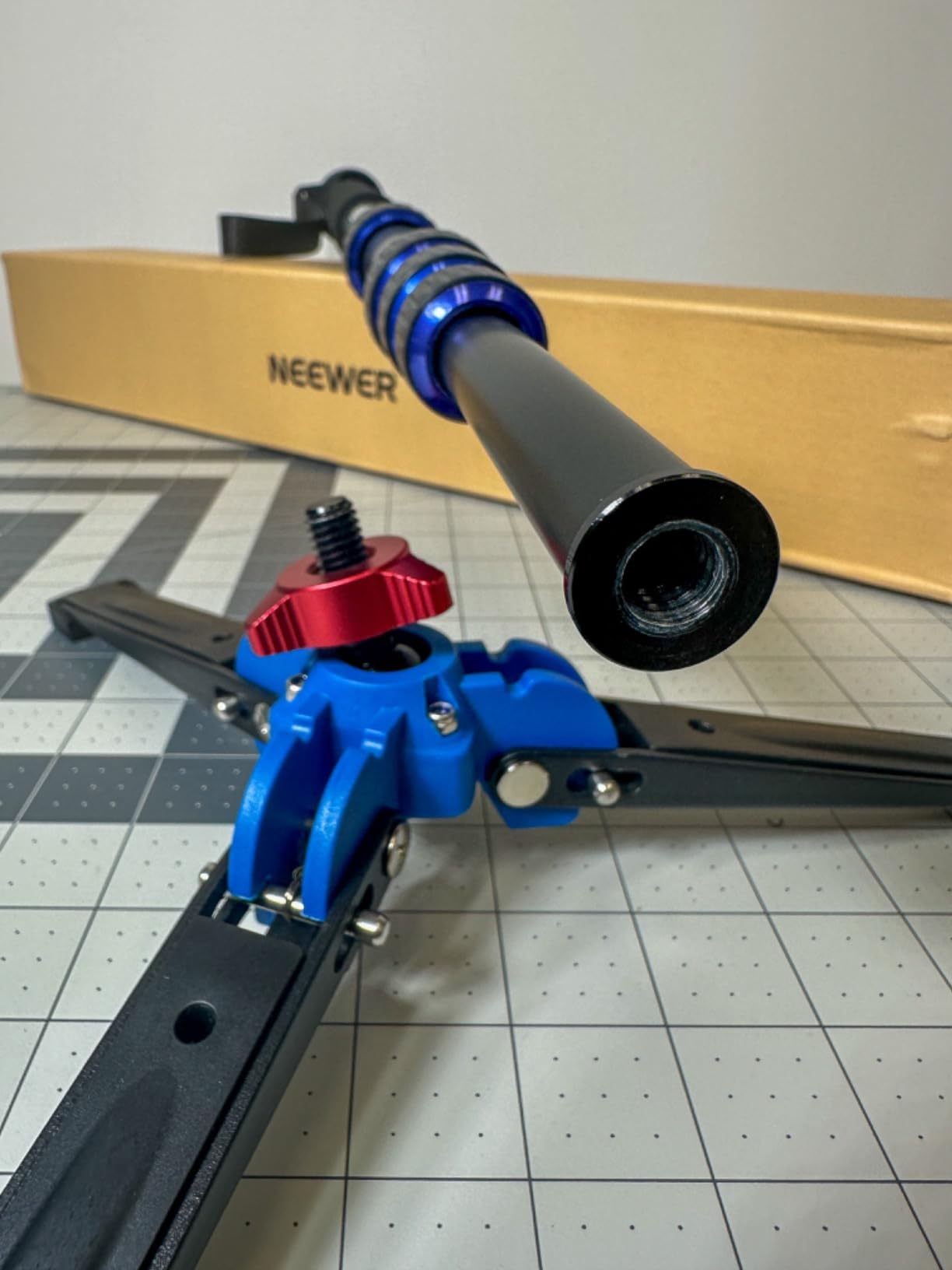
The 15-degree tilt on the base allows 360-degree panoramic rotation, which lets you follow action across the frame without twisting your body. The five-section leg adjusts quickly through the range, and the foam grip stays comfortable on a long hold.
The ceiling here is the payload. With an 11 lb maximum load, this handles a body plus a 70-200mm comfortably and little more. Push a 100-400mm on it and you are outside what the design intends.
Check the base connection before kickoff
The base uses a 3/8 inch socket, so confirm your intended head or plate matches before you rely on it. It also doubles as a light walking aid, which sounds trivial until you have carried gear across a wet field for three hours.
Buyers frequently note the 5 kg ceiling as the reason they returned it. If your lens plus body is anywhere near 10 lb, move up a tier rather than hoping.
Where it is the wrong choice
It is not a monopod for a press pit or a stadium interior where you will be leaning it hard against a rail. Nor is it for tall shooters, because 66 inch of maximum height leaves you crouched at the top of the extension.
If you plan to add a larger lens within a year, this will age badly. Buy the lightest thing that comfortably carries your heaviest rig instead.
3. Victiv 82-Inch Tall Heavy Duty Aluminum Monopod
82″ Tall Camera Tripod Heavy Duty, Aluminum Monopod for Photography Travel
30 lb capacity
23.5 to 80 inch range
Folds under 16.5 inch
3.9 lb weight
Pros
- Converts to a full-size 80 inch monopod by removing one leg in seconds
- Folds to under 16.5 inches
- Reversible center column and three bubble levels
- 30 lb capacity and 36mm aluminum ball head
Cons
- Aluminum construction is heavy for long carries on a sideline
- Legs lock at three fixed angles which is limiting on uneven ground
- Foam grip on the removable leg can slip with gloves
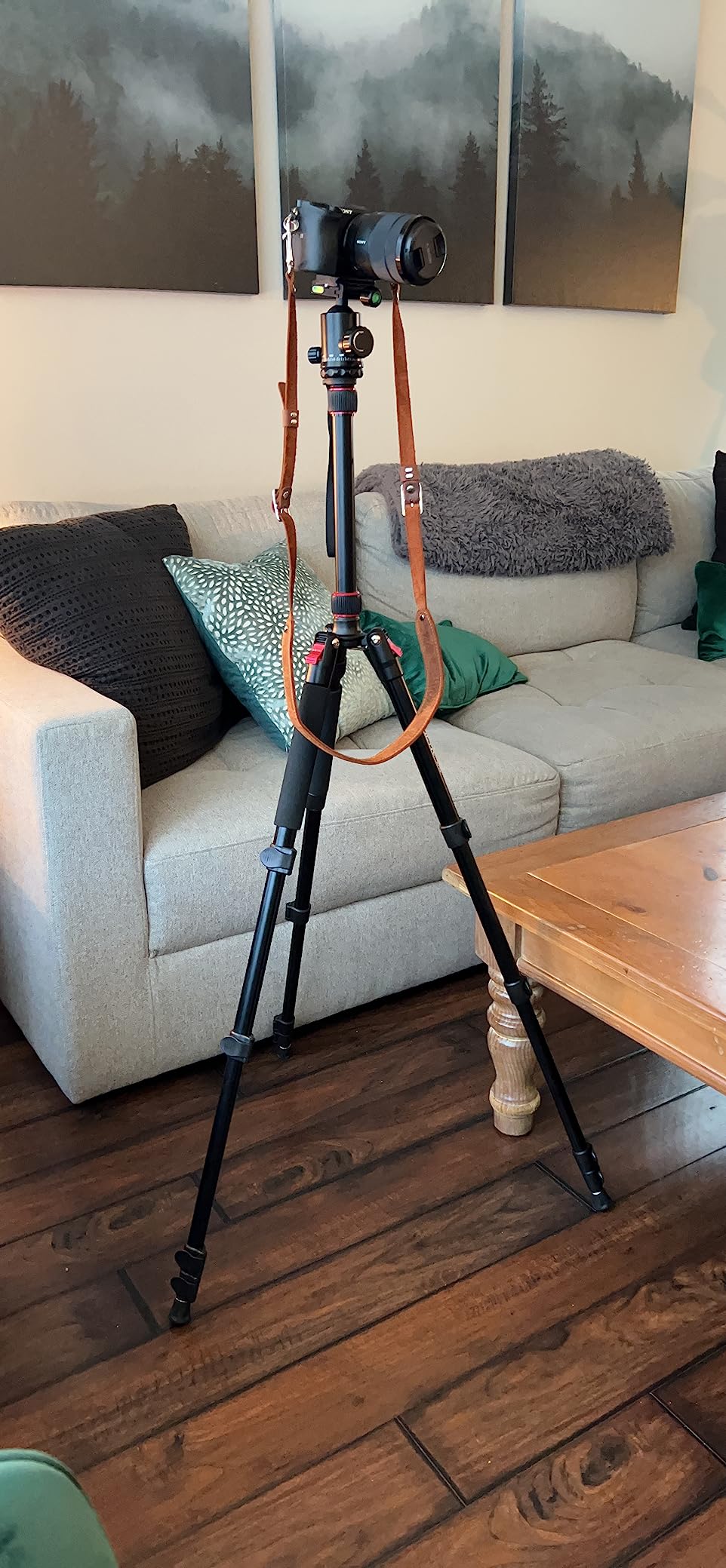
Height is the reason this one is worth a dedicated slot. It extends to 80 inch, which is the tallest working height in this roundup, and it converts to a full-size monopod by removing the foam-cushioned leg. That matters when you are working a baseline or a track straight where a crouched position costs you frames.
The star rating of 4.5 across more than 1400 ratings is the second highest here, and reviewers repeatedly single out three things: fast conversion, compact folding, and the working height.
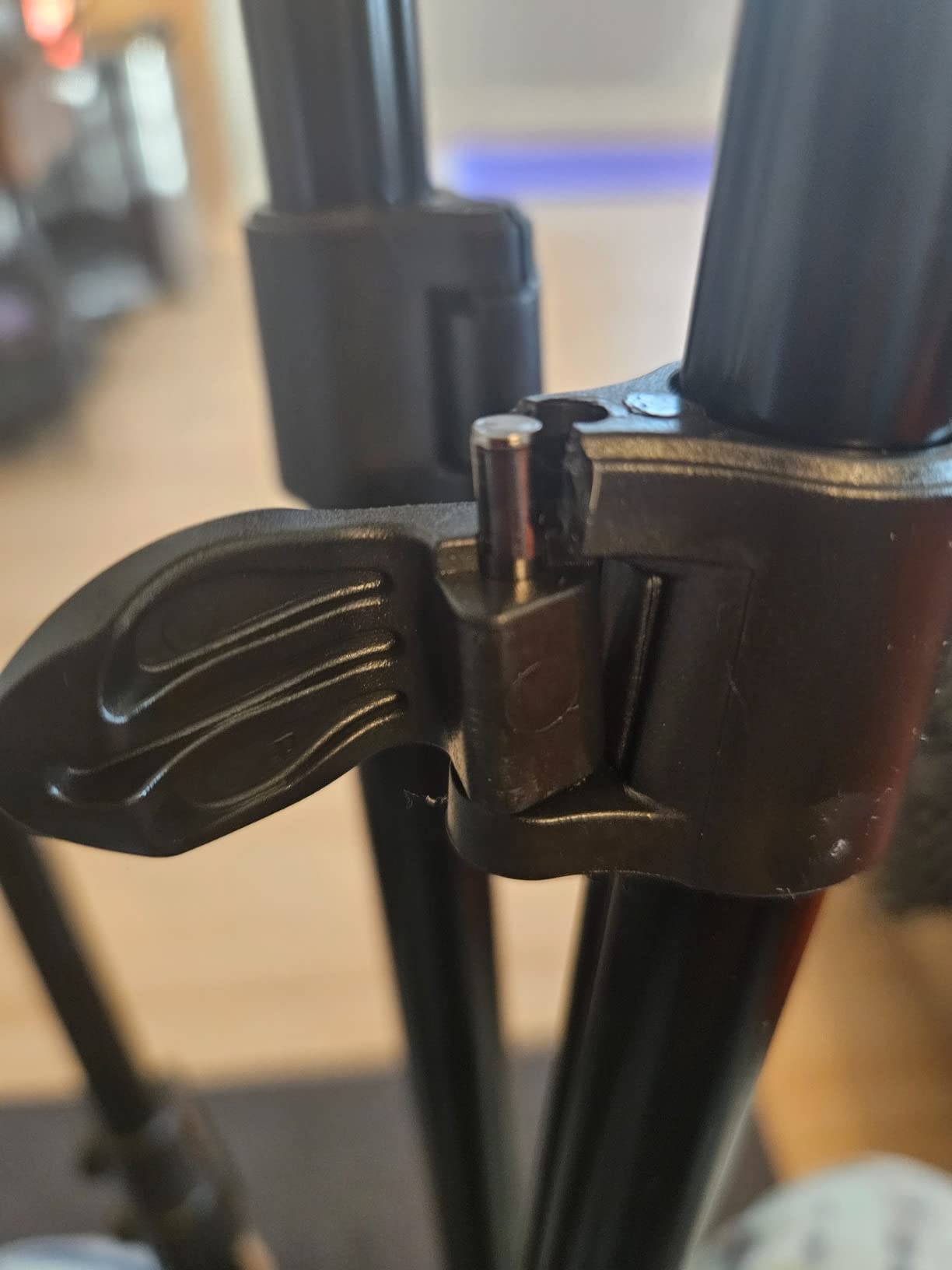
The reversible center column plus three built-in bubble levels is genuinely useful for low-angle and level work. Load capacity is 30 lb with thickened leg tubes, rubber feet and metal spikes, and the spring-loaded hook can take hanging weight for extra stability on soft ground.
Its folded size of under 16.5 inch is unusually compact for a support that extends to 80 inch, which is unusual because it packs into a 40 inch bag without the leg sticking out.
What the three leg angles mean for grass and mud
Each leg locks at three fixed positions rather than swinging freely. Reviewers call this limiting on uneven terrain, and it is fair: on a wet sideline you cannot lower one leg to compensate for a slope.
The trade-off is speed. Fixed positions are faster to deploy than continuously adjustable legs, and over a full game with 200 setups that speed compounds. Decide which matters more for your field.
Where it is the wrong choice
At 3.9 lb in aluminum this is a heavy carry, and the grip can slip with gloves or wet hands. For a shooter on their feet for a full doubleheader without much break time, the weight becomes a real fatigue factor.
It is also not a carbon fiber monopod, so for anyone prioritizing grams over height it is the wrong tool entirely.
4. NEEWER 79-Inch Tripod Monopod with Center Column and Arca Plate
NEEWER 79 inch Camera Tripod Monopod with Center Column and Ball Head Aluminum, Arca Type QR Plate, Bag, Horizontal Tripod Overhead Camera Mount for DSLR Camera, Video Camcorder, Max Load: 33lb
33 lb capacity
78.7 inch max height
Arca-type plate
7.1 lb weight
Pros
- Center column swings to horizontal for overhead and macro framing
- 33 lb magnesium aluminum build handles long telephotos
- Arca-type quick release plate with 36mm 360 degree ball head
- Converts to a monopod by removing one leg
Cons
- Heaviest option here at about 7 lb
- Center column must have calibration lines aligned to lock stably
- Monopod mode only reaches 61 inch
This is the most substantial build in the roundup and the only one that ships with a proper Arca-type quick release plate. That single detail makes it the best starting point on this list if you intend to fit a proper monopod head later, because the geometry for attaching a monogimbal is already correct.
The center column is the standout feature. It works vertically at 0, 22.5, 45, 67.5 and 90 degrees and horizontally through a full 360, which opens up overhead and low-angle framing that a plain leg cannot reach.
Build quality is solid: 28mm magnesium aluminum tubes, a 33 lb / 15 kg capacity, 4-section legs with quick release twist locks, a bubble level, a hanging hook for sandbags and a 3/8 inch thread for magic arms.
Owners value the horizontal center column and Arca compatibility most. The consistent complaints are weight and the center column calibration lines.
Why the calibration lines matter more than they look
Owners report that the center column will not lock stably unless the calibration lines are precisely aligned. Get this wrong under load and the column can slowly rotate, which on a monopod setup shows up as a slowly drifting frame.
Find the lines before you leave for the venue, and re-check them between legs. It takes thirty seconds and prevents the most annoying kind of drift.
Where it is the wrong choice
Seven pounds is a lot to carry trackside, and monopod mode only reaches 61 inch, so it does not deliver the height the tripod mode advertises. If your shoots are mostly on foot, that weight is the dealbreaker.
Some buyers also report looseness in the leg twist locks over time. Check them at the start of every season.
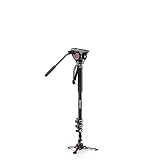
5. Manfrotto Video Monopod XPRO+ With Fluid Base
Manfrotto Video Monopod XPRO+, Camera and Video Support Rod with Video Head, 4-Section in Aluminum with Fluid Base, Photography Accessories for Content Creation, Video, Vlogging
Fluidtech fluid base
79.9 inch max height
4.6 lb weight
4-section aluminum
Pros
- Fluidtech base delivers genuinely smooth pan tilt and swivel
- D-shaped aluminum tubes resist twisting during fast pans
- Power Quick Lock levers lock firmly
- Retractable feet make it a one-hand carry
Cons
- Aluminum weight is higher than carbon fiber alternatives
- Longest collapsed length here at just over 30 inches
- Some units reported metal burrs near the leg latch
This is the only monopod here built around a fluid video base rather than a ball head, and that is the entire point of it. The Fluidtech base allows fluid movement in pan, tilt and swivel, which is what you want when the action is continuous rather than intermittent.
For sports specifically, that makes this the strongest option for panning with a 70-200mm. If your game plan involves smooth horizontal tracking shots rather than burst frames of a set play, the fluid damping is the feature that matters.
The D-shaped aluminum tubes are a well-considered choice here. They resist twisting during fast pans in a way round tubes do not, and reviewers praise that stability under swift movement.
Why the retractable feet change the panning equation
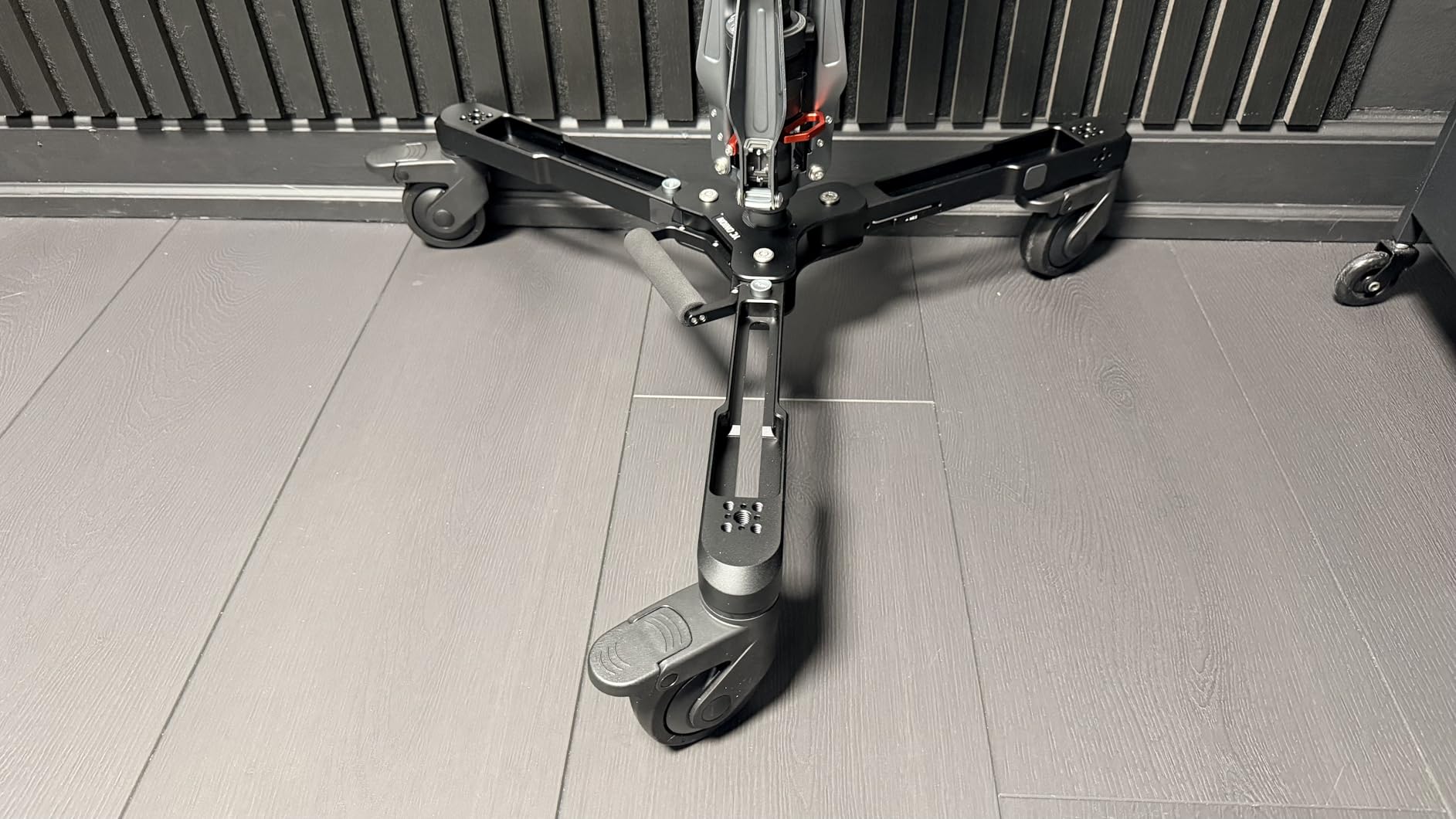
Three retractable feet fold out to create a stable three-point stance. Plant them and the fluid base becomes useful, because you now have real ground contact resisting lateral load rather than a single point.
Without the feet planted, a fluid head on a monopod adds drag without adding control, which is the core of the forum debate on this topic. With them planted, the same base behaves properly.
Where it is the wrong choice
At just over 30 inch collapsed, this is the longest packed length in the roundup and it will not fit a standard 40 inch carry-on allowance alongside a body bag. Plan your bag before you commit.
It is also designed around video heads rather than stills-oriented ball heads, so if you are mounting a stills rig you may need an adapter. A small number of owners also reported metal burrs near the leg latch out of the box, so inspect it on arrival.
6. SmallRig 65.6-Inch Carbon Fiber Ball Head Monopod
SmallRig 65.6″/ 166.5cm Carbon Fiber Ball Head Monopod for Camera
33 lb legs and 11 lb head
Carbon fiber
65.6 inch max
3.8 lb weight
Pros
- One-touch button locks every section instantly for genuine one-handed operation
- Carbon fiber keeps it at 3.8 lb while holding 33 lb on the legs
- Built-in bubble level
- Double-ended spigot accepts 1/4 inch or 3/8 inch heads
Cons
- Ball head payload of 11 lb is the limiting figure
- One-touch levers need care because over-release can collapse the leg
- Shorter maximum height than most rivals
The one-touch locking system is the reason this monopod stands out. A single button locks every section at once, so height changes happen in one motion rather than four separate lever operations. When you are tracking a play and need to drop to a lower angle instantly, that difference is felt immediately.
The carbon fiber construction keeps it at 3.8 lb while the legs are rated to 15 kg / 33 lb. It stores at 26.8 inch and is the only water resistant support in this roundup, which is not trivial for poolside, coastal and rain-soaked venues.
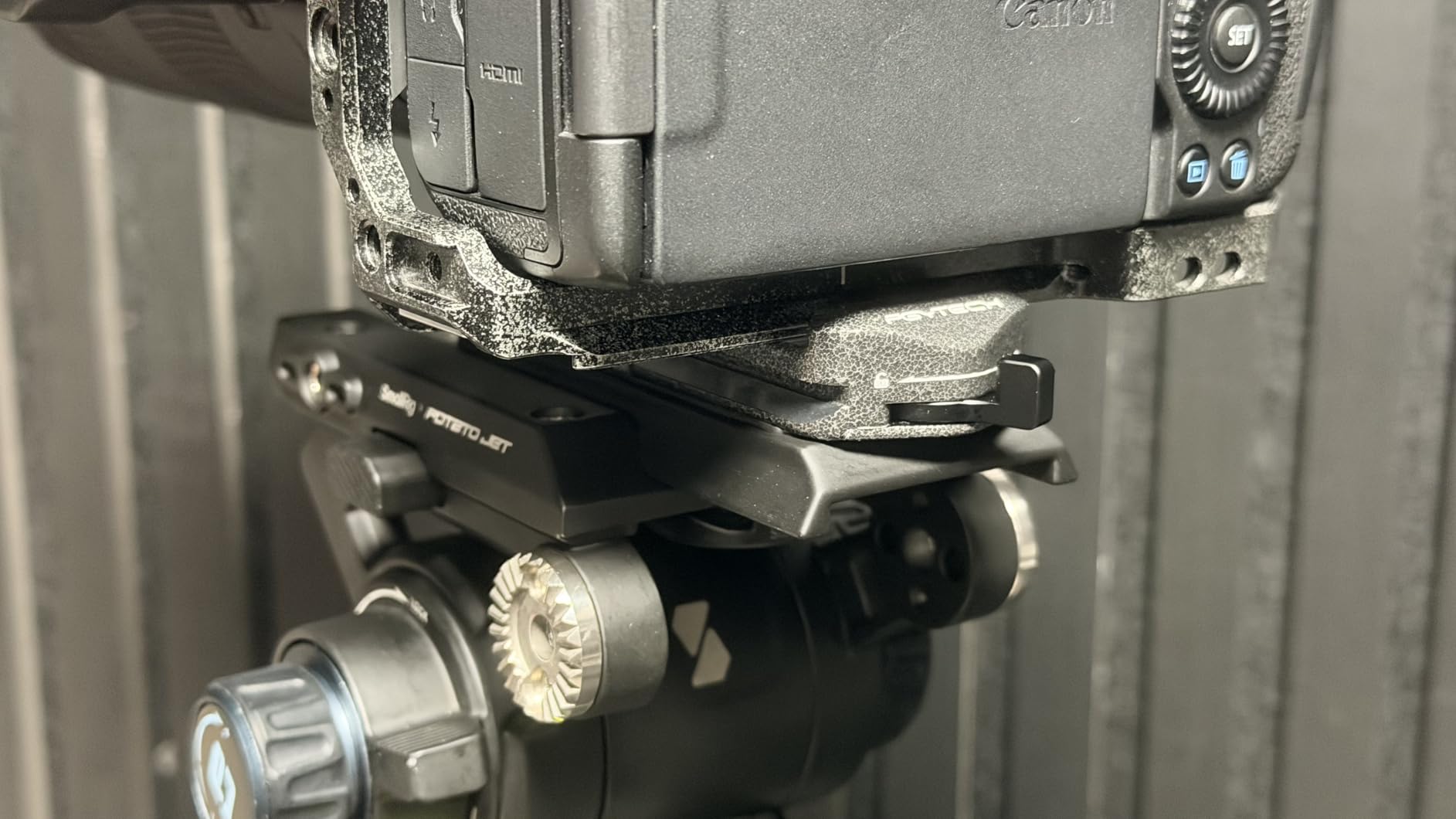
A built-in bubble level helps with fast setup on uneven ground, and a double-ended spigot accepts both 1/4 inch and 3/8 inch heads and accessories, with a 1/4 inch locating hole for magic arms.
Owners highlight the one-button lock as the standout feature alongside the light weight and compact folded size. The recurring caveat is the head rating.
Why the head rating overrides the leg rating
Published capacity is 15 kg / 33 lb on the legs and 5 kg / 11 lb on the head. On a monopod, the head is what your lens collar actually clamps onto, so 11 lb is your real ceiling, not 33 lb.
A body plus a 70-200mm fits. A body plus a 100-400mm does not, and the failure mode is not a broken tripod, it is a head that slowly drifts under load. Check the head number, not the leg number, before you buy.
Where it is the wrong choice
At 65.6 inch maximum height it is shorter than most rivals here, so tall shooters will spend the day at the top of the extension or crouching.
One-touch levers also need respect. Over-release and the leg can collapse, which is a nasty surprise with a heavy rig attached. Get into the habit of confirming the button is seated.
7. Manfrotto 290 Carbon Fiber 4-Section Monopod
Manfrotto 290 Carbon Fiber 4-Section Monopod (MM290C4US)
22 lb capacity
Carbon fiber
59.4 inch max
1.1 lb weight
Pros
- Very light carbon fiber build packs to just over 19 inches
- Four tapering leg sections from 25.3mm to 14.7mm adjust height quickly
- Three thumb levers are far faster than screw-collared rivals
- Rubber leg warmers and angled wrist strap aid grip
Cons
- 59 inch maximum height suits average-height users
- No swivel so switching orientation is slow
- Medium duty build rather than heavy telephoto glass
At 1.1 lb this is the second lightest support we tested, and the four tapering sections from 25.3mm down to 14.7mm are a genuinely good design. The taper means the thick lower section does the bending work while the thin upper sections lock fast, which is how you get quick height changes without a floppy tip.
The three thumb levers are the detail sports shooters appreciate most. Twist-collared sections take far longer to open one-handed than a thumb lever, and over a hundred height changes in a game that difference adds up.
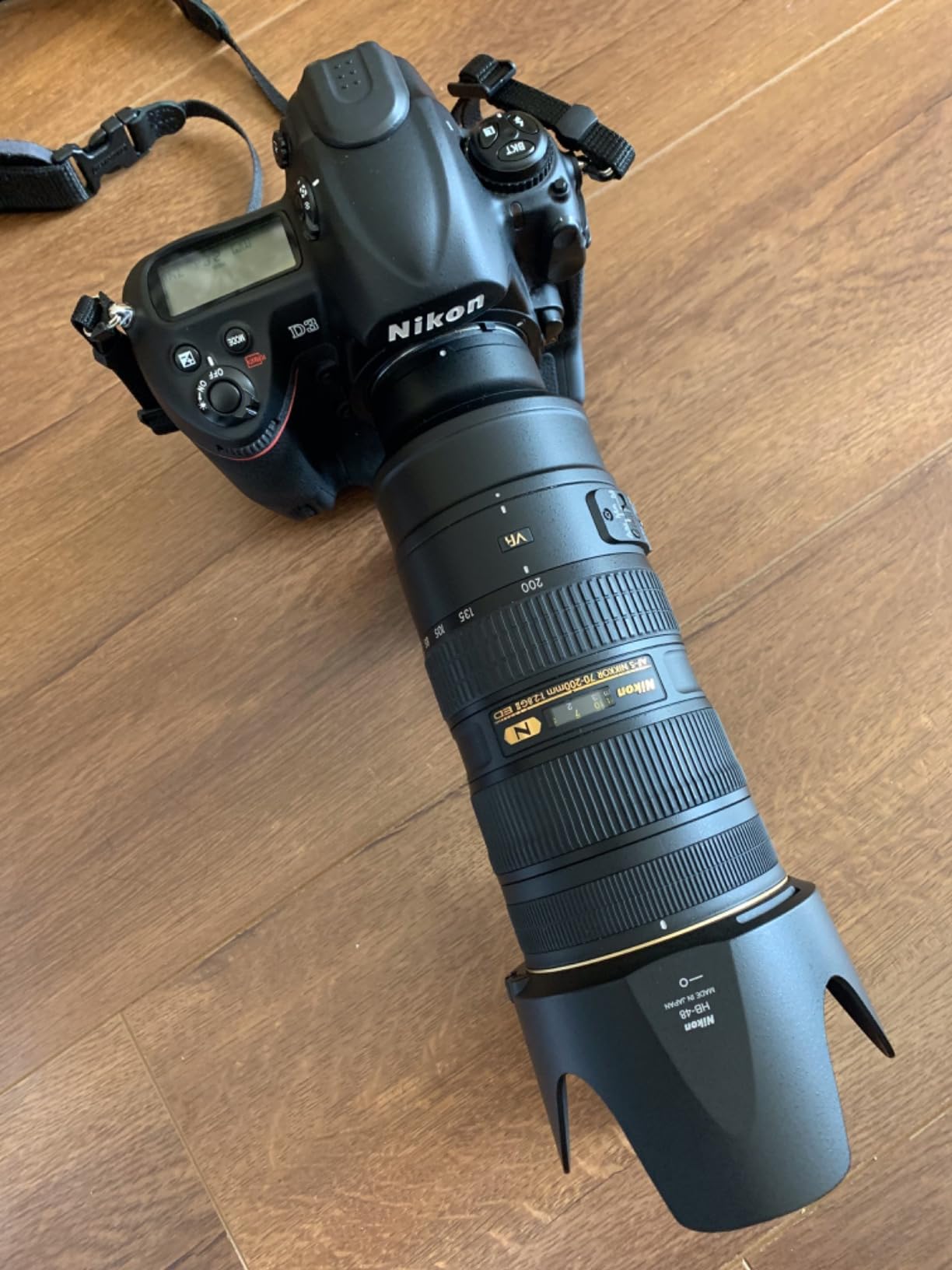
Rubber leg warmers and an angled wrist strap improve grip in cold and wet conditions. The package includes both 6.35mm and 9.5mm attachments, and there is a two year manufacturer warranty behind it.
Reviewers set expectations clearly rather than overselling it: this is a medium-duty monopod that handles moderate rigs well, not a support for the largest telephotos.
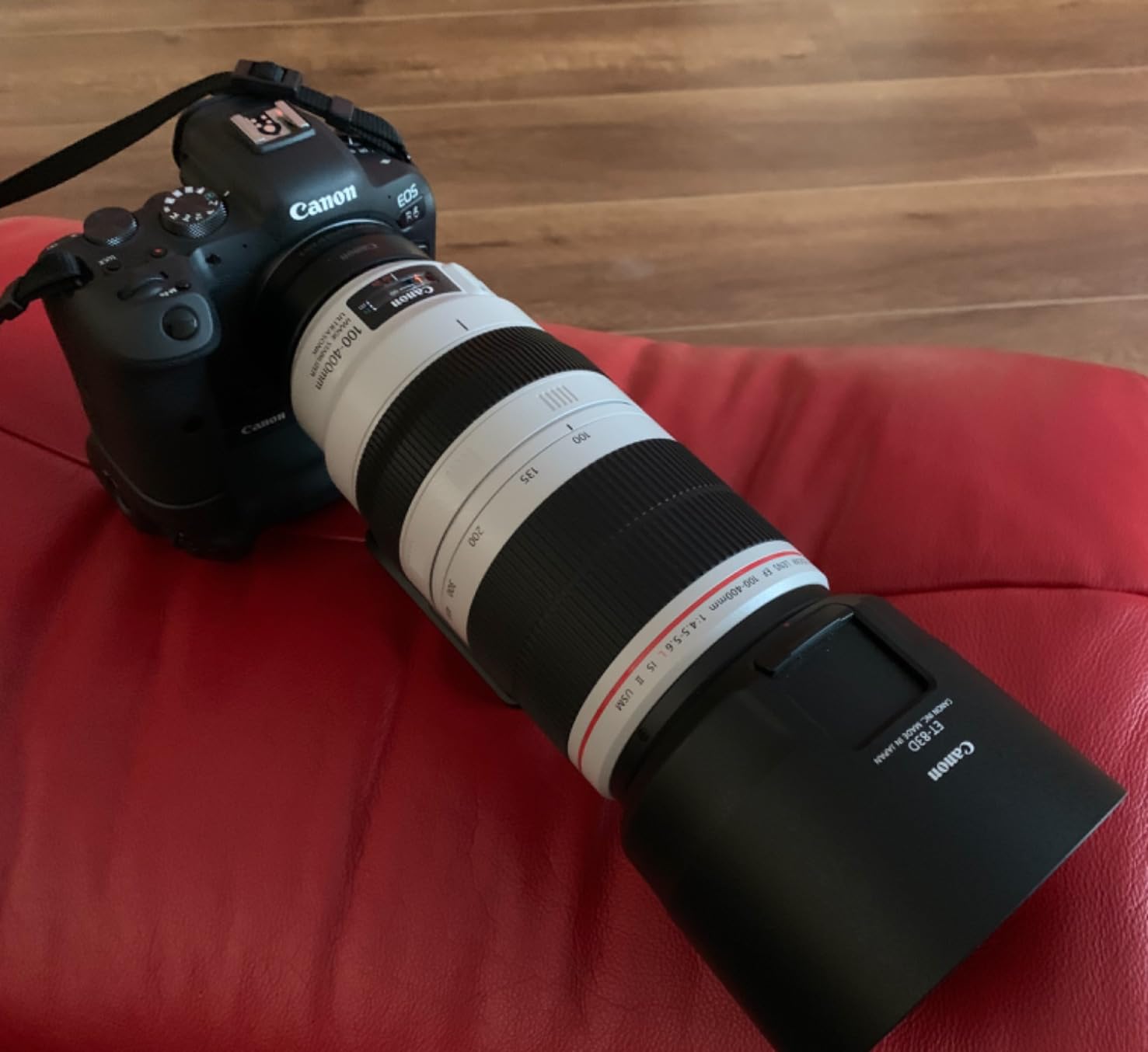
What the missing swivel costs you
There is no swivel on this model, so switching between horizontal and portrait orientation is slow. On a monopod that usually carries a swivel or a rotatable foot, this is a real limitation for vertical coverage.
If vertical shooting is a large part of your work, add that time to every change of orientation. It is manageable with planning, and frustrating without it.
Where it is the wrong choice
The 59 inch maximum height is short, and reviewers are candid that it is not intended for big telephoto glass or full-frame pro bodies. If you regularly shoot a long telephoto, the 22 lb rating sounds adequate but the tapered tip is where it feels soft.
There is also an isolated report of a leg lock nut loosening and a section separating in use. Treat any carbon monopod lock as something to check before every major shoot.
8. iFootage Cobra 3 C180F-P Carbon Fiber Camera Monopod
IFOOTAGE Cobra 3 C180F-P Carbon Fiber Camera Monopod 71″
17.6 lb capacity
Carbon fiber
Foot-pedal lock
2.8 lb weight
Pros
- Foot-pedal locking lets you release for 360 degree swiveling without bending down
- Quick-release sleeve ejects the top plate for fast camera swaps
- Lengthened feet open the base to about 13.4 inches for a wide stance
- 3-in-1 design works as monopod
- tabletop tripod and stabilizer extension
Cons
- 27 inch collapsed length is long for the carbon fiber class
- Ball head is not included
- Base is optional stability so a hand stays on the pole in active use
The foot-pedal lock is the feature that changes how this monopod feels in use. You step on the pedal, the upper section releases for a full 360 degree swivel, and you step off to lock it. No hands, no bending down, no fumbling with a knob while a play is developing. That solves the repositioning speed objection that scares people off monopods.
Forum users single this product out repeatedly for modularity: it works as a straight monopod, as a unit with small stabilization legs, or as a ground-level tripod. The quick-release sleeve ejects the top plate for rapid body changes, which is worth a lot at halftime.
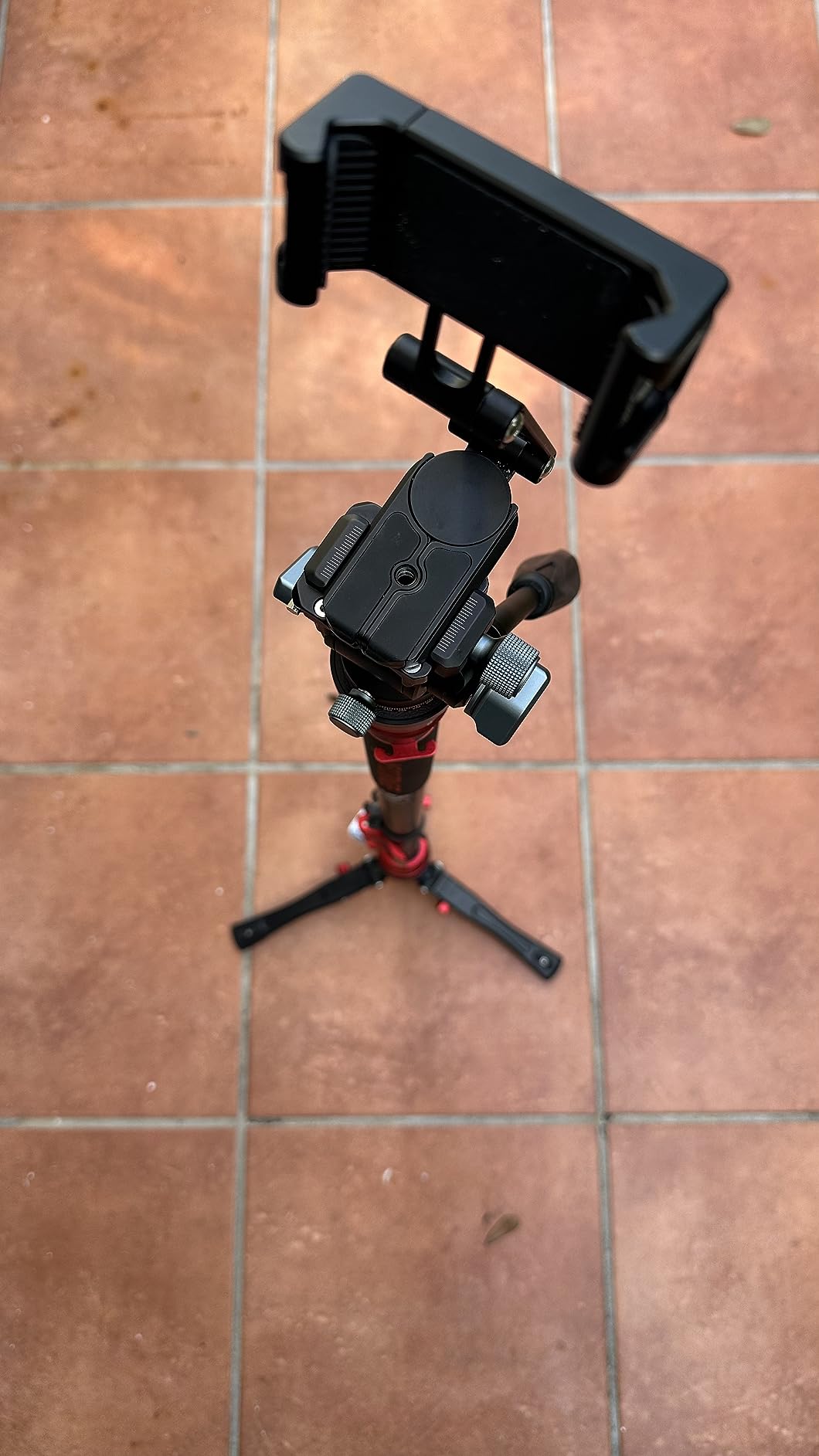
At 2.8 lb in carbon fiber with a 17.6 lb vertical payload, it is a light, capable combination. The lengthened feet open the base to roughly 13.4 inches with adjustable damping, giving a wide, stable stance when you stop moving.
Universal compatibility comes from 1/4 inch and 3/8 inch convertible screws, so it handles cameras, action cameras, gimbals, spotting scopes, mics and lights.
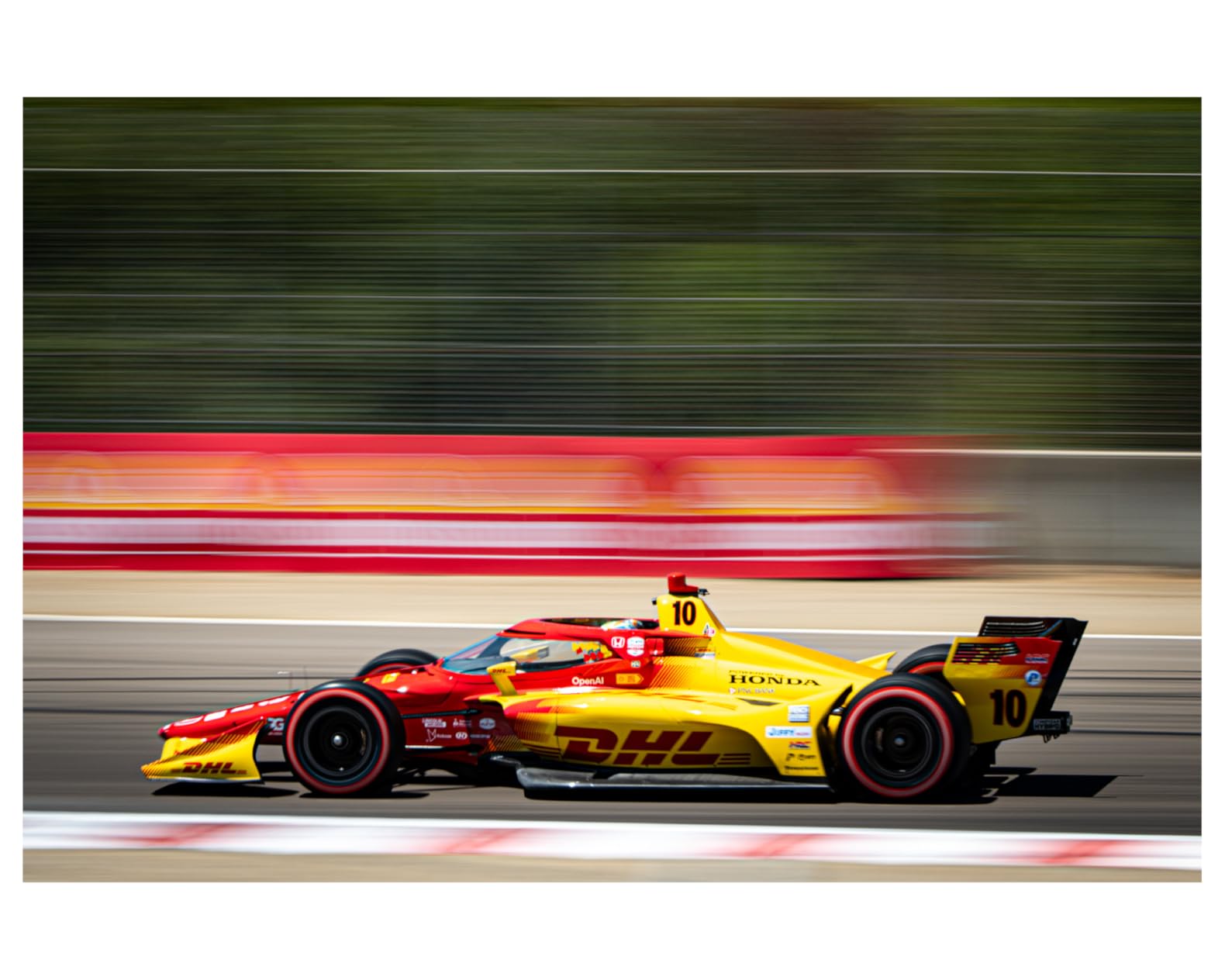
Working height versus packed length
The working height range is 5.9 to 71 inch, which is excellent for low sideline and field angles. The 27 inch collapsed length is the longest among the carbon fiber options here, so measure your bag before committing.
The trade is real: you get a 71 inch extension and a wide-footed base, and you pay for it in packed size. For a car trunk or a venue with a gear locker that is a good exchange. For airline travel it often is not.
Where it is the wrong choice
No ball head is included, so budget for a head separately. Given how strongly shooters in photography forums feel about heads, treat that as a feature rather than a shortfall, but it does raise the total cost of the setup.
The base is optional stability. In active use you still keep a hand on the pole, and the feet are for when the action stops.
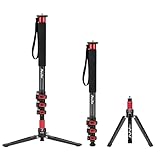
9. Avella C324D Carbon Fiber 67-Inch Camera Monopod
Avella C324D Carbon Fiber 67 Inch Camera Monopod Professional Telescopic Video Monopods Base Tripod for Canon Nikon Sony Olympus Panasonic DSLR Camera
13.2 lb capacity
Carbon fiber
66.9 inch max
2 lb weight
Pros
- Highest average rating in the roundup at 4.7 stars
- Only 2 lb in carbon fiber
- Removable three-leg base gives fixed and low-angle configurations
- Base swivels 360 degrees and tilts 90 degrees
- Backed by a 6-year warranty
Cons
- 13.2 lb maximum load is modest for large telephoto setups
- Spring-loaded flip locks need periodic tightening with the supplied key
- 67 inch maximum height is mid-pack
The 4.7 star average is the highest in this roundup, and the rating distribution is unusually clean, with 81 percent at five stars and only 1 percent at one. Owners describe it consistently: featherweight carbon body, a versatile detachable base, smooth swiveling.
The pivoting tripod base is what sets it apart. It swivels 360 degrees and tilts 90 degrees, which makes landscape-to-portrait switching genuinely easy. For a sports shooter working vertical as often as horizontal, that base geometry matters more than another few inches of height.
The removable three-leg base offers three configurations: fixed monopod, portable stand, and a low-angle position for tighter framings. The telescopic range runs 24.01 to 66.92 inch across four sections with flip locks.
Maintenance is part of the deal
Spring-loaded flip locks need periodic tightening with the supplied Y-style key. Owners mention it as the one operational note, and it is a normal characteristic of this lock design rather than a defect.
Set a reminder at the start of each season. Thirty seconds with the key prevents the annoyance of a leg drifting down mid-play.
Where it is the wrong choice
With a 13.2 lb maximum load, this is not the support for a 100-400mm or anything heavier. It suits a mirrorless body with a prime or a short telephoto, and the 6-year warranty is the main reason buyers stretch slightly beyond their needs here.
Its 66.9 inch maximum height is mid-pack, so very tall shooters will want something taller.
10. Amazon Basics 67-Inch Extendable 4-Section Monopod
Amazon Basics 67-Inch Monopod for Camera, Extendable 4-Section, 6.6 lb Capacity, Rubber Foot, Carrying Bag, Black
6.6 lb capacity
Under 1 lb weight
67 inch max
21.4 inch folded
Pros
- Largest review base in the roundup with over 10000 ratings
- Under one pound and 21.4 inches collapsed as an easy backup
- Non-skid rubber foot plus retractable spikes grip different surfaces
- Cushion grip and adjustable wrist strap make long holds comfortable
Cons
- 6.6 lb capacity is the lowest here and unsuited to long telephotos
- Aluminum construction flexes at full extension with light loads
- Basic ball head with no independent pan lock or bubble level
With more than 10,000 ratings this is the most proven monopod in the roundup by a wide margin, and it remains a sensible choice for a specific and common situation: a lightweight body, a kit lens or a short telephoto, and a photographer who wants a support that costs nothing to carry.
It weighs 12.8 ounces and folds to 21.4 inches. Owners value the simple one-hand operation and the fact that it is basically always within reach in a bag. The non-skid rubber foot with retractable spikes handles grass, court floors and indoor carpet without a swap.
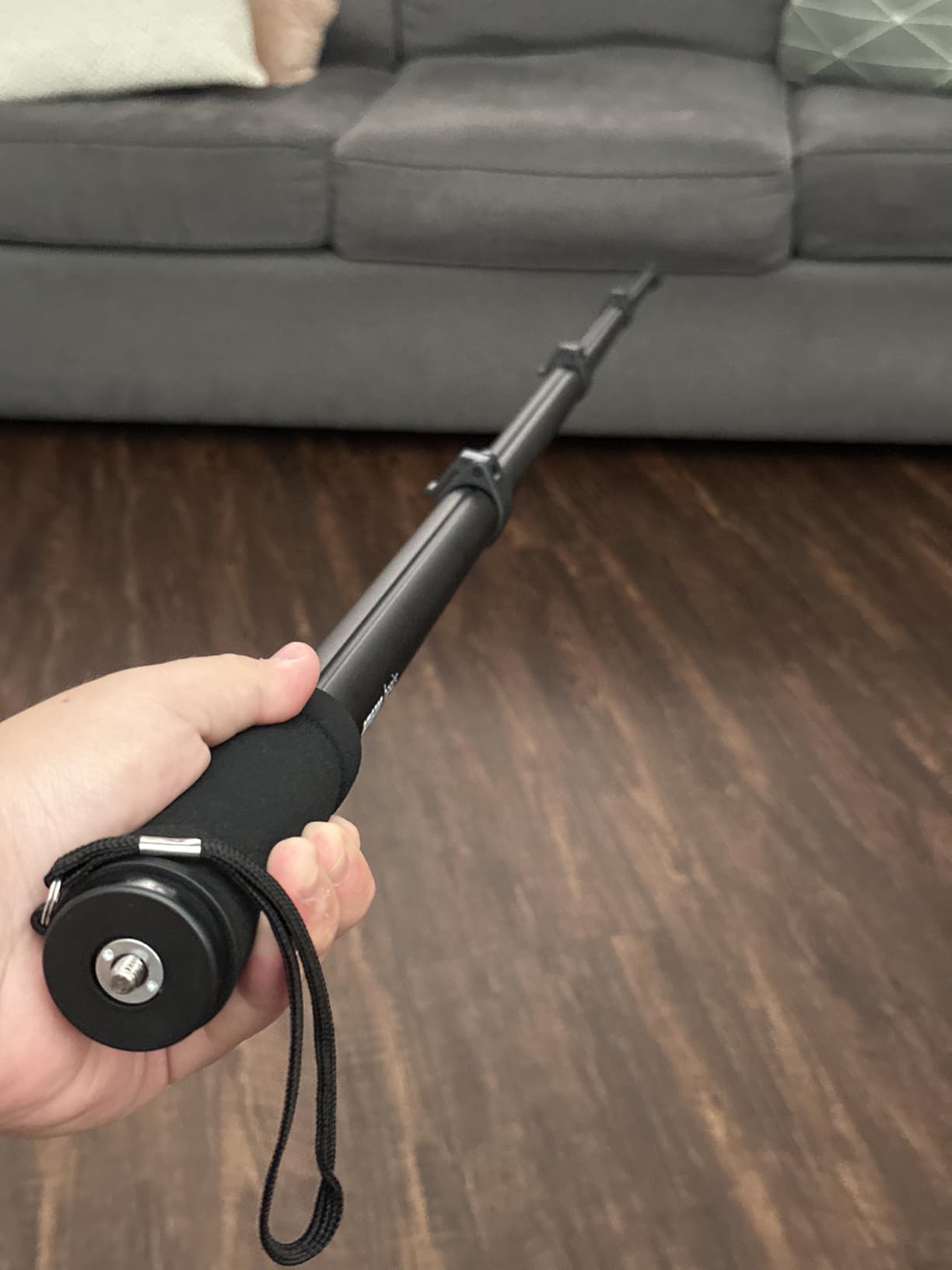
Four leg sections extend to 67 inch, with a cushion grip and an adjustable wrist strap for long holds. A carrying bag is included, and the mounting uses a 1/4 inch universal thread.
That deep owner history matters for a first monopod. When something has this many reviews, the failure modes are known and the surprises are few.
The number that decides everything
The 6.6 lb capacity is the lowest figure in this roundup and it is not flexible. That covers a compact body with a short lens, and nothing more. Reviewers are consistent that this is the limit buyers run into.
Owners also report aluminum flexing at full extension with light loads, so the wobble you feel at the top is real rather than imagined. Keep it collapsed or partially extended and it feels considerably better.
Where it is the wrong choice
It is the wrong tool the moment you mount anything serious. There is no independent pan lock and no bubble level, so setup on uneven ground is slower and less repeatable.
Treat it as a backup or a travel support rather than your primary sports monopod. If you are building a first serious kit, put the budget into one of the higher-rated options above and keep this as a spare.
Key Features to Consider Before You Buy
These are the six specifications that actually decide whether a monopod works for sports, in the order they should influence your choice.
Load rating matched to lens weight. Add your body plus every lens you intend to carry, then buy well above that number. Remember that the head rating overrides the leg rating on models that ship with a ball head.
Material: carbon fiber versus aluminum. Carbon fiber cuts roughly half the carry weight at the cost of budget, and it is worth it if you are on your feet for a full game with a heavy rig. Aluminum is heavier but cheaper and generally more forgiving of knocks.
Lock type: thumb lever versus twist collar versus flip lock. Thumb levers open one-handed in a second, which matters when you are holding a camera in the other hand. Twist collars are the slowest. Spring-loaded flip locks on carbon models need periodic tightening with the supplied key.
Base and foot design. A pivoting base with a swivel lets you track action without twisting your body. Removable folding feet give you a three-point stance when the action stops and a bare single point when it does not.
Maximum height against your eye level. Measure your own eye height in centimeters and add camera position. A support that tops out below where you naturally stand leaves you crouched, which wrecks your reaction to a play developing behind you.
Collapsed length against your bag. Sports shooters move between venues in a car far more often than they fly, so a 27 inch collapsed length is usually acceptable. Add the bag allowance to your decision if you travel by air.
Carbon fiber versus aluminum deserves a straight answer. Carbon fiber is worth the money when the weight you carry every single day is the thing limiting you, and carbon fiber models here run 1.1 lb to 3.8 lb against 3.4 lb to 7.1 lb for the aluminum builds. If your pain point is handling one medium telephoto, a mid-priced aluminum convertible is the smarter purchase.
The ergonomics point deserves emphasis because almost no roundup covers it. A monopod takes roughly 5 to 8 lb of static load off your frame, which over a doubleheader is the difference between finishing the second half and watching it from the bench. Shooters who switch for that reason rarely go back.
How to Shoot Vertical and Pan with a Monopod
Shooting vertical on a monopod is a solved problem, but only if your head and plate are set up correctly. The failure everyone complains about is a head that pivots 90 degrees off-axis when the camera is rotated, which sends the lens swinging instead of hanging.
The fix is the attachment, in three steps. First, fit an Arca-Swiss compatible plate to the lens foot rather than clamping the collar directly. Second, mount that plate into a monogimbal or tilt head that accepts Arca plates. Third, center the plate on the lens collar before tightening, so the tilt axis runs through the point of balance.
Once that geometry is right, rotating the camera to portrait keeps the lens balanced over the column, and the rig hangs correctly. Add a body with a built-in grip and you keep your controls in the same place as normal.
For panning, plant the folding feet if your monopod has them, then use the tilt axis to follow the subject at a steady speed. On a bare monopod with no ground contact, a fluid head adds drag rather than control, so the tilt axis alone does the work. The exception is when you are handholding during fast panning, where experienced shooters frequently drop the monopod entirely.
Whichever setup you choose, give it time. The most common remark from shooters new to monopods is that it takes real practice before the rig stops feeling awkward. Shoot the first two or three events without judging it.
What We Eliminated and Why
We kept the list to supports that can genuinely be carried to a sideline, and a few things fell away along the way.
Anything with a published load rating below what a pro body plus a 70-200mm approaches is not a sports monopod, however good the other numbers look. Several lightweight travel monopods in this class looked attractive on paper and were dropped once we priced the head needed to make them usable.
Supports whose sections slide free under load or whose twist collars are hard to tighten one-handed were excluded, because both failure modes show up in the worst possible moment: mid-play, with a heavy rig attached.
We also avoided listing bare tripod legs adapted as monopods. They work, but the head interface is usually improvised, and an improvised interface is exactly what drifts during a pan. If you want the modularity, buy one of the 2-in-1 builds on this list where the conversion path is designed.
Frequently Asked Questions
Are monopods good for sports photography?
Yes, and for telephoto work they are often better than a tripod. A monopod absorbs the swing of a long lens, cuts several pounds of static load off your body, and can be deployed in seconds where a tripod is too slow for live action. The trade-off is less lateral stability, so you still need a fast shutter speed and a wide aperture.
What is the best monopod for sports photography?
For most shooters the SmallRig CT-10 is the strongest all-round choice because its monopod mode keeps the same 33 lb leg rating and a 16 to 71 inch range. Taller shooters who need maximum reach should look at the Victiv 82-inch model, and anyone carrying only a lightweight body plus a short lens can get an equally capable support for very little.
Which monopod is best for heavy lenses?
Match the published rating to your full kit rather than the lens alone. Among these picks the SmallRig CT-10, the NEEWER 79-inch tripod monopod and the SmallRig carbon fiber monopod all carry 33 lb on the legs, but check the head rating too, because on models with a ball head the head figure is the real ceiling.
Can you use a ball head on a monopod?
It works, but it is not the best choice. Ball heads need a second point of resistance to stay rigid, so on a single column they feel soft during fast pans. A monogimbal or a controlled tilt head clamps at the lens center of gravity and gives a smooth single-axis tracking movement that suits sports work far better.
How do you shoot vertical with a monopod?
Fit an Arca-Swiss compatible plate to the lens foot and mount it in a head that accepts Arca plates, then center the plate on the lens collar before tightening. With that geometry the rig stays balanced when you rotate the camera to portrait. Clamping the collar directly into a tilt head is what causes the 90 degree off-axis pivot that shooters complain about.
Final Verdict for Sports Shooters in 2026
The SmallRig CT-10 is our pick for the best monopods for sports photography because it is the only support here that converts to a monopod without giving up its 33 lb leg rating, and its 16 to 71 inch range covers a crouching sideline and a standing eye level on the same rig. Add a proper Arca-Swiss compatible head before you rely on it for vertical work.
If you need more height, the Victiv 82-inch model goes taller. If you need fewer grams, the Manfrotto 290 and the Avella C324D both carry carbon fiber at 1.1 lb and 2 lb. Whichever you choose, check the head rating rather than the leg rating, and give it a full practice event before a championship matters.
For the rest of your sideline kit, our picks for the best cameras for sports photography and the best bleachers for sports fields cover the rest of the setup.