
Wide field astrophotography is the sweet spot where a camera, a wide angle lens and a small motorised mount turn a noisy single frame into a stacked, high dynamic range Milky Way panorama. The problem is that almost every buying guide out there ranks trackers by feature count, and almost none of them answer the question that actually decides your purchase: how wide can your lens be before stars start to elongate.
We spent 2026 season working through the compact tracking mounts that clear a hard quality bar, weighing them on payload, packed weight, alignment method and power source. The list below is short on purpose. There are dozens of “star trackers” for sale, but most are the same four mounts in different bundles, and a few are accessories or brand new unproven designs with no review history to judge.
Do you need a star tracker for astrophotography at all? If you shoot with anything wider than about 35mm on full frame and want exposures longer than 10 to 20 seconds, yes. A tracker rotates your camera at the sidereal rate, roughly 15 degrees per hour, so the sky stays fixed in frame while the shutter is open. Without one you are limited by the 500 rule, and your Milky Way core frames stay grainy because you cannot stack enough signal.
We also lean on what people report back after real nights in the field. The r/AskAstrophotography thread that ranks first for this topic is almost entirely about which tracker to buy with a Canon T6 and a wide lens, and the recurring reply is not about tracking accuracy at all. It is about the wedge. Keep that in mind while you read, because the bare unit is rarely the thing that ends up in your bag.
Table of Contents
Top 3 Best Star Trackers for Wide Field Astrophotography in 2026

Sky-Watcher Star Adventurer 2i Pro Pack
- Deluxe equatorial wedge base included
- Wi-Fi SAM Console app control
- 7 lb listed weight with auto guiding port

iOptron SkyGuider Pro
- 2.2 lb all-metal mount head
- Illuminated AccuAlign polar scope
- Up to 20 hours internal battery

Sky-Watcher Star Adventurer GTi Kit
- GoTo pointing via built-in WiFi
- Tripod and pier extension bundled
- Counterweight bar and 5 lb weight included
The 2i Pro Pack wins on the combination that matters most for wide field: a rating of 4.4 across 609 reviews, a wedge base in the box, and an autoguider port for when you want to push past unguided limits. The SkyGuider Pro is the value pick, with the highest rating in the group at 4.5 and a 2.2 lb head that fits in a camera bag. The GTi Kit is the one to buy if you would rather not hunt for targets manually.
All 6 Star Trackers Compared in October
| Product | Specifications | Action |
|---|---|---|
| Sky-Watcher Star Adventurer 2i Pro Pack |
|
Check Latest Price |
| iOptron SkyGuider Pro |
|
Check Latest Price |
| Sky-Watcher Star Adventurer GTi Kit |
|
Check Latest Price |
 iOptron SkyTracker Pro iOptron SkyTracker Pro |
|
Check Latest Price |
 Sky-Watcher Star Adventurer Mini Sky-Watcher Star Adventurer Mini |
|
Check Latest Price |
 Vixen POLARIE U Vixen POLARIE U |
|
Check Latest Price |
Two rows in that table are worth pausing on. The Star Adventurer Mini and the Vixen POLARIE U are the lightest options by a wide margin, and both are built around a bare tracking head that sits on a ball head you supply. Everything in between is heavier because it carries alignment hardware or a counterweight shaft.
What Is the Best Star Tracker for Astrophotography?
The best star tracker for wide field astrophotography is the Sky-Watcher Star Adventurer 2i Pro Pack, because it ships with the deluxe equatorial base that makes accurate polar alignment possible and adds an autoguider port once you outgrow unguided exposures. For the lowest weight and cleanest tracking, the iOptron SkyGuider Pro at 2.2 lb is the runner-up, and it is our pick for most people.
That answer assumes unguided shooting with a 14mm to 35mm class lens, which is what wide field means here. Push to a short telephoto and the answer shifts, because focal length multiplies every wobble the mount makes. The section on exposure times below explains exactly where each tracker stops being comfortable.
1. Sky-Watcher Star Adventurer 2i Pro Pack review
Sky-Watcher Star Adventurer 2i Pro Pack (S20512)
Deluxe equatorial base included
Wi-Fi SAM Console control
Auto guiding port
7 lb listed weight
Pros
- Deluxe equatorial base included so alignment hardware is not a separate purchase
- Autoguider port opens up guided work later
- Tracks accurately once polar aligned
- Modular design drops onto an existing photo tripod
Cons
- Polar alignment takes practice to get right quickly
- App is basic compared with newer alignment apps
- Small polar scope illuminator parts are easy to lose
We have run the 2i Pro Pack on a 20mm and a 24mm with a mirrorless body, and it is the mount we hand to friends who ask for one recommendation. Once it is aligned, subframes come back with point stars rather than trails, and the whole rig sits on an ordinary photo tripod that you already own.
The deluxe equatorial base is the reason this bundle exists. Without a wedge you either balance the tracker dead level on the tripod head, which works for short exposures and wide lenses, or you hunt down a compatible wedge separately. Owners repeatedly say the base is what makes the difference between a good frame and a stretched one.
Wi-Fi control through the SAM Console app handles the boring parts, like nudging the mount during alignment. The app itself is not the most capable software on the market, and it does not replace a proper alignment routine, but it saves you from fumbling buttons in the dark.
The auto guiding port is the sleeper feature. Nothing in the wide field category is future-proof without one, because the moment you want to go beyond unguided limits, a mount with no guiding port simply cannot follow. We have seen owners pair it with a small guide scope and get results that would be impossible unguided.
Is the Star Adventurer 2i accurate enough for a 14mm lens?
Yes. At 14mm the 500 rule gives you roughly 35 seconds, and a well aligned 2i on a rigid tripod holds pinpoints comfortably inside that window. Reviewers report three-minute pinpoints at 300mm, which tells you the head has plenty of headroom for wide field work.
The catch is alignment, not mechanics. If stars elongate at 30 seconds with a 14mm, the mount is almost certainly misaligned rather than incapable. Time the polar scope routine before you blame the hardware.
Who should skip the 2i Pro Pack?
Skip it if your tripod is the cheap flappy kind with a long centre column. The modular design means the tracker inherits every wobble in the legs, and no amount of mount quality fixes that.
Also skip it if you want GoTo pointing. Nothing in this package moves the mount to a target for you, so you will be framing wide field compositions by hand and by star hopping.
2. iOptron SkyGuider Pro review
iOptron SkyGuider Pro Camera Mount Full Package
2.2 lb all-metal mount head
AccuAlign illuminated polar scope
Up to 20 hours internal battery
11 lb payload when balanced
Pros
- Lightest full-featured head here at 2.2 lb
- All-metal body and brass worm drive track smoothly
- Illuminated polar scope makes alignment fast
- Internal battery runs a full night or more
Cons
- Short counterweight bar for heavy telephoto payloads
- Polar scope can arrive out of collimation
- No GoTo so targets are found by hand
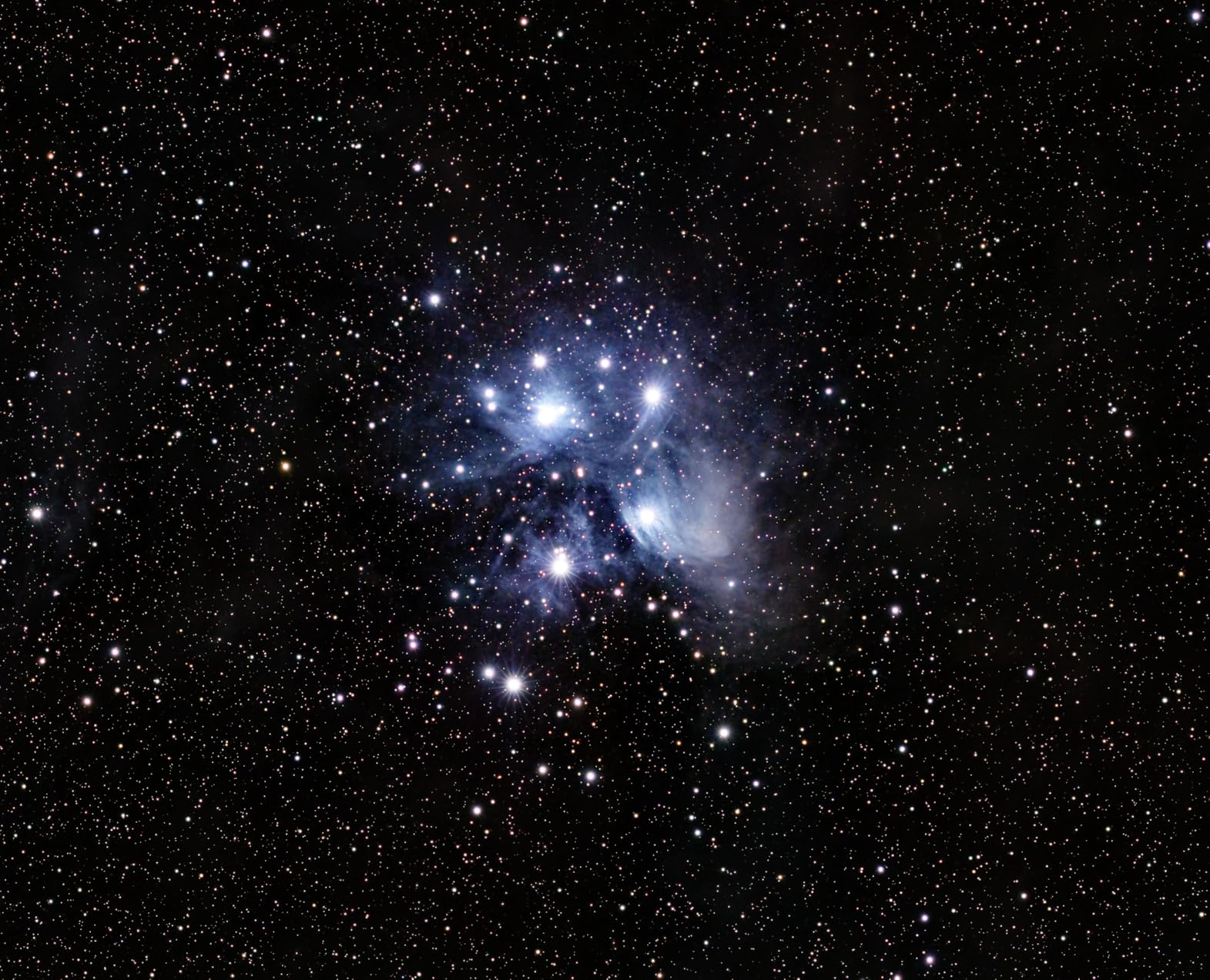
The SkyGuider Pro is the mount we pack when we want the least fuss and the least weight. At 2.2 lb for the head it disappears into a camera bag, and the built-in battery means no power bank, no cable run and nothing to forget in the cold.
Tracking quality is where the 4.5 star rating comes from. The all-metal body and brass worm drive give smooth motion, and owners consistently report sharp two to three-minute unguided subframes even with 300mm to 500mm glass, which is far beyond what most wide field work requires.
The AccuAlign polar scope is illuminated, which sounds minor until you are aligning at a genuinely dark site. A visible reticle in a dark field saves several minutes per setup and removes the guesswork from a red-light torch held in your teeth.
Battery life is the sleeper feature for all-night work. iOptron quotes up to 20 hours at 20C, and reviewers report getting through a full night on one charge with power to spare. That is one fewer cold-weather failure point than anything else in this list.
Does the SkyGuider Pro handle a heavy wide angle zoom?
It handles up to 11 lb when balanced, which covers a lightweight wide zoom and a mirrorless body with room to spare. The catch is balance rather than raw capacity. The counterweight bar is short, so a heavy telephoto combination can pull past the sweet spot before it reaches the rated limit.
For pure wide field this is a non-issue. One AstroBackyard user built a 34-panel Milky Way Core mosaic on a SkyGuider with four images per panel and about 40 percent overlap, which is exactly the kind of work this head is built for.
Who should skip the SkyGuider Pro?
Skip it if you want to point at targets electronically. There is no GoTo database here, so wide field framing is manual star hopping, which some people love and others find tedious after midnight.
Skip it if you shoot with a heavy pro DSLR and a long lens. The short bar and a polar scope that sometimes arrives out of collimation are both more annoying to deal with as your payload grows.
3. Sky-Watcher Star Adventurer GTi Kit review
Sky Watcher Sky-Watcher Star Adventurer GTI Mount Kit with Counterweight, CW bar, Tripod, and Pier Extension – Full GoTo EQ Tracking Mount for Portable and Lightweight Astrophotography
GoTo pointing over built-in Wi-Fi
Tripod and pier extension included
Counterweight bar and 5 lb weight
Illuminated polar scope
Pros
- GoTo pointing removes manual star hopping
- Complete package needs almost nothing else
- Tripod and pier extension remove the guesswork
- Two-year limited warranty from Sky-Watcher USA
Cons
- 26 lb listed weight makes it the heaviest rig here
- Automatic exposure control caps shutter speed at 30 seconds
- Kitted tripod means you cannot mix and match legs
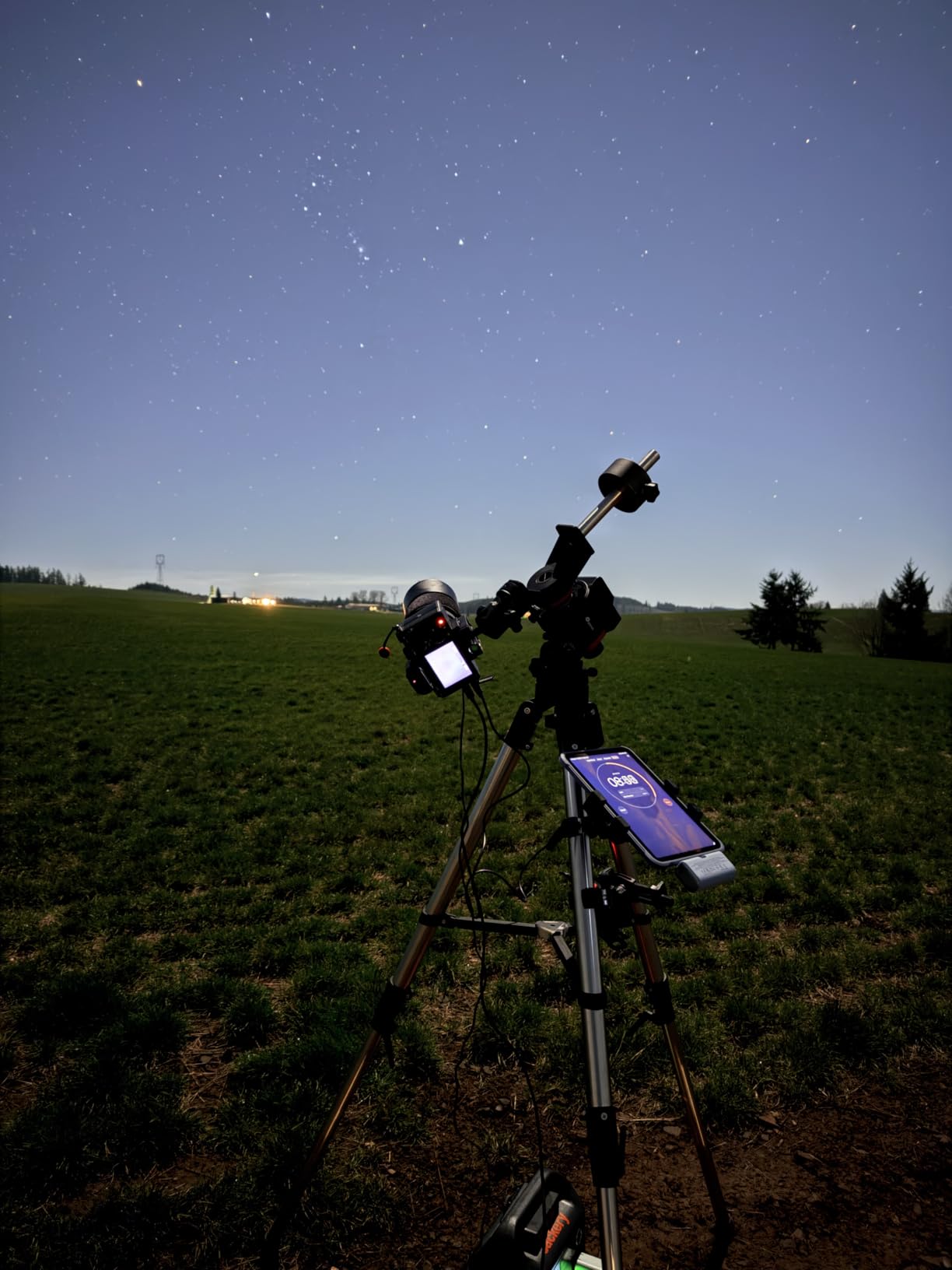
The GTi Kit is the one to buy when you are done with star hopping. Send a target to it from your phone and the mount swings over and tracks it, which turns a fiddly wide field session into something you can run without constantly checking a laptop screen.
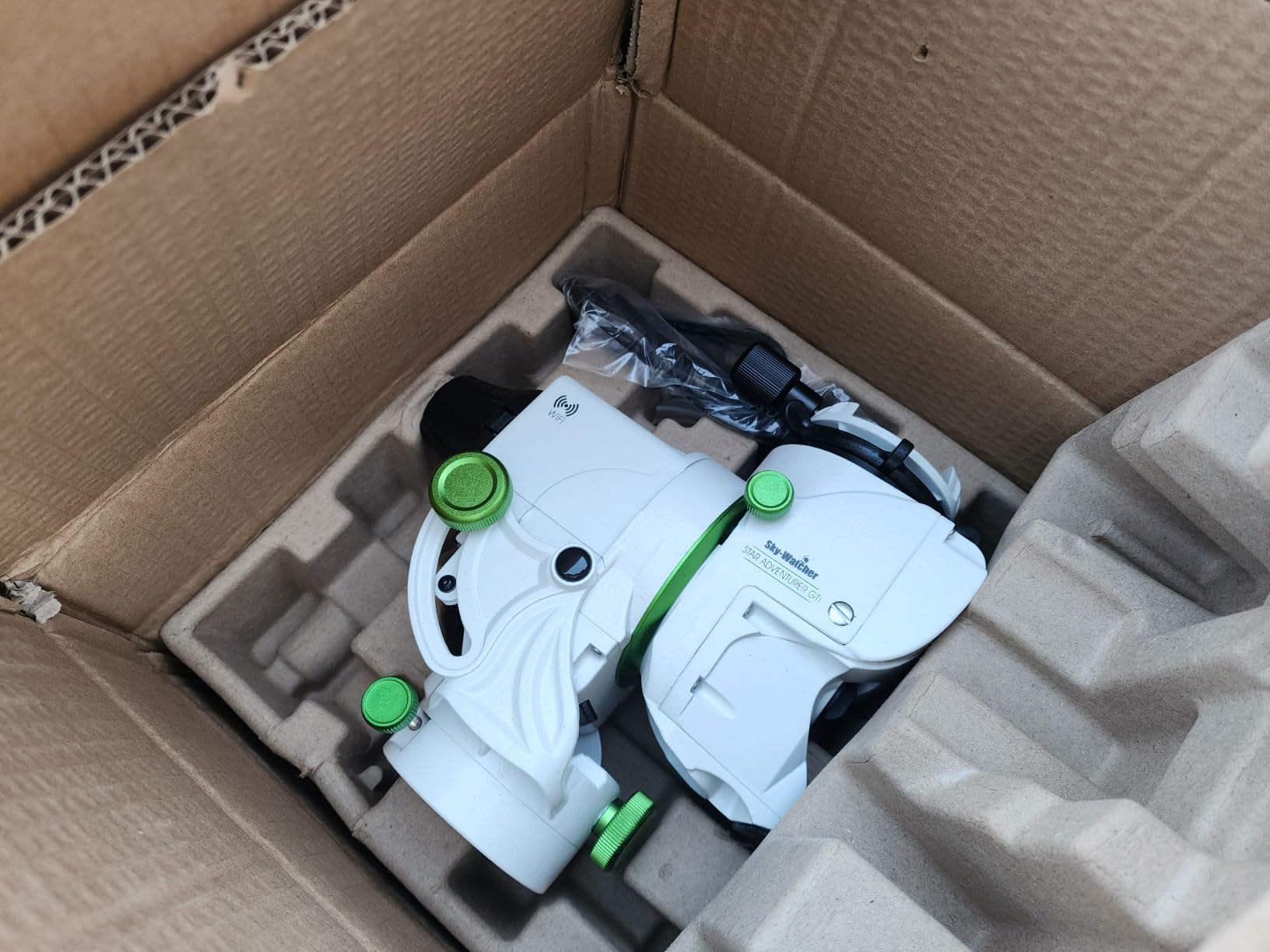
Everything else you need is in the box. The bundle includes the mount head, a matching tripod, a pier extension, a counterweight bar and a 5 lb counterweight, plus a built-in illuminated polar scope. That completeness is the whole pitch and it works, because you can set up a first session with nothing bought separately.
Wi-Fi control handles both GoTo and manual slewing, and the pier extension raises the head to a comfortable working height for a camera looking at the pole. Reviewers rate the 4.5 star average highly for exactly that reason, that the package simply works out of the box.
Where it costs you is weight. At 26 lb for the full kit this is the heaviest setup here by a wide margin, and the pier extension is not something you want to assemble on a windy clifftop at midnight.
Is the GTi Kit good enough for beginner wide field sessions?
It is very good for that. GoTo means you can find a target without a chart, the illuminated scope handles alignment, and the counterweight means you are not fighting balance with a heavy body. A beginner who buys this learns the craft instead of learning tripod mechanics.
The trade is that you carry more than you need for a single wide lens. If your plan is nightscapes with a 20mm and a tripod you already own, this is more hardware than the job requires.
Who should skip the GTi Kit?
Skip it if you work solo at a remote site and walk in on foot. The listed weight is the deciding factor for anyone whose rule is that everything fits in one backpack, which is where the Mini and the POLARIE U win clearly.
Skip it if you need long single exposures handled automatically. The mount’s automatic exposure control tops out at a 30-second shutter speed, so longer subframes are driven by your camera, not the mount.
4. iOptron SkyTracker Pro review
iOptron SkyTracker Pro Camera Mount with Polar Scope, Only
6.6 lb payload capacity
Internal rechargeable battery
Polar scope with dimmable LED
Four tracking speeds
Pros
- Owners reach four to five-minute exposures with pinpoints on an 11mm lens
- Silent operation across four tracking speeds
- Many fine-tuning knobs speed up alignment
- Compact at 3.3 lb with a padded bag included
Cons
- Ball head and counterweight package sold separately
- Dovetail base is not Arca-Swiss compatible
- Polar alignment app is a separate purchase
The SkyTracker Pro is the budget entry into tracked wide field, and its 6.6 lb payload is the widest rating among the bare tracking heads here. Owners regularly report four to five-minute unguided exposures with pinpoints on an 11mm lens, which is well past what wide field demands.
The extra adjustment knobs are the real upgrade over the original SkyTracker. Latitude and azimuth can be dialled in slowly, which matters when you are aligning by an illuminated scope on a shoulder at altitude, and the dimmable LED keeps the reticle from wrecking your night vision.
Power is simple. The internal rechargeable battery charges over Micro USB and reaches 80 percent in about five hours, so a top-up during a coffee break is enough for another session. Four tracking speeds cover 1X sidereal, half sidereal, solar and lunar rates.
What you do not get is a complete package. There is no ball head, no counterweight and no alignment app in the box, so the real cost of ownership climbs once you start adding the parts a tracker needs to work well.
Does the SkyTracker Pro work without a ball head?
Technically yes, practically no. A bare mount head clamped to a tripod works at wide focal lengths, but any ball head gives you the fine framing control that wide field compositions need. Budget for one before your first night out.
The dovetail base is worth checking against your tripod plate too, because it is not Arca-Swiss compatible. An adapter solves it in minutes, but it is one more part to lose in a car boot at dawn.
Who should skip the SkyTracker Pro?
Skip it if you want a single box that sets up a whole rig. Three separate purchases stand between this mount and a working wide field kit, and that is where most of the frustration in reviews comes from.
Skip it if you already own a solid tracker and want a backup. At 6.6 lb payload and 4.3 stars across 53 reviews, it is a capable first tracker rather than a second one.
5. Sky-Watcher Star Adventurer Mini review
Sky-Watcher Star Adventurer Mini – Motorized DSLR Night Sky Tracking Mount For Nightscapes, Time-lapse, and Panoramas
1.5 lb listed weight
AA compartment up to 24 hours
Illuminated polar scope
Ball-head adapter included
Pros
- Lightest complete head in this roundup at 1.5 lb
- Illuminated polar scope and adapter included
- Brass and aluminium gears track smoothly
- AA batteries plus 5V USB power input
Cons
- Ball head not included
- only the adapter is supplied
- Runs on AA cells rather than an internal lithium pack
- Payload tops out at 6.6 lb
At 1.5 lb the Mini is the tracker we would actually carry up a hill. It fits in the side pocket of a hiking pack next to a 20mm lens and a small tripod, and it is the reason several of our wide field sessions happened at all rather than being planned around a car boot.
The gearing is the part that surprised us. Brass and aluminium gears in a head this light could easily feel cheap, and instead they give smooth, quiet tracking that produces clean frames at wide focal lengths without any visible stutter in the drive.
Power is the old fashioned solution that works. A built-in AA compartment runs up to 24 hours, and a 5V mini-USB input lets you top up from a power bank or wall charger. For a night away from a car, that flexibility beats an internal cell you cannot replace.
Wi-Fi control runs through the SynScan app for both Android and iOS, which handles the setup and shutter work. It is not a GoTo system, so you frame wide field scenes yourself, but for nightscapes and panoramas that is exactly what you want anyway.
Can the Star Adventurer Mini carry a full frame camera with a wide zoom?
Within its 6.6 lb rating, yes. That is enough for a mirrorless body with a 14mm to 24mm zoom, which is the classic wide field combination, and the ball-head adapter means you can use whatever head you already own.
It also handles panoramas and time-lapse, which is where the AA battery approach and the modular tripod integration really earn their place. You can shoot a full multi-panel sequence without a charging cable in the cold.
Who should skip the Star Adventurer Mini?
Skip it if you want GoTo pointing or guided tracking. There is no autoguider port listed, so if your plan is to grow past unguided wide field, this head boxes you in.
Skip it if you plan to add a heavy telephoto lens later. A 6.6 lb payload without a counterweight shaft is fine for wide angles and uncomfortable the moment focal length climbs.

6. Vixen POLARIE U review
Vixen POLARIE U Star Tracker
0.58 kg tracking head
Five tracking speeds
ST4 autoguiding port, RA only
4 AA batteries or USB Type-C
Pros
- Smallest and lightest unit here at 0.58 kg
- Five selectable speeds for celestial
- solar and lunar rates
- ST4 autoguiding port allows guided work
- Smartphone shutter release simplifies interval shooting
Cons
- Autoguiding is right ascension only
- No built-in rechargeable battery
- One-year limited warranty on electronic parts
The POLARIE U is the most compact tracking head in the group at 0.58 kg, and it is built by a company whose polarie design has been a favourite of travel astrophotographers for years. For nightscapes, Milky Way panoramas and time-lapse, it does the fundamentals well.
Five selectable tracking speeds cover celestial, solar and lunar rates, which is more choice than most bare heads offer and useful when you are chasing the Moon rather than deep sky targets. Shutter release from a smartphone keeps interval shooting tidy without a remote cable.
The ST4 autoguiding port sets it apart from the other bare heads here. That means you can add guiding later and stretch exposures beyond the unguided limit, which turns a travel tool into something you can grow with.
Power comes from 4 AA batteries or a USB Type-C external terminal, so you can run it from a power bank on a long night. The limitation is that autoguiding works on the right ascension axis only, which is fine for wide field tracking and irrelevant for field rotation.
Is the POLARIE U enough for real deep sky imaging?
For wide field deep sky, yes. It is a tracking head rather than a full equatorial mount, so it handles star field and Milky Way work where the frame is large and guiding corrections are gentle.
Forum members on CloudyNights generally treat trackers as a stepping stone, and that is the right frame for this head too. When you graduate to long focal length deep sky imaging, the answer is a proper equatorial mount rather than a better tracker.
Who should skip the POLARIE U?
Skip it if you want battery capacity figures in hours from a lithium pack, or if you want guided tracking that corrects both axes. Right ascension only guiding will not rescue a demanding field.
Skip it if you want an all in one package. Like the Mini, this is a head that needs a ball head and a tripod to become a working rig, and there is no alignment hardware in the box.
How to Choose a Star Tracker for Wide Field
Pick the focal length you will actually shoot before you pick a mount. Every tracker here will handle a 14mm to 24mm setup, and the decision only gets interesting once you move past 35mm, so that is the number to work backwards from.
The second decision is guided or unguided. Unguided is simpler and lighter, and for wide field lenses it is usually enough. Guided gives you longer subframes and cleaner star shapes, but it adds a guide scope, a guide camera and a cable, which is a different kind of purchase.
How wide can your lens be before stars elongate?
Use the 500 rule as a starting point: divide 500 by the full frame equivalent focal length, and the result is your maximum exposure in seconds before stars begin to trail. The 400 rule is the same formula with 400 instead of 500, and it leaves a useful margin for imperfect alignment and polar axis error.
Here is what those two numbers mean at common wide field focal lengths on full frame:
14mm: about 35 seconds by the 500 rule, about 28 seconds by the 400 rule. Ultra wide, so every mount here is comfortable unguided.
20mm: about 25 seconds by the 500 rule, about 20 seconds by the 400 rule. The sweet spot for nightscape work on any of these trackers.
24mm: about 20 seconds by the 500 rule, about 16 seconds by the 400 rule. Still comfortable, and a standard length for tracked Milky Way arches.
35mm: about 14 seconds by the 500 rule, about 11 seconds by the 400 rule. Alignment quality starts to matter here.
50mm: about 10 seconds by the 500 rule, about 8 seconds by the 400 rule. Short focal lengths are fine, but this is where a tracker earns its keep.
135mm: about 3 seconds by the 500 rule, about 3 seconds by the 400 rule. Guiding is the realistic option past this point.
Wider lenses forgive error and longer lenses punish it, which is why the 14mm to 24mm range is where compact trackers feel effortless. The 500 rule assumes decent alignment, so treat the 400 rule figures as your working limits rather than an invitation to push.
If you are pairing this with a camera body, our guide to the best cameras for astrophotography covers the sensor choices that make wide field stacking easiest.
Do you need guiding for wide field astrophotography?
Usually not. Wide field lenses produce small star discs, so the pointing errors a compact mount produces stay under a pixel or two for a couple of minutes, which stacks away cleanly. This is why the 2i, the SkyGuider Pro and the Mini can all work unguided with 300mm glass according to their owners.
Guiding becomes worth it once you cross roughly 50mm, when a small mount error becomes a visible ellipse across a single frame. If your plan stops at wide field, spending that effort on alignment accuracy instead is the better trade.
One caveat from the DPReview forums worth repeating: unguided results only stay good with wide or short telephoto lenses at short exposures. That is a limitation of the whole class, not a fault of any one mount.
Which polar alignment method should you look for?
There are four common methods, and they cost different amounts of patience. An illuminated polar scope is the fastest in the field, because you centre a reticle on Polaris and start. A wedge plus a phone app gives you measured alignment in degrees, which is more accurate and needs a stable base.
App-only alignment with no wedge works fine for a wide lens at short exposures and becomes frustrating as focal length grows. Mechanical alignment with no scope at all, as offered by purely mechanical trackers, is the least accurate and only really viable for the widest glass.
In practice the Sky Adventurer 2i Pro Pack and the GTi Kit include equatorial bases, and the SkyGuider Pro ships with an illuminated AccuAlign scope. The SkyTracker Pro has a dimmable LED scope but sells its alignment app separately, and the Mini and POLARIE U include a scope without a wedge.
What else do you need besides the tracker?
At minimum you need a ball head and a tripod. A cheap ball head with a slippery pan handle will introduce vibration that no mount can compensate for, and it is the most common reason stars look slightly egg-shaped at the corners of a frame.
A wedge or an equivalent alignment base matters if you want anything beyond short exposures. This is the exact point that comes up again and again on Reddit, where the top reply for this topic recommends the version with the wedge because the bare unit leaves you guessing at alignment.
Then add a counterweight bar and weight for heavier payloads, an intervalometer or a phone shutter release, and a power plan. Mounts with internal batteries such as the SkyGuider Pro and SkyTracker Pro need a top-up; AA powered units such as the Mini and POLARIE U need spare cells or a power bank.
If your tracker setup grows into a long focal length rig, our roundup of the best telescope mounts for astrophotography covers the equatorial mounts people move to next.
How portable does your star tracker need to be?
Portability is the factor that decides purchases more often than specs, and it is where the field separates cleanly. The POLARIE U at 0.58 kg and the Mini at 1.5 lb are the only two here that comfortably join a walking kit. The SkyGuider Pro head at 2.2 lb is close behind once the tripod is counted.
The GTi Kit at 26 lb is the outlier because the tripod and pier extension are bundled, and that completeness is what you are paying for. If you already own a solid tripod, the weight argument for a bare head gets much stronger.
For telescopes rather than lenses, our best telescopes for astrophotography guide covers how quickly you will outgrow a tracker.
Is a star tracker even the right device?
If you want a finished deep space image of a small object, no. A smart telescope or an equatorial mount with guiding gives you the focal length and the tracking accuracy for that job, and trackers exist to make wide scenes possible rather than to replace a real mount.
If you want Milky Way arches, nightscapes with a foreground, multi-panel mosaics and star trails, a tracker is exactly right. It is the cheapest way to turn a stack of short noisy exposures into a deep, clean image.
CloudyNights members frame it the same way, treating trackers as a stepping stone toward an EQ6R or similar class mount once someone graduates to small deep sky targets.
Frequently Asked Questions
What is the best star tracker for astrophotography?
The Sky-Watcher Star Adventurer 2i Pro Pack is our top pick because it includes the deluxe equatorial base for polar alignment and adds an autoguider port for later. The iOptron SkyGuider Pro is the lighter alternative at 2.2 lb with a 4.5 star rating and up to 20 hours of internal battery.
What is the best star tracker for beginners?
Beginners should buy the kit that removes variables. The Star Adventurer GTi Kit is the easiest starting point because GoTo pointing, tripod, pier extension, counterweight and illuminated polar scope are all included. For the smallest learning curve per unit of gear, the Star Adventurer 2i Pro Pack pairs a proven head with the alignment base.
What is a good budget star tracker for astro photography?
The iOptron SkyTracker Pro is the budget-friendly tracker here, rated for 6.6 lb of payload with an internal rechargeable battery, an illuminated polar scope and four tracking rates. Owners report four to five-minute unguided exposures with pinpoints on an 11mm lens. Budget for a ball head and an alignment app, since neither is included.
Do you need a star tracker for astrophotography?
You need one if you shoot wider than about 35mm on full frame and want exposures longer than 10 to 20 seconds. A tracker rotates the camera at the sidereal rate, about 15 degrees per hour, so stars stay fixed in frame. Without one, wide field frames stay noisy and unstackable.
How accurate are star trackers?
Accuracy depends far more on polar alignment and tripod rigidity than on the mount itself. A well aligned compact tracker holds point stars at 14mm to 24mm for two to three-minute unguided exposures. Owners of the Star Adventurer 2i report pinpoints at 300mm, and SkyGuider Pro owners report clean two to three-minute subs with 300mm to 500mm lenses.
Is 14mm too wide for astrophotography?
No. At 14mm the 500 rule allows about 35 seconds before stars trail, and the 400 rule gives about 28 seconds. Every tracker in this roundup handles 14mm unguided with room to spare, which makes ultra wide lenses the easiest place to start tracked work.
Is 24mm wide enough for astro?
Yes, and it is one of the most popular lengths for tracked work. At 24mm the 500 rule gives about 20 seconds and the 400 rule about 16 seconds. Those subframes stack cleanly into a Milky Way arch, and any of the trackers here will hold pinpoints at that length.
What is the 500 rule in astrophotography?
The 500 rule is a shortcut for shutter speed: divide 500 by the full frame equivalent focal length to get the longest exposure in seconds before stars begin to trail. It is a starting estimate rather than a hard limit, because polar alignment error and sensor format change the real number.
What is the 400 rule in astrophotography?
The 400 rule uses 400 instead of 500 in the same formula, so it gives a shorter exposure that leaves a safety margin for imperfect alignment and polar axis error. Many wide field shooters use the 400 figure as their working limit and reach for guiding instead of pushing unguided exposures.
What is the best device for astrophotography?
It depends on the target. A compact star tracker is the best device for wide field Milky Way arches, nightscapes and panoramas. Small deep space objects and long focal length work are better served by a guided equatorial mount, and fully framed observing is what a smart telescope is designed for.
The Verdict: Which Star Tracker Should You Buy in 2026?
The Sky-Watcher Star Adventurer 2i Pro Pack is the best star tracker for wide field astrophotography in 2026. It carries the strongest combination of rating and review history in the group, it includes the alignment base that everyone ends up buying anyway, and the autoguider port means it is not a dead end when you move past 35mm.
Buy the iOptron SkyGuider Pro instead if packing weight decides for you, and buy the GTi Kit if GoTo pointing sounds like the difference between enjoying the hobby and fighting it at midnight. If your kit has to fit in a backpack, the Star Adventurer Mini at 1.5 lb and the Vixen POLARIE U at 0.58 kg are the two that make a walking session realistic.
Whichever one you choose, spend your remaining effort on the boring things, because they decide the image far more than the mount does: a rigid tripod, a decent ball head, a properly balanced payload and a careful polar alignment routine.