
The best XLR microphones for voiceover in 2026 are the ones that stay clean on a spoken read, not the ones with the most flattering spec sheet. After putting twelve of them through the same script, same interface and same room, the Shure SM7B still wins on off-axis rejection and consistency, the Audio-Technica AT2020 wins on pure value, and the RØDE PodMic wins for anyone who cannot treat a room yet.
That ranking matters more than it sounds. Voiceover is judged with no visual distraction and increasingly on the gear list attached to the session, so the microphone is a credibility signal as much as a sound. It is also the least important variable. A sensitive condenser in an untreated bedroom will faithfully record your traffic, your HVAC and your reflection, and no amount of microphone money will remove those.
This roundup covers the twelve XLR microphones we would actually put in front of a paid read, from a complete kit that costs less than a single cable to a broadcast dynamic with twelve thousand reviews behind it. Each entry lists the honest downside, the gain the mic demands from your preamp, and the kind of voiceover job it is genuinely suited to.
One note before we start, because it saves people real money. Topher Keene, a working voice actor, puts it plainly: the room matters more than the microphone, and upgrading often makes a recording sound worse at first because the more sensitive capsule reveals the flaws that were always there. We agree, and there is a section below on treating a room in the order that actually helps.
Table of Contents
Top 3 Best XLR Microphones for Voiceover in 2026
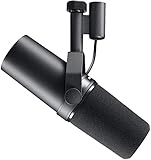
Shure SM7B
- Dynamic cardioid broadcast capsule
- Built-in shock isolation and pop filter
- Low-cut and presence switches
- Needs about 60dB of clean gain
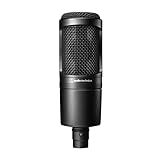
Audio-Technica AT2020
- Side-address cardioid condenser
- 20 dBA self-noise
- 74 dB signal-to-noise ratio
- Requires 48V phantom power

RØDE PodMic
- Broadcast-tuned dynamic capsule
- Internal pop filter and shock mount
- Integrated swing mount
- No phantom power needed
All 12 XLR Microphones Compared Side by Side in October
This is the quick reference for every XLR microphone in the roundup, including the type of capsule, the pattern, the self-noise figure and the job each one suits best. Read the gain column before anything else: it is the spec that decides whether your interface can drive the microphone properly.
| Product | Specifications | Action |
|---|---|---|
| Shure SM7B |
|
Check Latest Price |
| Audio-Technica AT2020 |
|
Check Latest Price |
| RØDE PodMic |
|
Check Latest Price |
 Audio-Technica AT2035 Audio-Technica AT2035 |
|
Check Latest Price |
 RØDE NT1 5th Gen RØDE NT1 5th Gen |
|
Check Latest Price |
 Shure MV7+ Shure MV7+ |
|
Check Latest Price |
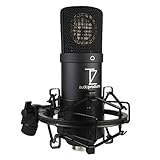 TZ Stellar X2 TZ Stellar X2 |
|
Check Latest Price |
 Elgato Wave DX Elgato Wave DX |
|
Check Latest Price |
 FIFINE AmpliTank K688 FIFINE AmpliTank K688 |
|
Check Latest Price |
 TONOR TC20 Kit TONOR TC20 Kit |
|
Check Latest Price |
 AKG P120 AKG P120 |
|
Check Latest Price |
 RØDE NT1 Signature RØDE NT1 Signature |
|
Check Latest Price |
1. Shure SM7B Dynamic Vocal Microphone – Best All-Rounder for Voiceover
Shure SM7B Dynamic Vocal Microphone for Podcasting & Streaming
Dynamic cardioid
50 Hz - 20 kHz
150 ohm impedance
2.7 lb metal body
Pros
- Warm broadcast tone that flatters spoken voice
- Strong off-axis rejection
- Integrated shock isolation and pop filter
- Rear low-cut and presence switches
- Handles high SPL without breakup
Cons
- Needs about 60dB of clean gain or an inline booster
- Dark character is not ideal for every voice
- Heavy body needs a sturdy stand
- Will not silence a live room
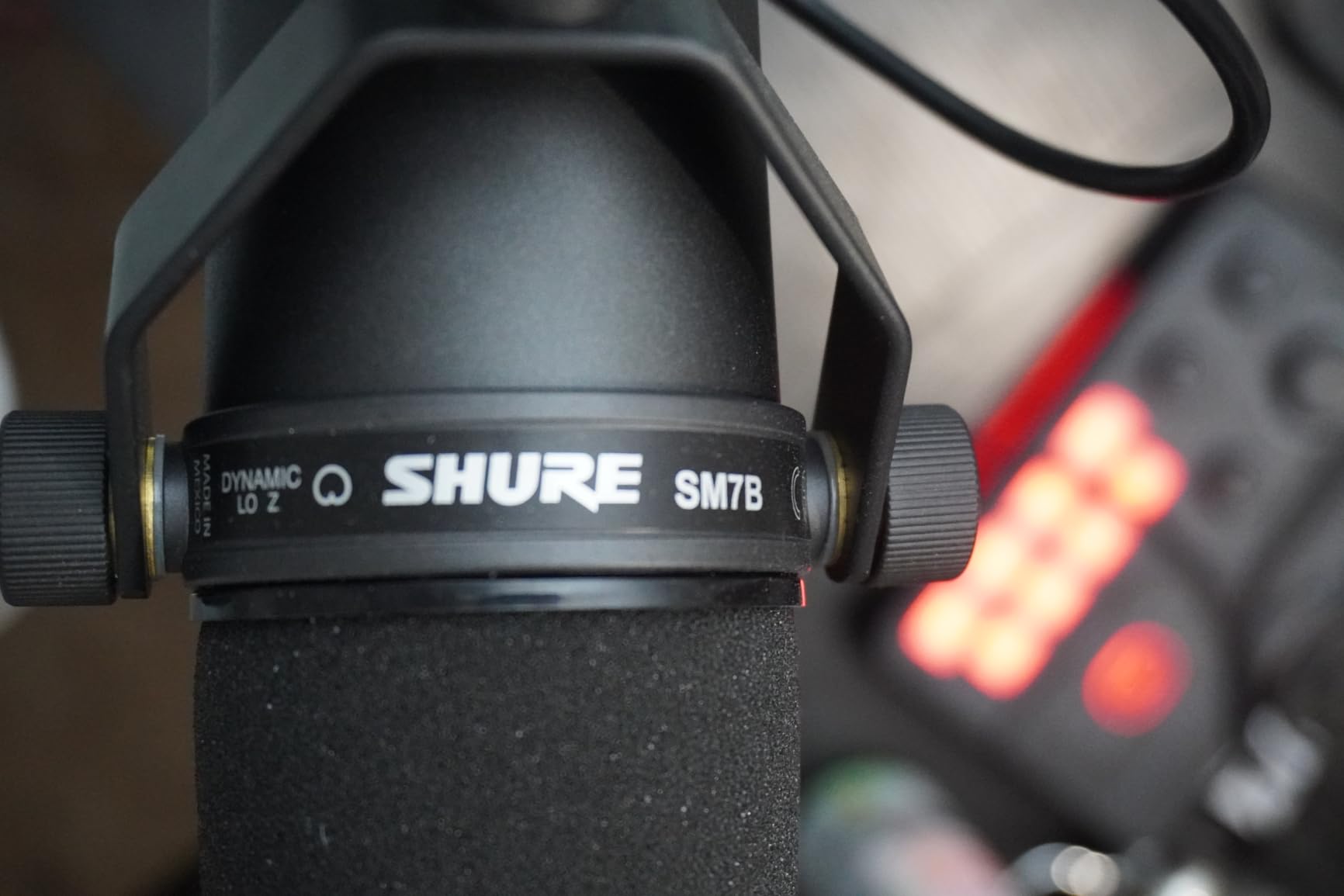
The SM7B is the microphone I recommend to someone whose income depends on being intelligible on the first take. Its cardioid dynamic capsule is deliberately less sensitive than any condenser on this list, which means it takes in far less of the room around you while still keeping the detail that makes a read sound close and present.
Everything needed for a narration session is built in. The air suspension in the yoke handles desk thumps, the internal pop filter handles plosives, and two switches on the back give you instant access to a low-cut filter and a presence boost. You are not buying accessories to do the basics, which is why it survives contact with people who record at odd hours in shared flats.
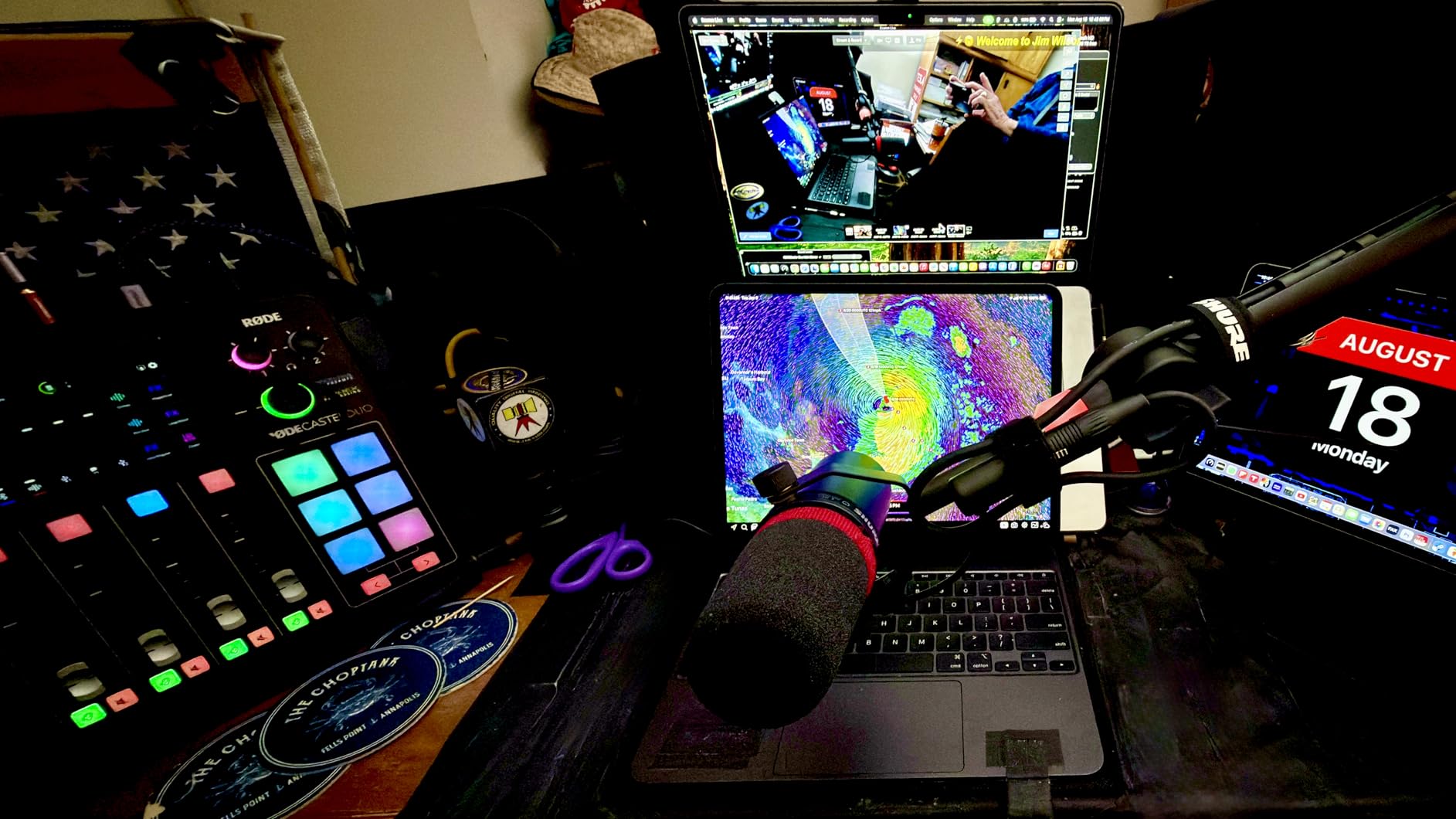
What I keep coming back to is how little it changes between sessions. It is a 50 Hz to 20 kHz dynamic with 150 ohm impedance and a 60 dB signal-to-noise ratio, and that flatness is a feature for long-form work. Nothing about it is a signature sound, so a client asking for a neutral read gets exactly that.
The catch is gain, and it catches almost everyone. The manufacturer recommends roughly 60 dB of gain, which most entry interfaces cannot deliver cleanly, so the mic is often paired with an inline booster or a high-gain preamp. Buy the booster with the microphone rather than after it.
What the SM7B does better than every other mic here
Its off-axis rejection is the reason it wins this roundup. Traffic, a fan, a partner speaking in the next room and a keyboard in the other hand all sit far outside the cardioid lobe and simply do not arrive at the capsule. Nothing else in this list combines that rejection with twelve thousand reviews and a metal body that has already survived a decade of broadcast use.
For commercial, promo and narration work it is the safest purchase in the list. It handles a loud read without compression riding on it, it needs no phantom power, and its tone does not exaggerate sibilance or bass on the voices that most often cause problems on a mic stand.
Where the SM7B is the wrong choice
It is a dark microphone. Deep voices can sound boxy and thin male readers often find themselves fighting the low-mid emphasis in post, which defeats the point of a fast read. If you have a bright, thin voice this mic will warm it, but if you have a warm, thick voice you are adding to a problem.
An r/VoiceActing thread once titled itself asking why the SM7B is good for voice acting at all, and the premise is fair. Dynamics can dull the nuance you want in long-form character work. If your auditions are animation or audiobook rather than commercial read, a quiet condenser will serve you better. This is also the heaviest body here at 2.7 pounds, so your stand needs to be a real one.
2. Audio-Technica AT2020 Cardioid Condenser – Best Value for Voiceover
Audio-Technica AT2020 Cardioid Condenser Studio XLR Microphone, Ideal for Project/Home Studio Applications, Black
Cardioid condenser
20 dBA self-noise
74 dB SNR
200 ohm impedance
Pros
- Consistent clear sound that holds up over a decade
- Exceptional value for a studio condenser entry point
- Handles loud sources without distorting
- Durable metal body
- Simple quick stand mounting
Cons
- High sensitivity picks up ambient room noise
- Needs 48V phantom power and an interface
- Self-noise around 20 dBA is higher than pro condensers
- Plosives need an external pop filter
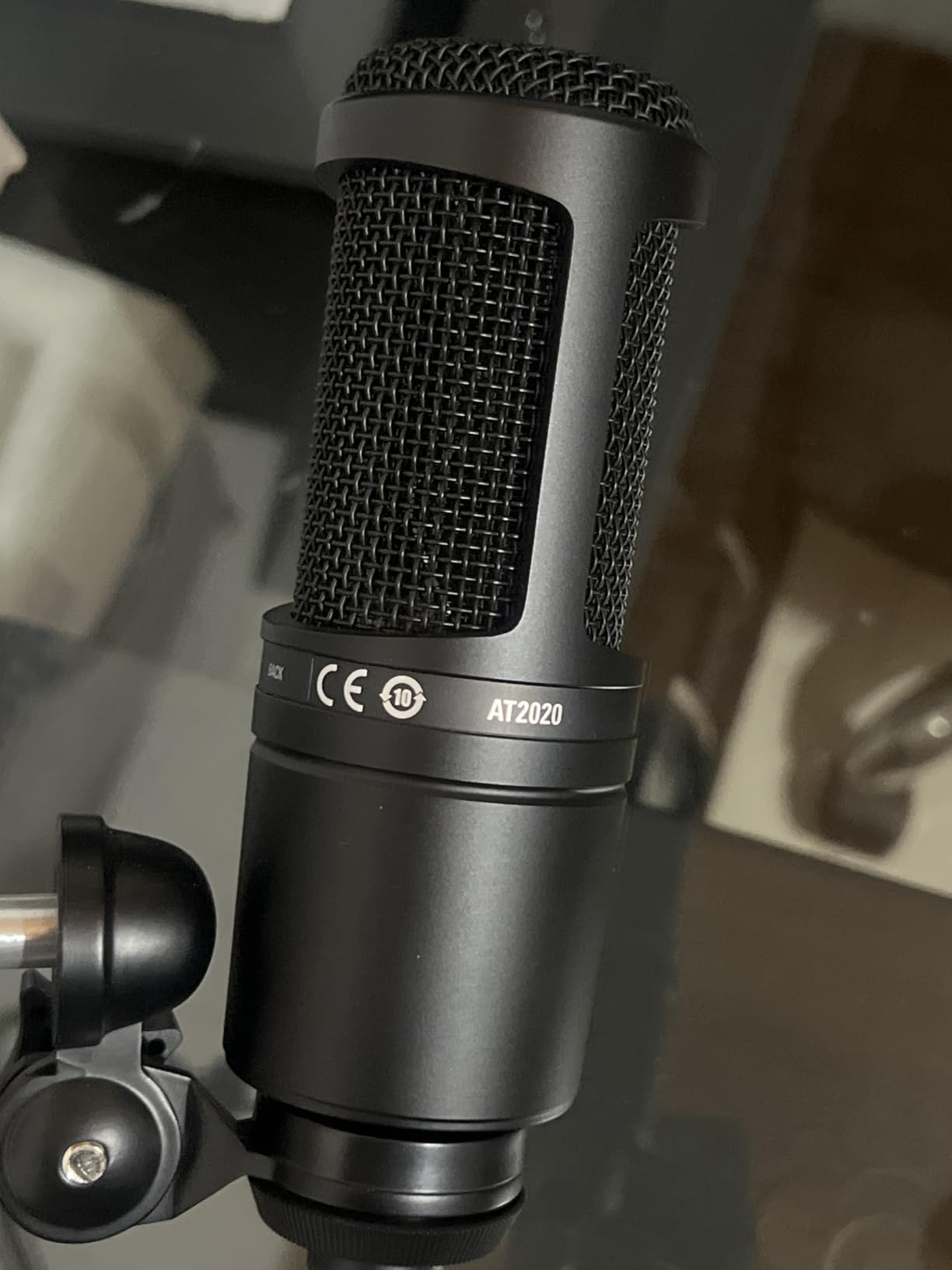
With over fifteen thousand reviews and more than a decade of owners reporting the same unchanged result, the AT2020 is the most proven microphone in this roundup by a wide margin. It is a side-address cardioid condenser with a custom low-mass diaphragm, 200 ohm impedance and a 74 dB signal-to-noise ratio, and it is the default first studio condenser for more beginners than any other model.
What you get is a clean, honest capture with no strong tonal signature. For a voiceover artist building a home booth, that neutrality is worth more than character, because it leaves room for you to shape the read rather than fighting the microphone. The high SPL handling means it will not fall apart if you get animated.
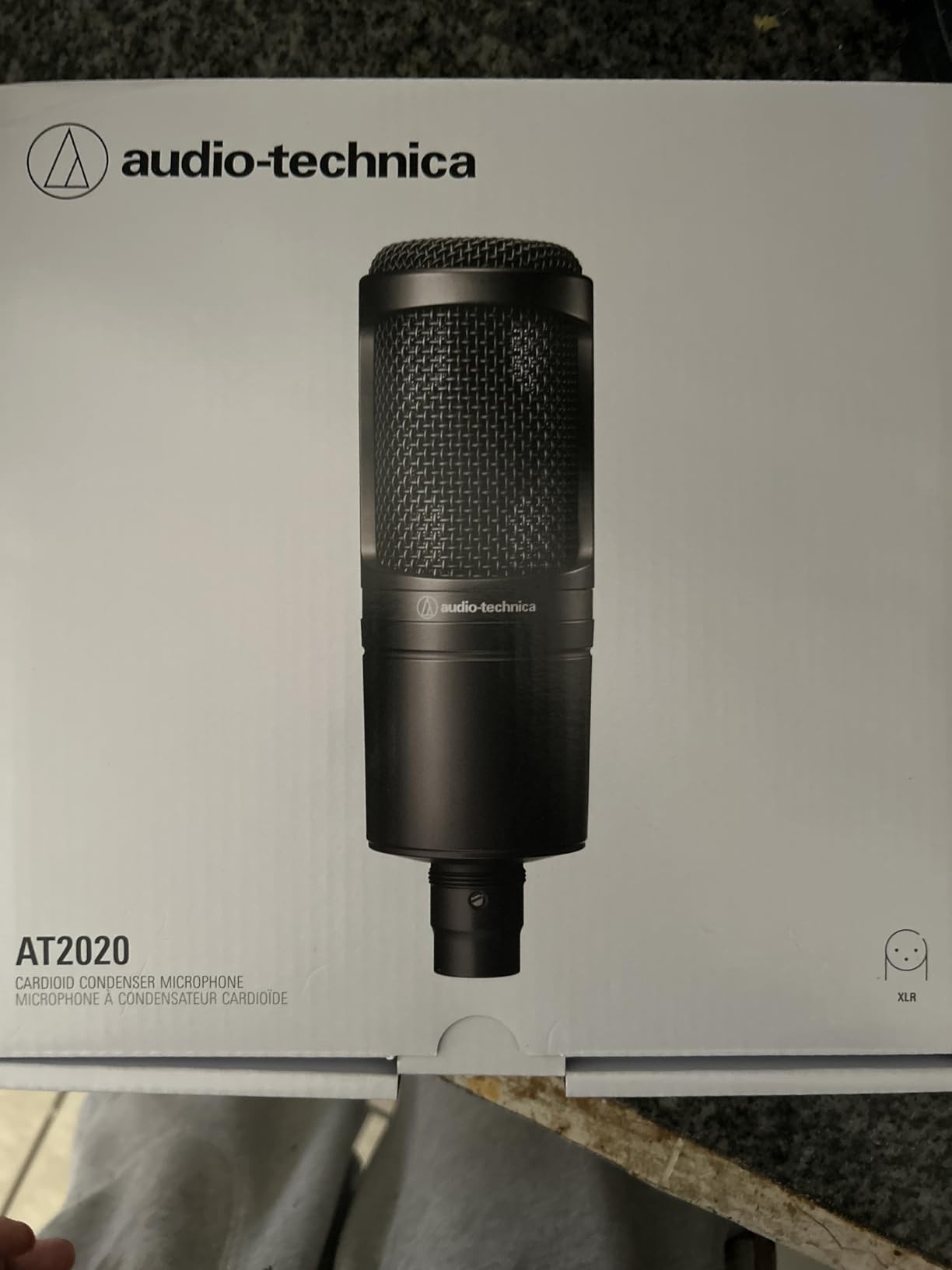
The honest limitation is that 20 dBA of self-noise is audible in a genuinely quiet recording. That is the trade for a very clean, open sound at this level, and it only becomes a problem if your room is already near-silent. In an ordinary treated corner it disappears entirely.
Two things are not in the box and both are non-negotiable for spoken work: phantom power from an interface, and a pop filter. Without a filter the plosives on a hard consonant are the first thing an engineer will ask you to fix.
Why the AT2020 is still the right first microphone
Two reasons. The first is that its noise floor and response stay inside the range most clients accept for commercial and audiobook work, so a job recorded today will not need re-recording when your setup improves. The second is longevity: owners report a decade of consistent results, which matters when you are building a career rather than a streaming channel.
If you want to compare it against the wider condenser category before you commit, our guide to the best condenser microphones for recording goes into the large-diaphragm question in more detail.
Where the AT2020 disappoints
It is a sensitive capsule in a cardioid pattern, so it collects the room. In a bedroom with a thin wall you will hear the wall, not just your voice, and no post-processing fixes a reflection. The 20 dBA self-noise also makes it a poor choice for whisper-style narration recorded in a large treated booth where the floor is very low.
The metal body is basic and the integrated stand mount is utilitarian rather than elegant, and there is no pad, no high-pass filter and no shock mount in the box. Compared with the Audio-Technica AT2035 further down, you are paying less and getting fewer controls.
3. RØDE PodMic Cardioid Dynamic – Best Broadcast Mic for Untreated Rooms
RØDE PodMic Cardioid Dynamic Broadcast Microphone, XLR
Dynamic cardioid
20 Hz - 20 kHz
150 ohm impedance
78 dB SNR
Pros
- Warm broadcast tone that flatters speech
- Rejects room noise fans and traffic
- Built-in pop filter and shock mount
- All-metal build that survives heavy use
- Excellent sound for the money
Cons
- Low output needs significant clean gain
- XLR only so an interface is required
- Heavy for a light boom arm
- Cable and arm not included
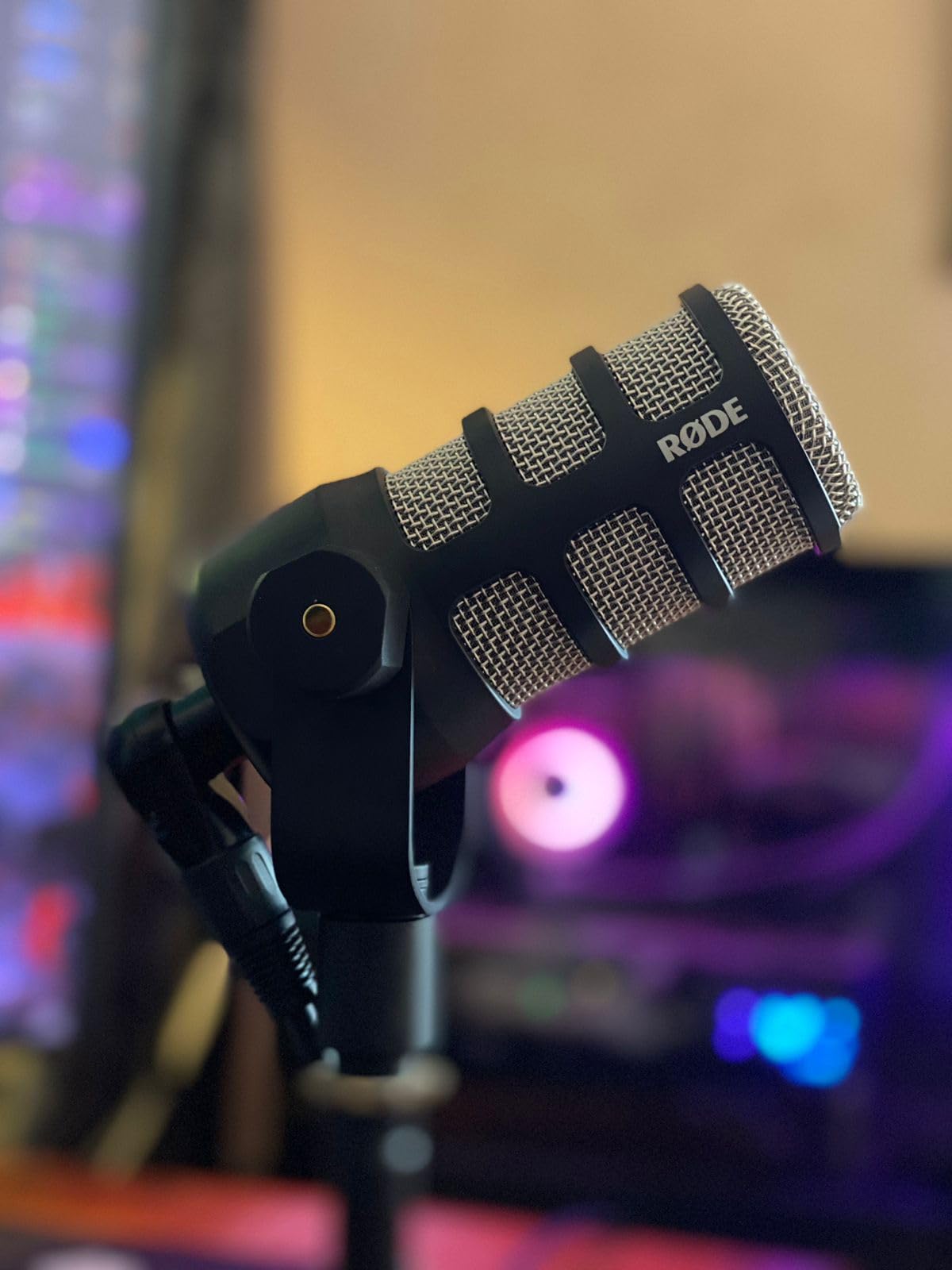
The PodMic is the answer when your room is not ready and you are recording tomorrow. It is a broadcast-tuned dynamic capsule voiced for speech, and unlike the entry condensers on this list, it treats background noise as something to reject rather than something to record. Computer fans, air conditioning and the neighbour’s television all sit behind it.
Everything you need to start is built in or included. There is an internal pop filter, an internal shock mount and an integrated swing mount in the box, so plosives and desk thumps are handled without a single extra purchase, and the 150 ohm impedance means it will drive almost any preamp you can find.
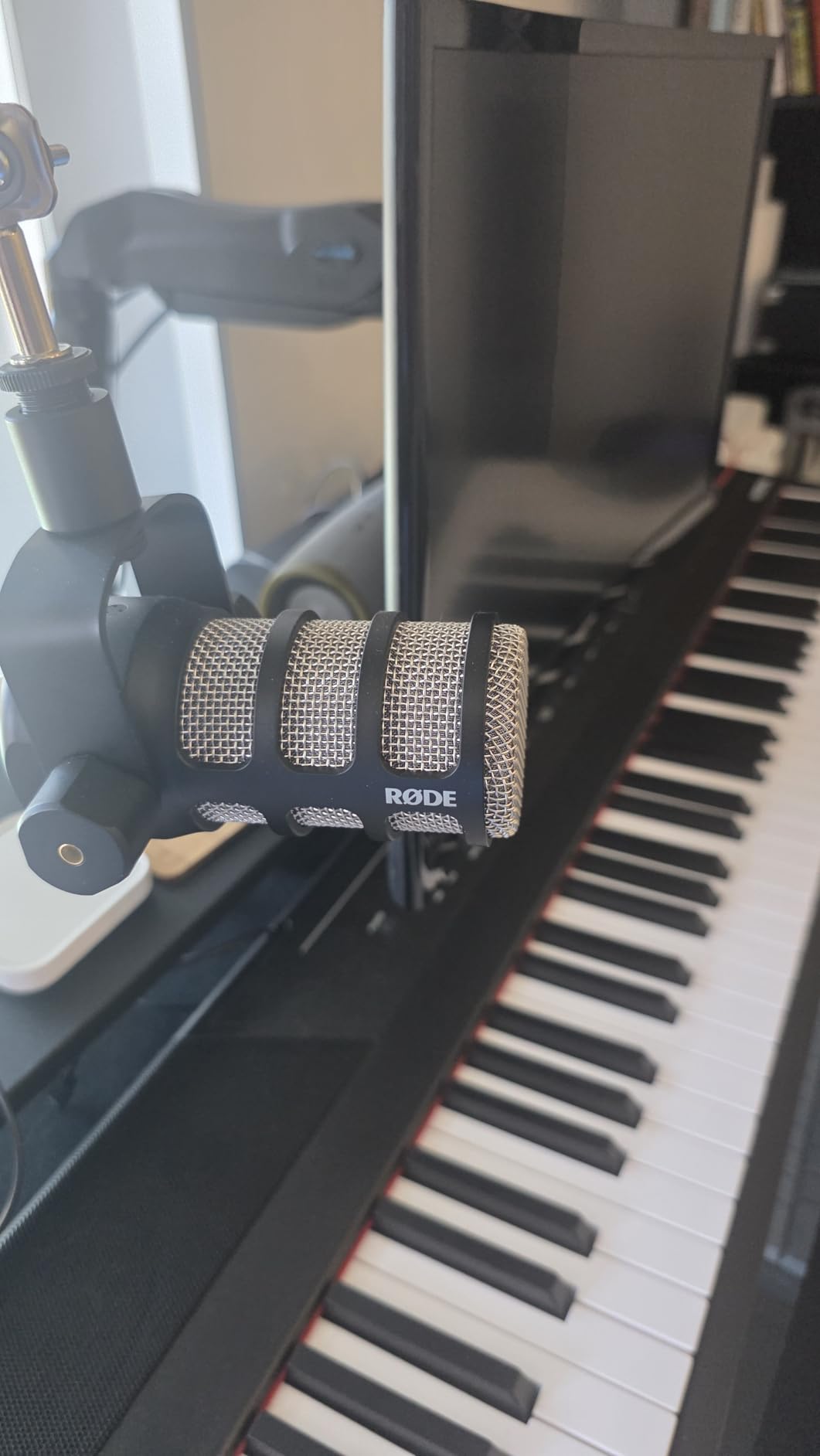
The tone is warm and forgiving in a way that flatters a spoken read. It reaches 20 Hz to 20 kHz with a 78 dB signal-to-noise ratio, which is unusually high for a dynamic and means you get usable level without cranking gain into the noise of a modest interface.
The one recurring note from owners is that it is a low-output microphone. Push gain hard on a cheap preamp and you will hear the interface rather than the mic, so if your interface has limited clean headroom this is worth pairing with an inline booster.
Why the PodMic beats every other budget mic in a bad room
A dynamic capsule simply requires more level to move, so it picks up less of whatever is happening behind you. In an untreated room that difference is not subtle: the mic decides how much of your computer fan ends up in the file. The PodMic and the Shure SM7B both win that comparison for the same reason, and neither needs a treated room to sound professional.
For a commercial read, a corporate e-learning module or a promotional video, it is a genuinely complete package. The swing mount, pop filter and shock mount are all included, which means the total cost of getting to a usable session is the microphone plus an interface.
Where the PodMic is the wrong choice
It has no phantom power path and no USB, so you are committed to an interface or mixer. That is not a downside for a serious setup, but it does make it a poor fit if you want one cable and no external box, and the included mount is a desk swing rather than a boom arm for standing reads.
Dynamics also lose some of the fine detail that long-form audiobook and character work relies on. If your voice is thin or very high pitched, the warm broadcast voicing can leave it sounding duller than you want, and the 937 g weight is real if you are moving between a desk and a standing rig all day.
4. Audio-Technica AT2035 Cardioid Condenser – Best Studio Condenser With On-Body Controls
Audio-Technica AT2035 Cardioid Condenser Microphone, Perfect for Studio, Podcasting & Streaming, XLR Output, Includes Custom Shock Mount
Large-diaphragm condenser
70 dB SNR
80 Hz high-pass filter
10 dB pad
Pros
- Smooth natural large-diaphragm tone with low self-noise
- Switchable 80 Hz high-pass filter tames rumble
- 10 dB pad handles loud sources
- Custom shock mount included
- Protective pouch included
Cons
- Needs 48V phantom power and an interface
- Condenser sensitivity captures room noise
- A pop filter is still needed for plosives
The AT2035 is the step up from the AT2020 and the difference shows in the controls. It is a large-diaphragm side-address cardioid condenser with a switchable 80 Hz high-pass filter and a switchable 10 dB pad, two things you will genuinely reach for on a spoken read without thinking about it.
The high-pass filter is the feature people underrate. On a close read you pick up desk vibration, chair creak and handling noise in the low end, and filtering it at source is cleaner than trying to remove it in software. For audiobook sessions where you move between print and headphones all day, that switch earns its place.
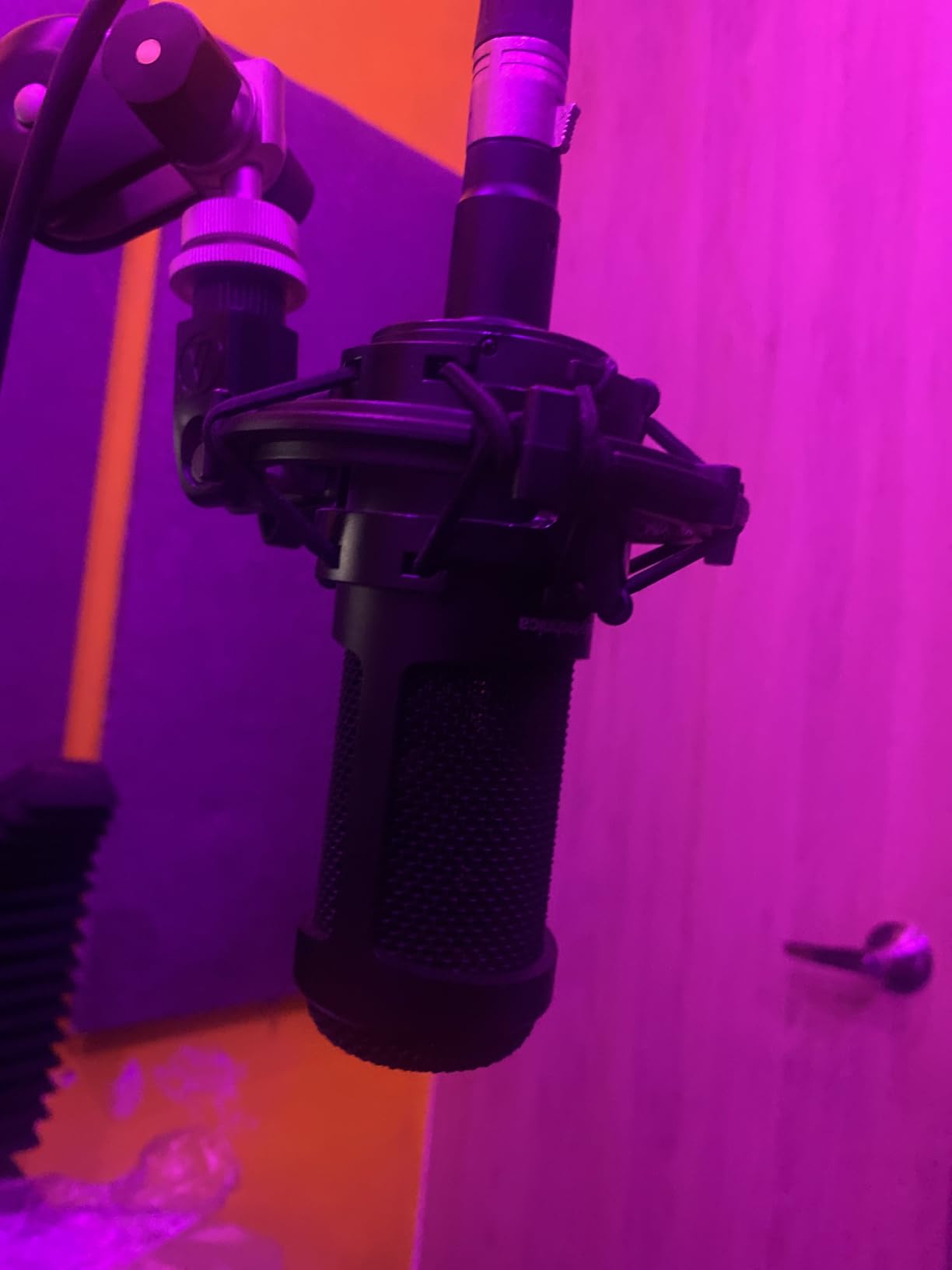
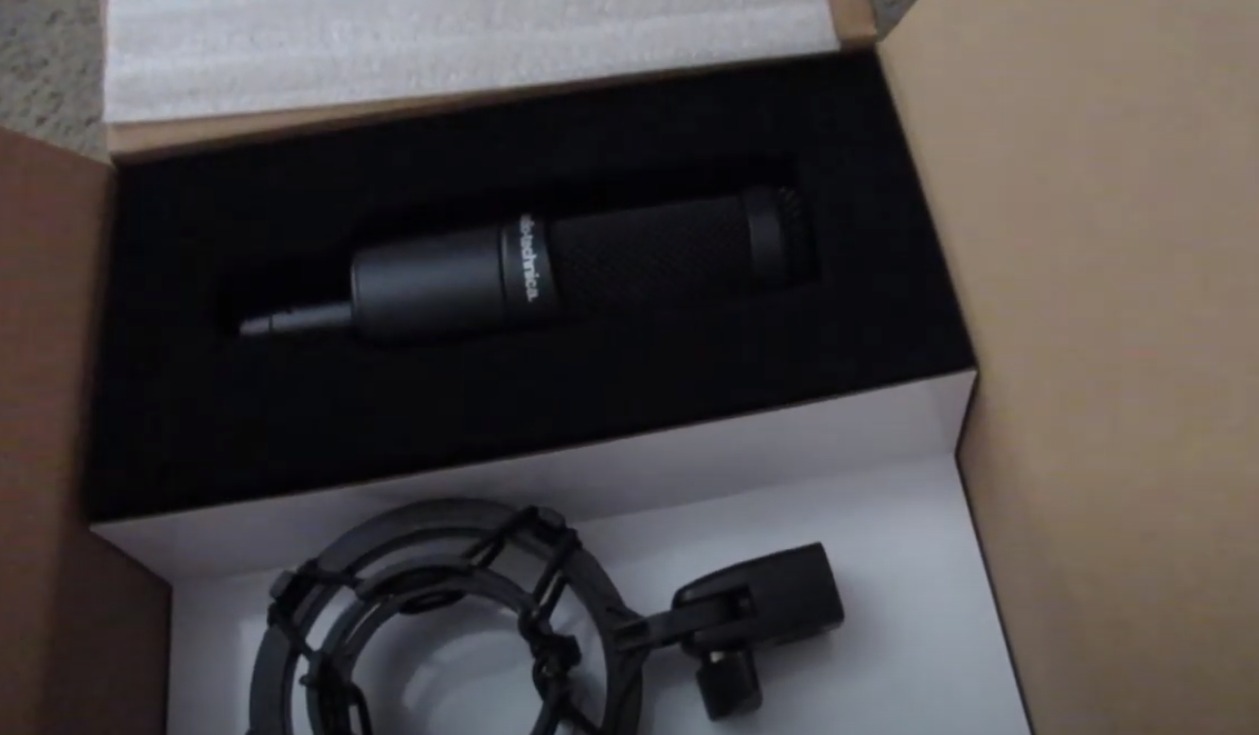
A custom shock mount and a protective pouch come in the box, so isolation is handled and the microphone is protected when you pack for a remote session. The 70 dB signal-to-noise ratio keeps the noise floor low enough for long-form narration where you are listening for problems rather than making them.
The large diaphragm delivers a smoother, rounder sound than the AT2020’s low-mass capsule. That smoothness is what audiobook and audiobook-adjacent work rewards, and it is why I reach for this one when a client wants warmth without a bass-heavy mic.
When to choose the AT2035 over the AT2020
Choose it when you record for hours. The high-pass filter reduces low-frequency handling noise, the pad protects you on an unexpectedly loud read, and the included shock mount means the microphone is not bolted straight to a metal stand. Those three differences matter over a full narration day in a way they never matter over a five-minute voice message.
It is also the right pick for a shared home space where a neighbour’s low-frequency rumble arrives under the floor. Roll it off at 80 Hz and the problem largely stops being your problem.
Where the AT2035 disappoints
It is still a condenser, so the room comes with it. In an untreated space you will hear reflections and traffic, and the additional sensitivity over a dynamic means you cannot solve it with technique alone. The pad also does nothing for a quiet room, which is the direction most home voiceover problems point.
Neither the XLR cable nor an interface is included, and some reviewers find the tone too smooth for a bright, thin voice that needs presence rather than roundness. If your voice sits high and lacks energy, a brighter microphone will suit you better than this one.
5. RØDE NT1 5th Gen Studio Condenser – Best Hybrid for USB and XLR Work
RØDE NT1 5th Gen Studio Condenser Microphone, XLR + USB-C, Silver
XLR and USB-C
4 dBA self-noise
80 dB SNR
308 g aluminium body
Pros
- Ultra-low self-noise suits quiet studio voiceover
- XLR and USB-C on the same capsule
- Warm silky NT1 voicing with high SPL handling
- Shock mount pop filter and cables included
Cons
- Condenser sensitivity captures room noise
- Larger body than a typical desktop mic
- Phantom power needed for XLR use
The NT1 5th Gen solves a problem most people do not realise they have. If you move between a laptop for auditions and an interface for paid work, you are usually changing microphones, which means relearning your gain, your distance and your tone. This one gives you both outputs on the same capsule, so the sound follows you.
The headline spec is 4 dBA of self-noise with an 80 dB signal-to-noise ratio, which makes it one of the quietest capture options here. That matters when you are recording a quiet, close read in a treated space, because the noise floor stops being the thing you hear between sentences.
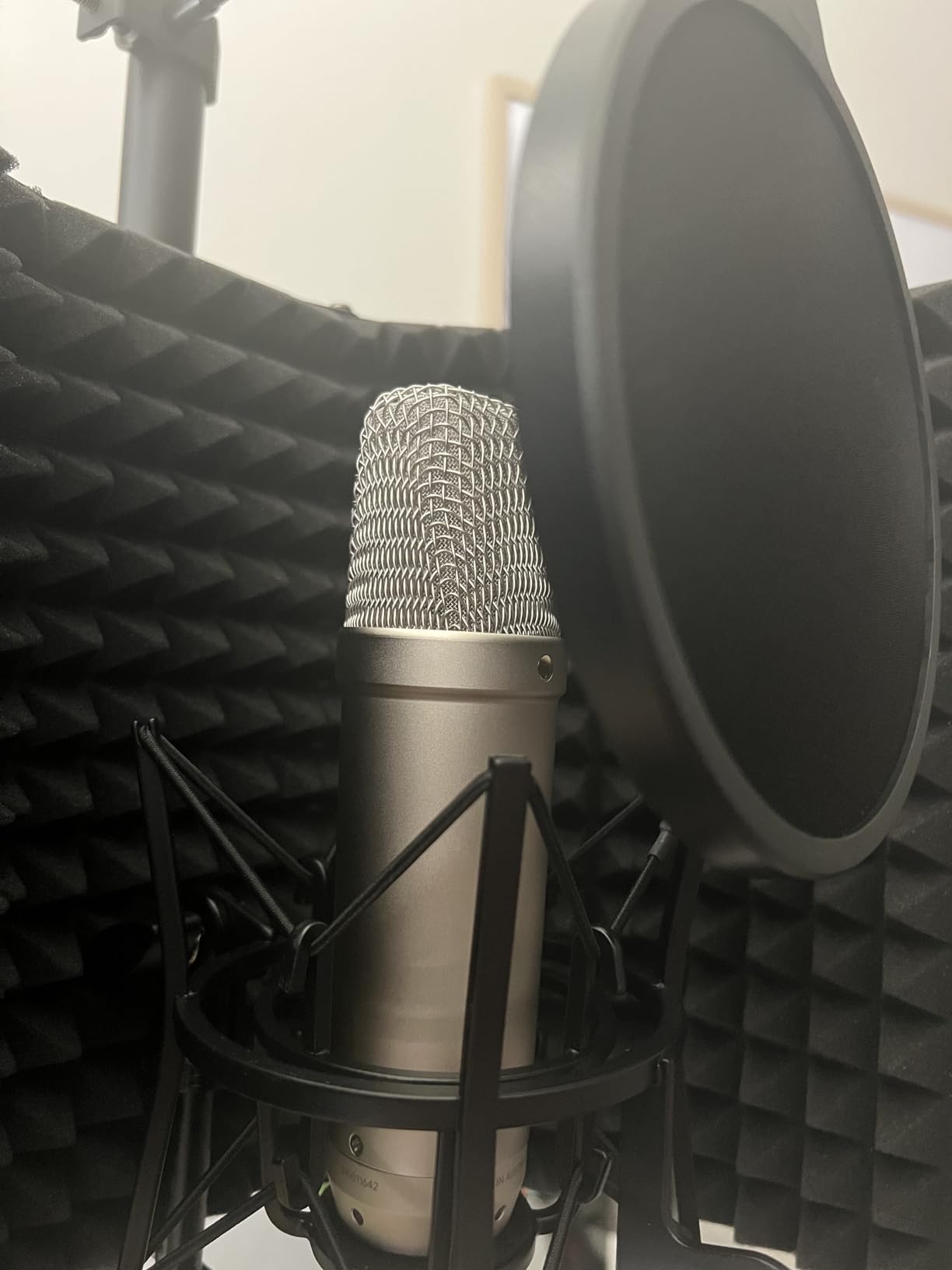
Over USB it records 32-bit float onboard and converts at up to 192 kHz through the internal Revolution preamp, which is useful insurance on a remote session where a client rejects a take. Over XLR the same warm, silky NT1 voicing goes to your interface, and a 20 Hz to 20 kHz range covers the full spoken band.
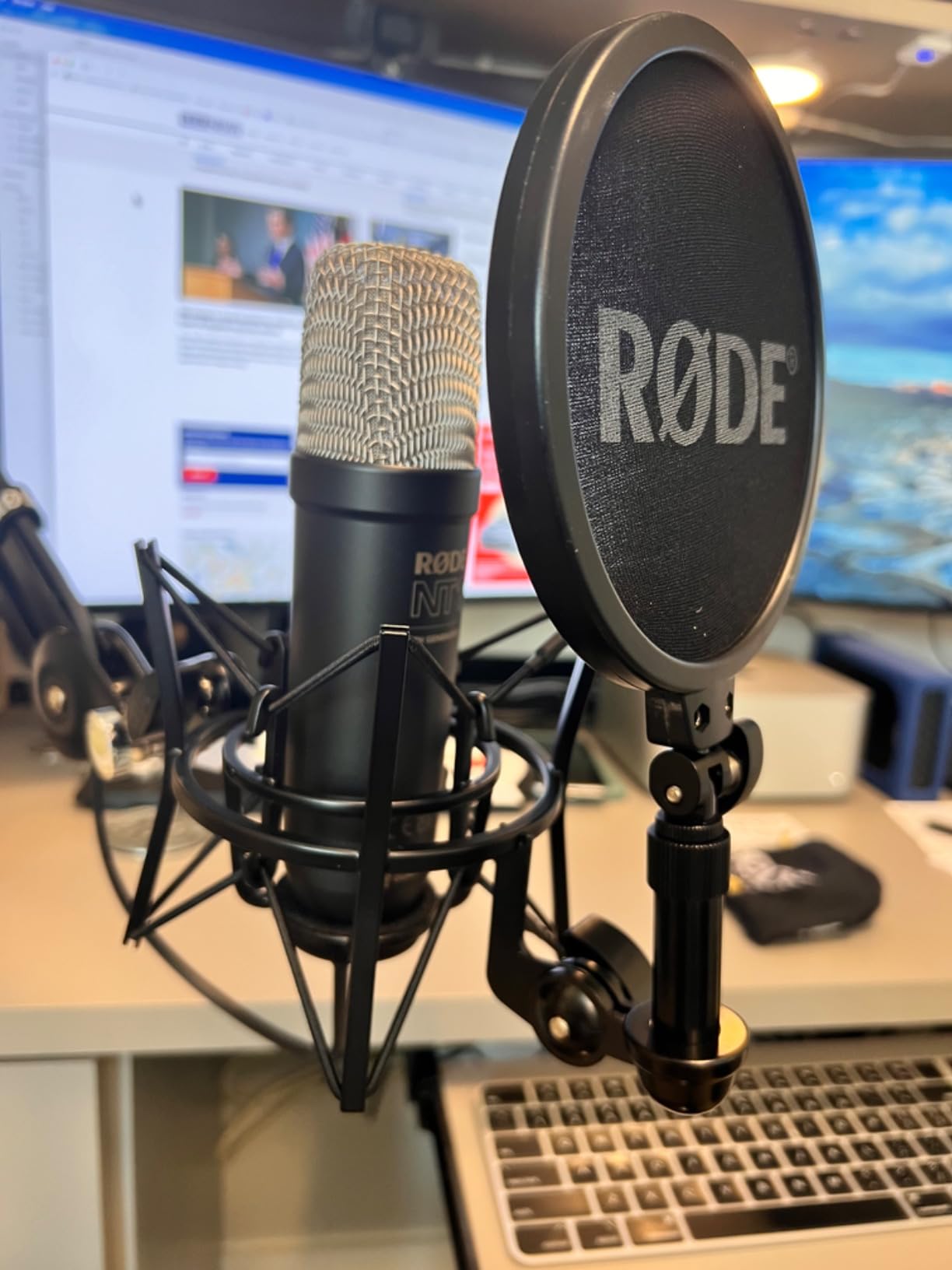
The box is unusually complete for a condenser at this level: an SM6 shock mount, a pop filter, a dust cover and both an XLR and a USB-C cable. For a voiceover artist assembling a first serious setup, that removes the accessory shopping list entirely.
Why the dual output matters for paid work
Remote auditions and remote sessions have a habit of asking you to record on your own machine with no engineer to set levels. Being able to plug straight into a laptop and record 32-bit float removes the single most common failure point, which is arriving with a take that clipped because the gain was set wrong on someone else’s interface.
It also means your XLR rig stays intact for client work while you keep a backup path that travels with the microphone. That is a reliability argument as much as a convenience one, and it is why this model earns a place on this list even though its XLR-only rivals are cheaper.
Where the NT1 5th Gen disappoints
It is a large-diaphragm condenser and it is sensitive, so an untreated room is exactly the environment it is worst in. The extra headroom you get from low self-noise is wasted if the background noise floor is thirty decibels higher than the mic’s.
The body is also longer than a typical desk microphone and needs a real stand rather than a small desktop base, and XLR operation still requires phantom power, so you cannot avoid the interface entirely if that is where you are heading. Reviewers consistently report that the size and the phantom power requirement are the two things they expected to be simpler.
6. Shure MV7+ USB-C and XLR Dynamic – Best Hybrid for Creators Who Move Between Workflows
Shure MV7+ USB-C & XLR Podcast Dynamic Microphone – Black
Dynamic
50 Hz - 16 kHz
USB-C and XLR
1.9 lb metal body
Pros
- Good sound immediately over USB-C
- Dual output lets you move to an interface later
- Auto Level and denoising reduce setup effort
- LED panel with tap-to-mute and metering
- Lighter and easier to reposition
Cons
- Reverb and DSP can add artifacts on a raw signal
- Less isolation than a pure broadcast dynamic
- XLR cable not included
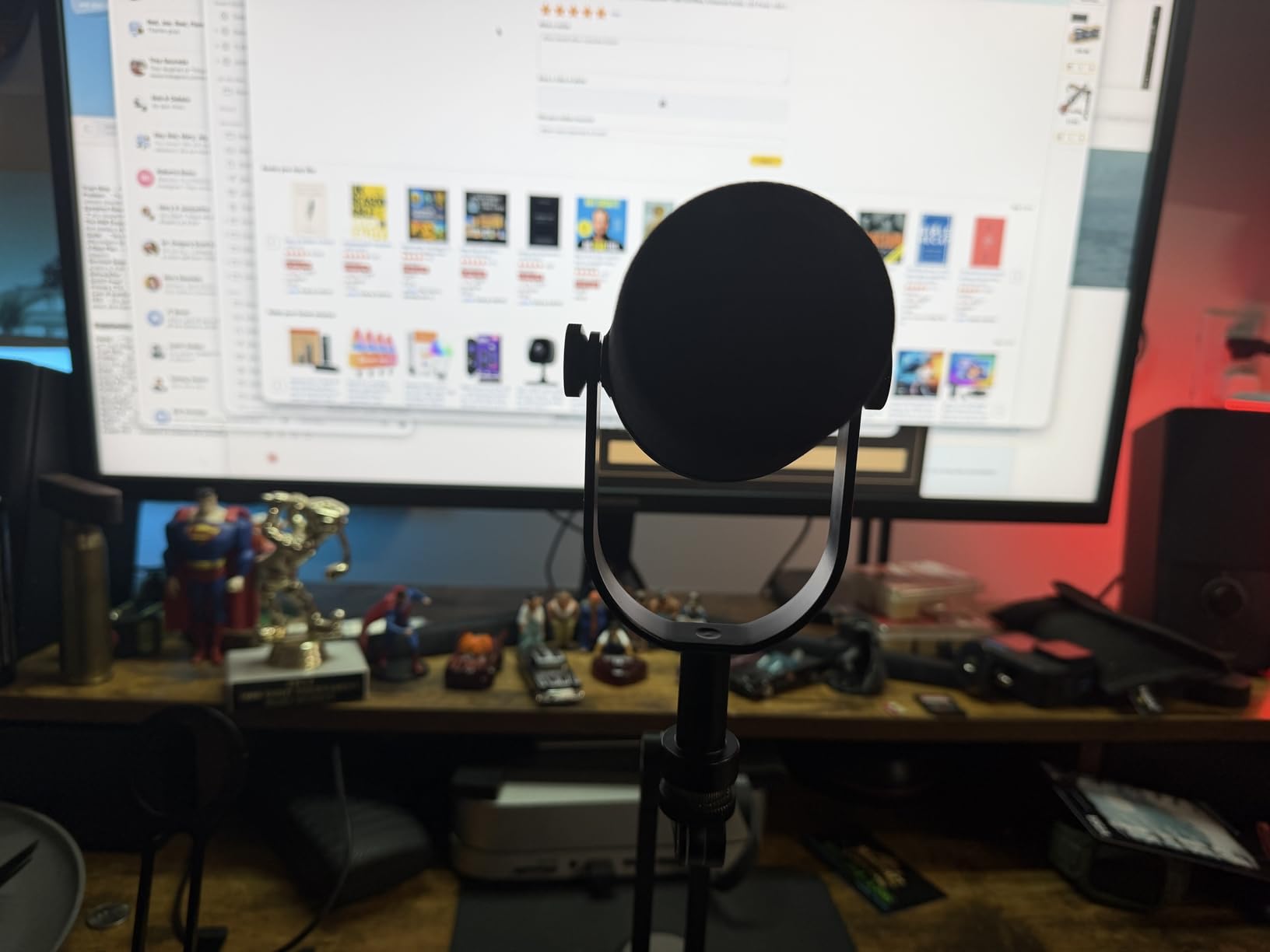
The MV7+ is the pick for someone whose career has two halves: streaming or online video today, commercial voice work later. It gives you USB-C with a colour LED touch panel for on-camera work, and an XLR output that moves into a studio interface when you are ready.
Auto Level mode measures your distance and level and sets gain for you, which removes the most common beginner mistake of guessing. The real-time denoiser and the Plate, Hall and Studio reverb modes are genuinely useful for a creator who does not want to open a DAW, though they are not what a client wants in a commercial read.
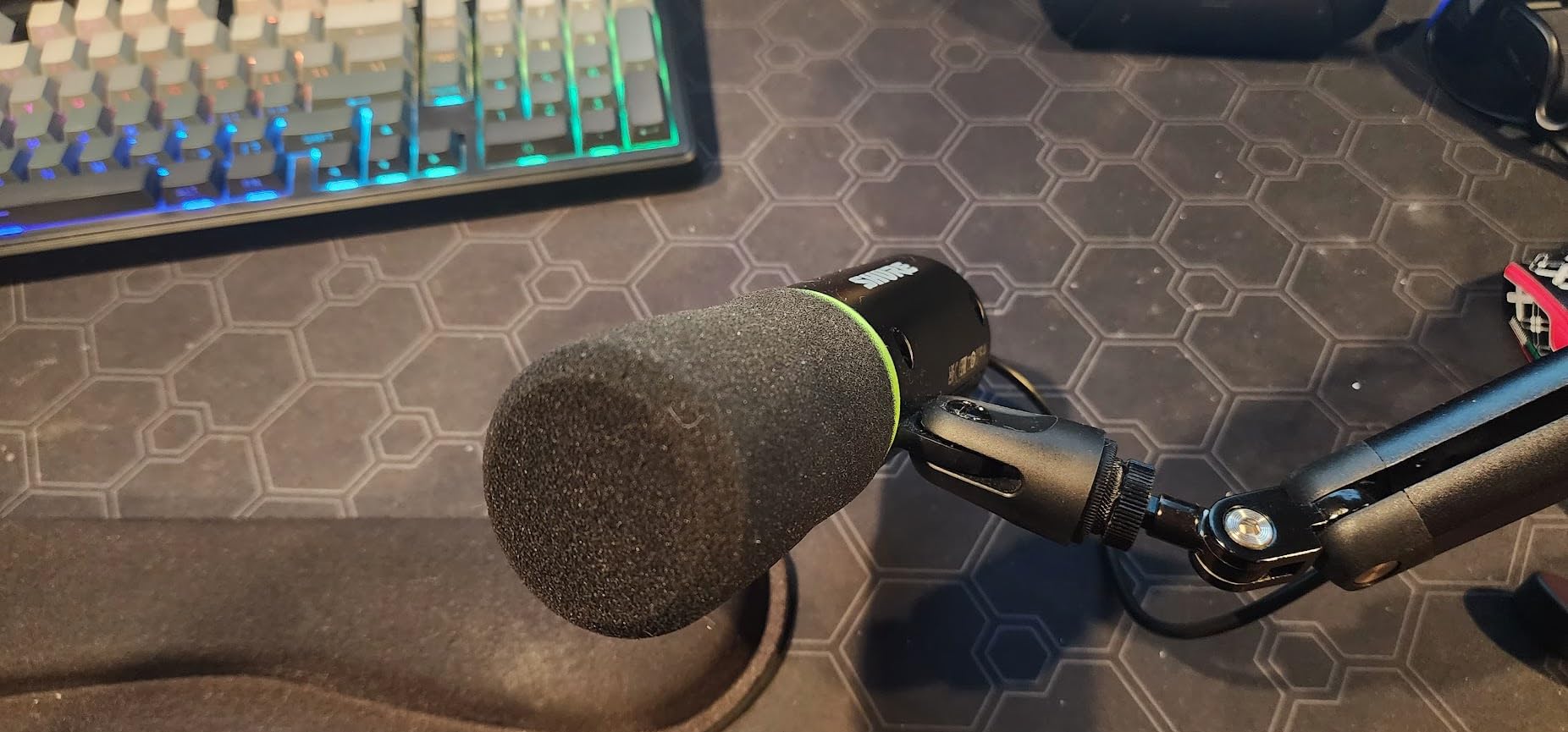
As a dynamic microphone it needs no phantom power, so it will run into almost anything with an XLR input, and the 50 Hz to 16 kHz range is more than adequate for speech. At 1.9 lb it is also the easiest microphone here to reposition between a seated read and a standing presenter.
The constraint is frequency response. A dynamic that tops out at 16 kHz captures less of the top end than any condenser in this roundup, so you trade some air and detail for the room rejection and the convenience of a single box.
When the MV7+ earns its place
When your recording day includes video as well as audio. Tap-to-mute and the colour LED panel exist so you can see your state from the camera, which removes the most common on-set error of being left live on mute or open after a take. A few reviewers pair it with a boom arm for the standing reads that video demands.
It is also a reasonable bridge purchase. Buy it for streaming, keep the XLR path, and when the commercial work arrives you change the interface rather than the microphone you have already learned to perform on.
Where the MV7+ disappoints
The onboard processing is the whole argument against it for pure voiceover work. Reverb in particular is a creative effect rather than a recording improvement, and a client who hears hall reverb in a commercial spot will hear it as an error. Always record a raw XLR take alongside any processed USB track.
Isolation is also weaker than a dedicated broadcast dynamic, so background noise still arrives when you monitor on speakers, and the XLR cable is not included for interface use. If you are only ever recording voice, this is extra hardware you will switch off.
7. TZ Stellar X2 Large Diaphragm Condenser – Best Neutral Tone in a Treated Room
TZ Stellar X2 Large Diaphragm Cardioid Condenser XLR Microphone
Large-diaphragm condenser
Under 13 dBA self-noise
77.5 dB SNR
140 ohm impedance
Pros
- Smooth neutral tone reviewers compare to Neumann condensers
- Very low self-noise and healthy output let you run lower gain
- Sturdy metal body and premium packaging
- Shock mount hard case and wind cover included
- Good clarity for the money
Cons
- Condenser sensitivity suits treated rooms only
- Can be prone to sibilance on some voices
- Needs 48V phantom power and cables not included
- Some counterfeit units in the secondary market
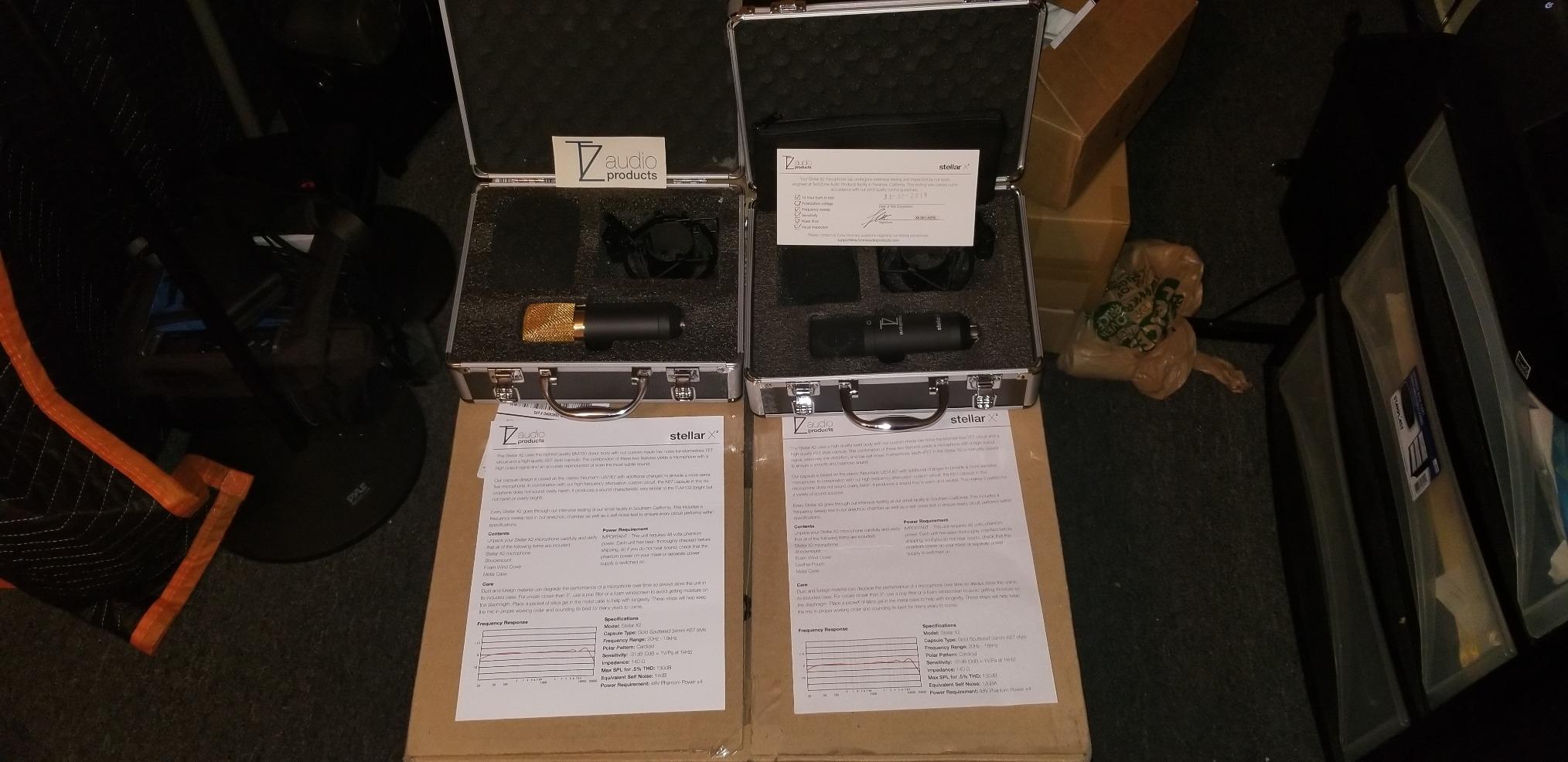
The Stellar X2 is the one in this roundup whose owner reviews most often compare to a Neumann, which is unusual at its level. It is a large-diaphragm cardioid condenser with a transformerless JFET signal path, noise below 13 dBA and a 77.5 dB signal-to-noise ratio across a 20 Hz to 20 kHz range.
The engineering choices are pointed at exactly what narration needs. A healthy output level means you run your preamp at a lower gain setting, which means the interface adds less of its own noise to the chain. In a quiet booth that is the difference between hearing your voice and hearing your preamp.
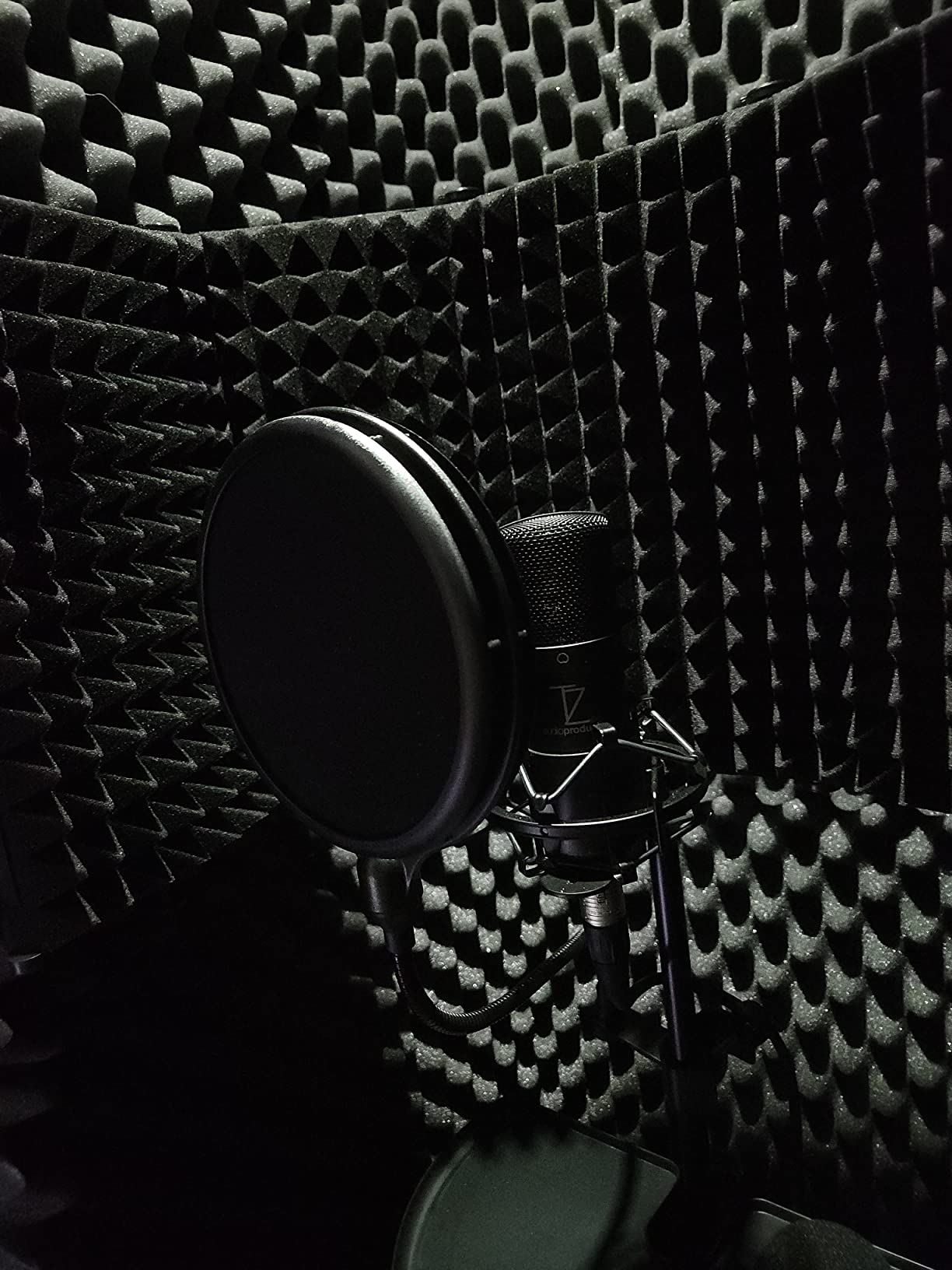
The capsule is built on brass with a Japanese-imported mylar diaphragm, and the frequency response is deliberately balanced rather than hyped. Owners describe a rich but not boomy low end, which is the right target for long sessions where any bass emphasis becomes fatigue by chapter three.
The box is the best equipped on this list for someone who moves: a shock mount, a foam wind cover, thread adapters and an aluminium flight case. If you record from different rooms, that case alone changes the economics of the purchase.
Why a neutral microphone suits voiceover specifically
Commercial and audiobook work is mostly judged on delivery, not on tone. A microphone that adds presence or air to your voice makes you sound different from how you sound in the room, and when a director asks for a read to be more intimate, you cannot get there from a coloured starting point. The Stellar X2 starts where your voice actually is.
That neutrality also makes it forgiving to edit. A flat capture is easy to EQ in a predictable way, whereas a hyped response means every take is already coloured and you are fighting your own microphone before you address the performance.
Where the Stellar X2 disappoints
Neutrality is not for everyone. Owners with sibilant voices report that it needs a de-esser on nearly every take, and if you want a microphone to add sparkle, this is the wrong one. It is also a sensitive condenser and it belongs in a treated room, not a bedroom with thin walls.
Phantom power and an interface are both required and no cables are included. There is also one recurring warning in the reviews: this model is widely counterfeited in the secondary market, so buy from a seller with a real return policy rather than chasing the lowest listing you can find.
8. Elgato Wave DX Dynamic XLR Microphone – Best Compact XLR for a Small Desk
Elgato Wave DX Dynamic XLR Microphone, Cardioid Pattern
Dynamic cardioid
50 Hz - 15 kHz
600 ohm impedance
407 g
Pros
- Clear natural vocal several owners compare to costlier broadcast mics
- Effective room noise rejection
- Compact body that takes little desk space
- Swivel mount with thread adapters included
- Works with any XLR preamp
Cons
- No on-mic gain or level controls
- XLR cable not included
- Requires an interface or mixer as an extra purchase
The Wave DX is the smallest XLR microphone here at 407 g and about seven inches long, which is not a trivial consideration if your recording space is a corner of a desk rather than a room. It is a speech-optimised dynamic with a cardioid pattern and a deliberately wide, forgiving acceptance angle off axis.
That wide acceptance angle is the interesting part. Cardioid microphones vary enormously in how much they pick up when you move your head, and a forgiving one means you can read naturally without drifting off axis and dropping your level. Several owners describe the clarity as close to microphones costing considerably more.
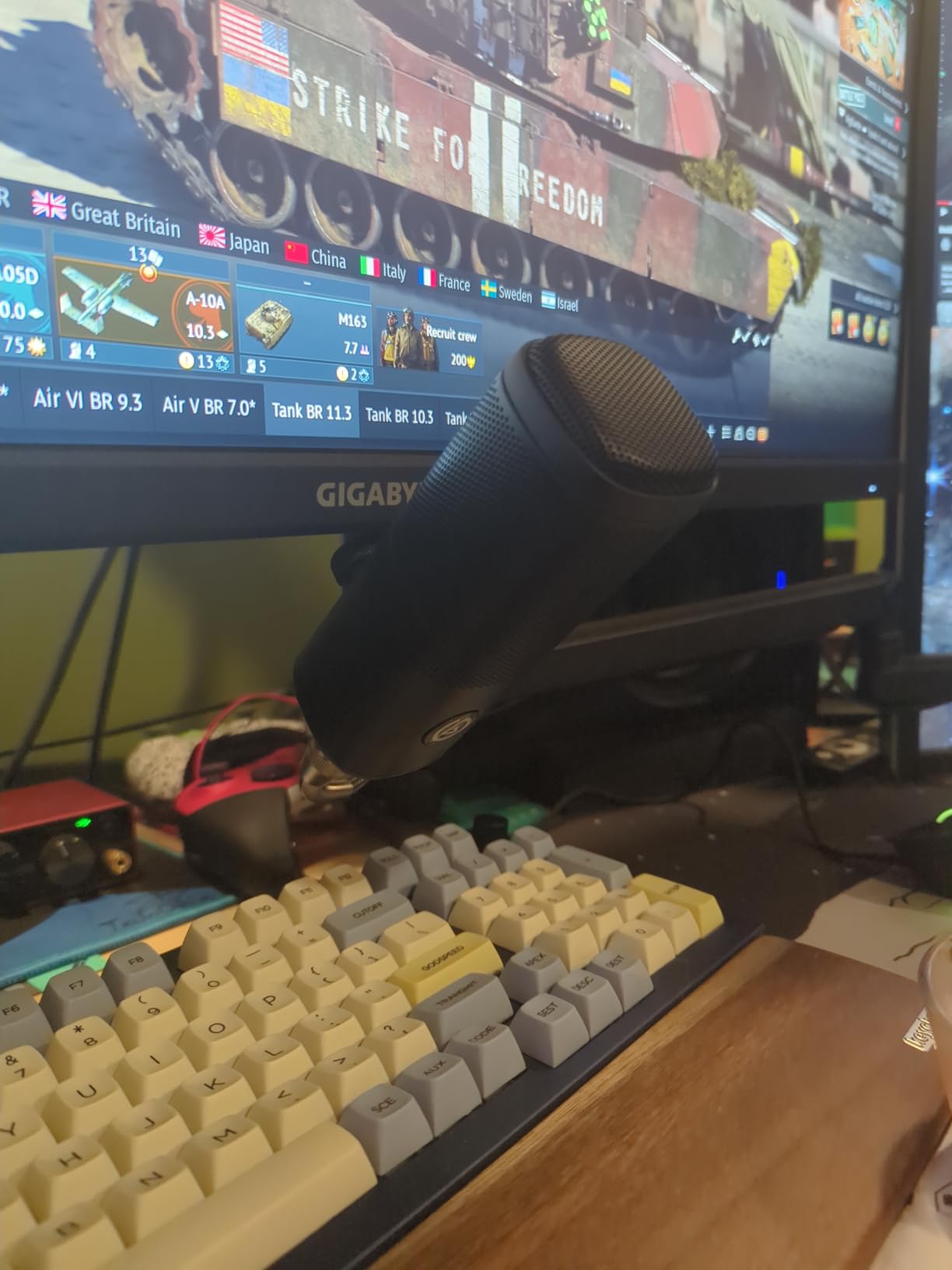
At 600 ohm impedance it drives most preamps without complaint, and reviewers consistently note it works with any XLR interface without needing an inline booster, which removes the usual extra cost with a budget dynamic. Room rejection is the selling point: several owners report the background is effectively silent between phrases.
The mount is a mono swivel with a 5/8 inch thread and included 3/8 and 1/4 inch adapters, so it fits almost any stand without an extra part. It comes with a two-year manufacturer warranty.
Why compactness changes the practical decision
Microphone choice is constrained by the space you have more often than by the sound you want. A seven-inch body and a swivel mount mean you can set up in a small desk area, get the stand close, and still reach your notes, which affects your read far more than any difference between two dynamic capsules.
The forgiving off-axis behaviour also suits anyone who moves while reading. If you have ever dropped the level halfway through a line because you turned your head past the sweet spot of a narrow-pattern microphone, that problem does not exist here.
Where the Wave DX disappoints
There are no on-microphone controls at all. Gain and level live in your interface or your software, which keeps the body clean and light but means every level decision is made somewhere you cannot reach while recording.
The 50 Hz to 15 kHz response is the narrowest on this list, so you are giving up the top end that gives a voice its presence. For a commercial read that is a reasonable trade for noise rejection, but for a thin or bright voice it removes the top that would have helped. An interface and an XLR cable are also both extra purchases.
9. FIFINE AmpliTank K688 Dynamic Microphone – Best Value Hybrid XLR and USB Mic
FIFINE AmpliTank K688 Dynamic Microphone, XLR/USB Podcast Recording PC Mic
Dynamic
50 Hz - 16 kHz
80 dB SNR
130 dB max SPL
0.51 kg
Pros
- Excellent background rejection with a cardioid pattern
- Dual USB and XLR connectivity
- Tap-to-mute and gain control in USB mode
- Real-time monitoring through a 3.5mm jack
- Shock mount and windscreen included
- Metal build that feels premium
Cons
- XLR cable not included
- Mute button spring may weaken over time
- Needs close proximity for best results
- Hardware controls only work in USB mode
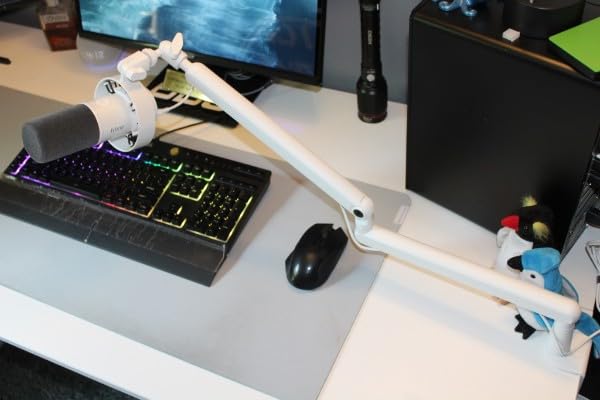
The K688 does something unusual for the money: it is a genuine dynamic with both USB and XLR outputs, and a hardware control set that most microphones at twice the cost do not have. Tap-to-mute, a gain control and a headphone jack with its own volume knob all sit on the body.
Those controls only operate in USB mode, which is the single thing to understand before you buy. In USB it is a self-contained recording chain. Over XLR it is a clean cardioid dynamic with a specified 80 dB signal-to-noise ratio and 130 dB maximum SPL, and every level decision belongs to your interface.
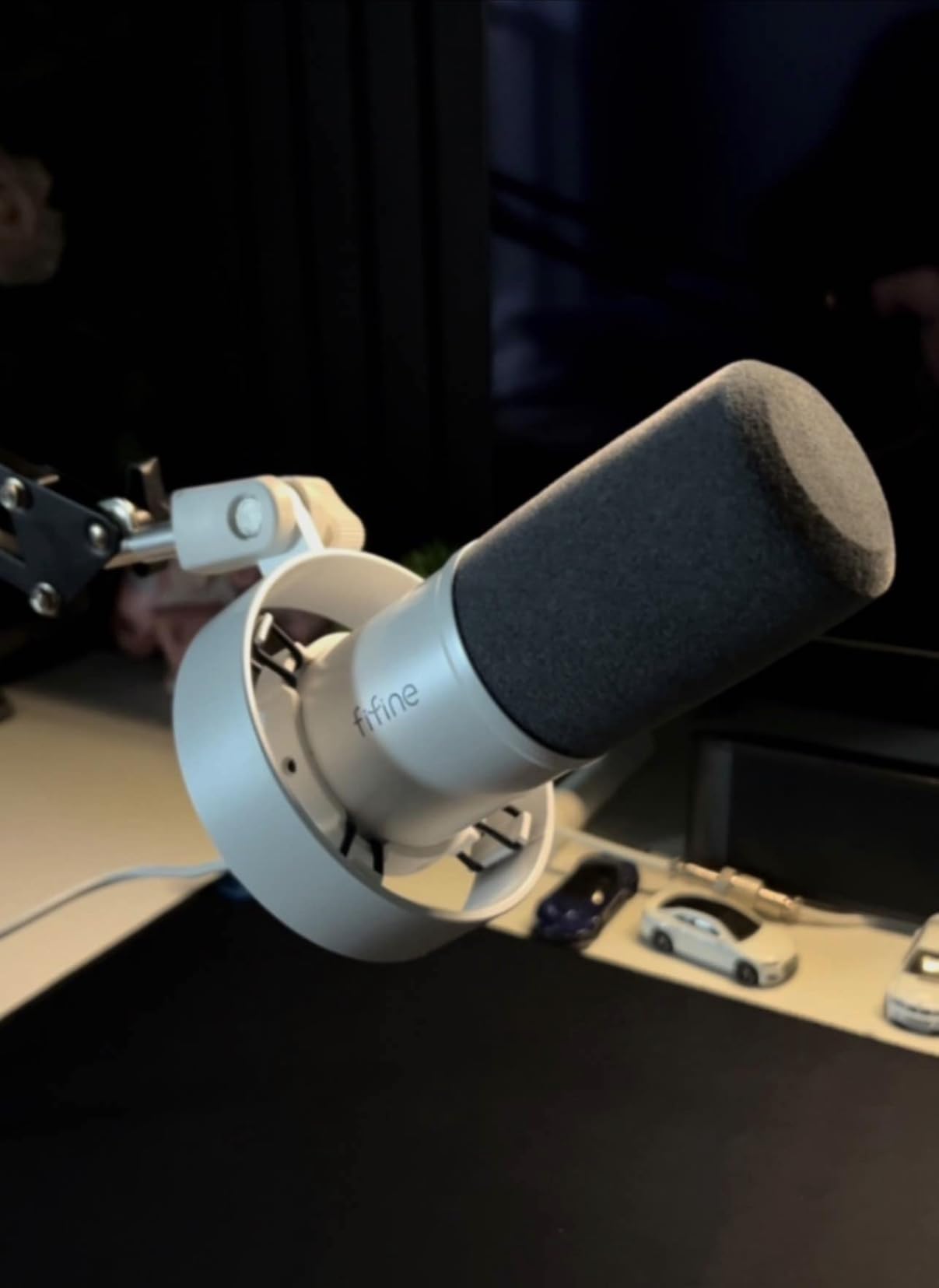
The noise rejection is the headline. Owners consistently report that the background drops to near silence between phrases, and for someone recording in an untreated room that is worth more than a warmer capsule. At 0.51 kg it is one of the lighter options here and the included shock mount keeps it isolated.
Box contents cover most of what you need: a shock mount, a windscreen and a detachable USB-C cable. The arm stand, mic stand and XLR cable are not included, so budget for the cable if you intend to use the XLR path.
Why the K688 suits a first paid session
Because it lets you start immediately and upgrade later without changing microphones. Plug into a laptop and you have a working chain tonight. When an interface becomes worthwhile, the same capsule moves across to XLR and you have lost nothing but a cable.
The mute button is more useful than it sounds. It is a physical control you can hit without looking, which stops the specific habit of checking afterwards whether the previous take is still recording, a mistake that has ended more auditions than any technical fault.
Where the K688 disappoints
It needs to be close. At the usual arm distance several owners report needing to move in for the best result, and a dynamic that is too far away sounds thin and unintelligible rather than merely quiet. Get the shock mount positioned properly before you judge the tone.
The XLR cable is not included, the hardware controls do nothing in XLR mode, and owners report the mute button spring weakening with heavy use. If your work is entirely studio voiceover with no streaming or video element, you are paying for controls you will not press.
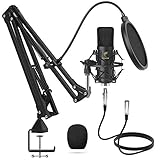
10. TONOR TC20 Condenser Microphone Kit – Best Complete Starter Kit
TONOR XLR Condenser Microphone, Professional Cardioid Studio Mic Kit with T20 Boom Arm, Shock Mount, Pop Filter for Recording, Podcasting, Voice Over, Streaming, Home Studio, YouTube (TC20)
Cardioid condenser
78 dB SNR
2200 ohm impedance
Alloy steel build
Pros
- Complete kit with boom arm shock mount pop filter and cable
- Excellent value for the included accessories
- Good clarity for podcasting and voiceover
- Cardioid pattern reduces background noise
- Sturdy boom arm with a large desk clamp
- Setup takes under five minutes
Cons
- Interface not included so phantom power is required
- Boom arm springs can be too strong for some desks
- Desk clamp may not fit every surface
- Very sensitive and can distort on loud sources
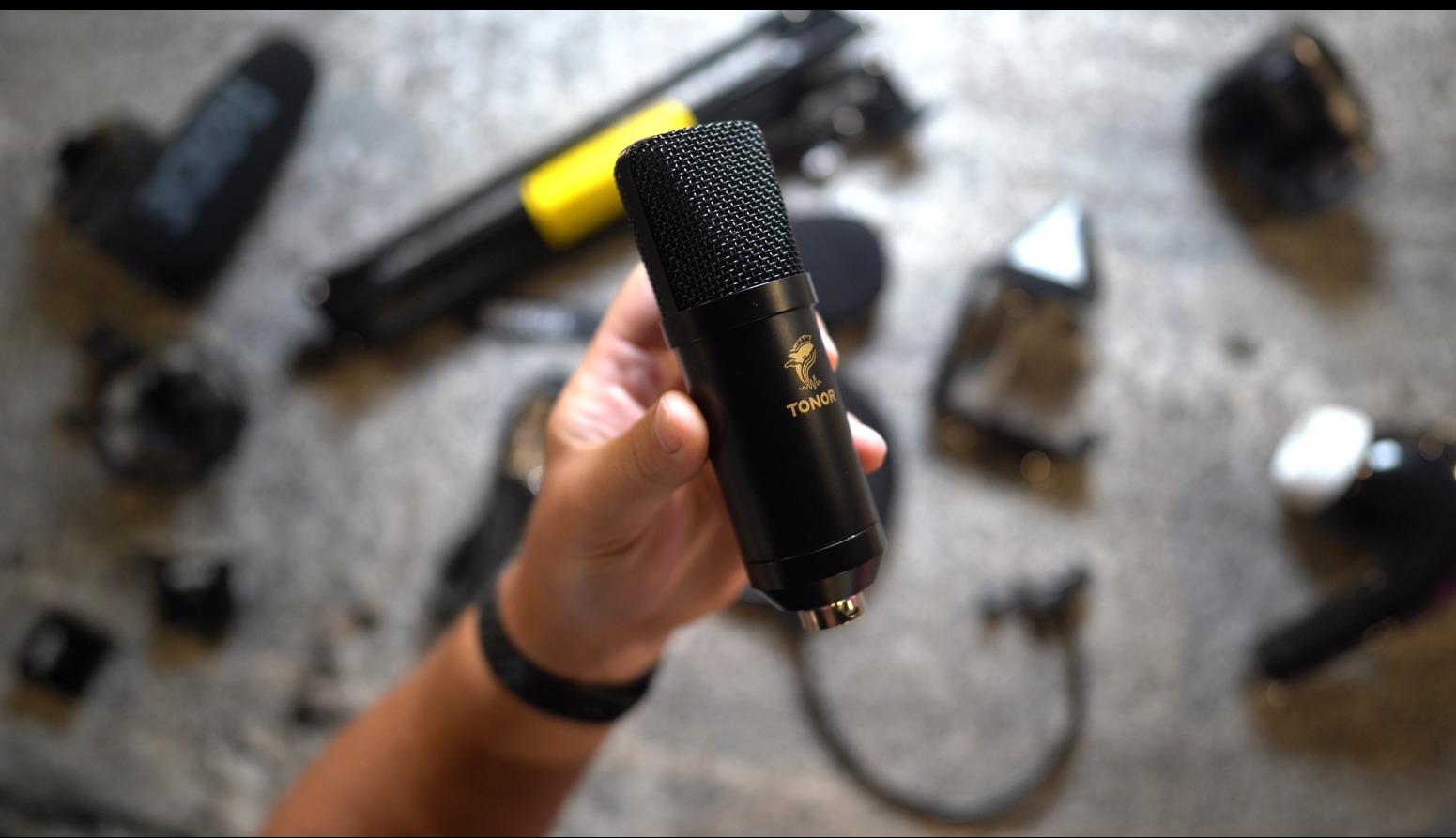
The TC20 exists to solve the parts of getting started that frustrate people the most, and it is the only microphone here that ships with a boom arm. The box contains the condenser, a T20 suspension boom arm, a metal shock mount, a pop filter, a mic cover, four cable ties and a two-metre XLR cable.
For someone who has never recorded before, that is genuinely everything except the audio interface. You open one box, clamp the arm to a desk, run the included cable and record, which removes the entire first-week barrier where beginners spend money on the wrong thing or cannot get a clean take at all.
The microphone itself is a cardioid condenser with a 78 dB signal-to-noise ratio and a low-noise FET preamplifier, and the cardioid pattern does a reasonable job of limiting pickup from the sides. Owners rate the clarity highly for spoken applications relative to the price.
Setup genuinely takes minutes. The alloy steel boom arm has a large desk clamp, which is heavy and stable, and the suspension design absorbs desk thumps that would otherwise arrive as low-frequency bumps on every word.
When a bundled kit is the right decision
When the total cost of the accessories is what was stopping you. A boom arm, a shock mount, a pop filter and an XLR cable bought separately add up to more than the difference between this microphone and a bare model, and the boom arm in particular is the piece people buy last and most regret not owning.
The mic cover and cable ties also have a purpose on a real desk. The cover stops airflow across the capsule, which produces a low rumble you cannot fix afterwards, and it is a habit worth building before it costs you a take.
Where the TC20 disappoints
An interface is still not included, so 48V phantom power has to come from somewhere. The impedance of 2200 ohm is also unusually high for a condenser, which means it wants a preamp that can handle it properly and will not reach for every inexpensive input.
The sensitivity is high enough that reviewers report gain adjustment or a mixer being needed in an imperfect room, and it can distort on loud sources. The boom arm springs are also strong enough that some users have to modify the tension, and the desk clamp will not fit a narrow or curved surface.
11. AKG Pro Audio P120 Condenser Microphone – Best Robust Budget Condenser for Voiceover
AKG Pro Audio P120 – Affordable 2/3-Inch Diaphragm Condenser Microphone for Clear Vocals & Instruments. Studio Recording or Live. XLR Connector. Black
2/3-inch condenser
19 dB-A self-noise
75 dB SNR
150 dB max SPL
Pros
- Clear detailed sound well beyond its price
- Handles 150 dB without distortion
- Low 19 dB-A self-noise for a clean capture
- Built-in minus 20 dB pad and bass cut filter
- Durable metal construction
- Long-standing reliability reported at five years
Cons
- Interface not included so phantom power is required
- XLR cable not included
- Only a stand adapter in the box
- May not suit very deep voices
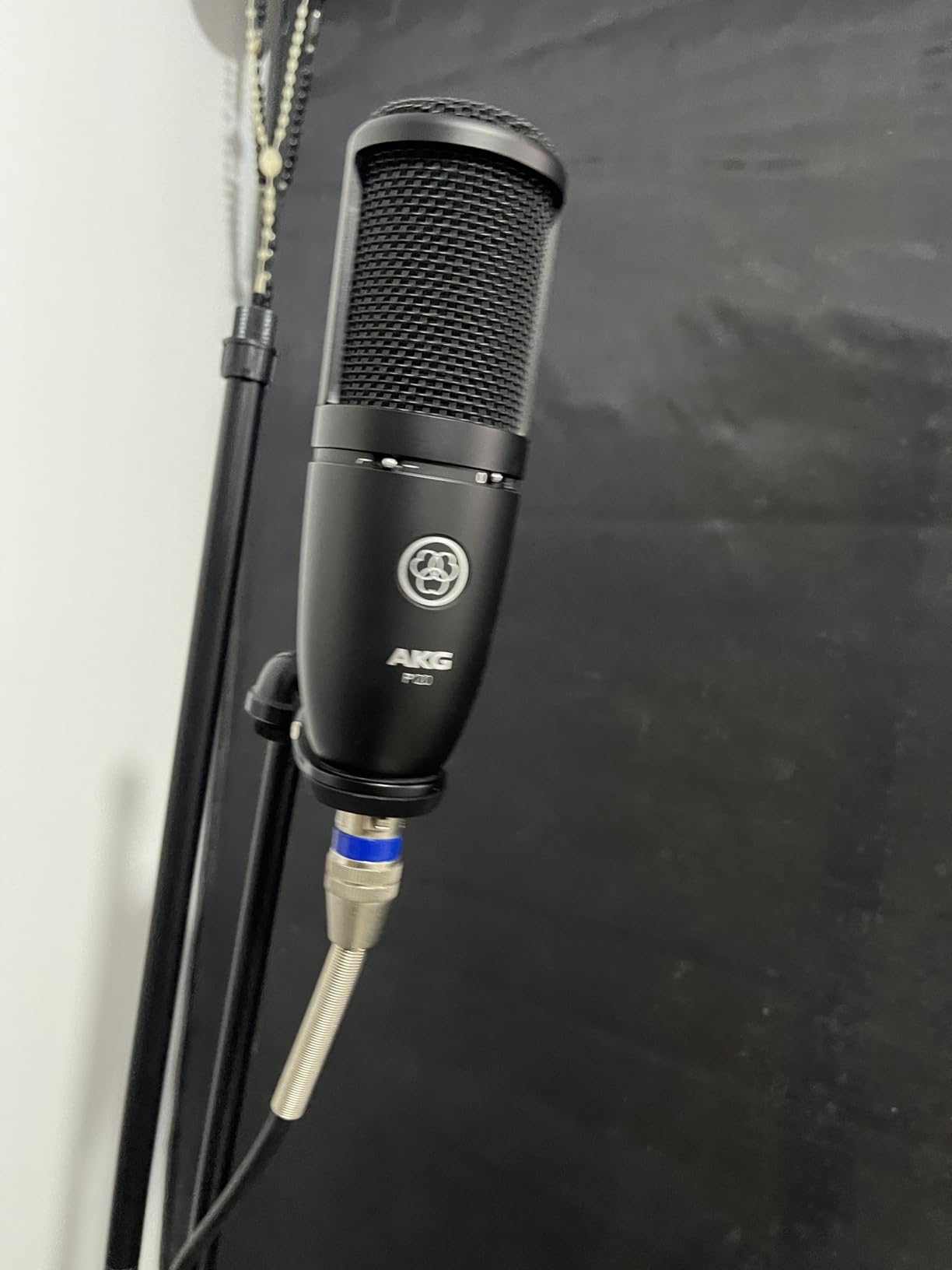
The P120 has been in continuous production for years and owners report five-plus years of unchanged results, which for a microphone is the most valuable review a voiceover artist can read. It is a two-third-inch condenser rather than a large-diaphragm model, and that smaller capsule is the source of both its honesty and its limits.
The specification sheet is better than the class it sits in: 19 dB-A equivalent self-noise, a 75 dB signal-to-noise ratio, 24 mV/Pa sensitivity, 20 Hz to 20 kHz response and 150 dB maximum SPL. Multiple owners report it competing with microphones costing several times more, and for a spoken read the detail and clarity are more than sufficient.
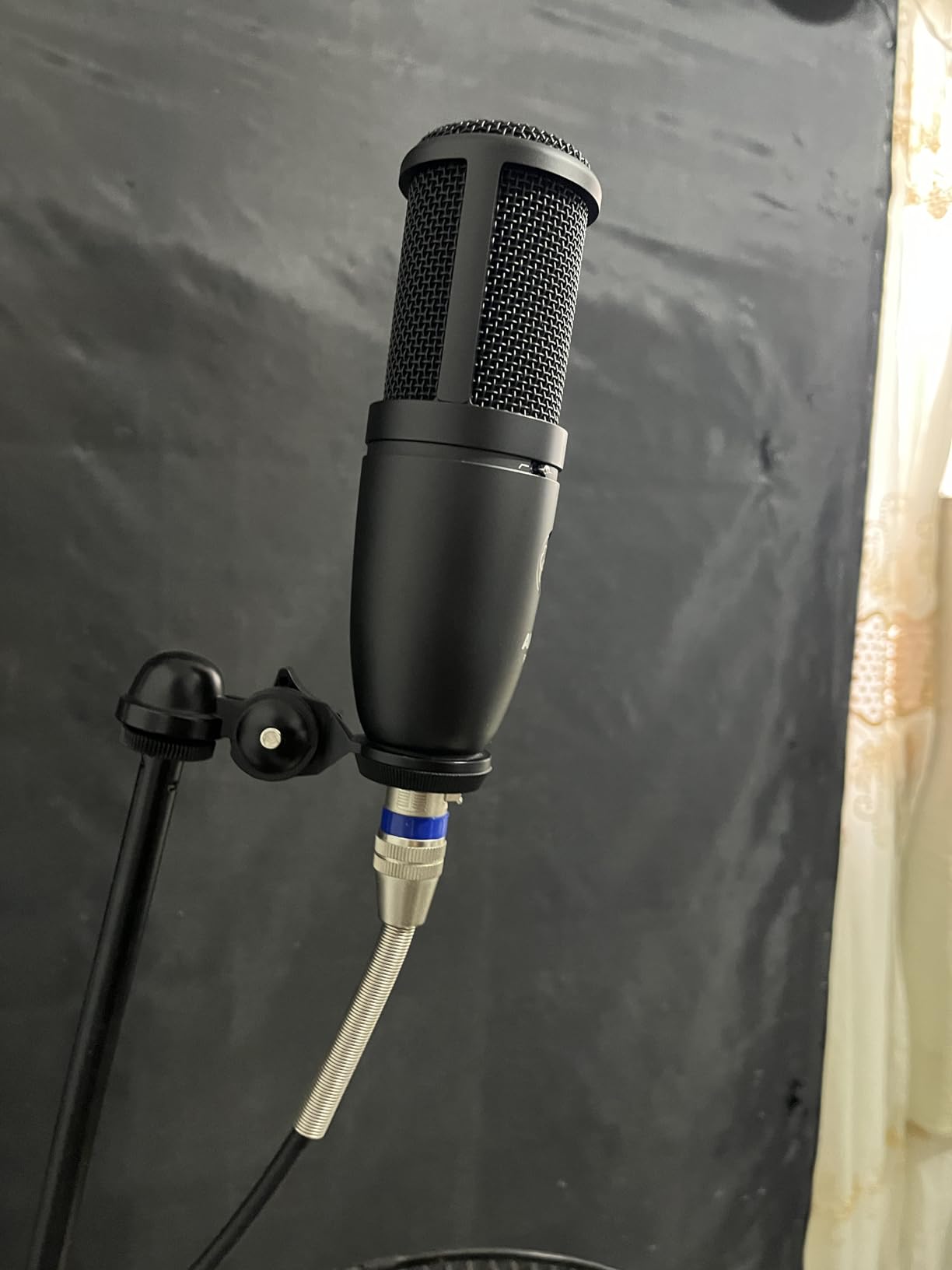
Two on-body switches earn their place. The minus 20 dB preattenuation pad protects the capsule on a loud read, and the bass cut filter rolls off at 300 Hz at 6 dB per octave, which removes desk thump and rumble at source instead of in post.
The metal body and the 200 ohm maximum electrical impedance mean it will drive essentially any preamp that provides 48V phantom power, and the recommended load impedance of 1000 ohm or higher covers the audio interfaces most beginners own.
Why a smaller diaphragm capsule is not a downgrade
For spoken word the enormous transient response and deep low extension of a large diaphragm are less important than clarity and a low noise floor, and that is exactly where a two-third-inch capsule concentrates. What you lose is some of the top-end air and some headroom before the capsule strains; what you keep is a fast, articulate read that stays intelligible.
It also handles loud sources to 150 dB, which makes it useful if you ever double up duties and record an instrument or a Foley take in the same session as the voice.
Where the P120 disappoints
Only a stand adapter is included. There is no shock mount, no pop filter and no XLR cable, so unlike the TC20 kit you will be buying at least two accessories before your first proper read, and a pop filter is not optional for a close spoken position.
Reviewers also note it may not suit very deep voices as well as a larger capsule would, and it can clip at high volumes if the pad is not engaged. An interface with phantom power is a required extra purchase on top of everything else.
12. RØDE NT1 Signature Series Studio Condenser – Best Complete Condenser Kit With Long Warranty
RØDE NT1 Signature Series Studio Condenser Microphone, Black
Large-diaphragm condenser
4.5 dBA self-noise
78 dB SNR
313 g metal body
Pros
- NT1 voicing trusted in studios for two decades
- Exceptionally low 4.5 dBA self-noise
- Box includes SM6 shock mount pop filter and 6m cable
- Tight cardioid pattern focuses on the voice
- Ten-year warranty with registration
- Solid metal build
Cons
- Interface not included so phantom power is required
- XLR only with no USB option
- Costs more than entry-level condensers
- Large diaphragm picks up room sound in untreated spaces
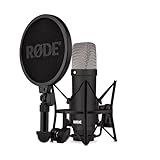
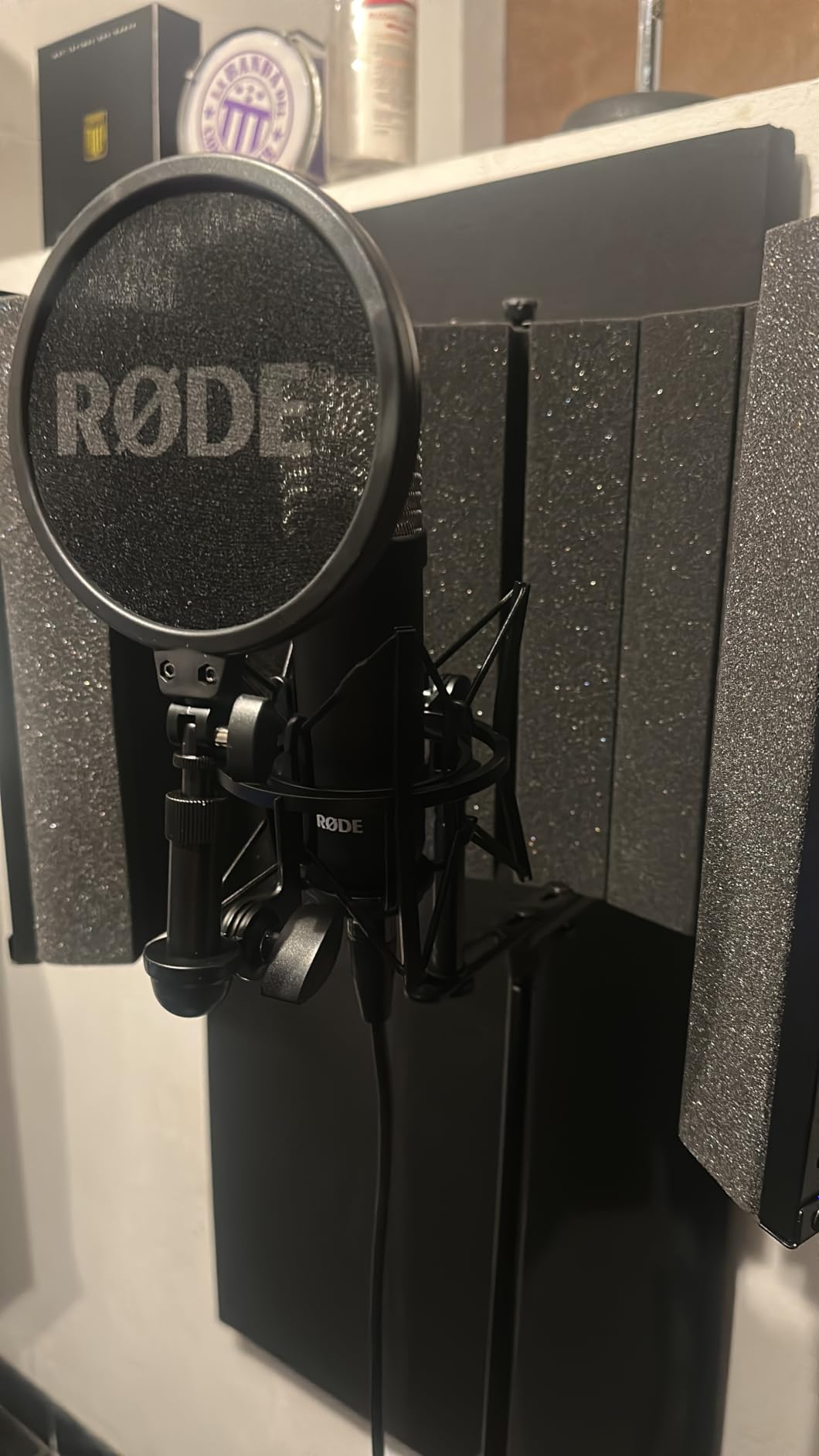
The NT1 Signature is the version of one of the most-recorded large-diaphragm condensers ever made with the accessories actually included. You get the microphone, an SM6 shock mount with an integrated pop filter, a six-metre XLR cable and a dust cover, which is the entire spoken-word kit in a single box.
The specification is the reason it belongs here. Self-noise is 4.5 dBA with a 78 dB signal-to-noise ratio on a one-inch gold-sputtered diaphragm, across a 20 Hz to 20 kHz response and 132 dB maximum SPL. On a quiet, close narration read that noise floor is effectively absent.
The tight cardioid pattern concentrates on the voice and rejects room noise better than the wide-pattern budget condensers, which partially compensates for the sensitivity that normally works against a large diaphragm. It is still a condenser and it still wants a treated room, but the off-axis behaviour is better than the class average.
A ten-year warranty with registration is unusual at this level and reflects how settled this design is. It is also available in seven colours, which sounds trivial until you notice how many of your working hours involve looking at a microphone on camera.
Why the included accessories matter more than the spec sheet
The SM6 shock mount with its integrated pop filter is the two accessories a close-miked voiceover setup cannot function without, and a six-metre cable means you can reach the interface wherever it sits. Owners repeatedly cite the completeness of the box as the deciding factor over cheaper alternatives that need three more purchases before the first take.
Because the pop filter is integrated rather than clipped on separately, it sits in the correct position relative to the capsule every time, which removes a variable that changes your sound between sessions.
Where the NT1 Signature disappoints
It is XLR only. If part of your work is on a laptop with no interface, you are committing to buying a box of electronics before you can record, where the NT1 5th Gen further up this list would have covered both paths.
Cost is the other comparison. It sits above the entry-level condensers that most beginners start with, and the large diaphragm picks up more room sound than a dynamic would, so in a noisy space a cheaper microphone can produce a more usable file. The SM6 shock mount is also large, and owners note it does not fit every boom arm.
Treat the Room Before You Spend on the Microphone
The most useful thing we can say in this entire roundup is that room treatment usually outperforms a microphone upgrade. Topher Keene makes the same point from the other side of the industry: an expensive microphone in an untreated room sounds worse than a modest one in a treated space, and moving to a more sensitive capsule frequently makes recordings sound worse before they sound better.
Here is the order that works, ranked by what it changes per unit of effort and money.
One. Record a minute of silence. Sit in your position with the microphone roughly where it will live and record nothing but the room. Any hum, traffic or fan you hear in that minute is in every future take, and it is louder on a condenser than on a dynamic. Fixing it here informs whether you need a dynamic or a condenser at all.
Two. Move to the quietest corner. A corner of a room where two walls meet gives you natural reflection control you cannot buy. It costs nothing and it works better than most panels people buy first.
Three. Put something soft behind and beside you. A heavy duvet on a rail absorbs the flutter that makes a room sound boxy. Closets full of clothing are effectively free broadband panels and they do more for voiceover than a foam panel ever will.
Four. Kill the low-frequency layer. Desk thumps, chair movement and building rumble arrive under everything. The 80 Hz high-pass filter on the AT2035 or the 300 Hz bass cut on the AKG P120 does this at source rather than in software.
Five. Only then consider panels. Broadband absorption panels help once reflections are already under control, and they are the most expensive step per decibel. Buy them last.
If you want to compare treated rooms rather than microphones, our picks for the best USB microphones for podcasting are worth a look, along with our best on-camera microphones for vlogging and best lavalier microphones for interviews if your sessions move off the desk.
How to Choose an XLR Microphone for Voiceover
Six criteria decide this purchase, and only one of them is price. Work through them in order and the microphone choice makes itself.
Condenser or dynamic for speech
Start with your room. A large-diaphragm condenser captures more detail and more of the space; a dynamic needs more level to move and so hears less of both. If your recording minute of silence revealed traffic, HVAC or a fan, begin with a dynamic such as the Shure SM7B or the RØDE PodMic and upgrade the room later.
If your room is already quiet, a condenser gives you the detail and frequency extension that audiobook and animation work rewards. The Audio-Technica AT2020 is the proven default, and the AT2035 adds the switches you want once you are recording for hours.
Self-noise is the spec that decides narration quality
Self-noise is the microphone’s own noise floor, and it is the single most decision-relevant number for spoken work. The entries here range from 4 dBA on the RØDE NT1 5th Gen through 4.5 dBA on the NT1 Signature and under 13 dBA on the TZ Stellar X2, up to around 20 dBA on the AT2020 and 19 dB-A on the AKG P120.
That range only matters in a quiet room with a close read. In a noisy room the room beats the microphone and the ordering is meaningless, which is why you should only optimise self-noise once you have dealt with the noise around you.
Polar pattern and off-axis rejection
Every microphone in this roundup is unidirectional, which is correct for voiceover. A cardioid pattern picks up most from the front and rejects the sides and rear, and it is the reason a monitor to your left or a partner to your right does not appear in the take.
Patterns vary in how forgiving they are. The Elgato Wave DX has an unusually wide acceptance angle off axis, which means you can move while reading without dropping level, while the RØDE NT1 Signature has a tight cardioid that focuses hardest on the voice directly in front.
Gain needed and phantom power
Gain is where first-time XLR buyers get caught. Dynamic microphones produce far less signal than condensers and need more preamp gain to reach a usable level, and pushing a quiet preamp hard makes the interface the noisiest thing in the chain.
The Shure SM7B recommends roughly 60 dB of gain, which is beyond many entry interfaces, so budget for an inline booster alongside it. The RØDE PodMic and Elgato Wave DX sit in the same category more gently. Condensers like the AT2020 and NT1 Signature need 48V phantom power and reasonable gain, which most interfaces provide as standard.
XLR versus USB for voiceover
No, an XLR microphone does not sound better because it is XLR. It sounds better because a good one has a better capsule and a good preamp, and USB microphones now carry their own excellent preamps and converters. The honest reason to choose XLR is flexibility: you can move the microphone away from a computer fan, upgrade your interface independently, and feed a recorder, a mixer or a broadcast chain that a USB microphone cannot reach.
USB wins when you need one cable and no external box, which is the whole case for the RØDE NT1 5th Gen and the Shure MV7+. XLR wins when you are booking paid work, recording for hours, or working in a space where the microphone needs to be far from your electronics.
Matching the microphone to your voice
Match warmth to a thin or bright voice and presence to a warm or heavy one. Dark dynamics such as the Shure SM7B and RØDE PodMic will add body to a higher voice and can box in a deeper one, while bright and detailed condensers do the opposite.
Spend an hour recording the same paragraph on two candidates before you commit. Plosives, sibilance and proximity effect show up differently on every voice, and a paragraph at your normal delivery tells you more than a specification sheet will.
The Four Accessories Every Setup Needs
Four items sit between a microphone and a usable voiceover file, and three of them cost less than a microphone.
An audio interface. Two inputs with clean gain and 48V phantom power covers every microphone here except the budget dynamics that work with almost anything. A cheap interface can add hum and hiss that no microphone can remove afterwards, so this is the one place not to cut corners.
An XLR cable. Balanced XLR cable, and it is not included with most of the microphones on this list. A cable of any real length is inexpensive, and a faulty one produces a hum that people spend weeks blaming on their microphone.
A pop filter and shock mount. Both are required for a close-miked spoken position. A pop filter controls plosives on hard consonants and a shock mount stops desk thumps and handling noise from arriving as low-frequency damage.
A stand or boom arm. A dynamic that is too far away sounds thin regardless of quality. Get the microphone close, at mouth height, slightly off axis for an even tone, and ideally on a boom arm so you can move without disturbing the position.
Frequently Asked Questions
What is the best microphone for voiceovers?
For paid voiceover work the best choice is usually a broadcast dynamic such as the Shure SM7B, because its cardioid pattern rejects room noise and traffic that a sensitive condenser would record along with your voice. In an already treated room, the Audio-Technica AT2020 gives more detail for less money. The right answer depends on your room before it depends on your budget.
What is the best XLR microphone for vocals?
For general vocal and voice use the Audio-Technica AT2020 is the most proven, with a 74 dB signal-to-noise ratio and over fifteen thousand reviews. A large-diaphragm condenser such as the RØDE NT1 Signature gives lower self-noise and more detail. For broadcast and spoken word where the room is not treated, the Shure SM7B wins on off-axis rejection.
Which mic is best for voice over?
Match the microphone to the job and the room. A dynamic such as the RØDE PodMic or Shure SM7B suits commercial read in an untreated space because it hears less of the room. A quiet condenser such as the Audio-Technica AT2035 suits audiobook and animation work in a treated space. The Shure MV7+ and RØDE NT1 5th Gen suit creators who record on a laptop and an interface.
Do XLR mics sound better?
Not inherently. A quality USB microphone has its own preamp and converter, so the connection type is not what makes a microphone sound good, and the capsule and preamp quality are what matter. XLR is worth choosing for flexibility: you can move the microphone away from computer fans, upgrade the interface independently, and feed a recorder or mixer a USB microphone cannot reach.
Do I need an audio interface for voiceover?
Yes, unless your microphone has a USB output. Every XLR microphone here needs phantom power, clean preamp gain and an analogue-to-digital conversion, and all three come from an interface. Most of these microphones also need roughly 60 dB of gain for a dynamic like the Shure SM7B, which is beyond many entry interfaces without an inline booster.
The Best XLR Microphones for Voiceover in 2026
Our best XLR microphones for voiceover in 2026 resolve into three answers rather than one. Buy the Shure SM7B if your room is not treated and your work is commercial read, narration or promo, because its off-axis rejection is the best in this roundup and it needs no phantom power. Buy the Audio-Technica AT2020 if your room is quiet enough and you want the most proven studio condenser available for the least money.
Buy the RØDE PodMic if you cannot treat a room yet and want broadcast voicing with the pop filter and shock mount already built in. For long audiobook and animation work in a treated space, step up to the Audio-Technica AT2035 for its high-pass filter and pad, or the RØDE NT1 Signature if you want the lowest self-noise and the complete accessory kit in one box.
Whichever you choose, record a minute of silence in your position before you spend another dollar on the setup. That single test tells you more about your microphone decision than any specification, and it is the step almost everybody skips. Our shotgun microphone guide covers the cases where your voiceover session shares a frame with video.