

The best robot lawn mower under 1,000 dollars for 2026 is the Segway Navimow i105N, a wire-free RTK-plus-vision machine rated to 1/8 acre that holds its signal in treed yards and runs quietly at 58 dB(A). The ANTHBOT M9 covers more ground and steeper slopes, while the YARDCARE V100 is the lowest-outlay way into vision navigation. All 12 picks below sit at or under the 1,000-dollar ceiling.
We spent weeks reading owner reviews, spec sheets and forum threads on the whole wire-free robot mower market, then filtered to the 12 machines that hold a place under that ceiling. What follows is not a list of everything on sale. It is a list of what actually fits a real lawn, ordered by how well the machine copes with the ground it will be asked to cover.
One thing to know before you start: setup is where most first-time owners lose an afternoon. Every RTK machine here needs a base station placed with a clear view of the sky, and mapping usually takes more than one attempt. Owners on r/roboticLawnmowers describe the same pattern repeatedly, so budget an afternoon for the first map and an evening for the second.
If your yard is larger than a quarter acre, the math changes fast at this budget. The [best robotic lawn mowers for large yards](/best-robotic-lawn-mowers-for-large-yards/) we cover separately are built for that scale, and the machines below will not grow into a bigger lawn.
Table of Contents
Top 3 Picks for Robot Lawn Mowers Under 1000 Dollars in October

Segway Navimow i105N
- RTK plus vision navigation
- 1/8 acre coverage
- 58 dB(A) operation
- 3-year warranty


The i105N takes the top spot because it pairs RTK-plus-vision navigation that holds up under tree cover with a 3-year warranty and the deepest owner feedback in the field. The M9 earns its badge on raw capability, and the V100 is the pick when the priority is spending as little as possible on a first wire-free machine.
All 12 Robot Mowers Compared Side by Side in 2026
| Product | Specifications | Action |
|---|---|---|
| Segway Navimow i105N |
|
Check Latest Price |
| ANTHBOT M9 |
|
Check Latest Price |
 LawnMaster OcuMow LawnMaster OcuMow |
|
Check Latest Price |
 ECOVACS GOAT O1000 RTK CARE ECOVACS GOAT O1000 RTK CARE |
|
Check Latest Price |
 YARDCARE M800Plus YARDCARE M800Plus |
|
Check Latest Price |
 Segway Navimow i206 AWD Segway Navimow i206 AWD |
|
Check Latest Price |
| YARDCARE V100 |
|
Check Latest Price |
 Sunseeker X3 Plus Sunseeker X3 Plus |
|
Check Latest Price |
 roborock RockNeo Q110H roborock RockNeo Q110H |
|
Check Latest Price |
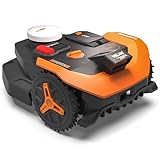 WORX WR310 WORX WR310 |
|
Check Latest Price |
 YARDCARE V3 AI Vision YARDCARE V3 AI Vision |
|
Check Latest Price |
 WORX WO7144 WORX WO7144 |
|
Check Latest Price |
Coverage figures across this table are manufacturer ceilings for ideal conditions. Read them as the largest lawn a machine can handle on a flat, open property, not as a promise for your yard.
1. Segway Navimow i105N – Wire-Free RTK Plus Vision for Small Treed Yards
Segway Navimow i105N Robot Lawn Mower Perimeter Wire Free 1/8 Acre RTK+Vision Robotic Lawnmower, AI-Assisted Mapping, Virtual Boundary, APP Control, 58dB(A) Quiet, Multi-Zone Management
7.1 inch cut width
RTK plus vision with EFLS 2.0
1/8 acre rated
58 dB(A)
Pros
- Holds position in treed yards and narrow corridors
- Very quiet for early or late mowing
- Clean consistent striping
- App with up to 12 zones
- Full 3-year warranty
Cons
- Standard wheels slip on slopes and mulch beds
- Vision misses gates
- hose bibs and sprinklers
- Map edits require driving the mower
- Does not mulch so clippings stay on the lawn
This is the machine we would put on a small suburban lot with mature trees. Owners consistently report that the RTK-plus-vision combination holds a lock where plain RTK models wander, and the 140-degree camera recognising 150-plus obstacle types catches most of what a lawn throws at it.
The cut is tidy. Reviewers describe clean striping and an even finish that shows a visible difference within two to four weeks once the map is dialled in. At 58 dB(A) it is quiet enough to run before the neighbours are awake, which matters more than most spec sheets admit.
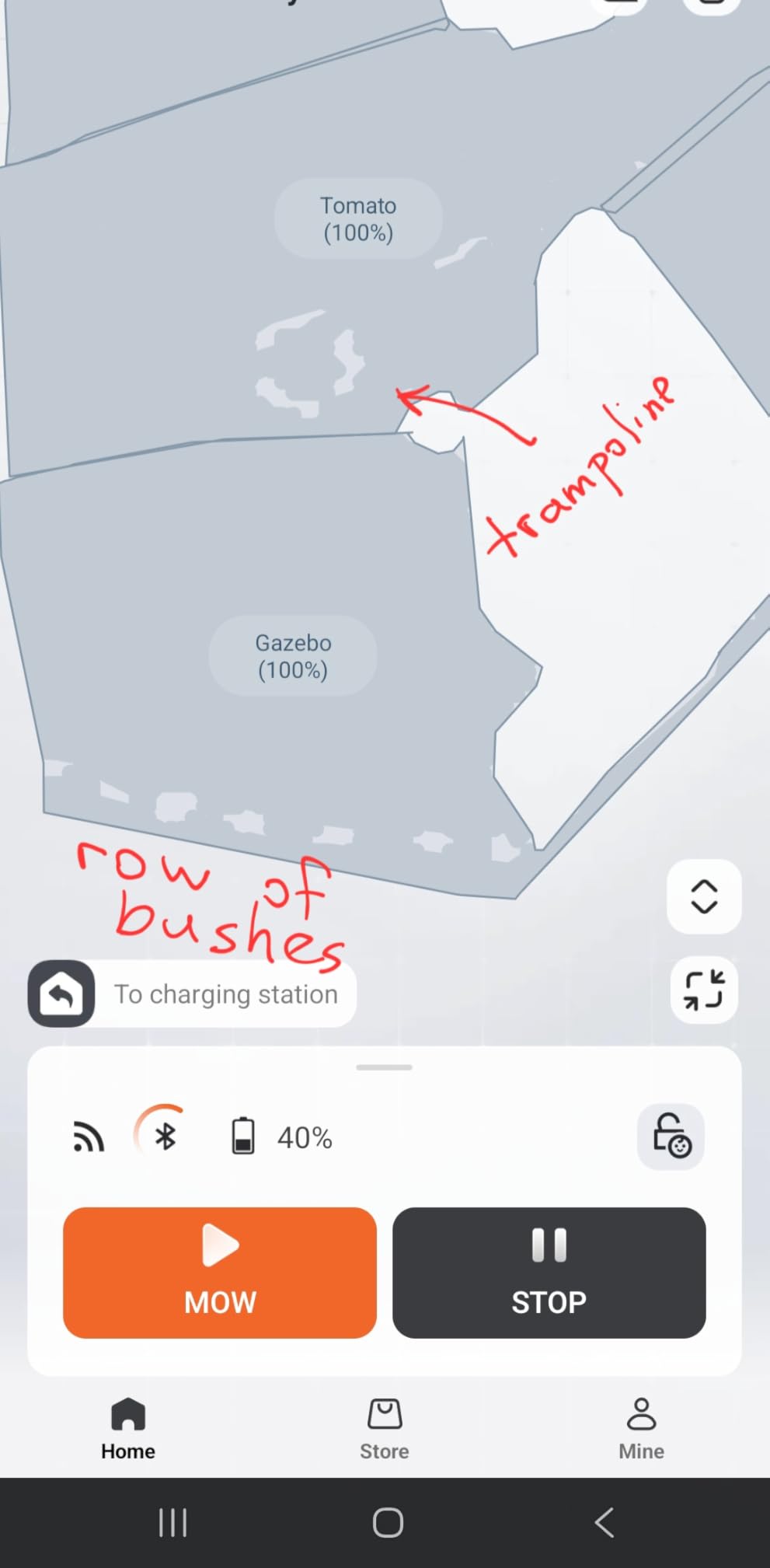
Setup is the honest weak point. The base station and GNSS antenna need a clear line to the sky, and the AI-assisted mapping is helpful rather than automatic. Expect to walk the boundary more than once, particularly if the lawn wraps a building or a dense hedge.
The box includes the mower, power supply, extension cable, ten pegs, charging station, GNSS antenna kit and nine spare blades. The 4G anti-theft module is a separate purchase, so plan for that if theft is a concern on your street.
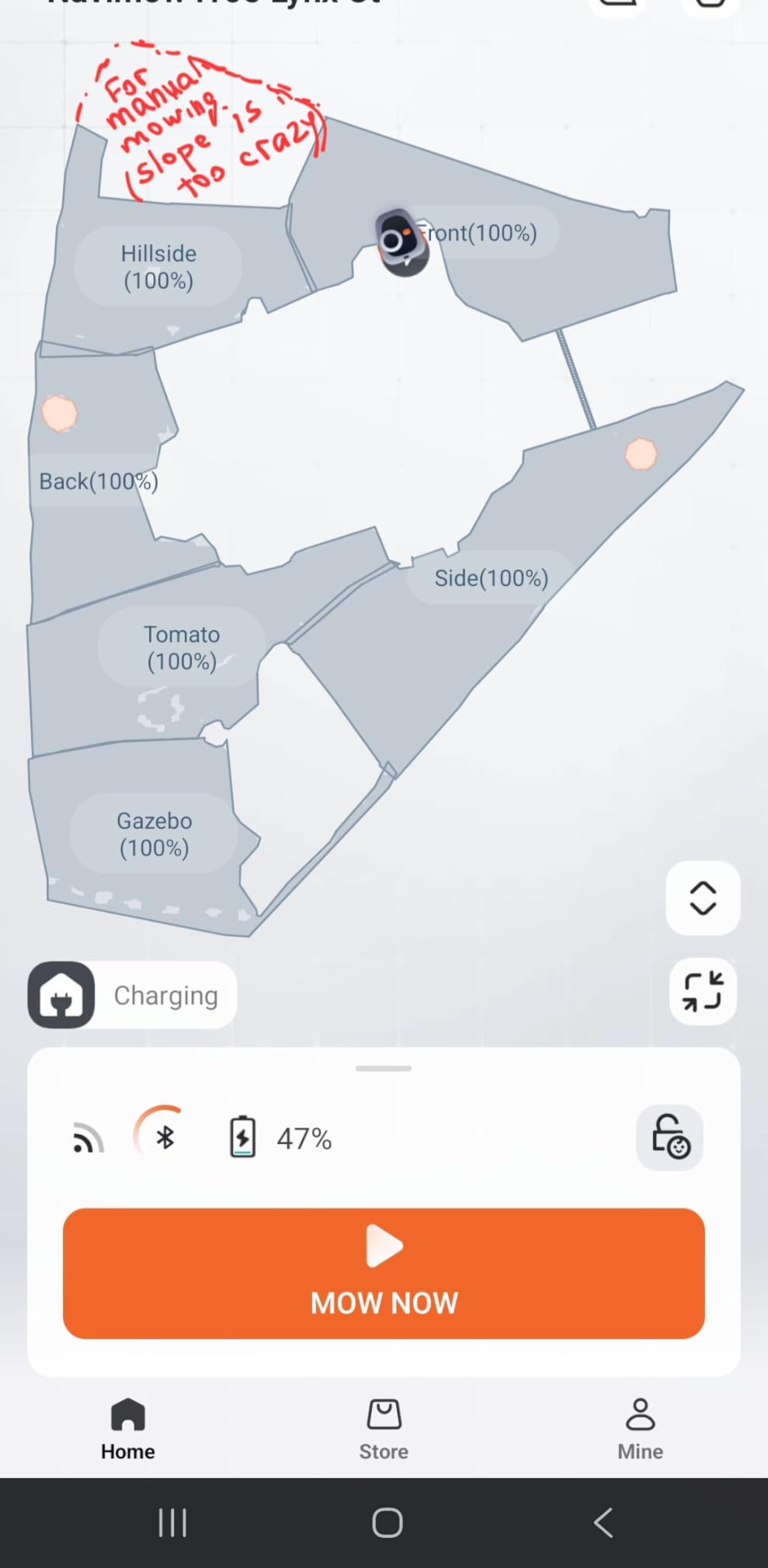
How the map behaves once it is dialled in
Once mapping is finished, the mower runs systematic passes and recharges automatically, so you rarely touch it. Owners on r/automower describe the i105N as one of the two brands they would tell a relative to simply buy, and Segway support is repeatedly described as responsive when accessories are needed.
The 24-pound chassis and 21.5 by 11.2 by 15.2 inch footprint make it portable enough to move between lawn sections by hand. Cutting height adjusts across five positions from about 2 to 3.6 inches, which covers most cool-season lawns but is high for bermuda.
Where it falls short
Traction is the recurring complaint. The standard wheels have weak grip on slopes, mulch beds and uneven ground, and owners working on incline report the mower bogging down where a two-wheel-drive machine has no help. Off-road tires are the usual fix, and Segway will supply them.
VisionFence detection also misses small fixed objects. Gates, mailboxes, hoses and sprinkler heads are named often enough that you should walk those edges once a season and clear anything the camera will not see. The mower also does not mulch, so clippings sit on the lawn until they break down.
2. ANTHBOT M9 – Bigger Deck and 45 Percent Slope Handling
ANTHBOT M9 Robotic Lawn Mower with Garage, 1/4 Acre Wire-Free NRTK & Vision
7.9 inch cut width
NRTK plus dual HDR cameras
Handles 45 percent slopes
Up to 30 work zones
Pros
- Quick largely automatic app mapping
- Strong RTK plus vision obstacle handling
- Consistent clean cut on medium lawns
- Quiet operation for routine use
- Rain detection and auto-recharge
Cons
- Narrow cut path means extra passes
- Struggles on steep hills in practice
- Manual and edging modes viewed as weak
- Printed manual unclear on adding zones
The M9 is among the most capable machines in this field on paper, and much of that paper holds up. Dual 150-degree HDR cameras paired with NRTK positioning recognise more than 1,000 object types, and the 45 percent slope rating sits alongside the all-wheel-drive Navimow and the roborock at the top of the range here.
Owners report that setup is close to hands-off. The app builds a virtual map in roughly ten minutes, and rain detection plus auto-resume make scheduling genuinely unattended. Cutting height runs from 1.2 to about 2.7 inches with five free-rotating blades, and the box holds the mower, base station, five blades and an RTK reference station.
On a real lawn, though, the 7.9-inch cut width is the constraint. Reviewers who sized up one model class for anything past roughly 350 square metres report needing multiple passes and more frequent recharging. The claimed 0.3-acre rating assumes a tidy, flat plot.
Edging is the other soft spot. Manual mode and perimeter trimming are rated as weak by owners, so expect to finish the edges with a string trimmer even after a good session in the middle of the lawn.
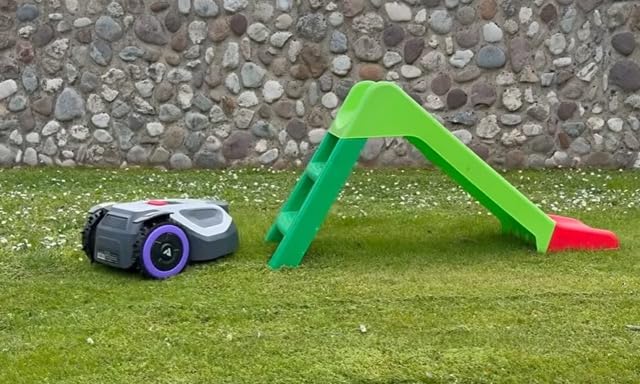
What 30 work zones actually buys you
Zone control is the feature that separates this from cheaper vision machines. Up to 30 work zones with no-go areas let you exclude a compost patch, a play area or a neighbour’s overhang without driving the boundary again, and schedules can differ per zone.
That granularity is why the M9 suits a lawn split into front and back sections. Owners on r/automower mention ANTHBOT alongside Segway Navimow as capable wire-free choices for flat quarter-acre lots, and the zone count is the practical reason for that reputation.
Where owners push back
Hill performance is the most repeated criticism. Despite the 45 percent rating, reviewers report the mower struggling on steep, uneven ground, and the two-wheel-drive chassis has no suspension to help it. If your lawn has a real incline rather than a gentle roll, look at the all-wheel-drive Navimow covered later in this roundup.
After-sales response also draws criticism from some buyers, and the printed manual does not clearly explain how to add mowing zones after the initial map. Learn the zone workflow in the app before you rely on it.
3. LawnMaster OcuMow – Drop and Mow With No App or Base Station
LawnMaster OcuMow Perimeter Wire Free Robot Lawn Mower Cuts Small Lawns 1000-2000 Square Feet with Optical Navigation, Obstacle Avoidance, Low Noise and No Go Functiont
6 inch cut width
Optical navigation with HDR camera
33 ft magnetic strip
2000 sq ft coverage
Pros
- No app
- base station or perimeter wire needed
- Very quiet slow cut
- Deep-tread rear wheels handle small bumps
- Long battery life for the outlay
- Light enough to carry between sections
Cons
- Leaves a wide uncut band along edges
- Can exit the defined area on uneven ground
- 33 ft of strip often runs out
- Flips over on inclines
- Replacement blades hard to source
The OcuMow is the anti-smartphone option. There is no app, no base station and no RTK antenna. You set the 33 feet of magnetic strip, drop the mower inside it, and it works through about three hours of cutting on one charge before you swap it to recharge.
Optical navigation uses a wide-angle HDR camera, and two ultrasonic sensors catch obstacles as small as 6 inches. Deep-tread rear wheels handle bumps, and the 13.4-pound body is light enough to carry from the front lawn to the back in one hand.
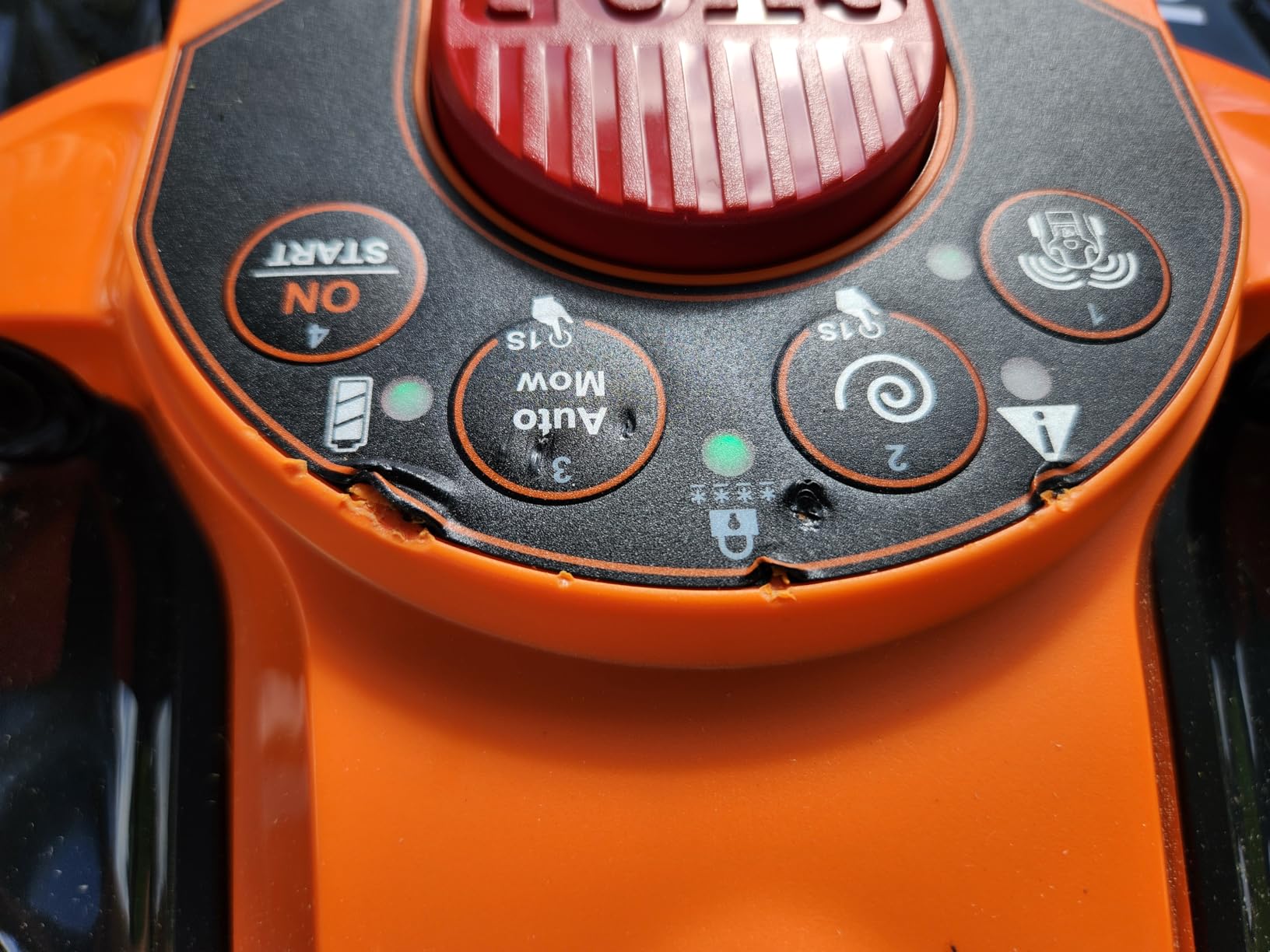
This is genuinely appealing for a very small, very flat, clearly defined patch. Owners who treat it as a low-cost trimming tool for a 1000 to 2000 square foot lawn report it working reliably over years, and the slow cutting speed means the finish is even rather than strippy.
Cutting height adjusts from 1 to 2.25 inches across 40 positions, a wide range for a machine at this level that lets you set a proper low cut for bermuda or St. Augustine.
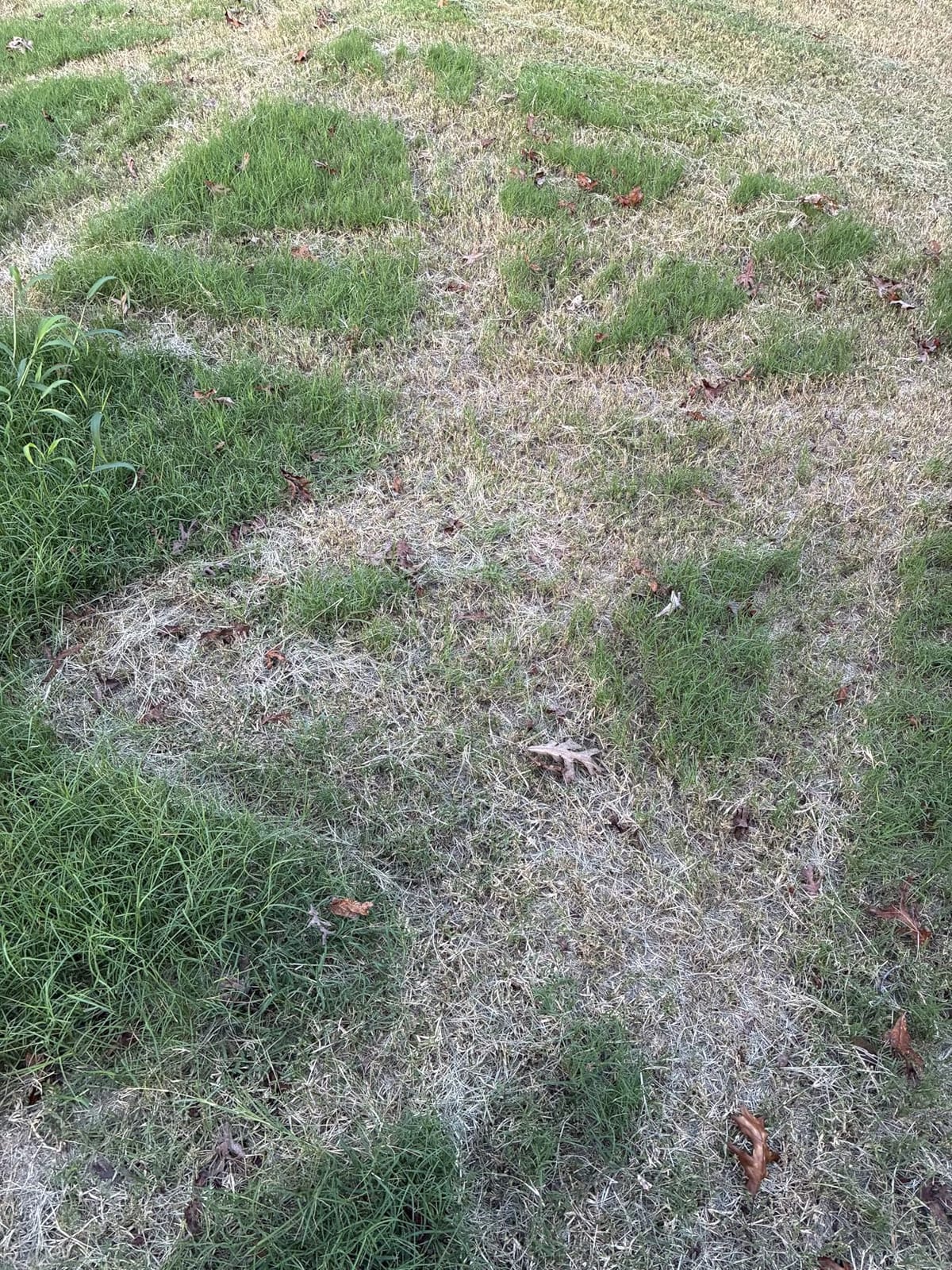
Why the magnetic strip matters here
The strip is a physical boundary, which is both its strength and its limit. It needs no power, no digging and no app, and you can reposition it in minutes. It also has to physically enclose the lawn, so 33 feet goes quickly on anything but a small rectangle.
Owners report laying it again before each mow when the lawn is not perfectly rectangular, and that habit is the difference between this machine working and wandering. Treat the strip as a weekly task rather than a one-time install.
Where it falls short
Edge coverage is the biggest gap. The mower strips a wide uncut band along the perimeter, so lawn edging remains a manual job. It also has a habit of leaving the defined area or driving over low fences when the ground is uneven.
Inclines defeat it. Reviewers report flipping over on slopes despite the 35 percent rating, and the random mowing pattern leaves patches of unmown grass. Replacement blades are also difficult to source and support has been described as unresponsive, both of which matter over a multi-season ownership horizon.
4. ECOVACS GOAT O1000 RTK CARE – Wide Deck for Open Yards
ECOVACS Goat O1000 RTK Care Robot Lawn Mower, RTK Navigation, 1/4 Acre
8.66 inch cut width
RTK wire-free navigation
1.2 inch cut height floor
36 spare blades in kit
Pros
- Strong cutting down to 1.2 inches
- Long runtime covers whole lawns per charge
- Auto mapping in about 20 to 30 minutes
- Handles curbs better than prior units
- Quiet with neat striping
Cons
- Frequent out-of-range and stuck states
- Weak on narrow passages between lawn areas
- App reports errors that do not match reality
- Auto mapping can override manual boundaries
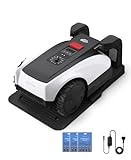
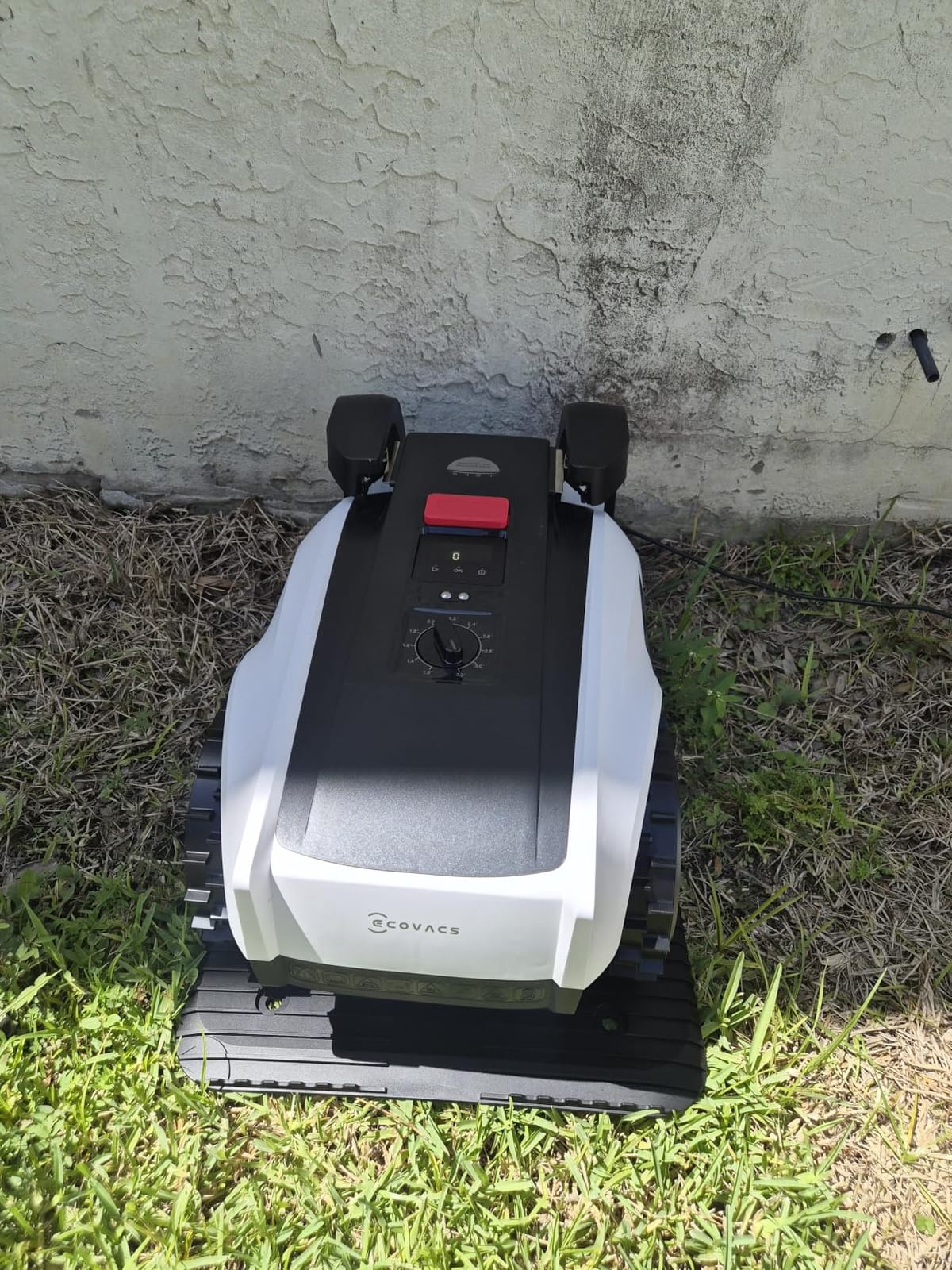
The 8.66-inch deck is the widest in this roundup, so fewer passes means less charging time, and owners report covering front and back lawns on a single charge, and the listed battery life is 90 minutes.
The cutting hardware earns the praise. It cuts down to 1.2 inches, the lowest cut floor in the roundup, and the ride-on-edge offset is credited with noticeably better curb and edge handling than units owners had owned before.
Setup is the RTK standard: place the base station, mount the antenna, and let the app map the yard in roughly 20 to 30 minutes. An RTK extension cable is included, which is worth using because antenna placement decides whether the signal holds.
The CARE bundle is unusually generous. It adds 36 replacement blades, enough to cover several seasons without thinking about it, and that is the single best ownership feature in the whole field.
The software is the weak link
Owners report frequent false out-of-range and stuck states that require a physical reset. The app itself is described as clunky, with timeouts and stuck alerts that do not reflect what the machine is actually doing, and automatic mapping sometimes overrides boundaries you set by hand around a fence.
No-go zones add friction too. They can only be drawn with the on-screen joystick rather than dropped on a map, which is tedious on a lawn with several exclusions. Several buyers named switching to another brand after hitting these limits, and that is the honest headline risk here.
Where it is the right call
If your lawn is open, defined and mostly free of narrow passages, the deck size and runtime compensate for the software rough edges. The 1.2-inch cut floor also makes it one of the few picks here that handles bermuda properly.
Narrow corridors between separate lawn areas are the case to avoid. That is the specific weakness owners name, and it is not something a software update reliably fixes. At 44.5 pounds this is also the heaviest machine in the roundup, so plan how you will move it.
5. YARDCARE M800Plus – Mixed Orderly and Random Mowing Logic
YARDCARE M800Plus Cordless Robot Lawn Mower with GPS + Visual Navigation, Bow-Shaped Path Mowing, APP Control, 4.0Ah Automatic Robotic Lawnmower for 1/5 Acre, Obstacle Avoidance, Height Adjustment
7.08 inch cut width
GPS plus 3D vision navigation
35 percent slope handling
0.8 to 2.4 inch height
Pros
- GPS plus 3D vision needs no boundary wire
- Handles 35 percent slopes without sticking
- 150 plus obstacle types rerouted live
- Mixed orderly and random pattern evens out coverage
- Spiral spot mode for dense patches
Cons
- Grass over 2.6 inches must be trimmed by hand first
- Regular blade replacement needed
- Very small review base limits evidence
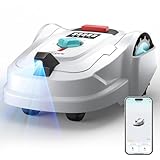
The M800Plus does something none of the other machines here do. It mows in orderly rows for 40 minutes, then switches to 60 minutes of random fill, which evens out coverage on a lawn with awkward corners that a pure random path would leave patchy.
It also adds spiral spot mowing for dense patches, which is the feature to reach for when a section has grown away from the rest of the lawn. Cutting height adjusts from 0.8 to 2.4 inches, a low floor that suits the dense warm-season lawns where budget mowers usually fall short.
GPS plus 3D vision with an HD camera handles grass and non-grass discrimination, and the 135-degree AI camera identifies more than 150 obstacle types. Slope handling is rated at 35 percent, and the app handles schedules, pattern customisation and over-the-air updates.
The bow-shaped path is the other quiet advantage. On irregular lawns the curved lines follow contours rather than forcing straight passes that need overlap at every turn.
What the small review base means for you
There are four reviews on this machine, and they are all positive. Owners cite wire-free setup, confident slope and obstacle handling, dependable auto-recharging and broad app control. That is encouraging, but it is not the same as a few hundred verified owners across a full season.
Forums treat new models with no established review base as a calculated risk, and we agree. Buy this one for the mowing logic and the spot mode, not on the strength of a 5.0 rating that four people produced.
Before the first run
The manufacturer recommends manually trimming any grass taller than 2.6 inches before the first session. Skipping that step is the most common way people end up unhappy with an overgrown lawn, because the mower reads tall grass as an obstacle and works around it.
Blade replacement is a regular obligation here, so factor a spare set into your first-season budget. The 28.7-pound body is manageable, and the 7.08-inch cut width is mid-field, so medium lawns will need a few passes per cycle.
6. Segway Navimow i206 AWD – All-Wheel Drive for Steep Ground
Segway Navimow i206 AWD Robot Lawn Mower, New i105N, 0.15 Acre, 45% Slopes
17 inch cut width
All-wheel drive chassis
45 percent slope capability
Zero-turn steering
Pros
- All-wheel drive handles terrain two-wheel rivals cannot
- Extremely quiet and dogs stay calm near it
- Adjusts angle automatically for even cuts
- Reliably avoids large obstacles like trees
- Alternating patterns give clean striping
Cons
- Mapping can fail and need manual zone creation
- Map is lost if the mower is lifted mid-session
- Circles tall isolated grass for several passes
- Leaves a strip unmown along fences
- In-app support described as poor
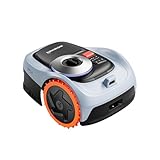
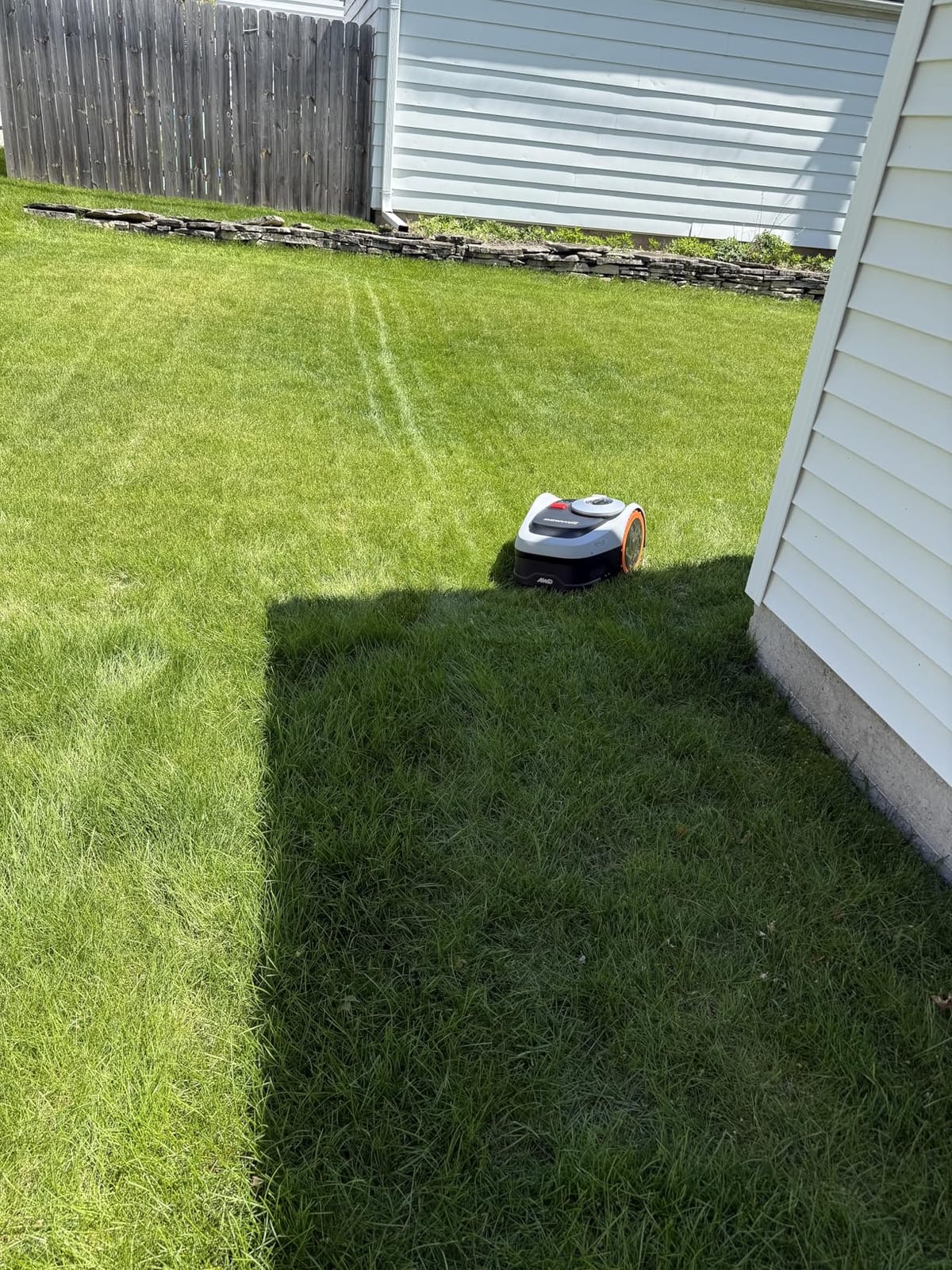
This is the pick for a sloped property, and the reason is mechanical rather than electronic. All-wheel drive with automotive-grade stability control handles uneven and sloped terrain that stops two-wheel-drive machines, and the 45 percent rating sits alongside the top of the range here.
Zero-turn steering avoids scuffing the turf during pivots, and the machine automatically adjusts its angle to keep an even cut across an uneven lawn. Owners who were on their third robotic mower credit the chassis specifically for terrain that defeated earlier units.
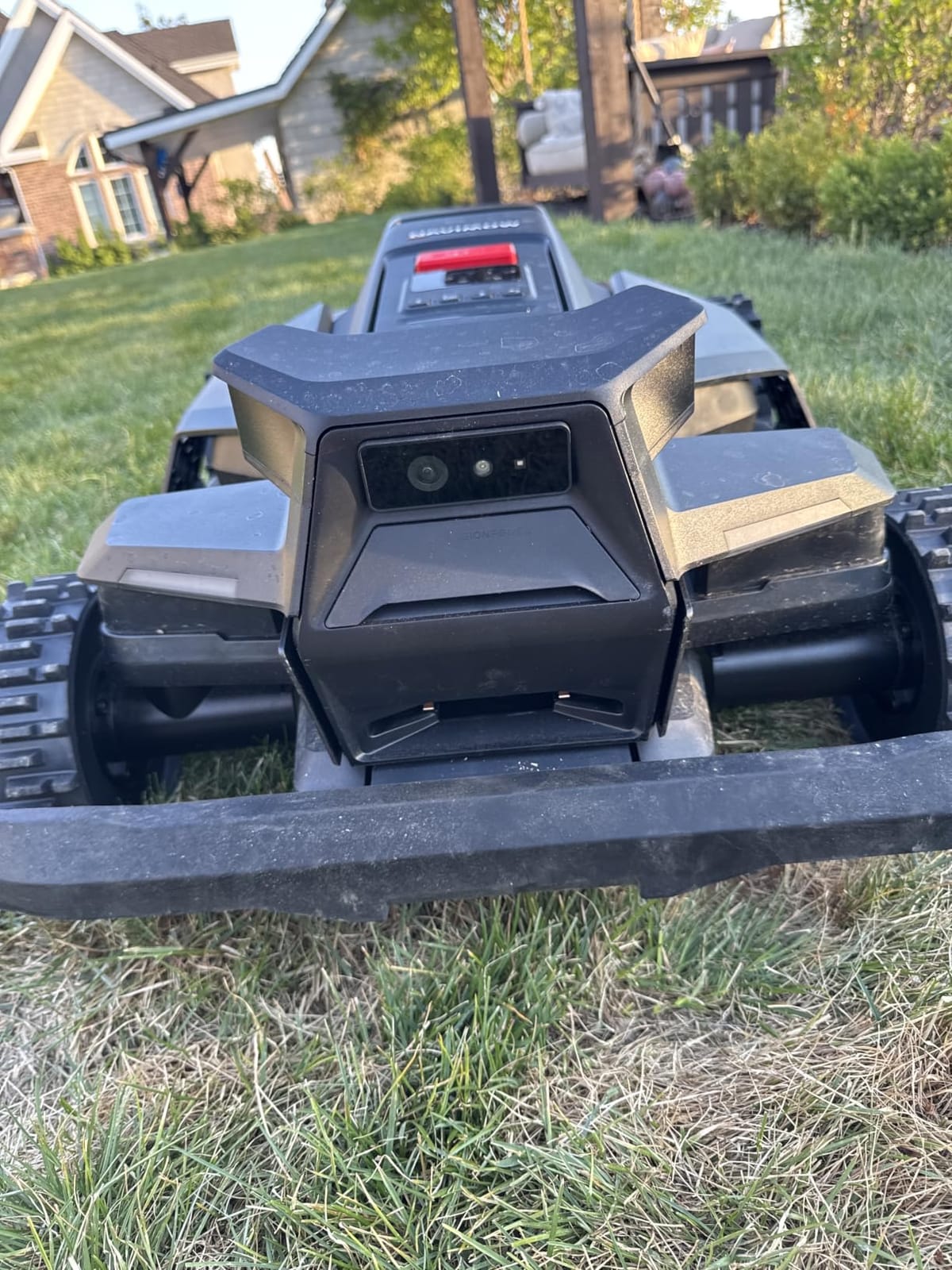
The 17-inch cutting width is the widest in the roundup, so coverage per charge is excellent. A 2.5 Ah battery covers up to 1,350 square feet per charge, and up to 20 mowing zones handle a property split into sections.
Real-time GPS alerts for lifting or off-course detection are a genuinely useful safety and theft feature, and quiet operation means dogs on the property tend to ignore it.
What AWD changes in daily use
Grip is the whole story. The machine climbs and holds traction on grades where lighter two-wheel designs spin or stall, and reviewers describe walking away from patches that repeatedly trapped other mowers. Adaptive torque manages the climb so the cut stays consistent rather than thinning out on the incline.
If you are choosing between the vision machines purely on terrain, this is the one. The wider deck also means fewer passes, which matters on a lawn where every pass costs battery time.
Where the software still frustrates owners
Mapping can fail outright, and the fallback is manual zone creation, which is a slow afternoon. If the mower is lifted during a session, the map is lost and a full remap is needed, so do not move it mid-job.
Two edge complaints recur: tall isolated grass gets circled for several passes before being cut, and a strip of unmown grass remains along fences even after careful manual mapping. In-app customer support is also described as poor, though hardware issues have been resolved quickly with free replacement parts.
7. YARDCARE V100 – The Lowest-Outlay Pick With Vision Navigation
YARDCARE V100 Automatic Robot Lawn Mower HD Vision for Lawn Max 1600 sq ft
6.3 inch cut width
HD vision navigation
32 ft magnetic strip
0.8 to 2.4 inch height
Pros
- Simple visual navigation that separates grass from non-grass
- Magnetic no-go strip needs no digging or power
- Tilt
- emergency stop and rain sensors
- Useful 0.8 to 2.4 inch height range
- Quiet operation for small lawns
Cons
- Narrow 6.3 inch cut width extends mowing time
- Random path gives less orderly striping
- Replacement blades and support not always available
- Results depend on clearly defined lawn edges
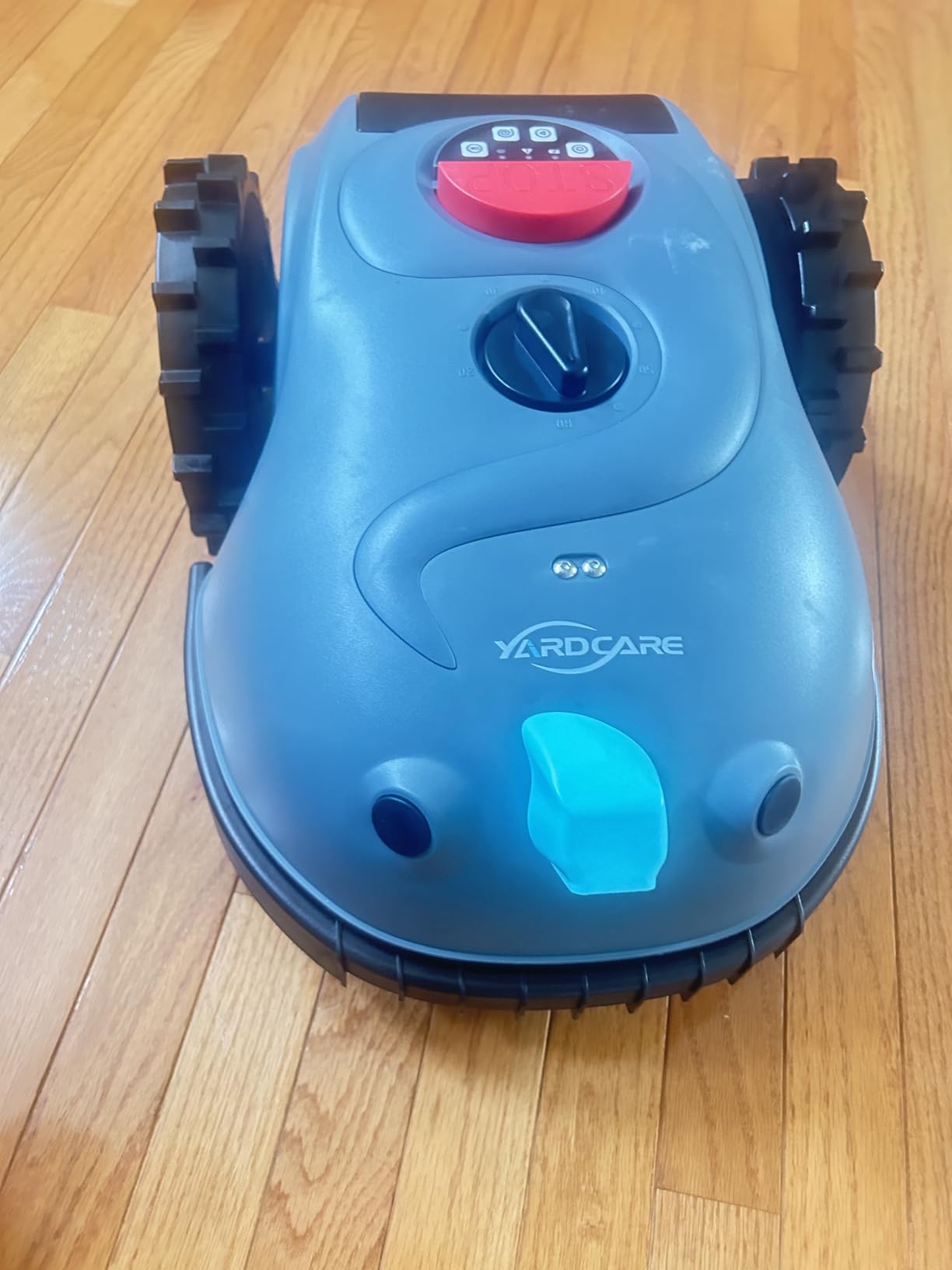
The V100 is the entry point we recommend for a first wire-free machine. It needs no base station, no antenna and no account, and the 32 feet of magnetic strip with 20 pegs creates no-go zones without digging or running power to them.
Sentiment is close to unanimous. Owners praise straightforward setup, effective visual navigation and obstacle detection, with the magnetic strip singled out as useful on small and mid-size lawns. The safety kit is unusually well specified, with a tilt sensor, emergency stop switch and rain sensor all included.
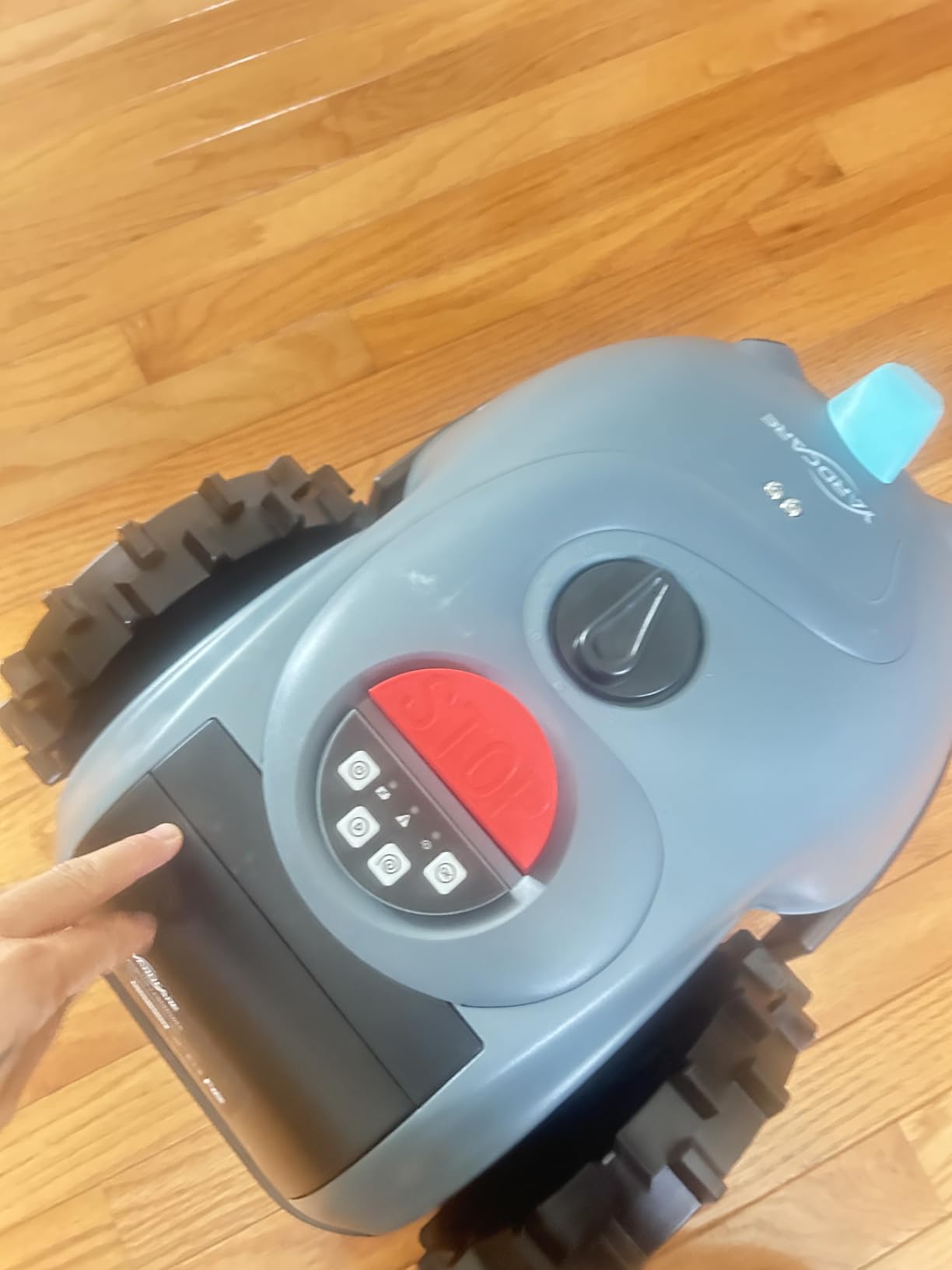
Cutting height runs from 0.8 to 2.4 inches, and the camera-based navigation distinguishes grass from non-grass rather than relying on a signal. The package includes an 18V battery charger, magnetic strip, pegs and three spare blade sets.
Lawns up to 1600 square feet are the stated target, with slopes up to 20 degrees. That is a real constraint compared with the 45 percent machines here, so check your grade before committing.
What vision navigation needs from your lawn
This machine has no satellite fix to fall back on, so it depends on clearly defined lawn edges. A border of paving, a fence line or a mulch edge helps it understand where grass stops, and a lawn that fades into a wild verge is the hardest case for it.
For owners, the practical habit is to keep the magnetic strip physically in place. It is what stops the mower wandering into flowerbeds while the camera reasons about the boundary, and the two systems working together is what produces the consistent results reviewers describe.
Where it runs out of room
The 6.3-inch deck is narrow, so mowing time climbs quickly on anything past a small lawn. The random mowing path also produces less orderly striping than a systematic machine, which shows if you enjoy looking at the lines.
Replacement blades and support are not always readily available, so order a spare set with the machine. Keeping the boundary defined and the lawn small is the whole strategy here, and it works well within those limits.
8. Sunseeker X3 Plus – Cleanest Edge Finish in the Field
Sunseeker X3 Plus Robot Lawn Mower, RTK, Vision AI, 0.3 Acre, Wire-Free
8 inch cut width
RTK plus VSLAM navigation
0.3 acre coverage
1.6 to 3.2 inch height
Pros
- Very clean edge cutting cuts down on string trimming
- Stable navigation under trees and near fences
- Quiet enough for early or late mowing
- Light enough to carry between zones
- Steady satellite lock
Cons
- Software glitches including false rain detection
- Locks itself up and needs daily checks
- Hazard zones reappear and error messages mis-translate
- Loses connection and cannot return to the dock
- Treats tall grass as an obstacle
Edge cutting is what separates this machine. The ride-on-edge offset blade with an 8-inch floating cut produces the cleanest perimeter finish in this group, and owners say it meaningfully reduces the string trimming that eats into a Saturday.
Coverage of 0.3 acre, or 13,000 square feet, is among the largest figures in this roundup and works across multi-area lawns. Six saved maps, wire-free multi-zone control, schedules and route history all sit in the app, and the machine runs at 60 dB.
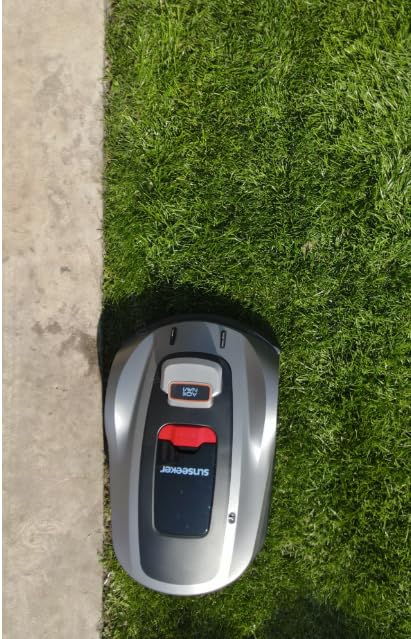
Navigation is RTK plus VSLAM through AONavi, which explains the steady satellite lock owners report compared with earlier robot mowers. Stability under trees and along fence lines is a specific strength, and the machine stays put where simpler RTK setups drift.
It is also the lightest RTK machine here at 19.9 pounds, which is why owners like carrying it between lawn zones. Wi-Fi, Bluetooth and voice control are all supported, and a 2-year warranty with US-based support is included.
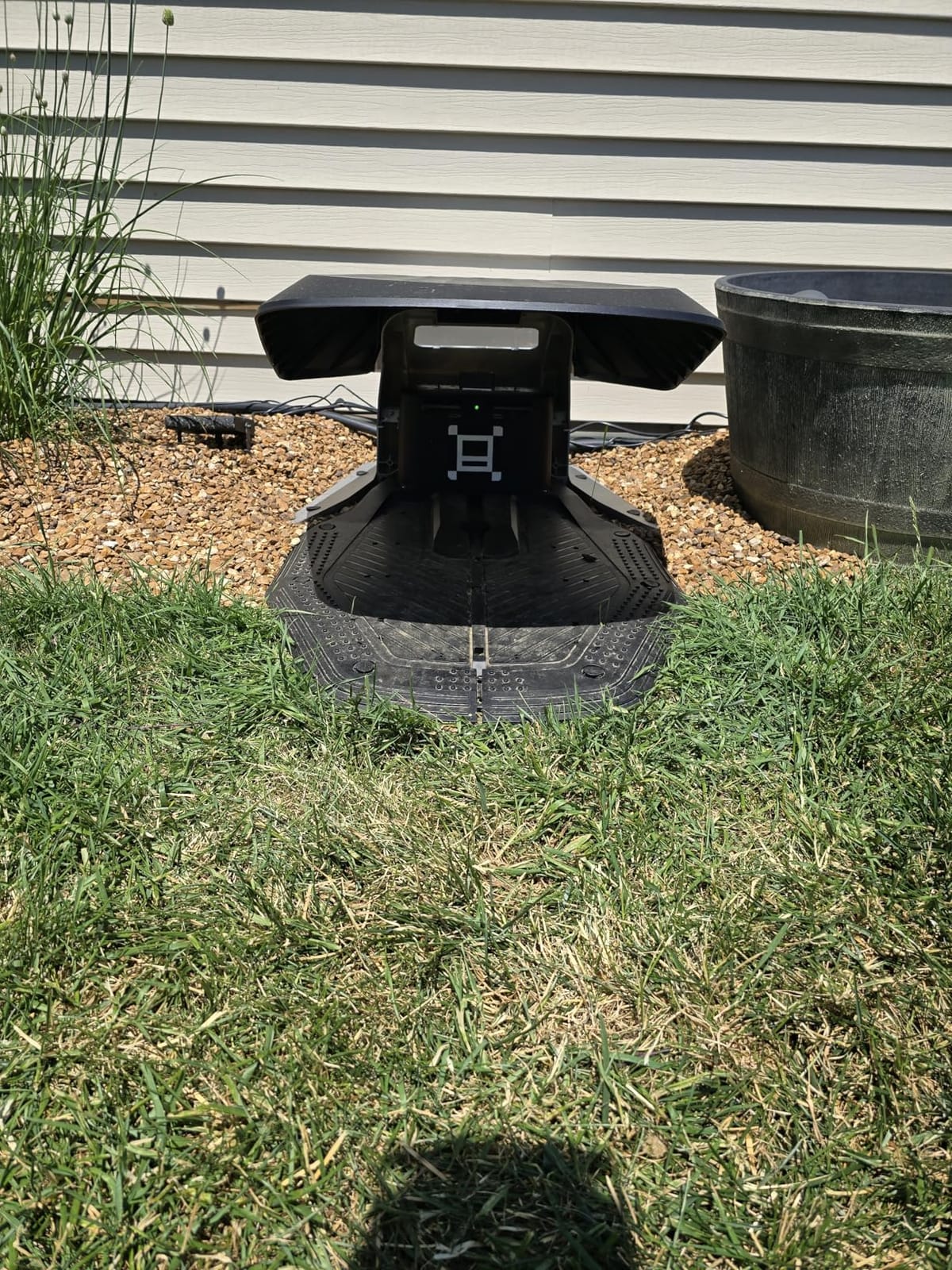
Why the edge result is the differentiator
Most budget robot mowers cut the middle and leave the perimeter for a string trimmer. The offset blade on this one rides out toward the edge, so the visible border line is clean. On a lawn with straight, hard edges, that is the feature you will notice every week.
For owners with a simple yard, the finish is described as excellent with a pleasant result on native lawns. That combination of clean edging and quiet operation is why it earns the edge badge here.
Where the software breaks down
Feedback is sharply divided, and the negative side is entirely about software. Owners report failed calibration, false out-of-bounds alerts, false rain detection, hazard zones reappearing and error messages in other languages. The machine has also locked itself and needed manual recovery.
The most serious report is a lost connection that leaves it unable to return to the dock, requiring a manual carry back. Tall grass is also read as an obstacle and the mower wanders, so trim first. The app is described as painful to use, which makes daily scheduling harder than it needs to be.
9. roborock RockNeo Q110H – Full-Band RTK Plus VSLAM for Heavy Canopy
Roborock RockNeo Q110H Robot Lawn Mower, Wire-Free Robotic Lawn Mower with Full-Band RTK + VSLAM Navigation, Auto Mapping, AI Vision Obstacle Avoidance, App Control, 45% Slope, Covers Up to 1/4 Acre
8.7 inch cut width
Full-band RTK plus VSLAM
45 percent slope capability
Passages down to 2.3 feet
Pros
- Very quiet with headlights for night mowing
- Cuts in straight even lines on 30 percent slopes
- Straightforward base and antenna setup
- Familiar app for Roborock vacuum users
- Obstacle avoidance handles toys and furniture
Cons
- Auto mapping not available in practice
- Boundaries leave 1 to 1.5 feet unmown at edges
- Optional edge module not sold in the US
- Refuses narrow gate openings with clearance
- Map edits require walking the mower
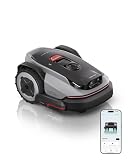
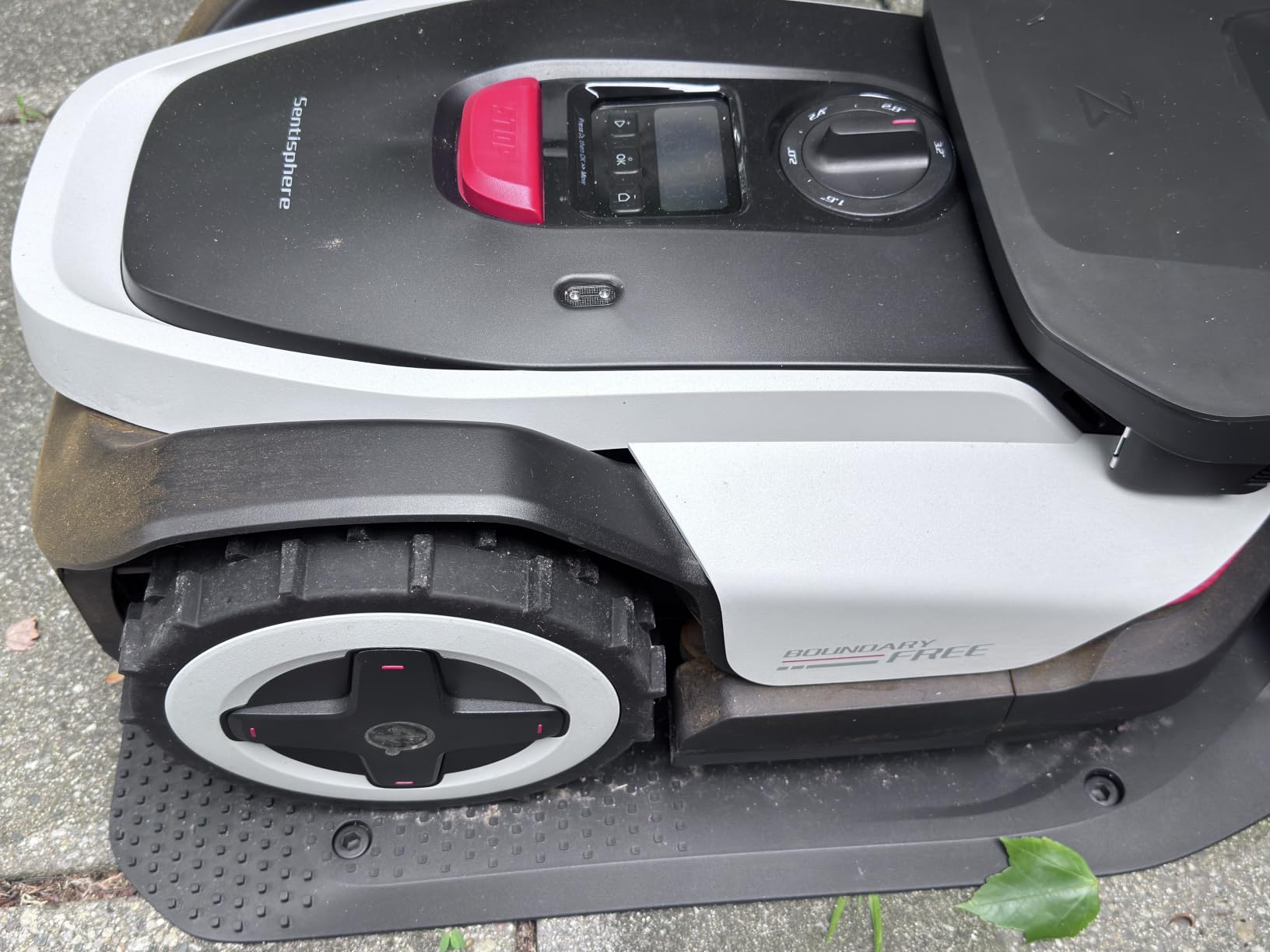
Full-band RTK is the specification to look for if your lawn sits under heavy tree cover or beside a tall fence. Combined with VSLAM, it holds signal where single-band systems give up, and owners rate the mapping as better than comparable brands they have used.
Night mowing is the quiet hero here. Headlights let it run late without a spotlight on your grass, and reviewers describe it as very quiet, with 130 minutes of battery life per charge behind an 8.7-inch deck.
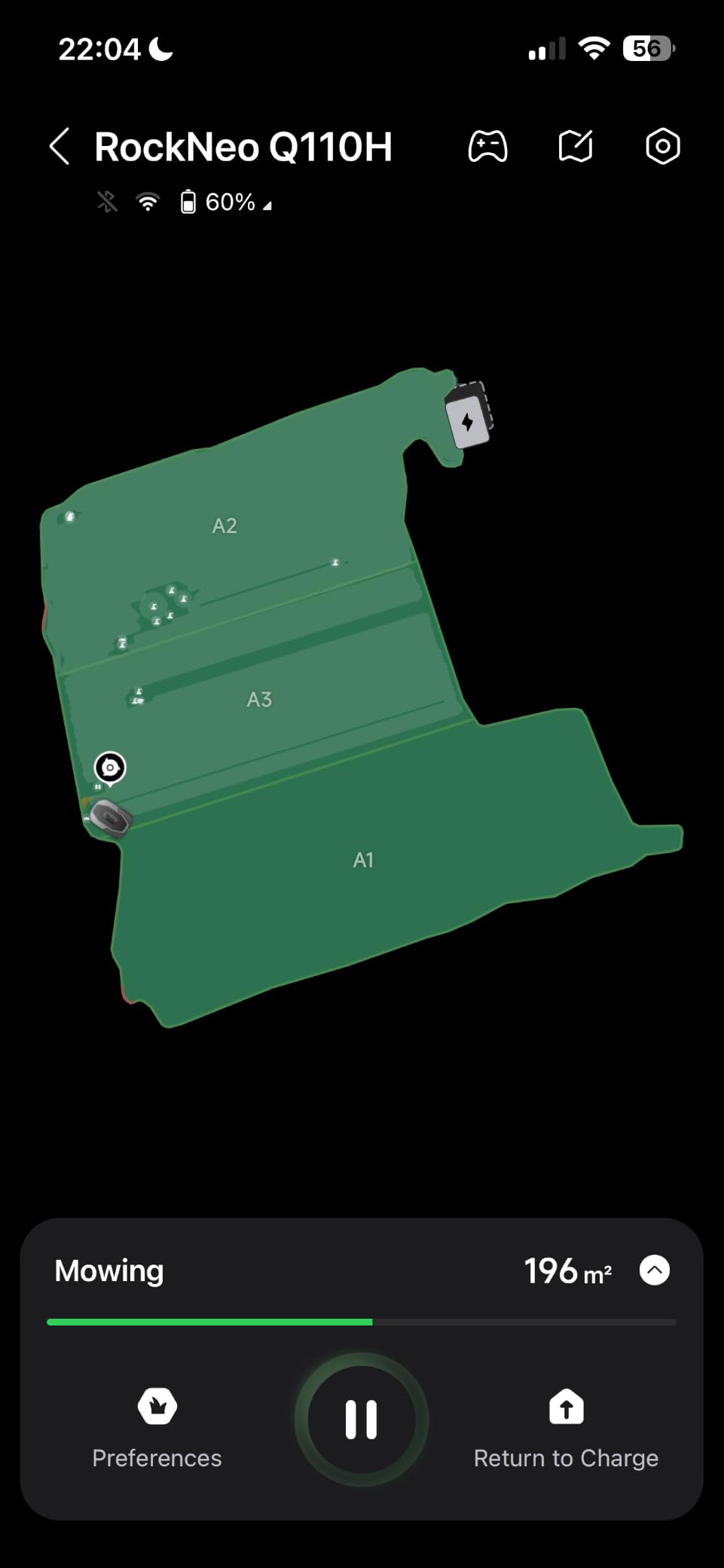
It also handles narrow passages down to 2.3 feet, the tightest clearance claimed in this roundup. The floating cutting deck with large-diameter wheels manages 45 percent slopes and rolls over obstacles up to 1.57 inches, and dual cameras avoid static objects, yield to people and pets, and roll over low ones.
Anti-theft is built in rather than sold as an add-on, with a PIN code lockout and alarm. A 4G module is optional if you want alerts away from home, and the app adds multi-zone scheduling, a progress dashboard and a wildlife-friendly mode.
The mapping caveat is important
The advertised AI auto-mapping is described by owners as not available in practice, which means manual app-controlled mapping is the realistic path. It works, but you drive the mower along the boundary, and map edits cannot be made without walking it again.
Boundaries are also conservative. Owners report 1 to 1.5 feet going unmown along edges and fences, and partial zone mowing is unsupported. Plan for a string trimmer pass and for a couple of afternoons of boundary work in the first season.
Where it fits the lawn
This is the pick for a yard with a pool, a shade tree canopy or a long fence line where signal loss is the usual complaint. It handles uneven ground, small bumps and walkway transitions without getting stuck, which owners confirm directly.
Two limits to weigh. The optional edge cutting module is not available in the US, so edge work stays manual, and traction struggles in thick St. Augustine grass with false lift alerts on small bumps. On fescue or bermuda, it is a strong all-rounder.
10. WORX WR310 – RTK Cloud With Unlimited Zones and No Fees
WORX Robot Lawn Mower for 1/4 Acre, No Perimeter Wire, WR310
8.7 inch cut width
RTK Cloud, no local antenna
30 percent slope
3-year warranty
Pros
- No local antenna and no ongoing cloud fees
- Auto mapping with closer edge following
- V-SLAM fusion works in shade and partial cover
- Hot-swappable battery allows continuous mowing
- Unlimited zones and custom pathways
Cons
- Cloud server lockouts during mapping
- Map save failures can wipe an afternoon of work
- Documentation is thin
- Technical support hard to reach
- Without the module edge trimming is still needed
The WR310 solves the problem owners ask about most: whether RTK correction costs extra. RTK Cloud navigation runs without a local antenna and without ongoing cloud fees, so there is no subscription to budget for later and no base station to find a home for.
For shaded lawns it is one of the better options here. V-SLAM sensor fusion maintains accuracy in shade and under partial cover, and owners confirm it handles shaded and pool-side yards well, with cut quality compared favourably to a John Deere X320 riding mower.
The battery is hot-swappable, so you can exchange it and keep mowing without waiting on a charge. Obstacle avoidance runs on neural networks at up to 10 trillion operations per second, and 80 minutes of average runtime sits behind an 8.7-inch cut.
Unlimited mowing zones with custom pathways and no-go areas give you more control than any fixed-map machine in this list, and cut-to-edge border cutting crosses ridable edges to trim close to fixed borders. A 3-year manufacturer warranty is included.
Cloud navigation: the trade you accept
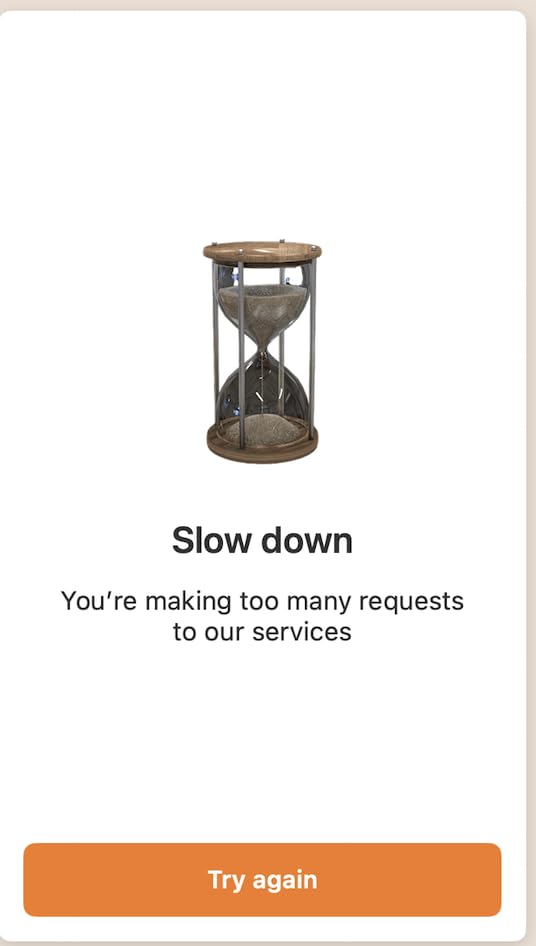
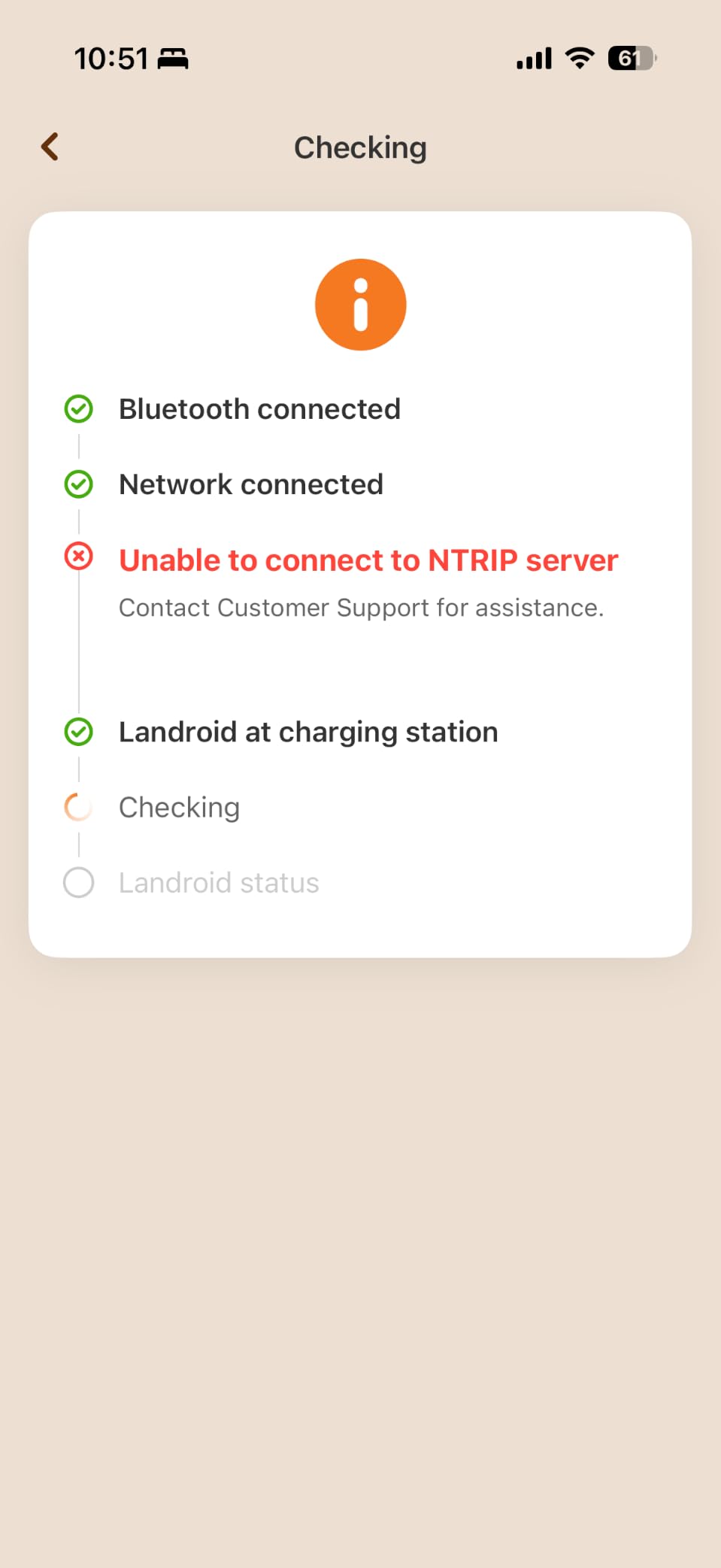
Removing the antenna removes a hardware failure point, but it moves the dependency to the network. Owners report cloud server lockouts, shown as error 429, that leave the unit unusable during mapping, and map save failures that can wipe an afternoon of manual boundary work.
That is a real risk for anyone with patchy internet at the far end of a large property. Map during a period of good connectivity, and leave the boundary work alone for a moment after any dropped connection.
What to know before you buy
Documentation is limited to cartoon illustrations and the manual is thin, so expect to learn zones and paths from the app. Technical support is hard to reach and reviewers describe agents unfamiliar with the system, which is a support risk on a machine with this many settings.
Without the optional cut-to-zero module, edge trimming is still needed, and the attachment instructions are reported as inaccurate. Mowing speed is slow next to a riding mower, which is the trade for a machine you never have to push.
11. YARDCARE V3 AI Vision – Magnetic Strip Simplicity for 1600 Sq Ft
V3 AI Vision Robotic Lawn Mower, 1600 Sq.Ft, Dark Black
6.3 inch cut width
AI vision obstacle sensing
32 ft magnetic strip
1600 sq ft coverage
Pros
- AI vision obstacle sensing for navigation
- Custom no-go zones with 32 ft magnetic strip
- App control for scheduling and monitoring
- No wires and easy to start
- Quiet operation with adjustable cut height
Cons
- Limited to 1600 sq ft of coverage
- No customer review images available
- Small 6.3 inch cut width for larger areas
The V3 is the simplest wire-free start on this list. No antenna, no base station, no RTK subscription. Lay the 32-foot magnetic strip to mark no-go zones, connect over the app, and the AI vision handles obstacle sensing and navigation from there.
Owners rate the unit at 4.4 out of 5 from 42 reviews, with 79 percent five-star ratings, and the recurring theme is that the whole setup is approachable. Scheduling and monitoring from a phone is the feature most cited.
Cutting height adjusts from 0.8 to 2.4 inches, and the accessory kit in the box covers a first season. For a small, clearly bounded lawn, that is genuinely all you need.
How the magnetic strip approach holds up
The strip needs no power and no digging, which is why first-time owners like it. Thirty-two feet is enough to fence off a flowerbed, a vegetable patch or a tree you do not want approached, and the mower treats the line as a hard boundary.
Like the other strip-based machines here, the constraint is perimeter length. The strip defines where the mower must not go, not where it must go, so a large lawn still needs a defined edge the camera can read. On a small rectangular plot, that is easy.
Where the limits show up
Coverage is the hard ceiling at 1600 square feet. This is not a mower for a quarter-acre lot, and the 6.3-inch cut width means the small area it does cover is quick but the limit arrives sooner than most buyers expect.
There are no customer review images for this model, so you are buying on spec and the written feedback rather than on visual evidence from other owners. Review volume is also modest at 42 ratings. For a lawn of this size, that is an acceptable level of evidence; for a bigger property, pick a machine with a deeper owner history.
12. WORX WO7144 – Extended-Range Connectivity and a 3-Year Warranty
WORX Robot Lawn Mower for 1/4 Acre, Wire-Free with Brushes
8.7 inch cut width
RTK Cloud auto mapping
Cut-to-edge border cutting
3-year manufacturer warranty
Pros
- Centimetre-level RTK Cloud accuracy with no antenna
- Auto mapping with Vision AI for full coverage
- Works in shade with V-SLAM fusion
- Cut-to-edge border cutting for cleaner lines
- Extended-range RadioLink connectivity
Cons
- Cut-to-zero module and headlights sold separately
- App has a learning curve
- May need an extra battery for larger yards
- One buyer received a refurbished unit
The WO7144 is the twin of the WR310 with a different chassis, and its distinguishing feature is RadioLink extended-range connectivity. That link keeps the mower reachable from further out on the property, which matters when the dock and the far corner of the lawn are a long way apart.
Owners praise easy setup, auto-mapping and navigation on slopes and obstacles, rating it 4.4 from 26 reviews with 73 percent five-star. The RTK Cloud accuracy needs no local antenna and carries no ongoing fee.
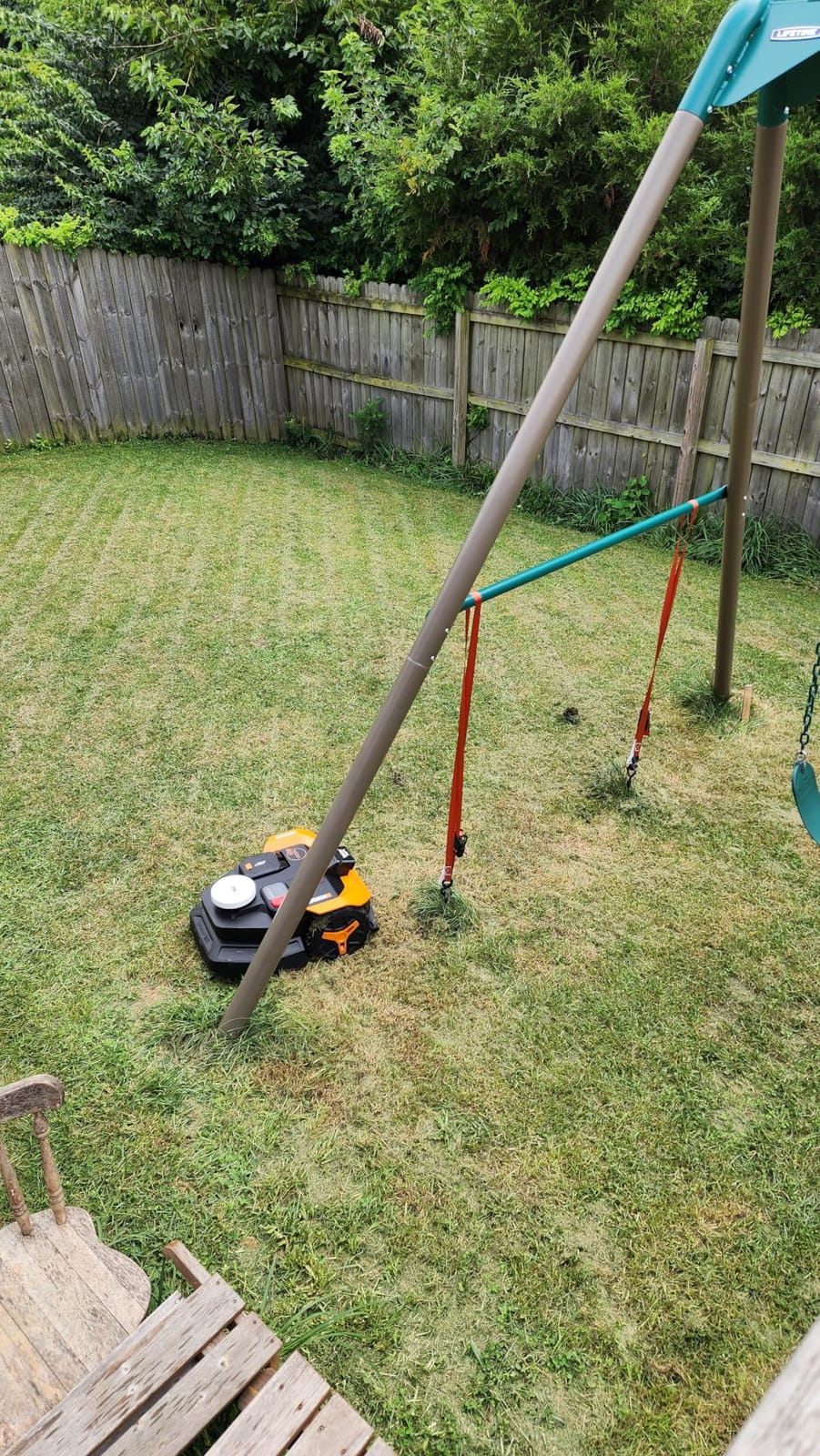
Cutting hardware matches the rest of the WORX line: an 8.7-inch deck, a 1.57 to 3.54 inch cutting height range, 80 minutes of average battery life and 30 percent slope handling. Cut-to-edge border cutting crosses ridable edges and trims close to fixed borders.
Four mowing patterns are offered, parallel, checkerboard, diamond and natural, and the 3-year manufacturer warranty matches the Navimow i105N as the longest offered in this roundup.
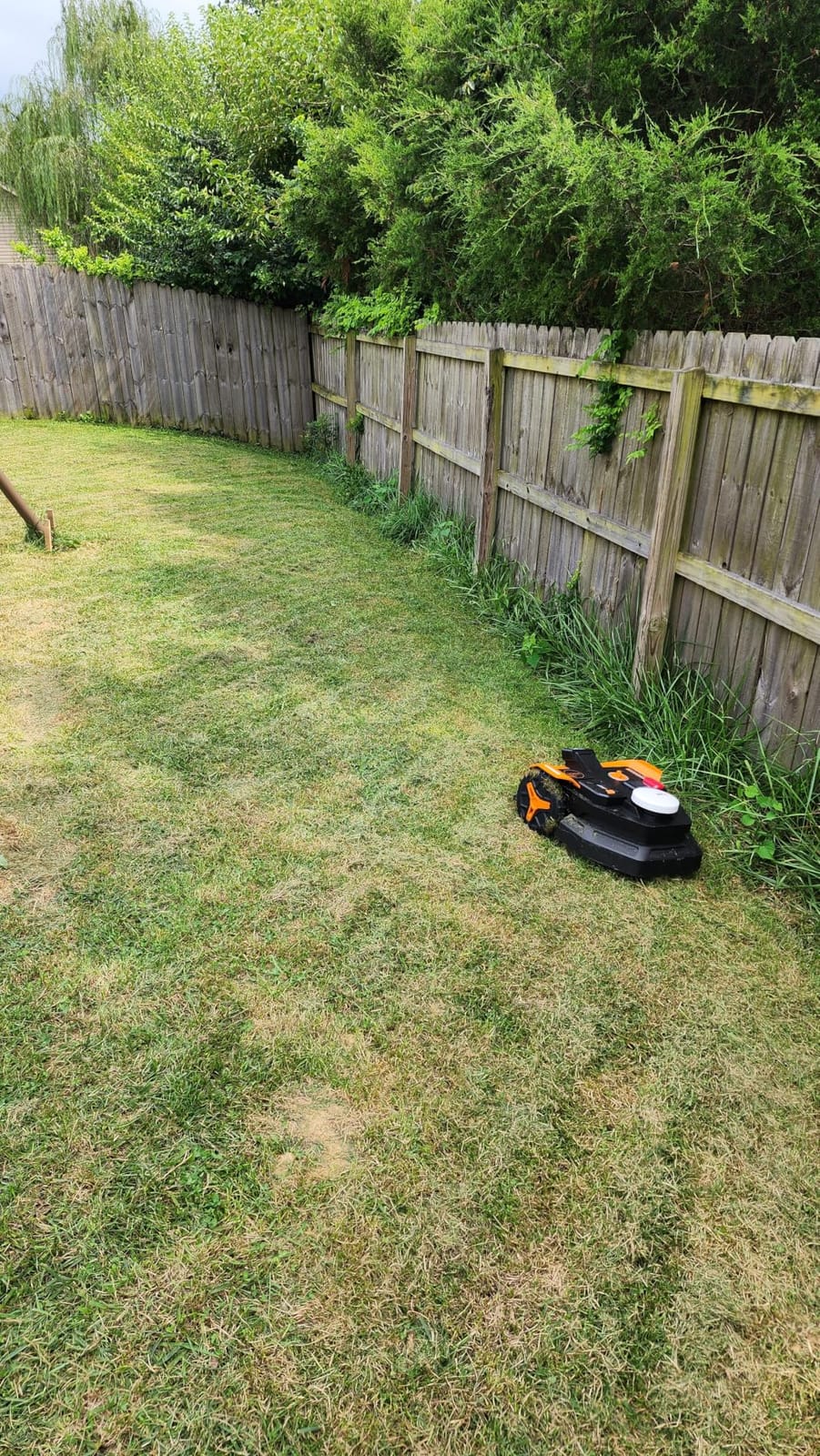
When this is the right WORX to pick
Choose the WO7144 over the WR310 when the property is long or irregular and you want the mower reachable across a greater span. Extended-range connectivity also reduces the frustration of a mower that finishes a far zone and cannot report back.
It is also the better fit if a 3-year warranty is the deciding factor for you. Across several seasons of blades, batteries and mapping sessions, that length of cover is worth more than most single-spec upgrades.
What is missing
The cut-to-zero module and headlights are both sold separately, so the edge and night features need their own purchases. The app also has a learning curve that owners mention, and an extra battery may be needed for larger yards within the coverage rating.
One buyer received a refurbished unit with firmware problems, which is worth knowing when you open the box. Check the machine runs a full mapping session before you rely on it, and keep the proof of purchase for the warranty period.
What 1,000 Dollars Does and Does Not Buy in 2026
Three tiers sit under this ceiling, and the gap between them is larger than the outlay suggests. Understanding which tier your lawn actually needs is worth more than any spec comparison.
The first tier is magnetic strip and optical navigation, the simplest machines in the field. The YARDCARE V100, the YARDCARE V3 and the LawnMaster OcuMow live here. They are quiet, easy to start and work well on small, clearly bounded, gently sloping lawns, but they have no satellite positioning, so lawn edges must be visually obvious and the strip has to be physically placed.
The second tier is RTK positioning plus vision, and it is the sweet spot for most suburban lawns. The Navimow i105N, the ANTHBOT M9 and the roborock RockNeo Q110H sit here, and the WORX machines join them with cloud RTK that needs no antenna and, in their case, no ongoing cloud fee. You get centimetre-level positioning, automatic mapping and multi-zone control.
The third tier is the top of the budget, adding larger coverage, better edge treatment or all-wheel drive. The Sunseeker X3 Plus, the ECOVACS GOAT O1000, the Navimow i206 AWD and the WORX WO7144 live here, and they suit bigger, more demanding or more sloped properties within the same ceiling.
What you do not get at any price under this ceiling: a base station that does not need sky view, a native mulch mode, and machines that can grow into an acre-plus property. If your lawn is bigger than a quarter acre, the [best riding lawn mowers for big yards](/best-riding-lawn-mowers-for-big-yards/) remain the honest answer.
How to Choose a Robot Lawn Mower: Navigation, Coverage, Slope and App Control
Start with navigation, because it decides everything else. Boundary wire is the old method and is increasingly dismissed by owners, because installing it is the exact chore people buy a robot to avoid. Magnetic strips are the cheapest compromise. RTK, either through a local base station or a cloud service, is the modern answer, and vision cameras are what let these machines recognise obstacles rather than just avoid collisions.
Owners on r/lawncare frame it simply: a mower with a good camera can work without a signal, and a mower with a good signal can work in shade. Machines with both, such as the Navimow i105N and the roborock RockNeo, cost more but cover more situations.
Coverage versus your actual lawn
Manufacturer acreage figures assume ideal, flat, open conditions with nothing to avoid. Read them as a ceiling and then subtract. Every tree, bed, path and play structure reduces effective coverage, and the narrow cut widths on budget machines mean more passes and more charging stops.
Match the number to the shape of your yard rather than the total area. A 0.2-acre lawn shaped like a long corridor is a harder job than a square 0.2 acres, because the mower has to shuttle back and forth. If your lawn is under a quarter acre and mostly open, anything in this roundup will serve.
For a very small plot, the [best electric lawn mowers for small yards](/best-electric-lawn-mowers-for-small-yards/) we test separately are often the more sensible purchase, and a robot makes most sense once the lawn is big enough that mowing it has become a weekend obligation.
Slope and terrain
Slope ratings are a headline maximum measured on a controlled test, not a promise about your property. The number that matters is the gradient at your worst point, and for many suburban lots the edge near the street is the steepest part of the yard.
Two-wheel-drive machines on 35 to 45 percent ratings are theoretical for most buyers, because grip is the limit before the motor is. If your lawn has a genuine incline, an all-wheel-drive chassis such as the Navimow i206 AWD is the safer bet than a higher rating on a lighter machine. Our [self-propelled lawn mowers for hills](/best-self-propelled-lawn-mowers-for-hills/) guide covers the manual alternative for the same problem.
Obstacle avoidance and safety
Obstacle counts are marketing totals that describe the recognition library, not what the machine will catch in your yard. Owners consistently report that small, low, fixed objects are the ones missed: gates, hose bibs, sprinkler heads, pinecones and toys. Walk the lawn once a season and clear anything low before a run.
Tall grass is the mirror-image problem. When grass stands above roughly 2.5 inches it is read as an obstacle, so the mower works around the patch instead of cutting it. Mowing frequently in short cycles, which is the pattern owners recommend anyway, keeps the grass inside the readable range.
App control, connectivity and anti-theft
Most machines here need a phone for mapping and scheduling, with over-the-air updates keeping the software current. Some need nothing at all, which is a genuine advantage if you would rather not troubleshoot an app at the start of every mowing cycle.
Connectivity splits into Wi-Fi and cellular, and the forum question about it comes up constantly. Wi-Fi-only machines need your mower within range of the house network, which fails on large properties. 4G modules, sold separately for some models including the Navimow i105N and the roborock RockNeo, solve that where the mower sits outside Wi-Fi range. Cloud RTK machines such as the WORX pair need a working internet connection during mapping, and owners report failures when the signal drops mid-session.
For theft protection, look for a PIN code, an app lock and geofencing before you look for anything else. On a mower that lives outdoors on a visible dock, the lock is the cheapest risk reduction available.
Running Costs and Maintenance Reality Over Three Seasons
Blades are the running cost nobody plans for. Forum consensus is a replacement every six to eight weeks in season, so expect three to five sets a year. Replacement cost varies by brand, and a machine like the ECOVACS GOAT O1000 CARE bundle ships with 36 spare blades, which covers several seasons in the box.
Batteries are the second line. Most machines here use a lithium pack that should last several seasons before a replacement is needed, and the hot-swappable design on the WORX WR310 means a second pack removes downtime rather than adding a service visit.
Base station and antenna hardware is the third. If you choose a cloud RTK model, that line never appears. If you buy a local RTK machine, treat the base station and antenna as components that may need replacing after a few seasons outdoors.
The running pattern that works, according to owners, is simple: mow every one to three days rather than once a week, keep the lawn short enough to read, and clean the wheels and blade housing periodically. A mower that never encounters tall grass rarely gets stuck, rarely misreads an obstacle and rarely needs a rescue.
Winter storage matters too. Clean the machine, charge the battery off the mower for long storage, and keep it somewhere dry. Blades left dull and loaded with clippings are the main reason a cheap machine starts tearing turf instead of cutting it.
Who Should Skip a Robot Mower Entirely
Skip it if your lawn is heavily wooded with dense canopy and no clear satellite view. The signal problem is not solvable with a different model at this budget, and a mower that stops mid-lawn every week removes the convenience entirely.
Skip it if you have a very small lawn where a walk-behind takes ten minutes. The setup effort exceeds the time you save, and a small electric mower is the better buy. If you also maintain a putting green, our [golf course mowers for greens](/best-golf-course-mowers-for-greens/) guide covers that separate category.
Also skip it if you expect a perfectly manicured striped lawn with clean edges from day one, and if nobody in the household will spend the first two afternoons on mapping. The machines here work. They just need to be set up properly before they can prove it.
Frequently Asked Questions
What is the best robotic lawn mower under 1,000 dollars?
The Segway Navimow i105N is our top pick under 1,000 dollars. It combines RTK plus vision positioning, a 58 dB(A) quiet rating and a full 3-year warranty, and its 391 owner ratings give it the deepest evidence base in the field. The ANTHBOT M9 is the alternative if you need more slope capability or a larger zone count.
Do robot lawn mowers under 1,000 dollars need a boundary wire?
Most of the machines in this roundup do not. RTK models such as the Segway Navimow i105N, the Sunseeker X3 Plus and the roborock RockNeo Q110H use satellite positioning with a virtual boundary instead. The WORX WR310 and WO7144 use cloud RTK, which needs no antenna and no fee at all. A few entry models, including the YARDCARE V100 and V3, use a magnetic strip laid on the surface.
Can a budget robot mower handle slopes?
Only with the right chassis. Ratings of 35 to 45 percent appear on several machines here, but two-wheel-drive models lose grip long before the stated limit. For a genuinely sloped lawn, the Segway Navimow i206 AWD is the pick, because all-wheel drive with stability control holds traction where lighter machines stall. Owners also report that it is the quietest of the AWD options.
How much does a robot lawn mower cost to run?
Blades dominate. Owners replace them every six to eight weeks in season, which means three to five sets a year. Batteries usually last several seasons, and cloud RTK models have no subscription, while local RTK models may need base station or antenna hardware eventually. Mowing every one to three days instead of once a week keeps grass short and reduces faults.
What is the most reliable robot lawn mower?
Reliability correlates with review volume more than star rating. The Segway Navimow i105N leads this field with 391 ratings and a 3-year warranty, and owners on r/automower treat the Segway and Husqvarna brands as the safest buys. Treat a 5.0 rating from four reviews, as on the YARDCARE M800Plus, as unproven rather than proven good.
What is the best and cheapest robot lawn mower?
The YARDCARE V100 is the lowest-outlay wire-free option here, using HD vision navigation and a 32-foot magnetic strip with no app account or base station, and it holds a 4.8 rating from 58 reviews. The YARDCARE V3 offers a similar approach for 1600 square feet. If you want the same idea with satellite accuracy, the Navimow i105N costs more and performs better.
We also answer the boundary-wire question and the RTK fee question in detail above, because those two decisions cause most of the disappointment in this category. Owners who understand them before buying report far fewer first-season frustrations.
The Best Robot Lawn Mower Under 1,000 Dollars for 2026
The Segway Navimow i105N is the best robot lawn mower under 1,000 dollars in 2026, and it wins on evidence rather than on a spec sheet. It pairs RTK plus vision positioning, a 58 dB(A) rating and a full 3-year warranty, with 391 owner ratings behind it and navigation that holds up under tree cover.
Buy the ANTHBOT M9 if you need 45 percent slope capability or more than 30 work zones. Buy the Navimow i206 AWD if the ground is genuinely steep. Buy the YARDCARE V100 if the priority is spending as little as possible on a first wire-free machine, and the Sunseeker X3 Plus if edge definition matters more than software reliability.
Whichever you pick, set aside two afternoons for mapping before you judge it. That is where nearly every complaint in this category starts, and it is the one step that separates a machine that works from a machine that sits in the corner of the lawn.
This roundup was reviewed against manufacturer specifications and verified owner feedback. We earn a commission when you buy through the links on this page, at no additional cost to you.