
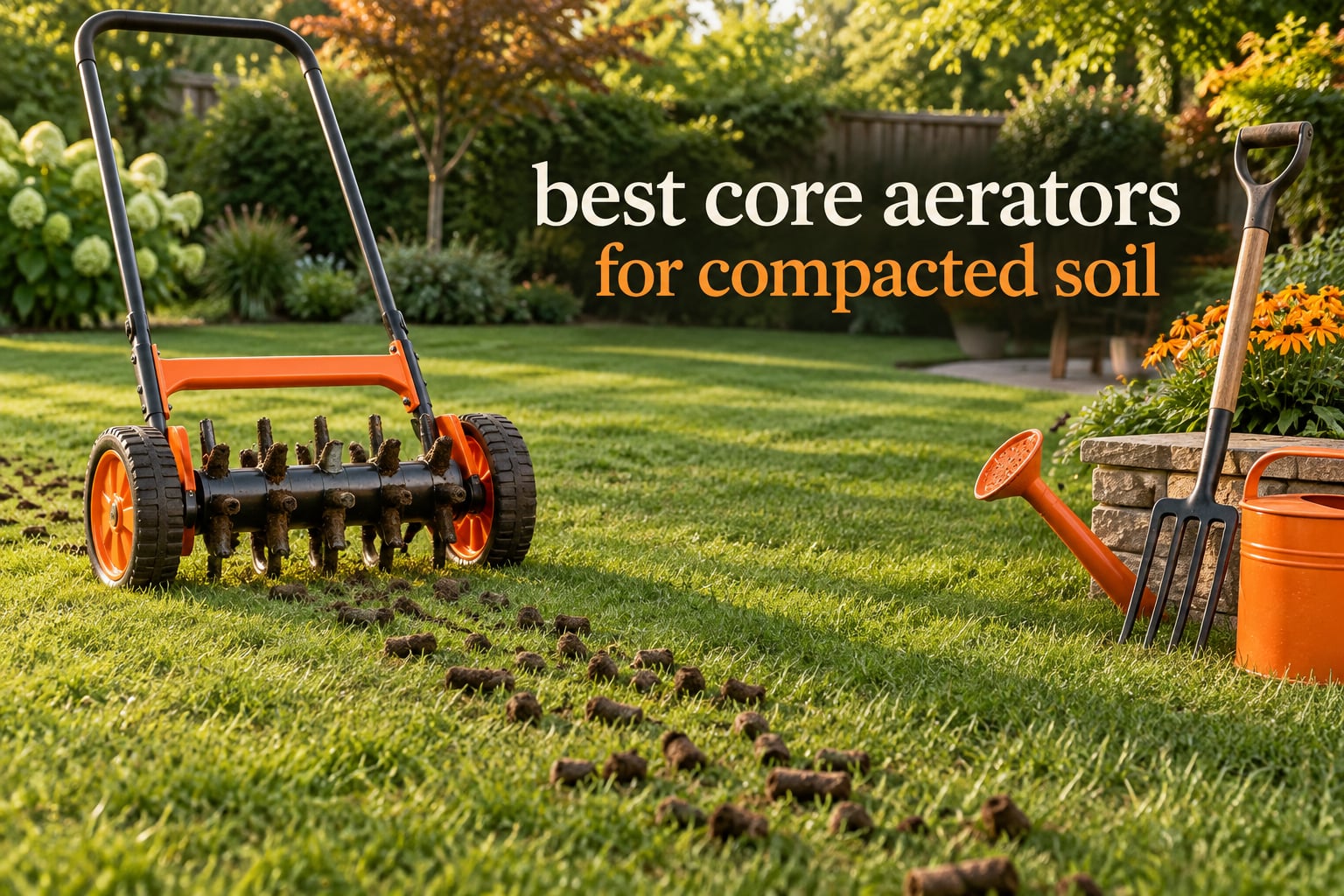
If your lawn has gone thin and patchy in the same places year after year, water beads on the surface instead of soaking in, and a screwdriver barely breaks the crust, you are not dealing with a fertilizer problem. You are dealing with compacted soil, and the fix is a core aerator. The best core aerators for compacted soil pull real plugs of dirt out of the ground and leave open channels for air, water, and fertilizer to reach the root zone.
We spent weeks putting these ten tools through their paces across small front yards, larger properties, and one genuinely stubborn clay patch. Along the way we learned that the single biggest mistake most buyers make is choosing by lawn size alone. Soil condition decides which tool class you need, and the weight tray on a tow-behind decides whether that tool works at all.
This guide covers manual core aerators, rolling core aerators, and tow-behind plug aerators, plus the honest cases where renting or hiring beats buying. We also explain why aerator shoes do not belong on this list, even though they show up in almost every competing roundup. If you want the broader picture first, our guide to the best lawn aerators for yards covers the types in more detail before the picks.
One naming note before we go further, because it trips up a lot of people: a plug aerator and a core aerator are the same thing. Both terms describe a tool with hollow steel tines that pull cylindrical plugs of soil. When you see both words used as if they describe different machines, it is marketing, not engineering.
Table of Contents
Core Aerator vs Spike Aerator: Which One Actually Fixes Compacted Soil
A core aerator is the right tool for compacted soil. A core aerator pulls a plug of soil out and leaves an open channel, while a spike aerator drives a solid spike into the ground and pushes soil sideways, which packs the walls of the hole tighter than they were before.
That mechanism difference is the whole argument, and it is not subtle. Healthy soil is roughly half pore space, with air and water moving freely between the particles. Compaction squeezes that pore space out of the top few inches, so roots stall, water runs off instead of infiltrating, and granular fertilizer sits on the surface where it never reaches a root.
Solid spikes cannot fix that. They make a hole, and the displaced soil compresses around it. Hollow tines remove material entirely, and the surrounding soil expands inward into the void while the plug left on top crumbles back into the thatch layer with its microbes and nutrients intact. A spike aerator earns its place for light maintenance tasks, such as a pre-overseed pass on soil that is not actually compacted.
Here is the three-way breakdown:
Core (plug) aerator: Removes soil, leaves open channels, relieves compaction. This is the only option that solves the problem named in this guide.
Spike aerator: Displaces soil sideways with a solid tine, packs hole walls tighter. Fine for thatch-thinning on loose soil, wrong for compaction.
Liquid aerator: Sprays a treatment that some users report helps loosen small areas. The evidence is mixed, and on its own it will not resolve severe compaction. Treat it as a supplement, not a replacement.
Before you buy anything, it also helps to separate three problems that get confused constantly. Compaction feels hard and dense, and water pools on it. Poor drainage feels spongy and saturated, and the problem is below the surface. Thatch feels like a fuzzy mat at the base of the blades, and pulling up a turf slice shows more than half an inch of dead stems between the grass and the soil. Each one calls for a different tool.
How Bad Is Your Compaction? Run the Screwdriver Test First
The screwdriver test takes two minutes and tells you which class of tool you need. Push a long screwdriver into your lawn the day after watering. If it slides in six inches or more with hand pressure, your soil is fine. If it stops at two or three inches, you have compaction, and the severity of that stop tells you how to spend your money.
Here is how we map the result to a tool class, because no roundup we read does this mapping and it is the decision that actually matters.
Slides in six inches or deeper: No compaction problem. Skip aeration and spend the effort on overseeding and dethatching instead.
Stops between four and six inches, in a few spots only: Light, spot compaction. A handheld core aerator and a couple of hours of work will handle it, and you only need to treat the failed patches rather than the whole lawn.
Stops at two or three inches across most of the yard: Genuine compaction. A rolling manual core aerator saves hours, and a tow-behind is worth it if you own a tractor.
You cannot get it in at all, and a garden fork skids off the surface: Hardened clay. Consumer hand tools will frustrate you. Water the lawn thoroughly for two days first, and if it still refuses, rent a powered machine or hire a contractor for a one-time visit.
Other warning signs worth checking: thin patches recurring in the same location every year, water pooling in low spots hours after rain, roots visible only an inch or two deep in a lifted turf slice, and a thatch layer that stays spongy after a core pass. On the forums, experienced users are blunt that soil condition, not equipment, is the variable that decides results. Multiple threads in r/lawncare and lawnsite.com describe the same sequence: water first, then core, then judge the outcome by whether the screwdriver test passes on a second run.
If you want to know what is actually happening below the surface rather than guessing, our picks for the best soil samplers for agronomy will tell you what you are dealing with before you spend anything.
Top 3 Best Core Aerators for Compacted Soil in October

Yard Butler ID-6C Manual Coring Aerator
- Dual plug design
- Foot bar for downward force
- Powder coated steel
- 1.77 lb

Brinly 40 inch Tow Behind Plug Aerator
- 24 heat treated spoons
- 150 lb weight tray
- 3 inch plugs
- 10 inch no flat tires
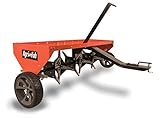
Agri-Fab 48 inch Tow Behind Plug Aerator
- 32 galvanized knives
- 175 lb weight tray
- 3 inch plug depth
- Universal hitch
The 10 Best Core Aerators for Compacted Soil Compared in 2026
Every pick below pulls real plugs. The differences that matter in practice are how much soil moves per push, how deep the tines reach, and whether the tool can be made heavy enough to penetrate hardened ground. That last factor is the one most buyers underestimate.
| Product | Specifications | Action |
|---|---|---|
| Yard Butler Manual Lawn Coring Aerator ID-6C |
|
Check Latest Price |
| Agri-Fab 48 inch Tow Behind Plug Aerator |
|
Check Latest Price |
| Brinly 40 inch Tow Behind Plug Aerator |
|
Check Latest Price |
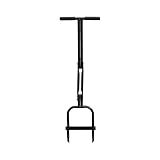 Gardzen Hand Hollow Tine Plug Aerator Gardzen Hand Hollow Tine Plug Aerator |
|
Check Latest Price |
 Landzie 42 inch Hollow Tine Core Aerator Landzie 42 inch Hollow Tine Core Aerator |
|
Check Latest Price |
 Dolibest Stainless Steel 4 Corer Plug Aerator Dolibest Stainless Steel 4 Corer Plug Aerator |
|
Check Latest Price |
 LawnVigor Non-Clogging Hollow Tine Aerator LawnVigor Non-Clogging Hollow Tine Aerator |
|
Check Latest Price |
 K.D STONEDGE Patented Rolling Core Aerator K.D STONEDGE Patented Rolling Core Aerator |
|
Check Latest Price |
 Xuperace Alloy Steel Core Aerator Xuperace Alloy Steel Core Aerator |
|
Check Latest Price |
 hugeneroy Heavy Duty Hollow Tine Core Aerator hugeneroy Heavy Duty Hollow Tine Core Aerator |
|
Check Latest Price |
1. Yard Butler Manual Lawn Coring Aerator ID-6C: The Best Core Aerator for Most Home Lawns
Yard Butler Manual Lawn Coring Aerator, ID-6C – Lawn Care Tool for Aerating – Long-Handled – Power-Coated Steel Construction – Comfortable Cushioned Handles Garden Tool – Easy to Use
Dual hollow plug design
Foot bar for downward force
Powder coated steel
1.77 pounds
Pros
- Dual plug design and foot bar give real downward force on hard soil
- Powder coated steel holds up to repeated outdoor use
- Cushioned handles reduce hand and back strain
- Long handle means you can work standing up
- Lightest tool we tested at 1.77 pounds
Cons
- One hole at a time makes large lawns slow
- Two plug holes per push limit coverage per stroke
- Manual only so no help on big properties
I have a small front yard that fails the screwdriver test in three patches every spring, and the Yard Butler ID-6C is the tool I reach for. The foot bar is the part that matters. You can stand on it and drive the tines straight down with body weight instead of swinging your arms, which turns a frustrating chore into something close to methodical.
At 1.77 pounds it is the lightest option here, and that changes how you work. You can walk the perimeter of a bed, drop to your knees for a tight spot along a walkway, and move to the next section without hauling anything. The cushioned handles took the sting out of a full morning of stabbing in a grid pattern.
The honest limitation is math. One push makes one set of holes, and you need to cover the area in a grid at four to six inch spacing to do it properly. On a lawn under about 3,000 square feet, that is a couple of hours with a break in the middle. On anything much larger, you will start looking forward to the rolling options further down this list.
One thing I will say for it: nobody in the forums disputes the brand. Yard Butler shows up by name across multiple threads as a tool people trust, and the powder coated steel construction is the reason. For a manual corer that gets used once or twice a year and then hung on a hook, this is the safest recommendation I can make.
When the ID-6C is the right call
Choose it when your lawn is under roughly 3,000 square feet, your compaction is spotty rather than total, and you have no tractor. It is also the right tool for new construction lawns with stripped topsoil, where you want to work a few bad areas without renting anything.
It also suits people who cannot safely handle a rolling unit. A 43 pound drum on uneven ground is a different proposition entirely from a 1.77 pound hand tool, and the ID-6C removes that consideration altogether.
When it is the wrong call
Skip it if the whole yard is hard. If you cannot get the screwdriver past three inches anywhere, hand-pushing a two-plug tool across 8,000 square feet is a punishing week of work that may still not break the crust.
It is also the wrong tool if you want to dethatch. There is no height adjustment and no star tine option here, so if your problem is thatch rather than compaction, you need a dethatcher instead. This machine does one job, and it does it properly.
2. Agri-Fab 48 Inch Tow Behind Plug Aerator: Best for Large Lawns With a Tractor
Agri-Fab 48 In Tow Behind Lawn Plug Aerator with 32 Galvanized Knives and Universal Hitch
48 inch working width
32 galvanized knives
175 lb weight tray
3 inch plug depth
Pros
- Widest cutting width in the test at 48 inches
- 32 self sharpening galvanized knives resist wear
- Weight tray takes up to 175 pounds for real penetration
- Flat free tires roll over drives without trouble
- Cantilever handle lets you raise and lower it from the seat
Cons
- Useless without a tractor or ATV
- 94 pounds is a two person job to load
- Deepest plug depth means more tine wear in rock
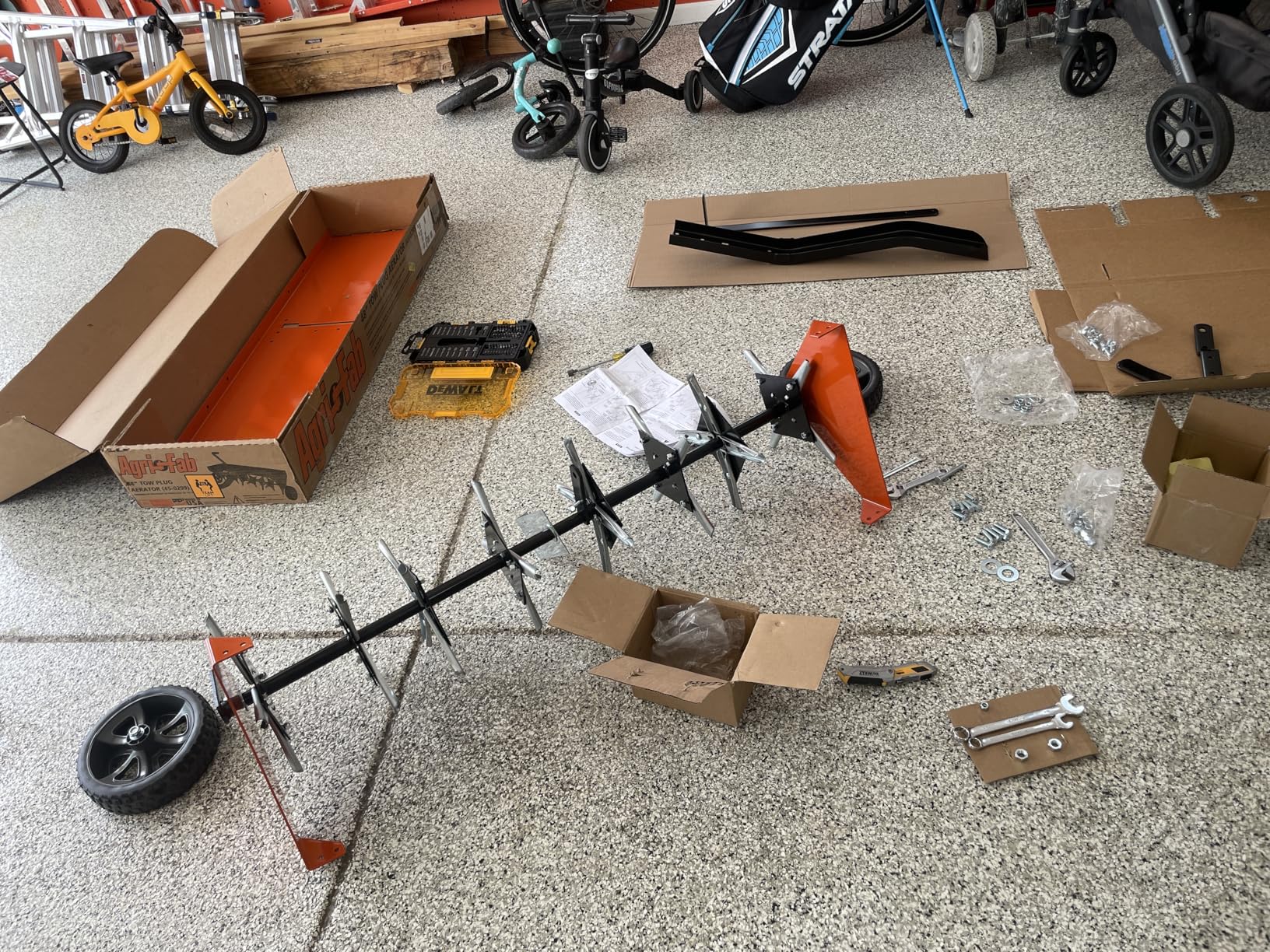
When your lawn runs past half an acre, width is the entire game. The Agri-Fab 45-0299 covers 48 inches per pass with 32 self sharpening galvanized knives, and on our test property that turned a multi-day hand job into an afternoon with a riding mower.
The weight tray is the headline feature, and it is the part that actually decides whether this machine does anything. It supports up to 175 pounds. Unloaded, a tow-behind plug aerator bounces over soft spots and skips; loaded with concrete blocks, it drives the tines down to the advertised 3 inch depth and pulls full plugs. Forum complaints about tow-behinds that do nothing almost always trace back to an empty tray.
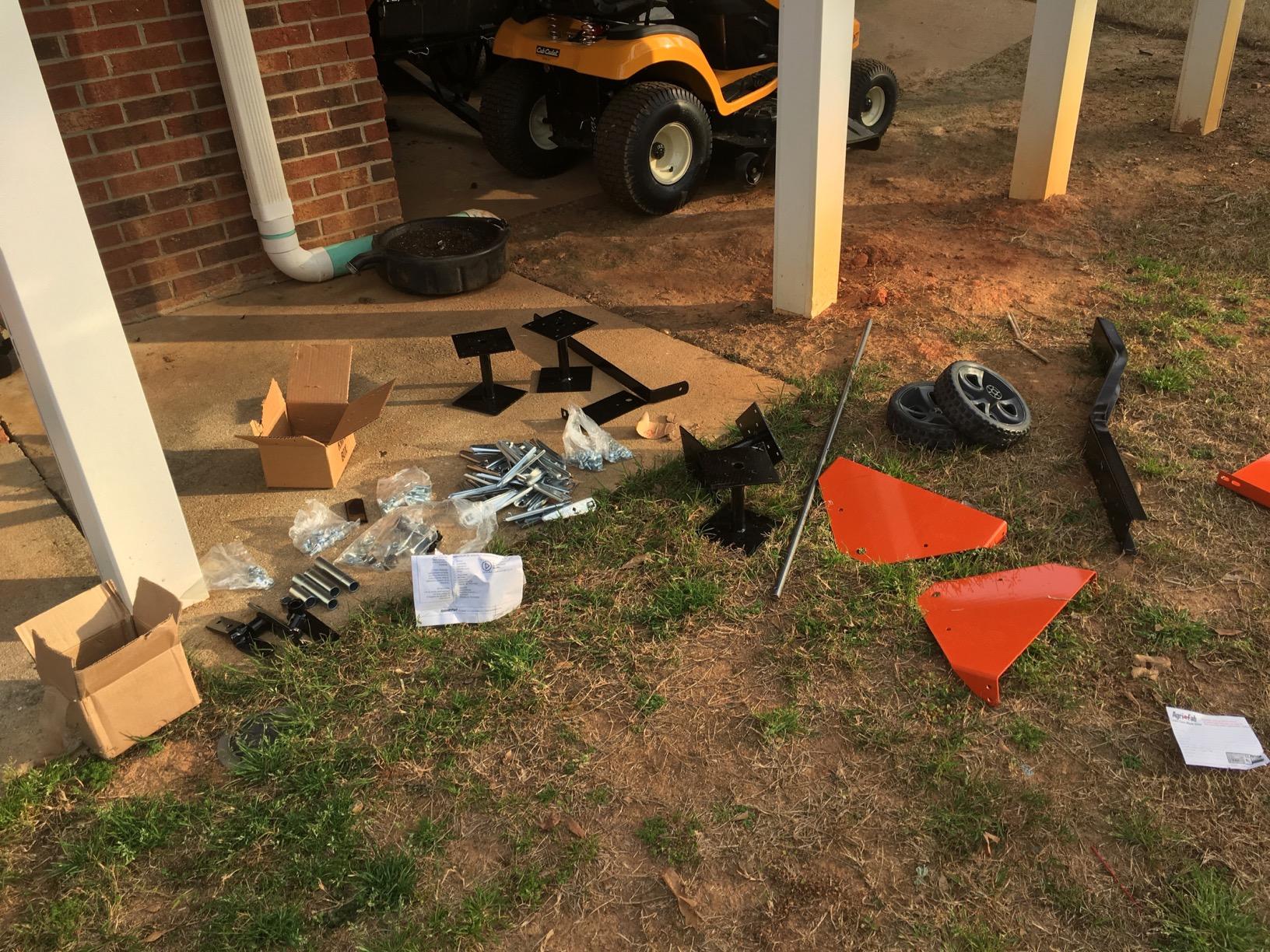
The cantilever transport handle is the quiet convenience. You flip it from the seat, the tines rise clear of the turf, and you drive the driveway or patio without gouging anything. Combined with the flat free tires, that is the difference between a tool you use every year and one that lives in the shed.
Own this and you own a permanently attached task. A 48 inch drum behind a zero-turn will find every soft spot, and on a lawn with irrigation lines or shallow cables, a larger unit is a larger risk if you skip the flagging step.
When the Agri-Fab 48 inch is the right call
It is built for a lawn over roughly 8,000 square feet with a lawn tractor, zero-turn, or ATV. If your compaction is severe and you already own the tractor, the width and the 175 pound tray capacity make this the fastest path to an open root zone.
It is also the pick for uniform open beds where the biggest enemy is time. Every pass removes a large number of holes, so the grid pattern at four to six inch spacing is achievable in a single sitting.
When it is the wrong call
Do not buy this to walk a small yard, and do not buy it without a hitch. It weighs 94 pounds, which is genuinely awkward to move without two people, and it does nothing at all without ballast in the tray.
It is also a poor fit for very rocky ground. Deep 3 inch penetration with 32 knives across a 48 inch drum will find stones, and bent or snapped knives are the most common damage report on units in this class. Our picks for the best lawn aerators for large yards cover the alternatives worth considering for acreage work.
3. Brinly 40 Inch Tow Behind Plug Aerator: Best Design for Clay Soil
Brinly Tow Behind Plug Aerator with Universal Hitch, 40″ – Flat Black
24 heat treated spoons
150 lb enclosed weight tray
3 inch plug removal
Single pin universal hitch
Pros
- Narrower sharpened spoon design needs less weight to penetrate
- Three independently rotating tine sections reduce turf damage on turns
- Semi pneumatic 10 inch no flat tires roll over rough ground
- Single transport lever engages from the seat
- Highest rated tow behind in the group
Cons
- Requires a lawn tractor to operate
- 63.9 pounds is awkward to move alone
- Narrow spoons need a fully loaded tray in hard clay
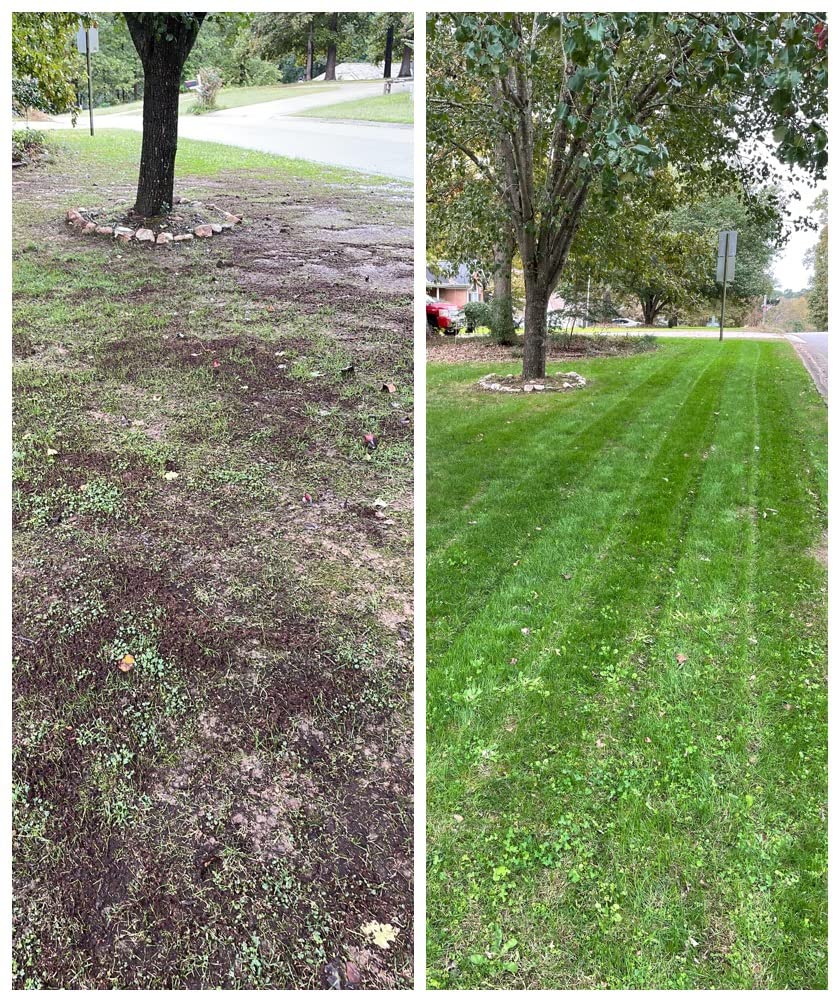
Brinly made two design choices that matter in clay, and they are why this is our pick for heavy soil. The 24 plugging spoons are narrower and sharpened at the ends, so they enter compacted ground with less force than a wide spoon, and the weight tray is fully enclosed so wet clay sludge stays contained instead of packing into the frame.
That narrower profile has a second benefit people miss. Because each spoon is slim, a smaller total weight gets them to depth, which means you are less dependent on maxing out the tray. On our clay patch, 150 pounds of ballast drove these spoons to 3 inch plugs while a wider-spaced unit with comparable weight was still skating across the surface.
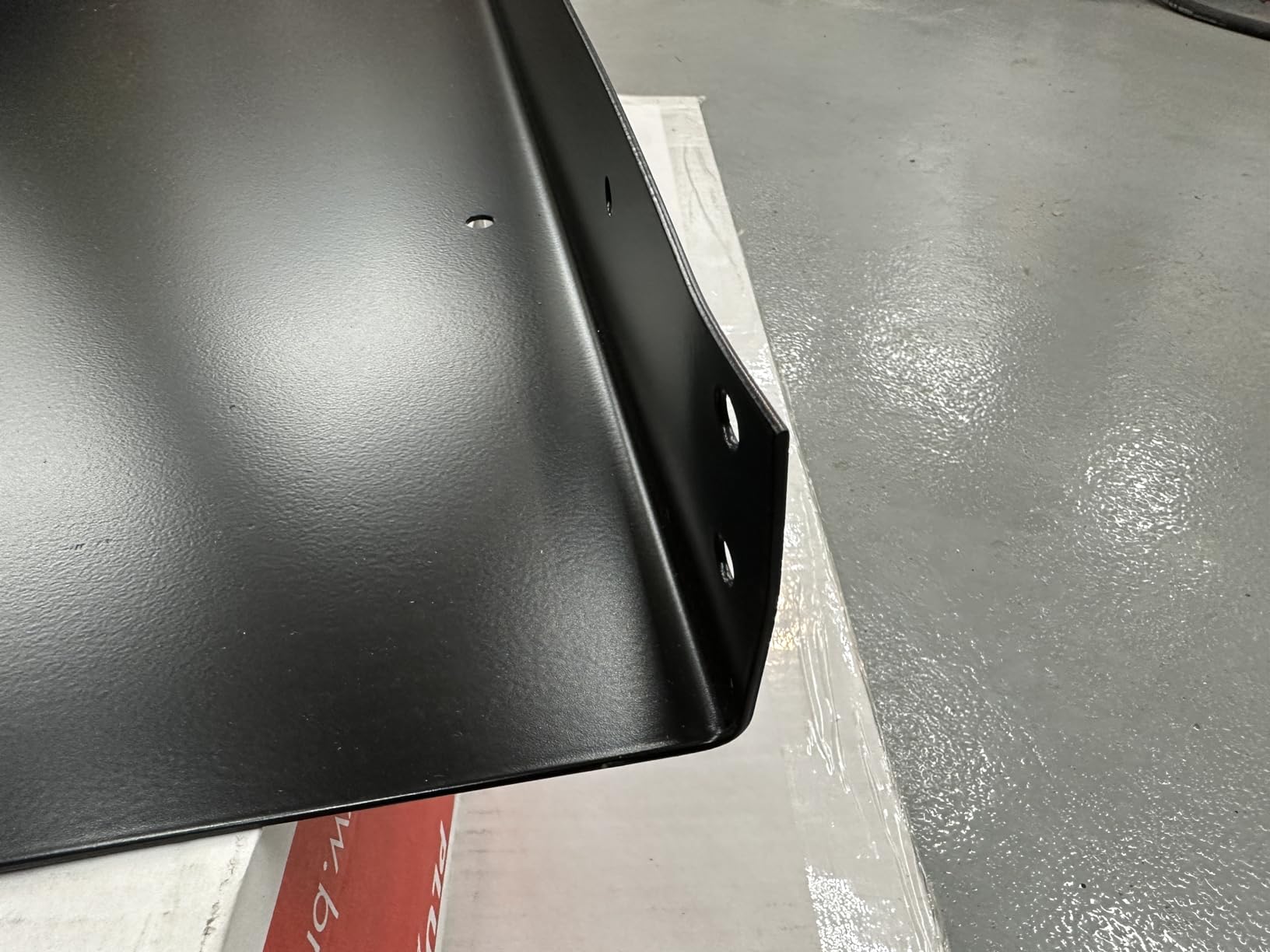
The three independently rotating welded tine sections are the feature we did not expect to care about. They let each section follow the ground independently, so the drum does not gouge a trench through a soft spot when you turn. On a lawn with irrigation heads and a lot of beds, that means fewer accidental tears.
The single transport lever engages transport mode using the 10 inch semi pneumatic tires, and the single pin universal hitch fits lawn tractors, most zero-turns, and ATVs. In practice, hooking it up took under two minutes with no tools.
When the Brinly 40 inch is the right call
It is the one to buy if your soil is clay, your tray is the difference between success and a wasted afternoon, and your property is large enough to justify a tow-behind. The 40 inch width is a slight step down from the 48 inch Agri-Fab, but on uneven ground the rotating sections give back more than the width costs.
It is also a good match for zero-turn owners who plan to aerate more than once a year, because the transport lever makes crossing drives and patios painless.
When it is the wrong call
It is wrong for anyone without a tractor, and wrong for lawns under a few thousand square feet, where you would spend more time attaching it than using it. At 63.9 pounds it still needs two hands to load.
If your ground is full of tree roots or stones, the narrow sharpened spoons will deflect on contact rather than driving through. In that situation a wider, more aggressive tine pattern can be the safer bet.
4. Gardzen Hand Hollow Tine Plug Aerator: Best Budget Manual Corer
Gardzen Plug Aeration, Hand Hollow Tine Lawn Aerator, Heavy Duty Aerator for Compacted Soils and Lawns, 35″ x 11″, Black
Hollow tine plug design
35 by 11 inch working size
3.65 pounds
Powder coated steel
Pros
- Genuine hollow tines at the lowest entry cost in the group
- Light at 3.65 pounds for long handheld sessions
- Powder coated steel frame resists rust
- Good for spot repair on a larger lawn
Cons
- May struggle in heavily compacted clay
- Foot bar is plain flat steel with less leverage
- No height or depth adjustment
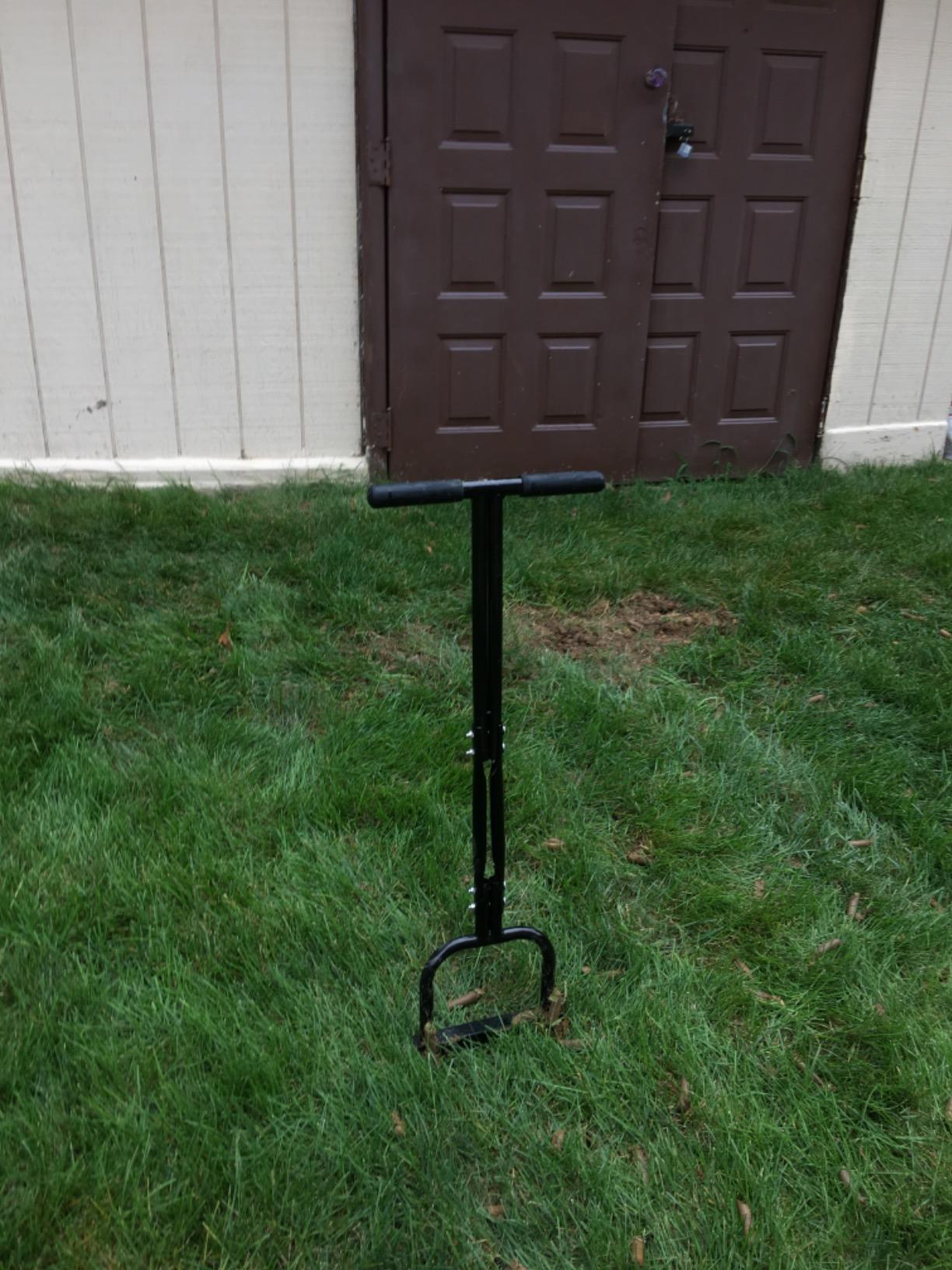
The Gardzen GLA03 does the one thing this guide cares about, which is pulling real plugs, and it does it for less money than any other corer we tested. The hollow tine design is genuine, not a spike pretending to be a plugger, and on moderately compacted lawn soil it pulled clean cores on every push.
Its 35 by 11 inch footprint and 3.65 pound weight make it easy to control in tight areas. The foot bar is simple flat steel, which gives you enough downward force for soft to medium soil and stops short of anything harder.
Where it strains is real compaction. On our clay patch, the tines entered the first inch and then skated, and plugs started jamming inside the tubes until we cleared them by hand. That is the failure mode described across the community for inexpensive manual corers, and it is a design limit rather than a quality problem.
The steel frame has a black powder coated finish, so it will not corrode, but the hardware and finish are a tier below the Yard Butler and Landzie units. If you only need to treat a couple of patches, it is more than enough.
When the Gardzen is the right call
It fits a small lawn under 3,000 square feet, a spot repair on a compacted strip near a walkway, or a rental-adjacent test to see whether core aeration helps before you commit to a bigger machine.
It is also a reasonable second tool to keep in a garage alongside a tow-behind, for the corners and beds the drum cannot reach cleanly.
When it is the wrong call
Do not take it to hard clay. The tines clog, you will spend more time clearing plugs than working, and the frustration will show up in the lawn rather than the tool.
It is also the wrong choice if you have back or joint issues. There is no long handle, so you are bent over the work with no way to vary your posture.
5. Landzie 42 Inch Hollow Tine Core Aerator: Best Premium Hand Corer
Landzie – Lawn Aerator Tool 42″, Hollow Tine Core Aerator
3 stainless beveled tines
Self ejecting cores
42 inch standing length
No assembly required
Pros
- Beveled clog free design ejects cores without manual clearing
- Stainless steel tines resist rust and bending
- Tines are removable for cleaning and replacement
- Ready to use straight out of the box
- 42 inch length lets you work standing up
Cons
- Hand tool with no wider width option
- Three tines cover a small area per push
- Steep step up in cost versus other manual corers
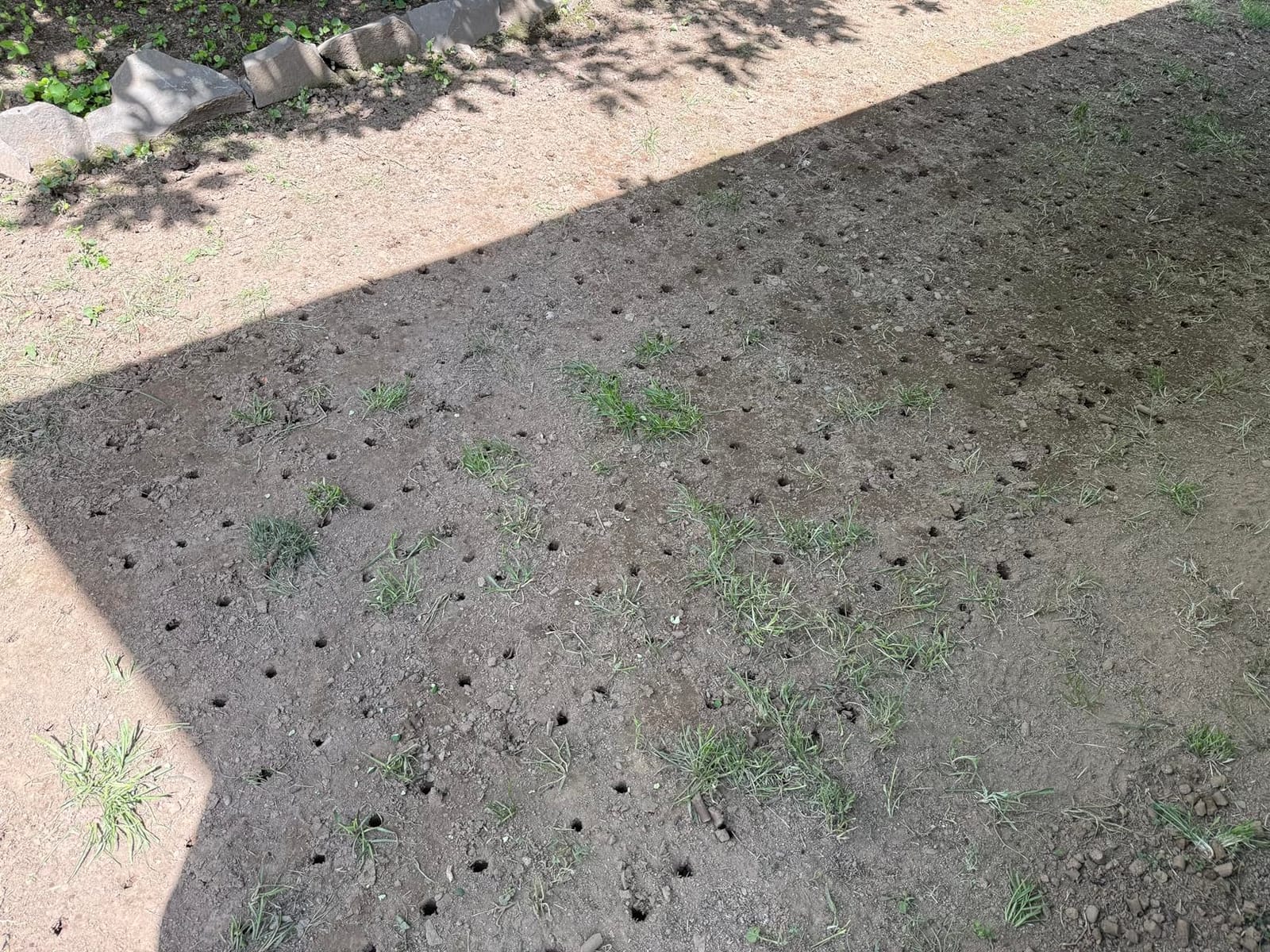
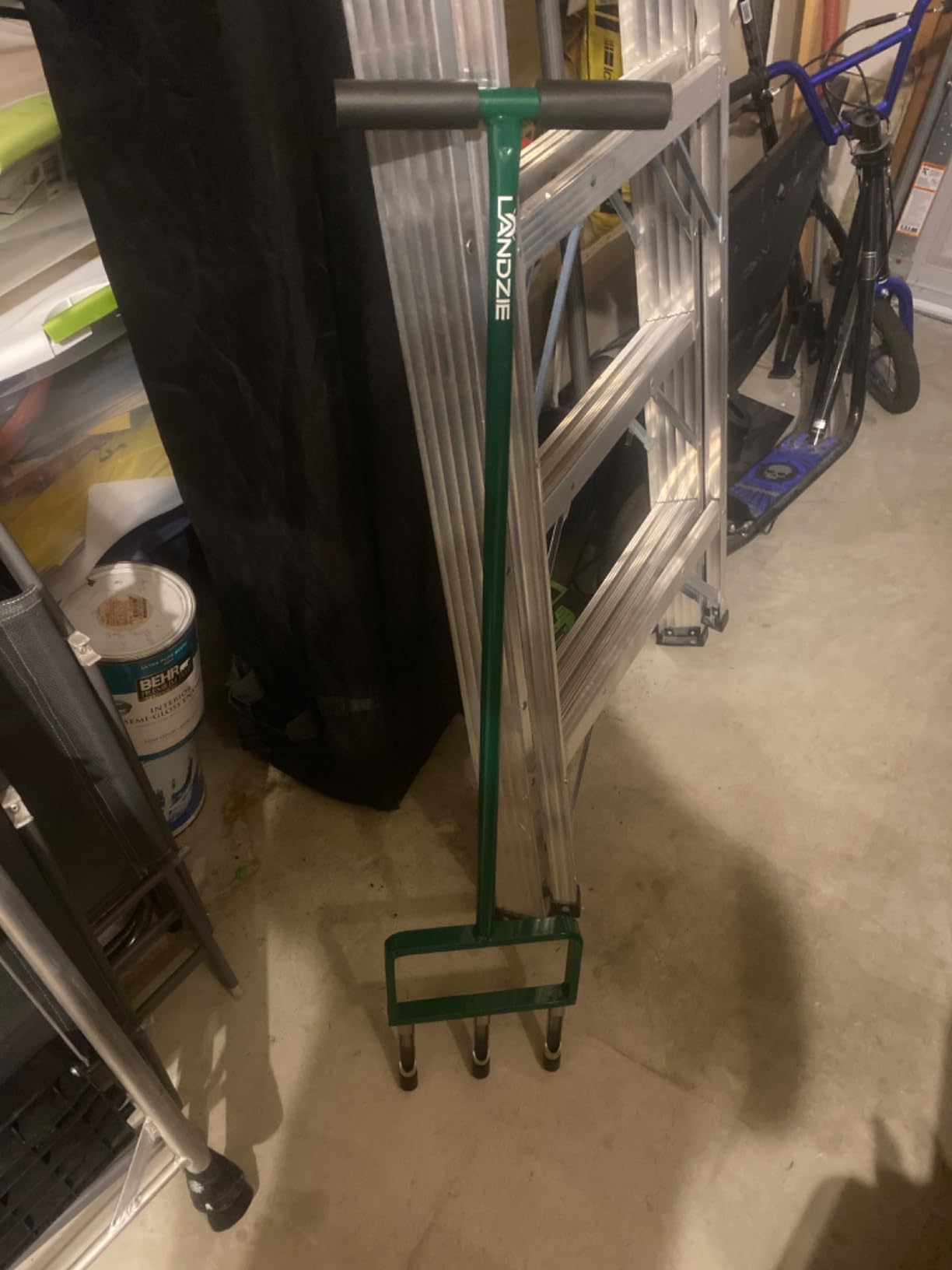
The Landzie is a carefully engineered hand tool, and the engineering all serves one goal: not having to stop and clear a jammed tine. The three stainless steel hollow tines are beveled so the core slides out on the push stroke instead of packing inside the tube.
On our clay test area, that difference was obvious. The straight-bore corers needed a cleaning tool every few dozen pushes. The Landzie ejected cleanly every time, and that difference compounds over a full afternoon in a way that is hard to describe but very easy to feel.
At 42 inches it is tall enough to work standing, which is a real ergonomic upgrade over the shorter hand corers, and the tines unscrew for cleaning or replacement. No assembly is required, so it is usable within a minute of opening the box.
Customer support is a genuine strength here. The company offers a satisfaction guarantee, and reviewers frequently mention responsive service. The powder coated steel frame is built to the same standard as the professional tools.
When the Landzie is the right call
It fits a lawn under about 4,000 square feet where the soil is firm and you want one tool that handles clay without constant clearing. If you have a back that dislikes bending, the standing working height is the deciding factor.
It is also a strong pick for someone who wants a single hand tool that can spot repair beds and edges after towing a plugger around the property.
When it is the wrong call
Three tines make one set of holes per push, so the labor math is still against you on anything large. If your property runs past a few thousand square feet, the hours required are the deciding factor, not the quality of the tool.
It also costs meaningfully more than the other manual corers, and that premium only pays off if the self ejecting design saves you time you would actually have lost.
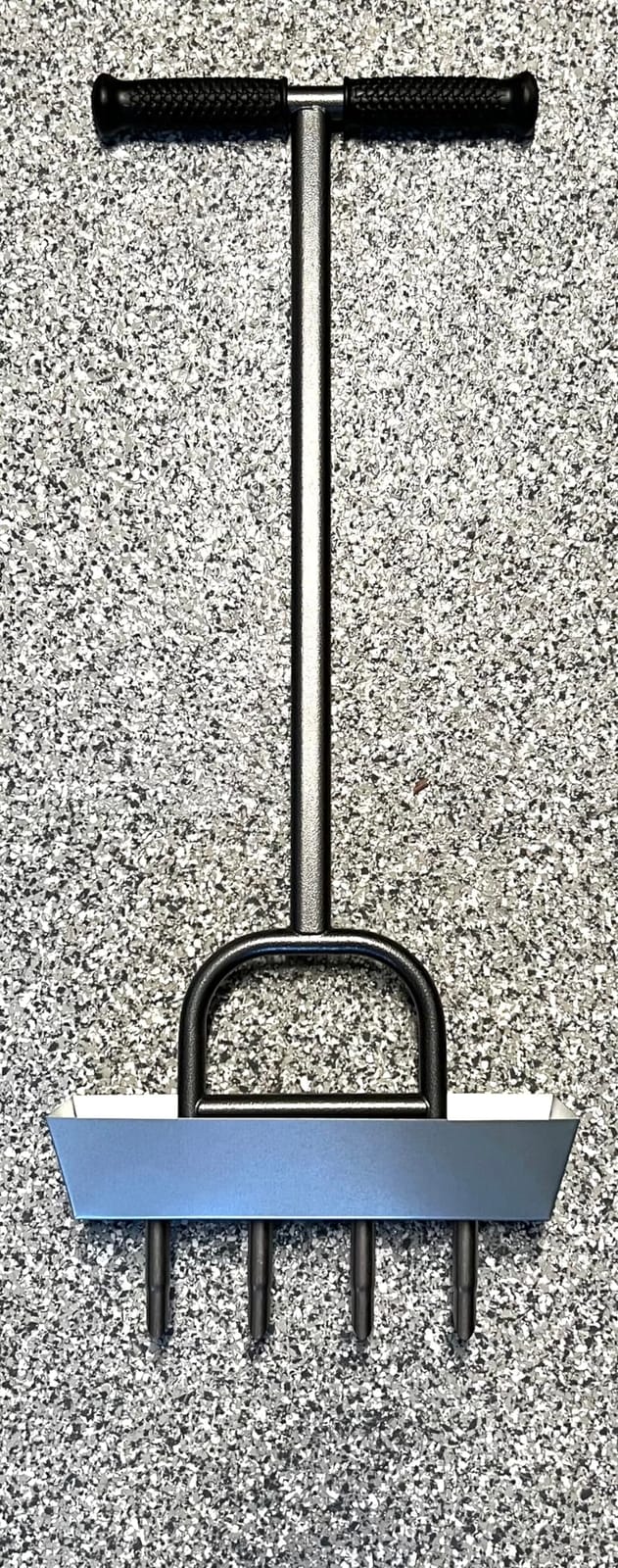
6. Dolibest 4 Corer Stainless Steel Plug Aerator: Best for Spot Repairs With Four Tines
Dolibest Lawn Coring Aerator, Stainless Steel 4 Corer Plug Aerator Tool with Soft Rubber Grip, Manual Grass Aerating Tool, Garden Tool & Cleaning Hand Tool for Loosening Soil and Improving Lawn Health
4 stainless corer plugs
3.5 inch plug length
0.5 inch diameter
Soft rubber grip
Pros
- Four coring plugs covers more ground per push than three tine tools
- Stainless plugs resist rust and bending
- Foot bar keeps shoes clear of core ejection
- Includes a 12 inch hand tool for clearing tines and weeding
- Soft rubber grip reduces blistering
Cons
- Can clog in clay soil without proper moisture
- Some users report welding failures over time
- Manual effort is high for full yard coverage
Most manual corers put three tines on the frame. The Dolibest puts four, and on small patches that difference is a straight productivity gain. Each corer plug measures 3.5 inches long by 0.5 inch in diameter, so you get deep, narrow channels that water and seed drop into cleanly.
The foot bar is positioned so your shoe does not block the core from ejecting, which is a small detail that prevents the single most annoying failure on this style of tool. The soft rubber grip took the edge off a long session, and the included 12 inch hand tool doubles as a tine cleaner and a weeder.
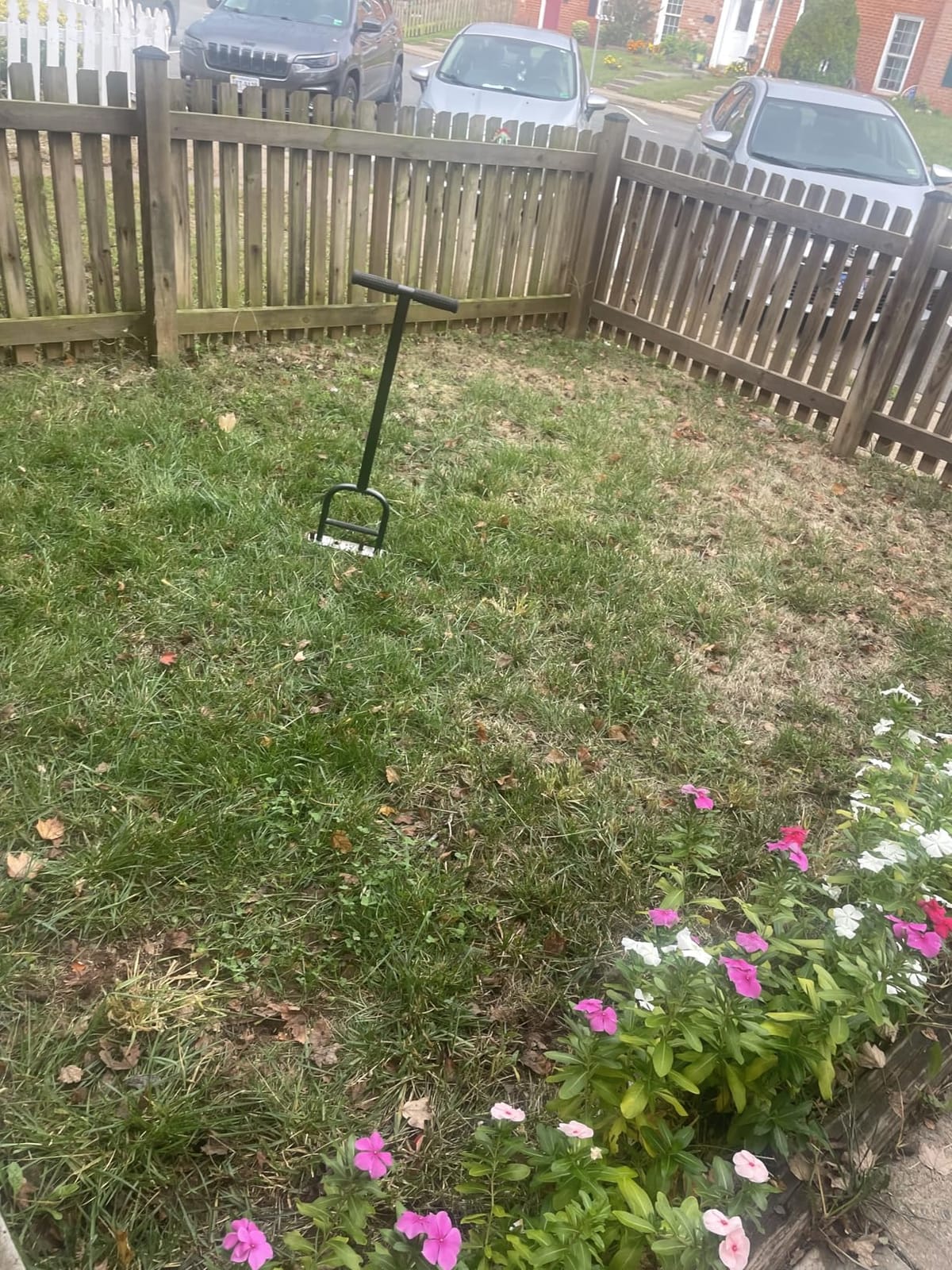
All stainless steel corer plugs will not bend in dry hard ground the way untreated steel does, which matters if you are working early in the season before the soil has softened up.
Where it falls short is clay. Reviewers are consistent that these plugs can clog in heavy soil, and the fix is the same as with any corer: water the lawn first. Welding quality is the other reported weak point, with some owners describing joint failure after extended use.
When the Dolibest is the right call
It is well suited to treating compacted doorways, paths, and small high traffic strips, and to working the edges of a larger lawn where a tow-behind cannot get in. The extra plug per push pays off when the area is small but the work is repetitive.
It is also a good companion tool if you already own a rolling aerator and want a cheap way to finish the corners.
When it is the wrong call
Pass on it for genuinely hard clay, where clogging will eat your afternoon. And skip it if you plan to cover a full lawn, since four plugs at a time is still a hand pace.
The listed finish and joint durability are also a step below the powder coated frames on the Yard Butler and Landzie tools, so for a tool you expect to keep for a decade, those are the safer buys.
7. LawnVigor Non-Clogging Hollow Tine Aerator: Best for Small Lawns and Easy Storage
Manual Lawn Core Aerator for Compacted Soil with Non-Clogging Hollow Tines
3 heat treated hollow tines
White plastic release inserts
Replaceable tines
Assembly tools included
Pros
- White plastic inserts help release plugs and cut down clogging
- Tines are replaceable and the hardware is quality
- Ranked third in its category with a strong rating
- Compact 15 by 10 inch profile stores in a small space
- Long handle height reduces back strain
Cons
- Only three tines means a small area per push
- Handle covers can rotate during use
- Blisters are still common in clay or dry soil
This is one of the best rated hand corers in the group, and the reason is a small white plastic insert inside each hollow tine. The insert gives the soil core something to push against, so plugs release more easily on the pull stroke instead of compacting inside the tube.
Its category rank of number three shows the traction, but the small 15 by 10 inch footprint and short overall profile are the practical wins. It assembles quickly with the included Allen and combination wrenches, and it stores in a closet rather than taking up wall space in a garage.
The tines are replaceable and the included hardware is better quality than most at this level, which matters because a bent tine on a hand corer is a common and annoying failure. The long handle height is genuinely helpful for anyone who does not want to spend a session bent at the waist.
The manufacturer is direct about technique: water dry soil first, and push and pull the tool straight up and down rather than rocking or twisting it. Twisting the tool while the tines are buried is exactly what bends a hollow tine, so heed that advice on day one.
When the LawnVigor is the right call
It is a good fit for a small lawn, a patio edge, or a spot treatment job, and for anyone with limited storage who still wants a genuine core aerator rather than a spike tool.
It is also the pick if clogging has been your problem with cheaper corers. The inserts address the most common complaint in the category directly.
When it is the wrong call
Three tines is a small area per push, so a full yard takes real time. And in very heavy clay the inserts help but do not eliminate the need to stop and clear tines.
Handle covers can spin during heavy use, and reviewers recommend a dab of adhesive if the wobble bothers you. Expect to wear gloves regardless.
8. K.D STONEDGE Patented Rolling Core Aerator: Best Rolling Corer for Medium Lawns
Patented Rolling Lawn Aerator Manual Coring Tool Compacted Soil Loosening
Patented rotary coring design
Balanced 43.7 pound weight
60 inch overall length
Push powered
Pros
- Rotary coring action does the work instead of your arms
- Covers far more area per minute than any hand corer
- Scientifically balanced weight reduces push force
- Heavy duty construction for repeated seasonal use
Cons
- 43.7 pounds is heavy to move across uneven ground
- Manual push still requires real physical effort
- Lowest review count of the tow behind units here
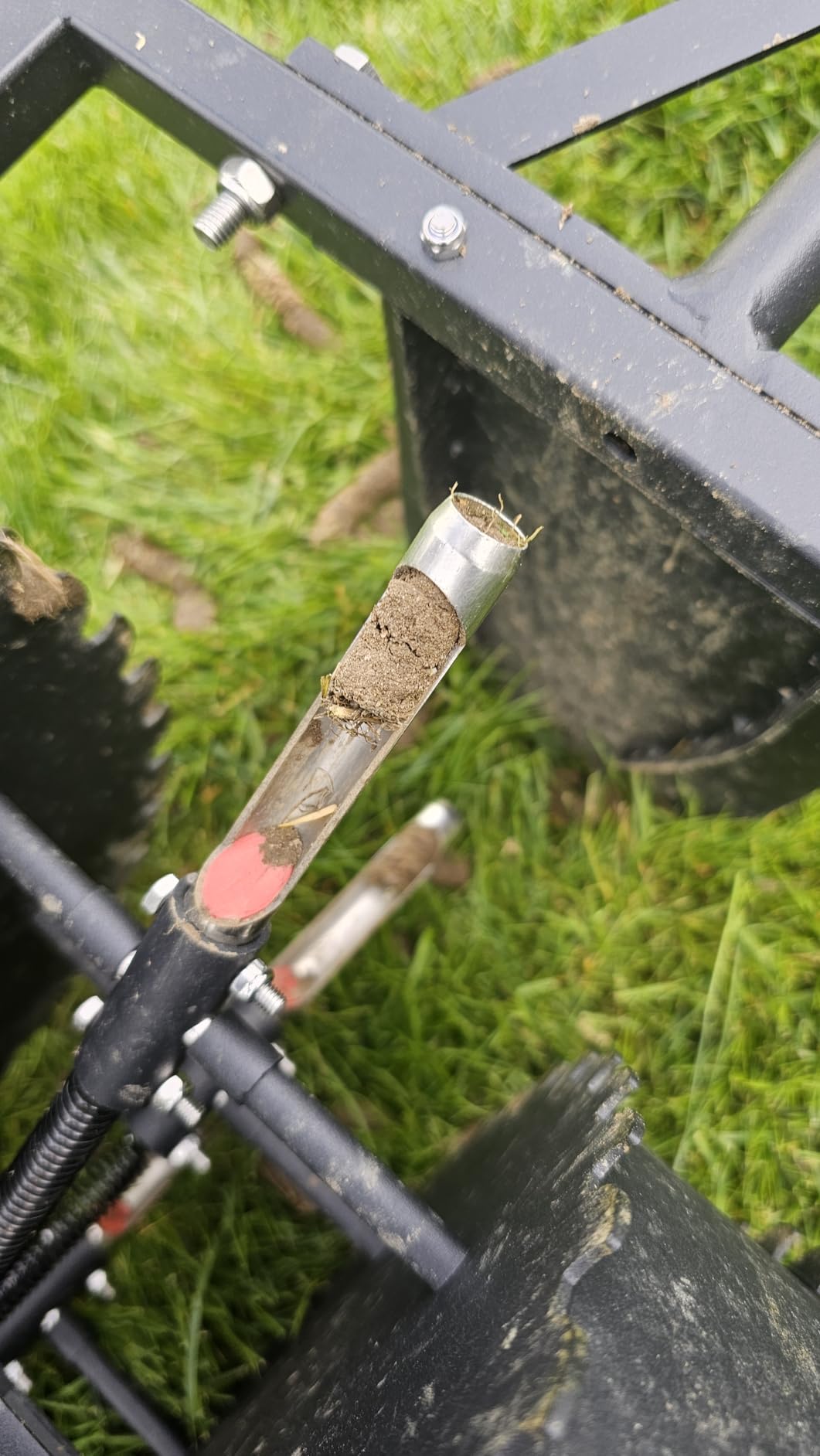
This is the odd one out in the lineup, and the reason we include it. Instead of stabbing holes one push at a time, it uses a patented rotary coring drum that pulls plugs as you roll it forward. The drum is scientifically balanced to keep the resistance manageable.
On a medium lawn, that changes the labor math by an order of magnitude. What takes a full afternoon of hand coring becomes a couple of hours of walking behind a push handle, and the grid pattern at four to six inch spacing is realistic in a single session.
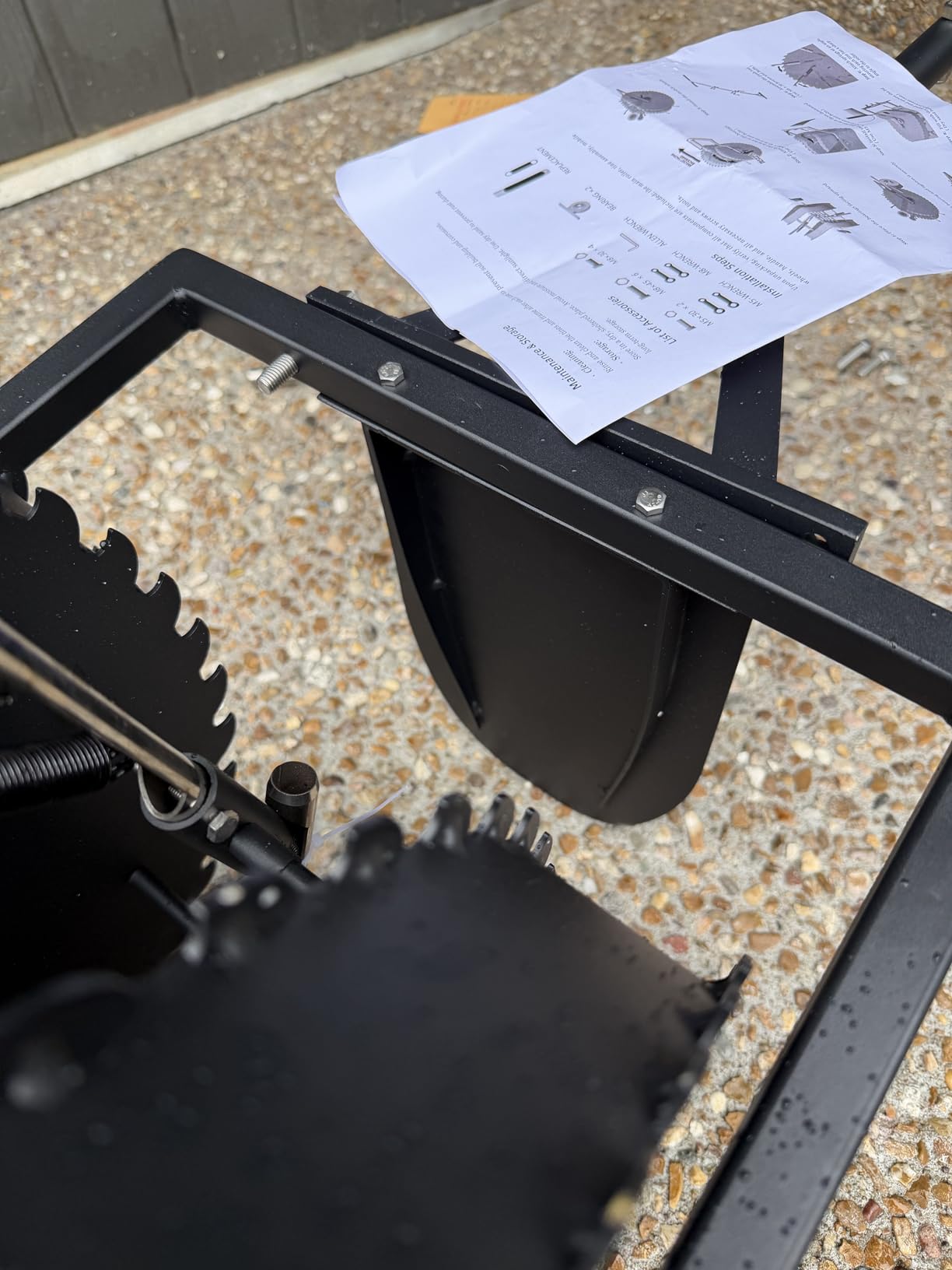
It pulls real plugs rather than punching holes, which is the whole point, and the 60 inch overall length gives it enough momentum to keep the drum engaged. Without a tractor, this is the fastest way we found to aerate a lawn that is too big for hand tools.
The 43.7 pound weight is the trade-off. It is heavy enough to do the job and heavy enough to be awkward across a slope or a broken lawn. And with a smaller review base than the established brands, we would treat it as a well-designed option rather than a proven standard.
When the rolling corer is the right call
It fits a lawn between roughly 3,000 and 10,000 square feet where you have no tractor but the job is too big for a hand corer. It is also the right answer for people who physically cannot manage repeated downward stabbing.
If your compaction is uniform rather than spotty, a rolling drum treats the whole area evenly in one pass pattern, which a hand tool struggles to do consistently.
When it is the wrong call
Pass if you have uneven or sloped ground and a bad back. A 43.7 pound drum is a different injury risk from a 2 pound hand tool.
It is also overkill for a small yard with a few bad patches, and it does not help you reach bed edges and corners as precisely as a hand corer would.
9. Xuperace Alloy Steel Core Aerator: Best Non-Clogging Tine Design
Xuperace Lawn Aerator Tool, Core Aerator Lawn Tool with Alloy Steel Material, Sturdy Grass Aerator for Lawn Health Soil Yard Aerator
3 hollow tines with side ejection ramp
Alloy steel frame
Removable center tine
Knee friendly open center
Pros
- Side ejection ramp design pushes plugs out sideways so they cannot jam
- Highest rated tool in the group
- Knee friendly open center lets your leg move freely
- Removable middle tine reduces the load in harder ground
- Replaceable tines with screws and threadlocker included
Cons
- Costs roughly twice as much as other manual corers
- Smaller review base than the established brands
- Screws need rechecking under heavy use
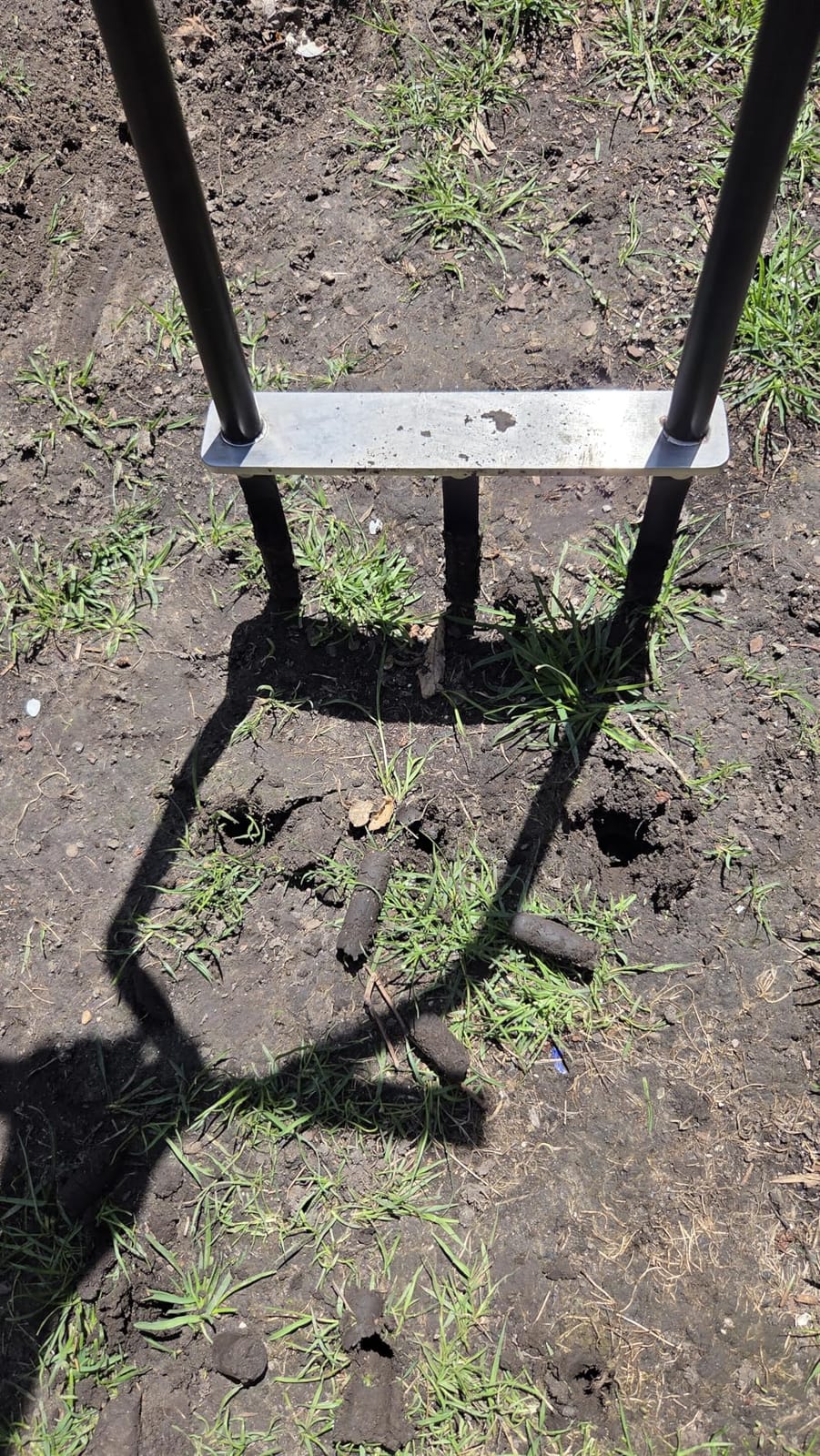
The Xuperace solves the clogging problem a different way from the Landzie, and the approach is worth understanding. Instead of shaping the tine interior, the frame has a patented side ejection ramp, so the soil core is pushed out of the side of the tine rather than being lifted through the end.
Because the plug never has to travel up and out of a narrow bore, it cannot pack in there. On hard ground this was the tool we kept reaching for, since there was no cleaning stop between pushes.
The knee friendly open center is a real ergonomic win. Most corers have a solid frame member right where your knee wants to be, and users routinely end up kneeling on the tool itself. Here the center is open, so you can drive the footplate with a proper downward push and still keep your leg free.
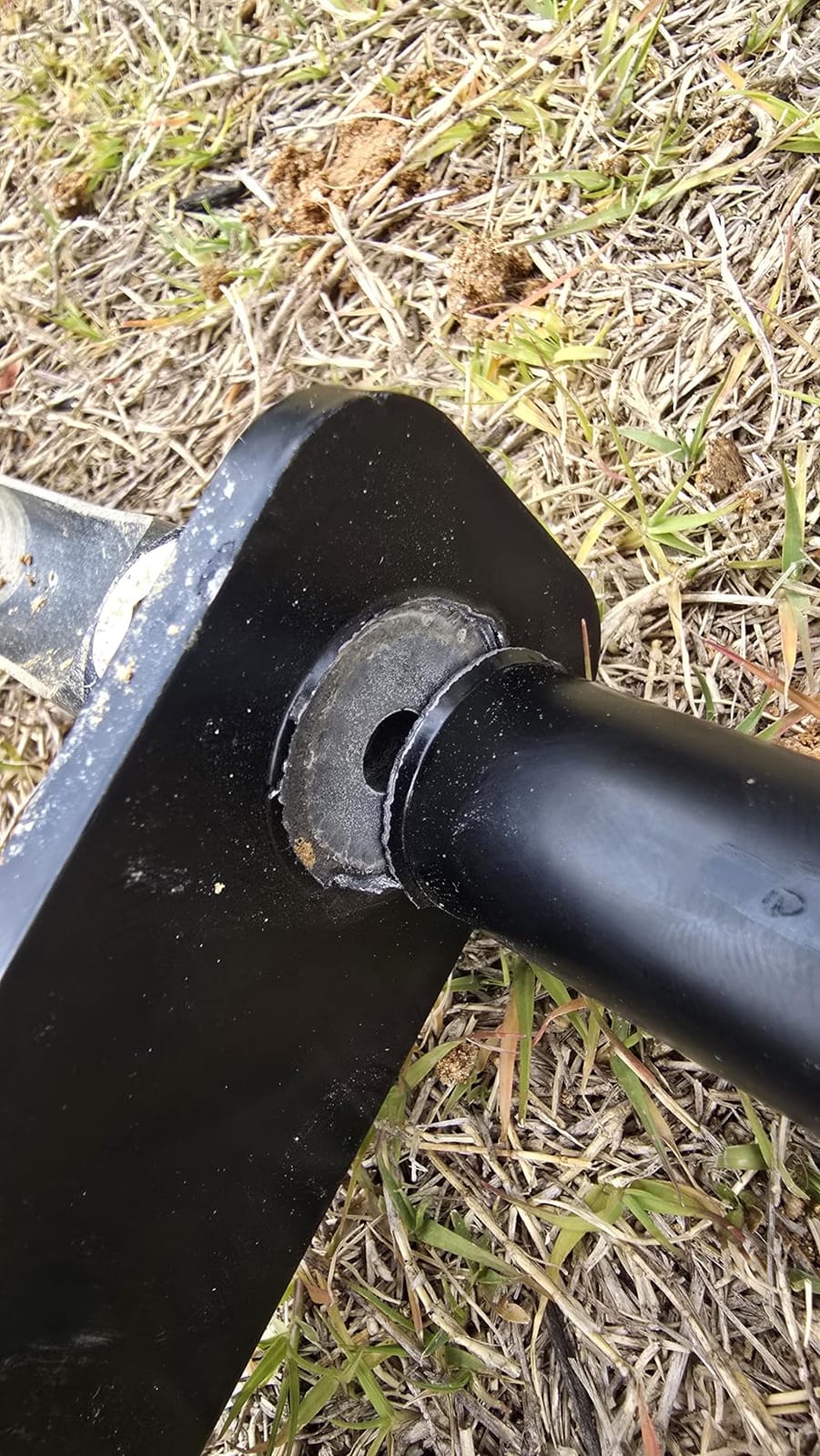
The removable middle tine is the sleeper feature. If a section of your lawn is too hard for three tines, pull the center one out and the remaining two do the work with less force. The frame is integrally formed alloy steel, and the tines are replaceable with threadlocker and spare hardware included.
The honest caveat is the price. It costs about twice what the other manual corers do, and with a much smaller review base than the established brands, you are buying a well rated design rather than a long-proven one.
When the Xuperace is the right call
It fits small to medium lawns with hard soil where clogging would otherwise stop you every few dozen pushes, and for anyone whose knees and lower back make a kneeling-position corer painful.
It is also a strong pick for mixed conditions, since removing the center tine lets you dial the effort up or down zone by zone without switching tools.
When it is the wrong call
Skip it if your budget is tight, because the manual corer tier has cheaper options that do the same job on soil that is not genuinely hard.
With three tines it is also a hand pace tool, so it is not the answer for a large property. And the tine screws need firm tightening and periodic rechecking, which is one more thing to maintain.
10. hugeneroy Heavy Duty Hollow Tine Core Aerator: Best for Hard Ground and Clay
Heavy Duty Steel Hollow Tine Core Aerator for Clay Soil, Non-Clog – Blue
3 tempered hollow tines
Industrial strength steel
Replaceable tines
3.52 pounds
Pros
- Tempered tines are engineered to resist bending in hard ground
- Replaceable hollow tines extend the life of the tool
- Quick assembly with tools included
- Light at 3.52 pounds with a long handle that saves your back
Cons
- Tine tops are not sealed so debris can enter
- Center bar hardware can catch a knee
- Needs thorough watering before use in clay
This one is built specifically for the compacted soil case in our title, and reviewers confirm it works in clay when the lawn is properly watered first. The three tempered hollow tines are precision engineered for consistent plug removal rather than bending when they meet resistance.
That is the difference that matters in hard ground. An untreated steel tine in dry compacted clay deflects and dulls, and once a hollow tine ovalizes it stops pulling plugs at all. A tempered tine holds its shape, so it keeps cutting after a full season of use.
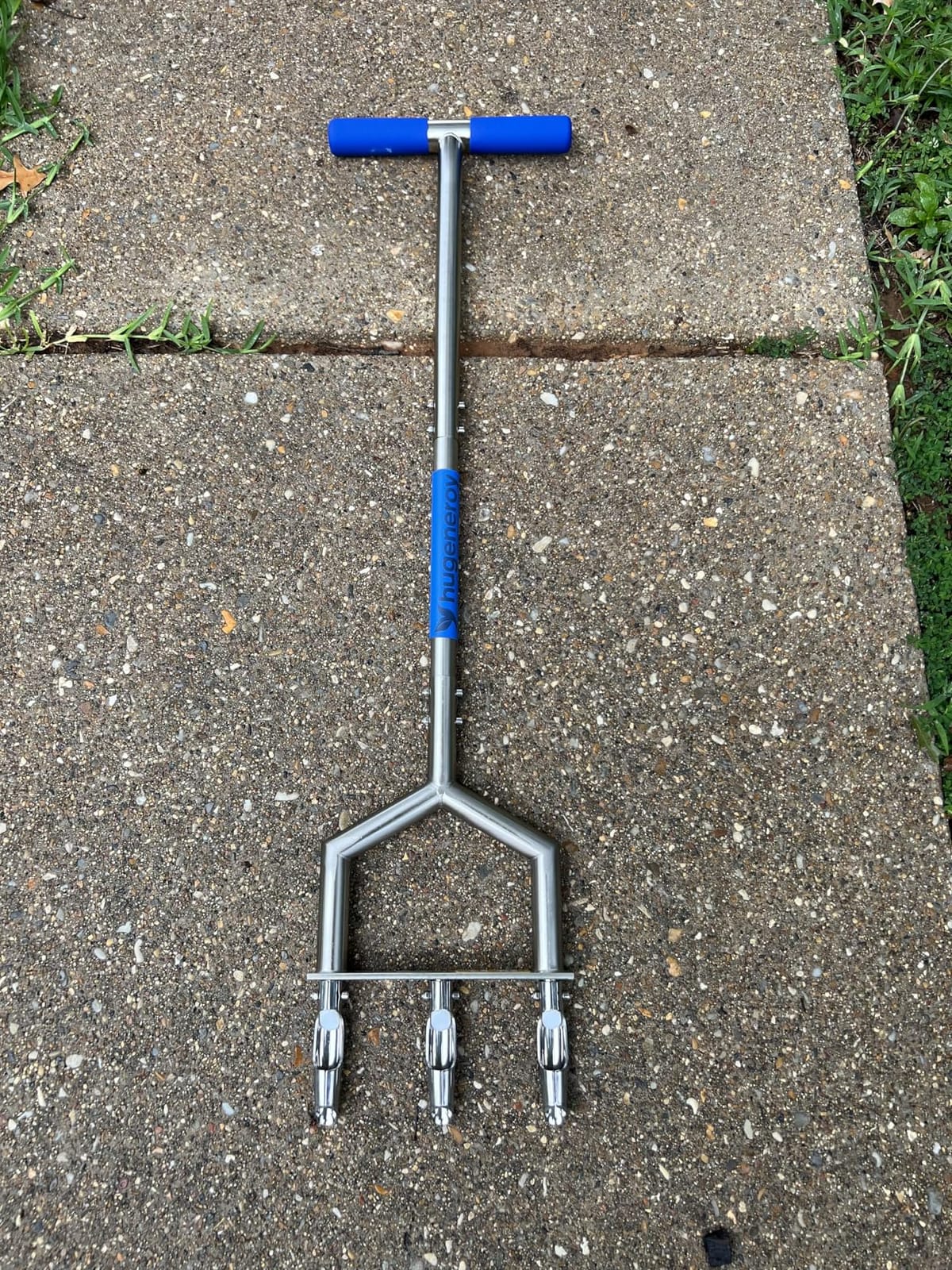
At 3.52 pounds with a long handle, it is one of the lighter hand corers and it lets you work standing rather than kneeling. Assembly takes minutes with the included tools, and the tines are replaceable, which is the cheapest way to extend the life of a hand corer.
There are two design details worth knowing about. The tops of the outer tines are not sealed, so small amounts of debris can collect inside and need clearing. And the nut on the center bar sits at knee height, which a few users tape over. Neither is serious, but both are worth knowing before you start.
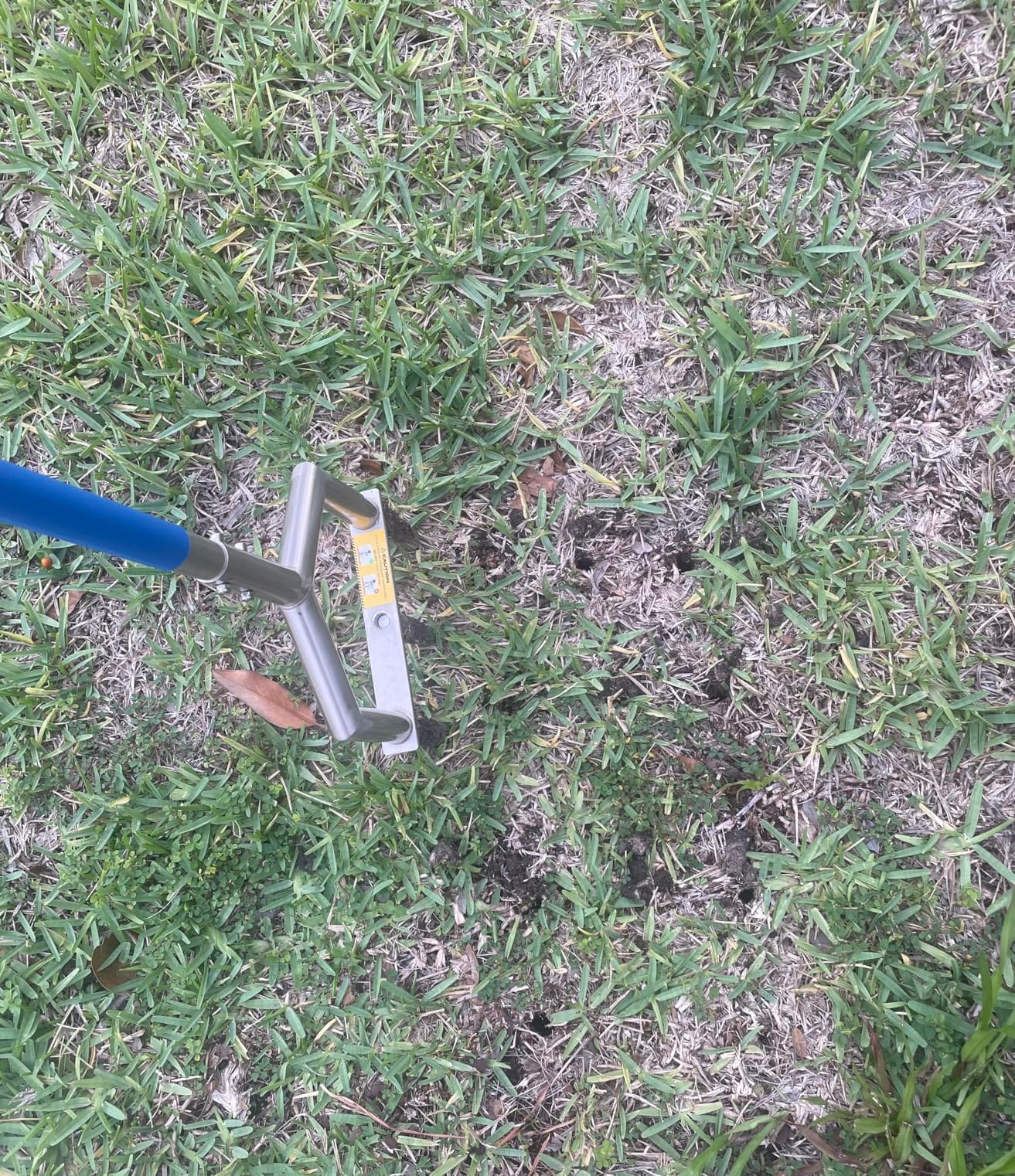
The manufacturer is specific about the technique that makes clay work: water dry areas 24 hours ahead of time, and push and pull the tool vertically without twisting. Rocking the handle sideways while tines are buried is what causes damage.
When the hugeneroy is the right call
It is the pick for a small to medium lawn with hard, clay-heavy soil where other corers bend or clog, and for anyone who wants a durable hand tool that handles hard ground without an expensive frame.
It is also a good second tool for a household that already rents a powered machine but still wants to fix a few urgent patches without hauling anything.
When it is the wrong call
It is the wrong tool for a large lawn. Three tines at a hand pace means hours of work per thousand square feet, and that is true of any hand corer in this class.
And it will not rescue bone-dry ground. Reviewers are consistent that thorough watering beforehand is not optional, because the tool is designed for hard soil, not for impossible soil.
Hard Clay Soil: Why Aerators Fail and What Actually Works
An aerator will work on hard ground, but only in moist soil, with hollow tines, and with patience. Severely hardened clay defeats consumer hand tools entirely, and at that point the correct answer is to rent a powered machine or hire a contractor for one visit rather than keep buying tools.
Three things go wrong in clay, and each has a fix.
The tines skid instead of penetrating. Water the lawn thoroughly a full day before you start, and again the morning of. Soil should be moist enough to hold together in a squeezed handful, not saturated.
The tines plug solid. Wet clay packs inside hollow tubes. The fix is tine geometry: beveled, side ejecting, and self ejecting designs all clear without stopping. Keep the clearing tool in the other hand and never pry sideways, which only jams it harder.
The tines bend or dull. Dry hard soil destroys untreated steel. Tempered or heat treated spoons survive what mild steel will not, and water first to avoid the problem entirely.
On the forums, the consensus on hard ground is consistent. People in r/lawncare describe watering first and coring as deep as the tool will go, and pairing aeration with compost comes up repeatedly as the thing that actually changes clay over time. A heavy box scraper dragged across the surface before coring is a common pre-treatment trick, and liquid aeration products get cautious support as a supplement for small areas rather than a replacement for a machine.
What no consumer tool will do is fix severely hardened ground quickly. If a garden fork skids off the surface, the honest move is one rental day or one contractor visit, then maintain the improvement annually with a tool you own. Our picks for the best padfoot rollers for soil cover a complementary approach for clay-heavy ground.
How to Aerate Compacted Soil: Depth, Spacing, and Passes
Aim for a penetration depth of 2 to 3 inches on most lawns. Manual corers reach 2 to 3 inches depending on soil, tow-behinds with a fully loaded tray reach 3 inches, and powered walk-behinds go deeper still. Spacing matters more than depth: cores closer together break up more of the compacted layer per unit of effort.
Here is the full sequence we use.
Flag everything first. Walk the lawn and mark every sprinkler head, shallow utility line, drip irrigation, and low voltage lighting wire. This is the step people skip, and it is the one that ends a season badly.
Water the day before. Moisten but do not saturate. Dry soil bends tines and stops penetration.
Mow low and collect the clippings. A short cut gives the tines direct access to soil instead of a mat of grass.
Set depth and weight. On a tow-behind, load the tray until it is at least half full. A tray that arrives empty does almost nothing.
Work in passes 4 to 6 inches apart. That is roughly two to four holes per square inch of coverage. Go in straight lines, at a steady walking pace.
Second pass perpendicular, only where the screwdriver test failed. A second pass over the whole lawn is standard advice, but experienced users save hours by re-testing and only re-treating the spots that still fail.
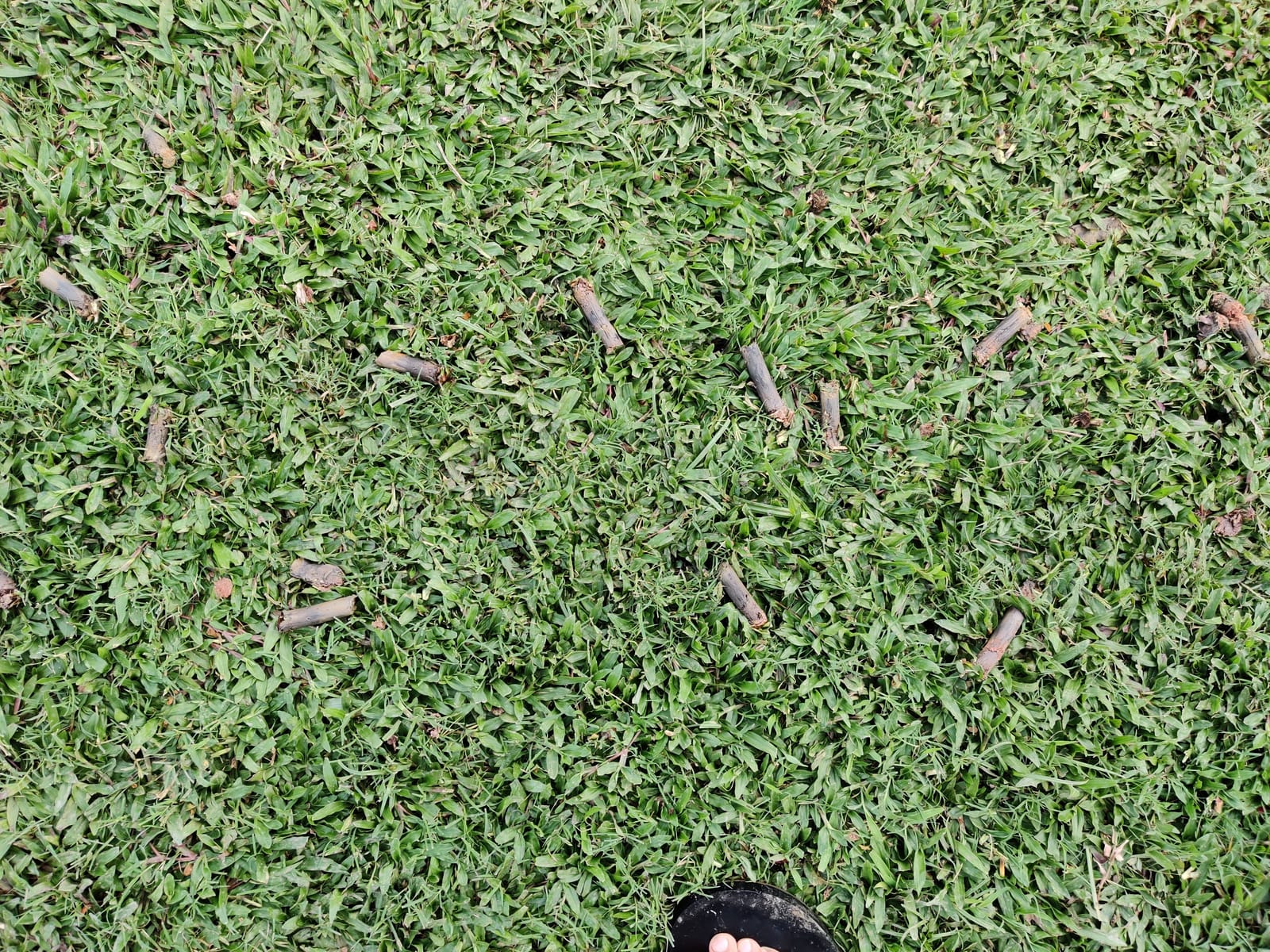
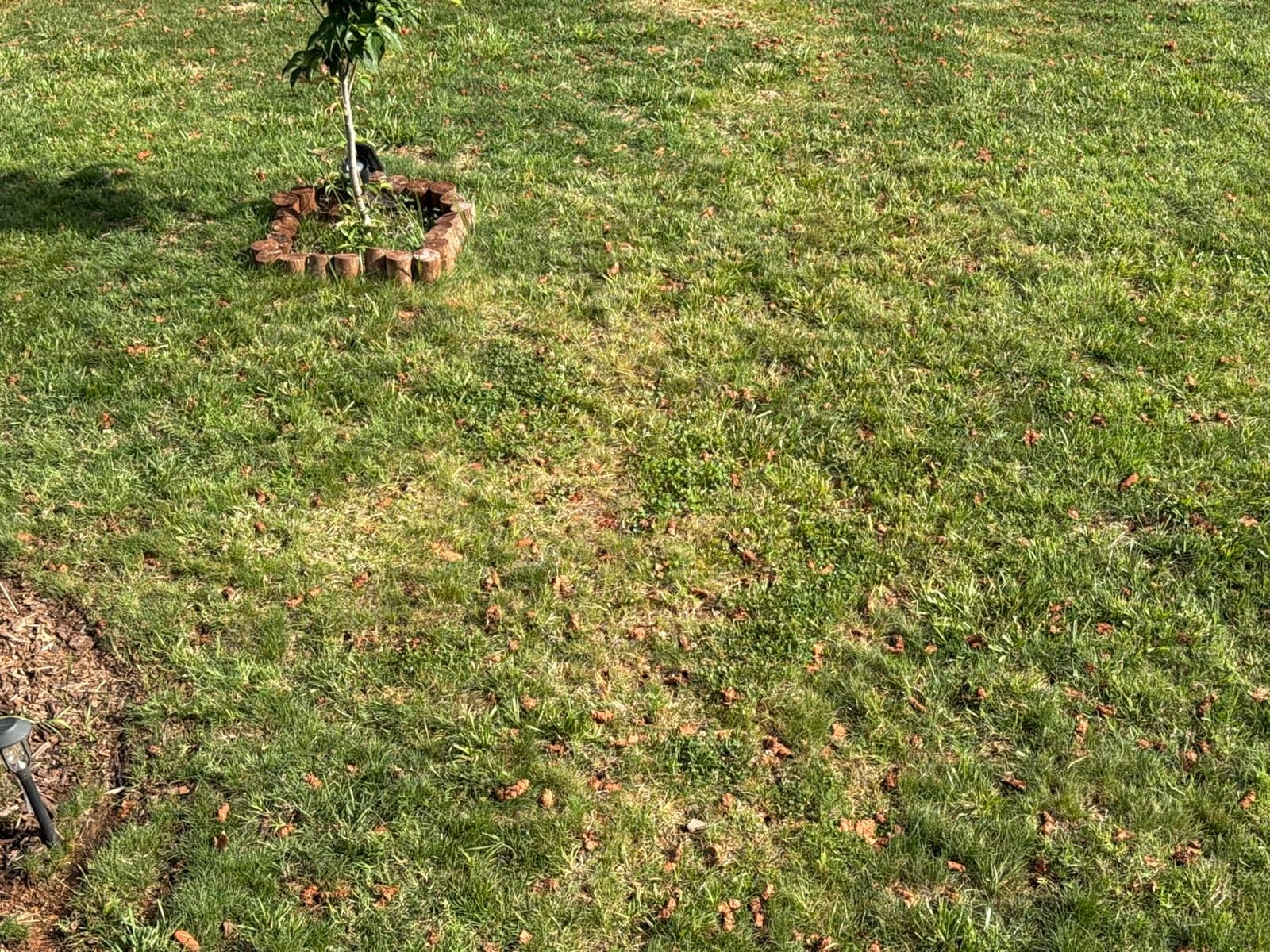
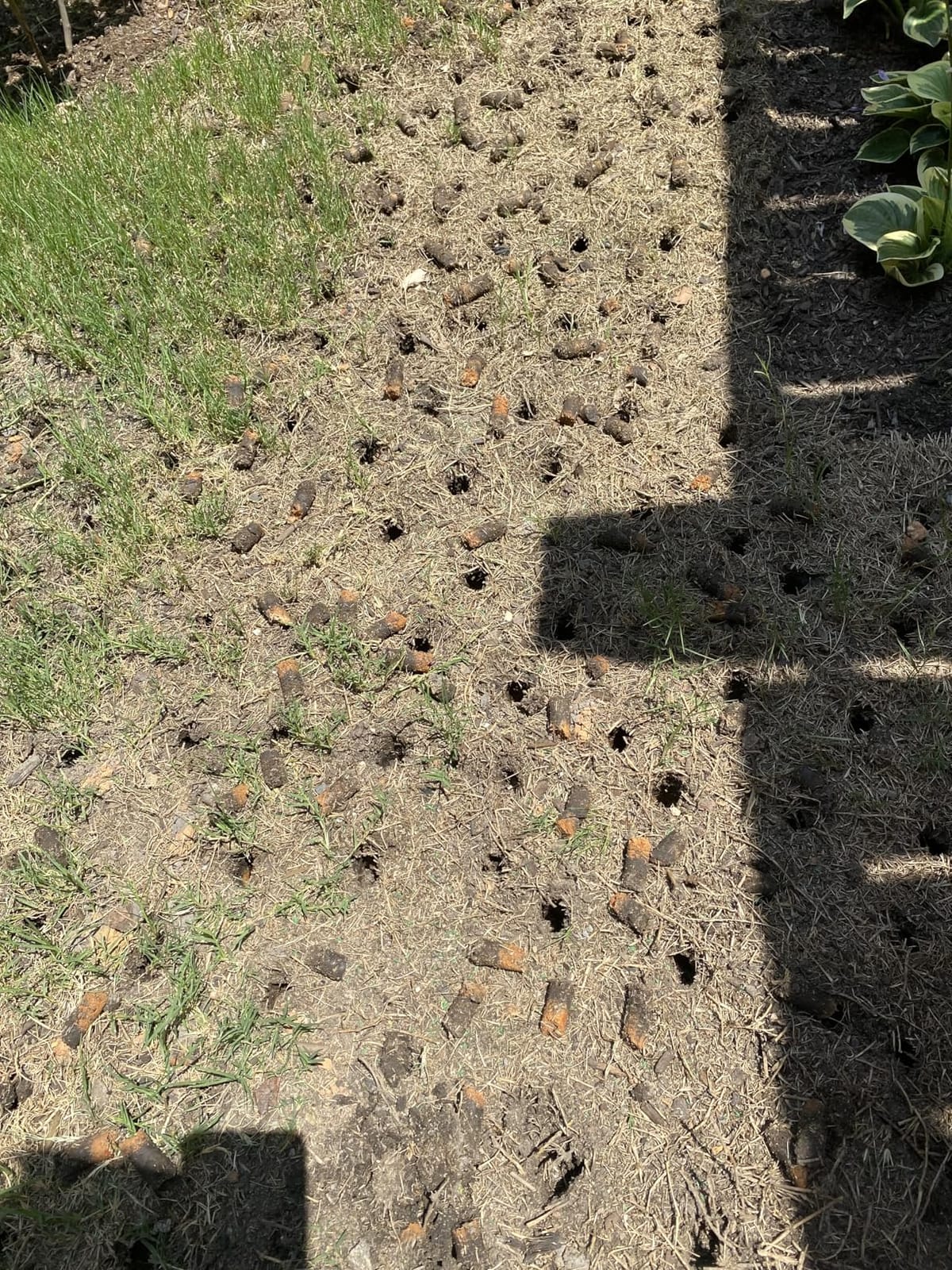
Leave the plugs where they fall. Raking them off is the most common and most counterproductive mistake in the whole process, since the loose material on top is what reseeds the root zone. Wait for the plugs to dry, then mow them away a week or two later.
When to Aerate: Cool-Season vs Warm-Season Lawns
For cool-season lawns, aerate in early spring or early fall, when the grass is actively growing and the soil is soft. For warm-season lawns, the window is late spring through midsummer, once the grass is out of dormancy.
Spring aeration is valid for cool-season grass, but it also opens the surface to crabgrass, so only do it if you are prepared to manage weeds through the season. Avoid aerating a dormant lawn in the heat of summer, when the turf cannot recover from the disturbance. Aim for a window where the grass has three weeks of growing time on either side of the work.
Rent or Buy a Core Aerator: The Break-Even Thinking
Rent a powered machine if you own no tractor, your property is under a few thousand square feet, or you need to fix one emergency area this year and nothing more. Buy if you have a tractor and a large property, or if the manual labor is the thing stopping you from doing the job at all.
The constraint nobody mentions is transport. Powered walk-behind aerators in the commercial weight class are genuinely hard to move without a truck or trailer, and that is the single most common reason people never aerate. If you have no way to haul one, renting a smaller unit or hiring someone is more realistic than buying.
Running the numbers: a rental day rate multiplied by the number of years you expect to use it, against the purchase price of a tool you own for a decade or more. Two or three seasons of use usually tips toward buying, one season tips toward renting, and a contractor visit tips toward renting if you have any transport at all. Our guide to the best lawn aerators for yards walks through the categories in more depth.
What to Do After Aerating: Overseed, Topdress, Fertilize
Do not put down a layer of topsoil after aerating. Rake a quarter inch of compost into the open holes while they are still there, which is the useful part, and skip anything heavier that will bury the crowns.
Overseed immediately while the soil is open, using a species that matches what is already in your lawn. Apply fertilizer at the same time so the seed has nutrition waiting, and water lightly and consistently for the first two weeks. Keep people and pets off the lawn until the seed germinates and the plugs have broken down.
The plugs will dry and fade within a couple of weeks, and mowing them down shreds them into the thatch layer where they decompose and return organic matter to the root zone. Fighting that natural cycle costs you the entire benefit of the job.
Aerator Shoes: Why We Are Not Recommending Them for Compacted Soil
Aerator shoes do not relieve compaction, and we have deliberately kept them off this list. Solid spikes driven by body weight push soil sideways, packing the hole walls tighter than they were, and they remove no material from the profile at all.
There is a practical ceiling too. Footplates on this style of tool fail above roughly 220 pounds of user weight, which puts a lot of people out of range, and a cracked footplate is a wasted purchase. If your compaction is mild and you want a pre-overseed pass, a rolling spike tool is the honest version of that idea, and it is on the right side of the mechanism problem.
We are also deliberately light on liquid aerators. The evidence is mixed, and the community consensus treats them as a helpful supplement for small areas rather than a fix for a compacted lawn.
Frequently Asked Questions
Is a plug aerator the same as a core aerator?
Yes. The two terms are used interchangeably and describe the same tool, which has hollow steel tines that pull cylindrical plugs of soil out of the lawn, leaving open channels for air, water, and fertilizer to reach the root zone.
What is better, spike or core aerator?
A core aerator is better for compacted soil because it removes soil and leaves open channels. A spike aerator drives a solid tine into the ground and pushes soil sideways, which packs the walls of the hole tighter than before. Spikes only make sense for light maintenance passes on soil that is not actually compacted.
How deep should a core aerator go?
Two to three inches is the target for most lawns. Manual corers usually reach 2 to 3 inches, a tow-behind with a fully loaded weight tray reaches 3 inches, and powered walk-behinds go deeper. Spacing between cores matters more than maximum depth, so aim for holes every 4 to 6 inches.
Will an aerator work on hard ground?
It will, but only in moist soil with hollow tines and patience. Water the lawn a full day ahead so the soil is moist but not saturated, and stop if a garden fork skids off the surface. Severely hardened clay defeats consumer hand tools, and the right move at that point is a powered rental or a contractor visit.
How many passes should I make with a plug aerator?
Two perpendicular passes is the standard approach, but second pass only the areas that still fail the screwdriver test rather than doubling the entire lawn. If most of your yard passes at 4 to 6 inches and only a few strips fail, a targeted second pass saves hours.
Should you put down topsoil after aerating?
No. A full topsoil layer buries the grass crowns. Rake about a quarter inch of compost into the open holes while they are still there, then overseed, fertilize, and water lightly. Leave the soil plugs on the lawn and let them break down, because raking them away removes the organic matter the job was meant to deliver.
What are the most common lawn aeration mistakes?
The big ones are aerating at the wrong time of year, working soil that is too dry, raking the plugs away, running a tow-behind with an empty weight tray, skipping the flagging of sprinkler heads and shallow utility lines, and using spike tools when the problem is compaction.
Do lawn aerator shoes actually work?
Not for compaction. The solid spikes push soil sideways and pack the hole walls tighter without removing any material, and footplates tend to fail above roughly 220 pounds of user weight. If you want a spike tool, a rolling spike aerator is the better version of the same idea.
The Bottom Line on Core Aerators for Compacted Soil
The best core aerators for compacted soil are the ones that pull real plugs, reach 2 to 3 inches, and match the tool to how hard your soil actually is. The Yard Butler ID-6C is the safest general choice for most homeowners, the Brinly 40 inch handles clay better than anything else in the group, and the Agri-Fab 48 inch covers large properties fast if you own a tractor.
Start with the screwdriver test, water the lawn before you do anything, and remember that an empty weight tray is the same as no aeration at all. Leave the plugs on the grass, overseed into the open holes, and the next dry spell will tell you whether you made the right call. This guide is current for 2026, and we update it as new models land.