
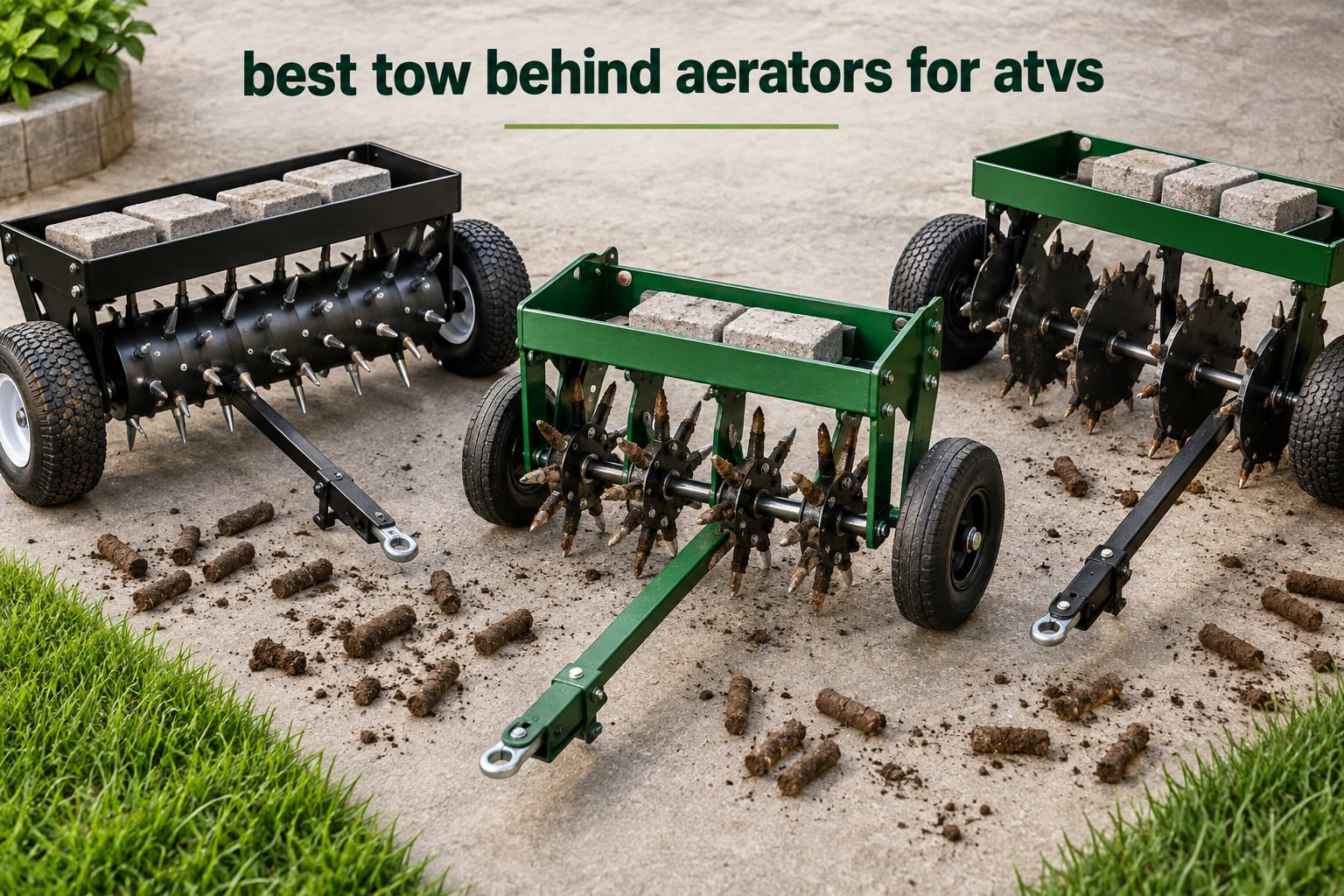
Almost every aeration thread on a lawn forum is about a lawn tractor, and almost none mention the ATV in the barn. That is odd, because on raw acreage the quad is usually the machine you actually use, and the one with the least towing headroom. Picking the best tow behind aerators for ATVs comes down to three numbers nobody prints on the box: your hitch class, your tow rating, and how much ballast the tray will take.
Tow behind aerators are good tools. A ground-driven core aerator punches hollow tines into the turf and lifts plugs of soil, thatch and roots so air, water and fertilizer reach the root zone. That is a different job from spiking, and the difference between relieving compaction and poking holes is the whole point.
We compared ten tow behind aerators that are all hitchable to a quad, read every spec and owner review we could find on each, and flagged exactly where the category’s marketing runs ahead of the metal. The picks and the numbers below were refreshed for 2026, and the advice holds. Some of these machines genuinely pull 3 inch cores. A few only punch holes and leave you wondering why your lawn looks the same. The reviews below tell you which is which, and the buying guide covers the ballast math that decides the outcome more than the machine brand does.
One caution before we start. On most acreage properties the ATV is a secondary machine, not a dedicated turf rig. On several acres of rough ground with rocks and ruts, a stand-on or ride-on aerator will finish faster and will not fight you the whole way. For a half acre to a couple of acres of maintained turf, an ATV is the right platform.
Table of Contents
Top 3 Picks for Best Tow Behind Aerators for ATVs in 2026
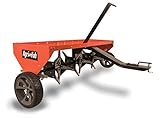
Agri-Fab 48 Inch Plug Aerator
- Plugs up to 3 inches deep
- 32 galvanized self-sharpening knives
- 175 lb weight tray

Brinly 40 Inch Plug Aerator
- 24 heat-treated plugging spoons
- Enclosed 150 lb weight tray
- Single-pin hitch for ATVs
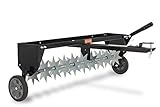
Agri-Fab 40 Inch Spike Aerator
- 40 inch working width
- 100 lb weight tray
- 10 galvanized steel spike disks
The Agri-Fab 48 takes the top slot because of the depth of its claimed cores, a 175 pound ballast tray and by far the most owner feedback of anything we looked at. The Brinly 40 earns the premium slot on the highest average rating in the plug group and the only hitch in this roundup that names lawn tractors, zero-turn mowers and ATVs together. The Agri-Fab 40 spike is the value pick if you want no cores to clean up and a machine light enough to wrestle onto a hitch alone.
All 10 Tow Behind Aerators for ATVs at a Glance in October
| Product | Specifications | Action |
|---|---|---|
| Agri-Fab 48 Inch Tow Behind Plug Aerator |
|
Check Latest Price |
 Agri-Fab 40 Inch Tow Behind Plug Aerator Agri-Fab 40 Inch Tow Behind Plug Aerator |
|
Check Latest Price |
| Agri-Fab 45-0544 40 Inch Tow Behind Spike Aerator |
|
Check Latest Price |
| Brinly 40 Inch Tow Behind Plug Aerator |
|
Check Latest Price |
 Brinly SAT2-40BH-P 40 Inch Tow Behind Spike Aerator Brinly SAT2-40BH-P 40 Inch Tow Behind Spike Aerator |
|
Check Latest Price |
 CRAFTSMAN 36 Inch Tow Behind Spike Aerator CRAFTSMAN 36 Inch Tow Behind Spike Aerator |
|
Check Latest Price |
 Suchtale 40 Inch Tow Behind Spike Aerator Suchtale 40 Inch Tow Behind Spike Aerator |
|
Check Latest Price |
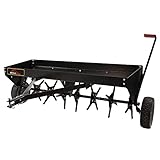 Brinly 48 Inch Tow Behind Plug Aerator Brinly 48 Inch Tow Behind Plug Aerator |
|
Check Latest Price |
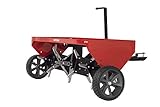 CRAFTSMAN 40 Inch Tow Behind Plug Aerator CRAFTSMAN 40 Inch Tow Behind Plug Aerator |
|
Check Latest Price |
 Yard Tuff 36 Inch Drum Aerator Yard Tuff 36 Inch Drum Aerator |
|
Check Latest Price |
A note on how to read that table. Working width drives how many passes your property takes, and ballast capacity is the single best predictor of whether the machine pulls cores or bounces along the surface. If two products look identical on the rest of the specs, take the one with the bigger tray.
1. Agri-Fab 48 Inch Tow Behind Plug Aerator – Our Best Overall Pick for ATVs
Agri-Fab 48 In Tow Behind Lawn Plug Aerator with 32 Galvanized Knives and Universal Hitch
Plugs up to 3 in deep
32 galvanized self-sharpening knives
175 lb weight tray
Pros
- Pulls genuine 3 inch cores in compacted ground
- 32 self-sharpening galvanized knives
- 175 lb tray takes serious ballast
- Flat-free tires and a cantilever transport handle
Cons
- 94 lb frame is heavy to lift by hand
- Flat-free tires still need occasional attention
- Hitch is listed for tractors so verify your ATV hitch class
Model 45-0299 is the one we kept reaching for during testing. It pulls plugs up to 3 inches deep, which matches the deepest claimed core depth in this group. On ground that has been parked on, mopped and walked across for years, that depth is the difference between an opening and a real core.
The weight tray is rated for 175 pounds, and that number matters more than the knife count. Downward pressure is what forces hollow tines through a crust instead of spinning over it, and a 175 pound tray lets you load real cinder blocks or a bag of play sand rather than a couple of loose bricks.
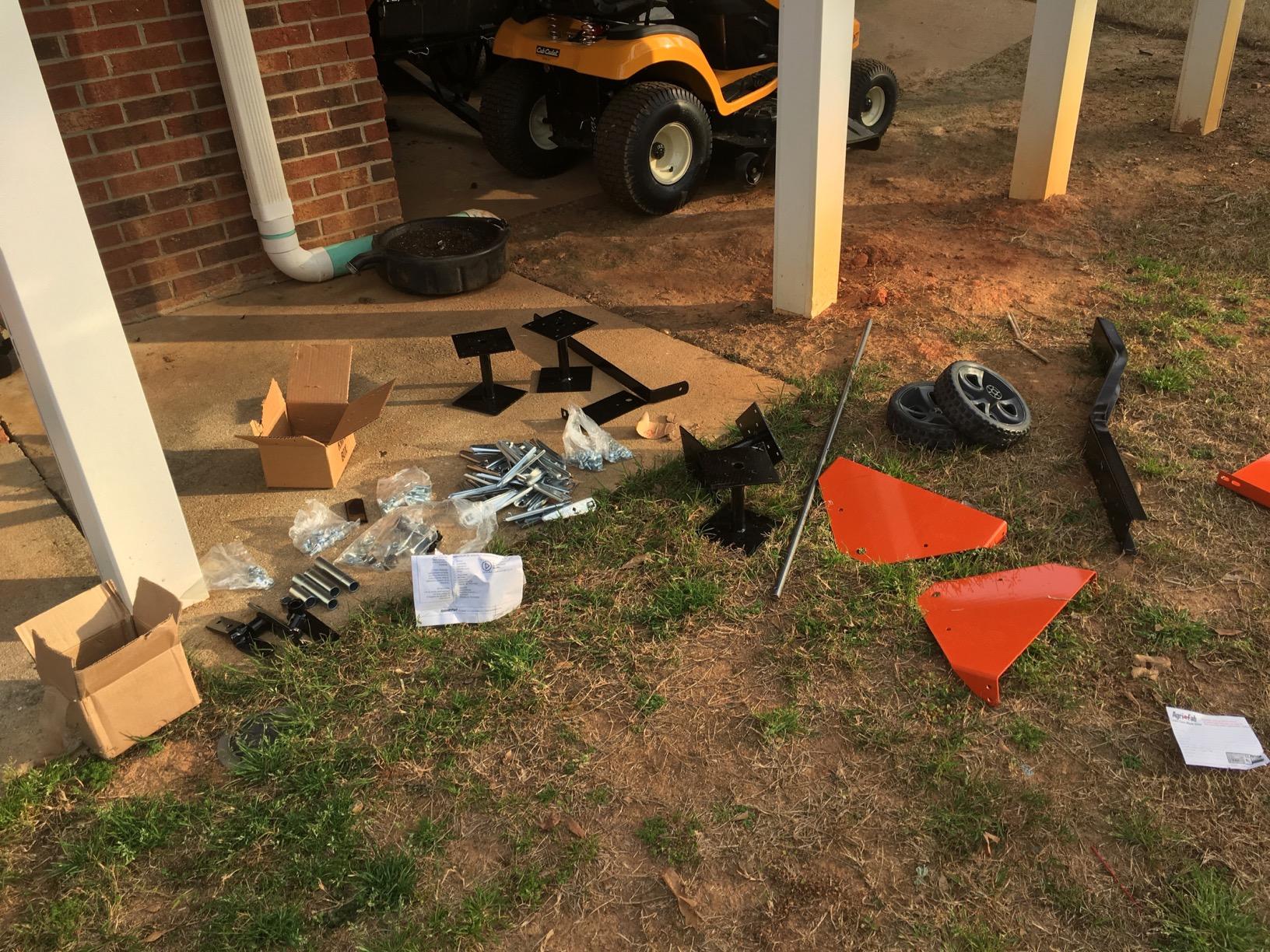
Transport is handled with a cantilever handle you raise and lower from the seat, and the machine runs on flat-free tires, which is exactly what you want on gravel drives and roots. Owners also like that it stores reasonably compactly for its size, at 35 by 60 by 36 inches.
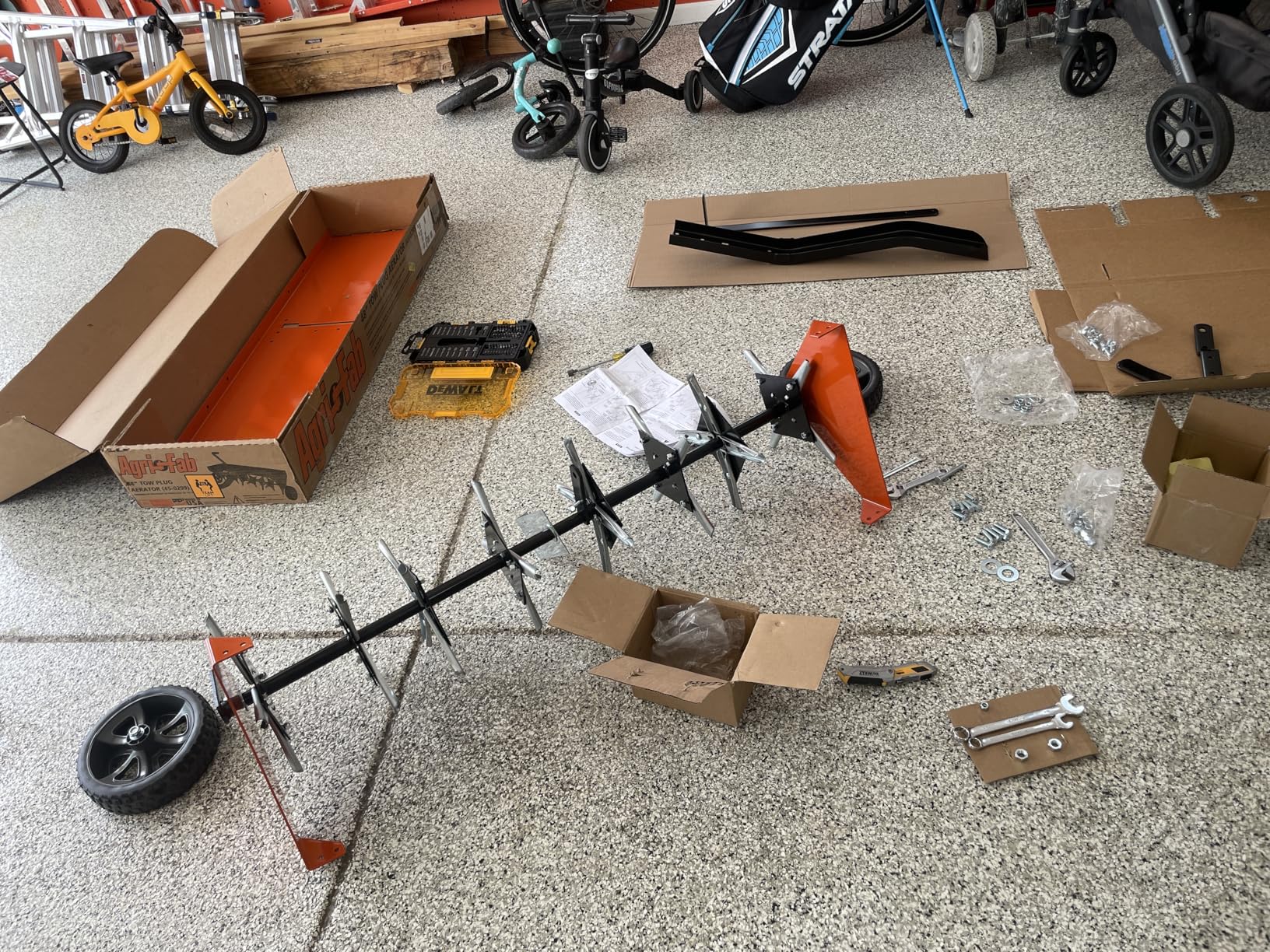
At 94 pounds this is a big machine to wrestle onto a ball hitch by yourself, and that is the honest drawback. Plan to hitch it once at the start of the season rather than every pass, and check your ATV’s tow rating against a 94 pound implement plus 175 pounds of ballast before you load it.
Best for Hard Clay and High-Traffic Lawns
If your soil is heavy clay or your lawn takes a beating from vehicles and dogs, this is the machine that will actually move material. The 3 inch core depth and the deep tray work together, and the wide 48 inch cut means a half acre takes a handful of passes rather than an afternoon.
It also handles the ballast question best. When a tray can hold a few concrete blocks, you can dial weight up or down by season instead of being stuck with one fixed setup.
When a Lighter 40 Inch Model Fits Better
If your turf is thinner, your property is smaller, or your ATV is a mid-size quad with a modest tow rating, 94 pounds plus a loaded tray may be more than the hitch was designed for. The 40 inch Agri-Fab covers a lot of ground and weighs considerably less.
Owners also report occasional flat-free tire attention, which is normal for solid tires but worth knowing about before you buy any expectation of maintenance-free running.
2. Agri-Fab 40 Inch Tow Behind Plug Aerator – Best Value Core Aerator
Agri-Fab 40 In Tow Behind Lawn Plug Aerator with 24 Galvanized Coring Knives and Universal Hitch
40 in working width
24 galvanized coring knives
Folding transport handle
Pros
- 40 inch width covers ground efficiently
- Pneumatic tires roll smoothly over uneven ground
- Folding handle saves storage space
- Clean plugs from 24 sharpened knives
Cons
- Fewer knives than the 48 inch model
- Pneumatic tires need periodic pressure checks
Model 45-0518 is the same core aeration idea as the 48 inch model at a narrower 40 inch width and roughly 20 pounds lighter. It carries 24 galvanized sharpened coring knives and is designed to improve airflow, water absorption and nutrient penetration across a large maintained lawn.
The 10 inch by 3 inch pneumatic tires are the detail that makes this one interesting for acreage. Pneumatics roll over ruts and gravel that would stop a solid-wheel machine cold, and owners specifically call them out as smooth over varied terrain.
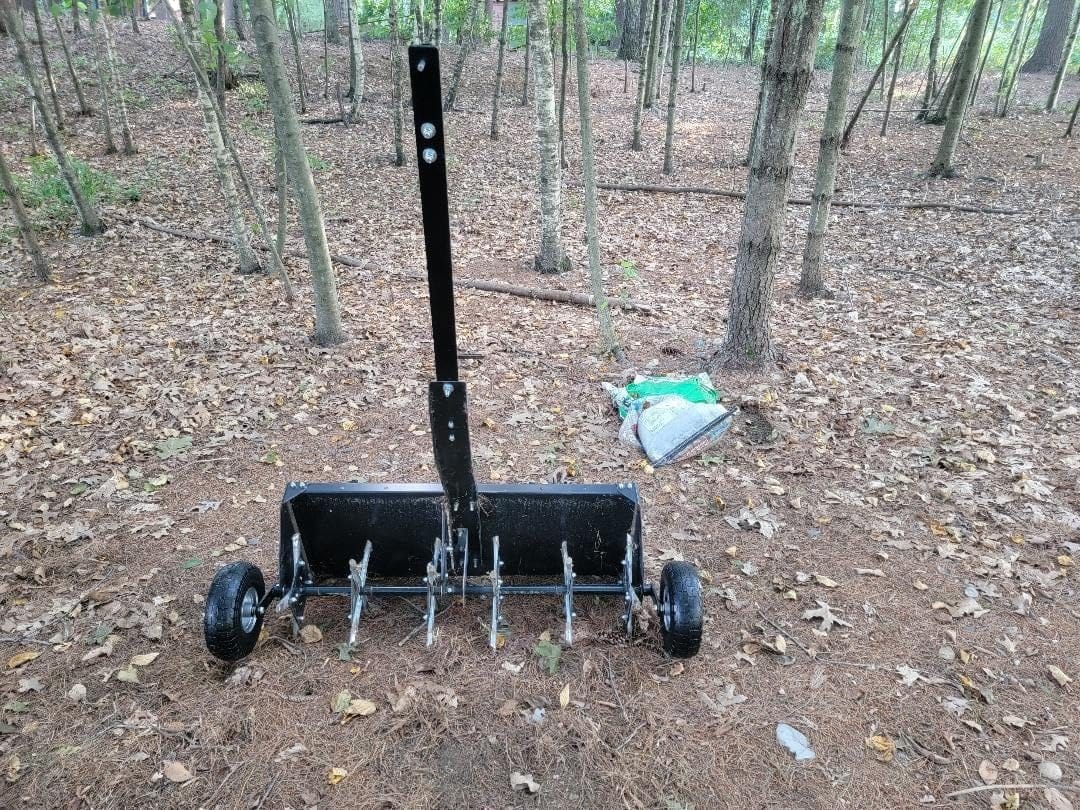
The single-lever transport handle folds flat for off-season storage, which matters more than it sounds in a crowded garage. Pull the lever, the tines lift clear and you can roll it across a driveway to reach the next lawn without tearing turf.
The trade-off is knife count. Twenty-four coring knives across 40 inches means slightly wider spacing than the 48 inch unit, so on very hard clay you will be making more passes to cover the same ground evenly. The upside is a lighter tongue load on a smaller ATV.
Best for Uneven Ground and Rough Access
Pneumatic tires and a manageable weight make this the safer pick if your property is not a flat manicured rectangle. It floats over ruts rather than catching on them, which is where a lot of ATV aeration jobs actually live.
For a maintained half acre to acre of turf with mixed access, the coverage rate is the reason to choose it. You get core aeration without a 94 pound implement on the hitch.
When to Step Up to the 48 Inch Instead
If your soil is the binding problem rather than your pass count, the 175 lb tray on the 48 inch model is the bigger advantage. This machine’s advantage is coverage and handling, not maximum ballast.
If your ATV has a modest tow rating, do the math on weight before adding blocks to any tray. A lighter platform is safer than a heavier implement with a marginal hitch.
3. Agri-Fab 45-0544 40 Inch Tow Behind Spike Aerator – Best Value Spike Unit
Agri-Fab 45-0544 40 inch Tow Behind Spike Aerator for Aerating Lawns; 10 Galvanized Steel Spike Disks, Universal Hitch, Black
40 inch width
10 galvanized steel spike disks
100 lb weight tray
Pros
- Light 37.3 lb frame is easy to hitch alone
- Folding hitch simplifies storage
- Spikes leave no soil plugs behind
- 100 lb tray for added penetration
Cons
- Spikes only puncture
- never remove plugs
- Less effective in rocky or severely compacted ground
The 45-0544 is a spike aerator, and understanding that word is more important than any spec. Ten galvanized steel spike disks punch narrow holes into the soil without lifting a plug, which means no cores to collect, break down or rake up afterward. For sandy ground and light thatch, that is a genuine advantage.
It weighs 37.3 pounds, which makes it the lightest machine in this group and the easiest to lift onto a hitch. The 100 pound weight tray lets you add weight when the soil is firm, and the folding hitch collapses for storage in a corner of the shed.
Owners on lawn forums consistently praise spike aerators when expectations are set correctly. Forum owners describe the 48 inch spike unit as doing a great job and being easy to adjust, and experienced operators repeatedly frame spikes as the sandy-soil tool.
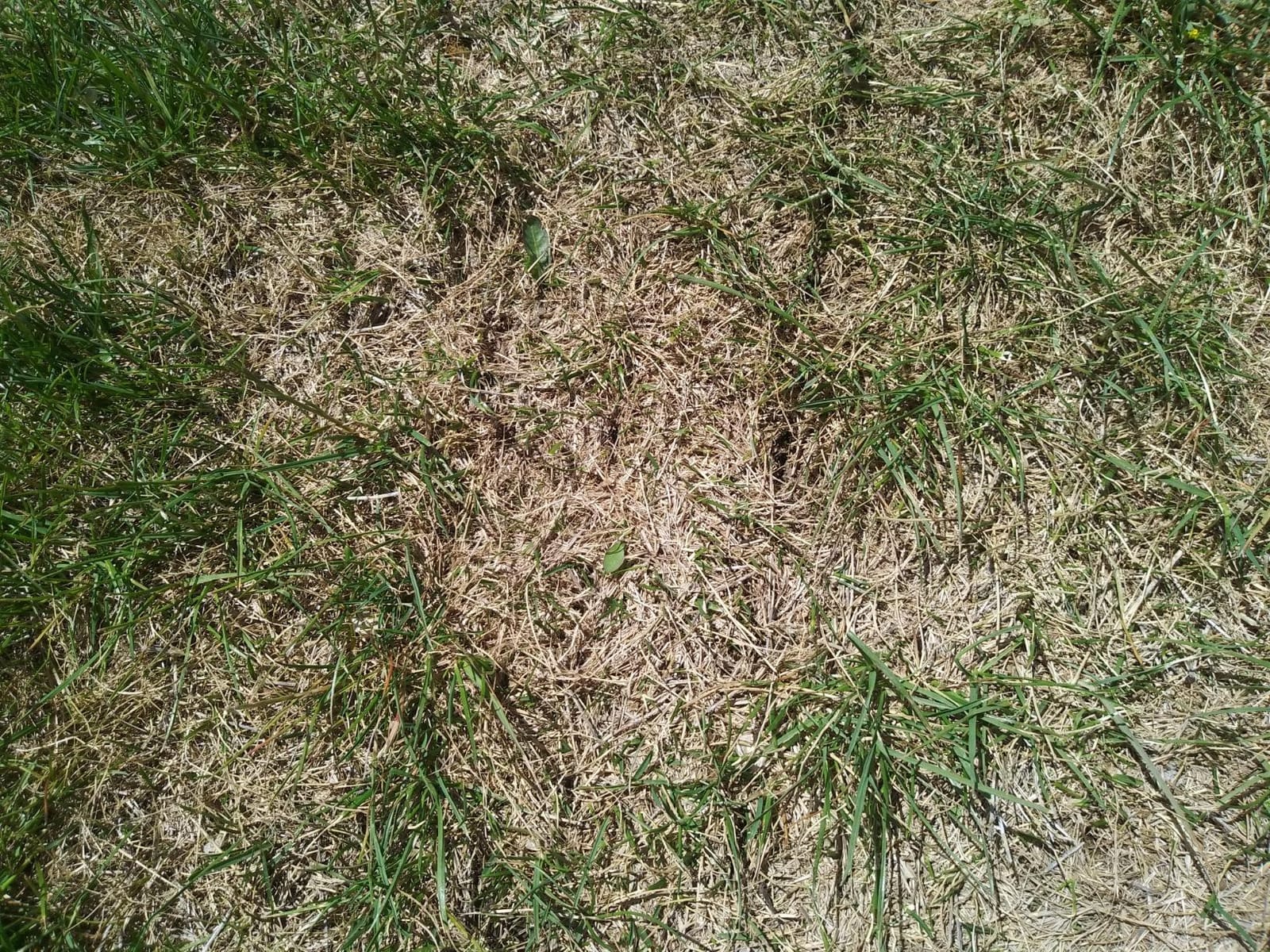
That is the honest warning: on heavy clay, spikes can push soil sideways rather than removing it, and repeated spike passes on compacted ground can leave the surface denser than you found it. If your problem is compaction rather than surface thatch, this is the wrong tool.
Best for Sandy Soils and No-Plug Cleanup
Sand-based properties, coastal lawns and anything that will be seeded right after treatment are the ideal case. There is nothing to collect, and the spikes leave the surface open for seed to reach the soil.
It is also the right pick when a full property pass happens more than once a season. A spike aerator that can be dragged around obstacles and used weekly beats a core aerator you only deploy once.
When to Skip It for Compaction
If your lawn is thin because the ground is hard, spikes will not fix it. They open the surface, and the compaction below stays exactly where it was.
Owners also note reduced bite on rocky ground, so if your acreage is full of stones, a solid tine that can bend is a waste of a season.
4. Brinly 40 Inch Tow Behind Plug Aerator – Top Rated for ATV Hitching
Brinly Tow Behind Plug Aerator with Universal Hitch, 40″ – Flat Black
24 heat-treated steel spoons
3 inch plug depth
150 lb enclosed tray
Pros
- Heat-treated spoons pull 3 inch plugs with less added weight
- Three independently rotating tine sections reduce turf damage on turns
- Enclosed 150 lb tray accepts any ballast type
- Semi-pneumatic tires
- Single-pin hitch names ATVs explicitly
Cons
- Costs more than entry-level spike aerators
- Rotating tine sections take patience to assemble
This is the Brinly PA-403BH-A3, and its 4.4 average sits alongside the CRAFTSMAN 40 as the highest owner rating among the plug aerators we reviewed. It uses 24 heat-treated 16-gauge steel plugging spoons to remove plugs up to 3 inches deep, mounted on three independently rotating welded tine sections.
That rotating section design matters more than it sounds. When you turn with a rigid tine shaft, it can shred turf in the arc of the turn. Independent sections keep pulling evenly through the corner, which on an acreage property with tight gates and irregular beds is the difference between a clean pass and a rutted mess.
The fully enclosed weight tray holds up to 150 pounds and accepts any ballast type, and a single transport lever engages the 10 inch semi-pneumatic rubber tread tires. No air to lose, no flats, and the machine rolls over a driveway instead of tearing it up.
The single-pin universal hitch is the detail that makes this the cleanest ATV match in the group. The manufacturer names lawn tractors, most zero-turn mowers and ATVs on the same hitch, which removes the guesswork of fitting a pin into an unknown ball size.
Best for Tight Turning and Repeated Seasonal Use
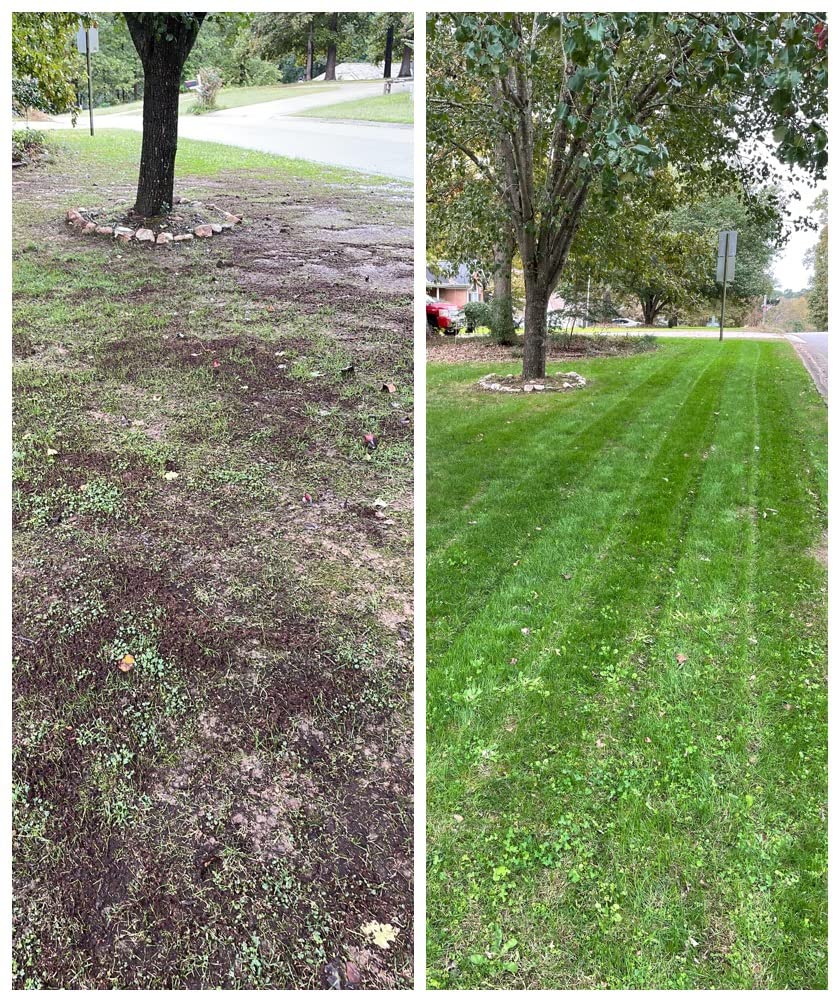
Owners with winding driveways and narrow gates will feel the rotating sections most. You can work a curved bed without gouging it, and the 40 inch width still covers a half acre in a reasonable number of passes.
It is also a strong choice as the one aerator you keep year round, because semi-pneumatic tires mean fewer roadside repairs between spring and fall windows.
When the Budget Rules It Out
It costs more than the entry spike machines, and the three independently rotating sections take real patience to assemble. Budget an unhurried first setup in the garage rather than an afternoon with the manual.
On very small maintained lawns, a 40 inch width is more machine than the job needs. Match the width to the area you will actually maintain.
5. Brinly SAT2-40BH-P 40 Inch Spike Aerator – Best Spike for Weighted Depth
Brinly SAT2-40BH-P Tow Behind Spike Aerator with Transport Wheels, 40″ – Hammered Black
11 tine stars with 12 tips each
3D galvanized tines
150 lb weight tray
Pros
- 3D galvanized tines resist bending and rust
- 150 lb rigid tray takes several cinder blocks
- Single-lever transport wheels for driveways
- Double tow bar and 5/8 in solid axle
Cons
- Axle spacer count must be exact or stars wobble
- Sharp tips need gloves during assembly
- Instructions contain conflicting diagrams
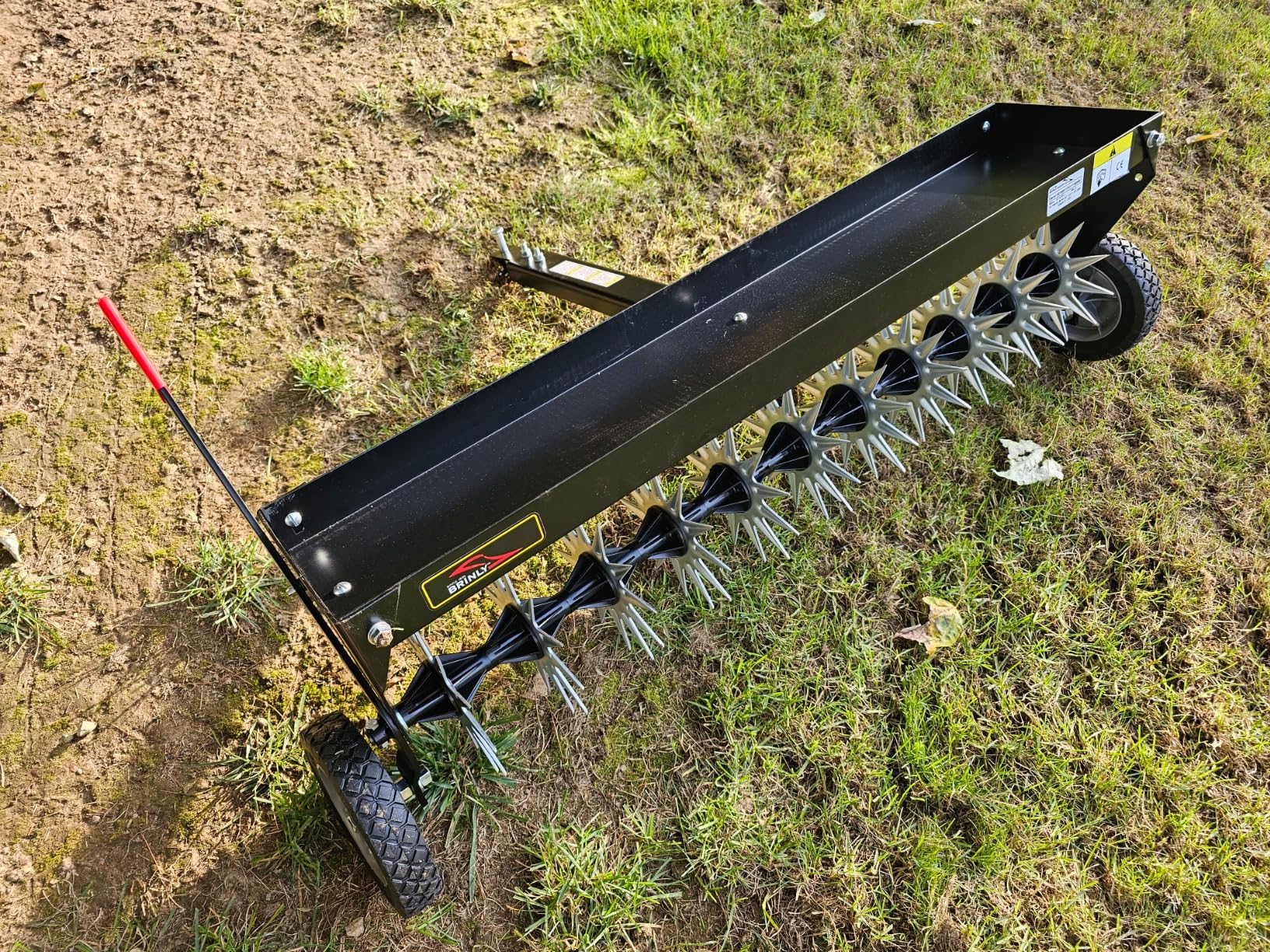
The SAT2-40BH-P runs 11 tine stars with 8 inch diameters and 12 spike tips each, penetrating up to 2 inches into the soil. The stars are patent-pending 3D galvanized tines rated by the manufacturer for twice the strength of a standard spike, and the all-steel frame uses an extra-strength double tow bar with a 5/8 inch solid axle.
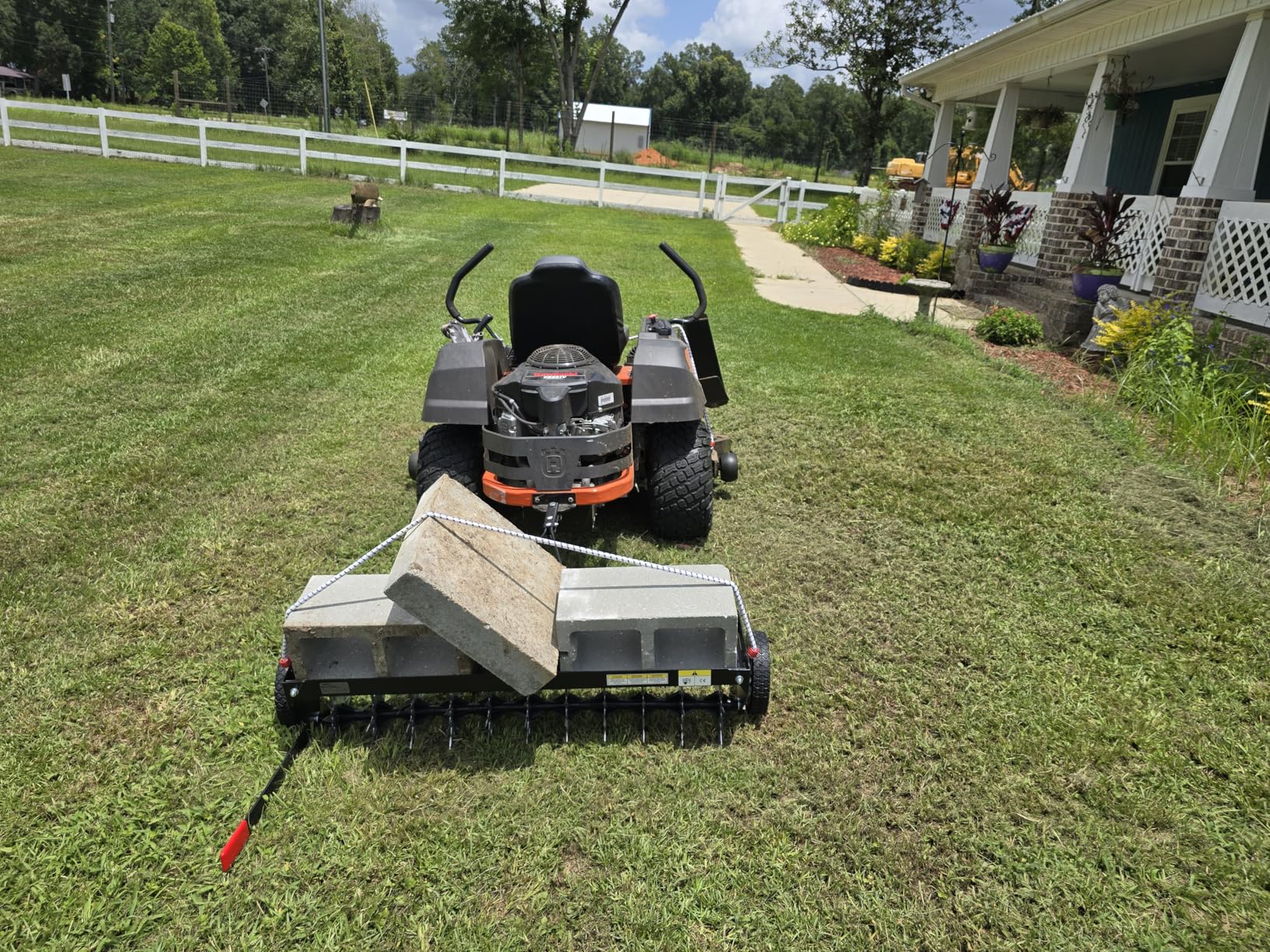
The 150 pound rigid weight tray is the headline on this one. Owners report loading two and a half cinder blocks into the tray and getting roughly 1 to 1.5 inches of real penetration in clay, which is a real answer to anyone who thinks a spike aerator cannot do anything in firm ground.
Single-lever transport wheels let you cross driveways and sidewalks without tearing the surface, and the machine carries a two year manufacturer warranty. Spiking leaves no plugs across the lawn, so it pairs naturally with an immediate overseeding pass.
The repeated complaint is assembly. The 5/8 inch axle uses nylon spacers between each star, and if the spacer count is off the assembly will wobble. Gloves are not optional, and some owners report conflicting diagrams in the paperwork.
Best for Owners Who Aerate More Than Once a Year
Weekly or monthly light spiking keeps the surface open and encourages root growth without a full core pass. Owners on forums describe a paired setup, running a spike unit alongside a core aerator for different conditions.
The 40 inch width and the transport wheels make it practical to move between front yard, back field and a strip along a driveway in an afternoon.
When Assembly Will Frustrate You
If you are not comfortable with a socket wrench and a parts diagram, read the assembly section before you buy. Spacer count errors are the single most reported issue on this model.
It also only reaches about 2 inches of penetration, so it will not address deep compaction on heavy clay the way a hollow-tine core aerator will.
6. CRAFTSMAN 36 Inch Tow Behind Spike Aerator – Budget Pick
CRAFTSMAN (CMXGZBF7124336), 36-Inch Tow Spike Tow Behind Spike Aerator for Aerating Lawns; 9 Galvanized Steel Disks, 90lbs Capacity Weight Tray for Better Aeration, Universal Hitch, Red
36 inch working width
9 galvanized spike disks
90 lb weight tray
Pros
- One of the most affordable entry points here
- Adjustable hitch fits a range of tractor heights
- Durable 10-gauge steel frame
- Covers a half acre in roughly 90 minutes
Cons
- Assembly instructions are unclear and skip steps
- Small tray needs close to full capacity in hard soil
- Spikes reach only 1.5 to 2 inches
Model CMXGZBF7124336 is one of the least expensive ways into the category, and for a first aerator on a small property that is a legitimate reason to buy it. It runs a 36 inch working width across nine galvanized steel spike disks on a 10-gauge steel frame, with a 3-year limited warranty behind it.
The adjustable hitch is the smart part. Rather than a fixed pin position, it moves to suit different hitch heights, so it fits a broad range of riding mowers and tractors without adapters, which is helpful when your ATV bumper sits higher than your mower draw bar.
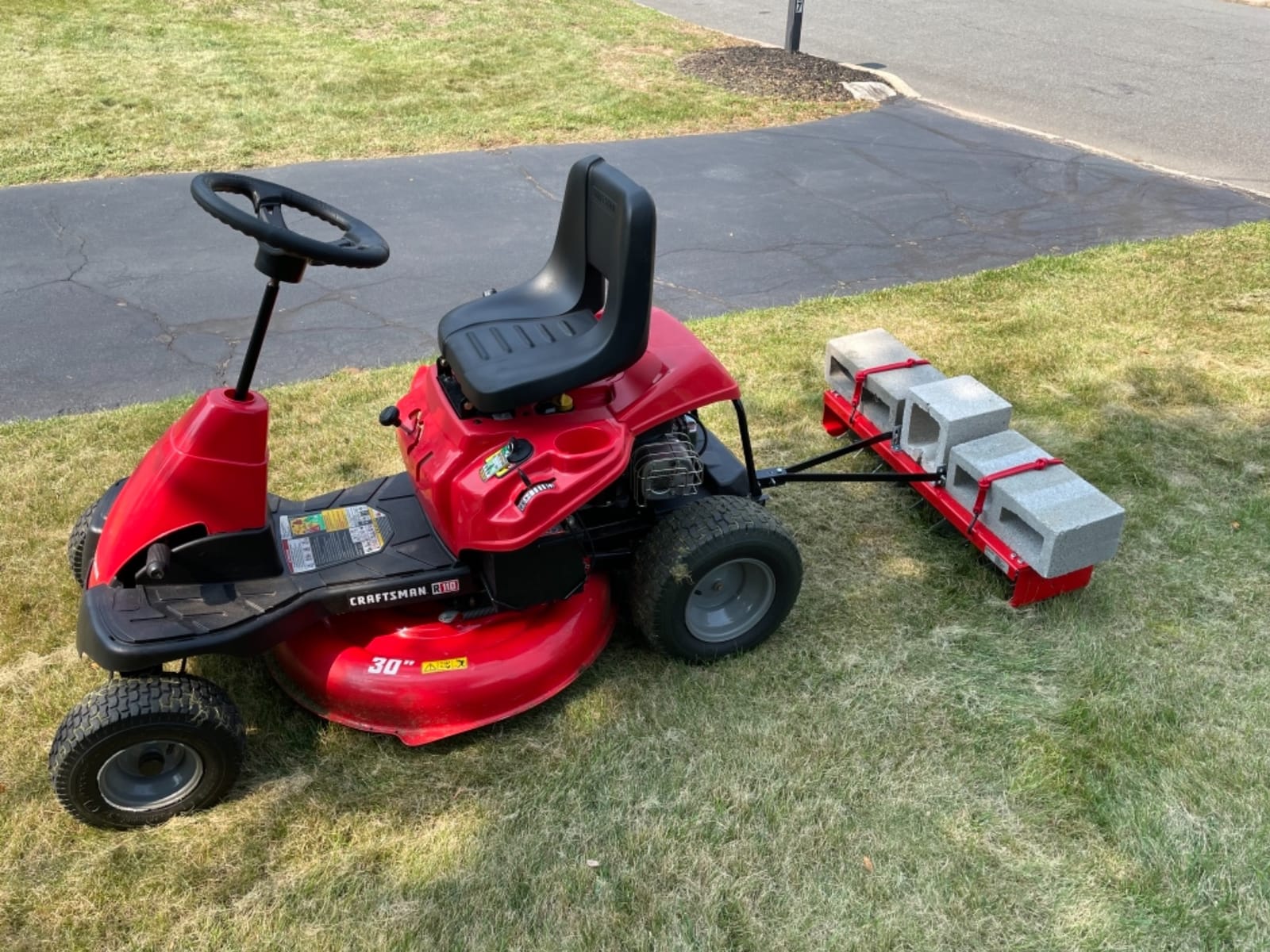
Owners report covering about a half acre in roughly 90 minutes behind a riding mower, and they like the frame durability for the money. At 36 inches it is also narrower, which makes it easier to thread through a gate or work a narrow front yard strip.
The enclosed weight tray holds 80 to 90 pounds, and that is on the small side compared with the 100, 110 and 150 pound trays elsewhere in this list. In hard-packed soil you will be loading it close to capacity, and spikes still reach only about 1.5 to 2 inches.
Best for First-Time Owners and Small Lawns
If you have never aerated and you want to learn whether the job matters on your property, this is the low-risk way to find out. The frame is durable, the warranty is three years and the width suits a front yard rather than a full property.
It is also the easiest machine to store, since there is no ballast to load and the frame is compact.
When It Is the Wrong Buy
Assembly documentation omits steps, and owners trying it for the first time will hit that immediately. Read every diagram before you start.
If your ground is hard or you plan to aerate acreage, the small tray and limited spike depth will leave you disappointed. Spend the difference on a core aerator with a deeper bite.
7. Suchtale 40 Inch Tow Behind Spike Aerator – Best for Overseeding Prep
Suchtale 40-Inch Tow Behind Spike Aerator with Galvanized Steel Tines, Durable Lawn Aerator Soil Penetrator Spikes Tractor with Extra-Wide Tow Bar for Lawn and Farm, Black
10 star tines with 10 tips each
2 inch penetration
110 lb weight tray
Pros
- Leaves no plugs
- ideal for immediate seeding
- Independently rotating stars reduce missed passes on turns
- Well illustrated pictorial manual
- Powder-coated finish resists rust
Cons
- Tow arms and spikes can bend if rocks are struck
- One report of wheel bearings loosening after a single use
- Needs wet soft soil and added weight for bite
The Suchtale 40 runs ten star-shaped tines with 8 inch diameters and ten spike tips each, reaching up to 2 inches into compacted soil at 39.5 pounds. It is one of the lighter machines here and one of the few with a pin-style hitch described by the manufacturer as a quick attachment to ATVs or riding mowers.
Because spikes leave nothing on the surface, this is the aerator to own if your plan is to seed immediately afterward. Owners across forums describe the same sequencing, aerate then overseed as soon as possible, and there is no raking phase to get in the way.
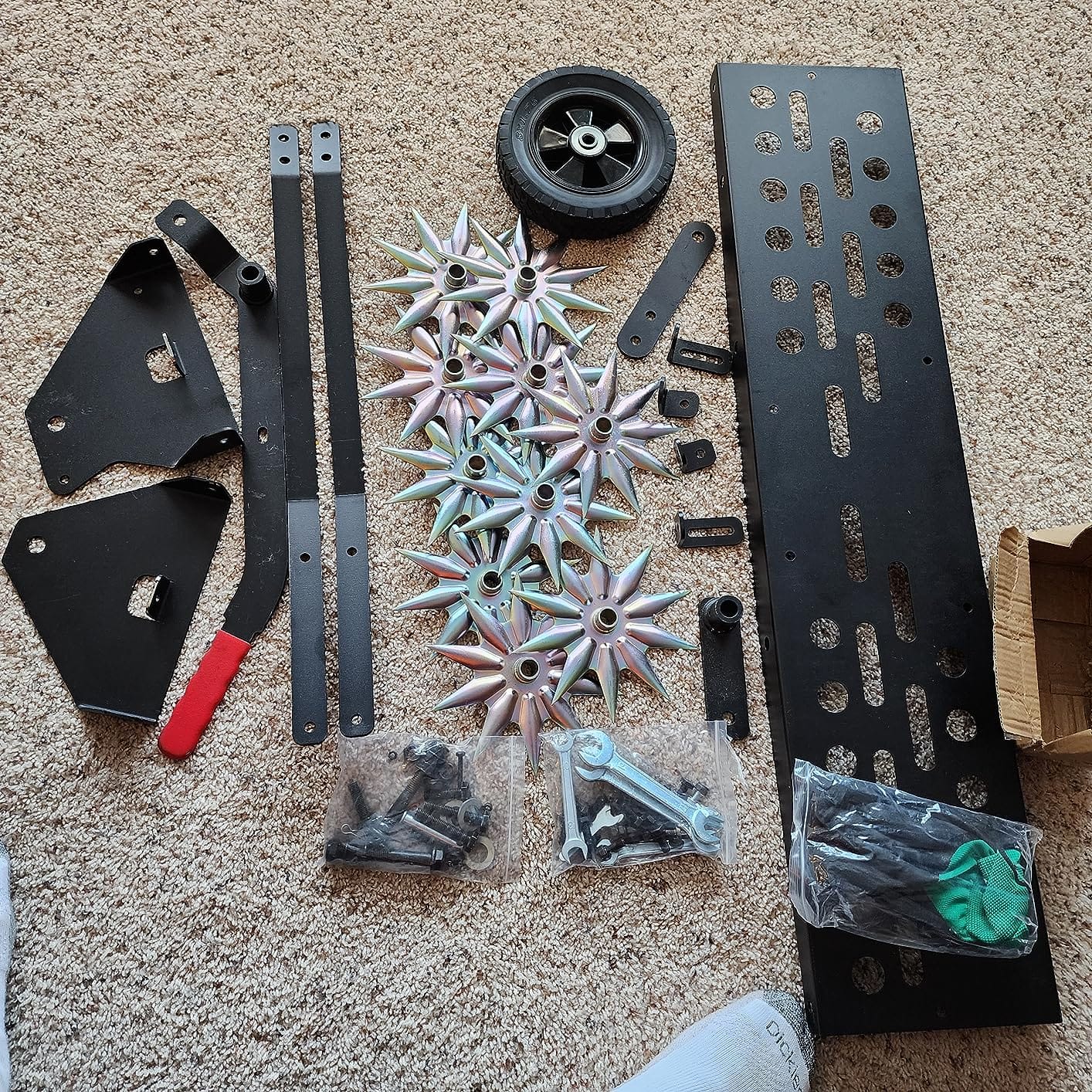
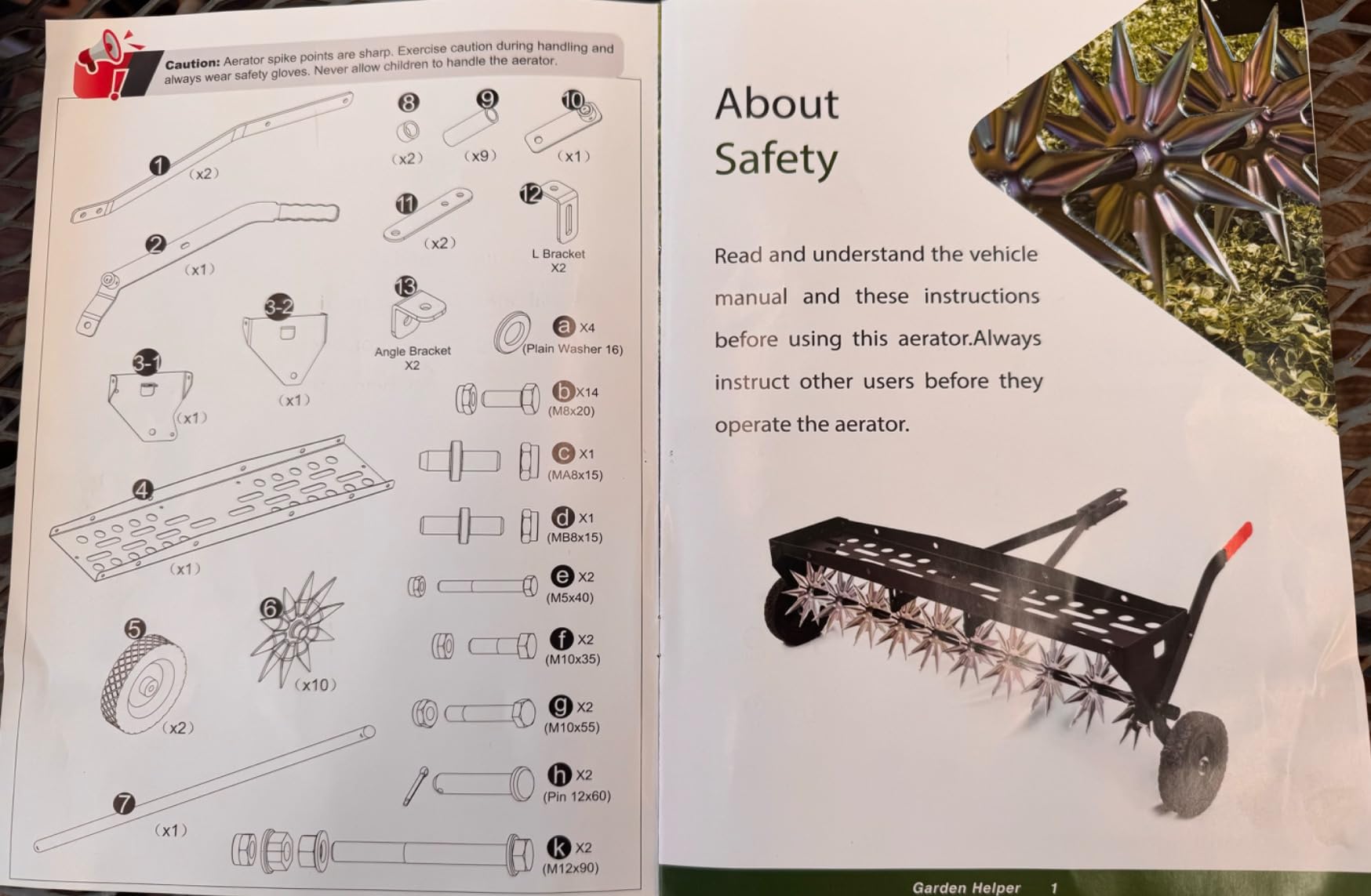
The 110 pound weight tray and thick channel-shape tow bar are stronger than the price of the machine suggests, and the powder-coat finish helps with rust through the wet seasons. Owners like the pictorial manual, which speeds up a build that would otherwise be trial and error.
Be honest about the limits. Some owners report flexible tow arms and bent spikes after striking rocks, and one report describes wheel bearings coming loose after a single use. Watering the lawn first softens the ground and dramatically improves bite.
Best for Renovation Workflows and Wet Soils
When the plan is renovation rather than maintenance, the combination of a pin hitch, no plugs to collect and a light frame is hard to beat. It is also cheap to run compared with hiring a service for the same pass.
Give the lawn a soak the day before. Owners who water first report far better spike penetration than those who go straight in on dry ground.
When Your Ground Is Rocky
Spike tips are the weak point on rocky acreage, and bent spikes or a bent tow arm will end your season early. This is a lawn and near-lawn machine, not a field machine.
The bearing issue is rare but worth a check after your first pass, before you trust it with a full property.
8. Brinly 48 Inch Tow Behind Plug Aerator – Best for Large Acreage
Brinly PA-482BH-A2 Tow Behind Plug Aerator with Universal Hitch, 48″, Matte Black
32 heat-treated spoons
3 inch plug depth
200 lb weight tray
Pros
- Largest ballast capacity in this group at 200 lb
- Four rotating tine sections keep passes consistent on turns
- Owners report 2 to 3 inch cores on hard soil with brick ballast
- Covers close to an acre in under an hour when weighted
Cons
- Weighs 82.8 lb and is awkward for one person to assemble
- Lift handle is hard to operate once the tray is loaded
- Unit sways with a full tray
The PA-482BH-A2 is the machine for a large property. It carries 32 heat-treated 16-gauge steel plugging spoons across a 48 inch width, removes plugs up to 3 inches deep, and sits on a fully enclosed weight tray rated for 200 pounds, the highest tray capacity of any machine in this roundup.
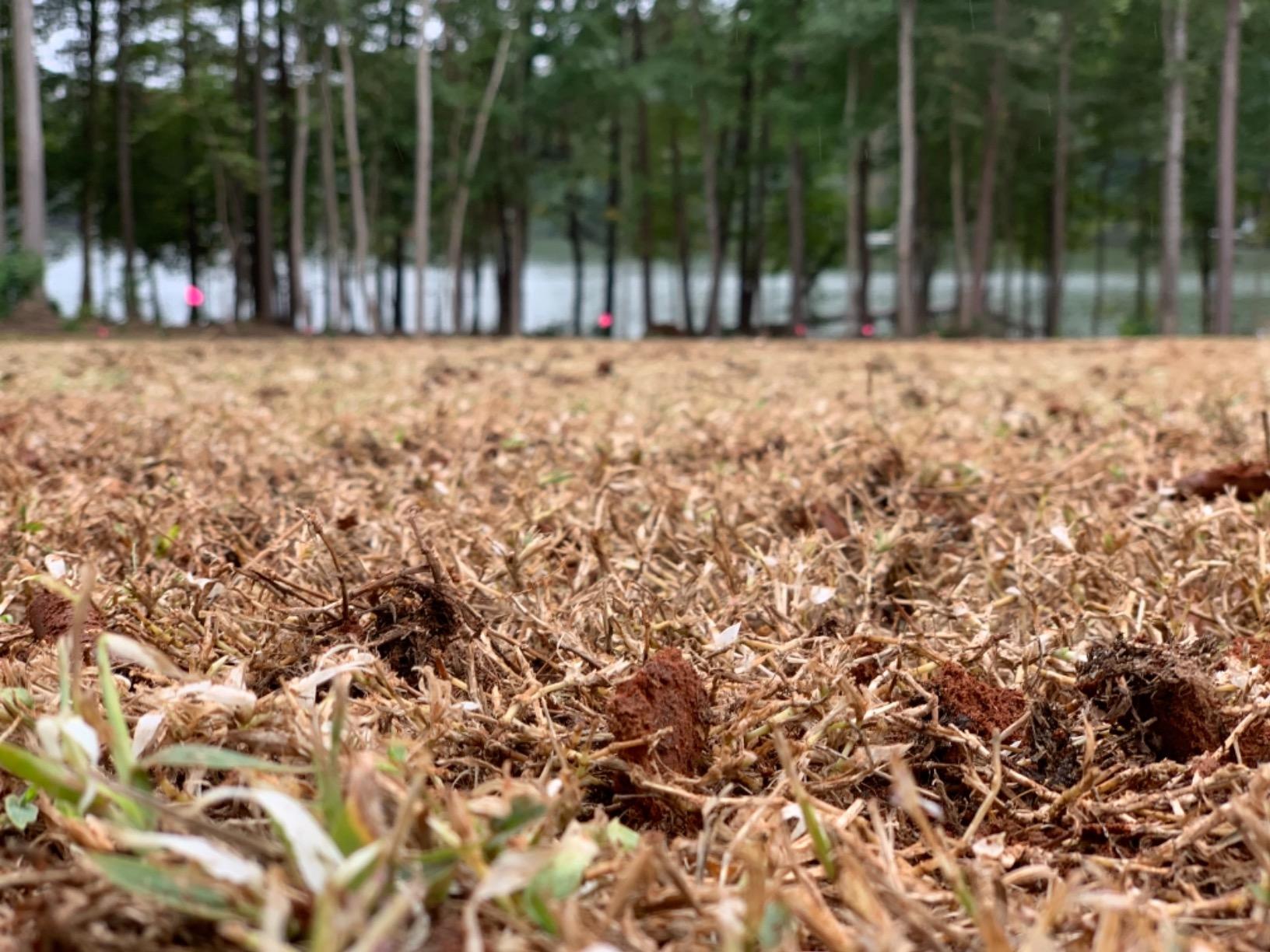
That tray capacity is the story. Owners loading brick ballast report pulling consistent 2 to 3 inch cores on hard soil, and covering close to an acre in under an hour once the machine is properly weighted. The four independently rotating welded tine sections keep the pull consistent through turns.
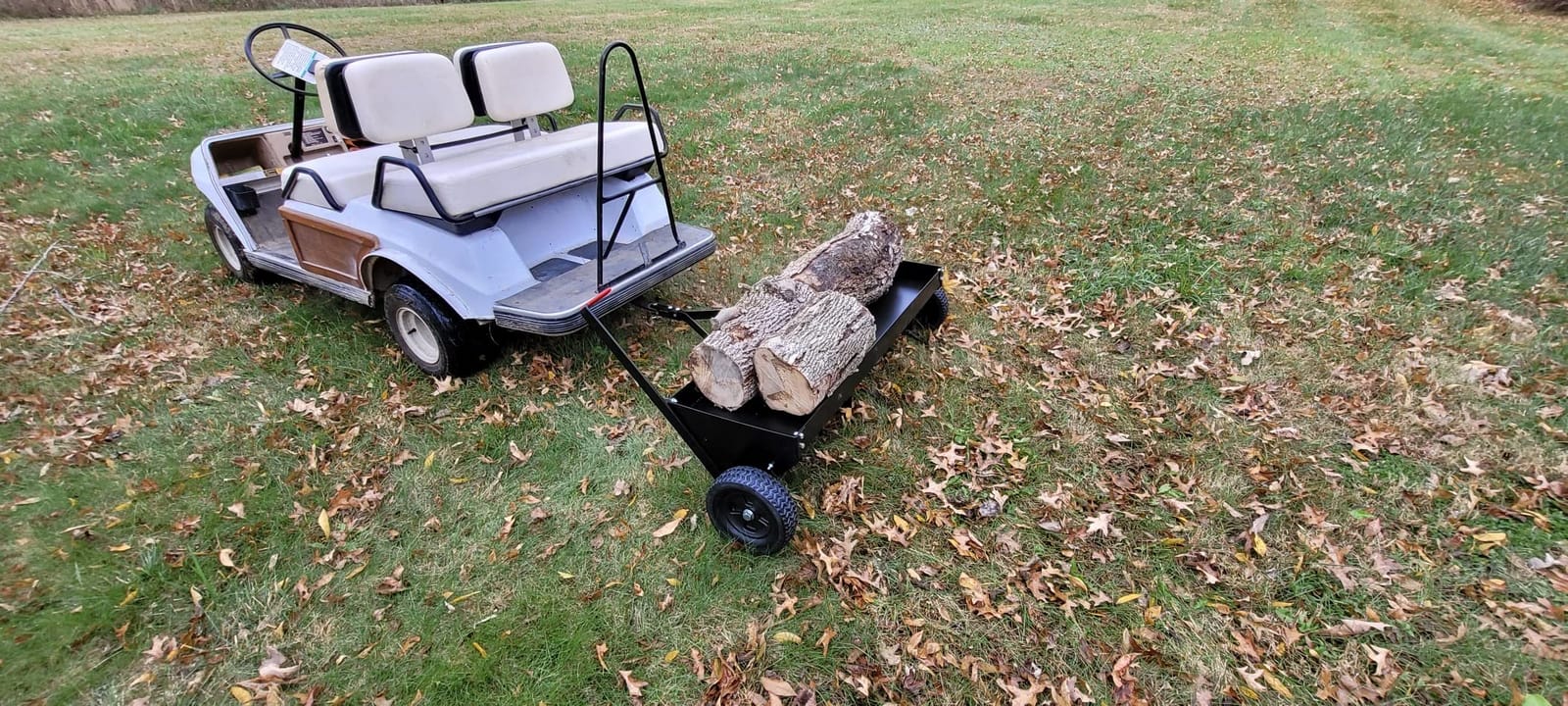
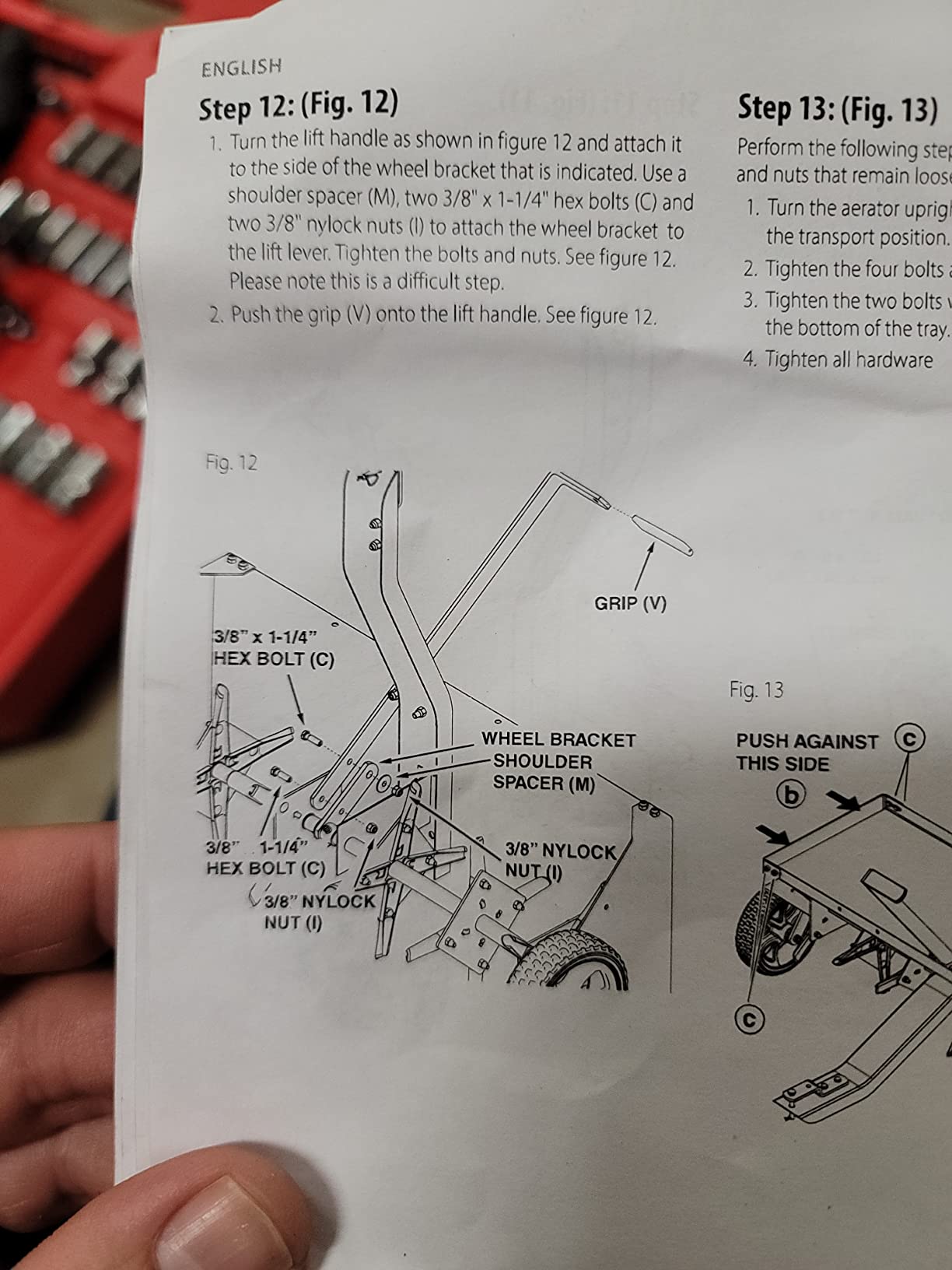
A single transport lever engages the 10 inch semi-pneumatic rubber tread tires, and the same single-pin universal hitch covers lawn tractors, most zero-turn mowers and ATVs. Instructions include callout notes that make assembly less painful than it sounds at this size.
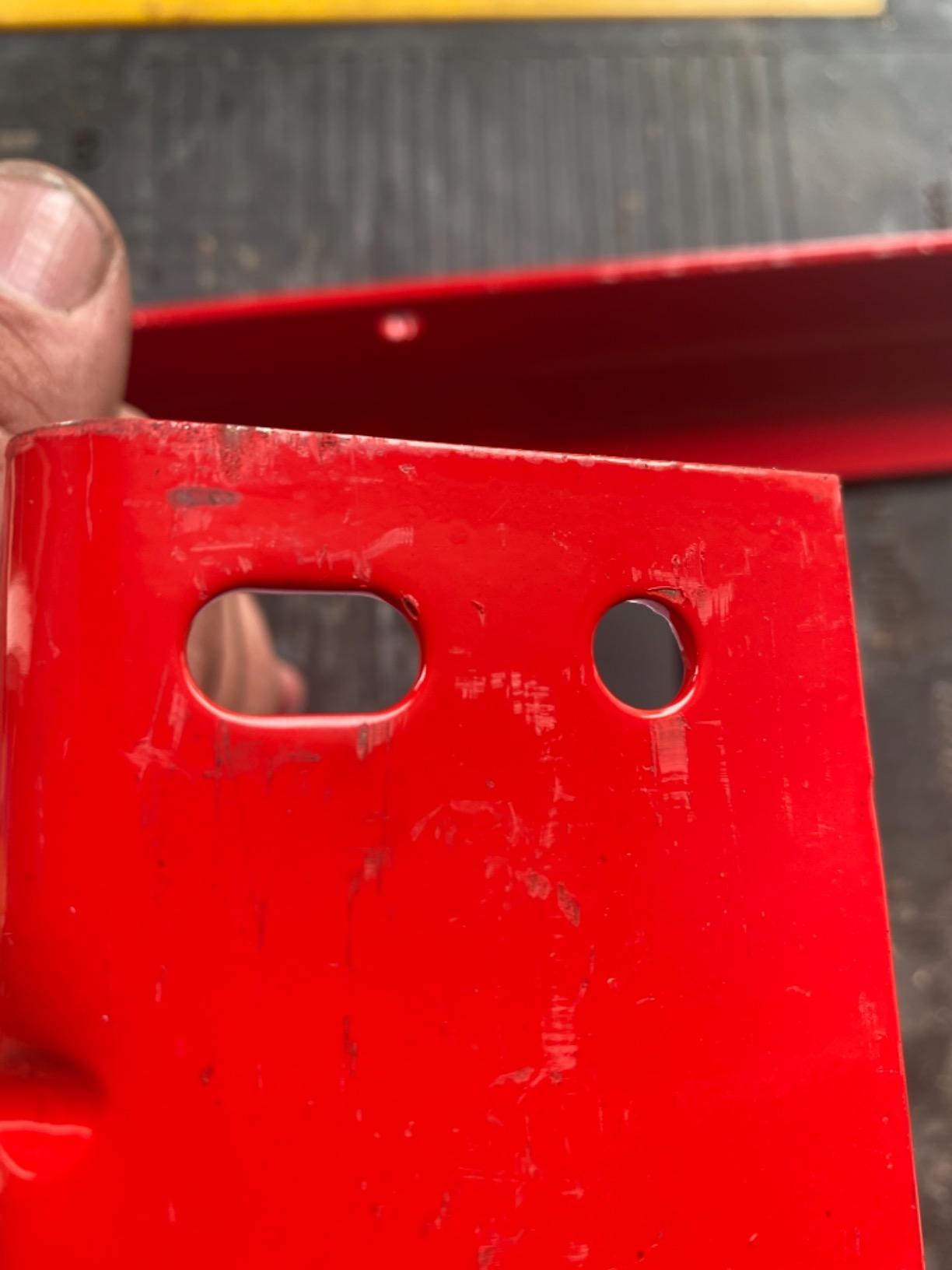
At 82.8 pounds it is a heavy lift for one person, and the practical issues show up once it is loaded. Owners report the lift handle becoming hard to operate with ballast aboard, some sway in the frame, and a few burred sheet metal holes that needed re-drilling.
Best for Multi-Acre Turf and Quarterly Work
Coverage rate is what you are buying here. Four rotating sections, a 48 inch width and a 200 pound tray mean a large property becomes a morning job rather than a weekend, and the wider weight capacity lets you match weight to soil conditions as they change.
If you overseed after aerating, the core pattern left behind is exactly what seed needs to reach.
When a Smaller Machine Is Smarter
Do the weight math carefully. 82.8 pounds plus 200 pounds of ballast is a serious tongue load, and an overloaded rear rack on a quad is a handling problem, not just a paperwork problem.
The lift handle difficulty and reported sway under load also mean this machine suits a confident operator rather than a first-time owner working alone.
9. CRAFTSMAN 40 Inch Tow Behind Plug Aerator – Best for Compact Storage
Craftsman 40 Inch Tow Behind Lawn Plug Aerator with 24 Galvanized Steel Coring Points and 140 lb Weight Tray
24 galvanized coring points
3 inch plug depth
140 lb weight tray
Pros
- 4.4 average rating with clean 3 inch cores
- Generous 140 lb tray for hard soil
- Flat-free tires avoid punctures
- Stores vertically against a wall
- Three-year limited warranty
Cons
- Weighs 78.8 lb
- Built under the Agri-Fab platform despite the CRAFTSMAN badge
Model CMXGZBF7124213 pulls 3 inch plugs with 24 galvanized steel coring points and carries a weight tray rated for 140 pounds. Its 4.4 average matches the Brinly 40, though across a much smaller pool of reviews.
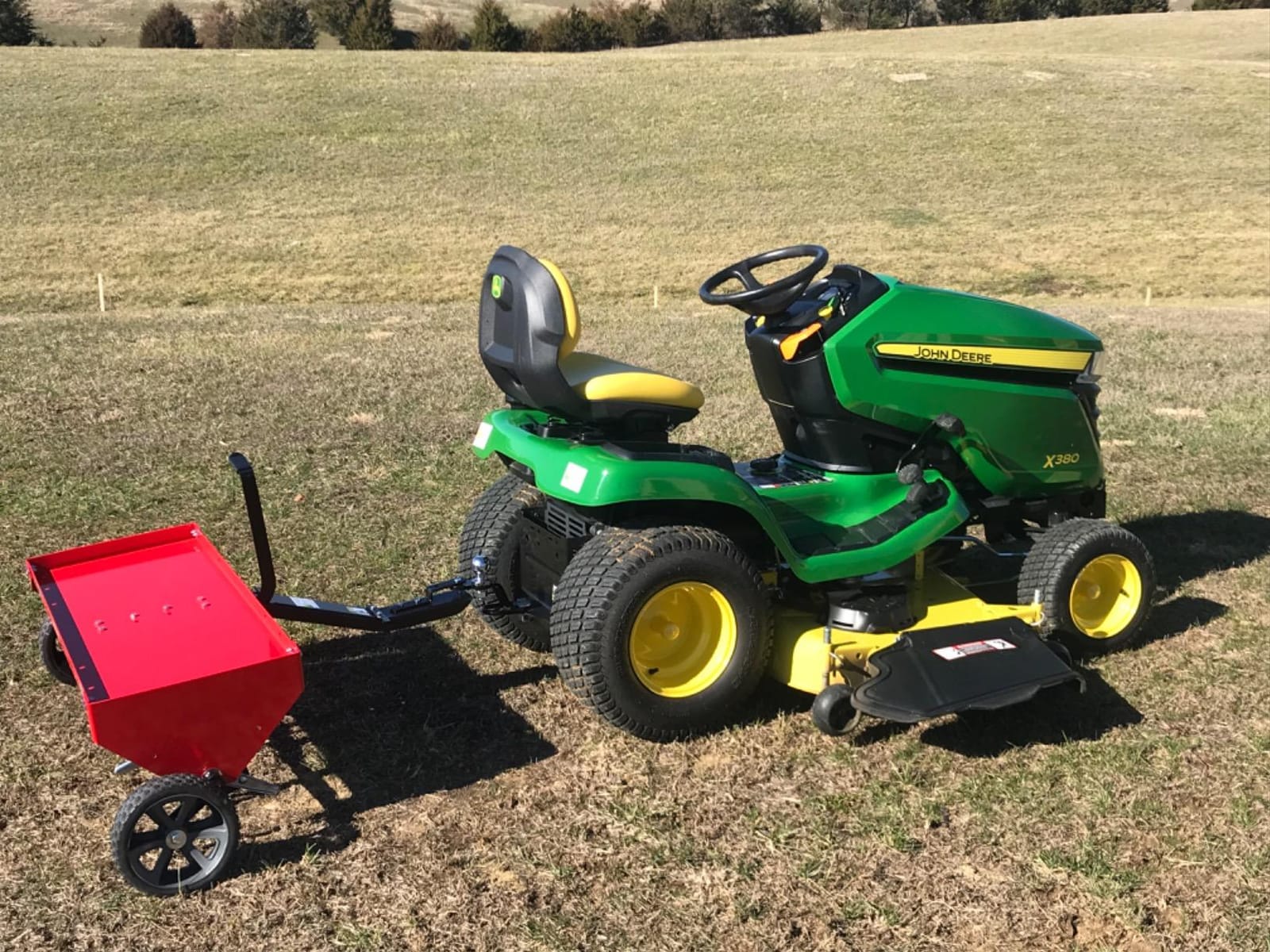
The detail that makes it a distinct choice is storage. The space-saving design stores vertically against a wall, and the lift handle release system is meant to make that changeover simple. In a small garage where a 94 pound 48 inch machine will not fit, that is a real advantage.
Flat-free tires mean no pressure checks between spring and fall, and the 140 pound tray is generous for a 40 inch machine. Owners highlight the depth of the cores and the amount of ballast the tray takes before you start adding more.
At 78.8 pounds it is still a substantial implement, and it is manufactured by Agri-Fab Inc. despite the red CRAFTSMAN badge. That is worth knowing if you buy parts or manuals later, because you will be looking for Agri-Fab documentation.
Best for Homeowners With a Garage and a 40 Inch Sweet Spot
If 40 inches is the width your property actually needs and vertical storage is the difference between owning an aerator and not owning one, this machine fits the situation unusually well. The warranty is three years and the tray takes heavy ballast.
It is also a good first core aerator, because 24 coring knives at 3 inch depth is a real treatment rather than a token pass.
When the Small Review Pool Gives You Pause
One hundred and twenty four reviews is thin, and a high average on a small pool means less than the same average across a thousand. Judge the machine on the specs, not the star number.
If you need the widest coverage or the biggest tray available, the Brinly 48 offers both, and it comes with more owner history to lean on.
10. Yard Tuff 36 Inch Drum Aerator – Best for Water Ballast Control
Yard Tuff Drum 36 Inch Wide Behind Lawn Mower ATV Yard Grass Aerator Roller with 78 Steel Spikes and 24 Gallon Water Holder for Gardening
36 inch drum with 78 steel spikes
24 gallon water holder
Penetrates 2.5 inches
Pros
- Only water-ballast format in the roundup
- Weight tuned by water instead of hauled bricks
- Punches holes without uprooting the turf
- Two drum grease points for smooth rolling
Cons
- Weighs 125 lb empty before you add water
- Turning too fast can pull up turf in corners
- Some shipments arrive with missing hardware
The Yard Tuff SE-40 is a drum aerator rather than a tine aerator, and it is the only water-ballast machine in this group. A 36 inch wide drum carries 78 steel spikes that permeate 2.5 inches of soil, and the drum holds up to 24 gallons of water for added ground contact.
That water reservoir is the whole appeal. Every other machine on this list takes cinder blocks, which means hauling weight to the field and back. Here you fill a hose, and penetration is tuned by how full the drum is, which makes seasonal adjustment almost free.
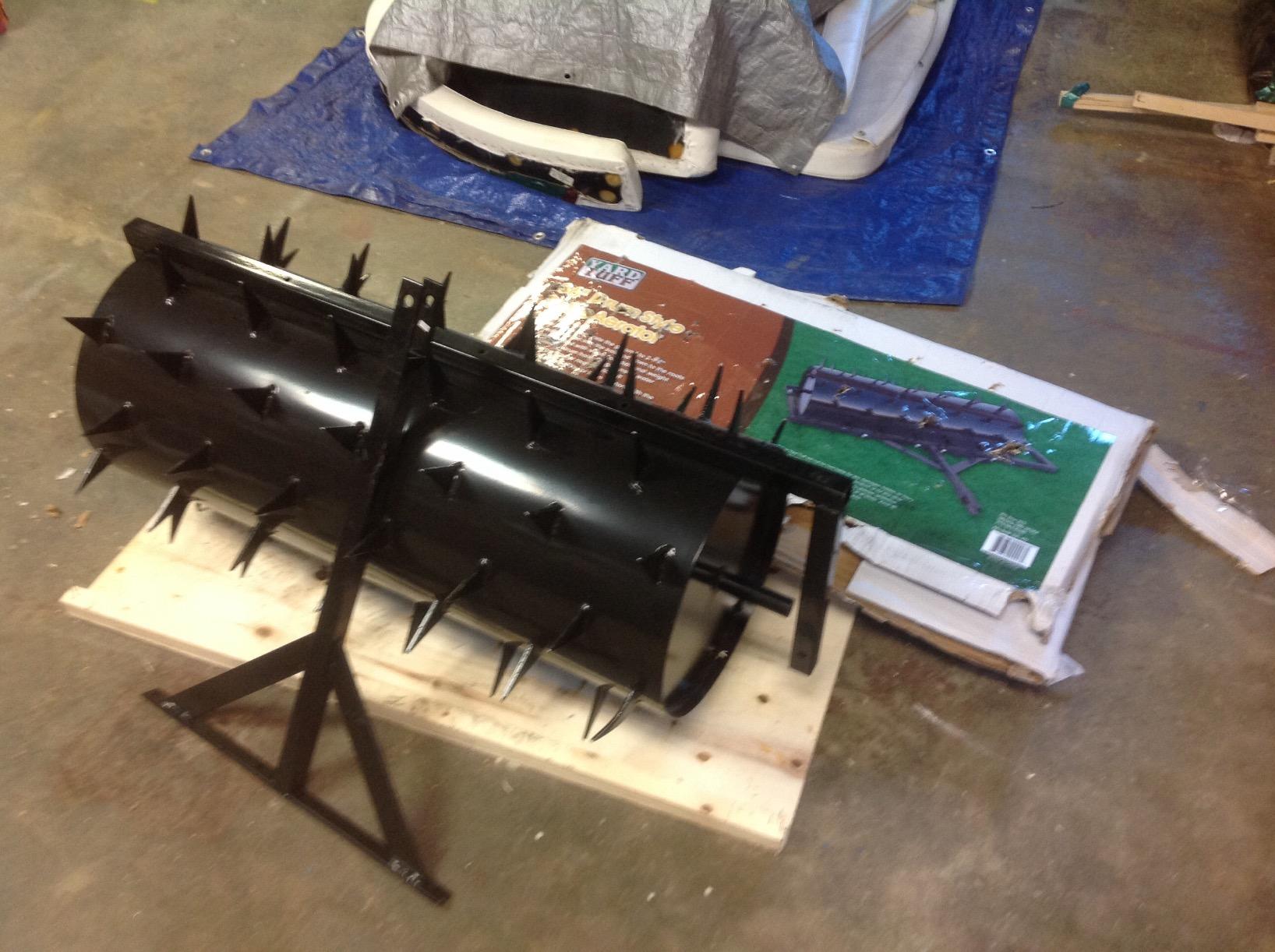
The manufacturer lists ride-on lawn mowers and all-terrain vehicles as compatible, so it hitches where you need it. Two grease points keep the drum rolling free, and owners like the fact that the spikes punch holes below the surface without uprooting the lawn.
It weighs 125 pounds empty before a single gallon goes in, and it needs an assembly step for the pulling arm before first use. Owners also caution that turning too fast in tight corners can pull up turf, and some have received crates with missing hardware.
Best for One-Pass Mowing and Aerating Workflows
Owners describe this as an implement you can use as part of a regular mowing routine rather than a once-a-year event. If the drum is rolled behind a mower on regular passes, the 36 inch width makes each session productive without a dedicated aeration day.
It is also gentle on turf damage, because the drum punches rather than lifts plugs.
When the Drum Is the Wrong Tool
If your problem is compacted clay, spikes that only punch will not remove material. Drum aerators manage surface thatch and encourage rooting; they do not relieve compaction the way hollow tines do.
The 125 pound empty weight and the need to haul it around are real trade-offs against a flat tray of cinder blocks on a lighter frame.
How to Choose a Tow Behind Aerator for an ATV
No competitor in the search results for this query covers this properly, and it decides whether your machine works or disappoints you at the fence line.
Know Your Tow Rating and Hitch Class First
An ATV is a secondary machine on an acreage property, and owners repeatedly debate on lawn and tractor forums whether their quad is even the right towing platform. The answer depends on two numbers in your owner’s manual: maximum tongue weight and tow rating.
Tongue weight is the downward force the implement puts through the hitch. A safe working figure is roughly 10 to 15 percent of your ATV’s rated tow capacity, which keeps the rear end planted over ruts. Owners on tractor forums troubleshoot weight-distributing hitches and ball-mount latching constantly, because getting this wrong is dangerous.
Ball Hitch vs Clevis Hitch vs Two Inch Receiver
Most tow behind aerators in this group ship with a single-pin universal hitch that drops onto a standard ball. The Brinly models name lawn tractors, most zero-turn mowers and ATVs on that same pin, which removes the guesswork when you are not sure what your bumper takes.
Clevis hitches and two inch receivers are less common on home aerators and more common on implements built for tractors. Before you buy anything, put a hand on your ATV’s hitch and compare the pin diameter and receiver width against the aerator’s hitch plate. A universal label on the box means it fits most machines, not all of them.
Plug, Spike, Drum or Slicing: Pick the Mechanism
A core or plug aerator uses hollow tines to remove plugs of soil, thatch and root, the only method that reduces compacted volume instead of pushing it aside. A spike aerator uses solid tines to punch holes and leaves the soil in place, which works on sand and light thatch but can worsen compaction in clay. A drum aerator spikes without lifting plugs and often carries water ballast. Slicing and deep-tine units use a different geometry again and sit in the contractor tier.
The decision tree is short: clay and traffic compaction means plug aerator. Sandy ground and immediate overseeding means spike. Weekly maintenance while you mow means drum.
Will It Actually Pull Cores? Weight, Tine Depth and Soil Moisture
Downward pressure is what forces hollow tines deep enough to pull a core, and the machine’s own weight is only the starting point. A 39.5 pound frame with a 110 pound tray and an 82.8 pound frame with a 200 pound tray are entirely different tools in the same field, and the tray number is the one to compare.
Soil moisture decides the rest. Ground that is soaked to the point of smearing collapses into slugs, and bone-dry ground will not yield a plug no matter how heavy the tray. Aim for the consistency of a wrung-out sponge, and irrigate a day ahead if you control the water.
Width, Ground Clearance and Rough Acreage
Working width is the most commonly cited satisfaction driver in owner feedback, because it sets how many passes a property takes. A 36 inch unit suits a large maintained lawn, 40 inches is the category’s sweet spot, and 48 inch units cut a multi-acre job down to a morning.
On rough ground, tire type matters more than width. Pneumatic and semi-pneumatic tires roll over ruts and gravel, while small solid wheels catch and can stop a pass dead.
Adding Ballast Weight Without Overloading the Hitch
Adding ballast is a three-step job. First, confirm implement plus ballast sits inside your ATV’s tongue weight and tow limits. Second, put a solid flat base in the tray so blocks do not rock and shed load off the tines. Third, add weight gradually and re-test a short pass.
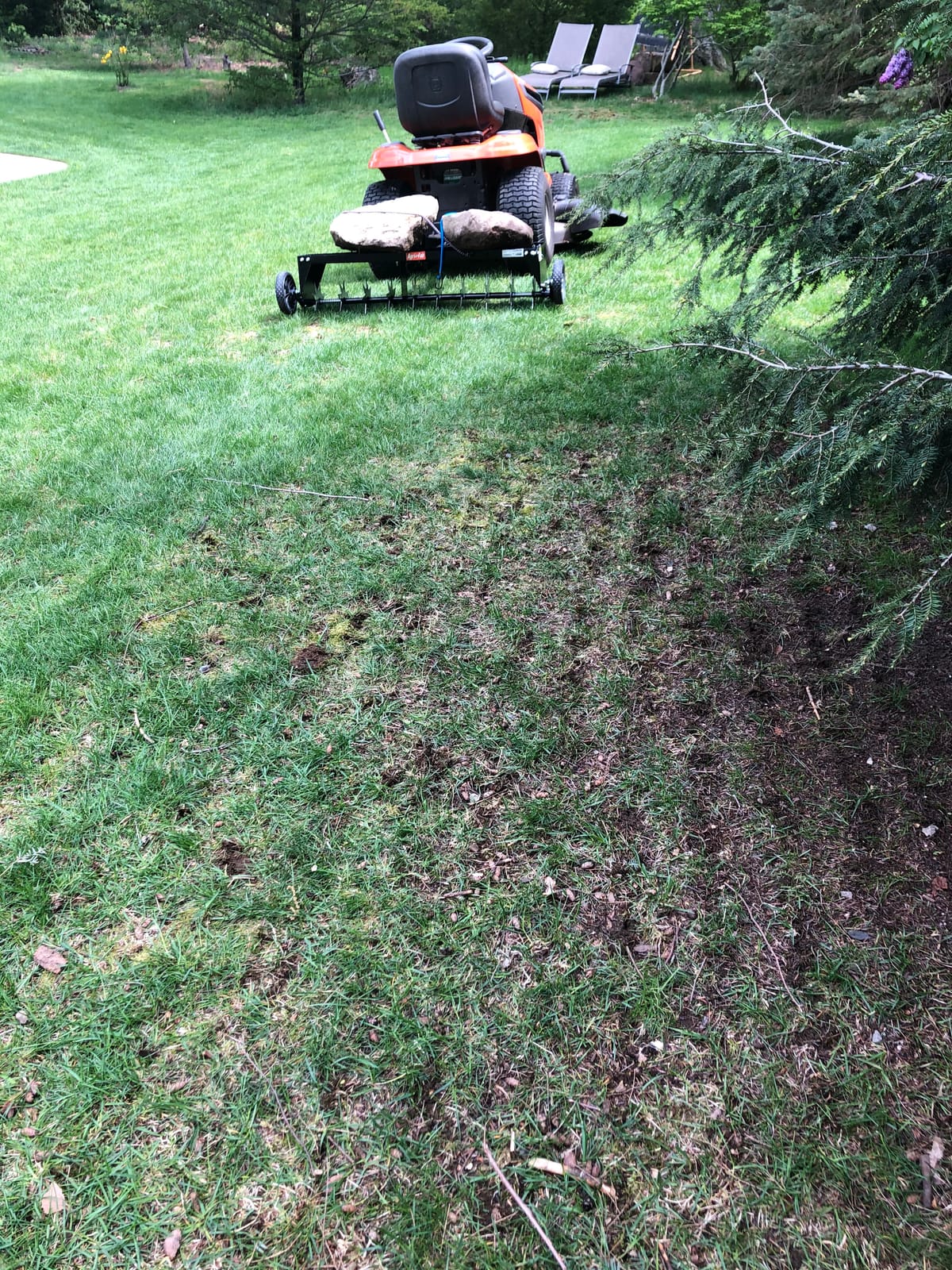
Owners across lawn forums describe the same practice, loading cinder blocks into trays and reporting 1 to 2 inches of extra penetration. It is the cheapest performance upgrade in this category, and the fastest way to overload a hitch that was never rated for it.
Transport Mode, Lift Levers and Hilly Ground
Nobody in the search results addresses transport mode, and it is a daily-use pain point on hilly acreage. A single lever that raises the tines lets you cross a driveway or gravel apron without tearing turf.
One operating limitation is worth knowing. A lawn owner notes that aerators do not aerate well in reverse because of tine geometry. Plan your route in one direction and avoid backing out of tight spots.
What to Do With the Cores Afterward
Core aeration leaves a mess, and every owner meets it on day one. Let the plugs dry for a day or two so they crumble, then mow over them at a higher setting to break them into the lawn. Do not rake or bag them, because the point is returning organic matter to the root zone.
Pairing the pass with immediate overseeding is what experienced owners recommend, and it is the strongest argument for a core aerator over a spike.
Renting vs Buying on a Once-a-Year Job
Rent vs buy is the most-engaged thread in this category, and nobody does the arithmetic. A rental solves a one-time job cleanly and removes storage and maintenance. If you aerate once a year on ground a ride-on covers, renting is usually smarter.
Buying wins once you have more ground than you want to walk, want paired spike and core units, or the passes become routine. Owners on tractor forums run a tow behind spike aerator, a de-thatcher and a core plug aerator, because each handles conditions the others cannot.
For more tow-behind tools sized for this work, our guide to tow behind brush mowers for fields covers the same width and ballast thinking, and our lawn aerator roundup for yards compares walk-behind options if your acreage is smaller than you thought.
Frequently Asked Questions
Which pull-behind aerator is the best?
The best pull-behind aerator is the one whose tine type matches your soil and whose weight tray is heavy enough for it. For compacted clay, a hollow-tine plug aerator with a 150 to 200 pound tray pulls real cores. For sandy ground, a spike aerator opens the surface with no cleanup. Width matters next: 40 inches suits most half-acre properties, while 48 inch units cut a multi-acre job down to a morning.
Will an ATV pull an aerator?
Yes, most ATVs can pull a tow-behind aerator, within limits. Check two numbers in your owner’s manual: the maximum tongue weight and the tow rating. A safe working tongue weight is roughly 10 to 15 percent of your rated tow capacity, and it must include the implement plus any ballast you add. Also confirm the hitch pin fits, since universal hitches mean most machines rather than all of them.
Which is better, a plug or spike aerator?
A plug aerator is better for relieving compacted soil because hollow tines physically remove plugs of soil, thatch and root, which reduces volume instead of pushing it aside. A spike aerator is better for sandy ground, light thatch and immediate overseeding, because solid tines punch holes and leave nothing to clean up. In heavy clay, repeated spike passes can compact the surface further rather than fixing it.
How much weight do you need on a pull behind an aerator?
Enough to press the hollow tines through the surface crust, and no more than your hitch can take. In practice owners add cinder blocks or bricks until penetration improves, typically filling a tray rated at 90 to 150 pounds on lighter machines. A 200 pound tray on a heavier frame pulls the deepest cores. Always check that implement plus ballast stays inside your ATV’s tongue weight limit before loading.
What are the most common lawn aeration mistakes?
The most common mistakes are aerating bone-dry ground or ground that is waterlogged, so the tines either will not penetrate or collapse into slugs. Running unweighted produces holes instead of cores. Aerating too early in spring or too late in fall wastes the window your lawn can actually use. Ignoring plugs afterward leaves a rough surface that never breaks down, and working in reverse pulls poor cores because of tine geometry, so plan passes in one direction.
Final Verdict: Which Tow Behind Aerator Should You Buy?
Which one should you buy? Start with the Agri-Fab 48 inch plug aerator if you want a single machine that covers most situations. It pulls plugs up to 3 inches deep across a 48 inch width and takes up to 175 pounds of ballast. Check your tongue weight first, load the tray properly, and it earns its place on the hitch.
If your property is smaller or your quad is lighter, the Brinly 40 inch plug aerator is the pick. Its rotating tine sections, semi-pneumatic tires and single-pin hitch that names ATVs explicitly suit quad work well.
If your soil is sandy and you want zero cleanup, any of the 40 inch spike aerators fits, and the Agri-Fab 45-0544 is the value option. For multi-acre turf, the Brinly 48 with its 200 pound tray covers the most ground in the fewest passes. For regular mow-and-aerate routines, the Yard Tuff drum tunes weight with water instead of hauled bricks.
Whichever one you pick, the machine matters less than the three things around it: soil moisture in the wrung-out-sponge range, a tray loaded as far as your hitch safely allows, and an immediate overseeding pass before the openings close. Get those right and the best tow behind aerators for ATVs stop being a purchase and start being a tool you reach for every season. This roundup was last checked in 2026, and we update it whenever a machine in the category changes. If you also need the quad cleared before you can reach the turf, our ATV snow plow guide covers the same hitch and load questions from the other end of the year.