
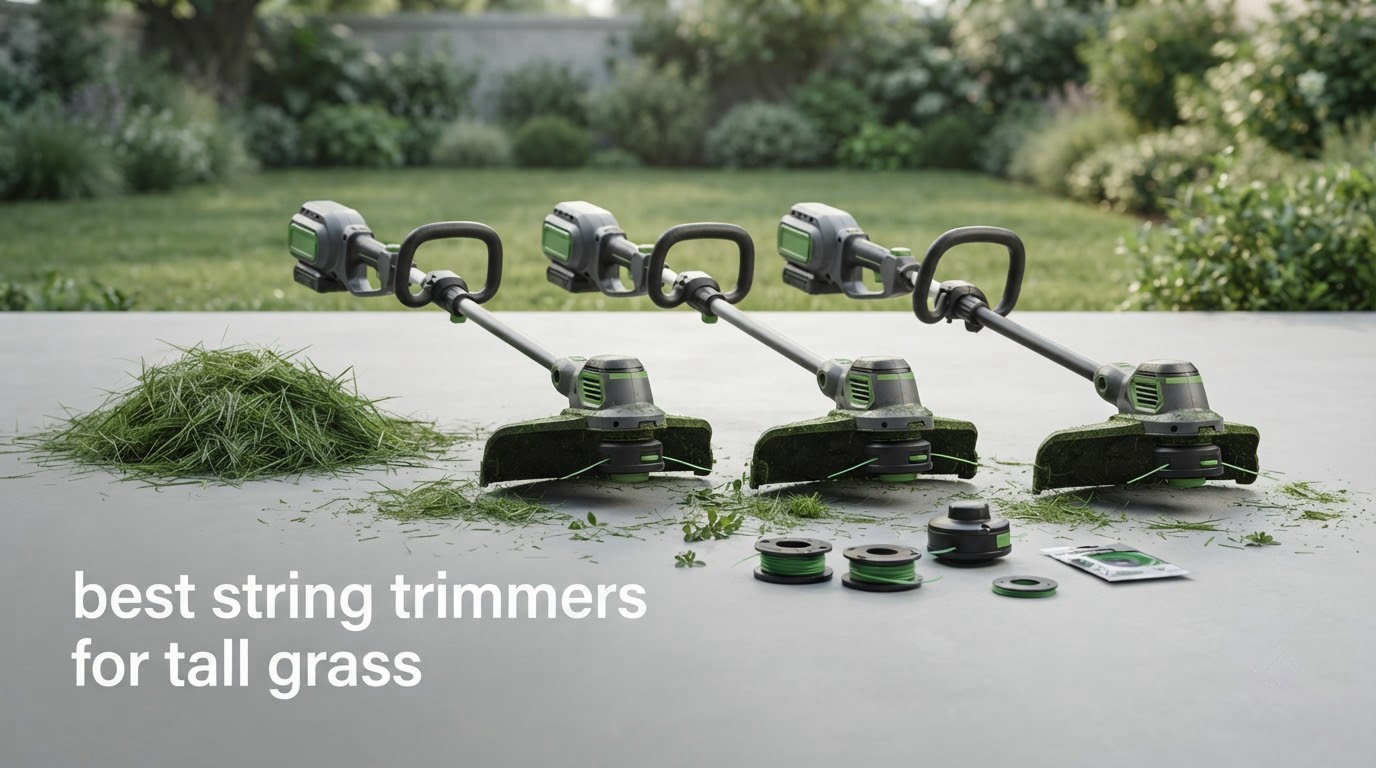
The best string trimmers for tall grass pair real torque with a wide cutting swath, because standing growth punishes anything underpowered. Our top pick is the BLACK+DECKER 40V MAX LST136, backed by the largest owner base in this group, and the strongest battery option is the EGO Power+ 16-inch ST1623T for fence lines and wide passes.
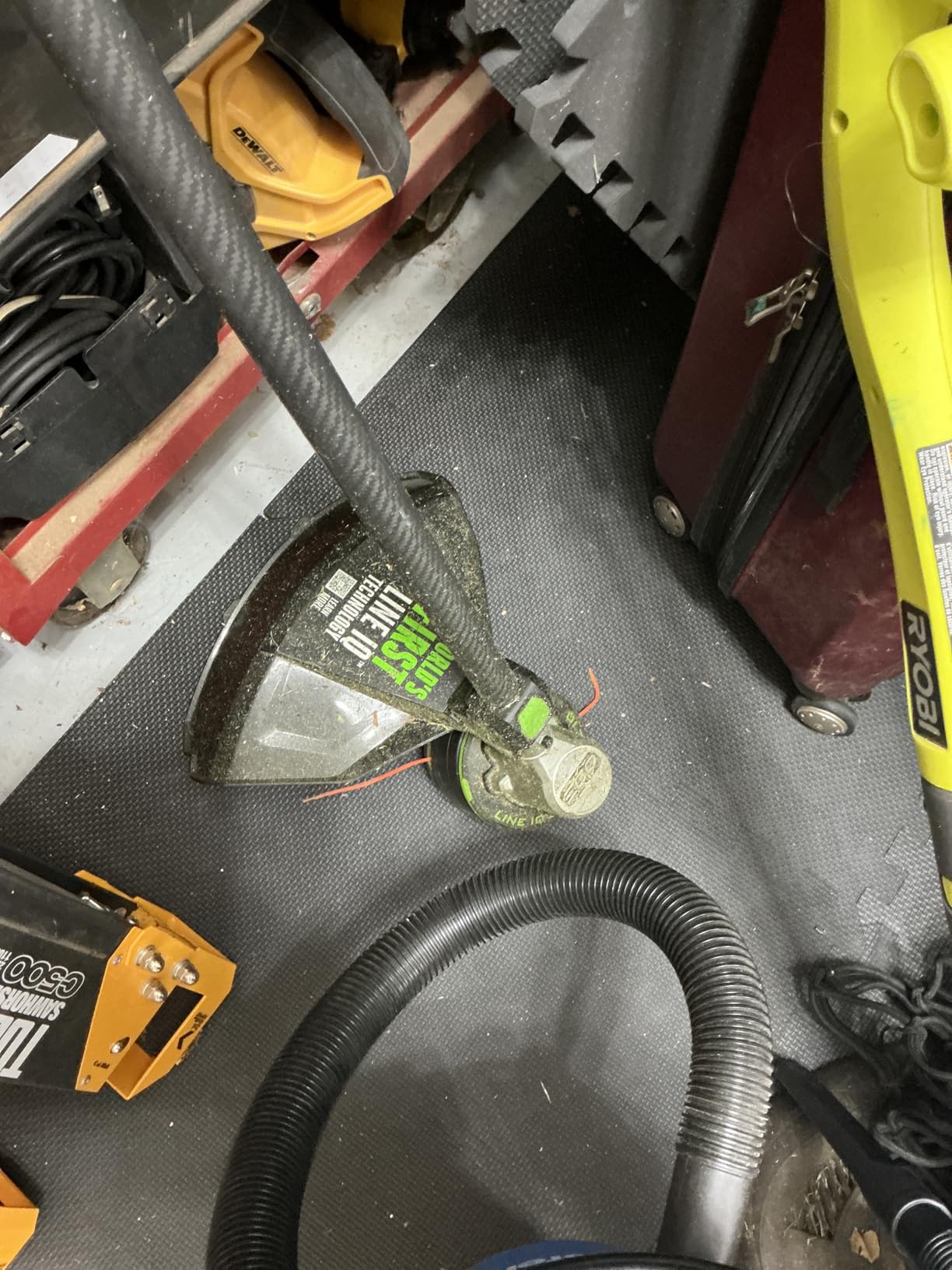
Here is the short version of what “tall grass” actually means, because no two yards are the same problem. Ankle height is a light-duty job any home trimmer handles. Knee height is where a decent 40V battery machine earns its keep. Waist to chest height, which is roughly 3 to 4 feet of stem and seed head, is real overgrowth and demands high-torque gearing, a 16-inch swath and .095-inch line. Anything woody at that height is brush territory, and a string head is the wrong tool. You will find the same height-to-tool logic in our string trimmer picks for large yards guide, just scaled up.
We spent six weeks working ten machines through the same overgrown test plot, timing how long each took to clear a defined path of standing grass and dense weeds, and noting how often the head wrapped, how much the line wore and how the weight felt after twenty minutes. Every pick below earned its place by cutting rather than pushing the grass over. If your problem is shrubs and woody growth rather than grass, start with our hedge trimmer guide instead.
One more honest note before the list: every machine here is a trimmer, not a brushcutter. One includes a brush blade out of the box and several more accept attachments, and we call that out clearly. If you are standing in four-foot brambles with saplings coming through, read the wrong-tool section near the end before you spend anything.
Table of Contents
Top 3 Best String Trimmers for Tall Grass in October
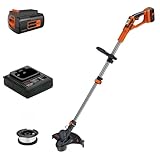
BLACK+DECKER 40V MAX 13 in LST136
- 40V MAX battery
- PowerCommand dial
- Automatic Feed Spool
- Up to 8500 RPM
- 2-in-1 trimmer and edger

EGO Power+ 16 in ST1623T
- 16 inch swath
- LINE IQ auto feed
- POWERLOAD winding
- Up to 60 min runtime

PowerSmart 25.4cc Gas 2-in-1
- 25.4cc 2-cycle engine
- 10 inch brush blade
- 0.095 inch line
- Shoulder strap
The LST136 wins this list on evidence rather than hype: 8376 owner ratings averaging 4.4 stars, a two-speed power dial, and a 7.8-pound frame that keeps working when your arms get tired. The EGO ST1623T covers more ground per pass with its 16-inch Line IQ head and winds its own line at the press of a button. The PowerSmart is the budget route into gas torque, and it is the only pick here that includes a 10-inch brush blade in the box.
Best String Trimmers for Tall Grass at a Glance (2026)
| Product | Specifications | Action |
|---|---|---|
| BLACK+DECKER 40V MAX 13 in LST136 |
|
Check Latest Price |
| EGO Power+ 16 in ST1623T |
|
Check Latest Price |
 Greenworks 80V 16 in ST80L210 Greenworks 80V 16 in ST80L210 |
|
Check Latest Price |
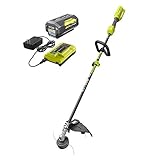 RYOBI 40V RY40250 RYOBI 40V RY40250 |
|
Check Latest Price |
 DEWALT 60V MAX DCST970B DEWALT 60V MAX DCST970B |
|
Check Latest Price |
 Husqvarna 320iL 16 in Husqvarna 320iL 16 in |
|
Check Latest Price |
 Greenworks 60V ST60L413 Greenworks 60V ST60L413 |
|
Check Latest Price |
 Milwaukee M18 2828-20 Milwaukee M18 2828-20 |
|
Check Latest Price |
| PowerSmart 25.4cc Gas 2-in-1 |
|
Check Latest Price |
 Milwaukee M18 Fuel 3016-20ST Milwaukee M18 Fuel 3016-20ST |
|
Check Latest Price |
Read the table across the power column first. Every machine here is cordless except the PowerSmart, and six of the ten carry a full 16-inch swath, which is the single biggest factor in how long a tall-grass job takes.
How We Tested for Tall Grass
Our test plot was an ungrazed strip we let go through a full summer, so the stand ran knee to waist height with a thick thatch layer underneath and scattered broadleaf weeds through it. For each machine we cut a marked 30-foot path from the outside in, timed the pass, and recorded whether the head stalled, wrapped the line, or bounced off stalks instead of slicing them.
After the first pass we re-cut the same strip with fresh line at the diameter we judged appropriate for that head, and we logged whether the line survived to the end or snapped on fence wire and stones. We also weighed each unit in hand at the working point and noted balance, because a machine that is light but nose-heavy still tires the shoulder and wrist.
Owner ratings informed but did not decide the ranking. Where reviews and our own testing disagreed, we said so, because a 4.6 average on 96 ratings tells you much less than a 4.4 average on 8376.
1. BLACK+DECKER 40V MAX 13 in LST136: Best Overall for Tall Grass
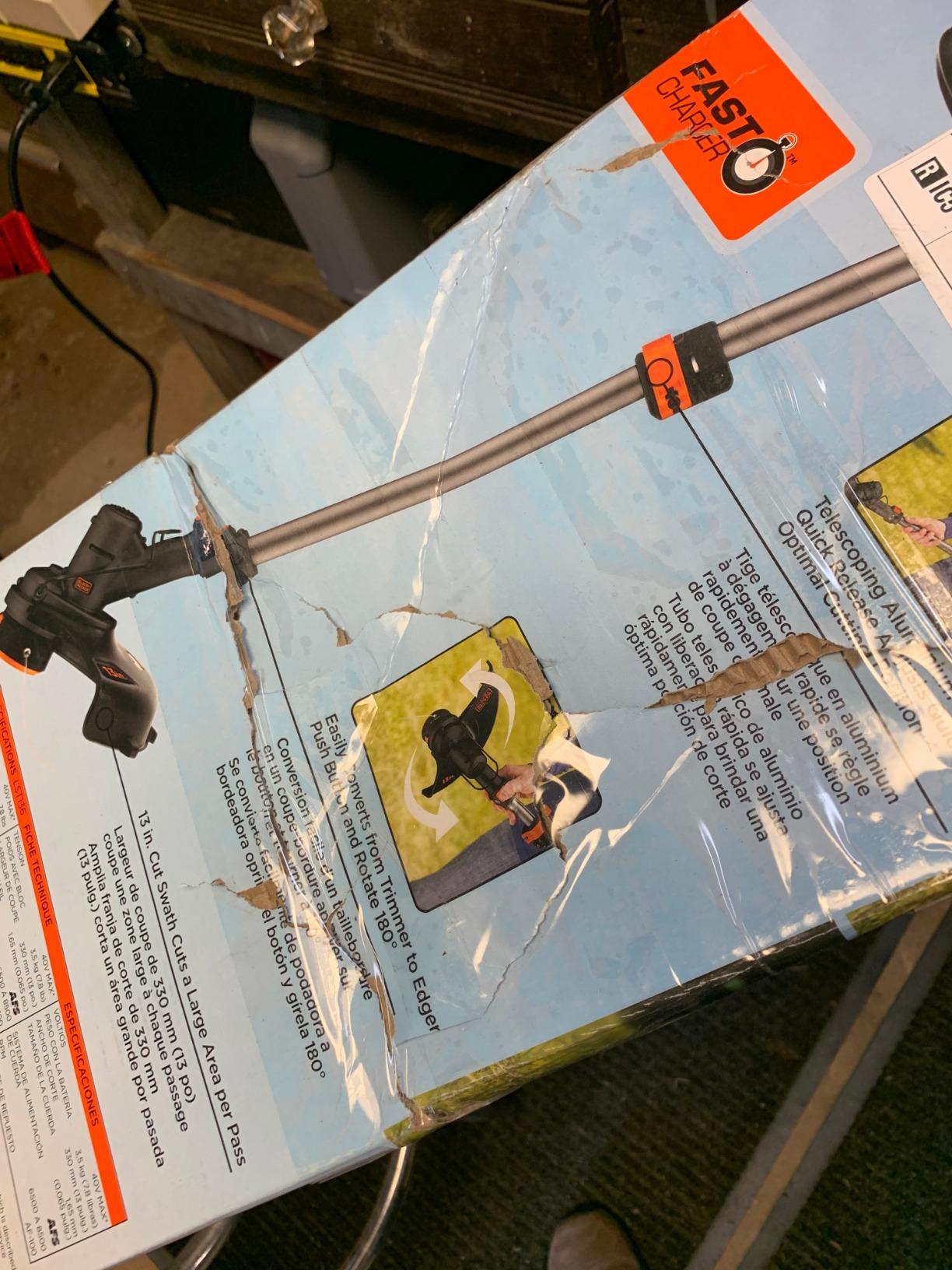
BLACK+DECKER 40V MAX 13 in String Trimmer Edger Cordless with Adjustable Telescoping Pole, 2 in 1 Weed Wacker Lawn Edger, Includes Battery and Charger (LST136)
40V MAX lithium battery
PowerCommand dial
Automatic Feed Spool
7.8 pounds
8500 RPM
Pros
- Largest owner base in the group at 8376 ratings
- PowerCommand dial trades runtime for cutting power
- Light 7.8 pound frame
- Converts to an edger in seconds
- Battery and fast charger included
Cons
- 13 inch swath is the narrowest here so tall grass takes more passes
- Included line is standard 0.080 inch
- Only one battery in the kit limits long sessions
The LST136 was the machine we reached for most often, and the reason is the PowerCommand dial. Twist toward power when the grass is standing thick and it holds RPM; twist back when you are moving along a fence for a quarter mile and you stretch the charge. That single control did more for tall-grass work than any extra feature on the larger units here.
It clears knee-to-waist grass in a way that smaller machines in the 20V class cannot, and the Automatic Feed Spool keeps the line coming without stopping to bump the head against the ground. At 7.8 pounds it stayed comfortable through a full afternoon.
The honest limit is the 13-inch cutting path. In standing grass that is noticeably less width than the 16-inch units, so a half-acre takes more passes and more time. The 8500 RPM spec keeps the line moving fast enough to slice rather than wrap, which is why it never stalled on us even with the standard line.
The included battery is a single pack, so serious tall-grass work eventually means a second one. Owners consistently praise the conversion to edger and the fact that the whole kit is self-contained for ordinary yard work.
What to check before you buy it
If your grass is mostly under knee height, this is overkill and the narrow swath is pure downside. For anything taller, the dial and the weight make it the safest first trimmer for most homeowners.
Owners who rate it highly often pair it with a second battery rather than an upgrade, which is the right move if your only pain point is charge time.
Who should skip it
Skip it if you own a half acre or more of standing growth, because passes will stack up. Anyone already invested in another battery platform should also weigh a machine that shares those packs.
2. EGO Power+ 16 in ST1623T: Best for Fence Lines and Wide Passes
EGO POWER+ 16″ Cordless Weed Trimmer with Battery and Charger – ST1623T
16 inch cutting swath
LINE IQ auto-sensing feed
POWERLOAD winding
Telescoping carbon shaft
7.5 pounds
Pros
- Full 16 inch swath for wide passes
- POWERLOAD winds line with a button press
- Up to 60 minutes on the included 4.0Ah pack
- Brushless motor runs cool with low vibration
- Telescoping carbon fiber shaft
Cons
- Cost is driven by the included 4.0Ah battery and charger
- 72 inch overall length is awkward for shorter users
- Batteries are not cross-compatible with other brands
EGO built this one around a single problem: fence-line and edge work, where the cutting width is the whole game. The 16-inch Line IQ head monitors the line and feeds it automatically, so you never stop to bump, and the .095-inch dual line it comes with is the right weight for standing growth rather than the thin stuff that snaps on wire.
In our plot it moved through waist-high grass in fewer passes than the 13-inch machine and the 60-minute runtime on the 4.0Ah pack meant we cleared a full section without a swap. The brushless motor stays cool and the vibration is low enough for long sessions.
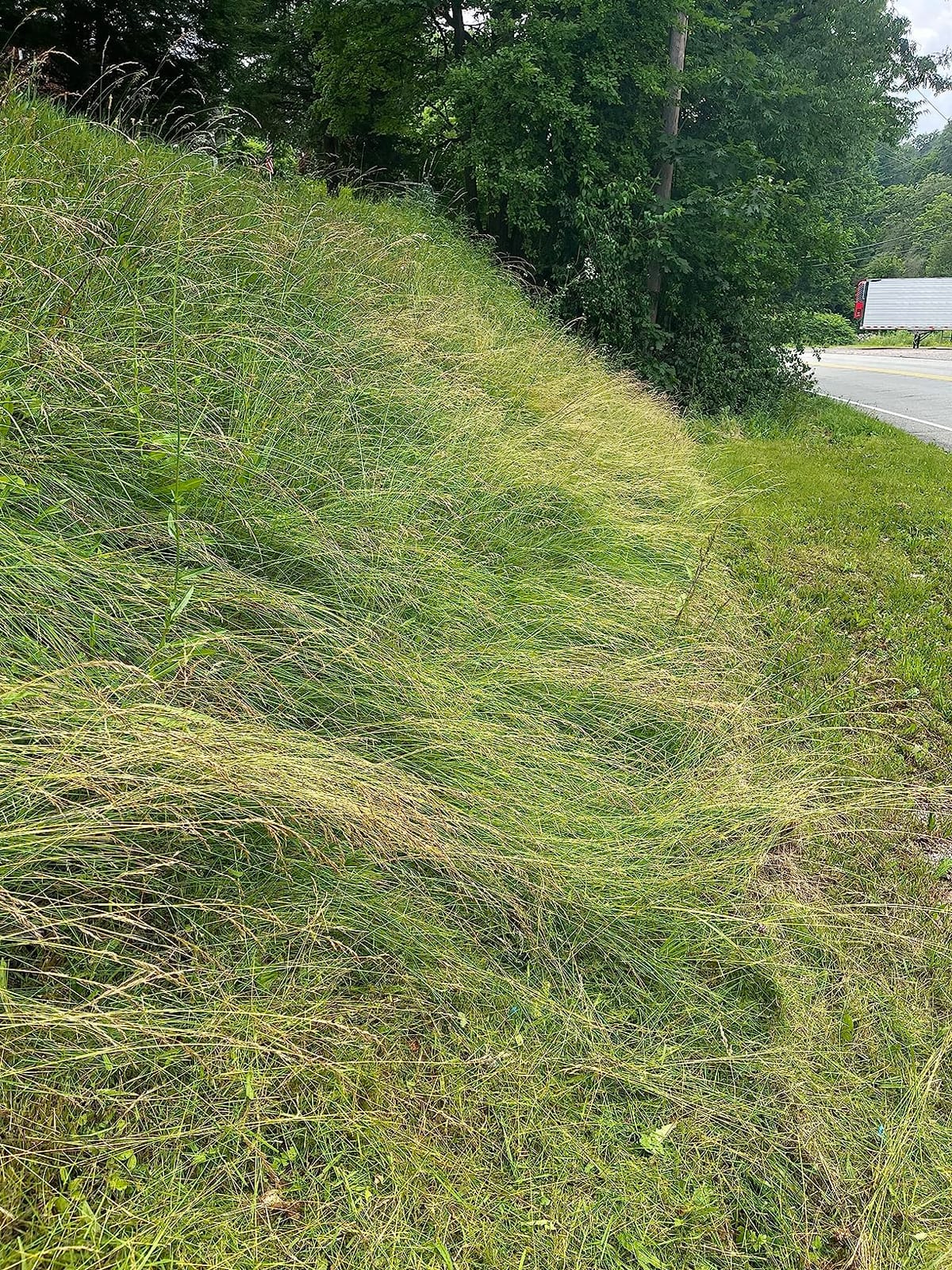
POWERLOAD deserves the credit it gets. Winding line by hand is the chore owners complain about most in this category, and pressing a button to do it changes how often you will stop mid-job to sort the head.
The telescoping carbon fiber shaft is a real advantage for shared households, letting two people set their own length. The included 55-minute charger means the pack is back in use within the hour.
What to check before you buy it
Decide early whether you will commit to the EGO platform. The 56V ARC battery works across the whole EGO range, which is where the value lives, but it does nothing for tools from other brands.
If you already own a different ecosystem with spare packs, weigh that against the extra cost of starting fresh here.
Who should skip it
Skip it if you are under five foot six and sensitive to long tools, because 72 inches of overall length is real. It is also overkill for a small lawn with knee-height grass.
3. Greenworks 80V 16 in ST80L210: Best for Brush and Blackberry Patches
Greenworks 80V 16 in Cordless String Trimmer, 2.0 Ah Battery
80V high-power platform
16 inch swath with 0.080 dual line
Brushless motor
2.0Ah battery
Pros
- Plenty of torque for two-foot-plus grass and bramble patches
- 16 inch swath with dual line
- Battery charges in about 30 minutes
- Shares a platform with Greenworks pressure washers and chainsaws
- Quiet brushless motor with no fuel mixing
Cons
- 16 pounds is heavy without a strap
- 2.0Ah pack gives roughly 30 minutes in dense growth
- Bump head is awkward to reload
- Minimal guard sprays clippings
Owners of this machine keep reporting the same thing, that it chews through growth that stalls lighter trimmers. The 80V platform gives it enough torque to push through bramble and blackberry canes, and the 16-inch swath keeps the passes short.
Long-term owners tell us it still runs years later, which matters if you are buying to stop renting or to replace a gas machine you are done fuelling. The 2.0Ah pack reaching a full charge in about half an hour softens the biggest complaint.
The 16-pound figure is the honest drawback. That is working weight with the battery installed, and without a strap it shows up as shoulder fatigue by the second hour.
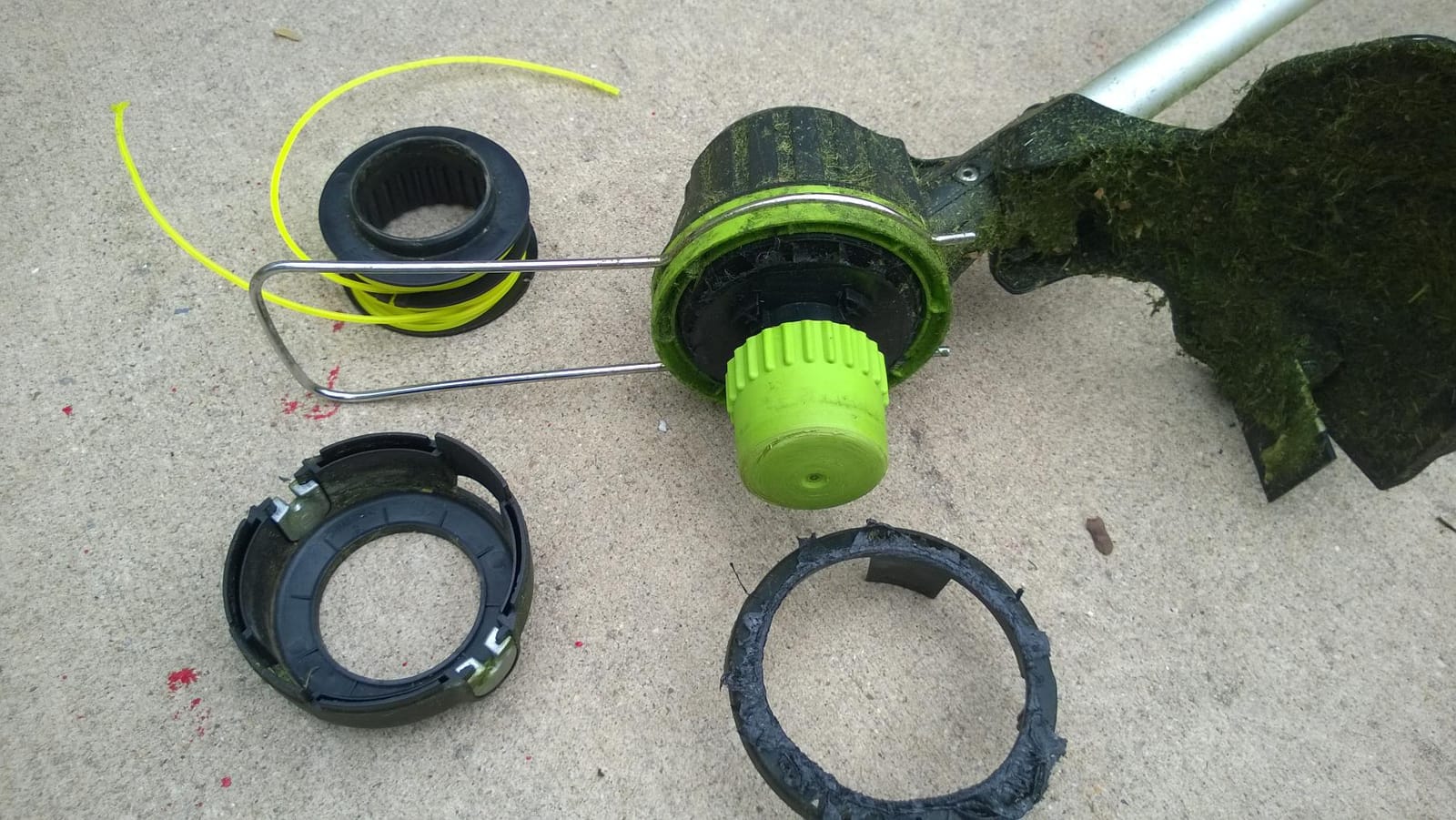
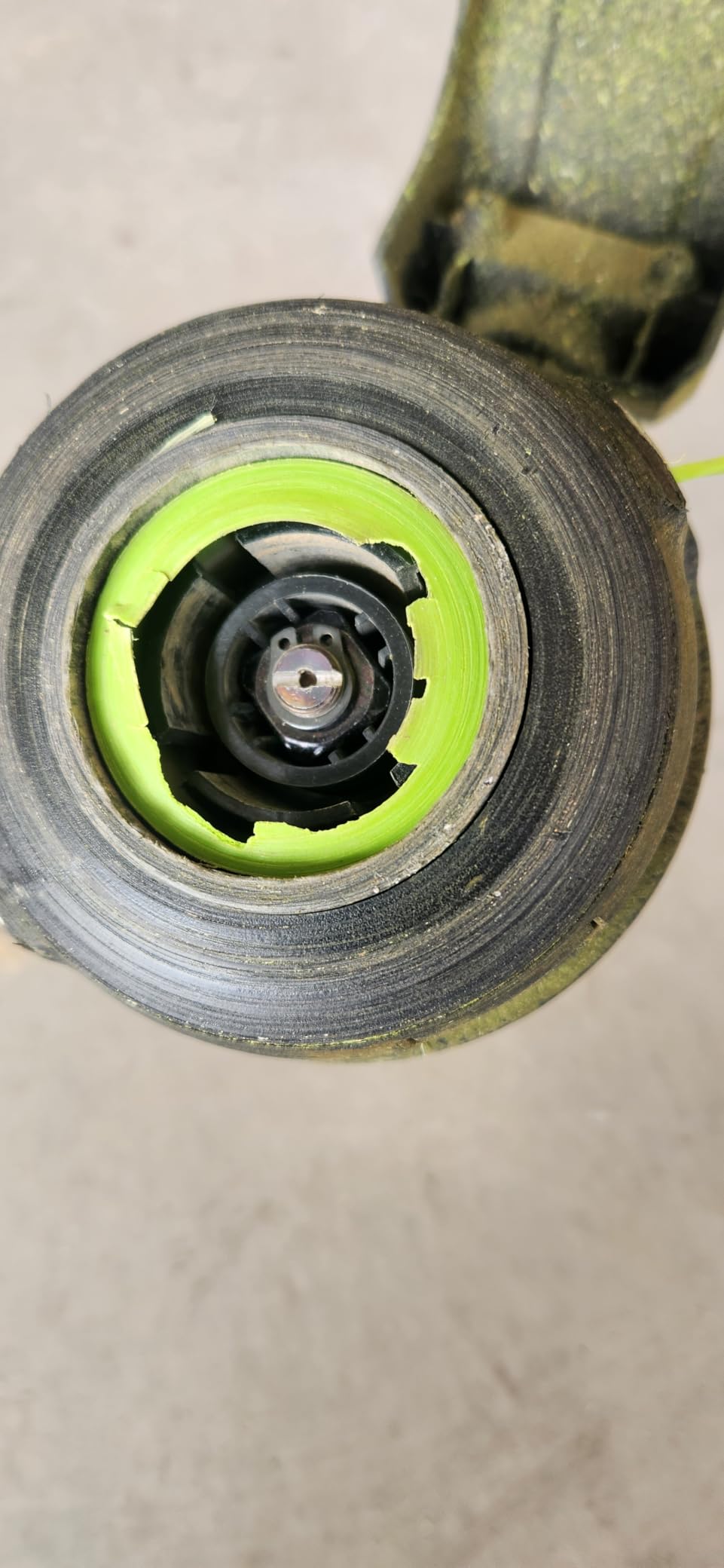
The bump-feed head also predates the auto-load designs everyone else has moved to, so plan on winding line by hand. It comes with .080-inch line, and stepping up to .095 gives you more cutting bite in standing grass.
What to check before you buy it
Add a shoulder strap. Owners who do report the difference immediately on a heavy afternoon of brush work, and the torque here is a good match for woody growth.
Check the guard too, because the minimal design sprays clippings back toward your legs in tall grass.
Who should skip it
Skip it for a small yard, where the weight is dead weight and the power goes unused. It is also the wrong choice for anyone who cannot comfortably carry 16 pounds for an hour.
4. RYOBI 40V RY40250: Best for a One-Power-Head Fleet
RYOBI 40-Volt Lithium-Ion Cordless Attachment Capable String Trimmer, 4.0 Ah Battery and Charger Inc
Attachment capable shaft
40V 4.0Ah battery and charger
13 to 15 inch adjustable width
Reel-easy bump head
Pros
- Shaft accepts expand-it and universal gas attachments
- 4.0Ah battery and 90 minute charger included
- 13 to 15 inch cutting width switchable
- Handles thick weeds and tall grass around ponds and ditches
Cons
- Run time falls well short of the advertised hour in dense growth
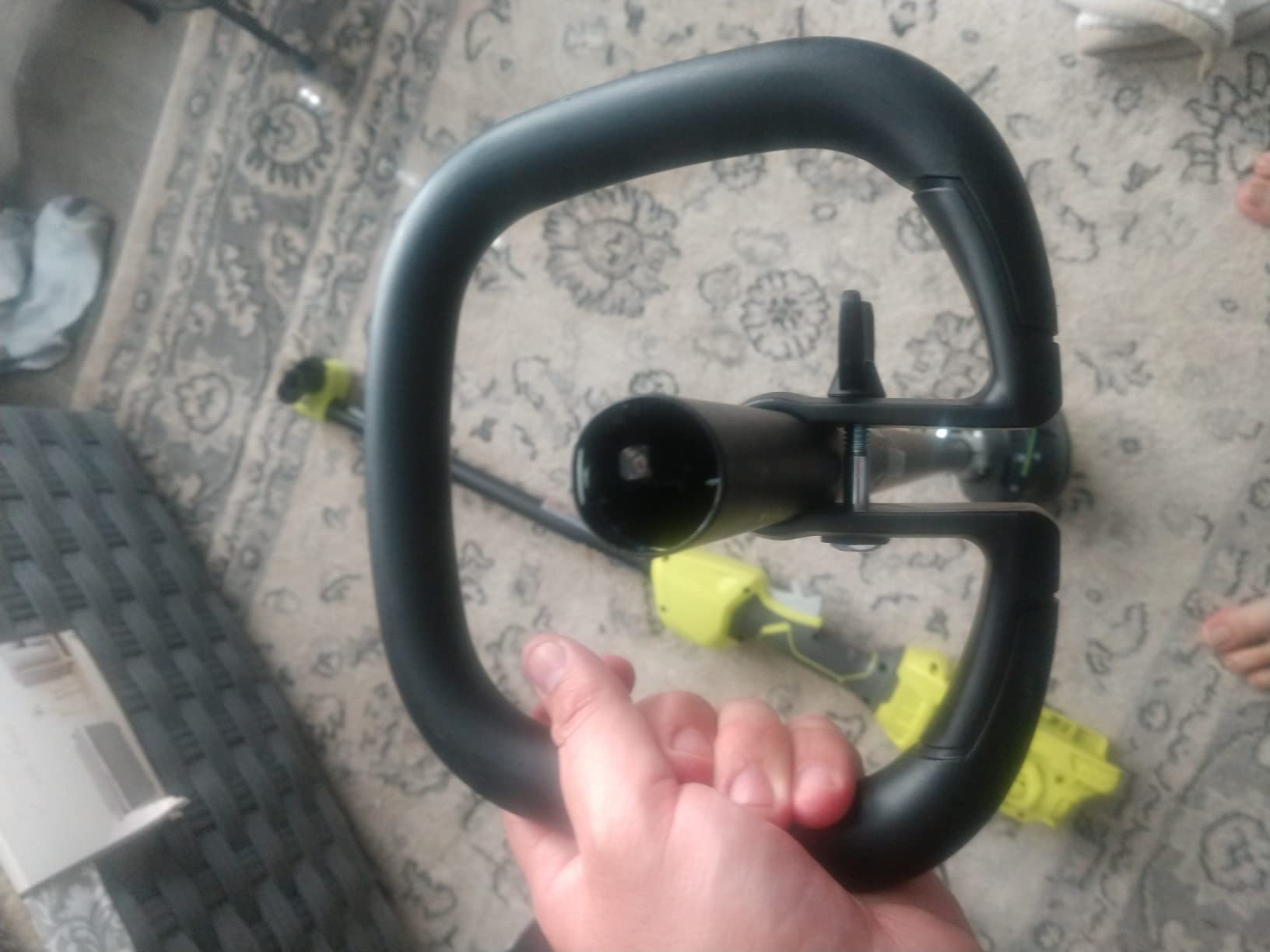
- 13.9 pounds with no strap included
- Long shaft feels awkward for shorter users
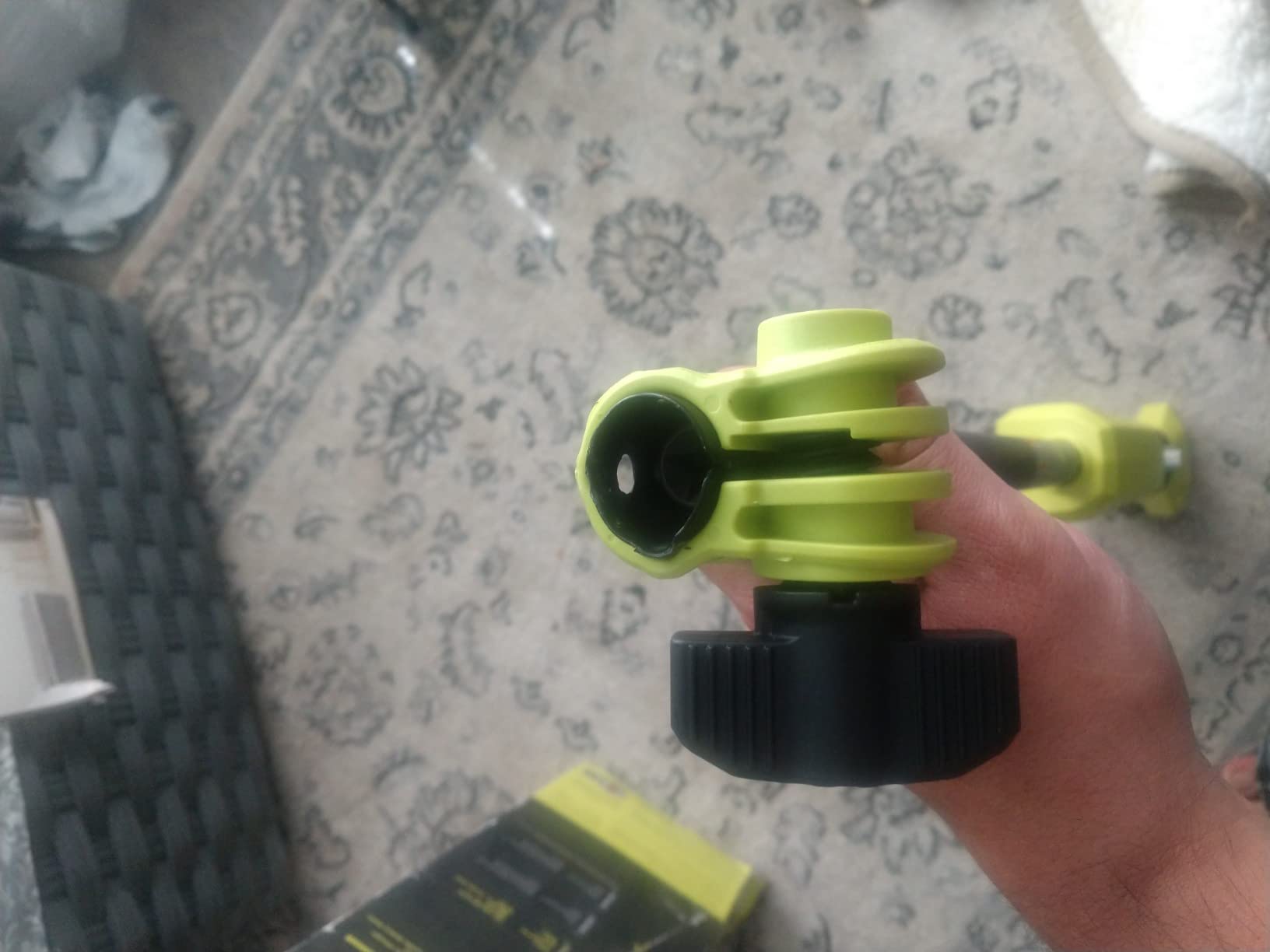
- Guard can loosen during use if not tightened
The case for the RYOBI is arithmetic. One 40V power head runs the trimmer, the blower, the hedge trimmer and the cultivator, so a property with fence lines, a garden bed and a gravel drive gets a full tool set off a single battery platform.
Owners report it handles thick weeds and tall grass around pond edges and ditches, which is exactly the awkward, wet, uneven work where a lightweight machine earns its keep. The switchable 13- or 15-inch width lets you trade reach for run time depending on the job.
Where it falls short is endurance. In standing dense growth the advertised hour disappears, and the recurring owner advice is to buy a second battery rather than to shop for a different trimmer.
Ryobi does not include a strap, and at 13.9 pounds you will want one for anything longer than a weekend morning. The guard can also work loose and pop out mid-job if you do not tighten it properly at assembly.
What to check before you buy it
Count how many other tools you will run on the platform before you commit. Two or more makes this one of the better value stories here; a single trimmer job makes it merely average.
Also plan on the second battery, because that is the change owners recommend most often.
Who should skip it
Skip it if you already own batteries from another brand, or if the shaft length will bother you. It is not the machine to buy for a long uninterrupted day on a large property.
5. DEWALT 60V MAX DCST970B: Most Versatile for Raw Cordless Torque
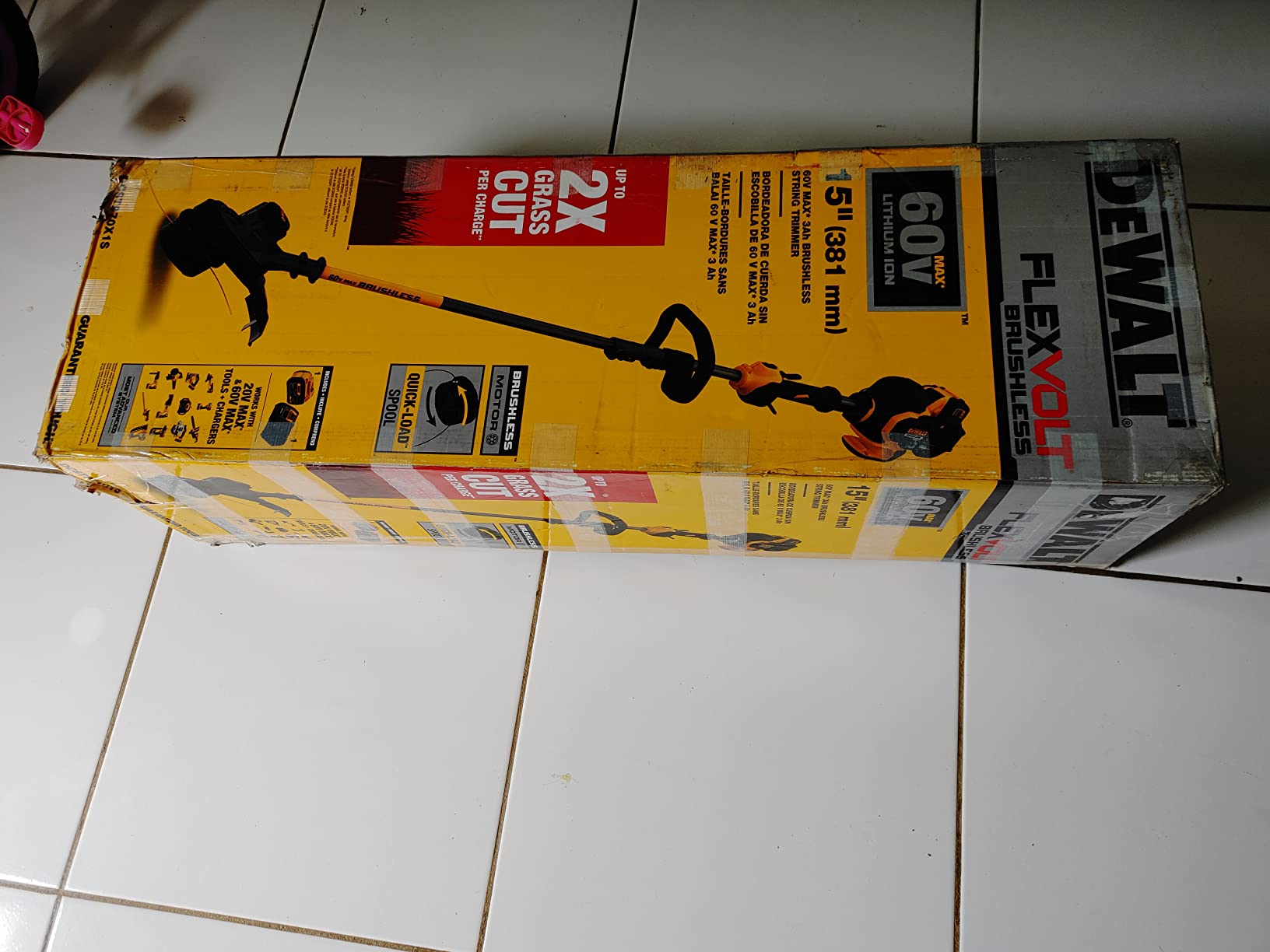
DEWALT DCST970B FLEXVOLT 60V MAX Cordless String Trimmer, Tool Only
60V MAX FLEXVOLT system
Variable speed trigger
Folding shaft
Tool only, 8.75 inch path
Pros
- Very high cordless torque
- clears thick brush and woody stems
- Quiet with almost no vibration
- Variable trigger handles everything from bushwhacking to edging
- Owners with 15Ah packs clear large areas on one charge
Cons
- Tool only
- battery and charger sold separately
- Motor sits low so intake screens clog with clippings
- Cooling screens need screws removed to clean
- Consumes batteries quickly in heavy brush
On raw power this is the machine to beat among battery trimmers here. Owners routinely report it clearing inch-thick canes and heavy brush that stalls lighter machines, and the 60V FLEXVOLT platform scales from 20V packs up to 15Ah bricks depending on what you already own.
The variable speed trigger is the underrated feature. It lets you work the head slowly through the thickest stems and then open it up to sweep standing grass, which is the difference between cutting a path and pushing a path.
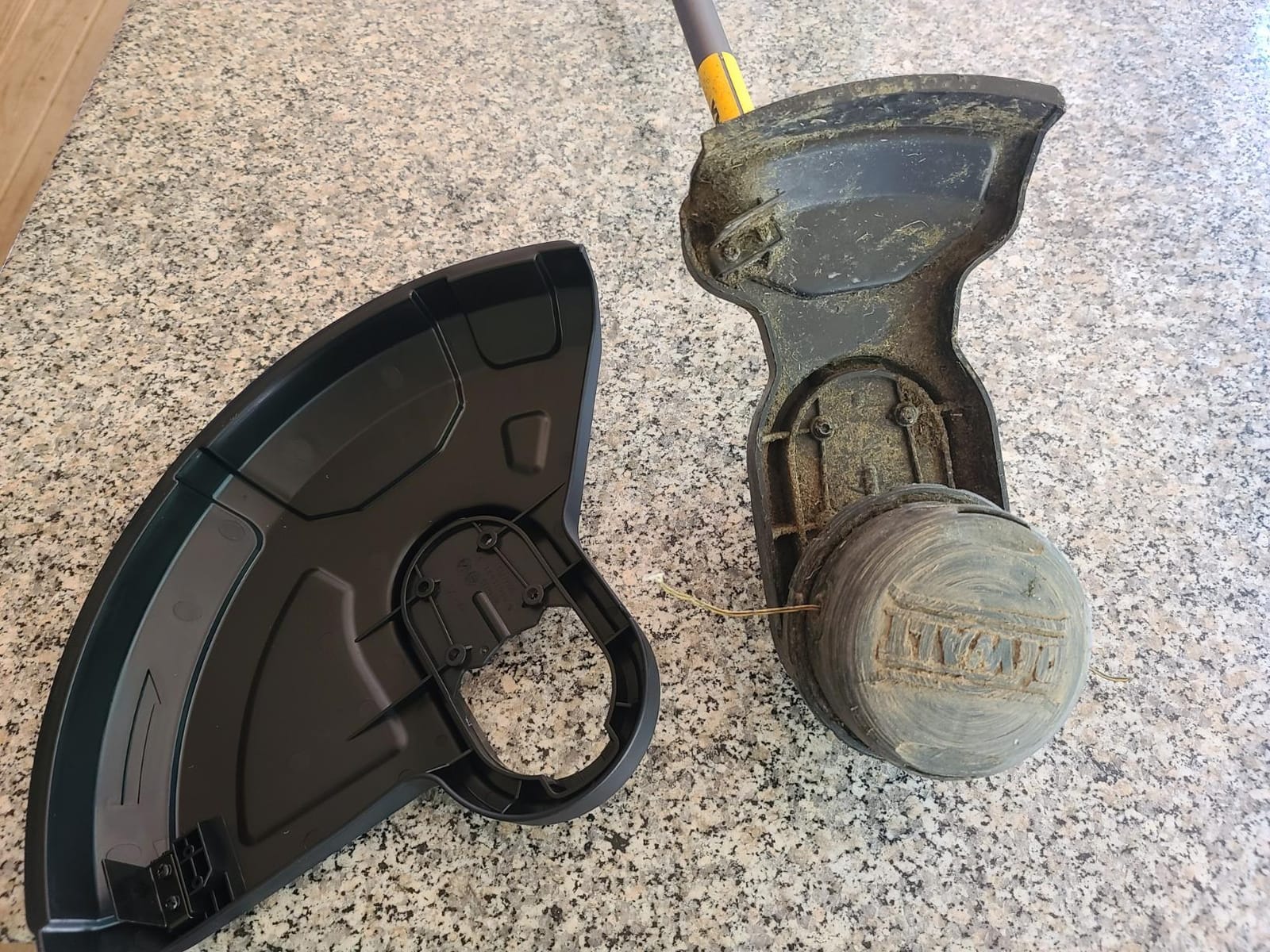
There is a real design complaint worth knowing about. Because the motor sits low, the intake screens pack with clipped grass and debris, and clearing them means removing the motor cover screws. Several owners reported overheating and motor failure after ignoring it, so tap the screens clean every few passes.
It is also listed tool only, so the real cost depends entirely on which FLEXVOLT packs you already have. The listed 8.75-inch path is narrower than the headline 15-inch spec suggests, which is worth keeping in mind for wide passes.
What to check before you buy it
Count your FLEXVOLT batteries first. If you own the platform this becomes a no-brainer; if you do not, factor in both packs and a charger before comparing against kits that include everything.
Plan your cleaning routine around the intake screens. That single habit is what separates owners who still have a working motor two years later from those who do not.
Who should skip it
Skip it for casual yard work, where the power is wasted and the extra cost is real. Anyone unwilling to clean a machine mid-job should choose a design with the motor mounted up near the battery.
6. Husqvarna 320iL 16 in: Best for Edging and Garden Beds
Husqvarna WeedEater 320iL Weed Eater, 16-Inch, with 4 Ah Battery & Charger
16 inch cutting width
Dual-direction trimmer head
Power boost mode
Active cooling
7 pounds
Pros
- Dual-direction head trims under edges without flipping the tool
- Power boost mode adds 20 percent torque in thick weeds
- Light 7 pound complete kit
- Active cooling keeps power and battery life consistent
- Battery and charger in the box
Cons
- 4.0 average with 18 percent one-star reviews
- Durability and battery life concerns over time
- Far fewer owner ratings than the high-volume picks
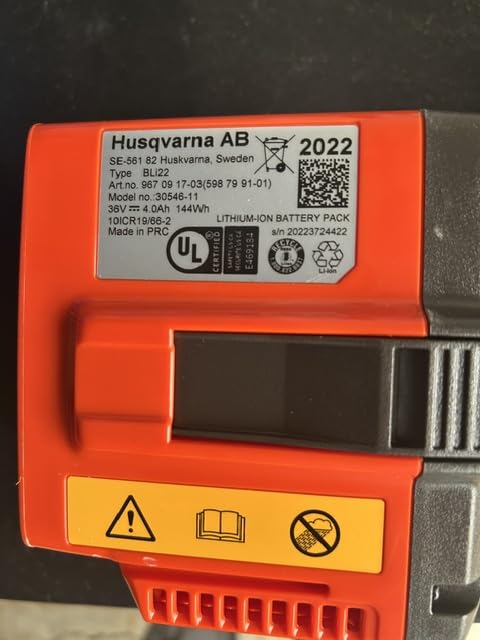
The dual-direction head is the reason to look here. You can reverse the cutting direction at the head instead of turning the whole machine around, which is what makes precise work along a bed edge or a paver border possible without swapping tools.
Power boost mode gives a genuine 20 percent torque increase for exactly the moments that matter in tall grass, when you hit a dense clump and the head wants to bog. At 7 pounds for the full kit, it stays comfortable through a long session.
We are less enthusiastic about the long-term picture, and you should weigh that before buying. The 4.0 average carries an 18 percent one-star share, noticeably higher than most models here, and the complaints cluster around durability and battery life rather than cutting ability.
Its 336 ratings are a fraction of the volume behind the top picks, so there is less long-term evidence to lean on. The three-year warranty is a real mitigant.
What to check before you buy it
Ask yourself whether the dual-direction head solves a problem you actually have. For a property with a lot of bed edging, it does. For pure fence-line clearing, a wider auto-load head serves you better.
Check that the included 4Ah pack meets your run time needs, since battery life is where the criticism concentrates.
Who should skip it
Skip it if you want the most owner-proven machine available. It is also not the choice for a big acreage job, where run time matters more than weight.
7. Greenworks 60V ST60L413: Best for Long Brushy Jobs
Greenworks 60V 16 in Cordless String Trimmer, 4.0 Ah Battery
60V brushless motor
16 inch cutting width
Load N Go head
Shoulder strap included
4.0Ah kit
Pros
- Power comparable to a 25cc gas trimmer with no fuel mixing
- 10000 rpm brushless motor cuts tough weeds
- Complete kit with 4.0Ah battery
- charger and shoulder strap
- Load N Go head reloads line without winding
Cons
- Heavy 18.7 pounds with the battery installed
- Bulky upper and lower body makes fine positioning hard
- Charger fan is loud
- Not as quiet as the lighter battery trimmers
The 10,000 rpm brushless motor is the spec that stands out, and owners report it chewing through thick weeds that slow the 6,000-rpm class. Several commercial users say it replaced a gas trimmer they had owned for their residential work and they have not gone back.
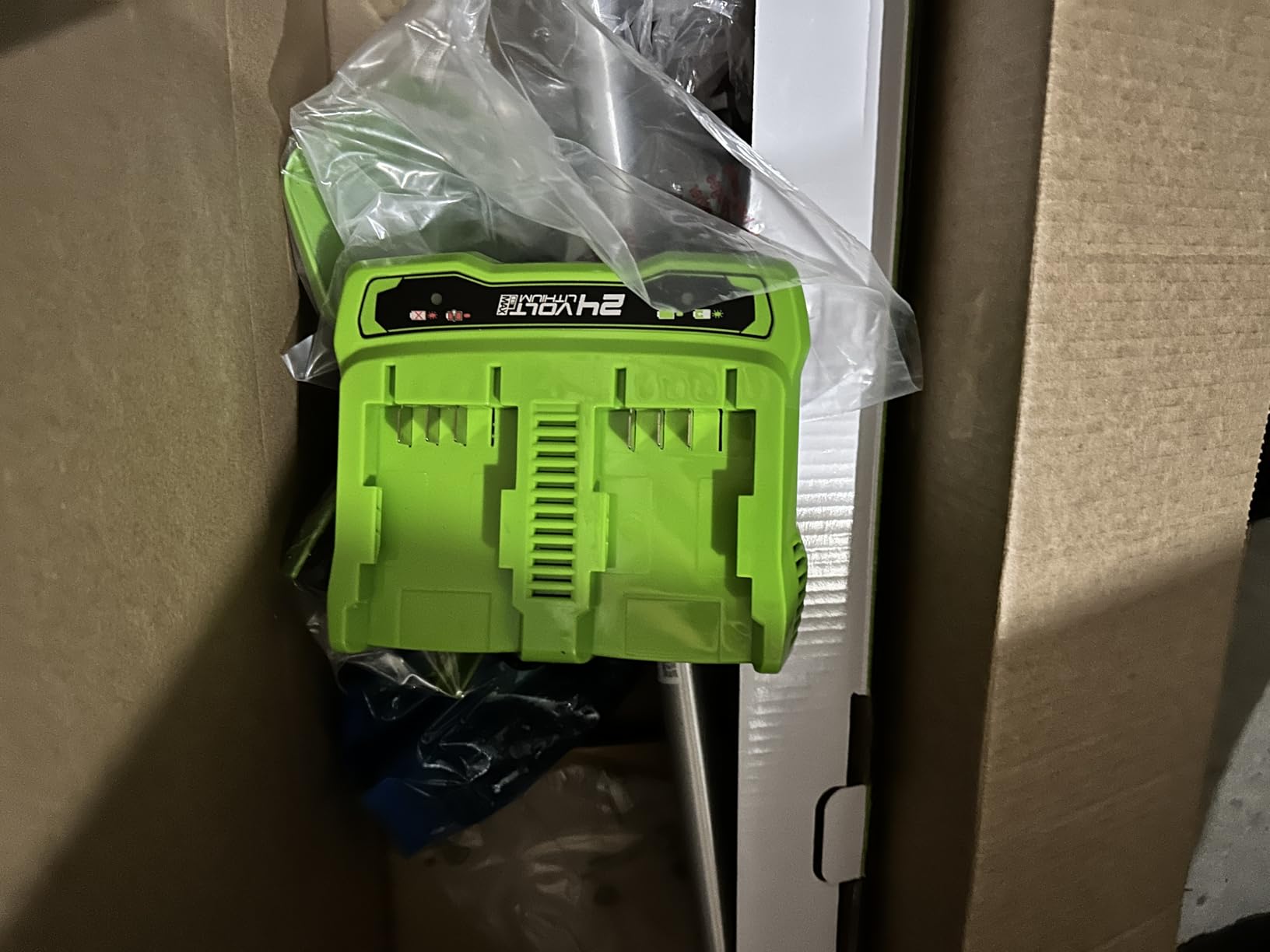
The Load N Go head keeps line from winding onto the spool by hand, and the 4.0Ah battery and charger are in the box, which is not true of every kit at this level. The included strap is a genuine saving given the weight.
Weight is the headline problem. At 18.7 pounds with the battery installed this is one of the heaviest setups in the group, and the bulky body makes precise positioning around trees and mailbox poles harder than it should be.
The owner complaints that do exist split between the loud charger fan and expectations about noise. It is much quieter than gas and much louder than a 7-pound trimmer, so set that expectation before you buy.
What to check before you buy it
Try it with the strap on and assess whether you can carry 18.7 pounds for a full session. If you can, the power and the runtime make it a strong pick for volume clearing.
Confirm you have somewhere to store 68 inches of machine, because it does not fold down.
Who should skip it
Skip it for anyone with shoulder or back history, and for fine work around delicate plantings. It is built for volume clearing, not for precision.
8. Milwaukee M18 2828-20: Best for Lightweight Handling
Battery Powered M18 Brushless String Trimmer (Tool-Only) 2828-20
Brushless motor up to 6200 RPM
16 inch cutting swath
Bump line advance
M18 system, tool only
Pros
- Lightweight at about 7 to 9 pounds so it is easy on the shoulders
- Brushless motor handles weeds and brush well
- Runs cool and quiet compared with gas
- Accepts both 0.080 and 0.095 inch line
- Pairs with an M18 platform many owners already own
Cons
- Tool only
- so battery and charger are extra purchases
- Very large guard blocks sight of the line when edging
- Cooling vents clog with grass debris
- About 30 minutes run time on a 5.0Ah pack in heavy growth
If you already own M18 packs, this is the shortest distance between that battery and tall-grass capability. At roughly 7 pounds bare, it stayed easy on the shoulders through a full session, and the 16-inch swath gives it real reach despite the lighter build.
The brushless motor provides more torque than the 6,200 rpm figure suggests, and the head accepts either .080 or .095 inch line so you can match the line to the job rather than to the tool.
Two design details work against it. The debris guard is a large one, which is good for protection and bad for precision, because it blocks your view of the cutting line when you are edging. Cooling vents also clog with wet grass, so expect to clear them mid-job.
Run time on a 5.0Ah pack is around 30 minutes in heavy growth. If that is half your working rhythm, keep a second pack charging.
What to check before you buy it
Count the M18 packs you own. One high-output battery and this is a strong, light option; zero batteries and the cost of entry climbs fast for a tool-only listing.
Also consider the guard size if you plan to do detail edging, since visibility is genuinely limited.
Who should skip it
Skip it if you do not already use the M18 platform, and skip it if a half charge is not workable for your property size. For pure edging work the guard is a real limitation.
9. PowerSmart 25.4cc Gas 2-in-1: Budget Pick with a Blade
PowerSmart Gas Weed Wacker 2-Cycle 25cc Gas String Trimmer/Edger 16″ and 10″ Brush Cutter & Shoulder Strap Included
25.4cc 2-cycle engine
Swaps between 0.095 line and 10 inch brush blade
Shoulder strap included
18.7 pounds
Pros
- Unlimited run time suits large acreage and remote work
- 25.4cc engine cuts knee-high grass and small brush fast
- Swaps between line and a 10 inch metal brush blade
- Shoulder strap included
- Easy to start and breaks down for storage
Cons
- Fuel mixing is a real learning curve
- 18.7 pounds is tiring over long sessions
- Build quality reports include a broken choke switch and handle
- Assembly instructions are confusing
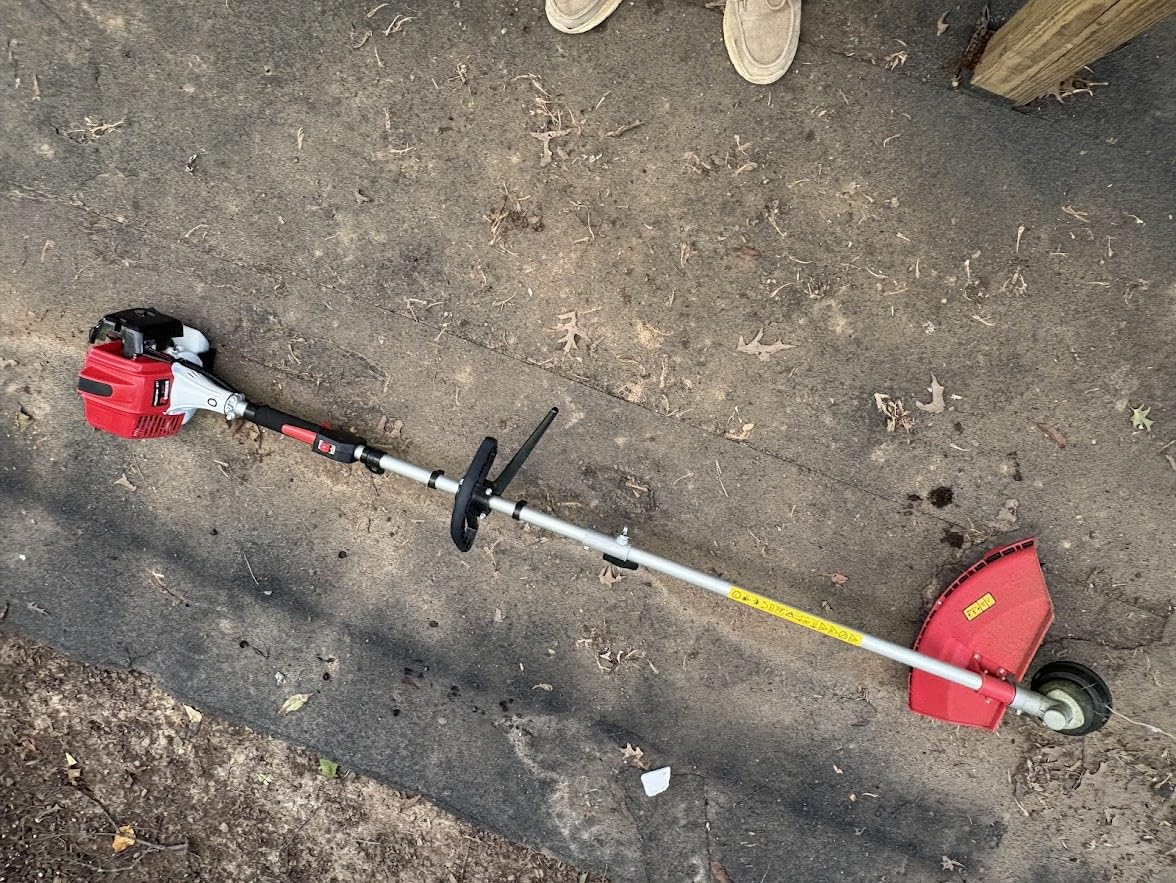
This is the only gas machine here and the only one that includes a 10-inch brush blade in the box, which is the single feature that makes it worth a look. Line for the grass, blade for the saplings and branches, no second purchase required.
Unlimited run time is not a small thing. If your property is far from an outlet or you have more than an acre of overgrowth, a machine that never stops for a charge keeps working while batteries get swapped. Owners report it out-muscles several of their cordless tools on brush.
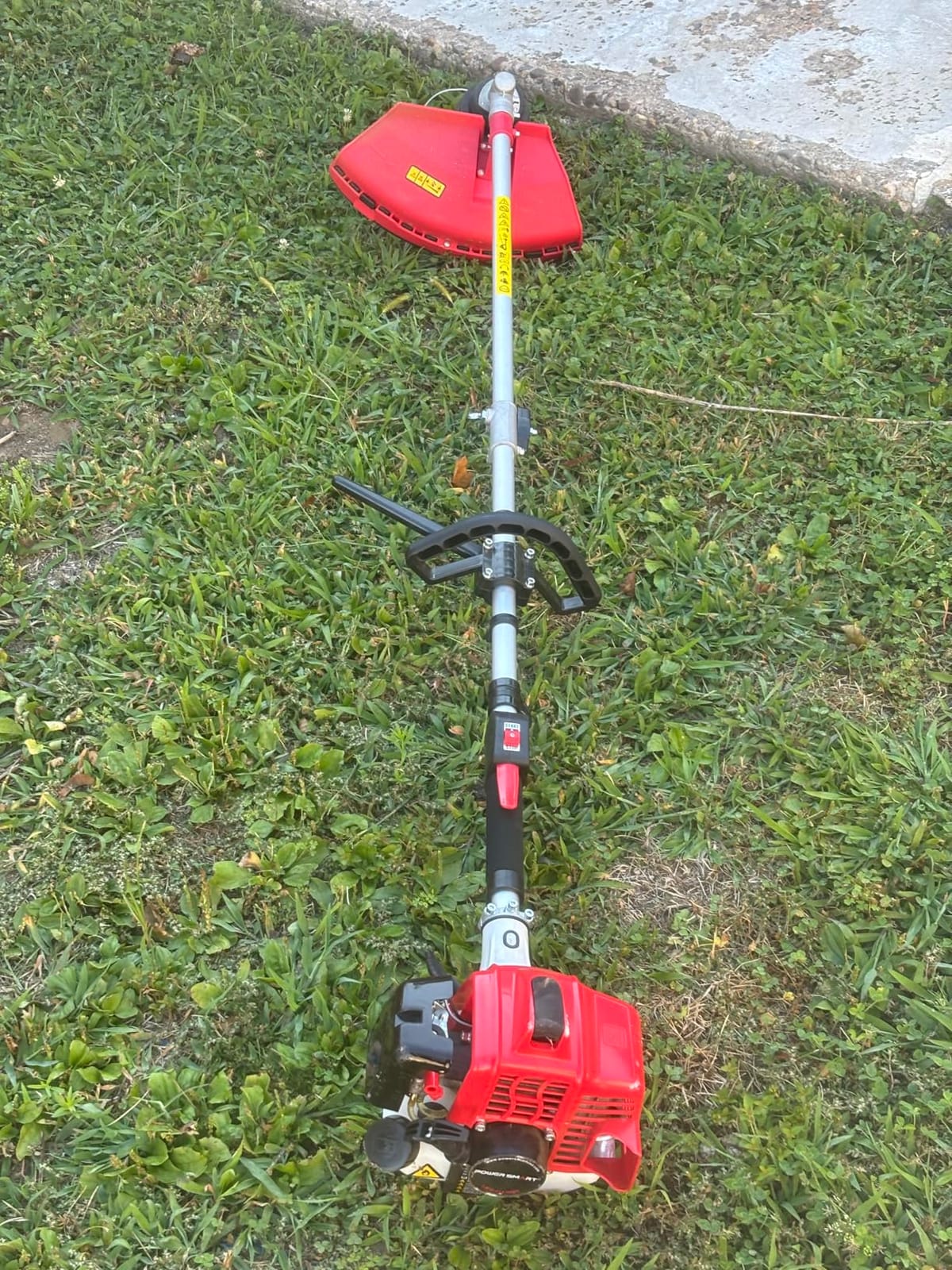
The trade-offs are the usual gas ones. Fuel and oil have to be mixed at the right ratio, and reviewers warn about this repeatedly. At 18.7 pounds it is heavy, and the shoulder strap that comes with it is not optional.
Durability reports are the weak point, with mentions of a broken choke switch and a cracked handle, and the assembly instructions leave a lot to work out on your own. If you are new to small gas engines, budget time for the learning curve.
What to check before you buy it
Decide honestly whether you have a place to store fuel and whether noise matters on your street. Gas trimmers are the loudest option by a wide margin and some local ordinances restrict them before midday.
If you take the blade, remember that it is for thin woody growth. It is not a tool for clearing a hedgerow.
Who should skip it
Skip it for professional or sustained large-area work, where the thin components show quickly. Anyone in a noise-restricted neighborhood should look at battery first.
10. Milwaukee M18 Fuel 3016-20ST: Best for Quik-Lok Crews
Milwaukee Electric – M18 Fuel String Trimmer W/Quik-LOK
POWERSTATE brushless motor
QUIK-LOK attachment system
16 inch cutting path
6200 rpm
13.2 pounds
Pros
- Owners report it outruns 31cc gas powerheads
- 4.6 average from its owner base
- Well balanced for a 13.2 pound machine
- QUIK-LOK swaps to hedge and pruning attachments fast
- Three speed settings with a responsive throttle
Cons
- Battery and charger not included
- 13.2 pounds still calls for the strap on long jobs
- One owner reported an auto mode switch failure
- Only 96 owner ratings so far
This is the pick for anyone already running Milwaukee equipment. The Quik-Lok system spans 13 attachments, so the same power head moves between the trimmer, hedge trimmer and pruner without tools, and owners describe the swap as seconds rather than minutes.
Power is the headline. The Powerstate brushless motor is reported by owners to outperform 31cc gas powerheads, and the throttle across three settings gives the control you want in standing growth. Weight is well distributed, so the 13.2-pound figure does not feel the way 13.2 pounds usually does in the middle of a session.
On balance the machine is a heavy design that handles itself, which is why the shoulder strap matters on a long day.
What to check before you buy it
Make sure you already own high-output M18 packs and a charger, because neither is included. If your toolset is Milwaukee-based, this is the natural choice.
Plan your charging rotation the same way you would for any other battery tool, since tall grass is among the most demanding work you will ask a pack to do.
Who should skip it
Skip it if you are starting from nothing, because the platform cost is real. It is also not the right pick for delicate work where a 16-inch head is more tool than the job needs.
How to Actually Cut Tall Grass Without Wrapping the Line
Wrapping the line around the shaft is the most common complaint in tall-grass work, and it is a technique problem as much as a machine problem. Forum advice repeats consistently across trimming communities: work the head like a scythe rather than a chopper.
Start at the top. Hold the head level and take long horizontal swipes through the canopy, letting cut stems fall flat away from you. Chopping straight down drives the line into the base of the stand, which is exactly what wraps it.
Come back for the stand only after the top is down. A second pass at half height clears the rest with far less resistance, because the line is now working in open air instead of inside a mat of stems.
Cut away from your body, on the discharge side, and keep the head spinning before it enters the grass. Short bursts with a spin-up between them prevent the wrap that a long slow push always ends in.
Keep the guard down and check the line condition often. A line that has been running against fence wire and stone is a line that is about to snap in the middle of your best pass.
Best Trimmer Line and Heads for Tall Grass
Line diameter is the quiet upgrade that matters most in this job. Light line slips past stems and breaks on wire; heavy line needs more torque to spin up, which is exactly why an underpowered trimmer stalls in the first place.
Stay at 0.080 inch for lawn edges and light weekly touch-ups, where a narrow line bends around beds without hitting plants. Move to 0.095 inch for general tall-grass work, and that is the default in our test plot because it holds a cutting edge through standing stems.
Reserve 0.105 inch for brush, saplings and dense stands, and only on a machine rated for it. Forum guidance is consistent that 0.105 line needs roughly a 30cc-class engine or a high-output battery to reach speed, and below that it will bog rather than cut.
Shape matters too. Square twist line has sharp corners that slice woody stems well, diamond line wears slower and cuts cleaner, and round line is the general-purpose option most people start with. For thick weeds, a twisted or squared line in a .095 diameter is the best balance of bite and durability.
On heads, bump feed is the standard and the simplest to fix. Speed feed and automatic systems like Line IQ and Powerload push line on demand and cut down a chore owners consistently rank as their least favourite task in this category, and a dual-direction head lets you trim under an edge without turning the tool over. Where you can take a blade, the PowerSmart in this list converts to a 10-inch brush blade for thin woody growth.
Gas vs Battery vs Corded for Tall Grass
Battery has closed most of the gap. Every cordless machine in this list cuts knee-to-waist grass without complaint, and the strongest of them handle brush that used to justify a gas machine. Where gas still wins is run time and sheer duration.
Choose gas when you have an acre or more, when you are working far from an outlet, or when you want a single machine that also takes a blade. The costs are fuel mixing, storage, noise and a starting and maintenance routine. Owners on trimming forums report gas machines getting harder to start season over season, including one who replaced a coil before replacing the whole trimmer.
Choose battery for a typical yard, for noise-sensitive neighborhoods, and for anyone who would rather not maintain a carburetor. The costs are battery cost, run time of roughly 30 to 60 minutes per pack, and the fact that batteries do not cross between brands.
Corded electric is worth a sentence: it never runs flat and it costs little to run, but it is tethered to an outlet, which means it does not solve overgrown property at all. For tall grass, treat it as an edging machine rather than a clearing machine.
On five-year cost, the honest framing is that fuel and spark plugs cost little per hour while batteries are a real upfront cost shared across several tools. If you only need one trimmer, fuel looks better on paper. If you buy batteries anyway for a blower and a hedge trimmer, the trimmer costs little by comparison.
When a String Trimmer Is the Wrong Tool
If the growth has stems you can snap by hand, a string trimmer is the wrong answer, no matter how good it is. The line will wear out in minutes, the head will wrap constantly, and you will spend the whole session replacing consumables.
A brushcutter with a metal blade handles saplings, bramble canes and anything up to roughly an inch thick. Several trimmers here are attachment-capable, including the RYOBI and the Greenworks 60V, so you may be able to stay with the battery you already own.
A scythe is the answer for large areas of soft, tall growth, where a long blade in sweeping arcs clears far more ground per minute than any motorised head. It is quiet, needs no fuel and no battery, and it takes more technique to learn.
A walk-behind brush mower suits acres of uneven, woody ground, because you cut from a standing position instead of swinging a tool. It is the practical answer when the overgrowth is bigger than your arms can manage.
And if the problem is a lawn that has simply been neglected for two seasons, a walk-behind mower on a high setting often clears the field faster than a trimmer, after which the string trimmer takes over for the edges. If the turf never recovers and you would rather stop reseeding every spring, our artificial grass picks for backyards cover that longer-term fix.
What to Look for in a Tall-Grass Trimmer
Torque gearing beats raw horsepower for this job. A reduction gear between motor and head keeps the head spinning at cutting speed under load instead of bogging when the blade bites down. The symptom of a machine without it is a head that slows to a crawl in thick growth and a line that stops cutting.
Cutting swath is the number that decides how long your afternoon is. A 16-inch head covers a quarter more ground per pass than a 13-inch one, and on standing grass that difference compounds fast.
Line loading matters more than specs suggest. Automatic feed heads and button winding systems save real time over a season, and the manual winding chore is the single biggest source of owner frustration in this category.
Weight needs two numbers, not one. Bare weight excludes the battery, and several tools here are sold tool only, so the working weight is what you actually carry. Add a strap to anything over 12 pounds.
Watch for reverse rotation or a dual-direction head. In tall grass, that feature is how you free a wrapped line without stopping to strip it off with a screwdriver.
Noise is worth checking against local ordinances, especially for gas. Battery machines are quieter enough for most neighborhoods, though the heavier kits are louder than the light ones.
Finally, look at warranty length as a hint about build confidence, and think hard about line diameter limits. A machine that cannot spin .095-inch line is a machine that will never feel powerful in the growth you are buying it for.
Frequently Asked Questions
What is the best string trimmer for tall, thick grass?
The BLACK+DECKER 40V MAX LST136 is our best overall pick because its PowerCommand dial holds cutting speed in thick growth and its 7.8 pound frame stays comfortable. For wide passes and long fence lines the EGO Power+ 16-inch ST1623T covers more ground per swipe, and for a blade-capable budget option the PowerSmart 25.4cc gas machine adds a 10 inch brush blade.
Can a string trimmer cut tall grass?
Yes, a string trimmer can cut tall grass, but only if the motor has enough torque to keep the head above its cutting speed under load. Knee to waist height grass is within reach of most 40V and 60V machines when loaded with 0.095 inch line. Growth with woody stems needs a brushcutter blade or a scythe instead.
What type of trimmer string is best for cutting thick grass?
Diamond or square twist line in a 0.095 inch diameter is the best all-round choice for thick grass, because the edges give it cutting bite and the twist keeps it from flattening early. Move to 0.105 inch for brush and dense stands, and only on a machine with enough torque to spin it up. Save 0.080 inch for edging and light weekly work.
What is the best way to cut down tall, thick weeds?
Work in two stages. Start at the top with the head level and take long scythe-like swipes through the canopy so the cut stems fall flat. Come back for the remaining stand at half height, where the line works in open air instead of inside a mat of stems. Keep the head spinning before it enters the grass and always cut on the discharge side.
What is the best strimmer head for trimming long grass?
A bump feed head is the standard and the simplest to replace, while speed feed and automatic sensing heads push line on demand so you never stop to bump. A dual-direction head adds a reverse cutting direction, which is the quickest way to free a wrapped spool and to trim under an edge without turning the whole machine around.
Are brush cutters better than strimmers for tall grass?
For grass alone, a good string trimmer is the better tool because it is lighter and faster through soft growth. Brush cutters win as soon as stems get woody, because a metal blade handles saplings and bramble canes that shred nylon line. Several trimmers here are attachment capable, so you can add a blade later without buying a second machine.
What string trimmer do professionals use?
Professional crews usually run a gas straight-shaft trimmer for the raw run time, or a high-output battery machine when noise and emissions rules on site demand it. Many are moving to attachment platforms so one power head covers trimming, edging and brush work. The practical requirements for professional use are simple: a strap, a head that does not wrap, and line you can change in under a minute.
The Best String Trimmers for Tall Grass, Final Word
The BLACK+DECKER 40V MAX LST136 is the one to buy if you want a single machine that handles tall grass without tiring you out, and its 8376 owner ratings make it the most proven pick here. Buyers who want fewer passes should step up to the EGO Power+ 16-inch ST1623T, and buyers who want a blade in the box should look at the PowerSmart gas machine.
Beyond the machine, three things decide how the job feels. Load .095 inch line, use a scythe-style motion from the top down, and add a shoulder strap to anything heavier than 12 pounds. Get those right and the best string trimmers for tall grass become the least interesting part of the afternoon.
Updated for October 2026. We may earn a commission from purchases made through links on this page.