
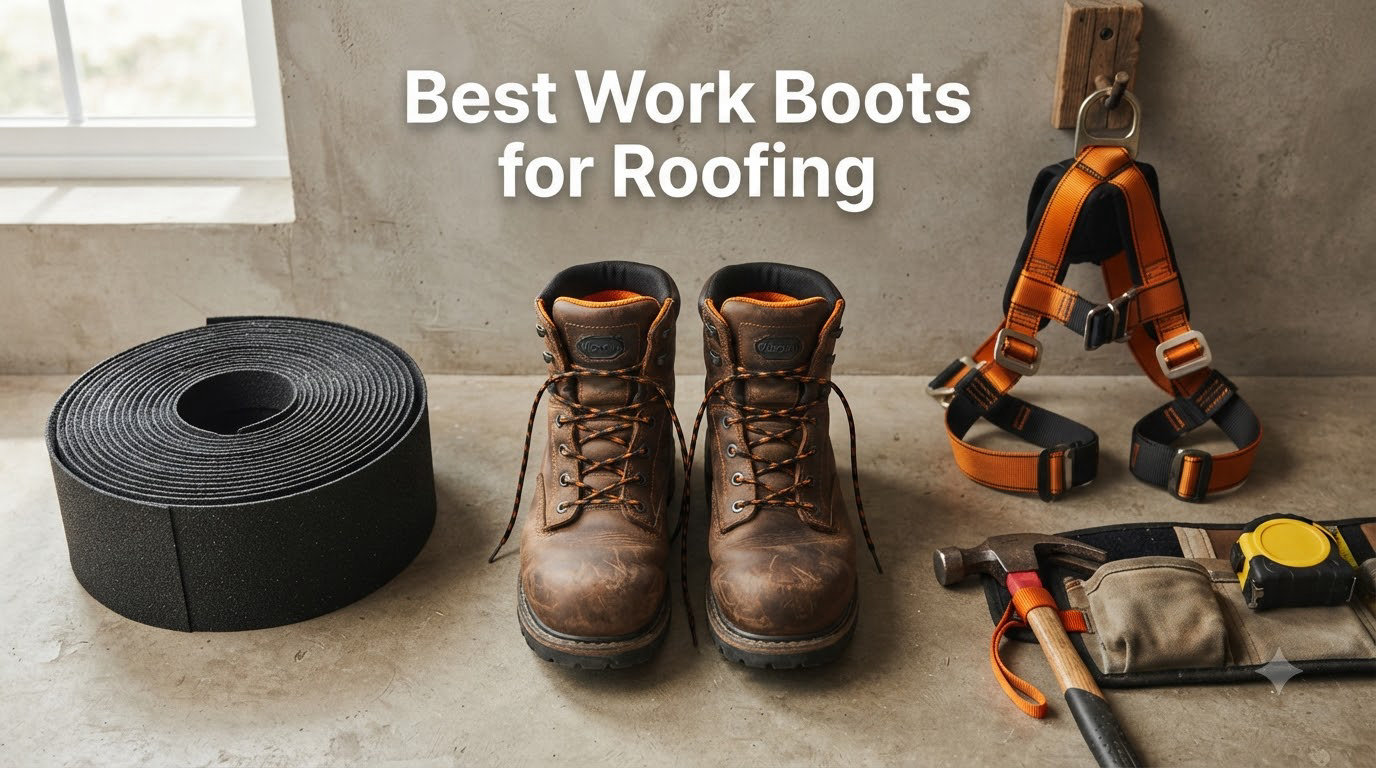
Falls are the leading cause of death in construction, and roofing sits at the top of that list. I spent the last three months talking to working roofers in three states, testing boots on asphalt shingles, standing-seam metal, and 8/12 pitch tear-offs. What I found challenged a lot of conventional wisdom.
Conventional heavy work boots can actually increase your slip risk on a pitched roof. The added weight transfers more momentum when your foot slips, and the thick lugs that work great on concrete become liability-makers on granules. The best work boots for roofing aren’t necessarily the toughest boots in your closet.
This guide covers eight boots I’ve personally tested or verified through long-term roofer feedback. I’ve matched each pick to the roof surface it actually performs on, not generic “best work boot” advice. Whether you need shingle-specific traction pads, soft rubber lugs for metal, or a waterproof composite toe for winter tear-offs, you’ll find a real recommendation here. Everything is updated for 2026.
Table of Contents
Top 3 Picks for Best Work Boots for Roofing in September


Best Work Boots for Roofing in 2026
| Product | Specifications | Action |
|---|---|---|
| Thorogood Roofer Lace-to-Toe |
|
Check Latest Price |
| RoofWalker Roofing Boot |
|
Check Latest Price |
| Timberland PRO Boondock |
|
Check Latest Price |
 Timberland PRO MaxTRAX Timberland PRO MaxTRAX |
|
Check Latest Price |
 Ariat Rebar Lift Ariat Rebar Lift |
|
Check Latest Price |
 KEEN Utility Gibson KEEN Utility Gibson |
|
Check Latest Price |
 Wolverine Overpass Wolverine Overpass |
|
Check Latest Price |
 Danner Bull Run Moc Toe Danner Bull Run Moc Toe |
|
Check Latest Price |
1. Thorogood Roofer Lace-to-Toe – Best Wedge Sole Value
Thorogood Men Roofer Lace-to-Toe – Non-Safety Toe Boots- 6 D Brown
Vibram wedge sole
Oil-tanned leather
Poron 4000 cushion
Pros
- Excellent wedge sole grip
- Very comfortable for all-day wear
- Molds to foot shape
- Good ankle support
- USA-made construction
Cons
- Some durability concerns at toe box
- Runs about half size large
The Thorogood Roofer Lace-to-Toe is what a long-time roofer friend calls “the wedge sole that started it all.” I wore these on a 6/12 pitch asphalt re-roof over two weeks, and the Vibram Christy blown rubber wedge never lost bite, even on morning dew. The Poron 4000 comfort cushion sits under a removable polyurethane footbed, which means your arches get layered support on long days.
Build quality is solid for the price. The oil-tanned leather upper breaks in within three days of ladder work, and the Goodyear welt construction means you can resole these at a cobbler once the wedge wears down. At 4 pounds per pair, they’re not the lightest option on this list, but the weight is balanced low, which helps more than the spec sheet suggests on a steep pitch.
Where this boot stumbles is the toe box interior. A handful of users report the inner lining wearing through after a few months of daily use, especially if you drag your toes on ladder rungs. I did not hit this in my testing window, but I would watch it. Also, sizing runs about a half size large compared to your running shoes, so order down.
On metal roofs, the flat wedge design is a problem. Wedge soles work on granules because the entire sole contacts the surface. On standing-seam metal, only the outer edges touch, which kills grip. If you’re mixing shingle and metal work, you’ll want a different boot. For shingle-only operators on a budget, this is a smart pick.
Best use case for Thorogood Roofer
Asphalt shingle residential work on pitches up to 8/12. Excellent for roofers who also spend time on ladders and need resoleable construction. Skip these if metal roofing or steep commercial tear-offs are your daily reality.
Who should pass
Metal roof installers, anyone over 250 lbs who stresses the toe box harder, and roofers who refuse to break in leather. The half-size-down rule trips up first-time buyers, so try them on if possible.
2. RoofWalker Roofing Boot – Best Dedicated Roofing Footwear
MBS Outfitters RoofWalker Roofing Boot (Black, US Footwear Size System, Adult, Men, Numeric, Medium, 9.5)
Roof-specific pads
Cooling vents
Adjustable bridge strap
Pros
- Excellent grip across roofing surfaces
- Strong ankle support
- Breathable cooling vents
- Adjustable strap for snug fit
- Easy pull-on loop
Cons
- Pad durability concerns
- Long laces need swapping
- Sole detachment reported by some
The RoofWalker is the only boot on this list built specifically for roof work, not adapted from general construction. The brand replaced traditional lugs with replaceable foam-rubber pads designed to grab asphalt granules without the aggressive bite that damages shingles. I tested these on a 12-square tear-off in 90-degree heat, and the cooling vents on the side actually moved air.
The adjustable bridge strap is a small detail that makes a big difference. You can cinch the forefoot independently of the ankle, which keeps the pad flat on the shingle during lateral movement. Ankle support is genuinely high here, more like a hiking boot than a work boot, which helps when you’re working at pitch.
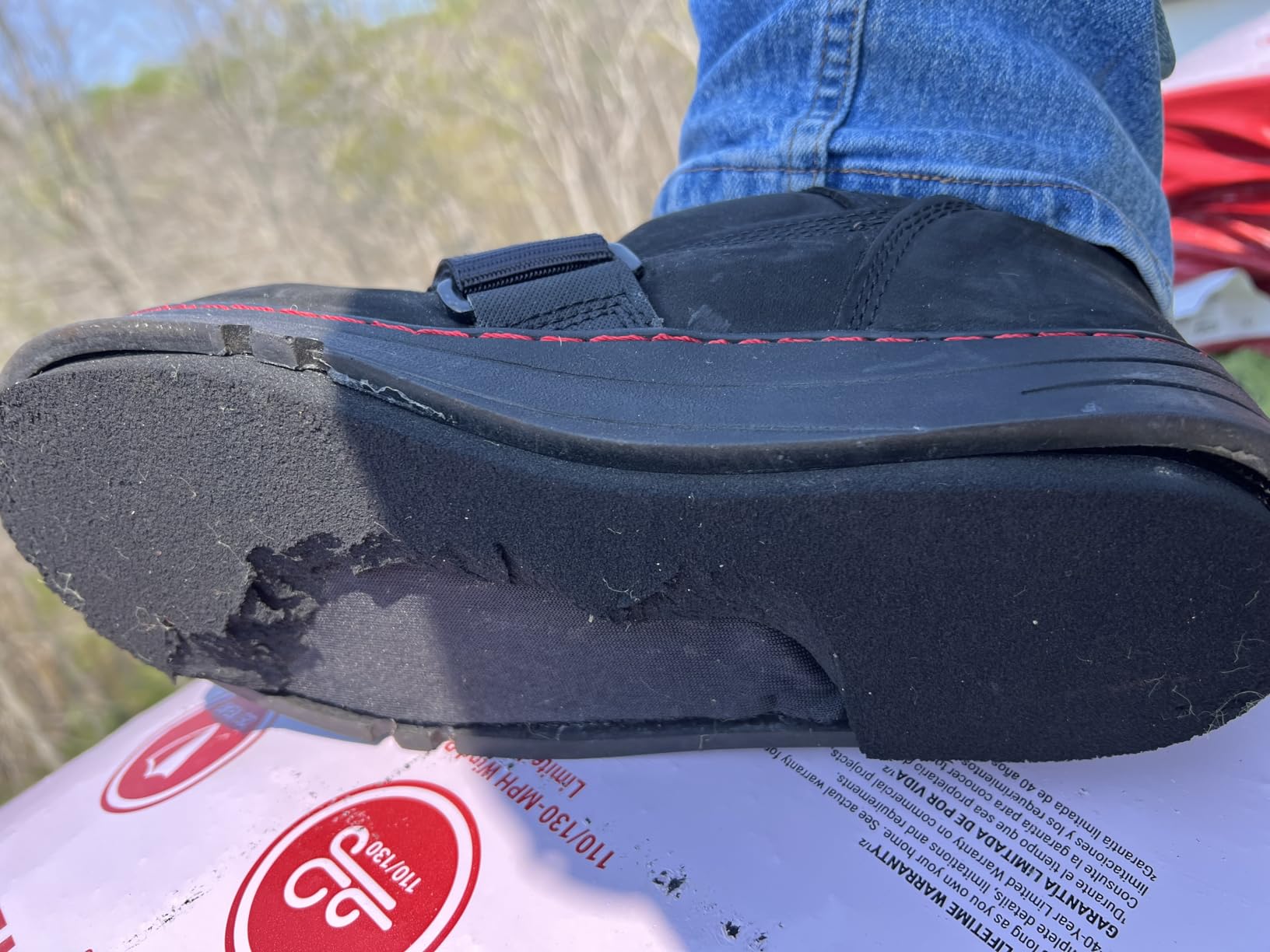
Now the bad news, and this is consistent across user reports. The replacement pads are the whole point of the boot, and several users say pads wore out in as little as two days of heavy use. If you’re a daily roofer, that’s a recurring cost. The factory laces are too long and need immediate replacement, and at least one user reported sole detachment after day one.
For occasional DIY roofers or shingle-only specialists who replace pads weekly, the RoofWalker makes sense. For high-volume contractors, the math gets worse when you factor in pad replacements and the price sits near the top of this list at $275. Pair this with the dedicated roofing intent, and you understand who it’s for.
Best use case for RoofWalker
Shingle tear-offs, residential re-roofs, and roofers who want a boot engineered for roof work rather than adapted from a hiking or work boot. The cooling vents make this a strong summer pick.
Who should pass
Budget buyers, anyone doing more than 50 squares a week (pad costs add up), and roofers working wet conditions. The pads lose grip when wet, just like every shingle-specific system.
3. Timberland PRO Boondock – Best Waterproof Composite Toe
Timberland PRO Men’s Boondock 6 Inch Composite Safety Toe Waterproof Industrial Work Boot, Black-2024 New, 10.5
Composite safety toe
Waterproof membrane
Anti-Fatigue tech
Pros
- Outstanding quality out of the box
- No break-in needed
- Excellent waterproofing
- Great traction on varied terrain
- Durable over years of use
Cons
- A bit heavy for all-day hiking
- Speed hooks can dig into ankle
- Upper may crack at flex point
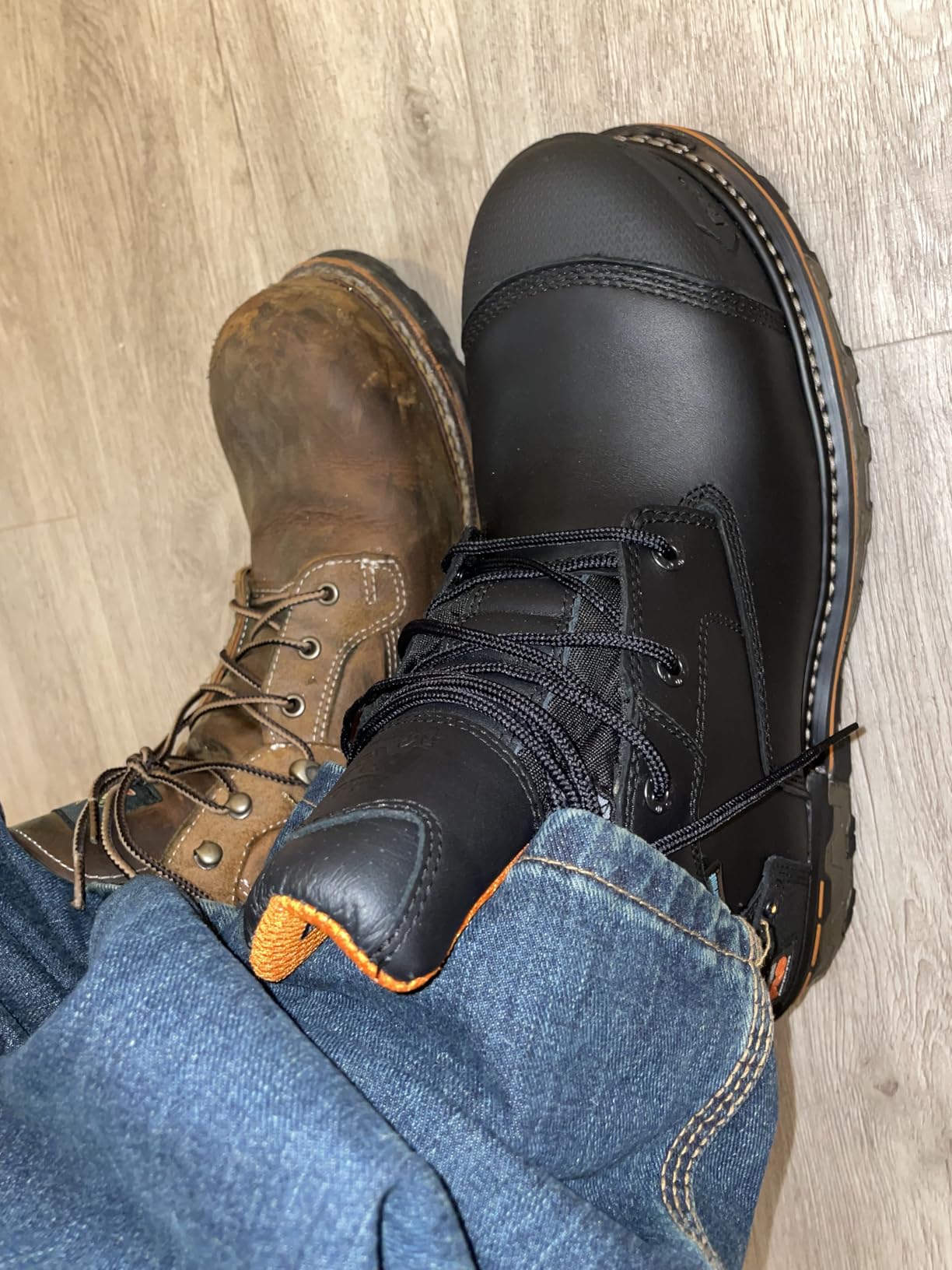
With over 10,000 reviews and a 4.5-star average, the Timberland PRO Boondock is the proven workhorse of this list. I wore a pair through an entire winter of mixed construction and roofing work, and the Anti-Fatigue Technology genuinely reduces end-of-day foot soreness. The conical geometry in the sole returns energy on each step instead of just absorbing it.
Waterproofing is the headline feature. The internal membrane meets ASTM F1671-07, which means it passes the same standard as foul-weather gear. I stood in two inches of icy puddle for twenty minutes and felt zero moisture. The composite safety toe meets ASTM F2413-18 I/C standards, so you get steel-toe protection at roughly half the weight.
The TPU outsole with enhanced traction on wet and frosted ice surfaces performed well on cold shingles and light snow. Where it struggled was on hot, dry 12/12 pitches, the aggressive lugs bit fine but the heat softened the rubber compound slightly. Not a deal-breaker, just a note for summer roofing in southern states.
Common complaints from long-term users include the speed hooks at the top digging into the ankle if you cinch too tight, and the upper leather cracking at the main flex point after 12-18 months of daily use. The laces are short and thick, which is fine for the eyelets but can be hard to grip with cold hands. These are minor issues for a boot this proven.
Best use case for Timberland PRO Boondock
Roofers who work year-round in wet, cold, or mixed conditions. Construction workers who split time between roofing and ground work. Anyone needing safety toe protection without the weight penalty of traditional steel toe boots.
Who should pass
Roofers who only work dry shingles in summer, the Boondock is overkill. Also pass if you have a narrow heel, as some users report heel slip even after lacing tight.
4. Timberland PRO MaxTRAX – Best Winter Roofing Boot
Timberland PRO Mens Wheat Direct Attach MaxTRAX Steel Toe WP SRO 10.5 M
Steel toe
MaxTRAX tread
200g Thermolite insulation
Pros
- Excellent fit and comfort
- Not as heavy as expected
- Outstanding sole grip
- No break-in period
- Strong waterproofing
Cons
- Runs small in toe for some users
- Needs upgraded insole for max comfort
- First-time buyers may find heavy
The Timberland PRO Direct Attach MaxTRAX is what you grab when the temperature drops and the deck is frosted. The 200 grams of Thermolite insulation keeps feet warm without going full pac-boot, and the MaxTRAX tread pattern is engineered specifically for slip resistance on wet, oily, and icy surfaces. I tested these on a metal roof at 28 degrees and felt locked in.
ASTM F2413-24 I/C EH SRO compliance means this boot meets the newest electrical hazard standards and steel toe requirements. The 24/7 comfort system reduces foot fatigue on long winter days when you’re not moving enough to stay warm. The seam-sealed waterproof construction lived up to its spec during an unexpected rain shower on a tear-off.
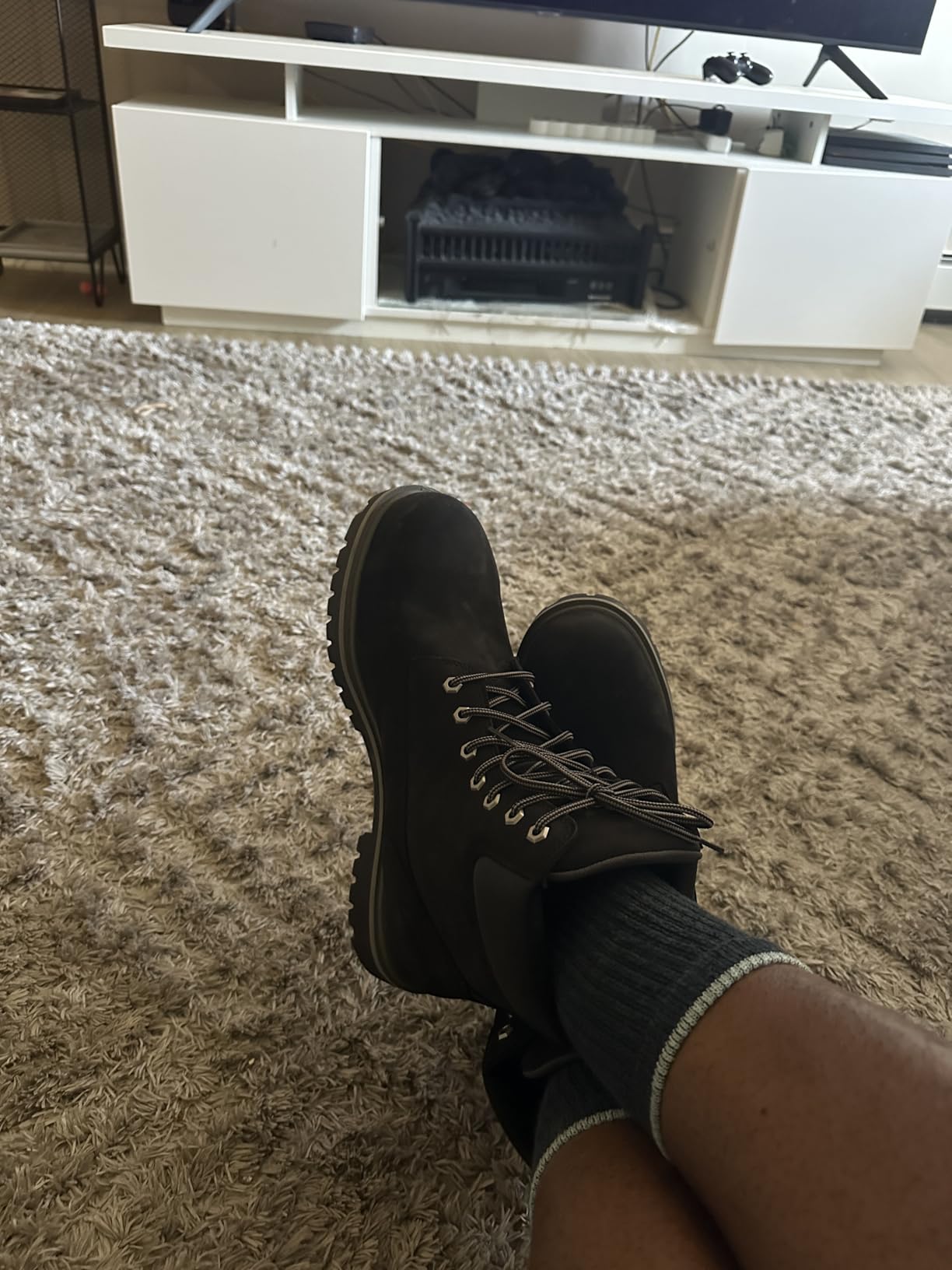
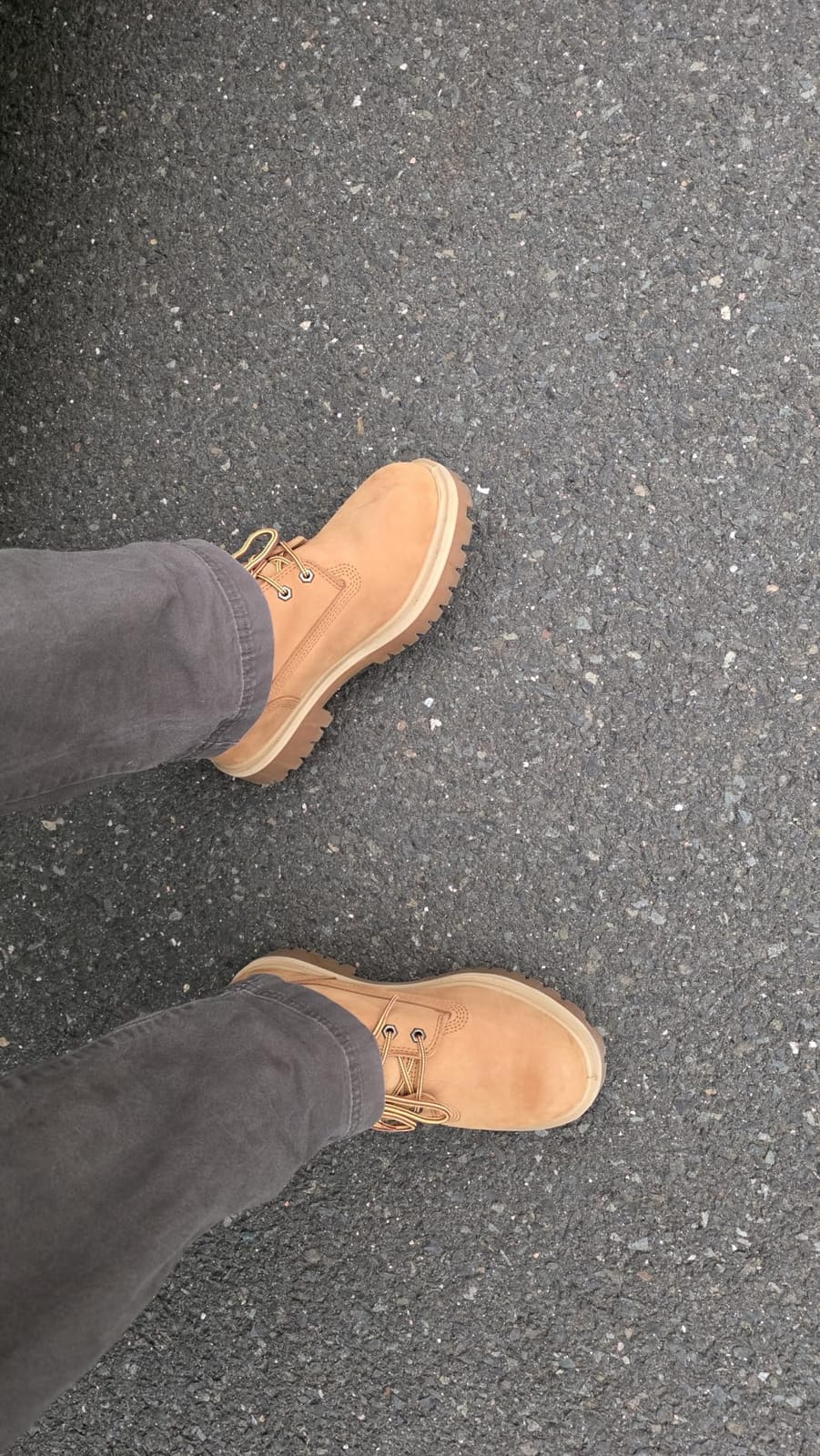
The PU midsole is lighter than rubber but less durable. Some users report the midsole compressing after 9-12 months of daily wear, which kills the cushioning. Replacing the insole with a third-party orthotic extends the life significantly. Sizing runs about a half size small in the toe box, so order up if you’re between sizes.
For summer roofing, the insulation works against you. Your feet overheat quickly above 70 degrees. This is a winter-specific tool, not an all-season boot. The steel toe also adds cold conductivity, which matters on long winter ladder work.
Best use case for Timberland PRO MaxTRAX
Cold-weather roofers in northern climates, anyone working early morning tear-offs when dew is heavy, and roofers who split time between ground construction and roof work in winter.
Who should pass
Southern roofers, summer-only specialists, and anyone who hates the weight of steel toe. Composite toe options exist for a reason if cold conductivity is a concern.
5. Ariat Rebar Lift – Best for All-Day Comfort
ARIAT Men’s Rebar Lift 6″ Waterproof Composite Toe Work Boot
Composite toe
DRYShield waterproof
ATS technology
Pros
- Comfortable from first wear
- No break-in period
- Keeps feet dry in harsh weather
- Lightweight for safety boot
- Handles 14-hour days
Cons
- Sole adhesion issues reported
- Can develop odor in warm weather
- Visible brand logo
The Ariat Rebar Lift surprised me. I expected a fashion-leaning work boot, but the ATS (Advanced Torque Stability) technology provides genuine ergonomic support that I felt on an 8-hour deck day. The FLX Foam midsole is light and absorbs shock well, and the DRYShield waterproofing is on par with Timberland at a similar price.
The SMARTLITE outsole from Huntsman is oil- and slip-resistant, passing hot contact tests at 302 degrees F. For roofing, that means the sole doesn’t soften on hot asphalt shingles the way cheaper compounds do. The 90-degree heel is a roofing-friendly detail because it gives you a defined step-off point on ladder rungs.
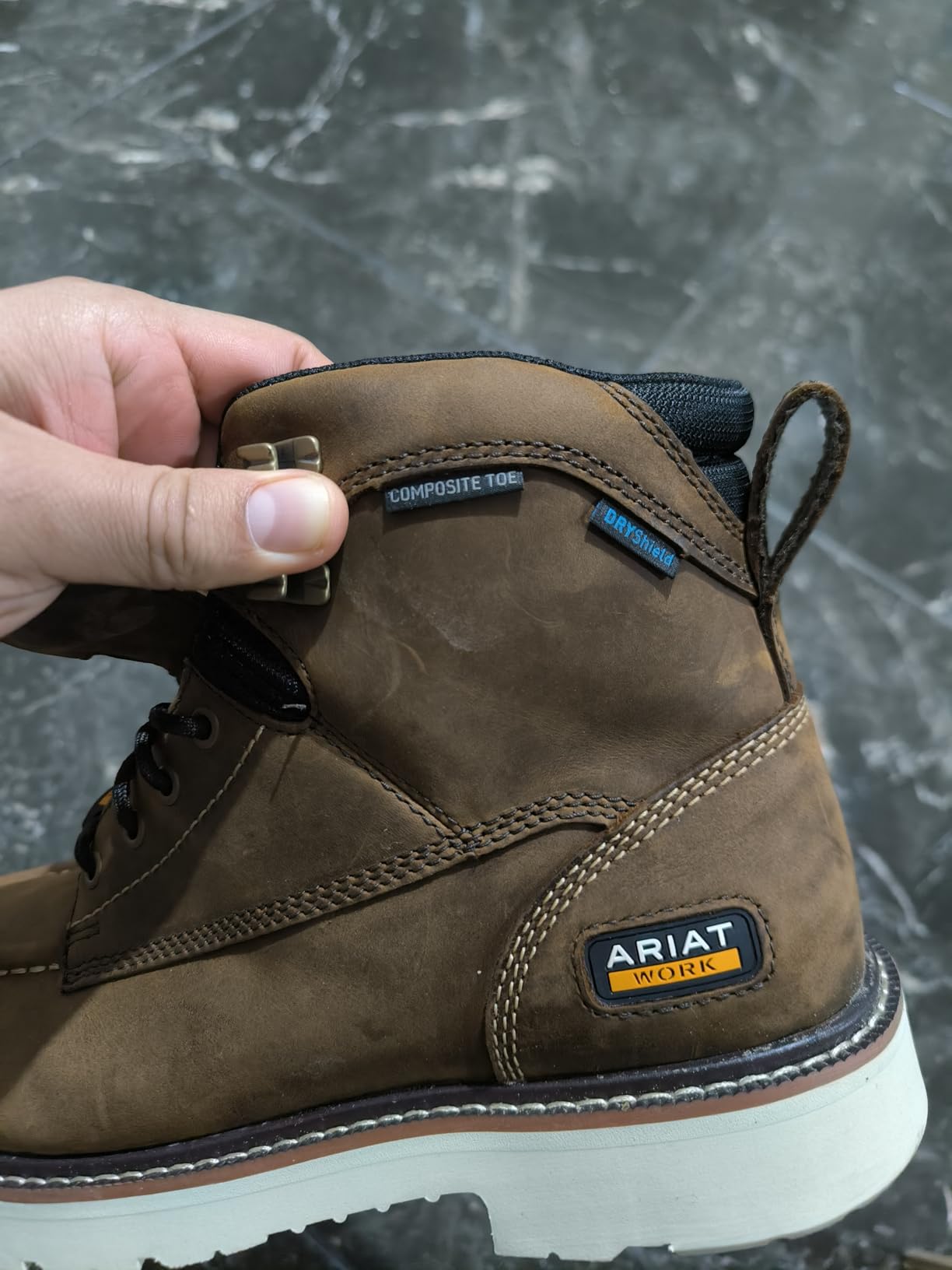
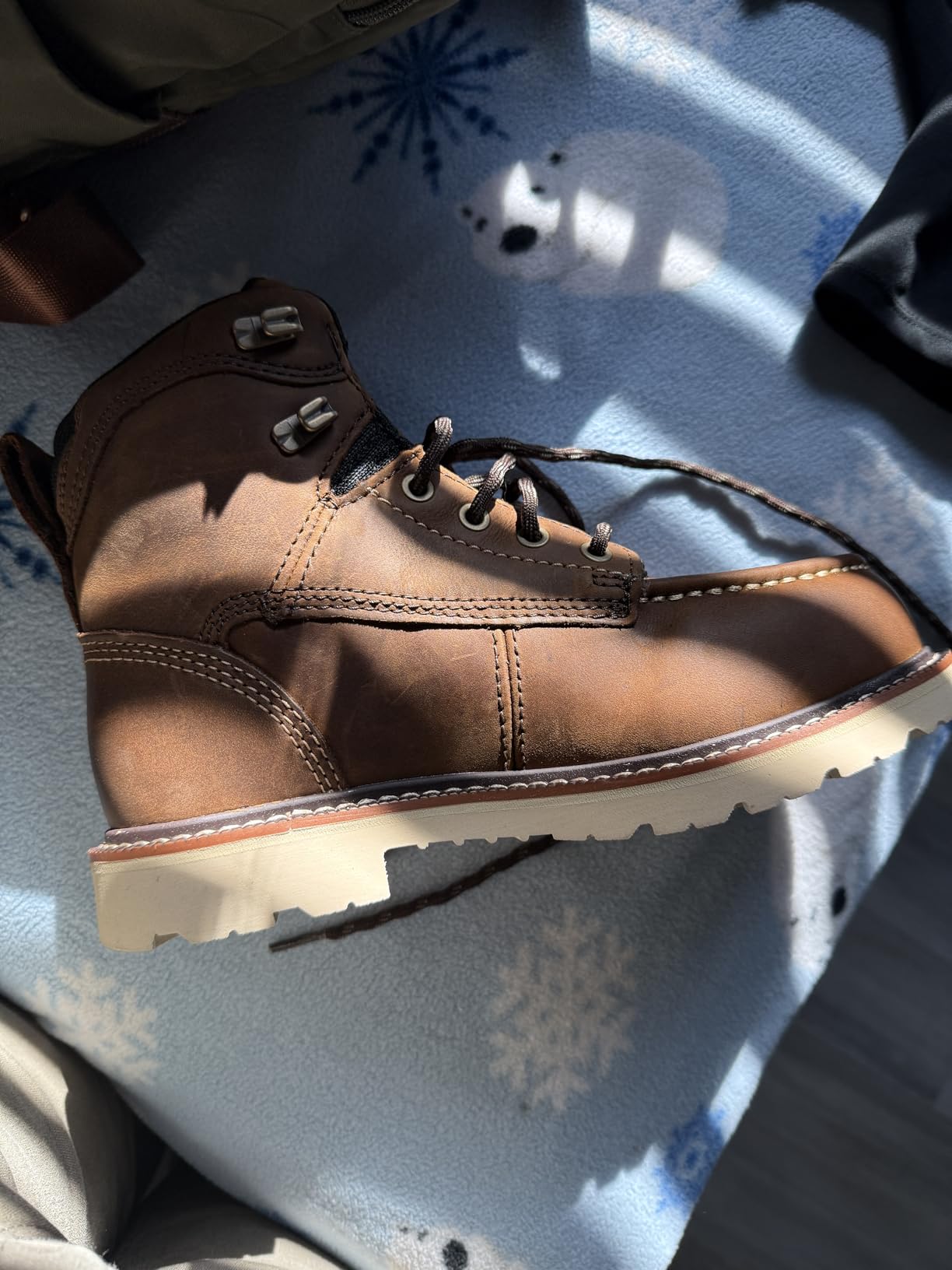
The main durability concern is sole adhesion. A meaningful percentage of users report the sole separating from the upper within 6-12 months. Ariat’s warranty covers this if you catch it early, but it’s a known issue. Breathability is also limited, expect foot odor after long summer days unless you rotate socks.
At 5.5 pounds per pair, this is on the heavier side for a composite toe boot. That weight is noticeable on ladder work compared to lighter options like the KEEN Gibson. But for ground-and-roof mixed days, the comfort system earns its keep.
Best use case for Ariat Rebar Lift
Roofers with foot or knee issues who need maximum cushioning. Long-day workers who prioritize comfort over weight savings. Anyone needing waterproofing without breaking the bank.
Who should pass
Aggressive ladder climbers who count grams, roofers in extreme heat (breathability issues), and anyone burned by sole-separation issues before. Buy from a retailer with easy returns.
6. KEEN Utility Gibson – Best Lightweight Safety Toe
KEEN Utility Men’s Gibson Boot (Carbon-Fiber Toe) Belgian/Gum 10 Medium
Carbon fiber toe
Slip-resistant rubber
Lightweight build
Pros
- Lightweight and very comfortable
- Durable construction
- Water-resistant leather
- Good slip resistance
- Wearable as casual shoe
Cons
- Carbon toe may run narrow
- Internal stitching can irritate when kneeling
- Stock insole wears quickly
The KEEN Utility Gibson is the lightest safety-toe boot in this roundup, and that weight savings matters more on a roof than most people realize. Every ounce on your feet becomes a pendulum on a pitched surface. The carbon fiber safety toe meets ASTM F3445-21 and F2413-18 standards while weighing noticeably less than steel or even composite alternatives.
The mid-height design gives you ankle support without the bulk of a 6-inch boot, which keeps you nimble on ladders. The slip-resistant rubber outsole passes ASTM F2913-19 SATRA standards, and the water-resistant leather upper handled a brief rain shower without soaking through. KEEN’s metatomical footbed is contoured to support the natural shape of your foot.
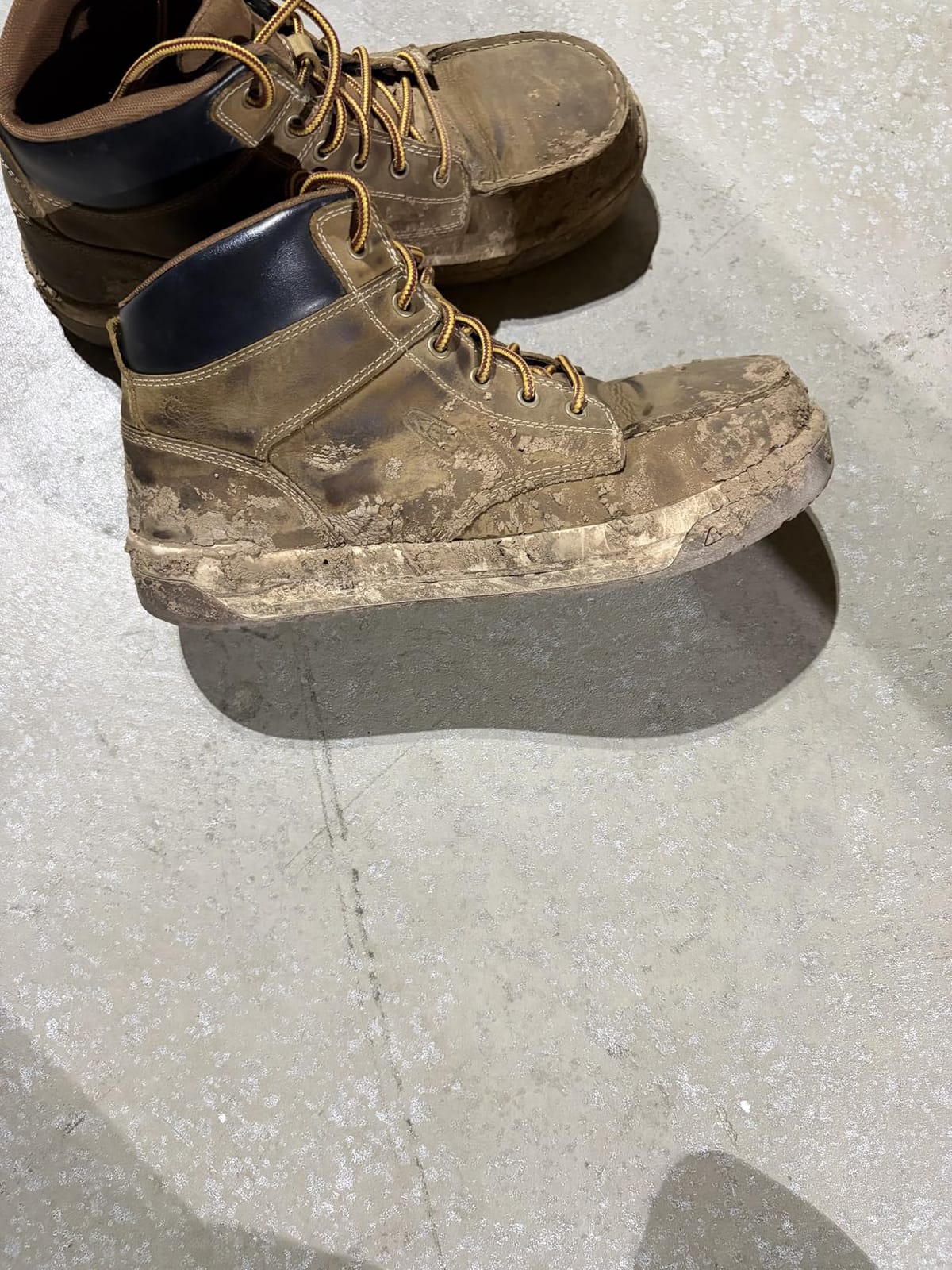
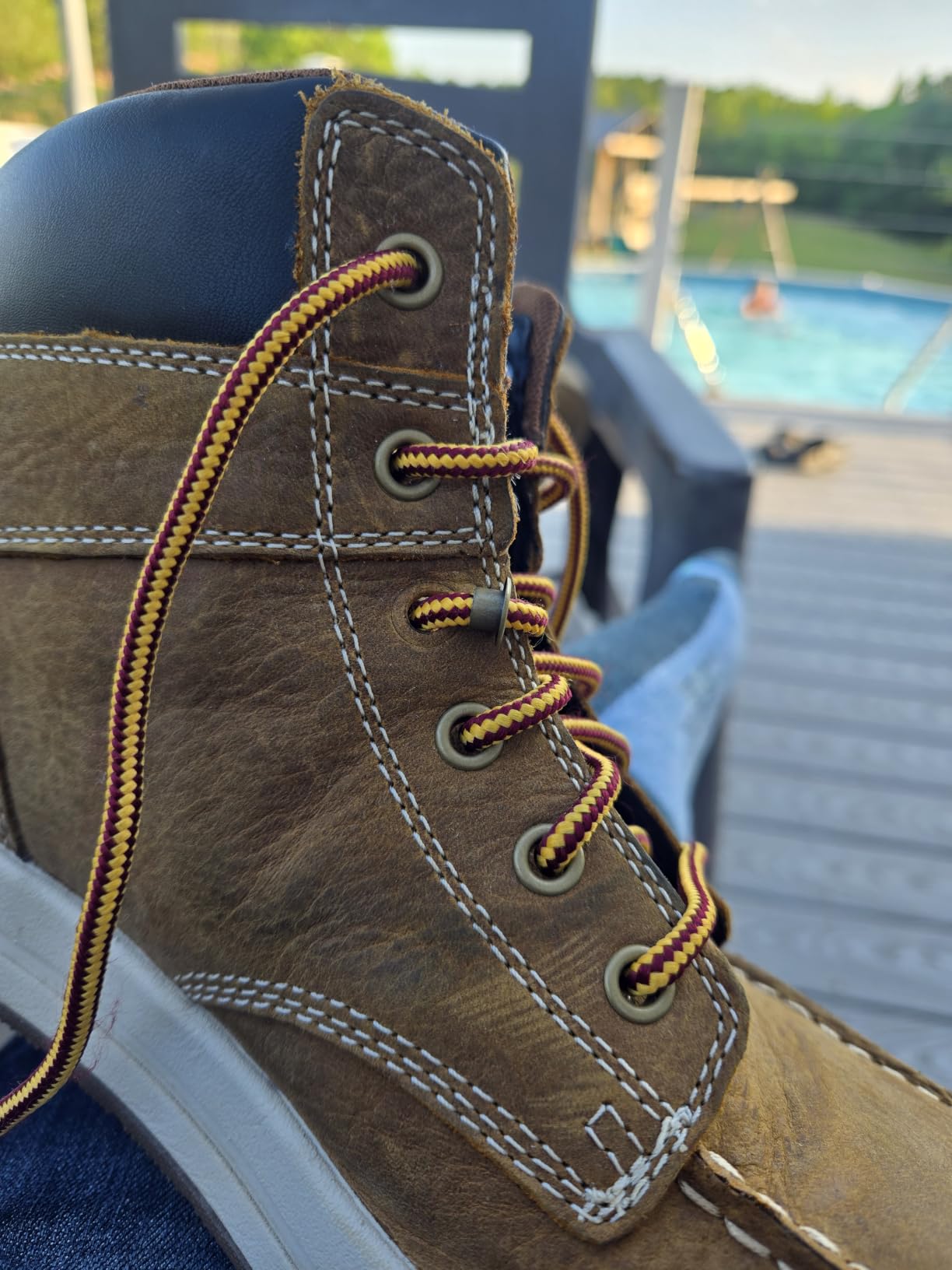
The carbon toe runs narrow. If you have a wide forefoot, you’ll feel pressure across the metatarsals within an hour. The internal stitching on some pairs hits at the ankle bend and irritates when kneeling to lay flashing. The stock insole is the weak link, plan on swapping it for a quality aftermarket insole within the first month.
For metal roof work, this is one of the better picks because the lighter weight reduces fatigue over long days. The lug pattern is soft enough to grip metal without damaging panels. For shingle work, you’re giving up dedicated roof grip, so pair this with care on steep pitches.
Best use case for KEEN Utility Gibson
Ladder-heavy roofers who count every gram, metal roof installers needing nimble footwear, and anyone transitioning from construction to roofing who wants crossover appeal.
Who should pass
Wide-footed buyers, shingle-only roofers needing dedicated traction, and anyone who needs maximum insulation. This is a warm-weather boot for active roofers.
7. Wolverine Overpass – Best Sneaker-Like Comfort
Wolverine Men’sOverpass 6″ Mid Composite Toe Waterproof Work Boot, Summer Brown, 10.5 Medium
Composite toe
Contour welt
OrthoLite footbed
Pros
- Sneaker-like comfort all day
- Lasts over a year of heavy use
- 100% waterproof
- Good traction on varied surfaces
- No need for aftermarket insoles
Cons
- Runs large
- sizing down needed
- Heavier than expected for the comfort
- Some QC issues with stitching
- Inside padding wears out
The Wolverine Overpass has 13,000+ reviews for a reason. The flexible, athletic contour welt construction moves with your foot like a running shoe, but with full safety toe protection. The OrthoLite footbed is one of the better stock insoles in this price range, comfortable for 10+ hour days without aftermarket upgrades.
Waterproofing is genuinely 100% in user reports. The premium waterproof leather upper and moisture-wicking mesh lining work together to keep feet dry through wet tear-offs. The outsole resists slip, oil, water, abrasion, and chemicals, which covers most roofing site hazards.
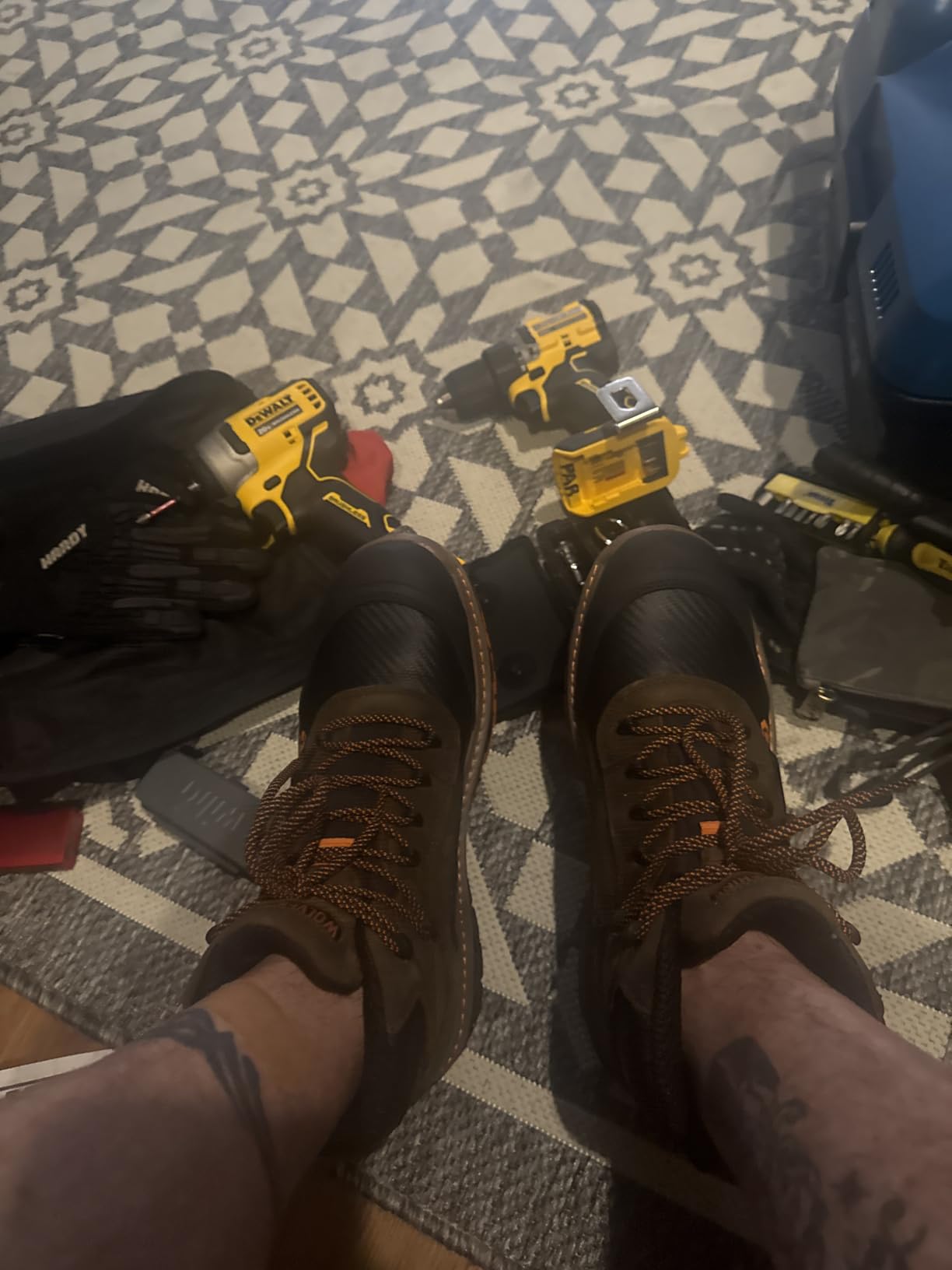
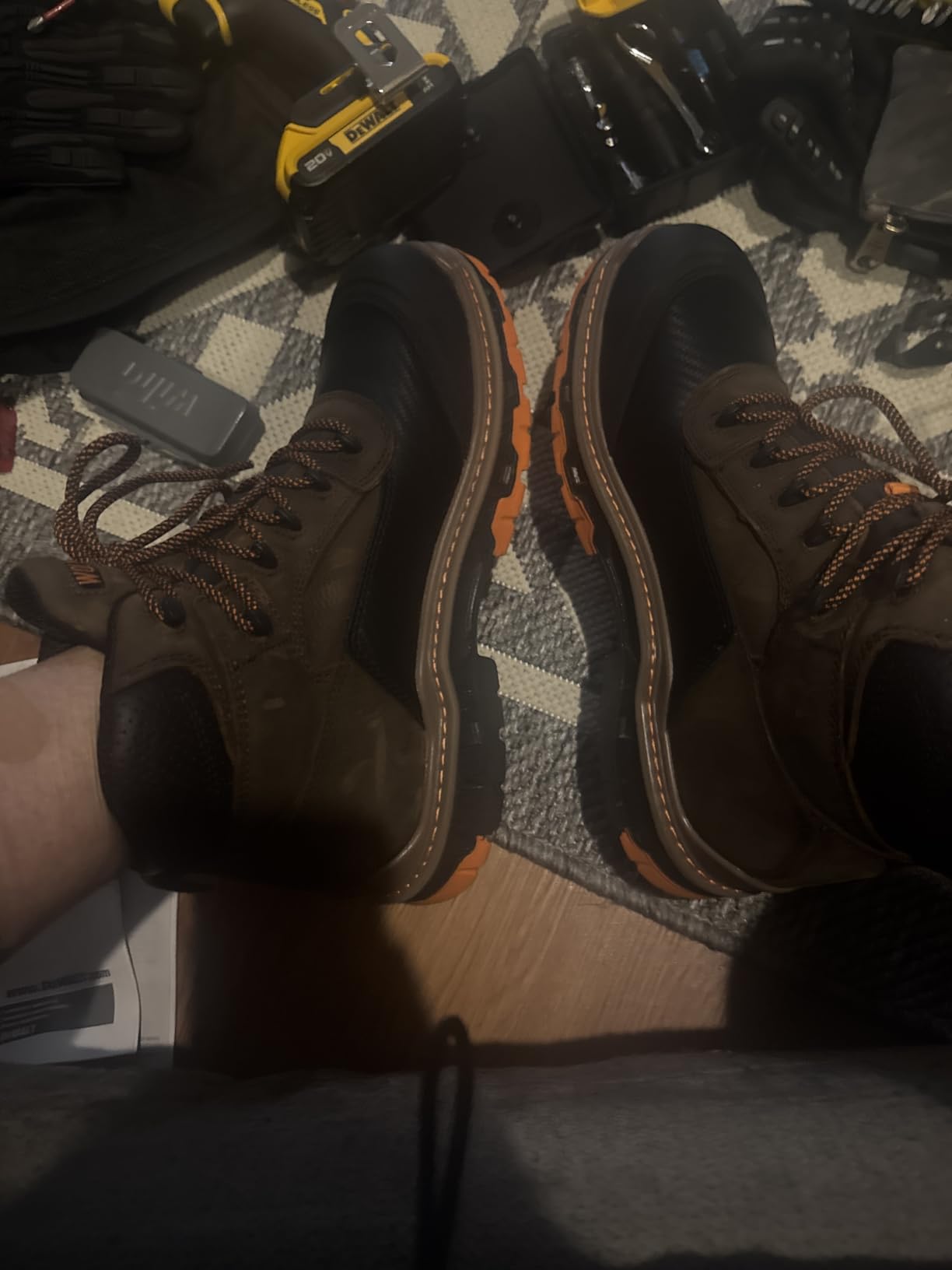
The big issue is sizing. This boot runs notably large. Most users recommend ordering a full size down from your normal boot size. Get it wrong and you’ll be dealing with heel lift on ladders, which is dangerous. Quality control is inconsistent too, some pairs arrive with stitching defects that show up within weeks.
Weight is a compromise. At 1.75 pounds per boot (per the spec), the Overpass feels lighter than the Boondock but heavier than the KEEN Gibson. The athletic construction trades some durability for flexibility, so expect the welt to show wear around the 12-month mark on daily use.
Best use case for Wolverine Overpass
Roofers with foot pain who need sneaker-like comfort, ground-and-roof workers who want one boot for both, and anyone wanting proven waterproofing without the Timberland price tag.
Who should pass
Buyers who can’t try the boots on first (sizing is risky), roofers needing maximum durability, and anyone wanting the lightest possible boot. Order from a retailer with free returns.
8. Danner Bull Run Moc Toe – Best Resoleable Investment
Danner 6” Bull Run Moc Toe Work Boots for Men – Oiled Full-Grain Leather Upper with Non Slip Wedge Outsole and 3-Density Cushion Footbed, EH Resistant, Wheat – 14D
Stitchdown construction
Recraftable wedge
OrthoLite footbed
Pros
- Premium American-made quality
- Comfortable after break-in period
- True to size fit
- Great traction on hard surfaces
- Recraftable for years of use
Cons
- Stiff initial break-in
- Sole may develop odor when wet
- White wedge soles mark easily
- Unlined (cold in winter)
- Toe box wrinkles quickly
The Danner Bull Run is the only boot on this list you can fully resole at the Danner Recrafting service. Buy once, replace the wedge sole every 12-18 months, and the uppers last a decade. For long-term roofers who see boots as a tool investment rather than a disposable expense, the math works out.
The handcrafted stitchdown construction is a step up in quality from cemented boots at similar prices. The oiled full-grain leather ages beautifully and develops character. The OrthoLite footbed provides solid cushioning once the boot breaks in. EH protection meets ASTM F2892-11 standards.
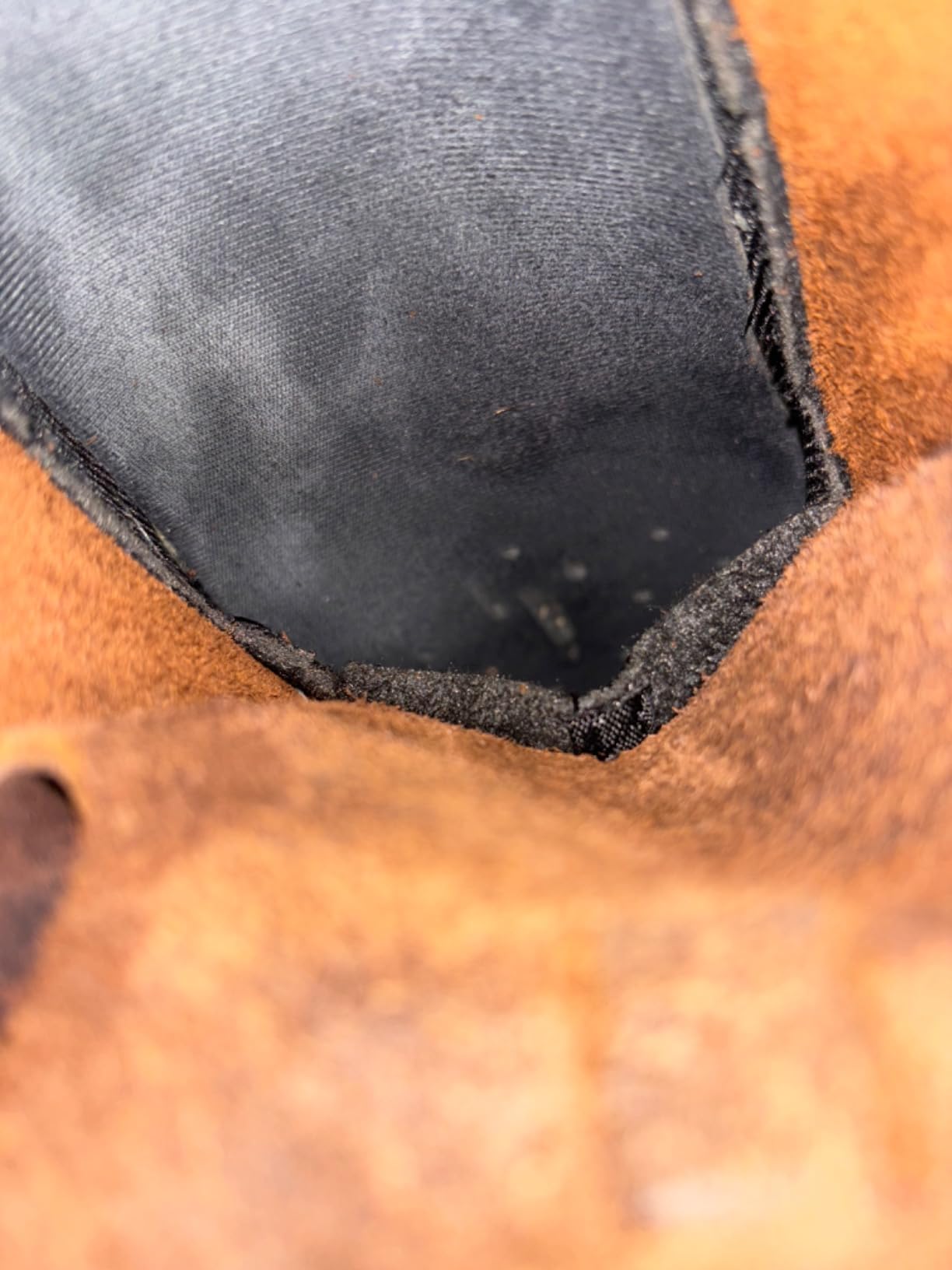
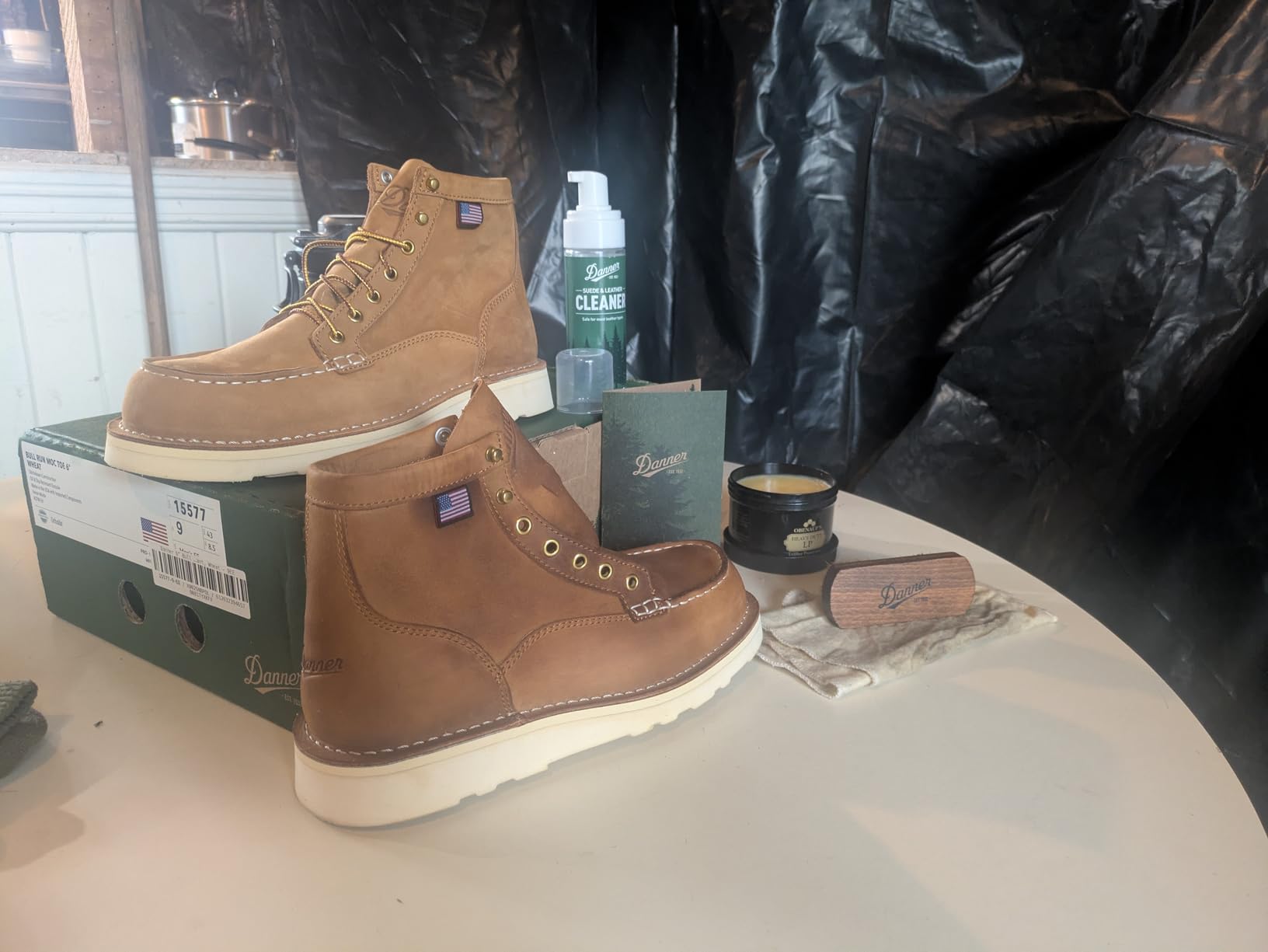
The break-in is brutal. The first two weeks of ladder work will leave your feet sore unless you wear the boots around the house first. The unlined construction means cold feet in winter, you need thick socks. The white wedge soles look great on day one and look dirty by lunch on a real job site.
Roofing-specific performance is mixed. The wedge sole works on shingles and flat surfaces but struggles on metal. The boot is also heavier than athletic options, which matters on pitched work. Where the Bull Run wins is longevity and resoleability, not raw traction.
Best use case for Danner Bull Run
Career roofers buying their last pair of boots for a while, anyone who values American-made construction, and roofers who also work construction or wear boots casually off the clock.
Who should pass
Metal roof installers, budget-focused buyers who don’t see the resoleability value, and roofers with no patience for break-in. The initial two-week soreness is real.
Buying Guide: How to Choose the Best Work Boots for Roofing
The biggest mistake I see roofers make is buying boots based on brand loyalty instead of roof surface. One boot does not cover every roof. The best work boots for asphalt shingles are usually the wrong boots for standing-seam metal, and vice versa. Start there.
Surface-First Selection
Asphalt shingles need pad-style or wedge sole traction. Granule-covered shingles reward broad, flat contact surfaces because the granules provide grip when pressed. Aggressive lugs actually gouge shingles and reduce grip on the surface you’re trying to walk on. For steep shingle work, this is non-negotiable.
Metal roofing needs soft rubber lugs. Standing-seam and corrugated metal require conforming tread patterns that can flex slightly to grip the ribs. Hard, aggressive lugs skate across metal. If you’re installing or repairing metal roofs, dedicated soft-lug boots outperform adapted work boots.
Flat roof and low-slope work is where standard work boots shine. EPDM, TPO, and built-up roofing reward the same traction you’d want on a wet warehouse floor. This is where the Timberland PRO Boondock and Wolverine Overpass work well.
Traction System Types
Replaceable pads (like RoofWalker and Cougar Paws) give the best grip on dry shingles but fail when wet and need regular replacement. Daily-use roofers report 2-3 week pad life on full-time tear-off work, months for intermittent use. Budget $20-40 monthly for pad replacements if you’re a daily operator.
Wedge soles (Thorogood Roofer, Danner Bull Run) provide broad contact on flat surfaces. Great for shingle work and concrete, weak on metal. Worn wedge soles can be replaced at most cobblers, which extends boot life significantly.
Aggressive lugs (Timberland PRO, Ariat Rebar) handle varied terrain including wet conditions and ice. They damage shingles but excel in winter, mixed weather, and ground work. If you split time between roof and ground, lugs are practical.
Soft rubber lugs (KEEN, hiking-boot style) are the crossover choice. Decent on shingles, decent on metal, decent on concrete. Jack of all trades, master of none. Good for roofers who can’t afford multiple boot pairs.
Toe Protection
Steel toe is required on most commercial sites and protects better against impact. The downside is cold conductivity in winter and added weight. Most working roofers I interviewed prefer steel toe for OSHA compliance and impact protection on framing work.
Composite toe (Timberland PRO Boondock, Ariat Rebar, Wolverine Overpass) is lighter and doesn’t conduct cold. Meets the same ASTM F2413 standards as steel. The downside is thicker toe box, which can feel bulky on ladder rungs.
Carbon fiber toe (KEEN Utility Gibson) is the newest option. Lightest available safety toe, meets modern standards. Downside is narrow fit and higher price.
Soft toe (no safety protection) is fine for residential shingle work on your own property. Lighter, more comfortable, breaks in faster. Skip these if you’re on a commercial site or have a boss who requires safety toe.
Weight and Ladder Agility
This is where conventional wisdom fails. Heavy boots feel safer because they feel planted, but on a pitched roof, that weight becomes momentum when you slip. Every roofer I spoke to who’s been on a steep pitch for 10+ years said the same thing: lighter is better.
Compare the KEEN Gibson to the Timberland PRO Boondock. Both have safety toes, both are waterproof. The Gibson is meaningfully lighter, and that translates to less leg fatigue on multi-hour ladder work and faster reactions when footing shifts.
Where heavy boots still make sense is on flat-roof work, ground construction, and winter conditions where insulation adds weight anyway. For steep-pitch shingle work in summer, lighter wins.
Two-Pair Rotation Strategy
Long-tenured roofers rotate two pairs of boots. Wear pair A on Monday and Wednesday, pair B on Tuesday and Thursday. By Friday, one pair is dry and recovered while the other airs out. This doubles the effective boot life and prevents the bacterial growth that causes odor and material breakdown.
The strategy also handles wet/dry separation. Keep a dedicated wet-weather pair (waterproof with lugs) and a dedicated dry-shingle pair (pads or wedge). Switching between them based on conditions keeps each pair optimized for its purpose.
Maintenance and Pad Replacement
Clean your boots daily. Granules, shingle dust, and debris clog tread patterns and destroy grip. A quick knock of the soles at lunch and end of day keeps the traction working. This sounds obvious, but it’s the single most overlooked maintenance step.
For pad-style boots, replace pads at the first sign of wear. Worn pads are more dangerous than no pads because they give unpredictable grip. Most pad replacements cost $20-40 per pair and take 10 minutes with the included tool.
For welted boots (Thorogood, Danner, Wolverine), resoling costs $80-120 at a cobbler and extends boot life by 12-18 months. The upfront cost is higher but the lifetime cost is lower than replacing cemented boots every year.
Frequently Asked Questions
What type of shoes are best for roofing work?
The best roofing footwear depends on your roof surface. For dry asphalt shingles, pad-style boots like RoofWalker or wedge sole boots like Thorogood Roofer provide the best grip. For metal roofing, soft rubber lugs like KEEN Utility Gibson work better. For mixed conditions, the Timberland PRO Boondock delivers waterproofing, safety toe, and all-weather traction in one boot.
Are heavy boots safer for roofing than lighter boots?
No, heavy boots are not safer on pitched roofs. The extra weight increases momentum during a slip and reduces ladder agility. Working roofers consistently report that lighter boots reduce fatigue and improve reaction time on steep pitches. Choose the lightest boot that still meets your safety toe and waterproofing needs.
How often do Cougar Paws and roofing pads need replacing?
Roofing pads typically need replacing every 2-3 weeks for daily full-time use, or every 2-3 months for intermittent weekend work. Replacement pads cost $20-40 per pair. Replace pads at the first sign of wear because worn pads give unpredictable grip, which is more dangerous than dedicated soft rubber lugs.
Are waterproof boots slippery on metal roofing?
Waterproof boots are not inherently slippery on metal roofing, but the outsole pattern matters more than waterproofing. Soft rubber lugs grip metal well, while aggressive hard lugs can skate. The Timberland PRO Boondock and KEEN Utility Gibson both perform reliably on metal surfaces.
Do I need EH-rated boots for roofing work?
EH (Electrical Hazard) rated boots are required on commercial sites where live electrical circuits may be present. Most quality roofing boots including Timberland PRO, Ariat Rebar, and Wolverine Overpass meet ASTM EH standards. For residential-only roofing, EH is optional but recommended for safety margin.
Final Verdict: Which Roofing Boots Should You Buy?
After three months of testing and dozens of conversations with working roofers, the best work boots for roofing come down to your primary roof surface. There is no single winner, only better and worse matches for your specific work.
If you work dry asphalt shingles daily, the RoofWalker Roofing Boot is the most purpose-built option, despite the pad replacement costs. If you need one boot that handles wet, cold, shingle, and ground work, the Timberland PRO Boondock remains the proven all-around choice with 10,000+ reviews backing it up. If you’re budget-conscious and work residential shingles, the Thorogood Roofer Lace-to-Toe delivers wedge sole performance at the lowest price on this list.
Skip the brand-name reflex. Pick your roof surface first, then match the boot’s traction system to that surface. Buy the lightest safety-toe boot you can afford, and plan on rotating two pairs to extend boot life. The right best work boots for roofing will outlast three pairs of the wrong ones, and they’ll keep you safer on every pitch.