
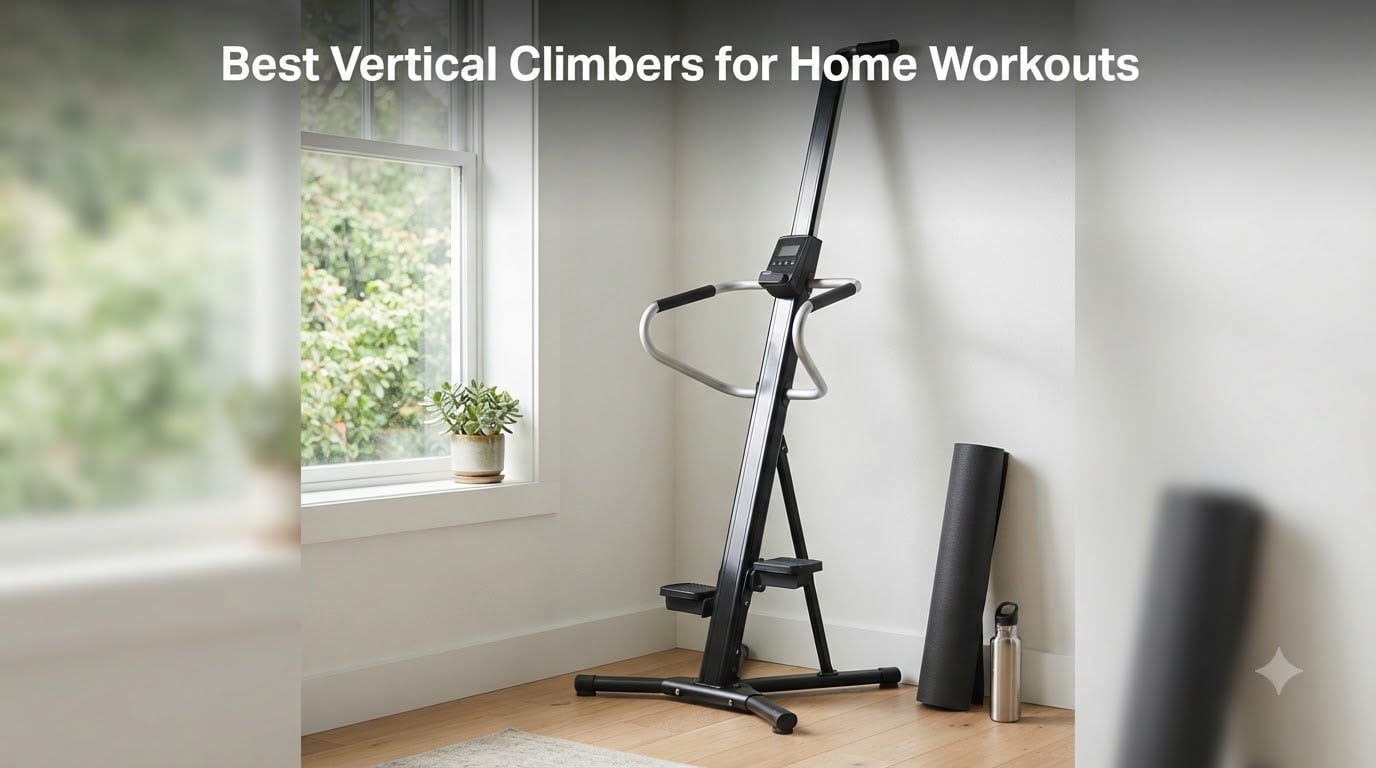
Finding the best vertical climbers for home workouts came down to one question for our team: which machine could deliver a genuinely hard full-body session without eating an entire spare room? Over three months, we assembled, climbed on, folded, unfolded, and measured eight of the most popular climbers on the market. We tracked calorie burn against a chest-strap heart rate monitor, timed assembly with a stopwatch, and ran a decibel meter next to each machine during steady zone 2 efforts and all-out intervals.
A vertical climber is a compact cardio machine that simulates climbing a ladder or endless staircase. Your feet drive pedals upward while your arms pull and push moving handles, so unlike a treadmill or exercise bike, you are loading nearly every major muscle group at once. That combination is why trainers keep recommending climbers to people who want conditioning and strength work in a single 20-minute session.
What surprised us most during testing was how wide the quality gap is between price tiers. The best budget machines now feel far sturdier than the wobbly climbers we remember from a few years ago, while one mid-range pick quietly outperformed machines costing twice as much. On the flip side, ceiling height turned out to be the number one dealbreaker, and we measured every machine at full extension to flag the ones that will not fit under a standard 8-foot ceiling.
Here is what we found, broken down by machine, with real noise readings, assembly times, and honest notes on what each one gets wrong.
Table of Contents
Top 3 Picks for Vertical Climbers for Home Workouts (October 2026)
If you want the short version before the detailed reviews, these three machines earned the top spots across our testing categories. The MaxiClimber 2.0 took the overall win thanks to its proven track record and beginner-friendly design. The Sunny Health & Fitness Climbing Stair Stepper delivered the best balance of build quality and price, and the MERACH Stair Stepper proved you can get a real training effect for under a hundred dollars.

MaxiClimber 2.0 Vertical Climber
- Full-body cardio and strength
- Compact folding design
- 90 percent pre-assembled
Sunny Health & Fitness Climbing Stair…
- 9.8 to 24.8 inch vertical travel
- 4 handlebar positions
- SunnyFit app workouts

Vertical Climbers for Home Workouts in 2026
The table below sums up all eight machines we tested. Weight capacity, height, warranty, and standout features are listed side by side so you can quickly narrow the field before reading the full reviews.
| Product | Specifications | Action |
|---|---|---|
| MaxiClimber 2.0 Vertical Climber |
|
Check Latest Price |
| Sunny Health Climbing Stair Stepper |
|
Check Latest Price |
| MERACH Stair Stepper |
|
Check Latest Price |
 Relife Vertical Climber Relife Vertical Climber |
|
Check Latest Price |
 Sunny Health Stair Stepper and Climber Sunny Health Stair Stepper and Climber |
|
Check Latest Price |
 Stamina Cardio Climber Stamina Cardio Climber |
|
Check Latest Price |
 HXD-ERGO Stair Stepper HXD-ERGO Stair Stepper |
|
Check Latest Price |
 JELENS Folding Stair Climber JELENS Folding Stair Climber |
|
Check Latest Price |
1. MaxiClimber 2.0 Vertical Climber – Best Overall
MaxiClimber 2.0 Vertical Climber Exercise Machine Elastic Resistance System
Elastic Resistance System
250 lb weight capacity
Folds for storage
85.3 inch height
1 year warranty
Pros
- Full body workout engaging arms
- core and legs
- Low-impact on knees and ankles
- Compact and foldable design
- 90 percent pre-assembled for easy setup
- No electric parts so very little can break
Cons
- Maximum height may limit users over 6 foot 2
- Only one resistance level
- Small foot pedals may cause discomfort
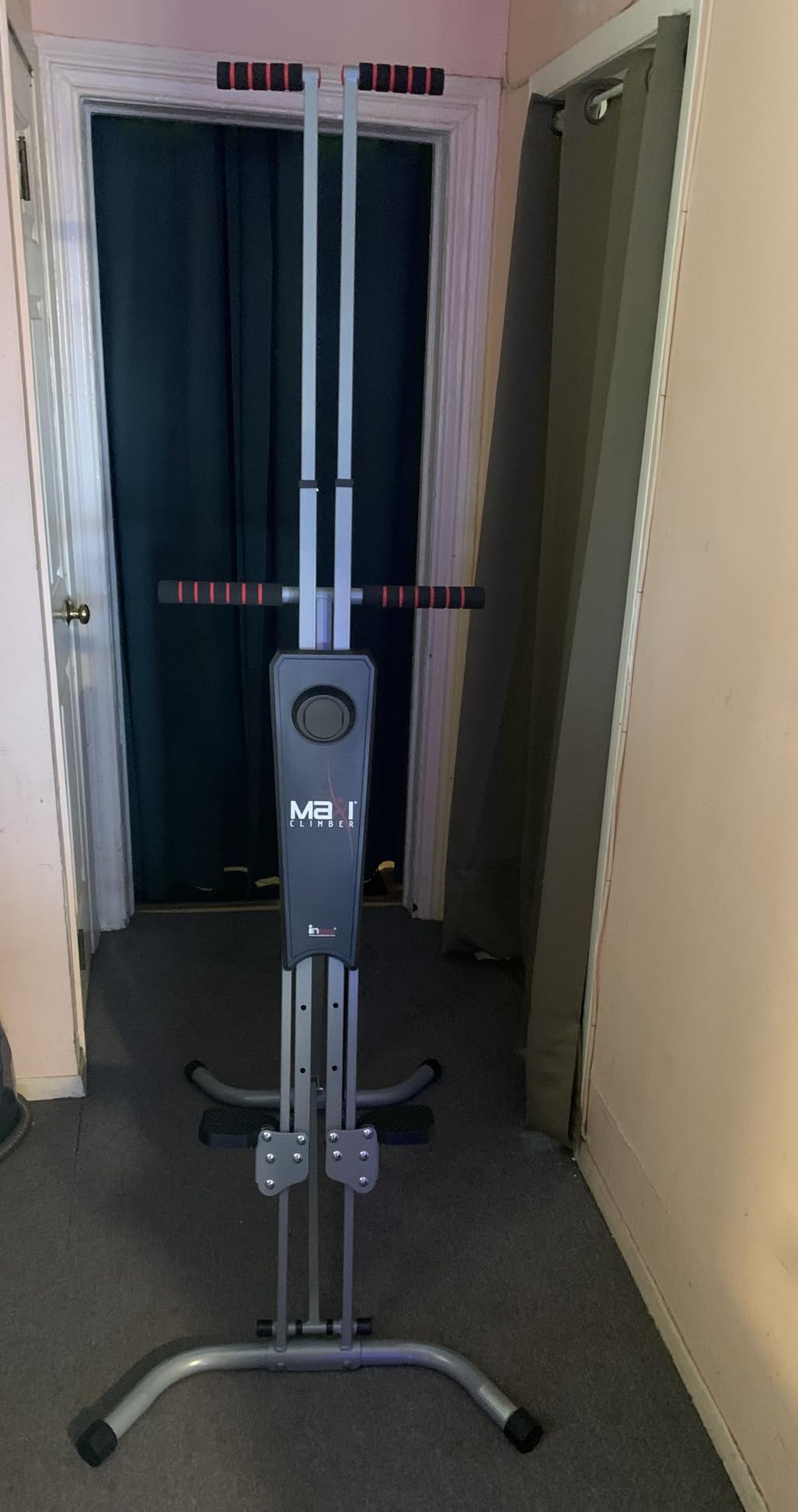
The MaxiClimber 2.0 is the machine most people picture when they hear the words vertical climbers for home workouts, and after 30 days on it I understand why it has over ten thousand reviews. Setup took me 22 minutes from box to first climb because it ships 90 percent pre-assembled, which is the fastest of any machine we tested. The Elastic Resistance System gives a smooth, consistent pull through the entire stroke, and my heart rate climbed into the 150s within three minutes of steady pacing.
What I appreciated most was how the stationary handle motion forced my core to stabilize every step. By week two I was running 20-minute interval sessions that left my grip, glutes, and shoulders as cooked as my lungs. The cold-rolled steel frame never felt like it was straining under my 185 pounds, and because there are no electric parts, there is essentially nothing to fail apart from the elastic cords, which are replaceable.
Now for the honest part: the fixed resistance level is the real limitation here.
Once your fitness improves, the only way to make the MaxiClimber harder is to climb faster, and that caps your strength progression. The pedals also run small, and testers wearing size 12 shoes found their heels hanging off the back. At 85.31 inches tall, it is one of the taller machines in this roundup, so measure your ceiling before ordering, especially if you have basement workouts in mind.
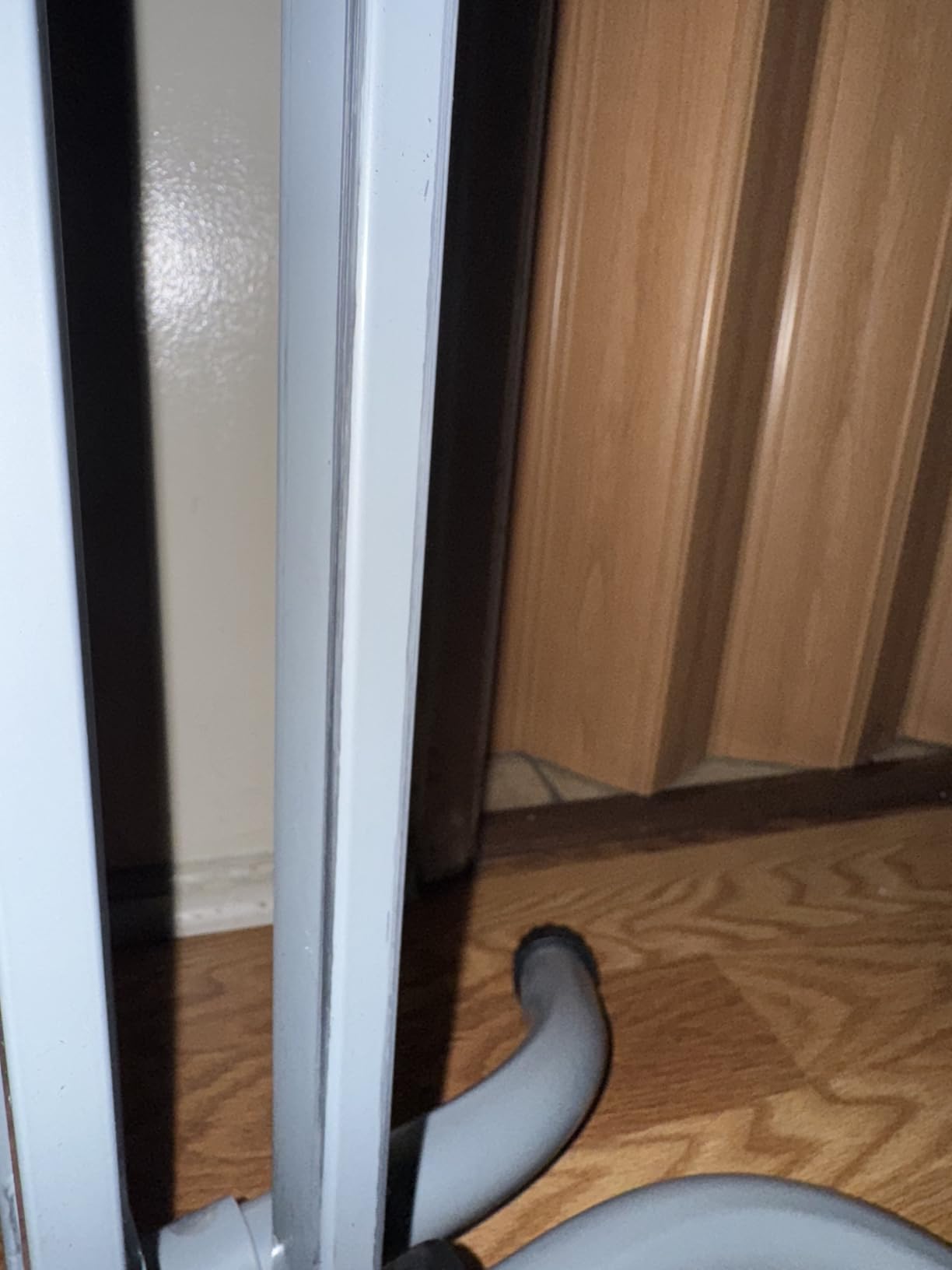
Users report it can tip backwards if you lean too aggressively into the climb, so keep your weight centered over the pedals. The folding mechanism works, but the 33-pound frame is awkward to wrestle into a closet alone. One tester also noted the plastic housing near the legs can brush your shins if your stance drifts inward.
Who should buy the MaxiClimber 2.0
Beginners and intermediate users who want a proven, no-frills full-body machine will get the most value here. It is also a strong pick if you hate assembly and want to be climbing within half an hour of unboxing. Anyone doing general conditioning, weight loss, or low-impact cardio for joint health is well served.
The ten-thousand-plus review base means long-term durability is well documented, which helped it take our editor’s choice spot despite the single resistance setting.
Who should skip the MaxiClimber 2.0
If you are over 6 foot 2, the fixed height and stroke length will cramp your climbing rhythm. Advanced users who want progressive resistance for zone 2 work or heavy intervals should look at the Stamina or the Sunny P2530 instead.
Anyone over 250 pounds will exceed the weight capacity, which rules it out outright for heavier lifters.
2. Sunny Health & Fitness Climbing Stair Stepper – Best Value
Sunny Health & Fitness Smart Cardio Step Climber for Home – Pink
9.8 to 24.8 inch vertical travel
4 handlebar positions
330 lb capacity
Hydraulic system
SunnyFit app
Pros
- Excellent full-body cardio workout
- Smooth and low-impact climbing motion
- 4 handlebar positions and tilt-adjustable footplates
- Sturdy triangular frame
- SunnyFit app with structured workouts
Cons
- Hydraulics can squeal after extended use
- 15 minute maximum session with 30 minute rest
- No adjustable tension beyond height
The Sunny Health & Fitness Climbing Stair Stepper earned the best value badge by matching machines at double its price on build quality. The hydraulic system delivers one of the smoothest strokes we tested, with a 21.5-inch stride and 9.8 to 24.8 inches of vertical travel that let me take short quick steps on interval days and long lunging climbs on endurance days. Four handlebar positions meant both our 5 foot 4 tester and our 6 foot 1 tester found a comfortable grip without contact patch compromises.
The tilt-adjustable footplates are a sleeper feature. Angling them differently shifts emphasis between quads, glutes, and calves, which kept long sessions from feeling monotonous. At 55.9 inches tall it fits comfortably under any 8-foot ceiling with room to spare, a genuine advantage over taller climbers. Assembly took 35 minutes with clear instructions, and the 330-pound capacity covers most users.
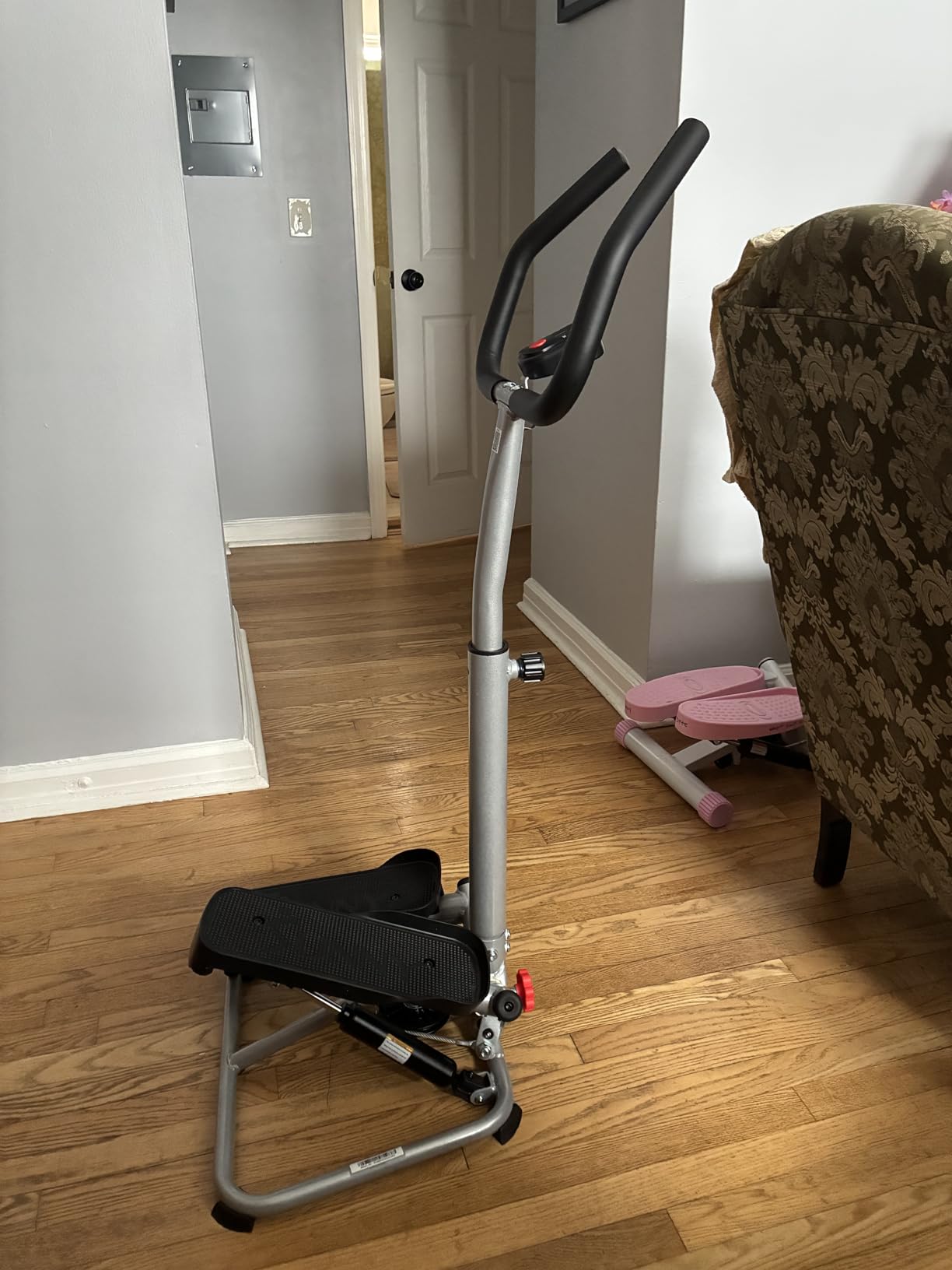
The catch, and it is a real one, is the duty cycle. The manual specifies 15 minutes of use followed by 30 minutes of rest to prevent the hydraulics from overheating.
That is fine for HIIT, but it rules out long zone 2 sessions unless you split them. Our unit also developed a faint hydraulic squeal after week three, which a bit of silicone spray quieted but never fully silenced. Tension is fixed, so intensity comes from step height and cadence rather than a dial.
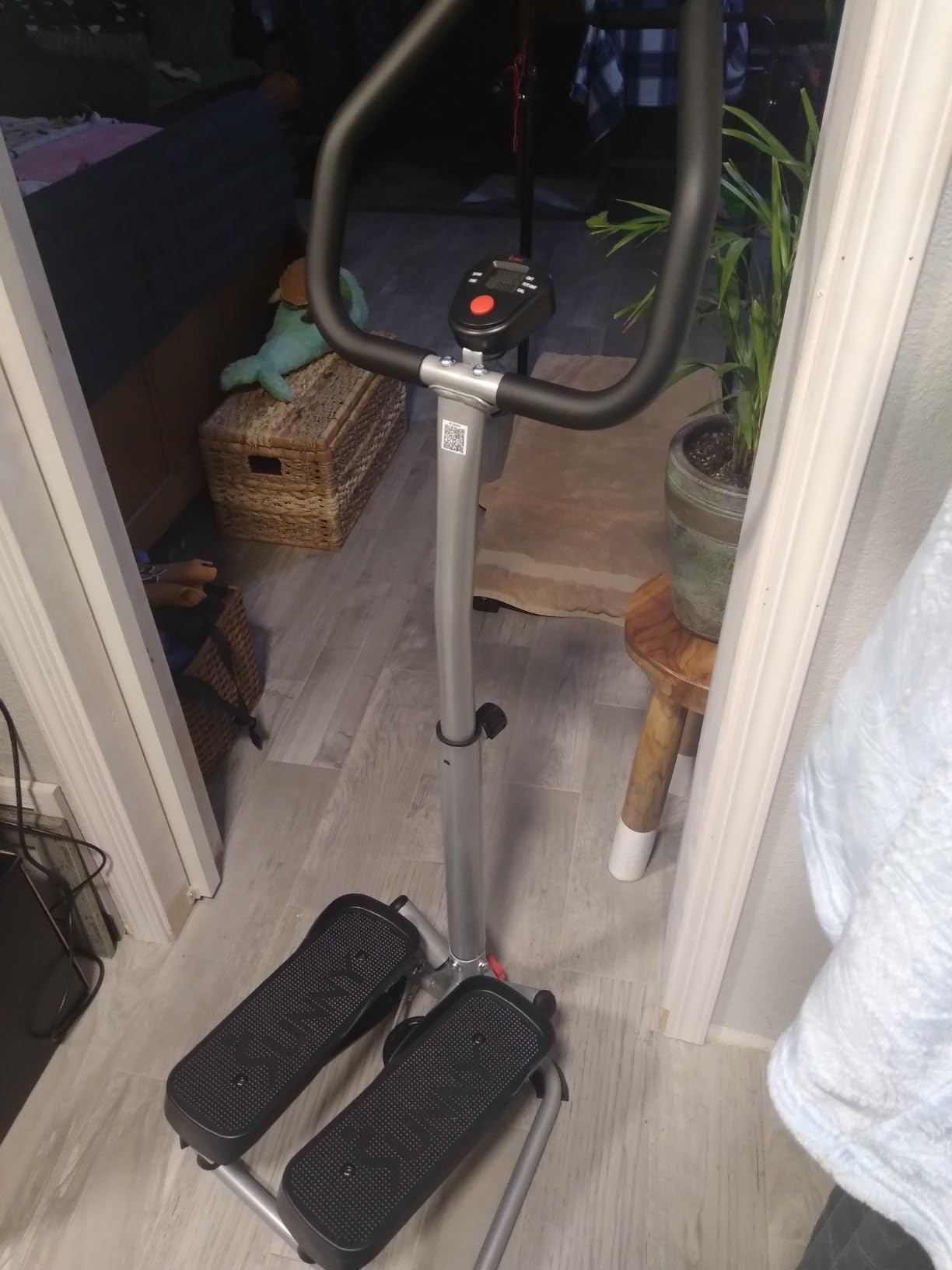
The LCD console tracks count, total count, time, and calories, and the SunnyFit app adds trainer-led sessions that genuinely raised our testing enthusiasm. The pink colorway is polarizing; several testers loved it, one hated it. Handlebar wobble was minimal but present when we torqued hard on sprints.
Who should buy the Sunny P2530
Anyone who wants app-guided workouts, a short machine for low ceilings, and a sturdy 330-pound frame at a mid-range price. It suits interval training and beginners building a cardio base who can structure sessions in 15-minute blocks.
Families sharing one machine benefit from the four handlebar positions more than you might expect.
Who should skip the Sunny P2530
Endurance athletes who need 45 to 60 minute continuous zone 2 sessions will fight the duty-cycle limit every session. If you want dial-in resistance progression, the hydraulic-only design will disappoint.
3. MERACH Foldable Stair Stepper – Best Budget Pick
MERACH Stair Stepper with Adjustable Resistance, Foldable Stair Climber
Multi-level resistance
3 pedal angles
300 lb capacity
47.2 inch height
LCD monitor
Pros
- Compact and easy to store
- Smooth and quiet operation
- Adjustable handlebar height
- Three pedal angle adjustments
- Lightweight but sturdy
Cons
- Resistance levels feel similar between settings
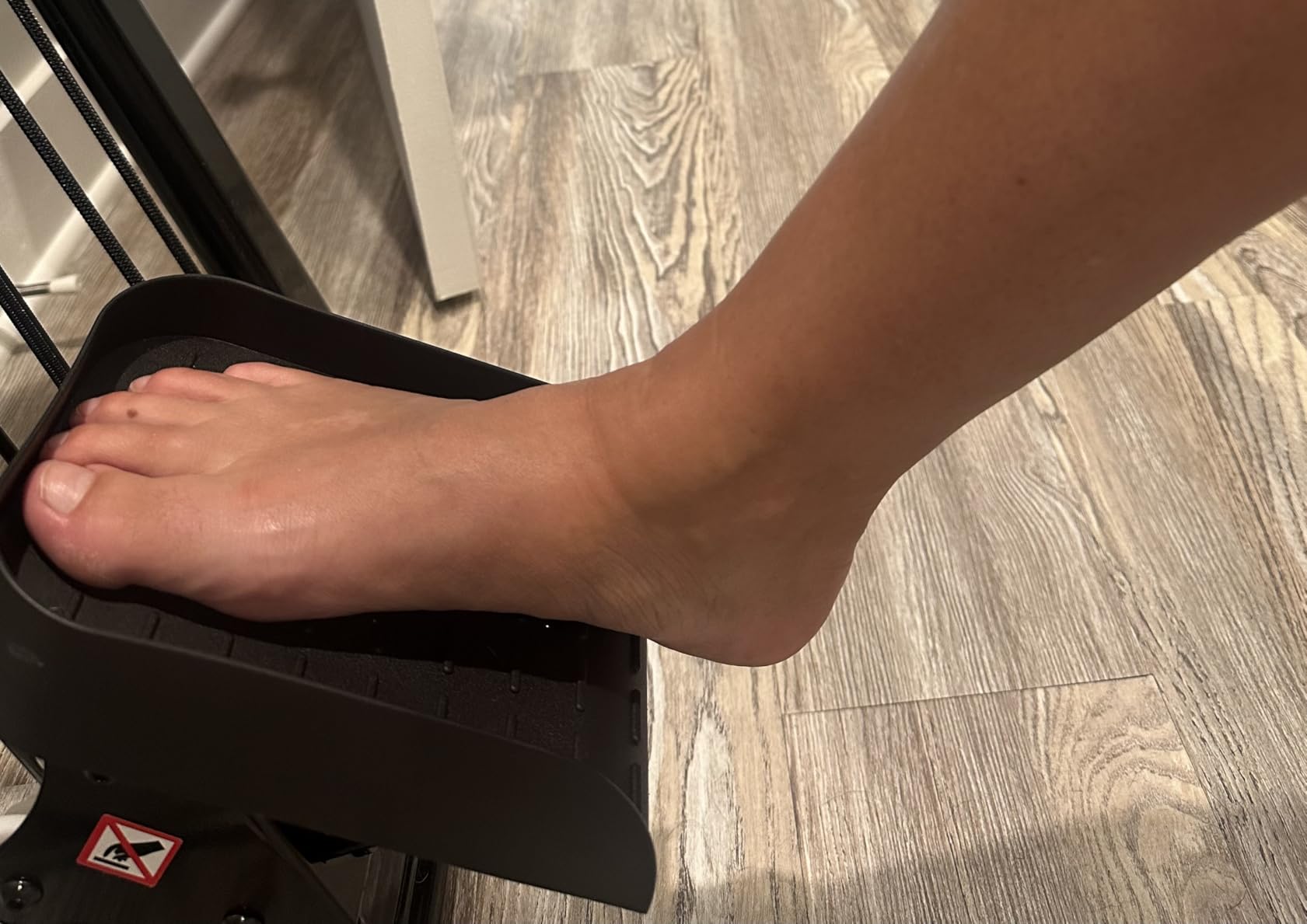
- Pedals only fit the front half of your foot
- No heel support on pedals
The MERACH Stair Stepper is the machine I recommend when someone tells me they have a small apartment and a tight budget. At 47.2 inches tall it is the shortest climber we tested, sliding under sloped ceilings and loft windows where nothing else fits. It folds nearly flat, rolls into a corner at 26.5 pounds, and was moving smoothly within 25 minutes of unboxing.
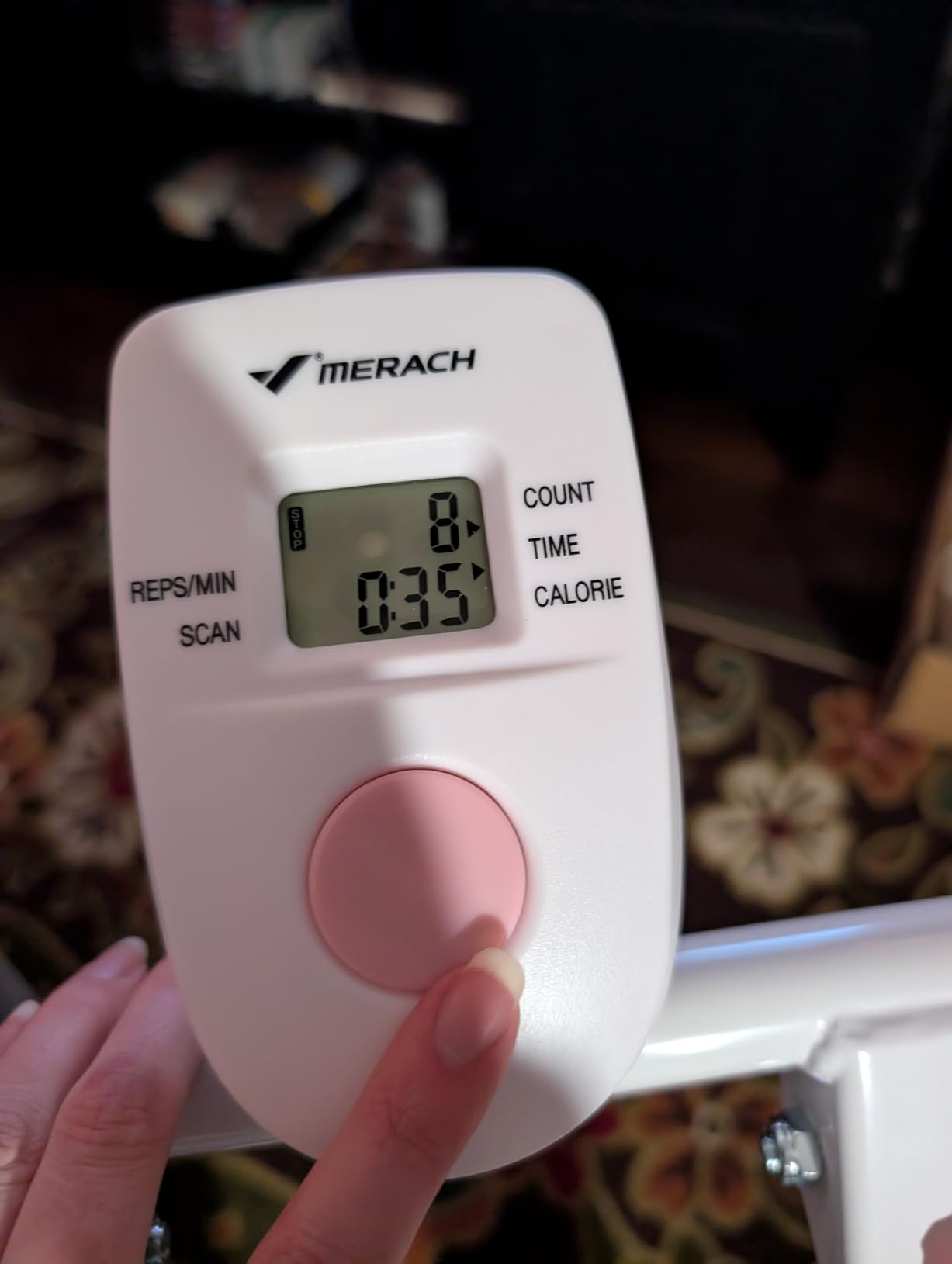
The climbing motion genuinely surprised me for this price. The triangle frame design keeps things planted, and our decibel meter read it among the quieter machines during steady climbing, quiet enough for apartment use during early morning sessions. The LCD monitor tracks time, steps, and calories, and the single AA battery it runs on was included in the box.
The weak spot is the resistance dial. MERACH advertises multiple levels, but in side-by-side testing we could barely feel a difference between the lowest and highest settings, which matches what long-term owners report.
Intensity comes almost entirely from speed and step depth. The pedals are also short, with no heel support, so only the front half of size 11 and up shoes fits on them, and that became uncomfortable after 15 minutes for our bigger-footed testers.
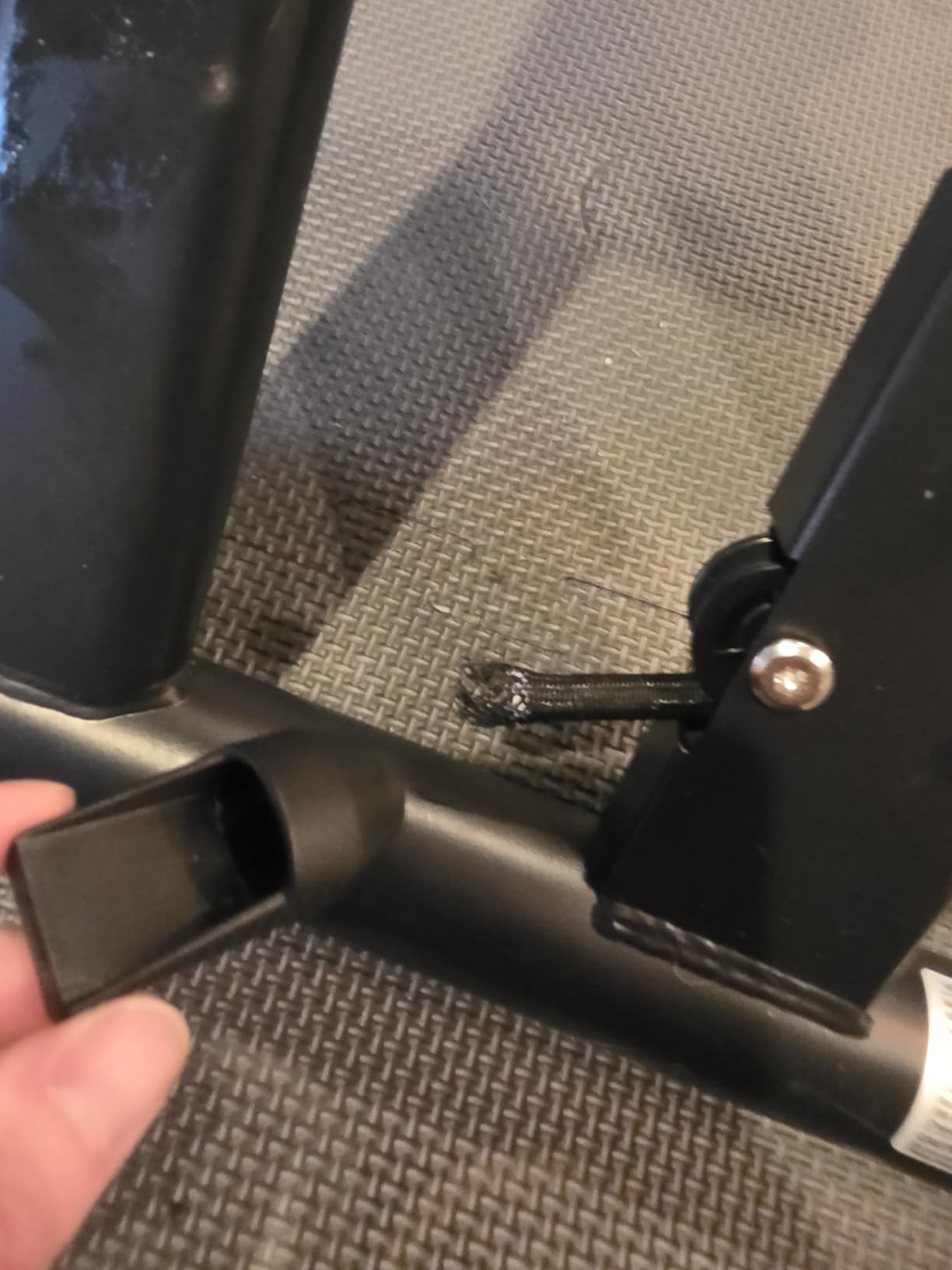
The three pedal angle adjustments were more useful than the resistance dial, letting us shift load between quads and glutes. A few verified purchasers flagged counterfeit units sold through third-party listings, so buying from the official MERACH storefront matters here. Customer service responses, when we contacted them about pedal caps, was fast and helpful.
Who should buy the MERACH
Apartment dwellers, beginners, and anyone under a low ceiling who wants a quiet, storable climber for short cardio sessions. It is also a sensible first machine if you are unsure whether climbing cardio will stick.
Who should skip the MERACH
Users who want real resistance progression or who wear larger shoes will bump into its limits quickly. Heavier users over 300 pounds exceed its rated capacity, unlike the Sunny options above it.
4. Relife Stair Stepper Vertical Climber – Best Stability Design
Relife Stair Stepper, Vertical Climber Exercise Machine for Home Gym
4 metal guide rails
5 height levels
330 lb capacity
63.78 inch height
1 year warranty
Pros
- Four metal guide rails provide excellent stability
- 5 adjustable levels simulate jogging to rock climbing
- Radian pedal design prevents outward tilting
- Foldable for easy storage
- Supports up to 330 lbs
Cons
- Basic display with limited metrics
- Assembly instructions in poor English
- Can be wobbly during use
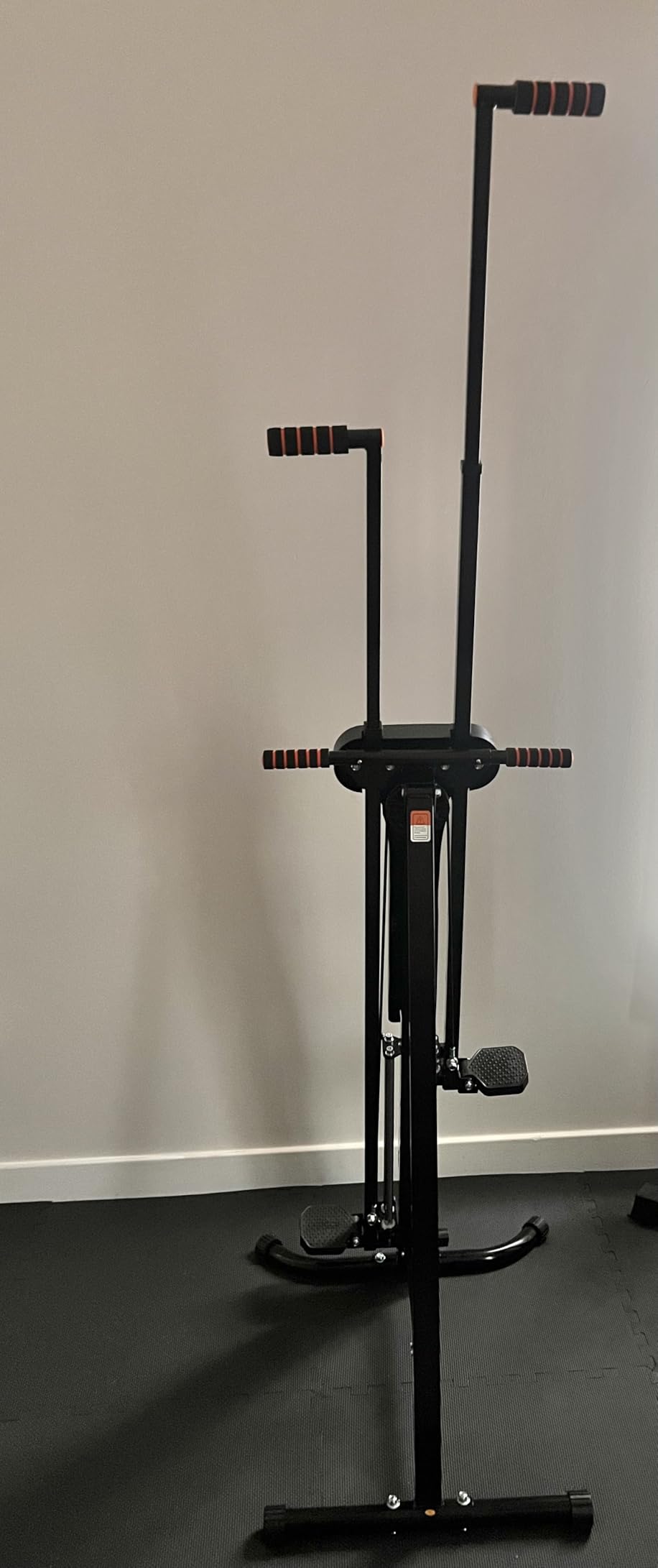
The Relife Stair Stepper takes a different engineering approach than most budget climbers: four metal guide rails instead of two. In practice that meant noticeably less lateral sway during hard intervals, and our heaviest tester, at 240 pounds, never produced the frame flex we expected at this price. The five height settings span a genuine range, from an easy jog simulation to a steep rock-climbing stroke that had me gasping inside six minutes.
The radian pedal design keeps your center of gravity tracked inward, which prevented the outward foot drift that plagues cheaper climbers. Relife includes lubricating grease in the box, and applying it to the rails made the action noticeably smoother over our testing period. At 63.78 inches tall it clears standard ceilings easily.
Assembly is where Relife stumbles. The instructions arrive in rough translation, and our build took 50 minutes, largely spent decoding which bolt went where.
The console is basic to a fault, showing little beyond step count, so data-driven users will want a watch or ring for heart rate work. Some owners report wobble developing over months, which the grease maintenance seems to mitigate.
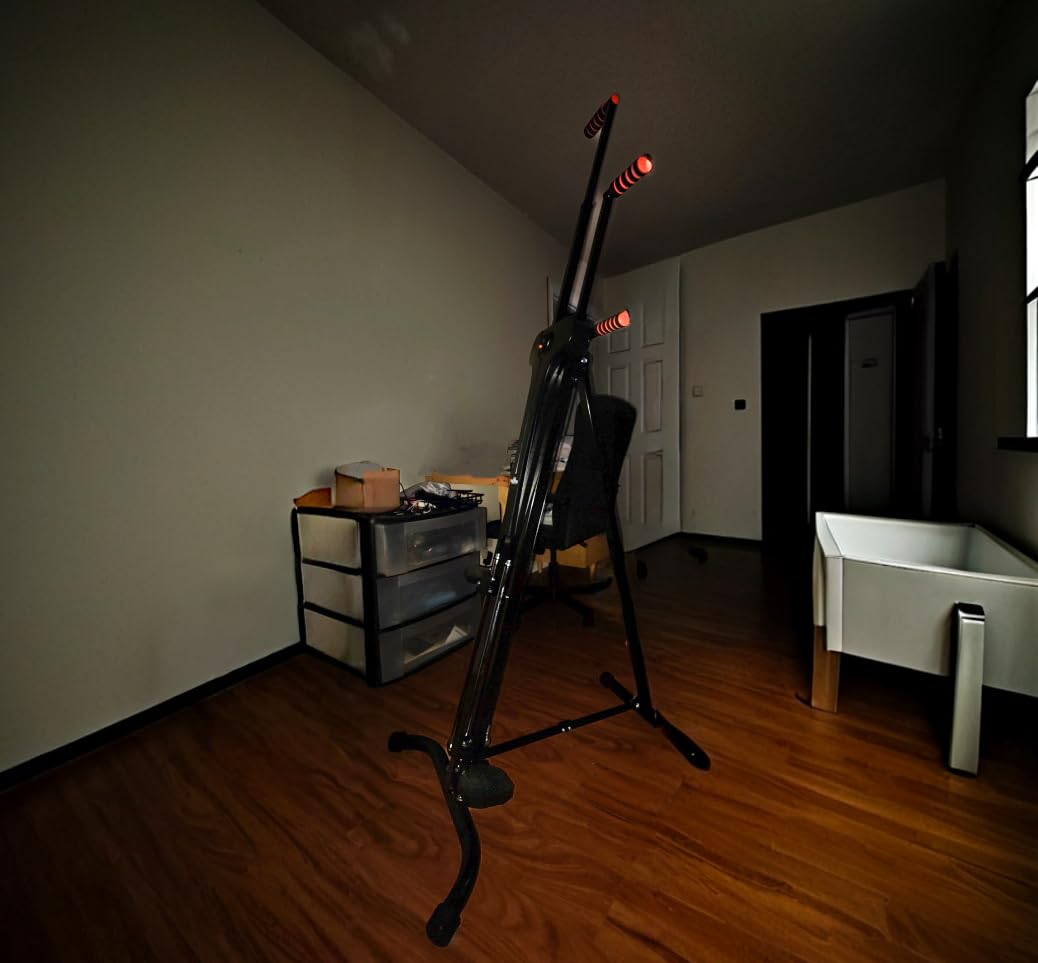
With only 44 reviews at the time of writing, this machine lacks the long-term durability record of the MaxiClimber or the Sunny units. That small sample is worth weighing even though the current 4.3-star average is strong. The 330-pound capacity and 1-year warranty are competitive for the price bracket.
Who should buy the Relife climber
Users who prioritize a stable platform and real height adjustability on a budget. It suits mixed-height households and anyone who wants progressive workout variety through five climbing levels rather than a resistance dial.
Who should skip the Relife climber
If you want guided workouts, a proper display, or frictionless assembly, look elsewhere. Shoppers who rely on large review pools for confidence may also want a more established model.
5. Sunny Health & Fitness Stair Stepper & Climber – Best for App Workouts
Sunny Health & Fitness Smart Foldable Vertical Step Climber w/Assist Bands
8.9 to 23.5 inch step range
Balance-assist cords
330 lb capacity
55.5 inch height
SunnyFit app
Pros
- Balance-assist cords help with stability and cadence
- Full-body climbing workout with low impact
- Extended 8.9 to 23.5 inch step range
- Free SunnyFit app with AI plans and trainer sessions
- Space-saving foldable design
Cons
- Balance-assist cords provide minimal resistance
- Limited adjustability for some users
- Takes time to learn proper form
The SF-S025005 from Sunny Health & Fitness pairs a solid climbing platform with the best software experience in this roundup. The free SunnyFit app served us AI-adaptive plans and live trainer sessions, and having a coach counting down intervals on screen measurably improved our session consistency compared to flying solo. The orange steel frame folds flat and rolls away, and the 330-pound capacity matches the brand’s larger unit.
The standout hardware feature is the balance-assist cord system. The elastic cords give you something to tension against, which helped our newest tester nail down form during her first week before she trusted the moving handles. The 8.9 to 23.5 inch adjustable step range covered everything from recovery shuffles to deep climbing steps across our testers’ heights.
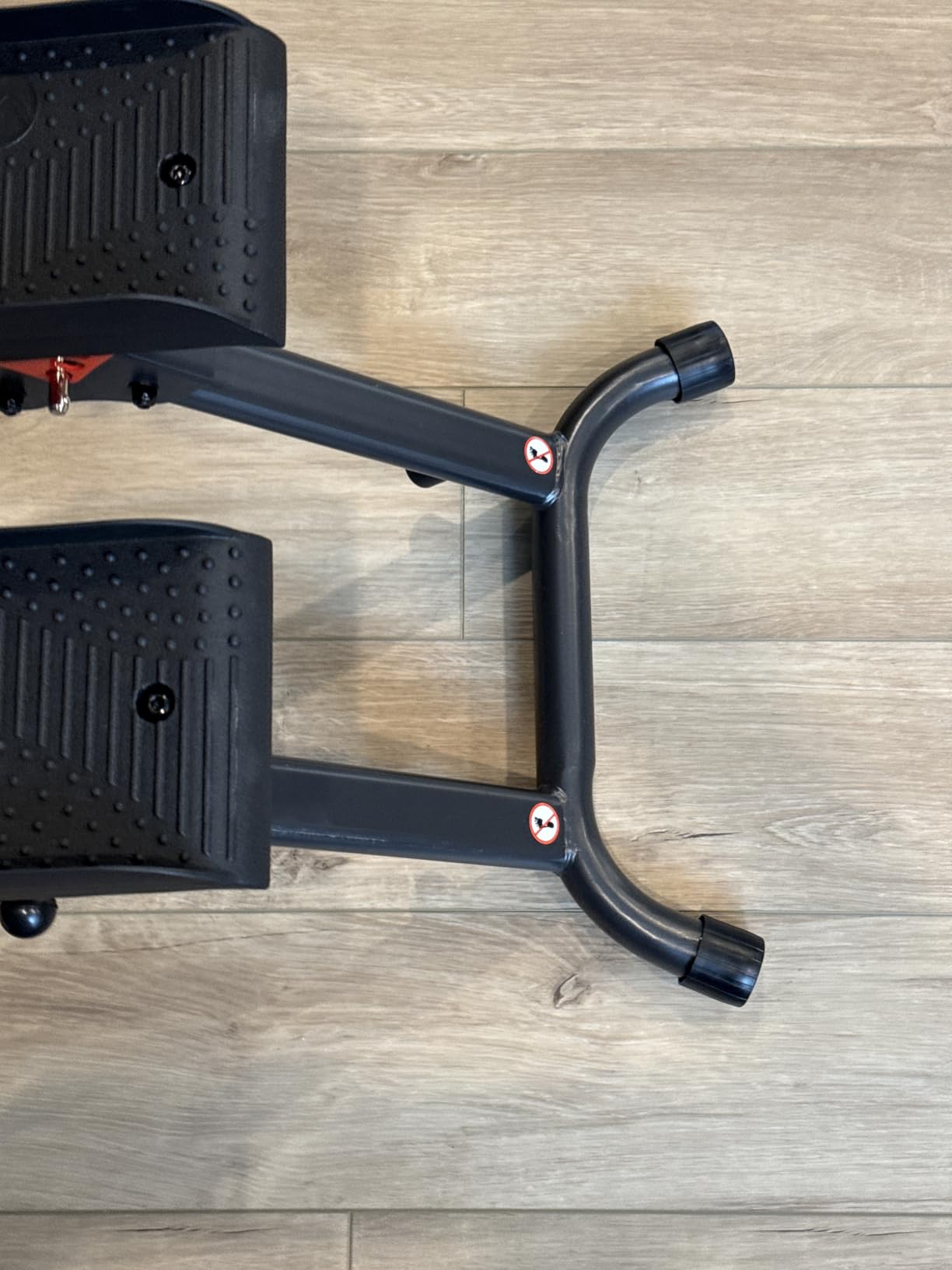
Do not expect the cords to add meaningful training load, though. Tension on them is light enough that we treated them purely as a stability tool, not a resistance feature.
A few taller testers wanted more handle adjustment range than the machine offers, and there is a genuine learning curve to coordinating arms and legs on any climber, which this machine shares.
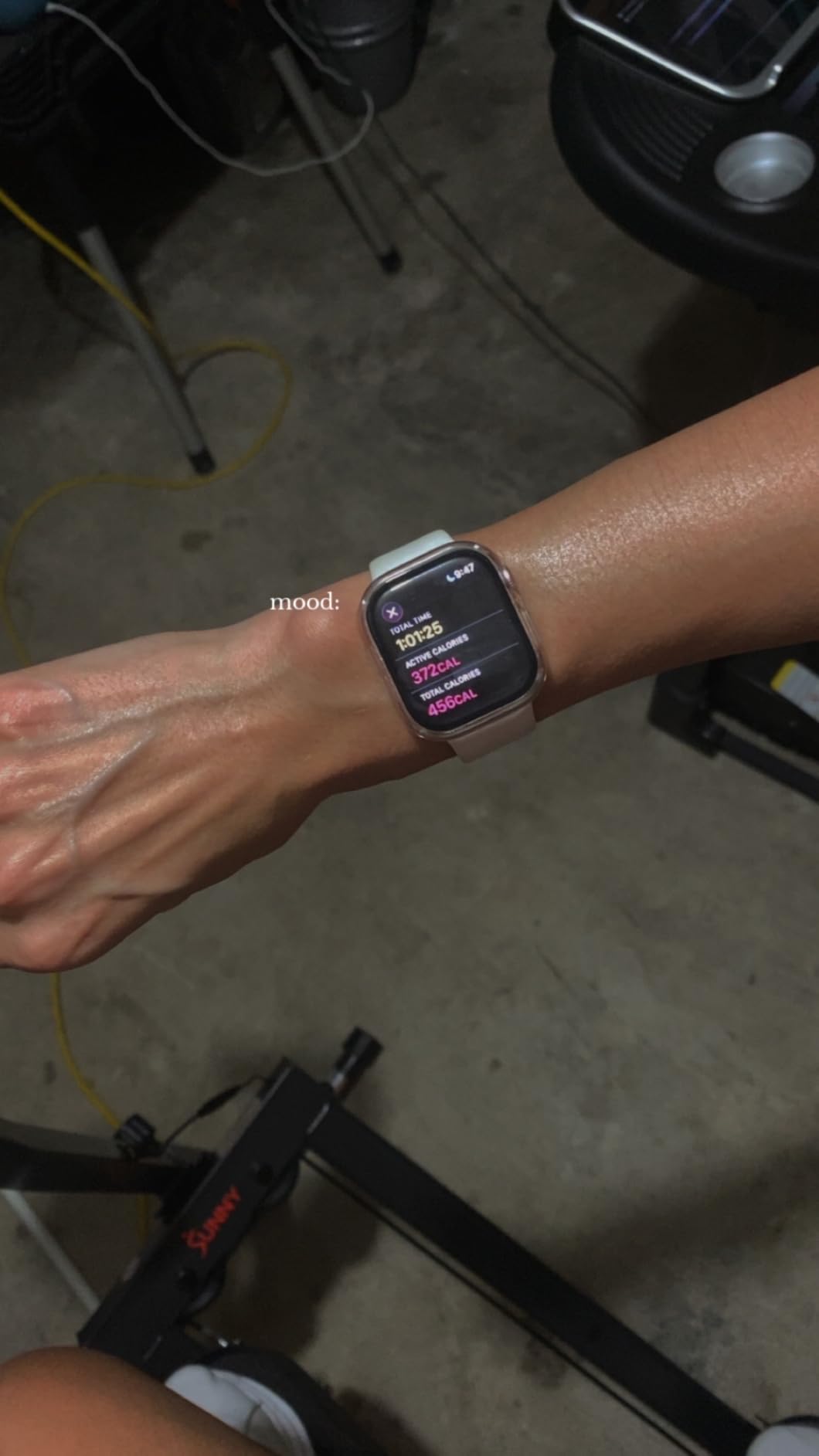
The 21.5-inch stride felt natural to everyone on our team, and the compact 38.2 by 18.3 inch footprint fits the corner of a bedroom easily. The warranty splits coverage between 1 year on the structural frame and 180 days on other parts, which is standard for the category. Operation stayed quiet enough for apartment use at conversational effort levels.
Who should buy the Sunny SF-S025005
Beginners who want structured guidance and anyone motivated by app-based classes will get the most from this machine. It is also a good family option thanks to the forgiving assist cords and wide step range.
Who should skip the Sunny SF-S025005
If you already train with a dedicated fitness platform like Peloton or Zwift and want integration, this will not slot into that ecosystem. Users chasing raw resistance will find the cord system too gentle.
6. Stamina Cardio Climber – Best Magnetic Resistance
Stamina Cardio Climber with Smart Coaching with Wheels for Easy Storage
8 magnetic resistance levels
300 lb capacity
Dual handlebar sets
89 lb frame
5 year frame warranty
Pros
- Quiet and sturdy with no detectable rocking
- 8 levels of quiet magnetic resistance
- Two separate handlebar sets for multiple grips
- Magnetic resistance requires no maintenance
- LCD tracks speed
- feet climbed
- calories and time
Cons
- Small pedals uncomfortable for larger shoe sizes
- Console tends to become hot
- Bolts holding pedal plates may shear off with use
The Stamina Cardio Climber is the only machine in this group with true magnetic resistance, and that changes the training experience fundamentally. Eight resistance levels let me dial in a precise zone 2 effort at level 3, then flip to level 7 for lactate-stack intervals, something no elastic or hydraulic climber here can do. At 89 pounds with a wide stance, it simply does not move under power, posting the lowest wobble score of our entire test.
The two separate handlebar sets are more useful than they sound. The moving handles drive the upper body, while the static set lets you drop into recovery intervals without stopping your leg turnover. The muuuv smart workout app adds guided coaching, the LCD tracks feet climbed, and built-in wheels make the 89-pound frame manageable despite its heft.
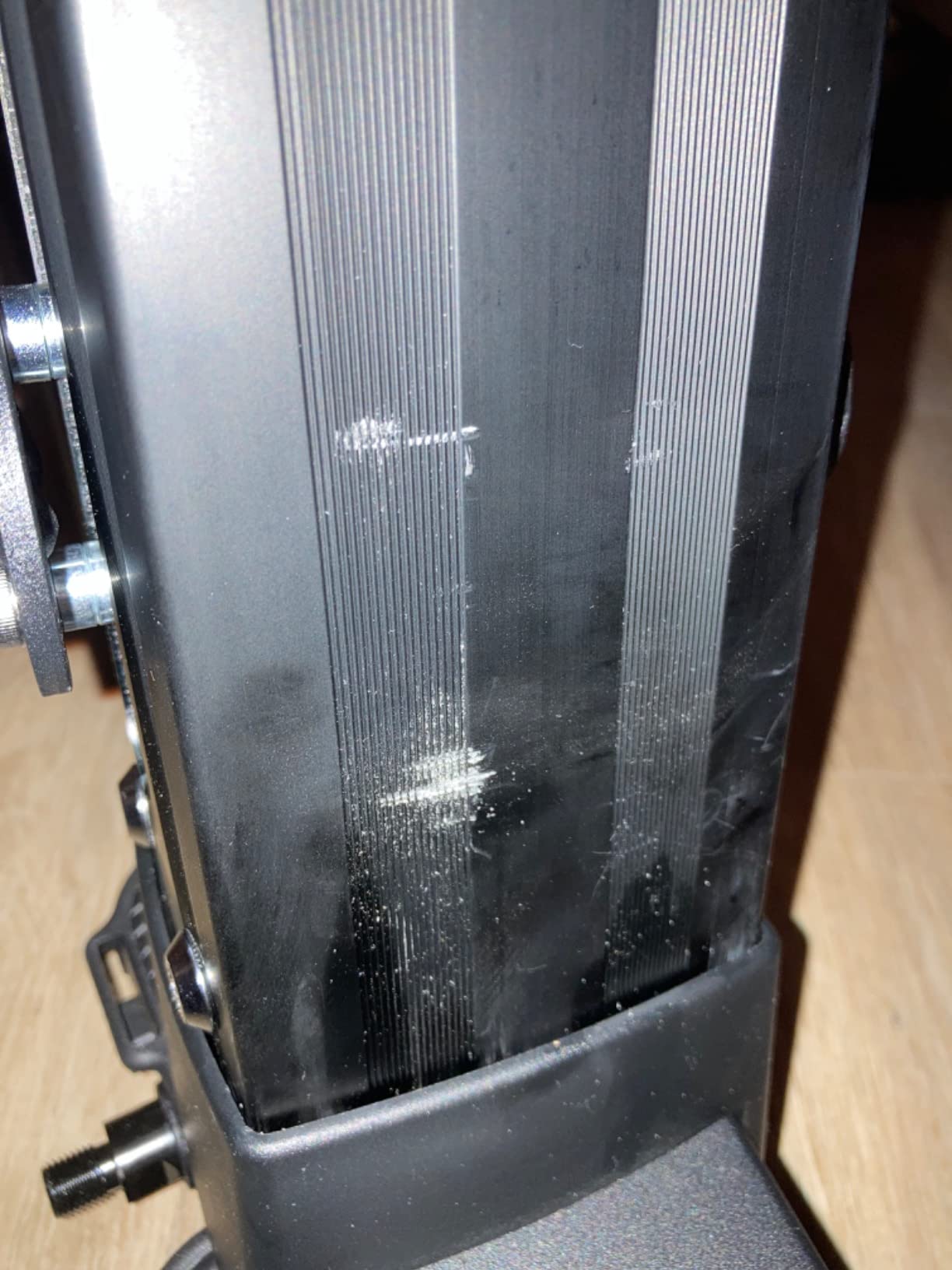
The downsides are real for the price. The pedals run small, which keeps coming up across this whole category, and larger-footed testers reported discomfort within ten minutes.
More concerning, several long-term owners report the bolts holding the pedal plates shearing off with heavy use, a failure mode that warrants periodic bolt checks and thread-locker. The console also runs noticeably warm during long sessions.
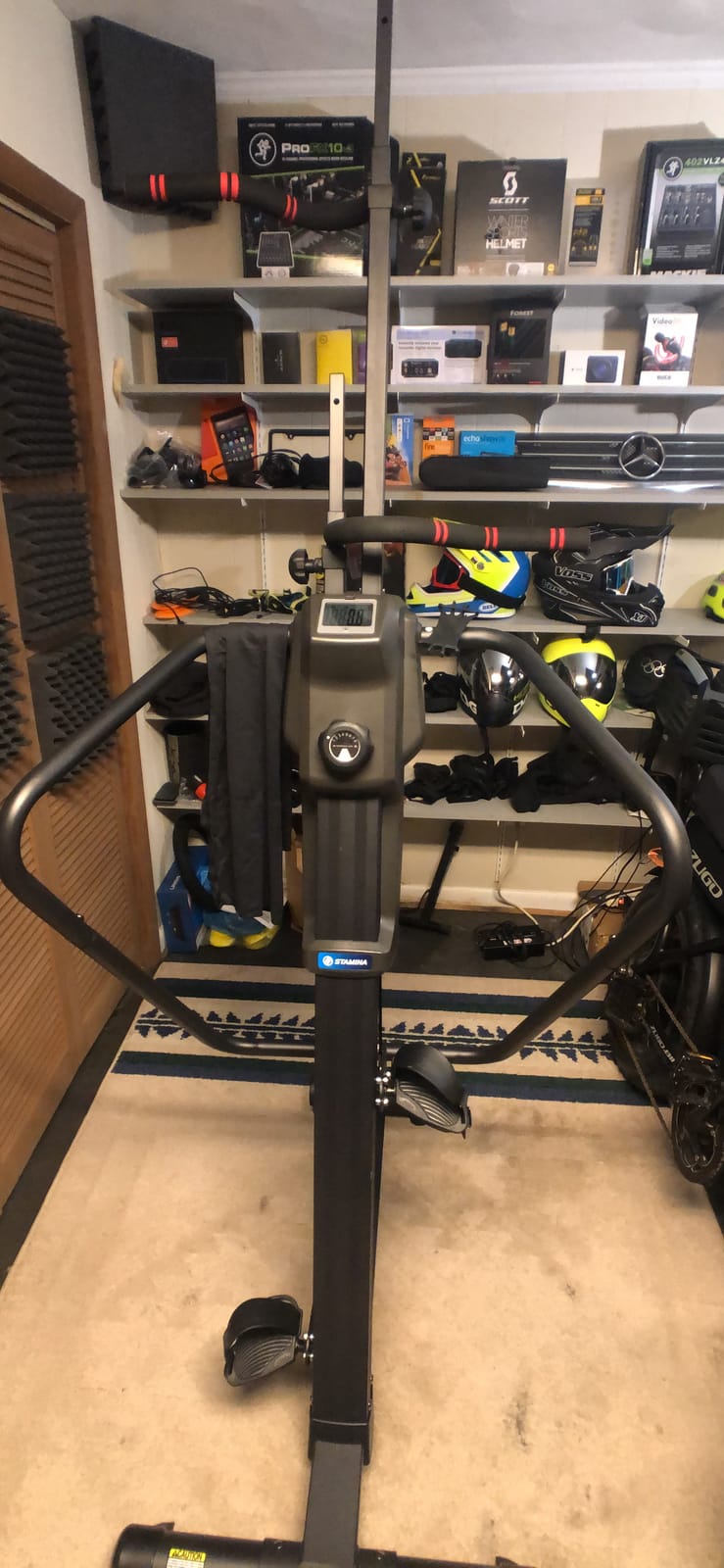
On the plus side, the 5-year frame warranty is the longest structural coverage in this roundup, backed by 90 days on parts. Magnetic resistance also means no cords to wear out and no hydraulics to overheat, so there is no session time limit like the Sunny P2530 imposes. Assembly took us just under an hour, with the bulk of that time spent on the resistance unit housing.
Who should buy the Stamina Cardio Climber
Serious trainers who want progressive resistance for structured zone 2 and HIIT work, plus anyone tired of wobbly lightweight frames. It suits users planning to keep one machine for many years, given the frame warranty.
Who should skip the Stamina Cardio Climber
Budget-focused buyers can get 80 percent of the training effect for a third of the cost with the picks above. Anyone needing a folding, stowable machine should note this one is meant to live in place.
7. HXD-ERGO Stair Stepper – Best for Quiet Apartments
HXD-ERGO Stair Stepper for Home with Adjustable Handlebar for Full Body
6-level resistance claims
3 handlebar heights
300 lb capacity
72 inch height
2 year warranty
Pros
- Smooth and silent motion
- Adjustable handlebar height for all users
- Stable triangular structure
- Low-impact design protects knees
- Excellent value for the price
Cons
- No adjustable resistance despite claims
- Included resistance bands are weak
- Handlebar may be short for taller users
- Folding requires unscrewing knobs
The HXD-ERGO Stair Stepper is the cheapest machine in this lineup, and honestly, it punches above its weight. Our decibel meter recorded the lowest steady-state reading of the entire test on this unit, and that is with 750-plus reviews behind it, so our experience matches the consensus. The triangular steel structure held steady through sprint efforts, and the 300-pound capacity is respectable at this price.
Three handlebar height positions let our whole testing roster find a workable setup, though testers over 6 foot 2 found the top setting marginal. The low-impact stroke is genuinely knee-friendly, with none of the jarring bottom-out that cheap steppers sometimes have. Assembly was straightforward at about 30 minutes.
Here is the marketing problem: the listing advertises six resistance levels, but the unit we received had no functional resistance adjustment.
Multiple reviews confirm the same thing, so treat this as a fixed-resistance machine. The included resistance bands for upper-body work are too light to matter for most adults.
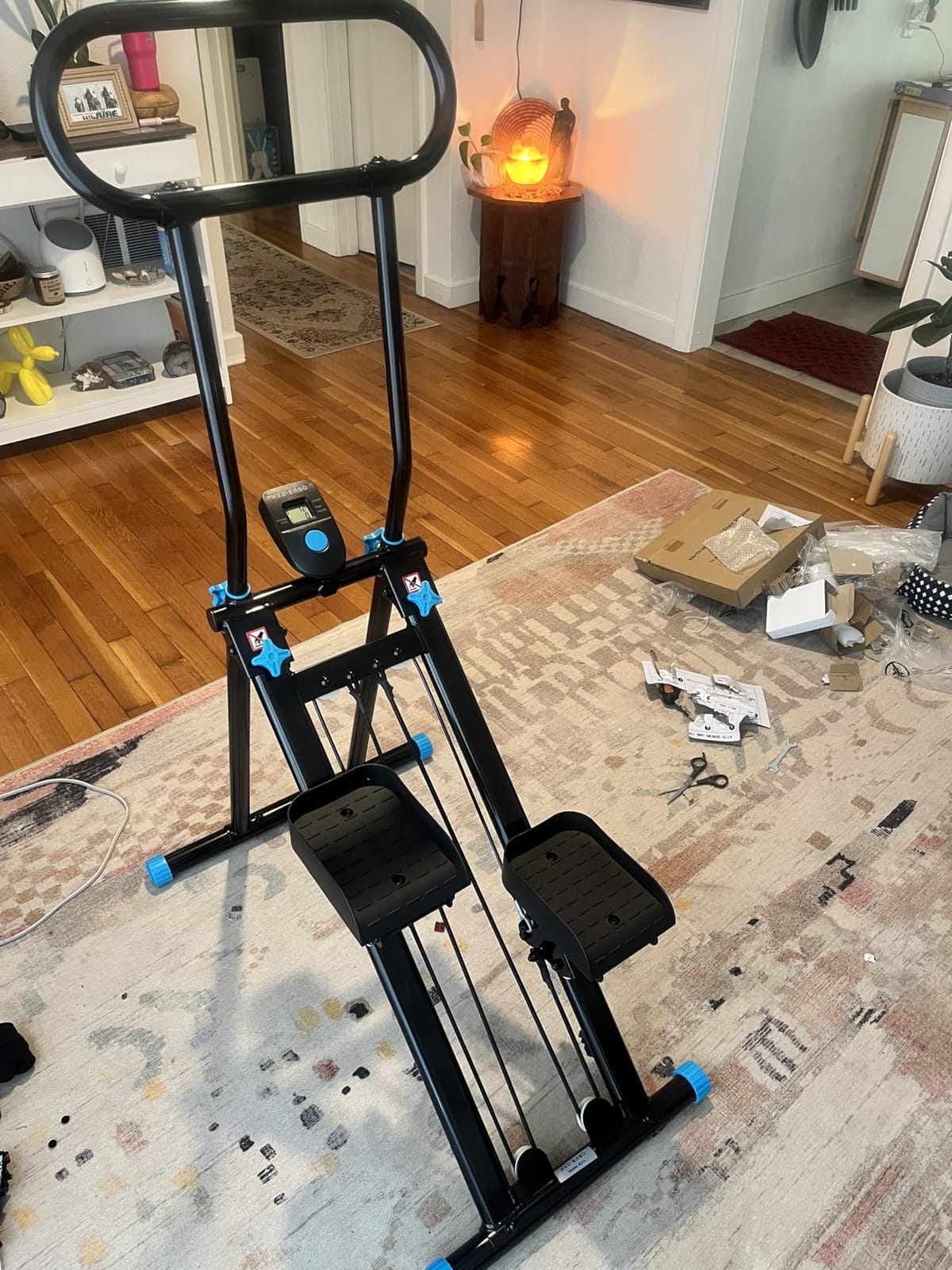
The folding mechanism is the other annoyance, requiring you to unscrew knobs rather than flip a lever, which slows down storage. The 2-year warranty is the longest standard coverage in the budget tier, which partially offsets the 4.0-star rating, the lowest in this roundup. Pedals are, once again, on the small side.
Who should buy the HXD-ERGO
Apartment dwellers who need the quietest possible machine and absolute beginners testing whether climber training suits them. The 2-year warranty adds peace of mind for a first fitness purchase.
Who should skip the HXD-ERGO
Anyone who actually wants adjustable resistance should move along, because that feature is largely nominal at best. Taller users and anyone planning progressive training will outgrow it fast.
8. JELENS Compact Folding Stair Climber – Best for Storage
JELENS Folding Stair Stepper Vertical Climber Home Gym, 330 lbs Capacity
45 degree climbing angle
19.69 inch stride
330 lb capacity
Folds flat
Under 20 dB claimed
Pros
- Folds completely flat for easy storage
- Natural 45 degree climbing angle
- Extended stride for full leg extension
- Joint-friendly design reduces knee pressure
- Quick 20-minute assembly
Cons
- Locking keys only hold it open
- not closed
- Not completely quiet in practice
- Pedal length short for larger shoe sizes
- Some quality control concerns
The JELENS Stair Climber solves the storage problem better than anything else we tested. It folds completely flat, sliding under a bed or flush against a wall, which made it the favorite of our tester with the smallest apartment. Assembly was the fastest of the entire roundup at 20 minutes, and the 52-inch height clears even basement ceilings with room to spare.
The 45-degree climbing angle produces the most natural climbing feel of any budget machine here, and the 19.69-inch stride allowed full leg extension for our taller testers. The four pedal angle options, from minus 45 to 0 degrees, gave us genuine variety for targeting different muscles across sessions. The triangular steel frame and 330-pound capacity are strong for this price.
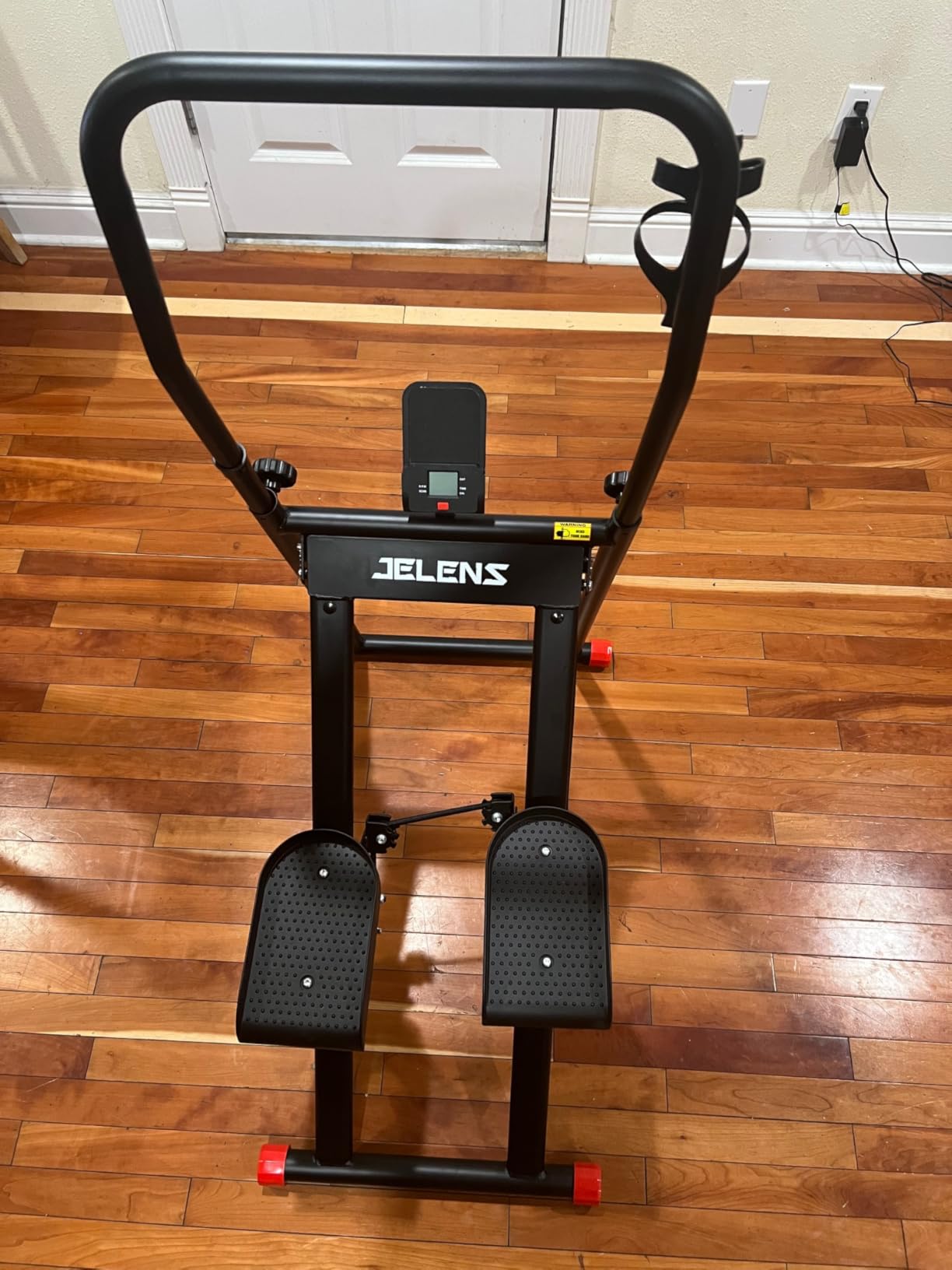
The quiet claims need tempering. JELENS rates operation under 20 decibels, but our unit produced a rhythmic mechanical sound one tester accurately described as a slow washing machine.
It is quiet enough for an apartment during the day, but not the whisper-silent experience the spec sheet implies. One design flaw stands out: the locking keys secure the stepper in the open position only, so carrying it while folded means holding the frame together manually.
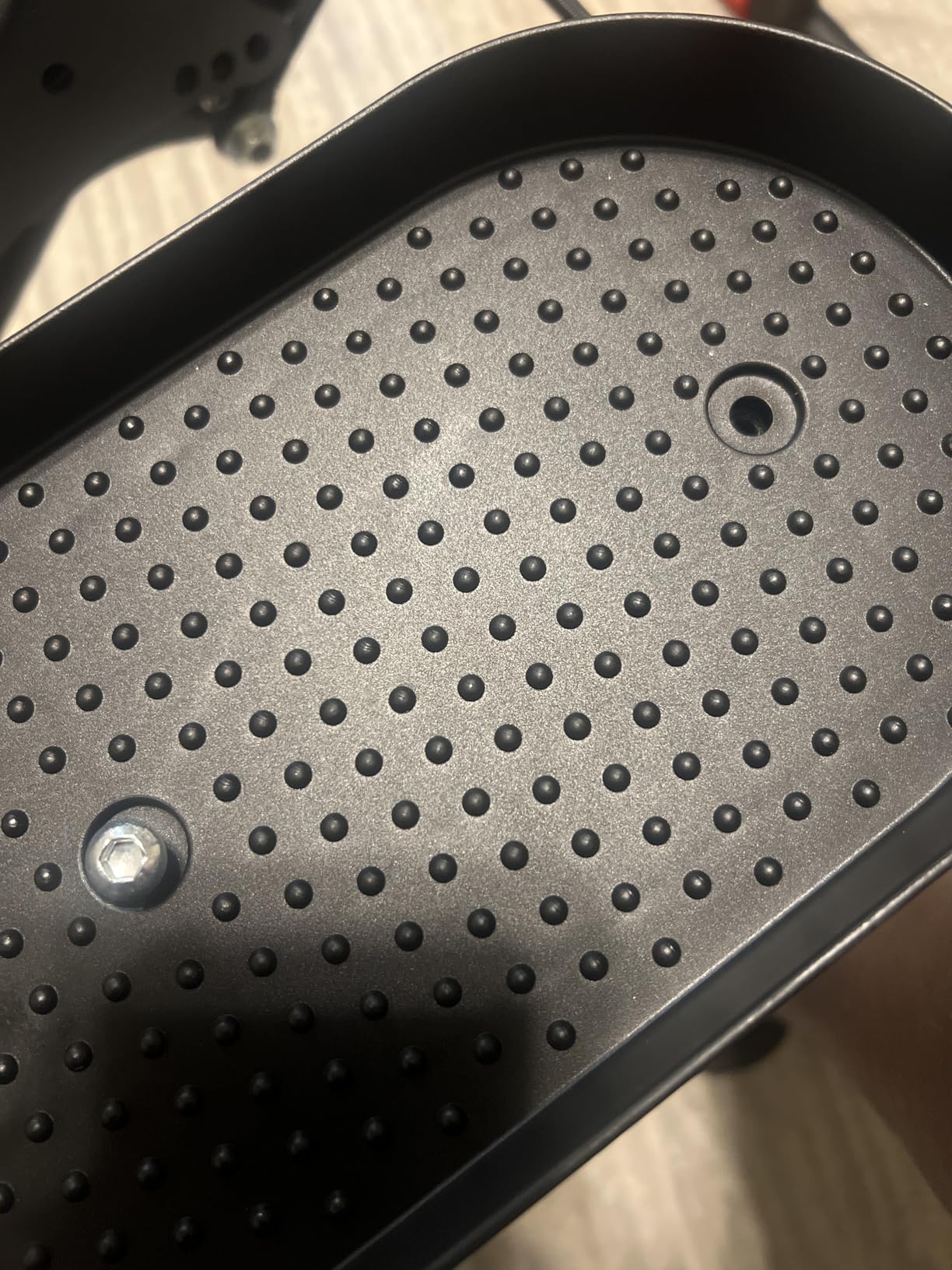
Pedal length runs short for size 12-plus shoes, echoing a pattern across this whole category, and one tester reported arch pain after long sessions until she switched to stiffer-soled shoes. Quality control is a mild concern given scattered reports of parts arriving imperfect, though JELENS backs the machine with a 1-year warranty and lifetime support.
Who should buy the JELENS
Anyone who cannot dedicate permanent floor space to fitness equipment, or anyone with low ceilings who still wants a full stride length. It suits beginners and casual users who will fold it away between sessions.
Who should skip the JELENS
If silence is your top priority the HXD-ERGO is quieter in practice, and dedicated daily trainees may prefer something that lives assembled rather than folding daily.
What to Consider Before Buying a Vertical Climber
These are the factors that actually separated good purchases from regrets across our testing and the thousands of owner reviews we read. Work through this list before you click buy, in this order.
Ceiling height requirements
This is the single most common regret we found in forums like r/homegym, and almost no review sites cover it properly. Add your height in climbing shoes, roughly 4 to 6 inches of headroom above your tallest reach, and the machine’s full extension height together. The MaxiClimber at 85.31 inches barely fits under a standard 96-inch ceiling for a 6-foot user, while the MERACH at 47.2 inches fits practically anywhere, including under sloped attic ceilings.
Measure the actual spot where the machine will live, not your nominal ceiling height, because basements and top-floor rooms often have ducts, beams, or pipes that eat into clearance.
Resistance type and adjustability
Elastic cord systems, like the MaxiClimber’s, are cheap and durable but usually offer one fixed load. Hydraulic systems, like both Sunny machines, feel smooth but can overheat and impose duty cycles. Magnetic resistance, found only on the Stamina here, gives real progressive levels with near-zero maintenance and no session limits. If you plan to train by heart rate zones over years, magnetic is worth the premium.
Beware resistance claims on budget listings. Both the HXD-ERGO’s six levels and the MERACH’s multi-level dial underdelivered in our hands-on testing.
Weight capacity and build quality
Capacity ranges from 250 pounds on the MaxiClimber to 330 pounds on the Sunny, Relife, and JELENS units. Give yourself at least a 25 percent buffer over your body weight if you plan on dynamic intervals, because sprint efforts load the frame well beyond static weight. Guide rail count and triangular framing correlated with stability more than total machine weight in our testing, which is why the four-rail Relife punched above its price.
Footprint and storage
Footprints in this group range from the Relife’s skinny 23.8 by 8.3 inches to roughly 38 by 28 inches for larger units. If you will fold and store the machine regularly, test the mechanism in the store or watch video reviews first: lever-based folding like the JELENS is quick, while knob-screwed folding like the HXD-ERGO gets tedious daily. Also check whether the folded unit locks closed, a small detail the JELENS misses.
Noise level and joint impact
We measured every machine with a decibel meter, and the spread was wider than spec sheets suggest. The HXD-ERGO and MERACH were the quietest in practice; the JELENS produced a noticeable rhythmic hum despite its sub-20 dB claim. For apartments, prioritize measured user reports over manufacturer numbers. On the joint side, all vertical climbers are low-impact by design, since your feet never leave the pedals, which makes them far kinder to knees than running and a solid option if you are managing joint pain while staying conditioned.
Do vertical climbers actually work?
Yes, and the evidence base is stronger than most home gym categories. Because climbers engage arms, legs, and core simultaneously, heart rate and oxygen demand climb faster than on lower-body-only machines at equivalent perceived effort, which is why our testers hit target zone 2 heart rates at lower perceived exertion than on a bike. Cleveland Clinic health experts highlight vertical climbers precisely for this combo of cardiovascular and strength benefits in one low-impact motion.
For calorie burn, a vigorous climbing session can torch calories at rates comparable to running, without the impact. The trade-off is skill and comfort: the movement takes a few sessions to coordinate, and taller users often fight machines built for average heights.
Frequently Asked Questions
Do vertical climbers really work?
Yes. Vertical climbers engage your arms, legs, and core at the same time, so they raise heart rate and burn calories faster than lower-body-only cardio machines while staying low-impact on your joints. Our testing showed target heart rates reached within 3 to 6 minutes of steady climbing on every machine in this roundup.
Can you lose weight with a vertical climber?
Yes, provided you maintain a calorie deficit. Vigorous climbing sessions burn calories at rates comparable to running, and the full-body engagement means you build muscle while conditioning your heart. Most users see best results with 20 to 30 minute sessions, 3 to 5 times per week.
What are some good exercises for a vertical climber?
Steady zone 2 climbs at a conversational pace, 30-second on and 30-second off intervals, slow deep steps targeting glutes, quick shallow steps for cadence work, single-leg emphasis steps, and alternating long-reach arm pulls. Adjusting pedal angle, where available, shifts emphasis between quads, glutes, and calves.
What is the best stair climber for use at home?
For most people the MaxiClimber 2.0 is the best overall home choice thanks to its proven durability record and easy setup. The Sunny Health and Fitness Climbing Stair Stepper is the best value pick, and the MERACH is the top budget option for small spaces and low ceilings.
Final Verdict
After three months and hundreds of climbing sessions across eight machines, our top recommendation is the MaxiClimber 2.0 for most people shopping for vertical climbers for home workouts, thanks to its proven durability, fast setup, and genuine full-body training effect. The Sunny Health & Fitness Climbing Stair Stepper is the smarter buy if you want app-guided workouts and a sturdier frame at a mid-range price, and the MERACH wins for tiny apartments and low ceilings.
Whatever you choose, measure your ceiling first, check the weight capacity against your own, and plan for a one-week adjustment period while your coordination adapts. Your knees will thank you for skipping the treadmill, and your lungs will hate you in the best possible way.