
The best thick yoga mat for bad knees is a dense mat in the 6-8mm range, not the softest mat you can find. Cushioning only works if the foam is firm enough to compress a few millimetres and then hold. Buy thicker only when your practice is mostly kneeling, and pick a firmer foam when you still want to hold a standing balance.
That single idea fixes most of the disappointment people report after upgrading a mat. The search for the best thick yoga mats for bad knees usually ends with a 1-inch exercise mat that feels wonderful in child’s pose and hopeless in tree. Density, not the number printed on the box, is what separates the two experiences.
Our team worked through twelve extra-thick mats, logged the real-world difference between a 10mm NBR foam and a 1-inch high-density slab, and focused on the same four details every time: how far the foam compresses under a kneecap, whether a standing foot sinks, how the surface behaves once you sweat, and whether the mat still rolls into a car. Last updated for 2026.
If your knees only hurt in a handful of poses, a knee pad may solve the problem for a fraction of the commitment. Our general best yoga mats for home practice guide covers the full thickness range for people whose knees are not the deciding factor.
A quick note before we start: a mat does not treat knee pain. If your knee is locking, swelling quickly, giving way, or feels hot and red alongside a fever, get medical advice rather than shopping. Equipment comfort and clinical treatment are separate things, and we will keep them separate here.
Table of Contents
Top 3 Best Thick Yoga Mats for Bad Knees in October

All 12 Best Thick Yoga Mats at a Glance in 2026
| Product | Specifications | Action |
|---|---|---|
| Fitvids 1/2 Inch High Density Mat |
|
Check Latest Price |
 Amazon Basics 1 Inch Mat Amazon Basics 1 Inch Mat |
|
Check Latest Price |
 Gaiam 10mm NBR Mat Gaiam 10mm NBR Mat |
|
Check Latest Price |
 BalanceFrom 1 Inch NBR Mat BalanceFrom 1 Inch NBR Mat |
|
Check Latest Price |
 Retrospec Solana 1 Inch Mat Retrospec Solana 1 Inch Mat |
|
Check Latest Price |
 ProsourceFit Half Inch Mat ProsourceFit Half Inch Mat |
|
Check Latest Price |
 Gruper 10mm NBR Mat Gruper 10mm NBR Mat |
|
Check Latest Price |
 CAP 1 Inch NBR Mat CAP 1 Inch NBR Mat |
|
Check Latest Price |
 Hatha Yoga 12mm Wide TPE Mat Hatha Yoga 12mm Wide TPE Mat |
|
Check Latest Price |
 TENOL JELS 3D TPE Mat TENOL JELS 3D TPE Mat |
|
Check Latest Price |
 Tone Fitness 1 Inch Mat Tone Fitness 1 Inch Mat |
|
Check Latest Price |
 nuveti 15-30mm TPE Mat nuveti 15-30mm TPE Mat |
|
Check Latest Price |
1. Fitvids 1/2-Inch Thick High Density Exercise Yoga Mat – Best All-Rounder
Fitvids 1/2-inch Thick High Density Exercise Yoga Mat with Carrying Strap
1/2 inch foam
71 x 24 inch
1.8 lb
Strap included
Pros
- Half inch cushioning softens hard floors for knees and spine
- Long enough to stretch out and wide enough for side-facing poses
- Double-sided non-slip holds traction in warm rooms
- Included straps keep the roll compact in a closet
- Quiet underfoot and easy to rinse with soap and water
Cons
- Soft foam compresses thinner under load and reduces balance stability
- Lingering latex-like smell transfers to clothing
- Soft foam picks up dents over time
This is the mat we kept coming back to during testing, mostly because it does the least badly at the awkward middle ground. Half an inch of foam is a serious amount of cushion, and yet a 71 by 24 inch surface with a double-sided non-slip face kept tree pose workable for us in a way the one-inch slabs did not.
Reviewers consistently point at the same two things. The first is that the cushion changes kneeling work immediately, whether it is a low lunge, a tabletop or a long stretch. The second is that the mat is long enough to lie flat, which matters more for bad knees than any thickness claim.
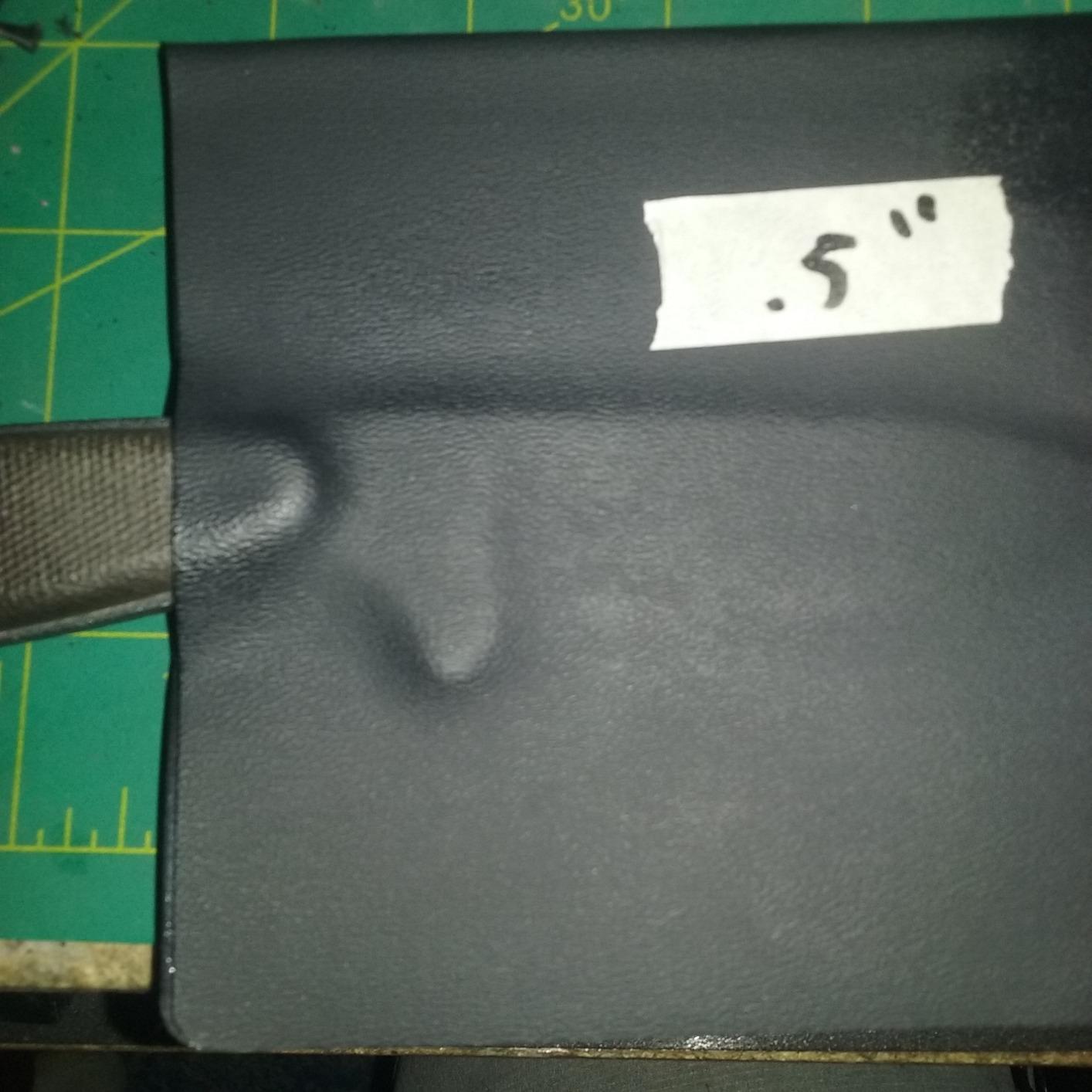
There is a trade-off hidden in the softness, and it is worth naming before you buy. A commenter in a Reddit r/yoga thread on thicker mats for bad knees described wanting the cushion for age-related knee problems while finding the same mat less comfortable in standing work. That is exactly the pattern we saw here: kneeling improves, balance gets twitchier.
Cleanup is straightforward. The surface is moisture resistant and rinses with soap and water, and at 1.8 pounds it is one of the lighter mats in this group despite being one of the thicker ones. That combination of length and weight is what makes it travel.
Who this mat suits
Anyone whose knees hurt in floor poses but who still wants a real practice rather than a stretching session propped against a wall. It also works well as a second mat, since the roll is compact enough to live under a bed and come out for restorative weekends.
Where it falls short
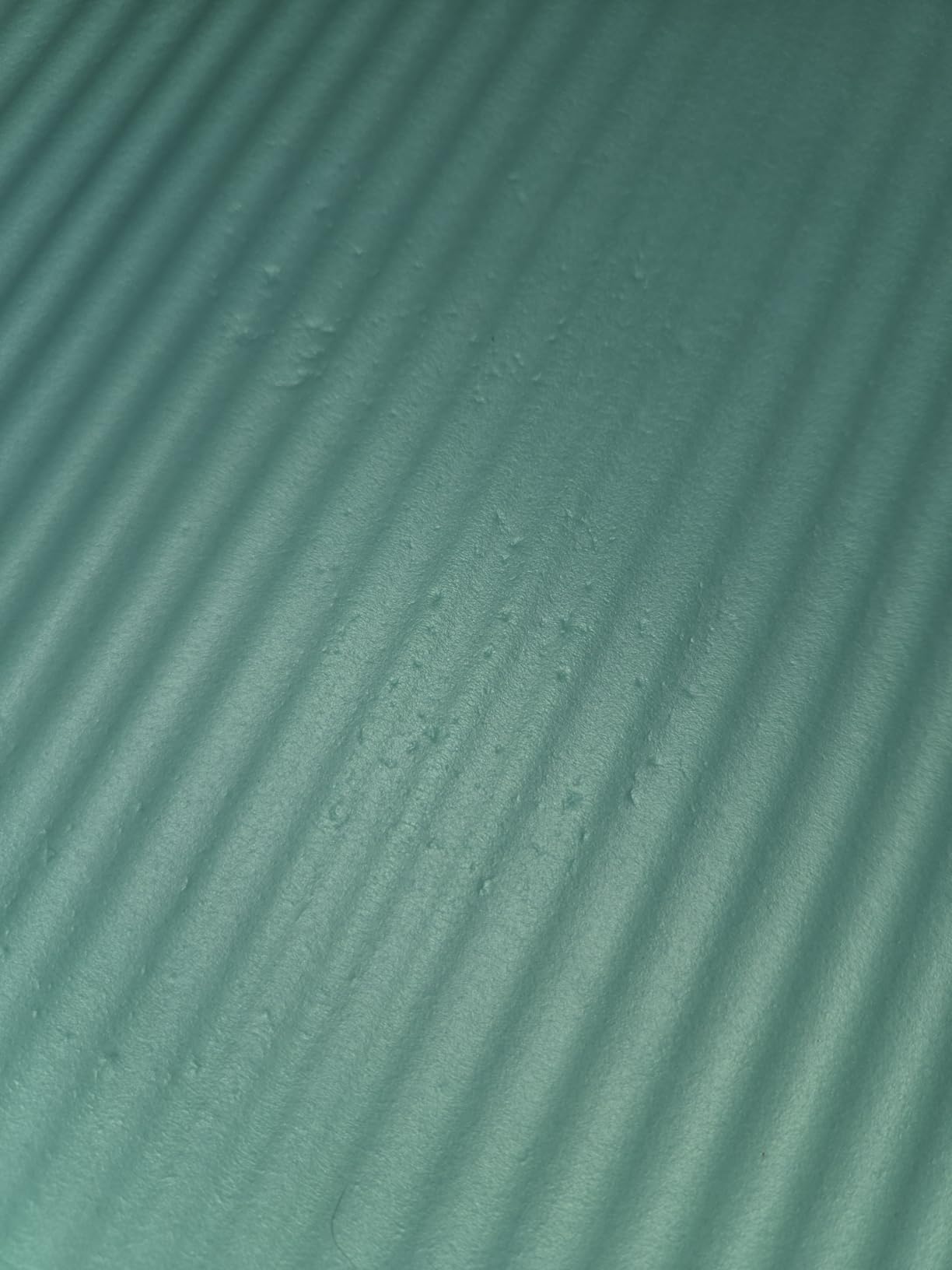
If your practice is vinyasa with a lot of single-leg standing, the softness will make you work harder for balance than a firmer 10mm would. The smell is the other genuine irritation, and it needs a couple of days of airing in a ventilated room before it settles.
2. Amazon Basics Extra Thick 1-Inch Exercise Yoga Mat – Deepest Cushioning
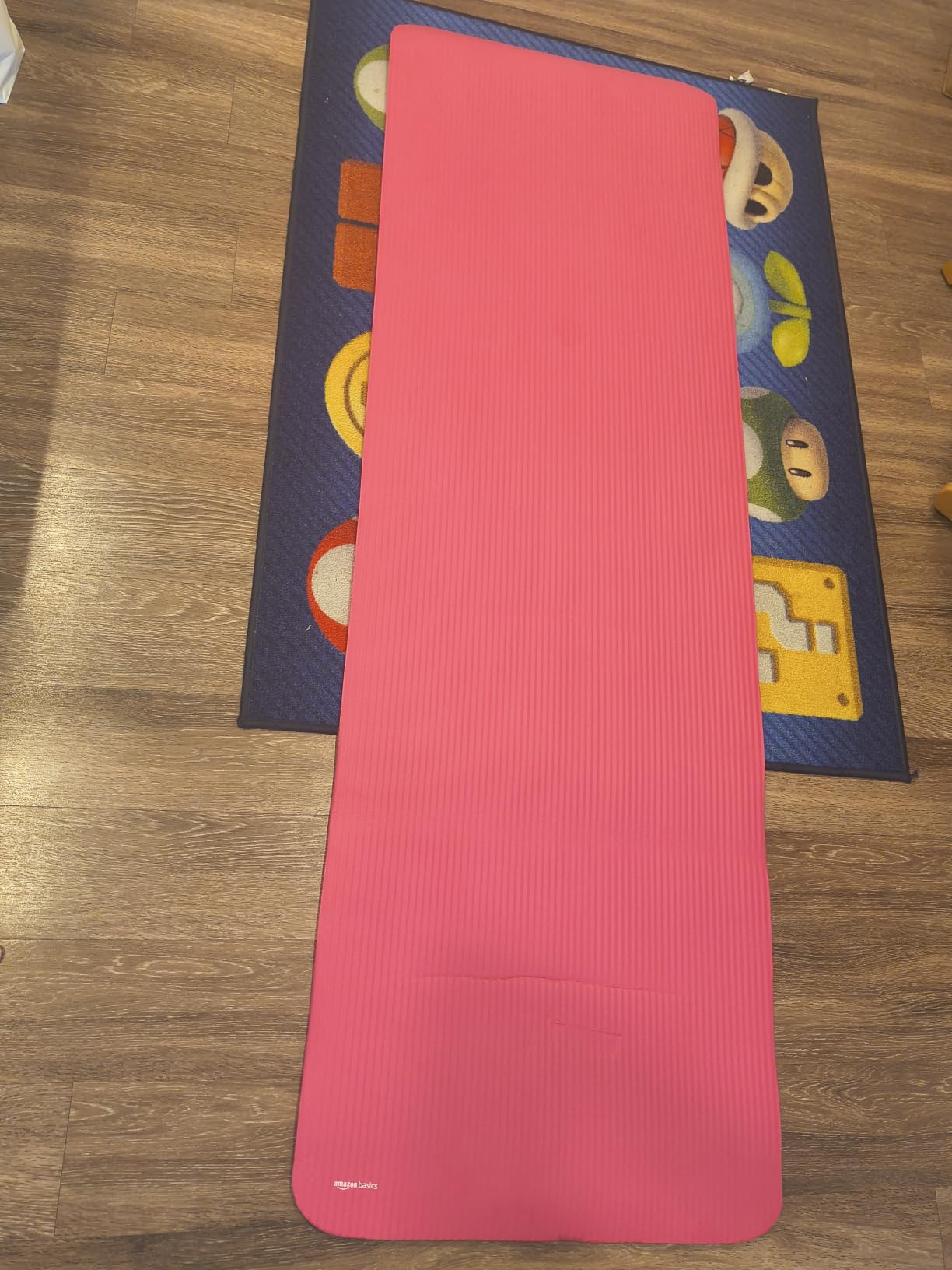
Amazon Basics 1-Inch Extra Thick Memory Foam Workout Exercise Yoga Mat with Carrying Strap, Textured Non-Slip Surface for Floor Exercises, 74″ x 24″, Rose
1 inch foam
74 x 24 inch
2.09 kg
Textured face
Pros
- Full inch of cushioning absorbs impact on concrete and tile
- Textured non-slip face keeps poses steady
- Latex free and free of phthalates and heavy metals
- High-density foam holds shape through daily use
- Extra-long 74 inch surface for full extensions
Cons
- Bulky roll that is heavier to move than standard mats
- Needs 48 hours of airing before first use
This is the mat for someone whose floor is the actual problem. A full inch of high-density foam over bare concrete or tile changes the experience of kneeling more than any other pick here, and the reviews reflect that, with buyers describing it as more comfortable than a clinic therapy table.
What impressed us was the shape retention. The foam is dense enough to spring back after a long session rather than staying dished where your knees sat, and at 4.6 stars across more than 70000 reviews it is one of the most proven mats on this list.
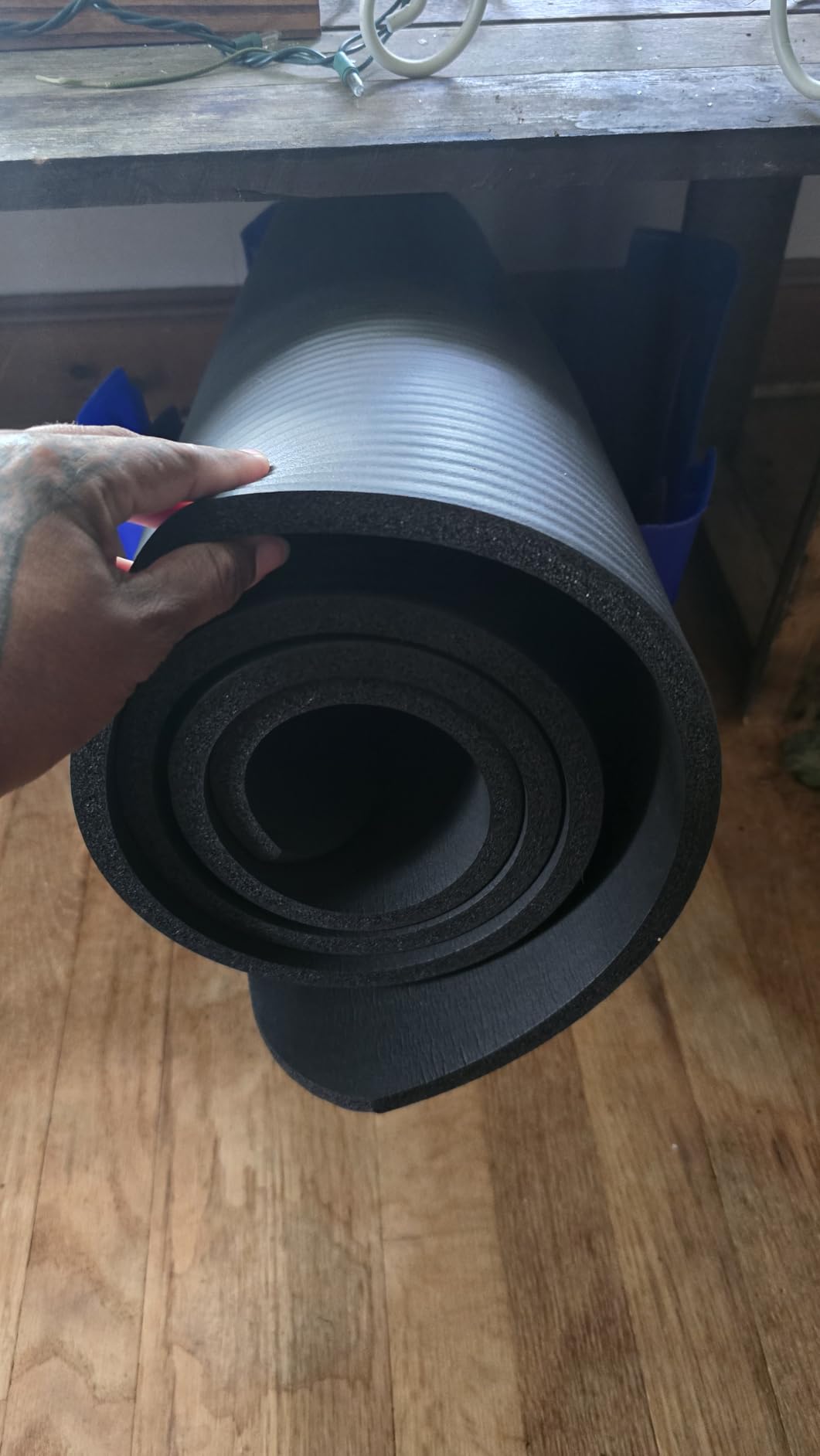
The material profile is unusually clean for a mat this thick. It is free of phthalates, heavy metals and latex, which removes the main allergy question that normally comes up with dense foam, and the textured face stays put under sweat better than a smooth one.
Be realistic about what a full inch buys you. Standing balance poses are not happening on this mat, and at 2.09 kg the roll is a genuine two-handed carry. If you travel to class, this is not the one.
Who this mat suits
Home practice on hard floors, physical therapy stretching, and anyone who spends real time in hero pose, camel or table top. The 74 inch length also helps taller practitioners who tend to overextend a standard mat.
Where it falls short
Anyone whose class involves standing sequences, and anyone with a latex sensitivity who has not checked the full material list elsewhere. It also needs two full days of ventilation before the first session or the new-product smell will follow you into the shavasana.
3. Gaiam Thick 10mm NBR Yoga Mat – Best Everyday Balance
Gaiam Essentials Thick Yoga Mat with Easy-Cinch Strap (Teal, 10mm)
10mm NBR foam
72 x 24 inch
2 lb
Low odor
Pros
- 10mm NBR cushioning built to reduce pressure on knees and joints
- Textured surface grips on wood
- tile and concrete
- Low-odor foam that wipes clean with a damp cloth
- Light enough to carry between rooms or studios
- Suited to yoga
- Pilates
- stretching and core work
Cons
- Softness is prioritised over firmness
- so balance work feels loose
- Initial foam odor needs 24 to 48 hours of airing
- Grip is tuned for dry workouts and slips when very sweaty
Gaiam’s 10mm NBR mat is the pick we recommend when someone has knee pain but still wants a normal, mixed practice. It is thick enough to make a real difference on the floor and light enough at 2 pounds that carrying it to a class is not a project.
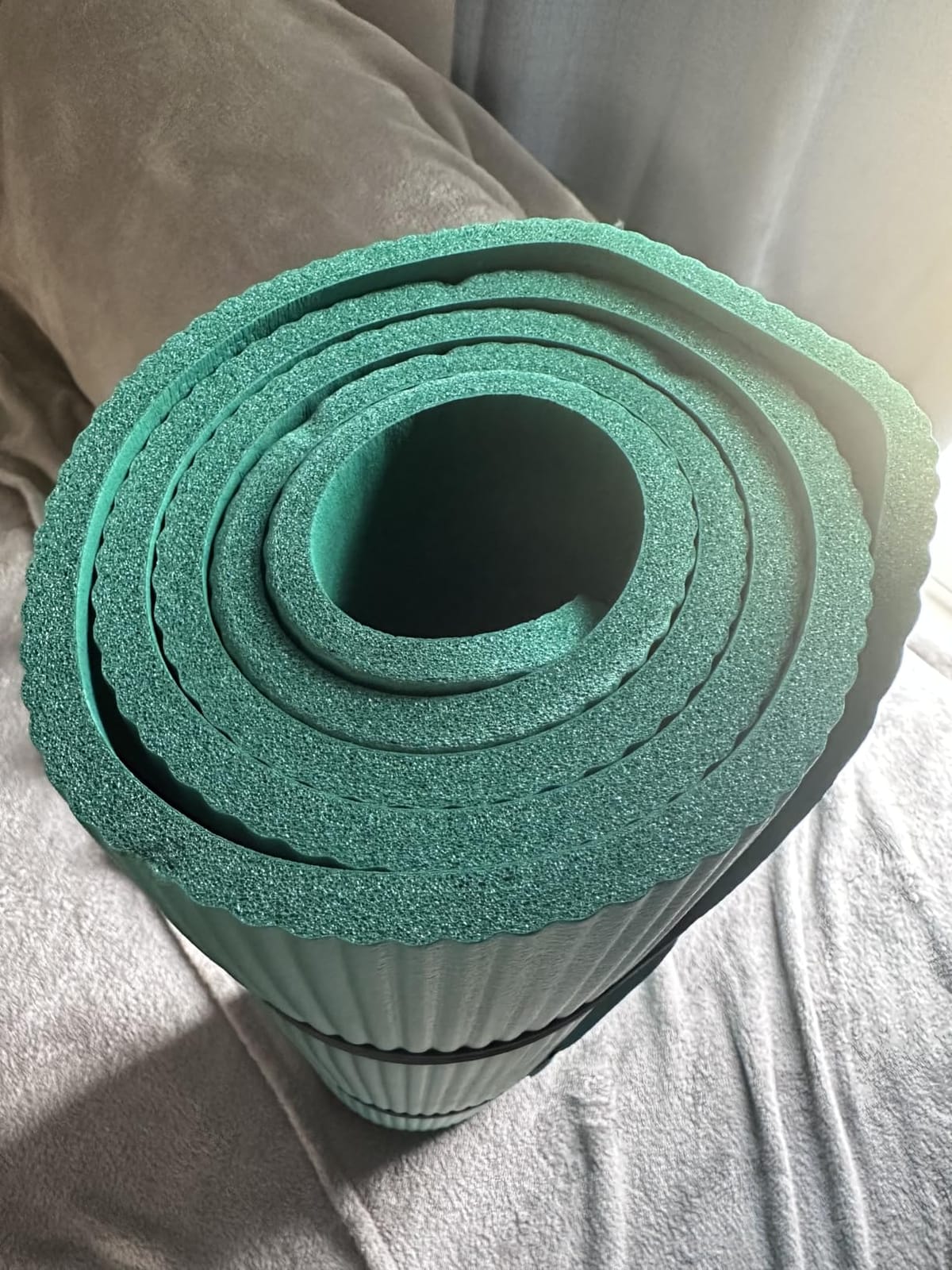
The foam is NBR rather than generic EVA, and you can feel the difference in how it recovers. Press a knee into it and it pushes back rather than staying compressed, which is exactly the behaviour that keeps a standing foot from sinking into nothing.
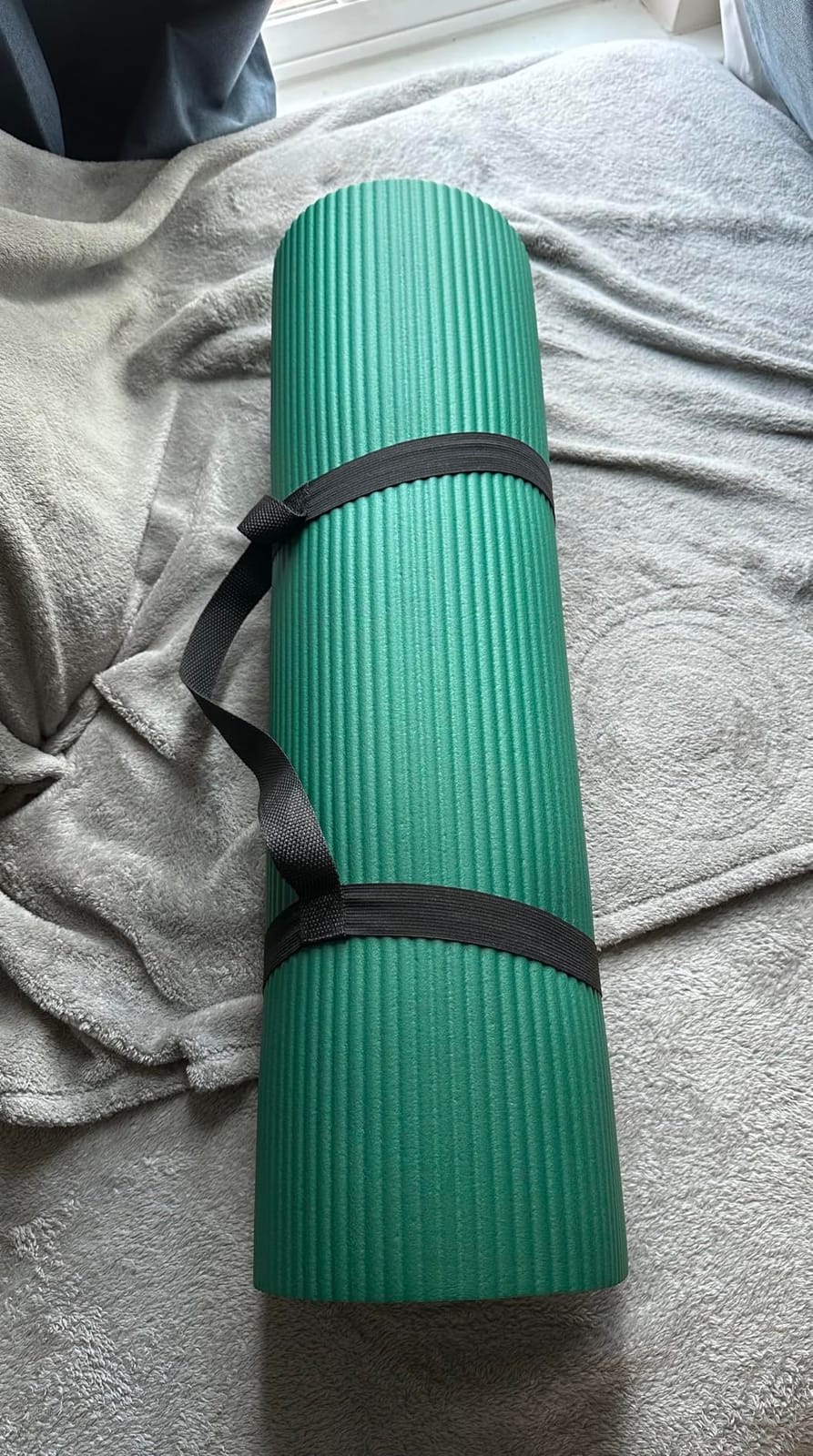
It ranks first in its category on Amazon with more than 46000 reviews, and the pattern in those reviews is consistent. Joint-friendly cushioning and easy maintenance come up constantly, while the complaint that shows up again is that people doing more standing work wish it were firmer.
One detail worth planning around: the grip is optimised for dry sessions. Once you are properly sweaty in a hot class, this mat feels less certain underfoot than a textured TPE or one with a suction-cup base. For a home practice on wood or tile, it is excellent.
Who this mat suits
Home practice, gentle and restorative classes, and anyone who wants a single mat that handles both kneeling and standing without doubling their equipment. The low-odor NBR is a real advantage if you practise indoors in a small room.
Where it falls short
Hot, sweaty vinyasa classes, where the surface is at its least reliable. It also leans soft, so if you are heavier or want a firm platform for plank variations, step up to a firmer 1-inch option instead.
4. BalanceFrom 1-Inch High Density Anti-Tear NBR Mat – Top Rated
BalanceFrom 1-inch Thick 71×24 Inches Extra Thick Exercise Yoga Mat
1 inch NBR foam
71 x 24 inch
Strap included
Pros
- One inch of cushioning that resolved knee pain that started with a thin mat
- Sink-and-rebound foam returns to shape after pressure
- Good grip and stability on hardwood floors
- Wipes down easily and does not cling to pet hair
- Reinforced nylon strap keeps the roll tidy
Cons
- Soft foam can be punctured by sharp hardware or pet claws
- Standing briefly leaves a mild temporary indentation
- Bulky to carry
- so it works best at home
At 4.7 stars this is the highest-rated mat in the group, and the reviews explain why without much ambiguity. Multiple owners describe it as the fix for knee, hip and lower-back pain that began on a thin mat, and the NBR foam here rebounds immediately after compression rather than holding a dent.
That rebound is the detail that separates it from the very soft one-inch options. A foam that returns quickly still feels cushioned under a kneecap, but it does not stay compressed while you are standing on it, which is why reviewers mention it working on hardwood floors without losing their footing.
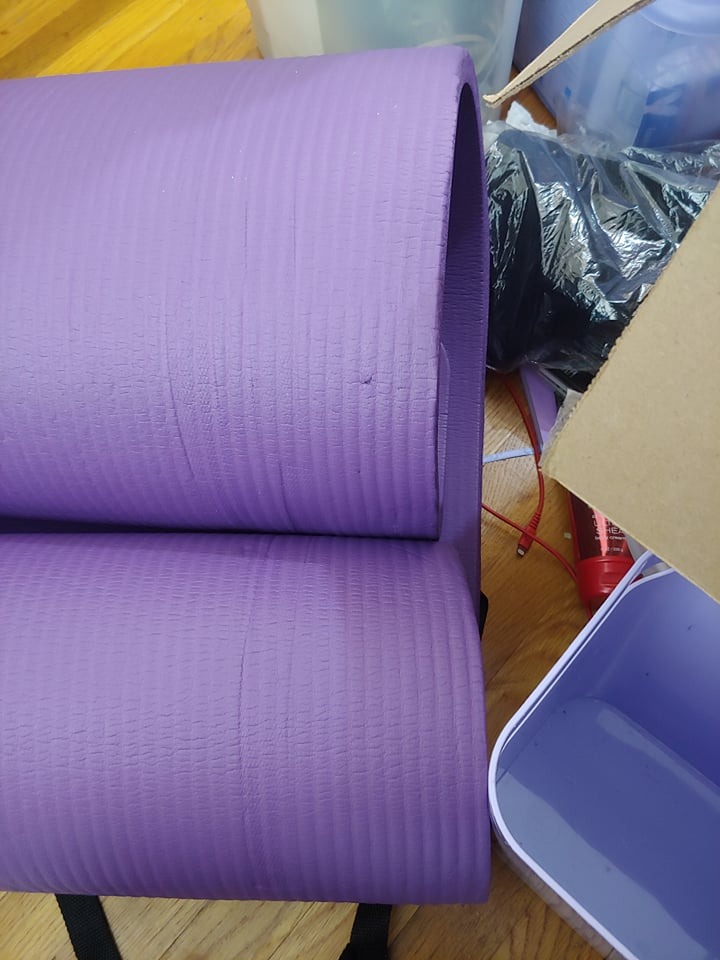
Two practical notes from the review pattern. The waterproof surface repels sweat and stains and wipes down with mild soap, which makes it a good partner for home practice in a busy room. And the tear resistance is real but not total, because a full inch of foam still has a surface that a sharp bracelet, a zip or a pet claw can find.
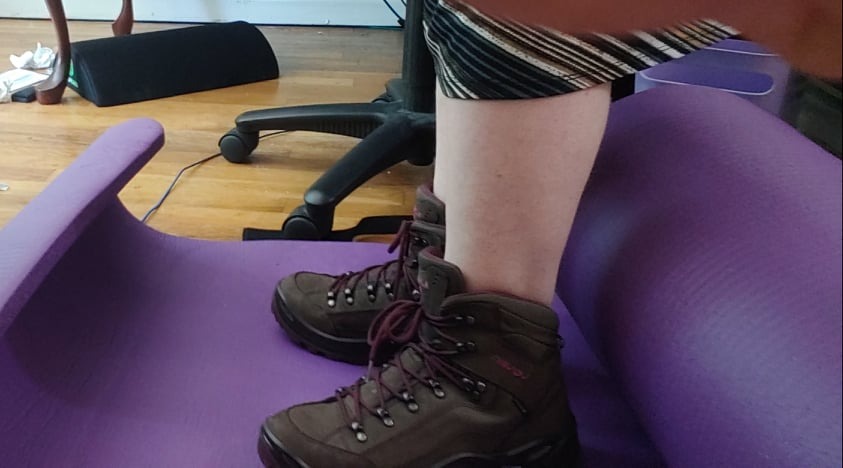
A mild indentation does appear if you stand on it, and it flattens again once the pressure comes off. That is a temporary effect rather than damage, but it is the first thing to look at if you start wondering whether the mat is wearing out.
Who this mat suits
Home practice on hard floors, particularly for people in physical therapy or recovery contexts who want a surface that takes repeated kneeling without deforming. The waterproof face also handles sweat and pet hair without fuss.
Where it falls short
Travel. This is a home mat, and treating it as a studio mat means hauling a full inch of foam to class and back. It is also the one to keep away from pets with claws.
5. Retrospec Solana 1-Inch Firm Mat – Best for Balance Work
Retrospec Solana 1″ Extra Thick Yoga Mat Non Slip Exercise Mat w/Strap
Firm 1 inch foam
72 x 24 inch
2.2 lb
Latex free
Pros
- Thick yet firm
- a better compromise than very soft foam for balance poses
- Relieves stress on knees
- hips
- hands and other pressure points
- Non-slip surface keeps the mat anchored through transitions
- BPA free
- phthalate free
- heavy metal free and latex free
- Nylon strap makes moving it between home and studio simple
Cons
- Firm feel gives less sink than memory-style extra-thick mats
- Brief initial odor that clears after a day or two of airing
Every other one-inch mat on this list is soft, and that softness is the reason several of them wobble. The Retrospec Solana takes the other route: a full inch of foam that is described by the manufacturer as firm, and by reviewers as thick without feeling unstable.
If your knee pain is real but you refuse to give up tree pose and warrior III, this is the honest middle path. You get an inch of material under the kneecap, and the platform underneath your foot stays closer to a normal floor than a memory-style mat would.
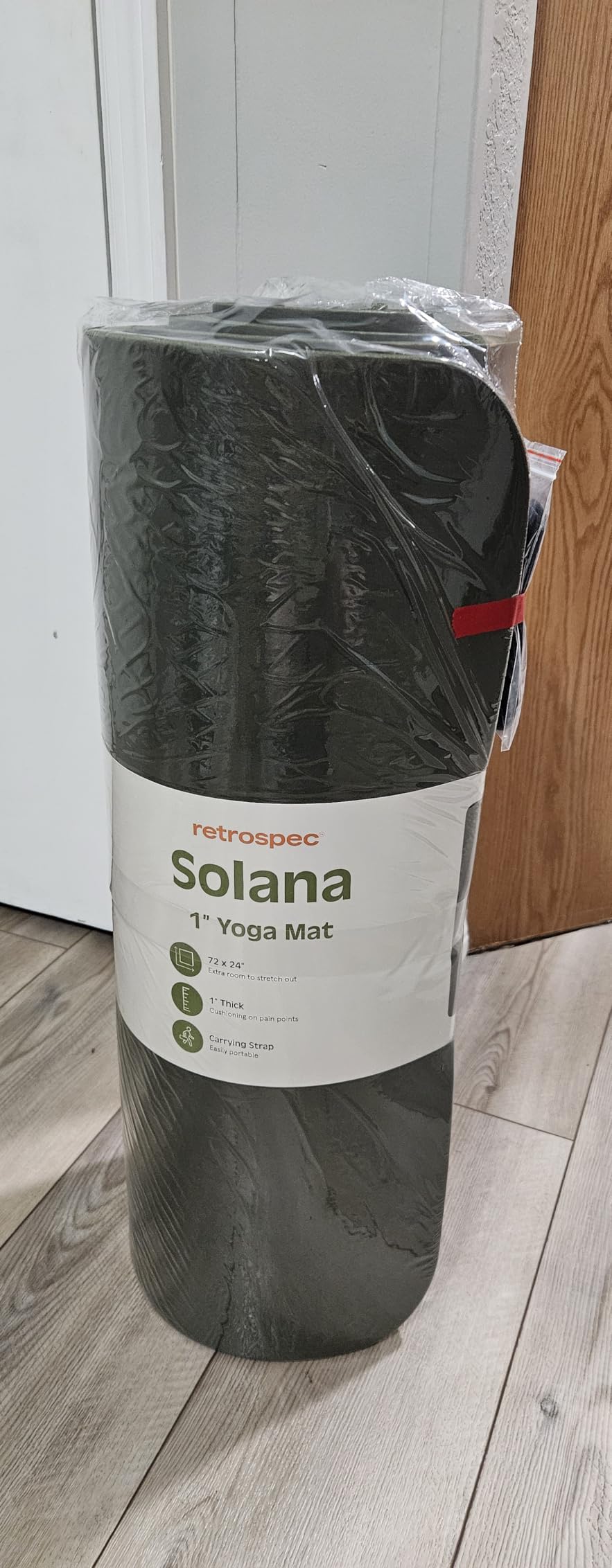
The materials list is worth noting for allergy-sensitive practitioners. It is free of phthalates, heavy metals and latex, and the care instructions are simple: wipe with gentle soap and water, hang to dry, and do not submerge it.
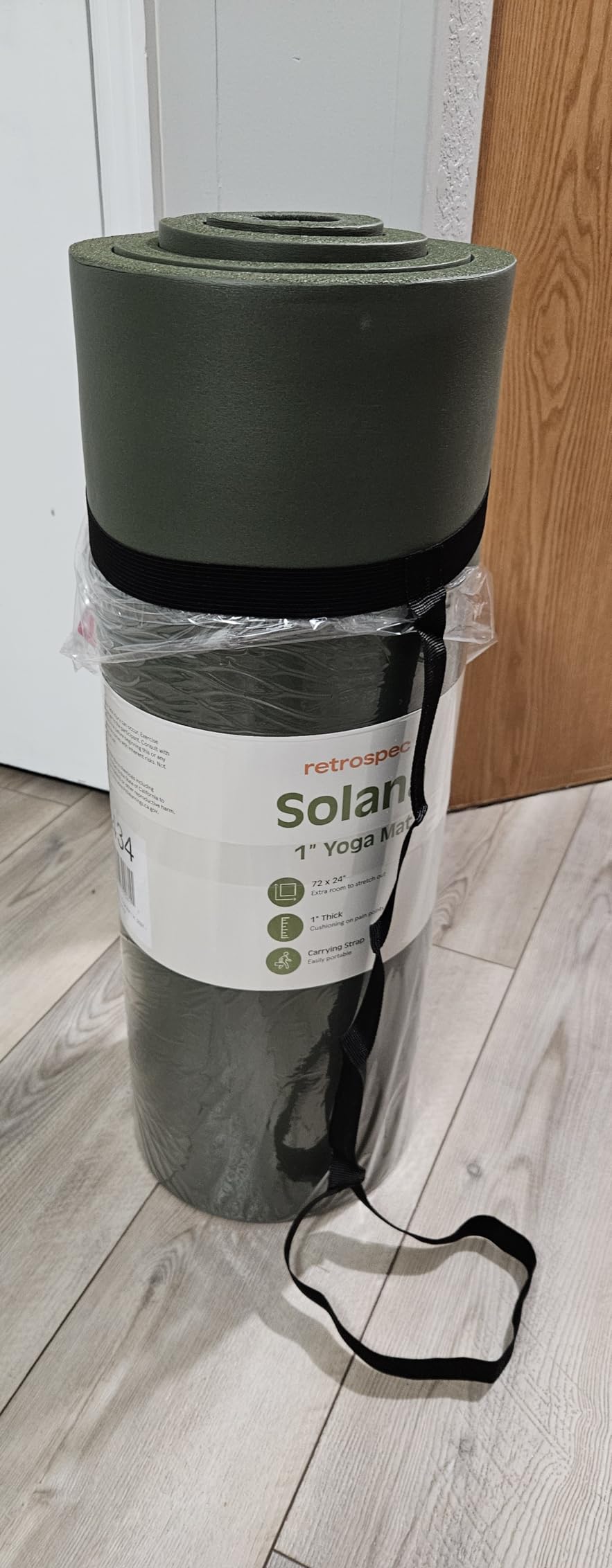
At 2.2 pounds it is heavier than the 10mm picks but still manageable with the included nylon strap. The trade-off for that firmness is less give, so if your knees are severely aggravated by any contact at all, a softer mat may serve you better despite the balance cost.
Who this mat suits
Mixed practices that include both kneeling sequences and standing balances. It is also the pick for anyone who has already tried a memory-foam one-inch mat and abandoned it because the wobble made balancing impossible.
Where it falls short
Extreme cushioning seekers. Firm is a virtue here and a limitation for someone whose kneecap cannot tolerate contact at all, and you should expect a day or two of airing before the first use.
6. ProsourceFit Extra Thick 13mm NBR Mat – Best for Mat Pilates
ProsourceFit Extra Thick Yoga and Pilates Mat ½” (13mm), 71-inch Long High Density Exercise Mat with Comfort Foam and Carrying Strap
13mm NBR foam
71 x 24 inch
2.5 lb
Ribbed face
Pros
- 13mm high density comfort foam cushions sensitive joints through Pilates and yoga
- Extra-long 71 inch surface suits taller users
- Water-resistant NBR wipes clean and air dries
- Ribbed non-slip design grips most floors once broken in
- Free carrying sling for moving between rooms
Cons
- Ribbed grip needs a break-in period before it reaches full traction
- Not machine washable
- must be wiped and air dried
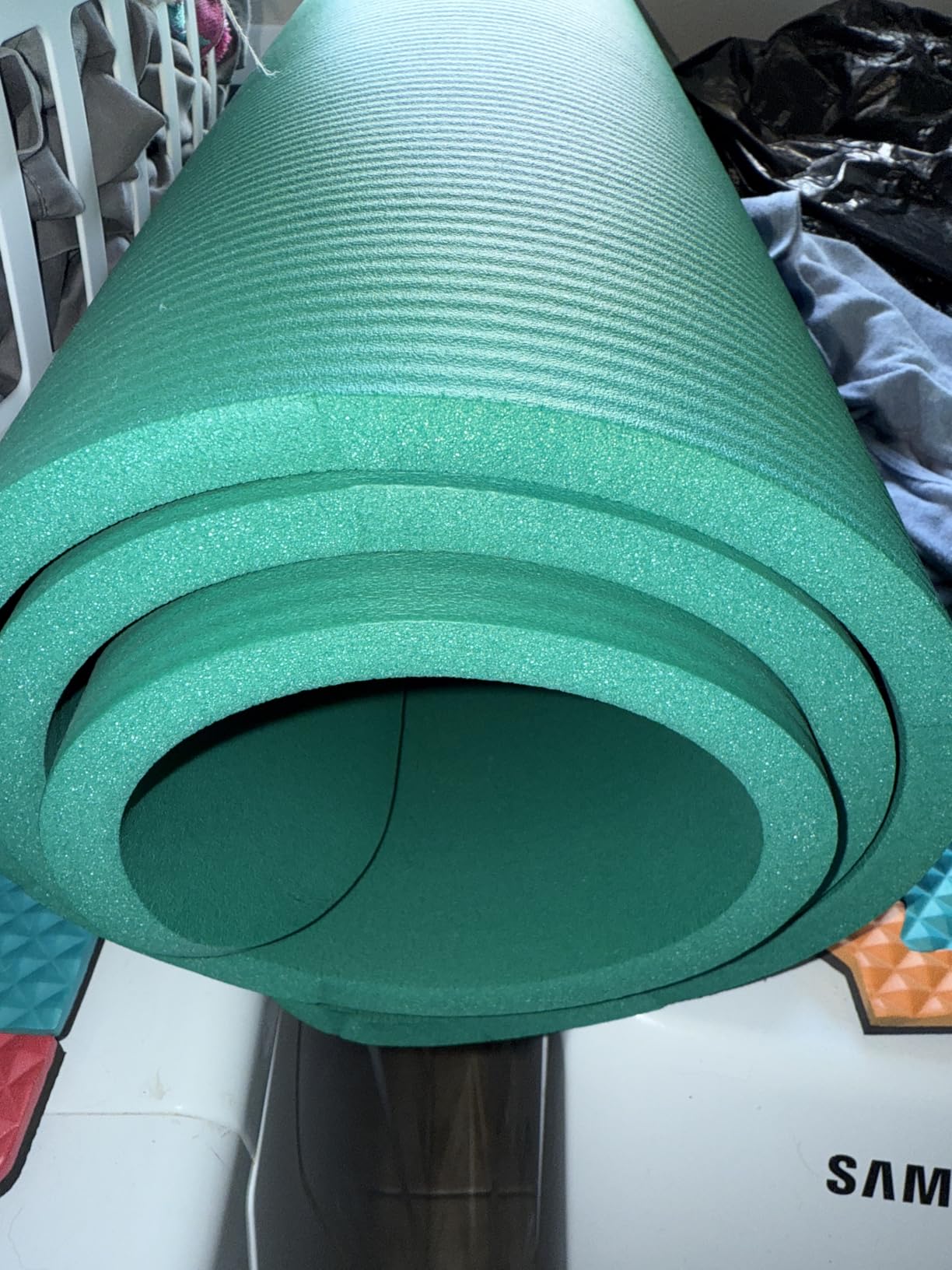
Mat Pilates puts far more time on your knees than a typical yoga class does. The kneeling series alone, with the side-kick and thigh-stretch work, can hold you in contact with the floor for minutes at a stretch, which is exactly why we look for more than 10mm here.
At half an inch of high-density NBR, this mat covers that ground work without the extreme sink of the one-inch options. Reviewers describe it as a dense, joint-friendly half-inch mat that handles both Pilates and floor work with a roomy surface on top.
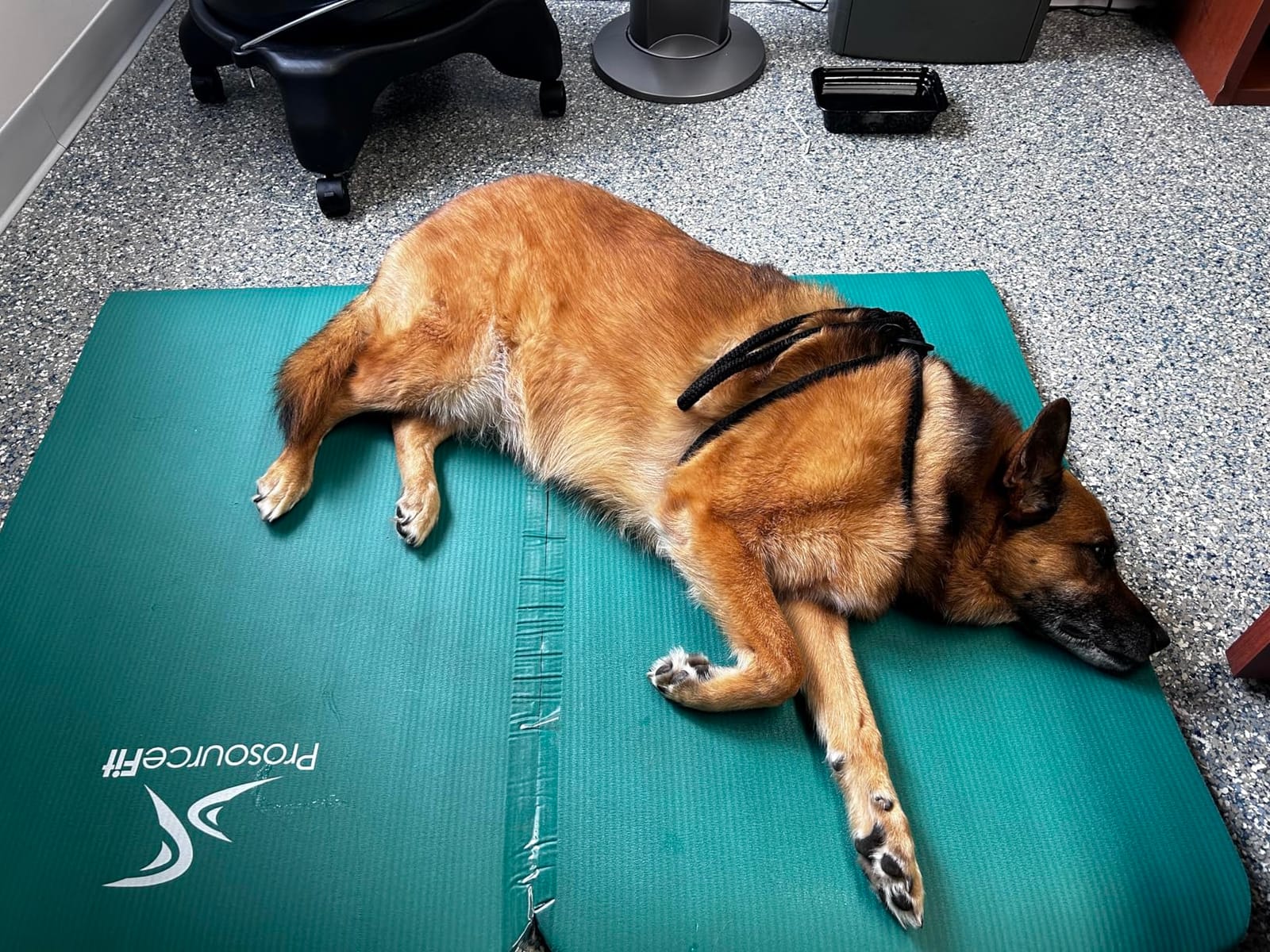
The ribbed surface is the detail to plan for. It grips well on most floors, but it is less tacky straight out of the packaging and improves after a few sessions of use. That break-in is not a defect, it is just something to know if you plan to use it in a balance-heavy class immediately.
Maintenance is minimal. NBR naturally repels moisture, so a wipe with a wet cloth and some air time is enough, and it is not machine washable, so keep it away from the laundry.
Who this mat suits
Mat Pilates, restorative yoga, and taller practitioners who find a standard 70 inch mat short. The 71 inch length plus 24 inches of width also works well for side-lying and hip-opening work.
Where it falls short
Anyone who needs immediate maximum traction on day one, and anyone hoping to toss the mat in a washing machine. At 2.5 pounds it is also a mid-weight carry rather than a light one.
7. Gruper 10mm Extra Thick NBR Mat – Best for Tile Floors
Gruper Thick Yoga Mat Non Slip, Large Size 72″ L x 32″ W x 0.6″ TH, Premium Exercise & Fitness Mat with Carrying Strap and Bag, Workout Mats for Home (Grey, 72 * 24 * 0.4 Inches)
10mm NBR foam
72 x 24 inch
1.8 lb
Bag and strap
Pros
- 10mm cushioning softens sore knees and stiff joints without giving up stability
- Textured surface holds grip on hard and tile floors
- Longer than a standard mat so hands and feet rarely reach the edge
- Includes both a carry bag and a strap for gym transport
- Soft
- flexible
- non-toxic NBR with quick rebound
Cons
- Develops visible dents and marks in the foam with use
- Long-term durability is uncertain at the thickest points
- New mats can carry an odor that needs a few days of airing
Gruper sits in the range we consider the knee-pain sweet spot, at 10mm, but what separates it from the other 10mm option here is the surface. The textured face is built for hard and tile floors specifically, which is the setting where most knee complaints actually originate.
It is also 72 inches long, longer than the standard mat, and that length matters more than people expect. Feet and hands drifting off the edge is a common reason new practitioners feel unsteady, and reviewers specifically call out how rarely that happens here.
At 1.8 pounds it is one of the lighter picks in this group, and the inclusion of both a carry bag and a strap makes it easy to move between rooms or to a gym. Quick-rebound NBR keeps it flexible rather than board-like.
Who this mat suits
Anyone on tile or concrete who wants meaningful cushion without an unwieldy slab, and anyone who travels to class with a bike or on foot. The extra length helps in seated forward folds as well as standing work.
Where it falls short
Long-term owners. Dents and marks appear in the foam with use, and durability at the thickest points is the open question in the reviews. Plan on airing it for two or three days before the first session.
8. CAP 1-Inch High Density NBR Mat – Best for Rehab and Physio Work
CAP 1″ Extra Thick Yoga Mat, Exercise & Workout Mat with Strap, Teal
1 inch NBR foam
71 x 24 inch
3.8 lb
Latex free
Pros
- Full inch of high-density foam cushions knees
- elbows
- hips and back
- Bounces back quickly after compression
- Textured surface grips without feeling slippery
- Stable for balance work despite the thickness
- Mold and mildew resistant latex-free foam
Cons
- Toes digging in during planks can split or puncture the foam
- Standing balance is slightly less stable because of the depth
- Takes up more room rolled up than a standard mat
This is the mat that shows up in physical therapy and tailbone-relief contexts, and it is the one we would put in front of someone who needs a genuinely large amount of padding for extended floor work such as planks, core exercises and back stretches.
A full inch of high-density NBR gives you serious cushioning, and the quick rebound is what keeps it from becoming a trap in balance work. Reviewers note that it stays stable for balance poses despite the thickness, which is not something you can say about most one-inch foam mats.
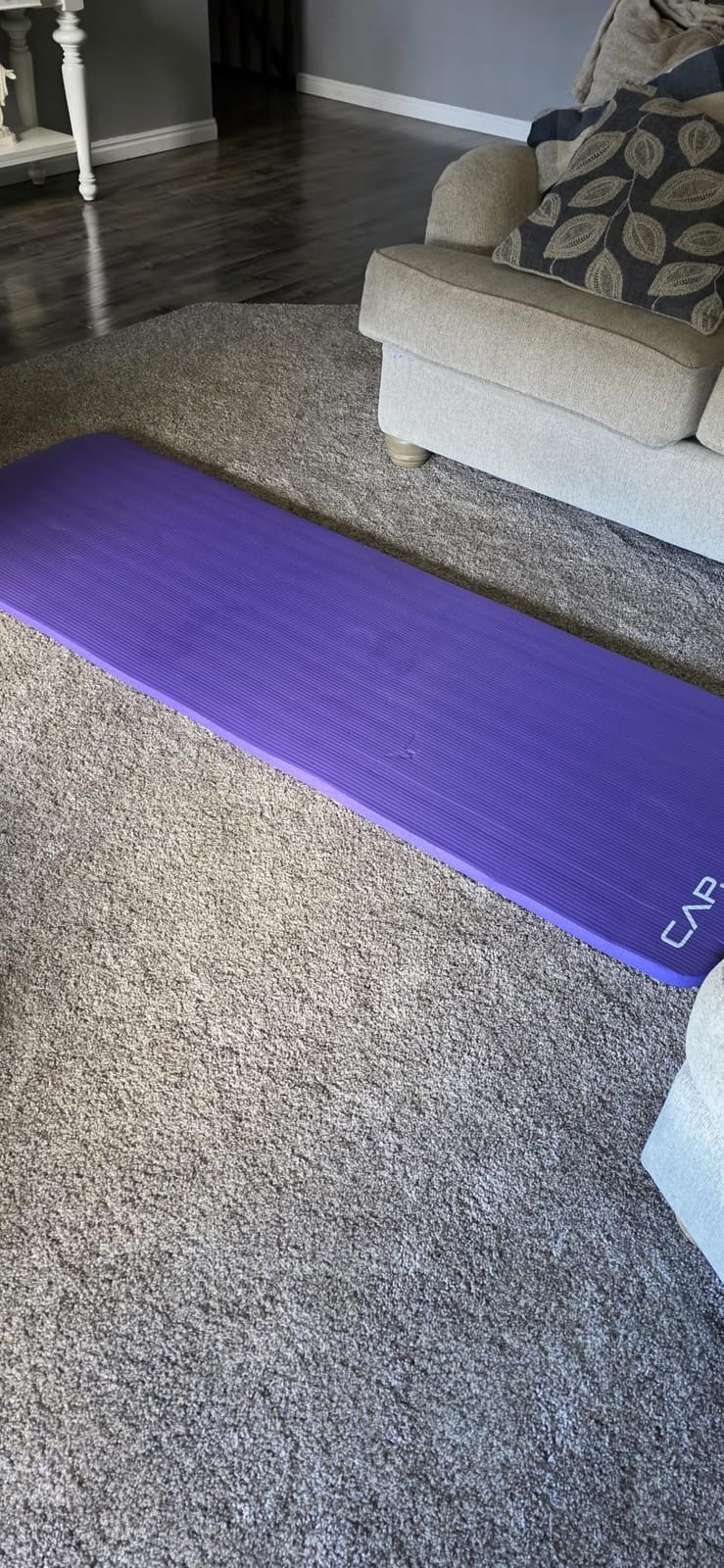
Two real limitations surfaced in the reviews. The first is foam splitting where toes dig in during planks, which is a genuine risk at this thickness, particularly if you work barefoot with any weight. The second is that standing balance is slightly less stable purely because of the depth.
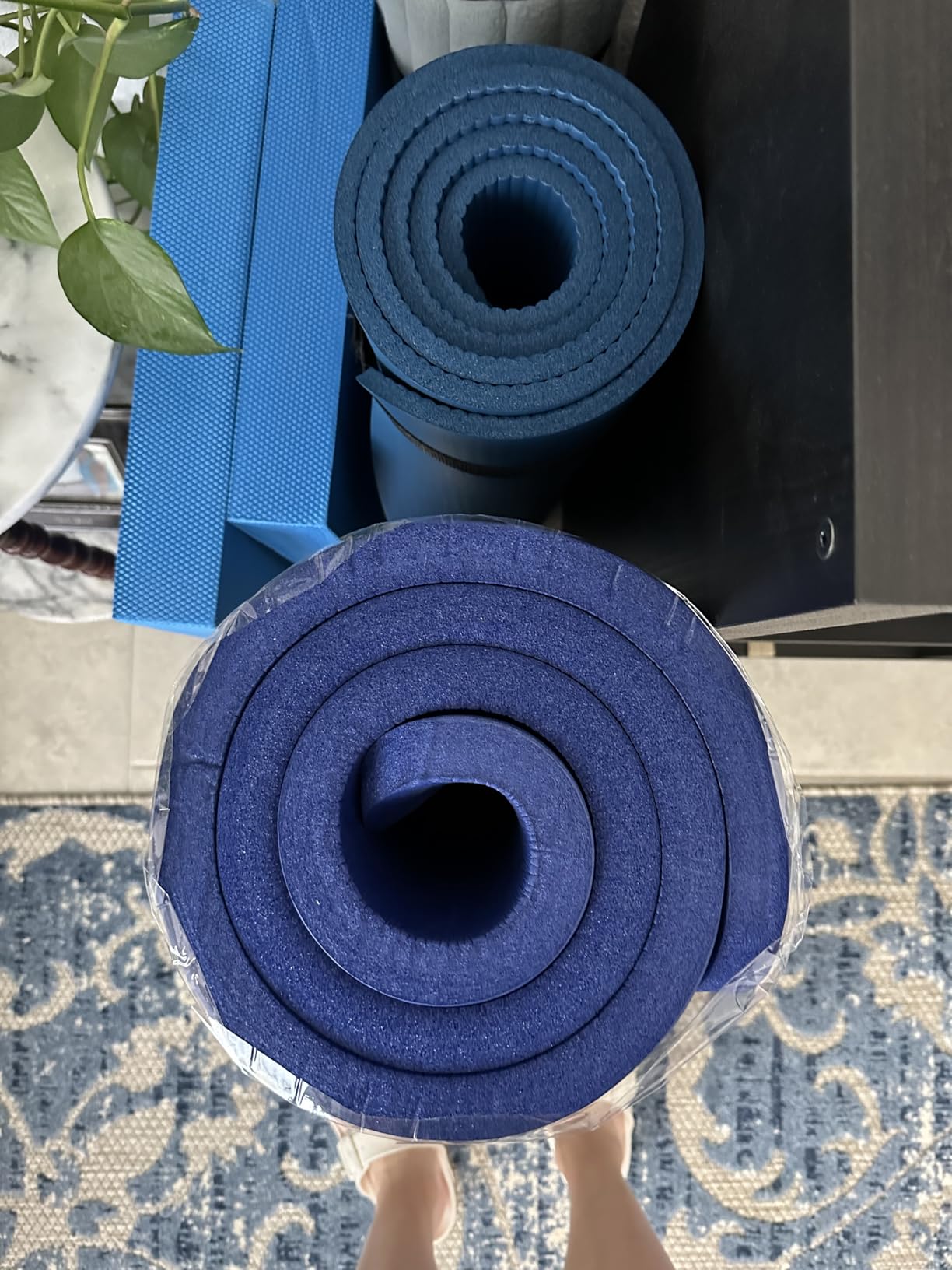
At 3.8 pounds this is one of the heavier mats here, and the roll takes up more space than a standard mat. Plan around a smaller room than you expected, and expect some mats to arrive with a packaging dent or without the strap, so inspect it on arrival.
Who this mat suits
Rehab contexts, mobility work, and home practice on hard floors where planks and back work are a large part of the routine. The latex-free, mold-resistant foam is also reassuring for shared or humid spaces.
Where it falls short
Barefoot plank work, because toes can split the surface, and anyone carrying a mat to class regularly at 3.8 pounds. Standing balance is workable but noticeably softer than a 10mm mat.
9. Hatha Yoga 12mm Extra Wide TPE Mat – Best for an Extra-Wide Surface
Hatha Yoga Extra Thick TPE Yoga Mat – 72″x 32″ Thickness 1/2 Inch -Eco Friendly SGS Certified – With High Density Anti-Tear Exercise Mats For Home Gym Travel & Floor Outside (Orange/Gray)…
12mm TPE foam
72 x 32 inch
4 lb
Extra wide
Pros
- 32 inch width leaves room for wide-legged poses and hand placement
- Odourless
- non-slip TPE that wipes clean easily
- High density cushioning softens spine
- hips
- knees and elbows on hard floors
- Sticky texture on both sides grips wood
- tile and cement
- High tear resistance holds up to regular use
Cons
- Heaviest mat in this group at 4 pounds
- making it the least portable
- The 72 by 32 inch footprint needs more floor space than a standard mat
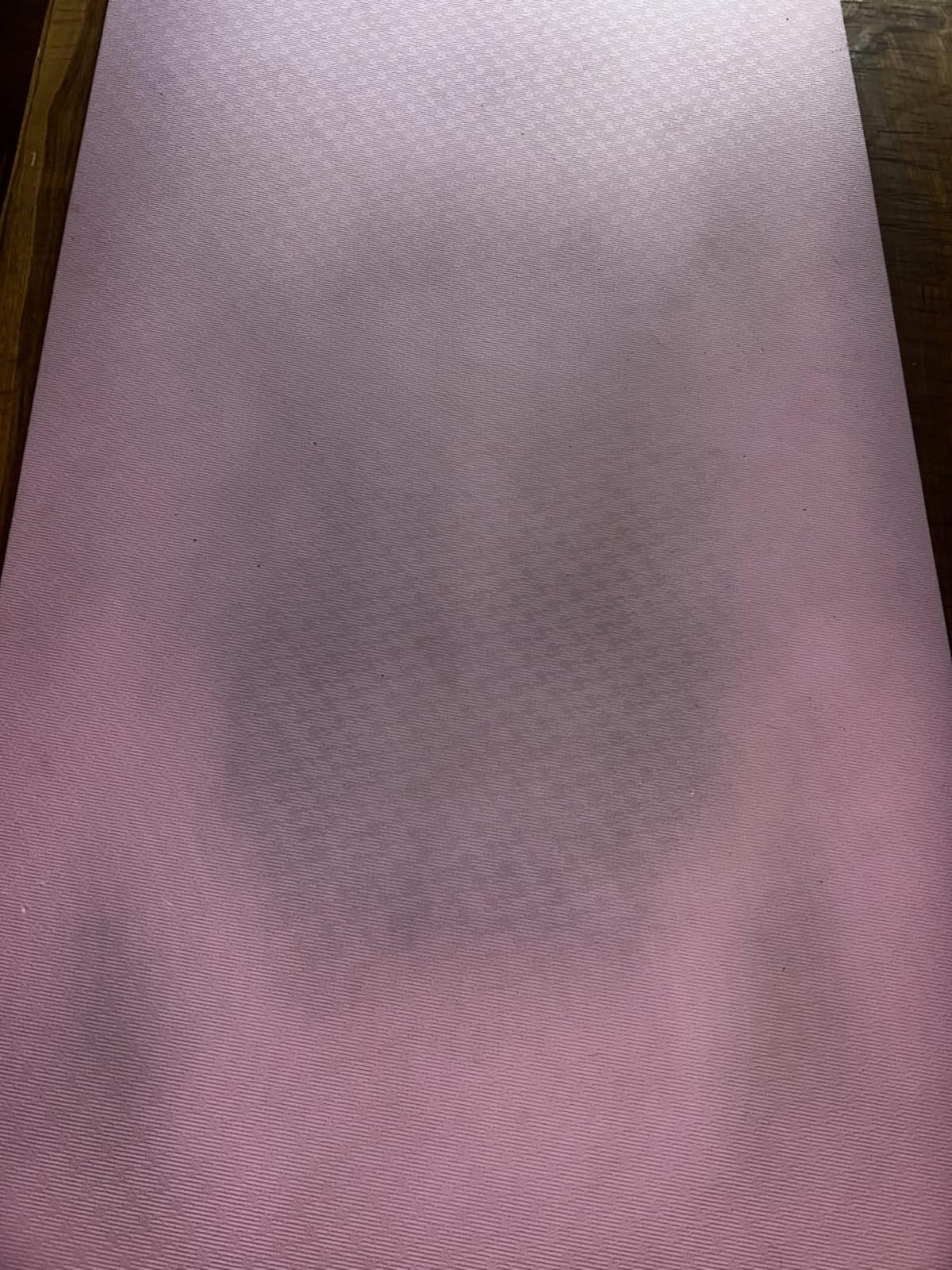
Width is an underrated part of knee comfort. A mat that is too narrow forces you to bring your knees in, which loads the joint differently and makes wide-legged and low-lunge shapes awkward. At 32 inches wide, this mat removes that constraint entirely.
The cushioning is 12mm of high-density TPE, which sits just under half an inch and lands between the balanced 10mm picks and the full-inch slabs. The TPE is odourless, which is unusual at this thickness, and the double-sided sticky texture grips wood, tile and cement.
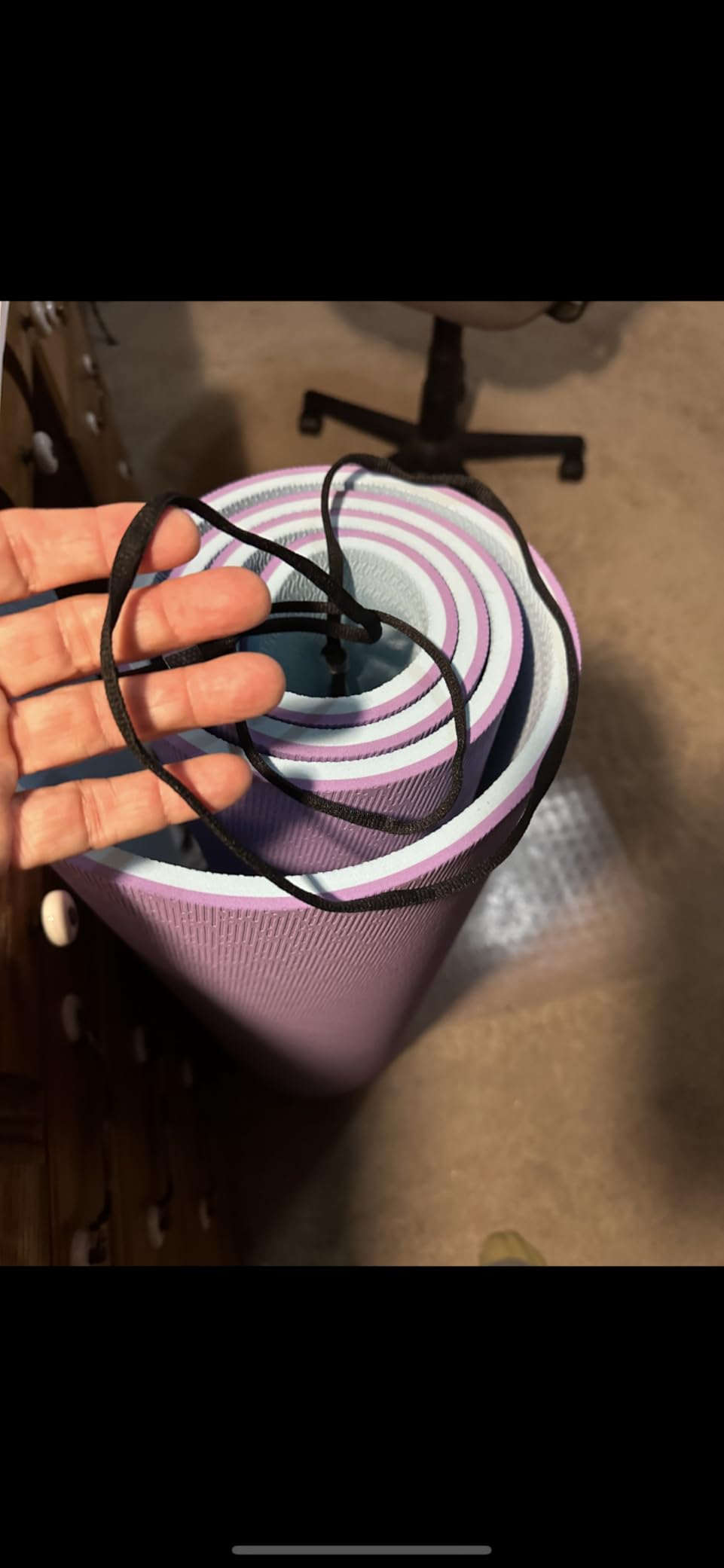
Reviewers consistently single out the width as the reason to buy it, saying hands and feet rarely fall off the edge. The trade-off they accept in exchange is bulk: at 4 pounds this is the heaviest mat in the group, and the footprint needs a genuinely clear patch of floor.
Because TPE is a denser material than NBR foam, this mat feels more like a surface and less like a cushion in the first few sessions. The double-layer anti-tear construction is what keeps that density from feeling punishing under a kneecap.
Who this mat suits
Anyone with a larger frame, or anyone who finds their knees uncomfortable in wide-legged and low-lunge shapes on a narrow mat. The extra width also helps with side-lying restorative work and with hand placement in tabletop variations.
Where it falls short
Portability, without much nuance. At 4 pounds this is the least portable mat in the group, and a 32 inch width needs planning around in a small room. It is a home mat rather than a studio mat.
10. TENOL JELS 15mm 3D Non Slip TPE Mat – Best Grip for Sweaty Hands
JELS Extra Thick Yoga Mat, 1.2/2 inch, Ergonomic 3D Non Slip Design, SGS Certified TPE Material, Yoga Mat for Men Women with Carrying Strap,Exercises Mat for Yoga, Pilates and Floor Workout(72″x26″)
10mm or 15mm TPE
72 x 26 inch
1.35 kg
Suction cup base
Pros
- Grip holds firm even with heavily sweating hands and feet
- Underside traction stops the mat sliding during jumping jacks or burpees
- Cushioning is thick without feeling spongy
- so balance poses remain workable
- No chemical smell out of the box
- Denser TPE has resisted pet claws better than typical foam mats
Cons
- Stiffer and heavier than a foam mat
- so it is harder to roll up
- Two-layer version is firmer and thinner than the original
- Mats can warp if stored next to a heat source
- 26 inch width is narrow and the edge can dig in
Grip is the reason this mat exists. The top face carries 369 anti-slip cushioning modules and the underside has a dot suction-cup texture, and that combination is what keeps the mat anchored during dynamic work rather than sliding out from under you.
For practitioners with genuinely sweaty hands, this is the pick. Reviewers single it out for grip that stays strong without the abrasive texture that irritated their skin on other thick mats, which is a real problem with aggressive surface patterns.
Cushioning comes in 10mm and 15mm options, roughly twice a typical mat, and reviewers describe it as thick without feeling spongy. That is the balance that keeps balance poses workable on a mat this deep, and it is the SGS certified PVC-free TPE construction that delivers it.
Who this mat suits
Hot classes, sweaty practitioners, and anyone whose previous mat was slick once they warmed up. The suction-cup base also makes it a good choice if you do jumping jacks or burpees on a mat at all.
Where it falls short
Small rooms and light travel bags, since the 72 by 26 inch TPE is stiff and heavier to roll than foam. Store it away from heat sources, since the material can warp, and note the edge can dig in during poses.
11. Tone Fitness 1-Inch High Density NBR Mat – Best for Odour-Sensitive Practice
Tone Fitness 1″ Extra Thick Yoga Mat, Exercise & Pilates Mat, Black Wave
1 inch NBR foam
72 x 24 inch
15.7 oz
Textured face
Pros
- Cushioning is soft but still firm
- giving support without instability
- No odor at all
- unlike many foam mats of this thickness
- Firm enough for balance work while cushioning knees
- wrists and ankles
- Rolls up easily and flattens out quickly
- Multiple texture and color options to choose from
Cons
- Included elastic strap is too loose to hold the mat closed
- Bulkier to transport than a standard mat
- Frequent kneeling wears a shallow dip that fluffs back up
- Some buyers would prefer a wider surface
Odor is the reason most thick foam mats get returned, and the Tone Fitness is the one in this group that reviewers repeatedly describe as having none. If you practise indoors in a small room, that alone is worth knowing.
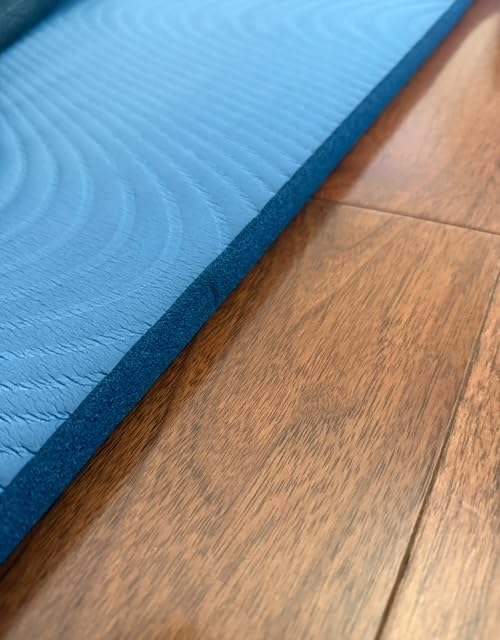
Underneath that, the foam is a full inch of high-density NBR that feels soft but stays firm. That combination is the pattern we look for in this category, because it cushions a kneecap properly while still giving you a platform you can balance on.
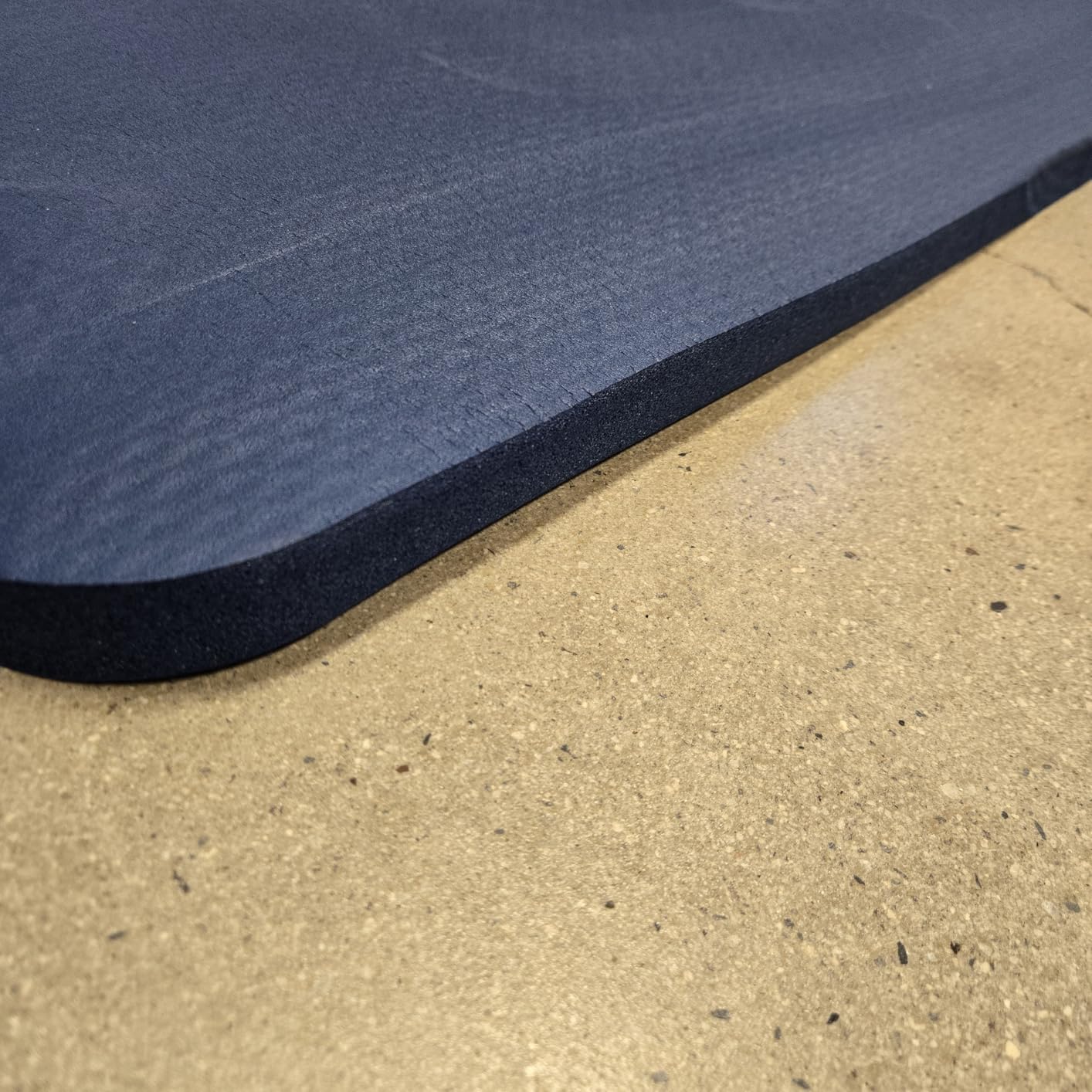
There are three surface textures available, in wave, diamond and mesh patterns, so you can pick a face that feels right for your hands and knees. Older buyers and those with joint problems specifically praise the cushioning combined with the complete absence of any smell.
The most common complaint is trivial but real: the included elastic strap is too loose to hold the roll closed. A second issue is that frequent kneeling eventually wears a shallow dip into the foam, though it fluffs back up after a few hours rather than staying.
Who this mat suits
Apartment practice, shared rooms, and anyone sensitive to the chemical smell that comes with new dense foam. It is also a good fit for older practitioners who want a full inch of support without the odour.
Where it falls short
Anyone who needs a carrying strap that actually holds, and anyone who wants more than 24 inches of width. It is bulkier to transport than a standard mat, so plan around that for class.
12. nuveti 15mm, 20mm and 30mm TPE Mat – Best for Maximum Cushioning
nuveti Large Exercise Mat – 15mm/20mm/30mm Thick Yoga Mat | Workout Mat for Fitness, Yoga, Pilates, Stretching & Floor Exercises for Women & Men with Free Carrying Bag
15, 20 or 30mm TPE
72 x 32 inch
2.72 kg
Bag included
Pros
- Thickest cushion range in this group at 15mm
- 20mm or 30mm
- Oversized 72 by 32 and 78 by 36 formats give ample room for any position
- Textured surface aids traction so joints are protected without losing balance
- Absorbs vibration and reduces impact noise for apartment use
- Quick rebound with tear and wear resistance holds shape over time
Cons
- Heaviest and bulkiest option at 2.72 kg for the standard size
- Very thick variants feel unstable for standing balance poses
This is the end of the scale. The nuveti comes in 15mm, 20mm and 30mm versions, which means you can pick a thickness closer to a padded gym floor than to a yoga mat, and the oversized formats go up to 78 by 36 inches.
For someone who cannot tolerate any direct pressure on the kneecap, that range removes the guesswork. Reviewers pick it specifically when they want the maximum possible cushioning alongside a lot of floor space for stretching, mobility work and floor exercises.
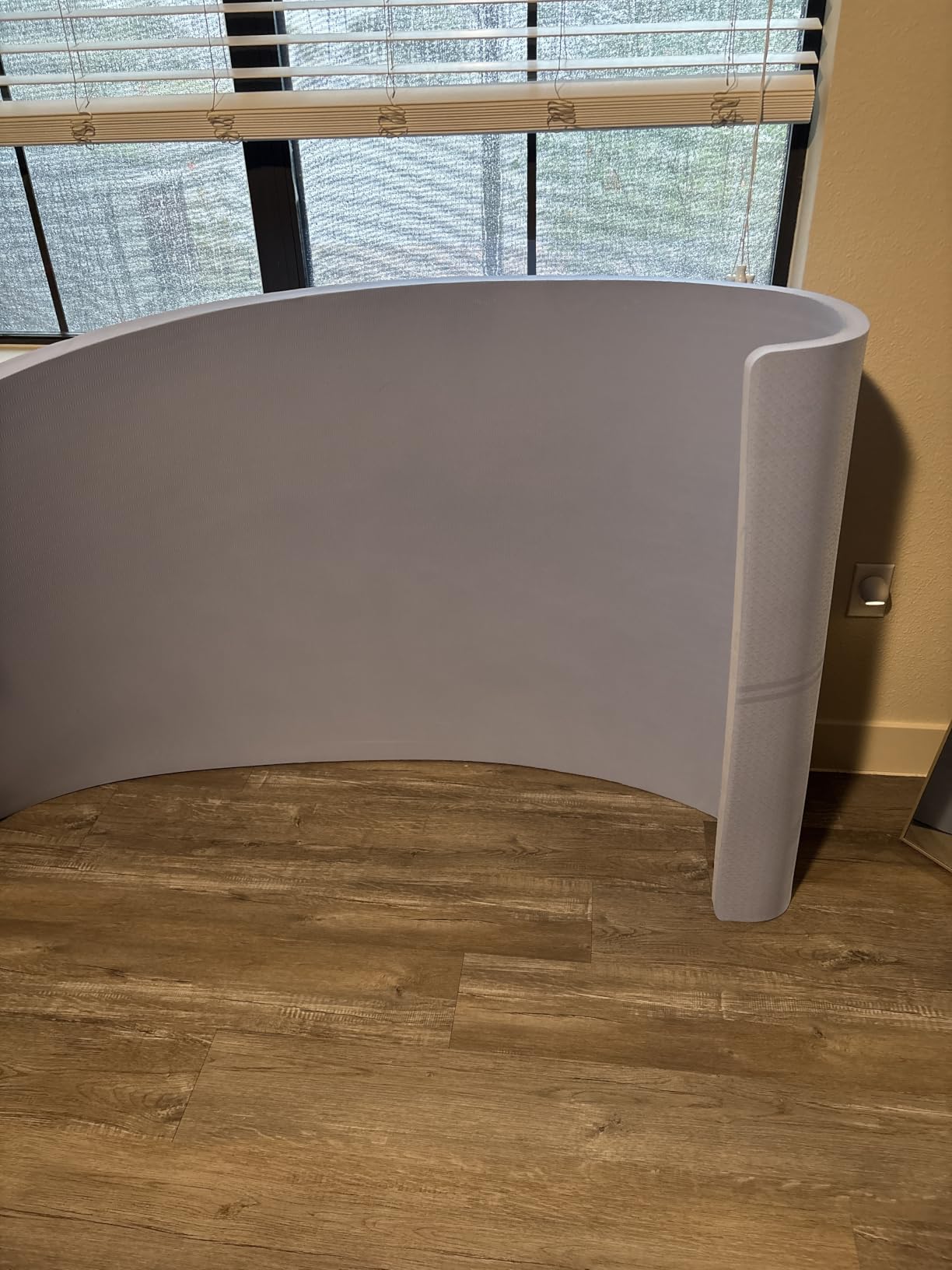
Two practical benefits come up repeatedly. The textured surface holds postures longer without you losing balance, and the material absorbs vibration well enough to reduce impact noise, which matters in an apartment or downstairs from someone who sleeps.
The material is PVC-free, non-toxic and skin-friendly, and the high-density foaming is described as quick rebound with tear and wear resistance, so it should hold its shape over time rather than flattening.
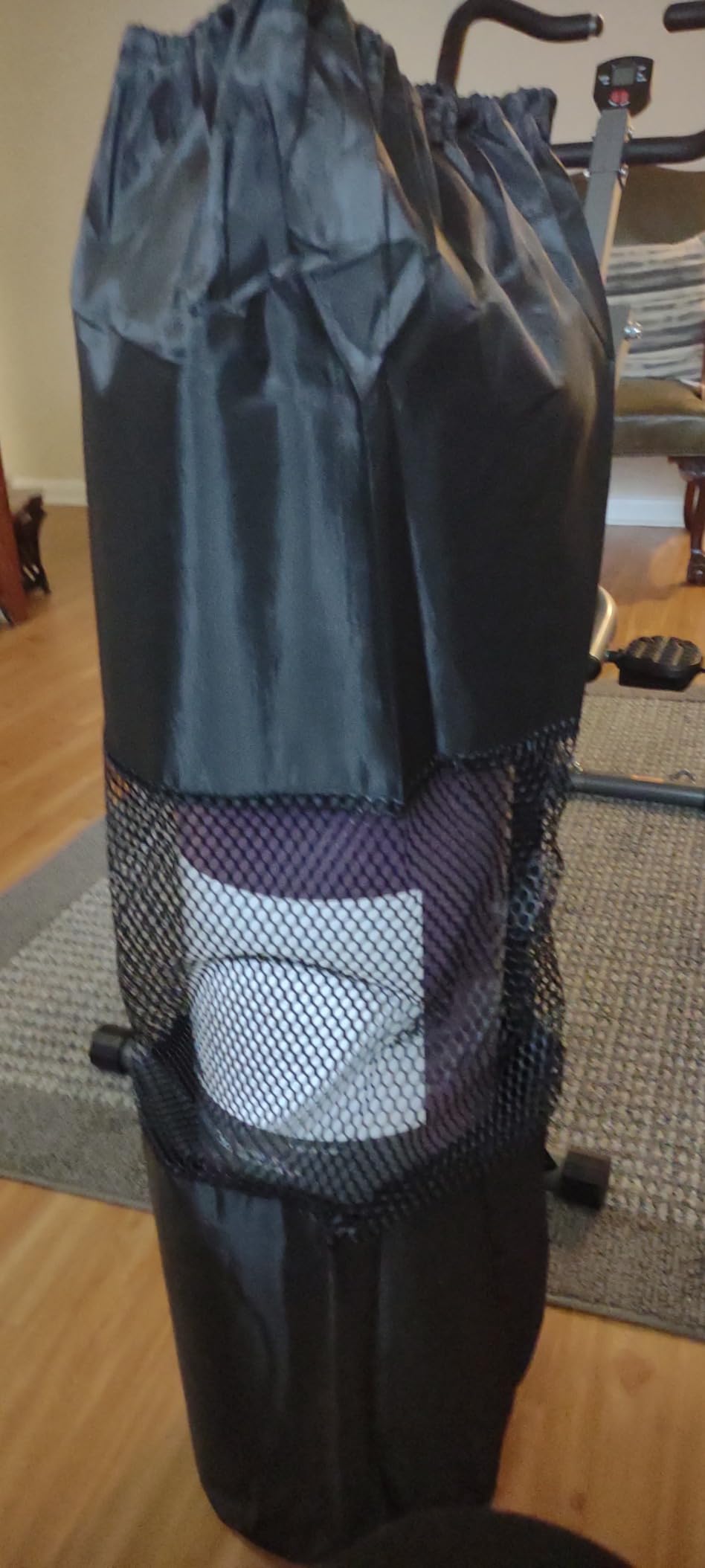
Who this mat suits
Floor-based stretching, mobility work and physio-style rehabilitation where the goal is to remove floor hardness entirely. It is also a strong choice for apartment practice where noise through the floor is a problem.
Where it falls short
Standing balance work, which the thickest variants make genuinely awkward, and transport, since 2.72 kg for the standard size is a real carry. Buy this for the floor, not for the whole practice.
How to Choose a Thick Yoga Mat for Sore Knees
Rank the materials, not the millimetres. From densest to softest, the order runs roughly: high-density PVC, natural rubber, cork-topped rubber, standard PVC foam, TPE, then NBR foam. NBR is a genuinely soft material, which is why the NBR mats in this list sit at the comfortable end and the TPE and firm PVC options sit at the stable end.
Test density in store before you commit. Press a thumb hard into the mat and hold it for a few seconds. If the imprint stays visible, the foam is low density and will bottom out under a standing foot. If it springs back within a second, the mat can hold a standing pose. This takes ten seconds and saves a return.
Check your floor, not just the mat. Tile and concrete change everything, because the pressure that reaches your knee is a function of the whole stack, not the mat alone. Practise for five minutes on your actual floor before you decide. Our guide to running shoes for bad knees covers the same principle in a different context.
Factor in your body weight. Heavier practitioners compress the same foam further. If you are on the larger side, aim for the top of a range rather than the bottom, and always test the standing poses first.
Fix the pose before you buy the mat. A block under your sit bones in hero pose, the back knee placed behind the hip rather than beside it in low lunge, untucked toes, and a block under the hips in child’s pose all reduce knee load without a thicker mat. If your pain is confined to two or three poses, these adjustments may be enough.
Consider mat Pilates separately. A kneeling Pilates class puts far more sustained time on the knees than a vinyasa flow, so 13mm or more is worth considering there even if a yoga class would be fine on 6mm.
Do you actually need a new mat? If you already own a comfortable 5mm mat and your knees only bother you in two poses, a yoga knee pad or a folded blanket is the cheaper fix and takes seconds to set up. The alternative worth knowing is the two-mat system: keep a thick exercise mat as a base layer and lay a thinner yoga mat over the top. It is a reasonable way to get the benefit of a very thick surface while keeping a usable mat for standing work.
Care for thick mats properly. Roll rather than fold, because a crease in dense foam does not always flatten back out. Store it flat or on its side away from heat, wipe it down after use, and let it air out for a day or two when it first arrives.
Know the retirement signs. When the foam stops returning to shape, a dent remains where your knees sat, the surface feels slick rather than tacky, or the mat has visibly thinned at the edges, it has stopped doing its job. At that point a new mat will help your knees more than anything you change in the practice.
For general walking and daily movement rather than mat-based practice, our walking shoes for bad knees picks cover the footwear side of the same problem.
Frequently Asked Questions
Is a thicker yoga mat better for bad knees?
A thicker mat helps only if the foam is dense. A high-density mat in the 6-8mm range compresses a few millimetres and then supports your weight, spreading pressure away from the kneecap. A thick but soft low-density mat compresses fully, so your knee sinks through it and the benefit disappears while balance gets worse.
What thickness yoga mat is best for knees?
For most people, 6-8mm of high-density foam is the right answer. It is thick enough to make kneeling poses comfortable and thin enough that a standing foot still feels stable. Go to 10-15mm if your practice is almost entirely floor work, and treat anything above 20mm as an exercise mat rather than a yoga mat.
Why do my knees hurt when I use a yoga mat?
Two reasons are common. If the mat is thin or the floor is hard, pressure concentrates on the kneecap, a small bone with little padding. If the mat is very soft, the knee sinks, the ankle compensates late and the joint twists slightly. A dense mid-thickness mat fixes the first problem without causing the second.
Is yoga ok if you have bad knees?
Yoga can be appropriate for many kinds of knee pain, particularly gentle, restorative and hatha styles, provided you modify poses and avoid loading a joint that is already inflamed. A mat improves comfort but does not treat the underlying problem. Seek medical advice if your knee is locking, swelling quickly, giving way, or hot and red alongside a fever.
Can a yoga mat be too thick for standing poses?
Yes. Once foam passes roughly 10mm and becomes soft, a standing foot sinks into the surface and your balance point drops and moves. Tree, eagle and warrior III become harder to hold. If your practice includes standing balances, choose a firm 1-inch mat rather than a soft 1-inch one, or keep a thinner mat for the standing half of the class.
Which Thick Yoga Mat Should You Buy?
The best thick yoga mats for bad knees are the ones that are dense before they are deep. Our pick for most people is the Fitvids 1/2-Inch High Density Exercise Yoga Mat, because 12.7mm of reasonably dense foam, a 71 by 24 inch surface and a 1.8 pound weight give you the cushion without turning every standing pose into a wobble.
If your floor is the real problem, the Amazon Basics 1-Inch mat takes the cushioning as far as it usefully goes. If your practice leans toward restorative and yin, the Gaiam 10mm NBR mat is the calmer everyday option. And if you stand more than you kneel, the Retrospec Solana gives you a full inch that stays firm enough to balance on.
Whatever you pick, give it a thumb press, a few minutes on your actual floor, and a standing pose test before you commit. A mat cannot fix a knee, but the right one stops getting in the way.