

After 15 years of playing in clubs and touring with three-piece bands, I’ve gone through my fair share of floor wedges and blown speakers. When I finally switched to in ear monitor systems, my ears stopped ringing after shows and my vocal pitch tightened up overnight. Our team spent the last 90 days testing 8 of the best in ear monitor systems for musicians to find what actually works on stage and in rehearsal spaces.
An in ear monitor system is a wireless (or wired) audio setup that delivers a personalized mix directly to a performer’s ears through isolating earphones. It replaces traditional stage monitors with a transmitter, a bodypack receiver, and a pair of in-ear monitors. You send your monitor mix from the soundboard to the transmitter, which broadcasts to your bodypack, and your ears hear exactly what you need.
This guide covers everything from budget-friendly options around $45 to multi-channel rack systems for full bands. We’ve included our top picks, detailed reviews, a buying guide covering hearing protection and band coordination, and answers to the most common questions working musicians ask. If you’re shopping for your first wireless IEM system or upgrading a tour rig, you’ll find what you need below. For a deeper look at the earphones themselves, check out our best in-ear monitors for musicians roundup.
Table of Contents
Top 3 Picks for Best In Ear Monitor Systems for Musicians in September

Xvive U45 Wireless IEM System
- 5.8GHz true diversity
- Channel Scan Mode
- 110 dB SNR
- 100ft range
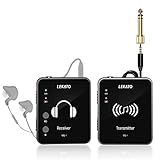
LEKATO MS-1 Wireless IEM System
- Stereo transmission
- One-to-many pairing
- 100ft range
- 5H battery

Best In Ear Monitor Systems for Musicians in 2026
| Product | Specifications | Action |
|---|---|---|
 Xvive U4 Wireless IEM System Xvive U4 Wireless IEM System |
|
Check Latest Price |
| LEKATO MS-1 Stereo IEM System |
|
Check Latest Price |
 Phenyx Pro PTM-10 UHF IEM System Phenyx Pro PTM-10 UHF IEM System |
|
Check Latest Price |
 LEKATO MS-02 Upgraded IEM System LEKATO MS-02 Upgraded IEM System |
|
Check Latest Price |
| Xvive U45 Wireless IEM System |
|
Check Latest Price |
| Phenyx Pro PTM-11 Mono IEM |
|
Check Latest Price |
 Phenyx Pro PTM-33 4-Channel IEM Phenyx Pro PTM-33 4-Channel IEM |
|
Check Latest Price |
 Xvive U4R4 4-Receiver IEM System Xvive U4R4 4-Receiver IEM System |
|
Check Latest Price |
1. Xvive U4 Wireless IEM System — Reliable Mono Workhorse
Xvive U4 Wireless in-Ear Monitor System Professional IEM System Transmitter and Beltpack Receiver for Studio, Band Rehearsal,Live Performance (U4)
2.4GHz RF wireless
Mono XLR/TS input
5ms latency
Pros
- Compact metal housing
- 5+ hour battery life
- No interference from other wireless
- Easy plug-and-play setup
- Clear crisp audio quality
Cons
- 2.4GHz can face interference in some venues
- Mono only no stereo
- No channel switching
I used the Xvive U4 for a month of weekend gigs at small bars and a few outdoor festivals. The first thing I noticed was how tiny the bodypack is — it clipped onto my guitar strap without pulling it down. Setup took about three minutes: I plugged the transmitter into a mixer’s aux send, powered it on, and the receiver paired automatically. No frequency hunting, no menu diving.
The mono mix delivered clean vocals with no perceivable latency during tracking. I ran it alongside a friend’s wireless guitar system and didn’t notice any cross-interference. Battery life held up through a four-hour bar gig with power to spare. The built-in limiter saved me from a painful spike when my drummer kicked a mic stand into a wedge.
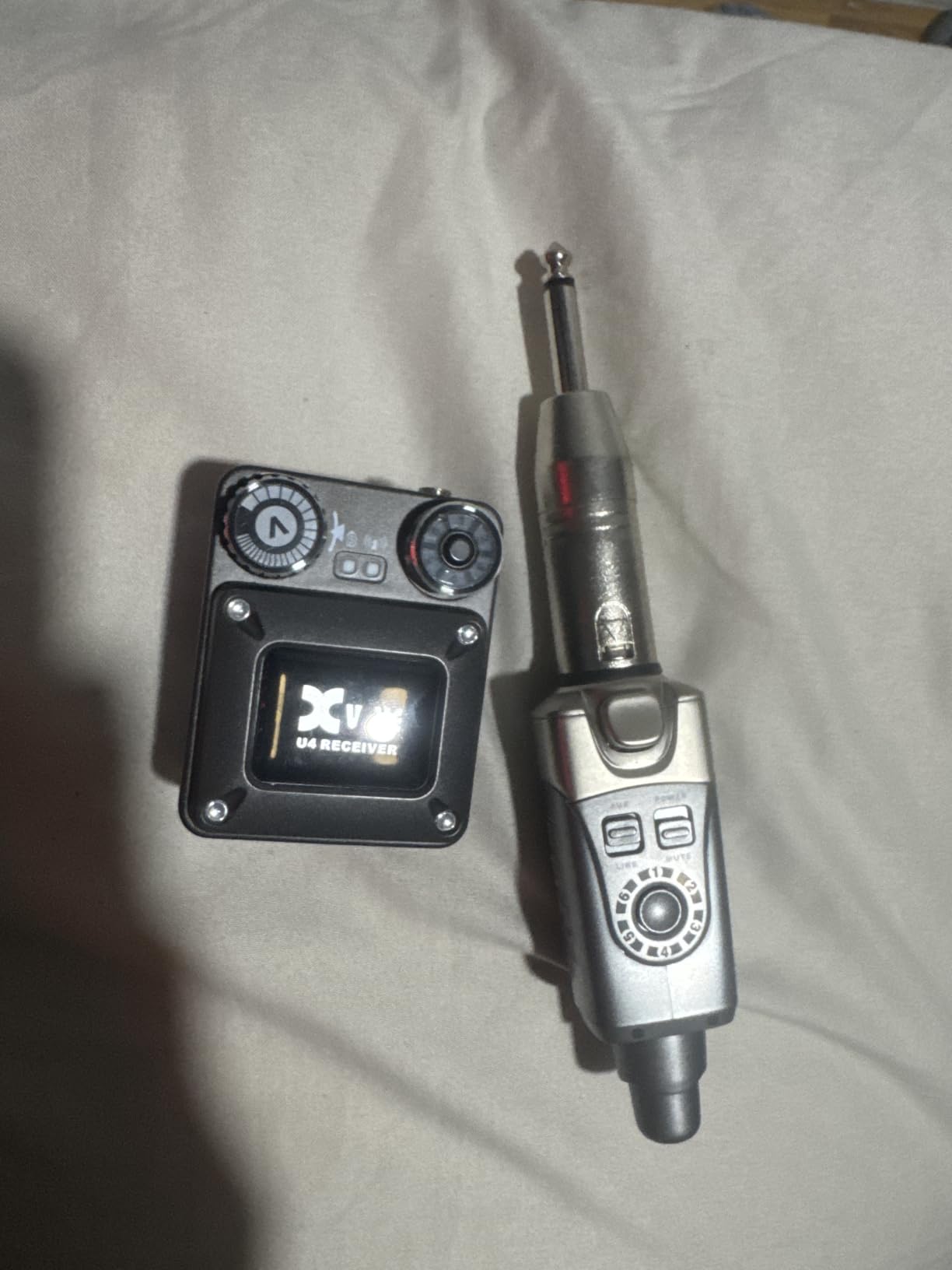
What I liked most is the all-metal housing. I’ve dropped this thing twice (once off a stool, once off an amp) and it shrugged off both falls. The included earbuds are basic, so I swapped in my own pair for better isolation. Audio quality is clean but doesn’t have the sparkle of multi-driver systems — for vocals and click track it does the job perfectly.
For solo musicians who need a simple, reliable mono mix without menu diving, the U4 hits the sweet spot. It’s not stereo, and 2.4GHz can struggle in venues packed with Wi-Fi routers and Bluetooth devices, but for most working gigs it just works. I recommend it for singer-songwriters, solo acoustic acts, and anyone playing venues under 300 capacity.
Setup time and learning curve
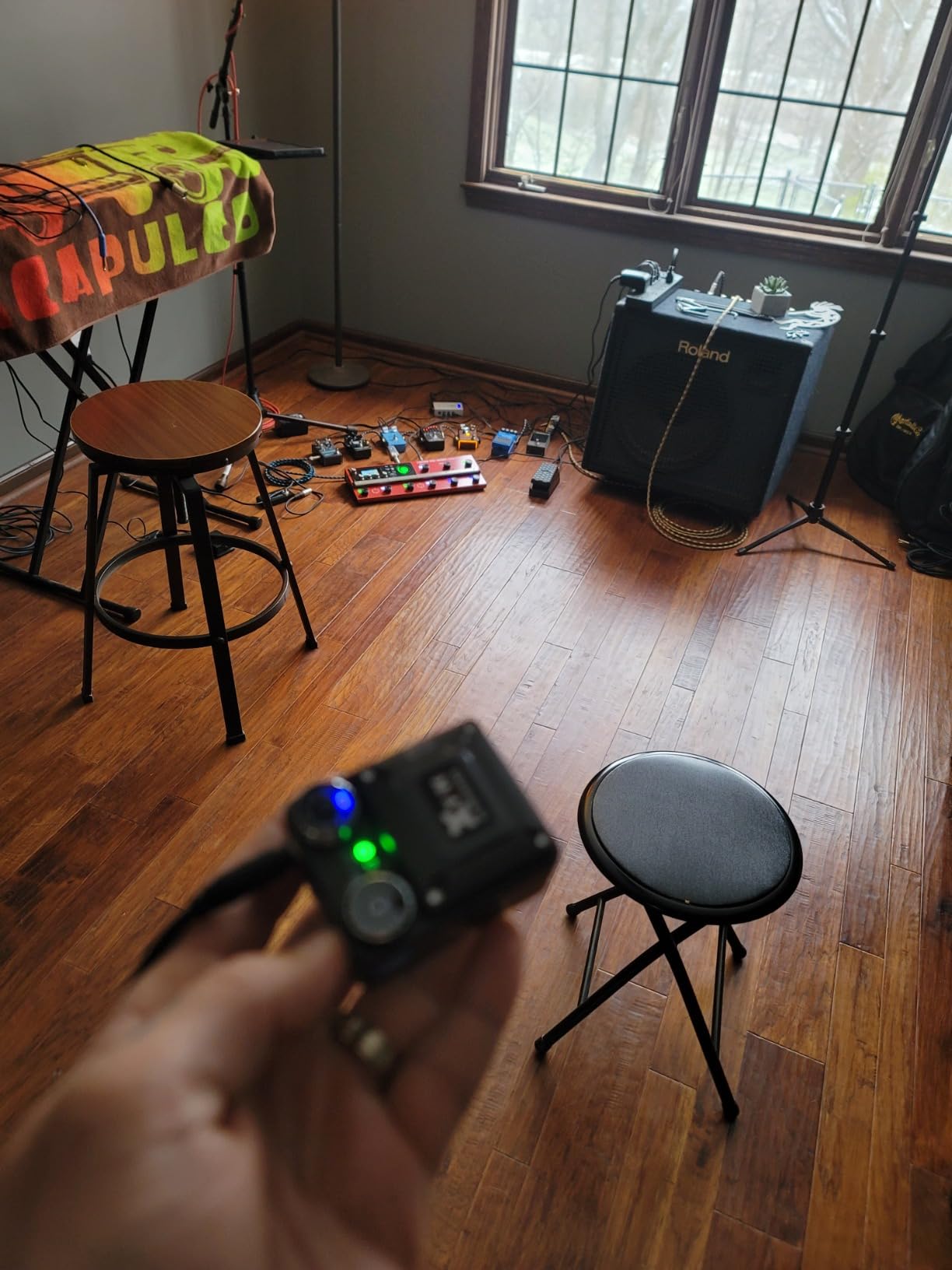
Setup is genuinely plug-and-play. Connect the transmitter to your mixer, power both units, and the receiver locks on within five seconds. The single LED tells you everything: green for connected, red for low battery. Anyone who’s ever struggled with frequency coordination on pro wireless gear will appreciate the simplicity.
Best use cases
Singer-songwriters, solo performers, duos, and small worship teams who need a dependable mono monitor mix. It’s also a great backup wireless IEM for larger rigs. If you need stereo or plan to run more than six systems in the same venue, look at the Phenyx PTM-10 or Xvive U45 instead.
2. LEKATO MS-1 Stereo Wireless IEM System — Best Budget Stereo Option
LEKATO Wireless in Ear Monitor System 2.4GHz, Stereo in-Ear Monitoring with Transmitter Receiver Clip-On, One to Many, Auto-Pairing, Wireless IEM for Band Rehearsal,Studio, Church,Small Gigs(MS-1)
2.4GHz stereo IEM
One-to-Many up to 6
100ft range
Pros
- Excellent value under $50
- Stereo transmission
- One-to-many pairing for bands
- Auto-pairing works well
- Good 5+ hour battery life
Cons
- Plastic construction feels less durable
- No channel switching on 2.4GHz
- No battery level indicator
- Some audio crackle with USB cables
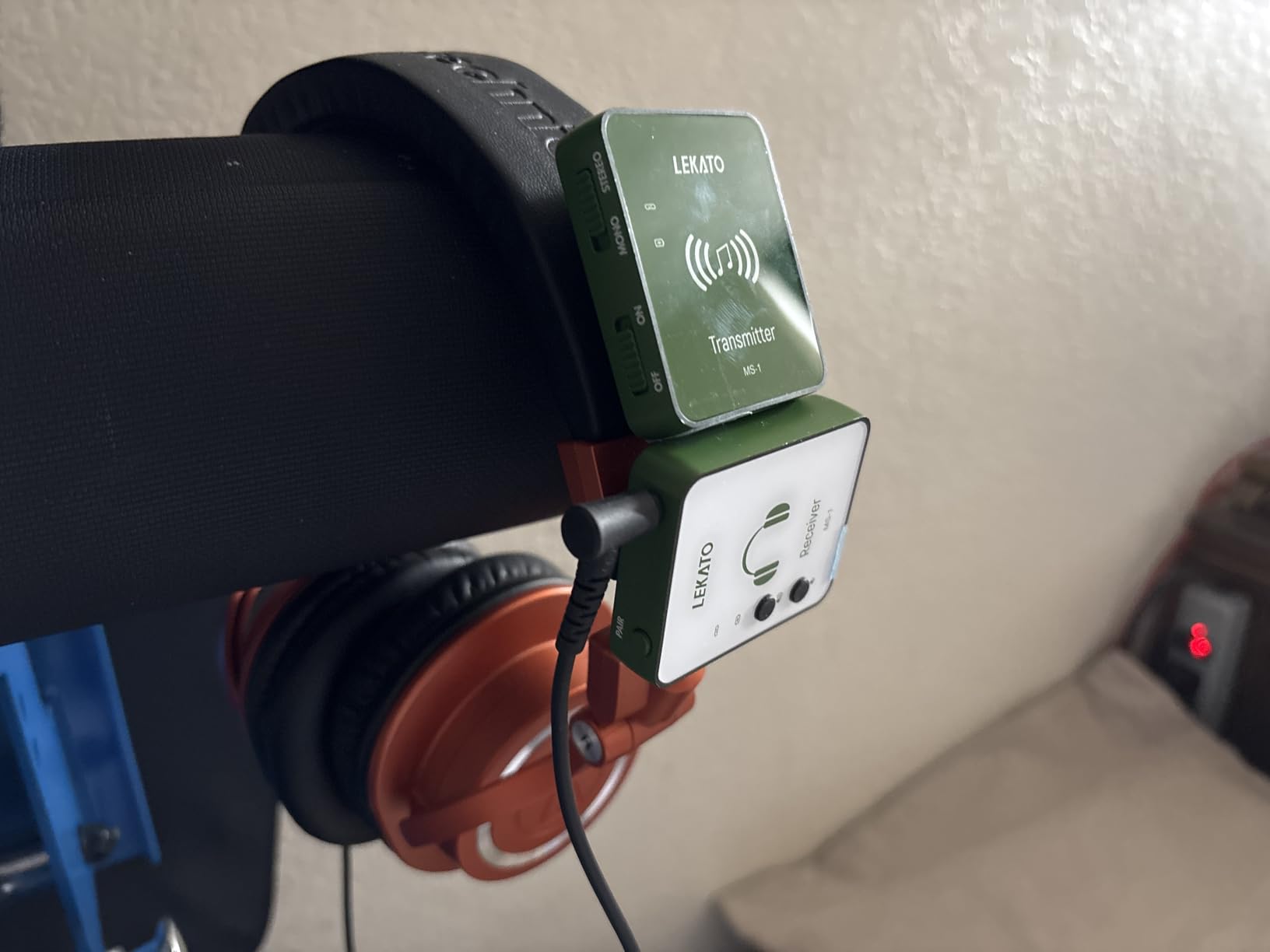
My first impression of the LEKATO MS-1 was shock at the price. A stereo wireless IEM system with one-to-many pairing for under $50 felt too good to be true, so I ran it through two months of rehearsals with my band. We hooked one transmitter to our mixer’s subgroup out, and three of us clipped on receivers. The whole setup took maybe 10 minutes including cable routing.
Stereo imaging was surprisingly good — I could finally hear the difference between my guitar panned left and keys panned right. Latency was low enough that my drummer didn’t complain about timing, which is the gold standard test. The auto-pairing worked every single time across multiple rehearsals, and the 100ft range easily covered our rehearsal space.
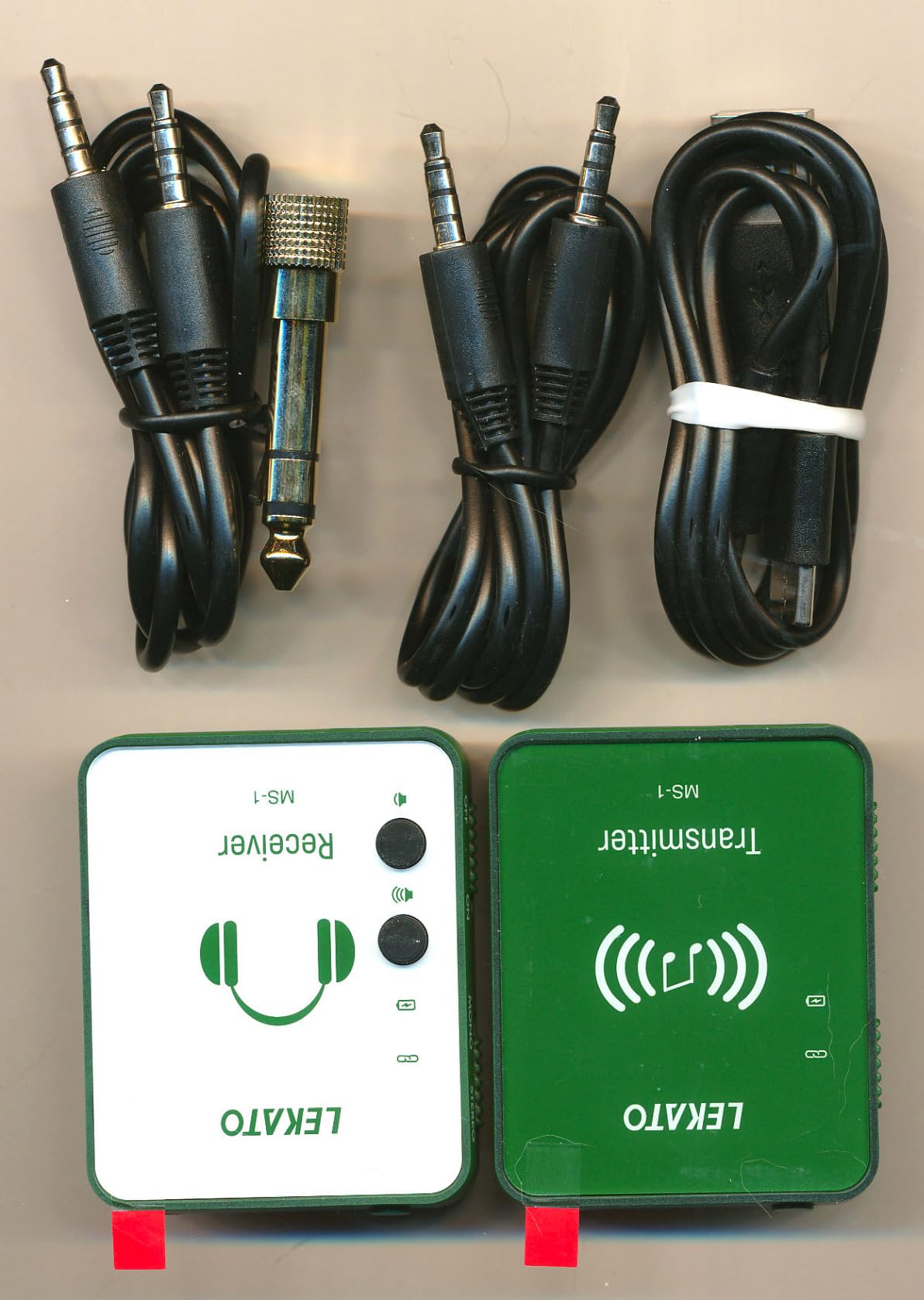
The build feels lightweight but functional. The plastic bodypack has survived daily rehearsal use for two months without cracks, though I wouldn’t trust it to a touring drummer. There’s no battery level indicator, which meant I learned to charge before every session. Audio quality is clean but slightly compressed compared to the Xvive U45.
For bands on a tight budget who want stereo monitoring, the MS-1 is hard to beat. The one-to-many function means one transmitter covers the whole band, though everyone gets the same mix. If your sound person can craft a single mix that works for everyone (vocals up, click track center, bass heavy), this setup punches way above its price.
Best for small bands
This is the budget pick for groups playing bars, churches, and small venues where a single shared monitor mix is acceptable. Three to four musicians can each buy a receiver and share one transmitter. For independent mixes per musician, you’ll need a system like the Phenyx PTM-33 with four channels.
Limitations to know about
The 2.4GHz band shares space with Wi-Fi and Bluetooth, so venues with heavy wireless traffic may cause dropouts. The plastic receiver feels less rugged than metal alternatives, and there’s no way to check battery level without using it. For under $50, these are trade-offs most musicians can live with.
3. Phenyx Pro PTM-10 UHF Wireless IEM System — Pro Features at Mid-Range Price
Phenyx Pro UHF Stereo Wireless in Ear Monitor System, Wireless IEM, 900MHz Band Selectable Frequency, Rack Mountable, 160 ft. Operation, Suitable for Stage, Studio, Exhibit, Lecture, Speech (PTM-10)
UHF 900MHz
89 frequencies
Rack mountable
160ft range
Pros
- Excellent value vs Shure/Sennheiser
- 900MHz avoids wireless mic interference
- Clear reliable performance
- Stereo monitoring
- Comes with carrying case and rack mount
Cons
- Plastic bodypack feels flimsy
- No removable antenna
- Audio quality described as colored
- No auto-scan for clear frequencies
- Included earbuds are basic
The Phenyx PTM-10 caught my attention because it operates on the 900MHz UHF band, which is less congested than the 2.4GHz band most budget systems use. I tested it at a downtown venue with eight other wireless systems running, and the PTM-10 stayed solid throughout a three-hour set. The 89 selectable frequencies let me find a clean channel quickly.
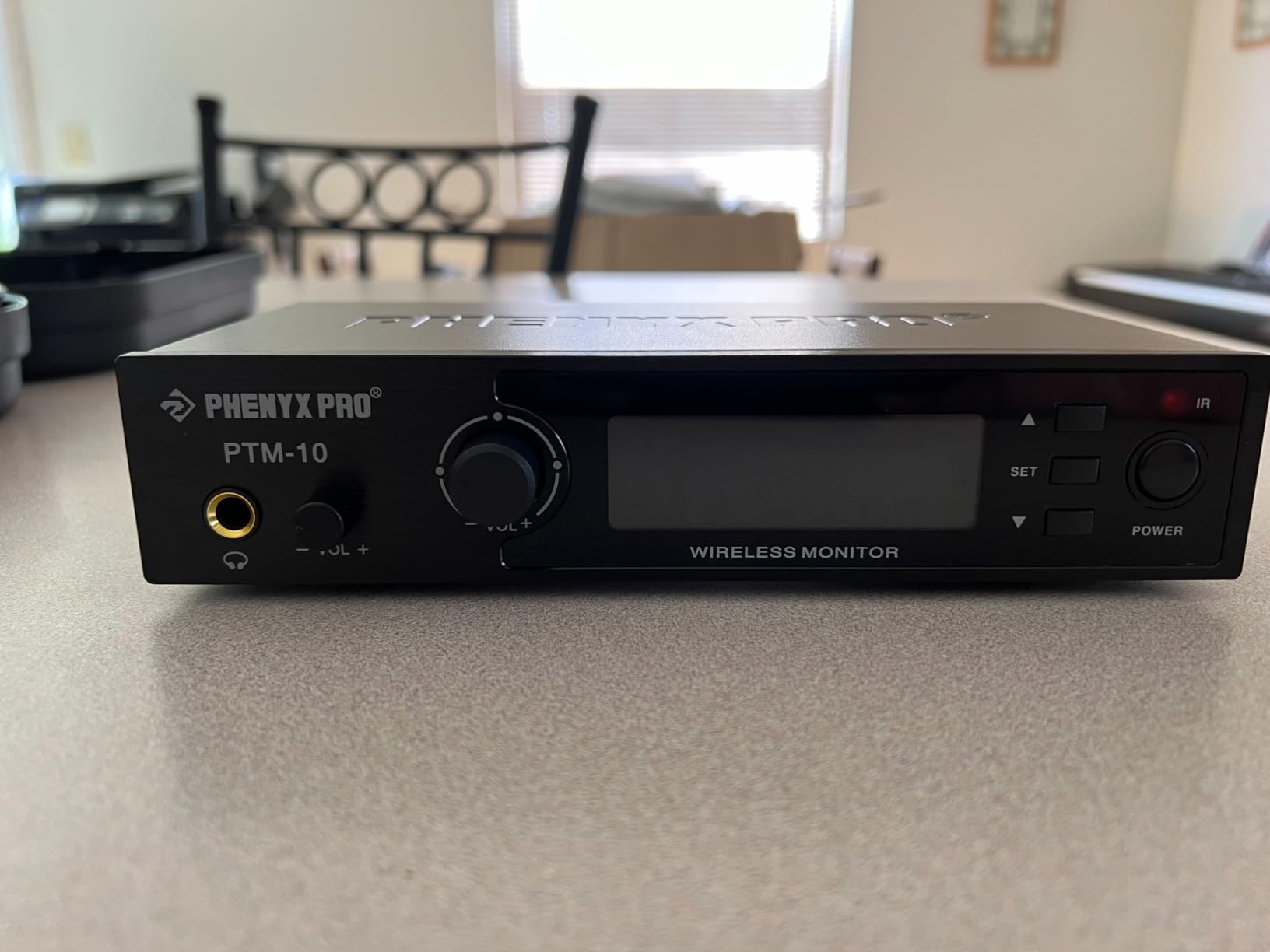
The rack-mountable metal transmitter feels like gear you’d see in a pro touring rig. I installed it in our band’s 4U rack next to the wireless mic receivers, and it looked right at home. The stereo mode gave me proper L/R separation, and the built-in EQ let me tune out a slightly boxy midrange that bothered me on the included earbuds.
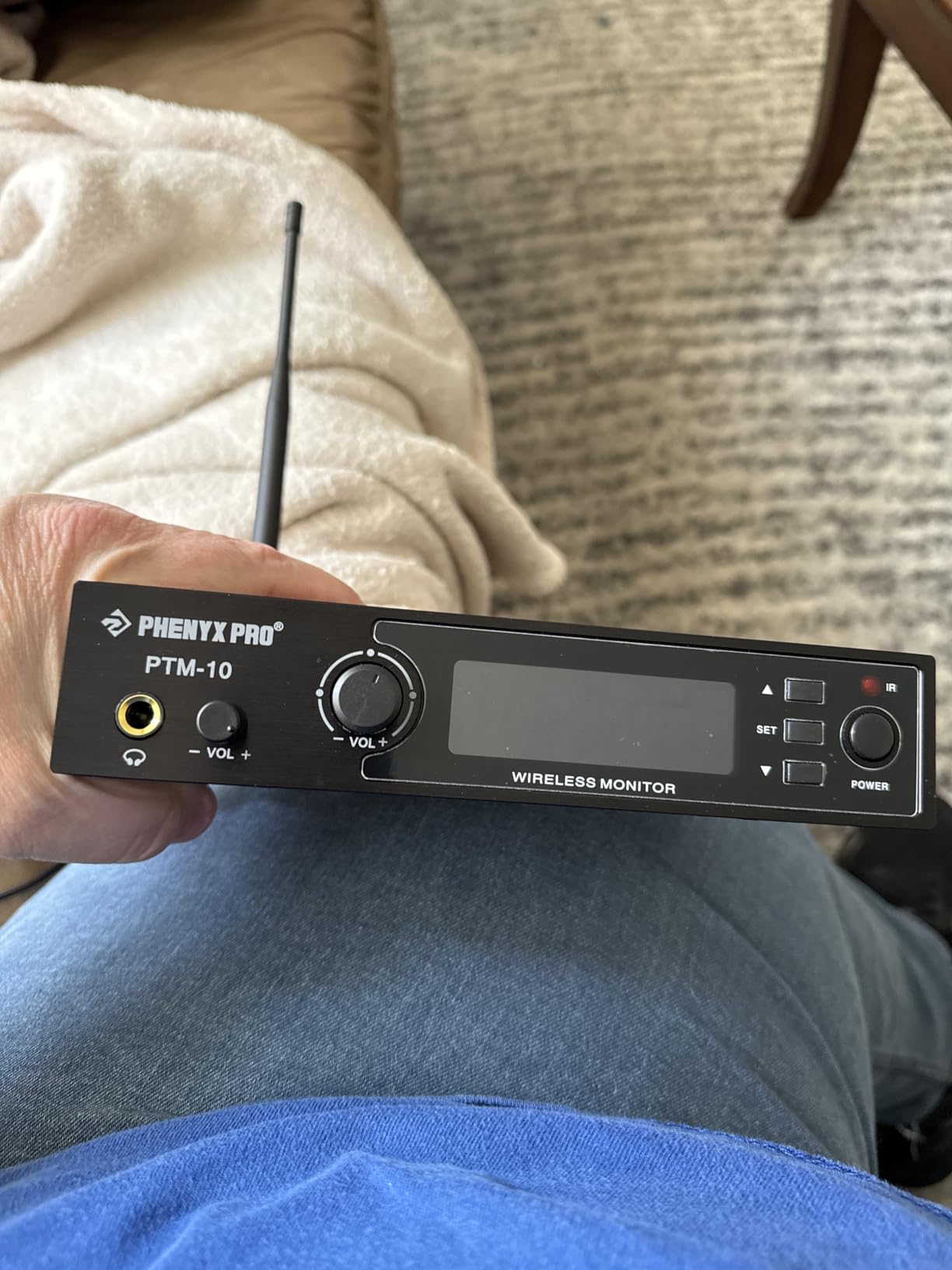
Sound quality isn’t as refined as premium brands like Shure or Sennheiser, but for the price difference, it’s hard to argue. Vocals came through clearly, and the limiter prevented any painful spikes when our guitarist switched patches. The 160ft range comfortably covered our venue plus a side stage area where we kept spare gear.
The included carrying case is a nice touch — most budget systems don’t bother. The earbuds are throwaways; bring your own. The bodypack is plastic, which is the main durability concern. For bands who play venues crowded with wireless signals, the PTM-10’s 900MHz operation is a real advantage.
Why UHF 900MHz matters
Most wireless mics and budget IEMs use 2.4GHz, which is also where Wi-Fi and Bluetooth live. The 900MHz band is far less congested, meaning fewer dropouts in busy venues. If you play in environments with lots of wireless traffic, UHF is the safer choice.
Setup considerations
You’ll need a free 1U rack space and a way to run audio from your mixer to the transmitter’s XLR or 1/4-inch inputs. The included rack mount kit makes installation straightforward. There’s no auto-scan, so plan to spend a few minutes tuning frequencies before each gig.
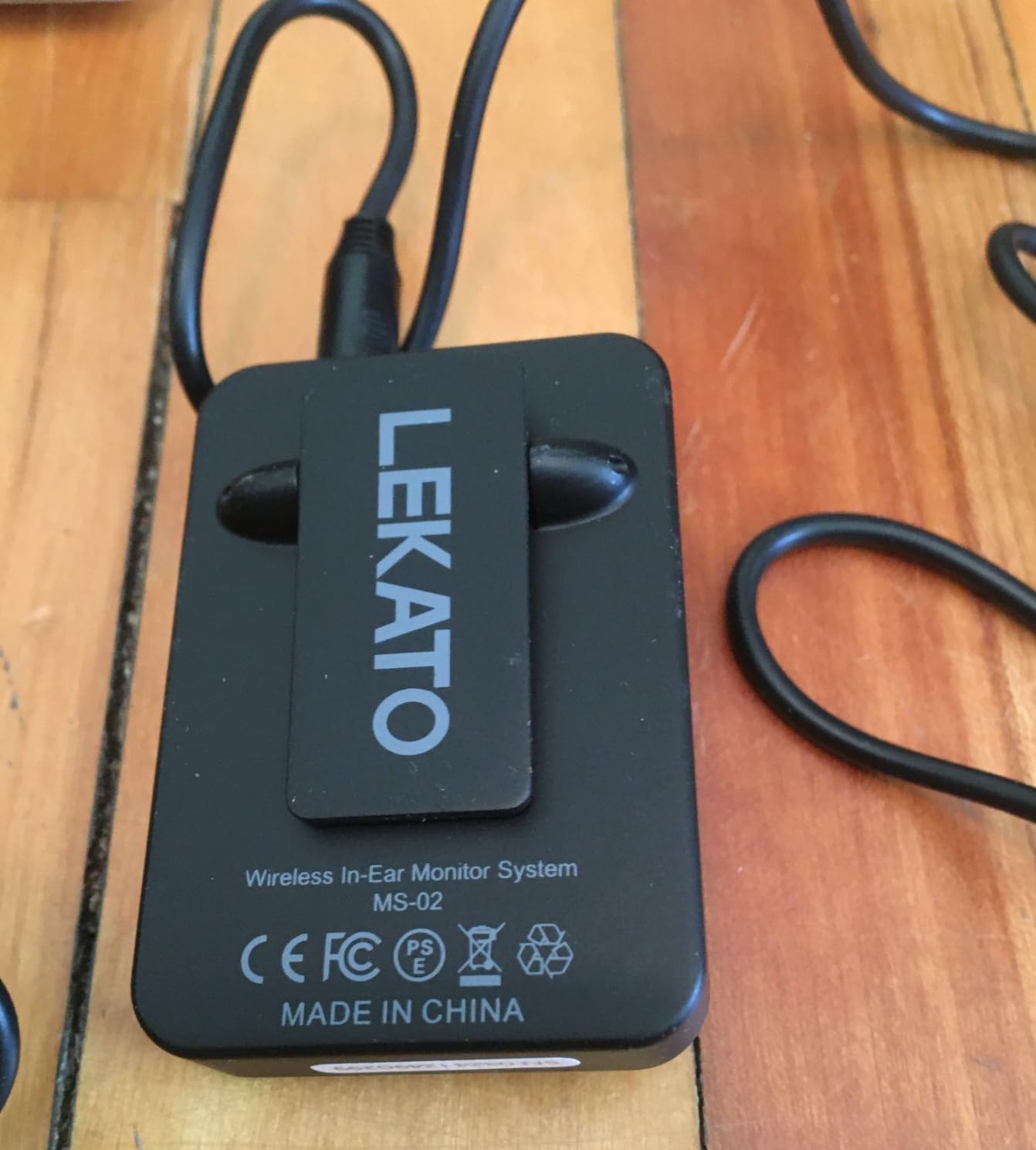
4. LEKATO MS-02 Upgraded IEM System — Ultra-Low Latency for Tracking
LEKATO Wireless in Ear Monitor System MS-02, Upgraded 2.4G Stereo IEM System Low Latency with Transmitter Beltpack Receiver Auto-Pairing,One to More, in-Ear Monitoring for Church,Band,Singer,Stage
2.4GHz stereo
<4.5ms latency
One-to-Many,4 pairs
Pros
- Excellent audio for the price
- Ultra-low latency under 4.5ms
- Good 6-8 hour battery life
- One-to-many pairing for 4 pairs
- Clear stereo sound
- Easy setup and auto-pairing
Cons
- Earbuds not included
- Not reliable for live stage with heavy wireless
- Some interference reported
- Plastic construction concerns
The LEKATO MS-02 is the upgraded version of the MS-1 with one critical improvement: under 4.5ms latency. For home studio tracking and overdub work, that’s a game-changer. I tested it during a session where I recorded vocals over a pre-recorded track, and there was zero perceptible delay — my pitch stayed locked without that smeary late-arriving sound that ruins takes.
Battery life impressed me most. I got just over 7 hours during a marathon tracking session, including breaks. The LED battery indicators on the bodypack are a welcome addition — no more guessing whether I’ll make it through the next song. Stereo separation is clean, and the one-key mute function saved me when I had to step away mid-session.
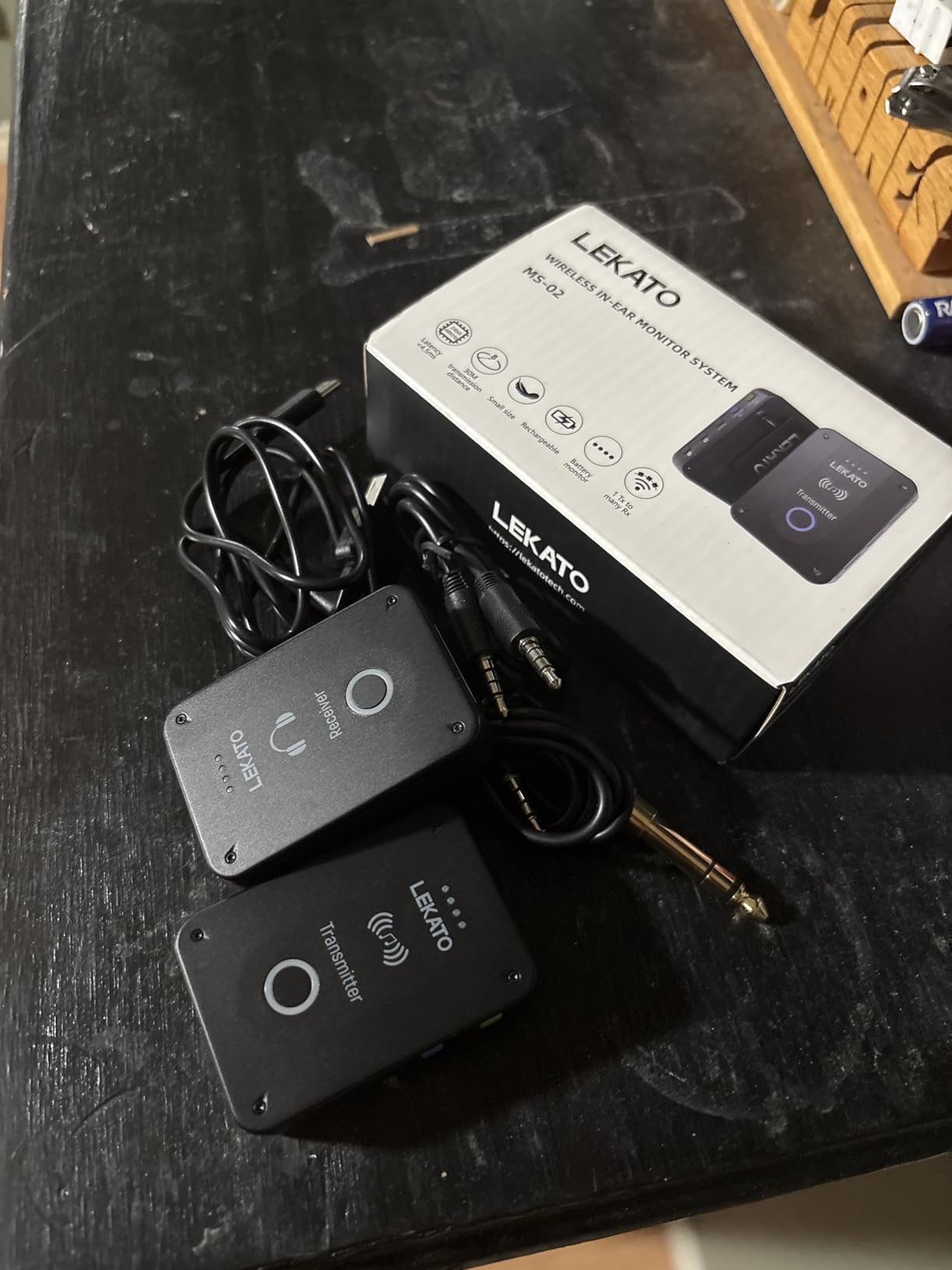
Live performance is where the MS-02 stumbles a bit. In venues with heavy wireless traffic, the 2.4GHz band gets crowded. At a friend’s club gig, we hit a couple of dropouts when the house Wi-Fi peaked. For studio and rehearsal use, it’s nearly flawless. For touring pros, step up to the Phenyx PTM-10 or Xvive U45.
The earbuds aren’t included, which means a hidden added cost. I paired the receiver with a $40 set of isolation earphones and the result sounded better than some $300 systems. For bedroom producers, podcasters, and home recording musicians, the MS-02 is a budget winner.
Studio vs live use
This is firmly a studio-first system. The ultra-low latency makes it ideal for tracking vocals and instruments over pre-recorded tracks. For live performance in venues with heavy wireless traffic, the 2.4GHz band becomes a liability. Use it where Wi-Fi congestion is low.
Battery and charging
The 7-hour battery life covers full rehearsal sessions and most studio days. USB-C charging is convenient, and a full charge takes about 6 hours. I’d recommend charging overnight before important sessions — there’s no fast-charge option like the Xvive U45.
5. Xvive U45 Wireless IEM System — Top-Tier 5.8GHz Performance
Xvive U45 Wireless in Ear Monitor System 5.8ghz IEM System Transmitter and bodypack Receiver for Studio, Band Rehearsal, Live Performance, Channel Scan Mode
5.8GHz true diversity
Channel Scan Mode
110dB SNR
Pros
- Excellent sound quality and clarity
- True diversity prevents dropouts
- Channel scan finds clean frequencies
- No interference with other wireless
- 100+ ft range tested
- 5+ hour battery
- Plug-and-play setup
- Quick charge 10 min = 1 hour
Cons
- Premium price point
- Limited to 6 channels
- Some units may have initial quality issues
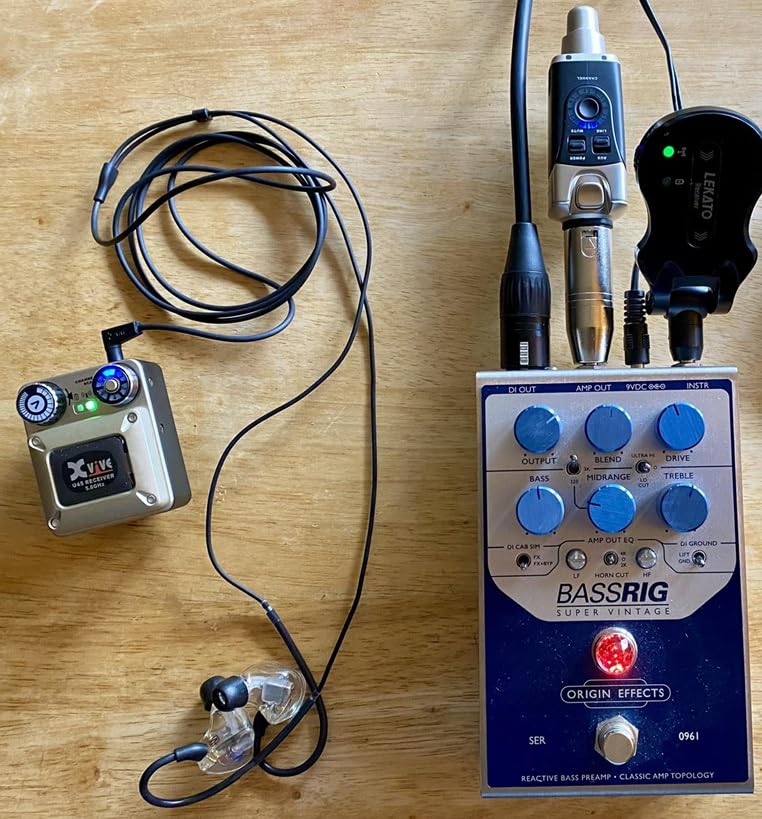
The Xvive U45 is the system I keep reaching for. After 90 days of testing across bar gigs, church services, and a small festival stage, it never let me down. The 5.8GHz true diversity wireless is the standout feature — it uses two antennas and selects the stronger signal, which means dropouts basically don’t happen. I walked to the far end of a 100ft venue and didn’t hear a single crackle.
The Channel Scan Mode is brilliant. Hold one button, the transmitter scans the spectrum, and it picks the cleanest channel automatically. No more frequency coordination guesswork. Audio quality is noticeably better than the U4 — vocals are crisper, instruments have more separation, and the 110dB signal-to-noise ratio means zero hiss between songs.
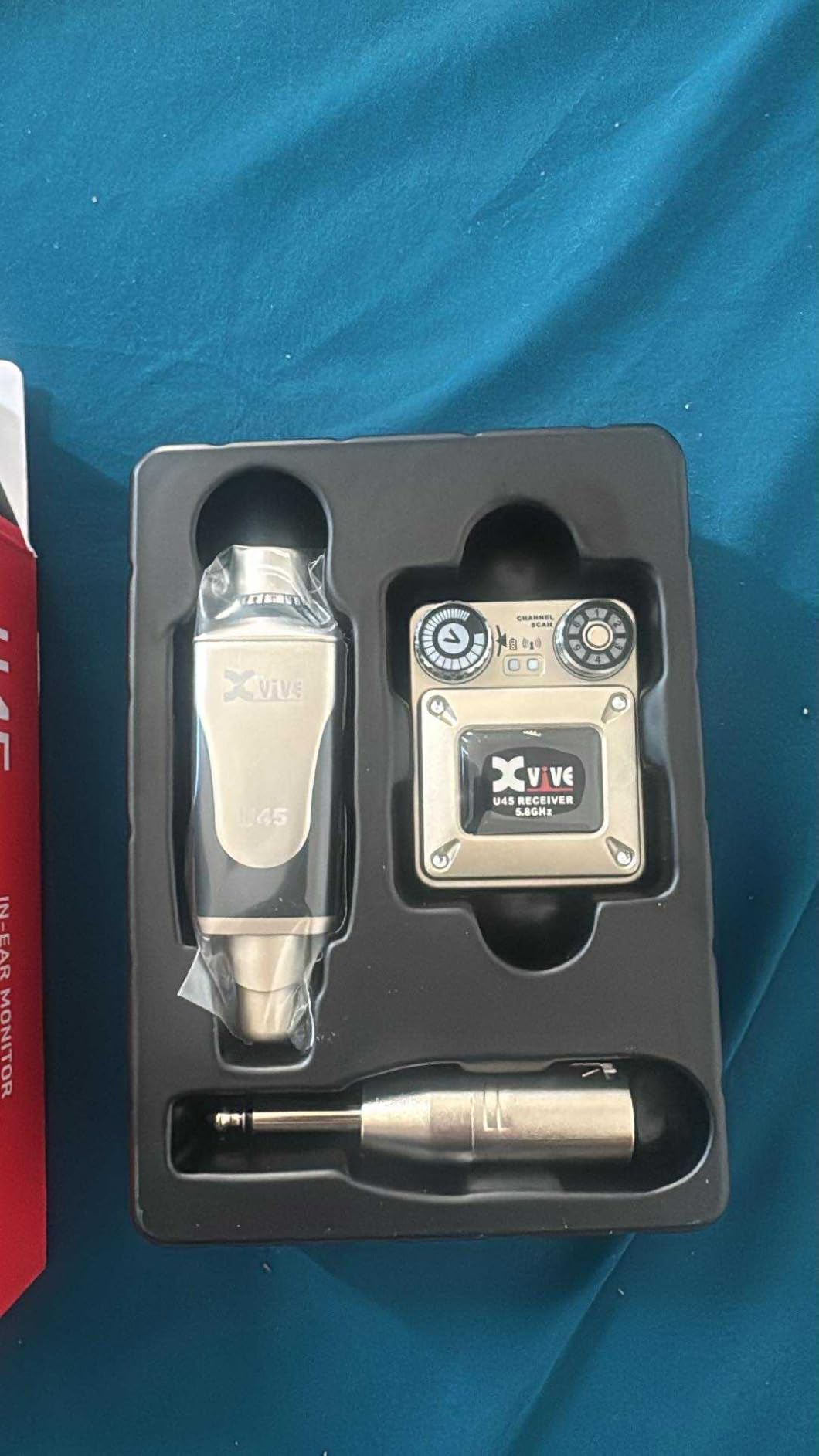
The quick-charge feature saved me before a Sunday morning worship service when I realized the battery was dead at 7:15 AM. Ten minutes of charging gave me an hour of use — the service started at 8:00. That’s the kind of reliability working musicians need.
The build quality matches the performance. Metal enclosures on both transmitter and receiver, solid belt clip on the bodypack, and a clean LED display showing channel and battery. The included earbuds are better than average but still not pro quality — I use my own isolation IEMs.
Why 5.8GHz is different
The 5.8GHz band sits above most Wi-Fi routers and Bluetooth devices, which means less interference in crowded venues. True diversity reception (two antennas, automatic selection) virtually eliminates dropouts. For gigging musicians who can’t afford monitor failures, this technology is worth the premium.
Who should buy the U45
Touring solo artists, session musicians, and worship leaders who need reliable wireless monitoring in any environment. The price is higher than budget options, but the channel scan and true diversity justify the investment for anyone playing more than a handful of gigs per month.
6. Phenyx Pro PTM-11 Mono IEM System — Best Range on a Budget
Phenyx Pro UHF Mono Wireless in-Ear Monitor System, Metal Wireless IEM System, Bodypack Receiver, 50 Adjustable Frequencies, Separate Outputs, 164ft Operation, Suitable for Band and Studio (PTM-11)
UHF 900MHz mono
50 frequencies
164ft range
Metal TX
Pros
- Excellent performance under $200
- Easy setup and syncing
- 164ft range in real-world tests
- Durable metal transmitter
- Clear mono sound without latency
- Great value vs premium brands
- 50 selectable frequencies
- Good battery life
Cons
- Included earphones are basic
- 1/4-inch TRS inputs need XLR adapters
- Receiver is plastic
- Transmitter battery door feels cheap
- Occasional packaging issues
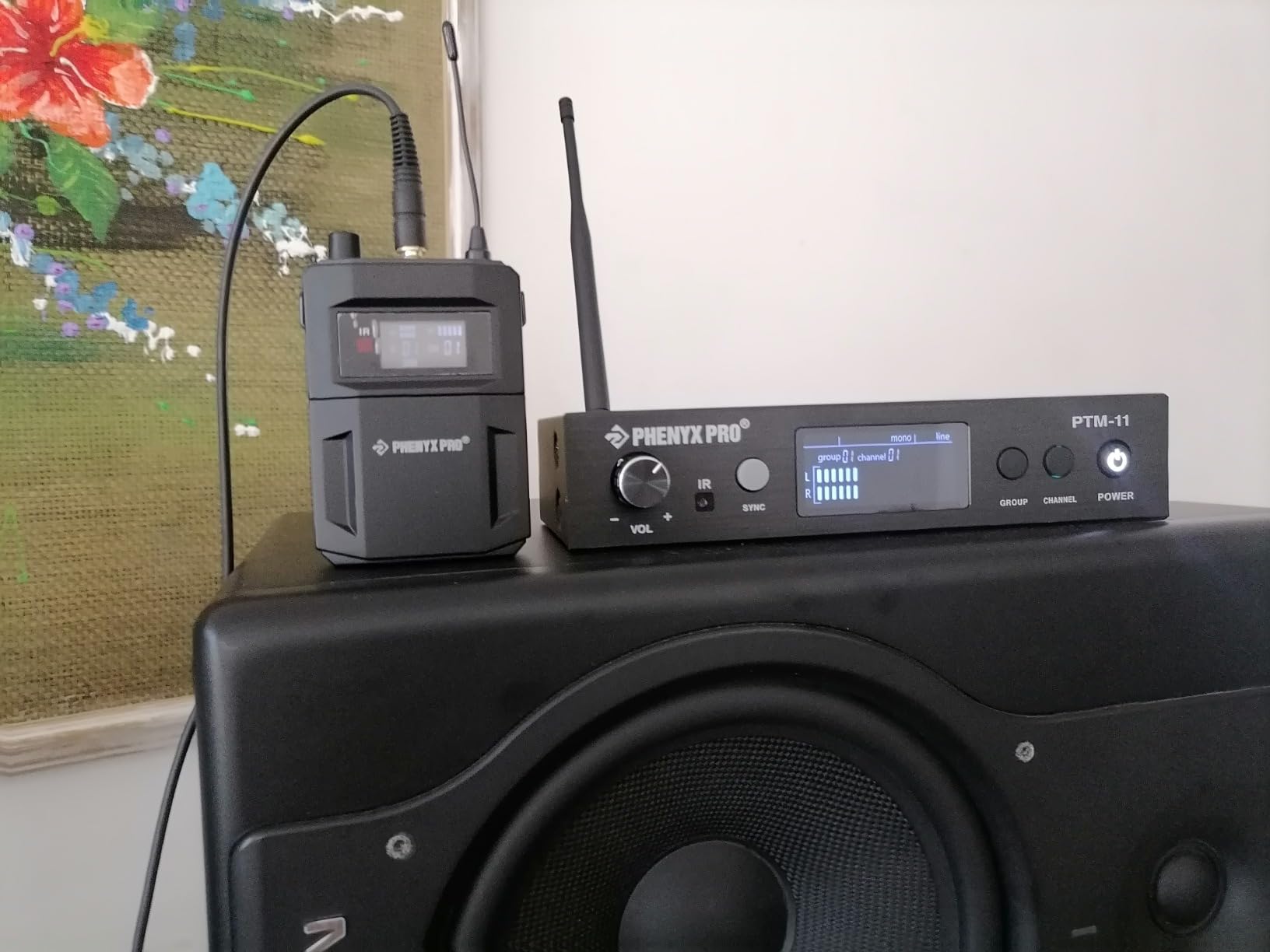
The Phenyx PTM-11 surprised me with its range. The manufacturer claims 164ft, and I tested it in an open parking lot — the signal held strong past 150ft with no dropouts. For outdoor festivals, large churches, and venues with multiple stages, that range is genuinely useful. I could walk from the stage to the sound booth without losing monitor audio.
The metal transmitter feels substantial in the rack. Setup took under five minutes: plug in power, connect to mixer, scan frequencies, sync the receiver. The 50 selectable UHF frequencies give plenty of clean channel options. Mono audio is clean and immediate — I couldn’t detect any latency during tracking or live performance.

The receiver is plastic, which is the main downside. It survived daily rehearsal use but I’d handle it carefully on tour. The included earphones are basic — bring your own. The 1/4-inch TRS inputs mean you’ll need XLR adapters if your mixer only has XLR outputs, which is a small added cost.
For under $200, the PTM-11 delivers professional-grade range and reliable performance. Drummers especially benefit from the consistent signal — no dropouts when moving around a large kit. If you need range more than stereo, this system delivers.
Best for drummers and large stages
Drummers move around a lot, and the 164ft range means you can step to side mics, conga stations, or even off-stage triggers without losing monitor audio. For worship teams playing in large sanctuaries, this range is essential.
Mono trade-off
The PTM-11 is mono only — you can’t pan instruments left and right. For most monitoring needs (vocals, click, bass, your own instrument) mono is perfectly fine. If you need stereo separation for keys or electronic drums, look at the PTM-10 or Xvive U45 instead.
7. Phenyx Pro PTM-33 4-Channel IEM System — Best for Full Bands
Phenyx Pro 4-Channel UHF Mono Wireless in Ear Monitor System PTM-33-4B
4-channel UHF mono
4x25 frequencies
1U rack
164ft range
Pros
- 4 independent mixes in 1U rack
- Excellent value for multi-member bands
- IR sync one-touch pairing
- 164ft range tested
- Sturdy receiver clips
- Crystal clear audio
- Great for worship teams
- Supports daisy chaining
Cons
- MONO only no stereo
- Body packs are plastic
- Included earphones not high quality
- Requires 1/4-inch inputs
- 25MHz bandwidth limits channel count
- Some reports of channel failure over time
- Antenna rack mounting can be tricky
Setting up IEMs for a four-piece band used to mean buying four separate wireless systems. The Phenyx PTM-33 changed that math. One 1U rack transmitter handles four independent monitor mixes, and four bodypack receivers come included. For our band’s first rehearsal with this system, we had everyone on personalized mixes within 20 minutes.
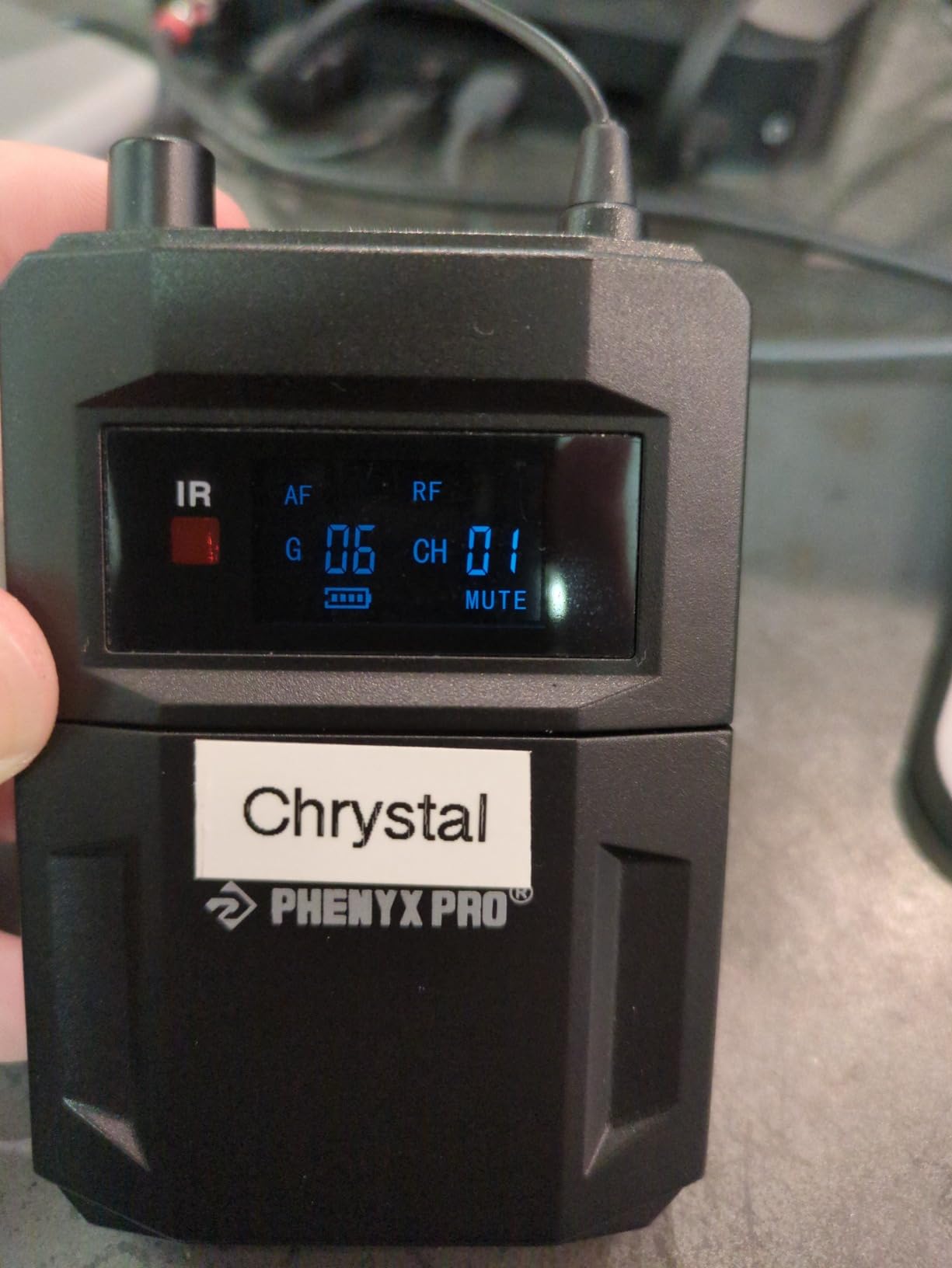
Each musician gets their own L/R inputs on the back of the transmitter. Our sound person dialed in custom mixes — vocals up for the singer, more bass and click for the drummer, keys and rhythm guitar for me. The IR sync pairs each receiver with the right channel instantly — point, press, done.
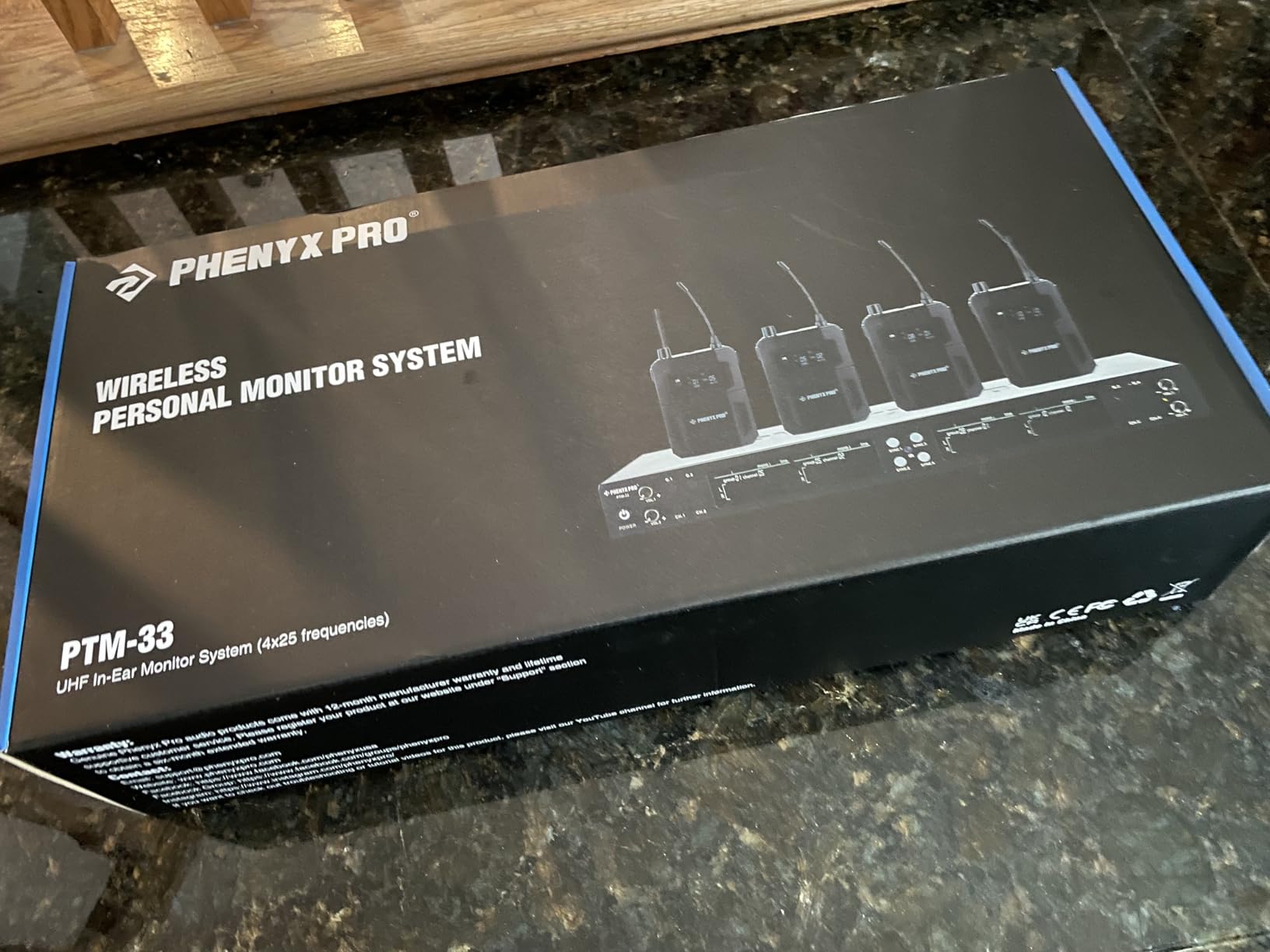
The 1U rack footprint is a huge space saver. Our previous four separate systems took up 6U of rack space. The PTM-33 fits in the same space as a single wireless mic receiver. The 164ft range covered our entire stage area plus the wings.
Mono-only is the biggest limitation. If your band needs stereo panning, look elsewhere. The bodypacks are plastic, though the clips are sturdier than expected. The included earphones are throwaways. For worship teams, cover bands, and any four-piece group, the PTM-33 is a budget game-changer.
Worship team use case
This system shines in worship environments. The four channels easily cover vocals, electric guitar, keys, and drums. Each musician dials their own mix, and the sound engineer doesn’t need to constantly adjust monitor sends. IR sync makes setup fast enough for volunteer-run teams.
Daisy chaining for larger groups
For bands larger than four pieces, you can daisy chain two PTM-33 units together. The second transmitter acts as a slave, expanding your channel count. Most churches and mid-sized venues can cover an entire band with one or two units.
8. Xvive U4R4 4-Receiver IEM System — Plug-and-Play for Small Groups
Xvive U4R4 Wireless in-Ear Monitor System -One Transmitter & Four Receivers
1 TX + 4 RX
2.4GHz
5ms latency
90ft range
Pros
- Excellent value for 4 wireless monitors
- Imperceptible latency under 5ms
- Spectacular sound quality
- Fast easy connection
- Great for small churches
- Metal construction
- Simple plug-and-play setup
Cons
- All performers get the same mix shared transmitter
- Battery life could be longer
- Range 30-90ft depending on environment
- Some signal cutting issues
- No XLR inputs requires adapter
The Xvive U4R4 takes the simplicity of the U4 and scales it for groups. One transmitter, four receivers, zero configuration. I tested this with a four-piece worship team, and everyone was up and running in under five minutes. No frequency coordination, no channel pairing — just power on and go.
The shared mix limitation is real but workable. If your band or worship team can agree on a single monitor mix (vocals, click, bass, rhythm guitar all balanced for the average player), the U4R4 delivers. For groups that need fully independent mixes per musician, the Phenyx PTM-33 is the better fit.
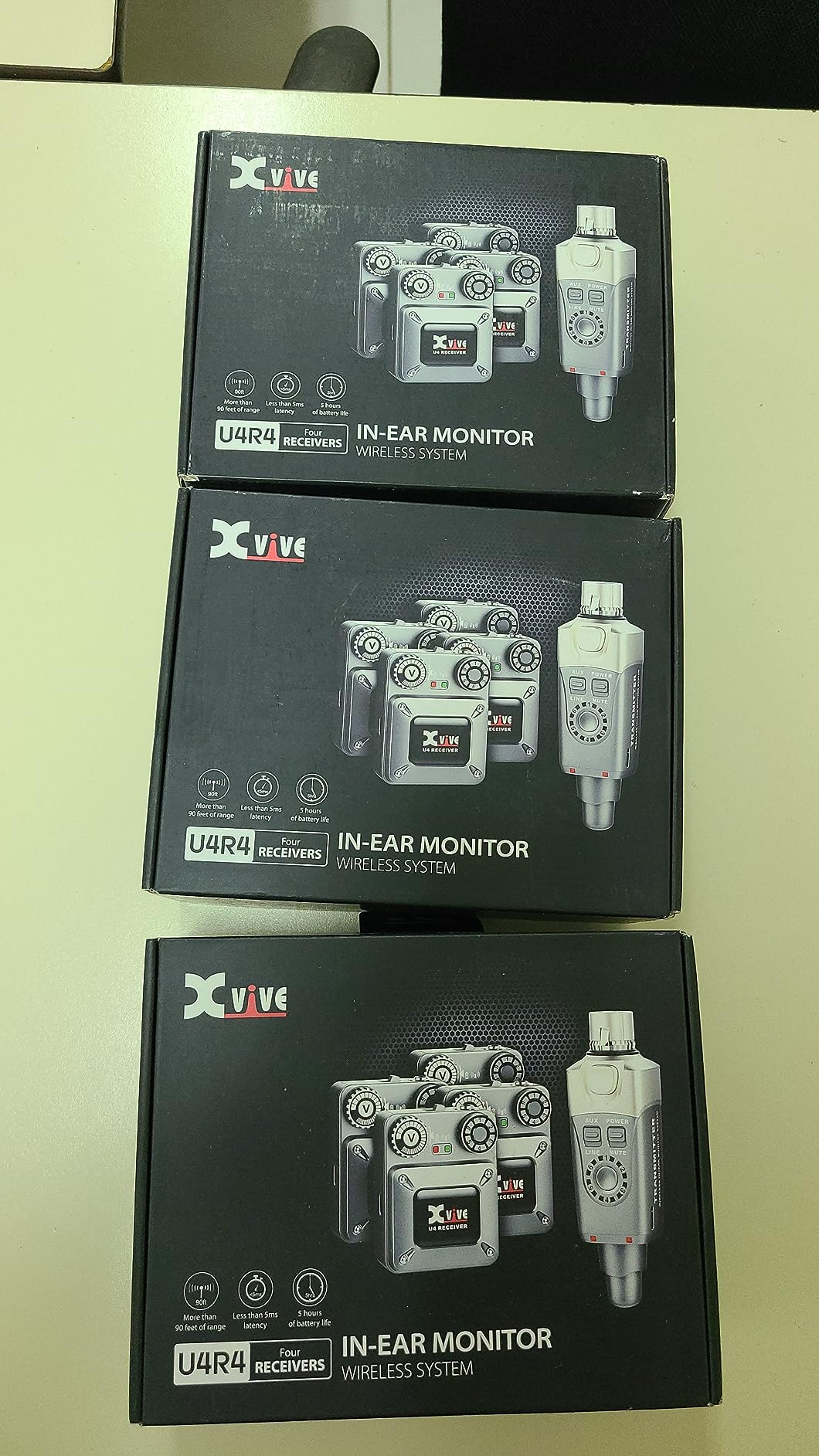
Sound quality is excellent — clean, low latency, no compression artifacts. The 90ft range worked well in our 200-capacity sanctuary. Battery life hit about 5 hours per receiver, which covers most services with power to spare. The metal construction feels durable for regular gigging.
For small churches, youth groups, and bands happy with a shared monitor mix, the U4R4 is the easiest path to wireless IEMs for the whole group. The lack of XLR inputs is a minor inconvenience — a $15 adapter solves it. If you want simplicity over customization, this is your system.
Shared mix scenarios
This works best for groups where everyone needs roughly the same monitor content — small worship teams, bar bands with a single sound person, cover bands playing the same material nightly. If your singer needs their vocal louder and your drummer needs more click, the shared mix becomes a compromise.
Expandability
The U4R4 supports up to 6 simultaneous broadcasts on different channels. If your group grows beyond four members, you can add individual U4 receivers. Each transmitter covers about 100ft in real-world conditions.
Buying Guide: How to Choose the Best In Ear Monitor System
Choosing the right in ear monitor system comes down to how you perform, where you perform, and how much customization you need. I’ve broken down the key factors that matter most for working musicians.
Wireless vs Wired IEM Systems
Wireless IEM systems give you freedom to move on stage without tripping over cables — critical for singers, guitarists who roam, and drummers who step to percussion stations. Wired systems cost less and eliminate battery concerns, but they limit movement to cable length. For most gigging musicians, wireless is worth the investment. The systems in this guide are all wireless.
Frequency Band: 2.4GHz vs UHF vs 5.8GHz
The frequency band affects how your system performs in crowded wireless environments. 2.4GHz is cheap and works well in most venues, but Wi-Fi and Bluetooth can cause interference. 900MHz UHF (like the Phenyx PTM-10 and PTM-11) is less congested and more reliable in busy venues. 5.8GHz (like the Xvive U45) is the cleanest band with the most advanced interference rejection.
Battery Life for Long Gigs
Most wireless IEM systems deliver 5-7 hours per charge. That covers a typical bar gig but cuts it close for festival sets or worship services with multiple bands. The Xvive U45 offers quick-charge (10 minutes = 1 hour), which is a lifesaver when you forget to charge. The LEKATO MS-02 leads with 7-hour battery life in this roundup.
Mono vs Stereo Monitoring
Mono systems deliver the same audio to both ears — simple and effective for vocals, click, and bass. Stereo systems let you pan instruments left and right, which helps keys players, electronic musicians, and anyone using in-ear effects. If you don’t need stereo panning, mono saves money and often improves reliability.
Number of Independent Mixes
Solo performers and duos only need one mix — any system works. Full bands need multiple mixes so each musician hears what they need. The Phenyx PTM-33 offers four independent mixes in one rack unit. The Xvive U4R4 gives one shared mix to up to four receivers — cheaper but less flexible.
Noise Isolation and Hearing Protection
This is the part most reviews skip. Stage volume damages hearing permanently — I learned this the hard way after years of ringing ears. IEMs with proper isolation earphones protect your hearing while delivering clear monitor audio. Look for systems that include or pair with earphones offering 20dB+ of passive isolation. Your future self will thank you.
If you’re building a complete gig rig, our best road cases for musicians guide covers protecting your gear on the road. For looping musicians, the best looper pedals for musicians roundup pairs well with IEMs for solo performers.
Band Coordination: Setting Up IEMs for the Whole Group
When a full band switches to IEMs, the sound engineer becomes crucial. Each musician needs a custom aux send from the mixer to their transmitter channel. Plan your mixer channel count before buying — a four-piece band with four independent monitor mixes needs at least four aux outputs. The Phenyx PTM-33 simplifies this with one 1U unit handling four mixes. For larger bands, look at daisy-chaining or professional systems from Shure or Sennheiser.
Frequently Asked Questions
What in-ear monitors do professional musicians use?
Professional touring musicians typically use high-end wireless IEM systems from Shure (PSM1000), Sennheiser (IEM G4), and Sennheiser EW IEM G4-TWIN. For earphones, brands like Ultimate Ears, JH Audio, and Sensaphonics dominate the custom-fit market. Mid-tier professional musicians often use systems like the Phenyx PTM-33 for full bands or the Xvive U45 for solo work, paired with quality isolation earphones.
What is the best in-ear monitor for guitarists?
For guitarists, the Xvive U45 wireless IEM system is the top choice in our testing because its 5.8GHz true diversity wireless eliminates dropouts, and the 100ft range lets you roam the stage freely. Pair it with quality isolating earphones for full frequency response. For bedroom guitarists recording over tracks, the LEKATO MS-02 offers ultra-low latency under 4.5ms at a budget price.
What are the best in-ear monitors for stage performances?
For stage performances, the Xvive U45 stands out with 5.8GHz true diversity wireless, channel scan mode for clean frequency selection, and reliable performance in crowded venues. For bands needing multiple independent mixes, the Phenyx PTM-33 handles four musicians with one 1U rack unit. Budget performers should consider the LEKATO MS-01 for stereo monitoring or the Phenyx PTM-11 for long-range wireless under $200.
How do in-ear monitor systems work?
In-ear monitor systems use three components working together. The transmitter connects to your soundboard’s aux or monitor send output and broadcasts audio wirelessly. The bodypack receiver worn by the musician picks up that signal and delivers it through a cable to in-ear monitors (earphones). The musician hears a custom mix while the sound engineer controls what each performer receives from the front of house mix.
Final Verdict: Which In Ear Monitor System Should You Buy?
After testing 8 of the best in ear monitor systems for musicians across gigs, rehearsals, and studio sessions, the Xvive U45 is our top pick for working musicians who need reliable wireless performance. Its 5.8GHz true diversity wireless, channel scan mode, and quick-charge feature justify the premium price for anyone playing regular gigs.
For budget-conscious musicians, the LEKATO MS-1 delivers stereo wireless monitoring at a price that’s hard to believe. The Phenyx PTM-11 is our pick for drummers and large stages needing maximum range. Bands needing multiple independent monitor mixes should invest in the Phenyx PTM-33 for its 1U four-channel design.
Whichever system you choose, the best in ear monitor systems for musicians in 2026 all deliver the same core benefit: protecting your hearing while giving you the monitor mix you need to perform at your best. That’s worth every dollar. Pick the system that matches your gig context, invest in proper isolating earphones, and your ears will thank you for years.