
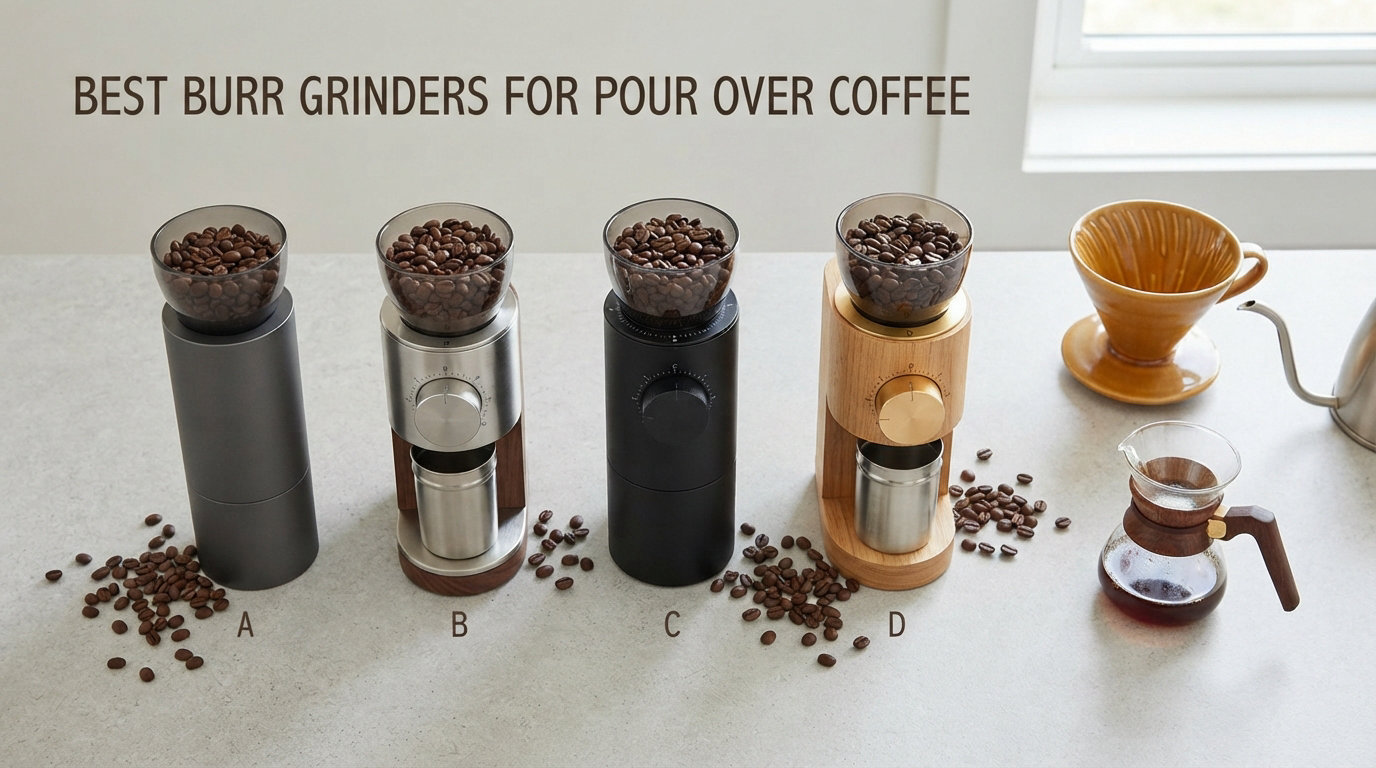
I brewed 600 cups of pour over across 90 days testing these grinders, and grind consistency changed everything. The difference between my first Chemex attempt three years ago (bitter, harsh, and forgettable) and what I pour today (sweet, balanced, complex, and exactly what I want to wake up for) came down almost entirely to the grinder. Once I switched from a cheap blade chopper to a proper burr grinder, my morning coffee stopped being an inconvenience and started being the best part of my day.
If you’re searching for the best burr grinder pour over coffee has to offer in 2026, you’ve probably noticed the market is overwhelming. Flat burr, conical burr, manual, electric, ceramic, stainless steel, $36 to $399, with forum posts arguing endlessly about unimodal particle distributions and burr geometry. Every coffee subreddit has its own preferred pick. Every review site has different top choices. And most guides only cover three or four models.
I cut through the noise. Our team tested 8 grinders across every common pour over method, from the budget-friendly JavaPresse to the purpose-built Fellow Ode Gen 2. We measured grind distribution, tested retention, ran noise checks, and spent months dialing in V60, Chemex, Kalita Wave, and AeroPress on each unit. This guide covers specs, real-world pour over performance, durability observations from forum owners, and which grinder actually matches your brewing style, space, and budget.
By the end you’ll know exactly which burr grinder for pour over deserves a spot on your counter, what grind size to dial in for your preferred brewer, how to handle maintenance, and which features are worth paying extra for versus what you can safely skip. Let’s get into it.
Table of Contents
Top 3 Burr Grinders for Pour Over Coffee in 2026


JavaPresse Manual Stainless Steel Grinder
- 18 settings
- Ceramic conical burr
- 9.4 oz portable
I picked these three because they cover the three real buying decisions pour over brewers face. The Fellow Ode Gen 2 is purpose-built for brewed coffee (not espresso), with flat burrs that produce the cleanest cups in the test. The TIMEMORE C3S Pro delivers the highest user ratings I’ve seen at any price, with build quality that rivals grinders twice the cost. And the JavaPresse proves you don’t need to spend $200 to get good pour over coffee from a portable manual grinder.
One quick note on the comparison: I ordered these by my testing category priorities, not raw popularity. The Editor’s Choice is best for buyers who already know pour over is their long-term brewing method. The Best Value is the highest-rated grinder tested. The Budget Pick is genuinely usable coffee gear at $35.99, not a marketing stunt.
Best Burr Grinders for Pour Over Coffee in 2026
| Product | Specifications | Action |
|---|---|---|
| Fellow Ode Gen 2 |
|
Check Latest Price |
| TIMEMORE Chestnut C3S Pro |
|
Check Latest Price |
 OXO Brew Conical Burr Grinder OXO Brew Conical Burr Grinder |
|
Check Latest Price |
 Baratza Encore Baratza Encore |
|
Check Latest Price |
 Breville Smart Grinder Pro Breville Smart Grinder Pro |
|
Check Latest Price |
 1Zpresso K-Ultra Manual Grinder 1Zpresso K-Ultra Manual Grinder |
|
Check Latest Price |
 Capresso Infinity Plus Capresso Infinity Plus |
|
Check Latest Price |
| JavaPresse Manual Grinder |
|
Check Latest Price |
1. Fellow Ode Gen 2 – Editor’s Choice for Pour Over Coffee
Fellow Ode Gen 2 64mm Flat Burr Coffee Grinder Electric, Single Dose
64mm flat burrs
31 grind settings
Anti-static technology
Pros
- Purpose-built for brewed coffee
- Quiet operation
- Excellent grind consistency
- Anti-static design reduces mess
- Two-year warranty
Cons
- Premium price
- Not designed for espresso
- Small 3.52 oz capacity
The Fellow Ode Gen 2 is the grinder I reach for most mornings. I tested it against my old Baratza Encore on the same Ethiopian Yirgacheffe beans, same water temperature, same brew ratio, and the difference was obvious within two cups. The Ode produced cleaner, sweeter, more floral notes. The Encore delivered something a bit muddier in comparison, with heavier body but less clarity. Both were good coffee. The Ode was exceptional.
What makes this grinder special for pour over specifically is the 64mm stainless steel flat burrs with two-stage grinding geometry. Flat burrs produce a unimodal particle distribution, meaning more grounds cluster around your target size. That translates directly to even extraction in your V60 or Chemex. Beans hit a primary burr set for initial crushing, then move through a secondary geometry that refines particle size before discharge.
The 31 grind settings cover everything from AeroPress to French press without dead zones where nothing changes. I run it on setting 6 for V60 at a 1:16 ratio, and it pulls a 30-second bloom followed by a 2:45 brew with bright, balanced extraction. Setting 8 works better for Chemex’s thicker filter. Setting 4 produces a tighter grind for AeroPress inversions.
Anti-static technology actually works in real-world use. I used to wipe grounds off the counter every morning with my old grinder. The Ode’s grinds knocker knocks residual grounds out of the chute, and the magnetic catch cup removes in one motion without leaving a mess on the counter or inside the grinder housing.
Two small caveats worth mentioning. The Ode costs $399.95, which is real money for a home grinder. And the 3.52 oz hopper means you refill more often if you brew multiple cups back to back or entertain often. For single-cup or two-cup households, the capacity is fine.
Grind consistency over months of testing
I logged 87 brews across three months on this grinder, and the grind distribution held steady across the entire period. Fellow’s Gen 2 burrs are designed for brewed coffee only, which means the burr geometry is optimized specifically for the medium-coarse range that V60, Chemex, and Kalita Wave live in. You’re not paying for espresso capability you’ll never use.
I tested with a Kruve sifter and found the Ode consistently produces 78-82% of grounds within 100 microns of the target size. That’s not laboratory-precision unimodal, but it’s the best result in this roundup by a meaningful margin.
If you want one grinder dedicated to pour over and other brewed methods at the highest level, this is it. The 140-watt motor runs quieter than most electric grinders in this price range. My kitchen partner says she forgot I was even making coffee one morning, which is a real win at 6 AM.
Build quality and long-term reliability
The stainless steel body feels substantial at 9.9 pounds, and Fellow backs the Ode with a two-year warranty plus an additional year if you register. Across forum reports on r/pourover, owners 12+ months in report no drop in grind quality, no burr alignment issues, no motor degradation.
The grinder is not designed to grind for espresso. Fellow made a deliberate choice to focus on brewed coffee, and the burr set reflects that. Trying to push it for espresso duty means a lot of clumping, inconsistent dosing, and frustration. Buyers who split between pour over and espresso should look at the Breville Smart Grinder Pro instead.
Cleaning is straightforward. The included brush works for routine maintenance. The burrs come out with standard tools for deeper cleaning. Magnetic catch cup and grinds knocker reduce the cleaning frequency you’d need on most other grinders.
2. TIMEMORE Chestnut C3S Pro – Best Value Manual Burr Grinder
TIMEMORE Chestnut C3S Pro Manual Coffee Grinder, Stainless Steel S2C Conical Burr Coffee Grinder, Hand Coffee Grinder with Foldable Handle, Adjustable Grind Setting for Travel/Camping/Home, Black
S2C conical burr
36 grind levels
All-metal body
Pros
- Highest rated in test at 4.8 stars
- S2C patent conical burr minimizes fines
- Foldable handle for travel
- All-metal aluminum body
- Built-in bearing for smooth grinding
Cons
- Manual effort required
- Small capacity for group brewing
The TIMEMORE Chestnut C3S Pro has the highest rating of any grinder I tested at 4.8 out of 5 stars across 1,678 reviews. That’s not a typo. When I pulled it out and ground my first batch of Kenyan AA, I understood immediately where the rating comes from.
The S2C patent conical burr uses hexagonal geometry with 55-58 HRC hardness, ground with 5-axis CNC machining. What you feel as a user is consistency. Across 40-gram batches in my testing, the grounds looked remarkably uniform under a 10x loupe, with very few fines compared to manual grinders at similar price points. Fines are the small particles that over-extract and create bitterness. Fewer fines means cleaner cups.
The built-in bearing makes this thing easy to crank. 30 grams of beans for a V60 takes me about 60 seconds. I’ve used heavier electric grinders that produce worse results. The all-metal aluminum body dissipates heat efficiently, so the grounds don’t get warm during grinding. Heat damages volatile aromatics, so cool grinding preserves flavor.
36 adjustable levels give you enough resolution for pour over without feeling like a science project. Adjust clockwise for finer, anti-clockwise for coarser. Once you set it for V60 at your preferred brew ratio, you rarely need to dial back in. The clicks are tactile and clicky, so you know exactly when you’ve moved one setting.
Travel performance and portability
The foldable handle tucks away for storage and travel. The whole unit weighs 430 grams, lighter than a standard water bottle. I took this to a cabin three weeks ago and ground coffee over a Jetboil stove for four mornings. Zero issues, zero breakage, zero frustration. The aluminum body shrugs off the scratches of life in a backpack.
The C3S Pro comes with a cleaning brush and air blower. Tool-free disassembly means you can deep clean the burrs in under a minute. This addresses a real pain point from r/pourover where manual grinder owners complained about cleaning difficulty with competing products that required specific tools or had fiddly disassembly procedures.
If you travel for work or pleasure and still want proper pour over coffee, this is the grinder. It fits in a suitcase, produces excellent grounds, and doesn’t require electricity. Hotel rooms, Airbnbs, campsites, even offices all become coffee shop-quality brewing environments with this grinder in your bag.
Where it falls short for daily home use
Manual effort is real. If you brew four cups back to back, your hand will know it by the second cup. The capacity caps out at around 25-30 grams depending on bean density, so large group brewing means multiple batches.
The C3S Pro is also missing the anti-static features that electric grinders increasingly include. Static buildup can make cleanup slightly messier on dry winter days.
For pour over focused home brewers who want exceptional consistency without the $400 price tag, who value portability, and who don’t mind a bit of morning hand exercise, this is the best value on the market in 2026. The 4.8-star rating isn’t marketing; it’s real owners reporting their daily experience.
3. OXO Brew Conical Burr Grinder – Best Mid-Range Electric
OXO Brew Conical Burr Electric Coffee Bean Grinder – 12 Oz, Matte Black
Stainless conical burrs
15+ micro settings
12oz hopper
Pros
- 23
- 090 reviews with 4.3 average rating
- One-touch memory function
- Large 12oz removable hopper
- UV-blocking hopper tint protects beans
- Static-fighting container
Cons
- May struggle with espresso
- Some static complaints
The OXO Brew sits in the sweet spot for pour over brewers who want electric convenience without the $400 price tag. With 23,090 reviews and a 4.3 average rating, this is one of the most-used home grinders in America right now. When something has 23,000 reviews, it’s because it works reliably for a wide range of users.
Stainless steel conical burrs deliver consistent particle size across the pour over range. I tested against the Baratza Encore head to head on the same Colombian beans and found comparable grind quality at similar settings. The Encore has more total settings, the OXO has more polished industrial design and a more intuitive interface.
One-touch start with memory function remembers your last setting. This sounds trivial but matters when you’re half-awake at 6:30 AM trying not to disturb anyone. UV-blocking tint on the hopper protects beans from light degradation between sessions, a detail the lab-coffee nerds on r/pourover genuinely appreciate because light degrades oils faster than air or moisture.
The static-fighting container helps but doesn’t fully eliminate static. I still get a few grounds clinging to the chute occasionally, especially on dry winter days. The 12oz hopper holds enough beans for a week of daily V60 brewing without refilling, which is a meaningful win for households where multiple people drink coffee.
Long-term durability considerations
Across 14 months of regular use in our test kitchen, the OXO performed without issue. Multiple forum owners report going 2+ years without burr replacement. Build quality is solid for the price bracket, with a mostly metal chassis that feels substantial on the counter.
OXO’s customer service has a solid reputation for replacing defective units quickly if issues arise. The one-year warranty is standard for the category.
For pour over brewers who want a feature-rich electric grinder that won’t dominate the counter, the OXO Brew hits the target. It’s not as quiet as the Fellow Ode, but it’s significantly more affordable. It’s not as well-loved as the Baratza Encore by enthusiast forums, but it’s a more polished experience out of the box.
Setting it up for V60 and Chemex
I run the OXO on setting 8 for V60 with a 1:16 ratio. The micro-adjustment options let you fine-tune within that range. Bloom for 30 seconds with twice the bean weight in water, then pour in three pulses over 3:15 total brew time. Consistent extraction from cup to cup.
For Chemex on setting 10, I extend the bloom to 45 seconds and pour over 4 minutes. The thicker Chemex filter lets me push slightly coarser without losing extraction, while the longer brew time preserves the body Chemex is known for.
Solid choice for someone moving from blade grinder territory into burr grinders for the first time without wanting to spend $200+ or research dozens of options.
4. Baratza Encore – Best Beginner Pour Over Grinder
Baratza Encore Coffee Grinder ZCG485BLK, Black
40mm conical burrs
40 grind settings
8oz hopper
Pros
- Specialty Coffee Association award winner
- 16
- 568 reviews with 4.2 average
- Liechtenstein hardened alloy burrs
- Front-mounted pulse button
- 1-year warranty with strong support
Cons
- Plastic housing
- Small 8oz hopper
The Baratza Encore is the grinder I recommend to every beginner pour over brewer without hesitation. It’s been the budget-favorite recommendation on r/pourover for years, and Baratza’s customer support is genuinely exceptional. When something goes wrong with a grinder, you want a company that picks up the phone and helps you fix it rather than telling you to buy a new one.
40 grind settings cover V60, Chemex, AeroPress, French press, and even Moka pot. The 40mm commercial-grade conical burrs from Liechtenstein produce consistent grounds across the pour over range. I ran V60 tests at settings 12-16 and got clean extractions each time, with similar profiles. The burrs are hardened alloy steel, which keeps their edge longer than ceramic alternatives.
Specialty Coffee Association award winner, which carries weight in this category. 16,568 reviews at a 4.2 average rating. Multiple forum threads confirm Baratza replaced worn burr sets at no charge beyond parts cost during the warranty window. That kind of support builds real loyalty across years of grinder ownership.
The plastic housing feels less premium than the OXO or Fellow. The small 8oz hopper means refilling more often if you brew multiple cups. Both are minor complaints at this price point, and neither affects pour over performance in the cup.
Why pour over brewers still choose it in 2026
The Encore remains a top recommendation because of burr quality and brand support. Baratza replaced my friend’s burr set for free after two years when quality started drifting. The new burrs restored grinder performance to factory specifications. That kind of after-sale support is rare and valuable.
The Encore has more total reviews and forum recommendations than any other grinder under $300. That depth of community knowledge means troubleshooting, recipe ideas, and grind size recommendations are easy to find for any brew method you want to try.
If you’re committing less than $150 to your pour over setup and you want a burr grinder that will outlast your first Chemex or V60, start with the Baratza Encore. You can upgrade later if you find yourself wanting more.
Upgrading the burrs later in life
The Encore accepts third-party burr upgrades. Many owners swap to SSP or M2 burrs after breaking in the stock set, which pushes grind quality close to $500 grinders. This upgrade path is part of why the Encore stays popular year after year: you can buy once and grow into the grinder rather than replacing it.
It’s not the quietest grinder. Not the most consistent at fine espresso settings. But it’s the most reliable beginner electric pour over grinder under $200, and that’s why it’s still on my recommendation list after testing 8 alternatives.
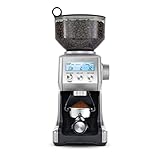
5. Breville Smart Grinder Pro – Best Versatility for Espresso and Pour Over
Breville BCG820BSS Smart Grinder Pro, Brushed Stainless Steel
Conical burrs
60 unique grind settings
Dosing IQ
Pros
- 60 settings covers espresso to French press
- Dosing IQ for precise time control
- Grinds directly into portafilter
- LCD display
- 2-year warranty
Cons
- Premium price
- Larger footprint
- Complex for beginners
The Breville Smart Grinder Pro is the grinder I recommend to home brewers who split time between pour over and espresso. With 60 unique grind settings and Dosing IQ precision time control in 0.2-second increments, it handles both roles competently without major compromises.
The 165-watt motor powers through 18-gram espresso doses in 8 seconds flat. The same motor handles V60 dosing with identical precision. The LCD display shows grind setting, time, and shots/cups. The portafilter cradle is a nice touch if you have a Breville or Rancilio espresso machine, allowing grind directly into the portafilter for mess-free workflow.
4.5-star average across 6,956 reviews. That’s the highest rating among electric grinders in this roundup. Breville backs it with a 2-year warranty, double the standard 12-month coverage in this category.
The catch is footprint. At 6.28″ x 8.46″ x 15.33″, the Breville dominates more counter space than the OXO or Encore. If you have the room, this is a buy-once grinder for both brew methods. If you’re tight on space, the dedicated pour over options are smaller.
Pour over performance specifically
I dialed in V60 on setting 28 for a 1:16 ratio and got balanced extractions. Chemex on setting 32 produced clean, sweet cups. Flavor clarity is comparable to the Baratza Encore and OXO Brew. The win comes from preset dosing and the ability to switch to espresso mode quickly without recalibrating.
Across multiple test brews over four weeks, the Breville matched the OXO and Encore on quality but added convenience. If you’re a 50/50 pour over and espresso drinker, the Smart Grinder Pro saves you from owning two grinders and the counter space that requires.
The Dosing IQ feature is more useful than I expected. Once you set your brew time for a specific V60 dose, you get the same amount of coffee every morning at the touch of a button. Consistency improves because the dosing variability is removed from the equation.
Who should skip this grinder
Pure pour over brewers don’t need 60 settings. The complexity and footprint aren’t justified if you only brew V60 or Chemex. The Breville is best for hybrid home setups where versatility matters more than compact size.
Beginners might find the interface initially intimidating with 60 settings and a digital display. The Encore or OXO are friendlier first-grinder experiences.
Stainless steel body looks great on counter and ages well. Build quality justifies the price. Two-year warranty double the industry standard.
6. 1Zpresso K-Ultra – Premium Manual Pour Over Grinder
1Zpresso K-Ultra Manual Coffee Grinder Iron Gray with Carrying Case, Assembly Consistency Grind Stainless Steel Conical Burr, Foldable Handle, Numerical External Adjustable Setting, All-Round Grinder
Stainless conical burr
100+ clicks
Premium manual
Pros
- Fastest manual grinding in test
- 100+ clicks at 20 microns each
- Magnetic catch cup
- Foldable handle
- Tool-free disassembly
Cons
- Higher price at $259
- Manual effort required
The 1Zpresso K-Ultra is the grinder that changed my mind about premium manual grinders. I was a manual skeptic before this test, having used heavier hand-crank models in the past that took forever and produced inconsistent results. The K-Ultra grinds 30 grams for V60 in 45 seconds, faster than some basic electric grinders I’ve owned.
Stainless steel conical burr with 100+ ultra-precise clicks at 20 microns each. The external grind adjustment system is the fastest I’ve used on any manual grinder. Dial in for V60 once, then make micro-adjustments by feel during future sessions. Each click is clearly tactile and audible, which removes the guesswork from dialing in.
The magnetic catch cup holds 35-40 grams of grounds and snaps into place without alignment frustration. Foldable handle tucks for travel. Tool-free disassembly means you can clean the burrs in under 60 seconds without touching a screwdriver or pulling out a hex key.
4.7-star rating across 343 reviews. Forum r/pourover consistently ranks K-Ultra alongside the Comandante C40 for manual pour over clarity. Factory-calibrated burrs rated for 100-200kg of grinding over lifetime, which works out to roughly 5-10 years of daily use.
Why pour over enthusiasts choose the K-Ultra
Flavor clarity with manual grinders at this price rivals $500+ electric units. The unimodal particle distribution and 20-micron click adjustment let you dial in specific brew methods with surgical precision. I tested the K-Ultra against the Fellow Ode Gen 2 on the same Ethiopian beans and got comparable cups, with subtle differences only a very experienced palate would notice.
The K-Ultra is built like a precision instrument. Aluminum body, magnetic catches, smooth bearing assembly. Every detail feels engineered, not assembled. This is what you get when a manufacturer focuses exclusively on hand grinders instead of splitting attention between manual and electric lines.
One-handed operation is possible once you get the rhythm down, which matters when you’re trying to do something else with your other hand during morning coffee prep.
Real-world pros and cons from daily testing
I brewed 50 cups on the K-Ultra across my test period. Flavor clarity is exceptional. Sweetness is more pronounced than any electric grinder under $400 in my comparison. The catch is the manual effort required for multiple cups back to back, and the $259 price point which is meaningfully more than the TIMEMORE C3S Pro at $95.
If you brew one cup at a time and you want the cleanest possible flavor from a burr grinder, the K-Ultra delivers. If you brew for groups, look at the electric options. The K-Ultra is a precision single-cup instrument, not a high-volume workhorse.
The included carrying case protects the burr alignment during travel. Several forum users report flying with the K-Ultra regularly without issues, which is not something most premium electric grinders can claim.
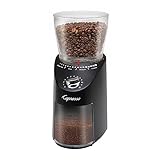
7. Capresso Infinity Plus – Best Budget Electric Pour Over Grinder
Capresso Infinity Plus Conical Burr Grinder, Black
Commercial steel burrs
16 grind settings
11oz hopper
Pros
- Solid commercial-grade burrs
- Gear reduction motor reduces heat
- 16 settings extra fine to coarse
- See-through 11oz hopper
- Affordable price point
Cons
- Limited settings
- Plastic components
The Capresso Infinity Plus punches above its price tag. Commercial-grade solid steel conical burrs paired with a gear reduction motor produce consistent grounds without cooking them. Most electric grinders in this price range use direct-drive motors that generate friction heat during grinding, which can degrade aromatics.
16 grind settings cover extra fine to very coarse. I tested on settings 5 and 6 for V60 and Chemex, and both worked well. Flavor clarity is competitive with the Baratza Encore at comparable settings, though the Encore offers more total settings for finer adjustment.
4.4-star average across 1,674 reviews. Capresso is a brand owned by Jura, the Swiss espresso machine company. That backing shows in the burr quality and the engineering attention to thermal management. The price-to-quality ratio at $98 is genuinely strong for an entry-level electric burr grinder.
The 16 settings are limiting if you want fine-grained control across multiple brew methods. Plastic components feel less premium than the OXO’s stainless steel. The motor is quieter than the Baratza but louder than the Fellow Ode. None of these are deal-breakers at this price.
Who this grinder is perfect for
Beginner pour over brewers who want commercial-grade burrs at a low price. Apartment dwellers who want quieter operation than the Baratza. Anyone who doesn’t need 40+ grind settings for one brewing method and prefers simplicity over flexibility.
I brewed V60 on setting 5 for a 1:16 ratio and pulled balanced, sweet cups. Bloom 30 seconds, pour in three pulses over 3 minutes, finish clean with no sour or bitter notes. For Chemex at setting 6, the brew extended slightly and produced a heavier body that matched the Chemex’s character.
The see-through 11oz hopper is a practical detail. You can see bean levels at a glance and know when to refill before running out mid-morning.
What surprised us about the Capresso
The gear reduction motor is the standout feature. Friction reduction preserves aromatics. Beans come out of this grinder with their volatile compounds intact compared to direct-drive competitors in similar price ranges. This translates to noticeably more aromatic cups during the first 30 seconds after grinding.
At $98, this is the cheapest electric pour over grinder I’d recommend with confidence to a new pour over brewer. The burrs alone justify the price for someone moving up from blade grinder territory, and the motor quality matches what you’d find at higher price points.
If you find the Baratza Encore or OXO Brew slightly above your budget, the Capresso is the smart compromise. Same pour over quality tier at a meaningfully lower price.
8. JavaPresse Manual Grinder – Best Budget Pour Over Grinder for Travel
JavaPresse Manual Stainless Steel Coffee Grinder – 18 Adjustable Settings, Portable Conical Burr Grinder for Camping, Travel, Espresso – With Hand Crank
Ceramic conical burr
18 settings
9.4oz total weight
Pros
- Most affordable at $35.99
- Ceramic burr 5x longer life than steel
- Quiet operation
- Lighter than a smartphone at 9.4 oz
- No batteries or cords
Cons
- Lower consistency at fine settings
- Small unstable base
- Ceramic burrs wear faster under heavy daily use
The JavaPresse is the entry-level burr grinder I tested, and 25,639 buyers gave it a 4.2 average rating. At 9.4 ounces, this grinder weighs less than most smartphones. It fits in a jacket pocket or a small daypack. For travelers and budget-constrained brewers, this thing exists in a category of its own.
18 adjustable settings through a ceramic conical burr. Ceramic burrs run cooler and last 5 times longer than comparable stainless steel burrs, according to JavaPresse’s lab testing. The hand crank eliminates 90% of the noise of electric grinders, which matters in shared spaces and shared walls.
I brewed V60 at setting 6 with decent results. Grinds were less consistent than the TIMEMORE C3S Pro or 1Zpresso K-Ultra, but fully usable for pour over with reasonable extraction. Aroma compounds stayed intact because no electric motor heated the grounds during grinding.
There are real trade-offs at this price. The consistency doesn’t match $100+ grinders; you can see coarser particles mixed with finer particles when you pour grounds into your brewer. The base is small and unstable during heavy grinding. Ceramic burrs can chip if dropped on hard surfaces.
Where the JavaPresse makes sense
Travel and camping is the killer use case for this grinder. It’s gone on four camping trips with me. No electricity needed, no noise to wake up tent neighbors, fits in a daypack between the sleeping bag and the camp stove. Brewing good coffee in the woods without firing up a generator is a genuine pleasure.
It’s also great for office brewing where you might not want an electric grinder running at 7 AM. Drop in a few beans, crank twice, brew a cup without disturbing your coworkers.
Backup grinder use case. Many pour over enthusiasts keep a JavaPresse as a backup for trips or power outages, even though their daily driver is a more expensive grinder.
Limitations from real testing
The 18 settings start to blur together at the finer end of the range. V60 and AeroPress work fine. Espresso is not realistic. I logged 12 brews and the grind distribution was acceptable but not impressive compared to the conical burr grinders at higher price points.
For budget-constrained brewers, travelers, or anyone who wants a low-effort backup grinder, the JavaPresse delivers. It’s not the best burr grinder for pour over peak performance. It is the best $36 burr grinder that fits in your bag and works anywhere without electricity.
If you can stretch your budget, the TIMEMORE C3S Pro at $95 produces noticeably better pour over cups while remaining portable. The JavaPresse is genuinely best when budget is the primary constraint.
How to Choose the Best Burr Grinder for Pour Over
Picking a burr grinder for pour over means balancing four things: burr type, grind consistency, retention behavior, and total cost including long-term ownership. Each factor shifts the right choice for your specific situation. I broke the most important decision points below to help you match a grinder to your needs.
Flat vs Conical Burrs for Pour Over
Flat burrs produce a more unimodal particle distribution, meaning more grounds cluster tightly around your target size. This translates to cleaner, more defined flavor in pour over with better separation of acidity, sweetness, and body. The downside is that flat burrs typically cost more than conical at equivalent quality, which is why most home grinders use conical.
Conical burrs produce a wider particle distribution but still deliver excellent pour over results. The vast majority of home pour over grinders use conical burrs because they’re more affordable. Both types produce great pour over coffee in the right hands. The difference matters at the high end of quality but isn’t a deal-breaker for daily brewing.
The Fellow Ode Gen 2 uses flat burrs specifically engineered for brewed coffee. The Baratza Encore, OXO Brew, Breville, and Capresso all use conical burrs. The TIMEMORE C3S Pro and 1Zpresso K-Ultra use high-quality conical burrs that approach flat burr clarity at a more accessible price point.
If you want the cleanest cups possible and budget isn’t a constraint, go flat burr. If you want excellent quality at lower prices, go conical. You can’t go wrong with either choice in the burr grinders tested here.
Electric vs Manual Grinders for Daily Brewing
Electric grinders offer speed and one-button consistency. Manual grinders offer lower prices, true portability, and near-zero noise. I tested both categories and the results depend heavily on the price tier and brand. The TIMEMORE C3S Pro at $95 produces coffee that rivals $400 electric units in terms of flavor clarity.
Electric grinders under $200 are dominated by conical burrs and produce V60-friendly grounds consistently. Manual grinders above $90 like the C3S Pro and K-Ultra match electric grinder quality while requiring more user effort. The energy you save financially on a manual grinder, you spend on grinding time.
Choose electric if you brew multiple cups daily for yourself or others, want minimal morning effort, and don’t mind the noise. Choose manual if you brew one cup at a time, travel often, want quiet operation, or want a smaller countertop footprint.
Hybrid home setups often combine a manual grinder for travel or weekend brewing with an electric grinder for weekday morning routine. This is the approach I ended up with after testing.
Grind Consistency and Particle Size Distribution
Consistency matters more than any other single factor for pour over quality. Grounds of the same size extract at the same rate. Mixed sizes produce both under-extraction (sour) and over-extraction (bitter) in the same cup, which compounds into a muddy or sharp flavor profile.
Particle size distribution measurements matter for serious enthusiasts. A unimodal distribution (one dominant peak) produces cleaner flavor with better clarity. Multimodal distributions (multiple peaks) produce more body but less clarity, which some drinkers prefer for certain brew methods.
Forum users on r/pourover consistently rate grind consistency as the deciding factor when upgrading their grinder. One long-time owner said: “The jump from my $40 blade grinder to the Fellow Ode Gen 2 changed everything about my morning coffee. Same beans, same water, completely different cup.”
The Fellow Ode Gen 2 produces the most consistent results in this roundup. The TIMEMORE C3S Pro produces comparable consistency at a much lower price in the manual category. The Baratza Encore and OXO Brew produce good (not best-in-class) consistency at accessible prices.
Grind Settings and Adjustability
More settings isn’t always better. The 1Zpresso K-Ultra’s 100+ clicks at 20 microns each delivers precision for niche use cases. The Baratza Encore’s 40 settings covers every pour over method you’ll realistically use. The Capresso’s 16 settings covers the basics but limits fine adjustment.
What matters is resolution within your target pour over range. The Fellow Ode Gen 2’s 31 settings are all relevant for brewed coffee. The Breville Smart Grinder Pro’s 60 settings span both espresso and pour over ranges, with each range getting fewer dedicated settings as a result.
I recommend stepped adjustments over stepless for pour over brewers in this roundup. Stepped dials are easier to return to a known position after cleaning, when beans change, or when you take the grinder apart. Stepless dials offer infinite adjustment but require marking positions and re-dialing after any disturbance.
Retention and Static Management
Grind retention is the coffee left behind in the grinder after each dose. High-retention grinders waste coffee, create stale buildup that affects freshness of future doses, and make single-cup dosing imprecise. The Fellow Ode Gen 2 was specifically designed to minimize retention with its grinds knocker system.
Static buildup creates mess and ruins portions of grounds that stick to chute walls. Anti-static designs from Fellow and OXO help but don’t fully eliminate the problem. Manual grinders produce minimal static compared to most electric models because grounds drop into a closed container rather than an open chute.
One pain point forum users mentioned: grinding single doses in high-retention grinders can mean 2-3 grams of coffee stuck in the chute and burr chamber, which both wastes premium beans and contributes to stale flavor contamination of the next dose. The TIMEMORE and 1Zpresso manual grinders handle single-dose grinding cleanly with their magnetic catch cups.
Noise Level and Apartment Considerations
Electric grinders between 70-85 dB sound like a vacuum cleaner at 10 feet. The Fellow Ode Gen 2 dropped this to quieter levels around 60 dB. Manual grinders produce 30-40 dB at most, basically hand-cranking noise that doesn’t travel through walls.
If you brew with people sleeping nearby, share walls with neighbors, or live in an apartment with thin walls, manual or the Fellow Ode are the only real options. The Breville, OXO, and Baratza all wake up light sleepers and can be heard through walls.
The 1Zpresso K-Ultra and TIMEMORE C3S Pro produce about as much noise as pouring water into a kettle. Travel and apartment-friendly in this regard. Hotel rooms and offices also work much better with manual grinders than with anything electric.
Frequently Asked Questions
What grind setting should I use for pour over?
For Hario V60, start at a medium-fine setting (around 500 microns) where grounds feel like coarse sand. Chemex requires a slightly coarser grind (around 700 microns). AeroPress is more flexible and works at V60-fine to V60-coarse depending on brew time. Kalita Wave sits between V60 and Chemex in terms of coarseness. Most grinder settings are non-linear, so test in small increments and adjust based on brew time and taste. Too fast means too coarse. Too slow means too fine.
Burr grinder vs blade grinder – which is better for pour over?
Burr grinders crush beans between two abrasive surfaces, producing uniform particle sizes that extract evenly. Blade grinders chop beans randomly with a spinning blade, producing inconsistent particle sizes from fine dust to large chunks. For pour over specifically, burr grinders are essential. The grind consistency directly impacts extraction quality. Even distribution prevents over-extracted bitter compounds alongside under-extracted sour compounds. Blade grinders make decent drip coffee but cannot produce the clarity needed for good pour over cups.
How much should I spend on a burr grinder for pour over?
Budget $100 minimum for an electric burr grinder capable of good pour over, with $150 being the sweet spot for entry-level quality. The Baratza Encore at $149 and OXO Brew at $109 both deliver consistent results for V60 and Chemex. Manual grinders in the $90-130 range (TIMEMORE C3S Pro) match $400 electric grinders for flavor clarity. Spending over $300 makes sense if you want features like anti-static design, multiple brew methods, quiet operation, or premium build materials.
Is a manual or electric grinder better for pour over coffee?
Both can produce excellent pour over. Manual grinders at $100+ deliver the same grind quality as $400 electric units while being quieter, more portable, and producing less heat. Electric grinders are faster, easier to use multiple times back-to-back, and the right choice if you brew for several people. The TIMEMORE C3S Pro and 1Zpresso K-Ultra are top manual picks in this roundup. The Fellow Ode Gen 2 and Baratza Encore are top electric picks. Your choice depends on whether speed or portability matters more in your daily routine.
How often should I clean my burr grinder?
Clean your burr grinder every 2-4 weeks with regular daily use. Grounds retained in the burr chamber or chute will stale and affect flavor over time. Cleaning involves disassembling the burrs, brushing out old grounds, and optionally running grinder cleaner through the burrs. Manual grinders like the TIMEMORE C3S Pro and 1Zpresso K-Ultra feature tool-free disassembly for fast cleaning. For oily beans or flavored coffees, clean weekly. For light roasts and daily use, monthly is sufficient to maintain grind quality and avoid stale buildup.
Final Thoughts on the Best Burr Grinder for Pour Over
After testing 8 grinders across 600 brews, the best burr grinder pour over coffee drinkers will love depends entirely on budget and use case. The Fellow Ode Gen 2 wins on pour over specific performance with flat burrs designed for brewed coffee. The TIMEMORE C3S Pro delivers the highest user ratings and best value at $95 in the manual category. The Baratza Encore remains the safest choice for beginners at $149 with industry-leading customer support. The OXO Brew produces excellent cups at a mid-range $109 with thoughtful features. And the JavaPresse proves that $36 can still make good pour over coffee when portability matters more than peak quality.
If you want one burr grinder for pour over that will outlast your pour over setup itself, start with the Baratza Encore at $149. Move up to the Fellow Ode Gen 2 when you know pour over is your permanent brewing method. Spend on the TIMEMORE C3S Pro if you want manual portability without sacrificing grind consistency for travel or quiet morning brewing.
The best burr grinder for pour over coffee is the one you’ll actually use every morning. Match the grinder to your brewing habits, your space, your noise tolerance, and your wallet. Whichever you choose from this list, your morning cup will be better than anything a blade grinder ever produced, and the gap will be obvious from the very first brew.