

Most golf courses close for the season long before a weekend golfer is ready to stop hitting balls. Three months of frozen turf in the north, a wet spring in the middle of the country, and an August heat wave in the south all produce the same result: a calendar full of swings you never took. A simulator in the garage fixes that, and it is the single most practical upgrade a golfer can make to a space most people already own.
That is what this roundup is about. We looked hard at the best golf simulators for garages, and what we found is worth saying plainly before the list starts: the word simulator oversells most of what is on the market today. Nine of the ten products here are not simulators at all. They are enclosures, net cages and screens, and they are the correct answer for most garages. A full simulator is three expensive pieces working together, and the enclosure is the piece that decides whether the other two can physically fit in your space.
So we ranked the enclosures on the things that actually matter in a garage: whether the frame stands up after a season of full driver swings, whether the blackout fabric keeps projector light in and overhead bulb light out, whether a hitting mat comes in the box, whether the assembly manual makes you want to throw it in the bin, and whether the thing still fits when you open the garage door. One genuine launch monitor makes the list, and it is there because it changes how you use the whole room. The rest of the picks are grouped by what they solve.
We spent six weeks reading owner reviews across the category, comparing frame weights, screen layers, sizes and warranty terms, and thinking hard about the space problem that trips up most garage builds: a standard two-car garage is not a simulator room, and the difference between a build that works and a build that gets abandoned in month two is almost always clearance, not hardware.
Table of Contents
Top 3 Picks for Garage Golf Simulators in October 2026
Before the full list, these are the three products we would put in a garage first, and the reason each one earned its place.

Garmin Approach R50
- 3-camera launch tracking
- 10 inch color touchscreen
- Impact video
- 4 hour battery

HOMEVOL 2-in-1 Net System
- Mat and balls included
- Target cloth and impact screen
- 2-year warranty
The Garmin Approach R50 is the only product in this roundup that measures your swing as well as containing it, and it is the reason a garage simulator is worth building rather than skipping. The Haokelball cage has the highest owner rating in the group and a square base that solves the sag problem that ruins cheaper nets. The HOMEVOL system is the one to buy when you want to hit balls this weekend without ordering a mat, a projector and a monitor first.
Garage Golf Simulators Compared in October 2026
All ten products below are rated out of five by owners, and the review counts are the real ones. Nine are enclosures or net systems that pair with a launch monitor and projector you already own or will add later. The Garmin R50 is a launch monitor that also runs simulator software, so it plays a different role in the room. We have pulled the two or three features that matter most in a garage into the table, because raw specifications tell you very little about how a setup feels once you are hitting from it.
| Product | Specifications | Action |
|---|---|---|
| Garmin Approach R50 Launch Monitor |
|
Check Latest Price |
 GoSports Enclosure Nets Kit GoSports Enclosure Nets Kit |
|
Check Latest Price |
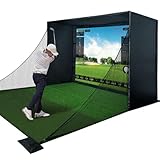 Durbles Enclosure Kit 10×8 Durbles Enclosure Kit 10×8 |
|
Check Latest Price |
 ANYTHING SPORTS Enclosure Package ANYTHING SPORTS Enclosure Package |
|
Check Latest Price |
 Sturdum Enclosure Kit 10×8 Sturdum Enclosure Kit 10×8 |
|
Check Latest Price |
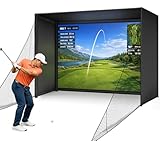 Diandian Enclosure Kit 10×8 Diandian Enclosure Kit 10×8 |
|
Check Latest Price |
 ZivPlay Enclosure With Screen ZivPlay Enclosure With Screen |
|
Check Latest Price |
| HOMEVOL 2-in-1 Net System |
|
Check Latest Price |
 Haokelball 10×8 Practice Net Haokelball 10×8 Practice Net |
|
Check Latest Price |
 GoSports Range Cage 10×8 GoSports Range Cage 10×8 |
|
Check Latest Price |
One note on sizing before you read further. Nearly every kit here comes in a ten foot by eight foot footprint, and nearly every kit is written for a ceiling around nine feet or better. Two of them, the Durbles and the ZivPlay, need the full width of that ten foot frame with very little margin. A two-car garage is usually twenty feet wide, so the frame fits comfortably, but the swing area in front of it does not if the enclosure sits centered. Position matters more than product choice, and we cover it in the buying guide below.
1. Garmin Approach R50 – Three-Camera Metrics With A 10-Inch Touchscreen
Garmin Approach® R50, Premium Golf Launch Monitor & Simulator
3-camera system
10 inch color touchscreen
Measures ball speed, launch, spin
Bluetooth, Wi-Fi and HDMI
4 hour battery, 9 pounds
Pros
- Three-camera system delivers spin rate and spin axis alongside ball speed and launch angle
- Large 10 inch touchscreen handles range work and virtual play from one unit
- Built-in high-speed impact video gives immediate visual feedback
- Carrying case and 4 hour battery make it genuinely portable between garage and course
Cons
- Virtual course play requires an active Garmin Golf membership
- Face-to-path data needs the included tracking sticker
- Costs far more than entry-level garage setups
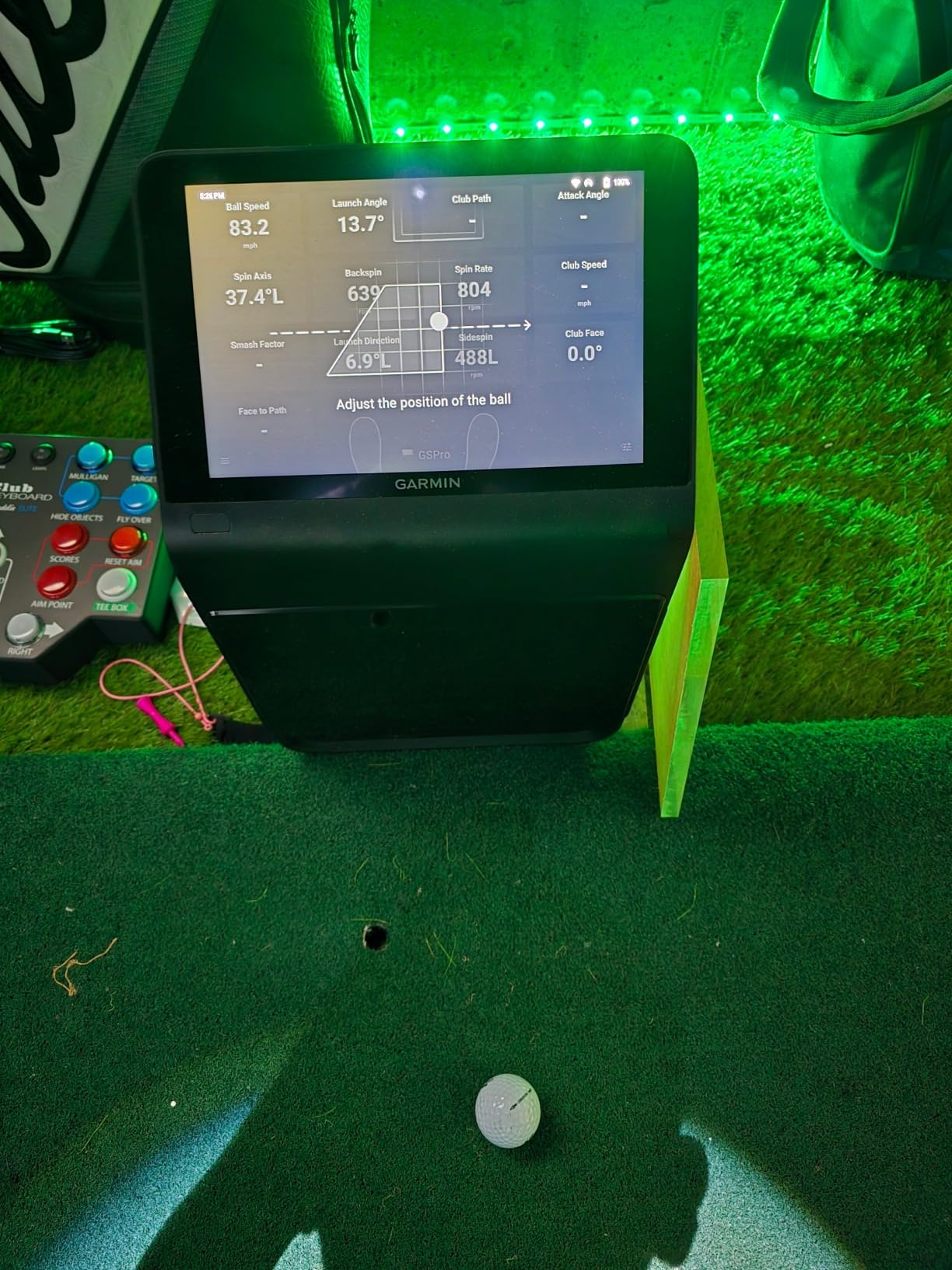
Everything else in this roundup holds a ball. The Garmin Approach R50 tells you what the ball did. It uses a three-camera system to measure ball speed, launch angle, face to path, spin rate and spin axis, both indoors in a garage and out on a range, and it captures high-speed impact video of every shot from the built-in display. Owners describe the accuracy as the standout feature and the ten inch touchscreen as the reason they stopped carrying a phone to the bay.
For a garage specifically, the detail that matters is the HDMI output. You can run the monitor, the metrics and the video on the big screen or the projected image, and the built-in barometer keeps carry distances honest when garage pressure shifts with the weather outside. Reviewers report that setup was straightforward and that the same unit moved from the garage to the range in its carrying case when the season turned.
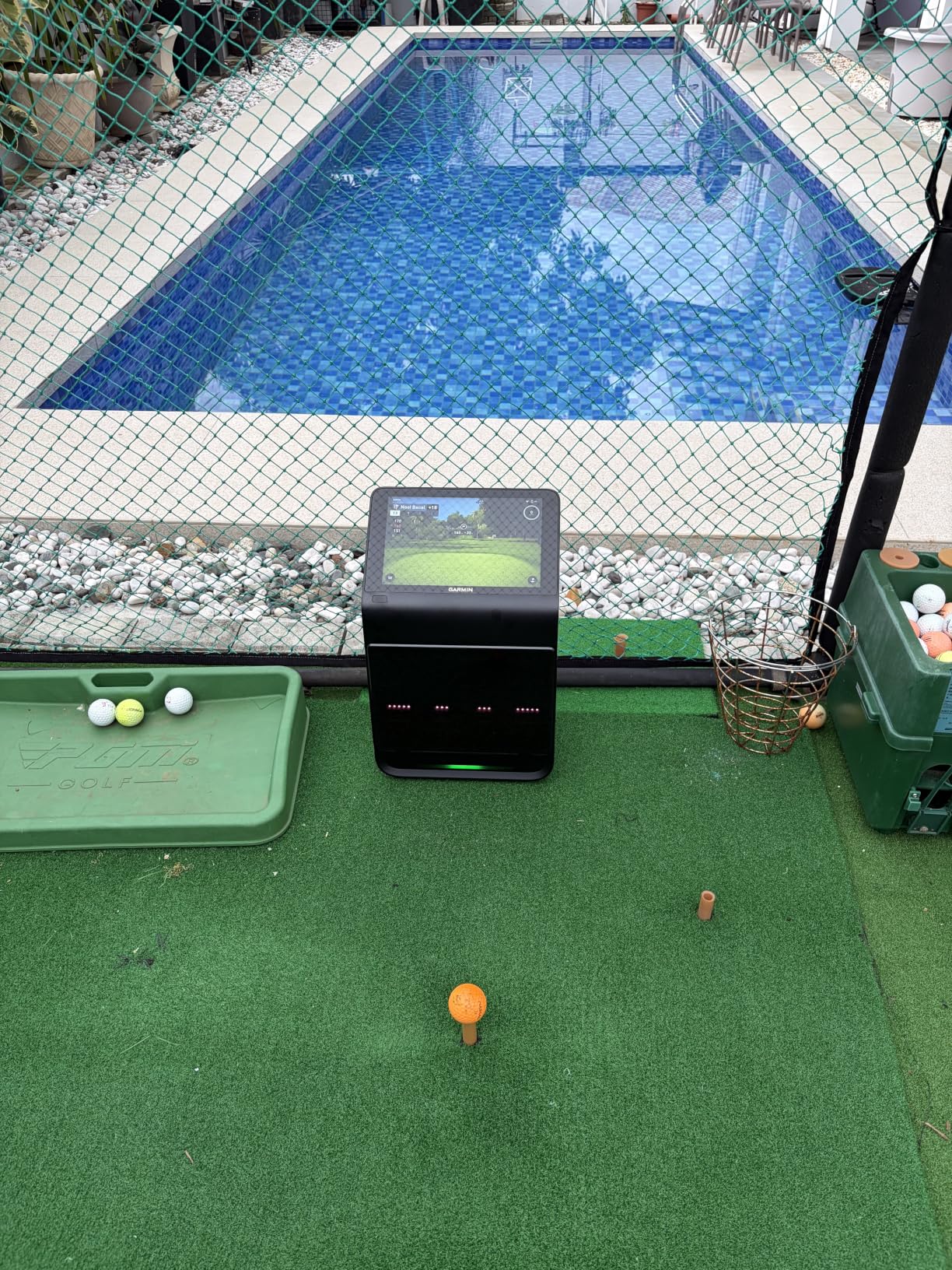
Two reservations came up repeatedly. The full simulator experience, meaning more than 43000 virtual courses through Home Tee Hero, needs an active Garmin Golf membership, and face-to-path measurement depends on a tracking sticker on the club face. Neither is a dealbreaker, but both are ongoing or per-shot frictions that a plain practice net never asks you to think about.
What it does not do is sit in the corner looking impressive. It is a measuring device, nine pounds and sixteen and a half inches tall, and it belongs on the floor of the hitting bay where it can see the ball. Pair it with any of the enclosures below and you have a genuine garage simulator, not a net with a screen.
Who the R50 suits in a garage
It suits a golfer who is chasing a number rather than a feeling, the kind of player who wants to know whether the gap they felt last week was face-to-path or attack angle. The training mode tracks stats for each club separately and shows a shot dispersion chart built on a ball flight trajectory model, so a fixed setup with a wedge and an eight iron tells you something specific.
It also suits a household where more than one person swings, since the unit supports up to four players and does not care about experience level. The large screen is readable from a few feet back, which matters when you are standing over the ball rather than sitting at a desk.
Where the R50 falls short
It falls short for anyone who wants the box to contain everything. You still need a mat, an enclosure, a screen and a projector, and the R50 only covers one of those five. Buyers who expected a complete room in one purchase are the source of most of the critical reviews in this rating group.
It also falls short if you are not ready to work with numbers. The value comes from reading the output after every shot, and golfers who hit balls for fun tend to use the R10 style device in the first month and then ignore the data. Buy for the analysis or buy for the screen, but know which one you are doing.
2. GoSports Golf Simulator Enclosure Nets – Heavy-Duty Screen And Blackout Panels
GoSports 10 x 8 ft Golf Simulator Enclosure Net – Complete Set with Frame and HD Impact Screen Kit
10x8, 12x9 and 14x8 ft options
Alloy steel frame, 79 pounds
True blackout panels
Foam padding around screen
Pros
- Screen holds up under thousands of high-speed impacts without tearing
- Numbered poles and clear diagrams make assembly about an hour solo
- True blackout fabric visibly improves projector brightness
- Frame firms up noticeably once the screen is installed
- Customer service ships replacement covers quickly
Cons
- Frame padding is thin so balls can ricochet back at you
- No hanging baffles to kill wedge shots
- Top eyelets can tear from wedge impacts over time
- Shank nets are not included
This is the most established full enclosure in the group, with 186 owner reviews and a rating of four point four stars, and that volume matters because you get years of durability data rather than a handful of impressions. Owners report thousands of shots with no tearing in the commercial grade multi-layer impact screen, which is the single most important number for a family hitting into the same wall every evening.
The build quality is the story. The reinforced alloy steel frame weighs 79 pounds, the poles are numbered, and assembly is roughly an hour for one person following the diagrams. Reviewers note that the frame feels loose until the fabric and screen go on, then firms up into something that does not move when you hit a wedge at full speed.
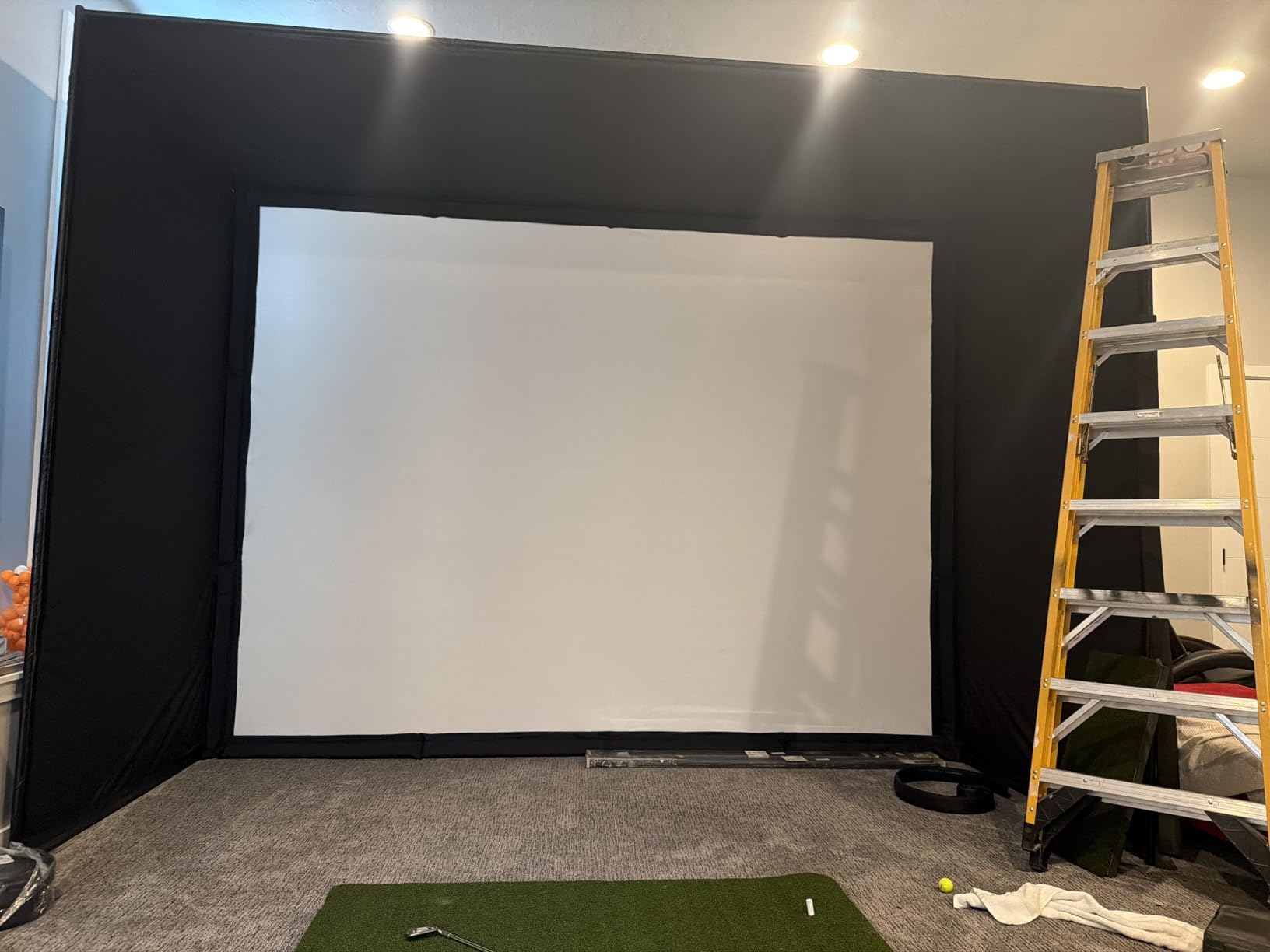
Three sizes are offered, at ten by eight, twelve by nine and fourteen by eight feet, and that choice is the reason this kit fits more garage shapes than most. The fourteen foot version suits a deep single-car-plus-storage bay where you want more right-handed and opposite-handed hitting room. Owners do report a slight droop at the top of the longer units that needs periodic tightening.
The recurring complaint is rebound. The foam padding around the screen frame is thin, so a mishit or a wedge can come back toward the hitter, and several owners add extra foam or turf between the screen and the hitting area to fix it. The other gap is baffles, which this kit does not include.
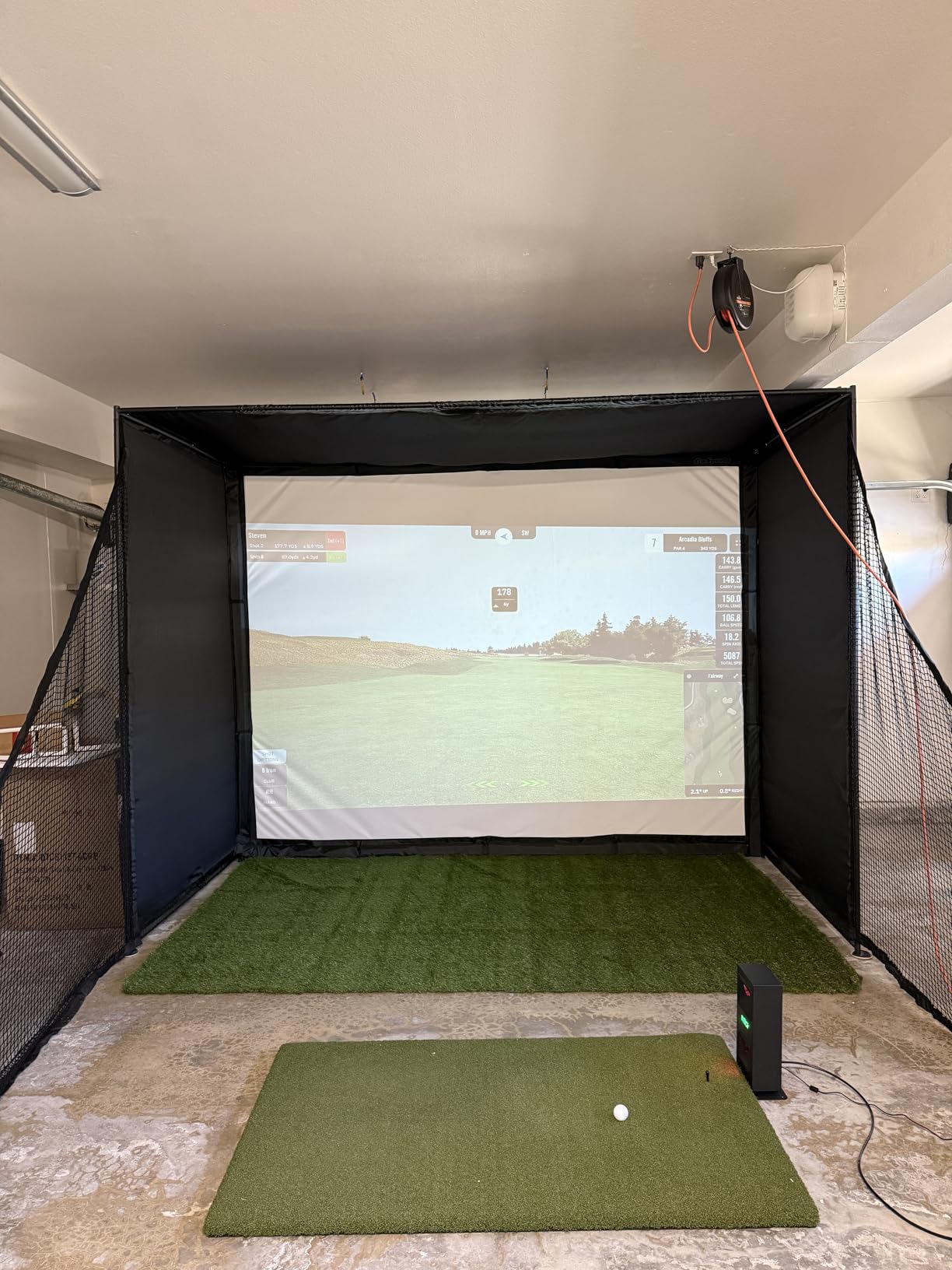
How it performs in a two-car garage
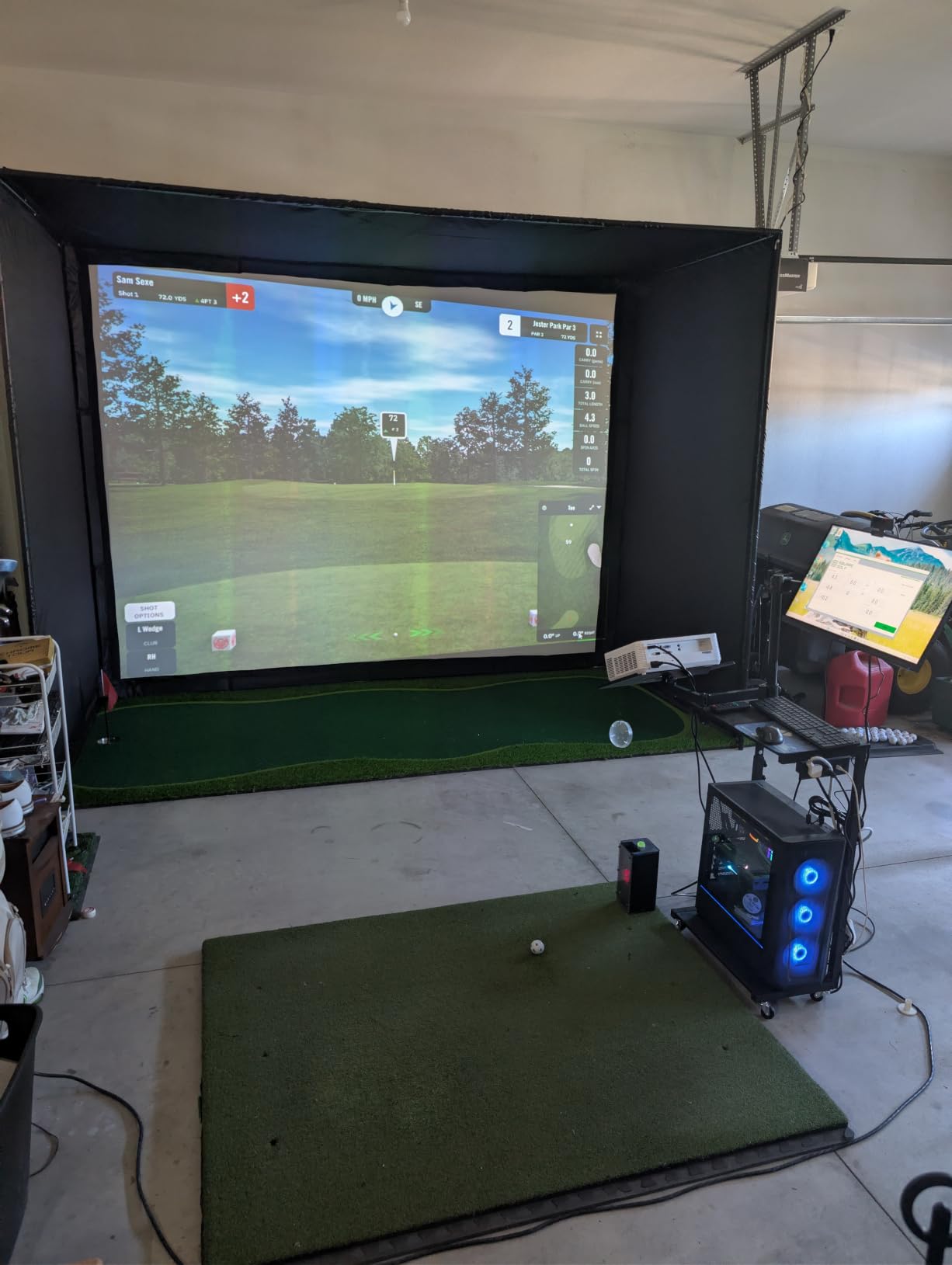
The true blackout panels are the feature garage builders notice first. They block outside light and reduce the amount of light bleeding in from overhead fixtures, which is what lets a mid-range projector hold a usable image with the garage lights off. That single change is the difference between a screen you can see and a screen you squint at.
The alloy steel breaking strength is listed at 200 pounds, and the reinforced side and top netting means a slice or a high wedge stays inside the bay rather than ending up against your car or your neighbour’s fence.
Who should skip it
Skip it if your plan depends on keeping a car parked in the same bay. This is a permanent, floor-standing structure and it does not fold against a wall. It is the right choice for a dedicated bay, a basement, or a garage where the vehicle already lives elsewhere.
Also skip it if your ceiling is under nine feet. The frame is eight feet tall, and you need working room above the top bar for a full driver swing before the ball travels, not after.
3. Durbles Golf Simulator Enclosure Kit – Triple-Layer Screen And Full Foam Padding
Golf Simulator Enclosure Kit with Premium HD Impact Screen, Full Safety Padding & Blackout Curtain, Home Golf Sim Setup Compatible with Launch Monitors, Indoor Cage Net Golfing Accessories (10 x 8 ft)
Triple-layer commercial impact screen
Full-coverage foam on frame and poles
True blackout curtain
Tool-free assembly
Pros
- Thick spongy screen mutes impact sound better than cheaper single-layer screens
- Blackout top cuts light bleed from overhead fixtures
- Padded poles and corner padding matter in tight rooms
- Owners rate the finish as looking far more premium than the price suggests
Cons
- Written instructions assume ceilings over 9.9 feet
- Ten foot frame needs nearly the full room width
- Some poles arrived without foam sleeves
- Isolated reports of frame metal bending under impact
Sound is the reason to look at this one. The triple-layer commercial impact screen is noticeably spongy against a ball, and owners consistently describe impact noise as muted compared with cheaper single-layer screens, which matters a great deal in a garage attached to a house where someone is sleeping upstairs.
The second reason is safety padding, and this kit goes further than most. Foam covers the full frame and poles rather than a decorative sleeve, and owners list the padded corners and poles as the detail that made a difference in a tight room. The blackout curtain on top reduces the light bleed from overhead fixtures that washes out a projected image.
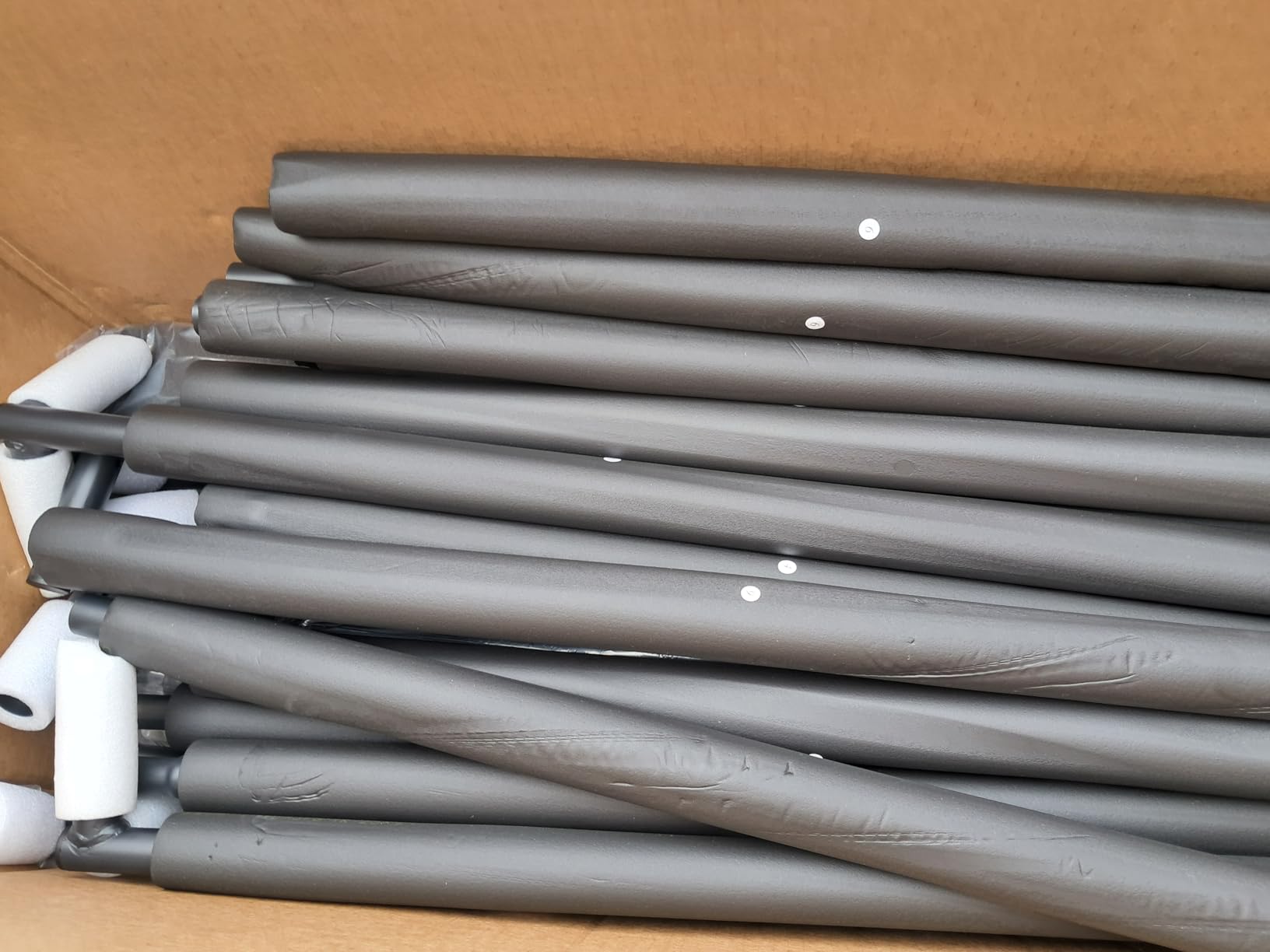
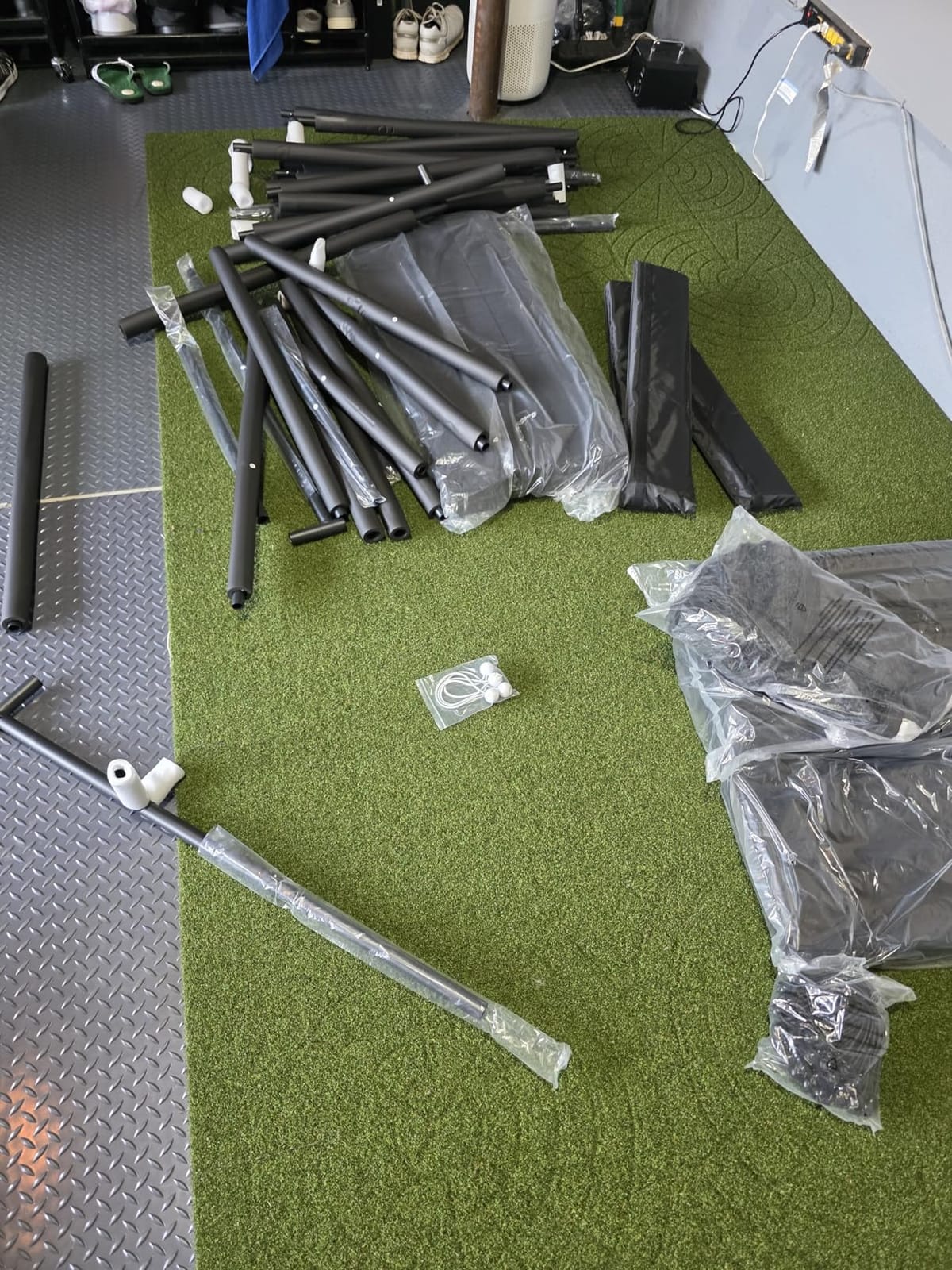
Assembly is tool-free, and owners put the solo build time at one and a half to three hours. The rating here is four and a half stars from 45 owners, and the review distribution has no one-star complaints worth worrying about, with 76 percent five-star and 16 percent four-star.
The manual is the weak point. The written instructions assume ceilings over 9.9 feet, which makes assembly awkward in a typical garage where you are likely building in place under a nine foot ceiling. The frame is also ten feet wide, so in a narrow bay some owners had to cut the poles down to fit.
Why the padding matters more than the screen
Because the failure mode in a garage is not a torn screen, it is a ball coming back at your hands. A full-coverage foam layout catches mishits that a bare frame turns into a projectile, and it also stops the steel from marking your club shaft if you get close.
The padded layout also gives you freedom in a narrow garage. When every centimetre of swing room counts, having the frame edges already protected means you can swing without leaving a buffer between your hands and the structure.
Where it does not fit
It does not fit under a low ceiling without a fight, because the instructions and the build-in-place approach both assume more height than a standard garage gives you. If your ceiling is under nine feet, the smaller eight foot by eight foot four inch version of this kit is the more sensible starting point, though the manual will still slow you down.
A handful of owners also reported frame metal bending when struck, and two poles arrived without their foam sleeves. Small sample, but worth knowing if you hit hard and fast.
4. ANYTHING SPORTS Enclosure Package – The Only Kit Here With A Projector Mount
Complete Golf Simulator Enclosure Package – 4K-Ready Impact Screen with Blackout Cage, Projector Mount, Frame Poles, Side Shank Nets | Indoor & Garage Practice | Easy Setup | 12-Month Warranty
Projector mount and bar included
4K-ready impact screen
Blackout cage cover
Two side shank nets with sandbags
Pros
- Includes a projector mount and bar that most competitors sell separately
- Compact 8 foot 4 inch square option fits a standard 9 foot garage
- Metal frame and rubbery screen absorb impacts well
- Customer service praised as fast and accommodating
- Multiple cage sizes for garages
- basements and studios
Cons
- Instructions are frequently criticized as confusing or wrong
- Included pads are thin cosmetic covers rather than real protection
- No hanging baffles so wedge shots can return from the top crossbar
- Thin cover has been reported to sag after several months
- Bungee cords can be too short and wrinkle the screen
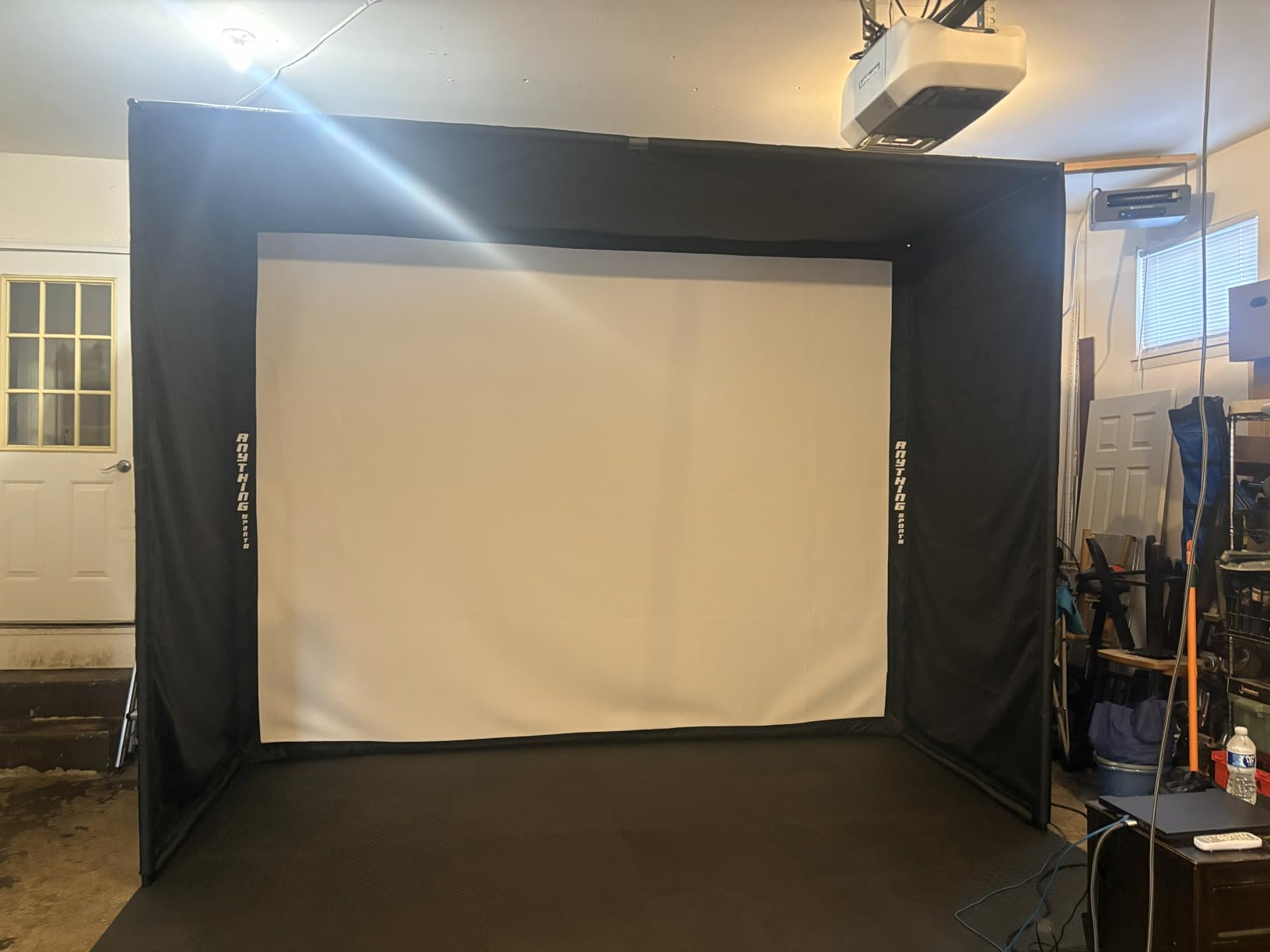
Almost every enclosure on this list leaves you with a projector problem. You have a screen, you have a mount point somewhere near the ceiling, and you have a projector that needs to sit at exactly the right distance and angle. This package includes a projector mount and bar in the box, and that single part removes the most common reason a garage build stalls before it finishes.
It also offers the widest size range here, including a compact eight foot four inch square cage that fits inside a standard nine foot garage where a ten foot frame will not, alongside eleven foot and twelve foot options for bigger bays. The 4K-ready impact screen is sized an inch under the frame for near-full coverage, and the blackout cage cover limits light bleed.
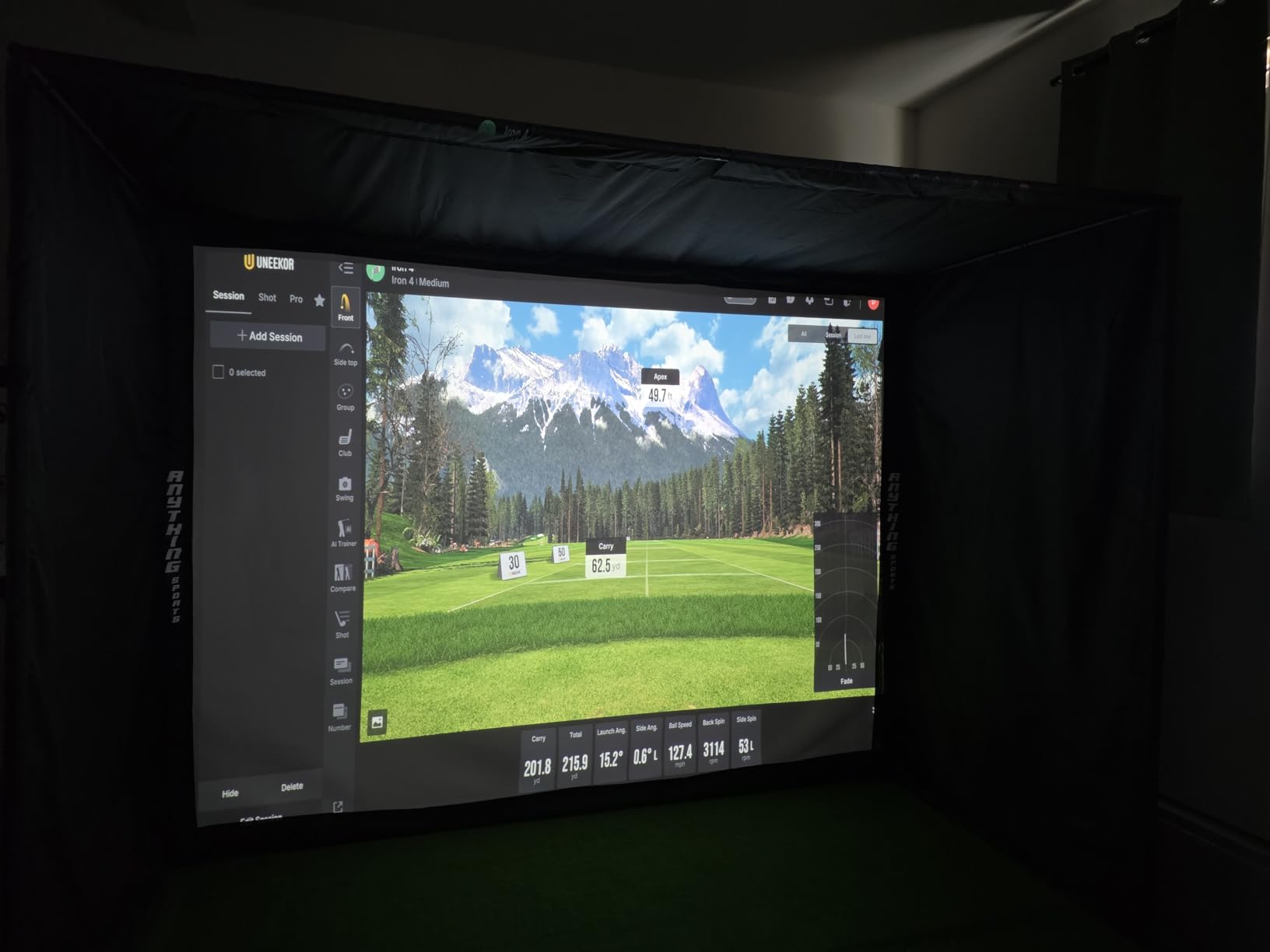
Owners call it strong value and report durability of a year or more of regular use, with a rating of four and a half stars across 183 reviews. Two side shank nets with sandbag weights come included, which is unusual at this level and useful for players who spray mishits toward a wall or a parked vehicle.
Two themes dominate the critical reviews. The first is the manual, described as inaccurate or incomplete, which pushes assembly to two or three hours. The second is safety, because the upper rear crossbar has no baffles and several owners added their own padding after wedge shots came back at them. The included pads are cosmetic covers rather than impact protection, which is the clearest gap in an otherwise complete package.
Why the projector mount changes the build
Because mounting is the step that requires a second person, a ladder and often a second visit to the hardware store. With a mount and bar supplied, the projector goes up in one session, and the screen is already framed to the cage dimensions the mount was designed for.
It also matters for a ceiling-mounted setup in a low garage, where a projector on a shelf or a floor stand eats swing depth you do not have to spare. Ceiling mounting is the only way to get throw distance without giving up floor space in front of the screen.
What to fix before you hit anything
Budget time for the assembly rather than the shopping. Read the manual, watch the process on a phone before you start, and lay the poles out and count them twice, because the errors owners report are mostly skipped or reordered steps rather than missing parts.
Add your own padding to the top crossbar before your first wedge session. That single addition removes the safety issue that appears most often in the reviews of this kit and costs very little.
5. Sturdum Golf Simulator Enclosure Kit – Simple Steel Frame For A First Build
Sturdum 10x10ft Golf Simulator Enclosure Kit with HD Screen and Steel Frame
10x8 ft steel frame enclosure
Light-blocking curtains
Impact-resistant screen
Side netting and ball net
Pros
- All-in-one package includes frame
- curtains
- impact screen and netting in one order
- Light-blocking curtains support projector visibility indoors
- Straightforward design with no projector mount to figure out
Cons
- Lowest average rating in the group at 4.1 with the largest share of 1-star reviews
- Lightweight alloy steel frame compared with heavier kits
- Few published customer reviews means limited long-term durability evidence
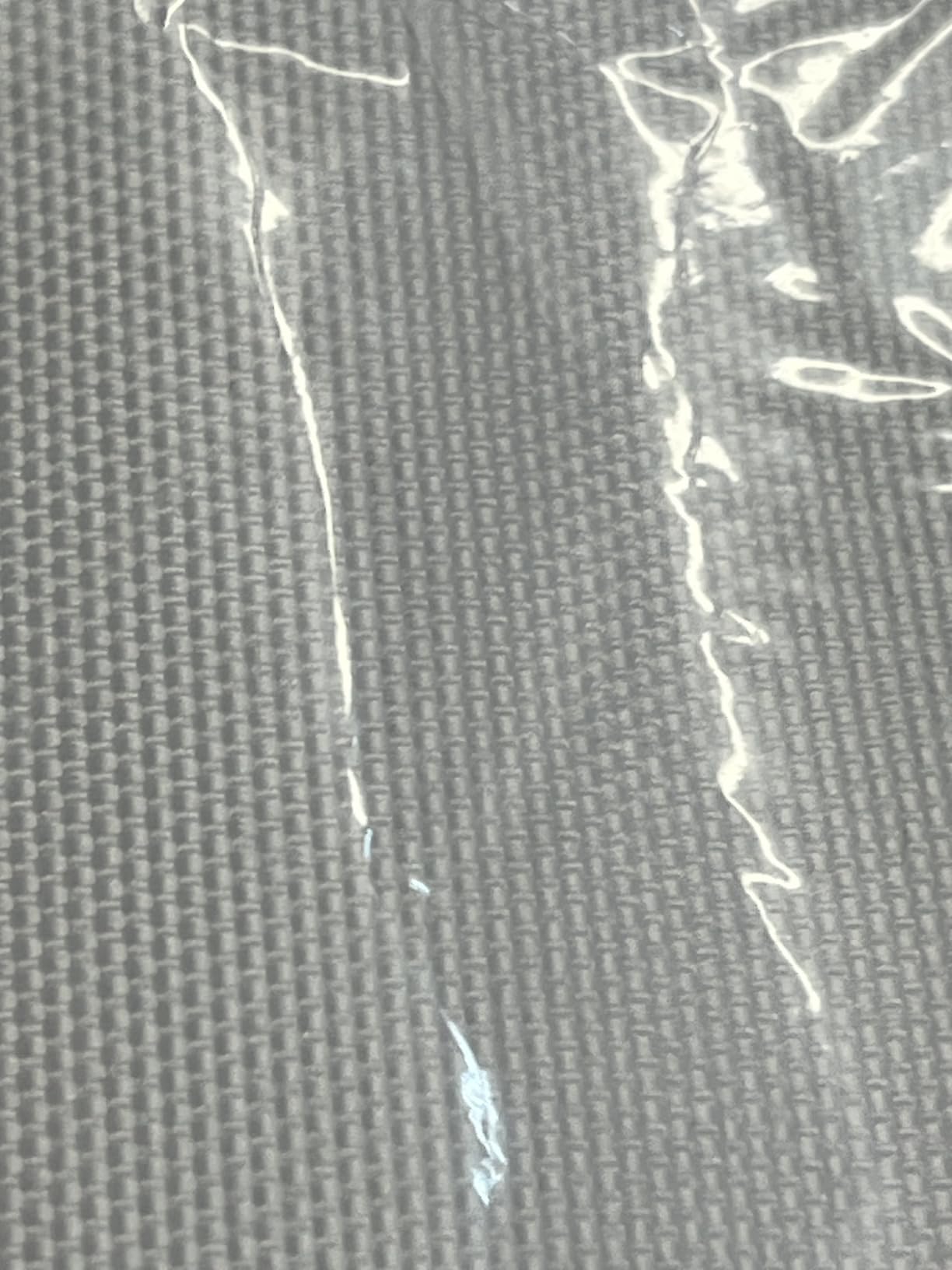
This is the simplest answer in the group, and simplicity has real value when you have never built a simulator before. The package includes the steel frame, light-blocking curtains, an impact-resistant screen, side netting and a ball net, so one order covers the structure and you are not piecing a bay together from three suppliers.
Three sizes are listed, including an eight foot four inch square and a single-layer ten by seven foot option, which gives you some flexibility if your garage is tight. The light-blocking curtains are the part that matters for projection, keeping stray garage bulb light off the screen surface.
We want to be straight about the evidence here. With 22 reviews and a four point one rating, this is the thinnest data set in the roundup, and the rating distribution carries an eleven percent one-star share, the highest of any kit here. Owners most often point to frame sturdiness rather than the screen or the curtains.
The frame is described as lightweight alloy steel, roughly four millimetres of material, and that is the trade. It is the lightest-feeling structure here and the least evidenced over time. It works, but you are buying on the spec sheet rather than on a decade of owner feedback.

When this is the right first build
When you are not sure you will use a simulator enough to justify a serious enclosure, or when you want a working bay this month rather than next month. A simple steel frame with curtains gets you hitting into a screen, which is the step that turns a gadget into a habit.
It is also a reasonable fit for a rental or a garage you may convert back later, since a lighter frame is easier to move or remove than a 79 pound unit.
When to spend more instead
If you hit a lot of drivers, spend more. This is the kit in the group most likely to disappoint a player who swings hard and often, and the reviews point at frame rigidity as the reason. Go up to the GoSports enclosure with its 79 pound alloy steel frame, or the Haokelball square base, if full swing volume is your priority.
Also spend more if you plan to run a projector in there long term. The light-blocking curtains help, but the blackouts on the purpose-built kits are a step ahead on both light control and overall finish.
6. Diandian Golf Simulator Enclosure Kit – Quietest Fabric Build With Tool-Free Assembly
Diandian Golf Simulator Enclosure Kit 10 x 8 ft with 4K-Ready Impact Screen
One-piece 600D Oxford blackout cover
Dual-layer 4K-ready screen
Tool-free click-lock carbon steel frame
75 pounds, 120 by 96 inches
Pros
- Fabric cover is much quieter than tarp-style competitors when struck
- Mesh-backed screen looks premium and improves the image
- Click-lock assembly is tool-free and reported at 45 minutes to two hours
- Light enough to reposition solo
- Blackout fit is tight all the way around
Cons
- Screen-to-frame stitching reported tearing near the bottom within months
- Screen can develop wrinkles that some buyers find distracting
- Some boxes arrive without printed instructions
- Roof can sag and no projector mount is included
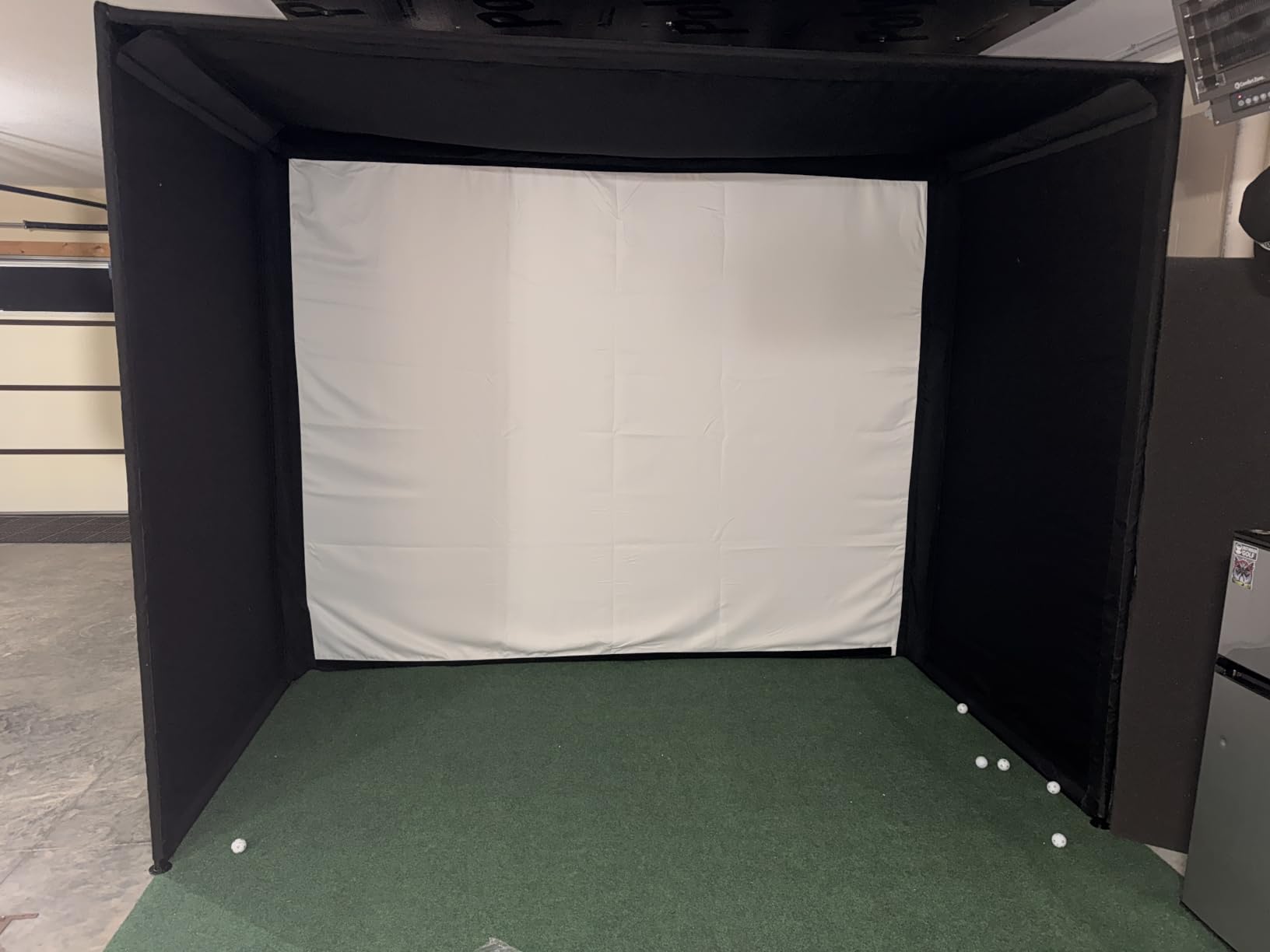
Every garage simulator has one moment that gets it in trouble, and it is the sound of a ball striking a screen. This is the quietest build in the group. The one-piece 600D Oxford cover wraps the top, sides and back with no light-leak gaps, and owners repeatedly describe how much quieter it is than tarp-style competitors when a ball connects.
The screen itself is dual-layer and 4K-ready with a mesh backing, and that mesh finish is what produces the premium look owners mention. It reflects a sharper projected image than a bare woven surface, and the matte finish resists marks. The thickened carbon steel frame uses a click-lock design that needs no tools at all, and owners report 45 minutes to two hours for the build.
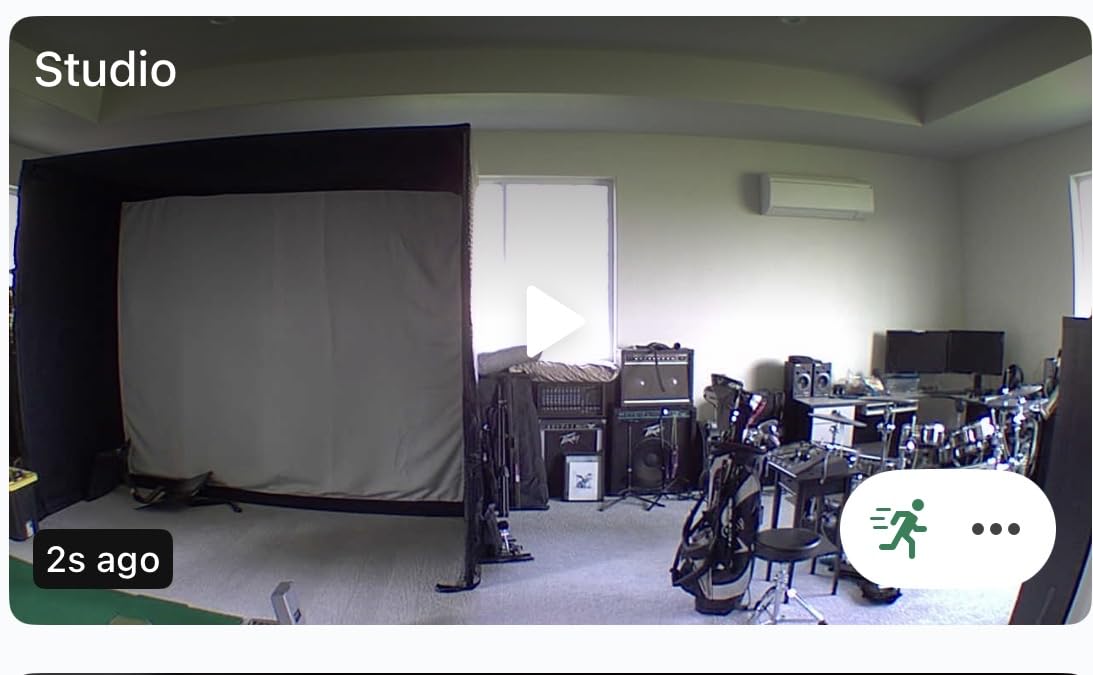
It is also movable. At 75 pounds the kit is light enough to slide around a room solo, which matters more in a garage than in a basement because your layout is rarely final. Foam edge padding and heavy-duty safety side nets keep ricochets down, and reinforced Velcro stitching along the bottom and sides is the detail that addresses the edge separation problem that plagues cheaper kits.
Buyers frequently describe it as delivering most of what a premium branded enclosure does at a fraction of the outlay, and the four and a half star rating comes with a distribution that includes no one-star reviews at all. The durability concern to know about is bottom-edge screen stitching, which one owner reported separating well inside the return window.
Why quietness matters in a garage
Because a garage is rarely isolated. A home simulator in a basement has concrete on three sides, but a garage shares a wall with the house and often sits close to a property line. Owners who converted their setup for a family member in shift work specifically called out impact noise as the thing they had to solve.
A fabric enclosure, foam edges and a muted screen solve most of it, and you can add a secondary baffle later if you still need more. This kit is the one we would pick for an attached garage in a dense neighbourhood.
What you will need to add
You will need a projector mount, because none is included and the roof section is a fixed fabric panel rather than a mounting point. Ceiling-mount the projector on a bracket you source separately, and confirm your ceiling height against the nine foot recommendation before ordering.
Keep the printed manual, or better, find the QR-linked video the manufacturer points to, because some boxes arrive without written instructions. And check the screen tension once it is up, since wrinkling is the other issue that comes up in the reviews.
7. ZivPlay Golf Simulator Enclosure – Budget Steel Cage With Included Side Nets
Golf Simulator Enclosure for Home Garage Indoor Sim Practice with Screen
127 by 60 by 96 inch footprint
High-strength 500D polyester screen
Two 8x8 ft side nets with sandbags
Steel frame with foam edge padding
Pros
- Steel frame owners describe as sturdy and well built
- Assembly reported at 30 to 60 minutes solo or with one helper
- Screen holds up well under direct ball impacts
- Owners rate it comparable to kits costing several times more
Cons
- Screen is bouncy so balls do not always drop straight down
- Some mounts arrive with holes drilled on the wrong side
- Top tarp can be too tight to fit the impact screen
- Instructions are poor with no assembly video available
- Screen material leaves an orange resin film on hands
This is the fastest build in the group, and in a garage where you want to be hitting this weekend rather than next weekend, speed is a real feature. Owners report 30 to 60 minutes from boxes to hitting balls, solo or with one helper, and the steel frame is described as genuinely sturdy and well made for the money.
The footprint is ten foot seven inches wide by eight feet high by five feet deep with a four-by-three impact screen, and the high-strength 500D polyester holds up under direct impact while keeping the image clear enough for projection. The frame edges are covered in foam padding to reduce rebound and protect the player, and the screen is listed at nine foot ceiling height as the requirement.
Two eight by eight foot side nets with sandbags come in the box, which owners consider generous and which is what keeps mishits away from the walls, the garage door tracks and any vehicle behind you. The screen itself does what you would hope and absorbs impact without marking.
The main practical tip from owners is a good one: attach every other bungee cord, which cuts the bounce so balls drop rather than rebounding toward you. The critical reviews cluster around build quality, with mounts arriving drilled on the wrong side and a top tarp too tight to fit the screen, plus instructions that owners simply could not follow.
Where the included side nets earn their keep
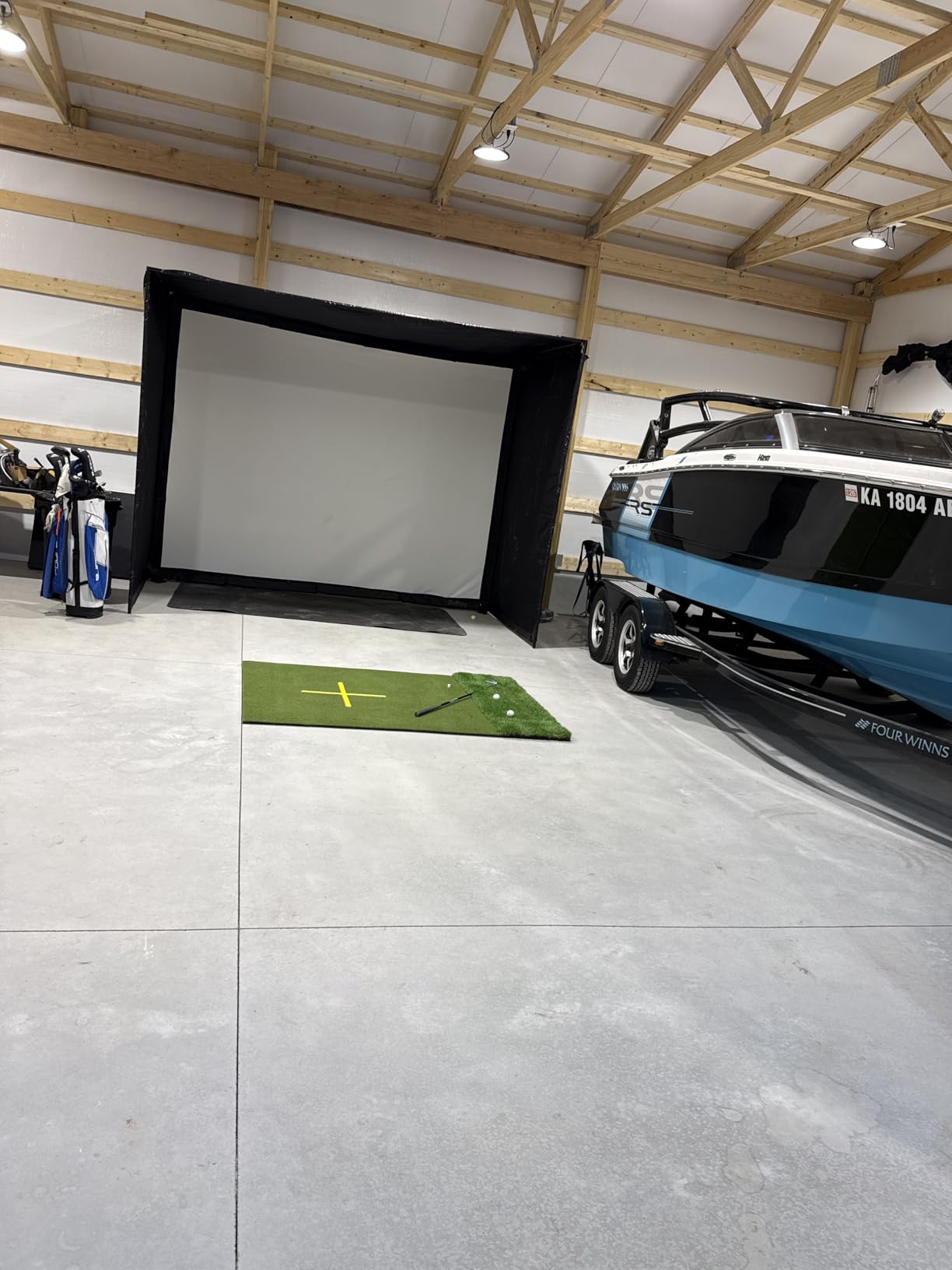
In a two-car garage, side nets are the difference between a simulator and a repair bill. The frames here are ten feet wide, and a garage bay is not much wider than that, so the space between the frame and the wall is where a pulled or blocked shot ends up. Sandbagged side nets catch it before it reaches a drywall corner.
They are also the reason this kit suits a mixed-handed household. With a net on each side, two golfers of opposite handedness can set up on the same mat position without reconfiguring anything, which is a detail most listings never mention.
What to check before assembly
Inspect the mounts and the top tarp as soon as the box opens, because both are the known weak points and both are easier to exchange before you build than after. Expect to spend more time on this than the 30 minute estimate if you are working from the printed sheet alone.
Have a plan for the resin film that transfers from the screen material to your hands during installation. Gloves solve it in a minute, and washing your hands afterward handles the rest.
8. HOMEVOL 2-in-1 Golf Simulator Net System – Mat And Balls Included In The Box
2 in 1 Golf Simulator Net System, 10 x 8ft Golf Practice Net Hitting Net with 4K-Ready Impact Screen, Target Cloth, Foam-Padded Steel Frame Cage, Hitting Mat and Balls for Indoor and Outdoor Practice
10 by 8 ft foam-padded steel cage
4K-ready screen plus printed target cloth
Hitting mat and 2 balls included
Two side nets and carry bag
Pros
- Only kit here that ships with a hitting mat and practice balls in the box
- Two modes in one setup with a target cloth and an impact screen
- Full top and side coverage keeps balls away from walls and garage doors
- Two-year manufacturer warranty and a carry bag for storage
Cons
- Simulator mode needs a projector and launch monitor that are not included
- Top protection net and side nets add bulk that reduces usable swing space
- Limited published written feedback compared with the rating
This kit has the highest rating in the group at four point six stars, and the reason is straightforward value arithmetic. It is the only product here that includes a hitting mat and two practice balls in the box, along with the cage, the impact screen, a printed target cloth, six ground stakes, two side nets and a carry bag.
The two-in-one design is genuinely useful rather than a gimmick. The printed target cloth has targets at different heights, so you can run chipping games and short-game scoring drills on the same frame you use for simulator play. Foam padding wraps the key areas of the steel frame to cut bounce-back, impact noise and contact with bare metal tubes.
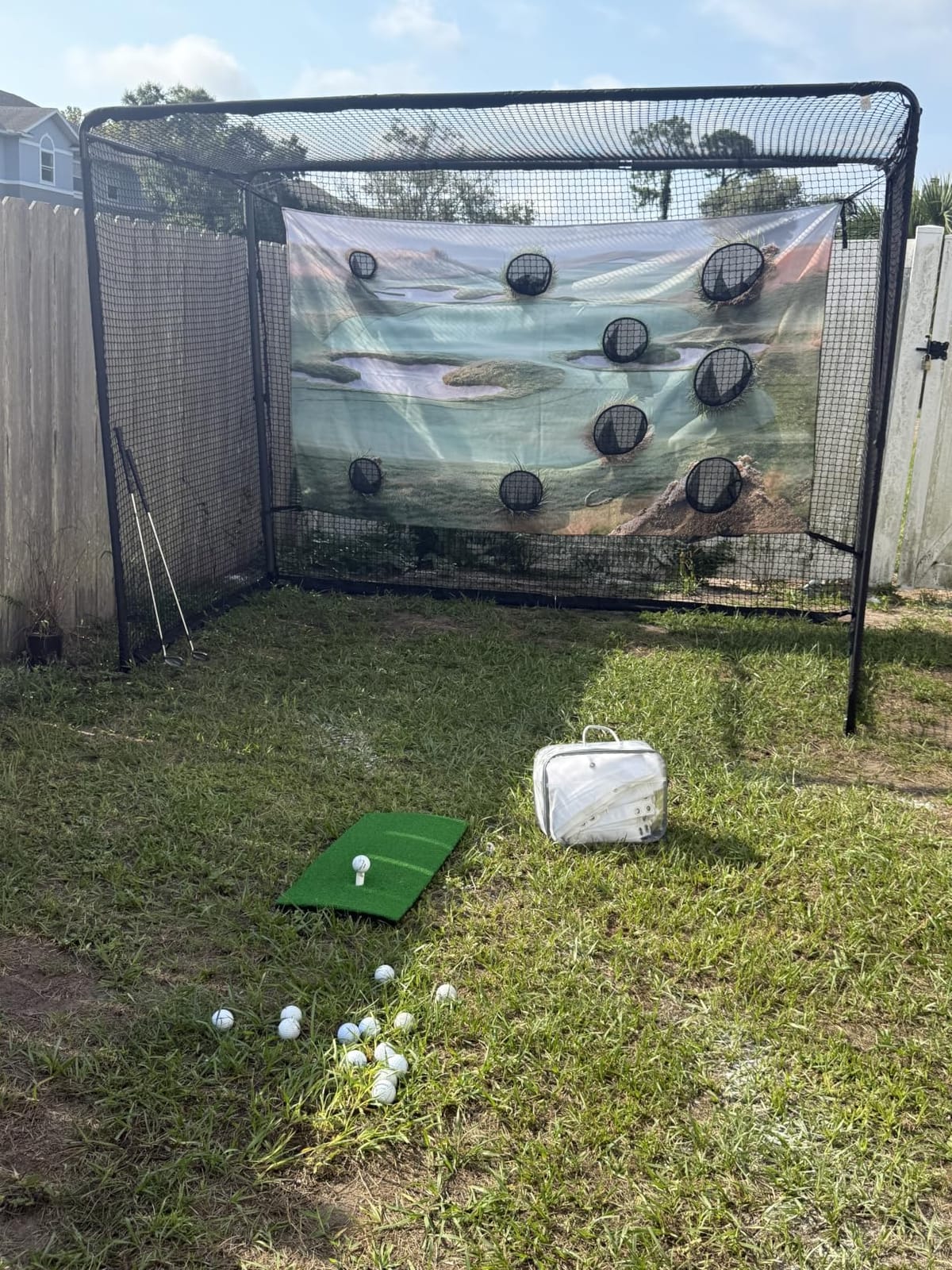
The full-coverage top protection net and side shank nets catch high wedge shots, mishits and side shots, which in a garage is a safety feature rather than a luxury. With 79 percent five-star reviews and no three-star ratings, owners are broadly satisfied, and the two-year manufacturer warranty is the second longest in this roundup.
The trade is swing space. The top net and side nets add bulk, so the effective area you can swing in is smaller than the ten by eight foot footprint suggests. And full simulator mode still needs a projector and a launch monitor, which are not in the box, so this is a starting point rather than a finished room.
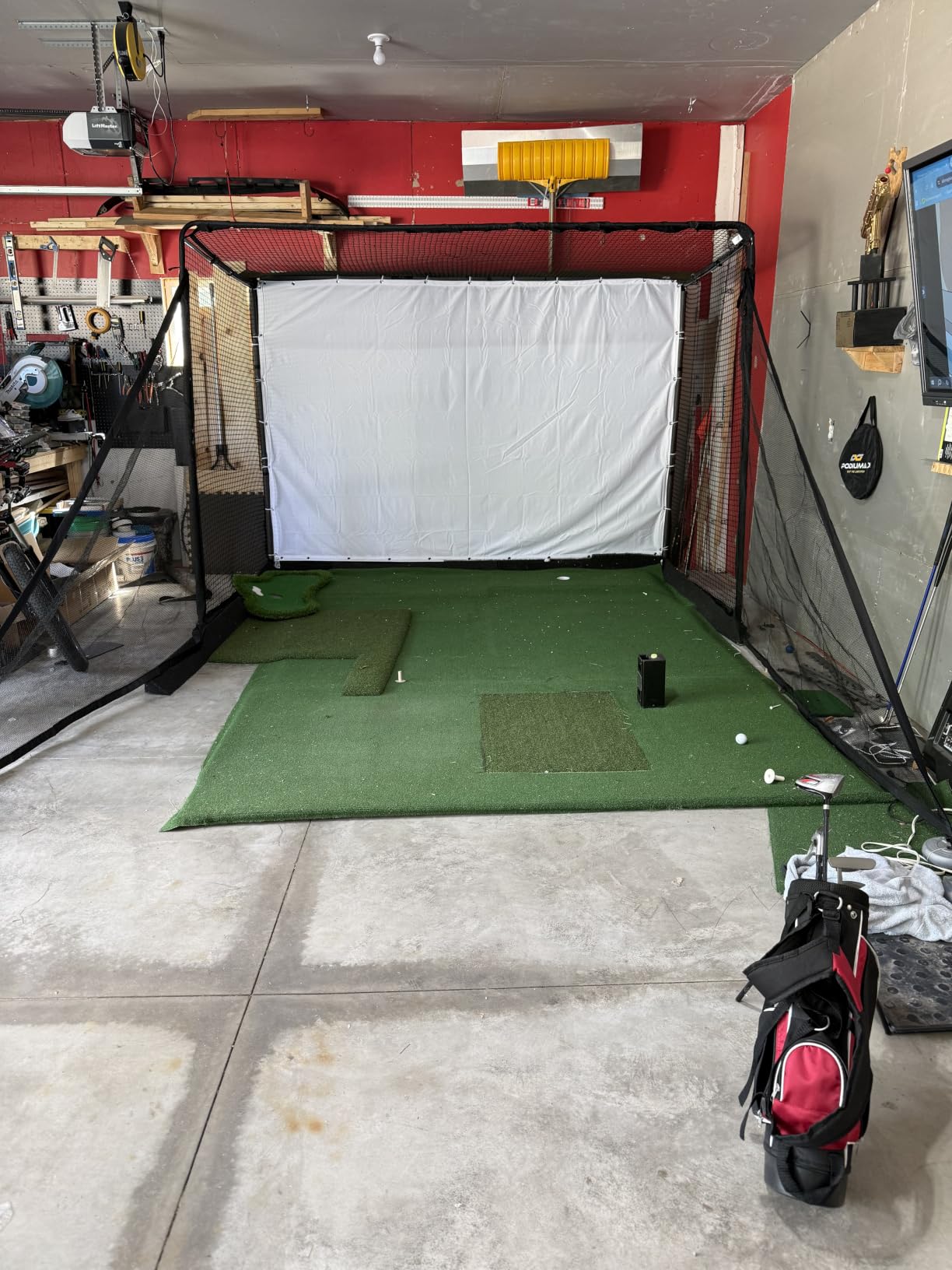
Why the included mat changes the first weekend
Because the mat is the piece everyone forgets. A bare screen with a foam ball on concrete is not practice, and a proper mat with a realistic hitting strip is what lets you transfer what you see on screen into a swing that works outside. Having it in the box removes the most common reason a garage simulator gets assembled and then abandoned.
The mat also protects the bottom of the enclosure, which is where the stitching and the base rail take the most punishment. A mat sitting in the right place takes the load instead of the screen edge.
Where this kit is the wrong answer
If you hit a lot of drivers, the top protection net is a compromise. It stops a high ball reaching your garage door or your car, but it also means you are working inside a smaller volume, and reviewers who want full swing room tend to move to a taller cage with a deeper footprint.
It is also the right kit for a household where practice happens in short bursts. The carry bag lets you take the whole system to a park or a field for warm weather work when the garage is not the right place to swing.
9. Haokelball Golf Practice Net 10×8 – Square Base And Anti-Sag Impact Screen
Haokelball Golf Simulator Cage, 10x8x6FT Net with Impact Screen for Home
10x8x6 ft full enclosure
Reinforced top support rod
5-ply netting and side protection
Overhead protection included
Pros
- Square base gives far more structural integrity than two-pole designs
- Anti-sag screen removes the top dip that sends shanks into walls and ceilings
- Frame and netting hold up after repeated full driver swings
- Seller provides setup videos to customers who struggle
- Ball retriever is a useful included accessory
Cons
- Ball capture after impact is imperfect so a few balls still escape
- One unit arrived with a bent assembly pipe
- No side protection within about 10 feet when hitting short irons
- Replacement nets are sold separately if the netting fails
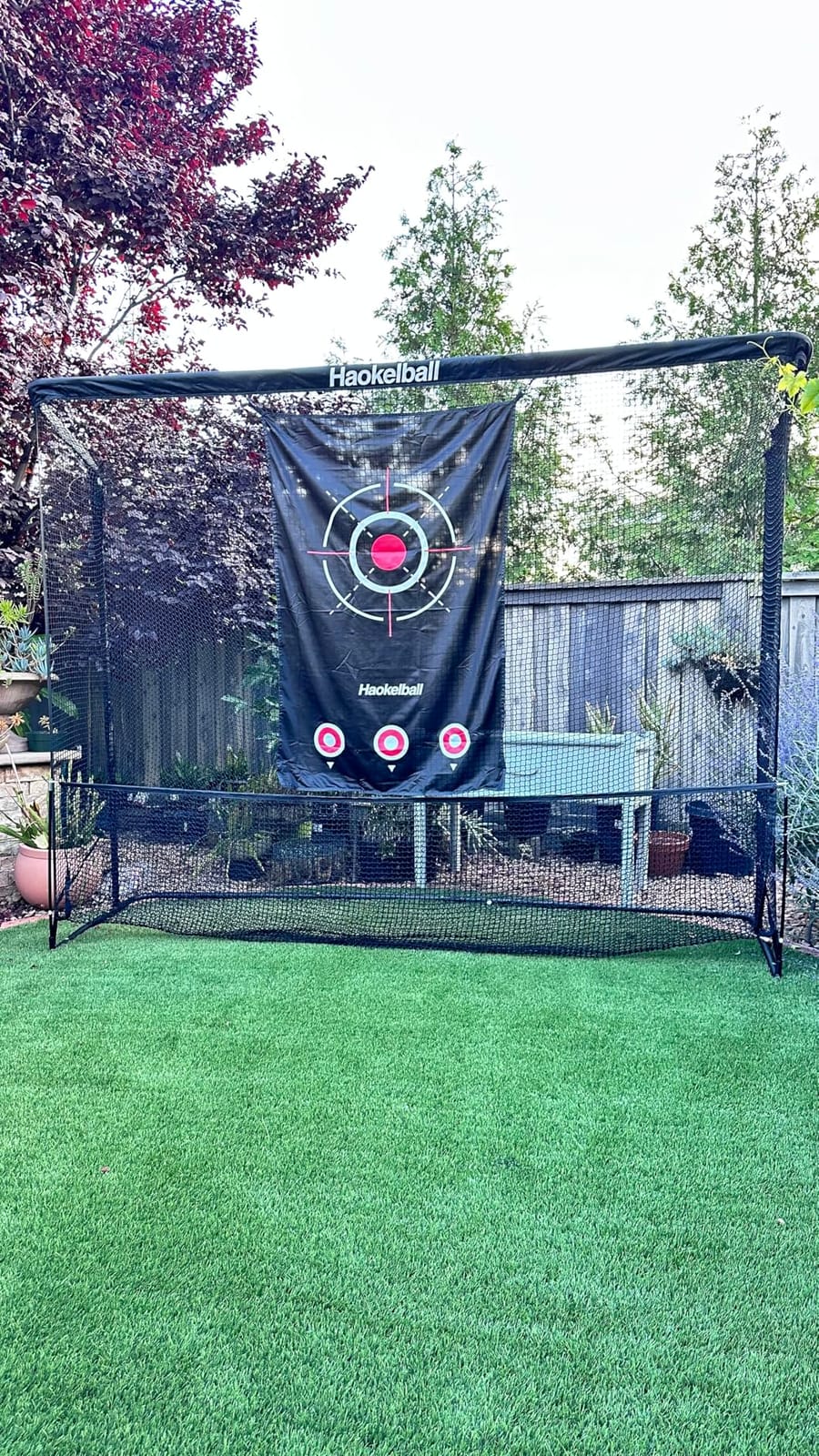
Owners with 129 reviews and a four point six star rating consistently call this the sturdiest net they have owned, and the reason is structural. The square base gives it far more integrity than the two-pole designs that dominate the cheap end of the category, and the reinforced top support rod with multiple tension points keeps the impact screen flat.
That flatness matters more than it sounds. A sagging screen dips in the middle, and a ball hit into the dip changes direction unpredictably, which is exactly how shanks end up hitting a wall or a ceiling. Owners specifically credit this design with eliminating the top dip they had lived with in previous nets.
The enclosure measures ten by eight by six feet, which gives real room for drivers, irons, wedges and chip shots, and the five-ply netting with side and overhead protection contains slices and high shots. The screen is projection-compatible and works with most projectors and launch monitors, and a ball retriever is included.
The honest criticism is ball capture. A few balls still escape after impact, and there is no side protection within roughly ten feet when you are hitting short irons, so stepping back matters. There was also an isolated report of a bent assembly pipe arriving in the box, and replacement nets are sold separately if the netting eventually wears out.
Why the square base beats two-pole designs
Because load travels through the corners. A two-pole design depends on tension alone to keep the screen flat, and tension relaxes with use, temperature changes and repeated stretching. A square base is braced by geometry, so it holds its shape after months of full driver swings rather than slowly developing a dip.
That stability also reduces frame movement on impact, which means fewer balls ricochet off a shifting structure and fewer crossbars rattle. In a garage with a car on one side of the wall, a rigid frame is worth more than a slightly lighter one.
Who should pick a different cage
Pick a full fabric enclosure if noise is your problem, since netting and poles carry impact sound further than a padded blackout box. This cage is built for durability and swing room rather than quietness.
Also pick a different setup if your ceiling is low. At six feet deep and eight feet tall, this needs a bay with genuine height and depth behind the hitter, and it is a dedicated bay rather than a parking space.
10. GoSports Range Cage 10×8 – Most Reviewed Starter Cage With Carry Bag
GoSports Range Cage 10 ft x 8 ft Golf Practice Hitting Net with Impact Screen
10 by 8 ft steel and fiberglass frame
High-density polyester impact screen
Reinforced side and top netting
Foam-padded base, 40 pounds
Pros
- Side and top netting contain balls well
- which owners cite as the main benefit in a garage
- Screen doubles as a projector backdrop for entry-level simulator use
- Carry bag makes it easy to move between indoor and outdoor setups
- GoSports customer service is repeatedly described as quick and helpful
Cons
- Netting and seams reported unraveling or tearing within weeks to months
- Bottom of the screen does not sit flush with the base rail
- Frame and poles are hard to raise and take down
- Vague instructions and part numbers that do not match what ships
- Screen shows divot marks from real golf balls
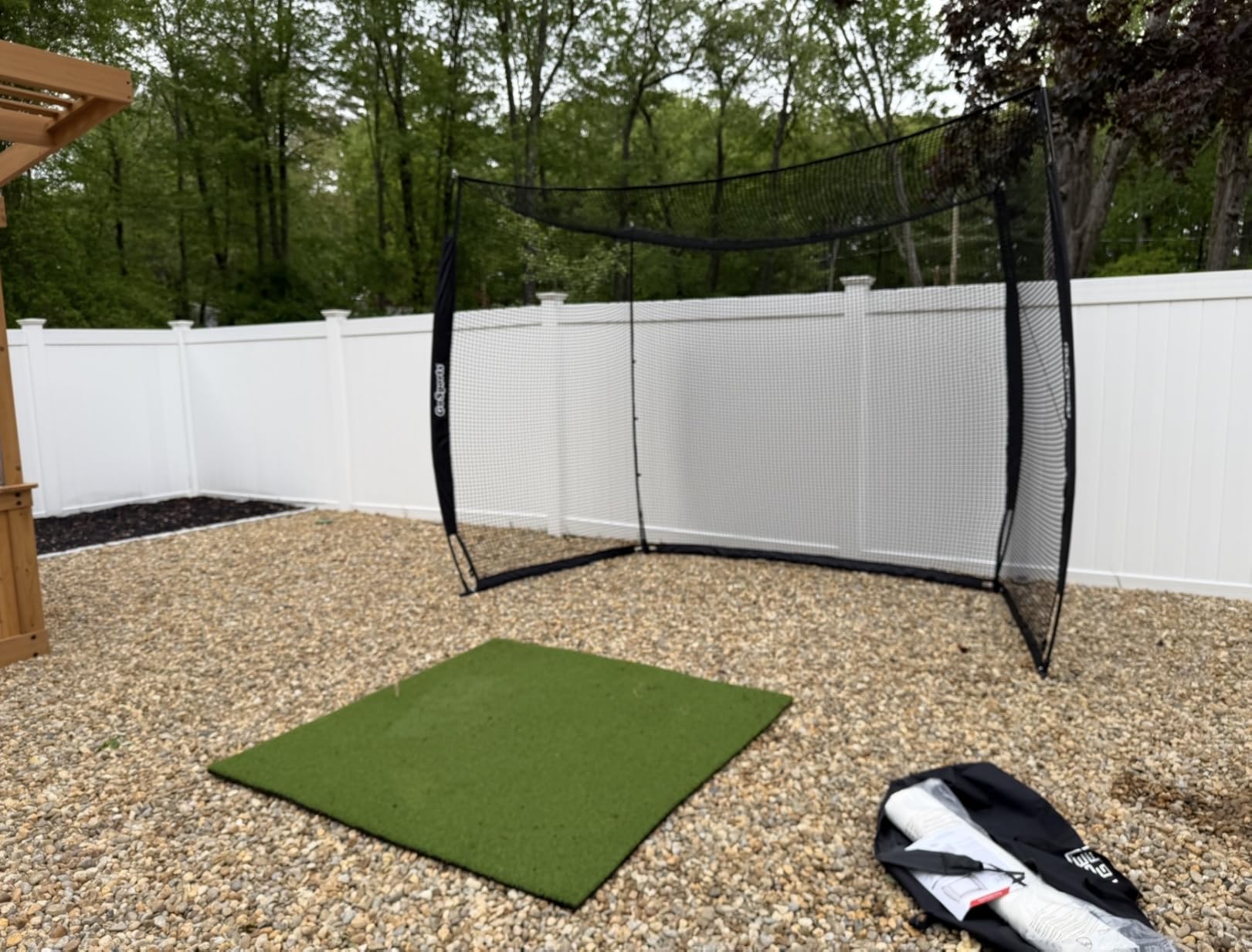
With 329 owner reviews, this is the most examined product in the roundup, and the feedback is more useful than the rating alone suggests. Owners like the containment from the reinforced side and top netting, the fact that the high-density polyester screen doubles as a projector backdrop for a starter setup, and the carry bag that lets the whole cage move between a garage and a backyard.
The foam-padded base absorbs impact and reduces rebound, and the steel frame with fiberglass poles is built for repeated high-speed contact. At 40 pounds it is the second-lightest structure here and the easiest to reposition, which is why it shows up so often in mixed-use garages.
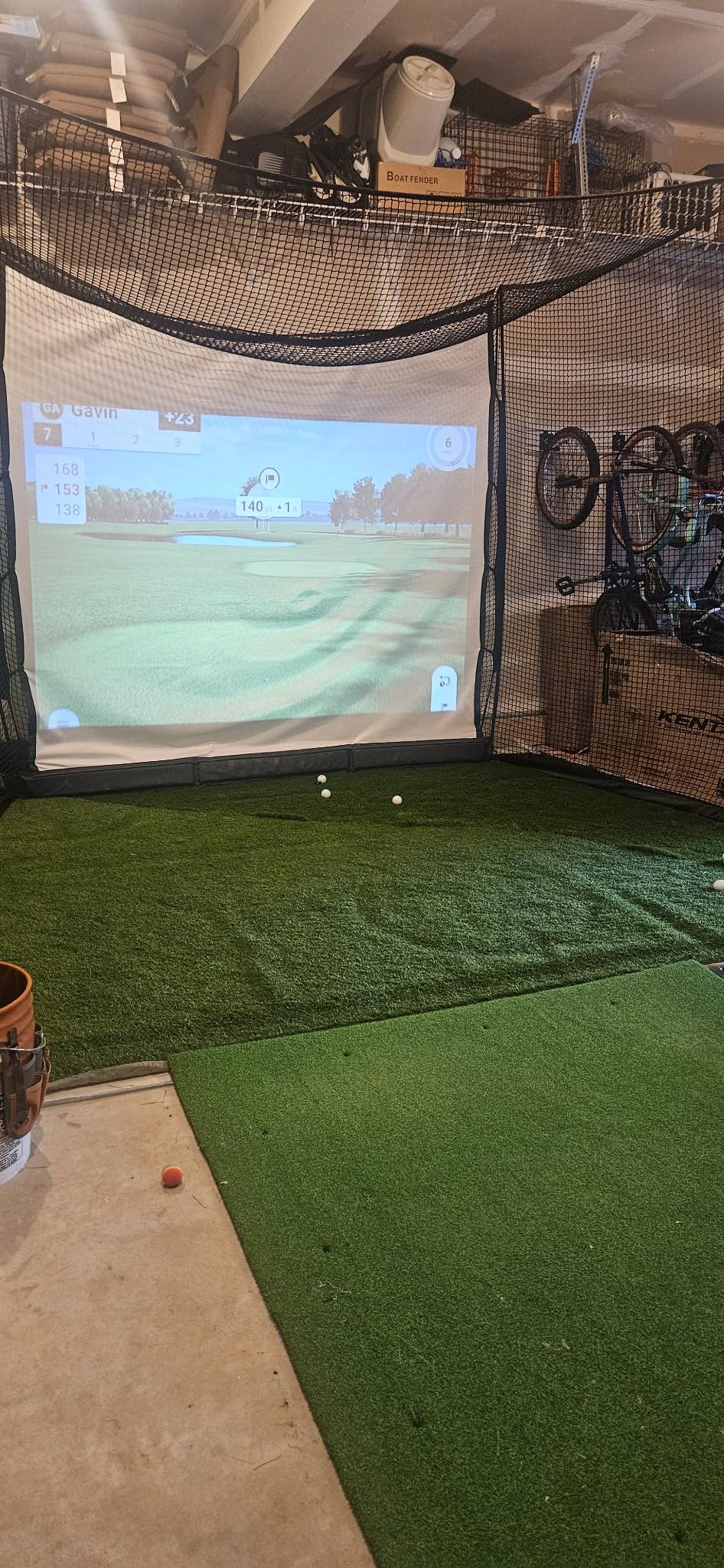
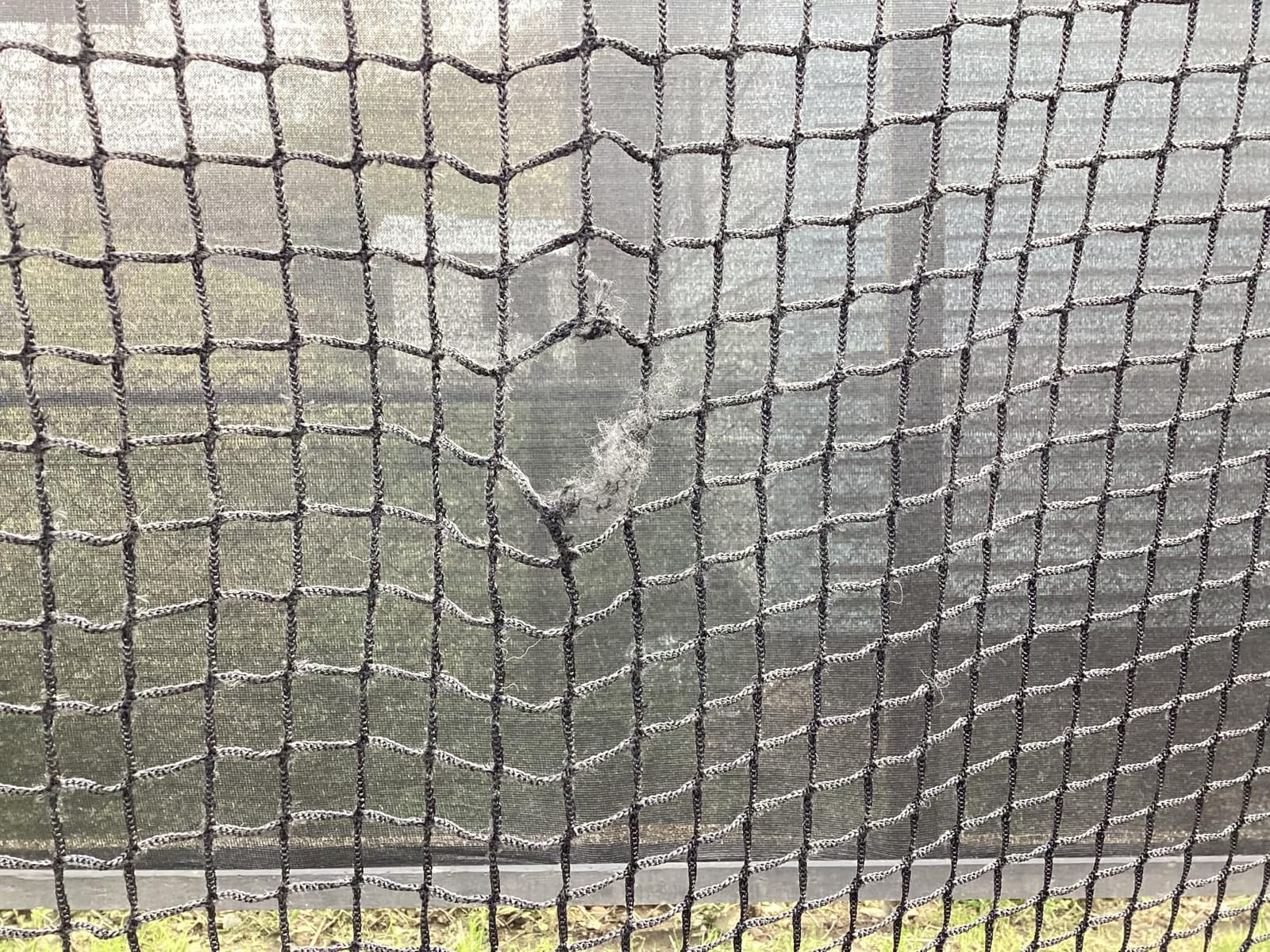
There is a real trade-off in the durability data. This is one of only two products in the group with a double-digit one-star share, at ten percent, and those reviews are specific: netting and seams unraveling or tearing within weeks to months of use. That is a wear pattern, not a defect, and it arrives sooner if you hit a lot of full swings at the corners.
The other recurring issue is geometry. The bottom of the impact screen does not sit flush with the base rail, which creates a ricochet path low on the screen, and the frame and fiberglass poles are awkward to raise and take down, stressing the rear posts. Owners also mention vague instructions and part numbers that do not always match what ships.
Why it still earns a place in the roundup
Because the alternative for a first build is usually spending three times as much on structure you do not need yet. Pairs of golfers start with a range cage plus a radar monitor, learn what they actually use, and upgrade later. The volume of reviews here means you are buying a product with a decade of accumulated feedback rather than a listing with three testimonials.
It is also the easiest unit here to remove and take elsewhere, so a garage that doubles as a parking space or a storage area stays workable. The six-month warranty is the shortest in the group, so treat it as the entry rung rather than a permanent installation.
When to move up instead
Move up when you notice the netting seams starting to go, because that is the point where the frame is still fine and only the fabric has worn. The next step is a fabric enclosure like the Diandian, which handles impact noise far better and holds its shape with less tension.
Also move up if you plan to swing drivers hard and often. At four point one stars, this cage is built for moderate volume practice, and the Haokelball square base is the more sensible destination for someone who is going to hit three hundred shots a week into the screen.
How To Choose A Golf Simulator For A Garage
The ten products above solve different problems, and choosing between them is mostly a question of your bay, not your ambition. Work through these six areas before you order anything, because the returns on a well-planned garage build are far better than the cost of a screen you have to replace.
Run The Swing Clearance Test Before You Buy Anything
Stand in the middle of your intended hitting area and take a full driver swing with your hands as high as they go. If you can do that without the club or your arms contacting a light fixture, a garage door track, a ceiling joist or a wall, you have the clearance. If you cannot, no product in this roundup fixes it.
Most standard garages sit between eight and nine feet of clear height, and that is the number that decides between a build and a rebuild. Several kits here are written for nine feet or better, and the ten foot wide frames need close to a full ten feet of width. Measure from the finished floor, not the joist bottom, and check the diagonal of the bay as well as the width.
Then walk the swing, not just the stand. A driver swing at full speed extends well beyond shoulder height, and a mishit goes higher and wider than a clean shot. Owners on several kits report adding overhead protection nets after a wedge reached the top crossbar, and that experience is the reason to allow a foot of extra height above the top bar if you can.
Radar, Camera Or Hybrid Launch Monitors In A Garage
Three technologies compete here. Radar monitors use Doppler technology and sit behind or beside the ball, which is compact and needs no light. Camera monitors use photometric imaging with high-speed cameras, which is more accurate on spin and gives you impact video, and they need a clear line of sight to the ball. Hybrid systems combine both, usually as floor-mounted overhead units.
For a garage, the deciding factor is space, not accuracy. A floor-mounted overhead camera frees the entire hitting area, which matters when your bay is tight, but it costs more and needs professional installation in most setups. A tripod-mounted unit is the cheapest and most flexible, and it moves with you when the season changes.
Whichever you pick, budget the software. Some ecosystems charge a yearly membership for course play while others are a one-time fee, and over a five-year ownership period that difference is larger than most people expect. Our guide to golf simulators for home use breaks down the software side in more detail.
Projector Throw Distance And Ceiling Mount Height
A projector throws an image upward at an angle, and the further back it sits, the larger the image. In a garage you have two ways to gain that distance: mount the projector high on the ceiling, or push it behind the hitter on a shelf. Ceiling mounting is better because it gives up no floor space, and it is the reason the ANYTHING SPORTS package includes a mount and bar.
Calculate before you buy the projector rather than after. Take the depth from your screen to the back wall, subtract the depth of your enclosure and the swing space you need behind the hitter, and you have your throw distance. Compare that number against the projector’s throw ratio, which is the width of image per unit of distance. A short-throw lens is not a preference in a shallow garage, it is a requirement.
Brightness is the second half of the equation. A laser light source with a long lifespan and a dust-resistant rating is the right call in a garage, where dust is a constant and bulbs are a hassle to change. Our notes on indoor golf screens for simulators cover the screen side of that pairing.
Software: GSPro, E6 Connect, FSX Play And TGC
The four ecosystems you will see most often differ more in cost structure than in virtual course quality. GSPro is a one-time purchase that works with a wide range of hardware, which is the reason it comes up so often in garage builds. E6 Connect is a subscription with a strong short-game and practice focus. FSX Play and TGC lean toward the premium course library and are usually paired with higher-end monitors.
Decide on this before you buy the monitor, not after, because some hardware is tied to a specific ecosystem. Check whether the launch monitor you want outputs to a computer or an HDMI screen, and whether it works standalone or needs a laptop running the software. A garage setup with a permanently mounted laptop and a fixed cable run is the simplest version to live with.
Connectivity deserves one more sentence. Wi-Fi signal in a detached garage is often weak, and a launch monitor that drops data mid-round ruins the practice session. Test your signal in the bay before the equipment arrives, and have a hard-wired option ready.
Permanent, Retractable Or Portable In A Two-Car Garage
Permanent is the best experience and the worst neighbour. A fixed enclosure gives you a full screen, full safety coverage and no setup time, and it also means a car cannot park in that bay. That is the right trade for a household with two vehicles and a spare corner, or for anyone who will hit balls daily.
Retractable and side-wall oriented setups are the answer when the bay is shared. Rotating the bay ninety degrees so the screen runs along a side wall rather than across the back lets you keep a parking space and still have a permanent structure, and folding mat designs exist that can be moved aside in under a minute. The cost is depth, because a side-wall orientation needs swing room along the wall rather than across the door.
Portable is for renters, for two-home golfers and for anyone who wants to practise outdoors in summer. The carry bag models here, including the GoSports Range Cage and the HOMEVOL system, are the ones built for that, and they double as a short-game practice setup away from the house.
Electrical, Climate And Dust Planning
Check your outlets before you plan the layout. Many garages have a single accessible outlet, often already used by the garage door opener, and a projector, a launch monitor, a laptop and a screen do not all belong on one circuit. Adding a dedicated circuit and a surge protector is a small electrician job that prevents the most annoying failure in the whole room.
Temperature matters twice. In winter, a cold garage makes practice uncomfortable and stiffens your muscles, so a space heater is the cheapest quality-of-life upgrade available. In summer, heat and humidity shorten the life of electronics and can make a launch monitor drift on calibration, so ventilation matters more than people expect.
Dust is the quiet destroyer. It settles on projector lenses, on camera lenses and inside enclosure frames, and it shortens bulb life. A laser projector and a wipe-down of the lens every few months handles most of it, and keeping the bay swept rather than stored will pay you back. If the bay doubles as storage, our beverage refrigerator picks for garages cover what actually survives the temperature swings described above.
Frequently Asked Questions
Can a golf simulator fit in a garage?
Yes. A standard two-car garage is wide enough for a ten foot enclosure with usable swing space, and most kits in this roundup ship in a ten by eight foot footprint. The real limits are ceiling height and depth. You need roughly nine feet of clear height for a full driver swing, and enough depth behind the hitter to place the projector. Side-wall oriented setups work when you need to keep a parking space.
Which golf simulator can be attached to a garage door?
A retractable screen system is the usual answer, mounting to the garage door or to a track above it so the door keeps working. If you do not want a door-mounted system, put the enclosure against a side wall instead, which leaves the door tracks and the full bay width free. Retractable mechanisms need periodic tension checks because fabric and cable stretch with use.
What is the minimum ceiling height for a golf simulator?
About nine feet of clear height is the practical minimum for full swing practice with a driver. Below that, most enclosures still work for irons and wedges, but you need a shorter frame, a low profile mat and a camera-based launch monitor rather than a ceiling-mounted one. Measure from the finished floor to the lowest obstruction, including door tracks, lights and joists.
How much does it cost to put a golf simulator in your garage?
Cost is driven by how many of the five components you add at once. A starting build is an enclosure net plus a hitting mat. A mid-range build adds a radar or camera launch monitor and a short-throw projector with a screen. A complete build adds a full simulation enclosure, mount, software and often a computer. Entry enclosures are a few hundred dollars, while full custom rooms run into five figures, so decide the tier before you shop.
What launch monitor is best for a garage simulator?
For most garages, a tripod-mounted radar monitor is the easiest fit because it needs no light, sits behind the ball and moves with the season. A camera-based monitor gives better spin data and impact video if you have the depth and the light. Overhead floor-mounted systems free the entire hitting area, which is the answer for tight bays, but they cost more and usually need professional installation.
Final Verdict: Best Golf Simulators For Garages In 2026
Start with the Garmin Approach R50 if you want the best golf simulators for garages to actually change your game, because it is the only product here that gives you ball speed, launch angle, spin rate, spin axis and impact video to work from, and the ten inch screen makes the numbers readable while you stand over the ball. Pair it with the ANYTHING SPORTS package and the projector mount problem disappears, and you have a finished room rather than a project.
Build around the GoSports enclosure if durability over years is what you care about most, or the Haokelball cage if full driver volume and a flat, anti-sag screen matter more to you than quiet. Choose the Diandian kit for an attached garage where impact noise is a concern, and the HOMEVOL system if you want a mat and balls in the box so you can hit something this weekend.
Whatever you pick, measure the swing clearance before you order, and remember that the best simulator in the world is the one that gets used on a Wednesday in February.