
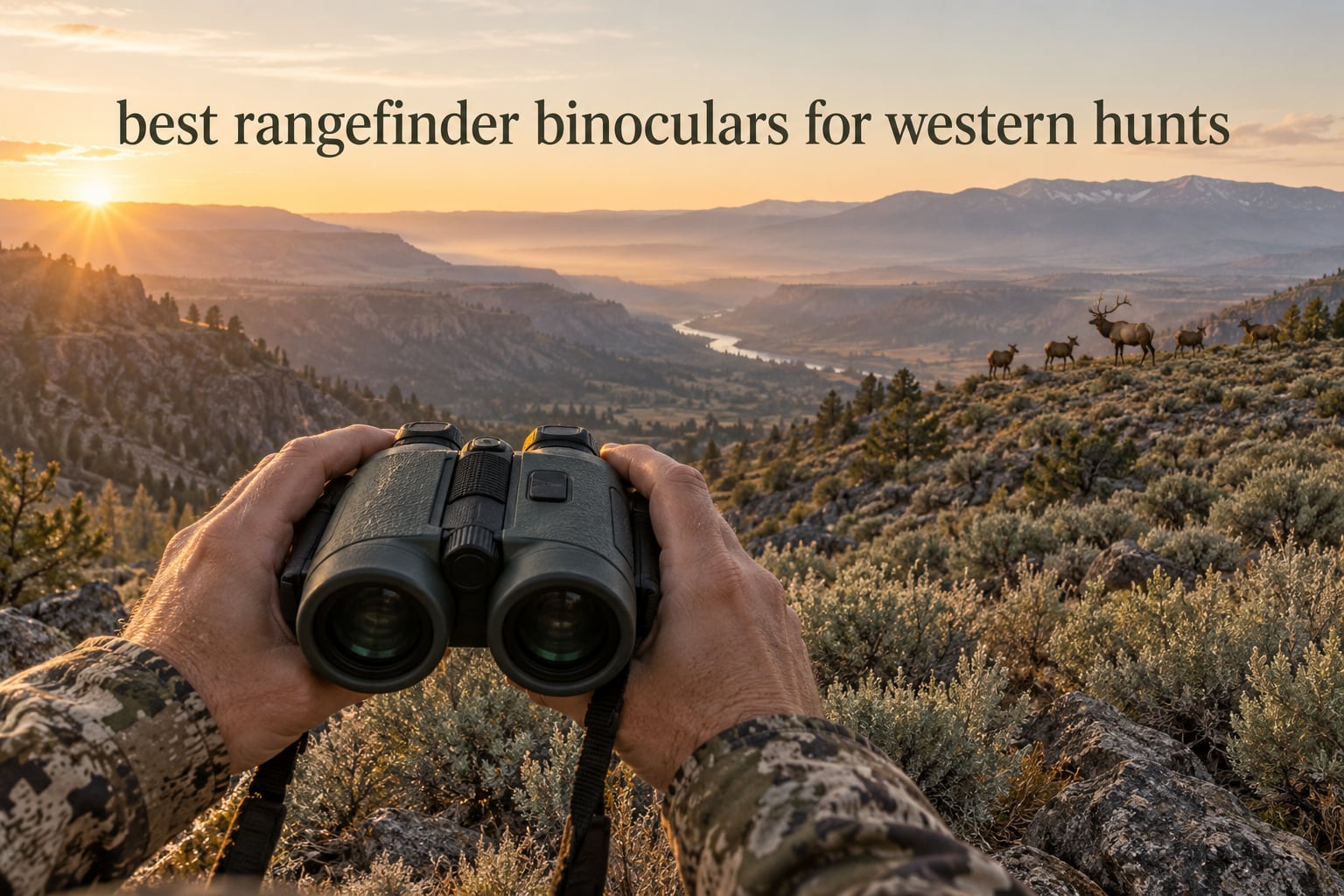
A rangefinder binocular is a binocular with a laser rangefinder built into the chassis, so you can look at game, get a yardage in the same view, and dial your holdover without putting a second device in your hands. That combination matters more in western hunting than anywhere else, because the shot is usually decided at a distance where you can see an animal but cannot confidently judge how far away it is.
The best rangefinder binoculars for western hunts are not all the same purchase. A hunter glassing a bench at first light for elk needs light gathering and magnification, a hunter packing into a drainage with a mule deer at 400 yards cares far more about weight, and a bowhunter shooting downhill needs angle compensation more than almost anyone else. We ranked all ten picks below on the conditions that actually show up in the field.
If you are still deciding whether you need the ranging function at all, or you want a plain optic instead, our best binocular picks for hunting covers conventional glass separately. Every one of them puts a laser in the same package as the lenses.
Table of Contents
What Is a Rangefinder Binocular?
A rangefinder binocular combines a binocular optic with a laser rangefinder. It fires a Class 1 eye-safe laser at your target, measures how long the reflected signal takes to return, and calculates distance from that round trip. Magnification and objective lens size decide how precisely you can isolate the animal; the laser decides the yardage. Advanced models add a ballistic solver that turns that yardage into a firing solution using your rifle, bullet, and environmental data.
Multi-pulse signal averaging is what keeps the readout honest when you range an elk standing against a treeline. The unit fires several pulses and filters out returns from branches, brush, and the rock face behind the animal, so the number you get back is the animal and not the scenery.
One more term matters before you read the picks: rated range versus real range. Every manufacturer quotes maximum distance against a reflective surface, which is a wall, a road sign, or a truck tailgate. On live animals, published field guidance puts dependable performance at roughly 60 to 70 percent of the rated figure, and lower still in fog, rain, smoke, or heat shimmer over open benches.
Do You Need a Rangefinder Binocular?
Yes, if you regularly evaluate game past 300 yards, want to call yardage out loud to a partner, or hunt steep broken ground where angle compensation decides whether you hit high or low. No, if you shoot inside 150 yards, hunt mostly in timber at close range, or already carry a handheld laser rangefinder that satisfies you.
The honest case for the combo is speed. One less movement between seeing the animal and knowing the distance removes a step where things go wrong, and users on hunting forums describe that gain in exactly those terms. The honest case against it is glass: at the same money, a pair of dedicated binoculars plus a handheld LRF usually gives you a better optic, and you carry two things instead of one.
Our framework for that decision sits further down in the buying guide, and it comes down to how far you shoot, how steep the ground is, and whether you are already packing a rangefinder.
Top 3 Picks for Best Rangefinder Binoculars for Western Hunts in October

Vortex Fury HD 5000 10×42
- 5000 yd reflective range
- HCD angle compensation
- Unlimited lifetime warranty

Astra Optix HBX1600B 10×42
- 800 yd on deer
- 0.15 second ranging
- Ballistics and archery modes
All 10 Picks Side by Side in 2026
| Product | Specifications | Action |
|---|---|---|
| Vortex Fury HD 5000 10×42 |
|
Check Latest Price |
 Vortex Viper HD 3000 Vortex Viper HD 3000 |
|
Check Latest Price |
| Astra Optix HBX1600B 10×42 |
|
Check Latest Price |
 Bushnell Fusion X 10×42 Bushnell Fusion X 10×42 |
|
Check Latest Price |
 Halo Optics K2000 10×42 Halo Optics K2000 10×42 |
|
Check Latest Price |
 Leupold BX-4 Range HD TBR/W 10×42 Leupold BX-4 Range HD TBR/W 10×42 |
|
Check Latest Price |
 Burris SignatureHD LRF2000 Burris SignatureHD LRF2000 |
|
Check Latest Price |
 SIG Sauer Canyon 10×42 SIG Sauer Canyon 10×42 |
|
Check Latest Price |
 Vortex Ranger HD 3000 10×42 Vortex Ranger HD 3000 10×42 |
|
Check Latest Price |
 Swarovski EL Range 10×42 Swarovski EL Range 10×42 |
|
Check Latest Price |
How We Chose These Rangefinder Binoculars
We did not carry these ten into a canyon for a season, so this ranking is built on published specifications, owner review patterns, and the western conditions these units get used in. Here is the criteria list, in the order it broke the ties.
Ranging distance on animals, not on walls. Reflective maximums are close to meaningless in the field, so we weighted deer, elk, and non-reflective figures far more heavily.
Ranging speed and target modes. Scan and hold modes matter when an animal is moving across a bench or partially screened by timber.
Angle compensation. Every pick here computes horizontal distance, but accuracy and how clearly the readout presents it vary.
Glass and light gathering. Objective lens size, exit pupil, coatings, and how the display holds up at dawn and dusk.
Readout visibility. A black-on-dark reticle that disappears against shadowed timber is a bigger problem than a slightly soft edge.
Weight and pack cost. Relevant whether you day hunt from a truck or carry glass in on a mule.
Water sealing and shock resistance. Mountain weather is wet, and rimrock glassing is hard on binoculars.
Warranty scope. Especially whether the electronics and the body are covered separately, a question buyers rarely check before committing.
1. Vortex Fury HD 5000 10×42 – Best Overall for Western Hunts
Vortex Fury HD 5000 10×42 Laser Rangefinding Binoculars
10x42
5000 yd reflective range
916 g
Unlimited lifetime warranty
Pros
- HD optical system with XR fully multi-coated lenses
- Red OLED display with adjustable brightness
- HCD angle compensation plus LOS mode for precision
- Unlimited unconditional lifetime VIP warranty
Cons
- Heavy at 916 g for a full day of glassing
- Rubber armor adds bulk
Best for: rifle hunters glassing open benches at first light who want one device to do the whole job. The Fury HD 5000 is the pairing in this list that most completely covers western conditions, and the owner reviews describe it that way, repeatedly citing both the glass and the ranging as reasons it stays in the pack.
Optically it is a 10×42 roof prism with fully multi-coated lenses, a 4.2 millimeter exit pupil, and 16 millimeters of eye relief, which means it holds a reasonably bright image at dawn without the bulk of a 50 millimeter objective. The red OLED readout with adjustable brightness is readable in low light, which is where cheaper units tend to fail you.
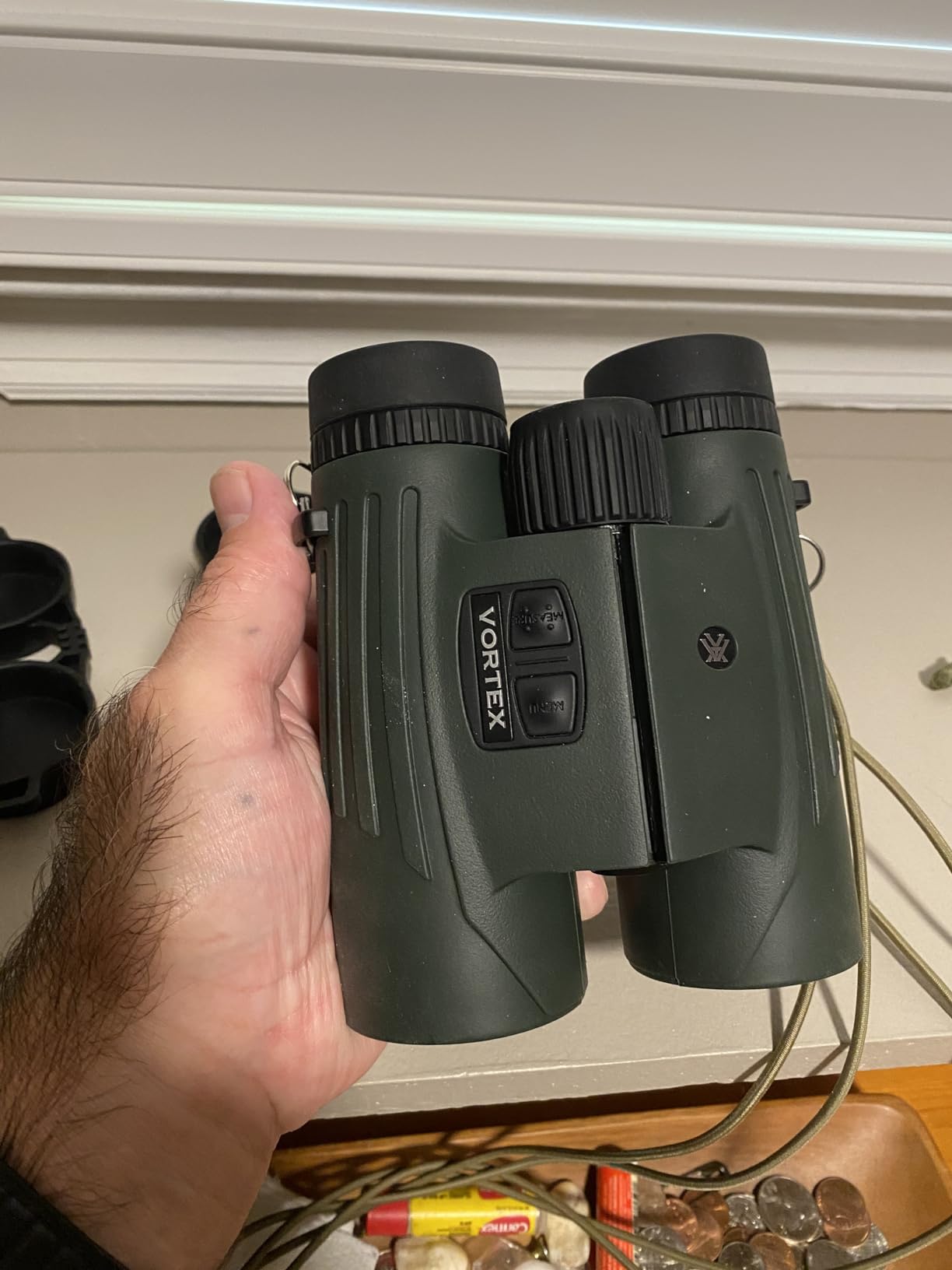
Ranging is where it separates itself. HCD mode gives you the horizontal component for downhill and uphill shots, and LOS mode gives you the raw line-of-sight number when you are shooting level across a flat. Owners also point out the best and last target modes, which help when several animals are stacked at different distances and you want the nearest bull rather than the farthest elk.
Where the Fury HD 5000 earns its place
It is the pick when your hunt involves glassing at distance, calling yardage, and adjusting for angle without breaking stride. The rated 5000 yard reflective figure puts its dependable large-game ranging in the same territory as the other premium units here, and the tripod-adaptable body lets you settle in on a bench when a herd is feeding across an open meadow.
The warranty is part of the deal. Vortex backs it with an unlimited, unconditional, transferable lifetime VIP warranty, and that coverage is one of the most frequently cited reasons buyers on hunting forums name the brand.
Where it will frustrate you
If your glassing is done on foot from a drainage, or if you plan to hold these up for four hours straight, the weight adds up faster than with the lighter combos here. The rubber-armored body also feels larger in a pack than the number suggests, so budget real space rather than the spec sheet.
2. Vortex Viper HD 3000 – Best Value Handheld Rangefinder
Vortex Viper HD 3000 Laser Rangefinder
7x25 monocular
3000 yd reflective
9.1 oz
CR123 battery
Pros
- Only 9.1 oz so it fits on a chest harness or a lanyard
- Red OLED display reads well at dawn and dusk
- Four target modes including ELR for bowhunting
- IP54 waterproof and shockproof
Cons
- 7x magnification is not enough to judge antlers at range
- Monocular design means no binocular image
Best for: hunters who want the ranging function and a great display without the weight of a full binocular, and who already own good glass. At 9.1 ounces the Viper HD 3000 is the opposite problem from the Fury: you can carry it all day on a lanyard, and it disappears on your chest when you are moving.
It is a 7×25 monocular, not binoculars, and that distinction drives the whole verdict. You get one eye, 7x, and a red OLED display with HD optics and ArmorTek coatings. The display is the star here, and reviewers consistently call it clear and easy to read in low light.
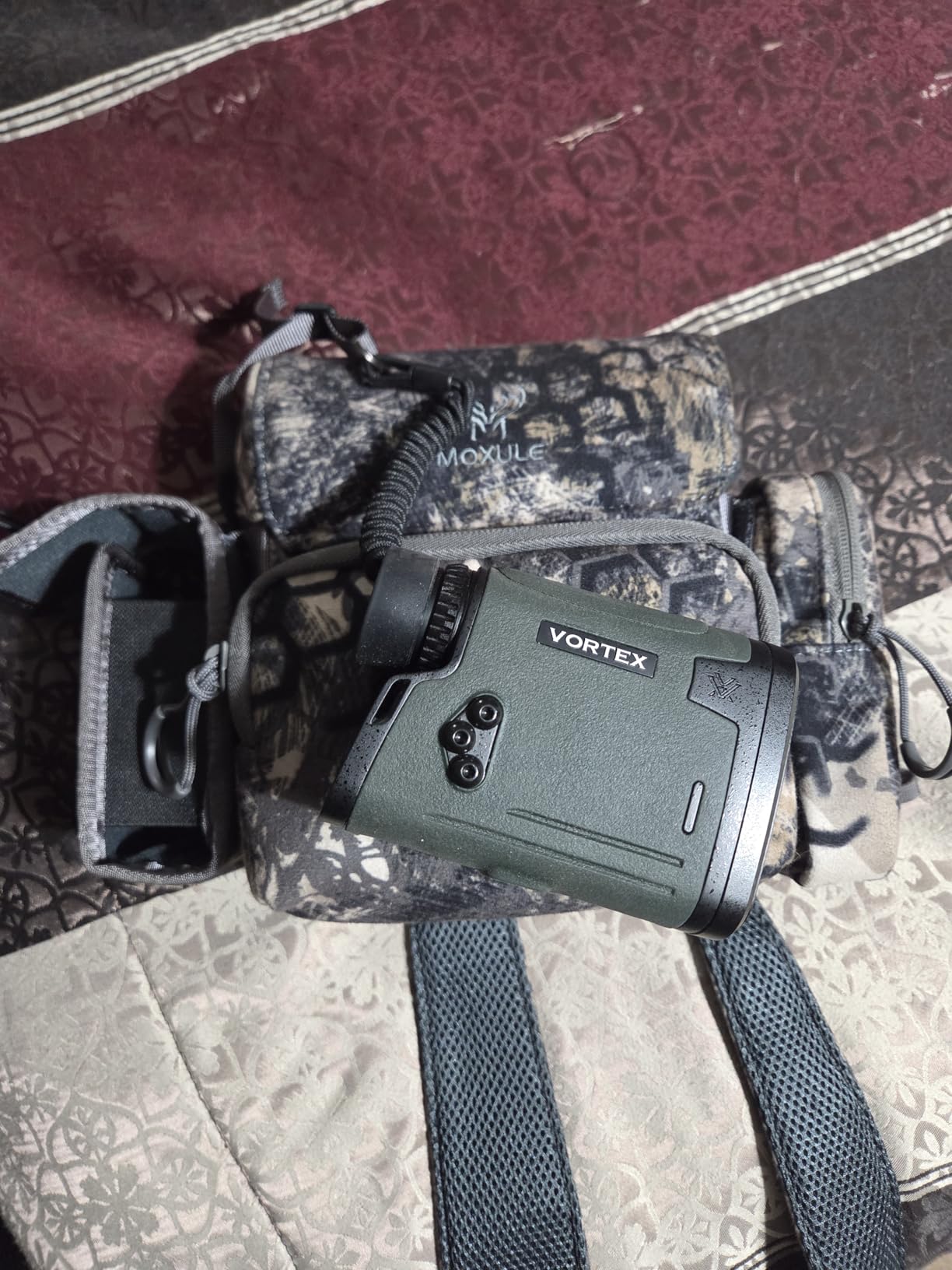
Ranging covers 3000 yards on reflective targets with four target modes, including normal, first, last, and ELR, plus HCD and LOS ranging modes. For a hunter who already owns a solid 10×42, adding this is a small, cheap way to get holdover data on moving animals without giving up the binocular view.
It comes with a soft carry case, two lanyards, a lens cloth, a utility clip, a hex wrench, and a CR123 battery. Mount it on a chest harness or a pack lid and use it to confirm distance on animals you have already found with binoculars. The four target modes help when a group of animals is spread out at different distances.
The one thing to plan around is that 7x is not a hunting magnification. It is a ranging magnification, and its job ends the moment you have a number.
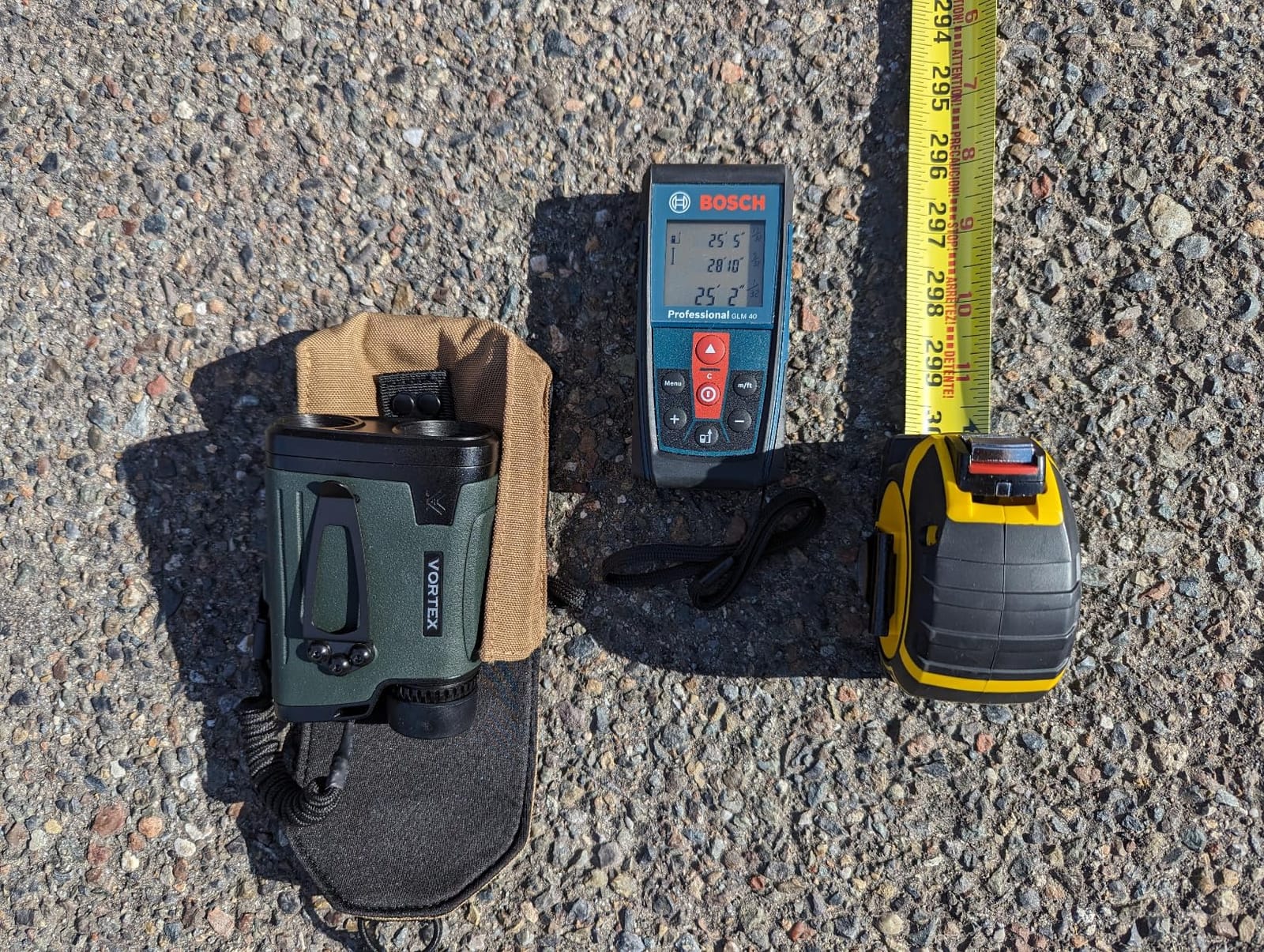
Best used as a second optic
The lightweight body and long reflective range make it a good scout on the move, and because it costs 9.1 ounces it can live on your chest permanently. Buyers overwhelmingly pick one of these alongside dedicated glass rather than instead of it, which is the way to get the benefit without giving up a proper binocular image.
Not a substitute for binocular glass
At 7x with a 25 millimeter objective, this cannot do what a 10×42 does at dawn on a dark elk in timber. Judge it as a ranging tool that happens to have a small optic attached, not as a replacement for a hunting binocular, and the complaints in the reviews make sense in that light.
3. Astra Optix HBX1600B 10×42 – Budget Rangefinder Binocular with Ballistics
Astra Optix HBX-1600B 10×42 1760-Yard Laser Rangefinder Hunting Binoculars
10x42
800 yd on deer
0.15 s ranging
860 g
Pros
- Ballistic
- archery
- gun
- and golf modes in one unit
- Ranging resolves in 0.15 second
- All-glass fully multi-coated optics with silver-coated prisms
- Comes with a harness and case
Cons
- Black reticle is hard to read against dark backgrounds
- Chest harness straps run short on larger frames
Best for: first-time rangefinder buyers who want a real 10×42 with a full mode set and do not want to spend premium-tier money. The HBX1600B carries more modes than several more expensive pairs, which is the most obvious way it separates itself.
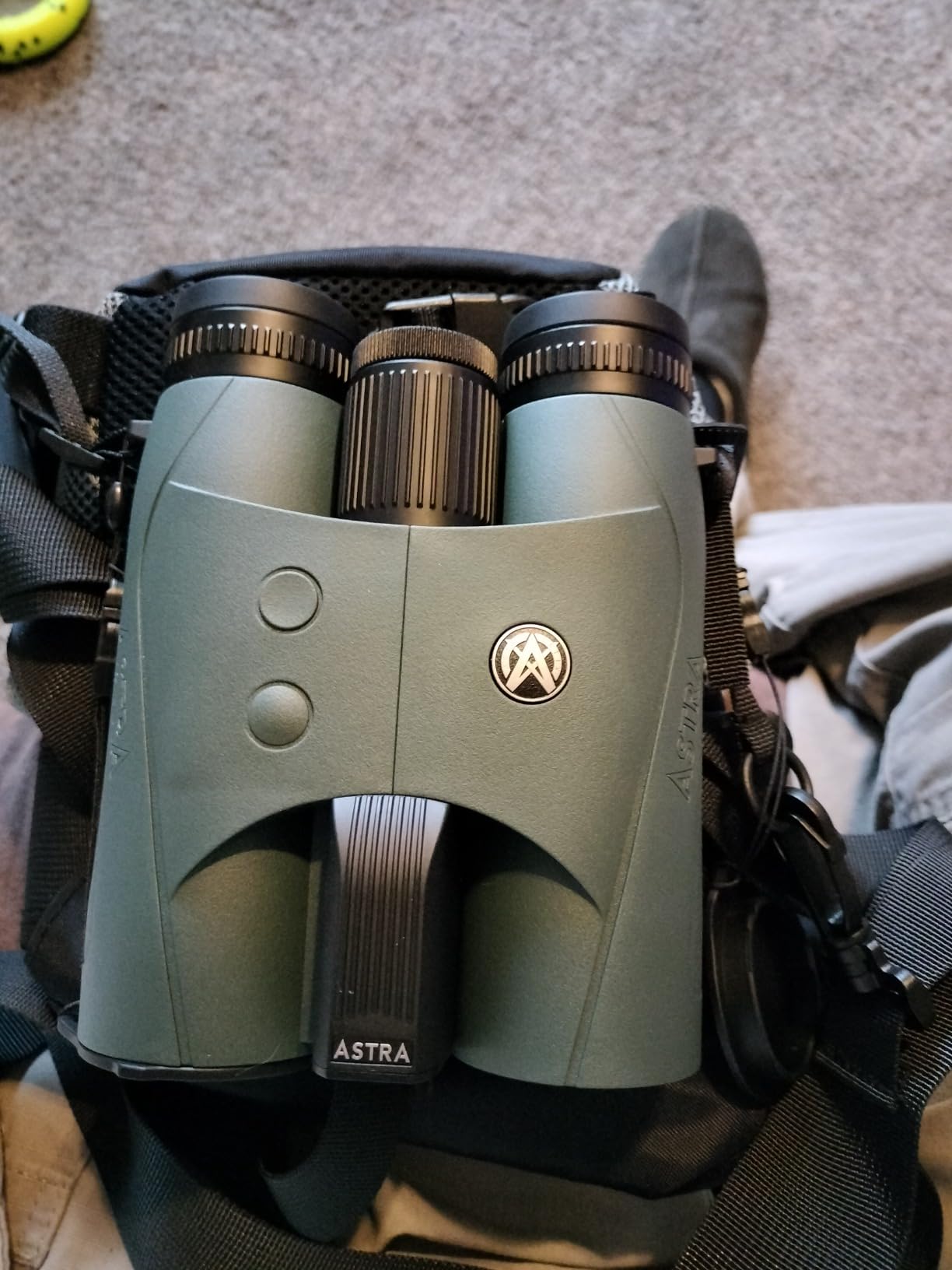
It is a 10×42 roof prism, fully multi-coated, with a 4.2 millimeter exit pupil and 15.1 millimeters of eye relief, weighing 860 grams. Ranging breaks down by target the way a hunter actually thinks about it: up to 1760 yards reflective, 1000 yards on tree, and 800 yards on deer, resolving in 0.15 second.
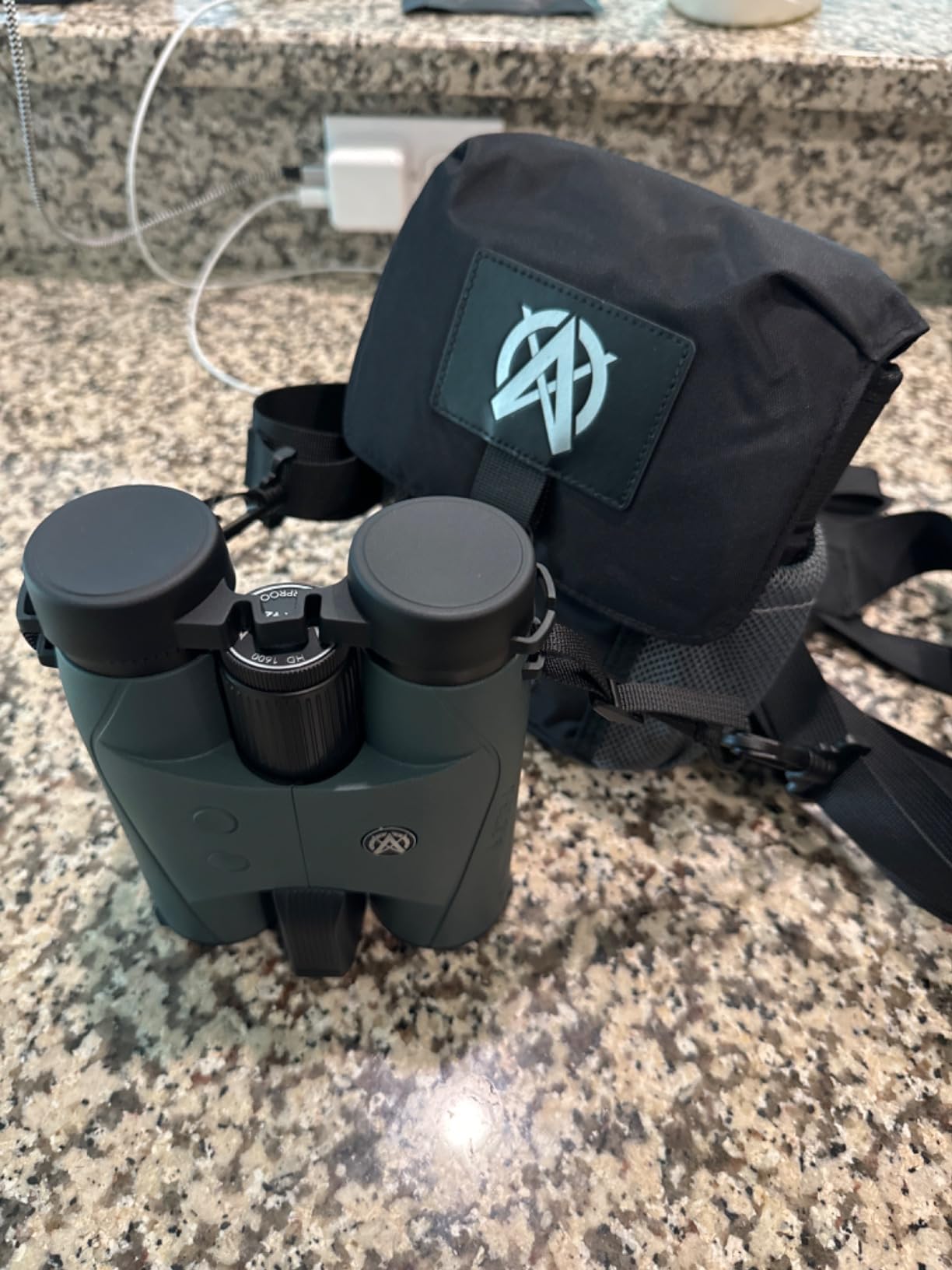
The mode list is the differentiator. You get ballistics, scan, horizontal angle-corrected, angle, archery, gun, and golf modes, which covers bow and rifle without menu diving. For a bowhunter, having a dedicated archery mode and an angle-corrected readout in the same body is genuinely useful rather than decorative.
Two real drawbacks show up in the reviews. The black reticle is difficult to read in low light and against dark backgrounds, which is exactly when you are most likely to be using it, and some users report inconsistent readings in extreme cold and wind. The included chest harness also runs short for larger frames.
Where the mode list pays off
If you bowhunt, the archery and angle-corrected modes save you from doing holdover math in the field. Rifle hunters get a gun mode and a scan mode for animals on the move, and the fast 0.15 second refresh means you are not watching a number crawl while a deer walks out.
Watch the display in low light
There is no illuminated reticle option here, so testing it in real dawn conditions before committing is worthwhile. In full daylight and shaded timber it performs fine, and the glass is good for the class, but the readout is the weak point when light drops.
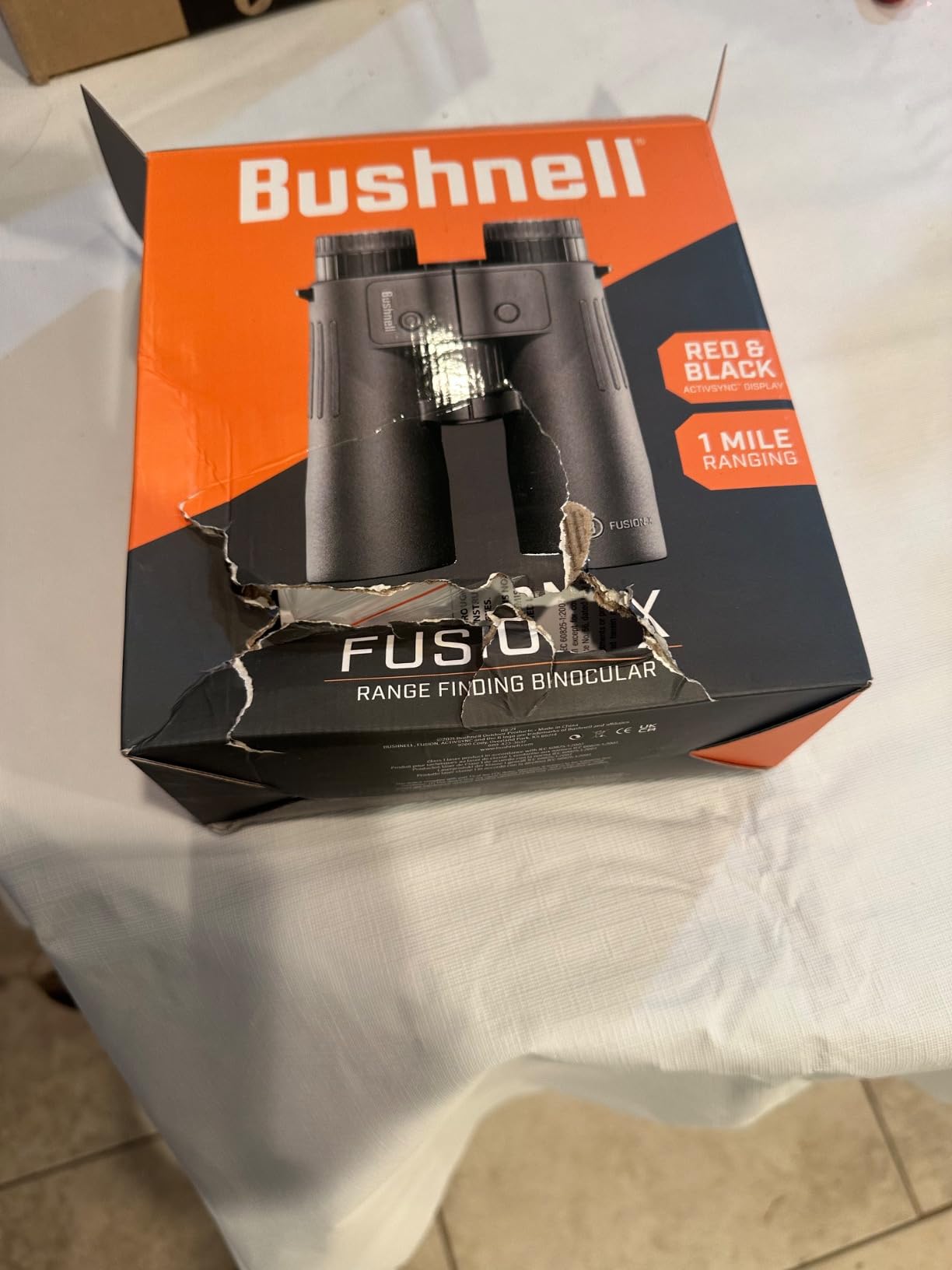
4. Bushnell Fusion X 10×42 – Best for Close Cover and Timber
Bushnell Fusion X 10x42mm Ranging Binoculars, ARC Technology
10x42
700 yd range
IPX7
ARC angle compensation
Pros
- ActivSync display auto-adjusts contrast for the conditions
- ARC gives true horizontal and line-of-sight distance
- IPX7 sealing rated to 1 m for 30 minutes
- HDOS optical system
Cons
- Shortest rated range in the binocular group at 700 yd
- Heavy at 2.2 lb for close-range work
Best for: mule deer hunters working close cover in timber and creek bottoms where the shot is under 200 yards and the glassing happens in low, flat light. The Fusion X handles the display problem better than most budget units, and its ARC compensation covers the steep banks you find along drainage edges.
The ActivSync display is the feature that changes daily use. It moves the reticle from black to red automatically depending on the light, which solves the readability complaint that dogs most cheaper rangefinders. On top of that, HDOS high-definition optics give a clean image at 10×42.
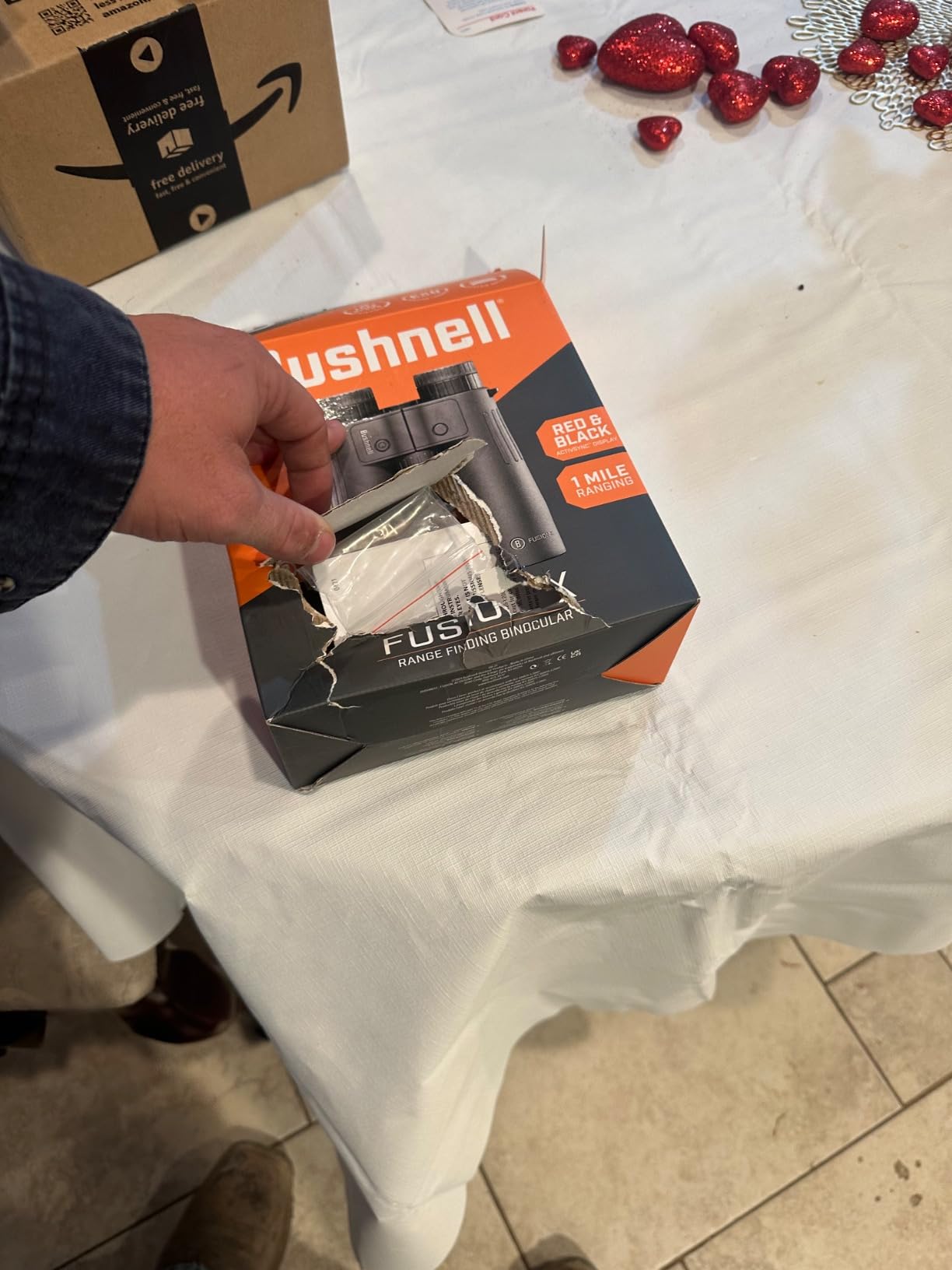
ARC, or angle range compensation, is rated at plus or minus 1 degree of angle accuracy and reports true horizontal distance alongside line-of-sight distance. That matters more in western country than the specification suggests, because the shot you take off a bench above a drainage is rarely level.
The honest limitation is range. At 700 yards rated, this is the shortest reach of the binocular units here, so it is not the tool for calling a herd of elk at the far end of an open flat. At 2.2 pounds it is also one of the heavier bodies in the group, which is an odd trade for close-range work.
Good for shaded timber glassing
The auto-adjusting display is the reason to pick this one for dense woods and creek country. When the light drops under canopy and the contrast between animal and background is low, a display that changes with you removes a whole category of frustration, and IPX7 sealing shrugs off the weather that comes with that country.
Not the pick for open benches
If your hunt involves evaluating animals at long range across open ground, 700 rated yards is the ceiling and the realistic animal figure is lower still. Pair it with a handheld unit if you need distance data at range, and use the binos for what they do well.
5. Halo Optics K2000 10×42 – Best Starting Point on a Budget
Halo Optics K2000 Rangefinder Binoculars 10x 42mm
10x42
2000 yd range
IPX7
Magnesium chassis
Pros
- Fully multi-coated glass that reviewers compare favorably to pricier pairs
- Angle Intelligence reports true horizontal distance
- IPX7 waterproof and fogproof sealing
- Durable magnesium chassis
Cons
- Black LCD is not illuminated and is hard to read in bright light
- No tripod mount because the battery compartment occupies that spot
Best for: a hunter buying their first rangefinder binocular who wants a genuine 10×42 with a long rated range at the low end of the market. Owners report ranging results between roughly 1300 and 2180 yards in practice, which puts its real capability well above what the entry price suggests.
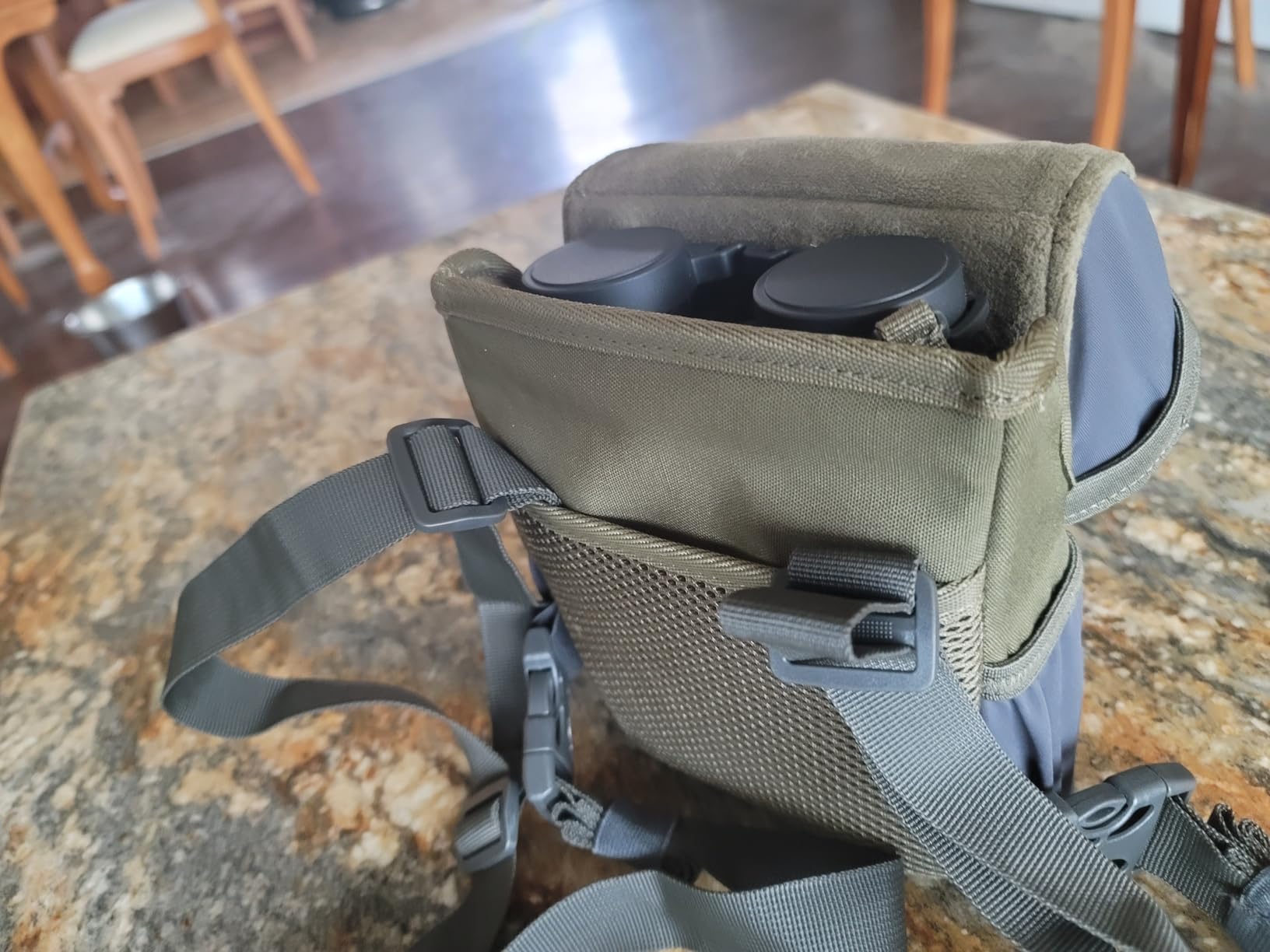
The build is more serious than the price implies. It has a magnesium chassis, fully multi-coated optics, a 4.2 millimeter exit pupil, and plus or minus 5 diopters of adjustment, with IPX7 waterproof and fogproof sealing. Included is a chest harness case with extra pockets and tethered objective lens caps.
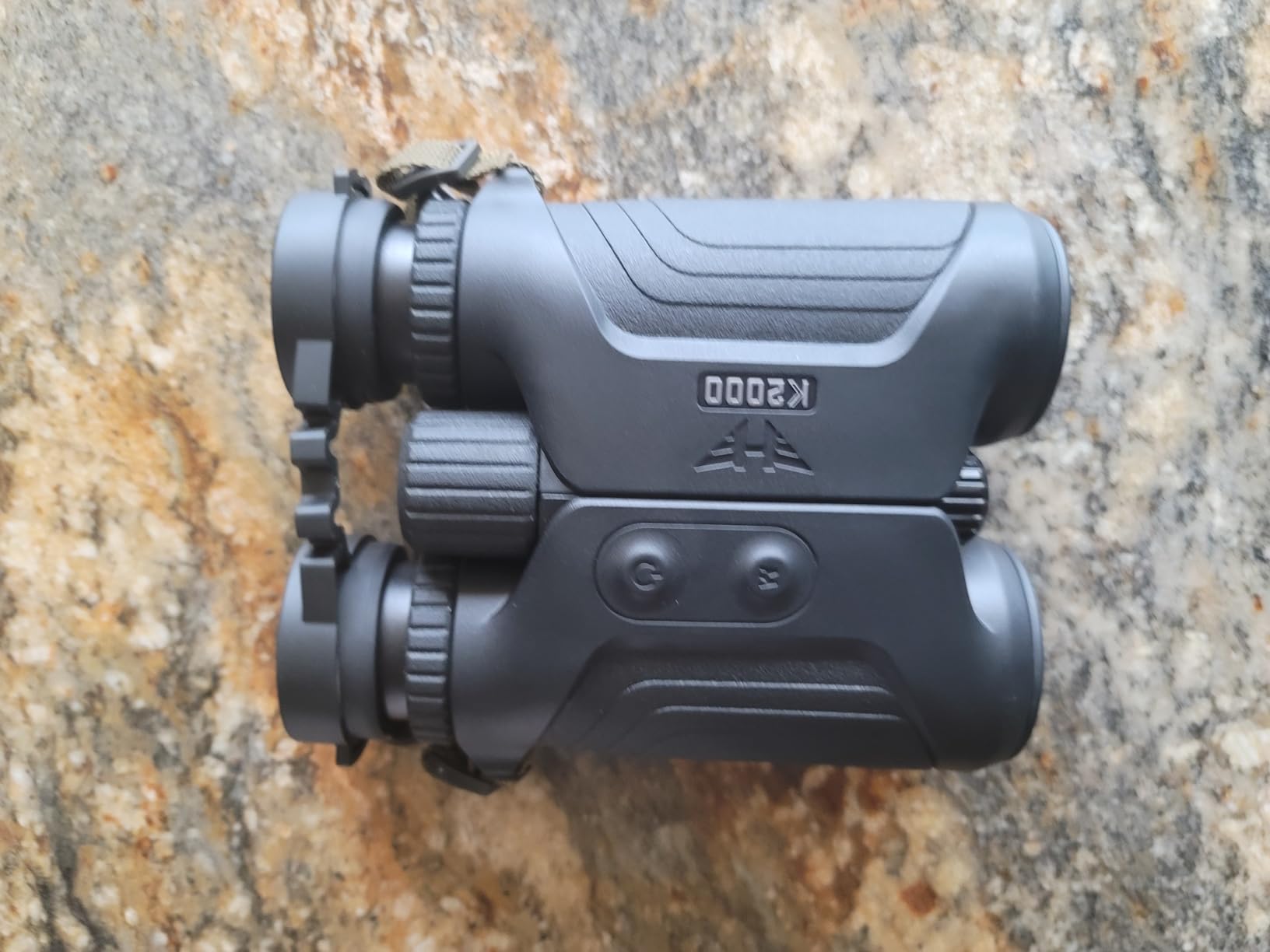
Angle Intelligence computes the true horizontal distance, and scan mode gives you continuous ranging as an animal moves, which is useful when you are tracking a buck across a bench. The 2000 yard rated ceiling sits comfortably above the mid-range units here on paper.
Two complaints recur. The display is black and unilluminated, which reviewers call hard to read in bright conditions, and there is no tripod mount because the battery compartment sits in the spot a tripod plate would use. Diopter adjustment and display focus also compete for the same control, which can take some getting used to.
Why the glass surprises people
Multiple reviews put the clarity on par with units costing considerably more, and the 10×42 format with a 4.2 millimeter exit pupil is the right pairing for dawn. If your hunting involves moderate distances and you want distance data without a premium outlay, the K2000 covers the ground most people actually need.
Know your limits on a bench hunt
The absence of a tripod mount matters most for long glassing sessions on an open bench, where a steady view is the difference between seeing body structure and seeing a shape. If you expect to spend hours on a glass, budget for a rest or consider a tripod-adaptable unit instead.
6. Leupold BX-4 Range HD TBR/W 10×42 – Best for Ballistic Solutions
Leupold BX-4 Range HD TBR/W 10x42mm Range-Finding Binocular Shadow Gray (182883)
10x42
TBR/W ballistics
2.4 lb
Lifetime guarantee
Pros
- True Ballistic Range with wind data built into the solution
- Elite optical system from a long-established optics maker
- Red OLED display with clear readings
- Waterproof and fogproof and guaranteed for life
Cons
- Heaviest body in the roundup at 2.4 lb
- Porro prism design is bulkier than roof prism bodies
Best for: precision rifle shooters and bowhunters who want the rangefinder to do the ballistic math rather than simply report distance. TBR/W, or True Ballistic Range with wind, is the reason this unit exists, and for shooters running a specific rifle and bullet it removes a step from the shot.
Optically it uses Leupold’s Elite Optical System with Guard-ion lens coating, a red OLED display, and a 10×42 configuration with a 4.2 millimeter exit pupil. The 29.5 degree field of view is generous, which helps you find game in the first place and then keep it in view while you work the numbers.
Two things to weigh before buying. It is the heaviest body in this roundup at 2.4 pounds, and reviewers note that multiple people returned units over the weight. It also uses a Porro prism design, which is bulkier than the roof prism bodies most of the premium units use.
What TBR/W actually does for you
Rather than giving you line-of-sight distance and leaving the rest to a dope card, this unit folds range, angle, and wind into the displayed solution. For a shooter who has already dialed in a rifle and knows the bullet, that is the feature that saves real time at the moment an elk steps out.
Weight is the honest objection
A lifetime guarantee and Leupold’s reputation carry a lot of trust, and the 4.7 rating across verified buyers reflects that. But carrying 2.4 pounds through a drainage or up a bench all day is a real cost, and if your hunts are walk-in rather than truck-based, weigh that before the feature list wins.
7. Burris SignatureHD LRF2000 – Best for Pack Weight
BURRIS SignatureHD LRF2000, Green/Gray (300351)
7x monocular
2400 yd reflective
6 oz
Burris Forever Warranty
Pros
- Only 6 oz so it costs almost nothing in pack weight
- Ranges 1100 yd on deer-sized game at plus or minus 1 yd
- Advanced angle compensation up to plus or minus 70 degrees
- Waterproof and fogproof nitrogen-filled body
Cons
- Monocular with 7x magnification only
- Mixed 1-star feedback in the reviews
Best for: backcountry hunters with a strict pack weight budget who want a rangefinder that costs nothing to carry. At 6 ounces, the SignatureHD LRF2000 is the lightest thing on this list, and its ranging figures are genuinely long for the size.
It reaches 2400 yards on reflective targets, 1600 yards on non-reflective targets, and 1100 yards on deer-sized game with plus or minus 1 yard accuracy. Advanced angle compensation is rated up to plus or minus 70 degrees, which covers the steep downhill geometry of a bench shot almost completely.
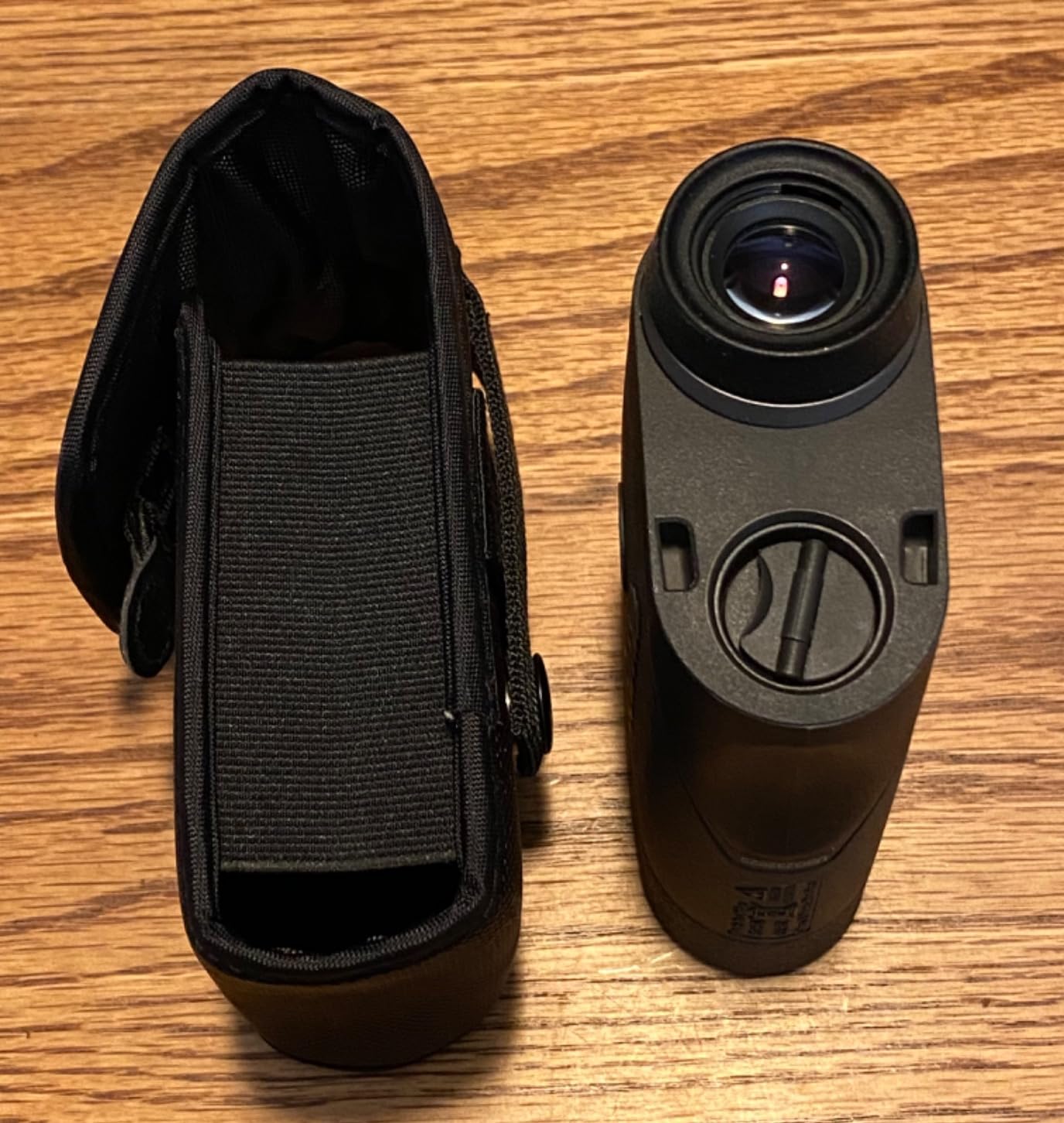
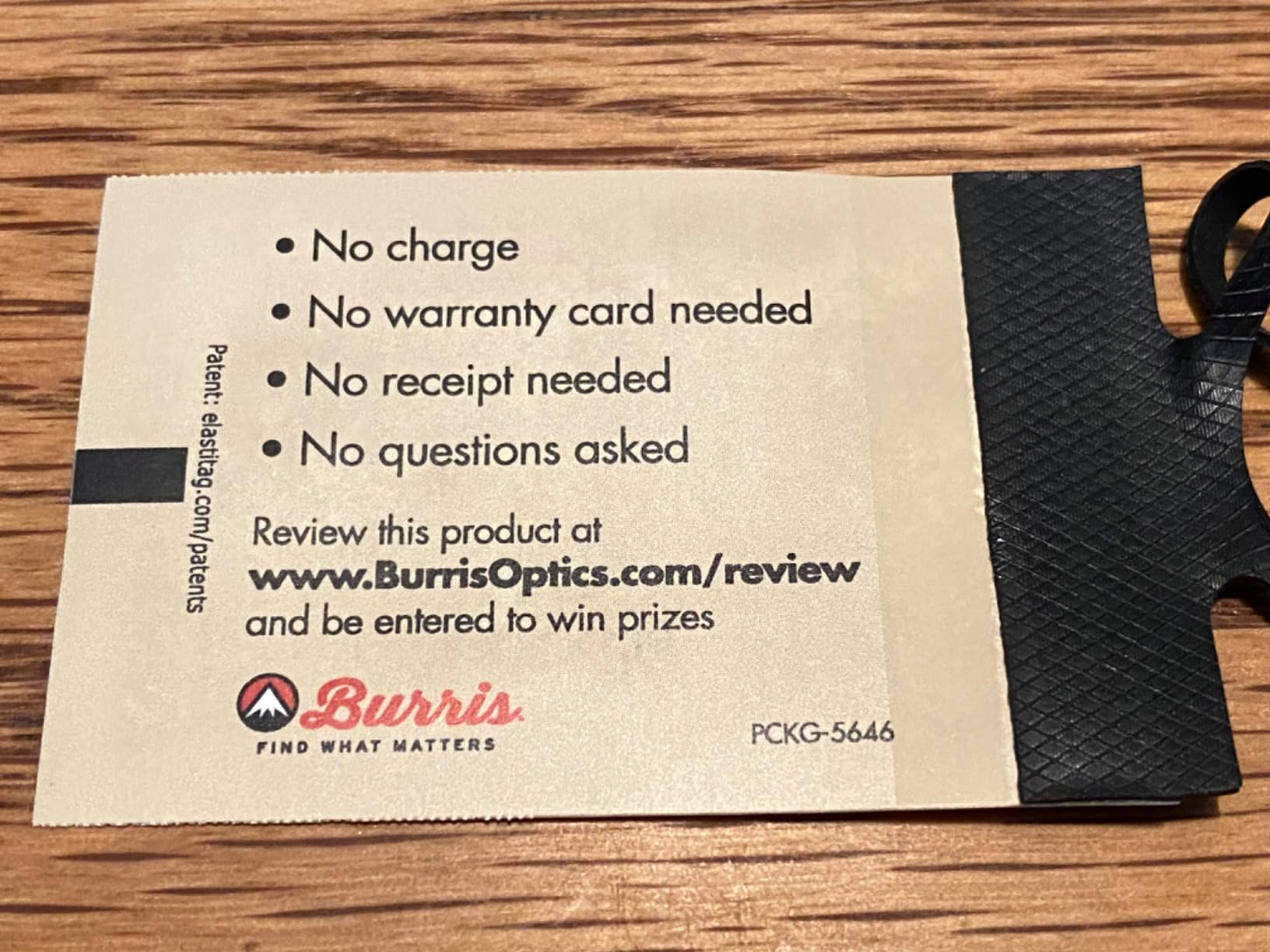
There are three custom ranging modes, including AUTO, SPORT, and HUNT, plus five display modes that cover horizontal distance and line of sight. The body is nitrogen-filled, waterproof, and fogproof with a rubber-armored housing, and it carries the Burris Forever Warranty, which is transferable and no-questions-asked.
The limitation is optical. This is a 7x monocular, so you are looking through one barrel at low magnification. It tells you distance very well and it tells you almost nothing about antler structure or body condition, which is the whole job of a 10×42 on a big-game animal.
A rangefinder that costs nothing to carry
On a multi-day trip where every ounce is a decision, 6 ounces is a rounding error. Angle compensation to plus or minus 70 degrees is genuinely useful when you are shooting off a steep bench, and the three ranging modes let you tune the readout to a moving animal or a steady one.
Pair it with real glass
Treat this as the ranging half of a system and bring a proper 10×42 for evaluation. Reviewers note a spread of ratings with a meaningful share of 1-star feedback, so buying with a straightforward return path matters more here than with the higher-rated units.
8. SIG Sauer Canyon 10×42 – Best for Long-Distance Ranging
SIG SAUER Canyon 10x42mm Laser Rangefinding Binoculars
10x42
4000 yd reflective
1500 yd on game
8 ballistic groups
Pros
- 4000 yd reflective and 1500 yd on game
- Ranges and updates four times per second in scan mode
- RangeLock captures closest
- furthest
- and most recent
- Eight onboard ballistic groups in MOA or MRAD
Cons
- Only one ballistic profile editable per critical review
- Display arrives on the lowest brightness setting
Best for: hunters working animals at real distance across open benches and ridges, where the number you get back has to be fast and accurate enough to act on immediately. The Canyon’s 4000 yard reflective rating and 1500 yard game rating put it near the top of this group for raw reach.
Lightwave DSP technology drives the ranging, and scan mode updates four times per second, so a moving animal produces a live number rather than a sequence of stale readings. RangeLock adds closest, furthest, and most recent options, which is how you pick a specific bull out of a group.
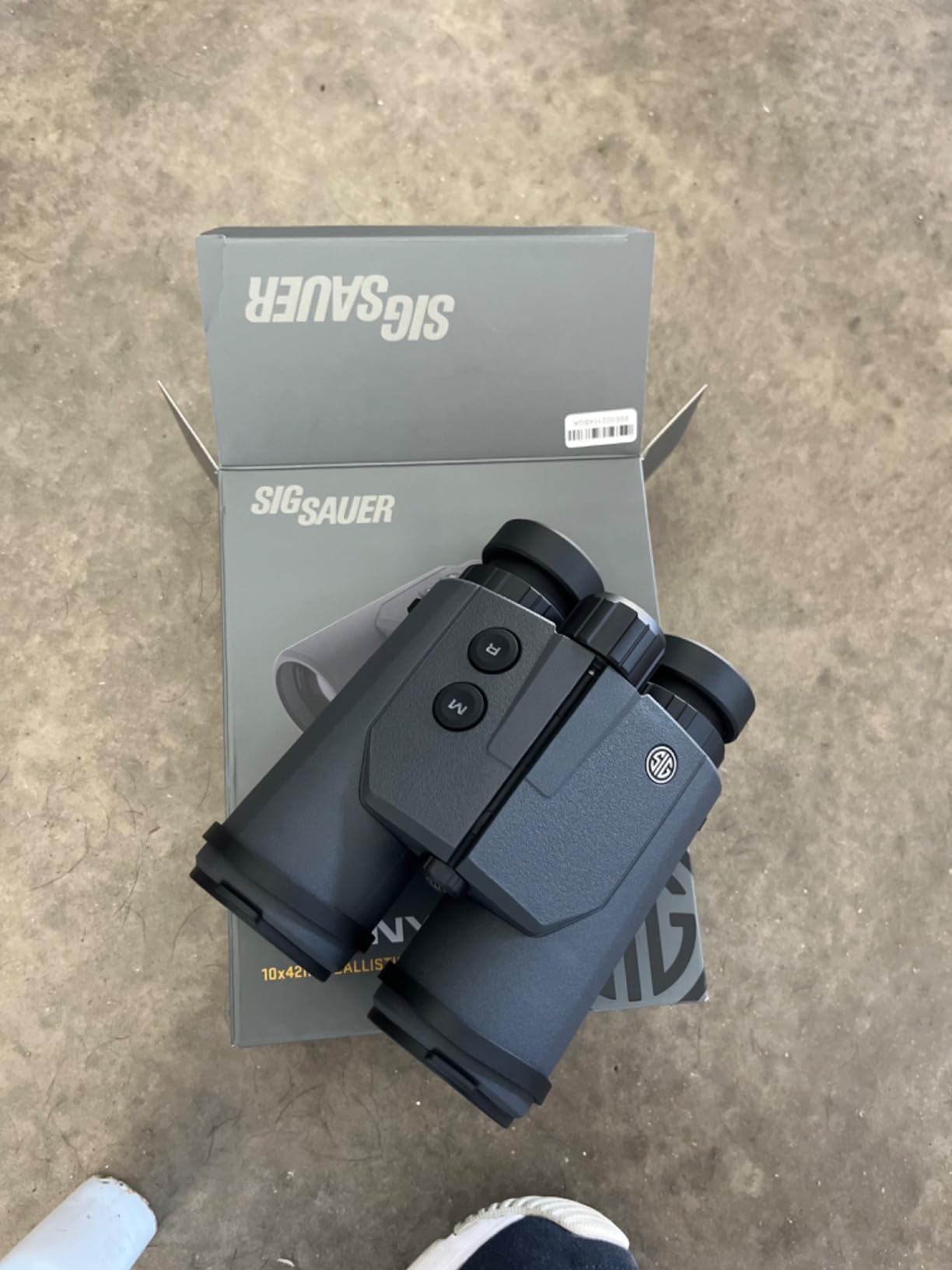
On the ballistic side there are eight onboard groups in MOA or MRAD, plus line of sight, angle modified range, ballistics, and archery modes. SpectraCoat anti-reflection coatings handle the light transmission job, and the body is a 10×42 roof prism with a 4.2 millimeter exit pupil, 15 millimeters of eye relief, and a tripod mount.
The complaints are specific. The display is set to the lowest brightness by default and needs raising before dawn glassing, and reviewers report that only one ballistic profile is editable, which limits you if you shoot one rifle and one bullet and never change. The warranty is a manufacturer warranty rather than the lifetime cover on the Vortex and Burris units.
Built for animals on the move
A four-times-per-second scan rate and RangeLock are the features that matter when an elk is walking rather than standing. Combined with 1500 yards of rated game range, this is the pick if you routinely need a call on an animal that is not posing, and the eight internal groups keep the data on the unit when your phone is out of battery.
Set the brightness before first light
Turning the display up is a thirty-second job, but doing it in the dark on a bench is not where you want to spend attention. The editable-profile limit is also worth weighing if you change rifles or bullets often, since you would be running one profile across setups.
9. Vortex Ranger HD 3000 10×42 – Best Japanese Glass in a Rangefinder
Vortex Ranger HD 3000 10×42 Laser Rangfinding Binoculars
10x42
3000 yd reflective
1500 yd on game
2 lb
Pros
- HD optical system with fully multi-coated Japanese glass
- 3000 yd reflective and 1500 yd on game
- HCD and LOS ranging plus scan and target modes
- Unlimited unconditional lifetime VIP warranty
Cons
- Heavy at 2 lb for long glassing sessions
- Menu button reliability issues reported
Best for: hunters who care about the image more than the feature list and want the warranty backing that comes with it. Reviewers single out the clarity and color definition of the HD glass as the strongest part of this package, and the lifetime VIP warranty removes the resale anxiety that forum buyers worry about most.
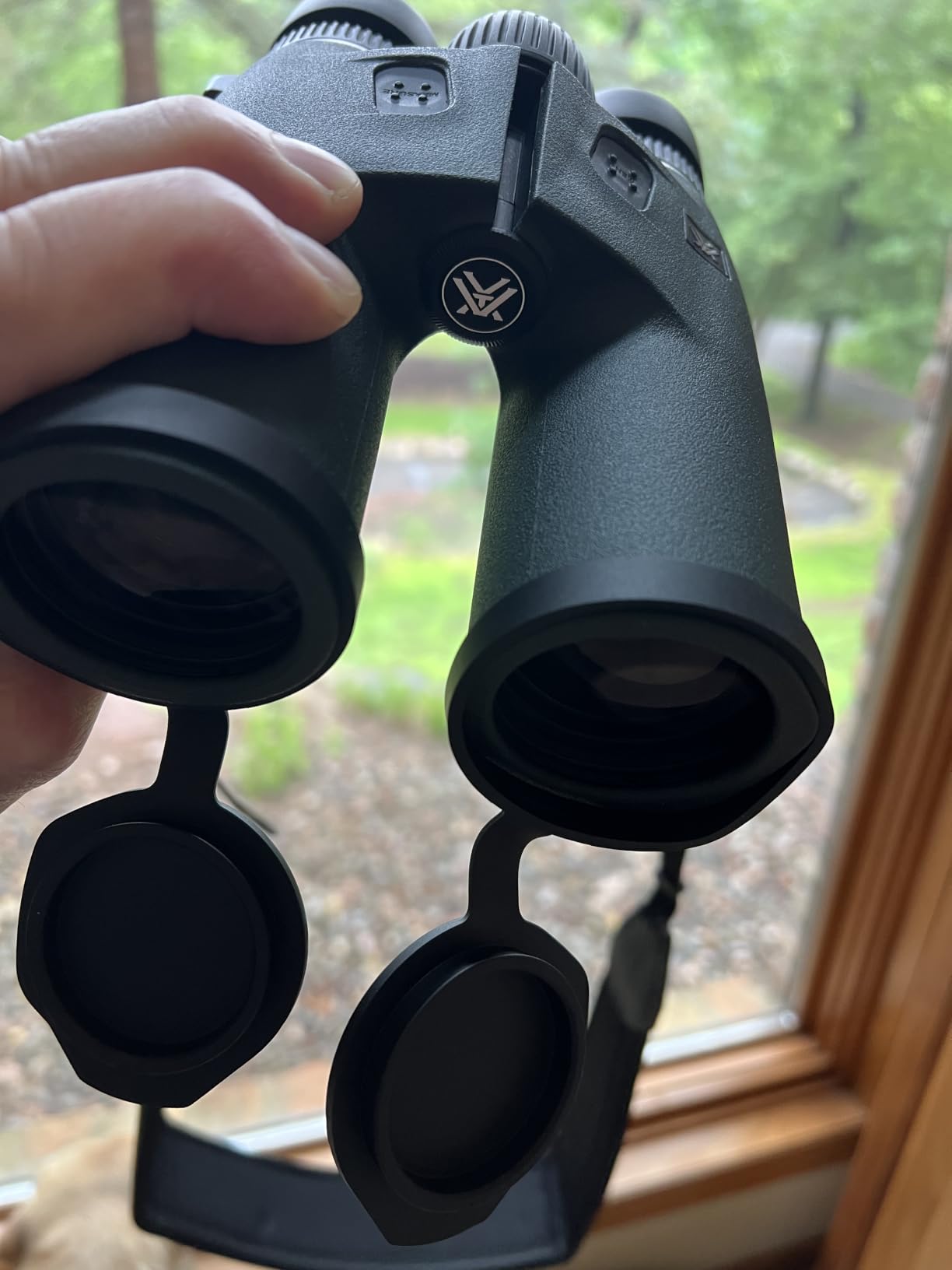
It is a 10×42 roof prism with a 4.2 millimeter exit pupil and 17 millimeters of eye relief, covered in fully multi-coated, scratch-resistant lenses. Ranging reaches 3000 yards reflective and 1500 yards on game, with HCD and LOS modes, scan mode, and normal, first, and last target modes.
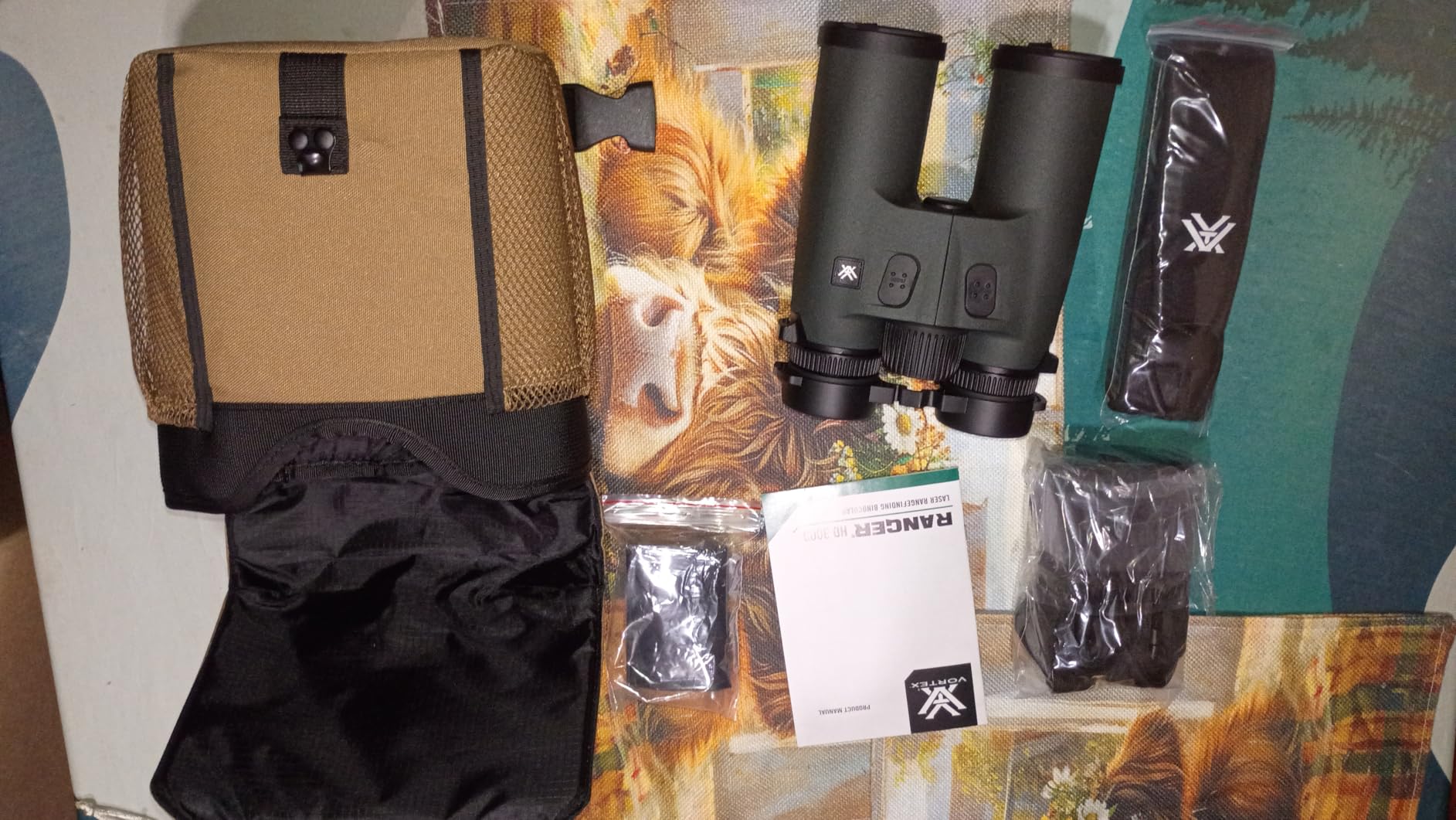
In the box you get a GlassPak harness, comfort neck strap, lens cloth, tethered objective lens covers, a rainguard eyepiece cover, and a CR123 battery, which is a more complete package than most of the competition includes. Mounting options cover a tripod plus helmet and harness setups.
The drawbacks are about handling and hardware. At 2 pounds it is heavy for extended glassing, reviewers report menu button reliability issues, the segmented digital font on the display is harder to read at a glance than a normal numeral display, and the CR123 battery compartment slides in rather than seating firmly.
Where the glass earns its keep
17 millimeters of eye relief means you are less likely to lose the full field when you remove glasses or shoot from behind a rifle scope, and the color definition matters when you are sorting a herd by coat and antler color at distance. This is the unit to pick if you will be on your face in the glass for hours.
Check the buttons and the battery
Menu button complaints are the most common negative theme in the reviews, so treat the controls as something to test in a shop if you can. The non-rechargeable CR123 is a fine choice for backcountry reliability, since you can carry spares, but confirm the compartment seats properly before you rely on it.
10. Swarovski EL Range 10×42 – Best Glass in the Lineup
SWAROVSKI OPTIK EL Range 10×42 – Binoculars – integrated Rangefinder green
10x42
90 percent light transmission
Tracking Assistant
HD field flattener
Pros
- Swarovision optics rated at 90 percent light transmission
- HD field flattener lenses with a large field of view
- Tracking Assistant guides you to a moving target
- Customizable ballistic profiles through the configurator app
Cons
- Water resistant rather than IPX7 rated
- Full ballistic customization needs the app
Best for: shooters who glass first and shoot second, and who are willing to pay for the best image available. Swarovision optics are rated at 90 percent light transmission here, with HD field flattener lenses across a large field of view, and that is the reason this unit leads on image quality.
The EL Range TA adds a Tracking Assistant that guides you toward a moving target with distance and directional indicators, and ballistic profiles are customizable through the Swarovision configurator app. If you change bullets, calibers, or zero between hunts, that flexibility is the practical advantage over fixed internal group lists.
Two practical notes. It is water resistant rather than rated to IPX7, which matters if you expect to be caught out in rain or handling it near a creek. And the published weight figure of 6 ounces does not match what a 10×42 binocular should feel like in the hand, so verify the actual weight with the manufacturer before packing for a backcountry trip.
Why glass quality shows up out west
Light transmission is the number that decides whether you can resolve body structure and antler points on a shadowed animal at 500 yards. A 90 percent rated figure with field flattener glass, spread across a large field of view, is what keeps an elk identifiable in the last usable light of the evening, and the color fidelity makes a browse-and-bug distinction possible at range.
Where the cost and the sealing bite
The published 4.3 rating reflects limited real-world review volume rather than a defect, since this model does not see the same number of owners as the units below it. The water-resistance rating is the more practical concern in mountain weather, and if you hunt in rain or river country, verify the sealing before committing.
Rangefinder Binocular Buying Guide for Western Country
10×42 versus 8×42, and why 10×32 is the wrong call
For western deer and elk, 10×42 is the better default. The extra magnification over 8x lets you confidently identify antler points and body structure at 500 yards, and 42 millimeters gathers enough light for the dawn and dusk glassing that actually finds game. 8×42 gives you a wider field of view, a larger exit pupil, and a lighter, steadier feel, which is better in timber and on long days on your feet.
Skip 10×32 for this kind of hunting. A 3.2 millimeter exit pupil is small, and the light you give up is exactly the light you need before sunrise and after sunset, which is when western game moves and when you are most likely to be looking at it. If pack weight is the reason you were considering 10×32, a handheld rangefinder paired with lighter 10x42s solves the problem without sacrificing light.
Objective lens: why we mostly land on 42 millimeters
A 10×50 maximizes light gathering and is the right call if you glass almost exclusively at dawn or dusk in heavy timber. The trade is weight, since 10×50 bodies run heavier than 10x42s, and in open western country where you need reach more than light, the 10×42 is the better all-round choice. Every binocular on this list is 10×42, which is a deliberate pattern rather than a coincidence.
Rated range versus real range on an animal
Take the reflective maximum and discount it hard. On live game, dependable performance lands around 60 to 70 percent of the rated figure, and that number drops further in fog, rain, smoke, or heat shimmer over an open bench. Forum users report the same failure pattern: units range well in most conditions and fail in heavy rain and thick fog, which is precisely the weather that defines a mountain hunt.
Range the rock face or tree behind the animal when branches break the beam. The unit filters out the near return, and you get a reading off the background instead of a misread off a spruce limb. Confirm any critical number with a second reading before you commit to a shot.
Angle compensation for downhill shots
When you shoot down into a drainage, your bullet drops more than the flat-ground distance suggests, because the true flight path is longer than the ground distance. A rangefinder measures line-of-sight distance, which is the hypotenuse of that triangle, and angle compensation uses the angle to give you the horizontal component. Every unit here does this, and the accuracy of the reported angle is what separates them, so it is worth checking against a known downhill shot before the season.
Combo unit versus binoculars plus a handheld LRF
Buy the combo if you shoot past 300 yards, hunt steep terrain, and want one device instead of two. Buy separate if glass quality per dollar matters most, if you already own excellent binoculars, or if you like having a rangefinder you can replace when the electronics age. If you hike a lot and want the lightest possible glassing kit, our compact binocular picks for hiking cover the small end of the market where weight rules the decision.
Whichever route you take, check the warranty on both halves. Coverage on the binocular body and coverage on the rangefinder electronics are often separate, and experienced buyers flag this as the question to ask before committing to a premium unit. Confirm which parts are covered before the season, not after a failure.
Frequently Asked Questions
Is a rangefinder worth it for hunting?
Yes, when you regularly shoot past 300 yards, want to call yardage to a partner, or hunt steep ground where angle compensation decides high versus low. No, when you shoot inside 150 yards, hunt mostly close-range in timber, or already carry a handheld laser rangefinder you trust. The main argument for the combo is speed, since you save a step between seeing the animal and knowing the distance.
How do rangefinder binoculars work?
The unit emits a Class 1 eye-safe laser at your target, measures how long the reflected signal takes to return, and calculates distance from that round-trip time. Multi-pulse signal averaging filters out false returns from branches and brush. Angle compensation then converts line-of-sight distance to horizontal distance so your bullet drops by the actual flat-ground range rather than the longer sloped path.
Which is better for deer hunting, 8×42 or 10×42?
For western deer and elk, 10×42 is the better default. The extra magnification lets you identify antler points and body structure at 500 yards, and 42 millimeters gathers enough light for dawn and dusk glassing. 8×42 offers a wider field of view, a larger exit pupil, and a lighter, steadier feel, which suits timber and close-cover deer. The 10×42 advantage grows as terrain opens up.
What are the best binoculars for western big game hunting?
A 10×42 configuration is the standard for western big game because it balances magnification, light gathering, and pack weight. Among rangefinder units, the Vortex Fury HD 5000 leads on the combination of glass, ranging modes, and warranty. Among all glass, our separate picks for the best hunting binoculars cover the non-rangefinding side, including 10×50 and 8×42 options for timber and heavy low light.
How accurate are laser rangefinder binoculars in fog?
Accuracy drops in heavy rain, thick fog, smoke, and heat shimmer, and that is a physics limit rather than a brand problem. Dense moisture and suspended particles scatter the laser and confuse the return signal, so readings become inconsistent or stop entirely. On clear days in dry mountain air, dependable performance on live animals generally lands around 60 to 70 percent of the rated distance.
Best Rangefinder Binoculars for Western Hunts: The Verdict
For most hunters, the Vortex Fury HD 5000 is the right answer. It pairs 10×42 HD optics with HCD and LOS ranging, a red OLED readout you can read at dawn, and an unlimited lifetime warranty that removes the biggest risk in this category. The 916 gram weight is the price of admission, and it is worth it on a bench-based hunt.
For a hunter on a tighter budget, the Halo Optics K2000 gets you a real 10×42 with 2000 rated yards, a magnesium chassis, and IPX7 sealing, while the Bushnell Fusion X is the smarter choice in close timber where its auto-adjusting display solves the low-light readout problem. If you want distance data without the weight, the Burris SignatureHD LRF2000 and Vortex Viper HD 3000 are the two handhelds to pair with real glass.
Whatever you choose, glass in the field beats specifications on a page, and the units covered in our hunting binocular guide are worth a look if the ranging function is not the priority. Test the display in real dawn light before you commit, and confirm that the warranty covers the electronics as well as the body.