
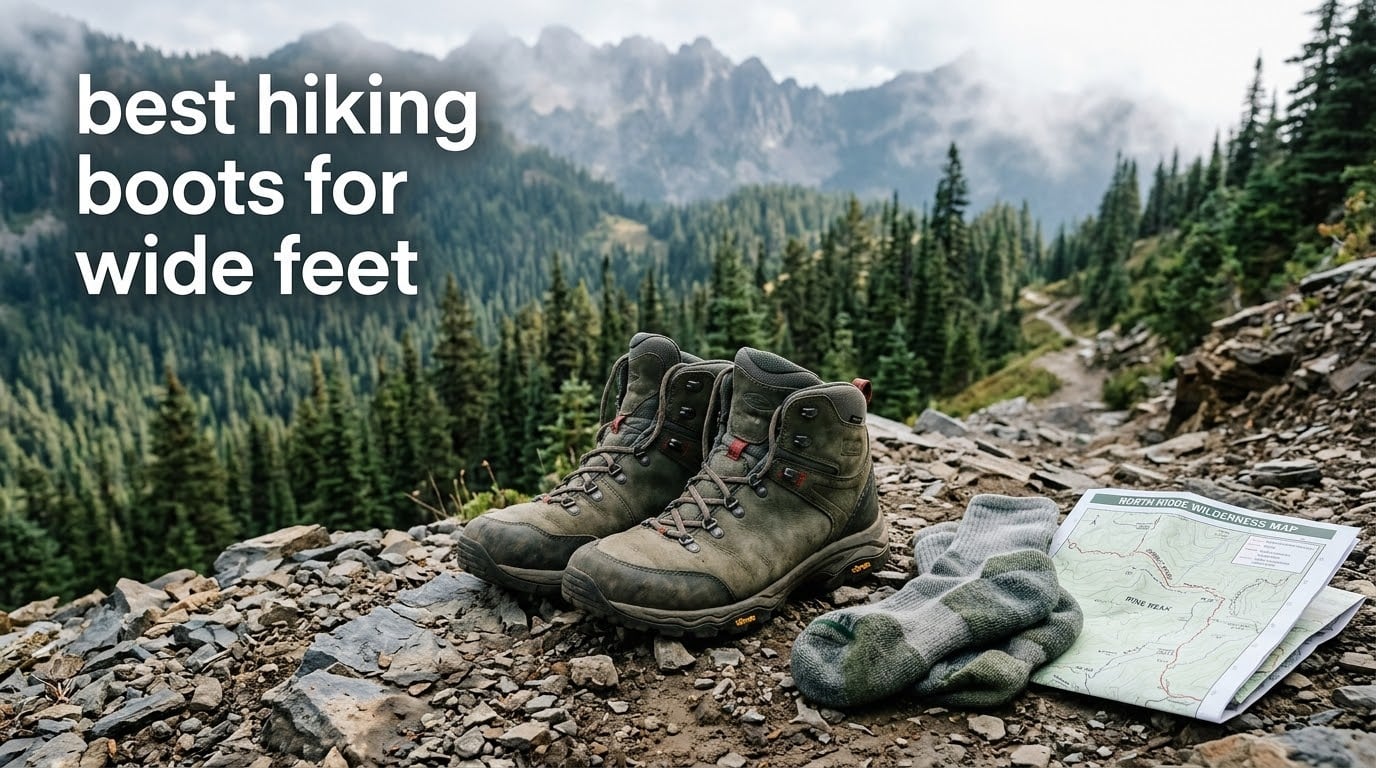
Most hiking boots are moulded on a single industry-standard width, so wide feet end up compressed at the ball of the foot no matter what size you order. A wide hiking boot solves that with either a labeled width step (W, 2E, 4E) or a genuinely roomy last that lets your toes splay instead of stacking. That is the whole difference between finishing a hike and turning back at the ten-mile mark with numb toes.
We spent weeks comparing the ten boots below on exactly the question wide-footed hikers care about: how much room is actually inside the toe box, and is that room offered in your length or do you have to size up to get it. We also cross-checked owner reviews, because fit claims from a brand page and fit claims from people who walked ten miles in them rarely match. If you want the short answer, the running shoes for wide feet approach is different from boots, and we explain where the two diverge further down.
Two things up front. First, this is not a buy-the-biggest-boot list: a boot that is far too wide creates heel slip and its own blisters, so the goal is the correct width in your normal length. Second, we earn a commission when you buy through links on this page, and it does not change which boots made the list.
Every rating and review count quoted here comes from the product listing, and every spec is stated as the manufacturer lists it rather than something we measured in a lab.
One more framing note before the picks. Wide fits arrive by two routes, and confusing them is the single most common reason a wide-footed hiker ends up disappointed. Some brands literally step the width up and label it 2E or 4E, while others keep one width for everyone but shape the last so the toe box matches the outline of a real foot, toes included.
The second group often feels wider without ever printing a width letter on the box, which is why we tag every pick below with the route it takes. A labeled 2E and a foot-shaped D are not interchangeable, and the right one depends on the shape of your foot rather than the size on your last pair of shoes.
Table of Contents
Top 3 Picks for Best Hiking Boots for Wide Feet in October

Merrell Moab 3 Mid Waterproof
- True wide (W) widths offered
- Waterproof breathable membrane
- Vibram TC5+ outsole
- Removable Kinetic Fit ADVANCED insole

Columbia Crestwood Mid Waterproof
- Dedicated women's wide (W) widths
- OMNI-GRIP multi-terrain traction
- Winter tread pattern
- Lightweight energy-returning midsole

Timberland Flume Mid Waterproof
- Dedicated men's wide (W) width
- Waterproof full-grain leather
- Fully gusseted tongue
- No break-in needed
Best Hiking Boots for Wide Feet in 2026
| Product | Specifications | Action |
|---|---|---|
| Merrell Moab 3 Mid Waterproof |
|
Check Latest Price |
| Columbia Crestwood Mid Waterproof |
|
Check Latest Price |
 Propet Ridge Walker Cap Toe Propet Ridge Walker Cap Toe |
|
Check Latest Price |
 Propet Cliff Walker A5500 Propet Cliff Walker A5500 |
|
Check Latest Price |
 Oboz Bridger Mid B-DRY Oboz Bridger Mid B-DRY |
|
Check Latest Price |
 KEEN Targhee EXP Mid Waterproof KEEN Targhee EXP Mid Waterproof |
|
Check Latest Price |
 New Balance Hierro V9 New Balance Hierro V9 |
|
Check Latest Price |
| Timberland Flume Mid Waterproof |
|
Check Latest Price |
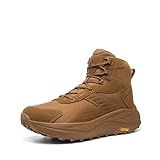 NORTIV 8 Wide Toe Box Boots NORTIV 8 Wide Toe Box Boots |
|
Check Latest Price |
 KEEN Hightrail Mid Waterproof KEEN Hightrail Mid Waterproof |
|
Check Latest Price |
1. Merrell Moab 3 Mid Waterproof – the best all-round boot for wide feet
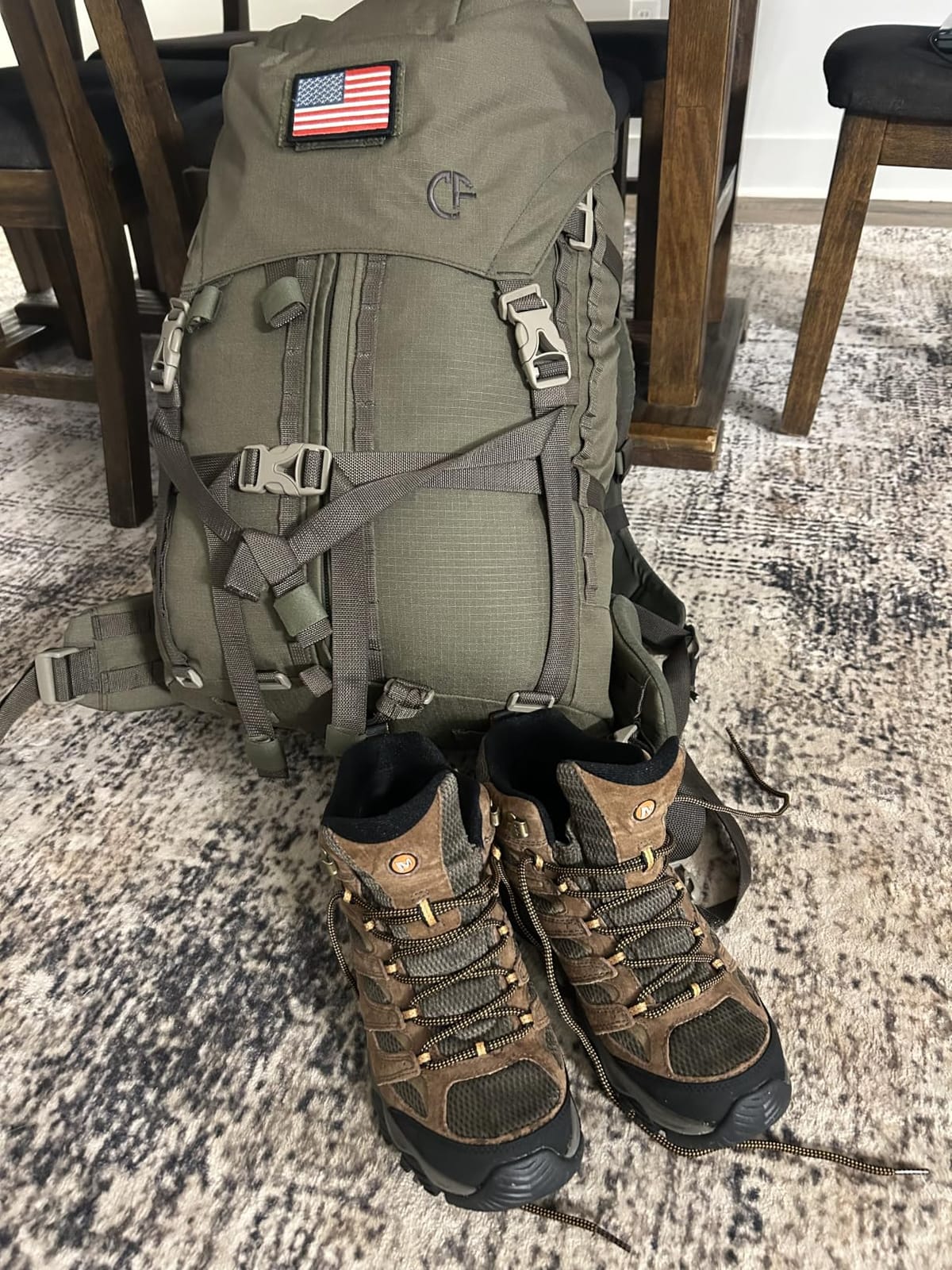
Merrell Men’s Moab 3 Mid Waterproof Hiking Boot, Beluga, 12
Pigskin leather and mesh upper
Waterproof breathable membrane
Vibram TC5+ rubber sole
Listed weight 11.68 ounces
Pros
- True wide (W) widths offered across many colorways
- Dependable waterproofing in wet ground and stream crossings
- Vibram TC5+ outsole grips loose and wet terrain
- Removable Kinetic Fit ADVANCED insole accepts an orthotic
- Stable platform from the nylon arch shank and EVA midsole
Cons
- Membrane runs warm in hot weather
- Upper needs a break-in before it softens
- Bellows tongue adds noticeable weight
The Moab 3 Mid is the boot we come back to most often, and the reason is boring rather than exciting. It offers a genuine labeled wide width, it is a real mid-cut boot rather than a hiker shoe with a tall collar, and it has drawn just over 5,200 owner ratings averaging 4.5 stars.
What wide feet get here is a labeled W width, not a marketing word. Merrell offers the wide version across many colorways, which matters more than it sounds: if the wide width only exists in one black colorway you will never wear, it is not really available to you. Owners who switched from the standard width report the same thing consistently, which is that the wide version is the boot they should have owned all along.
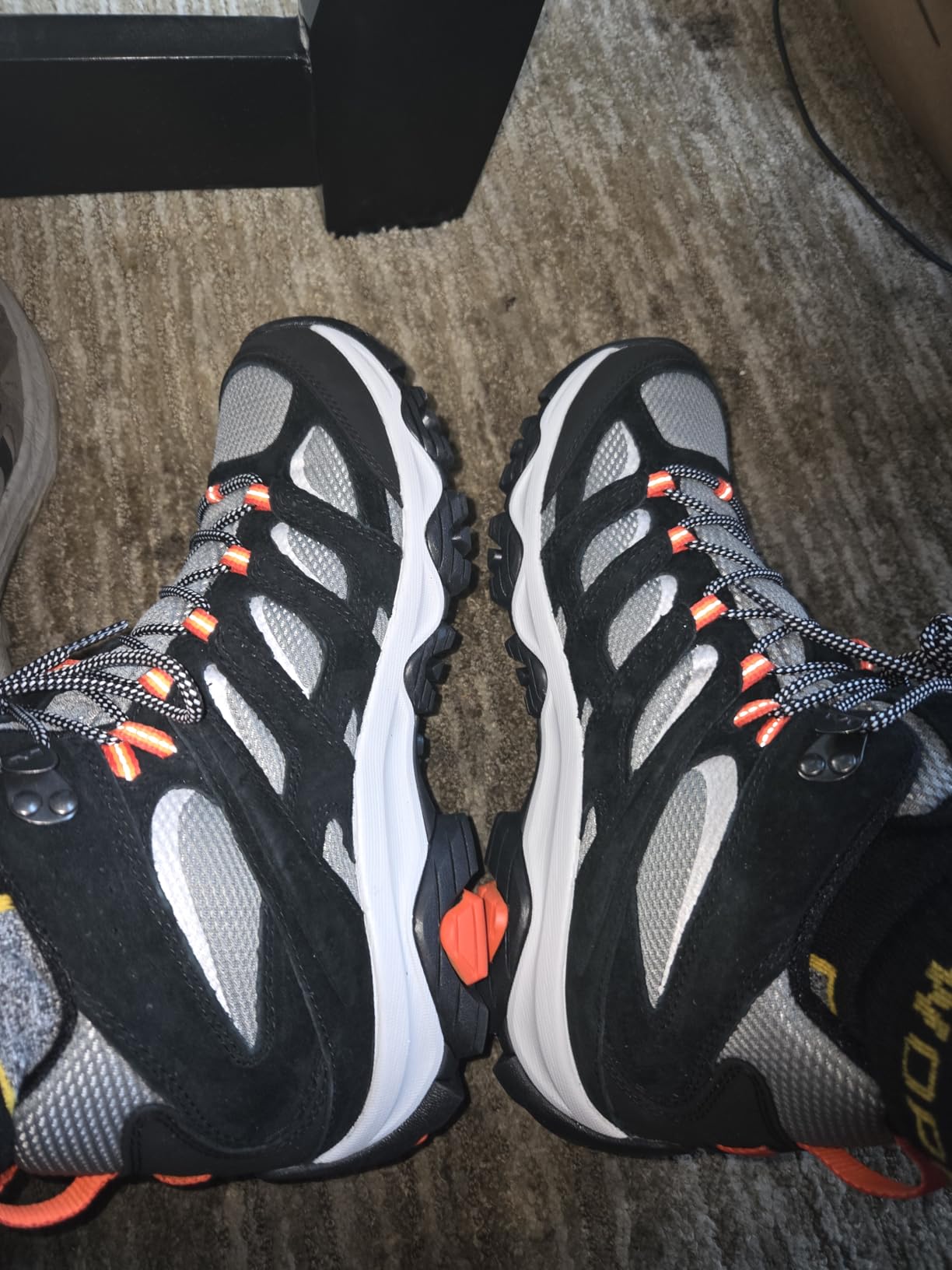
Underfoot the spec sheet is unexciting in a good way. A lightweight EVA foam midsole with a molded nylon arch shank gives a stable platform, a removable Kinetic Fit ADVANCED insole adds reinforced heel cushioning, and a Vibram TC5+ rubber sole handles the traction. A protective toe cap and a bellows tongue keep debris out. The upper is pigskin leather and mesh with recycled laces and webbing, and the listed weight is 11.68 ounces.
The honest drawback is heat. A waterproof membrane that seals out water also slows evaporation, and owners in warm weather report the boot running hot. The second issue is the break-in: the leather-and-mesh upper is stiff out of the box and softens after a handful of outings. Neither is a reason to skip it, but both are reasons to test it on a long walk before a big trip.
Who this boot suits
This is the pick for a hiker who wants a labeled wide width, a real boot height, and a waterproof build without paying a specialist-boot premium. It handles day hiking on maintained trails and carries a moderate day pack comfortably. If you wear orthotics, the removable insole means you can swap it rather than stacking a second insert on top.
Where it falls short
It is a mid-weight boot and it is not a light hiker shoe, so hot-weather walking will feel warmer than a mesh model. Reviewers also note that the toe cap and mesh panels are less protective against sharp rock than a full leather backpacking boot. If your trips are unmaintained, loose or scree-heavy, or you are walking in July, look at the mesh Targhee EXP further down instead.
2. Timberland Flume Mid Waterproof – the most reviewed wide boot available
Timberland Men’s Flume Mid Waterproof Hiking Boot, Dark Brown-NEW 2024, 9.5 Wide
Waterproof Premium Timberland Leather
Standard and men's wide (W) widths
Fully gusseted tongue
EVA footbed
Pros
- Dedicated men's wide (W) width with a roomy toe box
- True-to-size fit in the wide width
- Comfortable straight out of the box with no break-in
- Full-grain leather that can be conditioned and kept for years
- Padded ankle collar for long days
- Works well as an everyday boot
Cons
- Hard plastic tread feels slick on wet surfaces
- Leather scuffs and needs regular polishing
- Some buyers find the boot runs small
With over 10,000 ratings averaging 4.5 stars, the Flume Mid has the largest review base of any boot in this roundup, and the wide-width feedback is unusually consistent. Buyers describe a true-to-size fit in the dedicated men’s W width with a toe box that does not pinch, and no break-in period to speak of.
That combination, a labeled wide width and zero break-in, is rarer than it sounds. Most wide-feet favorites are either unlabeled or need miles before they stop arguing with your feet. The Flume is waterproof full-grain leather with a fully gusseted tongue, mesh lining for breathability, an EVA footbed, and rustproof speed-lace hardware with hooks at the top for a one-handed pull.
Two honest notes. The first is traction: reviewers repeatedly describe the hard plastic tread as having little give and feeling slick on wet rock and smooth surfaces, which is a real caution in the wet conditions the waterproofing is there to handle. The second is upkeep. Quality leather that can be polished and conditioned is a long-term win, but it does need maintenance, and it discolors with exposure to snow and salt.
Who this boot suits
It suits a hiker who wants a durable wide boot for mixed use, town to trail, with a heel-to-toe drop and a collar height that feels traditional. Reviewers praise the padded collar on long walks and the wide width does not require a size up. If you want one boot rather than two, this is a strong place to start.
Where it falls short
Wet rock is its weak point, and if your hiking involves a lot of stream crossings or rain-slick slab, the grip will let you down. A few buyers also report the boot running small and recommend sizing up, which sits awkwardly against the strong true-to-size feedback from others. Check both the standard and the wide width of your normal length rather than reacting to a single review.
3. Propet Ridge Walker Cap Toe – XX-Wide and 2E widths up to size 16
Propét Men’sRidge Walker Hiking Boot, Brown, 10 XX-Wide US
Standard, Wide, X-Wide and XX-Wide to size 16
Removable footbed for orthotics
Medicare approved A5500 footwear
Speed-lace hardware
Pros
- 4E widths available up to size 16
- Removable footbed accepts custom orthotics
- Comfortable with minimal break-in
- Waterproofing and traction hold up well
- Survives daily work use as well as hiking
Cons
- Runs narrow enough that many need a full width step
- Stiff leather with little give
- Bulky feel in the highest sizes
- Factory insole is widely replaced
- Can develop odour with daily wear
The Ridge Walker is the boot in this roundup we would try first if 2E or 4E is your starting point, and its widths run all the way to size 16. For a foot that cannot be served by 2E, that availability is the entire reason to look at it. It is also coded as Medicare approved A5500 footwear, which tells you the internal volume is genuinely large rather than marginally wide.
The fit feedback is unusually split in this roundup, and you should read it carefully. Across roughly 2,700 ratings averaging 4.2 stars, the pattern is clear: buyers who move up a full width report excellent comfort, and buyers who order their normal wide report a cramped toe box. That last detail matters, because a boot labeled wide that still runs narrow is exactly the situation that pushes people into sizing up.
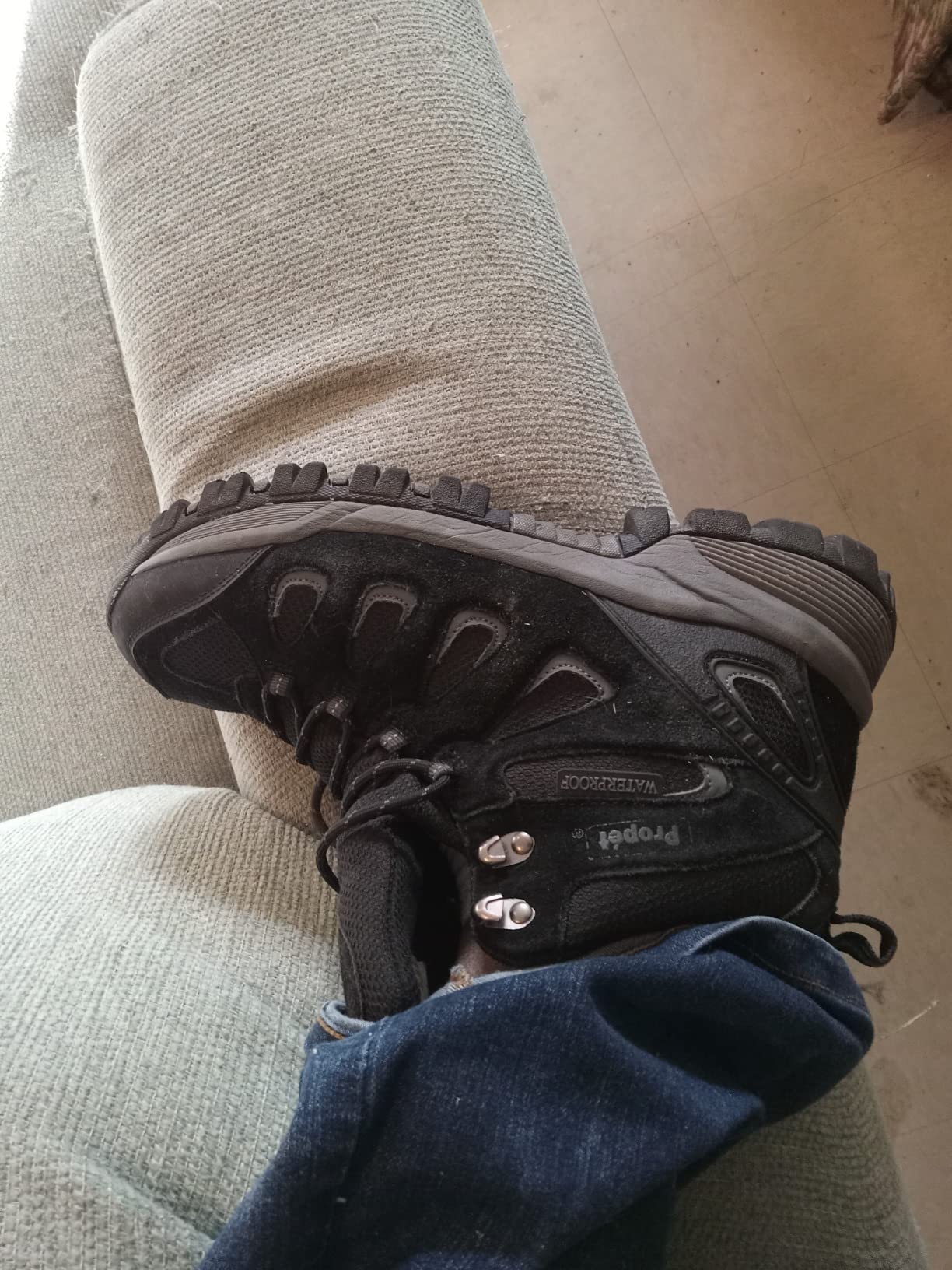
Construction is a cap toe hiking silhouette in waterproof leather with a removable footbed for orthotics and speed-lace hardware for quick on and off. The listed weight is 4 pounds, which is the heaviest figure on this page and worth factoring in if you are counting every gram.
The leather is stiff from the first outing and does not soften the way a full-grain hiking boot does, so the first long walk is better spent on a local trail than a summit push. Reviewers who moved up a width describe the interior volume as genuinely accommodating for larger feet, and the wide SKUs run to size 16, which is wider coverage than almost anything else in this roundup.
Who this boot suits
It suits hikers who have already established they need 2E or 4E, wear large sizes, or spend real hours in their boots on concrete before they hit a trail. The removable footbed is a genuine advantage if you use custom orthotics, and owners report it holding up well under daily wear.
Where it falls short
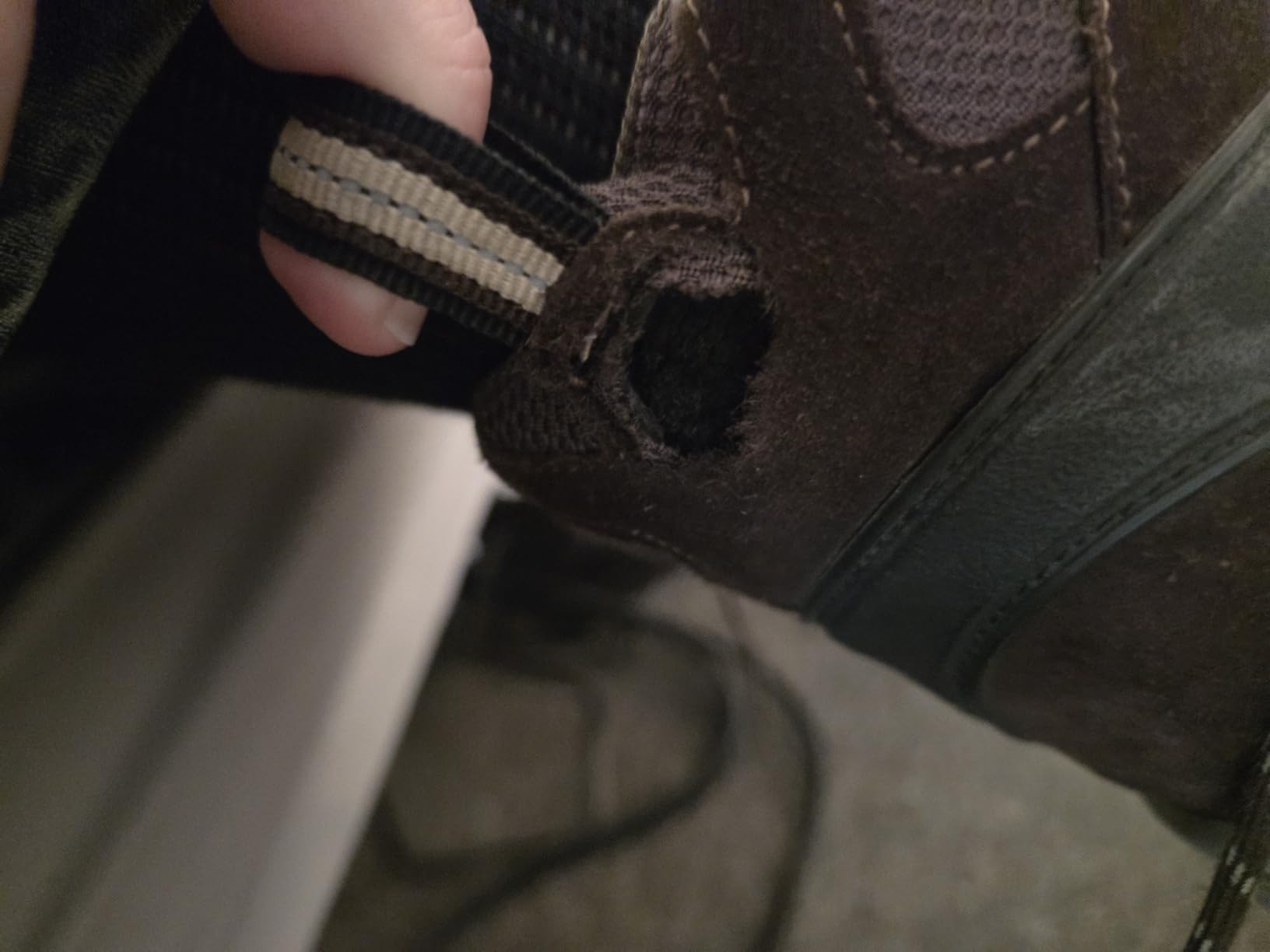
Two things stand against it. The leather is stiff and does not stretch or expand much, so the fit you get on day one is close to the fit you keep, and reviewers describe the highest sizes as bulky. Reviewers also regularly replace the factory insole, so budget for a third-party footbed if you plan to wear these daily. The Cliff Walker in the next section takes the same width steps but with a deeper toe box, which is worth comparing if volume matters more to you than leather flex.
4. Propet Cliff Walker A5500 – the deepest toe box for orthotics
Propét mens Cliff Walker Medicare/Hcpcs Code A5500 Diabetic Shoe Hiking Boot, Bronco Brown, 16 XX-Wide US
X-Wide and XX-Wide widths to size 16
Waterproof leather with nylon mesh lining
Molded EVA midsole
1 lb 3 oz at size 7.5 M/D
Pros
- Very wide
- deep toe box with room for orthotic inserts
- Light for a boot of its width
- Speed laces make it quick to put on and remove
- Warm in cold weather without excessive perspiration
- No break-in needed for most buyers
Cons
- Toe box tapers sharply past the widest point
- Factory insole is widely criticised
- Upper lace hooks bend and fray laces
- Some reports of the sole separating after a few months
- Slippery on smooth wet indoor surfaces
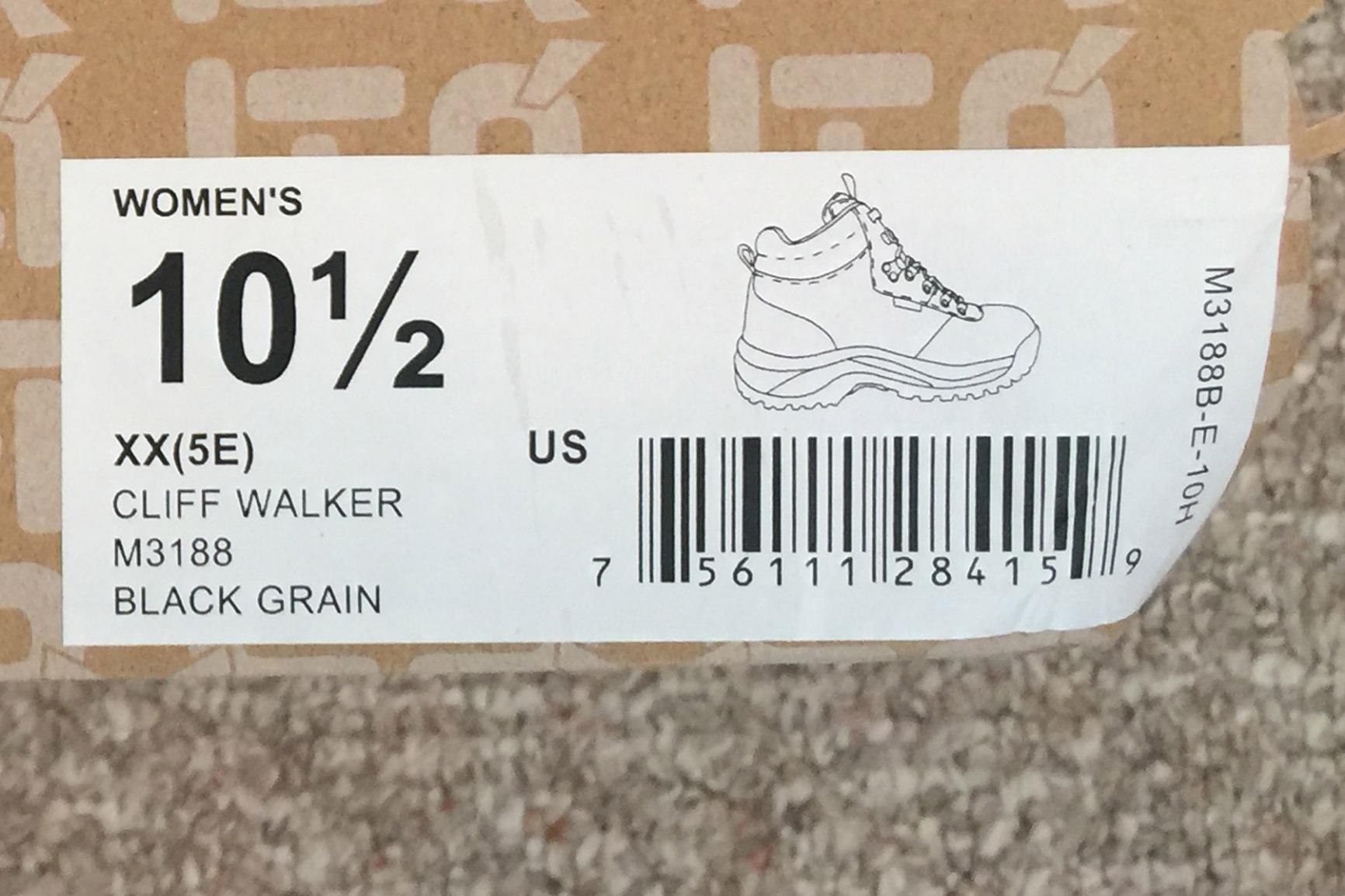
It is the boot owners with very wide or swollen feet point to when they say few mass-market boots fit. The toe box is not just wide, it is deep, which is the space an orthotic needs, and the X-Wide and XX-Wide widths run to size 16. Across more than 2,100 ratings averaging 4.3 stars, the roomy toe box is the single most praised feature.
It is also lighter than it looks for a boot this wide. The listed weight is 1 pound 3 ounces at size 7.5 in an M/D width, and a four-inch shaft. The build is a waterproof leather upper with a nylon mesh lining, a molded EVA midsole with both internal and external heel counters, a rubber outsole with a self-cleaning tread design, and hook-and-speed lacing for quick closure.
The orthotic angle is what separates this from the Ridge Walker. A removable footbed over a molded EVA chassis means there is actual volume to fill, and owners who swap in a full-length orthotic report that the boot accommodates it without compressing the top of the foot. The speed lacing is a practical touch for a boot that goes on and off several times a day, and the padded collar keeps the ankle clear of the waterproof leather edge.
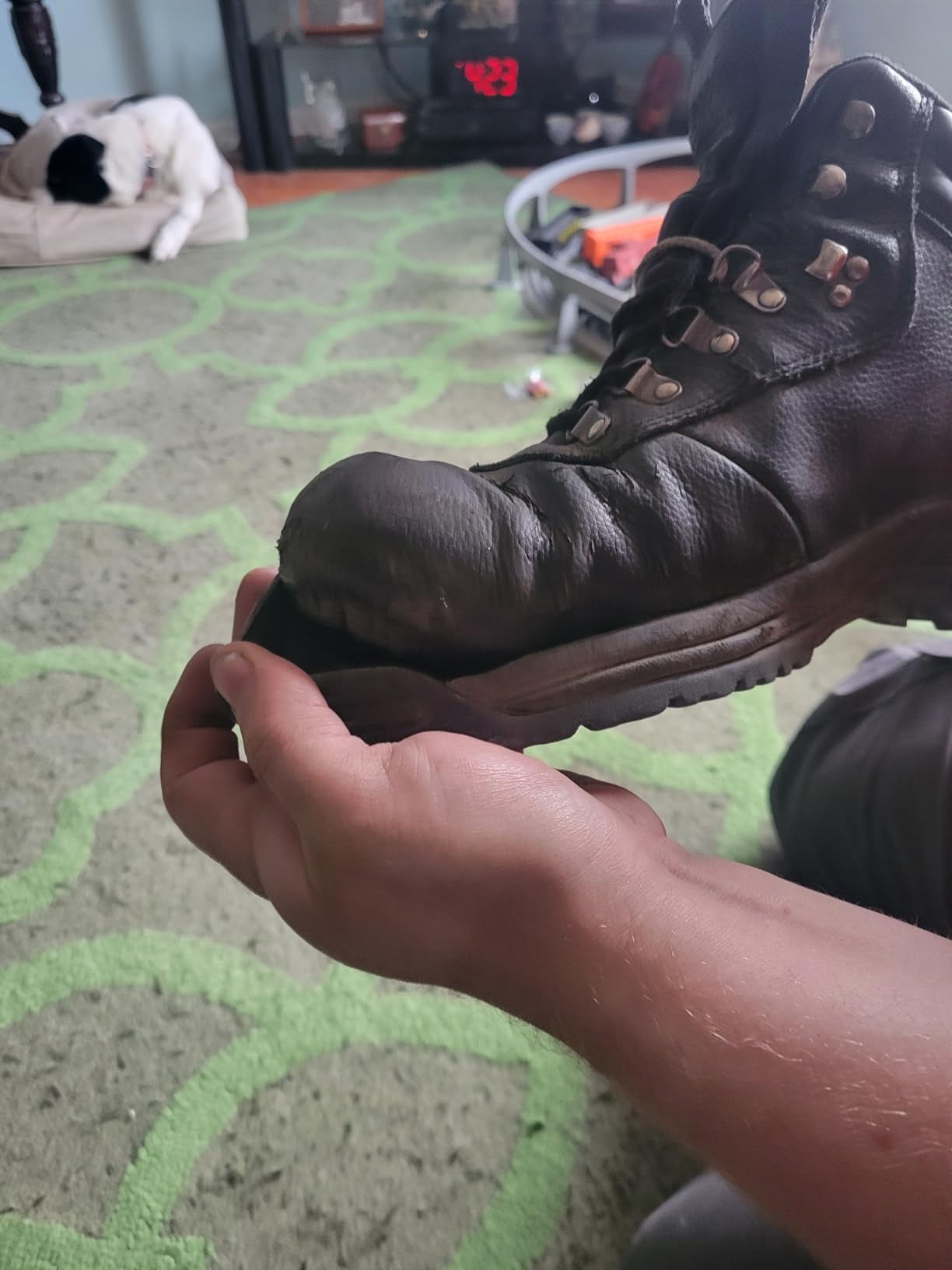
Durability is the trade-off of that construction. The outsole uses a self-cleaning tread design, which works well in mud but is a plain rubber compound rather than a technical lug pattern, and a small number of owners report the sole beginning to separate from the upper after a few months of regular use.
Who this boot suits
It suits hikers with wide feet who also need orthotic volume, and people whose feet swell noticeably over a long day. Owners report warmth without excessive perspiration in cold weather and no break-in for most buyers, which makes it easy to test on a short trip. If you wear a full-length orthotic, this is the boot most likely to swallow it without compressing it.
Where it falls short
The sharp toe taper is the recurring complaint, so if your big toe sits off-center this may still pinch. The upper lace hooks bend easily and catch laces, and a few owners report the sole beginning to separate from the upper after a few months. It is also slippery on smooth wet indoor surfaces, which is odd for a hiking boot and worth knowing before you cross a wet tiled lobby in it.
5. Columbia Crestwood Mid Waterproof – the women’s wide pick
Columbia Women’s Crestwood Mid Waterproof, Cordovan/Mud, 10
Waterproof full-grain leather and mesh bootie
OMNI-GRIP multi-terrain traction
Dual-zone winter tread pattern
Lace-up closure
Pros
- Dedicated wide (W) widths across most colorways
- Waterproof construction holds in snow and slush
- Winter tread pattern grips ice and snow
- Lightweight midsole with good energy return on long days
Cons
- Mesh upper is less durable than full leather in rough terrain
- Lace-up closure is less quick to adjust than speed lacing
- Toe box is less accommodating than dedicated wide-width brands
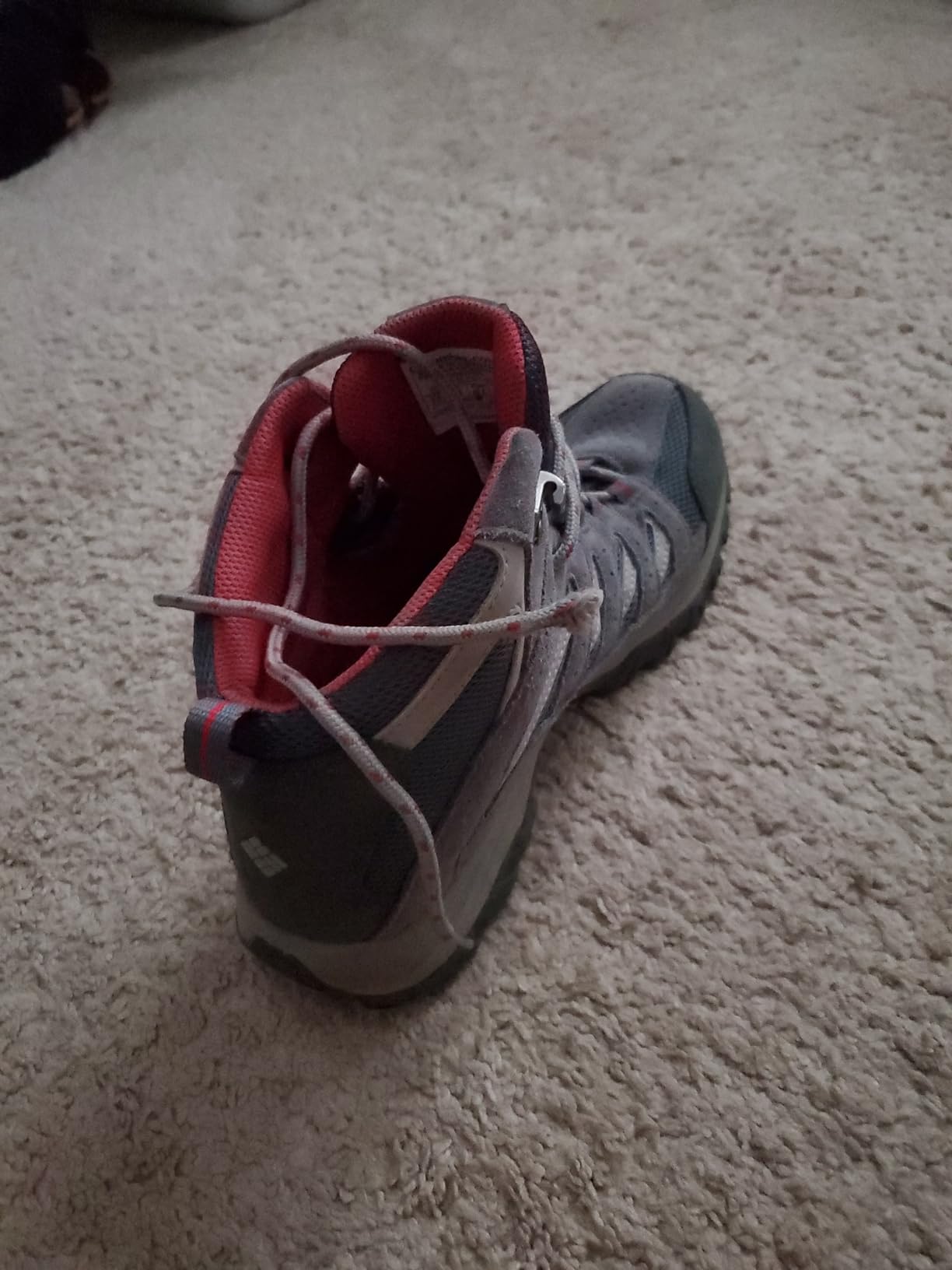
Women’s wide fits are among the least served categories in hiking footwear, which is why the Crestwood earns its place in a roundup that is mostly men’s boots. It is a women’s-specific last with dedicated wide (W) widths offered across most colorways, and at nearly 3,900 ratings averaging 4.5 stars the feedback is very consistent.
Women’s feet are proportioned differently from men’s lasts, generally narrower at the heel and wider across the forefoot, so a men’s wide boot transferred directly to a woman is often wide at the back and still tight at the ball. The Crestwood avoids that by being built on a women’s last rather than a scaled-down men’s one.
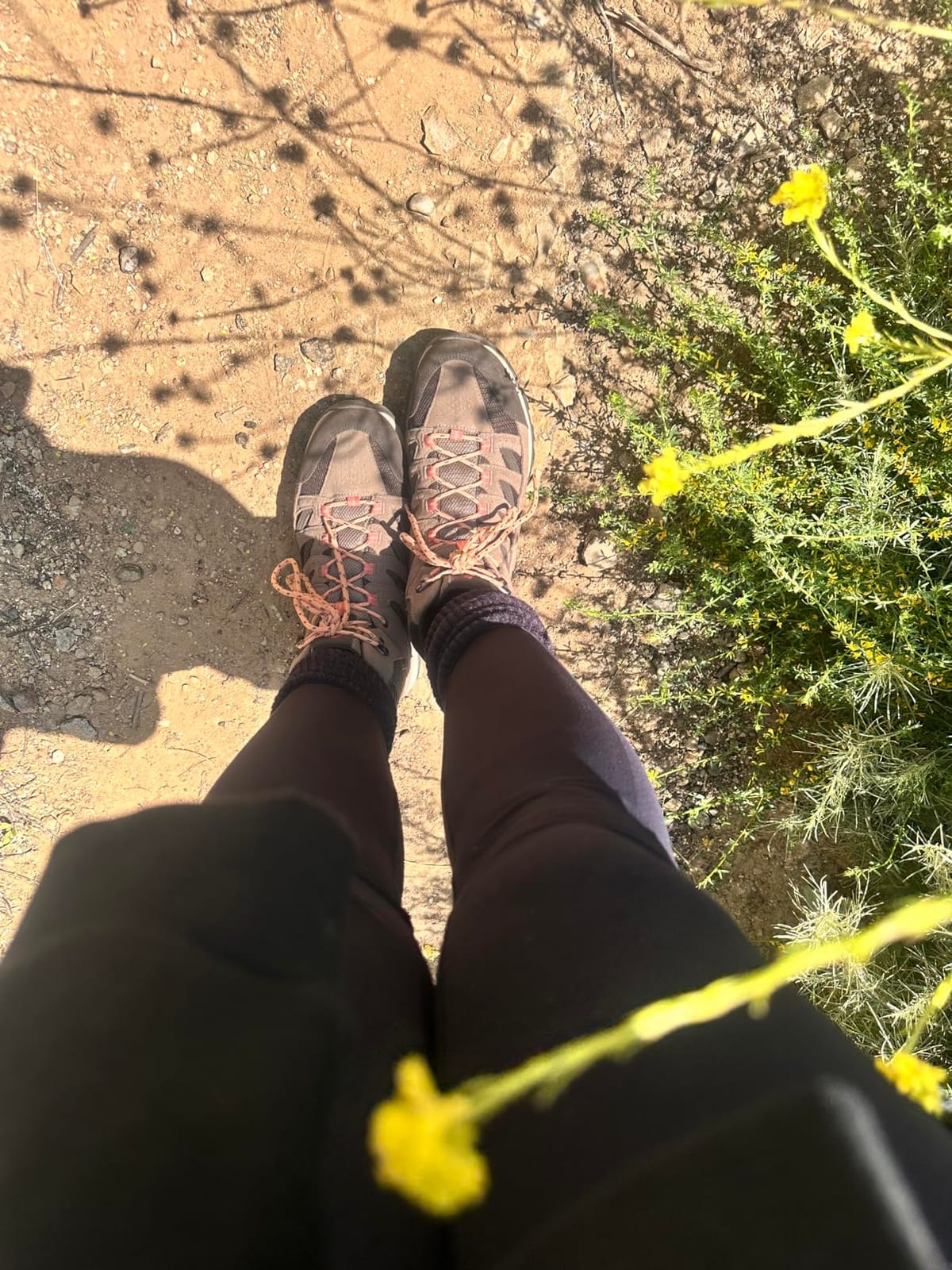
The traction work is the standout. OMNI-GRIP multi-terrain traction with a dual-zone winter tread pattern is designed for ice and snow, and owners in slush report it holding. The upper is a waterproof full-grain leather and mesh bootie construction with a durable mesh tongue for breathability, the midsole is lightweight with high energy return, and the closure is a straightforward lace-up.
The leather and mesh bootie is a deliberate winter compromise. Full-grain leather blocks water from outside while the mesh interior moves moisture outward, which is why the boot holds up in slush and snow without the sealed feeling of a pure membrane boot. The price point sits well below the specialist wide-width brands on this list, which is the main reason it takes the BEST VALUE badge rather than a top-two slot.
Who this boot suits
It suits women who need a labeled wide width in cold or wet conditions, especially on winter trails and mixed-surface paths where a winter tread pattern earns its keep. The lightweight midsole and high energy return make it a comfortable choice for long days, and the wide width is available in more colorways than most competitors manage.
Where it falls short
Owners flag the mesh upper as less durable than full leather for serious backcountry use, and the toe box, while genuinely wide, is less accommodating than the dedicated wide-width specialists in this list. The lace-up closure is also slower to adjust mid-hike than a speed-lace system, which matters on wet descents when you want to tighten quickly.
6. Oboz Bridger Mid B-DRY – an anatomical last that handles heavy loads
Oboz Men’s Bridger Mid B-DRY, Sudan, 8.5
Anatomical last in E and W widths
B-DRY waterproof membrane
TPU chassis with nylon shank
19.0 oz per half pair
Pros
- Anatomical last suits wide and high-volume feet
- E and W widths offered across sizes 7 to 15
- Light at 19.0 oz per half pair for a mid-cut boot
- B-DRY membrane blocks moisture while letting vapour out
- O Fit triple-density insole with arch profile
Cons
- Toe cap and heel counter feel stiff initially
- Break-in needed before the nubuck softens
- Insoles lose some support after heavy long-term use
The Bridger takes the foot-shaped route rather than the labeled one. Oboz builds it on an anatomical last and offers E and W widths across sizes 7 to 15, which means the room is in the shape rather than only in the width letter. Owners with wide and high-volume feet rate it highly for exactly that reason, and the arch profile in the footbed is one of the reasons the brand comes up so often in wide-and-flat-foot discussions.
Under load it is genuinely capable. A single-density EVA midsole with a TPU chassis and nylon shank gives the structure a loaded pack needs, the Trail Tread HD outsole is a heavy-duty rubber compound with multidirectional tread for wet and dry grip, and the O Fit triple-density EVA insole has cushioned heel and forefoot pods over a firm molded shell with a deep heel cup. The listed weight is 19.0 ounces per half pair, which is light for a mid-cut boot.
Waterproofing comes from the B-DRY membrane, which the manufacturer describes as blocking moisture while allowing water vapour to escape, and the upper is waterproof nubuck leather with durable textile plus a molded rubber toe cap and heel counter. Across more than 1,200 ratings averaging 4.4 stars, the wide last, the low weight and wet-trail performance are the most repeated positives.
Who this boot suits
It suits backpackers carrying real weight over multiple days, and anyone with high arches who has struggled with flat factory insoles because the footbed here has a genuine arch profile. People who like a supportive forefoot with toes free to splay are the ideal fit, and the removable insole gives you room to add an orthotic on top of the O Fit.
Where it falls short
The reinforced toe cap and heel counter add rigidity, and reviewers describe the first outings as stiff until the nubuck softens. There is a break-in period here, unlike the Timberland or the Cliff Walker. Over very long horizons the O Fit insoles lose some of their support, so if you carry heavy packs for seasons, plan on replacing them. The webbing eyelet lacing is also reported by some owners as fussy to adjust.
7. KEEN Targhee EXP Mid Waterproof – the foot-shaped room
KEEN Men’s Targhee EXP Mid Height Waterproof Hiking Boots, Black/Black, 10.5
KEEN Original Fit with a wider toe box
KEEN.DRY waterproof membrane
4mm multidirectional lugs
Removable metatomical footbed
Pros
- Wide toe box that lets toes splay naturally
- Lightweight breathable mesh for warm-weather hiking
- KEEN.DRY keeps feet dry in streams and wet ground
- Support shank and heel capture add stability on rock and gravel
- Rubber toe protect zone guards against stubbed toes
- Holds up over multi-year use
Cons
- Synthetic upper is less durable than leather
- Sole tread is lighter duty than a backpacking boot
- Membrane runs warm in hot weather
- Insoles flatten with long-term use
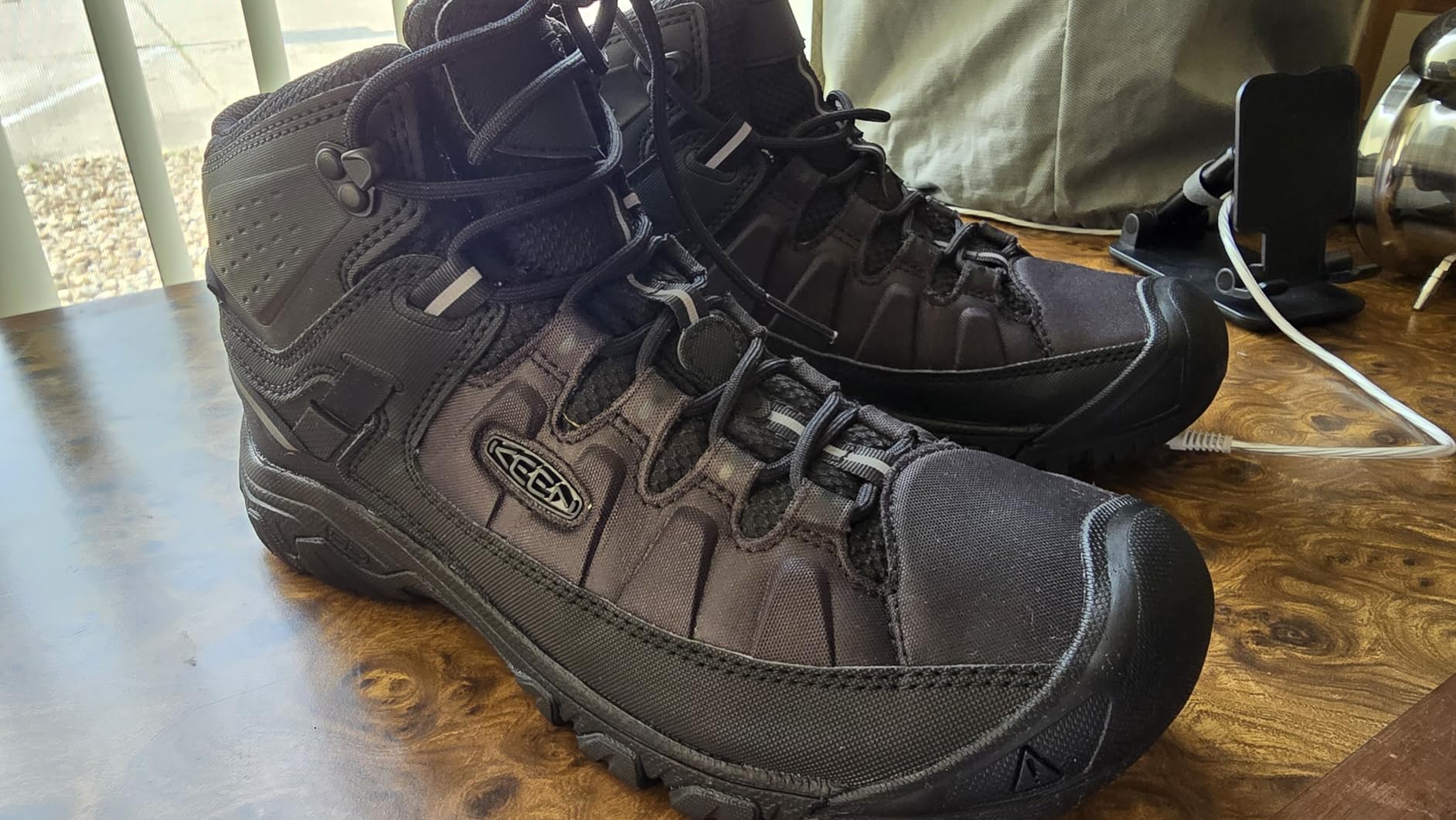
KEEN is a name that comes up constantly when wide-footed hikers ask each other for a recommendation, and the reason is the last rather than a width label. KEEN Original Fit is built with a toe box wider than the industry standard specifically so toes can splay, and no size code is needed to get it. The Targhee EXP is the mesh version of that idea, which makes it the warm-weather counterpart to a leather boot.
The spec sheet reads like a lighter-duty hiking boot on purpose. A performance mesh upper with durable overlays, the KEEN.DRY waterproof breathable membrane, a KEEN ALL-TERRAIN non-marking rubber outsole with 4mm multidirectional lugs, an external support shank and heel capture system, and a removable metatomical footbed with arch support. The padded tongue and collar sit on a mid-profile upper.
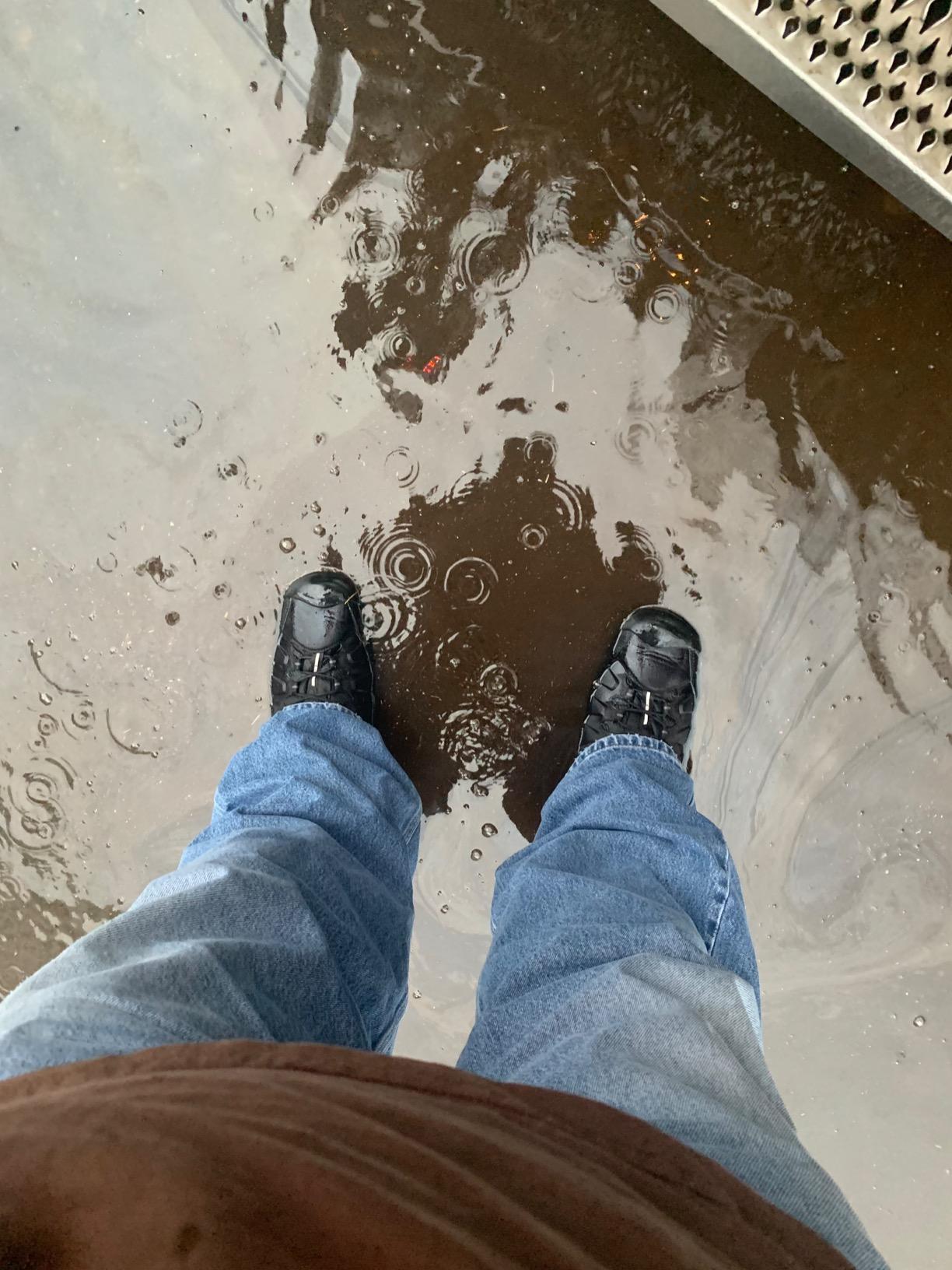
What that construction actually gets you is airflow, and airflow is the reason reviewers keep recommending this boot for summer. The mesh panels move heat away from the foot while the membrane still blocks surface water in wet grass and shallow stream water, which is the combination most day hikers want and the one a full leather boot refuses to give them in July.
The stability hardware is the part that surprises people who expect a roomy boot to feel loose. The external support shank and heel capture system hold the rearfoot in place through a roll on loose ground, so the wide toe box does not translate into a wobbling platform. The rubber toe protect zone adds a small amount of rock protection that most mesh hikers do not get, at the cost of a lighter-duty lug pattern than a dedicated backpacking boot.
Who this boot suits
It suits warm-weather day hikers and thru-hikers who want toe splay and airflow more than they want a full leather upper or a heavy-duty sole. The removable metatomical footbed and the arch support make it a reasonable pairing for wide feet that also need midfoot support. If a D-width boot compresses your metatarsals but 2E feels like a boat, this is the middle answer.
Where it falls short
It is not a loaded-pack or rough-terrain boot, and owners say so. The tread is lighter duty than a backpacking boot, the synthetic upper ages faster than leather, and the insoles flatten with long use. Reviewers also note that the tongue sidewalls sit low enough that deep water can get in, so it is not the choice for deep creek crossings.
8. New Balance Fresh Foam X Hierro V9 – 2E and 4E on a cushioned platform
New Balance Men’s Fresh Foam X Hierro V9 Trail Running Shoe, Slate Grey/Shadow Blue, 10.5 XW
Standard, 2E, 4E and XX-Wide to size 17
Dual-density Fresh Foam X midsole
Vibram Megagrip with 6mm lugs
Listed weight 2.1 pounds
Pros
- Genuinely labeled 2E and 4E widths
- Vibram Megagrip outsole with 6mm lugs grips wet and dry ground
- Plush Fresh Foam X cushioning for long days on foot
- Breathable engineered knit upper
- Widths run to size 17
Cons
- Knit upper has less water resistance than a leather boot
- Lower ankle coverage than a traditional mid boot
- Minimal toe protection against sharp rock
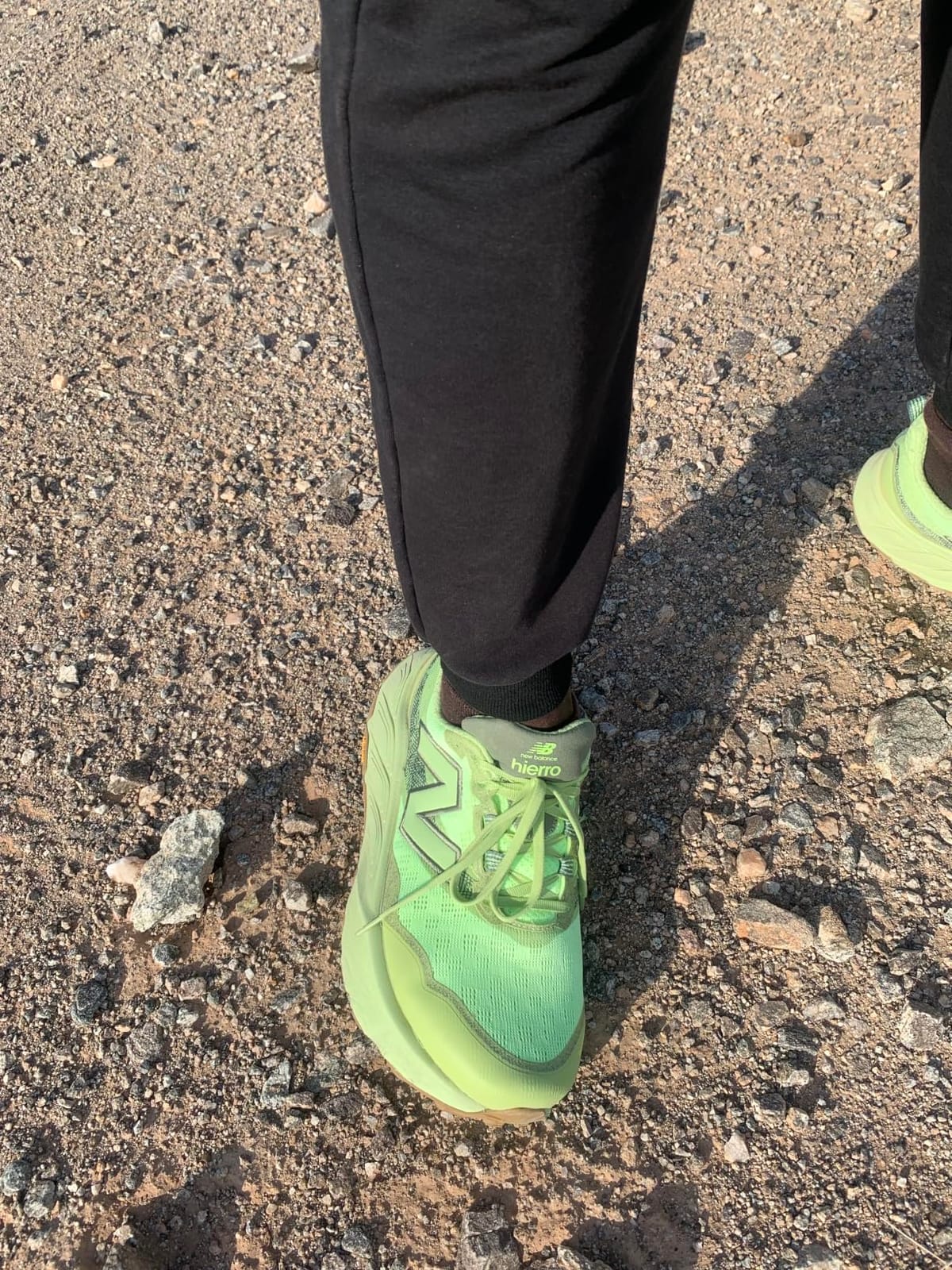
The Hierro V9 is the pick for anyone whose priority is a genuine labeled width step plus cushioning. It is offered in standard, Wide (2E), X-Wide (4E) and XX-Wide widths running all the way to size 17, which makes it one of the broadest width ranges in this roundup, and it does that on a trail platform rather than a casual shoe last.
The cushioning is the headline. A dual-density Fresh Foam X midsole uses a softer top layer for cushioning over a firmer bottom layer for stability, and owners describe it as plush enough for long days on foot. Outsole grip is handled by a Vibram Megagrip compound with a revamped tread pattern and deeper 6mm lugs, the deepest lug depth listed on this page.
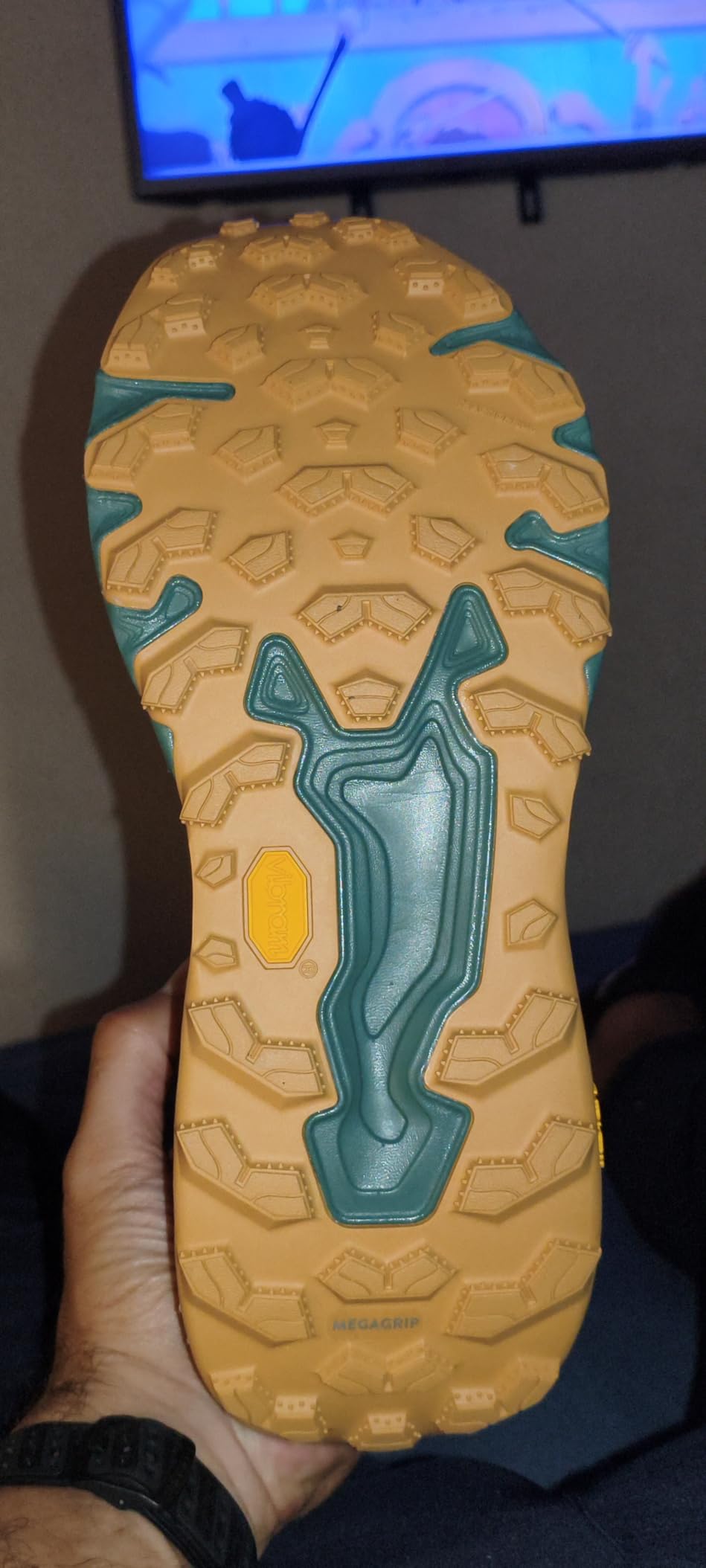
There is a trade. This is a trail shoe, not a boot, so the upper is a breathable engineered knit with a gusseted tongue, the toe protection is the Toe Protect Technology reinforced cap rather than a wraparound rubber bumper, and the listed weight is 2.1 pounds. Wide-width buyers rate the fit highly; owners who hike in rain note the knit gives up less water resistance than a leather boot. If you carry a heavy pack, the lower ankle coverage is the thing to weigh.
The width run is what separates it from every other boot here. Going up to size 17 in a 4E upper is not something most hiking boot lines offer, and it means a larger foot does not have to compromise between a proper width and a stocked length. The mid-profile collar sits lower than the mid-cut boots above, which is why it wears well with a heavy day pack but is not a substitute for a boot when the ankle needs bracing on talus.
Who this boot suits
It suits anyone who needs 4E and wants a cushioned shoe rather than a stiff boot, including larger feet up to size 17. The 6mm lugs and the grippy outsole make it a good choice for wet trails and mixed terrain, and the breathable knit is a genuine advantage in summer heat. For orthotic users the midsole is a reasonable base to add an insert into.
Where it falls short
It is not a boot, and the trade-offs follow from that. The knit upper offers less water resistance than a leather hiking boot, the ankle coverage is lower than a traditional mid-cut, and the toe cap is minimal next to a full leather boot when you are kicking through talus. The 6mm lugs also feel soft on smooth rock compared with a Vibram TC5+ outsole.
9. NORTIV 8 Wide Toe Box Hiking Boots – a low-drop roomy option
NORTIV 8 Men’s Wide Toe Box Hiking Boots,Coyote,11
Roomy wide toe box for toe splay
5 mm heel-to-toe drop
Built-in waterproof membrane
Thick EVA midsole
Pros
- Genuinely roomy toe box that suits wide feet
- Low 5 mm drop keeps the foot in a natural position
- Waterproof membrane holds on wet trails
- Thick EVA midsole gives bouncy cushioning
- Entry-level cost for a labeled wide toe box
Cons
- Fewer width options than dedicated wide-width brands
- Less established brand with a shorter track record
- Upper may not hold up to heavy rock abrasion
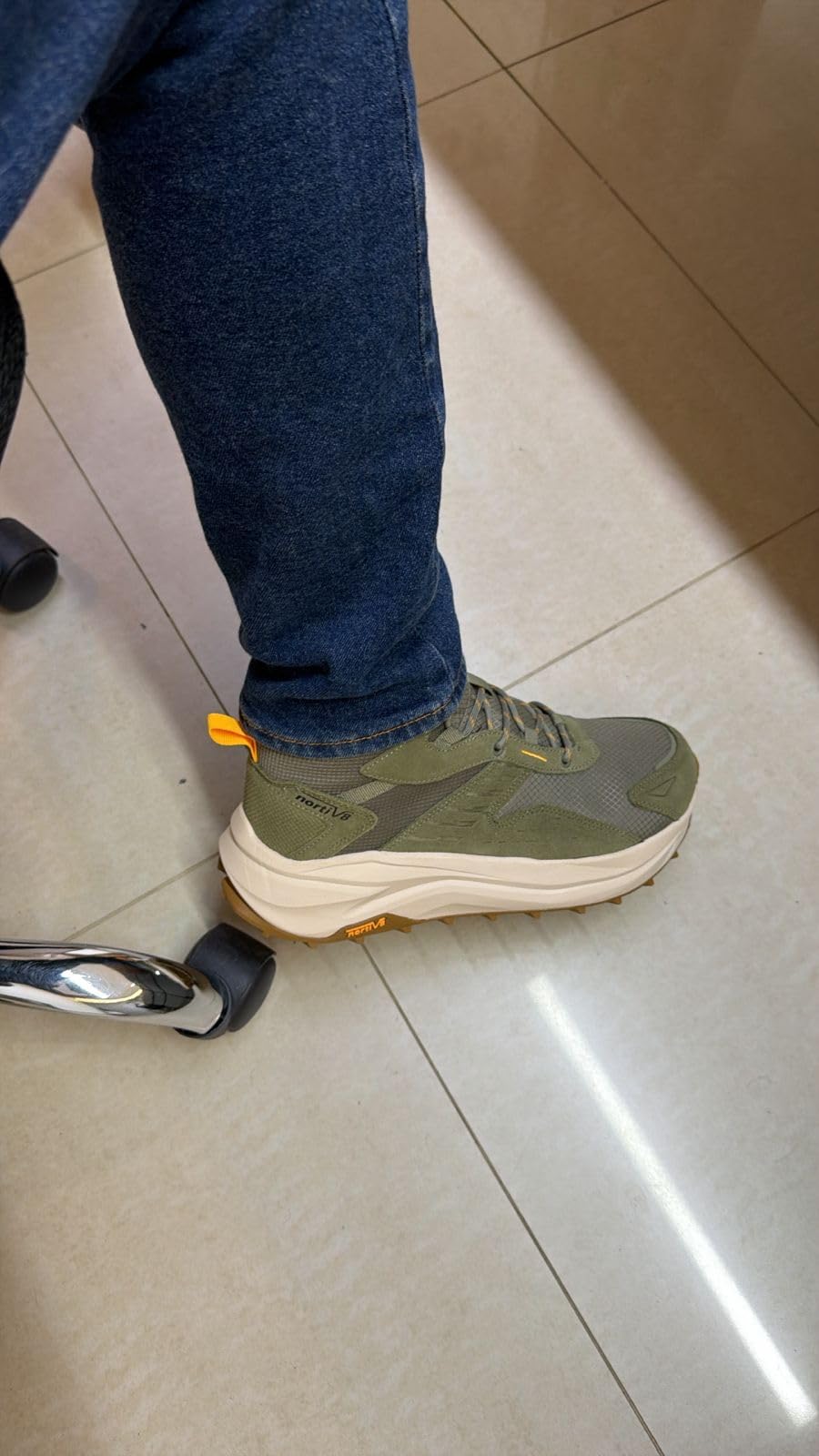
The NORTIV 8 puts wide in the product name, and the toe box backs the claim up. It is designed so toes can spread naturally, and owners consistently cite the room as the reason they bought it. At around 720 ratings averaging 4.4 stars, treat the pattern rather than any single line of feedback as the signal.
What makes it interesting is the 5mm heel-to-toe drop. That is a meaningfully lower profile than a traditional hiking boot, and it changes where load sits on the forefoot. Wide feet that also feel pressure under the ball of the foot often find a lower drop more comfortable, because it reduces how hard the forefoot is loaded at the push-off. It is not zero drop, so it is a gentler transition.
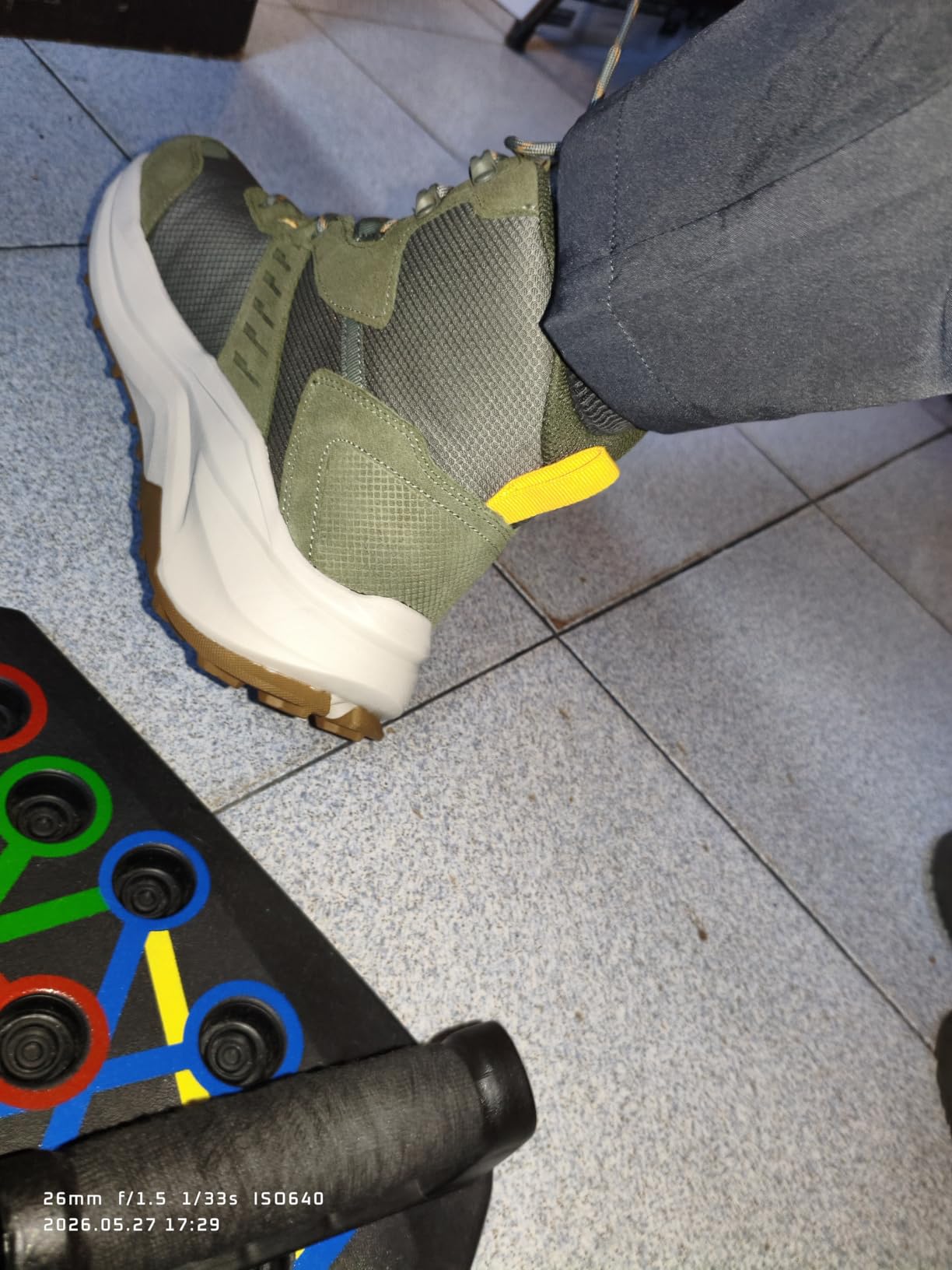
The rest is a conventional mid-height build: a built-in waterproof membrane that the manufacturer states passed strict waterproofing tests, a wear-resistant upper combining leather, nylon fabric and TPU, a thick EVA midsole for rebound, and a lugged slip-resistant rubber outsole. It also sits at the entry-level end of what these boots cost, which is the argument for it.
The mixed-material upper is the compromise that makes the price possible. Leather at the toe and heel takes abrasion, nylon and TPU panels keep the boot light and let it flex, and the result is a boot that a casual weekend hiker can abuse without much risk. Serious users doing repeated rock work will find the nylon panels give first, which is the trade for the low weight and the low drop.
Who this boot suits
It suits budget-conscious hikers who want a labeled-in-name wide toe box and a lower profile than a conventional boot. The 5mm drop is a good middle step if you have never worn zero-drop footwear and do not want to make that jump at the same time as changing boots. It also works for everyday walking on uneven ground if you want a roomy toe box without a premium.
Where it falls short
There are fewer width options than dedicated wide-width brands offer, so fit relies more on the shape of the last than on a step you can request. The brand is less established and has a shorter field record than the others here, which mostly means less long-term data. Some owners also note the upper may not hold up as well to heavy rock abrasion over time.
10. KEEN Hightrail Mid Waterproof – a contoured wide width for winter
KEEN Men’s Hightrail Mid Height Durable Lightweight Breathable Leather Waterproof Hiking Boots, Brindle/Oak Buff, 10.5 WIDE
KEEN Contoured Fit produced in wide widths
KEEN.DRY waterproof membrane
4mm multidirectional lugs
LWG-certified leather upper
Pros
- Wide width genuinely fits wide feet
- Truly waterproof through boot-deep snow and ice
- Lightweight with good ankle support and no heel slippage
- Very little break-in required
- Styling that works on trail and in town
Cons
- Toe box is narrower than other KEEN boots
- Less grippy than the Targhee EXP on slippery surfaces
- Sole may not protect against larger trail stones
- Inconsistent quality control reported
- Some tongue padding rubs the ankle
The Hightrail Mid is the other route to a KEEN wide fit, and it is worth understanding why it exists separately from the Targhee. It is built on KEEN Contoured Fit, which follows the natural shape of the foot, and it is produced in wide widths rather than a single width. That is a different construction from the Targhee EXP’s Original Fit roomy last, and wide owners notice the difference.
Where it wins is winter. Owners with wide feet report the boot as genuinely waterproof through boot-deep snow and ice, lightweight, and supportive at the ankle with no heel slippage. The build includes a KEEN.DRY waterproof breathable membrane, a high traction rubber sole with 4mm multidirectional lugs, a removable responsive footbed designed not to compress quickly, a stability shank, and KEEN LuftCell cushioning with micro air pockets for rebound. The upper is durable leather from Leather Working Group certified tanneries.
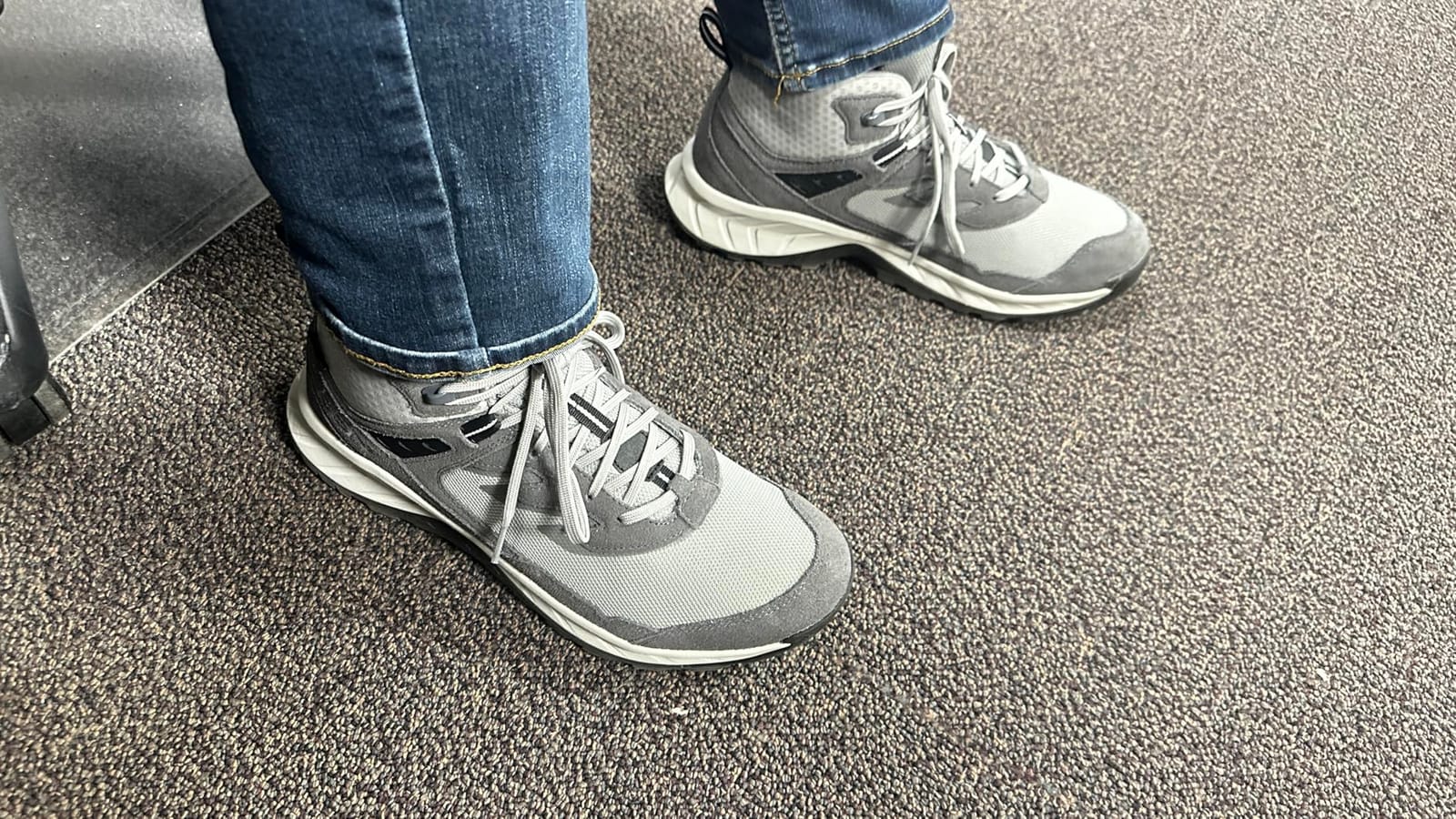
The leather matters more here than on the mesh Targhee. A full-grain upper from a certified tannery needs almost no break-in before it stops letting water at the flex points, and that is why owners report the boot being waterproof from the first outing rather than after a season. The stability shank and mid-profile collar are what keep the heel planted, and heel slippage is the complaint that shows up most often in reviews of lighter winter boots.
Against that, the toe box is not as accommodating as the Targhee’s, which is the trade for a stiffer leather build and a proper winter outsole. The 4mm lugs are shallower than the 6mm Vibram on the Hierro, so it is less confident on smooth wet rock, and a handful of owners report midsole defects appearing early. A small number also find the tongue padding rubbing the ankle at the top of the collar.
Who this boot suits
It suits hikers with wide feet who walk in winter conditions and want a real waterproof boot with almost no break-in. Reviewers praise the combination of light weight, ankle support and zero heel slippage, which is a stable platform for icy paths. The styling also works for everyday wear if you want one boot for the winter.
Where it falls short
The toe box is narrower than other KEEN models, so if you have been relying on the Targhee’s room, test this carefully and do not assume the wide width equals Original Fit. It is less grippy on slippery surfaces than the Targhee EXP, which is a caution on ice, and the sole will not protect against larger trail stones. A few owners also report tongue padding rubbing the ankle and midsole defects appearing early.
How to measure your own foot width at home
You can get a useful answer in about ten minutes, and it saves buying the wrong width twice. Start with the symptom checklist first, because it is faster than any measurement and surprisingly accurate.
Forefoot numbness, tingling or aching after a few miles that clears when you take the boots off.
Blisters and hot spots on the outside of your little toe rather than on your heel or instep.
Your forefoot visibly bulging past the edge of the sole when you stand in the boots.
Black or bleeding toenails after a descent, even when the boot feels wide.
Instant relief the moment you unlace, with the fit problem disappearing as tension comes off.
A bunion that gets pressed against the side of the toe box rather than sitting in open space.
Four of those six means you have a width problem, not a length problem. Black toenails on descents are the one to read carefully, because they usually point to toe box height rather than width. A boot can be roomy horizontally and still be too shallow vertically, so your toes press the top of the boot every step down a steep pitch.
For an actual measurement, the best tool is a Brannock device, the metal gauge with a sliding bar that shoe fitters use. Sit down, put on the socks you would actually hike in, and have the device read both length and width. If you cannot get to a fitter, the tape-measure version works reasonably well: trace the outline of both feet while standing, measure the widest point across the ball of the foot, and compare it against the inside width of a boot you already own.
Two timing rules make the number much more useful. Measure late in the day, because feet swell over a long day of standing and hiking and a morning measurement understates your real width. And measure in your hiking socks, not bare feet or thin socks, because socks add volume in exactly the place you are testing. If you wear orthotics, measure with them in.
When you try boots on, the check is simple. There should be roughly a thumb’s width of space in front of your longest toe, and the ball of your foot should not touch either side of the upper when you stand with weight fully loaded. Walk a ramp, ideally a real one, and pay attention to whether the boot compresses across the forefoot as your weight rolls forward.
One practical warning: the wide width of a popular model is often offered in fewer colorways than the standard width, so the size and color combination you want may not exist. Decide your length and width before you start, check that the combination is listed, and consider the plainer colorway if your width is limited.
Buying guide: what actually decides wide fit
Width gets all the attention, but three other variables decide whether a boot is comfortable at the end of a long day. Check these before you commit to any model on this list.
Toe box height matters as much as width. Vertical room is the overlooked half of toe box shape. Boots that are roomy across the ball but shallow on top press your toes downward on every descent, which is the mechanism behind black and bleeding toenails. Leather uppers compress less over time than mesh, so a boot that feels shallow on day one often gets better as it breaks in.
Waterproofing steals interior room. The membrane bootie sits inside the upper and adds structure, so the waterproof version of a boot commonly fits narrower than the breathable version. If you have spent years fighting narrow boots, take a full width step in the waterproof model rather than assuming it matches the non-waterproof pair you already own. The trade runs the other way for hot weather, where the non-waterproof version is simply cooler.
Removable footbeds are an easy upgrade. Both Propet boots ship with a footbed that reviewers regularly replace, and the Oboz O Fit loses support over very long horizons. If your foot is wide and flat, or wide with high arches, a third-party orthotic or a contoured insert in a removable footbed solves arch problems that a wider toe box cannot, and our work boots for flat feet guide covers that swap in more detail.
On brand reputations, treat these as community consensus rather than laboratory findings. Wide-footed hikers name KEEN and Altra constantly for roomy fits, with Topo Athletic also recommended for the same reason. Merrell, Columbia, Oboz and New Balance are the brands most often credited with genuine labeled wide SKUs rather than marketing language, and New Balance is the standout for offering 2E and 4E to size 17. HAIX and Zamberlan come up regularly in hiking forums as genuinely wide European lasts, and HAIX in particular is praised for making a wide in every size rather than on select models. If you need a 4E and nothing on this page fits, those two are the next places to look. Conversely, experienced hikers on specialist forums repeatedly name Asolo and Vasque as boots to skip for wide feet, and community reports also flag Timberland as running narrow in some lines, which is a fair warning to test the Flume’s wide width in person rather than trusting the label alone.
Boots or trail runners? Different tools, and the wide-fit answer differs too. Trail runners are lighter, faster-drying and comfortable from the first step, which is why most thru-hikers wear them, and the NORTIV 8 and the New Balance Hierro V9 are the wide-friendly options in that family. Boots carry heavy packs better, protect ankles from rock and debris, and last longer. Light loads on maintained trail favor runners; loaded backpacking and rough ground favor boots. If your feet are also an issue on everyday walking, our ski boots for wide feet guide covers the same width reasoning in a much stiffer shell.
Frequently Asked Questions
Should I size up hiking boots for wide feet?
No. Length and width are graded on separate scales, so a size up adds room in front of your toes but almost nothing across the ball of the foot. You end up tight where it hurts and loose at the heel, which causes heel slip, hot spots and toe bang on descents. Buy the width step you need in your normal length instead.
What does 2E or 4E mean in hiking boots?
They are steps on the width scale, separate from length. For men, D is standard, 2E (sometimes written EE) is wide and 4E is extra wide. For women, B is the usual standard and D, 2E and 4E sit above it. Each step adds girth around the ball of the foot, commonly charted at roughly a quarter inch per step, with no change in length.
Which hiking boot has the widest toe box?
The widest options fall into two groups. For labeled widths, the Propet Ridge Walker and Cliff Walker reach XX-Wide (4E) up to size 16, and the New Balance Hierro V9 offers 2E and 4E up to size 17. For roomy single-width lasts, the KEEN Targhee EXP and the NORTIV 8 are shaped so toes can splay without any width label at all.
What boot brand is best for wide feet?
KEEN is a repeatedly recommended name because its Original Fit last is roomier across the forefoot than the industry standard, which is why the Targhee EXP suits wide feet in a normal size. For true labeled widths, Merrell, Columbia, Oboz and New Balance offer real wide SKUs rather than marketing language, and New Balance carries 2E and 4E further than most.
How do I know if I need wide hiking boots?
Look for forefoot numbness or tingling after a few miles, blisters on the outside of the little toe, a forefoot that bulges past the sole edge, or instant relief the moment you unlace. Then have length and width measured on a Brannock device late in the day while wearing your hiking socks, because feet swell over a long day and a morning measurement understates your real width.
Do waterproof hiking boots fit narrower than non-waterproof ones?
Frequently, yes. The waterproof membrane bootie sits inside the upper and adds internal structure, so a wide width in a waterproof model can fit like a standard width in a breathable one. Owners report this across many boot lines. If narrow boots are your normal problem, order a full width step in the waterproof version rather than matching it to a breathable boot you already own.
Are wide trail runners better than wide hiking boots?
They are different tools rather than better or worse. Wide trail runners are lighter, faster-drying and comfortable immediately, which is why thru-hikers mostly wear them. Wide boots carry heavy packs better, protect ankles from rock and debris, and last longer. Light loads on maintained trail favor runners, while loaded backpacking and rough terrain favor boots such as the Oboz Bridger Mid B-DRY.
Do hiking boots stretch wider with break-in?
Leather uppers do give a little at the forefoot as they soften, and several boots here mention a break-in period. Mesh and synthetic uppers stretch less, and a boot that needs a full width step still needs it on day one. Break in leather boots before a long trip, but never size up to compensate for a boot that is tight across the ball of the foot when new.
Conclusion
Ten boots later, the answer for most wide feet is the Merrell Moab 3 Mid Waterproof: a genuine labeled wide width, a real boot height, a waterproof build, and owner ratings that clear 5,200 at 4.5 stars. If your foot is very wide or you wear orthotics, the Propet Ridge Walker and Cliff Walker reach XX-Wide, and the New Balance Hierro V9 carries 2E and 4E up to size 17. If you want room without a width letter, the KEEN Targhee EXP is the answer people keep coming back to.
Whatever you pick, buy the width as width in your normal length, test the boots in your hiking socks late in the day, and give them a few miles on a ramp before you trust them with a loaded pack. That is the fastest route to the best hiking boots for wide feet that you can actually walk in on 2026.