

A downdraft cooktop is a built-in cooking surface with a motorized ventilation system underneath it. Instead of pushing smoke upward into an overhead hood, the blower pulls steam, smoke and grease down through a slotted vent beside or behind the burners, then out through ductwork or back into the room through filters. CFM, or cubic feet per minute, is the number that tells you how much air it moves.
That single design choice is why these appliances exist. Put a cooktop in a kitchen island and you break the sightline from the living room into the kitchen, and an overhead hood in the middle of that room would finish the job. A downdraft keeps the space above the island completely clear. If you want a feel for how the island itself is sized, our small kitchen island guide covers the footprints that pair well with a 30-inch cooktop.
So are downdraft cooktops any good? They are a genuine compromise, and honest reviews say so. They work well for simmering, poaching, melting and everyday pan cooking, and they are the only practical answer when a vaulted ceiling or a slab-on-grade concrete floor leaves no path for a ducted hood. They are weaker than an overhead hood for searing and wok cooking, because the vent sits behind the burners and has to fight rising heat. If you sear meat daily and your island has a wall within a few feet, move the cooktop to a wall.
That is also why the mainstream built-in downdraft category has thinned out considerably, and why everything we could still evaluate in 2026 is electric. No gas downdraft cooktop cleared our selection bar this year. Everything below is either radiant electric or induction, which changes the buying conversation in ways we will spell out in the guide.
Table of Contents
Top 3 Best Downdraft Cooktops for Kitchen Islands in October

GTKZW 30-Inch Cooktop with Downdraft
- 360 CFM integrated downdraft
- 6000W across 4 zones
- Bridge BBQ griddle
- 10 power levels

Disaenvir 30-Inch Ventless Cooktop
- Fully ductless recirculating design
- 7400W total output
- 3900W BBQ zone
- Compact 7.87 inch body

Cooksir 36-Inch Cooktop with Downdraft
- 36 inch four-zone surface
- 360 CFM with 9 speeds
- 7400W total output
- Slim 7.87 inch body
Downdraft Cooktops for Kitchen Islands at a Glance in 2026
Every unit below is a drop-in or built-in cooktop with the ventilation motor built into the same body, which means the counter cutout and the vent share one footprint. Two of them recirculate into the room, and the rest move air through a duct run. CFM figures are as published by each manufacturer, and one listing reports airflow in cubic meters per hour rather than CFM.
| Product | Specifications | Action |
|---|---|---|
| GTKZW 30-Inch Electric Cooktop with Downdraft |
|
Check Latest Price |
| Cooksir 36-Inch Electric Cooktop with Downdraft |
|
Check Latest Price |
| Disaenvir 30-Inch Ventless Downdraft Cooktop |
|
Check Latest Price |
 Hobsir 36-Inch Cooktop with Downdraft Extractor Hobsir 36-Inch Cooktop with Downdraft Extractor |
|
Check Latest Price |
 Nafewin 30-Inch Downdraft Induction Cooktop Nafewin 30-Inch Downdraft Induction Cooktop |
|
Check Latest Price |
 GASLAND 31.5-Inch Chef Collection Cooktop GASLAND 31.5-Inch Chef Collection Cooktop |
|
Check Latest Price |
1. GTKZW 30-Inch Electric Cooktop with Downdraft – Our Top Pick
GTKZW 30″ Electric Cooktop with Downdraft – 4 Burner 6000W Built-in Electric Stove, BBQ Bridge Burner, Timer, Safety Lock, Recirculating Vent (220V-240V)
360 CFM downdraft
6000W across 4 zones
Bridge BBQ griddle
10 power levels
Pros
- Most owner feedback in the group at 166 reviews
- Cooktop and downdraft vent in a single body
- Bridge BBQ griddle plus dual-ring burner
- Wide cookware compatibility from cast iron to copper
Cons
- Deep 15.75 inch body needs real under-counter clearance
- Hardwired 220-240V installation only
This is the unit we kept coming back to while we were comparing the group, and the reason is unglamorous: 166 owner reviews with a 4.4 average is the deepest feedback base of any model here. Everything else in this category is working from sample sizes in the tens, and one is working from a single review. When you are installing an appliance into a countertop you may have to demolish to replace, a real service history matters more than a spec sheet.
Cooktop and vent live in one body. The four cooking zones put out 6000W total, split across 1200W, 1800W, 1200W and 1800W, spread over ten power levels. The large bridge zone doubles as a BBQ griddle, and a separate dual-ring burner flexes for smaller pans on the same footprint.
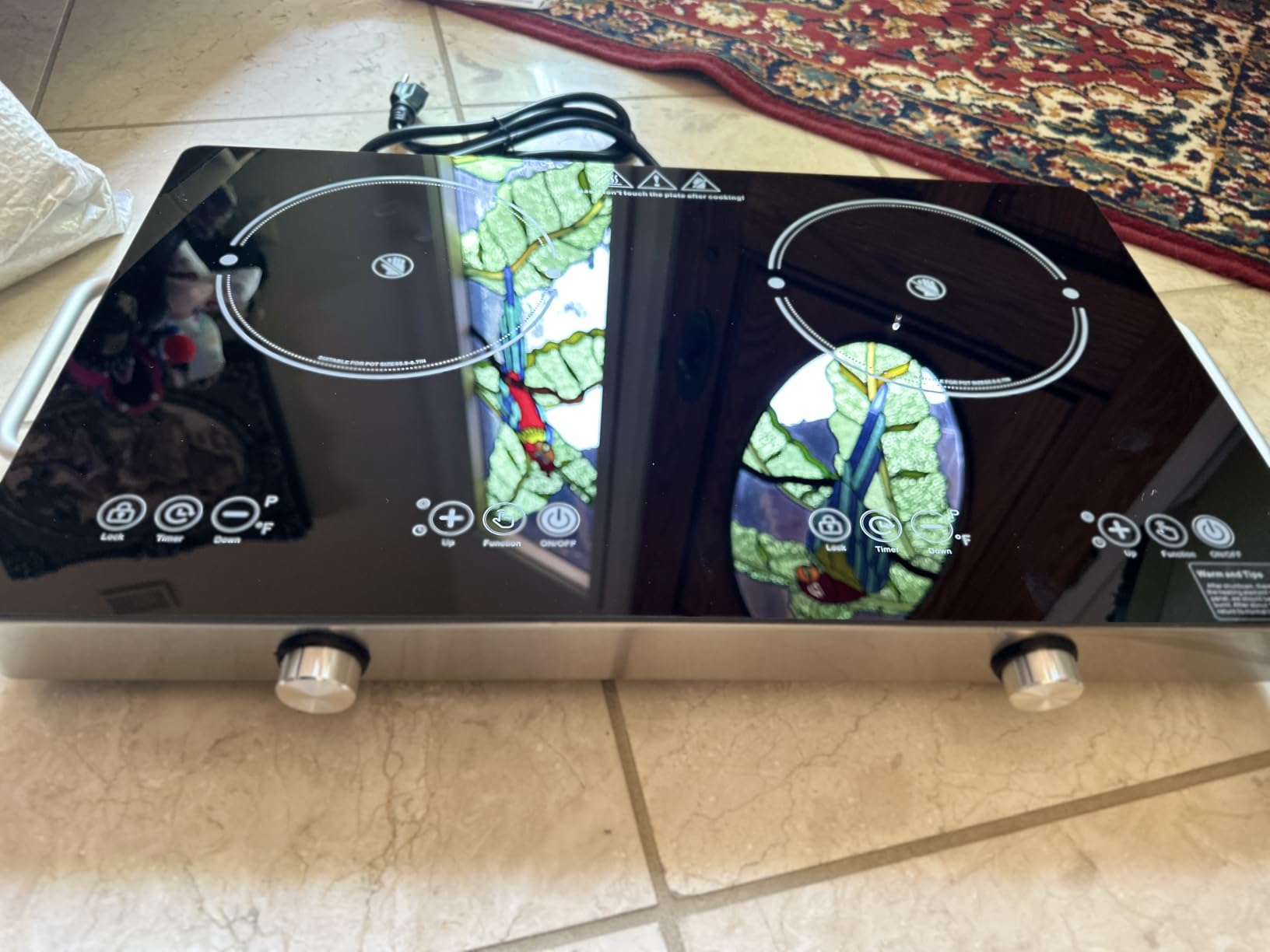
The downdraft moves up to 360 CFM, and it is the part of the package that justifies the depth of the unit. The body measures 30.32 inches long by 20.47 inches wide with a 29.92 by 19.69 inch cutout, and it weighs 56.2 pounds. That 15.75 inch body height is the honest catch. Your base cabinet needs real clearance below the counter, and that is exactly the space people expect to fill with drawers.
Controls are a touch panel with a timer, child lock, pause function and residual heat indicator, and the tempered glass surface wipes clean without a groove to scrub. Cookware compatibility is broad: stainless steel, cast iron, ceramic, glass, copper and aluminum all work. Installation is hardwired 220-240V, so this is an electrician job rather than a plug-in job.
What 166 owner reviews actually tell you
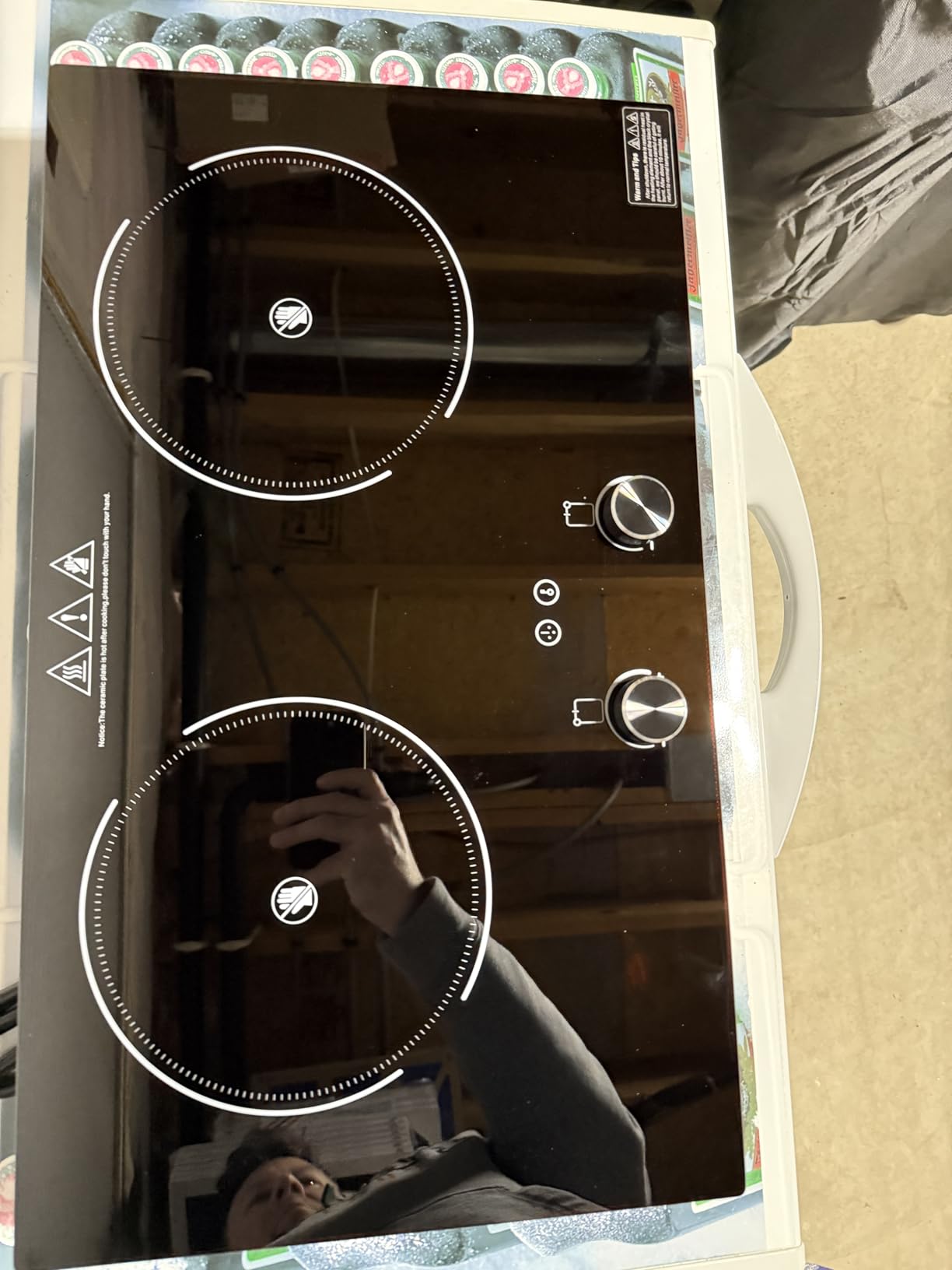
The review volume is the deciding factor. At 166 reviews the 4.4 average is a real signal rather than a rounding artifact, and 74 percent of those reviews are five star. Owners consistently point at the same two things: the bridge burner layout and the fact that the integrated vent freed them from planning an overhead hood.
What to confirm before the counter is templated
That 15.75 inch depth is the tallest body in this group apart from the GASLAND unit, and it eats into under-counter storage more than any of the slimmer designs. A small share of one-star reviews points to fit and installation friction on the hardwired unit, which tracks with how tight a 56 pound appliance is to maneuver into a base cabinet.
2. Cooksir 36-Inch Electric Cooktop with Downdraft – Best for Wide Islands
Cooksir 36 Inch Electric Cooktop with Downdraft, Recirculating Air Vent
36 inch four-zone surface
360 CFM with 9 speeds
7400W total output
7.87 inch body
Pros
- 36 inch width gives real room for four pans at once
- Highest total wattage in the group at 7400W
- Slim 7.87 inch body saves under-counter space
- 9 fan speeds let you match capture to the task
Cons
- 3-star reviews note occasional control or heating consistency issues
- Hardwired 220-240V installation required
If your island is 36 inches or wider, this is the one to shortlist. A 30-inch surface forces a small pan onto the large bridge zone or a second pan onto a rear zone where the downdraft struggles most. A 36-inch body gives you four independent zones plus a griddle without that compromise, and it still drops into a 7.87 inch tall body.
That slim profile is unusual for a cooktop with an integrated extractor, and it is the practical headline here. At 35.43 inches long by 20.47 inches wide with a 34.25 by 19.29 inch cutout, you keep considerably more cabinet space below the counter than the units with deep blower housings.
The downdraft pulls 360 CFM across nine speed settings, which is a level of control that matters more than it sounds. A low speed for a gentle simmer produces far less noise than full boost, and the fact that you can choose is a real difference in daily use. Total cooking output is 7400W, the highest figure in this group, delivered through four radiant zones with a bridge BBQ griddle and a dual-ring burner.
Touch controls handle the timing and safety side: built-in timer, child lock, pause function and residual heat protection, with universal cookware compatibility across the four zones. The warranty runs one year. Reviewers single out the dropped overhead hood and the flexibility of the nine-speed fan, and the small band of 3-star reviews points at build or control experience rather than a systemic fault.
Why island width decides this one
The gap between a 30-inch and a 36-inch island cooktop is not cosmetic. Four zones plus a bridge griddle only work as intended if the pans have somewhere to sit, and forcing that layout into 30 inches is how you end up cooking on the rear burners where a downdraft captures least. This unit resolves that with the same 360 CFM as our top pick.
What to know before you order
A 36-inch body needs a 36-inch section of counter with a 34.25 by 19.29 inch cutout, so measure the island and the cabinet beneath it before anything else. The hardwired 220-240V connection is the other hard requirement. If your island is 30 inches or narrower, this is simply too wide and the Disaenvir or GTKZW is the right shape.
3. Disaenvir 30-Inch Ventless Cooktop – Best Value for Condos and Apartments
Disaenvir 30 Inch Electric Cooktop with Downdraft Vent 7400W, Ductless
Fully ductless recirculating design
7400W total output
3900W BBQ zone
7.87 inch height
Pros
- No exterior duct run needed at all
- Highest rating in the group at 4.7
- 3900W BBQ zone plus dual-ring burner
- Compact body keeps under-counter storage
Cons
- Requires an exact counter cutout so measure first
- Hardwired 240V connection needs a qualified installer
- Some brand reviews cover smaller 2-burner formats
This is the unit to buy when the duct path simply does not exist. A slab-on-grade condo, a third-floor apartment with no riser space, a finished basement ceiling: all of those situations end the conversation about where a downdraft exhaust goes. This one recirculates into the room through a built-in 135W vent fan and stops there, with no exterior duct to run.
It also carries the highest average rating in the group at 4.7 stars from 33 reviews, with 79 percent of those at five stars and none at one star. That is a small sample, but a clean one, and owners describe the ductless install advantage and the clean, modern glass look as the two things that made them happy.
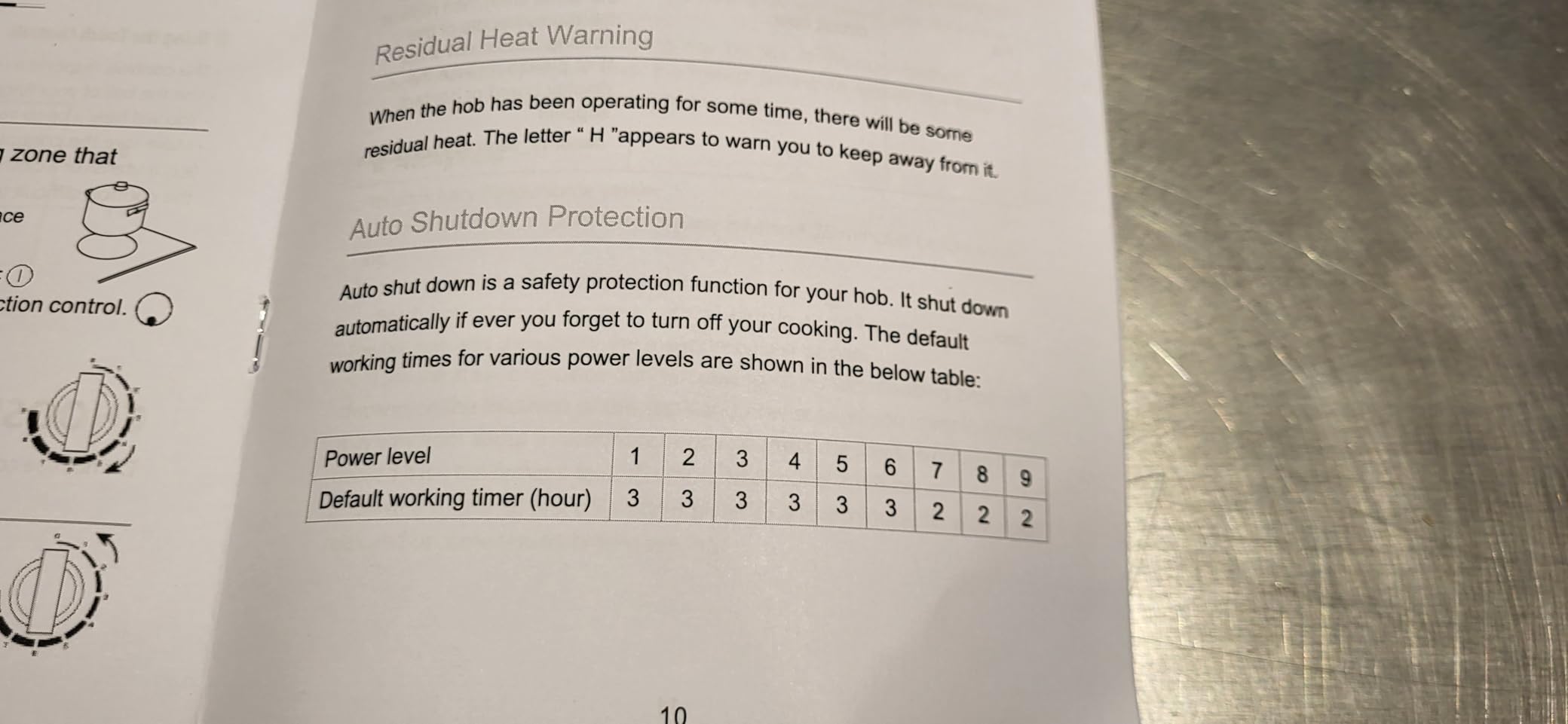
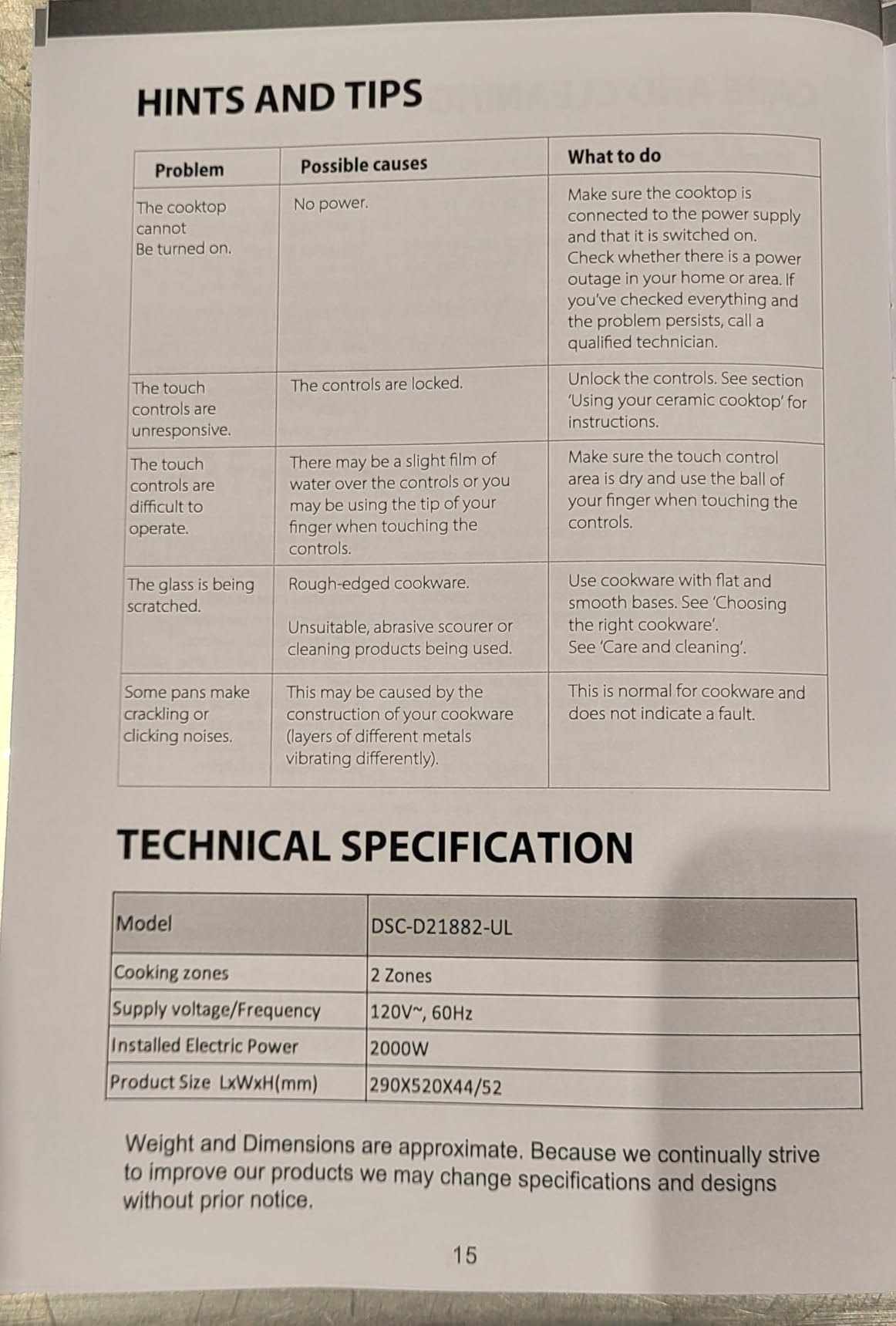
Cooking performance is not a step down from the 30-inch GTKZW. Total output is 7400W, with a 3900W BBQ zone, a 1200W burner and a dual-ring burner that runs at 1100W or 2300W. The body is 30.3 inches long by 20.47 inches wide and 7.87 inches tall, so it keeps under-cabinet storage, with a required cutout of 29.13 by 19.3 inches. Countdown timer, child lock, pause and residual heat protection are all on the touch panel.
Here is the honest caveat about recirculation: air that goes out of the same opening it came in has already lost its heat, grease and moisture to filters, so it never leaves your kitchen. That is fine for a condo, moderate for a family kitchen, and poor for anyone who sears daily in a busy open-concept space. Charcoal filters need replacing on a schedule, and that schedule is part of owning this appliance.
When this is the right answer
Slab-on-grade floors, concrete ceilings in a mid-rise, or a renovation where opening joists is not realistic. Owners consistently name electricians rather than a dedicated appliance installer as the practical requirement, and that is a shorter job than ducting.
When to spend up instead
If there is any way to get air out of the building, a unit that exhausts rather than recirculates is worth the extra install work. You will smell less, clean the countertop less, and replace fewer filters. Note also that some of this brand’s feedback covers smaller two-burner formats, so read the 4.7 as a rating for this four-zone model rather than the whole catalog.
4. Hobsir 36-Inch Cooktop with Downdraft Extractor – Best Airflow and Grill Zone
Hobsir 36 Inch Electric Cooktop with Downdraft Extractor, 4 Burners 7400W
496 cubic meters per hour airflow
Washable grease filter
6000W across 4 zones
2 year warranty
Pros
- Highest published airflow figure in the group
- Washable grease filter that rinses under the tap
- 3900W rectangular grill zone for griddle work
- Two year warranty alongside one other model here
Cons
- Requires hardwiring and the armored cable connector can be awkward to source
- Some 3-star reviews question value against simpler cooktops
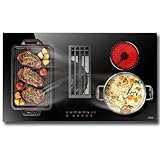
Published airflow is this unit’s headline, and it needs a conversion because the manufacturer lists it in metric. The 135W integrated downdraft system is rated at up to 496 cubic meters per hour, which works out to roughly 292 CFM. That lands it close to the 360 CFM figures of the two units above once you account for different rating methods, so treat it as comparable rather than as a clear lead.
Where it genuinely separates itself is the grill. The combined rectangular BBQ zone measures 16.9 by 7.87 inches and is rated at 3900W on its own, which is the largest single cooking area in this group by a wide margin. If your island cooking is griddles, flat-tops and long low-and-slow sessions rather than simmering, that surface area changes the argument entirely.
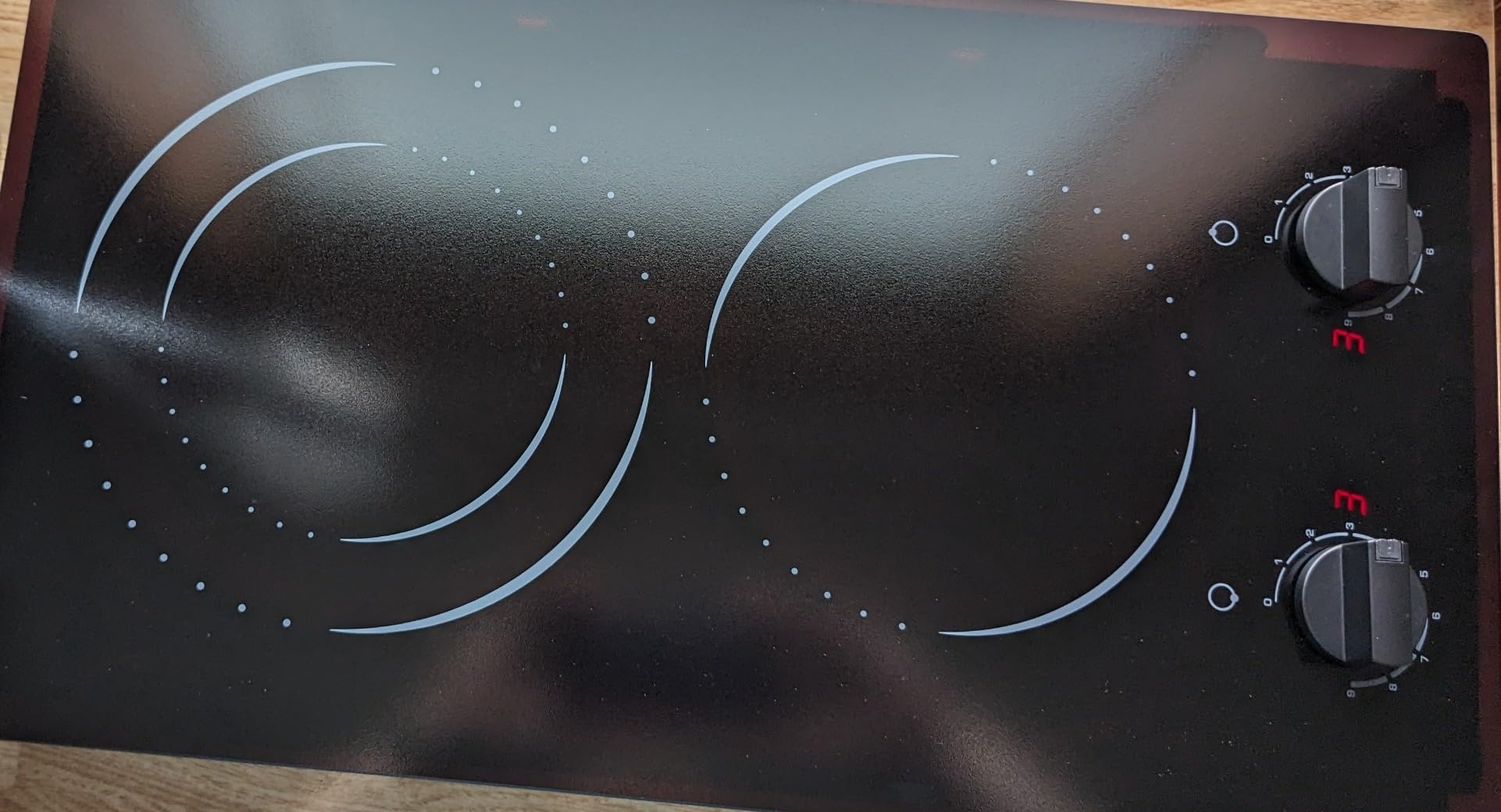
Total output across the four zones is 6000W, split as 1600W, 1600W, 1200W and a dual-ring burner at 1100W or 2300W. The ceramic glass surface takes any cookware, including cast iron and glass, with no induction compatibility question to answer. Nine power levels, a 99-minute timer, pause and a safety lock round out the controls, and the cutout is 35.3 by 19.3 inches with a 7.9 inch depth.
Maintenance is the quiet win. The grease filter pulls out and rinses under the tap, which removes the most common complaint about integrated downdrafts entirely: filters that turn into a grease project. The warranty is two years, tied for the longest in this group. Reviewers mention fast 240V heating and the clean touch-panel look, with lower-rated reviews focused on installation logistics and value.
What the washable filter is worth
Two years means fewer service visits and less kitchen odor between them. On an island where the vent is close to seating and to the people cooking, a filter you can rinse in a sink rather than soak in degreaser is a real quality-of-life difference that no spec line captures.
The weak spot
It still needs hardwiring, and owners report difficulty sourcing the supplied armored cable connector, so factor that into your install quote. The 6000W total is also 1400W below the Cooksir and Disaenvir figures, and the 3-star reviews are mostly about whether the price is justified against a simpler cooktop. The 36-inch body needs a wide island, full stop.
5. Nafewin 30-Inch Downdraft Induction Cooktop – Best for True Induction
Nafewin 30” Downdraft Induction Cooktop, 3-Speed Downdraft Exhaust System, 4 Burner Built-in Stove Top 6000W, Induction Stove Downdraft Range Hood, Timer, Safety Lock, 220V Hard Wired (Ductless Mode)
True 3-speed downdraft exhaust
350-400 CFM
6600W across 4 zones
Low 2.55 inch cooktop profile
Pros
- Only induction downdraft cooktop in the group
- Real 3-speed exhaust rather than a recirculating vent
- Four independent zones with 9 heat levels each
Cons
- Only one customer review so no long-term history
- Induction needs magnetic-base cookware and limits pans
We are including this one with a caveat you should read before anything else. It has a single customer review, and a 5.0 rating built on one review is not evidence of reliability. We include it because it is the only genuine downdraft induction cooktop available in this lineup, and induction changes the ventilation conversation enough to justify the coverage.
That change is straightforward. Induction heats the pan, not the air above it, so there is no flame, no rising convection column and no sideways draft to distort a burner. Heat and steam still come off the food, so you still need capture, but the fight a downdraft is having with rising air is a much smaller one here. The trade-off is cookware: cast iron, enameled iron and magnetic-base stainless steel only.
The downdraft is a real 3-speed exhaust rated at 350-400 CFM with an air velocity of 7-8 meters per second through a 6.3 inch pipe, not a recirculating vent pretending to be one. That distinction matters for anyone who has read the standard warning about recirculated air. The cooktop body sits low at 2.55 inches, with an overall footprint of 30.31 by 20.47 inches and a 29.92 by 19.68 inch cutout.
What you are choosing here
Four induction burners, two at 1800W and two at 1500W, for 6600W total, each with nine heat levels. A 99-minute timer, auto shut-off, overheat protection, residual heat indication and a child safety lock cover the safety side. The controls mix knob and touch, which is unusual in this group and works well with wet hands near a hot surface.
Why we are not recommending it more strongly
One review. There is no failure history, no service pattern and no evidence about how the 3-speed exhaust holds up after a year of daily use. Treat this as a specification-led option to investigate, not a proven favourite, and budget for the induction cookware set you will need if your current pans will not work.
6. GASLAND 31.5-Inch Chef Collection Cooktop – Best for a 31.5-Inch Island
GASLAND CHEF COLLECTION 31.5” Electric Cooktop with Downdraft Vent, 240V
330 CFM three-speed vent
Dual-ring and bridge elements
7400W output
2 year warranty
Pros
- 31.5 inch width no other unit in the group offers
- Dual-ring and sync bridge elements for oversized cookware
- Dishwasher-safe grease filter and removable vent grate
- Two year warranty and 7400W total output
Cons
- Only 5 reviews so the rating rests on a small sample
- Tallest body here at 9.6 inch which reduces clearance
- Highest priced unit in the group by a wide margin
This is the odd-width answer. If your island cabinetry was built around a 31.5 inch opening, neither a 30-inch nor a 36-inch cooktop drops in cleanly, and you are left with a filler strip, a cutout you do not want to modify, or this. For that specific island, the fit is worth more than the review count.
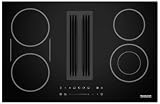
The cooking surface is a 7400W radiant layout with a dual-ring element and a sync bridge element that combines two zones into one larger area for oversized cookware and griddles. The 3-speed integrated downdraft is rated at 330 CFM, which sits between the 360 CFM units and the 292 CFM equivalent of the Hobsir. Safety hardware includes a child lock, overheat protection, a hot surface warning and automatic shutoff, plus a 99-minute timer.
The maintenance package
It ships with a carbon filter, grille, vent set and body, and the removable drip pan, dishwasher-safe grease filter and vent grate can all be taken out for cleaning. The two year warranty is tied for the longest here. Reviewers rate the 31.5 inch footprint and the 330 CFM three-speed vent as the deciding details for a showpiece island.
The trade-offs are real
Five reviews. That is not enough history to plan around, and the rating of 4.7 carries little weight on its own. The 9.6 inch body is the tallest in the group, which further reduces the storage you keep below the counter, and this is the most expensive unit in the lineup. Buy it because the island demands that width, not because of the star rating.
How to Choose a Downdraft Cooktop for an Island
The right downdraft is mostly determined by your building and your cooking, not by brand. Answer these questions in order and the model choice makes itself.
How much CFM do you actually need?
The rule of thumb most installers use is 100 CFM per linear foot of cooktop for electric and induction, and about 1 CFM per 100 BTU for gas. A 30-inch surface lands near 250 CFM as a starting point and 360 CFM as a sensible ceiling for heavy use. Anything above 400 CFM pulls a make-up air code requirement in many US jurisdictions, so confirm with your local inspector before ordering a high-output unit. Retailers frequently disagree on a single model number, so treat published CFM as a range rather than a promise.
Induction, radiant or gas with a downdraft?
No gas downdraft cooktop cleared our selection this year, so this comes down to the two electric options. Induction heats the pan rather than the air, so the downdraft faces less rising heat and there is no flame to distort under suction, but it restricts you to magnetic cookware. Radiant electric tolerates any pan, heats a wider area more evenly for griddle work, and creates a hotter surface that produces more heat to capture. Induction suits precise low-temperature work; radiant suits large flat cooking.
Ducted or recirculating: which one holds up
Ducted is better at everything except installation convenience. Air leaves the building, heat and grease leave with it, and you filter less often. Recirculating means no exterior run, which is a genuine advantage in a condo or over a slab, but the air returns to the room and you will replace charcoal filters on a schedule. Choose recirculating only when ducting is genuinely impossible, and never for a high-heat cooking style in a small room.
What noise looks like in practice
No manufacturer in this group publishes a sones figure, which is a real gap and the most common owner complaint in renovation forums. The r/Homebuilding thread on island cooktops with pop-up downdraft vents captures the pattern: owners report that the high-end pop-up units work very well but are loud. The practical rule is that vent height drives noise. A surface-level or telescoping vent moving 360 CFM is louder than a recirculating fan of similar wattage because it is moving more air through a narrower path. Run it at the lowest speed that still captures, and expect full boost to be audible from the next room.
What you give up in the base cabinet
Every unit here has a body between 7.87 and 15.75 inches tall, and the motor and duct sit below it. In practice the base cabinet under a downdraft cooktop is dedicated. You lose the top drawers, and the cabinet below cannot be a standard drawer bank. Discover this after the countertop is templated and you are reordering cabinetry, so confirm the internal cabinet height against the unit depth before the stone is cut.
When a downdraft is the wrong choice
If your kitchen has a wall you can vent through, an overhead hood out-captures a downdraft of similar airflow, and a 36-inch island hood at 600 CFM will clear more smoke than a 1,000 CFM downdraft because it catches the plume before it rises. The most common renovation regret we see is choosing an island cooktop purely for the aesthetic and then wishing the sink were in the island instead. If you are still deciding the layout, put the cooktop on a wall and put the sink in the island. If the island cooktop is already fixed by cabinetry or by a sightline you have committed to, these six are the field.
For the rest of the island, the surrounding decisions matter as much as the cooktop. Our bar stool guide for kitchen islands covers seating clearances around a cooking zone, and our counter stool roundup goes deeper on clearance and heights at a raised island bar.
Frequently Asked Questions
Are downdraft cooktops any good?
They are a real compromise. Downdraft cooktops work well for simmering, melting, poaching and everyday pan cooking, and they are often the only option when a vaulted ceiling or slab floor leaves no duct path for a hood. They underperform an overhead hood for searing and wok work, because the vent sits behind the burners and fights rising heat. Serious cooks usually do better moving the cooktop to a wall.
Who makes the best downdraft cooktop?
No single brand dominates, and the current in-production built-in category is narrow. Among the electric models currently on sale, GTKZW leads on owner review volume, Cooksir leads on width and slim-body design, Disaenvir leads on ductless installation, and Hobsir leads on published airflow and grill zone size. The pick depends on your island width and whether you can duct.
Should you put a cooktop in an island?
Consider a cooktop in an island if your kitchen is open-concept, you want the sightline above the island kept clear, and a vaulted ceiling or slab floor prevents a ducted overhead hood. Skip it if you cook with a wok, sear daily, or boil large stockpots often. A wall cooktop with a proper overhead hood captures more, and putting the sink in the island usually gives more daily value.
Do you need a downdraft vent with an induction cooktop?
Yes, but the requirement is lighter than with gas. Induction heats the pan instead of the air, so there is no flame and no strong convection plume for the vent to fight, and suction does not distort a burner the way it can affect a gas flame. Steam, grease and smoke from the food still need capturing, so plan on roughly 100 CFM per linear foot of cooktop rather than treating induction as vent-free.
How much CFM does a downdraft cooktop need?
Use 100 CFM per linear foot of cooktop for electric and induction, and about 1 CFM per 100 BTU for gas. A 30-inch surface needs roughly 250 CFM as a baseline and 360 CFM for heavy use. Crossing 400 CFM triggers a make-up air requirement in many US jurisdictions, so verify with your local inspector before ordering.
Can you put a regular stove in an island?
Not without dedicated ventilation and a designed cabinet. A standard drop-in cooktop has no blower, so you need an overhead island hood or a separate pop-up downdraft behind it. A built-in downdraft cooktop replaces the cooktop and the vent in one body, which means the base cabinet below becomes dedicated and loses its top drawers. Confirm cabinet internal height and duct path before the counter is templated.
How loud is a downdraft cooktop?
Loud enough to hear from the next room at full boost, and these manufacturers rarely publish a sones figure, so you have to plan for it. Vent height drives noise: a surface-level or telescoping vent moving 360 CFM is louder than a recirculating fan of similar wattage because it pushes more air through a narrower path. Run the fan at the lowest speed that still captures your cooking.
The Verdict on Downdraft Cooktops for Kitchen Islands in 2026
The best downdraft cooktops for kitchen islands in 2026 are, in order: the GTKZW 30-inch unit for its owner track record and integrated 360 CFM capture, the Cooksir 36-inch for wide islands that need four zones and a slim body, and the Disaenvir 30-inch when the duct path simply does not exist. The Hobsir wins on grill surface and washable filter, the Nafewin is the only induction option, and the GASLAND fits an island built around a 31.5 inch opening.
Buy one if your island cooktop is already fixed by cabinetry or a sightline you have committed to. If the layout is still open, move the cooktop to a wall and put the sink in the island, and put your budget into a real overhead hood. Check cabinet clearance against the unit depth before the counter is templated, and confirm make-up air requirements with your inspector if you plan to run above 400 CFM.