
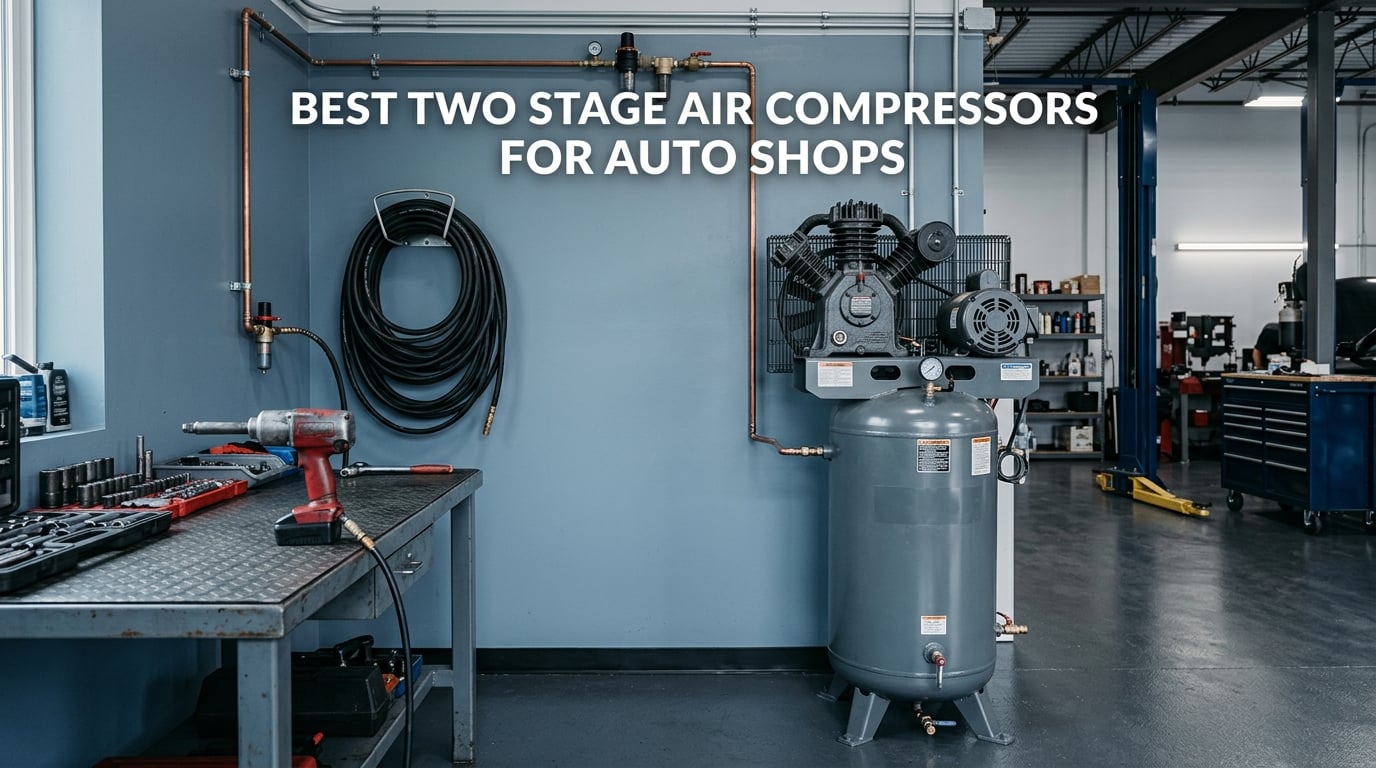
Most auto shops do not fail because their air compressor tank is too small. They fail because their airflow is too small. A 20-gallon pancake compressor with a 3.7 HP motor can fill a 60-gallon tank in four minutes and still leave three technicians staring at a pressure gauge at 60 PSI. That is why the best two stage air compressors for auto shops are chosen on CFM at 90 PSI, duty cycle and pump construction first, with tank gallons as the last thing you think about.
We spent weeks reading the spec sheets, owner reviews and technician forum threads behind ten of the strongest two-stage units on the market right now. Ten shops, ten very different answers: the right machine for a one-bay garage is wrong for a six-bay body shop, and the wrong tank size is a much cheaper mistake than the wrong pump.
This guide covers everything that matters once you have a compressor in mind, including the electrical circuit you need before it arrives, the air quality hardware a paint booth requires, and the honest conditions under which a two-stage unit is the wrong purchase entirely. If you are still choosing between brands, start with the top three below, then work down the full list.
Table of Contents
What Is a Two-Stage Air Compressor?
A two-stage air compressor compresses air in two passes rather than one. Air is drawn into a first cylinder and compressed to an intermediate pressure, then moved into a larger second cylinder that finishes the compression to full working pressure, typically 175 PSI. Because the compression heat is spread across two smaller steps, the pump runs cooler, wears slower and delivers steadier airflow above 100 PSI than a single-stage unit of the same horsepower, at the cost of weight, price and extra parts to service.
Two-stage compression is the standard configuration for professional auto repair and body work. Single-stage pumps are built for intermittent duty in light-duty applications, and asking one to feed three impact wrenches at once is what produces the constant cycling and heat build-up that shows up in technician forums again and again.
How We Picked These Compressors
This is a specification-and-owner-evidence review, not a hands-on lab test. We did not bolt ten compressors to a test bench. Instead we cross-checked manufacturer specification data against customer review patterns, and we used long-term owner reports from technician forums to separate machines that survive from machines that merely ship well.
Every pick had to clear three bars. It had to be a genuine two-stage pump rather than a single-stage unit marketed with the phrase, it had to have published airflow at 90 PSI so you can size it honestly, and it had to be oil-lubricated cast iron or an explicitly justified exception. Where review pools are thin, we say so instead of pretending the evidence is stronger than it is.
We also flag what each machine is not suited for. A compressor rated 100 percent continuous duty sounds better than it is, and we explain below what that label means in a real shop load profile where demand rises and falls by the minute.
Top 3 Best Two Stage Air Compressors for Auto Shops in 2026

Campbell Hausfeld 60-Gallon 2-Stage
- 7.6 SCFM at 90 PSI
- 175 PSI max
- 60-gallon vertical ASME tank
- 3.7 HP 230V induction motor
- Three-year limited warranty

Ingersoll Rand 2475N7.5 7.5 HP
- 24.3 CFM at 90 PSI
- 175 PSIG max
- 80-gallon ASME receiver
- 100% continuous duty
- All Season Select synthetic oil

Ingersoll Rand 2340L5-V 5 HP
- 14.3 CFM at 90 PSI
- Type 30 two-stage cast iron
- 60-gallon vertical tank
- 230V single phase
- Automatic shut-off
The 10 Best Two Stage Air Compressors for Auto Shops in October
| Product | Specifications | Action |
|---|---|---|
| Campbell Hausfeld XC602100 60-Gallon |
|
Check Latest Price |
| Ingersoll Rand 2475N7.5 7.5 HP |
|
Check Latest Price |
| Ingersoll Rand 2340L5-V 5 HP |
|
Check Latest Price |
 Campbell Hausfeld HS5180 80-Gallon Campbell Hausfeld HS5180 80-Gallon |
|
Check Latest Price |
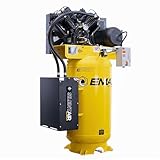 EMAX E350 ES07V080V1 7.5 HP EMAX E350 ES07V080V1 7.5 HP |
|
Check Latest Price |
 Quincy QT 271CS80VCB 7.5 HP Quincy QT 271CS80VCB 7.5 HP |
|
Check Latest Price |
 Quincy QT-54 5 HP 60-Gallon Quincy QT-54 5 HP 60-Gallon |
|
Check Latest Price |
 BelAire 318VL 7.5 HP 80-Gallon BelAire 318VL 7.5 HP 80-Gallon |
|
Check Latest Price |
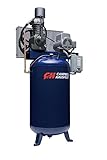 Campbell Hausfeld TF211201AJ 7.5 HP Campbell Hausfeld TF211201AJ 7.5 HP |
|
Check Latest Price |
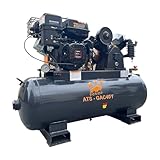 ATSPOWER 15 HP Gasoline 40-Gallon ATSPOWER 15 HP Gasoline 40-Gallon |
|
Check Latest Price |
1. Campbell Hausfeld XC602100 60-Gallon 2-Stage — Best All-Rounder for a Working Auto Shop
Campbell Hausfeld 60-Gallon 2-Stage Air Compressor, 175 PSI, 230V
7.6 SCFM at 90 PSI
175 PSI max
60-gal vertical ASME tank
3.7 HP 230V
65 dB
255 lbs
Pros
- Cast-iron two-stage pump rated up to 10000 hours
- 7.6 SCFM at 90 PSI for grinders sanders and spray work
- 23 x 23 inch vertical footprint saves floor space
- Three-year limited warranty
- Only 65 dB for an electric shop unit
Cons
- 7.6 SCFM is light for simultaneous high-demand tools
- Dedicated 230/240V supply required
- 1-star share of 14 percent in owner feedback
This is the machine we keep coming back to for a two or three-bay general repair shop. The XC602100 carries a 3.7 HP induction motor on a two-stage cast-iron pump, and at 7.6 SCFM at 90 PSI it is not going to run a media blaster while three impact wrenches run, but it will comfortably handle an evening of ratchets, grinders, nail guns and a spray gun one at a time.
What earns it the top spot is the evidence underneath it. With 130 owner ratings it has the deepest review base in this roundup by a wide margin, and 67 percent of those ratings are five stars. The minority of one-star feedback clusters around setup and component quality control on arrival rather than around the pump failing in service, which is a much better problem to have.
The vertical 60-gallon ASME receiver measures 33 by 29 by 77 inches, so it fits against a wall in a bay where a horizontal tank would not. At 255 pounds it is also the only machine here two people can reposition without a lift, and that matters more than it sounds when the layout changes.
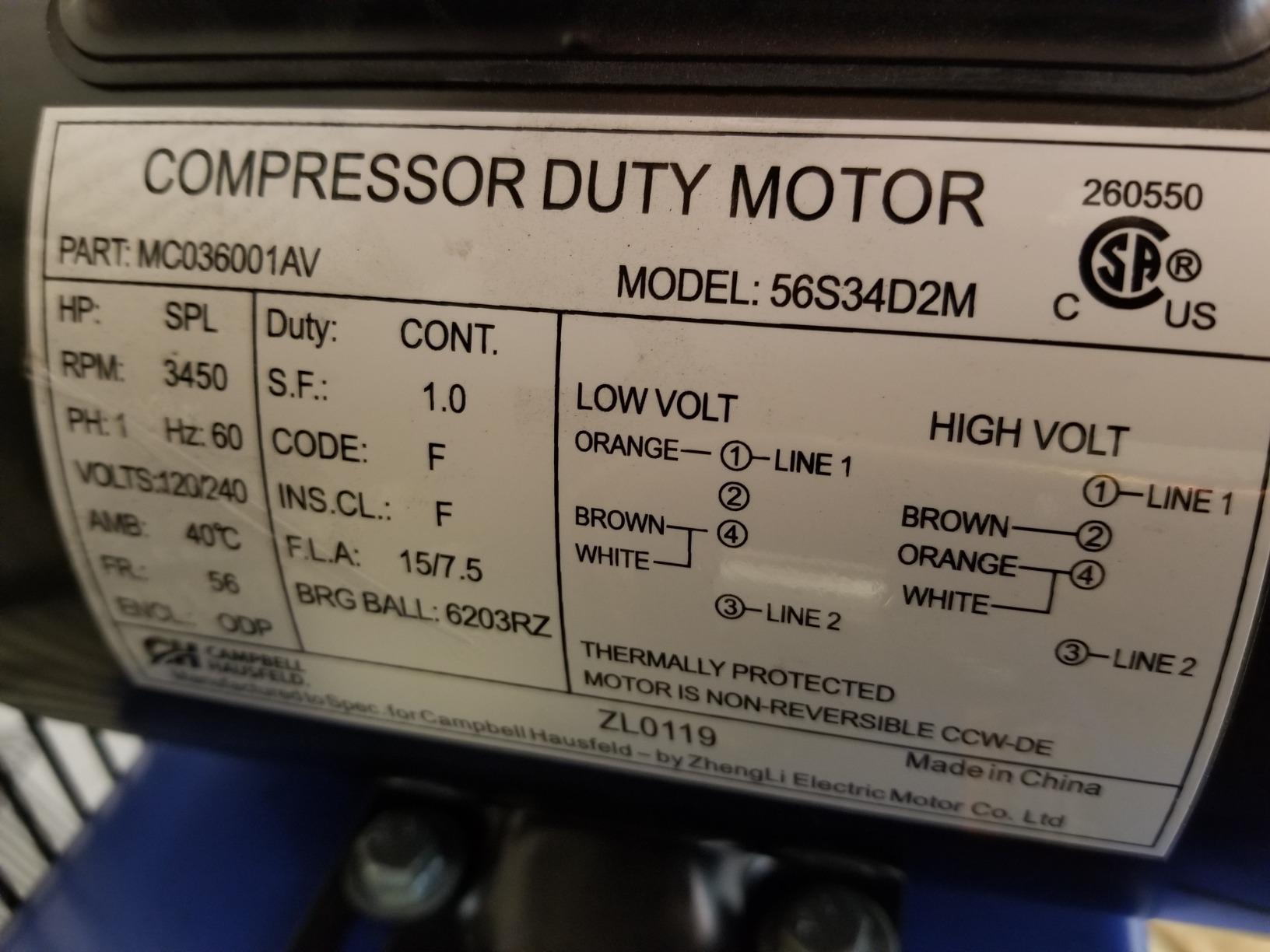
Owners running grinders, sanders and spray equipment on 230V service report the unit holds pressure all day without the thermal shutdown complaints that plague single-stage machines. The 65 dB rating is among the quietest electric figures in this roundup, which matters if the compressor sits inside the work area rather than in a separate room.
There is one honest wrinkle. The spec sheet lists this as a 3.7 HP motor rather than a 5 HP, and 7.6 SCFM is genuinely modest. On a shop that occasionally runs a bead blaster or a plasma cutter alongside other tools, the airflow will be the limit, not the tank.
Best for a two or three-bay general repair shop with 230V service
Two or three bays running staggered work, mostly ratchets, impacts, grinders and occasional spray work. The 60-gallon vertical footprint and 65 dB rating make it a good fit for a compressor that lives inside the bay rather than in a dedicated room.
Not suited for continuous blasting, plasma cutting or five simultaneous tools
7.6 SCFM will not sustain a media blaster or plasma cutter alongside a running DA sander. Shops in that category should step up to a 5 HP or 7.5 HP two-stage unit and accept the extra amperage and footprint that comes with it.
2. Ingersoll Rand 2475N7.5 7.5 HP 80-Gallon — Best for Large Shops Running Several Tools at Once
Ingersoll Rand 2475N7.5 7.5 HP Two-Stage Air Compressor
24.3 CFM at 90 PSI
175 PSIG max
80-gal ASME receiver
7.5 HP 230V at 32A
85 dB
611 lbs
Pros
- Cast-iron design for over 15000 hours
- 24.3 CFM at 90 PSI from single-phase power
- 100% continuous duty rating
- All Season Select oil at 2000 hour service intervals
- 80-gallon ASME receiver
Cons
- 85 dB is loud for an indoor shop
- Extended pump warranty needs the start-up kit
- 611 pounds makes repositioning a two-person job
If you have four bays or more and technicians working simultaneously, this is the class of machine that stops the pressure sag. The 2475N7.5 delivers up to 24.3 CFM at 90 PSI from 7.5 HP on single-phase 230V, and it is rated for 100 percent continuous duty rather than the 50 percent figure most shop compressors carry.
That continuous duty rating is the honest reason to pay for this machine. It means the motor and pump are built to run without the cool-down rests a 50 percent duty machine needs, so a 5 HP single-stage unit cycling nonstop all morning is not being compared on equal terms here. The All Season Select synthetic lubricant system extends oil change intervals to 2,000 hours, which is four times longer than petroleum-based oil on a conventional pump.
The build details are the ones that matter for a machine you plan to keep for a decade. Individually cast cylinders, an overhung crankshaft and a one-piece connecting rod make servicing straightforward, and 79 percent of the 30 owner ratings are five stars with a 4.4 average.
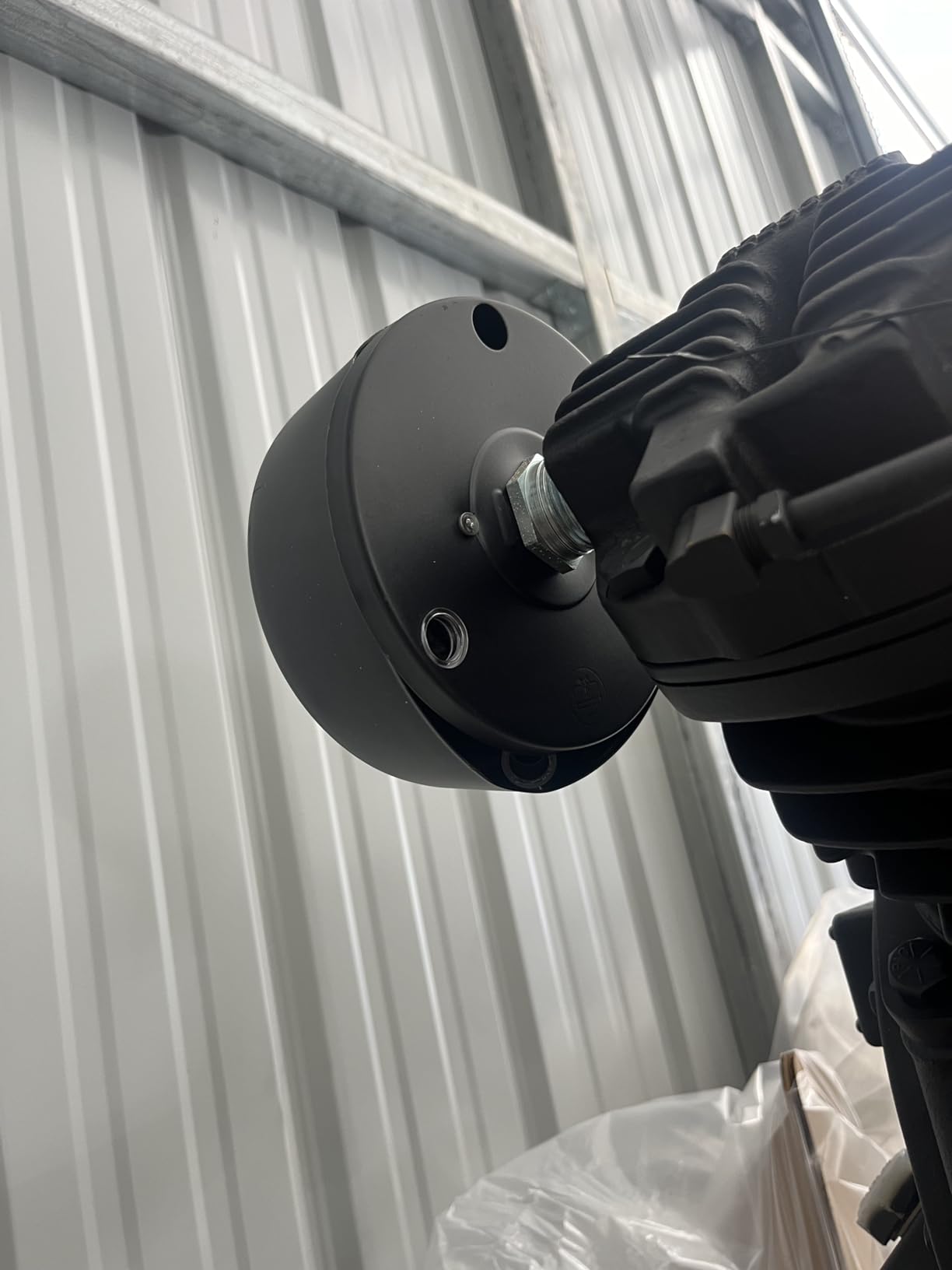
At 611 pounds and 38 by 24 by 70 inches this is a permanent fixture. Plan its location before the pallet arrives, and note that the 85 dB rating is loud enough that most owners put it in a small compressor room rather than beside the bays.
One catch on the warranty story. The extended two-year pump warranty requires purchasing the All-Season Select start-up kit, so budget for that if the extra coverage matters to you. The base machine still runs correctly without it, you simply do not get the extended pump coverage.
Best for four to six bay shops needing 20-plus CFM at 90 PSI
Multiple technicians running impacts, sanders and a paint gun at the same time, on 230V single-phase service that can carry a 32 amp load. The 80-gallon ASME receiver gives enough stored air to ride out a long recovery without the pump cycling constantly.
Not suited for small shops, occupied work areas or machines you plan to move
A two-bay shop cannot use 24 CFM and will just pay for capacity it never draws. The 85 dB rating also makes it a poor neighbour for a reception area or a shared work space, and 611 pounds means it stays where you put it.
3. Ingersoll Rand 2340L5-V 5 HP Type 30 — Best 5 HP Value for Sandblasting and Prep Work
Ingersoll Rand 2340L5-V 5 HP Type 30 Two-Stage Air Compressor
14.3 CFM at 90 PSI
175 PSI max
60-gal vertical tank
5 HP 230V 1-phase
85 dB
430 lbs
Pros
- Type 30 two-stage cast-iron pump
- 14.3 CFM at 90 PSI handles blasting and cerakote prep
- Continuous duty motor absorbs high consumption tools
- Individually cast cylinders simplify servicing
- Quiet for a 5 HP unit
Cons
- Only one-year warranty in this class
- Oil not included and must be the correct synthetic type
- Pressure switch and drain fitting QC issues reported
The 2340L5-V is the one we would put in a three-bay shop that also does media blasting and powder or cerakote prep. At 14.3 CFM at 90 PSI it roughly doubles the airflow of the 60-gallon machine above while staying inside a 5 HP single-phase electrical envelope that most existing shop services can support.
Long-term owners consistently report quiet operation and the ability to keep pressure in the tank while a blast cabinet is running. One r/Tools thread describes a shop owner inheriting a 2340L5-V that was still running strong after 18 years, and owners report cast iron pumps in this family lasting well past 15,000 hours with basic maintenance. That kind of report is the currency that matters in this niche.
Serviceability is the quiet advantage. Individually cast cylinders, an overhung crankshaft and a one-piece connecting rod mean a rebuild is a straightforward job rather than a parts-hunting exercise, and the Type 30 pump is one of the most widely supported reciprocating designs in the industry.
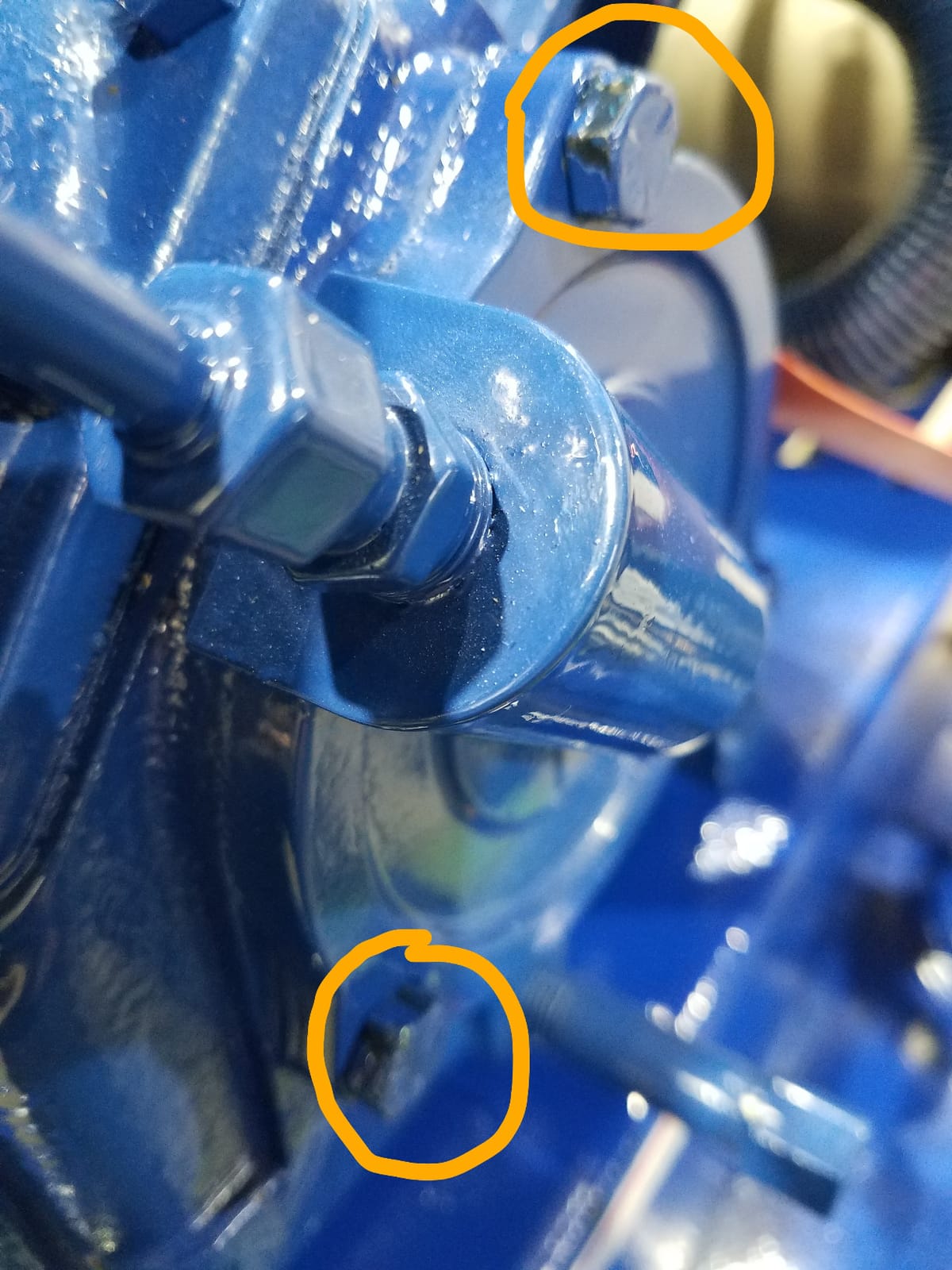
Arrival quality control is where this one loses points. Several buyers report unfastened pump bolts and a stripped, leaking bottom drain fitting straight out of the box, and the filler hole doubles as the oil level check, which makes spills likely. Plan ten minutes of inspection and tightening before first start.
Best for three-bay shops running a media blaster alongside normal service work
Shops that alternate between blasting, coating prep and general repair, and need 14-plus CFM without moving to a 32 amp circuit. The 60-gallon vertical tank keeps the footprint at 24 by 33 inches.
Not suited for shops that want a long warranty or a plug-in installation
The one-year warranty is the shortest in this roundup, and the pump oil is not included, so budget for a service kit before the machine will run. There are also no anti-vibration pads in the box, which matters given the 430-pound weight.
4. Campbell Hausfeld HS5180 80-Gallon 2-Stage — Best 80-Gallon 5 HP for Grinders and Spray Work
Campbell Hausfeld 80-Gallon 2-Stage Air Compressor, 5 HP, HS5180
14.0 CFM at 90 PSI
175 PSI max
80-gal vertical ASME tank
5 HP 230V at 22A
87 dB
Pros
- Commercial-duty cast-iron oil-lubricated pump
- 14.0 CFM at 90 PSI holds up at 175 PSI
- 22A service is easier on older shop wiring
- Oil sight glass and enclosed belt guard
- Three-year limited warranty
Cons
- 87 dB is the highest noise figure here
- Only 14 ratings is thin evidence for a commercial purchase
- Spec sheet lists a 30 gallon tank volume against an 80 gallon capacity field
The HS5180 is the pick when you want 80 gallons of reserve air without stepping up to a 7.5 HP motor. It holds 14.0 CFM at 90 PSI and 13.7 CFM at 175 PSI from a 5 HP single-phase induction motor drawing 22 amps, which is a notably easier circuit to install than the 31 or 32 amp machines further down this list.
That 80-gallon ASME vertical receiver is the real story here. For a shop that runs a grinder, a cut-off saw and a spray booth in sequence, the extra stored air means the pump cycles less often, and less cycling is the single biggest contributor to long pump life.
The commercial-duty cast-iron oil-lubricated pump carries a 10,000 hour B-10 bearing rating, and the front-mounted oil sight glass plus the enclosed metal belt guard are the kind of small details that tell you this was built for a working shop rather than a showroom.
Be aware of the evidence base. Fourteen ratings is a thin pool for a commercial-duty purchase, and there is a genuine inconsistency in the published data: the spec sheet lists tank volume as 30 gallons while the capacity field states 80 gallons. Confirm the tank size with the manufacturer before you plan your floor space around it.
Best for shops on older electrical service that need 80 gallons of reserve
Older buildings with limited electrical capacity where a 22 amp circuit is realistic but a 31 or 32 amp circuit is not. The 80-gallon vertical tank reduces cycling frequency on intermittent heavy tool use.
Not suited for noise-sensitive work areas or where you need confirmed weight for handling
At 87 dB this is the loudest unit in the roundup and belongs in a compressor room. The listed item weight is also an obvious data error, so do not plan freight or a two-person lift based on it.
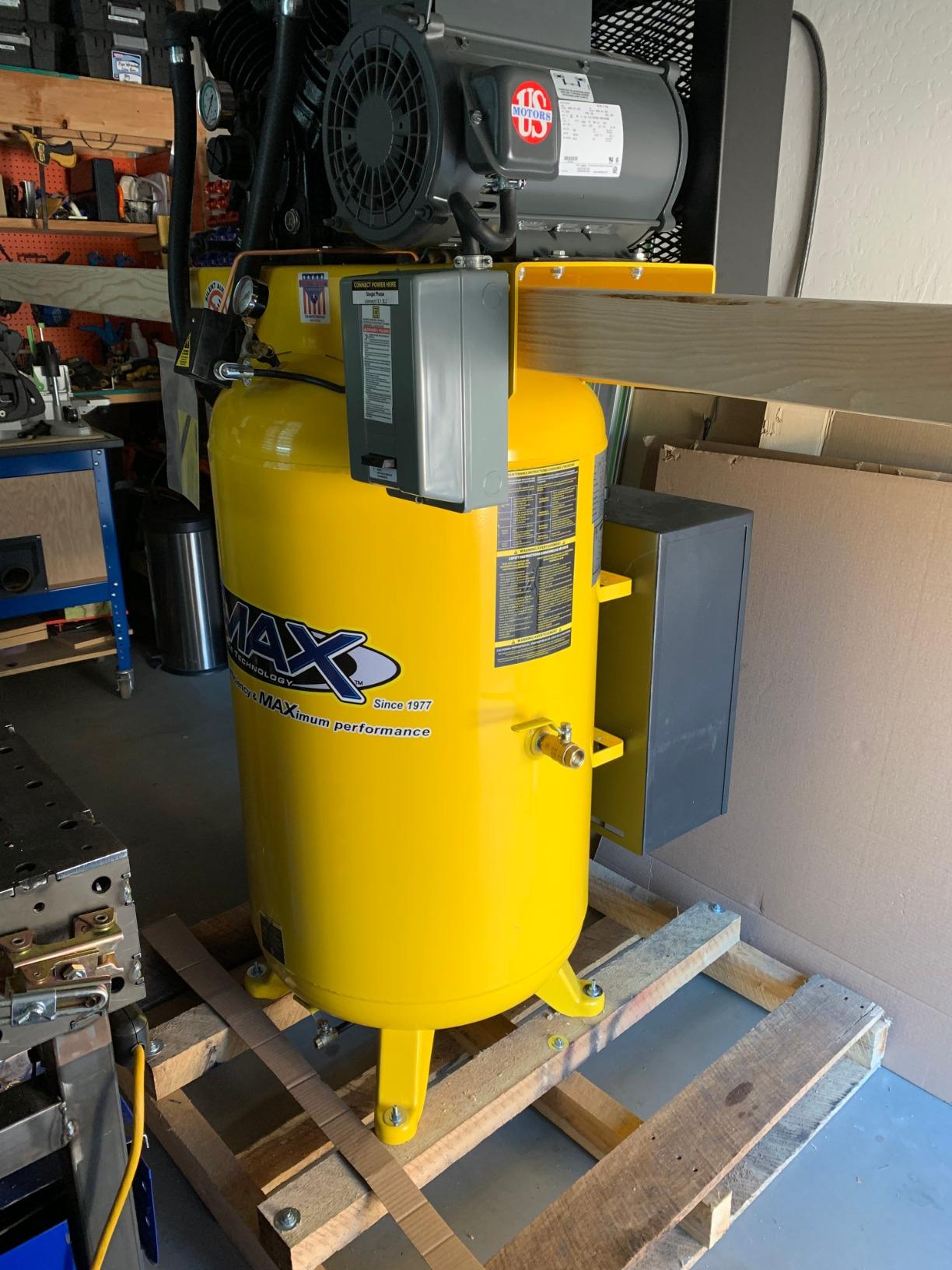
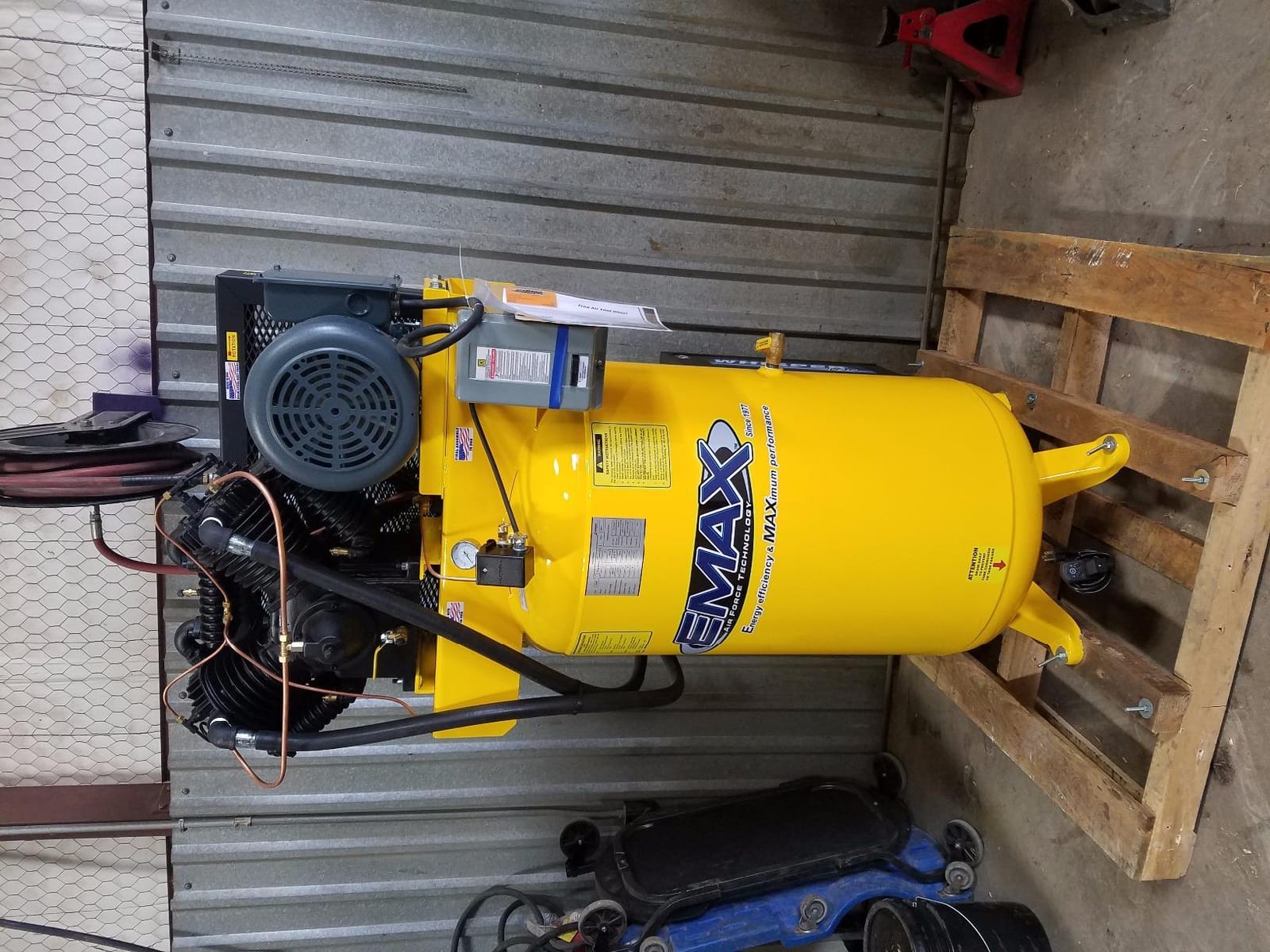
5. EMAX E350 ES07V080V1 7.5 HP 80-Gallon — Best for Paint Shops Needing Clean, Quiet Air
EMAX E350 Stationary Air Compressor – 7.5hp 80 Gal. 2 Stage Single Phase Industrial Compressor with Pressure Lubricated Pump & Whisper Quiet System – ES07V080V1
31 CFM airflow
12 bar about 174 PSI
80-gallon tank
7.5 HP 230V 1-phase
62 dB
950 lbs
Pros
- 31 CFM is the highest airflow in this roundup
- 62 dB Silent Air Technology package
- Pressure lubrication recycles oil and cuts maintenance
- Four-level air filtration
- Five-year warranty
Cons
- 950 pounds makes installation a lift job
- Only six ratings so owner feedback is thin
- Pressure quoted in bar rather than US PSI
- Highest price point in the group
If your shop has a booth, the E350 is built for a specific reason. It delivers 31 CFM from a single-phase two-stage design, which is the highest airflow figure in this roundup, and the four-level air filtration package is the reason that airflow is usable for spray work rather than just impressive on a spec sheet.
The Silent Air Technology package holds the operating level to 62 dB, the quietest specification among the electric units here. For a body shop where technicians work a few feet from the machine all day, that difference is real and it is the main reason we would choose this over a louder 7.5 HP alternative.
Pressure lubrication is the other technical differentiator. Instead of splash-lubricating the crankcase, the system pressurises oil to the bearings and recirculates it, which extends pump life and lengthens the service interval. On a machine expected to run for a decade in a booth-adjacent room, that is the feature you are actually buying.
Two practical warnings. At 950 pounds this is a mechanical-lift or two-person installation, not a weekend project. And with only six ratings there is no meaningful owner history yet, so treat the specification sheet as the argument rather than the reviews.
Best for body and collision shops running a booth, DA sanders and spray guns
Paint-adjacent shops where delivered air quality matters as much as volume, and where compressor noise sits near the booth. The 80-gallon tank and 31 CFM cover a spray gun, a DA sander and a plasma cutter without pressure sag.
Not suited for small shops, tight bays or shops without a lifting plan
31 CFM is wasted capacity below roughly four bays. The 950-pound weight means a mechanical lift or professional move, and the maximum pressure is specified as 12 bar rather than a US PSI figure, which matters if you are matching regulators to a documented working pressure.
6. Quincy QT 271CS80VCB 7.5 HP 80-Gallon — Best Made in the USA for Long-Term Ownership
Quincy Compressor QT Air Compressor — 7.5 HP, 80-Gallon, 2-Stage, 230V, 1 Phase, Model# 2020040716
7.5 HP two-stage
80-gallon tank
230V single phase
68 dB at 1750 RPM
160 PSI rating
643 lbs
Pros
- Cast-iron build advertised for 50000 hours of pump life
- 1750 RPM motor is far quieter than 3450 RPM units
- Owners report units still running after a year of hard duty
- Made and assembled in the USA
- Highest average rating in the roundup
Cons
- Rated 160 PSI so a separate regulator is needed
- Warranty requires purchasing the maintenance kit
- Price premium over imported competitors
This is the durability argument in machine form. Quincy advertises a 50,000 hour cast-iron pump life figure on this unit, and the build and assembly is done in the USA, which for a shop that plans to keep a compressor for fifteen years matters more than it sounds.
The 1750 RPM motor is the sleeper feature. Most portable compressors in this output class turn at roughly 3450 RPM, and a slow-turning motor is dramatically quieter for the same airflow. At 68 dB, this unit is quieter than several of the 5 HP machines in this roundup despite carrying 50 percent more motor.
Owners report the machine still looks and sounds new after a year of the duty cycle that destroys cheaper compressors, and the four reviews returned are uniformly positive with a 4.8 average. That is a very small sample, so we treat it as encouraging rather than conclusive.
The specification that needs planning around is the 160 PSI rating. Most pneumatic tools are set up for higher working pressure, so budget for a separate downstream regulator to get the tools you already own performing as intended. The warranty also requires ordering the manufacturer maintenance kit separately, which adds freight and cost to the ownership picture.
Best for shops that keep compressors for a decade or more
Multi-bay shops prioritising pump longevity, quiet running and domestic assembly over the lowest purchase figure. The 80-gallon tank and 7.5 HP output suit four or more bays working in rotation.
Not suited for shops that need a 175 PSI working pressure out of the box
A 160 PSI rating means a downstream regulator is effectively mandatory for many tools. The maintenance kit is a separate purchase, so the true entry cost is higher than the sticker figure suggests.
7. Quincy QT-54 60-Gallon Vertical — Best for Media Blasting and Long Service Life
Quincy QT-54 Splash Lubricated Reciprocating Air Compressor – 5 HP, 230 Volt, 1 Phase, 60-Gallon Vertical, Model Number 2V41C60VC
5 HP 230V 1-phase
60-gallon vertical tank
Splash-lubricated pump
29 x 21 x 70 inches
475 lbs
Pros
- Most owner history of any 5 HP machine here at 65 ratings
- Keeps up with a media blast cabinet while rebuilding pressure
- Drain valve on a tank leg avoids crawling underneath
- Very smooth and quiet on anti-vibration pads
- Older QT units still in service with parts available
Cons
- One-year warranty is the shortest here
- Motor and pressure switch failures reported after warranty
- 475 pounds needs two people or a dolly
The QT-54 brings 65 owner ratings, more owner history than any other 5 HP machine in this roundup, and the pattern in them is unusually consistent. Owners running this machine daily for a decade or more describe it rebuilding pressure while a media blast cabinet runs, then shutting off cleanly at full pressure once the job ends.
Two design details separate it from budget units. The moisture drain valve is mounted on a tank leg, so you drain the receiver standing upright instead of crawling underneath with a bucket, and the smooth-running character means it barely moves when set on anti-vibration pads. Owners also report good resale value and readily available parts for older QT units, which lowers the cost of a ten-year ownership cycle.
The vertical 60-gallon tank measures 29 by 21 by 70 inches, so the floor footprint is genuinely small. For a shop that is already tight on bay space, that is worth paying for.
Now the honest part, because the 18 percent one-star share in this review pool is real and it points somewhere specific. The complaints are not about the pump. They are about Baldor motor burnout and pressure switch failure, and both tend to land just after the one-year warranty expires, leaving owners to source and fit the parts themselves. Plan a motor replacement in year three or four of a long ownership run.
Best for media blasting, coating prep and shops keeping a compressor for a decade
Shops that put a blast cabinet, bead blaster or heavy coating work through the same machine as general service. The tank-leg drain and the smooth running make it the easiest unit here to service and the easiest to isolate on pads.
Not suited for buyers who want a long warranty or a quiet, modern electrical package
The one-year limited warranty is the shortest in this roundup, with extended coverage reaching only two years on the motor. At 475 pounds you will also need a dolly or a second person to move it once.
8. BelAire 318VL 7.5 HP 80-Gallon — Best With the Magnetic Starter Already Included
BelAire 318VL 7.5 HP 80 Gallon 1-Phase Vertical 2 Stage Air Compressor with Starter
25.3 CFM airflow
208-230V single phase
80-gallon vertical tank
479 lbs
Starter included
Pros
- Magnetic starter included
- saving a separate contactor purchase
- 25.3 CFM is the second highest 230V single-phase figure
- ASME safety valves and fully enclosed belt guard
- Tank drain and discharge valve fitted
- Two-year parts availability commitment
Cons
- Only three ratings
- so ownership is essentially untested
- Thinner parts network than the major brands
- No published noise figure despite the Silent Operation claim
The thing that actually sets this machine apart is on the invoice rather than the spec sheet. The BelAire 318VL includes a magnetic starter, and on a 7.5 HP single-phase installation that is a component your electrician would otherwise have to source and fit separately, along with the line-side protection local code may require.
On paper the rest is competitive too. At 25.3 CFM on 208-230V single phase it sits near the top of the 230V group, the ASME safety valves and fully enclosed belt guard are proper shop equipment, and the two-year warranty is backed by a stated two-year spare part availability commitment.
Start-stop pressure switch control is the right default for a shop, because it means the motor stops when the tank reaches set pressure instead of running continuously and burning electricity and bearings. Start-stop control is genuinely better suited to a shop load profile that rises and falls by the minute, which is the argument we make in the buying guide below.
Where we have to be blunt: three ratings with no written owner feedback tells you essentially nothing about long-term dependability, and BelAire is not a brand with the parts network of Ingersoll Rand or Quincy. Buy it for the included starter and the safety hardware, not for an assumed service record.
Best for shops on 208-230V service that want the electrical hardware pre-supplied
Shops upgrading from a smaller unit where the previous compressor had no starter, or where local electrical code requires a magnetic contactor. The 80-gallon vertical tank and 25.3 CFM cover four to five bays.
Not suited for shops that need a proven parts network or documented long-term reliability
Three reviews is not a reliability record, and a thinner brand network means longer waits when something does fail. There is also no published decibel figure, so treat the Silent Operation claim as unverified.
9. Campbell Hausfeld TF211201AJ 7.5 HP 80-Gallon — Best Airflow at 7.5 HP with a Prewired Starter
Campbell Hausfeld 80-Gallon 2-Stage Air Compressor, 7.5 HP, TF211201AJ
25.0 CFM at 90 PSI
175 PSI max
80-gallon vertical tank
230V at 31A
Starter included
65 dB
Pros
- 25 CFM at 90 PSI and 24.5 CFM at 175 PSI
- Airflow holds up across the whole pressure range
- Prewired magnetic motor starter included
- 15000+ hour pump design at 80 percent duty
- 65 dB is among the quietest in the group
- Three-year limited warranty
Cons
- Oil not included and must be bought separately
- Assembly QC issues reported on arrival
- Only six ratings with a 22 percent one-star share
- Listed item weight is an obvious data error
The TF211201AJ holds 25.0 CFM at 90 PSI and still manages 24.5 CFM at 175 PSI, which is the flattest airflow curve in this roundup. A pump that delivers close to its rated volume at working pressure is exactly what you want when several tools are drawing at once and line pressure drops.
It also arrives with a prewired magnetic motor starter, the same money-saving inclusion as the BelAire above, and it is rated for an 80 percent duty cycle on a commercial-duty cast-iron oil-lubricated pump with a 15,000 hour-plus design life.
The 65 dB rating is among the quietest figures in this roundup, which puts it ahead of the Ingersoll Rand 2475N7.5 at 85 dB for a shop that cannot dedicate a compressor room. One owner reports five years of daily use running impact tools, spray guns and nailers without problems.
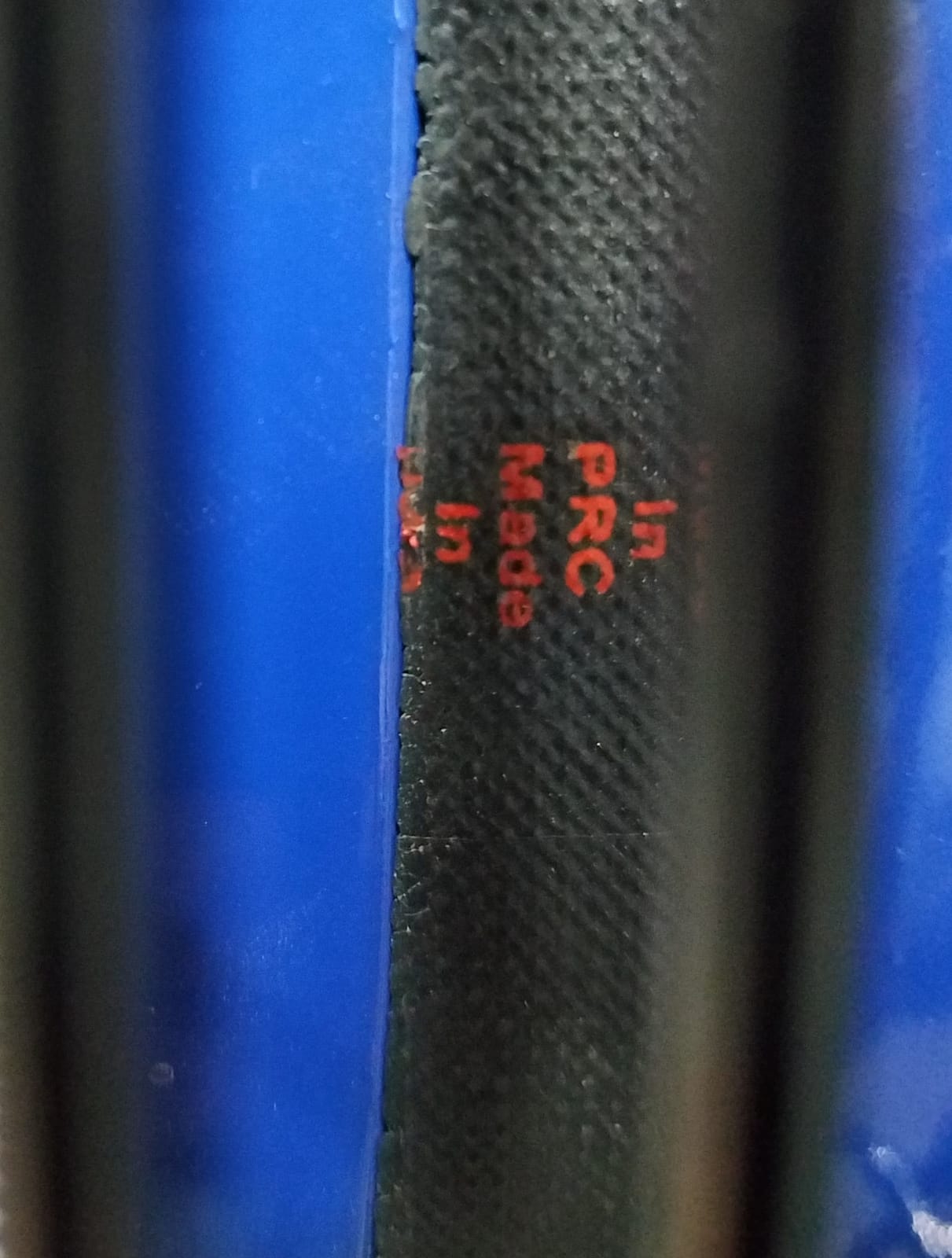
The ratings are bimodal rather than average, and the reason is specific. Seventy-eight percent are five stars, the remainder are a single one-star review describing a bowed motor base plate that shipped from the factory and left the pump and motor pulleys out of alignment. Inspect the drive alignment at unboxing. Also note that oil is not included, so the machine cannot run until you add the correct synthetic lubricant.
Best for shops needing 25 CFM without a 32 amp circuit or a compressor room
Four to six bay shops where airflow matters more than tank size, and where a 31 amp single-phase service is available. The 65 dB rating allows it to sit closer to the bays than an 85 dB alternative.
Not suited for shops that want a turnkey first start or a heavy review history
You must purchase oil separately before it will run, and the review base of six ratings is thin for a machine of this class. Check drive alignment on arrival, and do not trust the listed item weight for planning a move.
10. ATSPOWER 15 HP 420cc Gasoline 40-Gallon — Best Off-Grid Where Electrical Service Is Limited
40 Gallon Air Compressor – 15HP 420cc Gasoline Engine, 175 psi Max Pressure, 24 CFM, 2 Stage Compression For Sandblasting, Impact Wrenches, Spray Guns
24 CFM at 175 PSI
40-gallon ASME steel tank
420cc 4-stroke engine
15 HP gasoline
360 lbs
Pros
- Runs without a 230V circuit
- 24 CFM from a 420cc engine
- ASME-certified cold-rolled steel tank
- Oil-free pump cuts routine maintenance
- Low-oil shutdown protects the engine
Cons
- Only 40 gallons
- the smallest tank here
- Sold under a Generic brand with no service network
- Oil-free pump sits outside the shop-standard class
- Gasoline means fuel storage and exhaust ventilation
Almost every other machine on this list assumes you have a dedicated 230V circuit. This one does not. A 420cc four-stroke OHV gasoline engine rated 15 HP delivers 24 CFM at 175 PSI, which puts its airflow in the same range as far larger electric units here, without touching your electrical service at all.
That makes it the sensible pick for a rural shop, a barn, a mobile service compound or a building where the electrical upgrade would cost more than the compressor. The 1-1/2 inch discharge outlet is the largest in this group and reduces flow restriction on long line runs.
The ASME-certified 40-gallon cold-rolled steel tank has a powder-coated finish for corrosion resistance, and the oil-free pump design removes oil changes from the maintenance schedule entirely. Low-oil shutdown protects the engine, and vibration-dampening components are included for workshop use.
Now the reasons to skip it, and they are not small. Forty gallons is the smallest tank here, which limits reserve air for blasters and spray guns. The oil-free pump sits outside the oil-lubricated cast-iron class that shop compressors are normally specified for, and forum consensus is consistent that oil-free is only tolerated for intermittent or mobile duty. The brand is listed as Generic from an unrecognised manufacturer, so there is no established service network behind it.
Best for rural, off-grid or mobile service operations with no 230V capacity
Remote shops, agricultural settings, roadside service compounds and buildings where an electrical service upgrade is the more expensive option. The 24 CFM output suits two to three bays of moderate tool use.
Not suited for paint-adjacent work, heavy blasting or shops that need parts support
The 40-gallon tank will not carry a bead blaster or booth work, and the oil-free pump raises carryover questions for spray finishing. There is no recognised brand behind the machine, so plan on limited parts availability.
Buying Guide: Sizing a Two Stage Air Compressor for an Auto Shop
Size the compressor by the tools your technicians run at the same time, not by the tank. Write down every pneumatic tool you expect to use simultaneously, find its rated CFM at 90 PSI, add them together, then add about 30 percent headroom for the job you have not thought of yet.
A useful second rule from technician forums: duty cycle matters more than tank size. A unit rated 100 percent continuous duty can run all day without the cool-down rests a 50 percent duty machine needs, and that thermal cycling is what kills pumps over a decade. Tank size only determines how long you can run a tool before the pressure switch stops the pump.
CFM Requirements by Shop Size
A one or two-bay general repair shop needs roughly 12 to 18 CFM, a three to five-bay shop needs 20 to 30 CFM, and a six-bay or collision shop with a booth needs 25 CFM or more. Those bands assume staggered tool use, not every air tool in the building running at once.
Individual tool draws are where the arithmetic gets uncomfortable. A half-inch impact wrench pulls about 4 to 5 CFM, an air ratchet about 3 to 4 CFM, a DA sander 8 to 15 CFM, a paint gun 12 to 15 CFM, and a sandblaster 15 to 25 CFM. Two techs on impacts plus a DA sander is already 16 to 25 CFM before anyone picks up a gun.
One clarification worth making because roundups get it wrong constantly: CFM and SCFM are not interchangeable. Standard CFM assumes sea-level, 70 degrees Fahrenheit and a dry intake. A compressor rated 14 SCFM delivers noticeably less than 14 CFM on a hot, dusty shop floor in July, which is another argument for buying headroom rather than matching a number exactly.
If a booth is in the plan, a paint gun needs 12 to 15 CFM on its own, and you will almost always have a DA sander running alongside it. That is why 4 CFM is nowhere near enough to paint a car, a point that comes up repeatedly in technician forum threads.
Tank Size, Pump Construction and Lubrication
Tank size does not change CFM. It sets burst reserve and cycle frequency, nothing more. An 80-gallon receiver at 175 PSI stores roughly 40 percent more usable air than a 60-gallon tank at the same pressure, which means fewer starts per hour, but the pump still only makes the airflow its horsepower allows. Shop owners who think bigger tank means more air are solving the wrong problem.
Pump construction is where lifetime is decided. Cast iron with individually cast cylinders, an overhung crankshaft and a one-piece connecting rod dissipates heat far better than aluminium and typically runs 10,000 to 15,000 hours or more with maintenance. Pump speed matters too: a 1750 RPM design is quieter and easier on bearings than a 3450 RPM motor of the same output, which is why the slowest-turning machine in this roundup, the Quincy QT at 68 dB, is also one of the quietest.
Lubrication splits three ways. Splash lubrication is cheap and proven, and it is what the Quincy QT-54 uses. Pressure lubrication pushes oil to the bearings under pressure and recirculates it, extending service intervals at higher complexity, and it is the E350 approach. Oil-free pumps remove maintenance entirely but are generally tolerated only for intermittent or mobile duty, not eight hours a day in a professional shop.
On the marketing side, 100 percent continuous duty is a real and meaningful rating, but read it as a thermal capability rather than a promise of free power. It means the motor and pump are built to run continuously without a mandatory rest period. It does not mean the machine produces unlimited airflow, and buying a continuous-duty unit when your load is light is simply overpaying for cooling margin.
Electrical Service, Air Quality and Running Costs
Plan the circuit before you plan the floor space. The units in this roundup draw anywhere from 22 amps on the Campbell Hausfeld HS5180 up to 32 amps on the Ingersoll Rand 2475N7.5, and each needs a dedicated 230V single-phase circuit sized by a qualified electrician. A magnetic starter is required in many jurisdictions for a compressor this size, and two of the machines here include one prewired while the rest expect you to source it.
For air quality, any oil-lubricated pump feeding a spray booth needs a water separator within about 10 feet of the outlet to knock out water and oil aerosol, and a refrigerated dryer for your compressor makes the difference between acceptable and flawless finishes. If your shop is primarily paint work, our desiccant air dryer roundup covers the higher-purity end of that scale.
On running costs, think in kilowatt hours rather than purchase price. A 7.5 HP single-phase compressor running eight hours a day at roughly 60 percent load draws enough power that energy dominates the ten-year ownership figure for most shops. Oil changes add up too, though the synthetic 2,000 hour intervals on the Ingersoll Rand 2475N7.5 meaningfully beat a conventional 500 hour schedule over a decade.
One more installation detail that keeps coming up: bolt the machine down or set it on anti-vibration pads. The drain valve and fitting is a recurring failure point, and if it is hard to reach it simply does not get drained, which is how tank corrosion starts. A cheap brass replacement and a properly located drain solve both problems.
When a Two Stage Air Compressor Is the Wrong Purchase
Do not buy a two-stage compressor if you only run one light air tool occasionally, if your electrical service cannot support a dedicated 30 to 50 amp 230V circuit, or if you are under about two bays. In those situations a 3 to 5 HP single-stage unit delivers a lower cost of ownership with no practical loss in the work.
Second, reconsider a heavy 7.5 HP electric machine if your load is genuinely light. Owners running cheaper units daily with plasma cutters and multiple air tools report the results vary, and the honest position is that expensive is not automatically necessary, it is simply better supported with parts when something does break.
Third, if you are buying primarily for painting, think about air treatment before horsepower. A booth fed by dirty, wet air will show it in the finish, and no amount of CFM fixes that. If you want to move up rather than sideways, our roundup on rotary screw compressors for shops covers the next tier, and our guide to shop air receiver tanks covers the storage side of the same decision.
Frequently Asked Questions
What is a good CFM for a shop air compressor?
A one or two-bay general repair shop needs roughly 12 to 18 CFM, a three to five-bay shop needs 20 to 30 CFM, and a six-bay or collision shop with a paint booth needs 25 CFM or more. Add up the CFM of every tool you expect to run simultaneously and add about 30 percent headroom.
Does tank size affect CFM?
No. Tank capacity sets burst reserve and cycle frequency, not continuous airflow, which is determined by horsepower and pump design. An 80-gallon tank at 175 PSI stores roughly 40 percent more usable air than a 60-gallon tank at the same pressure, so the pump starts less often but delivers the same CFM.
Is 4 CFM enough to paint a car?
No. A conventional paint gun needs 12 to 15 CFM on its own, and you will usually have a DA sander running at the same time at 8 to 15 CFM. Plan on a compressor delivering 20-plus CFM for booth work, plus a water separator and dryer on the air line.
Is a two-stage air compressor worth it for an auto shop?
It is worth it once you are cycling a single-stage unit constantly or running three or more air tools at the same time. Below about two bays of light intermittent work, a 3 to 5 HP single-stage unit gives a lower cost of ownership with no practical loss.
What is the life expectancy of an Ingersoll Rand air compressor?
On a maintained cast-iron pump, 15,000 hours or more is a realistic expectation, and Ingersoll Rand synthetic oil extends the service interval to 2,000 hours between changeouts. Owner reports on technician forums describe Ingersoll Rand 2340L5-V units still running strong after 18 years, which is an owner report rather than a manufacturer specification.
Should I leave the drain valve open on my air compressor?
No, not on a manual drain. Leaving a manual drain open empties the receiver and defeats the design. An automatic tank drain valve solves the problem properly, and if the drain is hard to reach it simply will not get used, which is how tank corrosion and leaks start.
How much louder are two-stage compressors than single-stage units?
Reciprocating shop compressors typically sit in the 62 to 87 dB range in this roundup, compared with roughly 80 to 90 dB for typical single-stage units. Pump speed matters more than stage count, so a 1750 RPM design such as the Quincy QT runs notably quieter than a 3450 RPM machine of similar output.
Do I need a magnetic starter for my air compressor?
Many local electrical codes require one for a compressor of this size, and a 7.5 HP single-phase machine draws up to 32 amps. Two of the units in this roundup ship with a prewired magnetic starter, which saves a separate contactor purchase and installation.
Final Verdict on the Best Two Stage Air Compressors for Auto Shops
The Campbell Hausfeld XC602100 is the best two stage air compressor for auto shops overall, because it pairs a real two-stage cast-iron pump with the deepest owner feedback base in the category, a vertical 60-gallon ASME tank that fits tight bays, and a 65 dB rating that lets it live near the work rather than in a separate room. It is honest about its limits at 7.6 SCFM, which is exactly why it works for two and three-bay shops rather than busy ones.
For a three-bay shop doing blasting and coating prep, the Ingersoll Rand 2340L5-V delivers the airflow step-up at a 5 HP electrical footprint and has the strongest long-term owner history of anything we found. For four bays and up, the Ingersoll Rand 2475N7.5 is the answer, and the EMAX E350 takes it further if your shop has a booth and cares about noise and air quality.
Whichever one you choose, measure your simultaneous tool load first, confirm the circuit with an electrician before the pallet arrives, and put a water separator within 10 feet of the outlet. Those three steps prevent more shop downtime than any brand decision on this list.