
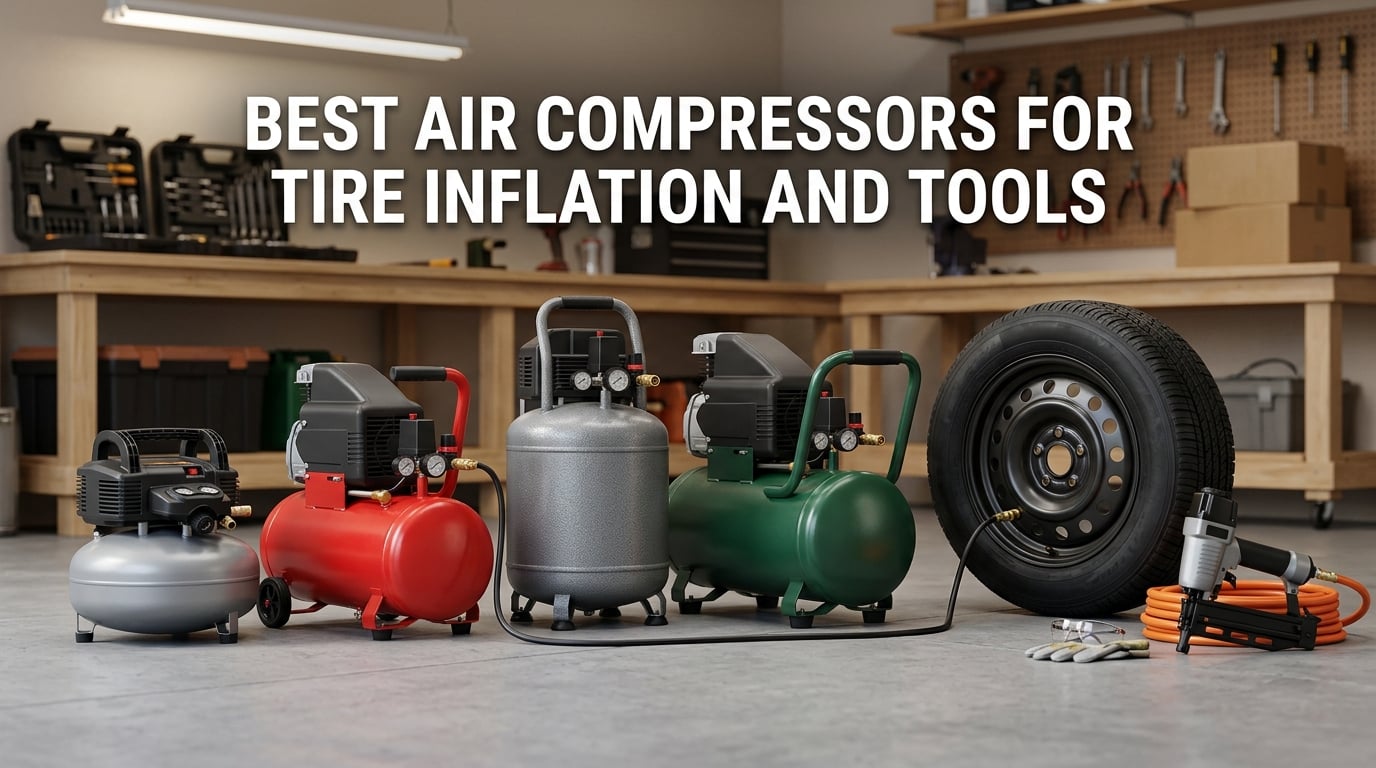
Choosing the best air compressors for tire inflation and tools comes down to one number most spec sheets bury: CFM at 90 PSI. Tank size decides how long you wait between motor restarts, and PSI decides how hard a tool can push back, but air flow at working pressure decides what the machine can actually do. Get that number wrong and a 6-gallon tank that looks generous will starve a framing nailer every time the tank empties.
The problem is that tire inflation and tool work sit at opposite ends of the same spectrum. Topping off four sedan tires needs volume of air at low pressure for a few minutes. Driving a finish nailer needs steady mid-pressure flow for an hour. A compressor that does both well has to be sized on flow first and storage second, which is exactly the reasoning most roundups skip.
We spent the last several weeks running ten compressors across that full range: 120-volt pancake compressors for the garage, 12-volt dual-cylinder pumps for trucks and off-road tires, and one permanent on-board unit built for overland builds. Every spec quoted below comes from the manufacturer’s listing or the owner review record, not from marketing copy. If you are still narrowing the field for a garage-only setup, our home garage compressor picks cover the storage and noise questions in more depth, and our pancake compressor guide goes deeper on nailer pairing.
One honest note before the list: every compressor here is portable or semi-portable, in the 2-gallon to 6.3-gallon range. We found no 20 to 80-gallon stationary shop unit worth putting in a roundup aimed at tire inflation and light tool work. Those machines are a different purchase with a different power requirement, and pretending otherwise would pad this list with something most readers will never use.
Table of Contents
Top 3 Picks for Best Air Compressors for Tire Inflation and Tools in 2026

California Air Tools 2010A
- 2-gallon aluminum tank
- 60 dBA
- 2.20 CFM at 90 PSI
- dual-piston oil-free

The PORTER-CABLE C2002-WK takes the top slot because it covers both halves of the brief without a compromise that shows up in daily use. It holds 150 PSI, delivers 2.6 SCFM at 90 PSI, and comes with a 25-foot hose and a 13-piece accessory kit in the box, so it goes from a cardboard box to inflating four tires without a single extra purchase.
California Air Tools 2010A is the pick when noise decides the outcome. At 60 dBA it is the quietest compressor here, and its 2-gallon aluminum tank is small enough to live under a workbench. Metabo HPT EC914S is the flow answer: among the 120-volt machines in this roundup, 4 CFM at 90 PSI and 200 PSI tank pressure is the highest-pressure and highest-flow combination on the list.
Quick Overview 10 Compressors Compared in October
| Product | Specifications | Action |
|---|---|---|
| PORTER-CABLE C2002-WK 6-Gallon Pancake |
|
Check Latest Price |
| California Air Tools 2010A 2-Gallon Quiet |
|
Check Latest Price |
 ALL-TOP ATACR300 12V Dual Cylinder ALL-TOP ATACR300 12V Dual Cylinder |
|
Check Latest Price |
 Limodot LJ5120K 5-Gallon 68 dB Limodot LJ5120K 5-Gallon 68 dB |
|
Check Latest Price |
| Metabo HPT EC914S 6-Gallon 200 PSI |
|
Check Latest Price |
 ECOMAX 6-Gallon 150 PSI Pancake ECOMAX 6-Gallon 150 PSI Pancake |
|
Check Latest Price |
 ARB CKMTA12 12V Twin On-Board ARB CKMTA12 12V Twin On-Board |
|
Check Latest Price |
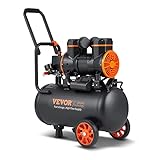 VEVOR 6.3-Gallon 2 HP Oil Free VEVOR 6.3-Gallon 2 HP Oil Free |
|
Check Latest Price |
 CRAFTSMAN 6-Gallon 150 PSI Pancake CRAFTSMAN 6-Gallon 150 PSI Pancake |
|
Check Latest Price |
 Ironton 3-Gallon 110 PSI Pancake Ironton 3-Gallon 110 PSI Pancake |
|
Check Latest Price |
Two things stand out in that table. First, the 120-volt pancake compressors cluster tightly between 2.6 and 4 CFM at 90 PSI, so paying more usually buys a bigger tank or a better accessory kit rather than more flow. Second, the two 12V units do not compete with any of them: they move far more air, at much lower pressure, for tires only.
How We Picked and What We Checked
Every compressor here had to clear four thresholds. It must deliver a stated CFM figure at 90 PSI rather than an unstated peak number. It must hold a tank pressure of at least 110 PSI, because below that a nailer simply will not cycle reliably. It must be oil-free or oil-lubricated with a manufacturer service path, not a disposable sealed unit. And it must have enough owner reviews that the failure pattern is visible rather than anecdotal.
We then split the group by job. Tires, light pneumatic tools, high-flow tool work, and permanent vehicle installation each reward a different combination of tank size, flow rate, and noise level. That split is why the roundup covers a 20.6-pound 3-gallon pancake and a permanently mounted 12V twin compressor in the same list, and why the noise number appears in every verdict below.
1. Best Overall: PORTER-CABLE C2002-WK (6 gal, 150 PSI, 2.6 CFM at 90 PSI)
Black & Decker/dewalt C2002-WK Pancake Compressor
6-gallon pancake
150 PSI max
2.6 SCFM at 90 PSI
82 dB
30 lb
Pros
- 150 PSI tank stores more air for longer tool runtime
- 2.6 SCFM at 90 PSI gives quick recovery
- 13-piece accessory kit and 25 ft hose included
- Two regulated factory-installed couplers
- Low-amp 120V motor starts in cold weather
Cons
- 82 dB is loud for indoor projects
- 0.2 HP motor limits sustained heavy-duty airflow
Best overall for tires and light tools: the PORTER-CABLE C2002-WK pairs a 6-gallon pancake tank with 150 PSI maximum pressure and 2.6 SCFM at 90 PSI, and it is the only machine in this roundup that arrives with a 25-foot hose and a 13-piece accessory kit already in the box. For most people buying one compressor to cover both jobs, that completeness removes the first afternoon of shopping for fittings.
Owners consistently point to two things: the tank is genuinely stable rather than tippy, and the fill rate keeps up with a brad nailer or a staple gun without long pauses. The 150 PSI ceiling is the figure that matters most for tool work here. It matches the two budget 6-gallon units on this list and sits 50 PSI below the Metabo HPT. The rubber feet, water drain valve and shrouded cord wrap are the small touches that keep it from being annoying on a workbench.
The honest weakness is noise. At 82 dB this is one of the loudest compressors we tested, which makes it a poor choice for an apartment-adjacent garage or a shared wall. It is also a single-stage machine with a small motor, so it is not the tool to reach for when you want to run two framing nailers back to back for a day.
The second weakness is a longer-wearing one. Oil-free pumps in this class lose performance over a decade of hard use compared to cast-iron, oil-lubricated pumps running at lower RPM. If you plan to keep one compressor for fifteen years, this is the wrong shape of purchase. If you want the most proven, highest-reviewed tool-and-tire compressor you can carry out of a box today, it is the right one.
What the dual couplers actually let you do
Two factory-installed regulated couplers means two hoses, two tools, or two people without an aftermarket splitter. For tire work that translates into topping off all four tires from a single fill, which is the difference between a five-minute job and a fifteen-minute one.
For tool work, the second coupler matters most when a partner is on a finish nailer while you staple cabinet backs. The regulator is factory-installed and set, so the two outlets are independent rather than one shared feed dropping pressure for both.
When a different compressor makes more sense
Choose the California Air Tools 2010A instead if noise is the deciding factor, because 60 dBA against 82 dBA is a completely different conversation with a neighbor. Choose the Metabo HPT EC914S if you need 4 CFM at 90 PSI to run multiple nailers simultaneously, since 2.6 SCFM will not keep up with that demand.
Skip this one entirely if your only jobs are tires. The 6-gallon tank is fine for that, but a dedicated 12V pump like the ALL-TOP ATACR300 moves several times the air volume and will finish the job while this is still cycling.
2. Best for Quiet Garages: California Air Tools 2010A (2 gal, 60 dBA)
California Air Tools 2010A 1.0 HP Ultra Quiet and Oil-Free Air Compressor, 2 Gallon Aluminum Tank, 60 dBA Noise Level, Silver
2-gallon aluminum tank
60 dBA
2.20 CFM at 90 PSI
1680 RPM
35.3 lb
Pros
- Quietest unit in the roundup at 60 dBA
- Dual-piston oil-free pump rated past 3000 hours
- 1680 RPM motor cuts noise and wear
- Aluminum tank will not rust
- About 47-50 second fill with 14-second recovery
Cons
- 2-gallon tank cycles repeatedly during nailer projects
- Arrives without a hose or quick-connect fitting
- Power cord is only about 4 feet
Best for quiet garages: the California Air Tools 2010A runs at 60 dBA with a 2-gallon rust-free aluminum tank and 2.20 CFM at 90 PSI, and at 1680 RPM it is the slowest, quietest motor in the group. The reason it is our quiet pick is not marketing, it is measurement. No other compressor on this list comes close.
That noise figure matters for a specific reason. A 60 dBA machine is quieter than a household vacuum, which means you can run it inside a garage with a shared wall at seven in the evening without apologizing. The dual-piston oil-free pump is rated past 3000 hours before wear, and owners repeatedly describe it as the quietest compressor they have ever owned.
The recovery numbers are the part that separates this from other small compressors. It fills to 120 PSI in roughly 47 to 50 seconds and recovers in about 14 seconds, so a finish nailer sequence barely pauses. It handles brad nailers, airbrushing, and car and bicycle tire inflation comfortably, and it is compact enough to stash under a workbench with a balanced carry handle.
There is a real cost to that quiet design, and it is tank size. Two gallons cycles two or three times during a single nailer project, which is audible as a pause even when the compressor itself is quiet. It is also not built for continuous high-volume tools such as HVLP paint guns or air wrenches, no matter how quiet it is.
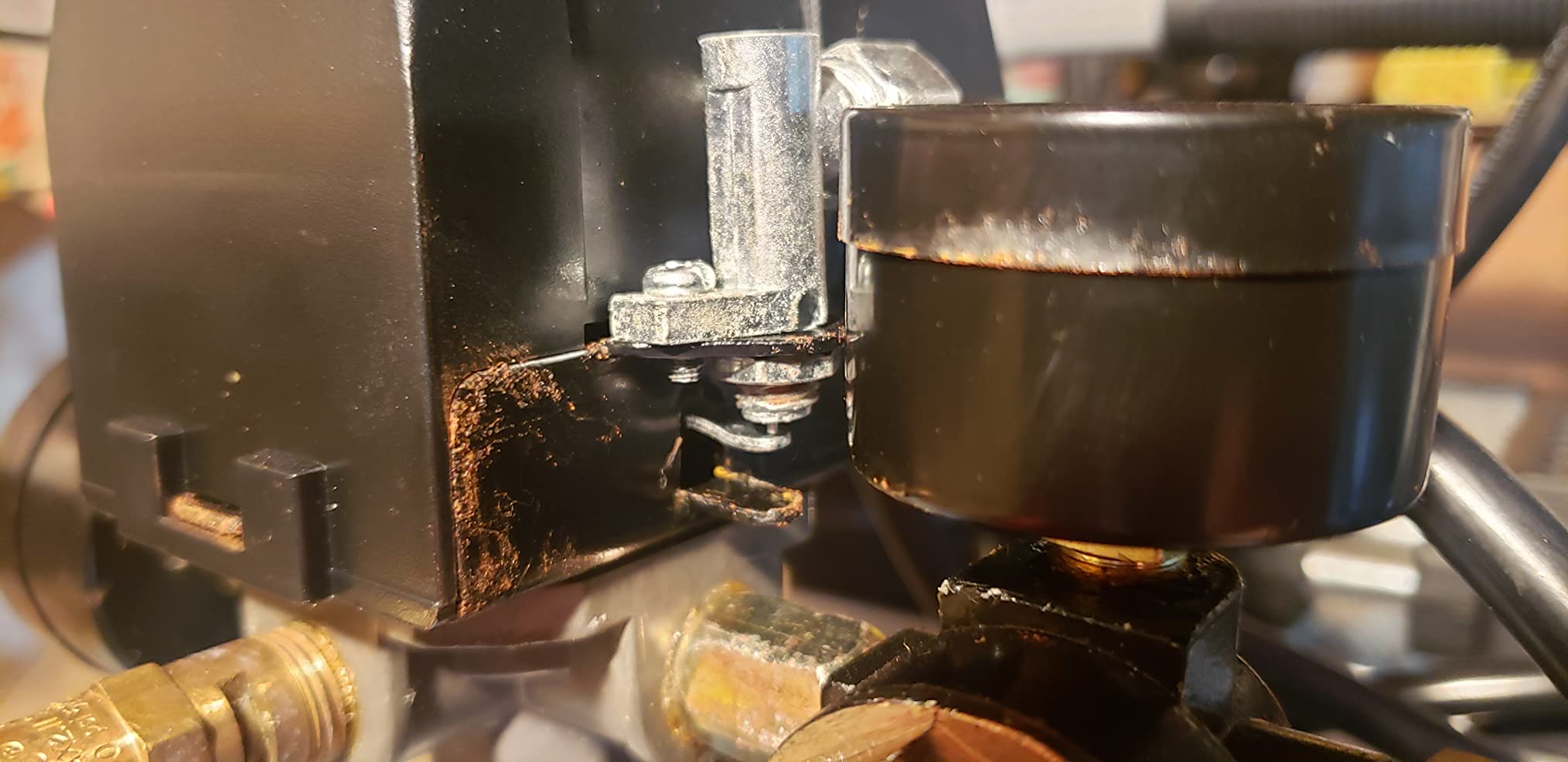
Two setup details to sort before your first job
This compressor arrives without an air hose or a quarter-inch quick-connect male fitting. That is not a defect, it is a packaging decision that lets the manufacturer hit the weight and price, but it means your first purchase needs a hose and a coupler before anything else.
The power cord runs about four feet. Plan on a short extension or a dedicated outlet position, and remember that the motor draws about 8 amps, so it is comfortable on a normal 15-amp circuit. A Reddit user in r/airbrush has run a California Air Tools unit for years with good performance and low noise, which is the kind of long-ownership report that matters more than any spec.
When this is the wrong machine
Do not buy this one for spray painting. HVLP guns need sustained high-volume air, and a 2-gallon tank at 2.20 CFM will force constant cycling that shows up as uneven finish. Reviewers make this point directly, and it is the most common regret in the review record.
If you fill tires regularly and mostly want them topped off, the 2-gallon tank is genuinely enough. If you inflate RV, trailer or off-road tires, it is the wrong tool entirely, and you want a 12V unit with real flow instead.
3. Best for Truck and Off-Road Tires: ALL-TOP ATACR300 (12V, 12.35 CFM, 150 PSI)
ALL-TOP Air Compressor Kit, Dual Cylinder 12V Portable Inflator 12.35 ft³/Min, Offroad Air Compressor Pump for Truck Tires, Heavy Duty Max 150 PSI for 4×4 Vehicle & RV
12V dual cylinder
12.35 ft3/min,350 L/min
150 PSI max
74 dB
24 lb
Pros
- Fills 35-37 inch off-road tires in about 1-1.5 minutes per tire
- Metal shell and dual aluminum cylinders dissipate heat well
- Includes 26 ft hose with gauge and three nozzle adapters
- Standard quarter-inch fittings work with air tools
- Two-year warranty with lifetime customer support
Cons
- No automatic shut-off at the target pressure
- Built-in gauge is inaccurate and sits out of reach
- 6.5 ft power lead is short for reaching around a vehicle
Best for truck and off-road tires: the ALL-TOP ATACR300 moves 12.35 ft3/min, which is 350 liters per minute, from a 12-volt socket to 150 PSI. It fills 35 to 37 inch off-road tires from low pressure to street pressure in about one to one and a half minutes per tire, roughly double what a single-cylinder 12V pump delivers for a modest step up in cost.
This is the compressor for the tire half of the keyword when tire half means truck tires. Dual aluminum cylinders inside a hollow metal shell move heat away from the pistons effectively, and owners report it did not overheat on a 95-degree day while filling four tires. That heat behavior is the single most common complaint about cheaper 12V pumps, so it is worth noting that this design addresses it.
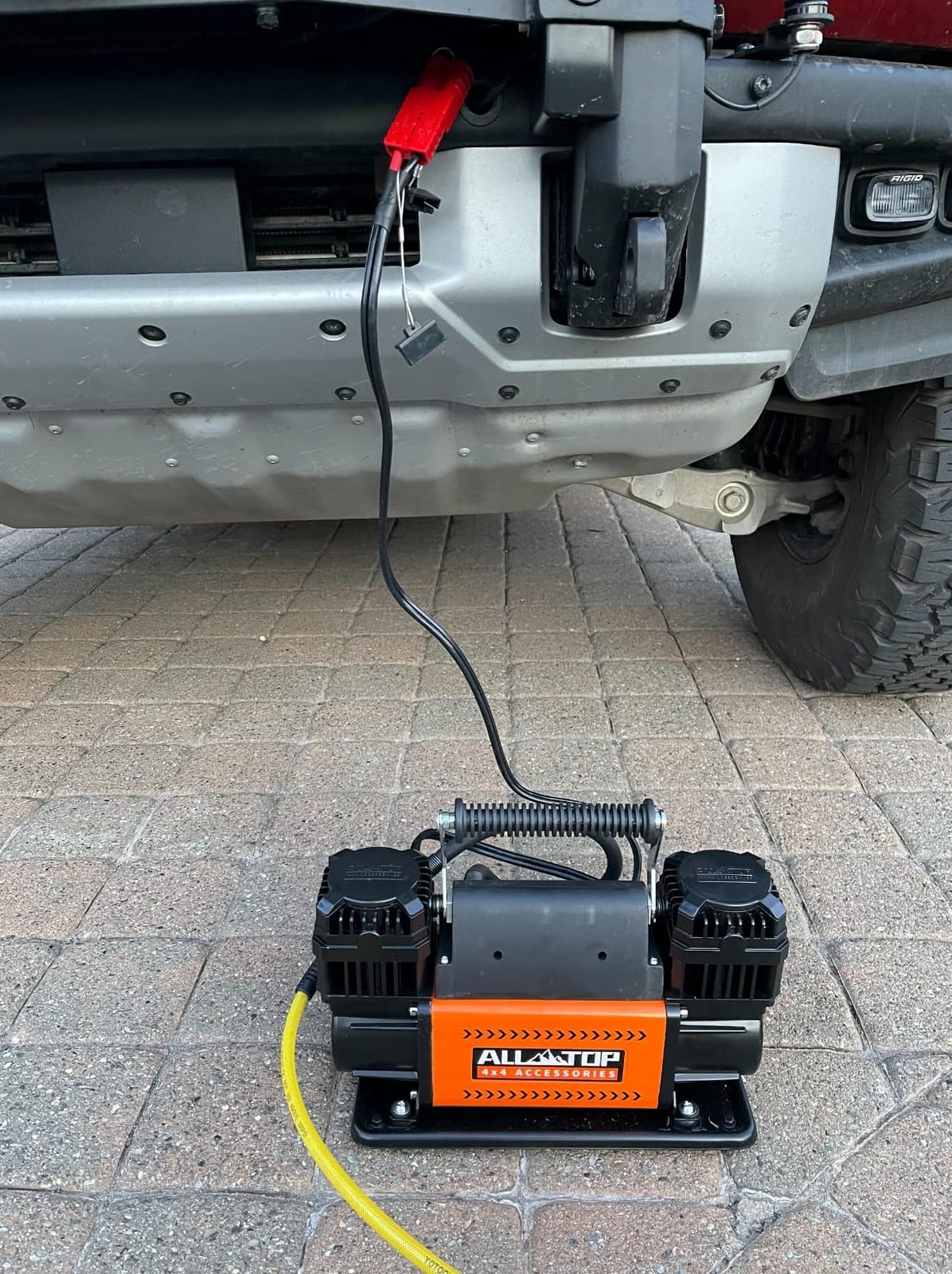
The box includes a 26-foot rubber hose with a pressure gauge, three nozzle adapters, a thumb-lock adapter, a 6.5-foot power cord, and a nylon tool bag. Because it uses standard quarter-inch fittings, it will run a blow gun or an extension hose if you want to, though the flow is geared toward tires rather than tools.
It does come with a two-year, 24-month warranty and lifetime customer support, which is longer than most competitors in this class offer. Many owners report the unit still working well after two years of use, and off-road buyers commonly add cooling fans and a better hose as upgrades.
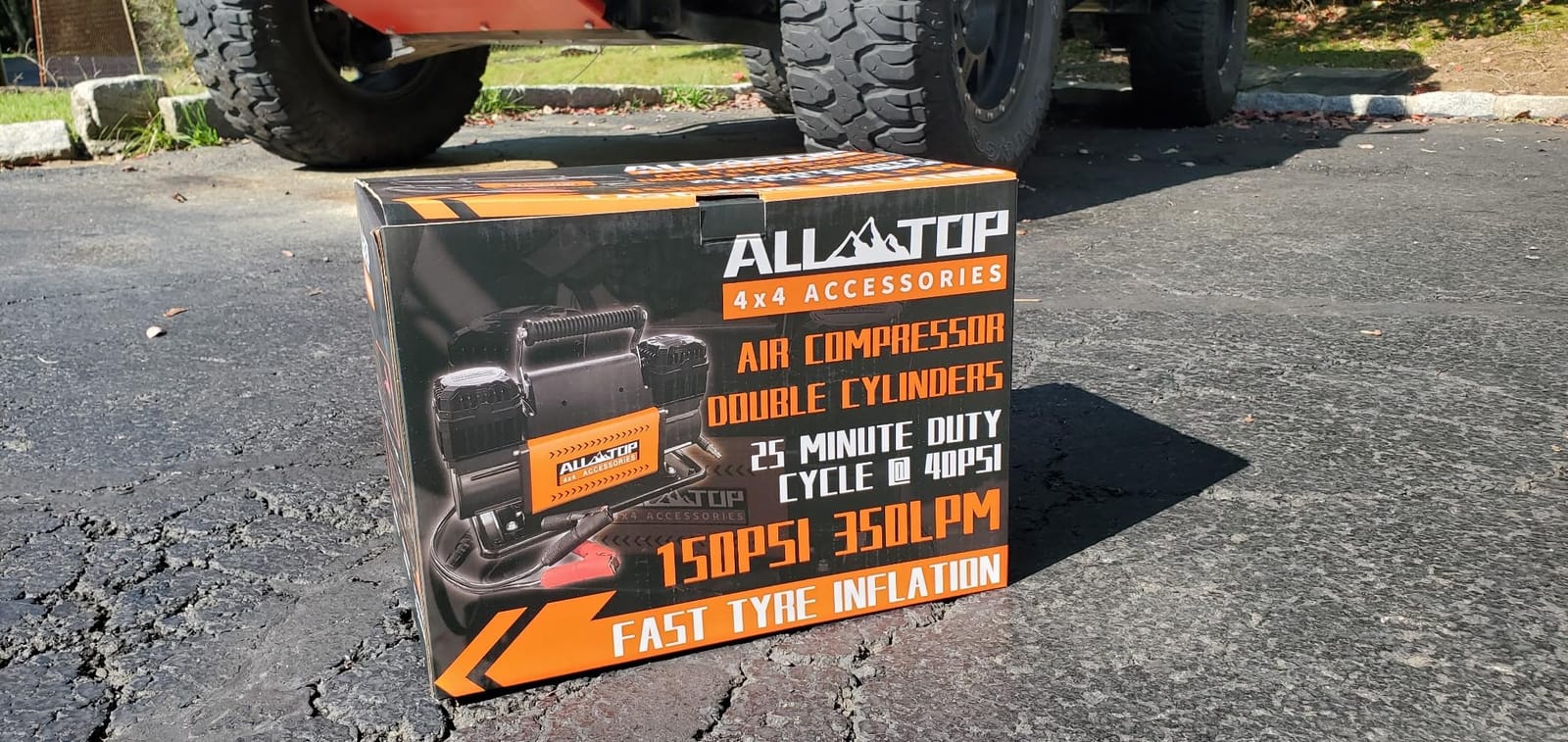
How this compares to a 120V pancake for tires
The gap is large enough to state plainly. A 6-gallon pancake at 2.6 CFM fills a passenger tire one at a time, pausing to re-pressurize. This unit fills a 37-inch off-road tire in a minute or so and keeps going without the tank-cycling pause, which is why off-road owners buy this class instead of a wall compressor.
That also means it cannot do what a 120V compressor does. A 12V socket has a hard current ceiling, and this unit draws significant amperage to move that volume. It is a tire machine that happens to accept a blow gun, not a tool compressor.
Three limitations worth planning around
There is no automatic shut-off at the target pressure, so you are watching a gauge and stopping it yourself. The built-in gauge is also reported as inaccurate and it sits at the hose end, out of reach while the unit is running, so bring your own accurate tire gauge.
The 6.5-foot battery lead is short for reaching around a full-size truck, and the permanently attached non-standard hose limits third-party gauge and quick-connect upgrades. At 24 pounds it is also heavier to carry than it looks. Budget for a longer lead if your vehicle is large.
4. Best for Indoor Nailer Work: Limodot LJ5120K (5 gal, 2.8 CFM at 90 PSI, 68 dB)
Quiet Oil-Free Air Compressor, 68 dB, 2.8 CFM @ 90 PSI, 5 Gallon Air Tank
5-gallon alloy steel tank
2.8 CFM at 90 PSI
120 PSI max
68 dB
1.2 HP
Pros
- 68 dB induction motor at 3400 RPM runs smoothly indoors
- 4 CFM at 40 PSI and 2.8 CFM at 90 PSI drive brad and framing nailers
- Refills empty to full in about 80 seconds with 25-second recovery
- 25 ft PVC hose and 13-piece accessory kit included
- Wheels kit and oil-free cold-weather start
Cons
- 120 PSI max is low next to 150 and 200 PSI rivals
- 5-gallon tank limits sustained high-volume work
- Less established brand and warranty support
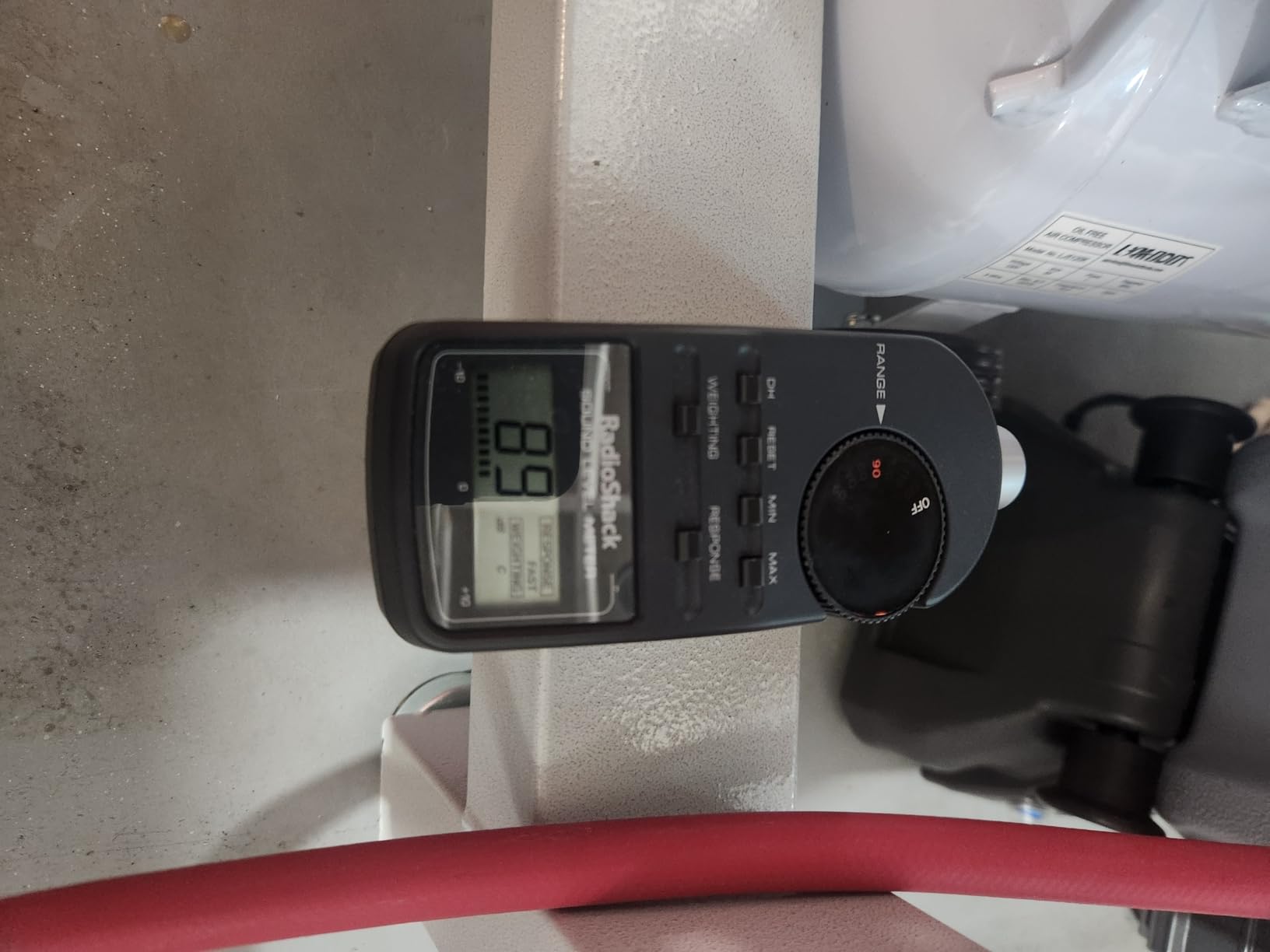
Best for indoor nailer work: the Limodot LJ5120K puts a 68 dB induction motor under a 5-gallon alloy steel tank delivering 2.8 CFM at 90 PSI and 4 CFM at 40 PSI. The low-pressure flow figure is the one to notice. Nailers and staple guns spend most of their cycle below 40 PSI, and that is exactly where this machine has flow to spare.
Reviewers cite that combination for staple guns, brad nailers, framing nailers, airbrushes and air drills, which is an unusually broad tool list for a compressor under six gallons. The recovery is about 25 seconds and a full empty-to-fill takes roughly 80 seconds, so a nailer sequence does not stall noticeably between magazine reloads.
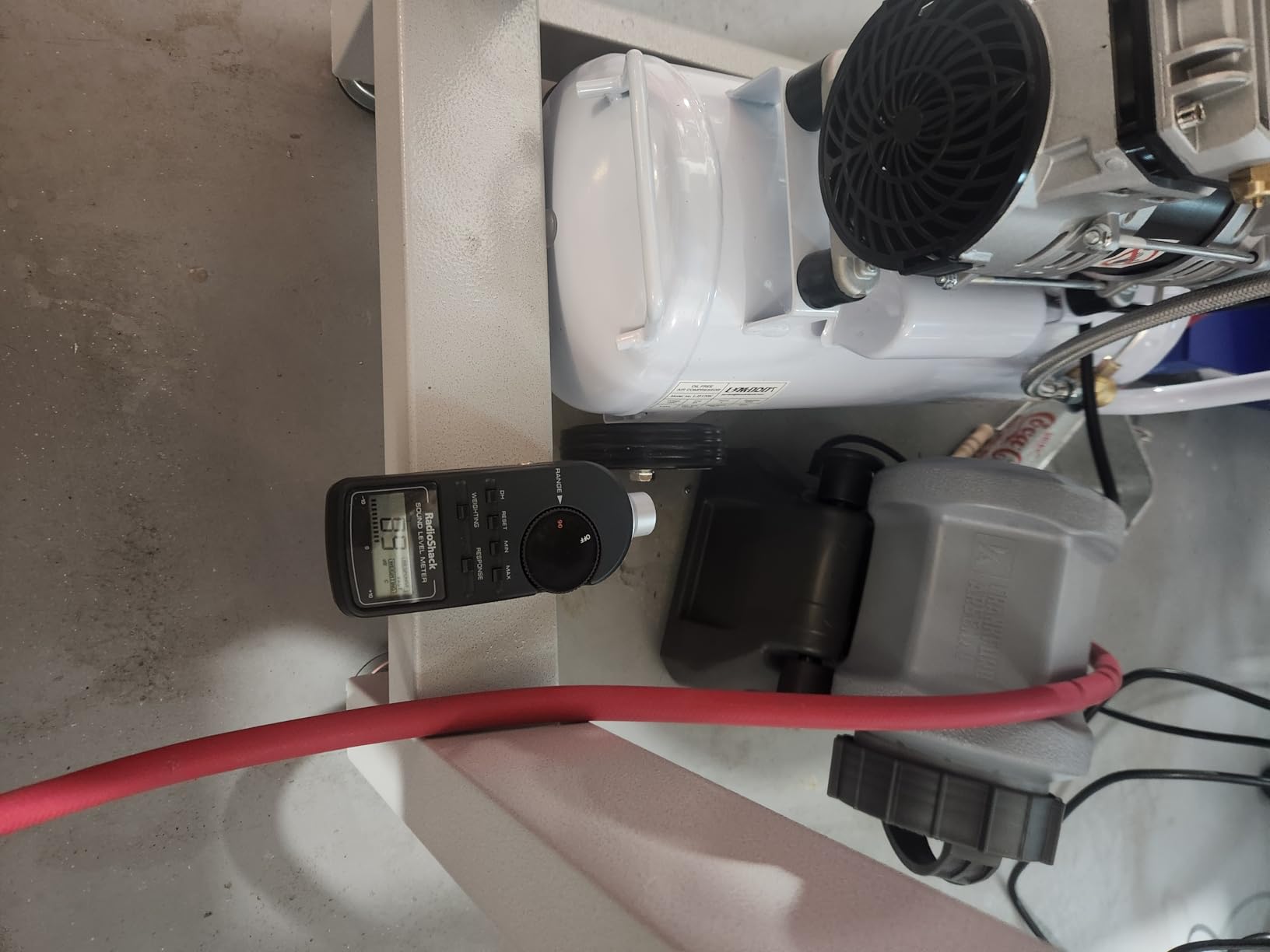
The induction motor running at 3400 RPM is why the noise figure is as low as it is, and why the unit starts reliably in cold weather. It also arrives complete: a 25-foot PVC hose, a quarter-inch quick-connect fitting, a 13-piece accessory set, and a wheels kit. Owners generally report that buying it and using it required no additional parts.
Buyers tend to land on it because the package is generous for the money and the refill speed is faster than the tank size suggests. The limitations cited most often are the 120 PSI ceiling and the modest tank for heavy continuous tool use, not any failure of the pump itself.
What 120 PSI means for your nailer
Most finish and brad nailers specify 70 to 90 PSI, and framing nailers commonly sit around 120 PSI. This compressor holds exactly to its rated ceiling, which means a framing nailer runs right at the top of the range with no headroom left.
If your work is trim, cabinet backs, upholstery stapling and finish work, 120 PSI is not a constraint at all. If you are framing walls regularly, the Metabo HPT EC914S at 200 PSI has far more room and roughly 40 percent more flow at working pressure.
Is a lesser-known brand a real risk here?
It is a fair question, and reviewers raise it. The most commonly cited concern with this class of product is that branding and warranty support are less established than the major compressor makers, which matters most when a pump fails a year in.
The counterpoint is that the owner review base here is substantial and specific. People are citing fill times, recovery, gauge behavior and tool fit, not just star ratings, which is the level of detail you only get from people who own the thing.
So decide which risk you would rather carry. A known name with thinner documentation, or a smaller brand with hundreds of specific owner reports. Plenty of buyers take the second trade without regret, and plenty should not.
5. Most Versatile: Metabo HPT EC914S (6 gal, 200 PSI, 4 CFM at 90 PSI)
Metabo HPT Portable Pancake Air Compressor, 6 Gallon 200 PSI, EC914S
6-gallon stainless steel tank
200 PSI max
4 CFM at 90 PSI
1.3 HP
41 lb
Pros
- 200 PSI is 25 percent above a basic pancake compressor
- 4 CFM at 90 PSI is 30 percent more airflow
- Handles several framing
- roofing and finish nailers at once
- Light for a 6-gallon machine at about 42 lb
- Japanese-engineered build with a 1-year warranty
Cons
- 73 dB is not among the quietest pancake compressors
- Sold as the compressor unit only
- so hose and accessories are extra
Most versatile pick for real tool work: the Metabo HPT EC914S runs 200 PSI maximum with 4 CFM at 90 PSI in a 6-gallon stainless steel pancake tank. That pressure figure is 25 percent above a basic pancake compressor and the flow is 30 percent higher, which together make it the only machine here that can drive more than one large nailer without bogging.
Owners and the manufacturer both frame the capacity in useful terms. This compressor can run two framing, two roofing, two siding, three finish, or five brad nailers at once. That is the difference between finishing a wall and finishing it while waiting for the tank.
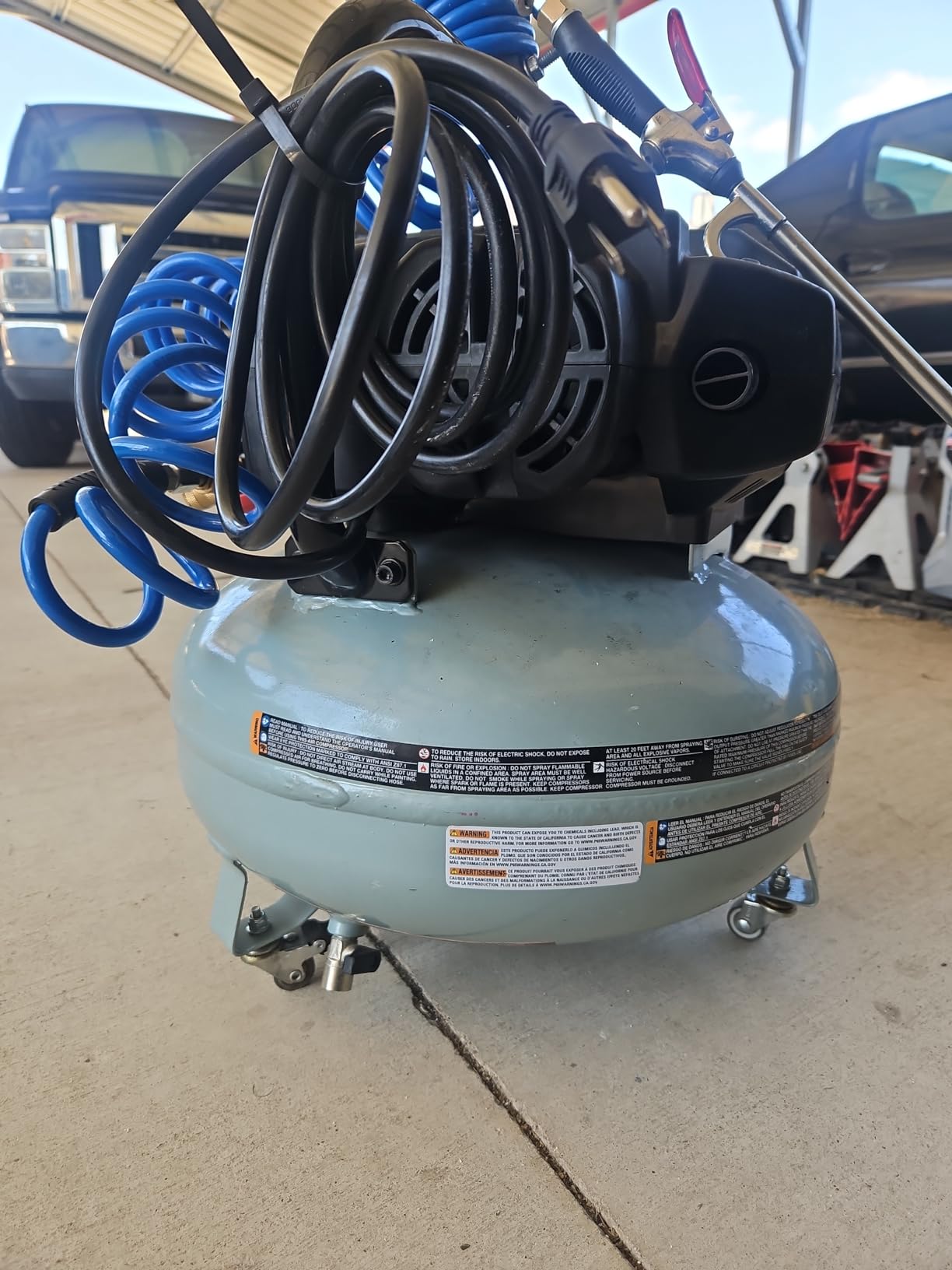
It is also lighter than it has any right to be. At roughly 42 pounds, reviews put it 22 percent below traditional twin-stack models of similar capacity, and the 16 by 16 by 18.5 inch footprint sits flat on a bench or in a truck bed without wobble. Metabo HPT is a Japanese-engineered build sold with a 1-year warranty, which is the reliability story behind the price step.
Against that, the trade-offs are real and specific. At 73 dB it is not quiet, and it is sold as the compressor unit alone, so the hose and every accessory are additional purchases. If you already own a hose and a kit, that is a rounding error. If you are starting from nothing, the PORTER-CABLE C2002-WK includes 25 feet of hose and a 13-piece kit and serves the same tire duty.
When 200 PSI earns its cost
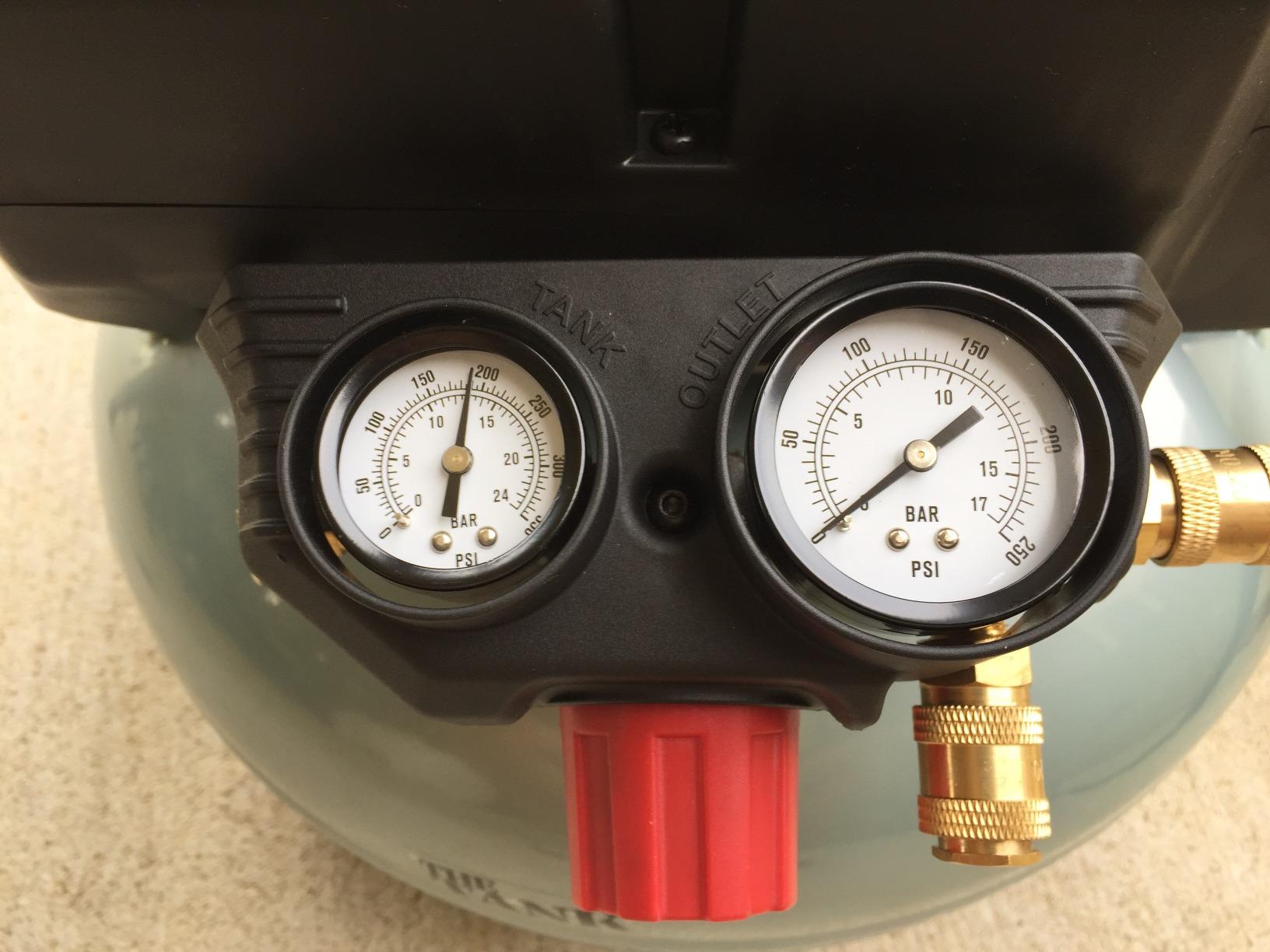
High tank pressure is what lets a compressor hold pressure against a tool that resists flow. Framing and roofing nailers spike demand hard, and 200 PSI means the tank does not crash toward cut-in pressure every time the driver fires. On trim work, that headroom is wasted and you can save money instead.
The flow figure matters just as much. 4 CFM at 90 PSI is the highest working-pressure flow of any 120-volt compressor in this roundup, and it is the number to check first if you run a framing nailer for a living rather than once a year.
Two reasons to skip it
If noise decides the purchase, this is the wrong machine at 73 dB, and the California Air Tools 2010A is dramatically quieter for indoor work. If tire inflation is the only job, four CFM of flow toward a car tire is overkill and a 12V unit does it faster.
Also factor in that it is a bare compressor. Budget for a 25-foot hose, a coupler set, and a nailer of the kind you will actually run. Professionals and serious DIY owners tend to buy this knowing they already have the accessories, which is why its review record skews positive.
6. Best for First-Time Owners: ECOMAX 6-Gallon Pancake (150 PSI, 3 CFM at 90 PSI)
ECOMAX Air Compressor 6 Gallon 150 PSI Pancake Portable Oil-free Tank with 10 PCS Accessories Kit
6-gallon pancake tank
150 PSI max
3 CFM at 90 PSI
75 dB
34.17 lb
Pros
- 3 CFM at 90 PSI from a 1.5 HP motor extends tool runtime
- 10-piece kit covers hose
- couplers
- gauge
- chuck and blow gun
- Dual quick couplers let two people work at once
- Dual gauges for accurate pressure reading
- Oil-free pump with cold-weather low-voltage start
Cons
- 75 dB is louder than premium low-noise models
- Less established brand with a smaller review base
Best for first-time owners: the ECOMAX 6-gallon pancake delivers 3 CFM at 90 PSI from a 1.5 HP motor into a 150 PSI tank. That is a higher rating than most compressors in this roundup carry, and it arrives with a 10-piece accessory kit that removes the first-purchase friction entirely.
The kit is the differentiator for someone who has never owned a compressor. It includes a 25-foot PVC hose, two automatic plugs, an automatic coupler, a ball-foot air chuck, a tire pressure gauge, a nozzle, a high performance blow gun, a sleeve and thread seal tape. That is every fitting needed for a first tire inflation and a first nailer session.
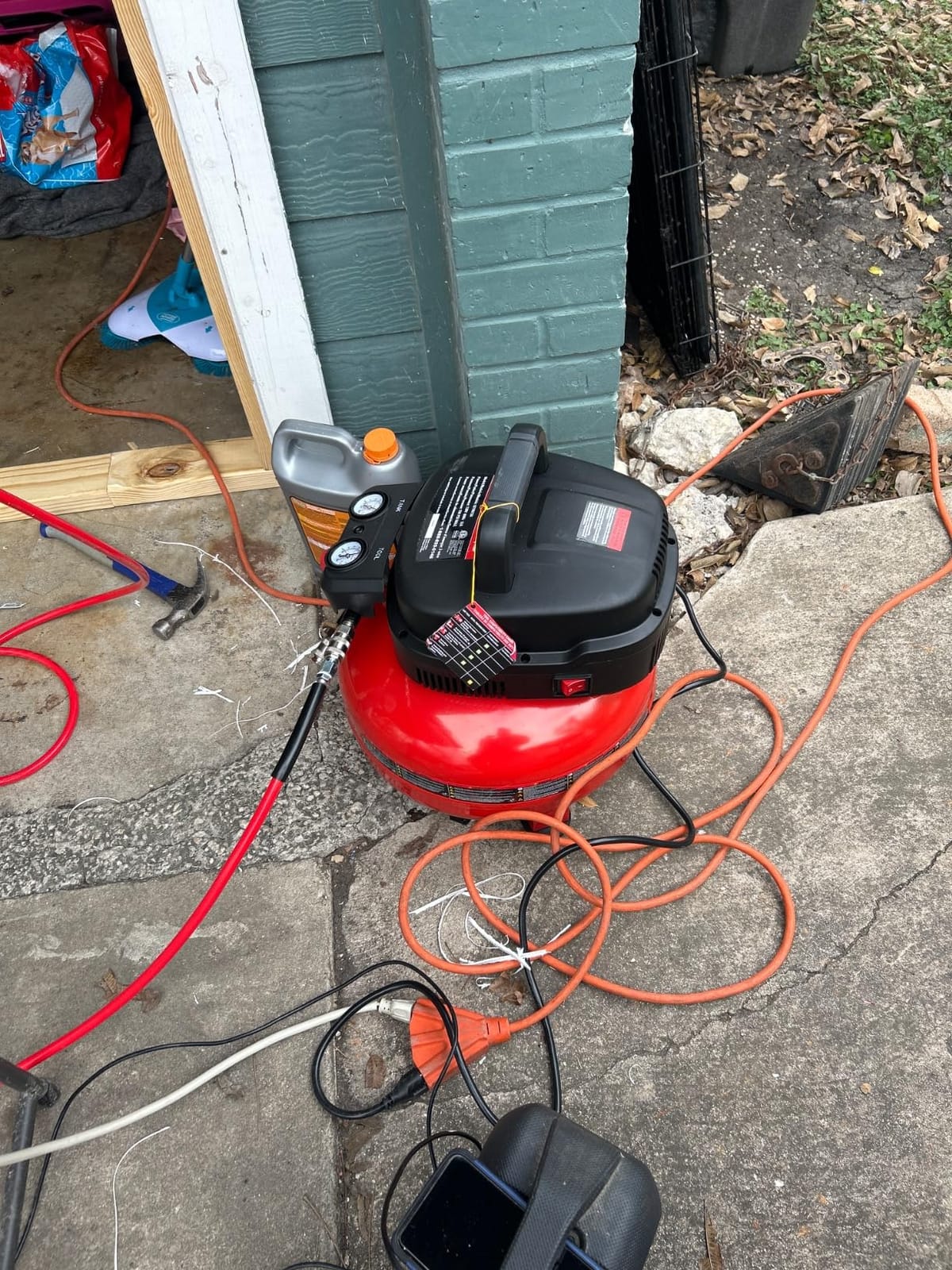
Two quick couplers mean two people can work at once, which is the single most useful feature in a shared workshop. Owners also mention the dual pressure gauges for accurate reading and the cord winding bracket, which sounds minor until you have coiled a 25-foot hose a hundred times by hand. At 34.17 pounds with a flip-up carry handle, it moves around a garage without being a chore.
The oil-free pump has low-voltage and cold-weather start capability, so it is not fussy about where you keep it. Recovery is quick enough that tool runtime feels extended rather than intermittent, which is the honest reason a 1.5 HP motor at 3 CFM feels bigger than its tank size suggests.
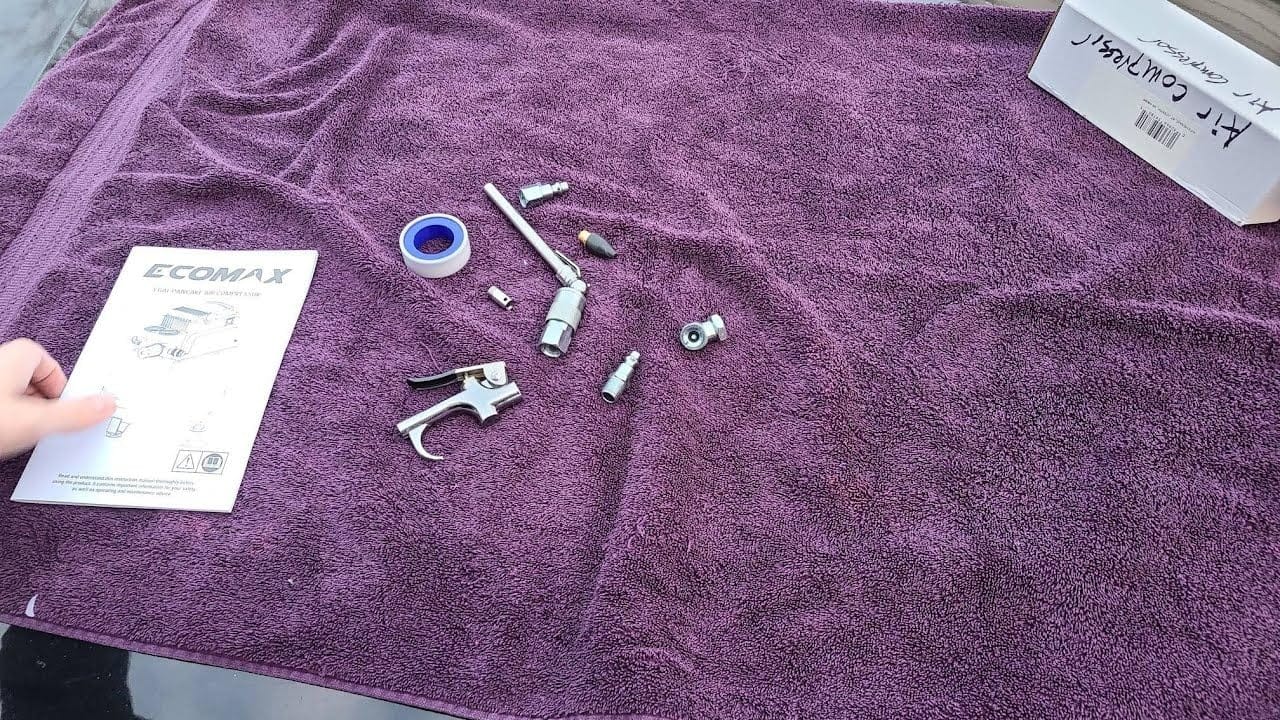
What the 3 CFM figure buys you in practice
Three CFM at 90 PSI sits above the 2.6 SCFM offered by the two 6-gallon budget compressors here, which translates into fewer tank stops during brad nailer and staple gun work. For tire top-offs it is more than sufficient, and 150 PSI is a healthy ceiling for light pneumatic tools.
It is still not a framing machine. If a 30-degree framing nailer is in your future, step up to the Metabo HPT EC914S at 4 CFM and 200 PSI rather than expecting this tank to absorb it.
Judging this on review volume
This compressor carries one of the highest star averages in the roundup with 81 percent five-star ratings, and the review text is specific and favorable. The counterweight is volume. At a few hundred reviews, the record is smaller than the PORTER-CABLE C2002-WK or the Metabo HPT EC914S, which means you are buying on a shorter track record.
That is an acceptable trade for many buyers and not for others. If you want the largest installed base of long-term owners, the PORTER-CABLE has far more of them. If you want the best-specified first compressor and the most complete kit, this is it.
7. Best for Overland Builds: ARB CKMTA12 (12V twin, 6.16 CFM, 150 PSI)
ARB CKMTA12 ’12V’ On-Board Twin High Performance Air Compressor, Ideal for Air Lockers Locking Differentials, Tire Inflator, Air Horn, Air Tools and Pneumatic Tools.
12V twin motor, dual cylinder
6.16 CFM, 174 LPM
150 PSI max
100% duty cycle
6 sones
Pros
- Fills 38x16 tires from flat to 15 psi in under a minute
- Four 265/70-R16 tires from 15 to 36 psi in about 4 minutes
- 100% duty cycle with a cooling fan and thermal protection
- Compact 11 x 5 x 20 in form factor fits under a seat
- Plugs directly into Air Locker manifold solenoids
Cons
- Bare compressor only
- so a discharge line
- coupler
- hose and wiring are extra
- 68.6 A draw needs proper 8 AWG wiring and per-motor fusing
- Low duty without an auxiliary tank for continuous tool use
Best for overland builds: the ARB CKMTA12 is a permanently installed 12-volt twin-motor compressor rated at 6.16 CFM, which is 174 liters per minute, up to 150 PSI. It fills 38×16 tires from flat to 15 PSI in under a minute, and takes four 265/70-R16 tires from 15 to 36 PSI in about four minutes.
What makes this machine different from every other 12V pump here is that it is built to run indefinitely. The 100% ball-bearing motors use a linear brush pre-load system for long life, low heat and quiet operation, and the unit has a 100% duty cycle with a cooling fan, internal thermal protection and an over-pressure safety valve.
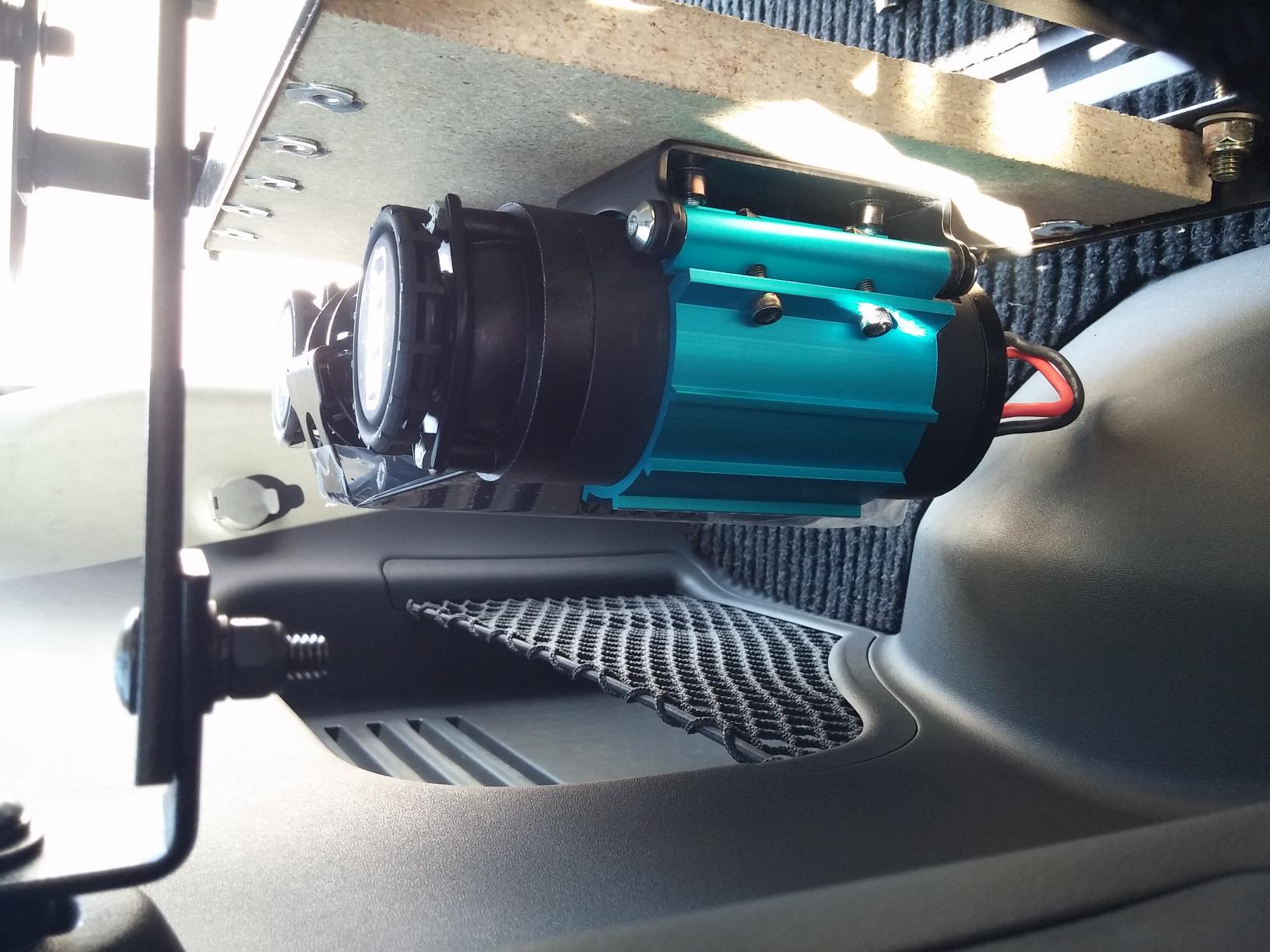
The build quality is specific in ways that matter off-road. European-made cylindrical roller bearing pistons sit in hard-anodized bores with PTFE-impregnated seals, and the wiring loom includes Air Locker solenoid plug-in contacts, an IP54 dash switch and dual washable bronze air filters. It is built in Australia by a manufacturer that has made on-board compressors for decades.
At 11 by 5 by 20 inches it fits under a seat or in a cargo area, and it draws through dual heavy-duty Maxi-Fuses. A 4-liter receiver is optional and worth adding if you plan to run pneumatic tools, because the twin pumps alone cycle quickly under sustained demand.
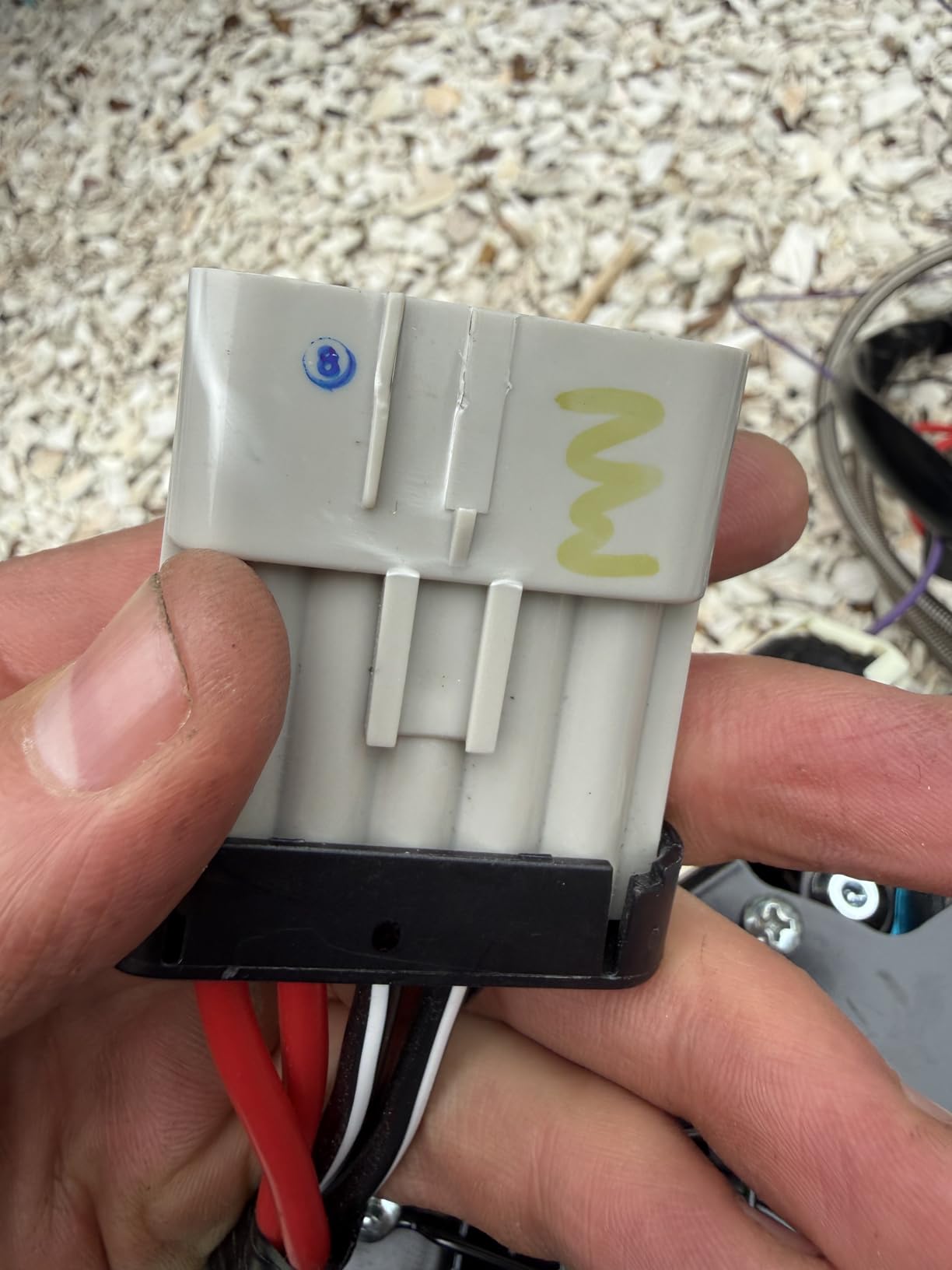
What installing this actually involves
This is a bare compressor. You need a discharge line, a quick coupler, a hose, and the wiring hardware, and the manufacturer does not supply them. Installation is not beginner work, and the 68.6 A current draw requires proper 8 AWG wiring and per-motor fusing, which means a trip to an electrical supply store before the first install.
Budget real time for it. If you have never run a heavy current accessory before, the dash switch placement, fuse placement and manifold connection are the steps that decide whether the install is clean or a future troubleshooting problem.
Who should and should not buy it
Buy it if you run air lockers, run a rooftop tent or air mattress regularly, or inflate four tires far from any outlet. The four-tire numbers above are the reason: no portable pump on this list matches that rate, and the 100% duty rating means it will keep doing it year after year.
Do not buy it for air tools. Without an auxiliary tank, the duty is too low for continuous tool work, and it is a far more involved purchase than any other machine in this roundup. For tool work, a 120V pancake is the correct choice.
8. Best Value: VEVOR 6.3-Gallon 2 HP (3.35 CFM at 90 PSI)
VEVOR 6.3 Gallon 2 HP Air Compressor, Max 116PSI, Oil Free Compressor Tank
6.3-gallon steel tank
2 HP oil-free motor
3.35 CFM at 90 PSI
116 PSI max
43 lb
Pros
- 2 HP oil-free motor delivers 3.35 CFM at 90 PSI
- Double-tube double-cylinder intake for faster fill
- Two silencers hold noise near 70 dB
- Three-layer Q235B steel tank with seamless welds
- Two cooling fans with overheat and over-current protection
Cons
- Power cord is about 40 inches
- so the unit must sit near an outlet
- Unreliable on daisy-chained or multiple extension cords
- 10 percent of reviews are one-star
- the highest negative share here
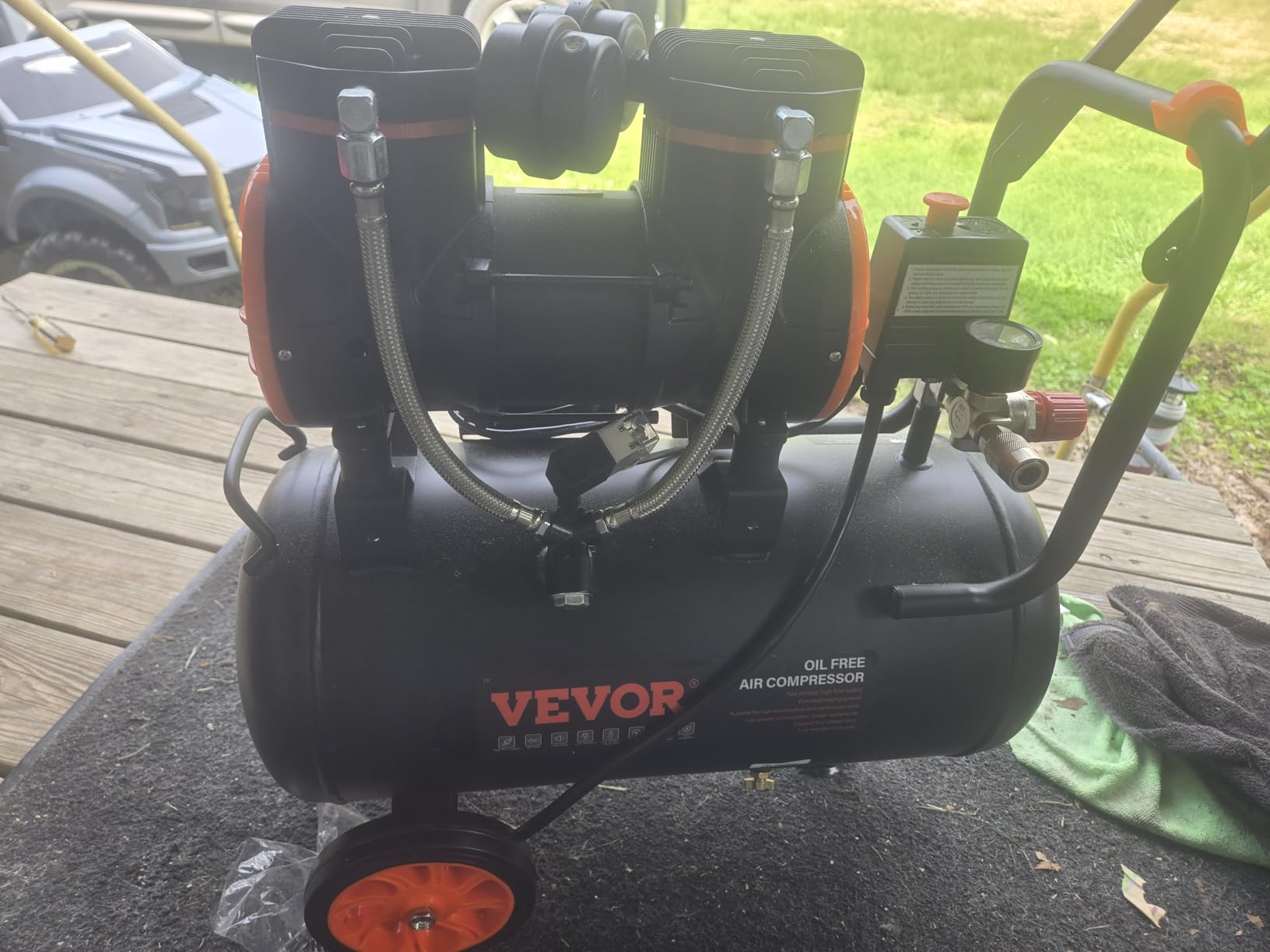
Best value for a working garage: the VEVOR 6.3-gallon puts 2 HP and 3.35 CFM at 90 PSI under a 116 PSI ceiling. Owners consistently describe it as small but powerful and very quiet for its size, and the flow figure is higher than several more established 6-gallon compressors in this roundup.
The construction details are better than the brand recognition would suggest. A double-tube, double-cylinder intake with high-temperature silicone and stainless steel braided intake speeds filling, two silencers with a thickened muffler cover hold noise around 70 dB, and the three-layer Q235B steel tank uses seamless welds rated to 3.5 MPa.
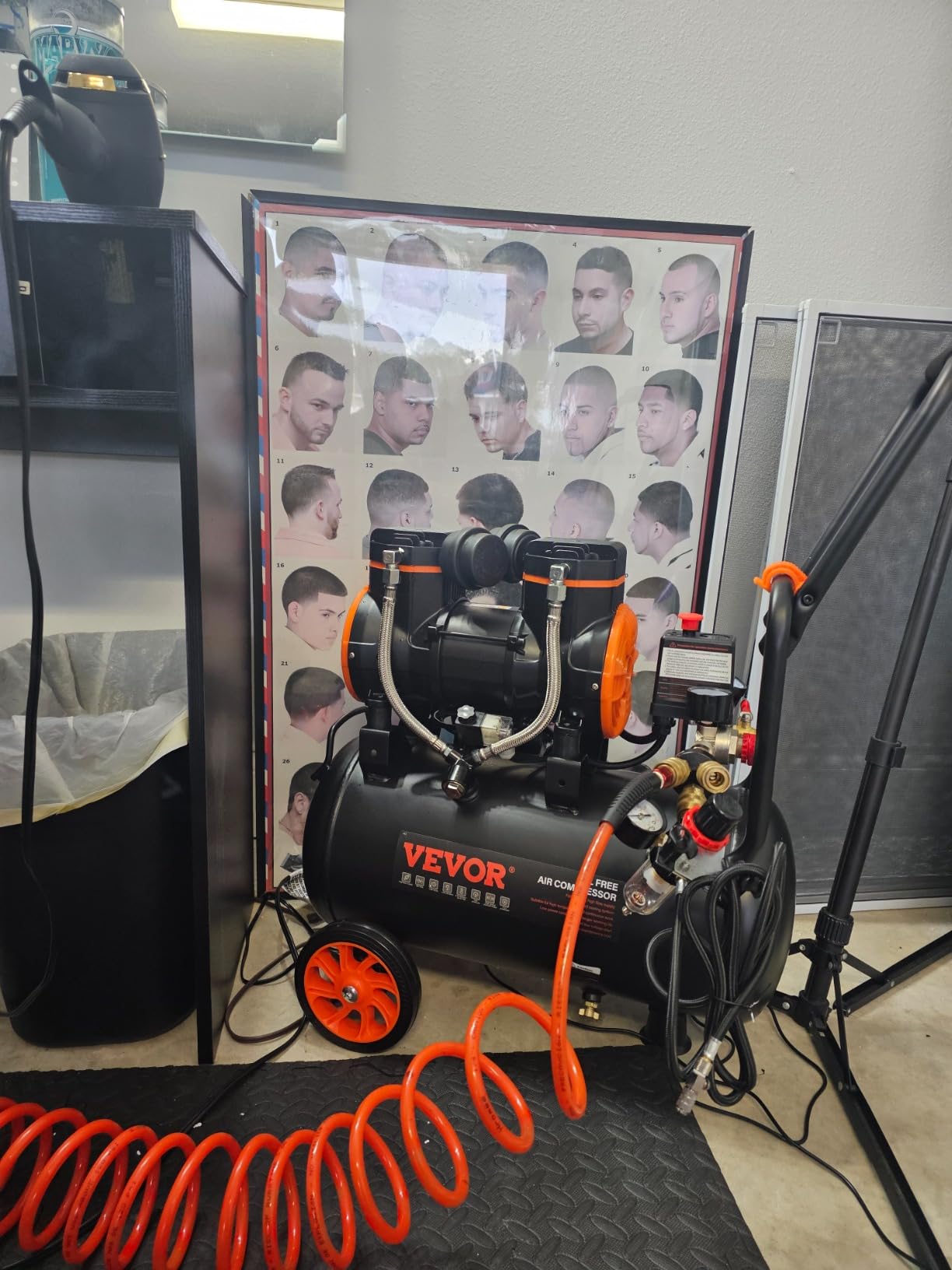
Two large cooling fans with automatic overheat and over-current protection are a sensible addition for a 2 HP motor running at 3500 rpm. Owners report durable performance after heavy use and drops, and stable flow when running air tools, with casters included for shop mobility.
There are real gripes, and the biggest is electrical. The power cord is about 40 inches long, and the unit draws 14.5 amps, so it must sit near an outlet. It will not run reliably on daisy-chained or multiple extension cords, and some owners report it cycling off when they tried. The 116 PSI ceiling is also lower than most 6-gallon rivals, which matters for framing nailers.
Plan the outlet before you buy
This is the most important practical note for this product. A 40-inch cord on a machine that pulls 14.5 amps means the compressor lives next to a wall outlet, not wherever you need it. If your work area is more than a few feet from an outlet, the constant unplug-and-move routine is where frustration sets in.
Its 10 percent one-star share is the highest negative rating proportion in this roundup, and the cord length plus voltage sensitivity account for much of it. If your outlet is in the right place, this is a capable machine. If not, move up to a unit that treats the outlet as optional.
Is a 116 PSI ceiling a problem?
For brad nailers, staplers, airbrushes, sanders and impact work, 116 PSI is workable but has no headroom. The 3500 rpm motor at 3.35 CFM keeps up with light and medium tools without trouble, and owners report stable flow for nail guns, impact wrenches, spray guns and pneumatic screwdrivers.
For framing, it is the wrong number. A 30-degree framing nailer at 120 PSI will not have the pressure you need from a unit that tops out at 116. Choose the Metabo HPT EC914S at 200 PSI if framing is on the schedule.
9. Best for Tire Top-Offs and Light DIY: CRAFTSMAN 6-Gallon 150 PSI
CRAFTSMAN 6 Gallon 150 PSI Oil-Free Pancake Air Compressor CMXECXA02106410
6-gallon pancake tank
150 PSI max
2.6 SCFM at 90 PSI
1.0 HP
30.8 lb
Pros
- 6-gallon tank at 150 PSI handles brad nailers and tire inflation
- Oil-free low-voltage start motor needs no maintenance
- Only 30.8 lb with a compact 15.8 x 16.4 x 17 in footprint
- Dual quick couplers for two tools at once
- Backed by a 1-year warranty and a US-based service team
Cons
- 82 dB is loud for a unit aimed at indoor projects
- Not heavy-duty professional grade
- Occasional reports of a broken handle or damaged tank bracket
- Arrives with only a user manual
Best for tire top-offs and light DIY: the CRAFTSMAN 6-gallon pancake holds 150 PSI and moves 2.6 SCFM at 90 PSI from a 1.0 HP oil-free low-voltage start motor. At 30.8 pounds with a balanced carry handle and a 15.8 by 16.4 by 17 inch footprint, it is one of the easiest machines here to carry between a trunk and a bench.
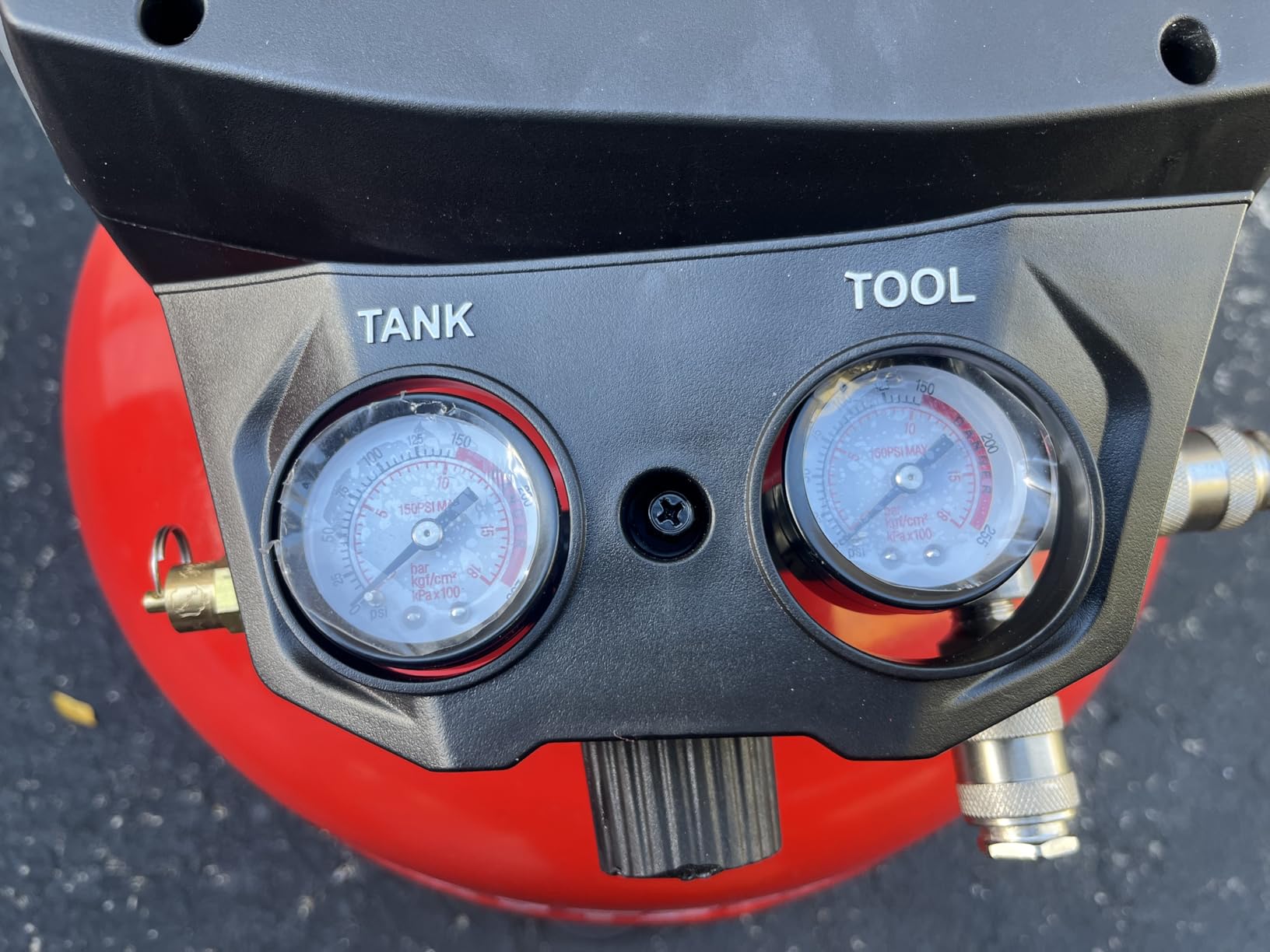
The oil-free low-voltage start motor means no oil changes and no maintenance schedule, and it starts in cold conditions. The manufacturer lists it for woodworking, roofing, framing, tire inflation, automotive maintenance and paint spraying, and owners confirm fast pressure build with quick couplers for two tools at once.
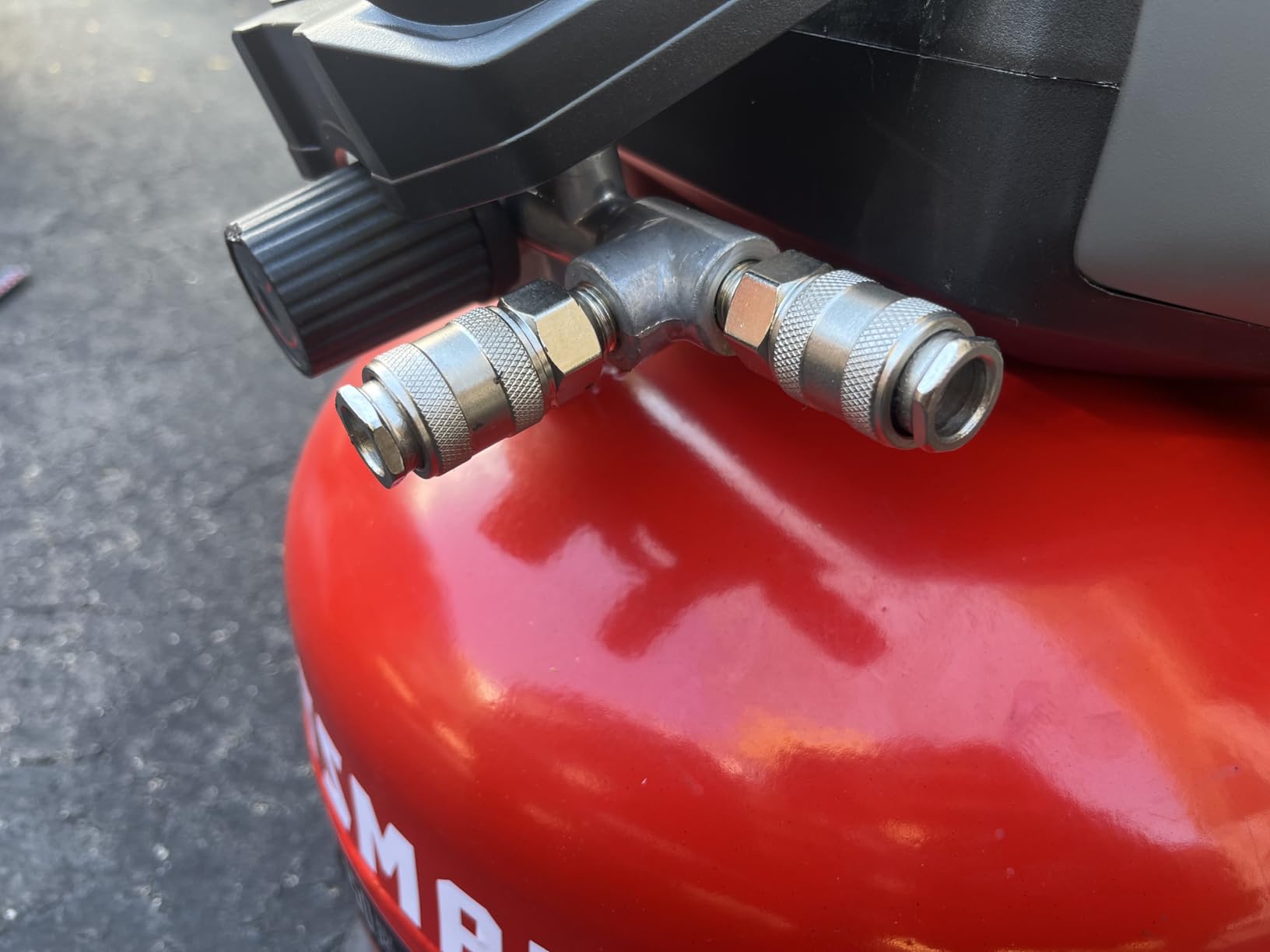
For a first compressor, that is a genuinely capable machine. The 6-gallon tank at 150 PSI is the same size and pressure as the PORTER-CABLE, and the dual quick couplers mean a second tool can run without a splitter. A 1-year limited warranty backed by a US-based service team is a reasonable support answer for a home user.
Owners describe it as reliable and compact for car tire inflation, brad nailer work and cleanup, with quick pressure build and easy portability. The 82 dB noise level is the same class as the PORTER-CABLE C2002-WK, so indoor neighbours are the same consideration here.
What arrives in the box
The included components are a user manual and the compressor. No hose, no fittings, no coupler. Plan on buying a hose and coupler set before the first job, which is the main reason this sits behind the PORTER-CABLE C2002-WK despite matching its tank size and pressure.
Plan on one purchase that includes a quarter-inch hose and a coupler set. Once that is done, the machine covers tire inflation, brad nailers, blow guns and light cleanup without further spending.
Where it falls short of professional work
The clearest limitation in the record is continuous spray painting. Owners report pressure drops and shutdowns during long painting sessions, which is a duty cycle limit rather than a defect. The 2.6 SCFM flow at 90 PSI is enough for brad nailers and staplers, not for sustained high-volume air.
There are also a small number of arrival-condition reports involving a broken handle or a damaged tank and gauge bracket, so inspect the unit on delivery. If you want the same size and pressure with a full accessory kit already included, the PORTER-CABLE is the better first purchase.
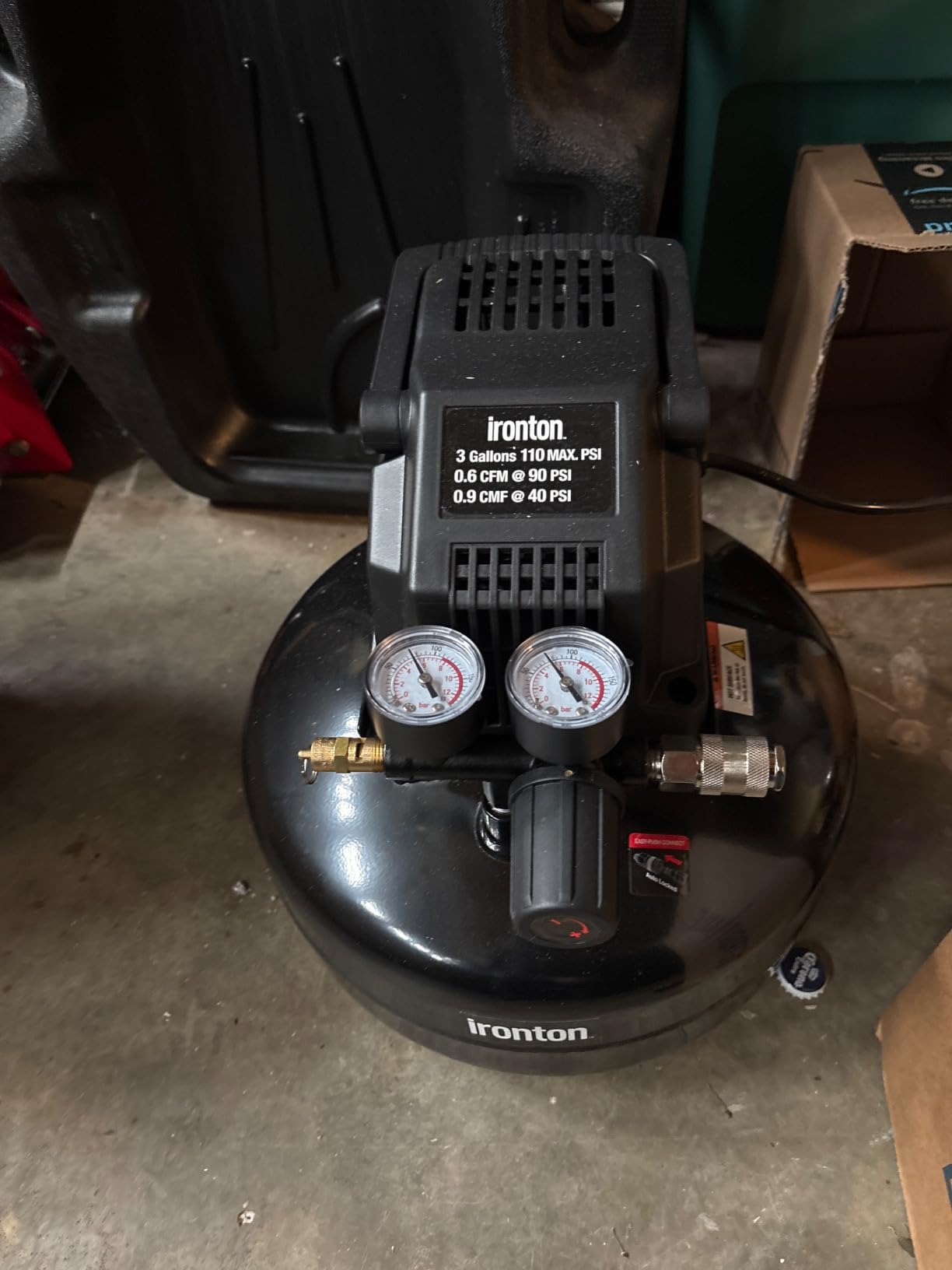
10. Budget Pick: Ironton 3-Gallon (20.6 lb, 110 PSI)
Ironton Oil-Free Pancake Air Compressor, 0.3 HP, 3 Gallon, 110 PSI
3-gallon pancake tank
110 PSI max
0.3 HP motor
20.6 lb
oil-free
Pros
- Lightest machine in the roundup at 20.6 lb
- Oil-free pump needs no oil checks or changes
- Cycles automatically on at 85 PSI and off at 110 PSI
- Wide low-profile base resists tipping on benches and uneven ground
- Molded cord wrap and hose retainer keep the setup organized
Cons
- 110 PSI max and small tank cannot sustain pressure for paint sprayers
- Loud during fill
- best suited to outdoor or garage use
- Reports of units failing to build pressure beyond about 2 bar
Budget pick for a first tank: the Ironton 3-gallon pancake weighs 20.6 pounds, making it the lightest machine in this roundup, and pairs that with an oil-free 0.3 HP pump and a 110 PSI ceiling. The integrated fold-down handle and the wide, low-profile base are what make it a bench-top unit rather than a floor unit.
The cycling numbers are clearly specified, which is unusual at this end of the market. It automatically starts at 85 PSI and stops at 110 PSI, and the wide base stays stable and tip-resistant on benches and uneven surfaces. The molded cord wrap and hose retainer in the shroud keep a small machine from becoming a tangle.
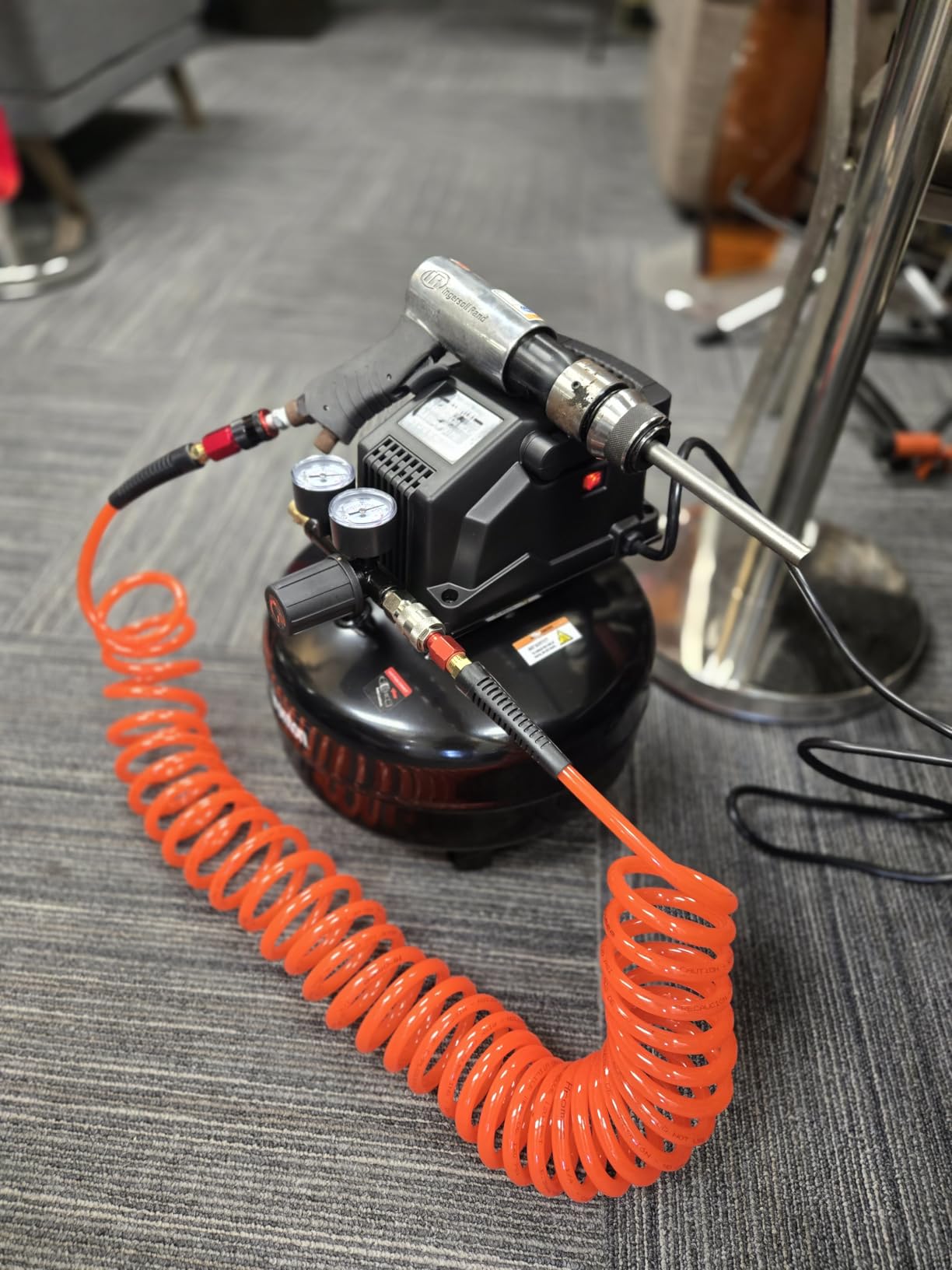
The oversized regulator knob and quick coupler allow a tool-free hookup, which matters more than it sounds on a machine this small. Owners like the portability, the simple oil-free operation and the quiet-enough behavior for small jobs, and the folding handle means it stores flat in a cabinet when you are not using it.
Tire feedback is mixed because of the tank size. A 3-gallon tank top-offs car tires adequately but not efficiently, and 110 PSI will not sustain pressure for paint sprayers or continuous airflow. It is a nailing and inflation machine for one person, not a shop compressor for two.
Where the 110 PSI limit shows up
At 110 PSI with automatic cut-out at that same pressure, a nailer or stapler that wants 90 PSI works fine because the regulator sits below the ceiling. Anything asking for 120 PSI or more will not get it, which rules this machine out for framing and some pneumatic staple guns.
For brad and finish nailers, airbrush work, and blowing out a workbench, it does the job. The 0.3 HP motor fills a 3-gallon tank quickly enough that the pauses are short, which is the main reason reviewers do not complain about the small tank for light work.
One complaint you should weigh seriously
There is a cluster of reports of units failing to build pressure beyond about 2 bar within weeks of purchase, and some owners report difficult warranty return shipping. That is the most serious pattern in the review record for this product, and it is worth considering alongside the low star average of 4.3.
A few units also arrived with damaged metal gauge brackets. If you buy this, test pressure build on day one, keep the packaging, and confirm the return process before you need it. For a first compressor where reliability matters more than a 10-pound weight saving, the ECOMAX or CRAFTSMAN options carry stronger review records.
Tire Inflation: How Much Compressor Do You Actually Need?
For topping off car and light truck tires when they are cold, a 2-gallon compressor is genuinely enough. A sedan tire needs a few PSI added to reach the door-jamb pressure, and that volume is small. The single biggest variable is not tank size at all: check tire pressure when the tire is cold, before you drive, because a warm tire reads several PSI high and you will under-inflate it.
The mistake is buying a compressor sized for a framing nailer and using it as an inflator. The tank is oversized, the machine is heavy, and the motor is loud for what is a two-minute job. The reverse mistake is more common. A 3-gallon pancake with a 110 PSI ceiling works for a top-off but becomes frustrating if you also inflate bicycle tires, pool inflatables and sports balls on the same unit.
Where tire inflation changes character is size. RV tires, trailer tires, tractor tires and 35 to 37 inch off-road tires take far more volume, and that is where a 12V dual-cylinder pump earns its place. The ALL-TOP ATACR300 fills a 37-inch tire in about a minute to a minute and a half, and the ARB CKMTA12 does four 265/70-R16 tires from 15 to 36 PSI in about four minutes. No 120V pancake in this roundup approaches that rate.
When a dedicated 12V inflator beats a compressor
If your tire needs are entirely roadside and occasional, a dedicated 12V inflator is the better purchase, and forum owners say so repeatedly. The near-unconditional recommendation across off-road, RV and car forums is the VIAIR line, with the 88P, 400P, 450P and digital EVC88P all drawing long-term owner endorsements. One owner described refilling a tire after losing 15 PSI on the beach as fast and reliable.
The reason those units earn their price is the duty rating. A Harbor Freight unit at 100 PSI is described on the same forums as intended for car tires, basketballs and toys, which is a fair description of a 50% duty tire machine. A 100% duty unit is a different product class, and that distinction is the single most useful thing to understand before buying.
One caution about forum advice: the VIAIR pattern is a guide to what to look for, a sealed 12V pump rated for continuous duty with thermal protection, not a purchase recommendation. Everything we tested in that class is listed above, and the ALL-TOP ATACR300 is the closest match to the duty rating owners describe.
How Many CFM at 90 PSI Do Your Tools Need?
CFM at 90 PSI is the number that decides tool compatibility, and it is the number most listings bury in a bullet list. A compressor that advertises a high CFM figure at 40 PSI is telling you about nailer-friendly flow, not about performance at the pressure an impact wrench or a spray gun demands.
For tire top-offs, almost any compressor qualifies, and even 2.20 CFM fills a sedan tire. For pin and brad nailers, 2 to 3 CFM at 90 PSI is the working range, which is where the majority of the 6-gallon pancake compressors here sit. Finish nailers want the same range with a steadier 3 CFM.
Framing nailers are the jump. A 30 to 50 degree framing nailer needs 4 CFM or more at 90 PSI and benefits from 150 to 200 PSI tank pressure, which is why the Metabo HPT EC914S is the only machine here rated for running several large nailers at once. Impact wrenches and cut-off tools need high pressure and high flow together, which pushes toward a larger tank and a bigger pump.
Spray guns split by type. A detail gun for a car or a hobby airbrush runs happily on 2 to 3 CFM. An HVLP paint sprayer wants sustained volume and will expose a 2-gallon or 3-gallon tank immediately, which is the single most common regret in the review record of the smaller machines on this list.
Reading the Noise Number: A dBA Framework That Actually Decides Something
Every compressor here lists a noise figure, and almost none of the competing roundups tell you what the number means. Here is the framework. The 60 dBA band is genuinely quiet, roughly a household vacuum, and it is the only range that disappears behind a closed garage door. The California Air Tools 2010A at 60 dBA is the quietest machine on this list.
The 60 to 70 dBA band is normal and workable. Limodot at 68 dB, VEVOR at 70 dB, and the ALL-TOP at 74 dB sit in or near this range, and they are fine in an open garage or a workshop where a wall separates you from a neighbour. Sustained exposure matters, and any compressor at 75 dBA or above deserves hearing protection for long sessions.
That top band is a real constraint, not a preference. The PORTER-CABLE C2002-WK and the CRAFTSMAN 6-gallon both rate 82 dB, with the ECOMAX at 75 dB and the Metabo HPT at 73 dB just below them. They are capable machines, and they are the wrong choice for a garage apartment, a converted basement, or any shared wall where you need to work at night.
Buying Guide: Tank Size, Pump Type, and the Duty Cycle Question
Tank size controls how often the motor restarts, not how much work the machine can do. A 6-gallon tank at 2.6 CFM and a 3-gallon tank at 3 CFM behave completely differently with a framing nailer, because the first stores more air between cycles while the second delivers more flow when it runs. Most buyers need the tank to be at least as large as the flow figure in gallons, which is a simple rule of thumb that holds across this list.
Pump type is the durability question. Oil-free pumps need no maintenance and can sit in a damp garage for years, but piston rings wear faster and the pump generates more heat because the cylinders run dry. Oil-lubricated pumps with cast-iron cylinders running around 1800 rpm last considerably longer, and the body-shop guidance circulating in the enthusiast press points to that construction as the buy-it-once route.
Duty cycle is the specification forum owners shop on, and it separates two product classes that get confused constantly. A 50% duty tire inflator is engineered for short bursts. A 100% duty unit, as the ARB CKMTA12 is specified, is engineered to run as long as you need. If you buy a tire machine and then try to run tools with it, you are the failure point.
Oil-free versus oil-lubricated is also a maintenance tradeoff in both directions. Oil-free wins on setup and storage. Oil-lubricated wins on service life and heat, at the cost of occasional oil checks and a floor stain risk in a finished garage.
Noise, again, is not a feature you add later. Decide where the machine lives before you buy, because no compressor on this list can be made quiet. If the answer is an enclosed or shared-wall space, the 60 dBA California Air Tools is the pick and the noise compromises elsewhere in this roundup are permanent.
Finally, consider moisture. Compressed air carries water vapor, and that water condenses inside the tank and then in your tools. If you plan to run a paint sprayer or any long air line, an inline dryer is the missing accessory in most of these packages. Our air dryer picks and desiccant dryer guide cover the tank-mounted and inline options that pair with any compressor in this roundup.
Maintenance and Safety Habits That Decide Compressor Lifespan
Drain the tank after every use. Water in a steel tank is the fastest route to corrosion, and it is a two-minute job that most owners skip. If your machine has a manual drain, use it rather than the petcock, and open it until the air is fully out before you unscrew anything.
Watch your extension cord gauge, and treat the cord length as a hard limit. A compressor draws significant startup current, and a 12-gauge cord is fine for short runs while a longer or thinner lead causes voltage drop that trips thermal protection. If the unit cycles off or the breaker trips on start, the cord is the first thing to change, not the compressor.
Give the compressor its own circuit on a 15-amp outlet for anything drawing near the limit. The VEVOR at 14.5 amps and the ARB at 68.6 amps are the two machines here where outlet placement or wiring is the deciding factor rather than an afterthought.
Match regulator pressure to the tool’s published requirement rather than turning it up. Over-pressurizing a nailer or a stapler wastes air, shortens seals and is the fastest way to make a compressor feel undersized. Set the regulator to the tool, not to the tank.
Frequently Asked Questions
What size air compressor do I need to pump up car tires?
A 2-gallon compressor is enough to top off car tires, and any unit on this list will do it. Check pressure while the tire is cold. For RV, trailer or 35 to 37 inch off-road tires, you want a 12V dual-cylinder pump rather than a small 120V unit, because the air volume difference is measured in minutes per tire.
Which brand of air compressor is best?
There is no single best brand, and the honest answer depends on the job. PORTER-CABLE and CRAFTSMAN cover the general DIY tire-and-tool case, California Air Tools covers quiet indoor use, Metabo HPT covers high-flow nailer work, and ARB covers permanent 12V on-board tire inflation. Judge each unit on CFM at 90 PSI, tank size and the warranty rather than on the nameplate.
Is a 2-gallon air compressor enough for a tire?
Yes for a car top-off. The California Air Tools 2010A holds 2 gallons at 125 PSI and owners use it regularly for car and bicycle tire inflation. It is not enough for RV or off-road tires, and its small tank also makes it a poor match for HVLP paint sprayers and air wrenches.
Are oil-free air compressors less durable?
Generally, yes. Oil-free pumps run dry, run hotter and wear their piston rings faster than oil-lubricated cast-iron pumps turning near 1800 rpm. That trade is worth it for low maintenance and clean indoor storage, which is why most DIY compressors in this roundup are oil-free. A shop that runs compressors daily is better served by oil-lubricated construction.
Do I need a 15-amp or 20-amp outlet for an air compressor?
Most of the 120V compressors in this roundup run on a normal 15-amp circuit, but placement matters more than the outlet rating. The VEVOR draws about 14.5 amps, so it wants a dedicated outlet close by, and its 40-inch cord means it cannot be moved far. Larger stationary compressors above about 5 HP want a 20-amp or dedicated circuit.
Final Verdict on the Best Air Compressors for Tires and Tools in 2026
The best air compressors for tire inflation and tools are not one machine, they are three answers to three different questions. Buy the PORTER-CABLE C2002-WK if you want one compressor that covers both jobs out of the box with a hose and full accessory kit included. Buy the California Air Tools 2010A if noise decides the outcome, because at 60 dBA nothing else on this list comes close.
Buy the Metabo HPT EC914S if pneumatic tool work is really the point and 4 CFM at 200 PSI is the flow you need. For truck and off-road tires, the ALL-TOP ATACR300 finishes the job in a fraction of the time, and for a permanent overland install the ARB CKMTA12 is the only 100% duty option here.
Whichever you pick, size it on CFM at 90 PSI rather than tank size, decide where it will live before you buy, and drain the tank when you are done.