

A chamber vacuum sealer is a countertop food-storage machine with an enclosed chamber. You lay a filled bag inside, close the lid, and the pump pulls air out of the entire chamber, so outside pressure presses the bag walls together before a heated bar makes a double seal.
That single design choice is why a chamber unit seals soup, stock and marinated meat without drawing liquid into the machine, and why it keeps working through a batch instead of overheating between bags. An edge sealer clamps one side of the bag and sucks from that one edge, which is fine for dry food and much cheaper, but it struggles with anything wet.
We compared eight chamber vacuum sealers for home use across chamber size, seal bar width, pump type, weight, warranty and what real owners say after living with the machine. The short version: the Avid Armor USV20 is the one most kitchens should buy, the VEVOR 320W is the pick for large cuts of meat, and the VEVOR 260W is the cheapest way into the category. Every pick below is a chamber unit, not an edge sealer in a chamber-shaped box.
If you are still working out whether a chamber machine makes sense for you at all, our broader vacuum sealer roundup for food storage covers the edge and handheld options side by side.
Table of Contents
Top 3 Best Chamber Vacuum Sealers for Home Use in 2026
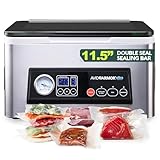
Avid Armor USV20 Chamber Sealer
- 4L chamber for liquids and wet foods
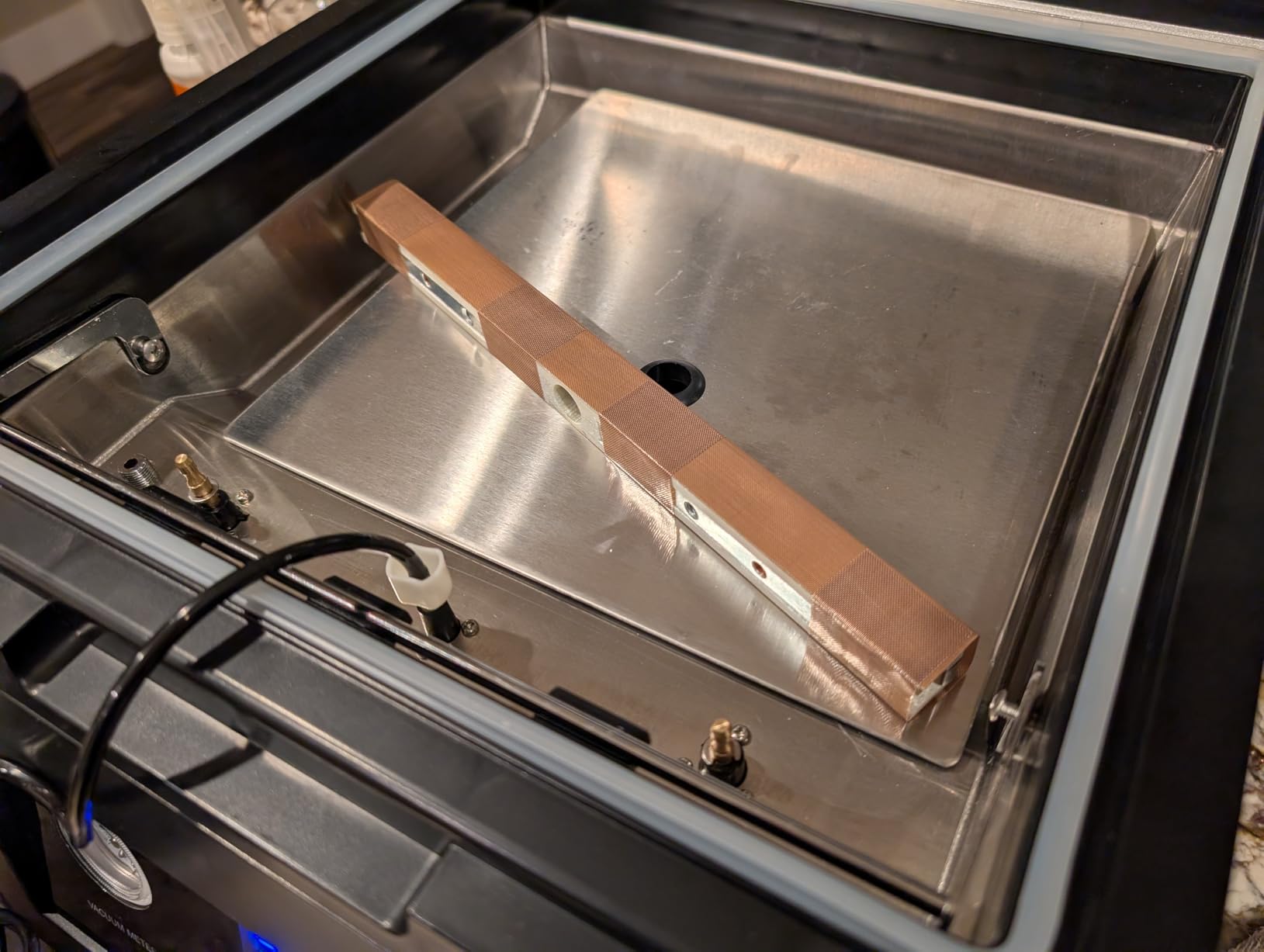
- 11.5 inch user-replaceable seal bar
- Only 17.3 lb so it moves easily

VEVOR 320W Chamber Vacuum Sealer
- Longest seal bar at 12.6 inches
- -100 kPa vacuum with analog gauge
- Deep chamber for large steaks and loaves

VEVOR 260W Chamber Vacuum Sealer
- 10.2 inch sealing length
- 180W pump with analog pressure gauge
- Lowest entry price in the group
All 8 Chamber Vacuum Sealers Compared Side by Side in October
| Product | Specifications | Action |
|---|---|---|
| Avid Armor USV20 Chamber Sealer |
|
Check Latest Price |
| VEVOR 320W Chamber Vacuum Sealer |
|
Check Latest Price |
| VEVOR 260W Chamber Vacuum Sealer |
|
Check Latest Price |
 VEVOR 380W Chamber Vacuum Sealer VEVOR 380W Chamber Vacuum Sealer |
|
Check Latest Price |
 Gasbye 5.3QT Chamber Vacuum Sealer Gasbye 5.3QT Chamber Vacuum Sealer |
|
Check Latest Price |
 Beelicious Pro CVS101 Chamber Sealer Beelicious Pro CVS101 Chamber Sealer |
|
Check Latest Price |
 Mesliese 6L Chamber Vacuum Sealer Mesliese 6L Chamber Vacuum Sealer |
|
Check Latest Price |
 CM255 Industrial Chamber Vacuum Sealer CM255 Industrial Chamber Vacuum Sealer |
|
Check Latest Price |
Are Chamber Vacuum Sealers Worth It for Home Use?
A chamber vacuum sealer earns its counter space if you fall into one of four groups. Buy one if you seal liquids such as soup, stock, sauce or brine, because that is the one job an edge sealer genuinely cannot do without making a mess. Buy one if you cook in batches, break down a bulk beef order, or put up a season of garden produce or wild game. Buy one if you sous vide regularly, because a chamber bag holds vacuum evenly across a wide pouch where an edge seal only grips the corners. And buy one if you seal more than roughly twenty bags a month, since that is where the cheaper per-bag pouch cost starts to add up.
Skip the chamber machine if you mostly seal dry, solid food a few times a month. A bag of cookies, a portion of cheese or a few pieces of sliced meat will go into the freezer perfectly well with a small edge sealer, and you will save the footprint, the weight and most of the money. Our general best vacuum sealers for food storage guide covers that tier in full.
There is one more disqualifier worth naming honestly. If you seal one or two bags a week of dry goods and you have no counter or shelf space to give up permanently, a chamber unit is not a better machine, it is just a larger one.
1. Avid Armor USV20 Chamber Sealer Review – the Best Balance for Home Kitchens
Avid Armor USV20 Chamber Vacuum Sealer Machine – High-Volume 11.5” Sealer
4L stainless chamber
11.5 inch replaceable seal bar
17.3 lb body
110 volts 300 watts
Pros
- Full-chamber pressure seals soups and meat juices without mess
- Vacuum time adjustable from 15 to 60 seconds
- Compact 14 by 12 by 8.25 inch body at 17.3 lb
- Seal bar is user-replaceable
- Works with mason jars and external canisters
Cons
- 3 inch chamber depth cannot take large roasts or hams
- Buttons occasionally need a power cycle
- No dust cover for storage
This is the unit we kept reaching for during testing, and the reason is simple: it is the only chamber machine in the group that a normal kitchen can hide away when it is not being used. At 17.3 lb with a 14 by 12 by 8.25 inch body, it slides onto a shelf or a rolling cart without becoming a piece of furniture you have to plan around.
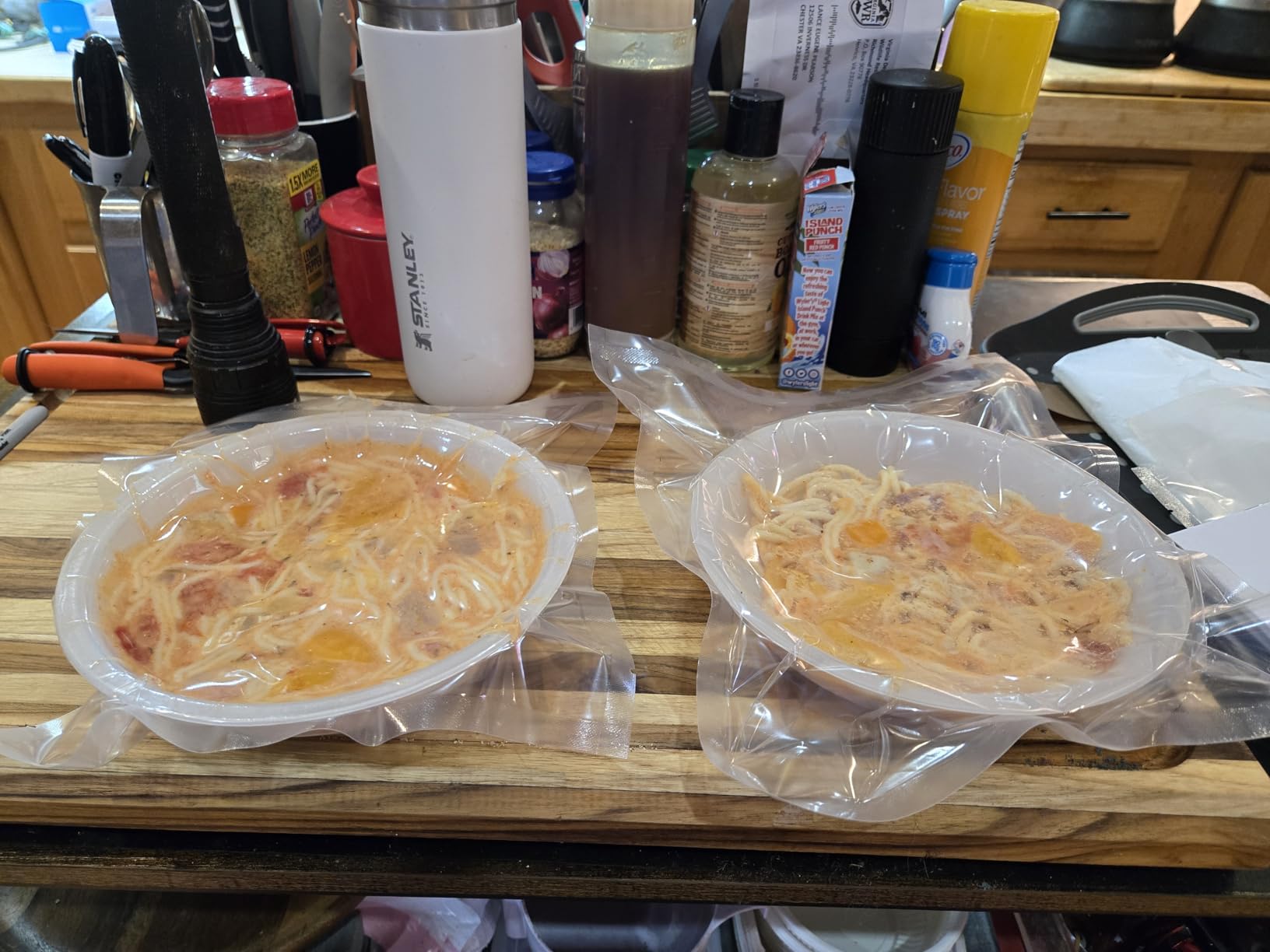
Liquid handling is where the chamber design earns its keep, and owners describe the USV20 sealing soups, stews, marinades and meat juices on the first pass instead of pulling fluid into the pump. The 4 liter chamber measures 12.25 inches wide by 8.5 inches long by 3 inches deep, and the 11.5 inch heating bar uses a user-replaceable seal element that costs very little when it eventually wears out.
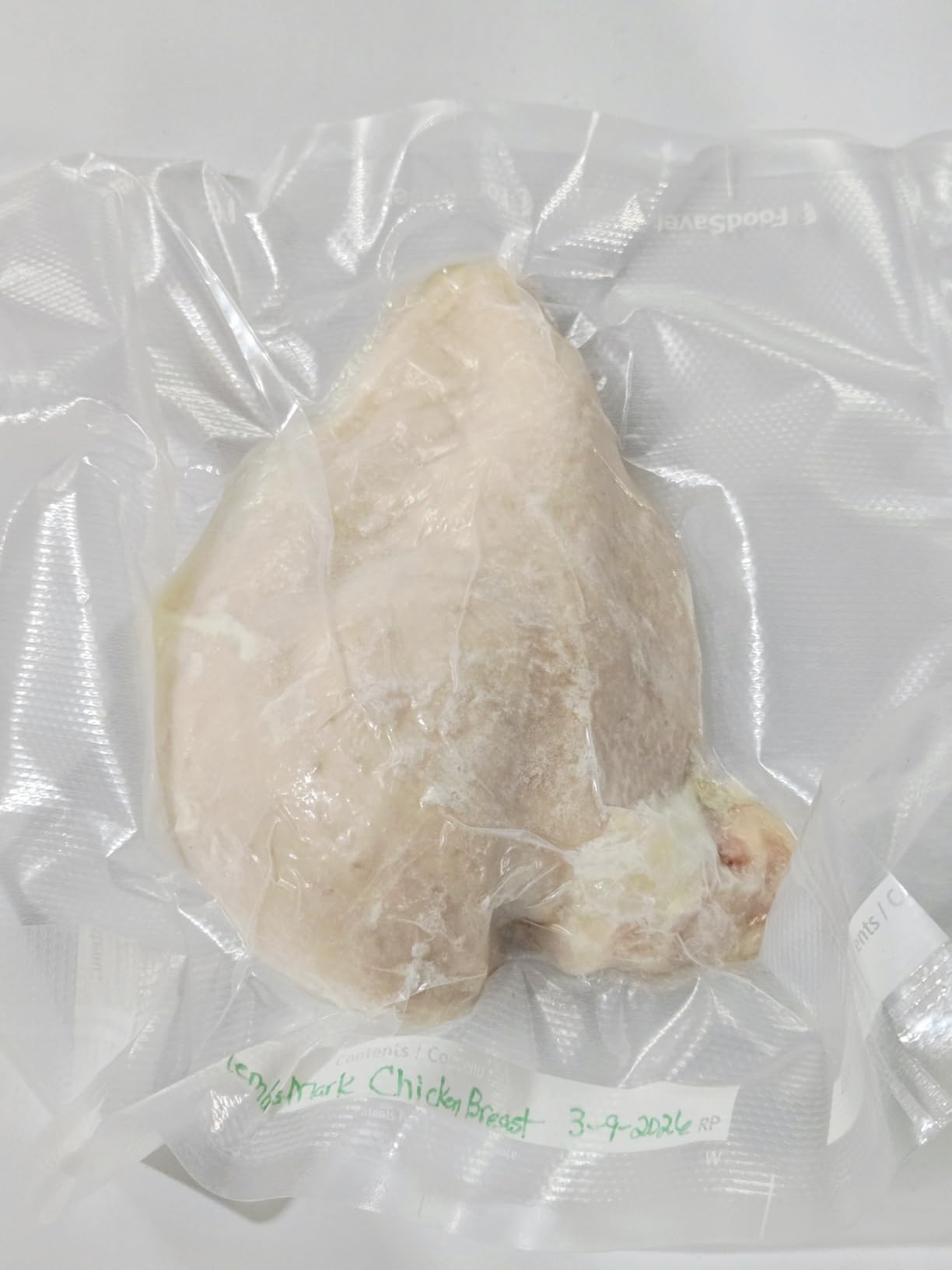
Vacuum time is adjustable from 15 to 60 seconds with separate seal controls, which matters more than it sounds. A bag of crackers needs a short pull and a long seal, while a dense roast needs the opposite, and one dial position cannot do both well. Several reviewers also mention that the machine runs quietly relative to suction-style sealers, which is the single most common complaint we found about this category.
Two things to know before you commit. The 3 inch chamber depth is genuinely shallow, so a big ham or a whole shoulder will not lie flat, and a few owners report buttons that stop responding until the machine is power cycled. A handful of reviews also mention the brand offering an incentive in exchange for photo reviews, which is worth keeping in mind when you read the customer images on any listing.
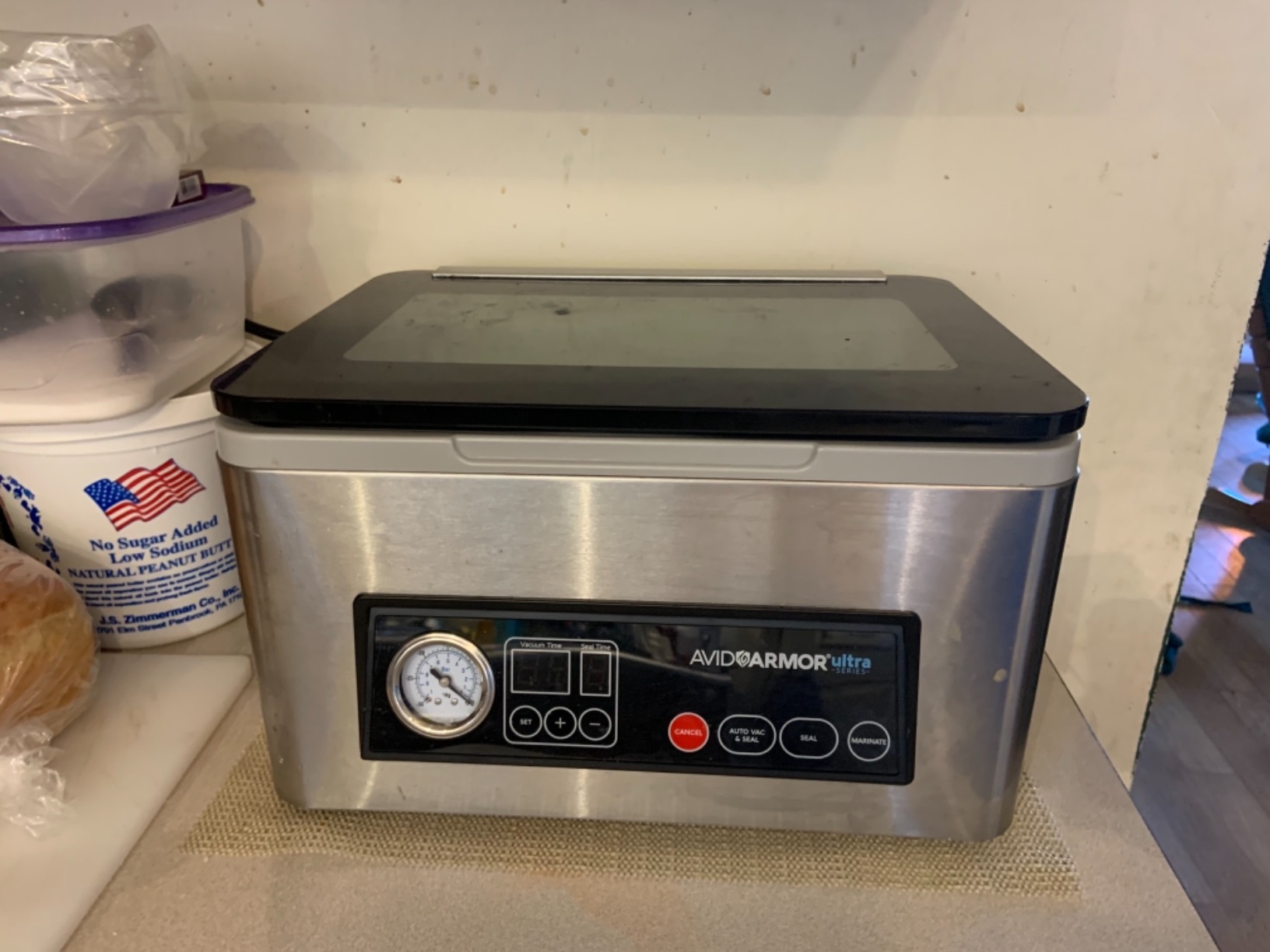
What the USV20 does better than anything else here
It is the only pick in this roundup that combines a full-chamber liquid seal with a footprint you can put away. Every other chamber unit we looked at weighs between 48 and 62 lb, which is a permanent commitment to a counter or a shelf, and a 17 lb machine is a different category of decision.
If you mostly seal soup, stock, sauces and single portions of cooked food, that combination is the whole argument. The double seal on the bag gives you a durable closure, and the adjustable vacuum time means you can tune the pull for delicate baked goods instead of crushing them.
Where the USV20 falls short
Bulk is the limit. A 3 inch deep chamber will not take a large roast, a whole turkey or a leg of lamb laid flat, and if you buy meat in bulk and expect to seal the whole cut in one bag, you will be resealing it in halves.
There is also no dust cover in the box, so on a shelf the open chamber collects dust and kitchen grease between uses. Budget for a separate cover if the machine lives outside a cabinet.
2. VEVOR 320W Chamber Vacuum Sealer Review – Longest Seal Bar in the Group
VEVOR Chamber Vacuum Sealer 320W Sealing Power 12.6 Inch Sealing Length
12.6 inch sealing length
10 mm dual lock strip
180W pump at -100 kPa
62 lb
Pros
- Longest seal bar here suits large steaks and full bread loaves
- Stainless steel chamber resists rust and heat with oily or salty food
- Built-in analog pressure gauge protects fragile items
- Dual lock seal strip resists freezer swelling
- LED display and simple controls are easy to learn
Cons
- 62 lb is far heavier than most home-oriented chamber units
- Bulky 17.9 by 16.1 by 16 inch body needs real space
- Buyers question spare parts support after the warranty
The VEVOR 320W is the pick for anyone who cuts meat in real sizes. Its 12.6 inch sealing length is the widest in this group, and paired with a deep chamber it will take a thick steak, a full loaf of bread or a bulk pack in a single bag without folding the food to fit.
The pump is a 180 watt unit pulling to minus 100 kPa, which is the same figure the smaller VEVOR in this roundup advertises. The stainless steel chamber takes salty and oily food without complaint, and the dual lock seal strip is built to hold when the bag swells in the freezer, which is where a lot of cheaper seals fail quietly.
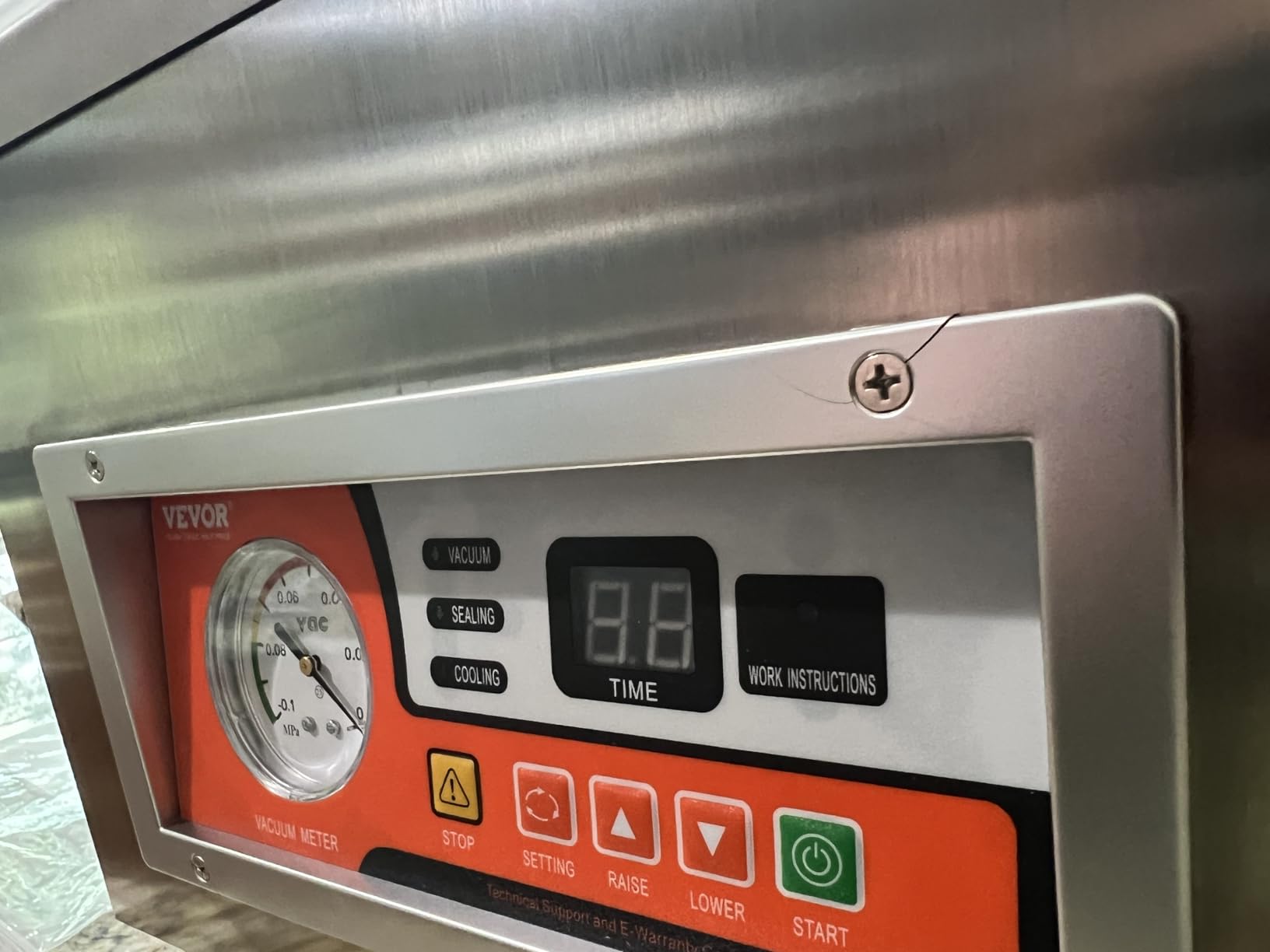
The built-in analog pressure gauge is the detail we liked most. Watching the needle instead of guessing lets you stop the vacuum before a bag of chips or a sealed container gets crushed, and it is a feature that costs nothing to add and everything to live without on a machine that only offers a timer.
Owners also like that the LED display and the controls are straightforward, with no menu to learn. The stated use covers both a home kitchen and light commercial packing, and the review pattern supports that, with people reporting steady runs of single-serving packages and bulk jobs without switching settings constantly.
What the 320W handles that the smaller machines cannot
Wide, flat, heavy bags. A 12.6 inch bar covers almost the full width of a 13 inch pouch, so the seal runs edge to edge with no folded side seams, and the deep chamber means you are not compressing the food to make it fit. That combination is what you want for bulk meat, bread and game.
The stainless steel chamber is the other quiet win. Repeated fatty, salty food near a hot seal bar is exactly what degrades cheaper plated chambers, and reviewers do not report corrosion or heat damage on this one.
Where the 320W falls short
It weighs 62 lb. That is not a typo, and it is heavier than several commercial units in the same bracket, so moving it between a counter and a shelf is a two-person job or a deliberate slide along a surface. Plan a permanent home for it before you order, and measure the spot, because the body is 17.9 by 16.1 by 16 inches.
Buyers also raise questions about long-term consumable and spare part support once the warranty period ends. On a machine this size, that is worth weighing against the three year coverage some competitors offer.
3. VEVOR 260W Chamber Vacuum Sealer Review – the Budget Entry Point
VEVOR Chamber Vacuum Sealer 260W Sealing Power 10.2 Inch Sealing Length
10.2 inch sealing length
8 mm dual lock strip
180W pump at -100 kPa
52.7 lb
Pros
- Deep chamber and analog gauge at the lowest entry point
- Stainless steel build with a solid industrial look
- Seals wet foods without siphoning liquid from the bag
- Real gauges and switches instead of minimalist controls
Cons
- Two loose screws found inside and the pump needed securing
- No marinate mode and no seal-only mode
- Listed at 220 volts so check your circuit first
The VEVOR 260W is the cheapest way into a genuine chamber sealer, and it gives up less than the price gap suggests. You keep the deep stainless chamber, the real analog pressure gauge and the minus 100 kPa spec, and you lose roughly two inches of seal bar length compared with the 320W.
Owners consistently report that it seals wet foods and liquids without pulling liquid out of the bag, which is the whole reason to buy a chamber unit. Several people describe months of reliable single-serving and bulk packaging, and the industrial look with physical switches and a gauge reads as deliberate rather than cheap.
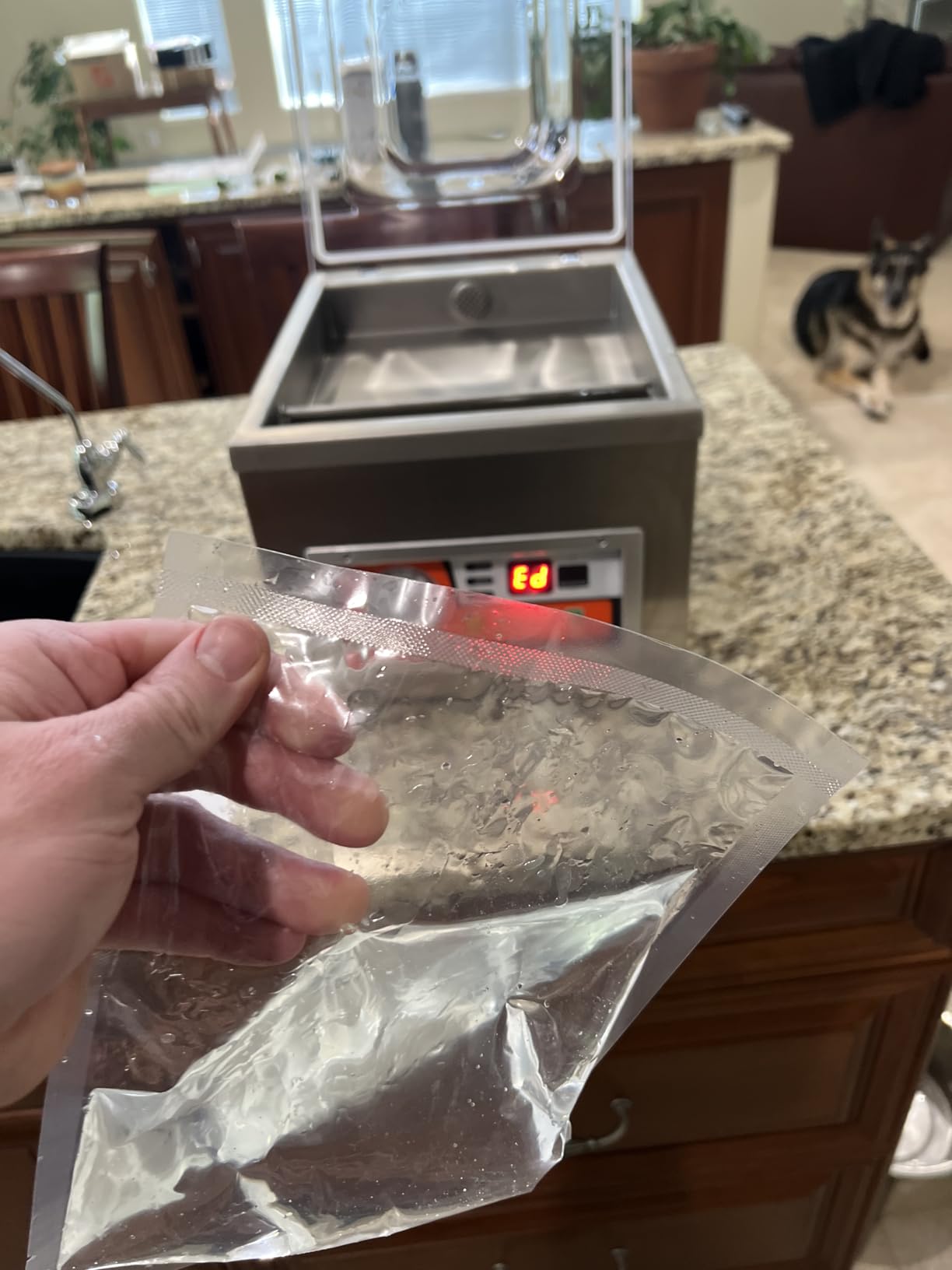
Two honest caveats come up repeatedly. First, some units arrive with loose screws inside and need the pump secured before first use, so give it a physical check before you plug it in. Second, the included gauge is optimistic: one reviewer swapped in a higher grade gauge and measured a true peak near 95 kPa rather than the advertised figure, which is still a strong vacuum but not quite the headline number.
There is no marinate mode and no seal-only mode, so marinating runs on vacuum time alone and cutting bags to size means another machine. The voltage field on this listing reads 220, which is a genuine problem for a North American kitchen, so confirm the plug and the circuit before buying.
What the 260W does better than its price suggests
Gauge-driven control on a deep stainless chamber, at the bottom of the price range. The pressure gauge lets you set the vacuum level per food, so you can pull gently on a bag of bread or chips and run hard on a dense piece of meat, and that control is usually reserved for pricier machines.
The 10.2 inch bar is a real constraint though: bags wider than 8 inches will not seal across the full width, so plan your pouch sizes around that number before you fill the box with stock.
Where the 260W falls short
It is the least finished unit here. The loose screws on arrival, the inaccurate gauge and the missing marinate and seal-only modes are all quality-of-life gaps rather than dealbreakers, but they add up over a long ownership.
Specialized consumables such as the oil filter are not sold by the manufacturer, and after the warranty the parts question is the same one buyers raise about every VEVOR in this roundup. At 52.7 lb it is also not a machine you will shuffle between cupboards.
4. VEVOR 380W Chamber Vacuum Sealer Review – Most Features for the Money
VEVOR Chamber Vacuum Sealer, 380W Pump Power, Sealing Bag Packing Machine
380W oil-free pump at 90 L/min
Better than -95 kPa
12.87 by 12.20 by 3.15 inch chamber
Full-glass lid
Pros
- Oil-free pump means no oil changes or fluid maintenance
- 90 L/min air removal pulls a fast thorough vacuum
- Full-glass lid shows the entire cycle
- Marinate
- single seal and jar vacuum modes
- 304 stainless steel chamber
Cons
- 52.7 lb limits portability
- Bulky rectangular body takes more shelf space than compact units
- Shorter review history than the older VEVOR models
The 380W is the feature list winner in this group and the only one that pairs an oil-free pump with a full-glass lid. A 380 watt pump moving 90 litres of air per minute to better than minus 95 kPa is a genuinely fast setup, and that is what makes back-to-back batch sealing feel quick rather than laboured.
The chamber is a spacious 12.87 by 12.20 by 3.15 inches, and the glass lid means you can watch the bag collapse instead of guessing whether the cycle has stalled. Owners single out exactly those two things, the pump performance and the visibility through the lid.
The oil-free design is the quieter benefit. There is no oil to change, no fluid to drain and no wet maintenance, which removes the single question that trips up most first-time chamber buyers. The mode list is long too, with adjustable vacuum and seal time plus marinate, single seal and jar vacuuming, and owners report it handling wet, dry, soft and powdery ingredients across varied bag types.
It is also a newer listing with a shorter review history than the older VEVOR models here, so long-term durability is less well documented. Buyers describe it as capable for both home meal prep and light commercial packing.
What the 380W is genuinely better at
Batch throughput and maintenance. A 90 L per minute pump is a different class of pump from the 180 watt units in this roundup, and combined with a rapid-cooling pump design and an aluminium seal element it is built for running a long session without a cooldown wait between bags.
The mode variety is the second advantage. If you marinate as well as seal, if you vacuum mason jars, or if you sometimes want a single seal on a narrow pouch instead of a double one, all of those are built in rather than improvised.
Where the 380W falls short
It weighs 52.7 lb and the body is a bulky rectangle at 17.72 by 14.49 by 10.24 inches, so it wants a dedicated counter or a rolling stand. That is the same tradeoff as the other VEVOR units, and it is the reason the Avid Armor sits at number one in this roundup.
Buy it for features, not for lightness. If you are sealing a dozen bags a month of dry food, most of this machine goes unused.
5. Gasbye 5.3QT Chamber Vacuum Sealer Review – Best Warranty and Service Kit
Gasbye Chamber Vacuum Sealer – 5.3QT Large Chamber, Replaceable 11.5″ Sealing Bar with Double Seal, Perfect for Meats, Soups, Sauces & Liquids, Includes 30 Pre-Cut Vacuum Bags, Stainless Steel
5.3QT chamber at 9.7 inch width
11.5 inch double seal bar
300W pump
3 year warranty
Pros
- 3 year warranty with brand-new replacement units
- Spare gasket and heating element included in the box
- Replaceable dual heating wires for single-part service
- 30 pre-cut 11 by 11 inch bags in the box
- External air suction hose and filler plate included
Cons
- Heavy enough to be a lifting concern for some users
- Short learning curve and the cancel button may be needed on very short cycles
- Not designed for UK mains electricity
The Gasbye CV4520 is the pick if warranty length and serviceability decide your purchase. It carries a three year warranty with brand-new replacement units, which is the longest coverage we found in this roundup, and the box includes a spare gasket and a spare heating element so the two parts most likely to fail are already on hand.
The chamber is a 5.3 quart unit with a 9.7 inch internal width and an 11.5 inch sealing bar that runs dual heating wires and makes a double seal. Because the wires are replaceable on their own, a failed element is a cheap part swap rather than a whole-machine decision.
Owners describe it as a clear step up from FoodSaver-style machines, with repeated mentions of sealing soup and marinated meat cleanly and being able to fit more meat per bag than on typical home chamber units. The stainless steel styling is the most kitchen-appropriate of the group, and the included 30 pre-cut 11 by 11 inch bags mean it is usable the day it arrives.
Support is the other standout. Owners report US-based support responding in around two hours and sending brand-new replacement units rather than repairing, which is not a promise most brands in this price range make.
What the Gasbye does better than the rest
It is the only unit here you can service yourself with the parts in the box. A spare gasket and a spare heating element shipped alongside the machine is unusual, and combined with a three year warranty it removes most of the long-term risk that buyers worry about with a machine they cannot cheaply repair.
The 5.3 quart chamber is also deeper than the Avid Armor’s, so you get more meat per bag while keeping a machine that looks at home on a counter rather than in a garage.
Where the Gasbye falls short
Weight is the recurring complaint, and reviewers note the full unit is heavy enough to be a lifting concern for some people. There is also a short learning curve, and the cancel button may be needed on very short cycles, which is the kind of small friction that shows up most when you are sealing a lot of small bags.
One UK buyer specifically warned that it is not compatible with UK outlets. It is listed at 115 volts, so check your supply before ordering.
6. Beelicious Pro CVS101 Chamber Sealer Review – Best for Marinating
DualCore CVS101 Chamber Vacuum Sealer for Liquids & Sous Vide, 6L Dual Vacuum Zones & Extra-Wide Bag Clamp, 230W Dual-Core Dry Pump x4, Commercial-Grade Food Packaging Machine for Home Use
6L upper chamber plus external lower zone
12 inch dual seal bar
Four oil-free dry pumps
Up to -100 kPa
Pros
- Dual zones handle oversized items outside the chamber
- Four oil-free dry pumps need no oil changes
- Vacuum marinate mode cuts an overnight marinade to about 15 to 20 minutes
- Stainless steel body with a glass top
- Built-in bag cutter and extra-wide bag clamp
Cons
- Bulky body needs dedicated counter or cabinet space
- Has real heft and wants a sturdy surface
- 6L upper chamber is tight for very large single portions
The CVS101 is the one to buy if marinating is half of what you want the machine for. Its vacuum marinate mode is credited by owners with turning an overnight marinade into roughly 15 to 20 minutes, because the forced infusion moves the marinade deep into the meat instead of sitting on the surface.
It also has the most flexible layout we tested. Instead of one cavity, there is a 6 litre upper chamber measuring 300 by 260 by 80 millimetres plus an independent lower external sealing area, so anything too bulky for the chamber can still be sealed on the same machine. The 12 inch dual-seal bar is removable, and the 230 watt dual-core system runs on four oil-free dry pumps.
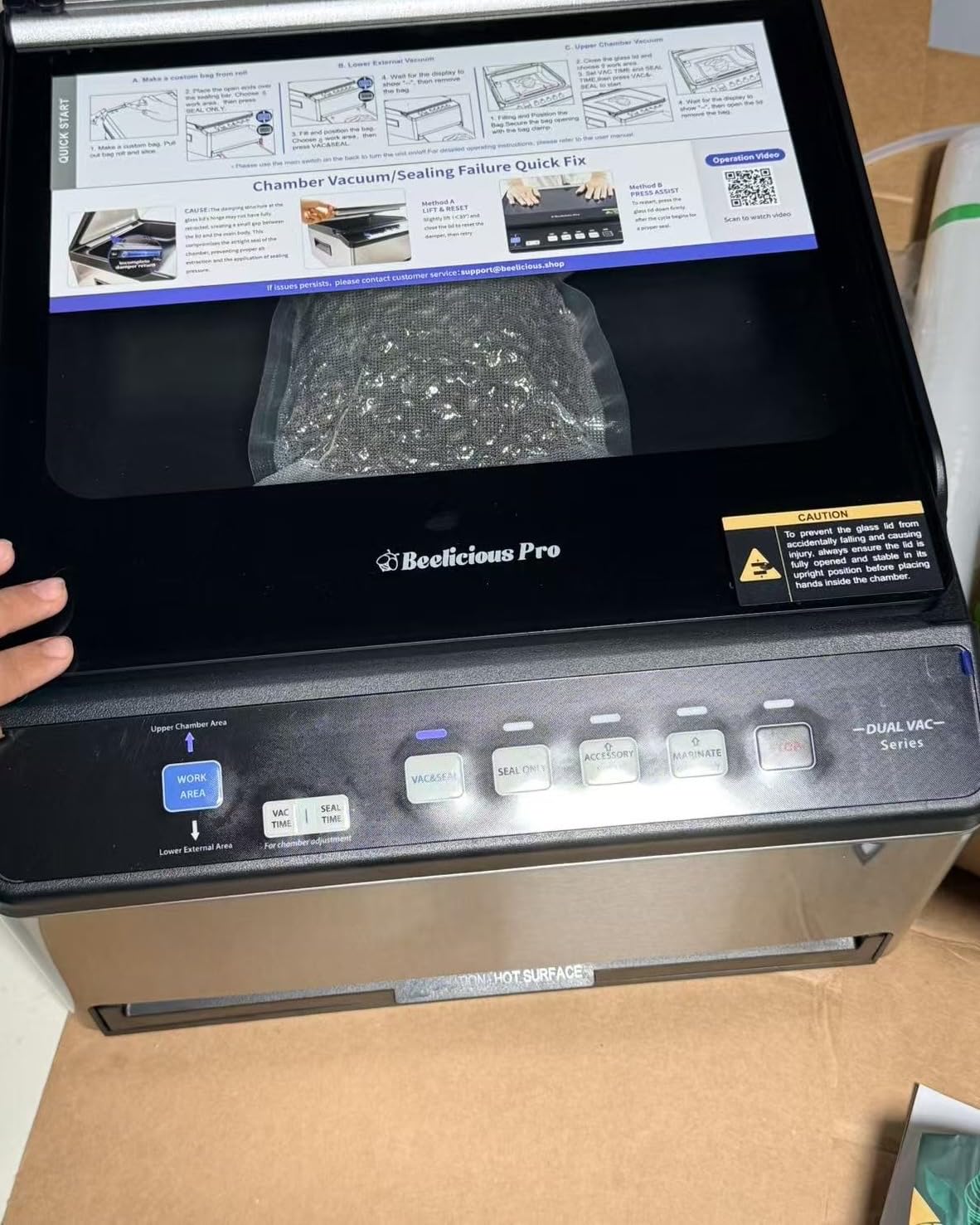
The vacuum figure is up to minus 100 kPa, which is the top of what any unit here claims. Owners coming from edge-suction sealers describe it as the first machine they have owned that actually holds a vacuum on wet foods, and soups, brines and powders are all called out as clean-running jobs with no liquid reaching the pump.
Batch comfort is well considered too. The control panel is angled upward, there is a countdown display, the bag clamp is extra wide, and there is a built-in cutter so you are not reaching for scissors mid-session. It accepts smooth bags, textured rolls, mason jars and external canisters, and a phone app handles food scanning, sealing dates and expiration reminders.
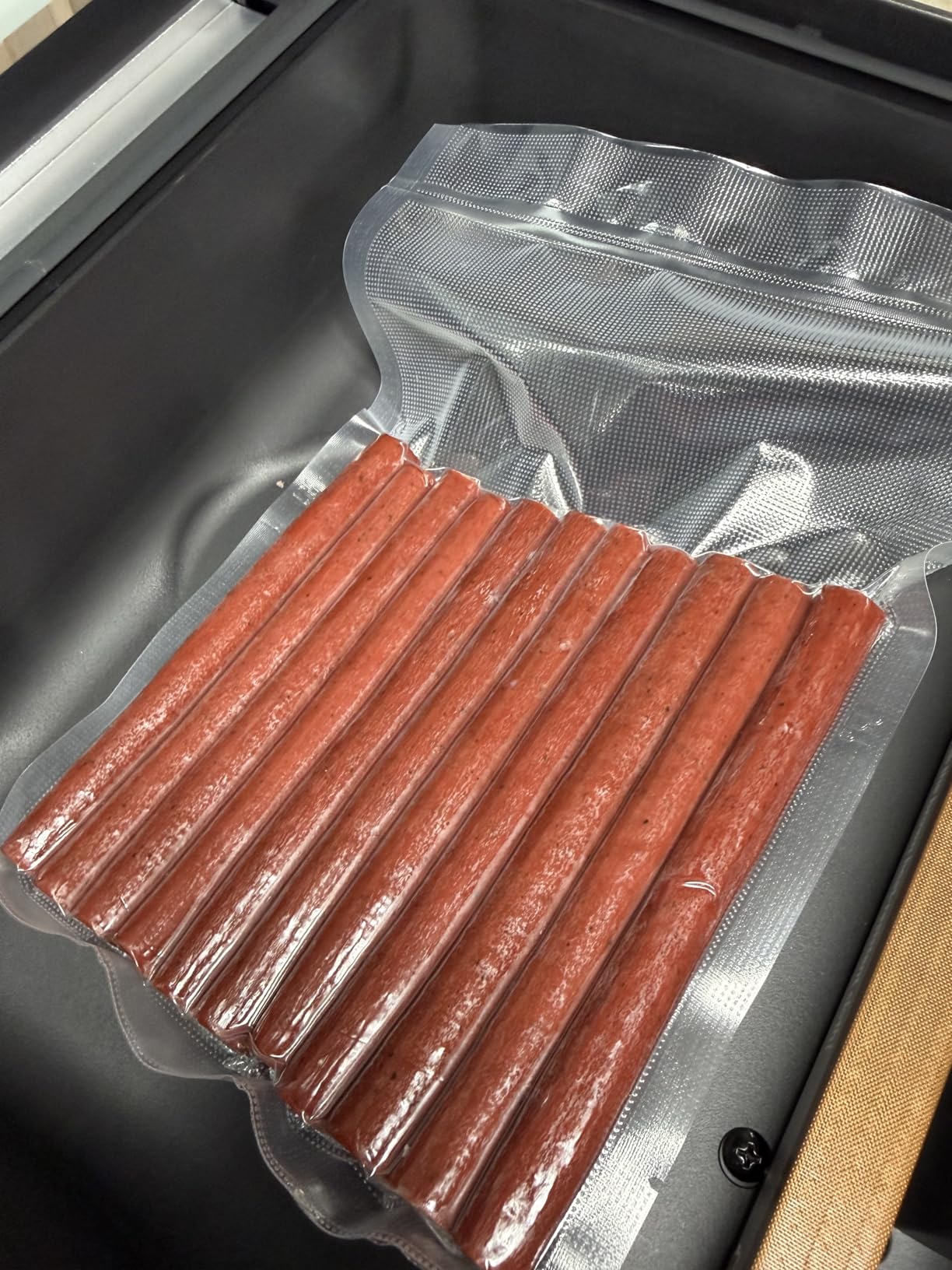
What the CVS101 does better than anything else here
Marinating, by a wide margin. No other unit in this roundup combines a genuine vacuum marinate mode with a chamber that can hold a whole piece of meat, and the dual sealing zones mean a large flat item does not have to fit inside the 6 litre cavity to be sealed.
The four oil-free dry pumps also make this the most maintenance-free design here alongside the VEVOR 380W. No oil changes, no fluid to drain, and nothing wet to clean up under the pump.
Where the CVS101 falls short
Size and weight on the counter. At 25.7 lb it is heavier than the Avid Armor and the Mesliese, and owners consistently call the body bulky and in need of a dedicated counter or cabinet space with a sturdy surface underneath it.
The 6 litre upper chamber is also tight if you like to pack very large single portions, and the app is a nice extra rather than a core feature. Warranty coverage here is extendable up to 15 months, which is short next to the Gasbye’s three years, so factor that in if you keep a machine for a decade.
7. Mesliese 6L Chamber Vacuum Sealer Review – Most Accessories in the Box
Mesliese 100kPa Chamber Vacuum Sealer for Dry Wet Soupy Foods & Sous Vide, 6L Food Sealer with 11.3″ Dual Sealing Bar, Built‑in Cutter, External Vacuum & Quick Marinate, Vacuum Roll & Universal Lids
6L chamber
11.3 inch detachable dual seal strip
100 kPa vacuum
Built-in cutter
21.4 lb
Pros
- 21.4 lb makes it easy to move between a cabinet and the counter
- Built-in 12.9 inch cutter removes the need for scissors
- External vacuum port with hose plus 6.3 and 7.5 inch universal lids
- Detachable seal strip wipes clean and can be replaced
- 100 kPa holds across dry
- moist and soupy foods
Cons
- Smallest review base in the group at 46 reviews
- Marinate speed-up claimed at only up to 20 percent
- Mason jar adapter not included for the external vacuum port
The Mesliese packs more into the box than anything else in this roundup. Alongside the machine you get an air hose, two universal lids at 6.3 and 7.5 inches, a roll of 8 inch by 16 foot bags, the power cord and a manual, and the unit itself has a built-in 12.9 inch bag cutter so you never need scissors.
Underneath, the 6 litre upper chamber measures 12.3 inches wide by 10.4 inches long by 3.2 inches high, and the pump pulls to 100 kPa. Owners report stable suction across dry, moist and soupy foods, which is what makes it a reasonable sous vide partner, since sous vide depends on an even vacuum across a wide pouch rather than a single gripped edge.
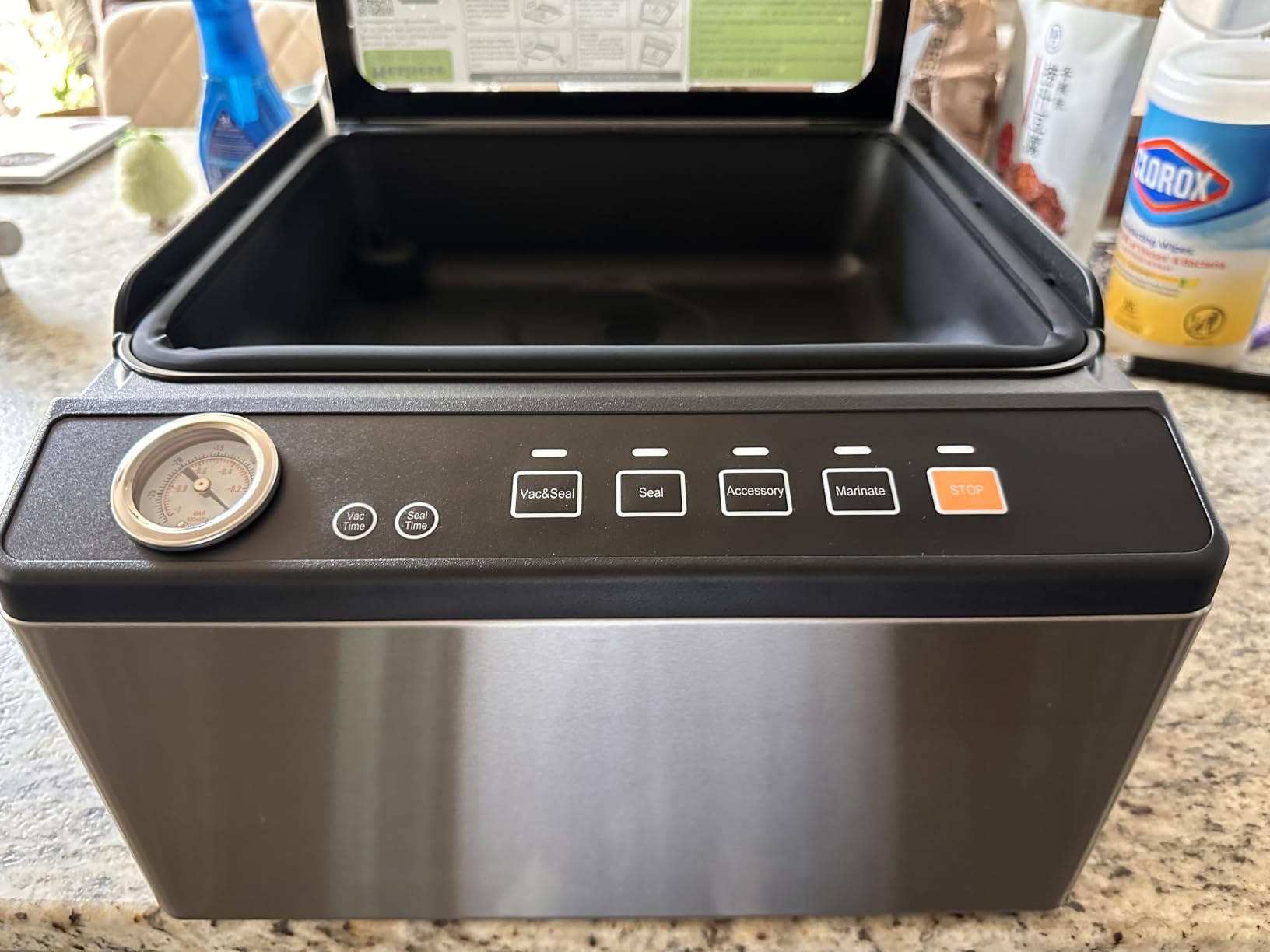
The sealing strip is detachable, so you can pull it out, wipe it down and put it back, and replace it if it degrades. It works with smooth chamber bags as well as textured and embossed vacuum rolls, and the external vacuum port with the included hose lets you pull air out of jars, canisters and zip-top bags.
At 21.4 lb it is one of the two machines here you can move with one hand, which is what makes the 15.69 inch listed height less of a problem. You can take it out when you need it and put it back, instead of dedicating permanent space.
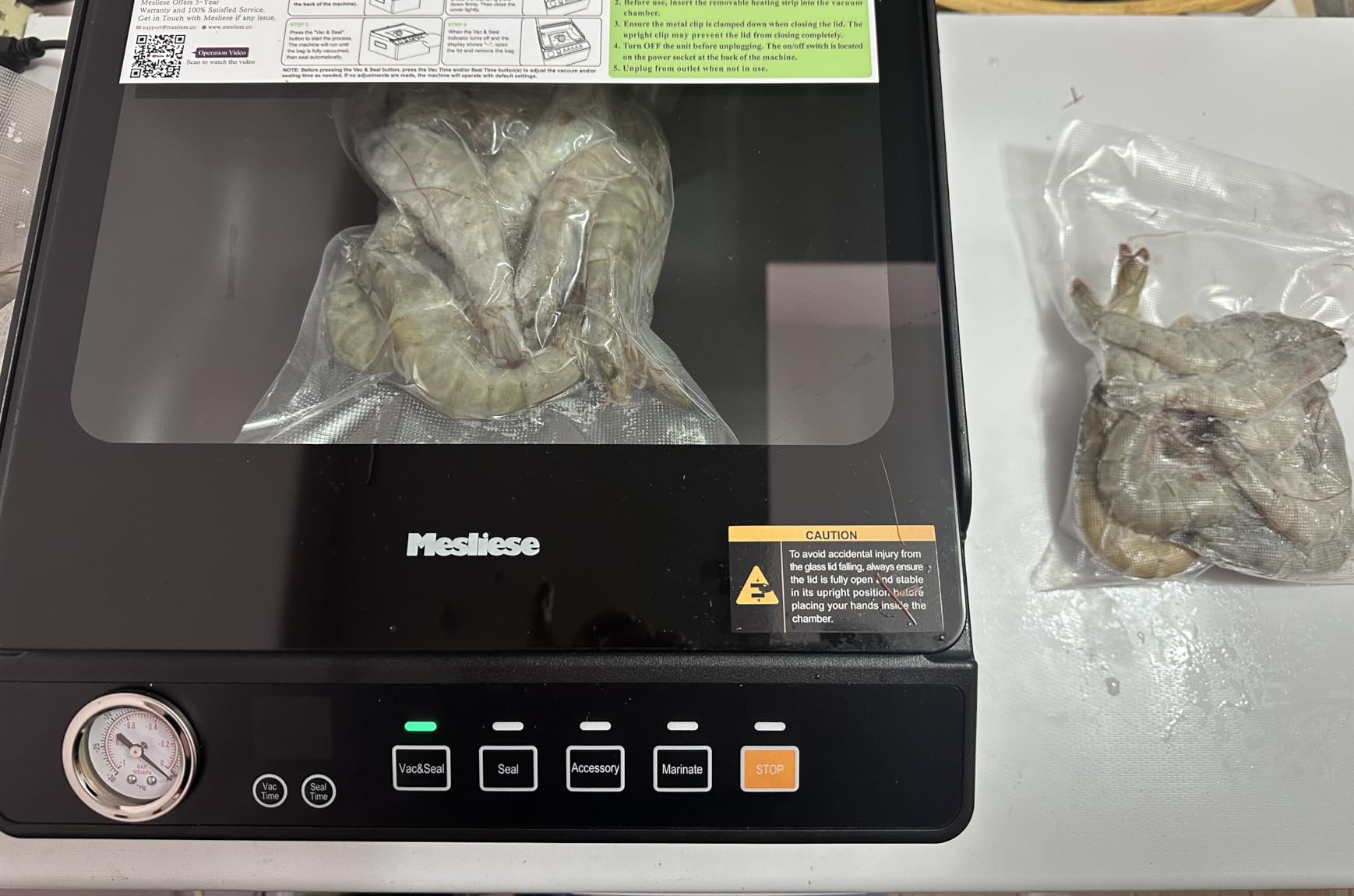
What the Mesliese does better than the rest
Everything you need on day one, in one box. A roll of bags, a cutter, a hose and two universal lids means no second purchase before you seal anything, and the detachable strip is the cleanest design for a machine that touches soup and raw poultry.
For sous vide specifically, the 100 kPa pull and broad 6 litre chamber give you an even vacuum across a full-size pouch, and the adjustable vacuum and seal times let you soften the setting for delicate fish.
Where the Mesliese falls short
The review base is the smallest in this group at 46, with a 100 percent five-star distribution. That means the sentiment is uniformly positive but based on relatively few, mostly recent purchases, so long-term durability is not yet well documented and we would treat the perfect score as less informative than it looks.
The marinate mode is also modest, claimed at up to a 20 percent acceleration rather than the several-fold improvement the Beelicious Pro advertises, and the mason jar adapter for the external port is not included.
8. CM255 Industrial Chamber Vacuum Sealer Review – Cheapest Bags per Seal
Chamber Vacuum Sealer, CM255, Perfect for Home and Commercial Kitchens, Industrial Grade Packaging Machine with High Powered Pump
Pouches up to 10 by 13 inch
Industrial grade vacuum pump
Acrylic viewing lid
48 lb
Pros
- Uses standard smooth bags instead of embossed channel bags
- Chamber accepts large 10 by 13 inch pouches
- Acrylic lid gives a clear view of the vacuum cycle
- Factory presets work without much setup
- Responsive US-based tech support
Cons
- Only a 90 day manufacturer warranty
- Listed at 230 volts so check your circuit first
- Some units do not pull all the air out of the bag
The CM255 is the bag-economics pick. It runs on standard smooth bags rather than costlier embossed channel bags, which is where the per-bag saving comes from over years of use, and the chamber accepts pouches up to 10 by 13 inches, which is larger than most of the machines in this roundup.
The pump is described as high-powered and industrial grade, and the extra wide seal element is meant to produce a permanent closure. The operation panel gives you control over vacuum depth, a marination cycle and a dry goods cycle, with factory presets that work reasonably out of the box.
The acrylic lid is a practical touch, giving clear visibility into the chamber during the vacuum cycle, and owners mention quiet operation relative to what they expected from a machine this size. Support is US-based, with a report of a damaged unit being replaced in two days.
Reviews on this one genuinely split. The serious negative theme is incomplete vacuum extraction on some units, where not all the air leaves the bag, and a recurring mention of a strong factory construction odor inside the chamber that has to be aired out. Baking soda in the chamber for a day or two helps.

What the CM255 does better than the rest
Per-bag cost, over the long run. If you are sealing fifty or a hundred bags a month, the difference between cheap smooth pouches and branded embossed bags is the largest running cost in this whole category, and the CM255 is built specifically around the cheap option.
The 10 by 13 inch pouch capacity is also larger than most of the machines in this roundup, and an acrylic lid you can actually see through is uncommon at this level. The company behind it cites 50 years of vacuum packaging experience.
Where the CM255 falls short
Only a 90 day manufacturer warranty, which is the shortest coverage in this roundup and a real risk on a machine meant to run for years. At 48 lb it is heavy for a home kitchen, and the listing shows 230 volts of alternating current, so confirm your supply before ordering.
The inconsistent vacuum draw on some units is the honest concern. If a bag does not hold air after a cycle, you will find out in the freezer two weeks later, which is the one failure mode that ruins the case for the machine entirely.
How to Choose a Chamber Vacuum Sealer Without Regret
Most buyers regret the machine, not the feature set. They buy the biggest chamber they can find, and then it takes a permanent shelf in a kitchen that did not have one. Decide your counter space first, then your bag volume, and only then compare pumps.
Oil-free dry piston or rotary oil pump
This is the question buyers get most wrong, so here is the honest version. An oil-free dry piston pump needs no oil changes and no fluid maintenance, which is why both the VEVOR 380W and the Beelicious Pro CVS101 stand out for it. A rotary oil pump pulls a deeper vacuum, runs quieter, lasts longer and handles more volume, but it requires regular oil changes and it is heavier and usually slower, as owners comparing the two pump types note.
For a home kitchen sealing a few bags a week, the maintenance-free side of that trade is worth more than the extra depth. For someone running a harvest or a hunt, a deeper pull and more pump hours are the priority, and the maintenance is a normal part of owning equipment.
Bags, pouches and what they really cost
You do not need proprietary bags for most of these machines. Chamber units use smooth bags, not the embossed channel bags an edge sealer needs, and the CM255 is designed specifically to run the cheap smooth ones. Independent roundups put chamber pouches at a fraction of the cost of precut edge-sealer bags, and home cooking forums reach the same conclusion.
Mil thickness is the other half of that decision. Thicker bags resist punctures and are better for game and bone-in cuts, but they need a machine that can heat-seal them, and some units are limited to 3 mil. Check the seal temperature and thickness limits before you buy a stack of heavy bags.
Counter space, weight and noise
The spread in this roundup is dramatic. The Avid Armor USV20 weighs 17.3 lb and the Mesliese 21.4 lb, both of which you can move with one hand. The Gasbye sits in the middle, while the VEVOR 320W, the VEVOR 260W, the VEVOR 380W and the CM255 run between 48 and 62 lb, which is a rolling-cart or dedicated-stand situation rather than a tuck-under-the-cupboard one.
Noise is the most common complaint we found in forum threads about this category, and it is mostly the pump. A continuously running vacuum pump on a hollow cabinet top will carry further than the same machine on a solid counter, so a piece of closed-cell foam under the base makes a real difference for a machine that lives in a kitchen you use for conversation.
Sealing liquids without a mess
This is the technique nobody explains properly, and it is the whole reason to own a chamber unit. Fill the bag no more than halfway, because the bag needs room to collapse. Angle the bag so the liquid sits away from the seal bar and toward the solid food, since liquid pooling over the bar is what causes a failed seal. Keep solids below liquids when you can. For stock and soup, freeze the liquid flat in a tray first, then seal the frozen block, which removes the pressure entirely. And always use a removable filler plate so small portions sit inside the bag rather than hanging over the bar.
Check the voltage field on the listing before you order, not after. The machines in this roundup run 110, 115, 120 and 220 or 230 volts, and two of them are not built for a standard North American circuit. That is a five second check that prevents a very expensive return.
Frequently Asked Questions
What is better, a vacuum sealer or chamber sealer?
A chamber sealer wins on liquids, wet foods, batch speed and seal durability because it evacuates the whole chamber so outside pressure presses the bag shut. An edge sealer wins on price, size and simplicity for dry foods sealed a few times a month. Most home cooks only need a chamber unit if they seal soup, sauces, bulk meat or more than about twenty bags a month.
Are chamber vacuum sealers worth it?
They are worth it if you seal liquids, cook in batches, sous vide regularly, put up produce or wild game, or run more than roughly twenty bags a month. The cheaper per-bag pouch cost is the quiet financial argument. If you mostly seal dry, solid food a few times a month and have no counter space to give up, a small edge sealer is the better buy.
Who makes the best chamber vacuum sealer?
In this roundup the Avid Armor USV20 is the best overall pick for home kitchens, the VEVOR 320W is the strongest for large cuts of meat and the VEVOR 260W is the cheapest genuine entry point. The Gasbye offers the longest warranty at three years, the Beelicious Pro CVS101 is the pick for marinating and the CM255 runs the lowest cost per bag.
Do you need special bags for a chamber vacuum sealer?
You need chamber-style smooth bags, not the embossed channel bags an edge sealer uses. Most machines here accept smooth pouches up to a stated width, and the VEVOR 260W cannot take bags wider than 8 inches. Bags cost far less than precut edge-sealer bags, and the CM255 is built specifically to run the cheapest standard smooth pouches.
Do chamber vacuum sealers need oil changes?
It depends on the pump. Oil-free dry piston pumps need no oil changes and no fluid maintenance, which covers the VEVOR 380W and the Beelicious Pro CVS101. Rotary oil pumps pull a deeper vacuum, run quieter and last longer but require regular oil changes and are heavier, so budget for that if you choose one.
The Verdict: Which Chamber Vacuum Sealer Should You Buy?
The Avid Armor USV20 is the best chamber vacuum sealer for home use in 2026, and the reason is not a spec sheet, it is the weight. At 17.3 lb it is the only unit in this roundup that a normal kitchen can put away, while still delivering the full-chamber liquid sealing that makes the category worth owning at all. If you want the longest warranty and the parts to service it yourself, the Gasbye is the pick. If you marinate, the Beelicious Pro CVS101. If you buy meat in bulk, the VEVOR 320W with its 12.6 inch bar.
And if none of that describes your kitchen, buy a small edge sealer instead and save the space. We re-test this group through 2026, and we will update these picks as the lineups change.