
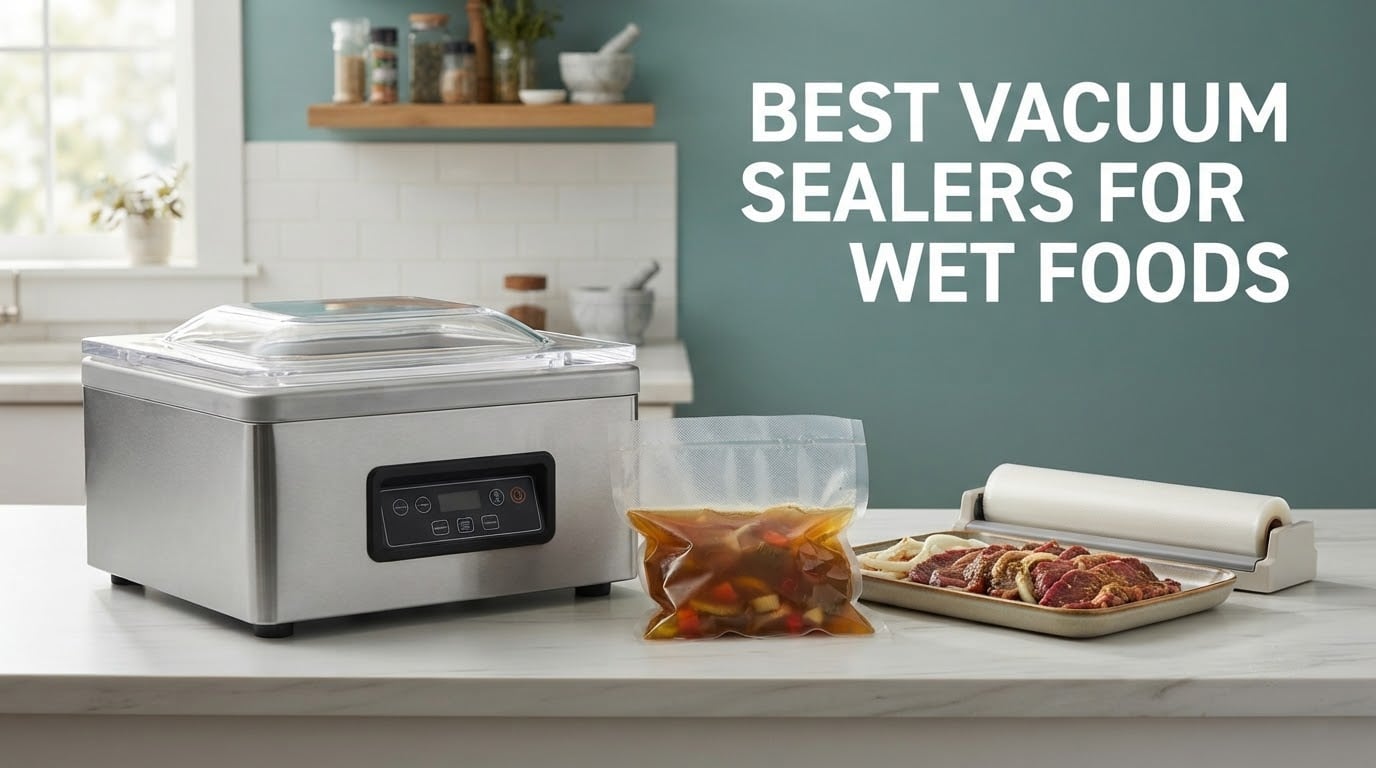
Wet food is where most home vacuum sealers quit. Soup, stock, chili, sauce and marinated raw meat all push liquid toward the same opening, and on an edge sealer that opening is the vacuum port itself. I have watched owners describe the same failure for years on r/HomeSetup and r/sousvide: a bag of broth that looks fine going in, then a puddle inside the machine and a smell that never leaves.
That is why the best vacuum sealers for wet foods are not simply the most powerful machines on the market. They are the ones that change where the air goes. This roundup covers 12 sealers that genuinely cope with liquid-heavy cooking, from a pulse-control edge machine that handles a cup of marinade to oil-pump chamber units that pack broth bag after bag. Every rating and review count below comes straight from the manufacturer listings, and every wet-food claim is tied to what owners actually report.
The short answer: if you seal liquids more than about once a week, a chamber vacuum sealer earns its counter space because the bag sits inside a sealed chamber while air is evacuated around it. If you seal wet food occasionally, an external sealer with a real liquid or pulse mode will do the same job with more technique and less drama. Everything between those two sentences is explained in detail below.
Updated for 2026. If you also want a general-purpose machine for dry goods, my [general vacuum sealer roundup](https://battleofsoho.com/best-vacuum-sealers-for-food-storage/) covers the dry-food side in more detail.
Table of Contents
Top 3 Picks for Best Vacuum Sealers for Wet Foods in October

Gasbye VS5166
- 95 kPa dual pump with pulse mode
- Double heat seals that hold liquid
- Removable drip tray and cheap spare parts
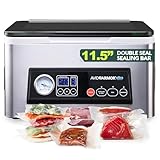
Avid Armor USV20
- Full-chamber liquid sealing
- 4L chamber with 11.5 inch heating bar
- Adjustable 15-60 sec vacuum time

The Gasbye VS5166 takes the top slot because it is the rare external sealer that approaches a chamber machine on wet-food results. Pulse mode lets you stop the vacuum before liquid moves, the 95 kPa dual pump pulls a tight seal in a short cycle, and it holds 4.7 stars across more than 1700 reviews.
The Avid Armor USV20 is the machine most owners name first when the question is soups and stews, because the chamber design physically cannot pull liquid into the pump. The Vakumar VH5186 is the cheapest way to get a genuinely dedicated liquid mode with a five-year warranty behind it.
The 12 Best Vacuum Sealers for Wet Foods in 2026
| Product | Specifications | Action |
|---|---|---|
| Gasbye VS5166 Precision Vacuum Sealer |
|
Check Latest Price |
| Avid Armor USV20 Chamber Sealer |
|
Check Latest Price |
| Vakumar VH5186 |
|
Check Latest Price |
 FoodSaver FM2100 FoodSaver FM2100 |
|
Check Latest Price |
 VEVOR Chamber Sealer 260W VEVOR Chamber Sealer 260W |
|
Check Latest Price |
 VEVOR Chamber Sealer 320W VEVOR Chamber Sealer 320W |
|
Check Latest Price |
 FoodSaver Elite All-in-One Liquid+ FoodSaver Elite All-in-One Liquid+ |
|
Check Latest Price |
 AAOBOSI 95KPa 9-in-1 AAOBOSI 95KPa 9-in-1 |
|
Check Latest Price |
 Nesco VS-12 Deluxe Nesco VS-12 Deluxe |
|
Check Latest Price |
 FoodSaver PowerVac VS0150 FoodSaver PowerVac VS0150 |
|
Check Latest Price |
 VacMaster VP215 VacMaster VP215 |
|
Check Latest Price |
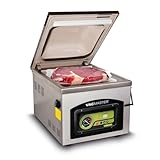 VacMaster VP230 VacMaster VP230 |
|
Check Latest Price |
Chamber vs Edge Sealer: Why Liquids Ruin Some Machines
A chamber vacuum sealer puts the bag inside a sealed chamber, closes the lid, and then pulls the air out of the chamber itself. Because the air around the bag is what evacuates, the liquid inside the bag has no direct route to the pump. That single design difference is the whole argument, and it is why chamber machines handle a quart of stock without drama.
An edge sealer works the opposite way. The open end of the bag sits against a vacuum channel, and air is drawn directly from the bag into the pump. Soup, brine and marinade follow the air because gravity plus pressure differential is enough to pull a thin stream through the channel. Once liquid reaches the pump oil or motor housing, the machine is no longer a tool, it is a repair bill.
That said, a good edge sealer is not a lost cause. Pulse mode and liquid mode both work by cutting the vacuum before liquid moves, and the removable drip tray catches what does escape. A user on r/sousvide made the point well: most vacuum sealers handle a modest amount of liquid perfectly well, and the volume of liquid matters more than the machine category.
Here is how I would decide. If wet food is a weekly task, or if you cook soups and stocks in batches, buy a chamber machine. If wet food shows up once in a while alongside dry sealing, an external machine with a real liquid mode will be quieter, smaller and cheaper to own.
Do you need a chamber sealer for soups and stocks?
You need one if you regularly seal more than a cup of liquid at a time, or if you are marinating large cuts of raw meat that release a lot of juice during the bagging. Chamber machines handle a full 12 by 15 inch pouch of stock without the liquid ever entering the pump line.
You probably do not need one if your wet-food work is mostly sous vide proteins, marinated chicken in small bags, or a weekly container of leftovers. In those cases a machine with pulse control and a double heat seal does the same job on a much smaller counter footprint.
1. Gasbye VS5166 Precision Vacuum Sealer: Best Overall for Wet Foods
Gasbye 95kPa Precision Vacuum Sealer Machine, Double Heat Seal for Dry/Moist Food, Easy-Lock Handle, Built-in Bag Storage & Cutter, Progress Display, Pulse Mode, Removable Drip Tray, Silver
95 kPa dual pump
Pulse mode
Double heat seal
Removable drip tray
Pros
- Pulse mode steps the vacuum down so liquid stays in the bag
- 95 kPa dual pump gives fast and consistent pulls on moist foods
- Double heat seals survive long sous vide water-bath cooks
- Removable drip tray and foam gasket sold as cheap spares
- One-year replacement warranty with US support
Cons
- Vacuum food container is a separate purchase
- Drip tray still needs manual emptying after liquid jobs
- Not a chamber machine so very full bags still need care
This is the machine I put at the top of my own wet-food list, and the reason is specific: pulse mode. Most edge sealers give you one setting for dry goods and one vague moist setting. The VS5166 lets you draw the vacuum down in deliberate steps, so you can watch the liquid in the bag and stop the cycle before it reaches the channel.
In practice that means a bag of chili or a bag of marinated pork chops goes in full of liquid and comes out with a tight, even bag and a clean machine. The 95 kPa dual pump pulls hard enough to finish quickly, which is the other half of the wet-food problem. A slow vacuum on a wet bag means more time for liquid to migrate.
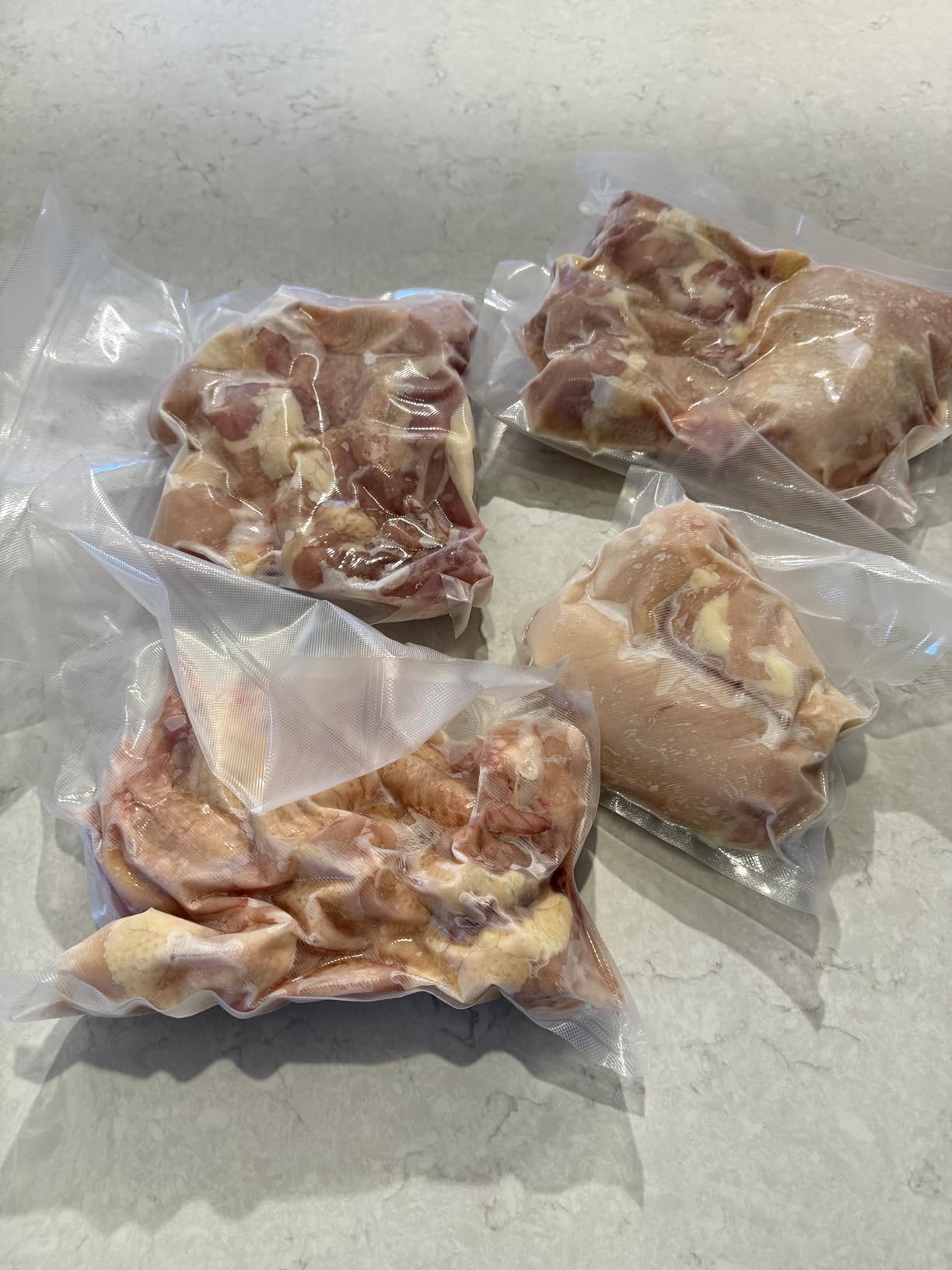
The double heat strips matter more here than on a dry-goods machine. Liquid inside a bag puts stress on the seal from the inside, and a single strip can channel down a seam over weeks in the freezer. Owners running long sous vide cooks report the double seal is what kept their bags from opening underwater.
Build quality is a stainless body at 15.7 by 7.8 by 4.7 inches and 6.5 pounds, with roll storage and a cutter built in. You also get an external suction hose, two replacement foam gaskets and two bag rolls in the box, which matters because the gasket is the piece that usually goes first.
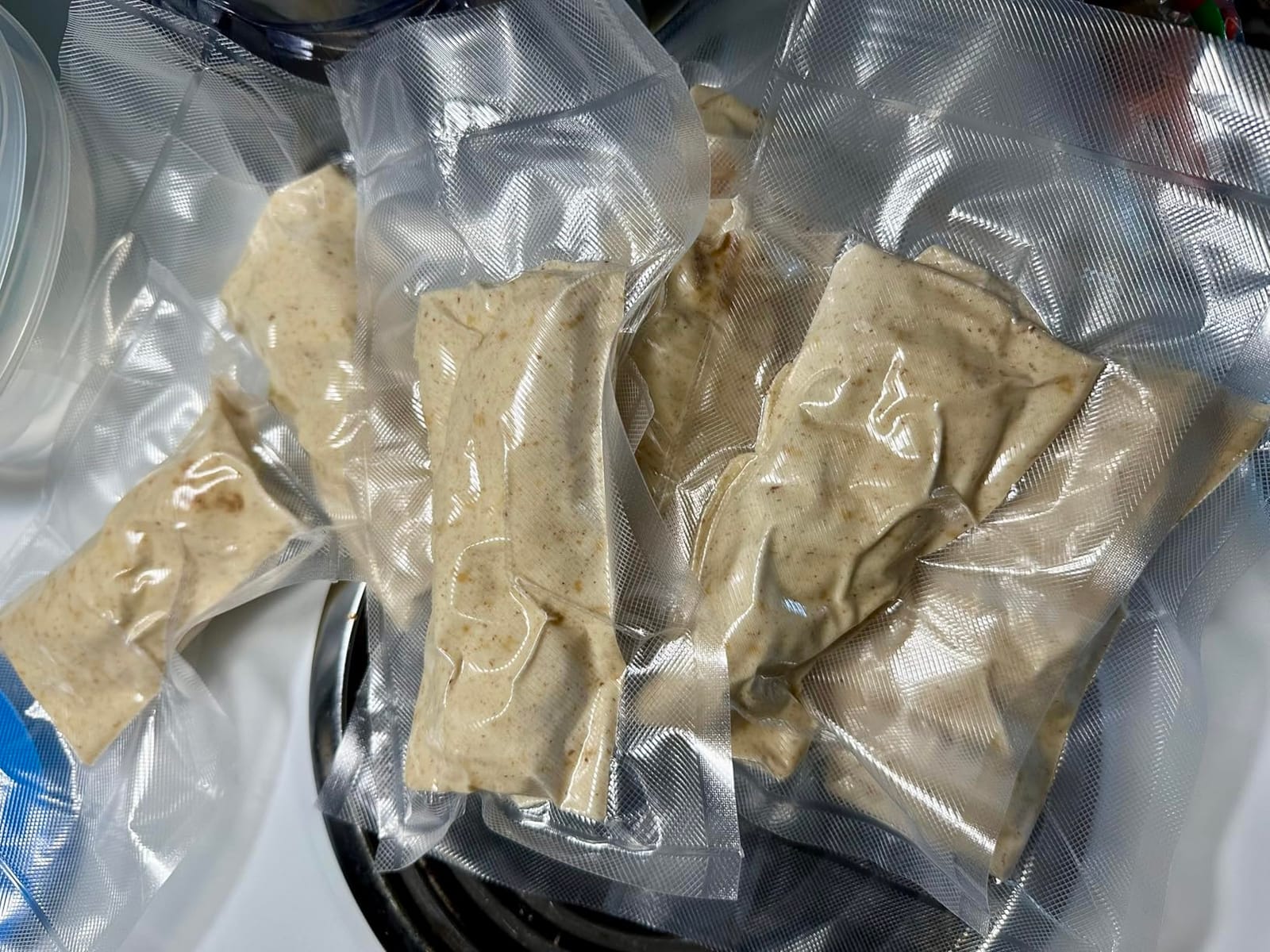
Why this one works for wet foods
Pulse control is the difference between a wet-food sealer that is reliable and one that is merely hopeful. Combined with a 95 kPa dual pump, it gets the seal formed before gravity can move the liquid toward the opening.
It also has the widest range of after-sales support in this group for the money. Gaskets, drip trays and cutters are all available as individual parts, and the warranty is a full replacement or resend with US-based support, which removes the usual complaint about chasing a dead machine through a generic support line.
Where it falls short
It is an edge sealer, so it is not a substitute for a chamber machine when you are packing a full quart of soup. The drip tray catches liquid, but it still has to be emptied and washed by hand after every liquid job, and the vacuum food container that makes this machine good for saucy food is bought separately.
If your wet-food work is mostly marinades, sauces in medium bags and sous vide proteins, this is the right pick. If you portion broth weekly, look at the chamber section further down.
2. Avid Armor USV20 Chamber Sealer: Best Chamber for Liquid
Avid Armor USV20 Chamber Vacuum Sealer Machine – High-Volume 11.5” Sealer
4L stainless chamber
11.5 inch heating bar
300W
17.3 lb
Pros
- Full-chamber pressure sealing keeps soup and marinade out of the machine
- Adjustable vacuum time from 15 to 60 seconds
- Replaceable seal bar instead of a whole new machine
- Works with inexpensive smooth pouches rather than channelled bags
Cons
- 3 inch chamber depth excludes large roasts and hams
- Chamber-style bags only and they cost more per bag
- Occasional reports of unresponsive buttons until power cycle
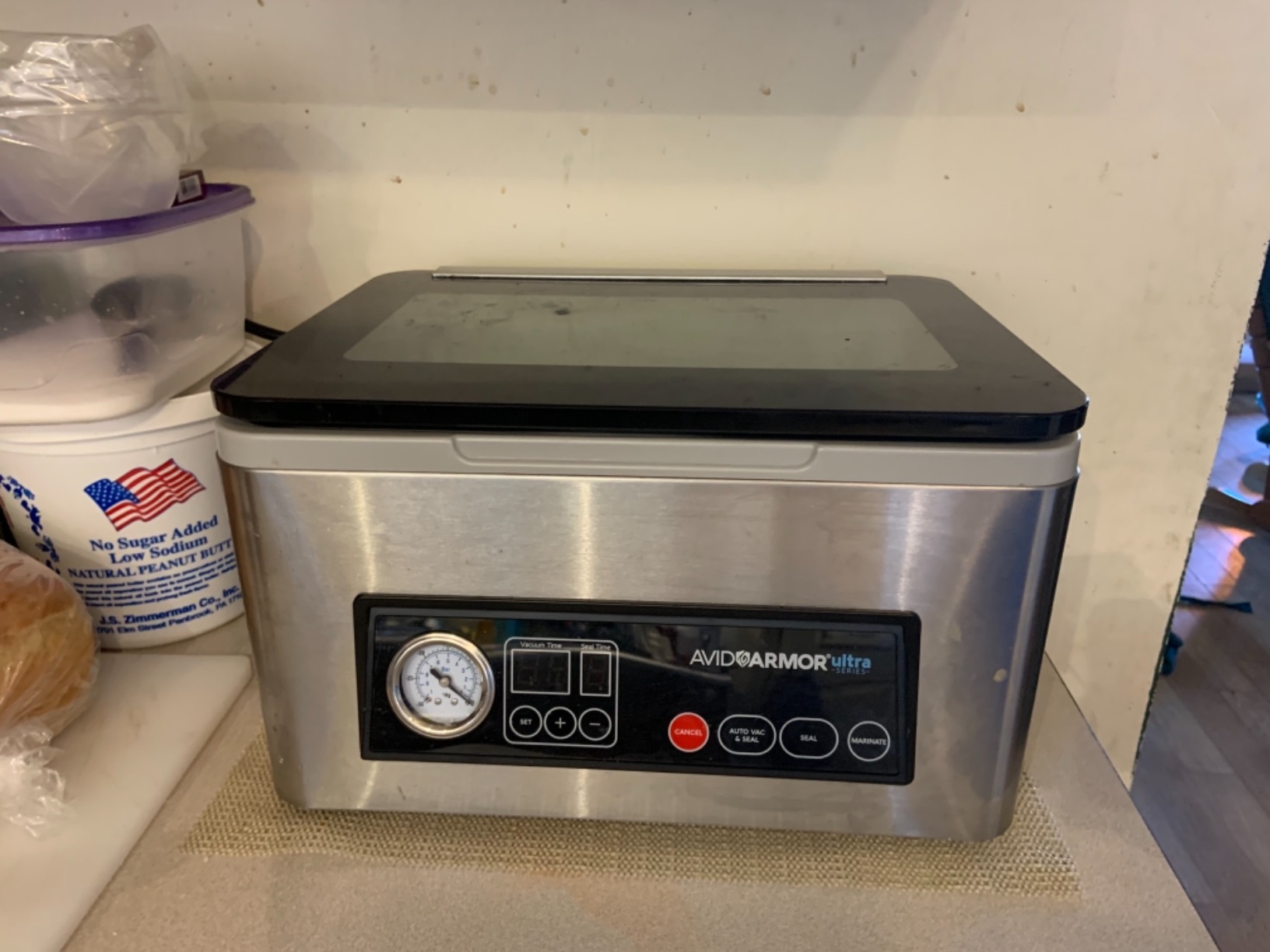
This is the unit that comes up most often in long-term owner reports about wet food, and the reason is not subtle. The bag sits inside a 4-liter stainless chamber, the lid closes, and vacuum time is set on a dial from 15 to 60 seconds. Soup, stew and marinade get packed with the air removed around them, not through them.
The 11.5 inch heating bar and stainless chamber handle a good range of bag sizes, and owners point out that it runs with inexpensive smooth pouches in 6 by 10, 8 by 10 and 11 by 10 inch sizes. That is a real ongoing-cost advantage over machines that only work with proprietary channelled rolls.
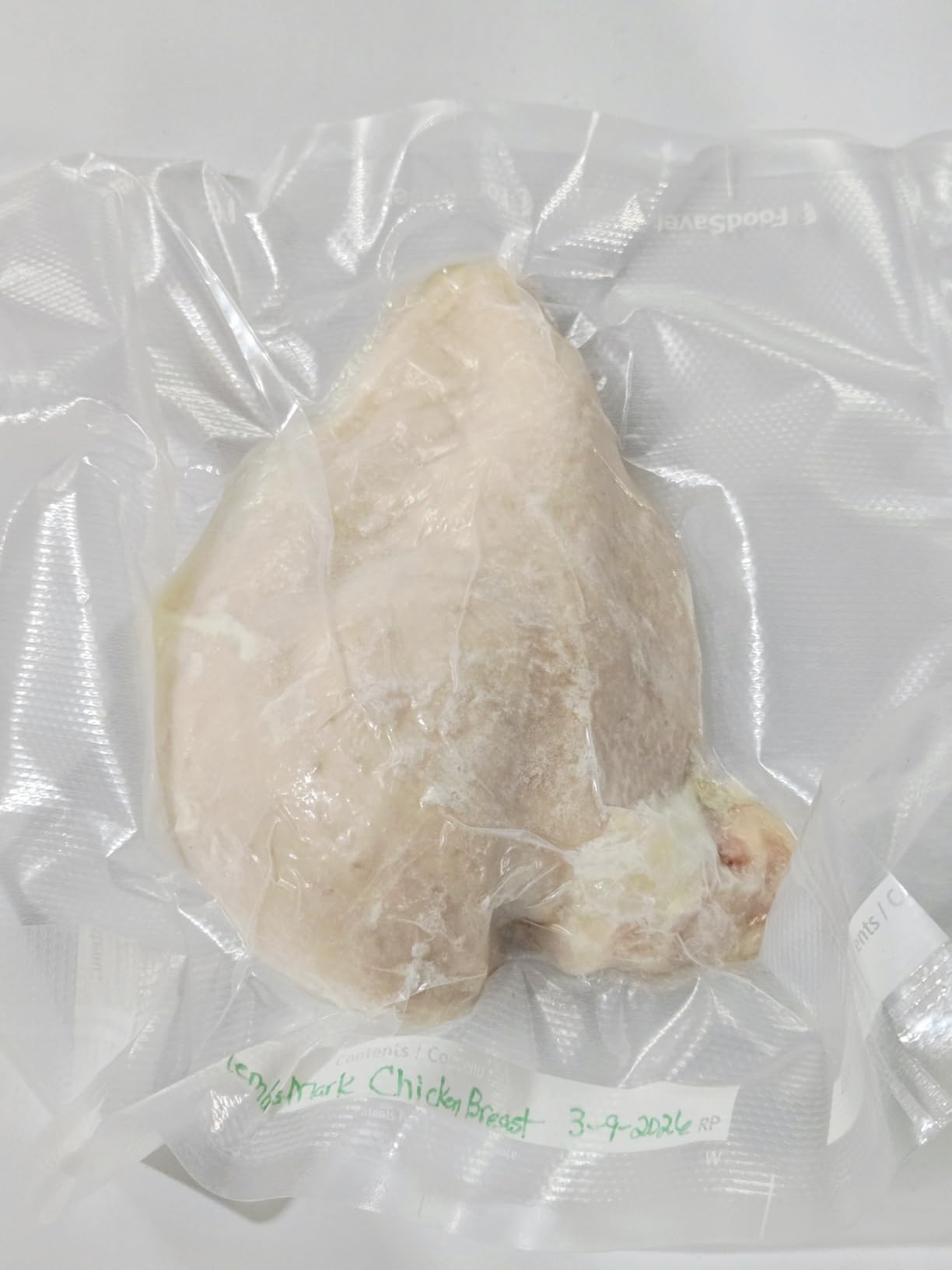
Two details stand out for anyone planning to keep this machine for years. The vacuum and seal controls are adjustable, so a bag of soft berries does not get crushed the way it would on a fixed cycle, and the seal bar is user-replaceable at a modest cost rather than being a reason to buy a new machine.
The chamber measures 12.25 by 8.5 by 3 inches, and the body is listed at 14 inches wide by 12 deep by 8.25 high at about 17.5 pounds. That is compact enough to store out of the way, which is unusual for a chamber sealer and matters in a small kitchen.
Why owners rate it so highly for liquids
Reviews describe the double seal producing bags that have held up for years in the freezer, and the liquid handling is consistently described as a large step up from external machines. The adjustable vacuum dial is the part users notice first once they start sealing more than one kind of food.
At 4.7 stars on more than 1100 reviews, it also has enough owner history behind it that the failure patterns are visible rather than mysterious. When a problem shows up, it usually shows up for many people, which makes it easier to avoid.
Where it falls short
The 3 inch maximum chamber depth is the real limit. Large cuts such as a roast or a ham simply will not fit, so if you buy meat in bulk and want to bag whole pieces, this is not the machine. Chamber-style bags are also required, and they carry a higher price per bag than standard rolls.
A small number of owners report buttons not responding until the machine is power cycled, and the box includes a printed warranty incentive for photo reviews, which some buyers see as review solicitation. If either of those bothers you, a chamber machine with a more conventional support setup may suit you better.
3. Vakumar VH5186: Best Dedicated Liquid Mode
Vakumar Vacuum Sealer Machine, 90Kpa Liquid Food Vacuum Sealer Machine Preservation Dry/Moist/Liquid Modes, LED Indicator Light, Handle Locked Design, Built-in Cutter and Bag Storage, Starter Kit
90 kPa
10 modes including liquid
Patented handle lock
5-year warranty
Pros
- Dedicated liquid mode designed for soups
- stews and purees
- Handles 200+ consecutive seals in one session
- Five-year warranty that has covered heating element failures
- Runs quietly compared with most competitors
Cons
- Liquid mode is not reliable for every user
- Teflon covering wrinkles after hundreds of cycles and degrades seals
- Bag storage will not accept large aftermarket refills
The Vakumar is the answer most people find when they search for a liquid mode by name rather than by accident. Ten modes cover dry, moist and liquid, plus strong and soft pressure, vacuum and seal, manual seal, container, marinate and pulse, which is more control than most machines at this size offer.
Owners also report it running 200 or more consecutive seals in a single session without overheating, which matters if you portion a week of lunches in one sitting. The 90 kPa vacuum and double heat seal give a bag that holds liquid-based food together well.
The warranty is a genuine differentiator here. It runs five years, and long-term owners report replacements provided when the Teflon heating covering eventually fails. That is not a promise every sealer in this group makes, and it changes the long-run ownership maths.
Construction is 304 stainless steel with ABS at 15.7 by 7.4 by 3.9 inches and 8.5 pounds, with a removable drip tray, an 11.8 inch built-in cutter and an LED screen with a progress bar. The patented one-hand handle lock is what makes alignment repeatable when your hands are wet or messy.
Why it works for wet foods
The dedicated liquid mode is designed rather than repurposed from a moist setting, and the removable drip tray catches what does get drawn through the cycle so you are not wiping the machine down every time. Combined with double heat seals, it is a credible option for soups and purees.
Long-term owners are unusually specific in their praise, mentioning that their machines still seal wet meat well past the first year. That kind of report is rarer than star ratings, and it matters more for a machine you intend to keep.
Where it falls short
The liquid mode is not reliable for everyone. One reviewer reported soup being drawn into the machine with a cycle that never completed the seal, and that is exactly the failure mode you are buying a liquid mode to avoid. Treat it as capable but not foolproof.
The Teflon covering on the heating element wrinkles or bubbles after hundreds to thousands of cycles, degrading roughly half of the seals until it is replaced. The bag storage also will not accept large aftermarket refills, and the unit is slower and larger than compact sealers.
4. FoodSaver FM2100: Best Value for Everyday Wet Food
FoodSaver Vacuum Sealer Machine, Automatic Bag Detection, Sous Vide Friendly, with sealer bags, roll, handheld vacuum sealer, black
120W plastic body
Dry and moist modes
Dual heat strips
5-year warranty
Pros
- Moist setting handles wet foods for sous vide and leftovers
- Built-in roll cutter lets you size bags and cut waste
- Accessory port works with the handheld sealer and canisters
- Five-year limited manufacturer warranty
Cons
- Edge-channel design means liquid travels toward the machine
- Channelled FoodSaver bags add up over heavy use
- This line has a long history of heat-seal bar failures
The FM2100 carries a 4.5 star rating across more than 9000 reviews, and the reason it stays relevant for wet food is the moist setting plus a five-year warranty at a modest price. One-touch operation with dual heat sealing strips produces consistent seals without a learning curve.
Wet-food owners describe it as workable but slower and messier than a chamber machine, and that is the honest summary. Soup in this machine usually needs a pre-freeze or a couple of passes. Marinated chicken, a bag of sliced peppers and sous vide portions go in without drama.
The practical extras are what keep it in rotation. A built-in roll cutter and storage means you are not wasting bags, and the accessory port opens up the handheld sealer and canister options. The box includes an 11 by 10 foot roll, three quart bags, two gallon bags and the hose.
At 16.3 by 9.2 by 4 inches and 6.6 pounds, it stores easily in a drawer or a cabinet, which none of the chamber machines here can do. That footprint is a genuine advantage in a small kitchen or a rental.
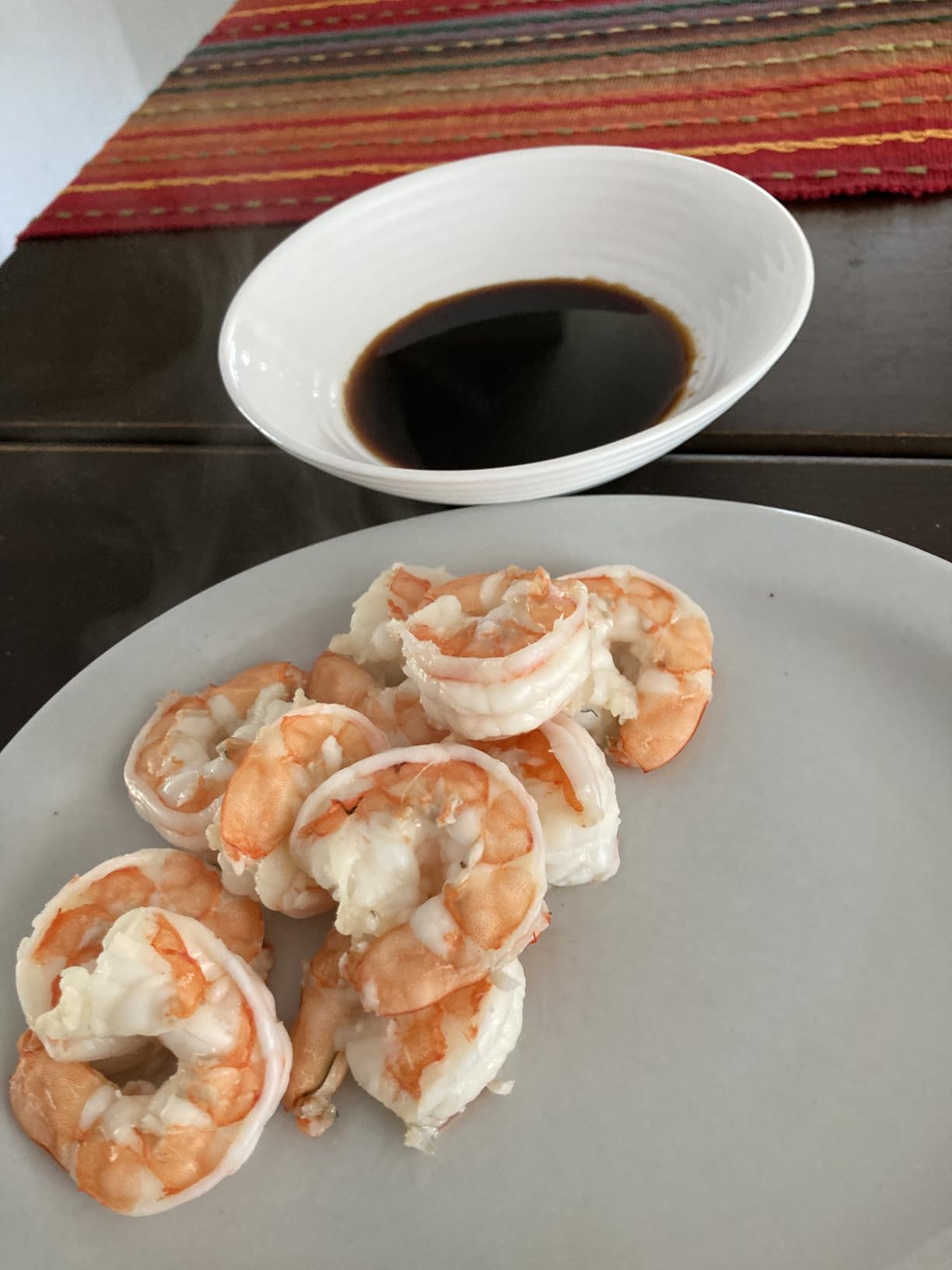
Why it still earns a place on a wet-food list
Most buyers are sealing wet food occasionally alongside dry goods, and in that role the moist setting and dual heat strips do the job without a liquid-specific failure history. The five-year warranty is longer than most competitors at this level offer.
If your wet-food work is a bag of marinated meat a week rather than a weekly batch of stock, this is a sensible, low-friction entry point that also handles everything else in the cupboard.
Where it falls short
The edge-channel design is the whole caveat. Liquid can travel into the channels, so wet foods often need multiple passes and a pre-freeze first, and if you are regularly packing liquid you will be fighting the machine rather than working with it.
It also consumes channelled FoodSaver bags, which is a recurring cost on heavy use, and machines in this line have a long history of heat-seal bar failures that end the unit’s life. It cannot seal jars or canisters because there is no chamber.
5. VEVOR Chamber Sealer 260W: Best Compact Chamber
VEVOR Chamber Vacuum Sealer, 260W Sealing Power, Vacuum Packing Machine for Wet Foods, Meats, Marinades and More, Compact Size with 10.2 in Sealing Length, Applied in Home Kitchen
-100KPa chamber vacuum
10.2 inch seal length
260W heater
8 mm seal strip
Pros
- Chamber design seals soups and marinades without pulling fluid in
- Quiet operation and strong suction with no cool-down breaks
- Pressure gauge and LED panel are intuitive to read
- Works with standard smooth bags and with Mylar
Cons
- Heavy at 45+ pounds so it needs a dedicated spot
- Roughly a minute per bag
- Needs about 25.5 inches of vertical clearance for the lid
This VEVOR chamber sealer is the pick if you want chamber-level liquid safety at a lower tier than the premium units, and the 4.7 star rating across its review history reflects that owners are getting what they paid for. The -100KPa chamber vacuum pulls air out around the bag, so the liquid stays where you put it.
Two things stand out for wet-food work. The real-time pressure gauge lets you stop the vacuum before a soft item is crushed, and the built-in LED panel keeps the cycle readable for a first-time chamber user. Owners also praise the quiet pump, which matters if you seal late at night.
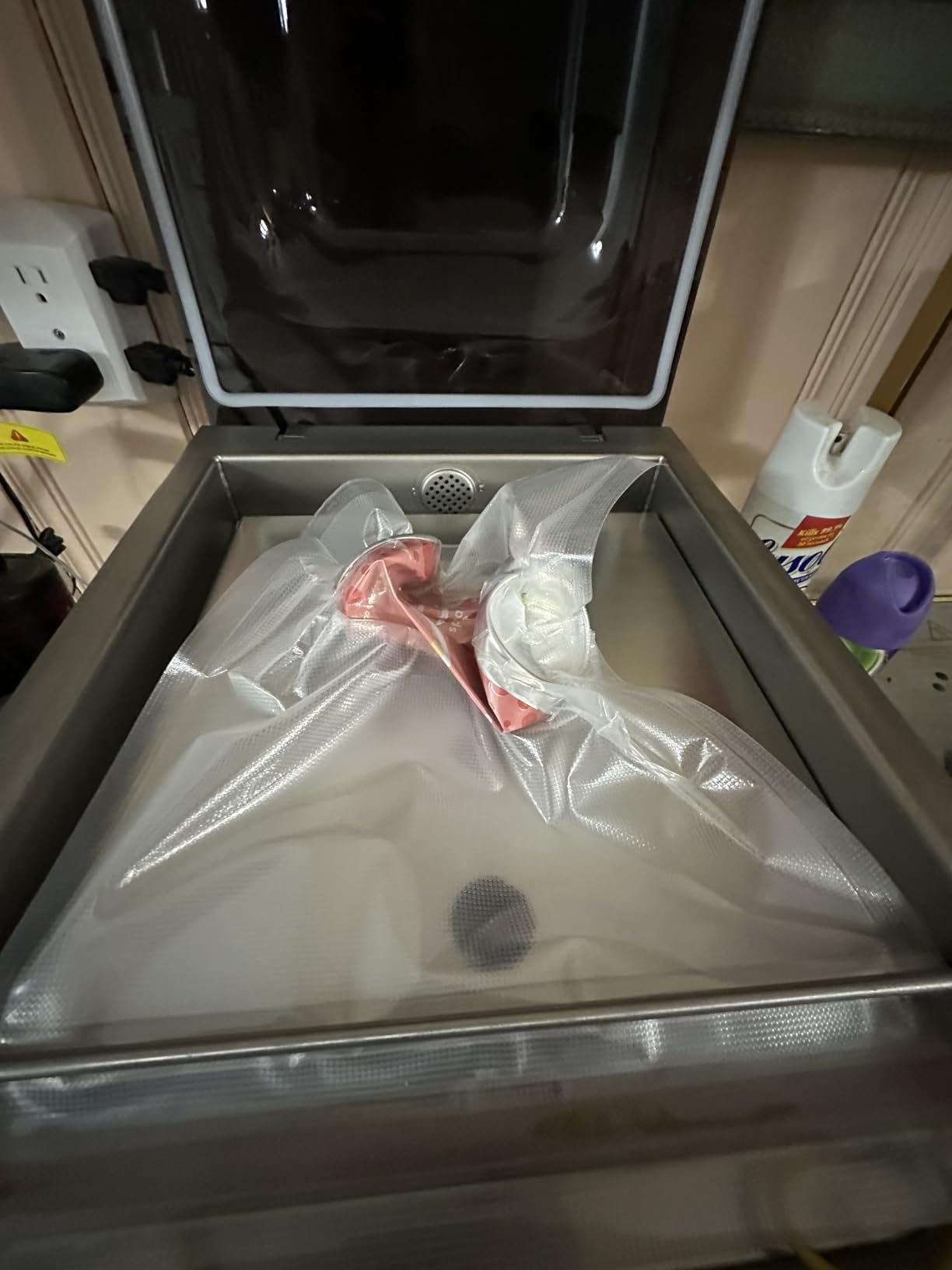
It works with standard smooth bags as well as Mylar, which is why some buyers pair it with a freeze dryer. That flexibility is unusual at this tier, where many chamber machines lock you into one bag style and give you 12 by 15 inch pouches only.
There is a maintenance requirement worth knowing before you buy: the pump must be filled with oil before first use. Skip that step and performance suffers immediately. It also needs about 25.5 inches of vertical clearance so the lid can open, so measure your shelf before committing.
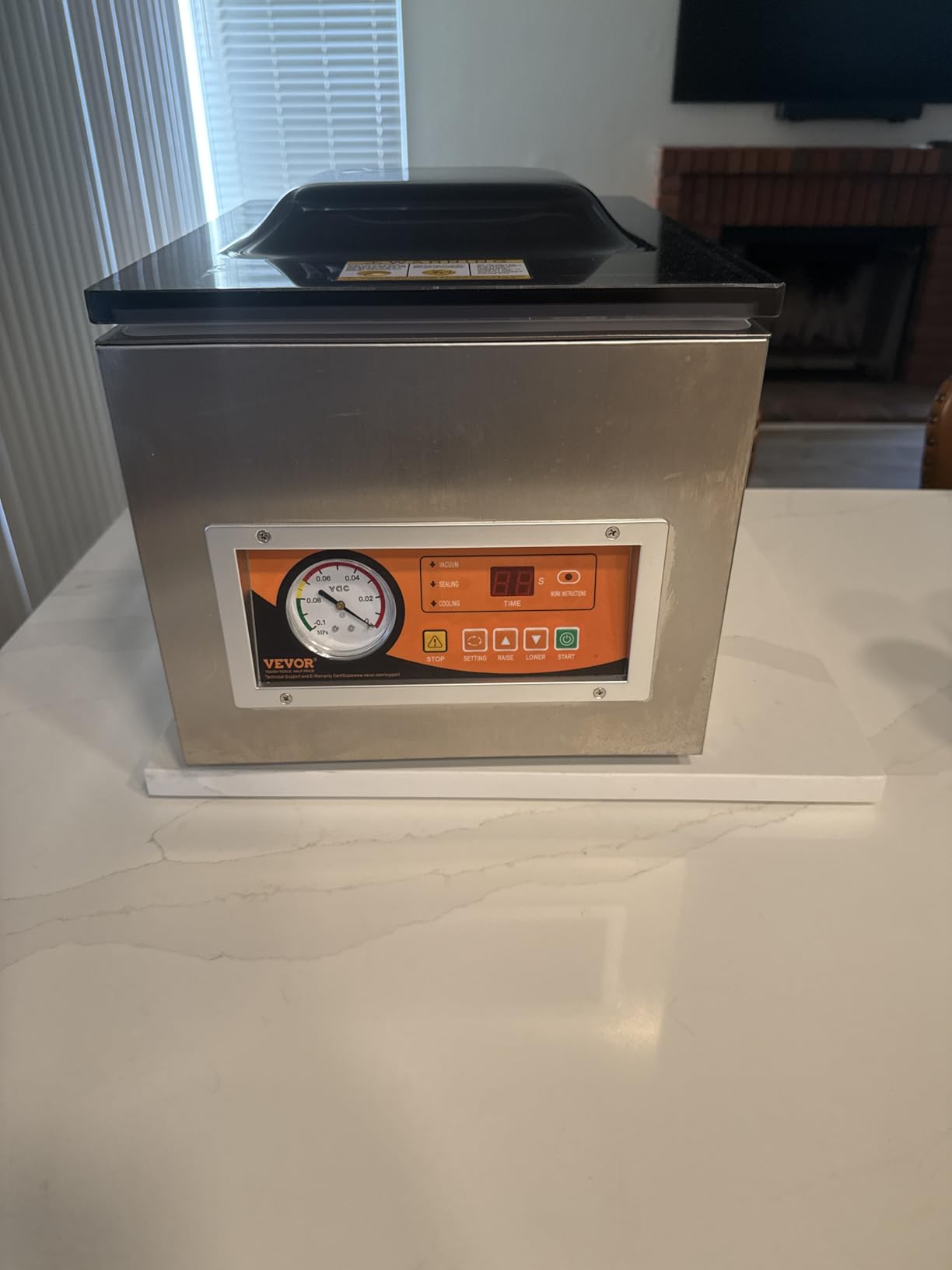
Why it suits wet-food cooks
No cool-down breaks between consecutive bags means a batch of soup pouches goes in back to back, and the stainless shell with well-machined internals handles oily and salty food well. For a home cook who wants chamber behavior without the commercial price tier, it does the job.
The trade-off is speed and weight. At roughly a minute per bag and 45+ pounds, it is a machine you set up and use in batches, not something you pull out for a single midweek container.
Where it falls short
The weight means it needs a permanent home, and the lid has no lift assist so it must open fully vertical to stay propped. The cycle-end beep is loud, and one buyer reported vacuum performance falling to about 80 percent after 20 cycles and returned the unit.
The manual is English-only, which is a small annoyance, and the 8 mm seal strip is narrower than the 10 mm strip on the larger VEVOR chamber machine further down this list.
6. VEVOR Chamber Sealer 320W: Best for Large Bulk Cuts
VEVOR Chamber Vacuum Sealer 320W Sealing Power 12.6 Inch Sealing Length
-100KPa vacuum
12.6 inch seal length
180W pump
Stainless chamber
Pros
- Deep chamber packs large steaks
- bread loaves and bulk goods
- Built-in pressure gauge shows chamber pressure in real time
- Stainless chamber resists rust and overheating with salty foods
- LED display and simple controls suit first-time users
Cons
- 62-pound weight makes quick everyday use impractical
- One-star reviews make up 6 percent of the rating
- A larger footprint than compact home chamber units
The difference between this chamber sealer and the compact one above is scale. A 180W vacuum pump, a 12.6 inch sealing length and a deep stainless chamber mean whole loaves of bread, thick steaks and bulk goods fit inside, which the 8 mm strip compact model cannot manage.
For wet food specifically, the chamber design handles meats and marinades without liquid entering the machine, and the pressure gauge is the feature owners mention most. Being able to see chamber pressure in real time is how you avoid crushing a soft or delicate item while still removing the air.
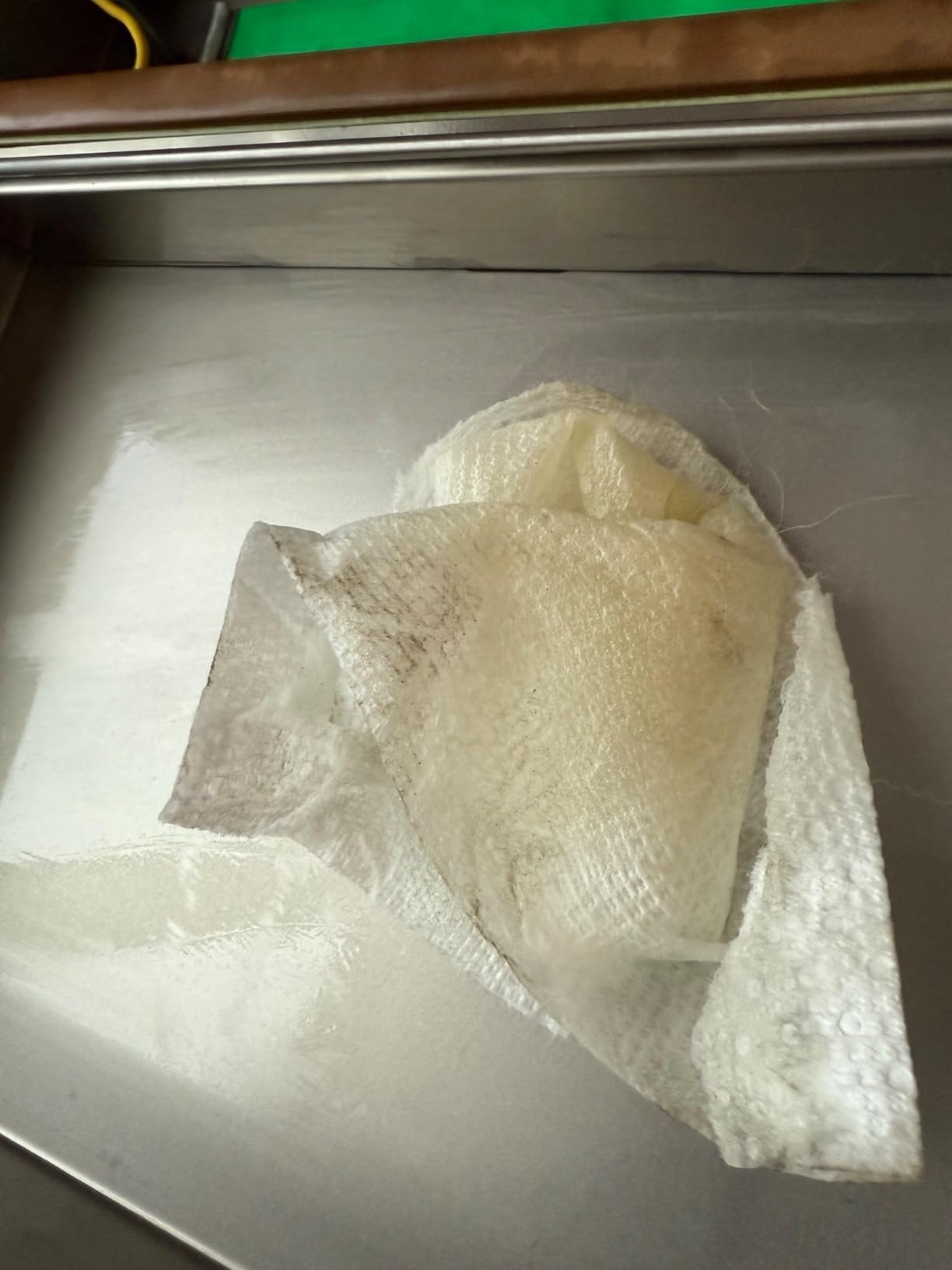
Buyers rate it as a home and small-commercial machine, and the build supports that. The stainless steel chamber resists rust and overheating with oily or salty foods, which is precisely the environment wet-food sealing creates, and the 10 mm seal strip is wider than the 8 mm strip on the smaller unit.
At 17.9 by 16.1 by 16 inches and 62 pounds, this is not a casual countertop appliance. Owners generally accept that as the price of a chamber that fits large items, and the box includes a heating wire, Teflon cloth, vacuum pump, wrench and manual.
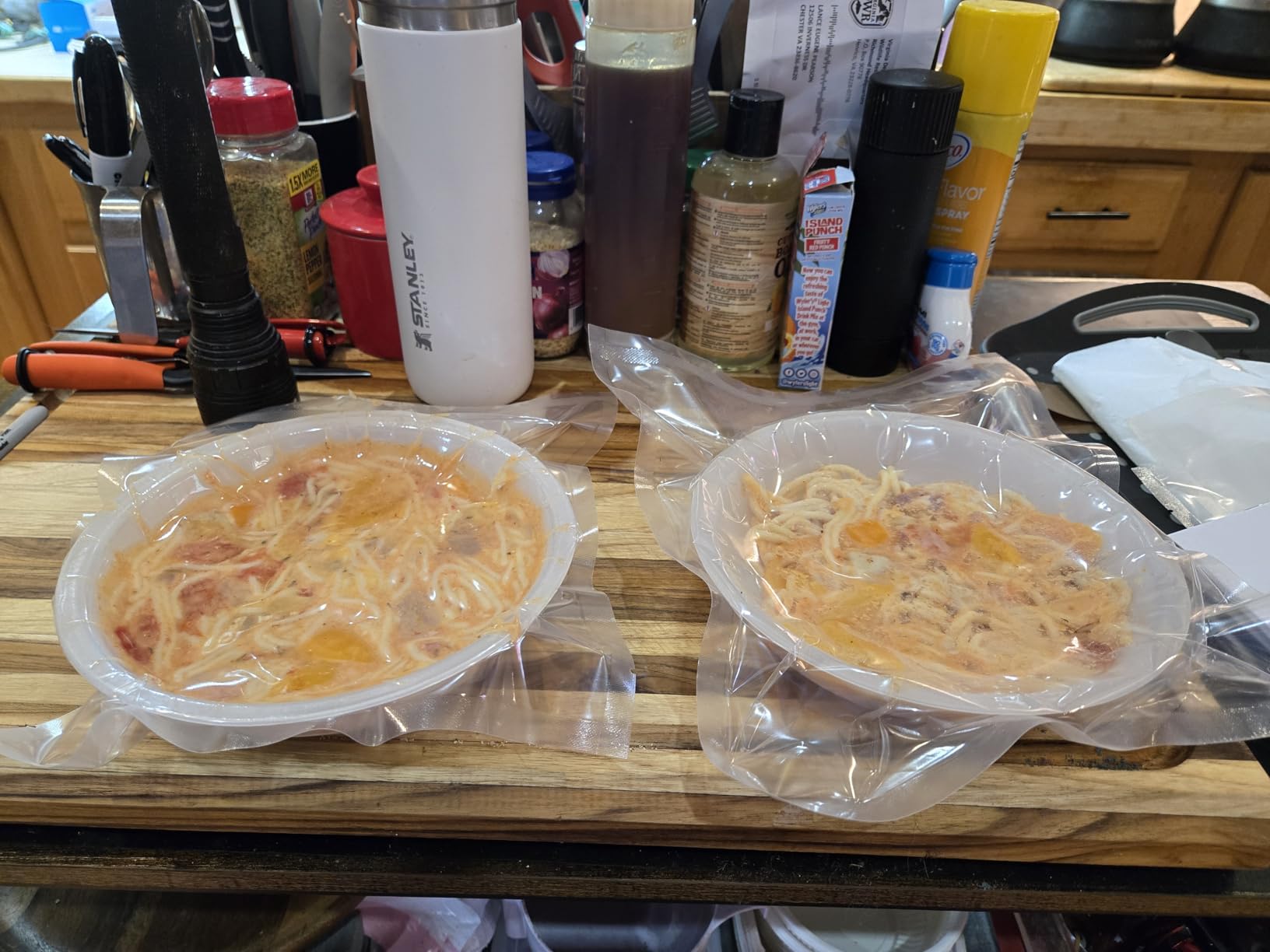
Why it earns the bulk-cut slot
The combination of a -100KPa chamber vacuum with a 12.6 inch seal bar is what makes it useful for hunters, bulk meat buyers and anyone cooking a whole fish or a large cut. The double lock seal with the 320W heater gives a reliable closure on thick, wet bags.
It is also the model to consider if you want a freeze-dryer workflow, since a deep chamber and a wide seal strip are what that process demands.
Where it falls short
The 62-pound weight is the dominant reservation. Moving it is a two-person job, and the footprint means you are giving up real counter space for something you will batch rather than reach for daily.
Roughly 6 percent of reviews are one-star, which is a meaningful durability tail in a machine this heavy, and the control panel is simple enough that expect to refer to it more than a compact model.
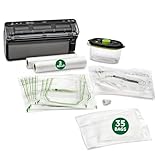
7. FoodSaver Elite All-in-One Liquid+: Best Feature Set
FoodSaver Elite All-in-One Liquid+™ Vacuum Sealer with Bags
Six settings including Liquid
Automatic bag detection
Dishwasher-safe drip tray
Pros
- Dedicated Liquid mode for soups
- sauces and salsas
- Tall upright body suits larger liquid volumes
- Six settings covering Sous Vide and Marinate
- Dishwasher-safe removable drip tray
Cons
- Liquid mode has a minimum viscosity so very thin liquids are out of spec
- Some owners seal inconsistently until the lid is pressed firmly
- Support and replacement parts are hard to source
The Elite is the most feature-complete external sealer in this roundup, and the Liquid mode is the reason it is here. Six settings cover dry, moist, liquid, sous vide, marinate and pulse, and the liquid mode is specified for liquids of 1.39 mPa dot s viscosity or higher.
That viscosity figure is the detail most buyers miss. Thin liquids such as very light broth or a thin glaze sit at or below the threshold where the mode is rated to perform, and owners using such liquids report inconsistent results. Sauces, salsas, soups with body and chili are what this machine is designed for.
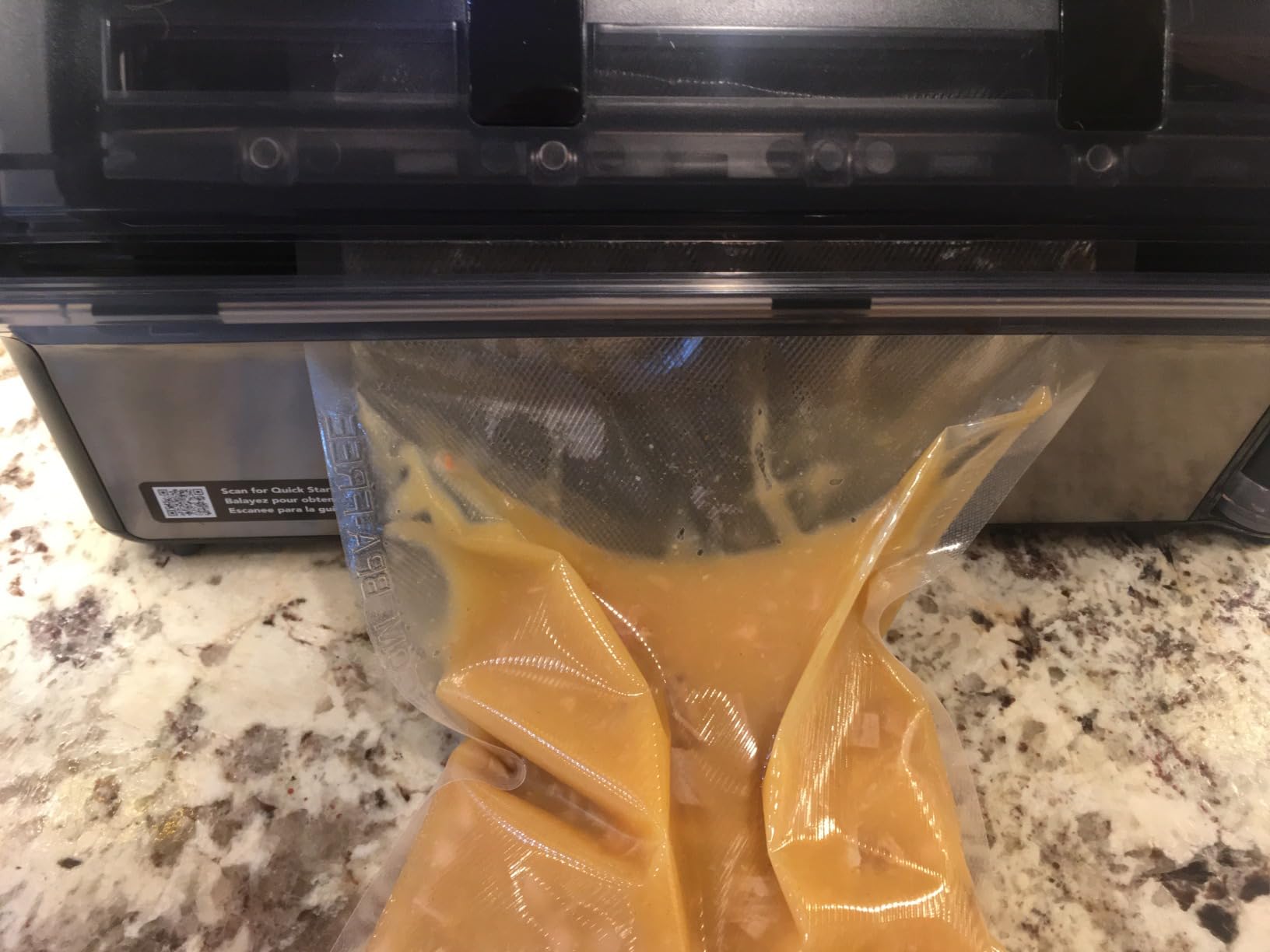
The tall upright body is genuinely useful for wet food because it gives more vertical room for the liquid volume, and automatic bag detection with lock and seal progress lights removes the most common beginner error. The extra-wide sealing strip and alignment guide reduce bag waste.
There is also a built-in retractable handheld sealer that works with zipper bags and containers, a cutter bar, roll storage and a dishwasher-safe removable drip tray. The starter bundle covers rolls, precut bags, zipper bags, a marinate container and a wine stopper.
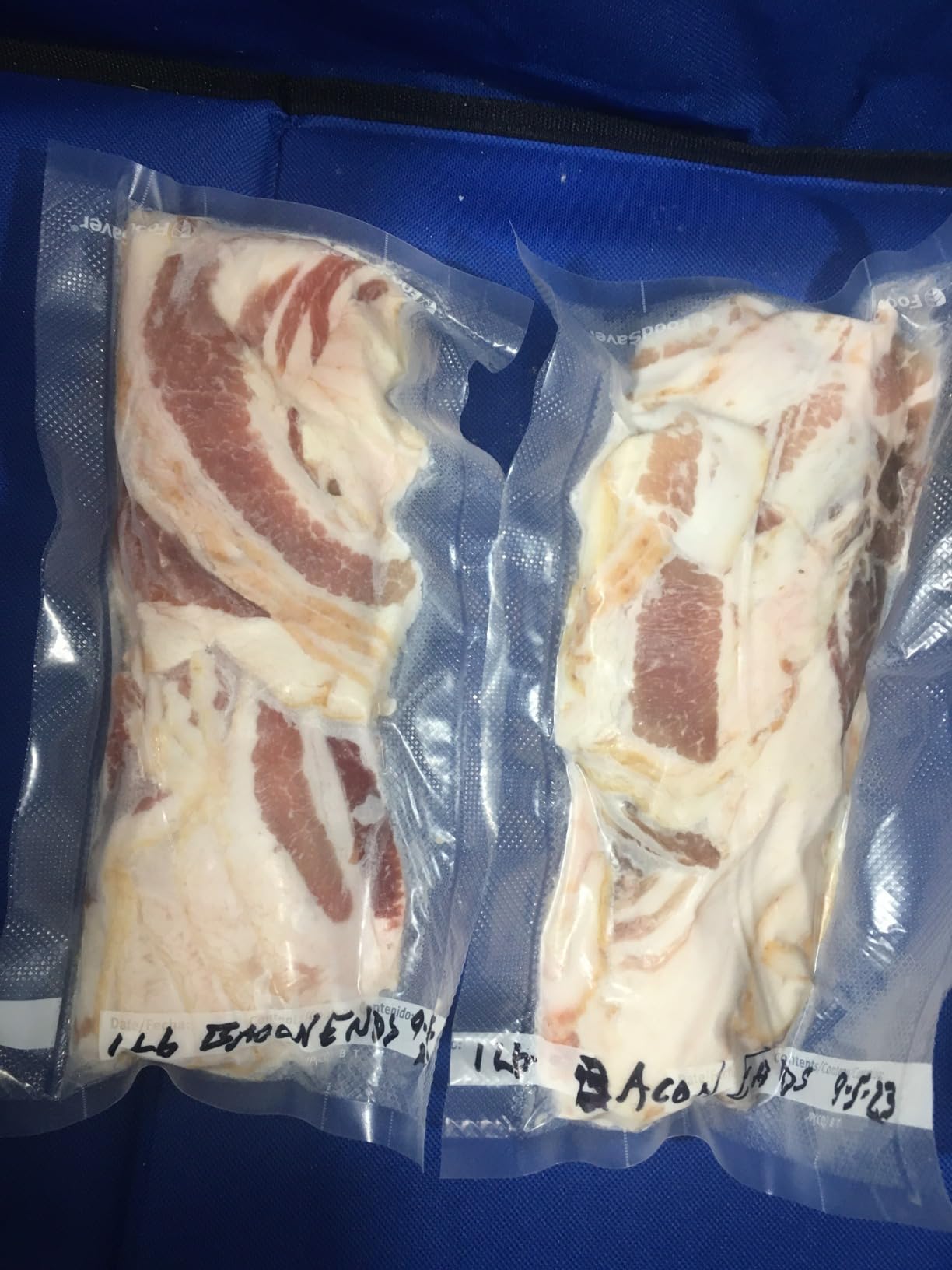
Why it works for wet foods
The dedicated Liquid mode is paired with the tallest chamber opening of any edge sealer here, so you can bag a meaningful amount of sauce or salsa without laying the bag flat and hoping. The marinate setting handles raw marinated meat, which is the most common wet-food task after soup.
It is also the only external machine in this list with a stated viscosity limit, and that is a good sign rather than a bad one. A manufacturer who publishes the boundary is telling you how to use the machine correctly.
Where it falls short
Reliability is the issue. Owners report inconsistent sealing until the lid is pressed down firmly by hand, and the handheld attachment’s valve often closes under normal vacuum and fails to draw suction at all. Several reviews also describe support as difficult to reach and replacement parts as unavailable.
At a 4.2 star rating, this is the lowest-rated machine in the group along with the PowerVac, and 11 percent one-star reviews sit among the highest here. It is 120V and 60Hz only, so it is not the right choice outside North American markets.
8. AAOBOSI 95KPa 9-in-1: Best for Mode Flexibility
AAOBOSI 95KPa 9-in-1 Wet/Dry Vacuum Sealer, 8X Freshness
95 kPa suction
Nine sealing modes
Removable drip tray
4.6 lb
Pros
- 95 kPa suction pulls air out faster than standard sealers
- Nine modes cover dry goods
- wet marinades and delicate soups
- Smart memory repeats the last setting for batch work
- Light 4.6 pound stainless body with drip tray
Cons
- Edge-channel design leaves wet vegetables sealing loosely
- Drip tray must be emptied by hand after liquid jobs
- Slower cycle than some competitors
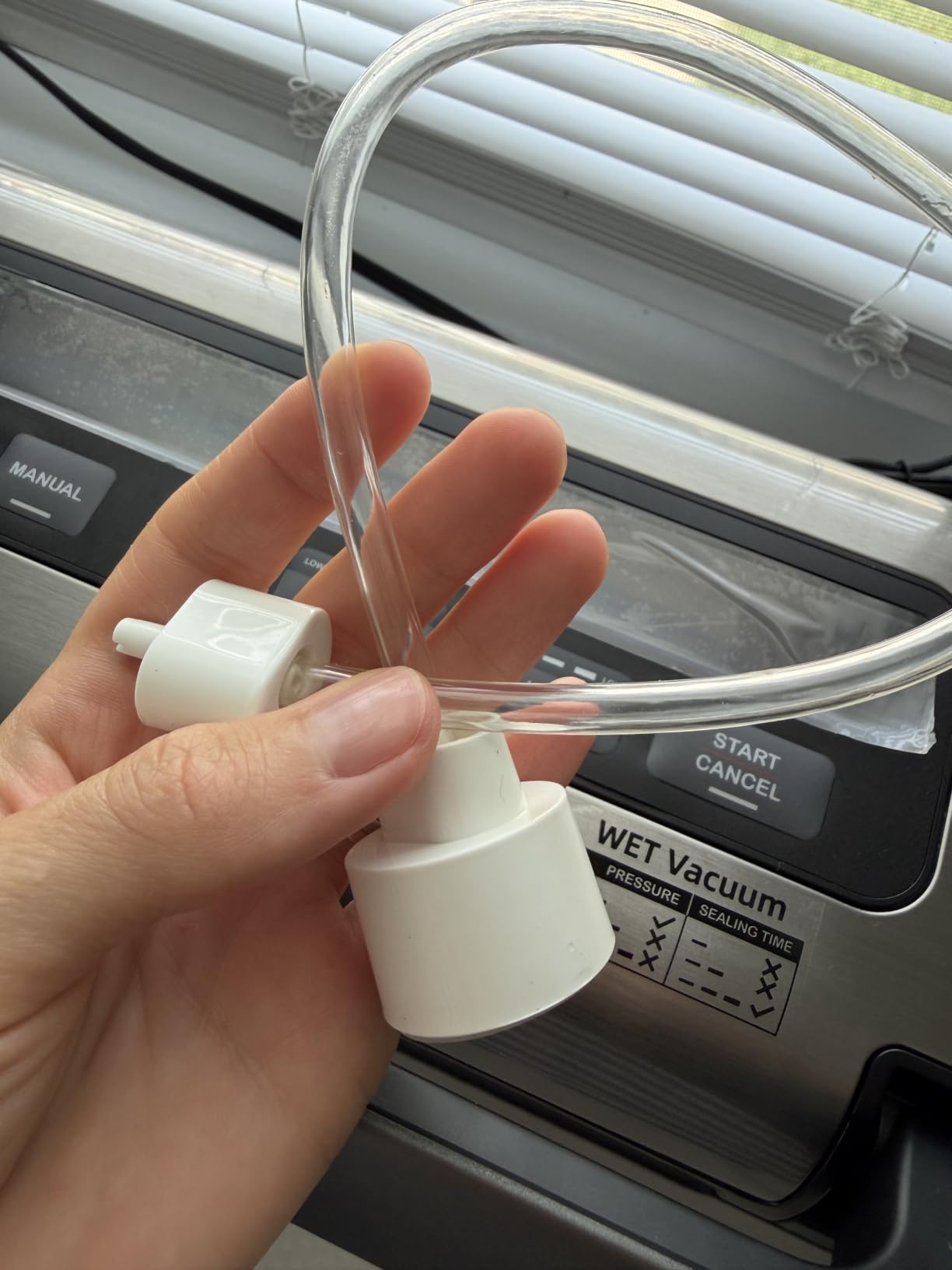
The AAOBOSI is the machine to consider if you want many settings and a light body rather than a liquid mode with a specific name. Nine modes combine three pressure levels and three time settings, which gives you finer control over a wet bag than a two-mode machine offers.
At 95 kPa raw suction it pulls air out faster than a standard sealer, and owners like the smart memory that repeats your last setting so a batch of identical bags does not need re-setting. The one-hand low-force locking handle is easy to press and hold.
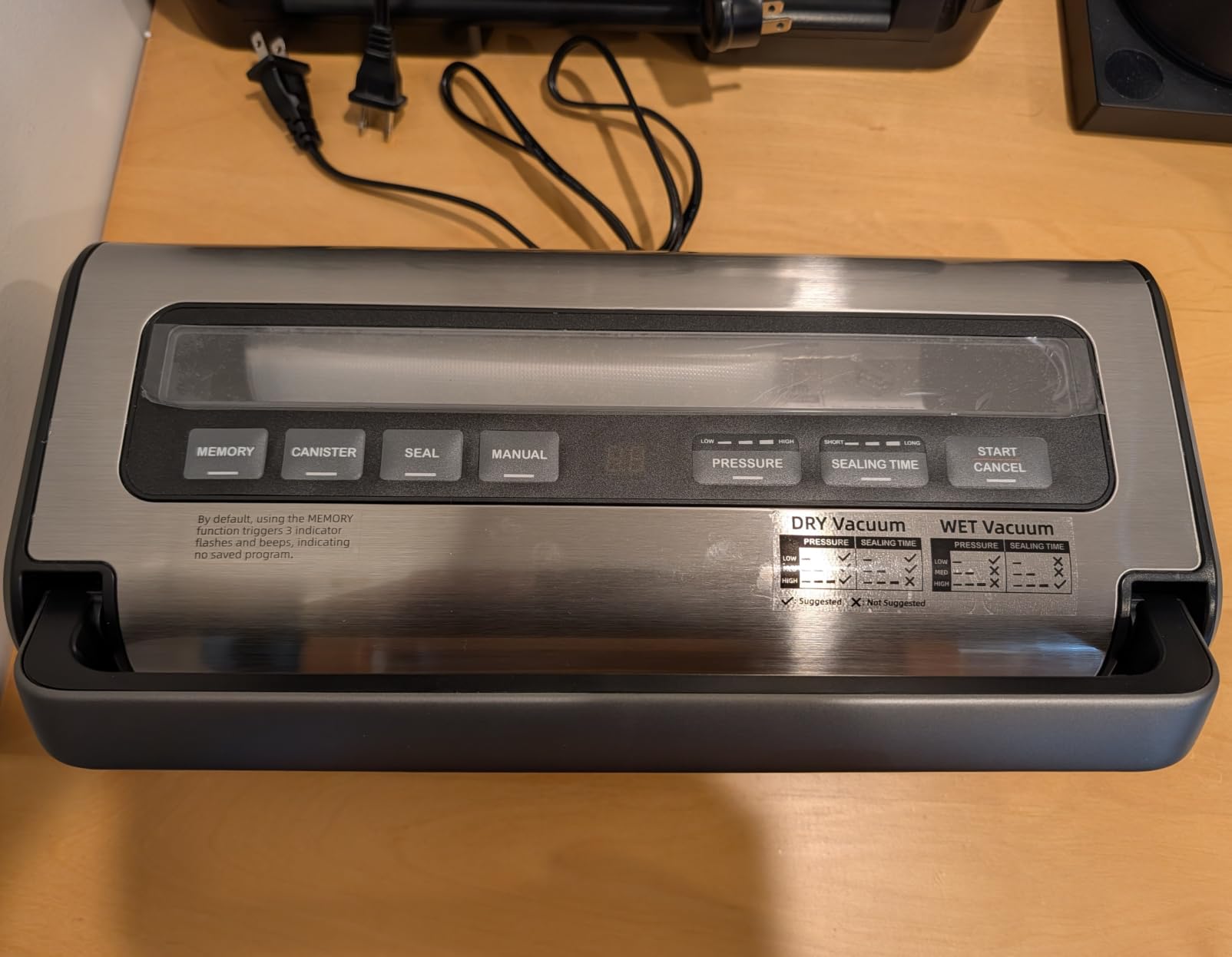
At 4.6 pounds and 15.91 by 4.13 by 7.95 inches, it is one of the lighter machines here and the narrowest body, which is useful on a crowded counter. The removable drip tray, built-in cutter and accessory hose are all included with a starter kit of bag rolls and precut bags.
What you are giving up is chamber-level certainty. Because it is an edge-channel design, wet vegetables do not always seal as tightly as hoped, and some owners report occasional incomplete air removal on wet foods specifically.
Why it suits wet-food cooks
Nine modes mean you can find a gentler pressure and shorter time for a soft or liquid-heavy bag rather than choosing between wet and dry. The high raw suction figure means the vacuum phase is short, which limits the time liquid has to move.
The smart memory is the sleeper feature for anyone portioning a week of soup into identical bags. Set it once and the machine repeats the cycle each time.
Where it falls short
Its wet-food results are less reliable than a chamber machine and less predictable than a dedicated liquid mode. If soup is a weekly task rather than an occasional one, this is the wrong tool even though the mode list looks long.
The drip tray also needs manual emptying after liquid jobs, and the sealing cycle is slower than some competitors despite the suction figure. Stainless is used for the body, but there is no oil pump service path like the commercial chambers offer.
9. Nesco VS-12 Deluxe: Best Moist-Mode Edge Sealer
Nesco Deluxe Food VS-12 Vacuum Sealer, 130 Watts, Kit Bags & Viewing Lid, Compact, Silver
130W double pump
Dry moist and double seal
Gentle vacuum
6 lb body
Pros
- Double pump removes air more effectively than single-pump sealers
- Dry
- moist and double-seal modes plus a gentle vacuum option
- Viewing window and easy-lock handle reduce wasted bags
- Two bag rolls included with built-in storage and cutter
Cons
- Edge-channel design so liquid can still reach the machine
- Manual operation and a one-year warranty
- One-star reviews make up 8 percent of the rating
The Nesco VS-12 is the most established name on this list, with a review history that dwarfs everything else here. The 130-watt double vacuum pump is the reason: two pumps move more air per cycle than a single-pump sealer, which shortens the window in which liquid can migrate.
For wet food, the moist mode and the double seal do the work. A gentle vacuum option is also useful for bread, berries and marinated meats, and the viewing window helps you place the bag correctly the first time instead of wasting one.
Owners also like the mechanical honesty of it. Operation is manual, which means you decide when the vacuum stops rather than trusting a sensor, and the easy-lock handle keeps the lid aligned so a double seal is actually two clean lines rather than one good one and one smear.
It is 15.75 by 8 by 4.5 inches at 6 pounds, and two bag rolls of 8.6 by 9.85 foot and 11.8 by 9.85 foot are included. Built-in roll storage and a sliding cutter round out a package that is hard to argue with for dry-goods value.
Why it works for wet foods
The double pump and double heat seal combination is genuinely better than a single-strip machine on a bag of soup, and the moist mode is the setting that makes wet food viable at all. Plenty of owners seal marinated proteins and soup portions regularly with it.
Its enormous review base also means you can find answers about its failure modes before you buy rather than after. That is a real advantage over a newer model with fewer data points.
Where it falls short
It is still an edge-channel machine, so liquid can reach the machine on wet foods. If you are packing a large amount of liquid, you will work harder here than on any chamber sealer in this guide.
The warranty is one year against five years on some competitors, operation is manual rather than automatic, and 8 percent one-star reviews are the highest share in this group. It is a capable moist-mode sealer, not a wet-food specialist.
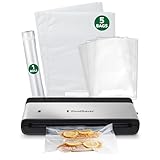
10. FoodSaver PowerVac VS0150: Best for Small Counter Spaces
FoodSaver PowerVac Compact Vacuum Sealing Machine Stainless Steel & Black Vertical Storage VS0150 | Preserves freshness reduces bag waste for both dry and wet food
Vertical storage design
Dry and moist settings
Alignment tray
About 3 lb
Pros
- Vertical storage footprint saves considerable counter space
- Built-in alignment tray reduces bag waste and misaligned seals
- Works with all FoodSaver bags
- rolls and accessories
- Lightest machine in this group
Cons
- Chamber-style bags cannot be used so liquids do not seal reliably
- 10 percent one-star reviews with seal-bar and motor complaints
- Consumes channelled bags that add up over heavy use
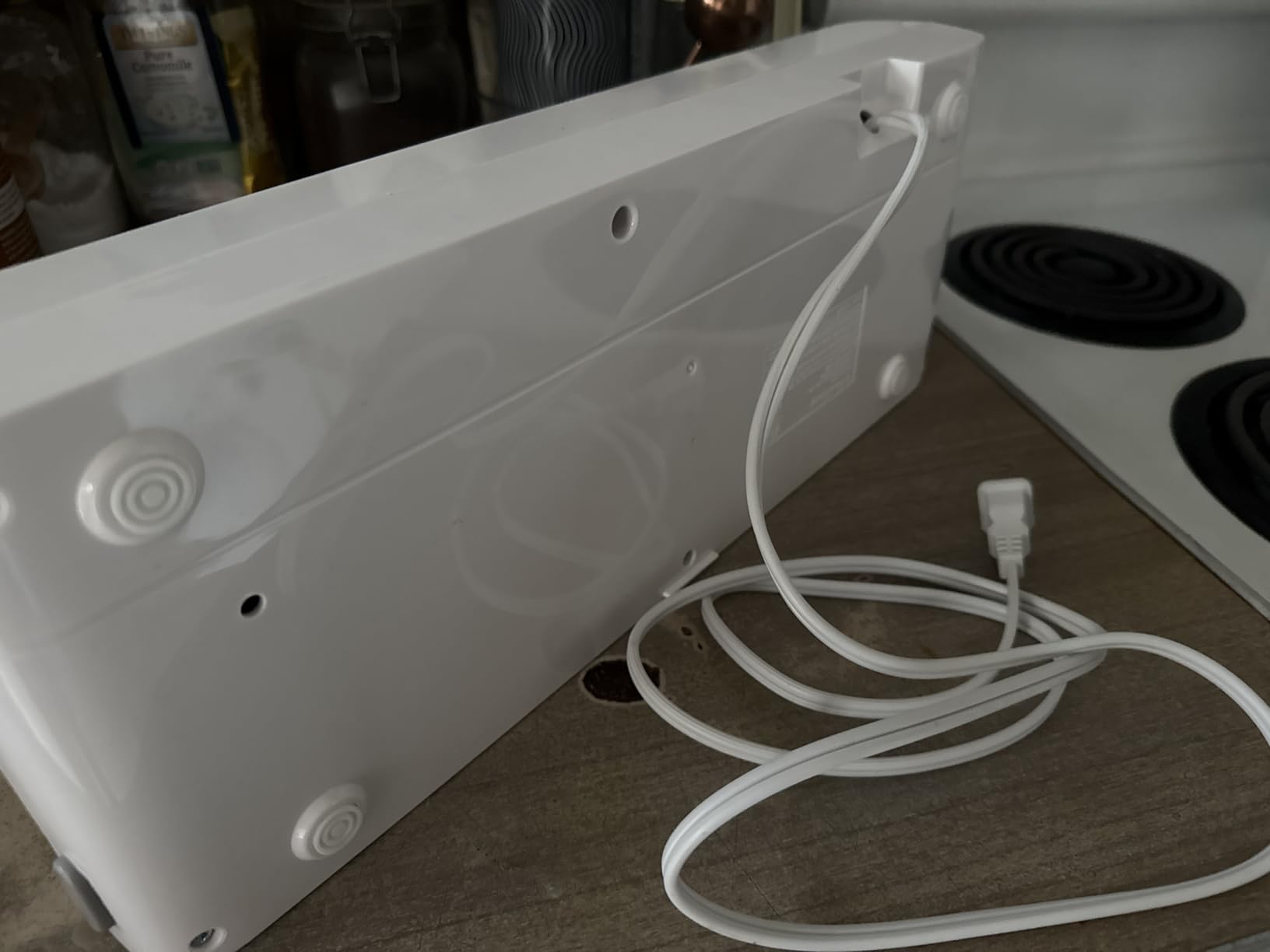
The PowerVac is chosen for its footprint, not its liquid handling. It stores vertically, so when you are not using it the machine is a slim column against a backsplash rather than a wide box eating your prep area. For a small kitchen or a rental, that is the deciding factor.
It does have dry and moist settings and a built-in alignment tray that reduces misaligned seals and wasted bags. The tray is a small design win that matters when you are new to sealing, because a crooked bag is a bag you throw away.
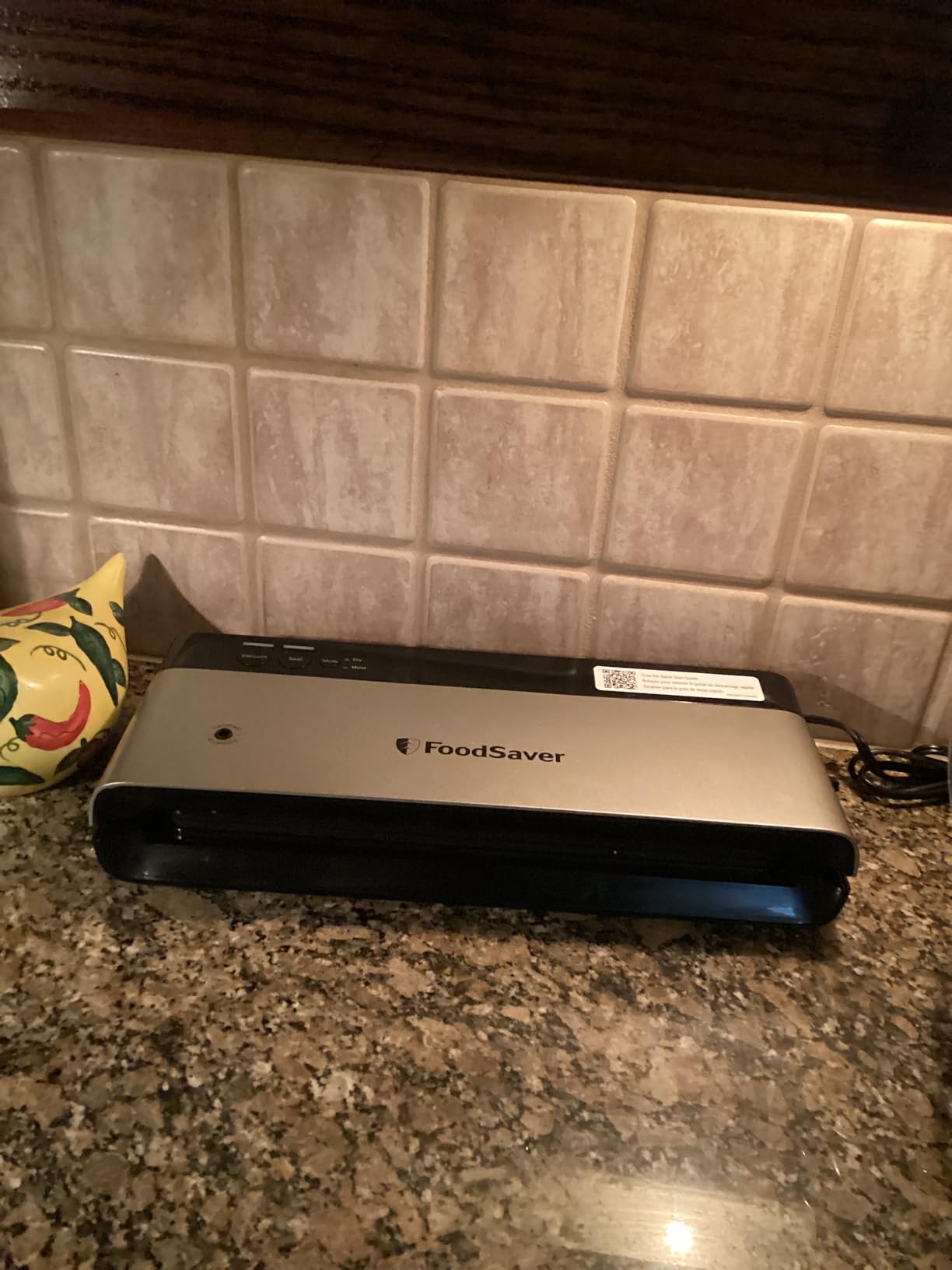
It also connects to a handheld sealer and works across the FoodSaver bag range, with one 11 by 8 foot roll, three quart bags and two gallon bags in the box. At 17.91 by 5.59 by 10.24 inches and about 3 pounds, it is the easiest machine here to move.
Be clear-eyed about the trade, though. The listing itself says it preserves freshness for both dry and wet food, but the edge-channel design means liquids can travel into the sealer, and chamber-style bags cannot be used at all. Soups and sauces simply are not sealed reliably.
Why it works in a small kitchen
Vertical storage is the whole argument. If your counter space is the constraint, a machine you can slide into a gap between the toaster and the kettle changes whether you seal food at all, and sealing food at all is what prevents freezer burn.
The alignment tray and FoodSaver accessory compatibility also make it a good second machine for someone who already owns a bigger wet-food sealer and wants a compact option for dry staples.
Where it falls short
It is the least suitable machine here for liquids, and the review data backs that up with recurring seal-bar and motor complaints. 10 percent one-star reviews is the highest share in the group, and the rating is near the bottom.
If wet food is a real part of how you cook, this is not the machine. Buy it for dry goods and storage efficiency, and use one of the pulse-control or chamber options for anything liquid.
11. VacMaster VP215: Best Repairable Oil-Pump Chamber
VacMaster VP215 Chamber Vacuum Sealer – Commercial Vacuum Sealer Machine for Food with Oil Pump, 10.25” Seal Bar for 10” x 13” Bags, Food Vacuum Sealer for Sous Vide, Liquids & Food Storage
1/5 HP oil pump
10.25 inch seal bar
Double seal
84 lb
Pros
- Chamber packs soups
- sauces and marinades without liquid entering the machine
- Replacement pump
- motor
- electronics
- filters and seal-bar wires are available
- Quiet oil pump suited to humid climates and long sessions
- Draws a vacuum strong enough to sink sous vide bags
Cons
- 84-pound weight and about 24 inches of lid-open clearance
- Fiddly control interface needs cycling for setting changes
- First oil fill should be changed after about 10 minutes
The VP215 is the machine enthusiasts argue about most, and their argument is about repairability rather than performance. A heavy-duty 1/5 HP oil pump delivers a strong, consistent vacuum, and the pump, motor, electronics, filters and seal-bar wires are all available as replacement parts.
That is why owners on smoking forums talk about units a decade old that still seal soups and marinades. The oil pump is also quiet and better suited to humid climates and long sealing sessions than a dry pump, which is a real consideration if you live somewhere humid.
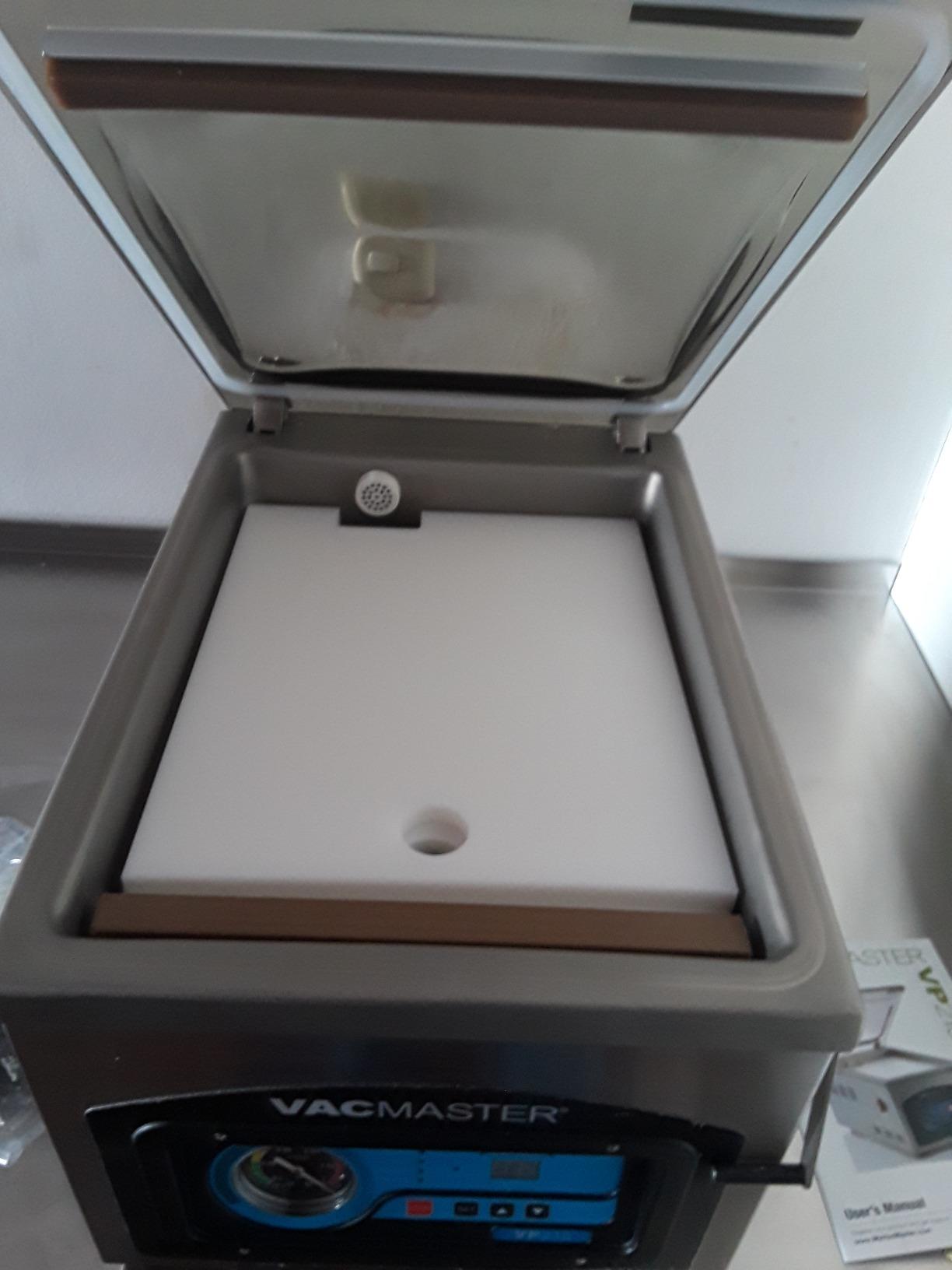
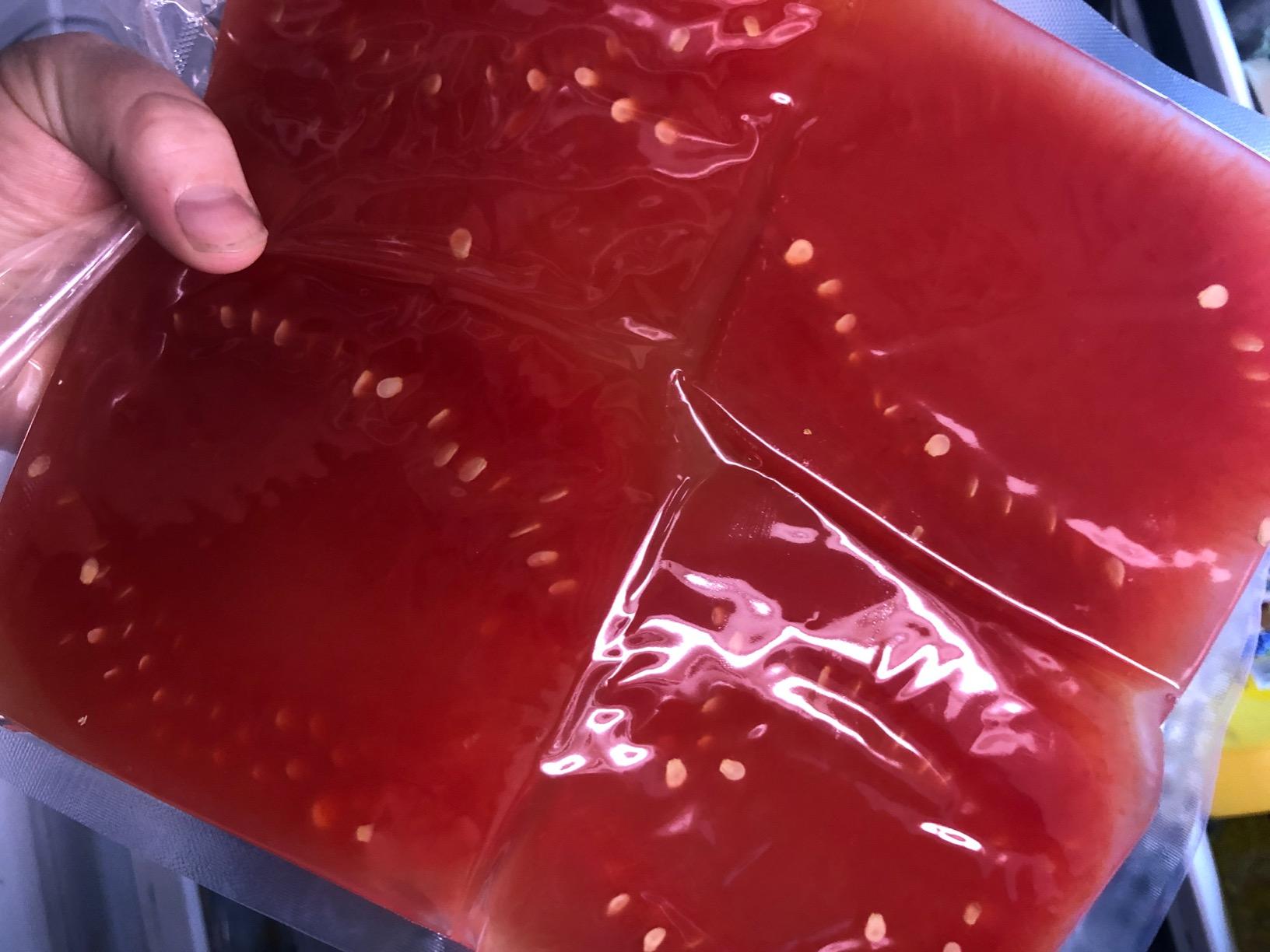
For wet food the chamber does the expected work. It packs soups, sauces and marinades without liquid entering the machine, and owners report the vacuum is strong enough that sous vide bags sink rather than float. It also seals bag after bag without the cool-down pauses small external sealers need.
The 10.25 inch seal bar takes bags up to 10 by 13 inches with a leak-proof double seal for 3 to 7 mil Mylar. Sixty assorted 3 mil chamber pouches, filler plates and a maintenance kit are included, and cheaper smooth chamber bags cut long-run consumable cost substantially.
Why owners keep it for years
Serviceability is the whole story. When a machine has replaceable parts instead of sealed electronics, a ten-year ownership plan makes sense, and forum users with 10+ year old units describe it as unkillable with routine oil changes.
It also handles more than bags. Double sealing plus the ability to vacuum seal jars and canisters extends the machine beyond meal prep into zero-waste storage, which spreads the cost across more uses.
Where it falls short
At 84 pounds and about 24 inches of lid-open clearance, it needs a permanent station, and many owners mount it on a rolling cart. Unboxing is often a two-person job, and the chamber at 11.25 by 15.25 by 5 inches is too small for packer briskets, pork butts and hams.
The control interface is fiddly and needs cycling through options for frequent setting changes, there is no hour meter to track oil intervals, and the first oil fill should be changed after about 10 minutes to flush machining particulate from the pump. None of that is disqualifying, but all of it is real.
12. VacMaster VP230: Best for High-Volume Sealing
VacMaster VP230 Chamber Vacuum Sealer – Commercial Vacuum Sealer Machine for Food with 1/2 HP Oil Pump, 12.25” Seal Bar for 12” x 15” Bags, Food Vacuum Sealer for Sous Vide, Liquids & Food Storage
1/2 HP oil pump
12.25 inch seal bar
12 x 15 inch bags
89 lb
Pros
- 1/2 HP oil pump built for prolonged continuous operation
- 12.25 inch seal bar handles the largest bags in this roundup
- Double seal extends shelf life for freezer storage and meal prep
- Backed by more than 45 years of VacMaster experience
Cons
- 89 pounds means a permanent station and roughly 24 inches of clearance
- Oil pump requires periodic oil changes
- Bags are a separate purchase beyond the starter pack
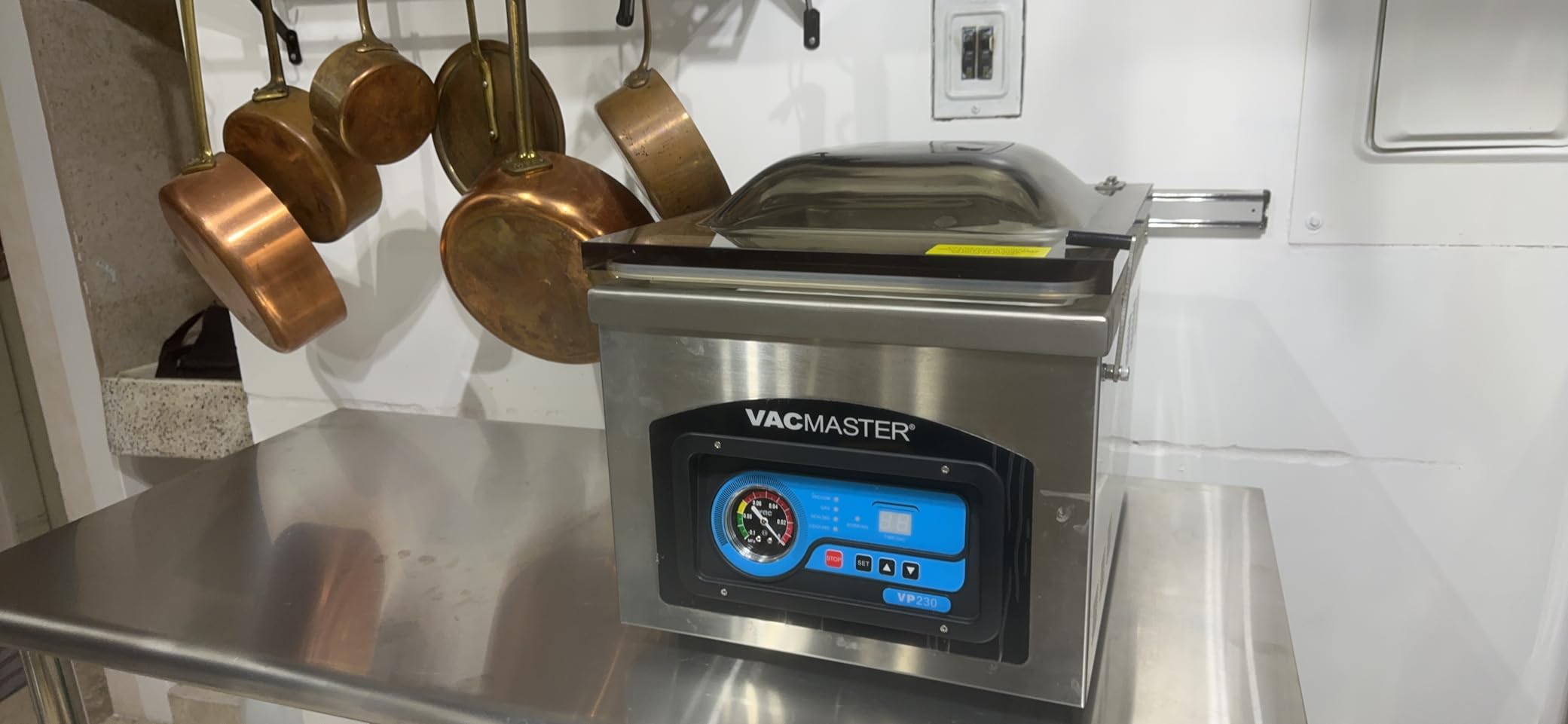
The VP230 is the step up from the VP215, and the difference is a 1/2 HP oil pump against 1/5 HP, plus a longer seal bar. The 12.25 inch bar takes 12 by 15 inch bags, which is the largest format in this roundup and the one you want for whole meals and large portions.
Owners treat the weight and footprint as the price of continuous, high-volume sealing, and in a small commercial kitchen that is a trade most make willingly. The one-touch control panel with a pressure indicator and a stop-to-seal shortcut keeps the cycle simple even at volume.
For wet food, the chamber packages soups, sauces and marinades without mess, which is what makes infusion and flavor-forward cooking practical. The double seal system extends shelf life for freezer storage and meal prep, and the pump is built for prolonged operation rather than intermittent use.
It seals 3 to 7 mil Mylar bags, and sixty assorted 3 mil chamber pouches, filler plates, a maintenance kit and a manual are included. Support comes from more than 45 years of VacMaster experience, which matters for a machine of this class.
Why it earns the high-volume slot
If you are portioning soup for a catering order, packing a season of meat, or running a kitchen where the sealer is used several times a day, this is the machine built for it. A half-horsepower oil pump and a 12 by 15 inch chamber do not throttle the way smaller units do.
The bag format matters too. Larger pouches mean fewer bags per batch for the same volume of food, which cuts both consumable cost and freezer space.
Where it falls short
At 89 pounds with roughly 24 inches of lid-open clearance, it demands a permanent location, often a rolling cart. That is not a machine for a normal kitchen counter, and pretending otherwise is how people end up unhappy with it.
The oil pump needs periodic oil changes, bags are a separate purchase beyond the included starter pack, and the overall cost sits an order of magnitude above home kitchen sealers. Buy this for a workload, not for a hobby.
How to Vacuum Seal Wet Food Without Making a Mess
Even a chamber sealer benefits from good technique, and an edge sealer needs it badly. These steps apply to both, and they are the difference between a clean bag and a puddle in the vacuum port.
Cool the food first. Hot soup added straight to a bag will flash to steam, expand the air inside, and defeat the seal. Cool to room temperature or chill it first.
Pre-freeze liquid-heavy bags flat for an hour or two. A solid block cannot flow into the vacuum channel, and the seal goes on frozen material without any liquid to carry.
Cut above the liquid line when you can. A shorter column of liquid in an upright bag means less to migrate. For soups, freeze in portioned blocks and bag them individually.
Use the lowest pressure setting on an edge sealer. Strong suction is not the goal with wet food; a steady, gentle pull forms the seal without dragging liquid toward the opening.
Use pulse mode if your machine has it. Vacuum in short bursts and watch the bag, stopping the moment the liquid starts to shift.
Empty and wash the drip tray after every liquid job. Liquid left in the tray is how machines start to smell and how seals start to fail quietly.
Double-bag brines and heavily marinated raw meat. Two layers of bag material give you a second chance if the first seam lets go in the freezer.
Wipe the bag mouth and the vacuum channel before you seal. A drop of grease on the sealing strip is enough to produce a seal that looks fine and fails in a month.
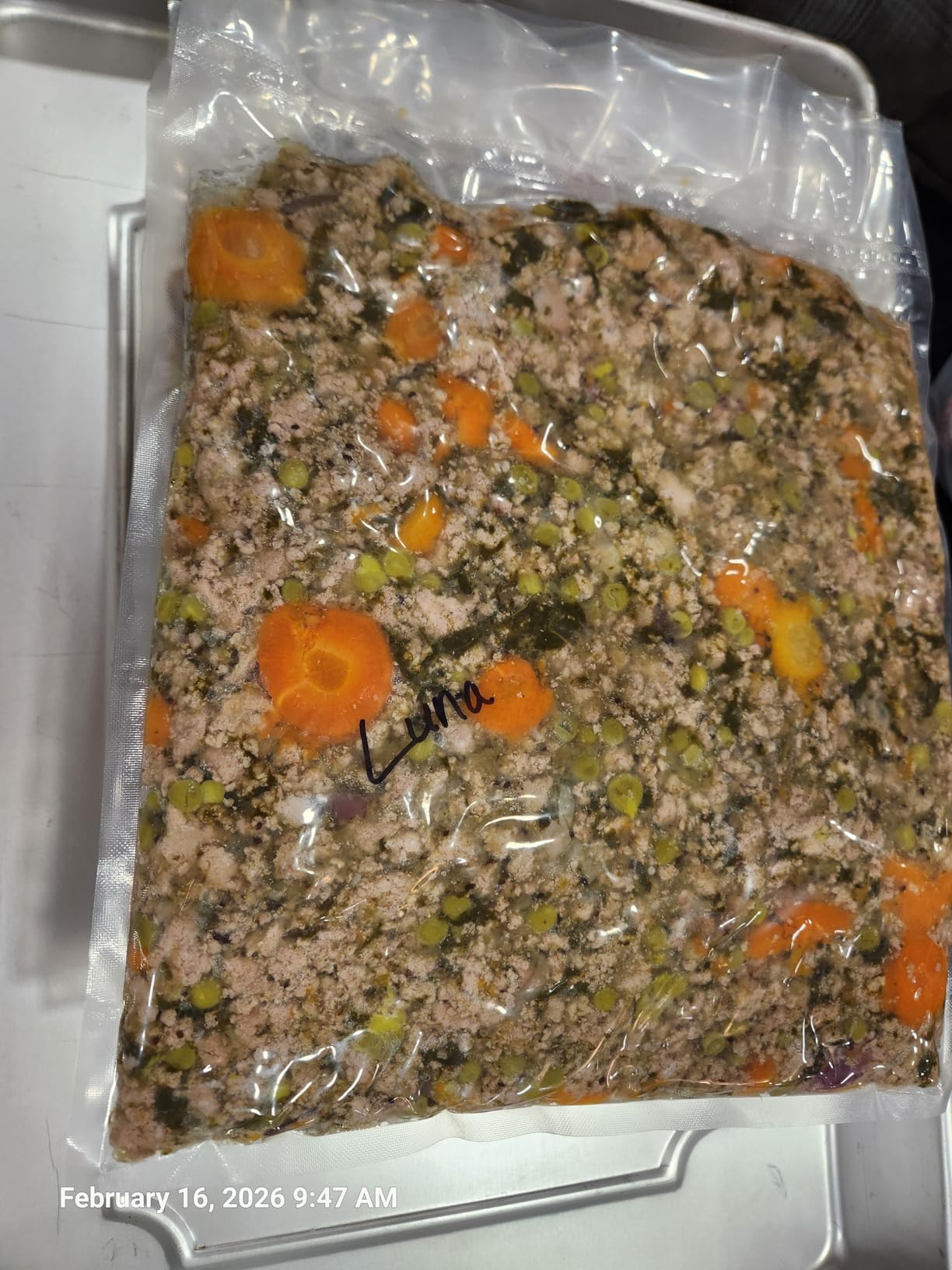
The single most useful trick for soup is the ice-cube method: freeze the broth into a block, drop the frozen block into a bag, add a small amount of hot water to displace the air, then seal. It reduces the liquid volume in the bag and the seal forms cleanly every time.
What You Should Never Vacuum Seal
Vacuum sealing is food preservation, not canning, and the distinction matters for safety. A vacuum sealer removes air, and removing air is not the same as reaching the temperature and pressure required to make low-acid food shelf stable. Anything that relies on a pressure-canning process must go through a pressure canner, not a vacuum sealer.
Here is what to keep away from the machine, based on USDA-aligned food safety guidance and the failure patterns owners report.
Raw eggs in the shell. Sealed raw eggs cannot be stored in the refrigerator; the trapped air is what makes them hazardous. Break them into a container and refrigerate or freeze those instead.
Home-canned low-acid foods such as vegetables, meat, fish and soups. These require a pressure canner to reach shelf-safe levels. A vacuum sealer is for frozen and refrigerated storage only.
Mushrooms. Vacuum sealing does not kill the bacteria associated with raw mushrooms, and sealed mushrooms are linked to food poisoning outbreaks. Blanch them first if you must seal them.
Freshly cooked rice and pasta. Bacillus cereus spores survive cooking and thrive in sealed, room-temperature food. Cool quickly, refrigerate within an hour, and freeze anything held longer.
Anything sealed hot. Steam expands inside the bag, breaks the seal and creates a warm, moist pocket that is ideal for bacterial growth. Cool it first, always.
Whole cooked potatoes and unwashed produce. Potatoes wrapped in foil or sealed with a skin trap steam and grow botulism risk, and unwrapped produce sealed while damp goes soft and spoils faster.
One more practical note. A vacuum seal is a promise about air, not a promise about safety. If a bag looks sealed but the food went off, trust the food. Discard it rather than trying to re-seal it, and check your seal strips for residue as the likely cause.
Buying Guide: How to Choose a Wet Food Vacuum Sealer
Chamber or edge sealer?
Choose a chamber sealer if you seal liquids more than about once a week, if you batch soup or stock, or if you marinate large cuts of raw meat. The bag sits inside a sealed chamber, air is evacuated around it, and liquid has no path to the pump. Choose an external sealer if wet food is occasional, if your wet-food work is small bags and sous vide portions, or if counter space is your real constraint.
Does it have a real liquid or moist mode?
A mode labelled moist is a vacuum delay. A mode labelled liquid is usually a slower pump speed combined with a liquid-detection sensor that shuts the vacuum off when it senses resistance. The machines with a published viscosity figure, like the FoodSaver Elite at 1.39 mPa dot s, are telling you exactly where their liquid mode stops working. Check that number before you commit to a machine for very thin broth.
How much suction do you need?
Suction is quoted in kPa. The machines here range from 90 kPa on the Vakumar up to 95 kPa on the AAOBOSI and Gasbye, while the chamber units quote a -100KPa chamber rating. For wet food the useful number is not peak suction, it is how quickly the vacuum phase completes. A fast pull leaves less time for liquid to migrate.
How wide is the seal bar?
Seal bar width decides what you can bag. The compact chamber unit here has a 10.2 inch sealing length and the larger one has 12.6 inches, the VacMaster VP215 takes 10.25 inch, and the VP230 takes 12.25 inches for 12 by 15 inch bags. Buy for the largest thing you actually intend to seal, not for the largest thing the listing allows.
Oil pump or dry pump?
Chamber machines with oil pumps, like both VacMaster models, run quieter, handle humid climates better and can have their pumps, motors and control boards replaced. The cost is periodic oil changes and a heavier machine. Dry-pump chamber units are lighter and simpler but the pump is generally the end of the machine’s life when it fails.
Will it fit on your counter?
Chamber machines need vertical clearance for the lid, not just counter area. The compact VEVOR chamber needs about 25.5 inches of vertical clearance, and the two VacMaster models need roughly 24 inches of lid-open space at 84 and 89 pounds. The external machines in this guide all sit under 4.7 inches tall, apart from the vertical PowerVac which stores on end.
What will the bags cost you over time?
External sealers consume channelled bags, and channelled bags cost more per bag than smooth ones. Chamber sealers that accept smooth pouches, like the Avid Armor in 6 by 10, 8 by 10 and 11 by 10 inch sizes, cut the ongoing cost noticeably. The VP215 and VP230 both take 3 to 7 mil Mylar, and cheaper smooth chamber bags are available for those formats.
Are replacement parts available?
This is the question that decides whether a machine lasts five years or twenty. The Gasbye sells its drip tray, foam gasket and cutter separately. The Avid Armor has a user-replaceable seal bar. The VacMaster machines have replaceable pumps, motors, electronics, filters and seal-bar wires. The FoodSaver Elite, by contrast, is repeatedly described by buyers as having unreachable support and unavailable parts.
Frequently Asked Questions
Can you vacuum seal wet food?
Yes, but the machine matters. A chamber vacuum sealer pulls air out of the chamber around the bag, so soup, stock, sauce and chili never reach the pump. An edge sealer can handle wet food with a liquid or pulse mode, a low pressure setting, and often a pre-freeze first. Cool the food before bagging, because hot liquid creates steam that defeats the seal.
Do vacuum sealers work with liquids?
They do, with a caveat about the machine type. Edge sealers draw air straight from the bag into the pump, so liquid follows the air unless you use liquid mode, pulse control or stop the vacuum early. Chamber sealers evacuate air around the bag instead, so liquid stays inside. Volume matters as much as machine type: a modest amount of liquid is manageable on most sealers, a full quart of broth is not.
What is the best vacuum sealer for sealing wet foods?
For most home cooks the Gasbye VS5166 is the best balance, with 95 kPa dual-pump suction, pulse mode and a double heat seal. If you seal liquids weekly, the Avid Armor USV20 chamber sealer is the better answer because the bag sits inside a sealed chamber and liquid cannot reach the pump. For a dedicated liquid mode with a long warranty, the Vakumar VH5186 fits.
What is the best vacuum sealer for soup?
Any chamber vacuum sealer, and the Avid Armor USV20 is the most compact option in this roundup at about 17.5 pounds with a 4 liter chamber and an 11.5 inch heating bar. For a larger volume or 12 by 15 inch bags, the VacMaster VP230 has the largest chamber and seal bar here. If soup is an occasional task, the Gasbye VS5166 with pulse mode will handle a smaller portion.
Why is liquid getting sucked into my vacuum sealer?
Because on an edge sealer the bag opening sits directly against the vacuum channel, and liquid follows the airflow. Fix it by switching to liquid or moist mode, lowering the pressure setting, using pulse control in short bursts, pre-freezing the bag flat so the liquid cannot move, cutting above the liquid line, and emptying the drip tray afterwards. If the machine is already damaged, stop using it for liquids.
What foods should never be vacuum sealed?
Do not vacuum seal raw eggs in the shell, home-canned low-acid foods such as vegetables, meat, fish or soups, raw mushrooms, or freshly cooked rice and pasta. Never seal food while it is hot, since trapped steam breaks the seal and creates warm moist conditions. Vacuum sealing supports refrigerated and frozen storage only; it is not a substitute for pressure canning.
Final Verdict: The Best Vacuum Sealers for Wet Foods in 2026
After working through all 12 machines, the answer to which of the best vacuum sealers for wet foods is right for you comes down to how often you seal liquid and how much of it. The Gasbye VS5166 is the pick I would put in front of anyone starting out, because pulse mode and a 95 kPa dual pump handle marinades, sauces and moderate soup without a chamber, and it holds a 4.7 rating on more than 1700 reviews.
The Avid Armor USV20 is the correct answer for anyone who batches soup, stock or chili, and the recommendation owners repeat most often. The Vakumar VH5186 covers the middle ground with a dedicated liquid mode and a five-year warranty, and the two VacMaster chamber machines answer for high-volume and long-service-life kitchens.
Pick the machine that matches your frequency of liquid work, cool the food before you bag it, and start with the lowest pressure setting. That combination will keep liquid out of the pump and the best vacuum sealers for wet foods doing the job you bought them for. Our general [vacuum sealer guide](https://battleofsoho.com/best-vacuum-sealers-for-food-storage/) is worth a read if you also want to cover dry goods properly.