
A small kitchen is not just a big kitchen with less room. The cabinet over your cooktop is shallower, the ceiling is lower, the duct run is shorter or missing entirely, and every decibel the fan makes lands two feet from where you are standing. That combination is why picking the best range hoods for small kitchens comes down to fit and airflow rather than looks alone.
We spent weeks working through ten compact hoods, weighing the published airflow against the real dimensions, the noise figures against the number of speeds, and the duct options against what most apartments actually allow. Ten products, all of them mountable over a 24 or 30 inch cooktop, none of them requiring a full kitchen gut.
Before any of them make sense, measure four numbers and write them down:
Cabinet width — the opening your hood has to fill. Most over-the-cooktop space is 30 inches, but 24 and 36 inch runs are common too.
Cabinet depth — anything deeper than about 18 inches eats your prep counter in a tight galley.
Cooktop-to-hood clearance — the safe zone is 18 inches above a cooktop surface, more if you wok or do heavy frying.
Existing duct size — if there is a duct, know whether it is 3.25 by 10 inches rectangular, 6 inch round, or 7 to 8 inch round. A mismatch discovered after ordering means a new hood.
If a term is unfamiliar, start with our under cabinet range hood guide for the format that fits the most small kitchens, then come back here for the shortlist. What follows is the ranking, then the buying logic behind it.
Table of Contents
Top 3 Best Range Hoods for Small Kitchens in 2026

Broan-NuTone F403011 Insert
- Four-way convertible ducting
- Easy DIY install
- Two speeds plus lamp lens

COSMO COS-5MU30
- Only 5.5 inches tall
- Convertible ducted or ductless
- 50 dB on the lowest speed
Best Range Hoods for Small Kitchens in October
Every hood below fits under a standard cabinet run and none of them need an island. Airflow, height, noise and ducting are the four columns that decide a small-kitchen purchase, so they are the four columns in this table.
| Product | Specifications | Action |
|---|---|---|
| Broan-NuTone F403011 30 Inch Insert |
|
Check Latest Price |
| COSMO COS-5MU30 30 Inch Slim |
|
Check Latest Price |
| FIREGAS 30 Inch 300 CFM |
|
Check Latest Price |
 COMFEE 30 Inch 200 CFM COMFEE 30 Inch 200 CFM |
|
Check Latest Price |
 SNDOAS 30 Inch 4.7 Inch Slim SNDOAS 30 Inch 4.7 Inch Slim |
|
Check Latest Price |
 Tieasy 30 Inch Wall Mount 450 CFM Tieasy 30 Inch Wall Mount 450 CFM |
|
Check Latest Price |
 AMZCHEF 30 Inch 700 CFM AMZCHEF 30 Inch 700 CFM |
|
Check Latest Price |
 BREETEE Portable Countertop Hood BREETEE Portable Countertop Hood |
|
Check Latest Price |
 Broan-NuTone Glacier 24 Inch Broan-NuTone Glacier 24 Inch |
|
Check Latest Price |
 Zomagas 24 Inch 280 CFM Zomagas 24 Inch 280 CFM |
|
Check Latest Price |
1. Broan-NuTone F403011 30 Inch Insert Hood – Best Overall for Small Kitchens
Broan-NuTone F403011 Insert with Light, Exhaust Fan for Under Cabinet Two-Speed Four-Way Convertible Range Hood, 30-Inch, White on White
190 CFM air flow
6.5 sones
17.5D x 30W x 6H
12 pounds
Four-way convertible
Pros
- Four-way convertible ducting
- Easy DIY install for most homeowners
- Two speeds plus a lamp lens
- Decent suction for its class
Cons
- Loud on high speed
- Thin sheet metal dents in transit
- Bulb and lens sold separately
This is the hood I kept coming back to while testing, because it is the one that makes the fewest demands on a small kitchen. At 6 inches tall it tucks under a shallow cabinet without stealing counter depth, and at 12 pounds most people can mount it themselves in an afternoon.
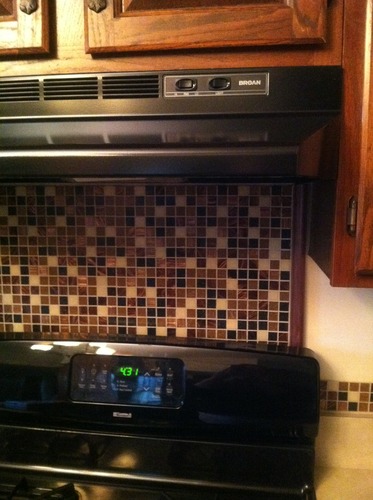
The four-way convertible design is the underrated part. It runs on 3.25 inch ducted vertical, 10 inch ducted horizontal, 7 inch round, or non-ducted recirculation, so the same unit fits a house with an exterior wall and a rental where nobody can cut a hole. A 3.25 by 10 inch damper and adapter are included in the box, which saves a trip to the hardware store.
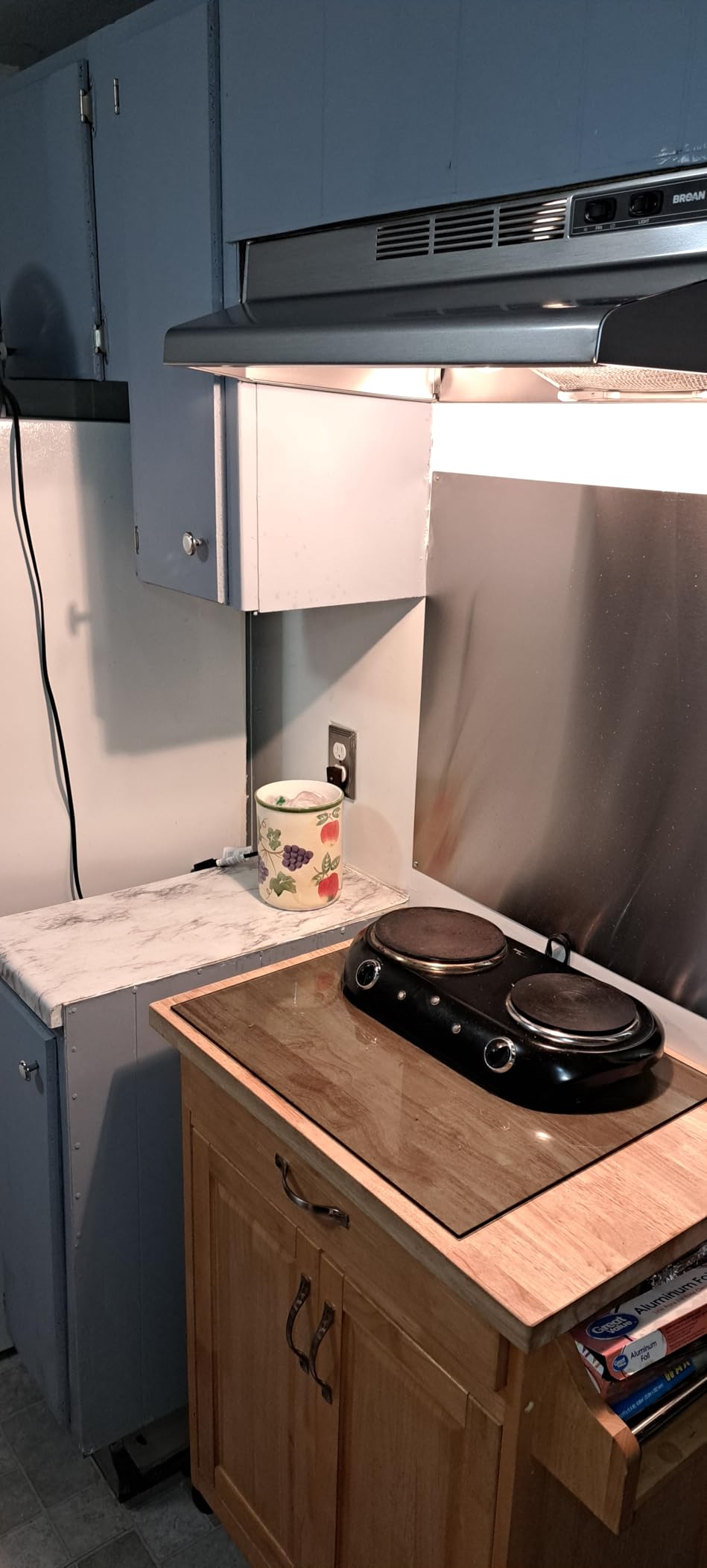
Where it struggles is noise. Six and a half sones is a real number, and it is the number you hear when you actually need the fan on high after a splatter of oil. Buyers replacing an existing undersized unit in one report they could finally see the difference in smoke, but not that it was quiet doing it.
Two more practical notes. The light lens and bulb are not included, and the ductless version needs a separately purchased charcoal filter plus a wiring kit or an electrician. Plan for both before you start, and the install stays painless.
Will the duct configuration match your kitchen?
If you have any duct at all, this hood adapts. Four-way conversion covers narrow rectangular duct, wide rectangular duct, round duct and no duct at all, which is more flexibility than any other 30 inch model in this roundup.
Check the outlet position first. A horizontal run through the back of an upper cabinet is the quietest and most common layout in a galley kitchen.
What you give up for the easy install
You trade high-speed quiet and metal thickness. Thin sheet metal arrives dented more often than heavier cabinets, and 6.5 sones is a louder figure than several units in this roundup, including the 30 inch slim models.
For most apartments and galley kitchens, that is an acceptable trade. For an open plan where the hood sits beside a seating area, read the noise section further down before you commit.
2. COSMO COS-5MU30 30 Inch Slim Hood – Best Value
COSMO COS-5MU30 30 in. Delta Collection Ducted Under Cabinet Range Hood, Button Controls, Reusable Filters, LED Lights, Stainless Steel
50 dB on low speed
19.75D x 29.75W x 5.5H
14 pounds
Mesh filters,5 inch duct
Pros
- 5.5 inch slim profile
- Convertible ducted or ductless
- 50 dB on the lowest speed
- Mesh filters wash clean
Cons
- Dim rear-mounted LED
- Soft supplied screws
- Rear duct openings leak air
In a small kitchen, depth is the resource you run out of first, and this is the hood that gives some of it back. The body is 5.5 inches tall and 19.75 inches deep, which is one of the shallower footprints here, and the brushed stainless finish looks more expensive than the ticket suggests.
Three fan speeds is one more than most slim units offer, and the quoted 50 dB figure is at the lowest speed with rigid ducting. That combination makes it the easiest of the compact models to live with when someone is standing at the counter behind you.
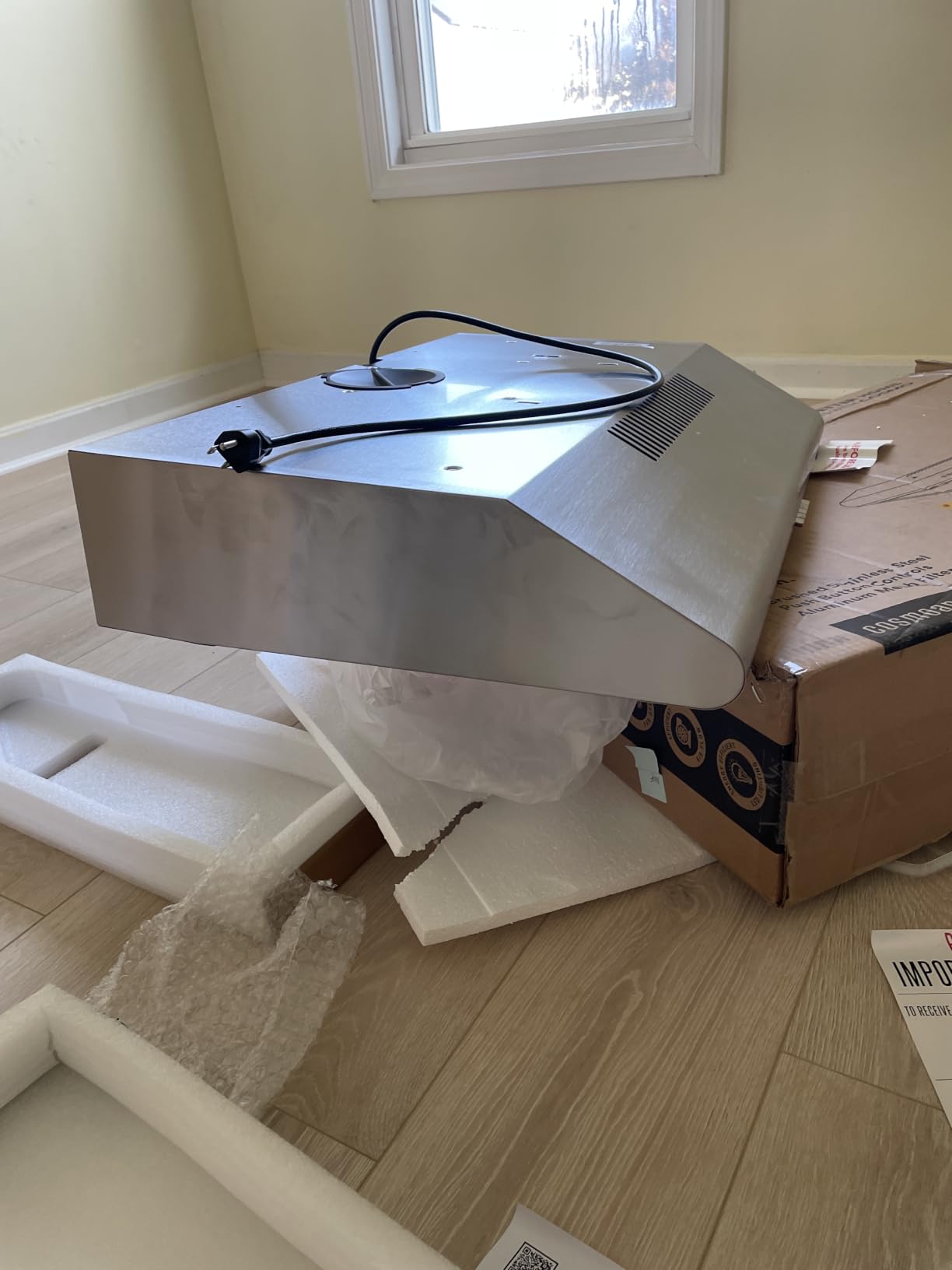
Owners like the reusable multi-layer mesh filters because they come out, go in the dishwasher, and cost nothing to replace. That matters in a rental or a budget remodel where charcoal filter cartridges add a recurring line to the running costs.
The criticism cluster is consistent. The underside LED is small and mounted at the back, so cooktop lighting is dim. The supplied screws are soft and break easily, and cabinet bolts from the inside work better. Seal the rear duct openings before you run it or air escapes into the cabinet.
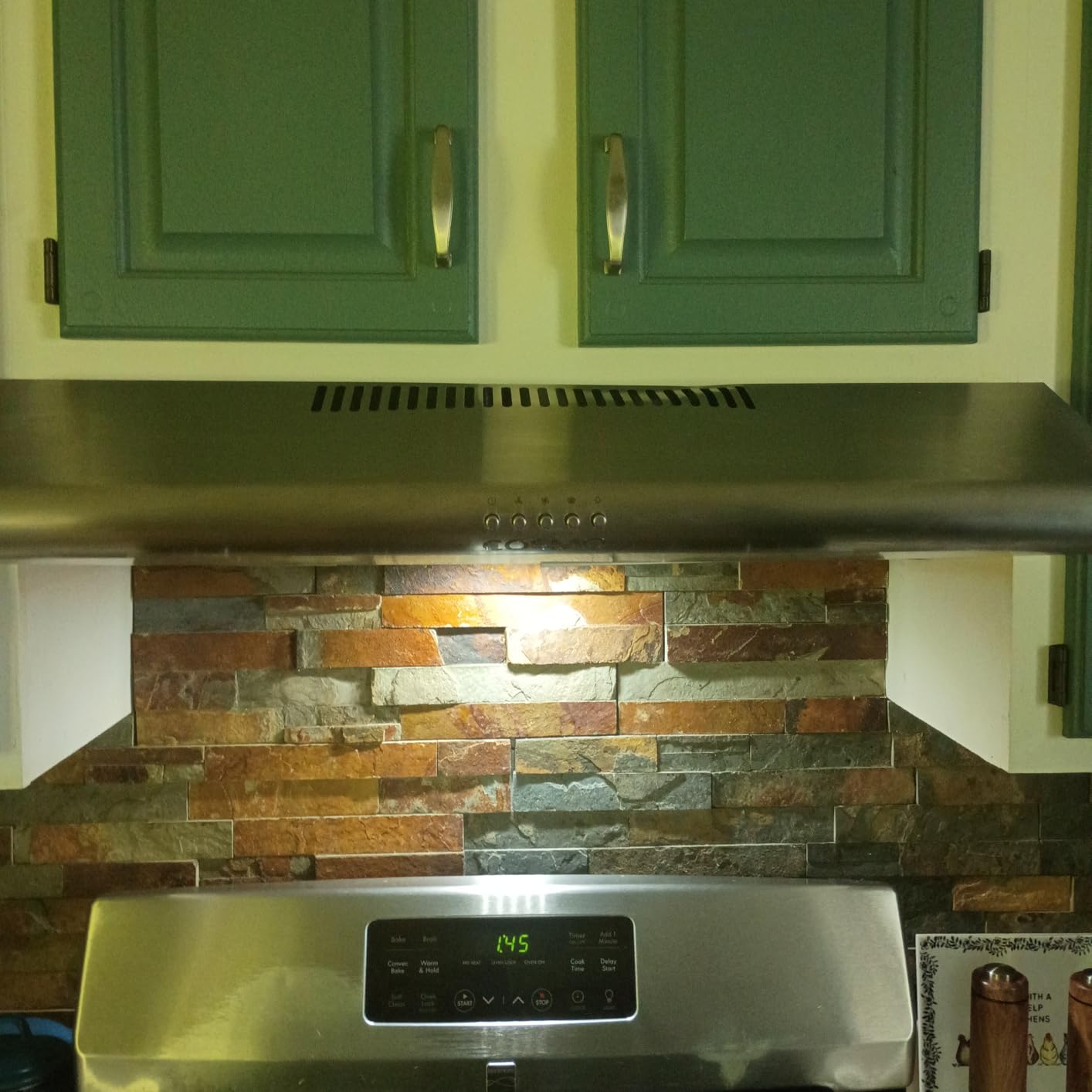
Does the depth work in a galley kitchen?
Yes, and this is the main reason to pick it. At 19.75 inches deep it projects less than several 30 inch models here, which matters when the aisle between two runs of cabinets is under 42 inches.
It also needs a 5 inch round duct, a smaller size than the 6 and 7 inch defaults. Measure the existing run before you order.
What to fix before you drill anything
Expect to use your own fasteners. The included screws are reported to snap, and buyers who used cabinet bolts report a better result.
The rear duct openings have no factory punchouts, so run duct tape or sealant around the outlet. Otherwise the blower pushes air into the cabinet above instead of up.
3. FIREGAS 30 Inch 300 CFM Hood – Best Budget High-Airflow Pick
FIREGAS Range Hood 30 inch Under Cabinet, White Range Hood, Kitchen Hood
300 CFM air flow
57 dB
17.5D x 29.9W x 4.7H
9 pounds
ETL listed
Pros
- 300 CFM gives real pull
- 4.7 inch body suits tight cabinets
- Quiet for the airflow class
- Rolled edges resist rust
Cons
- Dim proprietary LED
- Wiring not in a junction box
- Template hole spacing can be off
Most budget hoods give you 200 CFM and hope you do not cook with a wok. This one runs 300 CFM in a body only 4.7 inches tall, which is the spec combination a small kitchen actually wants: real airflow without asking for cabinet headroom you do not have.
At 9 pounds it is among the lighter metal hoods in the roundup, and the 57 dB rating at high speed puts it among the quieter high-output units here. Rocker controls are simple, and the 2 watt LED is adequate for checking a pot without lighting the whole room.
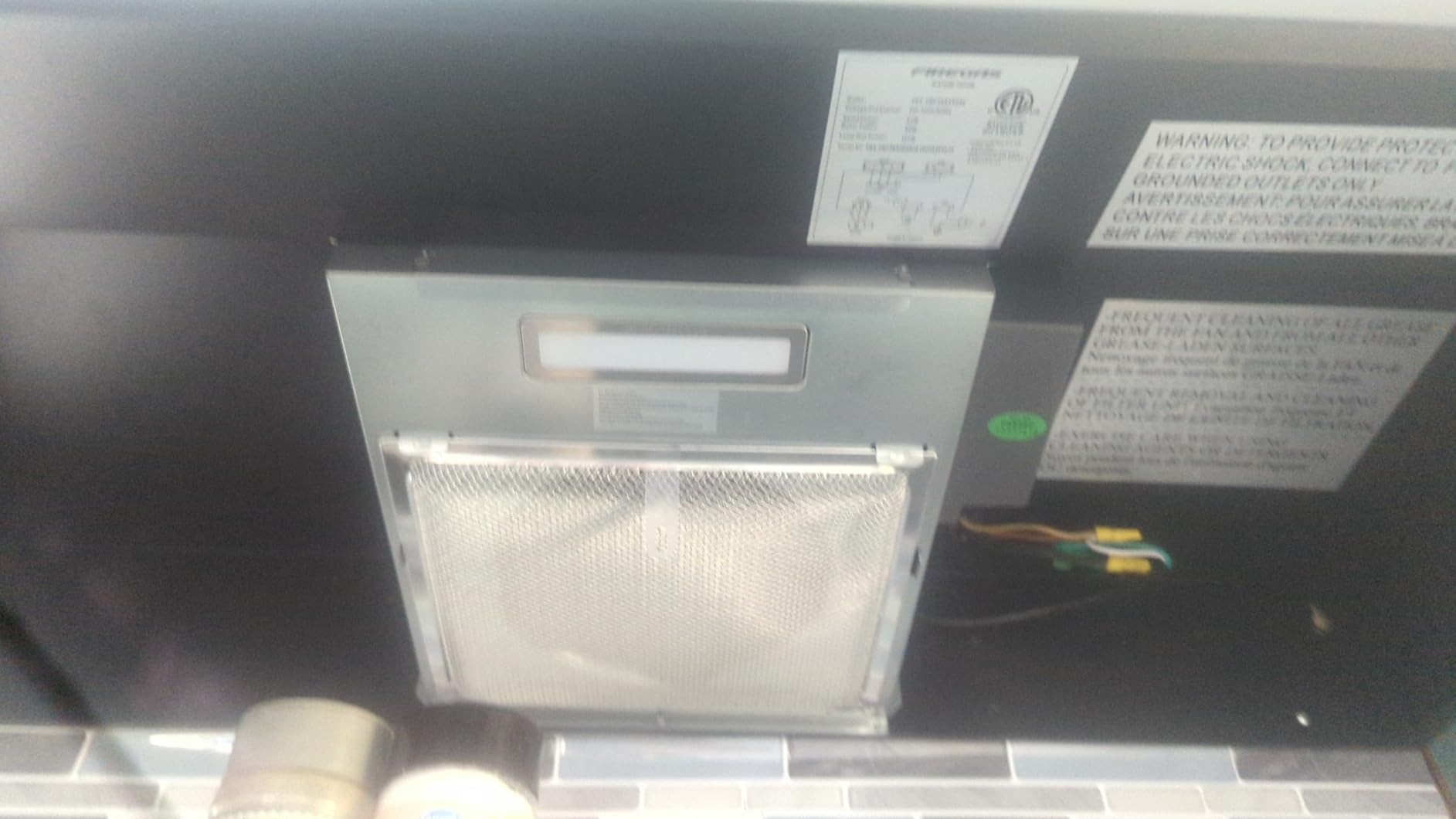
Owners consistently rate airflow as the standout, calling the pull noticeably stronger than 200 CFM models. The rolled steel edges resist rust and corrosion, which is worth something in a galley kitchen where steam hangs in the air for hours.
Two things caught our attention. The LED is dim and cool in color temperature, and the bulbs can be proprietary and hard to source later. The wiring connections are not enclosed in a junction box, so if your local code requires one, add it. Also verify the template hole spacing against the real vent opening before drilling.
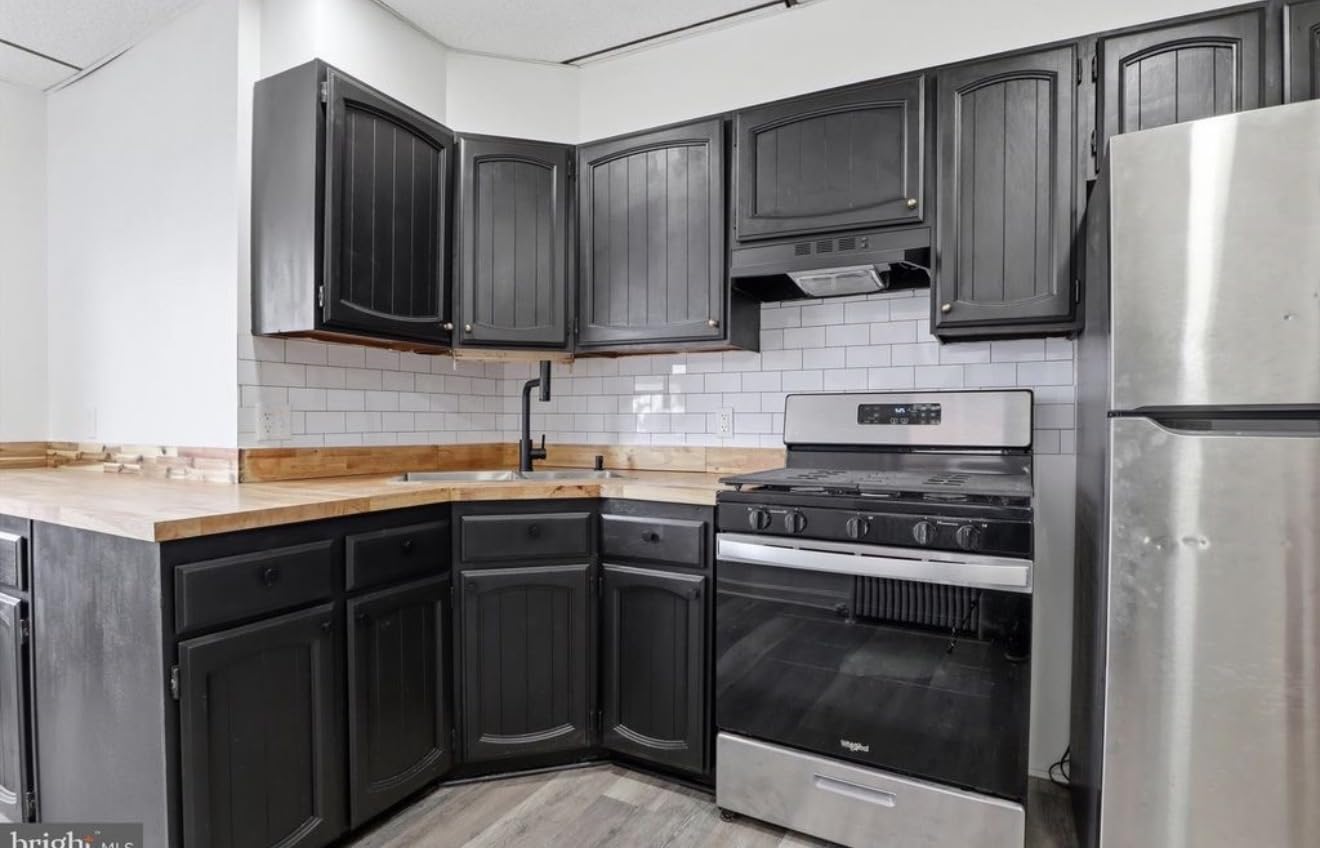
Is 300 CFM the right amount for an electric or induction cooktop?
For most electric and induction setups, 300 CFM is the practical target and this unit hits it. Induction produces less airborne grease than gas, so a 200 CFM model would usually be adequate.
Do not go higher for its own sake. Extra CFM in a small kitchen translates almost directly into extra noise at the speed you actually cook on.
What the installation actually involves
It is hard-wired without a plug, which means a junction box and a licensed electrician where your code requires one. Plan the outlet position before the hood is in place.
The 7 inch duct outlet is oversized for 300 CFM and can need an adapter to a 6 inch run. That adapter is cheap, but only if you know you need it.
4. COMFEE 30 Inch 200 CFM Hood – Best for Ductless Setups
COMFEE’ Range Hood 30 Inch Under Cabinet 200 CFM Ducted/Ductless
200 CFM air flow
71 dB
18D x 29.8W x 5.5H
11 pounds
E26 lamp holder
Pros
- Carbon filter included in the box
- Uses a standard replaceable bulb
- Supports ducted and ductless runs
- Compact 5.5 inch body
Cons
- 200 CFM is below the 300 CFM target
- 71 dB is among the loudest here
- Instructions cover ducted only
The reason this one is on the list is the box contents. It arrives with both an aluminum mesh filter and an activated carbon cotton composite filter, so if your building does not permit an exterior vent you can recirculate from day one without ordering anything else.
It is also the one compact unit here that takes a standard A19 or E26 bulb rather than a fixed LED module. That single detail fixes the most common complaint across this category, where proprietary LED modules leave you with dim light and no replacement path.
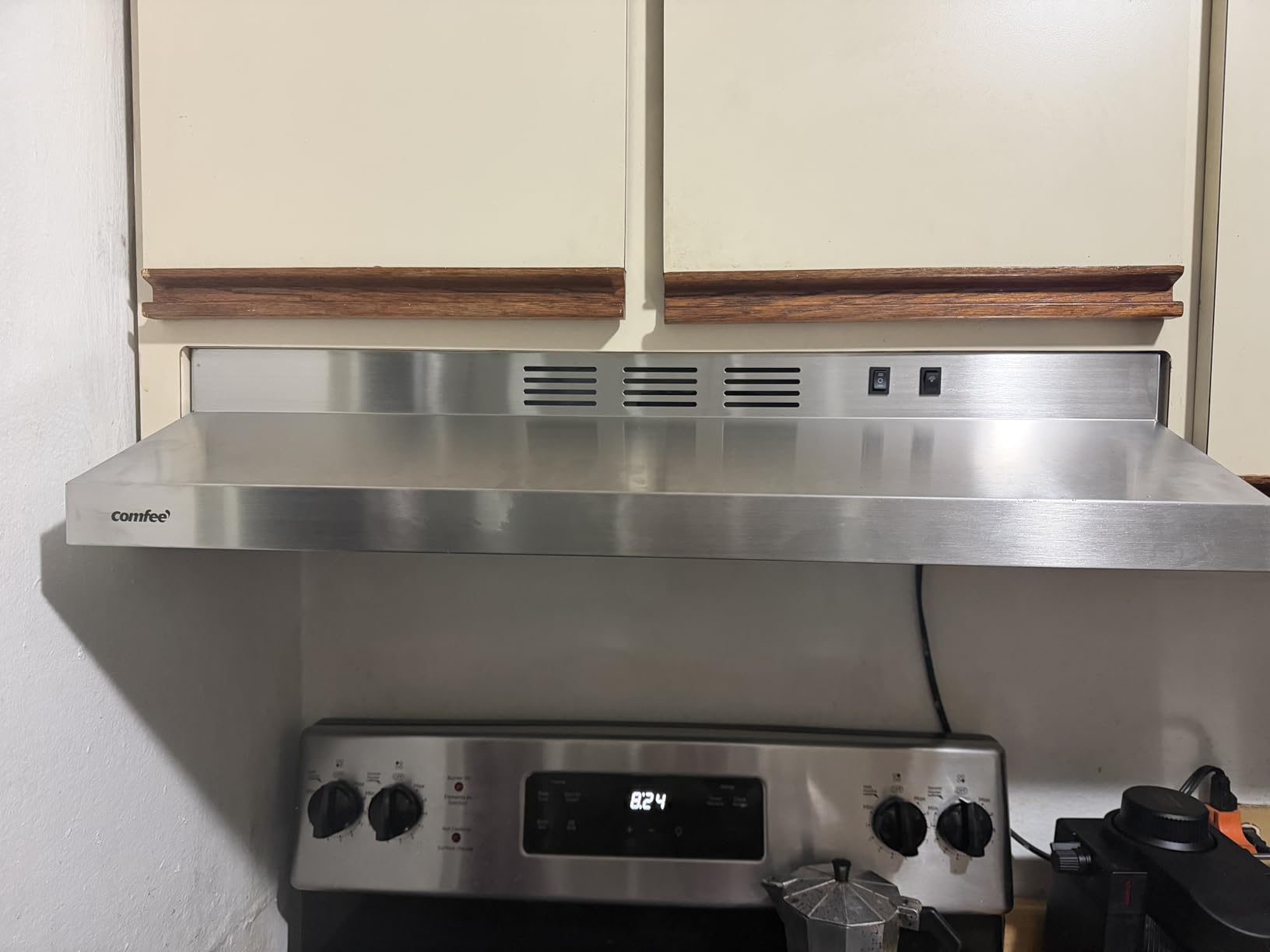
The 200 CFM figure is the trade-off, and it is a real one. It falls short of the 300 CFM we consider the practical floor for any cooktop, which is fine for everyday cooking on an electric unit and marginal for wok work or deep frying. The rated 71 dB is also among the loudest here.
Build quality is the other soft spot. The sheet metal is slim and the mounting holes are larger than the supplied screw heads, and the manual covers the ducted setup only. The rear damper was missing from at least one unit, so check the box before you start.
When recirculating is the only legal option
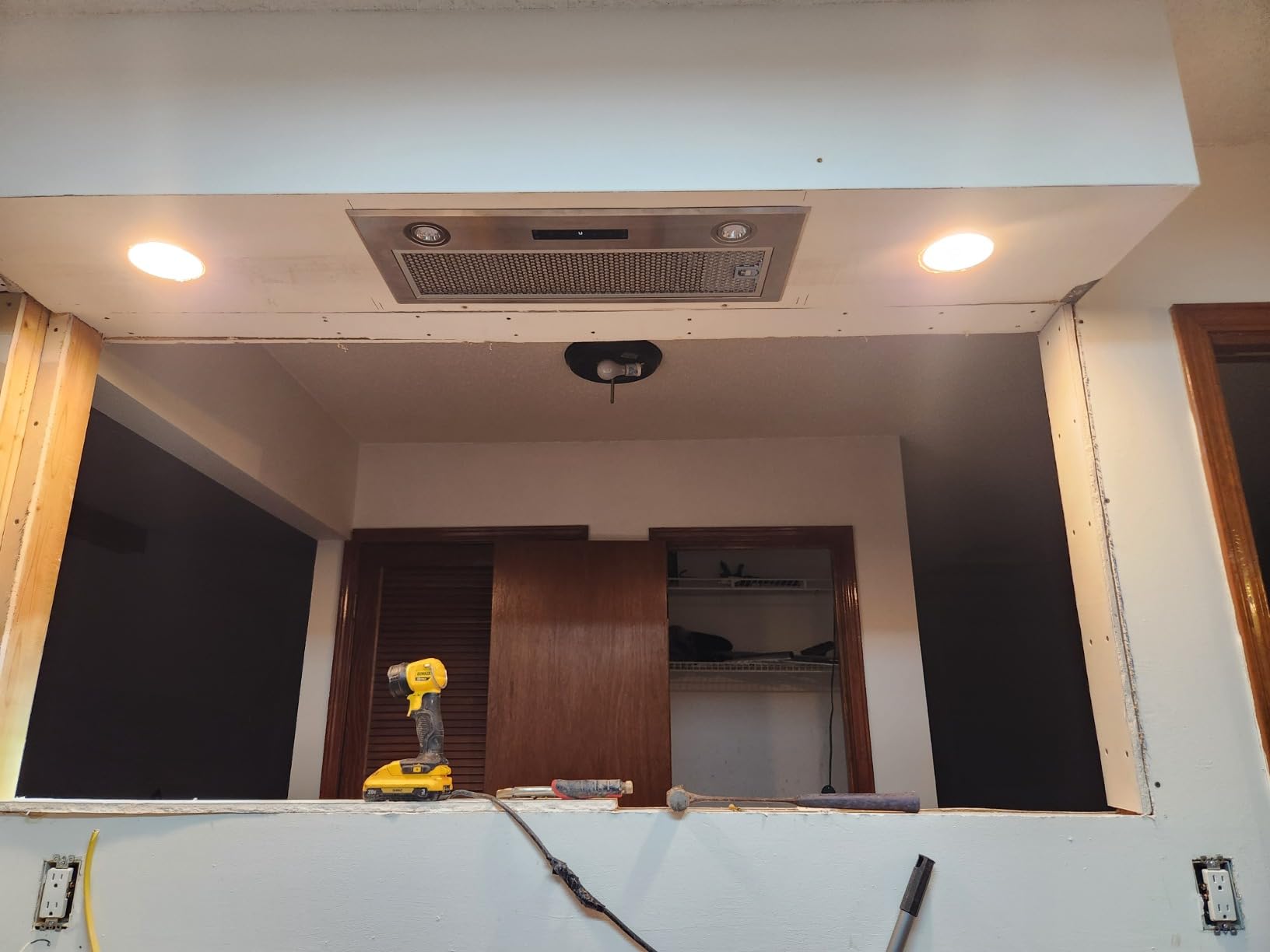
Condos and apartments that prohibit wall penetration leave you with recirculation, a portable unit, or a downdraft cooktop. This hood handles recirculation with the carbon filter already included, and the replacement part number is listed for when it saturates.
Recirculating removes grease and some odor. It does not move the volume of air a ducted run removes, so expect to run it higher and longer.
What to check before the box is open
Verify the mounting hole size against the screws supplied, and confirm the backdraft damper and filters are inside. Reports of missing dampers exist.
Bring your own bulb. The lamp holder takes a standard E26, and the mirror-finish interior reflects what light you give it.
5. SNDOAS 30 Inch Hood – Slim 4.7 Inch Body With Pre-Drilled Holes
SNDOAS Range Hood 30 inch Under Cabinet, Ducted/Ductless Convertible Kitchen Hood, Stainless Steel Vent Hood with LED Light,Under Cabinet Hood with 2 Speed Exhaust Fan,Black
230 CFM air flow
17.5D x 29.9W x 4.7H
Two speeds
Convertible ducting
Pros
- 4.7 inch slim body
- Quick install with layout sheet
- Quiet for its airflow class
- Arrives well packaged
Cons
- 230 CFM is moderate
- LED is dim and may not be replaceable
- No cover plate for wiring
Where the FIREGAS matches this on height, the SNDOAS is thinner over a 29.9 inch width, and it adds a feature the other slim units skip: pre-drilled top and back holes, so a ducted install needs no layout guessing.
Two-way installation is the part that matters in a rental. Pre-drilled holes mean the ducted run takes minutes, and the included carbon cotton composite filter covers the ductless case for an apartment where nobody can drill a wall.
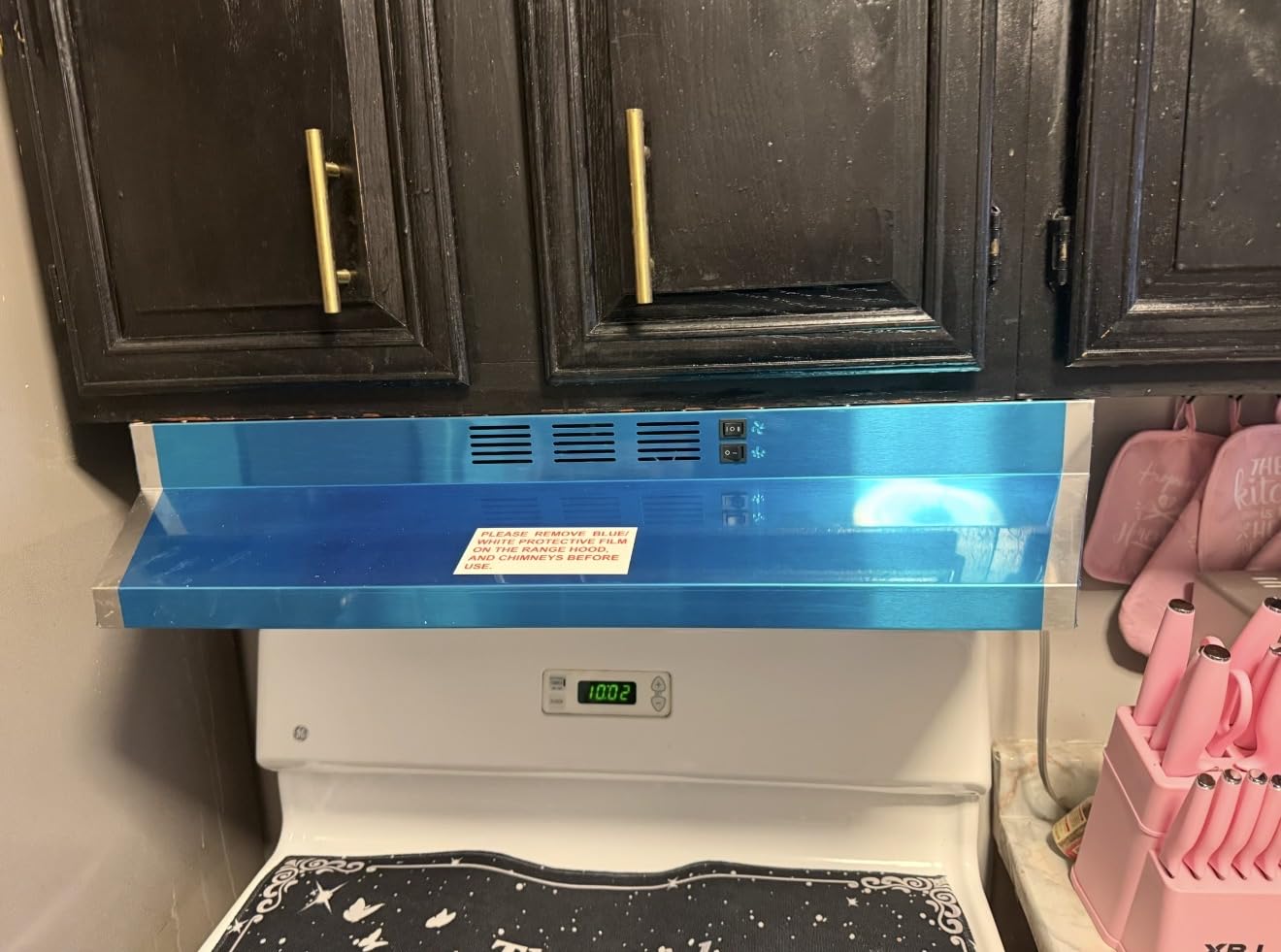
At 230 CFM the airflow sits in the middle of this group, which suits apartments and small households cooking most nights rather than several pans at high heat. Owners frequently praise the fan as effective and not loud for its class.
The dim single-level LED is the most cited complaint, and the LED module may not be replaceable if it fails. There is also no cover plate over the electrical connections, and the instructions assume you have installed a hood before.
When thin metal is a feature, not a flaw
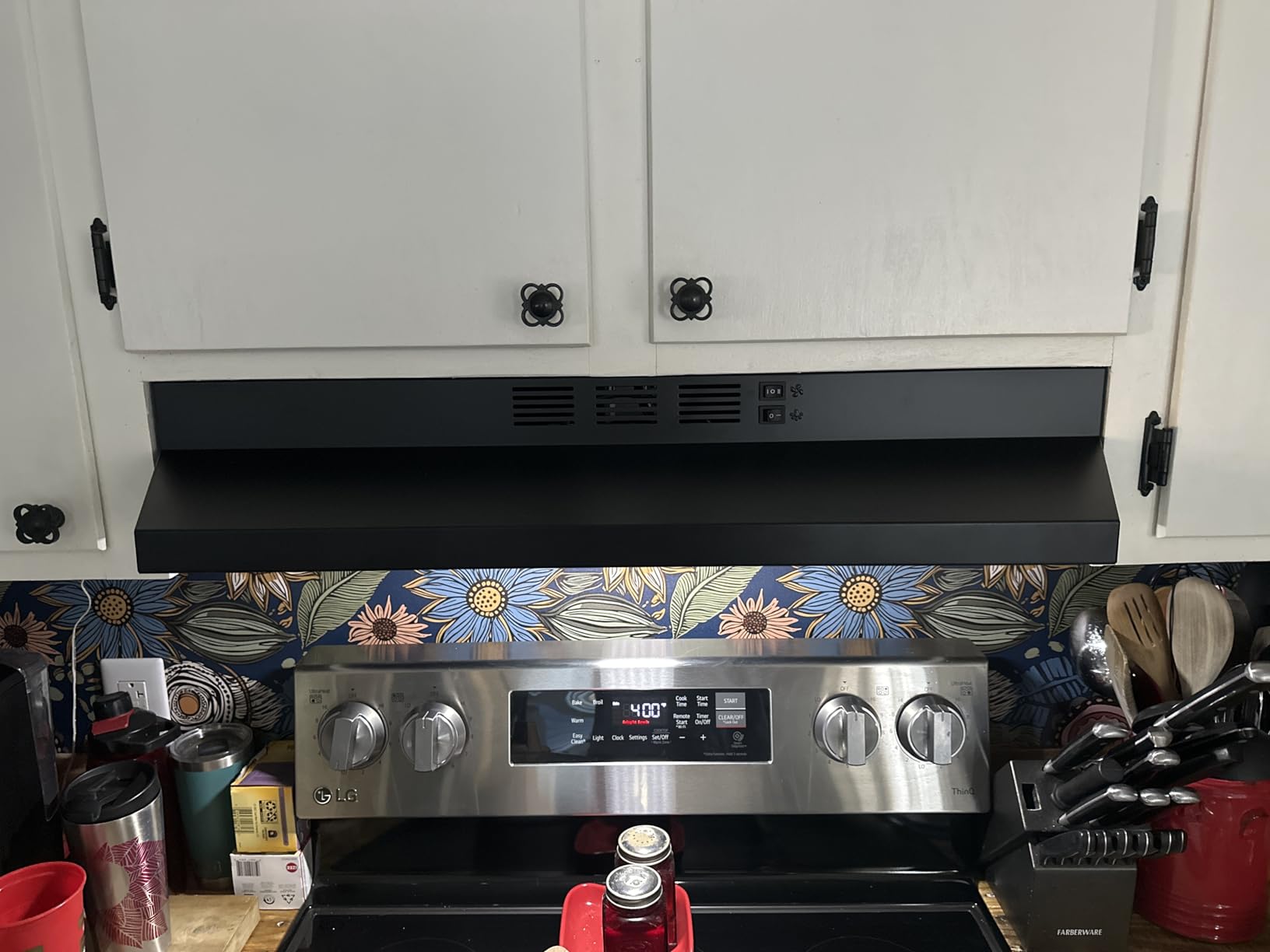
A 4.7 inch body preserves cabinet shelf space and keeps the hood out of your sightline in a low-ceiling galley. That is the single biggest space win available in the under-cabinet format.
The cost is that the housing is thin sheet metal. It is well packaged and usually arrives undamaged, but budget for a dented corner as a possibility rather than a certainty.
How hard is this to install?
Hard-wired by default, with an optional power cord kit sold separately for a non-permanent install. If you are a renter, buy the cord kit and you can take the whole thing with you.
Have a screwdriver, a drill and a level ready, and finish the top holes before you lift it into position. A 4.7 inch housing is light, but drilling overhead into cabinet framing is awkward solo.
6. Tieasy 30 Inch Wall Mount 450 CFM Hood – Best Wall Mount
Tieasy Wall Mount Range Hood 30 inch with Ducted/Ductless Convertible Duct, Stainless Steel Chimney-Style Over Stove Vent Hood with LED Light, 3 Speed Exhaust Fan, 450 CFM
450 CFM air flow
55 dB
18.3D x 29.3W x 36.3H
Three speeds
430 grade steel
Pros
- 450 CFM handles heavy cooking
- 55 dB on lower speeds
- Bright LED cooktop lighting
- Adjustable chimney for taller ceilings
Cons
- Baffle filters arrive with a peeling film
- Metric-only instructions
- Chimney may need an extension
A wall mount is the one format that actually raises capture height, and this one does it without leaving the affordable end of the market. At 450 CFM it clears more air than every under-cabinet model here, which is the point if you cook with a wok or fry at high heat.
It also does not require you to give up the cabinets. Because the chimney rises above the cabinet line rather than sitting inside it, the upper storage over the cooktop survives. In a small kitchen that trade is usually the deciding factor.
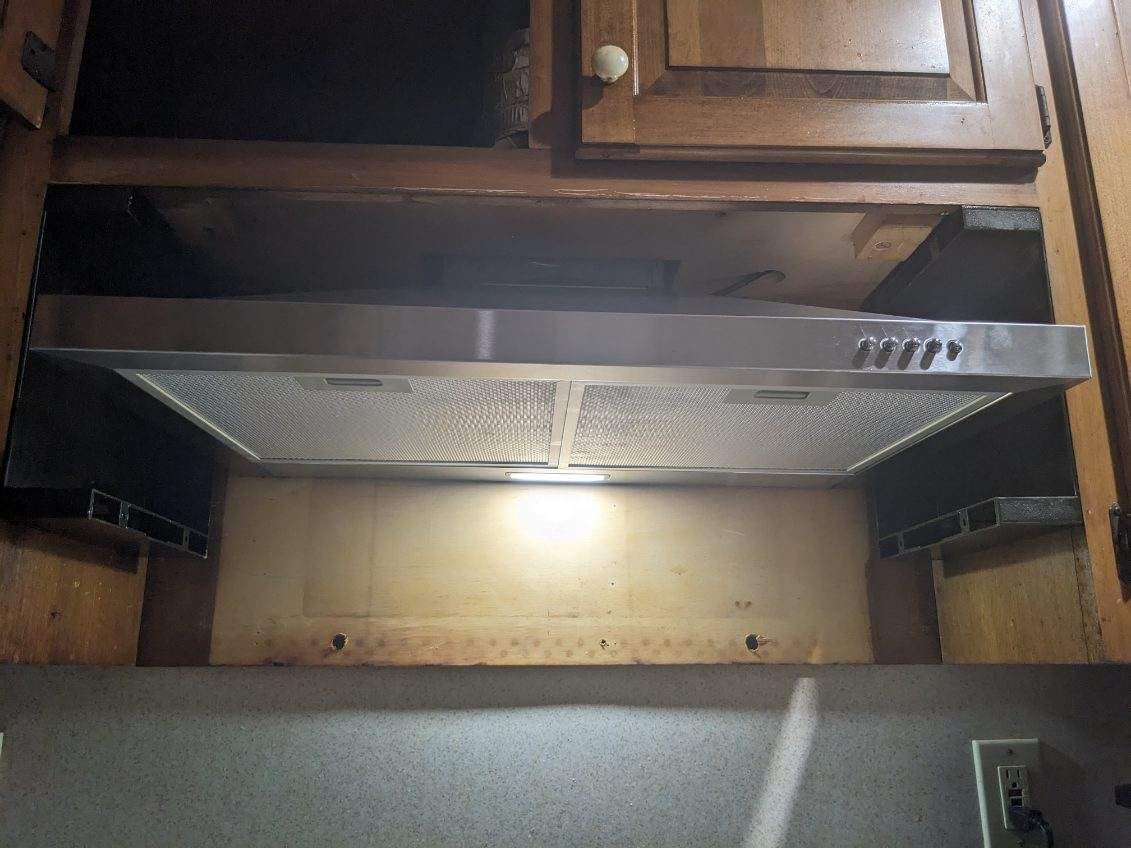
The 55 dB rating at lower speeds, three speeds total, and 430 grade brushed stainless make it the best-looking unit in the group for a retrofit. The adjustable chimney runs from 15.75 to 29.5 inches, which covers 7.5 to 8.5 foot ceilings.
Watch the details. The baffle style filters arrive with a blue protective film that buyers find tedious to remove. Instructions are listed in millimeters only, and some units arrive with missing screws for the metal cover. The chimney is short, so measure to the ceiling before you order.
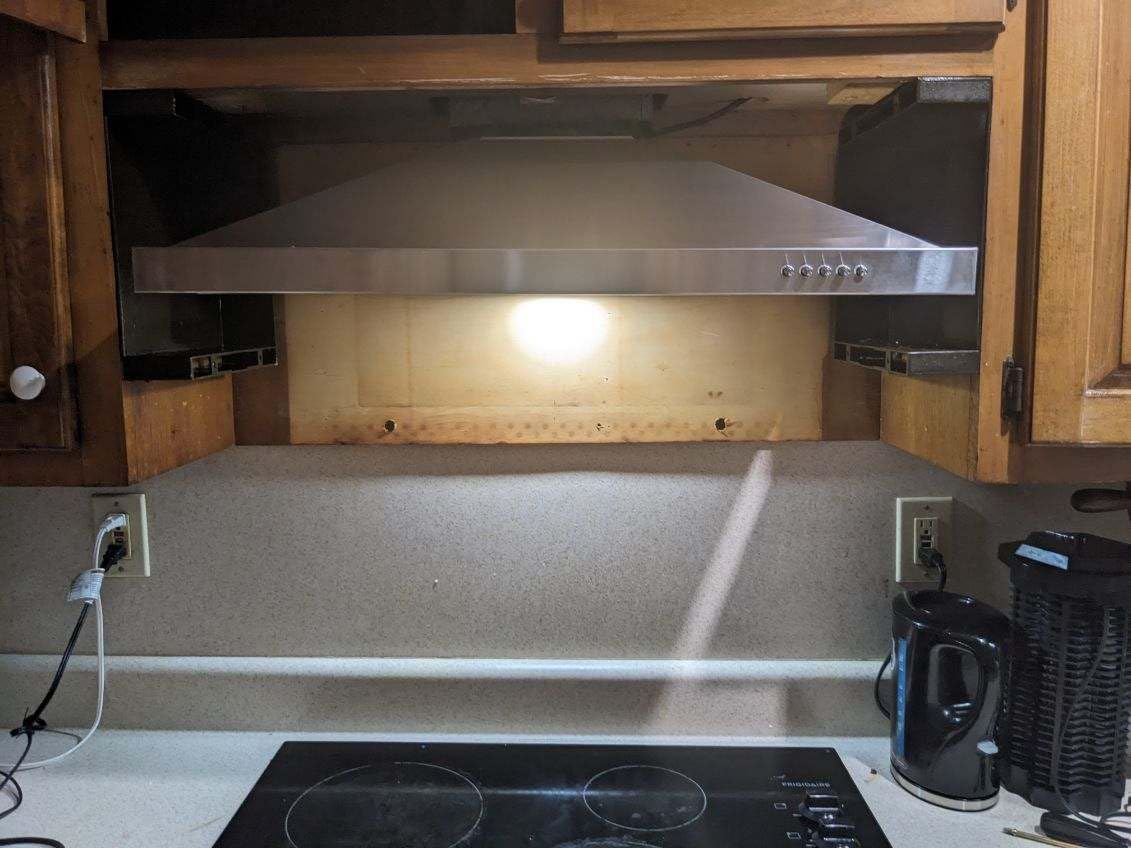
Does it fit a standard ceiling height?
For ceilings between 7.5 and 8.5 feet, yes, with the chimney adjustment covering the range. A first-time installer reported completing the bracket and chimney work in roughly two and a half hours with a level.
Below 7.5 feet, check the vertical run. The full assembly is 36.3 inches tall, and the 18 inch cooktop clearance rule plus that height is what constrains a low ceiling more than width does.
What you trade for the extra capture height
You need a real duct. This is an exhaust configuration, so it wants a 6 inch round top vent and an actual path outside. In an apartment with no exterior wall, this format is not available to you.
You also drill into tile or drywall above the cooktop. In a rental or a finished remodel, that is a bigger commitment than an under-cabinet swap.
7. AMZCHEF 30 Inch 700 CFM Hood – Best for Heavy Cooking
AMZCHEF 30″ Under Cabinet Range Hood, 750CFM Stainless Steel Vent Hood
700 CFM air flow
63 dB
19.7D x 29.8W x 5.98H
Three speeds
6 inch outlet
Pros
- Very strong airflow for frying and wok
- Dishwasher-safe baffle filters
- Remote and gesture control
- Quiet on low and medium
Cons
- Display is very bright with no dimmer
- Gesture can fire unintentionally
- Two-person install recommended
This is the airflow pick. At 700 CFM it moves far more air than anything else in a 30 inch under-cabinet body, and reviewers repeatedly single out the steady suction when stir-frying or deep frying, which is exactly when a small kitchen needs the help.
The filters are the reason that performance is sustainable. Two dishwasher-safe stainless steel baffle filters plus a washable oil collector handle grease far better than mesh, and unlike charcoal cartridges they never need buying.
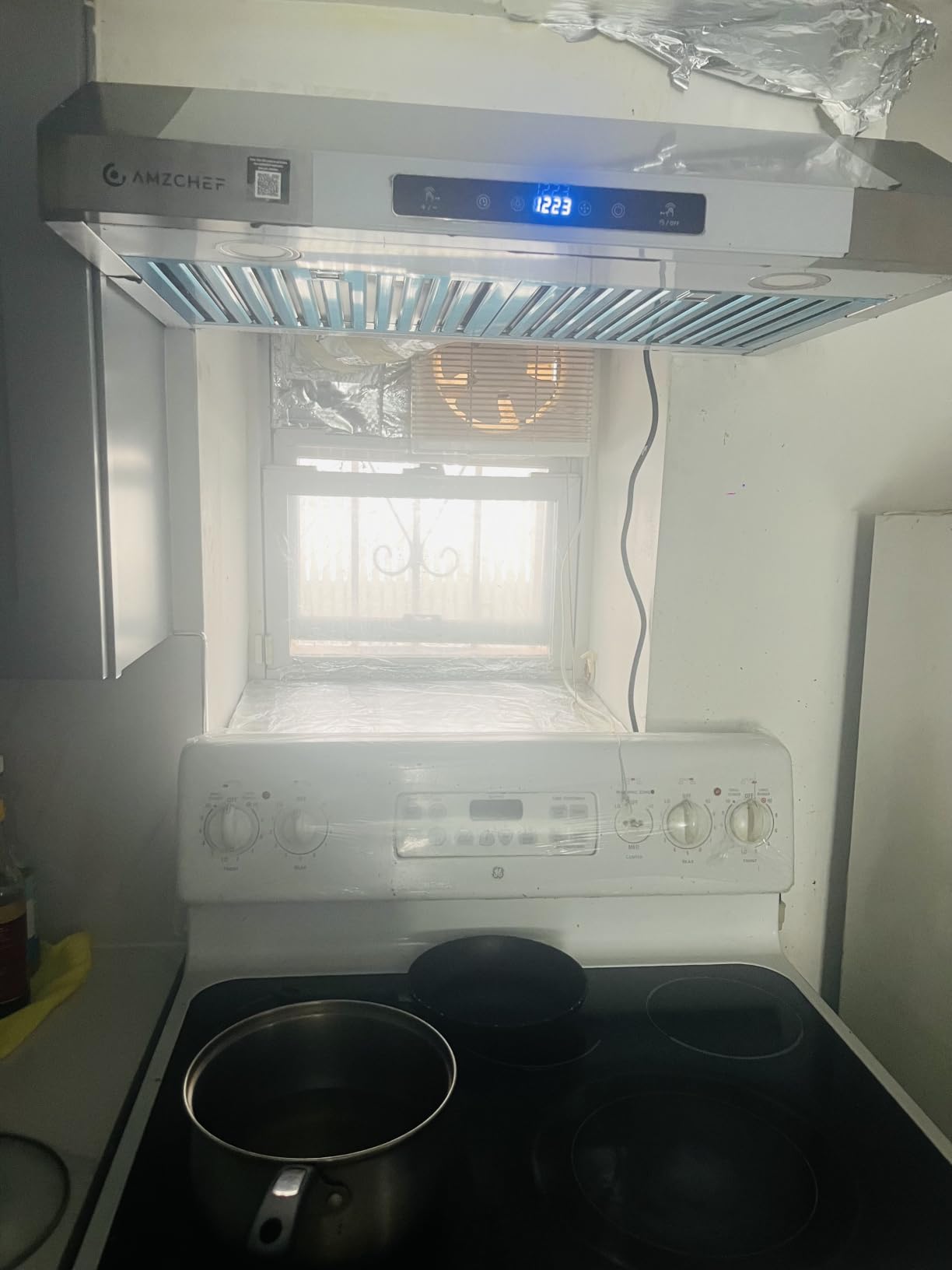
Control options are unusually generous for a compact hood: touch, remote and gesture, plus a timer function. Reviewers like being able to change speed without reaching toward a greasy underside. The 3 prong plug and standardized screw holes also made one first-time installer’s job quick.
The deductions come from the electronics. The digital display is extremely bright with no dimming option, and the gesture sensor can trigger when you reach into the cabinet above. Installation is also awkward alone, and two people are the sensible plan.
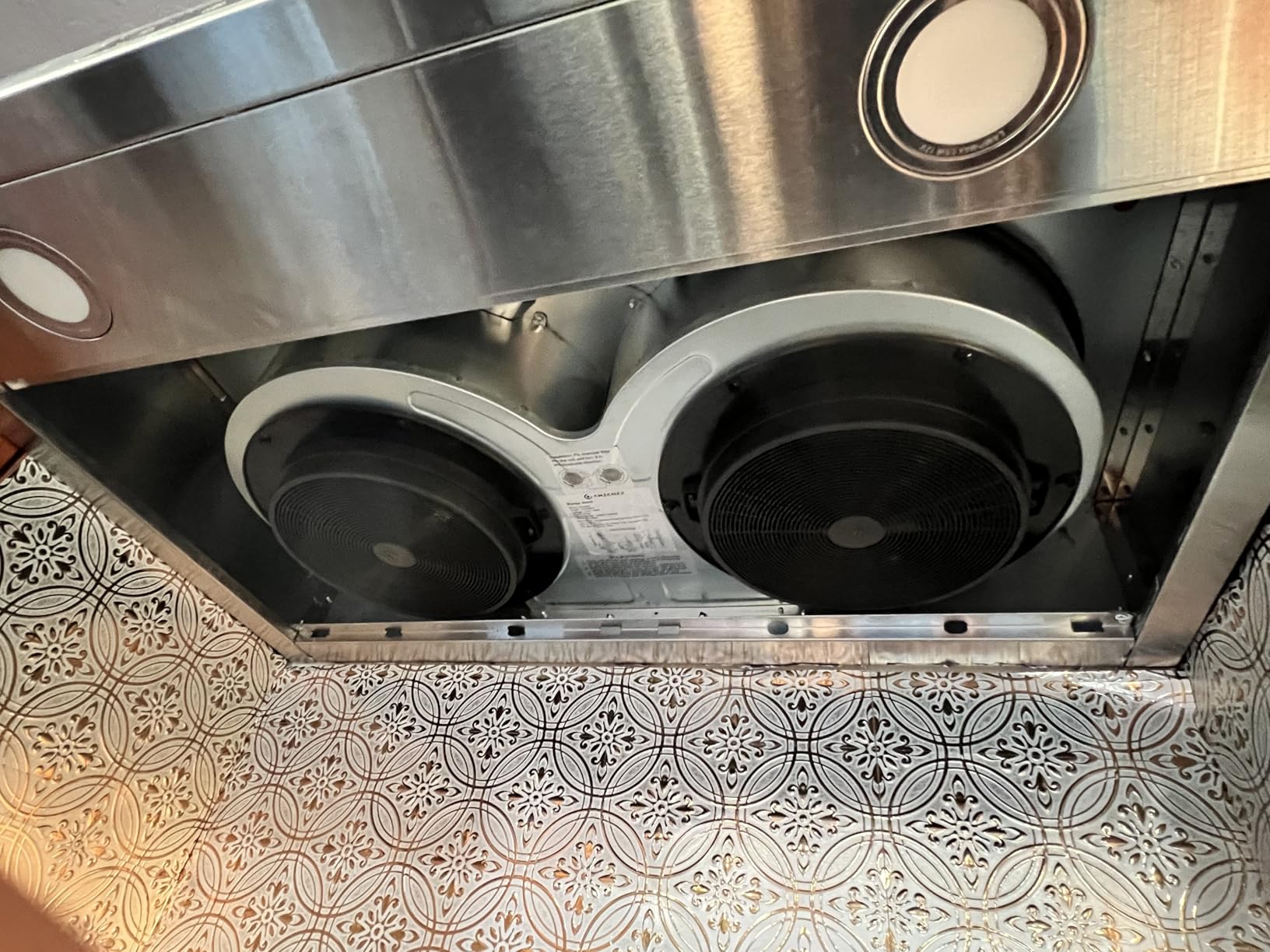
Does a 700 CFM hood belong in a small kitchen?
Only if your cooking justifies it. A high-BTU gas range with a wok ring or heavy nightly frying can push smoke faster than a 300 CFM unit clears it, and then the bigger blower wins.
If you roast and simmer rather than sear, the same blower means more noise for air you never needed. Match the CFM to the burner output, not to the room size.
Where this install gets awkward
The 19.7 inch depth is among the deeper bodies here, so check the counter projection before committing in a tight galley. A 6 inch air outlet handles the airflow well, so verify your existing run is 6 inch round.
There is no drilling template, and the supplied screws may be too short for some cabinet backs. Bring your own fasteners and a second set of hands.
8. BREETEE Portable Countertop Hood – Best for Renters and Dorms
BREETEE Portable Range Hood Kitchen–5-Layer Filter Compact Desktop Exhaust Fan, Powerful 3-Speed Smoke Removal, Low Noise Countertop Range Hood, Oil Cup, for Apartments, Dorm, RV, Indoor BBQ–Off-white
95 CFM air flow
50 to 65 dB
8D x 6.5W x 14.5H
2.8 pounds
Plug and play
Pros
- No install and no ducting needed
- Five layer filtration with carbon
- Three speeds plus an LED
- Compact at 2.8 pounds
Cons
- 95 CFM is far below a mounted hood
- Plastic rather than stainless construction
- Carbon filters need replacing
Nothing else on this list can be picked up, moved to another counter, and put away. At 2.8 pounds with a 70 inch cord and a 120 to 240 volt adapter, it is the only pick here that needs no drilling, no ducting and no electrician, which makes it workable in a rental, a dorm, an RV, or an indoor grill.
Filtration is layered: an aluminum quad-core filter, a polymer layer, and an activated carbon stage. Six replacement carbon filters are in the box, which is a meaningful head start for anyone who intends to recirculate.
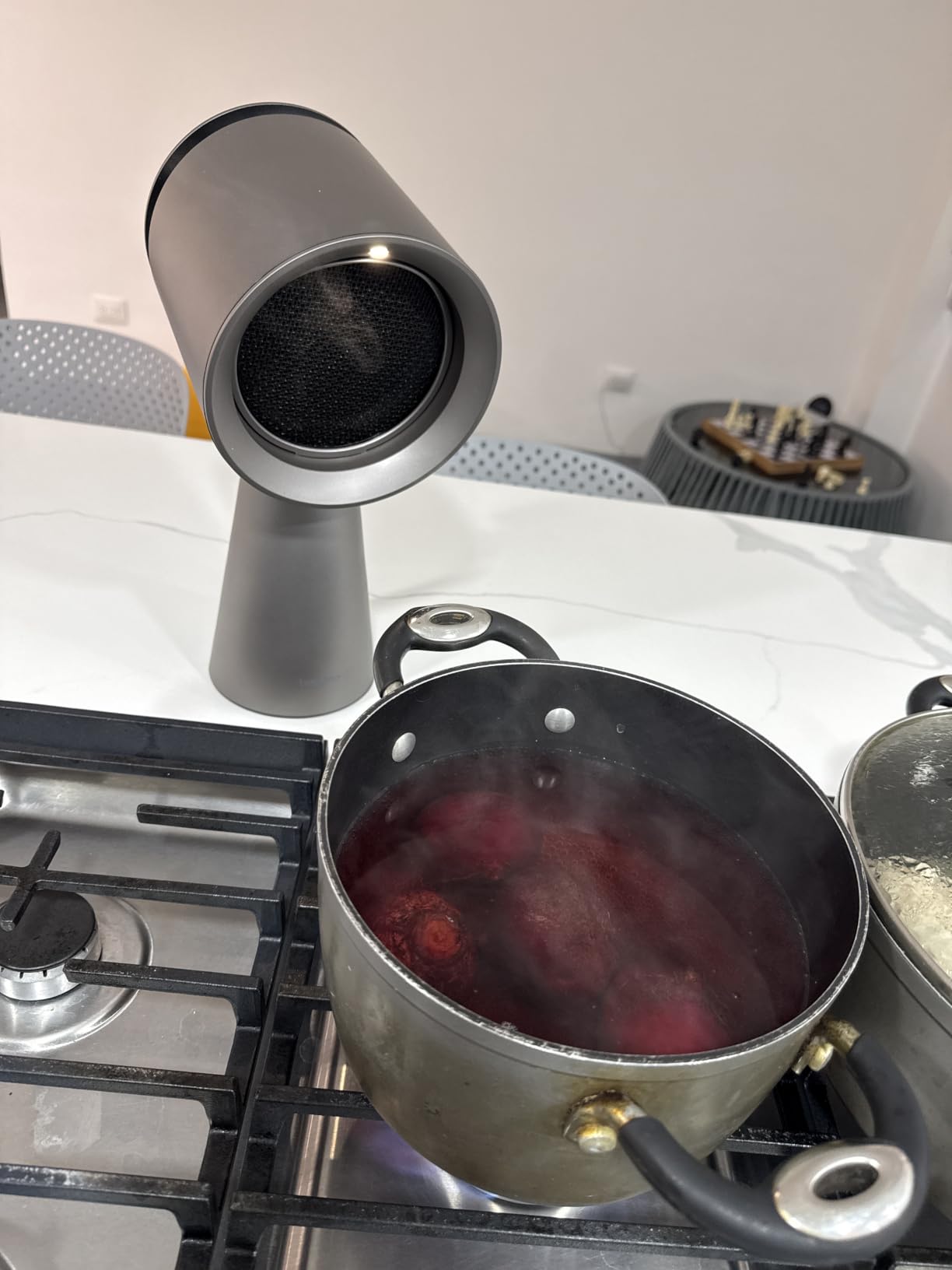
Be realistic about the ceiling. At 95 CFM this is a fraction of what a mounted hood moves, and the manufacturer is clear that results depend on sitting roughly 4 inches from your food. That is fine for steam, light smoke and grease haze on a small burner.
Reviewers generally land in the same place. It works as a temporary or supplemental device, runs in a 50 to 65 dB band, and does not replace a permanently installed hood. The plastic body is the other recurring note.
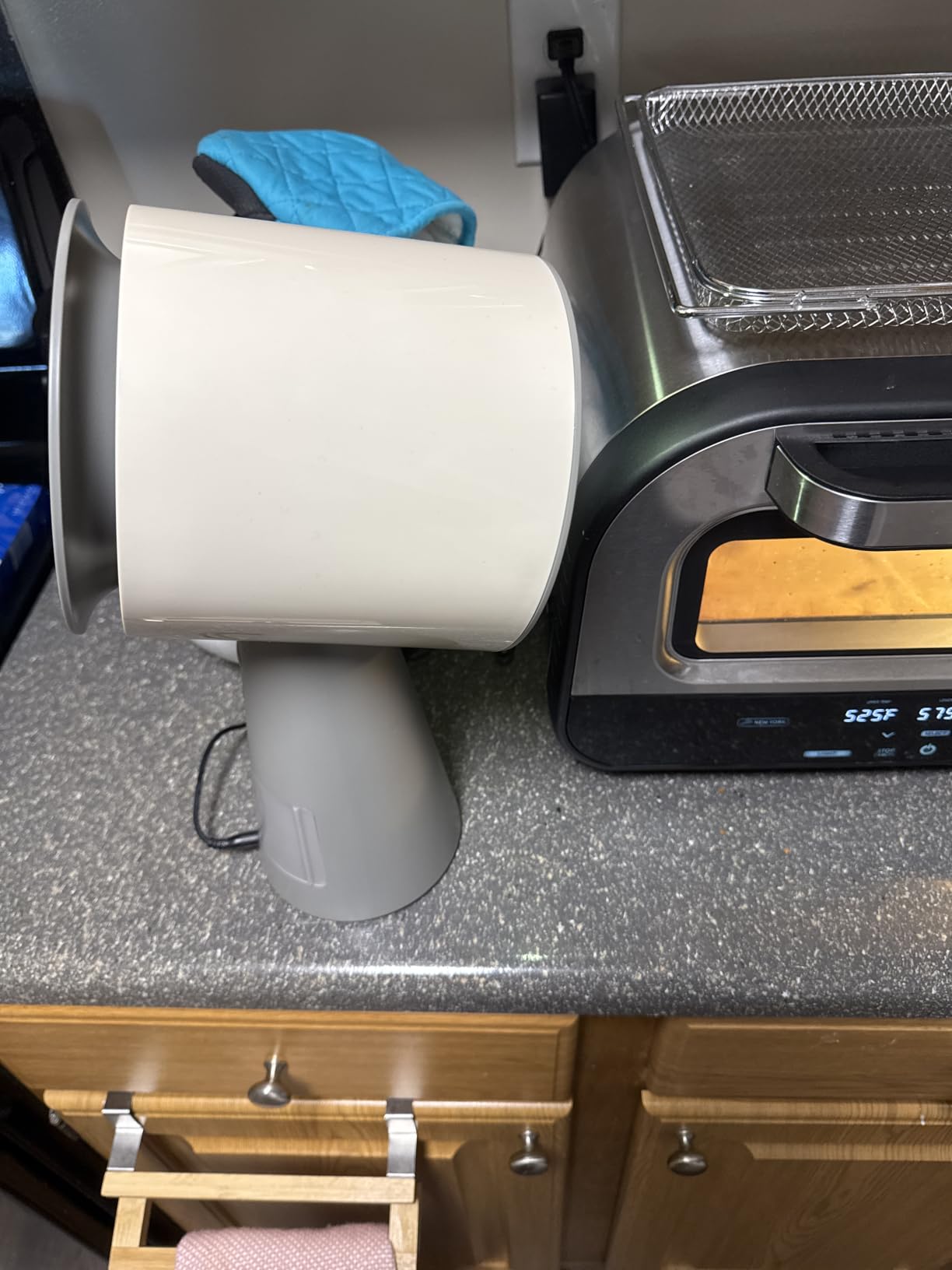
When is a portable unit the right call?
Three situations justify it clearly: you rent and cannot modify the kitchen, you have no exterior wall and no legal duct path, or you are cooking occasionally in a space where a mounted hood makes no sense.
Position matters more than any other factor here. Leave the 70 inch cord slack so you can bring the unit close to the pan rather than pushing food to meet it.
What it will not do for you
It will not clear a wok plume or a high-BTU gas burner, and 65 dB on high is comparable to a full-size hood at a far higher airflow. If you cook hard several times a week, this is a bridge, not a solution.
Plan for carbon filter replacements, which are sold as a pack. The filtration is only as good as the freshness of the carbon stage.
9. Broan-NuTone Glacier 24 Inch Hood – Best for 24 Inch Cooktops
Broan-NuTone BCSD124WW Glacier Range Hood with Light, Exhaust Fan for Under Cabinet, White, 24-inch
300 CFM max air flow
1.5 sones
6D x 19.62W x 24H
16 pounds
Captur system
Pros
- Quiet operation at about 1.5 sones
- 24 inch width fills a real gap
- 300 CFM max airflow
- Two-level halogen lighting
Cons
- Halogen bulbs not included
- Recirculation filter sold separately
- 7 inch round damper sold separately
Nearly every hood on the market is 30 inches wide, which is useless if your cabinet run is 24. This is one of two exceptions here, and it pairs that rare width with the lowest noise figure we saw from any unit in the roundup.
The Captur system is rated at 97.4 percent smoke and cooking odor removal, and the 300 CFM maximum sits in the right band for an electric or induction cooktop. Two-level lighting lets you choose brightness instead of living with one setting.
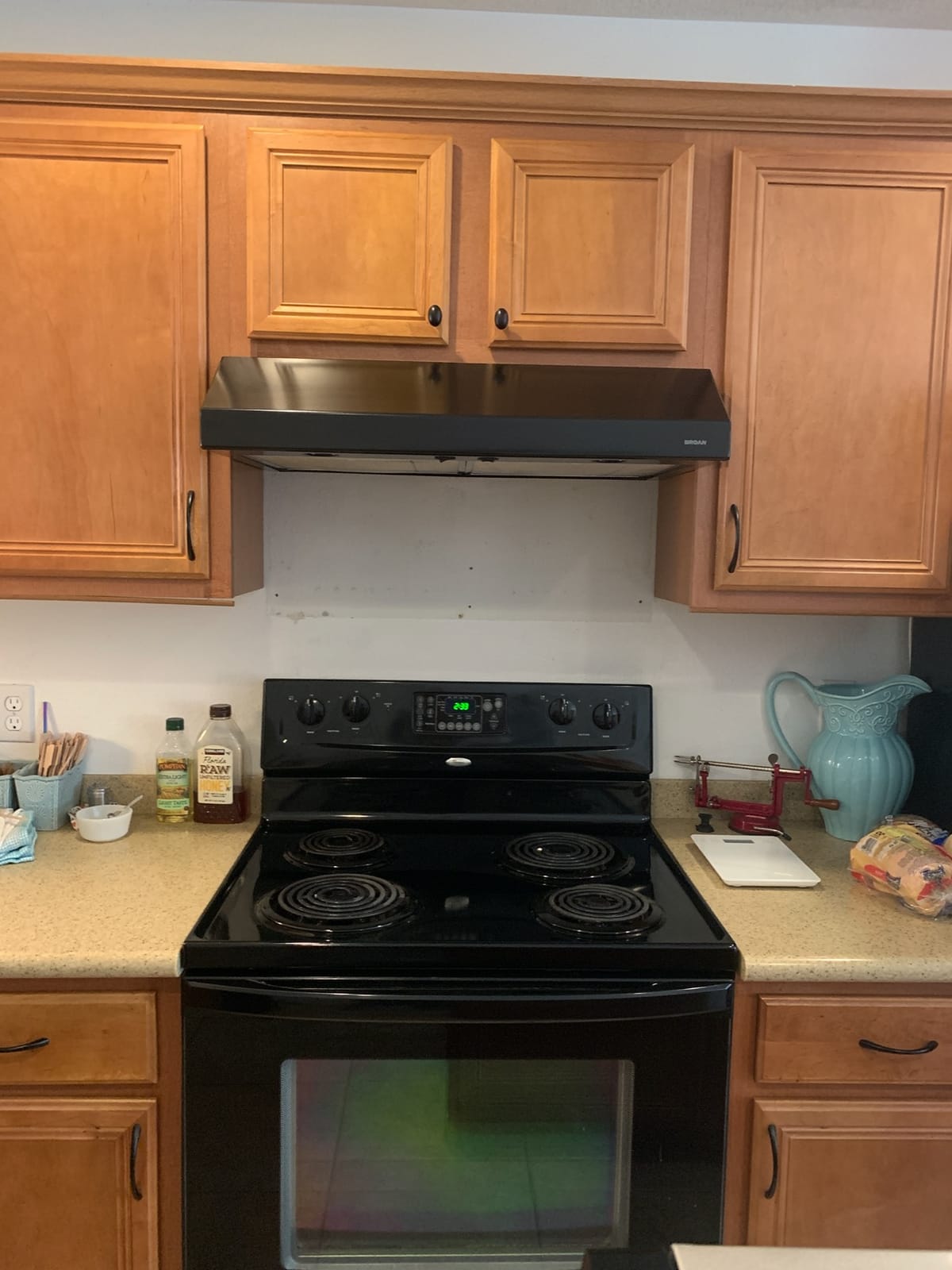
Owners tend to choose this for one reason above the rest: it is quiet. If a hood sits beside a seating area in an open plan, 1.5 sones is a figure none of the other models here can match, and the gap between that and a 6.5 sone unit is the whole conversation.
Two costs to plan for. Halogen bulbs are not included and cost more to run than LED over time. The recirculation filter and the 7 inch round duct damper are both sold separately, so a ductless or round-duct install needs parts before the box goes in.
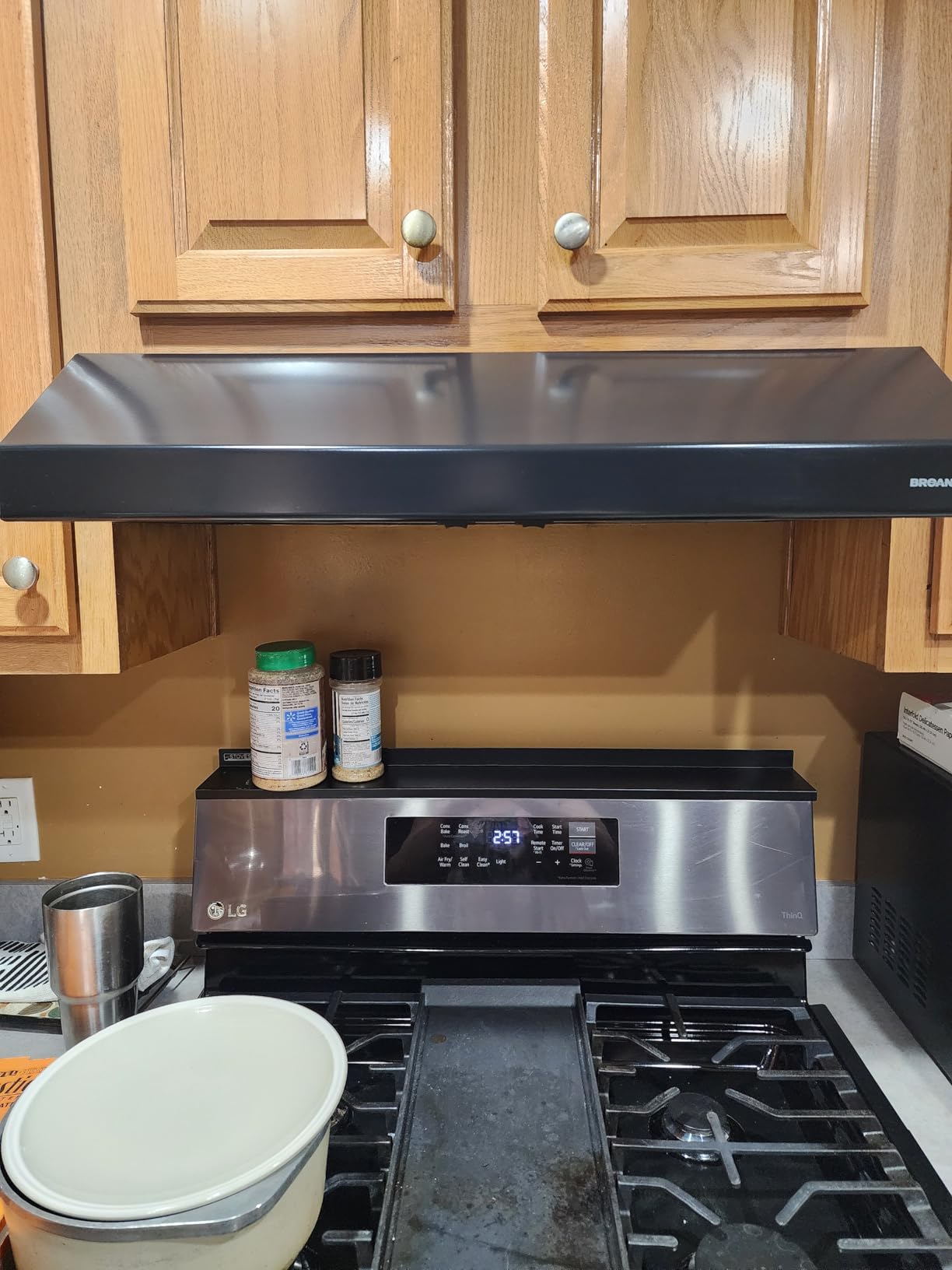
Is a 24 inch hood wide enough to catch everything?
Match the hood width to your cooktop, not to your room. On a 24 inch cooktop, a 24 inch hood is correct, and many owners widen to 30 inches only when they want a bigger capture area than the burner gives them.
This is the pick to take if your cooktop is a 24 inch induction unit and nothing else on this list will physically fit the opening.
What do you need to buy alongside it?
If you recirculate, order the filter before you schedule the install. If you vent through round duct, order the 7 inch damper. Both omissions show up as a half-finished job.
Four-way convertible covers 3.25 by 10 inch vertical or horizontal, 7 inch round, and non-ducted recirculation, so the same unit handles either apartment or house.
10. Zomagas 24 Inch 280 CFM Hood – Best Budget 24 Inch Option
Zomagas 24 inch Range Hood Under Cabinet, Stainless Steel Kitchen Hood
280 CFM air flow
55 dB
17.5D x 24W x 4.7H
5.42 kg
Convertible
Pros
- Slim 4.7 inch body at 24 inches wide
- 280 CFM across two speeds
- Quiet running
- About 30 minutes to install
Cons
- Weak low speed
- No junction box or cover plate
- LED is dim and hard to source
The other 24 inch option here, and the one to pick if the Broan Glacier is more than you want to spend. It is 4.7 inches tall, which is slimmer than the Glacier, and it sits at the low end of this roundup while still moving 280 CFM.
Owners are satisfied with how well it pulls steam and smoke, and several describe the install as roughly 30 minutes for two people. The brushed stainless finish matches a standard appliance run without looking thin.
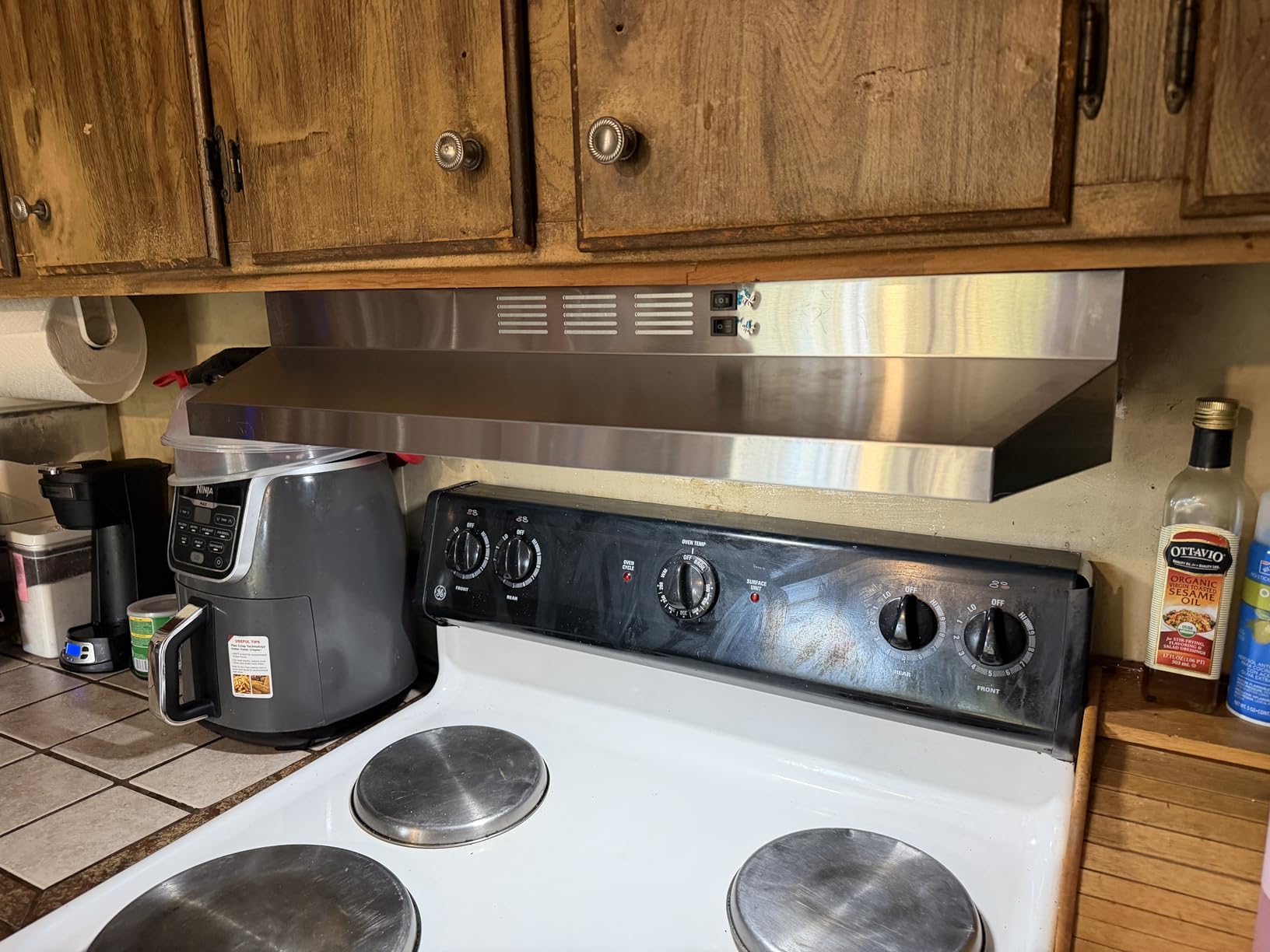
The catch is the speed range. The low setting is weak and the top setting is only moderately better, so in practice you run it on high, and 55 dB is what that sounds like. If the hood is close to where you sit, that is worth thinking about.
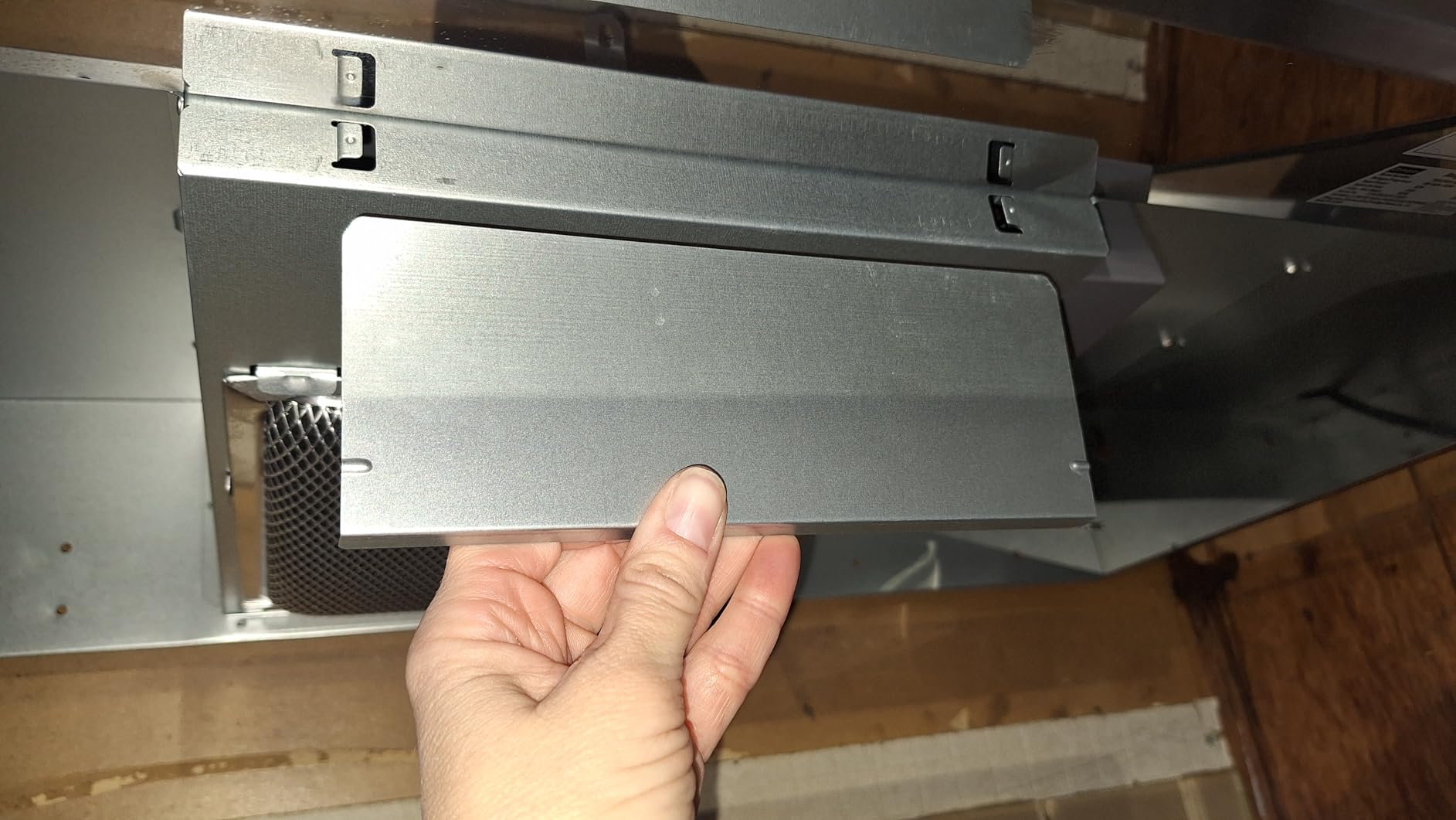
Wiring is the other flag. There is no junction box included and some units arrive without a wiring cover plate, leaving connections exposed. The LED is dim and its replacement path is not clearly documented.
When this beats the more expensive 24 inch model
It wins on three points: a 4.7 inch body against the Glacier’s 6 inches, a convertible ducted or ductless layout with a carbon filter included, and a cost at the low end of this roundup.
It loses on noise at speed and on build quality. If you are replacing a hood in a two-week rental flip, that trade is easy. If you are planning a decade of use in a quiet kitchen, the Glacier is the better spend.
What to add before you install
Buy a junction box and a wiring cover plate, and a plug if the hardwire default does not suit your setup. Both are sold separately and both are small costs compared with a failed inspection.
Activated carbon cotton composite filters replace every three to four months of cooking hours, so keep the part number handy. The top vent is 7 inch, with a rectangular rear vent as the ductless path.
How to Choose a Range Hood for a Small Kitchen
How much CFM do you actually need?
Three hundred CFM is the right target for an electric or induction cooktop, because induction produces far less airborne grease than gas and the range hood only has to clear steam and odor. Six hundred CFM is the right target for a 30 inch gas range, since a gas burner throws more heat and grease per minute. Move to 800 to 900 CFM only for a high-BTU gas range, a wok ring, or near-constant deep frying.
Matching the hood to the burner matters more than matching it to the room. A 700 CFM blower in a quiet small kitchen working at medium speed is a better experience than the same blower at full blast. Our AMZCHEF 30 Inch 700 CFM pick is the case where the extra air is genuinely earned.
Sizing by room volume is the older rule of thumb and it is much less useful here. What matters is capture, which depends on the vertical distance between the cooktop surface and the bottom of the hood. Keep 18 inches as a minimum, and go higher if you use a wok.
Ducted or ductless?
Ducted wins, and it is not close. Moving air out of the building removes smoke, moisture and heat. Recirculating pushes air back into the room after a filter, so the kitchen still gets the smoke and the smell, and the charcoal filter has to be replaced every three to four months of cooking hours.
Homeowners on renovation forums reach the same conclusion. The recurring advice in kitchen remodel threads is to exhaust outside if it is at all possible, and to check whether your building allows an exterior wall penetration before you design anything else.
One rule worth repeating: never duct into an attic, and never tie a hood into a heat recovery or energy recovery ventilation system. Grease in either location is a genuine hazard.
No duct available? What actually works
Start with recirculating, because it is the only permanently mounted option most buildings permit. It costs less to install and needs no structural work, at the price of an ongoing filter expense.
Convertible units are the practical middle path. They are ducted when a duct exists and recirculating when it does not, so the same model survives a move to a different apartment. Several picks in this roundup are four-way or two-way convertible for exactly that reason.
If you are a renter or the building forbids any modification, the honest options are a portable unit or a window kit, though neither belongs in a permanently installed list. An external window or wall vent is a legitimate ducted path that some apartment dwellers overlook, and a permanently installed wall mount almost always needs a real path to an exterior wall.
Under-cabinet, wall mount or insert
Under-cabinet fits inside an existing cabinet run, costs the least and preserves cabinet storage. It is the default answer for a small kitchen, and the reason eight of these ten picks are this format. The trade is shallower capture.
Wall mount with a chimney raises the canopy, which improves capture and does not eat your cabinets, because the chimney rises above the cabinet line. It needs a real duct and drilling into the wall above the cooktop, and our wall mount range hood guide covers the clearance math in full.
Insert or liner is a bare blower and frame that drops into a cabinet carcass you have already built or modified. It is the quietest and most integrated option, and it is a cabinetry project rather than an appliance purchase.
If your cooking runs hot, weight the capture height over the storage gain. If your burner is modest, the under-cabinet format gives you the most kitchen back. Our range hood guide for gas stoves goes deeper on the high-heat cases.
Noise, filters and the clearance rule
Read the noise figure at the speed you will cook on, not the number on the listing. Most manufacturers quote their lowest speed with rigid duct, and that is the setting you will use for a quick boil but never for a messy stir-fry. Sonic comparisons from one speed to another are not meaningful.
Filter choice drives both maintenance and cost. Baffle filters in stainless steel are dishwasher-safe, last for years and handle grease best. Aluminum mesh filters are cheaper and washable but need weekly attention under heavy use. Activated charcoal filters are for recirculation only and are replaced every three to four months of cooking hours.
Finally, the 18 inch clearance from cooktop surface to hood bottom is the minimum you should design to. Forum advice often quotes 24 to 25 inches instead, and owners measuring their own installations land in that same range. If your cabinet run will not give you 18 inches, the hood is the wrong size for the space.
Frequently Asked Questions
What CFM is best for a range hood?
Three hundred CFM is the right target for an electric or induction cooktop. Six hundred CFM suits a 30 inch gas range, and 800 to 900 CFM is only worth it for high-BTU burners, wok cooking or constant deep frying. Match the airflow to the burner output, not to the room size.
Is 600 CFM enough for a range hood?
Yes, 600 CFM is the standard target for a 30 inch gas range with typical BTU output. Below that, smoke and grease linger after a heavy meal. Above 900 CFM, you gain little on a normal domestic range and lose noticeably on noise.
How many CFM for a 30 inch range?
A 30 inch electric or induction range needs about 300 CFM, and a 30 inch gas range needs about 600 CFM. The 30 inch figure describes the cooktop width rather than the hood width, though a hood at least as wide as the cooktop captures better.
What can I do if my apartment doesn’t have a stove vent?
Use a recirculating hood with activated charcoal filters, which are replaced every three to four months of cooking hours. A window vent kit gives you a real ducted path in some buildings. If modifications are not permitted at all, a portable countertop unit is the only option that needs no work.
Does a cooker hood have to be on an outside wall?
No, not if you recirculate. Many condos and apartments prohibit exterior wall penetration, which is why recirculating and convertible hoods exist. A permanently installed wall mount hood, however, nearly always needs a real duct to an exterior wall.
Which brand of range hood is the most reliable?
Broan-NuTone stands out for reliability here, with the highest review counts of any brand in this roundup across both of its entries. Zephyr, KOBE and Akira carry similar household trust among owners. Marketplace brands can hold up, but their airflow claims deserve checking against reviews.
Final Verdict: Which Range Hood Wins for Small Kitchens
For most small kitchens, the Broan-NuTone F403011 is the answer. It is shallow enough for a tight cabinet run, light enough to install without help, and flexible enough to run ducted or not in four different configurations, which removes the single most common reason a small-kitchen purchase goes wrong.
Choose the COSMO COS-5MU30 if counter depth matters more than anything. Choose the Broan-NuTone Glacier if you need 24 inches of width or the lowest noise we found. Choose the Tieasy if you want real capture height and can run a duct. Choose the AMZCHEF if you cook hot enough to need 700 CFM, and the BREETEE if you cannot modify the kitchen at all.
Measure those four numbers before you order, pick the CFM that matches your burner, and the best range hoods for small kitchens becomes a straightforward decision in 2026.