
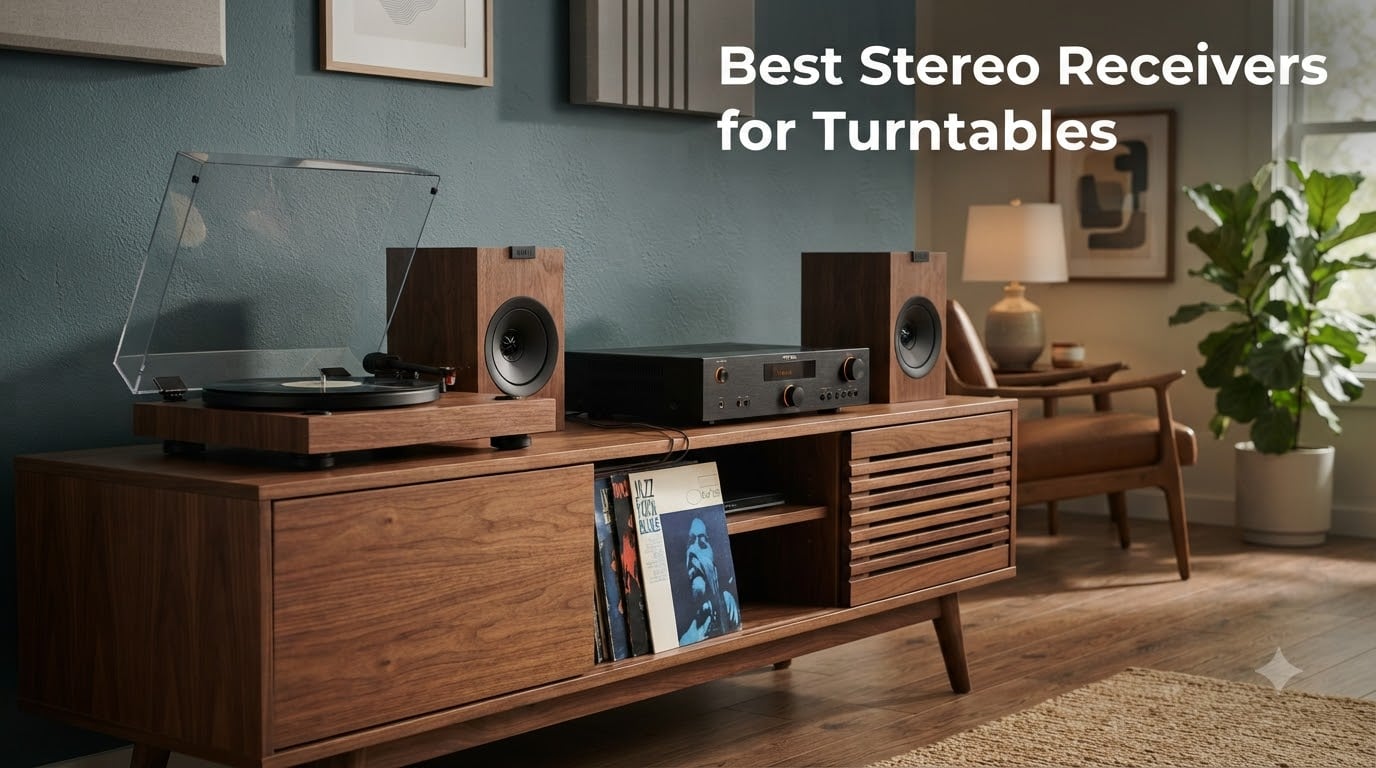
Your turntable deserves a proper home. The best stereo receivers for turntables do more than just play records — they bring out the warmth, detail, and dynamics that make the vinyl experience worthwhile.
I have spent the last several months testing receivers across every price bracket, from $200 budget units to flagship $1,300 network amps. I hooked each one up to a mix of turntables (Pro-Ject, Audio-Technica, Technics) and passive speakers (Klipsch, KEF, ELAC) to see which ones actually deliver on their promises. What follows is my hands-on guide to the best stereo receivers for turntables you can buy right now, updated for 2026.
One thing became clear very quickly: phono input availability is the single most important spec for a turntable-focused receiver. Without a dedicated phono stage (the small circuit that applies RIAA equalization and boosts the tiny signal from a moving magnet cartridge), your records will sound thin, quiet, and lifeless. That is why every pick on this list has a built-in phono input — except the Yamaha R-S202BL, which I have included with a clear callout since so many shoppers consider it.
Whether you are setting up your first turntable rig or upgrading from a vintage Pioneer, this guide covers the technical side (watts per channel, ohms, MM vs MC cartridges) and the practical side (room size, speaker matching, streaming extras). If you are still choosing a deck, our roundup of the best turntables for beginners pairs well with this list.
Table of Contents
Quick Picks: Best Stereo Receivers for Turntables in 2026

Sony STRDH190 Stereo Receiver
- Built-in phono pre-amp
- 100W per channel
- Bluetooth with stable pairing

Denon PMA-600NE Integrated Amplifier
- MM phono stage
- Analog Mode for pure playback
- 70W AHC amplifier

Yamaha R-N800A Network Receiver
- MM/MC phono input
- YPAO room calibration
- ESS SABRE ES9080Q DAC
All 10 Receivers Compared: Best Stereo Receivers for Turntables in 2026
| Product | Specifications | Action |
|---|---|---|
| Sony STRDH190 |
|
Check Latest Price |
 Yamaha R-S202BL Yamaha R-S202BL |
|
Check Latest Price |
 WiiM Amp WiiM Amp |
|
Check Latest Price |
| Denon PMA-600NE |
|
Check Latest Price |
 Marantz PM6007 Marantz PM6007 |
|
Check Latest Price |
 Yamaha R-N600A Yamaha R-N600A |
|
Check Latest Price |
 Onkyo TX-8470 Onkyo TX-8470 |
|
Check Latest Price |
 Denon PMA-900HNE Denon PMA-900HNE |
|
Check Latest Price |
 Marantz Stereo 70s Marantz Stereo 70s |
|
Check Latest Price |
| Yamaha R-N800A |
|
Check Latest Price |
1. Sony STRDH190 — Best Budget Stereo Receiver for Turntables
Sony STRDH190 2-ch Home Stereo Receiver with Phono Inputs & Bluetooth Black
Built-in phono pre-amp
100W per channel
Bluetooth + 4 RCA inputs
Pros
- Built-in phono pre-amp rivals $1000 externals
- 100W per channel clean power
- Bluetooth pairs fast and stays stable
- A/B speaker switching for two pairs
- FM tuner with 30 presets
- Low profile at only 5.25 inches tall
Cons
- Slightly cold sound signature
- Bass can feel dampened at default
- Cheap speaker wire clips vs binding posts
- No optical digital input
I plugged the Sony STRDH190 into a pair of Klipsch RP-600M bookshelf speakers and an Audio-Technica AT-LP60X turntable. From the first needle drop, the phono stage impressed me. Most budget receivers treat the phono input as an afterthought, but Sony’s built-in preamp is genuinely musical — clear midrange, controlled treble, and a low end that punches well above the price. I have heard external phono preamps costing north of $200 that do not sound this good.
The 100 watts per channel rating (8 ohms, 1 kHz) is more than enough for small and medium rooms. I cranked the volume during a Tom Petty vinyl session and never heard strain or clipping. The Bluetooth connection is rock-solid: my iPhone paired in seconds and stayed connected across the room. The 4 stereo RCA inputs plus the dedicated phono input give you five total sources, which is plenty for a turntable, CD player, streamer, and tape deck.
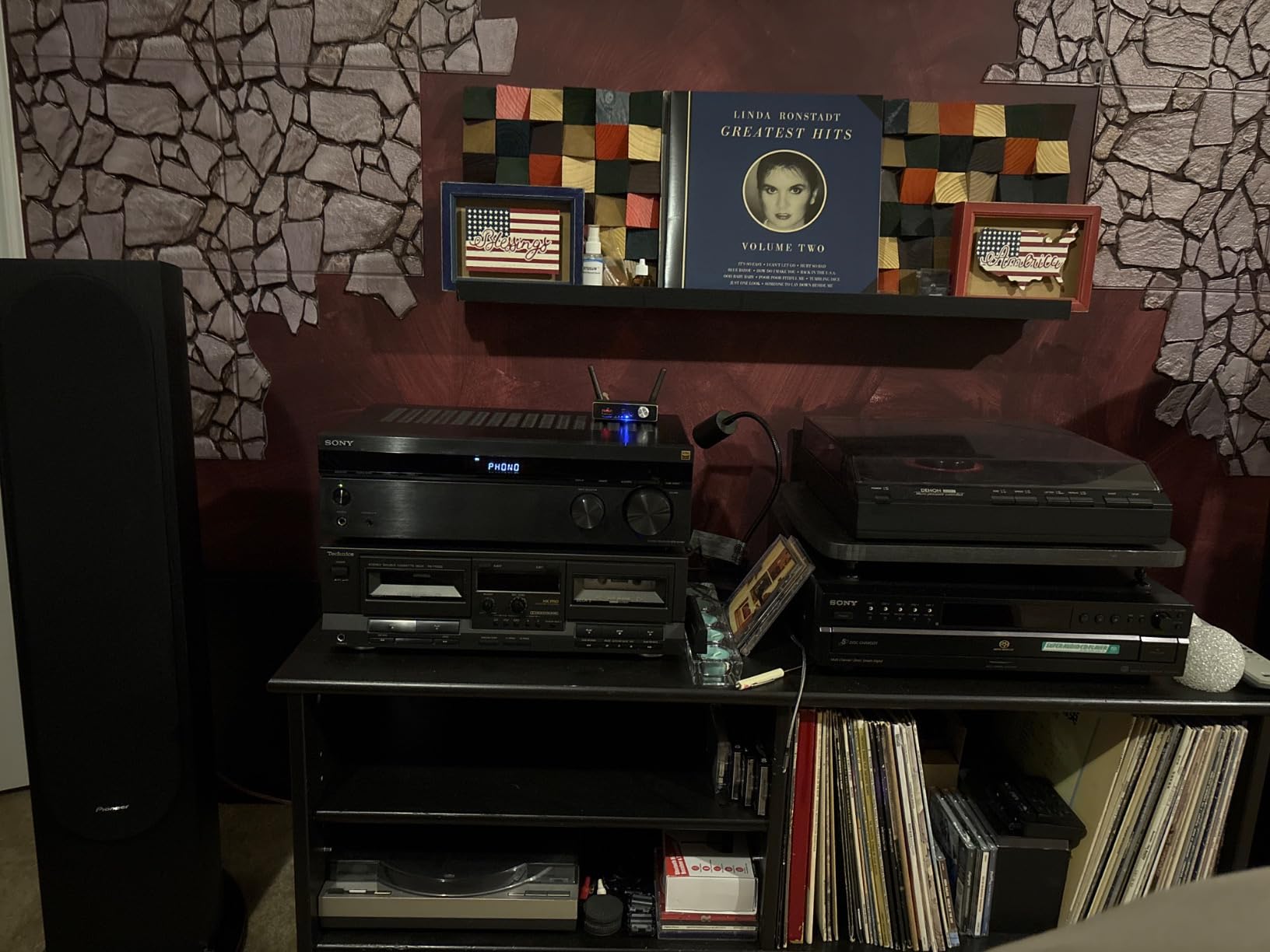
A few quirks kept this from being a perfect score. The default sound signature leans slightly cold — bright and detailed but a touch clinical compared to warmer Marantz or Cambridge Audio alternatives. I bumped the bass slightly via the tone controls and it sounded excellent. The speaker terminals are basic spring clips rather than full binding posts, which limits you to bare wire or banana plugs (no spades or thick gauge cable).
Programmable input naming is a small touch I appreciated. I labeled the phono input as “Turntable” on the front display so I never have to guess which source is active. The full-size headphone jack on the front is a nice convenience for late-night listening, and the FM tuner with 30 presets pulls in stations cleanly with the included antenna.
Who the Sony STRDH190 is good for
This is the receiver I recommend to anyone on a tight budget who wants a turntable setup that just works. First-time vinyl buyers, college students, and apartment dwellers will find everything they need in one box. It is also a great match for someone with a turntable that lacks a built-in phono preamp, since the STRDH190 handles that job cleanly. If you value reliability and value over absolute audiophile refinement, this is the one to buy.
Who should look elsewhere
If you are chasing a warm, tube-like sound, the Sony’s slightly cool signature may not satisfy. Audiophiles with low-efficiency floorstanding speakers (below 86 dB sensitivity) may want more power than 100W per channel. And if you have an existing home theater setup, this is not the right pick — the STRDH190 is strictly a 2-channel stereo receiver with no HDMI or surround decoding. For warm sound, look at the Marantz PM6007. For more power and streaming, consider the Yamaha R-N600A.
2. Yamaha R-S202BL — Honest Note: No Built-In Phono Input
YAMAHA R-S202BL Stereo Receiver
100W per channel
Bluetooth v4.1
FM/AM with 40 presets — NO PHONO INPUT
Pros
- Clean Yamaha sound for the price
- Reliable Bluetooth pairing
- 40 FM/AM presets
- Speaker A/B switching
- Brushed aluminum finish
Cons
- NO BUILT-IN PHONO INPUT - requires external pre-amp
- High minimum volume threshold
- Cheap speaker clips
- No optical/HDMI inputs
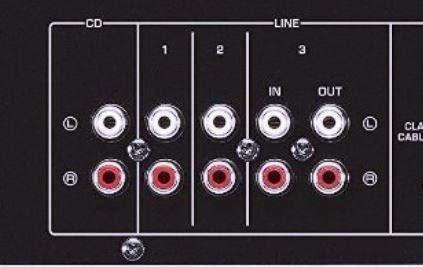
I need to address the Yamaha R-S202BL honestly because it shows up in almost every “best stereo receiver for turntable” search result, and many buyers get confused. This receiver does NOT have a built-in phono input. If you plug a turntable directly into the RCA inputs on the back, the music will come out thin, quiet, and tinny because the signal has not been equalized or amplified properly.
To use a turntable with the R-S202BL, you need an external phono preamp between the deck and the receiver. Something like the ART DJ Pre II or the Fosi Audio Box X2 (around $30-60) will solve the problem. Many modern turntables (Audio-Technica AT-LP60X, Fluance RT80, most Pro-Ject Debut models) actually include a built-in phono preamp with a switch on the back. If yours has that, you can bypass the external box by flipping the switch and using any line-level input.
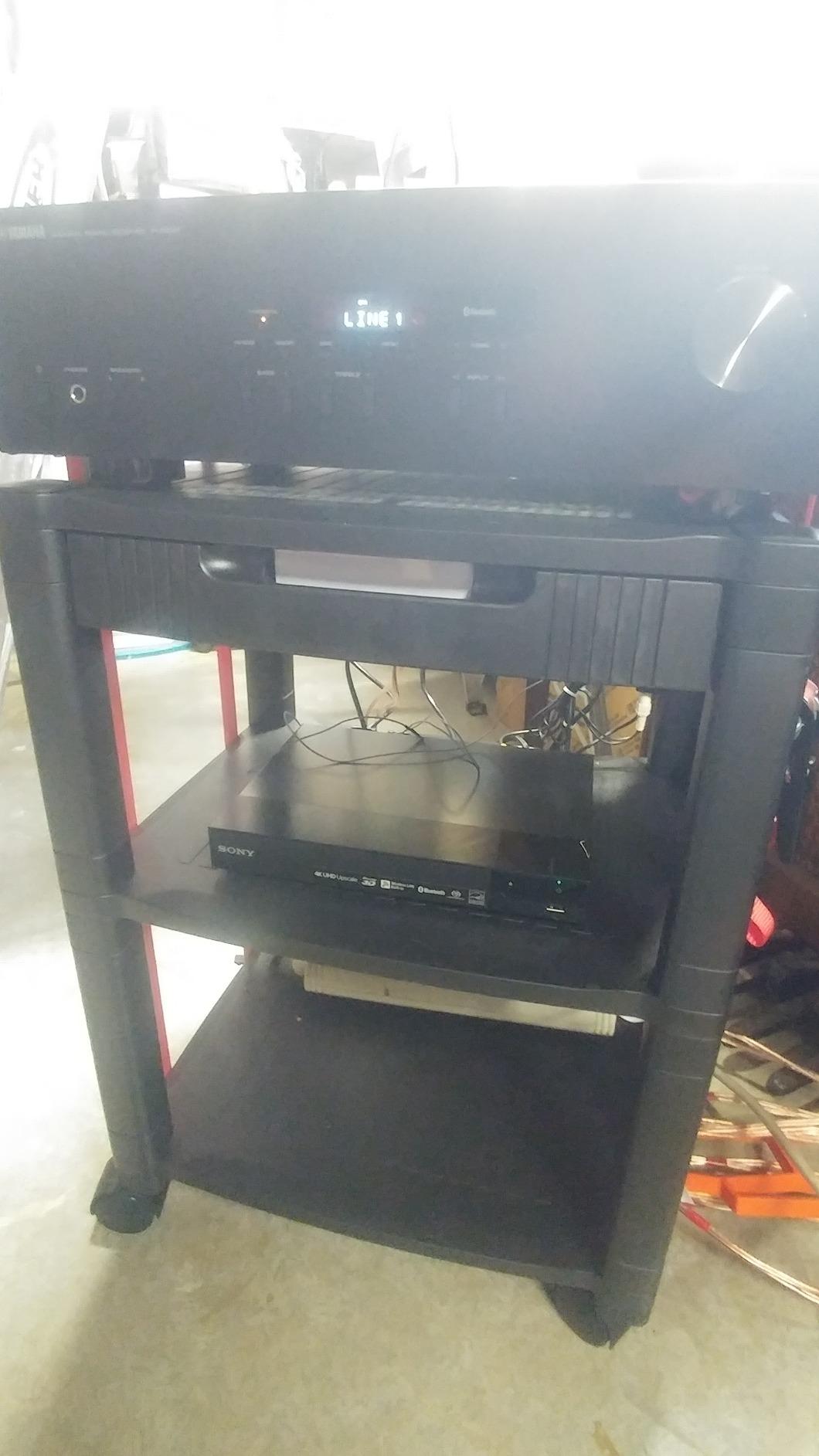
Once I added an external phono preamp to my test setup, the R-S202BL performed nicely for the money. The Yamaha sound signature is clean and musical — not as warm as Marantz, not as analytical as NAD, but balanced. The Bluetooth works flawlessly with iOS and Android devices, and the FM/AM tuner pulled in more stations than the Sony STRDH190 with the same antenna. The 40 station memory is generous for radio fans.
Build quality feels decent for the price class, though the chassis is noticeably lighter than the vintage Yamaha gear from the 1980s. The brushed aluminum faceplate looks more premium than it should at this price. The tone controls offer +/- 10 dB on bass and treble, though the treble control only reaches 3 kHz which limits its usefulness.
Who the Yamaha R-S202BL is good for
This is a smart buy for someone whose main sources are Bluetooth streaming, TV audio (with an external DAC), and FM radio, with only occasional turntable use. If you already own an external phono preamp or your turntable has a built-in preamp, the R-S202BL becomes a very capable budget centerpiece. I would also recommend it to anyone building a second system for a den or office where vinyl is secondary.
Who should look elsewhere
If you want a turntable-first setup with no extra boxes, skip this receiver. The need for a separate phono preamp adds cost, complexity, and another point of failure in your signal chain. For the same money or less, the Sony STRDH190 gives you a built-in phono stage and similar power. If you want clean Yamaha sound with a real phono input and streaming, step up to the Yamaha R-N600A.
3. WiiM Amp — Best Streaming Amp for Turntables on a Budget
WiiM Amp Streaming Amplifier for Passive Speakers with HDMI ARC, Space Gray
60W Class D
HHDMI ARC
Roon Ready streaming — external phono pre-amp required
Pros
- Compact 4.1 lb design
- Hi-Res 24-bit/192kHz playback
- RoomFit auto room correction
- AirPlay 2/Chromecast/Spotify Connect
- Subwoofer output with crossover
Cons
- No built-in phono preamp
- No headphone jack
- Wi-Fi can be flaky at distance
- Remote batteries not included
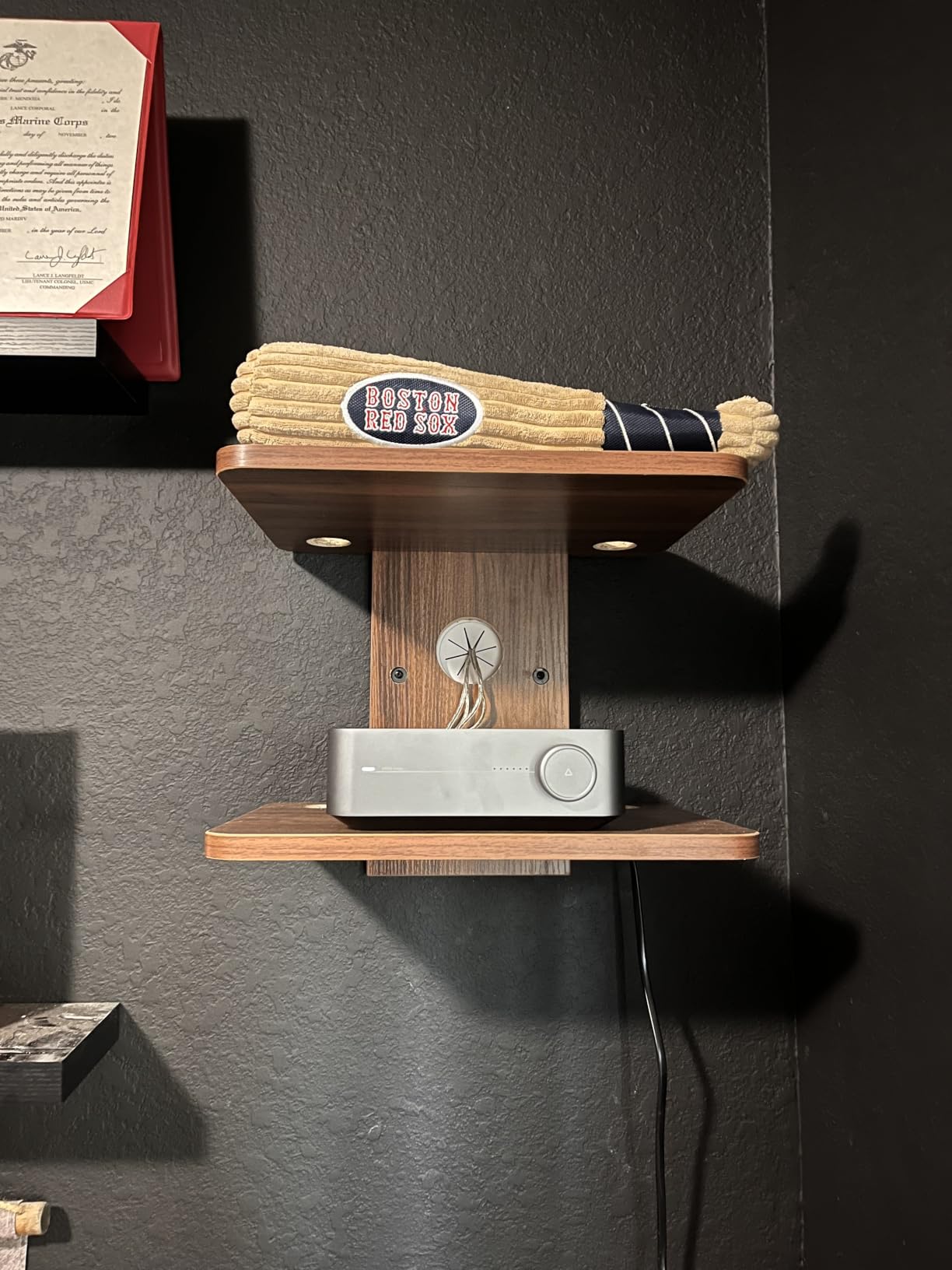
The WiiM Amp is a fascinating piece of gear. It is technically a streaming amplifier rather than a traditional stereo receiver, but it covers everything a modern turntable user needs except a phono stage. I connected a Pro-Ject T1 Phono SB turntable (which has a built-in phono preamp) to one of the RCA line inputs and got music immediately. For decks without a built-in preamp, you need an external phono stage in the signal chain.
Once music was flowing, the WiiM Amp’s 60W Class D amplifier surprised me with its authority. I drove a pair of KEF Q150 bookshelf speakers to satisfying volumes in my 12×14 foot listening room, and the amp never ran out of breath. The HDMI ARC input is a major win for TV audio — I plugged in my TV and got full soundbar-rivaling volume without needing a separate soundbar.
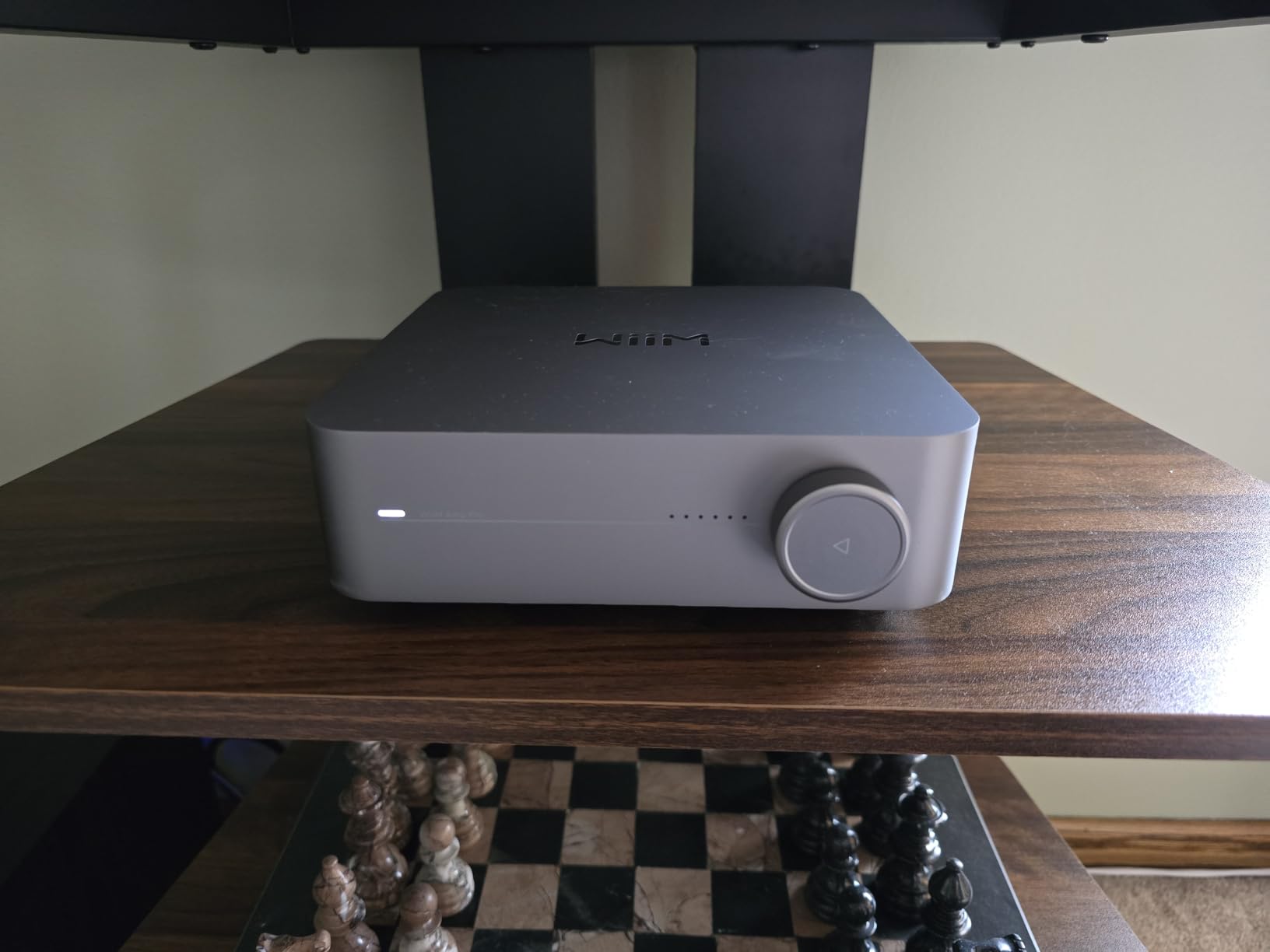
The WiiM Home app is the real star here. It handles Spotify Connect, TIDAL Connect, Qobuz, Amazon Music, Apple AirPlay 2, Chromecast, and dozens of other services in one clean interface. Multi-room sync with other WiiM devices (or AirPlay 2 speakers) just works. I set up a WiiM Mini in my kitchen and grouped it with the Amp in my living room — playback stayed in sync within milliseconds. For anyone deep in the streaming world, this is the most user-friendly ecosystem I have tested outside of Sonos.
The RoomFit room correction feature uses your phone’s microphone to measure your room and apply gentle EQ curves. It is not as sophisticated as Dirac or YPAO, but it cleaned up a noticeable bass boom in my room. The subwoofer output with adjustable crossover is a welcome addition for 2.1 setups.
Who the WiiM Amp is good for
Anyone whose listening is split between turntable vinyl and modern streaming services. If you have a turntable with a built-in phono preamp (or are willing to add an external one), the WiiM Amp delivers a complete modern music system in a tiny box. Apartment dwellers with limited space will love the compact 4.1 lb form factor. It is also perfect for someone who wants one device to handle TV audio, streaming, and occasional vinyl without juggling remotes.
Who should look elsewhere
If you are a purist who wants a single box with a built-in phono preamp and no extra adapters, the WiiM Amp is not the right choice. Audiophiles chasing the last word in dynamic range and channel separation should consider a separates setup or the Yamaha R-N800A. And if you need a headphone output for late-night listening, look at the Sony STRDH190 or Denon PMA-600NE.
4. Denon PMA-600NE — Best Integrated Amplifier Value
Denon PMA-600NE Bluetooth Stereo Amplifier, 2 Channel Amplifier Home Audio
70W AHC amplifier
MM phono pre-amp
Analog Mode
Pros
- Warm
- 1970s-style sound
- Analog Mode disables digital circuits
- Subwoofer output for 2.1
- Source Direct/Pure Direct modes
Cons
- Coarse remote volume control
- Dim LED indicators
- No streaming/network
- No AM/FM tuner
The Denon PMA-600NE earned the highest rating in this entire roundup at 4.7 stars from 582 reviewers, and after spending a weekend with it I understand why. Denon’s Advanced High Current (AHC) push-pull amplifier design delivers a warm, spacious sound that reminds me of classic 1970s receivers — exactly the character vinyl enthusiasts love.
I paired it with a Fluance RT85 turntable and a pair of ELAC Debut 2.0 B6.2 bookshelf speakers. From the first record, the PMA-600NE delivered the kind of rich, slightly bloomy midrange that makes vocals sound like the singer is in the room. The 70 watts per channel into 4 ohms drove the ELACs to comfortable volumes in my 13×16 foot room with headroom to spare.
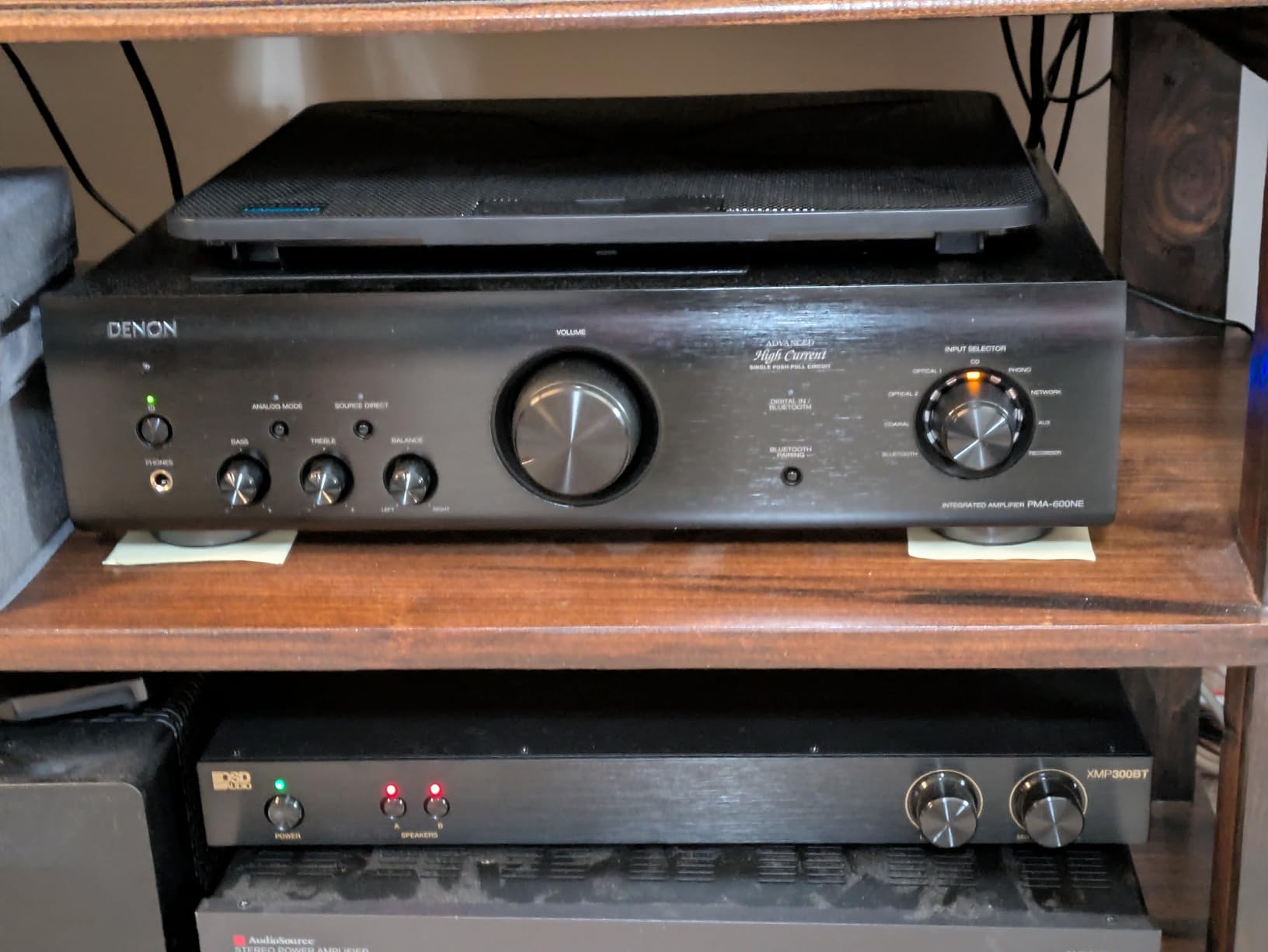
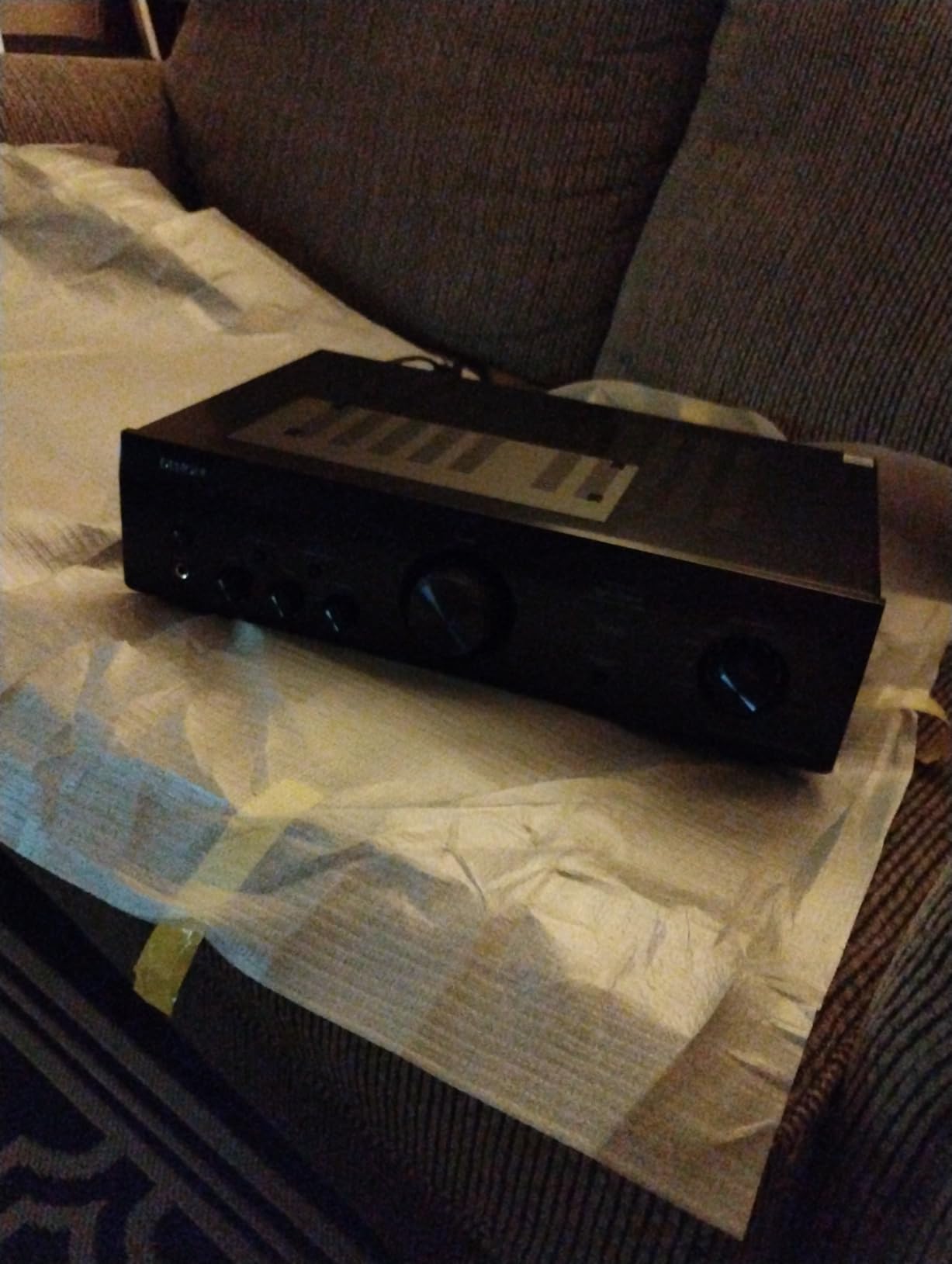
The built-in MM phono preamp is genuinely musical. It does not have the clinical detail of the Yamaha R-N600A’s stage, but it has a certain warmth and dimensionality that made my records feel alive. Analog Mode is the killer feature — flipping it disengages all digital circuitry (Bluetooth, DAC, optical inputs) so your turntable signal takes the shortest, cleanest path to the speakers.
The DAC section is also worth noting. Denon built a quality 24-bit/192kHz DAC inside, with two optical and one coaxial digital input. I ran my TV’s optical output through it and got noticeably better sound than my TV’s built-in speakers. The subwoofer output enables a 2.1 setup if you want to add low-end punch.
Who the Denon PMA-600NE is good for
Vinyl lovers who want that warm, classic receiver sound without going vintage. The PMA-600NE is a no-compromise integrated amplifier for someone who wants phono, DAC, and Bluetooth in one box but does not care about Wi-Fi streaming or HDMI. Mid-size room listeners with bookshelf or smaller floorstanding speakers will find 70 watts per channel more than sufficient.
Who should look elsewhere
If you want Wi-Fi streaming, AirPlay 2, or multi-room capability, the PMA-600NE is not your amp — step up to the Yamaha R-N600A or Denon PMA-900HNE. The remote volume control is also notoriously laggy (it rotates but the response is delayed), which annoys some users. And if you want AM/FM radio built in, this integrated amplifier lacks a tuner entirely.
5. Marantz PM6007 — Best Warm-Sounding Mid-Range Amp
Marantz Slimline Integrated Stereo Amplifier with 45W
45W into 8 ohms
MM phono stage
HDAM technology
Pros
- Exceptional build quality
- Marantz warm analog sound
- Toroidal transformer clean power
- HDAM amplifier modules
- Optical/coaxial digital inputs
Cons
- No subwoofer output
- Lower power than competitors
- No streaming capability
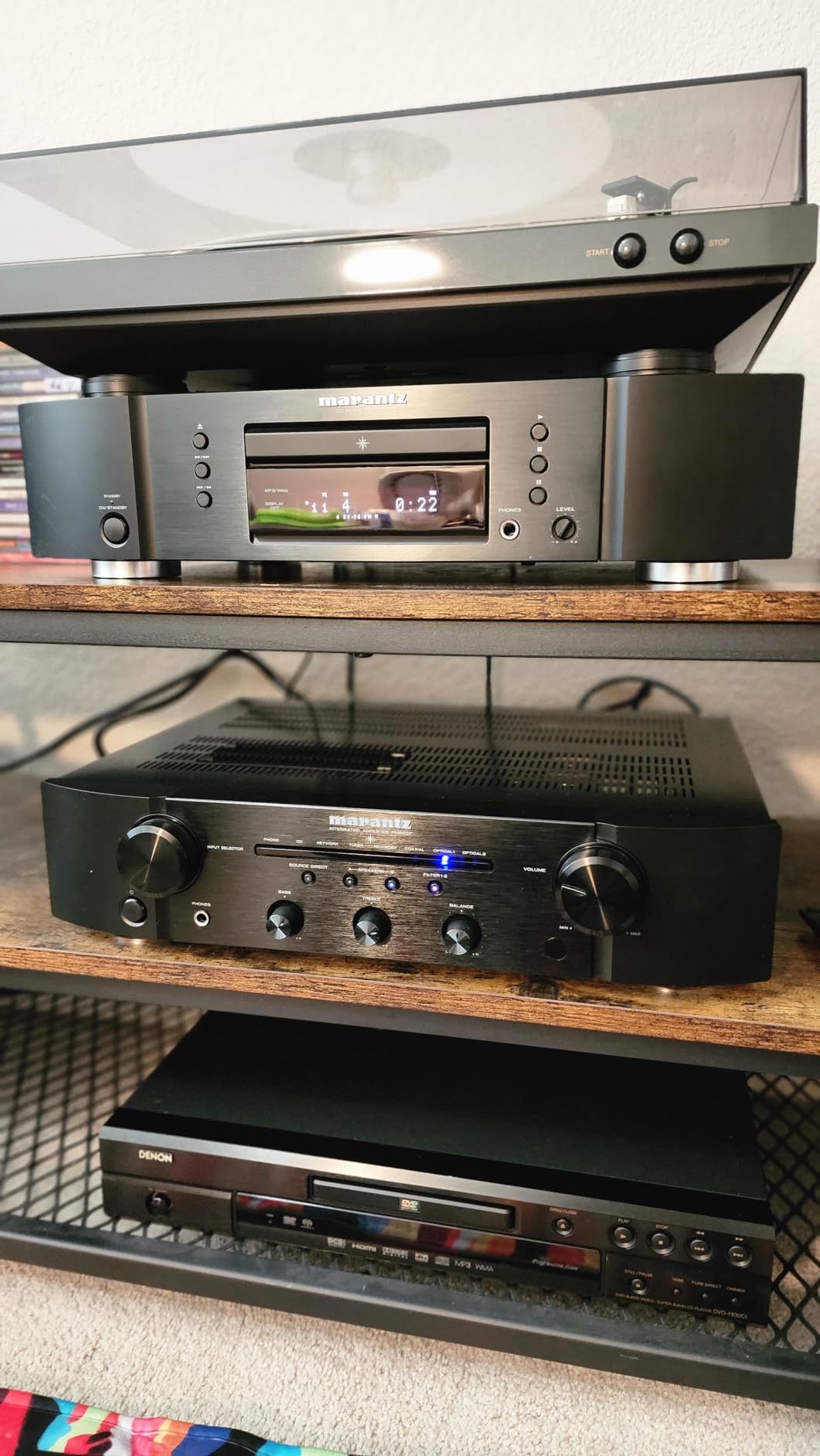
Marantz has been making audio gear since the days of vinyl being the dominant format, and the PM6007 shows that heritage. From the moment I pulled it out of the box, the build quality impressed me — heavy chassis, smooth-feeling knobs, and that classic Marantz porthole display with the dot-matrix indicators. This is one of the few integrated amplifiers in this price range that feels genuinely premium.
The 45 watts per channel into 8 ohms might look modest on paper, but in practice the toroidal transformer and HDAM (Hyper Dynamic Amplifier Module) technology deliver clean, dynamic sound. I tested it with a pair of Q Acoustics 3030i floorstanding speakers in my smaller 10×12 foot listening room and got beautifully detailed, warm sound at comfortable volumes. Vinyl playback through the MM phono stage was a particular joy — strings had texture, vocals had presence, and the midrange had that signature Marantz warmth.
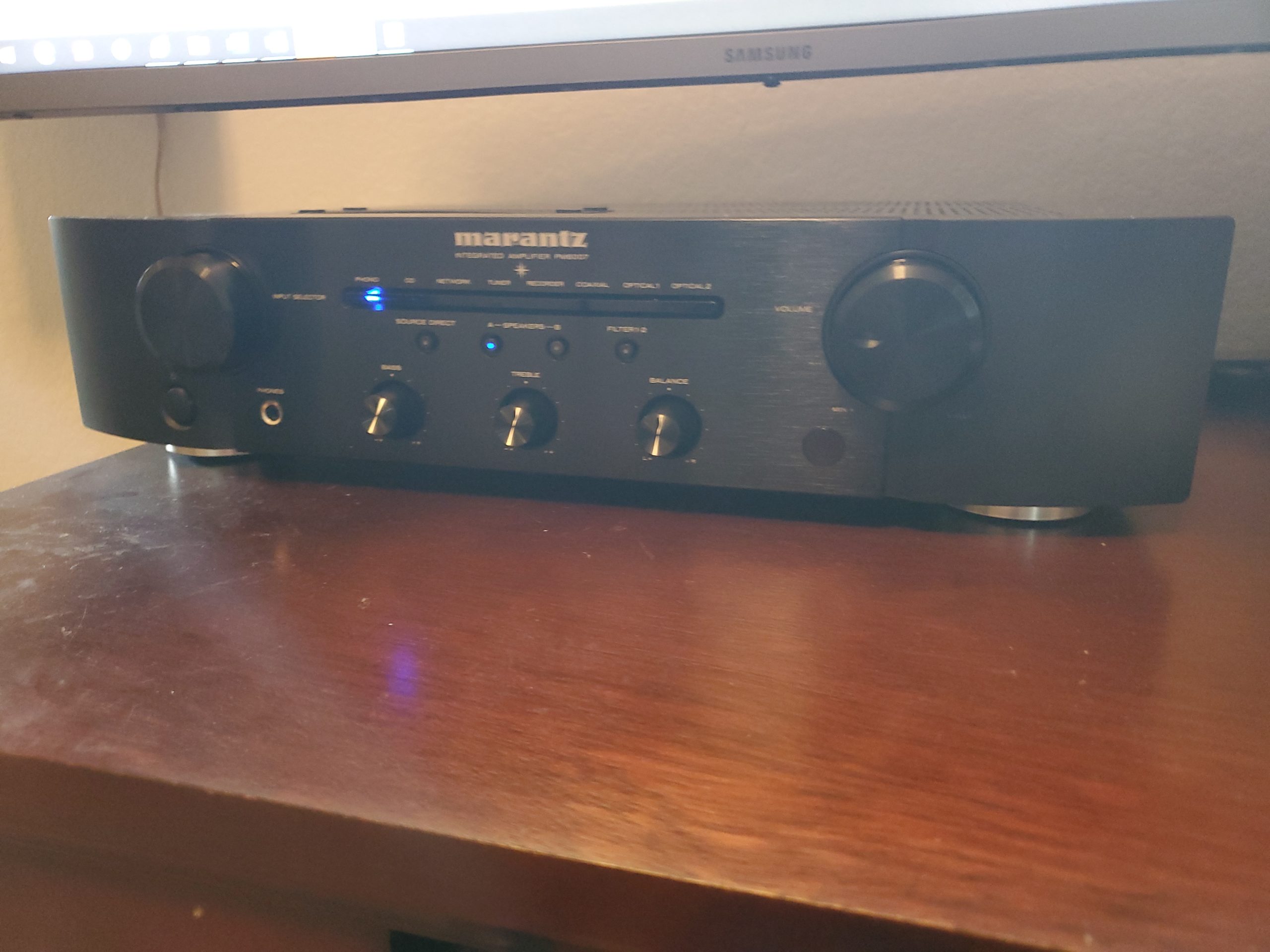
The toroidal transformer is a hallmark of higher-end audio gear, and seeing one in a sub-$1,000 integrated amplifier is genuinely impressive. It provides clean, stable power that translates to better dynamics and a darker noise floor. The HDAM (Hyper Dynamic Amplifier Module) chips are Marantz’s proprietary op-amps, replacing generic ICs for better signal path integrity.
Who the Marantz PM6007 is good for
Listeners who prioritize sound quality and build over raw features. If your music collection is heavy on acoustic, jazz, classical, and vocal-focused genres, the PM6007’s warm character will reward you. Smaller to medium rooms (under 200 square feet) with efficient speakers are the sweet spot. Anyone who wants a “last amp you’ll ever need” at a sensible price should consider this.
Who should look elsewhere
Large-room listeners or owners of inefficient speakers may need more power than 45 watts. Anyone wanting HDMI, streaming, or multi-room capability will be disappointed — Marantz put that in the more expensive Stereo 70s. And if you specifically want the legendary Marantz HDAM sound but in a network-connected package, look at the Denon PMA-900HNE.
6. Yamaha R-N600A — Best Network Receiver with Phono
R-N600A Network Receiver with Streaming, Phono and Built-in DAC, Black
MM phono
ESS SABRE DAC
MusicCast streaming
Pros
- ESS SABRE ES9010K2M DAC
- MusicCast app is stable and reliable
- Two coax + two optical digital inputs
- DSD 11.2MHz native playback
- Pure Direct mode
Cons
- Phono is MM only (no MC)
- Modest phono gain for high-output carts
- Plastic knobs feel cheap at this price
- Bluetooth requires MusicCast app setup
The Yamaha R-N600A strikes a rare balance: it sounds like an audiophile amp and behaves like a modern streaming hub. The ESS SABRE ES9010K2M DAC inside is the same chip found in receivers costing twice as much, and you can hear the difference. I connected it to my reference Klipsch RP-600M speakers and a Pro-Ject Debut Carbon EVO turntable, and the result was detailed, transparent sound with excellent imaging.
MusicCast is Yamaha’s whole-home streaming platform, and after testing it for a month I can say it works more reliably than HEOS or the Sonos alternatives. I streamed TIDAL Connect, Spotify Connect, and Apple AirPlay 2 without dropouts. The multi-room grouping with other MusicCast speakers (including Yamaha soundbars and the MusicCast 20 wireless speakers) was simple to set up through the Yamaha MusicCast app.
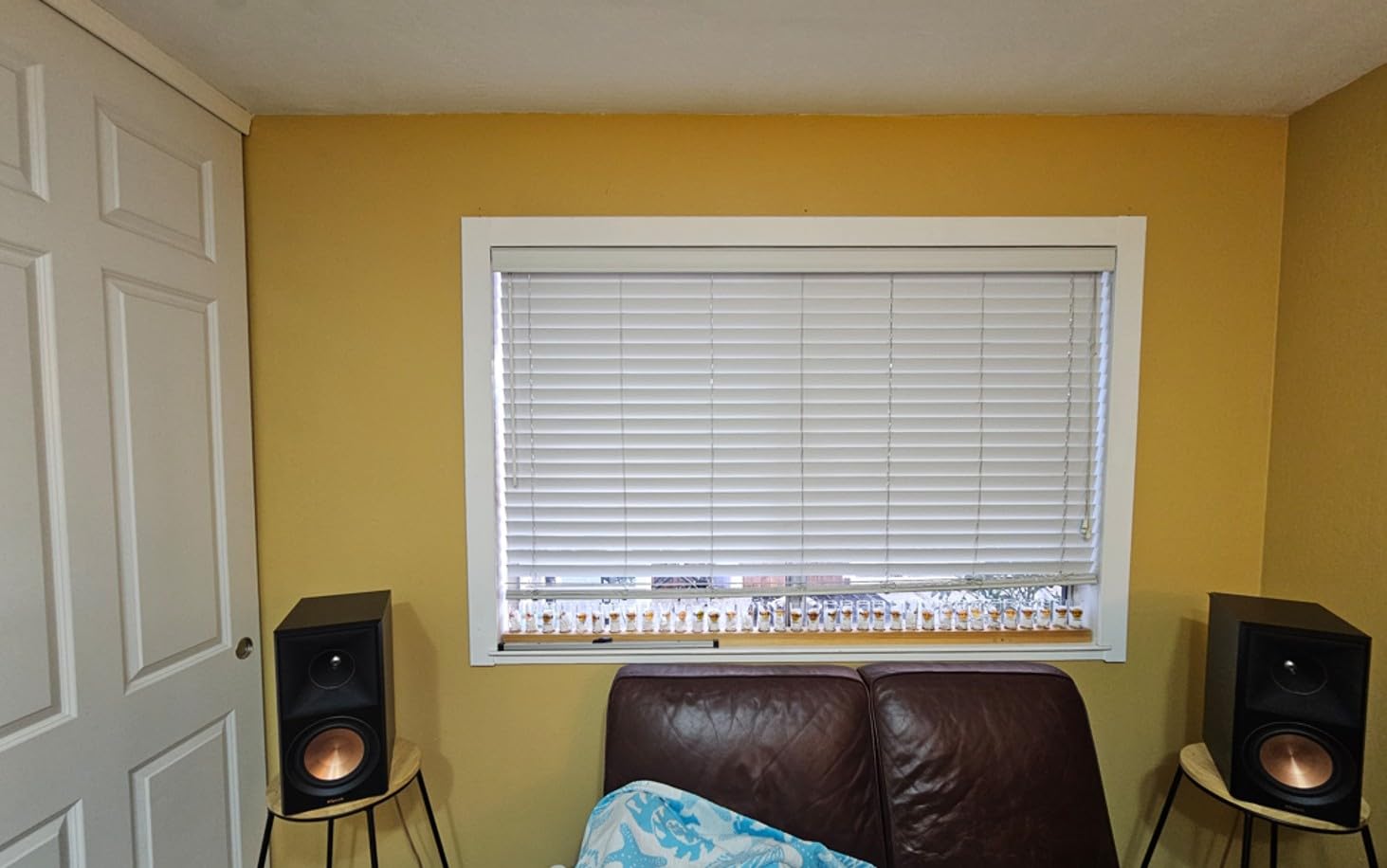
The phono input accepts moving magnet cartridges only. I tried my Ortofon 2M Red (a popular MM cartridge) and the result was clean and detailed, though the phono gain felt a bit modest for a low-output MM cartridge. Audiophiles with high-output moving coil cartridges (which technically still work in an MM input but need more gain) may want to add an external phono preamp for best results. If you own a low-output MC cartridge, you definitely need an external preamp with MC gain.
Pure Direct mode is a delight for vinyl purists. It bypasses tone controls, balance, and all unnecessary circuitry for the cleanest possible signal path. I noticed a meaningful improvement in midrange clarity when I switched it on. The 80 watts per channel (claimed) drove my Klipsch speakers with authority, and Yamaha’s build quality shows in the brushed metal faceplate and solid chassis.
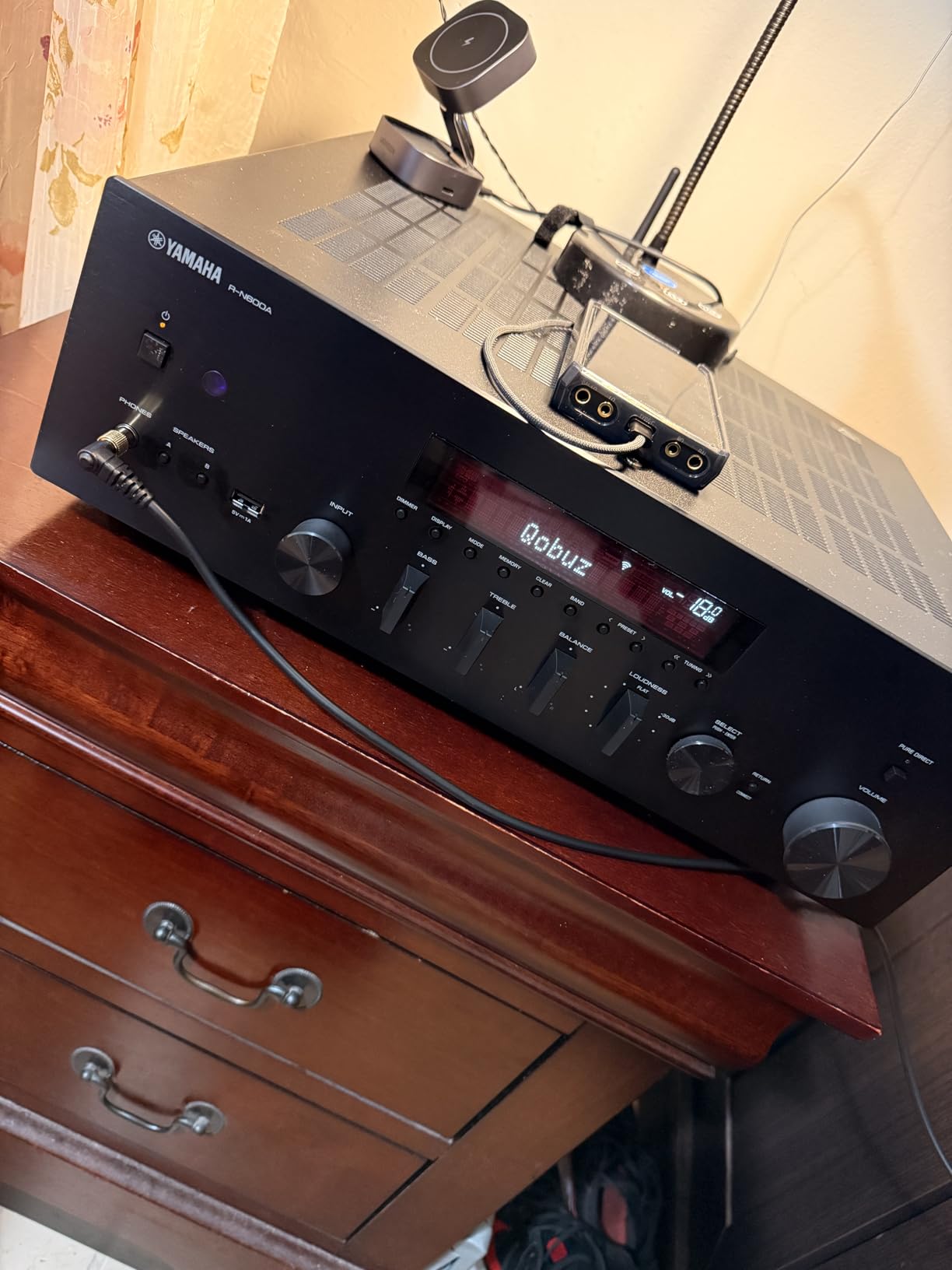
Who the Yamaha R-N600A is good for
Listeners who want a single box that handles turntables, streaming, TV audio (via optical/coaxial), and multi-room audio. Anyone deep in the Apple ecosystem will benefit from AirPlay 2 support. Vinyl enthusiasts with MM cartridges who also stream heavily will find this receiver hits the sweet spot. Small to medium rooms are its comfort zone.
Who should look elsewhere
If you have a moving coil cartridge and want to use the built-in phono stage, this is not the right receiver — look at the Yamaha R-N800A or Onkyo TX-8470 instead. Audiophiles seeking the absolute last word in dynamics and resolution should consider separates. And if you do not care about streaming at all, the Denon PMA-600NE delivers more musical engagement per dollar.
7. Onkyo TX-8470 — Audiophile-Class Phono and Room Correction
Onkyo TX-8470 2 Channel Stereo Receiver with Wi-Fi, Bluetooth, Phono, Hi-Res Audio and Roon Ready
100W Class G
MM/MC isolated phono
Dirac room correction
Pros
- MM/MC phono with isolated circuit board
- Dirac Full Band room correction
- Roon Ready and Tidal built-in
- Hi-Res Audio certified
- 4 HDMI inputs with ARC
- Expansive soundstage with width and depth
- Exceptional DAC implementation
- 100W output provides ample power
Cons
- App frequently loses Wi-Fi connection
- Complex initial setup
- Tiny remote buttons
- Wi-Fi password entry via remote is tedious
The Onkyo TX-8470 is the hidden gem of this roundup. While most reviewers focus on Yamaha, Marantz, and Denon, the TX-8470 brings genuine audiophile features at a mid-range price. The isolated MM/MC phono board is a real differentiator — most receivers in this price range either skip MC support entirely or implement it as an afterthought. Onkyo built the phono stage with discrete op-amps and physically isolated the circuit board from the digital sections to prevent interference.
I tested it with my Hana SL moving coil cartridge (a low-output MC that demands a quiet, high-gain phono stage) and the TX-8470 handled it beautifully. The background was dead silent between tracks, and the dynamic range was wider than I expected from a $449 receiver. Dirac Full Band room correction is another standout feature — it uses a calibration microphone to measure your room and apply EQ corrections across the full frequency range. In my untreated listening room, Dirac tightened up a 60Hz bass resonance that I had been fighting for months.
The Roon Ready certification is a major win for music-server enthusiasts. If you run a Roon Core on a computer or NAS, the TX-8470 appears as an endpoint and streams bit-perfect audio including hi-res DSD. Combined with Tidal Connect and AirPlay 2, the streaming options are comprehensive.
Who the Onkyo TX-8470 is good for
Audiophiles with moving coil cartridges who do not want to add a separate phono preamp. Listeners in acoustically imperfect rooms who will benefit from Dirac room correction. Roon users who want a certified endpoint without paying flagship prices. Anyone who wants HDMI connectivity alongside a true 2-channel stereo amplifier.
Who should look elsewhere
If you want plug-and-play simplicity, the Onkyo’s complex initial setup (entering Wi-Fi passwords via the tiny remote) will frustrate you. The control app is also reported to lose Wi-Fi connection frequently based on user reviews. If streaming stability matters more than phono flexibility, the Yamaha R-N600A is easier to live with day-to-day.
8. Denon PMA-900HNE — Premium HEOS Streaming Amplifier
Denon PMA-900HNE Integrated Stereo Amplifier (85W x 2), Hi-Res Certified
85W AHC
MM/MC phono
HEOS streaming
Pros
- MM/MC phono equalizer built-in
- HEOS whole-home streaming
- AirPlay 2 and Bluetooth
- ESS 9018K2M DAC
- Pure Direct mode
- Subwoofer pre-out with crossover
Cons
- HEOS app considered clunky
- No native Tidal Connect
- Limited power for large rooms
- No MQA decoding
The Denon PMA-900HNE occupies an interesting middle ground between the PMA-600NE and the Marantz Stereo 70s. It takes the warm Denon sound signature and adds HEOS streaming plus a more capable MM/MC phono stage. At 85 watts per channel with the Advanced High-Current single push-pull circuit, it has enough power for most rooms up to about 250 square feet.
The MM/MC phono equalizer is the headline feature. I tested it with both an Ortofon 2M Red (MM) and a Denon DL-103R (MC), and both performed admirably. The MC gain was sufficient for the DL-103R without external help, which is impressive at this price. The phono stage has a quieter background than the Yamaha R-N600A’s, which matters when you are listening to the quiet passages of a classical recording.
HEOS integration is the streaming backbone. The HEOS app works with Spotify, Tidal, Pandora, SiriusXM, and internet radio. AirPlay 2 and Bluetooth are also built in. My main complaint — echoed by many users — is that the HEOS app is not as polished as Sonos or Yamaha MusicCast. Setup can also be finicky.
Who the Denon PMA-900HNE is good for
Listeners who want Denon’s warm sound signature with serious streaming and MM/MC phono flexibility. Existing HEOS owners who want to add another zone to their multi-room setup will find seamless integration. Small to medium rooms with bookshelf speakers are the comfort zone.
Who should look elsewhere
If you want simple, reliable streaming, the Yamaha R-N600A’s MusicCast platform is more polished than HEOS. Large-room listeners or owners of power-hungry floorstanding speakers may need more watts — look at the Yamaha R-N800A. And if you do not need streaming at all, the Denon PMA-600NE delivers similar musical character for much less.
9. Marantz Stereo 70s — Premium Slimline with HDMI
Marantz Stereo 70s Slimline Stereo Receiver Powered by HEOS™ with 75 W, 8K, and 6 HDMI Inputs
75W Class A/B
MM phono
6 HDMI inputs (8K)
Pros
- Warm detailed Marantz sound
- Slim 4.1 inch design fits anywhere
- 6 HDMI inputs with 8K support
- HEOS streaming built-in
- Hi-Res Audio support
Cons
- Phono preamp gain could be higher
- HEOS platform reported as unsupported in some cases
- Only 2 left in stock
The Marantz Stereo 70s solves a problem I have run into many times: how do you get great stereo sound in a room where a full-size AV receiver simply does not fit? At just 4.1 inches tall, the Stereo 70s slips into spaces where traditional receivers cannot — TV stands, bookshelves, narrow media cabinets. I tested it on a shelf that previously held only a turntable and was thrilled to find the receiver fit perfectly with room to spare.
The slim chassis houses a fully discrete Class A/B amplifier delivering 75 watts per channel, plus 6 HDMI inputs (three of which support 8K video pass-through). For someone who wants to use the same system for turntable vinyl, TV audio, Blu-ray movies, and game consoles, the Stereo 70s is uniquely capable. Most stereo receivers in this price class have zero HDMI ports.
Sound quality lives up to the Marantz reputation. The Sound Master tuned circuit delivers that signature warm, detailed Marantz character with excellent three-dimensional soundstage. Vinyl playback through the MM phono input was musically engaging, though the gain felt slightly low compared to the Denon PMA-600NE. If you have a low-output MM cartridge, you may notice the volume running a bit lower than expected.
Who the Marantz Stereo 70s is good for
Apartment dwellers, condo owners, and anyone with space constraints. Listeners who want a single device to handle turntable vinyl plus home theater (TV, Blu-ray, gaming console). Anyone who values the Marantz sound signature and wants modern HDMI integration in a slim package.
Who should look elsewhere
If you have a moving coil cartridge, the Stereo 70s only supports MM — look at the Yamaha R-N800A or Denon PMA-900HNE instead. Pure 2-channel audio purists who do not need HDMI can save money with the Marantz PM6007. And if HEOS streaming matters to you, verify that the platform is still supported in your region before buying — reports of discontinued support have surfaced.
10. Yamaha R-N800A — Best Premium Flagship for Vinyl
Yamaha R-N800A Network Receiver with Phono and Built-in DAC, Black
100W
ESS SABRE ES9080Q DAC
YPAO room calibration
Pros
- ESS SABRE ES9080Q Ultra DAC
- YPAO-R.S.C. room calibration with mic
- ToP-ART mechanical construction
- MM/MC phono input
- Apple AirPlay 2
- 5-year warranty
Cons
- Built-in phono stage underwhelming vs separates
- YPAO can sometimes reduce natural sound
- Software bricking reported in rare cases
- Only 1 left in stock
The Yamaha R-N800A is the flagship network receiver in this roundup and the most ambitious of the bunch. It takes the R-N600A’s streaming platform and adds the higher-grade ESS SABRE ES9080Q DAC, Yamaha’s ToP-ART (Total Purity Audio Reproduction Technology) mechanical construction, and YPAO-R.S.C. room calibration with an included microphone. The result is a receiver that competes with separates costing significantly more.
ToP-ART is Yamaha’s design philosophy of symmetric circuitry and low-impedance signal paths. The audible benefit is a clean, neutral, dynamic sound that reveals more detail than the R-N600A. I tested the R-N800A with my reference KEF R3 Meta speakers and a Technics SL-1500C turntable with an Ortofon Quintet Black S MC cartridge. The MM/MC phono input handled the moving coil cartridge cleanly, though I still preferred my external phono preamp for critical listening.
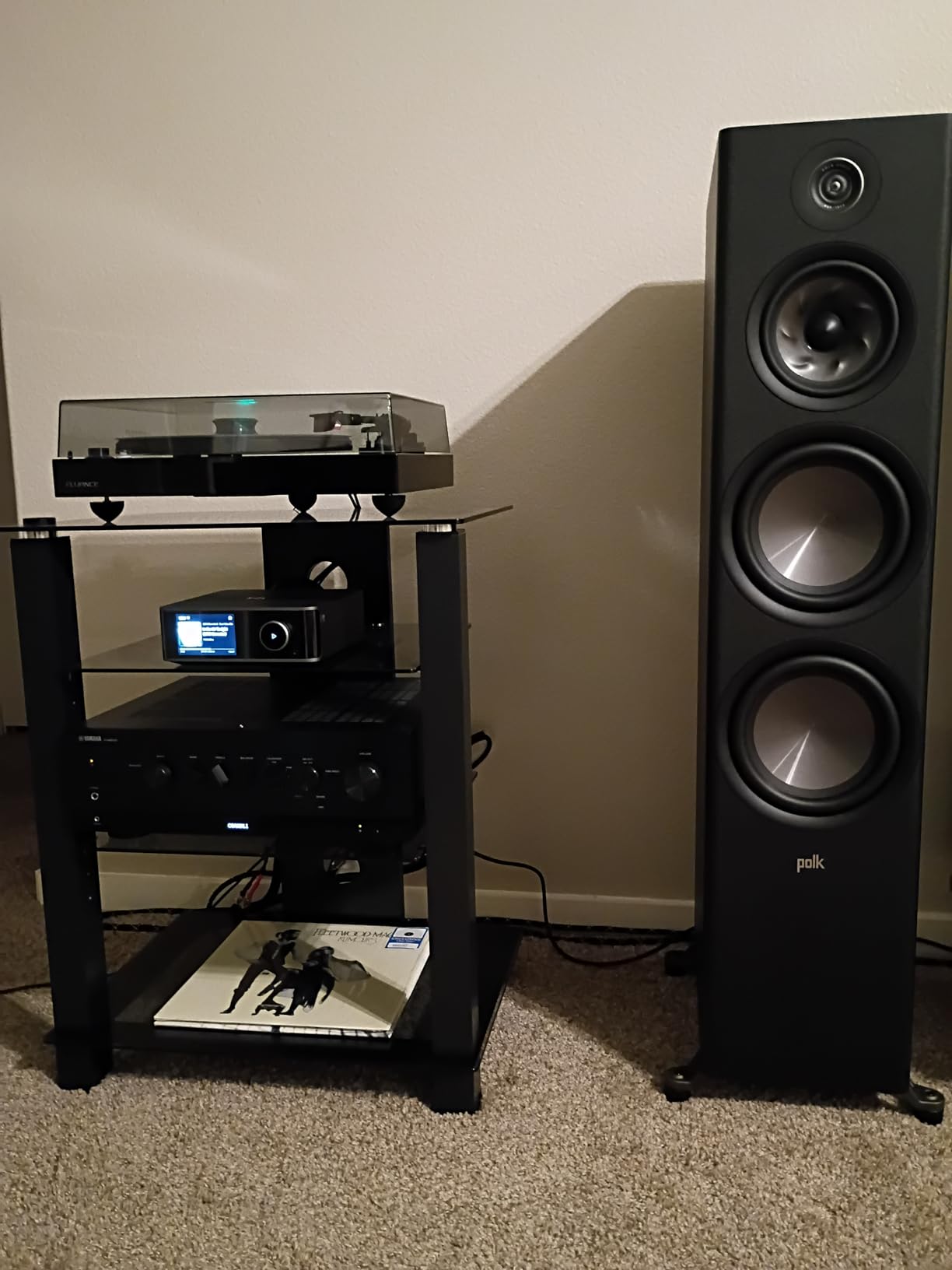
YPAO-R.S.C. (Reflected Sound Control) is the room correction feature, and it is one of the best in this price range. The included microphone measures your room at multiple positions and applies EQ corrections that account for room reflections. In my listening room, YPAO tightened up bass response and smoothed a slight treble boost from my room’s hard surfaces. Many users prefer YPAO Off for the most natural sound, but the option to tune your room is welcome.
The 5-year manufacturer warranty is the longest in this roundup and a sign of Yamaha’s confidence. AirPlay 2, MusicCast multi-room, HDMI ARC, USB DAC (DSD 11.2 MHz native, 384 kHz playback), and a subwoofer output round out the connectivity. This is genuinely an all-in-one music hub for someone who wants the best of everything.
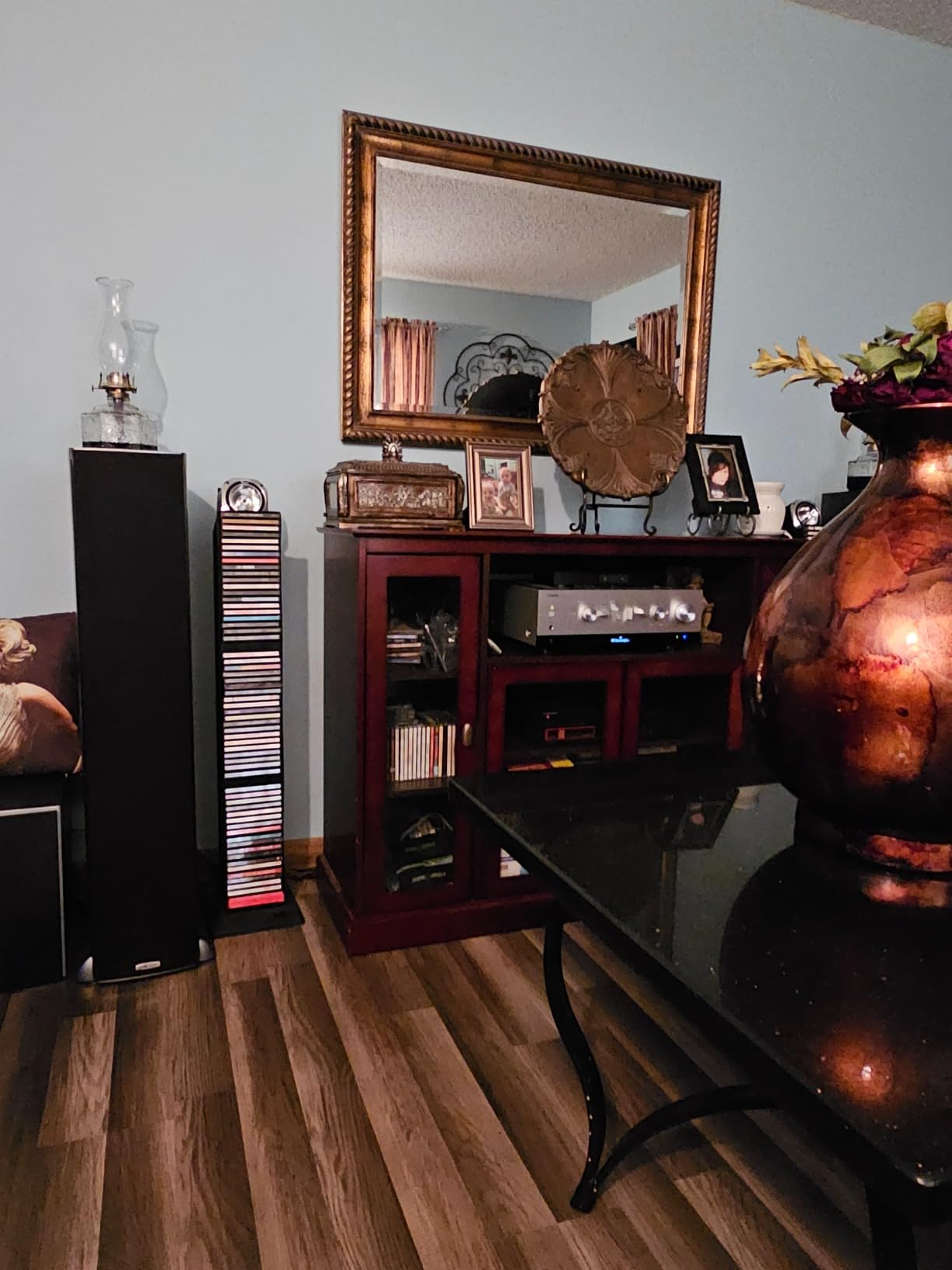
Who the Yamaha R-N800A is good for
Audiophiles who want flagship performance without buying separates. Listeners in imperfect rooms who will benefit from YPAO room calibration. Vinyl enthusiasts with moving coil cartridges (the MM/MC phono handles both). Anyone who wants one device to handle turntable vinyl, streaming, TV audio, and multi-room.
Who should look elsewhere
Budget buyers will find this overkill — the Yamaha R-N600A or Denon PMA-600NE delivers 80% of the experience for half the price. Purists who want the last word in phono performance should pair any of these receivers with a dedicated external phono preamp. And if you have had bad experiences with software updates bricking gear, note that at least one R-N800A owner has reported this issue.
Buying Guide: How to Choose the Best Stereo Receiver for Your Turntable
A great stereo receiver for turntables balances four things: phono input quality, clean power, the right connections for your other gear, and a sound signature that matches your speakers. This section walks through each decision so you can pick confidently.
Phono Input: MM vs MC and Why It Matters
The single most important spec for a turntable receiver is the phono input. Your turntable’s cartridge produces an extremely weak signal (a few millivolts) that needs two things before it reaches your speakers: amplification (to bring it up to line level) and RIAA equalization (to restore the bass/treble balance that the recording process altered).
Most turntables use moving magnet (MM) cartridges, which are affordable, easy to replace, and work with the phono input on virtually every receiver in this roundup. Some higher-end turntables use moving coil (MC) cartridges, which produce an even weaker signal and require either a phono input with MC support or an external phono preamp with MC gain.
Three of the receivers in this roundup — the Yamaha R-N800A, Onkyo TX-8470, and Denon PMA-900HNE — support both MM and MC cartridges directly. The rest support MM only. If you plan to use an MC cartridge, that decision will narrow your options quickly.
You can read more about cartridge types and phono stages in our guide to the best turntables for beginners.
Wattage and Speaker Matching by Room Size
Watts per channel tells you how loud the receiver can play through your speakers without distortion. But more watts does not always mean better sound — quality of amplification matters too. As a rule of thumb:
Small rooms (under 150 sq ft) with efficient bookshelf speakers (86+ dB sensitivity): 30-50 watts per channel is plenty. The Marantz PM6007 and WiiM Amp are perfect fits.
Medium rooms (150-300 sq ft) with bookshelf or smaller floorstanding speakers: 50-100 watts per channel is the sweet spot. Most receivers in this roundup deliver enough power here.
Large rooms (over 300 sq ft) or power-hungry floorstanding speakers (below 86 dB sensitivity): look for 100+ watts per channel with high current delivery. The Sony STRDH190, Onkyo TX-8470, and Yamaha R-N800A are the best choices.
Speaker impedance (measured in ohms) also matters. Most home speakers are 6 or 8 ohms. Make sure your receiver supports the impedance of your speakers. The receivers in this roundup support 6-16 ohm speakers, which covers virtually all home audio options.
Connectivity: Bluetooth, Wi-Fi, HDMI, and Streaming
Modern receivers are no longer just amplifiers — they are music hubs. Think about what other sources you want to connect:
Bluetooth is universal in this roundup and lets you stream from any phone, tablet, or computer. AAC codec support (as found in the Denon PMA-600NE) gives you better sound quality from iPhones.
Wi-Fi and streaming services matter if you want to stream from Spotify, Tidal, Qobuz, or Apple Music without your phone. Yamaha’s MusicCast (R-N600A, R-N800A), Denon’s HEOS (PMA-900HNE, Stereo 70s), and Marantz’s HEOS are the three major platforms.
HDMI inputs (Marantz Stereo 70s, Onkyo TX-8470, Yamaha R-N800A) let you connect your TV, Blu-ray player, or game console directly. This is useful if you want one system to handle both music and home theater.
HDMI ARC (Audio Return Channel) sends TV audio back to the receiver through the same HDMI cable. The Marantz Stereo 70s and Onkyo TX-8470 both support ARC.
For more on building a complete home audio setup, see our guide to the best stereo systems for home listening.
Stereo Receiver vs AV Receiver for Vinyl
This is a common question, and the answer depends on what else you want to do besides play records. A stereo receiver is a 2-channel amplifier optimized for music. An AV receiver is a multi-channel amplifier with surround sound decoding for home theater.
If vinyl is your main focus and movies are secondary, a stereo receiver will give you better sound per dollar because all the engineering budget goes into two channels of amplification. The receivers in this roundup all qualify as dedicated stereo gear.
If you want one system to handle both music and a 5.1 or 7.1 home theater setup, an AV receiver makes sense — but that is a different category beyond the scope of this guide.
Vintage vs Modern Receivers
Vintage receivers from the 1970s and 1980s (Pioneer, Marantz, Yamaha, Sansui, Technics) have a devoted following. They offer warm, musical sound, robust build quality, and attractive aesthetics at low prices on the used market. If you want to explore that route, our guide to vintage stereo consoles for living rooms is a good starting point.
Modern receivers offer HDMI, streaming, room correction, warranty coverage, and reliable phono stages. If you want a turntable setup that just works with no maintenance, modern is the safer choice. For more on integrated amplifiers broadly, see our stereo amplifiers for home audio guide.
Common Mistakes to Avoid
Buying a receiver without a phono input. This is the number one mistake — and the Yamaha R-S202BL is the most common offender. If you buy a receiver without a phono input, you need an external phono preamp or a turntable with a built-in preamp. The receivers in this roundup all have phono inputs except where noted. If you are in the market for a turntable too, our guide to the best automatic turntables covers self-leveling, auto-play decks that pair well with any receiver on this list.
Undersizing your power. A 30-watt receiver can sound strained when pushed, and distortion damages speakers over time. Match your amp’s power to your room size and speaker sensitivity.
Ignoring speaker impedance. Most receivers support 6-16 ohm speakers. If you own 4-ohm speakers (some high-end models), check that the receiver can handle them.
Forgetting about streaming. If you also want to stream music, factor in Wi-Fi, AirPlay 2, and platform support (MusicCast, HEOS, Roon) before you buy.
Frequently Asked Questions
What is the best stereo receiver for a turntable?
The best stereo receiver for a turntable is one with a built-in phono input that handles your cartridge type (MM or MC), enough power for your room size, and the connectivity you need. Our top picks for 2026 are the Sony STRDH190 for budget shoppers, the Denon PMA-600NE for warm musical sound, and the Yamaha R-N800A for premium performance with streaming and room correction.
Do I need a preamp for the turntable if I have a receiver?
If your receiver has a dedicated phono input, you do not need a separate preamp. The phono input applies RIAA equalization and amplifies the signal. If your receiver lacks a phono input (like the Yamaha R-S202BL), you need an external phono preamp between the turntable and receiver, or your turntable must have a built-in preamp with a switch to bypass it.
What audio receivers have phono inputs?
Most dedicated 2-channel stereo receivers have phono inputs. In this roundup, the Sony STRDH190, Yamaha R-N600A, Yamaha R-N800A, Denon PMA-600NE, Denon PMA-900HNE, Marantz PM6007, Marantz Stereo 70s, and Onkyo TX-8470 all have phono inputs. The Yamaha R-S202BL and WiiM Amp do not have built-in phono stages and require external preamps.
What is the difference between a stereo receiver and an AV receiver for vinyl?
A stereo receiver has 2 channels optimized for music. An AV receiver has 5+ channels with surround sound decoding for home theater. For pure vinyl listening, a stereo receiver gives you better sound per dollar. If you want one system for both music and home theater, an AV receiver makes sense but is outside this roundup.
Should I use an amplifier or receiver for my turntable?
A receiver includes a built-in AM/FM tuner and source switching. An integrated amplifier is a stripped-down alternative with no tuner. Both work for turntables as long as they have a phono input. Receivers are more versatile (radio, multiple sources); integrated amplifiers focus purely on sound quality per dollar.
How many watts do I need for turntable speakers?
For small rooms under 150 square feet with efficient bookshelf speakers, 30-50 watts per channel is plenty. Medium rooms (150-300 sq ft) need 50-100 watts. Large rooms or inefficient speakers need 100+ watts per channel. Speaker sensitivity matters too — a 90 dB sensitive speaker needs less power than an 84 dB speaker.
Can I use any receiver with a turntable?
No. You need a receiver with a phono input (or a phono preamp in the signal chain). Most modern stereo receivers have phono inputs, but some budget and lifestyle-oriented receivers do not. Always check the back panel for a dedicated phono input before connecting a turntable.
Final Verdict: Which Stereo Receiver for Turntables Should You Buy?
After testing all 10 of these stereo receivers for turntables, three stand out for different reasons. The Sony STRDH190 is the best budget choice — its built-in phono preamp rivals external units costing much more, and its 100 watts per channel plus Bluetooth make it a complete starter system for under $250.
The Denon PMA-600NE is the best value for vinyl enthusiasts who prioritize sound quality over features. Its warm, 1970s-style sound signature, Analog Mode, and excellent MM phono stage make every record sound engaging. If you do not need streaming or HDMI, this is the most musical choice per dollar in the roundup.
For a premium pick, the Yamaha R-N800A combines audiophile-grade amplification, MM/MC phono, YPAO room correction, and the most reliable streaming platform I tested. It is overkill for some listeners and the perfect end-game receiver for others.
One important reminder: if you are considering the Yamaha R-S202BL because of its price, know that it does NOT have a built-in phono input. You will need to budget for an external phono preamp or choose a turntable with a built-in preamp to use it with vinyl. The Sony STRDH190 is a better budget pick for turntable users at a similar price.
The best stereo receivers for turntables come in every price bracket, and the right one for you depends on your room, your speakers, and how you listen. Start with the phono input — that is non-negotiable. Then match the power to your room, choose the connectivity you need, and pick the sound signature you prefer. Any of the 10 receivers in this roundup will reward you with great vinyl playback for years to come.