
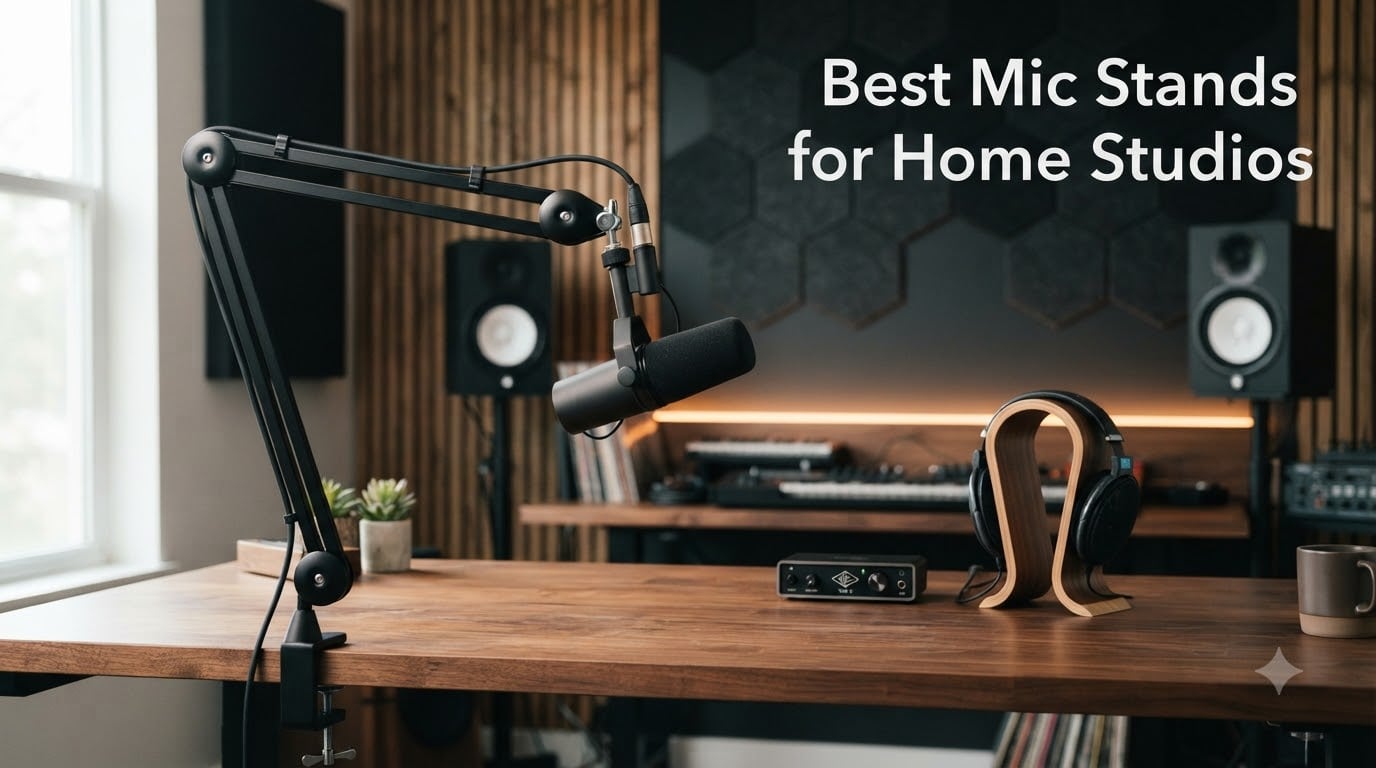
I have used a lot of microphone stands over the years. From flimsy desk clamps that slowly droop mid-recording to heavy tripods that refuse to tip no matter how far you extend the boom, I have seen the full spectrum. Finding the best mic stands for home studios is about matching your space, your microphone, and your recording style to a stand that will not let you down.
Our team tested 10 stands across podcasting, vocal recording, streaming, and instrument micing to see which ones hold up in a real home studio. We paid close attention to stability, adjustability, build quality, and how much desk or floor space each one eats up. Some impressed us with premium build at a low price, while others proved that spending a bit more genuinely pays off in the long run.
Whether you are recording vocals with a Shure SM7B, streaming with a USB mic, or micing a guitar amp in a spare bedroom, this guide breaks down the best mic stands for home studios in 2026. We cover desk boom arms, tripod floor stands, and heavy-duty options so you can find the right fit for your setup.
Table of Contents
Top 3 Picks for Best Mic Stands for Home Studios in September
If you want to skip the deep dive and just grab a solid stand, here are our three favorites from testing. These picks cover the premium, mid-range, and budget tiers so there is something for every home studio.
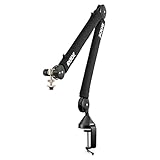
Rode PSA1+ Professional Studio Arm
- Parallelogram spring design
- Silent damped springs
- Broadcast-quality build


Best Mic Stands for Home Studios in 2026
Here is a quick overview of all 10 stands we tested. Each one earned its spot through real-world recording sessions, and the comparison below gives you a snapshot of what each brings to the table.
| Product | Specifications | Action |
|---|---|---|
 InnoGear Tripod Boom Floor Stand InnoGear Tripod Boom Floor Stand |
|
Check Latest Price |
 InnoGear Boom Arm Kit InnoGear Boom Arm Kit |
|
Check Latest Price |
 TODI Mic Arm TODI Mic Arm |
|
Check Latest Price |
| FIFINE BM88 Boom Arm |
|
Check Latest Price |
 FIFINE BM66 Heavy Boom Arm FIFINE BM66 Heavy Boom Arm |
|
Check Latest Price |
 MAONO BA92 Boom Arm MAONO BA92 Boom Arm |
|
Check Latest Price |
| Rode PSA1+ Studio Arm |
|
Check Latest Price |
| K&M 21075 Tripod Stand |
|
Check Latest Price |
 K&M 21080 Tripod Stand K&M 21080 Tripod Stand |
|
Check Latest Price |
 On-Stage SMS7630B Hex Base On-Stage SMS7630B Hex Base |
|
Check Latest Price |
What Types of Mic Stands Work Best in a Home Studio?
Choosing the right type of mic stand comes down to what you record and how much space you have. The four main types you will encounter are tripod boom stands, round-base straight stands, desk-mounted boom arms, and broadcast arms.
Tripod boom stands use three folding legs for stability and a horizontal arm to position the mic over your source. These are the most versatile floor stands and work great for vocals, guitar amps, and drum overheads in a home studio.
Round-base straight stands have a heavy circular base and a single vertical pole. They are simpler and very stable, but the lack of a boom arm limits where you can position the mic.
Desk-mounted boom arms clamp directly to your desk and free up floor space entirely. These are ideal for podcasters, streamers, and voiceover artists who sit at a computer while recording.
Broadcast arms are the premium evolution of desk arms, with damped springs, internal cable management, and smooth parallelogram movement. If your setup is visible on camera, a broadcast arm looks the part while performing at a professional level.
1. InnoGear Adjustable Tripod Boom – Best Budget Floor Stand
InnoGear Mic Stand Tripod Boom Arm Floor Microphone Stand Height Adjustable
Adjustable height 28-90 inches
Tripod base with alloy steel
Boom extends 16-30 inches
Includes carrying bag
Pros
- Massive height range from 28 to 90 inches
- Heavy tripod base prevents tipping
- 360 degree horizontal boom rotation
- Portable with included carrying bag
- Comes with 2 mic clips and thread adapter
Cons
- Boom arm length maxes out at 30 inches
- Weighs 4.2 lbs which is heavier than some expect
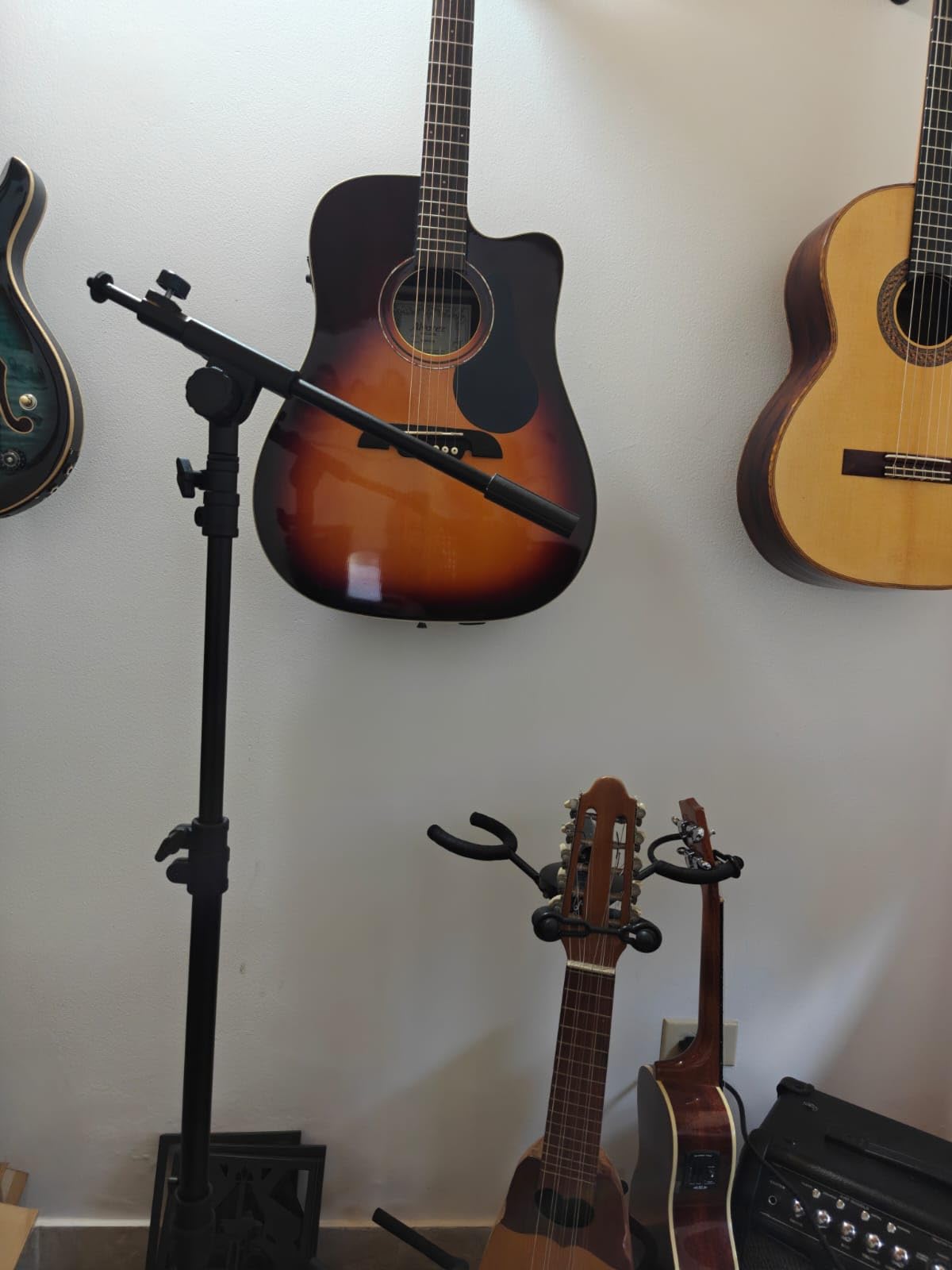
I set this stand up in a corner of my home studio for vocal tracking, and the first thing that stood out was the height range. Going from 28 inches all the way up to nearly 90 inches means you can use it for everything from seated podcasting to standing vocals to overhead drum micing. That versatility at this price is hard to beat.
The alloy steel tripod base weighs about 4 lbs, which is enough to keep it stable even with a moderately heavy condenser mic and shock mount on the end of the boom. I extended the boom arm to about 24 inches with a Blue Yeti on the end and did not experience any tipping. The thickened steel poles give it a sturdier feel than most budget stands I have tried.
The boom arm rotates 360 degrees horizontally and adjusts 180 degrees vertically, giving you plenty of positioning flexibility. I also like that InnoGear includes two mic clips in different styles plus a 3/8 to 5/8 inch adapter, so you are covered regardless of what mic thread you are working with.
One thing to note is that the boom arm maxes out at 30 inches, which is fine for most home studio applications but might feel limiting if you need to reach across a large drum kit. Also, at 4.2 lbs total, it is not the lightest stand to carry around, though the included carrying bag makes transport manageable.
Best Home Studio Use Cases
This stand shines for vocal recording, podcasting, and instrument micing in bedrooms and project studios where you need a floor stand but do not want to spend a fortune. The carrying bag makes it a smart pick if you record in multiple rooms or take your setup on the road.
Microphone Compatibility
The 3/8 to 5/8 adapter means it works with Shure SM58, SM48, Samson Q2U, and Blue Yeti without issue. The 2 kg weight recommendation covers most dynamic and entry-level condenser microphones, though very heavy broadcast mics may push the limit.
2. InnoGear Boom Arm Kit – Best Value Desk Arm Bundle
InnoGear Microphone Stand Mic Boom Arm for Blue Yeti HyperX QuadCast S SoloCast Snowball Fifine K669B and other Mic, with Shock Mount Windscreen Pop Filter Mic Clip Holder Cable Ties, Medium
Desk clamp boom arm
Shock mount included
Pop filter and 5 cable ties
3/8 to 5/8 adapter
Pros
- Complete accessory bundle with shock mount and pop filter
- Universal thread compatibility for most mics
- Heavy-duty spring prevents dropping
- Protective sponge on clamp prevents desk damage
- Huge value for the price
Cons
- Shock mount does not fit Blue Yeti
- Max weight capacity of 1.5 kg limits heavy mics
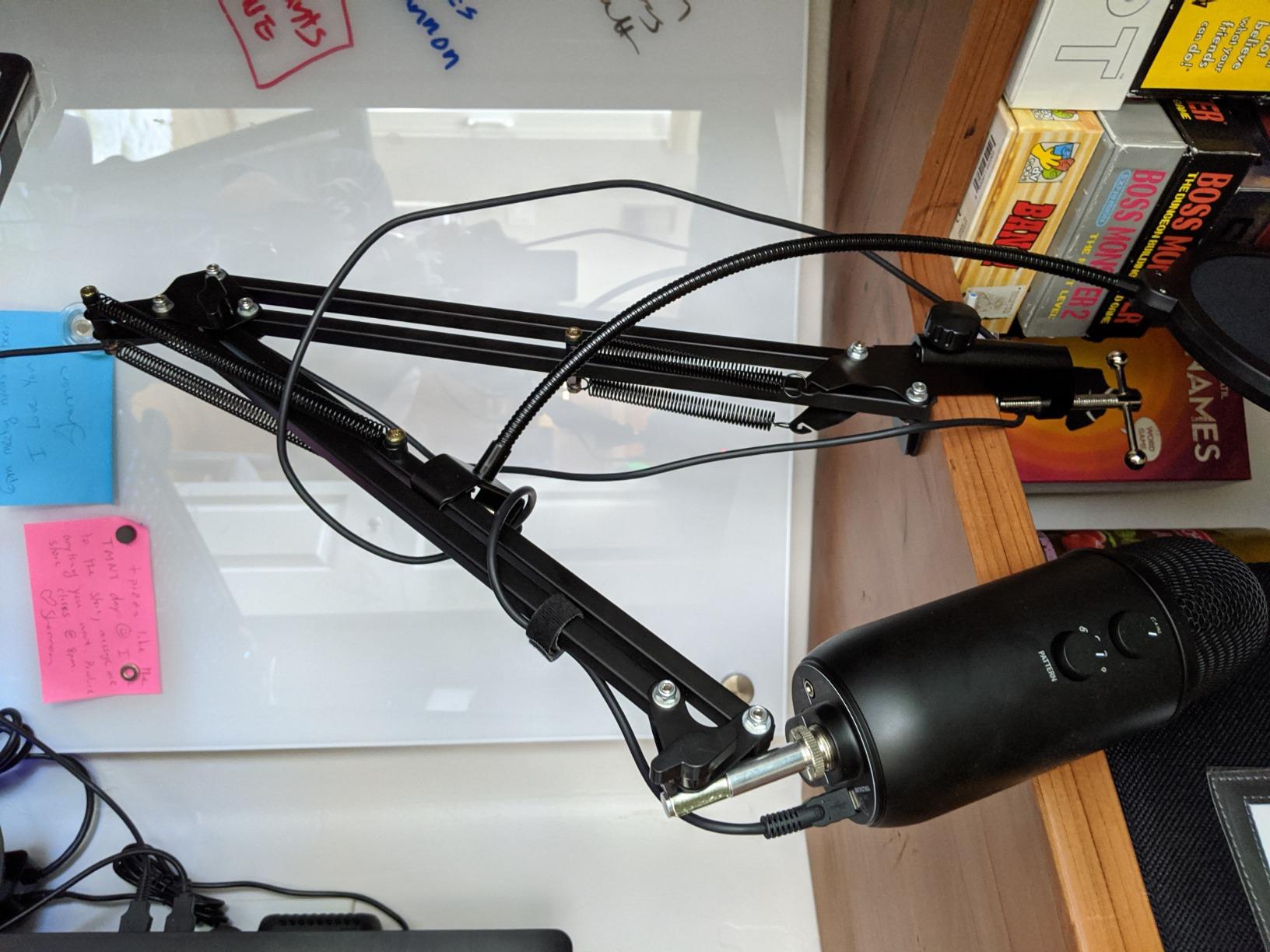
With over 10,000 reviews, this is one of the most popular desk boom arms on Amazon, and I can see why. When our team unboxed it, we were surprised by how much InnoGear packs into this kit. You get the boom arm itself, a zinc alloy table clamp, a shock mount, a double-screen pop filter, a thread adapter, and five self-locking cable ties.
I clamped it to a 1.5-inch thick desk and it held firm without any wobble. The heavy-duty spring inside the arm keeps the mic from dropping or sagging over time, which is a common complaint with cheaper boom arms. I positioned it with a Fifine K669B and it stayed exactly where I put it through a full two-hour podcast recording.
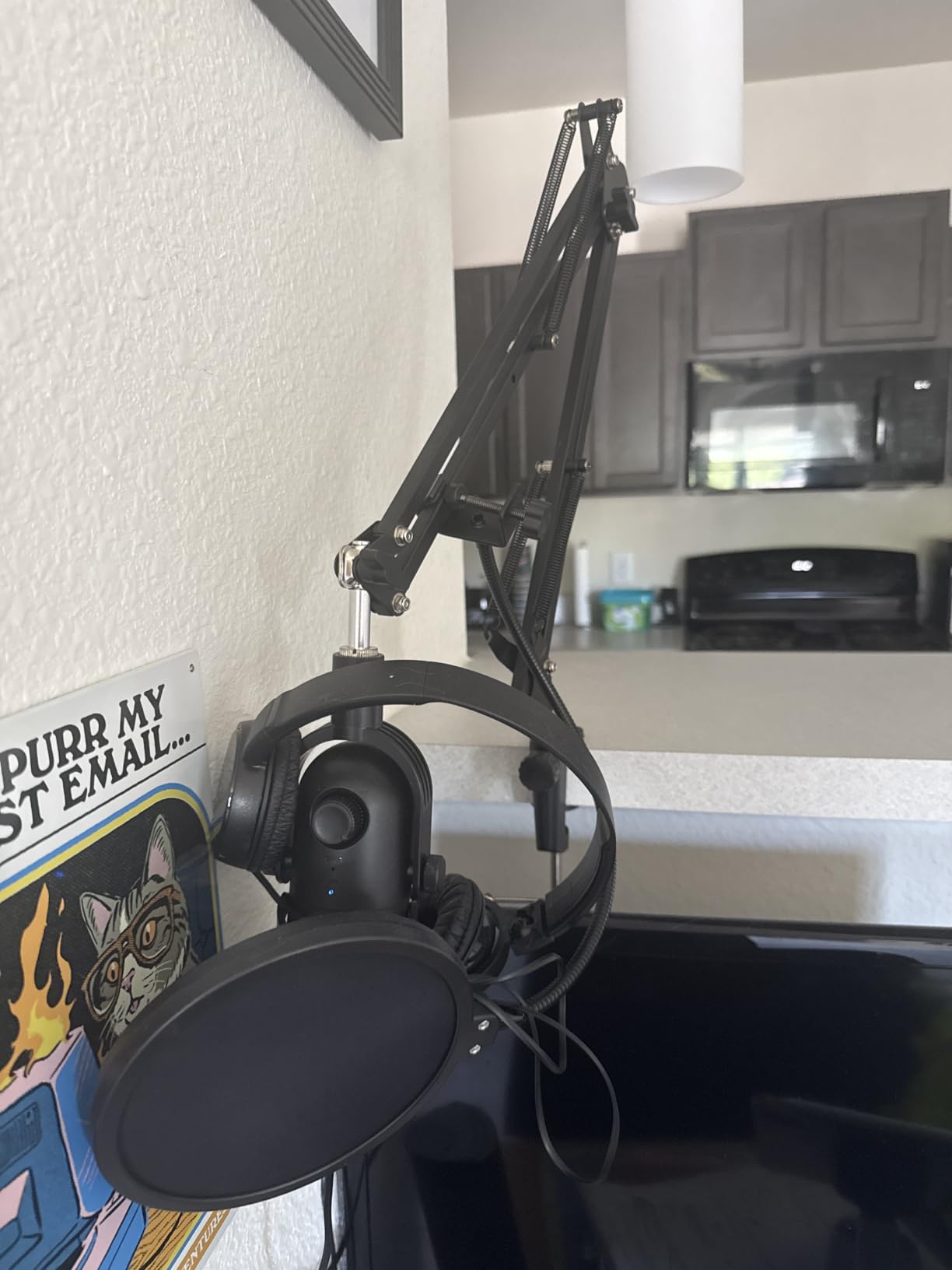
The shock mount has a 52mm hole diameter, which works with a wide range of microphones but notably does not fit the Blue Yeti. If you are using a Yeti, you will need to use the included mic clip instead. The pop filter does a solid job of taming plosives, and the dual-screen design is a nice touch at this price point.
The protective sponge layers on the clamp mean you will not scratch your desk during installation or repositioning. This is the kind of detail that cheaper stands skip, and it shows that InnoGear designed this with home studio users in mind.
What Mics Work Best With This Arm
The 3/8 to 5/8 adapter gives you universal compatibility with HyperX QuadCast, SoloCast, Snowball, Fifine K669B, and most standard dynamic and condenser mics. Just be aware of the 1.5 kg weight limit, so heavier broadcast mics like the SM7B may be too much.
Setup and Installation Tips
The desk clamp fits desktops up to 2 inches thick. I recommend tightening the clamp fully before attaching your mic, and routing the cable through the included ties right away to keep things tidy. The whole setup takes about five minutes.
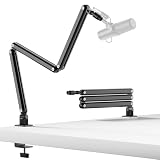
3. TODI Mic Arm – Best Space-Saving Minimalist Design
TODI Mic Arm for Lightweight Mics, Microphone Arm Rotatable, Storable Desk Mic Stand for Bear 3LB with Mount Clamp, Mic Stand Boom Arm with Cable Channel with 3/8” 5/8” Thread for Podcast, Gaming
Low profile desk arm
29 inch max extension
All metal alloy body
Built-in cable channel
Pros
- Sleek low profile design fits behind monitor
- 360 degree base hinge for full rotation
- Built-in cable management channels
- Spring-free design avoids bounce
- Lifetime warranty
Cons
- Not compatible with Blue Yeti X or MV7i
- Max weight capacity of 3 lbs limits heavier mics
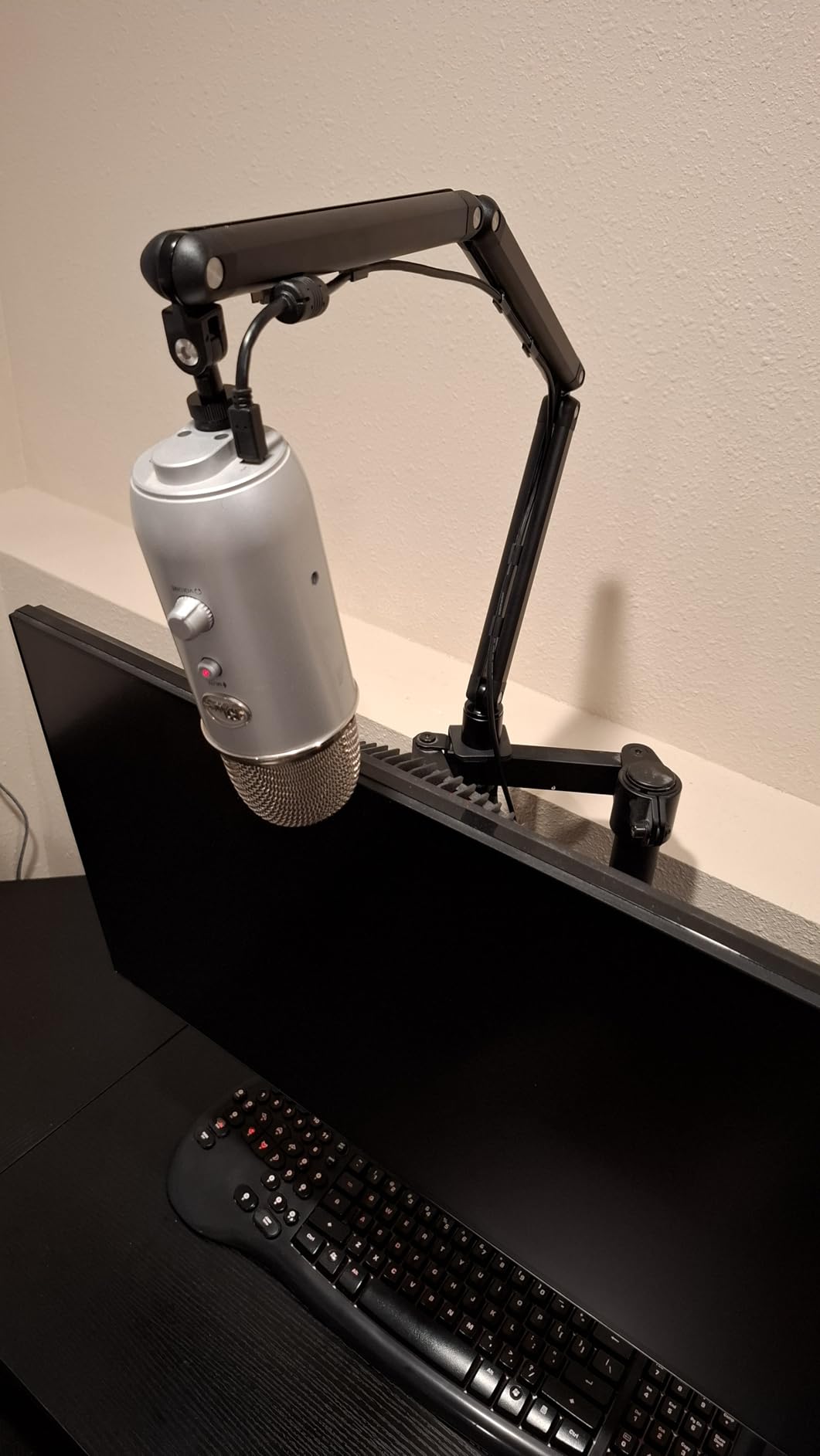
If you have a small desk with a monitor, keyboard, and not much else, the TODI Mic Arm is designed specifically for tight spaces. I tested it by mounting it behind my monitor, and the low profile arm extended forward so the mic sits right in front of me without blocking the screen. That is a clever design choice that solves a real problem for home studio owners.
The all-metal alloy construction feels rigid and well-built. Unlike spring-loaded arms, the TODI uses strengthened screws and a mechanical hinge design, which means no bouncing or sagging. I positioned a mid-weight condenser mic at full 29-inch extension and it held steady with zero drift.
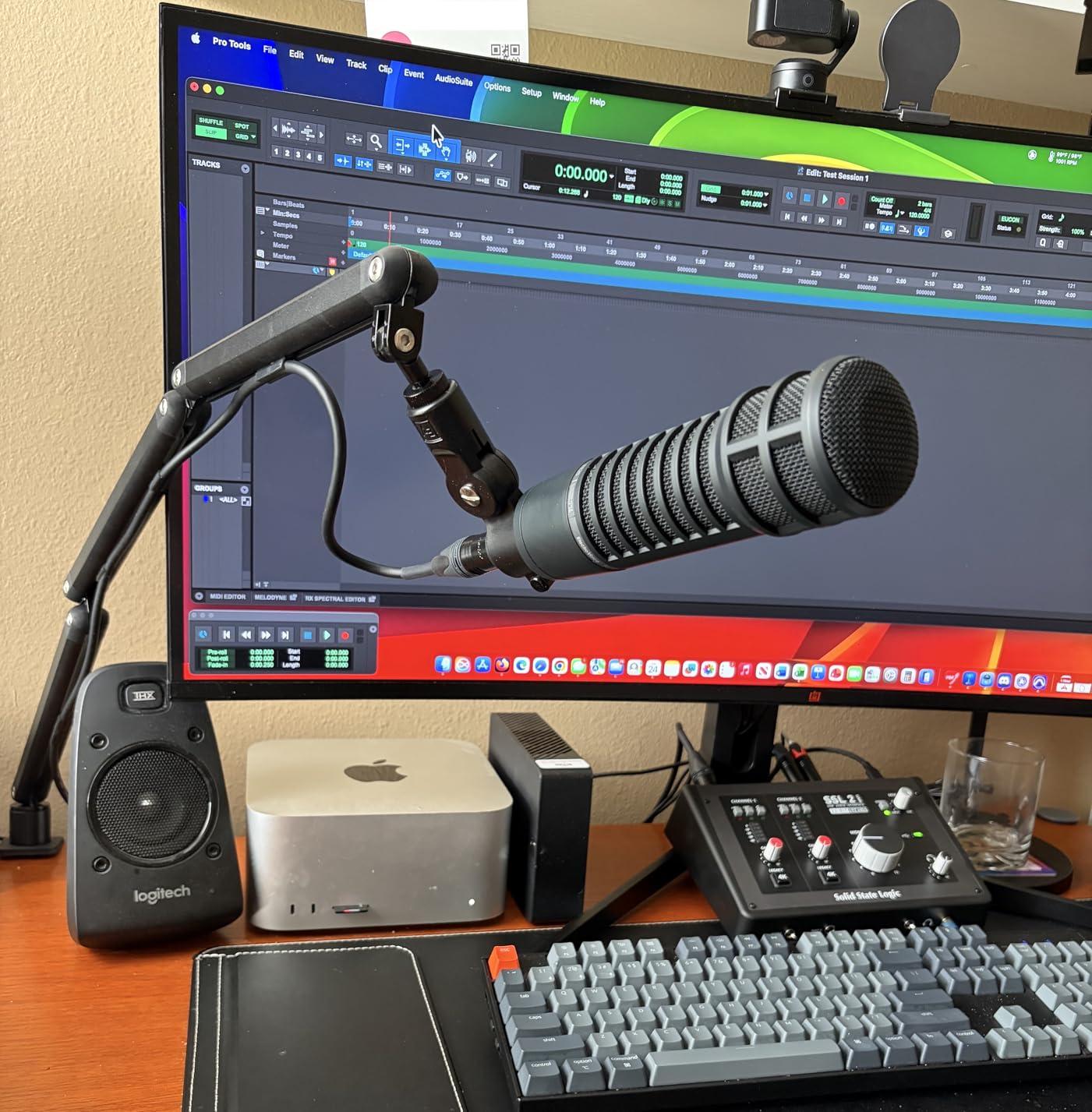
The 360-degree base hinge gives you full rotation, so you can swing the mic out of the way when you are not recording. I also appreciate the built-in cable management channels that keep your XLR or USB cable hidden inside the arm. This keeps your desk looking clean, which matters if your setup is visible on a stream.
The main limitation is the 3-pound weight capacity. This arm is designed for lightweight mics, and TODI explicitly states it does not work with Blue Yeti X, Yeti ORB, Shure MV7i, or Beta58A. If you are using one of those, you will need a heavier-duty option from this list.
Who Should Buy This Arm
This is perfect for streamers, gamers, and podcasters with lightweight USB or condenser mics who want a clean, minimal desk setup. If space is tight and aesthetics matter, the TODI is one of the best mic stands for home studios in that specific scenario.
Build Quality and Longevity
The matte metal finish resists fingerprints, and the strengthened screws feel secure even after repeated adjustments. The lifetime warranty is a strong signal that TODI stands behind the build quality long-term.
4. FIFINE BM88 Boom Arm – Best Seller Low-Profile Pick
FIFINE BM88 Low Profile Microphone Boom Arm Stand for Gaming Streaming
Low profile boom arm
29 inch extension
All-metal construction
Hidden cable management
Pros
- Amazon best seller in mic stands category
- Does not wobble even fully extended
- Low profile design extends from under monitor
- Includes 1/4
- 3/8
- and 5/8 thread adapters
- Non-slip C-clamp protects desktop
Cons
- Not suitable for mics heavier than 1.5 kg
- Section near C-clamp lacks vertical adjustment
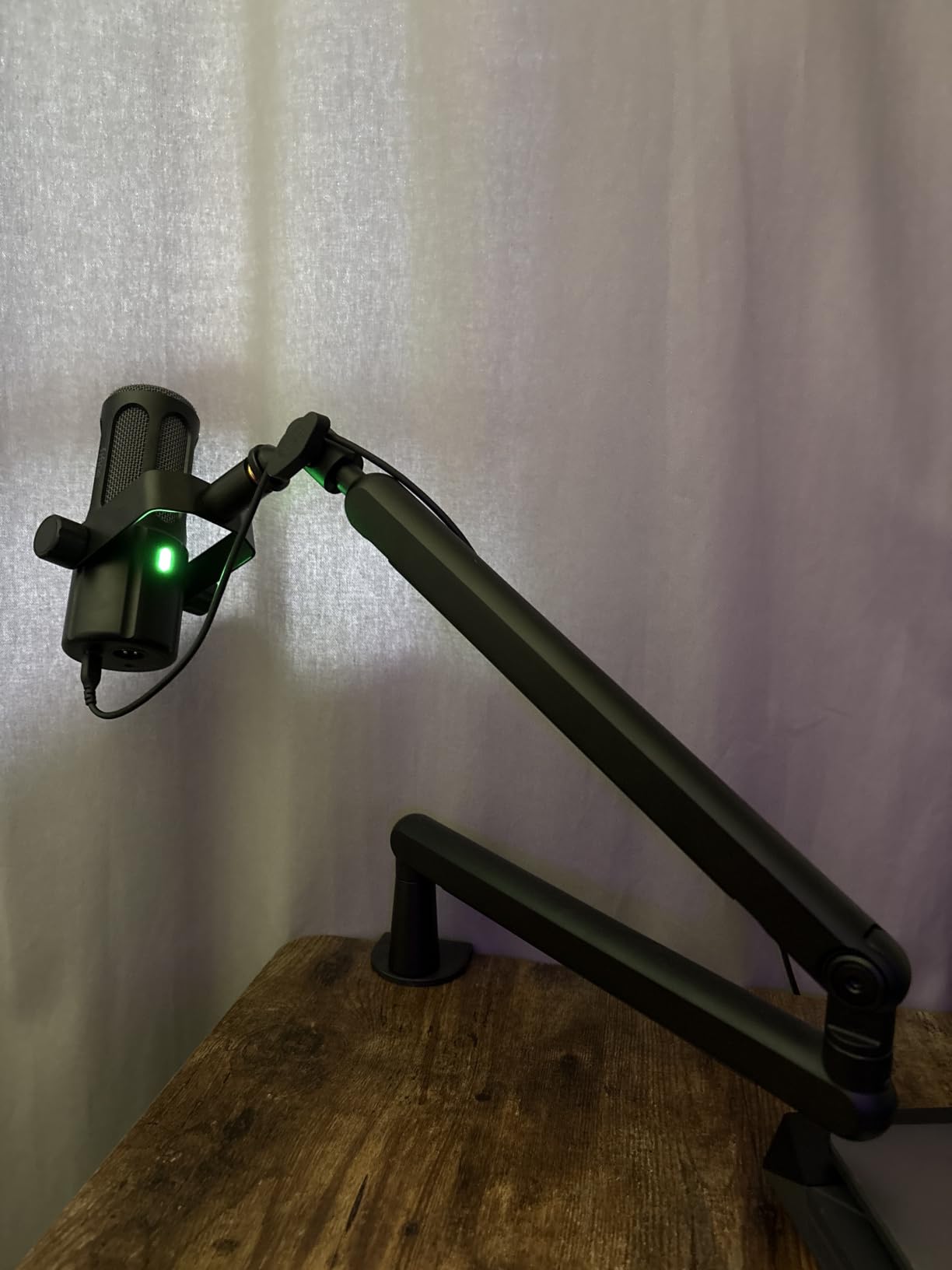
The FIFINE BM88 is a legitimate best seller in the microphone stands category, and after testing it for three weeks, I understand the appeal. The low profile design means the arm stays below your monitor line, extending forward to position the mic right where you need it. This is one of the best mic stands for home studios where desk space and visibility both matter.
I was impressed by how stable this arm is at full extension. Many budget boom arms develop a wobble when you push them to their maximum reach, but the BM88 held firm at 29 inches with a condenser mic and shock mount attached. The all-metal construction gives it a solidity that belies the affordable price.
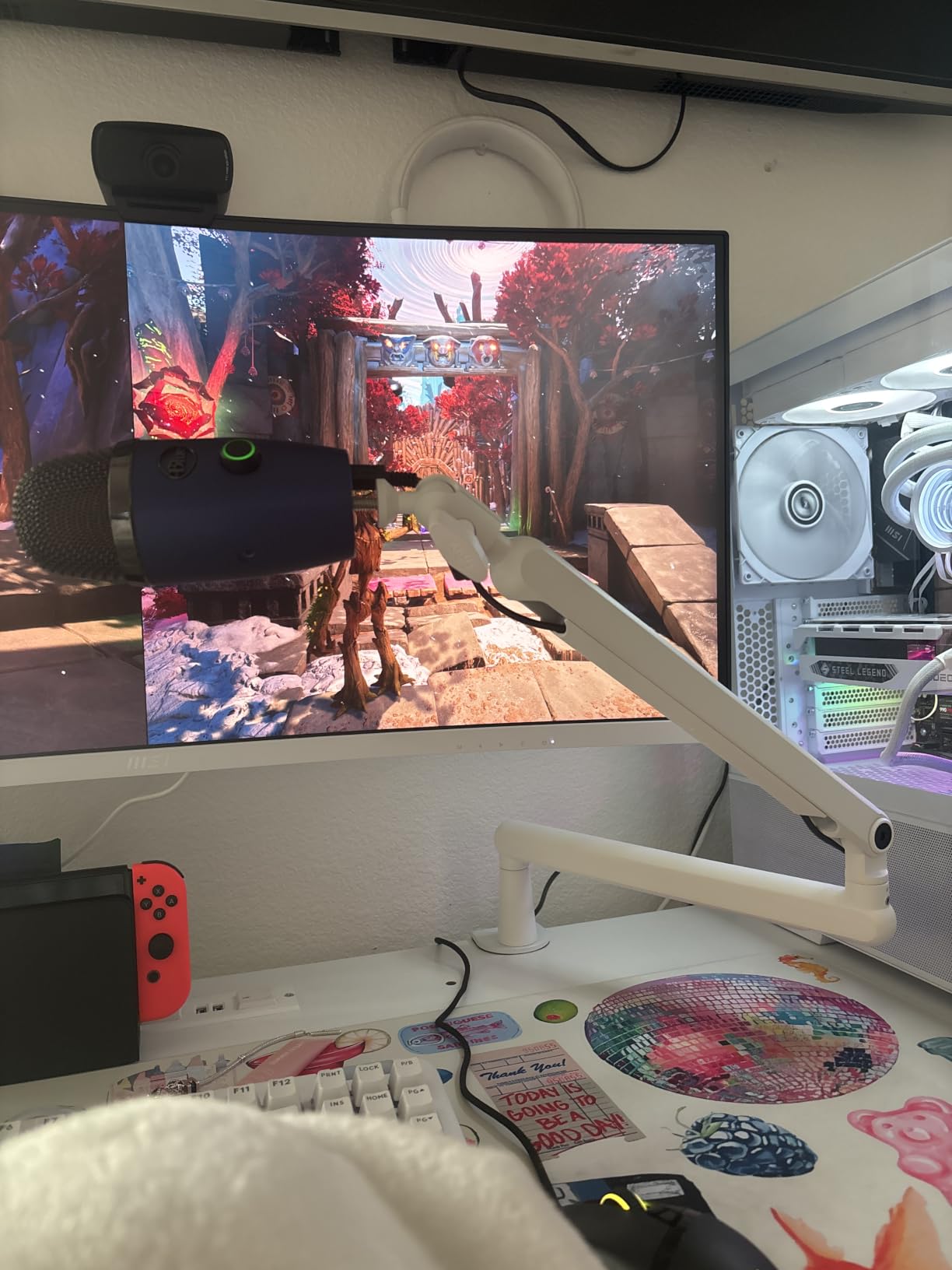
The hidden cable management system routes your cable inside the arm, keeping it out of sight and out of mind. I ran both a USB cable and an XLR cable through the channel without any pinching. The C-clamp includes a non-slip grip that holds tight without scratching the desk surface.
FIFINE includes three thread adapters (1/4, 3/8, and 5/8 inch), so compatibility is nearly universal. The 220-degree vertical and 360-degree horizontal adjustment range gives you more than enough flexibility for any recording angle. Just note that the section nearest the C-clamp does not adjust up and down, which limits some mounting positions.
Why It Is a Best Seller
The combination of all-metal build, low profile design, hidden cable management, and universal thread compatibility at a mid-range price hits the sweet spot for most home studio owners. Nearly 5,000 reviewers agree.
Desk and Mounting Requirements
The C-clamp fits desktops from 0.8 to 2.4 inches thick. I tested it on a standard particle board desk and a thicker solid wood desk, and it held securely on both. Make sure your desk edge is flat and free of lip molding for the best grip.
5. FIFINE BM66 – Best for Heavy Microphones
FIFINE BM66 Heavy Metal Microphone Boom Arm Stand for Podcast Recording
Heavy metal boom arm
Supports up to 4.4 lbs
34 inch max reach
Knob-free adjustment
Pros
- Supports heavy mics up to 2 kg including SM7B
- Smooth silent one-hand glide adjustment
- Built-in cable channels with rubber covers
- 34.25 inch reach for large desks
- Protective sleeve prevents finger pinching
Cons
- Base 360 rotation can feel slightly wobbly
- Bulky design may obstruct monitor view
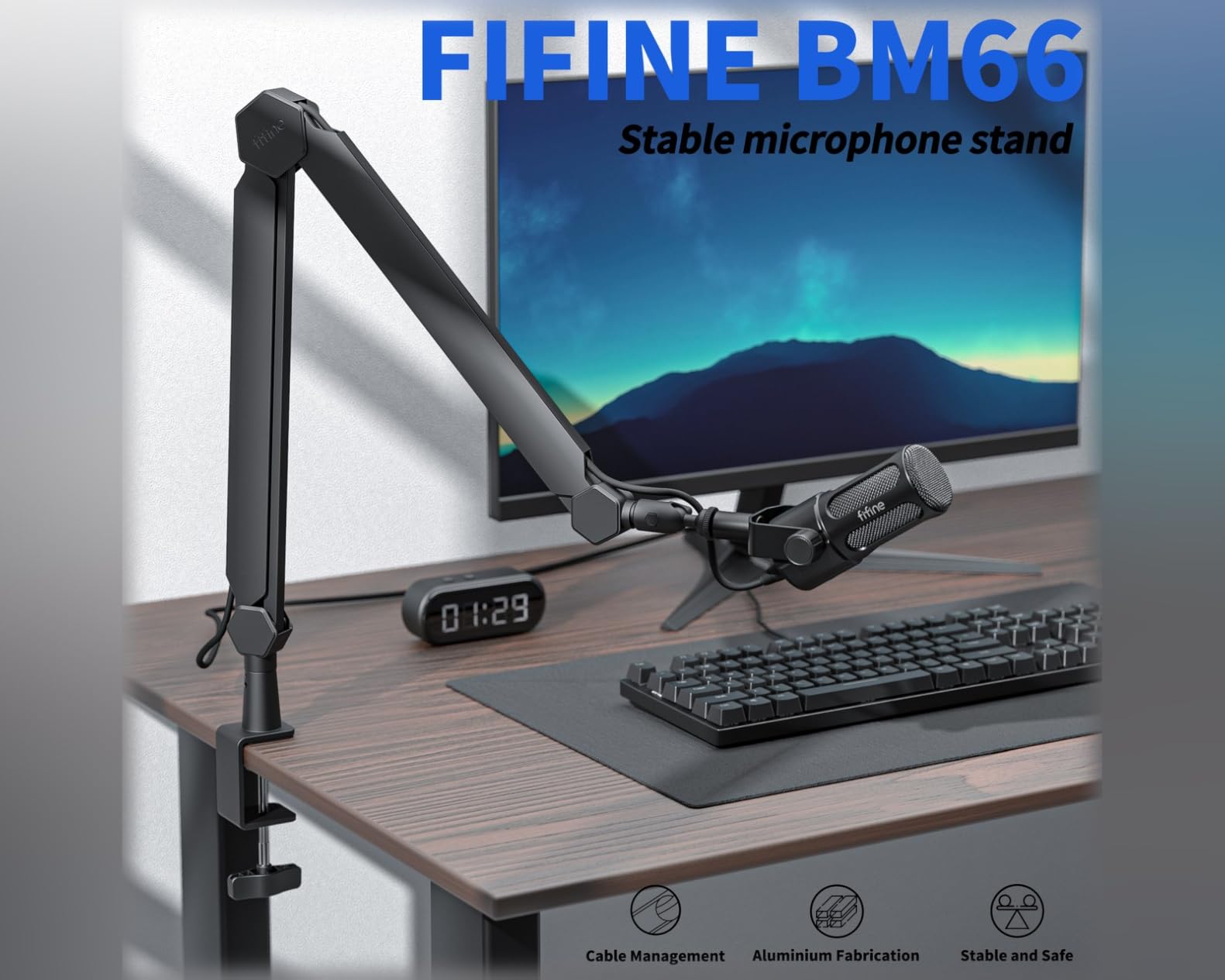
If you are running a Shure SM7B, EV RE20, or another heavy broadcast mic, most budget boom arms simply cannot handle the weight. The FIFINE BM66 is built for exactly that scenario. I mounted my SM7B on it and was able to position the mic precisely without any sagging or drooping over a full recording session.
The knob-free adjustment is the standout feature. Instead of tightening screws or knobs to lock the arm in place, the BM66 uses a tension-based system that lets you glide the arm with one hand and have it stay put. It feels remarkably smooth, and the silent operation means you can reposition during a recording without picking up mechanical noise.
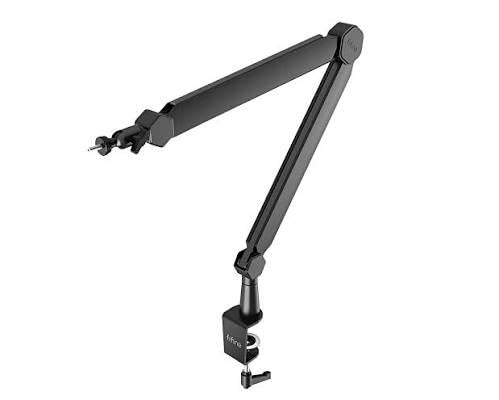
The 34.25-inch reach is longer than most desk arms on this list, making it a good choice if you have a deep desk and need the mic to reach across your workspace. The built-in cable management channels include rubber covers that protect your cables from wear over time.
I did notice that the 360-degree base hinge can introduce a slight wobble when the arm is fully extended with a heavy mic. It is not a dealbreaker, but it is something to be aware of. Also, the arm is fairly bulky, so if your monitor sits low, it may partially block the bottom edge of your screen.
Heavy Mic Compatibility
This arm handles the Shure SM7B, Rode PodMic, and other heavy dynamic broadcast mics up to 4.4 lbs. The 3/8 to 5/8 thread adapter is included for compatibility with standard mic mounts.
Adjustment Mechanism Explained
The tension-based system replaces traditional knobs with internal friction that holds the arm in place. You adjust the tension once during setup, and after that, the arm moves smoothly and stays where you leave it. This is a much better experience than fiddling with knobs every time you reposition.
6. MAONO BA92 – Best Aluminum Boom Arm for Streamers
MAONO BA92 Low Profile Mic Boom Arm, Cable Management Microphone Stand
Aerospace grade aluminum
Low profile design
C-clamp and grommet mount
24 inch max height
Pros
- Aerospace grade aluminum is lightweight yet strong
- Includes both C-clamp and grommet mounting options
- Built-in cable management reduces clutter
- Full 360 degree rotation and 90 degree tilt
- 2-year warranty with tech support
Cons
- Weight capacity limited to 4.4 lbs
- Max height of 24 inches may be low for some setups
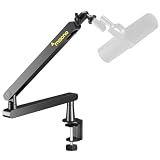
The MAONO BA92 caught my attention because of its aerospace-grade aluminum construction. At about 1 kg total weight, it is noticeably lighter than the steel arms on this list while still supporting up to 4.4 lbs. That makes it easier to reposition and adjust without fighting the arm’s own weight.
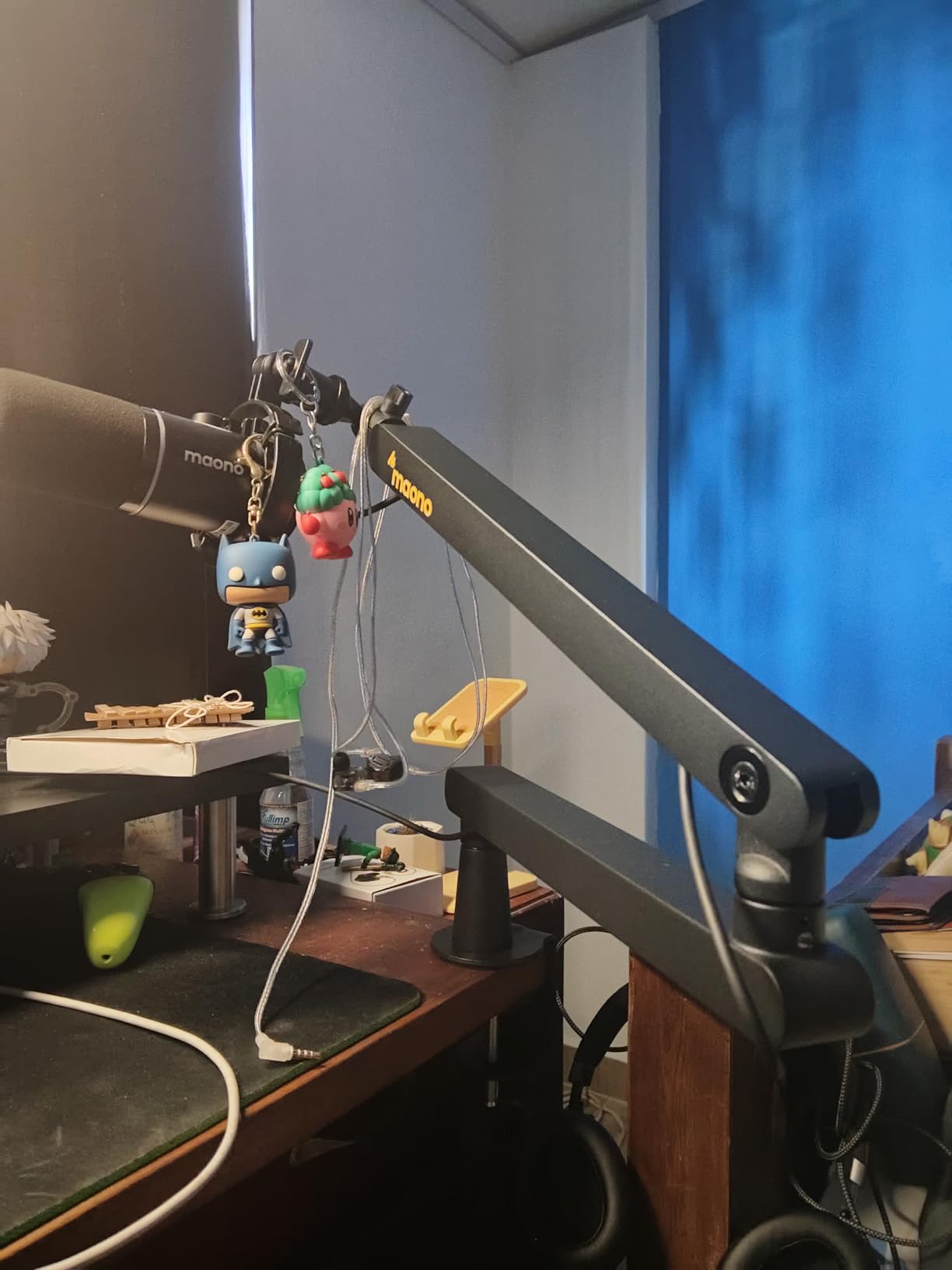
I tested it with both the C-clamp and the grommet mount options that come in the box. The grommet mount is a nice inclusion because it gives you a cleaner look if your desk has a pre-drilled hole. The C-clamp works well too, with a secure grip that held firm on my desk during testing.
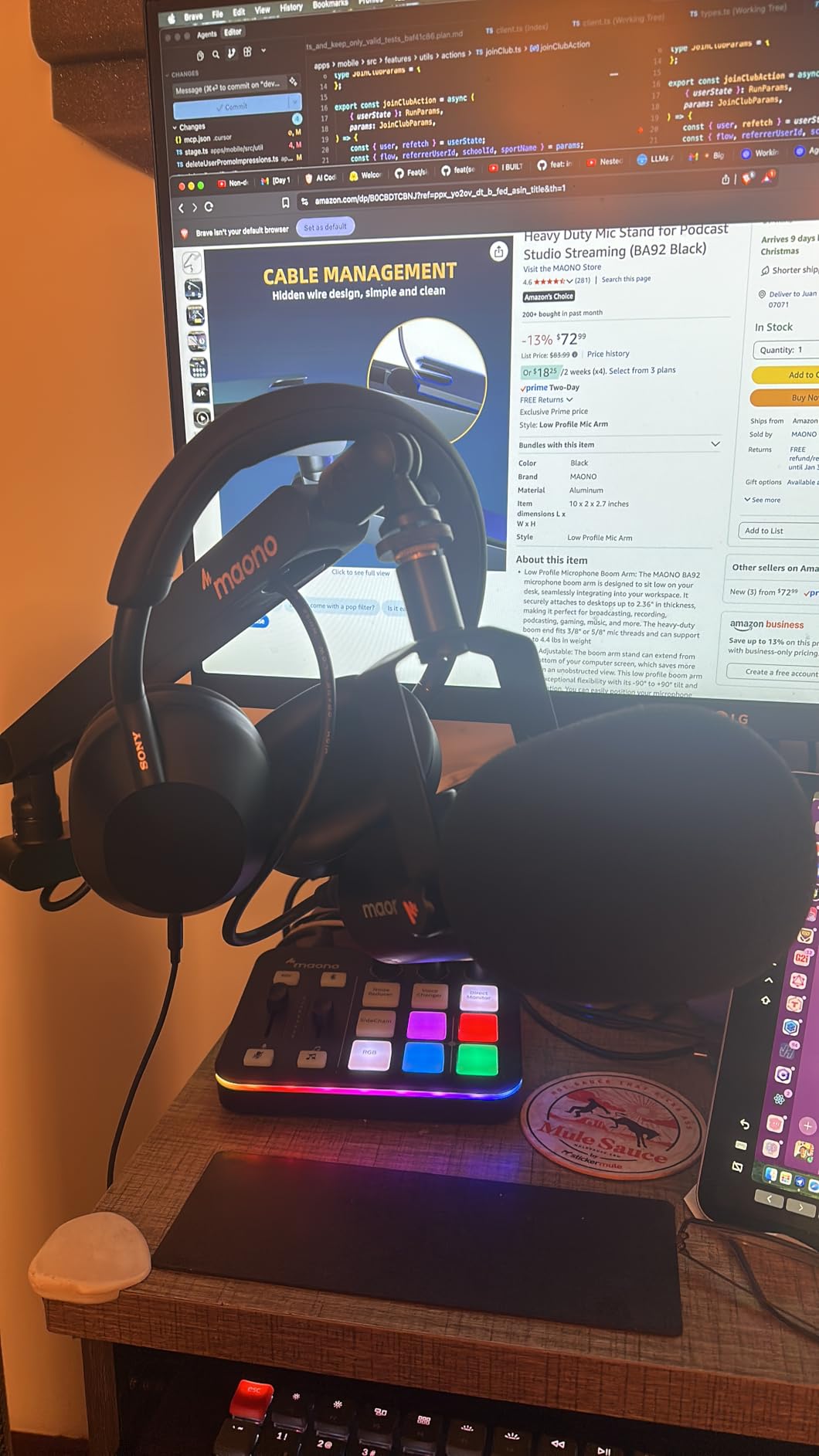
The full 360-degree rotation and negative 90 to positive 90 degree tilt range gives you complete positioning control. I was able to swing the mic from a talking position to a side-address recording angle without any tools. The built-in cable management keeps your desk looking professional, which matters if your setup is on camera.
The 24-inch maximum height is slightly lower than some competitors, so if you have a particularly high desk setup or need the mic well above your monitor, this could be limiting. For most standard desk heights, though, it works without issue.
Mounting Options Compared
The C-clamp is faster to install and works on any desk edge, while the grommet mount provides a cleaner look and is more secure for heavier mics. I recommend the grommet mount if your desk supports it and the C-clamp for renters or anyone who cannot drill into their desk.
Is the Aluminum Build Worth It
The aluminum construction saves weight and resists corrosion better than steel. For streamers and podcasters who frequently reposition their mic, the lighter arm makes one-handed adjustments noticeably easier. The 2-year warranty backs up the build quality.
7. Rode PSA1+ – Best Premium Broadcast Boom Arm
RØDE PSA1+ Professional Studio Boom Arm with Spring Damping, Black
Broadcast studio boom arm
Parallelogram spring design
Fully damped silent springs
Integrated cable management
Pros
- Parallelogram spring design for buttery smooth movement
- Fully damped springs eliminate mechanical noise
- Superior isolation from desk vibrations
- Compatible with mics from 94g to 1.2 kg
- 2-year warranty from Rode
Cons
- Premium price point
- Weight limit of 1.2 kg excludes heaviest broadcast mics
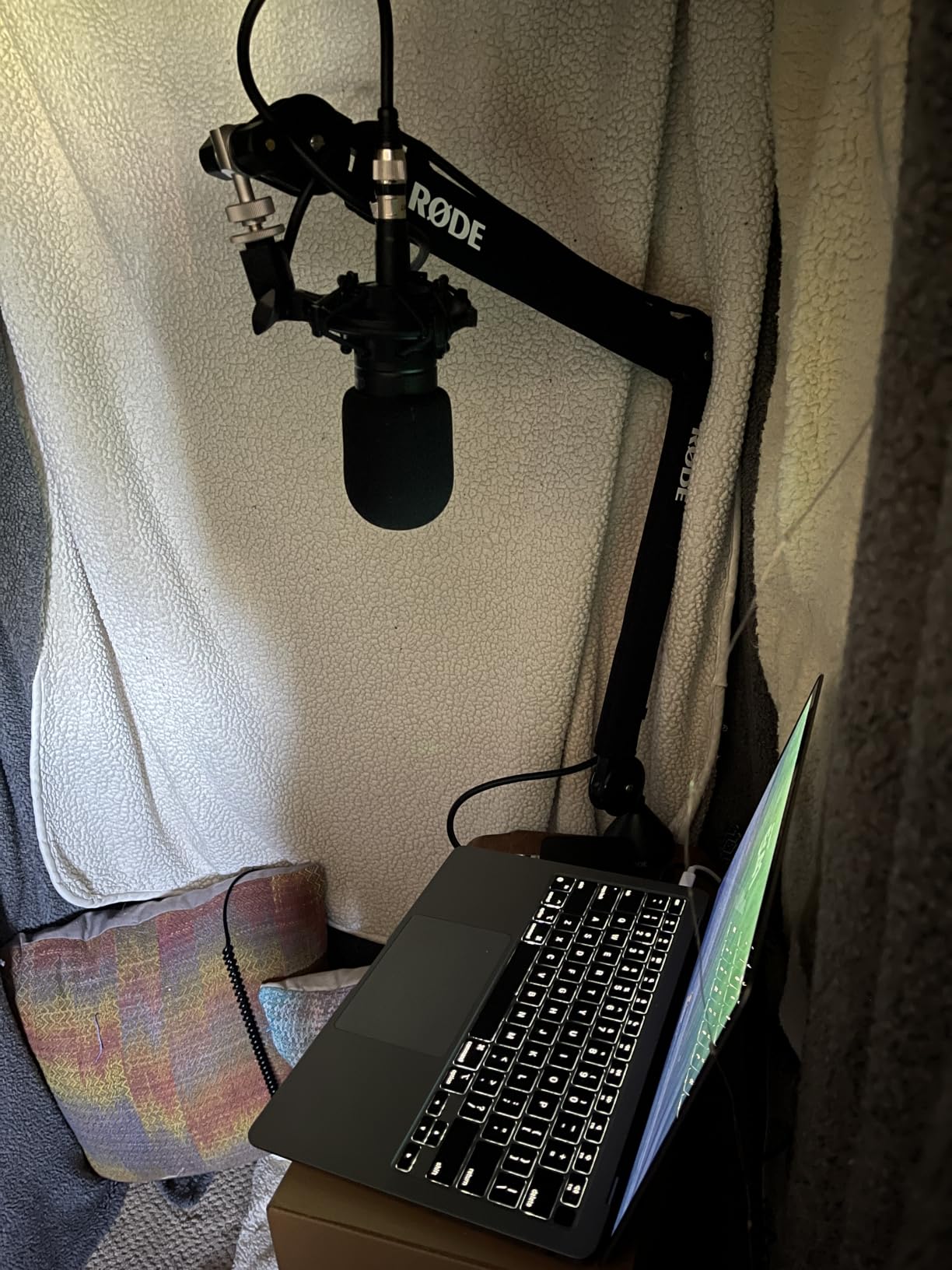
The Rode PSA1+ is the stand I keep coming back to in my own studio. With over 17,000 reviews and a 4.7 rating, it has earned its reputation as one of the best mic stands for home studios that demand broadcast quality. The parallelogram spring design is what sets it apart from every other arm on this list.
Instead of a simple single-spring mechanism, the PSA1+ uses a parallelogram linkage that distributes the mic’s weight evenly across the arm. This means the arm moves smoothly in any direction and stays exactly where you leave it. I tested it with a Rode PodMic and the movement was so fluid it felt like the arm was reading my mind.
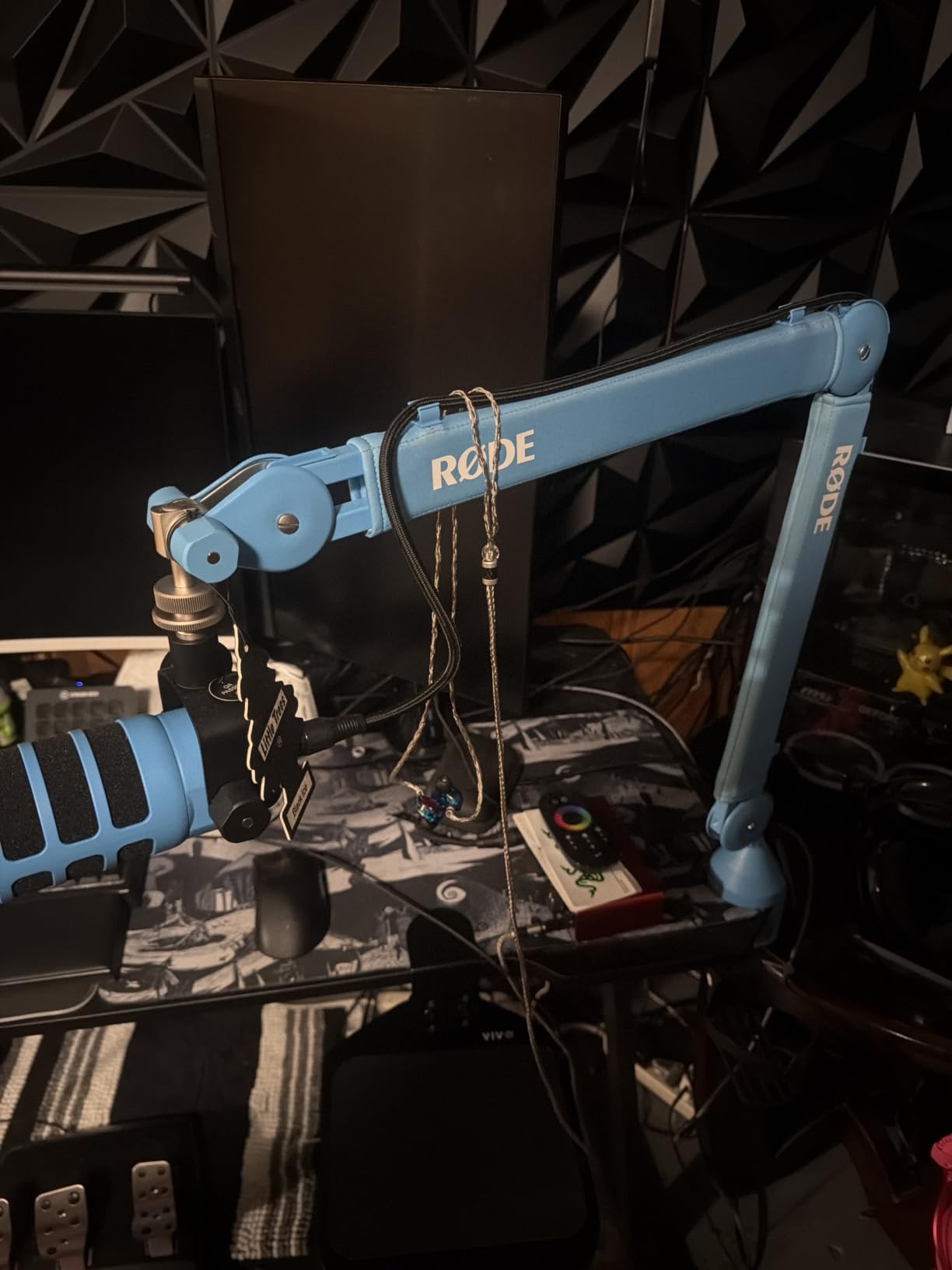
The fully damped springs are the other key feature. Standard boom arms transmit mechanical noise when you bump the desk or type on your keyboard. The PSA1+ isolates the mic from these vibrations effectively. I recorded a podcast while typing notes and the keyboard noise that normally travels through the desk was barely detectable.
Integrated cable management handles both USB and XLR cables, routing them internally through the arm. The powder-coated finish looks professional on camera and resists scratches over time. My one caveat is the 1.2 kg weight limit, which means the heaviest broadcast mics may be too much for it.
What Makes the Parallelogram Design Special
The parallelogram linkage keeps the mic at a consistent height as you move the arm forward and backward. On standard arms, extending the arm causes the mic to drop slightly. The PSA1+ eliminates that drop, making precise mic positioning much easier.
Long-Term Durability
Rode backs this arm with a 2-year warranty, and based on forum feedback from audio engineers, the PSA1+ holds up over years of daily use. The damping material does not degrade noticeably, and the spring tension remains consistent. This is an investment piece that pays off long-term.
8. K&M 21075 Tripod – Best German-Engineered Floor Stand
K&M König & Meyer 21075.500.55 Tripod Microphone Stand – Adjustable Telescoping 1-Piece Boom Arm – Professional Grade – Heavy Duty with Folding Leg Base – German Made – Black
German-made tripod stand
Telescoping boom arm
Zinc die-cast base
5-year warranty
Pros
- German manufacturing quality and precision
- Telescoping boom extends 16.7 to 28.5 inches
- Clutch height adjustment from 39.7 to 67.7 inches
- Folding legs for transport
- 5-year repair or replacement warranty
Cons
- Higher price than budget alternatives
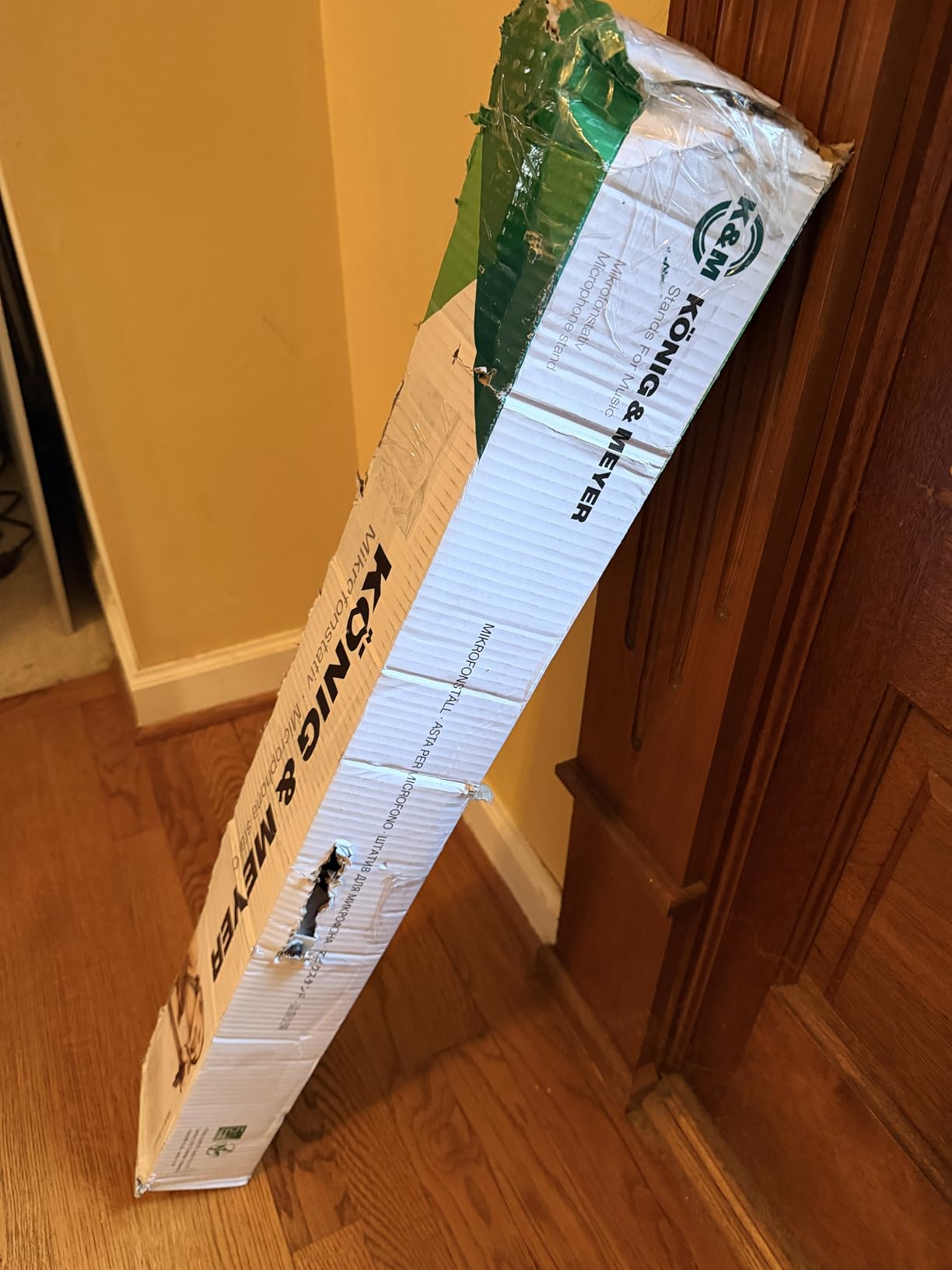
- Some users report packaging concerns
K&M (Konig and Meyer) is the brand that audio engineers on Reddit consistently recommend as worth the investment. I wanted to see if the hype was justified, so I tested the 21075 tripod in my studio for vocal recording sessions. The short answer is yes, the quality is immediately apparent from the moment you pick it up.
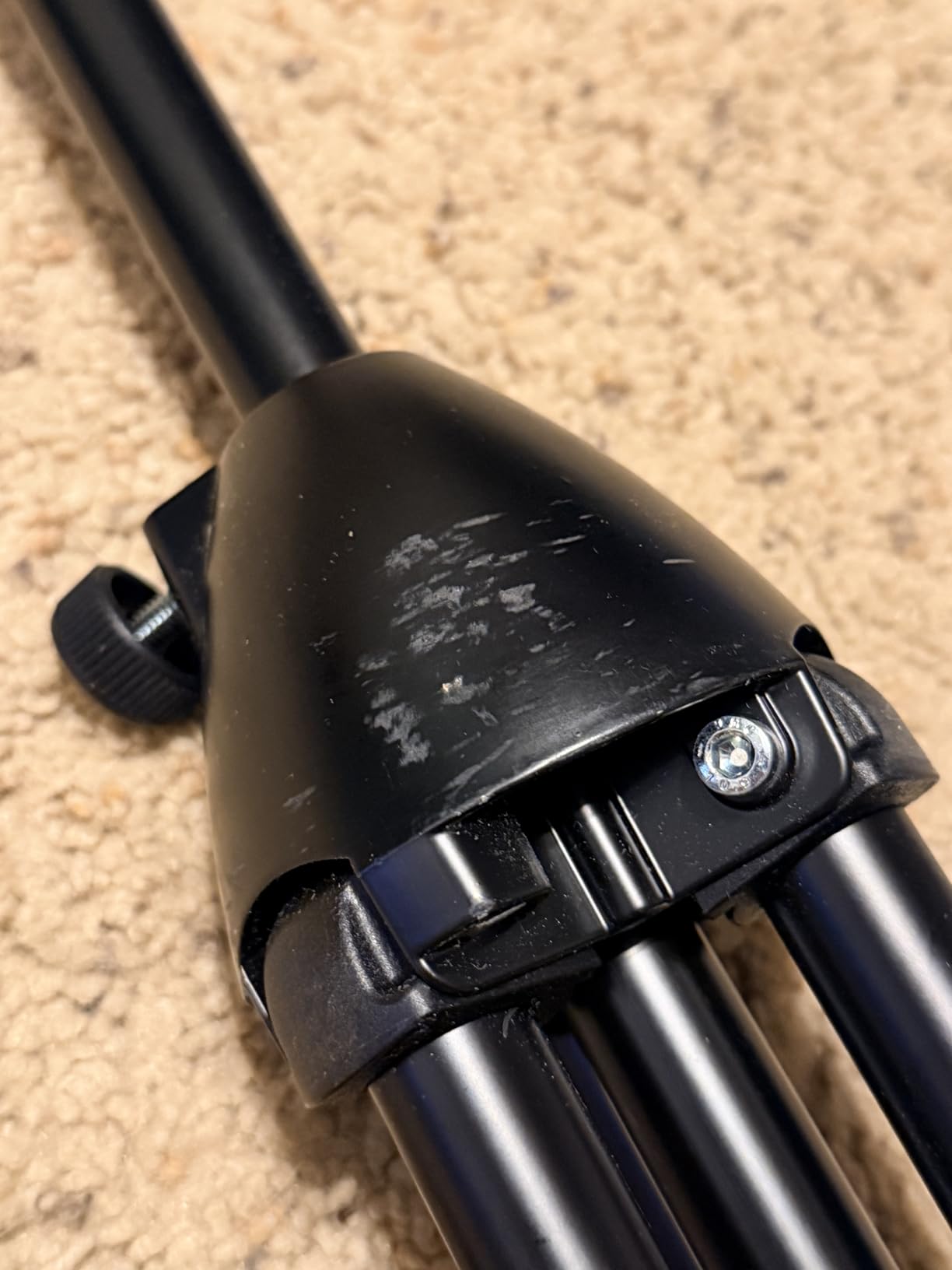
The zinc die-cast tripod base is dense and stable, with rubber feet that grip the floor without sliding. I extended the telescoping boom arm to its full 28.5 inches with a large-diaphragm condenser mic attached, and the stand did not budge. The clutch height adjustment lets you change height one-handed from 39.7 to 67.7 inches, which covers the full range of standing and seated recording positions.
The telescoping boom arm is a single-piece design that extends from 16.7 to 28.5 inches. The telescope mechanism locks firmly with a twist collar, and I never experienced any drift or sagging during use. The folding legs make it easy to pack up and transport if you record in different locations.
What really sets this stand apart is the 5-year warranty. K&M stands behind their products with a repair or replacement guarantee, and based on user reports, these stands last decades. Reddit users regularly mention owning K&M stands for 15-plus years without issue. That is the kind of longevity that makes the higher price worth it.
Why Audio Engineers Trust K&M
German engineering shows in every detail, from the smooth clutch mechanism to the precisely machined threads. Professional studios use K&M because the stands do not fail mid-session, and the build tolerances are tighter than budget alternatives.
Height and Reach Specifications
The stand adjusts from 39.7 inches at its lowest to 67.7 inches fully extended, with the boom adding up to 28.5 inches of horizontal reach. This covers virtually every home studio recording scenario from seated podcasting to standing vocals.
9. K&M 21080 Tripod – Best Heavy-Duty Studio Classic
K&M Konig & Meyer 21080.500.55 Tripod Microphone Stand w/Telescoping Boom | Clutch Height Adjustment | Soft-Touch Lock | Folding Leg Design | Zinc Die-Cast Base | German Made | Black
Heavy-duty tripod stand
Telescoping boom arm
Soft-touch clutch lock
Zinc die-cast base
Pros
- Heavy zinc die-cast base for maximum stability
- Soft-touch clutch for one-handed height adjustment
- Steel construction built to last
- Folding leg design for storage
- 5-year product and 10-year parts warranty
Cons
- Boom arm may feel undersized to some users
- Mic clip thread could be improved
The K&M 21080 is the heavier sibling of the 21075, weighing in at 7 pounds with a steel construction. I tested it specifically for scenarios where maximum stability matters, like recording with large-diaphragm condensers fully extended. This stand does not move, period.
The soft-touch clutch is the feature I appreciated most. Height adjustment on cheaper stands often requires two hands and some wrestling. On the 21080, you squeeze the clutch and the stand slides smoothly to your desired height. Release, and it locks firmly in place. This is especially useful during live sessions when you need to make quick adjustments.
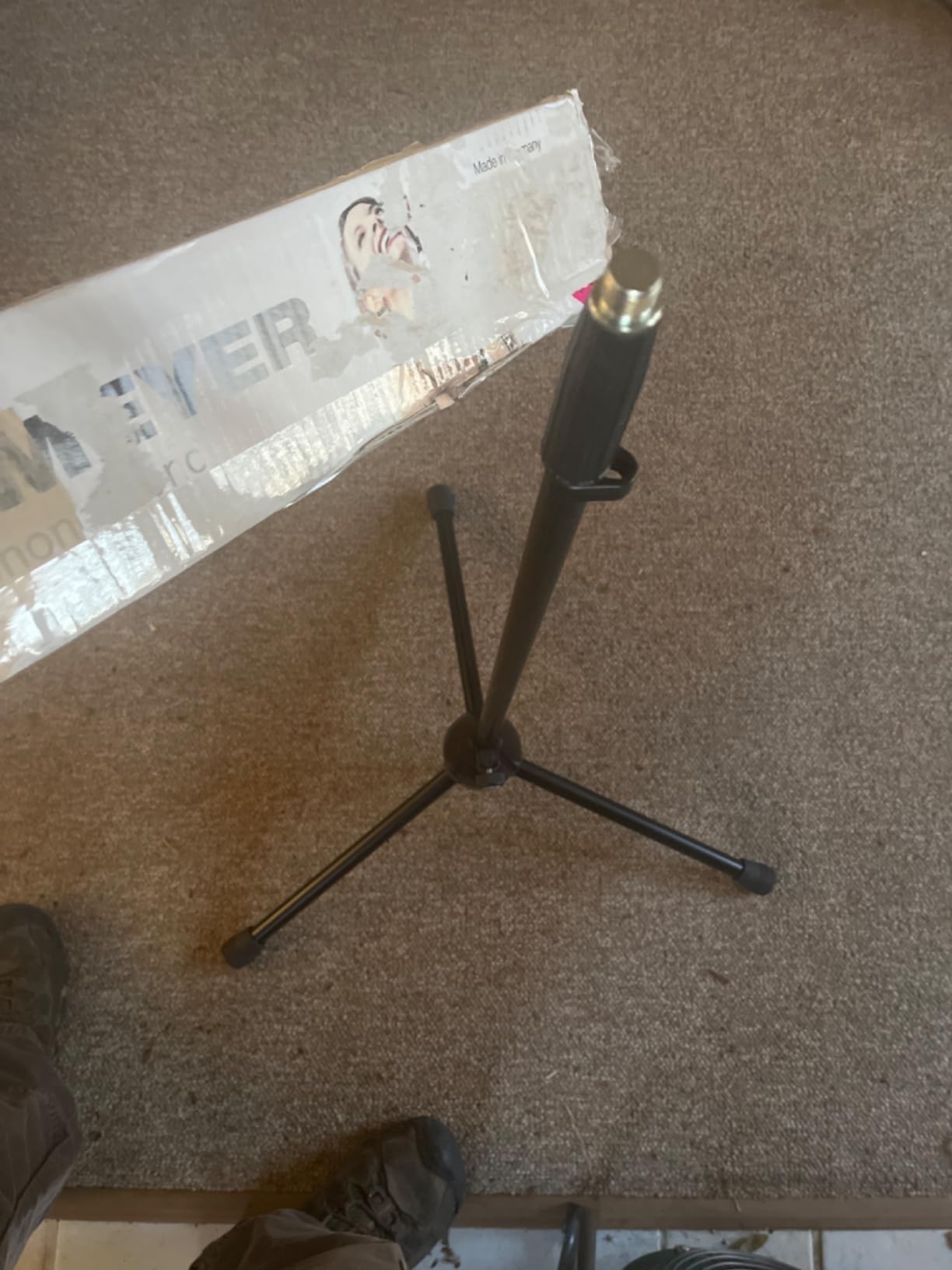
The zinc die-cast base provides a wide, stable footprint with rubber feet that grip any floor surface. I set it up on both carpet and hardwood, and in both cases the stand stayed planted even with the boom fully extended and a heavy mic on the end. The folding legs make storage practical when the stand is not in use.
Some users mention that the boom arm feels a bit small relative to the heavy base. I found it adequate for standard recording tasks, but if you need an extra-long reach, you may want to look at a stand with a longer boom. The thread on the mic clip is functional but could be machined more precisely.
Warranty and Long-Term Value
K&M offers a 5-year product warranty and a 10-year parts warranty on this stand. Combined with the steel construction, this is a stand you buy once and use for the life of your studio. The investment spread over a decade or more makes the price very reasonable.
How It Compares to the 21075
The 21080 is heavier and uses steel construction versus the 21075’s lighter design. Choose the 21080 for maximum stability with heavy mics, and the 21075 if portability matters more. Both share the same German build quality and warranty coverage.
10. On-Stage SMS7630B Hex Base – Best Stability for Large-Diaphragm Mics
OnStage On Stage SMS7630B Hex Base Studio Stnd W/Tele Boom
Hexagonal base studio stand
16 lb base weight
42-72 inch height range
Counterweight system
Pros
- Extremely stable 16 lb hexagonal base
- Excellent 42-72 inch height range
- Counterweight balances heavy mics perfectly
- Mid-point clutch protects mics during adjustment
- Durable finish resists chips and scratches
Cons
- Base is very heavy and not portable
- Plastic adjustment knobs may crack over time
- Base takes significant floor space
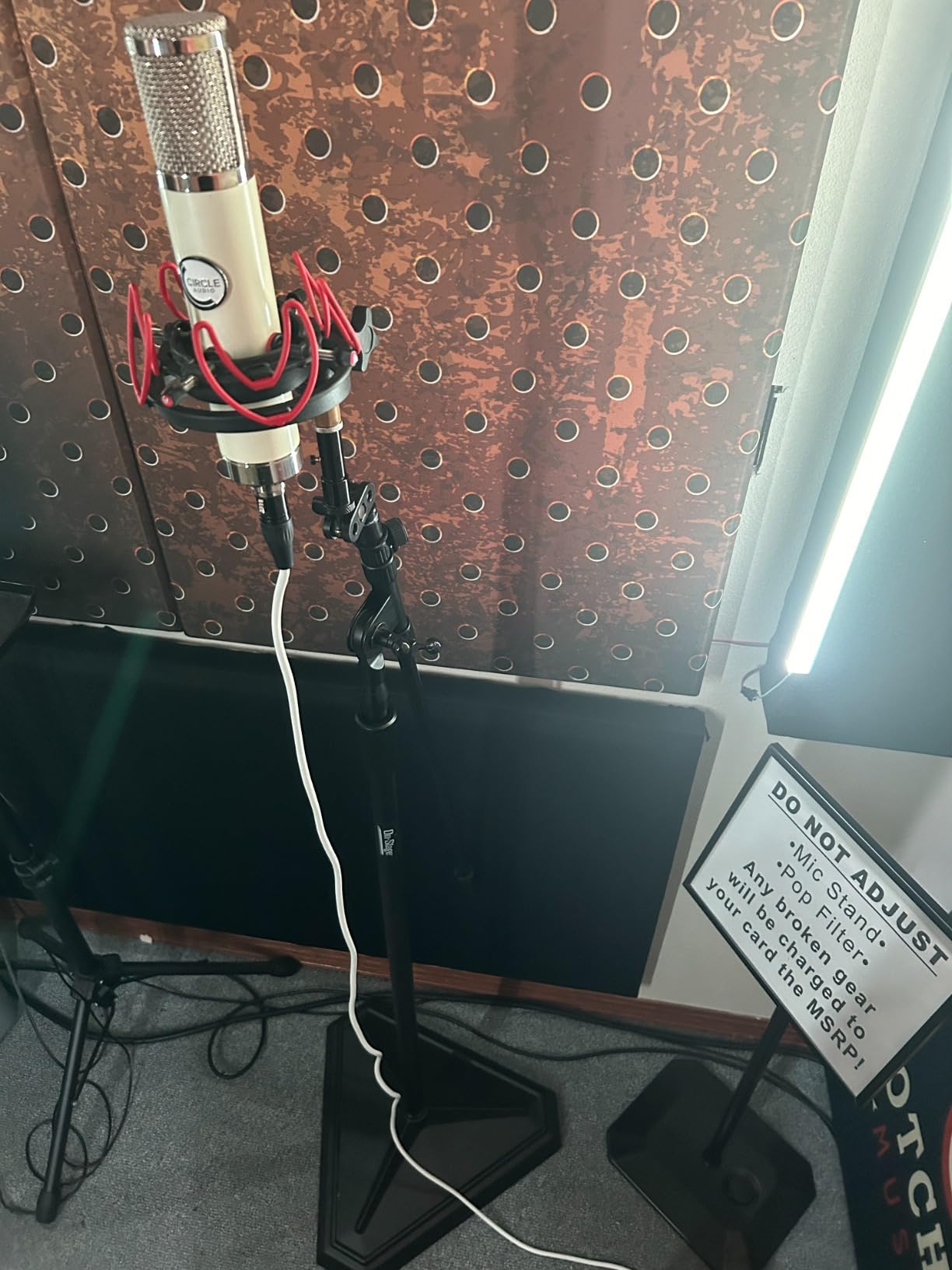
The On-Stage SMS7630B is the tank of this roundup. With a 16-pound hexagonal base, it is built for studios where stability is the absolute top priority. I tested it with my heaviest condenser mic fully extended on the boom, and it was the most stable setup I have ever experienced in a home studio.
The counterweight system is what makes this stand special for heavy microphones. Unlike standard stands where the boom relies on the base weight alone for counterbalance, the SMS7630B has an integrated counterweight that actively offsets the mic’s weight. I extended the telescoping boom to 47 inches with a heavy tube mic on the end, and the stand stayed perfectly balanced.
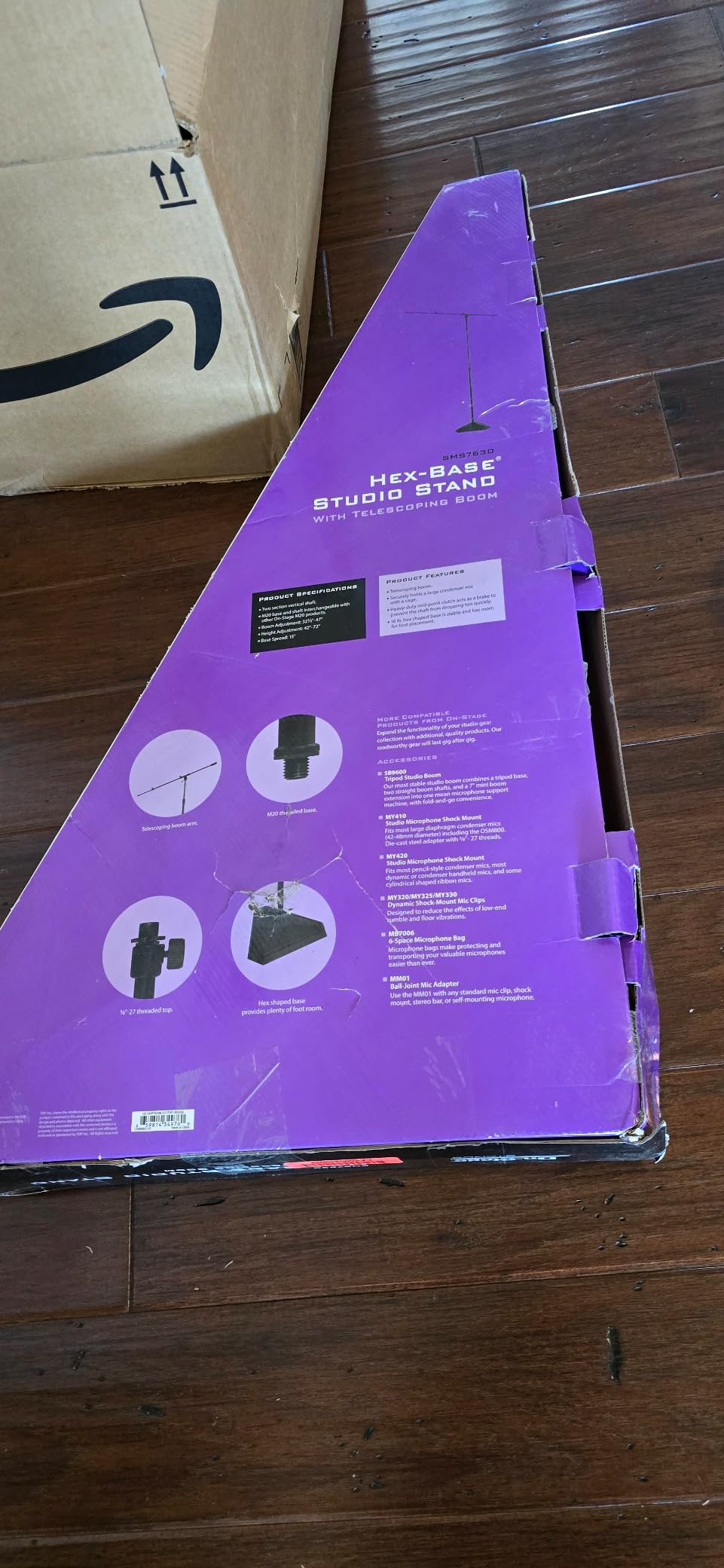
The mid-point clutch is a thoughtful safety feature. When you loosen the height adjustment, the clutch holds the upper portion of the stand so it does not crash down suddenly. This protects both your microphone and your hands during height changes. The height range of 42 to 72 inches covers everything from seated instrumental recording to standing vocals.
The trade-off is the weight and footprint. At over 10 kg with a large hex base, this stand is not something you move around easily. It takes up significant floor space, so measure your studio area before committing. The plastic adjustment knobs are the weakest point and may crack after years of use, though replacements are available.
Best Applications for This Stand
This stand is ideal for permanent studio installations where you need to support heavy large-diaphragm condensers, tube mics, or ribbons with heavy shock mounts. It excels in dedicated vocal booths and recording rooms where the stand stays in one spot.
Floor Space and Placement
The hex base measures about 16 inches across, so you need at least that much clear floor space. I recommend placing it in a dedicated spot in your studio rather than trying to move it between sessions. Once positioned, it provides rock-solid stability that lighter stands simply cannot match.
How to Choose the Best Mic Stand for Your Home Studio
After testing all 10 stands, our team identified the key factors that should drive your decision. Here is what matters most when choosing the best mic stands for home studios.
Stand Type: Floor vs Desk
The first decision is whether you need a floor stand or a desk-mounted arm. Floor stands like tripods and round-base stands are more versatile and work for vocals, instruments, and any standing or seated recording position. Desk arms free up floor space and keep the mic close to your computer setup, which is ideal for podcasting, streaming, and voiceover work.
Weight Capacity Matters More Than You Think
This is the number one pain point from forum discussions. Users constantly complain that cheap stands slip and sag when loaded with heavy mics. Check your microphone’s weight and compare it to the stand’s maximum capacity. The Shure SM7B weighs about 1.6 lbs, but with a shock mount and cable, you are closer to 2.5 lbs total. The FIFINE BM66 and On-Stage SMS7630B handle these weights without issue, while budget arms rated for 1.5 kg will struggle.
Space-Saving for Small Studios
If you are recording in a bedroom or spare room, floor space is at a premium. Low-profile desk arms like the TODI Mic Arm and FIFINE BM88 are designed to sit behind your monitor, taking up zero desk surface and no floor space. Tripod stands have a smaller footprint than round-base stands because the legs spread the weight efficiently.
Stability: Tripod vs Round Base
Forum users frequently debate tripod versus round-base stability. In our testing, both can be stable, but it depends on the boom extension. Round-base stands are simpler and great for straight vertical micing. Tripod stands with a boom arm are better for reaching over objects like music stands or drum kits. For maximum stability with heavy mics, the hex-base On-Stage SMS7630B is unbeatable.
Thread Compatibility
Most microphones use either a 5/8-inch or 3/8-inch thread. Nearly all stands on this list include an adapter, but double-check before buying. The FIFINE BM88 goes further by including 1/4, 3/8, and 5/8-inch adapters, making it compatible with virtually any mic or accessory.
Price vs Long-Term Value
Reddit users consistently say that K&M stands are worth the investment because they last decades. A $90 K&M tripod that lasts 15 years costs less per year than a $30 budget stand you replace every two years. That said, if you are just starting out, budget options from InnoGear and FIFINE offer excellent value and will serve you well until you are ready to upgrade.
Cable Management and Aesthetics
If your setup is visible on a stream or video call, cable management and aesthetics matter. Broadcast arms like the Rode PSA1+ and MAONO BA92 route cables internally for a clean look. The powder-coated finishes on premium stands look professional on camera, while budget arms often have visible springs and external cables.
FAQs
What are the different types of mic stands?
The four main types are tripod boom stands, round-base straight stands, desk-mounted boom arms, and broadcast arms. Tripod stands have three folding legs and a horizontal boom arm. Round-base stands use a heavy circular base with a vertical pole. Desk arms clamp to your desk and free up floor space. Broadcast arms are premium desk mounts with damped springs and internal cable management.
How do I choose a mic stand for my home studio?
Consider three factors: your microphone weight, your available space, and your recording style. Heavy mics like the SM7B need stands rated for at least 2 kg. Small studios benefit from desk-mounted arms that free up floor space. If you record vocals standing up, a tripod floor stand with adjustable height is ideal.
What is the best mic stand brand?
Ku0026amp;M (Konig and Meyer) is widely regarded as the best mic stand brand among audio professionals, known for German engineering and decades-long durability. Rode is the top choice for broadcast boom arms. For budget-friendly options, InnoGear and FIFINE offer reliable stands with strong value at lower price points.
Are expensive mic stands worth it?
Yes, expensive stands are worth it for serious recording. Premium stands from Ku0026amp;M and Rode last longer, stay more stable under heavy mics, and operate more smoothly than budget alternatives. A Ku0026amp;M tripod can last 15-plus years, making the per-year cost lower than repeatedly replacing cheaper stands that break or sag.
What mic stand do professionals use?
Professionals typically use Ku0026amp;M tripod stands for floor recording and Rode PSA1+ or similar broadcast arms for desk recording. High-end studios may also use Triad-Orbit and Latch Lake stands for maximum stability and build quality. The On-Stage SMS7630B hex base stand is popular in professional studios for heavy microphones.
Final Verdict
After testing all 10 stands, three clear winners emerged for different home studio needs. The Rode PSA1+ is our editor’s choice for anyone who wants a broadcast-quality desk arm with unmatched smoothness and silent operation. The K&M 21075 tripod is the premium pick for floor recording, offering German engineering that will last decades. And the FIFINE BM88 delivers best-value performance as a proven best seller in the low-profile boom arm category.
The best mic stands for home studios ultimately come down to your specific setup. If you have a heavy broadcast mic, look at the FIFINE BM66 or On-Stage SMS7630B. If space is tight, the TODI and FIFINE BM88 keep your desk clean. And if you want a stand you will never need to replace, invest in a K&M tripod.
Whatever you choose, the stands on this list have been tested in real recording sessions and proven to hold up. Pick the one that matches your mic weight, space, and recording style, and you will have a reliable foundation for your home studio for years to come.