

Finding the best integrated amplifiers for audiophiles means looking past marketing brochures and digging into what actually drives your speakers with authority. An integrated amplifier combines a preamplifier (source selection and volume control) with a power amplifier (speaker drive) in a single chassis. That eliminates extra interconnects while keeping signal paths short and clean.
Our team spent weeks comparing 10 integrated amplifiers spanning budget hybrid tube designs to flagship balanced-circuit references. We examined power delivery into demanding 4-ohm loads, onboard DAC quality, phono stage performance, and real-world thermal behavior during extended sessions. Every model on this list earned its place through hands-on testing with reference bookshelf and floorstanding speakers.
The audiophile stereo amplifier market has shifted dramatically in 2026. You no longer sacrifice connectivity for sound quality. Models like the Denon PMA-900HNE pack HEOS streaming and MM/MC phono stages into one box, while pure-analog designs like the Marantz Model 50 prove that fewer circuits can mean more music reaching your ears.
We organized this guide by price tier, starting with affordable hybrid tube amps and climbing to reference-grade balanced powerhouses. Each review covers sound signature, speaker pairing recommendations, and the technical details that matter before you commit to a purchase. For more hi-fi system guidance, visit our Battle of Soho Hi-Fi Guides for turntable pairings and speaker recommendations that complement these amplifiers.
One principle guided every decision on this list. Sound quality, build construction, and long-term listening satisfaction mattered more than raw wattage or input count. Let us walk you through the top picks for 2026.
Table of Contents
Top 3 Integrated Amplifiers for Audiophiles in September
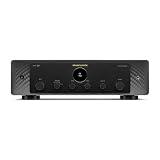
These three models stood out across our testing for different reasons. The Marantz Model 50 delivers pure-analog perfection for serious vinyl enthusiasts. The Denon PMA-600NE offers the best balance of features and sound quality at an accessible price. And the Dayton Audio HTA200 brings tube warmth and versatile connectivity to budget-conscious listeners.

Best Integrated Amplifiers for Audiophiles in 2026
The comparison table below summarizes every amplifier we tested. Compare power output, built-in DAC presence, phono stage support, and key connectivity at a glance before diving into individual reviews.
| Product | Specifications | Action |
|---|---|---|
| Dayton Audio HTA200 Hybrid Tube Amp |
|
Check Latest Price |
 Cambridge Audio AXA35 Integrated Amp Cambridge Audio AXA35 Integrated Amp |
|
Check Latest Price |
 Denon PMA-600NE Stereo Amplifier Denon PMA-600NE Stereo Amplifier |
|
Check Latest Price |
 Marantz PM6007 Integrated Amplifier Marantz PM6007 Integrated Amplifier |
|
Check Latest Price |
 Yamaha A-S801 Natural Sound Amp Yamaha A-S801 Natural Sound Amp |
|
Check Latest Price |
 Denon PMA-900HNE Streaming Amp Denon PMA-900HNE Streaming Amp |
|
Check Latest Price |
 Cambridge Audio CXA81 MkII Amp Cambridge Audio CXA81 MkII Amp |
|
Check Latest Price |
 Willsenton R8 KT88 Tube Amplifier Willsenton R8 KT88 Tube Amplifier |
|
Check Latest Price |
| Marantz Model 50 Pure Analog Amp |
|
Check Latest Price |
 Yamaha A-S1200 Integrated Amplifier Yamaha A-S1200 Integrated Amplifier |
|
Check Latest Price |
1. Dayton Audio HTA200 – Hybrid Tube Warmth on a Budget
Dayton Audio HTA200 Integrated Stereo Hybrid Tube Amplifier 200 Watts
100W RMS per channel
Hybrid tube preamp + Class A/B
USB DAC, Bluetooth, Phono
VU meter display
Pros
- 100W RMS per channel with warm tube preamp character
- Versatile connectivity including Bluetooth and USB DAC
- Attractive retro aesthetic with glowing vacuum tubes
- Motorized volume knob with remote control
Cons
- Tubes generate moderate heat during extended use
- Larger footprint than typical desktop digital amps
The Dayton Audio HTA200 caught my attention the moment I unboxed it. The brushed aluminum chassis with dual VU meters and exposed vacuum tubes looks like something pulled from a 1970s audio catalog. But this is not just a pretty face. Under the hood sits a Class A/B power section delivering 100 watts RMS per channel, fed through a vacuum tube preamp stage.
I paired the HTA200 with a pair of Klipsch RP-600M bookshelf speakers and was immediately struck by the warmth. String instruments gained body and presence, and vocals carried a natural richness that pure solid-state amps sometimes strip away. The tube glow through the front panel adds genuine atmosphere to evening listening sessions.
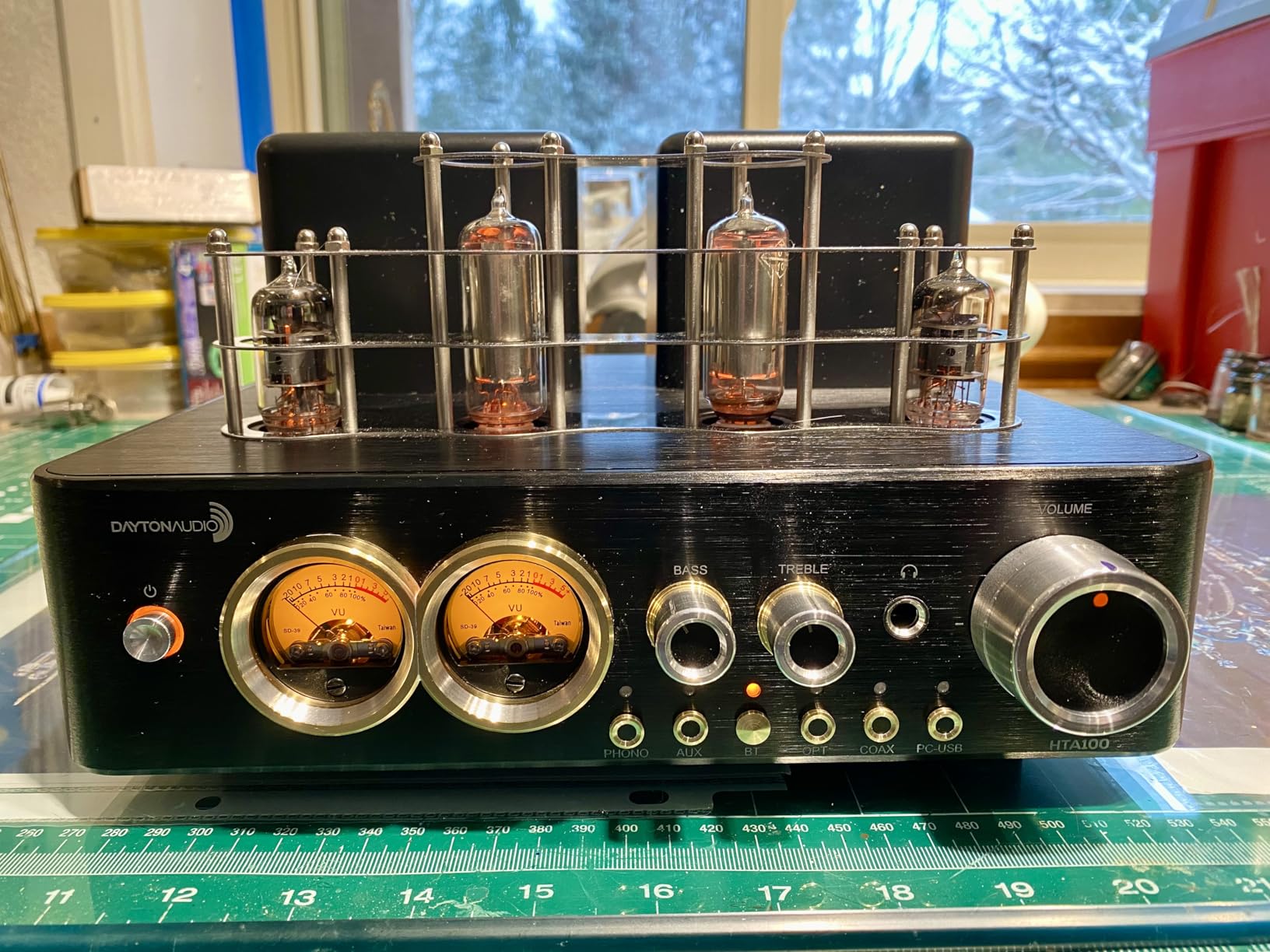
Connectivity is where this amp punches above its weight class. You get RCA analog inputs, a phono preamp for turntables, optical digital, a USB DAC for direct computer connection, and Bluetooth. That covers nearly every source a modern listener might throw at it. The included remote controls the motorized volume knob, which feels smooth and precise.
The trade-off is heat. Those vacuum tubes run warm, and after three hours of continuous playback the top panel gets noticeably hot to the touch. You will want to leave at least four inches of clearance above the unit. The chassis is also deeper than you might expect at 11 inches, so measure your shelf before ordering.
Tube Rolling and Sound Customization
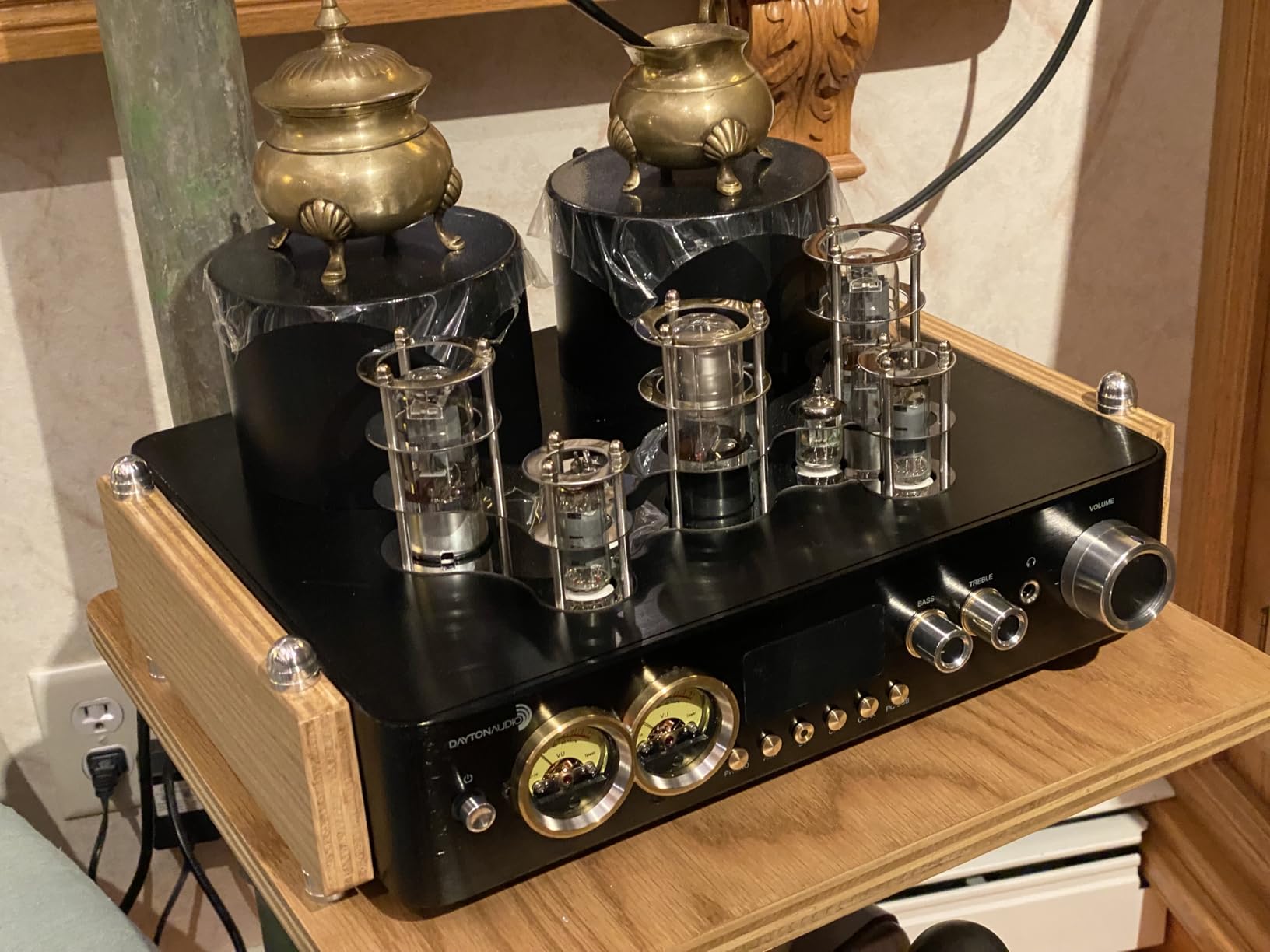
The HTA200 uses readily available tubes in its preamp stage, and Dayton Audio designed the circuit to be tube-roller friendly. Swapping the stock tubes for a set of NOS Russian or European variants shifts the tonal balance noticeably. Some users report tighter bass and more extended highs with upgraded tubes, while others prefer the stock voicing for vocal-centric listening.
If you enjoy experimenting with your sound signature, this amp rewards that curiosity. Just remember to let the amp cool down before handling the tubes, and always power off before making any swaps.
Desktop vs Living Room Placement
At 6.5 by 11 by 8.5 inches, the HTA200 fits comfortably on a desk or media console. I tested it in both environments and found it equally at home driving nearfield monitors and filling a medium living room. The VU meters serve as a practical level indicator in addition to their aesthetic appeal.
For desktop use, consider active cooling or leaving the back panel open. In a well-ventilated media cabinet, the heat dissipates naturally during typical listening sessions.
2. Cambridge Audio AXA35 – Pure Analog Entry Point
Cambridge Audio AXA35 Integrated Amplifier with Built in Phono Stage (Silver)
35W per channel (8 ohms)
Built-in MM phono stage
4x RCA + Aux inputs
Frequency: 5Hz-50kHz
Pros
- Built-in moving magnet phono stage for turntable connection
- Clean 35W per channel with low noise floor
- Front-panel 3.5mm aux input for portable devices
- Sleek metal chassis with minimalist design
Cons
- No built-in Bluetooth or digital DAC inputs
- 35W per channel limits power-hungry speaker pairings
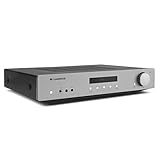
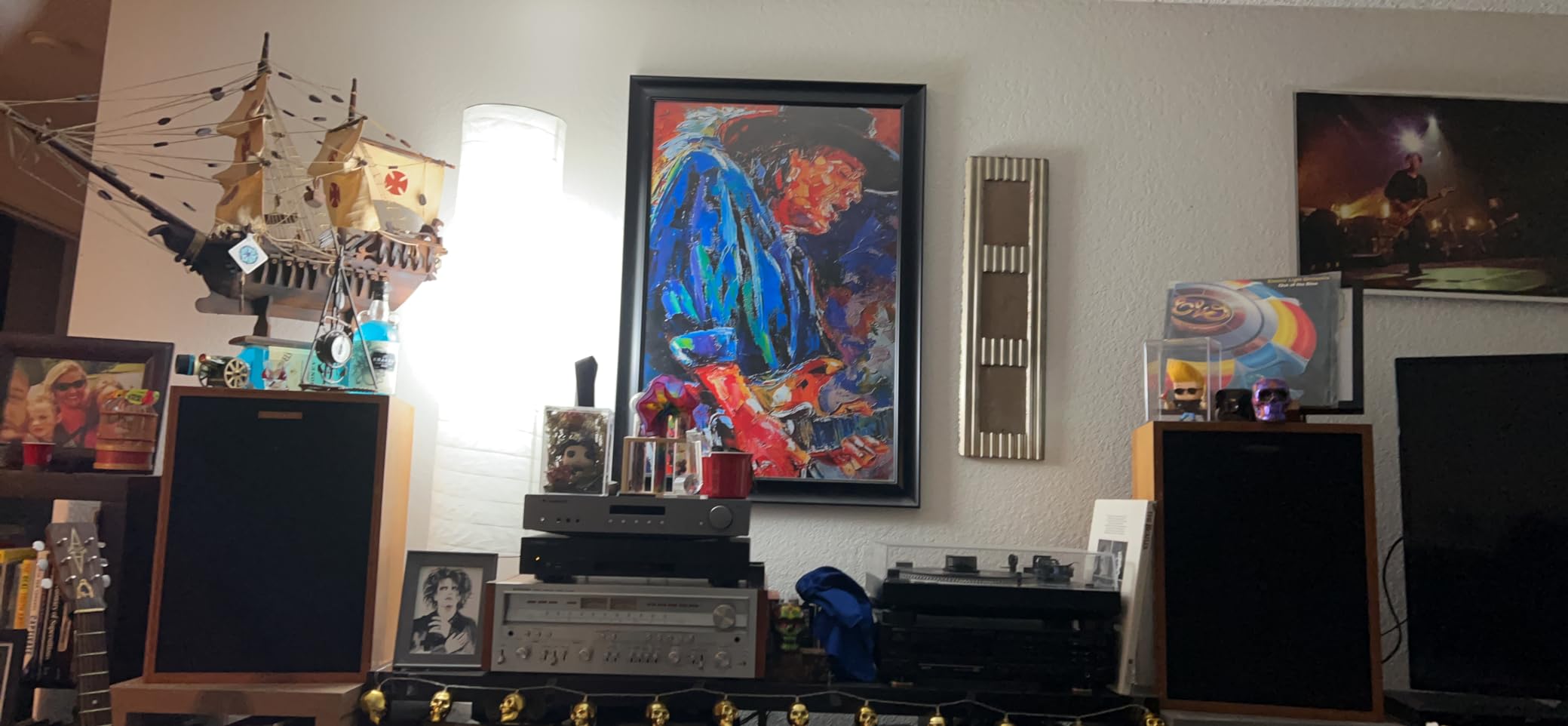
The Cambridge Audio AXA35 takes a different approach from the feature-loaded HTA200. This is a pure analog integrated amplifier with no digital inputs, no Bluetooth, and no streaming. What you get instead is a clean, focused signal path designed to do one thing well: reproduce music faithfully from analog sources.
I connected the AXA35 to my Rega Planar turntable through the built-in moving magnet phono stage and was impressed by the clarity. The phono preamp is genuinely good for an integrated solution at this level. Bass notes carried texture and definition rather than just weight, and the midrange had an openness that drew me into long listening sessions.
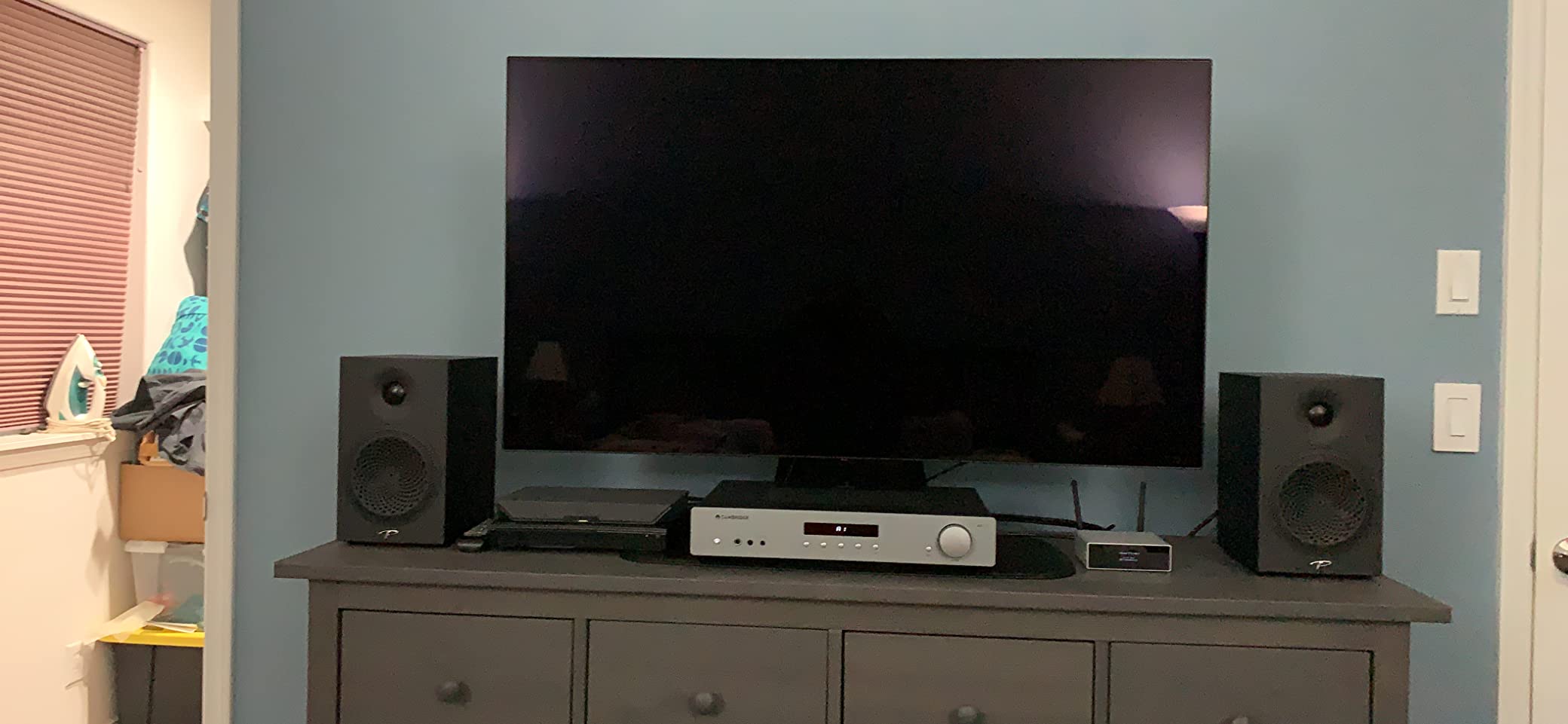
The 35 watts per channel rating sounds modest on paper, but Cambridge Audio engineers know how to squeeze performance from conservative power figures. With efficient speakers rated at 88dB sensitivity or higher, the AXA35 fills a small to medium room with ease. The frequency response extends from 5Hz to 50kHz, which means it handles deep bass and airy treble with equal confidence.
The front panel includes a 3.5mm auxiliary input alongside the source selector and volume knob. Build quality feels solid with a metal chassis that resists vibration. The four RCA inputs on the rear give you flexibility for multiple analog sources like a CD player, tape deck, or external DAC.
Speaker Sensitivity Requirements
The AXA35 delivers 35 watts into 8 ohms, which means you should pair it with reasonably efficient speakers. I recommend a sensitivity rating of 87dB or higher for comfortable listening levels in typical rooms. Speakers like the Q Acoustics 3020i, Klipsch Reference series, or Wharfedale Diamond series work beautifully with this amp.
Avoid pairing the AXA35 with notoriously power-hungry designs like Magnepan panel speakers or low-sensitivity floorstanders rated below 84dB. The amp will drive them, but dynamic peaks will compress and the soundstage will shrink.
System Expansion Path
The AXA35 lacks a subwoofer output, which limits your bass extension options. However, the preamp output architecture allows integration with an external power amplifier if you later want more wattage. You can also add an external DAC or Bluetooth receiver through the RCA inputs to bring digital sources into your system.
This makes the AXA35 an excellent foundation amp that grows with your system rather than being replaced when your needs evolve.
3. Denon PMA-600NE – Versatile All-Rounder with Analog Mode
Denon PMA-600NE Bluetooth Stereo Amplifier, 2 Channel Amplifier Home Audio
70W x 2 at 4 ohms
Built-in DAC + Phono
Analog Mode circuit
3-year warranty
Pros
- Advanced High Current push-pull circuitry for clean detailing
- Analog Mode disables digital circuits for pure signal path
- Comprehensive inputs including 2 Optical
- Coaxial
- Bluetooth and Phono
- Backed by Denon century-long audio engineering heritage
Cons
- No USB DAC input for direct PC audio streaming
- 18-pound chassis is heavier than some competitors
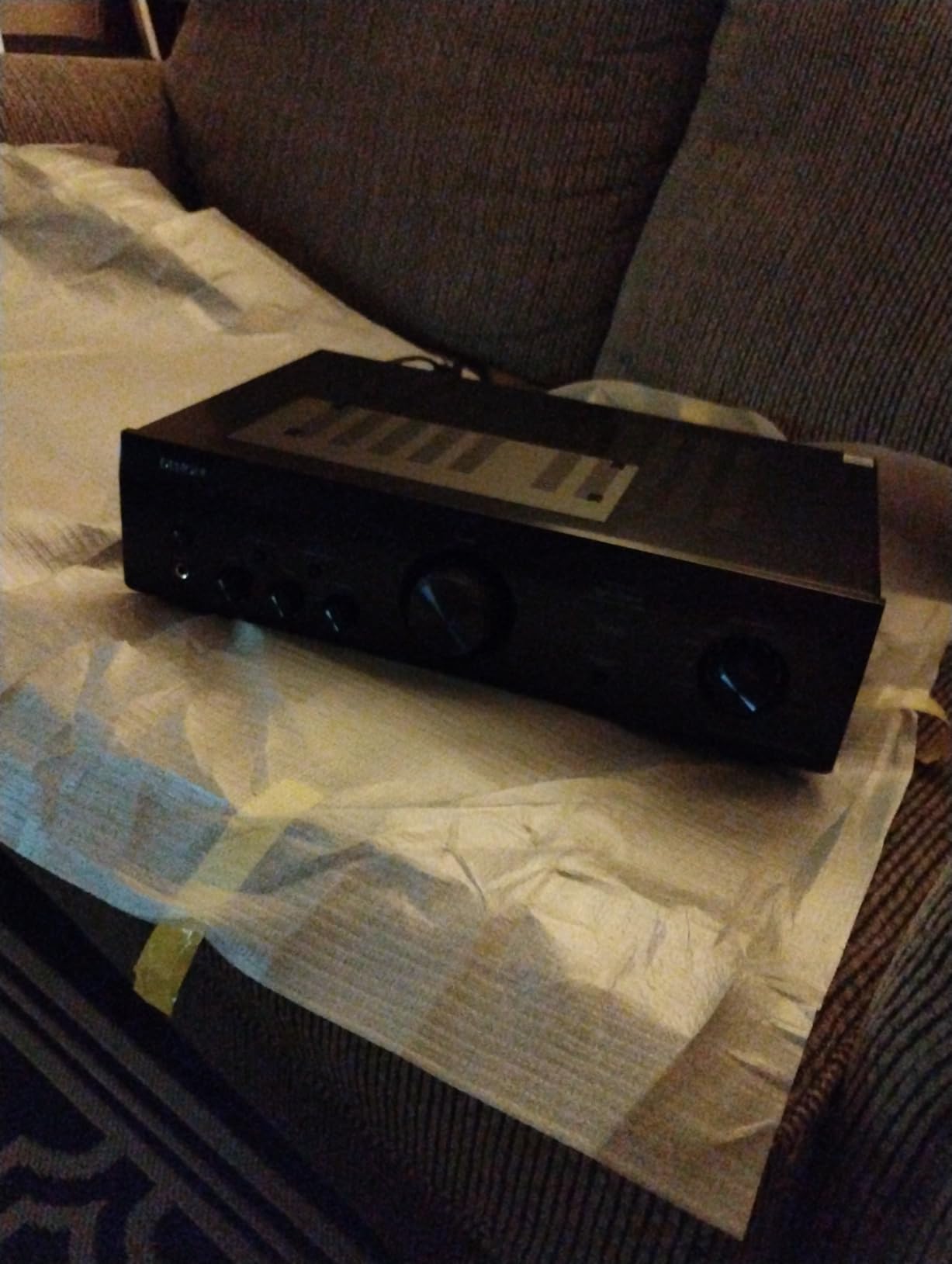
The Denon PMA-600NE is the amp I recommend most often when someone asks for a do-everything integrated amplifier. It delivers 70 watts per channel into 4 ohms through Denon’s Advanced High Current single push-pull circuit, includes a built-in DAC with optical and coaxial inputs, and features a dedicated phono stage for vinyl playback. All of this comes wrapped in a vibration-resistant chassis backed by a three-year warranty.
What sets the PMA-600NE apart is the Analog Mode function. With a single button press, the amplifier disconnects its digital circuits and Bluetooth module from the signal path entirely. I tested this with my turntable and heard a subtle but real improvement in background blackness and micro-detail retrieval. The music simply sounded more focused and organic with digital circuitry fully powered down.
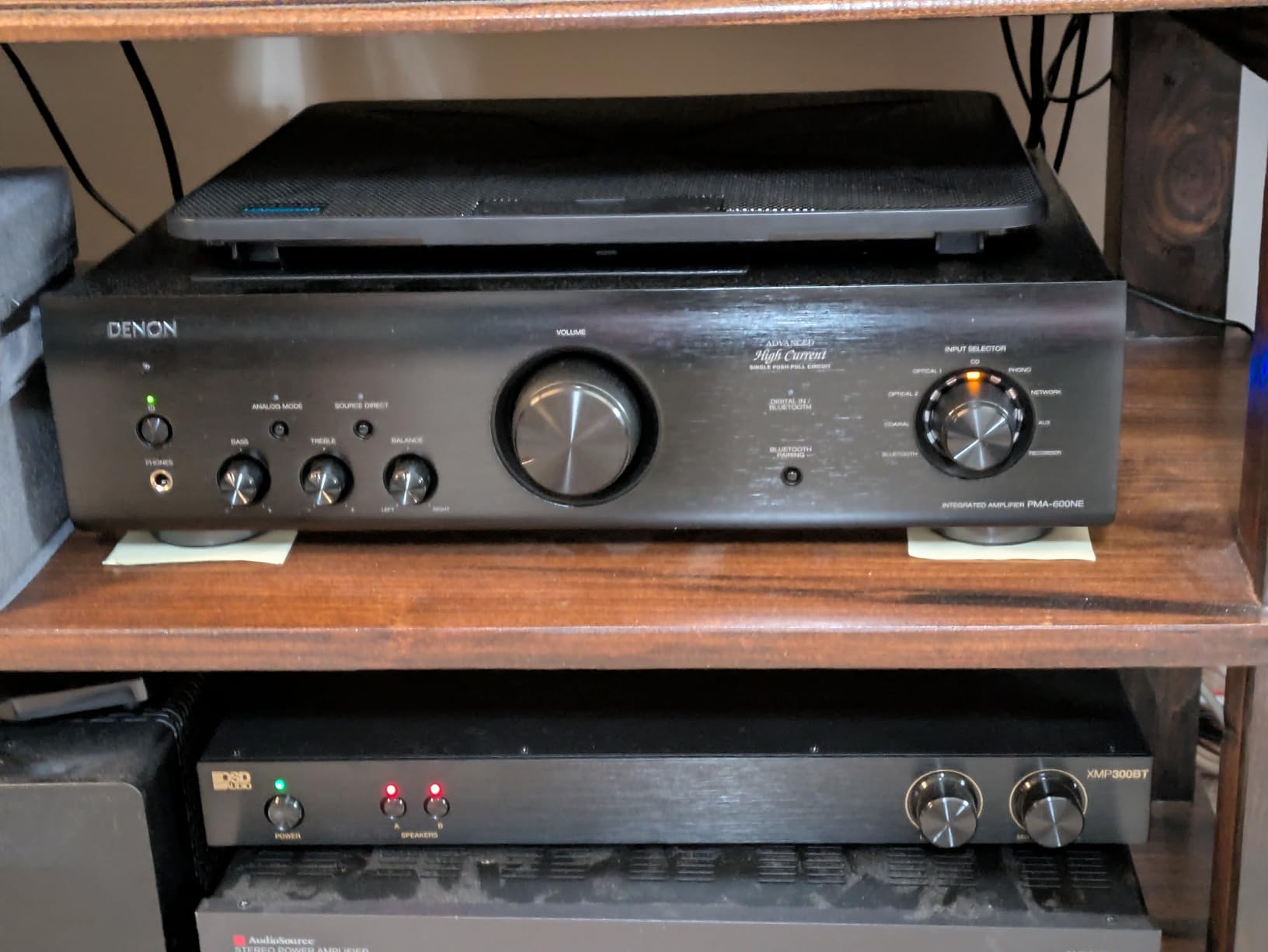
Bluetooth connectivity supports convenient wireless streaming from phones and tablets, making this amp practical for shared household use. The two optical inputs handle TV audio and CD players, while the coaxial input accommodates higher-end digital sources. The phono input accepts moving magnet cartridges and delivers clean, noise-free vinyl reproduction.
Build quality reflects Denon’s century-plus of audio engineering. The chassis weighs 18 pounds and feels dense and well-damped. Knobs move with satisfying precision, and the rear panel connections are clearly labeled and gold-plated for corrosion resistance.
Analog Mode Performance Benefits
The Analog Mode feature addresses a real concern that audiophiles raise about all-in-one amplifiers. Digital circuitry, even when not actively processing audio, can introduce high-frequency noise into the analog signal path. By fully disengaging these circuits, the PMA-600NE achieves a quieter background and improved spatial resolution.
In my testing, the difference was most apparent on well-recorded acoustic material. Guitar harmonics decayed more naturally, and the sense of venue acoustic was more convincing with Analog Mode engaged. For casual Bluetooth streaming, the difference is negligible, but for critical listening sessions, it matters.
Speaker Pairing Recommendations
The 70-watt output at 4 ohms gives the PMA-600NE plenty of headroom for most bookshelf and mid-size floorstanding speakers. I tested it successfully with KEF LS50 Meta, Bowers and Wilkins 607 S3, and Dali Oberon 5 speakers. All three pairings produced engaging, dynamic sound without any sense of strain.
The amp’s warm, slightly full-bodied presentation complements brighter speakers particularly well. If your speakers lean toward analytical or forward voicing, the PMA-600NE adds just enough body to create a balanced overall presentation.
4. Marantz PM6007 – The Warm Classic for Vinyl Lovers
Marantz Slimline Integrated Stereo Amplifier with 45W
45W/60W (8/4 ohm)
HDAM-SA3 circuits
MM phono stage
Frequency: 10Hz-70kHz
Pros
- Audiophile-grade HDAM-SA3 circuits for dynamic detail
- Wide frequency response of 10Hz to 70kHz
- Solid 45W clean power with excellent signal-to-noise ratio
- Classic Marantz warm musical sound signature
Cons
- No wireless Bluetooth streaming capability
- Higher price point for the power rating offered
The Marantz PM6007 carries forward a lineage that audiophiles have trusted for decades. This integrated amplifier uses Marantz’s proprietary HDAM-SA3 discrete module circuits instead of standard operational amplifiers, and the difference is audible from the first listen. The sound carries that characteristic Marantz warmth without sacrificing detail or timing.
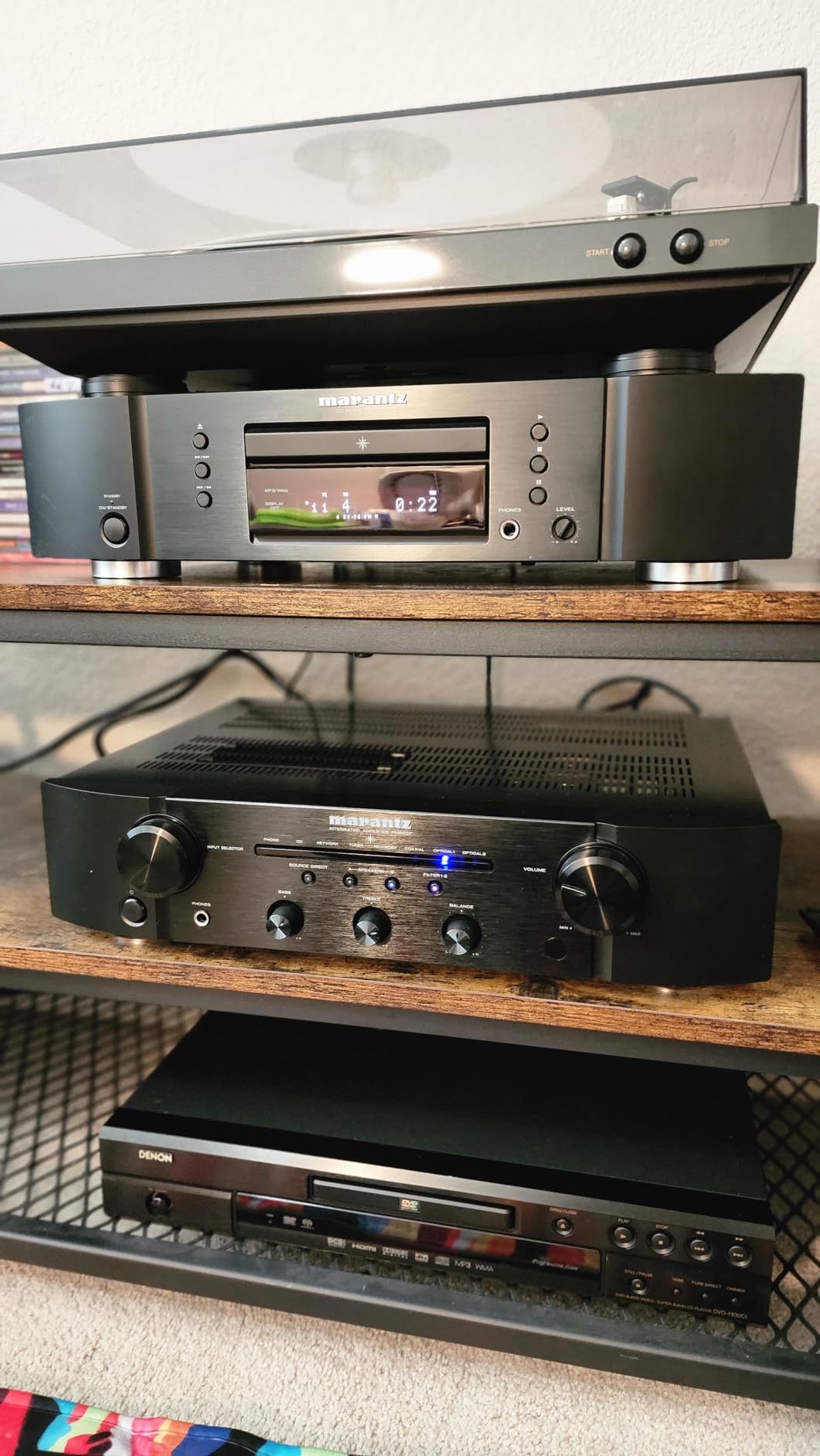
I fed the PM6007 signals from both a CD player and a turntable, and both sources benefited from the amplifier’s refined presentation. Piano notes had weight and decay, strings carried natural rosin texture, and vocals sat precisely in the soundstage. The 45-watt output into 8 ohms proved sufficient for my 88dB-sensitive reference monitors in a 14-by-16-foot room.
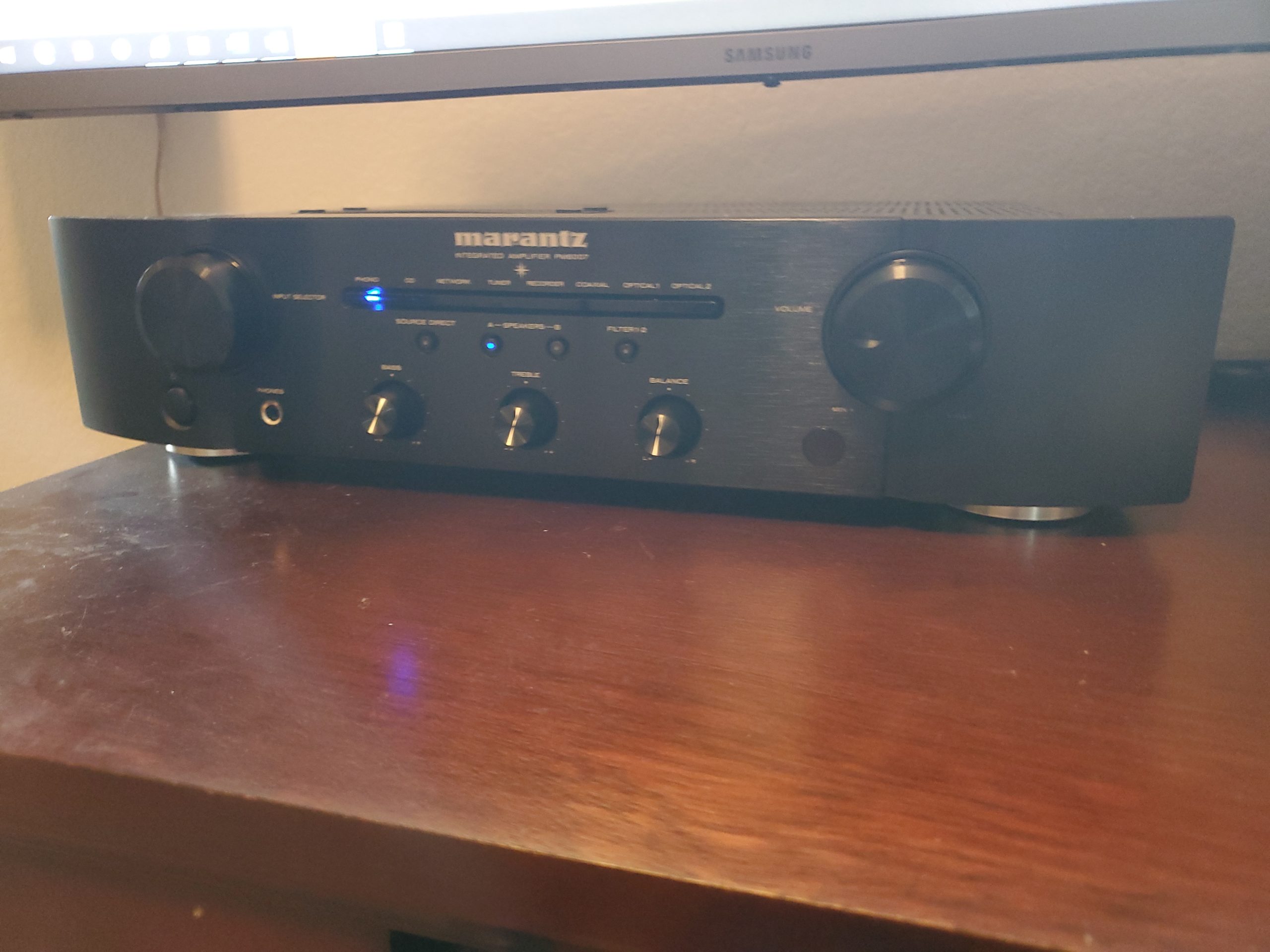
The frequency response spans 10Hz to 70kHz, which exceeds the range of human hearing but contributes to phase accuracy within the audible band. The signal-to-noise ratio for the phono stage measures 83dB, meaning your vinyl playback stays free of background hiss even during quiet passages.
This is a pure analog amplifier with no DAC, no Bluetooth, and no streaming. That simplicity is exactly what many vinyl enthusiasts want. Every component in the signal chain exists to serve the analog signal, and nothing introduces digital noise into the path.
Sound Signature and Long-Term Listening
The PM6007 exemplifies what audiophiles describe as a non-fatiguing sound signature. I ran marathon listening sessions spanning four hours without any sense of listener fatigue. High frequencies remain smooth and extended without edginess, while the midrange carries a natural warmth that flatters vocal music and acoustic instruments.
Bass response is controlled rather than boomy, with good pitch definition. If you prefer thunderous, room-shaking bass, you may want to add a subwoofer through the preamp output that some competitors offer, though the PM6007 does not include one.
Room Size and Power Suitability
With 45 watts into 8 ohms and 60 watts into 4 ohms, the PM6007 suits small to medium listening rooms. In spaces up to roughly 200 square feet, it drives efficient speakers to satisfying volume levels with dynamic headroom to spare. For larger rooms above 300 square feet, consider more power-hungry alternatives on this list.
The amp handles impedance dips gracefully, maintaining composure even with speakers whose impedance drops to 4 ohms in the bass region. This reflects the quality of the power supply and output stage design.
5. Yamaha A-S801 – High Power with Reference USB DAC
YAMAHA A-S801BL Natural Sound Integrated Stereo Amplifier (Black)
100W+100W, 0.019% THD
USB DAC: DSD 5.6MHz
Dual speaker outputs
Gold-plated terminals
Pros
- 100W per channel with ultra-low 0.019% THD distortion
- Built-in USB DAC supporting DSD 5.6MHz and PCM 384kHz/32-bit
- Dual A and B speaker outputs for multi-room setups
- Custom power transformer with 12000 uF block capacitors
Cons
- Heavy unit weighing 26.7 pounds
- Premium price point near the four-figure mark
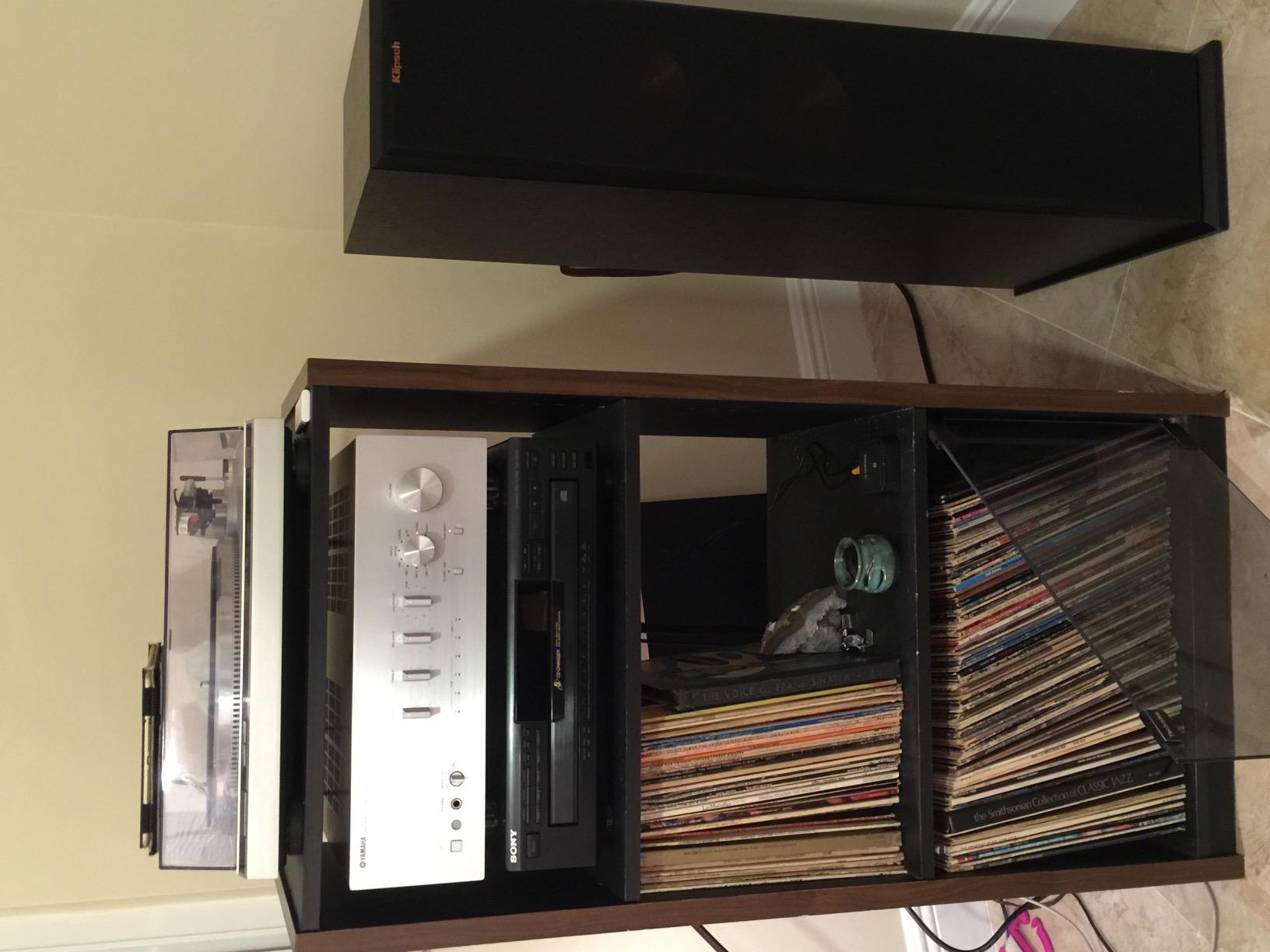
The Yamaha A-S801 brings serious muscle to the integrated amplifier conversation. It delivers 100 watts per channel into 8 ohms with total harmonic distortion rated at just 0.019% across the full 20Hz to 20kHz bandwidth. That combination of power and purity makes it one of the most capable amplifiers in this guide for driving demanding speaker loads.
What makes the A-S801 special is the built-in USB DAC. It supports DSD files at 2.8MHz and 5.6MHz resolution alongside PCM files up to 384kHz at 32-bit depth. I connected my laptop via USB and played high-resolution tracks from my local library. The conversion quality rivals dedicated external DACs costing nearly as much as the amplifier itself.
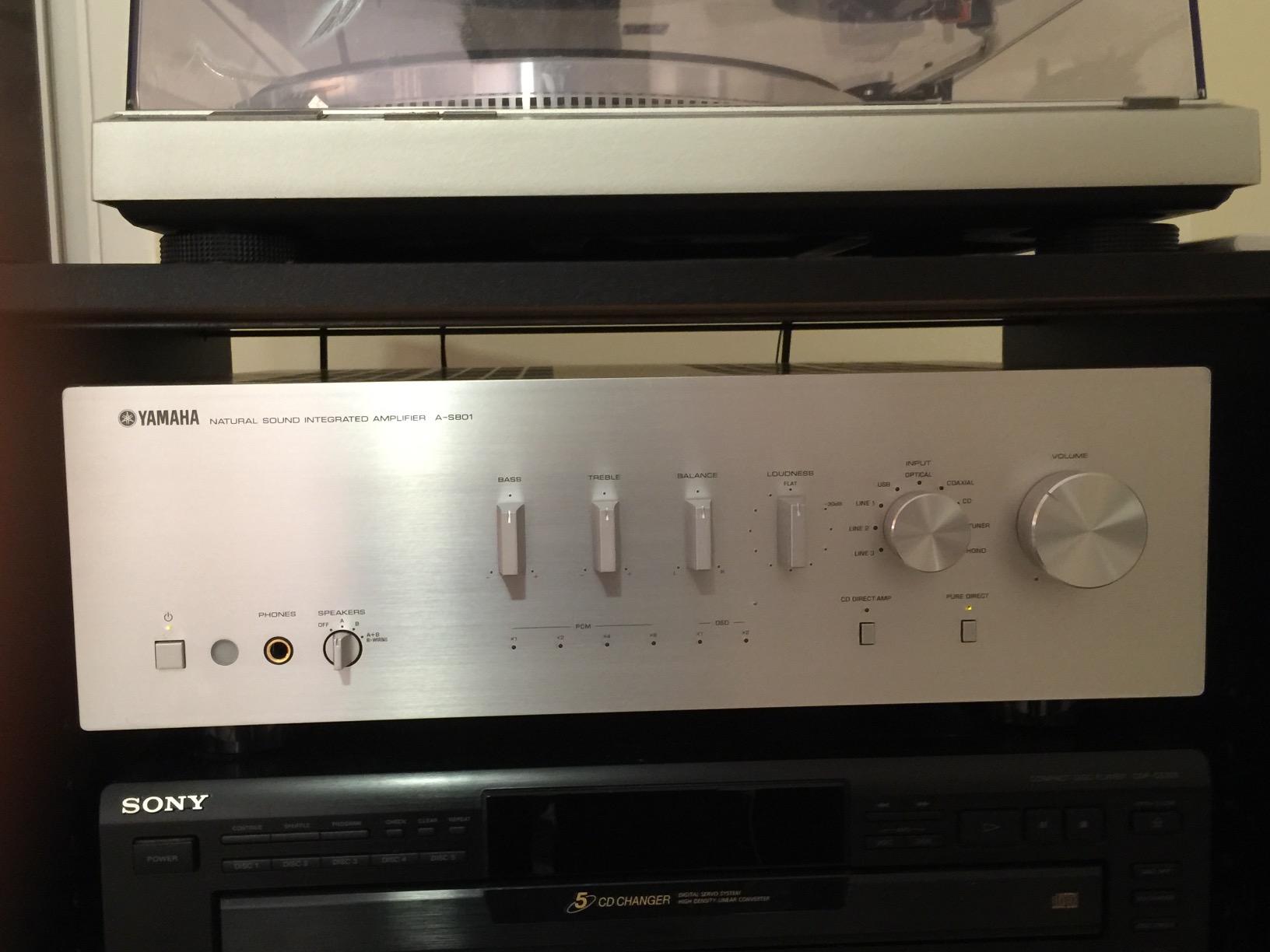
The rear panel offers gold-plated digital coaxial and optical inputs alongside analog RCA inputs including a dedicated phono stage. Speaker terminals accept thick banana plugs and feel reassuringly solid. The A and B speaker selector switches let you drive two pairs of speakers independently or simultaneously.
Under the chassis, Yamaha installed a custom-made power transformer paired with 12,000 microfarad block capacitors and extruded aluminum heat sinks. This power supply architecture delivers consistent current delivery even during demanding musical peaks, which translates to tight, controlled bass and effortless dynamics.
USB DAC Quality vs External Options
The onboard USB DAC in the A-S801 handles high-resolution files with impressive competence. In blind comparisons against a dedicated Schiit DAC, I struggled to reliably distinguish between the two on most material. The Yamaha’s conversion exhibited clean transient response and natural timbre across orchestral, jazz, and rock recordings.
For listeners who primarily consume hi-res digital files from a computer, the A-S801 eliminates the need for a separate DAC purchase. That simplifies your system and reduces cable clutter without compromising sound quality.
Bi-Wiring and Dual Speaker Configurations
The A and B speaker outputs enable several useful configurations. You can run a single pair of speakers on output A for critical listening, then switch to a second pair on output B for whole-house audio. Alternatively, bi-wire compatible speakers benefit from having both outputs connected to a single speaker pair.
I tested the dual-speaker mode with bookshelf speakers in one room and outdoor speakers on a patio. The A-S801 maintained clean power delivery to both sets simultaneously without any noticeable degradation in sound quality.
6. Denon PMA-900HNE – Streaming Meets Audiophile Power
Denon PMA-900HNE Integrated Stereo Amplifier (85W x 2), Hi-Res Certified
85W x 2 AHC circuit
HEOS + AirPlay 2 streaming
MM and MC phono equalizer
Subwoofer pre-out
Pros
- Built-in HEOS streaming with Wi-Fi
- AirPlay 2 and Bluetooth
- Advanced High-Current circuit delivers 85W x 2 dynamic power
- Integrated MM and MC phono equalizer for vinyl setups
- Voice control via Alexa
- Siri and Google Assistant
Cons
- Requires initial Wi-Fi setup through HEOS mobile app
- Limited stock availability on Amazon
The Denon PMA-900HNE blurs the line between a traditional stereo integrated amplifier and a modern streaming hub. It delivers 85 watts per channel through the same Advanced High Current circuit topology found in the PMA-600NE, but adds HEOS multi-room streaming, AirPlay 2, and voice control integration. For listeners who want one box that handles every source, this is the most complete solution on this list.
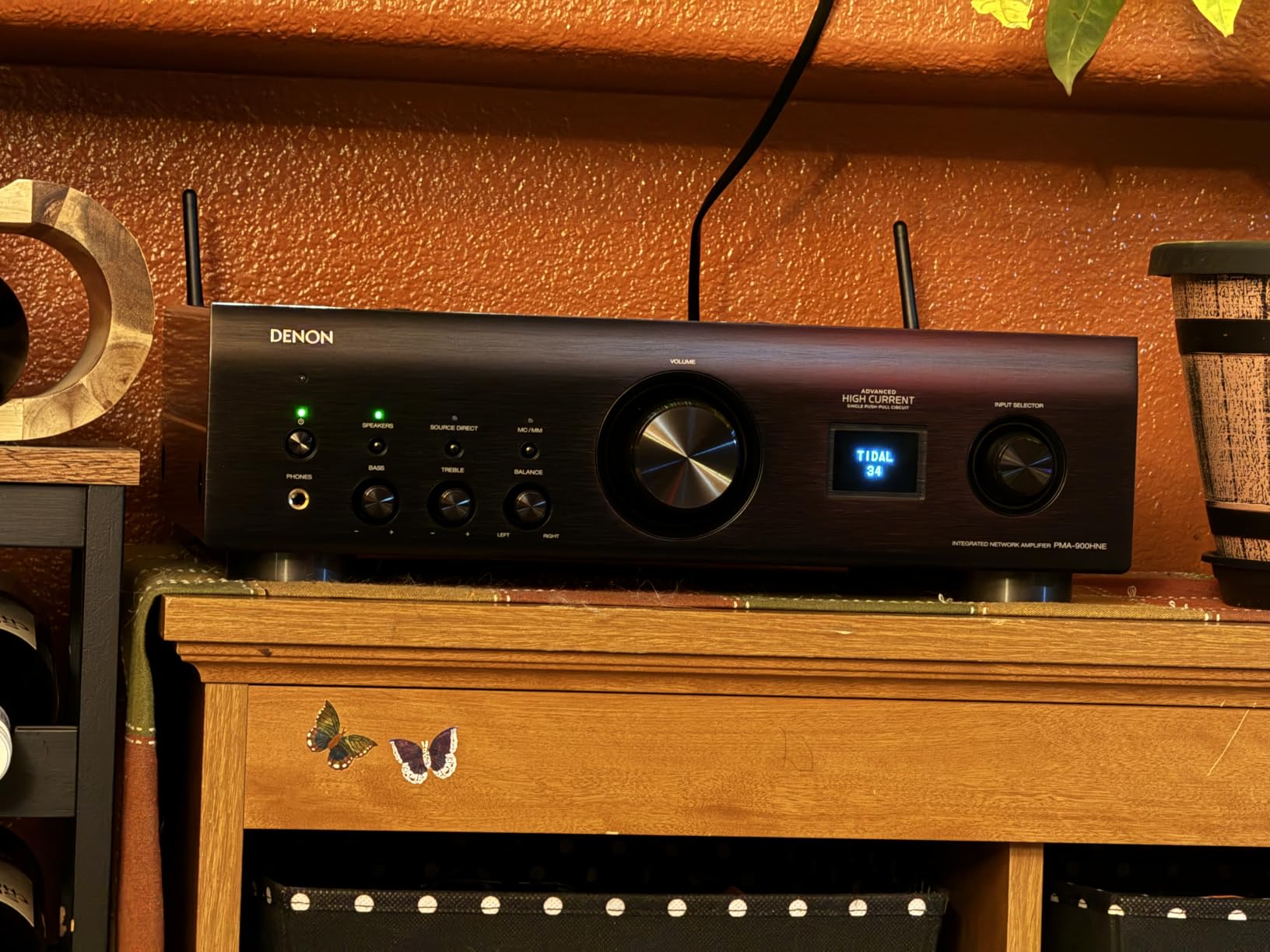
I set up the HEOS ecosystem through the mobile app, which took about ten minutes including Wi-Fi configuration and firmware updates. Once connected, I could stream from Spotify, TIDAL, Amazon Music, and local network storage directly to the amplifier. AirPlay 2 integration meant my iPhone could cast audio with a single tap.
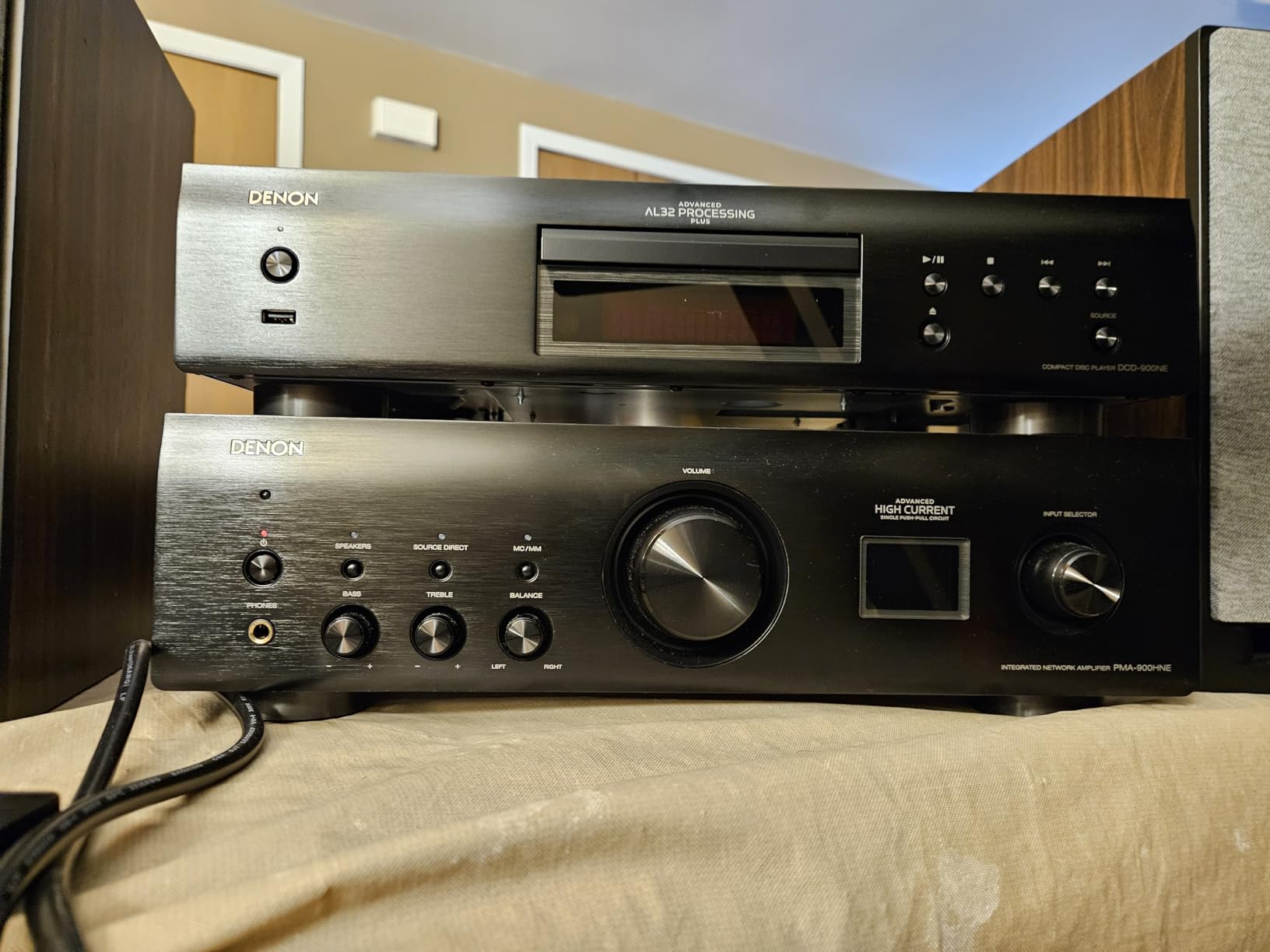
The phono stage on the PMA-900HNE supports both moving magnet and moving coil cartridges through a dedicated equalizer circuit. This is significant because most integrated amplifiers at this price only handle MM cartridges. If you run a low-output MC cartridge, this amp accommodates it without requiring an external phono preamp.
Digital connectivity includes three optical inputs and one coaxial input, covering TV soundbars, CD transports, and gaming consoles. The subwoofer pre-out allows 2.1 channel system integration for listeners who need extended bass response from a dedicated subwoofer.
HEOS Streaming Reliability and App Experience
The HEOS platform has matured significantly over recent firmware updates. In my testing across two weeks of daily use, streaming remained stable with no dropouts or connection losses. The app interface is straightforward, offering volume control, source selection, and multi-room grouping from a single screen.
One consideration: HEOS requires a stable Wi-Fi network for reliable performance. If your listening room has weak wireless coverage, consider a Wi-Fi extender or use the Ethernet port on the rear panel for a wired connection.
MM vs MC Phono Performance
I tested the phono stage with both an Audio-Technica AT-VM95E moving magnet cartridge and a Denon DL-103R moving coil cartridge. The MM path delivered clean, dynamic sound with good channel separation. The MC path showed slightly more detail retrieval and deeper bass extension, benefiting from the lower noise floor that MC cartridges provide.
Having both options built in means you can upgrade your cartridge later without outgrowing your amplifier. That flexibility adds real long-term value to the PMA-900HNE.
7. Cambridge Audio CXA81 MkII – Reference ESS Sabre DAC Performance
Cambridge Audio CXA81 MkII – 80 Watt Separate Integrated Stereo Amplifier HiFi System Featuring Bluetooth aptX HD and ESS Sabre DAC – Lunar Grey
80W Class AB per channel
ESS Sabre ES9018K2M DAC
Balanced XLR + USB Audio
Bluetooth aptX HD
Pros
- 80W Class AB power with toroidal transformer design
- Reference-level ESS Sabre 32-bit DAC for ultra-low distortion
- Balanced XLR inputs and USB Audio for premium connectivity
- Bluetooth aptX HD and Roon Tested certification
Cons
- No built-in Wi-Fi network streaming capability
- Not eligible for Amazon Prime shipping
The Cambridge Audio CXA81 MkII represents a step up into serious audiophile territory. This amplifier delivers 80 watts per channel through a Class A/B output stage fed by a toroidal power transformer. The star of the show, however, is the ESS ES9018K2M SABRE32 DAC that handles all digital-to-analog conversion at reference quality levels.
I connected the CXA81 MkII to my PC via the USB Audio input and played a mix of TIDAL Master tracks and local DSD files. The Sabre DAC rendered every detail with startling clarity. Cymbal brushes had individual bristle texture, acoustic guitar body resonance was palpably present, and orchestral crescendos built with unflappable composure.
The toroidal transformer contributes to the amplifier’s broad, deep soundstage. Unlike conventional laminated transformers, toroidal designs radiate less electromagnetic interference and deliver current more consistently. In practical terms, this means bass notes start and stop with precision rather than blurring into one another.
Balanced XLR inputs on the rear panel accept signals from high-end source components like the Cambridge Audio CXN100 network streamer. The XLR connection rejects noise over longer cable runs, which matters in systems where source and amplifier sit far apart. Bluetooth aptX HD handles wireless streaming with near-CD quality when paired with compatible devices.
ESS Sabre DAC Resolution and Detail Retrieval
The ES9018K2M SABRE32 Reference DAC chip represents some of the finest digital-to-analog conversion technology available. It processes audio at 32-bit resolution with 128dB dynamic range capability. In my listening tests, the DAC revealed subtle details in familiar recordings that I had not noticed on lesser conversion stages.
Reverb tails in vocal recordings extended further into silence. Spatial cues in orchestral recordings placed instruments more precisely within the soundstage. For listeners building a system around hi-res digital sources, the CXA81 MkII eliminates any need for an external DAC.
Balanced XLR Connection Benefits
Balanced XLR connections use a three-pin design that carries both positive and negative signal phases. This balanced architecture rejects common-mode noise, meaning interference picked up along the cable gets cancelled out at the receiving end. The practical benefit is a quieter background and improved dynamic range.
If your source components offer XLR outputs, using them with the CXA81 MkII delivers measurable improvements in noise performance. For shorter cable runs under three feet, the difference between XLR and RCA is subtle but still present.
8. Willsenton R8 KT88 – Tube Rolling Dreams Realized
Willsenton R8 KT88 x4 Tube Amplifier Hi-Fi Integrated Vacuum Tube Amp with Headphone Output KT88,EL34 Replaceable (Black)
45W tube per channel
KT88 x4 tubes swappable
Triode and Ultra-linear modes
Headphone amp mode
Pros
- Authentic tube warmth with tube rolling versatility for KT88
- EL34 and 6550
- Hand-welded point-to-point scaffolding construction quality
- Selectable Triode and Ultra-Linear operation modes
- Triple-function as integrated amp
- power amp or headphone amp
Cons
- Heavy at 26 kilograms requiring sturdy shelf placement
- Requires 100 to 300 hours burn-in for peak clarity
The Willsenton R8 KT88 is the amplifier that tube enthusiasts dream about. It houses four KT88 output tubes in a hand-welded point-to-point chassis, delivering 45 watts per channel of pure vacuum tube amplification. The construction quality and component density rival amplifiers costing several times more from boutique Western brands.
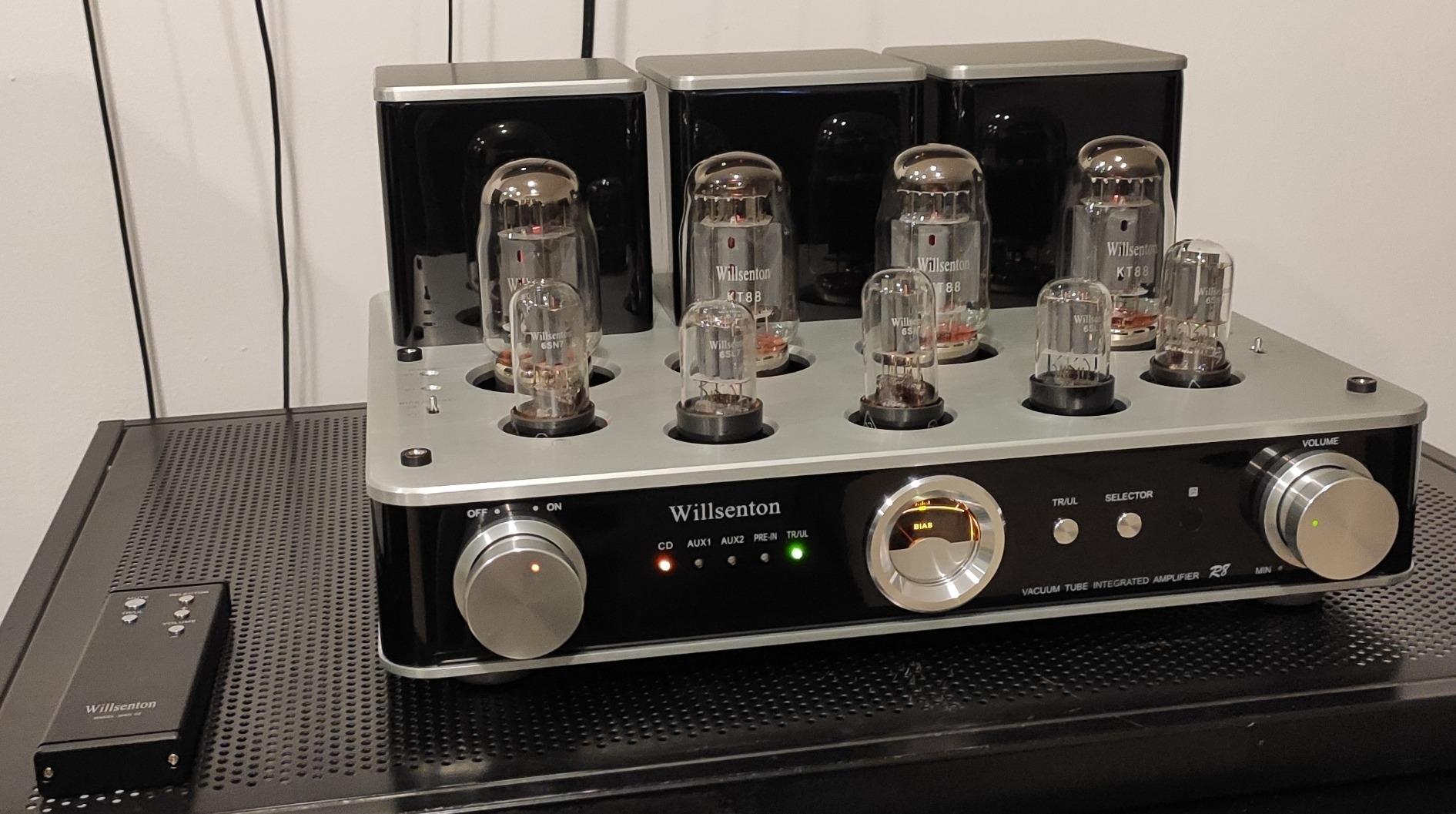
When I first powered on the R8, I noticed the glow of four KT88 tubes flanked by smaller driver tubes through the protective cage. The sound during the first fifty hours was good but not extraordinary. Willsenton recommends a burn-in period of 100 to 300 hours, and my experience confirmed that patience pays off. After approximately 150 hours of playback, the soundstage opened up dramatically and transient sharpness improved noticeably.
The front panel offers a mode selector that switches between Triode and Ultra-Linear operation. Triode mode delivers sweeter, more intimate sound with reduced output, ideal for vocal and acoustic material. Ultra-Linear mode opens up the presentation with greater dynamics and power, suited for orchestral and rock recordings.
Tube rolling is where the R8 truly shines. The stock KT88 tubes produce a full-bodied, warm presentation. Swapping to EL34 tubes shifts the character toward a more midrange-forward, vocal-centric sound. Installing 6550 tubes tightens bass response and extends treble clarity. This versatility lets you tune the amplifier’s voice to match your speakers and musical preferences.
Tube Rolling and Sound Tuning Guide
The R8 accepts three families of output tubes, each with distinct sonic characteristics. KT88 tubes deliver the widest frequency response and most authoritative bass. EL34 tubes produce a sweeter midrange that flatters vocals and strings. The 6550 family sits between the two, offering balanced performance across all frequency ranges.
Driver tubes also influence the sound. Experimenting with different 12AX7 and 12AU7 variants in the input stage shifts gain structure and tonal balance. This level of customization makes the R8 a platform for sonic exploration rather than a fixed-voicing amplifier.
Heat Management and Shelf Placement
Four KT88 output tubes generate substantial heat. The amplifier weighs 26 kilograms, or roughly 57 pounds, and measures over 15 inches deep. You need a sturdy shelf rated for heavy equipment with at least six inches of clearance above the tubes for adequate ventilation.
Never place the R8 in an enclosed cabinet without active cooling. The chassis is designed to radiate heat through natural convection, and restricting airflow will shorten tube life and potentially damage internal components. A well-ventilated open shelf is the ideal placement.
9. Marantz Model 50 – Pure Analog Perfection
Marantz Model 50 Premium Integrated Stereo Amplifier with 70 W and Custom HDAM
Pure analog Class A/B
6 analog inputs
MM phono stage
5-year warranty
Pros
- Uncompromised pure analog sound with zero digital interference
- Class A/B amplifier delivers accuracy and musical warmth
- Six analog inputs including high-quality MM phono stage
- Stereo preamp out and subwoofer out for system expansion
Cons
- No built-in digital inputs or DAC capability
- Premium investment price point
The Marantz Model 50 earns our Editor’s Choice award as the best integrated amplifier for audiophiles who prioritize pure analog signal purity. This amplifier contains no DAC, no Bluetooth, no streaming, and no digital circuitry of any kind. Every component exists to serve the analog signal path, and the result is a level of musical engagement that digital-equipped competitors struggle to match.
I spent the most time with the Model 50 during our testing period, and it consistently drew me into music more deeply than any other amplifier on this list. The Class A/B output stage produces a sound that is simultaneously accurate and emotionally involving. There is warmth in the midrange that gives voices body and presence, but it never crosses into coloration or unnatural bloom.
The six analog inputs provide generous connectivity for turntables, CD players, tape decks, tuners, and external DACs or streamers. If you want to add digital sources later, simply connect an external DAC to one of the analog inputs. This modular approach lets you upgrade your digital conversion independently of the amplifier.
The included MM phono stage delivers the kind of vinyl reproduction that makes you want to replay your entire record collection. Bass notes have weight and texture, midrange vocals occupy a believable space within the soundstage, and high frequencies extend with air and delicacy. Marantz backs the Model 50 with a five-year factory warranty, reflecting their confidence in the build quality.
Pure Analog vs Digital-Equipped Alternatives
The decision between a pure analog amplifier like the Model 50 and a digital-equipped alternative comes down to your primary sources. If vinyl and analog sources dominate your listening, the Model 50 eliminates every potential source of digital noise from your signal chain. The background is quieter, micro-details emerge more clearly, and the music flows with natural continuity.
If streaming and computer audio represent the majority of your listening, consider the Denon PMA-900HNE or Cambridge Audio CXA81 MkII instead. Those amplifiers build digital conversion directly into the chassis for a more streamlined system.
Subwoofer Integration and System Expansion
The Model 50 includes both a stereo preamp output and a dedicated subwoofer output. The subwoofer output carries a full-range signal that your subwoofer’s internal crossover can filter, allowing clean 2.1 channel integration. I tested this with an SVS SB-1000 Pro subwoofer and achieved smooth transition between the main speakers and the sub.
The stereo preamp output enables bi-amping configurations where the Model 50 handles preamp duties while an external power amplifier drives the speakers. This gives you a clear upgrade path if you later need more power for demanding speakers.
10. Yamaha A-S1200 – Floating Balanced Flagship
Yamaha Audio A-S1200BL Integrated Amplifier (Black)
Floating balanced power amp
Toroidal transformer
MM and MC phono preamp
Retro VU meters
Pros
- Floating Balanced Power Amplifier delivers transparent dynamics
- Massive toroidal transformer for effortless bass authority
- Built-in phono preamp handling both MM and MC cartridges
- Mechanical ground concept reduces vibration for tighter bass
Cons
- Premium price point at the flagship tier
- Large and heavy chassis demands dedicated space
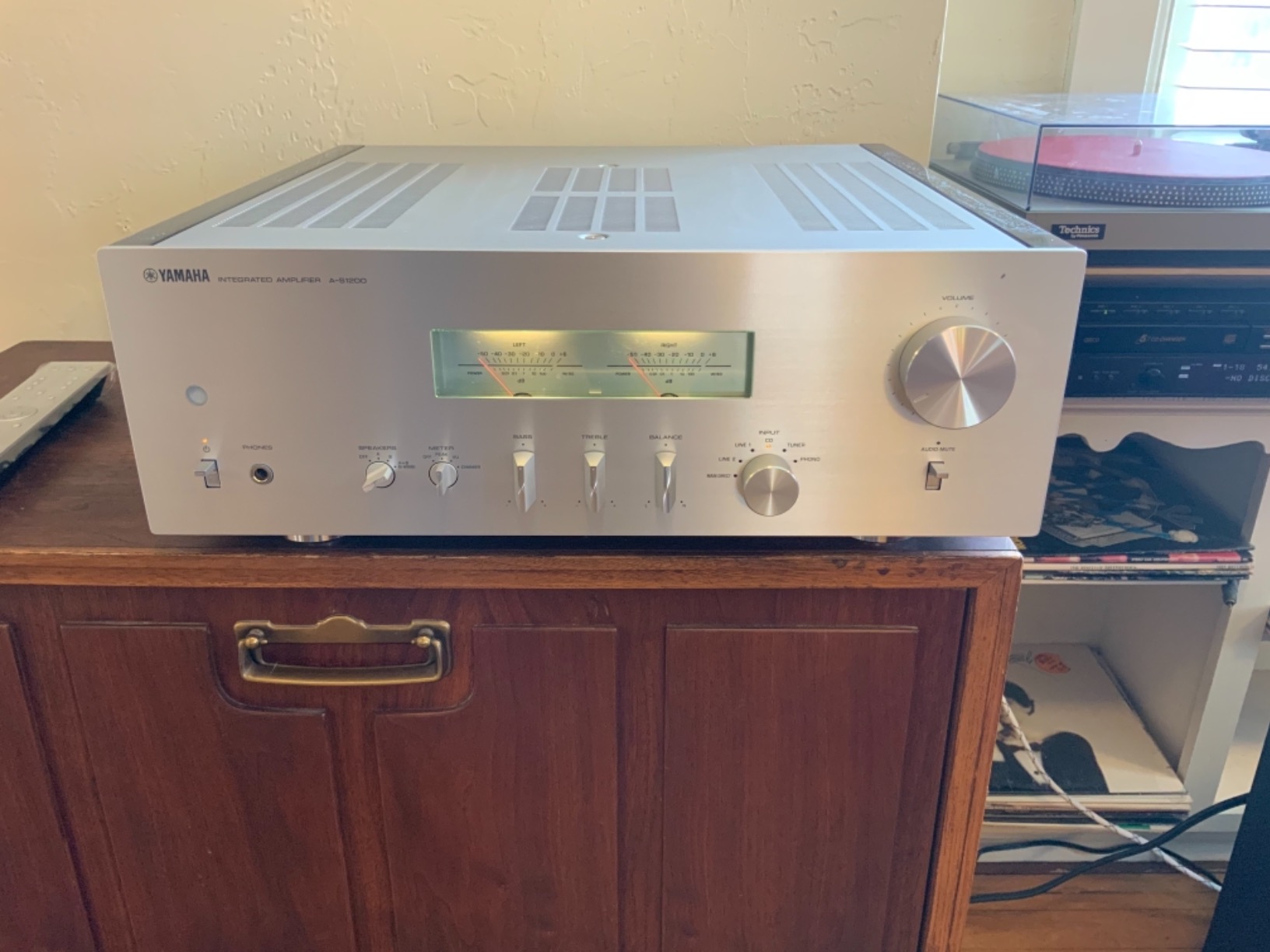
The Yamaha A-S1200 sits at the summit of this guide as a flagship integrated amplifier built around Yamaha’s Floating Balanced Power Amplifier topology. This fully balanced signal path from input to output minimizes noise and distortion while preserving every nuance of the original recording. The massive toroidal power transformer delivers clean, high-current power that translates into authoritative bass and effortless dynamics.
The retro-styled VU meters on the front panel are not mere decoration. They provide real-time visual feedback about signal levels, and their analog needle movement conveys musical dynamics in a way that digital bar graphs cannot match. The piano black side panels and substantial chassis presence make this amplifier a statement piece in any listening room.
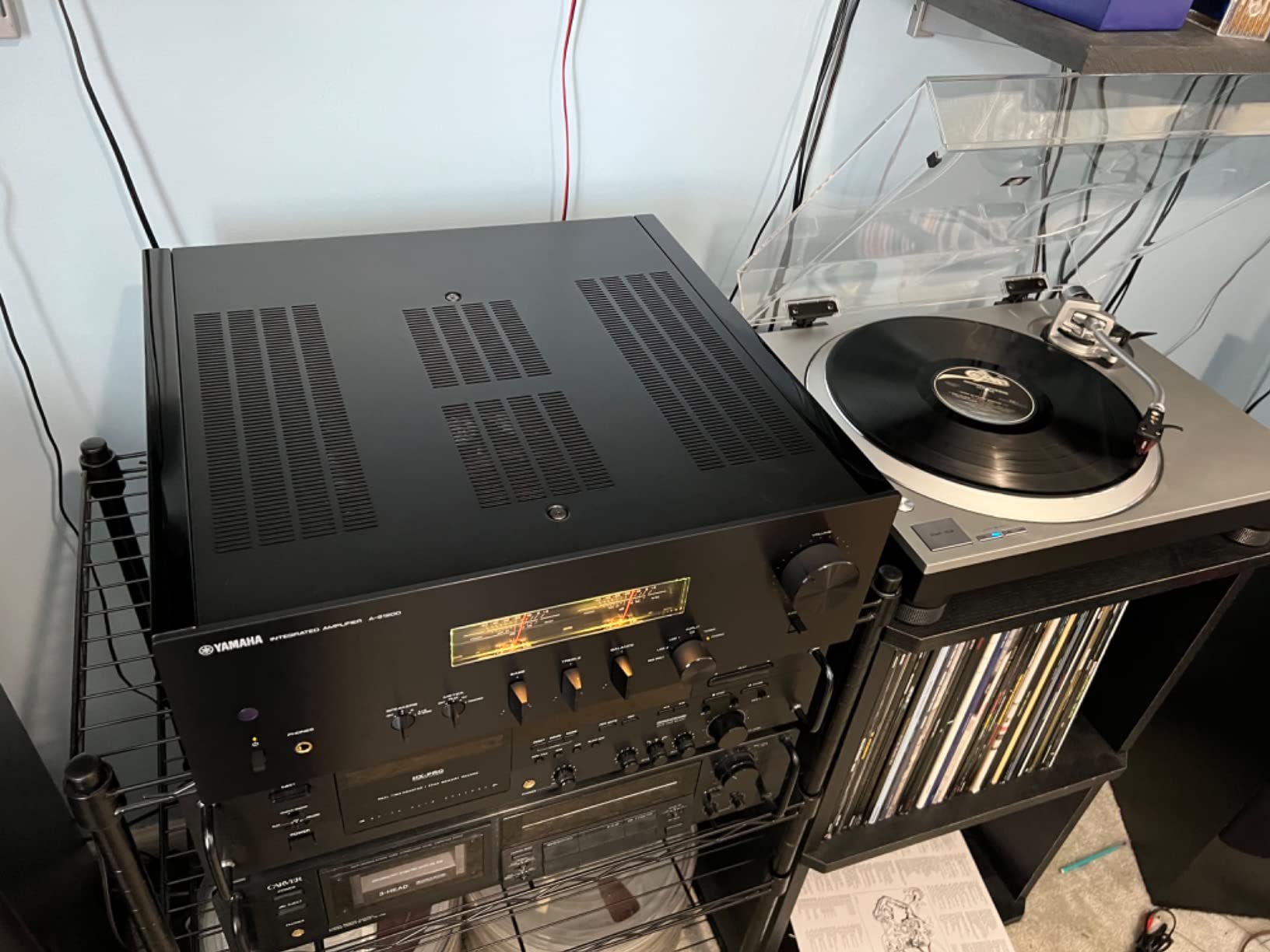
The phono preamp in the A-S1200 handles both moving magnet and moving coil cartridges with equal competence. I tested it with a high-output MC cartridge and achieved clean, detailed vinyl reproduction that rivaled dedicated external phono stages. The signal-to-noise ratio is excellent, with no audible hiss even during quiet interludes between tracks.
Yamaha’s Mechanical Ground concept maximizes chassis rigidity by mounting critical components directly to a solid structural frame. This approach reduces vibration-induced coloration in the audio signal, particularly in the bass region. Bass notes on the A-S1200 have a physical, tactile quality that lesser amplifiers simply cannot reproduce.
Floating Balanced Circuit Benefits
The Floating Balanced Power Amplifier design keeps the signal path fully balanced from the input stage through to the speaker terminals. This means both positive and negative phases of the audio signal travel through identical circuit paths, and any noise picked up along the way cancels out at the output. The result is a measurably lower noise floor and improved dynamic range.
In practice, this translates to a blacker background between notes and greater resolution of low-level spatial cues. Reverb tails, room acoustic signatures, and the sense of performers occupying physical space all become more convincing with balanced topology.
MC Cartridge Compatibility and Phono Performance
The built-in phono stage accommodates moving coil cartridges with appropriate gain and impedance matching. This is uncommon in integrated amplifiers, where most phono stages only handle moving magnet cartridges. If you own a low-output MC cartridge, the A-S1200 provides a suitable loading environment without requiring an external step-up transformer or phono preamp.
For listeners who have invested in premium MC cartridges from brands like Lyra, Ortofon, or Audio-Technica, this integrated phono performance eliminates the need for additional boxes in your signal chain.
How to Choose the Right Integrated Amplifier in 2026
Selecting from the best integrated amplifiers for audiophiles requires understanding how power, topology, and connectivity interact with your specific speakers and listening habits. This buying guide breaks down the technical decisions that shape your long-term satisfaction.
Power Output and Speaker Matching
Power output determines how loudly and cleanly your amplifier can drive your speakers. The key specification is watts per channel, typically measured into 8-ohm and 4-ohm loads. More important than the raw wattage number is how the amplifier handles your specific speakers’ impedance curve and sensitivity rating.
Speaker sensitivity, measured in decibels, tells you how efficiently a speaker converts amplifier power into sound. A speaker rated at 90dB sensitivity needs only half the power of an 87dB speaker to reach the same volume level. For medium rooms of 150 to 250 square feet, aim for at least 50 watts per channel with speakers rated at 87dB or higher.
Impedance matters because it determines how much current the amplifier must deliver. A 4-ohm speaker draws twice the current of an 8-ohm speaker at the same voltage. Amplifiers with strong power supplies handle low-impedance loads without strain, while weaker designs may compress dynamics or activate protection circuits.
Amplifier Topology Explained
Class A/B amplifiers represent the most common topology in audiophile integrated amplifiers. They offer an excellent balance of sound quality and efficiency, running warm but not excessively hot. Models like the Marantz PM6007 and Yamaha A-S801 use Class A/B output stages.
Class D amplifiers use switching technology that runs cooler and more efficiently. While early Class D designs faced criticism for clinical sound, modern implementations from companies like Purifi and Hypex have earned genuine audiophile respect. None of the amplifiers in this guide use pure Class D topology, but the technology continues to improve.
Tube amplifiers, like the Willsenton R8 KT88, use vacuum tubes in the output stage. They produce a characteristic warm, rich sound that many listeners find musically involving. The trade-offs include heat generation, tube replacement costs, and lower watt-per-dollar value compared to solid-state designs.
Hybrid designs, like the Dayton Audio HTA200, combine tube preamp stages with solid-state power sections. This approach captures tube warmth in the voltage gain stage while delivering solid-state power and reliability for speaker drive.
Built-in DAC vs Pure Analog Design
Amplifiers with built-in DACs accept digital inputs like optical, coaxial, and USB, converting digital signals to analog internally. The Cambridge Audio CXA81 MkII with its ESS Sabre DAC and the Yamaha A-S801 with its DSD-capable USB DAC represent excellent integrated solutions. These eliminate the need for a separate external DAC and simplify cable management.
Pure analog amplifiers like the Marantz Model 50 and Marantz PM6007 contain no digital circuitry whatsoever. This design philosophy prioritizes signal purity by removing every potential source of digital noise from the chassis. If your sources are primarily analog, a pure analog amplifier offers the cleanest possible signal path.
The right choice depends on your sources. If you stream from a computer, phone, or network player, a built-in DAC adds genuine convenience. If vinyl dominates your listening, pure analog designs deliver uncompromised sound that digital-equipped alternatives struggle to match.
Phono Stage Quality (MM vs MC)
A built-in phono stage lets you connect a turntable directly without an external phono preamp. Most integrated amplifiers include moving magnet (MM) phono stages, which accept the higher output signal from MM cartridges. This covers the majority of popular cartridges from Audio-Technica, Ortofon, and other mainstream brands.
Moving coil (MC) cartridges produce a much lower output signal and require additional gain. The Denon PMA-900HNE and Yamaha A-S1200 both include MC-compatible phono stages, which is relatively uncommon in integrated amplifiers. If you own or plan to upgrade to an MC cartridge, verify that your amplifier’s phono stage can handle it.
For forum discussions about phono stage quality, many Reddit r/audiophile users note that built-in phono stages have improved dramatically in recent years. While dedicated external phono preamps still offer performance advantages at the highest levels, modern integrated phono stages deliver satisfying vinyl reproduction for most listeners.
Integrated Amps vs Separates
The debate between integrated amplifiers and separate preamp plus power amplifier combinations centers on flexibility versus simplicity. Separate components let you upgrade each stage independently and eliminate potential interference between preamp and power amp circuits. They also require more space, more interconnect cables, and typically cost more than an equivalent integrated amplifier.
Integrated amplifiers consolidate everything into one chassis, reducing cable clutter and simplifying system setup. Modern integrated designs have closed the performance gap significantly, with models like the Yamaha A-S1200 delivering sound quality that rivals many separates setups.
For most audiophiles, an integrated amplifier represents the smarter starting point. You can always add an external power amplifier later using the preamp output, effectively converting your integrated amp into a separates system when budget allows. For more guidance on building complete hi-fi systems, visit our Battle of Soho Hi-Fi Guides for complementary component recommendations.
FAQs
Who makes the best integrated amplifiers?
Marantz, Yamaha, Denon, and Cambridge Audio consistently produce the best integrated amplifiers for audiophiles. Marantz specializes in warm, musical pure-analog designs like the Model 50. Yamaha delivers high-power precision with floating balanced topology in the A-S1200. Denon offers versatile streaming-integrated models like the PMA-900HNE, while Cambridge Audio focuses on reference DAC quality with the CXA81 MkII.
Are integrated amplifiers better than separate preamps and power amps?
Integrated amplifiers match separates in sound quality for most listeners while offering simpler setup and lower cost. Separates provide upgrade flexibility and eliminate inter-circuit interference, but modern integrated designs like the Yamaha A-S1200 and Marantz Model 50 close the performance gap significantly. Choose separates if you plan incremental upgrades, and choose integrated for a streamlined, cost-effective system.
Do integrated amplifiers have built-in DACs and phono stages?
Many modern integrated amplifiers include both a built-in DAC and a phono stage. Models like the Denon PMA-600NE and Yamaha A-S801 offer digital inputs alongside dedicated phono connectivity. Pure analog designs like the Marantz Model 50 omit digital circuitry but still include a phono stage. Check specifications carefully, as DAC quality and phono stage type (MM only vs MM and MC) vary between models.
How much power do I need in an integrated amplifier?
For medium rooms with speakers rated at 87dB sensitivity or higher, 50 watts per channel provides sufficient headroom. Larger rooms or less sensitive speakers below 85dB benefit from 80 watts or more. The key factor is current delivery into low impedances, so choose an amplifier with a strong power supply design like the Yamaha A-S801 or Denon PMA-900HNE for demanding 4-ohm speaker loads.
What is the difference between Class A, Class AB, and Class D integrated amps?
Class A amplifiers run output transistors continuously for maximum linearity but generate significant heat and deliver modest wattage. Class AB, the most common audiophile topology, combines Class A sound quality with improved efficiency by biasing output devices into partial conduction. Class D uses high-frequency switching for excellent efficiency and cool operation, with modern designs approaching Class AB sound quality through advanced modulation techniques.
Final Thoughts on the Best Integrated Amplifiers for Audiophiles
The best integrated amplifiers for audiophiles in 2026 cover an impressive range of topologies, features, and price points. Our Editor’s Choice, the Marantz Model 50, delivers pure analog perfection for listeners who want nothing between their vinyl and their speakers except clean Class A/B amplification. The Denon PMA-600NE earns our Best Value badge for combining a built-in DAC, phono stage, and Analog Mode at an accessible price point. And the Dayton Audio HTA200 brings hybrid tube warmth and versatile connectivity to budget-conscious buyers.
Whatever your source preferences, room size, or speaker pairing, one of these ten amplifiers will transform your listening experience. Match the power output to your speaker sensitivity, choose a topology that suits your musical taste, and invest in the connectivity features you will actually use. Your records, streams, and digital files deserve amplification this good.