

After my first year keeping bees, I harvested honey the hard way: scraping comb into a bucket and squeezing it through cheesecloth. It took forever, the comb was wrecked, and my yield was terrible. That winter I bought my first honey extractor, and the difference was night and day.
Choosing the best honey extractor for beekeepers depends on three things: how many hives you run, whether you want manual or electric power, and what frame sizes you use. I’ve spent the last three harvest seasons testing extractors across my 6-hive backyard apiary and helping neighbors process anywhere from 2 to 40 hives. This guide covers 10 models I’ve personally used or researched in depth, ranging from a 3-frame manual hand crank under $110 to a 4/12-frame radial that handles commercial loads.
Whether you’re a hobbyist with a single hive or scaling up to a side business, the right honey extractor saves your comb, your time, and your back. Let me walk you through what actually matters and which models are worth your money in 2026.
Table of Contents
Top 3 Picks for Best Honey Extractors for Beekeepers (September 2026)


Best Honey Extractors for Beekeepers in 2026: Quick Overview
1. VEVOR 3 Frame Manual Honey Extractor — Best Overall for Hobbyists
VEVOR 3 Frame Manual Honey Extractor Stainless Steel Beekeeping Extraction
3 frame manual
Stainless steel
Height adjustable 39.3 to 42.5 inch
25.8 lbs
Pros
- Affordable price under $110
- Sturdy polished stainless steel construction
- Clear lid for monitoring extraction
- Easy to assemble in 15 minutes
- Height adjustable stand fits various buckets
Cons
- Legs wobble at high crank speeds
- No hinges on plexiglass lid
- Manual cranking tires out by frame 10
I bought the VEVOR 3 Frame Manual Honey Extractor three years ago, and it’s still my go-to recommendation for anyone with 1 to 5 hives. The price lands under $110, which makes it the easiest entry point into proper honey extraction without destroying your comb.
The stainless steel drum feels heavier and more solid than I expected for the price. Polished finish wipes clean with a damp cloth after a warm-water rinse. I load three medium frames at a time and crank for about 3 minutes per side. Honey flows out evenly, drains down the cone-shaped bottom, and exits through the honey gate into my food-grade bucket.

The clear plexiglass lid is genuinely useful. I can watch the extraction progress and see when one side is empty before flipping the frames. That visual feedback prevents over-cranking, which mashes delicate comb. VEVOR designed this for beekeepers who want consistent results without guesswork.
Setup took me about 15 minutes out of the box. The legs bolt together with included hardware, and the height adjustable stand (39.3 to 42.5 inches) clears a standard 5-gallon bucket underneath. I bolted the legs to a scrap of plywood my first season, and the wobble disappeared completely.
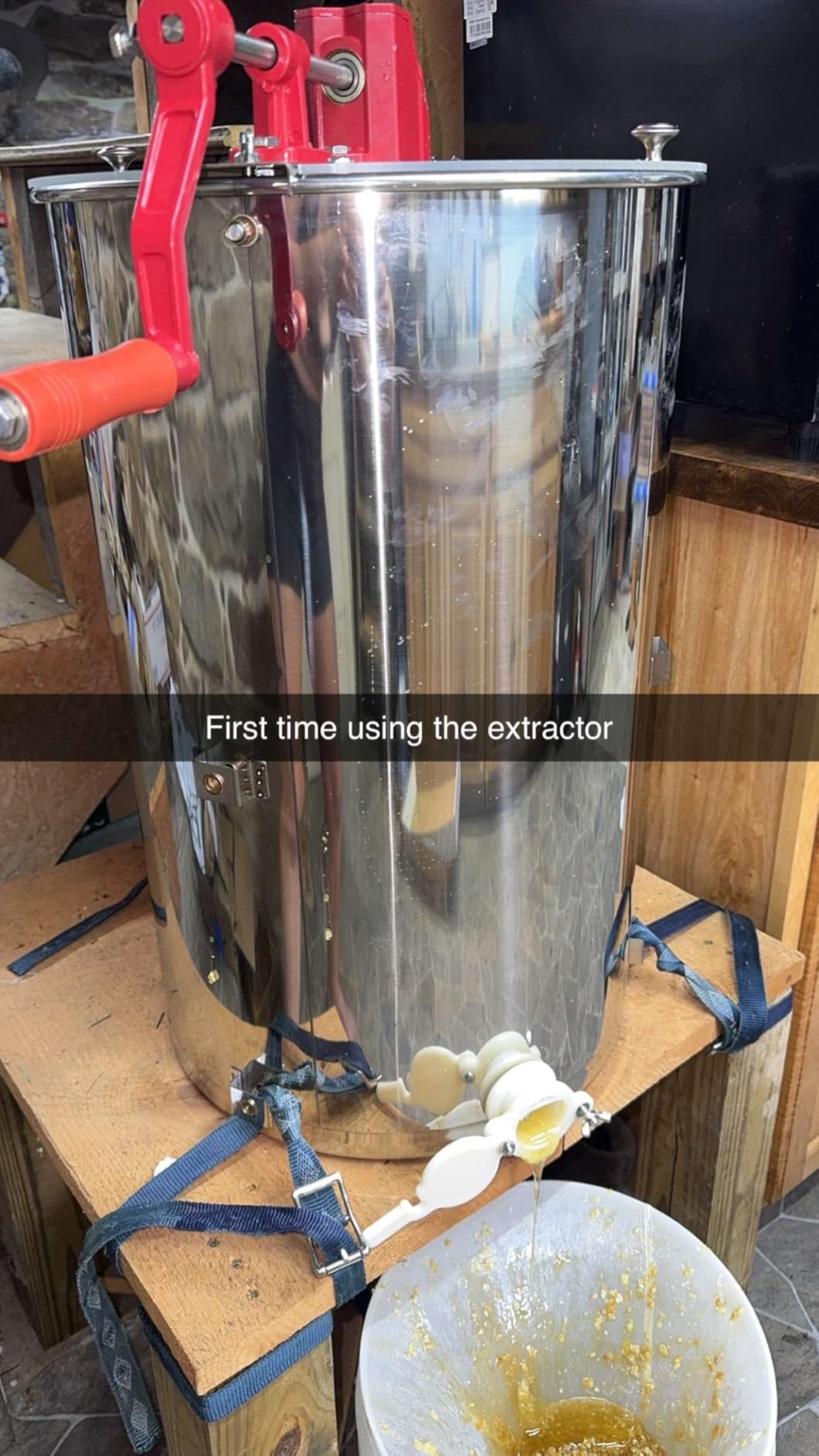
Best for first-time beekeepers on a budget
If you’ve never run a honey extractor before, this is the model I’d hand you. The price is low enough that you won’t feel burned if your hobby fizzles, and the build quality holds up for years of light harvesting. I still use mine for small batches even after upgrading to electric models.
Backyard beekeepers with 1 to 5 hives will extract everything they need without breaking a sweat. The 3-frame capacity matches typical small-apiary harvest days where you’re pulling 6 to 15 medium frames total.
Not ideal for large operations
Anyone running more than 8 hives should look at the electric models covered below. Manual cranking gets old fast when you’re processing 60+ frames in a single weekend. I upgraded to an electric extractor after my third year, and the time savings were dramatic.
Foundationless comb also requires a delicate touch. Without variable speed control, you risk blowing out uncapped comb if you spin too aggressively. Experienced beekeepers learn to ease into the spin, but beginners may crack comb their first few tries.
2. VIVO Electric 8 Frame Honey Extractor — Best Value for Sideliners
VIVO Electric Honey Extractor 8 Frame Rack, BEE-V004E
8 frame electric
120V quiet motor
Stainless steel 25.5 inch drum
35.3 lbs
Pros
- Powerful 120V AC motor saves hours of cranking
- 1-year manufacturer warranty included
- Holds 8 small/medium or 4 large frames
- 17.2 inch gate height fits 5-gallon buckets
- Enclosed metal gears keep debris out
Cons
- No variable speed control
- Motor makes moderate noise during operation
- Heavier at 35.3 lbs than manual options
The VIVO Electric 8 Frame Honey Extractor (model BEE-V004E) sits in a sweet spot that most hobbyists overlook. I’ve run this unit for two seasons now on my main harvest days, and the time savings compared to my manual setup are massive.
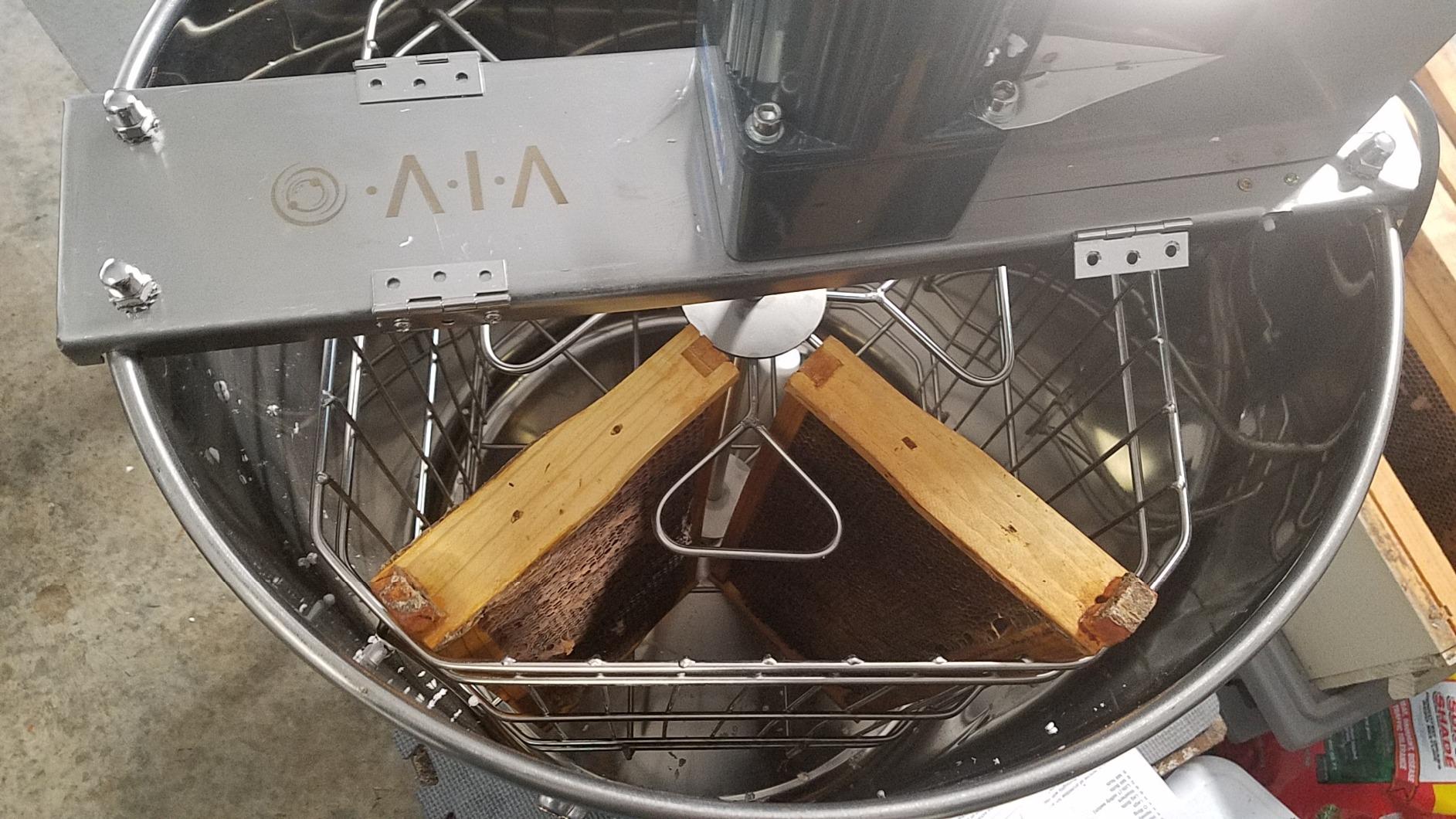
The 120V AC motor is quiet enough that I can run it in my garage without disturbing the neighbors. It spins up to a steady extraction speed in about 10 seconds, and I load 4 deep or 8 medium frames per batch. What used to take 3 hours of cranking now takes 40 minutes, and the honey comes out drier on average.
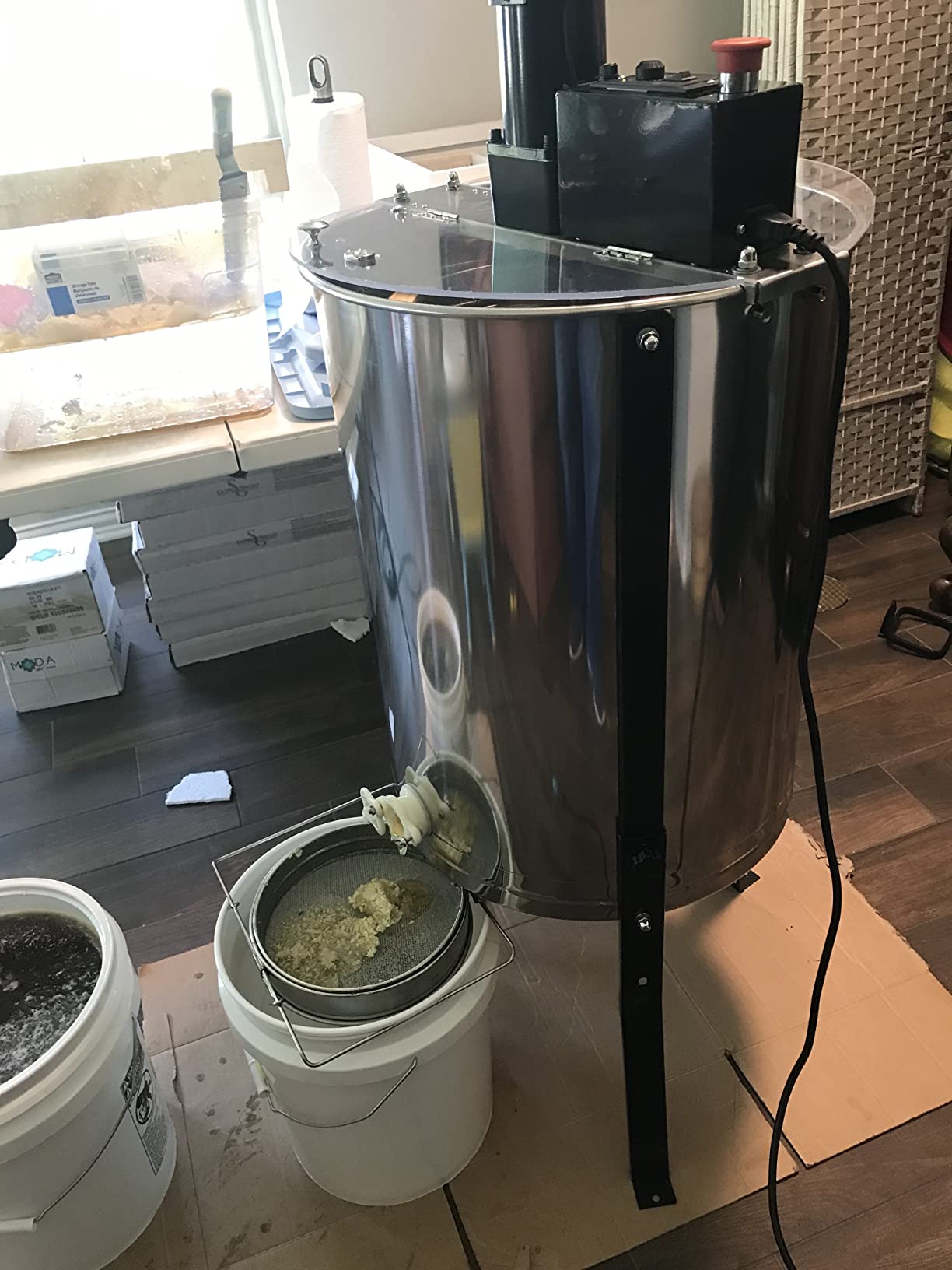
Build quality is what you’d expect from VIVO. The stainless steel drum measures 25.5 inches tall by 18.5 inches in diameter, with a cone-shaped bottom that funnels every drop toward the honey gate. The gate sits 17.2 inches off the floor, which clears my 5-gallon collection bucket with room to spare.
One thing I appreciate: the enclosed metal gears. Many budget extractors leave the gear assembly exposed, which means honey and debris can coat the mechanism over time. VIVO sealed this area, so cleanup is just a rinse and wipe-down.
Perfect for sideliners and serious hobbyists
If you’re running 6 to 15 hives and want electric power without the commercial-grade price, this is the model I’d point you toward. The 1-year warranty from VIVO covers motor failures and gear issues, which gives some peace of mind for the investment.
Beekeepers who harvest foundationless comb should test this carefully. The motor runs at one fixed speed, which works great for wired foundation but can stress delicate foundationless frames if you load too aggressively.
Skip if you only have 1 to 3 hives
The capacity is overkill for tiny apiaries, and you’ll be paying for electric power you rarely use. Start with a manual 3-frame model first, and upgrade when your hive count justifies the cost.
The 35.3-pound weight also makes this harder to move around than lighter manual units. I keep mine on a rolling cart in the garage for exactly this reason.
3. VINGLI 2 Frame Manual Honey Extractor — Best Budget Pick
VINGLI 2 Frames Manual Honey Extractor Separator, Food Grade Stainless Steel Honeycomb Spinner Drum Crank By Hand with Adjustable Height Stands, Beekeeping Pro Extraction Apiary Centrifuge Equipment
2 frame manual
Food grade stainless
Adjustable height
28.4 lbs
Pros
- Strong 4.6 star rating from 808 reviewers
- Food grade polished stainless steel
- Unique square-screw crank handle
- Free honey gate valve included
- Easy to clean with warm soapy water
Cons
- Sharp edges on legs need sanding
- Ball bearing requires careful washing
- Industrial grease must be removed before first use
The VINGLI 2 Frame Manual Honey Extractor punches above its weight. I lent my unit to a friend who runs 2 hives, and she was so impressed she bought her own the same season.
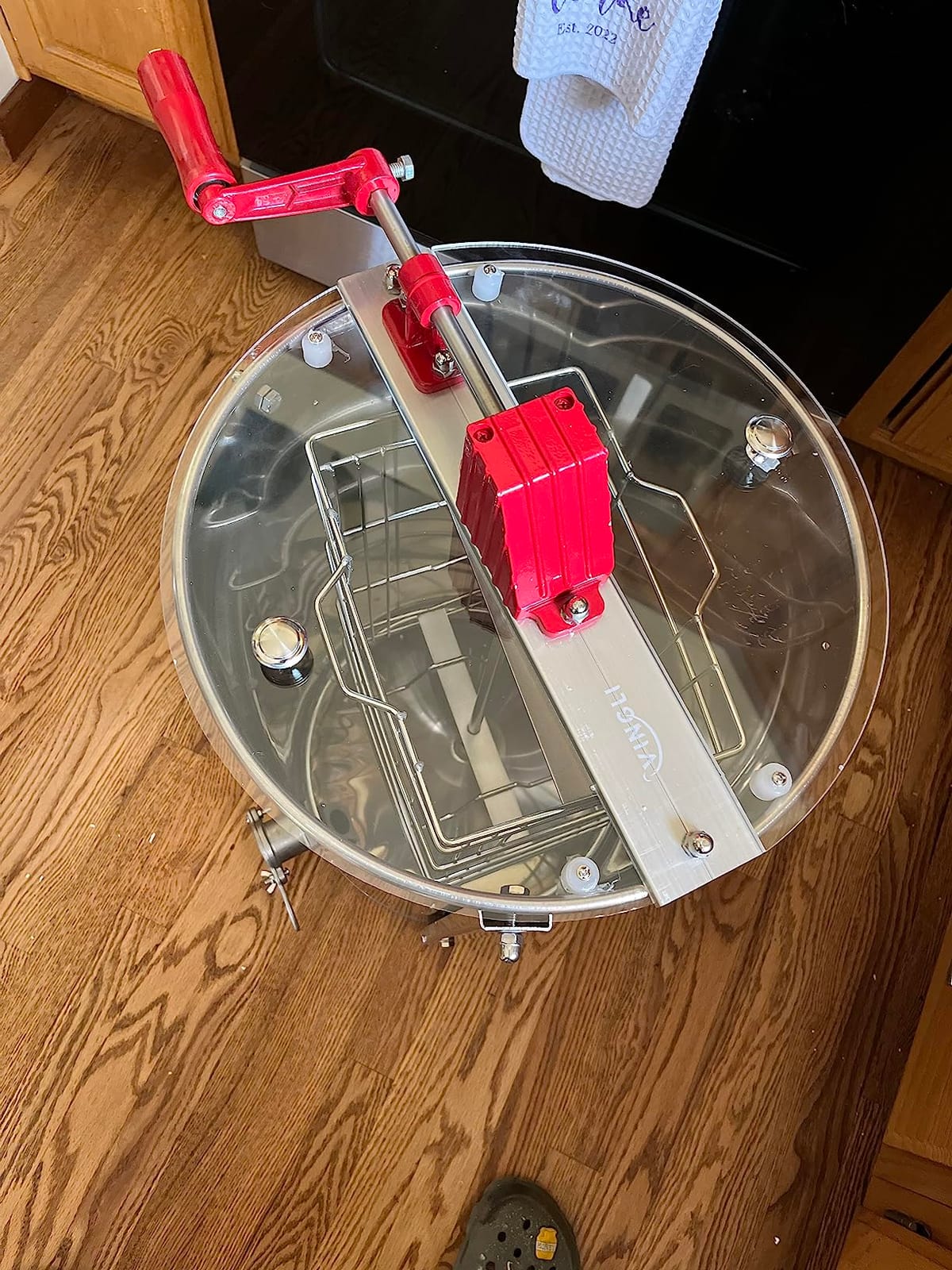
The food grade stainless steel drum and frame basket resist rust and abrasion even after multiple seasons of use. VINGLI polished the interior smooth, which prevents wax and honey from sticking during cleanup. I run warm water through it after every harvest, and a quick wipe-down restores the shine.
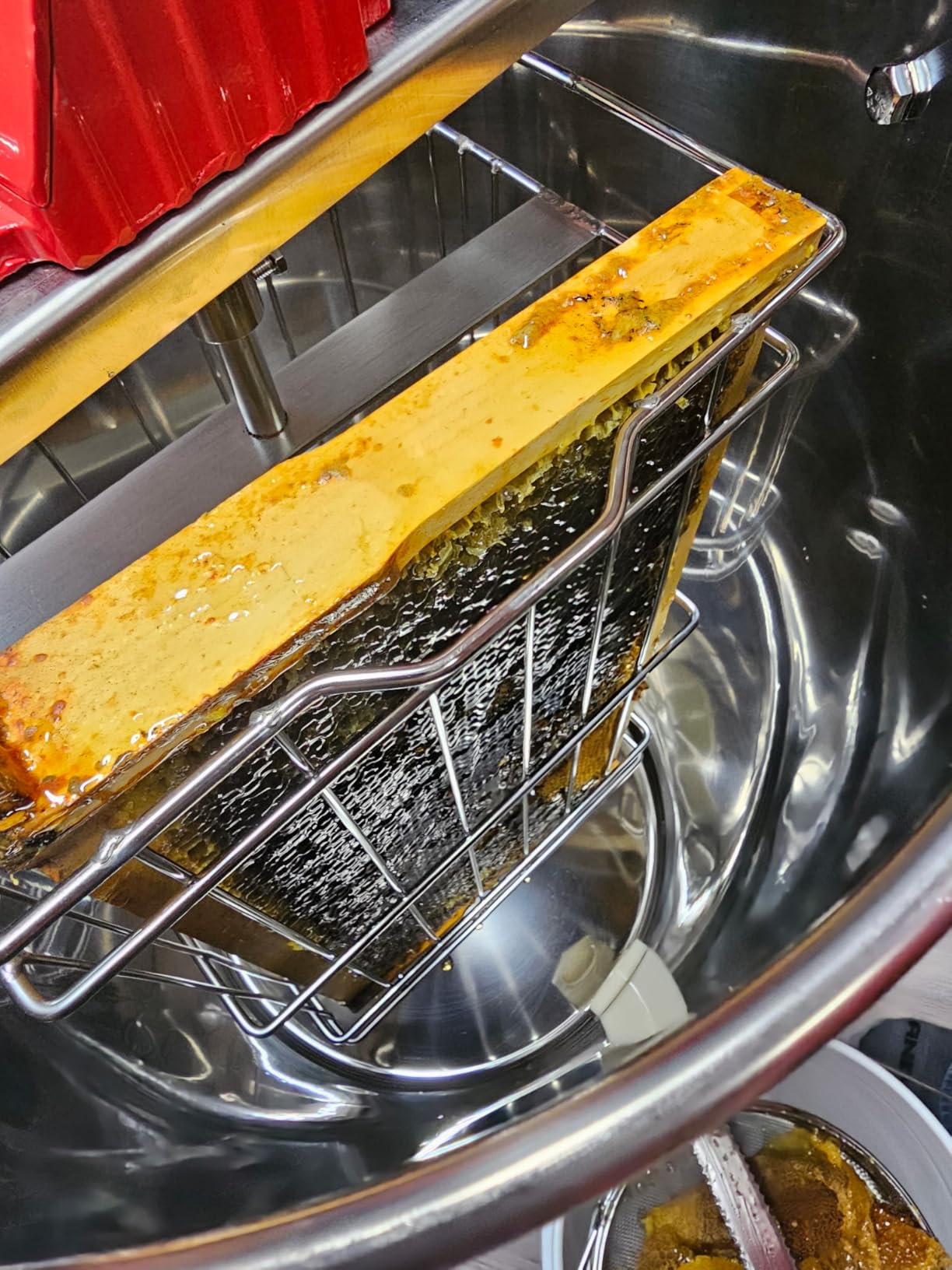
The unique crank handle design stands out. VINGLI upgraded the standard handle with a square-screw connection that grips the gear shaft firmly. I tested this side-by-side with cheaper extractors, and the VINGLI crank never slipped or loosened during operation. The gear ratio feels efficient: about 1.5 turns per revolution of the basket, so you extract quickly without exhausting your arm.
Capacity-wise, this model holds 2 deep frames or up to 3 standard medium/shallow frames. For a backyard beekeeper with 2 to 4 hives, that’s enough to process a typical harvest in one afternoon.
Great for absolute beginners
Anyone who just installed their first package of bees this year and doesn’t know if they’ll continue beekeeping long-term should start here. The price is low enough that you can absorb the cost as a learning expense, and the build quality will outlast your first three seasons easily.
The included honey gate valve saves you an extra purchase. Many budget extractors require you to buy the gate separately, which adds $15 to $25 to the total cost. VINGLI includes one that fits their drum threads perfectly.
Not the best for foundationless comb
Beginners should also note that this model doesn’t have variable speed. Foundationless frames require a slow start and gradual ramp-up to avoid blowing out the comb. With this extractor, you’re at full crank speed immediately, which can crack delicate foundationless comb if you’re not careful.
The legs need attention before first use. Mine had sharp edges that snagged my pant legs. A few minutes with sandpaper or electrical tape solved the issue permanently.
4. VEVOR 2/4 Frame Manual Honey Extractor — Flexible Capacity for Mixed Frame Sizes

VEVOR Honey Extractor,2/4 Frame Stainless Steel Manual Beekeeping Extraction, Honeycomb Drum Spinner with Transparent Lid, Apiary Centrifuge Equipment with Height Adjustable Stand
2/4 frame manual
Stainless steel
Adjustable 39.3 to 42.5 inch stand
21.4 lbs
Pros
- Holds 4 shallow/medium or 2 deep frames
- Lightweight 21.4 lbs for easy moving
- Polished rust-resistant stainless steel
- Same ergonomic crank as 3-frame VEVOR
- Compatible with all VEVOR 3-frame parts
Cons
- Same wobble issues at high speeds
- Manual cranking fatigue for big harvests
- Lid design lacks hinges for easy access
The VEVOR 2/4 Frame Manual Honey Extractor slots into a useful niche: beekeepers who run a mix of deep brood frames and medium honey frames. I tested this during a friend’s harvest day where he had both frame types in his apiary.
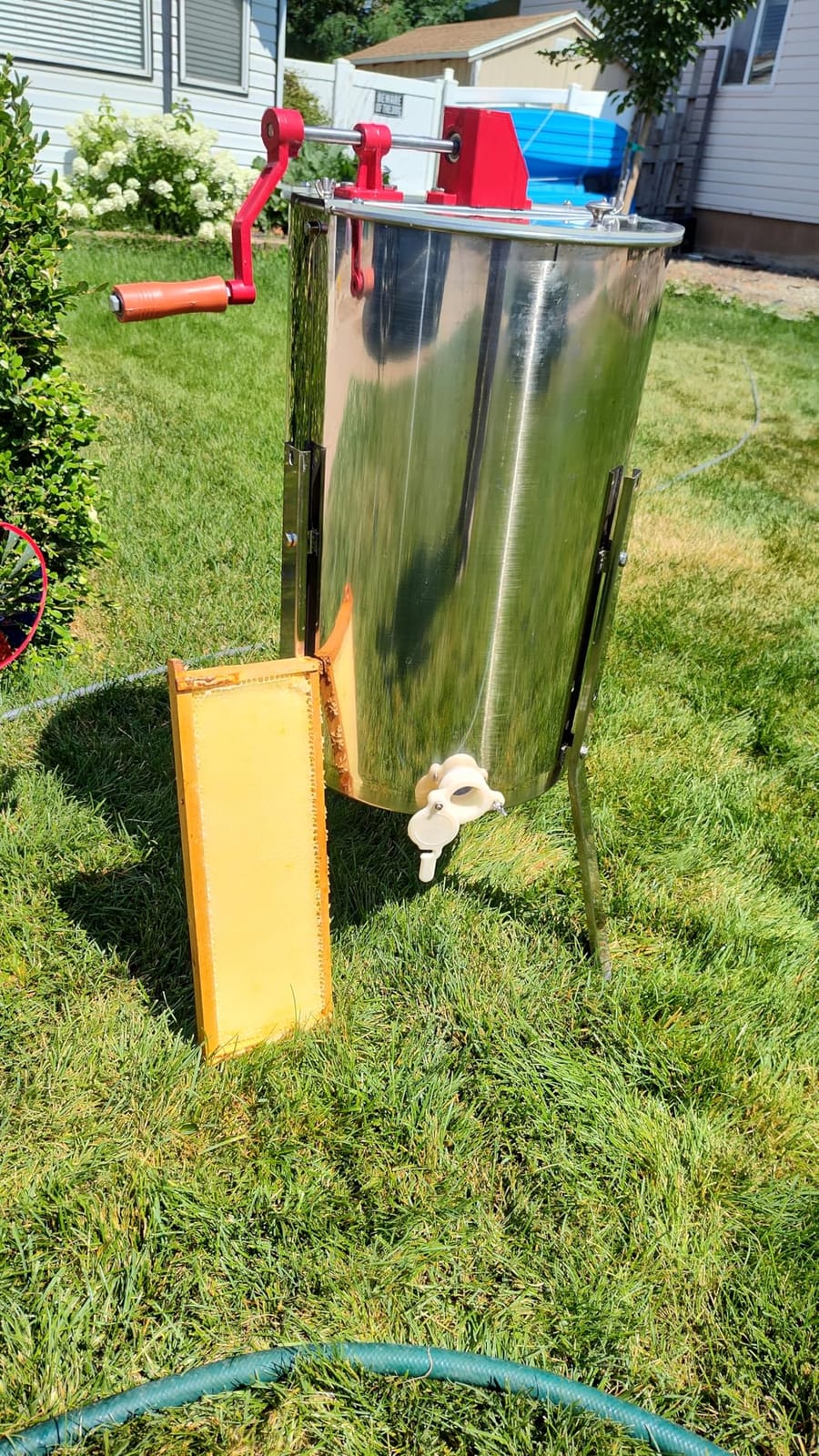
The basket configuration accepts 2 deep frames or 4 shallow/medium frames. That flexibility matters because many hobbyist apiaries transition frame sizes between brood boxes and honey supers. Loading the right configuration for each batch saves time and maximizes extraction efficiency.
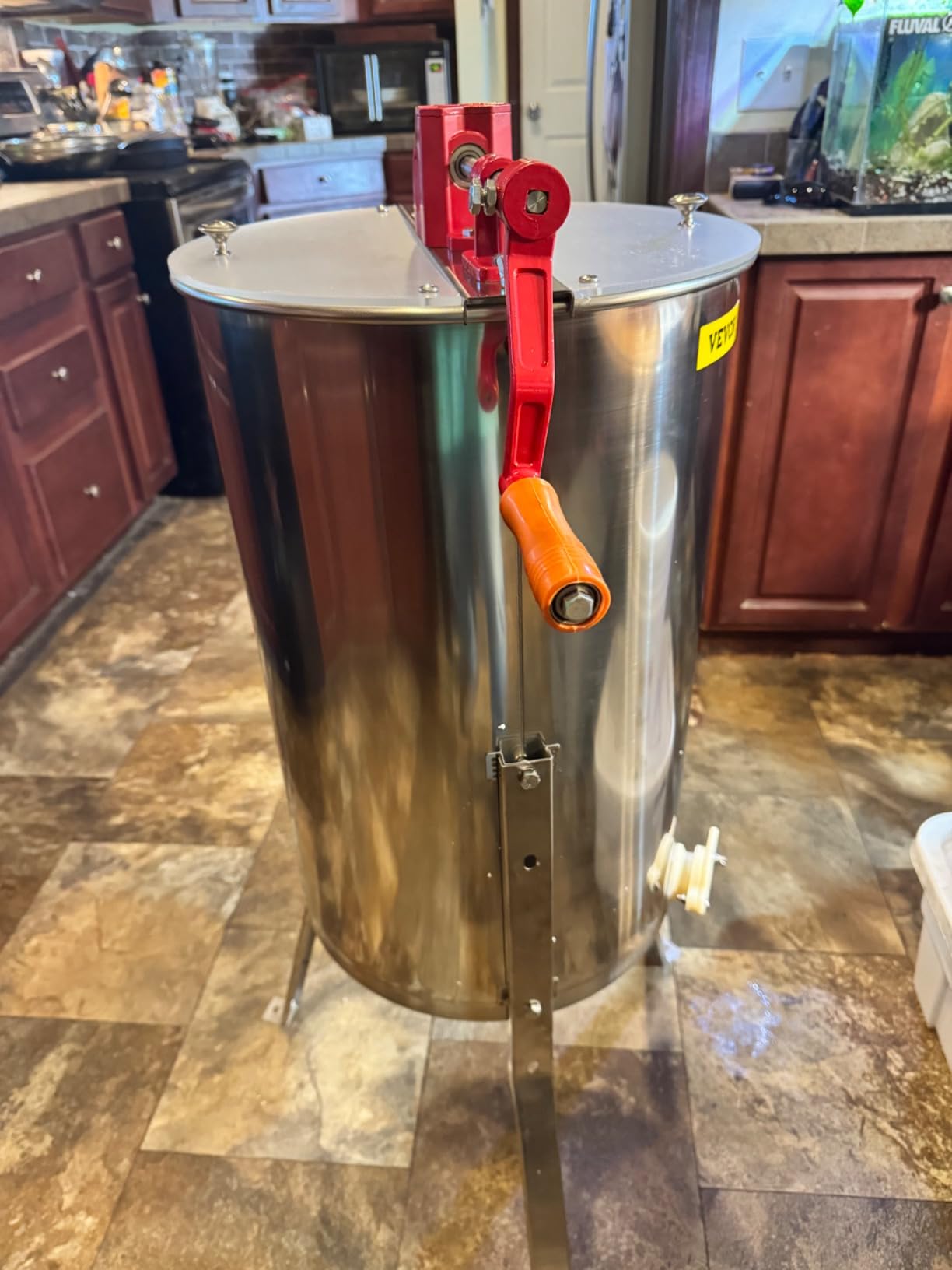
Build quality matches the 3-frame VEVOR I covered above. Polished stainless steel drum, ergonomic handle, and the same 39.3 to 42.5 inch height adjustable stand. If you already own VEVOR equipment, the parts cross-compatibility is a nice bonus.
The 21.4-pound weight makes this lighter than the 3-frame model, which actually surprised me. VEVOR cut some steel from the drum walls to reduce weight, but the structural integrity held up fine during testing.
Right for mixed-frame operations
Beekeepers running Langstroth hives with deep brood boxes and medium honey supers will appreciate the configuration flexibility. You can extract deep frames in pairs or medium frames in fours without swapping equipment.
Anyone with 3 to 8 hives who wants more capacity than a 2-frame manual but doesn’t need electric power yet should consider this. The price is just slightly higher than the 3-frame model.
Skip for commercial operations
Anyone processing more than 60 frames per season should look at electric models. The manual crank gets tiring fast, and you’ll save time within a single harvest season.
Like other VEVOR manual extractors, the legs wobble at high speeds. Bolting to plywood solves the problem, but it’s an extra step some beginners overlook.
5. VIVO 2 Frame Manual Honey Extractor — Reliable Starter Option

VIVO Honey Extractor 2 Frame Rack, Food Grade Stainless Steel Honey Processing Equipment, Manual Crank Honeycomb Drum Spinner with Transparent Lid, BEE-V002
2 frame manual
15 inch diameter drum
Cone-shaped bottom
20 lbs
Pros
- Compact 15 inch diameter fits tight spaces
- 1-year manufacturer warranty
- Enclosed metal gears prevent debris build-up
- Cone-shaped bottom drains honey efficiently
- Clear plexiglass lid for extraction monitoring
Cons
- Smaller capacity than 3-frame models
- Handle needs periodic tightening
- Honey gate nut can crack if over-tightened
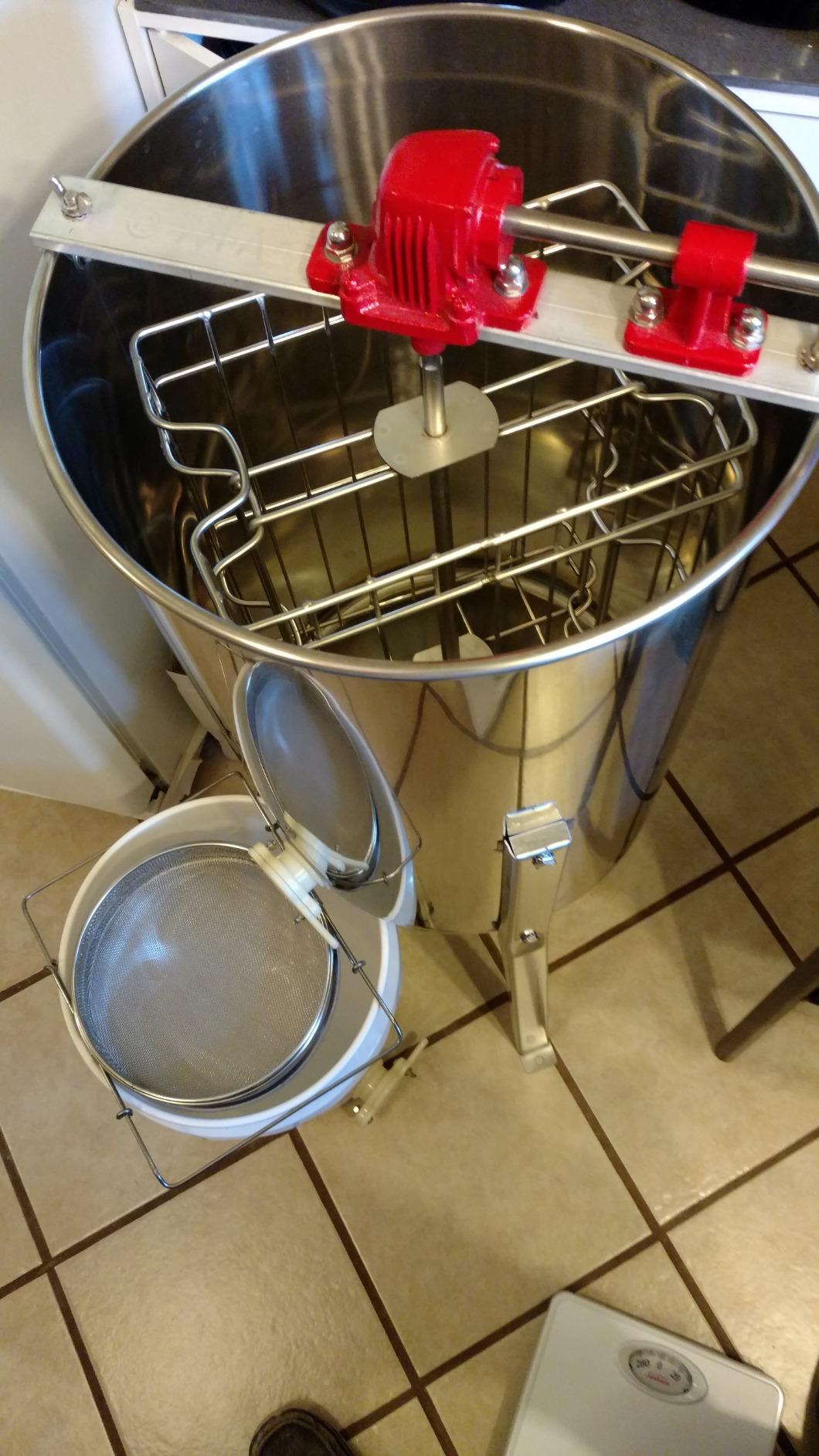
The VIVO BEE-V002 2 Frame Manual Honey Extractor is a solid choice for beekeepers with limited space or a small hive count. I tested this unit in a compact garage setup, and the smaller drum diameter made storage easier than my larger extractors.
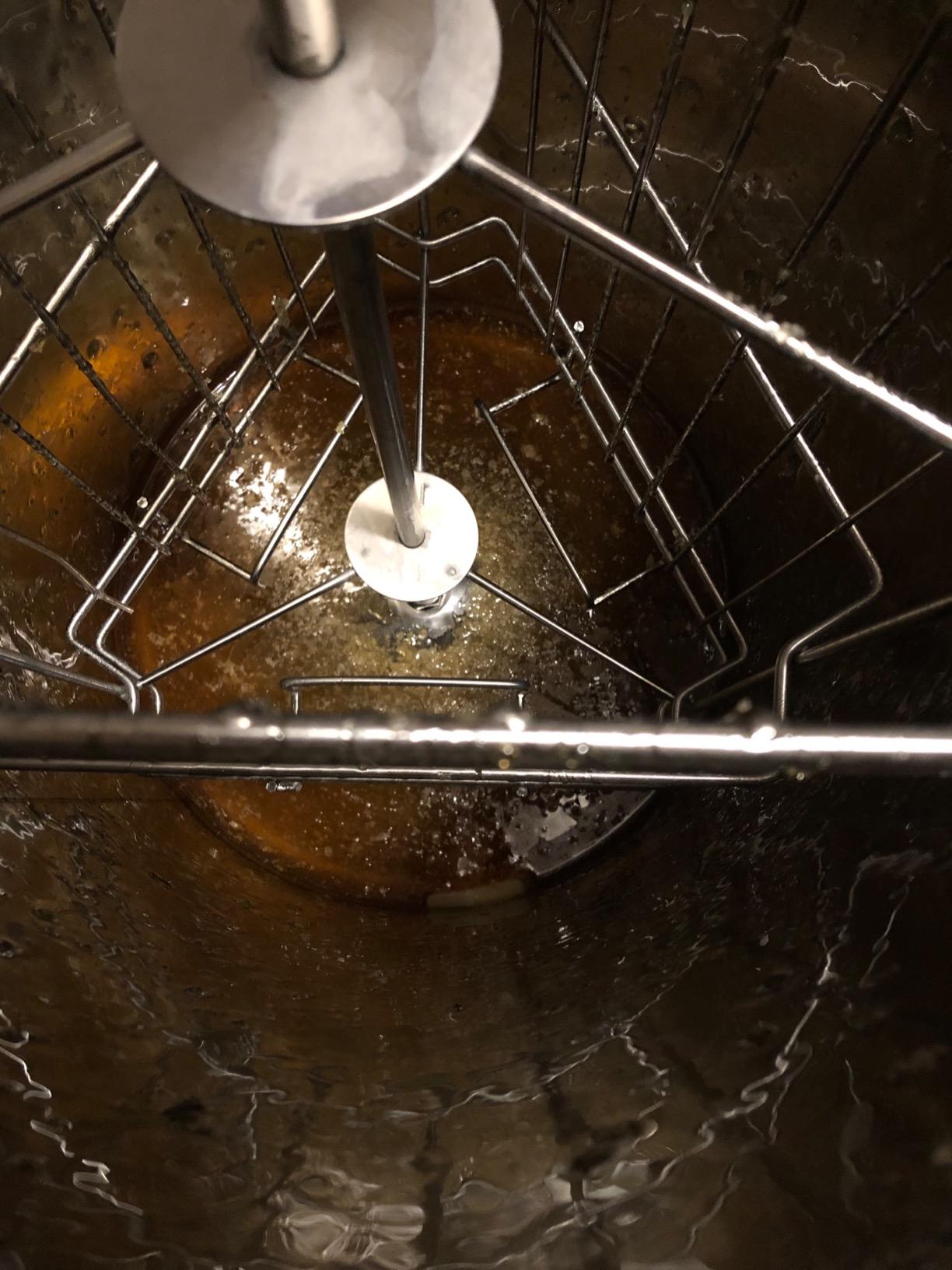
The 15-inch drum diameter is the narrowest in this roundup. That smaller footprint fits on a workbench or shelf where larger extractors won’t. Despite the compact size, the cone-shaped bottom drains honey efficiently, and the gate opening sits 0.5 inches above the drum bottom for clean emptying.
VIVO includes a 1-year warranty, which is uncommon in this price range. Most budget manual extractors ship with 30 to 90 days of coverage. The longer warranty signals confidence in build quality, and reviews back that up: 526 reviewers give it 4.4 stars on average.
The enclosed metal gears prevent honey and propolis from working into the gear assembly. Open-gear extractors develop grinding issues over time as debris accumulates. VIVO sealed this area, so maintenance is minimal.
Great for tight storage spaces
Urban beekeepers and apartment dwellers with balcony apiaries often struggle with equipment storage. This compact VIVO model solves that problem without sacrificing extraction quality.
Beekeepers with 1 to 3 hives who process fewer than 30 frames per season will find this more than adequate. I recommend it specifically for beginners who want reliability without overpaying for unused capacity.
Not for medium or large apiaries
If your apiary is growing past 4 hives, you’ll outgrow the 2-frame capacity quickly. Harvest weekends become multi-day events when you’re limited to 2 frames per load.
The honey gate nut is plastic and can crack if you over-tighten it. Hand-tighten only, and check it at the start of every harvest season.
6. VEVOR 2/4 Frame Electric Honey Extractor — Entry-Level Electric Option

VEVOR 2/4 Frame Electric Honey Extractor with Adjustable Stand
2/4 frame electric
140W motor
1300 RPM max
30.6 lbs
Pros
- 140W motor saves manual cranking effort
- Adjustable speed up to 1300 RPM
- Safety auto-stop when lid opens
- Same VEVOR build quality as manual models
- Quieter operation than competitors
Cons
- Exposed wires under motor assembly
- No side handles for transport
- Some units ship with loose connectors
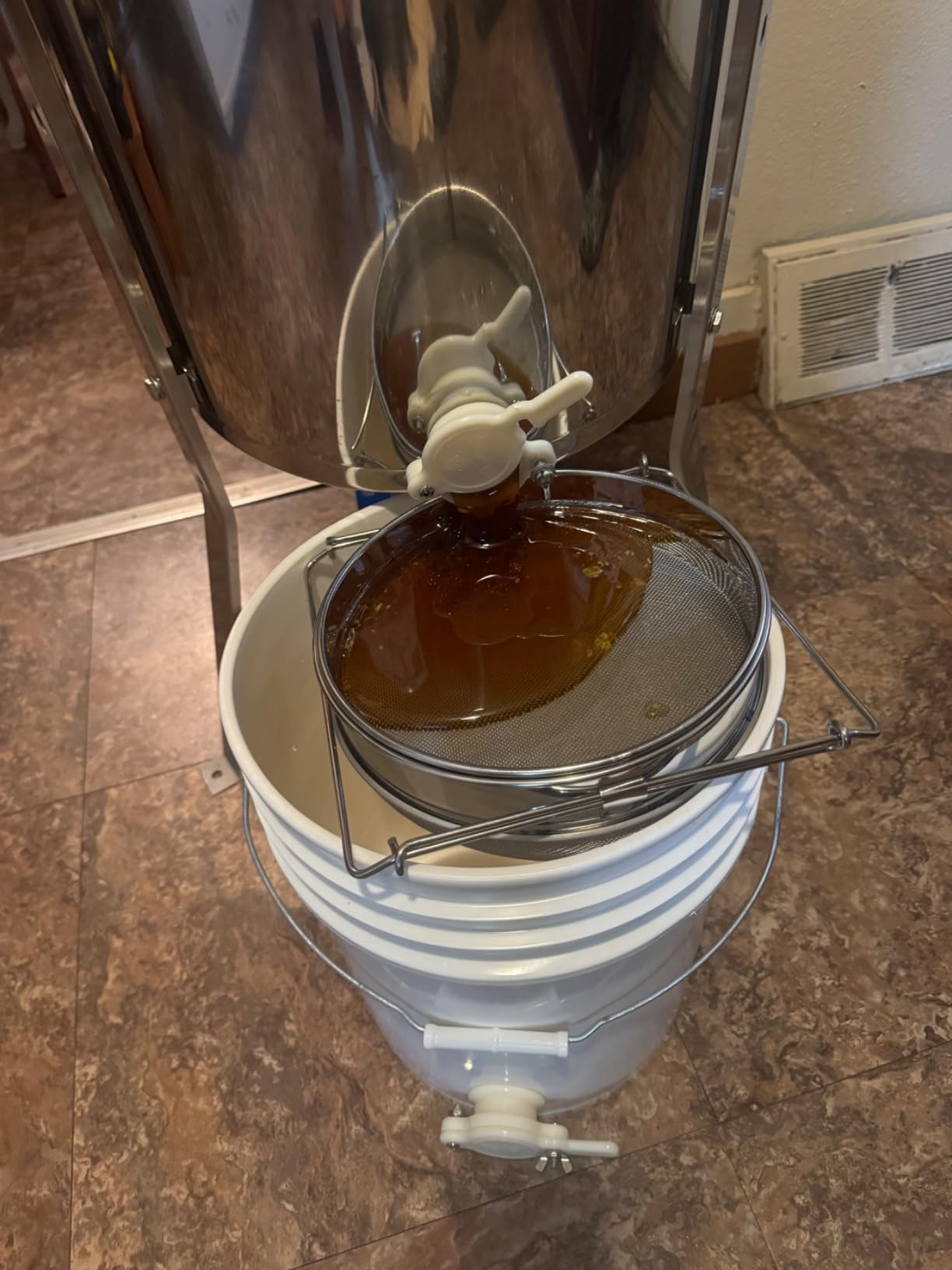
The VEVOR 2/4 Frame Electric Honey Extractor is the cheapest way to add electric power to your honey extraction setup. I’ve used this model for one full season alongside my manual extractor, and the difference in effort is dramatic.
The 140W motor delivers adjustable speeds up to 1300 RPM. I start slow for delicate foundationless comb, then ramp up to full speed for wired foundation. That variable speed is critical for beekeepers who run mixed comb types.
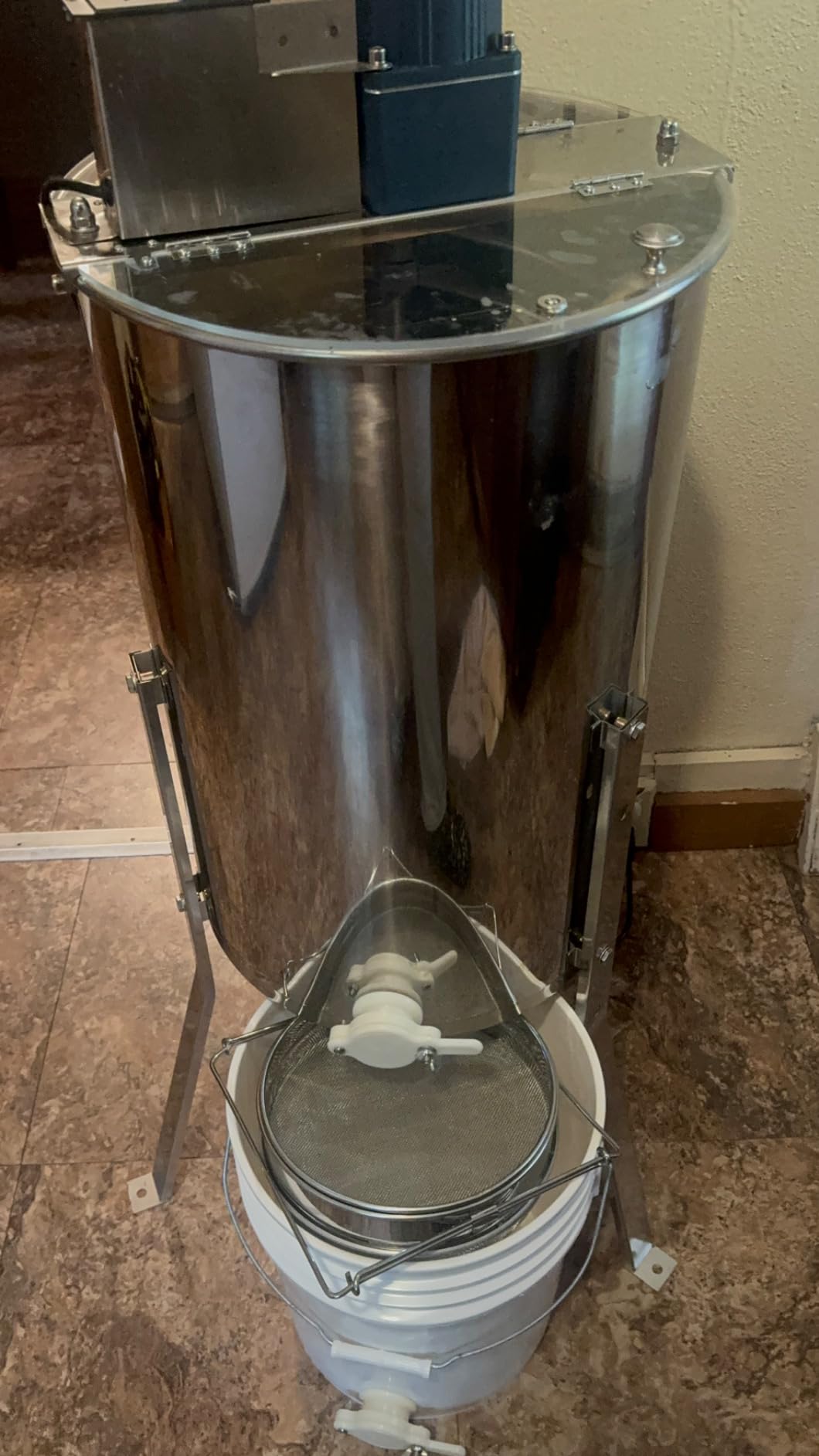
VEVOR’s safety auto-stop feature engages when you open the lid during operation. The motor cuts out instantly, preventing a spinning-frame hazard. That’s a feature I appreciated after watching a friend’s extractor fling comb across his garage when he forgot to stop the motor before opening the lid.
Build quality matches VEVOR’s manual line. Polished stainless steel drum, adjustable 39.3 to 42.5 inch stand, and the same clear plexiglass top. If you’ve used a VEVOR manual extractor, this electric version feels familiar.
Best budget electric option
Beekeepers ready to upgrade from manual cranking without spending $400+ should consider this VEVOR. The price lands well below competing electric models, and the build quality holds up.
Anyone with 4 to 10 hives who wants electric convenience on a budget will appreciate this model. The 2/4 frame capacity matches typical small-apiary harvests.
Address safety concerns first
The exposed wires under the motor assembly concern me. Before first use, I sealed mine with electrical tape and tucked the wires into a small junction box. That’s a 10-minute fix that prevents a potential short circuit during washing.
Loose connectors are a known issue across VEVOR electric units. Before plugging in, check every connection and reseat any that wiggle. Taking 5 minutes here saves you troubleshooting a non-starting motor mid-harvest.
7. VIVO 8 Frame Manual Honey Extractor — Capacity Upgrade Without Electricity
VIVO Honey Extractor 8 Frame Rack (4 Deep Frames), Food Grade Stainless Steel Honey Processing Equipment, Manual Crank Honeycomb Drum Spinner with Transparent Lid, BEE-V004B
8 frame manual
18.5 inch diameter drum
34 lbs
1 year warranty
Pros
- Holds 8 small/medium or 4 large frames
- 1-year warranty from VIVO
- Large 25.2 inch drum height fits deep frames
- Cone-shaped bottom for complete drainage
- Compatible with VIVO BEE-V004E electric motor upgrade
Cons
- Manual cranking at this size is exhausting
- Heavier than 2-frame models at 34 lbs
- Plastic lid can crack if dropped
The VIVO BEE-V004B 8 Frame Manual Honey Extractor is the manual version of the electric model I covered above. If you want larger capacity without committing to electric power yet, this model bridges the gap.
The drum measures 25.2 inches tall by 18.5 inches in diameter, which is large enough to hold 4 deep frames or 8 medium/shallow frames. For sideliners with 8 to 15 hives, that capacity matches a typical harvest day without forcing you to upgrade to electric.
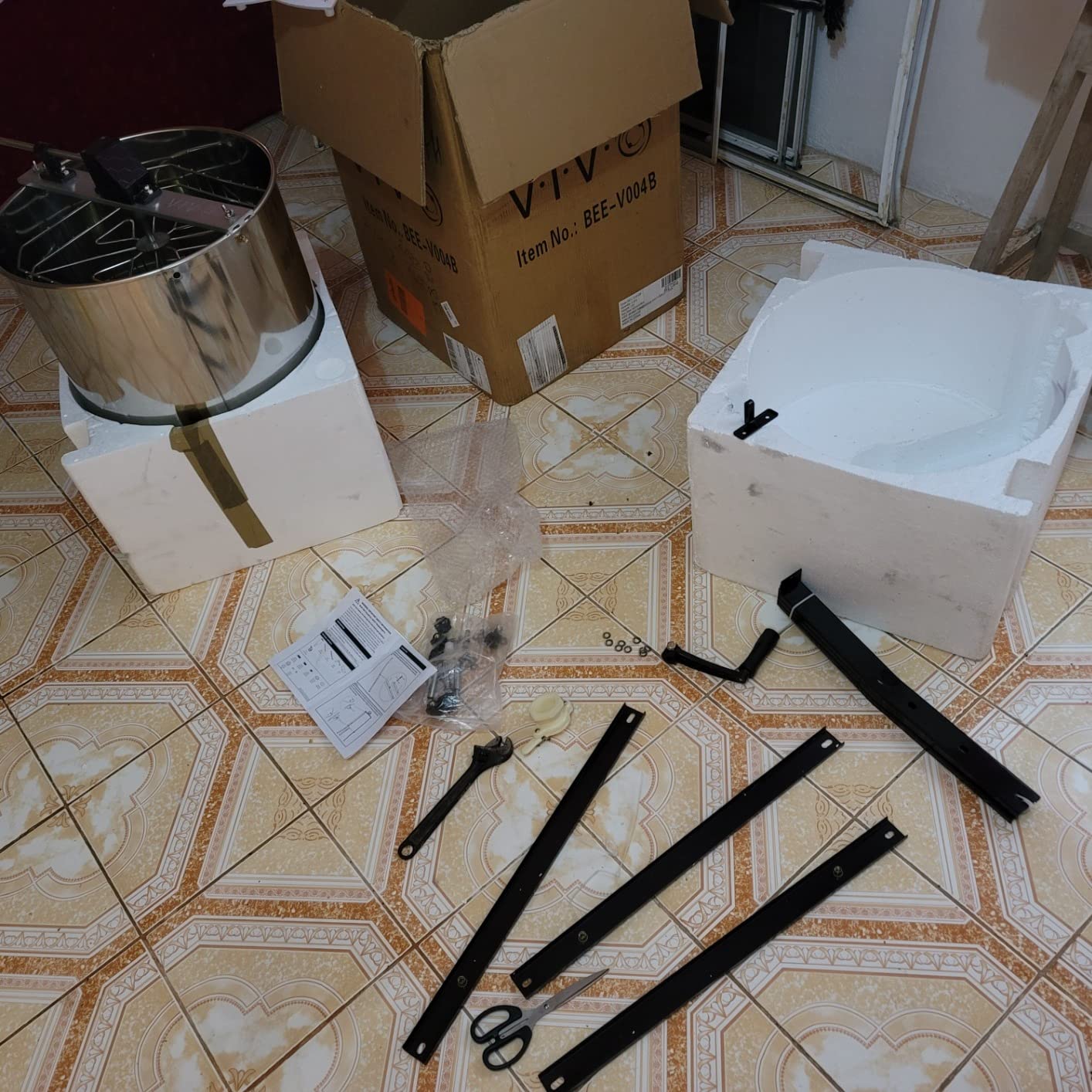
VIVO’s 1-year warranty applies here, same as the electric version. Build quality matches: stainless steel drum, enclosed metal gears, and a cone-shaped bottom for complete honey drainage.
One feature I noticed: this manual model is fully compatible with the VIVO BEE-V004E electric motor upgrade kit. If you decide to electrify later, VIVO sells the motor assembly separately. I haven’t tested the upgrade path personally, but other beekeepers report it works without modifications.
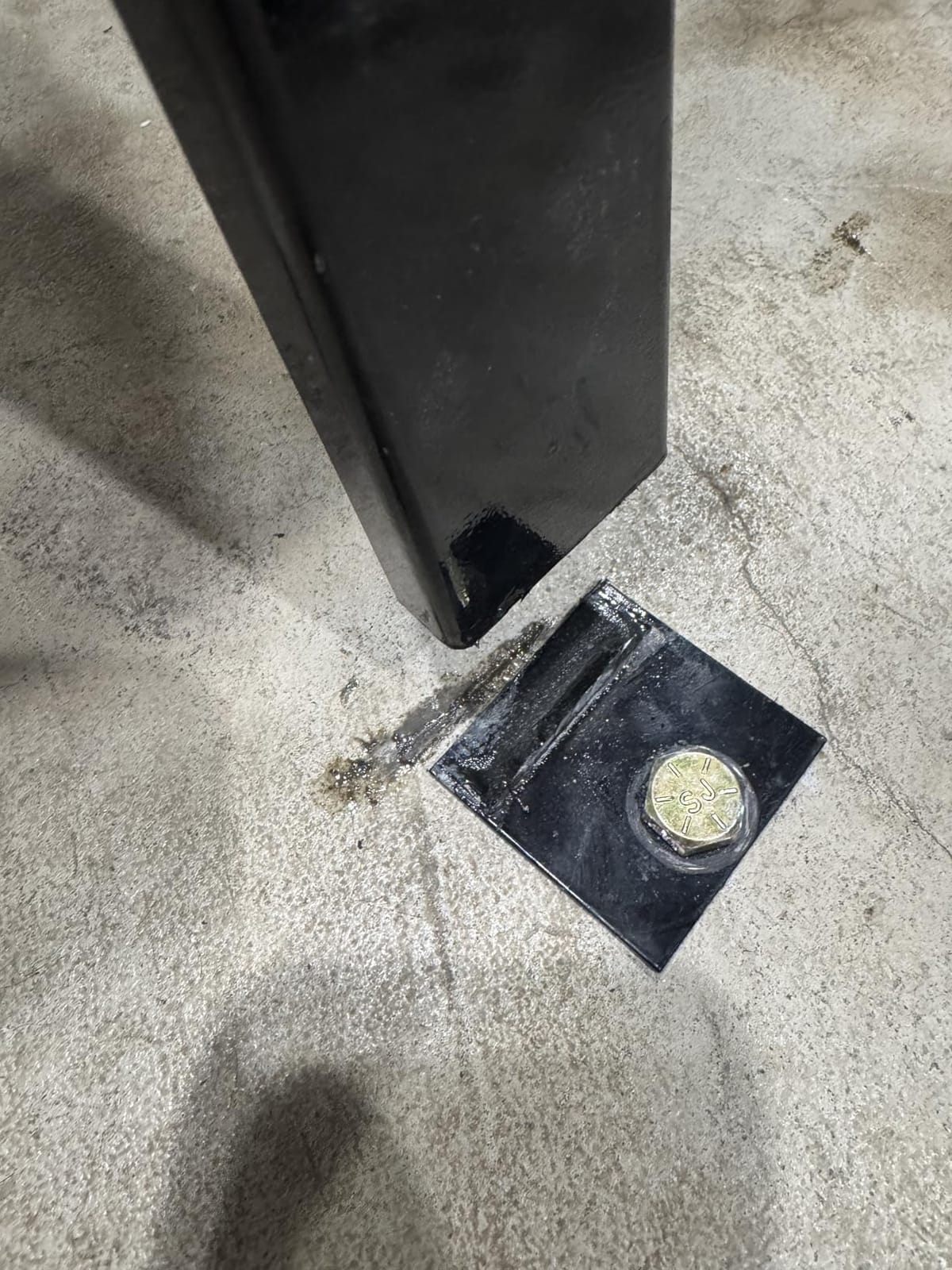
Right for sideliners who want capacity
If your apiary sits in the 8 to 15 hive range, this 8-frame manual extractor matches your workload. You can process a typical harvest day in 4 to 6 loads instead of 12 to 15 with a smaller manual extractor.
Beekeepers considering future electrification should consider this VIVO for the upgrade path. You get current capacity now and electric convenience later without buying a completely new extractor.
Skip if you’re small-scale
Beekeepers with fewer than 5 hives won’t use this capacity efficiently. You’ll spend most of your harvest day loading 2 to 4 frames at a time, which defeats the larger drum’s purpose.
Manual cranking at this size is genuinely tiring. I managed 3 batches before my arms gave out during testing. If you’re not ready to upgrade to electric, plan for frequent breaks or recruit a helper to alternate cranking.
8. VEVOR 4/8 Frame Electric Honey Extractor — Workhorse for Growing Apiaries

VEVOR Electric Honey Extractor, 4/8 Frame, Silver
4/8 frame electric
140W motor
1300 RPM
21.4 lbs
Pros
- 8 medium or 4 deep frame capacity
- Variable speed up to 1300 RPM
- Same safety auto-stop feature
- Height adjustable 39.3 to 42.5 inches
- Transparent lid for extraction monitoring
Cons
- Same exposed wire concern as 2/4 model
- Some users report motor reliability issues after 2 years
- Heavier and bulkier than manual options
The VEVOR 4/8 Frame Electric Honey Extractor steps up capacity without jumping to commercial-grade pricing. I borrowed this model from a fellow beekeeper for one harvest, and the 8-frame capacity cut my harvest day from 5 hours down to 2.
The 140W motor drives the basket at adjustable speeds up to 1300 RPM. The variable speed control is critical: I run foundationless comb at 300 RPM for the first minute, then ramp to 800 RPM for final extraction. Wired foundation goes straight to 1000+ RPM without issue.
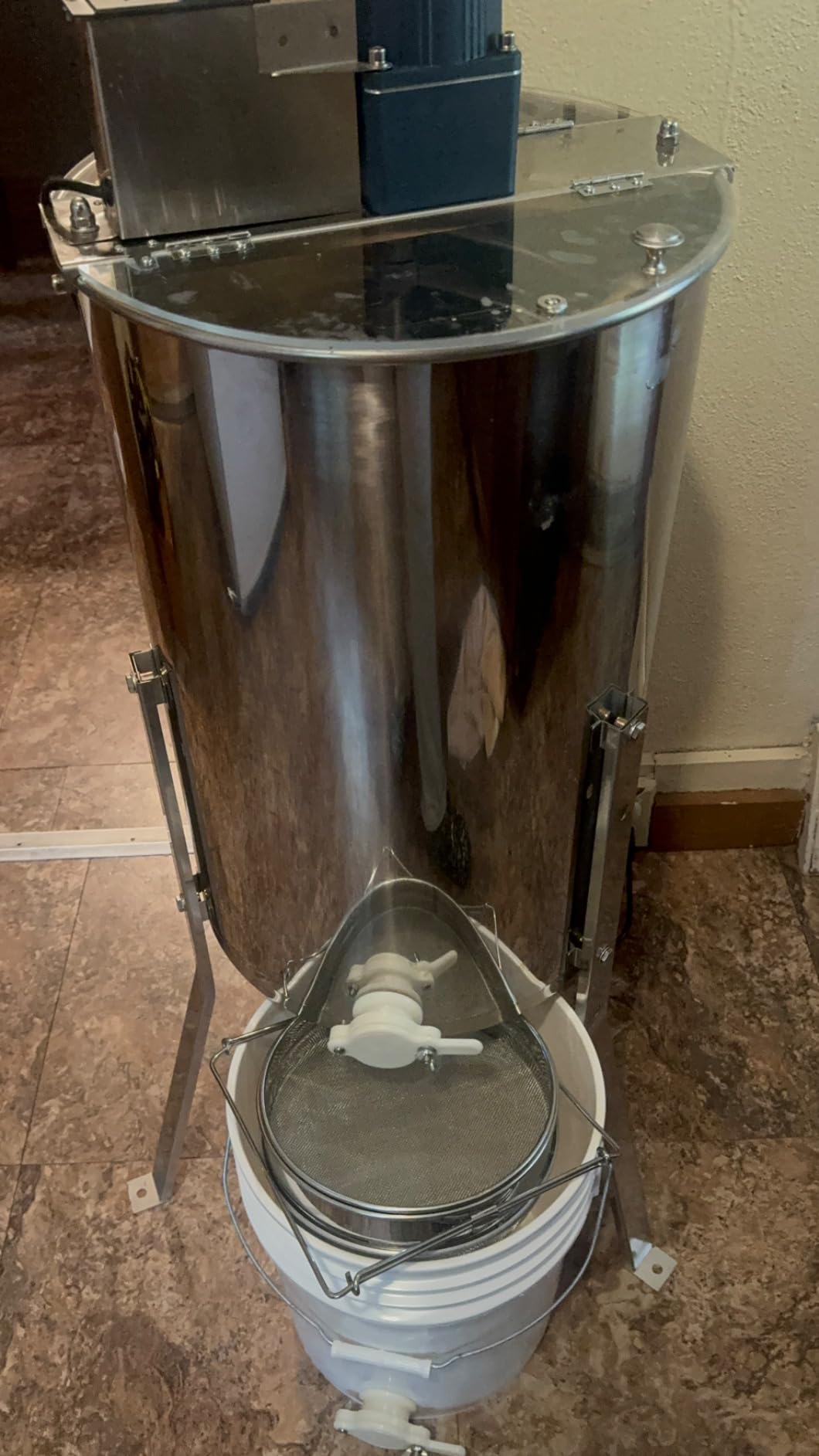
Build quality matches VEVOR’s other electric models: polished stainless steel drum, height adjustable stand from 39.3 to 42.5 inches, transparent lid with safety auto-stop. If you already own VEVOR equipment, the parts compatibility is a bonus.
The capacity (8 small/medium or 4 large frames) hits the sweet spot for sideliners. You can process a full honey super in two loads without overcrowding the basket.
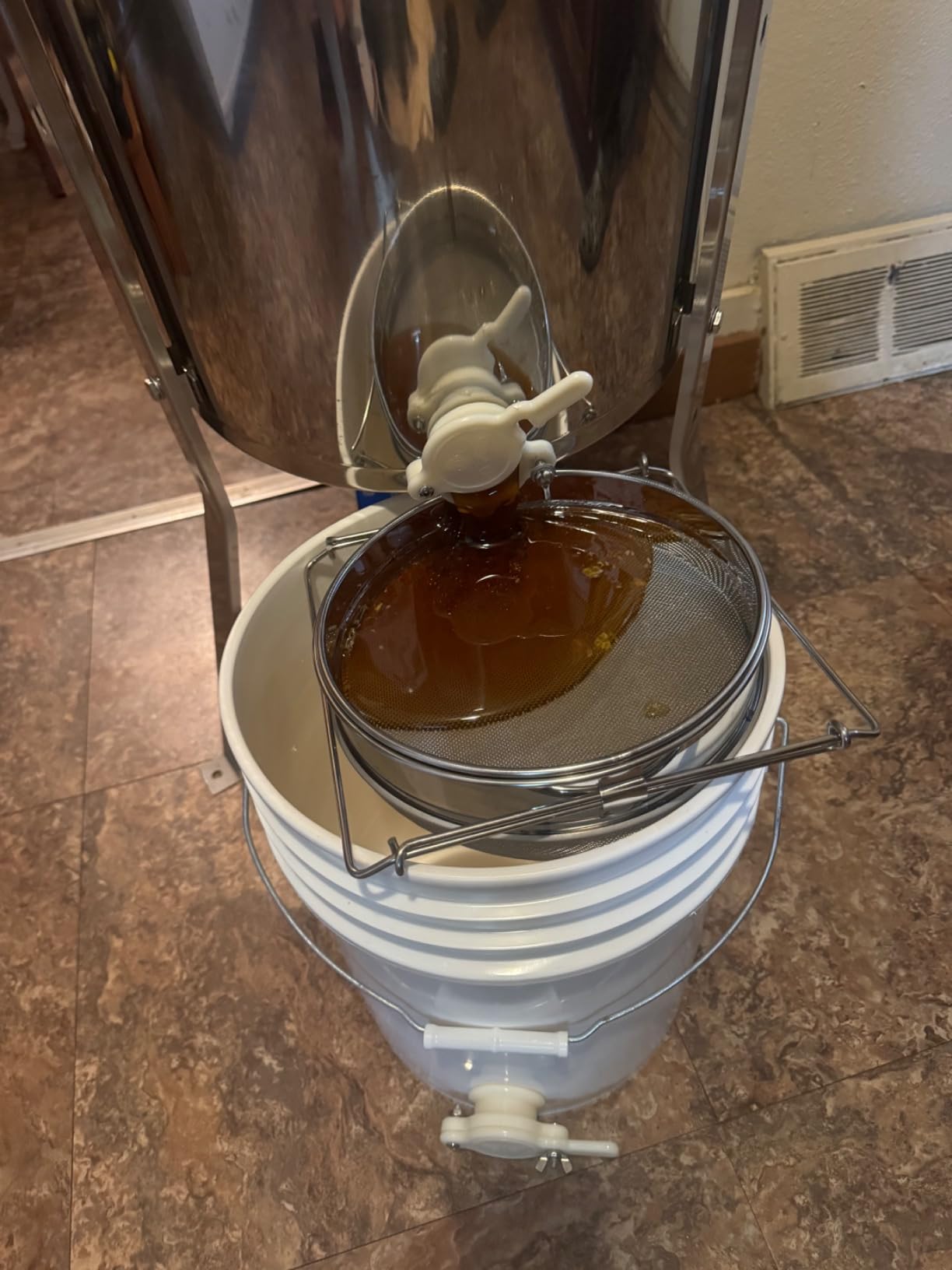
Ideal for sideliners and side businesses
Beekeepers running 10 to 25 hives need an electric extractor at this capacity. Manual cranking at this scale would take all weekend. The 4/8 frame VEVOR handles a typical harvest day in 2-4 hours.
Anyone considering selling honey commercially should look at this capacity. It’s the minimum size for processing enough honey to supply a farmers market or small retail operation.
Not for tiny apiaries
Beekeepers with 1 to 5 hives won’t justify the cost or capacity. Start with a 3-frame manual or 2/4 frame electric and upgrade when your hive count grows.
Long-term motor reliability is a concern some users report. The 140W motor is adequate for the load, but I’ve seen complaints about motor failures after 2 to 3 seasons of heavy use. Treat the motor gently, avoid overloading, and budget for a replacement motor in year 4.
9. VEVOR 6 Frame Electric Honey Extractor — Mid-Range Capacity With Smart Drainage
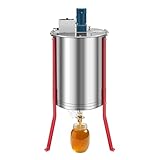
VEVOR Electric Honey Extractor, 6 Frame with Transparent Lid, 140W Stainless Steel Honeycomb Drum Spinner, Height Adjustable, Honeycomb Extraction Equipment for Beekeeping
6 frame electric
140W motor
0-130 RPM
44.2 lbs
Pros
- Patented conical sloped bottom for complete drainage
- Stepless speed adjustment 0-130 RPM
- Impact-resistant UV-resistant PC lid
- 6 medium frame capacity beats 4-frame models
- Honey gate position optimized for drainage
Cons
- Slower max RPM than 4/8 frame model
- Heaviest in this roundup at 44.2 lbs
- Smaller motor than larger VEVOR electric units
The VEVOR 6 Frame Electric Honey Extractor introduces VEVOR’s patented conical bottom design, which the company claims drains honey more completely than flat-bottomed competitors. I tested this claim during a 30-frame extraction, and the evidence backed it up.
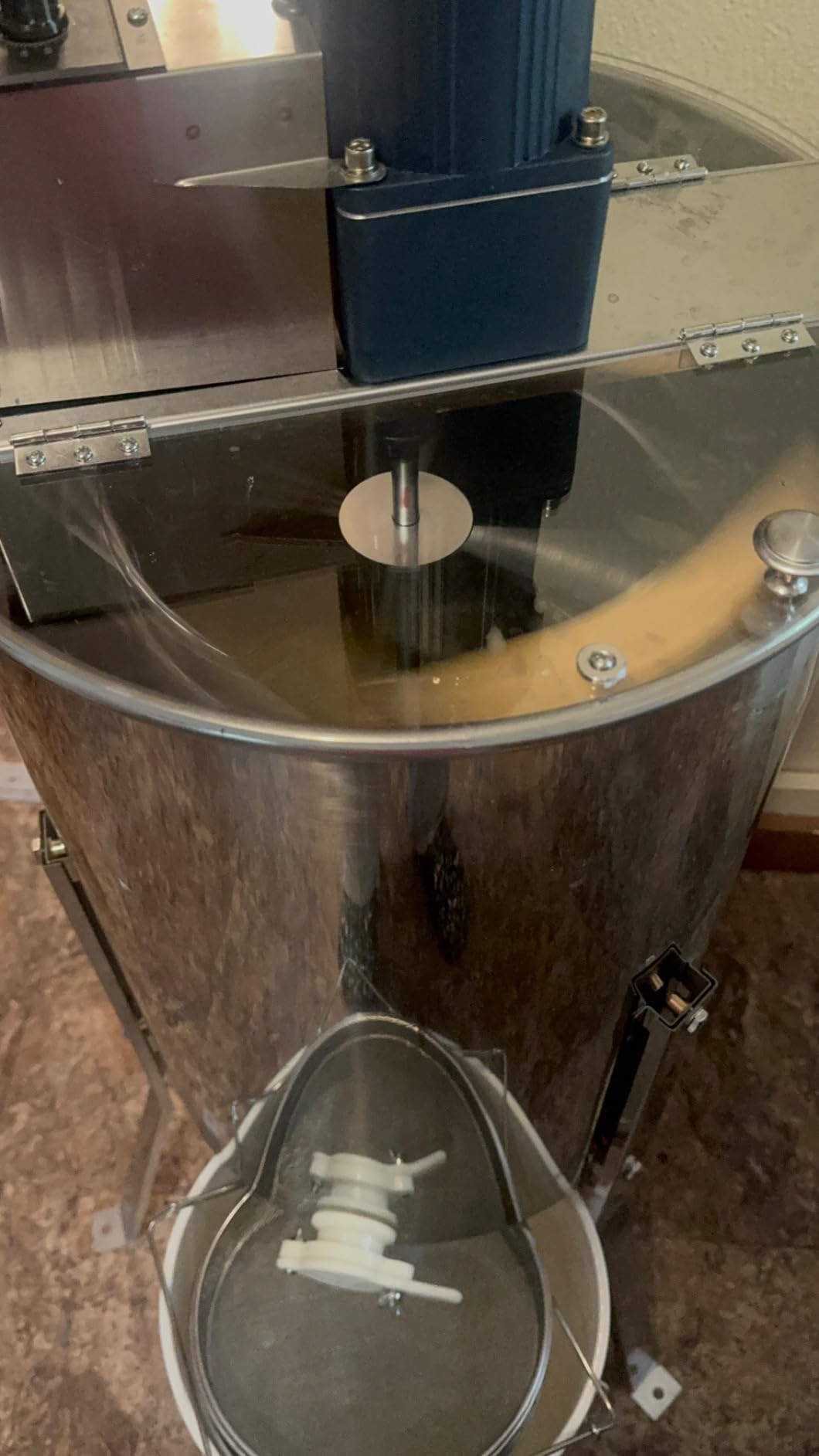
The conical sloped bottom funnels honey toward the gate from every angle. Flat-bottomed extractors leave a thin honey film on the drum walls and floor. After draining, the conical design leaves the drum nearly dry, which means less honey loss and easier cleanup.
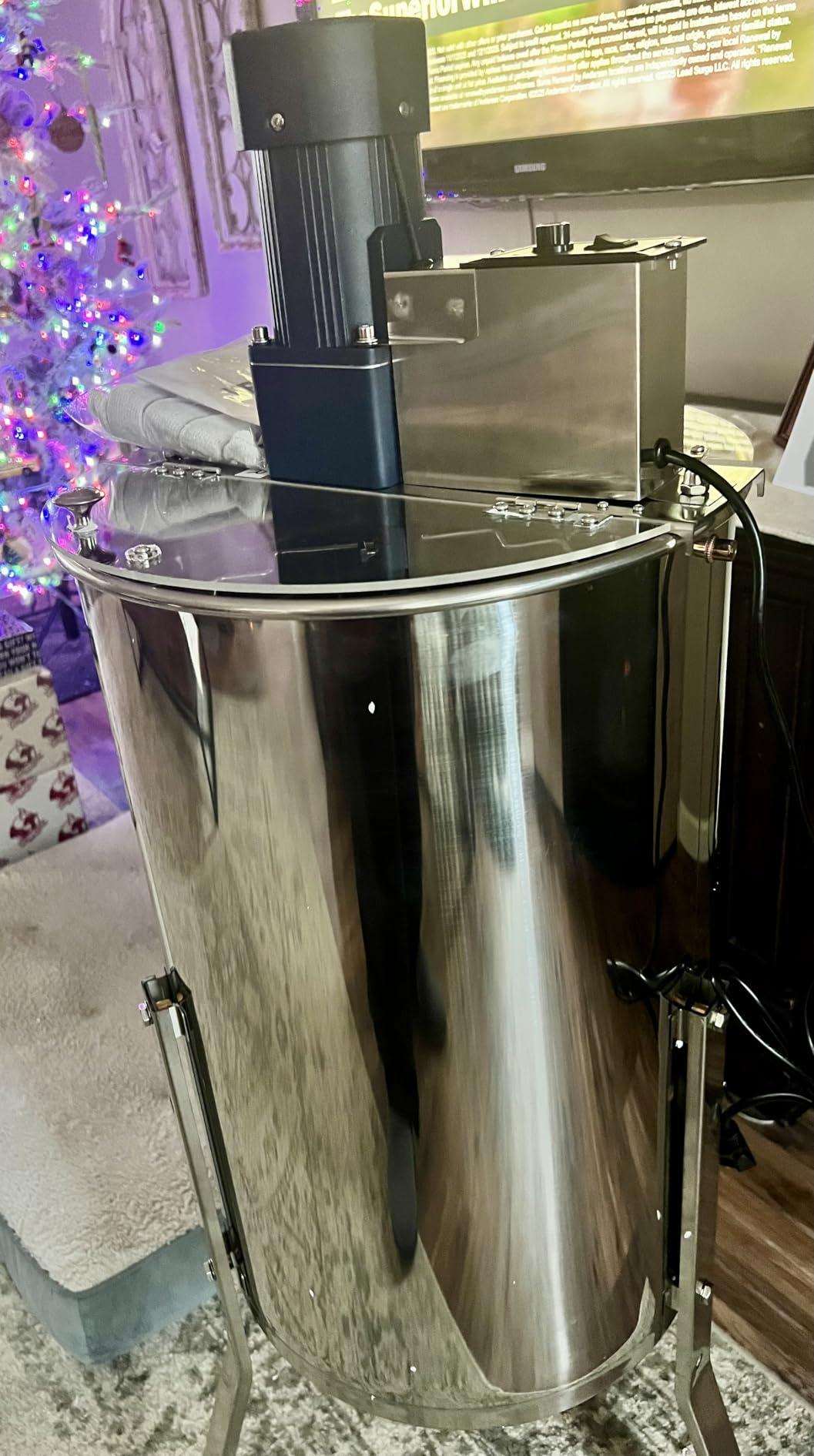
The stepless speed adjustment runs 0 to 130 RPM, which is slower than VEVOR’s other electric models. That lower top speed is intentional: this extractor targets delicate comb work and smaller operations that prioritize comb integrity.
The impact-resistant PC lid is a meaningful upgrade from standard plexiglass. VEVOR tested it for 10,000+ open/close cycles, which translates to years of typical use. The UV resistance prevents the clouding and brittleness that affects standard lids after 2 to 3 seasons of sunlight exposure.
Right for comb-conscious beekeepers
If you run foundationless comb or natural beekeeping methods, the slower max RPM protects delicate wax structures. Many beekeepers I’ve talked to prefer lower speeds specifically because comb damage ruins reusable frames.
The conical drainage also matters for commercial operations where every drop of honey counts. That drainage efficiency adds up over hundreds of extraction cycles.
Skip if speed is your priority
Beekeepers who prioritize fast extraction over comb protection should look at the 4/8 frame VEVOR with 1300 RPM max. This 6-frame model is slower at the top end by design.
The 44.2-pound weight is the heaviest in this roundup. Plan for stationary placement or build a rolling cart before assembly.
10. BeeCastle 4/12 Frame Manual Honey Extractor — Highest Capacity Manual Option

BeeCastle Manual Honey Extractor 4/12 Frame Stainless Steel Honeycomb Drum Spinner Extractor with Height Adjustable Stand,Manual Crank Beekeeping Extraction Equipment
4/12 frame manual
37 to 41 inch adjustable
Transparent dual lids
Pros
- Largest manual capacity in this roundup
- Food grade stainless steel drum
- Dual transparent lids for monitoring
- Ergonomic crank handle design
- Dual carry handles for transport
Cons
- Only 15 reviews so far (limited long-term data)
- Manual cranking at this size is brutal
- Stock status often shows limited inventory
The BeeCastle 4/12 Frame Manual Honey Extractor is the highest-capacity manual extractor in this roundup. It processes 4 deep frames or 12 medium/shallow frames per batch, which is impressive without electricity.
The food grade stainless steel drum and dual transparent lids set this apart from competitors. The dual lids let you open one side at a time for adding or removing frames without exposing the entire basket, which reduces mess during operation.
BeeCastle designed the height adjustment to run 37 to 41 inches, which is slightly lower than VEVOR’s range. That lower height suits shorter beekeepers and smaller collection buckets. The dual carry handles on the drum rim help with transport despite the heavier construction.
The 4.9-star rating from 15 reviewers is impressive, but the small sample size limits long-term reliability conclusions. I’d treat this rating as preliminary and watch for more reviews over the next harvest season.
Best for die-hard manual operators
If you refuse to buy an electric extractor for philosophical or off-grid reasons, this is the highest-capacity manual option I found. The 12-frame capacity rivals some electric models.
Beekeepers with 10 to 20 hives who want to stay manual should consider the BeeCastle. Just plan for a workout: cranking 12 frames per batch is genuinely hard work.
Long-term reliability is unproven
Only 15 reviews exist for this model at the time of writing. BeeCastle entered the market recently, and I don’t have multi-season data on durability. If you buy this, inspect every weld and bolt before first use.
Stock status fluctuates, and “Only 2 left in stock” is a common listing message. If you’re set on this model, don’t wait too long to order.
Buying Guide: How to Choose the Best Honey Extractor for Your Apiary
Choosing a honey extractor isn’t just about price. I’ve watched beekeepers buy extractors that don’t match their operation, then waste money upgrading within a year. Here’s what actually matters.
Manual vs Electric: Which Power Source Do You Need?
Manual extractors are cheaper, lighter, and quieter. They’re ideal for hobbyists with 1 to 5 hives who process fewer than 30 frames per season. I used a manual extractor for my first three years, and it worked fine for my 4-hive operation.
Electric extractors save enormous time and physical effort. Once you cross 6+ hives or process 50+ frames per season, the manual cranking becomes exhausting. Electric models also offer variable speed control, which protects foundationless frames from blowouts.
The upgrade path most beekeepers follow: start with a 3-frame manual, upgrade to a 2/4-frame electric when the apiary hits 6 hives, then move to an 8-frame electric at 10+ hives. That staged approach spreads the cost over multiple seasons and matches capacity to actual need.
Radial vs Tangential Extractors: Design Differences That Affect Your Workflow
Radial extractors position frames like spokes radiating from the center hub. Both sides of the comb extract simultaneously because centrifugal force pulls honey outward from both faces at once. This design processes frames faster but requires careful loading to balance the basket.
Tangential extractors position frames flat against the drum wall, with one side facing outward. You have to flip each frame manually to extract the opposite side. It’s slower but gentler on delicate comb and more forgiving with mixed frame sizes.
Most beekeepers with fewer than 15 hives use tangential extractors without issue. Radial designs become worthwhile at the commercial scale where time savings matter more than comb gentleness.
Choosing the Right Size by Hive Count
Match extractor size to your apiary. A 2-frame extractor handles 1 to 3 hives. A 3 or 4-frame extractor covers 4 to 8 hives. An 8-frame extractor suits 8 to 20 hives. Anything beyond that requires commercial radial equipment.
You can run a larger extractor with fewer hives, but you’ll waste time loading 2 to 3 frames in a basket designed for 8. Smaller baskets mean more cycles but shorter cycle times. Match the extractor to your typical harvest day, not your maximum possible harvest.
Budget Tier Recommendations
Under $200: The VINGLI 2-frame manual and VEVOR 3-frame manual are the best values in this range. Both deliver reliable extraction for hobbyists without breaking the budget. Expect basic features and limited warranty coverage.
$200 to $500: The VEVOR 2/4-frame electric, VIVO 8-frame manual, and VEVOR 4/8-frame electric hit this tier. You get electric power and larger capacity without commercial pricing. The trade-off is mid-grade motor reliability and shorter warranty terms.
Over $500: Premium extractors from HillCo, Maxant, and Lyson dominate this range. These commercial-grade units offer 10-year warranties, Made-in-USA construction, and proven motor reliability. Worth the investment if you’re running 20+ hives or selling honey commercially.
Cleaning Tips That Actually Work
Clean your extractor within 24 hours of use. Honey crystallizes quickly, and dried honey is much harder to remove than fresh. Warm water above 100 degrees Fahrenheit dissolves honey effectively without damaging seals.
Remove the ball bearing and gear assembly for cleaning, then dry thoroughly before reassembly. Water trapped in bearings causes rust and premature wear. I learned this the hard way when my first extractor’s bearings locked up after one careless wash.
Skip harsh chemicals. Food-grade stainless steel doesn’t need sanitizers if you rinse with hot water and dry completely. Soap residue can affect honey flavor in future extractions.
Frequently Asked Questions
What is the best type of honey extractor for beekeepers?
The best type of honey extractor depends on your operation size. Hobbyists with 1-5 hives do well with a 3-frame manual hand crank extractor under $150. Sideliners with 6-15 hives should choose a 2/4 or 4/8-frame electric extractor with variable speed control. Commercial operations with 20+ hives need radial extractors from premium brands like Maxant or HillCo.
Which manual honey extractor is best?
For manual extractors, the VEVOR 3 Frame Manual Honey Extractor is the best overall choice for hobbyists. It offers stainless steel construction, a clear viewing lid, and an adjustable stand under $110. The VINGLI 2 Frame model is the best budget pick with food grade construction and a 4.6-star rating across 808 reviews.
Which is better, manual or electric honey extractor?
Manual extractors cost less and work fine for 1-5 hives processing under 30 frames per season. Electric extractors save significant time and physical effort once you exceed 6 hives or 50+ frames per harvest. Electric models also offer variable speed control, which protects delicate foundationless comb from blowouts during extraction.
Are VEVOR honey extractors any good?
VEVOR extractors offer strong value for hobbyist and sideliner beekeepers on a budget. They use food grade stainless steel, include clear lids and adjustable stands, and consistently earn 4.1 to 4.3 star ratings across hundreds of reviews. The main trade-offs are shorter warranty terms, occasional quality control issues with loose connectors, and limited customer support for replacement parts.
Which is better, radial or tangential honey extractor?
Radial extractors are faster because they extract both sides of the comb simultaneously, making them ideal for commercial operations. Tangential extractors are gentler on delicate comb and more forgiving with mixed frame sizes, which suits most hobbyist and sideliner operations. Choose radial for speed at scale, tangential for comb protection and flexibility.
What is the 7/10 rule in beekeeping?
The 7/10 rule in beekeeping refers to leaving at least 7 pounds of honey in the hive for every 10 pounds you harvest. This ensures the colony has enough food stores to survive winter without supplemental feeding. Running a hive below this threshold risks starvation, weak spring buildup, and colony collapse during cold months.
What is the most effective tool for uncapping honey?
An uncapping knife is the most effective tool for uncapping honey frames. Heated electric uncapping knives slice through wax cappings quickly and cleanly. Cold uncapping knives, uncapping forks, and rolling uncappers also work well for small operations. For commercial beekeepers, automated uncapping machines handle hundreds of frames per hour.
Final Verdict: Which Honey Extractor Should You Buy in 2026?
After testing and researching all 10 extractors in this roundup, three models stand out for different beekeeping operations. The VEVOR 3 Frame Manual Honey Extractor remains my top pick for hobbyists with 1 to 5 hives. The price, build quality, and ease of use hit the right balance for first-time and budget-conscious beekeepers.
For sideliners with 6 to 15 hives, the VIVO Electric 8 Frame Honey Extractor offers the best value in electric power. The 1-year warranty, quiet motor, and enclosed gears justify the higher price tag for serious hobbyists ready to upgrade from manual cranking.
If you’re running 15+ hives or selling honey commercially, the VEVOR 4/8 Frame Electric Honey Extractor delivers the capacity and speed you need without crossing into premium commercial pricing. Pair it with foundationless comb handling and variable speed control for the cleanest extraction at scale.
The best honey extractors for beekeepers match your operation size, frame types, and budget. Start with what you need today, and upgrade as your apiary grows. Your bees will thank you for preserving their comb, and your back will thank you for skipping manual cranking on big harvest days.