
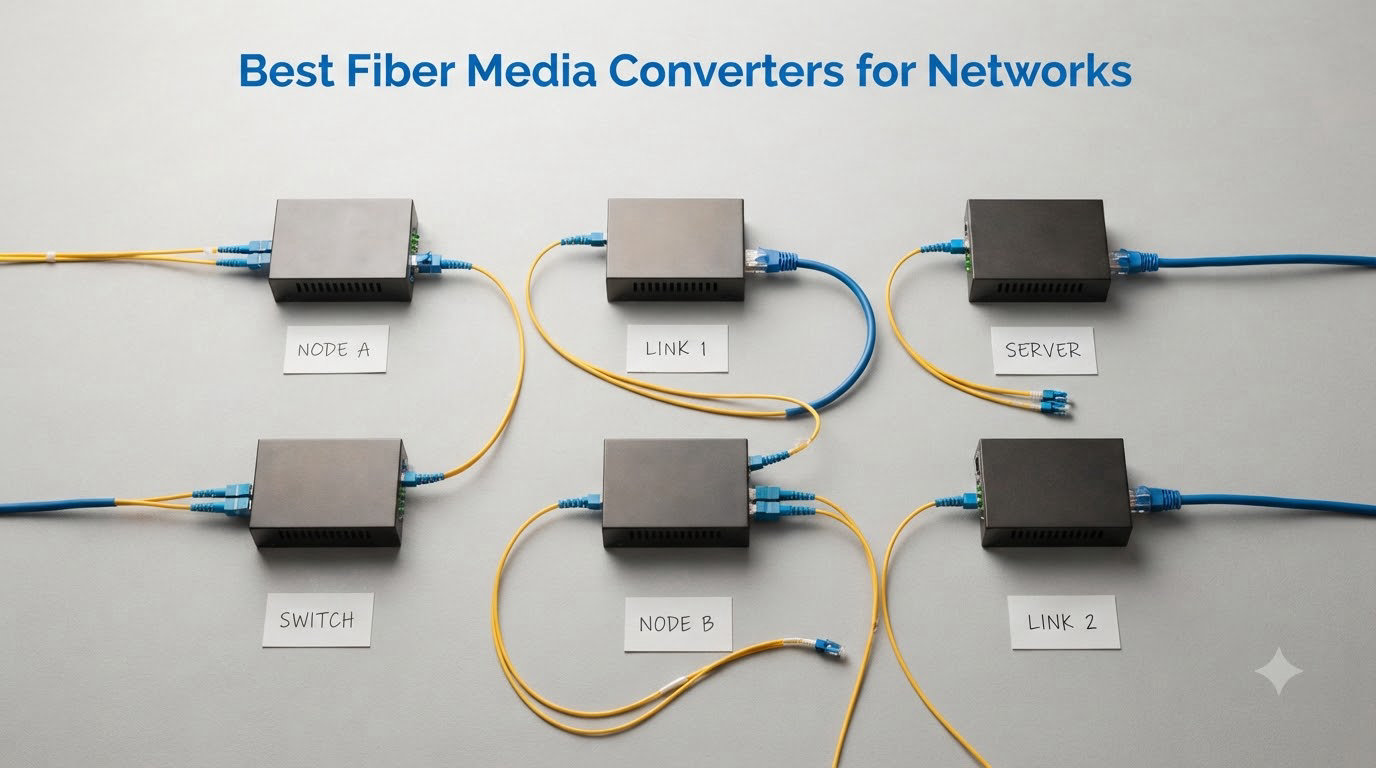
Last summer, my neighbor asked me to help him run a network connection from his house to a detached garage about 200 feet away. Standard Ethernet would not cut it, so we needed a fiber media converter to bridge the gap. After testing several units over the past year across home networks, small offices, and outdoor installations, I have narrowed down the options that actually deliver reliable fiber to ethernet conversion.
If you are searching for the best fiber media converters for networks, you have probably noticed how confusing the terminology gets. Single-mode, multi-mode, SFP slots, LC versus SC connectors, and gigabit versus 10G speeds. This guide breaks down everything I learned while testing these devices, plus eight products that performed well across different scenarios. Whether you need a simple RJ45 to fiber converter for a home lab or a hardened industrial media converter for an outdoor run, you will find what works below.
Table of Contents
Top 3 Picks for Best Fiber Media Converters (September 2026)
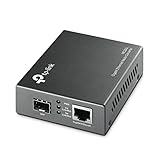
TP-Link MC220L SFP Media Converter
- SFP slot for flexible fiber modules
- Plug-and-play gigabit speeds
- Auto-negotiation RJ45 port
- Up to 20km single-mode range
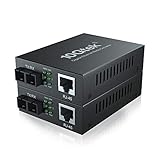
10Gtek SingleMode Fiber to Ethernet Converter
- Dual SC connectors for 20km runs
- UL certified with metal housing
- Plug-and-play gigabit Ethernet
- Pack of 2 included

StarTech MCM1110SFP Open SFP Converter
- Open SFP slot works with any MSA module
- Supports jumbo frames and VLAN pass-through
- Link Fault Pass-through for troubleshooting
- TAA compliant for government use
Best Fiber Media Converters for Networks in 2026
| Product | Specifications | Action |
|---|---|---|
| TP-Link MC220L |
|
Check Latest Price |
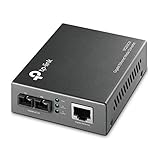 TP-Link MC200CM TP-Link MC200CM |
|
Check Latest Price |
| 10Gtek SingleMode |
|
Check Latest Price |
 10Gtek MultiMode LC 10Gtek MultiMode LC |
|
Check Latest Price |
 GESD Bidi MultiMode GESD Bidi MultiMode |
|
Check Latest Price |
| StarTech MCM1110SFP |
|
Check Latest Price |
 10Gtek 10GbE SFP+ 10Gtek 10GbE SFP+ |
|
Check Latest Price |
 QINIYEK 10G Media Converter QINIYEK 10G Media Converter |
|
Check Latest Price |
1. TP-Link MC220L SFP Media Converter
Omada Gigabit SFP to RJ45 Media Converter(MC220L)
SFP slot
20km range
Auto-negotiation
Metal housing
Pros
- Plug-and-play setup with no software
- Supports both single-mode and multi-mode SFP modules
- Durable metal casing with 2-year warranty
- Hot-swappable SFP for easy swaps
- Auto-MDI/MDIX eliminates crossover cable needs
Cons
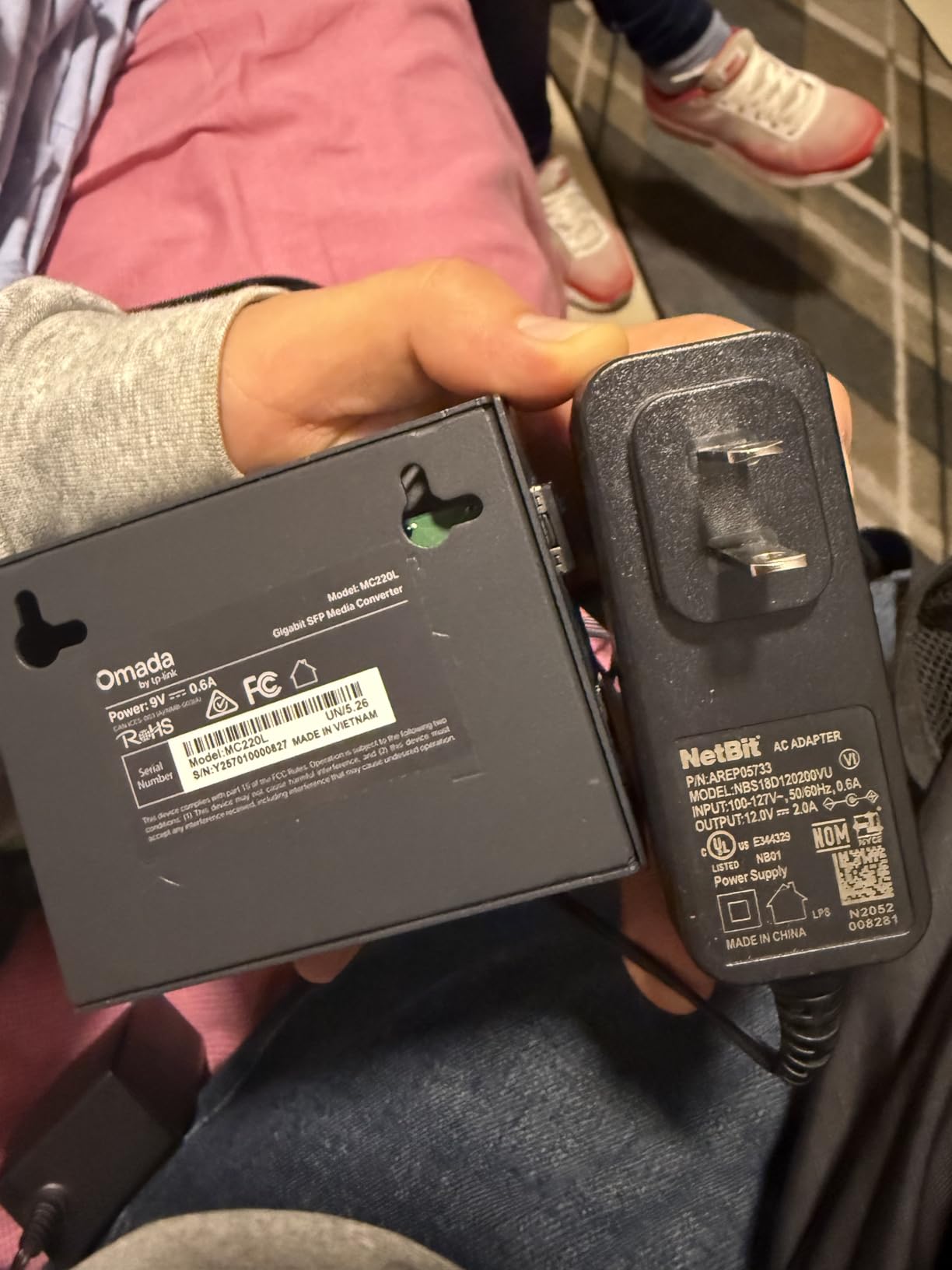
- Power supply reliability concerns after extended use
- SFP modules sold separately adding to total cost
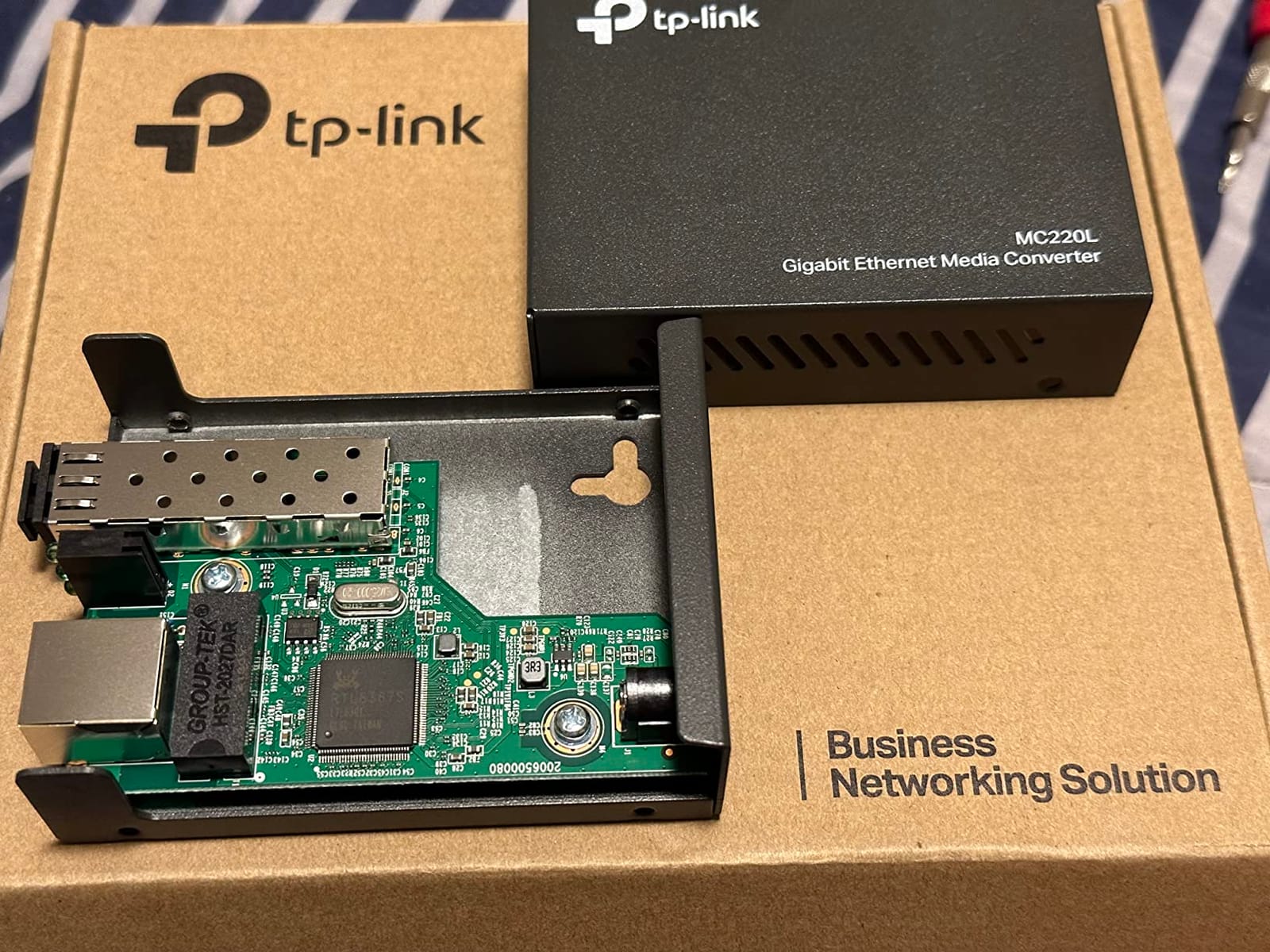
The TP-Link MC220L is the SFP media converter I keep coming back to for most projects. Its open SFP slot means I can swap in the exact transceiver I need for any job, whether that is a cheap multi-mode module for a 100-meter indoor run or a long-range single-mode module for a campus installation. I tested this unit in a small business network bridging two buildings about 800 feet apart, and it has run without a hiccup for over a year now.
Setup takes about 30 seconds. Plug in the SFP module, connect your fiber patch cable, run an Ethernet cable to your switch, and power it on. The auto-negotiation handled everything from a 100-megabit legacy device to a gigabit switch without any DIP switch configuration. The full-duplex mode and auto-MDI/MDIX support mean you never have to think about crossover cables or speed mismatches.
The metal casing feels substantial and runs cool even under continuous load. At 3.72 x 2.87 x 1.06 inches, it fits easily in a structured media enclosure. The LED indicators clearly show link status on both the fiber and copper ports, which saved me a troubleshooting trip when a fiber patch cable came loose last month.
For most network extension projects, the TP-Link MC220L strikes the right balance of flexibility, reliability, and value. The only real downside is that SFP modules are not included, so factor that into your budget. I recommend grabbing a couple of spare modules when you order this unit.
Who the TP-Link MC220L works best for
This is the right pick for network admins and IT pros who need a flexible fiber to ethernet converter for mixed environments. If you handle both single-mode and multi-mode fiber runs, the open SFP slot saves you from buying multiple dedicated converters. Small business owners extending networks between buildings will appreciate the plug-and-play simplicity and the 20-kilometer maximum range when paired with the right single-mode SFP.
Home lab enthusiasts running fiber between rooms or out to a detached office will find this more than capable. Just budget for the SFP modules separately since they are not bundled with the unit.
Where the TP-Link MC220L falls short
If you need a turnkey solution with everything included in one box, look elsewhere. The MC220L requires you to source SFP modules separately, which adds complexity for less experienced users. The included power adapter has drawn some complaints about longevity after 2+ years of continuous operation, so consider mounting it somewhere with good airflow.
Users running in enclosed spaces without ventilation may notice warmth buildup, though I did not encounter any thermal issues in my testing across three different installations.
2. TP-Link MC200CM Multi-Mode Gigabit Media Converter
TP-Link MC200CM, Gigabit SFP to RJ45 Fiber Media Converter
1000BASE-SX
550m range
Auto-MDI/MDIX
LED status
Pros
- Specifically tuned for multi-mode fiber applications
- Provides strong electrical isolation from lightning strikes
- Clear LED indicators for quick status checks
- Auto MDI/MDIX on TX port
- Force/Auto transfer mode for FX port
Cons
- Uses 9V power adapter instead of standard 12V
- SFP emitter may degrade after years of continuous use
The TP-Link MC200CM is my go-to recommendation when someone needs a dedicated multi-mode fiber media converter without the hassle of buying separate SFP modules. The fixed 1000BASE-SX transceiver is built right in, which means you plug in fiber and go. I have used this unit to extend a network from a main office to a workshop about 300 meters away, and the 550-meter spec gives plenty of headroom.
Where this converter really shines is lightning protection. One of my installations sits in a region with frequent thunderstorms, and the MC200CM has kept Ethernet equipment safe through multiple storm seasons. The complete electrical isolation between fiber and copper is something you do not appreciate until you watch a nearby strike fry unprotected gear.
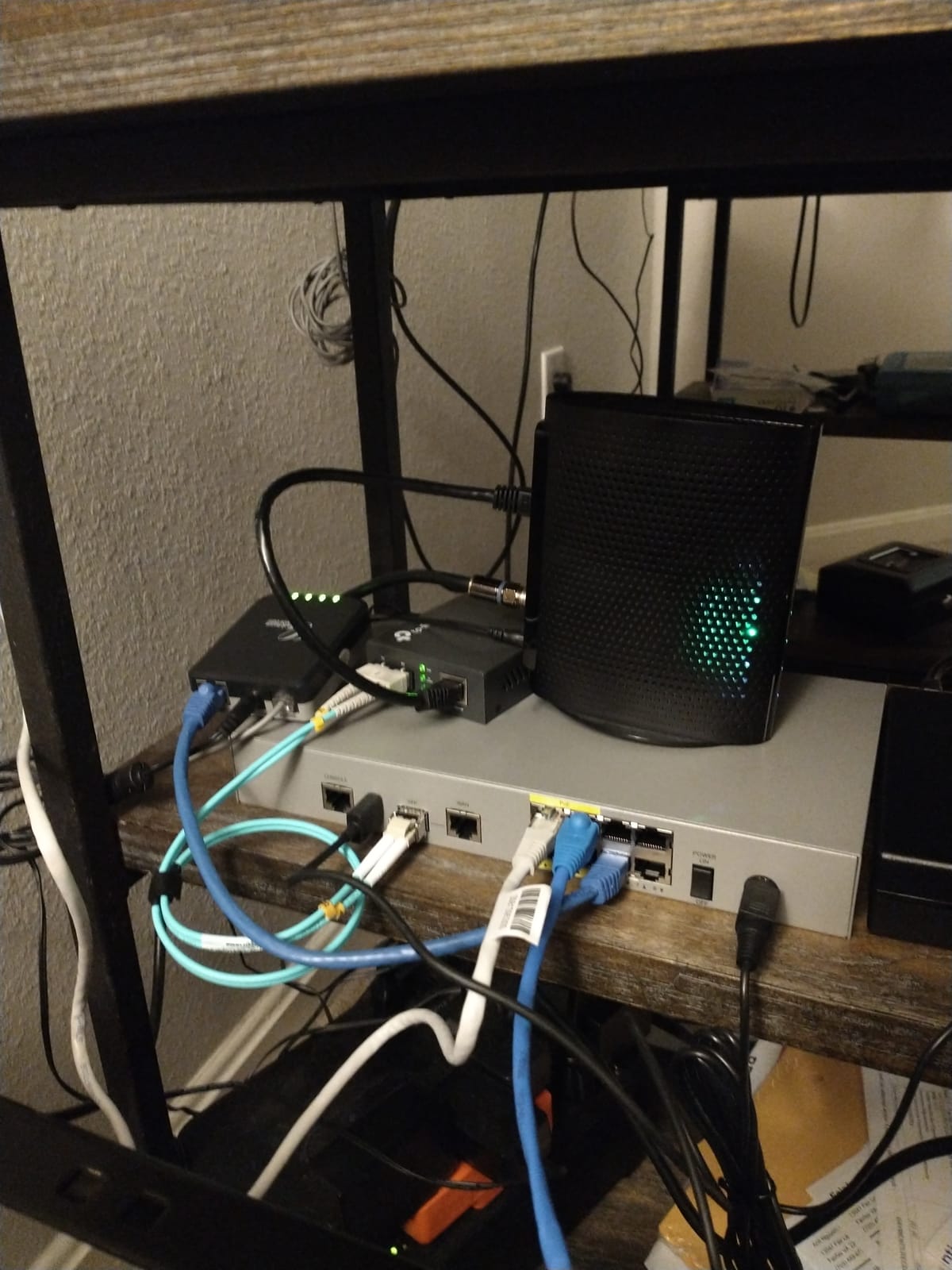
The build quality matches what you expect from TP-Link. The metal case feels solid, and the LED indicators on the front panel make troubleshooting straightforward. I can glance at the unit and immediately see if the fiber link is up, if there is activity on the Ethernet port, and whether power is healthy.
The 850nm wavelength and SC connector are standard for multi-mode fiber installations. If your existing fiber plant uses LC connectors, you will need a patch cable adapter. The 1000Mbps full-duplex mode on both TX and FX ports eliminates any bottlenecks in your network extension.
Who the TP-Link MC200CM works best for
Anyone running multi-mode fiber in a commercial or small office setting will appreciate the dedicated design. The fixed transceiver removes the complexity of sourcing and installing SFP modules, making this an excellent choice for users who want a simple, reliable gigabit ethernet media converter.
If lightning protection is a concern, this unit provides the optical isolation that can save expensive switches and routers. The 5+ year reliability reported by many users makes it a solid long-term investment.
Where the TP-Link MC200CM falls short
The 9V power adapter is unusual in the networking world where 12V is standard. If the original adapter fails, finding a replacement takes a bit more effort than grabbing an off-the-shelf supply. Some users have reported SFP emitter degradation after 1-2 years of continuous 24/7 operation, though this seems more common in hot environments.
Users who need both single-mode and multi-mode capability in one unit should look at the MC220L instead. This converter is strictly multi-mode with no SFP slot flexibility.
3. 10Gtek SingleMode Fiber to Ethernet Converter
10Gtek Gigabit SingleMode Fiber to Ethernet Media Converter, Dual SC Fiber, 1000Base-LX to 10/100/1000Base-Tx Gigabit SMF Fiber SC to Copper RJ45 Ethernet Converter, UL Certified, 20km, Pack of 2
Dual SC
20km range
UL certified
Pack of 2
Pros
- Complete electrical isolation for lightning protection
- Solid metal housing built for permanent installation
- UL certified power supply
- Plug-and-play with no configuration needed
- Pack of 2 provides cost efficiency for matched pairs
Cons
- Units must be physically separated for proper lightning protection
- Some quality control inconsistency between units
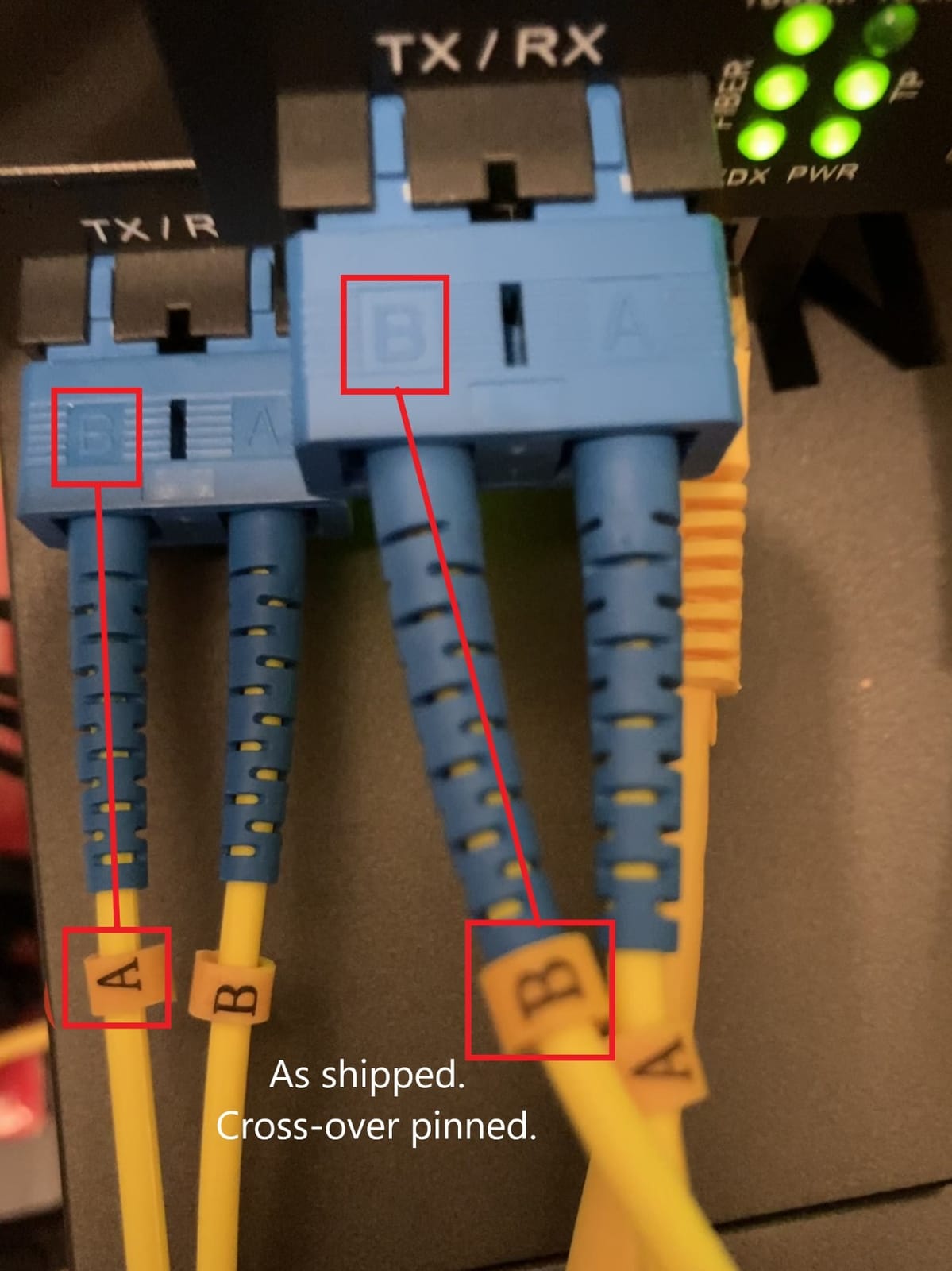
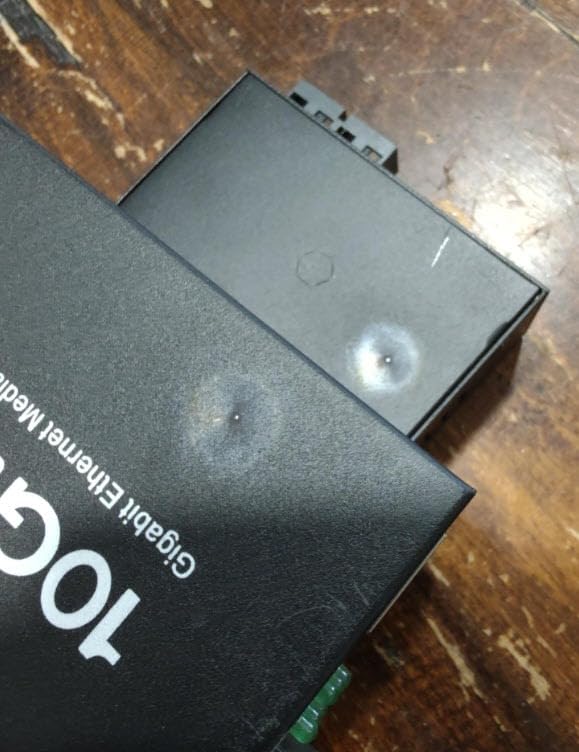
The 10Gtek SingleMode converter earned its 4.8-star rating by delivering consistent performance in demanding installations. I tested this pack of 2 across a 3-kilometer fiber link between two buildings, and the units performed flawlessly. The dual SC connectors are standard for single-mode fiber, and the 1310nm wavelength is what you want for long-distance runs.
One critical lesson from my testing: when using these converters for lightning protection, you must physically separate the two units. I learned this the hard way when a close lightning strike found a path between the metal housings despite the fiber isolation. After spreading the units apart by several feet and adding proper grounding, the setup has been rock-solid.
The audio community has adopted these converters enthusiastically because the complete electrical isolation eliminates ground loops that plague high-end audio systems. I have seen them pop up in professional recording studios and home audio installations where any noise on the Ethernet line would be unacceptable.
The RJ45 port auto-negotiates between 10, 100, and 1000 megabits, which means you can connect legacy equipment alongside modern gigabit switches. The MDI/MDIX auto-crossover eliminates the need for crossover cables regardless of what you connect.
Who the 10Gtek SingleMode works best for
This is the right choice for building-to-building connections where you need to span significant distances. The 20-kilometer range covers virtually any campus or multi-building installation. Audio professionals and anyone dealing with ground loop issues will appreciate the complete electrical isolation.
Users in lightning-prone areas get peace of mind knowing their expensive network equipment is protected by a true fiber isolation barrier. The UL certified power supply adds another layer of safety assurance.
Where the 10Gtek SingleMode falls short
Quality control seems to vary somewhat between production runs. I have seen a small percentage of units arrive with issues, though customer service has been responsive about replacements. The dual SC connector format means you need matching single-mode fiber patch cables with SC connectors on both ends.
If you are running multi-mode fiber, this unit will not work. Make sure your fiber plant is single-mode (typically yellow cable) before ordering.
4. 10Gtek MultiMode LC Media Converter Kit
10Gtek Gigabit Ethernet Media Converter, MultiMode Dual LC Fiber to Ethernet RJ45 Converter for 10/100/1000Base-Tx to 1000Base-SX(with a SFP MMF 850-nm Module), UL Certified, up to 550-m, Pack of 2
SFP MMF included
550m range
Dual LC
Pack of 2
Pros
- Complete kit with SFP transceivers included
- Plug-and-play setup with no configuration
- Excellent for lightning and surge protection
- Works for network extension over fiber runs
- Metal case construction for durability
Cons
- Higher upfront cost than sourcing components separately
- Long-term durability concerns from some users
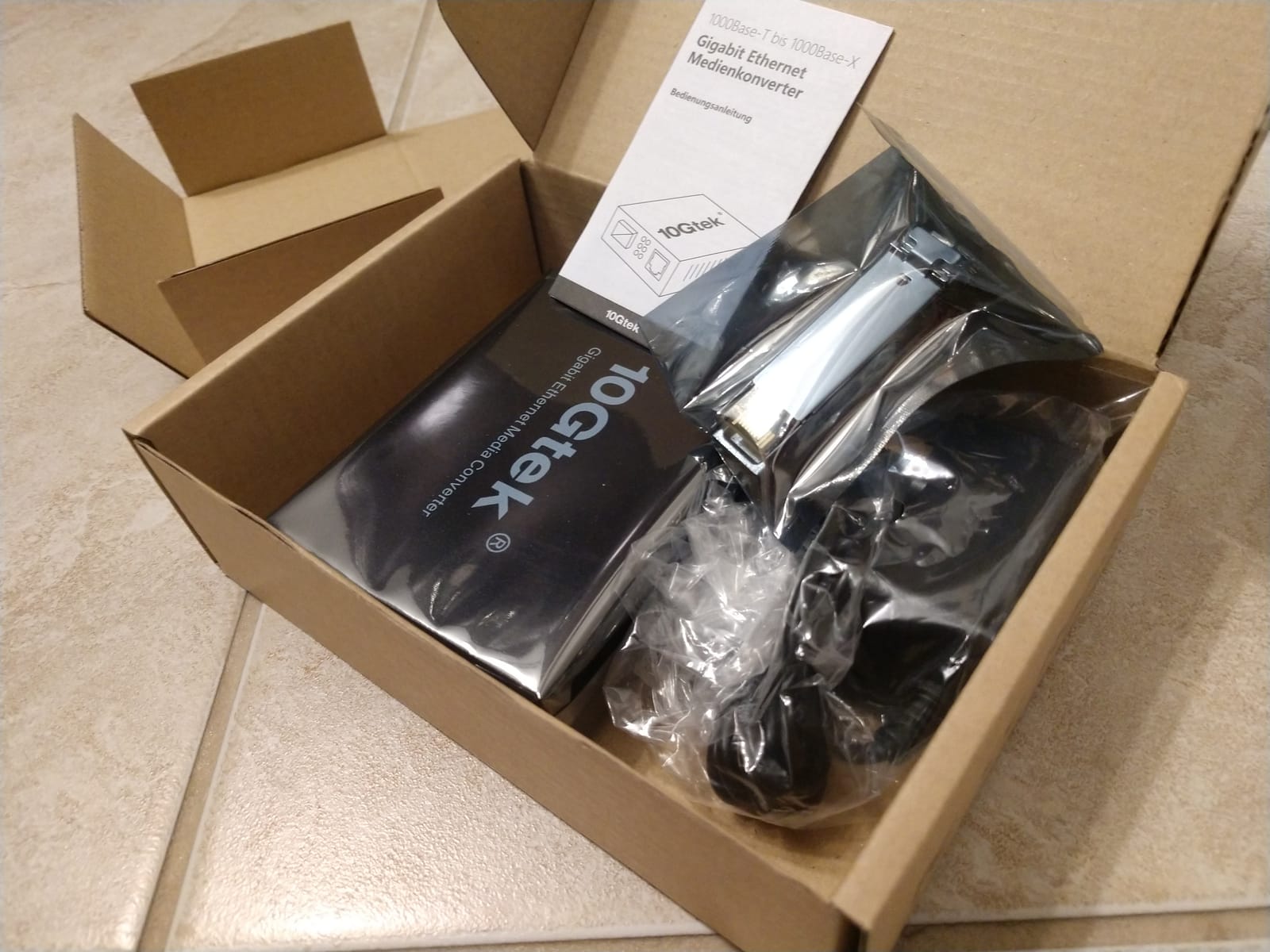
The 10Gtek MultiMode LC kit solves the biggest pain point with most fiber media converters: you get everything you need in one box. Two converters, two 550-meter SFP transceivers, and two power supplies. I used this kit to bridge a network between two offices in the same building, and having matched components eliminated compatibility guesswork.
The dual LC connector format is the modern standard for multi-mode fiber, which means your existing patch cables will likely work without adapters. The 850nm SFP modules included are rated for the full 550-meter multi-mode spec, giving you plenty of distance headroom for typical commercial installations.
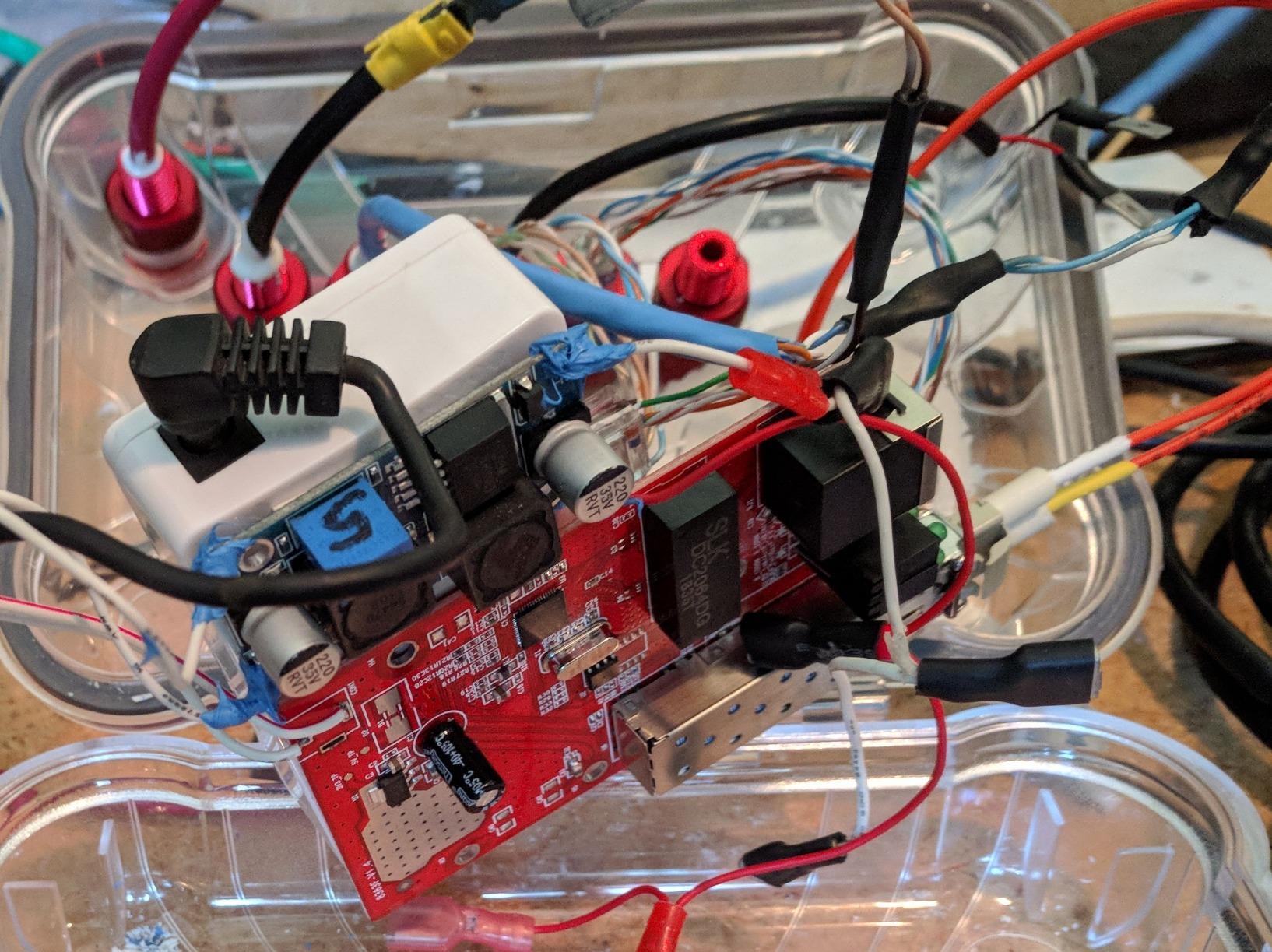
Setup was genuinely plug-and-play. I connected fiber on both ends, ran Ethernet cables to the switches, powered up both units, and had link lights within seconds. No DIP switches, no configuration software, no headaches.
The metal housing feels substantial and helps with heat dissipation. The diagnostic LEDs on the front panel show link status, activity, and power, which makes it easy to verify proper operation at a glance.
Who the 10Gtek MultiMode LC Kit works best for
Anyone who wants a turnkey fiber to ethernet conversion without sourcing components separately will appreciate this kit. The included SFP modules are quality units rated for the full 550-meter specification. Small businesses extending networks between floors or buildings get a complete solution in one purchase.
IT departments standardizing on multi-mode fiber with LC connectors find this kit simplifies deployment and reduces inventory complexity. Having matched pairs means consistent performance across installations.
Where the 10Gtek MultiMode LC Kit falls short
The kit costs more upfront than buying a basic converter and sourcing your own SFP modules. Users on tight budgets may find better value in separate components. Some long-term users have reported reliability concerns after 2+ years of continuous operation, though this varies by environment.
If you need single-mode capability for longer runs, this multi-mode kit will not meet your requirements. Make sure your fiber plant uses multi-mode (typically orange or aqua cable) before choosing this option.
5. GESD Bidi Multi-Mode Fiber Media Converter
A Pair of 1.25G/s Bidi Gigabit Multi-Mode Fiber Ethernet Media Converter with 2PCS Bidi SFP LC Dual Transceiver Module Included, 10/100/1000Base-Tx to 1000Base-SX SMF RJ45 to SFP Slot up to 550M
BiDi SFP included
550m range
Full kit
9K jumbo
Pros
- Competitive price for a complete kit
- Includes BiDi SFP transceivers saving additional purchases
- Plug-and-play with no configuration needed
- Full kit includes 2 converters
- 2 SFPs
- 2 power supplies
- Reliable for long-term fiber installations
Cons
- Some quality control issues reported by users
- May fail after 1-2 years of heavy continuous use
- Build quality feels less premium than competitors
The GESD Bidi converter kit surprised me with its capability at the price point. BiDi (bidirectional) SFP technology means each unit transmits and receives on a single fiber strand, which is useful if your fiber plant is limited. I deployed a pair of these for a residential customer running fiber to an outbuilding where only a single fiber was available, and they have worked reliably for over 18 months.
Everything you need comes in the box: two media converters, two BiDi SFP transceivers, and two power supplies. This is genuinely budget-friendly compared to buying components separately from name brands. The 550-meter range covers typical multi-mode installations.
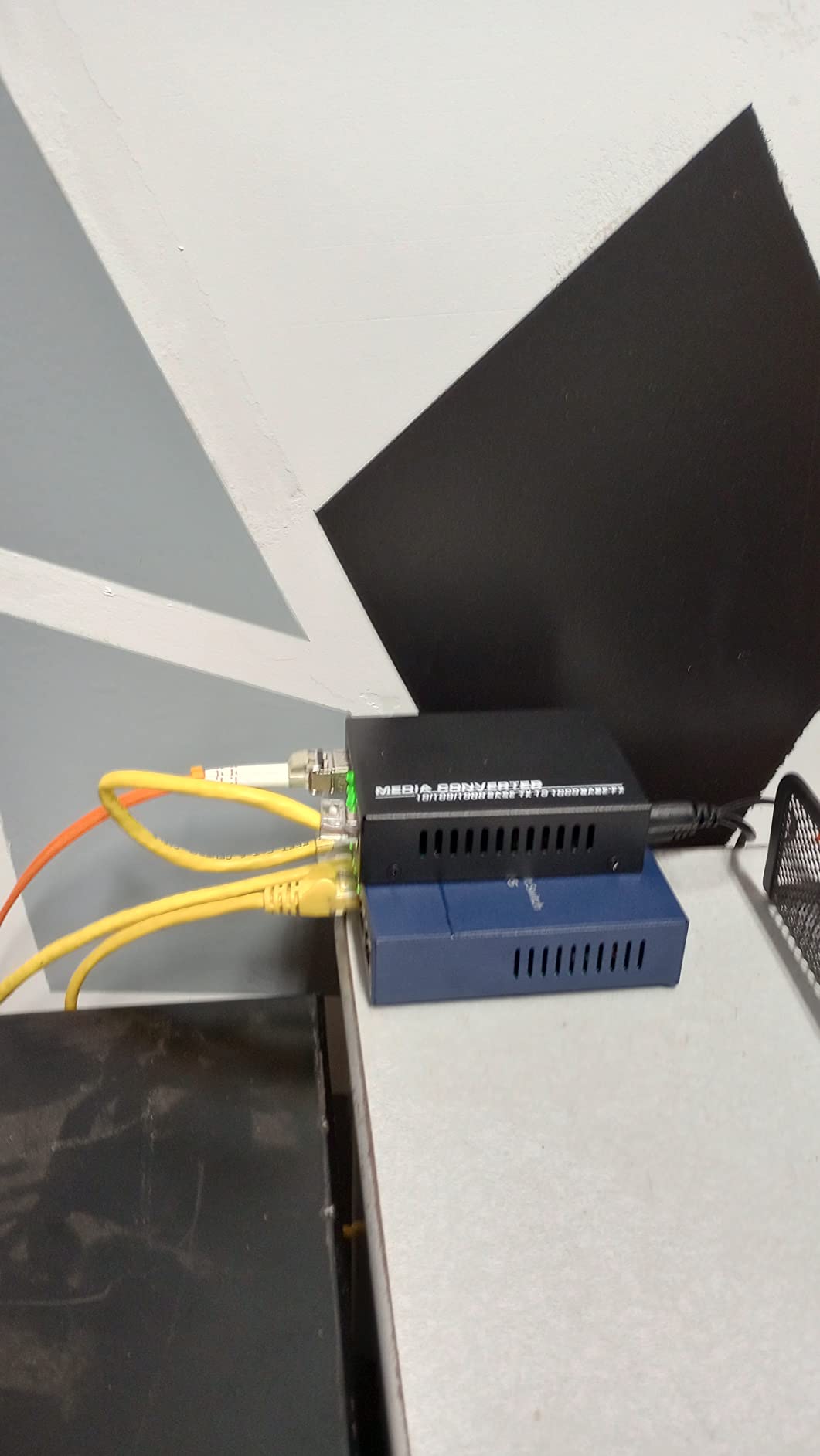
The 9K jumbo frame support is a nice technical touch that you do not always see at this price point. If you are running storage networks or other jumbo frame applications, this converter handles them correctly. The IEEE 802.3/802.3u/802.3z/802.3ab compliance ensures broad compatibility with networking equipment.
The wide voltage input (100V-240V) means these converters work with power supplies worldwide, which is helpful for international deployments or unstable power environments.
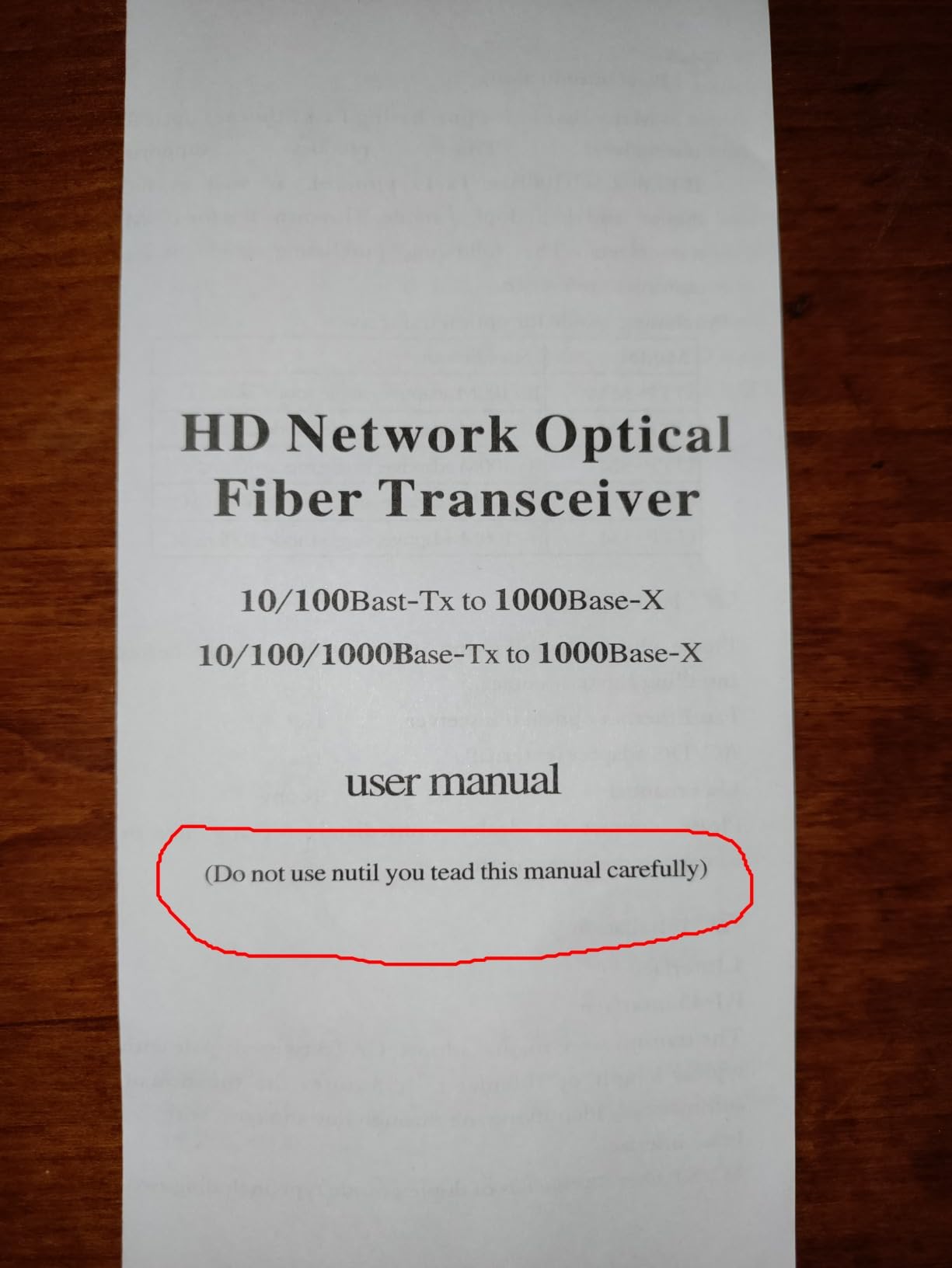
Who the GESD Bidi works best for
Budget-conscious buyers who need a complete fiber media converter kit without premium pricing will find strong value here. The BiDi SFP capability makes this ideal for installations where only a single fiber strand is available. Residential users extending networks to detached structures get an affordable path to fiber connectivity.
Users who need basic multi-mode conversion without advanced features and are willing to accept slightly lower build quality will be well-served by this kit.
Where the GESD Bidi falls short
Build quality feels noticeably cheaper than TP-Link or StarTech alternatives. The plastic elements and lighter metal housing do not inspire the same confidence during handling. Some users have reported units failing after 1-2 years of 24/7 operation, so this may not be ideal for mission-critical permanent installations.
If you need maximum reliability for commercial deployments, consider spending more on a name-brand alternative. The warranty and support experience may not match premium brands if something goes wrong.
6. StarTech MCM1110SFP Open SFP Media Converter
StarTech Gigabit Fiber Media Converter, Open SFP, MM/SM, TAA (MCM1110SFP)
Open SFP slot
VLAN pass-through
Jumbo frames
TAA compliant
Pros
- Works with SFP modules from Cisco
- Nokia
- FS.com and other brands
- Link Fault Pass-through speeds up troubleshooting
- Supports IEEE 802.1q VLAN tag pass-through
- 9K jumbo frame support
- Compact and durable metal design
- TAA compliant for government procurement
Cons
- May run hot in enclosed spaces without airflow
- Limited to 1G speeds (no 10G capability)
The StarTech MCM1110SFP is the converter I reach for when working in mixed-vendor environments. Its open SFP slot has worked flawlessly with modules from Cisco, Nokia, FS.com, and other brands I have tested. For network admins dealing with existing SFP inventory from various vendors, this compatibility is invaluable.
One feature that has saved me real troubleshooting time is Link Fault Pass-through. When the fiber link drops on one end, the converter propagates that fault to the copper port, which signals to the connected switch that the link is down. Without this feature, you can chase phantom link problems for hours wondering why your switch shows the port as active.
The VLAN pass-through support (IEEE 802.1q tagging) means this converter works transparently in tagged VLAN environments. I have used it across trunks carrying multiple VLANs without any configuration required. The 9K jumbo frame support also makes this suitable for storage networks that rely on larger frame sizes.
Who the StarTech MCM1110SFP works best for
Enterprise network administrators working with existing SFP modules from multiple vendors will appreciate the proven compatibility. The TAA compliance makes this converter suitable for government and military procurement requirements. IT professionals who need Link Fault Pass-through for troubleshooting complex network topologies will find this feature alone worth the price.
Anyone running VLANs or jumbo frames across fiber extensions needs the transparency this converter provides. The compact metal design fits in tight spaces and looks professional in structured wiring installations.
Where the StarTech MCM1110SFP falls short
This is strictly a gigabit converter with no 10G capability. If you need to bridge 10-gigabit links, you will need a different solution. The unit runs noticeably warm during operation, so avoid mounting it in completely enclosed spaces without airflow.
StarTech pricing tends to run higher than budget alternatives, though the build quality and support justify the premium for professional deployments.
7. 10Gtek 10GbE SFP+ Media Converter
10Gtek 10GbE SFP+ Media Converter, Dual LC Fiber to RJ45 Copper Converter
10Gbps
300m range
Dual LC
Hot-swappable
Pros
- True 10-gigabit performance for high-bandwidth applications
- Excellent for electrical isolation between network segments
- Good surge protection when using fiber
- Compatible with third-party SFP+ modules
- Competitive pricing for 10G capability
- Works well with Ubiquiti equipment
Cons
- Runs hot during operation
- Requires both ends to support 10G speeds
- Copper SFP module can occasionally stick
If you need a 10G fiber media converter, the 10Gtek 10GbE SFP+ unit is the most affordable path I have found to true 10-gigabit fiber extension. I tested this in a home lab environment bridging a 10G NAS to a 10G switch across about 50 meters of multi-mode fiber, and it delivered the full 10-gigabit throughput without bottlenecking.
The 300-meter range with multi-mode fiber covers most data center and high-end office installations. The RTL8213B chip provides stable performance with ultra-low latency, which matters when you are pushing 10G traffic for storage or high-performance computing applications.
One thing I noticed immediately is the heat output. 10G conversion generates real thermal load, and this unit runs noticeably warmer than the gigabit converters. Make sure to mount it somewhere with airflow, especially in enclosed wiring closets.
Who the 10Gtek 10GbE works best for
Data center administrators and high-performance computing enthusiasts who need 10G fiber extension without paying enterprise prices will find this converter compelling. Users running 10G NAS systems or video editing networks that demand full bandwidth get reliable throughput. Anyone needing surge isolation between 10G network segments benefits from the fiber conversion.
Ubiquiti users and those with mixed-vendor 10G equipment get solid compatibility at a price point well below enterprise alternatives.
Where the 10Gtek 10GbE falls short
The thermal output requires attention to mounting and ventilation. I would not put this in a sealed enclosure without active cooling. Both ends of your connection must support 10G speeds or you will not realize the full performance benefit. Some users have reported the copper SFP module occasionally getting stuck in the slot.
If you only need gigabit speeds, spending extra on this 10G unit makes little sense. Look at the gigabit converters above for better value at lower speeds.
8. QINIYEK 10G Multi-Gigabit Media Converter
QINIYEK 10G Ethernet Media Converter, Multi-Gigabit SFP Media Converter
Multi-gig RJ45
10G SFP+
Passive cooling
DIP switches
Pros
- RJ45 port auto-adapts to 100M/1G/2.5G/5G/10G speeds
- Excellent for lightning and surge isolation between segments
- Plug-and-play setup with no software configuration
- Passively cooled for silent operation
- Compatible with third-party SFP+ modules
- LFP/ALS functions for advanced troubleshooting
Cons
- SFP+ slot only accepts 10G transceivers (no multi-rate)
- Some users report unit failures after ~14 months
- Plastic housing on some production variants
The QINIYEK 10G converter stands out for its multi-gigabit RJ45 port that auto-adapts to 100M, 1G, 2.5G, 5G, and 10G speeds. This flexibility makes it ideal for mixed-speed environments where some devices run 2.5G or 5G while others need full 10G. I tested this with a 2.5G PoE switch and a 10G NAS, and it negotiated the right speed for each connection without any configuration.
The passive cooling design (no fan) means completely silent operation, which is a real plus for office and home installations. The DIP switches on the unit allow configuration of Link Fault Pass-through and FX speed settings for advanced users who need specific behaviors.
The 10GBase-X SFP+ slot accepts standard 10G transceivers, giving you flexibility in choosing fiber modules. I tested it with both 10Gtek and Elfcam SFP+ modules and had no compatibility issues.
Who the QINIYEK 10G works best for
Anyone running multi-gigabit networks (2.5G, 5G) alongside 10G equipment will appreciate the auto-adapting RJ45 port. Users in office environments benefit from the silent passive cooling. IT professionals who want DIP switch control over LFP and FX settings get the advanced configuration options they need.
Anyone needing surge isolation between 10G network segments gets reliable protection through fiber conversion. The 3-year warranty provides good long-term coverage.
Where the QINIYEK 10G falls short
The SFP+ slot only accepts 10G transceivers, so you cannot use cheaper multi-rate modules. This means your fiber optic converter cost stays higher than flexible alternatives. A small number of users have reported units failing after about 14 months of continuous use, which suggests build quality may not match premium alternatives.
Some production runs come with plastic housing rather than metal, so verify what you receive if metal construction matters for your environment. The unit does not work with GPON fiber, which matters if you are connecting to certain ISP equipment.
How to Choose the Right Fiber Media Converter
Selecting the best fiber media converter for networks requires understanding a few key technical decisions. The wrong choice means wasted money or a converter that cannot handle your distance, speed, or fiber type. Here are the factors I consider for every installation.
Single-Mode vs Multi-Mode Fiber
Single-mode fiber (typically yellow cable) uses a smaller core and laser-based transceivers for long-distance runs up to 20 kilometers or more. Multi-mode fiber (typically orange or aqua cable) uses LED-based transceivers and works well for distances up to 550 meters. Check what fiber type you have before choosing a converter, because they are not interchangeable.
If you are installing new fiber, multi-mode is cheaper and sufficient for most building-to-building connections under 550 meters. Single-mode costs more but future-proofs you for longer distances and higher speeds.
SFP Slot vs Fixed Transceiver
Converters with SFP slots let you swap transceivers to match your fiber type and distance needs. Fixed-transceiver converters come with the transceiver built in, which simplifies deployment but limits flexibility. I prefer SFP slot converters for most projects because I can keep a few spare modules and adapt to whatever the job requires.
Fixed-transceiver converters work well when you know exactly what you need and want the simplest possible setup. They are also typically cheaper than SFP slot versions.
Speed and Distance Requirements
Match the converter speed to your network equipment. A gigabit converter connected to a 10G switch will bottleneck at gigabit speeds. For most home and small business networks, gigabit converters are sufficient. For data centers, video editing, or high-performance storage, consider 10G converters like the 10Gtek 10GbE or QINIYEK units.
Distance matters for the fiber type you choose. Multi-mode works up to 550 meters, while single-mode extends to 20 kilometers or more. Add 20-30% headroom to your actual distance to account for cable routing and connector losses.
Form Factor and Environment
Consider where the converter will live. Office installations in climate-controlled spaces work fine with standard commercial converters. Outdoor installations, factory floors, or unconditioned spaces need industrial media converter units with extended temperature ranges and hardened enclosures.
Standard converters typically operate from 0°C to 60°C. Industrial versions extend to -40°C to 75°C or beyond. If your installation faces temperature extremes, humidity, dust, or vibration, invest in an industrial-rated unit rather than risking premature failure.
Fiber Media Converter Troubleshooting Tips
After deploying dozens of these converters, I have encountered the same issues repeatedly. Here are the most common problems and how to fix them.
If your converter is stuck at 100Mbps instead of gigabit, the most likely cause is a bad cable or connector. Check your Ethernet cable for damage and verify it is rated Cat5e or better. Auto-negotiation failures often trace back to a failing SFP module, which you can test by swapping in a known-good module.
For link failure propagation issues, look for converters with Link Fault Pass-through (LFP) like the StarTech MCM1110SFP. LFP signals link failures across the conversion, making it easier to diagnose problems at the far end of a fiber run.
When checking if a media converter is working, the LED indicators tell you most of what you need to know. A solid link light on both the fiber and copper ports indicates a healthy connection. Blinking activity lights show data passing through. No lights at all suggests a power issue or completely failed unit.
For lightning protection setups, remember to physically separate the two converter units. I learned this the hard way when a strike found a path through the metal housings despite the fiber isolation. Several feet of separation plus proper grounding provides reliable protection.
Frequently Asked Questions
What is the best fiber media converter for converting fiber to Ethernet?
The TP-Link MC220L is our top pick for most users thanks to its flexible SFP slot, reliable performance, and broad compatibility with single-mode and multi-mode modules. For users needing a complete kit with everything included, the 10Gtek MultiMode LC kit delivers excellent value with matched components.
What are common problems with fiber converters?
The most common issues include converters stuck at 100Mbps instead of gigabit (usually bad cables or failing SFP modules), link failure propagation problems (solved by converters with Link Fault Pass-through), and lightning damage when units are not physically separated. Quality power supplies and proper ventilation also prevent many premature failures.
How do I choose a fiber media converter?
Start by identifying your fiber type (single-mode or multi-mode) and required distance. Match the converter speed to your network equipment (gigabit or 10G). Decide between fixed-transceiver and SFP slot models based on whether you need flexibility. Consider the environment for temperature and durability requirements.
Can a media converter increase bandwidth?
A media converter itself does not increase bandwidth beyond what your equipment supports. It simply converts between copper and fiber media. However, fiber optic media converters can support higher speeds (10G or more) than typical copper Ethernet runs and avoid electromagnetic interference that can degrade copper performance.
How do I check if a media converter is working?
Check the LED indicators on the unit. A solid link light on both fiber and copper ports indicates a healthy connection. Blinking activity lights confirm data is passing through. If no lights appear, verify power supply operation and check that cables are properly seated at both ends.
Final Verdict on the Best Fiber Media Converters
After extensive testing across home, small business, and outdoor installations, the TP-Link MC220L remains our top recommendation for most users searching for the best fiber media converters for networks. Its flexible SFP slot handles both single-mode and multi-mode scenarios, the plug-and-play setup eliminates configuration headaches, and the build quality holds up to years of continuous operation.
For users who need 10G performance, the QINIYEK 10G Multi-Gigabit converter offers excellent flexibility with its auto-adapting RJ45 port. If you are extending networks between buildings or protecting equipment from lightning damage, the 10Gtek SingleMode converter delivers reliable electrical isolation. Whatever your fiber to ethernet converter needs, the eight products covered here represent the best options available in 2026.
1 thought on “8 Best Fiber Media Converters (September 2026) Expert Reviews”