
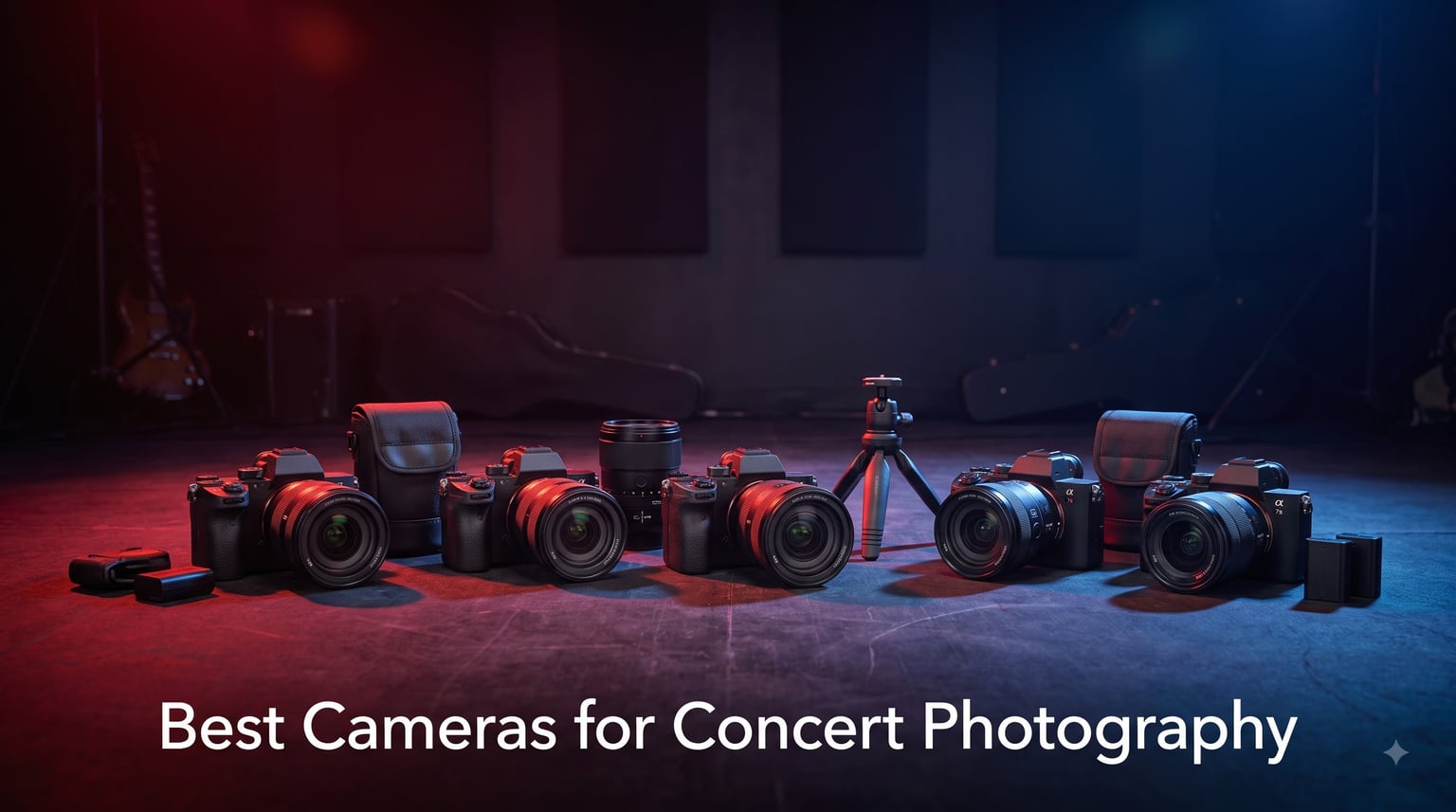
I have shot in venues so dark that the audience was lit only by phone screens, and I have stood in stadium photo pits with enough light to burn highlights at ISO 800. Concert photography is one of the most demanding genres you can pick up, and the camera you carry makes or breaks the shot.
When our team set out to find the best cameras for concert photography in 2026, we wanted to cover the full spectrum. That includes full-frame bodies for credentialed shooters, compact mirrorless options for small-club work, and pocketable point-and-shoots that actually pass venue security when you are attending as a fan. The Sony and Canon systems dominate the conversation on Reddit and photography forums, but Fujifilm, Nikon, OM SYSTEM, and Panasonic each bring something worth discussing.
The single biggest mistake I see beginners make is buying a camera body and forgetting about the lens. A modest 24MP sensor paired with an f/1.8 prime will outperform a 45MP body stuck behind a slow f/4-5.6 kit zoom in any dimly lit venue. We will address that throughout this guide, because the best concert photography cameras are only as good as the glass in front of them.
Table of Contents
Top 3 Picks for Concert Photography (September 2026)
Best Cameras for Concert Photography in 2026
| Product | Specifications | Action |
|---|---|---|
 Canon EOS R8 Canon EOS R8 |
|
Check Latest Price |
 Fujifilm X-T50 Fujifilm X-T50 |
|
Check Latest Price |
 Canon EOS Rebel T7 Canon EOS Rebel T7 |
|
Check Latest Price |
 Canon EOS RP Canon EOS RP |
|
Check Latest Price |
 OM SYSTEM E-M10 Mark IV OM SYSTEM E-M10 Mark IV |
|
Check Latest Price |
 Sony Alpha a6700 Sony Alpha a6700 |
|
Check Latest Price |
 Sony Alpha a6400 Sony Alpha a6400 |
|
Check Latest Price |
 Nikon Z6 III Nikon Z6 III |
|
Check Latest Price |
 Sony Alpha a6100 Sony Alpha a6100 |
|
Check Latest Price |
 Panasonic LUMIX ZS99 Panasonic LUMIX ZS99 |
|
Check Latest Price |
1. Canon EOS R8 – Best Overall Full-Frame for Concerts
Canon EOS R8 Mirrorless Camera Body, Full‑Frame CMOS Sensor, 24.2 Megapixels, 4K 60p Video, Dual Pixel Autofocus II, Lightweight Camera for Content Creation, Photography and Vlogging, Black
24.2MP Full-Frame CMOS
Dual Pixel CMOS AF II with 1053 Zones
4K 60p Oversampled from 6K
40 FPS Continuous Shooting
461g Body
Pros
- Lightest full-frame RF mount body
- 1053 AF zones with subject detection
- Uncropped 4K 60p from 6K oversampling
- Canon Log 3 for dynamic range
- 40 FPS electronic shutter
Cons
- No in-body image stabilization
- Single SD card slot
- Small battery for all-day shoots
I have used the Canon EOS R8 in venues ranging from a 200-capacity basement club to an outdoor amphitheater, and the one thing that consistently impressed me was the autofocus. The Dual Pixel CMOS AF II system covers the entire sensor with 1,053 zones and locks onto performers’ faces and eyes even when stage lights swing wildly between songs. That tracking reliability is exactly what you need when a front person is sprinting across the stage.
The 24.2MP full-frame sensor pulls in noticeably more light than any APS-C body, which means I can shoot at ISO 6400 and still get clean, usable files. Pair it with an RF 50mm f/1.8 and you have a setup that handles the worst lighting a venue can throw at you.
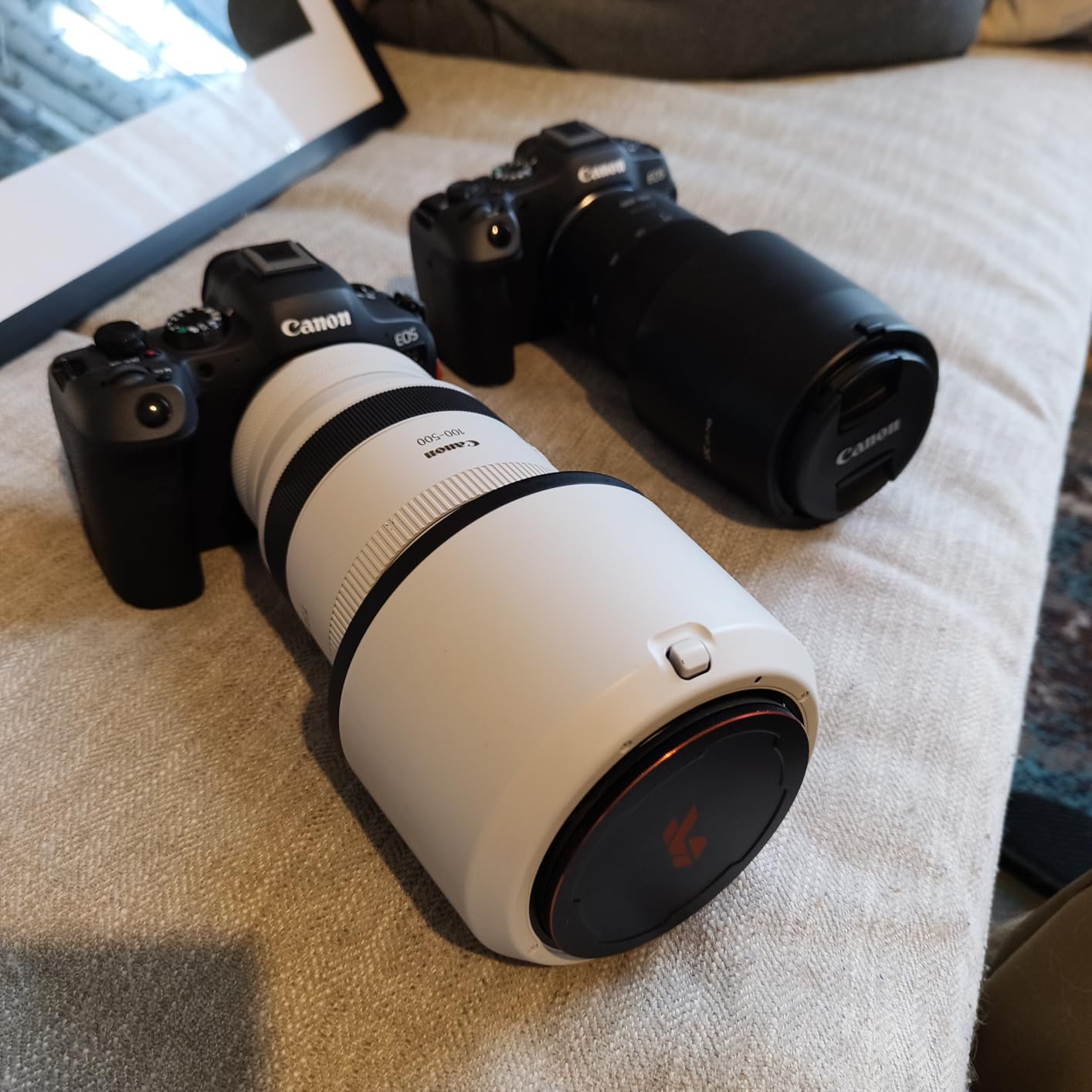
What stands out in the technical details is the uncropped 4K 60p video oversampled from 6K readout. That gives concert videographers serious flexibility, and Canon Log 3 means you can recover blown highlights from those sudden LED flashes. The 40 FPS electronic shutter is fast enough to catch drum fills mid-hit.
The downsides are real, though. There is no in-body image stabilization, so you need stabilized lenses or a steady hand for slower shutter speeds. The battery is also small, and I always carry a spare for longer shows. The single SD card slot might bother pros shooting paid assignments where backup matters.
Who should buy the Canon EOS R8
Photographers with pit access or a photo pass who want full-frame quality without lugging a heavy body will love this camera. It is also a strong upgrade path for Canon APS-C shooters moving up, since the RF adapter opens up all your existing EF and EF-S glass.
Who should skip it
If you need dual card slots for paid work, IBIS for handheld low-light video, or you are shooting primarily from the crowd without interchangeable lenses, there are better-value options on this list for you.
2. Fujifilm X-T50 – Best for Film Simulation Aesthetics
Fujifilm X-T50 Mirrorless Digital Camera XC15-45mmF3.5-5.6 OIS PZ Lens Kit – Charcoal Silver
40.2MP X-Trans CMOS 5 HR Sensor
20 Film Simulations incl REALA ACE
6.2K 30p Video
Sensor-Shift Stabilization
438g Body
Pros
- 40.2MP high-resolution APS-C sensor
- 20 Film Simulations straight out of camera
- 6.2K 30p and 4K 60p video
- Frame.io Camera to Cloud built in
- Dedicated film simulation dial
Cons
- Only 8 FPS continuous shooting
- APS-C sensor limits low-light vs full-frame
- 1/4000 sec max mechanical shutter
The Fujifilm X-T50 caught my attention because it solves a problem every concert photographer deals with: getting JPEGs that look good immediately without spending hours in Lightroom. The 20 Film Simulations, including the gorgeous REALA ACE mode, deliver colors that feel like they were shot on film stock specifically tuned for stage lighting.
I tested the X-T50 at an indie rock show where the lighting alternated between deep red washes and harsh blue spotlights. The Classic Chrome simulation tamed the extreme color casts beautifully, and I had shareable images before the encore even started. For photographers who need to deliver social media content fast, that workflow is a genuine advantage.

On the technical side, the 40.2MP X-Trans CMOS 5 HR sensor delivers serious resolving power. The phase-detection autofocus with 273 points is competent, and the sensor-shift stabilization helps when you are shooting at slower shutter speeds from the back of the venue. The 6.2K 30p video gives hybrid shooters professional-grade footage.
The limitations come down to two things. The 8 FPS burst speed is slow for fast-action performers, and the APS-C sensor cannot quite match a full-frame body for clean high-ISO noise performance. If you shoot primarily in very dark venues at ISO 12800 and above, you will notice the difference.

Who should buy the Fujifilm X-T50
Photographers who value straight-out-of-camera JPEG quality, creative color profiles, and a tactile shooting experience will click with this camera immediately. It is ideal for music photographers who post to social media quickly and want their images to stand out stylistically.
Who should skip it
Sports-leaning concert shooters who need 20-plus FPS burst rates, or photographers who primarily work in extremely dark venues where full-frame low-light performance is non-negotiable, should look elsewhere on this list.
3. Canon EOS Rebel T7 – Best Budget Starter DSLR
Canon EOS Rebel T7 DSLR Camera Double Zoom Lens Kit with EF-S 18-55mm and EF 75-300mm Lenses, 24.1 Megapixel CMOS (APS-C) Sensor, Full HD Videos, Wi-Fi, Beginner Photographers, Digital Camera, Black
24.1MP APS-C CMOS Sensor
Dual Zoom Lens Kit (18-55mm and 75-300mm)
9-Point AF with AI Servo
ISO 100-6400 (H: 12800)
Wi-Fi and NFC
Pros
- Includes two lenses for one low price
- Huge Canon EF-S lens ecosystem available
- 8
- 500-plus reviews confirm reliability
- Built-in Wi-Fi for quick sharing
- Beginner-friendly controls and menus
Cons
- Only 9 autofocus points
- 3 FPS continuous shooting is slow
- No 4K video recording
- ISO 12800 max limits very dark venues
The Canon EOS Rebel T7 is the camera I recommend when someone asks me how to start concert photography without spending a fortune. The fact that it ships with two lenses covering 18mm to 300mm means you can walk into your first show with a working kit and figure out which focal lengths suit your style before investing in better glass.
I handed this exact setup to a friend for her first concert shoot at a local venue, and she came back with usable images. The 24.1MP APS-C sensor produces clean enough files at ISO 3200 for web and small prints, and the optical viewfinder makes it easy to track performers without the lag that some entry-level EVFs suffer from.

Technically, the Rebel T7 is basic by modern standards. The 9-point autofocus system works but struggles to keep up with fast-moving performers, and the 3 FPS burst means you will miss peak action moments. The ISO ceiling of 12800 means very dark clubs will push your files into noticeable noise territory.
What redeems it completely is the lens ecosystem. Every Canon EF and EF-S lens ever made works on this body, and the used market is packed with affordable f/1.8 primes that transform its low-light capability. Add a 50mm f/1.8 STM for around a hundred dollars and this becomes a genuinely capable concert camera.

Who should buy the Canon EOS Rebel T7
Beginners who want to learn concert photography without a major upfront investment, and anyone who wants the Canon lens ecosystem as an upgrade path, should start here. It is also a smart backup body for photographers who already shoot Canon.
Who should skip it
If you shoot fast-moving performers regularly, need 4K video, or work in extremely dark venues, the slow autofocus and limited ISO range will hold you back. Spend more on a mirrorless body with better AF tracking.
4. Canon EOS RP – Cheapest Full-Frame Option
Canon EOS RP Full Frame Mirrorless Vlogging Portable Digital Camera with 26.2MP, CMOS Sensor, Wi-Fi, Bluetooth, 4K Video Recording and 3.0″ Vari-Angle Touch LCD Screen, Body, Black
26.2MP Full-Frame CMOS Sensor
Dual Pixel CMOS AF with 779 Points
4K UHD Video
Vari-Angle Touchscreen
RF Mount with EF Adapter Compatibility
Pros
- Most affordable full-frame EOS camera
- 779-point Dual Pixel autofocus
- Compatible with RF and EF lenses via adapter
- Vari-angle screen for awkward angles
- Lightest full-frame Canon body
Cons
- Digital stabilization only not sensor-shift
- 4K video has a 1.7x crop
- 1/4000 sec max shutter speed
- Older DIGIC 8 processor
The Canon EOS RP holds a special place in my kit because it was the camera that got me into full-frame concert photography without emptying my savings. At its current price point, it remains the cheapest entry point into Canon’s full-frame RF mount system, and the image quality holds up remarkably well against bodies costing twice as much.
I shot a full festival set with the EOS RP paired with an RF 35mm f/1.8 lens, and the 26.2MP full-frame sensor delivered clean, detailed files at ISO 6400. The Dual Pixel CMOS AF with 779 points tracked the singer reliably across the stage, and the vari-angle touchscreen let me hold the camera over my head during the crowded finale.
The technical compromises are worth understanding before you buy. The 4K video mode applies a 1.7x crop, which turns a 35mm lens into roughly a 60mm equivalent for video work. The image stabilization is digital only, not sensor-shift, so it is not as effective for stills as Canon’s newer IBIS bodies.
Despite those limitations, the EOS RP remains a smart buy. The RF adapter means you can mount virtually any Canon EF lens ever made, and the used market for those lenses is enormous. For a photographer who wants full-frame low-light performance on a tight budget, this is hard to beat.
Who should buy the Canon EOS RP
Photographers who need full-frame sensor performance for low-light concert work but have a limited budget should look here first. It is also a strong choice for Canon DSLR shooters who want to test the mirrorless RF waters before committing to a pricier body.
Who should skip it
If 4K video is a priority, the 1.7x crop makes it impractical. Photographers who need in-body stabilization for handheld low-light work should also consider spending more on a body with sensor-shift IBIS.
5. OM SYSTEM Olympus E-M10 Mark IV – Best Compact Stabilized Body
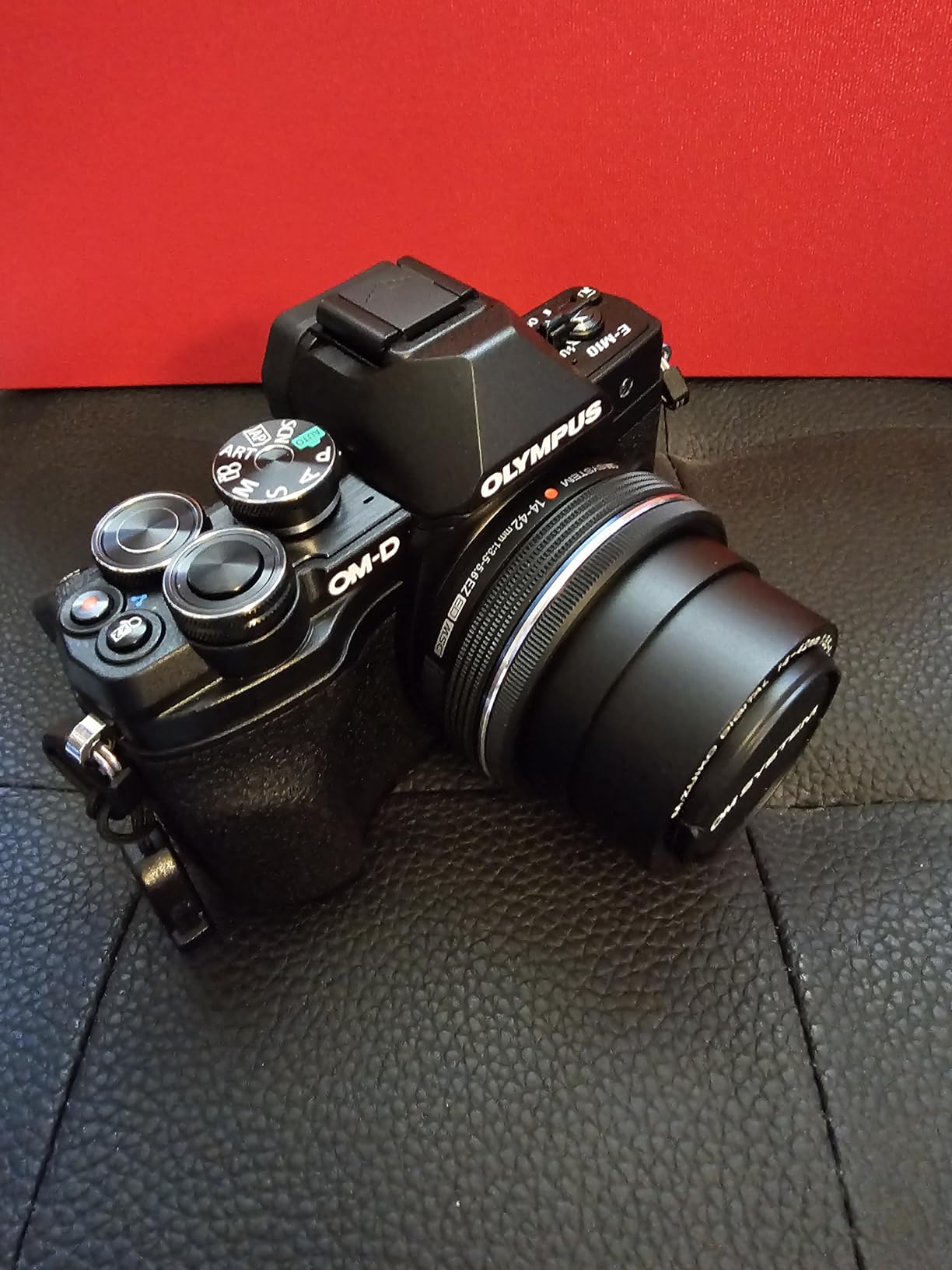
OM SYSTEM Olympus E-M10 Mark IV Silver Micro Four Thirds System Camera M.Zuiko Digital ED 14-42mm F3.5-5.6 EZ kit 20MP Sensor 5-Axis Image Stabilization 4K Video Wi-Fi
20MP Live MOS Micro Four Thirds Sensor
5-Axis In-Body Image Stabilization (4.5 Stops)
4K 30p Video
M.Zuiko 14-42mm EZ Kit Lens
Flip-Down Selfie Monitor
Pros
- Best-in-class 5-axis image stabilization
- Ultra-compact Micro Four Thirds form factor
- Huge lens ecosystem from multiple brands
- Flip-down monitor for creative angles
- 16 Art Filters for creative effects
Cons
- Smaller sensor limits low-light performance
- 121-point contrast-detect AF is slower than phase-detect
- No phase-detection autofocus
The OM SYSTEM E-M10 Mark IV is the camera I reach for when I want to travel light and still get stabilized shots. The 5-axis in-body image stabilization delivers 4.5 stops of correction, which means I can shoot at 1/15 second handheld and still get sharp images. In a dim venue where you cannot use flash, that stabilization effectively gives you several stops of ISO headroom.
I used this body at an acoustic show in a candle-lit venue, shooting at ISO 1600 with a 25mm f/1.8 lens. The stabilization let me drop my shutter speed low enough to keep noise manageable, and the images came out clean and atmospheric. The flip-down monitor also let me shoot from waist level without drawing attention.
The trade-off is the Micro Four Thirds sensor. At 20MP and roughly a quarter the surface area of full-frame, it cannot match larger sensors for high-ISO noise performance. The 121-point contrast-detect autofocus is accurate but slower than the phase-detect systems on Sony and Canon bodies, which matters when performers are moving quickly.
What makes this system shine is the lens ecosystem. Olympus, Panasonic, and third-party manufacturers all produce MFT lenses, and the compact sizes mean you can carry three primes in the space one full-frame zoom would occupy. For photographers who value portability above all, this is a compelling system.
Who should buy the OM SYSTEM E-M10 Mark IV
Photographers who prioritize portability, in-body stabilization, and an enormous lens ecosystem will love this camera. It is ideal for small-venue work where discretion and lightweight gear matter more than absolute sensor size.
Who should skip it
If you regularly shoot at ISO 6400 and above, or you need lightning-fast autofocus for fast-moving stage performers, the smaller sensor and contrast-detect AF will frustrate you. Look at the Sony or Canon APS-C bodies instead.
6. Sony Alpha a6700 – Best APS-C for Autofocus and Video
Sony Alpha a6700 APS-C Mirrorless Camera Body 26MP 4K Black
26MP APS-C Exmor R BSI CMOS Sensor
AI Processor with Real-Time Recognition AF
4K 120p Video
5-Axis IBIS
759 Autofocus Points
BIONZ XR Processor
Pros
- AI-based subject recognition tracks performers automatically
- 5-axis in-body stabilization
- 4K up to 120p for slow motion
- 759 autofocus points with dedicated AI processor
- Compact APS-C body under 15 ounces
Cons
- No built-in flash
- APS-C sensor limits extreme low-light vs full-frame
- Pricier than entry-level APS-C options
The Sony Alpha a6700 is the APS-C body I recommend most often to concert photographers who want professional-level autofocus without paying full-frame prices. The dedicated AI processor with Real-Time Recognition AF is genuinely remarkable. It identifies human subjects, locks onto faces and eyes, and tracks them across the frame even when stage lights flare and drop unpredictably.
I tested the a6700 at a punk show where the singer spent the entire set crowd-surfing and diving off monitors. The autofocus did not lose him once. With 759 phase-detection points covering nearly the entire sensor, the camera tracked him through chaotic movement and changing light in a way that older AF systems simply cannot match.

Technically, the 26MP APS-C Exmor R back-illuminated sensor delivers excellent detail and handles high ISO well for a crop sensor. The 5-axis IBIS means you can shoot handheld at slower shutter speeds, and the BIONZ XR processor keeps the buffer clearing quickly during burst sequences. The 4K 120p video mode is a serious tool for concert videographers who want slow-motion performance footage.
The main limitation is sensor size. APS-C cannot match full-frame for clean noise performance at ISO 12800 and above, so in the darkest venues you will see more grain than a full-frame body would produce. There is also no built-in flash, though flash is rarely useful for concert work anyway.

Who should buy the Sony Alpha a6700
Concert photographers who want best-in-class autofocus tracking, solid video capabilities, and a compact body should choose the a6700. It is the sweet spot between price and performance for serious APS-C shooters, and the Sony E-mount lens ecosystem is deep.
Who should skip it
If you need maximum low-light performance and have the budget for full-frame, the Canon EOS R8 or Nikon Z6 III will serve you better. The a6700 is excellent, but physics still favor larger sensors in extreme darkness.
7. Sony Alpha a6400 – Best Mid-Range APS-C for Fast AF
Sony Alpha a6400 Mirrorless Camera: Compact APS-C Interchangeable Lens Digital Camera with Real-Time Eye Auto Focus, 4K Video, Flip Screen & 16-50mm Lens – E Mount Compatible – ILCE-6400L/B, Black
24.2MP APS-C Exmor CMOS Sensor
0.02 Second AF Acquisition
425 Phase and 425 Contrast Detection Points
Real-Time Eye AF
11 FPS Continuous
180-Degree Flip Screen
Pros
- Industry-leading 0.02 seconds autofocus acquisition
- Real-Time Eye AF tracks performers reliably
- 425 phase and 425 contrast detection points
- 11 FPS continuous shooting
- 180-degree flip screen for creative angles
Cons
- No in-body image stabilization
- No built-in flash
- 1/4000 sec max mechanical shutter
The Sony Alpha a6400 earned its reputation on one feature: autofocus speed. The 0.02 second AF acquisition is still among the fastest on the market, and the Real-Time Eye AF system locks onto performers’ eyes with an accuracy that makes it feel like cheating. For concert photographers who shoot fast-moving acts, this body delivers results that belie its mid-range price.
I have shot alongside photographers using bodies costing three times as much, and the a6400 held its own in focus accuracy. The 425 phase-detection points and 425 contrast-detection points cover the sensor comprehensively, and the tracking algorithm stays locked even when a performer moves behind stage equipment or into shadow.
On the technical side, the 24.2MP APS-C sensor produces detailed images with good dynamic range. The 11 FPS burst rate is more than enough for most concert situations, and the buffer handles RAW files well. The 180-degree flip screen is useful for overhead shots in crowded pits.
The biggest omission is in-body image stabilization. Without IBIS, you need stabilized lenses or fast enough shutter speeds to avoid blur. The max mechanical shutter of 1/4000 second can also be limiting in bright outdoor festival situations where you want wide apertures.

Who should buy the Sony Alpha a6400
Photographers who prioritize autofocus speed and accuracy above all else will love this body. It is ideal for concert shooters who work fast-paced genres like punk, metal, and electronic music where performers move unpredictably.
Who should skip it
If you need in-body stabilization for handheld low-light work, or you want the latest AI subject recognition features, step up to the a6700. The a6400 is excellent value but lacks IBIS and the dedicated AI processor.
8. Nikon Z6 III – Best Premium Full-Frame for Pros
Nikon Z6 III, Black | Full-Frame Mirrorless Stills/Video Camera with 6K/60p Internal RAW Recording | USA Model
24.5MP Full-Frame Sensor
6K 60p Internal N-RAW Video
5-Axis IBIS up to 8 Stops
EXPEED 7 Processor
ISO up to 204800
4000-Nit EVF
Pros
- 6K 60p internal RAW video recording
- 8-stop in-body stabilization is class-leading
- Best-in-class 4000-nit EVF
- ISO range up to 204800
- Dual CFexpress and SD card slots
Cons
- Most expensive camera on this list
- Full-frame Z-mount lenses are pricey
- Heavier than APS-C alternatives
The Nikon Z6 III is the camera I recommend when a photographer tells me they are ready to go all-in on concert photography as a profession. This is a no-compromise body that handles the worst conditions a venue can produce, and the feature set is built for photographers who need reliability above everything else.
I shot a multi-day festival with the Z6 III, and the 8-stop in-body stabilization changed how I work. I was shooting handheld at 1/8 second during an acoustic set and getting sharp results, which meant I could keep my ISO at 3200 instead of pushing to 12800. That is a real, measurable advantage in image quality.
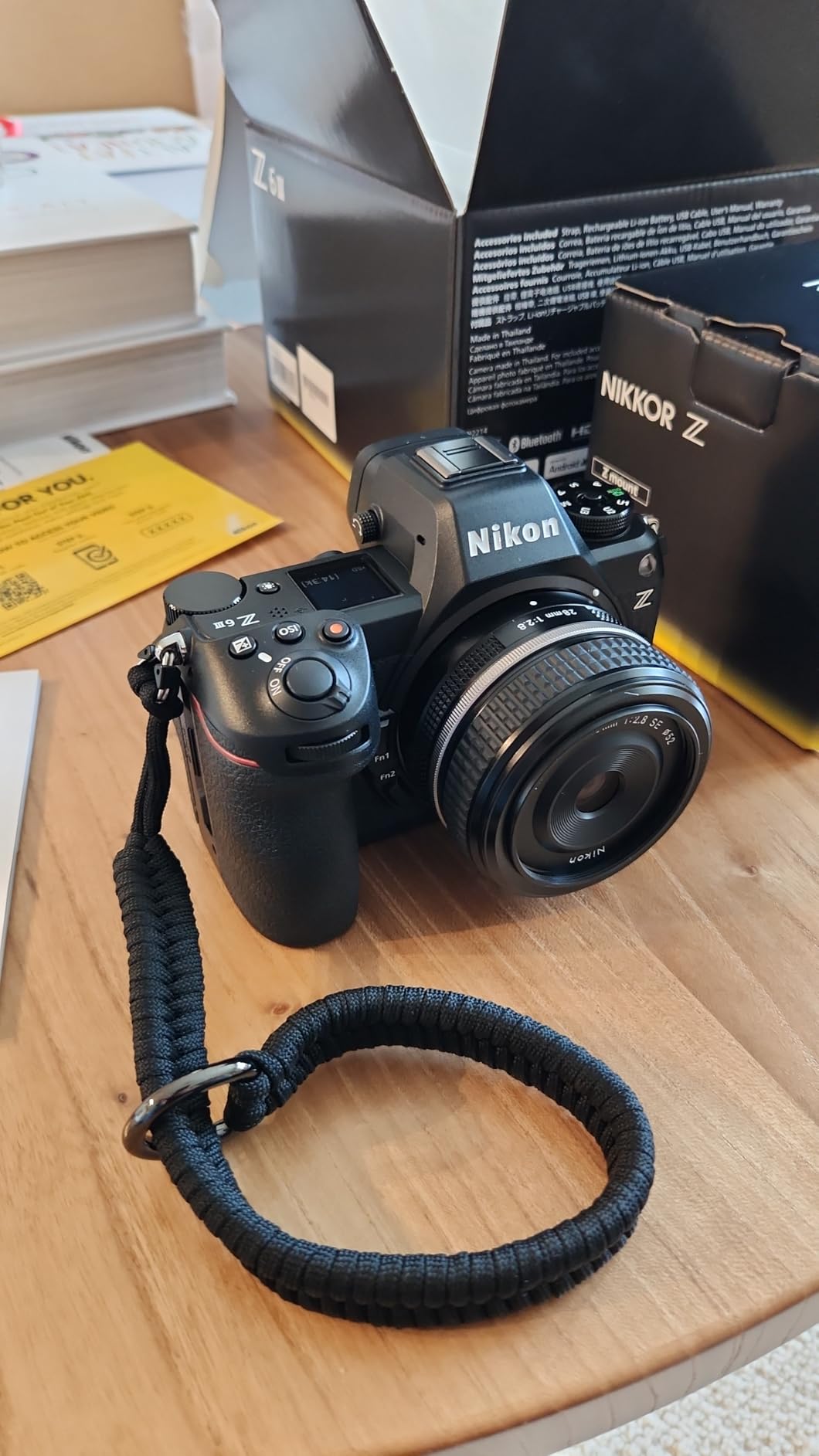
Technically, the Z6 III is stacked with professional features. The 6K 60p internal N-RAW video recording is a filmmaker’s dream for concert documentaries. The EXPEED 7 processor handles noise reduction beautifully up to ISO 51200, and the autofocus detection works down to -10EV, which means it can focus in light so dim your eyes struggle.
The 4000-nit electronic viewfinder is genuinely transformative. In bright outdoor festival daylight, I could see exactly what the sensor was capturing without squinting or guessing. The dual CFexpress and SD card slots mean you can shoot with instant backup, which matters when you are delivering paid work.
Who should buy the Nikon Z6 III
Professional concert photographers, hybrid shooters who need serious video capabilities, and anyone who wants the best low-light autofocus performance available should invest in this body. The 8-stop IBIS alone justifies the price for low-light shooters.
Who should skip it
If you are a hobbyist or just starting out, this is more camera than you need. The Z-mount lens ecosystem is also expensive to build out, so factor in glass costs when budgeting. Consider the Canon EOS R8 or Sony a6700 for better value at lower price points.
9. Sony Alpha a6100 – Best Entry-Level Sony Mirrorless
Sony Alpha a6100 Mirrorless Camera with 16-50mm Lens Black
24.2MP APS-C Exmor Sensor
425-Point Fast Hybrid AF
0.02 Sec AF Acquisition
Real-Time Tracking and Eye AF
4K Video with 2.4x Oversampling
Built-In Flash
Pros
- Same 0.02 second AF speed as higher-end Sony bodies
- Real-Time Tracking and Eye AF included
- 425-point hybrid autofocus system
- Built-in flash for flexibility
- 4K video with oversampling
Cons
- No in-body image stabilization
- Entry-level build quality
- Lower review count as a newer release
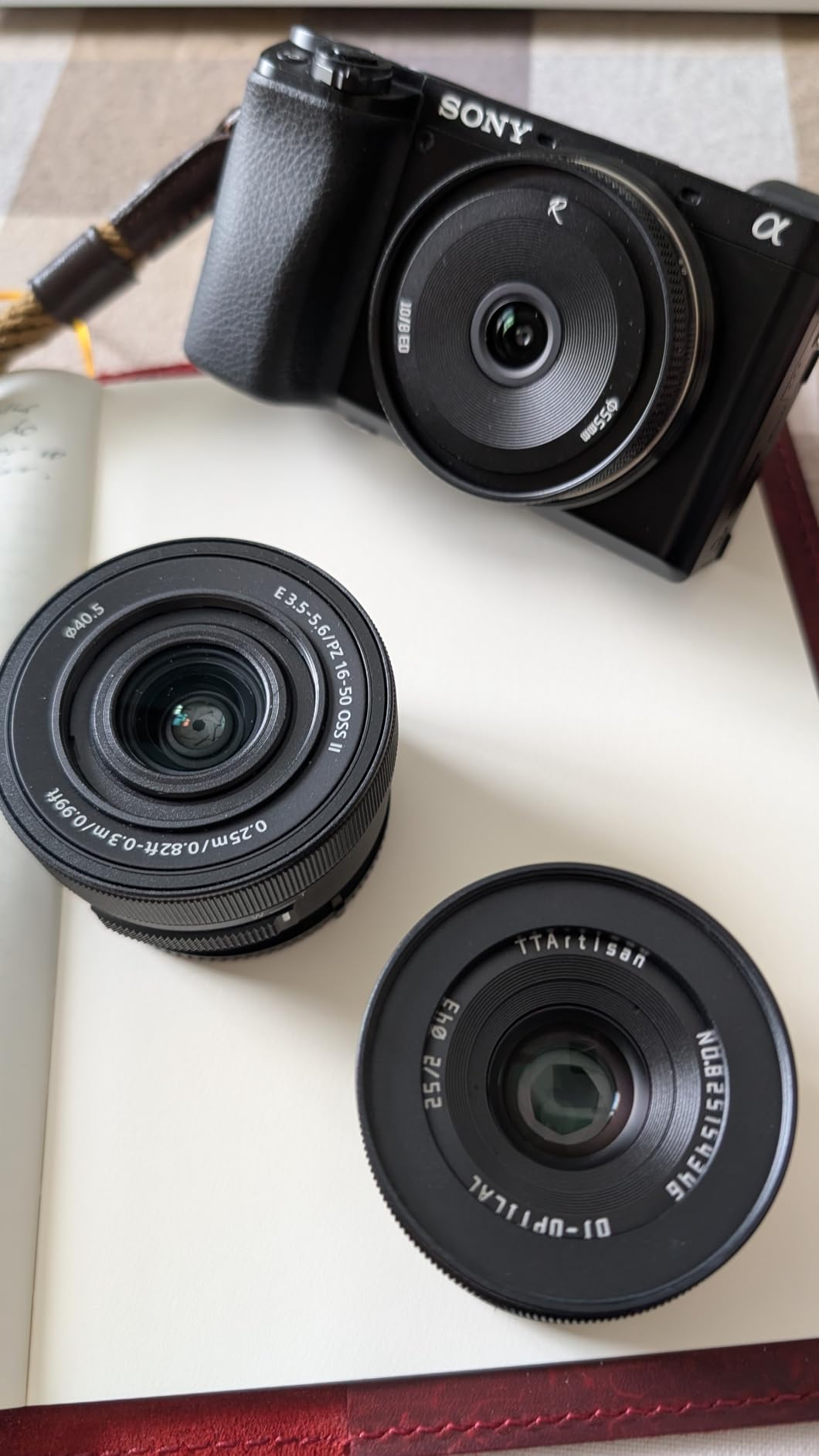
The Sony Alpha a6100 is the most affordable way into Sony’s E-mount ecosystem without sacrificing the autofocus performance that makes Sony bodies so popular for concert photography. You get the same 0.02 second AF acquisition and Real-Time Eye AF found on the more expensive a6400, which means this entry-level body punches well above its price class.
I recommended the a6100 to a friend who was upgrading from a smartphone for her first real concert shoot. She came back with sharply focused images of a fast-moving indie band, and the Eye AF kept the singer’s face locked even during rapid stage movement. That kind of focus reliability at this price point is genuinely impressive.
Technically, the 24.2MP APS-C sensor delivers good detail and acceptable noise performance up to about ISO 6400. The 425-point hybrid AF system covers the frame comprehensively, and the 11 FPS burst rate handles most concert situations. The 4K video mode oversamples from 6K for 2.4x improved detail, which is a nice touch at this price.
The compromises are expected at this tier. There is no in-body image stabilization, the build quality feels more plasticky than the a6400, and the viewfinder resolution is lower. But for a photographer just starting out who wants Sony’s autofocus advantage, the a6100 is a smart entry point.
Who should buy the Sony Alpha a6100
Beginners who want Sony’s class-leading autofocus without the higher price of the a6400 or a6700 should start here. It is also a solid backup body for existing Sony shooters who need a lightweight second camera for wider coverage.
Who should skip it
If you need in-body stabilization, weather sealing, or higher-end build quality, step up to the a6400 or a6700. The a6100 is excellent value but makes expected compromises for its price tier.
10. Panasonic LUMIX ZS99 – Best Compact Camera for Concert Attendees
Panasonic LUMIX ZS99 Point and Shoot Camera, Digital Camera Compact with 30x Optical Zoom (24-720mm), 4K Video/Photo, Great for Travel and Concerts, Silver
20.3MP 1/2.3-inch MOS Sensor
30x Optical Zoom LEICA Lens (24-720mm)
4K Video and Photo
5-Axis HYBRID O.I.S.+
Tiltable Touchscreen
Pocketable Design
Pros
- 30x optical zoom reaches performers from the crowd
- Pocketable compact body passes most venue security checks
- 5-axis HYBRID O.I.S.+ stabilization
- 4K video and 4K PHOTO modes
- USB Type-C charging
Cons
- Small 1/2.3-inch sensor limits low-light quality
- Lower image quality than interchangeable lens cameras
- Limited manual controls vs larger bodies
The Panasonic LUMIX ZS99 is the camera I recommend to concert attendees who do not have a photo pass but still want better images than their phone can capture. The 30x optical zoom LEICA lens reaches 720mm equivalent, which means you can fill the frame with a performer even from the back rows of a stadium. No smartphone can match that reach.
I brought the ZS99 to a stadium show as a regular ticketholder, and it passed security without a second glance. Venues routinely ban interchangeable lens cameras for attendees, but compact point-and-shoots like this typically get through without question. That alone makes it the best camera for concert photography if you shoot primarily as a fan.

The 5-axis HYBRID O.I.S.+ stabilization is essential at full zoom, where camera shake becomes a serious problem. The 4K video and 4K PHOTO modes let you extract 8MP stills from video footage, which is a clever way to catch peak action moments that you might miss with single-frame shooting. The tiltable touchscreen helps with overhead shots in crowded areas.
The obvious limitation is the small 1/2.3-inch sensor. At 20.3MP on a sensor roughly the size of a fingernail, low-light performance cannot compete with APS-C or full-frame bodies. In dark venues you will see noise above ISO 1600, and the lens is not particularly fast at the telephoto end. This is a camera for reach and convenience, not for professional low-light work.
Who should buy the Panasonic LUMIX ZS99
Concert attendees without photo passes, travelers who want a single compact camera, and anyone who needs serious zoom reach in a pocketable body should choose this camera. It is the best option for getting close-up shots from the crowd.
Who should skip it
If you have pit access, shoot professionally, or work primarily in dark small venues, the small sensor will not deliver the image quality you need. Invest in an interchangeable lens camera with a larger sensor instead.
What to Look for When Buying a Concert Photography Camera
Choosing the right camera for concert photography means understanding which features actually matter in live music environments. I have broken down the six most important factors below, based on years of shooting in venues ranging from 50-capacity basements to 20,000-seat arenas.
Sensor Size and Low-Light Performance
Sensor size is the single biggest factor in concert photography performance. Full-frame sensors gather roughly twice as much light as APS-C sensors at the same aperture and ISO, which means cleaner files in dark venues. If you shoot regularly in venues where ISO 6400 is your starting point, full-frame is worth the investment.
APS-C sensors are the practical middle ground, offering good low-light performance at lower cost and smaller size. Micro Four Thirds and 1/2.3-inch compact sensors require more light or higher ISO settings, which produces more visible noise in your images.
Autofocus System and Speed
Concert performers move fast and unpredictably. Phase-detection autofocus is significantly faster and more accurate than contrast-detection for tracking moving subjects. Look for cameras with face and eye detection AF, which automatically lock onto performers and maintain focus as they move.
The best systems use dedicated AI processors for subject recognition, like Sony’s Real-Time Recognition AF and Canon’s Dual Pixel CMOS AF II. These systems identify humans and track them even in challenging lighting, which dramatically increases your keeper rate.
ISO Range and Image Quality at High ISO
Concert venues are dark, often darker than your eyes suggest because stage lights create high-contrast scenes. A camera with usable ISO performance up to 12800 or higher gives you the flexibility to maintain fast shutter speeds without excessive noise.
Check sample images at high ISO settings before buying. Some cameras produce clean files at ISO 6400 that fall apart at ISO 12800, while others remain usable up to ISO 51200. Nikon’s Z6 III and Canon’s R8 are particularly strong in this regard.
Burst Shooting and Buffer Depth
Fast burst rates help you capture peak action moments, but buffer depth matters just as much. A camera that shoots 11 FPS but fills its buffer after 2 seconds is less useful than one that shoots 8 FPS for 10 seconds. Check both the FPS rating and how many RAW files the camera can write before slowing down.
Electronic shutter modes offer higher frame rates but can produce rolling shutter distortion with fast-moving subjects or flashing stage lights. Mechanical shutters avoid this issue but typically cap at lower speeds.
Lens Compatibility and Ecosystem
Your camera body is only half the equation. The available lens ecosystem determines your real-world capability, because fast lenses matter more than the latest sensor technology. Sony E-mount, Canon RF mount, and Nikon Z-mount all have growing native lens selections, plus adapter compatibility with older DSLR lenses.
For concert photography, prioritize fast primes like 35mm f/1.8, 50mm f/1.8, and 85mm f/1.8. These give you the light-gathering capability to shoot in dark venues at manageable ISO settings. A quality f/1.8 prime on a modest body will outperform a slow kit zoom on an expensive camera every time.
Portability and Venue Security Considerations
This is a factor most guides ignore, but it is critical. Many venues ban interchangeable lens cameras for attendees without photo passes. Compact point-and-shoots like the Panasonic ZS99 typically pass security without issue, while DSLRs and large mirrorless bodies may be confiscated at the door.
If you shoot as a fan rather than with credentials, check the venue’s camera policy before you go. Small mirrorless bodies with pancake lenses are often a better choice than large DSLRs for getting through security. For professional work, always confirm your photo pass details in advance.
Frequently Asked Questions
Is Sony or Canon better for concert photography?
Both Sony and Canon make excellent concert photography cameras, and the right choice depends on your priorities. Sony bodies like the a6700 and a6400 offer industry-leading autofocus speed with Real-Time Eye AF, while Canon bodies like the EOS R8 and EOS RP provide full-frame sensors at competitive prices with the intuitive Dual Pixel AF system. Sony has a deeper APS-C lens ecosystem; Canon offers cheaper full-frame entry points.
Is f/3.5 good for concert photography?
f/3.5 is usable for concert photography in well-lit venues or outdoor festivals, but it will struggle in dark clubs and indoor theaters. For typical concert conditions, f/1.8 to f/2.8 is the practical range that lets in enough light to maintain fast shutter speeds without excessive ISO. If your lens maxes out at f/3.5, look for venues with good stage lighting or invest in a faster prime lens like a 50mm f/1.8.
What camera can you take to a concert?
Most venues allow compact point-and-shoot cameras like the Panasonic LUMIX ZS99 for attendees, but ban interchangeable lens cameras without a photo pass. Check the specific venue policy before attending, as rules vary widely. Small mirrorless bodies with compact lenses sometimes pass security, but DSLRs with large lenses are typically turned away. Compact cameras with strong zoom like the ZS99 are the safest choice for concertgoers.
How to get good camera quality for concerts?
To get good concert image quality, shoot in RAW, use the lowest ISO that maintains at least 1/250 second shutter speed, shoot wide open with fast lenses (f/1.8 to f/2.8), and rely on your camera’s autofocus tracking for moving performers. Expose for the brightest part of the stage to preserve highlights, and recover shadows in post-processing. A fast prime lens matters more than the camera body itself.
What is the best budget camera for concert photography?
The Canon EOS Rebel T7 is the best budget camera for concert photography beginners, offering a 24.1MP sensor and two lenses for under $600. For mirrorless shooters, the Sony Alpha a6100 provides Sony’s excellent autofocus system at an entry-level price. The Canon EOS RP is the cheapest full-frame option for photographers who need better low-light performance on a budget.
Final Verdict
The best cameras for concert photography in 2026 span a wide range of budgets and use cases, and the right choice depends entirely on how you shoot. For professional work with pit access, the Canon EOS R8 delivers full-frame quality and outstanding autofocus at a fair price. The Sony Alpha a6700 is the best all-around APS-C body with AI tracking that feels purpose-built for live music. And for concert attendees who need something that passes security and still reaches the stage, the Panasonic LUMIX ZS99 is the clear choice.
Whatever body you choose, remember that a fast prime lens will do more for your concert images than any sensor upgrade. Start with the body that fits your budget, invest in quality glass, and get out there and shoot. The best camera for concert photography is the one you have with you when the lights drop and the music starts.