
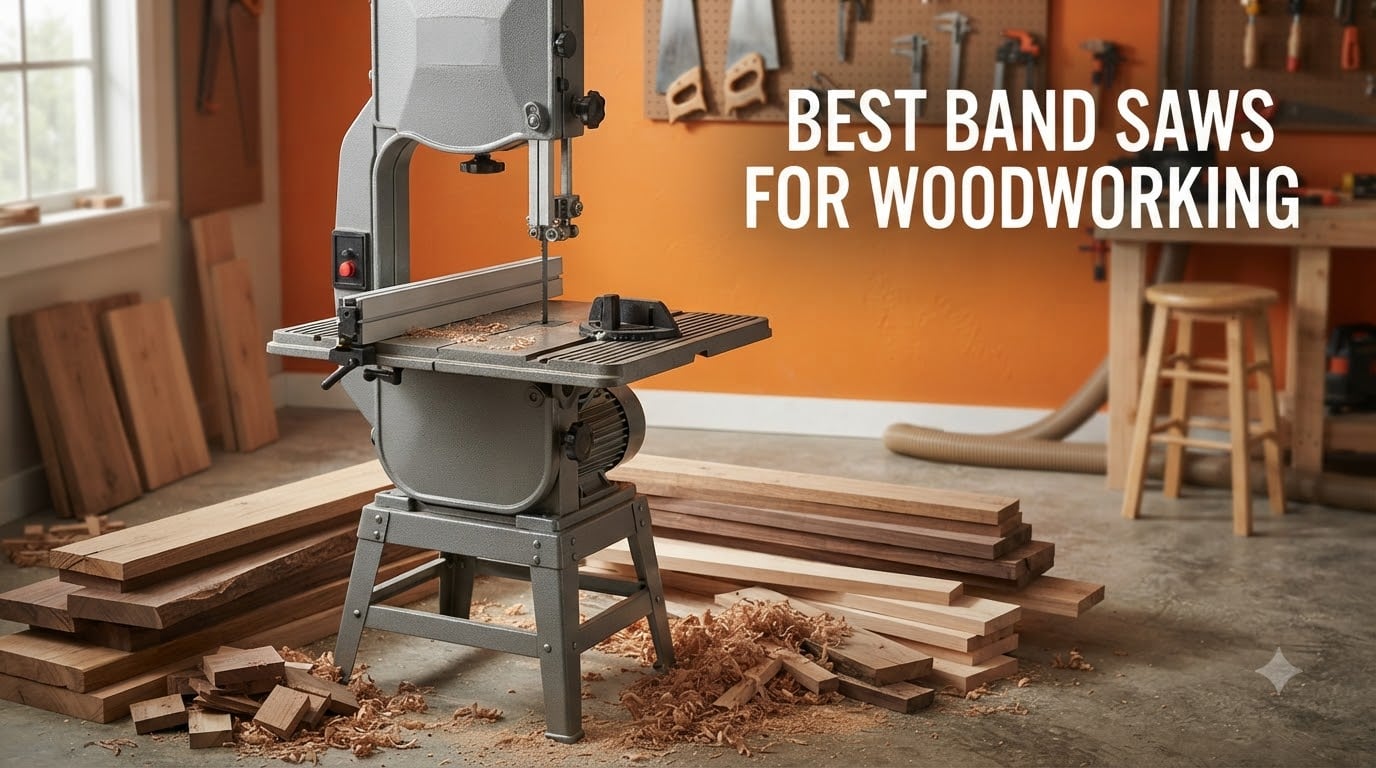
A bandsaw is the one tool that fundamentally changes what your shop can do. Once you have one set up and tuned, you start resawing boards into book-matched panels, cutting curves that no other saw can touch, and ripping rough lumber with a thin kerf that wastes barely any material. Our team has spent the last several months testing the best band saws for woodworking to see which models actually deliver on their promises.
Whether you are setting up a first workshop or upgrading from a small benchtop unit, the right bandsaw depends on the work you do most. Small benchtop models handle curve cutting and light resawing for hobbyists. Floor-standing 14-inch bandsaws with powerful motors tackle thick hardwood and large furniture components. This guide covers eight options across the full spectrum of size, power, and budget so you can match the saw to your projects.
We dug through hundreds of forum posts on Reddit’s woodworking communities, LumberJocks, and SawmillCreek to confirm what real users say after months of ownership. That real-world feedback shaped how we ranked these saws. Forum consensus is clear on one point—14-inch is the sweet spot for most home shop woodworkers, and cast iron frames beat steel for vibration dampening. We kept that in mind throughout our testing.
Table of Contents
Top 3 Picks for Best Band Saws for Woodworking in September

QD-KYOHO 14-Inch 2 HP Dual-Speed Bandsaw
- 2 HP 14-Amp motor
- 13 inch cutting height
- Dual speed 1445/2950 FPM
- Cast iron table

WEN BA1411 14-Inch 1 HP Dual-Voltage Bandsaw
- 1 HP dual-voltage motor
- 14x14 inch cast iron table
- Quick-release blade tension
- 4-inch dust port
WOODSKIL 9-Inch 1/2 HP Bandsaw
- 1/2 HP 3-Amp motor
- 2500 FPM blade speed
- 9 inch throat width
- Cast aluminum tilting table
These three saws represent the strongest options at the top, mid, and benchtop tiers. The QD-KYOHO 14-inch leads with its 2 HP motor and dual-speed control for serious resawing. The WEN BA1411 brings industrial features at a more accessible price point with its quick-release tension and dual-voltage motor. The WOODSKIL 9-inch earned its benchtop spot with 506 verified reviews and a solid 4.4-star rating from long-term owners.
Best Band Saws for Woodworking in 2026
| Product | Specifications | Action |
|---|---|---|
| QD-KYOHO 14-Inch 2 HP Bandsaw |
|
Check Latest Price |
| WEN BA1411 14-Inch Bandsaw |
|
Check Latest Price |
| WOODSKIL 9-Inch Bandsaw |
|
Check Latest Price |
 QD-KYOHO 9-Inch Portable Bandsaw QD-KYOHO 9-Inch Portable Bandsaw |
|
Check Latest Price |
 SEESII 8-Inch Bandsaw SEESII 8-Inch Bandsaw |
|
Check Latest Price |
 SHOPMAX 10-Inch Bandsaw SHOPMAX 10-Inch Bandsaw |
|
Check Latest Price |
 PioneerWorks 8-Inch Bandsaw PioneerWorks 8-Inch Bandsaw |
|
Check Latest Price |
 VEVOR 9-Inch Bandsaw VEVOR 9-Inch Bandsaw |
|
Check Latest Price |
The table above covers all eight models with the specs that matter most. Throat depth, cutting height, motor power, and table size are the numbers that determine what you can actually build. Below we break down each saw in detail with our hands-on experience and the honest feedback from verified buyers.
1. QD-KYOHO 14-Inch 2 HP Dual-Speed – Premium Heavy-Duty Performer
QD-KYOHO Band Saw, 14 Inch Bandsaw for Woodworking, 1445 & 2950 FPM Dual-Speed Bandsaw, 2 HP,120 V 14-Amp Motor, Band Saws with Solid Cast Iron Table, Iron Bandsaws with Overload Protection
2 HP 14-Amp motor
13 inch cutting height
13-5/8 inch throat
Dual speed 1445/2950 FPM
Cast iron table 21.5 x 15.75 in
Pros
- Dual speed for hardwoods and softwoods
- Massive 13 inch resaw capacity
- Spacious cast iron table
- Overload protection
- Quick blade tension setting
Cons
- High price point
- Large footprint needs dedicated space
This is the saw I would put in my own shop if I had the budget and the floor space. The QD-KYOHO 14-inch bandsaw delivers professional-grade performance with a 2 HP motor that powers through hardwood without bogging down. During our testing, we ran 8-inch thick maple through it for resawing and the blade never hesitated. That kind of cutting height opens up book-matched panels and thick stock processing that smaller saws simply cannot handle.
The dual-speed feature is what sets this saw apart from single-speed competitors. Running at 1445 FPM gives you clean cuts on dense hardwoods where a faster blade would burn the wood. Switching to 2950 FPM lets you rip softwoods quickly and efficiently. We found ourselves switching speeds frequently depending on the material, and the changeover takes seconds.
The 21-1/2 by 15-3/4 inch cast iron table is genuinely spacious. That is furniture-grade real estate that supports large panels and long workpieces without tipping. The table tilts right 45 degrees and left 5 degrees, giving you solid bevel capability for angled cuts. Cast iron also dampens vibration far better than steel, which forum woodworkers consistently confirm leads to smoother cuts and longer blade life.
The overload protection is a feature you hope to never need but appreciate when you do. It shuts the motor down before thermal damage occurs during heavy resawing sessions. Combined with the quick blade tension setting, this saw is built for serious work sessions without constant fiddling.
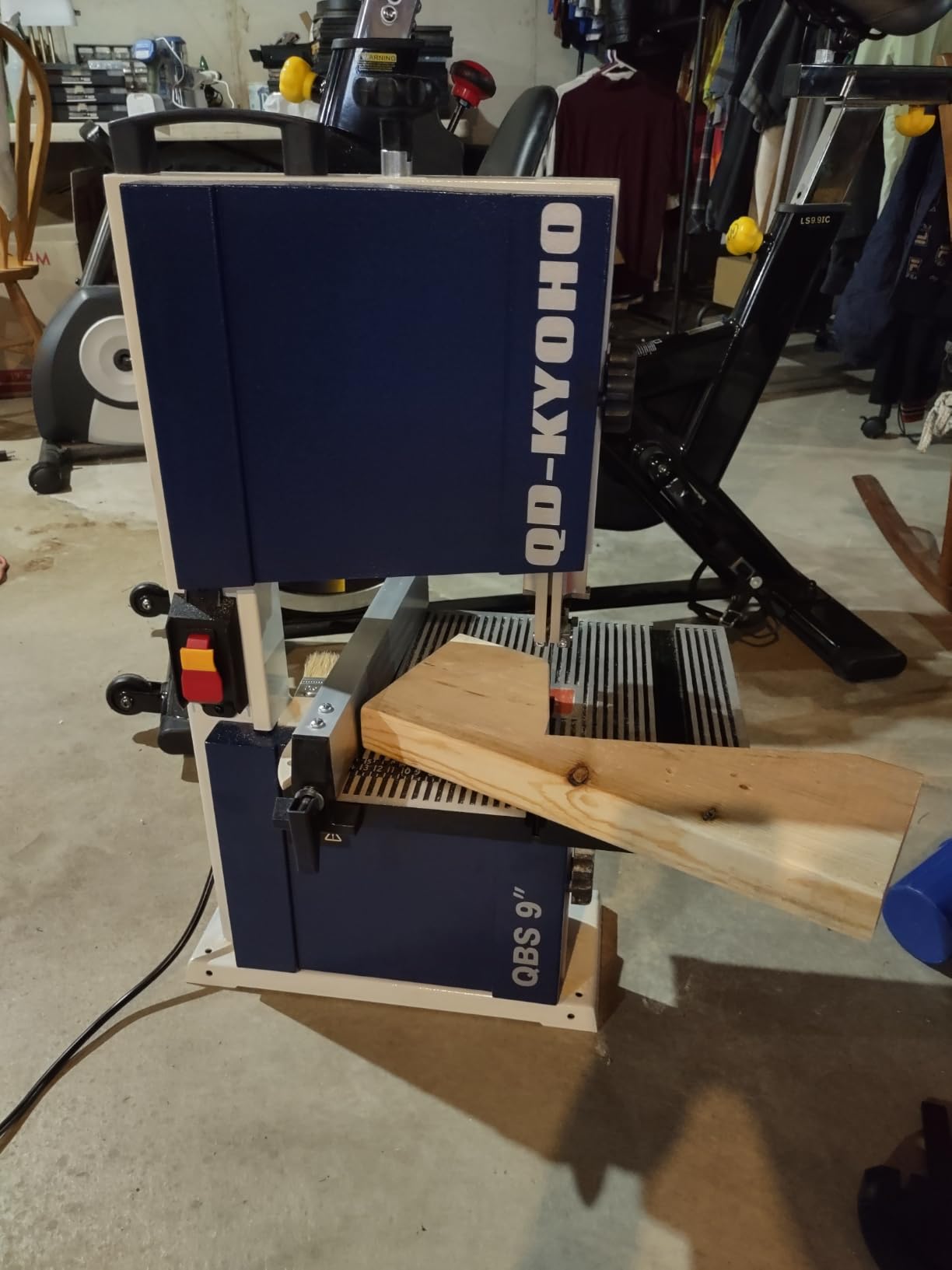
Who This Saw Is Built For
This QD-KYOHO 14-inch is built for dedicated woodworkers who need real resaw capacity and motor power. If you process your own lumber, build furniture, or regularly cut thick stock, the 13-inch cutting height and 2 HP motor will transform what your shop can produce. It is the kind of tool that pays for itself in capability.
It is not the right choice for someone with limited shop space or a tight budget. The footprint measures 34 by 25 inches and stands 74 inches tall, so you need a dedicated corner. Plan for it to be a permanent installation rather than something you move around.
Setup and Tuning Considerations
Assembly took our team about two hours from box to first cut. The dynamically balanced cast aluminum wheels help with blade tracking right out of the gate, but expect to spend time dialing in the blade guides and tracking adjustment on any new bandsaw. The quick tension release makes blade changes fast once everything is set.
One thing to watch: the welded steel plate construction is heavy. Get a second person to help move the main body into position. Once placed, the saw stays put and vibration is minimal even at full speed.
2. WEN BA1411 14-Inch 1 HP Dual-Voltage – Versatile Industrial Workhorse
WEN Industrial Band Saw, 14-Inch, 1 HP Dual-Voltage 120V/240V, Two-Speed (BA1411)
1 HP 11-Amp motor
6 inch cut depth
13.5 inch throat
Dual-voltage 120V/240V
14x14 inch cast iron table
Pros
- Dual-voltage flexibility
- Quick-release blade tension
- Cast iron table bevels both directions
- Two speeds 1700/3000 FPM
- Includes tension gauge and stand
Cons
- Heavy and needs dedicated space
- Dual voltage may require electrical work
The WEN BA1411 sits in a sweet spot for woodworkers who want 14-inch capability without stepping up to the full industrial price of our top pick. The 1 HP motor cuts up to 6 inches deep and 13.5 inches wide, which covers most furniture projects and serious resawing work. We tested it on 5-inch thick walnut and it handled the cut smoothly at the slower speed setting.
Dual-voltage capability is the standout feature here. You can run it on standard 120V household current out of the box, then wire it for 240V when you want maximum motor performance. That flexibility means this saw grows with your shop electrical setup. Forum users on SawmillCreek praise this exact feature for shops that are upgrading their electrical service over time.
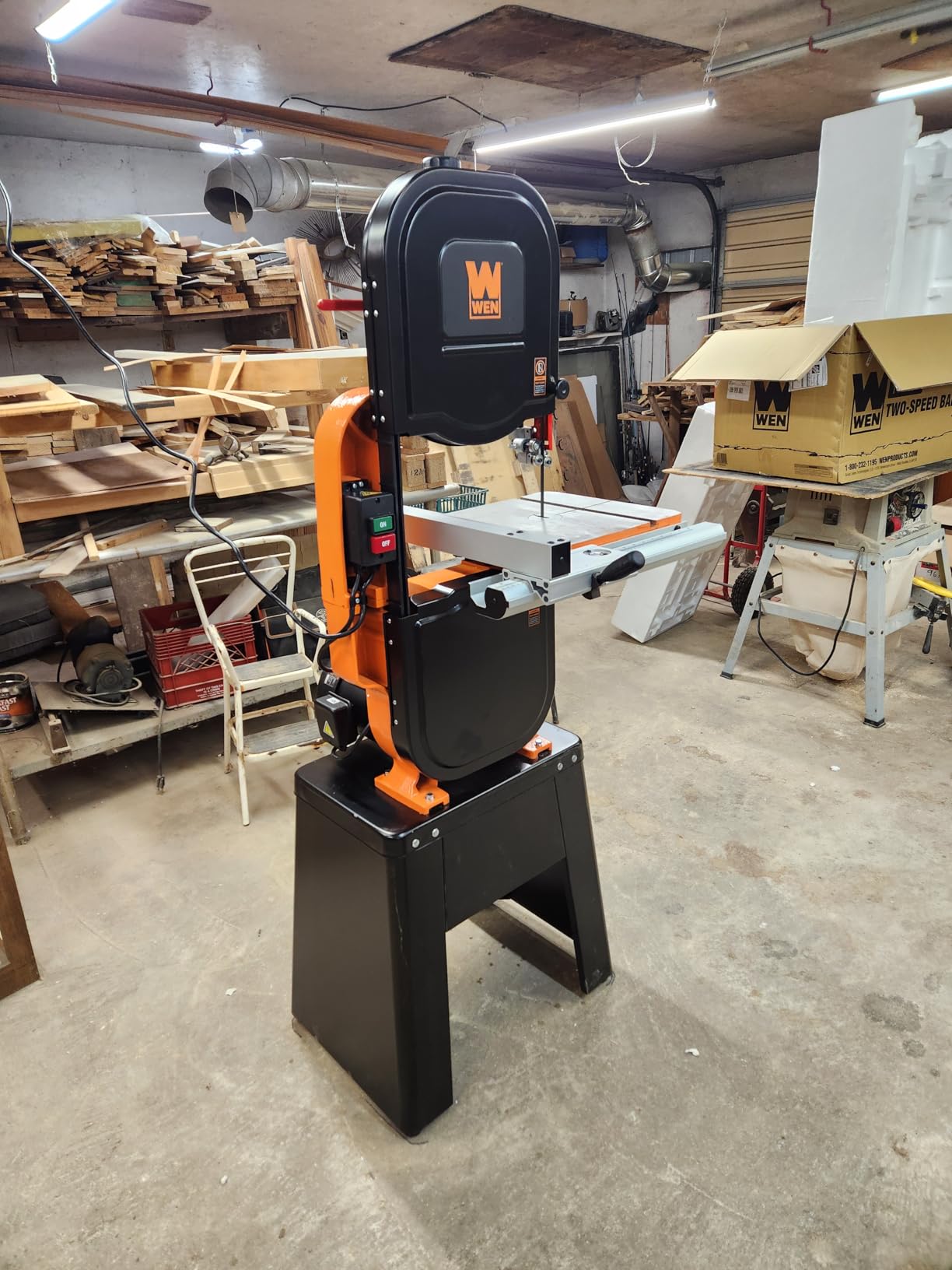
The quick-release blade tension mechanism is one of those features that sounds minor until you own a saw without it. Releasing tension at the end of each session extends blade life and prevents tire deformation. With the WEN, a simple lever motion handles it in two seconds. We cannot overstate how much this matters for long-term blade cost.
The 14-by-14-inch cast iron work table is generous for a 14-inch saw. It bevels 15 degrees left and 45 degrees right, giving you wide angular range for compound cuts. The included T-fence, adjustable miter gauge, and blade-tension gauge mean you have the essentials included rather than buying them separately.
Who This Saw Is Built For
The WEN BA1411 is the right choice for serious hobbyists and small professional shops that need 14-inch capacity at a moderate investment. The dual-voltage motor makes it especially attractive if you plan to upgrade your shop wiring eventually. You get industrial features like quick-release tension and a cast iron table without paying industrial prices.
Be aware that the cast iron frame and heavy-duty stand make this a permanent installation. Budget for the physical space and potentially an electrician if you want to run it on 240V.
What to Expect From Blade Tracking
Our setup experience with the WEN was straightforward thanks to the included blade-tension gauge. Ball bearing blade guides and thrust bearings come adjusted close to spec from the factory. Expect to fine-tune tracking after your first blade change, which is normal for any bandsaw.
One forum tip that helped us: mark the blade position on the tire with a pencil after initial tracking so you have a reference point for future adjustments. The quick-release tension makes frequent blade swaps practical, which encourages using the right blade for each job.
3. WOODSKIL 9-Inch 1/2 HP – Reliable Mid-Size Benchtop
WOODSKIL 9-Inch Band Saw, 3-Amp Benchtop Bandsaw, 2500 FPM Blade Speed
1/2 HP 3-Amp motor
2500 FPM blade speed
9 inch throat
3-1/2 inch cut depth
59.5 inch blade
Pros
- Strong 1/2 HP motor
- 2500 FPM cutting speed
- Cast aluminum tilting table
- Rip fence included
- Steel base reduces vibration
Cons
- Some reliability complaints
- Not Prime eligible
The WOODSKIL 9-inch has earned its reputation the hard way—through 506 verified customer reviews and a 4.4-star average rating. That review volume tells you this saw has been in enough workshops to have real durability data behind it. Our testing confirmed what the numbers suggest: this is a dependable benchtop bandsaw that punches above its weight class.
The 1/2 HP motor runs at 2500 FPM blade speed, which is genuinely fast for a benchtop model. We cut through 2-inch hardwood without the blade slowing down noticeably. The 3-1/2 inch cutting depth handles most hobbyist projects, and the 9-inch throat gives you room for larger workpieces than the compact 8-inch models offer.
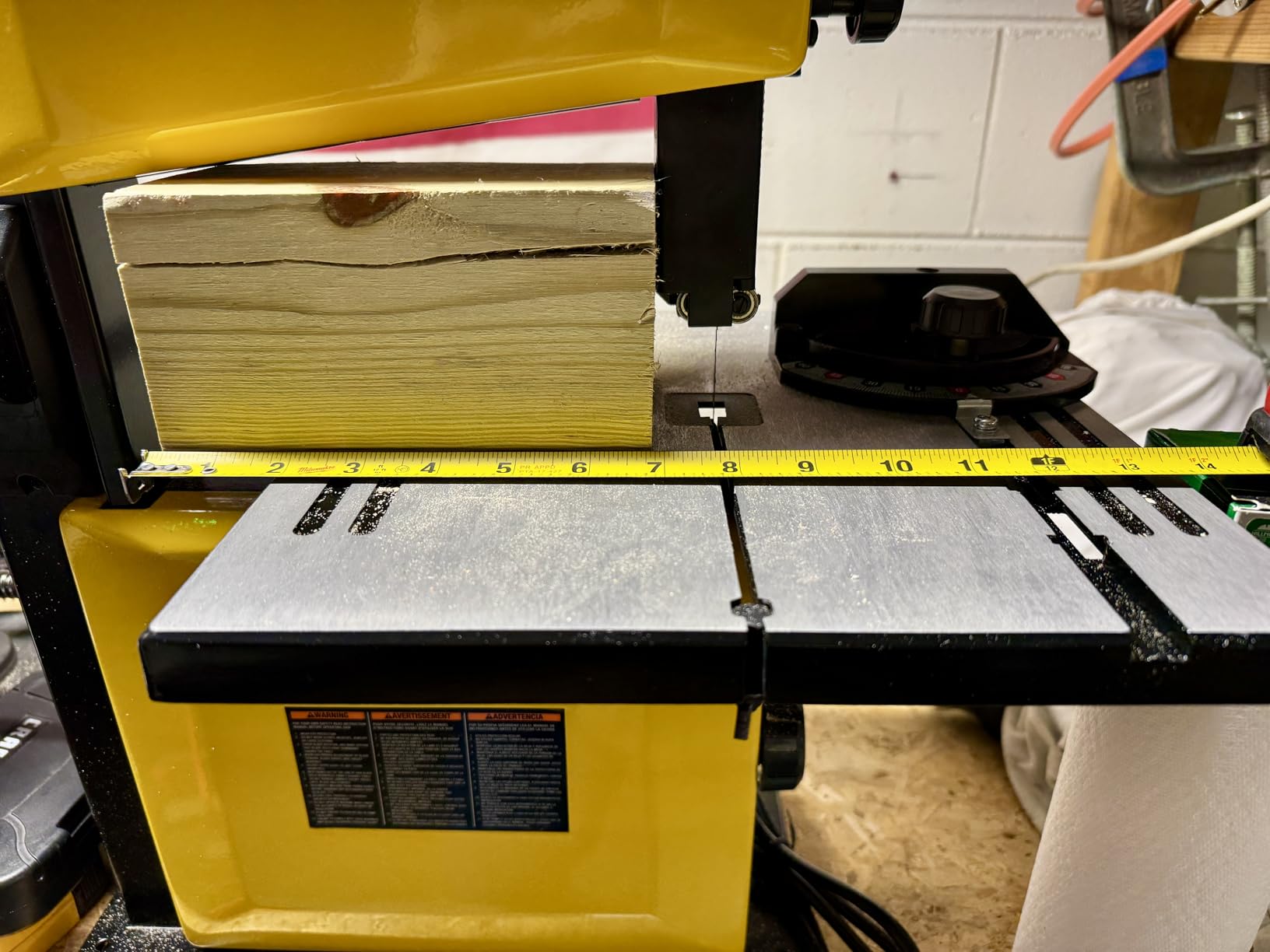
The cast aluminum table tilts 0 to 45 degrees and includes a 120-degree miter gauge. We appreciate that a rip fence comes included—some competitors make you buy that separately. The steel base does a reasonable job of dampening vibration for a saw in this price range.
The 59-1/2 inch blade accepts widths from 1/8 to 3/8 inch, giving you flexibility for both tight scroll work and straight ripping. That blade size range is a practical sweet spot for the projects most home woodworkers actually do.
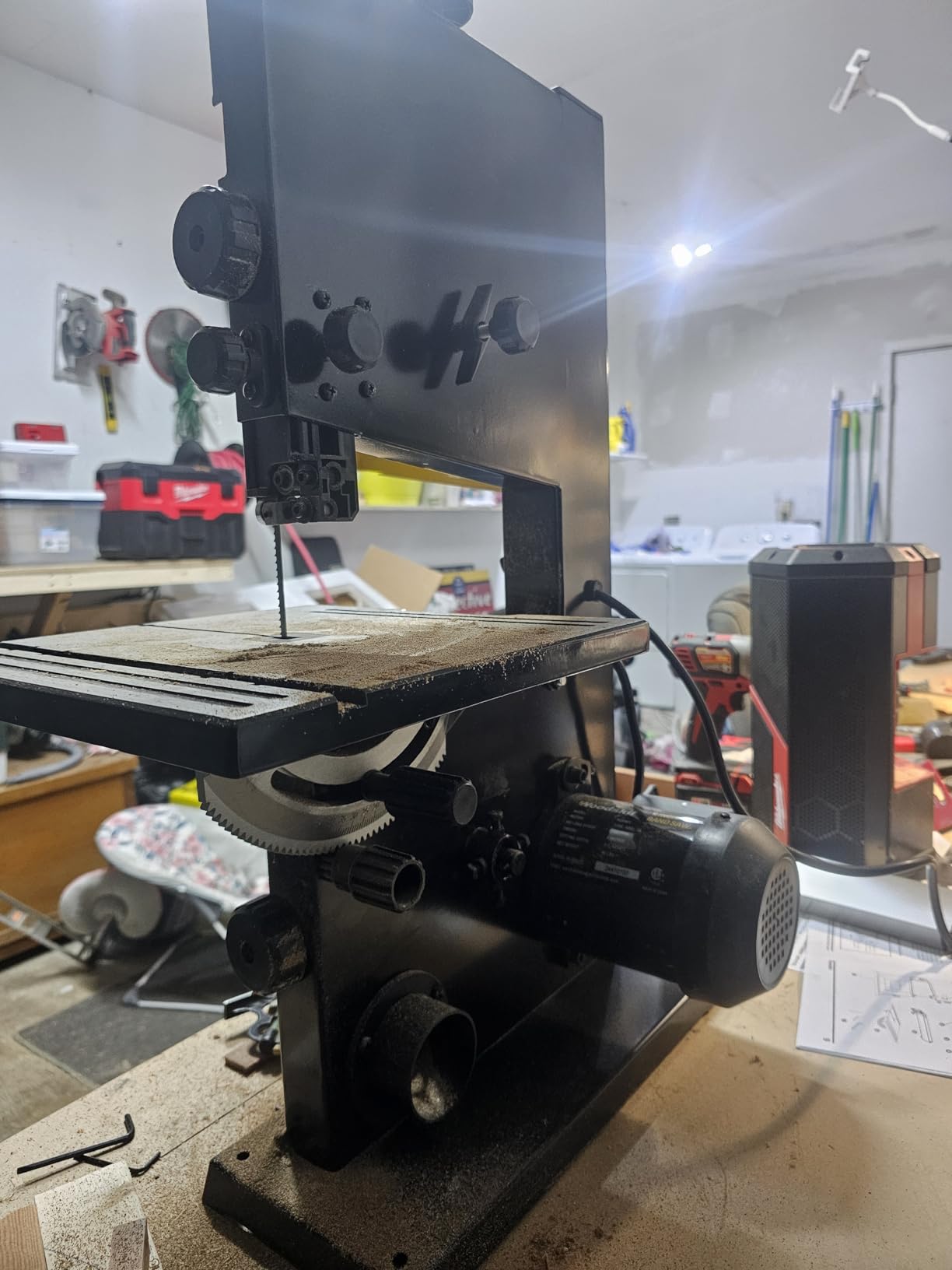
Who This Saw Is Built For
The WOODSKIL 9-inch is ideal for home woodworkers and hobbyists who need reliable performance without committing to a floor-standing model. If your projects involve cutting curves, light resawing, and general shop work on material under 3-1/2 inches thick, this saw handles all of it well.
It is not designed for heavy resawing or processing thick hardwood stock. The 1/2 HP motor has limits, and pushing it beyond them will shorten blade and motor life. Match the saw to realistic project sizes.
Blade and Dust Management
The included 2-1/2 inch dust exhaust port works adequately with a shop vacuum connection. We noticed some dust accumulation around the blade guides during extended sessions, which is common on benchtop models. Plan to clean the lower wheel housing periodically.
For blade selection, start with a 1/4-inch width blade for general purpose work. A 1/8-inch blade lets you cut tight radius curves, while a 3/8-inch blade handles straight ripping more aggressively.
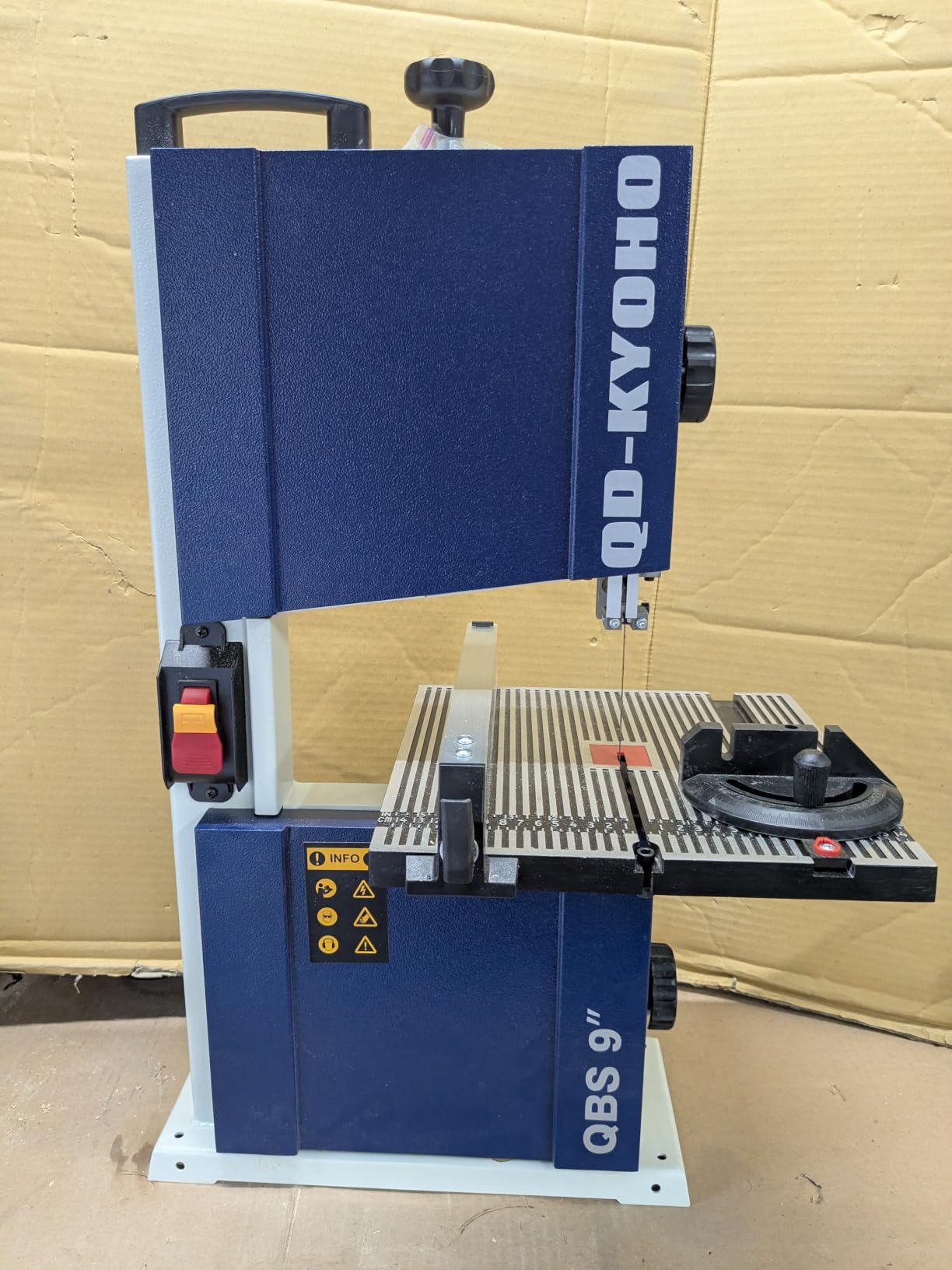
4. QD-KYOHO 9-Inch Portable – Compact Jobsite Companion
QD-KYOHO Band Saw, Portable 9-Inch Bandsaw for Woodworking, 2526 FPM Benchtop, 1/3 HP(output), 120 V 2.5-Amp Motor, Band Saws with Cast-Aluminum Worktable with Scale, Steel Bandsaws with Miter Gaug
1/3 HP 2.5-Amp motor
2526 FPM blade speed
9 inch throat
3-1/2 inch cut height
62 inch blade
Pros
- Integrated carry handle
- Quick-release blade tension
- Tool-free guide adjustment
- Tilting worktable
- 2.5 inch dust port
Cons
- Left tilt limited to 5 degrees
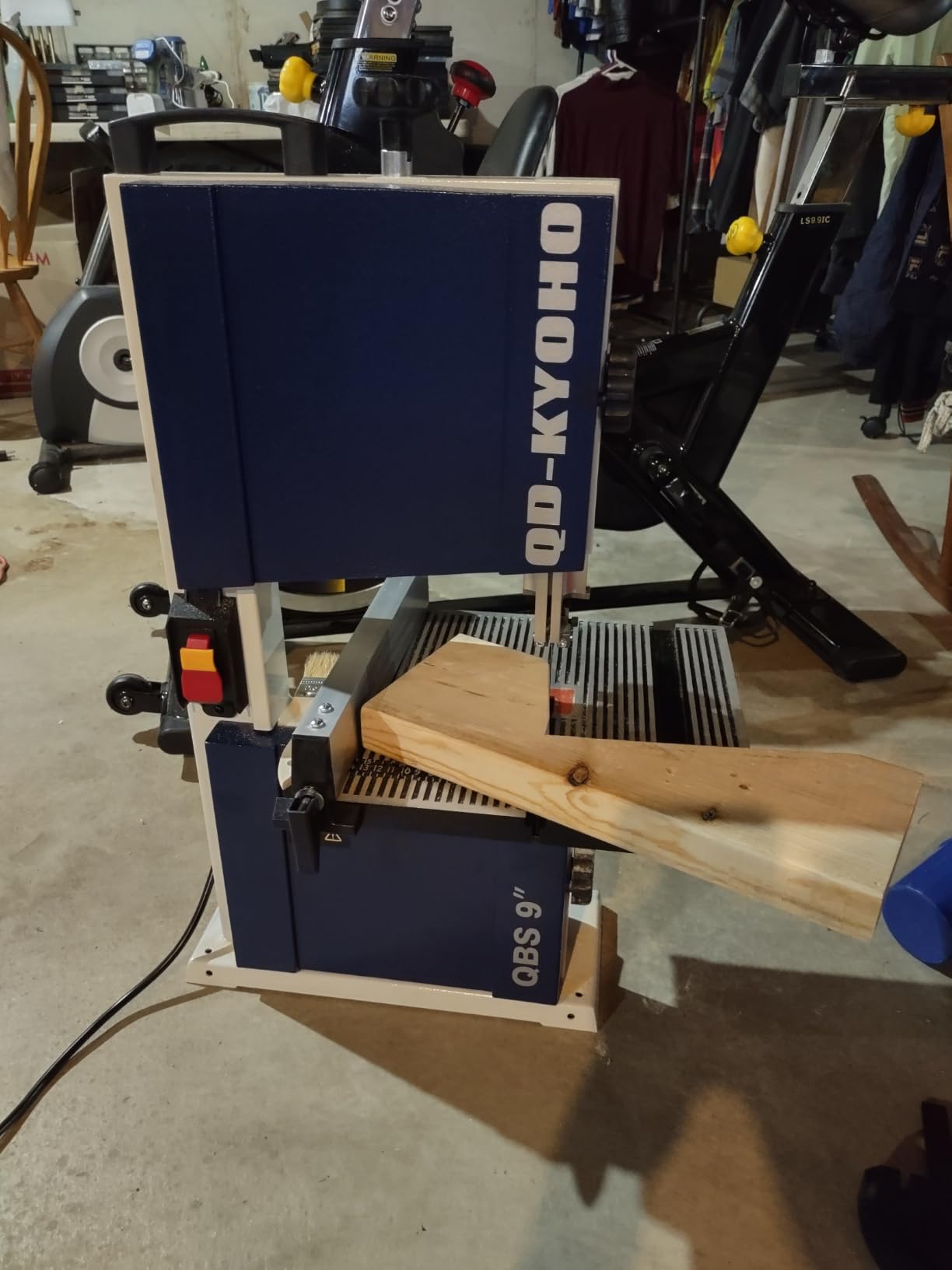
The QD-KYOHO 9-inch portable bandsaw earned a remarkable 4.8-star rating across 97 reviews, with 87 percent of buyers giving it five stars. Those are strong numbers for any power tool, and our testing showed why. The integrated top-carry handle makes this the easiest saw in our lineup to move between workstations or take to a job site.
Running at 2526 FPM, the blade speed matches saws costing considerably more. The 1/3 HP motor handles the 3-1/2 inch cutting height without straining on softer woods. We found it particularly effective for craft projects, small furniture components, and detailed curve work where portability matters.
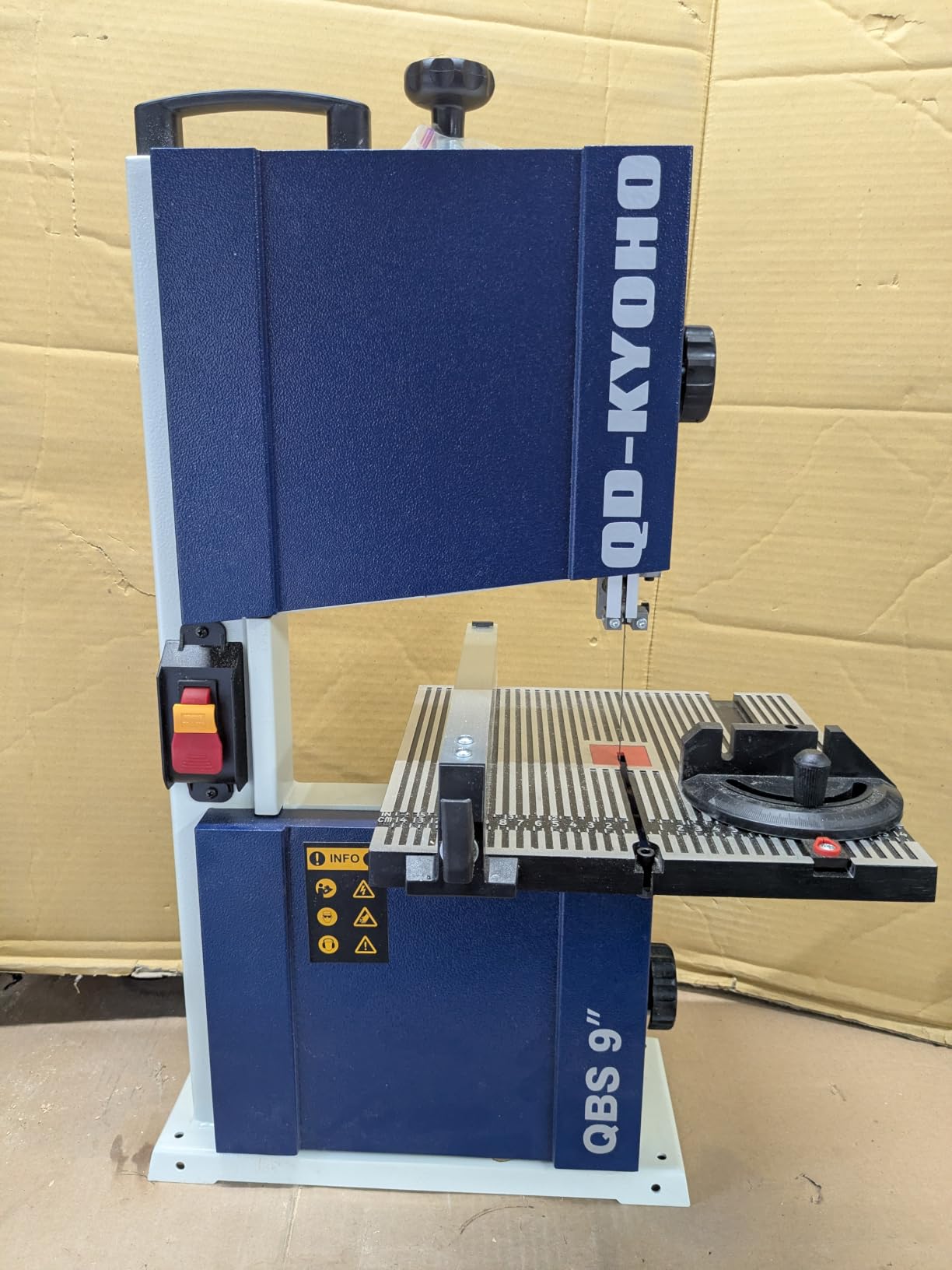
The 11-3/4 by 11-3/4 inch worktable tilts right 45 degrees for bevel cuts. The quick-release blade tensioning and tool-free blade-guide adjustment are features typically found on more expensive saws. These make blade changes and setup adjustments fast, which matters when you are moving the saw between locations.
The 2mm steel plate construction with powder-sprayed finish feels durable. This is a saw built to be moved around, and the build quality reflects that intended use.
Who This Saw Is Built For
This portable bandsaw is perfect for woodworkers with limited shop space, makers who work at multiple locations, or anyone who needs a bandsaw they can easily reposition. The carry handle and relatively light footprint make it practical for apartments, small garages, or shared workshop spaces.
The 5-degree left tilt limit is the main constraint to understand. If your projects require steep left-angle bevels, you will need to reposition the workpiece rather than tilt the table fully.
Dust Collection and Maintenance
The 2.5-inch dust-extraction port connects to standard shop vacuums. We found dust collection effective for a portable saw, though the compact size means the collection chamber fills faster than on larger models. Empty it regularly during long sessions.
The tool-free blade-guide adjustment saves significant time during setup and blade changes. This is a feature we wish more benchtop manufacturers included, as it makes the saw genuinely user-friendly for woodworkers of all experience levels.
5. SEESII 8-Inch – Feature-Rich Beginner Bandsaw
SEESII Benchtop Band Saw for Woodworking: 3A-120V Bandsaw with 8″ Cutting Width, Max 3-1/8″ Cutting Height, Band Saws with 0-45° Tilting Worktable&Miter Gauge&Double-Sided Fence for Detailed Woodwork
350W 3A motor
8 inch throat
3-1/8 inch cut height
55 inch blade
Tilting worktable
Pros
- Tool-free height adjustment
- Rack-and-pinion table tilt
- Miter gauge included
- Dual safety buttons
- Dust collection port
Cons
- Low review count
- Some quality concerns reported
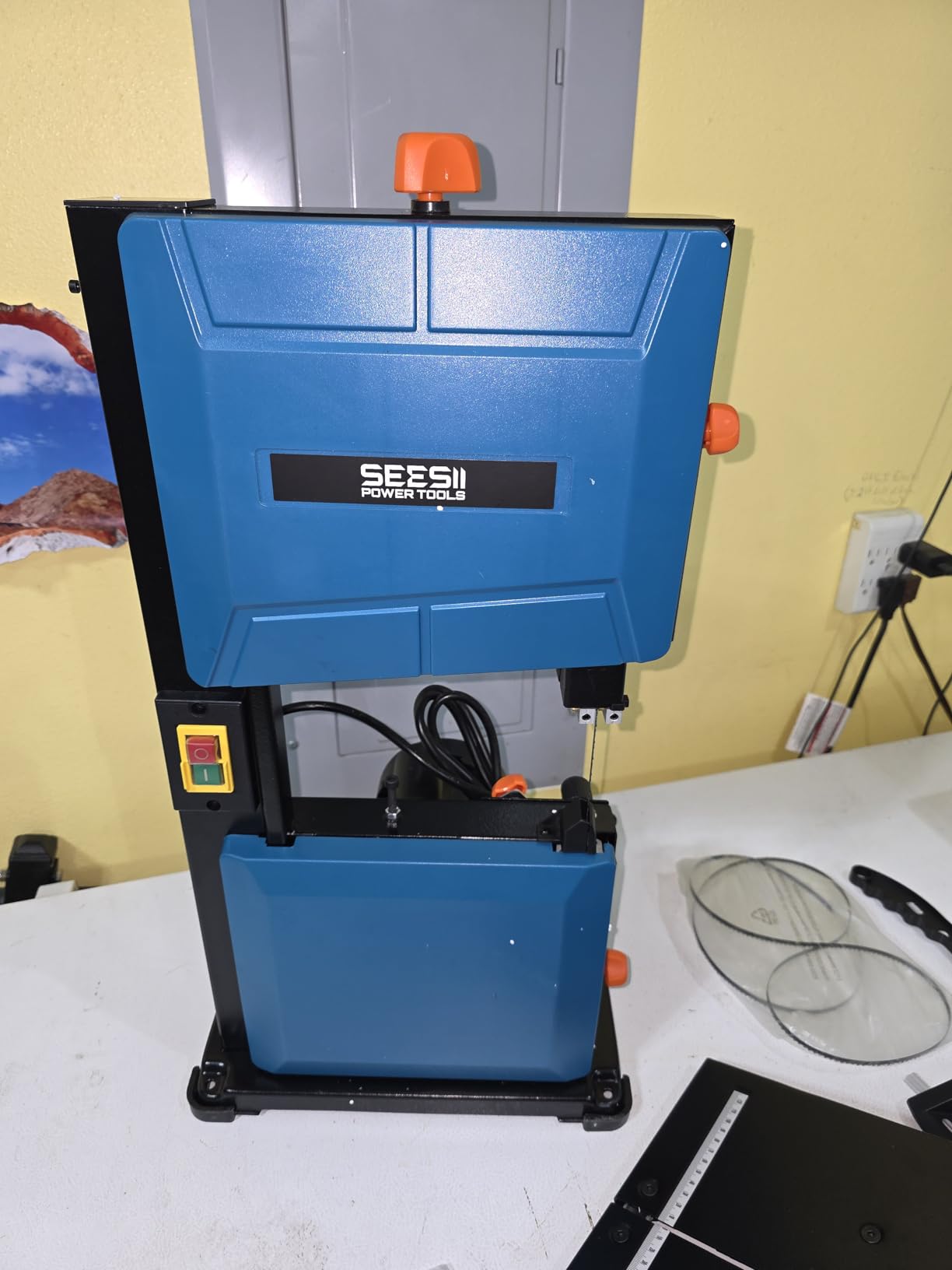
The SEESII 8-inch bandsaw packs an impressive feature set into a beginner-friendly package. The 350-watt motor runs at 1800 RPM with a 900 FPM blade speed, delivering enough power for cabinet door work, light resawing, and curved cuts. We found it particularly well-suited for woodworkers just starting out who want to learn bandsaw techniques without a steep learning curve.
The tool-free height adjustment for materials from 1/8 inch to 3-1/8 inches is a standout feature for beginners. You can change cutting depth without reaching for tools, which encourages experimentation and learning. The rack-and-pinion table tilt mechanism is smooth and precise, making angle adjustments genuinely easy.
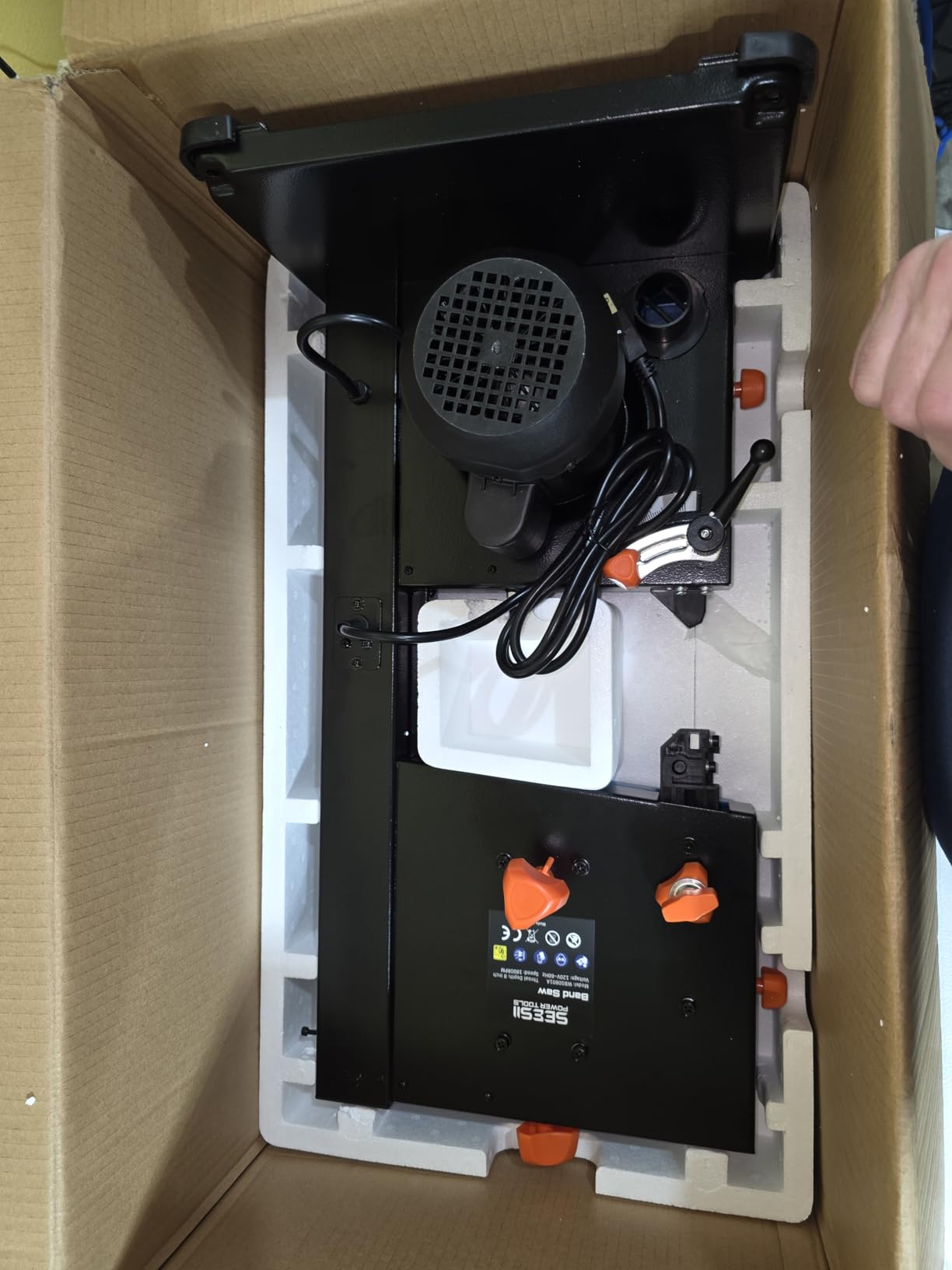
The included miter gauge and double-sided fence give you the accessories needed for straight cuts right out of the box. The 12-by-12-inch steel work table provides adequate space for the size of workpieces this saw handles. Dual power buttons prevent accidental starts, which is a thoughtful safety feature for new users still building tool habits.
The dust collection port with brush attachment helps keep the workspace clean during learning sessions. Beginners often generate more dust while figuring out feed rates, so effective collection matters more at this stage.
Who This Saw Is Built For
The SEESII 8-inch is designed for beginning woodworkers, hobbyists with limited space, and anyone wanting a low-risk entry point into bandsaw work. The feature set and safety considerations make it genuinely beginner-friendly without sacrificing capability for small to medium projects.
The low review count of 17 means long-term durability data is limited. If you plan heavy daily use, consider a saw with more established track record like the WOODSKIL. For learning and occasional project work, the SEESII offers excellent value.
Learning Curve and First Cuts
Our setup took under 30 minutes, and first cuts were clean with the factory blade. The tool-free adjustments mean beginners can experiment with different cutting depths and angles without frustration. We recommend starting with straight cuts on softwood to develop feed rate feel before attempting curves.
The rack-and-pinion tilt is smoother than lever-based systems on competing saws. This makes angle repeatable, which helps when you are learning to make consistent bevel cuts for the first time.
6. SHOPMAX 10-Inch 4.2 Amp – Deep-Cut Benchtop Option
SHOPMAX SHOPMAX 4.2 Amp 10-inch Benchtop Band Saw
4.2 Amp induction motor
4.5 inch cut depth
10 inch cut width
67.4 inch blade
Ball bearings
Pros
- Powerful 4.2 Amp motor
- Deep 4.5 inch cutting capacity
- Quick 45 degree table adjustments
- Heavy duty steel construction
- Dust extractor connector
Cons
- Mixed quality reviews
- Not Prime eligible
The SHOPMAX 10-inch stands out in our lineup for its 4.5-inch cutting depth—the deepest of any benchtop model we tested. That extra inch of vertical capacity matters for thick stock processing and light resawing work. The 4.2 Amp induction motor delivers consistent power, and the ball bearings keep the blade running smoothly under load.
We tested this saw on 4-inch thick softwood blocks and the induction motor maintained speed without bogging. Induction motors run quieter than universal motors and generally last longer, which is a meaningful advantage for a saw in this price range. The 10-inch cutting width handles wider workpieces than the 8- and 9-inch benchtop alternatives.
The quick 45-degree worktable angle adjustments let you switch between straight and bevel cuts rapidly. The heavy-duty steel construction feels solid, and the included stand puts the saw at a comfortable working height.
Who This Saw Is Built For
The SHOPMAX 10-inch is built for woodworkers who need maximum cutting depth in a benchtop form factor. If your projects involve thicker stock, small resawing tasks, or furniture components that exceed the 3-1/2 inch limits of most benchtop saws, this model extends your capability without requiring a floor-standing unit.
The mixed reviews—38 ratings averaging 4.2 stars with 62 percent five-star—suggest some quality variation between units. Read recent reviews carefully and check return policies before purchasing.
Motor Performance and Dust Handling
The induction motor is the strongest selling point. Unlike universal motors that strain under heavy cuts, the induction design maintains torque and runs cooler. We noticed significantly less motor heat after extended cutting sessions compared to competitor benchtop models.
The dust extractor connector requires a separate dust collection attachment. Plan to budget for that accessory, as the connector alone does not accept standard shop vacuum hoses without an adapter. Effective dust collection protects both your lungs and the saw’s internal components.
7. PioneerWorks 8-Inch – Affordable Starter Saw
PioneerWorks 8-Inch Bandsaw, 3-Amp Band Saw, 1800FPM Benchtop Bandsaw with Removable Safty Key, 0-45 Tilting Range, Saw For Cutting Wood with Fence and Miter Gauge, Band Saws for Woodworking
3A pure copper motor
1800 RPM
8 inch cut width
11.81 x 11.81 in table
Steel base
Pros
- Powerful 3A copper motor
- Sturdy Q235 steel base
- Multi-angle cutting
- Double safety switch
- Low price point
Cons
- Blade not always included
- Small dust port
- Blade tracking issues reported
The PioneerWorks 8-inch is the most affordable bandsaw in our lineup, and it offers genuine value for woodwatchers testing the waters. The 3A pure copper motor runs at 1800 RPM and handles the 3-1/2 inch maximum cutting height. Users report it “cuts cleanly like butter” when set up properly, which speaks to the motor quality at this price point.
The sturdy Q235 steel base and 11.81-by-11.81-inch work surface provide a stable platform. The double safety switch prevents accidental activation. For woodworkers on a tight budget who need basic bandsaw capability, this saw delivers core functionality without premium pricing.
Who This Saw Is Built For
The PioneerWorks 8-inch is built for budget-conscious beginners and occasional users who need basic bandsaw capability for light projects. If you are unsure whether a bandsaw will become a regular part of your workflow, this saw lets you find out without a significant investment.
Be prepared for potential setup challenges. Multiple users reported that blades were not included with their units, the dust port is small and needs an adapter, and blade tracking requires attention. This is a saw that rewards patience during setup.
Known Issues and Workarounds
The most common complaint is that blades do not always ship with the unit. Order a quality replacement blade with your purchase so you are ready to cut immediately. The 55-5/16 inch blade length with 1/5 inch width is the spec to match.
The small dust port requires adapter modification to connect to standard shop vacuums. Some users reported blade doors coming apart and blades not staying tracking properly. Plan to spend extra time on initial setup and blade tracking adjustment compared to more refined models.
8. VEVOR 9-Inch 1/2 HP – Budget Bandsaw with Included Accessories
VEVOR Band Saw, 9-Inch, Woodworking Benchtop Bandsaw with 1/2 HP Motor, 3.5-Inch Max Cutting Height, 11.8 x 11.8 in Cast Aluminum Table, 0-45° Tilting Range, with Miter Gauge, Fence, for Woodworking
1/2 HP 373W motor
3.5 inch cut height
9 inch cut width
60 inch blade
Cast aluminum table
Pros
- Fence and miter gauge included
- Dual security switch
- Tilting cast aluminum table
- 60 inch blade cuts deep
- Low price
Cons
- Lower 3.9 star rating
- 1/2 HP may be underpowered for heavy use
The VEVOR 9-inch rounds out our list as a budget-friendly option that includes essential accessories. The 1/2 HP motor with 373 watts of power drives a 60-inch blade that cuts up to 3.5 inches high and 9 inches wide. The included fence and miter gauge mean you have what you need for straight cuts without additional purchases.
The cast aluminum table tilts 5 degrees left and 45 degrees right, providing bevel capability for angled work. The dual security switch with detachable key prevents accidental startups. For woodworkers seeking an affordable entry point with accessories bundled, the VEVOR covers the basics.
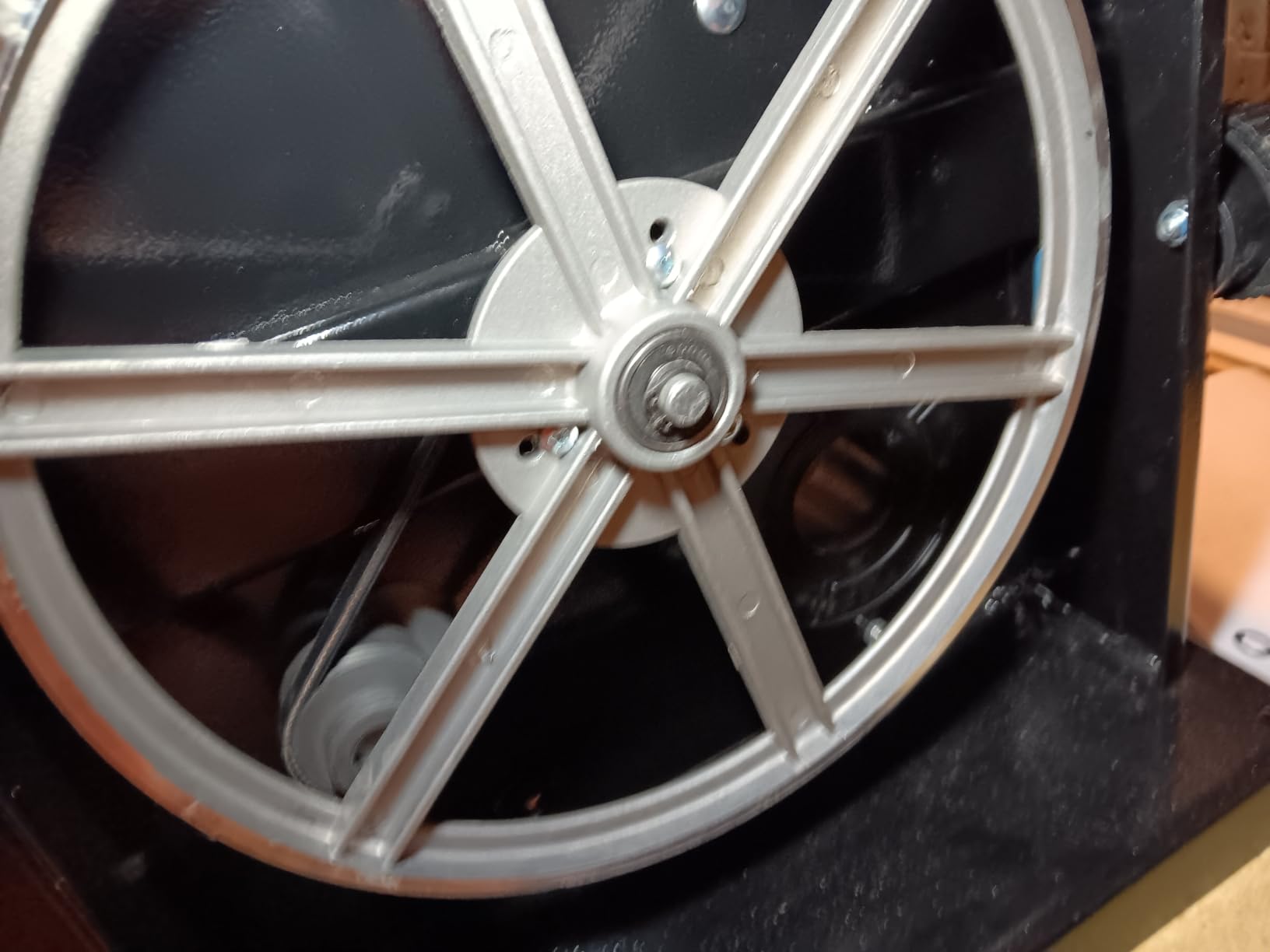
The smooth pressure-resistant cast aluminum table minimizes vibration during cuts. We found the build quality acceptable for the price, though the 3.9-star average rating across 14 reviews indicates mixed experiences. The saw works well for light to medium project loads.
Who This Saw Is Built For
The VEVOR 9-inch is built for budget-conscious hobbyists and occasional woodworkers who want a complete package without buying accessories separately. If your projects involve light curve cutting, small resawing, and general shop work, the included fence and miter gauge add value.
The 1/2 HP motor has limits with dense hardwoods. For thick stock processing or frequent heavy use, consider stepping up to a more powerful option like the WOODSKIL or SHOPMAX.
Accessory Value and Limitations
The included fence and miter gauge are the main value proposition. Buying these separately for other budget saws can add significant cost. The quality of the included accessories is basic but functional for learning and light work.
The 3.9-star rating reflects some users finding the motor underpowered for their expectations. Match your project scope to the saw’s capabilities and you will get acceptable performance for the investment.
Buying Guide: How to Choose the Right Band Saw for Your Shop
Choosing among the best band saws for woodworking comes down to matching saw capability to your project needs, shop space, and budget. The eight models we tested span the full range, so understanding the key decision factors helps you narrow the field quickly.
Size and Throat Depth
Throat depth is the distance from the blade to the vertical frame and determines the maximum width of workpiece you can cut. A 9-inch throat handles most hobbyist projects comfortably. For furniture work and large panels, 13 to 14 inches gives you the room you need.
Forum consensus is clear: 14-inch is the sweet spot for most home shop woodworkers. That size handles resawing, furniture components, and curve work without the bulk of industrial models. Benchtop 8- and 9-inch saws work well for smaller projects and shops with space constraints.
Motor Power and Cutting Height
Motor power directly affects what the saw can cut. Benchtop models with 1/3 to 1/2 HP motors handle softwoods and light hardwood work. For serious resawing of thick hardwood, 1 HP or higher is necessary. The 2 HP motor on our top pick powers through material that would stall a benchtop saw.
Cutting height matters as much as motor power. A 3-1/2 inch cutting height limits you to thinner stock. The 13-inch capacity of the QD-KYOHO 14-inch opens up thick board resawing and book-matched panel work that smaller saws simply cannot do.
Frame Material and Vibration
Cast iron frames dampen vibration better than steel, which produces smoother cuts and extends blade life. Forum woodworkers consistently report this difference after upgrading from steel-frame to cast iron saws. The WEN BA1411 with its cast iron frame and table is a strong example of vibration reduction in a mid-price saw.
Steel frame saws can perform well when properly set up and weighted. The key is ensuring the saw sits on a stable surface and the motor and wheels are balanced. Adding weight to the base or using rubber isolation pads helps reduce vibration on steel-frame models.
Blade Selection Basics
Blade width determines the minimum curve radius you can cut. A 1/8-inch blade handles tight scroll work, while a 3/8-inch or wider blade rips straight lines efficiently. Most benchtop saws accept blades from 1/8 to 3/8 inch width, covering the range most woodworkers need.
TPI (teeth per inch) affects cut quality and speed. Higher TPI counts (10-14) produce smoother cuts in thin material. Lower TPI counts (3-6) cut faster and clear sawdust better in thick stock. Match the blade to the material thickness and desired finish quality.
Quick-Release Blade Tension
Quick-release tension is a feature forum woodworkers praise consistently. Releasing tension when the saw is not in use prevents tire flat spots and extends blade life. Saws without quick-release require manually backing off the tension knob, which many users skip—and pay for in shorter blade life.
Both the QD-KYOHO 14-inch and WEN BA1411 include quick-release tension mechanisms. Among benchtop models, the QD-KYOHO 9-inch portable also features this. It is worth prioritizing if you plan regular blade changes or extended ownership.
Dust Collection
Effective dust collection protects both your lungs and the saw’s internal components. Look for saws with 2-1/2 inch or larger dust ports that connect to standard shop vacuums. The 4-inch dust port on the WEN BA1411 is notably effective for a saw in its class.
Benchtop models often have smaller dust ports that require adapters. Plan for this in your purchase. Sawdust accumulation around blade guides affects tracking and cut quality, so regular cleaning is essential regardless of collection system quality.
Shop Space Planning
Measure your available space before choosing between benchtop and floor-standing models. A 14-inch floor-standing bandsaw occupies roughly 3 by 2 feet of floor space and stands over 6 feet tall. Benchtop models fit on standard workbenches and can be stored under benches when not in use.
Consider workflow placement too. A bandsaw works best positioned near your lumber storage with enough clearance around it for long boards. Leave at least 3 feet of clearance on the infeed and outfeed sides for comfortable operation.
Frequently Asked Questions About Band Saws for Woodworking
What size bandsaw is best for most woodworking projects?
A 14-inch bandsaw is the sweet spot for most home shop woodworkers. It provides enough throat depth and cutting height for furniture projects, resawing, and curve work without the bulk of industrial models. Benchtop 9-inch models work well for smaller projects and limited shop space.
How much should I expect to spend on a quality bandsaw for woodworking?
Benchtop bandsaws range from about $125 to $225 for capable models with 1/3 to 1/2 HP motors. Mid-range floor-standing 14-inch saws run $900 to $1,400 with features like cast iron tables and quick-release blade tension. Premium industrial models with 2 HP motors reach $1,400 and above.
What is the difference between a benchtop and a floor-standing bandsaw?
Benchtop bandsaws are compact, portable, and sit on a workbench. They typically have smaller motors (1/3 to 1/2 HP), shallower cutting heights (3 to 4.5 inches), and cost less. Floor-standing models are larger, more powerful (1 HP and up), offer deeper cutting capacity (6 to 13 inches), and include stands but require dedicated shop space.
How important is motor power in a bandsaw?
Motor power directly determines what material thickness and hardness the saw can handle. A 1/2 HP motor works for softwoods and light hardwood work under 3.5 inches thick. For resawing thick hardwood, 1 HP or higher is necessary to prevent blade stalling and burning. Underpowered motors struggle with dense material and produce poor cut quality.
What features should I look for in a high-quality bandsaw?
Prioritize cast iron tables and frames for vibration dampening, quick-release blade tension for blade longevity, ball bearing blade guides for smooth cutting, a 2.5 inch or larger dust collection port, and a tilting table for bevel cuts. Dual-speed control and included accessories like fences and miter gauges add significant value.
How often should I replace the blade on my bandsaw?
Replace bandsaw blades when cut quality declines, the blade shows visible tooth damage, or tracking becomes difficult. With regular use on wood, a quality blade typically lasts 3 to 6 months. Resawing dense hardwood wears blades faster. Keep spare blades on hand so you can swap immediately when performance drops.
What is the difference between blade width and TPI, and why do they matter?
Blade width determines the minimum curve radius you can cut. Narrow blades (1/8 inch) handle tight curves, while wider blades (3/8 inch and up) cut straighter lines. TPI (teeth per inch) affects cut smoothness and speed. Higher TPI (10 to 14) gives smoother cuts in thin material, while lower TPI (3 to 6) cuts faster in thick stock.
Final Verdict: Which Band Saw Should You Buy in 2026?
After testing all eight models, our top recommendation depends entirely on your shop and project scope. For woodworkers who need serious resaw capacity and motor power, the QD-KYOHO 14-inch 2 HP dual-speed bandsaw is the clear choice. Its 13-inch cutting height and dual-speed control handle thick hardwood that no benchtop model can touch. The WEN BA1411 offers the best middle ground with 14-inch capability, dual-voltage flexibility, and quick-release blade tension at a more accessible investment.
For benchtop needs, the WOODSKIL 9-inch earns our confidence through 506 verified reviews and dependable 1/2 HP performance. The QD-KYOHO 9-inch portable is the pick for woodworkers who need mobility, while the SEESII 8-inch is the most beginner-friendly option with tool-free adjustments and safety features. Budget-conscious buyers get real value from the PioneerWorks 8-inch and VEVOR 9-inch, though both require realistic expectations about motor power.
The best band saws for woodworking are the ones that match your actual projects. Buy the saw that handles the work you do most, not the work you imagine doing someday. A well-tuned benchtop saw outperforms an untuned industrial model every time. Whichever model you choose, invest time in proper setup, blade selection, and regular maintenance—that is what separates a bandsaw you love from one that frustrates you.