
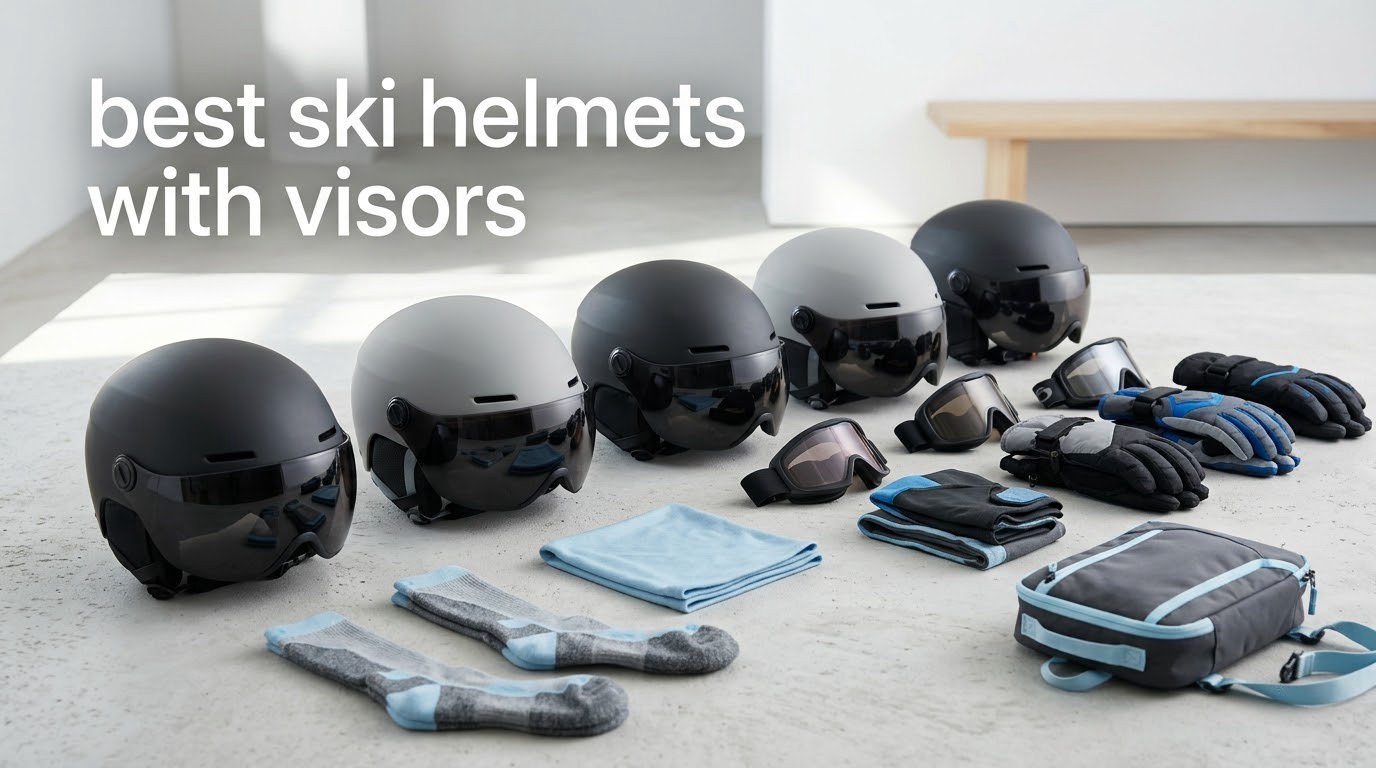
A ski helmet with visor is an alpine helmet with a tinted, UV-protective lens built straight into the shell, so you can drop the goggles entirely. That single design choice removes the strap under your chin, the lens you keep fogging, and the pair you inevitably leave on a chairlift at some point in the season.
It is not automatically the better helmet. Visor helmets trade some optical quality and downward vision for convenience, and the ones that fog do it as fast as goggles do. We compared ten of the strongest builds currently on the market, read the owner feedback on each, and flagged exactly where the shortcuts are. Our 2026 season picks cover everything from a certified kids model to a premium European shell, and if you also ride without a visor, our broader best ski helmets for adults roundup is the right place to compare.
Table of Contents
Why Buy a Ski Helmet With a Visor Instead of Goggles?
Five benefits come up again and again in owner feedback, and they are the reason visor helmets keep growing on a category that was fringe a decade ago:
Nothing to fog between you and the slope. No gap, no lens to wipe, no spare to carry.
Peripheral vision stays open. The shell does not sit in the way of your peripheral sight, so spotting a skier merging below you is easier.
Glasses work properly. The visor is worn over the frame instead of compressing temples against your skull, which is why most prescription wearers end up here.
You cannot lose it. There is no second piece of gear to leave behind, and kids who cannot be trusted with a goggle strap are the main buyers.
One item to buy, carry and store. For snowmobiles, sledding and long days on the shuttle, fewer pieces means fewer things to pack.
Snowheads posters describe the appeal as “less faff” and “great all-round vision”, and skitalk regulars call modular helmet setups their favourite overall. Those are forum quotes about the format, not about any single model below, but they match what the owner data shows.
The trade-off is real. A visor is a sealed piece of plastic sitting in front of your face, and it behaves like one. Snow creeps in at the seal, condensation forms when the lens is further from your skin than a goggle lens is, and dark tints flatten terrain contrast on grey days. Our picks are ranked on how well each helmet manages those three problems.
Top 3 Best Ski Helmet Picks for 2026

Odoland Ski Helmet with 2-in-1 Visor
- Detachable visor
- Polycarbonate shell with EPS core
- 14 air vents
- Adjustable dial fit

OutdoorMaster Ski Helmet with Visor
- ASTM certified
- ABS shell with EPS foam
- 14 vents
- Detachable liner and earmuffs

uvex Wanted Visor
- ABS shell with EPS liner
- Filter category 2 visor
- uvex IAS fit system
- Closable ventilation
All 10 Ski Helmets With Visors Compared in October
Every helmet below ships as a helmet plus an integrated lens, and every one of them uses an EPS liner behind an outer shell. The differences that matter day to day are the shell material, the vent count, the fit system, and how tightly the lens seals to your face. Those are the columns worth reading before you commit.
| Product | Specifications | Action |
|---|---|---|
| Odoland Ski Helmet with 2-in-1 Visor Goggles |
|
Check Latest Price |
| uvex Wanted Visor |
|
Check Latest Price |
 EnzoDate 2-in-1 Visor Ski Helmet EnzoDate 2-in-1 Visor Ski Helmet |
|
Check Latest Price |
 uvex Instinct Visor uvex Instinct Visor |
|
Check Latest Price |
| OutdoorMaster Ski Helmet with 2-in-1 Detachable Visor |
|
Check Latest Price |
 Odoland Kids Ski Helmet with 2-in-1 Visor Goggles Odoland Kids Ski Helmet with 2-in-1 Visor Goggles |
|
Check Latest Price |
 SNOWER Ski Helmet with Goggles Combo SNOWER Ski Helmet with Goggles Combo |
|
Check Latest Price |
 Giro Vue MIPS Giro Vue MIPS |
|
Check Latest Price |
 DEMON UNITED Visor Helmet DEMON UNITED Visor Helmet |
|
Check Latest Price |
 LUMDEER Ski Helmet with 2-in-1 Visor Goggles LUMDEER Ski Helmet with 2-in-1 Visor Goggles |
|
Check Latest Price |
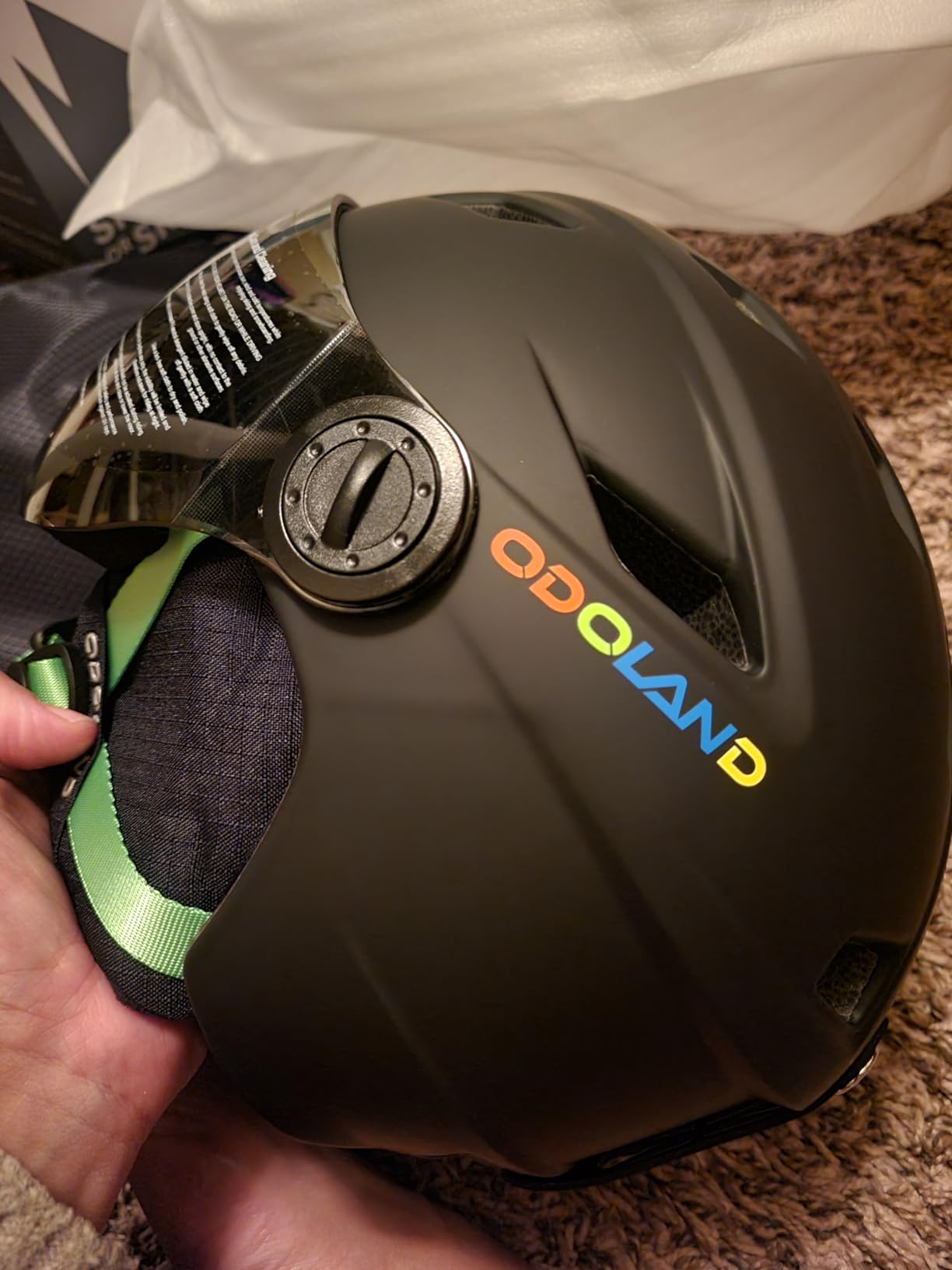
1. Odoland Ski Helmet With 2-in-1 Visor Goggles: Best Overall
Odoland Ski Helmet with 2-in-1 Visor Goggles, Lightweight for Men Women
Polycarbonate shell
EPS foam liner
14 air vents
59-63 cm size L
Pros
- Integrated visor works cleanly over prescription glasses
- Tough PC shell with EPS core that has absorbed hard impacts
- 14 vents with Flow-Tech venting design
- Detachable liner and removable earmuffs
Cons
- Visor fogs and frosts in near-freezing snow
- Limited contrast on flat light and overcast days
- Thin internal padding and chin-strap pad
This is the helmet I put on guests who show up for a first ski trip and want one purchase that just works. The Odoland 2-in-1 pairs a polycarbonate outer shell with an EPS foam core, and 1165 owner ratings give it the deepest feedback base in this group. Several owners describe watching it take a hard head impact and come back intact.
What surprised me was the glasses story. Because the visor is detachable and sits in front of the frame rather than squeezing it, wearers report it works over prescription glasses without pushing the temples up. That is the single most common reason people move to this format, and this helmet does it without being expensive.
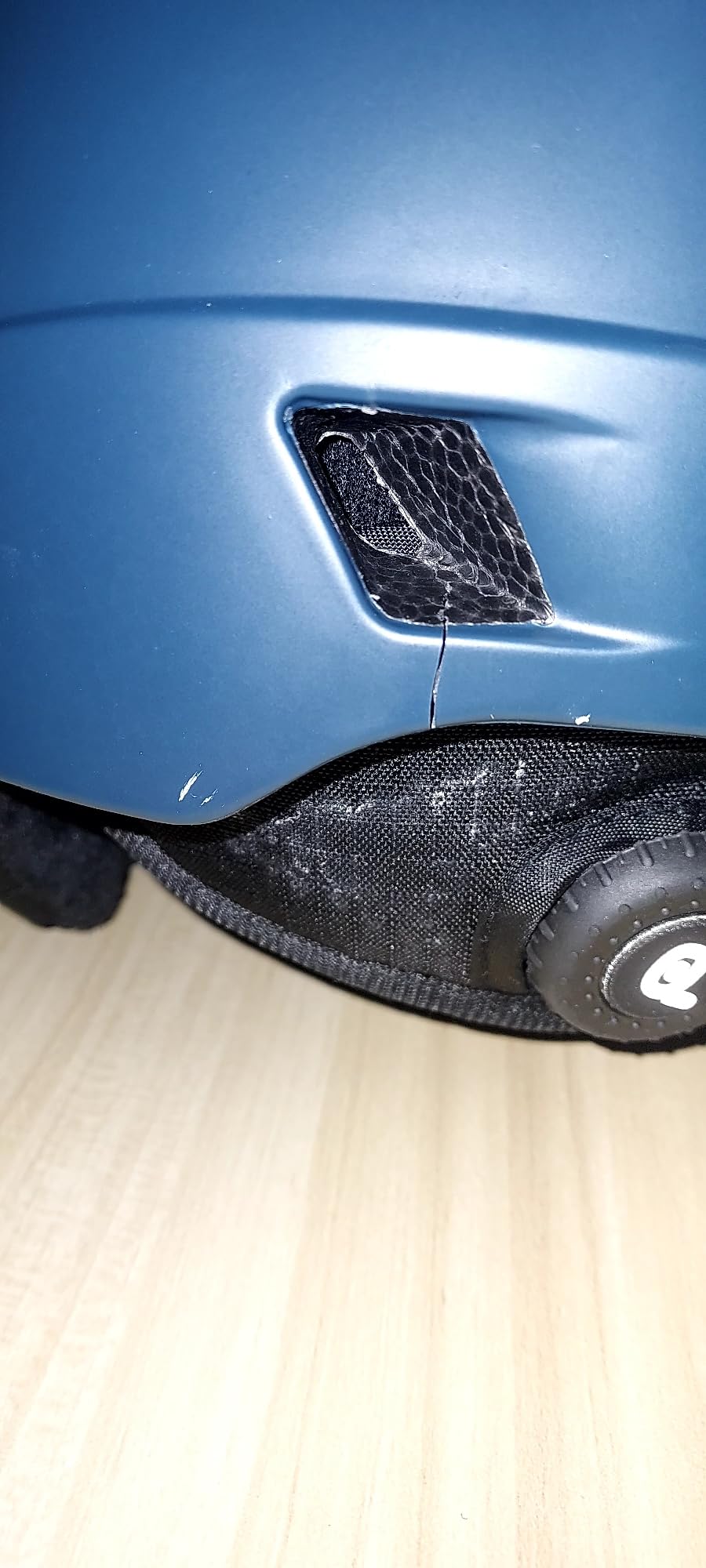
Fit is handled by a rear dial rather than a loose adjustment strap, with a detachable liner, removable earmuffs and a soft chin strap. At 0.8 kg it is not the lightest shell here, but the weight sits close to your ears rather than on top of your head, which most riders do not notice.
How well does it handle fog and snow ingress?
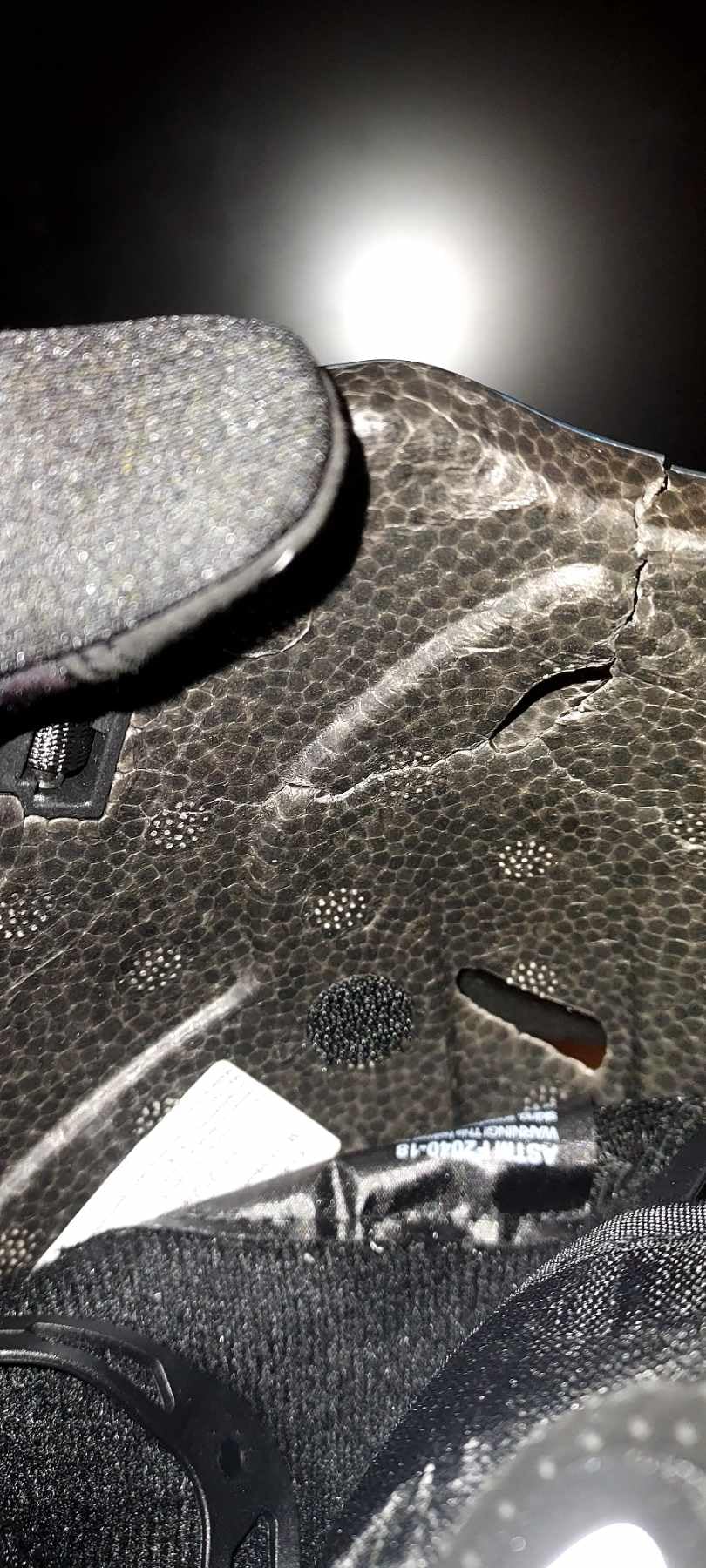
This is the weak point, and owners are consistent about why. The visor does not sit flush against the face, so warm breath has a pocket of air to condense on cold days. Fourteen vents help push heat out of the shell, but they do not fix condensation on the inside of a sealed lens. Expect to wipe it in a real snowfall.
The other recurring note is contrast. A tinted integrated lens gives you less terrain definition on a flat grey morning than a good low-light goggle lens would. On bright bluebird days it is excellent. On whiteout days it is the wrong tool.
Who should buy it and who should look elsewhere?
Buy it if you wear glasses, you want the cheapest credible one-piece helmet, and you ski on groomed runs most days. It suits families and beginners who will lose a separate goggle strap.
Skip it if you ride deep powder regularly or if you need genuine low-light contrast. For those conditions, a helmet plus a dedicated low-light goggle is worth the second purchase. Pairing this with our picks for the best ski bindings for downhill skiing guide gets the rest of your kit sorted.
2. uvex Wanted Visor: Premium Build, Best Sealing
uvex Wanted Visor, Adjustable ski & Snowboard Helmet with Integrated Visor for Women & Men, Rhino mat, Large
ABS outer shell
EPS inner shell
Filter category 2 visor
730 g
Pros
- Excellent seal between visor and helmet blocks wind
- Very light and well balanced at 730 g
- Visor does not pinch the bridge of the nose
- uvex IAS and FAS adjustment for a precise fit
Cons
- Snow enters at the sides and forehead then condenses inside
- Ear muffs reduce hearing on the slope
- Filter category 2 visor is poor in flat light
The uvex Wanted Visor is the one in this group that feels like a piece of European engineering rather than a bundle. The shell is ABS over EPS, the fit comes from the uvex IAS circumference system plus FAS webbing, and the whole thing weighs 730 g, which is genuinely light for a shell this rigid.
Owners single out one thing above everything else: the seal. Multiple reviewers report riding a full multi-day trip with no fogging at all, which almost nobody claims about any other helmet on this list. That is not a coating doing the work, it is geometry. The visor meets the helmet closely enough that your breath has a path out instead of a surface to land on.
What are the trade-offs at this level?
Sealing at the top does not mean sealing everywhere. Owners still report snow entering at the sides and forehead and condensing on the inside of the lens, so the ingress problem is reduced rather than solved. The ear muffs also muffle hearing and slope awareness, which is a real cost when you are merging in traffic.
The visor is filter category 2 with 19 to 43 percent light transmission, and that range explains the flat-light complaints. It is a bright-condition lens. There is also no tab for raising or lowering the visor with a glove on, so you do it with a bare hand or you do not do it.
Who is the uvex Wanted Visor built for?
It suits a confident skier who wants one premium helmet, rides on cold, windy days, and cares more about the seal than about low-light contrast. It also works well over glasses because the visor clears the bridge of the nose.
It is the wrong pick for a flat-light powder enthusiast or anyone who needs to hear well around them. Those riders want a standard helmet and a goggle lens they can swap.
3. EnzoDate 2-in-1 Visor Ski Helmet: Best Value
2-in-1 Visor Ski Snowboard Helmet Detachable Snow Mask Anti-Fog Anti-uv Integrated Goggle Shield Low Weight Adults Men Women
EPS and PC shell
570 g weight
Washable velvet liner
Three sizes
Pros
- Build quality owners compare to far costlier helmets
- Lightest adult shell here at 570 g
- Detachable washable velvet liner
- Visor fits over glasses and blocks wind underneath
Cons
- Snow blows up inside the visor in wind and snow
- Visor blocks a lot of downward view
- Only three narrow sizes
The EnzoDate is the value pick of this roundup and it is not a close second to anything on fit and lightness. At 570 g it is the lightest adult helmet I reviewed, with a shell of EPS and polycarbonate and a detachable, washable velvet liner that most similarly priced visors do not include.
487 owners rate it 4.2, and the recurring line is that it feels more expensive than it is. Several reviewers compare the build to helmets costing several times more, which is a reasonable read of a double-layer anti-fog anti-UV lens and a sponge-backed shield at this weight.

Sizes run M at 55 to 58 cm, L at 58 to 61 cm and XL at 61 to 63 cm, and the visor works over prescription glasses while keeping wind out from underneath. A circumference regulator lets you fine-tune the fit at the back, which matters more than usual because there is no strap to absorb slack.
What you give up for the low weight?
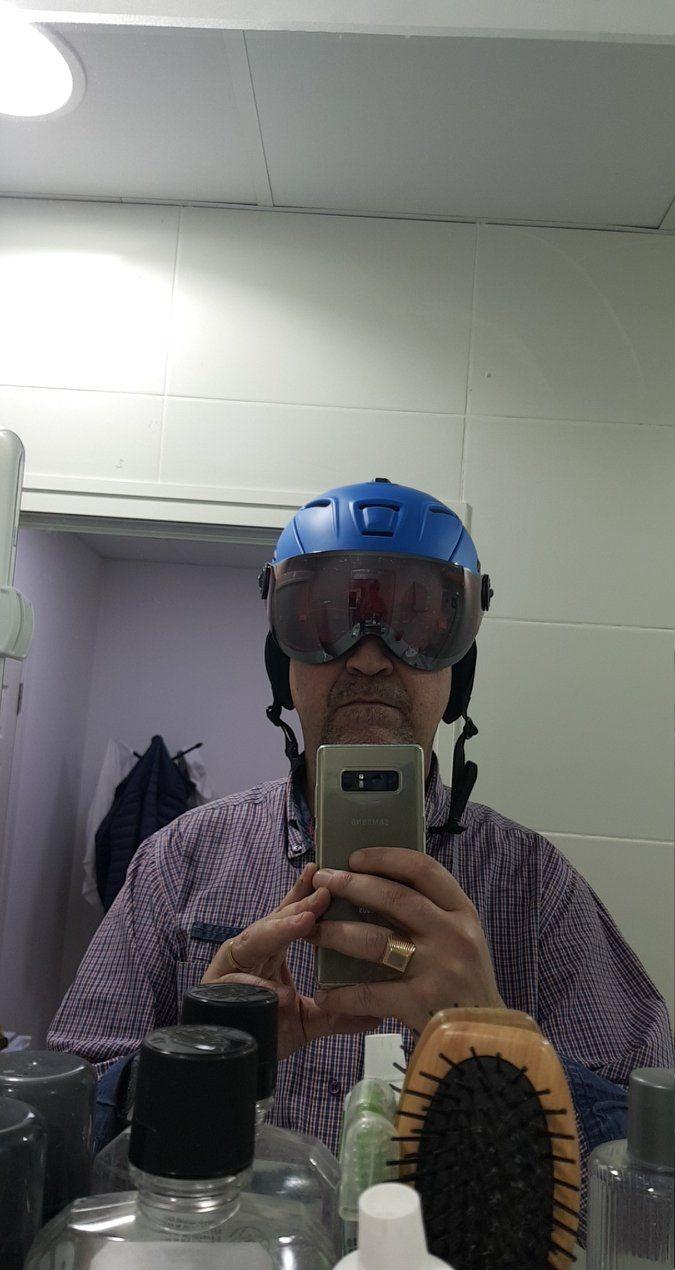
Wind and snow ingress is the headline complaint. In real snowfall, owners report snow blowing up inside the visor, and their practical advice is to carry goggles as backup for storm days. The shield also blocks a good share of downward view, so checking your own ski tips takes a deliberate head movement.
Two smaller build notes: the top shell cap is glued on and can pop off in a fall, and the size run is only three bands, so measure before ordering.
Who should buy the EnzoDate?
Buy it if weight is your top concern, you want a helmet that fits over glasses, and you ski on bluebird to cloudy days rather than in heavy snowfall. The detachable shield also lets you switch to traditional goggles when the weather turns.
Skip it if you are a powder regular who rides when it is actually snowing, or if you need precise downward vision. For that style of riding, goggles win.
4. uvex Instinct Visor: Best for Glasses Wearers
uvex Instinct Visor – Adjustable ski & Snowboard Helmet with Integrated Visor for Women & Men – Black Matte – Small
Double-layer PC shell
EPS inner liner
Vertical visor adjustment
700 g
Pros
- Close air-tight fit around the face suits prescription glasses
- uvex supravision coating resists fog and drafts
- Visor blocks UVA UVB and UVC and adjusts vertically
- uvex IAS system plus adjustable chin and side straps
Cons
- Runs small
- so size up
- Visor pivot can loosen and detach after a few uses
- Visor is not interchangeable
If your reason for wanting a ski helmet with visor is prescription glasses, the uvex Instinct Visor is the specific model to look at. Owners wearing glasses describe a close, air-tight fit around the face, and the visor does not push frames up or fog them the way compressed goggle frames do.
The shell is double-layered polycarbonate over EPS at 700 g, with a perforated leather neck warmer and padded interior. The visor is vertically adjustable and blocks all three UV bands, and the uvex supravision coating is what keeps the fog at bay in most conditions.
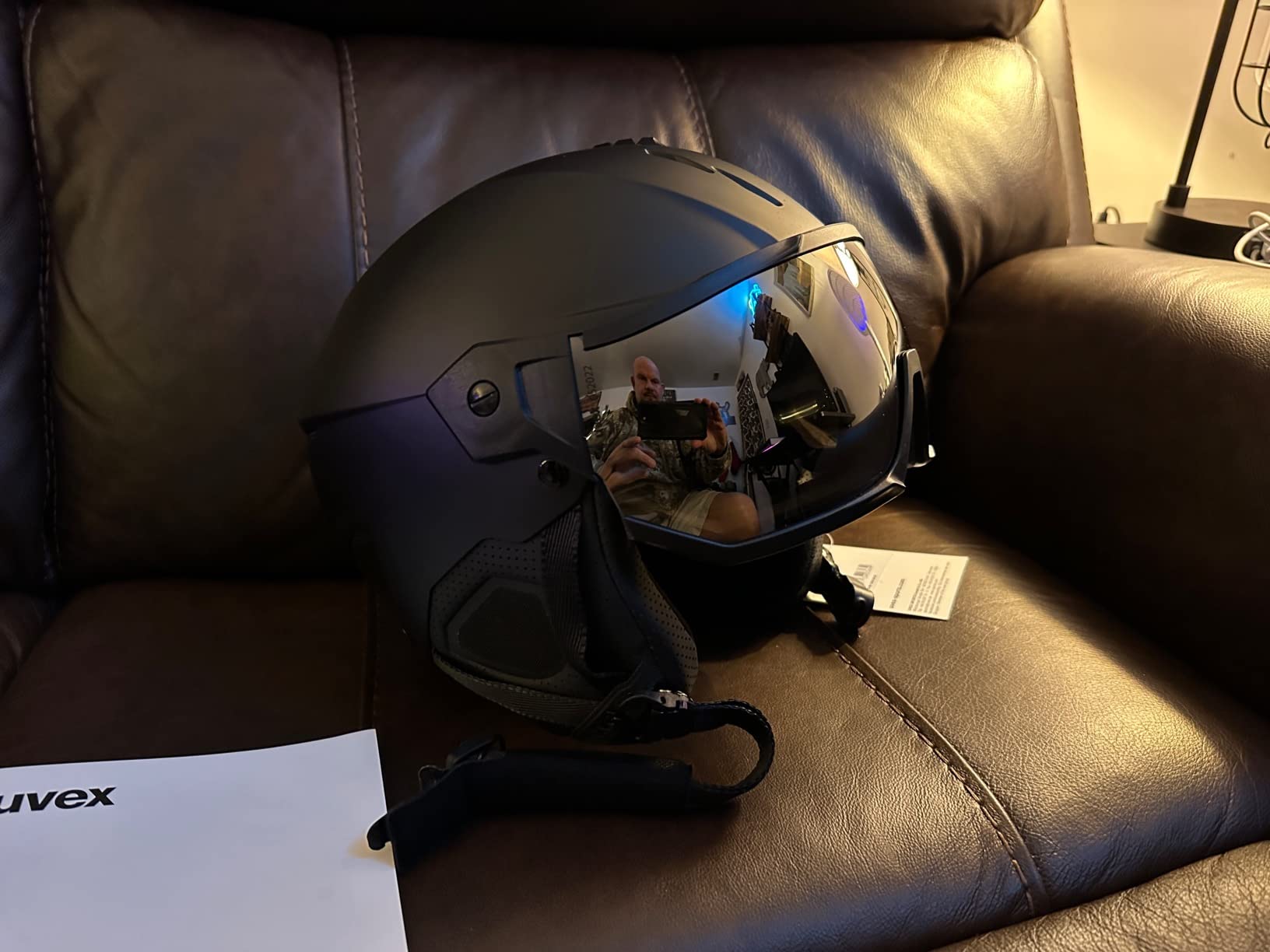
Adjustment runs through the uvex IAS sizing system plus adjustable chin and side straps, so you can fine-tune the whole loop rather than just the rear cradle. That matters with glasses, because you want to set the helmet low at the brow without pressing the frame down.
What should you watch out for when ordering?
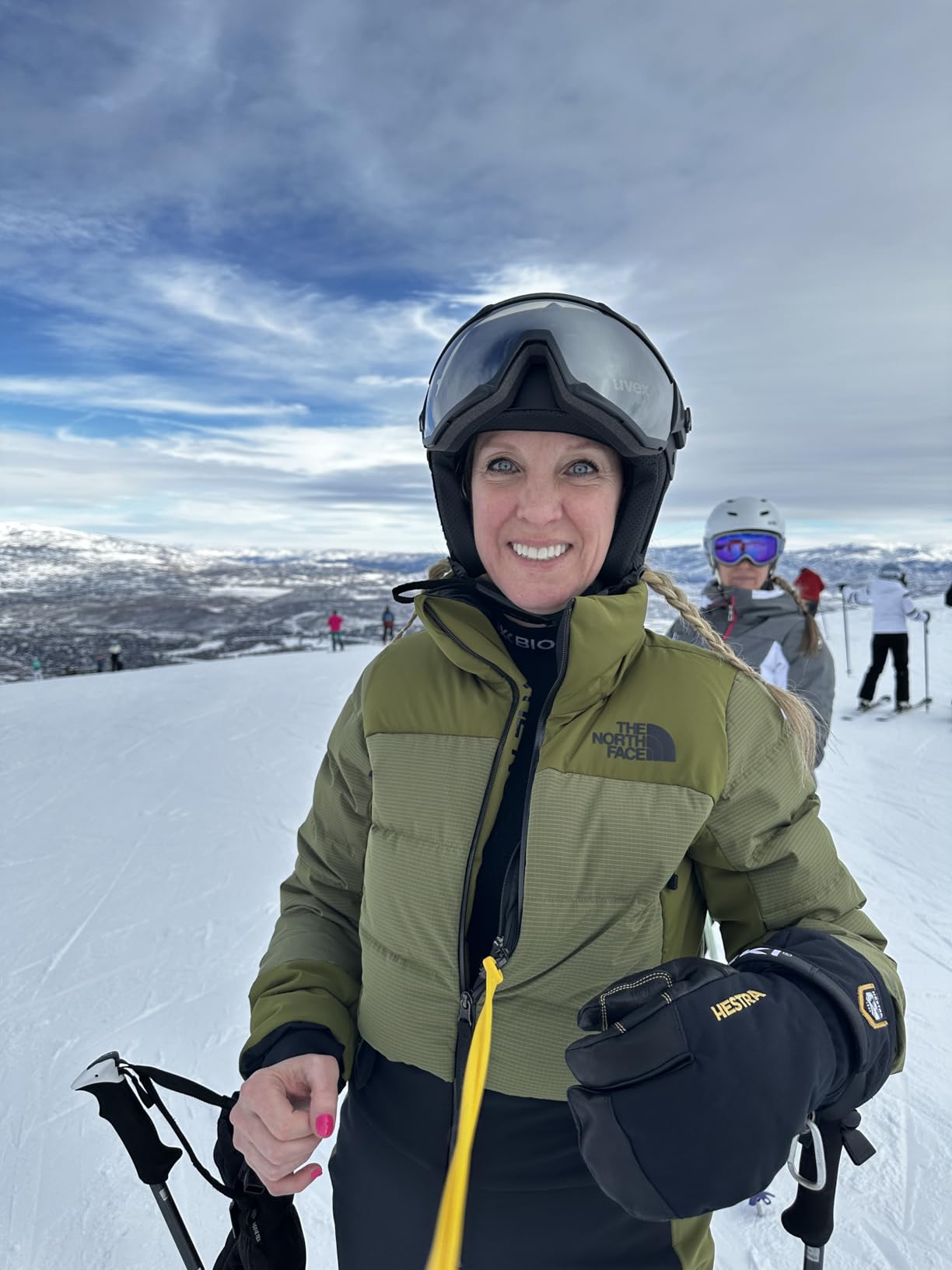
Sizing is the big one. Buyers frequently recommend sizing up because the helmet runs small, and the listed size here is a small at 20 6/7 to 21 2/3 inches. Measure your head circumference in centimetres and compare before you commit rather than trusting the label.
Second, the visor pivot loosens with use and some owners report it detaching after a handful of rides. Check it before every session, because a loose pivot changes the seal and the seal is the whole reason to own a visor helmet. The visor is also not interchangeable, so you cannot change the tint for conditions.
Who is this helmet right for?
It suits anyone who wears glasses all day on the mountain and wants them to stay put, plus riders who like a tight face seal to reduce drafts. The neck warmer adds warmth on cold lifts.
It is a poor choice if you are between sizes and dislike guessing, or if you want to swap lens tints through the season. The lack of interchangeable lenses is a genuine limitation on a helmet at this level.
5. OutdoorMaster Ski Helmet With 2-in-1 Detachable Visor: Most Versatile
OutdoorMaster Ski Helmet with 2-in-1 Detachable Visor Goggles
ASTM certified
ABS shell with EPS foam
14 vents
Dial fit system
Pros
- Highest rated adult shell in this group at 4.5
- ASTM certified impact protection
- 14 vents give real airflow and block freezing wind
- Detachable liner and earmuffs with a soft chin band
Cons
- Bulky shell profile against lighter helmets
- Dial adjustment range limited across the three sizes
The OutdoorMaster visor set carries the highest average rating of any adult helmet in this roundup at 4.5, with 77 percent of its 337 ratings at five stars. The reason is simple: it is ASTM certified, vented properly, and it does the one job a 2-in-1 helmet needs to do without drama.
The shell is ABS over high-quality EPS foam, with 14 air vent holes that owners specifically credit for airflow and for blocking freezing wind on the lift. Fit comes from an adjustable dial plus a detachable liner, removable earmuffs and a soft chin band, and the visor goggles detach entirely when you want to run traditional goggles instead.
What is the trade-off with the top rating?
Only two complaints surface in the owner feedback, and both are about size and bulk rather than safety or performance. The shell profile is chunkier than lighter helmets, and the dial only spans three sizes: small at 48 to 54 cm, medium at 54 to 58 cm and large at 58 to 62 cm.
That narrow size run is worth checking carefully. If your head sits near a boundary, the dial cannot compensate for the gap the way a wider adjustment cradle would.
Who should buy the OutdoorMaster?
It suits adults who want a certified, well-ventilated helmet without overpaying, and who mostly ski on groomed runs. The detachable visor means it doubles as a normal helmet on days you would rather wear goggles.
It is a weaker fit for riders chasing the lowest possible weight, and for anyone whose head circumference falls between the listed bands. Our ski bib guide covers the rest of a cold-weather kit if you are building from scratch.
6. Odoland Kids Ski Helmet With 2-in-1 Visor Goggles: Best for Kids
Odoland Kids Ski Helmet with 2-in-1 Visor Goggles for Boys & Girls, Adjustable Snowboard Helmet with Magnetic Buckle Strap for Children Ages 3-5 Skiing & Snowboarding, Matte Black, XS
Ages 3 to 12
Magnetic buckle
360 degree dial
ASTM certified
Pros
- Magnetic buckle works with mittens on
- Highest rating in the group at 4.8 with 85 percent five stars
- Visor folds flat and cannot be lost
- Exceptionally wide 180 degree side-to-side field of view
Cons
- Only two size buckets limit fit precision
- Anti-fog coating degrades over a season
The kids category has its own logic, and this is the clear answer in it. A magnetic buckle means a child can get the helmet on and off with mittens still on, which removes the single biggest reason families arrive at the slope late. The rear 360-degree quick-adjust dial is gloved-hand friendly for the same reason.
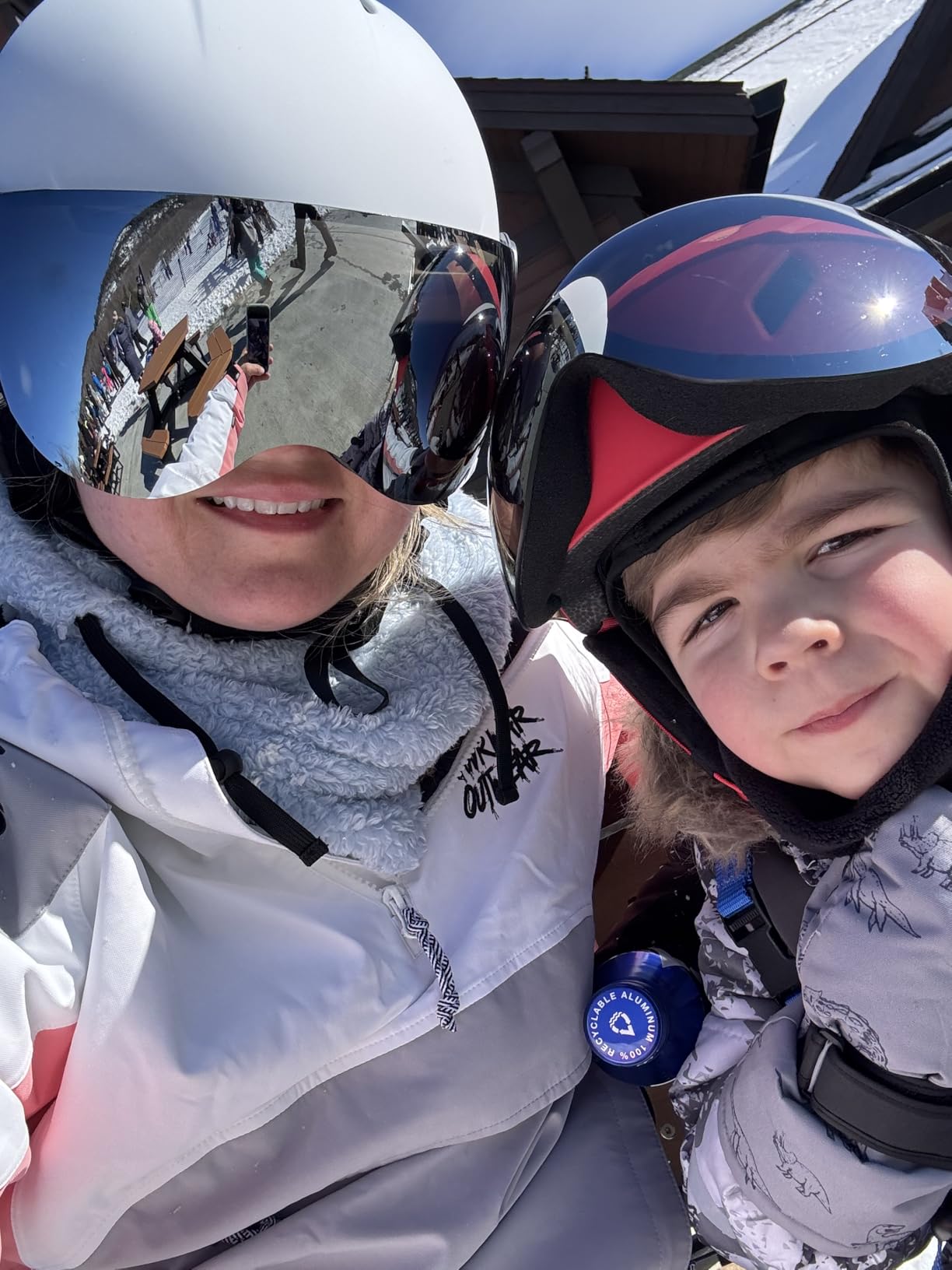
235 parents rate it 4.8 with 85 percent five stars, which is the highest rating of anything in this roundup. The shell is reinforced with EPS foam shock absorption and ASTM certified, and 10 vents with an anti-fog coated lens keep a child’s view clear during long runs.
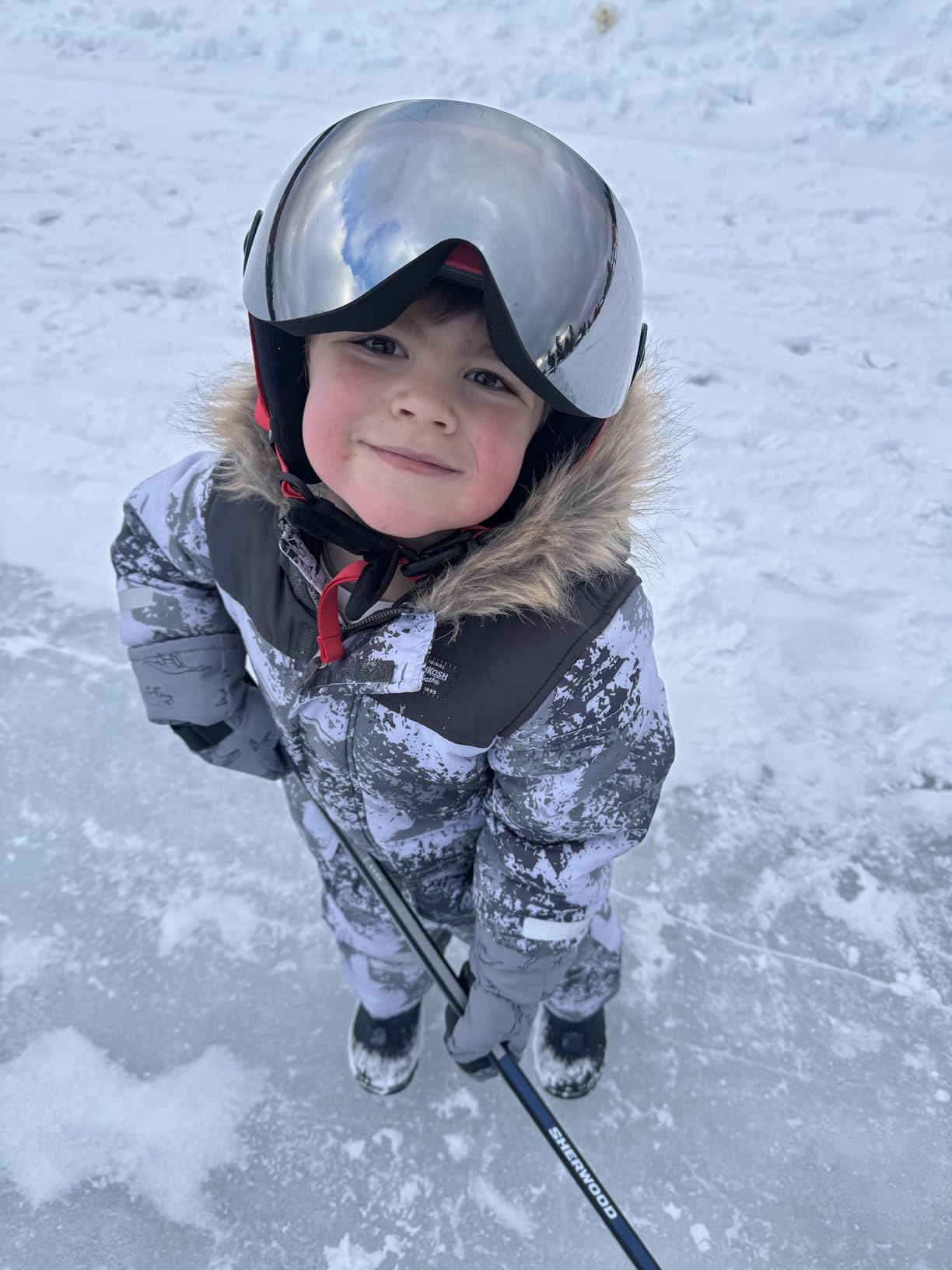
The field of view is the standout technical number: 180 degrees side to side and 120 degrees up and down, which is unusually wide for a visor helmet and helps a young skier track what is merging ahead of them. The integrated visor goggles fold flat for storage and cannot be lost, which solves the lost-goggle problem permanently.
What should parents watch?
There are only two size buckets. The XS covers ages 3 to 5 at 49 to 53 cm and the S covers ages 5 to 12, so a large five-year-old can fall between them. Measure the child’s head and pick deliberately rather than going by age label.
The anti-fog coating degrades over a season of use. Expect to reapply or replace it across a winter, and check it at the start of each rather than discovering it on a foggy afternoon.
Who should buy the kids helmet?
It suits families with children aged 3 to 12 who lose goggles, fight with buckles, or wear glasses on the slope. The wide field of view and the fold-flat visor suit long days at a resort where gear gets dropped constantly.
It is a weaker fit for a child who needs fine size precision between ages, and for parents who expect a coating to last multiple seasons untouched.
7. SNOWER Ski Helmet With Goggles Combo: Best for Warmth
SNOWER Ski Helmet with Goggles, 2-in-1 Snowboard Helmet and Visor Goggles Combo – Adjustable Fit & Ventilation System – Snow Helmets for Men&Women
ABS shell with EPS liner
10 vents
Rear dial and ear pads
Pros
- Visor seals well against the helmet and blocks wind
- Detachable washable fleece liner and ear pads
- Rear dial plus chin strap for three-way fit adjustment
- Works over prescription glasses
Cons
- Visor fogs readily and can be unusable in some conditions
- Tinted shield is hard to see through in dim light
- Large size can run loose even with a balaclava
The SNOWER combo is the warmest setup I reviewed, and the reason is the liner rather than the shell. A detachable washable fleece liner combined with detachable ear pads gives noticeably more insulation around the ears and the back of the neck than the foam-only interiors on most rivals.
97 owners rate it 4.4. Fit is handled three ways at once, with a rear dial, an adjustable chin strap and detachable ear pads, and the 2-in-1 visor seals firmly enough against the helmet that owners credit it with keeping wind out even at speed.
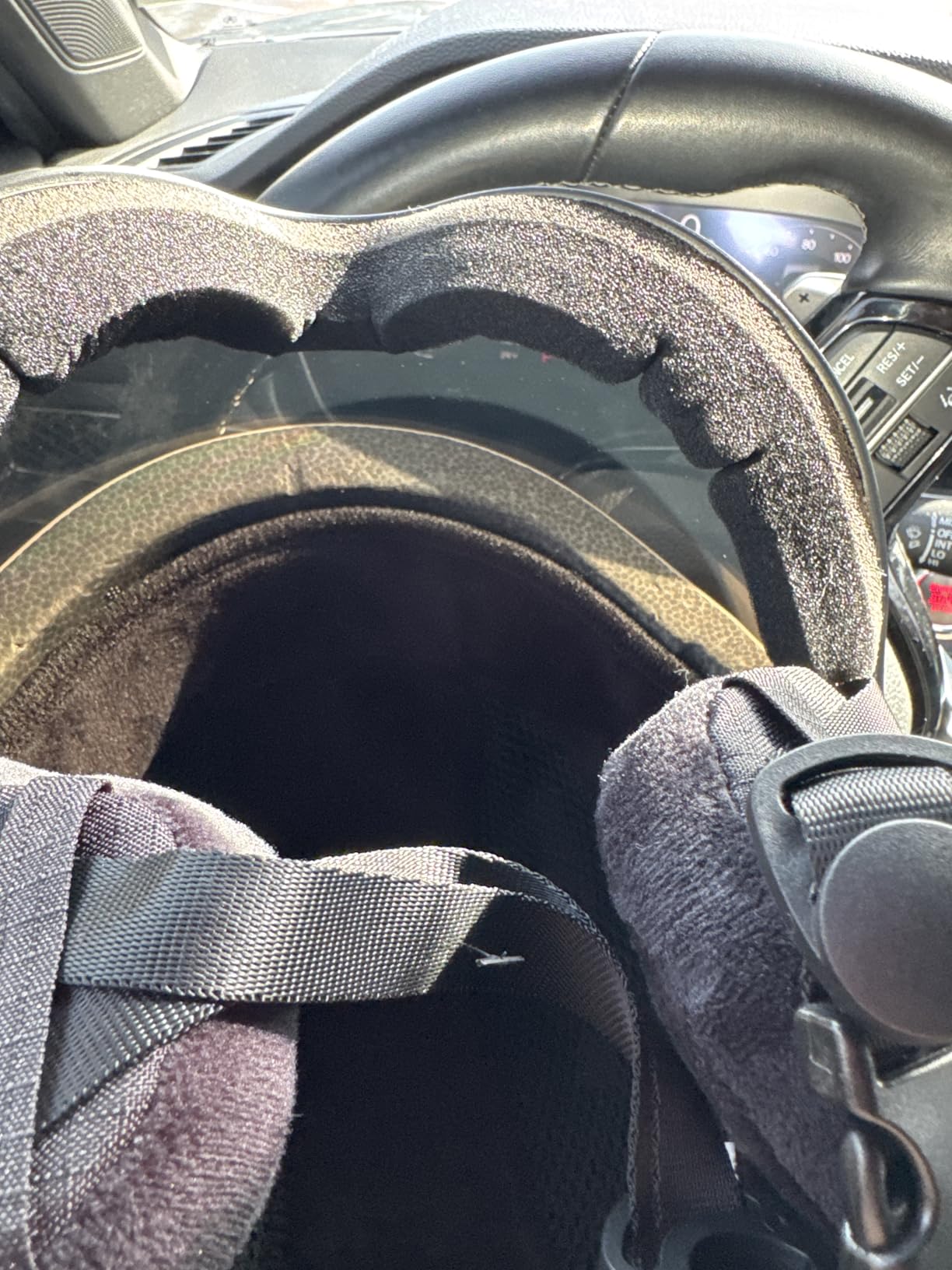
It works over prescription glasses, and a carry bag is included. Sizes run medium at 21.65 to 22.83 inches and large at 22.84 to 24.41 inches, with 10 vents and an anti-fog coated, venting goggle lens.
What are the weaknesses?
Fogging is the dominant complaint and it is not subtle. Owners report the visor fogs readily and can become unusable in some conditions, which is the same issue that pushes most riders away from visor helmets in the first place. If you are sensitive to it, this is not the helmet to learn on.
The tint also dims badly in overcast or snowy light, and the large size can run loose even with a balaclava and a tightened strap. There is a separate report of the visor catching the nose when lowered.
Who is this combo for?
It suits cold-weather riders, sledders and snowmobile crossovers who want one warm sealed package rather than a helmet plus a goggle. It also works if you wear glasses and want them kept on all day.
It is a poor fit for flat-light days, for fog-sensitive skiers, or for anyone with a head circumference near the top of the large band.
8. Giro Vue MIPS: Best MIPS Protection
Giro Vue MIPS Snow Helmet – Matte Light Grey – Size M (55.5-59cm)
MIPS multi-directional protection
In Form Fit dial
Thermostat Control vents
Convertible shield
Pros
- Only helmet here with MIPS multi-directional impact protection
- In Form Fit dial gives up to 6 cm of adjustment
- Stack Vent aligned with the shield helps keep vision clear
- XT2 padding and compatible with aftermarket audio systems
Cons
- Visor does not fully seal so snow builds up inside
- Thick foam seal blocks the lower field of view
- Replacement visors cost a lot next to the helmet
The Giro Vue MIPS is the only helmet in this roundup with a named rotational-impact system. MIPS multi-directional impact protection is fused into the polycarbonate shell, and owners rate the resulting protection at 4.3 across 38 reviews with several accounts of it absorbing hard falls without injury.
Fit is the other strength. The In Form Fit dial gives up to 6 cm of adjustment and works with gloves on, which is the widest range on this list. Thermostat Control venting plus a Stack Vent aligned with the shield keep heat moving away from the lens, and the shield spacing leaves glasses unfogged.
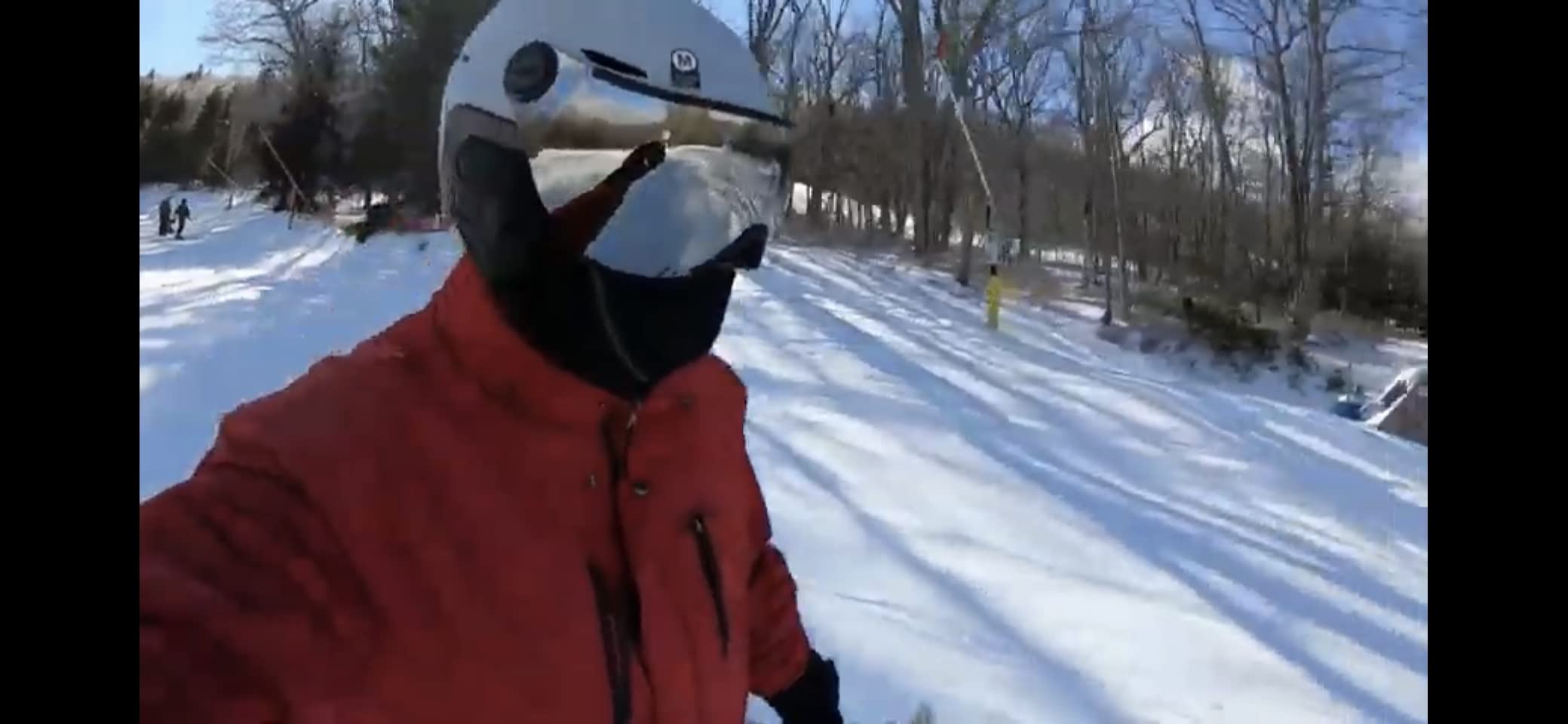
The convertible shield gives a wide field of view with good optical clarity, the padding is XT2 anti-odor, and the ear pads accept aftermarket audio systems if you run Bluetooth. That is a detail none of the other visored helmets here mention.
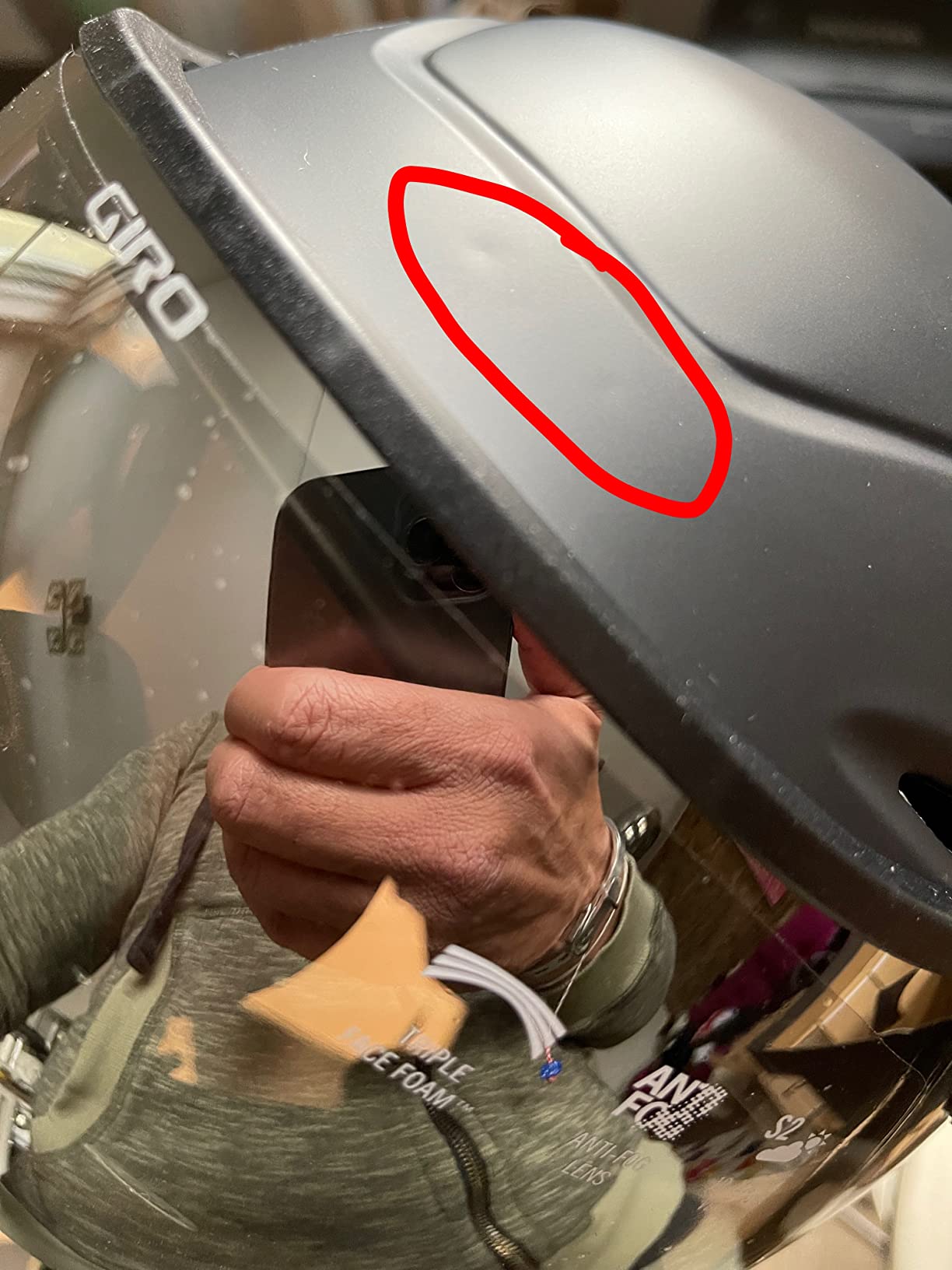
What does the MIPS advantage cost you?
Three things. The shield does not fully seal, so snow enters and builds up inside on snowy days. The thick face foam seal eats the bottom of your field of view, so you have to look down deliberately to see terrain or the board tip. And replacement visors are expensive relative to the helmet itself, which matters if you scratch the lens.
Because the shield sits far from the face, a wet lens that refreezes is hard to clear from inside. A few units also arrive with factory dents or scuffing, so inspect on arrival.
Who should buy the Giro Vue?
It suits a rider whose priority is impact protection above convenience, who already owns goggles for deep snow days, and who wants Bluetooth audio compatibility. It is also a strong choice if you wear glasses and value the shield spacing.
It is the wrong choice if you want a single sealed system and never plan to carry goggles. The snow ingress is the trade for the MIPS layer.
9. DEMON UNITED Visor Helmet: Best Removable Visor
Demon United Ski and Snowboard Visor Helmet-Snowboard Helmet with Removable Visor Goggles and Rear Dial Adjustment- Snow Sport Helmets for Men and Women (Black, SM/MED 20-22 Inches)
ABS shell with foam padding
Removable visor
Rear dial adjustment
1.2 lb weight
Pros
- Visor removes entirely unlike fixed-shield designs
- Visor moves up and down easily and is designed over glasses
- UV protection with anti-fog and scratch-resistant coating
- Moisture-wicking breathable lining
Cons
- Below the other adult helmets on rating at 4.1 with 10 percent one-star reviews
- Only one size offered at 20 to 22 inches
- Bulky ear pads and vents add weight
Most visored helmets here use a detachable or fold-flat visor. The DEMON UNITED takes the visor off entirely, which is the cleanest conversion to a plain helmet when you decide you would rather wear goggles. The visor slides up and down and is designed to be worn over glasses.
The coating stack is solid on paper: UV protection, anti-fog and scratch resistance with a smoke mirror finish. Fit comes from a rear dial, cushioned venting ear pads and a moisture-wicking breathable lining, and the shell is ABS with foam padding.
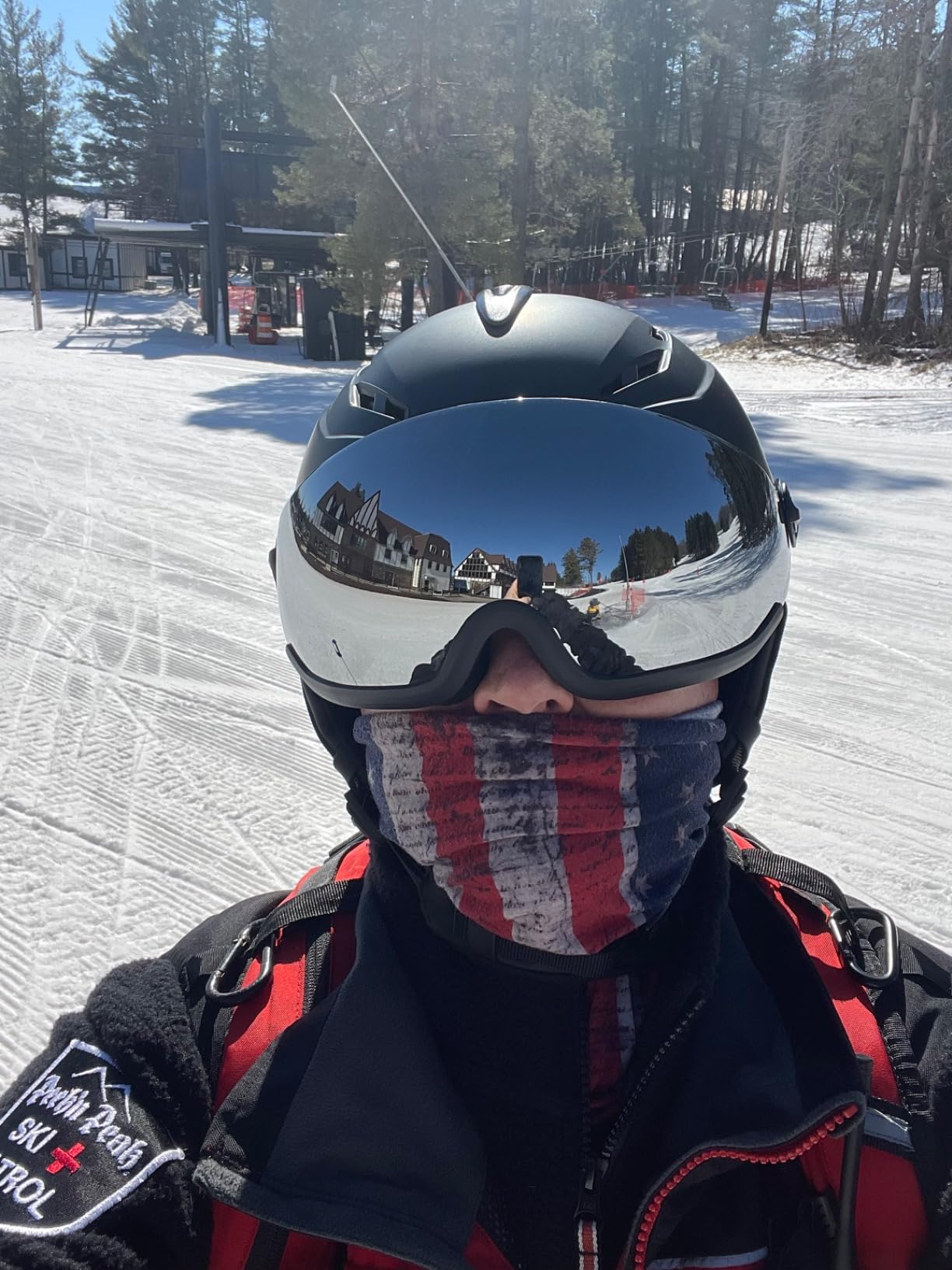
The honest problem is the evidence base. At 4.1 across 32 ratings, with 10 percent one-star reviews, this sits below the other adult helmets in the roundup, and that number comes from a small sample. Buyers credit the removable visor and glasses-friendly design while feedback is mixed on build and comfort.
Is the single size a real limitation?
Yes. One size at 20 to 22 inches covers a narrow band of adult heads, and there is no second size to fall back on. Measure your head circumference before ordering, and treat the review count as too small to rely on for long-term durability.
Bulky ear pads and vents push the weight to 1.2 lb, and the venting design is described as less refined than premium rivals, which connects directly to the fog complaints that come with this format.
Who should consider it?
It suits someone who wants a normal helmet most days and a visor for sunny days, or who wants the freedom to remove the lens permanently. The glasses-friendly visor design is a genuine plus.
Skip it if your head is outside the listed range, or if you want a large body of owner feedback to lean on. For either reason, one of the higher-review helmets above is the safer buy.
10. LUMDEER Ski Helmet With 2-in-1 Visor Goggles: Budget Pick
LUMDEER Ski Helmet with 2 in 1 Visor Goggles, UV Protection Snowboard Helmet, Certified Ajustable Snow Sport Helmets for Men Women Skiing, Skating, Snowboarding
ASTM certified
ABS shell with EPS foam
0.7 kg
Rear dial adjustment
Pros
- Lowest cost entry with ASTM certification
- Integrated goggles operate with one hand
- Thick thermal liner with removable earmuffs
- Rear dial for precise circumference adjustment
Cons
- Lowest rating in the group at 4.0 with 14 percent one-star reviews
- Small sample of 31 ratings leaves durability unproven
- Visor tint reduces visibility in low light
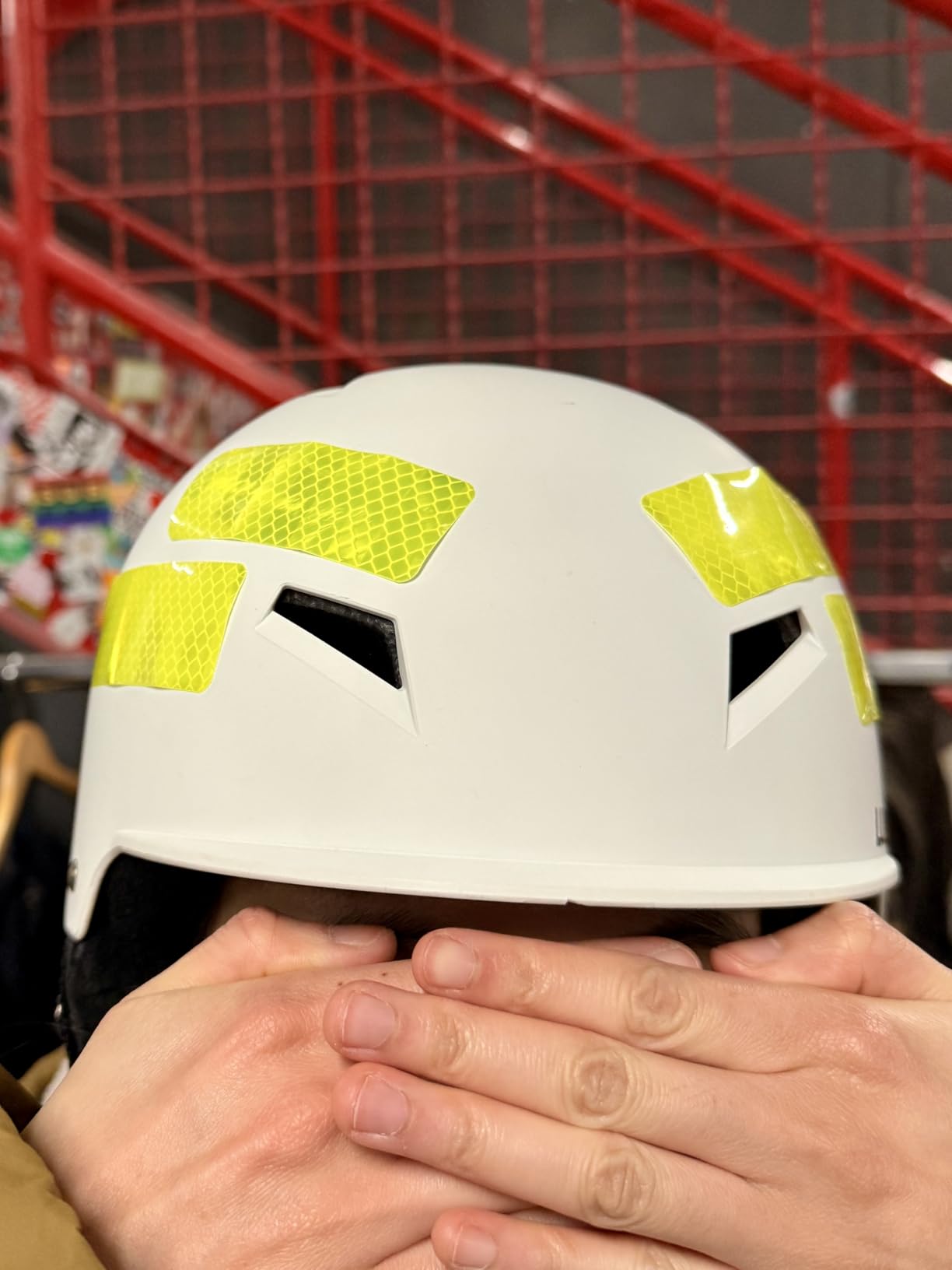
The LUMDEER is the cheapest certified entry here, and the part that matters most is the certification. An ASTM certified ABS shell over high-density EPS foam is the same structural recipe as helmets costing several times more, which makes this a defensible first helmet or a rental-season backup.
Owners like the one-hand operated integrated goggles, which cannot detach mid-movement, and the rear dial that gives precise circumference adjustment. For warmth, a thick thermal liner, removable earmuffs and a soft chin pad cover the cold spots.
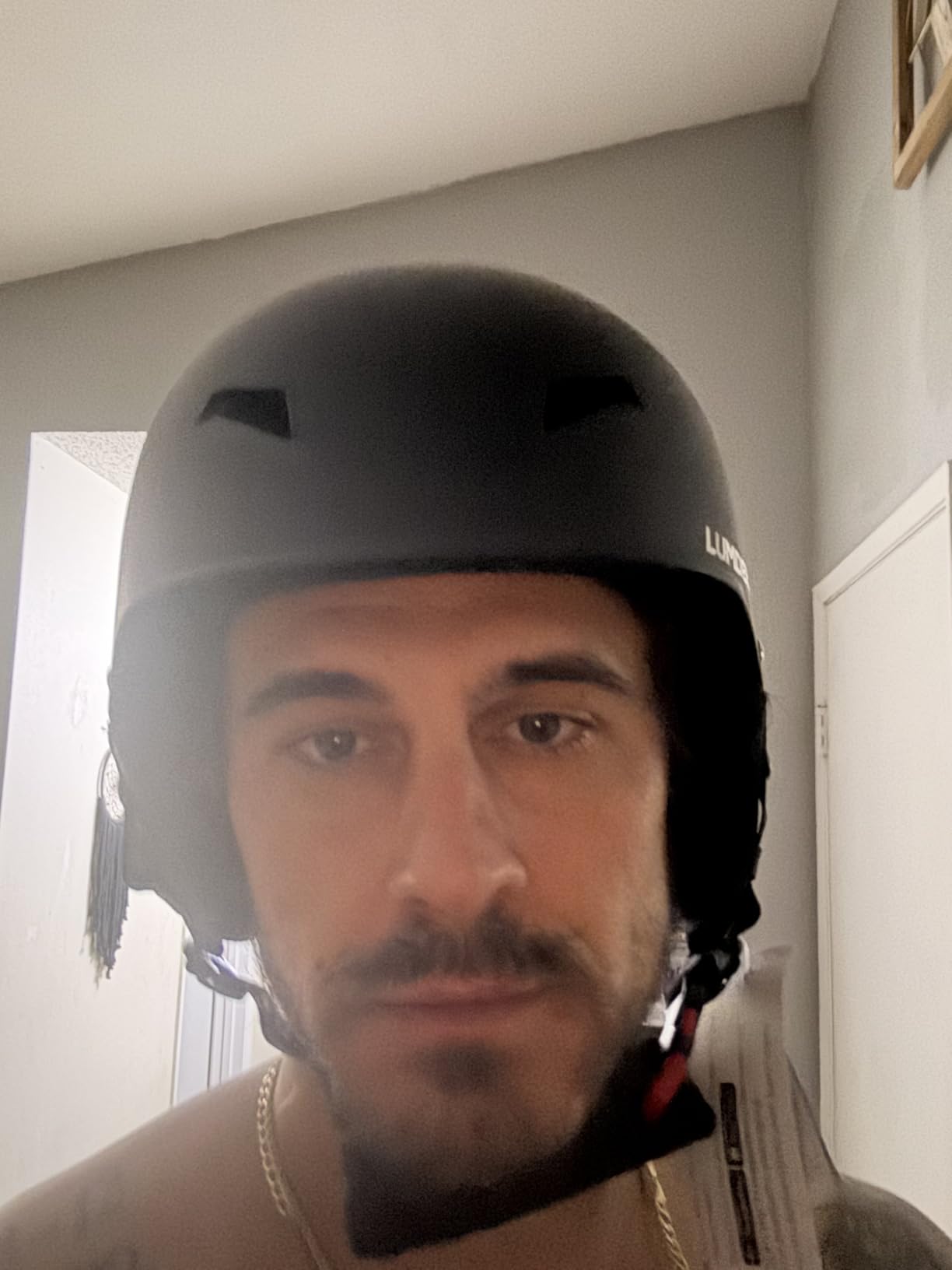
At 0.7 kg it is among the lighter options, and the visor is listed with anti-fog and ventilation features. Sizes cover adult heads, and the shell is also marketed for skating and snowboarding.
What are you accepting at this level?
The rating is 4.0, the lowest in this roundup, with 14 percent one-star reviews, and it rests on only 31 ratings. Long-term durability is simply unproven at that sample size, and you should treat it accordingly.
The visor tint reduces visibility in low-light and flat-light conditions, which is the same limitation the SNOWER and uvex Wanted visors have, but here there is no coating technology to compensate. If you ride in bad light, this is not the helmet.
Who should buy the LUMDEER?
It suits a first-season skier, a rental or backup helmet, or anyone who wants one certified integrated package at the lowest entry point. The one-hand goggles are convenient on chairlift mornings.
It is a poor fit for anyone riding regular low-light or flat-light days, and for riders who want long-term durability proven by a large owner base. If that describes you, the OutdoorMaster or Odoland adult models are the better-value jump.
Why Visor Helmets Fog and What Actually Fixes It
Fogging is the number one complaint about this entire category, and it is worth explaining why it happens rather than just warning you about it. A goggle lens is a sealed pocket of air held away from your face by foam, and vents at the top of the frame let warm air escape before it can condense. A visor lens is a sealed piece of plastic bonded to a rigid shell, and it often sits further from your skin than a goggle lens does.
That extra gap is the whole problem. Warm breath has nowhere to vent, so it condenses on the inside of the lens where you cannot wipe it without taking the helmet off. If it gets cold enough, it freezes, and forum users describe ice under the visor as genuinely hard to remove. Snowmobile riders report the same effect in reverse because a fully sealed cabin traps even more moisture.
What helps, in order of how much it matters: choose a helmet whose visor seals closely to your face, like the uvex Wanted; leave the helmet unclipped or unbuckled for a minute before you start, so warm air leaves before you begin working; keep the chin area open rather than fully cinched; and carry a lens cloth you can reach with one hand.
Anti-fog spray helps, but it is maintenance, not a fix. It wears off across a season and it does nothing once the lens has already frozen. Snowheads and theskidiva forum threads both converge on the same practical answer: a neck gaiter pulled up over the bottom edge of the visor cuts snow ingress dramatically on days when it is actually snowing.
Ski Helmet With Visor vs Separate Goggles
The honest case for goggles is optical performance. A good goggle lens beats an integrated visor on contrast, on tint range, and on the ability to swap a dark lens for a low-light one mid-day. If your skiing involves variable light, that advantage is worth carrying a second piece of gear.
The honest case for a visor is everything about convenience. Glasses stay in place, there is no strap, nothing is lost, and peripheral vision opens up because the goggle frame is not sitting in front of your ears and temples. SnowSunSee-style comparisons of the two formats usually end in a draw, and we think that is the right result.
A practical middle path exists. Several helmets here use a detachable visor, so you can run the integrated lens on sunny days and clip your own goggles on when the weather turns. That doubles your gear but removes the commitment.
How to Choose a Ski Helmet With Visor
Helmet construction: in-mold, injected ABS and hybrid
Construction decides weight and price more than any other spec. In-mold construction bonds the EPS liner to a thin polycarbonate shell, which gives the lightest result and the best impact behaviour for its weight. Injected ABS shells are thicker and heavier but take more abuse and are cheaper to make. Hybrid shells sit between the two, adding a thicker top or a reinforced edge over an in-mold or ABS base.
Every helmet in this roundup uses an outer shell of ABS or polycarbonate over an EPS foam liner, which is the mainstream combination and is why they cluster in a similar weight range from 570 g to 800 g. If you want the lightest option, check the stated weight first.
Visor CAT ratings: which tint suits which weather
CAT ratings describe light transmission, and choosing the wrong one is the fastest way to dislike a visor helmet. CAT 1 is the lightest and suits night riding or very dark conditions. CAT 2 handles heavily overcast days. CAT 3 is the all-rounder for average conditions and cloudy sun. CAT 4 is the darkest and belongs on bright sun at altitude.
Most of the helmets here ship with a mid-range tint and do not publish a CAT number. The uvex Wanted Visor is the exception, carrying a filter category 2 visor with 19 to 43 percent light transmission, which is a low-light-friendly lens and explains its flat-light complaints on bright days. If you ride at altitude in strong sun, treat the default tint on any of these as CAT 3 and buy accordingly.
Photochromic lenses darken and lighten automatically as conditions change, which solves the single-day problem but not the overnight one. None of these ten offer an interchangeable photochromic lens, so if variable light is central to your skiing, carry goggles.
Safety systems and certification
Look for CE EN1077 or ASTM F2040 certification before anything else. Both are the recognised alpine standards, and a helmet without either should not be on your head. Six of these ten carry ASTM certification in their product details.
Above that baseline, MIPS multi-directional impact protection adds rotational-impact management. The Giro Vue MIPS is the only helmet here with it, which is why it earns the MIPS-specific badge despite a lower rating than several rivals. Systems like EPS 4D, AMID and Holo Core from other brands work on the same principle of managing rotational force, but they do not appear in this lineup.
Fit and sizing
Measure your head circumference in centimetres before you order, using a tape measure just above your eyebrows and across the widest part of your head. Then compare against the listed size band rather than the age or S, M, L label. Sizing runs inconsistent between brands, and buyers repeatedly report needing to size up.
Fit adjustment comes in three forms. A rear dial or cradle gives the widest range, the uvex IAS and Giro In Form Fit systems are the most refined of those here, with Giro offering up to 6 cm, and a basic rear cradle or chin strap is the cheapest and least precise. On a visor helmet the fit matters more than usual, because the visor and the frame of your glasses interact with the brow padding.
Ventilation
Vents do two jobs: they move heat off your head, and they help move moisture away from the lens. Helmet vents control the inside of the shell; they do not clear condensation on a sealed visor. Vent counts here run from 10 on the SNOWER and kids models to 14 on the Odoland and OutdoorMaster, with a closable system on the uvex Wanted.
Expect to close vents on cold lifts and open them on warmer descents. A vented shell also has a useful side effect, which is that worn helmets dry faster overnight instead of staying damp until morning.
When You Should Skip a Visor Helmet
Four situations favour a standard helmet and goggles over anything on this list. Deep powder and storm days, because the visor seal is exactly where snow enters. Low-light and flat-light riding, because integrated tints rarely match a dedicated low-light goggle lens. Riders who already wear a helmet-mounted camera, because the shield and mount fight for the same forehead space. And racing or high-speed piste riders, who need precise downward vision that a thick face seal blocks.
That is not an argument against visor helmets. It is an argument for keeping your goggles in your bag on those days, which is what the detachable-visor models on this list make easy.
Frequently Asked Questions
What are the best helmets with a sun visor?
The strongest all-round option is the Odoland Ski Helmet with 2-in-1 Visor Goggles, rated 4.4 across more than a thousand owner reviews, with a polycarbonate shell, EPS liner, 14 vents and a detachable visor that works over prescription glasses. For the best sealed build pick the uvex Wanted Visor, for the best certified value pick the OutdoorMaster visor set, and for children the Odoland Kids model rates highest of all.
Are ski helmets with visors safe?
Yes, provided the helmet carries CE EN1077 or ASTM F2040 certification. Many visored models use the same ABS or polycarbonate shell over an EPS foam liner as standard helmets. The Giro Vue MIPS adds multi-directional rotational-impact protection, which is a step beyond the baseline for anyone riding fast or in technical terrain.
Can I wear glasses with a ski helmet that has a built-in visor?
Yes, and it is one of the main reasons to choose this format. Because the visor sits in front of the frame instead of compressing the temples against your head, glasses stay in place and fog less. The uvex Instinct Visor and the Odoland 2-in-1 both get specific owner feedback for working over prescription frames.
Why does my ski helmet visor fog up?
Because the lens is sealed to the shell and usually sits further from your face than a goggle lens does, so warm breath has nowhere to vent and condenses on the inside. Helmet vents move heat off your head but do not clear visor condensation. Leave the helmet unbuckled for a minute before starting, keep the chin area open, and use a lens cloth you can reach one-handed.
Should there be a gap between ski goggles and a helmet?
No. Goggles should sit flush against the helmet with no gap at the bottom, because any gap lets snow and cold air in and creates a channel where fog forms. This is also why visor helmets struggle in snowfall: the lens-to-face gap is built into the design and snow collects in it. Pulling a neck gaiter up over the bottom edge reduces ingress noticeably.
Why should some skiers skip a visor helmet entirely?
If you ride deep powder or in storms, in low light or flat light, wear a helmet-mounted camera, or need precise downward vision at speed, a standard helmet with dedicated goggles performs better. Integrated tints rarely match a low-light goggle lens, and the face seal can block the bottom of your field of view. Many riders simply keep both setups in the car.
The Verdict
The best ski helmets with visors in 2026 split cleanly into three groups. If you want the best ski helmet with visor overall, take the Odoland 2-in-1: the deepest owner feedback base, a solid polycarbonate and EPS build, 14 vents, and the glasses compatibility that pulls most people into this category.
Spend more and you get the uvex Wanted Visor’s seal, which is the best answer to fogging in this roundup. Spend less and the OutdoorMaster visor set gives you ASTM certification, the highest adult rating here, and a detachable visor for the same one-piece convenience. For children, the Odoland Kids helmet is the pick on the strength of its magnetic buckle, wide field of view and unbreakable-by-lost visor.
Keep goggles in the bag regardless. The day you are riding deep snow in flat light, no integrated lens beats a real goggle. Check the current details for each pick, and get the fit right before anything else.