
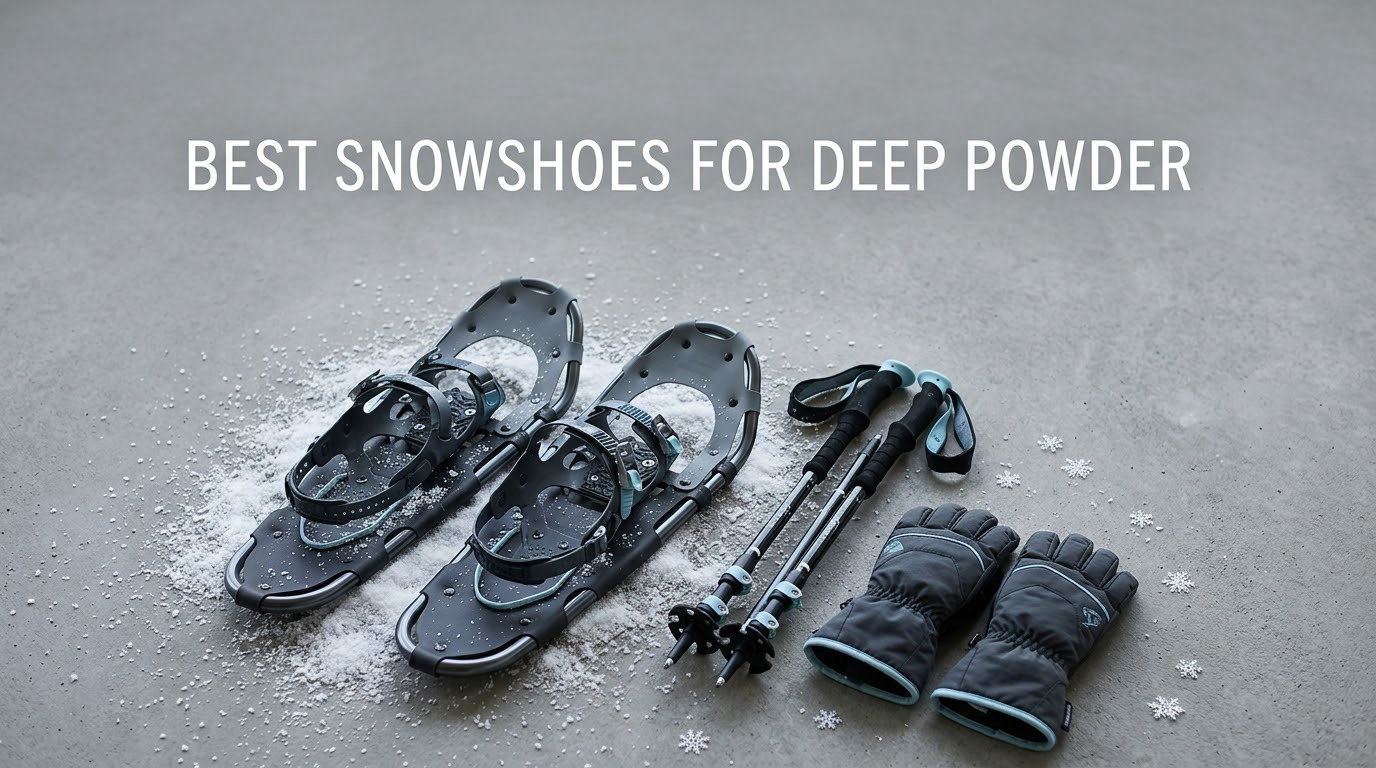
Quick answer: the Tubbs Mountianeer is the best snowshoe for deep powder in 2026. Its 36 inch aluminum deck spreads your loaded weight over the most snow surface area of any model we reviewed, and it holds up in two feet of unconsolidated powder without postholing. The MSR Lightning Ascent is the runner-up if your days mix powder with hard alpine steeps.
Snowshoeing only fails in one way, and it fails fast. You step into fresh powder, the deck sinks below the surface, and suddenly you are dragging your legs through knee-deep snow on every single stride. Members of r/snowshoeing and r/WildernessBackpacking describe this postholing fatigue as the thing that ends days early, and it has almost nothing to do with crampons or teeth.
That is the part most roundups get backwards. On a packed or icy trail, traction decides whether you slip. In deep unconsolidated powder there is nothing underneath for teeth to bite into, so flotation decides everything.
A big deck surface area spreads your weight across a wider patch of snow, drops the pressure per square inch, and lets the snow hold you up. The best snowshoes for deep powder are the ones with the most deck area relative to your total loaded weight, not the ones with the most aggressive undercarriage.
We pulled 12 pairs together and compared deck dimensions, frame material, weight capacity, binding systems and measured pair weight. Several of these models show up in our broader winter hiking snowshoe guide as well, but the criteria here are narrower: how much snow can this deck hold up, and how heavy is that answer on your legs after eight hours.
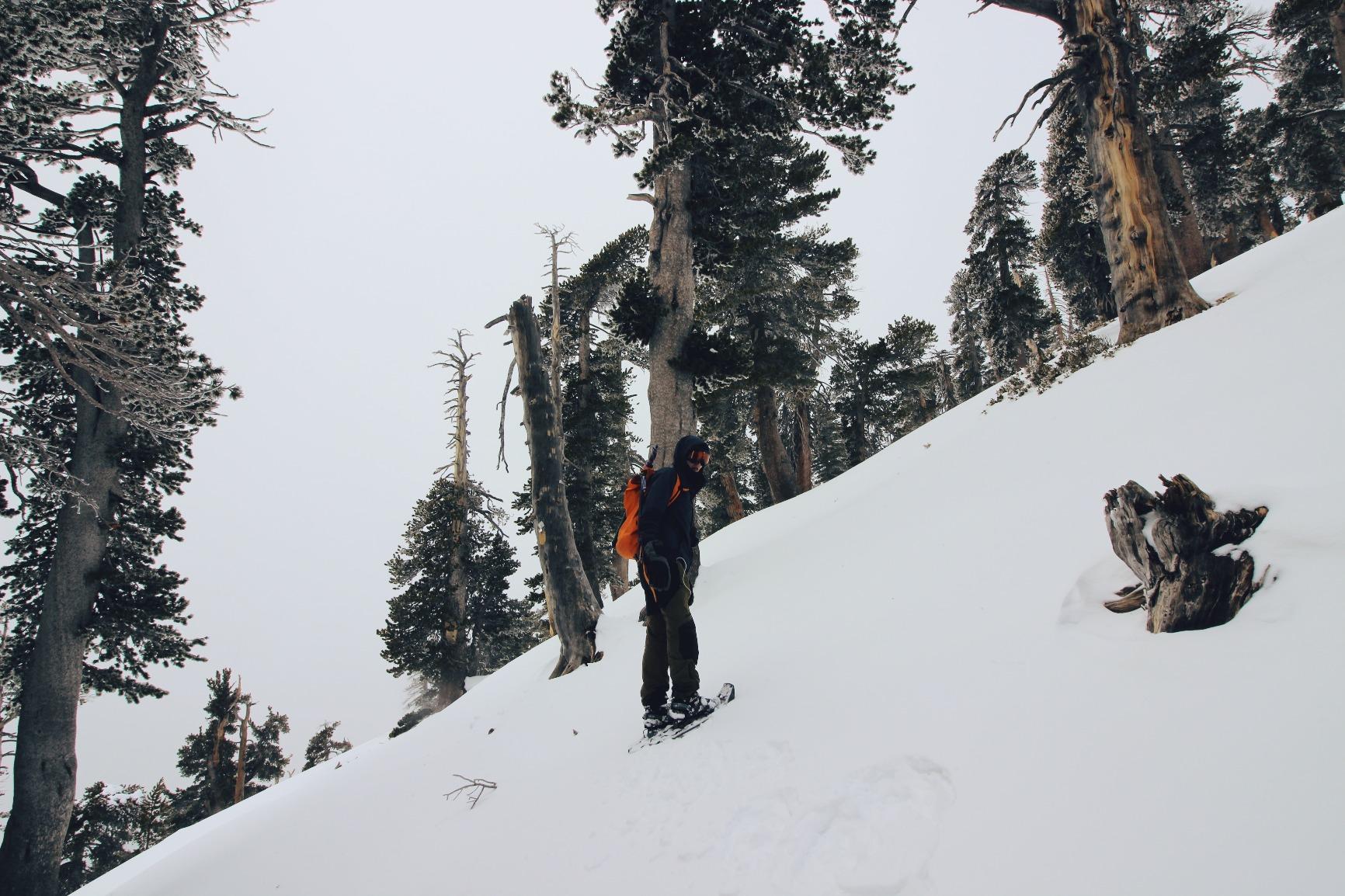
One warning before the list. A pair of snowshoes does not make avalanche terrain safe. If your route crosses a loaded slope, that decision belongs to your avalanche training, your beacon, probe and shovel, and your own willingness to turn around.
Table of Contents
Top 3 Picks for Best Deep Powder Snowshoes in 2026


These three cover the widest range of powder days. The Mountianeer wins on pure flotation area, the Lightning Ascent on mixed alpine terrain, and the Crescent Moon Gold 10 on float with a steel undercarriage for the refrozen sections you inevitably hit on the way back.
All 12 Best Snowshoes Compared Side by Side in October
| Product | Specifications | Action |
|---|---|---|
 Tubbs Mountianeer Tubbs Mountianeer |
|
Check Latest Price |
| MSR Lightning Ascent |
|
Check Latest Price |
 TSL Symbioz Elite TSL Symbioz Elite |
|
Check Latest Price |
 MSR Revo Ascent MSR Revo Ascent |
|
Check Latest Price |
 TSL 418 Up Down Grip TSL 418 Up Down Grip |
|
Check Latest Price |
 Tubbs Wayfinder Tubbs Wayfinder |
|
Check Latest Price |
 MSR Evo Ascent MSR Evo Ascent |
|
Check Latest Price |
 TSL Symbioz Access TSL Symbioz Access |
|
Check Latest Price |
| Crescent Moon Gold 10 Backcountry |
|
Check Latest Price |
 Tubbs Flex VRT Women’s Tubbs Flex VRT Women’s |
|
Check Latest Price |
 Crescent Moon Sawtooth 27 Crescent Moon Sawtooth 27 |
|
Check Latest Price |
 Atlas Helium MTN 23 Atlas Helium MTN 23 |
|
Check Latest Price |
1. Tubbs Mountianeer – Best Overall for Deep Powder
TUBBS Mountaineer, Color: Green, Size: 36 (X190100101360)
36 inch aluminum frame
SoftTec decking
3 lb per pair
200 lb capacity
Pros
- Largest deck area in the group
- so it floats deepest snow
- Lightest pair here at 3 lb
- ActiveLift 19 degree heel lift cuts calf fatigue
- SoftTec deck stays quiet underfoot
Cons
- 200 lb rating leaves little room for a heavy pack
- Binding takes practice on steep climbs
The Mountianeer is the only model in this group built around a 36 inch deck, and that single fact decides the powder question. On flat untracked fields after fresh snowfall, it walks on top where everything smaller in this list starts to settle. If your definition of deep powder involves breaking the first trail of the day, this is the pair to do it in.
At 3 pounds per pair it is also the lightest here, which matters more than the raw number suggests. Over a long day the difference between a 3 lb pair and a 5 lb pair is 4 lb carried from first light to last light, and that is weight you are not putting into your legs on every step.
SoftTec decking is a smooth, flexible surface that flexes with the snow rather than punching a hard edge into it. Owners mention a lively but supportive ride, and the 19 degree ActiveLift heel lift is one of the more effective in the group at taking load off the calf on long climbs.
We compared the Mountianeer against the Crescent Moon Gold 10 head to head on deck geometry, and the 36 inch frame wins on area while the Gold 10 wins on taper.
Underneath, Anaconda toe crampons and Python heel crampons give you a grippy undercarriage for the refrozen morning crust. That is the part most dedicated powder frames leave off, and it means one pair covers the whole day instead of forcing a second trip to the truck for microspikes.
What the Mountianeer handles that smaller decks do not
Untracked fields, open bowls after fresh snowfall, and breaking trail through knee-deep powder. A 200 lb user with a light daypack floats fine. Owners running 18 to 20 inches of fresh snow report the deck staying on the surface rather than punching through.
Its teardrop-style taper also means it does not fight you when you turn. A 36 inch deck that pivots well underfoot is a very different tool from a 36 inch deck that feels like a plank.
Where it is the wrong choice
The 200 lb rating is the honest limit here. If you weigh near 200 lb and carry a 30 lb pack, you are asking this deck to hold more than its rating, and you will sink. There is no flotation tail listed for this frame, so the only fix is a different size or a different brand.
The binding also needs a break-in. Owners describe the ActiveFit 2.0 system as fiddly on steep terrain until you have adjusted it a few times. Budget ten minutes of daylight on your first outing rather than fumbling with it on a loaded climb.
2. MSR Lightning Ascent – Best for Steep Alpine Terrain
MSR Lightning Ascent Backcountry & Mountaineering Snowshoes with Paragon Bindings, 25 Inch Pair, Black
25 inch steel DTX frame
Paragon binding
Televator heel lift
220 lb capacity
Pros
- 4.33 lb frame with edge-to-edge grip
- Steel DTX crampons bite alpine steeps
- Paragon strap wraps boots without pressure points
- 220 lb rating leaves room for gear
Cons
- 25 inch deck is modest for breaking trail in deep powder
- Binding fit is sized to men's shoe sizes 4.5 to 15
The Lightning Ascent draws on 154 reviews, and that body of feedback points at one specific strength: it is built for the moment powder gives way to steep, hard alpine ground. The 360 degree traction frame wraps the entire perimeter, so on a sidehill traverse the frame itself resists slip, not just the crampon teeth.
That frame also flexes. Torsional flex through the pivot point is what makes a 25 inch technical shoe feel lively rather than like a solid board, and it is why this model holds up on long mixed days where a stiffer deck would fatigue you.
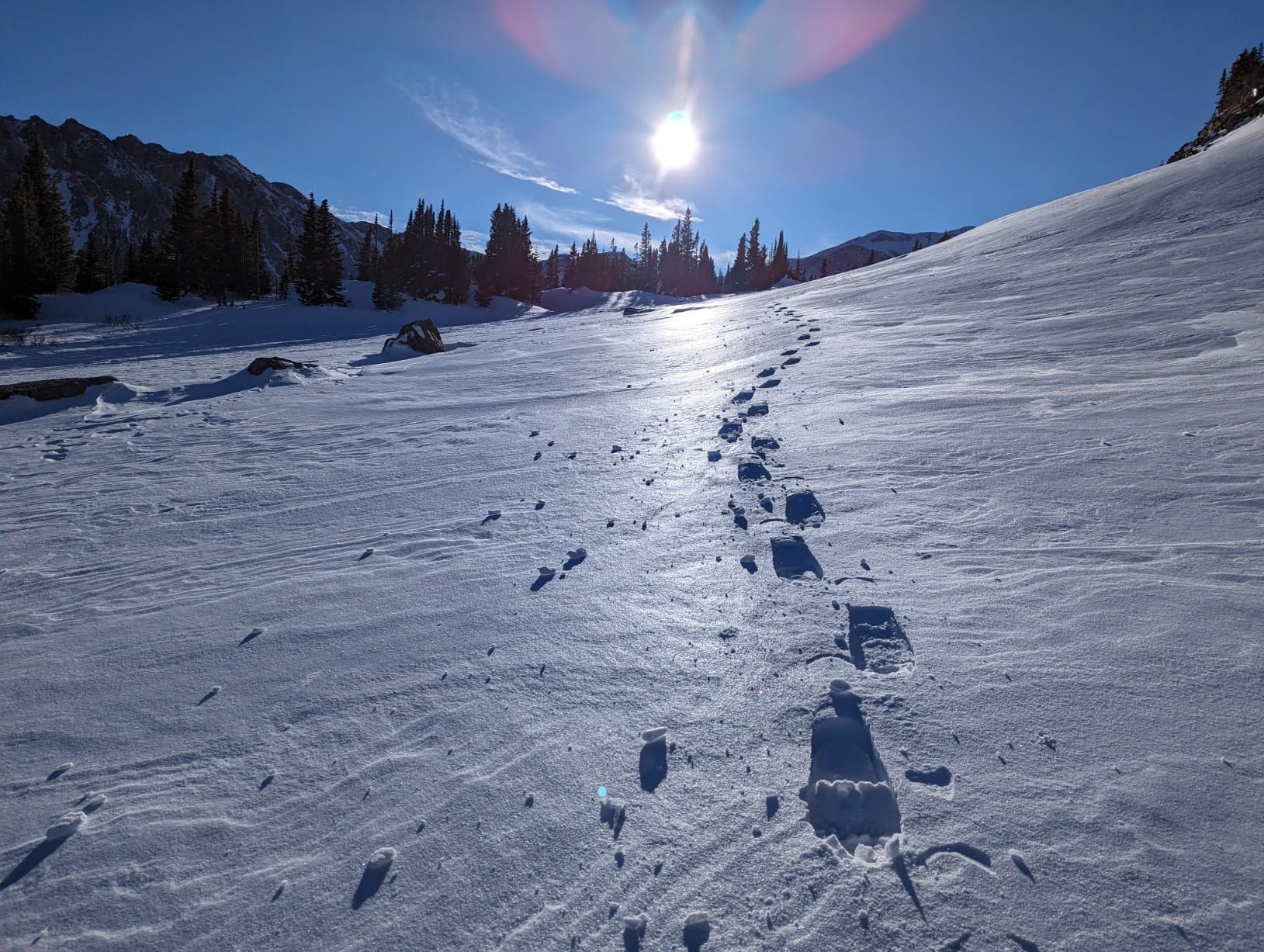
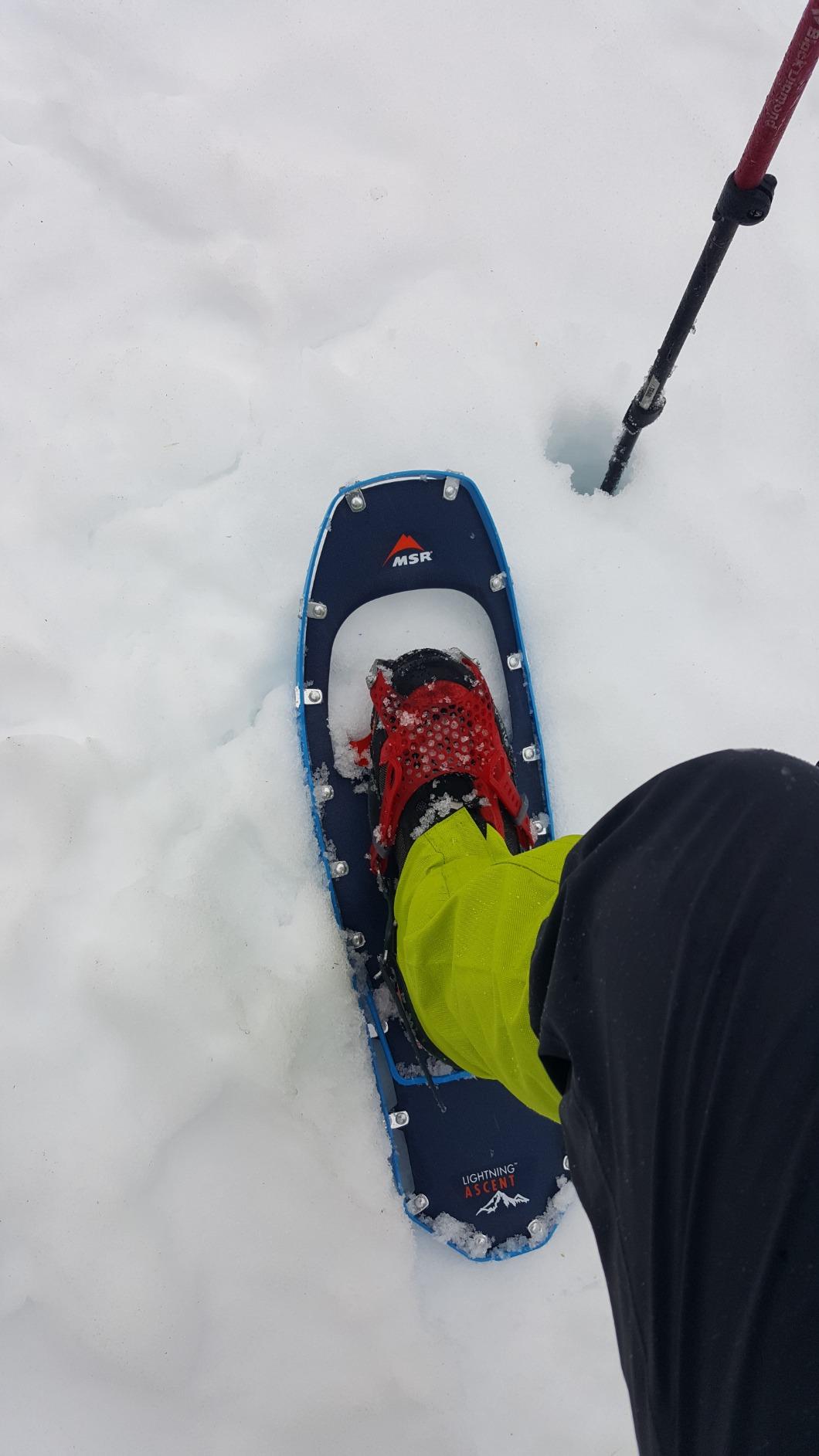
Steel DTX crampons give serious bite on alpine steeps, and the Ergo Televator heel lift bar flips up in seconds to make uphill progress cheaper. The Paragon binding is a single contouring strap that wraps the boot rather than pinching it, which is why owners describe it as glove-like and why cold hands do not cause a problem here.
Pair weight is 4.33 lb per pair and the rating is 220 lb. That capacity headroom is a real advantage over the Mountianeer for anyone carrying real gear.
When the Lightning Ascent is the right call
Routes that climb. Anything steep, anything with a firm wind crust, anything where a slip would be embarrassing at best. The steel undercarriage and edge-to-edge frame give you the confidence that lighter trail-oriented decks in this list do not.
It is also a strong choice if you split your season between tracked winter hiking days and a handful of real backcountry objectives, since it handles packed trails with unusual grace for a technical shoe. Our winter hiking snowshoe guide covers that packed-trail end of the market in more depth.
When it is the wrong call
Break a trail in two feet of dry powder and this is not the frame you want. A 25 inch deck handles snow roughly boot-depth to mid-calf, and past that you will be postholing uphill. Owners using it in unbroken fresh powder report good flotation, but typically at more moderate loads.
The binding is also cut for men’s shoe sizes 4.5 to 15. If you fall outside that range, the fit will be the thing that ruins your day, not the flotation.
3. TSL Symbioz Elite – Best Binding in the Set
TSL Snowshoes Symbioz Snowshoe, Red, 23.5-Inch
23.5 inch HyperFlex frame
Memory toe binding
Ratcheting instep
110 to 260 lb range
Pros
- Binding is repeatedly called the best in its class
- HyperFlex frame conforms to uneven terrain
- Steel and plastic cleats grip ice and crust
- Retractable heel lift for steep climbs
Cons
- Smaller deck sinks in very deep powder on slopes
- Front strap can loosen if not fully tightened
- Storage bag is awkward with cold hands
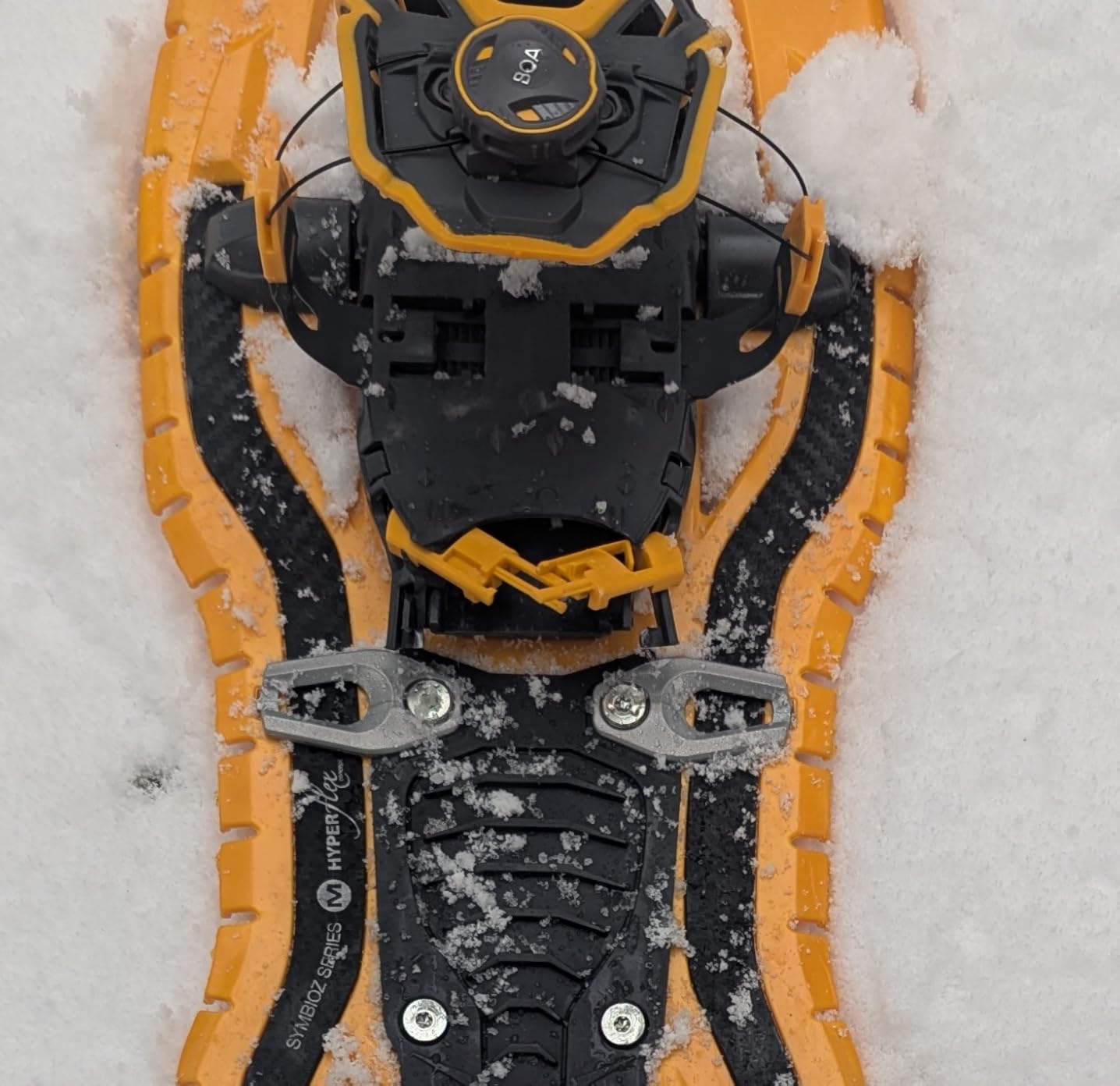
Forget flotation for a minute and consider the thing you touch forty times a day. The Symbioz Elite has the most universally praised binding system in this group, and that is not a small thing when the temperature is well below freezing and you are wearing mittens.
The memory toe adjustment customizes length in minutes and holds the setting, so there is no per-trip fiddling. The ratcheting instep strap is the part owners single out, and reviewers report no hot spots over long days even with heavy socks.
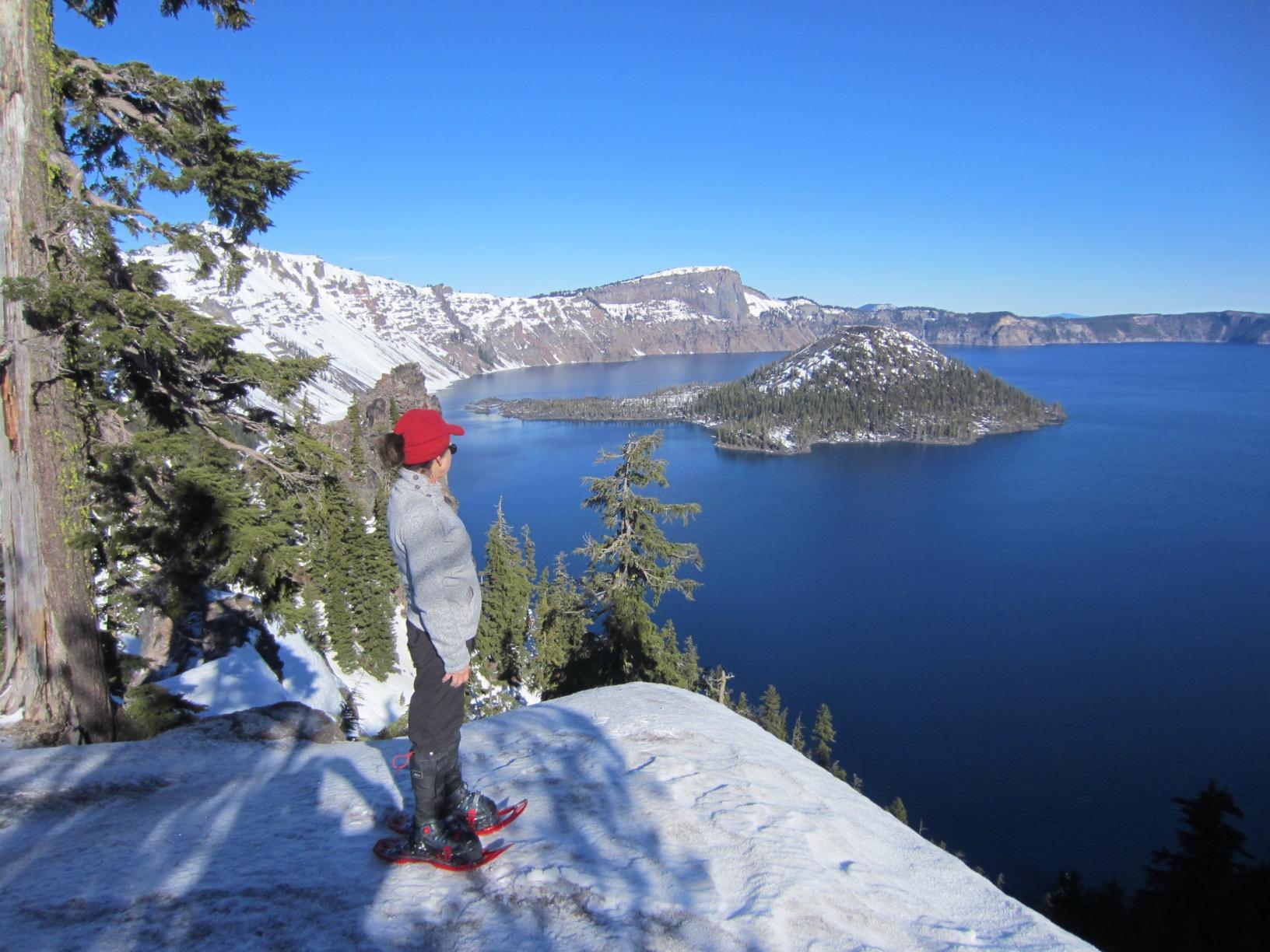
Underneath, HyperFlex technology lets the frame conform to uneven terrain, and steel and plastic cleats grip hard ice and crust remarkably well. A retractable heel lift handles the climbs.
This is the shoe people recommend when the day has a lot of climbing in it and the snow is not giving much away.
At 2 kg per pair and a 110 to 260 lb range, it covers more body weights than almost anything else here, which makes it a safe recommendation for a household or a gear group.
Where the binding advantage actually pays off
Any day with a lot of transitions. Every stop for a photograph, every time you drop a pack, every time the wind takes a layer off.
A binding that goes on and off in one motion turns those from a two-minute fumble into a ten-second one, and on a cold day that difference compounds fast.
It is also the shoe to pick if you share a pair between people with slightly different boot sizes, since the memory toe holds its setting between uses.
The powder caveat you need to read
At 23.5 inches, this is the second smallest deck in the group. Reviewers are direct about the limit: it sinks in very deep soft powder on slopes. It is a superb mixed-terrain shoe being asked to do a powder job, and it will not refuse, but it will work harder.
The front strap loosening is a real but avoidable complaint, and it comes back to tightening technique rather than a defect. The included storage bag, meanwhile, is genuinely difficult to operate with gloves on and will not clip to a pack, so plan on a different way to carry it.
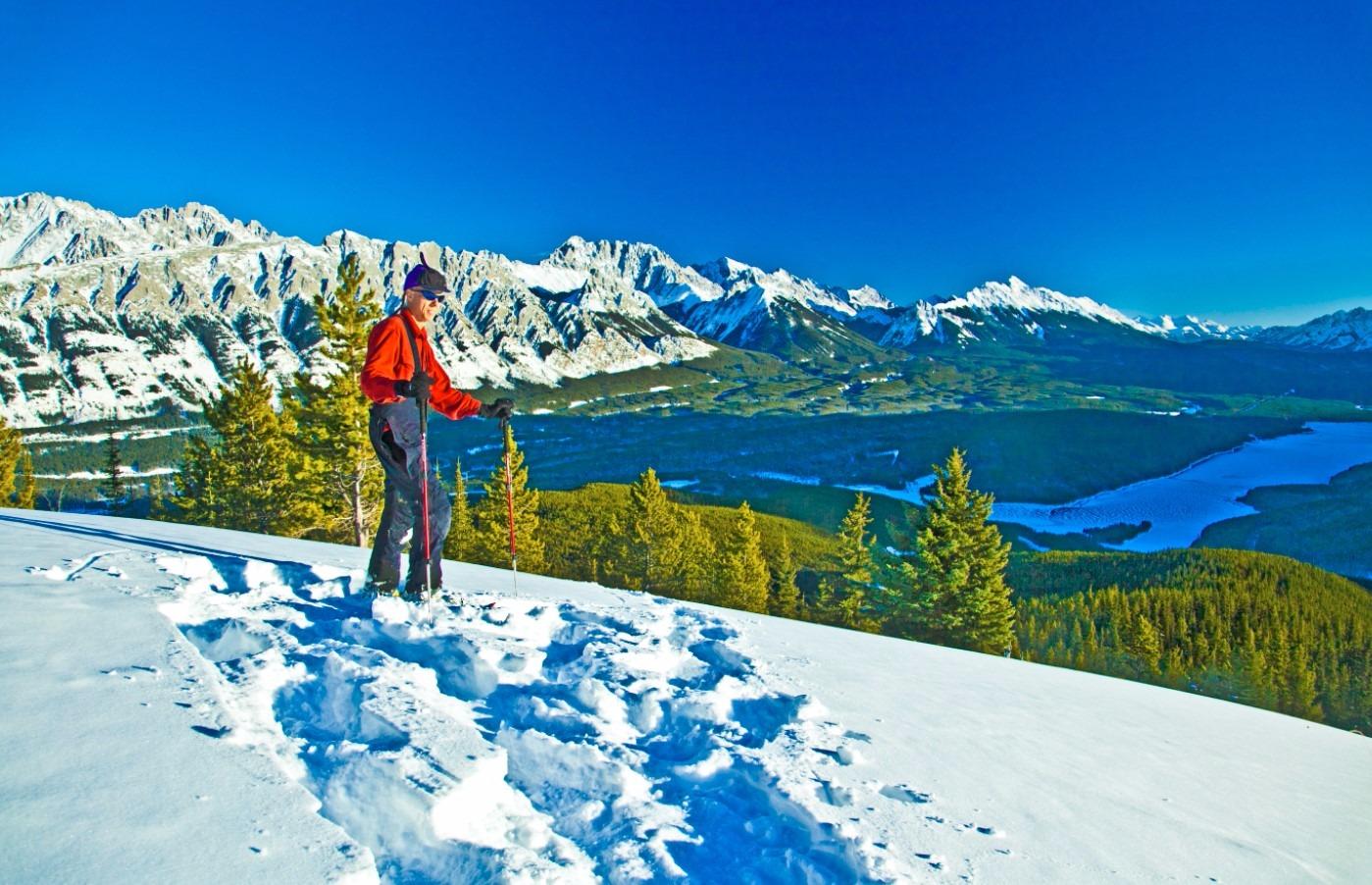
4. MSR Revo Ascent – Best Rugged Backcountry Pair
MSR Revo Ascent Backcountry & Mountaineering Snowshoes with Paragon Bindings, 25 Inch Pair, Olive
25 inch ExoTract deck
One-piece steel crampons
Paragon binding
220 lb capacity
Pros
- Owners describe them as effectively indestructible
- Perimeter teeth plus steel crampons for icy sidehills
- Paragon strap never let a boot slip
- 220 lb rating holds a loaded pack
Cons
- Feels clunky next to flexible-tailed models
- Bindings fit men's shoe sizes 6 to 14
The Revo Ascent trades comfort for indestructibility. Owners use words like rugged and built to last, and the construction reflects that: a reinforced nose for kickstepping, perimeter teeth of injection-molded ExoTract deck, and one-piece steel crampons rather than bolted-on aluminum parts.
It is the model forum users reach for when a trip means a long approach through variable snow with no plan to bail early. At 4.9 lb per pair it is the heaviest here, and that is the trade you make for a frame you can drag through rock and come back working.
The Paragon one-piece strap is the same system as the Lightning Ascent, and the same verdict applies: easy with gloves, no pressure points, no boot slip. The Ergo Televator heel lift bar stays up on the trail, which owners mention specifically on ascents.
Why durability matters in powder country
Deep powder days involve more contact with the ground than you would think. Digging a pole, kneeling to read a map, dropping to a hip when a slope steepens. A reinforced nose and a steel undercarriage take that abuse without the binding parts that owners of lighter frames report snapping.
One 200 lb user reports flotation holding while walking 18 to 20 inches of unbroken fresh powder on this frame, which is better than the deck size alone would predict.
Where you will notice the weight and the stiffness
Compared with flexible-tailed models like the Tubbs Mountianeer, the Revo feels clunky, and owners say so plainly. The stiff deck does not punish you on a climb, but it is present underfoot on flat terrain.
There is also some noise in non-powder snow, which is a common complaint about plastic decks generally. If you are sensitive to that, note it here. And the binding again fits men’s sizes 6 to 14 only.
5. TSL 418 Up Down Grip – Best for Ice and Steep Descents
TSL 418 Up Down Grip Snow & Racket Orange Goyave Size:60 kg – 120 kg
25.39 inch deck
Up and down grip system
Quick release bindings
60 to 120 kg
Pros
- Handles steep descents on hard and icy snow
- Quick release keeps your adjustment between uses
- Steel crampons grip ice and crust
- Hold up on long alpine days at high elevation
Cons
- Underside grip tips can loosen out of their seat
- Heel riser cannot mount on a trekking pole
This is the most-reviewed shoe in the roundup at 217 reviews, and its whole design brief is the descent. The up-and-down grip system is what separates it: a two-sided undercarriage that bites differently depending on whether you are climbing or descending.
Owners report holding up on 30 degree and steeper terrain and on 4,500 meter days, which tells you more about the frame than the deck length does. At 25.39 inches long and 8.86 inches wide it has more footprint than most technical shoes here.
Quick-release bindings are the second thing people notice. They go on and off fast without losing the adjustment, which matters when you are doing a lot of transitions on a long alpine day.
Where the grip system earns its keep
Refrozen morning crust on a descent is where most snowshoes turn into a liability. A two-sided undercarriage that engages on the downslope is the difference between a controlled step and a skid. If your powder route tops out on a hard summit ridge, this handles the way down better than anything else in the group.
It also handles the 60 to 120 kg body range with a 3 to 11 shoe size fit, which covers a very wide span of users.
The two complaints worth knowing
A small number of owners report underside grip tips loosening out of their seat. It is a quality-control issue rather than a design flaw, but if you are descending hard ice regularly, check them before each trip.
The heel riser also cannot be mounted on a trekking pole the way some competing models allow. If you run a pole-mounted riser as part of your setup, this rules the shoe out for you.
6. Tubbs Wayfinder – Budget Pick for Mixed Trails
Tubbs Wayfinder W Snowshoes, Purple, 25
25 inch composite deck
Fit-Step frame
BOA dial fit
330 lb capacity
Pros
- BOA dial makes on and off nearly instant
- Highest weight rating in the group at 330 lb
- Light and comfortable on mixed packed and soft snow
- Rotating toe cord sheds snow off the tail
Cons
- Tubular frame lacks lateral grip and a heel lift bar
- Not enough flotation to break your own trail in deep snow
- Listing images can show the women's model
The Wayfinder is the value pick in this group, and the reason is not cost, it is capability. It is a 25 inch composite deck with a Fit-Step frame that reduces musculoskeletal impact on the hip, knee and ankle by 10 percent.
Owners notice that joint saving on long walks, and it is the quiet benefit that separates this frame from a cheaper generic deck.
The BOA fit system is the headline feature. Owners describe the shoes going on and off almost instantly with a turn of the dial, no cold hands, no strap fiddling. For group use or for anyone wearing gloves all day, that is a real convenience.
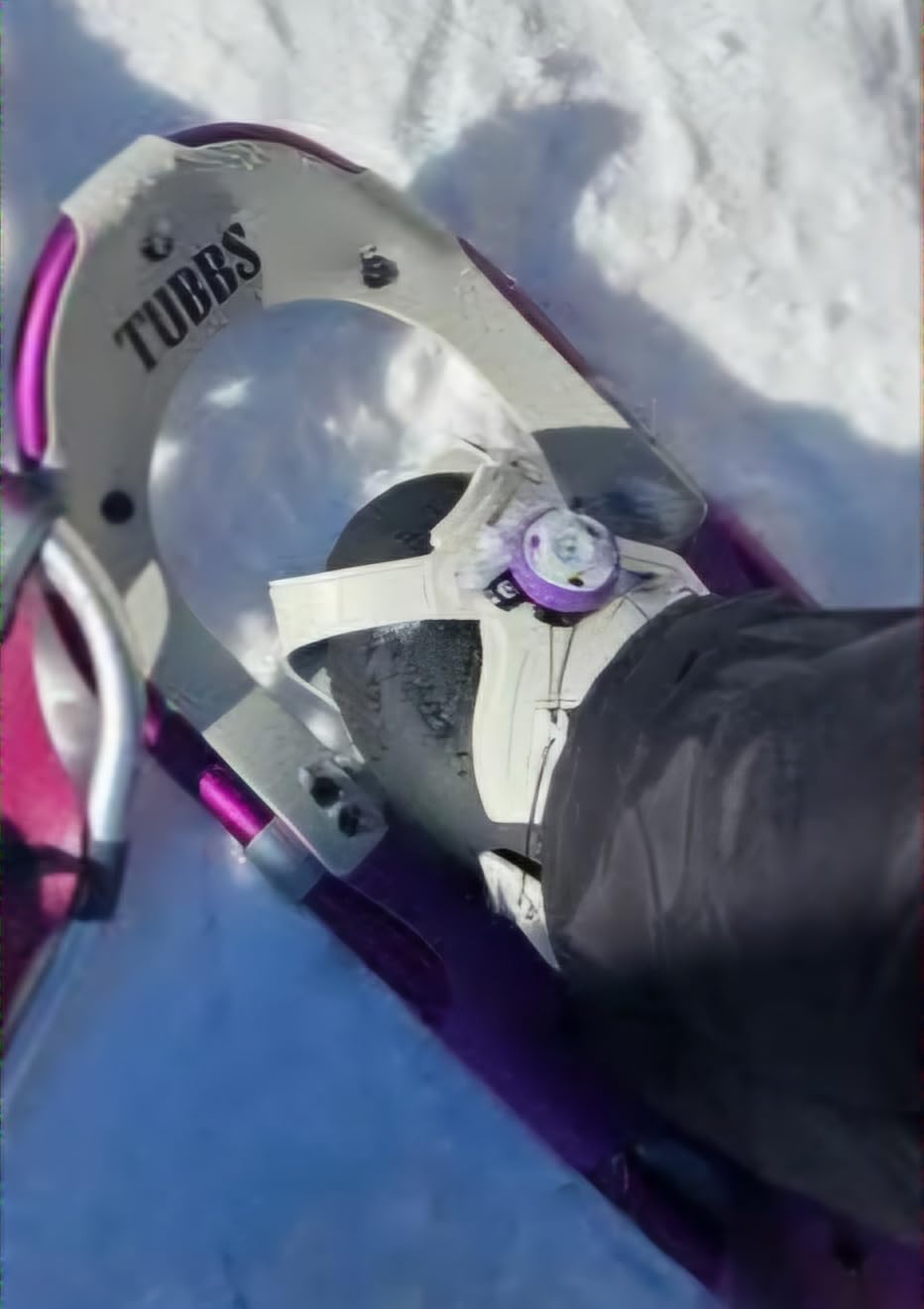
A rotating toe cord lets the tail drop and shed snow as you walk, which keeps the deck from loading up on descents. Carbon steel toe and heel crampons with front and rear braking teeth handle hard packed snow well.
At 16 ounces listed weight, this is among the lightest frames here, and the 330 lb rating is the highest capacity figure in the entire roundup.
What the Wayfinder is genuinely good at
Mixed days. Owners report it holding together in both heavy and light snow without coming loose, and it works well as a general winter hiking shoe when the trail is packed for part of the route and softer for the rest. For that packed-trail role, the shortlist in our winter hiking snowshoe guide is the relevant one.
For larger users, the 330 lb rating is worth looking at. It is the only shoe in this group rated that high, and it means you are not buying a small deck to accommodate your body weight.
Why it is not a powder shoe
The recreational tubular frame has no lateral grip and no heel lift bar, and buyers are clear that the design is aimed at packed and groomed trail rather than deep backcountry powder. It does not have enough flotation to break your own trail through untracked snow.
Two smaller things: the listing imagery can show the women’s model rather than the men’s version, so check the frame width carefully. And without a heel lift bar, uphill efficiency on a steep climb will suffer compared with the Mountianeer or the MSR models.
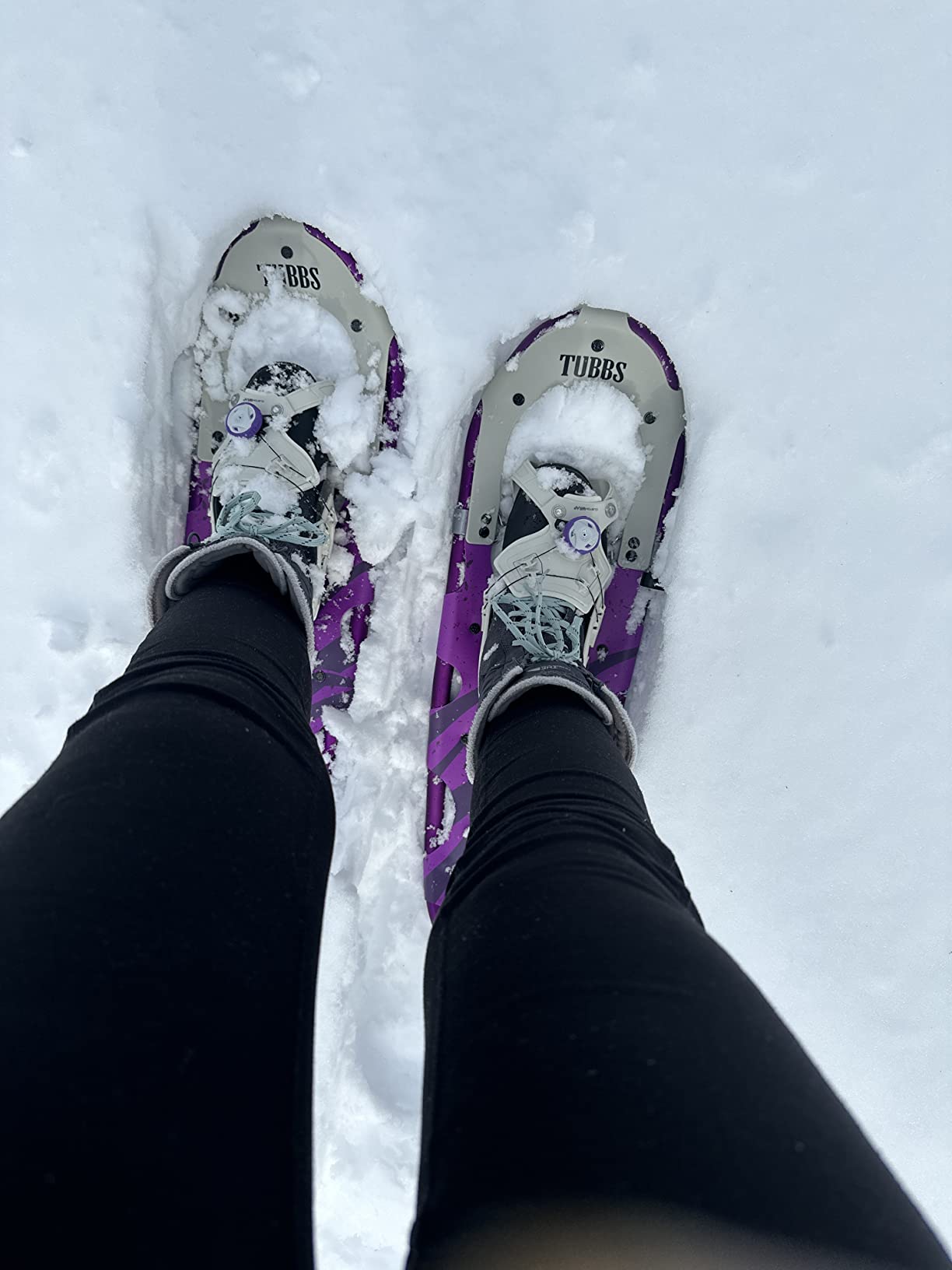
7. MSR Evo Ascent – Best Pair to Add Flotation Tails To
MSR Evo Ascent Backcountry & Mountaineering Snowshoes, 22 Inch Pair
22 inch steel rails
Tri-Fit binding
Modular flotation tails
180 lb capacity
Pros
- Modular flotation tails attach for heavier loads
- Steel traction rails and brake bars grip ice and hard crust
- Tri-Fit bindings work with a wide range of footwear
- Hard plastic deck shrugs off rocks and roots
Cons
- 22 inch deck is the smallest here at 180 lb
- Tails add little in genuinely deep powder
- Toe straps are difficult to lock in cold weather
The Evo Ascent is the modular answer to the powder question, and the arithmetic works: 180 lb maximum user and gear weight without the tails, 250 lb with them. That is a real capacity increase you can carry in a pack rather than buy as a second pair of shoes.
Steel traction rails and brake bars molded into the deck give it confidence on ice and hard crust, and Televator heel lifts reduce calf and Achilles fatigue on steep ascents. The hard plastic deck also shrugs off rocks and roots better than fabric-deck models.
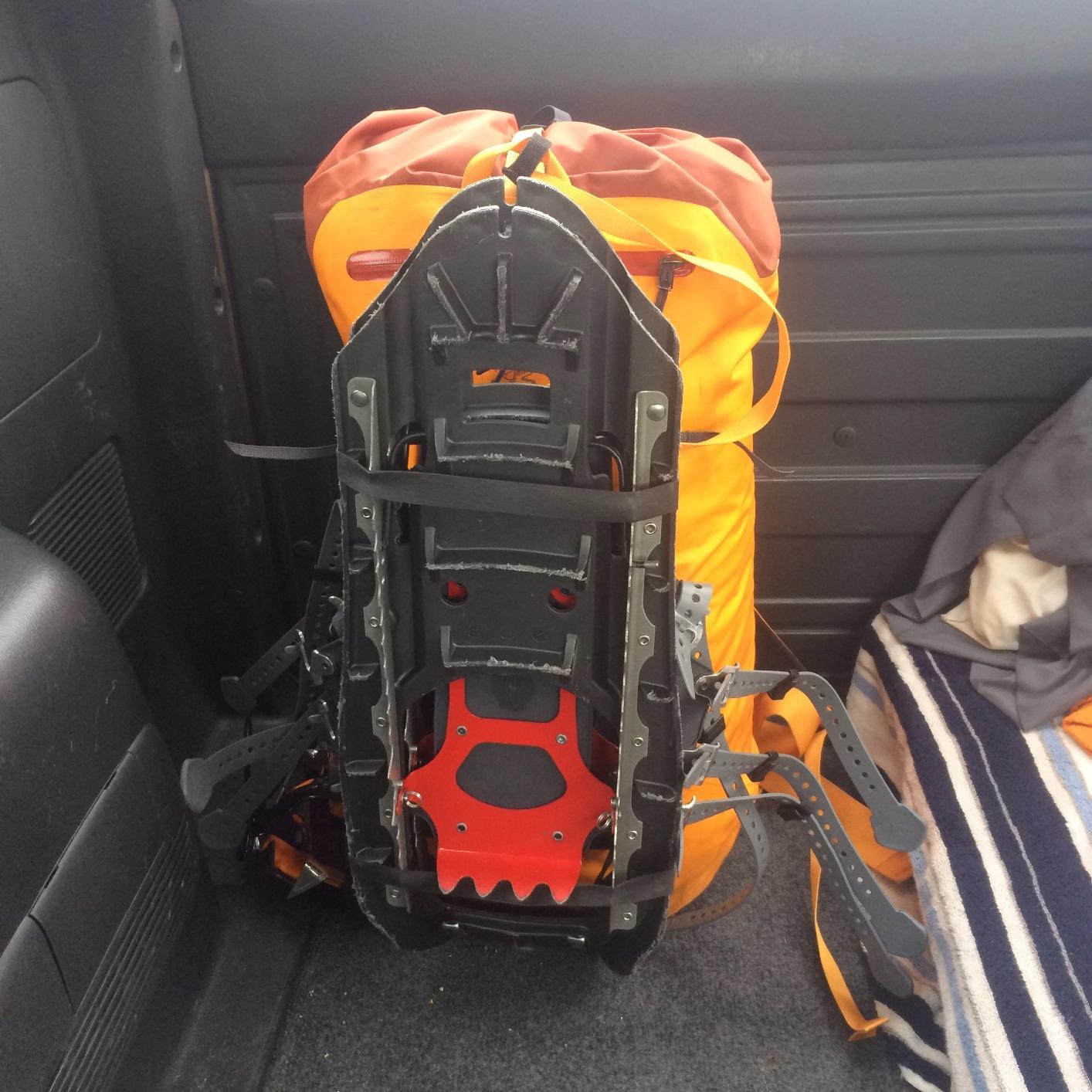
It is also light and easy to walk in, and owners note it does not kick up snow the way some designs do. At 4.1 lb per pair it sits comfortably in the middle of the weight range here.
The one detail owners consistently praise is that it does not throw a rooster tail of snow onto the person behind you, which matters a great deal when you are breaking trail in a group.
When tails make more sense than a bigger shoe
Tails are the right call if you have one good technical pair and only need extra flotation for a handful of powder days a season. Owners on several forums report the extension adding enough float for occasional deep snow without buying a dedicated second pair, which is exactly the use case it suits.
They are also reversible. On a packed trail you leave the tails off and keep the nimble 22 inch profile.
Where the modular approach falls short
Owners are candid that the tails add little in genuinely deep powder. They help in moderately deep snow, but if you are regularly breaking trail in two feet of fresh snow, more total deck area is still the answer, not an add-on.
The 180 lb base rating is also the lowest of the MSR models here, so a heavier user planning to add tails needs to do the sum carefully. And the toe-area straps are the most repeated complaint in the reviews, described as difficult to lock and not mitten friendly in cold weather.
8. TSL Symbioz Access – Best for Riders Under 150 lbs
TSL Snowshoes Symbioz Access Snowshoes, Celestial Blue, Small
HyperFlex frame
Ratcheting ankle strap
65 to 150 lb range
Small frame
Pros
- HyperFlex frame feels lighter than it weighs
- Lock-in bindings hold boot size between trips
- Ratcheting ankle strap gives a snug fit and releases easily
- Sizes down to 65 lb
Cons
- Sinks noticeably in deep unpacked snow
- Toe lock is weaker than the Elite model's
- Small plastic parts have durability complaints
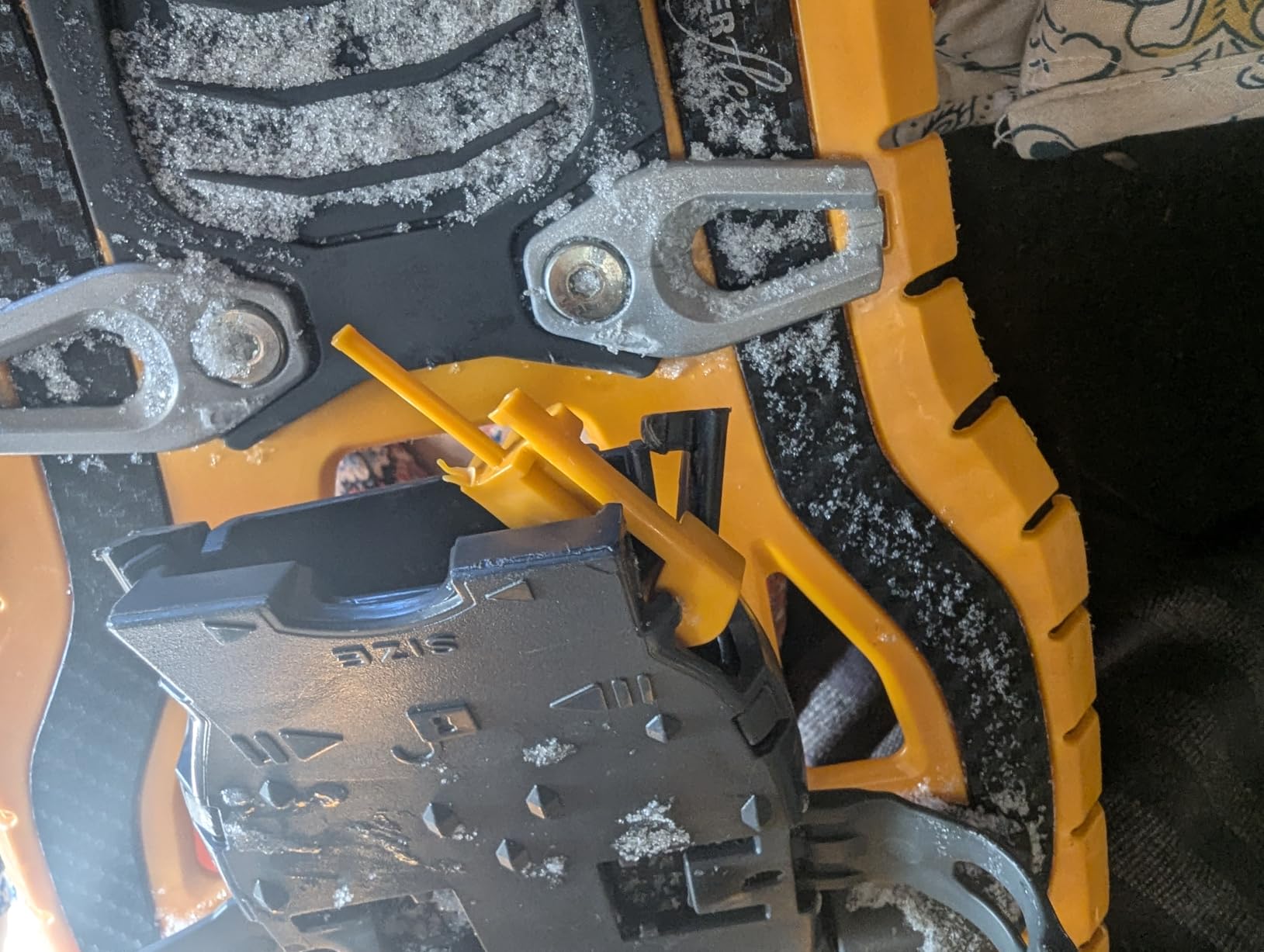
The Access is the entry point in the TSL HyperFlex line, built for people between 65 and 150 lb. If you are under about 130 lb and walking the same 25 inch decks as larger riders, you are carrying deck you do not need, and this is the smaller frame made for you.
Comfort is the reason people like it. The HyperFlex frame conforms to terrain and grips very well, and owners say it feels lighter than the 4.5 lb listed weight suggests. The lock-in bindings hold your boot size, so there is no per-trip adjustment to redo.
The ratcheting ankle strap gives a snug fit and releases easily on a single pull, so it is a quick shoe to get into on a cold morning when daylight is short.
The frame also flexes rather than bridges, which keeps the deck in contact with the surface on the short uneven pitches that come with an untracked approach.
Where it works well
Groomed and packed trails, and any powder outing where you are under 150 lb and the snow is not deeper than your boot. Owners praise comfort and grip first, which are the two things that decide whether a long winter walk is pleasant.
It is also a good loaner or second pair for a household, since the sizing window and the easy on-off both suit occasional use.
Where it stops working
It sinks noticeably in deep unpacked snow, which is the honest reason this is not higher on the list despite good reviews. The HyperFlex frame is tuned for conformity and grip, not for spreading weight over a large area.
Several owners also report small injection-molded plastic parts failing after months to years of technical use, and the toe lock is weaker than the one on the Elite model. The 65 lb floor is also worth noting if you are a very small rider, as the frame still has real deck area under you.
9. Crescent Moon Gold 10 Backcountry – Best Large-Deck Float
Crescent Moon Big Sky 32″ Men’s Backcountry Snowshoes with Single-Pull Binding and Integrated Heel Lift, Red
32 x 10 inch teardrop frame
SPL binding
Three steel crammons
225 lb capacity
Pros
- 32 x 10 inch teardrop frame floats deep snow
- Three stainless steel crampons plus traversing claws
- Integrated heel lifts for climbs and descents
- Lifetime warranty and made in Colorado
Cons
- Heaviest pair here at 5 lb
- Binding fits men's shoe sizes 9 to 15 only
- Small review base of 44 ratings
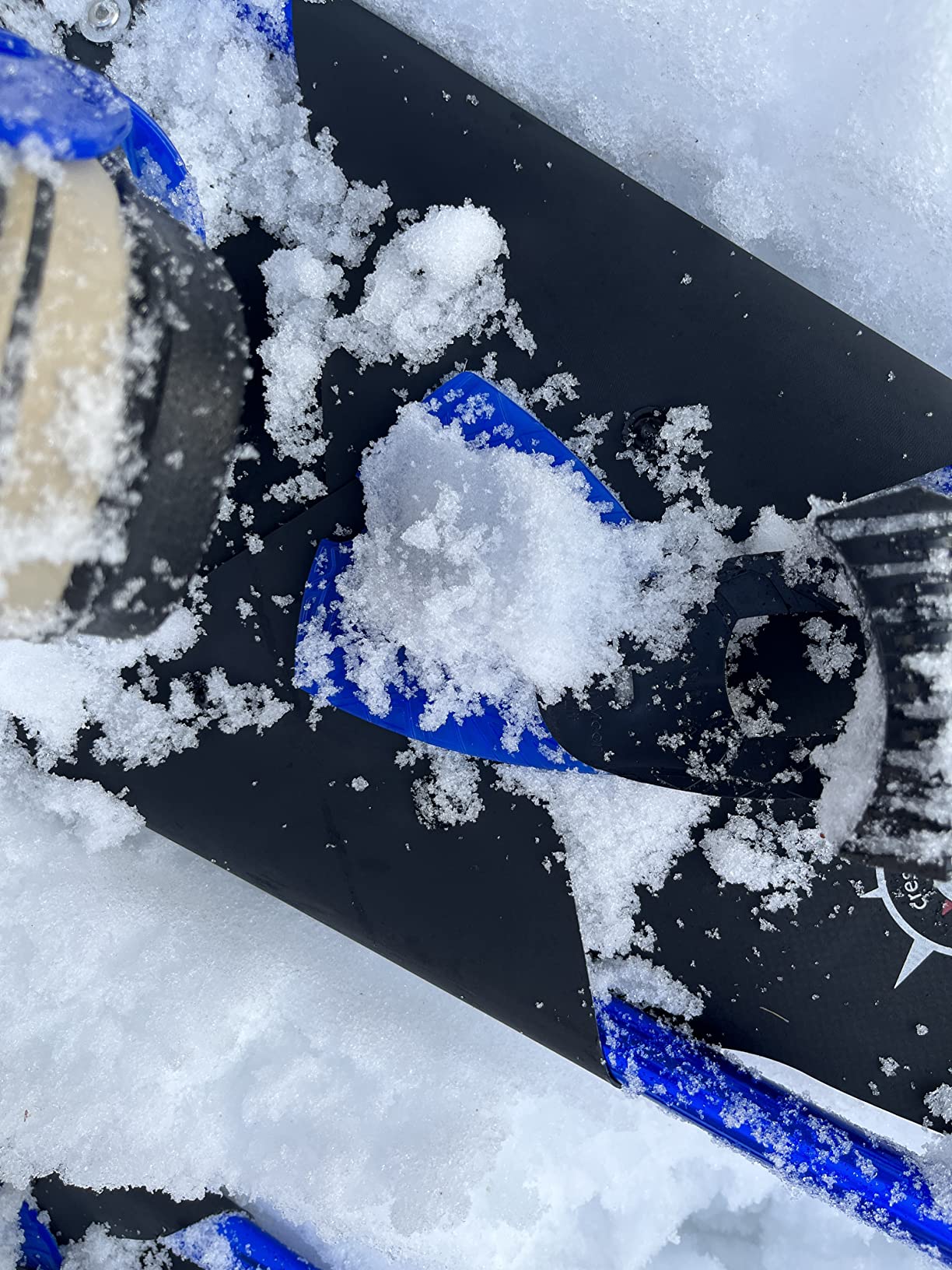
The Gold 10 is the second largest deck here and the widest per shoe at 10 inches, which makes it a serious powder floater without going to a full 36 inch frame. Owners cite the teardrop shape as the reason it walks with a natural stride rather than a waddle, and that is what separates a usable big deck from an unwearable one.
Traction is not sacrificed. Three stainless steel crampons plus additional traversing claws give it grip on hard snow, and integrated heel lifts handle both climbs and descents without a separate part to lose.
The SPL binding uses a spring cam buckle quick pull loop with a ratchet heel strap, so it tightens in one motion and stays put.
Why the teardrop shape matters on long days
A straight-sided deck catches the heel of your boot as you lift, and the small backward corrections you make without thinking add up over thousands of steps. Tapering the tail removes that fight. Owners of the Crescent Moon frames frequently single this out as the reason their feet stay comfortable on flat days.
The lifetime warranty is also unusual at this level. Long-term users report roughly a decade of service from a well-maintained pair, with binding replacement as the usual first failure point.
Where the tradeoffs show
At 5 lb per pair this is the heaviest shoe in the group, and you will feel that by the afternoon if you are not already acclimated. The old answer is that a big deck lets you walk slowly, which is true, but the legs still pay.
The binding is the more serious limitation. It fits men’s shoe sizes 9 to 15 only, so a wider range of riders is excluded. The 44-review base is also the second thinnest here, which is worth weighing against the 154 and 217 review counts on the MSR Lightning Ascent and the TSL 418.
10. Tubbs Flex VRT – Best Women’s Fit With a Torsion Deck
Tubbs Flex VRT Backcountry Snowshoe
Torsion deck with BOA closure
Viper 2.0 crampon
ActiveLift heel lift
110 kg capacity
Pros
- Torsion deck flexes where it should and stays rigid where it should
- BOA binding goes on and off in about 15 seconds
- 3D curved rails for sidehill grip and anti slippage
- Light and comfortable over long days
Cons
- Plastic housing creaks noisily while walking
- Some BOA dials cracked during first fitting
- 4.3 rating with an 11 percent one-star share
The Flex VRT is built around torsional articulation, which is a different idea from simple lengthwise flex. The deck twists through its body so it can follow uneven terrain side to side, then stays rigid along the length where you need support. Owners describe it as flexing where it should and staying stiff where it should, which is exactly the intent.
The Dynamicfit binding with BOA closure and EVA foam distributes pressure evenly, and reviewers put on and off time at around 15 seconds. That is fast enough to do on a summit without taking your gloves off.
Traction is strong for the class: Viper 2.0 carbon steel toe crampon with jagged tooth construction, plus 3D curved rails that help with sidehill grip and resist fore-aft slippage. ActiveLift provides a 19 degree heel lift.
Where the torsion deck earns its keep
Sidehilling and broken terrain. A deck that twists with you keeps the whole platform in contact with the snow instead of bridging over a roll, which is what reduces the sideways wobble that tires your ankles on a long traverse.
The anti fore-aft slippage from the curved rails is also worth noting, since deck slide is a complaint forum users raise often with other frames.
The two things owners complain about
Noise. The plastic housing creaks audibly while walking, and that is a genuine quality-of-life complaint for anyone who has used a quieter aluminum frame. It is not a durability problem, but it is the thing owners mention first.
Some BOA dials have cracked or broken off during the very first fitting, which points to a supplier consistency problem rather than a design flaw. The 4.3 rating with an 11 percent one-star share reflects exactly that split: people who love the deck and people whose dial failed. Inspect the dial before you head out.
11. Crescent Moon Sawtooth 27 – Best One-Pull Binding
Crescent Moon All Terrian Unisex Snowshoe – Sawtooth 27 (Blue): Unisex All Terrain Snowshoe with Award Winning Single Loop Pull Binding, Stainless Steel Crampons and Heel Lifts
27 x 9 inch aluminum frame
Single pull loop binding
Three steel crampons
195 lb capacity
Pros
- SPL binding tightens the whole harness with one gloved hand
- Quiet abrasion-resistant decking
- Teardrop aluminum frame walks naturally
- Three stainless steel crampons plus a toe claw
Cons
- Recommended only up to 195 lb
- Smallest review base here at 19 ratings
- 27 inch deck is mid-sized for powder
The Sawtooth 27 answers one narrow question better than anything else here, which is how you get a fully tightened strap system on with one gloved hand.
The SPL single pull loop tightens the entire strap system in one motion, the fastest on and off of the twelve pairs in this roundup.
The frame is a teardrop shaped 6063 aircraft grade aluminum with quiet, abrasion-resistant decking. Owners single out the quietness, and it is a real contrast with the plastic housings that creak.
Traction is a three-crampon stainless steel system with a toe claw for digging in on climbs. Made in Boulder, Colorado, 95 percent recyclable, with a limited lifetime warranty.
Who should actually choose this
Anyone who has ever fought buckles with numb fingers, and anyone under 195 lb who wants a mid-size deck that is not a dedicated powder ski. At 27 by 9 inches it sits between the trail shoes and the big powder frames, which makes it a genuine all-rounder rather than a specialist.
The teardrop geometry also means it walks naturally without waddling, which owners note directly.
Where it is limited
The 195 lb recommendation is the hard limit, and it is lower than several other shoes in this list despite the premium build. Anyone heavier should look elsewhere or accept a compromise.
The 19-review base is the thinnest here, so you have less real-world data backing the recommendation. Treat it as a well-made small-market option rather than a proven standard.
12. Atlas Helium MTN 23 – Best Ultralight Travel
Atlas Helium-MTN Snowshoe BLACK/BLUE, 30
Helium louvred deck
BOA closure
MTN crampon
270 lb capacity
Pros
- Incredibly light for a technical aluminum frame
- Helium deck sheds snow to stay light
- BOA gives micro-adjustment with no hot spots
- Heel lift reduces effort on long climbs
Cons
- Tails and plastic mounting points can break away from the frame
- Binding may not close fully on wide toe boxes
- Carrying bag is not included
The Helium MTN 23 is the one that should have worked and mostly does not, and that is worth understanding before you buy it. The concept is right: a louvred deck that sheds snow to keep the shoe light, an aluminum frame at 1690 g, BOA micro-adjustment, and a 270 lb rating that is high for the class.
Owners praise the comfort genuinely. The BOA closure gives micro-adjustment with no hot spots over long hikes, and the heel lift noticeably reduces effort on climbs. The Helium MTN crampon adds ice confidence that lighter frames usually lack.
Why it lands at the bottom of the list
Durability. The dominant complaint across the reviews is that tails and plastic mounting points can break away from the frame, sometimes within weeks. For a powder roundup, where you are leaning on that rear deck section to keep yourself on the surface, a failing tail is the exact wrong failure mode.
There is a second issue with fit. The binding may not fully close on wide toe boxes, and it can loosen on the trail, which is a bad combination on a climb in soft snow.
Is there a case for it anyway
Yes, and it is a narrow one. If you count pair weight first, the Helium MTN is among the lightest technical frames available and owners notice the difference over a multi-hour day. One owner also disputed the listed weight rating, so weigh the pair in hand if weight is your deciding factor.
Also be aware the carrying bag is not included, which is a small but annoying thing to discover on the trailhead. Buy it only if low weight outranks long-term reliability for how you plan to use it.
25 vs 30 vs 37 Inch: Sizing Snowshoes for Deep Powder
Deck length is the decision that matters most in powder, and it is the one people get wrong by sizing on body weight alone. Work through these four factors in order and the right length picks itself.
Step 1: compute your total loaded weight
Add your body weight, your pack weight, and roughly 5 lb for boots. That total is what your deck has to support, and it is the number the manufacturer capacity ratings are written against. Forum users on vftt.org and backpackinglight.com repeatedly report being sized on body weight alone and then sinking under a loaded pack, which is the most common sizing complaint we found.
Worked example: a 170 lb person with a 25 lb pack and winter boots is carrying 200 lb. That is the number to compare against the rating on the shoe, not 170.
Step 2: match deck length to snow depth, not to your height
A rough rule of thumb is roughly one inch of deck length per 10 lb of loaded weight, with more length for deeper snow. Under that rule a 200 lb load points toward a 25 inch frame, and 270 lb points toward 30 inches. Deep powder pushes both numbers up.
The practical translation: 25 inch decks handle roughly boot depth to mid-calf and are the right answer for packed trails and modest snow. 30 inch decks take you into calf-to-knee-deep powder and are the real starting point for untracked backcountry. 36 and 37 inch powder-ski decks are for breaking trail, for wet heavy snow, and for anyone whose loaded weight is at the top of a smaller frame’s rating. If you are still working out the packed-trail case, our winter hiking snowshoe guide breaks down the shorter decks.
Deck width matters almost as much as length for flotation. The Crescent Moon Gold 10 is 10 inches wide at 32 inches long, which is why it floats comparable to shorter but narrower decks.
Step 3: decide aluminum, composite, or steel
Aluminum frames are the quietest and the most repairable, and they flex enough to feel lively. Composite and plastic decks are lighter and cheaper but noticeably louder on packed snow, a complaint several owners raise as a reason to move away from them. Steel adds bite and durability at the cost of weight.
For powder specifically, frame material matters far less than surface area. Do not trade deck length for a nicer material.
Step 4: check the binding against your gloves
Ratchet and single-pull-loop systems like the Paragon and the SPL are the easiest with gloves on. Ratchet instep straps are close behind. Hook-and-loop and fine buckles are the hardest, and the most repeated cold-weather complaint in these reviews is a strap you cannot lock with a mitten on.
Also check the shoe size range. Several MSR and Crescent Moon models fit a narrow band of men’s sizes, and a binding that will not close securely is worse than a slightly soft one.
What to carry alongside a powder pair
Gaiters matter more than most roundups admit. If you sink even occasionally deeper than your boot top, gaiters keep the loose snow out of your boot where it melts and becomes slush. Trekking poles help in deep powder because they take some of the work of pushing through, though they will sink too. And for refrozen sections, microspikes on a strap are a light backup if your main shoes lack serious crampons. If you want more context on the winter trail side, our winter hiking snowshoe guide covers the packed-trail end of the range.
Finally, consider traditional wooden frames. Hunters, trappers and guides on the VFTT forum argue that wooden frames outperform aluminum in reasonably flat dry powder, and a wide wooden deck with a long tail does float well. They are heavier, they need more care in storage, and they are harder to find in modern sizing, so they make sense for a user who snowshoes flat country most of the season rather than for a mixed-terrain hiker.
How to Break Trail in Deep Powder Without Postholing
Postholing is the failure mode of bad technique, not of bad equipment. Six habits will keep you on the surface with almost any of the shoes in this list.
Walk the surface, not the trench. Break trail slightly to the side of your intended line so the snow you stand on is the undisturbed edge rather than the packed bottom of the trench.
Shorten your stride. Take steps a foot long rather than two. Shorter steps mean less downward force per step and less chance of punching through the crust into the loose layer below.
Lift your toes over each step. The tail of the deck digs in as you load it. Rolling the toe up and over keeps the deck flat and keeps it sliding forward instead of shearing.
Keep your weight centered. Forum users report decks sliding rearward and heels drifting off-center over a long trip. Standing with your weight over the middle of the deck keeps the tail engaged and the heel on the platform.
Go first with the smallest load. If you are a group, the person with the lightest pack breaks trail. Every person after them works in a trench with less support underfoot.
Turn around early. If you are sinking on the third hour, you will not be extracting yourself at hour six. A 36 inch deck or a pair of tails is cheaper than a rescue, and a shorter route is cheaper than both.
Deck snow build-up is the other quiet problem. Composite and plastic decks pack snow on the tail faster than aluminum, which is part of why owners of those models notice their shoes slowing down. Clearing the deck at every break stops it from compounding.
Frequently Asked Questions
What are the best snowshoes for deep snow?
For deep unconsolidated snow, prioritize deck surface area and total loaded capacity over crampon traction. The Tubbs Mountianeer leads our group with a 36 inch aluminum deck and a 200 lb rating, while the Crescent Moon Gold 10 offers 32 by 10 inches of teardrop deck for 225 lb. Both float well where smaller 23 to 25 inch frames begin to sink.
What type of snowshoes are best for a 300-pound man?
A 300 lb user carrying a pack needs a frame rated well above that total loaded weight, and among the 12 pairs we reviewed only the Tubbs Wayfinder carries a 330 lb rating. The Atlas Helium MTN 23 is rated to 270 lb and the Crescent Moon Gold 10 to 225 lb. For powder, add flotation with tails or choose the largest deck available in your size, and check the binding fits your shoe size.
Should I get 25 or 30 inch snowshoes?
Choose 25 inch decks for packed trails and snow roughly boot depth to mid-calf, and 30 inch decks when you are walking untracked snow past mid-calf. The jump matters most for heavier riders, since a larger deck lowers the pressure per square inch. A rough guideline is about one inch of deck per 10 lb of total loaded weight, then add length for deeper snow.
What is the maximum weight I can wear in 30 inch snowshoes?
Capacity is set per model rather than per length, so read the label. Among the 30 inch options in our roundup, the Atlas Helium MTN 23 is rated for 270 lb. The Tubbs Wayfinder at 25 inches carries the highest rating in the group at 330 lb. Always compare the rating against your body weight plus pack plus boots, not your body weight alone.
Can I add flotation to snowshoes I already own?
Only on frames designed for it. The MSR Evo Ascent accepts modular flotation tails that raise the rating from 180 lb to 250 lb, and owners report they cover occasional deep powder days well. On other frames, tails add limited flotation in genuinely deep snow, and owners often find a larger dedicated deck a better answer than an add-on.
Final Verdict: The Best Snowshoes for Deep Powder in 2026
The best snowshoes for deep powder in 2026 come down to one number: total deck area relative to your total loaded weight. The Tubbs Mountianeer wins that comparison with a 36 inch aluminum frame at 3 lb per pair, and it is the pair we would carry into untracked terrain.
If your routes climb into hard alpine ground, the MSR Lightning Ascent gives you steel traction and a 220 lb rating for 4 lb more. If you need flotation without a dedicated powder frame, the MSR Evo Ascent with modular tails is the cheapest path to more surface area.
Work out your loaded weight first, pick the deck length that matches your snow depth, and test the binding with gloves on before you are halfway up a mountain.