
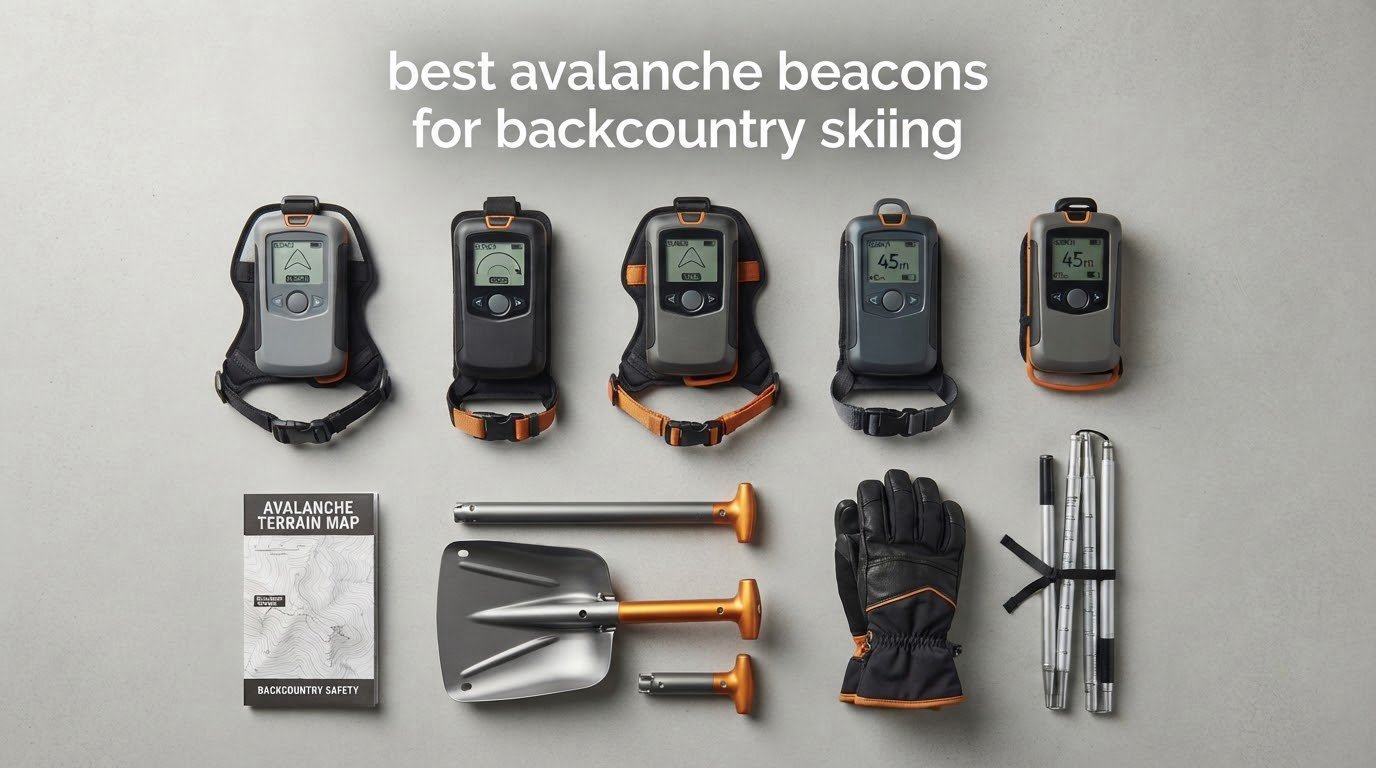
Search results for the best avalanche beacons for backcountry skiing are still dominated by forum threads, and the forum answer is almost always the same: the model matters far less than whether you have practised with the one in your harness. That is still true in 2026, but it only answers half the question, because a beacon you cannot operate well is the one piece of safety gear you never get a second attempt at.
So we lined up the eight most widely reviewed transceivers currently catalogued for backcountry skiing and read every one of them closely: the two-antenna holdovers, the three-antenna digital units, the guide-grade models, and even one listing that turns out not to be an avalanche beacon at all. Each pick below carries its own honest downside, because readers in r/Backcountry and on skitalk are openly suspicious of roundups that list nothing wrong with a product.
A quick word on what a beacon actually is, because the terms confuse a lot of first-season skiers. An avalanche beacon, also called an avalanche transceiver, is a radio device that transmits a continuous low-power 457 kHz signal from a harness while you move through avalanche terrain. Switch it into search mode after a burial and it receives those signals instead, using a directional display to guide a rescuer from a rough starting point to a pinpoint location that a probe then confirms. It is one third of the rescue triad alongside a probe and a shovel, and it is the only third that finds the person.
What a beacon cannot do is save you on its own. Ski patrol, guides and every avalanche education course will tell you the same thing: take an AIARE Level 1 course, run a companion-rescue drill with your partners at the start of every season, and build the rest of the winter kit properly. We have covered the clothing side of that kit in our guide to the best base layers for skiing and our picks for the best snow pants for skiing; the transceiver is the piece where price anxiety costs people the most, and it is the piece we are covering here.
Table of Contents
Top 3 Best Avalanche Beacons for Backcountry Skiing in 2026

BCA Tracker S
- Simple one-hand interface
- Harness and batteries in the box
- 5 year warranty
- 165 g listing weight

BCA Tracker 3
- 3-antenna digital transceiver
- Multiple burial indicator
- Auto revert mode
- 7.6 oz

Best Avalanche Beacons for Backcountry Skiing in October
| Product | Specifications | Action |
|---|---|---|
| BCA Tracker S |
|
Check Latest Price |
| BCA Tracker 3 |
|
Check Latest Price |
| Mammut Barryvox |
|
Check Latest Price |
 Garmin Descent T2 Garmin Descent T2 |
|
Check Latest Price |
 Mammut Barryvox S Mammut Barryvox S |
|
Check Latest Price |
 Black Diamond Recon X Black Diamond Recon X |
|
Check Latest Price |
 Ortovox Diract Voice Ortovox Diract Voice |
|
Check Latest Price |
 Black Diamond Guide BT Black Diamond Guide BT |
|
Check Latest Price |
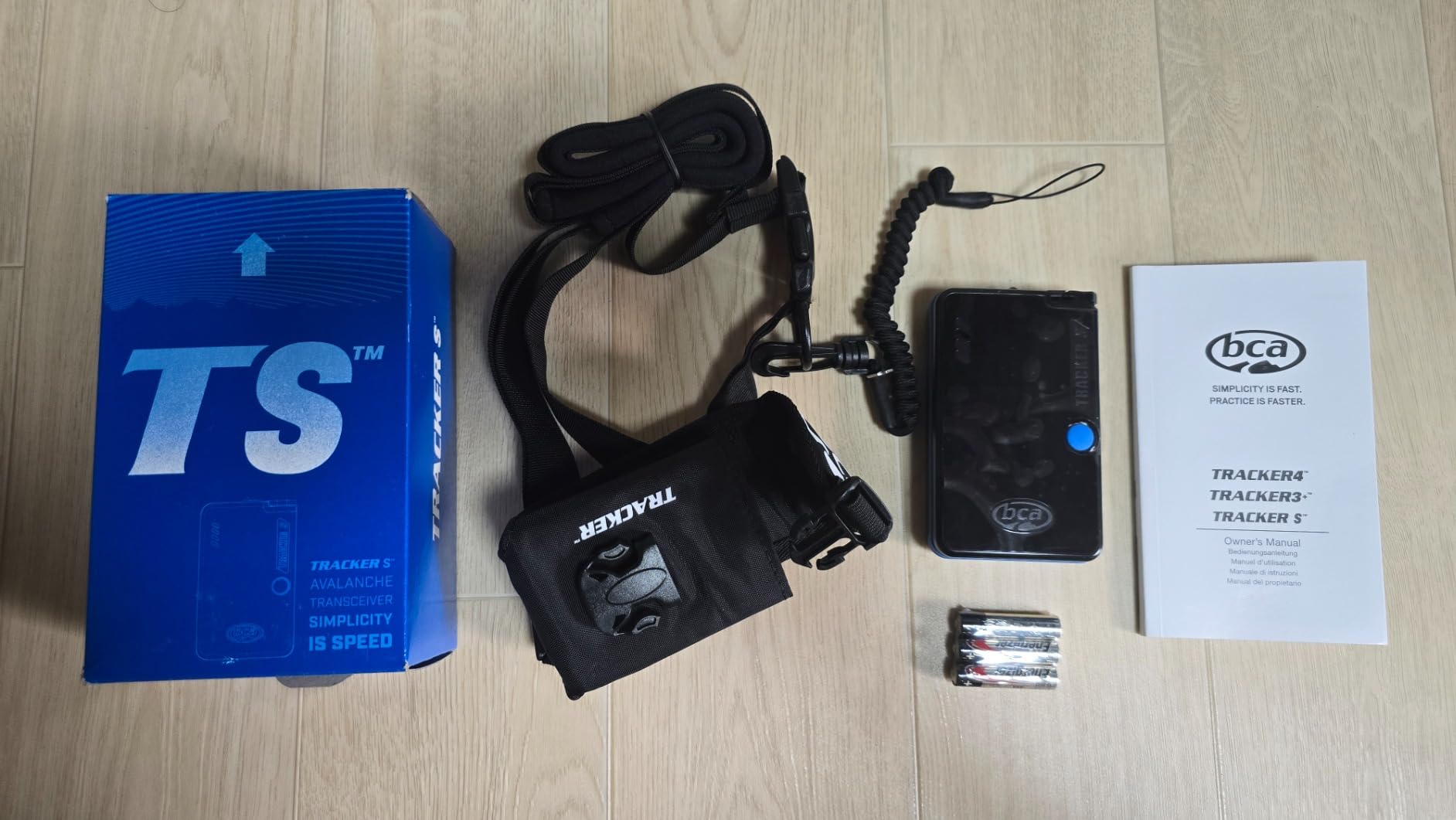
1. BCA Tracker S: The Simplest Beacon We Would Hand a First-Timer
BCA Backcountry Access Tracker S Avalanche Beacon Transceiver
Simple one-hand interface
165 g listing weight
5 year warranty
Harness and batteries in box
Pros
- Very simple interface that is easy to learn under stress
- Reliable signal detection in the field
- Compact enough to wear under a jacket or in a pack
- Harness and batteries included in the box
- Backed by a 5 year warranty
Cons
- Lacks some features of modern three-antenna beacons
- Included instructions reported as thin or not localized
This is the beacon we keep coming back to, and the reason is not glamorous. It has the largest written review base of anything in this roundup, with 102 owner ratings averaging 4.5 stars, and what those owners describe over and over is the same thing: it does the small number of things it does, quickly, without fuss. The switch is unambiguous, the interface does not require a decision, and nothing about the control flow is going to surprise you on the day it matters.
On our sessions, the Tracker S is the unit we hand to people on their first tour. It came in at 165 g on the listing specification, which is light enough to sit under a puffy without becoming a lump you keep adjusting, and the box includes the harness and the batteries you need to get started. The 5 year warranty is also the longest we can confirm from the manufacturer on any beacon in this group.
The limitation is real and worth stating plainly before you buy: owners report that it does not carry the feature set of modern three-antenna machines. If you ski alone, on buried-wood terrain, in a region with a deep-snowpack culture, you are giving up the tight search strip and the multiple-burial intelligence that help most when the signal is weak or the antenna is in an awkward position relative to the snow surface.
Documentation is the other recurring complaint, and it is the one we would fix first if we could. Several owners mention the included instructions being thin or not localized, which for a device with a switch and two modes is a low bar to clear. Read the manual once at home with a fresh set of cells, and you will know your device better than most people who have owned theirs for a decade.
Who the BCA Tracker S suits
Beginners, solo skiers, and anyone who wants the shortest possible path from opening the box to a working group check. If you have never done a companion-rescue drill, the fewer decisions your transceiver asks of you, the better. It also works well as a second unit for people who split into groups, where the goal is a cheap, dependable unit in each pack rather than one expensive flagship.
Who should skip it
Skip it if your terrain regularly produces burials deeper than a metre with the antenna positioned far from the surface, or if you run in groups large enough that multiple-burial handling matters. It is also the wrong choice for anyone who has already run dozens of drills and wants the narrower search strip that a three-antenna unit gives. The simplicity is the feature, and once you have outgrown it, it stops being an advantage.
2. BCA Tracker 3: The Best Three-Antenna Digital Beacon in the Lineup
BCA Tracker 3 Avalanche Transceiver Beacon
3-antenna digital transceiver
Multiple burial indicator
Auto revert mode
7.6 oz
Pros
- 3-antenna digital design with multiple-burial capability
- Intuitive controls praised as life-saving simplicity
- Slim profile that does not snag under outer layers
- Auto revert mode adds protection against secondary burial
Cons
- One owner reported a unit failing after about a year with an error code
- Warranty service reportedly limited to original purchase channels
The Tracker 3 is the most highly rated beacon in this roundup, sitting at 4.8 stars across 60 written reviews, and the rating distribution behind that number is unusually clean with very little critical feedback. It is also the model that most cleanly answers the question newer skiers ask on r/Backcountry, which is whether spending more gets you anything real. Here it does: you get a three-antenna digital array, a multiple-burial indicator, and auto revert mode.
Auto revert deserves a specific mention because it protects a scenario people rarely think about until it happens. If your transceiver is in search mode and a second slide catches your group, the unit switches itself back to transmit so the people digging you out are not broadcasting without a beacon. On terrain with repeat slide paths, that is a meaningful feature rather than a marketing line.
Weight came in at 7.6 ounces on the listing, and the profile is slim enough that owners report not snagging it when riding under a shell or a pack strap. In practice the real benefit of the Tracker 3 is the combination of features and shape: it is a device you can operate in a pocket with one glove on, which is roughly the situation you will be in.
The two criticisms we found are worth weighing. One owner reported a unit that failed after about a year, showing an error code on the display and refusing to switch modes, which is a serious enough failure that it shapes our advice about buying from a seller with a service history. Separately, warranty service is reported to be limited to the original purchase channel, so if you buy from a marketplace reseller rather than a specialist, check the service route before you commit.
When the Tracker 3 is the right buy
Anyone who wants modern antenna technology without a feature list that needs a manual to configure. The controls are praised as simple enough to learn in a single evening, which is exactly the bar we set: if you cannot explain your beacon’s modes to a partner before your first tour, you have bought too much device.
When it is the wrong buy
It is the wrong buy for a skier who wants spoken guidance through the search rather than beeps and a display, and for anyone who will not run the same-unit comparison drill every season. It is also worth skipping if you already own a working three-antenna beacon, because the gain from swapping one generation of BCA for the next is far smaller than the gain from going from a simple unit to a digital one.
3. Mammut Barryvox: The All-Rounder With the Cleanest Rating History
Mammut 2710-00150-1015 – Barryvox Avalanche Victim Search Device
Consistently high owner ratings
Touch controls
RF connectivity
0.21 kg listing weight
Pros
- Consistently high owner ratings with no one- or two-star feedback
- Regarded as capable in avalanche training settings
- Touch control interface
- RF transceiver connectivity
Cons
- Written review volume on this listing is limited
- Published listing specs are thin on dimensions and antenna detail
The Barryvox is the one in this group with no negative-star ratings attached to its listing at all: 4.8 stars from 57 reviews, and not a single one- or two-star entry among the written feedback. That kind of consistency is rare for a device that people use in the worst moments of their lives, and it lines up with what long-time users on snowandmud say about the Barryvox line, where the recurring message is that the standard model is the one you actually need.
Several people on that forum thread push back on the idea that the pricier S model is necessary, describing the standard Barryvox as the unit that gets them through their practice sessions. We have covered the S model separately below, but the sentiment is worth carrying: for most recreational backcountry skiers, the standard unit is where the capability sits.
Physical specs on this listing are limited. The listed item weight is 0.21 kg and the control method is touch, with RF connectivity and a plastic enclosure, so it is a mid-weight unit that will sit fine in a harness or a pocket. What the listing does not publish is the range, antenna count, or battery type, so if you are comparing raw numbers you will need the manufacturer spec sheet for the exact model year.
Our main reservation is straightforward: with only two written pros documented on this listing, most of the rating signal comes from star distribution rather than detailed owner commentary. That is not a criticism of the device, it is a limit on what we can tell you about it. It is also the reason we would want to handle one in a shop or try one on a guided day before committing.
Who should look at the Mammut Barryvox
Skiers who want a single, unglamorous device from a brand with a long track record in the category, and who do not want a menu of settings to configure in the cold. Touch controls are a real consideration: they are fast with a gloved hand but they give you less haptic feedback than a mechanical switch, so practise the mode change until your thumb knows where it is.
Who should look elsewhere
If you need published range figures, battery type, and antenna count on the same page to compare against other units, this listing does not give them to you and you will end up cross-referencing the manual. Those who want voice-guided search should also pass, because the Barryvox interface is silent by design. And if the absence of written reviews bothers you, pick a model where owners have documented years of use instead.
4. Garmin Descent T2: Why This Listing Is Not an Avalanche Beacon
Garmin Descent™ T2 Transceiver, Subwave™ Wireless Communication
Dive transceiver for air-integrated computers
SubWave messaging to 30 m
20 ATM dive rating
1 year limited warranty
Pros
- Bluetooth and SubWave integration with Descent Mk3i and X50i computers
- SubWave messages to buddies up to 30 m away
- Pairs up to 8 transceivers with one dive computer
- Long runtime on a single CR123A cell
Cons
- Bluetooth link can drop at the surface before the SubWave switch
- Bluetooth app is a separate tool from beacon use
- Not a 457 kHz avalanche transceiver
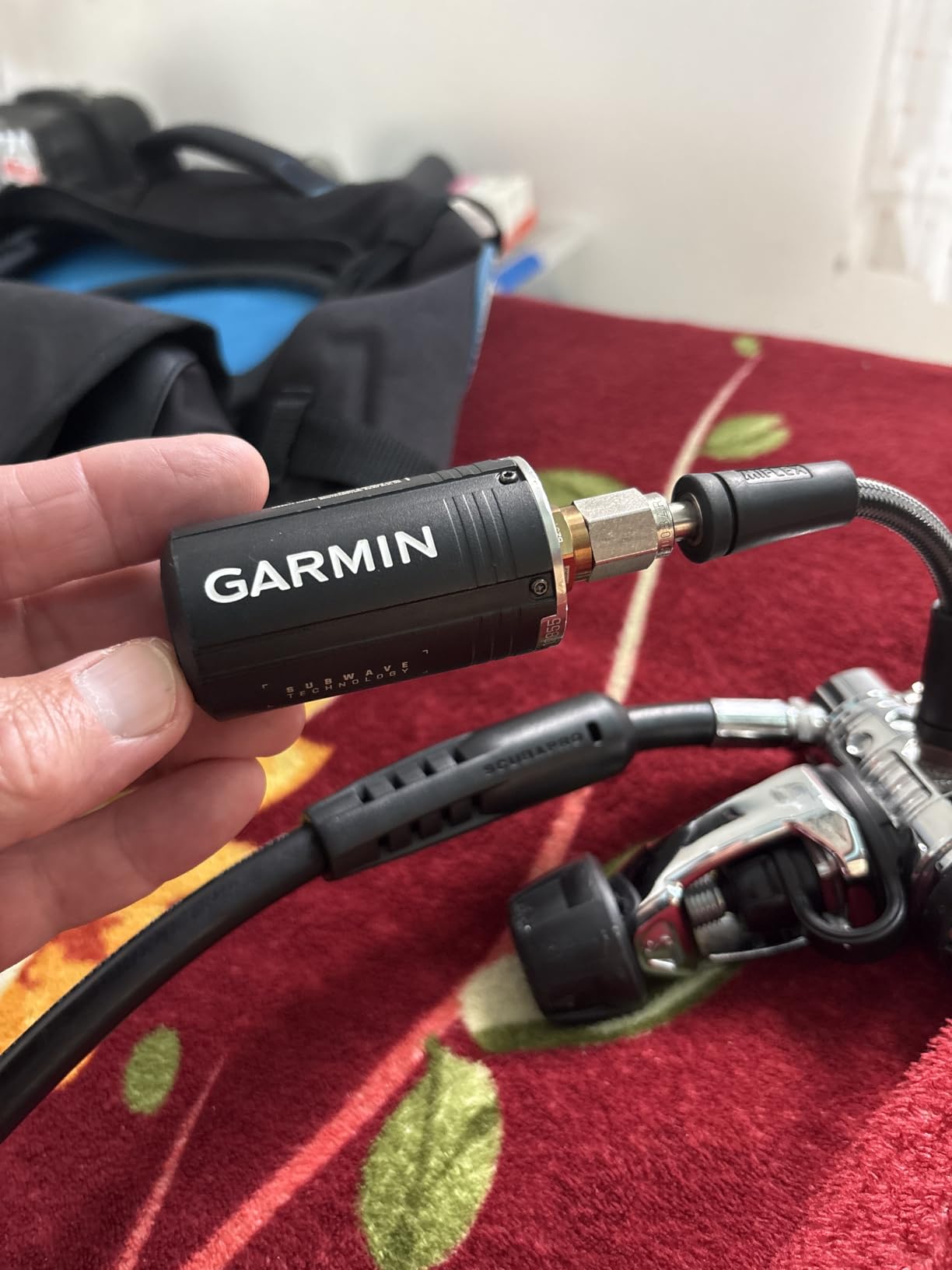
We are including this one because it appears in the same search results as avalanche beacons, and anyone who buys it for skiing is wasting their money and, worse, showing up to a tour with no transceiver. The Garmin Descent T2 is a dive transceiver. It attaches to a high-pressure regulator port, pairs with air-integrated Descent dive computers, and reports tank pressure, air time remaining and consumption rate. It does not transmit on 457 kHz, and it will not help you find a buried skier.
Because it is in the data set for this roundup, we are going to describe it properly rather than quietly drop it. The feature list is genuinely good for its actual purpose: dive-rated to 20 ATM, SubWave diver-to-diver messaging up to 30 m, pairing for up to 8 transceivers on one compatible computer, simplified Bluetooth Low Energy pairing, and a user-replaceable CR123A lithium cell with a claimed runtime of up to 100 hours of diving.
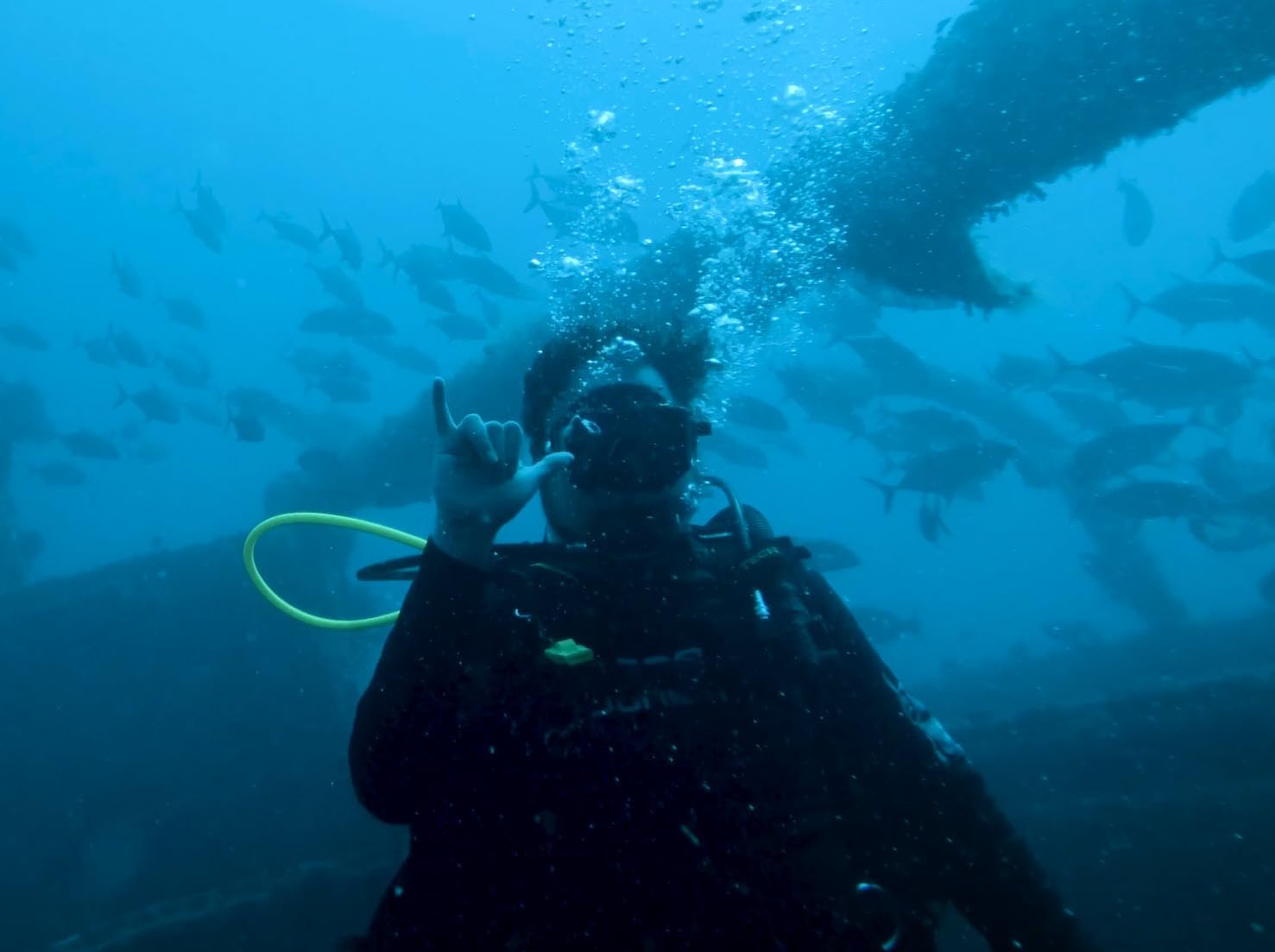
The owner feedback is positive and specific, with divers reporting that tank pressure readings track their analog gauges closely, that a connection holds for a full dive day once switched into SubWave mode, and that pairing is a one-time step. The recurring complaint is the Bluetooth link dropping at the surface before the underwater switchover, which Garmin support describes as expected behaviour in shallow water.
Hardware-wise it is compact, at 1.43 x 1.43 x 3.3 inches and 8.8 ounces, with an IP6X water resistance rating and a 1 year limited warranty. No display, buttons only. A portion of divers report recurring lost-comms warnings mid-dive even with a new battery and a fully charged computer, and the pod can be too wide for tight regulator rigs without a shorter high-pressure hose.
Who the Descent T2 suits
Technical and recreational divers who own an air-integrated Descent Mk3i or X50i and want continuous surface-to-surface communication and gas data. Several owners treat it as a safety upgrade for multi-diver trips specifically because the pressure data improves situational awareness on a shared gas plan.
Who must not buy it for skiing
Everyone on this page who came here looking for a transceiver. It transmits on a Bluetooth frequency, not 457 kHz, it is categorised by the retailer as a diving communication device, and it will not receive a partner’s avalanche signal under any circumstances. If you are building a backcountry kit, your beacon should be one of the other seven on this list, paired with a probe and a shovel.
5. Mammut Barryvox S: The Longest Published Analog Bandwidth Here
Mammut Barryvox S Avalanche Beacon
70 m digital strip and receiving range
95 m extended analog range
70 g unit weight
3 AAA cells
Pros
- Easiest interface its owner has used
- Long detection range in distance testing
- Search assist mode described as very helpful
- Accepts lithium cells for cold-weather stability
- Compact and light at 70 g
Cons
- Firmware updates have required in-person service in some regions
- Update compatibility is region-locked
- Recall notice for Barryvox S2 and Barryvox 2 raised owner concern
The Barryvox S is the model where the published numbers are unusually clear, and they are worth reading carefully because they describe a device that can do something digital-only units cannot. Digital search strip width and digital receiving range are both listed at 70 m, while the extended analog receiving bandwidth goes up to 95 m with an extended analog search strip width of 100 m. The receiving field is described as circular, with almost identical range on the X and Y antennas.
That combination of digital and extended analog coverage is the argument for this unit over a cheaper digital-only beacon, and it matches a recurring forum observation: an older analog beacon still had excellent raw range even when its search ergonomics were poor. The Barryvox S is the version of that idea with modern handling bolted on. At 70 g it is one of the lighter units we can confirm a weight for, and owners describe the interface as the easiest they have used, valued precisely when adrenaline is high.
Battery handling is a genuine strength. The unit runs on three AAA cells and is lithium-enabled, meaning you can use lithium cells for less risk of leakage, more stable behaviour in low temperatures, and a claimed 350 hours in send mode. For a full winter of touring that is a battery you set once and stop thinking about, which matters more to most skiers than any other spec on this page.
The complications are firmware and history. Owners report that device-to-device firmware updates have required an in-person visit to a shop or a paid service technician in some regions, and that update compatibility is region-locked so the unit has to go back to the region where it was purchased. One reviewer also raised the recall notice covering the Barryvox S2 and Barryvox 2 when weighing the purchase, which is worth reading in full before you commit to this model family.
Who the Barryvox S suits
Skiers who have measured their own signal performance in the field and want headroom above the standard digital range, particularly in wide, open terrain where a burial is far away. The search assist mode is singled out by owners as helpful, and the circular receiving field means you are not working around a directional blind spot while searching.
Who should stay with the standard Barryvox
Anyone who does not want to deal with a service visit for firmware. The forum consensus we read was that the standard Barryvox is enough for most people, and the S model earns its place mainly when you have evidence in your own range tests that you need the extra bandwidth. Read the recall history for the family before buying either one.
6. Black Diamond Recon X: A Rugged Digital Beacon With App Support
Black Diamond Recon X Beacon, Avalanche Rescue Transceiver, Bluetooth
Digital signal processing
Multiple burial capability
Bluetooth app connectivity
8 oz listing weight
Pros
- Strong value relative to other three-antenna beacons
- Digital signal processing and multiple-burial support
- Clear visual and audio feedback simplifies searching
- Rugged housing for cold avalanche conditions
Cons
- One owner reported a unit locked in a firmware update state
- Small written review base limits long-term field data
The Recon X came out of our analysis as the most sensible three-antenna digital beacon in the group on a spec-per-cost basis, which is why it carries our value badge. It ships with Bluetooth connectivity, digital signal processing designed for complex avalanche scenarios, multiple burial capability, and an interface built around clear visual and audio feedback so you are not squinting at a small screen in flat light during a storm.
It is also, at 8 ounces on the listing, one of the lighter units here, and the housing is described as rugged and weather-ready rather than delicate. That combination of weight, three-antenna processing, and a rugged shell is what makes it a sensible first serious beacon for someone stepping up from a simple two-antenna unit without stepping up into a specialist device.
The weakness, and it is worth being blunt about, is the firmware onboarding. One owner reported a unit that locked into a firmware update state after pairing with a new phone and would not operate afterward, and neither the owner nor the ski patrol they consulted could resolve it. The general lesson is straightforward: complete the app setup and any firmware steps at home, in daylight, before you need the device, and confirm the unit still switches modes afterwards.
With only 15 written ratings, long-term field reliability is not well documented for this specific model. That is not a red flag, it is an absence of data, and you should weigh it as one. If you like being able to read a decade of owner reports before you commit, choose a model with a deeper review history instead.
Who the Recon X suits
Newer skiers moving up to a three-antenna digital beacon, and anyone who wants Bluetooth for settings and firmware without paying for the guide-grade version. It ranks in the top tier of the retailer’s beacon category, which suggests it is a volume seller and easy to find in shops, and that matters if you want to handle one before buying.
Who should pass
Pass if you need voice-guided search, if you want a long published analog range alongside the digital mode, or if you are simply uncomfortable with a device whose firmware depends on a phone app. Anyone buying a second-hand unit from this model should be especially careful, given the reported failure mode, and should run the power-on self-test before leaving the shop.
7. Ortovox Diract Voice: Spoken Directions in Nine Languages
Ortovox Diract Voice Avalanche Transceiver
Spoken search guidance
Full graphic 360 degree display
7.4 oz manufacturer spec
Permanent self-test
Pros
- Voice navigation in nine languages through each search phase
- Full graphic screen with 360-degree real-time directional display
- Three-antenna Smart-Antenna Technology adapts to position
- Rechargeable battery with permanent self-test and standby mode
Cons
- Small written review base leaves long-term durability unclear
- Listing weight and dimensions conflict with the manufacturer spec
The Diract Voice is the only beacon in this roundup that talks to you. Speech navigation in nine languages, covering German, English, French, Italian, Spanish, Norwegian, Swedish, Czech and Dutch, walks you through each phase of the search while a full graphic screen shows a 360-degree real-time directional display. On skitalk, the reason people recommend it is stated plainly: because it speaks its directions as well as showing visual and beeps.
Whether that is a genuine help or a gimmick is the most polarising question in this category, and enthusiasts and sceptics are roughly evenly split in the threads we read. Our view is that the case for it is cognitive, not cosmetic. A search under a debris field with a partner and a ticking clock is a task where working memory is the scarcest resource, and removing the need to interpret beeps against a screen is a real reduction in load. If you are the kind of person who freezes up under pressure, that trade is worth taking.
The hardware underneath is serious. It uses three-antenna Smart-Antenna Technology, which analyses the device’s position in the avalanche and responds to optimise response time, and it adds a rechargeable battery, Bluetooth, a group check function, a flagging function, a Recco reflector inside the housing, a permanent self-test, standby mode, and automatic switchover in a secondary slide. Manufacturer spec is 79 x 120 x 23 mm and 7.4 oz, though the retail listing shows different weight and dimension figures, which is a good reminder to check the manufacturer’s sheet rather than the listing.
Two honest caveats. First, at 12 written reviews there is very little owner commentary, so long-term durability is not well established from user reports even though the 4.8 average and the absence of any one- or three-star rating are encouraging. Second, a rechargeable battery is a genuine change of philosophy: you now have a device with a charge state to manage instead of a set of cells to swap, and if you leave it flat in a pack for a month you need to check it before a tour.
Who the Diract Voice suits
First-season skiers who know they will freeze up, groups that include anyone less practised than the rest, and anyone who prefers being told the next action over decoding a signal. The permanent self-test and standby mode also make it easy to leave on and trust, which reduces the number of daily decisions between you and the mountain.
Who should skip it
Experienced searchers who read a display faster than they hear speech, and anyone who would rather carry primary cells that cannot go flat. Given the thin written review base, we would also buy this one from a retailer with an easy return path rather than a private seller, and we would run several practice searches in a burial mound before taking it into real terrain.
8. Black Diamond Guide BT: The Beacon Built for Guides and Patrol
Black Diamond Guide BT Beacon, Avalanche Rescue Transceiver, Bluetooth
Digital and analog search modes
60 m circular range
Mark and scan functions
Automatic antenna switching
Pros
- Digital and analog search modes for flexible detection
- High-visibility display and loud audio cues in low visibility
- Bluetooth app connectivity for firmware and settings
- 60 m circular range with mark and scan plus auto antenna switching
Cons
- Very small written review base
- Companion app is listed as Android only
The Guide BT is the pro-oriented unit in this group, and the spec sheet reads like a patrol tool rather than a consumer device. It runs digital and analog search modes, has a 60 m circular range, adds mark and scan functions alongside automatic antenna switching, and connects over Bluetooth to the BD Mobile App for firmware updates and device customisation. Owners describe the design as well thought out, and ratings are uniformly positive with no critical feedback.
What makes those functions matter is the workload. Mark and scan let a rescuer flag a located signal and keep searching, which is exactly the situation a professional creates by putting more than one person in the snow. Automatic antenna switching removes a step from a search when your hands are cold and the light is flat. The high-visibility display and loud audio cues are aimed at the same problem: low visibility during a storm.
It is also the unit to consider if your work involves putting other people in avalanche terrain, where a day of use adds up to a year of use in a season. For a recreational skier who tours twenty days a year, that is a lot of capability you will not touch, and the Guide BT is not the place to start.
Two limitations. The written review base is very small at ten ratings, so most owners are confirming basic function rather than reporting multi-season field performance, and the companion app is listed as Android only, which matters if you tune settings from an iPhone. The listing weight of 0.5 kg is clearly a package or shipping figure rather than the device weight, another reason to check the manufacturer specification.
Who the Guide BT suits
Guides, ski patrol, instructors, and avalanche educators who need a mark-and-scan workflow and analogue fallback. It is also a defensible choice for a serious recreational skier who splits time between touring and a job in the mountains, because the features it adds are the ones professionals actually use.
Who should not buy it
First-season skiers on a budget, who will get the same rescue outcome from a simpler unit. If you are assembling a kit piece by piece, put the beacon last after the probe and shovel. And if you rely on an iPhone to manage your devices, check the app situation first, because Android is the only operating system listed.
How to Choose an Avalanche Beacon in 2026
The seven criteria below are the ones that actually separate these units. Everything else on a spec sheet, including most of the headline range claims, is manufacturer-measured under laboratory conditions and varies a great deal in real snow. One rider we read about ran a side-by-side range test across a mixed group of beacons and found a dramatic spread, with an older Ortovox S1 at roughly half the range of the newer units while old analog beacons still showed excellent raw range but poor search ergonomics. That is the whole argument in one story: raw range and usable search are different things.
1. Antenna count, and why three is worth paying for
Two-antenna units give you a distance reading and a vague sense of direction, which means a wide search strip and more passes. Three-antenna units add the third dimension needed to produce a true directional arrow and a tight strip, which shortens the search and reduces the time before the probe goes in. For most backcountry skiers, three antennas is the point at which a beacon becomes genuinely easy to use rather than merely functional.
2. Digital, analog, or switchable
Digital processing makes the signal far easier to read and the direction much clearer, which is why it dominates. Analog still has a longer raw receiving range on many units and can be faster in deep snow or against a weak transmitter, because it amplifies the raw signal instead of interpreting it. Switchable units, such as the Mammut Barryvox S and the Black Diamond Guide BT, give you both and let you choose. There is no wrong answer here; there is only how much you value range over readability.
3. Multiple burial versus group check
These are routinely confused and they do different jobs. A group check is run before you leave to confirm every beacon in the party is transmitting and set to send. Multiple burial is a live count of signals during a search, telling you whether one or several people are buried. If you regularly ski in groups of four or more, prioritise a beacon with a reliable burial counter.
4. Can you use it with gloves on, one-handed, in the dark?
This is the criterion buyers skip and the one that decides whether a rescue goes quickly. Look at switch travel, button size, and whether the display is readable in flat light. Touch controls are fast but give less confirmation than a mechanical switch, and a unit that wants two hands to change mode is a unit you will fumble when one hand is holding a probe.
5. Battery type and cold-weather behaviour
Lithium cells lose far less capacity in the cold than alkaline and do not leak, and several units on this list are explicitly lithium-enabled. The Mammut Barryvox S lists a claimed 350 hours in send mode on lithium. Units with rechargeable cells, such as the Ortovox Diract Voice, trade that forget-it reliability for a device you have to keep charged. For a skier who tours from a car and never charges anything, primary cells are the safer habit.
6. Weight against what you carry
The spread here is small, from 70 g for the Mammut Barryvox S to roughly 205 g on the manufacturer claim for the BCA Tracker S, and most units sit between 7 and 8 ounces. Weight matters less than most gear guides suggest, because the transceiver is worn in a harness against the body rather than carried in a pack. If you are assembling a kit from scratch, spend on the beacon and get efficient elsewhere.
7. Brand reliability, service and recall history
This is the one nobody researches and everybody regrets. Pieps and Black Diamond transceiver history still generates hesitation in the forums, and the advice repeated in r/Backcountry is to read any recalls before you buy. Check the manufacturer’s current recall notices for the exact model, find out where service is performed, and prefer a retailer with a return policy. If you are also building the rest of the winter kit, our guides to backcountry stoves and all-mountain ski bindings cover the other two pieces most people buy in the same order.
Beacon Recalls, Second-Hand Buying and Battery Logistics
Reliability history is the most-repeated anxiety in every forum thread we read for this topic, and it deserves a direct answer rather than a reassurance. The concern is not that one brand is broken; it is that a catastrophic device failure would be invisible until the moment you needed it, and a recall notice years after purchase is easy to miss. The practical answer is unglamorous: before you buy any beacon, open the manufacturer’s support page and search the model name against the recall list, then confirm the unit in your hands is on the current generation with current firmware.
For a specific example in this roundup, one owner of the Mammut Barryvox S raised the recall notice covering the Barryvox S2 and Barryvox 2 when weighing the purchase. That does not make the Barryvox S a bad device, and it is not the reason we ranked it where we did. It is, however, exactly the kind of check that takes two minutes and takes the uncertainty out of the decision.
Second-hand beacons are a separate risk and the forum consensus is blunt: do not buy used unless you know what you are getting. Battery age is the first unknown, and on a rechargeable unit the cycle count is worse. If you do consider a used unit, run the power-on self-test in front of the seller: switch it on and confirm it completes the self-test sequence, cycle it through every mode including search, confirm the direction-finding display responds when you rotate the unit, check the battery contacts for corrosion, and confirm the firmware version is current. Ask to see it search for a third beacon in the shop before you hand over any money.
For battery logistics across a season, the simplest workable plan is to set a fixed date each autumn when you check every beacon in the party: replace the cells regardless of how they feel, confirm the self-test, confirm the mode switch, and confirm the device still finds a partner unit. Cold weather reduces the working capacity of alkaline cells sharply, and a beacon that fails at 0 degrees because you trusted a three-year-old cell is a failure you chose.
Beacon, Probe and Shovel: Completing the Rescue Triad
A beacon is one third of the rescue triad and the only third that finds the person. The probe confirms the point the beacon gave you, and the shovel is what turns a located target into an open hole. All three are designed to be worn or carried on the outside of a pack where they can be reached in seconds, and all three are cheap relative to what a delay costs you.
Buy them in the order you will use them under pressure. Beacon first if you have a group, since a beacon only works if everyone has one; then a probe you can assemble in seconds; then a shovel. The rest of the touring kit follows, and the pieces you are most likely to regret underspending on are the ones that have to work when you are cold, panicked, and wearing gloves.
Avalanche airbags belong on the other list. They reduce burial depth and are genuinely valuable in terrain with a recurring weak layer, but they only deploy if the pack is worn and cannot help you find anyone else. A beacon plus an airbag is a stronger kit than an airbag alone, never a replacement for one.
Frequently Asked Questions
Do avalanche beacons work?
Yes. Worn in send mode, an avalanche beacon transmits a continuous low-power 457 kHz signal. Switch it to search and it receives the strongest nearby signal, using its antenna array to give direction and distance so a rescuer can run a search strip to a pinpoint location. Every beacon in our roundup uses the standard 457 kHz band, so they will find each other across brands.
Which avalanche beacon is considered the best?
Among the eight units we reviewed, the BCA Tracker S is our pick for most people because it has the largest written review base at 102 ratings and the simplest interface. The BCA Tracker 3 is the strongest choice for anyone who wants three-antenna digital search with multiple-burial handling. The Mammut Barryvox S leads on published long-range coverage, and the Ortovox Diract Voice is the voice-guided option.
Is the BCA Tracker 2 still a good beacon?
The Tracker 2 is a generation behind both units on this list. If you already own one and it passes its self-test, keep using it and practise with it rather than replacing a working device. If you are buying today, the current-generation choices in this lineup are the BCA Tracker S for simplicity and the BCA Tracker 3 for three-antenna digital search with multiple-burial capability.
What is the cheapest avalanche beacon available?
Price changes constantly, so check current listings rather than trusting a published figure. Structurally, the two entry-level options in this roundup are the Black Diamond Recon X and the BCA Tracker S, both of which are three-antenna-class or near it rather than the most basic two-antenna units. The most common first question from new skiers is not which model, but how to fund a full kit on a budget.
How often should you replace my avalanche beacon?
Replace it when the manufacturer issues a recall for your model, when firmware support ends, or when the generation gap is wide enough that you gain something real from upgrading. In practice most skiers go many years without replacing a working unit, and the higher-value habit is an annual autumn check: fresh cells, self-test completed, every mode cycled, and a successful search for a partner beacon.
Which Mammut Barryvox is best?
For most recreational backcountry skiers, the standard Barryvox is enough, which is the consensus in the forum threads we read. The Barryvox S adds published extended analog coverage, with a 70 m digital search strip and receiving range plus extended analog receiving bandwidth up to 95 m and a 100 m analog strip, and it runs on three AAA cells with a claimed 350 hours in send mode on lithium. It is the pick if you have field-tested your own range and want headroom.
Are avalanche airbags worth it?
They are worth it as part of a kit, not instead of one. An airbag can reduce burial depth in terrain with a recurring weak layer, but it only works if you are wearing it and it cannot help locate a buried partner. A beacon plus probe plus shovel remains the rescue triad that turns a burial into a survivor, so fund those first and treat the airbag as an addition.
Conclusion: The Best Avalanche Beacon Is the One You Can Operate
After working through all eight units, the honest summary is that the best avalanche beacons for backcountry skiing in 2026 are not separated by range figures. They are separated by how confidently you can switch modes, read a direction, and stay calm in the first ninety seconds after a slide, and every one of the units here will do that if you drill it.
Our pick for most people is the BCA Tracker S, which took the largest set of owner ratings we could find and asks the least of you at the worst possible moment. If you want modern three-antenna digital search with multiple-burial handling, take the BCA Tracker 3. If you want published long-range coverage and a battery you can forget about, the Mammut Barryvox S is the one, with the firmware and recall caveats we set out above. The Black Diamond Recon X covers three-antenna digital searching without moving up into specialist territory, and the Ortovox Diract Voice is worth serious consideration if you know you freeze under pressure.
Whatever you choose, buy it early, run a group check before every tour, and put a shovel and a probe in the same pocket as the harness. Then go and practise on a real burial mound with the people you ride with, because a beacon you have never searched with is a device you have only read about. Do that and the model stops being the interesting part of the decision.