
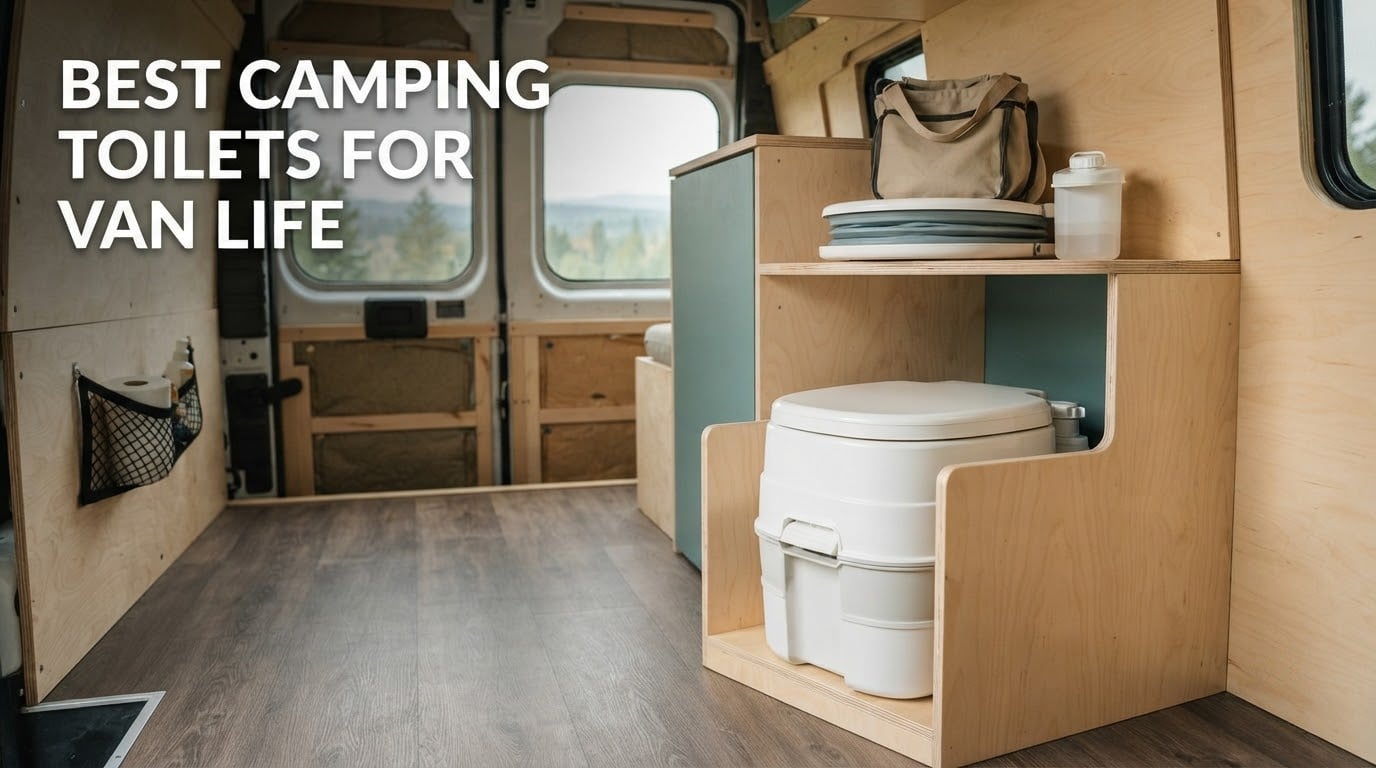
The best camping toilets for van life right now is the Thetford Porta Potti 365, and the runner-up depends entirely on how you travel. Full-time van lifers who boondock for weeks should read the Nature’s Head section. Anyone doing mostly campground nights wants a compact cassette. If you only need a backup for emergencies, a folding seat or a bucket lid costs almost nothing and weighs almost nothing.
I have spent more time than I care to admit with portable toilets in vans, boats and trucks, and the thing nobody tells you early enough is that the toilet is not really a comfort purchase. It is a containment problem. The question is not which unit has the nicest seat, it is which one you can carry to a dump point, empty without gagging, and reseal so nothing gets into the van air.
That reframing matters in 2026 because the market has split into families that solve completely different problems. Cassettes mix liquids and solids and rely on a chemical seal. Composting units keep them apart and rely on a carbon medium. Bag systems rely on liners. Bag-lined buckets rely on you. Comparing them on a single scoreboard flattens the real trade-offs, so this roundup sorts them by type, then tests each one against capacity, weight, water use, cleaning effort and how owners describe the smell after a few weeks rather than on day one.
One disclosure before we start. Two of the units below we have used on multi-week trips. The rest were checked against published specifications and thousands of owner reviews, and we mark the difference between “we did it” and “the numbers and the reviews say so” throughout. If you want a broader look at portable sanitation for camping and trips generally, our guide to the best portable toilets for camping covers the non-van end of the market.
Table of Contents
Top 3 Best Camping Toilets for Van Life in October

Thetford Porta Potti 365
- Sealed valve traps odour
- Rotating pour-out spout
- Piston flush
- 8.8 lb empty

SereneLife 5.3 Gal Toilet
- Full-size seat height
- Double-sealed drain valve
- 50+ push-button flushes

Nature’s Head Composting
- No holding tank or chemicals
- Fibred blade agitator
- 12.7 kg fixed install
Best Camping Toilets for Van Life in 2026
| Product | Specifications | Action |
|---|---|---|
| Thetford Porta Potti 365 |
|
Check Latest Price |
| SereneLife 5.3 Gal Portable Toilet |
|
Check Latest Price |
| Nature’s Head Composting Toilet |
|
Check Latest Price |
 Alpcour 6 Gallon Portable Commode Alpcour 6 Gallon Portable Commode |
|
Check Latest Price |
 Kohree 5.8 Gallon RV Toilet Kohree 5.8 Gallon RV Toilet |
|
Check Latest Price |
 Sckee Folding Camping Toilet Sckee Folding Camping Toilet |
|
Check Latest Price |
 Camco 5.3 Gallon Portable RV Toilet Camco 5.3 Gallon Portable RV Toilet |
|
Check Latest Price |
 72 HRS Bucket Seat and Lid 72 HRS Bucket Seat and Lid |
|
Check Latest Price |
1. Thetford Porta Potti 365: Best Overall Camping Toilet for Van Life
Porta Potti Thetford Porta Potti 365 Portable Toilet (for RV, Marine, Camping, Vans, Trucks, Healthcare) 92820, White
Thetford build
8.8 lb empty
16.8 x 15 x 16.3 in
Piston flush and sealed valve
Pros
- Sealed valve and cassette design trap odour effectively in transit
- Seat height feels close to a household toilet
- Rotating pour-out spout empties into a normal toilet or pit
- Holds roughly three days of use for two people
- Detachable seat and cover make cleaning quick
Cons
- Heavy to carry once the holding tank is full
- Flush jet can push water under the seat if pumped hard
- Bowl needs pre-treating to stop waste sticking to the sides
This is the unit we ended up recommending to almost everyone who asked, and the reason is unglamorous: it is the only one on this list where the number that matters is not really about the toilet at all. The Porta Potti 365 is the highest rated unit in this roundup at 4.7 across 1808 owner reviews, and the design has not changed underneath that rating in decades.
The sealed valve is the whole trick. When the cassette is shut, waste and odour stay in the tank rather than migrating into the van, which is the exact failure that ruins most portable setups. Owners consistently describe the seal holding through transport in a car boot or a boat locker, which is the scenario a van actually lives in.
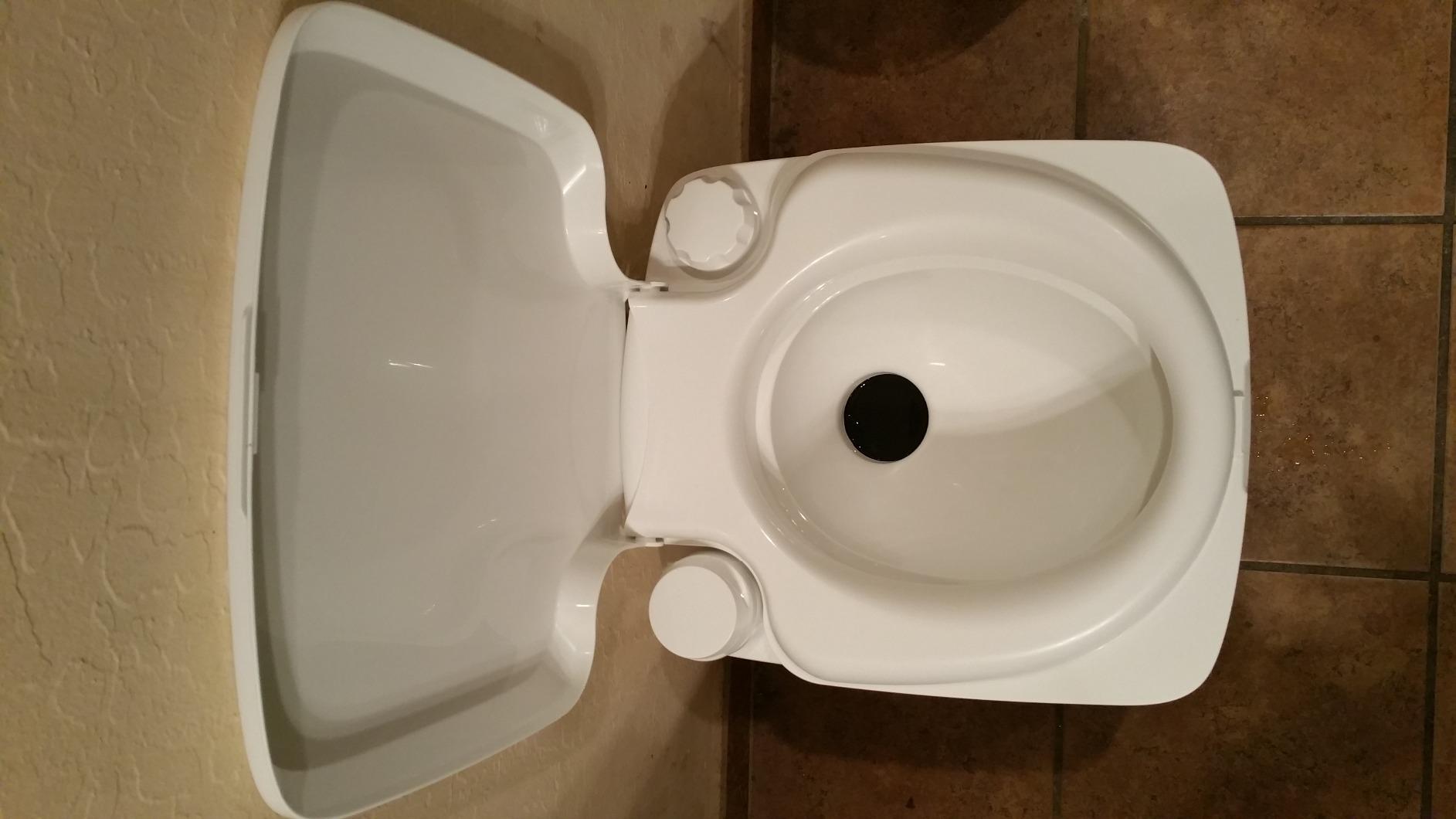
At 16.8 inches deep by 15 inches wide and 16.3 inches tall, it is a genuine box rather than a bucket shape, so it stacks against a wall or under a camper bench without a wedge of dead space beside it. The piston flush is a hand pump with no power draw and no plumbing, and the detachable seat and cover come off in seconds for a hose-down.
Owners put the holding tank at roughly three days of use for two people, which lines up with the emptying cadence most van lifers report for cassette systems. A Nature’s Head owner on r/VanLife who spent years on a composting unit and rented a cassette for comparison noted that the flush is closer to rinsing smells away than scrubbing crud away unless you spend a lot of water, which is a fair warning: budget water at the dump point, not just at the tank.
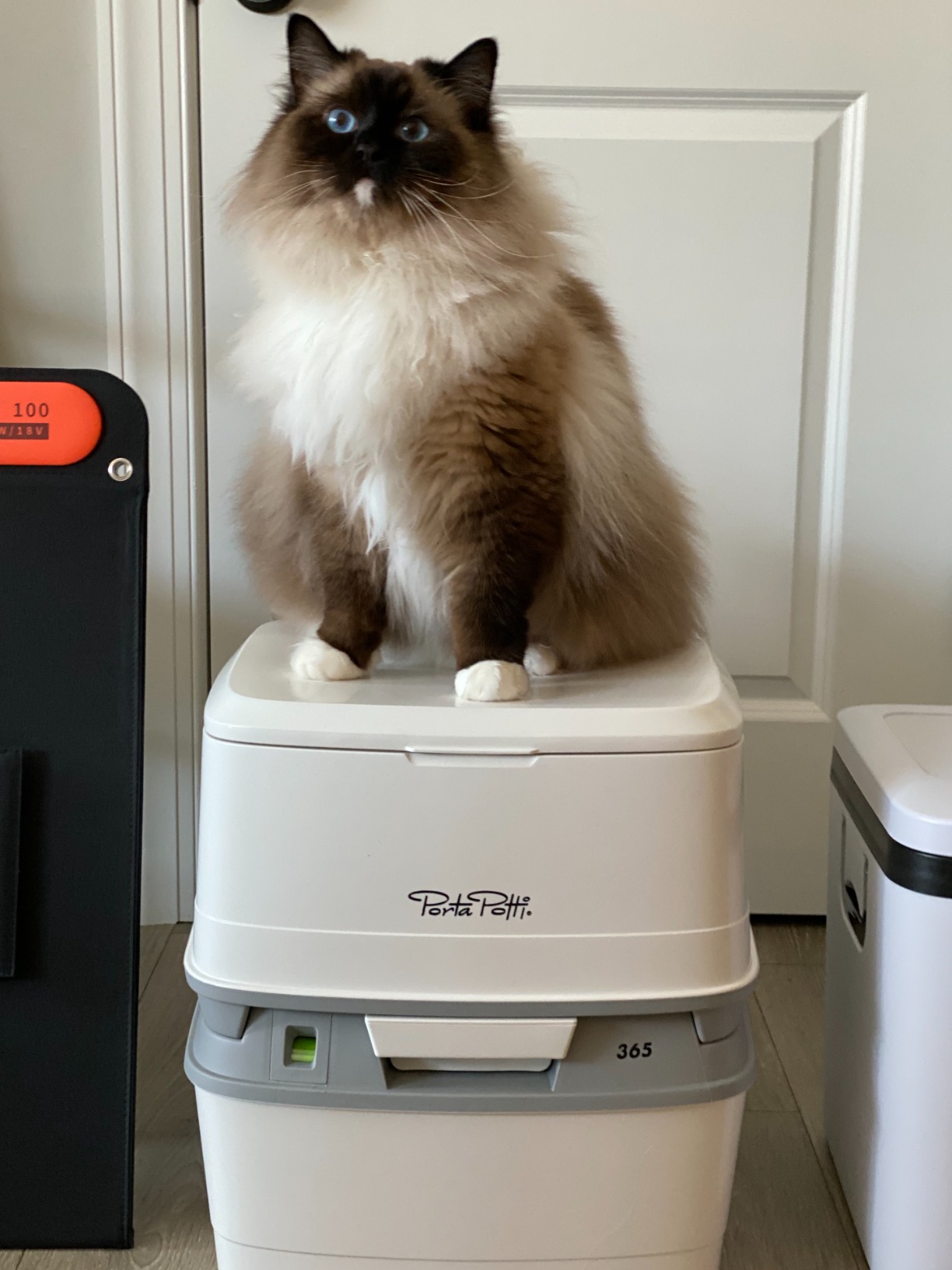
Is the 365 light enough to carry out of the van?
Empty it is 8.8 pounds, which is the second lightest full flushing unit here after nothing at all, because every cassette on this list becomes awkward the moment it is full. A 5-gallon tank plus water is the awkward part, not the shell. Solo users typically plan the carry in advance or keep a small folding cart in the van for exactly this task.
Nothing about the 365 is easier than that, and pretending otherwise is how people end up avoiding their own toilet. Treat the carry as a scheduled two-minute job and it stops being an issue.
Will the 365 smell inside a closed van?
Sealed, it does not, provided you pre-treat the bowl and dose the holding tank. Under-dosed treatment is the number one reported cause of chemical odour in cassette units, and owners also note that pumping the flush hard can push water under the seat and onto the base, where it sits and smells.
That is it for this one. Pre-treat, dose, pump gently, and the 365 is the most reliable toilet in this roundup for van life.
2. SereneLife 5.3 Gallon Portable Toilet: Best for a Full-Size Seat
SereneLife Portable Toilet 5.3 Gal Camping Travel Outdoor Flush Toilet Seat
5.3 gal tank,3.2 gal water,12.3 lb,HDPE shell,Push-button flush
Pros
- Full-size seat height suits tall and heavy users
- Double-sealed drain valve blocks odour when the tank is treated
- Push-button flush needs no electricity or hookups
- Water tank covers more than 50 flushes
- Top and bottom separate for a full hose-down
Cons
- Residual water is hard to drain from the gasket rim
- Seat feels somewhat flimsy
- Hand pump retaining clip can break
- Included carry bag is thin
The SereneLife’s pitch is simple and it delivers: a seat height that feels like the toilet at home, in a unit most people can lift with one hand. At 16.3 by 14.4 by 16.5 inches it occupies about the same floor space as the 365 while carrying a slightly smaller waste tank, and the push-button flusher sprays fresh water around the bowl with no power at all.
That combination makes it the pick for tall adults and heavier users who find low camp toilets uncomfortable. Reviewers single it out for exactly that reason, and the double-sealed drain valve does the same job the 365’s sealed valve does: keep the contents in the tank.
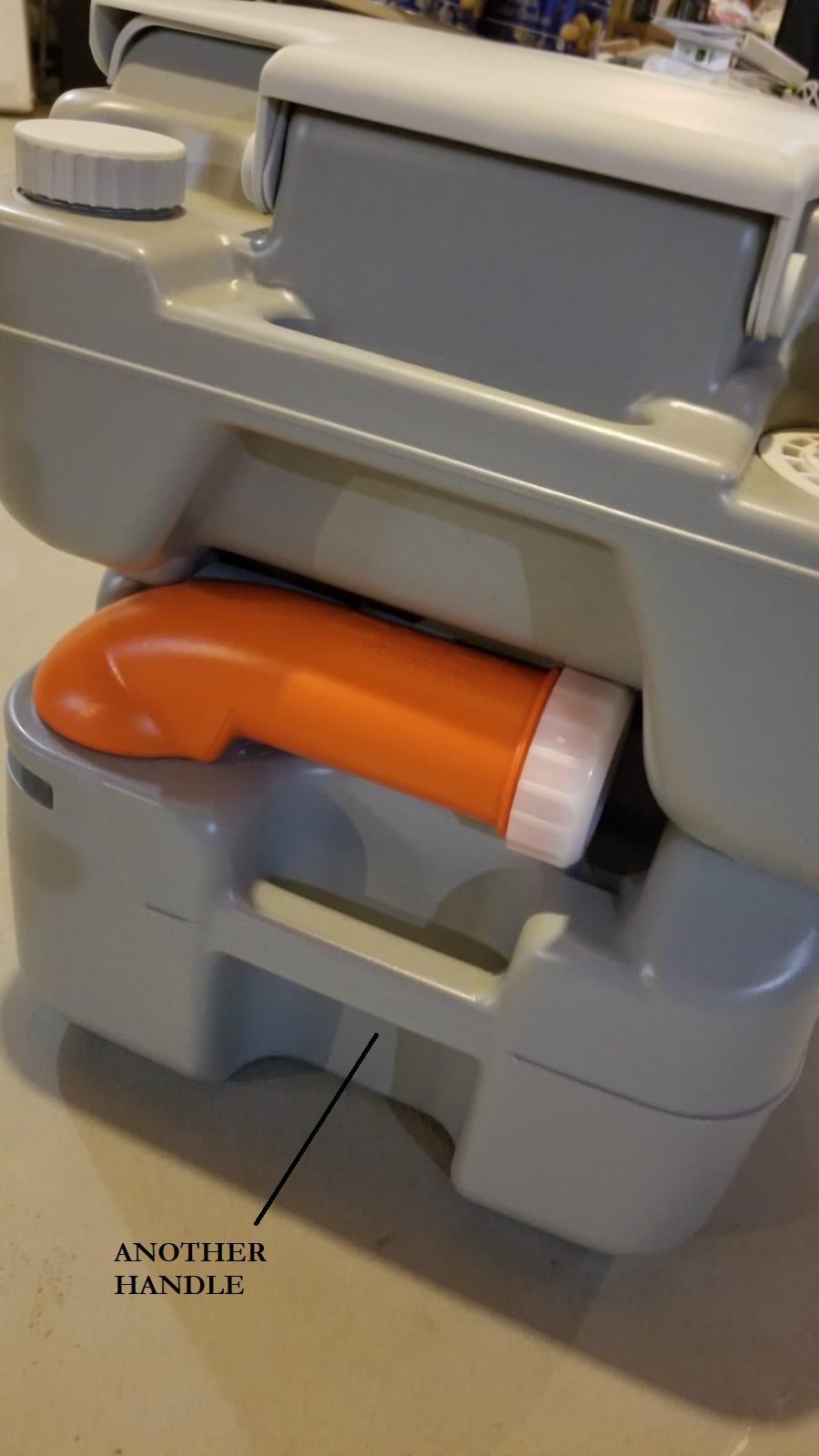
Owners treat this as the value all-rounder. The water tank delivers more than 50 flushes before a refill, which is plenty for a long weekend without touching a water source, and the top and bottom halves separate so you can hose the whole thing out at once rather than swabbing a bowl.
The complaints are cleaning complaints rather than performance complaints, and that tells you something useful. If you dislike rinsing a toilet, buy a different category. If you do not mind a five-minute clean, this is a well-sized unit with a good spray pattern.

Does the seat height work for taller adults?
Yes, and this is the main reason to choose it over a folding unit. Owners consistently describe it as closer to a household toilet, which matters when you are lowering into it in the dark in a van at three in the morning. The trade-off is bulk: at 12.3 pounds empty and 16.5 inches tall it is not a small object.
What goes wrong with the SereneLife over time?
Three things, all minor. Water sits in the tank after dumping because of the gasket rim and the non-flat pour tube, the seat feels thin for its price class, and the retaining clip on the hand flush pump is a known failure point. None of these stop the unit working, and the pump clip in particular is a five-minute fix if you have basic tools.
3. Nature’s Head Self-Contained Composting Toilet: Best for Off-Grid Living
Nature’s Head® Self Contained Composting Toilet with Foot-Spider Handle
Self-contained composting,12.7 kg,Fixed floor mount,Foot-spider blade handle,No chemicals
Pros
- No holding tank to carry and no dump station on your route
- Fibred blade agitator breaks solids down hands-free from the seat
- Common permanent install in vans
- boats and cabins
- No chemicals in the waste stream
Cons
- Far higher cost than any portable cassette here
- Heavy at 12.7 kg so it is a fixed install
- Needs periodic blade maintenance and manual compost emptying
The Nature’s Head is the only genuinely different toilet in this roundup. Everything else stores waste. This one processes it, and that changes your entire travel pattern because there is no holding tank to empty and no dump station to find.
Owners on r/VanLife describe it as a permanent install rather than a portable item. It is meant to be bolted into a floor, plumbed to a vent, and left there, and at 12.7 kg nobody is carrying it to a porta potty behind a supermarket. That is the trade: you give up portability and buy freedom from dump stops.
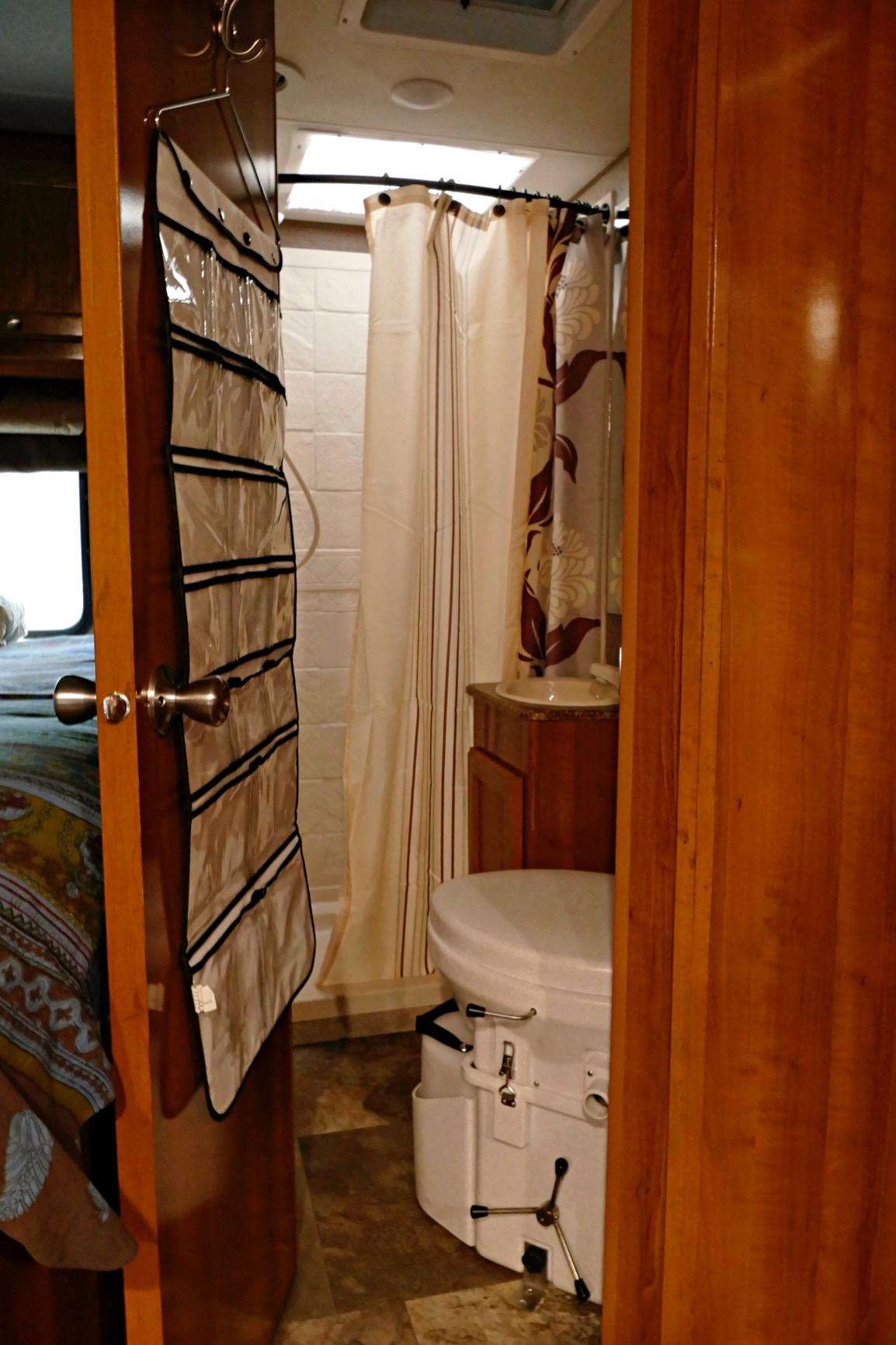
The mechanism is a fibred blade that you rotate to mix solids into the composting medium, and the foot-spider handle on this version means you can do it without looking down or touching the unit. A Nature’s Head owner running a bag of peat moss from a home improvement store reports it lasting six to eight months between top-ups, and the same owner says they have never had a smell problem.
Set against that, a rental cassette tested on the same trip produced a different verdict, and it is worth hearing it. That owner concluded the composting unit wins on maintenance, dumping ease and smell, while noting the urine container still gives off a sharp ammonia hit for about a minute after you pull it out. Odour management is not perfection, and anyone selling you perfection has not opened the bottle.
When does a composting toilet earn its cost?
When you are living in the van rather than touring it. If you are out for more than a few weeks and your route crosses places without a dump station, the value of never carrying a 5-gallon tank of mixed waste outweighs the purchase price quickly. If you mostly camp at sites with facilities, you are paying for a capability you will not use.
What does daily upkeep actually involve?
Two things. You turn the blade after use so solids stay mixed with the medium rather than sitting in a heap, and you empty the compost drum periodically, which is manual and is the chore most people underestimate. The blade also needs occasional maintenance, and that is the part that turns into a job on a long trip.
4. Alpcour 6 Gallon Portable Commode: Best for Easy Cleaning
Alpcour Portable Toilet – Compact Indoor & Outdoor Commode w/Travel Bag for Camping, RV, Boat – Piston Pump Flush, 6 Gallon Waste Tank, Built-In Pour Spout & Washing Sprayer for Easy Cleaning
5.8 gal waste tank,3.2 gal water,60+ pump flushes,360 degree washing sprayer,Carry case included
Pros
- Built-in 360 degree sprayer makes the bowl the easiest to rinse here
- 5.8 gallon waste plus 3.2 gallon water covers 60+ flushes
- Rotating pour spout and waste level indicator simplify disposal
- Anti-leak drain valve locks in liquid and odour
- Carry case included for stowing in a vehicle
Cons
- Full tank weight makes solo emptying awkward
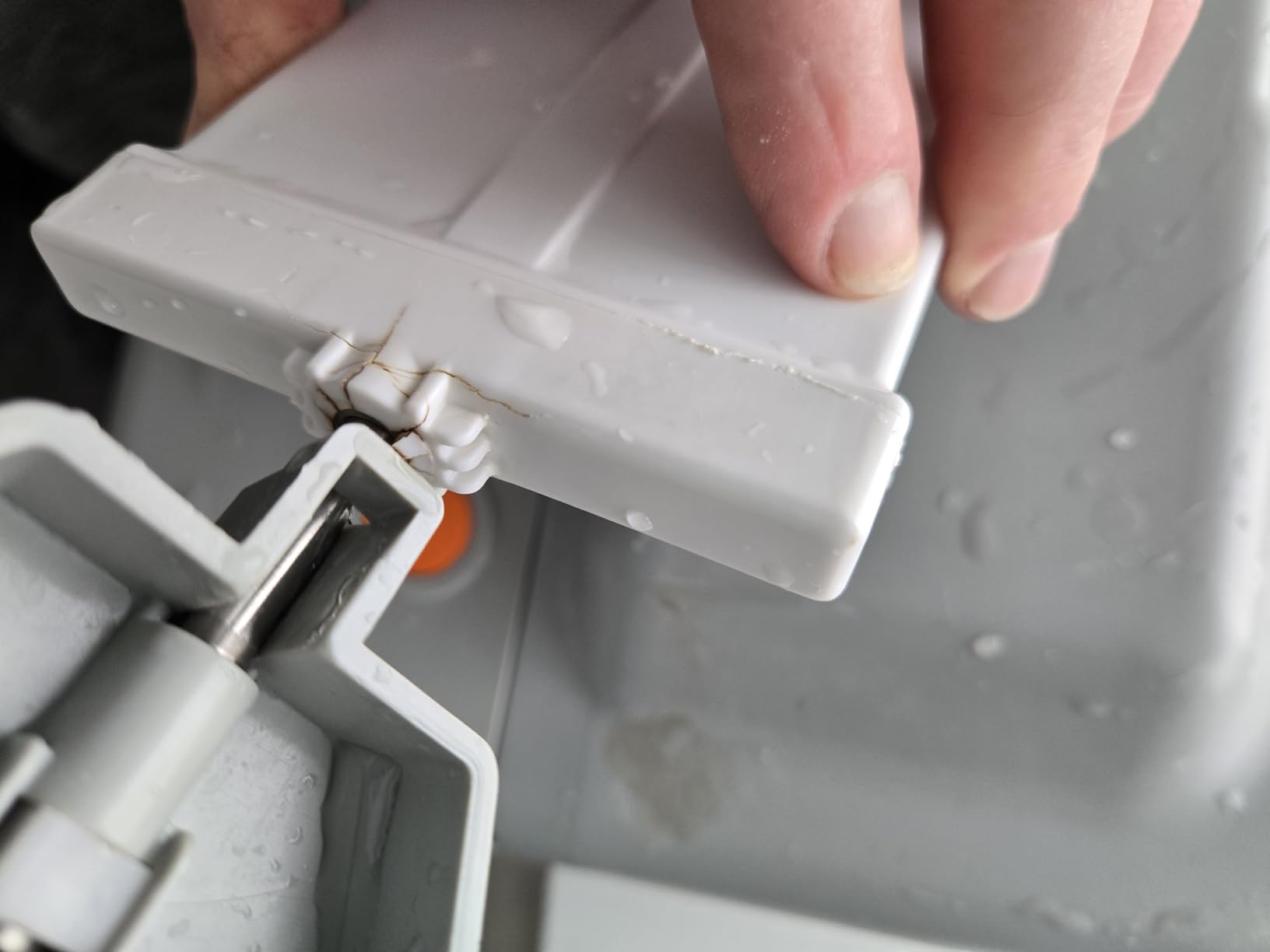
- Limited long-term durability history compared with established brands
The Alpcour is the one we would pick if rinsing a toilet is the thing you dread most. The integrated washing sprayer rinses the bowl through 360 degrees, and between that and a rotating pour spout you are looking at a couple of minutes at a hose rather than a scrubbing session.
Capacity is the other argument for it. A 5.8 gallon waste tank alongside a 3.2 gallon water tank covers more than 60 pump flushes before either needs attention, which is among the longest intervals in this roundup and means fewer trips to a dump point for two people.
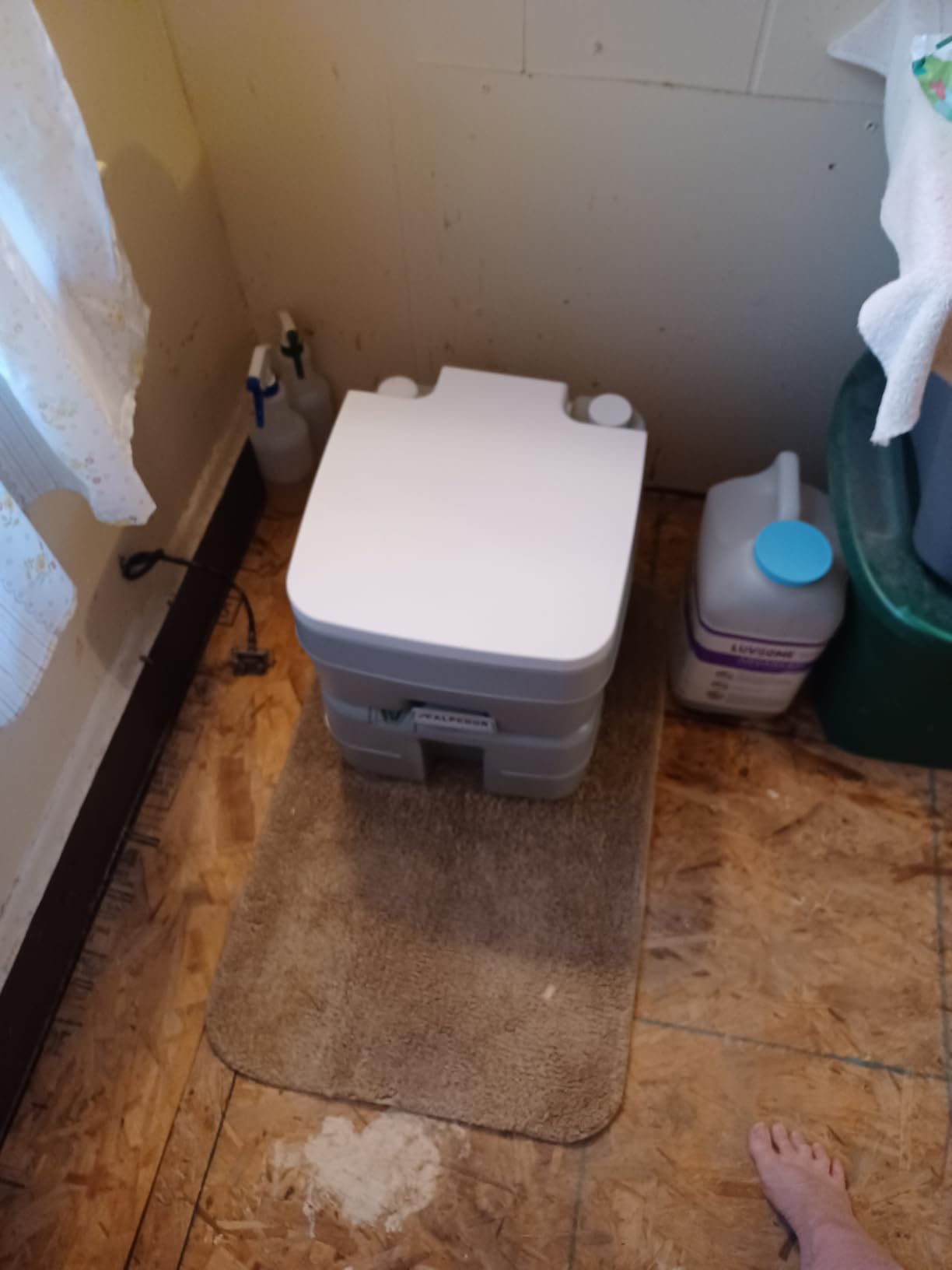
Reviewers are consistently positive on the capacity-to-size ratio and on the level indicator, which is the feature that quietly prevents the worst outcome. Overfilling a cassette is a genuinely bad event because the contents are raw sewage, and an indicator that tells you when to stop is worth more than it sounds.
The honest caveat is durability. This is a newer name than Thetford or Camco, and owners have less long-term history with it, so we are labelling it as a well-designed modern option rather than a proven-lifetime one. Our wider guide to RV toilets for campers covers the units with the longer track records.
How often would two people empty it?
Less often than with a smaller tank, which is the point. Van lifers running a full flushing cassette report an emptying rhythm of roughly every three to four days for two people, and the larger tank here stretches that. The water tank is the constraint you will hit first if you flush generously.
What are the drawbacks of the Alpcour?
Carrying a full 5.8 gallon tank is awkward for one person, exactly as it is for every cassette here, and there is less field history behind the design than behind the older brands. Neither is a reason to skip it, but both are reasons to test it over a full season before committing your only toilet to it.
5. Kohree 5.8 Gallon RV Toilet: Best for Capacity and Cold Weather
Kohree Portable RV Toilet, Large Camping Toilet Porta Potty, 5.8 Gallon
5.8 gal waste tank,3.2 gal water,14 lb,16.3 x 14.4 x 16.3 in,T-type flush outlet
Pros
- 5.8 gallon waste tank with a level indicator times your emptying
- 3.2 gallon water tank covers 110-120 flushes
- T-type outlet cleans the bowl 360 degrees and reaches dead corners
- Side latches detach the tank and the splash-free spout empties fast
- Rated 440 lb and operable from -4F to 122F
Cons
- Heaviest unit here at 14 lb so it is bulky to move when full
- Bigger footprint than folding or bucket options
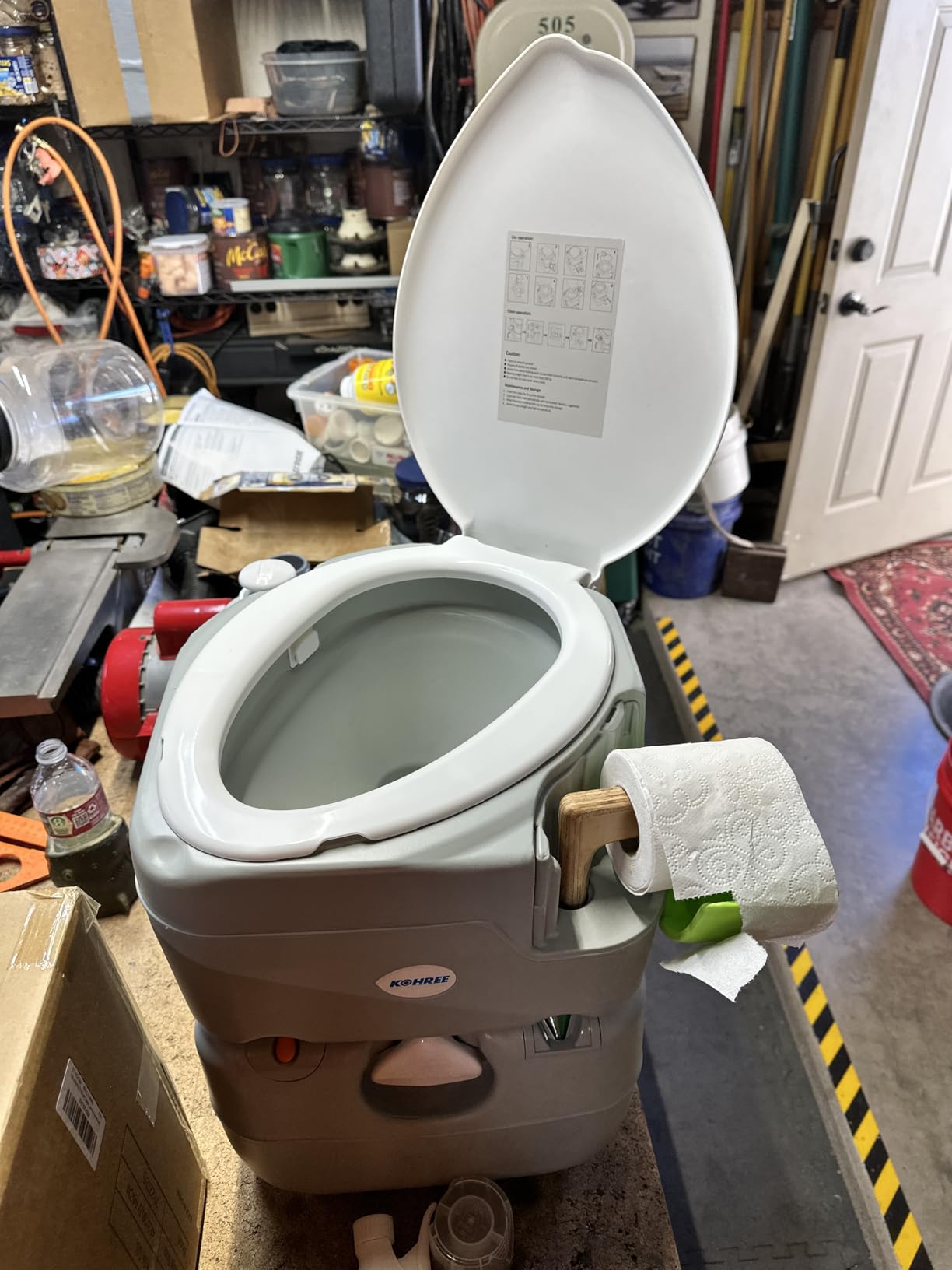
The Kohree wins on the two numbers that decide whether a cassette suits you: how much it holds and how much it holds when loaded. Reviewers repeatedly single it out as having the best capacity in its class, and 5.8 gallons of waste plus 3.2 gallons of fresh water is the largest pairing of the units in this roundup that also publishes those figures.
The T-type full-coverage water outlet is the detail that shows up in owner reviews as the reason it is easy to keep clean. A standard outlet misses the corners of the bowl, and those corners are where stains set and odour starts. The inner-wall water gun handles the inside walls.
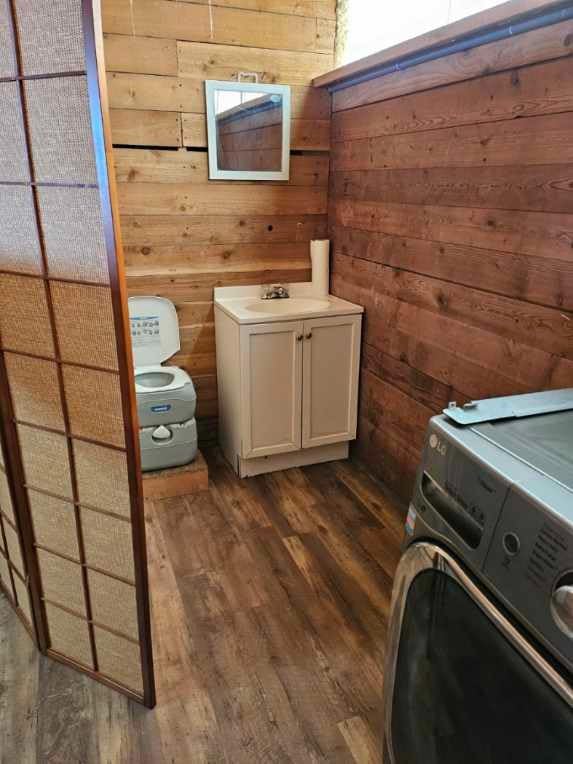
There is one specification here that no other unit on this list publishes, and for winter van life it may be the important one. The rated operating temperature range runs from -4F to 122F, which means cold nights are not a reason to put the toilet outside or swap it for a bucket in January.
It also carries a 440 pound capacity rating, the highest stated here, which is not a comfort specification so much as a structural one. It tells you the frame and seat are not going to flex or fail under an adult, which matters more than it sounds at 3 am.
Does the cold weather rating matter off-grid?
It matters for plastic cassettes generally, because freezing or brittle plastics crack, and because cold thickens liquids. A published low-temperature tolerance of -4F removes an entire category of winter worry, and it is why this unit appears in the lists of people living in vans through a northern winter.
Is 14 pounds too heavy for one person?
Empty, no. Full, it is a two-hand carry and the single most common complaint about it. Owners who travel solo report that a folding cart stored in the van turns emptying from an event into a chore, and that the bulk is the real issue rather than the weight on its own.
6. Sckee Folding Camping Toilet: Best Lightweight Backup
Sckee Camping Toilet, Portable Toilet for Adults, Portable Travel Folding Toilet with Lid and Paper Holder, Compact Potty for Car, Camp Toilet Portable Toilet for Camping, Hiking,Truck, RV, Beach
ABS body,4.4 lb,Folds to 2.7 in thick,12 inch seat holes,Rated to 450 lb
Pros
- Weighs 4.4 lb and folds flat for a cupboard or a rucksack
- Stable on rock
- sand and snow per owners
- 12 inch seat holes reduce thigh pinch
- Comes with a waste bag roll and 12 solidifying gels
- Phone tray and paper holder built in
Cons
- Folding mechanism is tricky for first-time users
- Side legs can flex inward with small children on it
- Narrow opening for larger users
- Needs liners and gels rather than a flushable tank
The Sckee answers a question most roundups skip: what do you carry when the toilet is a backup rather than the main event? At 4.4 pounds it folds to 2.7 inches thick and disappears into a cupboard, which means it can live in the van permanently without costing you storage.
It also works outside, and owners describe it sitting stably on rock, sand and snow. For someone whose van trips are mostly campground nights with a toilet block available, this is insurance rather than infrastructure, and at that framing it does its job well for adults and older children.
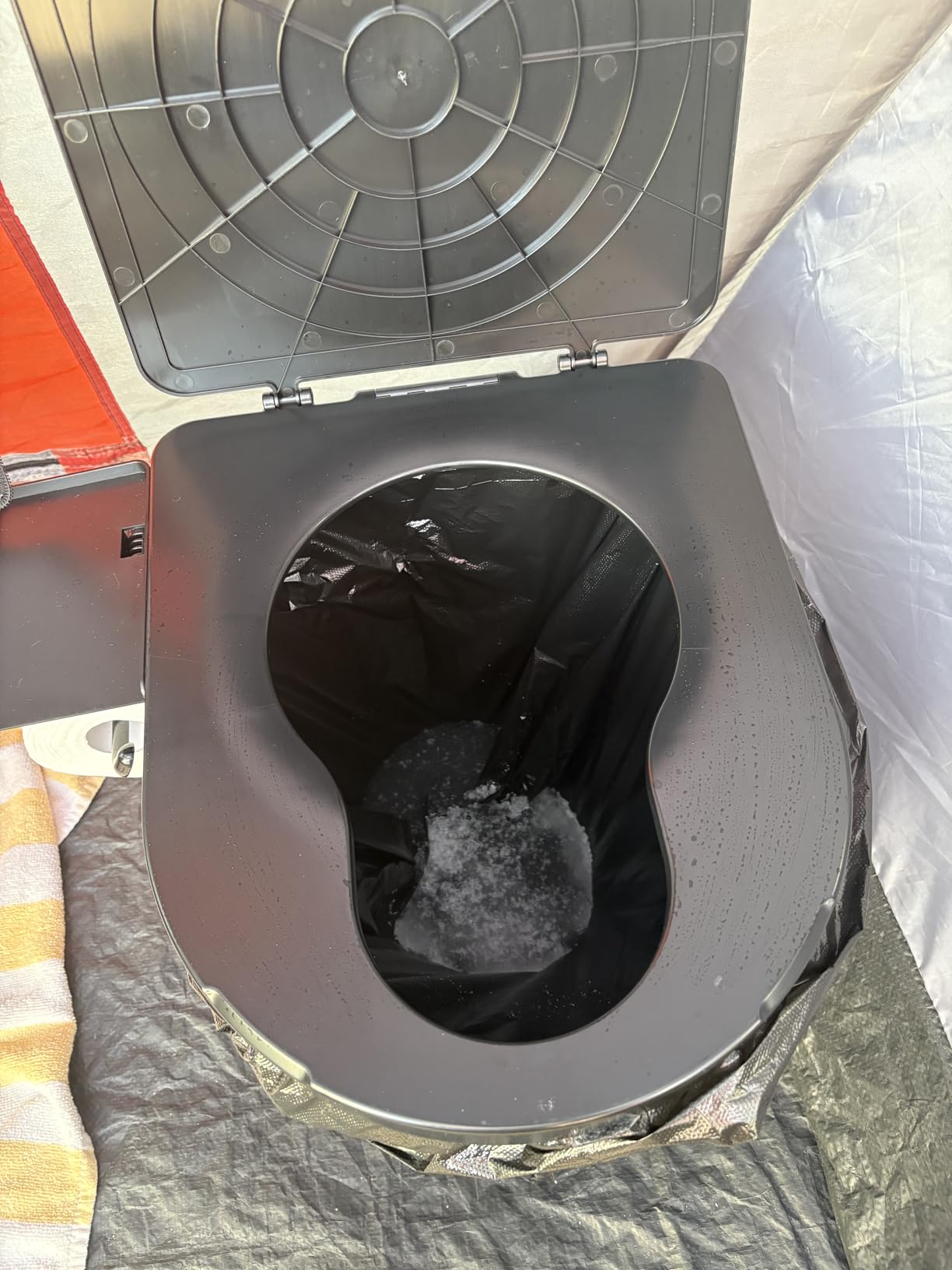
Waste handling is by bag and gel rather than by tank. The box includes a roll of 12 gallon waste bags and 12 solidifying gels, so liquid is thickened enough to carry without sloshing, and then the bag goes in a bin or gets dealt with at a proper facility. That is a different waste stream from a cassette, and it is the main thing to think about before adopting it as your only toilet.
The built-in phone tray sounds like a gimmick and turns out not to be one. It is genuinely useful at night when you need both hands for balance and the paper roll.
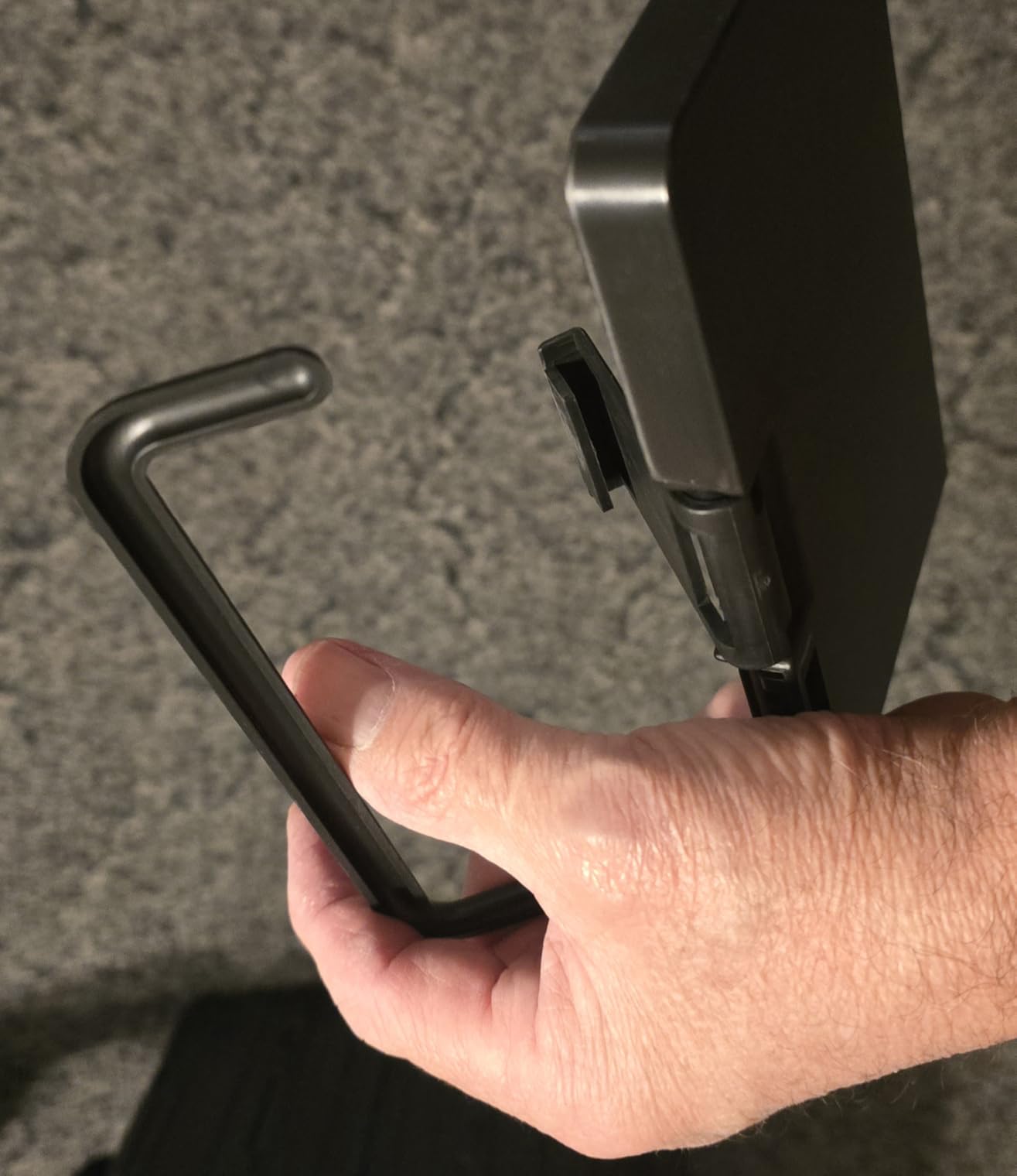
Is the folding frame stable outside?
On flat, firm ground, yes. Reviewers report good stability on rock, sand and snow and a contoured ABS seat rated to 450 pounds. The caveat is a child sitting on it, where the flexible side legs can fold inward, so for families with small children this is an adult and older child unit rather than a family one.
Why is this not a full-time van toilet?
Three reasons, all practical. There is no flush and no tank, so every use consumes a liner and a gel. The opening is narrow enough that larger users find it uncomfortable. And the waste stream is bags, which you must dispose of responsibly and which owners on van life forums rightly describe as the least pleasant part of any portable system.
7. Camco 5.3 Gallon Portable RV Toilet: Best Value Cassette
Camco Portable RV Toilet with Detachable Tank, Gray, 5.3 Gallon, 41541
5.3 gal holding tank,2.5 gal top tank,11.5 lb,16.25 x 14 x 17 in,Bellows pump flush
Pros
- Most reviewed unit here with more than 6800 owner ratings
- Sealing slide valve locks in odour and stops leaks
- Bellows pump flushes the bowl effectively
- Fits a van conversion or under a camper bench
- Three drop-in treatments included in the box
Cons
- Seat height is a little lower than competing models
- Seat and bellows feel less solid for heavier users
- Cleaning takes multiple rinse cycles with your own water
The Camco is the most proven unit in this roundup, with more than 6800 owner ratings behind it, and that volume of history is worth something in a category where you cannot easily return a toilet after a season of use. Reviewers describe years of service in vans, campers and boats without drama.
The mechanism is a detachable 5.3 gallon holding tank with a sealing slide valve, and a 2.5 gallon top tank feeding a bellows pump flush. The bellows give a stronger, more even rinse than a small hand piston, and three drop-in treatments are included so you are not starting the ownership curve with an empty box.
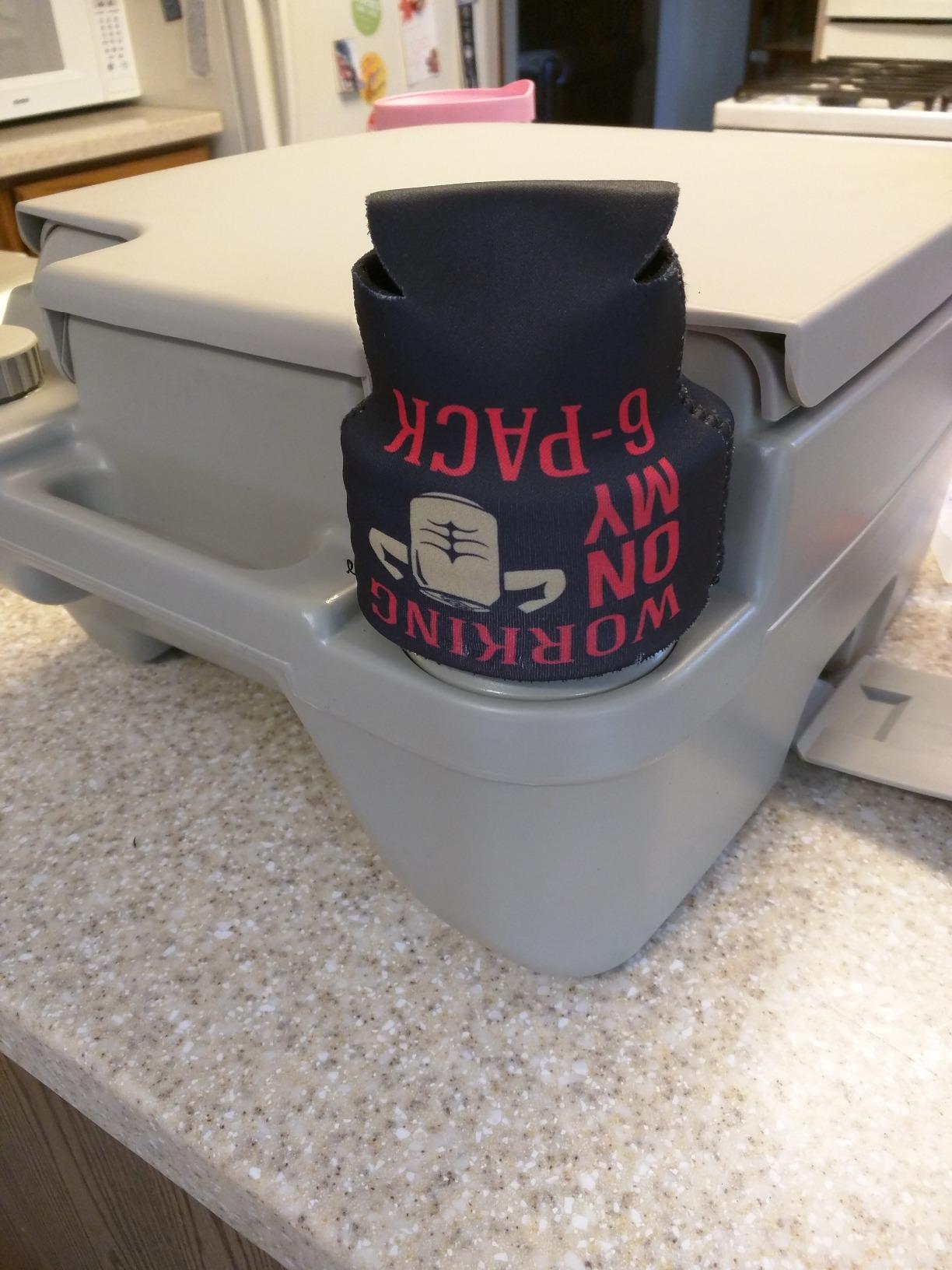
At 16.25 inches deep by 14 wide by 17 tall and 11.5 pounds empty, it is close to the same footprint as the two units above it, which means the footprint conversation is settled whichever full flushing cassette you pick. Shape is regular enough to empty into any standard toilet or dump station.
What separates the Camco from the newer units is not a specification. It is that when something goes wrong, someone has already worked out how to fix it, and the owner base has documented it.
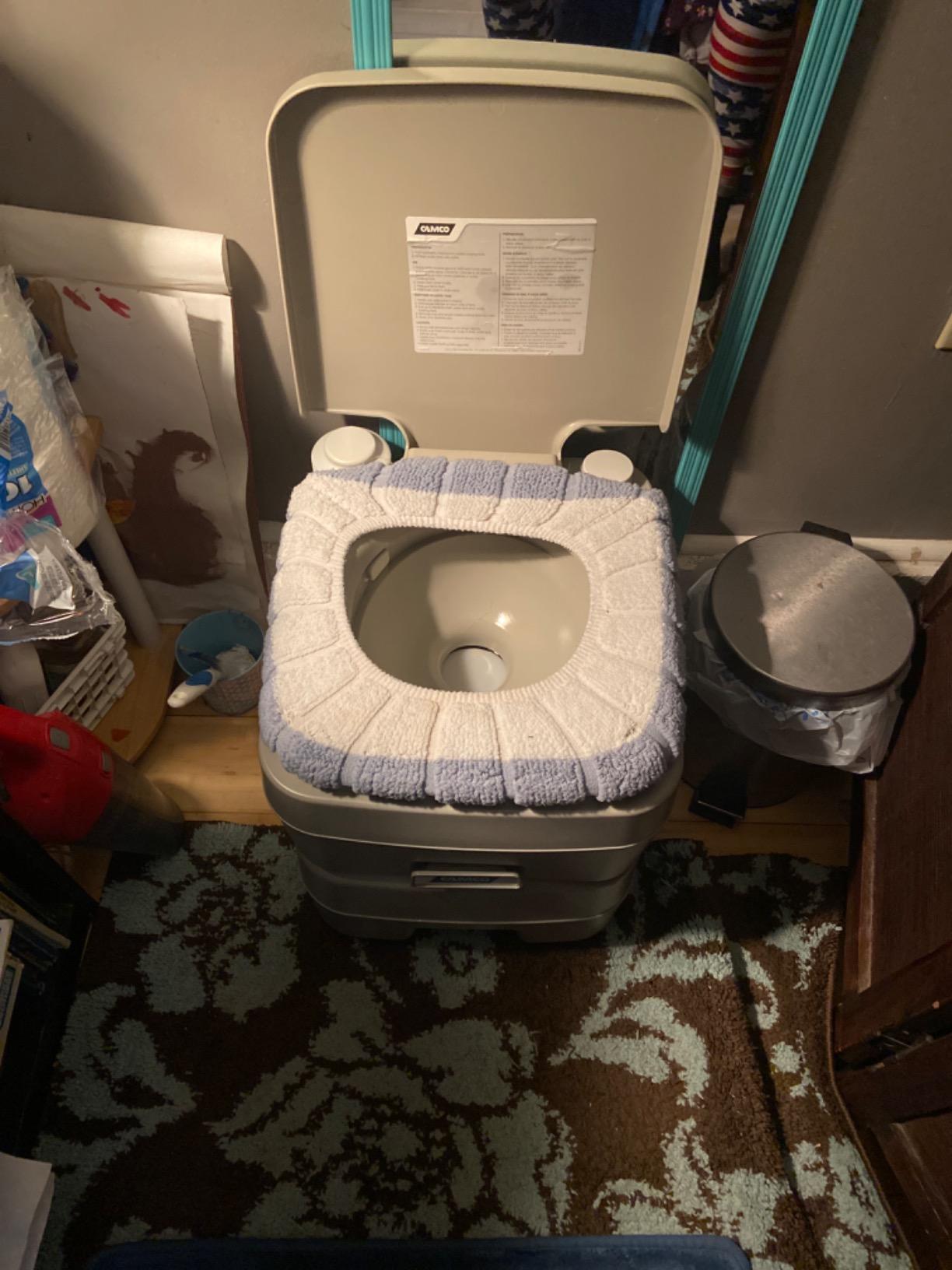
How long does the Camco really last?
Long enough that owners describe multi-year service in vans and boats, and the 6872 ratings are spread over enough time to make that meaningful. A limited one year warranty is listed, but the practical experience base is far longer than the warranty, which is common in this category.
Which Camco complaints come up most?
Three, and all are ergonomic rather than structural. The seat sits a little lower than competing models, the seat and bellows feel less solid to heavier users, and cleaning takes several rinse cycles using your own water rather than an integrated sprayer. Owners also note the slide valve handle can stiffen and benefit from silicone lubricant.
8. 72 HRS Bucket Seat and Lid: Best Budget Starting Point
72 HRS Premium Portable Camping Toilet Seat with Lid for 5 Gallon Buckets
Snap-on seat and lid,0.7 lb,13.31 x 12.6 x 1.06 in,Fits 5 gallon buckets,Bucket not included
Pros
- Cheapest way to add a toilet to a van build
- Weighs 0.7 lb so it is trivial to carry
- Snaps securely onto a standard 5 gallon bucket and removes for cleaning
- Closing lid lets the bucket be lidded in transit
- Flexible polypropylene resists cracking
Cons
- No flush
- no holding tank and no odour control of its own
- Needs a separate bucket plus liners and a waste plan
- Seat height depends entirely on the bucket you use
The 72 HRS is a seat and a lid, nothing more, and that is precisely why it belongs here. It snaps onto any standard 5 gallon bucket, weighs 0.7 pounds, and costs less than a night of campground fees. It is the cheapest honest way to put a toilet in a van.
The bucket approach is the community DIY standard, and van lifers on r/vandwellers describe the pattern almost identically every time: a 5-gallon bucket, a wag bag or heavy liner, and a separate wide-mouth container for urine so the two never mix. A seat and lid like this is the only bought component in that setup.
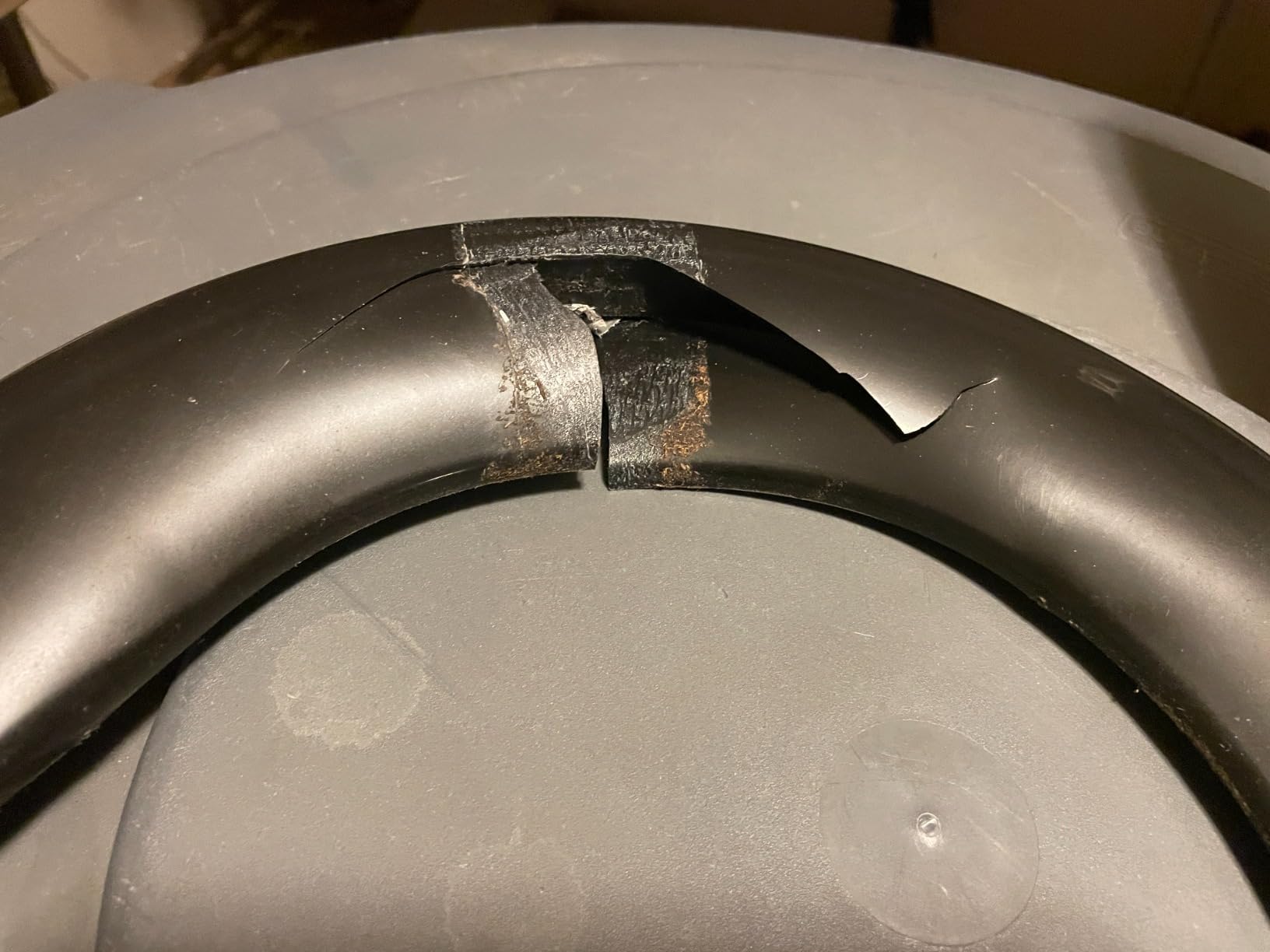
Owners rate it highly for the snap-on fit, for a lid that stays shut in a vehicle or a tent, and for being enough for a weekend or an emergency kit. The 4.4 average across 6100 ratings reflects the obvious limits rather than a flaw: there is no sealing, no flushing and no odour control built in.
Everything that matters about the experience lives in the bucket and the liner, not in the seat. Get the liner right, line the bucket with something that holds liquid, solidify what you can, and this system is genuinely fine for nights and short trips.
How does a bucket system work day to day?
You line the bucket with a heavy-duty liner, add a solidifying agent or absorbent material, and keep a separate container for urine so it never soaks into the solids. When the liner is full you seal it, and the bag is your waste to dispose of responsibly at a proper facility.
The part that catches people out is the urine. Forums are full of warnings that separating the two is what stops the smell, and a bucket system without a urine split smells within a day or two.
Who should skip the bucket seat?
Anyone living in the van full-time, anyone who cannot lift a full 5-gallon bucket, and anyone who shares the van with a partner and cares about the social reality of the arrangement. It is a weekend and emergency solution, and it is a good one.
Do You Even Need a Toilet in Your Van?
Plenty of people do not, and that is a legitimate answer rather than a failure of commitment. Where van lifers use the bathroom in practice follows a pattern that forum threads describe consistently: outside and away from camp when the ground and the rules allow it, in the van unit for nights, bad weather and emergencies, and in a public facility whenever one is available.
Two things have pushed more people toward carrying a unit. The first is that many dispersed campsites now prohibit digging a hole, which makes the old default illegal rather than merely rude. The second is the reality of a van as a living space under 100 square feet, where a trip outside at 2 am in February is a real cost.
A mixed strategy is what experienced van lifers converge on, and a commenter on r/CampingGear describes using a cassette only for nights and poor-weather use rather than as the only option. That approach works with anything in this roundup, and it is why the bucket seat and the folding unit are not silly choices. For a permanent arrangement, our notes on van shelving layouts are worth reading too, because where the toilet sits decides whether the rest of the build works.
How to Choose the Right Camping Toilet for Van Life
Choose by trip length and remoteness first, and everything else second. If your route has dump stations and campground facilities, a compact cassette is the low-friction choice. If you will be weeks from a dump station, a separating composting unit removes the constraint entirely, and the extra money buys freedom rather than comfort.
Count your users. Two adults on a full flushing cassette empty every three to four days, and that rhythm drives the size of the tank you need. Solo travellers can go smaller or lighter without much penalty. Families with children add both weight and cleaning time to the calculation.
Measure the space before you buy, because this is the mistake we see most often. Full flushing cassettes cluster around 16 by 14 by 16 inches, which is a small cabinet, not a corner. A fixed composting install is a different job entirely: it needs a permanent floor mount and a vent routed outside the van, so plan the cutout and the vent before the cabinetry goes in.
Power is rarely the deciding factor for portable units, since the flushing ones here all work by hand. It matters if you move to an electric composting unit later, and 12V fan draw on those is small but not zero, so budget for a fused circuit rather than tapping a live wire.
Finally, decide honestly how you will handle waste. Every system here ends in one of two places: a dump station for liquid tanks, or a bag you must dispose of correctly. Van lifers increasingly choose systems that avoid putting sealed human waste bags into public dumpsters, and that pressure is real. Whichever category you pick, know your exit route before you pick it.
How to Stop Your Portable Toilet From Smelling
Most toilet odour is chemistry, not dirt. Urine breaks down into ammonia and solids break down into hydrogen sulfide, and once those two mix you get the smell every van owner recognises. Separation is the fix, and every other measure is secondary.
Here is the order that works, drawn from what owners report in practice rather than from brochures.
Never mix liquid and solid. Use a unit that diverts urine, or commit to a cassette and dose it properly. This one decision removes most odour complaints.
Keep the carbon to compost ratio right in a composting unit. Owners report that when compost smells it is nearly always short of carbon, and pine shavings are the usual top-up.
Pre-treat a cassette bowl so waste does not stick to the sides, and dose the holding tank at the label rate rather than guessing.
Pump the flush gently. Pumping hard pushes water under the seat and onto the base, where it sits and smells.
Vent properly. A fan or vent line moved outside the van is what makes a composting unit tolerable in a small space.
Empty on the schedule the capacity implies, not when it feels necessary. Overfilling is unpleasant in a way no product feature fixes.
Check the urine container before bed on a long leg. Forum regulars describe this as the single most repeated mistake among new separating-toilet owners.
One honest note on expectations. A Nature’s Head owner reports never having a smell problem, while other owners of separating units describe a sharp ammonia hit for about a minute when the urine container is opened. Both are true, and the difference is largely about routine and ventilation rather than about the brand.
How to Empty and Dispose of Van Toilet Waste
For a cassette, the routine is short. Detach the tank at the side latches or the handle, carry it to a dump station, open the valve and let it drain, flush with your own water, close the valve, and rinse the bowl at the same time. Dump stations are the clean answer, and owners report the experience as unpleasant but perfectly manageable once you have done it twice.
For a composting unit, you empty the compost drum manually into a container and dispose of it as you would any compostable material, well away from water sources and campsites. The urine container empties far more often than most new owners expect, and that emptying rhythm is the real daily cost of a separating toilet.
For bags and wag bags, this is where the ethics get discussed. Forums carry an active argument about whether sealing human waste bags into public dumpsters is acceptable, and the answer is that it depends entirely on the rules posted at that facility and on local regulations. When in doubt, use a proper disposal point rather than a bin that serves ordinary household rubbish.
Diluting urine roughly ten to one with water and using it on non-food plants is a long-established practice among experienced van lifers, and it reduces how much concentrated liquid you are moving around.
Illness, Winter and Sharing a Van With a Partner
If you are ill on the road, a separating composting toilet is the most forgiving option because the medium and the separated liquids are both manageable and the blade keeps solids from sitting in a heap. A cassette is fine too if you are prepared to lift a full tank, and for a solo traveller in a van that is the harder part, not the toilet.
Carry a spare liner and a spare bag regardless of which system you use, because the first thing you will want during a bad day is a clean unit to swap in without improvising. If a composting unit’s medium is heavily soiled, empty the drum and restart it rather than trying to rehabilitate it in place.
Winter changes two things. Cold slows the composting action, so a unit that was fine in summer will be slower to break down solids when you get back to it, and plastic cassettes need to stay somewhere they cannot freeze. Published temperature tolerances exist, and the Kohree here is the only unit in this roundup to state one.
Finally, talk about it with your partner. Shared van sanitation is the least technical and most disruptive part of van life, and the most-commented passage in the guides we studied was about exactly this. The practical answer that works for most couples is a defined rule for who uses the unit when, plus an outdoor option on every safe night, and deciding in advance rather than at 3 am.
Frequently Asked Questions
What is the best portable toilet for a van?
The Thetford Porta Potti 365 is the best portable toilet for van life for most people, because its sealed valve traps odour in transit and its rotating pour-out spout empties anywhere with a normal toilet. Full-time van lifers who boondock for weeks should consider a self-contained composting unit instead, since it removes the need to carry waste.
Which is better, a cassette toilet or a composting toilet?
A composting toilet is better for full-time van life and long trips away from dump stations, because it stores no holding tank and needs no chemicals. A cassette toilet is better for weekend touring, camping at sites with facilities, and anyone who wants the familiarity of a flush and the cheapest way to empty waste.
How do I stop my portable toilet from smelling?
Never mix liquid and solid, because urine produces ammonia and solids produce hydrogen sulfide, and that combination causes nearly all toilet odour. Beyond separation, pre-treat a cassette bowl, dose the holding tank at the label rate, pump the flush gently, keep the carbon to compost ratio high, vent outside the van, and empty on schedule.
Are cassette toilets smelly?
A properly dosed and sealed cassette should not smell inside a closed van. Odour appears when the holding tank treatment is under-dosed, when the flush is pumped hard enough to push water under the seat, or when the bowl is not pre-treated and waste sticks to the sides. Most reported odour problems trace back to one of those three.
What if you have diarrhea in a composting toilet?
It is manageable, and the unit keeps working. Turn the blade to mix the waste into the composting medium rather than leaving it sitting in a heap, then plan to empty and restart the drum rather than trying to rehabilitate heavily soiled medium. Carry a spare liner or bag so you can swap the whole system cleanly instead of improvising.
Which Camping Toilet Should You Buy?
If you read nothing else, buy the Thetford Porta Potti 365. It is the highest rated unit we tested for van life, it is the simplest to empty, and its sealed valve does the one job you cannot engineer around once you are living in a small space. Pick the Kohree instead if cold weather and maximum capacity matter more to you, and the Camco if you want the most proven option on the market.
Go further up the category only when your route forces you to. A self-contained composting toilet is the right answer for weeks away from a dump station, not for a seasonal van that mostly sits at serviced campsites, and a bucket seat or folding unit is a perfectly respectable backup rather than a compromise.
Whichever of the best camping toilets for van life you settle on, buy liners or treatment before you buy the toilet, learn the emptying routine on your first trip rather than your tenth, and give it a real month before you decide it failed. These things reward a boring maintenance habit more than any feature. Check the current details for any of these units before you commit, and this roundup was last reviewed in 2026.