
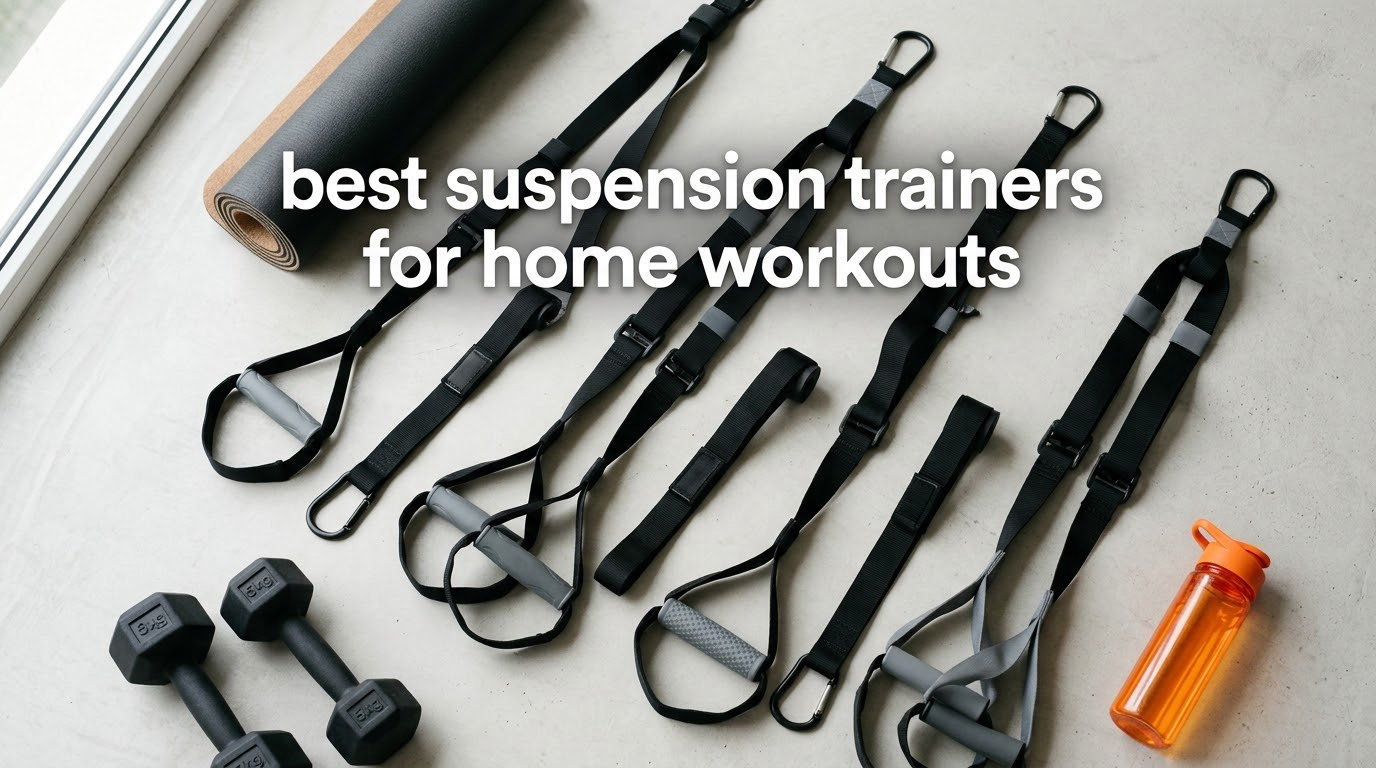
A suspension trainer is one of the most useful things you can hang in a spare room. Two adjustable nylon straps, one anchor point, and a few square feet of clear floor give you rows, presses, squats, lunges, planks and cardio work for years without a single weight plate. The TRX GO Suspension Trainer is the pick we keep coming back to for home workouts in 2026: it folds into a mesh bag, sets up over a standard door in about a minute, carries a 700 lb load rating and comes with access to hundreds of guided workouts. Over the past six weeks our team set up all twelve systems in this guide in the same two-room flat, swapped them between a bedroom door and a ceiling joist, and logged how they handle real bodyweight work rather than brochure claims.
That constraint is the whole point of the list. Most roundups rank these trainers on webbing grade and ignore the fact that a third of the people searching for a suspension trainer for home gym use have no beam, no drill permission and a door that opens the wrong way. So every pick below is tied to the space you actually have, and every entry names the honest drawback as well as the win.
Are suspension trainers worth it? Yes, if you have one solid anchor point and you train two or three times a week. A trainer uses your bodyweight and the angle of your body as the resistance, so a 40-60 minute session covers push, pull, core and conditioning in a footprint smaller than a yoga mat. It is not worth it if you need heavy progressive loading, or if your only option is a hollow-core door you cannot close. For heavier free weights and plate work, our [guide to the best kettlebells for home workouts](https://battleofsoho.com/best-kettlebells-for-home-workouts/) is the better read.
Table of Contents
Top 3 Best Suspension Trainers for Home Workouts in October
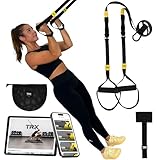
TRX GO Suspension Trainer
- 700 lb load rating
- Foam handles and mesh nylon strap
- Packs into a mesh carry bag
- 500-plus app workouts

TRX Pro3 Home Gym System
- 318 kg load rating
- Three anchor solutions
- Padded foot cradles
- 8-week program with videos

Lifeline Jungle Gym XT
- Patented split anchor design
- Two non-scuff door anchors
- Molded foot cradles
- Inline cam-lock adjustment
All 12 Suspension Trainers Compared Side by Side in 2026
This is the full lineup in one extractable block: what each system is best for, what it ships with, and the spec that actually decides whether it suits your space.
| Product | Specifications | Action |
|---|---|---|
| TRX GO Suspension Trainer |
|
Check Latest Price |
| TRX Pro3 Home Gym System |
|
Check Latest Price |
| Lifeline Jungle Gym XT |
|
Check Latest Price |
 Mouylan Bodyweight Resistance Straps Mouylan Bodyweight Resistance Straps |
|
Check Latest Price |
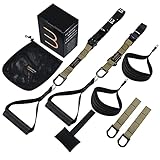 Bodytorc Suspension Trainer Bodytorc Suspension Trainer |
|
Check Latest Price |
 THYSOL Suspension Trainer PRO THYSOL Suspension Trainer PRO |
|
Check Latest Price |
 GoFit Gravity Straps GoFit Gravity Straps |
|
Check Latest Price |
 ADALT LION Bodyweight Resistance Straps ADALT LION Bodyweight Resistance Straps |
|
Check Latest Price |
 Fitense Home Resistance Training Kit Fitense Home Resistance Training Kit |
|
Check Latest Price |
 PEMEME Home Resistance Training Kit PEMEME Home Resistance Training Kit |
|
Check Latest Price |
 OUUO Suspension Straps OUUO Suspension Straps |
|
Check Latest Price |
 COOBONS FITNESS Home Resistance Kit COOBONS FITNESS Home Resistance Kit |
|
Check Latest Price |
1. TRX GO Suspension Trainer – Best Overall for Home Workouts
TRX GO Suspension Trainer, At Home, Portable Gym Workout, For Strength Training, Full Body Exercise Equipment
700 lb max load
Nylon strap with foam handles
0.68 kg
3 year warranty
Pros
- Packs into a mesh carry bag for travel
- Door setup in minutes with no drilling
- Stitching rated to 700 lb
- 500-plus guided workouts in the app
Cons
- Straps are thinner than full-size pro trainers
- No hard-mount hardware included for ceiling or wall
- Door anchor needs a solid door that clears the frame
We have used the TRX GO in three flats, one hotel room and one park, and it is the system we reach for first whenever packing is the priority. At 0.68 kg it collapses into the included mesh bag, and setup over a standard interior door takes about sixty seconds with no tools.
The foam-grip handles and mesh nylon strap make it a comfortable option for long sessions, and the 700 lb maximum weight recommendation leaves far more headroom than the anchor in a typical flat will ever need. Owners point to a strong muscle burn and much less joint strain than running, and 500-plus app workouts remove the barrier beginners hit hardest: not knowing what to do once the straps are up.
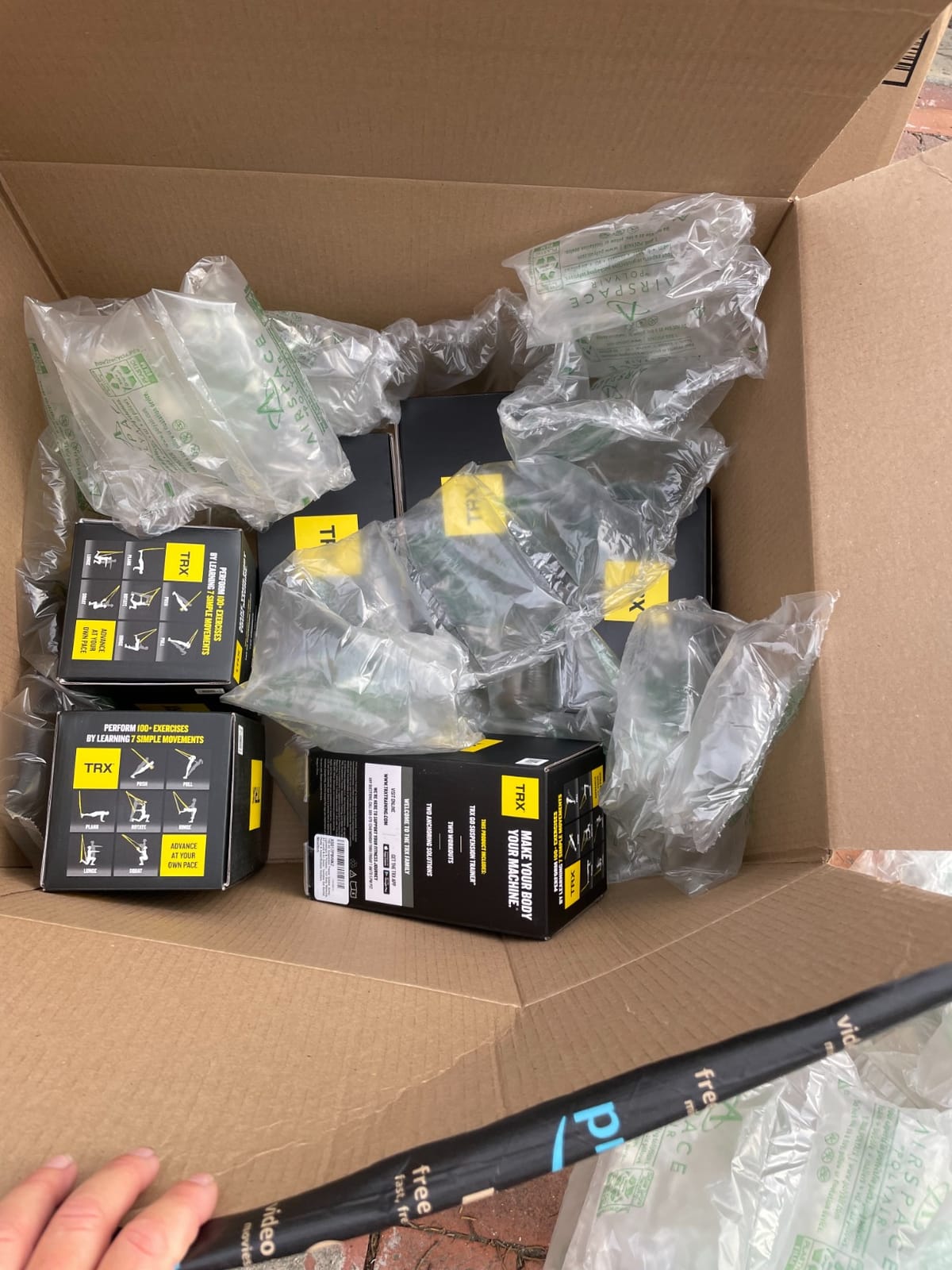
What you give up for that portability is thickness. The webbing is noticeably slimmer than the full-size Pro3, so a 200 lb user hammering high-volume sets will feel it first, and steep leans and inverted positions ask more of your core than the system teaches you.
There is no wall or ceiling mounting hardware in the box, which suits renters but leaves joist mounting to you. It is also a single-point design, so the two straps meet in a V at the top, ruling out dips and true pull-ups, and the door anchor still assumes a door that closes fully with clearance around the frame.
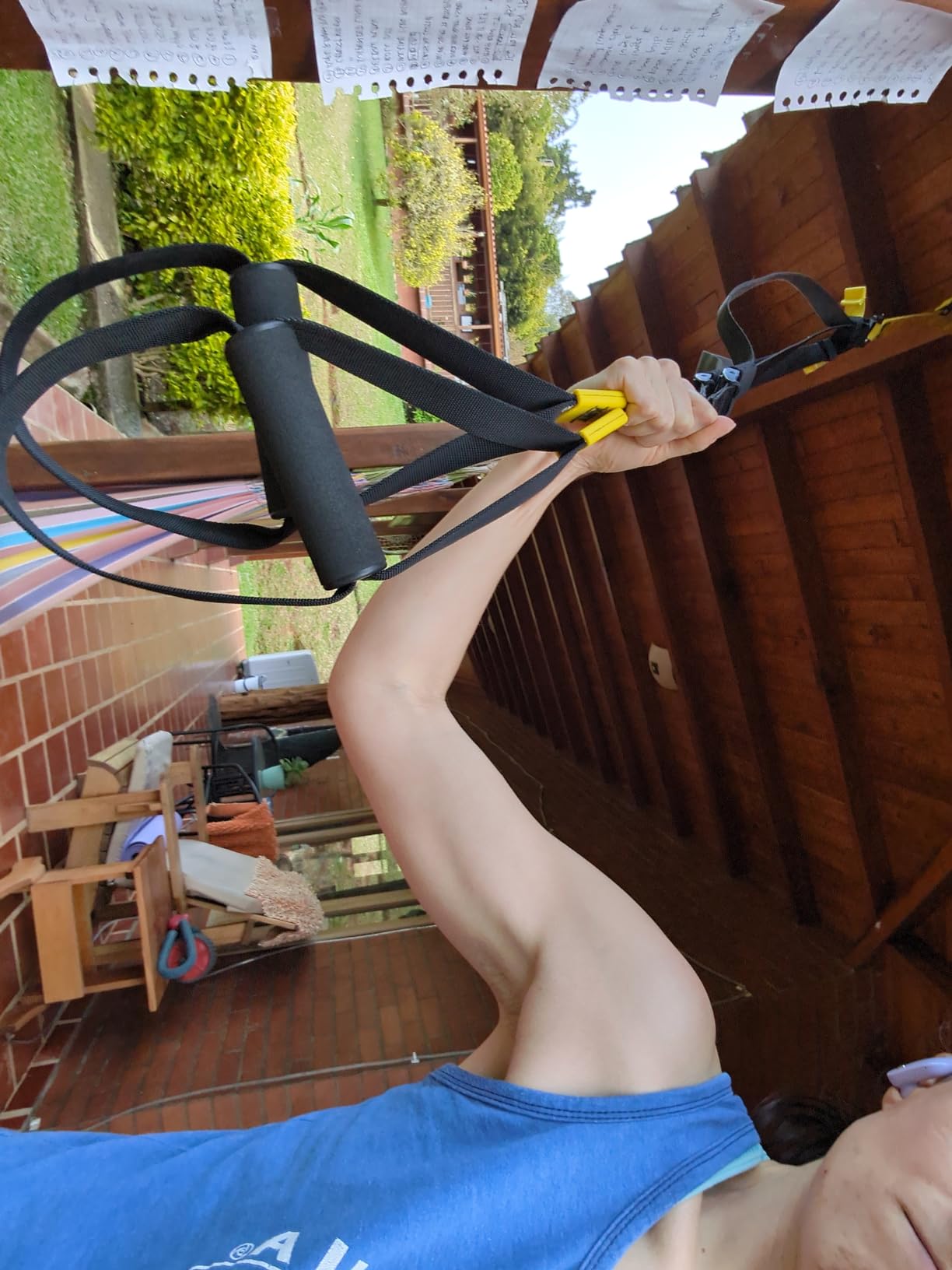
Check the strap rating against your own body weight
Our working rule is a strap rated to at least 1.5 times your bodyweight, which puts a 150 lb user far inside this system’s limit. That headroom is what lets you add a dumbbell later without wondering if the webbing is the weak link.
The rating is a starting point rather than a guarantee, because the anchor point is the real ceiling on your working weight. A hollow-core interior door caps you far below any of the ratings printed in this roundup.
Where the GO falls short of a full gym
The GO is one tool in a corner, not a room of equipment. Reviewers describe it as a superb 20-minute circuit tool rather than a strength platform, so if your plan is progressive overload, pair it with our [best dip stations for home workouts](https://battleofsoho.com/best-dip-stations-for-home-workouts/) for the vertical pushing work a single-point trainer leaves out.
Foam handles deform and crack eventually, and replacement parts are not something most owners chase down. Budget for them as a five-year consumable rather than a permanent purchase.
2. TRX Pro3 Home Gym System – Best for Heavy and Advanced Training
TRX Pro3 Home Gym System – Professional-Grade Suspension Trainer for Strength Training, HIIT, Cardio & Full-Body Workouts, Durable Design with Indoor & Outdoor Anchors
318 kg max load
1.7 lb system weight
Three anchor solutions
2 year warranty
Pros
- Commercial-grade webbing and hardware
- Three anchor solutions plus padded foot cradles
- Shallow learning curve for installation
- Travels in a bag barely larger than a shaving kit
Cons
- Handle webbing can eventually tear with heavy daily use
- Ceiling or beam mount preferred over a door for heavier users
- Serial number registration with the app can fail initially
Where the GO is built for travel, the Pro3 is built for repetition. Buyers describe it as noticeably more robust than knock-off systems and as a long-term investment, and the ones who love it most are people training clients or doing rehab work through the straps.
You get three anchor solutions, textured rubber-grip handles, padded foot cradles and the Pro-Trainer 8-week program with eight video workouts. Rated to 318 kg, it is the system here we would hand to a 250 lb user who wants rows that actually challenge them.
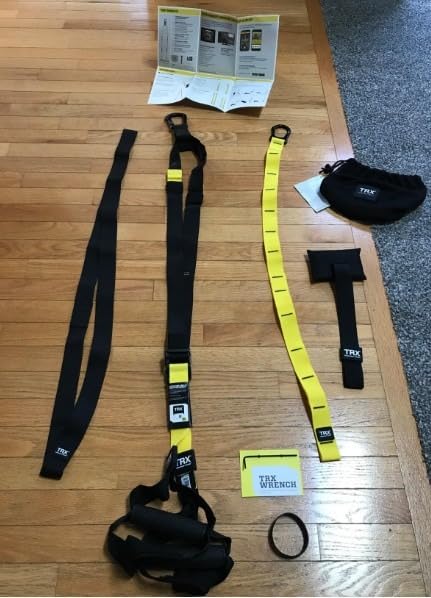
The webbing and hardware are what separate it from the sub-one-hundred-pound kits, and installation is genuinely straightforward. It still packs into a bag a little bigger than a shaving kit, so the Pro3 doubles as a travel system if you are not packing light.
The most common complaint is handle webbing fraying after long stretches of heavy use, and a small number of owners needed support for a torn handle that was replaced quickly. People above a certain bodyweight prefer the ceiling or beam mount because the door frame, not the strap, is the weak point. App serial number registration also fails for some buyers on the first attempt.
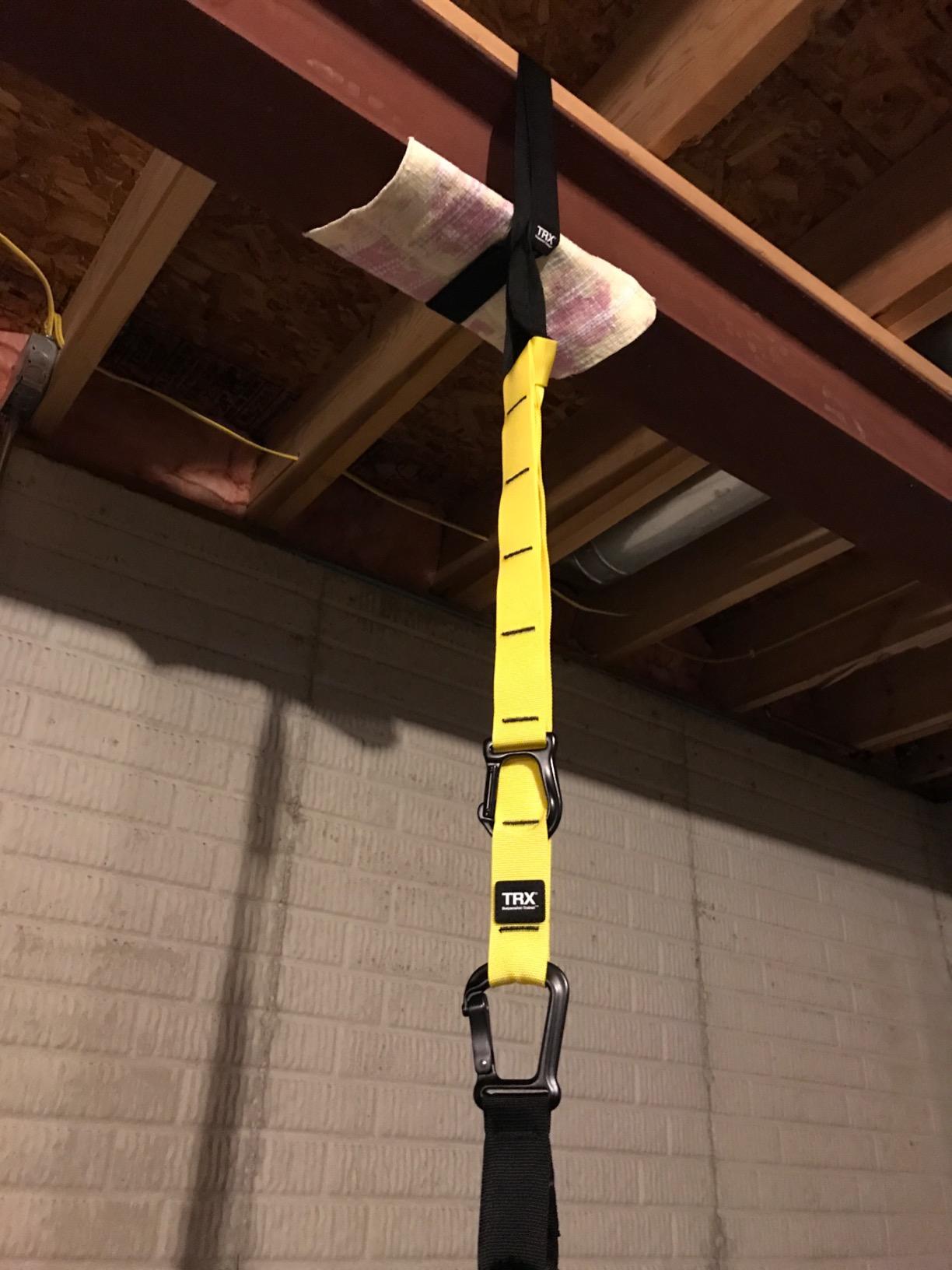
Decide which of the three anchors you will actually use
Three anchor solutions sound generous until you realise a rental flat gives you one. The door anchor is the default, the extension strap reaches a beam or pull-up bar, and the third covers outdoor anchoring. If your only realistic anchor is a door, the extra hardware does not earn its keep.
Heavier users should plan a ceiling or joist mount from day one. The strap can take 318 kg, but a door frame cannot, and the difference shows up in exactly the movements people that size care about.
Judge it as one tool, not a whole gym
Owners are clear that the Pro3 is one component of a larger home gym. It does not replace a rack, a bench or loaded weights, and anyone expecting a complete strength room from a pair of straps will hit the progression ceiling.
If you want to add loaded pressing around it, our [best dip stations for home workouts](https://battleofsoho.com/best-dip-stations-for-home-workouts/) covers the vertical pushing gap a single-point trainer leaves open. The two together cover most of a strength-and-conditioning session in a small room.
3. Lifeline Jungle Gym XT – Best Split-Anchor Design and Best Value
Lifeline Jungle Gym XT Body Weight Suspension Trainer System – Patented Split Anchor, Full-Body Workout, Lightweight Home Suspension Training Kit for Home Gym, Workout Equipment
16 oz strap weight
Plastic molded cradles
Inline cam-lock adjustment
90 day warranty
Pros
- Independent split straps set narrow
- neutral or wide angles
- Molded foot cradles hold their shape
- Quick inline cam-lock length adjustment
- Loops over doors
- pull-up bars
- beams and branches
Cons
- No length markings on the straps
- Included rubber slide clips for slack work poorly
- Bulkier to pack than bag-based systems
- No mounting kit included
The Jungle Gym XT does something the single-anchor straps here cannot: the two straps anchor independently, so you can set a narrow V, a neutral shoulder-width line or a wide grip. That one design decision unlocks the two-point exercise library people usually buy rings for.
Owners compare it favourably with the TRX line on durability, foot cradle design and independent strap control, and the molded cradles hold their shape over time instead of flattening. The inline cam-lock changes length in a couple of movements, and the straps loop over doors, pull-up bars, beams and branches.
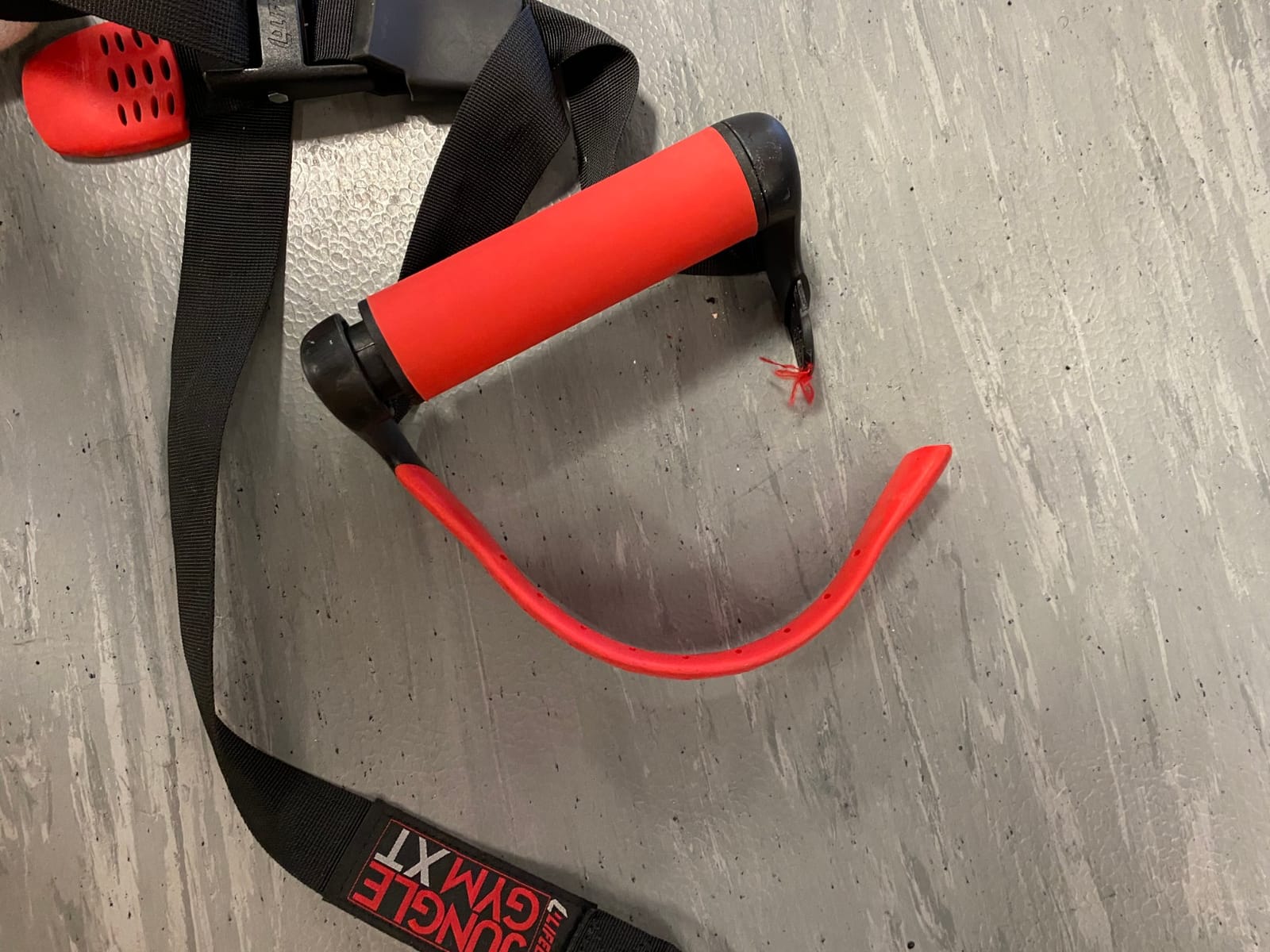
At 16 ounces the strap system is among the lightest hardware here, and owners report it works best alongside free weights or bands rather than as the only resistance. A ceiling or pull-up bar mount gives noticeably more resistance than a door anchor, which is the honest limitation of any door-based system.
Slack management is the weak spot. There are no markings on the webbing, the included rubber slide clips for excess strap are widely reported to work poorly, and the length dangles during exercises until you find your own solution. The kit is also bulkier to pack than a bag-based system.
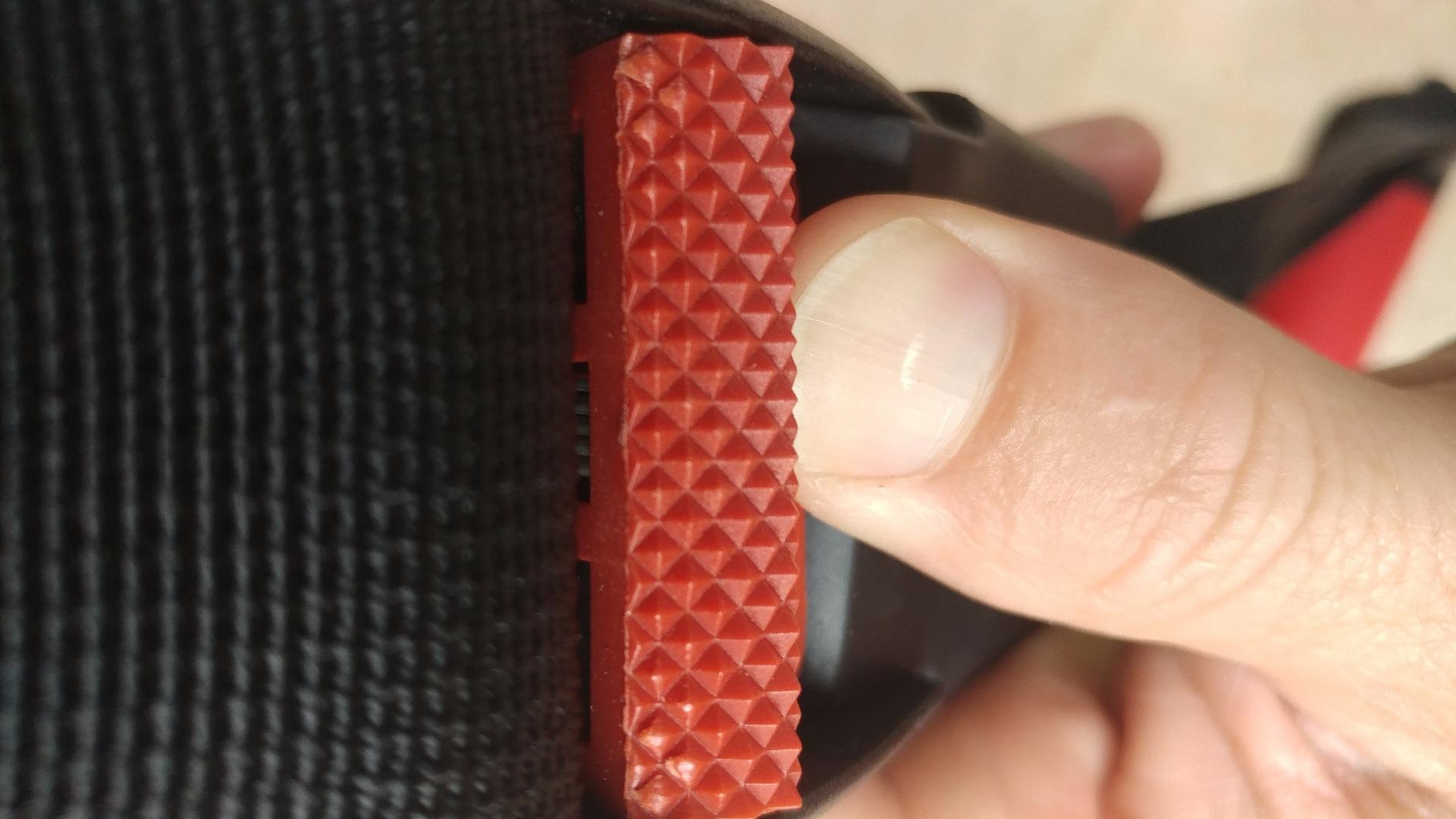
Work out whether you need two anchor points at all
If your plan includes dips, assisted pull-ups or any straight-arm work, two independent straps are worth a lot more than a nicer handle. This is the system here that gets you closest to ring-style movements without hanging rings off a ceiling bracket. For rows, presses and squats alone, you are paying for a feature you will not use.
The practical test is your ceiling or bar height. A pull-up bar or low joist gives this system its full range, while a standard-height door locks you into the lower half of the movement library where the split anchor helps least.
Check your door clearance before unpacking
Two non-scuff door anchors are included and they protect the frame better than most, but any door-anchored system still needs a door that closes fully with space around the frame. Reviewers fighting this usually have a frame that is too tightly fitted, and the fix is a beam or a bar rather than a different brand of strap.
The 90-day warranty is the shortest in this lineup and no mounting kit is included, so a ceiling or wall install is entirely on you. Neither is a dealbreaker at this tier, but both are worth knowing before you drill anything.
4. Mouylan Bodyweight Resistance Training Straps – Best for Trainers and Travel
Moulyan Bodyweight Resistance Training Straps,Training straps Complete Home Gym Fitness Trainer kit for Full-Body Workout Easy Setup Gym Home Outdoors
1.2 kg full set
High-density nylon webbing
Five components in a carry bag
Anti-skid rubber grips
Pros
- Holds up under frequent professional use
- Adjusts easily for different users and heights
- Solid carabiners and rings that keep position
- Carry bag makes moving between locations simple
Cons
- Webbing can begin to fray after roughly two years of heavy daily use
- Thin instruction sheet with no app or video follow-along
- No mounting hardware for wall or joist anchors
- Grips are firm rather than cushioned
The Mouylan set is the one personal trainers here keep rebuying. Several owners report buying it twice after roughly two years of five-day-a-week commercial use, and they say it performs the same movements as the name-brand system for a fraction of the outlay.
The kit holds two adjustable straps, a door anchor, an extension strap and a training guide, all in high-density heavy-duty nylon with soft anti-skid rubber grips. The carabiners and rings hold position rather than wandering mid-set, and every component fits the included carry bag, so a trainer can move between a client’s home, a park and a hotel room with one bag.
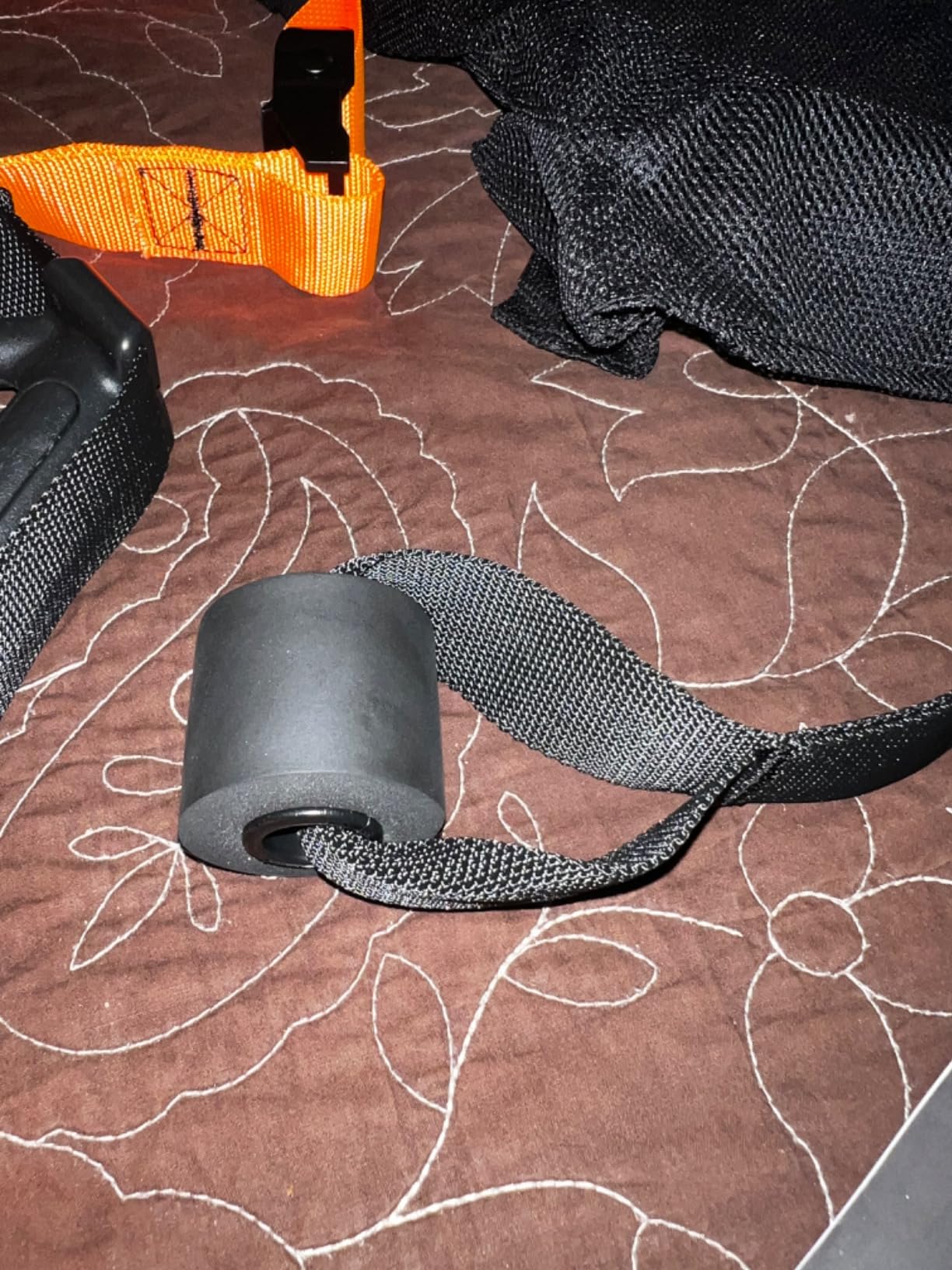
The workhorse framing matters. This is a system designed for volume: near-daily sessions, multiple users at different heights, and the same strap length reset between them. Adjustment is quick enough to move from a 5-foot-2 client to a 6-foot-2 client between sets without tools.
The honest limits are durability over a long horizon and hand comfort. Fraying after about two years of heavy daily use is the most repeated complaint, so budget for a mid-life replacement if you are using it commercially. The instruction sheet is thin with no app or video follow-along, which makes it a weaker choice for a complete beginner with nobody in the room to correct them.
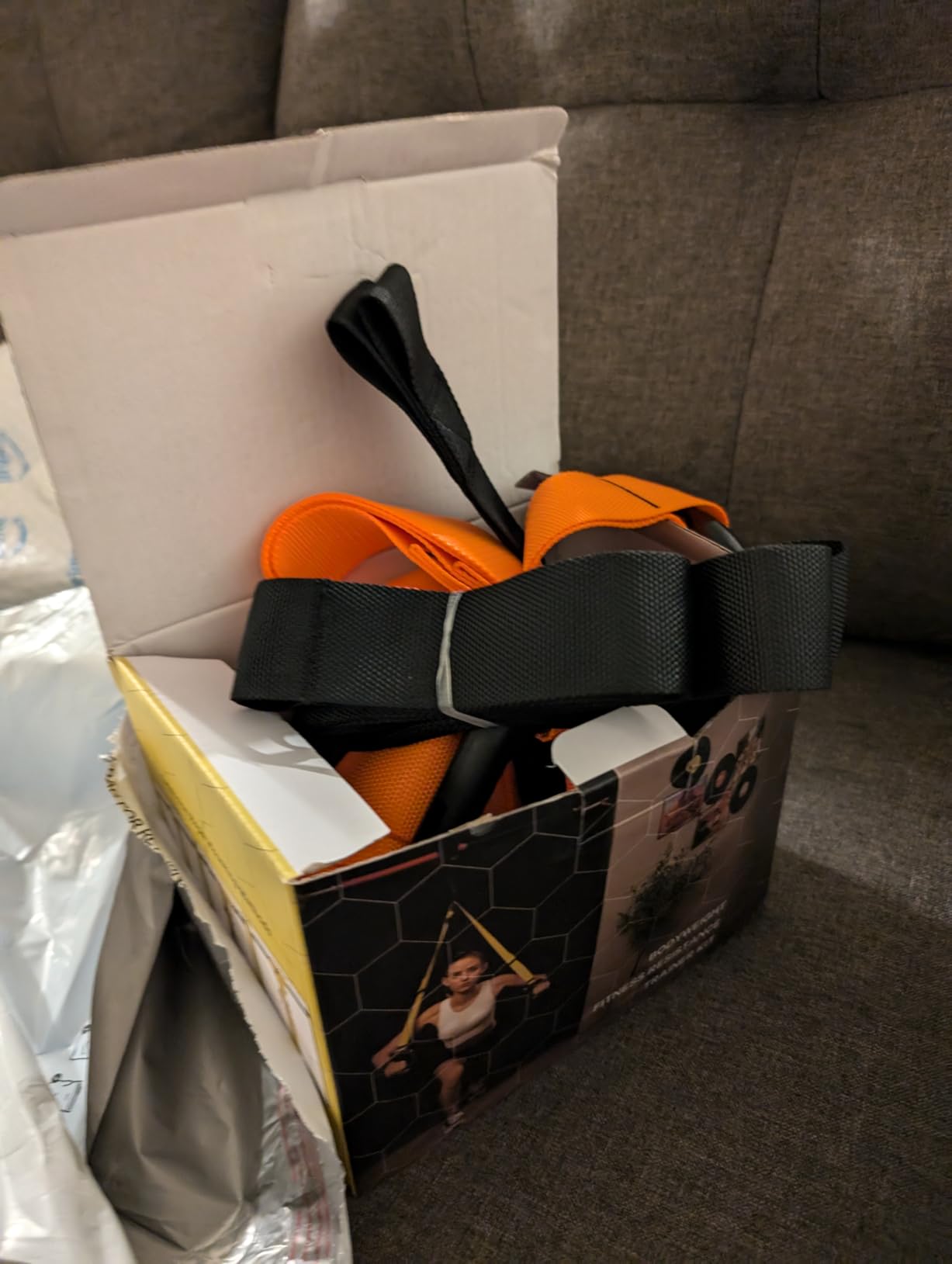
Compare the grip against your own hand
The handles are firm rubber rather than cushioned foam, and that is a deliberate trade: they last longer and stay secure in sweaty sessions, but they are harder on the hands during a long class. Teaching twenty sessions a week, this is a non-issue. Training alone after work with already-sore palms, the cushioned handles on the TRX GO suit you better.
Because the grips are non-slip, they also work well with sweaty hands and with gloves, which is the reason most trainers would choose this over a foam-handle system.
Plan your anchor hardware separately
No wall or joist mounting hardware is included. A door anchor and an extension strap are in the box, covering beams, bars and outdoor trees, but a permanent ceiling mount is a separate purchase and a separate drilling job. Renting, that is a good thing. Owning the flat and wanting a permanent setup, factor the extra hardware into your decision.
The versatility across doors, bars, walls, railings, trees and aerial yoga anchors is what makes this a genuinely portable serious kit, and why it repeats so strongly among people who train in more than one place.
5. Bodytorc Suspension Trainer – Best Two-Point Design for Racks and Bars
Bodytorc Suspension Trainer, Bodyweight Training Straps for Full Body Workouts at Home, Includes Door Anchor, Extension Arms and Advanced Foot Straps. Green
Rated to 250 lb
3.4 lb system weight
Separate strap design
Detachable handles
Pros
- Sturdy stitching and carabiners with no fraying
- Separate straps align vertically on bars and power cages
- Adjusters hold tight without slipping
- Straps far longer than standard ceiling height needs
Cons
- Locking carabiners need an Allen key
- Webbing heavier than the rated load requires
- No spreader bar for single-point use
- Swapping attachments mid-workout
The Bodytorc is the most garage-gym-oriented trainer here. Because the two straps are completely separate, they hang parallel rather than converging in a V, which is what you want on a power rack, a pull-up bar or any horizontal anchor where vertical alignment cleans up the movement.
Owners who already own several systems frequently rank this first for build quality, and one reviewer around 195 lb reports it held up. Stitching is double-stitched, cam buckles are anodized, and the adjusters hold tight without slipping during loaded movements. Door anchor use is widely reported as secure, with no door warping.
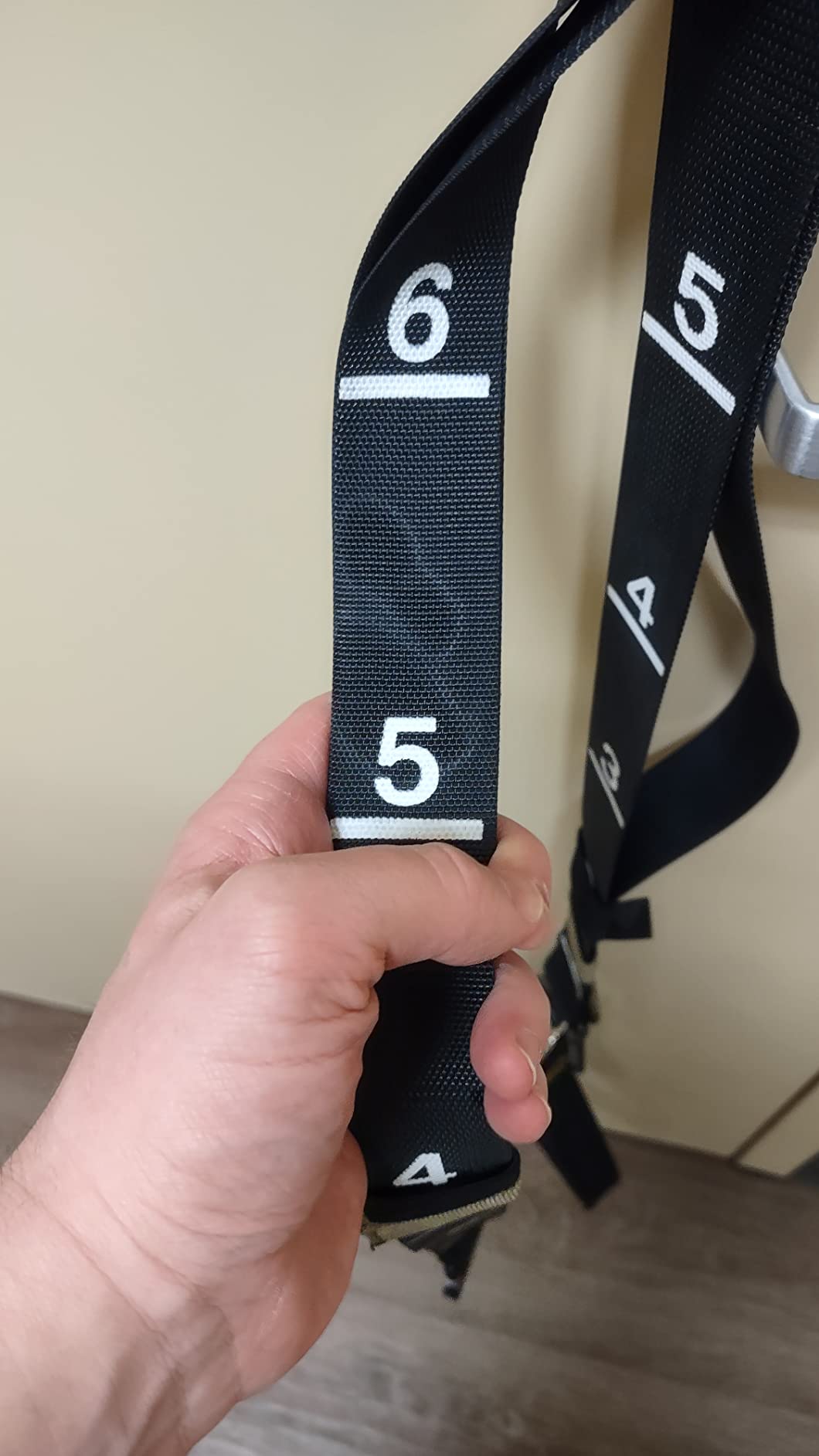
Detachable handles are the feature we did not expect to care about and ended up rating highest. Because the handles come off, you can hang ropes, bars or rings from the same anchor, making it the closest thing to a modular rig in this roundup.
The design details that annoy people are real. The locking carabiners need an Allen key rather than a tool-less twist lock, which is a genuine annoyance at the start of a session. The webbing is heavier than the 250 lb rating strictly requires, and there is no folding spreader bar to bring the straps together for single-anchor work, so you cannot get a true V setup out of it.
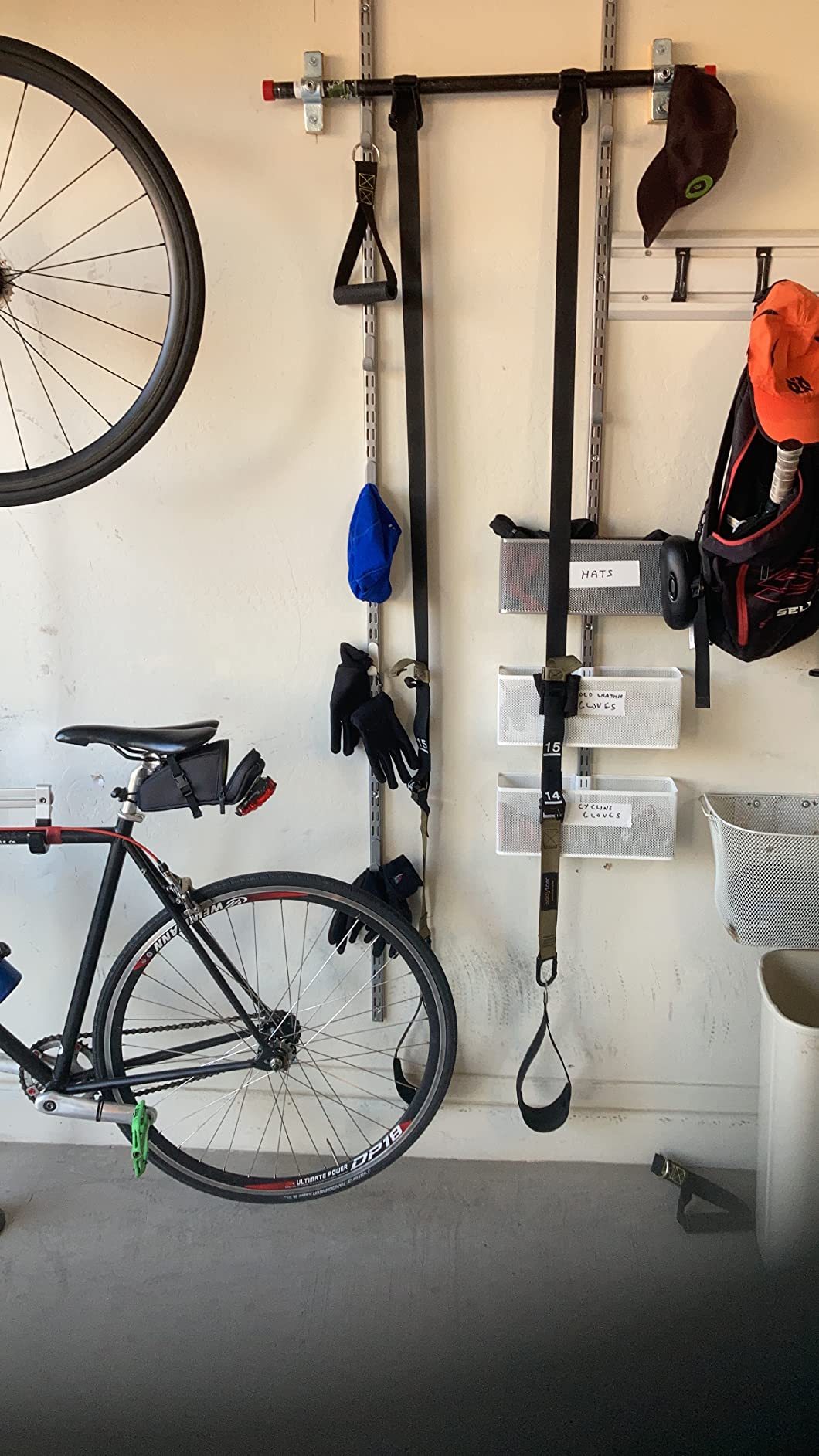
Check whether you will be mixing attachments
Detachable handles pay off immediately if you want to hang a resistance band, a rope or a bar from the same point, and they cost you time if you like to swap between handle, foot sling and strap every few minutes. People training mostly rows and presses never touch the changeover; people running circuit classes feel it every set.
The 250 lb maximum user weight rating is the lowest published figure in this lineup, so heavier users should take that number seriously rather than assuming the extra webbing compensates. Extra webbing helps durability, not capacity.
Confirm the tool situation before your first session
Plan on having an Allen key to hand the first time you set it up, then keep it with the kit. There is no second door anchor and no spreader bar in the box, a small loss of flexibility against kits that ship a full anchor set, and both add to packing volume.
Strap length is generous enough for ceiling and power-rack heights and the whole thing fits a carry bag for travel and outdoor use. Just allow for the Allen key in that bag too.
6. THYSOL Suspension Trainer PRO – Most Versatile for Long Straps
Suspension Resistance Trainer | Exercise Straps | Workout & Pull Up Straps
250 kg max load
Maximum 265cm strap length
0.97 kg full kit
Army green nylon
Pros
- Quick length adjustment for multiple household users
- Sturdy rubber handles that hold heavy loads
- Mesh bag keeps the kit compact for travel
- Works for rehab and post-operative recovery
Cons
- Strap cam clamps can begin to slip after short use
- No independent offset strap angles
- Single resistance level with no fine gradation
The THYSOL is the long-strap specialist in this group. At a maximum strap length of 265 cm it handles taller ceilings and lower anchor points better than most systems here, which is what you need if your joists are high and your only alternative is a standard-height door.
Buyers compare it favourably with the name-brand straps on build quality and adjustability, and one user at 285 lb reports it holds his weight well. The length adjustment is quick and simple, which suits a household with several people training at different heights, and the rubber handles stay secure under load. Several buyers use a solid anchor rather than a door jamb, which is sensible at any weight.
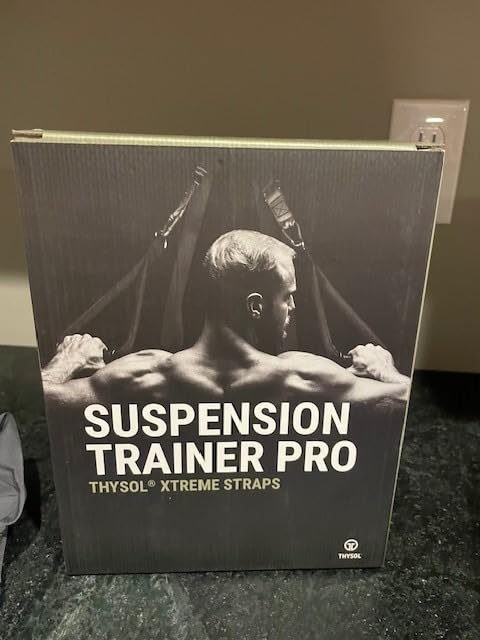
The kit includes a door anchor, an extension suspension anchor and a mesh storage bag, so the whole 0.97 kg package stays compact for travel. It is also the one system reviewers explicitly use for rehab and post-operative recovery work, where slow controlled movements matter more than load.
The most serious complaint is a strap cam clamp that stopped gripping after about six workouts, flagged by the buyer as a safety issue. That is a small sample to be cautious about rather than condemn it, but it is the one failure mode you cannot ignore in a system you hang your bodyweight from. Check the clamp under load at the start of every session.
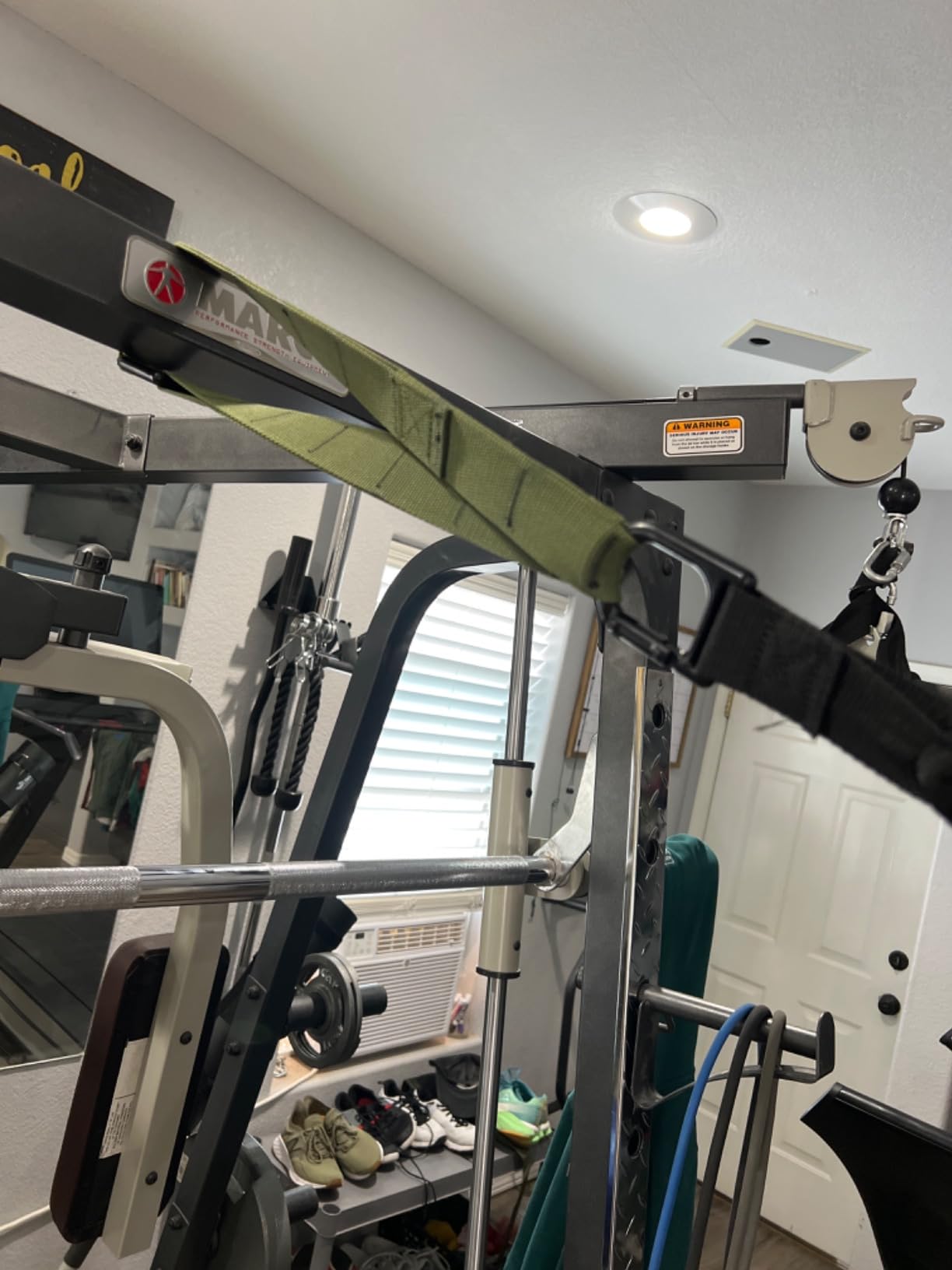
Inspect the cam clamp on day one
This is the fastest buckle in the lineup to set and the one most likely to loosen. Load the strap gradually to your own working weight, then give the cam lever a firm test pull before you step under it. If the lever creeps, replace the system rather than tightening it and hoping.
Clamp slippage is why we would not put this at the top of the list for anyone training alone at high intensity without a spotter. The same failure in a foam-handle system is annoying; in a loaded strap it is a drop.
Understand what a single anchor point removes
This system does not support independently offset strap angles, so you are working within one fixed geometry. That is fine for rows, presses, squats, lunges, curls and planks, and limiting for anything needing a wide or narrow anchor spread.
There is also a single resistance level with no fine gradation, so every adjustment is a body-angle change rather than a load change. If you want incremental difficulty, a pair of dumbbells alongside it fills that gap more cheaply than upgrading the strap.
7. GoFit Gravity Straps – Best for Absolute Beginners on a Tight Budget
GoFit Gravity Straps Suspension Trainer with Exercise Manual, Adjustable Bodyweight Training System with Handles and Anchoring Strap for Full Body Strength and Stability Workouts
One size fits all
Quick strap length changes
Exercise manual included
90 day warranty
Pros
- Well made and durable for the price
- Fast strap length changes between exercises
- Manual introduces suspension training technique
- Supports rows
- presses
- squats and core work
Cons
- No way to attach to a bar or pole
- Cam buckle can slip under load
- Top loop has only three stitches
- Thick material may not fit a tight door gap
The GoFit Gravity Straps are the simplest system in this roundup and the lowest-rated at 4.2 out of 5, which tells you most of what you need to know. Users generally find them functional and durable for a lower-cost alternative, with clear reports of back-muscle activation at 250 lb.
You get a one-size system with quick strap length changes for rows, presses, lunges, squats and core work, plus an exercise manual that introduces suspension training technique. For someone training alone who has never used a trainer, that manual does real work, because the first month is mostly learning which body angle equals which difficulty.
The recurring theme is installation, not quality. Several buyers found the strap material too thick for a narrow door-to-frame gap, or found the door could not fully close with the anchor in place. That issue disqualifies the system in a lot of modern flats and has nothing to do with how the straps perform.
There is also no built-in way to attach to a bar or pole, only a closed door, so it has the least flexible anchor situation in the list. A smaller group reports the cam buckle slipping during use, which carries the same safety implication as any slipping adjuster, and the top loop has only three stitches and tends to bind when it slides.
Measure your door gap before you order
Measure the gap between an open door and its frame. If the strap cannot sit in that gap with the door fully closed, this system will not work in your home regardless of how good it is elsewhere. It is the most common complaint in the review set and takes thirty seconds to rule out.
Outward-opening doors rule it out immediately, as do doors closely fitted to a thick frame. If your door is a problem, a system with a slimmer strap and a wrap-around anchor is the only real answer.
Weigh the 90-day warranty against the outlay saving
At a lower outlay than most systems here, a 90-day warranty is easier to accept than it would be on a premium kit, but it is still the shortest cover in the roundup. The three-stitch top loop is the part we would watch first, since it sits at the highest load point in the strap.
Our honest read is that this is a reasonable first purchase for a beginner on a very limited budget who has measured their door. Anyone expecting long-term heavy use should step up a tier for a proper cam buckle and a longer warranty.
8. ADALT LION Bodyweight Resistance Training Straps – Best for Rehab and Low-Impact Work
Bodyweight Resistance Training Straps, Home Gym Fitness Trainer kit
High-strength nylon
Zinc alloy carabiners
One year manufacturer warranty
Six colour options
Pros
- Sturdy straps that hold 150 lb body weight and heavier
- Firm handles are easy to grip and adjust
- Packs compactly for travel in the included pouch
- Comparable to the more expensive name-brand system
Cons
- Grips are plain plastic with no rubber coating
- Slits in the handle can dig into hands
- Only usable on doors that close fully with frame clearance
The ADALT LION kit is a convincing low-cost substitute for the name-brand straps, and several owners use it specifically for physical therapy exercises at home. That is a demanding use case for a budget kit, because rehab work means slow, controlled loading over many repetitions rather than short explosive sets.
Owners rate it as holding 150 lb body weight and heavier loads, with firm handles that are easy to grip and adjust without fuss. The complete kit includes adjustable straps, a door anchor, an extension strap, zinc alloy carabiners, a carry pouch and a workout guide, and it comes in six colourways so it does not have to look like gym equipment.
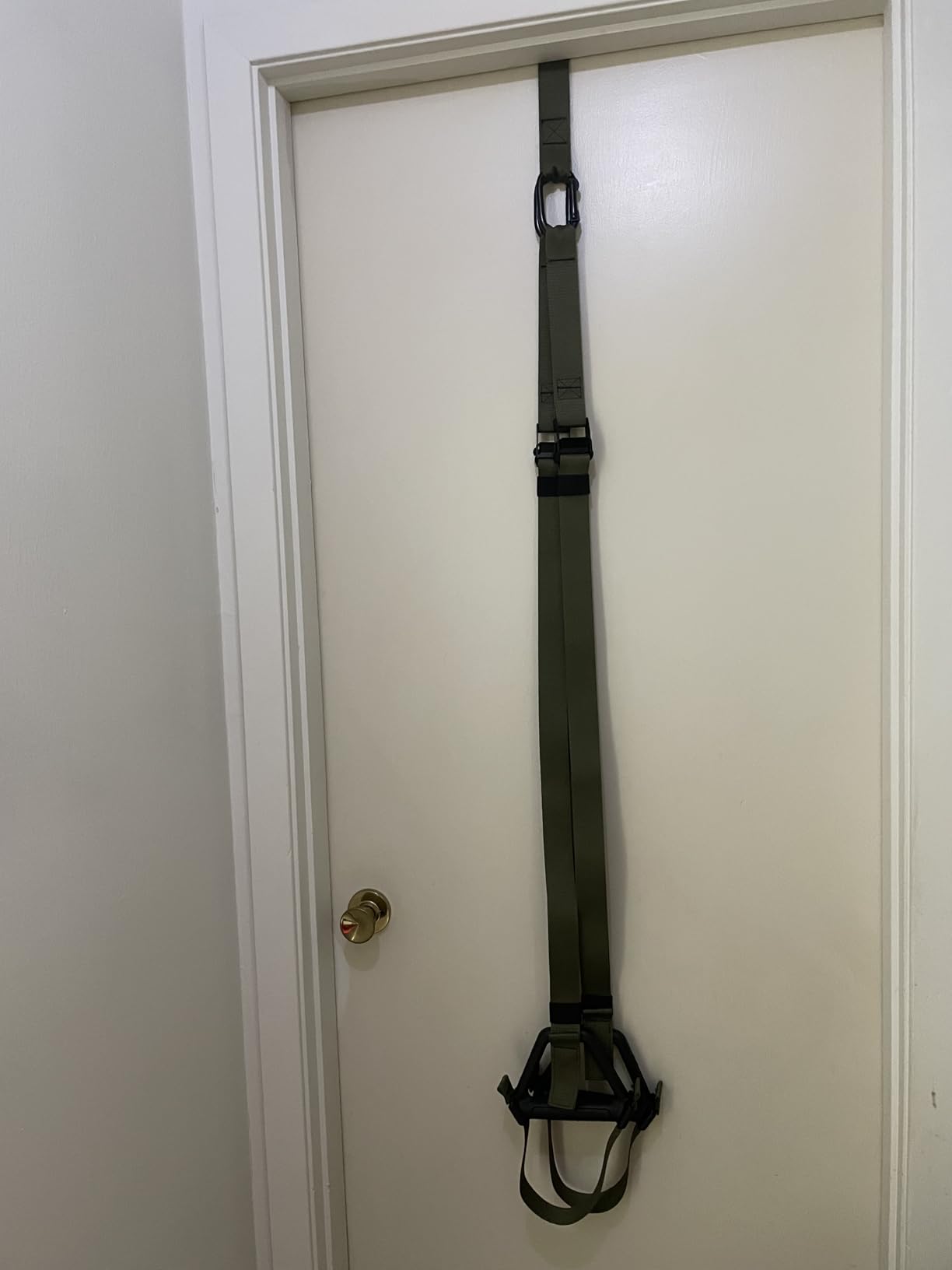
Installation limits dominate the complaints, as they do with most door-anchored kits. Outward-opening and closely fitted doors in many homes rule out setup entirely, and one buyer received an already-opened box, which is worth knowing if you are particular about condition on arrival.
The grip is the other real trade. These handles are plain plastic with no rubber or fabric coating, and the slits can dig into the hands during long sessions. A number of reviewers actually prefer the firm grip, so this is a preference rather than a defect, but it is the opposite of what many people want from a cushioned handle.
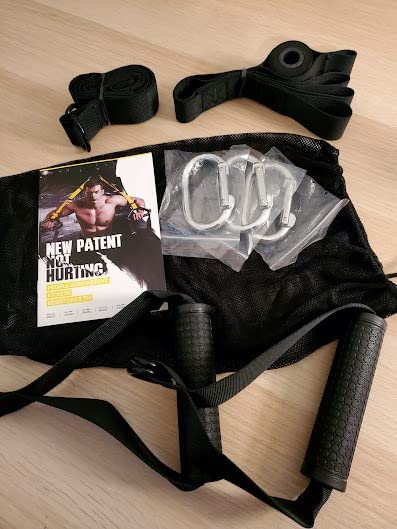
Decide between a firm grip and a cushioned one
For rehab work, a few minutes of controlled movement at a time, firm plastic is fine and arguably more precise. For long circuits or high-volume sets, the lack of coating will bother you and a foam-handle system is the better buy. Try the handle profile before you commit.
Grip size is a related question. This handle runs smaller than several foam-handle designs, and people with larger hands sometimes find the smaller diameter tiring over a long session.
Check what the guarantee actually covers
The one-year manufacturer warranty is longer than the coverage on several systems in this roundup, and the listing carries a 100 percent satisfaction guarantee, which gives you a return window if the door turns out to be wrong. That combination is a decent safety net for a first suspension purchase.
Beyond that, the real limitation is door compatibility. Check that your door closes fully with clearance around the frame before ordering, because the system cannot be adapted to a door that will not shut.
9. Fitense Home Resistance Training Kit – Best Complete Kit for Hotel Rooms
Home Resistance Training Kit, Suspension Trainer Straps with Adjustable Extension, Door Anchor, and Carry Bag – Strength Training Equipment for Full Body Bodyweight Workouts at Home or Outdoors
Seven included components
76-116cm adjustment range
1.3 kg full kit
One year warranty
Pros
- Every component fits the included carry bag
- Adjustable range suits different user heights
- Reinforced cross-stitching at load points
- Both an outdoor anchor and a door anchor included
Cons
- Adjustment range is shorter than some competing systems
- Multiple separate pieces are bulkier to pack
The Fitense kit is the most complete package in this roundup: two adjustable straps, one bodyweight strap, an outdoor anchor, a door anchor, two combination handles and foot cradles, a training guide and a storage bag. Seven pieces, all fitting inside the bag they ship in.
Owners describe it as a sturdily constructed package that works for upper body, lower body and compound work at home or in a hotel room, and the reinforced cross-stitching at the load points is the most cited strength. Having both a door anchor and an outdoor anchor removes the most common reason people cannot use a system they already own.
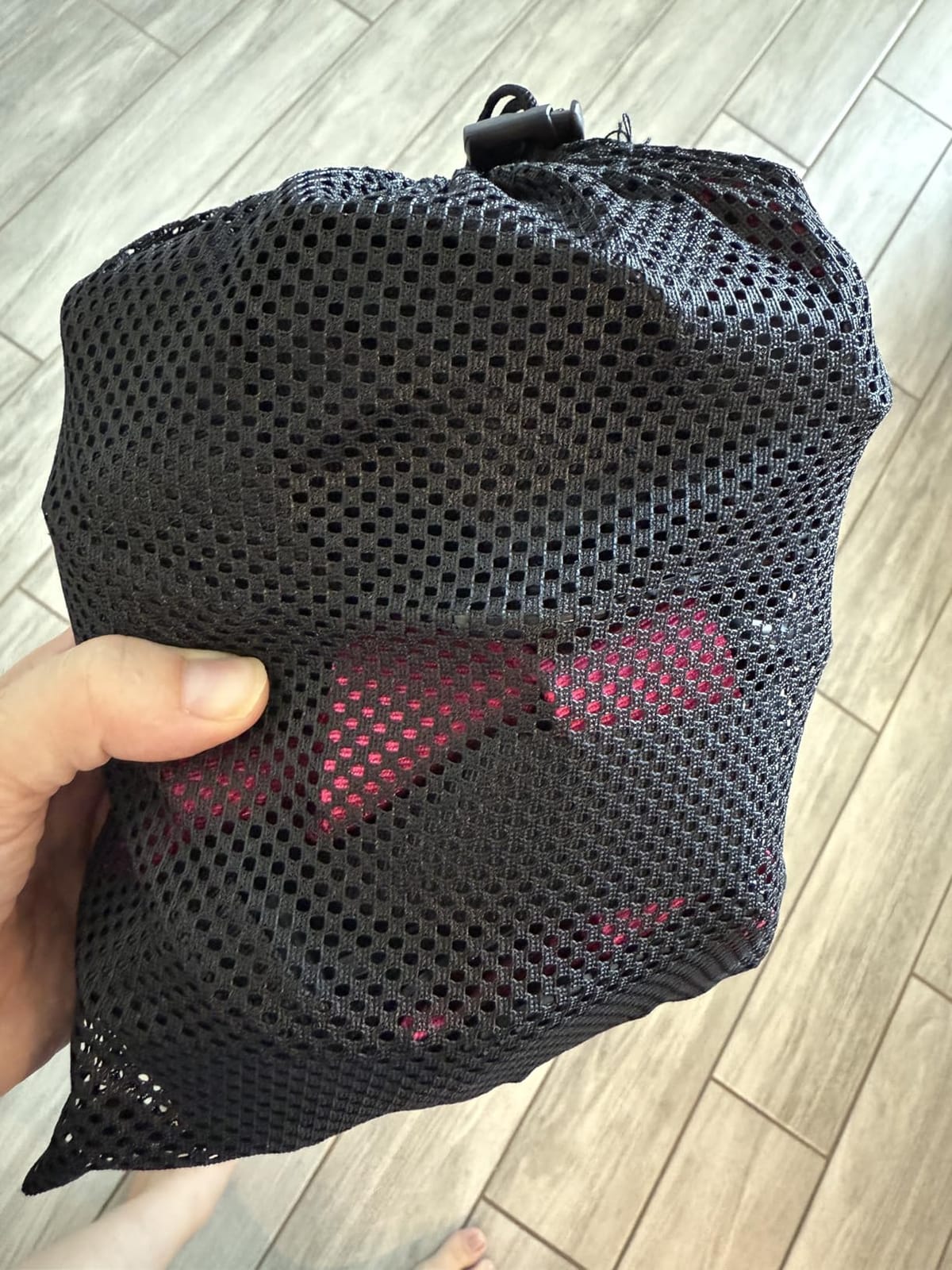
Adjustment runs from 76 cm to 116 cm, which suits different user heights but is a narrower range than several competing systems. If your ceiling anchor is high, you may need the 95 cm extra-long strap to make up the difference, and that is an assembly step rather than a simple cam buckle pull.
Bulk is the second limitation. Seven components mean more pieces to pack and slightly more setup time than a single-strap design, which partly works against the travel benefit. Moving hotels every few days with one anchor point in mind, this is more bag than you need.
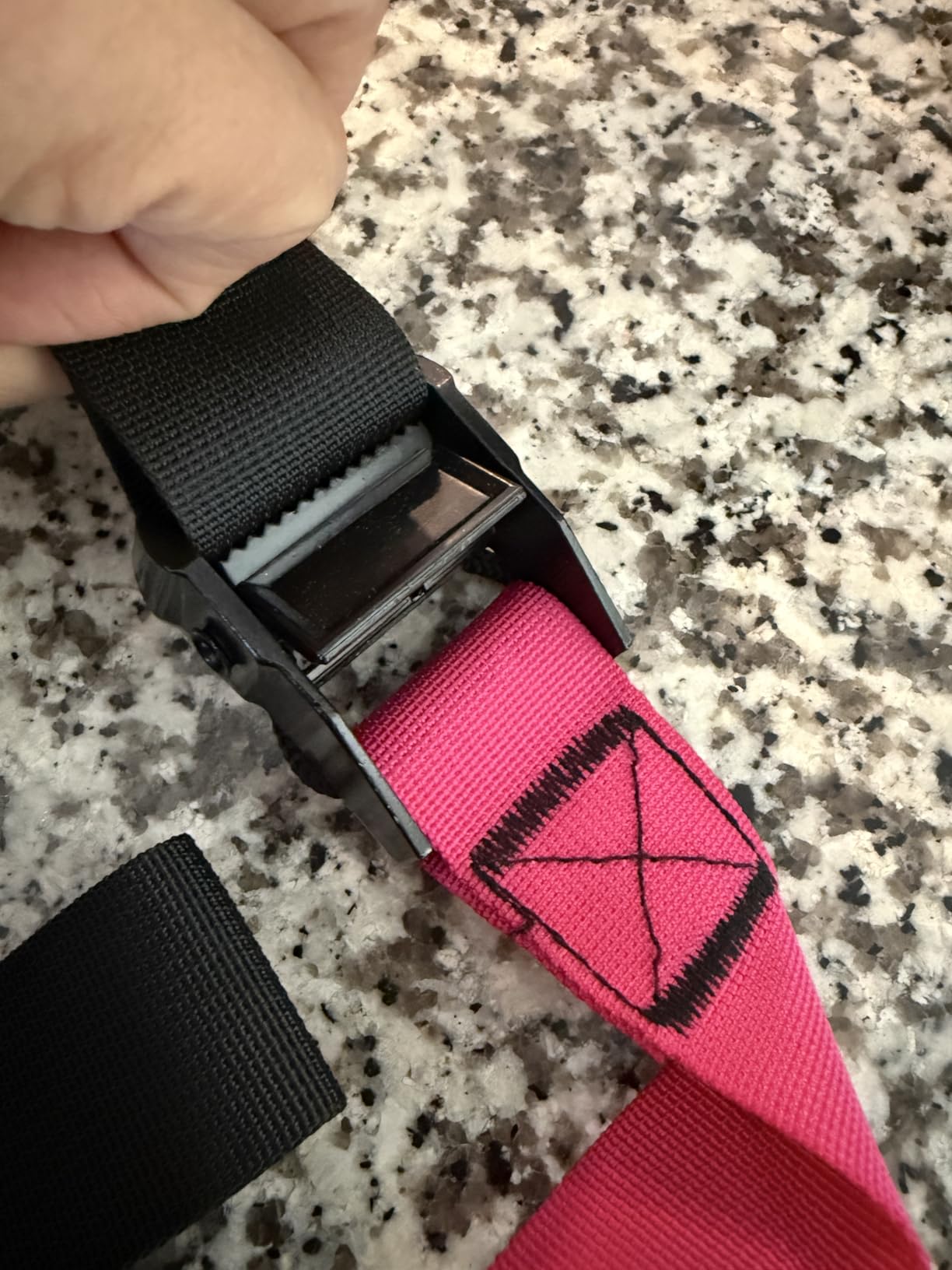
Check the 76-116cm range against your anchor height
The adjustment range is the single number that decides whether this kit works in your home. Stand under your planned anchor point and measure down to the floor. Anything outside 76-116 cm needs either the extra-long strap or a different system, and measuring first saves a return.
Because the range is narrower than most, this kit suits standard-height doors and lower ceiling anchors better than high joists or tall ceilings. Measure before you commit.
Weigh the seven-piece count against your travel pattern
For a home gym or a holiday where you will use everything, the completeness is the appeal: handles that double as foot cradles, a door anchor, an outdoor anchor and a guide in one bag. For a suitcase, the component count costs real pack volume and setup time.
The one-year warranty is a reasonable middle ground, and the reinforced stitching is what we would look at first when judging how long this kit lasts in a high-volume home gym.
10. PEMEME Home Resistance Training Kit – Best for Absolute Beginners
Home Resistance Training Kit with Adjustable Suspension Straps for Workouts
Four-piece core kit
High-density reinforced nylon
Non-slip handles
One year warranty
Pros
- High-density reinforced nylon with heavy-duty carabiners
- Comfortable non-slip handles for repeated sessions
- Carry bag works for office
- hotel or park
- Step-by-step movement guide helps beginners
Cons
- Requires a sturdy door or overhead support that closes fully
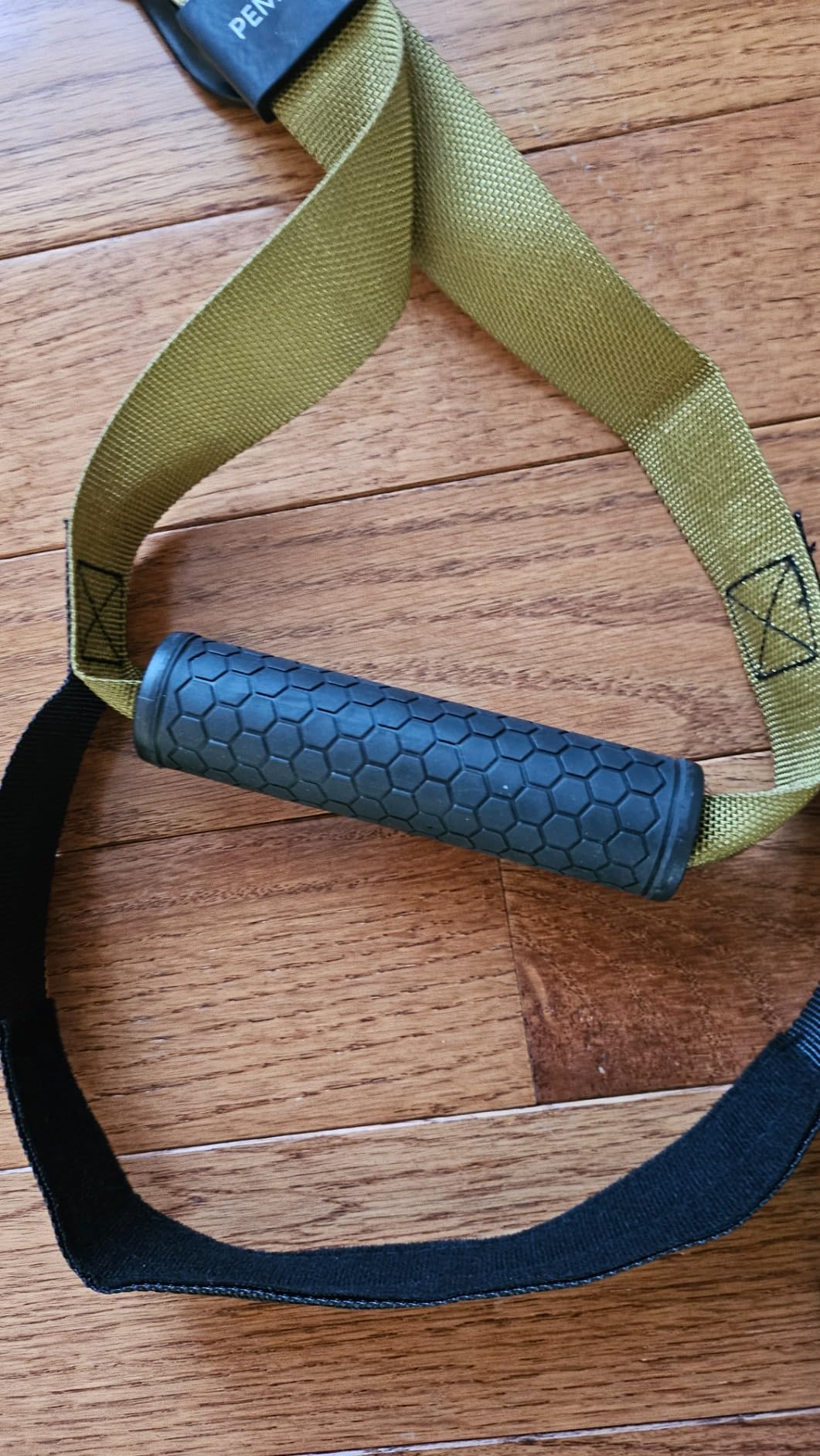
The PEMEME kit scores 4.6 out of 5 across 152 reviews, and the reason is specific: buyers describe a dependable kit with secure carabiners and non-slip handles that turns any suitable door into a functional training station. Nothing about it is flashy, and that is the appeal.
It covers upper body, lower body and core compound work with adjustable straps, carabiners, a door anchor, handles and a training guide. The straps support rows, squats, planks and a wide range of movements, so you are not locked into one pattern, and the carry bag makes it easy to set up in an office, a hotel or a park.
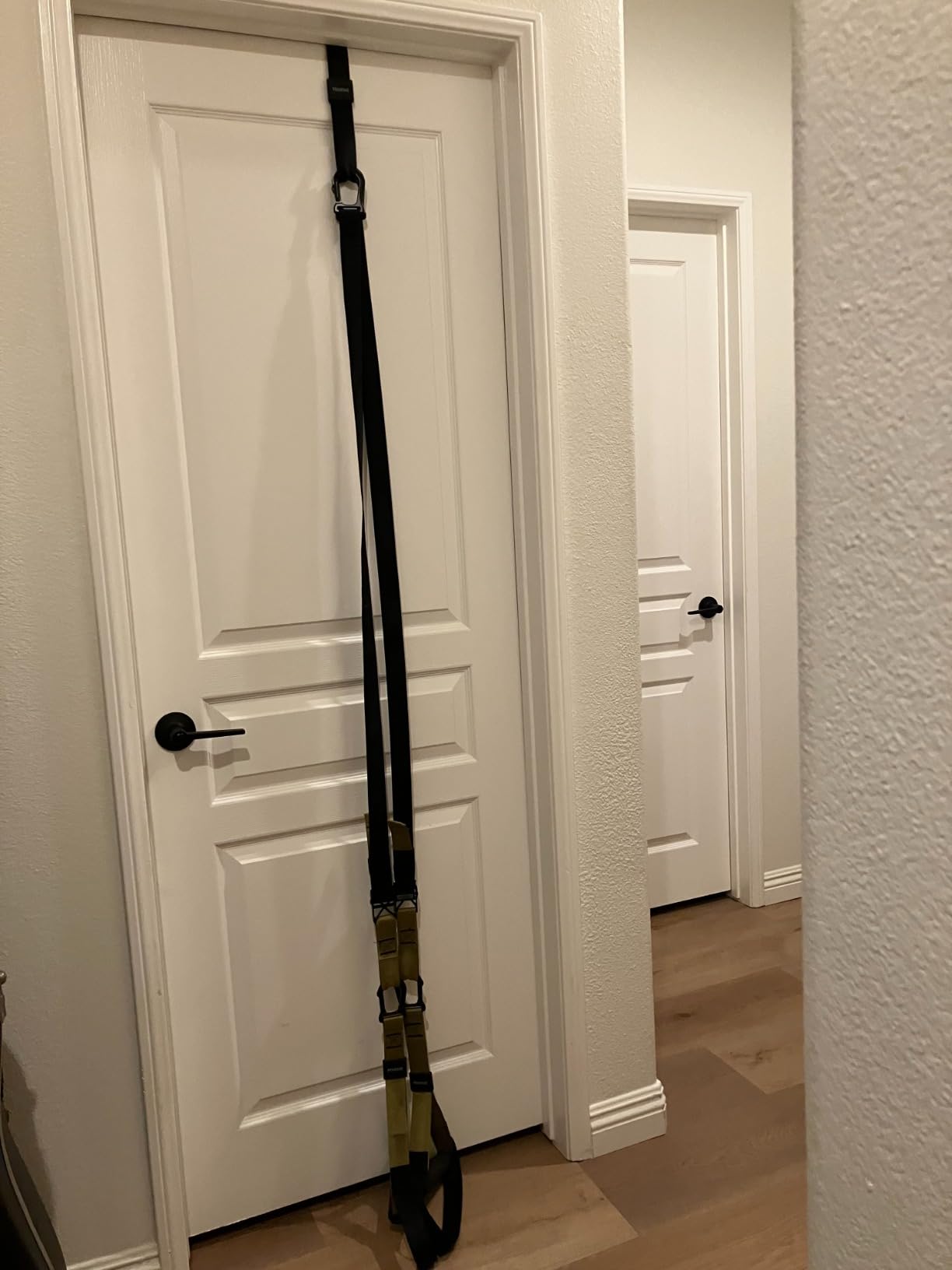
The included movement guide is repeatedly singled out as useful for beginners, which is the closest thing to a personal coach in the box. It walks through the starting movements in step order, which is the fastest way to stop someone guessing at body angle in week one.
There is only one recurring limitation, and it is not really a product fault: the kit needs a sturdy door or overhead support that can close fully. That is the same constraint as most systems here, but because this is a beginner-focused pick, it is worth checking hinge direction and frame clearance on day one.
Use the movement guide before you add load
Most suspension mistakes come from skipping the first fortnight of setup. The guide here covers the basic patterns, and following it for two weeks costs nothing and removes most of the shoulder and lower-back problems beginners report. Once movements are clean, pair it with our [best rebounders for home workouts](https://battleofsoho.com/best-rebounders-for-home-workouts/) for low-impact conditioning alongside them.
After that, the non-slip handles are the part you notice most, because they stay comfortable through repeated sessions rather than only the first set.
Confirm the anchor before you plan the routine
A sturdy door or a proper overhead support that closes fully is the requirement, and the carabiners are the component doing the safety work here. Give each carabiner a firm test pull before your first loaded set, particularly if you have never checked a suspension system before.
With a one-year warranty and reinforced high-density nylon throughout, this is a straightforward first suspension purchase. It is not the most portable option here, but it is the one we would hand to someone starting from zero who wants the instructions in the box.
11. OUUO Suspension Straps with Built-In Door Anchor – Best for Apartments and Rentals
OUUO Suspension Straps, Built-in Door Anchor, 1-Second Setup
Built-in door anchor
Soft TPE no-scratch shell
Steel-reinforced core
900 g system weight
Pros
- Built-in anchor means no assembly and no loose parts
- Soft TPE shell protects doors from scuffs and paint
- Steel-reinforced core resists deforming under load
- Single piece rolls into the carry bag for travel
Cons
- Cam buckle adjustment takes a couple of movements per strap
- No printed length markers on the webbing
- Foot cradle straps are not adjustable
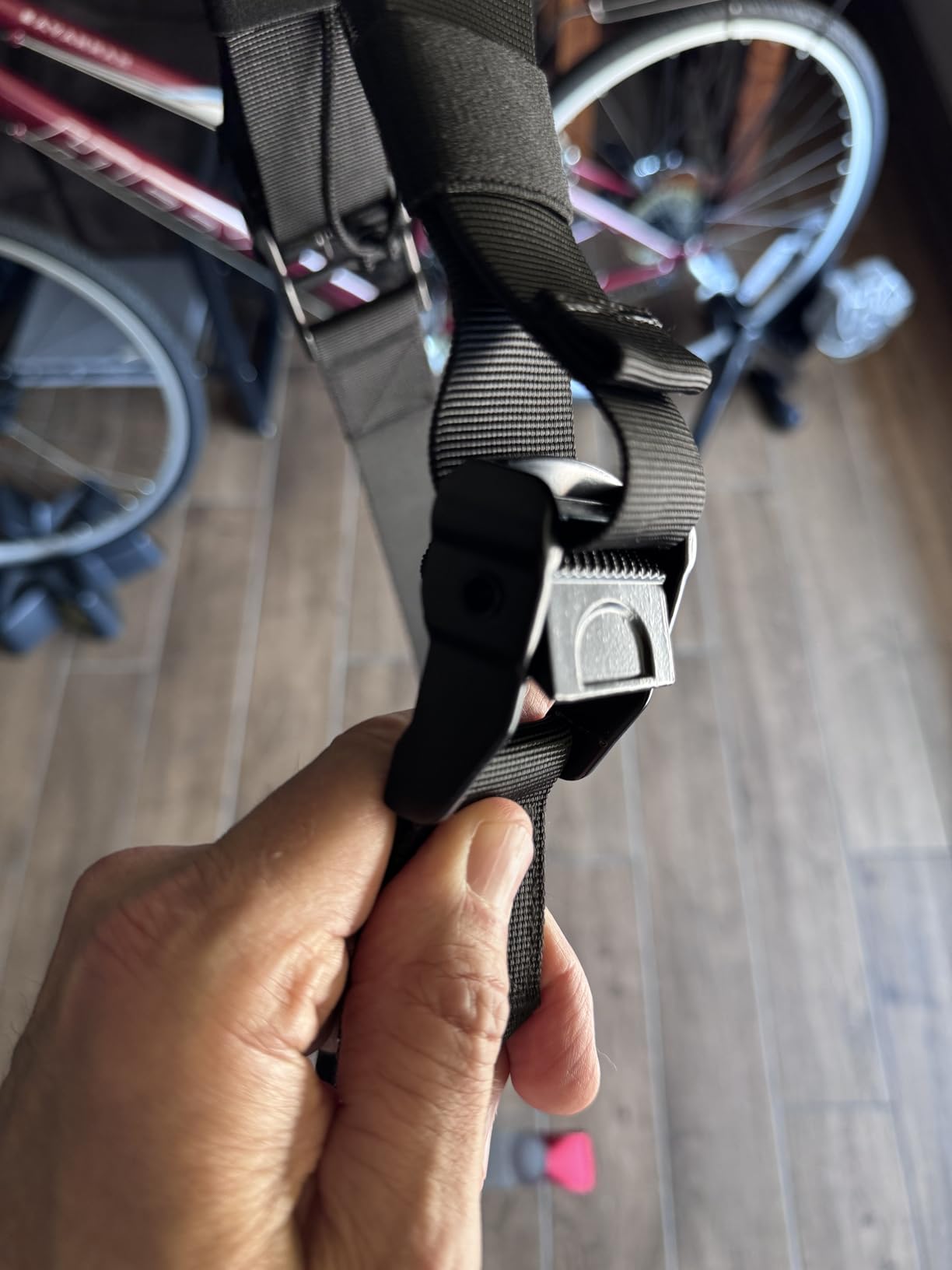
The OUUO straps solve a problem most apartment dwellers do not realise they have until a door anchor scrapes their paint. The anchor is moulded into the strap with a soft TPE outer shell sitting between the metal and the door surface, and owners repeatedly mention the door-friendly padding as the reason it suits rentals and hotel rooms.
There is also no assembly, so there are no loose parts to lose, and the steel-reinforced industrial core keeps the anchor from deforming under load even in a busy school weight room, one of the harder-wearing settings a door anchor ever sees. The single piece rolls into the carry bag for fast setup and travel, and the large handles use a high-isolation rubber grip that stays comfortable in long sessions.
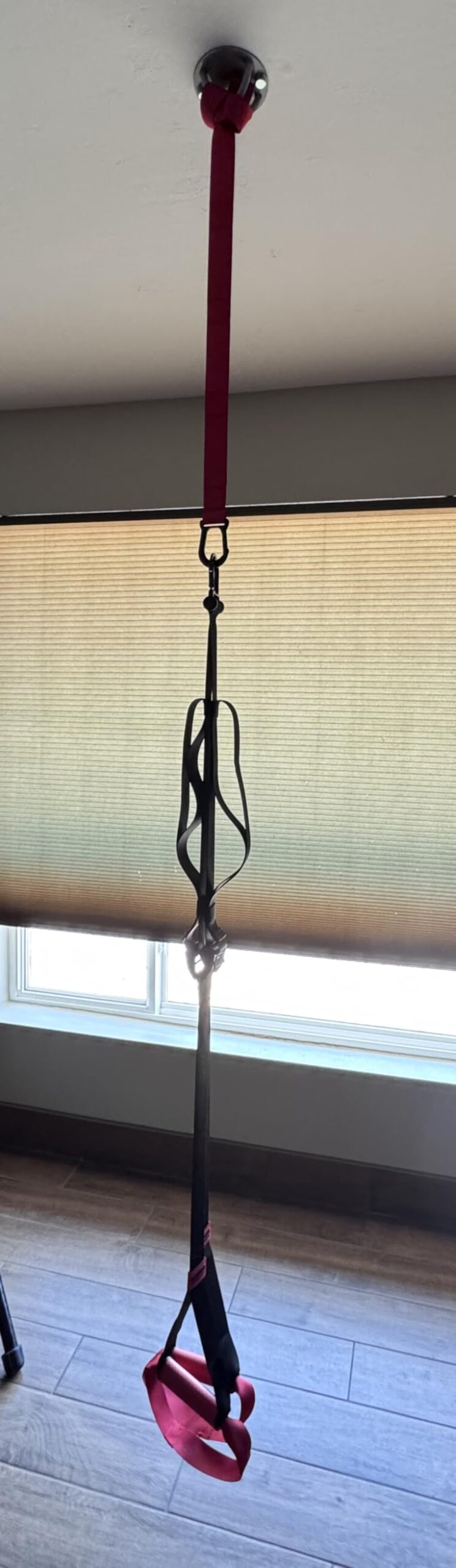
Several owners prefer these straps because each one mounts independently, so the two lengths do not need constant matching to keep an exercise level. That is a real quality-of-life difference from a single-point V system once you start mixing exercises at different lengths.
The adjustment is the main weakness. The cam buckle takes a couple of movements per strap rather than one quick pull, there are no printed length markers on the webbing, and the foot cradle straps are not adjustable even though the exposed carabiner is genuinely useful for connecting extension straps, pull-up bars, beams or outdoor anchors.
Decide how much door protection you actually need
If you rent, or you care about the finish on your door, the TPE shell justifies the outlay on its own. It is a soft, forgiving surface rather than a hard metal or plastic edge pressing into a painted or lacquered door, which is the single most common renter complaint about door-anchored kits.
Own your home and not care about the finish, and the shell is nice but not decisive. A system with a faster cam buckle would serve you better for a mixed circuit.
Set your strap length once and mark it
With no printed length markers, the practical fix is to measure once per exercise and mark the webbing with a pen or tape. That removes the two-movement buckle adjustment from your warm-up entirely and gives you repeatable set-to-set consistency, which matters more than most beginners realise when chasing progressive overload.
For rows, squats, presses, planks, lunges and curls at any level the system handles the full range, and the hardware is rated for high-tension work, which is why it survives a school weight room.
12. COOBONS FITNESS Home Resistance Training Kit – Best for Heavy Duty Stitching
Home Resistance Training Kit, Bodyweight Resistance Bands with Handles, Door Anchor, Resistance Trainer Fitness Straps for Full-Body Workout, Heavy Duty Exercise Bands for Home Gym Workout Equipment
Rated to 500 lb body weight
Fourfold sewing throughout
One year warranty
TPR handles
Pros
- Fourfold sewing reduces slip-offs and adds durability
- Rated to 500 lb body weight and over 1000 lb resistance
- Memory sponge door anchor resists deformation
- Grip-proof TPR handles stay comfortable
Cons
- Memory foam door anchor needs a door that closes fully
- More components than a single-strap kit so slightly more setup
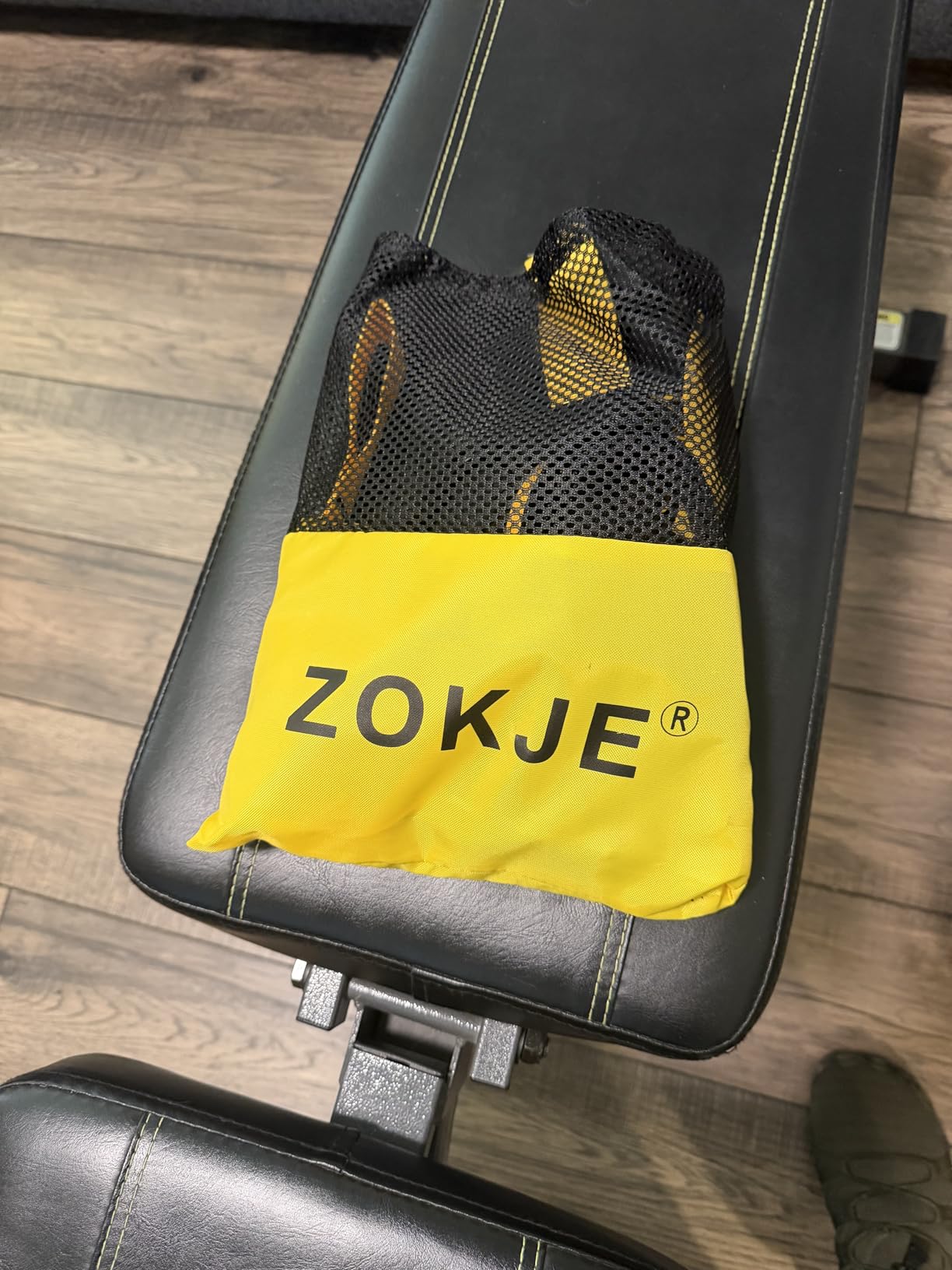
The COOBONS kit is the one we would look at first for stitching quality. Fourfold sewing runs throughout the heavy-duty material, designed specifically to reduce slip-offs at the adjuster, which is the failure point that spoils most budget suspension systems after a year of use.
The load ratings are among the highest published in this roundup at 500 lb of bodyweight and over 1000 lb of resistance. Owners rate it as a heavy-duty kit covering push, pull, plank, squat, lunge, hinge and rotate movements, with the door anchor and buckles described as easy to set up and unlikely to deform over repeated sessions.
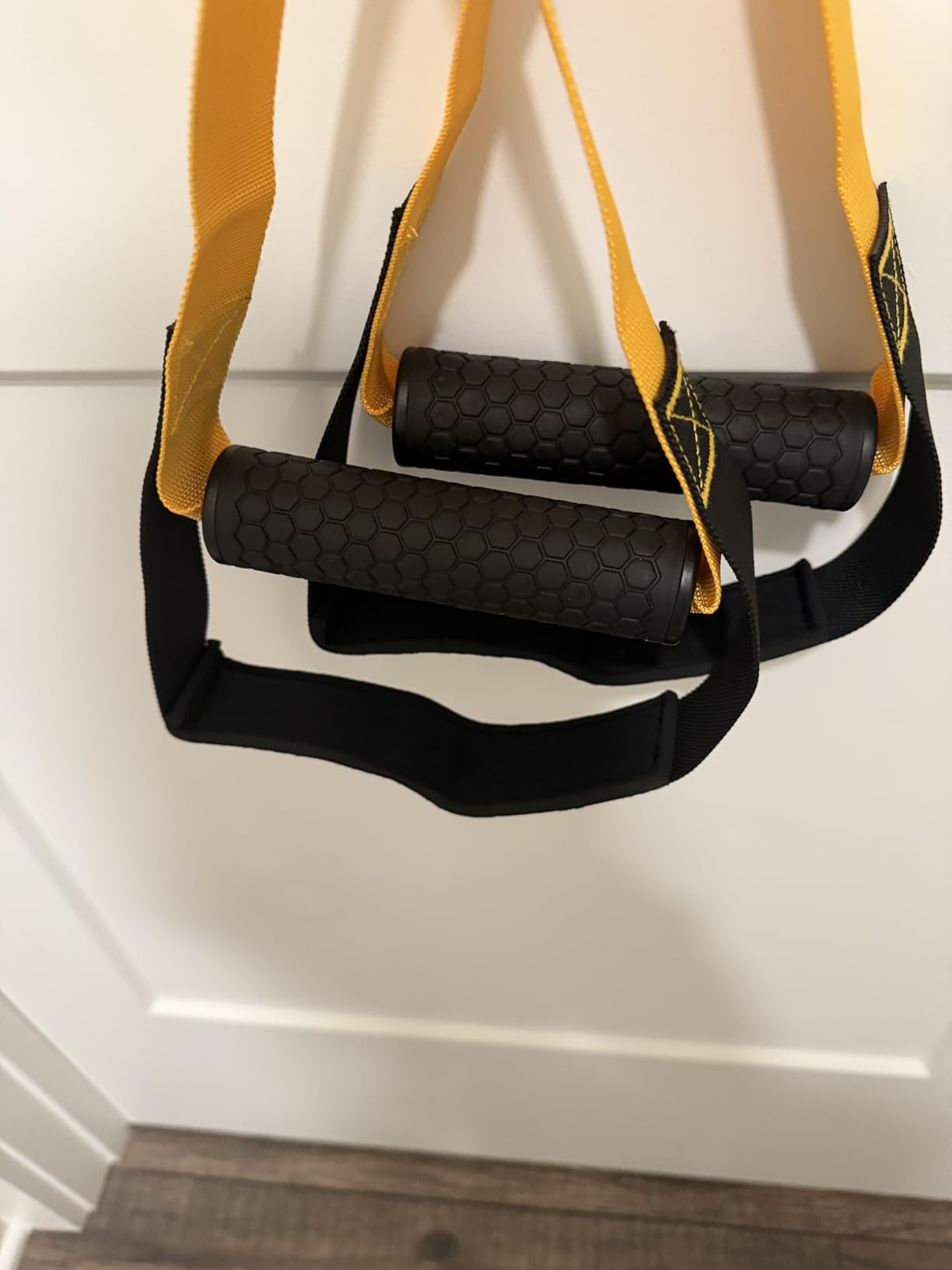
The memory sponge door anchor is a nice piece of engineering for repeated use: unlike rigid plastic or metal anchors, it resists deforming over time and cushions the contact point at the same time. The single-buckle adjustment works quickly indoors or outdoors, and the grip-proof TPR handles stay comfortable through long sessions.
Two practical constraints show up repeatedly. The memory foam anchor still needs a door that closes fully with clearance around the frame, and the kit has more separate components than a single-strap design, so setup takes marginally longer. For a first session that is a small cost; for a hotel room on a two-week trip it adds up.
Check the resistance rating against your actual plan
Over 1000 lb of resistance is a headline number most home users will never approach, and the useful part of the claim is the 500 lb bodyweight figure. That sits well above our 1.5-times-bodyweight rule for every home user, which means this kit has a wide margin between itself and its limit.
The caveat is that a rating is only as good as the anchor. A 500 lb-rated strap hanging from a hollow-core interior door is a 100 lb-rated strap in practice, which is why the memory foam anchor and the sewing quality matter as much as the listing number.
Accept the extra pieces in exchange for the build
The kit includes a carry bag, a connective strap, a door anchor, two durable extension straps and two workout handles with soft foot cradles. That is a wider spread of movement options than most single-anchor kits, and the fourfold sewing is why we would trust it for high-volume daily use.
If you only ever do rows and presses, several of those pieces will sit unused and the bulk is wasted. If you run a mixed circuit, the extra parts are what let you hinge and rotate as well as push and pull, and the one-year warranty backs the construction reasonably.
How to Choose a Suspension Trainer for Your Home
The decision comes down to your anchor point first and everything else second. Work through these factors in order and the right system usually falls out before you start reading spec sheets.
Your anchor point. A solid door that closes fully with frame clearance, a ceiling joist you can drill into, a beam, a pull-up bar or a sturdy tree branch. Everything below is conditional on this. If you have none of these, a suspension trainer is the wrong purchase.
Anchor count. One point gives you rows, presses, squats, lunges, planks, curls and cardio. Two independent points add dips, assisted pull-ups and a straighter line on a bar.
Weight rating. Use the 1.5 times bodyweight rule. A 180 lb user wants a strap rated to 270 lb or more, and a rating printed nowhere counts as a rating of zero.
Strap length and adjustment. Measure from your anchor point to the floor. You need enough webbing to reach the floor plus your reach, and a marking system or a one-motion cam buckle saves setup time every session.
Handles and foot cradles. Foam handles are kindest for long sessions; firm rubber grips are more secure when sweaty. Molded cradles that hold their shape beat flat slings for squats and lunges.
Hardware and buckles. Look for carabiners with locking sleeves, cam buckles that hold under load, and tool-less adjustment if you will move locations often.
Instruction and warranty. A printed guide or QR video library is the difference between a confident first month and a guessing game. Warranty length is the best available proxy for expected webbing life.
Anchor types explained
Single-point door anchors are the most portable and the most compromised. They travel anywhere, need no tools, and cap your overhead range because a door frame sits at roughly shoulder-to-head height for most people. Ceiling and joist mounts give the full overhead range and the highest safety margin, at the cost of drilling and a landlord conversation. Beam and pull-up bar straps use an extension loop and need no drilling. A dedicated wall or ceiling mount is the permanent option for anyone with a garage, basement or joists.
For most flats, a two-point door anchor plus a wrap-around loop over a sturdy frame is the realistic maximum. Plan around that rather than around a ceiling you do not have.
How to Anchor and Set Up Safely
Anchor the straps roughly 7 to 9 feet above the floor. Below about 7 feet you lose the overhead range that makes rows and presses worth doing, and above 9 feet most people cannot generate enough leverage to pull themselves back up. If your anchor is higher, use an extension strap rather than standing on tiptoe to reach the buckle.
Load test every new system before you trust it. Add weight in stages while you hang from the straps, checking the buckle, the carabiner and the anchor each time, until you reach roughly 1.5 times your bodyweight. If anything shifts, creeps or makes a sound, change the component rather than the exercise. Do this once on day one, then give the cam buckle a firm pull check at the start of every session after that.
On door damage, the honest answer is that most reported damage comes from a rigid metal or plastic edge bearing on a painted surface, not from the load itself. Systems with a soft outer shell or a non-scuff anchor, such as the OUUO TPE shell and the Lifeline non-scuff anchors, address the actual cause, and a thin felt pad under any rigid anchor reduces the risk again.
One more rule: never leave a loaded suspension system on a door you need to close through. In a small flat, an outward-opening or self-closing bedroom door can make a perfectly good trainer unusable, and that is the most common reason a good system ends up in a cupboard.
Best TRX Alternatives and How They Compare
If you are looking for a TRX alternative that runs the same exercises, every non-TRX system here qualifies. The Lifeline Jungle Gym XT is the closest structural equivalent with its split anchor and molded cradles. The Bodytorc is the closest for anyone with a rack or bar. The Mouylan and PEMEME kits cover the same movement library at a fraction of the outlay, and the OUUO and COOBONS kits add the door protection and stitching quality budget kits usually skip.
The community view on the flagship kit is settled: the brand premium is real for build quality and the training ecosystem, but most home users do not need the top of the range. The TRX GO gives you that ecosystem at a much lower weight, and 500-plus app workouts are the main thing you genuinely cannot get elsewhere in this list.
On the wider comparison, users on r/bodyweightfitness generally argue that gymnastic rings beat suspension trainers on value, while trainers win on compactness, quick door-anchor setup and rotating handles for curls, fly movements and face pulls. Our own read matches that. If you already have a pull-up bar or a ceiling to hang from, rings are hard to beat for straight-arm work. In a rented flat with one usable door, the trainer wins decisively because it brings its own anchor.
Resistance bands are the third option. They are cheaper, travel better and add a genuine load variable, but they do not give you the adjustable body-weight resistance of a trainer and the anchor problem is identical. The sensible home gym uses both: a band set for loaded rows and presses, and a trainer for rows, squats and core work.
A 4-Week Beginner Starter Workout
Build this around whichever system you pick. Keep it simple for the first fortnight; the goal is clean positions, not load.
Week 1 – three sessions. Two rounds of assisted squats with hands on the handles, an incline plank with hands on the handles and feet on the floor, then assisted rows. Rest 60 seconds between movements and finish each round with 10 bodyweight squats away from the straps.
Week 2 – three sessions. Same three movements, but drop to a deeper squat, add a pike push-up with hands on the handles, and add single-arm rows to introduce unilateral work. Three rounds this time.
Week 3 – three to four sessions. Add a walking lunge with a strap on the front foot, a reverse fly with the straps crossed, and a suspended side plank. Hold each set to a controlled tempo rather than counting reps.
Week 4 – four sessions. Put it together as a circuit: assisted squats, rows, pike push-ups, lunges, reverse fly and a plank, three rounds with minimal rest. Add a dumbbell to the rows if you want your first genuine load variable.
For the low-impact conditioning side, our [best stair steppers for home workouts](https://battleofsoho.com/best-stair-steppers-for-home-workouts/) covers the cardio gap a strap system leaves, and the two together fill a full home session without a single machine.
Who Should Not Buy a Suspension Trainer
Three groups should skip this. If you have no solid door, no beam and no permission to drill, a suspension trainer cannot be safely anchored and nothing in this list solves that.
Second, if your goal is progressive overload through heavy loading, a strap system tops out early. Adjustable dumbbells and a bench will take you further for strength.
Third, if pull-ups and dips are your primary movements, a single-point trainer will disappoint you. Buy a two-point system like the Lifeline Jungle Gym XT, or buy a pull-up bar and a pair of rings instead.
Frequently Asked Questions
Are suspension trainers worth it?
Yes, if you have one solid anchor point and train two or three times a week. A suspension trainer uses your bodyweight and the angle of your body as the resistance, so a 40-60 minute session covers push, pull, core and conditioning in a footprint smaller than a yoga mat. It is not worth it if you need heavy progressive loading or if your only option is a door you cannot close.
What is the best suspension trainer for home workouts?
The TRX GO Suspension Trainer is the best overall pick for home workouts. It weighs 0.68 kg, packs into a mesh carry bag, carries a 700 lb load rating and includes access to 500-plus guided workouts in the TRX Training Club app. For heavier users the TRX Pro3 is the stronger choice, rated to 318 kg.
What is the best alternative to a TRX suspension trainer?
The Lifeline Jungle Gym XT is the closest structural alternative, with a patented split anchor that sets narrow, neutral or wide angles plus molded foot cradles. The Bodytorc is the best alternative for anyone with a pull-up bar or power rack, and the Mouylan and PEMEME kits cover the same movement library at a much lower outlay.
What is the best functional trainer for a home gym?
For most homes a suspension trainer is the more useful functional trainer, because it needs no floor space and no power. A full functional trainer such as a squat rack or a wall-mounted cage makes sense if you have a garage or basement and want heavy loading. Our dedicated guide compares the best functional trainers for home gyms in detail.
How high should you hang a suspension trainer?
Anchor the straps roughly 7 to 9 feet above the floor. Below 7 feet you lose the overhead range that makes rows and presses effective, and above 9 feet most people cannot generate enough leverage. If your anchor is higher than that, add an extension strap rather than standing on tiptoe to reach the buckle.
Do suspension trainers damage doors?
Most reported door damage comes from a rigid metal or plastic anchor bearing on a painted surface rather than from the load itself. Systems with a soft outer shell or a non-scuff anchor address the real cause, and a thin felt pad under a rigid anchor reduces the risk further. You also need a door that closes fully with clearance around the frame.
How long do suspension trainers last?
It depends on load and frequency rather than time. Personal trainers report replacing a set after roughly two years of five-day-a-week commercial use once the webbing begins to fray. Home use at three sessions a week stretches that considerably, and warranty length is the best available proxy for how long the manufacturer expects the webbing to last.
Are suspension straps better than resistance bands?
They solve different problems. Suspension straps give you adjustable body-weight resistance and a full-body movement library from one anchor, while resistance bands are cheaper, travel better and add a genuine load variable. In a rented flat with one usable door, the strap system wins because it brings its own anchor. Many home gyms use both together.
The Best Suspension Trainer for Home Workouts
The TRX GO Suspension Trainer wins this roundup of the best suspension trainers for home workouts because it does the thing that matters most in a small home: it disappears when you are not using it and comes back in sixty seconds when you are. A 700 lb rating, foam handles, a mesh carry bag and 500-plus guided workouts in the app give you everything a home gym actually needs.
The TRX Pro3 is the runner-up for anyone heavier or training clients, rated to 318 kg with three anchor solutions. The Lifeline Jungle Gym XT takes third for the split-anchor design, and it is the pick if dips and pull-ups are on your list. Renters who care about their door frame should look at the OUUO straps with the built-in soft-shell door anchor, and anyone starting from zero with a measured, workable door will find the PEMEME kit hard to argue with.
Before any of them, check your anchor point. Everything in this guide works, and every one of them fails the same way, if there is nowhere solid to hang it.