
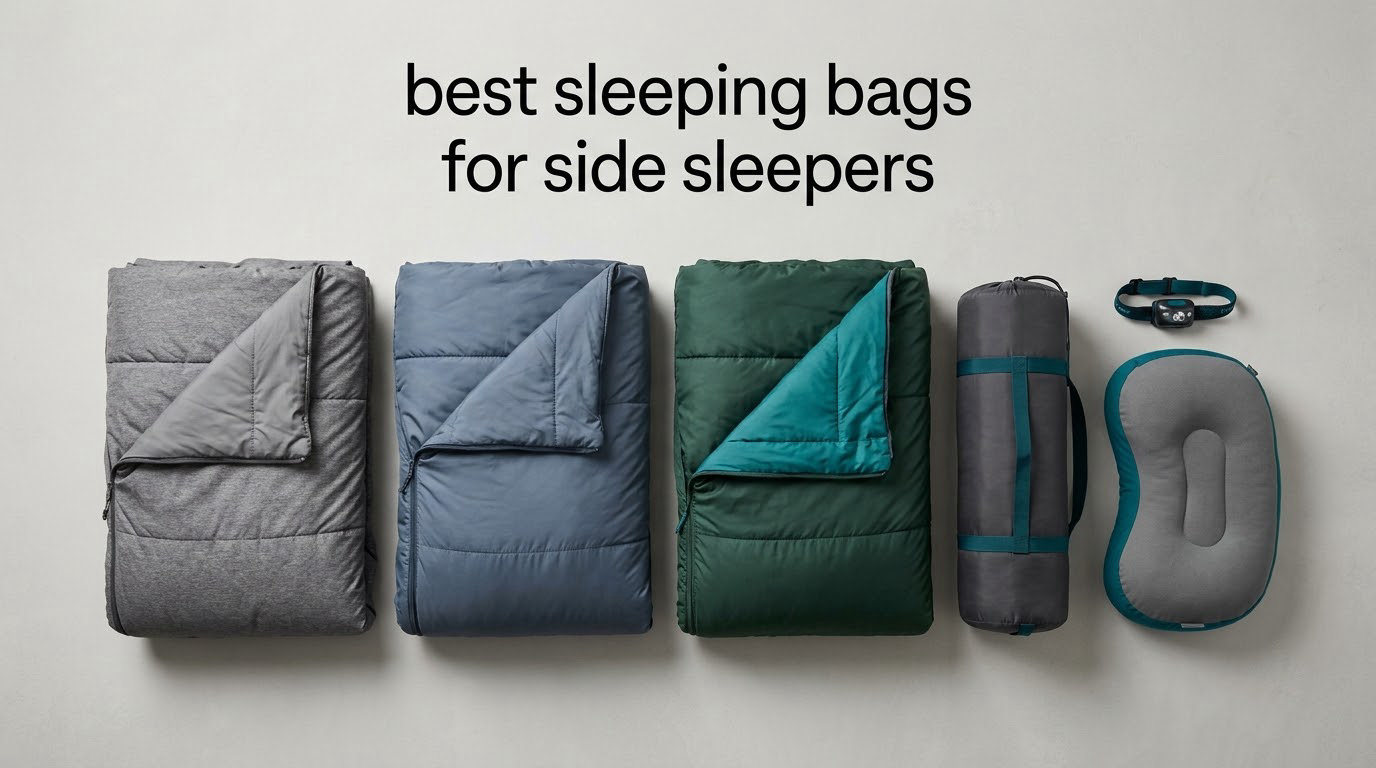
Side sleepers need room, and the four designs that deliver it are a wide rectangular bag, an oversized traditional mummy, a double-wide cut built for two, and a quilt-style system. A narrow tapered mummy is the one shape that reliably fails them. We ranked ten bags by the single number that decides your night: how much space the bag gives you at the hips and shoulders when you roll over at 3 a.m.
Most sleeping bag roundups treat the side sleeper as a footnote, a one-line aside inside a general-purpose list graded by temperature rating. That is backwards, because temperature is the number every bag publishes and room is the number almost none of them do. A 20-degree bag that pinches your knees at 2 a.m. is a worse purchase than a 30-degree bag you never have to fight.
So this is the best sleeping bags for side sleepers list, organized the way your body actually sleeps. We looked at hip and shoulder footprint, foot and knee volume, zipper placement, whether the bag lets you vent when you overheat, and how much of the spec sheet survives contact with a real night outside. We also read the side-sleeper forum threads closely, because owners describe the same failure modes in the same words and those words are more useful than most spec sheets.
One note before we start. If your issue is your mattress at home rather than your kit in a tent, the same shoulder-and-hip logic applies. Our guides to the best mattresses for side sleepers and the best hybrid mattresses for side sleepers go through the same pressure-point reasoning.
Table of Contents
Top 3 Picks for Best Sleeping Bags for Side Sleepers in October

Sleepingo Double Sleeping Bag
- 87 x 59 inch footprint
- Converts to two single bags
- About 6 pounds
All 10 Sleeping Bags for Side Sleepers at a Glance in 2026
Here is the whole field in one place. Every bag below is rectangular, semi-rectangular or double-wide, which is the geometry shortlist for side sleeping. Read the width column first; it predicts whether the rest of the spec sheet will matter to you.
| Product | Specifications | Action |
|---|---|---|
| Sleepingo Double Sleeping Bag for Adults |
|
Check Latest Price |
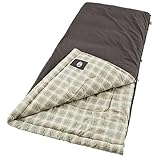
| Coleman Heritage Big and Tall 10F |
|
Check Latest Price |
 Coleman Dunnock 20F Big and Tall Coleman Dunnock 20F Big and Tall |
|
Check Latest Price |
 HiZYNICE XXL Cold Weather Big and Tall HiZYNICE XXL Cold Weather Big and Tall |
|
Check Latest Price |
 AGEMORE Cotton Flannel Double Sleeping Bag AGEMORE Cotton Flannel Double Sleeping Bag |
|
Check Latest Price |
 Kelty Tru.Comfort Doublewide 20F Kelty Tru.Comfort Doublewide 20F |
|
Check Latest Price |
 MEREZA XL Wide Sleeping Bag MEREZA XL Wide Sleeping Bag |
|
Check Latest Price |
 Naturehike Big and Tall Flannel XXL Naturehike Big and Tall Flannel XXL |
|
Check Latest Price |
 Naturehike Double Sleeping Bag Queen Plus Naturehike Double Sleeping Bag Queen Plus |
|
Check Latest Price |
 AGEMORE Cotton Flannel XL Sleeping Bag AGEMORE Cotton Flannel XL Sleeping Bag |
|
Check Latest Price |
1. Sleepingo Double Sleeping Bag Is the Best Overall Pick
Double Sleeping Bags for Adults – Waterproof Queen-Size 2 Person Sleeping Bag with Pillows for Camping, Backpacking, Hiking, or Truck Use – Warm, Lightweight, and Convertible into Two Singles – Blue
87 x 59 inch double footprint
Rated 32F and above
About 6 pounds
210 thread count polyester shell
Pros
- Enormous 87 x 59 inch footprint for two adults
- Splits into two separate single bags or one double
- Quiet lining that does not crinkle like most polyester
- Zippers on both sides for independent entry and exit
- Light for a double at roughly 6 pounds
Cons
- 32F figure is a survival rating rather than a comfort rating
- Included travel pillows are widely disliked
- Long compression sack is awkward on a pack
The Sleepingo Double is the one we came back to after reading every owner comment we could find on a roomy bag. At 87 by 59 inches it is larger than a queen mattress, and that width is the whole argument. A side sleeper who rolls onto their hip at 3 a.m. in a bag this wide simply does not run out of bag, and the review base is large enough that we can say so without guessing.
It is also the only bag in the field that functions as two products. Zip it down the middle and you have two singles, which is what you want if you are a couple who sleeps at completely different temperatures, or if you are sharing one tent with a friend. Left closed, it behaves like one very large bag that two people can move around in without touching.
Our team put the split function ahead of most of the spec sheet, because it changes what the bag is for. A single sleeper who buys it solo gets a 59-inch-wide bag they can stretch out diagonally in, and a couple gets a system. That flexibility is unusual at this weight and this width.
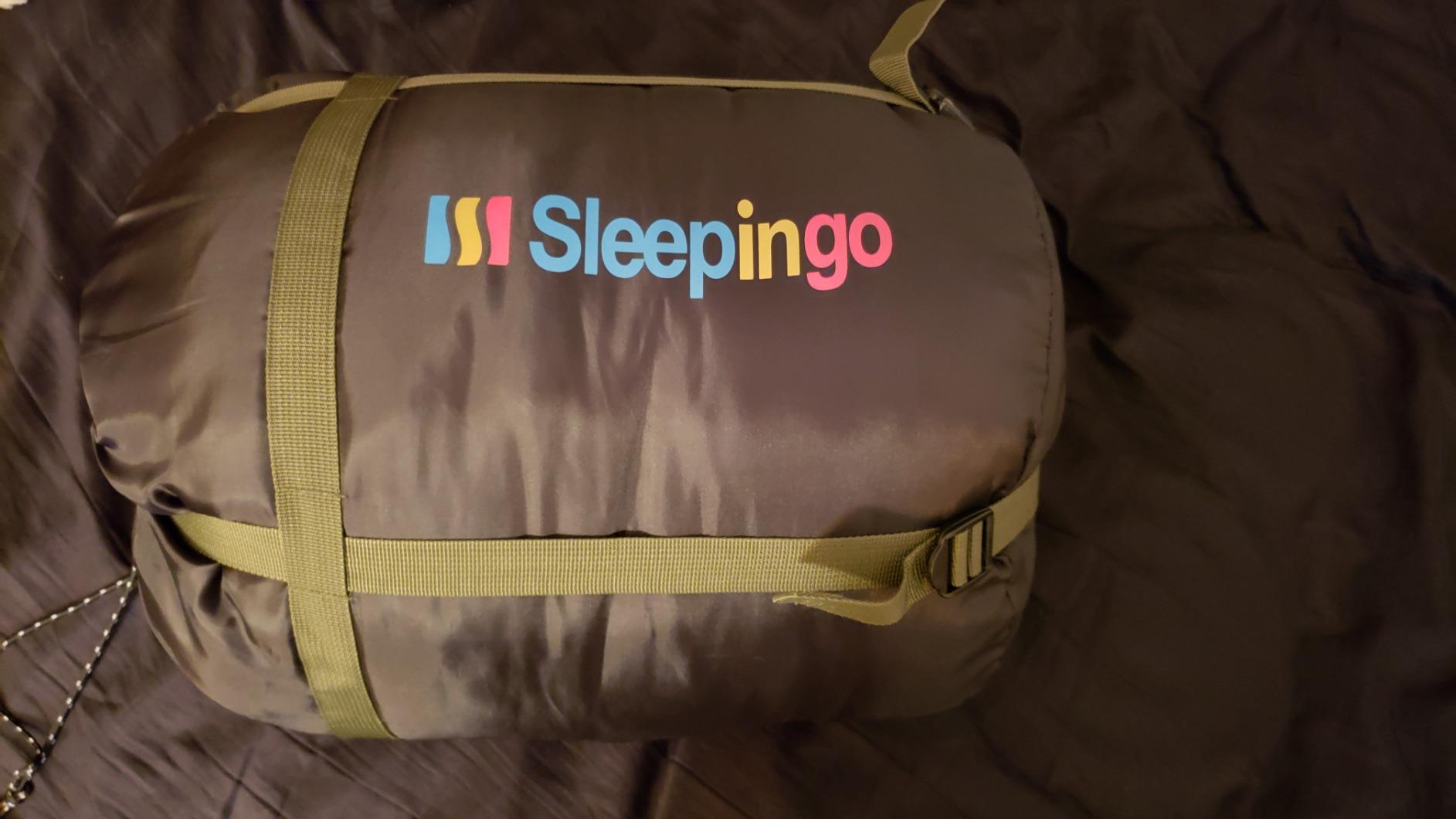
The build is deliberately plain. The shell is 210 thread count polyester treated to shed moisture, and the lining is a soft Tetra textile that reviewers single out for staying quiet, which matters more than it sounds. Most plastic-lined bags rustle every time you move, and for a person who moves constantly, that rustle becomes the thing you hear all night.
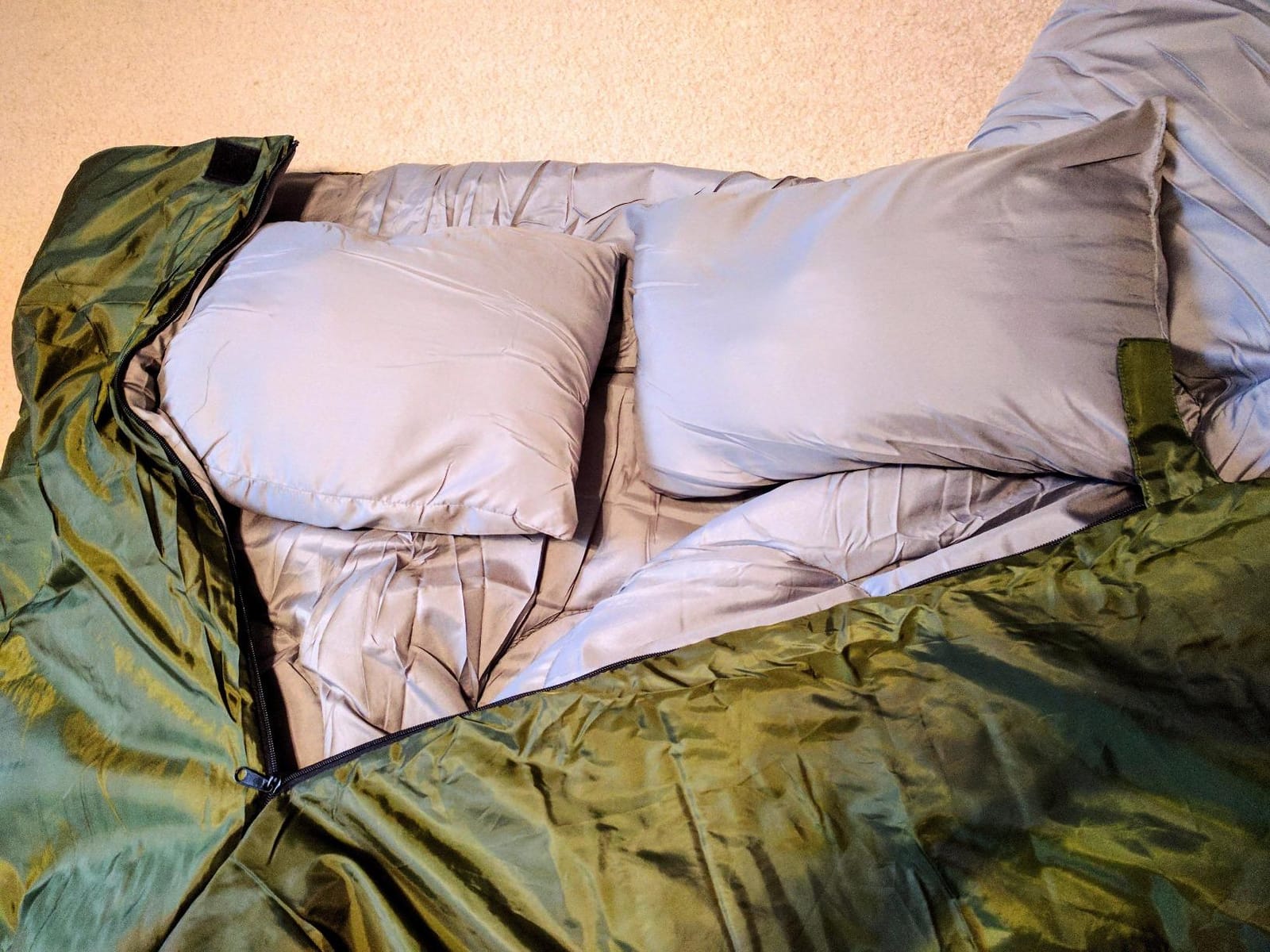
Both zippers run down the sides, so one person can get out without waking the other, and a hook-and-loop tab at the zipper’s head keeps it from creeping open. Reviewers note the model handles hot weather better than its rating suggests: unzip one side and the whole thing vents, which matters for anyone who runs warm under a big load of insulation.
What you give up for the width
The headline rating is a survival figure, not a comfort figure. Owners in genuinely cold conditions report adding a blanket, and the honest way to read this bag is that it is a shoulder-season and mild-winter bag that prioritizes space over thermal margin. If you camp below freezing regularly, look at the Coleman Heritage later in this list instead.
The two included travel pillows are the most repeated complaint in the reviews, and they are not good. Bring your own or fold a jacket. The compression sack is also long and awkward to strap to a pack, so plan on lashing it outside your pack rather than burying it in the lid.
Who should skip it
Skip it if you are a solo ultralight hiker. Six pounds is fine for car camping and truck-bed nights, and it is a real burden when you are carrying a kit for weeks. Also skip it if you plan deep winter camping; the geometry is right but the thermal margin is not.
For anyone who currently wakes up tangled because their bag is too narrow, this is the single most direct fix on the market.
2. Coleman Heritage Big and Tall 10F Is the Most Versatile
Coleman Heritage Big & Tall 10°F Flannel Sleeping Bag, XL Sleeping Bag Fits Adults up to 6ft 7in Tall, Machine Washable, Great for Camping, Hunting, Guests, & More
84 x 40 inch big and tall cut
5 lb Holofill 808 fill
Rated to 10F
8.9 pounds
Pros
- Genuinely oversized at 40 inches wide
- Fit for campers up to 6 ft 7 in
- Cotton flannel liner owners prefer to slippery synthetics
- 5 lb of Holofill 808 fill
- Wrap N Roll packing system
Cons
- Very heavy at 8.9 pounds and not for backpacking
- Takes real space in a vehicle or small tent
- Cotton outer should stay out of wet conditions
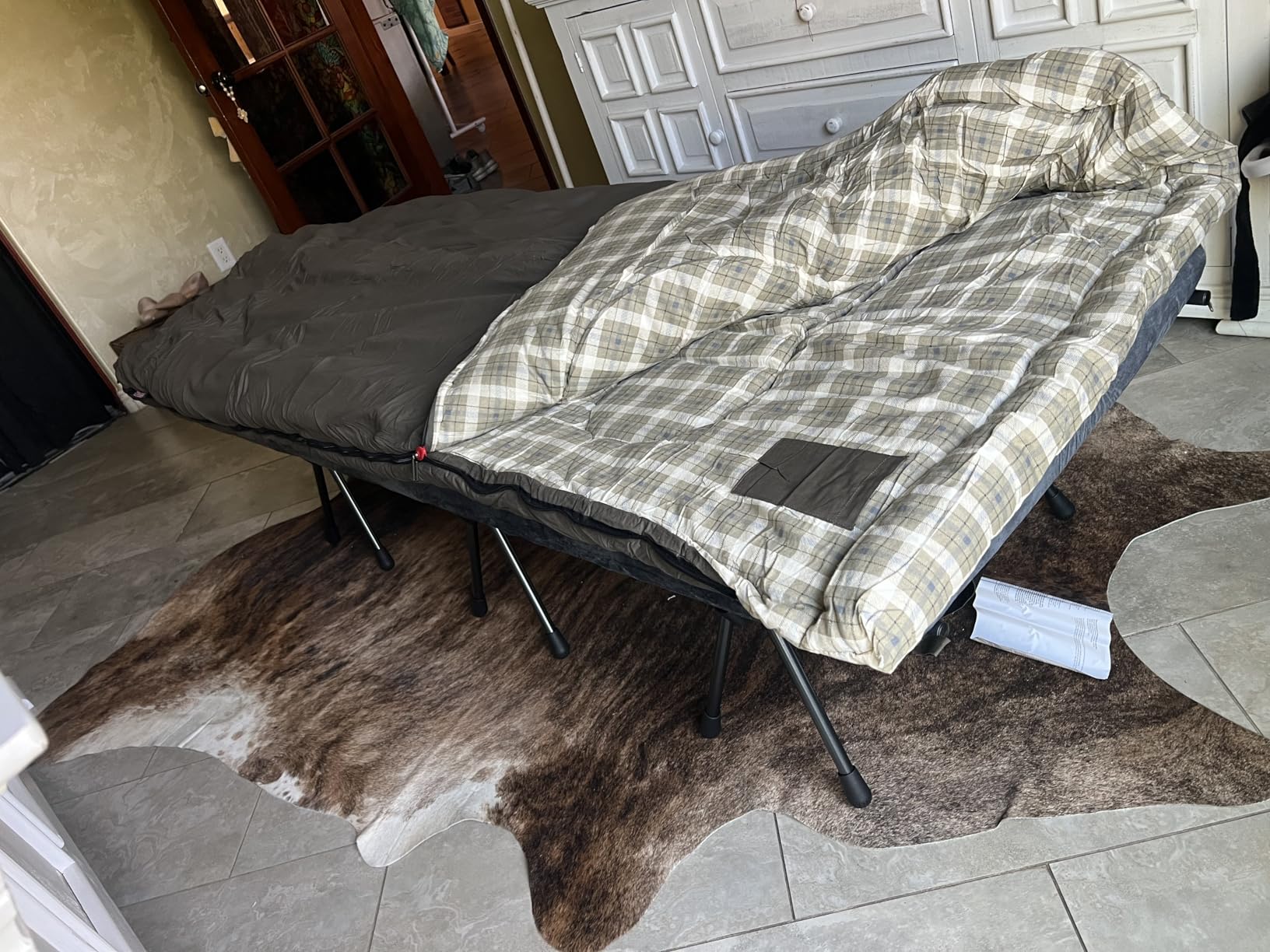
This is the bag we would hand to someone who is six foot seven, sleeps on their side, and camps in the shoulder season somewhere it actually gets cold. The Coleman Heritage runs 40 inches wide and 84 inches long, and it carries 5 pounds of Holofill 808 synthetic, which is a serious amount of insulation for a bag at this weight class.
With 3,829 reviews behind it, the owner consensus is unusually consistent: this bag is oversized, and that is the entire point. Tall sleepers report finally being able to roll over and stretch out instead of curling into a shape the bag did not intend.
We found no meaningful complaints about warmth from owners who used a decent pad underneath. Reported comfort sits in the upper 20s and low 30s, which matches the label closely enough that we would trust it in colder ground than most of this list.
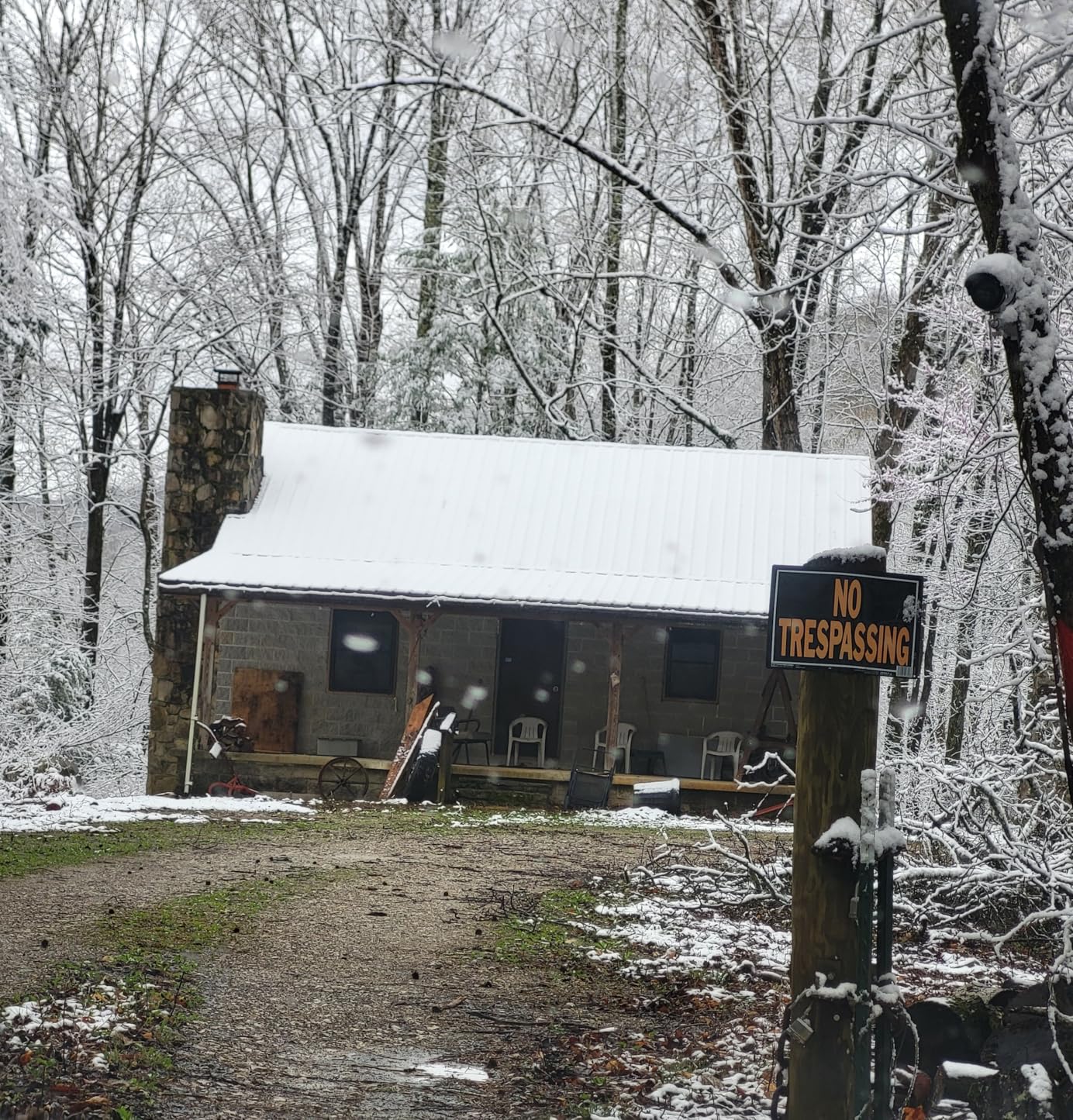
Two construction details stand out. FiberLock keeps the insulation from migrating down or bunching after nights of turning over, which is a quiet but real problem in any bag a restless sleeper uses. The no-snag patented zipper is paired with a proper handle, so the moment you need to get out of it at 4 a.m. is not the moment you fight fabric.
The Wrap ‘N Roll system with toggle hooks makes the roll-up less annoying than it looks, and the whole bag is machine washable, which on a cotton-shell bag matters more than on a synthetic one.
Why it beats the cheaper Coleman on cold nights
Against the Dunnock, the Heritage buys you roughly 10 degrees of margin and 3.9 pounds of extra weight. If your lowest forecast temperature sits near 30F, the Dunnock is the right call. If it dips into the 20s and you are not looking to carry a second insulating layer, the fill in this bag is the reason you sleep through it.
It also sits wider and slightly longer, at 40 by 84 inches against 81 by 39. For a broad-shouldered side sleeper that difference is felt at the elbow and the knee more than the numbers suggest.
Who should skip it
Anyone carrying this bag on their back will regret it. At 8.9 pounds it is car camping gear, and it needs a vehicle or a large tent floor. Cotton shells also absorb moisture rather than shedding it, so keep it out of wet winter trips.
3. Coleman Dunnock 20F Is the Best Value Room for a Side Sleeper
Coleman Dunnock 20°F Big ‘n Tall Sleeping Bag, Cold-Weather Sleeping Bag Fits Adults up to 6ft 4in, Machine Washable, Flannel Liner
81 x 39 inch big and tall cut
20F rating
5 pounds
Fiberlock with Thermolock draft tube
Pros
- Roomy rectangular fit at a modest weight
- Thermolock draft tube along the zipper
- ZipPlow two-way zipper resists snagging
- Foot zipper opens for ventilation on warm nights
- Two bags zip together into a double
Cons
- Rectangular shape carries more dead space than a tapered bag
- Cotton outer absorbs moisture if it gets wet
- Lighter fill than the Heritage 10F model
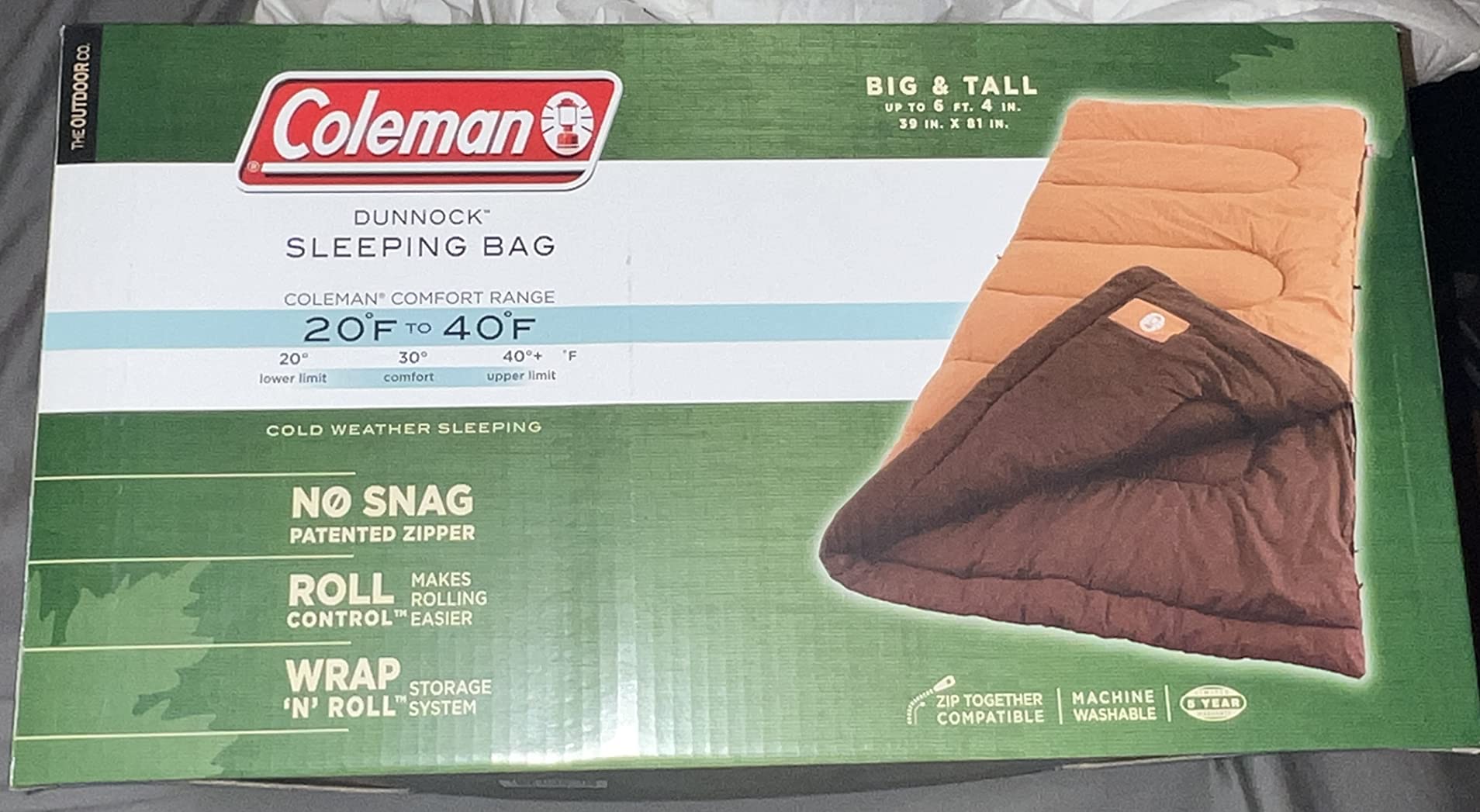
The Dunnock is the pick if you want a genuine side-sleeper fit without hauling a serious load, and 2,453 reviews at 4.6 stars suggest it has earned that. At 81 by 39 inches it is narrower than the Heritage but it is still a big rectangular bag rather than a mummy, and at 5 pounds it is the lightest cold-rated option here with a genuine oversized cut.
It fits adults up to 6 feet 4 inches, which covers most side sleepers. The cut is boxy rather than tapered, so your knees and elbows have somewhere to go, and the review summary describes owners citing the roomy fit first and the flannel liner second.
What makes it good value is the hardware. Fiberlock construction keeps the fill distributed, the Thermolock draft tube runs along the zipper so heat does not leak out at the seam, and the patented ZipPlow zipper is genuinely snag resistant. Most budget bags give you one of those three.
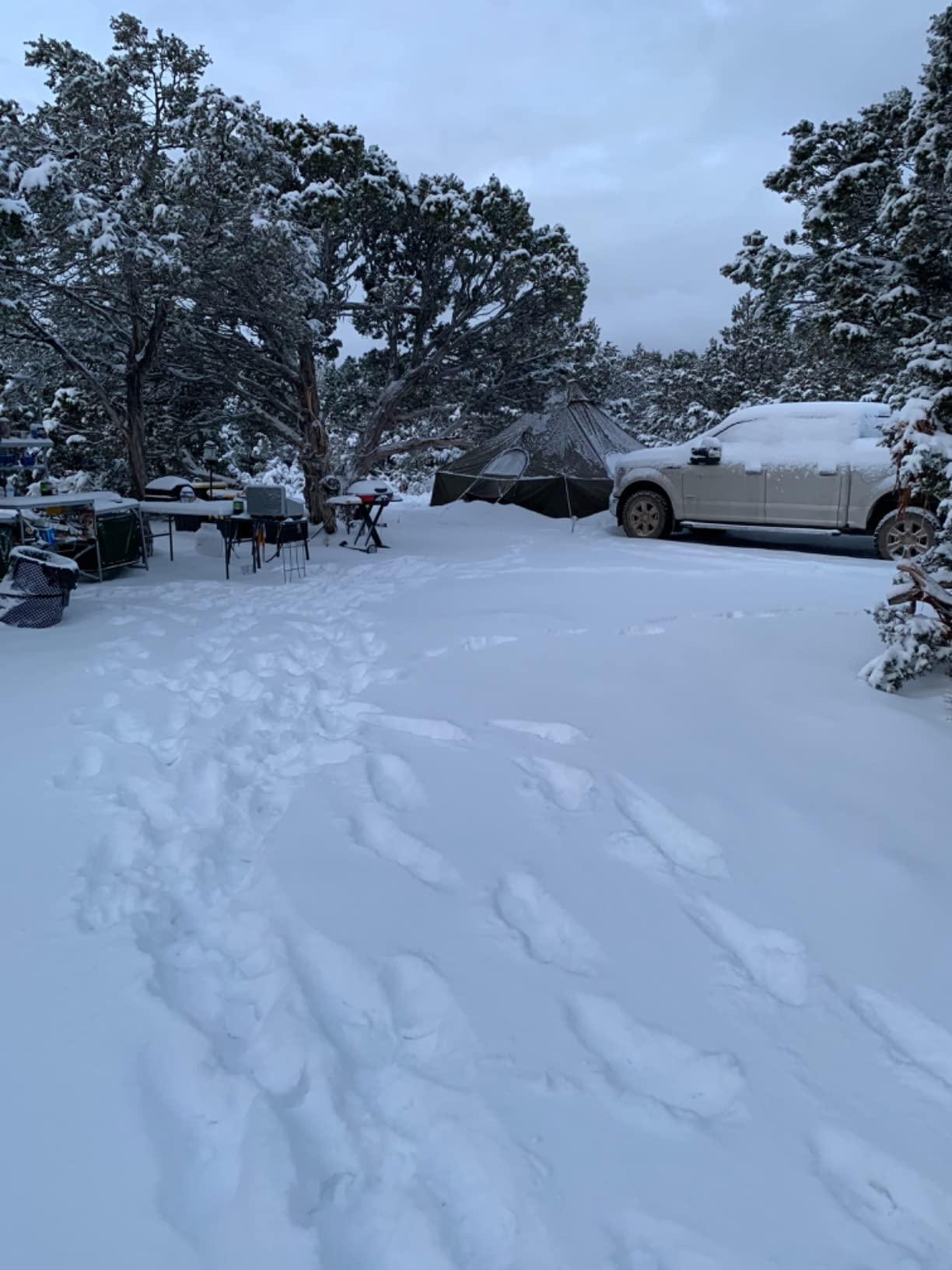
There is a bottom zipper that unzips the foot end, which is the cheapest venting system available and the one we would use most on a mild night. It is also a two-way bag that zips together with a second Dunnock, so two singles become a double for a couple.
Owners mention the rectangular shape as a downside, and it is a fair point for anyone who cares about warmth-to-weight efficiency. A rectangular bag has more shell and more non-insulating volume than a tapered one, so you carry air you are not paying to heat.
Why this is the value pick rather than the cheapest
The Dunnock is not the least expensive bag on the list. It is the one where the money goes to the things a side sleeper feels: a draft tube, an anti-snag zipper, a wide cut, and fill that stays where it was put. Cheaper bags in this roundup cut one of those corners and the corners show up at 3 a.m.
It is also the one we would pick as the single-bag answer if you camp once a month and want one bag that handles most of the year, which is a real use case that ultralight roundups rarely address.
Who should skip it
Skip it for genuine sub-freezing winter camping; the fill is lighter than the Heritage and you will feel the difference. Cotton construction also makes it a poor wet-weather bag, so keep it for dry cold nights.
4. HiZYNICE XXL 0F Is Built for Big Frames and Cold Nights
HiZYNICE Sleeping Bags for Adults XXL Cold Weather
90 x 39 inch XXL cut
30F comfort and 15F limit
7 pounds
Cotton flannel lining
Pros
- 90 x 39 inch cut fits adults up to 6 ft 7 in
- Plenty of room to stretch and reposition
- Soft cotton flannel lining
- Straps cinch it toward a mummy fit when you want warmth
- Left and right zip versions zip together as a double
Cons
- Heavy and bulky at 7 pounds
- 0F label overstates real performance
- Open top without a head-covering hood
At 90 by 39 inches, the HiZYNICE XXL is the longest single bag in this roundup, and it is the one to look at if you are six foot six or taller and tired of your feet hitting the end. Owners with 1,624 reviews describe the oversize dimensions as the reason the bag lets them stretch and reposition without feeling trapped, which is exactly the side-sleeper complaint.
The ratings are given as three numbers: 30F comfort, 15F limit, 0F extreme. For a side sleeper that spread is genuinely useful, because your comfort rating is what matters and the 0F figure is a survival number. Reviewers consistently report strong warmth down into the 40s and even the low 20s, with a warm pad underneath.
Several buyers caution that the 0F label overstates it, which tracks with the geometry. A bag that is 39 inches wide has more shell surface area to lose heat through than a narrow mummy, so a rectangular bag of a given fill will never match a tapered bag’s extreme rating.
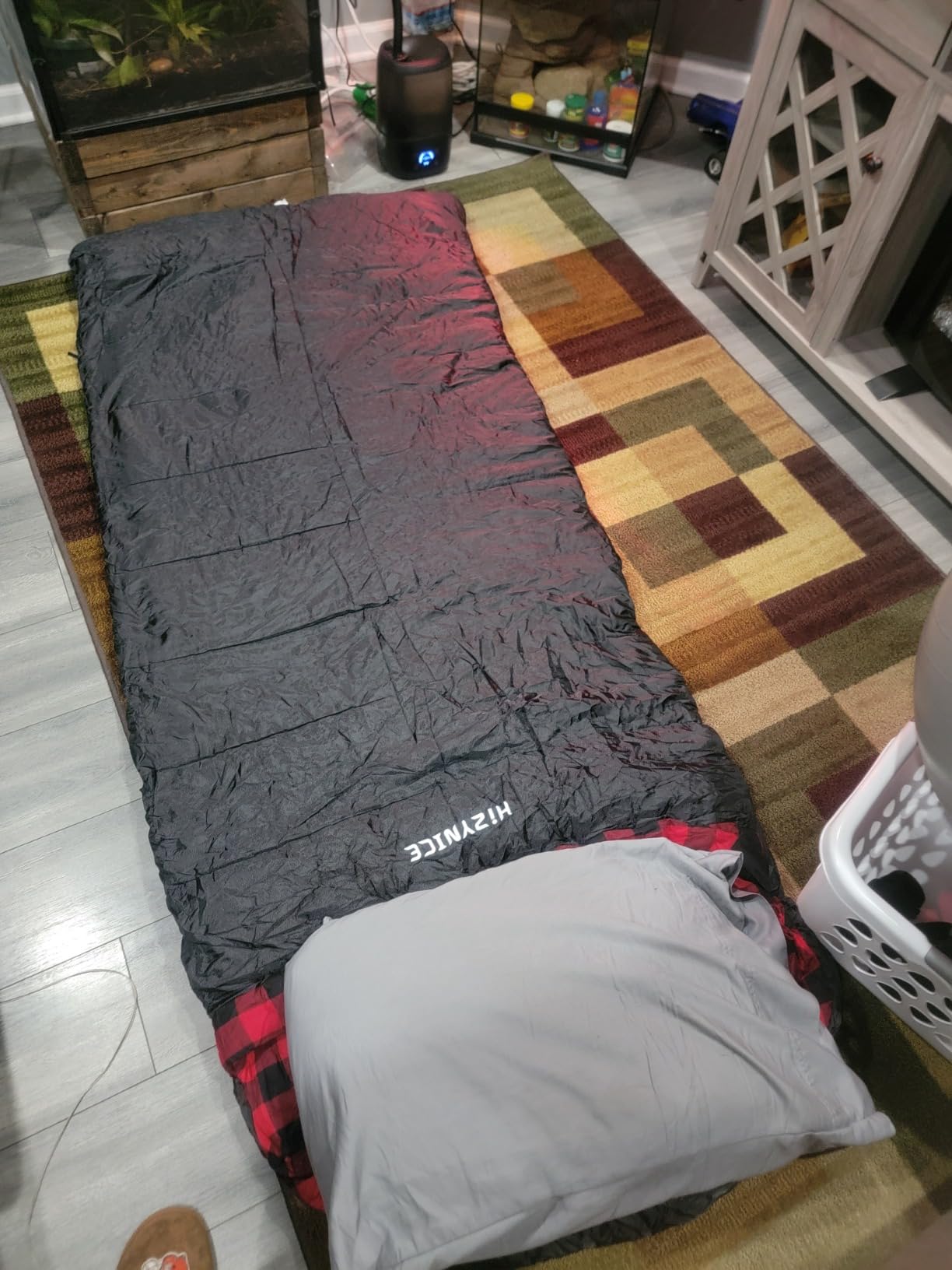
The zipper is a snag-resistant two-way design with dual pulls that work from either side and either end, and it is a right-hand zip in this configuration. A mirror-image version exists, and the two zip together into a double bag, which is a smart way to build a two-person system out of single bags.
Straps at the top let you cinch the bag toward a mummy shape on nights when you want less air moving around you. That is a small feature that closes most of the warmth-versus-room gap without buying a second bag. The shell is water resistant and the whole thing is machine washable.
Where the honest limits are
There is no head-covering mummy hood, and that is the structural reason this bag cannot deliver on its extreme rating. Warm air leaves the top of the bag all night, and owners report condensation forming on the flannel lining when they breathe into it. If you are a cold sleeper rather than a warm sleeper, the hooded Coleman Heritage earlier in this list is the safer bet.
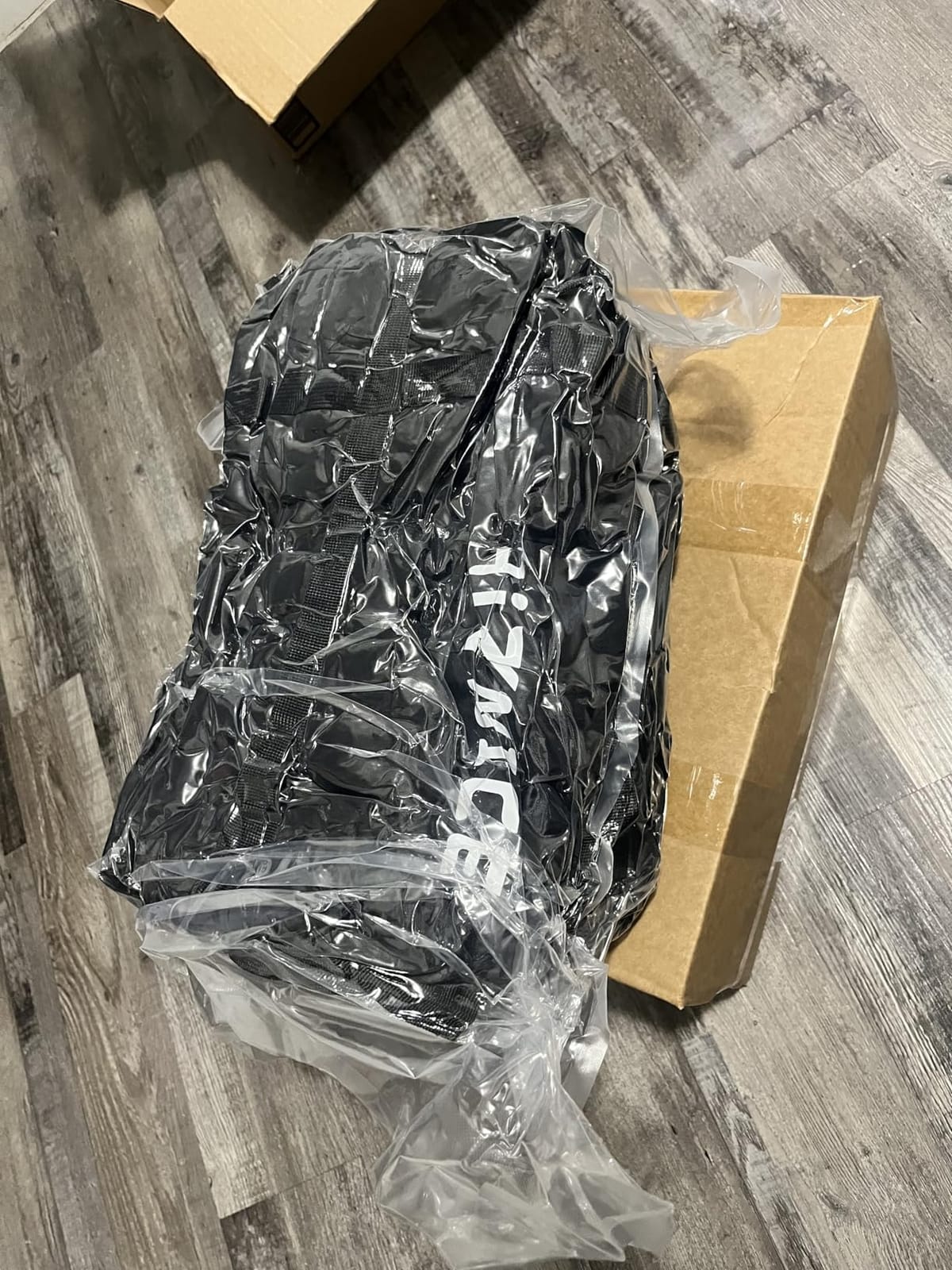
It is also 7 pounds and arrives vacuum-sealed, so rolling it back into a compression sack is a chore. This is a bag that lives in a truck bed or a garage, not one that lives in your pack.
Who should skip it
Skip it if you are a hot sleeper, since the open top makes venting harder, and skip it if weight matters. It is also not the bag to trust in wet conditions with a cotton lining that soaks rather than sheds.
5. AGEMORE Cotton Flannel Double Sleeps Like a Bed
AGEMORE Cotton Flannel Double Sleeping Bag for Camping, Backpacking Or Hiking. Queen Size 2 Person Waterproof Sleeping Bag for Adults Or Teens. Lightweight with Compression Sack
59 x 86.6 inch double footprint
41 to 59F three-season rating
7 pounds
Cotton flannel lining
Pros
- Queen-size footprint reviewers describe as bed-like
- Real 59 inches of elbow room
- Splits into two single bags or opens into two blankets
- Zippers on both sides for independent entry
- Water-resistant 210T exterior needs no DWR
Cons
- Needs about 48 hours to regain loft after unpacking
- Three-season rated rather than a winter bag
- Polyester shell underperforms down when damp
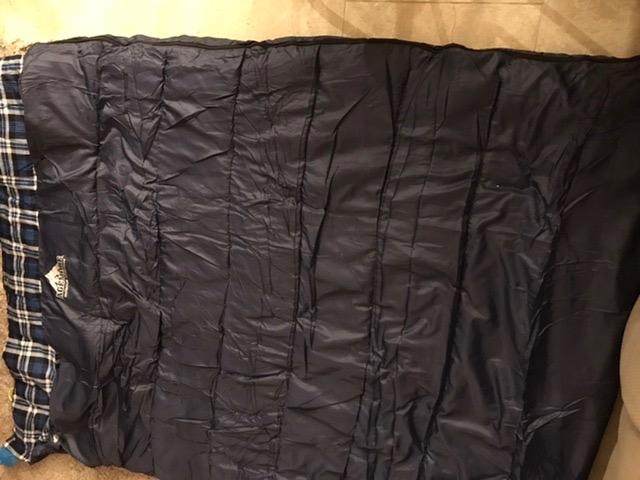
The reason this bag keeps showing up in side-sleeper advice is the lining. Reviewers describe it as bed-like rather than bag-like, and 1,997 reviews at 4.5 stars is a large base for that description to be credible. The brushed cotton flannel stays comfortable against bare skin when you roll onto your side, where a slick nylon liner is at its least pleasant.
At 59 by 86.6 inches it gives a single sleeper genuine elbow room, and it sleeps adults up to 6 feet. For a couple it is a shared bed that neither of you has to fight, and the dual zipper layout means one person can get out without disturbing the other.
It converts three ways. Leave it closed and it is a double bag. Split it and it is two single bags. Open it fully and it is two flat blankets, which is the configuration most people end up using in summer.
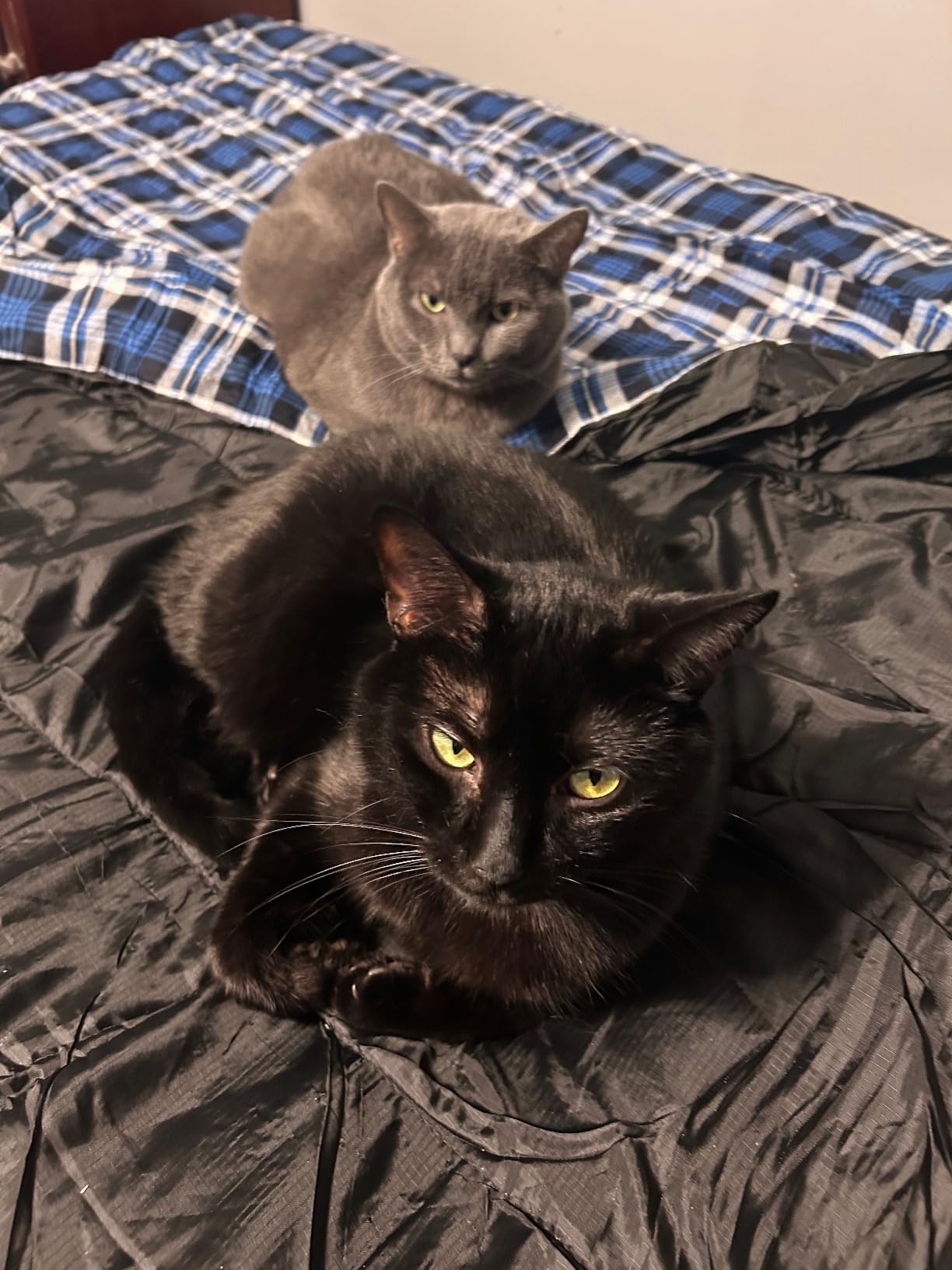
Fastening straps keep the zippers from creeping open overnight, which matters when a bag is this big and a zipper near your feet can swing open with a movement. The exterior is a 210T polyester treated to shed water, so it does not need a spray-on treatment that will wear off.
The fill is a 3D synthetic fiber, and the rating is three-season, sitting between 41 and 59F. That is honest: this is not a bag to take below freezing, and reviewers frame it as a shoulder-season and mild-summer bag.
The loft problem nobody warns you about
This bag arrives vacuum-packed, and reviewers are consistent that it needs close to 48 hours to fully loft before you trust its warmth. If you unpack it the night before a trip and head out, you will sleep in a flatter bag than the rating suggests. Unpack it on the sofa two days early.
The other thing worth planning is the weight. At 7 pounds it compresses to a manageable 17 by 11.5 by 11.5 inches, but the shape is bulky enough that it eats a quarter of a duffel space.
Who should skip it
Skip it for cold-weather trips and skip it for anyone who sleeps in wet climates and plans to keep it wet. Synthetic fill in a polyester shell is serviceable when damp but nothing like hydrophobic down.
6. Kelty Tru.Comfort Doublewide 20F Is the Best Choice for Hot Sleepers
Kelty Tru.Comfort Doublewide 2P 20F Degree Sleeping Bag (Pageant Blue)
84 x 64 inch doublewide footprint
Cloudloft synthetic insulation
9 pounds
Removable zip-off top layer
Pros
- Widest shared footprint in the roundup at 64 inches
- Zip-off top layer plus two built-in blankets let you tune warmth
- Two-way zip foot vents for real temperature control
- Oversized hood fits two home pillows
- Zippers on both sides for independent access
Cons
- Bulky and heavy at 9 pounds
- Hard to roll back into the stuff sack once used
- Interior blanket flaps drift toward the foot without the toggle loop
A 20-degree bag is the wrong starting point for most people, and the Kelty Tru.Comfort solves that with the most adjustable system in this roundup. It carries a zip-off top layer, two built-in blankets, and two-way foot vents, which means you can strip warmth off in layers instead of guessing.
For a hot sleeper who ends up sweating at 3 a.m. in an insulated bag, that adjustability is worth more than a better static rating. Reviewers report comfort around 30 to 45F, and plenty of owners use the bag solo in a truck or a tent trailer precisely because a normal bag leaves them cold when they move around.
At 84 by 64 inches it is the widest shared footprint here, wider than a queen bed, and the oversized hood takes two standard home pillows. If you are sharing with a partner who wants a pillow and a person who wants space, this is the one.
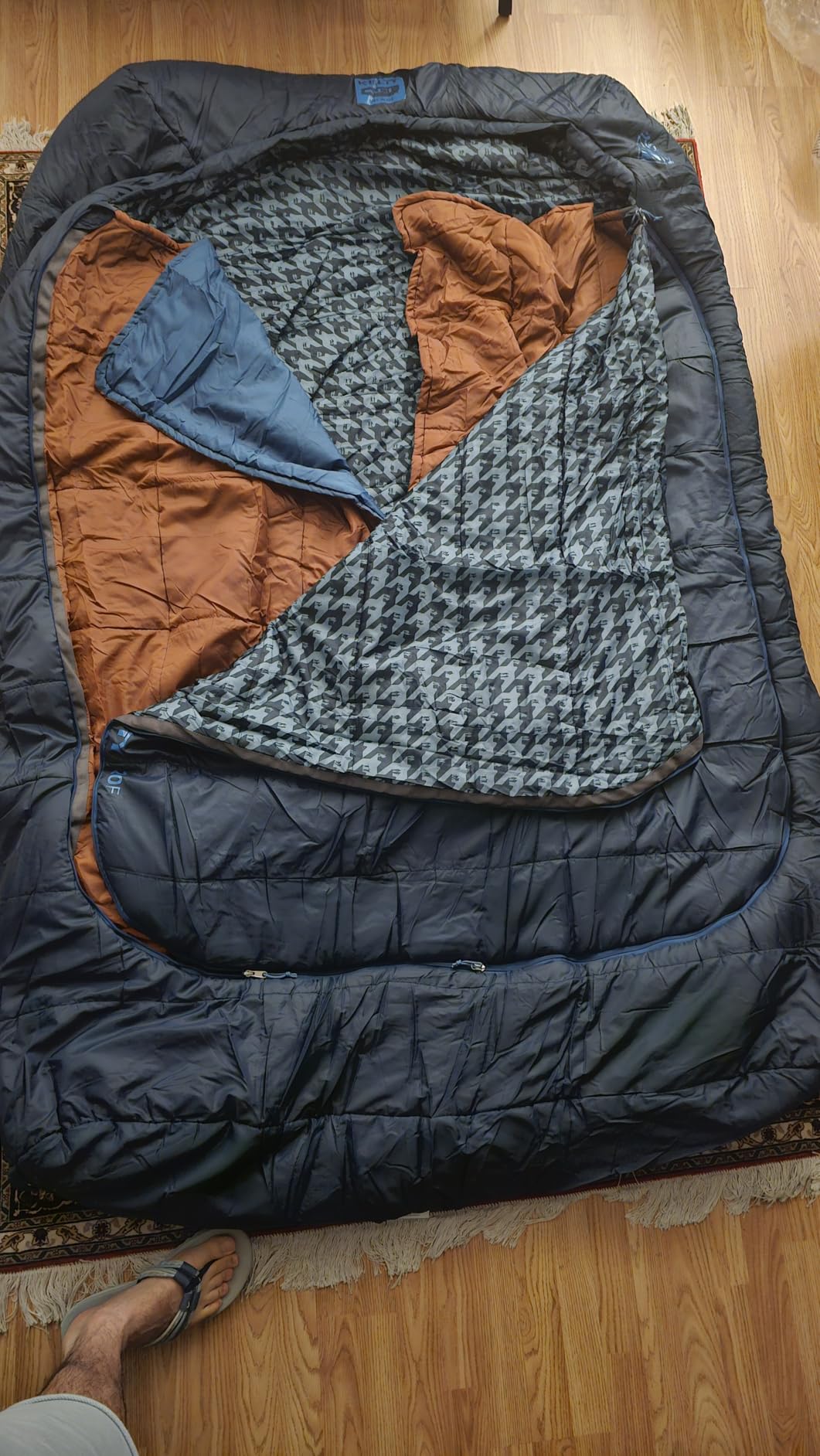
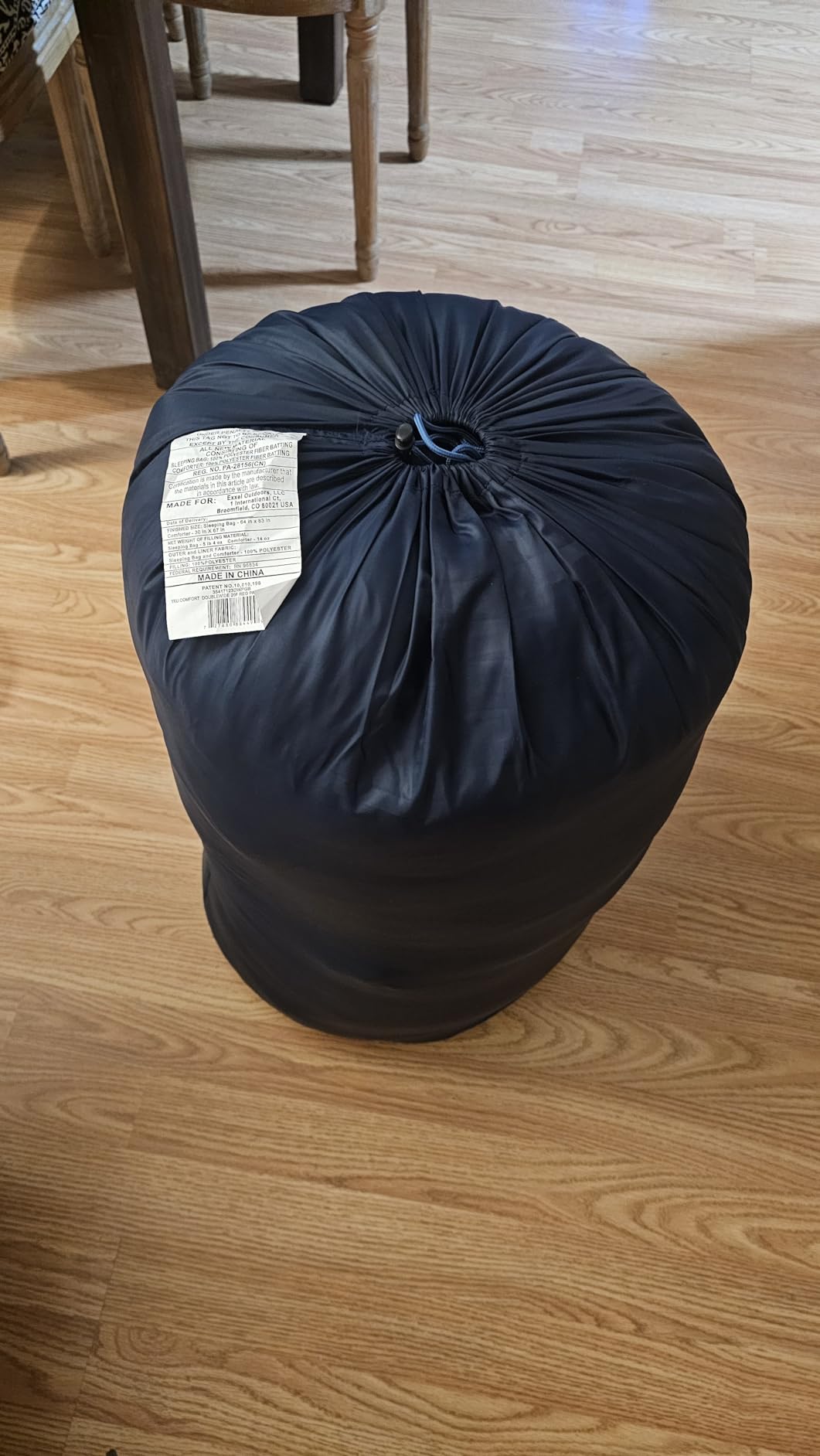
The shell is 100 percent polyester with CloudLoft synthetic insulation, and the interior is a silky 75D poly taffeta liner. Kelty backs it with a limited lifetime warranty, which is unusual in this category and the reason we kept recommending it to owners worried about a few seasons of use.
Because you can unzip the top layer and dial back the blankets, it also works as a three-season system on its own. We have seen owners describe a season of shoulder-season trips on this bag alone.
Why hot sleepers should look at this one
A roomy bag has a real cost: more air space means less efficient venting, which is why wide bags often make people warmer rather than cooler. The Tru.Comfort answers that with hardware rather than hope. Two-way foot vents give you a targeted dump of heat at the legs, which is where most sleeping heat actually goes, and the zip-off top layer removes an entire layer of insulation without you having to get out of the bag at midnight.
That combination is why this is the pick for people who run warm in every other bag they have owned.
Who should skip it
Skip it if you carry your gear. Nine pounds and a bulk that resists rolling means this is a vehicle bag. Solo occupants also lose some efficiency; two people sharing it get more usable warmth out of the fill than one does.
7. MEREZA XL Is the Lightest Boxy Bag in the Group
MEREZA Sleeping Bags XL for Adults Mens Large Wide Sleeping Bag for Camping & Backpacking Big and Tall Sleeping Bags for Women 4 Season Warm & Cool Weather with Compression Sack 20-32°F Blue
86.6 x 32.3 inch boxy cut
3.5 lb synthetic fill
4 pounds
Comfort rated 40 to 70F
Pros
- Boxy 86.6 by 32.3 inch shape about 20 percent larger than typical adult bags
- 4 pounds packed with no rolling needed
- Waterproof 210T ripstop shell
- Right-hand double-pull zipper plus a foot zipper
- Drawstring hood traps heat at the neck
Cons
- Not warm enough below roughly 45 to 50F
- Synthetic shell is loud for light sleepers
- Occasional early zipper failures in some reports
The MEREZA XL is the odd one out in this roundup, and that is why it is here. It is a true single-person bag rather than a double, and at 4 pounds it is the only one here you could genuinely carry on a backpacking trip. It is also the narrowest of the ten at 32.3 inches wide, so it is the least side-sleeper-friendly of the group.
We included it because a side sleeper who occasionally backpacks needs an option, and this is the only bag in the field that weighs less than the HiZYNICE or the Coleman Heritage by a margin that matters on a trail.
What it gives up is warmth and lateral room. The 3.5 pounds of synthetic fill is comfortable in the 40s and 50s, and several owners found they needed an extra layer below roughly 45 to 50F. It is a three-season bag, not a shoulder-season one.
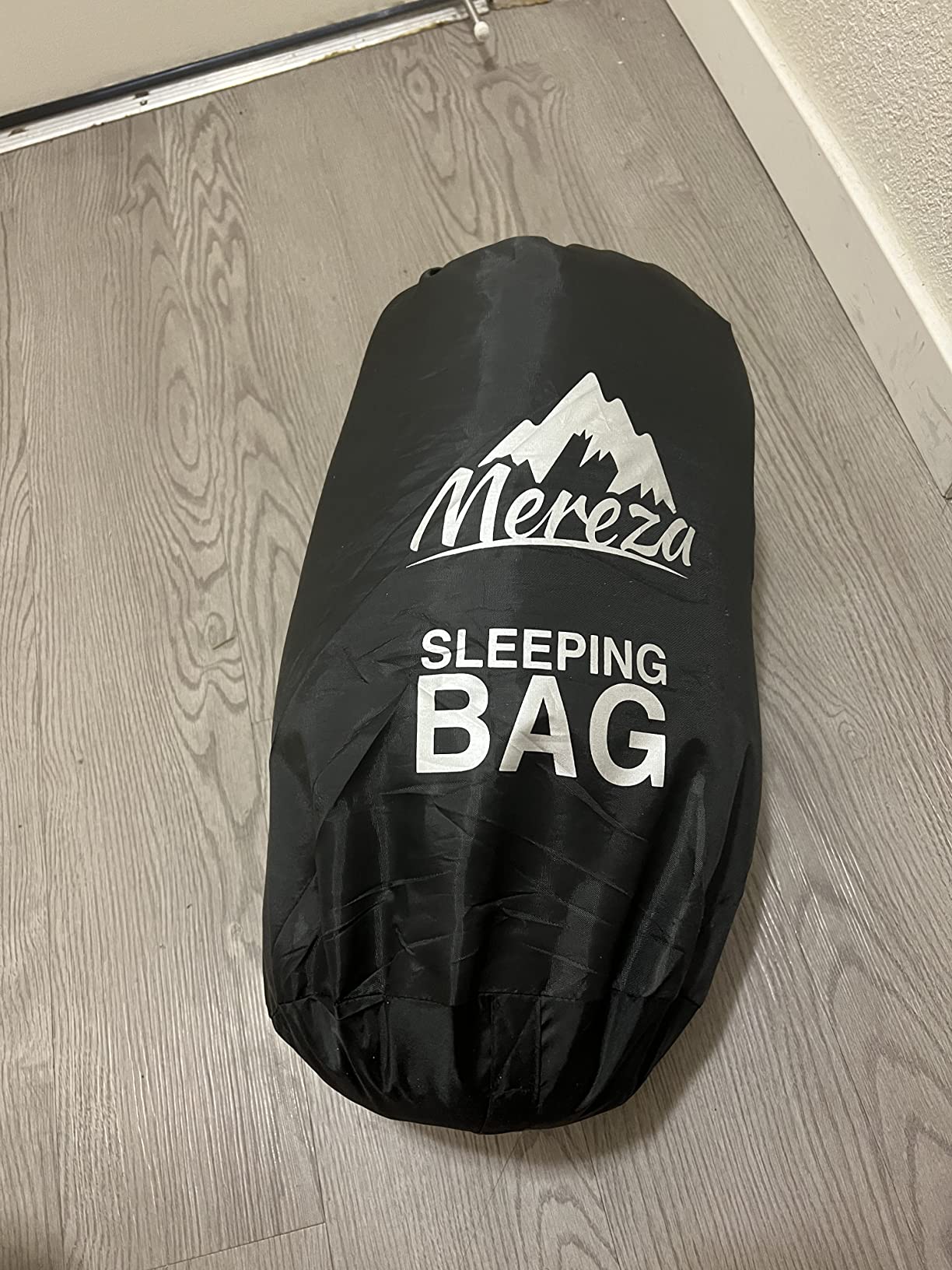
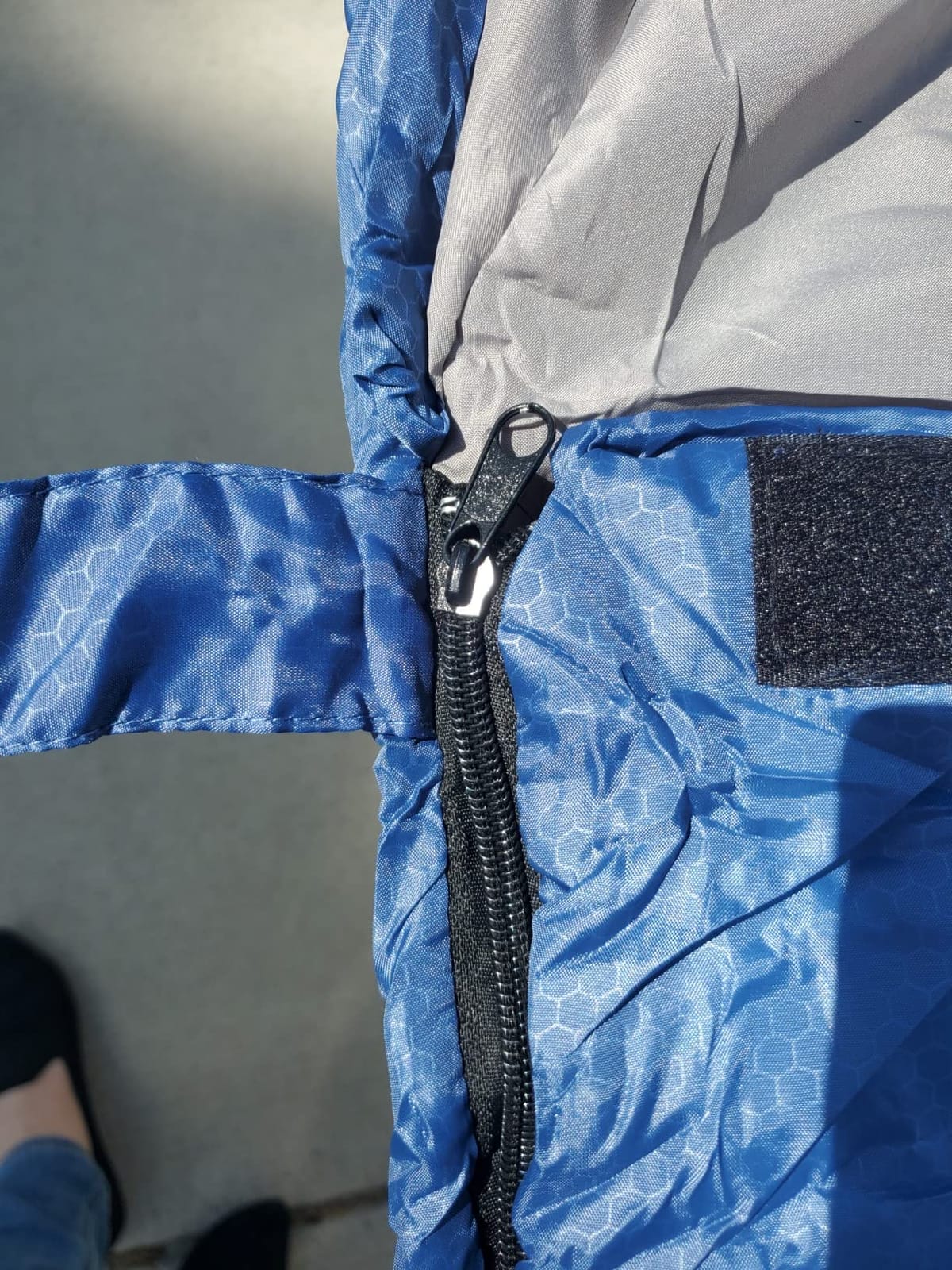
Two things it does well for a restless sleeper. The 86.6-inch length is generous for a bag at this weight, so your feet do not hit the end, and the double-pull right-hand zipper plus a separate foot zipper means you can regulate temperature without getting out.
It also stuffs rather than rolls. That sounds minor until you are breaking camp in the rain, and several owners name it as a genuine convenience.
Is 32 inches wide enough to sleep on your side
It is workable, and reviewers describe it as about 20 percent larger than a typical adult bag, but it is the tightest cut in this roundup. A side sleeper who rolls fully onto their hip will feel the walls. The drawstring hood and the foot zipper help because they let you vent instead of fighting, but this is a bag you tolerate rather than one you enjoy.
Light sleepers should know the shell is a loud ripstop that crinkles with movement, which is the opposite of the Sleepingo double’s quiet lining. If you wake at every sound, that matters more than another inch of width.
Who should skip it
Skip it if you are a large-framed side sleeper, and skip it if you camp below 50F. A small number of buyers reported zipper failures in early use, which is worth weighing against the rest of the field’s better zipper track records.
8. Naturehike Big and Tall Flannel XXL Suits Summer and Supplemental Sleep
Naturehike Big & Tall Flannel Sleeping Bag for Adults
86.6 x 39.4 inch XXL cut
ISO comfort 32F
5.5 pounds
Cotton flannel lining
Pros
- Extra-wide rectangular cut with a bottom zipper for foot space
- Cotton flannel lining feels soft against skin
- Two-way zips on the sides and bottom
- Water-repellent 210T shell wipes clean
- Can double as a blanket or cape
Cons
- Several buyers report the bag measures smaller than advertised
- Thin fabric despite the soft lining
- Temperature rating described as optimistic
The Naturehike Big and Tall is the most useful bag here for anyone who camps in summer, uses a van or a cabin, or wants a second bag that does not need to be capable. It is a full rectangular 86.6 by 39.4 inches with a bottom zipper, so your feet have their own compartment and you can open them to the air on a hot night.
The 100 percent cotton flannel lining is the reason most reviewers keep it. It does not stick to bare skin, which is exactly the problem a side sleeper hits in summer when they are half-awake and rolling.
It is also genuinely dual-purpose. Unzipped, reviewers use it as a blanket or a cape around a campfire, which makes it more than a sleeping bag in a small kit.
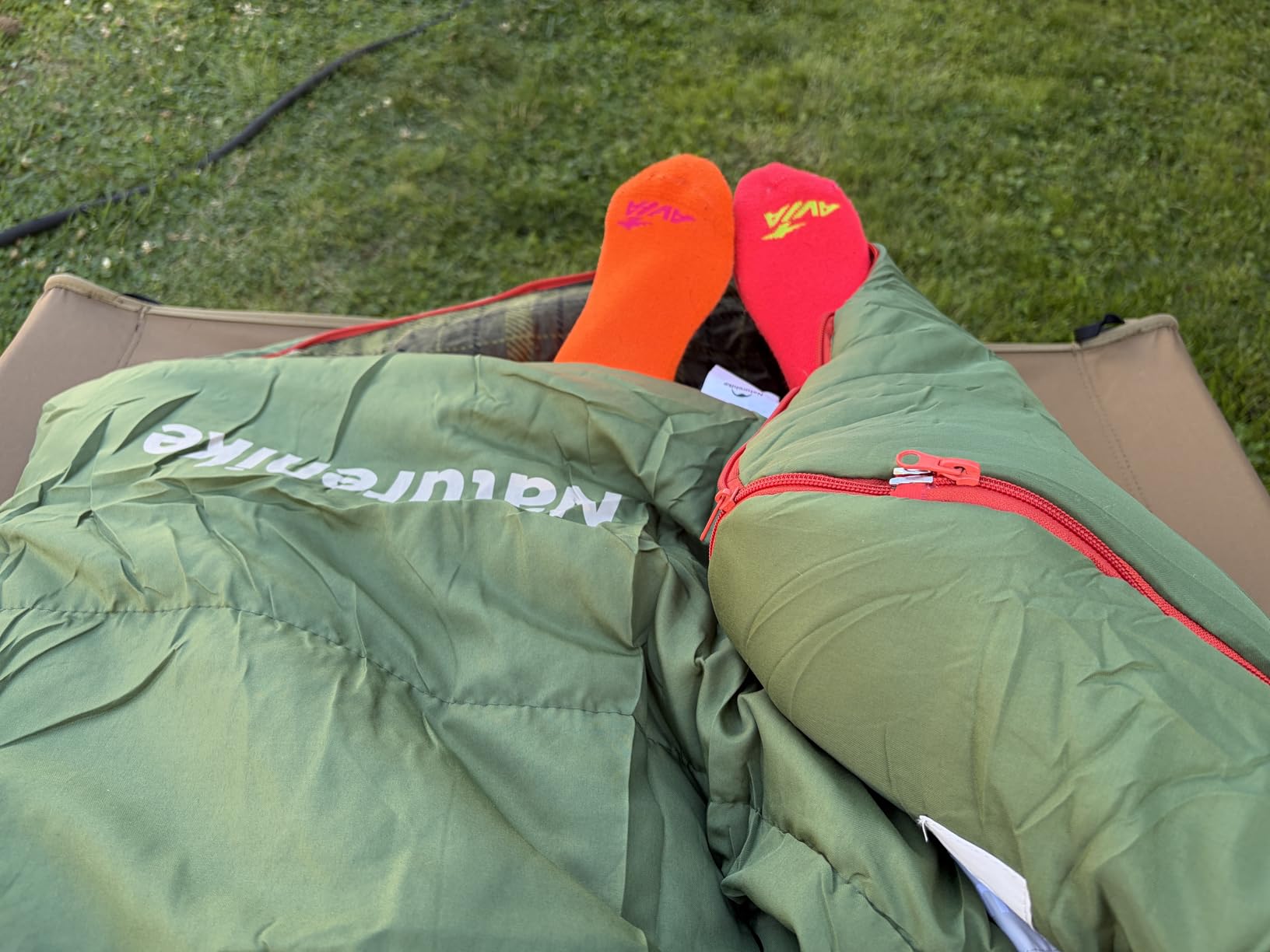
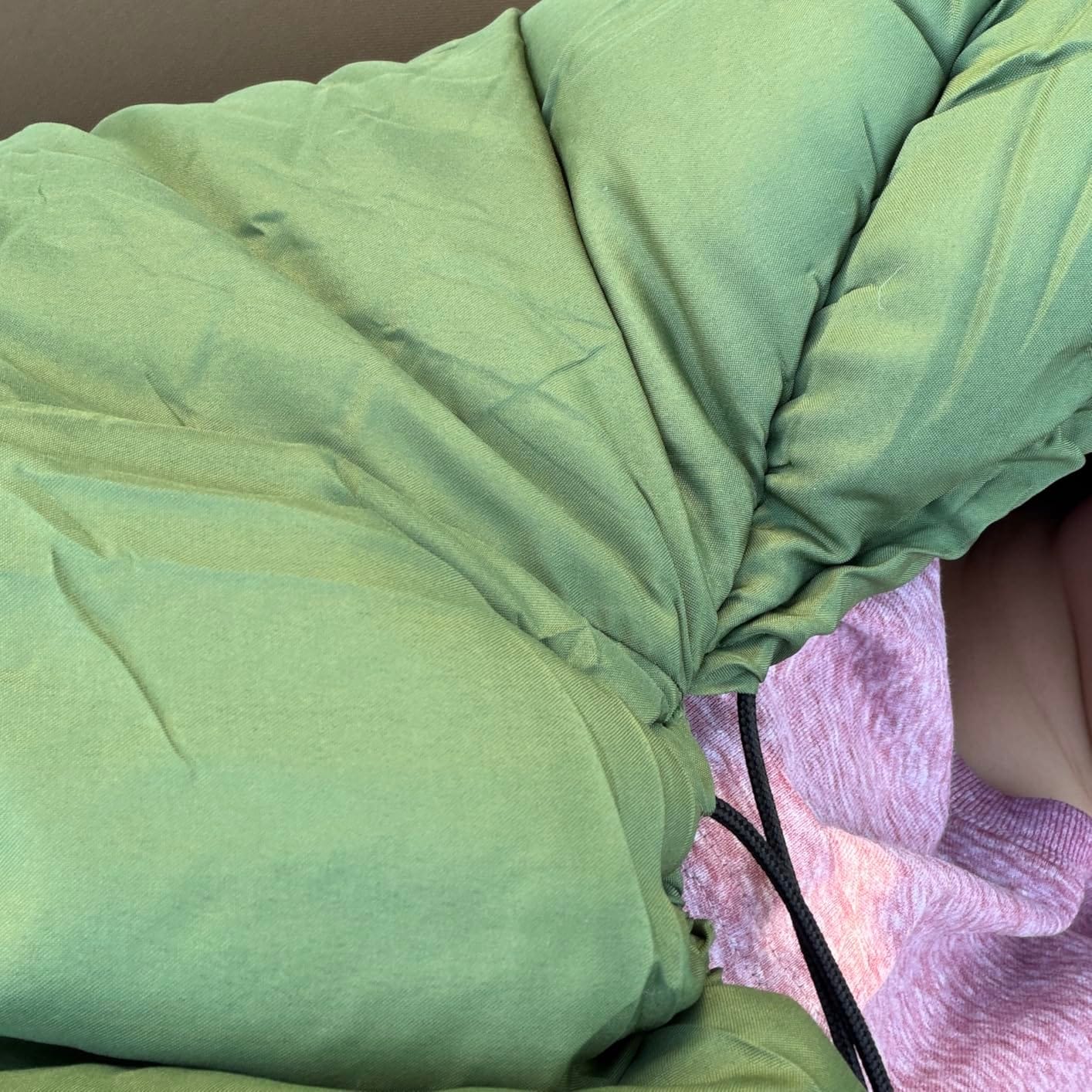
The shell is a water-repellent 210T pongee that wipes clean and goes through a gentle machine cycle without drama. Two-way zippers on the sides and the bottom let you sleep on your side, your back or your stomach, which sounds obvious until you have owned a bag you could not lie flat in.
It compresses to 18 by 11 inches, which is genuinely small, and the fill is SUNDOUCE thermal fiber polyester with a listed ISO comfort figure of 32F.
Where the accuracy problems are
Several buyers report that the bag measures noticeably under its stated 86.6 by 39.4 inches, and one detailed review calls the 32F claim far warmer-optimistic than reality. We think that is the honest read: a wide rectangular bag with modest synthetic fill will not hit its label in real conditions. Treat this as a bag for mild nights and a supplemental layer under a blanket.
The 327-review base is also the second thinnest here, so we hold the accuracy concerns with more weight than we would for the Coleman or Sleepingo bags, where thousands of owners have tested the same claims.
Who should skip it
Skip it if you need a bag you can trust on a genuinely cold night, and skip it if you are precise about dimensions and cannot return a bag you have slept in. Campers who are six foot six or taller should know the stated length is the drawer’s number, not the sleeper’s.
9. Naturehike Double Queen Is a Glamping Bag with a Footprint
Naturehike Double Sleeping Bag for Adults with Pillows for Couples & Family
87 x 63 inch unfolded footprint
ISO comfort 29.7F
5.6 kg packed
Three usage modes
Pros
- Unfolds to 87 x 63 inches
- larger than a queen mattress
- Bottom zipper gives foot space and freedom to turn
- Two included facecloth pillows for head support
- Outer cover folds to the foot to pad the hips
Cons
- 5.6 kg is heavy for anything past car camping
- Outer cover can feel more like a blanket than an insulated bag
- Not tapered
- so warmth-to-weight is inefficient
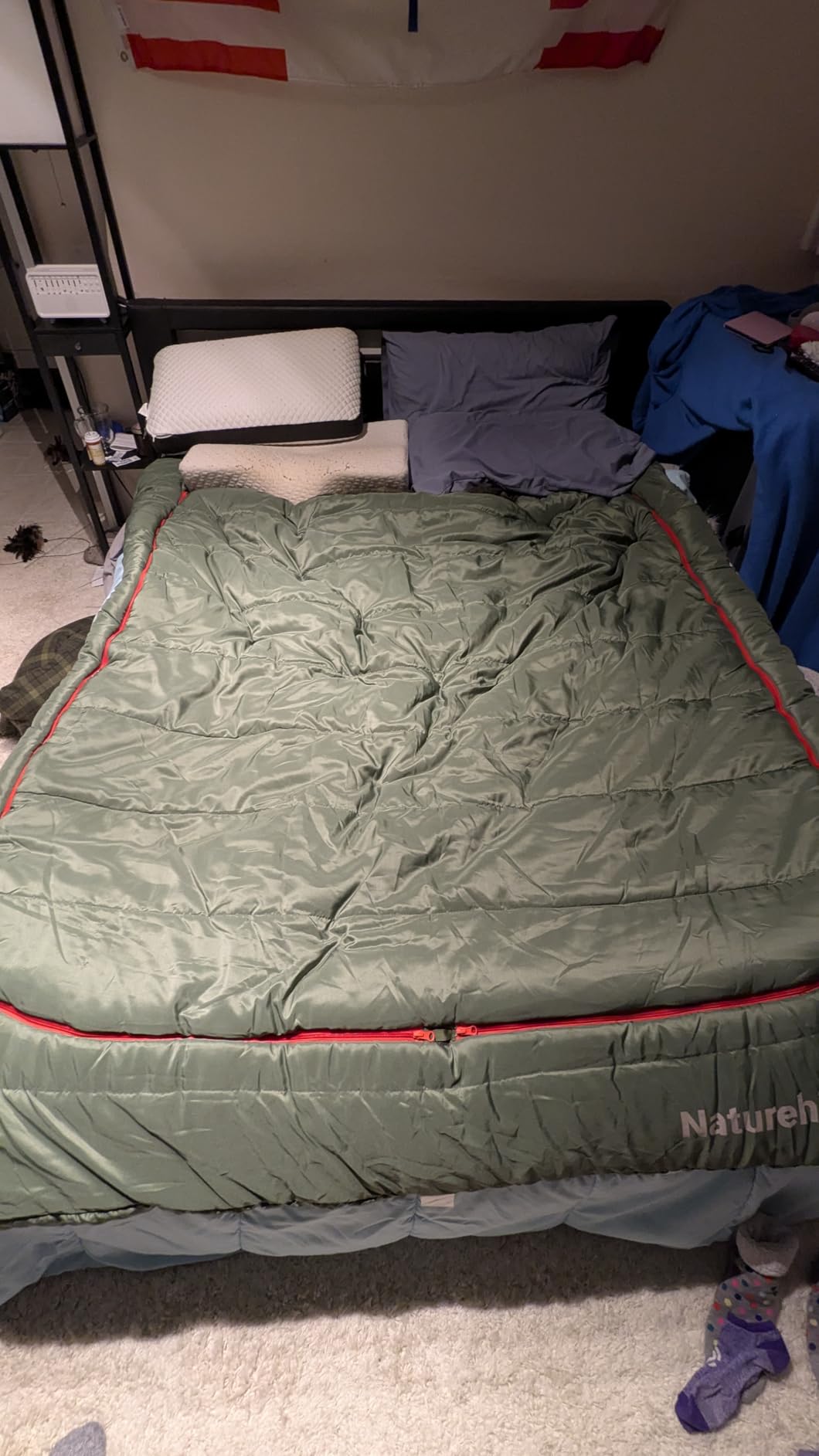
At 87 by 63 inches unfolded, the Naturehike Double is the largest single sheet of sleeping space in this roundup, beating even the Kelty’s 84 by 64. For a side sleeper that is the headline: you can spread out diagonally, cross your legs, or lie however you actually sleep without the geometry arguing with you.
It has three configurations. Wrap the zipper around and it is a double cover. Button it and it is a single cover. Use it as a four-layer single bag and you get an individual sleeping bag inside the same footprint.
Owners like the ergonomic trick of folding the outer cover toward the foot end, which pads the lower half and levels the spine against the ground. It is a small design choice that makes a meaningful difference when you are on a flat surface in a large tent.
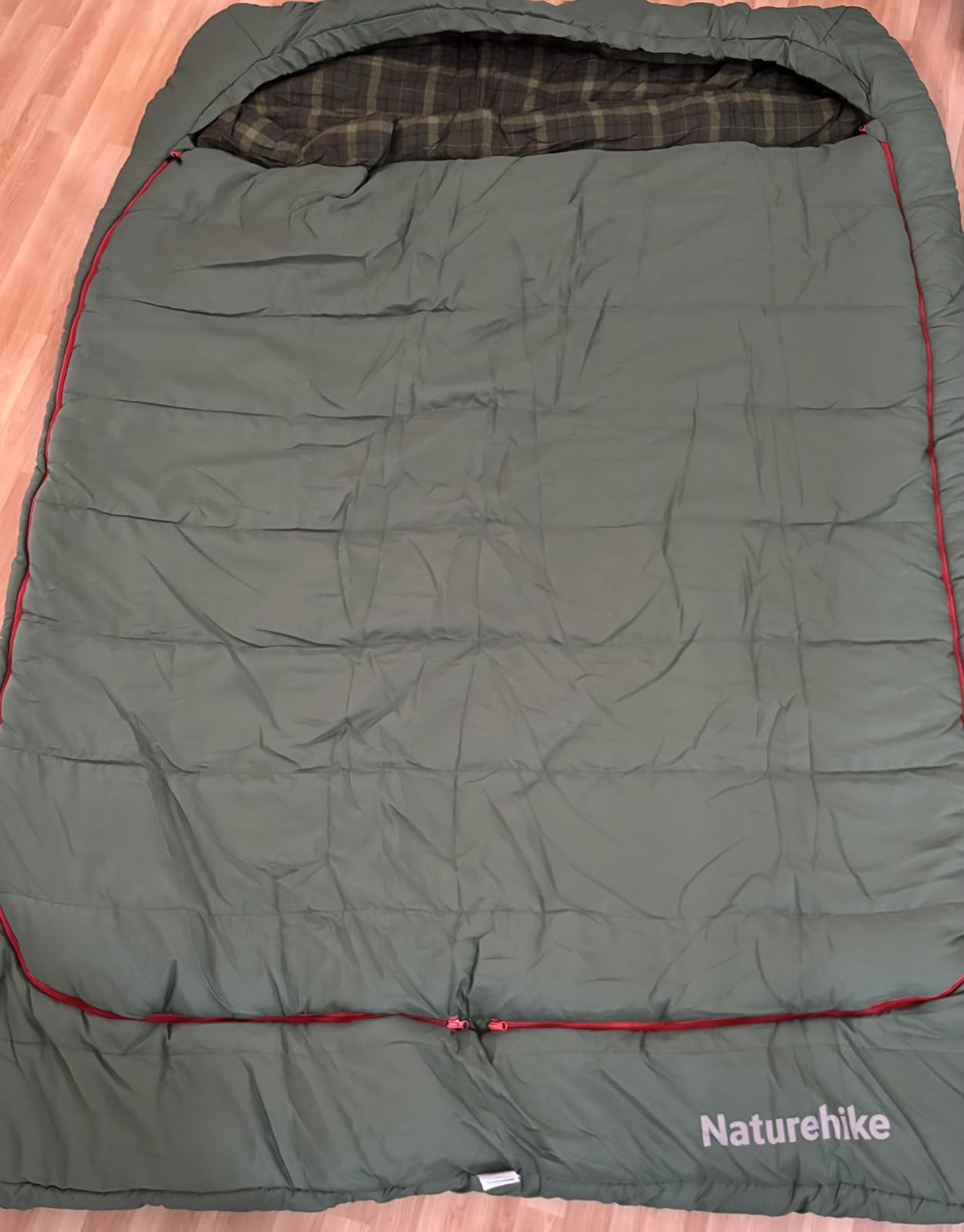
The shell is a splash-proof 210T pongee with a plaid flannel lining, and the fill is split between a 300 g/m2 outer coverlet and a 100 g/m2 inner coverlet, which is how the three modes get their different warmth levels. The listed ISO comfort figure is 29.7F.
Two facecloth pillows are included, and they are small enough that most people will bring their own. The storage bag is backpack-style, so it can go over your shoulders, which does not make it lighter but does make it easier to move from the car to the site.
Is a bag this big actually a sleeping bag
Some reviewers make exactly that objection: the outer cover construction reads more like a blanket than a snug insulated bag, and that is fair if you are used to a cocoon. It is a feature for a side sleeper and a liability for anyone who wants the draft-sealing efficiency of a tapered bag. Nothing hugs you here, and nothing needs to.
At 5.6 kg this is the second heaviest bag in the roundup, and it is not going on a backpack. With 298 reviews the base is also the thinnest of the ten, so we are recommending it more cautiously than its rating alone would suggest.
Who should skip it
Skip it for backpacking, for winter camping, and for anyone who camps in a small two-person tent where the footprint will not fit. It is a car camping and glamping bag, and a very good one at that.
10. AGEMORE Cotton Flannel XL Fits Tall Frames Best
AGEMORE Cotton Flannel Sleeping Bag for Adults, Lightweight XXL Cotton Sleeping Bag for Camping Backpacking or Hiking, Water Resistant, 3-4 Season Warm & Cool Weather
90.6 x 35.4 inch length including hood
4 pounds
Polyester hollow fiber fill
Cotton flannel lining
Pros
- Long 90.6 inch cut suits taller sleepers
- Soft 100 percent cotton flannel lining that does not cling
- Two-way reverse zipper works from inside or out
- Separate bottom zipper for foot venting
- 4 pounds packed with a compression sack
Cons
- Very thin fill
- cold on mild nights below about 60F
- Needs a well-insulated pad underneath
This is the bag for a specific person: someone tall, relatively slender, who sleeps on their side, and who mostly camps in summer. At 90.6 inches including the hood it is the second-longest bag here, and the flannel lining is the reason the review summary calls it a standout for people who move around at night.
It is also a semi-rectangular cut rather than a full rectangle, so it has a little more shape to it than the straight boxes in this list. That is a small comfort advantage for anyone who finds a flat bed edge odd, though the trade is slightly less lateral room.
At 4 pounds it packs smaller than anything else except the MEREZA, and it includes a compression sack and overnight zipper fastening straps that keep the zippers from opening when you move.
The two-way reverse zipper is operable from inside or outside the bag, which is genuinely useful at 5 a.m. when you do not want to lean over your own torso to reach the pull. A separate bottom zipper lets you push your feet out for temperature control, which is the cheapest ventilation system going.
The hood adds head protection, and pairs with another unit to zip into a double bag if you are camping with someone.
Is the thin fill a problem
It is the whole caveat. Owners report waking cold on mild summer nights, and the practical floor is around 60F without extra layers. The hollow fiber fill is genuinely minimal, so this bag needs a well-insulated pad underneath, not a thin summer mat. Treat it as one half of a sleep system rather than the whole of it.
With 314 reviews, the base here is modest. The claims that recur most are about the lining feeling good and the length fitting tall sleepers, and those are the two claims we would put weight on.
Who should skip it
Skip it for shoulder-season trips and for anyone who runs cold. It is also the narrowest single bag here at 35.4 inches, so a broad-hipped side sleeper should look at one of the Coleman or Naturehike XXL cuts instead.
Narrow Mummy Bags Make Side Sleeping Miserable
The mechanism is simple and it explains almost every bad night anyone reports. When you roll onto your side in a tapered mummy, three things happen at once: your knees fold, your hips buckle, and your top shoulder presses up against the shell where the insulation is compressed and the air between fill and fabric collapses.
That collapsed air is where the cold comes from. Down works by holding still air in place, and a compressed shoulder has no still air left to hold. The result is a localized cold patch on the one shoulder you are lying on, which wakes you, which is the whole point of the exercise ruined.
Narrow mummy bags reduce shell material and dead air, which genuinely improves warmth-to-weight. That is the trade, and it is a real one, but it is a trade that goes badly for the position you sleep in. Wider bags solve the problem by keeping loft uncompressed exactly where your body presses hardest.
Forum threads capture the same complaint in the same words. The recurring line across side-sleeper threads is that a roomier bag is the answer, and the recurring counter-question is how much room is enough before you start paying for it in weight. Our answer from the spec sheets: 39 inches of width is the point where a single rectangular bag starts to feel generous to a side sleeper, and 40 inches or more is where you stop noticing the walls.
There is a second cost to width that buyers rarely expect. A wider bag has more volume to heat, so at the same fill weight it is less warm than a narrow one. That is why sizing up feels like it should cost you warmth, and why the bags here that let you cinch down have a real advantage for cold sleepers.
Zipper Side Matters More Than Most Buyers Think
Pick the zipper on the side you do not lie on, and if you can, buy the version that zips on the opposite side from your dominant shoulder. A side sleeper spends half the night on their side, and the shoulder nearest the zipper takes the full weight of your body pressing into the shell and into the draft tube.
There is a second, less obvious factor: which way the zipper runs and how far it opens. A bag with a two-way zipper and dual pulls lets you open the foot end without unzipping your whole torso, which is how you vent heat while staying in the bag. A single-pull bag that only opens from the top means sitting up in the cold to get any airflow.
Third is tent layout. In a two-person tent, the person whose zipper faces the tent wall can open it without dragging fabric across their partner, and can reach their gear without crawling over another sleeper. For a shared bag like the Sleepingo, the zip on both sides solves this outright.
Most buyers never think about this until they are lying on the wrong shoulder at midnight. It takes thirty seconds to check before you commit.
Size a Side-Sleeper Bag by Measuring Shoulders and Hips
Brands are inconsistent, and the length sizing alone can differ by ten inches between a medium and an XL from the same company. Measure your body, then check the bag’s flat dimensions against your numbers rather than trusting the size label.
Step one, measure across your shoulders with a tape or a piece of string. Add a few inches for the insulation thickness and for the fact that you will be lying on top of it. This is your minimum shoulder width.
Step two, measure around your hips at the widest point. This is the number that decides your night, and it is the one most spec sheets do not print. Add the same few inches of clearance.
Step three, measure your height in inches and subtract your shoes. A bag that is exactly your height puts your feet at the very end with nowhere to move, and side sleepers extend a leg when they turn.
Step four, read the actual dimensions rather than the size name. Every bag in this roundup publishes them, and several of them under-deliver on the stated figure, so an oversized cut that measures small is a common disappointment.
Step five, check whether the bag tapers. A rectangular cut of 40 inches at the top is 40 inches everywhere. A semi-rectangular or mummy cut of 40 inches at the shoulder may only be 32 at the foot, and that taper is where your hip ends up.
On sizing up: yes, more room costs some warmth, because a roomier bag needs more fill to hold the same temperature. The honest framing is that you are choosing where to spend your insulation. Spend it on width at the hips and a good pad underneath beats spending it on fill in a narrow bag.
Read Comfort Ratings, Not Limit Ratings
Most published temperature ratings describe a survival condition, not a comfortable one. Several bags in this roundup show the gap explicitly: the HiZYNICE lists 30F comfort, 15F limit and 0F extreme, and the Sleepingo double is labelled at a survival figure that owners supplement with a blanket in genuinely cold conditions.
For a side sleeper the gap matters more than average, because a restless sleeper has a lower effective rating than a still one. Rolling around repeatedly redistributes insulation and repeatedly compresses the fill back into the shell, so pick the comfort number with a margin rather than the headline number.
Budget bags also run optimistic. The Naturehike Big and Tall carries a listed ISO comfort figure that at least one detailed reviewer measured against real conditions and found too warm. Where a bag is rectangular and loosely filled, assume the label is a ceiling.
Synthetic Holds Up in Damp Climates, Down Wins Per Ounce
Every bag in this roundup except one uses synthetic or cotton-blend fill, and that is not an accident of the price points. It is a consequence of the geometry. A wide bag needs a lot of fill to hit a given rating, and mass-produced synthetic is the only way to put that much of it in a bag at an accessible price point.
Synthetic also wins on the practicalities that matter after a wet week. It insulates while damp, dries in a tumble dryer rather than on a rack over two days, and shrugs off repeated compression. Down wins on warmth per ounce and compresses far smaller, which is why serious lightweight sleepers accept the drying effort to get it.
Our verdict for side sleepers in humid or wet climates: synthetic, without much debate. A damp cotton flannel lining is the worst combination in this roundup, and several bags here pair that lining with a full rectangular cut that will be wet on the ground regardless.
Quilts Win on Movement, Bags Win on Warmth
A quilt gives you the least restrictive sleep position of anything in this category, because it drapes over you rather than containing you. For a side sleeper who rotates constantly, that is a real advantage, and it is why quilts come up so often in side-sleeper threads.
The cost is heat. A quilt cannot trap a stable warm air column the way a bag does, so at the same weight you run colder, and you drape it rather than zip it. The most common complaint from quilt owners is about the pad attachment system, which has to be set up in the dark and can shift overnight.
Our take: if you already sleep warm and move constantly, a quilt beats every bag on this list for pure freedom of movement. If you run cold, a bag you can cinch down wins, and the adjustable bags in this roundup are the closest thing to a compromise.
Add a Wide Pad and the Whole Sleep System Clicks
The bag is half the system, and the half that gets discussed least. If your pad is narrow and flat, a roomy bag will not stop your hip from pressing onto a hard edge all night, and you will blame the bag for a problem the bag cannot fix.
Side sleepers in the gear communities consistently point to wide, cushioned mats as the missing piece. A user on r/Ultralight praised the Sea to Summit EtherLight specifically because it is designed with side sleepers in mind and its spring pocket system keeps them comfortable through the night, which is a mechanism no flat pad provides.
Our own guide to the best inflatable sleeping pads for backpacking goes deeper on R-values and pad width, but the short version is simple: match the pad’s width to your bag’s width, and treat the pad’s insulation as part of your warmth budget rather than a separate purchase.
A 25-inch-wide pad under a 40-inch bag still leaves you on an edge. A wide pad under a wide bag is what makes the geometry pay off.
What Side Sleepers Actually Say in the Forums
Owner reports converge on a few points that no spec sheet captures. Across side-sleeper threads on r/CampingGear, Backpacking Light and Rokslide, the recurring verdict is that room at the hips and shoulders matters more than fill power or brand name, and that room is the decisive purchase criterion.
Recommendations that land in those threads carry more weight when a user of similar height and weight confirms the room, which is why we kept weight and height in the data above. The advice that recurs is to size up rather than down, accepting a longer bag to get width, and to treat a longer length as a cheap way to add room without adding bulk.
The one piece of hardware advice that comes up repeatedly is the center or offset zipper. One user described preferring a bag that zips away from the shoulder they sleep on and recommended sizing up to the long version, which matches the zipper-side section above.
What threads treat as deal breakers is consistent too: bags labelled roomy that still constrict the shoulders, and bags that lose warmth when sized up. Both failure modes are visible in the spec sheets in this roundup, which is why we ranked on published dimensions rather than on the word roomy.
Finally, long-term ownership reports carry more weight than first impressions. Owners who kept a bag through several shoulder seasons and still sleep well are the ones whose experience is worth having, and the 15,000-review base on the Sleepingo double is exactly that kind of evidence.
How We Chose These Ten Bags
Every bag here is rectangular, semi-rectangular or double-wide, and every one of them publishes a flat width and length we could check. We ranked primarily on those two numbers, then on the venting options and adjustment systems that let you trade room back for warmth when it is cold.
We also weighted the size of the review base, because a roomy bag is a claim that only verified owners can settle. Bags with thousands of reviews earned the top slots; bags with a few hundred sit lower in the list even when their star ratings are excellent.
This guide was last updated in October 2026. Sleeping bag specifications do not change often, but availability and model versions do, so check the current listing details before you commit to a trip.
Frequently Asked Questions
What shape of sleeping bag is best for side sleepers?
A wide rectangular bag, an oversized traditional mummy, a double-wide cut, or a quilt. The common feature is room at the hips and shoulders so you can roll over without compressing your legs or pressing your top shoulder into the shell. A narrow tapered mummy is the one shape that consistently fails side sleepers.
What is the best sleeping bag for side sleepers?
Among the ten bags we ranked, the Sleepingo Double is the best overall pick for side sleepers. Its 87 by 59 inch footprint leaves more room than anything else in the group, it converts into two single bags, and it carries the largest review base of any bag we examined. The Coleman Heritage Big and Tall 10F is the better answer for cold nights.
What side should the zipper be on a sleeping bag?
The side you do not lie on, or the side opposite your dominant shoulder. A side sleeper presses their full body weight into the shoulder nearest the zipper, which compresses the insulation and opens a cold path. A two-way zipper with dual pulls is even better, because you can open the foot end to vent without getting out of the bag.
How much does a decent sleeping bag cost?
It depends on insulation type and room. Budget synthetic rectangular bags with real side-sleeper width start well under 100 dollars, and a genuinely large double-wide synthetic bag with venting runs into the low hundreds. Bags with down fill, ultralight construction or premium wide cuts run several hundred dollars. At every level, width at the hips is what you are paying for.
Why do side sleepers get cold in a mummy bag?
Because lying on your side compresses the insulation at your top shoulder and pushes your knees and hips into a fold, and insulation only works while it holds still air in place. A compressed shoulder has no loft left to hold warm air, so you lose heat in one localized patch all night. Wide and spoon-shaped cuts solve it by keeping uncompressed loft where you actually lie.
What are the five types of sleeping bags?
By shape: mummy, rectangular, spoon-shaped mummy, double-wide, and quilt. A mummy tapers toward the foot and is the most efficient. A rectangular bag is a flat box with the most room. A spoon-shaped mummy adds asymmetric width at the elbows and knees. A double-wide sleeps two. A quilt drapes over you rather than containing you.
Does sleeping on your side make your shoulders narrow?
It can over a long period, and it is a real reason side sleepers need a bag with room at the top. A narrow bag forces a rounded-shoulder posture all night, and holding that position repeatedly is what contributes to narrowing. A wide cut lets you keep your shoulders in a natural position instead of compressing against the shell.
Should I size up to get more room, and does it cost warmth?
Sizing up for width does cost some warmth, because a roomier bag has more volume to heat at the same fill weight. The better trade is to add width at the hips rather than length overall, keep a good insulating pad underneath, and choose a bag you can cinch down on cold nights. Several bags in this roundup have straps or foot vents for exactly that reason.
The Verdict: The Sleepingo Double Wins on Room and Review Depth
After ranking ten roomy bags on the only two numbers that decide a side sleeper’s night, the Sleepingo Double comes out ahead. Its 87 by 59 inch footprint is the largest shared surface in the group, it converts into two single bags when you want that, and its review base is large enough that the room claim is not marketing.
If you camp cold, take the Coleman Heritage Big and Tall 10F instead and accept the extra weight. If you want one bag for shoulder season at a modest carry weight, the Coleman Dunnock 20F is the value answer, and if you run warm the Kelty Tru.Comfort’s zip-off top layer and foot vents are the only real venting system in the roundup.
The wider lesson is that the best sleeping bags for side sleepers are not the bags with the best ratings. They are the ones whose published width matches your hips and whose venting matches your body temperature. Check the two numbers before you check anything else, and check them against a wide pad.
Start with the dimensions on the product pages, pick the one that fits your frame, and check the current details before you load the car.