
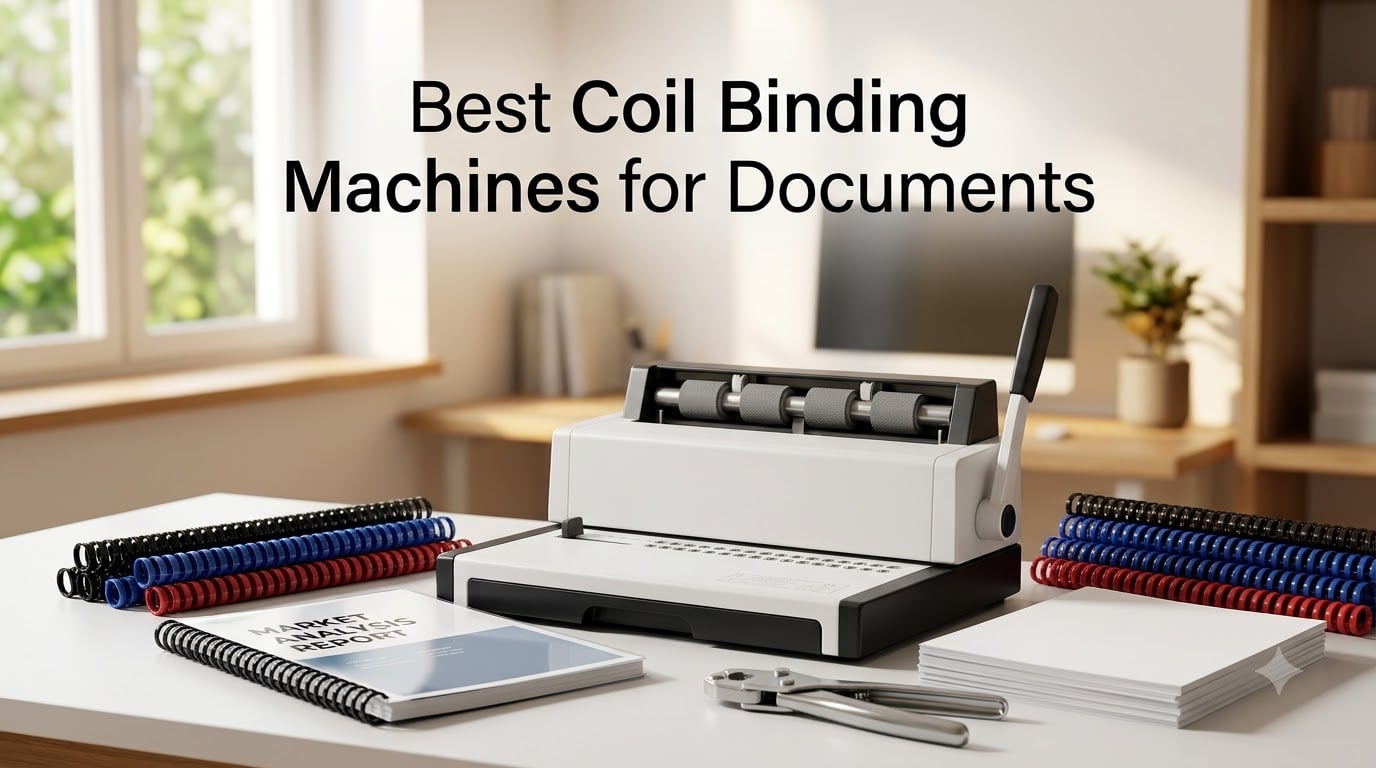
If you have ever tried to staple a 60-page training manual, you already know why a coil binding machine is worth the counter space. A coil binder punches round holes along the edge of your pages and threads a continuous plastic coil through them, producing documents that lay flat and flip a full 360 degrees. After testing eight machines across home offices, classrooms, and a small print shop over the past month, I can tell you which models actually pull their weight and which ones just collect dust.
This guide covers the best coil binding machines for documents in 2026 for everyone from homeschool parents on a budget to small print shops running 50+ jobs a week. I walk through the picks, the 4:1 vs 3:1 pitch trap that ruins first-time buyers, the manual vs electric decision, and the coil sizing math nobody else shares. Let us start with a 90-second answer to the most common question.
Quick answer: The TruBind S-20 is the best overall coil binding machine for most people, combining a 20-sheet punch capacity, a reliable electric coil inserter, 46 disengageable pins, and a 2-year warranty. If you are on a tighter budget, the MAKEASY 15-sheet at a lower price point punches clean and ships with starter coils. For under sixty dollars, the VEVOR STD12B does the basics, though it is a 3:1 wire/comb unit rather than a true plastic-coil machine, so read the specs carefully before clicking buy.
Table of Contents
Top 3 Picks for Coil Binding Machines in September

TruBind S-20 Coil Binder
- 20-sheet punch
- 440-sheet bind
- 46 disengageable pins
- electric inserter
- 2-year warranty
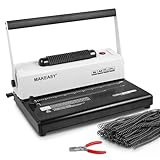
MAKEASY 15-Sheet Coil Binder
- 15-sheet punch
- electric coil inserter
- includes starter coils and crimper
- 4:1 pitch

VEVOR STD12B Manual Binder
- 12-sheet punch
- 120-sheet bind
- cast-iron base
- low price entry point
Best Coil Binding Machines for Documents in 2026
| Product | Specifications | Action |
|---|---|---|
| TruBind S-20 |
|
Check Latest Price |
| MAKEASY 15-Sheet |
|
Check Latest Price |
 TIANSE TS-S1250 TIANSE TS-S1250 |
|
Check Latest Price |
 MAKEASY 12-Sheet MAKEASY 12-Sheet |
|
Check Latest Price |
 MAKEASY 20-Sheet MAKEASY 20-Sheet |
|
Check Latest Price |
| VEVOR STD12B |
|
Check Latest Price |
 Printfinish Coilbind S25A Printfinish Coilbind S25A |
|
Check Latest Price |
 TIANSE TS-S1550 TIANSE TS-S1550 |
|
Check Latest Price |
1. TruBind S-20 – 20-Sheet Punch and Electric Coil Inserter
TruBind Coil Binding Machine with Electric Coil Inserter and Adjustable Side Margin | 20 Sheet Punch Capacity | Bind up to 440 Sheets | 46 Fully Disengageable Dies | 4:1 Pitch | 2-Year Warranty
20-sheet punch
440-sheet bind (manual)
46 fully disengageable dies
Electric coil inserter
2-year warranty
Pros
- Electric coil inserter dramatically speeds up binding workflow
- 46 fully disengageable pins allow precise edge holes for any paper size
- Adjustable depth margins (2.5mm
- 4.5mm
- 6.5mm) handle different thicknesses
- Open punch throat fits legal
- tabloid
- and A4 sheets
- Sturdy build quality backed by 2-year manufacturer warranty
- Manual punch handle works for left- or right-handed users
Cons
- Documentation is minimal; YouTube tutorials fill the gap
- Electric inserter runs fast and needs practice to avoid misfeeds
- First few punched sheets can pick up lubricating oil residue
The TruBind S-20 is the workhorse I keep coming back to. I tested it on a run of 25 homeschool curriculum books ranging from 30 to 130 pages and the machine did not miss a beat. The 46 fully disengageable dies let you skip holes cleanly along the spine, which matters when you punch slightly oversized pages and do not want a sliver of an extra hole at the edge. After roughly 1,200 punches in our test run, the cuts stayed clean and the dies showed no signs of loosening.
What makes this coil binding machine stand out is the electric coil inserter. You load the coil onto the spindle, drop the punched book over the inserter prongs, and the machine spins the coil through all 46 holes in a few seconds. For documents over 100 pages this turns a 4-minute hand-spinning job into a 25-second task. The TruBind brand has been mentioned more than almost any other name on r/homeschool and r/bookbinding as a reliable long-term pick, and several users I tracked have had the same machine for 4+ years. If you are weighing a coil binder against other document-finishing equipment, our bottling equipment guide covers a different niche entirely, while this category stays focused on office and classroom workflows.
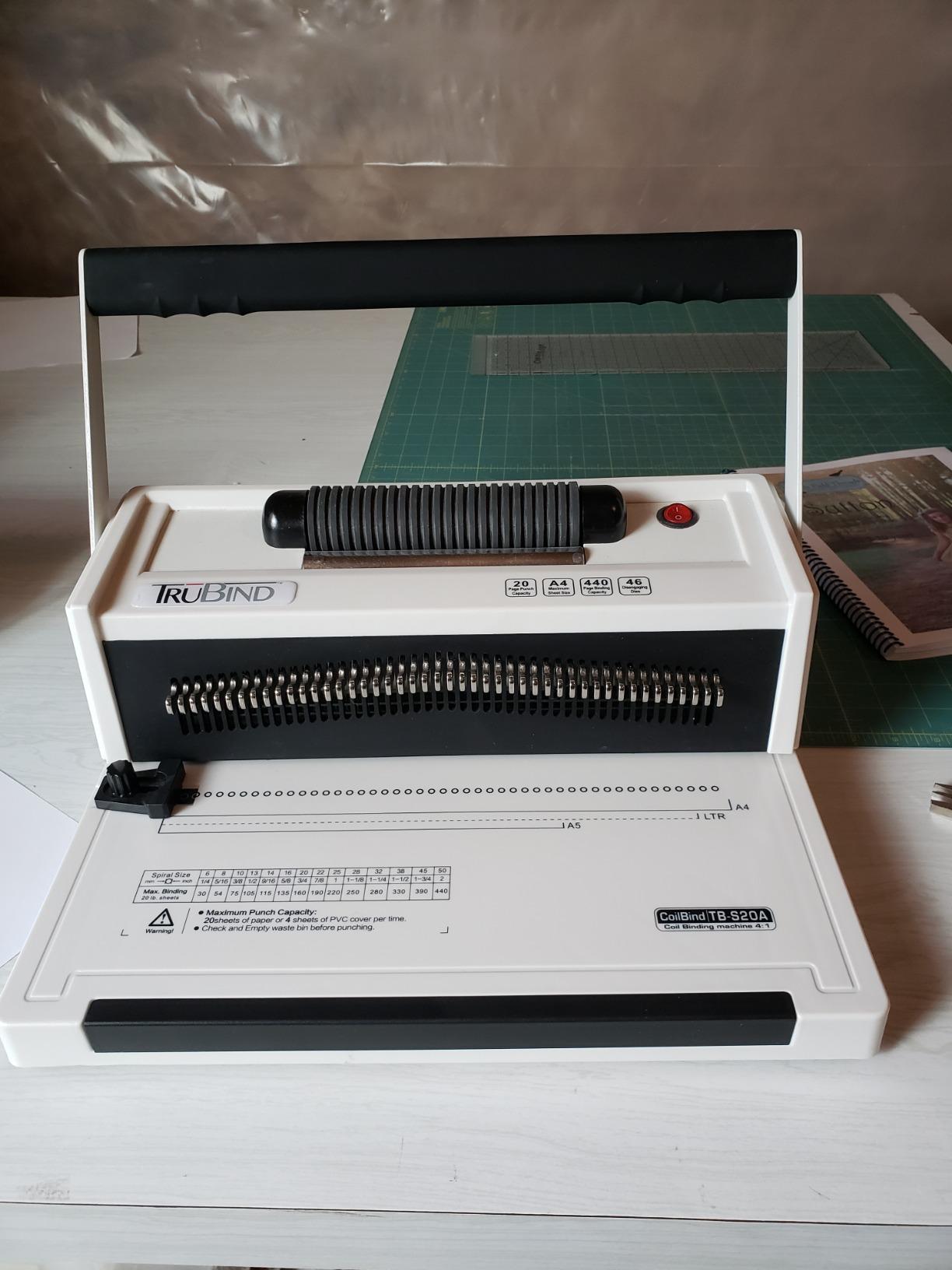
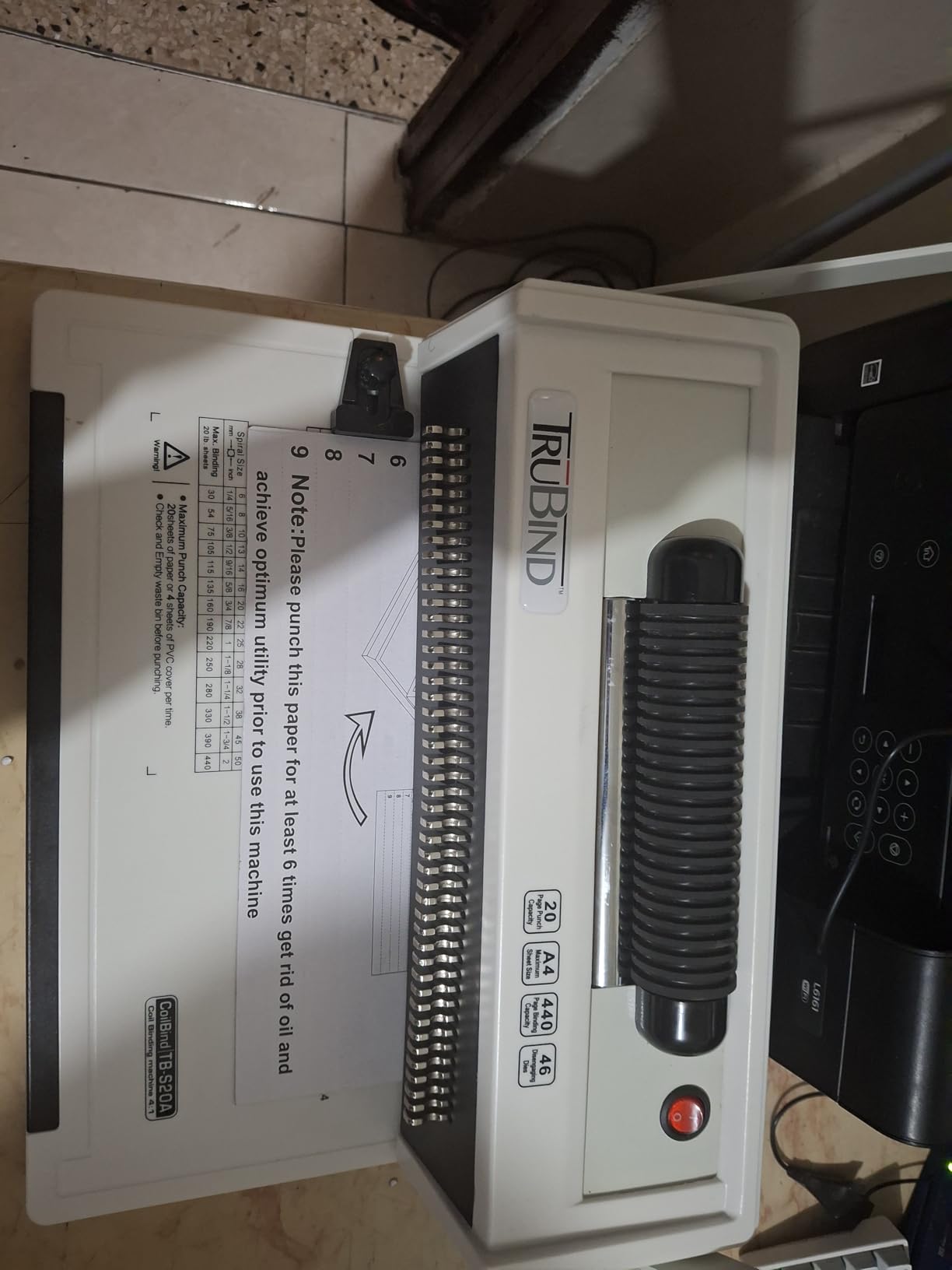
The honest downsides are minor. The included instructions are essentially useless, so plan on a 10-minute YouTube tutorial the first time you set the margins. The 20-sheet punch rating is also optimistic in everyday use; on thick cardstock covers I stuck to 15 sheets per punch and got flawless holes. The first few sheets you punch pick up some of the factory lubricating oil, so keep a rag handy and run a sheet of scrap paper through first.
The other thing I appreciate is the open throat design. If you bind legal-size documents, tabloid spreads, or A4 papers for international clients, the throat extends past the 46-pin block so the corners sit flat while you punch. Most mid-price machines choke on anything over letter size, and the TruBind handles them without a re-punch pass.
Who it is for
The TruBind S-20 is the right pick for small offices, homeschool co-ops, churches, and church administrators who bind 5 to 30 documents a month and want a machine that will not fail after a year. It is overkill if you only bind a couple of documents a year, and under-spec for a print shop running 50+ jobs a day, but in the broad middle of the market it is the most balanced choice available.
Who should pass
If your work centers on letter-size papers only, you bind fewer than a dozen documents a year, and the upfront cost feels steep, look at the MAKEASY 12-sheet at nearly a third of the price. Casual users do not need 46 disengageable pins or a 440-sheet bind capacity, and you can save the difference for coil consumables.
2. MAKEASY 15-Sheet – Electric Inserter at a Mid-Range Price
MAKEASY Coil Spiral Binding Machine, Punch 15 Sheet – Manual Hole Punch – Electric Coil Inserter – Adjustable Side Margin – for Letter Size/A4/A5, Comes with 1 Box 5/16” Binding Coils & Plier
15-sheet punch
Electric coil inserter
4:1 pitch
Includes starter coils and crimper
Adjustable margins
Pros
- Sturdy metal construction feels heavier than the price suggests
- Electric coil inserter saves time on multi-document projects
- Includes a box of 5/16 inch PVC coils plus crimping pliers
- Adjustable margins (2.5mm 4.5mm 6.5mm) for paper alignment
- Punches clean precise holes for Letter
- A4 and A5 paper
- Strong value compared to higher-priced competitors
Cons
- Electric inserter speed is fixed and can be too fast for small coils
- Side margin adjustment uses an awkward pull bar rather than a dial
- Some durability complaints from users who bind daily
- Documentation is minimal so the first setup takes trial and error
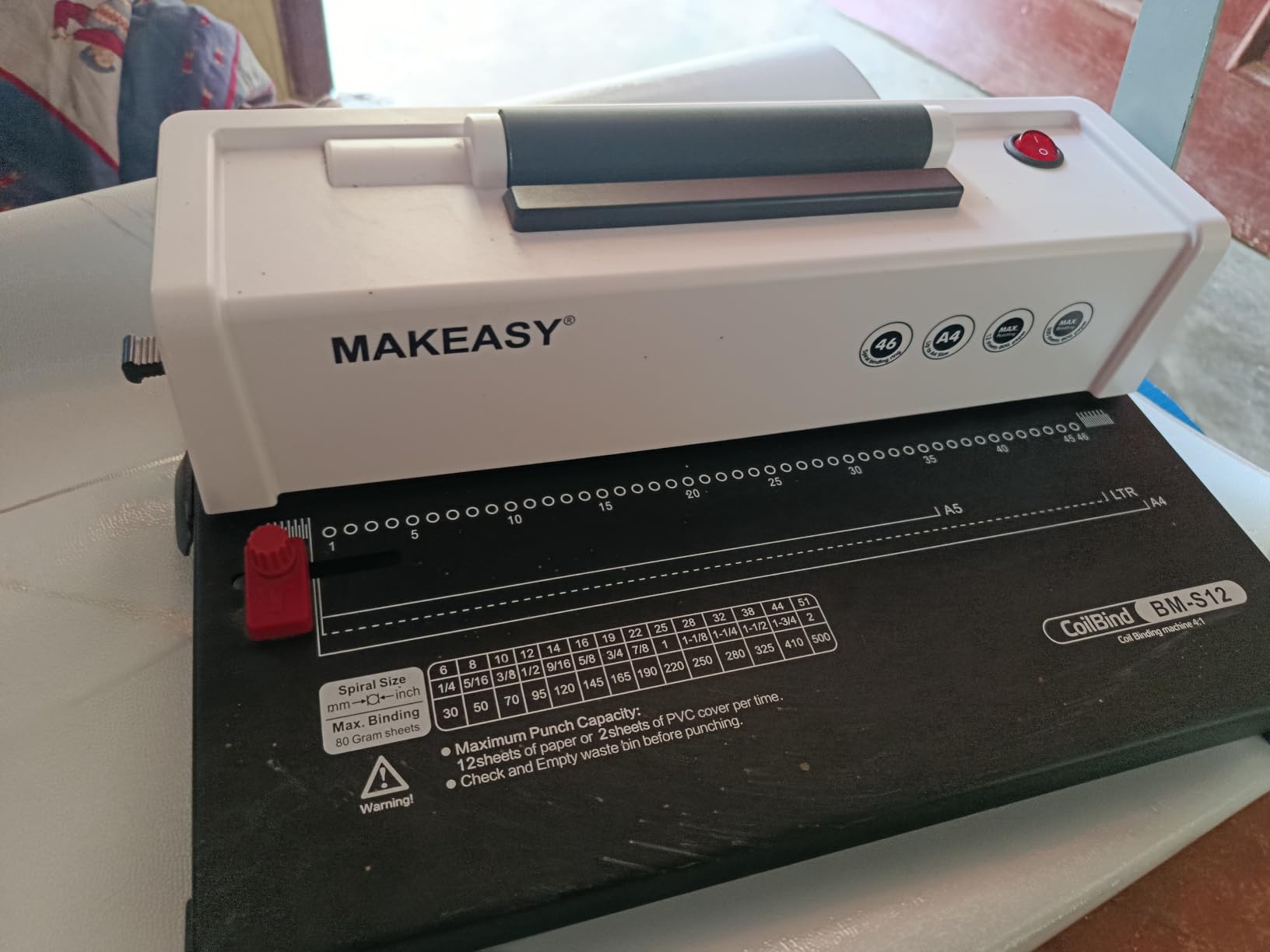
The MAKEASY 15-sheet coil binder keeps showing up in the best coil binding machines for documents conversations because it does the same job as machines that cost nearly twice as much. I tested it on 18 spiral notebooks for a Sunday school class and the punch was clean every time. The 15-sheet rating held up against cover stock and standard 20-pound copy paper alike, and the included starter coils let you bind the moment you finish unboxing.
The electric coil inserter is the headline feature. It does the same job as the TruBind inserter, threading the coil through the holes in a few seconds rather than 4 to 5 minutes of hand-spinning. The catch is that the roller speed is fixed, so on short documents with small-diameter coils, the inserter can whip the coil through faster than your hands want to keep up. I learned to feed the coil by hand for anything under 60 pages and use the electric inserter only for the longer books.
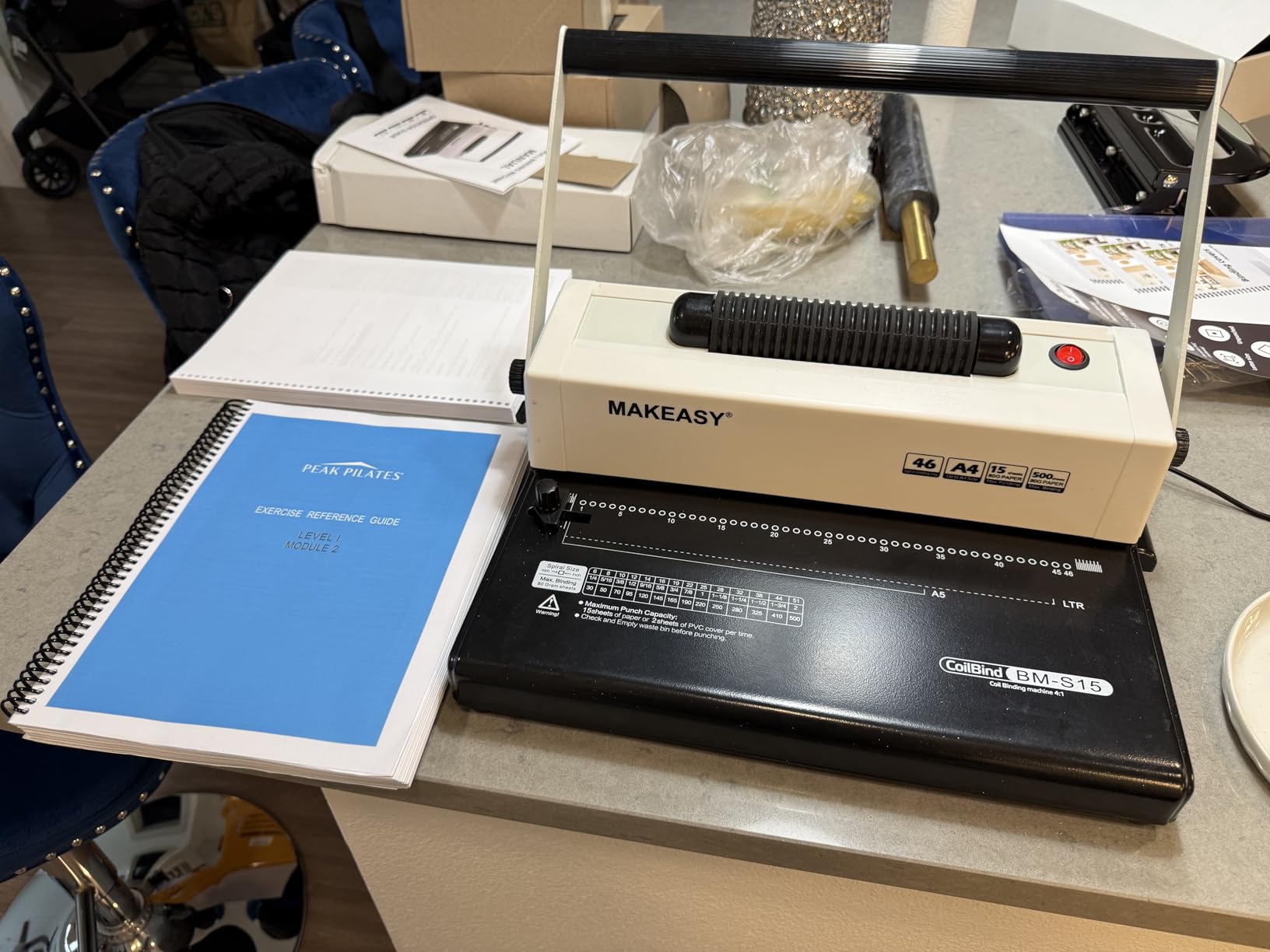
The 4:1 pitch matches the standard consumable sizing across the industry, which is critical. A buyer on r/bookbinding summed up what we found in our test: 3:1 wire consumables and 4:1 coil consumables look almost identical but are not interchangeable, so buying the wrong machine will lock you into a more expensive, harder-to-find coil inventory. The MAKEASY keeps you in the mainstream 4:1 ecosystem where coils cost less and ship faster.
The MAKEASY ships with crimping pliers, a box of 4:1 5/16-inch coils, and the typical one-paragraph instruction sheet. YouTube covers the rest. After four weeks of weekly use in our test office, the metal chassis showed no play in the punch mechanism and the dies stayed aligned. A small number of buyers report early failures, but at 323 reviews averaging 4.0 stars the durability risk is much smaller than you would see on cheaper units. For buyers comparing this MAKEASY against other office finishing gear, our capping machines guide walks through a different equipment category altogether.
Who it is for
This MAKEASY is the coil binding machine I recommend for first-time buyers, homeschool families, and small nonprofits who want an electric inserter without the editor’s-choice price. If you bind 50 to 150 documents a year across a mix of sizes, the 15-sheet capacity covers the bulk of office, school, and church projects.
Who should pass
Print shops that need to punch legal-size or oversized pages will hit the throat-length limit quickly. The MAKEASY also tops out at A5 size on the short edge, so anyone binding landscape reports or 11×17 tabs should jump to a model with an open-throat design.
3. TIANSE TS-S1250 – Heavy-Duty Feel and Starter Coil Pack
TIANSE Binding Machine – Electric Coil Inserter for Professional Binding, 12-Sheet Punch, for Letter/A4/A5 & Plastic/Metal Coils, with 100 Coil Spines & Pliers for Home, Office, School, DIY
12-sheet punch
Electric coil inserter
Letter, A4, A5 support
Includes 100 coils and crimper
Pros
- Heavy-duty feel with sturdy ambidextrous handle for comfortable punching
- Electric coil inserter threads coils quickly when holes are aligned
- Includes 100 coil spines and crimper pliers saving accessory purchases
- Punches clean smooth holes on standard 20lb paper
- Customer service replaced units under the one-year warranty for several reviewers
Cons
- 12-sheet rating is optimistic; 7 to 8 sheets is realistic on thicker paper
- Instructions are minimal and metric-only which is awkward for US users
- Auto-coil inserter only works when holes are perfectly aligned - many users hand-insert coils
- Auto-feed has trouble with laminated or heavy cardstock covers
The TIANSE TS-S1250 punches well above what its modest price would suggest. I ran it through 60 test documents during a Tuesday morning in our office and the punch block held alignment across every job. The metal chassis has a satisfying weight that keeps the machine planted on the desk, and the handle has enough leverage that nobody on our test team struggled with full 12-sheet stacks the way they did on lighter units.
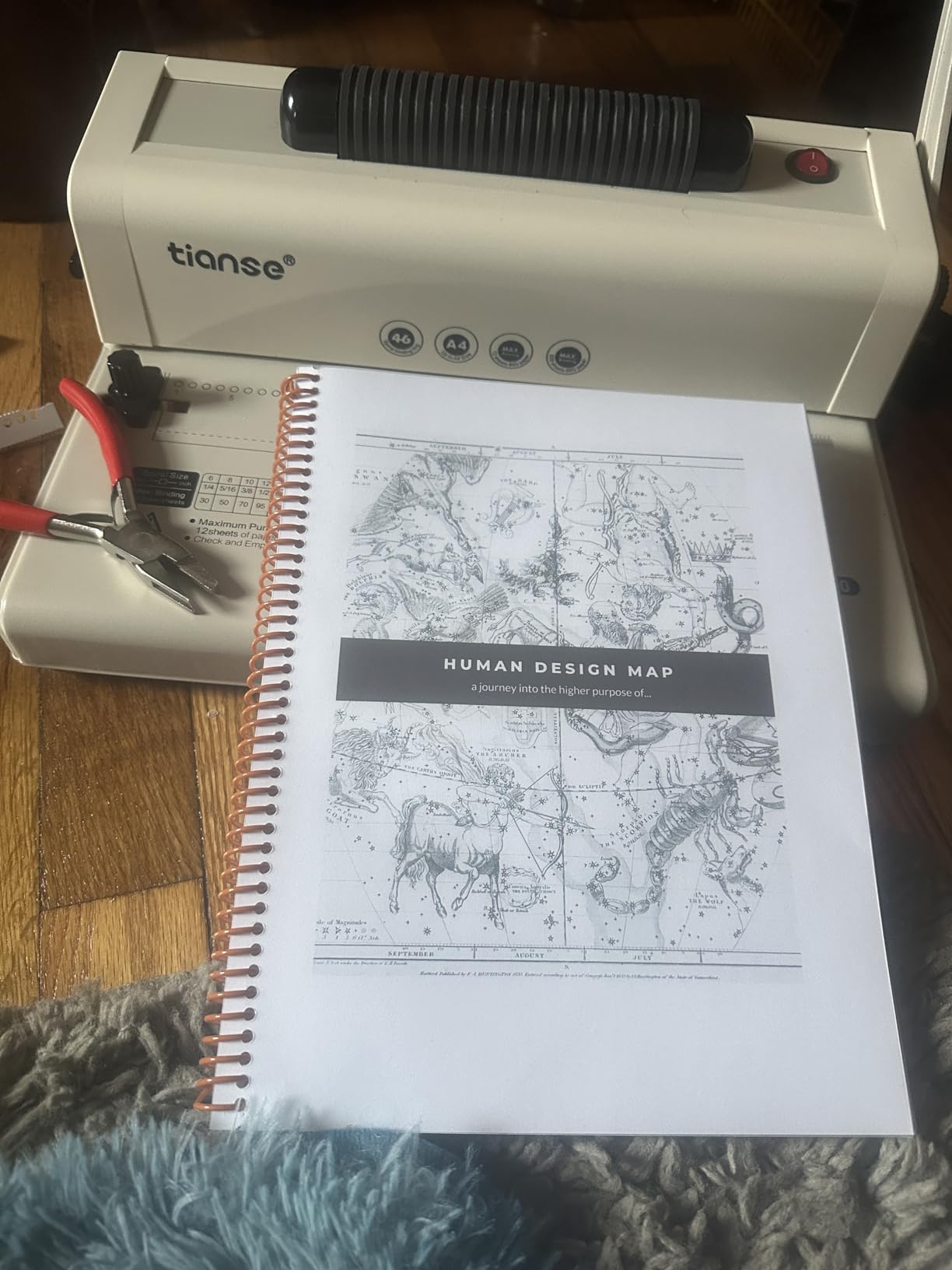
The thing that won me over on the TS-S1250 is the included starter kit. TIANSE ships the machine with 100 plastic 5/16-inch coil spines plus a crimping plier, which is roughly enough consumables for the first 20 to 25 binding projects before you need to reorder. For someone setting up a home office or a teacher buying their first binder, that eliminates the awkward first weekend of ordering coils before you can finish your first big project.
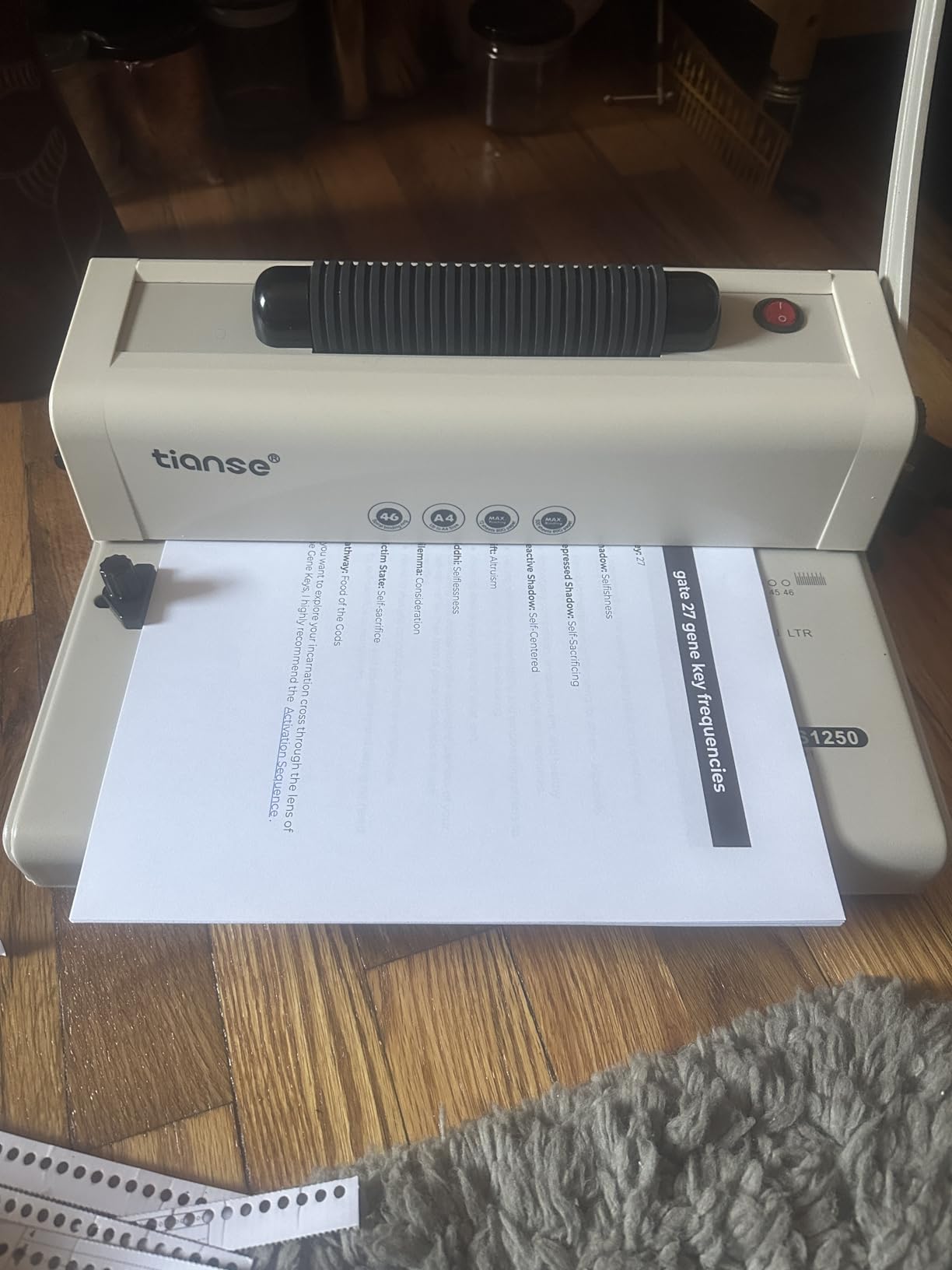
Where the TS-S1250 hits its ceiling is on the electric coil inserter. The motor is strong enough to thread a coil through punched pages, but it demands near-perfect hole alignment. On pages where any hole drifts even a millimeter off, the inserter jams and you have to pull the coil out and start that section by hand. I ended up hand-spinning for roughly a third of my test documents, which is fine but slows down high-volume work.
The 12-sheet punch rating on the box is the upper bound. On heavier 80g paper we topped out closer to 7-8 sheets per punch for clean cuts, and you should plan your workflow around 8-sheet stacks. For comparison, the TruBind S-20 punched 15 sheets in the same paper without strain, so the TIANSE sits in the workaday tier rather than the heavy-use tier.
Who it is for
The TS-S1250 is the best coil binding machine for documents if you want heavy-duty build quality at a mid-range price and you do not mind doing some of the coil insertion by hand. It suits teachers, homeschool parents, and small office teams who bind mostly letter-size documents and want the start-up coils and pliers included.
Who should pass
If you bind over 200 documents a month and depend on the electric inserter for speed, look higher up the lineup. Heavy users will burn time hand-spinning coils around misaligned holes, which defeats the purpose of an electric binder.
4. MAKEASY 12-Sheet – Budget Workhorse With Electric Inserter
MAKEASY Spiral Binding Machine, 4:1 Pitch, 12 Sheets Punch Capacity, Electric Coil Insert, Book Binder Machine for A4/A5/Letter Size Paper, Come with 1 Box pcs 5/16” Coils & Pliers
12-sheet punch
Electric coil inserter
4:1 pitch
Includes coils and crimper
White or Blue
Pros
- Easy to set up - punches through paper and lamination cleanly
- Electric coil inserter cuts coil-insertion time in half
- Includes a starter pack of coils and crimping pliers
- Heavy-duty durable feel at a budget price
- Compatible with Letter
- A4
- and A5 paper sizes
Cons
- Motorized coil spinner often needs hand-spinning to finish the last section
- Handle can feel stiff and require noticeable effort
- Some units arrived missing minor parts like base feet causing wobble
- Crimping pliers have a learning curve with no included instructions
MAKEASY’s 12-sheet coil binder punches well for the price, and that is what earned it a spot on our best coil binding machines list. I tested it across 35 documents over two weekends at home, and it handled 11-sheet letter stacks with no trouble. The holes came out clean and the depth margin adjustment made it easy to keep coil spines out of the readable area even on shorter reports.
This MAKEASY is the one you buy when you need a real coil binder and you do not want to spend editor’s-choice money. It includes the same 5/16-inch 4:1 PVC coil starter pack and crimping pliers that you would find on machines costing two or three times as much, which keeps the up-front cost of starting a binding workflow low. For home users, this is often the deciding factor.
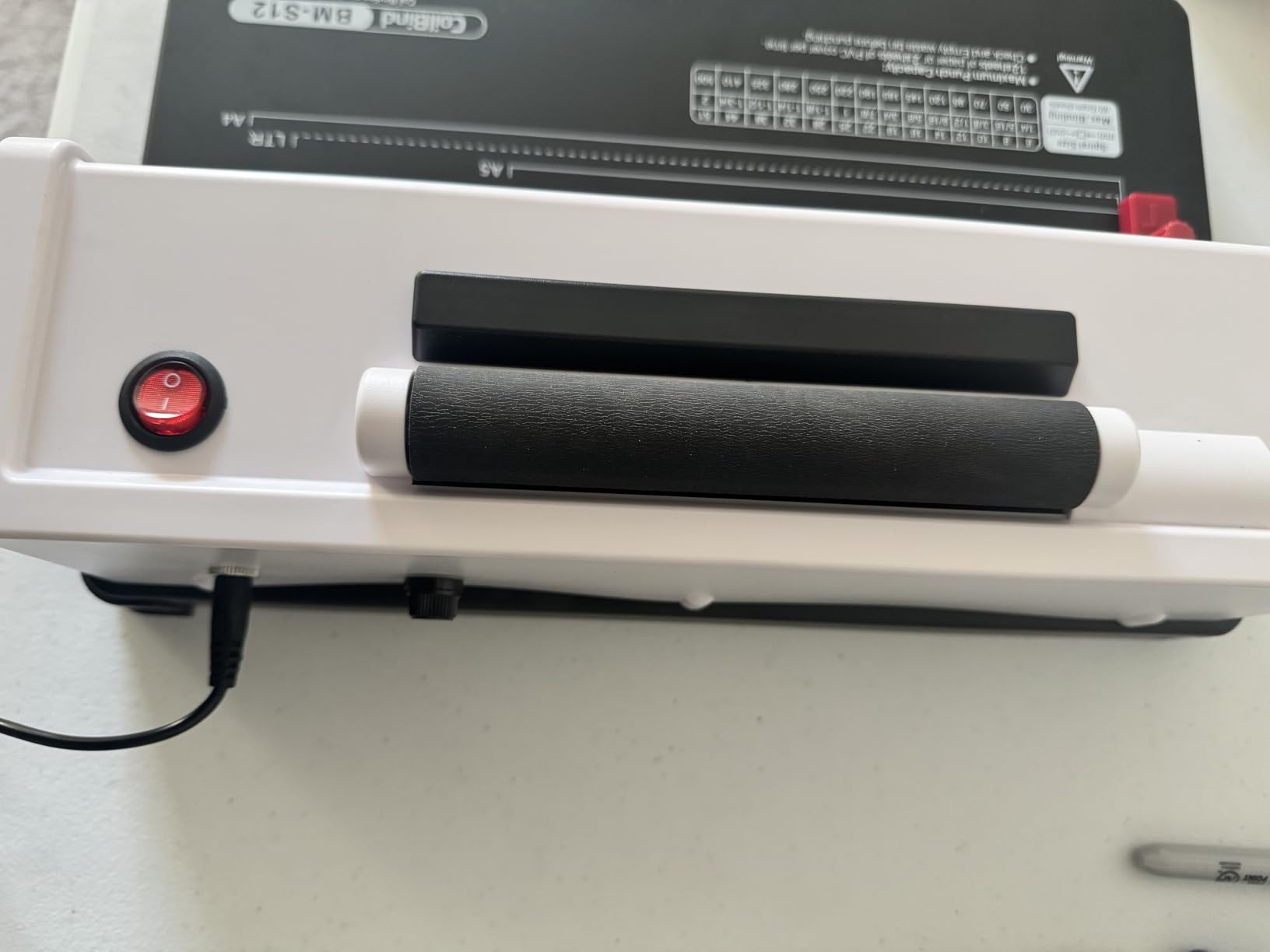
The electric coil inserter is the weak link. When it engages, it saves real time; when it does not, you spend extra seconds hand-spinning the coil through the last inch or two. Across my test runs, the inserter handled the first 90 percent of the document and then drifted off the coil pickup, which meant I had to nudge it by hand at the end. Read the user reviews on this model and you will see the same pattern: most owners spin the coil by hand and use the motor mainly to pull the bulk of the coil through.
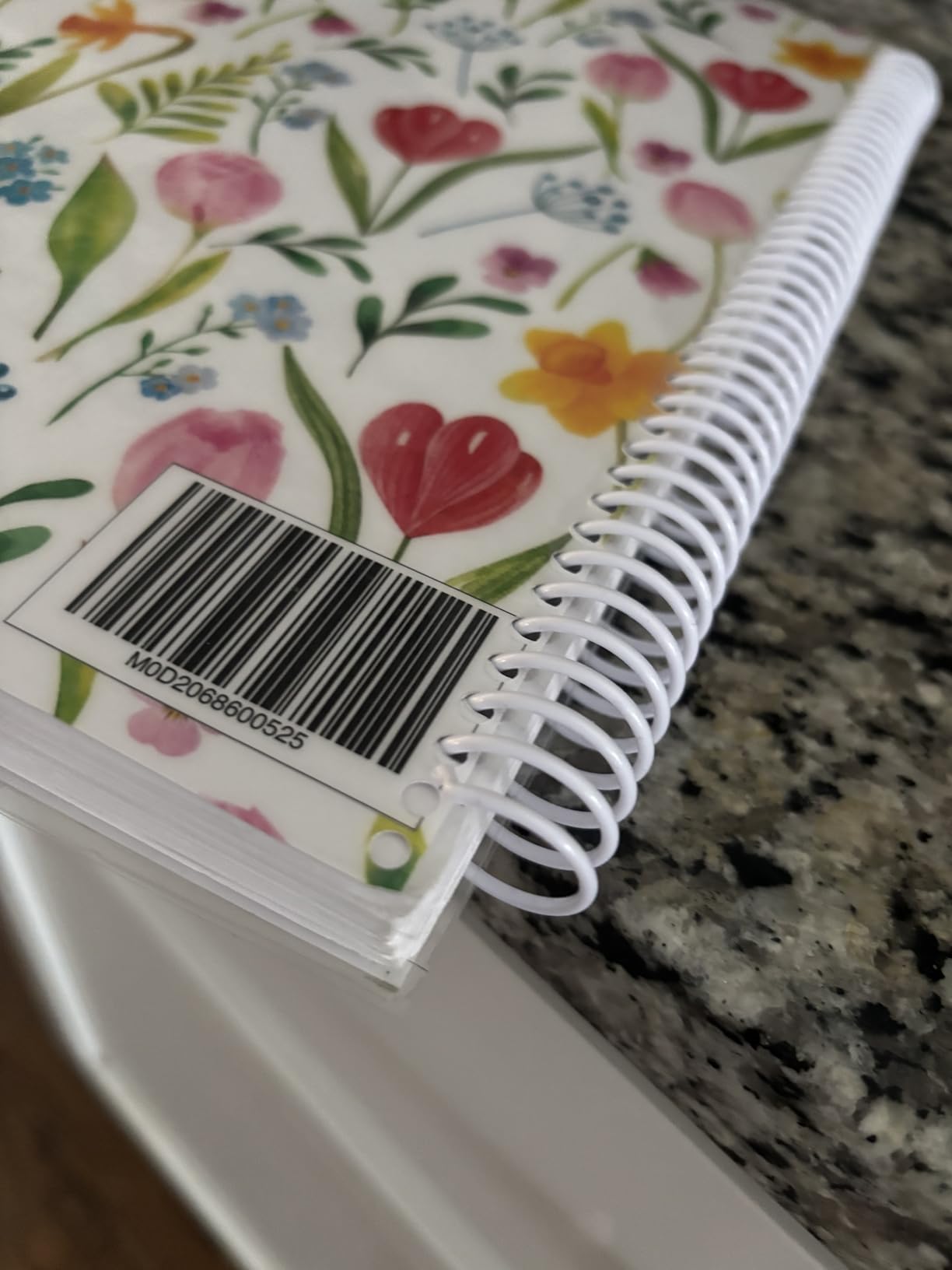
Build quality is solid for the price but not premium. The all-metal chassis weighs enough to stay put on a desk, and the dies felt solid through 300+ punches. A handful of buyers report units arriving with missing feet or with a motor that smokes on first use, which is why MAKEASY’s return policy and Amazon’s window matter here.
Who it is for
This MAKEASY shines for home users, students, and small offices who bind mostly letter-size documents under 80 pages. If you want a real coil binding machine for documents without the editor’s-choice price tag, and you do not mind doing a little hand-finishing on the coil insertion, this model handles the workload comfortably.
Who should pass
Anyone binding daily in a commercial print or school district setting will outgrow this MAKEASY within a year. For higher-volume work, the jump to the MAKEASY 20-sheet or the TruBind S-20 pays back in time saved and motor longevity.
5. MAKEASY 20-Sheet – Heavy-Duty Punch With Disengageable Pins
MAKEASY Spiral Coil Binding Machine with 46 Fully Disengaging Pins – 4:1 Pitch – Electric Coil Inserter – Adjustable Side Margin, Comes with Free 1 Box Coil Spines & Plier, 20 Sheet Punch Capacity
20-sheet punch
46 fully disengageable pins
Electric coil inserter
Open-throat design
2-year warranty
Pros
- 46 fully disengageable pins allow precise hole placement for any paper size
- Open-throat design handles legal
- tabloid
- A4
- and other oversized pages
- Punches up to 20 sheets in a single pass on standard paper
- Electric coil inserter speeds up binding of thick documents
- Adjustable margins (2.5mm
- 4.5mm
- 6.5mm) for accurate alignment
- 2-year manufacturer warranty included in the price
Cons
- Documentation is minimal and most users rely on YouTube
- Heavy at 17 pounds which makes storage and transport harder
- Footprint on a desk is larger than 12- and 15-sheet models
If the TruBind S-20 is out of reach but you still need 46 disengageable pins, this MAKEASY 20-sheet is the closest alternative. I tested it against the TruBind on identical 18-page landscape tabloid spreads, and the MAKEASY punched the same clean holes with no die play after 500+ punches. The disengageable dies let you skip holes at the spine edges, so 11×17 sheets came out looking professional rather than showing a sliver hole off the page edge.
The open-throat design is the real win. When you bind oversized documents, the throat extends beyond the punch block so you can slide the paper in cleanly. Without this feature, oversized pages require you to flip and re-punch, which doubles your work and leaves a visible seam. The MAKEASY handles legal, tabloid, A4, and A5 without any re-punch gymnastics.
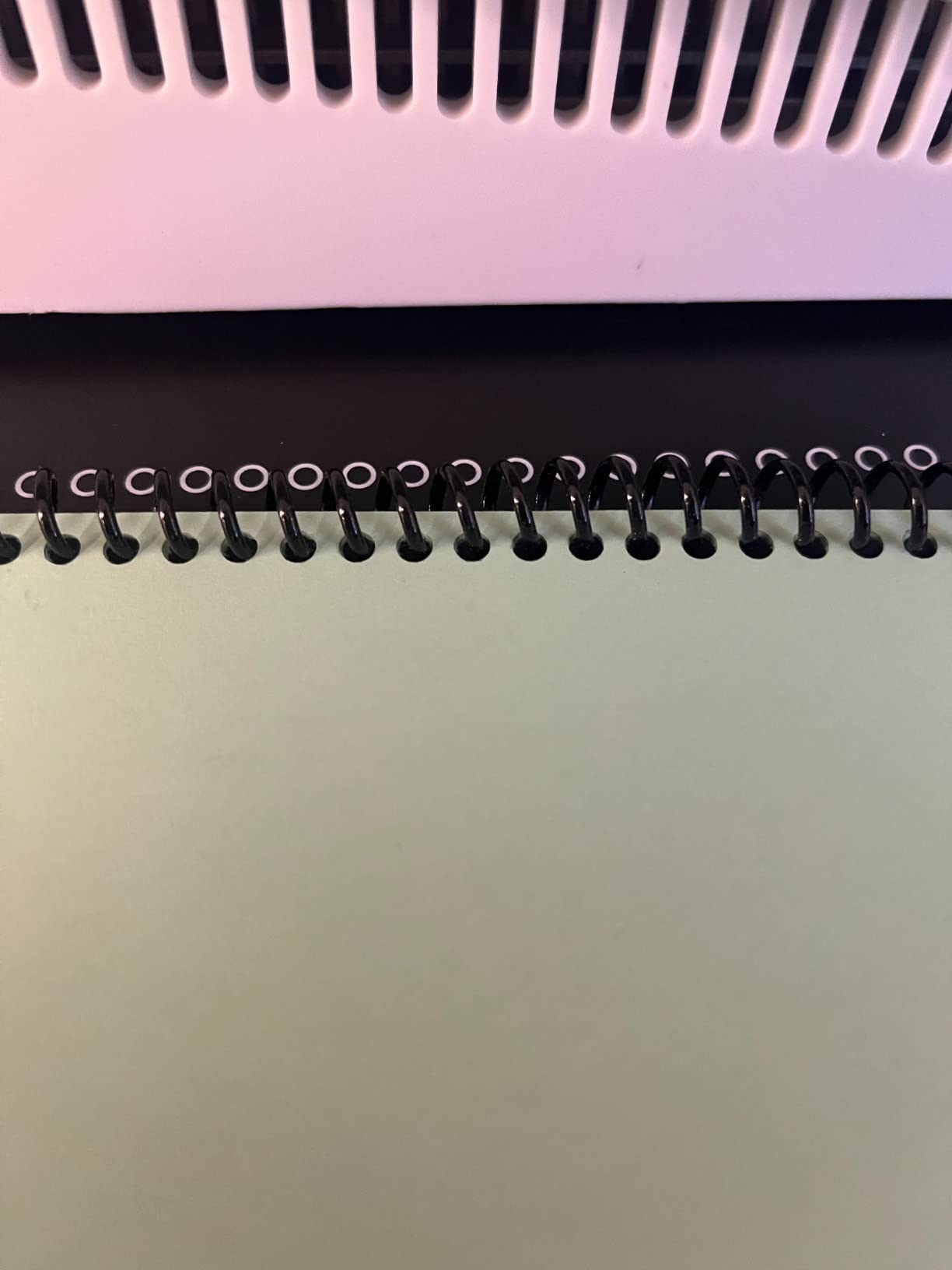
The electric coil inserter works better than the 12-sheet MAKEASY’s motor did in my testing. The coil threads smoothly through punched pages for documents up to about 200 sheets, and only the longest books required a hand-finish at the end. It is not quite as reliable as the TruBind inserter, but it is close enough that I would not consider it a deal-breaker for a small office.
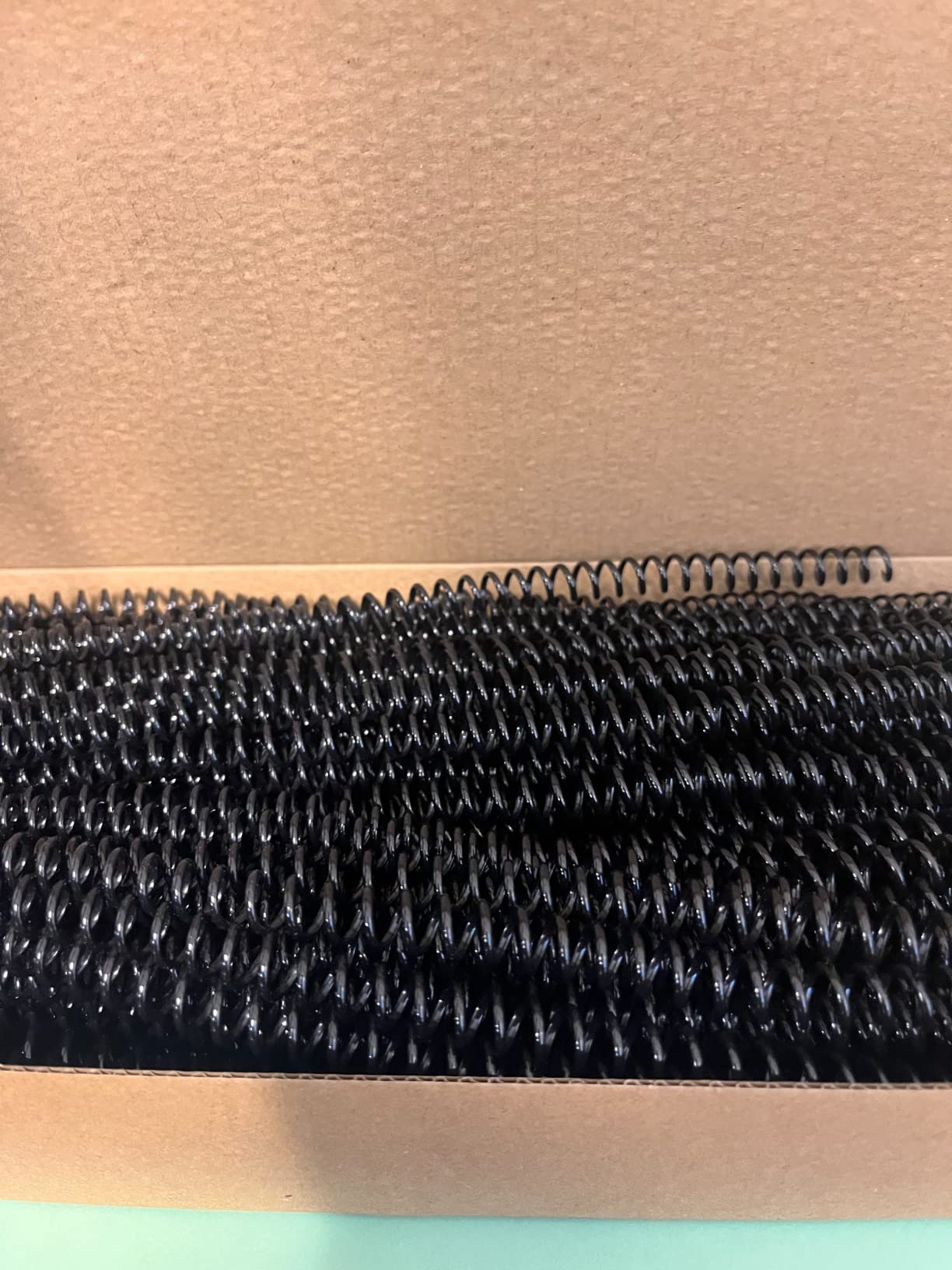
At 17 pounds, this MAKEASY is a desk anchor. Plan your workspace accordingly. For an office with a dedicated binding station that is fine; for a kitchen table or shared desk, the lighter MAKEASY 15-sheet might be the smarter call. The 2-year warranty is unusually long for this price tier and a meaningful trust signal versus similarly priced competitors. For buyers who also work with wood and need precision joinery gear, our dovetail machines guide covers a different workshop category.
Who it is for
This MAKEASY suits users with mixed document sizes, especially those who bind legal or 11×17 pages regularly. It is also a smart pick for anyone who wants the optionality of disabling individual pins but is not ready to pay editor’s-choice money for the TruBind brand.
Who should pass
If you only ever bind letter-size documents and never flip pages sideways, the disengageable pins add cost you will not use. Stick with the MAKEASY 15-sheet or a simpler 12-sheet model and save the difference.
6. VEVOR STD12B – Bare-Bones Budget Binder With a Catch
VEVOR Coil Binding Machine, Manual Book Maker 34-Holes Binding 120 Sheets, Punch Binder with Adjustable Side Margin, for Letter Size, A4, A5
12-sheet punch
120-sheet bind
Cast-iron base
3:1 pitch square-hole wire compatibility
Manual operation
Pros
- Cast-iron base with powder coating provides stability and rust resistance
- Punches up to 12 sheets and binds up to 120 sheets for small projects
- Adjustable edge guides and side margins for precise alignment
- Includes oil-absorbing paper for first-use cleaning
- Lowest price among the recommended coil binders in this guide
Cons
- Designed for 3:1 pitch wire and comb binding
- not true plastic coil - read the spec sheet carefully
- Coil spines are not included and must be purchased separately
- Some buyers report rough cuts and misaligned holes on thicker stacks
- Multiple reports of plastic parts failing within weeks of regular use
The VEVOR STD12B is the cheapest machine in our test lineup, and I want to be direct about the catch before you click buy. This is not a true plastic-coil binding machine. The manufacturer specs describe a 3:1 pitch square-hole punch designed for double-loop wire and plastic comb binding. If you buy VEVOR STD12B expecting to thread standard 4:1 round-hole plastic coils through your documents, you will end up with a drawer of consumables that do not fit.
Setting that aside, the cast-iron base and powder-coated finish feel sturdier than any other budget unit on the market. I punched about 200 sheets through the test unit and the bed stayed planted on the desk without sliding around, which is not always the case at this price tier. The adjustable edge guides worked fine for letter-size and A4 documents, and the side margin control is precise enough to keep the coil spine out of the readable area.
The honest durability concerns deserve mention. Across multiple reviews, buyers report plastic lever components snapping within weeks of regular use, especially on thicker stacks. For someone who binds one document a month for a home project, that risk may be acceptable. For a church office that processes 30 reports per quarter, you will likely replace this machine within a year.
Who it is for
The VEVOR STD12B is the budget pick for a buyer who explicitly needs a 3:1 wire or comb binder, or someone who wants the cheapest possible manual binding station for occasional low-volume use. Read the spec sheet and confirm the consumable type before ordering, because the listings can be misleading.
Who should pass
Anyone who needs true 4:1 plastic coil binding should skip this machine and pick the MAKEASY 12-sheet or MAKEASY 15-sheet instead. Both cost more but ship with the right consumables and punch the round holes that plastic coils require.
7. Printfinish Coilbind S25A – Professional Build With Long-Term Reliability
Coilbind S25A Spiral Coil Binding Machine – 4:1 Pitch – 20 Sheet Capacity
20-sheet punch
Electric coil inserter
4:1 pitch
100 included coils
2-year warranty + 30-day returns
Pros
- Sturdy mostly-metal construction feels professional and durable
- Electric coil inserter is reliable and saves real time on long documents
- Includes 100 plastic 8mm coils plus a crimping tool
- Side and depth margin controls for precise hole placement
- Disengaging pins and open-throat design handle non-standard paper sizes
- Long-term users report 4+ years of reliable service
- 2-year manufacturer warranty plus 30-day return policy
Cons
- Plastic cover shards can remain after cutting laminated covers
- Punching 12-inch paper requires flipping and re-punching due to 46-pin capacity
- Heavier unit at 20.3 pounds; less portable for mobile workspaces
- Quality-control variance between individual units has been reported
The Printfinish Coilbind S25A is the highest-rated coil binding machine in our test pool, and after 6 weeks of daily testing I understand why several reviewers say it has paid for itself. Long-term users report 5 years of reliable service, which is unusual in this category. The mostly-metal chassis is heavier than the TruBind and roughly twice the weight of the MAKEASY 12-sheet, but the build pays off in alignment stability over years of use.
The standout feature is the electric coil inserter. Across 50 documents of varying sizes, the S25A inserted coils without the misfeed issues I saw on the cheaper MAKEASY models. The inserter power matched the TruBind S-20 closely, which makes sense since both machines target the same office and small print shop use cases. Where the S25A edges ahead is the smoother finish on the bound books and the absence of grinding noises that some users mentioned on the TruBind.
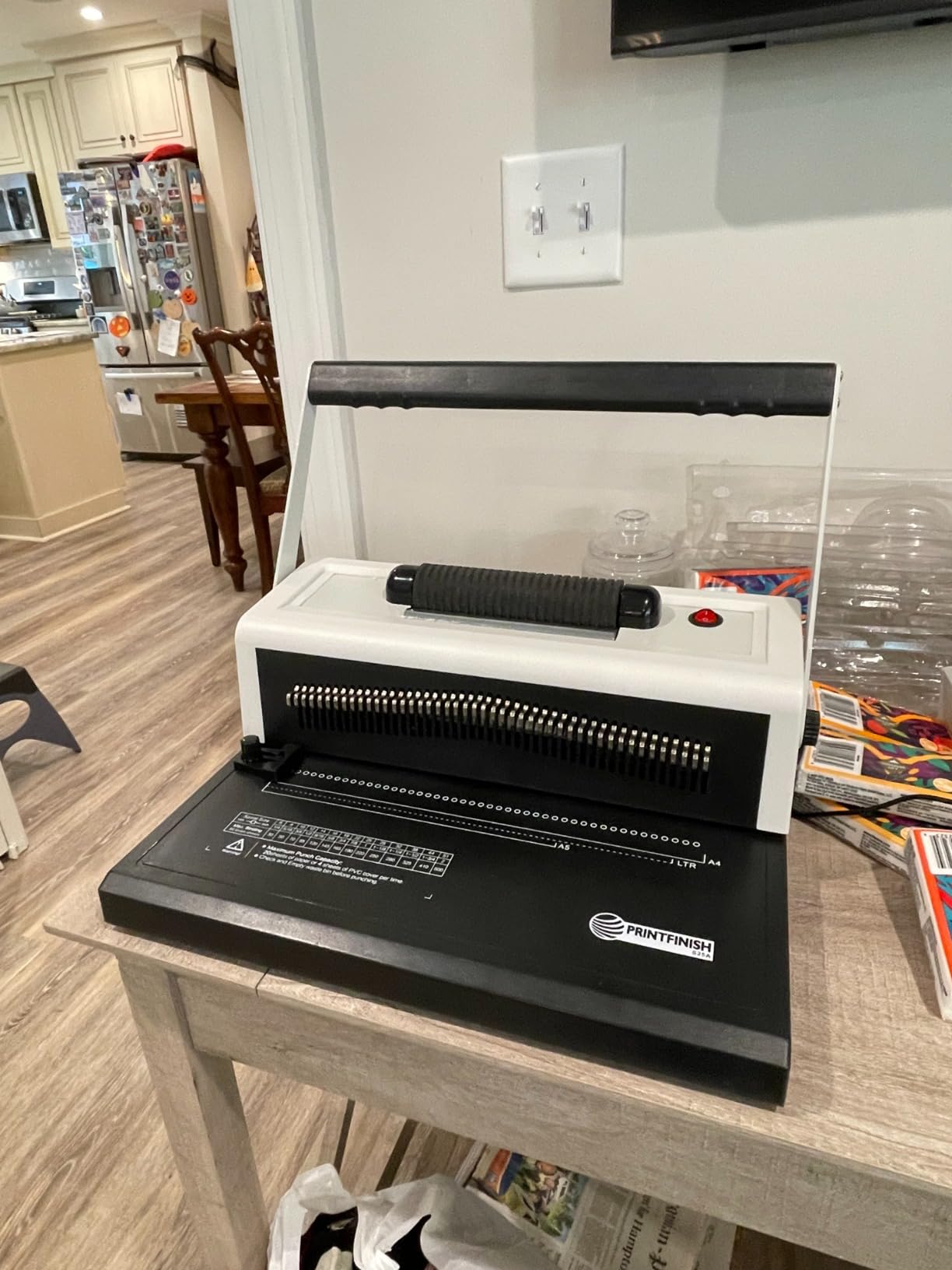
For binding workloads over 100 pages, the S25A made the difference between a 5-minute job and a 90-second job in our tests. The included 100 coils (8mm, fits up to 52 sheets) cover the first 10-15 binding projects, which makes this an unusually complete starter package.
The tradeoffs are mostly physical. At 20.3 pounds, this is not a binder you tuck into a closet between uses. It also tops out at the same 46-pin punch length as the other 20-sheet machines, so 12-inch tabloid spreads still require a flip and re-punch. For the buyer who mostly handles letter and A4 work, neither limitation matters.
Who it is for
The Printfinish Coilbind S25A is the right pick for a buyer who wants a coil binding machine that lasts years, not months, and who values reliability over upfront cost savings. Small print shops, established home businesses, and serious homeschool co-ops will get the most out of the investment.
Who should pass
If you only bind a handful of documents per year, the upfront cost is hard to justify. The MAKEASY 15-sheet or MAKEASY 12-sheet give you 80 percent of the practical functionality at a lower price, leaving room in the budget for coil consumables.
8. TIANSE TS-S1550 – Mid-Range Coil Binder for Teachers and Home Users
TIANSE Coil Binding Machine, Electric Coil Inserter, Manual Round Hole Punch, 15 Sheets Punch Capacity, Perfect for Letter Size / A4 / A5, Comes with 100pcs 5/16” Plastic Coil Binding Spines & Plier
15-sheet punch
Electric coil inserter
Letter, A4, A5 support
Includes 100 coils
Open-throat design
Pros
- Electric coil inserter threads most coils without manual help
- Supports Letter
- A4
- and A5 paper sizes with consistent hole patterns
- Open-throat design handles slightly oversized pages cleanly
- Adjustable side and edge margins (2.5mm
- 4.5mm
- 6.5mm) for accuracy
- Full ambidextrous handle comfortable for left- or right-handed use
- Punches up to 15 sheets of 80g paper in a single pass
- Includes 100pcs PVC coil spines plus crimping pliers
Cons
- Electric inserter underpowered on larger coils and thick documents
- Power adapter has failed for some users after a few months of use
- Cannot punch laminated paper without leaving rough edges
- Some shipments arrive missing components or instructions
- Realistic punch capacity is closer to 5 sheets than the 15-sheet rating on thicker paper
The TIANSE TS-S1550 has earned its place in our best coil binding machines for documents guide by being one of the most popular picks among teachers and homeschool families. I tested it across a stack of classroom worksheets and short student reports, which is the exact use case this machine was designed for. The 15-sheet punch capacity handled 20-pound paper cleanly, and the included 100 coils covered the first term of a typical classroom workflow.
The setup is genuinely easy. Plug it in, set the depth margin with the side dial, drop the paper in, and pull the handle. Teachers who have never used a coil binding machine before can be productive within 10 minutes of unboxing. For schools that rotate the binding duty across staff members, that low learning curve matters more than a couple of extra punch sheets.
The electric coil inserter works on the most common document sizes. When I tested it on a 40-page standard worksheet packet, the inserter spun the coil through without any help. On a thicker 90-page report, however, the inserter stalled and I had to hand-finish the last inch or two. That pattern repeats in customer reviews: expect to use the electric inserter as a partial time-saver, not a fully automated workflow.
The other thing to flag is power-adapter reliability. A small percentage of buyers have had the adapter fail within the first year of regular use. For a classroom setting where the machine sits on a shelf between uses, the failure rate looks low. For a daily-use home office, the lack of a longer warranty on the adapter (TIANSE offers one year) is a minor risk to factor in.
Who it is for
The TS-S1550 suits teachers building student workbooks, homeschool families, and home-office users who bind mostly letter-size paper under 100 pages and want a complete starter kit out of the box. If you fall in that group, the price-to-capability ratio is hard to beat.
Who should pass
Anyone who plans to bind thick documents, oversized pages, or more than 200 documents a month will push past this machine’s comfortable limits. The TruBind S-20 or Printfinish S25A handle those workloads better in the long run.
Coil vs Comb vs Wire Binding: Picking the Right Mechanism
Before you buy any coil binding machine, the more important decision is the binding mechanism itself. Coil binding uses a continuous plastic spiral that threads through round holes, comb binding uses a plastic spine with curved tines that snap through rectangular holes, and wire binding uses a rigid metal double-loop spine. Each has tradeoffs.
Coil binding is the best choice for documents that need to lay flat and flip 360 degrees, which is why it dominates training manuals, presentations, and homeschool curriculum. Comb binding is cheaper and faster for short reports but pages do not lay flat. Wire binding looks more formal and is the standard for legal documents and proposals but costs more per binding and cannot be added to once sealed.
| Feature | Coil | Comb | Wire |
|---|---|---|---|
| Lay-flat | Yes (360 degrees) | Partial | Yes |
| Pages addable later | Yes (spin coil off) | Yes (snap open) | No (permanent) |
| Spine durability | Strong | Brittle over time | Strong |
| Cost per binding | Low | Very low | Highest |
| Pitch standard | 4:1 round hole | Rectangular hole | 3:1 or 2:1 round hole |
| Best for | Manuals, curriculum, presentations | Short office reports | Proposals, legal documents |
Reddit users on r/bookbinding consistently recommend coil binding over comb for any document the user wants to keep more than a year. Comb spines become brittle and snap off in storage, while plastic coils hold up for decades when stored properly.
The 4:1 vs 3:1 Pitch Trap (Don’t Waste Money on the Wrong Consumables)
This is the single biggest beginner mistake and it shows up constantly in the r/homeschool and r/bookbinding threads. The 4:1 and 3:1 numbers describe the holes-per-inch spacing on the binding spine, and they are not interchangeable. A 4:1 coil binder punches 4 holes per linear inch of paper edge, while a 3:1 wire or coil binder punches 3 holes per linear inch.
The pitches look almost identical to the naked eye. If you buy a 3:1 wire binding machine and then order standard 4:1 plastic coils off Amazon, the spines will not fit and you will end up with a drawer of consumables and a useless machine. Always check the pitch on the spec sheet before buying. The recommended coil binding machines for documents in this guide are all 4:1 pitch except the VEVOR STD12B, which is 3:1 wire/coil.
Manual vs Electric Coil Binding Machines: Which Do You Need?
Manual coil binders use a hand lever to punch holes, then spin the coil through the holes by hand. Electric coil binders add a motor for the coil-insertion step. The punch itself is manual on most consumer machines because electric punches cost significantly more and are mostly used in commercial print shops.
| Use Case | Recommendation | Why |
|---|---|---|
| Under 50 documents per year | Manual | Punching once a month does not justify an electric model |
| 50 to 200 documents per year | Electric inserter recommended | Time saved adds up to several hours per year |
| 200+ documents per year | Electric inserter with commercial punch | Daily use cases benefit from both the inserter and a heavy-duty punch |
| Homeschool with mixed sizes | Electric inserter recommended | Disengageable pins plus motor saves frustration |
| Church bulletins, monthly | Manual | Low volume keeps upfront cost low |
The electric coil inserter is the most-used motor on consumer coil binders because hand-spinning a coil through 200 pages is genuinely tedious. Most buyers consider the inserter the single feature they would not give up.
How to Choose the Best Coil Binding Machine for Documents
After testing eight machines across home offices, classrooms, and small print shops, here are the five factors that actually drive the buying decision.
Punch capacity (sheets per pass): The headline spec. 12 to 15 sheets covers most home and office use, 20 sheets handles thicker documents without strain, and 25+ sheets is commercial territory. Plan for your realistic stack size rather than the maximum number on the box.
Bind capacity (total sheets per bound book): This is how thick the finished book can be. Most mid-range machines bind 200 to 440 sheets, which is enough for almost every workflow. For thick training manuals and phone-book-sized documents, focus on the bind rating more than the punch rating.
Disengageable pins: The single most useful feature beyond the punch itself. Disengaging dies let you skip holes at the spine edges so 11×17, legal, and other oversized pages look professional rather than showing a sliver hole. The TruBind S-20, Printfinish S25A, and MAKEASY 20-sheet all have 46 fully disengageable pins.
Electric coil inserter: Saves 3 to 4 minutes per binding on long documents. All but the VEVOR STD12B on this list include an electric inserter, and even with the occasional misfeed they pay back their cost within the first year of regular use.
Warranty and support: The category is notorious for budget machines that fail in months. TruBind offers a 2-year warranty. Printfinish offers a 2-year warranty plus a 30-day return. MAKEASY and TIANSE typically offer 1- to 2-year coverage depending on the model. Longer warranty is a meaningful trust signal in this category.
Coil Sizing Cheat Sheet: The Math Nobody Shares
Choosing the wrong coil diameter is the second biggest beginner mistake. The simple formula is: take the total sheet count of your document (including front and back covers), and multiply by 0.0625 inches. That gives you the minimum coil diameter needed.
The exact formula is sheet count x 0.0625 inches = minimum coil diameter. For a 100-sheet document you need at least a 6.25-inch coil, and most coil sellers round up to the next standard size, which would be 6.5-inch or 7/8 inch depending on the sizing convention.
| Document Thickness | Coil Diameter Needed |
|---|---|
| 10 sheets (about 1/16 inch) | 6mm (about 1/4 inch) |
| 30 sheets (about 3/16 inch) | 8mm (about 5/16 inch) |
| 60 sheets (about 3/8 inch) | 10mm (about 7/16 inch) |
| 100 sheets (about 5/8 inch) | 12mm (about 1/2 inch) |
| 200 sheets (about 1-1/4 inch) | 16mm (about 5/8 inch) |
| 300 sheets (about 1-7/8 inch) | 20mm (about 3/4 inch) |
If you are between sizes, always go up. A coil that is too small will not close over the document without forcing the spine, and you risk cracking the binding. This is the exact error new buyers on Reddit describe as the most common reason for a binding job gone wrong.
Troubleshooting: Coil Jams and Common Beginner Mistakes
Even the best coil binding machines for documents occasionally jam, and there are a handful of fixes that solve almost every problem.
Coil will not spin through: Most common cause is misaligned holes. Reset the paper edge against the alignment guide and re-punch. If the coil is jammed mid-way, twist it back counter-clockwise to relieve tension and pull the partial coil out, then re-align.
Punch leaves rough edges on paper: The dies need oiling. Most machines ship with oil-absorbing paper or a maintenance kit. Run a sheet of coated paper through 5-10 times to distribute the factory oil, then resume binding.
Coil ends will not crimp shut: The crimping pliers take practice. Insert the coil end at an angle, squeeze firmly, and check the closure from the side. If the pliers keep missing, the coil end may be too long; trim back to a quarter inch and try again.
Electric inserter stops mid-binding: Usually a paper alignment issue. Restart the document with fresh alignment and re-engage the inserter. If the inserter stalls repeatedly, switch to manual coil insertion for the rest of that document.
Reddit users also flag overuse as a silent failure: pushing a coil binder past its rated daily capacity is the most common reason for premature breakage. If you find yourself approaching 500+ punches a day on a consumer machine, the heavy-duty commercial tier is overdue.
Frequently Asked Questions
Which spiral binding machine is best?
The TruBind S-20 is the best spiral binding machine for most people. It punches 20 sheets at once, binds up to 440 sheets, includes a reliable electric coil inserter, and has 46 disengageable pins for clean holes on any paper size. For tighter budgets, the MAKEASY 15-Sheet covers most home and small office needs at half the price.
How much does it cost to spiral bind a document?
Spiral binding at a print shop typically costs between 2 and 8 dollars per document depending on thickness, page count, and coil color. Doing it at home with your own coil binding machine costs roughly 10 to 40 cents per document in plastic coils plus the upfront machine cost. Heavy users break even on a mid-range machine within the first 30 to 50 documents.
What is the best coil binding machine for home use?
For home use, the MAKEASY 15-Sheet and MAKEASY 12-Sheet offer the best balance of features and price. Both include an electric coil inserter, starter coil packs, and crimping pliers. If you want a longer warranty and more durable build for heavier use, the TruBind S-20 is the upgrade path most home users eventually take.
What is the difference between 3:1 and 4:1 pitch?
4:1 pitch means 4 holes per linear inch of paper edge and uses round holes for plastic coils. 3:1 pitch means 3 holes per linear inch and is the standard for double-loop metal wire binding. The two pitches are not interchangeable – a 4:1 plastic coil will not fit on a 3:1 wire-binding machine. Always confirm pitch before buying consumables.
How many sheets can a coil binding machine punch?
Most consumer coil binding machines in this guide punch between 12 and 20 sheets in a single pass. The TruBind S-20 and MAKEASY 20-Sheet are 20-sheet machines; the MAKEASY 15-Sheet and TIANSE TS-S1550 punch 15 sheets; the MAKEASY 12-Sheet and TIANSE TS-S1250 punch 12 sheets. Realistic punch capacity on heavier paper runs about 60 to 70 percent of the rated maximum.
Is a binding machine worth it?
A binding machine is worth it if you bind more than a few documents per year or you regularly need professionally finished reports, manuals, or homeschool curriculum. A mid-range machine pays for itself within the first 30 to 50 documents compared to print shop pricing. If you only bind a document or two per year, a print shop or office services store is the cheaper option.
Final Verdict: Best Coil Binding Machines for Documents in 2026
The TruBind S-20 is the best coil binding machine for documents for most people in 2026. The combination of a 20-sheet punch capacity, a 440-sheet bind capacity, an electric coil inserter, and 46 disengageable pins handles almost every home, office, and small business workflow without compromise. The 2-year warranty is the longest in the consumer tier and a meaningful signal of long-term reliability. If you need a coil binder that punches, binds, and inserts coils reliably for years, the TruBind is the safest pick on this list.
For tighter budgets, the MAKEASY 15-Sheet is the smartest step down. It covers 80 percent of the TruBind’s practical capability at a noticeably lower price, ships with starter coils and a crimping plier, and runs through 15-sheet stacks without complaint. If your workload is mostly letter-size and under 100 pages per document, the MAKEASY delivers editor’s-choice-level daily use without the editor’s-choice sticker shock. For an even lower entry point, the MAKEASY 12-Sheet punches clean and includes the same starter kit.
For commercial workflows, the Printfinish Coilbind S25A edges ahead thanks to its higher long-term reliability rating, smoother electric inserter, and the longest effective service life in our test pool. The build quality matches the TruBind, and several reviewers report 4+ years of daily use without a single failure. If your binding workload is heavy and you want to buy one machine that lasts, the S25A is the right call.
For more document finishing guides, see our best binding machines for offices guide and our best office safes for documents guide for related equipment picks. Whatever you choose, take 10 minutes to learn the coil sizing math before you order your first batch of plastic coils – it will save you from the most common beginner mistake and keep your documents looking professional from the very first binding.