
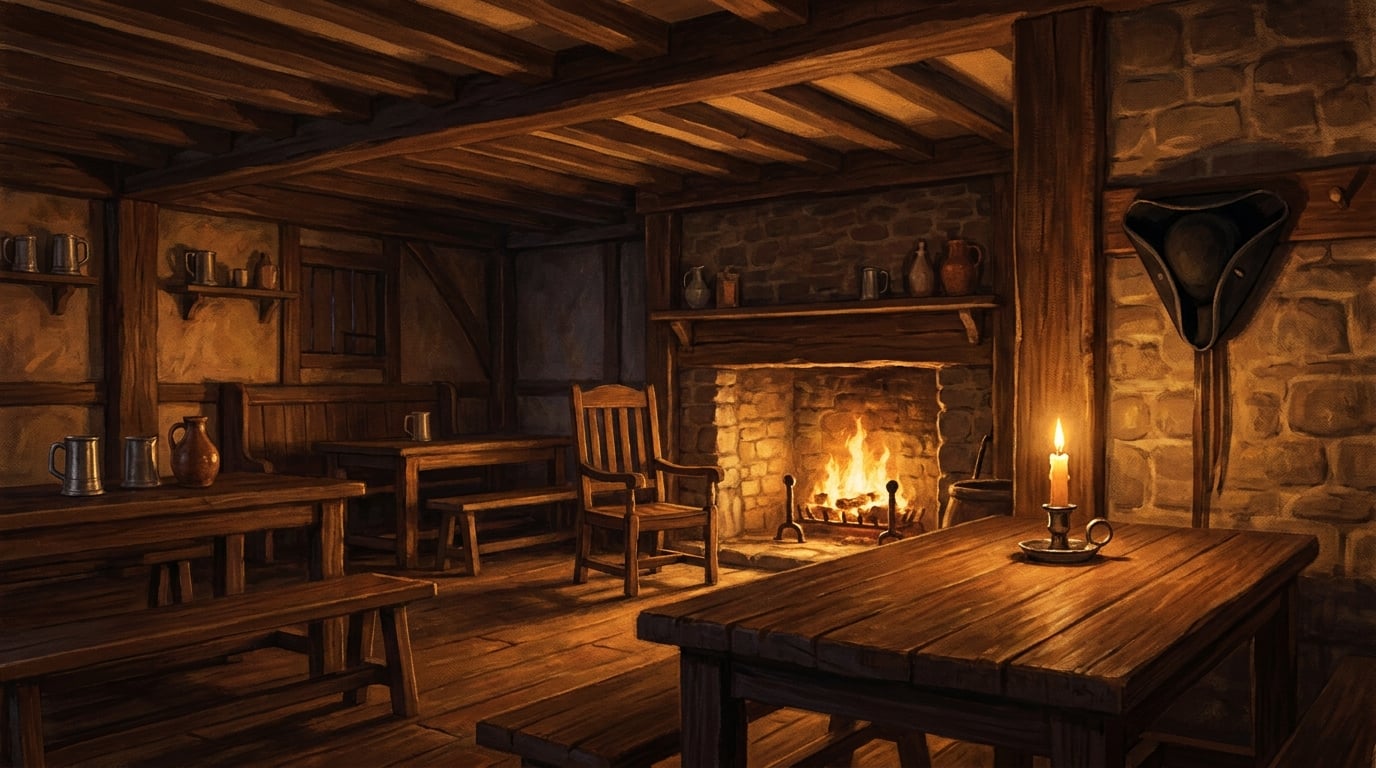
Picture a freezing Tuesday night in February 1726. Somewhere off Field Lane in Holborn, a man steps through an unmarked door, leaves his hat and coat with a woman named Margaret Clap, and walks into a back room filled with thirty other men. Some are wearing gowns. Others are speaking in high-pitched voices and calling each other by women’s names. Someone is playing a fiddle. A man in a petticoat is pretending to give birth to a doll while the room erupts in laughter.
That room was a molly house. And for roughly a hundred years, these secret gathering spaces served as the beating heart of London’s underground gay subculture.
The untold history of molly houses in old London is a story of defiance, community, and survival in an era when the penalty for loving someone of the same sex was death by hanging. These were not grim, furtive back alleys. They were places of warmth, music, ritual, and belonging. Men from every walk of life — apprentices, soldiers, tradesmen, aristocrats — built a parallel world behind closed doors, complete with their own names, customs, marriages, and even a version of drag performance that predates the modern concept by nearly three centuries.
Our team at Battle of Soho has spent months digging through Old Bailey trial records, period newspaper accounts, and the work of historians like Rictor Norton and Randolph Trumbach to piece together this hidden chapter of London’s past. What follows is the most complete account of molly houses you will find anywhere — from their origins in the early 1700s to their bloody confrontation with the law, and the quiet legacy they left behind in the very streets of modern Soho.
Table of Contents
What Were Molly Houses in Old London?
Molly houses were secret meeting places in 18th and early 19th century London where homosexual men gathered for companionship, socialising, and in some cases sexual encounters. The term “molly house” (sometimes written as “molly-house”) described not a single type of establishment but a whole category of venues — taverns, public houses, coffeehouses, private rooms, and even the back premises of ordinary shops.
The word “molly” itself came from “Molly,” a common diminutive of the name Mary. In 18th century slang, “molly” was used pejoratively to describe an effeminate man, a homosexual man, or a man who dressed and behaved in ways considered womanly. The term “moll” had long been underworld slang for a prostitute or a woman of loose morals, and the masculine form “molly” carried a similar charge of social deviance — though the men who gathered in molly houses reclaimed it as an identity within their own community.
These establishments flourished from roughly the 1690s through the 1830s, with their peak in the 1720s and 1730s. A typical molly house had a public front — a normal tavern or coffeehouse where heterosexual customers might drink without suspecting anything. The molly activities happened in back rooms or upper floors, accessible only to those who knew the right signals, passwords, or introductions.
What made molly houses remarkable was not just that they existed, but that they functioned as fully realised social institutions. They had regulars, hosts, customs, events, and hierarchies. In an age before the word “homosexual” had even been coined (it did not enter the English language until the late 19th century), the men who frequented molly houses had already built something that looked very much like a community.
The World That Created Molly Houses
To understand why molly houses emerged when and where they did, you have to understand the brutal legal landscape of 18th century England. Same-sex sexual acts between men were criminalised under the Buggery Act of 1533, passed during the reign of Henry VIII. This statute made buggery (a term encompassing anal sex and bestiality) a capital offence punishable by death.
The Buggery Act remained in force for over four hundred years, finally repealed only in 1967 in England and Wales. In the 1700s, a conviction under this law meant hanging at Tyburn — the same grisly public execution site where murderers, highwaymen, and forgers met their end. Men convicted of sodomy were also subjected to the pillory, where mobs could — and frequently did — pelt them with dead cats, stones, rotten vegetables, and filth. Some men died from the abuse they received in the pillory before they ever reached the gallows.
And yet, London in the early 1700s was exploding. The city’s population nearly doubled between 1680 and 1740, swollen by migrants from the countryside and refugees from abroad. The capital was a cauldron of anonymous boarding houses, crowded rookeries (slum districts), and a thriving culture of taverns, coffeehouses, and pleasure gardens. In a city of over half a million people where most residents did not know their neighbours, it became possible — just barely — to build a secret world in plain sight.
The men who created this world were taking extraordinary risks. The reward was equally extraordinary: in a society that branded them as criminals deserving of death, molly houses offered acceptance, affection, and the simple human need to be around people who understood them.
Inside a Molly House: Customs, Rituals, and Daily Life
The activities that took place inside molly houses shocked contemporary observers — but they also reveal a surprisingly rich and organised subculture. The journalist and moralist Ned Ward, who infiltrated a molly house in 1709 and wrote about it in his publication The Secret History of Clubs, described a world of elaborate customs that went far beyond mere sexual encounters.
Cross-Dressing and Drag
Cross-dressing was one of the most distinctive features of molly house culture. Many patrons wore women’s clothing — gowns, petticoats, aprons, caps, and ribbons — while attending gatherings. Some adopted these outfits permanently within the community, while others changed only at the molly house and returned to male dress when they left. This practice represents one of the earliest documented traditions of what we would now call drag performance, though the molly house version blurred the lines between performance, identity, and everyday socialising.
Chosen Names and Identities
Men who frequented molly houses adopted women’s names — what contemporary sources called “maiden names.” A man named John might become “Miss Kitty” or “Mrs. Fanny” within the community. These names were not just playful nicknames. They functioned as genuine alternative identities, used consistently across visits and recognised by the entire community. In a very real sense, these were some of the first documented chosen names in queer history.
Mock Marriages
One of the most talked-about molly house rituals was the mock marriage ceremony. Two men would go through a parody of a wedding, complete with vows, a “priest” (another molly house regular), and a celebration afterward. Some sources suggest these ceremonies were taken seriously within the community, representing genuine emotional commitments between partners. Other accounts describe them as more theatrical and satirical. Either way, the mock marriage was a profound act of defiance in a society that offered these men no legal recognition whatsoever.
Mock Births
Perhaps the most theatrical ritual was the “mock birth.” A man dressed in a nightgown would pretend to be in labour while others played the roles of midwives. After suitable dramatic effect, a doll would be “delivered” and the room would celebrate with feasting and drinking. Ned Ward described this scene with a mixture of horror and fascination, and it became one of the most frequently cited pieces of evidence against molly houses in trial records and moral pamphlets.
Everyday Socialising
For all the theatrical rituals, much of what happened in molly houses was simply socialising. Men drank together, sang songs, danced, gossiped, played cards, ate meals, and enjoyed each other’s company. After a week of living a lie in a hostile world, the molly house offered a few hours where these men could put down their masks and simply be themselves.
Mother Clap’s Molly House: The Most Famous Case in History
If you have heard of one molly house, it is almost certainly Mother Clap’s. The establishment run by Margaret Clap (known universally as “Mother Clap”) in Field Lane, Holburn, became the centre of the most sensational molly house trial of the 18th century — and the source of much of what we know about this hidden world today.
Margaret Clap was not herself a “molly.” She was a woman who kept a public house and recognised a business opportunity. From approximately 1724 to 1726, she operated her establishment as a meeting place for homosexual men, providing food, drink, private rooms, and — critically — a lookout system to warn of approaching constables or informants. She reportedly took great pride in her role as hostess, going out of her way to make her guests comfortable and welcome.
The molly house at Field Lane was well-organised. Regulars paid for their drinks and food. The back room served as the primary gathering space, with adjacent rooms for more private encounters. Margaret Clap herself often sat by the door, keeping watch. According to trial testimony, she once guarded the door for an entire night to protect her guests during a suspicious disturbance outside, and afterwards had to be helped to bed because she could barely stand.
The Raid of 1726
In February 1726, Mother Clap’s molly house was raided by constables from the Society for the Reformation of Manners. The raid was the culmination of a surveillance operation — informants had been attending the molly house for weeks, gathering evidence and memorising the faces and names of the regulars.
Dozens of men were arrested. Margaret Clap herself was taken into custody and charged with keeping a disorderly house — the standard legal charge used against molly house keepers, since proving individual acts of sodomy was far more difficult. She was convicted and sentenced to stand in the pillory, a punishment that could easily have killed her given the violence mobs typically directed at those convicted of sexual crimes.
The Trial at the Old Bailey
The trials that followed at the Old Bailey — London’s central criminal court — produced some of the most detailed surviving records of molly house life. Witnesses described the mock marriages, the cross-dressing, the mock births, and the general atmosphere of the establishment. Three men arrested in the raids — Gabriel Lawrence, William Griffin, and Thomas Wright — were charged with the capital offence of sodomy itself.
All three were convicted. All three were sentenced to death. And all three were hanged at Tyburn on a single day, their executions reported in newspapers across the country.
Margaret Clap survived the pillory, though accounts suggest she was left badly injured. After her punishment, she largely disappears from the historical record. Her story — a woman who risked everything to provide a safe space for a persecuted community — deserves to be far better known than it is.
Where Molly Houses Operated in London
Molly houses were concentrated in specific neighbourhoods across 18th century London. The geography of the subculture was not random — it followed the patterns of the city’s nightlife, its anonymous lodging districts, and its areas of mixed respectability where unusual behaviour attracted less attention.
Covent Garden was one of the most significant molly house districts. The area around the market, the theatres on Drury Lane, and the network of brothels and taverns made it a natural hub for underground socialising. The Royal Exchange, nearby, also served as a daytime cruising area where men could make initial contacts before retiring to nearby premises.
Moorfields, an area just north of the City walls, was another hotspot. Its open fields and walkways served as an outdoor meeting ground, particularly at night. The nearby streets contained several taverns that operated as molly houses.
Holborn and Field Lane were the location of Mother Clap’s establishment and several other molly houses. Field Lane was a narrow, winding thoroughfare in one of London’s most notorious rookeries — a warren of cheap lodging houses and criminal activity where strangers came and went without attracting notice.
Whitechapel in the East End hosted at least one documented molly house, run by a figure known as “Miss Muff.” The East End Women’s Museum has researched this establishment, adding an important dimension to our understanding of how molly houses operated across different parts of the city.
St James’s Park served as London’s most famous cruising ground — an open-air space where men could meet, walk, and make contacts. The park’s reputation endured for centuries, and it remained associated with male homosexual socialising well into the Victorian era.
The Hunt Begins: The Society for the Reformation of Manners
The molly houses did not exist in a vacuum of tolerance. From the very beginning, they were hunted by a powerful and organised network of moral crusaders, law enforcement agents, and opportunistic criminals. The primary engine of this persecution was the Society for the Reformation of Manners.
Founded in 1690, the Society was a voluntary association of devout citizens — primarily middle-class and upper-middle-class Anglicans — who took it upon themselves to enforce public morality. They employed paid constables and informants to police a wide range of “immoral” behaviour, including prostitution, gambling, Sabbath-breaking, lewd publications, and, with particular ferocity, homosexual activity.
The Society’s methods were systematic and ruthless. Informants would be sent into molly houses to gather evidence. Sometimes they participated in activities to build trust and collect incriminating testimony. They memorised names, faces, addresses, and conversations. Then they would return with constables to make arrests — or, worse, file information with magistrates that could lead to sodomy charges carrying the death penalty.
Charles Hitchin and Jonathan Wild
Two of the most notorious figures in the war on molly houses were Charles Hitchin and Jonathan Wild. Hitchin was a City of London constable who wrote inflammatory pamphlets about the “molly houses” he claimed to have discovered, painting lurid pictures of what happened inside. His 1718 pamphlet The Regulator described molly houses in breathless, sensational detail and helped stir public outrage.
Jonathan Wild is one of the most remarkable criminals in British history. He presented himself as a “thief-taker general” — a man who recovered stolen goods and captured criminals for a fee. In reality, he ran London’s largest criminal network, simultaneously controlling the city’s thieves and the people who supposedly hunted them. Wild used information about molly houses as a tool for blackmail, threatening to expose men who frequented them unless they paid substantial sums. He was eventually hanged at Tyburn in 1725 — not for his exploitation of homosexual men, but for receiving stolen goods.
Blackmail and Extortion
Blackmail was one of the most insidious threats facing men who attended molly houses. Because sodomy was a capital offence, any man who was known to have visited a molly house was vulnerable to extortion. A blackmailer only had to threaten to report a man to the authorities — or to his family, employer, or church — to extract money. Several historical cases document men who were bled dry financially before being exposed anyway. Some chose suicide over the shame of public exposure.
This climate of fear and exploitation was the direct result of laws that criminalised a fundamental aspect of human identity. The men who built molly house culture were not naive about the dangers. They knew that every visit could end in arrest, blackmail, or the gallows. They went anyway.
The Trials and the Gallows: Lives Lost
Between 1700 and 1830, dozens of men were prosecuted for offences related to molly houses. Many received lesser sentences — time in the pillory, fines, imprisonment for keeping a disorderly house. But some faced the full weight of the Buggery Act and paid with their lives.
Gabriel Lawrence
Gabriel Lawrence was a 43-year-old milkman when he was arrested in the 1726 raid on Mother Clap’s molly house. At his trial at the Old Bailey, witnesses described finding him in the establishment in the company of other men, some of them in women’s clothing. He was convicted of sodomy and sentenced to death. Lawrence was hanged at Tyburn on 16 May 1726.
Newspaper reports of the time, including accounts in the Caledonian Mercury and the Ipswich Journal, carried the news of his execution alongside reports of other hangings — a grim reminder of how the criminal justice system equated consensual same-sex acts with murder and robbery.
William Griffin
William Griffin, another man arrested in the 1726 raids, was convicted and executed alongside Lawrence. A mangle-maker by trade, Griffin was described in court records as a regular at Mother Clap’s establishment. His conviction rested on the testimony of informants who had infiltrated the molly house specifically to gather evidence against its patrons.
Thomas Wright
Thomas Wright, the third man executed in the aftermath of the Mother Clap raid, was identified as someone who had frequented molly houses in Holborn. Like Lawrence and Griffin, he was charged with sodomy, convicted on the basis of informant testimony, and hanged at Tyburn.
Three men dead. A woman left injured after the pillory. A community scattered into hiding. This was the cost of a single molly house raid in 18th century London. And the raids would continue for decades afterward.
Julius Caesar Taylor: Black History in Molly Houses
One of the most significant but least told stories from molly house history involves Julius Caesar Taylor, a Black man who operated a molly house in London. His story, preserved in fragments of court records and period documents, highlights the intersectional nature of 18th century queer culture in ways that most histories have overlooked.
Taylor’s existence challenges the common assumption that early queer history in Britain was exclusively white. London in the 1700s was home to a growing Black population — estimates suggest several thousand Black residents lived in the capital, many of them formerly enslaved or the children of enslaved people. Taylor’s role as a molly house keeper demonstrates that the underground queer community of Georgian London crossed racial lines, at least in some contexts.
Historic England has highlighted Taylor’s story as part of its LGBTQ+ heritage project, noting the importance of recovering these intersectional narratives. Taylor’s name — “Julius Caesar,” a name of extraordinary grandeur and historical weight — may itself have been a chosen name, reflecting the same tradition of self-naming and identity construction that characterised the molly community as a whole.
The full details of Taylor’s molly house — its location, duration, and fate — remain partially obscured by the gaps in the historical record. But his story matters because it reminds us that queer history in London was never monochrome. The molly houses were spaces where men of different classes, backgrounds, and races could find common ground in a world that rejected them all.
Molly Houses and the Birth of Modern Gay Identity
The historian Randolph Trumbach, in his landmark research on 18th century London, argued that something genuinely new emerged in the molly houses. He contended that the concept of a distinct homosexual identity — a sense of being a particular kind of person, not merely someone who committed particular acts — took shape in the molly subculture of early 1700s London.
This is a profound claim. Before the molly houses, same-sex desire was generally understood through the lens of specific acts rather than identity. A man who had sex with other men was seen as someone who committed the sin or crime of sodomy — not as a different category of person. The molly houses, with their chosen names, distinctive customs, cross-dressing traditions, and tight-knit community, created something new: a collective identity based on same-sex attraction.
The word “homosexual” was not coined until 1869, by the German-language writer Karl-Maria Kertbeny. The concept of “gay” identity as we understand it today took even longer to develop. But the seeds were planted in the back rooms of Field Lane, Covent Garden, and Moorfields, where men built a world that recognised them as a community rather than merely a collection of individual sinners.
Rictor Norton, another of the key historians of molly house culture, has documented how this emerging identity persisted and evolved across the 18th and 19th centuries. The molly houses of the 1720s gradually gave way to different forms of queer socialising in the Victorian era, but the through-line is clear. The men of Mother Clap’s generation were the ancestors of every gay bar, Pride parade, and LGBTQ+ community that followed.
From Molly Houses to Soho: The Living Legacy
The connection between molly house history and modern Soho is more than just geographical coincidence. Soho, the neighbourhood that Battle of Soho celebrates and chronicles, became the heart of London’s LGBTQ+ community in the 20th century. The Coleherne, The Salisbury, The Yard, G-A-Y — these venues are direct descendants of the molly houses of the 1700s, serving the same fundamental purpose: providing a space where people who love differently can find each other.
The molly houses of 18th century Holborn and Covent Garden eventually shifted westward. By the late 19th and early 20th centuries, Soho had become the centre of London’s underground queer social scene. The same combination of factors that had made 1720s Holborn suitable for molly houses — anonymity, nightlife culture, mixed-use streets, a transient population — made Soho the natural home for London’s gay community in the decades that followed.
When you walk through Old Compton Street today, you are walking through the most recent layer of a tradition that stretches back over three centuries. The drag performers at the Royal Vauxhall Tavern and the patrons of Soho’s gay bars are part of a continuous cultural lineage that runs directly back to the men who gathered in Margaret Clap’s back room in 1726.
In 2026, there is also a popular board game called Molly House, released to critical acclaim, that invites players to experience this history from the inside. The game, which teaches players about 18th century queer culture through play, reflects a growing recognition that this history belongs to everyone — not just historians, and not just the LGBTQ+ community, but anyone who cares about the long, complicated story of how people learned to be themselves.
FAQs
Why were they called molly houses?
Molly houses took their name from the word ‘molly,’ a common 18th century diminutive of the name Mary. In the slang of the period, ‘molly’ was used to describe an effeminate man or a man who engaged in same-sex relationships. The men who frequented these establishments embraced the term within their own community, adopting women’s names and identities as part of their subculture.
What is the history of molly houses?
Molly houses emerged in London in the late 1600s and flourished through the 1700s and early 1800s. They were taverns, coffeehouses, or private rooms where homosexual men gathered for companionship and sex at a time when sodomy was punishable by death under the Buggery Act of 1533. The most famous molly house was run by Margaret Clap in Field Lane, Holborn, which was raided in 1726. Several men were executed as a result, and the raids were driven by organisations like the Society for the Reformation of Manners. Molly houses represent one of the earliest known forms of organised gay social life in Britain.
Where were the molly houses in London?
Molly houses were concentrated in several London districts. Key locations included Covent Garden and its surrounding taverns, Moorfields (north of the City), Holborn and Field Lane (where Mother Clap operated), Whitechapel (where Miss Muff ran a molly house), and areas around the Royal Exchange. St James’s Park served as a major open-air cruising ground. These neighbourhoods shared characteristics of anonymity, nightlife, and mixed populations that made underground socialising possible.
Who was Mother Clap?
Mother Clap, whose real name was Margaret Clap, was a woman who ran the most famous molly house in London from approximately 1724 to 1726. Her establishment in Field Lane, Holborn, provided food, drink, private rooms, and protection for homosexual men. She was not a molly herself but a businesswoman who recognised a need and served her community with genuine care. After the 1726 raid, she was convicted of keeping a disorderly house and sentenced to stand in the pillory, where she was badly injured by the mob.
What happened during molly house raids?
Molly house raids were conducted by constables, often directed by the Society for the Reformation of Manners, following weeks of surveillance by informants. During a raid, constables would storm the premises and arrest everyone present. Patrons were taken to magistrates and charged with offences ranging from keeping a disorderly house to the capital crime of sodomy. Some men were sentenced to the pillory, where violent mobs could kill them. Others, like Gabriel Lawrence, William Griffin, and Thomas Wright in 1726, were hanged at Tyburn.
Were there molly houses outside of London?
London was the undisputed centre of molly house culture, but evidence suggests similar establishments existed in other British cities and port towns. Historic England has documented queer socialising traditions in Manchester, including later fancy dress balls that echoed molly house customs. Port cities with transient populations and naval presence may also have hosted informal molly house equivalents, though the documentary evidence is much thinner than for London.
What was the penalty for sodomy in 18th century London?
Under the Buggery Act of 1533, sodomy was a capital offence in 18th century England, punishable by death by hanging at Tyburn. Men convicted of the offence were also subjected to the pillory, where they faced abuse from crowds including being pelted with stones, dead animals, and filth. Some men died from pillory violence before reaching execution. Additionally, men who attended molly houses faced blackmail, as any accusation of sodomy could destroy their lives even without a conviction.
How do molly houses connect to modern LGBTQ+ identity?
Historian Randolph Trumbach argues that the molly houses of early 1700s London gave rise to the modern concept of a distinct homosexual identity — the idea that being attracted to the same sex makes you a particular kind of person, not merely someone who commits certain acts. The molly community’s chosen names, customs, and social structures represent early forms of practices still seen in LGBTQ+ culture today, including drag, chosen family, and community-specific naming traditions.
Conclusion: Why This History Still Matters
The untold history of molly houses in old London is not merely an academic curiosity. It is a story about human resilience in the face of overwhelming oppression. The men who gathered in Margaret Clap’s back room — and in dozens of other establishments across 18th century London — created something out of nothing. They built community where none was permitted to exist. They invented traditions of drag, chosen family, and queer identity centuries before those words entered common use.
Three men — Gabriel Lawrence, William Griffin, and Thomas Wright — paid for that community with their lives. A woman named Margaret Clap was nearly killed for helping them. Countless others lived in permanent fear of blackmail, arrest, and execution. And yet, the molly houses endured for over a hundred years, evolving and adapting across generations.
When we walk through Soho today, past the bars and clubs that define the neighbourhood’s modern identity, we are walking in the footsteps of people who risked everything just to be together. The molly houses of old London are gone, but their legacy is alive every time someone finds the courage to be themselves.
That is a history worth telling. And it is a history worth remembering.