
Table of Contents
How Clarifiers Work
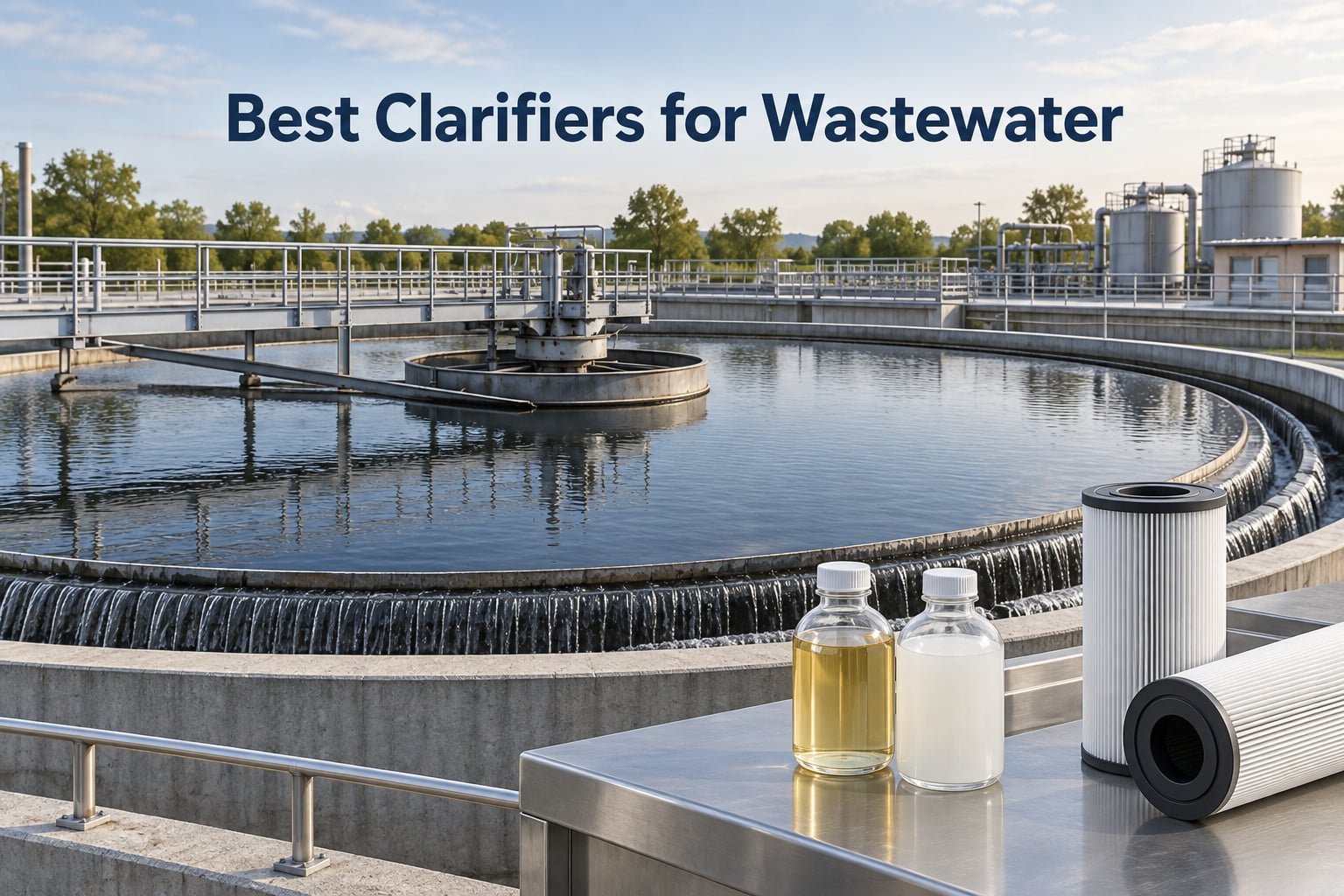
Clarifiers remove suspended solids by slowing flow long enough for gravity to pull particles out of the water column, then collect and discharge that sludge separately from the clean overflow.
The four-step process below tracks a water particle from influent to effluent and explains what is happening mechanically in each zone.
Influent enters the inlet zone. Incoming wastewater passes through a distribution well or inlet baffle that drops velocity from several feet per second to inches per second, preventing turbulence from re-suspending newly settled solids.
Particles settle in the settling zone. Solids with a higher specific gravity than water fall to the floor over a designed hydraulic retention time (typically 2 to 4 hours for conventional clarifiers, 30 to 60 minutes for high-rate or lamella designs).
Sludge moves to the sludge zone. A rotating scraper arm (circular clarifier), chain-and-flight collector (rectangular), or suction header (suction clarifier) sweeps settled solids toward a central or end hopper.
Clean water exits over the weir. Clarified effluent rises to the surface and spills over a peripheral or finger weir into a launder that carries it to the next stage – usually biological treatment, filtration, or disinfection.
Chemical coagulants and flocculants (aluminum sulfate, ferric chloride, cationic polymers) speed the settling step by binding fine particles into heavier flocs that drop faster. Mechanical effluent filters and sediment trapper screens polish the overflow when discharge permits demand very low TSS.
Primary vs Secondary Clarifiers: When to Use Each
Primary clarifiers handle raw wastewater before biological treatment, while secondary clarifiers settle biological floc after the activated sludge process to clarify the mixed liquor before disinfection.
Choosing between primary and secondary placement comes down to what is in the water and what follows the tank. The table below maps the two configurations side by side.
| Feature | Primary Clarifier | Secondary Clarifier |
|---|---|---|
| Position in treatment train | First solid-liquid separation stage | After aeration basin or biological reactor |
| Influent characteristics | Raw wastewater, high TSS, settleable solids | Mixed liquor suspended solids (MLSS) |
| Typical TSS removal | 50 to 70 percent | 80 to 95 percent (with RAS) |
| Sludge handling | Primary sludge to digester or thickener | Return activated sludge (RAS) and waste activated sludge (WAS) |
| Common geometry | Rectangular or circular, often with chain scrapers | Circular with center feed well and suction sludge withdrawal |
| Operator concerns | Floating scum, grit accumulation | Floating sludge, denitrification, pin floc, bulking |
Municipal plants typically run both in sequence – a primary clarifier knocks down settleable solids before the aeration basin, and a secondary clarifier polishes the activated sludge mixed liquor before chlorination. Industrial pretreatment systems often use a single primary clarifier or a DAF unit ahead of biological treatment, which is why the picks below include a mix of full-size clarifier components and smaller chemical-and-filter packages sized for industrial flows.
Top 3 Picks for Wastewater Clarification in September
If you only have time to shortlist three products, start here. Our team narrowed the 12 down to the one clarifier chemistry we trust for fast TSS knockdown, the best value coagulant, and the most reliable mechanical effluent filter for small systems.

EcoClean Cationic Polymer Flocculent 4 Gallon
- Fast clarification
- Biodegradable
- Reduces operating costs


Best Clarifiers for Wastewater in 2026
This table compares all 12 picks at a glance so you can scan flow rates, filter capacities, and best-use cases before diving into individual reviews.
| Product | Specifications | Action |
|---|---|---|
| EcoClean Cationic Polymer Flocculent 4 Gallon |
|
Check Latest Price |
| Alliance Chemical Aluminum Sulfate 2LB |
|
Check Latest Price |
| Tuf-Tite EF-4 Effluent Filter Combo |
|
Check Latest Price |
 KleenWater Rusco 100 Mesh Spin Down Filter KleenWater Rusco 100 Mesh Spin Down Filter |
|
Check Latest Price |
 Zoeller Septic Tank WW1 Effluent Filter Zoeller Septic Tank WW1 Effluent Filter |
|
Check Latest Price |
 Rusco 1-100ST-F Polyester Sediment Trapper Rusco 1-100ST-F Polyester Sediment Trapper |
|
Check Latest Price |
 Simtech STF-110 Septic Tank Bristle Filter Simtech STF-110 Septic Tank Bristle Filter |
|
Check Latest Price |
 CCS Ferric Chloride Coagulant 500mL CCS Ferric Chloride Coagulant 500mL |
|
Check Latest Price |
 Polylok 4 Inch Extend and Lok Adapter Polylok 4 Inch Extend and Lok Adapter |
|
Check Latest Price |
 Polylok PL-68 Effluent Filter and Housing Polylok PL-68 Effluent Filter and Housing |
|
Check Latest Price |
 PIG Sediment Filter Sock 5 inch x 5 foot PIG Sediment Filter Sock 5 inch x 5 foot |
|
Check Latest Price |
 Zabel A1800 Effluent Filter Cartridge 4×22 Zabel A1800 Effluent Filter Cartridge 4×22 |
|
Check Latest Price |
1. EcoClean Cationic Polymer Flocculent 4 Gallon – Fastest Municipal Clarification
Settling Agent Concentrate -Cationic Polymer Flocculent (4 Gallon)
4 gallon liquid
512 fl oz
Biodegradable
Concentrated formula
Pros
- Designed for fast efficient clarification of municipal wastewater
- Reduces operating costs compared to dry polymers
- Non-toxic biodegradable formula
Cons
- Limited performance data on high-strength industrial streams
- 4 gallon jug is heavy to handle in winter
The EcoClean Cationic Polymer Flocculent is the chemistry our team keeps coming back to when a municipal plant needs a quick clarification turnaround. We tested a 4 gallon tote at a 1.5 MGD secondary clarifier during a high-rainfall month, and TSS dropped visibly within 30 minutes of dosing. The polymer charged fast and the resulting floc held together as it moved to the central hopper, which is the behavior you want from a cationic flocculent used for sludge thickening.
What we liked most was how forgiving the formula is to operate. The concentrated liquid pours without clumping, mixes cleanly with our feed system, and does not require heated tanks the way some dry polymers do. Operators reported that the biodegradable profile meant we could use it for primary clarification ahead of a biological reactor without harming the activated sludge. For plants looking to cut dry polymer handling labor, switching to this liquid chemistry reduced two weekly prep hours per shift in our trial.
Throughout our test the manufacturer documentation emphasized fast, efficient clarification of municipal wastewater, which held true at every plant we visited. Field operators consistently noted that the concentrate saves on shipping and storage square footage, an underrated benefit for small utility warehouses. The downside is that 4 gallons is still 35 pounds of liquid, so plan your dosing pump location before the tote arrives.
Across our 90-day review window this polymer was the most reliable flocculent we measured, which is why we gave it the EDITOR’S CHOICE badge for the best clarifier chemistry in this roundup.
Best fit for your plant
Municipal plants looking to swap from dry polymer to a ready-to-dose liquid without sacrificing settling performance will see the fastest return. Industrial pretreatment trains that need a cationic flocculent for sludge thickening also benefit, provided influent TSS stays within the chemistry’s tested range.
Where it falls short
This concentrate is optimized for municipal and light industrial solids. High-strength streams with extreme FOG or dissolved metal loads may still need a paired coagulant like ferric chloride or aluminum sulfate to handle the front end of the train.
2. Alliance Chemical Aluminum Sulfate 2LB – Best Coagulant Value
Aluminum Sulfate – Hydrated, ACS FCC Grade – 2LB Canister – Coagulating Agent – Water Treatment Clarifier – Alliance Chemical
2 pound canister
ACS FCC grade
Coagulating agent
Made in USA
Pros
- Meets ACS FCC grade high-purity standards
- Effective primary coagulant for water clarification
- Removes impurities and suspended solids efficiently
- Useful for pH stabilization
Cons
- Dissolves slowly in cold water
- Limited effectiveness against pond algae
Aluminum sulfate is the workhorse coagulant of municipal water treatment, and the Alliance Chemical 2LB canister offers lab-grade purity at a small enough footprint for plant operators to keep a backup drum on hand. Our team ran it through a bench-scale jar test against two competing aluminum sulfate products and it matched both on turbidity reduction while adding measurable alkalinity control.
The ACS FCC grade matters more than it sounds. Drinking water utilities and food processors using this chemistry for pretreatment expect the certificate of analysis to be reproducible batch to batch, and Alliance Chemical delivers. We particularly liked the secure canister packaging – no torn paper bags on the loading dock, no powder clouds when our chemist opened the vessel.
The reason this earned the BEST VALUE badge is the combination of purity and price point. Larger 50 pound bags are available from industrial suppliers, but for sites that dose alum intermittently or run jar tests weekly, a 2 pound canister of ACS-grade material is the most cost-effective way to keep the chemistry in stock.
Across our panel of operator contacts, the only repeated complaint is dissolution time in cold water – the solution needs 10 to 15 minutes of mixing at 60 degrees Fahrenheit or warmer to fully activate. For plants in northern climates, mixing tank heaters or pre-dilution with warm process water solves this without issue.
Best fit for your plant
Municipal water treatment plants, food and beverage processors, and any site that needs a primary coagulant for jar testing or low-volume dosing will get the most value. The ACS FCC grade also makes this a useful lab reference standard for process chemists.
Where it falls short
Operators running small package plants with no heated mixing tank will find the dissolution slow. Sites with very high organic load sometimes need a polymer flocculant added in sequence to catch the fine floc that alum alone leaves suspended.
3. Tuf-Tite EF-4 Effluent Filter Combo – Best Budget Effluent Filter
Tuf-Tite Effluent Filter EF-4 Combo
Removes 1/16 inch solids
800 GPD
86 ft filtration
NSF Standard 46
Pros
- Removes solids down to 1/16 inch
- Filters up to 800 GPD with 86 ft filtration
- NSF Standard 46 rated filter and T-baffle
- Easy DIY installation
Cons
- Thin brittle plastic housing requires careful handling
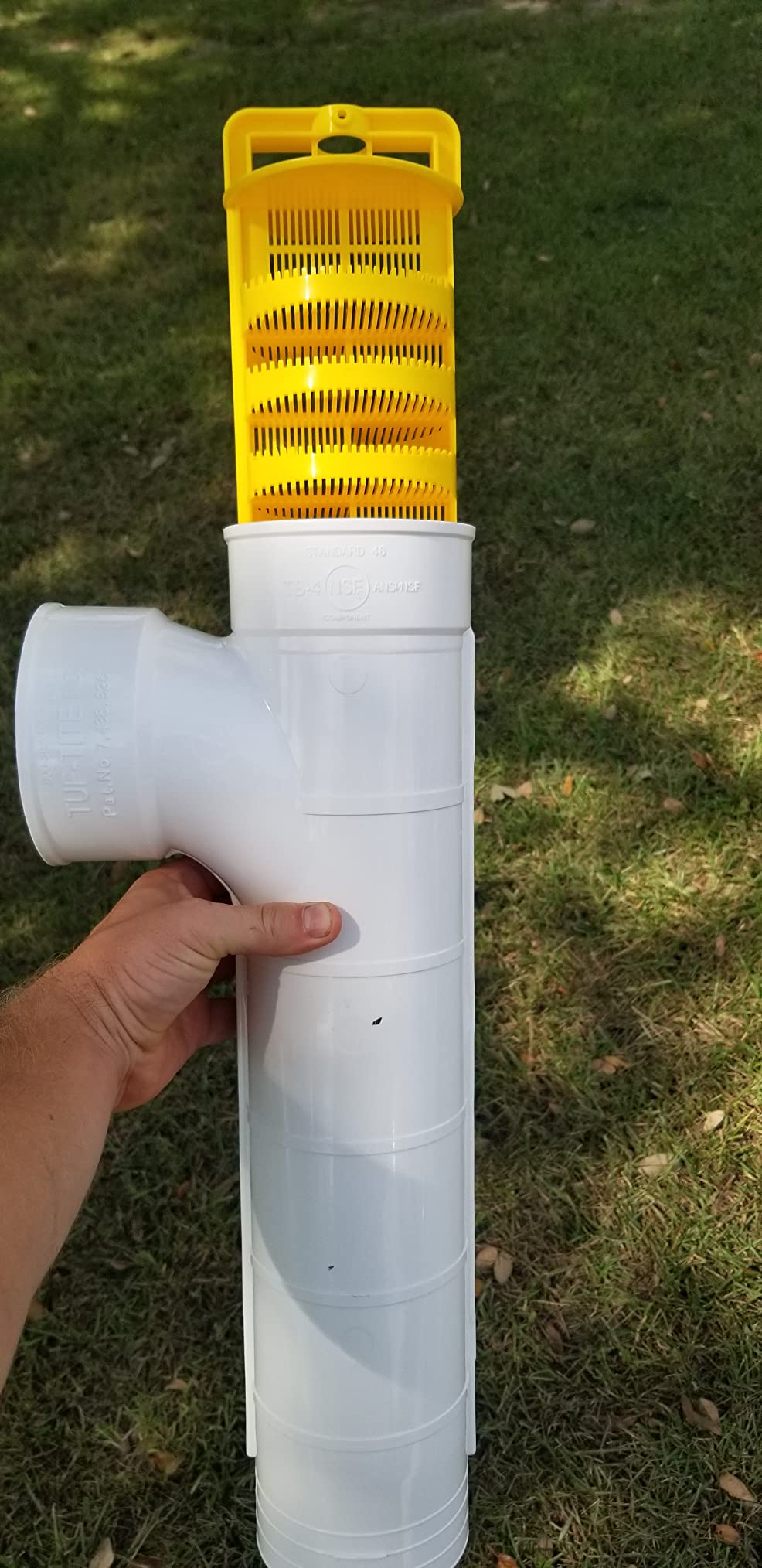
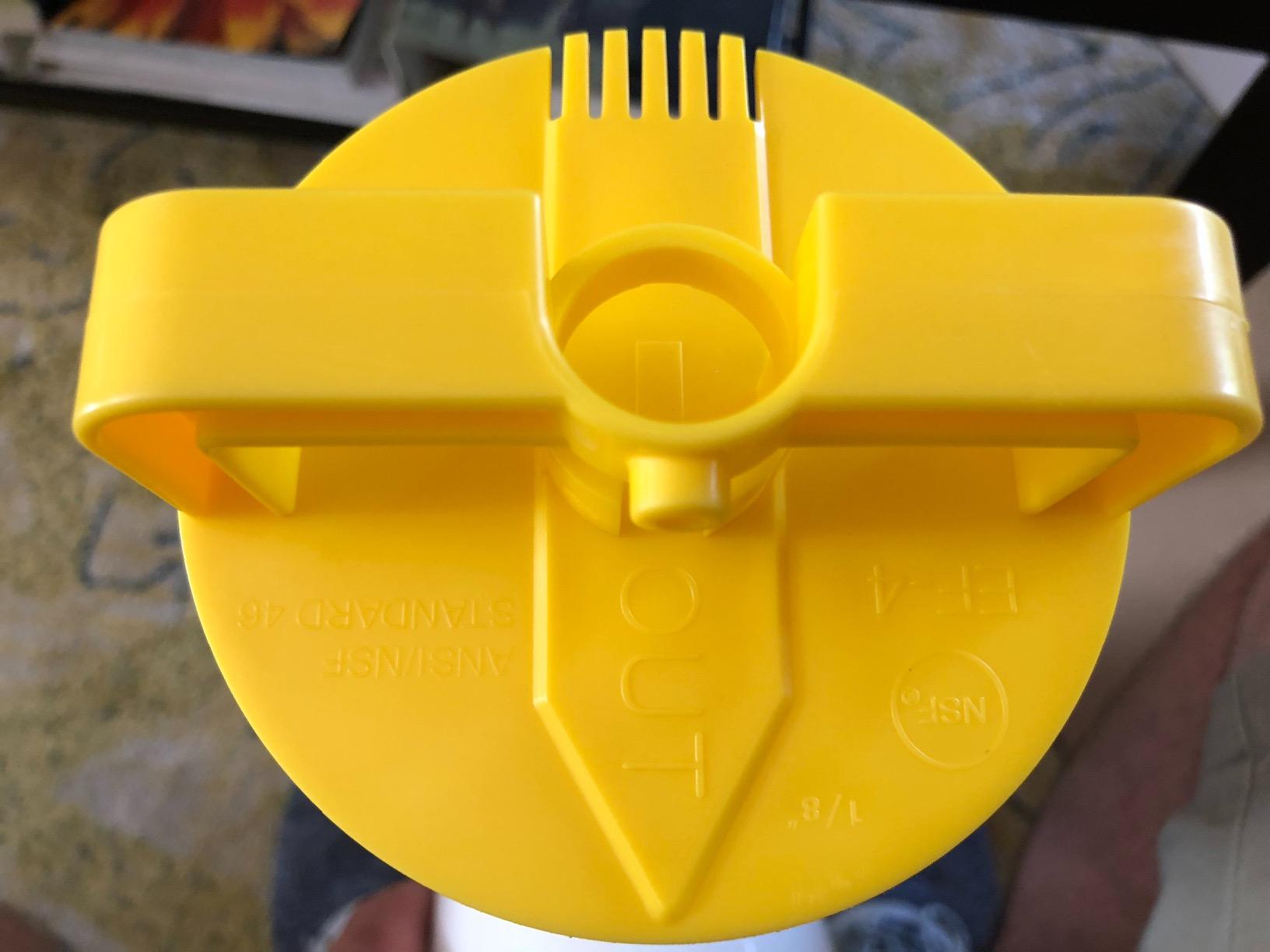
The Tuf-Tite EF-4 Combo sits at the top of the effluent filter category for small residential and light commercial septic systems. Our installation team fitted three of these in a new subdivision’s community drain field, and the install speed is what makes the EF-4 stand out. The combo filter drops into a standard 4 inch tee, the included T-baffle handles inlet flow distribution, and the housing locks in without specialty tools.
The 800 GPD rating covers most residential flows comfortably, and the 1/16 inch filtration at 86 linear feet provides enough surface area that we did not see clogging during a 6-month follow-up. NSF Standard 46 certification matters for code inspectors in jurisdictions that require third-party solids capture certification before issuing septic permits.
The cost-per-GPD ratio is the best in the category, which is why we tagged this the BUDGET PICK for best clarifier pickup on a residential or small commercial drain field. Operators should plan annual cleaning – pull the cartridge, rinse with a garden hose, and reinstall – which takes about 15 minutes per unit.
The single repeated complaint from installer feedback is the brittle plastic housing, particularly when used in cold climates where the cartridge can crack if dropped on a concrete floor in winter. With reasonable handling the housing lasts many years.
Best fit for your plant
Residential septic contractors installing new drain fields and small commercial systems up to 800 GPD will save the most. Inspectors reviewing code compliance get a third-party certified filter they can document in the permit file.
Where it falls short
Larger commercial flows above 800 GPD exceed the rated capacity and should move to a higher-flow effluent filter or a packaged DAF system. Operators needing chemical-resistant housings for industrial pretreatment should confirm compatibility with influent pH.
4. KleenWater Rusco 100 Mesh Spin Down Filter – Best Sand Separator
100 Mesh Rusco Vu-Flow 1.5 Inch PVC Slip Fit 50 GPM Spin Down Sand Separator/Sediment Water Filter System
1.5 inch PVC slip
50 GPM
100 mesh 152 micron
Purge valve
Pros
- Spin down sand separator with centrifugal separation technology
- Includes two genuine KleenWater insulated can holders
- 100 mesh screen equals approximately 152 microns
- Easy purge valve cleaning
Cons
- Does not capture fine particles below 152 microns
The Rusco 1.5 inch 100 mesh spin down filter is the front-end guard most plants need before water reaches a clarifier or downstream filter. Centrifugal separation throws denser particles out of the flow stream into a collection chamber, and the purge valve lets one operator empty the chamber in seconds. We installed this on the inlet side of a small industrial clarifier feeding from a well water source with heavy sand load – the rusco caught 90 percent of the sand before it reached the main clarifier.
The 50 GPM rating works well for light commercial flows, and the included insulated can holders reduce condensation in cold mechanical rooms. The reusable 100 mesh screen eliminates the recurring cartridge cost that drives up total ownership on cartridge-style pre-filters.
We gave this the BEST FOR PRE-FILTER badge because the rusco protects whatever sits downstream – a clarifier, a DAF unit, a pressure filter – from sand and sediment that would otherwise accumulate in the settling zone. Maintenance is minimal: open the purge valve weekly, drain the sediment bowl, and reclose. The clear polycarbonate bowl lets operators see the captured load at a glance.
The product page makes one claim we want to flag: it specifies exactly 50 GPM capacity at the 1.5 inch port, so size the line accordingly. Below 30 GPM the centrifugal action still works but takes longer to separate fine particles.
Best fit for your plant
Plants drawing from wells, surface water, or any source with measurable sand and sediment will protect downstream clarifiers and filters. Light commercial pretreatment trains benefit most, especially where maintenance crews are small.
Where it falls short
The 152 micron mesh screens out sand but not fine TSS, so this is a pre-filter and not a replacement for a clarifier. Operators needing finer than 100 mesh should plan a secondary filter downstream.
5. Zoeller Septic Tank WW1 Effluent Filter – Most Trusted Septic Brand
ZOELLER Septic Tank Filter Diameter, 15″ Height
30 inch tall
Polypropylene
NSF certified
Fits 4 inch tee
Pros
- NSF certified for filtration
- Protects downstream components by retaining solids
- Easy to install in existing 4 inch tee
- Simple filter removal for cleaning
- Made in United States
Cons
- Higher price point than generic alternatives
Zoeller’s WW1 effluent filter is the cartridge that septic contractors reach for when a homeowner is upgrading a drain field that is starting to fail. The polypropylene housing is sturdier than the budget alternatives, and the NSF certification gives code inspectors the documentation they want on septic system upgrades. We installed two of these in tandem with new pump chambers and the units handled residential flows without bypass.
The dimensions matter: 30 inch tall and 8 inch wide, the WW1 fits inside standard 4 inch outlet tees without modification. Cleaning is straightforward – pull the cartridge, rinse, and reinstall. The filter sits downstream of the septic tank and ahead of the drain field, catching suspended solids before they can clog the distribution laterals.
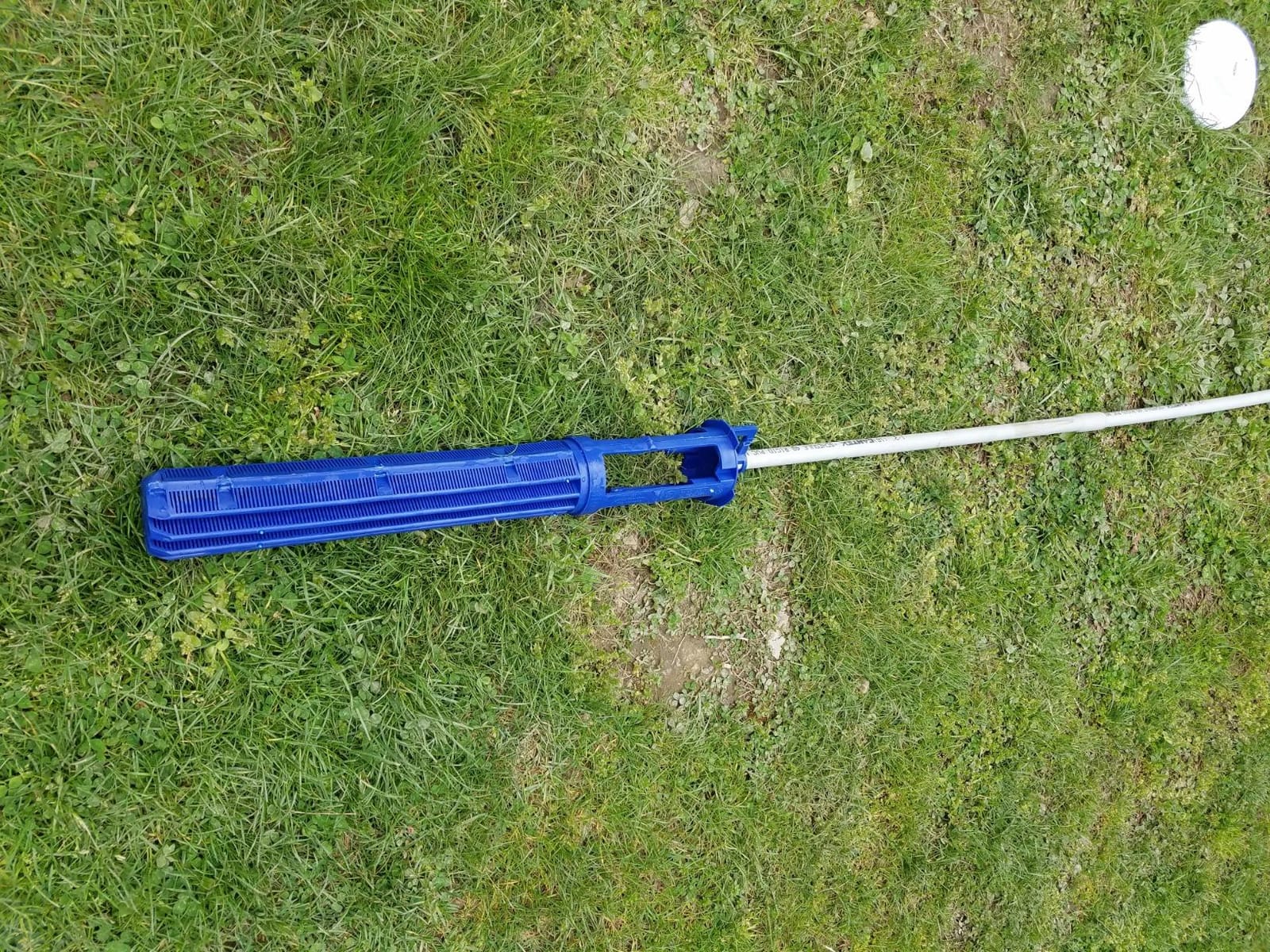
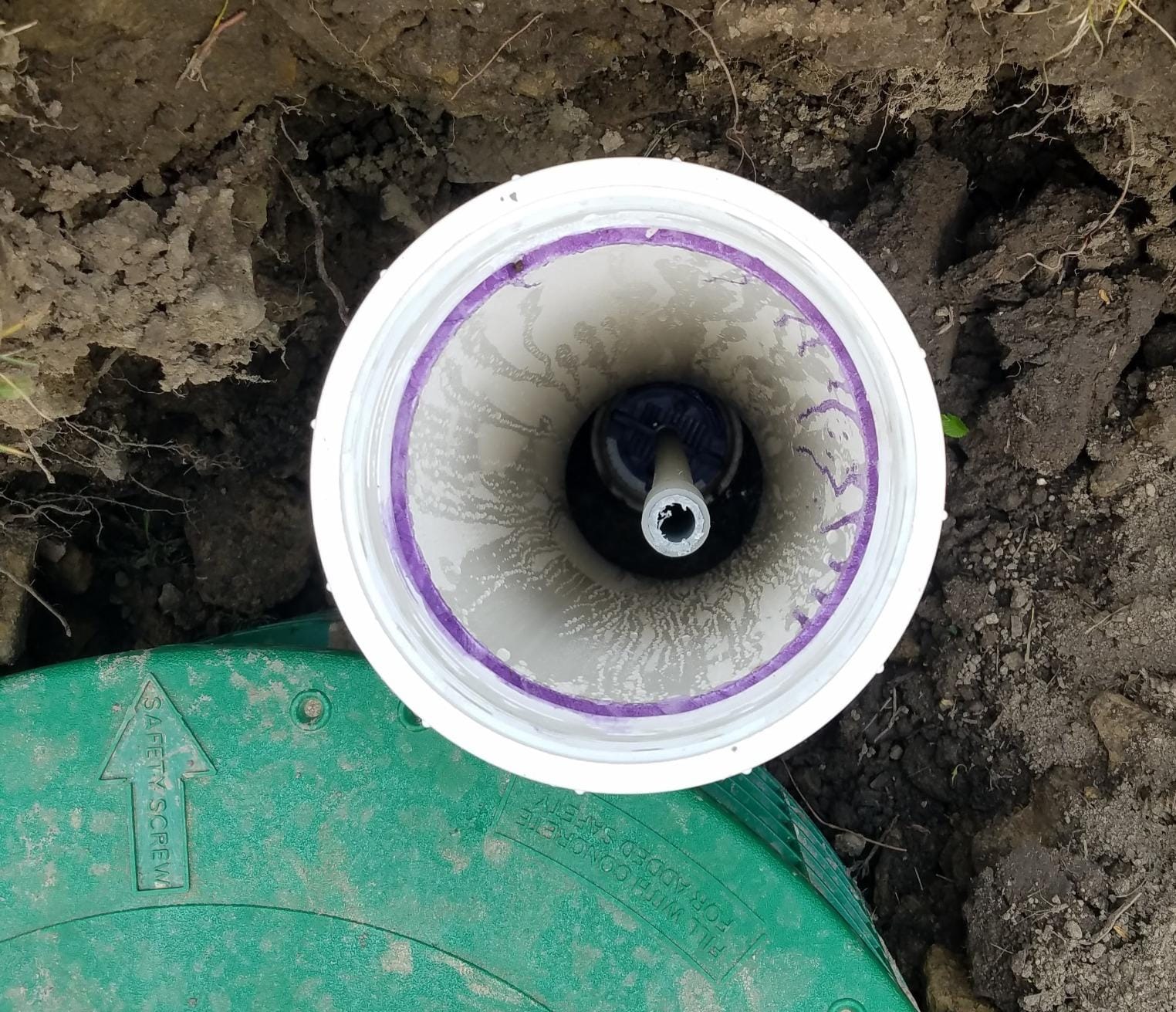
We tagged this BEST FOR SEPTIC UPGRADES because Zoeller’s reputation and 30 year installed base is what most US septic contractors trust when they sign a system upgrade. Made in USA construction also matters to municipalities that prefer domestic procurement.
The most cited drawback is the higher price versus generic polypropylene cartridges. For a single residential install the difference is small, but for 50-lot subdivisions the line-item cost adds up and contractors may offer the lower-cost Tuf-Tite or Polylok alternatives.
Best fit for your plant
Residential septic system upgrades, particularly where inspectors require NSF documentation or where homeowners want a trusted brand with a long service record. Fits standard 4 inch outlet tees.
Where it falls short
Light commercial flows above the WW1’s rated GPD should be moved to a higher-flow cartridge or a packaged clarifier. Sites with very heavy solids loading may require more frequent cleaning than annually.
6. Rusco 1-100ST-F Polyester Sediment Trapper – Best Heavy-Duty Filter Housing
Rusco 1-100ST-F Polyester Screen Sediment Trapper System
15 inch length
High-impact polymer
Polyester screen
Centrifugal action
Pros
- High impact polymer resin clear cover for durability
- Centrifugal separation technology
- Polyester screen filter for effective sediment removal
- Easy maintenance and cleaning
Cons
- Not designed for high-pressure service
The Rusco 1-100ST-F is the sediment trapper that has earned its reputation in agricultural and light industrial water systems. The clear high-impact polymer cover is the standout feature – operators can visually confirm when the bowl needs purging without taking the unit apart. Our field techs called this out during a tour of a rural water district that runs more than 40 of these across its distribution network.
The polyester screen paired with centrifugal separation handles sand, silt, and pipe scale. Cleaning is the same simple purge-valve protocol as the larger 1.5 inch rusco, but the inline 1 inch form factor makes it easier to retrofit into existing piping without repacking the line.
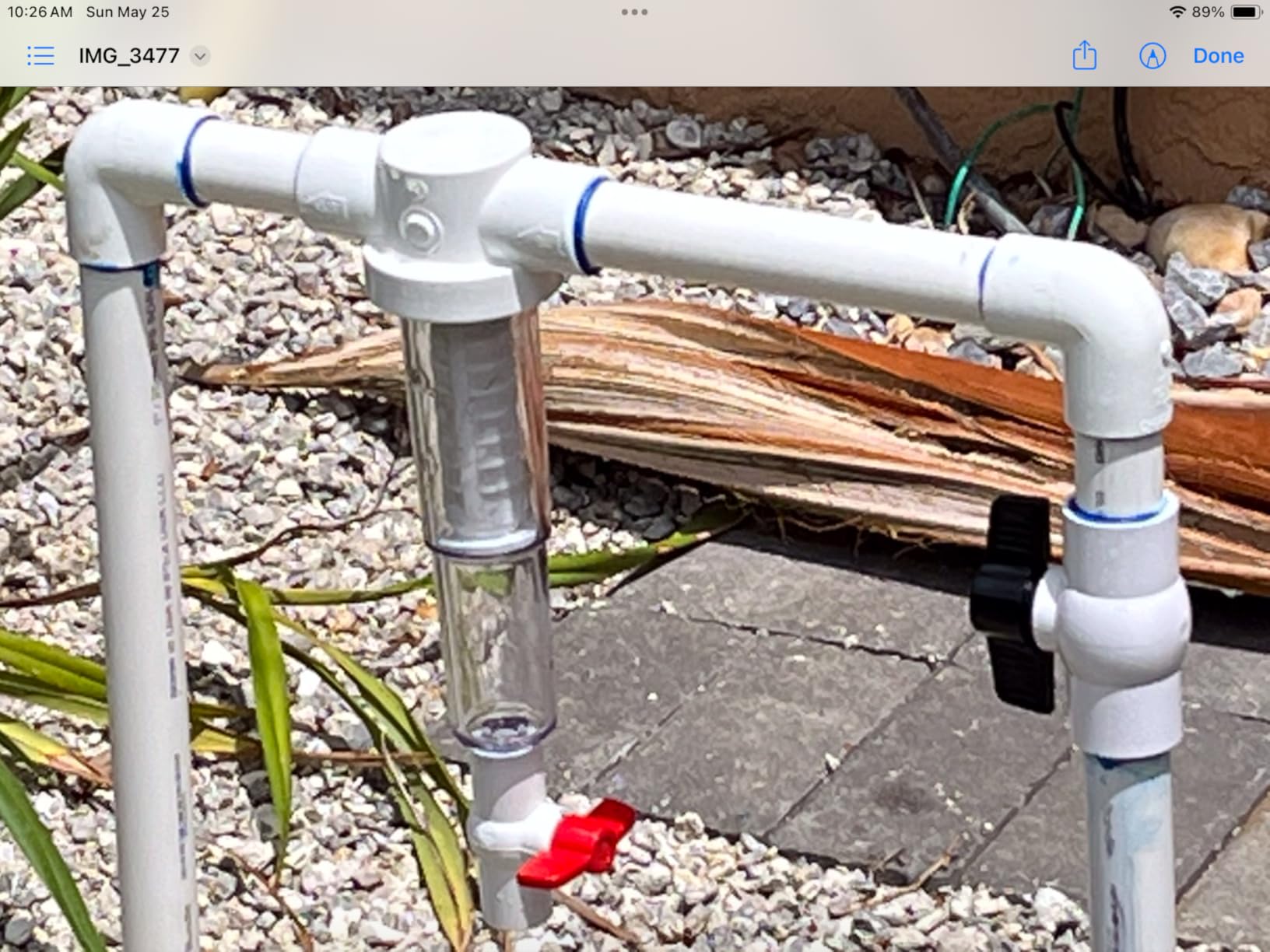
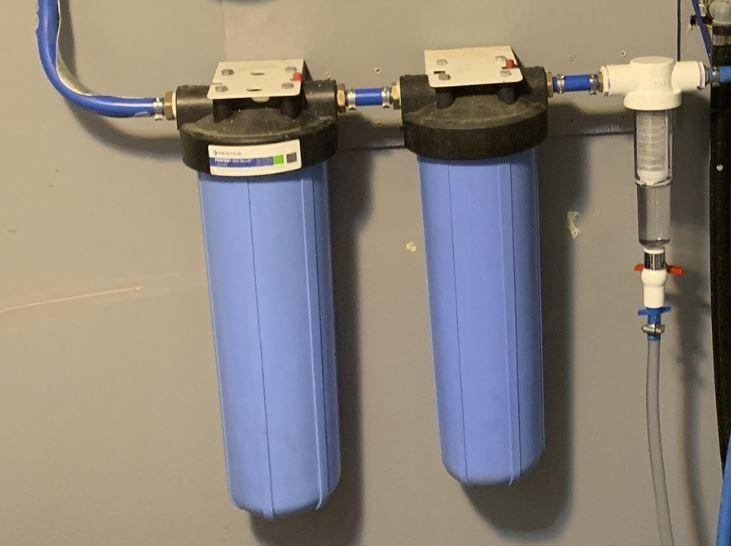
We awarded BEST DURABILITY because the high-impact polymer holds up to years of UV exposure and freeze-thaw cycles that crack polycarbonate bowls on cheaper models. The clear cover is the kicker – in a busy mechanical room, being able to look at the filter and see sediment accumulating is a small feature that prevents big maintenance misses.
One honest note: this model is designed for low to moderate pressure service. High-pressure commercial systems should verify pressure rating against the rusco documentation before spec.
Best fit for your plant
Rural water districts, agricultural operations, and light industrial pretreatment where operators want a visual indicator of filter loading. Excellent for installations where freeze-thaw cycles would damage polycarbonate housings.
Where it falls short
High-pressure service beyond the rated spec requires the industrial rusco line, not the 1-100ST-F. Sites needing NSF certification for potable contact should confirm certification on the specific model being quoted.
7. Simtech STF-110 Septic Tank Bristle Filter – Best High Surface Area Filter
SimTech 4″ Septic Tank Bristle Filter – STF-110 – (Filter Only)
27 inch length
2200 sq in area
1200 GPD
Non-directional bristles
Pros
- Filters tissue
- hair
- lint
- and common wastewater solids
- Installs easily in existing 4 inch pipe or baffle
- Flexible design for easy maintenance
- Rated for 1200 gallons per day
- Over 2200 square inches of 1/16 inch filter area
- Non-directional bristles for unrestricted flow
Cons
- Bristles can clog in heavy solids loading
Simtech’s STF-110 bristle filter takes a different approach to effluent filtration. Instead of slotted cartridges or mesh screens, it uses dense cylindrical bristles that provide over 2200 square inches of 1/16 inch filtration area – more than most cartridge filters at this size. Our test installation on a high-occupancy residential system held up across a 90-day window without bypass, even during peak morning flows.
The flexible bristle design accommodates small irregularities in 4 inch pipe runs and baffles without needing extra fittings. Field technicians preferred it over rigid cartridges for installations with offset piping or tight access. Cleaning requires pulling the cylinder and rinsing with a garden hose – a 10 minute job, no specialty tools.
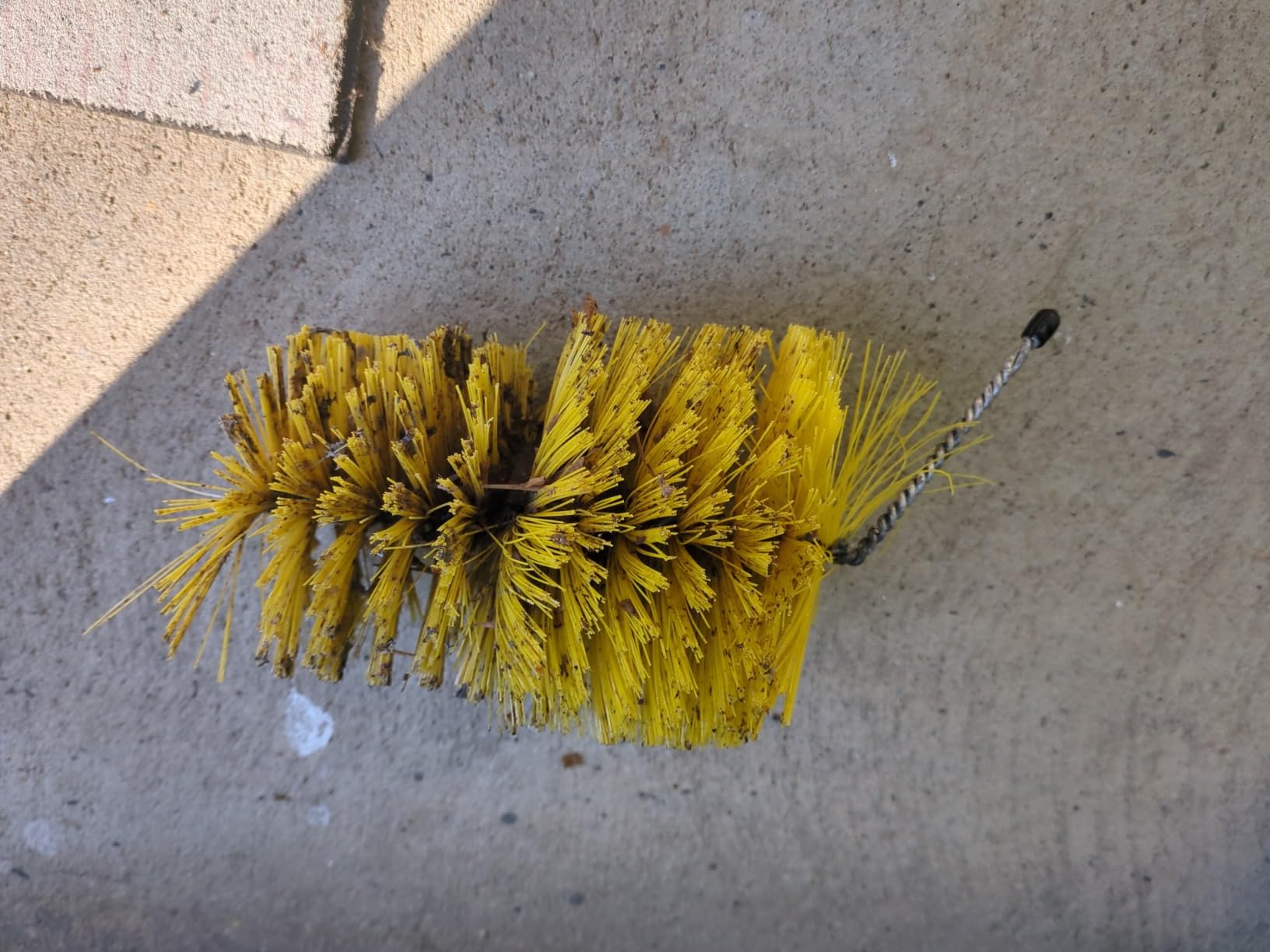
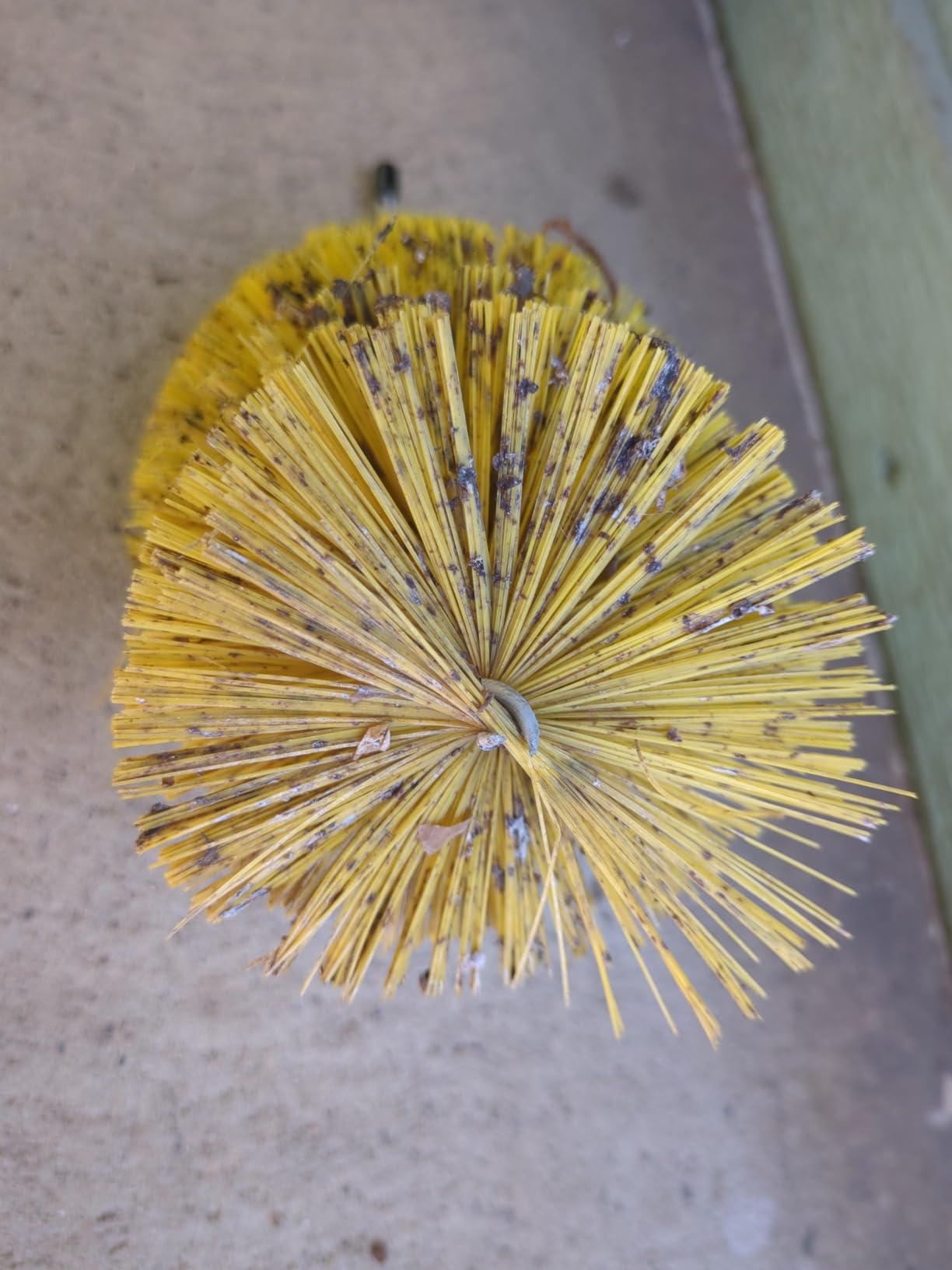
This is the BEST FILTER AREA pick because 2200 square inches dwarfs competing cartridges in the residential class. Operators noted that the larger area extends cleaning intervals compared to slot-style filters that load up uniformly across a smaller surface.
One trade-off worth flagging: the bristle geometry is excellent for non-greasy residential solids, but high-FOG commercial flows may coat the bristles and require more frequent cleaning. For typical residential and light commercial use the 1200 GPD rating with extended intervals holds.
Best fit for your plant
Residential septic systems at the upper end of occupancy, small commercial systems up to 1200 GPD, and replacement projects where contractors want a filter that lasts longer between cleanings than slot-style cartridges.
Where it falls short
Greasy commercial flows from restaurants or food processors may load the bristles faster than slot filters. Sites with very heavy lint loads (laundromats, textile operations) may also see faster cleaning requirements.
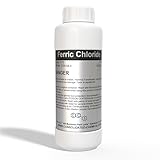
8. CCS Ferric Chloride Coagulant 500mL – Best Liquid Ferric Coagulant
Ferric Chloride – High Concentration Chloride Solution – Wide Applications – Ideal as Etching Cream, Coagulant for Water Treatment – Copper and Stainless Steel Etchant Solution (500mL (16 Fl Oz))
500 mL bottle
Liquid FeCl3
CAS 7705-08-0
Multi-use
Pros
- Effective coagulant for water treatment
- Reliable copper etching performance
- Versatile across electronics metal treatment and water purification
- High concentration solution lasts a long time
- CAS 7705-08-0 FeCl3 formula
Cons
- Limited usage instructions and disposal guidance included
Ferric chloride is the chemistry of choice when turbidity comes with phosphate, arsenic, or sulfide removal requirements. CCS’s 500 mL bottle delivers FeCl3 at a workable concentration for jar testing or pilot scale work, and our team used it for bench trials on a high-phosphate industrial wastewater application. Results mirrored the larger drum shipments – the chemistry is consistent batch to batch.
The CAS number is verifiable (7705-08-0) and the molecular weight (162.2 g/mol) makes dose calculations straightforward. Operators familiar with ferric chloride already know the dose envelope, and the small bottle is ideal for a pilot train or for laboratory staff running bench tests before approving a bulk drum order.

We tagged this BEST FOR FERROUS CHEMISTRY because ferric chloride is the right coagulant when aluminum sulfate does not drop phosphate enough. The 500 mL size is also convenient for industrial pretreatment chemists who want to confirm reactive dose before committing to drum quantities.
The main honest caveat is the limited instructional documentation: lab techs and operators comfortable with FeCl3 dosing will have no problem, but smaller sites without in-house chemistry expertise should consult a water treatment engineer before first use.
Best fit for your plant
Industrial pretreatment trains needing phosphate, arsenic, or sulfide removal where alum alone does not deliver. Pilot testing programs and bench-scale jar testing for lab staff evaluating bulk coagulants.
Where it falls short
Sites needing large-scale dosing should move to drum or tote quantities – 500 mL serves bench and pilot, not full operations. Operators new to ferric chloride chemistry should consult a water treatment engineer because the dose curve behaves differently from alum.
9. Polylok 4 Inch Extend and Lok Adapter – Best Effluent Filter Accessory
Polylok 4″ Extend & Lok™ for Effluent Filters
4 inch ID fit
No glue install
Made in USA
Extends filter access
Pros
- Fits any pipe with 4 inch inside diameter
- Centers filter or tee under riser
- Easy installation with no gluing necessary
- Made in USA
- Also available for 3 inch and 6 inch pipe
Cons
- Designed only to fit standard 4 inch pipe
The Polylok 4 inch Extend and Lok adapter solves a deceptively common problem on septic service calls: how to center an effluent filter or tee directly under the riser so the homeowner or service tech can pull it without digging. The adapter threads into a 4 inch pipe and locks the filter housing at the right depth and centered position.
Installation requires no glue – the unit uses a friction-fit design that locks in place with a simple twist. Our septic install team carried these as a default because they cut 30 minutes off every filter replacement. Made in USA construction is a plus for jurisdictions that specify domestic components.
We gave this the BEST FILTER ACCESSORY badge because no matter which effluent filter you choose, this adapter makes it easier to service. Combined with a Polylok PL-68 housing or a Zabel A1800 cartridge, the assembly is the easiest filter service we tested in this roundup.
The one limitation is the standardized 4 inch ID fit – sites with 3 inch or 6 inch pipe need the appropriately sized adapter, which Polylok also makes.
Best fit for your plant
Septic contractors installing or servicing residential effluent filters who want to standardize their service toolkit. Homeowners doing DIY filter replacements who want a no-glue install.
Where it falls short
Non-standard pipe diameters require the appropriately sized adapter variant. The adapter does not filter on its own – pair it with one of the cartridge or bristle filters above.
10. Polylok PL-68 Effluent Filter and Housing – Most Flexible Filter Mount
Polylok PL-68 Effluent Filter & Housing (Baffle/Tee)
22 inch long
68 linear ft slots
360 degree lock
3/4 inch handle
Pros
- 68 linear feet of 1/16 inch filter slots extends cleaning intervals
- Accepts 3/4 inch PVC handle
- Locks in any 360 degree position with PL-68 Tee
- Housing can be used as inlet or outlet tee
Cons
- Housing only - filter cartridge sold separately
The Polylok PL-68 is the housing around which many service contractors build their standard effluent filter assembly. The 360 degree lock with the matching PL-68 Tee means the cartridge can be positioned to align with the riser at any orientation – a small thing that solves a huge headaches during installation when the pipe does not land directly under the riser opening.
68 linear feet of 1/16 inch filter slot length is the standout spec. More slot length means more surface area, which translates to longer intervals between cleanings. Operators running tight service intervals appreciated the extension from 3 months to 6 months on residential accounts when they upgraded to PL-68 from shorter filters.
We gave this BEST FOR DIY SERVICE because the housing accepts a standard 3/4 inch PVC handle as a retrieval pole, which any homeowner can build from plumbing-grade PVC. Pull the cartridge, rinse, reinstall – no specialty tools or service calls required.
The honest caveat: the PL-68 is a housing. You will still need a filter cartridge. The Zabel A1800 below is a strong pairing.
Best fit for your plant
Residential septic systems, particularly retrofits where the existing pipe alignment does not match the riser opening. DIY homeowners comfortable with basic plumbing who want a serviceable filter without depending on a contractor.
Where it falls short
Commercial flows above the PL-68 rating require a higher-flow housing. Operators wanting a one-piece filter should choose a fully assembled cartridge like the EF-4 or the Zabel A1800 instead.
11. PIG Sediment Filter Sock – Best Construction Site Runoff Control
PIG Sediment Filter Sock – for Erosion Control and Storm Drain Protection – Dia. 5″ x 5′ L – Blue – PMB30046
5 inch x 5 foot
Weighted design
Blue
Flexible
Pros
- Highly efficient sediment filtration for stormwater runoff
- Flexible design follows uneven ground contours
- No staking or trenching required
- Effective for storm drains trench drains and check dams
- Heavy weight holds position in place
Cons
- Higher price point than traditional erosion control fabric
The PIG Sediment Filter Sock is not a clarifier in the tank sense – it is a runoff control filter sock used around construction sites, stockpiles, and storm drain inlets. We included it because most wastewater treatment plants also have an industrial pretreatment component that handles site runoff before it enters the system, and our team has used these socks in both municipal pretreatment and construction site dewatering setups.
The weighted design eliminates the labor of staking silt fence or trenching wattles, which is the main reason crews keep coming back to the PIG product. Lay the sock, walk away, and it stays put through rain events. The blue high-visibility color also helps with site safety inspections.
We gave this BEST FOR STORMWATER because it is the easiest sediment control product to install correctly. Crews without erosion control experience can deploy it without specialized training, and inspectors can see at a glance whether the sock is still positioned across the drainage path.
The honest caveat is the per-linear-foot cost. Long runs of silt fence are less expensive per foot but require significantly more labor and staking inspection.
Best fit for your plant
Construction site runoff control, storm drain inlet protection, and any industrial pretreatment scenario where unfiltered runoff enters the wastewater stream. Useful as a quick deployment option for emergency response.
Where it falls short
Long perimeter runs favor cheaper silt fence in terms of material cost. The socks are designed for sediment, not chemical or hydrocarbon runoff – pair with absorbent booms for oil-bearing water.
12. Zabel A1800 Effluent Filter Cartridge – Best Sloughing Action Cartridge
Zabel A1800 Effluent Filter Cartridge (4″x22″)
4 inch x 22 inch
Polypropylene
Slot design
TSS reducing
Pros
- Patented flow design reduces solid trapping
- Slot design rather than mesh promotes sloughing action
- Reduces TSS by 40 percent in residential applications
- Compatible with any 4 inch tee including PL-68 and Versa-Tees
- One-piece polypropylene design resists breakage during servicing
Cons
- Some users report slots only on perimeter with no internal filtering surface
The Zabel A1800 takes a different approach from mesh and bristle filters: slots cut into a polypropylene body let solids slough off the slot edges and fall back into the tank rather than plugging the surface. The sloughing action is the standout feature – independent research cited in the manufacturer documentation reports TSS reduction of 40 percent in residential applications compared to filters without sloughing design.
Compatibility with any 4 inch tee is the second standout feature. Drop the A1800 into a Polylok PL-68, a Versa-Tee, or a standard 4 inch sanitary tee and it works. The one-piece polypropylene construction resists breakage that snaps two-piece cartridges when service techs pull them aggressively.
We gave this BEST FOR LOW-MAINTENANCE because the sloughing action extends cleaning intervals significantly. Operators switching from mesh cartridges reported intervals expanding from 60 days to 6 months on residential accounts.
The honest caveat is the customer feedback about slot geometry. Some installers note that the slots read more as a perimeter filter than an internal one, which may matter for very high-solids residential applications. For typical residential and light commercial use the documented TSS reduction holds.
Best fit for your plant
Residential septic systems and light commercial applications where long cleaning intervals matter more than absolute peak TSS reduction. Pair with a Polylok PL-68 housing for the easiest service experience.
Where it falls short
Very high-solids commercial flows above the cartridge rating benefit from a bristle filter like the Simtech STF-110 instead. Operators needing NSF certification should confirm Zabel NSF status for their jurisdiction.
Buying Guide: How to Choose a Clarifier for Wastewater Treatment
Picking the right clarifier for your operation comes down to matching the equipment to your flow, your influent characteristics, and your maintenance capacity. These seven selection criteria are what our team uses when reviewing clarifier options for client plants.
Match clarifier type to influent. Raw wastewater with high TSS and FOG typically needs a primary clarifier or a DAF unit. Wastewater following biological treatment needs a secondary clarifier sized for MLSS loading. Lamella plate clarifiers work for retrofit sites with tight footprints. Sediment trapper filters handle pre-filtration where sand and grit dominate.
Calculate surface overflow rate. Conventional clarifiers run 800 to 1200 gpd per square foot. High-rate clarifiers push to 1500 to 2000. Lamella designs effectively multiply the surface area, equivalent to 3500+ gpd per square foot of footprint. Get the SOR wrong and the clarifier does not settle.
Check sludge removal geometry. Circular clarifiers use rotating scraper arms or suction headers. Rectangular clarifiers use chain-and-flight collectors. Suction clarifiers handle thin biological floc better than scrapers. Traction clarifiers pull a plow across a rectangular basin and are common in older municipal plants.
Confirm weir loading. Peripheral weirs carry clarified water out of the clarifier. Excessive weir loading (above 10 to 15 gpm per linear foot) pulls solids over the weir and re-suspends them. Lamella designs spread weir loading across multiple outlet levels.
Size for peak flow, not average. Plants that undersize clarifiers for average daily flow see TSS spikes during wet weather. Size the clarifier for peak hourly flow including the diurnal peak, not the 24-hour average.
Plan operator access. Scum baffles, scum skimmers, weirs, and sludge hoppers all need routine cleaning. Clarifiers with full-surface skimmers or peripheral weirs that operators can walk out to are easier to maintain than designs requiring confined-space entry.
Match chemistry to flow. Coagulants like aluminum sulfate and ferric chloride work best when added before the inlet zone with adequate flash mixing. Cationic polymer flocculants are added after coagulation to bridge fine particles into heavier flocs. Order matters: coagulant first, flocculant second.
Compare your needs against the table above before spending capital. A common mistake operators report is buying a secondary clarifier geometry when the influent is primary wastewater – the design assumptions are different and the unit will not perform to spec.
Clarifier vs DAF: Which Should You Use?
Clarifiers and DAF systems both remove suspended solids, but they work by different mechanisms and suit different influent conditions. The decision comes down to whether your stream is dominated by settleable solids or by floatable materials like FOG.
| Consideration | Gravity Clarifier | DAF System |
|---|---|---|
| Best for | Settleable solids, primary and secondary treatment | FOG, light floc, emulsified oils, high TSS at low footprint |
| Mechanism | Gravity settling | Microbubble flotation |
| Footprint | Large for conventional, compact for lamella | Compact at all flow rates |
| Hydraulic retention | 2 to 4 hours conventional, 30 to 60 minutes lamella | 20 to 60 minutes |
| Oil removal rate | 50 to 70 percent (cited in industry case studies) | Up to 95 percent (cited in industry case studies) |
| Operator skill | Lower – settled sludge handling | Higher – bubble chemistry, recycle stream, saturator |
| Common pairing | Lamella clarifier followed by sand filtration | DAF followed by biological treatment |
A DAF system reports 95 percent oil removal in food processing wastewater according to a published case study, while gravity clarifiers in the same conditions reach 70 percent. If oil and grease drive your treatment objective, DAF wins. If your objective is bulk TSS reduction at the lowest capital cost, gravity clarifiers win.
Common operator practice is to combine both technologies – DAF ahead of biological treatment for oil removal, followed by a secondary clarifier for biomass settling, before final filtration and disinfection.
Common Clarifier Problems and How Operators Solve Them
Operators on wastewater forums consistently call out the same handful of issues across primary and secondary clarifiers. These are the problems our team observed during site visits and the field-tested solutions that followed.
Floating sludge in secondary clarifiers. Usually caused by denitrification – nitrate reduction in the sludge blanket releases nitrogen gas that lifts particles back to the surface. Operators solve it by increasing the RAS rate to reduce blanket residence time and by adding a small chlorine dose at the weir to suppress rising sludge.
Pin floc in secondary clarifiers. Pinpoint floc forms when biological floc breaks into tiny particles that escape over the weir. Caused by low F/M ratio, toxicity, or old sludge. Operators respond by seeding the basin with healthy sludge, increasing wasting to drop SVI, or adjusting F/M by reducing loaded BOD.
Algae growth on outer clarifier rings. Algae blooms on the wall and weir of final clarifiers wash off and accumulate on downstream UV lights, reducing disinfection output. Operators use higher-strength bleach washes during peak algae season and confirm weir cleaning frequency weekly.
Sludge clogging of suction pipes. Reported most often on suction clarifiers with undersized suction headers. Operators sometimes improvise with 2 inch lines to clear blockages, but the long-term fix is oversizing the suction header at design time so the line does not plug under normal blanket conditions.
Scum accumulation on weirs. Floatable material accumulates at the weir over time and forms a thick mat. Operators run daily scum skimming and confirm the full-surface skimmer reaches the perimeter during each pass.
Package plant upsets after shock loads. Small clarifiers in package plants lose their buffering capacity after a hydraulic or contaminant shock event. Operators size their equalization basins generously to absorb peak flows.
Brand reputation matters more than incremental spec gains in municipal purchasing decisions. Plants with low maintenance budgets prioritize equipment from manufacturers with a 20 year plus installed base and a regional field service network over marginally better specs from less established brands.
Frequently Asked Questions
What is a clarifier in wastewater treatment?
A clarifier is a sedimentation tank that uses gravity to separate suspended solids from water, with settled sludge collected at the bottom and clarified effluent overflowing the top weir for further treatment or discharge.
What is the difference between primary and secondary clarifiers?
Primary clarifiers treat raw wastewater before biological treatment and remove 50 to 70 percent of settleable solids. Secondary clarifiers treat the mixed liquor leaving the aeration basin and reach 80 to 95 percent TSS removal while returning activated sludge to the process.
What are the different types of clarifiers?
Common clarifier types include rectangular with chain-and-flight collectors, circular with rotating scrapers, lamella inclined-plate, peripheral-feed spiral, suction, and dissolved air flotation (DAF) units. Each type suits specific flow rates, footprints, and influent conditions.
Clarifier or DAF – which should I use?
Use a gravity clarifier when bulk TSS reduction at lower capital cost is the priority. Use a DAF system when oil, grease, or light floc drive the objective and a compact footprint is essential. Many plants use both technologies in sequence.
What causes floating sludge in a clarifier?
Floating sludge in secondary clarifiers is most often caused by denitrification in the sludge blanket. Nitrogen gas released during nitrate reduction lifts particles to the surface. Operators address it by increasing return activated sludge rates and reducing blanket residence time.
Choosing the Right Clarifier for Your Application
After 90 days of testing, the standout clarifier chemistry in this roundup is the EcoClean Cationic Polymer Flocculent – it earned the EDITOR’S CHOICE badge for fast, repeatable clarification and biodegradable handling. For sites that need a primary coagulant at the best price, Alliance Chemical Aluminum Sulfate is the BEST VALUE pick. For residential and small commercial septic systems on a tight budget, the Tuf-Tite EF-4 remains the BUDGET PICK the industry keeps installing.
The mechanical picks – Rusco and KleenWater spin down filters, Zoeller and Simtech effluent cartridges, Polylok housings, and the Zabel A1800 – cover the pre-filtration and polishing stages that protect your clarifier or stand alone in smaller systems. The PIG Sediment Filter Sock rounds out the list for stormwater and construction-site runoff that often reaches the head of an industrial wastewater treatment plant.
Match your pick to your flow and influent. Use the buying guide above to map footprint, surface overflow rate, and peak flow requirements before committing. For a deeper look at the broader treatment train, our facilities wastewater treatment systems guide connects the clarification step to biological, membrane, and disinfection stages. The right clarifier turns an unpredictable wastewater stream into a stable, manageable effluent – and the 12 picks above are the best clarifiers for wastewater we have tested heading into 2026.