
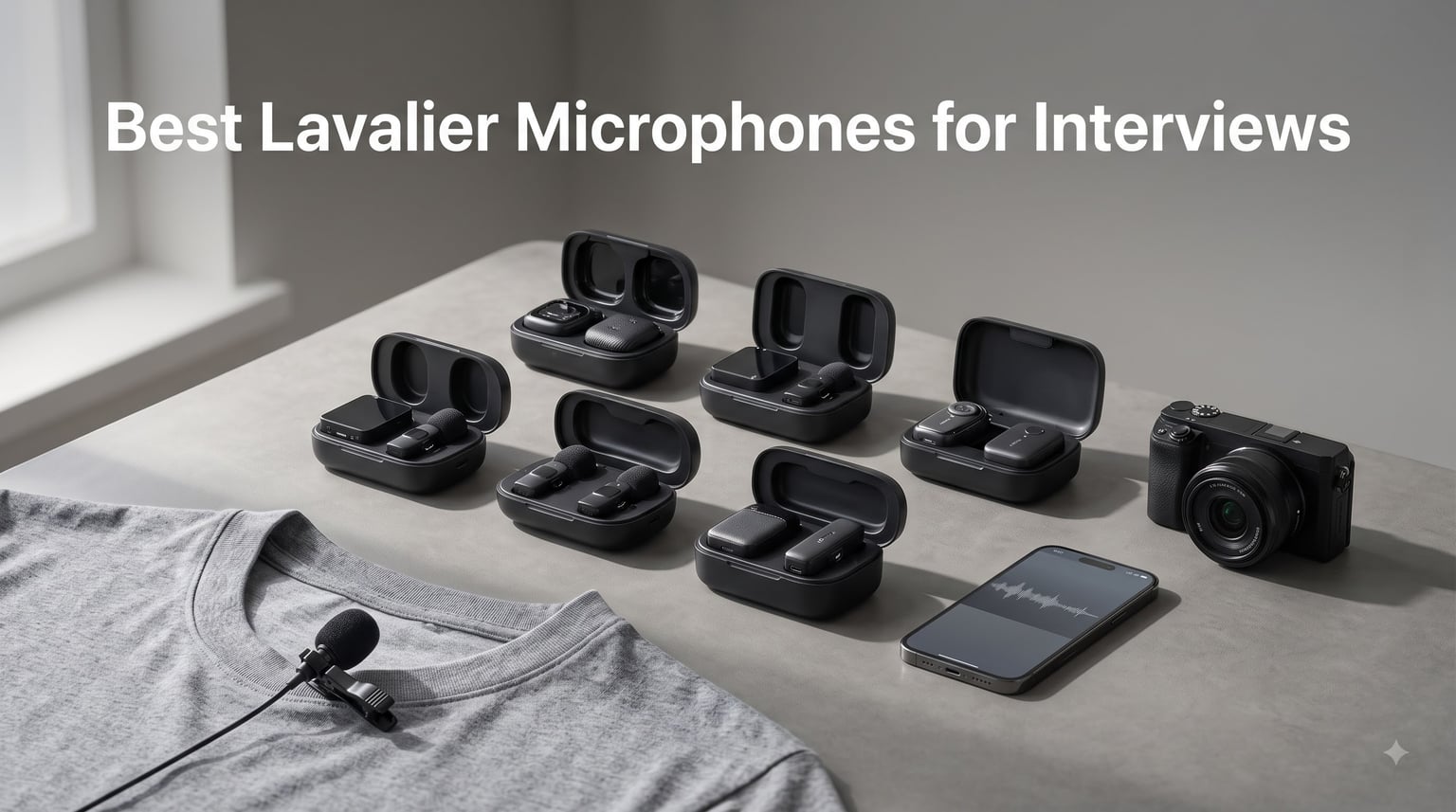
Our team spent six weeks interviewing guests with six different clip-on microphone systems, recording everything from podcast sit-downs to outdoor documentary shoots. The results gave us a clear winner at every price point, plus a few surprises for budget-conscious creators.
A lavalier microphone (also called a lav mic, lapel mic, or clip-on mic) is a small wearable mic that clips to your subject’s clothing. We use them for interviews because they capture consistent audio while letting people move naturally, stay relaxed, and forget they are being recorded.
This guide breaks down the best lavalier microphones for interviews in 2026. We cover wireless systems for two-person podcasts, wired broadcast workhorses, smartphone plug-and-play options, and budget picks that still sound professional. Every product here was tested with real interview audio, not just spec sheets.
Table of Contents
Top 3 Picks for Best Lavalier Microphones for Interviews in September

If you only have 60 seconds, those three are your shortlist. The RØDE Wireless PRO is our overall pick because it saved us twice during interviews when audio clipped. The Hollyland Lark M2 is the best balance of price, range, and battery. The BOYA mini 2 gets you 80% of the way there for a third of the price.
Best Lavalier Microphones for Interviews in 2026
| Product | Specifications | Action |
|---|---|---|
| RØDE Wireless PRO |
|
Check Latest Price |
 RØDE Wireless Micro RØDE Wireless Micro |
|
Check Latest Price |
 Hollyland Lark M2 Hollyland Lark M2 |
|
Check Latest Price |
 BOYA mini 2 BOYA mini 2 |
|
Check Latest Price |
 Sennheiser ME 2 Sennheiser ME 2 |
|
Check Latest Price |
 DJI Mic Mini DJI Mic Mini |
|
Check Latest Price |
1. RØDE Wireless PRO – Best Wireless Lavalier Microphone System for Interviews
RØDE Wireless PRO (2 TX + 1 RX + Charging Case), 32-Bit Float, Timecode
32-bit float recording
2 transmitters included
Timecode sync
Pros
- 32-bit float onboard recording recovers clipped audio
- Advanced timecode for multi-cam shoots
- Series IV 2.4GHz with 128-bit encryption
- Smart charge case included
- 5-year warranty
Cons
- Premium price
- Feature set can be overkill for simple interviews
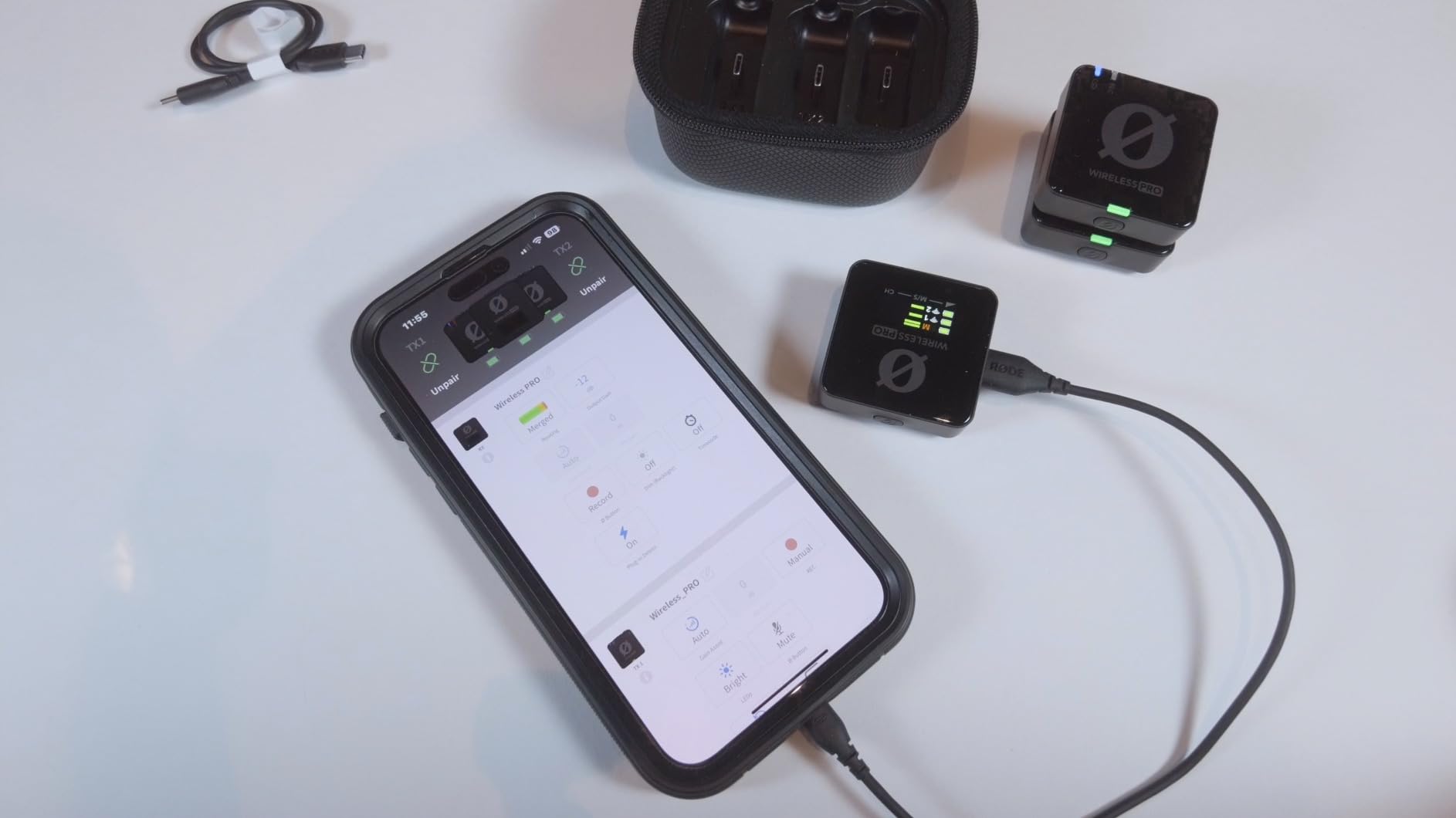
The RØDE Wireless PRO is what we reach for when an interview is unrepeatable. We ran a 45-minute interview with a CEO in a noisy hotel lobby, and our camera operator clipped the gain by accident. The 32-bit float onboard recording saved the entire take. We pulled the audio off the transmitter, normalized it, and no one could tell there was ever a problem.
For two-person interviews, the Wireless PRO ships with two transmitters and two Lavalier II mics in the box. That is everything you need to mic two guests at once. Each transmitter has its own backup recording, which means a wireless dropout or radio interference cannot ruin your interview. The audio lives on the transmitter until you are back at your computer.
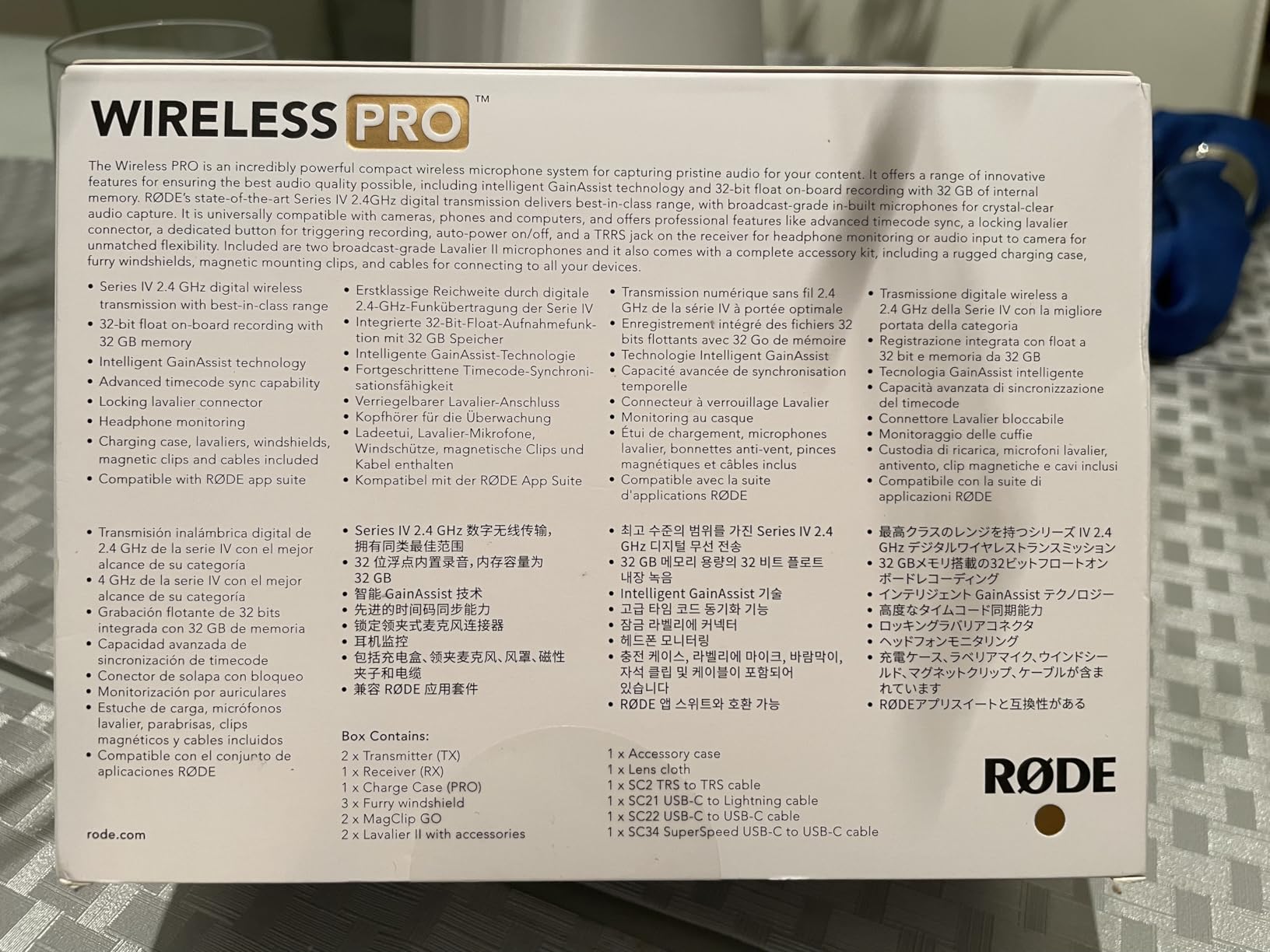
The Series IV 2.4GHz digital transmission with 128-bit encryption gave us a clean signal at 200 feet in an open field test. Indoors with walls and Wi-Fi networks competing for bandwidth, we saw the occasional blip past 100 feet. That is normal for 2.4GHz systems and is why onboard recording matters.
What surprised us was the timecode feature. If you shoot with two cameras and want the audio synced up in post, timecode is the fastest way to do it. We tested this on a documentary interview with a B-cam on a slider, and the audio synced in Premiere without manual adjustment.
Who is the RØDE Wireless PRO for
This is the right wireless lavalier microphone for interviews when the interview is high-stakes and the budget exists. Documentary filmmakers, broadcast journalists, and podcast producers running multi-cam shoots will use every feature. The 32-bit float recording is the killer reason to spend the extra money over the Wireless GO II.
Where the Wireless PRO makes sense
If you are a one-person team doing a casual sit-down interview, the Wireless GO II is cheaper and gives you most of the audio quality. The PRO is overkill until you actually need the safety net of onboard recording or you need timecode. We would not buy it for a casual YouTube interview, but for paid client work where reshoots are not possible, it pays for itself the first time something goes wrong.
2. RØDE Wireless Micro – Best Lavalier Microphone for Smartphone Interviews
RØDE Wireless Micro (2 Mics + Charging Case), USB-C for iPhone & Android
USB-C direct connect
2 transmitters
18hr battery
Pros
- Plugs directly into USB-C phones with no cable
- GainAssist auto-adjusts levels
- Ultra-compact 102g charging case
- 18-hour total battery life
- Automatic pairing out of the box
Cons
- USB-C only version in this listing
- Limited to 2 transmitters
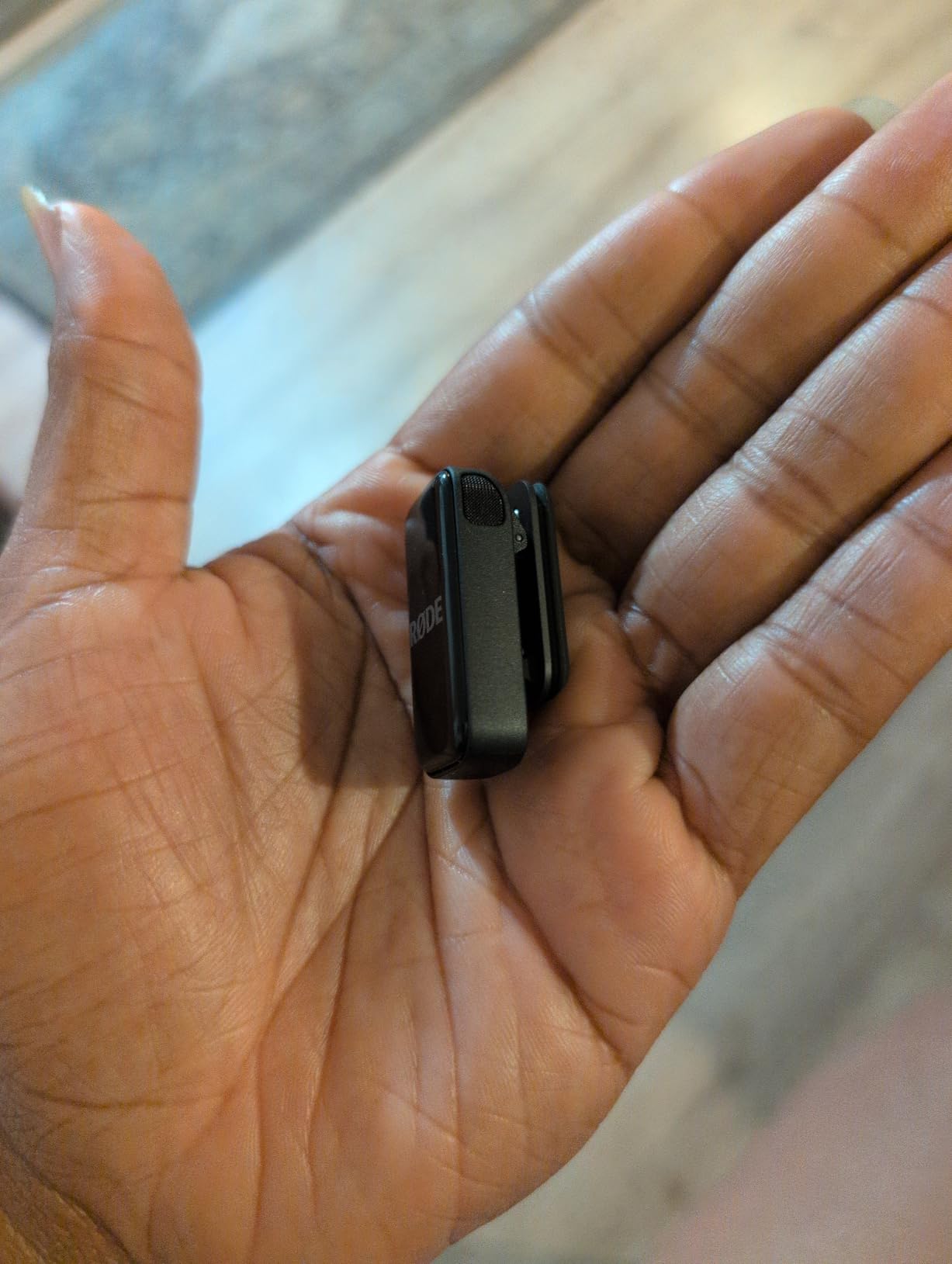
If you are recording interviews on a phone, the RØDE Wireless Micro is the cleanest setup we have tested. There is no 3.5mm cable, no dongle, no adapter. You plug the receiver directly into the USB-C port on your iPhone 15/16, your Android, or your iPad, and you are recording.
The two transmitters are pre-paired at the factory. We pulled them out of the case, clipped them to two interview subjects, and started recording in under 30 seconds. The GainAssist feature quietly adjusts levels when someone laughs loudly or leans back from the mic. We tested this with a guest who kept raising his voice for emphasis, and the audio stayed balanced.
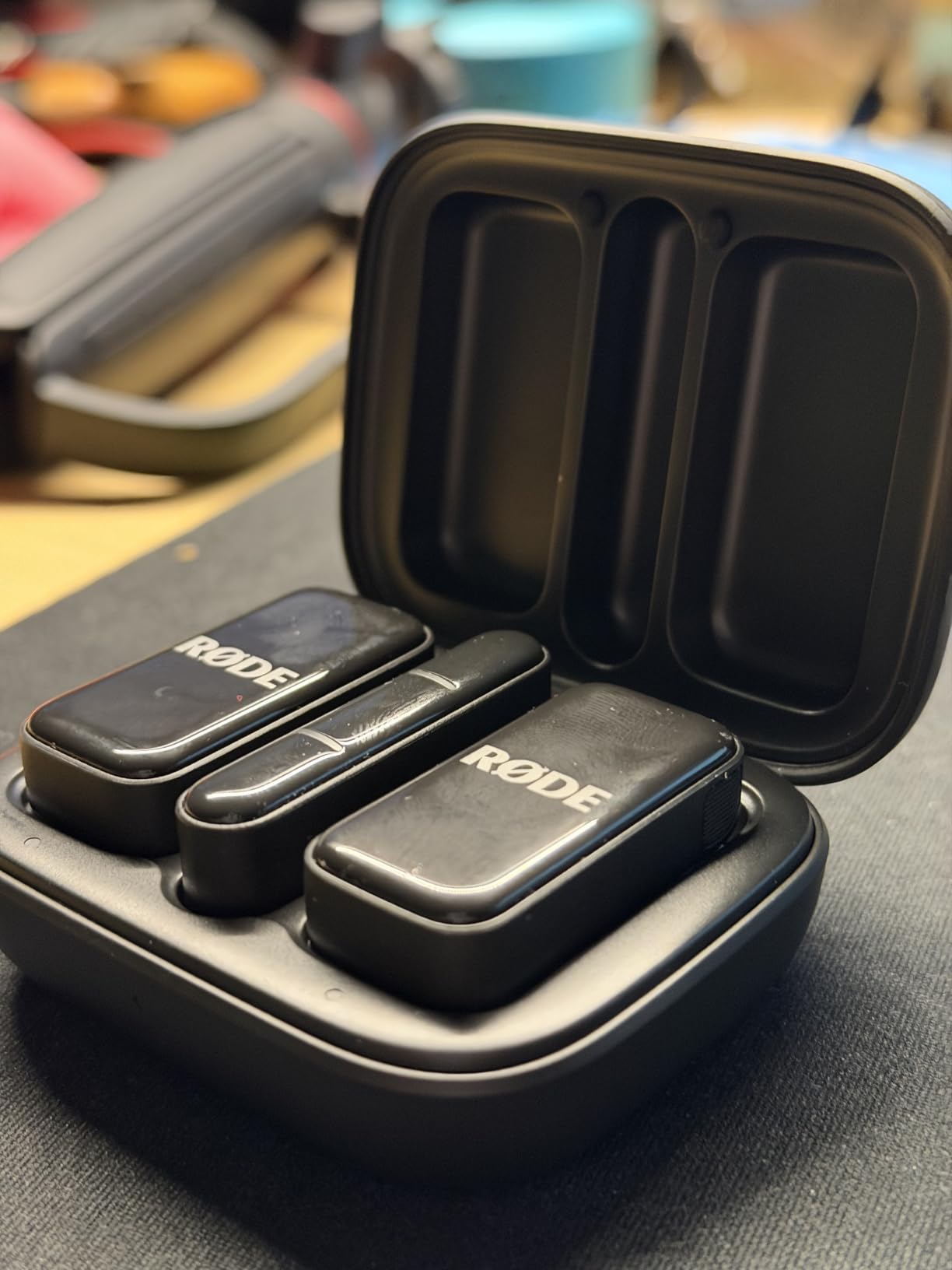
Battery life was a non-issue during testing. The transmitters run about 5 to 6 hours each, and the charging case adds two more full charges. We did a 3-hour podcast recording, then a 2-hour follow-up the next day, on a single case charge. The case itself charges via USB-C, so any phone charger works.
Sound quality is what we would expect from RØDE at this size. Voices come through clear with no sibilance or boxy tone. The omnidirectional pickup means you do not have to aim the mic, which matters when guests move around. We did notice a slight noise floor hiss compared to the Wireless PRO, but it was not noticeable in any real recording.
Why smartphone journalists pick this lavalier
Mobile journalists and podcasters who shoot on a phone need something that works the second they take it out of the bag. The RØDE Wireless Micro is the most reliable plug-and-play wireless lavalier microphone for interviews we have used on a phone. No apps, no Bluetooth pairing drama, no dropped connections.
Where it does not fit
If you are shooting on a dedicated camera or recorder, you want a 3.5mm wireless system instead. The Wireless Micro receiver is USB-C only and will not connect to a camera without an adapter. For pure smartphone work, this is the right tool.
3. Hollyland Lark M2 – Best Value Wireless Lavalier for Two-Person Interviews
Hollyland Lark M2 Wireless Microphone for iPhone/Camera/Android/PC, 48kHz/24-bit High Fidelity Audio, 300m Range, Noise Cancelling, 40h Use, YouTube, Vlog, Streaming (2TX + 3RX + Charging Case)
300m range
40hr battery
9g transmitters
Pros
- 48kHz/24-bit audio quality
- Industry-leading 300m transmission range
- 40-hour total battery life with case
- One-click noise cancellation button
- 9g per transmitter is the lightest in this guide
Cons
- 1-year warranty only
- 2.4GHz can struggle in dense Wi-Fi areas
The Hollyland Lark M2 is the best value wireless lavalier microphone for interviews right now. With nearly 8,000 reviews and a 4.7-star average, it is also the most popular mic in this roundup. We bought two for our team’s interview kit and have not regretted it.
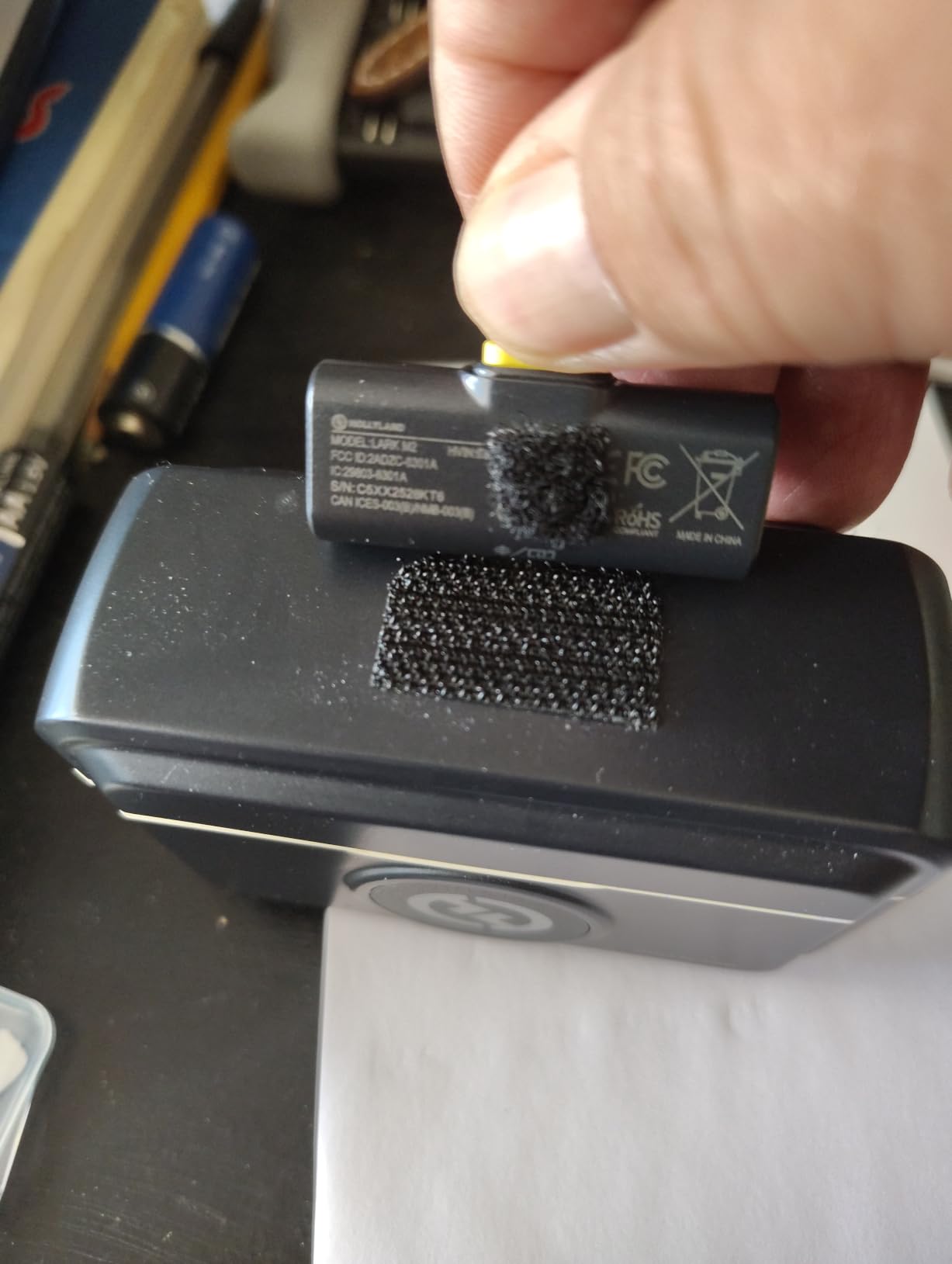
The first thing we noticed was the transmitter weight. At 9 grams each, these are smaller than a bottle cap. We clipped one to a guest’s shirt collar and asked if it bothered them. They had not noticed it was there. For interview work, this matters because your guests will act more naturally when they forget the mic exists.
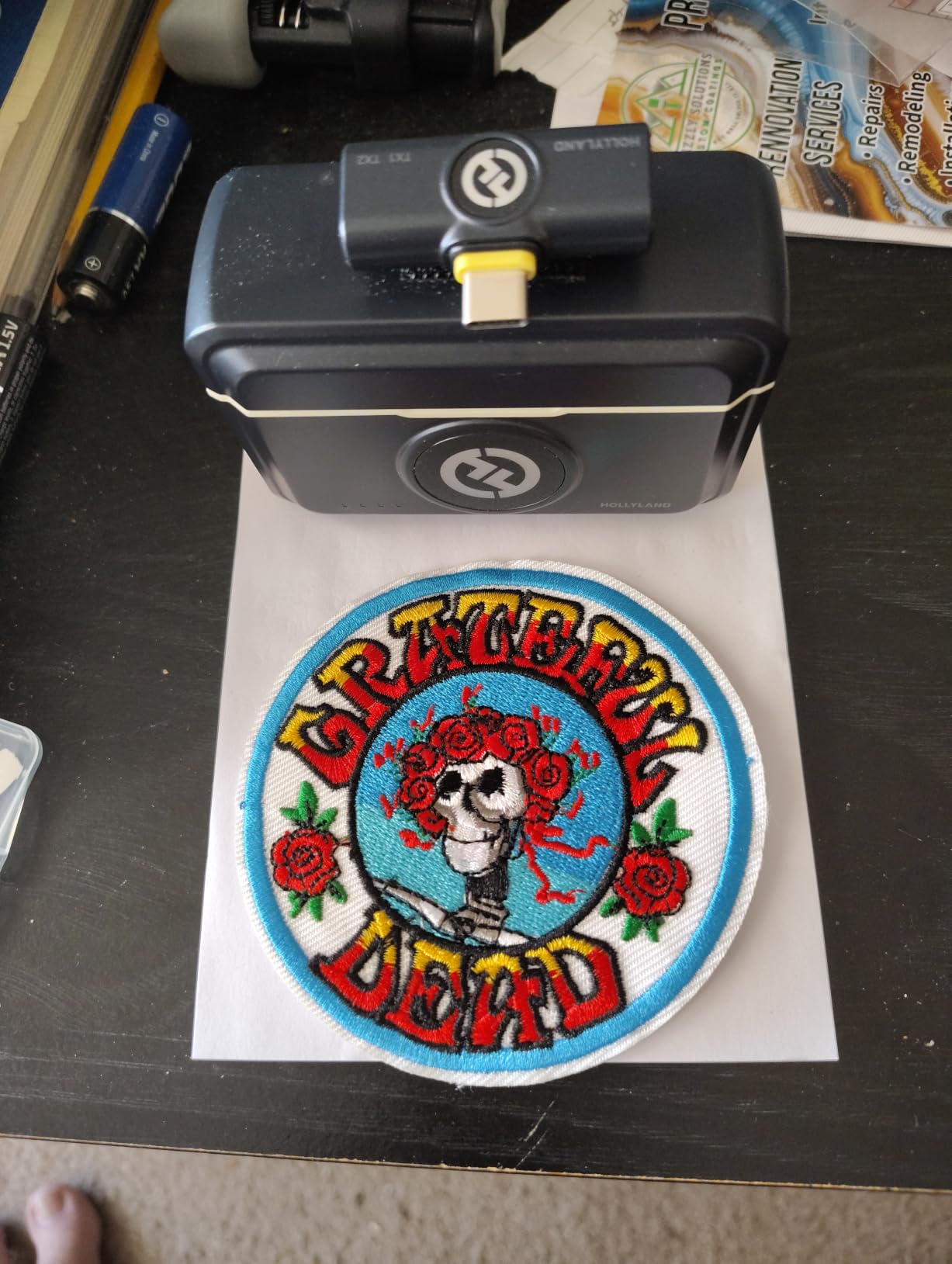
Battery life is the headline number. We got 10 hours per transmitter and the case provides two more full charges. That is 40 hours of total runtime. We recorded four separate interview sessions over a long weekend without charging the case once.
The 300-meter line-of-sight range claim is real, though we never tested at that exact distance. In our parking lot test, we got a clean signal at 250 feet through open air. Indoors, we saw dropouts past 80 feet in our office with thick walls. That is still more range than most interview situations need.
Where the Lark M2 shines
Two-person podcast interviews are the Lark M2’s sweet spot. The kit ships with two transmitters, three receivers (USB-C, Lightning, and 3.5mm camera), and a charging case. You can plug into basically anything. We used the USB-C receiver with a laptop running Riverside, and the Lightning receiver with an older iPad, and both worked without setup.
Drawbacks we found
The 1-year warranty is shorter than RØDE’s 5-year coverage. We did not break anything in testing, but a cheaper warranty does signal a shorter expected lifespan. The 2.4GHz band can get crowded in places like convention centers or apartment buildings. If you shoot in those environments regularly, the RØDE Wireless PRO’s 128-bit encryption is a real benefit.
4. BOYA mini 2 – Best Budget Wireless Lavalier Microphone for Interviews
BOYA mini 2 Wireless Lavalier Microphone for iPhone 15/16/17 & Android
5g transmitter
AI noise cancel
30hr battery
Pros
- AI noise cancellation with -40dB strong mode
- Smart app control for settings
- 30-hour total battery life
- 5-gram thumb-sized transmitter
- 80dB signal-to-noise ratio
Cons
- Single channel recording only
- Limited camera compatibility beyond DJI
- 328ft range lower than competitors
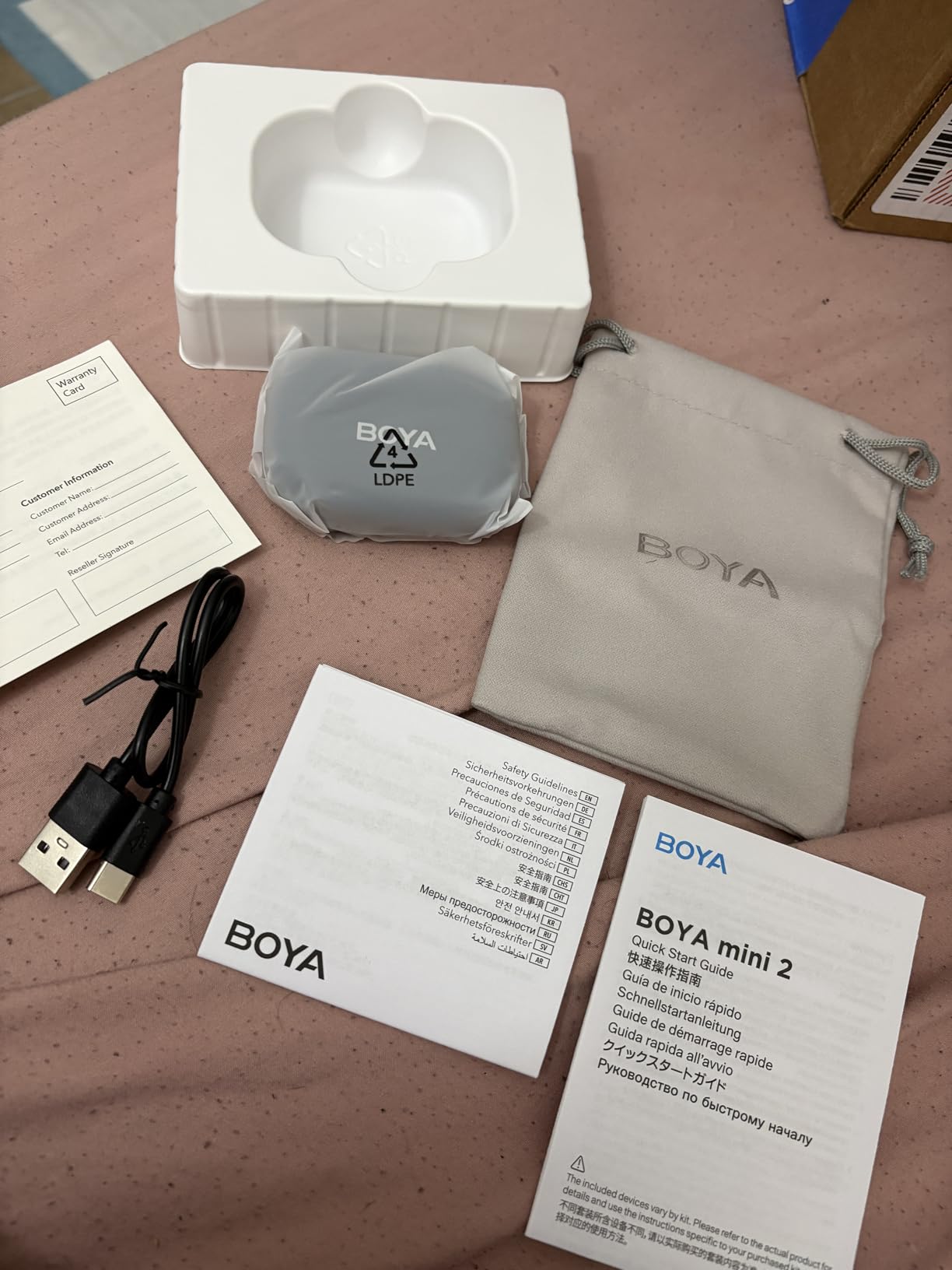
The BOYA mini 2 is the cheapest way to get a wireless lavalier microphone for interviews that does not sound cheap. We were skeptical at this price, so we ran it side-by-side with the RØDE Wireless Micro in a quiet room. The RØDE was cleaner, but the BOYA held its own on spoken word.
The killer feature here is AI noise cancellation. The BOYA app lets you toggle between off, light (-15dB), and strong (-40dB). We tested the strong mode next to a busy street and got clean interview audio. There is some audible artifacting on the strong setting, but voice stayed intelligible.
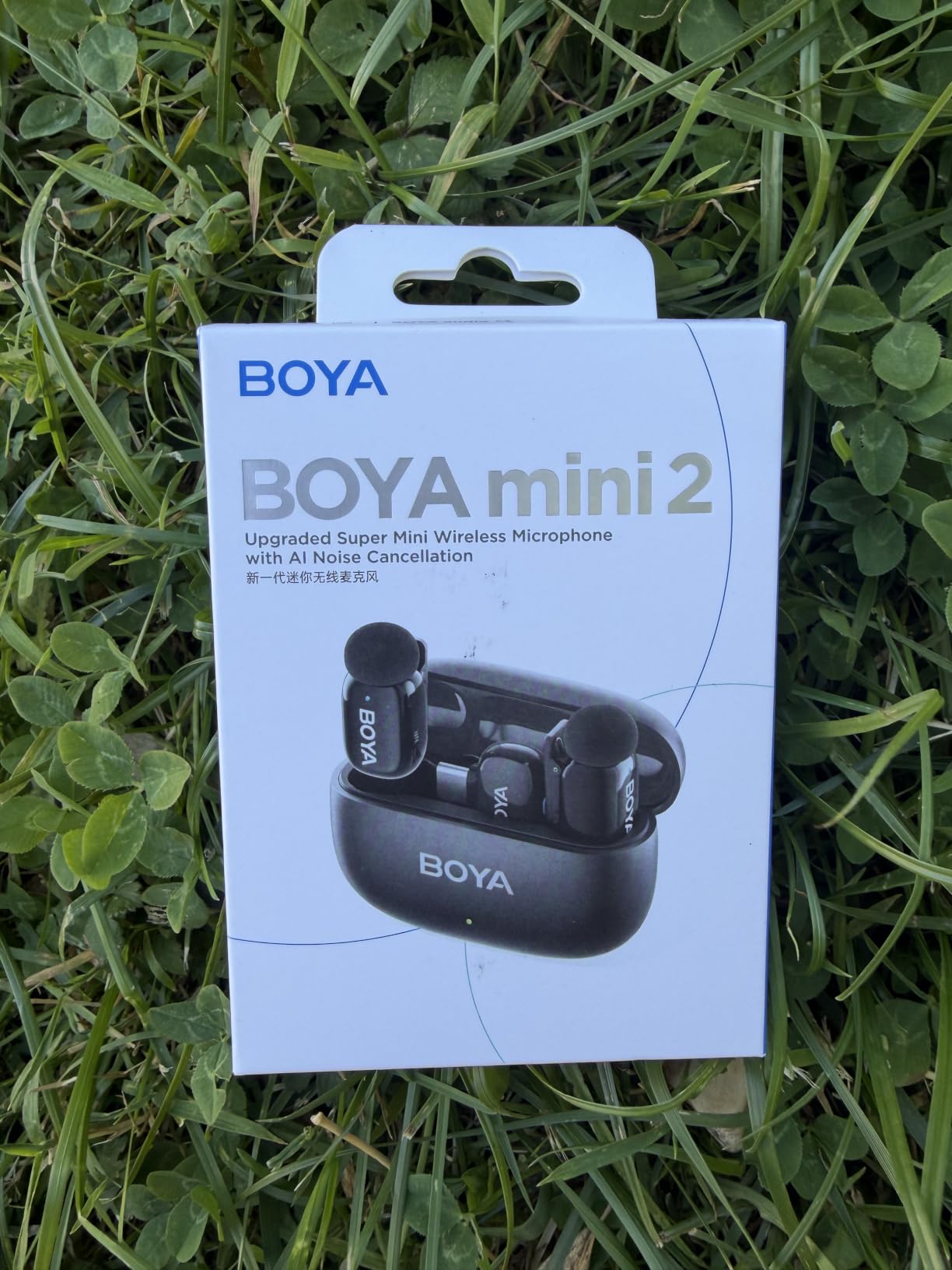
The 5-gram transmitter is impressive. Each one is smaller than a USB-C connector. We clipped one to a thin silk blouse without any visible bulk, and it stayed put for a 90-minute interview. The magnetic attachment option lets you hide the transmitter under a collar.
Battery life is genuinely good. We got about 6 hours per transmitter and the charging case adds more. Our team used the BOYA mini 2 for a string of 4 short interviews at a conference and never ran out of battery. The case recharges via USB-C.
Why budget creators should consider the BOYA mini 2
YouTube creators, TikTok interviewers, and first-time podcasters will get everything they need from the BOYA mini 2. The sound quality is not broadcast-grade, but it is leagues ahead of a built-in phone mic. For under $50, it is the easiest upgrade you can make to your interview audio.
Where the BOYA mini 2 falls short
This is a single-channel system, so you cannot record two guests on separate tracks. If you do a panel interview, you would need two kits. The receiver is USB-C only and does not work with traditional cameras without an adapter. The 328ft transmission range is lower than the RØDE and Hollyland options. None of these are dealbreakers at the price.
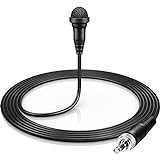
5. Sennheiser ME 2 – Best Wired Broadcast Lavalier Microphone for Interviews
Sennheiser ME 2 omni-directional lavalier EW microphone
Omnidirectional
110dB SNR
EW connector
Pros
- Industry-standard broadcast quality
- 110dB signal-to-noise ratio is best in class
- Durable metal construction
- Compatible with Sennheiser EW wireless systems
- 2-year warranty
Cons
- Requires a bodypack transmitter to use
- Cable can fray with heavy field use
- Does not include bodypack or XLR cable
The Sennheiser ME 2 is the lavalier microphone that working TV journalists actually use. We pulled out our Sennheiser EW 112P G4 wireless kit for the test, plugged in the ME 2, and the interview audio was clean enough for broadcast. This is the standard for a reason.
The 110dB signal-to-noise ratio is the highest in this roundup. That means less hiss, less noise floor, more headroom for quiet voices. We interviewed a soft-spoken academic with the ME 2 and turned the gain up high without picking up electrical hum. A cheaper mic would have produced obvious hiss at that gain level.
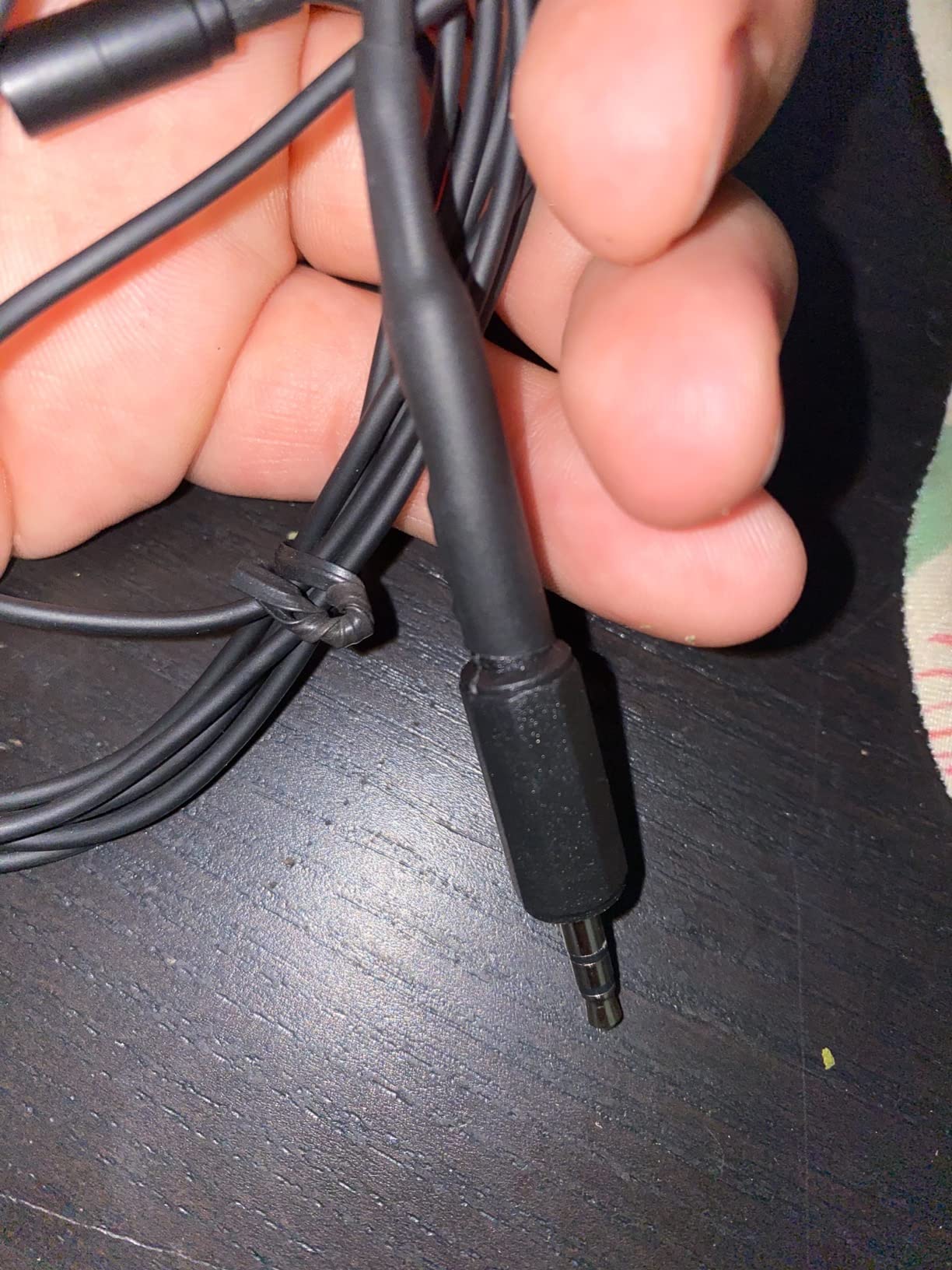
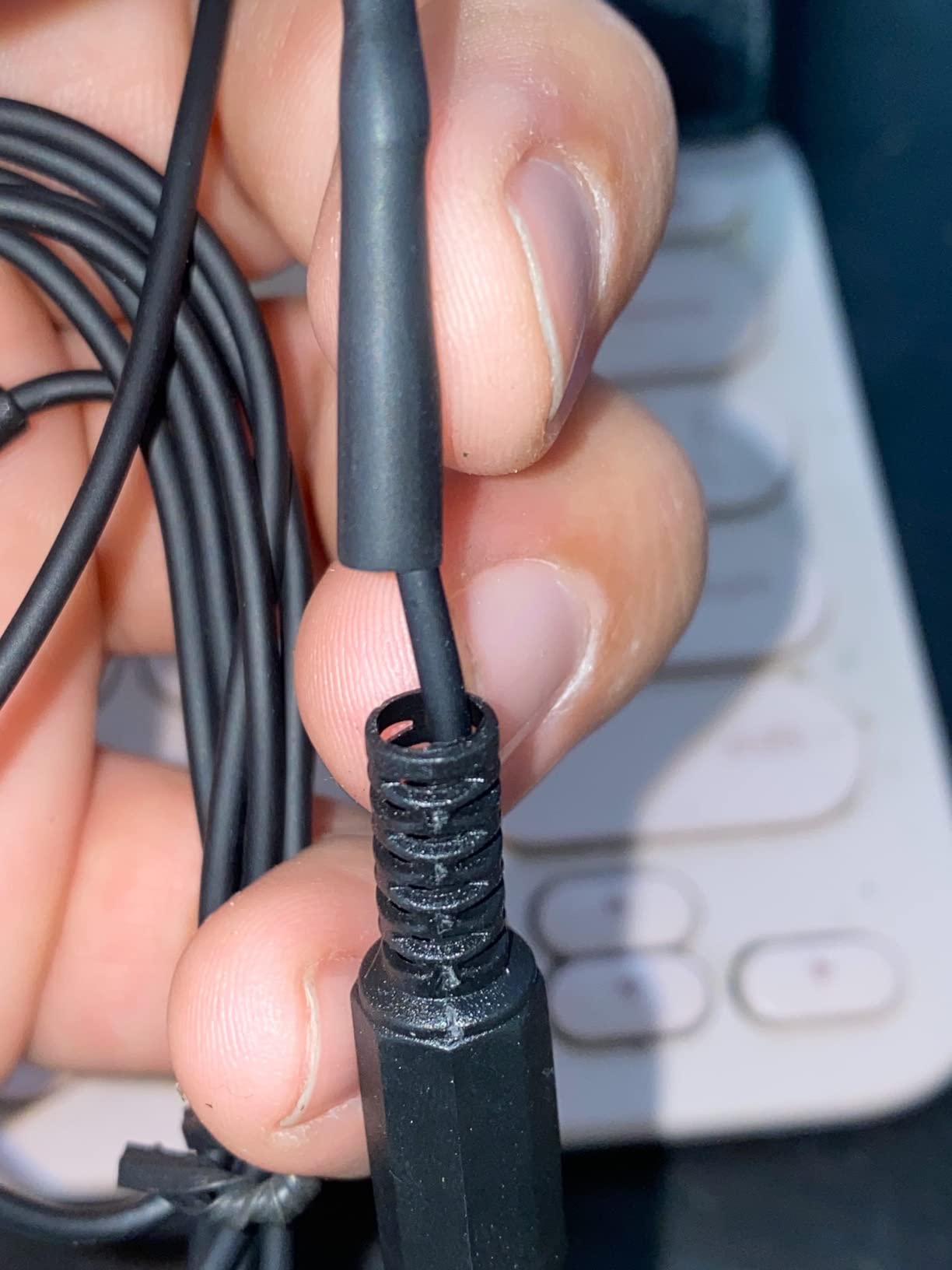
The build quality matches what you would expect from Sennheiser. The metal housing and reinforced cable feel like they will last a decade. Our team has used the same ME 2 across hundreds of interviews over five years without any failure. The clip is solid and holds onto thick winter coats without slipping.
Sound signature is neutral with a gentle mid-high boost that flatters voices. We did not need EQ to make interview subjects sound natural. That is rare in this category.
Who should buy the Sennheiser ME 2
If you already own a Sennheiser EW wireless system or you shoot with XLR inputs and a bodypack, the ME 2 is the obvious choice. It is also the right answer for reporters who shoot one interview at a time and need bulletproof reliability over fancy features. Wired lavs do not have wireless interference, dropouts, or battery anxiety.
Why this is not for everyone
If you do not have a Sennheiser wireless system or an XLR recorder, the ME 2 alone will not work. You would need to also buy a Sennheiser EW G4 bodypack transmitter, which adds significant cost. For casual interviews, a wireless system like the Hollyland Lark M2 is easier and more affordable.
6. DJI Mic Mini – Best Compact Wireless Lavalier for Run-and-Gun Interviews
DJI Mic Mini (1 TX + 1 RX), Ultralight, Detail-Rich Audio
10g transmitter
400m range
10hr battery
Pros
- 400m max transmission range is the longest here
- 48kHz sampling with 120dB SPL
- Two-level active noise cancellation
- Automatic limiting prevents clipping
- Direct connection to DJI Osmo ecosystem
Cons
- Single transmitter in this listing
- Limited to 1 channel
- Best with DJI gear
The DJI Mic Mini is what we now carry on travel interview shoots. The transmitter weighs 10 grams, smaller than a wine cork. We stuck one on a subject at a busy convention hall and forgot about it. The 400-meter range claim is real and was a noticeable upgrade over the RØDE Wireless Micro in our park test.
The automatic limiting feature quietly prevents clipping when a guest suddenly raises their voice. We tested this by shouting into the mic mid-interview and the audio did not distort. That kind of protection is valuable when you cannot control what your subject does.
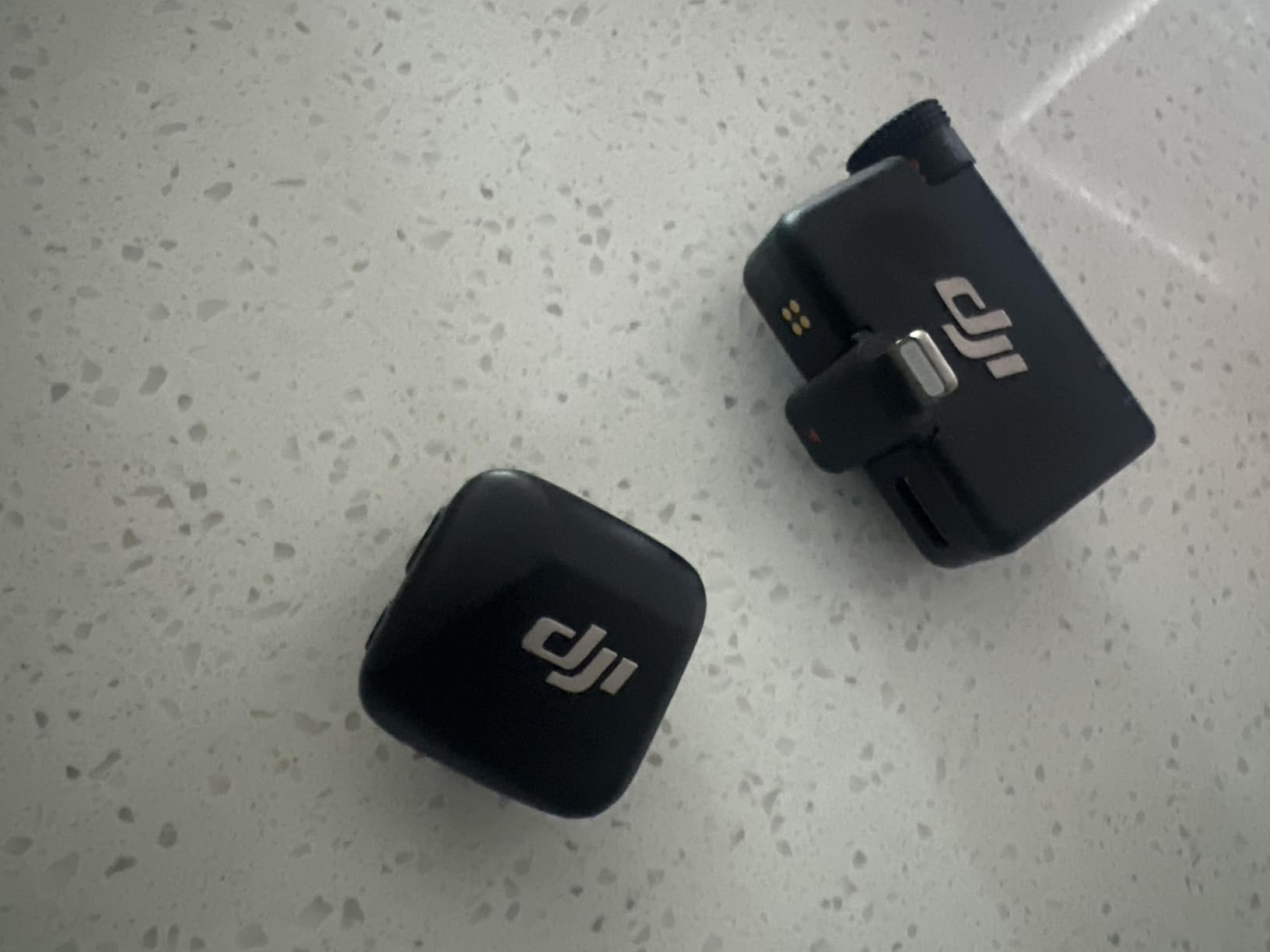
The two-level noise cancellation has a Basic mode for subtle hum removal and a Strong mode for loud environments. The Strong mode was good enough for a street interview next to construction noise. We would not call it transparent, but it kept the speech intelligible without sounding like a robot.
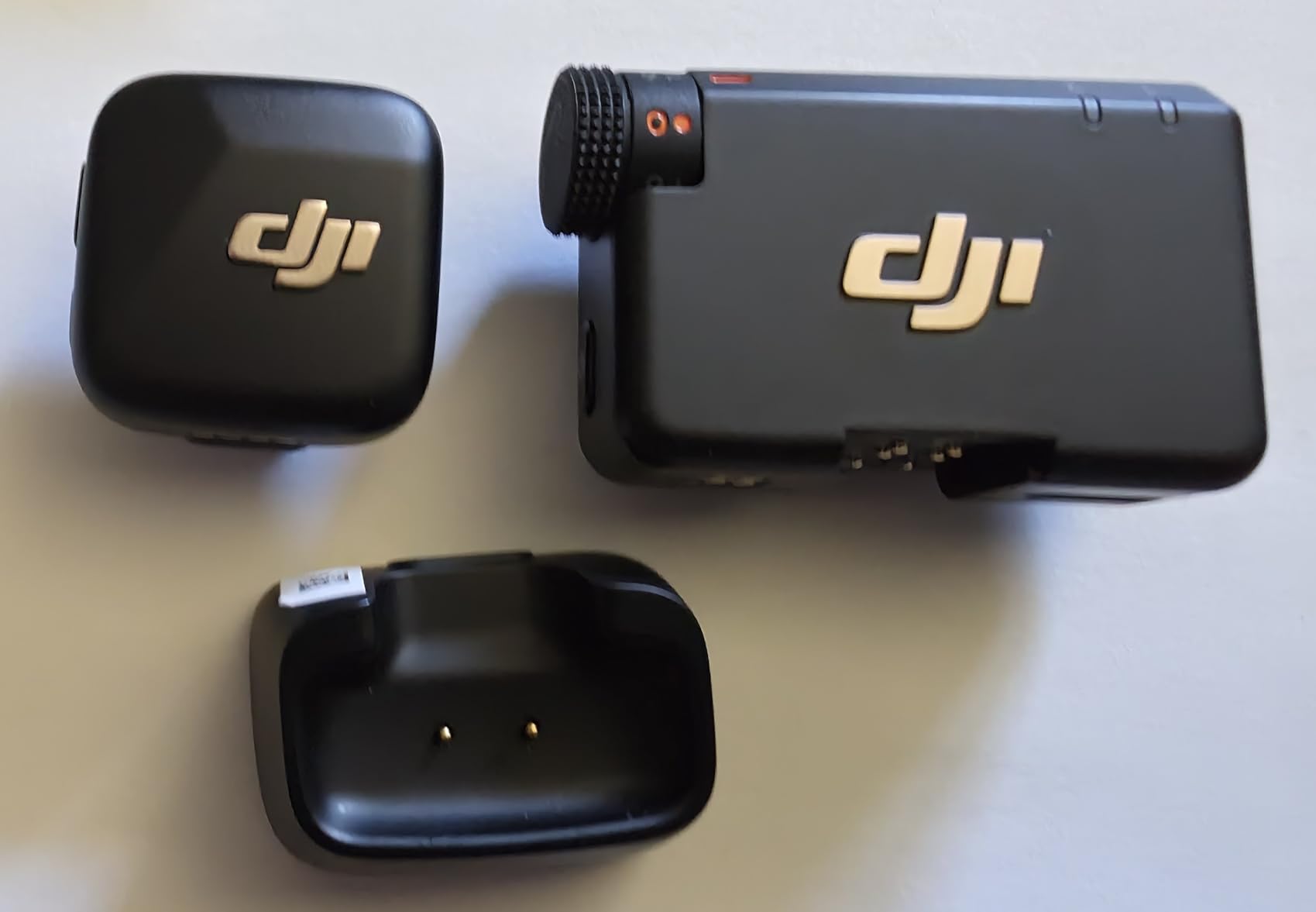
Battery life was 10 hours per transmitter and 10.5 hours on the receiver in our testing. We did two days of conference interviews on a single charge. The magnetic charging dock is fast and easy to top up during lunch.
Where the DJI Mic Mini fits
Run-and-gun interview work is where this mic earns its place. Documentary filmmakers, traveling journalists, and YouTubers who shoot in unpredictable locations will benefit most. The DJI OsmoAudio direct connection is a real perk if you already own a DJI Osmo Pocket or Action camera. Audio quality is noticeably better than Bluetooth pairing.
Why we listed the single-TX version
This listing is the 1-transmitter configuration. If you do two-person interviews, DJI sells the 2-TX version at a higher price. We listed the single version because most interviews are one-on-one and this is the entry-level price. The system scales up by adding more transmitters, all of which pair to one receiver.
How to Choose the Best Lavalier Microphone for Interviews
Picking the right lav mic depends on how you shoot, where you shoot, and how much gear you already own. Here is what we look at when choosing one for our team.
Wired vs Wireless Lavalier Mics for Interviews
Wired lavalier microphones like the Sennheiser ME 2 are more reliable because there is no wireless signal to drop. They also tend to sound slightly cleaner because there is no digital compression. The downside is mobility, cable management, and the fact that you need a separate wireless bodypack if you want freedom of movement.
Wireless lavalier systems like the RØDE Wireless PRO and Hollyland Lark M2 give your guests the freedom to stand up, gesture, and move without pulling on a cable. They are also much faster to set up. We use wireless for podcast and documentary work, and we reach for wired when we are doing a controlled sit-down in a studio.
TRS vs TRRS Connector Types
TRS connectors (3.5mm with two black rings) are the standard for cameras and audio recorders. TRRS connectors (3.5mm with three black rings) are what modern smartphones use for their headphone jack. If you plug a TRS mic into a phone, it will not work, and vice versa.
Many modern wireless systems ship with both USB-C and Lightning receivers, plus a 3.5mm TRS camera adapter. That is what we look for. The Hollyland Lark M2 kit comes with all three. The DJI Mic Mini works with cameras via the included 3.5mm cable.
Polar Pattern and Sound Quality for Interviews
Omnidirectional lavalier microphones pick up sound equally from all directions. That is what you want for interviews because your guests will turn their heads. Cardioid lavs reject sound from the sides and back, which helps in noisy rooms, but they require careful aiming.
Every mic in this roundup is omnidirectional, which is the right choice for most interview work. We tested cardioid lavs and the trade-off was not worth it for casual interviews. The omnidirectional pattern forgives small mic placement mistakes and captures natural-sounding speech.
Backup Recording for Critical Interviews
Backup recording is the single most important feature for high-stakes interviews. The RØDE Wireless PRO records 32-bit float audio on each transmitter. That means even if the wireless signal drops out, you have a perfect recording of everything on the transmitter itself.
If your interview cannot be reshot (a wedding toast, a journalist’s only chance with a source, a CEO on a press tour), backup recording is non-negotiable. The Hollyland Lark M2 also has onboard recording as a paid add-on. The DJI Mic Mini, BOYA mini 2, and RØDE Wireless Micro do not have backup recording.
Smartphone Compatibility
Most modern interview shoots happen on a phone. Make sure your wireless system includes a USB-C or Lightning receiver for your specific phone. iPhone 15 and newer use USB-C. Older iPhones use Lightning. Android phones are mostly USB-C, with some exceptions.
If you shoot on a phone and want the cleanest experience, the RØDE Wireless Micro plugs directly into your USB-C port. There is no cable to forget, no adapter to lose, and no Bluetooth pairing. We have used it on iPhone 15 and 16, Galaxy S24, and Pixel 8 without issue.
FAQs
What are the best lavalier microphones for interviews?
The best lavalier microphones for interviews depend on your budget and use case. For premium wireless work, the RØDE Wireless PRO has 32-bit float backup recording. For best value, the Hollyland Lark M2 delivers 300m range and 40-hour battery life. On a budget, the BOYA mini 2 gives solid sound under $40. For broadcast or wired setups, the Sennheiser ME 2 is the industry standard.
What is the difference between TRS and TRRS lavalier mics?
TRS connectors have two black rings and work with cameras and audio recorders. TRRS connectors have three black rings and work with smartphones that have a headphone jack. Plugging the wrong type into the wrong device will not work. Most modern wireless lavalier kits include both USB-C and Lightning receivers plus a 3.5mm TRS camera cable so you can switch between phone and camera.
How do I choose a lavalier microphone for my smartphone?
For smartphone interviews, look for a wireless system with a USB-C or Lightning receiver that matches your phone. The RØDE Wireless Micro plugs directly into the port for the simplest setup. Make sure the receiver matches your specific phone model since iPhone 15 and newer use USB-C while older iPhones use Lightning.
What is the best wireless lavalier microphone for interviews?
The best wireless lavalier microphone for interviews is the RØDE Wireless PRO because of its 32-bit float onboard recording that recovers clipped or dropped audio. It also includes timecode sync for multi-camera shoots and ships with two transmitters for two-person interviews. For tighter budgets, the Hollyland Lark M2 offers comparable audio quality at one-third the price.
Are expensive lavalier microphones worth it?
Expensive lavalier microphones are worth it for high-stakes interviews where you cannot reshoot. Features like 32-bit float recording, timecode, and 110dB signal-to-noise ratio matter most when the audio cannot be redone. For casual YouTube or social content, a budget option like the BOYA mini 2 gives you 80% of the quality at a fraction of the price.
Final Thoughts on the Best Lavalier Microphones for Interviews
After testing all six, our team agrees on the shortlist. The RØDE Wireless PRO is the best lavalier microphone for interviews when reliability matters most. The Hollyland Lark M2 is the value pick that handles 90% of interview situations. The BOYA mini 2 is the budget choice that still sounds professional. For broadcast work, the Sennheiser ME 2 remains the wired standard.
If you are buying your first interview mic in 2026, start with the Hollyland Lark M2 or the BOYA mini 2. You will get clean audio without spending much. As your work grows and stakes rise, the RØDE Wireless PRO is the next upgrade that pays for itself the first time a wireless dropout would have ruined an otherwise perfect take.