
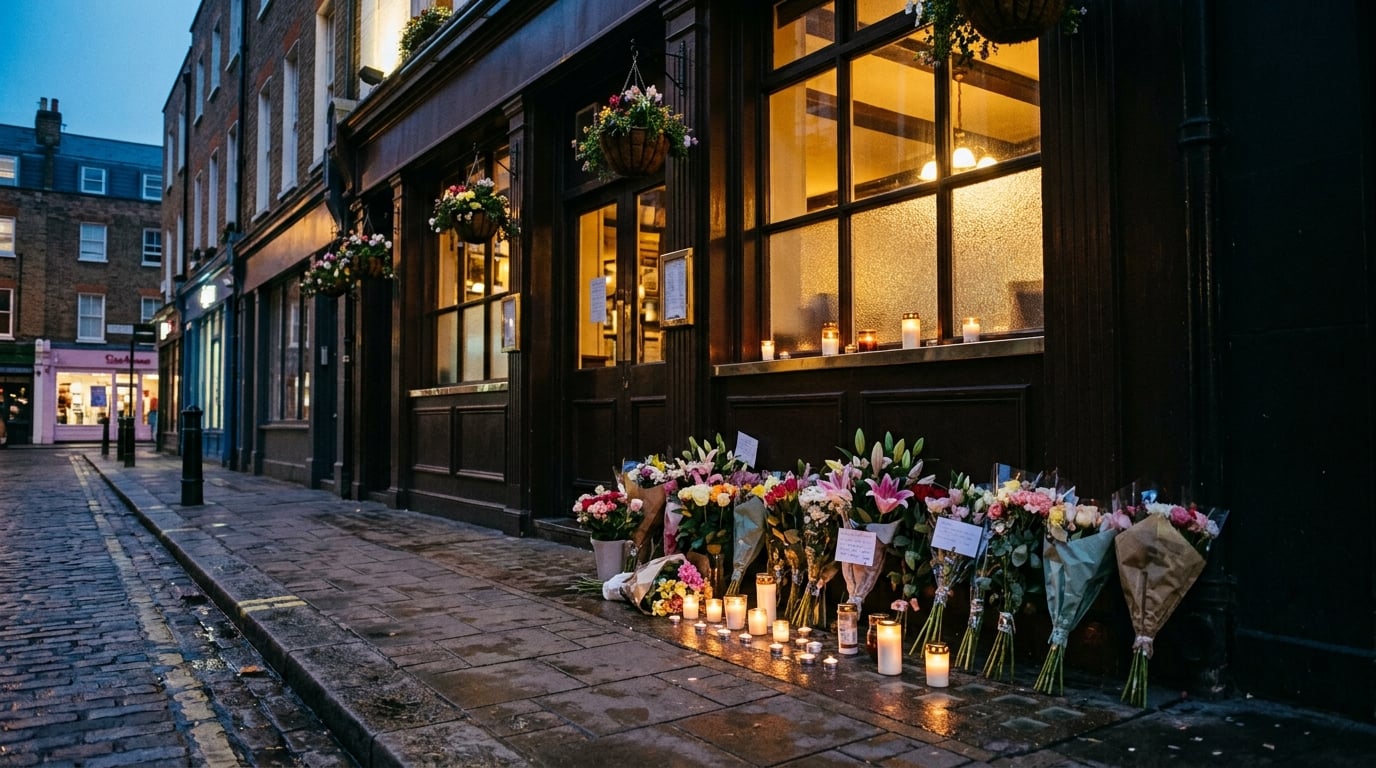
On the evening of April 30, 1999, a nail bomb tore through the Admiral Duncan pub on Old Compton Street in Soho, killing three people and injuring 79 more. It was the deadliest homophobic attack on a gay venue in British history, and it struck at the heart of London’s LGBTQ+ community. But what happened next, the story of how Soho responded, is just as important as the bombing itself.
I have spent years researching this event, reading survivor testimony, court records, and community accounts. What emerges is not just a story of violence and hatred. It is a story of a neighborhood that refused to be defined by terror. Soho’s response to the Admiral Duncan bombing became a defining moment of LGBTQ+ resilience in the United Kingdom.
This article covers the full story of the Admiral Duncan bombing and how Soho responded, from the cultural landscape of late-1990s Soho to the community solidarity that followed the attack. We will look at the victims by name, trace the perpetrator’s path, and examine the legacy that endures more than 25 years later.
Table of Contents
Quick Summary: The Admiral Duncan Bombing at a Glance
The Admiral Duncan bombing occurred on Friday, April 30, 1999, when 22-year-old neo-Nazi David Copeland detonated a homemade nail bomb inside the Admiral Duncan pub on Old Compton Street in Soho, London. The explosion killed three people: Andrea Dykes, Nik Moore, and John Light. Seventy-nine others were injured, many severely.
The attack was the third in a series of three bombings carried out by Copeland over consecutive weekends in April 1999, following attacks in Brixton (April 17) and Brick Lane (April 24). Copeland targeted Black, South Asian, and LGBTQ+ communities in a campaign designed to spark a race war in Britain.
Soho’s response was immediate and powerful. Within hours, the community rallied around survivors. Within days, thousands gathered for public vigils. And in the decades since, annual acts of remembrance have kept the memory of the victims alive while standing as a continuing declaration of defiance against hate.
Soho’s LGBTQ+ Community Before April 1999
To understand why the Admiral Duncan bombing hit Soho so hard, you need to understand what Soho meant to LGBTQ+ people in the late 1990s. Old Compton Street was the beating heart of London’s gay village. It was one of the few places in the country where queer people could walk hand in hand, kiss in public, and feel a sense of belonging without constantly looking over their shoulders.
The Admiral Duncan pub sat right in the middle of this scene. Named after Admiral Adam Duncan, the 18th-century naval hero who defeated the Dutch at the Battle of Camperdown, the pub had been a fixture on Old Compton Street for decades. By the 1990s, it had become a popular gay bar known for its welcoming atmosphere and diverse crowd.
This was a period of real progress for LGBTQ+ rights in Britain. The age of consent had been partially equalized in 1994. The first UK Pride events of the modern era were drawing record crowds. Soho itself was booming, with new gay bars, clubs, and cafes opening along Old Compton Street and the surrounding lanes. The neighborhood felt like a sanctuary.
But that progress existed alongside persistent threat. Homophobic violence remained widespread. Section 28, the law banning the “promotion of homosexuality” in schools, was still in force. Gay pubs had been targeted before, with letter bombs and arson attacks occurring at various venues over the years. The idea of a safe space was real, but it was never absolute.
What made Old Compton Street special was that it felt like home. The Admiral Duncan, along with neighboring venues like the Comptons of Soho and the Village, formed a cluster of places where community was built every single night. Regulars knew each other by name. Staff looked out for their patrons. For many LGBTQ+ Londoners, the area was family.
That is exactly what David Copeland understood when he chose his target. He did not pick the Admiral Duncan at random. He picked it because it was a symbol. Bombing Old Compton Street meant bombing the center of queer life in London. It meant attacking a community at the place where they felt most secure.
The Three Bomb Campaign: Brixton, Brick Lane, and Soho
The Admiral Duncan bombing did not happen in isolation. It was the final attack in a three-week campaign of terror orchestrated by David Copeland, a self-radicalized neo-Nazi who acted entirely alone. Understanding the full campaign is essential to understanding the Soho bombing and the scale of what the community faced.
The Brixton Bombing: April 17, 1999
Copeland’s first attack struck Electric Avenue in Brixton, south London, on Saturday, April 17, 1999. He placed a nail bomb hidden in a duffel bag near a busy market area. The device detonated at around 5:25 PM, injuring 48 people, including a 23-month-old baby who had a four-inch nail embedded in his skull.
Brixton had been chosen because of its large Black community. Copeland later told police he wanted to stir up racial tension and trigger a race war. The bomb was packed with fireworks explosives and nearly 1,400 four-inch nails, designed to maximize shrapnel injuries among anyone nearby.
Miraculously, no one died in Brixton, partly because an alert market trader became suspicious of the unattended bag and moved people away before it exploded. But the psychological impact was enormous. South London’s Black community was left reeling, and police realized they were dealing with a deliberate campaign of targeted violence.
The Brick Lane Bombing: April 24, 1999
Exactly one week later, on Saturday, April 24, Copeland struck again. This time he targeted Brick Lane in Tower Hamlets, east London, an area known for its large Bangladeshi community. He planted a second nail bomb in a duffel bag on Hanbury Street.
The device exploded at approximately 5:55 PM, injuring 13 people. Copeland had actually intended to bomb Southall, a neighborhood with a large South Asian population, but he could not find a suitable location. He settled on Brick Lane as an alternative target.
Again, the attack caused serious injuries but no deaths. The nail-packed device sent shrapnel flying through the street, and several victims suffered severe lacerations and burns. But the community responded quickly, with local people rushing to help the injured before emergency services arrived.
By this point, the Metropolitan Police had connected the two attacks and launched a massive investigation. They knew the bomber was targeting minority communities. They did not yet know who he was, or that his third and most deadly attack was only days away.
The Escalation to Soho
What made Copeland’s campaign especially terrifying was its deliberate escalation. Each attack targeted a different community: Black people in Brixton, South Asian people in Brick Lane, and then LGBTQ+ people in Soho. The message was unmistakable. This was a one-man war against everyone the far-right considered enemies.
Copeland later admitted that the Admiral Duncan was always intended to be his most significant attack. In police interviews, he said he believed bombing a gay pub would generate the maximum media coverage and public fear. He was right about the coverage. He was wrong about the fear. Instead of fracturing communities, his attacks drew them together.
April 30, 1999: The Day of the Admiral Duncan Bombing
Friday, April 30, 1999, was a warm spring evening in London. The bank holiday weekend was beginning, and Old Compton Street was filling up with people heading out for drinks after work. The Admiral Duncan was doing steady business, with patrons spilling out onto the pavement and the familiar hum of a Soho Friday building inside.
That same afternoon, David Copeland had traveled to London from his home in Cove, Hampshire. He was carrying a third nail bomb, larger and more powerful than the previous two. The device contained around 1,500 four-inch nails packed into a sports bag, along with fireworks-based explosives wired to a simple timer made from an alarm clock.
Copeland arrived in Soho in the early evening. He walked along Old Compton Street, blending into the crowd of revellers. He entered the Admiral Duncan carrying the duffel bag, placed it on the floor, and left the pub without drawing attention. Some witnesses later recalled seeing a man leave a bag near the bar, but no one realized what was about to happen.
At approximately 6:37 PM, the bomb detonated. The explosion was devastating inside the confined space of the pub. The blast blew out windows, destroyed the bar area, and sent hundreds of nails ripping through the packed room at lethal velocity. The sound was heard across Soho. People in nearby pubs and restaurants initially thought a gas main had exploded.
Within seconds, Old Compton Street transformed from a festive Friday evening into a scene of chaos. Patrons from the Admiral Duncan staggered out into the street, many bleeding heavily from shrapnel wounds. Bystanders rushed to help. Emergency services were called almost immediately, and the first ambulances arrived within minutes.
The scale of the destruction inside the pub was staggering. The blast had concentrated its force within the building’s small interior. Nails were embedded in walls, furniture, and people. Three victims would not survive. Dozens more faced serious injuries, permanent disability, and psychological trauma that would last for decades.
Inside the Pub: What Happened at the Admiral Duncan
The accounts of those inside the Admiral Duncan when the bomb went off paint a picture of sudden, unimaginable violence in a place that had felt completely safe. One moment, people were laughing, drinking, and chatting with friends. The next, the world exploded around them.
Survivors described a blinding flash of light followed by an enormous boom that seemed to come from everywhere at once. The force of the blast threw people across the room. Glass, wood, and metal flew through the air. Then came the nails, thousands of them, tearing into flesh and bone.
The Guardian published a survivor’s account in 2026, 25 years after the attack. The survivor, who was sitting just feet from the bomb when it detonated, described how the explosion “completely changed the course of my life.” They recalled the silence that followed the blast, broken only by screaming and the sound of falling debris.
Jonathan Cash, another survivor who later wrote about his experience for Pink News, called it “the day my life changed forever.” He was inside the pub when the device exploded and suffered serious injuries. His account, and others like it, describe a scene of devastation that is difficult to comprehend. People were on the floor, some unconscious, some calling for help, some unable to move.
Among those caught in the blast were friends out for a Friday drink, couples on dates, tourists visiting Soho for the first time, and regulars who came to the Admiral Duncan every week. They were people from all walks of life, brought together by the simple act of spending an evening in a gay pub. That is what was taken from them: the ordinariness of a night out, destroyed in an instant.
Andrea Dykes, Nik Moore, and John Light were killed. Andrea, who was 27, was four months pregnant. She was out with friends, including her husband Julian Dykes, who was seriously injured in the blast. Nik Moore was 31. John Light was 32. All three had their lives cut short by a device built to spread hatred and fear.
Emergency services arrived to find a scene of wartime-scale carnage in the middle of a London street. Paramedics treated victims on the pavement. Firefighters worked to reach people trapped in the wreckage. Police sealed off Old Compton Street and began the process of securing what was now a major crime scene. The air smelled of explosives and blood.
The Victims: Andrea Dykes, Nik Moore, and John Light
Three people lost their lives in the Admiral Duncan bombing. They deserve to be remembered as individuals, not just as statistics in a true crime narrative. Their names were Andrea Dykes, Nik Moore, and John Light.
Andrea Dykes, 27, was from Westcliff-on-Sea in Essex. She was four months pregnant with her first child. Andrea was not a regular at the Admiral Duncan. She had come to Soho that evening with her husband, Julian Dykes, and friends to celebrate. Julian was seriously injured in the explosion and survived. The loss of Andrea and their unborn child was one of the most devastating aspects of the tragedy.
Nik Moore, 31, was a friend of Andrea and Julian’s. He was a bright, sociable man who loved London’s nightlife. He was killed instantly when the bomb detonated. Friends described him as kind, funny, and the kind of person who lit up a room. His death left a permanent hole in the lives of those who knew him.
John Light, 32, was a manager at a Westminster restaurant. He was well-known and well-liked in Soho’s social scene. He died in the bombing alongside Andrea and Nik. Friends and family remembered him as warm, generous, and full of life. His funeral was attended by hundreds of people from across London’s hospitality and LGBTQ+ communities.
These three names are at the center of the Admiral Duncan story. Every vigil, every memorial, every act of remembrance in Soho since April 1999 has been about ensuring that Andrea, Nik, and John are never forgotten. The 79 injured survivors also carry the weight of that night. Some still live with physical injuries. Many more carry psychological scars that have never fully healed.
As one Reddit user wrote about a friend who was inside the Admiral Duncan during the bombing: “He is still not well mentally even after two decades of counselling and therapy.” This is the human cost of hate. It does not end when the headlines fade. It endures in the lives of survivors and the memories of families.
David Copeland: The Perpetrator and His Motivations
David Copeland was 22 years old when he carried out the Admiral Duncan bombing. He was born in Yateley, Hampshire, and had worked as an engineer’s assistant and briefly as a volunteer for the British National Party (BNP). He was not part of an organized terror cell. He was a lone actor who radicalized himself through far-right literature and white supremacist ideology.
Copeland’s path to violence followed a pattern that researchers now recognize as common among lone-actor terrorists. He became interested in far-right politics as a teenager. He joined the BNP in 1997 and attended some meetings, though he never became a significant figure in the organization. He later joined the National Socialist Movement, a small neo-Nazi group, and adopted the alias “Paul Mifsud.”
His reading included The Turner Diaries, a white supremacist novel that has inspired numerous acts of terrorist violence, and the Anarchist Cookbook, which provided him with the basic knowledge needed to construct homemade explosives. He built his nail bombs using fireworks, gunpowder extracted from commercial fireworks, and thousands of nails purchased from hardware stores.
Copeland’s stated motivation was to ignite a race war in Britain. He believed that by bombing Black, Asian, and LGBTQ+ communities, he could trigger a spiral of retaliatory violence that would lead to societal collapse and the eventual triumph of white supremacy. This was a delusion, but it was a delusion he acted on with deadly efficiency.
In police interviews after his arrest, Copeland showed little remorse. He described his attacks in matter-of-fact terms and expressed satisfaction with the results. Clinical psychologists who evaluated him diagnosed paranoid schizophrenia, though this diagnosis was disputed during his trial. The jury rejected his plea of diminished responsibility and convicted him of murder.
What makes Copeland’s case especially chilling is how ordinary his background appeared. He was not a career criminal. He was not part of an international network. He was a young man who consumed hateful ideology online and in print, decided to act on it, and killed three people in the process. The case remains a textbook example of the threat posed by self-radicalized lone actors.
Copeland also had links to the broader far-right extremist milieu of 1990s Britain. Organizations like Combat 18 and the White Wolves operated in the same ideological space. The White Wolves, a shadowy group linked to the neo-Nazi activist David Myatt, had published a manual on lone-wolf terrorism that bore disturbing similarities to Copeland’s methods. Whether Copeland had direct contact with these groups or simply drew inspiration from them remains a matter of debate among researchers.
The Investigation and Capture
The Metropolitan Police launched one of the largest manhunts in London’s history following the Brixton and Brick Lane bombings. Operation Marathon, as the investigation was code-named, involved hundreds of officers and drew on CCTV footage, forensic evidence, and public tips.
After the Brixton bombing, police recovered fragments of the duffel bag and the explosive device. Forensic teams analyzed the construction of the bomb and identified the materials used. They also obtained CCTV footage from the Brixton area showing a man carrying a sports bag. The image was grainy, but it was a start.
The key break came not from high-tech surveillance but from an alert member of the public. After the Brixton bombing, the police released enhanced CCTV images of the suspect. A man from Copeland’s home area recognized him and contacted police. This tip, combined with other intelligence, led investigators to Copeland’s home in Cove, Hampshire.
Police arrested Copeland on the evening of Saturday, May 1, 1999, less than 24 hours after the Admiral Duncan bombing. When officers arrived at his home, they found him watching television coverage of the Soho attack. He surrendered without resistance. In his home, they found bomb-making materials, far-right literature, and a stash of nails identical to those used in the devices.
During questioning, Copeland confessed to all three bombings almost immediately. He described each attack in detail and expressed no remorse. He told officers he had planned the campaign for months and had specifically chosen the Admiral Duncan because it was a gay pub and would attract maximum publicity.
The speed of Copeland’s arrest was a relief to a city on edge. But for the communities he had targeted, the damage was already done. Three people were dead. Nearly a hundred were injured. And the knowledge that a single individual could carry out such devastation with homemade weapons lingered long after the headlines moved on.
The Trial and Sentencing
David Copeland’s trial began on June 30, 2000, at the Old Bailey. He faced three counts of murder, three counts of causing explosions likely to endanger life, and one count of possessing explosives. The prosecution presented a straightforward case: Copeland had built the bombs, planted them, and killed three people in a deliberate campaign of terror.
Copeland’s defense team entered a plea of diminished responsibility, arguing that his diagnosed paranoid schizophrenia meant he was not fully responsible for his actions. They pointed to his history of mental health problems, including episodes of depression and delusional thinking. Psychiatric experts testified on both sides.
The jury rejected the diminished responsibility plea after deliberating for about four hours. On June 30, 2000, Copeland was convicted on all counts. Mr. Justice Curtis sentenced him to six concurrent life sentences, with a recommended minimum tariff of 30 years. The judge told Copeland he was “a very dangerous man” and that his crimes were motivated by “virulent racism and homophobia.”
The 30-year minimum tariff meant Copeland would not be eligible for parole until at least 2029, when he would be 53 years old. In 2007, the High Court ruled that Copeland’s tariff should be set at 50 years, meaning he would not be eligible for release until 2049, at the age of 73. This made him one of the longest-tariff prisoners in the British penal system.
Copeland was initially held at Broadmoor Hospital, a high-security psychiatric facility, due to his schizophrenia diagnosis. He was later transferred to HMP Frankland, a high-security prison in County Durham. There have been reports that he converted to Islam while in prison, though the significance of this has been debated. As of 2026, he remains incarcerated with no prospect of release for decades.
For the families of the victims and the survivors, the trial brought a measure of justice, but it could not undo the damage. Julian Dykes, who lost his wife Andrea and their unborn child, attended the trial every day. He later said that no sentence could bring back what had been taken from him.
How Soho Responded: Community Resilience and Recovery
This is the part of the story that most accounts skip or treat briefly. But it is the heart of what makes the Admiral Duncan bombing story different from a simple recounting of violence. Soho’s response to the bombing was extraordinary, and it deserves to be told in full.
On the night of April 30, 1999, even as emergency services were still treating the wounded on Old Compton Street, the community began to mobilize. Staff from nearby pubs and restaurants rushed out to help. People used their own clothing as bandages. Bar owners brought water and first aid supplies. Ordinary Londoners, many of them LGBTQ+, stepped into the chaos without hesitation.
The following day, Saturday, May 1, a spontaneous vigil drew hundreds of people to Old Compton Street. They stood in silence near the bombed-out pub, many of them in tears. Flowers piled up against the police cordon. Messages of solidarity, grief, and defiance were scrawled on cards and posters. The atmosphere was one of shock, but also of an unspoken collective determination.
Within days, the vigils grew into something larger. Community organizers, local business owners, LGBTQ+ advocates, and anti-fascist activists came together to coordinate a public response. A major vigil and march was organized for the following weekend. Thousands of people attended, filling the streets of Soho in a powerful display of solidarity that rejected the hatred behind the attack.
Local businesses played a critical role in the response. Pub owners on Old Compton Street kept their venues open in the days after the bombing, providing spaces where people could gather, talk, and process what had happened. Many offered free drinks and food to emergency workers and community members. Some venues that had been damaged in the blast repaired and reopened within weeks, sending a clear message that Soho would not be driven underground.
The LGBTQ+ community specifically processed this attack as an invasion of one of their few safe spaces. For decades, gay pubs and clubs had served as sanctuaries where people could be themselves in a society that often rejected them. The bombing of the Admiral Duncan was not just a physical attack. It was an attack on the concept of queer safety. The community’s response was to reclaim that safety, loudly and publicly, rather than retreat into fear.
Anti-fascist organizations also played a significant role in the aftermath. Searchlight Magazine, which had been monitoring far-right extremism in Britain for years, published detailed investigations connecting Copeland to the broader neo-Nazi movement. Community groups organized meetings and forums to discuss the threat of far-right violence and how to counter it. The bombing became a rallying point for anti-fascist organizing across London.
The media response was intense but complex. The Admiral Duncan bombing dominated headlines for weeks. While the coverage brought national attention to the threat of homophobic violence, some LGBTQ+ voices felt the media’s framing sensationalized the attack without engaging with the deeper issues of systemic homophobia and the rise of far-right extremism. Community leaders pushed for coverage that honored the victims and addressed root causes rather than simply profiling the perpetrator.
Perhaps the most powerful symbol of Soho’s resilience was the reopening of the Admiral Duncan itself. The pub had been devastated by the blast. Windows were blown out, the interior was destroyed, and the building’s structure was compromised. But the owners, determined not to let hate win, committed to rebuilding. The Admiral Duncan reopened its doors in early 2000, less than a year after the bombing. A sign above the door declared: “We are here, and we are staying.”
The reopening was not just a business decision. It was a statement. It told anyone who would listen that the LGBTQ+ community in Soho would not be silenced, would not be intimidated, and would not abandon the spaces they had built. The pub became a living memorial, a place where people could gather and drink and be themselves, precisely because someone had tried to destroy all of that.
The Lasting Impact on LGBTQ+ Safety and Hate Crime Legislation
The Admiral Duncan bombing occurred at a pivotal moment in British legal and social history. In 1999, hate crime legislation in the UK was still in its early stages. The Crime and Disorder Act 1998 had introduced enhanced sentences for racially aggravated offenses, but similar protections did not yet exist for crimes motivated by homophobia or transphobia.
The bombing helped galvanize efforts to expand hate crime laws. In the years that followed, the Criminal Justice Act 2003 introduced provisions for enhanced sentencing in cases involving hostility based on sexual orientation. The Sentencing Guidelines Council later incorporated these provisions into formal guidance for judges.
The attack also changed how gay venues across the UK thought about security. Many LGBTQ+ pubs and clubs reviewed their safety procedures for the first time. Some installed CCTV systems. Others trained staff to recognize suspicious behavior. The bombing shattered the assumption that gay spaces were somehow immune to targeted violence, a recognition that was painful but necessary.
More broadly, the Admiral Duncan bombing forced a national conversation about homophobic violence. It occurred just months after the Stephen Lawrence Inquiry report exposed institutional racism in the Metropolitan Police. Together, these events created pressure for law enforcement and government institutions to take hate crime more seriously across all protected characteristics.
The connection between the 1999 bombing and contemporary anti-LGBTQ+ violence remains relevant today. Hate crime statistics in England and Wales show that homophobic and transphobic hate crimes have risen significantly in recent years. The story of the Admiral Duncan serves as both a warning and a blueprint for response. Communities targeted by hate have shown, time and again, that solidarity and visibility are the most powerful answers to violence.
For many LGBTQ+ people, the bombing also changed how they thought about the concept of “safe spaces.” The Admiral Duncan had been considered safe. The attack proved that no space was truly immune to those who wished to do harm. But the community response also demonstrated that safety is not just about physical security. It is about the bonds between people, the willingness to show up for one another, and the refusal to disappear.
The Admiral Duncan Pub Today
The Admiral Duncan pub remains open on Old Compton Street today, more than a quarter century after the bombing. It is operated by Stonegate Group, one of the largest pub companies in the United Kingdom. The venue has been refurbished and updated over the years, but it retains its identity as a gay pub and continues to serve as a gathering place for Soho’s LGBTQ+ community.
Inside, there are subtle but unmistakable markers of what happened there. A memorial plaque honors the three victims. Many patrons who visit for the first time are unaware of the pub’s history until they see it. The atmosphere is, by all accounts, as lively and welcoming as ever. Friday nights on Old Compton Street still draw crowds, just as they did in April 1999.
The pub’s continued existence is itself a form of remembrance. Every drink served, every night out, every gathering of friends in that space is a small act of defiance against the hatred that tried to destroy it. The Admiral Duncan did not become a shrine or a museum. It remained a living, breathing part of Soho’s nightlife, which is perhaps the most fitting tribute of all.
Old Compton Street itself has changed significantly since 1999. Property prices have soared, corporate chains have moved in, and some independent venues have closed. But the street remains the symbolic center of LGBTQ+ London. The Admiral Duncan, standing at number 54, is a reminder of what that strip of pavement has meant to generations of queer people, and what it cost to keep it that way.
Legacy: How Soho Remembers the Admiral Duncan Bombing
Every year since 1999, the Soho community has gathered to remember the victims of the Admiral Duncan bombing. The annual act of remembrance, held on or near April 30, has become one of the most enduring traditions in London’s LGBTQ+ calendar. It is organized by community members, not institutions, and it reflects the grassroots nature of Soho’s response from the very beginning.
Mark Healey has been instrumental in organizing the annual memorial vigil. In a 2019 interview with HuffPost, on the 20th anniversary of the attack, Healey explained why the vigil matters: it marked the conclusion of a campaign by David Copeland, a neo-Nazi intent on igniting a race war. The vigil stands as a direct counter to that ideology, bringing together people of all backgrounds in shared remembrance and resistance.
The 20th anniversary in 2019 drew particular attention. BBC News ran extensive coverage, interviewing survivors and community members. The Guardian published a powerful survivor’s account. Searchlight Magazine published a reflection connecting the 1999 attacks to the ongoing threat of far-right extremism. The anniversary served as both a memorial and a reminder that the ideologies behind the bombing had not disappeared.
In 2026, on the 25th anniversary, the Guardian published a deeply personal survivor testimony headlined: “I was having a drink on a warm spring evening, then a nail bomb exploded just feet away.” The account described how the attack completely changed the course of the survivor’s life. It was a stark reminder that the impact of the bombing is not confined to history. It is lived experience for dozens of people, every single day.
Jonathan Cash, a survivor who has become an advocate on hate crime issues, has spoken and written extensively about his experience. Through his work with organizations like the Bradford Hate Crime Alliance, he has connected the 1999 attack to broader patterns of extremist violence and hate crime. His voice, and the voices of other survivors, ensure that the Admiral Duncan story remains connected to contemporary struggles against hatred.
The event is also remembered through cultural and educational channels. Historic England’s Queer Soho Walking Tour includes the Admiral Duncan as a significant site in LGBTQ+ history. The bombing is taught in schools and universities as part of modules on hate crime, terrorism, and LGBTQ+ history. It features in LGBTQ History Month observances and in broader discussions about the price of visibility and community.
The annual remembrance has evolved over the years. Early vigils were raw with grief and anger. Later gatherings became more reflective, incorporating music, readings, and moments of silence. The tone has shifted from shock to determination, from mourning to celebration of the lives lost. But the core purpose has never changed: to say the names of Andrea, Nik, and John, and to declare that they will never be forgotten.
Community solidarity remains the most enduring legacy of the Admiral Duncan bombing. The way Soho responded, with immediate compassion, organized resistance, and long-term commitment to remembrance, set a template for how communities can respond to hate-motivated violence. It showed that terrorism aimed at fracturing communities can, paradoxically, strengthen them. It showed that the most powerful answer to hatred is not silence or retreat, but visibility and togetherness.
FAQs
What happened at the Admiral Duncan pub in 1999?
On April 30, 1999, a neo-Nazi extremist named David Copeland detonated a homemade nail bomb inside the Admiral Duncan pub on Old Compton Street in Soho, London. The explosion killed three people and injured 79 others, making it the deadliest homophobic attack on a gay venue in British history.
Who carried out the Admiral Duncan bombing?
David Copeland, a 22-year-old self-radicalized neo-Nazi from Cove, Hampshire, carried out the Admiral Duncan bombing. He acted alone and was a former member of the British National Party with ties to the National Socialist Movement. He was arrested on May 1, 1999, less than 24 hours after the Soho attack.
How many people died in the Admiral Duncan bombing?
Three people died in the Admiral Duncan bombing: Andrea Dykes, aged 27 (who was four months pregnant), Nik Moore, aged 31, and John Light, aged 32. Seventy-nine others were injured, many of them severely.
Who were the victims of the Admiral Duncan bombing?
The three victims were Andrea Dykes, a 27-year-old from Essex who was four months pregnant; Nik Moore, a 31-year-old Londoner known for his warmth and humor; and John Light, a 32-year-old restaurant manager popular in the Soho community. All three were killed instantly when the nail bomb detonated.
How did the Soho community respond to the bombing?
Soho responded with immediate solidarity. Nearby business owners and residents rushed to help the injured on the night of the attack. Within days, thousands gathered for public vigils. The community organized ongoing remembrance events, and the Admiral Duncan pub itself was rebuilt and reopened within a year as a statement of defiance.
Where is David Copeland now?
As of 2026, David Copeland remains in prison. He was sentenced to six life sentences in 2000, with a minimum tariff later increased to 50 years, meaning he will not be eligible for release until at least 2049. He is held in a high-security prison facility.
How is the Admiral Duncan bombing commemorated today?
An annual memorial vigil is held on or near April 30 each year on Old Compton Street, organized by community members. The event draws LGBTQ+ Londoners, survivors, anti-fascist activists, and members of the public. The Admiral Duncan pub also features a memorial plaque honoring the three victims.
Who owns the Admiral Duncan pub?
The Admiral Duncan pub is operated by Stonegate Group, one of the largest pub companies in the United Kingdom. It remains a functioning gay bar on Old Compton Street and continues to serve as a gathering place for Soho’s LGBTQ+ community.
Conclusion: What We Remember
The story of the Admiral Duncan bombing and how Soho responded is ultimately a story about two forces colliding. On one side was a hatred so consuming that it drove a young man to build bombs and murder strangers. On the other was a community that responded to devastation with solidarity, to fear with visibility, and to loss with remembrance that has endured for more than 25 years.
Andrea Dykes, Nik Moore, and John Light should still be here. The 79 people injured on April 30, 1999, should never have had to endure what they went through. The Soho community should not have had to prove its resilience in the face of neo-Nazi violence. But they did, and the way they responded, with compassion, organization, and an unyielding refusal to be driven from their own streets, stands as one of the most powerful acts of collective resistance in modern British history.
If there is a lesson in this story, it is that hate does not have the final word. Communities do. The annual vigils on Old Compton Street, the continued life of the Admiral Duncan pub, and the voices of survivors who refuse to let the world forget are all testaments to that truth. We remember Andrea, Nik, and John. We honor the survivors. And we recognize that the fight against the kind of hatred that drove David Copeland is not over. It continues, in Soho and beyond, every single day.